



Brown and green box braids work because brown keeps the style grounded while green does the talking. A deep forest green sitting on a chestnut base looks calm. A neon stripe against caramel brown looks sharp and a little rebellious. That range is the reason this color pairing keeps showing up in braiding chairs: you can wear it soft, loud, earthy, or jewel-toned without changing the braid shape itself.
Brown also does something practical that people overlook. It gives the eye a place to rest. Pure green braids can read flat if the shade is too bright or the lighting is unforgiving, but brown adds depth, warmth, and a little shadow so the green feels richer instead of noisy.
Shade choice matters more than most people think. T27 and honey brown extensions make green look warmer; espresso and chocolate brown push the same green into a moodier lane. Then there’s placement. Put the green at the roots, at the ends, in a few front pieces, or across the whole head, and you get four different looks from the same two colors. That’s the real appeal. The style changes fast, and it changes a lot.
1. Honey Brown Base with Emerald Peekaboo Braids
Honey brown and emerald is one of those combinations that looks far more expensive than it has any right to. The brown softens the green, and the green gives the brown a little electricity. Peekaboo placement keeps the color from shouting at you from every angle.
Why It Works
The trick is hiding the green under the outer layer of braids so it only shows when you move, flip the hair, or pull half of it up. That gives the style a second life. From the front, it can read almost like a normal brown install. From the side, the emerald flashes through. Clean. Easy. Not boring.
If you want this look to feel intentional, ask for emerald braiding hair in a few inner rows, not scattered randomly through the whole head. Random placement can look messy fast. Controlled placement looks like a choice.
- Best for medium to long box braids
- Works well with half-up styles and high ponytails
- Looks strongest when the brown is a warm tone like T27 or T30
- Needs only 4 to 8 green braids for the peekaboo effect
My favorite part: you get color without committing to a full bright head of hair every single day.
2. Dark Chocolate Braids with Forest Green Ends
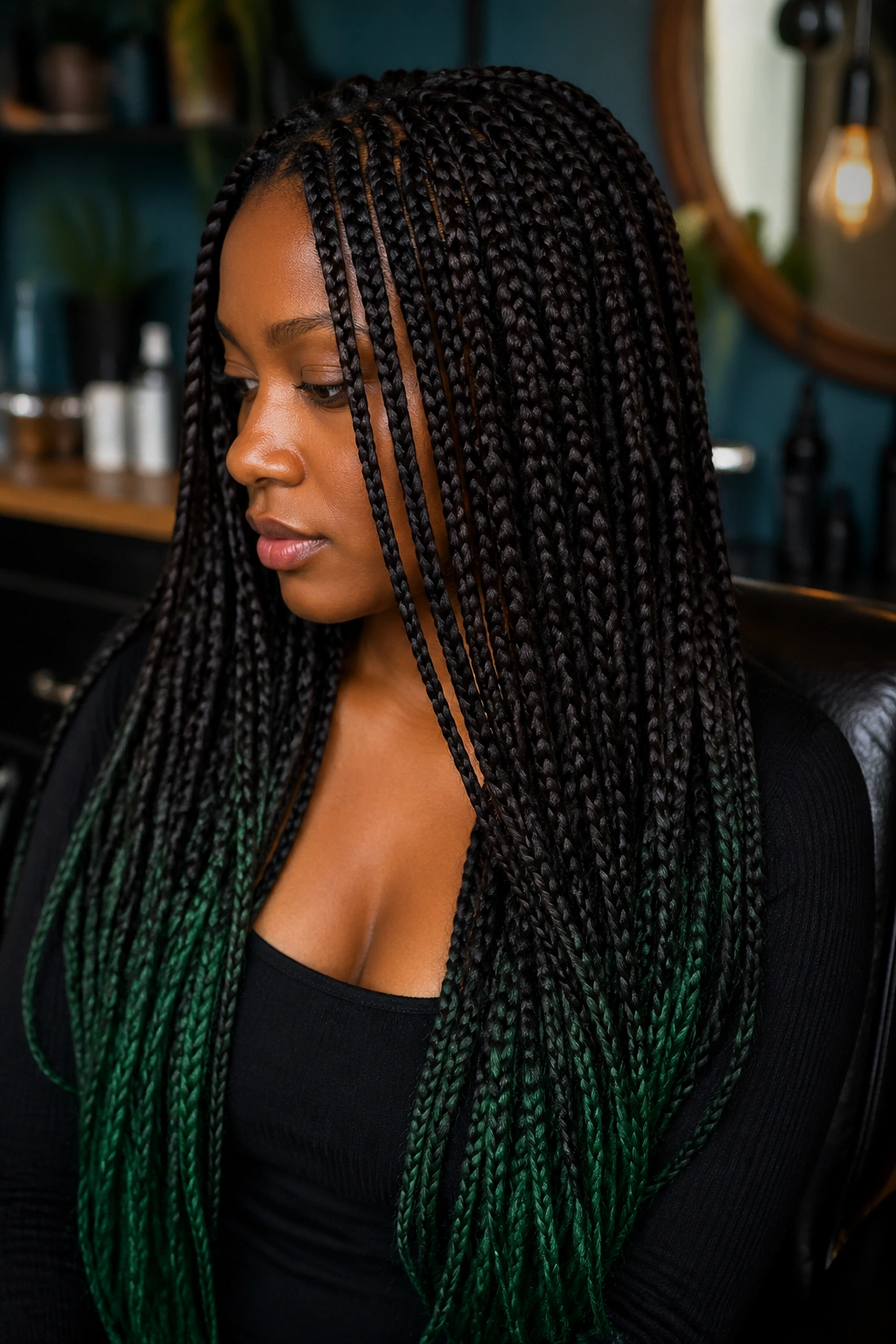
Dark chocolate brown with forest green ends is the quiet one in the group, and I mean that in a good way. It has a deep, moody feel that looks polished without trying too hard. The green only wakes up at the ends, which makes the whole style feel longer and fuller.
That little burst of color at the bottom does a lot of work. On waist-length braids, the ends move the most, so the green gets seen when you walk, sit, or toss the hair over one shoulder. It is subtle, but not shy.
I also like this version because frizz is less annoying visually. Dark ends hide wear better than pale ones, and that matters once the braids have been in for a while. If you want something that can survive a busy week without looking tired, this is one of the smarter choices.
One more thing: forest green looks best when it has a blue-green cast. If the shade leans muddy or olive, the end color can disappear into the brown instead of standing out.
3. Medium Brown and Olive Green Jumbo Braids
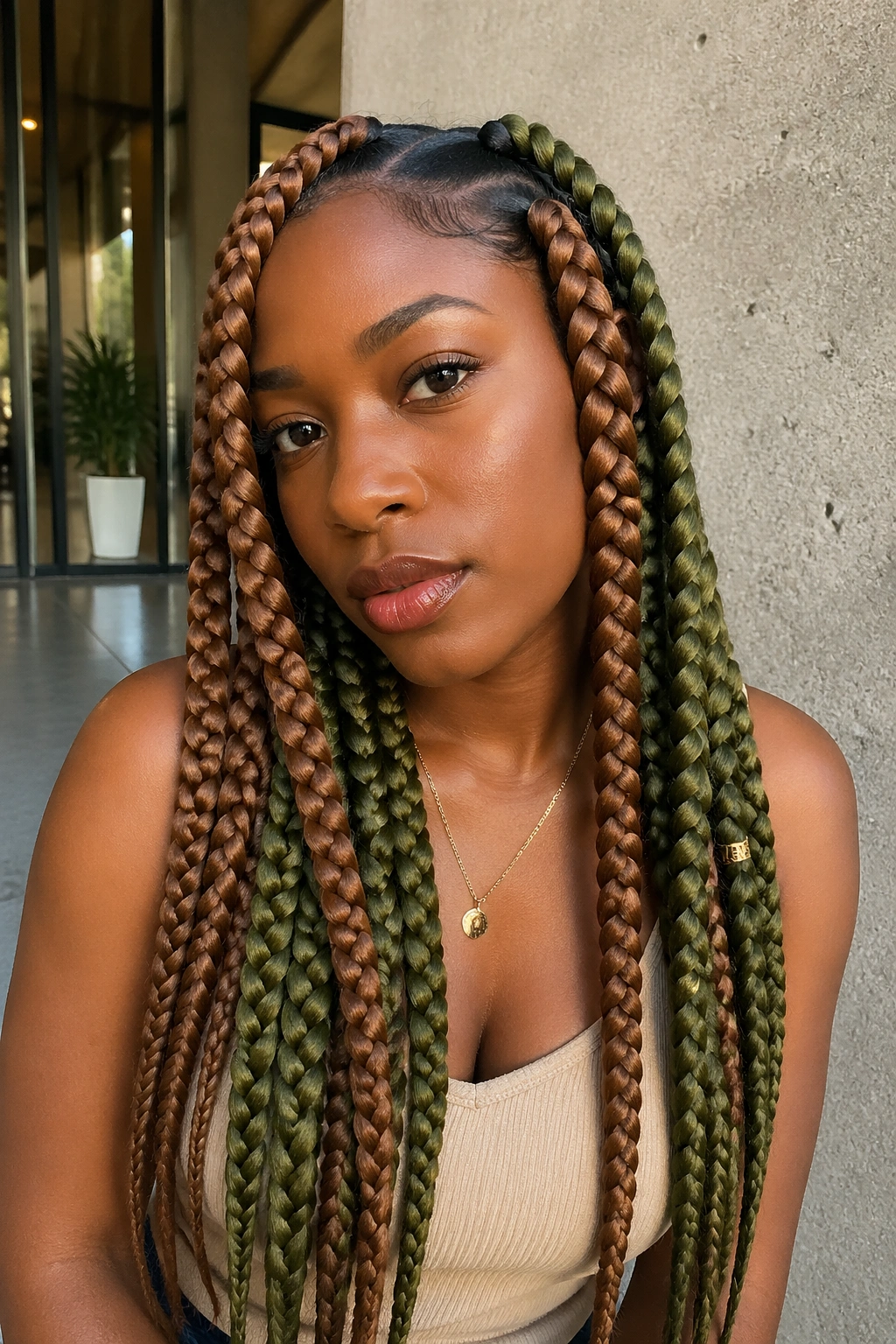
Why do jumbo braids make brown and green look so clean? Because fewer braids means each color block gets more room to breathe. The style stops feeling busy and starts feeling graphic.
The Parting Makes the Difference
With jumbo braids, the parting is not background noise. It becomes part of the look. Square parts keep everything classic, but if you want a little edge, slightly larger parts and chunky braids give the color more presence. Olive green, in particular, looks best here because it feels earthy next to medium brown instead of fighting it.
How to Wear It
- Keep the braid count lower so the color blocks stay readable
- Use olive green on a few full braids, not tiny streaks
- Pair with center parts if you want the face to stay open
- Choose shoulder-length or mid-back length if you want the style to feel lighter
This is one of those styles that looks strongest when the color plan is simple. Too many little green pieces can muddy the effect. Fewer, thicker braids make it easier to see what’s going on.
4. Chestnut Braids with Green Face-Framing Pieces
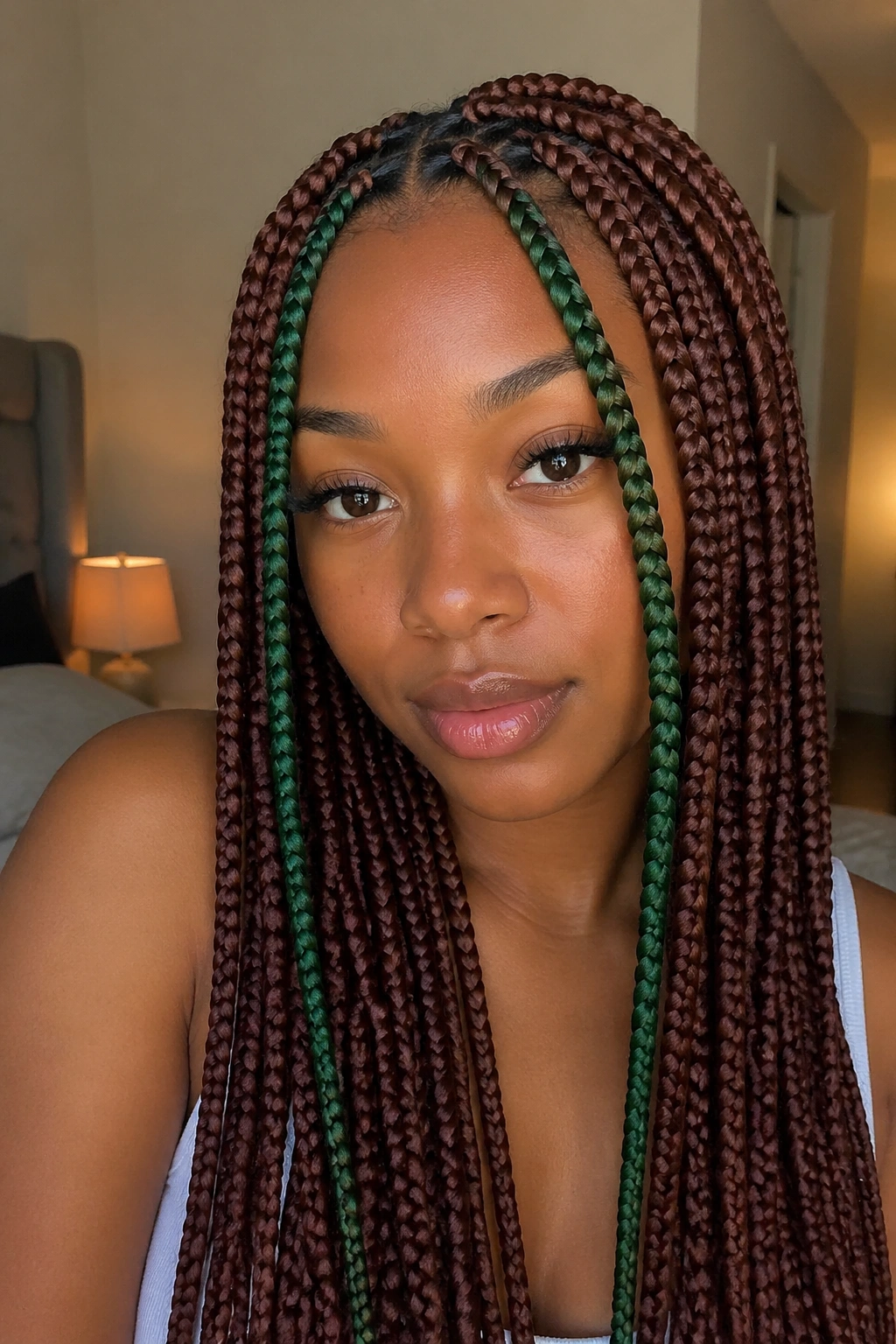
If you wear your braids in a middle part and keep your front pieces loose, this is the one that does the most for your face. Chestnut brown gives warmth, and the green front pieces act like a built-in frame. It sounds small. It isn’t.
A friend of mine wore a version of this with two green braids on each side and the rest in chestnut. That was enough. She didn’t need more color than that, because the front pieces did all the talking. The style looked put together in a way that felt almost sneaky.
The main thing to watch is balance. If the green pieces are too wide, they can take over the whole look. If they’re too thin, they disappear. Pencil-width to index-finger-width is a good range for front framing. That gives you enough color to notice without turning the style into a costume.
A small extra trick: tuck the green pieces behind the ears once in a while. It changes the whole face shape of the style.
5. Brown Ombre into Jade Tips
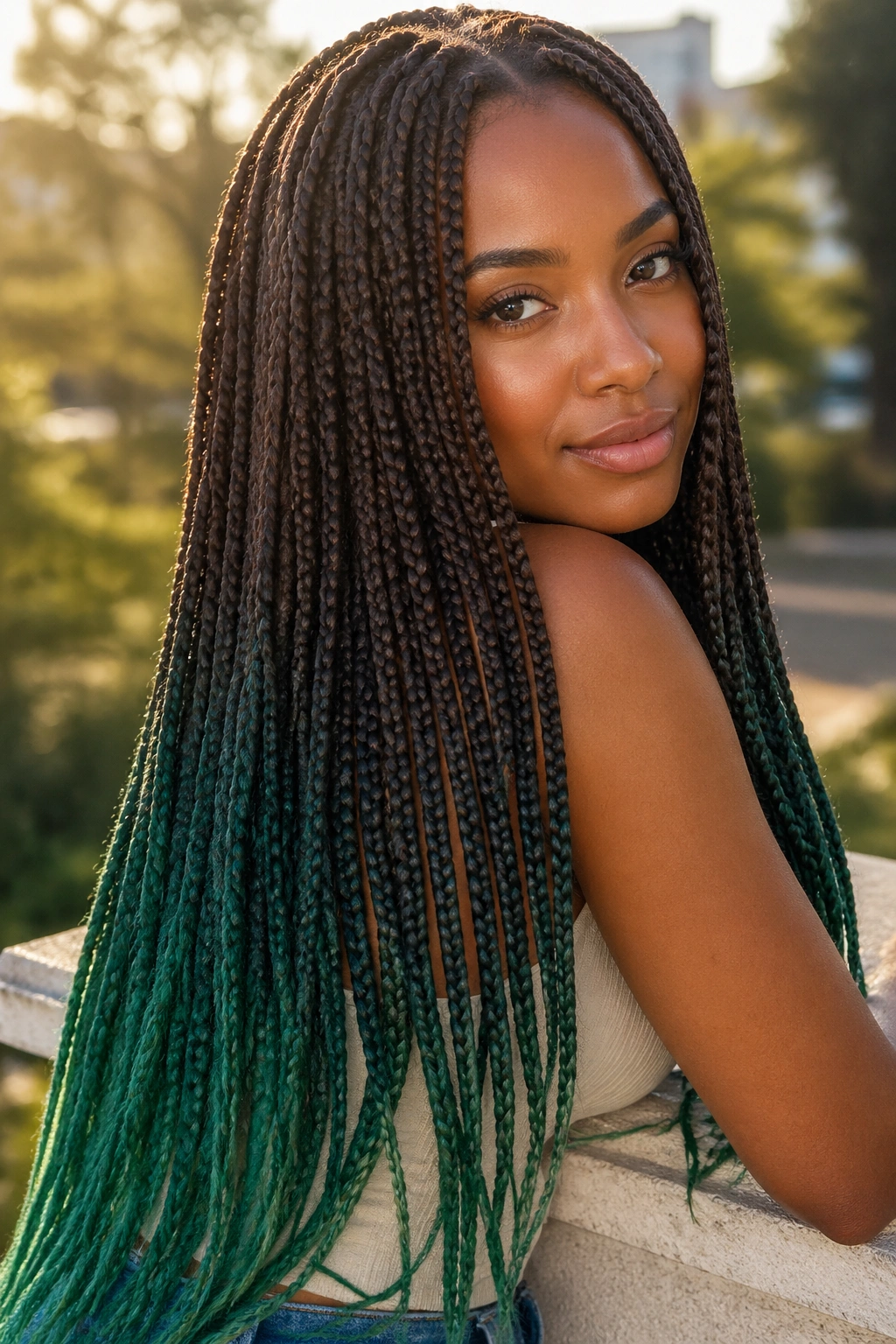
Brown fading into jade tips is one of the easiest ways to make brown and green box braids feel polished instead of playful. The ombre does the heavy lifting. It lets the green arrive slowly, which keeps the color from looking chopped up or harsh.
The brown root area should stay the richest part of the braid. Then the color can drift into a softer olive or moss tone before it reaches jade. That gradient matters. If the jump from brown to green is too sudden, the eye reads it as blocks. If the shift is gradual, it reads as flow.
This style loves length. Mid-back to waist-length braids give the ombre room to show off. On shorter braids, the fade can get lost before it has time to matter. That is one of those annoying hair truths nobody likes, but it’s real.
The best part? You can keep the roots neat and wear the ends as the star. That makes growing out the look much easier, too.
6. Warm Cinnamon Brown Braids with Neon Green Streaks
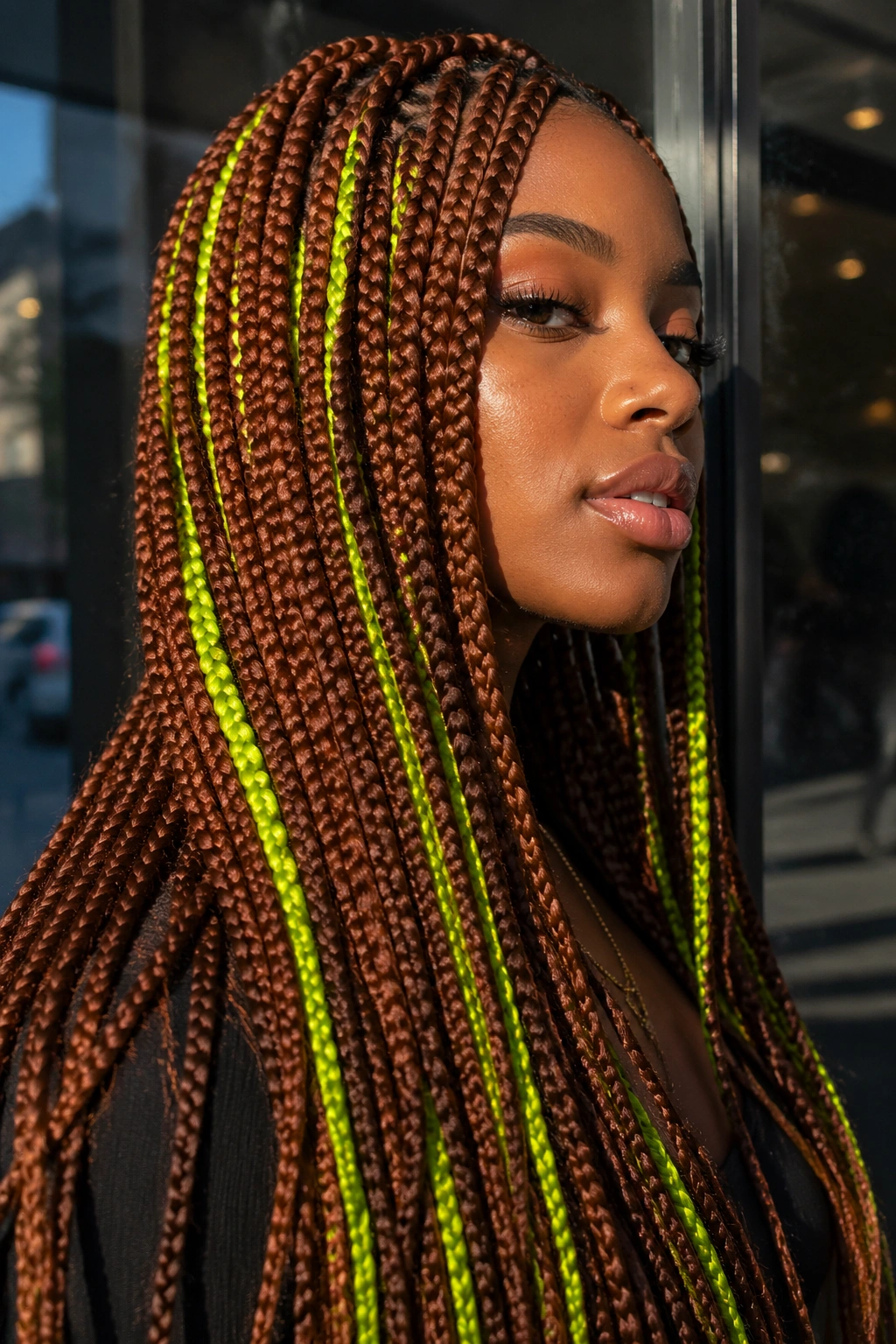
Unlike the softer green looks, cinnamon brown with neon streaks is not trying to blend in. It wants contrast. Lots of it. The brown stays warm and rich, while the green cuts through the whole head like a marker line.
This style works because the brown keeps neon from looking childish. That’s the difference. Bright green on its own can feel one-note, but against cinnamon brown it gets a frame and suddenly looks sharper. More deliberate. Less like you grabbed the loudest hair in the pack by mistake.
I’d keep the streaks limited. Three to five strong neon panels are usually enough. Put them in visible spots—one near the hairline, one on the side, maybe one tucked deeper in the back—and the whole head gets that electric feel without becoming visually messy.
This is a style for people who don’t want soft. If you want quiet, skip it. If you want braids that wake up an outfit, this is the one.
7. Mocha and Moss Mixed-Length Braids
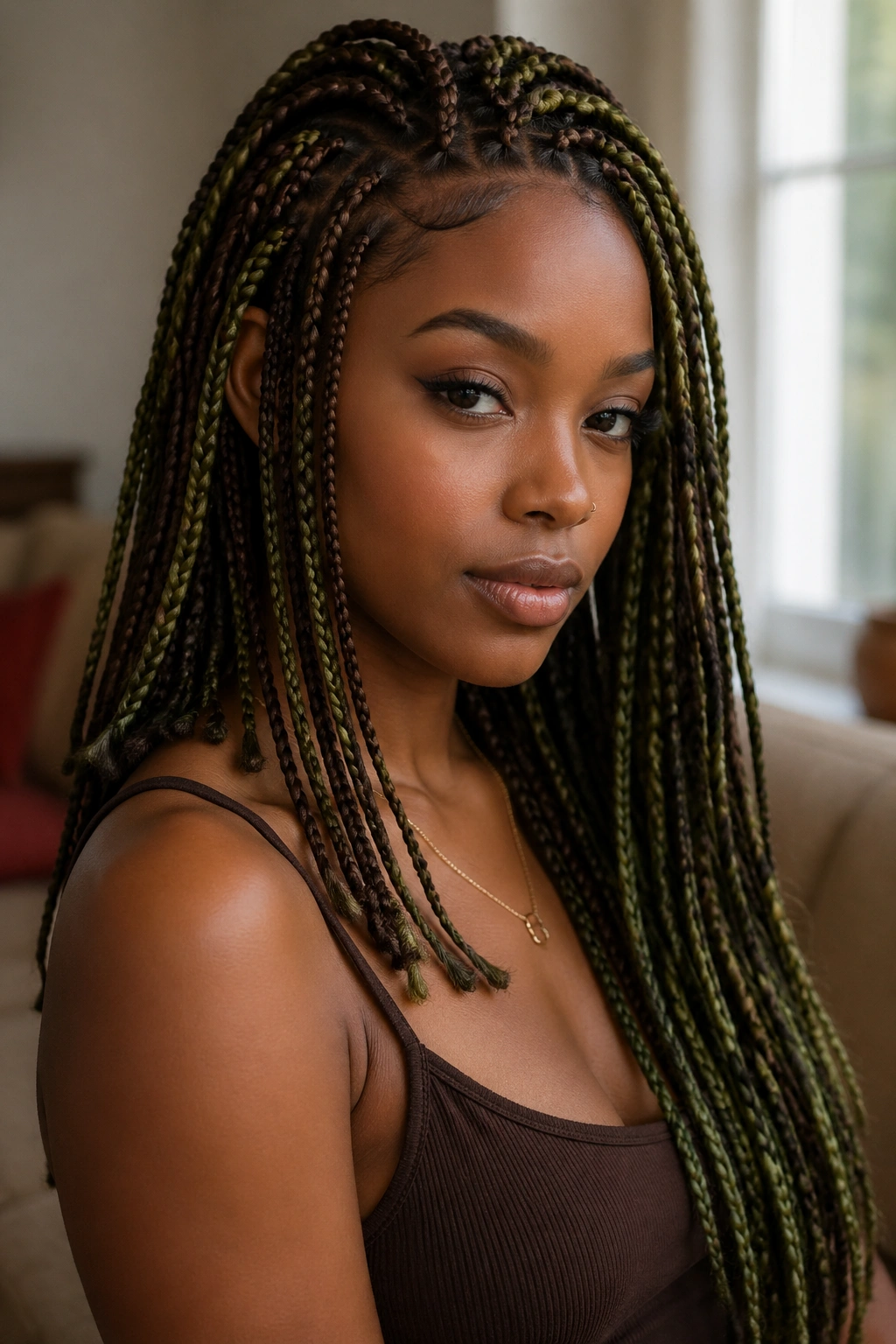
What makes mixed-length braids work is the movement. Different lengths break up the shape, and the mocha-and-moss color pairing makes the irregular edge feel on purpose instead of accidental. The result is a little softer than a blunt cut and a little more interesting than a standard long install.
How to Keep It From Looking Random
The lengths should still have a pattern, even if the eye doesn’t catch it right away. A good mix might include shoulder-length pieces around the face, a cluster at mid-back, and a few longer braids in the back for weight. That layered look gives the green space to show without covering the whole head.
Moss green works especially well here because it feels less harsh than bright green. The shorter braids catch more light around the face, and the longer ones let the color settle lower, which creates a nice little shift as you move.
Best Use Notes
- Choose mocha brown as the anchor color
- Keep the shortest pieces near the front and sides
- Add moss green in alternating lengths, not every braid
- Finish with lightweight cuffs if you want extra shape
This is one of my favorite versions for people who like a little messiness in their style, but not actual chaos.
8. Brown Braids with Green Beads and Cuffs
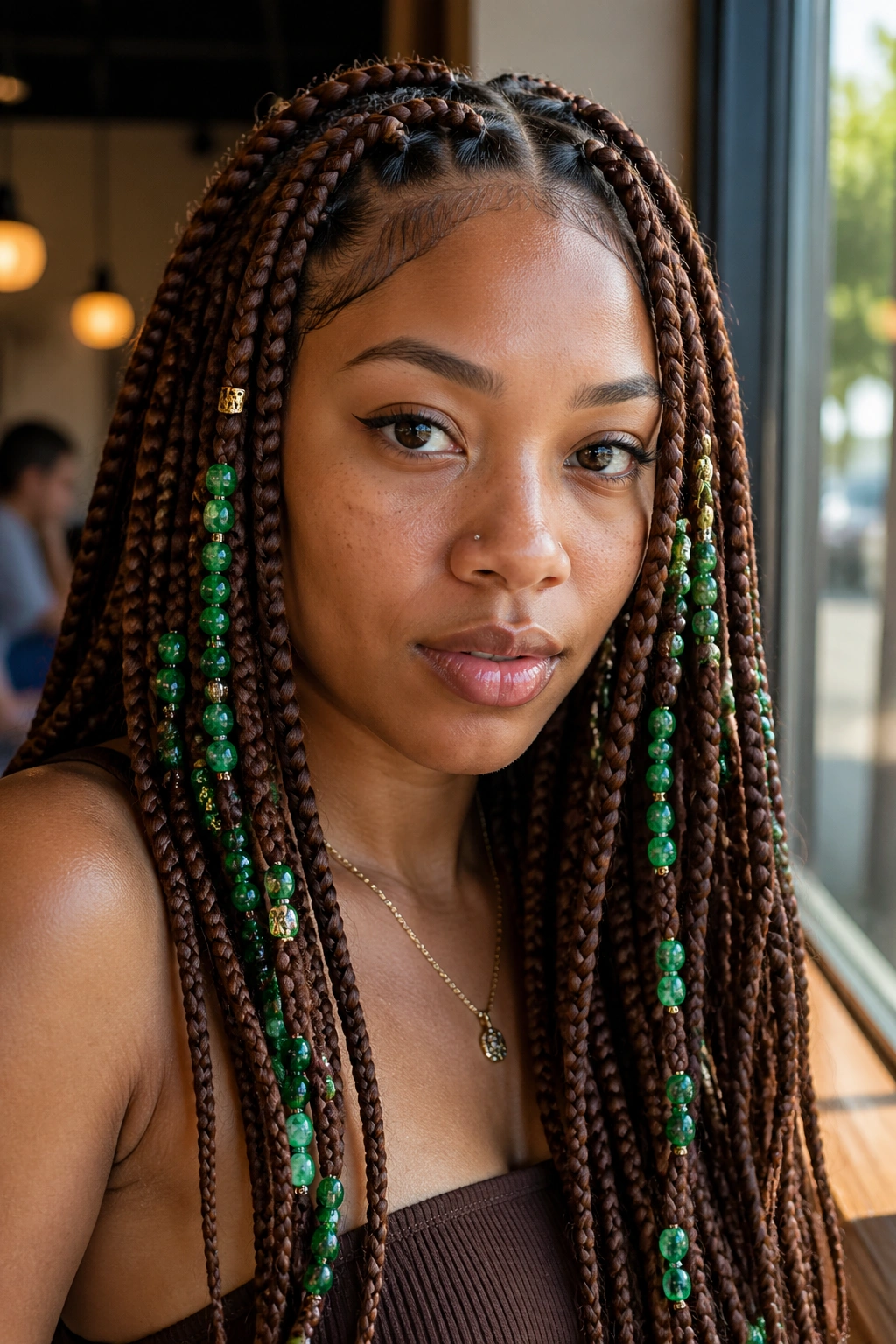
Sometimes the color should come from the accessories, not the hair itself. Brown braids with green beads and cuffs are proof. The base stays steady and easy to wear, while the beads carry the green in a way that you can remove, swap, or tone down whenever you want.
That flexibility matters. A set of matte green beads can look earthy, while glossy acrylic beads push the look brighter. Small gold cuffs between them keep everything from feeling flat. If your braids are shoulder-length or shorter, the accessories land right where people can see them, which makes the style feel finished fast.
I like this option for people who want color but do not want to sit in a chair and commit to a full green install. It’s also a smart move if your workplace is strict but your weekends are not.
A few bead choices worth trying:
- Matte forest green beads for a soft, grounded look
- Clear beads with green centers for a lighter touch
- Small metal cuffs on the braids closest to the face
- Mixed bead sizes if you want a less uniform finish
Simple hair. Smart add-ons. That’s the whole trick.
9. Half Brown, Half Green Color Block Braids
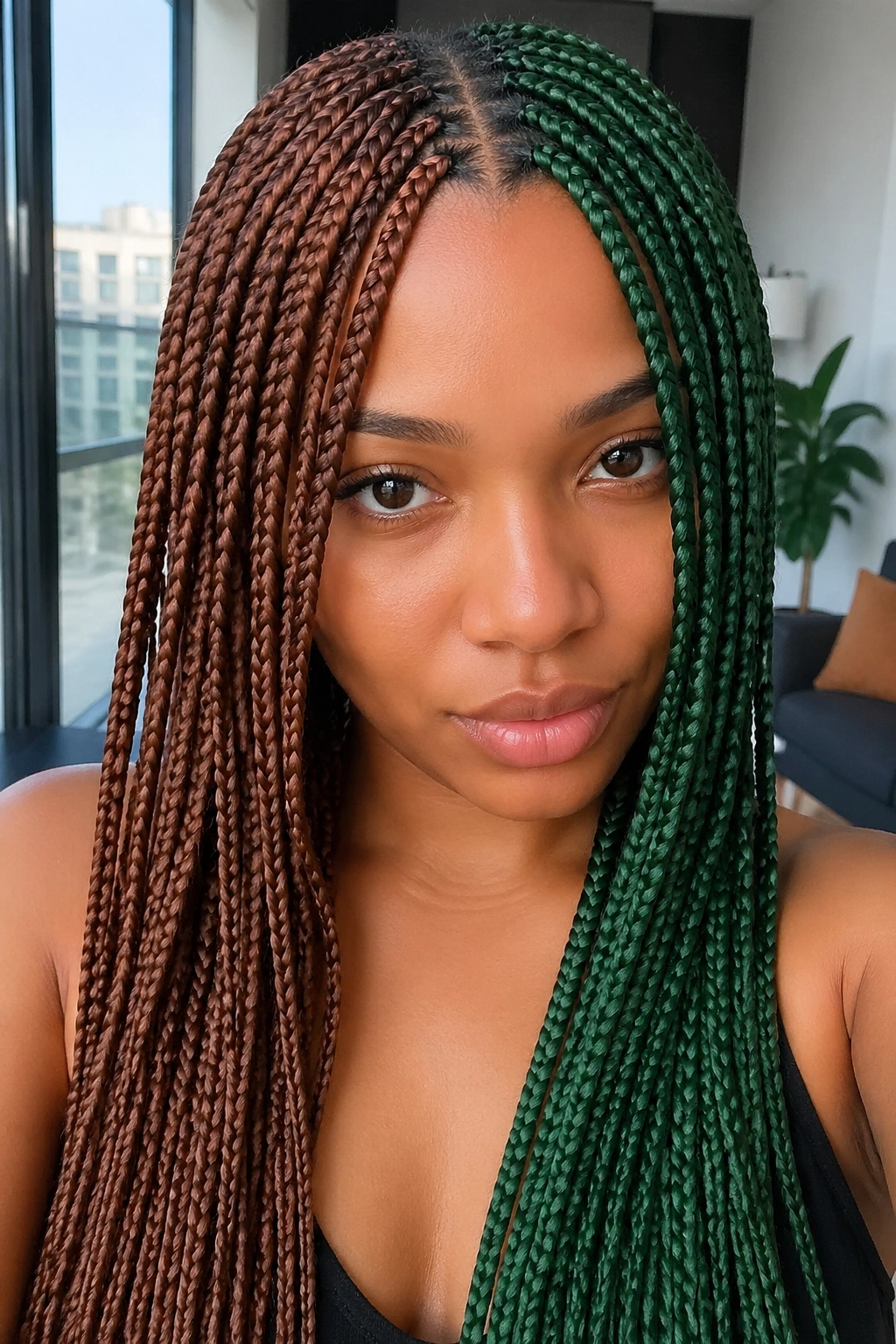
Half brown, half green is not subtle. It is also not supposed to be. This is the style for someone who wants the color split to be the point, not an accent. A clean center part can divide the colors down the middle, or a side part can make one side heavier than the other.
The key is symmetry, even when the colors are different. If one side has more braid thickness or longer pieces, the whole thing can look lopsided in a way that feels unplanned. Keep the lengths matched. Keep the part neat. Let the color do the bold part.
Brown on one side and green on the other can also be worn in different styles. A low bun shows the split clearly. Two braids or a twisted half-up look makes the color block read even harder. If you like your hair to start conversations, this one does the job on its own.
One warning: accessories can get too busy here. If the color block is strong, skip the extra clutter. The braid pattern needs room.
10. Triangle-Part Brown and Green Box Braids
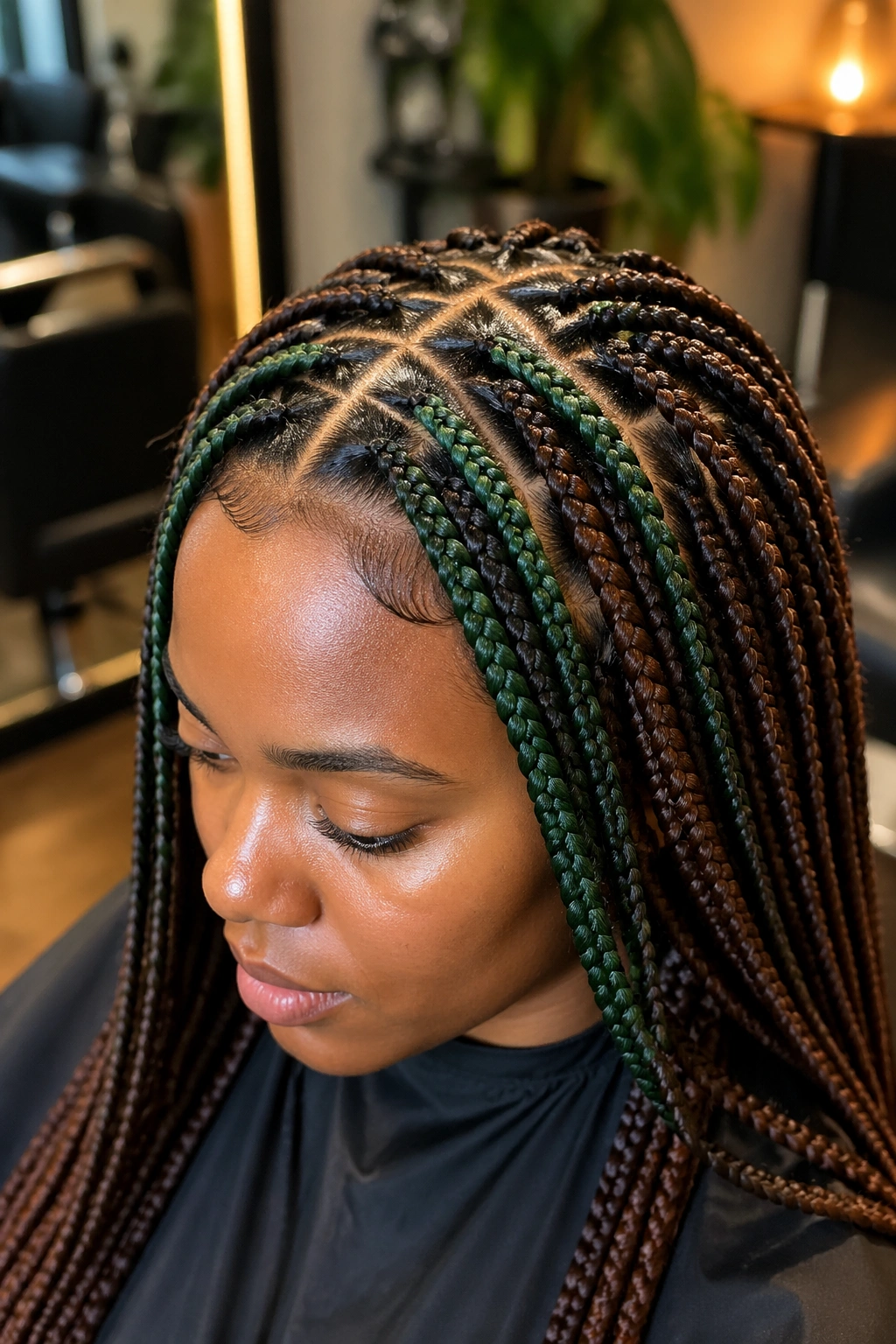
Triangle parts change the whole mood of brown and green box braids. The color is still there, but the geometry takes over for a minute, and that is a nice switch. Square parts feel familiar. Triangle parts feel sharper and a little more modern without needing any flashy extras.
Why the Parting Matters
Triangle sections open up more scalp in small, pointed shapes, so the part pattern becomes part of the style. That matters especially when the green is used in selected rows rather than across the whole head. The eye follows the triangles first, then notices the color sitting inside them. It’s a neat little trick.
This style works especially well if your brown base is a deep chocolate or neutral medium brown. The parting creates contrast against the scalp, and the green shows best when it’s placed in the front or crown rows.
What to Ask For
- Triangle parts, not square parts
- Green concentrated in the top or front rows
- Medium-sized braids so the parts stay visible
- A smooth edge finish so the shape stays clean
The whole look feels more designed than decorated. That’s why I like it.
11. Waist-Length Brown Braids with Thin Green Accent Plaits
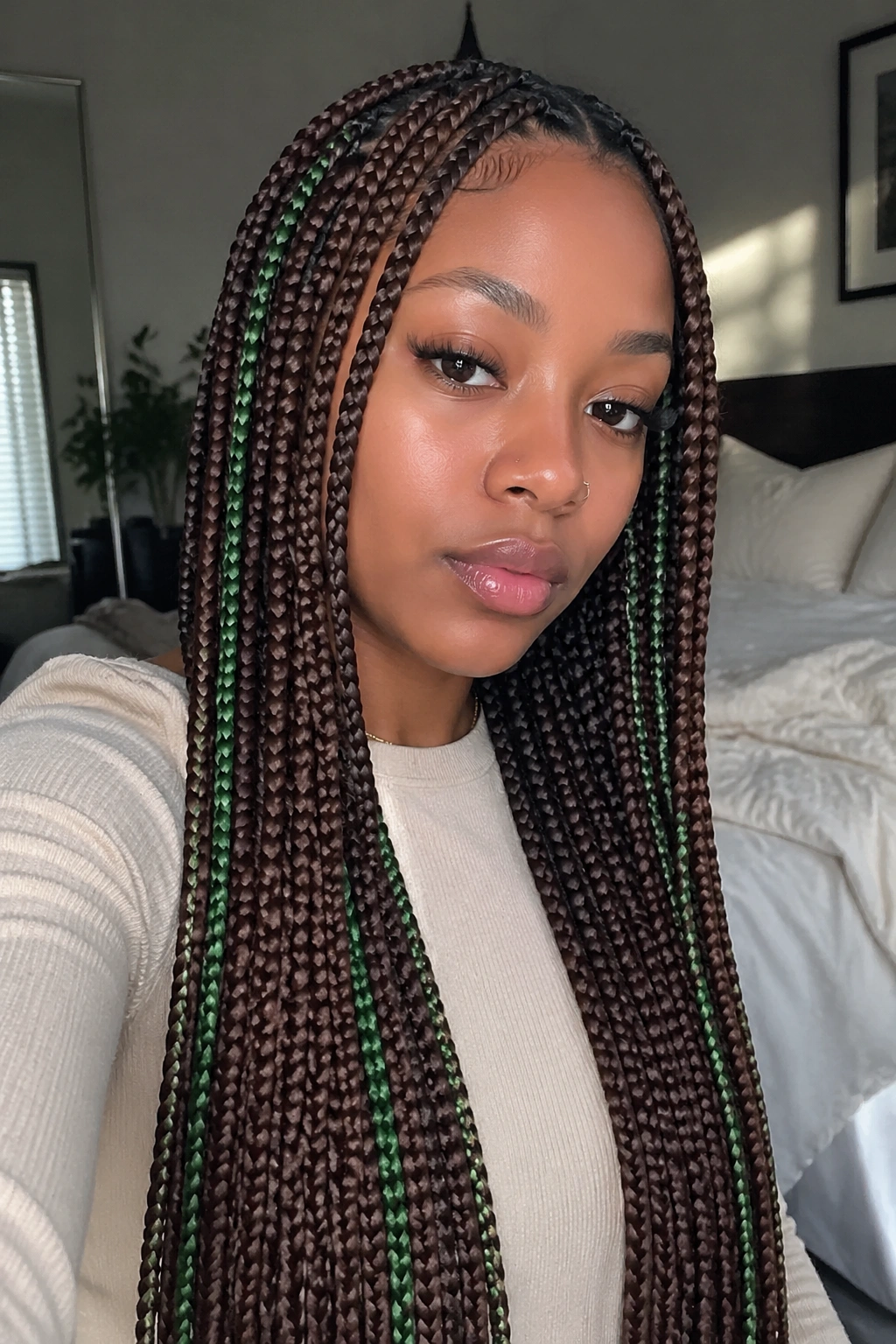
Long braids give color room to move, but thin green accent plaits keep the whole thing from tipping into overload. This style is all about restraint. Brown does most of the work, and green arrives in slim threads that you notice more when the hair swings than when it sits still.
The best way to place the green is to think in layers. Put a few accent plaits near the face, a few in the middle, and a few lower down so the color doesn’t bunch up in one spot. If the green is too concentrated, it starts to look like an afterthought. Spread out properly, it looks deliberate.
I like this style for people who wear their braids loose most of the time. The long length lets the accent pieces disappear and reappear in motion, which feels richer than a flat all-over color job.
A small detail that matters: keep the green strands thinner than the brown ones. The contrast looks better that way. Thick green plaits can overwhelm the whole head. Thin ones feel like punctuation.
12. Shoulder-Length Brown and Green Bob Braids
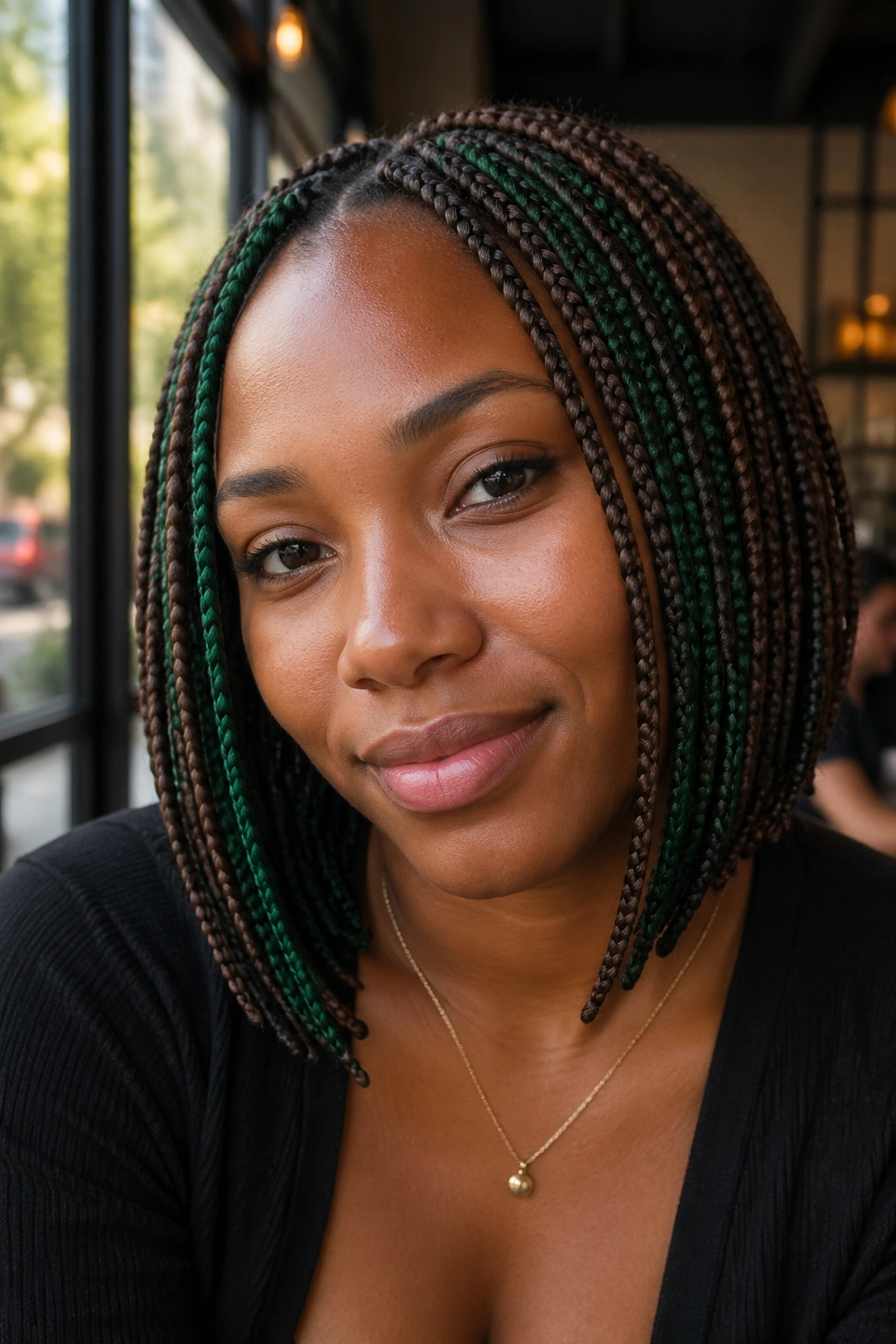
Shoulder-length box braids are underrated. They sit lighter, dry faster, and tend to look fuller because the color is concentrated in a smaller space. Brown and green in a bob shape can feel sharp in a way that longer braids do not always manage.
The cut matters here. A blunt bob makes the color look denser. A slightly rounded bob softens the shape and gives the green a little more movement. If you want the style to feel polished, keep the ends even. If you want it to feel a touch looser, let the front pieces dip a little longer than the back.
This is the version I’d pick for someone who likes color but hates getting hair caught on coat collars. It’s practical. No drama there. The green still shows enough, especially if it sits in the outer layer or at the bottom third of the braid.
Best of all, the shorter length makes maintenance easier. Less tugging. Less weight. Less time spent wrestling braids into a bun that keeps collapsing.
13. Brown Braids with Green Ombre on Curly Ends
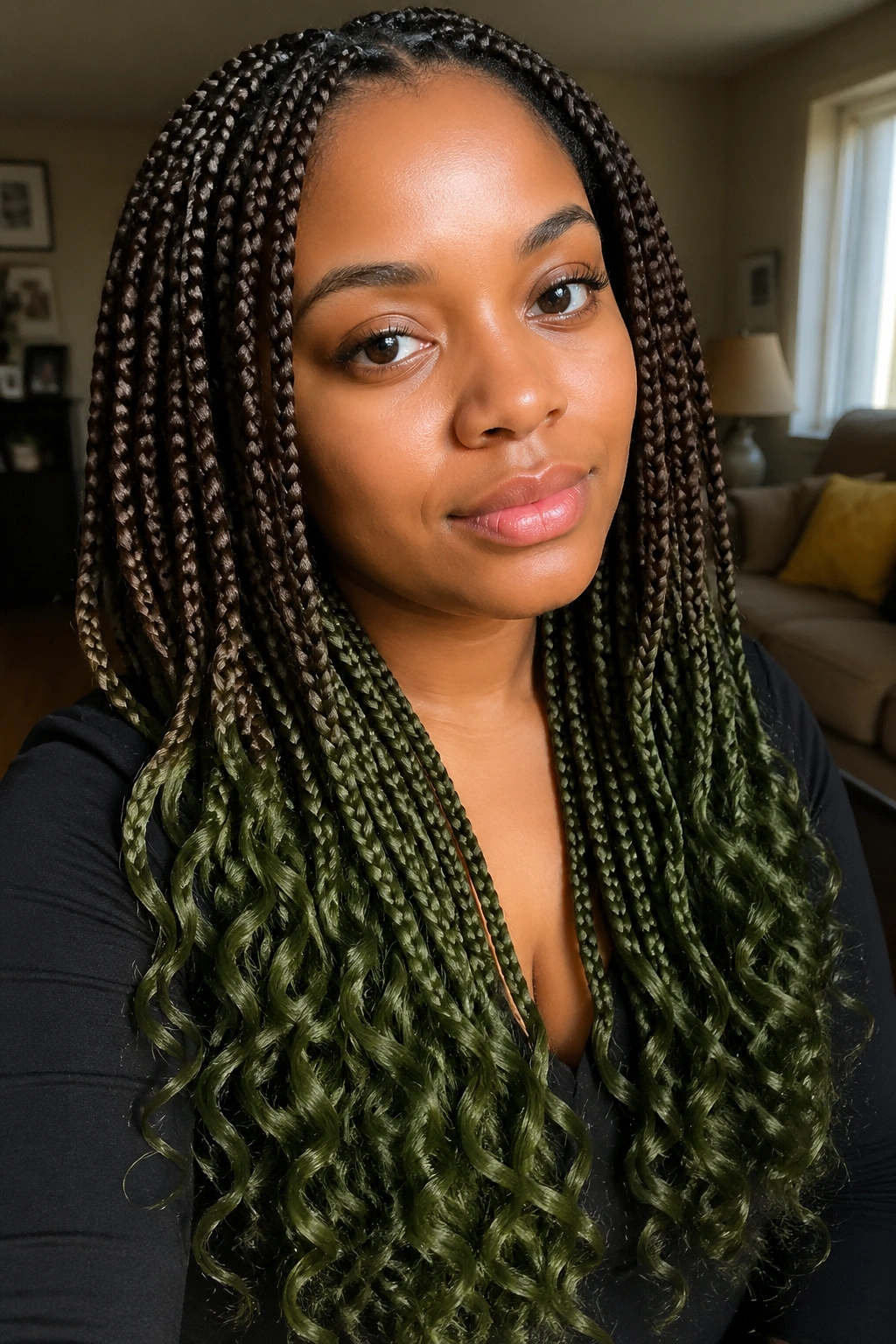
Straight braids are one thing. Curly ends are another. Put brown braids on top, let the green roll into the bottom, then finish with loose curls, and the whole style gets a softer edge. The curl changes how the color sits. It breaks the line and makes the green feel more playful.
What the Curls Change
Curly ends catch the eye because they move differently from the braid body. That gives the green a little bounce, even if the shade itself is dark. If you use a curl pattern that’s too tight, the style can feel heavy. A looser spiral works better because it lets the green breathe.
A lot of people make the mistake of putting the green only in the braid body and forgetting the ends. I think that wastes the best part. The ends are where people notice motion first. Give them a reason to look.
Best Match Ideas
- Brown to moss-green ombre for a soft finish
- Brown to jade ombre for more shine
- Loose curly ends rather than tight ringlets
- Mid-back length if you want the curl to show
This one feels a little flirty without turning sugary. That’s a good line to live on.
14. Deep Brown Knotless Braids with Sage Green Highlights
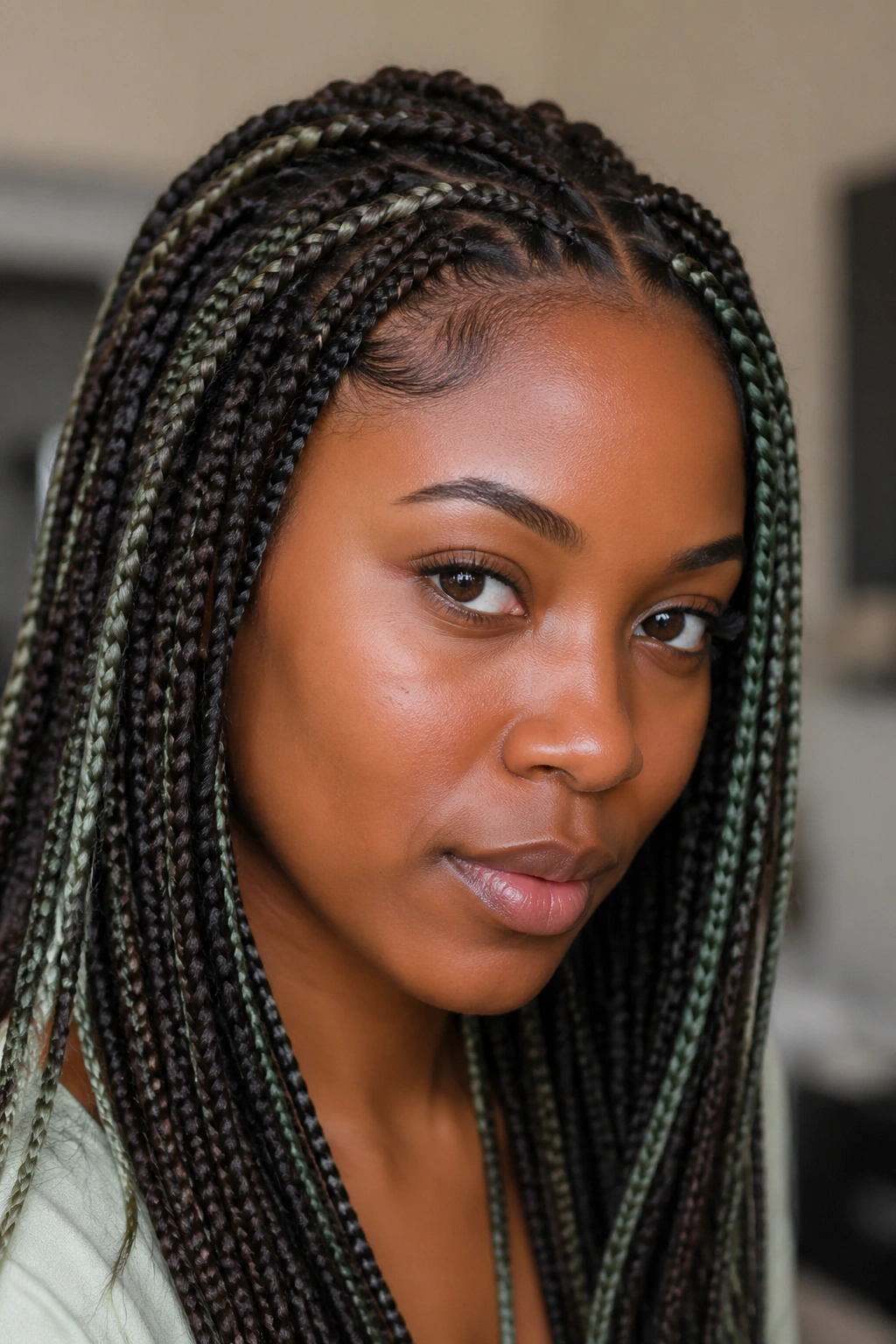
Knotless braids make the root area look smoother, and that matters when you’re using a softer shade like sage. Deep brown gives you a strong base, while the sage green highlights keep the style from feeling heavy. The result is calm, but not plain.
Knotless installation also changes how the color reads near the scalp. Because the root lies flatter, the highlights seem like they grow out of the hair rather than sitting on top of it. That’s a nice effect if you want the style to feel a little more natural and a little less packed.
Sage is a smart choice here because it has enough color to show, but not so much brightness that it takes over the whole head. If you want a braids style that works with simple makeup, gold jewelry, and neutral clothes, this is a strong pick.
A few care notes help here:
- Keep the roots neat with light mousse, not heavy gel
- Sleep in a silk scarf so the highlights stay smooth
- Use a light oil only on the scalp, not the braid body
- Refresh the ends before they start to fray
Quiet color can still make a point. It just does it more slowly.
15. Soft Neutral Brown with Muted Green Underlayer Braids
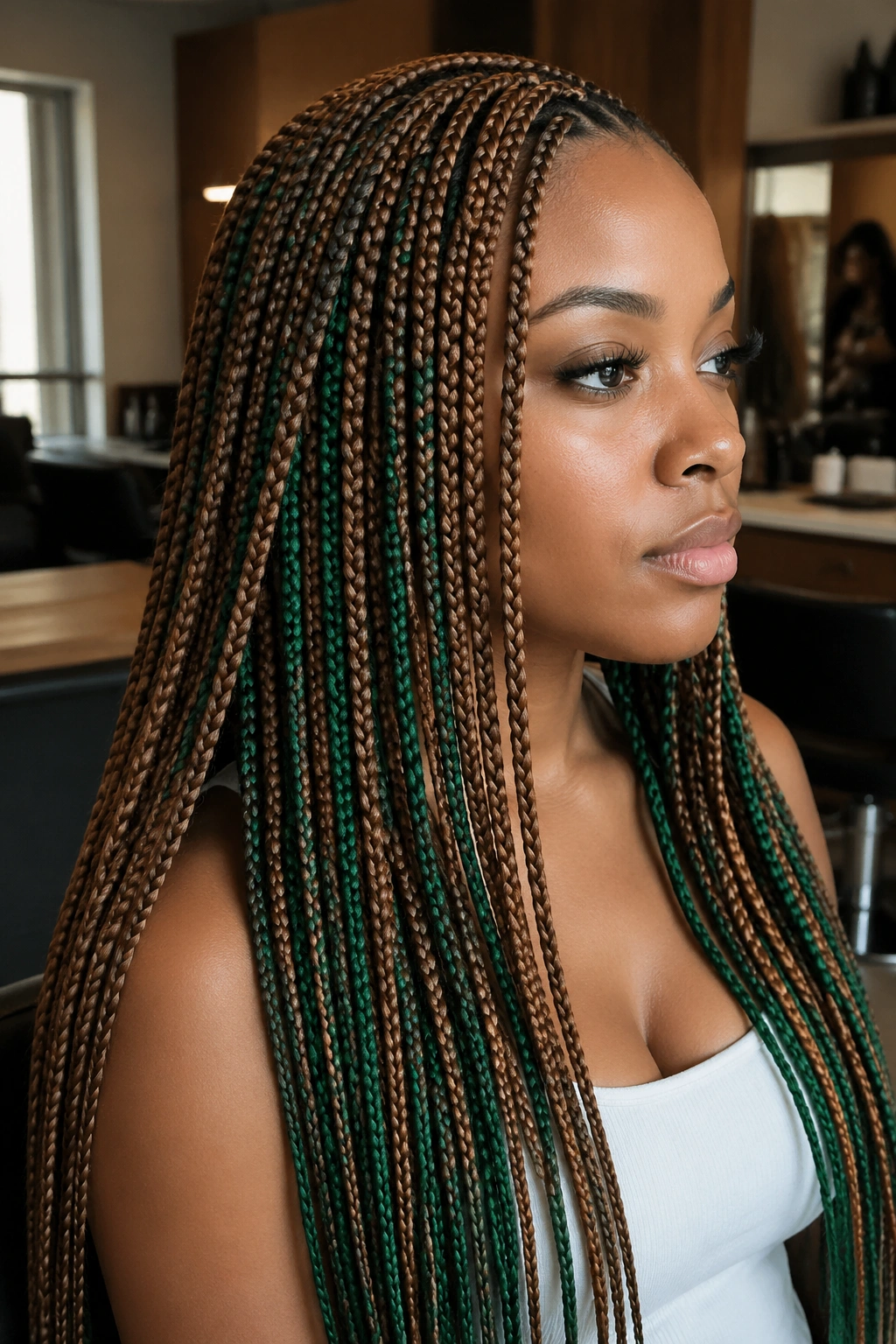
Muted green underlayers are for the person who wants color but doesn’t want their hair doing the most in every room. The brown stays front and center, and the green shows up underneath, where it reads as depth instead of decoration. Pull the braids into a ponytail or bun, and the green suddenly becomes visible. Let the hair fall loose, and it slips back into the background.
That kind of movement is why I like this version so much. It changes shape with your styling choices. A loose install looks mostly brown. A half-up style reveals the green. A high bun makes the underlayer pop. The hair gives you options without demanding attention all the time.
Muted green works especially well when the brown is a neutral medium shade rather than a red-brown. The cooler base keeps the underlayer from looking muddy. If you want the most wearable version of brown and green box braids, this is probably it.
I’d choose this one for a first color install, for a work setting that needs restraint, or for anyone who likes the idea of green more than the idea of bright green. It’s calm. It’s flexible. And it still has enough personality to feel like a choice, not a compromise.
