



The best box braids for kids are rarely the biggest, flashiest, or longest styles in the room. They’re the ones that sit light on the scalp, stay neat through school and play, and don’t turn bedtime into a wrestling match with a bonnet.
That’s the part people miss. A style can look beautiful in the chair and feel awful by the next morning if the parts are too tight, the braids are too heavy, or the ends keep brushing the neck. With children, comfort is not a side note. It is the whole deal.
So the sweet spot is usually a style that looks fun from the front, keeps the hair protected, and still lets a child move like a child. A good braid should survive recess, naps, car rides, and the kind of fidgeting no stylist can fully predict. It should also be easy enough for a parent to refresh without spending half the evening redoing the same three braids.
The styles below lean on that reality. Some are quick and tidy. Some are playful enough for birthdays and pictures. Some are made for kids who want color, beads, or a little extra shape without dragging a heavy style around all day.
1. Shoulder-Length Medium Box Braids
Shoulder-length medium box braids are the dependable starter style for a reason. They give you enough length to style without letting the hair swing all over the place, and they sit in that middle zone where a child can wear them to school without constantly flipping them off the face.
Why It Works
Medium-sized sections spread the weight better than tiny braids, so the scalp usually feels calmer. The shoulder-length finish also keeps the ends from catching on backpack straps, zippers, and hoodie seams.
- The look stays neat for daily wear.
- The braids are long enough for simple ponytails or half-up styles.
- The cut sits close enough to the head to feel manageable for younger kids.
Best tip: ask for clean parting and medium tension near the hairline. That one detail matters more than fancy accessories.
2. Jumbo Box Braids with Clear Beads
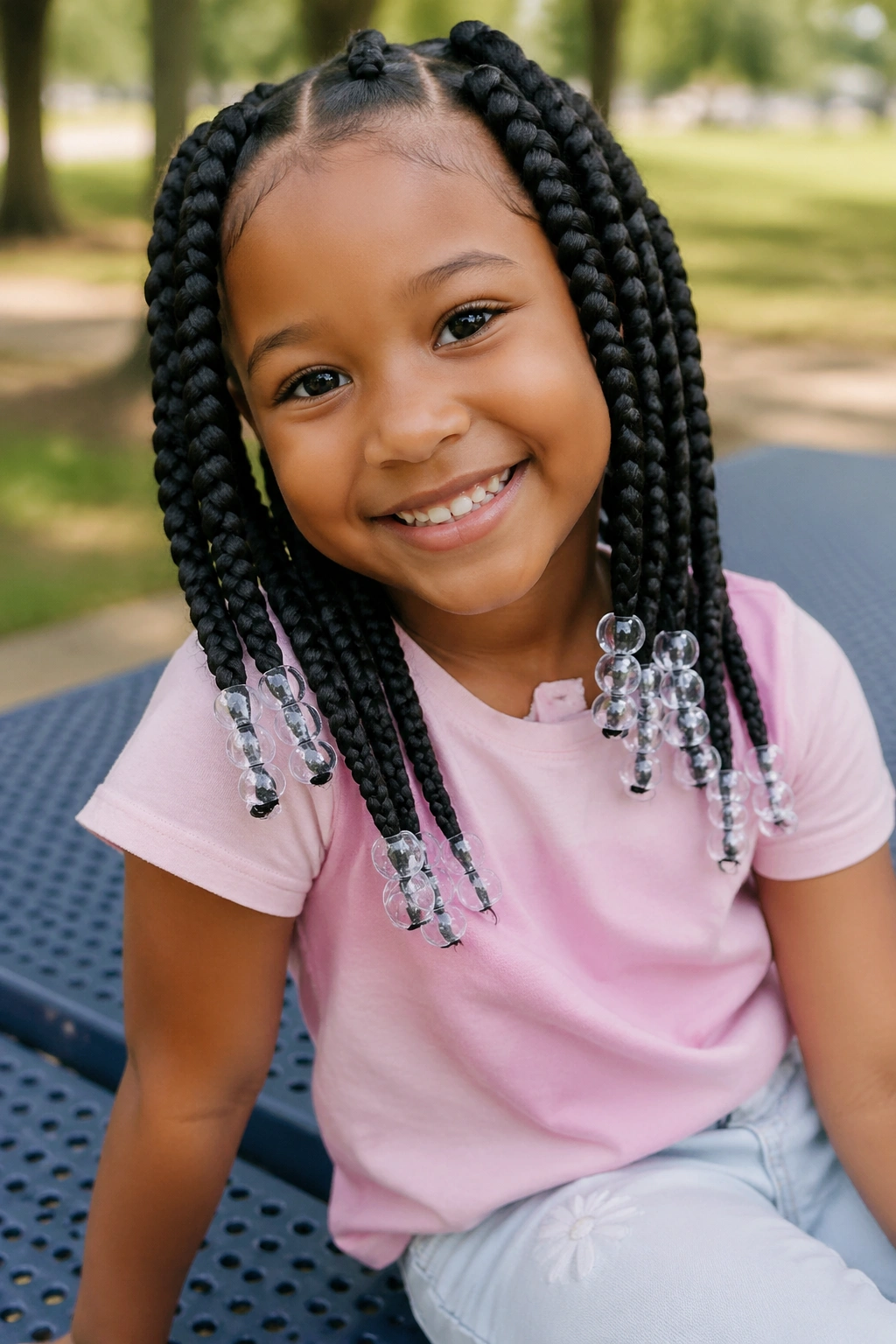
Jumbo box braids with clear beads bring a lot of personality without making the style complicated. The braids are thick, quick to install, and easy for a child to shake out after a long day.
The clear beads keep the ends from looking bulky, which helps when you want the style to feel playful instead of overloaded. They also add a little sound and movement that some kids love. If the child is tender-headed, though, keep the bead count low and place them only at the very bottom. Heavy bead strings can turn cute fast.
For little kids who do not sit still for long, this is one of the friendlier options. Fewer braids mean less time in the chair, and the bead detail makes the style feel finished without needing extra design work.
3. Knotless Box Braids
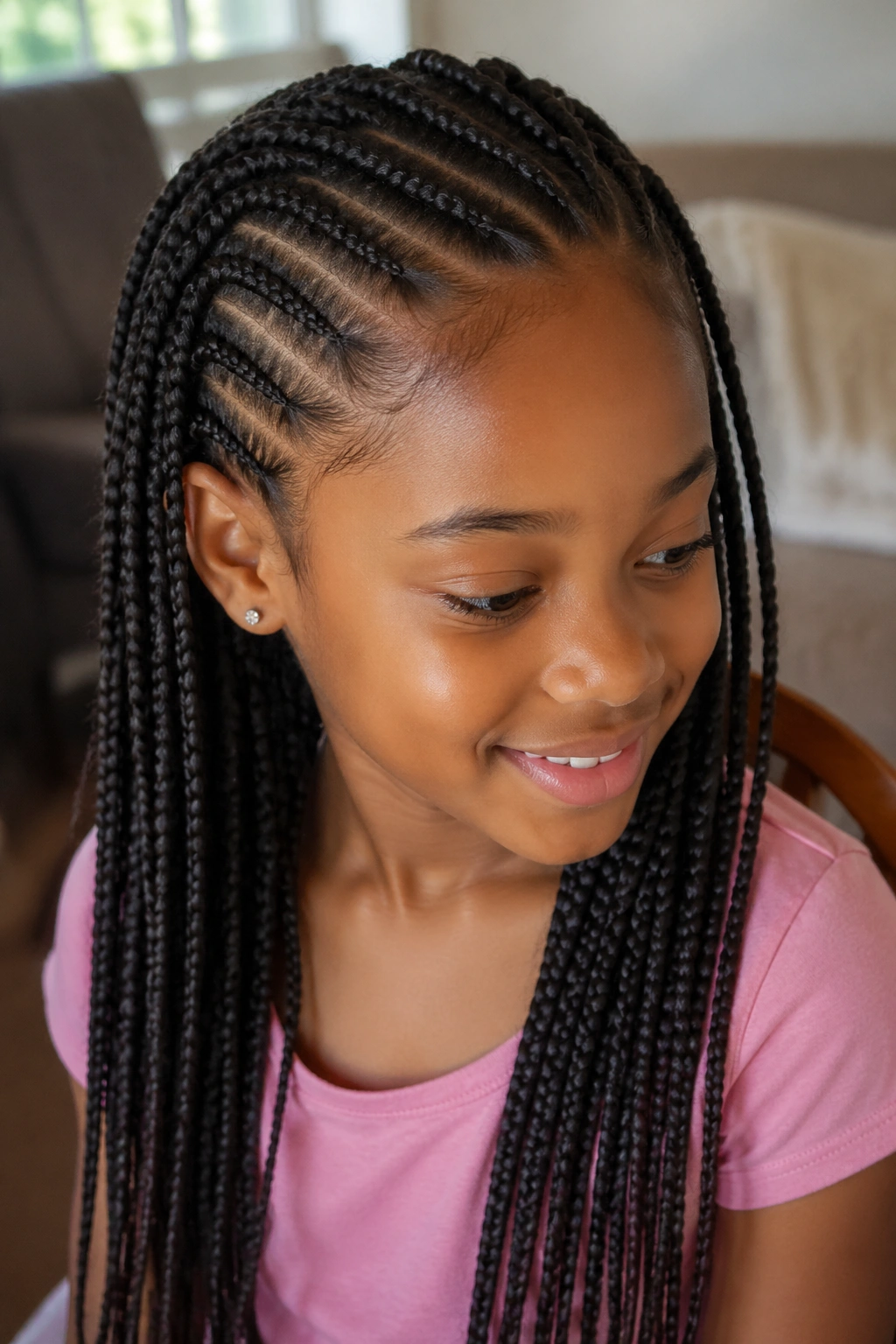
Why do knotless box braids matter so much on a child? Because the braid starts more gently at the root, which usually means less pull at the scalp and a softer feel along the hairline.
That softer start is the whole appeal. Instead of a tight knot sitting at the base of each braid, the extension hair gets fed in gradually. The result looks cleaner and often feels easier for kids who complain the second the chair session starts.
How to Wear It
- Keep the braids medium or short for younger children.
- Pair them with beads only if the braid length can carry the extra weight.
- Ask for a soft edge around the temples, not a pulled-down line.
It is the style I reach for when a child says, “I want braids, but don’t make them hurt.”
4. Triangle-Part Box Braids
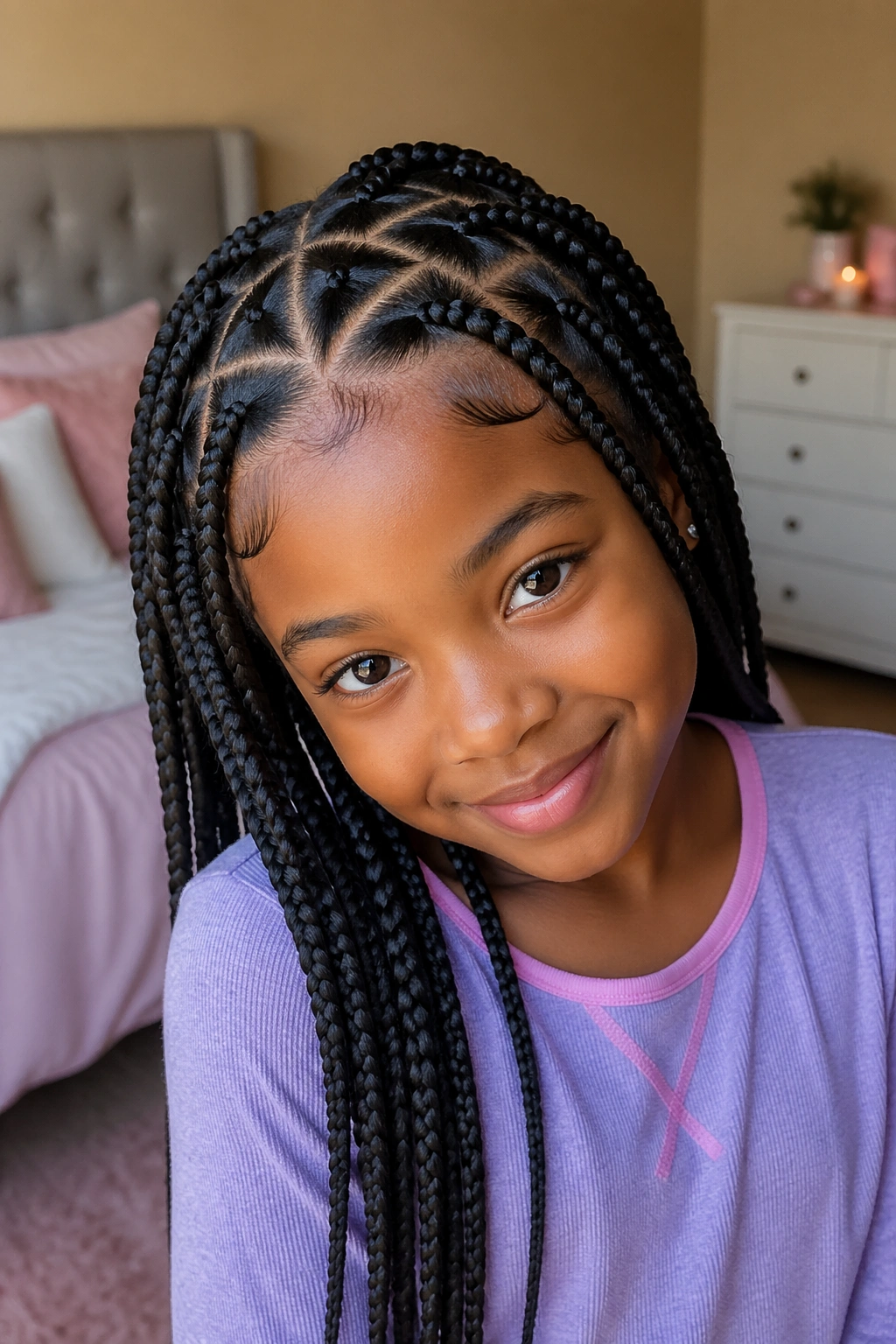
Triangle parts give ordinary box braids a sharper edge. The sections open up in little geometric points instead of straight squares, and that small change makes the whole style look more deliberate.
I once watched a child go from “I want braids like my cousin” to staring at the parting in the mirror like it was the main event. That’s triangle parts. They do not need much else.
The shape works best with medium braids and a tidy front hairline. Keep the braids simple if the parts are doing the talking.
- Best on short to shoulder-length braids.
- Looks neat even without beads.
- Works well when you want a fresh look without a long styling process.
5. Chin-Length Box Braid Bob
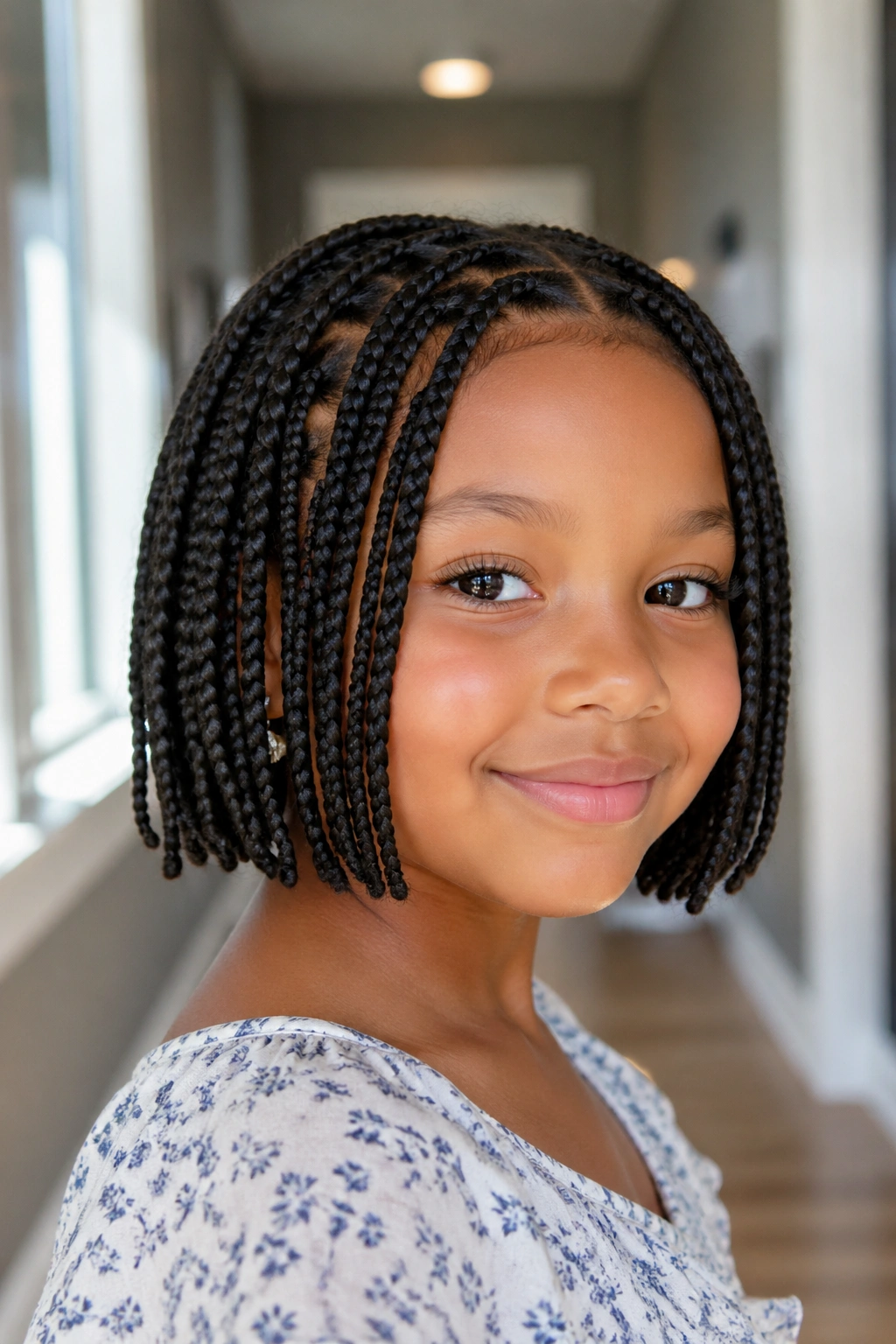
A chin-length box braid bob is light, easy, and a little bit chic without trying too hard. It sits away from the shoulders, which means less rubbing, less frizz at the ends, and fewer tangles around coat collars.
The shorter length also makes the style feel more grown without being fussy. Children who hate hair touching their neck usually do better with a bob because the braids move out of the way naturally. There is still enough length to tuck one side behind the ear or clip in a small accessory.
This is one of the best options for active kids. It looks neat in photos, stays tidy at school, and does not ask much from you at home.
6. Half-Up Box Braids with a Top Knot
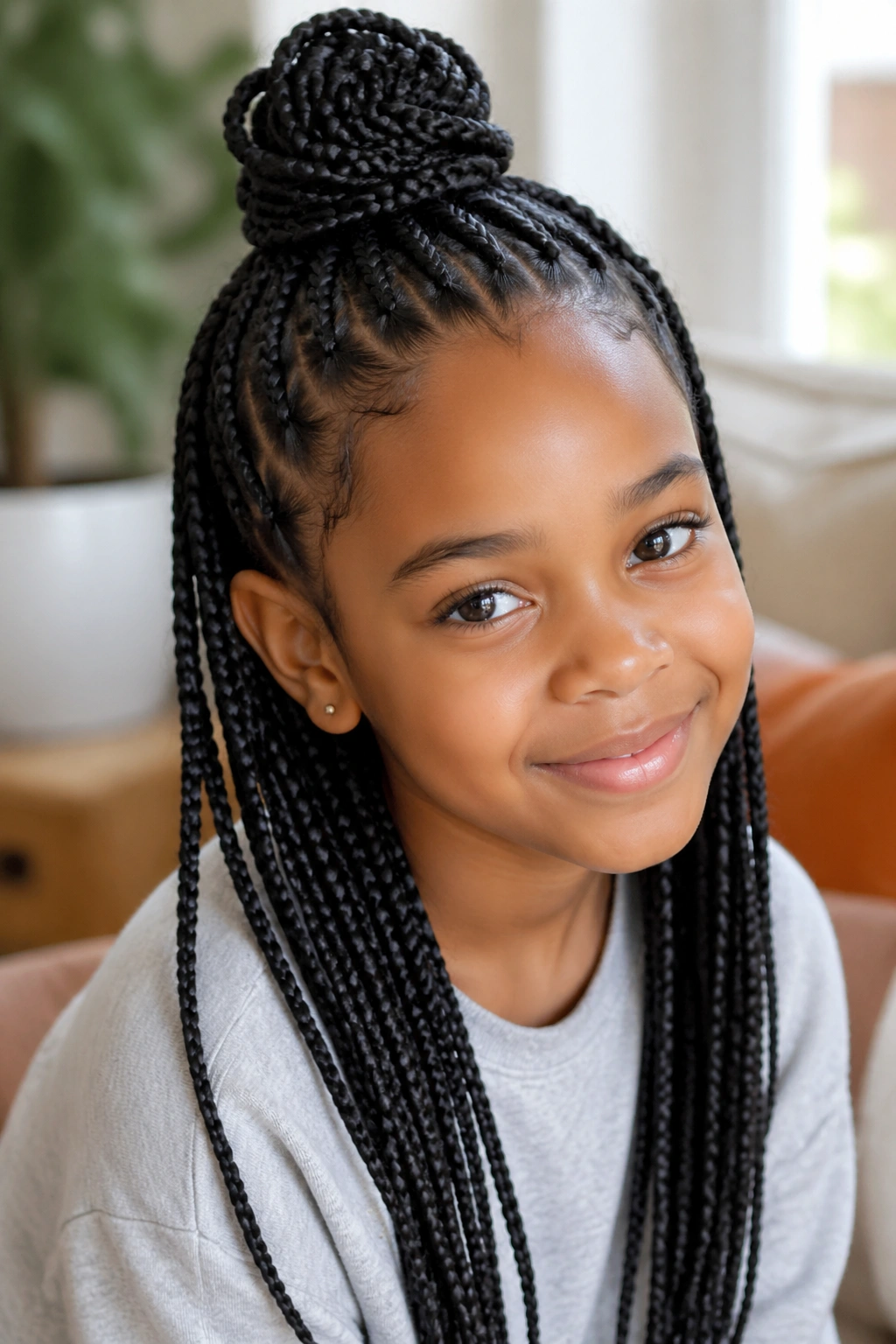
Unlike a full-down style, a half-up top knot pulls the front and crown away from the face while leaving the rest loose. That makes it useful for kids who want a little drama but still need their eyes clear during homework, snacks, and car rides.
The top knot is also forgiving. If a few braids are not sitting perfectly, they disappear into the bun and stop being a problem. For younger kids, keep the bun loose and low enough that it does not pull at the crown.
This style works best when the braids are medium or short-medium. Long braids can make the top knot heavy. A few colorful cuffs near the bun help it look finished without much extra effort.
7. Side-Part Box Braids
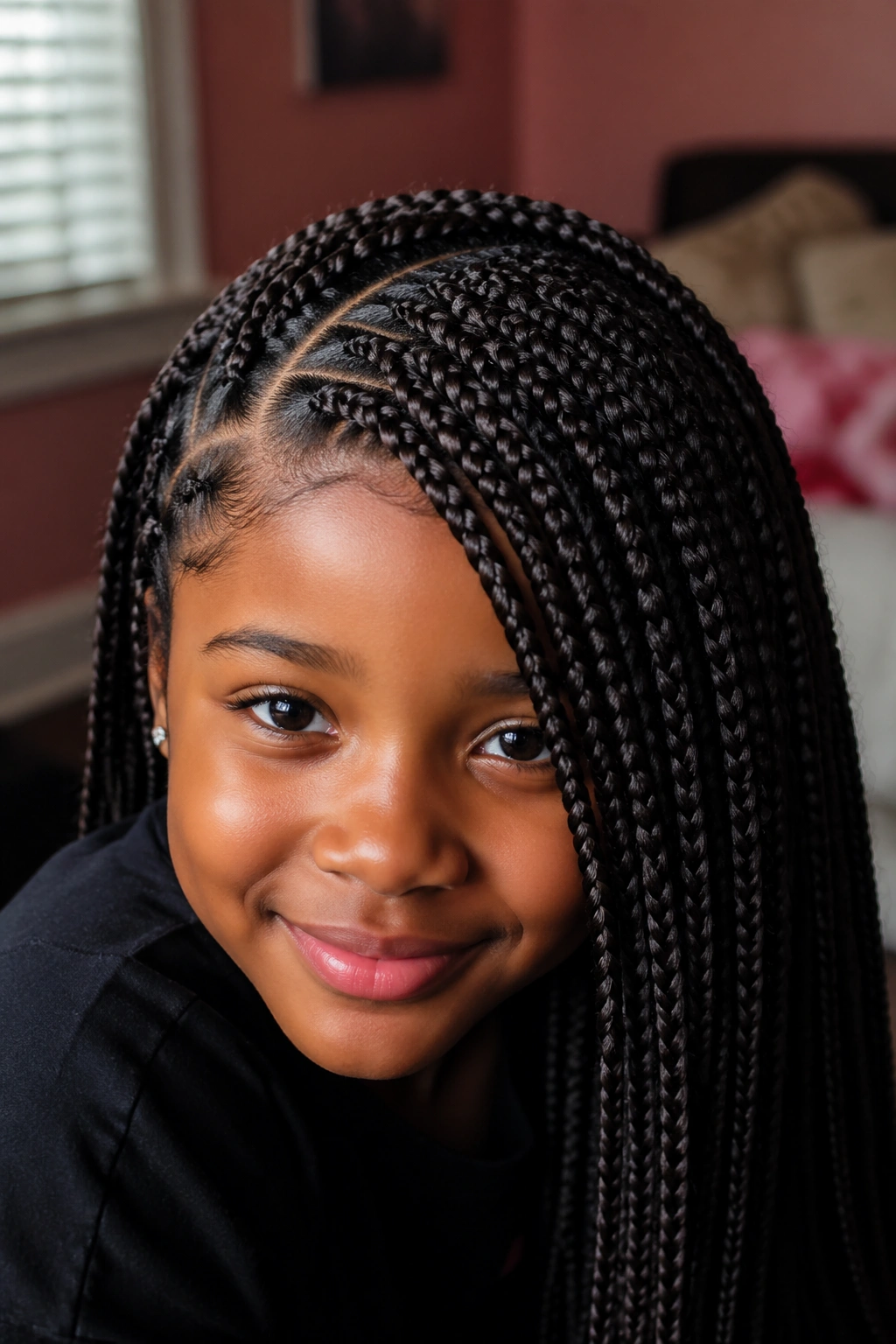
A side part changes the whole mood of box braids without changing the braid size at all. The look feels softer than a center part, and it can be a nice switch for children who like their hair to fall across one side of the forehead.
The nice part is the simplicity. You do not need a dozen accessories to make it feel special. A clean side part, neatly aligned braids, and maybe one or two beads near the front are often enough.
For a child who likes to tuck hair behind one ear or wear a little bow on one side, this is a very easy style to live with. It also grows out gracefully, which matters more than people admit.
8. Bright Color-Block Box Braids
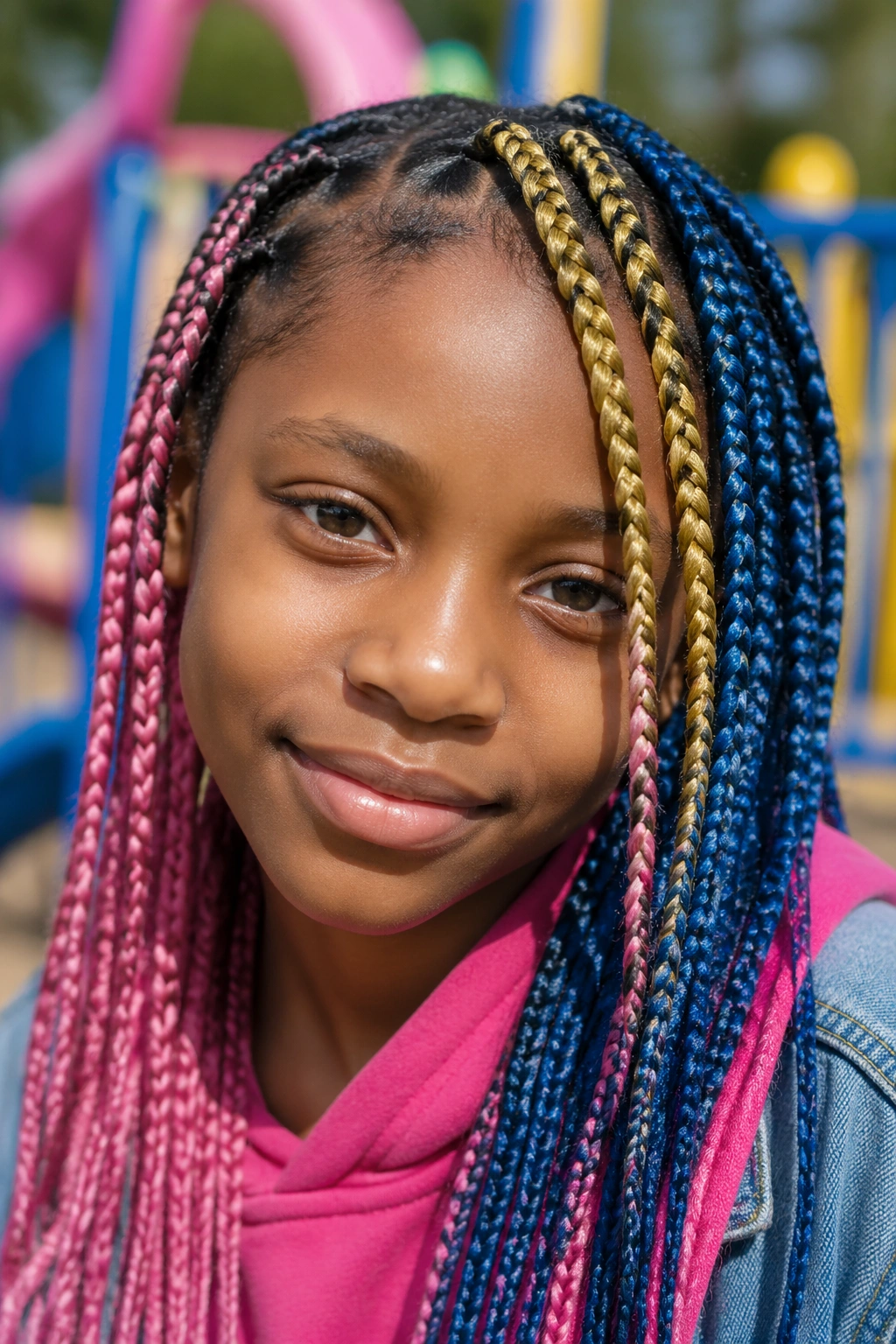
Bright color-block box braids are for the kid with opinions. Pink at the ends, blue through the middle, maybe a few gold strands near the front — the style can carry a lot without turning into chaos if you keep the color placement intentional.
The smartest way to do this is with blocks or panels, not random streaks everywhere. That keeps the hair looking playful instead of busy. A child usually likes this style because the color feels personal, almost like the braids are wearing an outfit.
Use the bright sections sparingly if the child has a strict school dress code. A little color goes a long way, and it is often easier to keep the roots dark and let the fun happen lower down.
9. Micro Box Braids
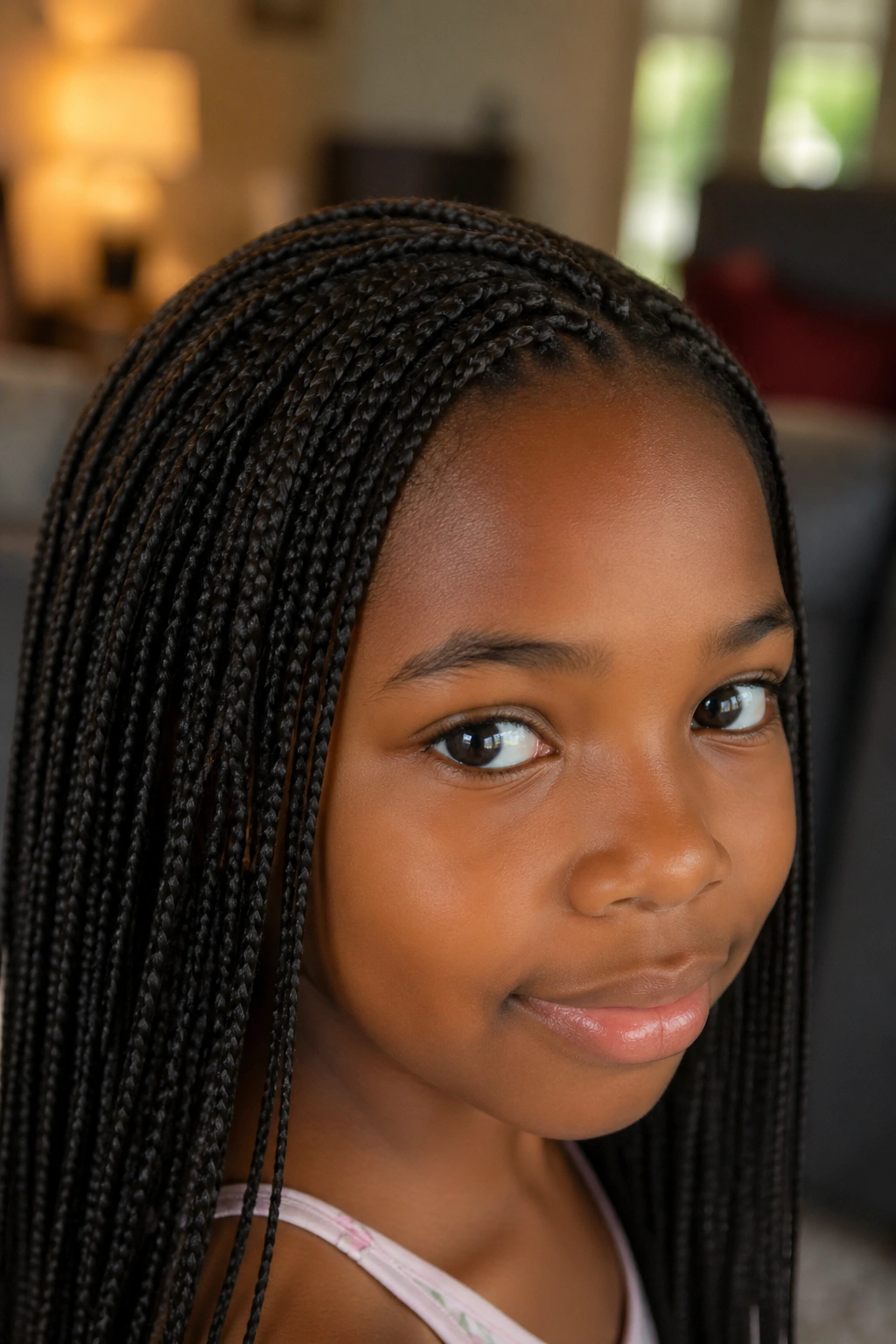
Micro box braids are tiny, neat, and full of detail. They can last well when installed and cared for properly, but they are not the style I reach for first on very young children because the chair time can drag.
Still, for older kids who like lots of movement and a braid that swings softly, micro braids have their place. They give a sleek finish and can be styled into pigtails, buns, or a single low ponytail without much bulk.
What to Tell the Braider
- Keep the tension gentle around the hairline.
- Avoid making every braid identical if that means overworking the scalp.
- Stop the length before it becomes heavy enough to tug.
Tiny does not automatically mean better. On kids, comfort wins.
10. Box Braids with Curled Ends
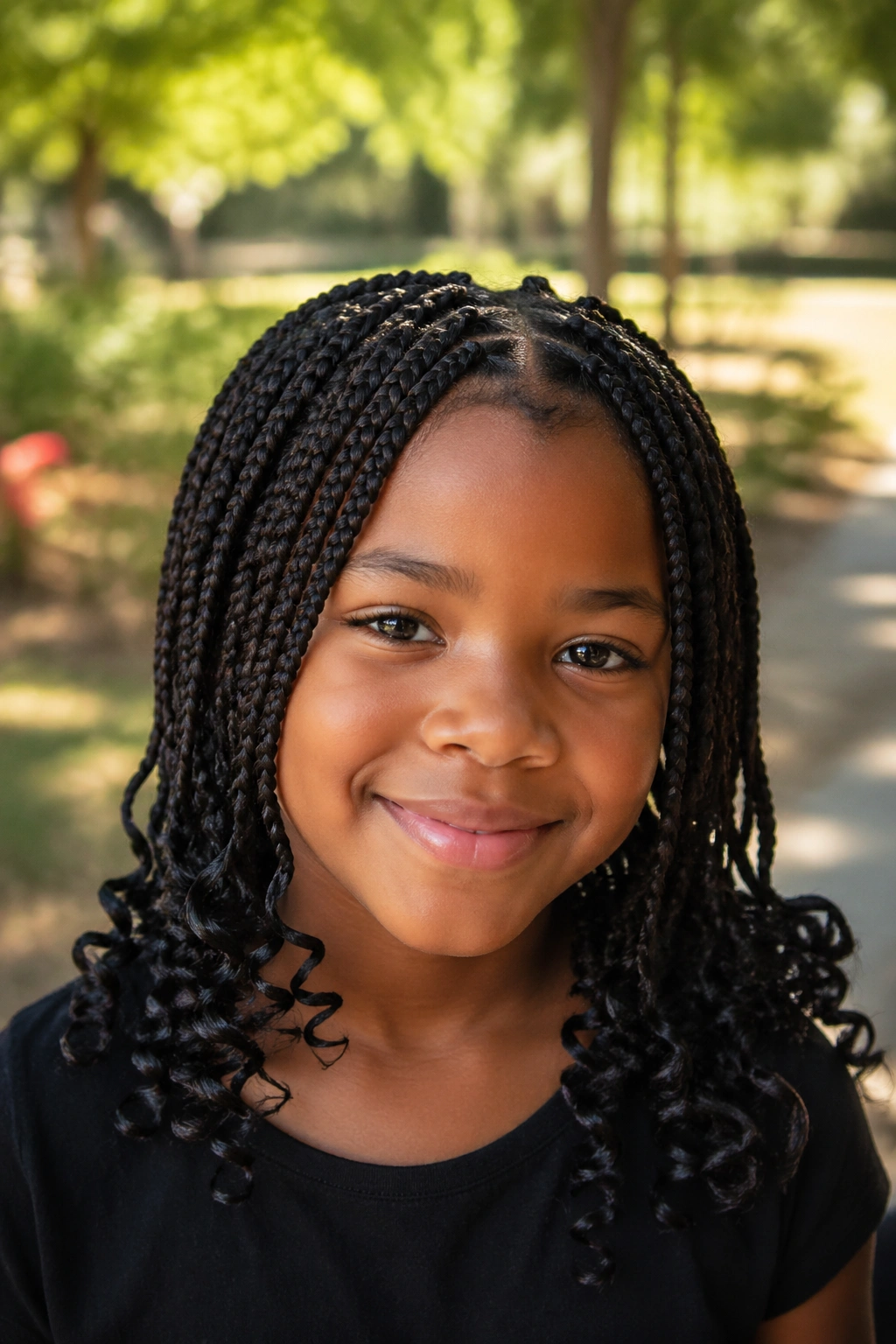
Curled ends make braids feel a little softer and more playful. Instead of straight blunt ends, the hair finishes in a curl or spiral, which adds movement and keeps the overall look from feeling too stiff.
This style is especially nice for photos or special outings because the curls break up all the straight lines. A child can still wear the braids down for school, but the ends give it a sweeter finish. The trade-off is upkeep: curls need a little more care at night, so a satin wrap or bonnet matters.
If you want a style that feels polished without being too formal, this is a strong choice. It looks done. It also looks fun.
11. Boho Box Braids with Loose Curls
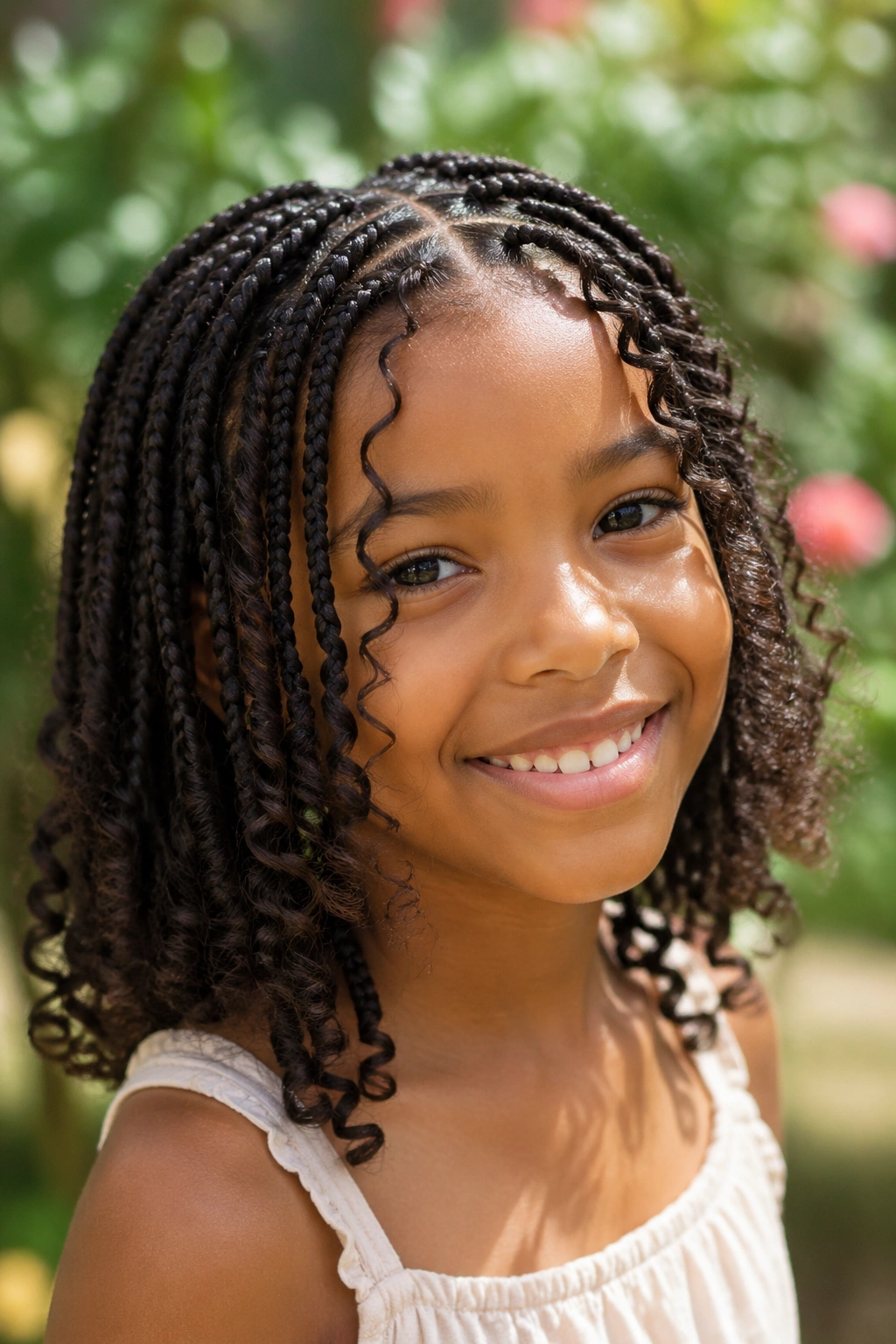
Boho box braids mix braided sections with a few loose curls left out on purpose. That extra texture softens the style and gives it a relaxed, airy look that kids often love because it feels less stiff than a full braid pattern.
The trick is restraint. A few curls near the front and sides are enough. Too many loose pieces and the style starts to tangle faster than anyone wants to deal with. Keep the curls lightweight, and keep the braid size medium so the whole thing still reads as a child-friendly protective style.
This style is best for older kids who like movement and do not mind a little extra fluff around the face. It is charming. It is also slightly high-maintenance, which is worth saying plainly.
12. Feed-In Front Box Braids
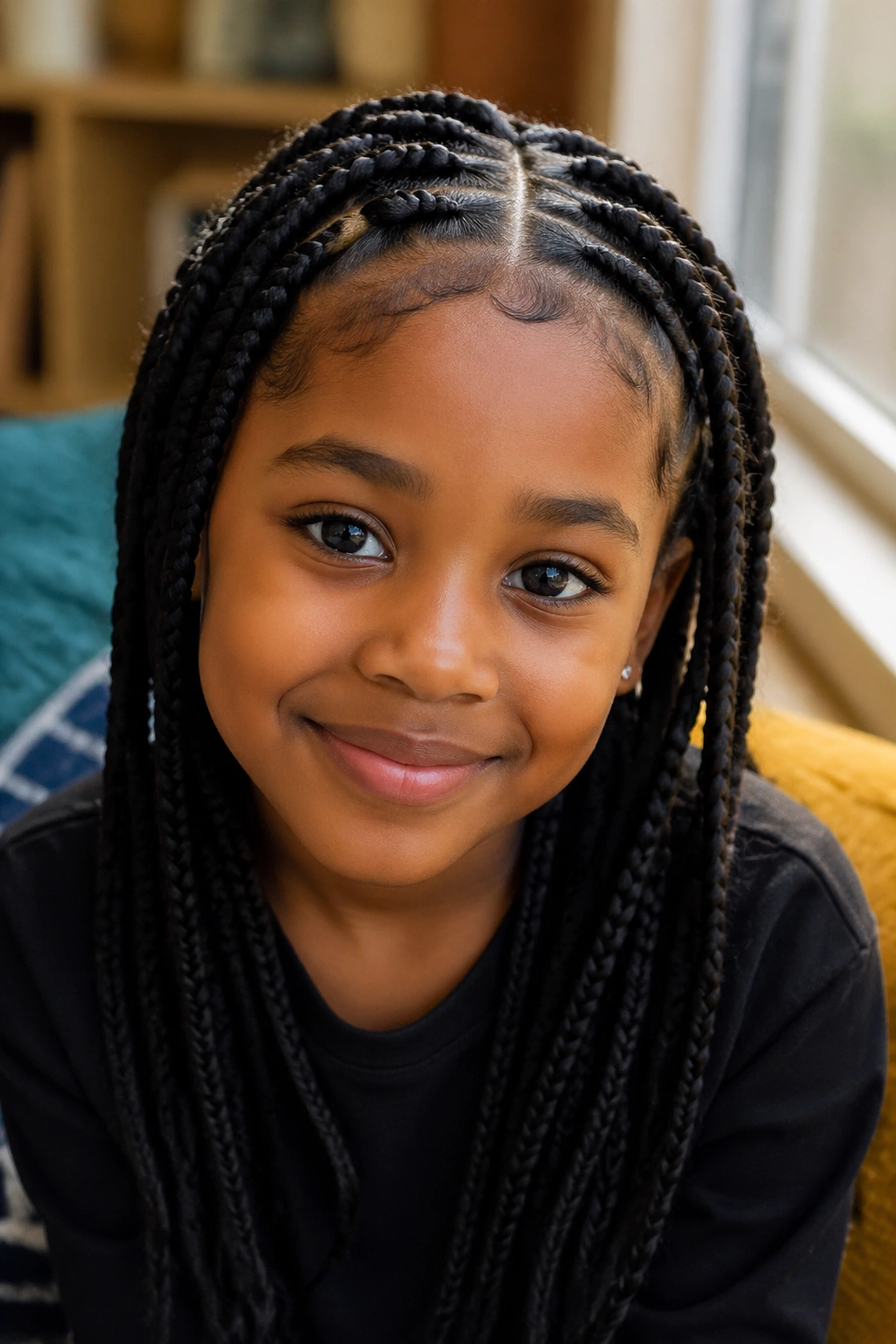
Feed-in front box braids create a very clean hairline because the braid grows gradually from the root instead of starting with a thick base. On a child, that clean start can make the whole style feel lighter and more polished.
The front is where this style earns its keep. The braids frame the face without crowding it, and the transition from the hairline into the braid looks smooth rather than chunky. That makes the style good for kids who are sensitive about how tight the front of their hair feels.
Pair the feed-in front with medium braids in the back. You get the neat look where people notice it, but you do not overload the whole head.
13. Pigtail Box Braids
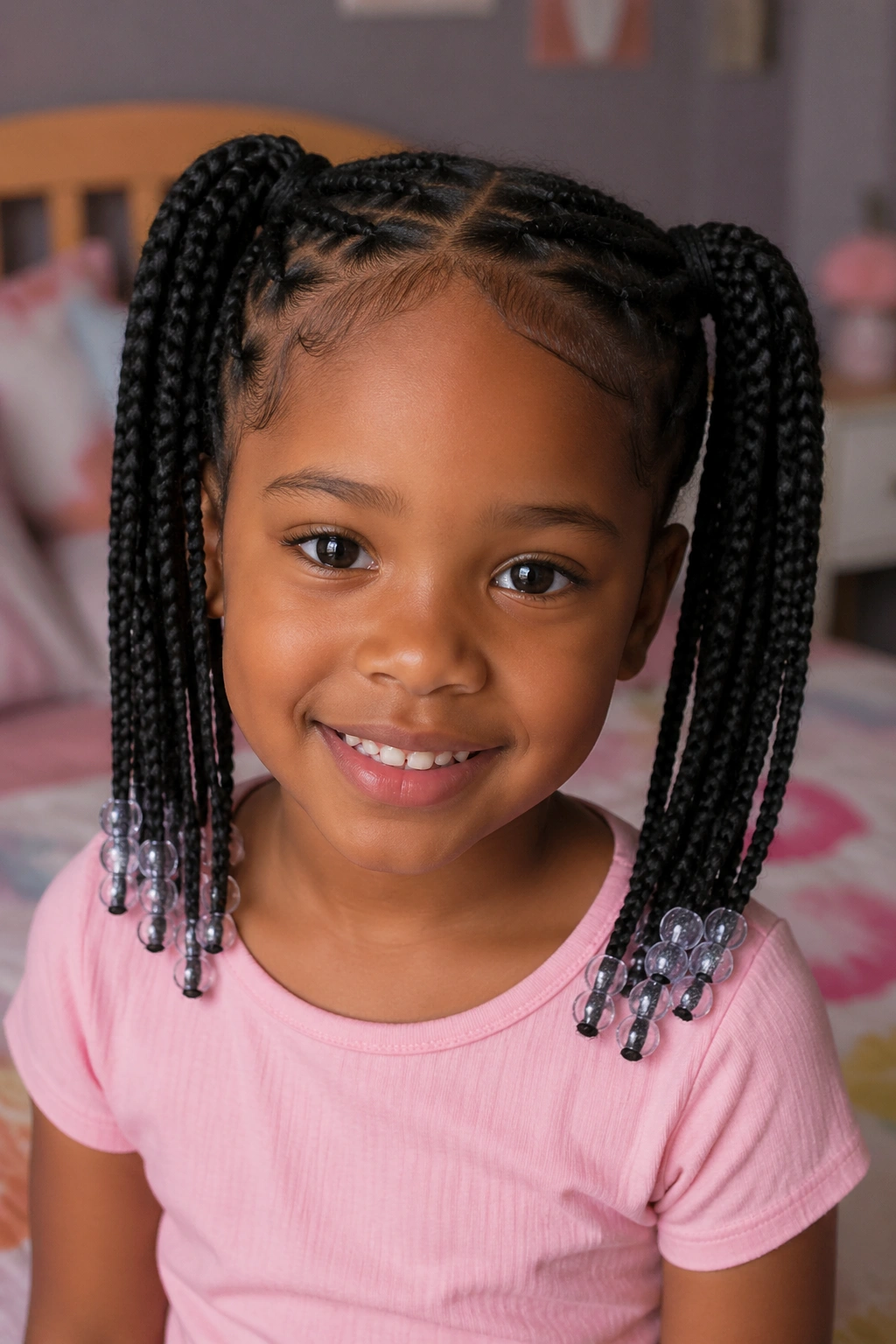
Pigtail box braids are easy, balanced, and very child-like in the best way. Split into two low sections or two high sections, the braids stay out of the face and still feel fun enough for school, playdates, and family photos.
What I like here is the symmetry. Kids who fidget with one side of their hair often do better when the style is evenly divided, because there is less to pull and fuss with. Add a few matching beads on each side, and the look feels intentional without extra work.
This one is especially good for younger children. It is simple to redo, simple to refresh, and simple to explain to a busy parent on a weekday morning. That matters.
14. Heart-Part Box Braids
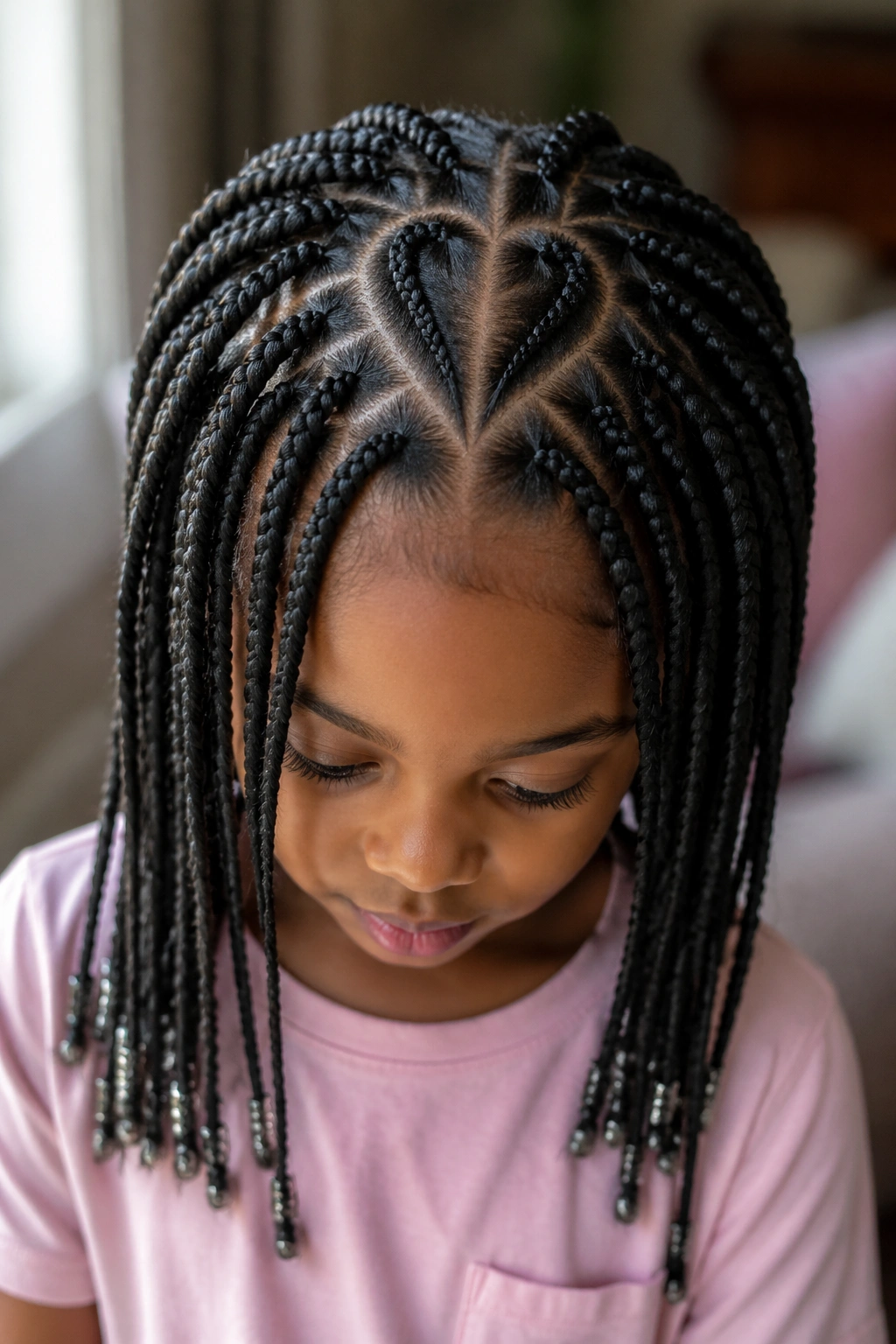
A heart part makes the scalp design the star. The braids themselves can be simple, but the heart shape at the crown gives the style a special-occasion feel that kids notice immediately.
This is a style for birthdays, school pictures, or any day when you want the hair to look a little more thoughtful. It takes a steadier hand to part cleanly, so the detail only really shines when the braider has time to shape it well.
Keep the rest of the look calm. Medium braids, a few beads if desired, and not too much color. The heart part already does enough work on its own.
15. Zigzag-Part Box Braids
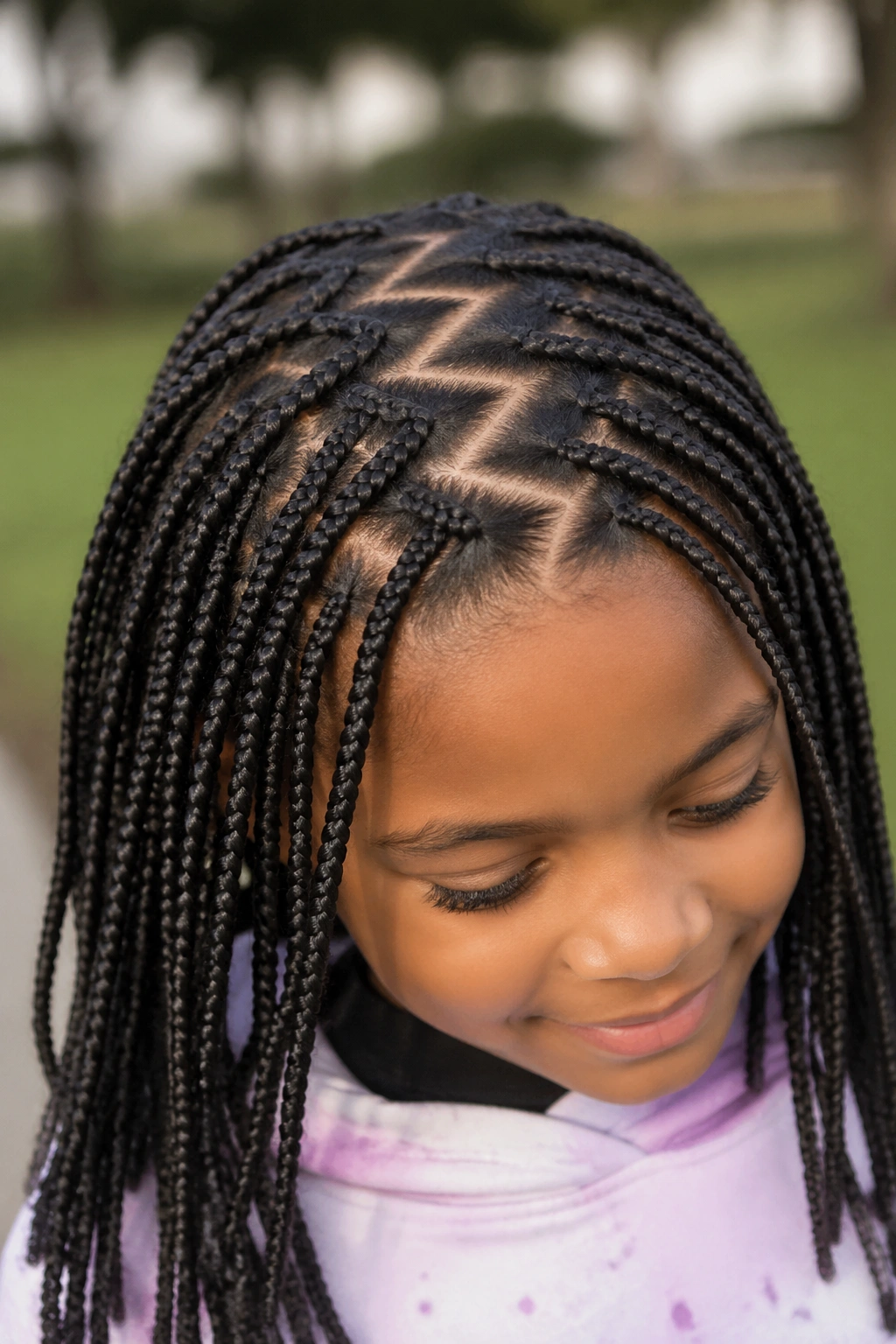
Zigzag parts are pure fun. The pattern moves across the scalp in sharp little angles instead of straight rows, and that tiny change can make a child feel like their braids are one of a kind.
The style works best when the parts are crisp and the braids themselves stay medium-sized. If the braids are too tiny, the parting can get lost. If they are too huge, the zigzag loses its charm.
Best For
- Kids who want something different without bright color.
- Hairdays when the braids need a playful detail.
- Children who like seeing the pattern in the mirror.
It is a simple idea, but it changes the whole mood of the style.
16. Wooden-Bead Box Braids
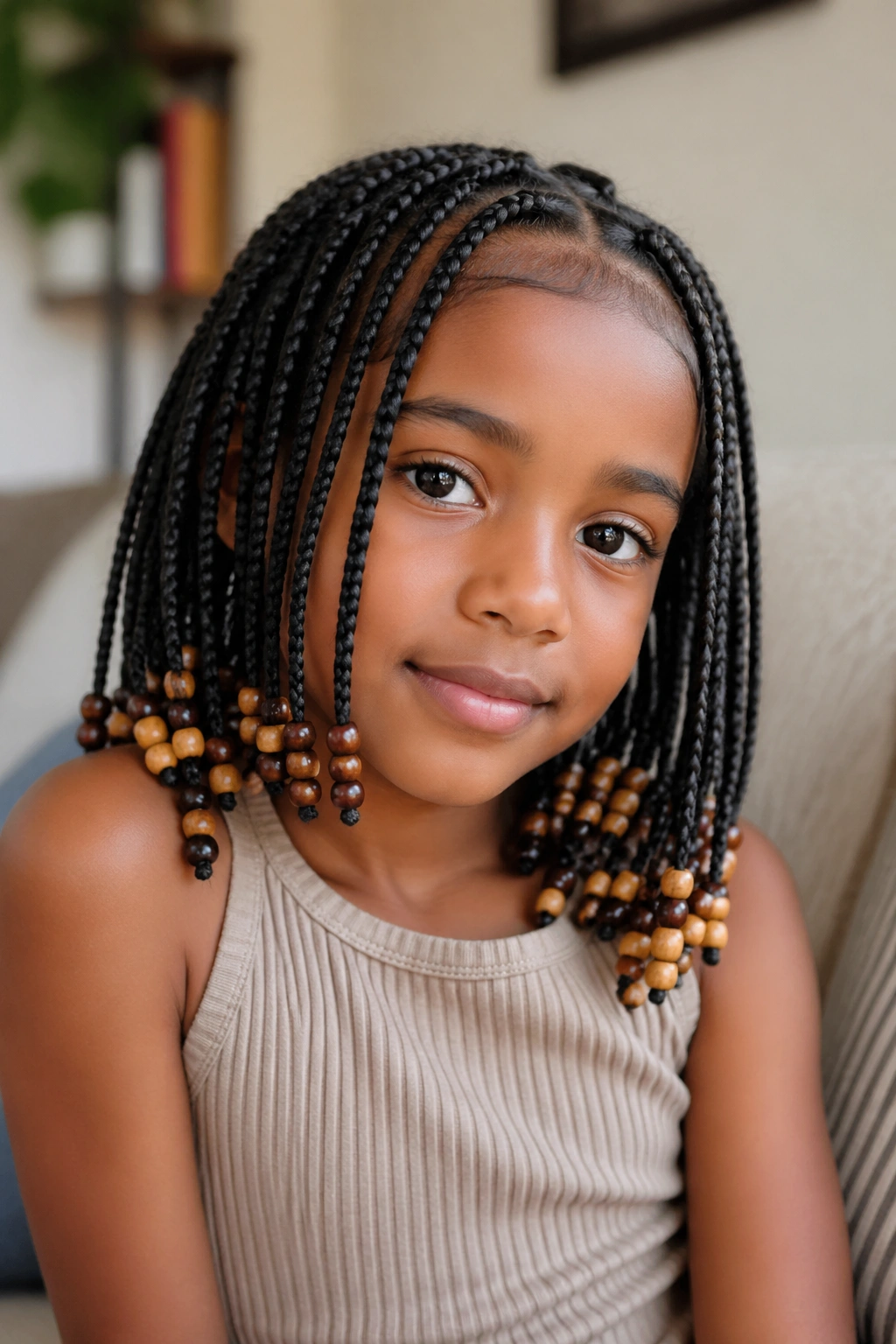
Wooden beads bring a warm, earthy feel to box braids, and they are often lighter-looking than plastic options. A few beads near the ends can be enough to finish the style without turning it into a costume.
The sound is part of the charm. Little clicks and taps as the child moves can make the braids feel lively, though I would keep the bead count modest for younger kids. Too many beads can add weight and pull on the ends.
Use wooden beads when you want a softer, natural look that still feels special. They work especially well with shoulder-length braids and simple parts. Nothing crowded. Nothing overdone.
17. Gold-Cuff Box Braids
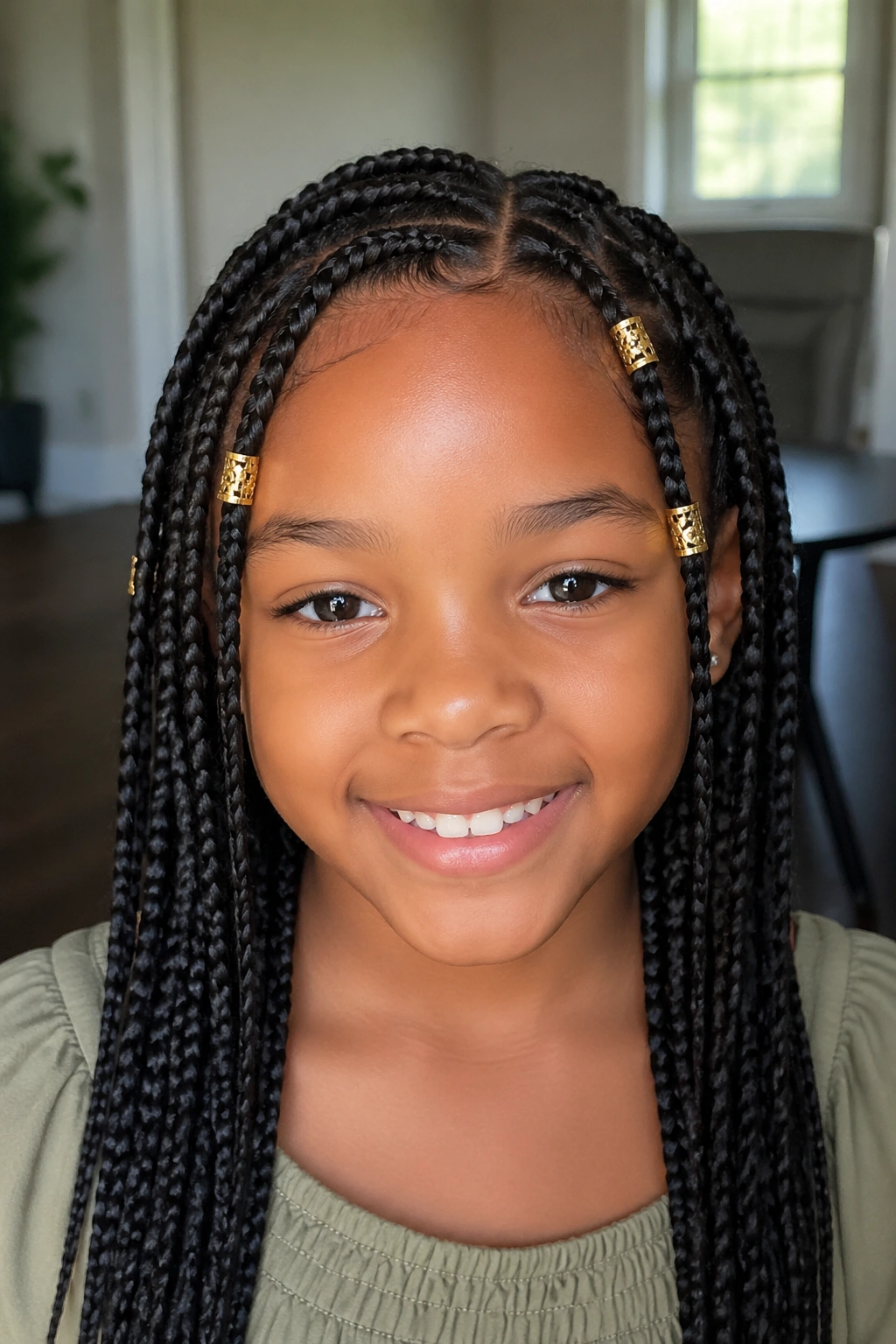
Gold cuffs are the easy choice when you want shine without adding bulk. They clip on fast, they come off fast, and they let you decorate just a few braids instead of loading the whole head with accessories.
That makes them handy for children who change their minds often. One week they want sparkle. The next week they want plain braids. Gold cuffs let you adjust without redoing the whole style.
Put them near the front or around the face if you want them to show in photos. Keep them sparse if the hair is fine, because a heavy row of cuffs can drag more than people expect.
18. Box Braid Bob with Bangs
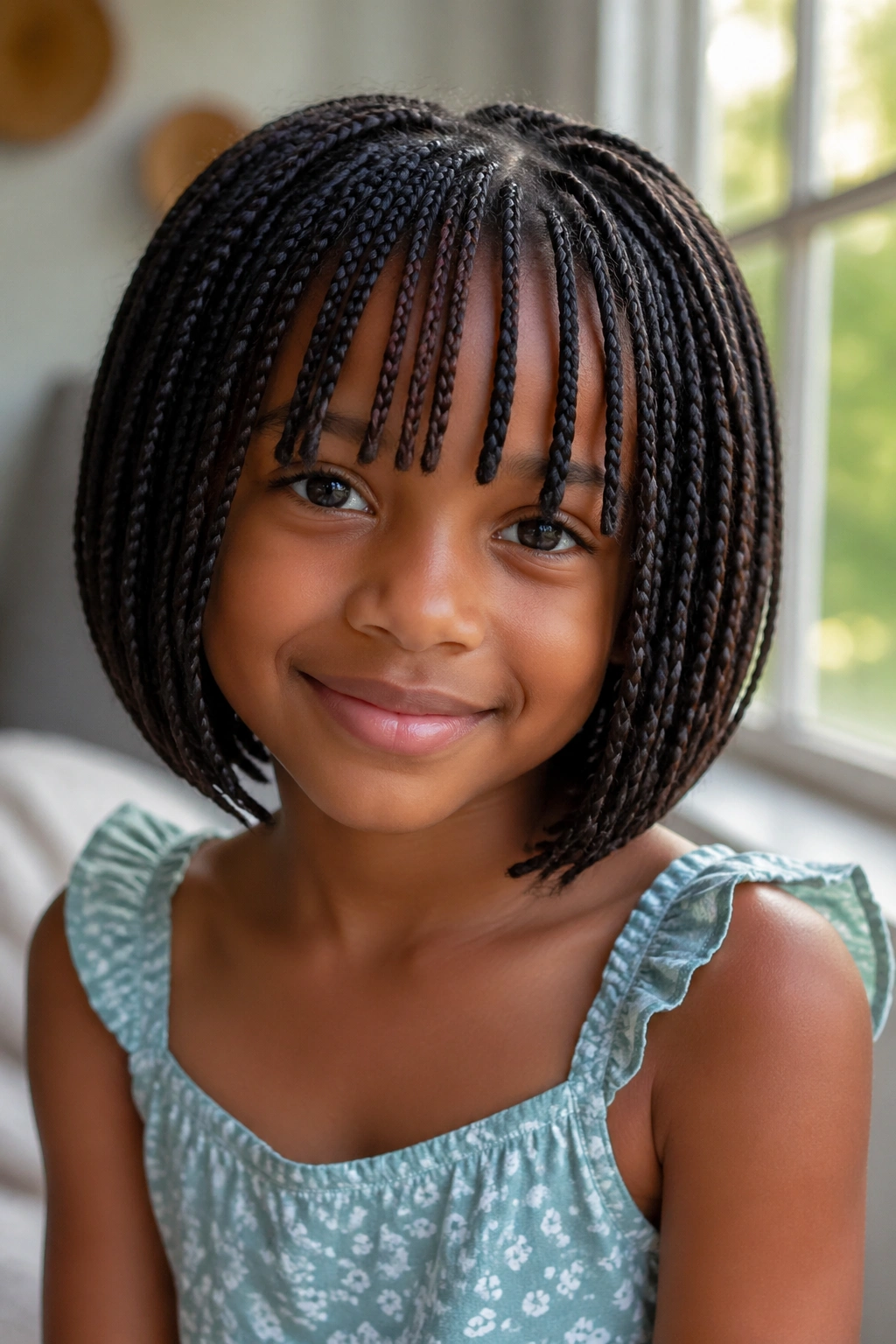
A box braid bob with bangs gives you shape up front and neatness everywhere else. The bob keeps the hair easy to manage, while the bangs or front fringe soften the face and give the style a bit of personality.
This works especially well for kids who like hair on the forehead but not in the eyes. The front can be trimmed into a subtle fringe or arranged as short braids that fall forward in a controlled way. Either version looks tidy when the lengths are consistent.
It is a strong choice for school and everyday wear. The shorter silhouette means less tangling, and the front detail keeps it from feeling plain.
19. Waist-Length Box Braids
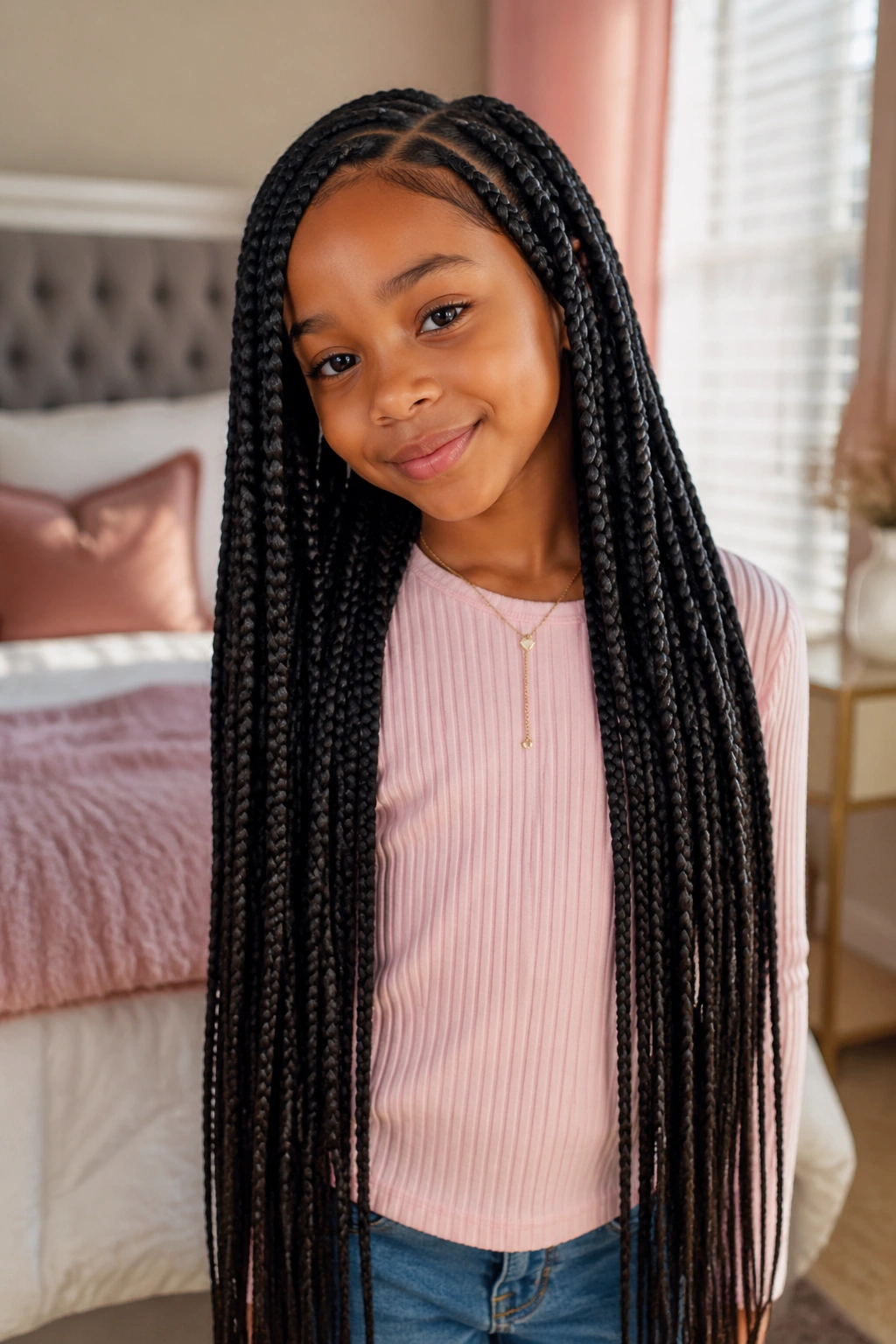
Waist-length box braids are for kids who like a big, dramatic look and can handle the extra weight. The length gives you more styling options — high ponytails, side sweeps, buns, and long swings that look striking in motion.
But I would be honest here: this is not the easiest kid style to live with. It needs more care at bedtime, more attention during washing, and more patience from a child who likes tossing their head around. Long braids can also catch on coats and car seats.
If you choose this length, keep the braid size moderate and the parting clean. A well-managed long style can look wonderful. A heavy one can turn into a chore fast.
20. Space Bun Box Braids
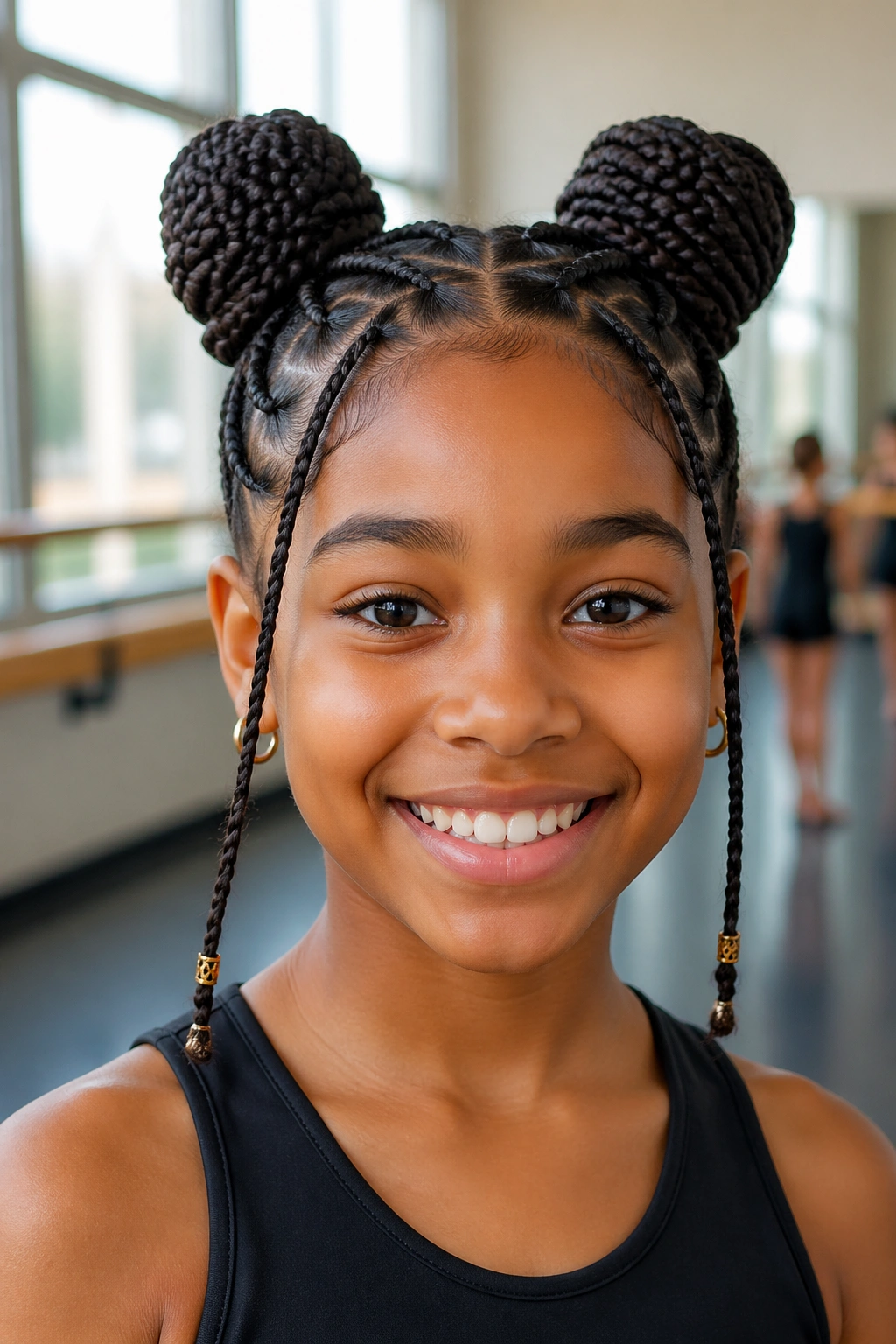
Space bun box braids turn two simple buns into something playful and energetic. The braids are split into two sections, twisted or wrapped into buns, and left high enough to feel fun without sagging down the head.
This style is brilliant for dance class, birthdays, or any day when a child wants hair that feels a little extra. It also keeps the face open, which is handy for reading, sports, and school work. The trick is not to pull the buns too tight. A loose, rounded bun is kinder to the scalp than a hard little knot.
If you want an easy way to make box braids feel new, this is one of the best choices.
21. Braided Crown Box Braids
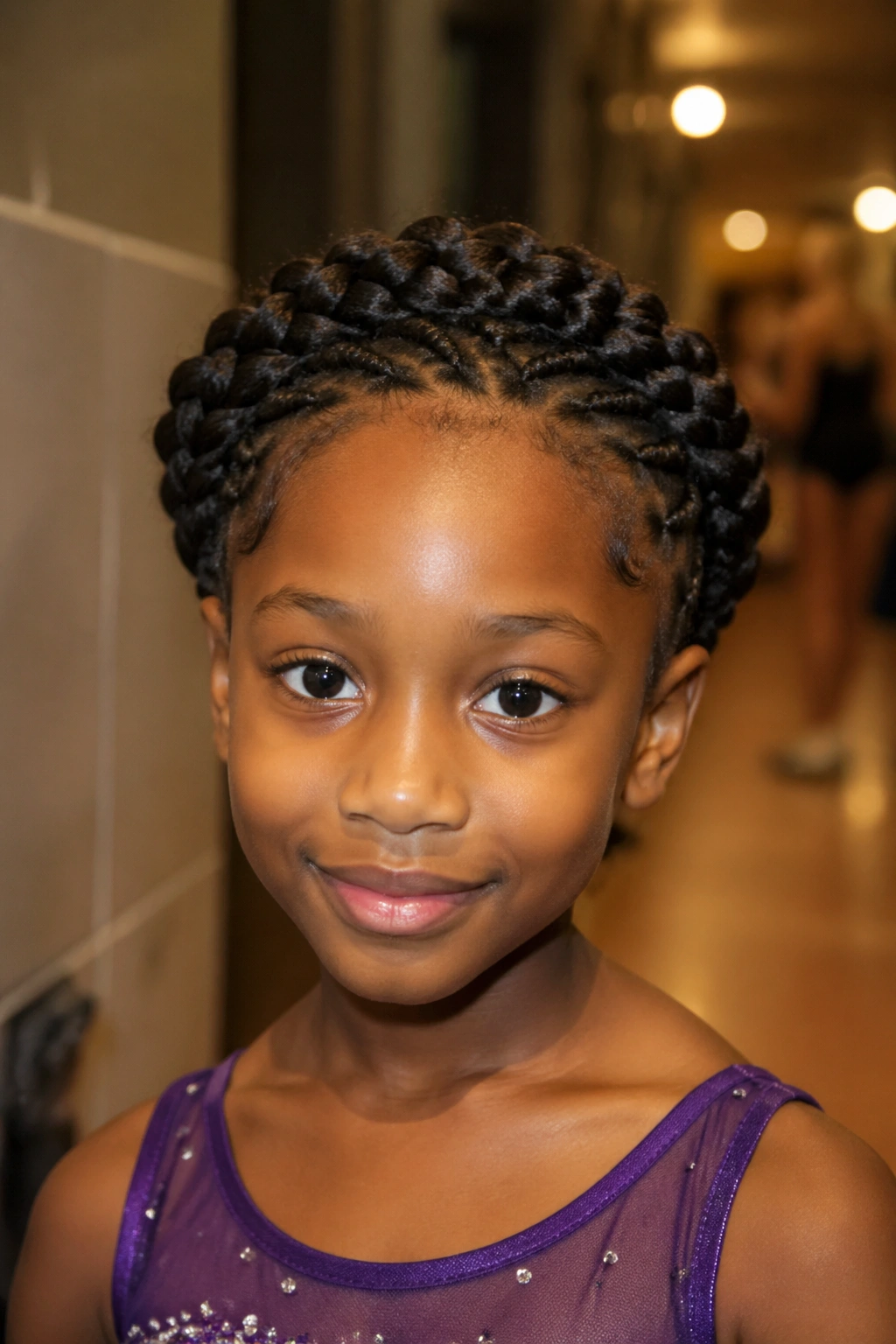
Braided crown box braids wrap around the head in a way that feels neat and special at the same time. The braids can be arranged to form a halo shape, which keeps the face open and gives the whole style a dressed-up look.
This one is especially pretty for events, recitals, and family gatherings. It looks polished without needing a pile of accessories. A few cuffs or beads near the ends are enough if you want a little sparkle.
The crown shape also helps keep the style controlled, which is a relief for active kids who would otherwise pull at the front sections. It is one of those styles that looks more complicated than it is.
22. Crisscross-Front Box Braids
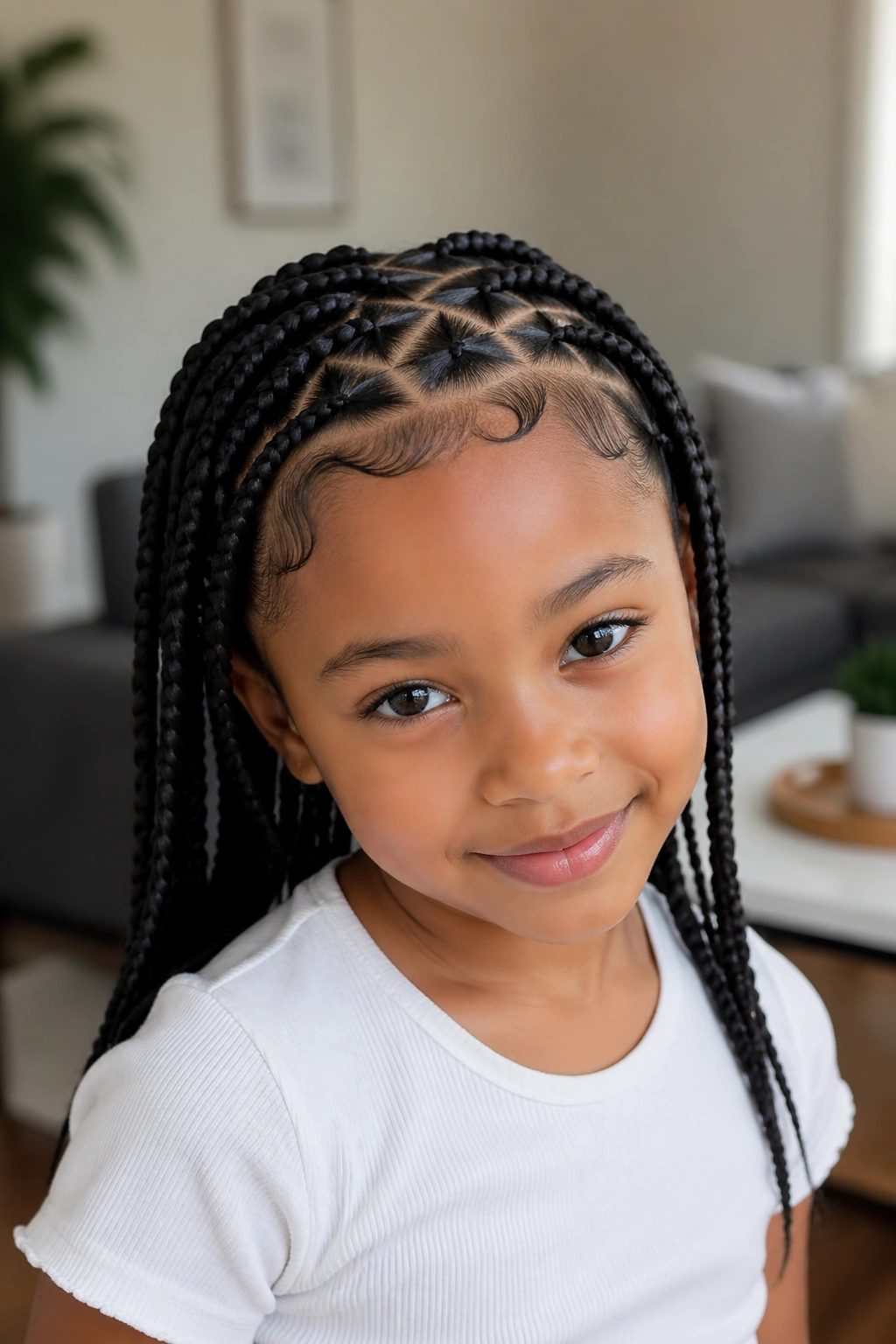
Crisscross front braids add a small lattice effect across the hairline, and that detail can make a plain set of box braids feel much more interesting. The crisscrossing gives the front some architecture, which is a nice way to frame the face.
The look works best when the front sections are clean and not overcrowded. Keep the back simple so the front pattern has room to stand out. If you pile on too many accessories here, the design can get muddy.
For kids who want something different but not loud, this is a smart middle ground. It is decorative, but not fussy. That balance is rare.
23. Two-Tone Box Braids
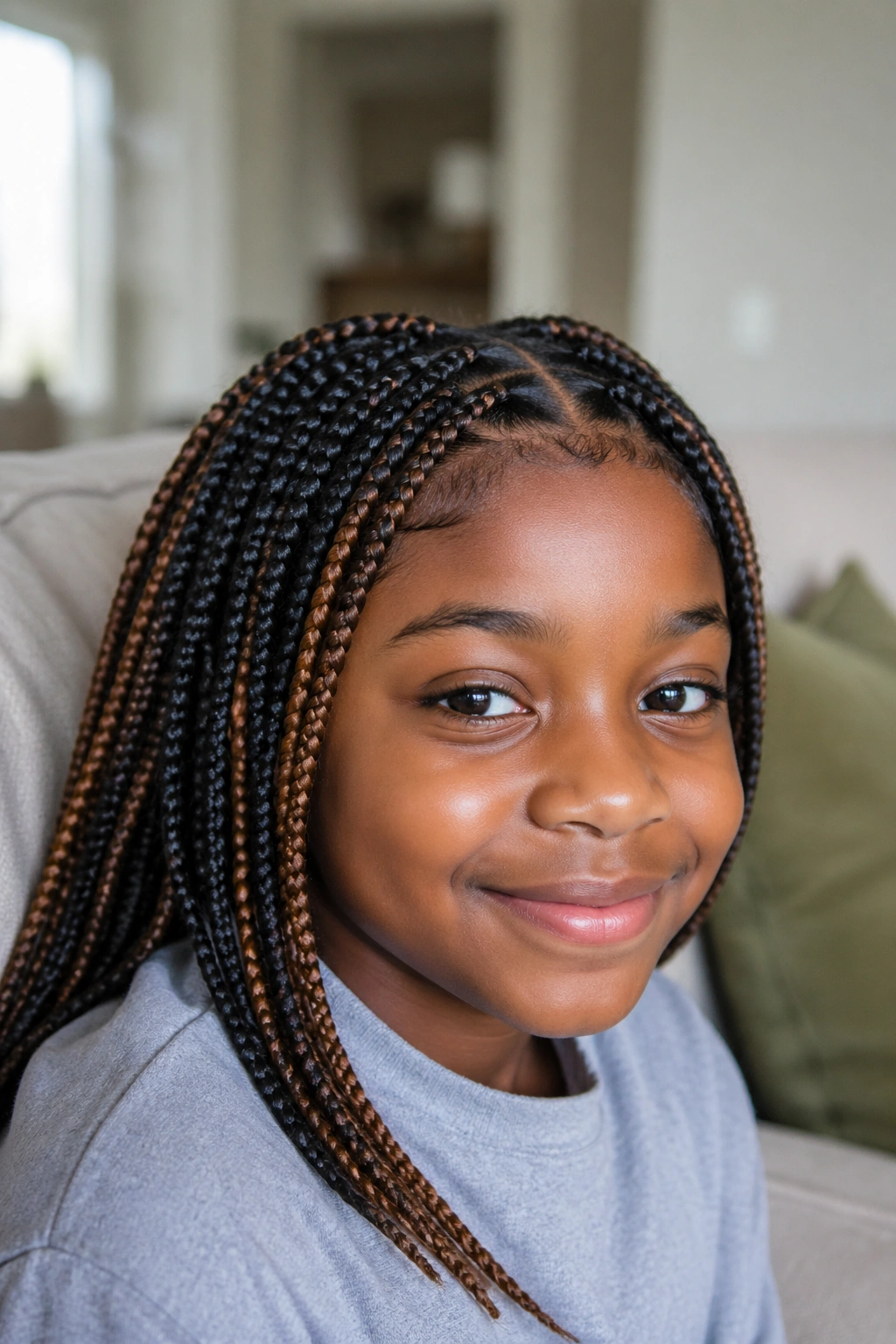
Two-tone box braids use two colors that sit close together or contrast just enough to show the braid pattern. Think black and brown, dark brown and honey, or black with a muted burgundy.
The idea is subtle dimension. You are not trying to make the hair shout. You are trying to let the braid texture catch the eye in a softer way. That works especially well on children who want color but do not want a full bright look.
This style is nice because it can be as bold or as quiet as you want. A few colored pieces near the front are enough if you want to keep things modest. Or go with a full two-tone install for a stronger effect.
24. Layered Box Braids with Face-Framing Pieces
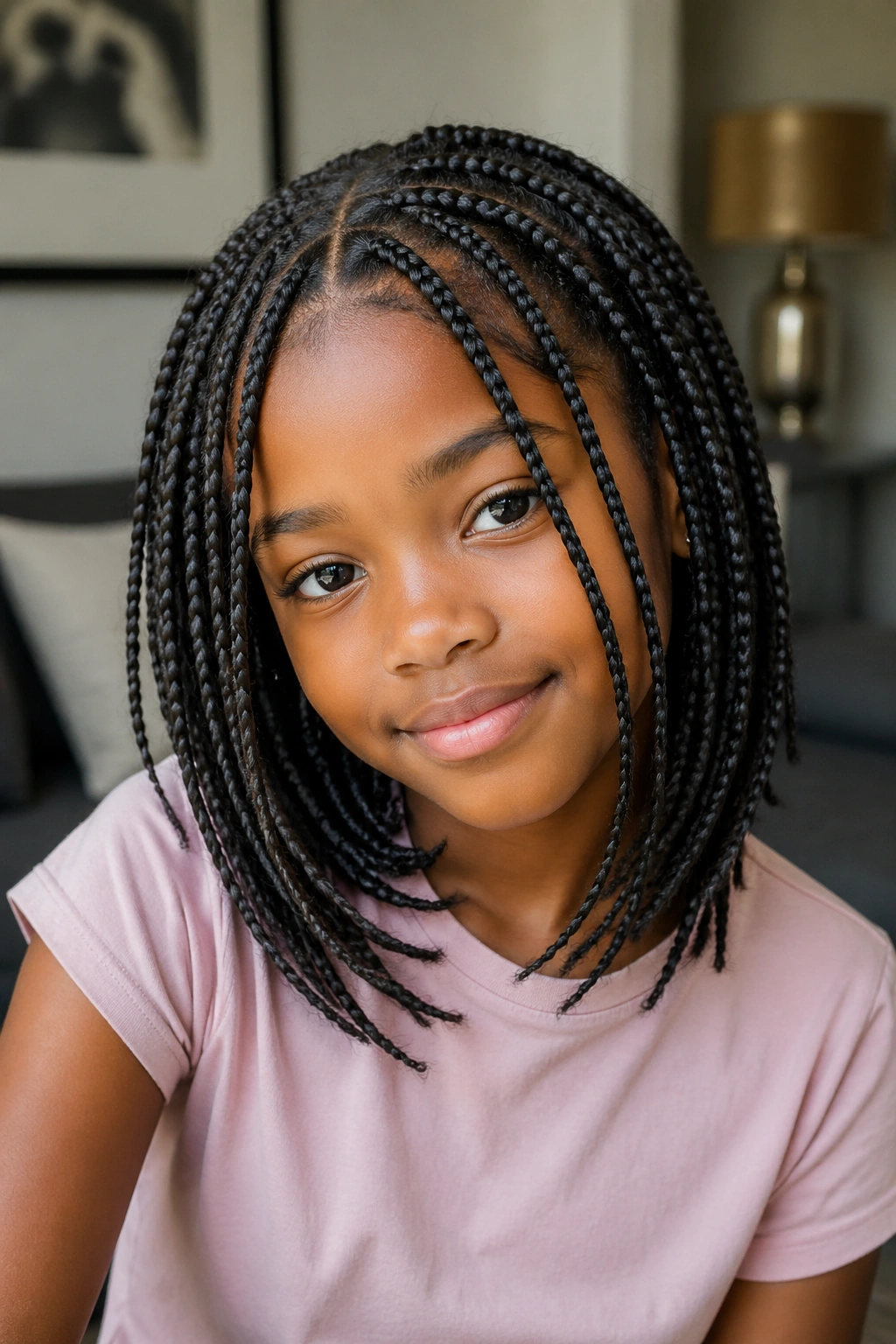
Layered box braids give the style movement by using different lengths across the head. The front can sit a little shorter, the sides a little longer, and the back can fall in a way that keeps the shape from looking flat.
That layering helps if the child dislikes braids brushing the cheeks all day. A few face-framing pieces soften the style and make it easier to wear without constant adjustment. It also looks nice in photos because the braids do not all end at the same line.
Keep the layers controlled. Too much variation and the style starts to look uneven. A soft, thoughtful layer is enough.
25. Ribbon-Tied Box Braids
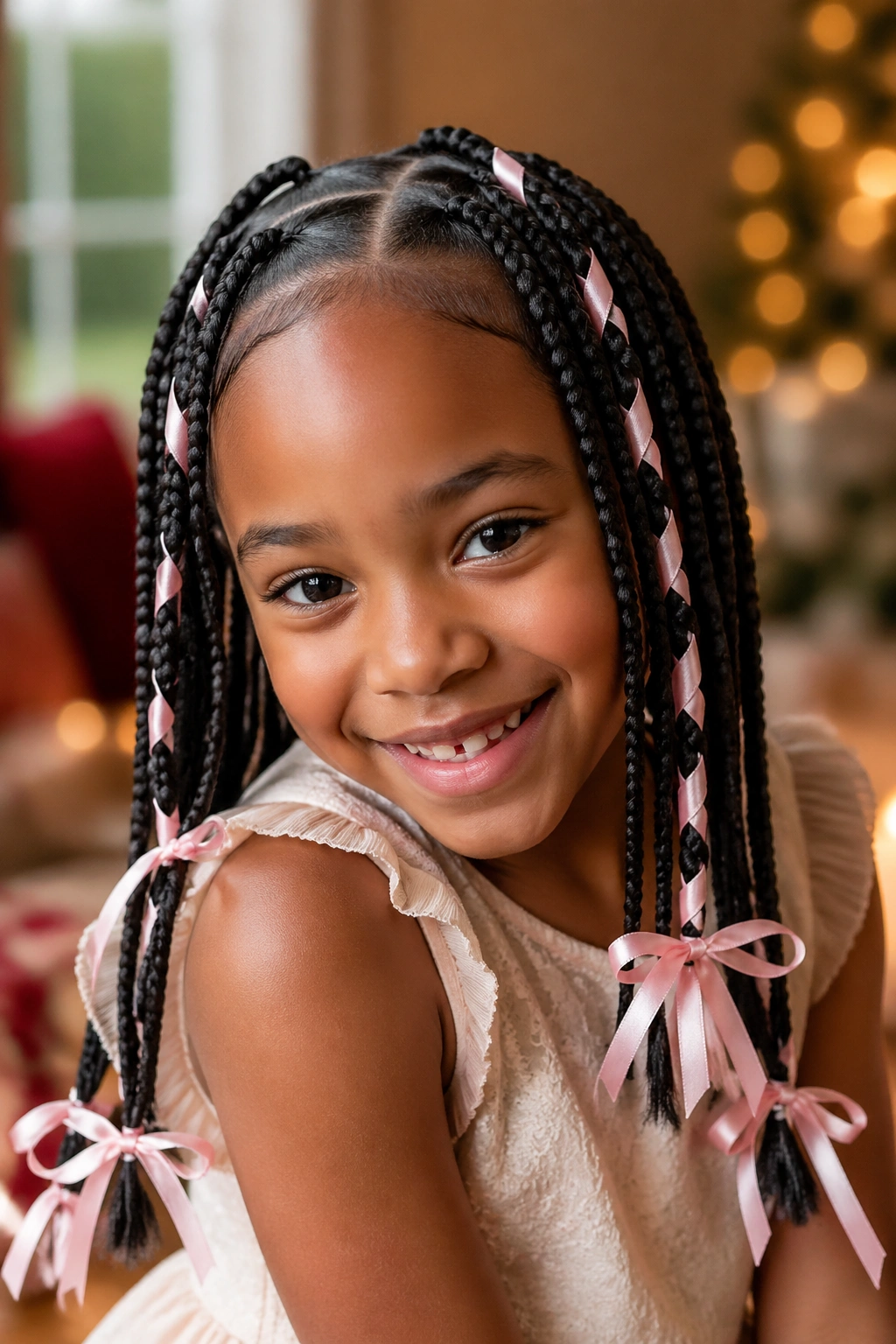
Ribbon-tied box braids bring a playful finish to a protective style. You can tie ribbons at the ends, weave them through a few braids, or use them to finish pigtails and buns with a neat bow.
This works especially well for parties, holidays, and picture days. A ribbon can make a simple braid feel dressed up in about ten seconds. The only caution is snagging — choose smooth ribbon and keep the ties secure enough that they do not unravel during play.
Use one color if you want clean and simple. Use two if the outfit calls for it. Small detail, big payoff.
26. Red-Tipped Box Braids
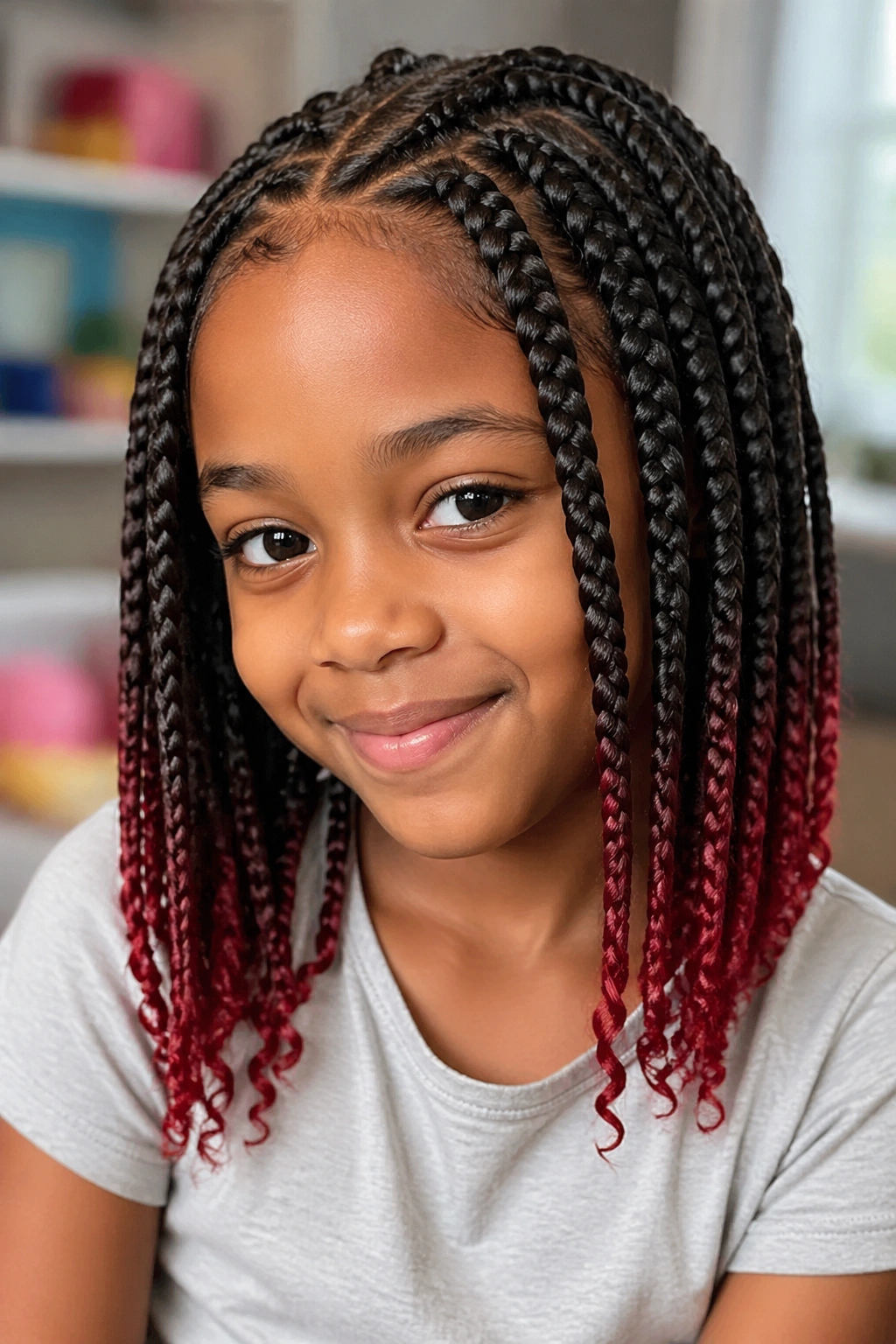
Red-tipped box braids give a child the fun of color without covering the whole head. The darker roots keep the style grounded, while the red ends add a flash that shows every time the braids move.
This is a nice option for kids who want something bold but still wearable. The color can be intense or soft depending on the shade you pick. A deeper red feels rich. A brighter red feels louder. Both work if the rest of the braid style stays neat.
I like red tips because they keep the look focused. The color lands where the eye naturally goes, near the ends, and the scalp still gets to look clean.
27. Curved-Part Box Braids
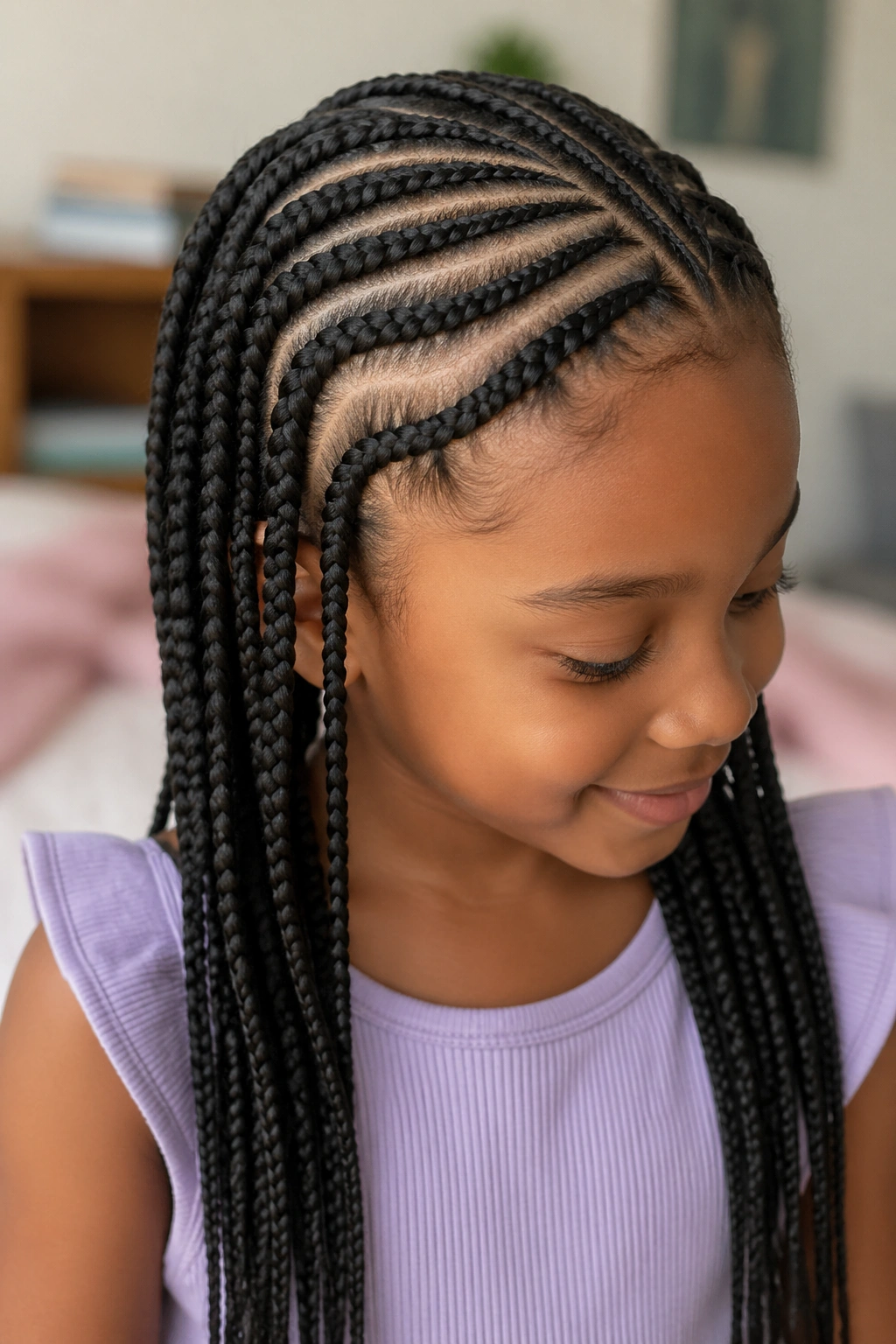
Curved parts feel softer than a straight grid. Instead of rows that move in hard lines, the parts bend gently across the scalp, which gives the style a little flow before the braids even begin.
That shape is a nice choice for children who want something pretty but not too ornate. It can make a standard medium braid style look custom without adding weight or extra length. You mostly notice it when the light hits the scalp and the lines start to show.
A curved part needs a careful hand, though. If the braider rushes, the pattern loses its shape. This is a detail style, so it should be treated like one.
28. Shell-Bead Box Braids
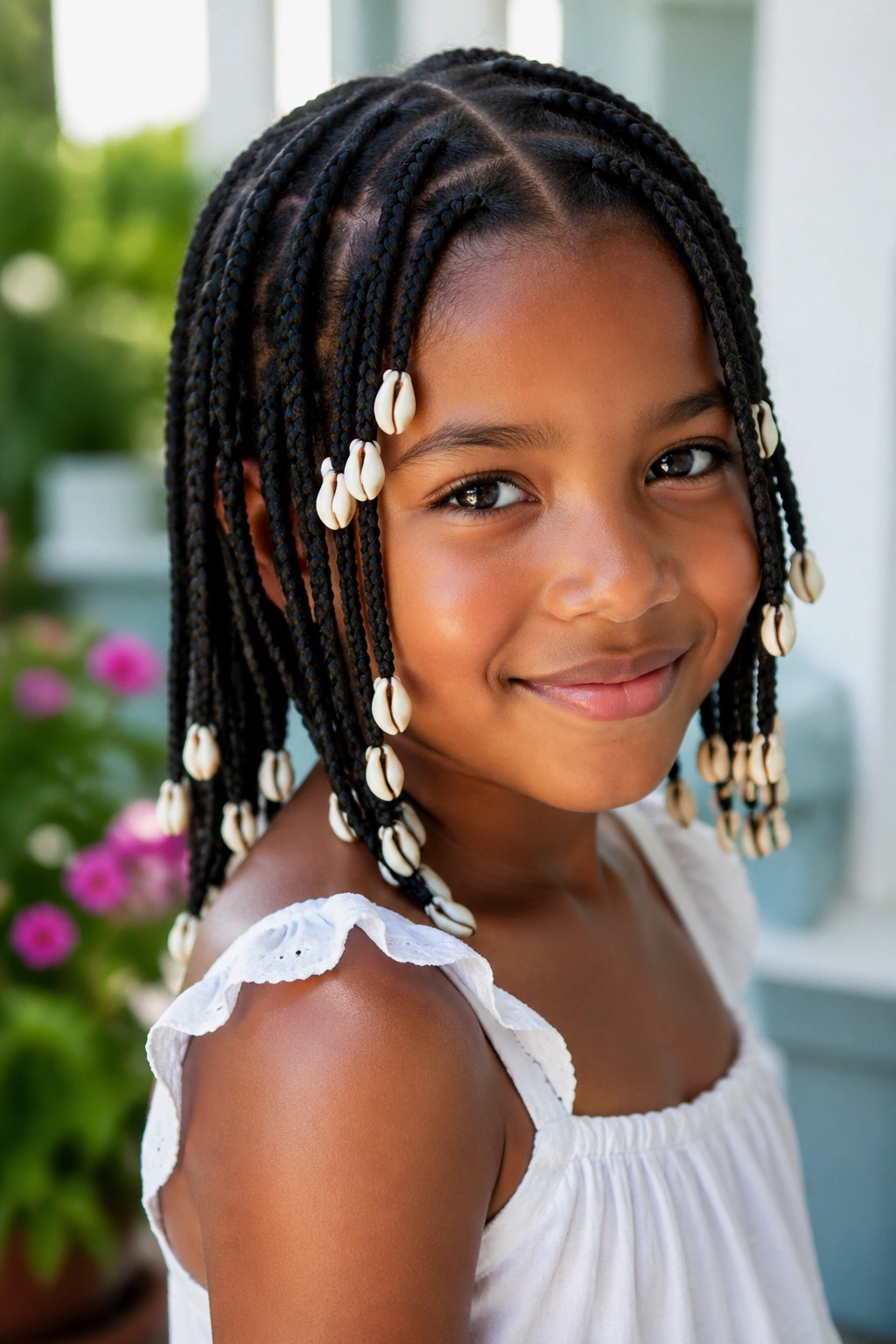
Shell beads lend box braids a beachy, playful finish that feels especially good on shorter or medium-length braids. The small shell detail gives texture without making the style heavy.
I would keep the shell pieces selective. A few near the ends or around the face are plenty. Too many shells and the hair can get noisy, tangled, or awkward against the neck. Children tend to wear this style best when it is light and a little scattered rather than fully covered.
It is a sweet option for a child who likes nature-inspired touches. Soft, casual, and easy to read at a glance.
29. Low-Ponytail Box Braids
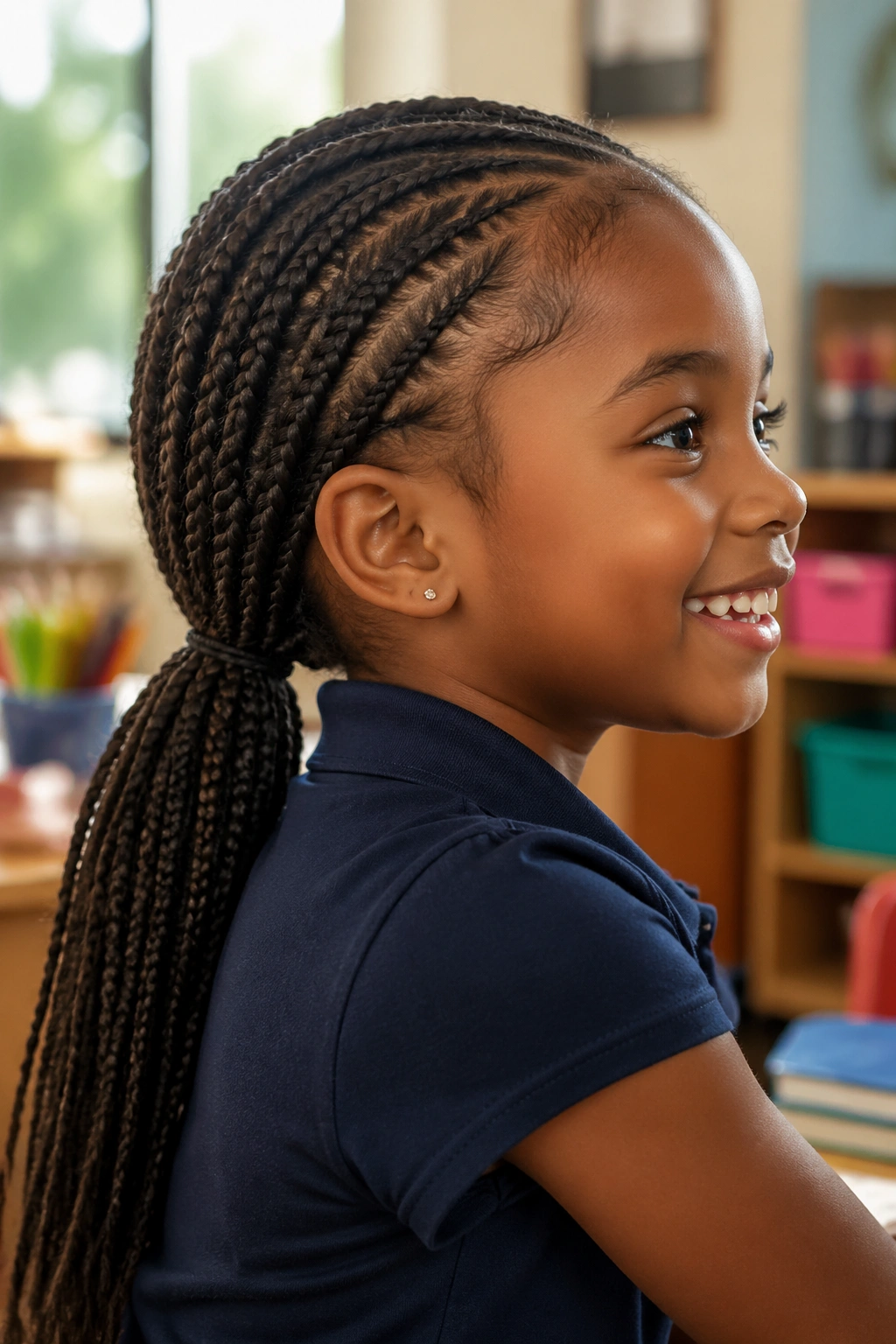
A low ponytail keeps every braid gathered and controlled, which is a gift on busy days. The style works well for school, sports, errands, and any moment when the child needs the hair out of the way fast.
What makes it different from a high ponytail is the calmness of the shape. The braids sit closer to the neck, so the look feels neat without tugging as much at the crown. That said, the ponytail holder should be smooth and not too tight. A soft scrunchie is usually kinder than a hard elastic.
This is one of the most practical braid styles in the whole list. It is not the flashiest. It is just easy.
30. Jumbo Low-Bun Box Braids
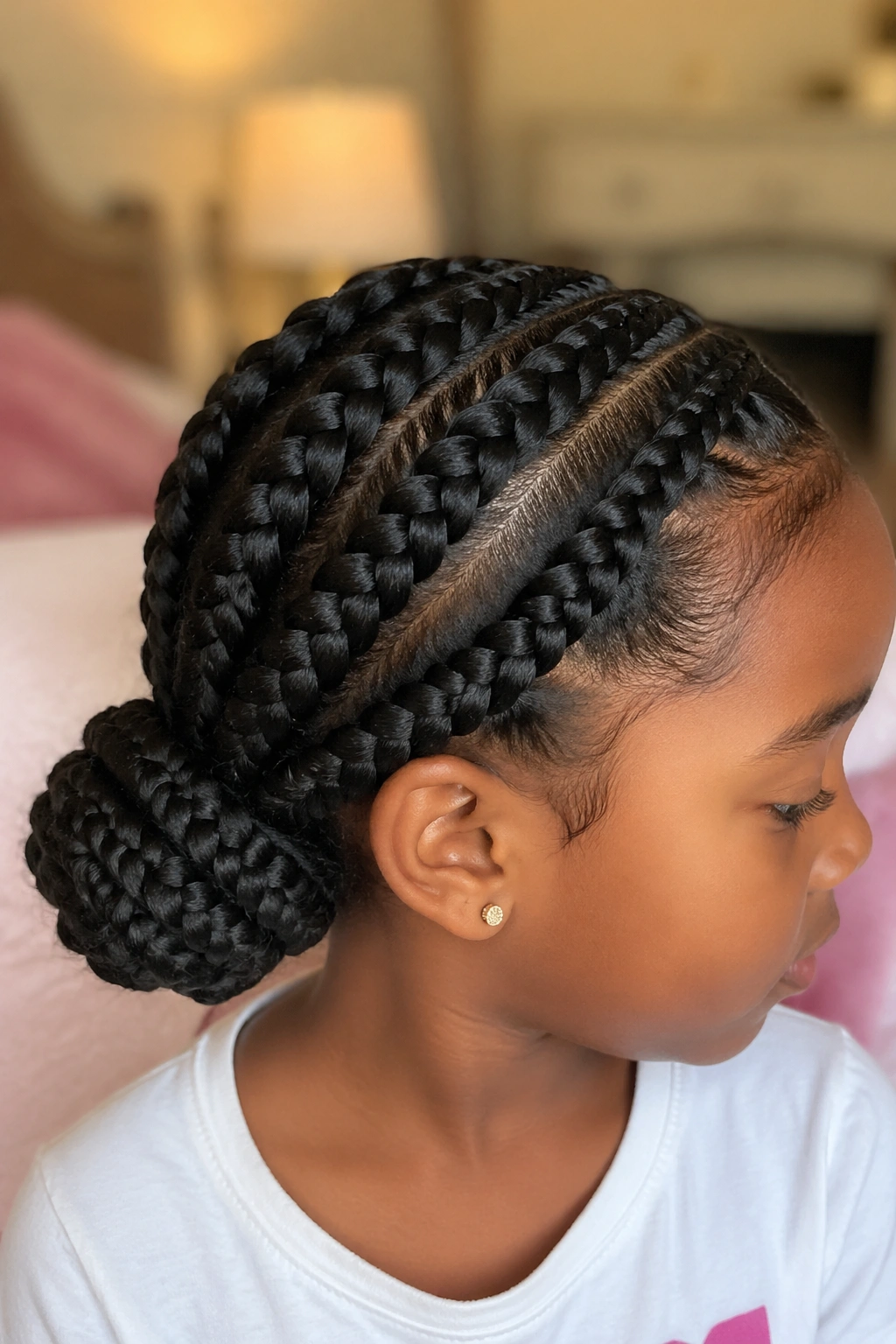
Jumbo low-bun box braids are tidy, quick to style, and good for days when you want the hair fully contained. The braids are pulled into a loose bun near the nape, where they stay out of the face and do not bounce around.
Because the braids are jumbo, the bun has more shape and less fussy wrapping. That makes it easier to do at home than a tiny-braid bun, which can take forever. It also works nicely for children who are happier with fewer braids overall.
Keep the bun soft. A low bun that sits flat is usually better than a tight knot perched high on the head. Kids notice the difference.
31. Box Braids with Curly Side Pieces
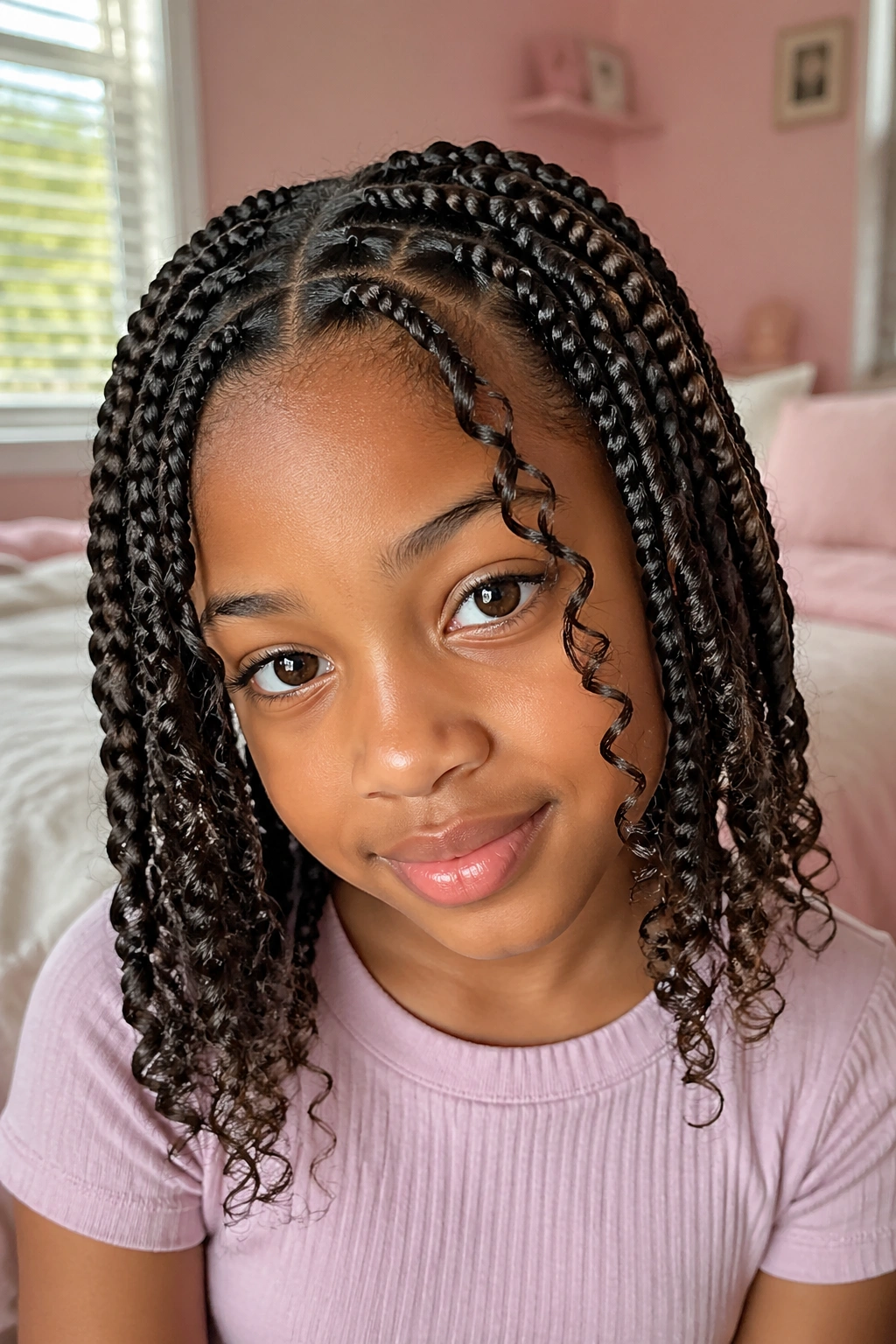
Leaving a few curly side pieces out changes the whole feel of box braids. The braids stay structured, but the curls around the face add softness and a little movement.
This is a good style for children who like hair near the cheeks but not in the eyes. The curls frame the face gently and can make the braids feel less severe. It is also a nice way to add interest without changing the braid size or parting pattern.
The only catch is upkeep. Those curls need care at night, and they can frizz faster than the braids themselves. Still, when the child likes a softer finish, it is worth the extra minute.
32. Center-Stripe Part Box Braids
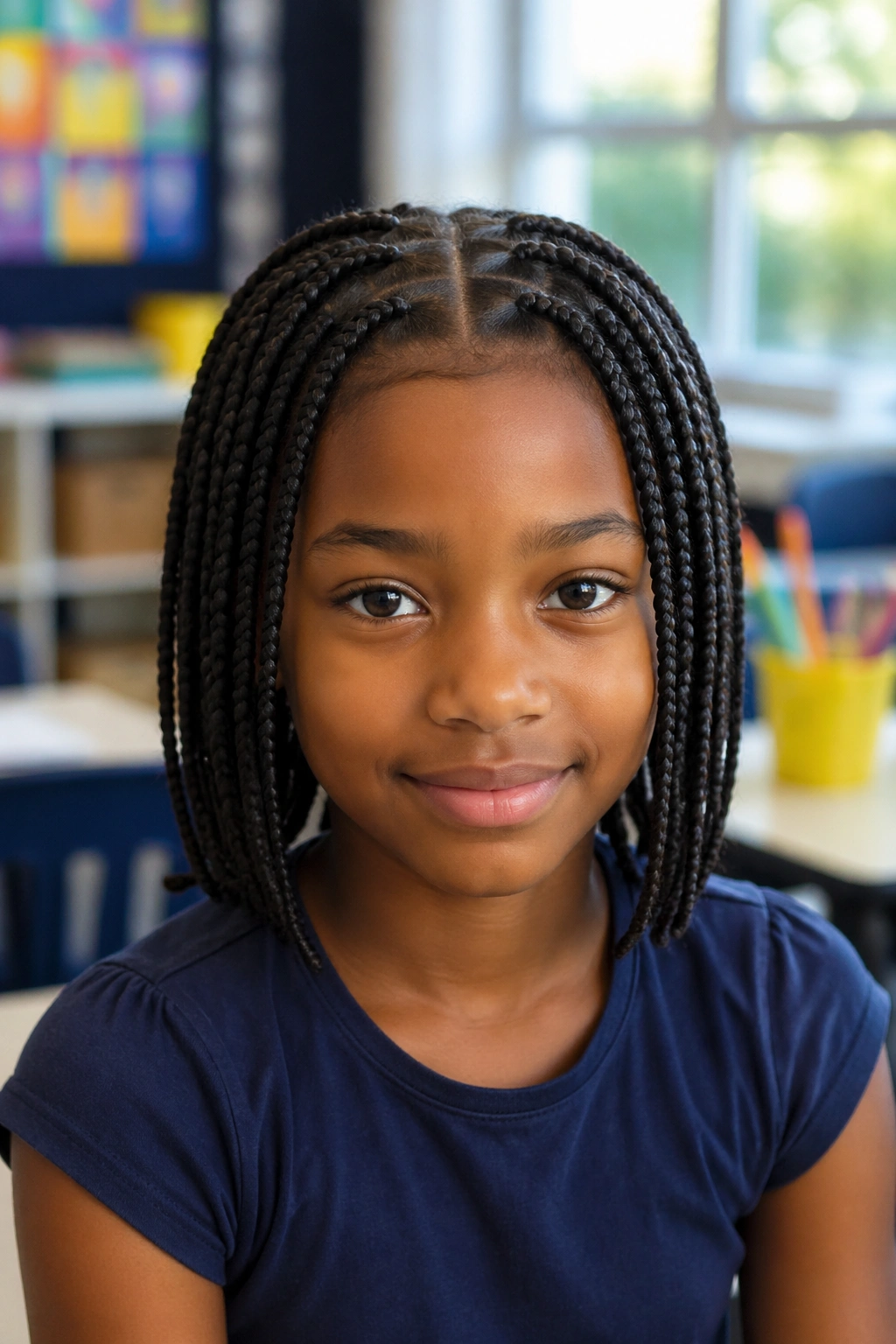
A center-stripe part gives the style a clean, even look from front to back. It is the kind of parting that makes the braids feel organized right away, which is useful when you want a child’s style to look neat with minimal fuss.
The straight line down the middle works with almost every braid length, but it looks especially crisp on medium braids and bob lengths. If the lines are sharp and the sections are balanced, the whole style feels calm.
This is a strong choice for parents who like easy maintenance. The part does not need much explanation, and the braids grow out in a tidy way. No drama. Just clean lines.
33. Extra-Small Box Braids with Beaded Tips
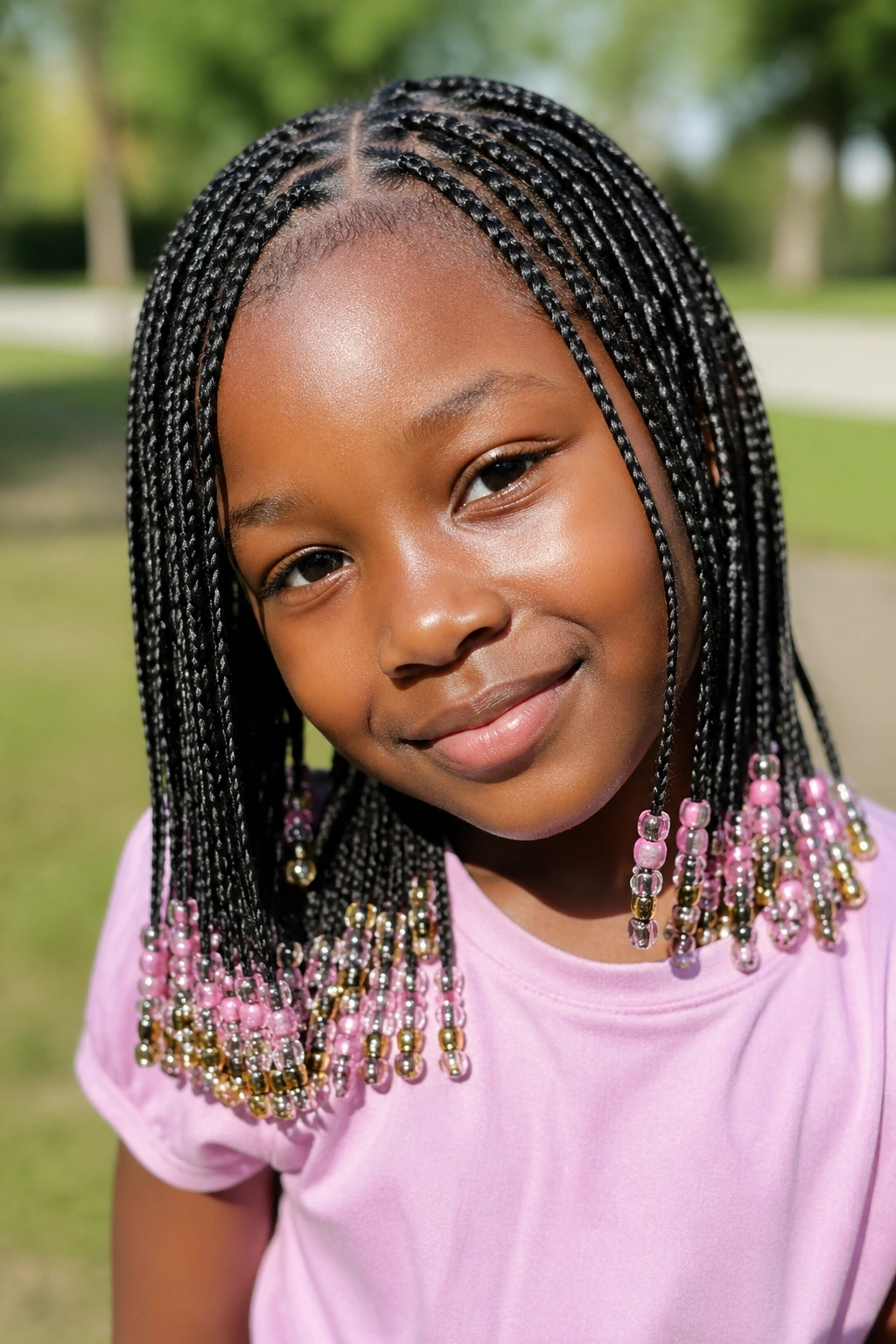
Extra-small box braids with beaded tips are for kids who like detail. The tiny braids allow the beaded ends to stand out, and the finished style can look intricate without needing a lot of color.
Because the braids are small, this style takes more time in the chair. I would only choose it for a child who can sit still and who genuinely likes a long-lasting braid pattern. The reward is more styling flexibility later on, but the installation asks for patience up front.
Keep the beads light and place them mostly at the ends. That way the detail stays visible without pulling too hard on the finished braids.
34. Mixed-Bead Box Braids
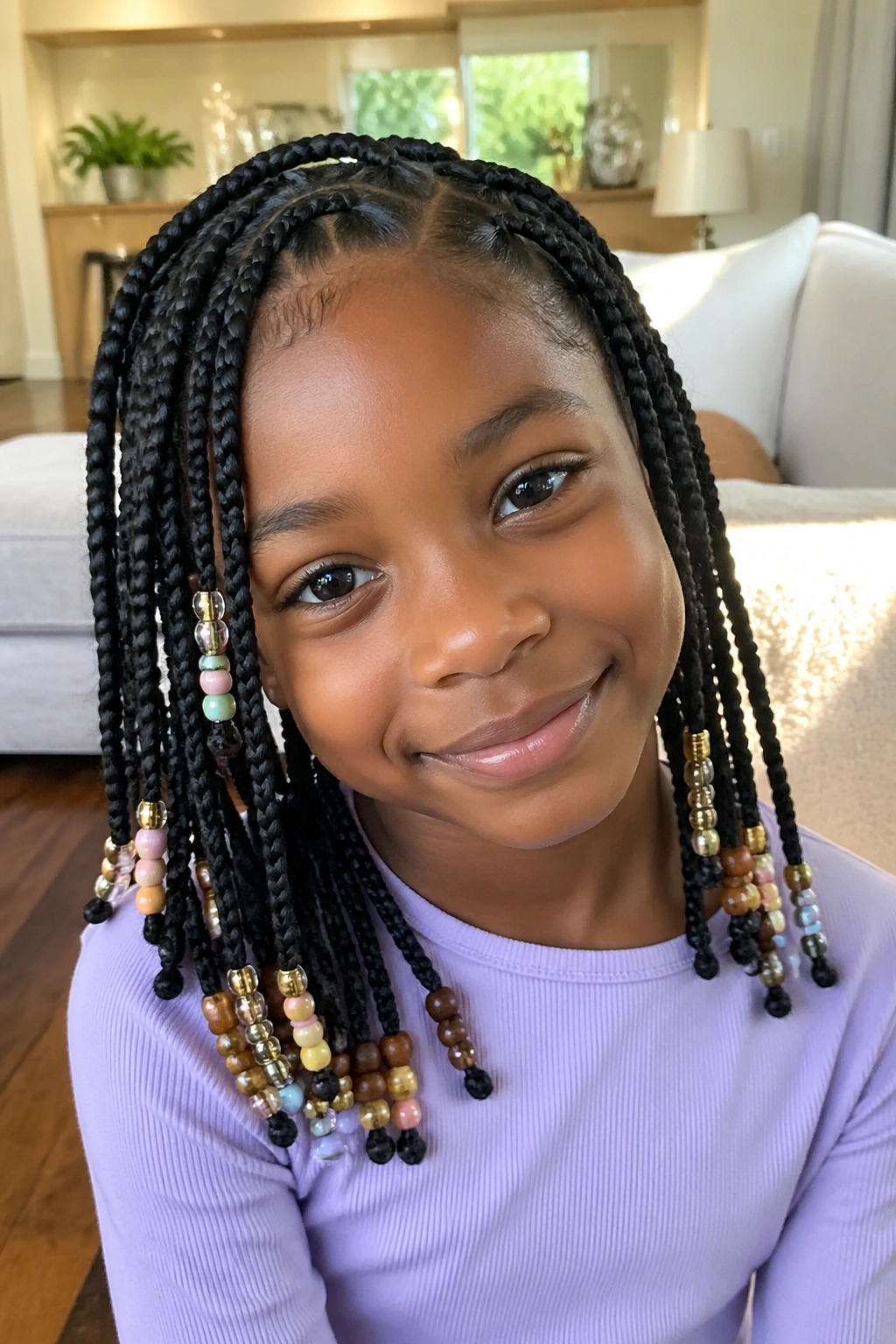
Mixed-bead box braids let you play with size, color, and placement all at once. A few gold beads here, some clear ones there, maybe a couple of wooden beads near the front — the mix can feel fun without looking random if you keep it controlled.
The key is not to use every bead on every braid. Pick a few braids to decorate and let the rest stay plain. That contrast helps the beadwork stand out and keeps the style from feeling overloaded.
This is a good choice for children who like to help choose their own accessories. They get a say in the finish, and you get a style that can be changed without taking the braids down. Easy win.
35. Rounded-Shape Short Box Braids
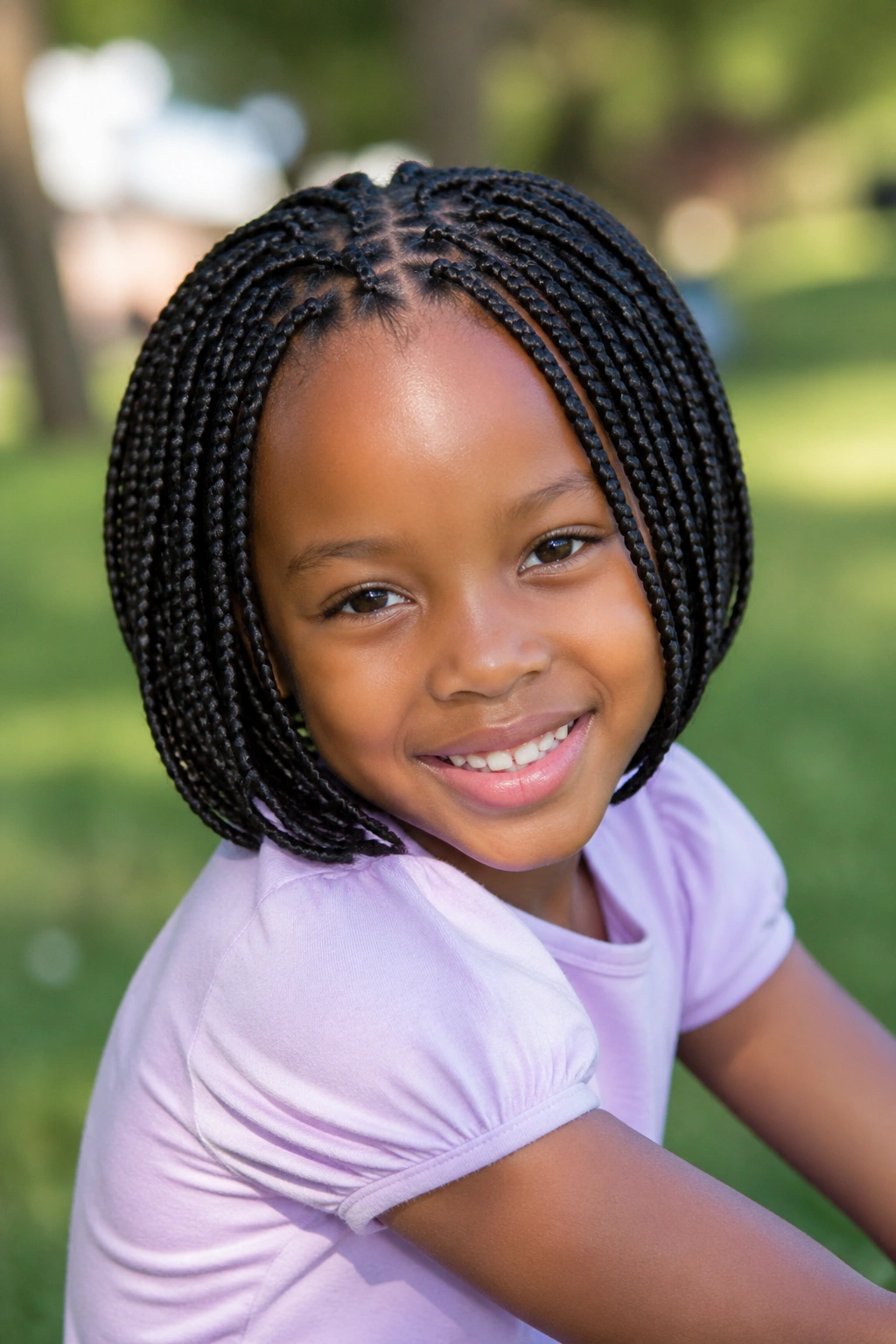
Rounded-shape short box braids finish the list where a lot of parents land in real life: short, light, and easy to live with. The shape curves inward a little at the ends instead of hanging stiffly, which gives the style a softer outline.
That rounded finish is especially nice on younger kids. It keeps the braids from looking boxy or overly heavy, and it helps the whole style sit close to the head. The result is tidy without being severe.
If you want a braid style that does not fight with jackets, naps, or car seats, this is one of the smartest options. Short hair can still have character. Plenty of it.
Final Thoughts
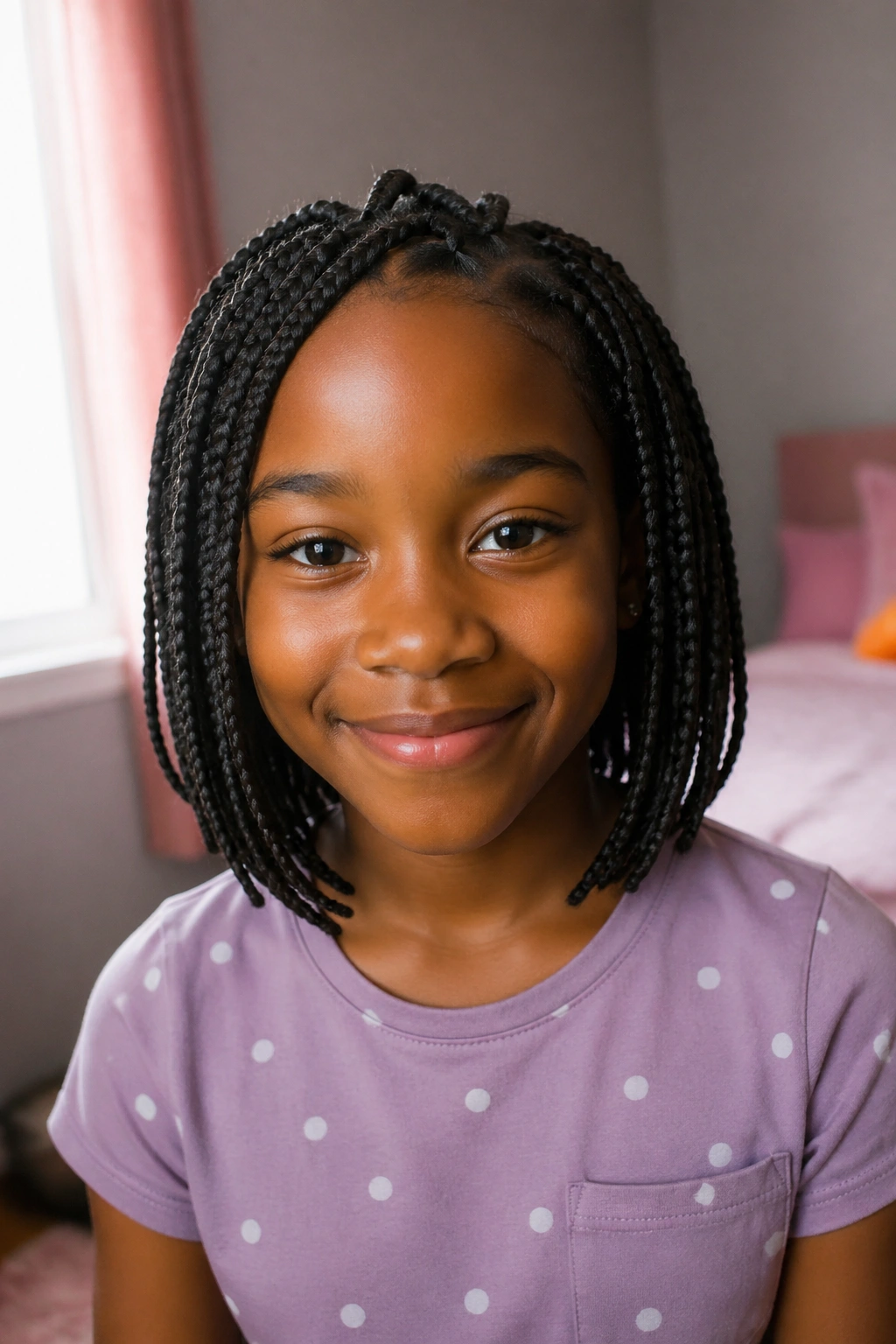
The best box braids for kids are the ones a child can wear without thinking about them every five minutes. That usually means lighter weight, clean parting, and a shape that fits the child’s daily life instead of just the mirror.
If I had to pick the safest starting points, I’d look first at shoulder-length medium braids, knotless braids, or a chin-length bob. Those three tend to behave well, and they leave room for beads, cuffs, or color later if you want more personality.
A braid style should make mornings easier, not harder. When the hair stays comfortable and the child still likes the way it looks, you’ve found the right one.
