
Brown and orange box braids work because the two shades do different jobs. Brown keeps everything grounded. Orange brings the heat, the light, the attitude — whichever version you want that day. Put them together with a little thought and the result feels rich instead of random.
The nice part is how flexible this color pairing is. A deep espresso base with copper ends reads calm and polished. A caramel-and-tangerine mix feels brighter and more playful. A few orange panels hidden inside brown braids? That’s the move for someone who wants surprise without going full neon.
Placement matters more than people think. So does braid size. Medium box braids show color shifts clearly. Jumbo braids make the shade blocks feel bolder. Knotless braids soften the whole look, which is useful if you want the color to feel expensive rather than loud.
And yes, maintenance matters too. Orange tones tend to show fuzz faster than dark brown, so a satin scarf, light mousse, and a tidy part line go a long way. Start with the version that fits your daily life, not the loudest one on the mood board, and the rest usually falls into place.
1. Cinnamon Ombre Box Braids That Melt From Brown to Orange
Cinnamon ombre is the safest place to start if you like warm color but do not want the braids to shout from across the room. The brown base keeps the style anchored, then the orange shows up slowly at the mid-lengths and ends, which gives the whole thing a soft burnished feel. It’s a clean look. No harsh split, no awkward color block.
Why the fade works so well
The trick is the transition. A braid that shifts from dark brown into copper, then into ember-orange, looks much smoother than one that jumps straight from brown to bright orange. Your eye reads the whole braid as one color family, which makes the style look intentional and expensive rather than busy.
- Best on waist-length or mid-back braids
- Works especially well with a center part
- Keeps the orange visible even when hair is worn down
- Looks sharper when the roots are neat and the parting is straight
Best tip: keep the brightest orange near the ends. If you move it too high, the braid can lose that gradual melt that makes this style strong.
2. Honey Brown Bob Braids With Burnt Orange Ends
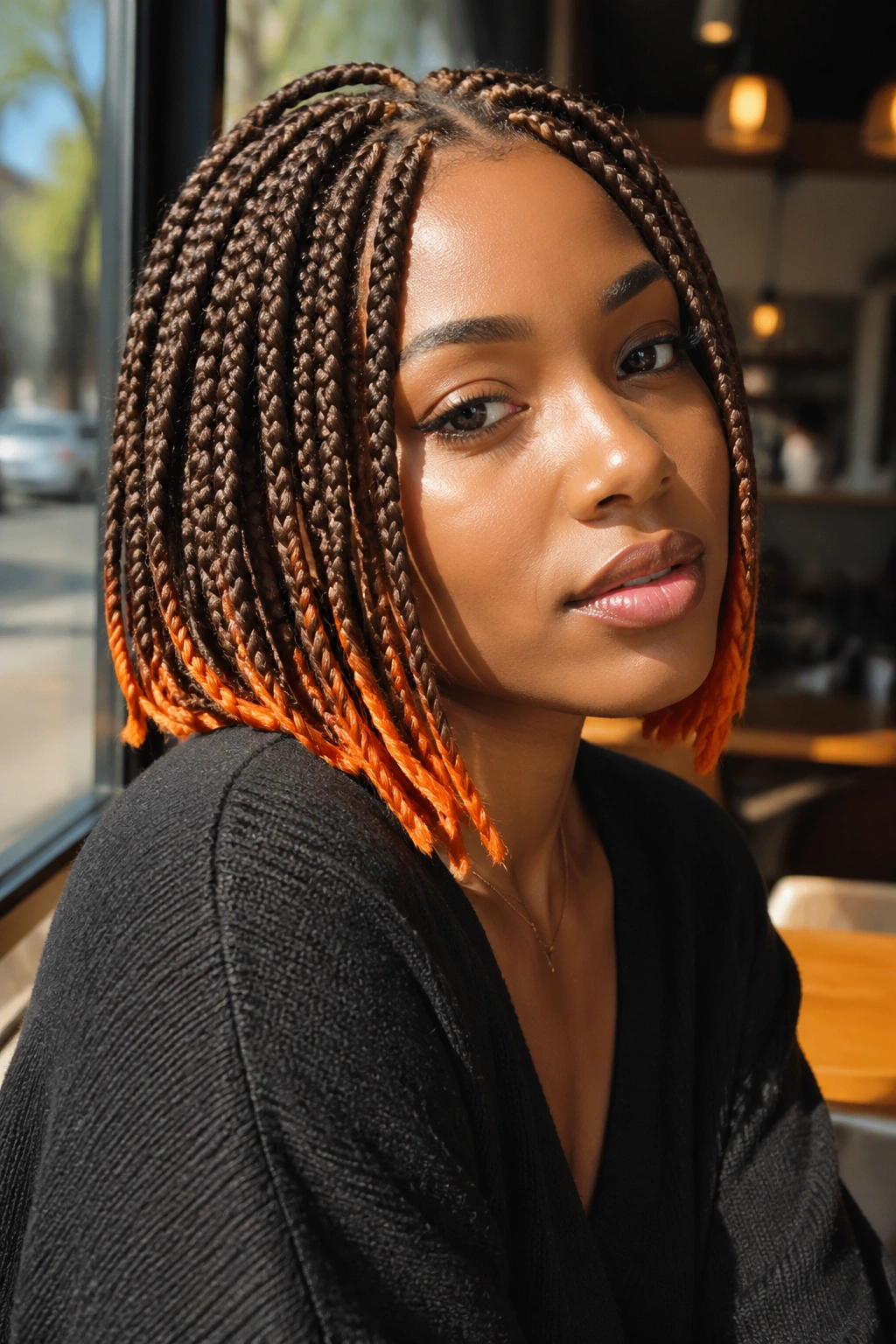
A bob changes everything. Shorter brown and orange box braids look sharper, lighter, and a lot easier to live with day to day. When the ends hit around the chin or collarbone, the orange sits close enough to the face to matter without taking over the whole style. It feels tidy. It feels deliberate.
This is the kind of look that works when you want color but do not want the weight of long braids on your neck. The brown at the top keeps things calm, and the burnt orange at the bottom gives the cut a little heat. You get movement every time you turn your head. You also get less tangling, which is a practical win nobody talks about enough.
One more thing: bob braids look best when the ends are trimmed evenly. If the bottom line is ragged, the color shift loses some of its punch. A blunt finish makes the orange pop harder, and that’s the whole point here.
3. Brown Box Braids With Hidden Orange Peekaboo Panels
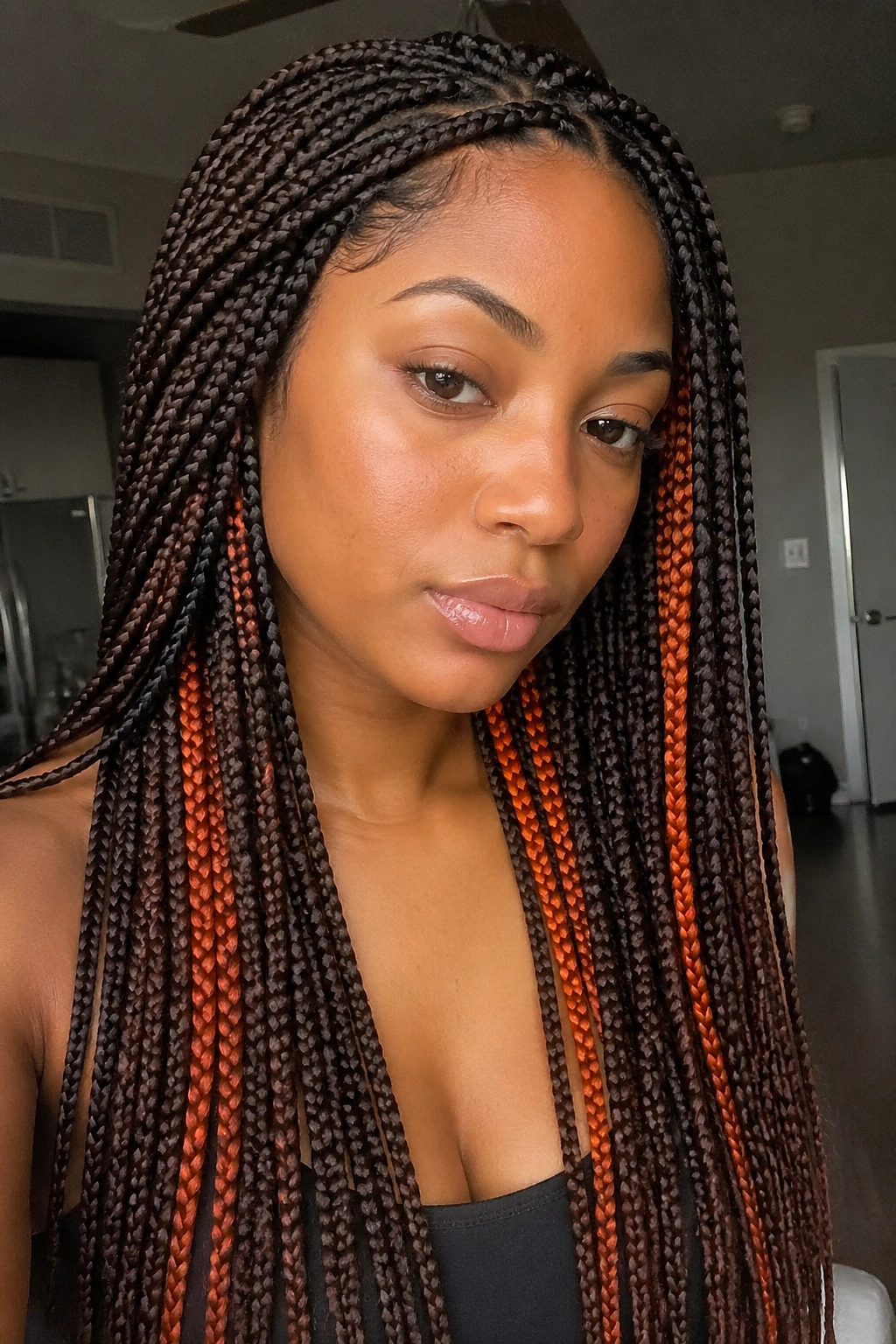
Peekaboo color has a nice little trick up its sleeve. From the front, people see mostly brown. Then you shift your head, pull half the braids up, or tuck one side behind your ear, and the orange shows up underneath like a second layer. It’s playful without being obvious. That matters if you want color but still need the style to behave in more conservative settings.
How to wear it
The placement does the work here. Keep the outer layer in espresso, chocolate, or deep chestnut, then thread the orange through the inner rows and nape area. The payoff comes from motion, not from the first glance.
- Pull half the braids into a ponytail to reveal the orange layer
- Sweep one side over the shoulder so the hidden color peeks through
- Use clips on the outer rows if you want to open the color up a little
- Keep the orange concentrated low so the style stays balanced
That hidden flash is what makes this version fun. You don’t need a lot of orange to make an impression.
4. Auburn, Copper, and Caramel Braids With a Three-Tone Blend
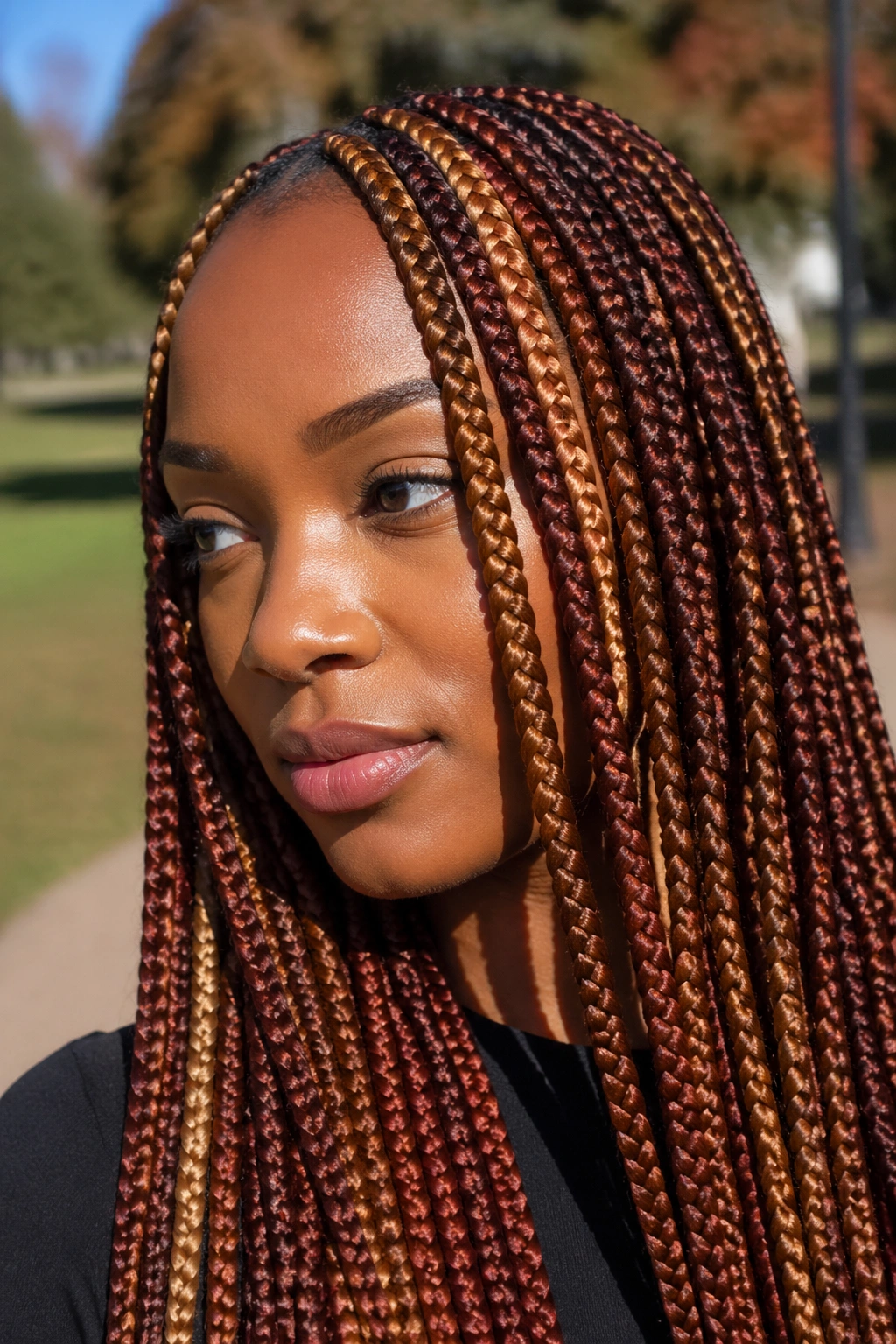
Three shades sound like a lot until you see how well they behave together. Auburn gives depth. Copper brings the bright note. Caramel softens both so the braid doesn’t read flat or muddy. The result looks layered in a way that single-color braids often don’t. It has more movement before you even style it.
I like this version when someone wants warmth but is nervous about going too orange. The caramel keeps the look friendly. The auburn stops it from drifting into pumpkin territory. Copper sits in the middle and keeps the whole braid alive in daylight.
A few practical details help here:
- Put the darkest shade closest to the scalp for a cleaner base
- Let the lightest shade show more near the ends
- Keep the three tones in the same warm family so the mix doesn’t fight itself
- Ask for even distribution, not random streaks
That last part matters. Random placement can look patchy. A controlled blend looks richer.
5. Jumbo Box Braids With Orange Beads and Brown Roots
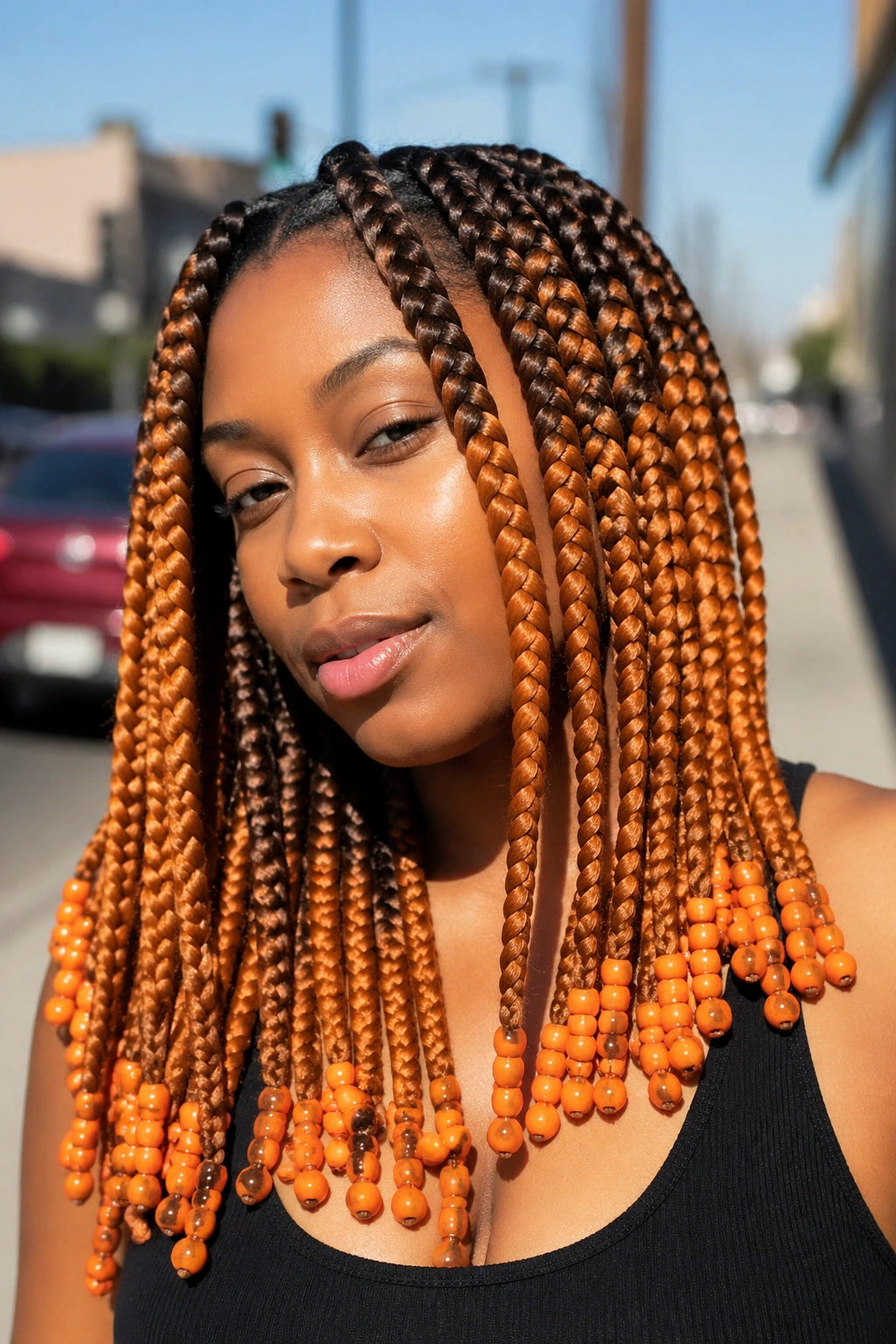
Big braids can carry louder color without looking messy. That’s the simple truth. When the braids are jumbo-sized, you have fewer rows on the head, which means each strand has more visual weight. A brown root with orange length already has presence; add orange beads at the ends and the whole style starts to move every time you walk.
This version is strong in a way small braids usually are not. It’s quicker to read from a distance, and the braid size keeps the orange from turning fuzzy in the eye. The look is clean, but it has personality. It’s especially good if you like statement accessories and do not mind a little swing when you turn your head.
Jumbo braids also save time in the chair, which is a real benefit. Not glamorous, but real. Fewer sections mean less overall work, and that matters when the color itself is already doing plenty.
6. Knotless Box Braids in a Soft Espresso-to-Tangerine Fade
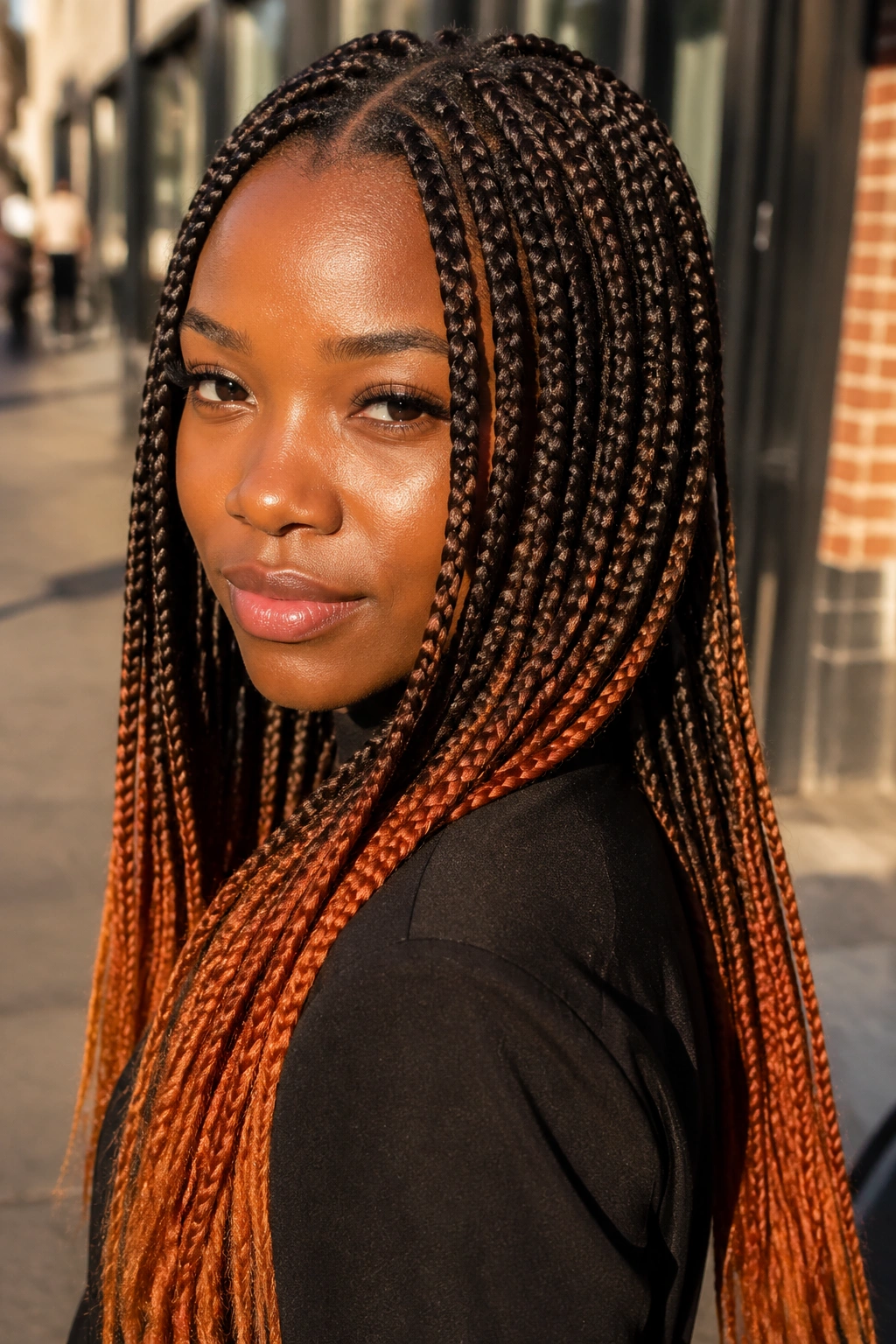
If you want brown and orange box braids without the bulk at the scalp, knotless is the smarter pick. The root area lies flatter, the parting looks softer, and the color fade feels smoother because the braid starts in a more natural way. A deep espresso base that melts into tangerine ends reads modern without trying too hard.
Knotless braids also sit lighter on the head, which you notice fast if you wear braids often. That matters more than people admit. A style can look amazing for the first hour and be miserable by day four. A flatter root and less tension can change the whole experience.
What makes knotless feel different
The braid seems to grow out of the scalp instead of sitting on top of it. That gives the orange more room to breathe, especially near the ends, where the color should feel bright and lively.
It’s a good choice for long wear, travel, or anyone who likes a neater finish around the hairline. If you want color without the bulky start, this is the one I’d point to first.
7. Side-Part Box Braids With Orange Face-Framing Pieces
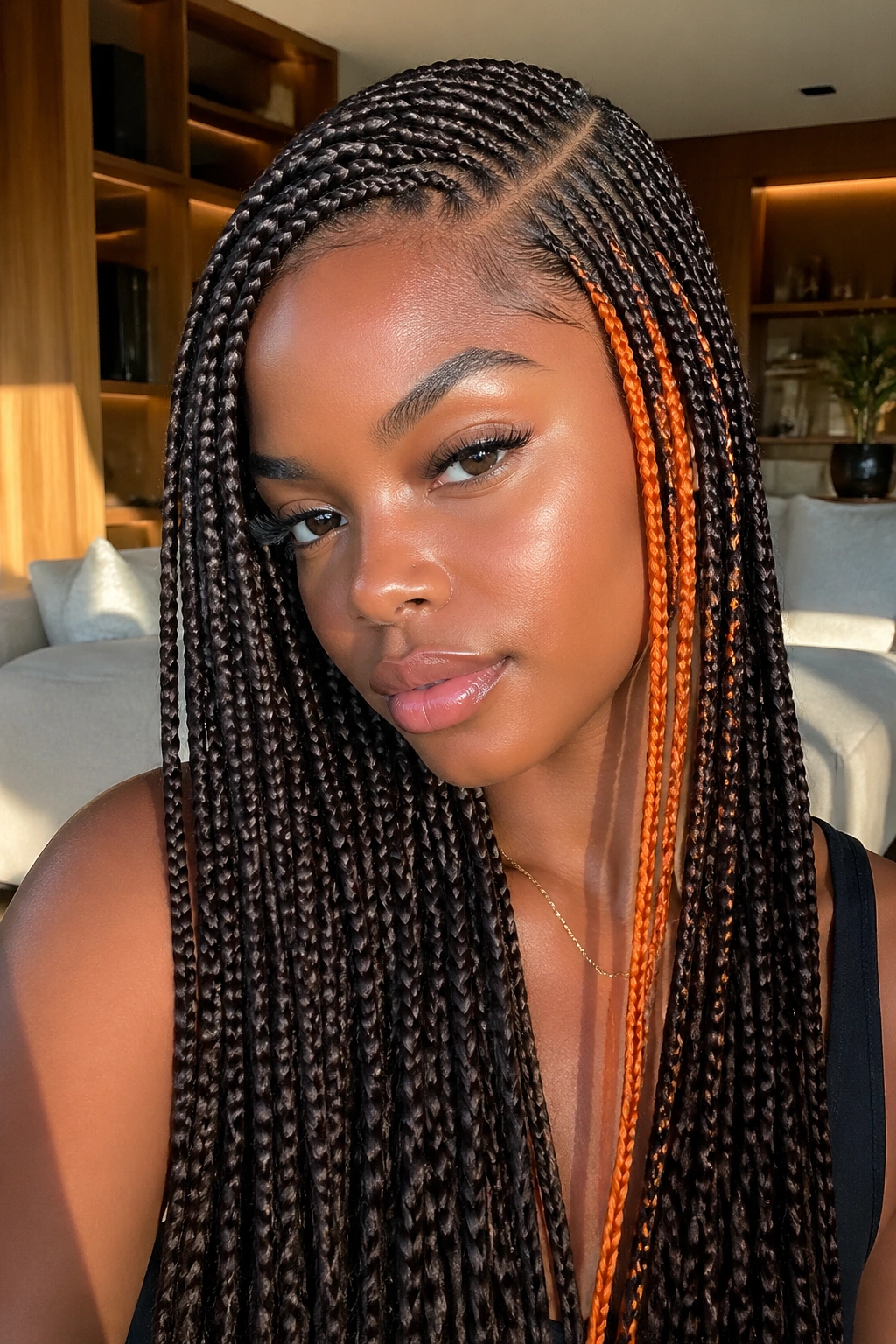
Why does a side part matter so much? Because it changes where the eye lands first. A center part can feel calm and symmetrical. A side part shifts the whole mood. Add a few orange face-framing pieces near the temples and you get a warmth that brightens the face without flooding the whole head with color.
The key is restraint. Keep most of the braids brown, then let the orange live near the front and along one side. Those front pieces act like a frame, which makes the style feel intentional from the first glance. If the orange is everywhere, you lose that focus.
How to place the color
- Put the orange strands near the cheekbones or temple area
- Leave the back mostly brown so the front can carry the contrast
- Keep the side part clean and deep
- Use a small amount of edge styling so the front stays polished
This version is a good middle ground. It gives you the color story without the commitment of a full bright head of braids.
8. Triangle-Part Brown and Orange Box Braids
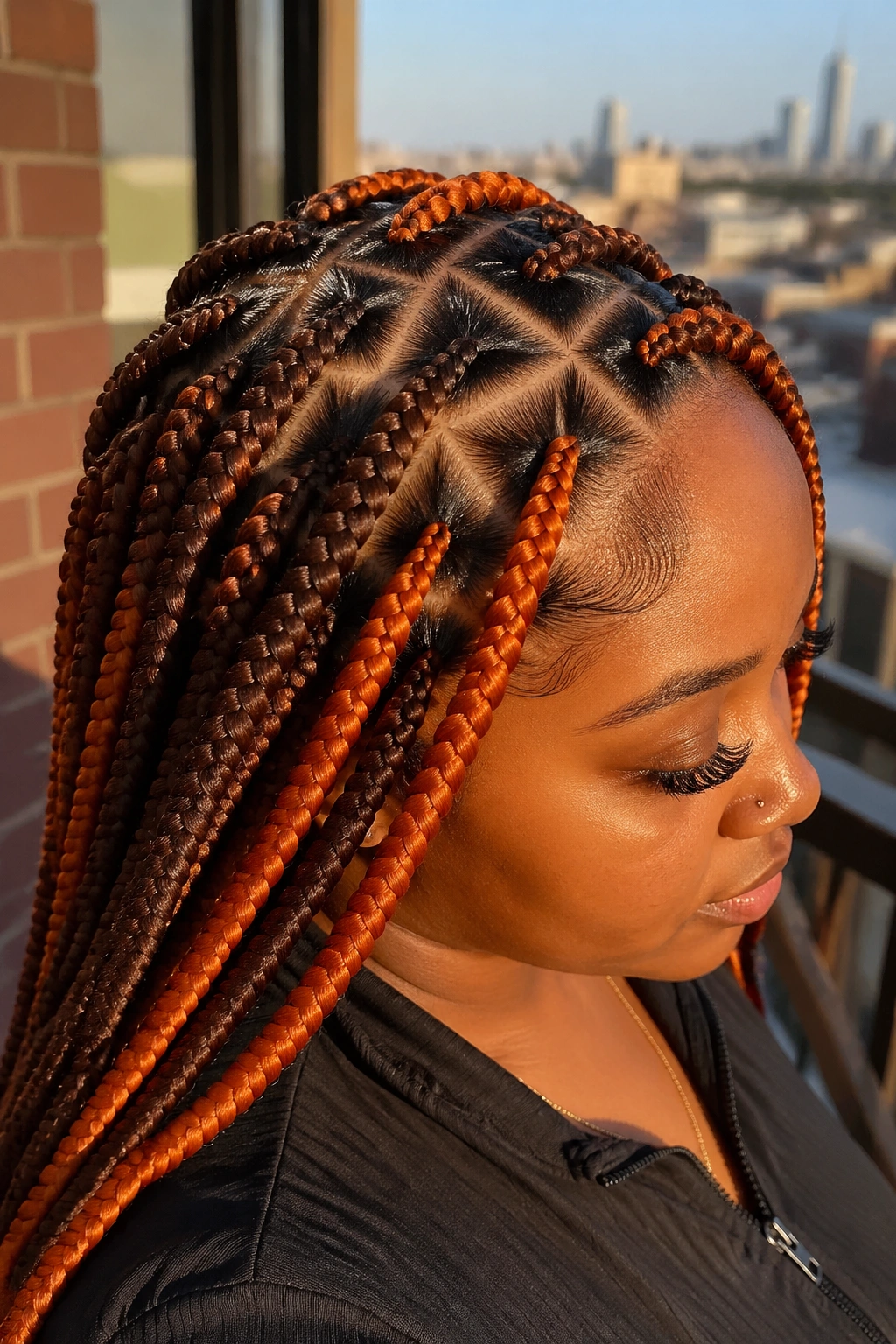
Triangle parts are sharper than square parts, and that sharpness gives warm colors a cleaner frame. A brown-and-orange braid looks more graphic when the parting has angles. It’s a small shift, but it changes how the whole head reads. The scalp design becomes part of the style instead of disappearing under it.
The color pair works especially well here because the geometric parting keeps the eye moving. A rusty orange braid next to a rich brown braid has more edge when the sections are cut into triangles. The style feels deliberate, not casual.
That said, triangle parts need to stay crisp. If the roots get too fuzzy, the point of the triangle disappears and the style loses its structure. A tidy root line makes the shape visible longer, which is the whole reason to choose it.
This is a smart choice if you like detail. Not every braid style needs to be soft. Some should look a little engineered. This is one of those.
9. Half-Up, Half-Down Box Braids With Amber Lengths
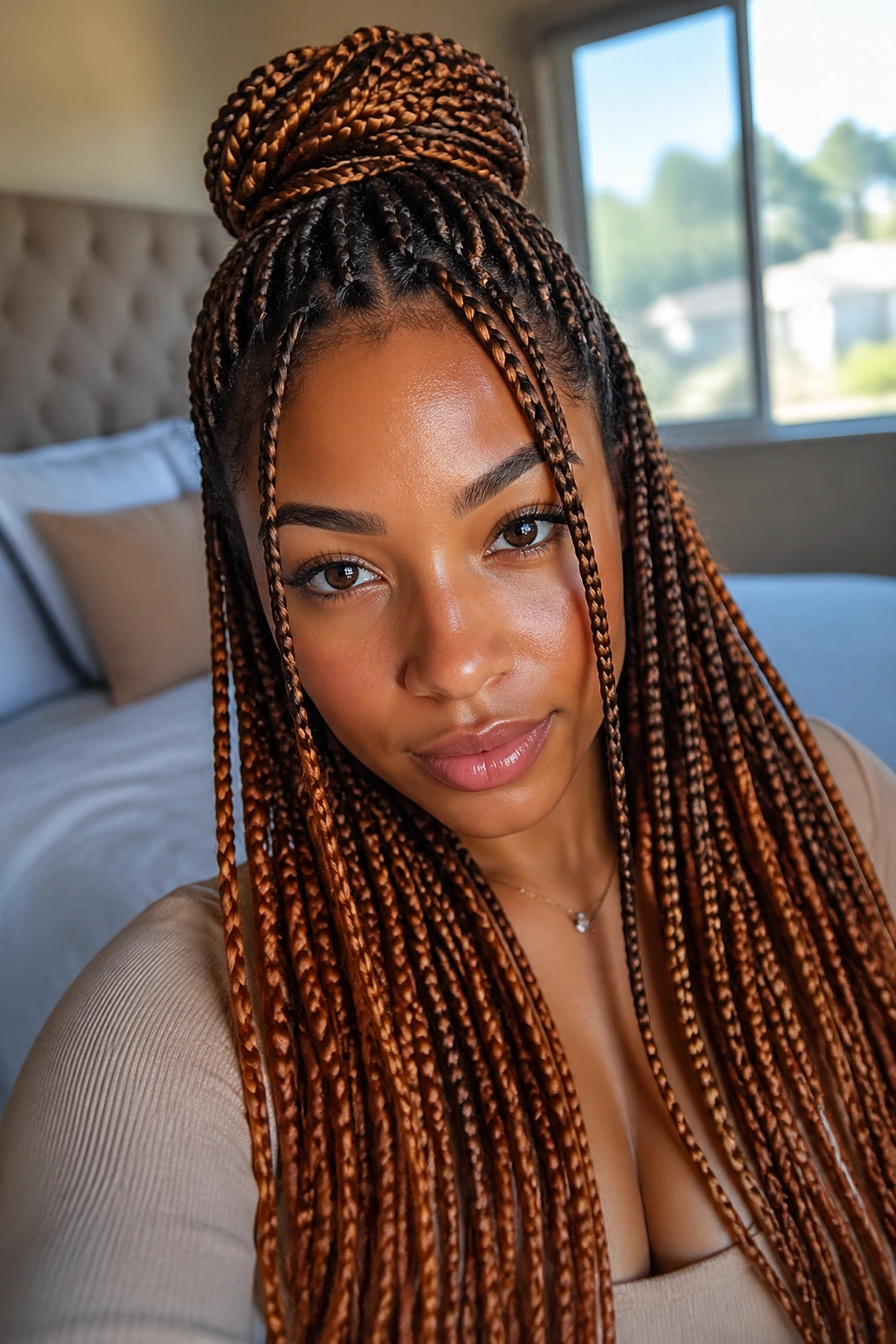
Picture a high bun on top and warm amber braids spilling down the back. That’s the appeal here. The half-up, half-down shape gives you control at the crown while still letting the color move. Amber is a nice middle note too — brighter than brown, softer than orange, and easier to wear in a braid that sits close to the face.
This style earns points for practicality. Hair stays out of your eyes. The orange shows where it matters. And the up-down split gives the color two different lives: one neat and pulled back, one loose and swinging. It never feels static.
Styling options that actually make sense
- Wear the top half in a high ponytail for a clean, sporty feel
- Twist the top into a small bun if you want the amber lengths to do the talking
- Leave a few braids loose around the face so the color blends into your features
- Wrap one or two strands around the base to hide the elastic
The trick is not overcomplicating it. The shape already gives you enough going on.
10. Curly-End Box Braids With Brown Roots and Pumpkin Tips
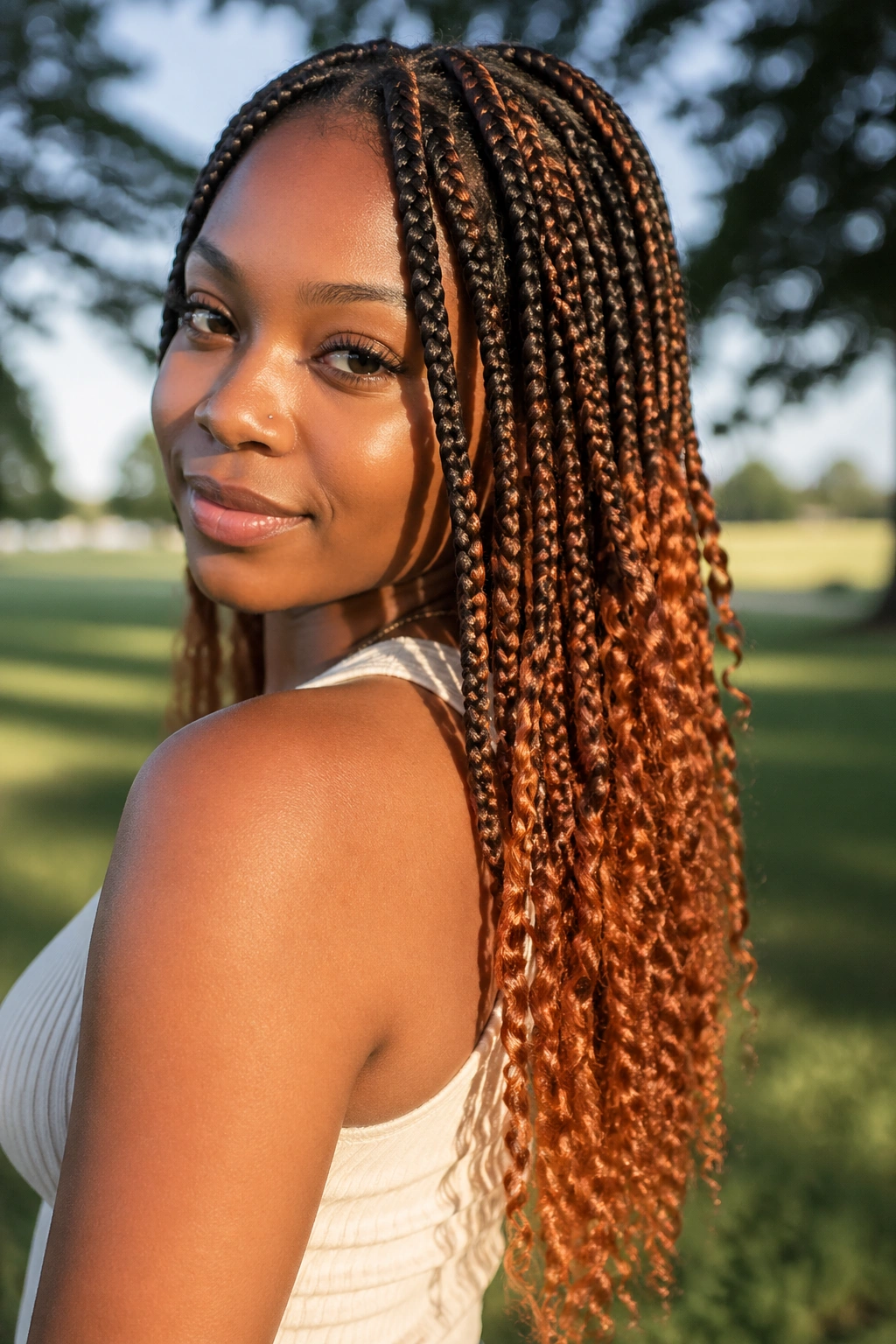
Curly ends change the whole mood of box braids. Instead of a straight, rigid finish, the hair bounces a little at the bottom. That softness works especially well with brown roots and pumpkin-colored tips, because the color shift has room to look playful instead of severe. The ends feel lighter, too. Visually lighter, I mean. Not physically. The curls just stop the braid from ending in a hard line.
This style is for people who like movement. The curled ends catch the breeze, flip over a shoulder, and loosen the look in a way straight ends cannot. Pumpkin orange makes the curl pattern stand out even more because the lighter tips separate from the deeper brown base.
One thing to watch: curly ends need a little more care at bedtime. They can fray faster if they’re crushed and ignored. A loose wrap and a satin scarf help keep the shape from turning into a puff by the second week.
11. Brown Box Braids With Copper Cuffs and Light Orange Highlights
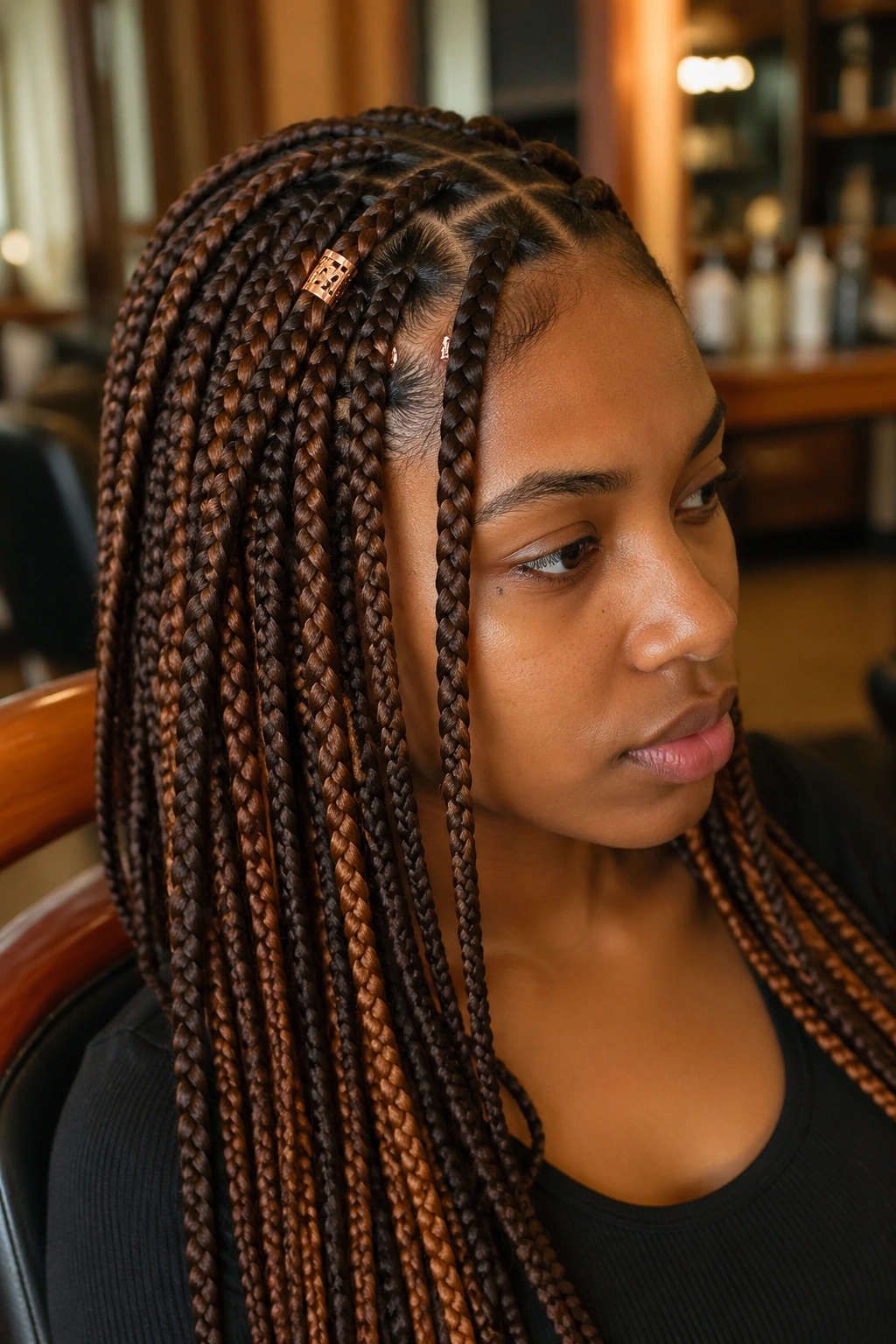
A full orange braid is not the only way to make this color story work. Sometimes the smarter move is to keep the braids mostly brown and use copper cuffs plus a few light orange highlights to break things up. That keeps the base calm and lets the shine sit where you want it.
I like this approach because it feels edited. The color is there, but it is not fighting for attention on every braid. Copper cuffs reflect light in a way that makes the warm tones look more expensive, and the orange highlights keep the braids from reading too dark. A little goes a long way.
Where the shine should go
- Place cuffs near the front and around the crown
- Use orange highlights on a few braids instead of every section
- Keep the back more neutral if you want the style to stay wearable
- Mix cuff sizes if you want the braid surface to look more layered
This is a solid option if you like details more than drama. The effect is subtle up close and lively from a few feet away.
12. Layered Mid-Back Box Braids With a Sunset Blend
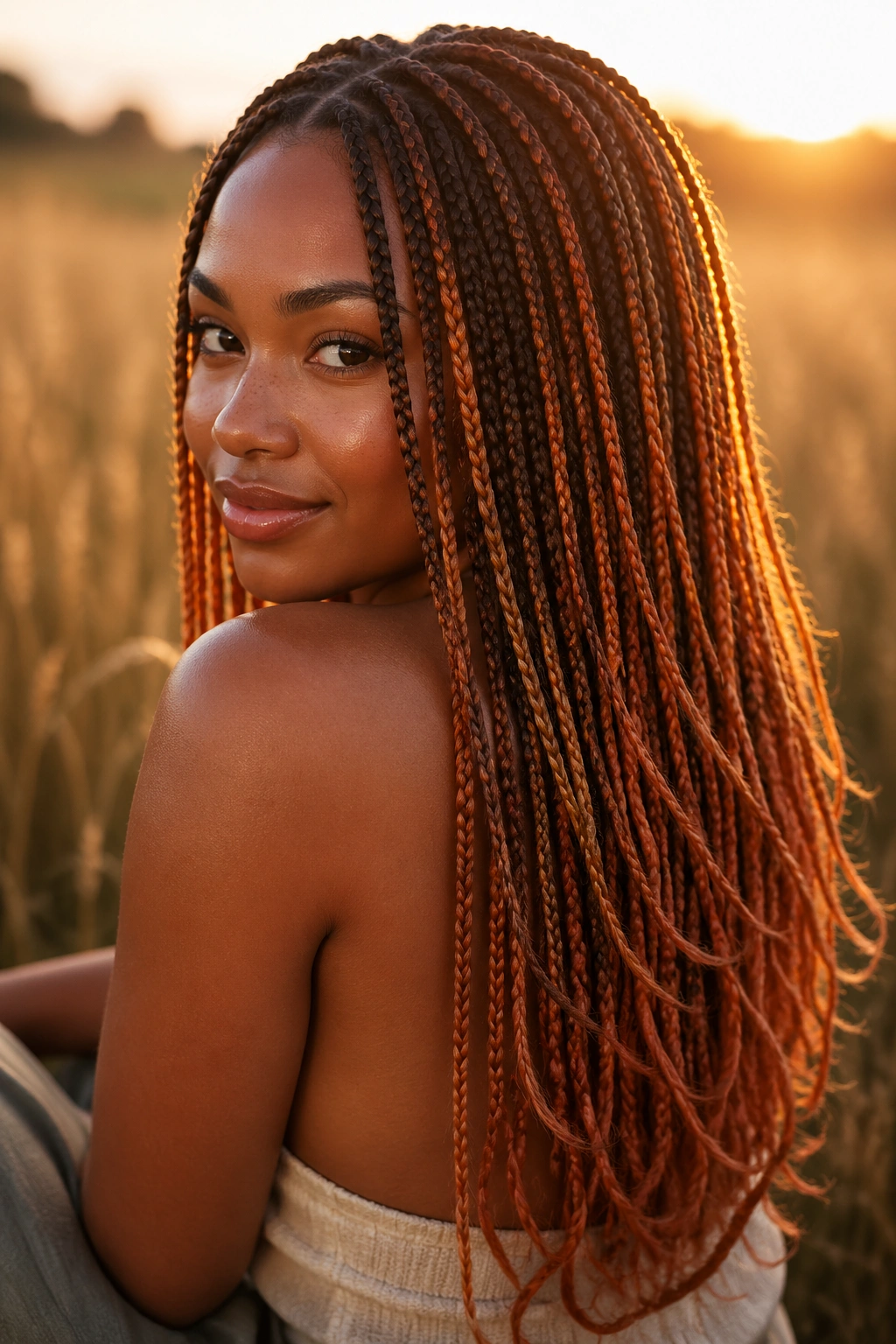
Layering matters more than most people think. A blunt row of braids falls in one flat curtain, which can be fine, but it does not always do warm color justice. Layered mid-back braids create movement in the silhouette itself. Add a sunset blend — brown, rust, gold, and orange — and the style starts to look like it has depth built into it.
The front pieces can sit a little shorter, the middle can land around the shoulders, and the back can fall lower. That staggered length makes the colors show at different angles. It also takes some weight off the face, which helps when the braid count is high.
This version is good for anyone who wants long braids without the drag of one heavy length. It gives you the drama of length and the ease of a lighter shape. The color looks fuller too, because the layers stop the orange from getting swallowed by the brown.
13. Boho Box Braids With Brown Base and Orange Curly Strands
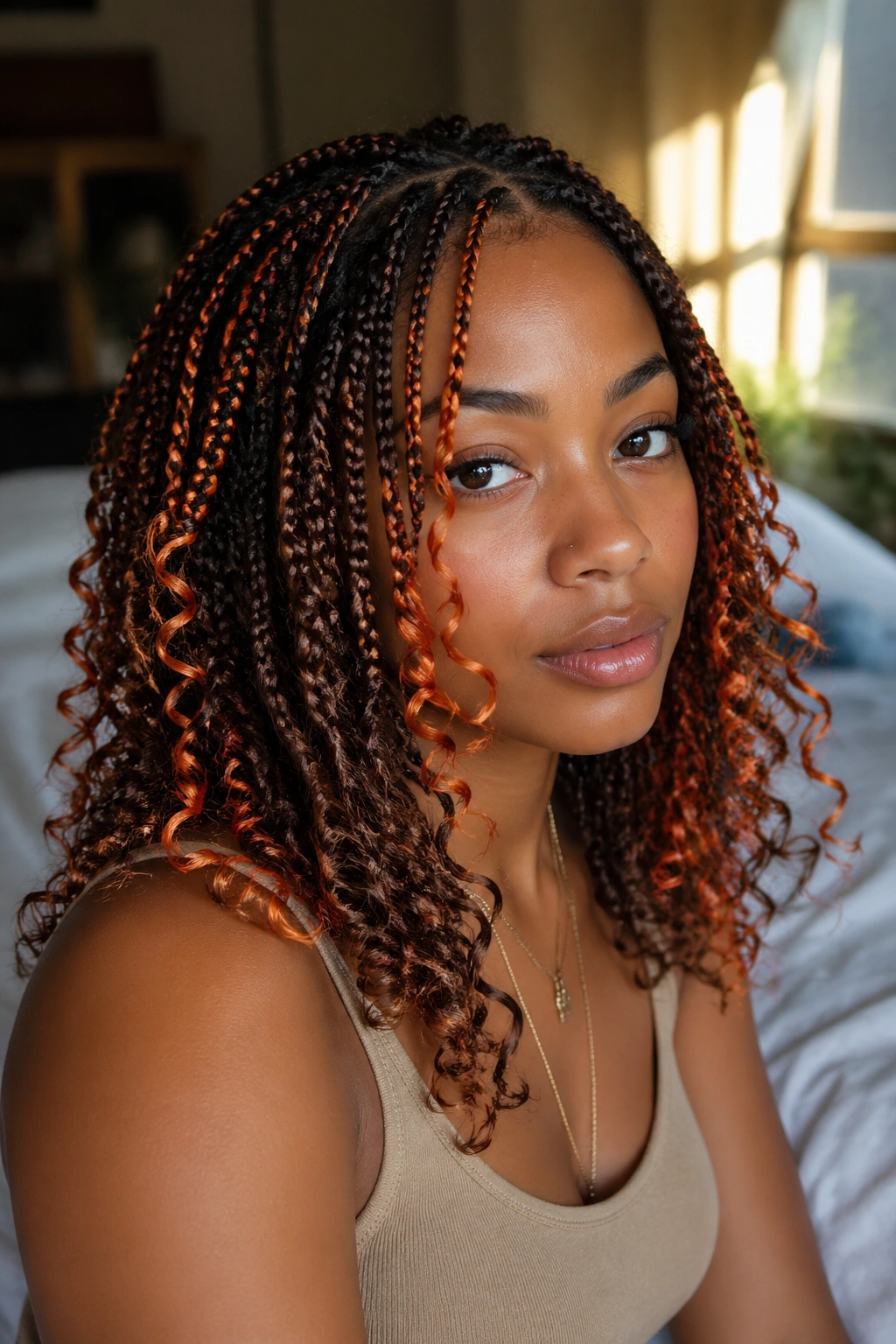
If you want texture, this is the one. Brown boho braids with orange curly strands feel soft, lived-in, and a little messy in the best way. The braids stay neat at the root and through most of the length, then the loose curly pieces break up the uniform look. The orange shows up in those curls, which gives the style a nice flicker of color instead of one solid block.
How to keep the boho look tidy
The loose pieces are the charm here, but they can go from charming to tangled if you treat them like regular braids.
- Keep the curls concentrated in the mid-lengths and ends
- Use mousse lightly so the texture stays soft, not crunchy
- Sleep with a satin scarf or bonnet every night
- Separate the curls with your fingers, not a comb
The point is controlled looseness. You want some frizz. You do not want chaos. This version looks best when it feels touchable and a little undone, like the style was meant to move.
14. Shoulder-Length Box Braids With Bold Orange Panels
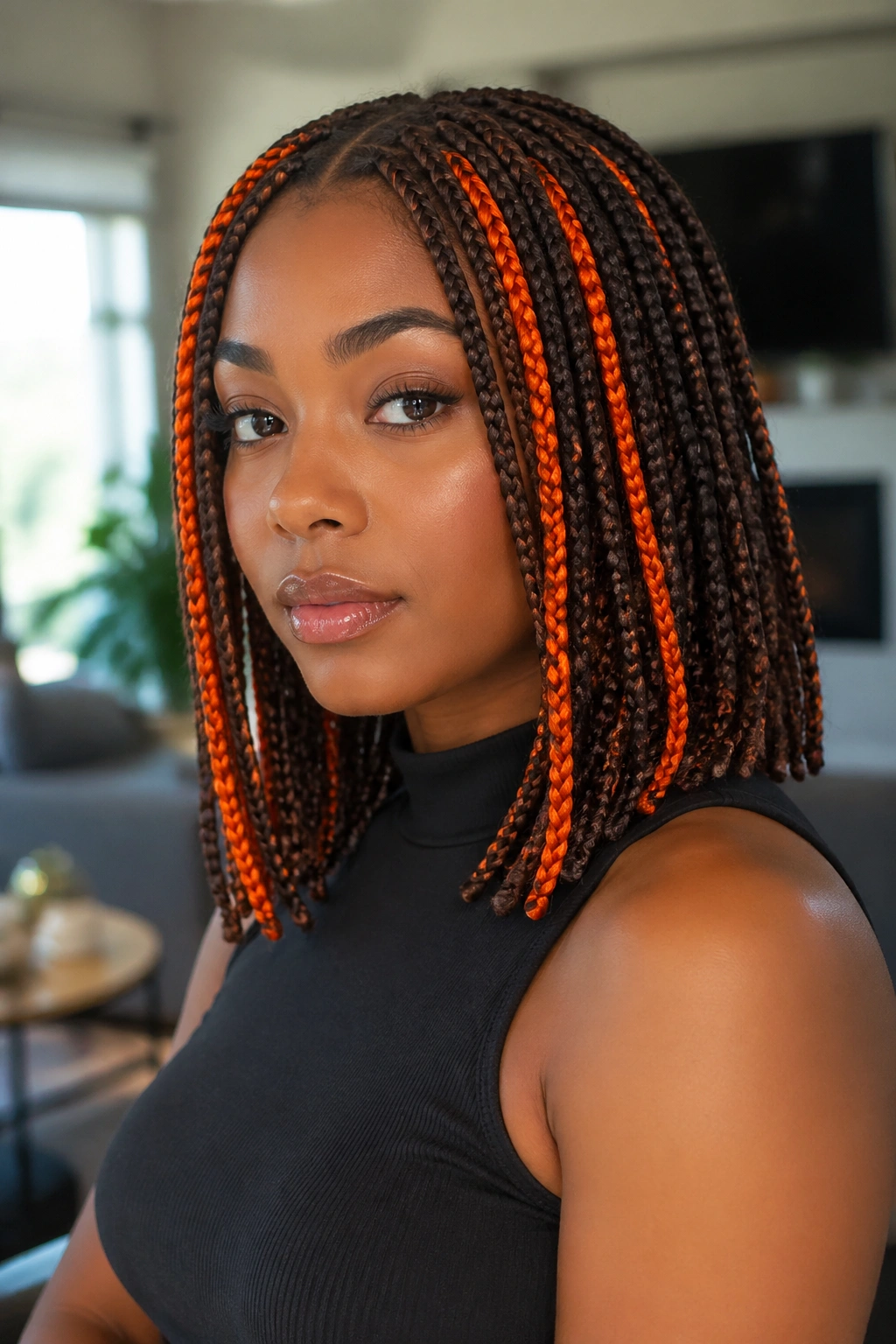
Shorter braids can carry bold color better than long ones, and I’ll stand by that. Shoulder-length box braids with orange panels have a crisp shape that makes the color hit harder. There is less hair to process visually, so the orange can stand out without getting lost in the length. That makes this style punchier than people expect.
The brown keeps the base steady, and the orange panels break up the head in clean sections. It feels modern. It also stays lighter than longer braids, which matters if you wear your hair up a lot or hate the pull of heavy length on your neck.
This is a nice choice when you want the color to be the point. Not an accessory to the style. The point. Keep the cut blunt, keep the panels clean, and let the orange do its job.
15. Sleek Feed-In Braids With Espresso, Rust, and Gold Accessories
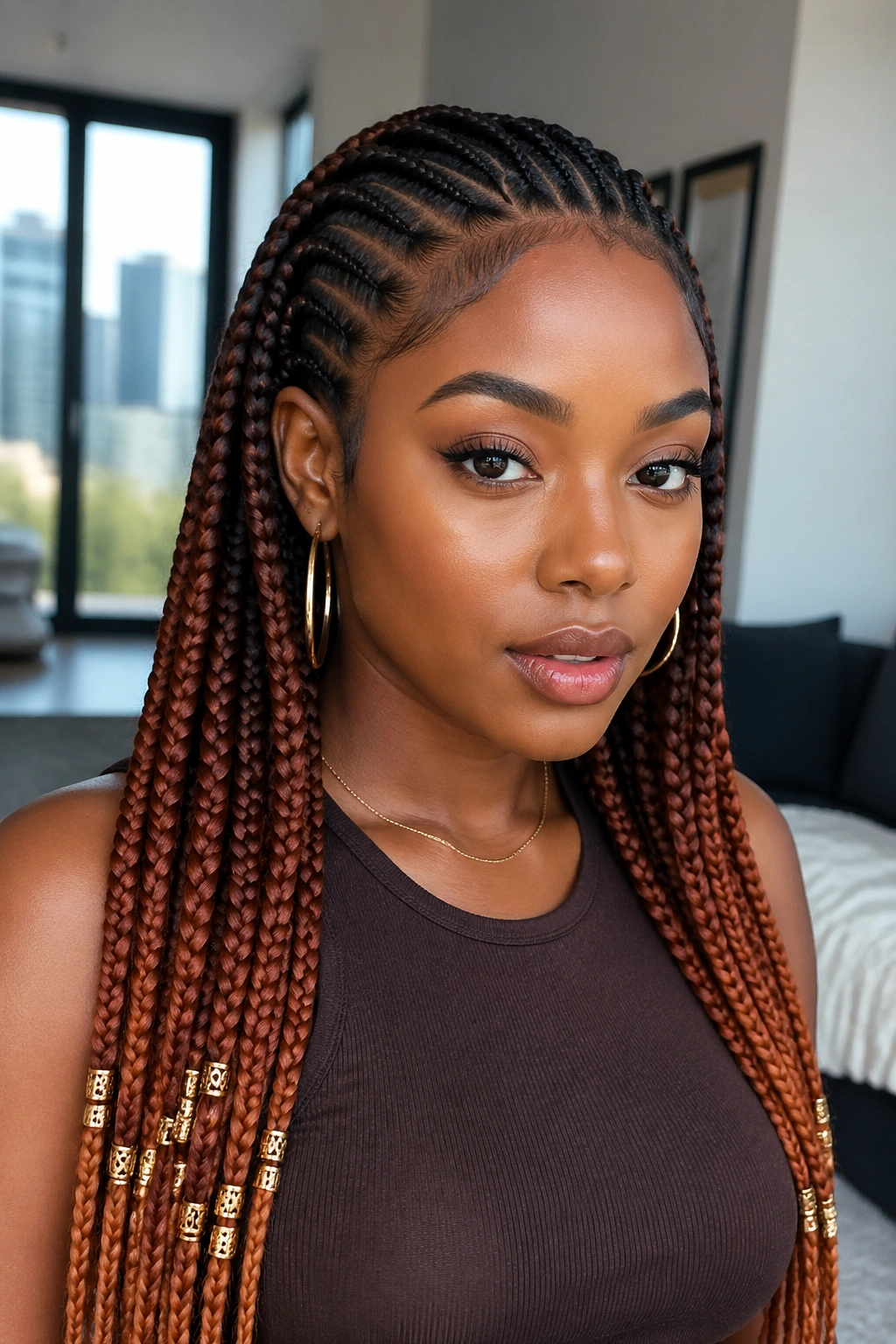
If you want the neatest version of brown and orange box braids, start here. Feed-in braids give the scalp a smooth, close finish, and that polished root makes the color placement feel even more deliberate. Espresso at the base, rust through the body, and a few gold accessories near the ends create a strong, clean line from top to bottom.
Why this finish looks so controlled
The feed-in method removes some of the bulk at the root, so the braids sit flat and the parting looks sharp. That gives the warm colors a better stage. Rust reads richer against the dark base, and gold cuffs or rings stop the look from feeling too heavy.
- Best for neat center parts or symmetrical side parts
- Works well when you want the crown to stay sleek
- Looks especially good with a few well-placed accessories
- Keeps the orange from taking over the whole head
This is the style I’d choose if I wanted warm color that still felt structured. It has shine, shape, and enough restraint to wear in almost any setting.
Final Thoughts
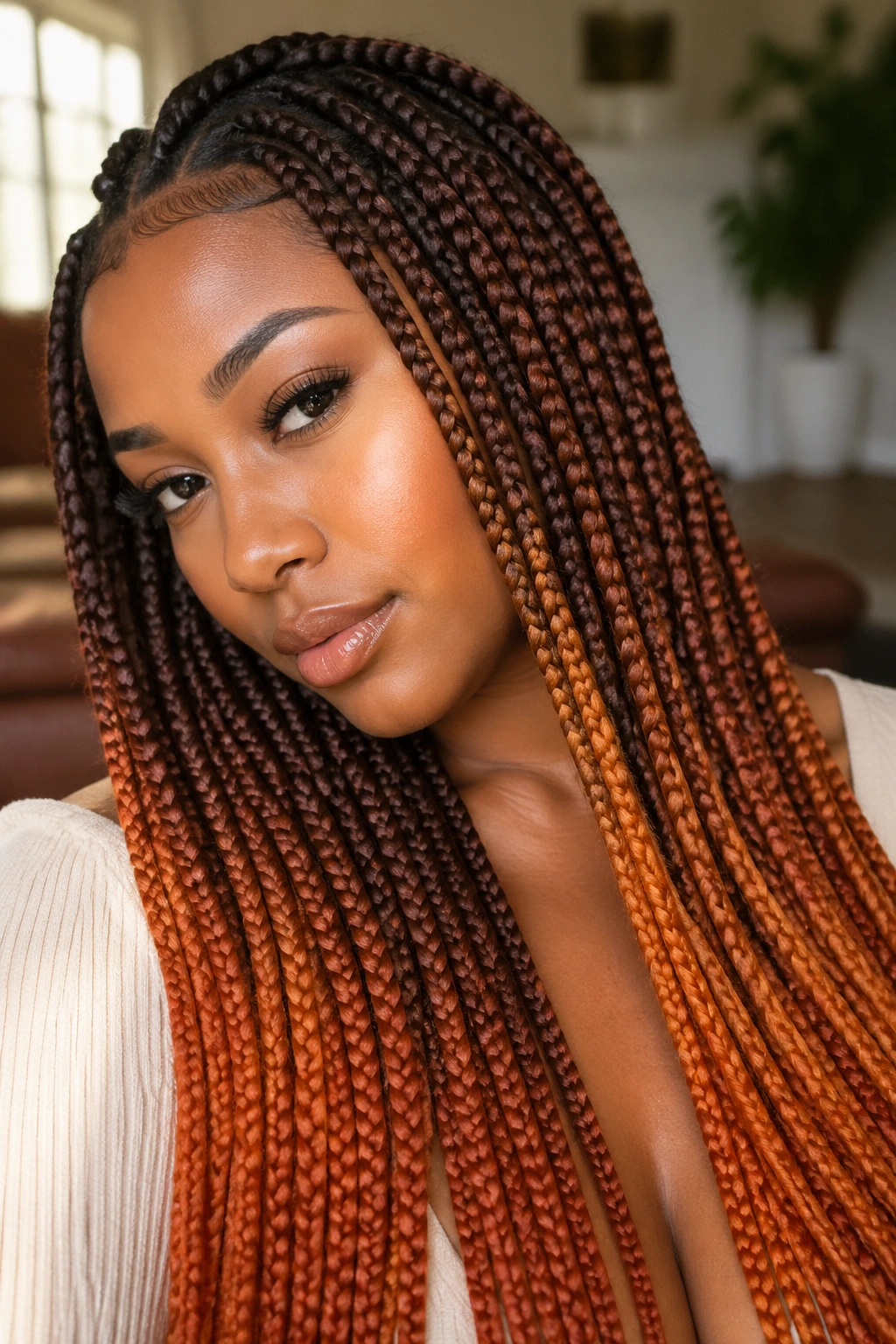
Brown and orange box braids work because the palette has range. You can keep it soft with amber ends, push it bold with panels or beads, or split the difference with peekaboo color and layered lengths. The shade mix is only half the story. Parting, braid size, and length decide whether the style feels calm, loud, or somewhere in between.
If you want the easiest starting point, go with brown at the roots and orange at the ends. That version is hard to mess up. If you want more personality, move the orange closer to the face, hide it under a brown top layer, or let it show up in accessories instead of the braid itself.
The strongest versions always look planned. Not overworked. Just planned. And that is usually what makes brown and orange box braids look expensive rather than random.