

Pink and white box braids do not whisper. They walk into a room with their own mood, and if the parts are sloppy or the color placement feels random, the whole style loses its nerve fast.
That is the part people miss. Pink and white box braids can look soft, sharp, sweet, edgy, or all three at once, but the difference usually comes down to tiny things: how big the sections are, whether the white sits near the face or the ends, and whether the braid finish is blunt, curled, or beaded. A lot of the style lives in those details.
The combo also asks for a little realism. White synthetic hair shows lint. Pink hair can look faded faster when it gets fuzzy. Braids that are pulled too tight at the hairline stop looking cute the second your scalp starts talking back. So the best versions are the ones that look deliberate from six feet away and still feel wearable when you’re sitting in a car, sleeping on a satin pillowcase, or tying your hair up for the third time that day.
Some versions lean playful and bright. Others feel clean enough for a dressy event. A few land in the middle, which is where this color pairing gets interesting. Start with the version that matches how much attention you want, because pink and white box braids can go from delicate to loud in one braid section.
1. Classic Alternating Pink and White Box Braids
Alternating pink and white braid after braid is the cleanest place to start. The pattern is simple, but simple does not mean boring when the sections are neat and the color balance is even. Keep the parts square and the braids medium-sized, and the whole head starts to feel organized instead of busy.
Why the rhythm works
The eye likes repetition. A pink braid next to a white braid, then back again, gives the style a steady beat, which matters more than people think. It keeps the color story from drifting into random patches.
If you want this to look polished, ask for consistent section size and keep the alternation steady from the front hairline to the nape. That little discipline is what keeps the style from looking thrown together.
- Best braid size: medium, about the width of a pencil or slightly thicker.
- Best parting: clean square parts, spaced evenly across the head.
- Best length: collarbone to mid-back if you want the colors to stay visible without feeling heavy.
- Best finish: blunt ends or lightly sealed ends for a neat shape.
Pro tip: place the brighter white pieces near the front and temples. That’s where the contrast shows first, and it makes the whole style look more deliberate without changing the basic pattern.
2. Pink Roots That Melt Into White Ends
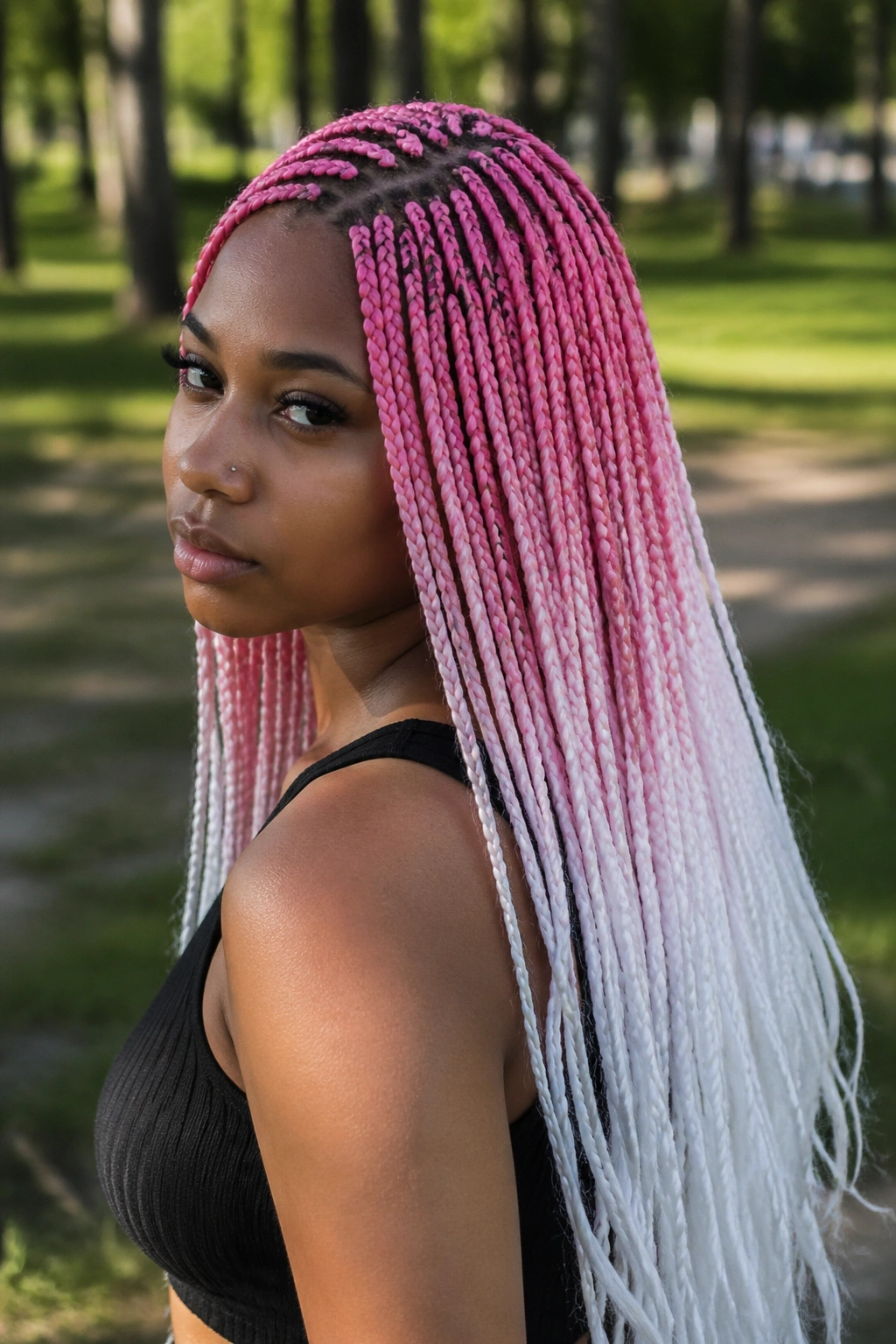
Why does a color fade look so polished when it’s done well? Because the braid starts with a solid block of pink, then softens into white before the ends. The shift breaks up the color enough to keep it from feeling flat, but it still looks crisp from a distance.
This version works especially well on longer box braids. The extra length gives the fade room to happen. If the braids are too short, the color change can feel abrupt; with more length, the eye gets a clean line from top to bottom.
How to ask for it
Tell your braider you want about two to three inches of pink at the root, then a clean switch into white. If you want the fade to feel gentler, use a dusty rose or pastel pink rather than a neon shade. Hot pink plus bright white can look sharp, but it also demands more confidence.
The nicest thing about this style is how it moves. When the braids swing, the pink shows first, then the white flashes underneath. It gives the hair a little depth without needing curls, beads, or anything extra.
It’s a smart choice if you like color but do not want every braid to shout at once.
3. White Roots With Pink Dipped Tips
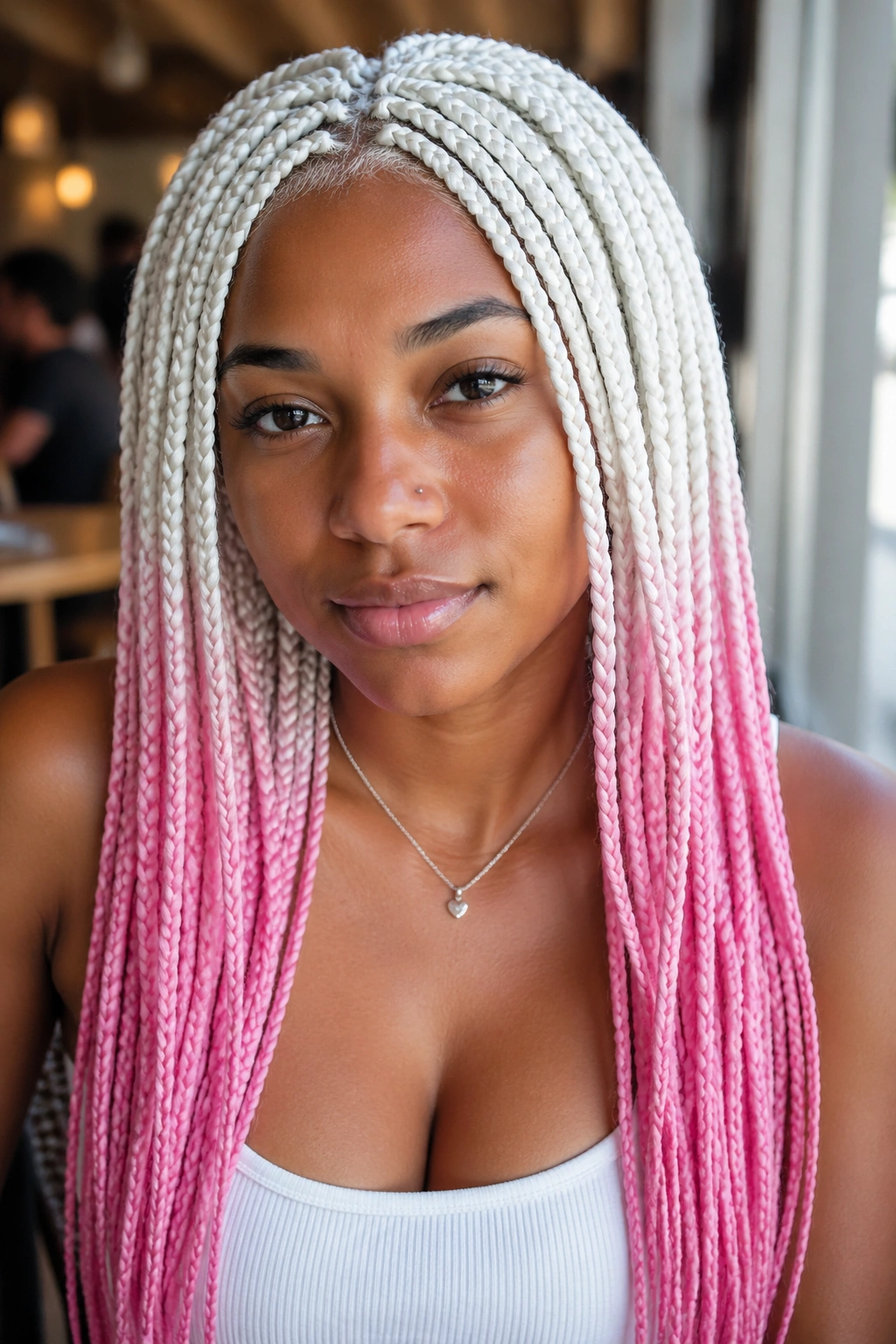
This is the inverse look, and it changes the mood fast. White near the scalp makes the parting stand out, while pink at the ends keeps the style from feeling icy or stark. It has a cleaner, brighter edge than the fade style above.
What makes it different
The white root area acts almost like a frame around the head. It pulls the eye to the braid pattern first, then lets the pink tips finish the job. That means the parting has to be tidy. Messy sections show more here than they would in a darker braid style.
- Use this if: you like crisp lines and a brighter face frame.
- Ask for: white synthetic hair at the base and pink only on the lower half or last third.
- Avoid: mixing too many pink tones in the same braid. That breaks the clean look.
- Works best on: medium or long lengths, since the tip color needs room to show.
This is also one of the better options if you wear your braids in ponytails a lot. The pink ends show up even when the top is pulled back, which keeps the style from disappearing into a plain bun.
If you want something neat but not plain, this one earns its keep.
4. Jumbo Box Braids With Big Color Blocks
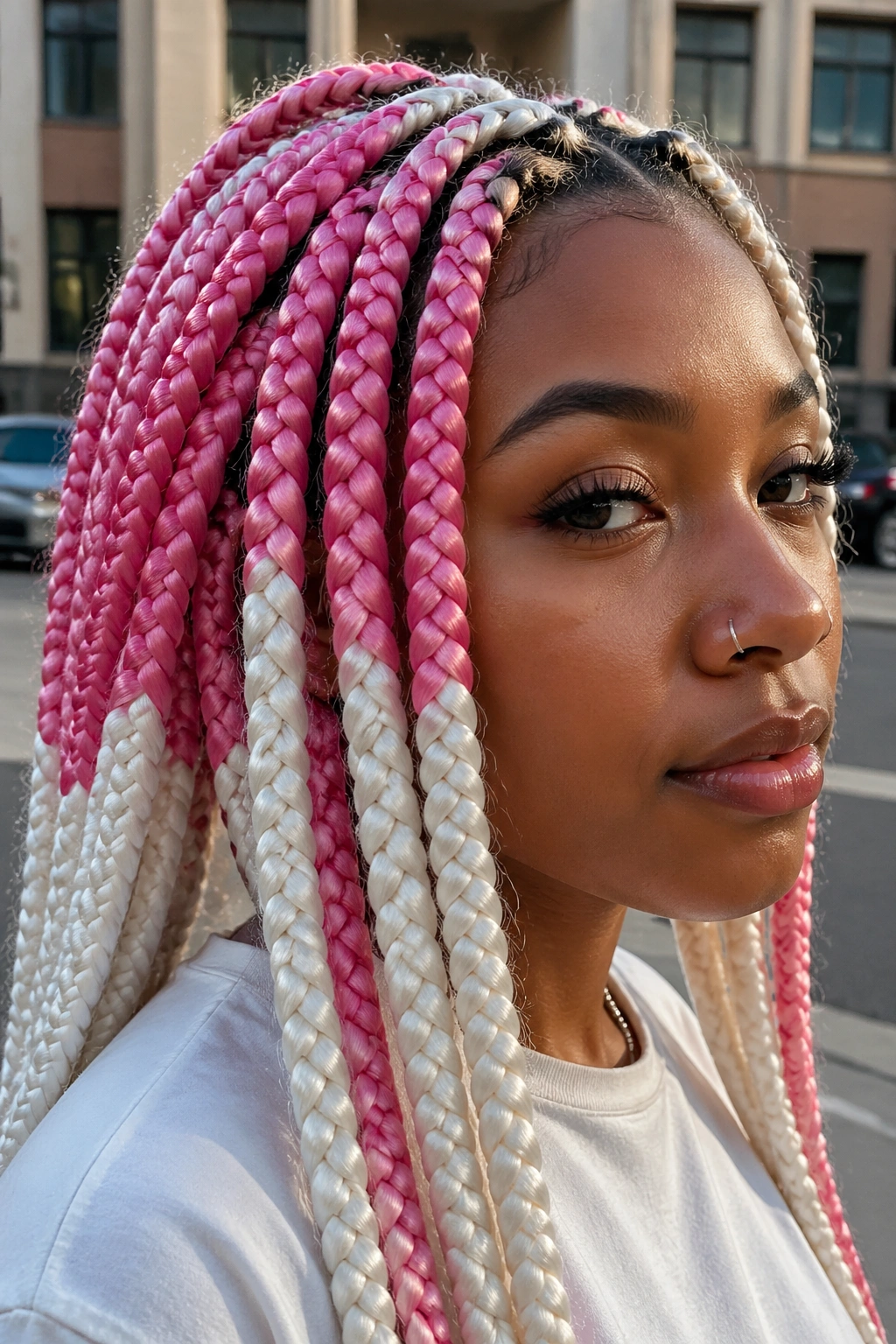
If you like a style that people notice from across the street, jumbo braids do the job without needing much decoration. The larger braid size turns the color contrast into a bolder shape, and pink-white blocks become part of the overall silhouette instead of tiny details.
The catch is weight. Jumbo braids can feel heavy if they’re too long or packed too tightly near the scalp, so ask for enough fullness to show the pattern without overloading your neck. Big does not have to mean dense.
What to watch for
- Section size: roughly 1 to 1.5 inches if you want true jumbo volume.
- Part shape: square parts keep the look classic; slightly staggered parts soften it.
- Color placement: alternating blocks work better than random placement here.
- Best styling move: wear one side tucked behind the ear or sweep the braids into a low ponytail.
Big color blocks look especially good with plain clothes. A white tee, denim jacket, black dress, or oversized hoodie lets the hair do the talking. If your outfit is already loud, the braids can start fighting with it.
This is a confidence style. Not in a cheesy way. Just in the practical sense that it takes up space.
5. Knotless Mini Braids With Thin Pink Ribbons
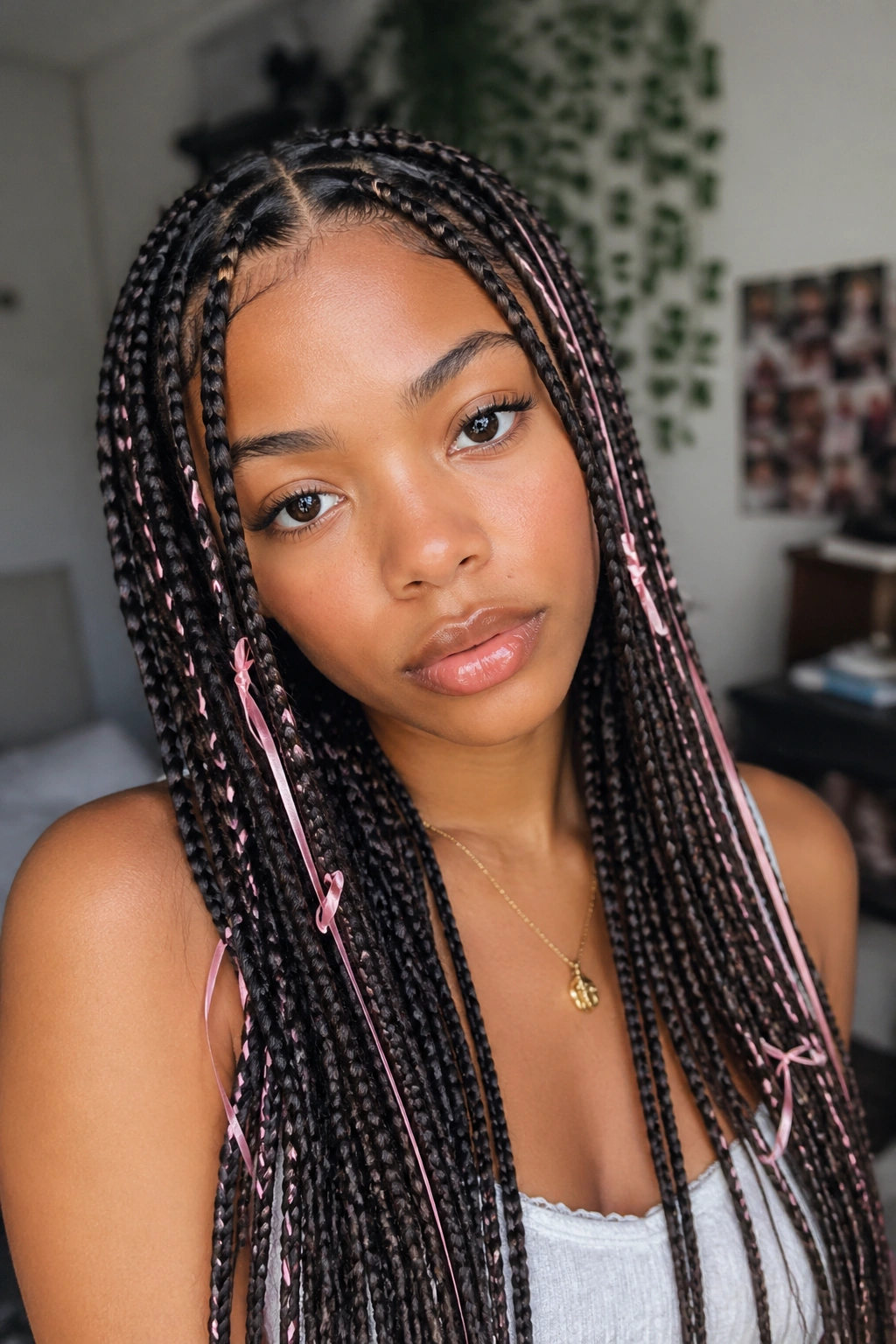
Tiny knotless box braids are for people who want color with a lighter feel around the scalp. The knotless base makes the install sit flatter, which matters if you plan to keep the braids in for a while or wear them up a lot.
The pink and white show up here in thin ribbons rather than big blocks. That gives the style a softer, more delicate look. It also makes the color feel woven into the braid instead of pasted on top of it, which is exactly what you want when the braids are small.
Why this version stays comfortable
Knotless braids spread the tension more gently at the root, so the hairline does not have to carry all the stress. That matters with mini braids, because small sections can turn into a long install if the stylist pulls too hard.
You can ask for a 2:1 pink-to-white ratio if you want the pink to lead, or the reverse if you want the white to brighten the style. Either way, the mini braid size makes the color feel refined instead of flashy.
A style like this also grows out with a nicer shape. The root line does not look as abrupt, and the thinner braids make regrowth easier to hide for a while.
6. Pink and White Box Braids Finished With Beads
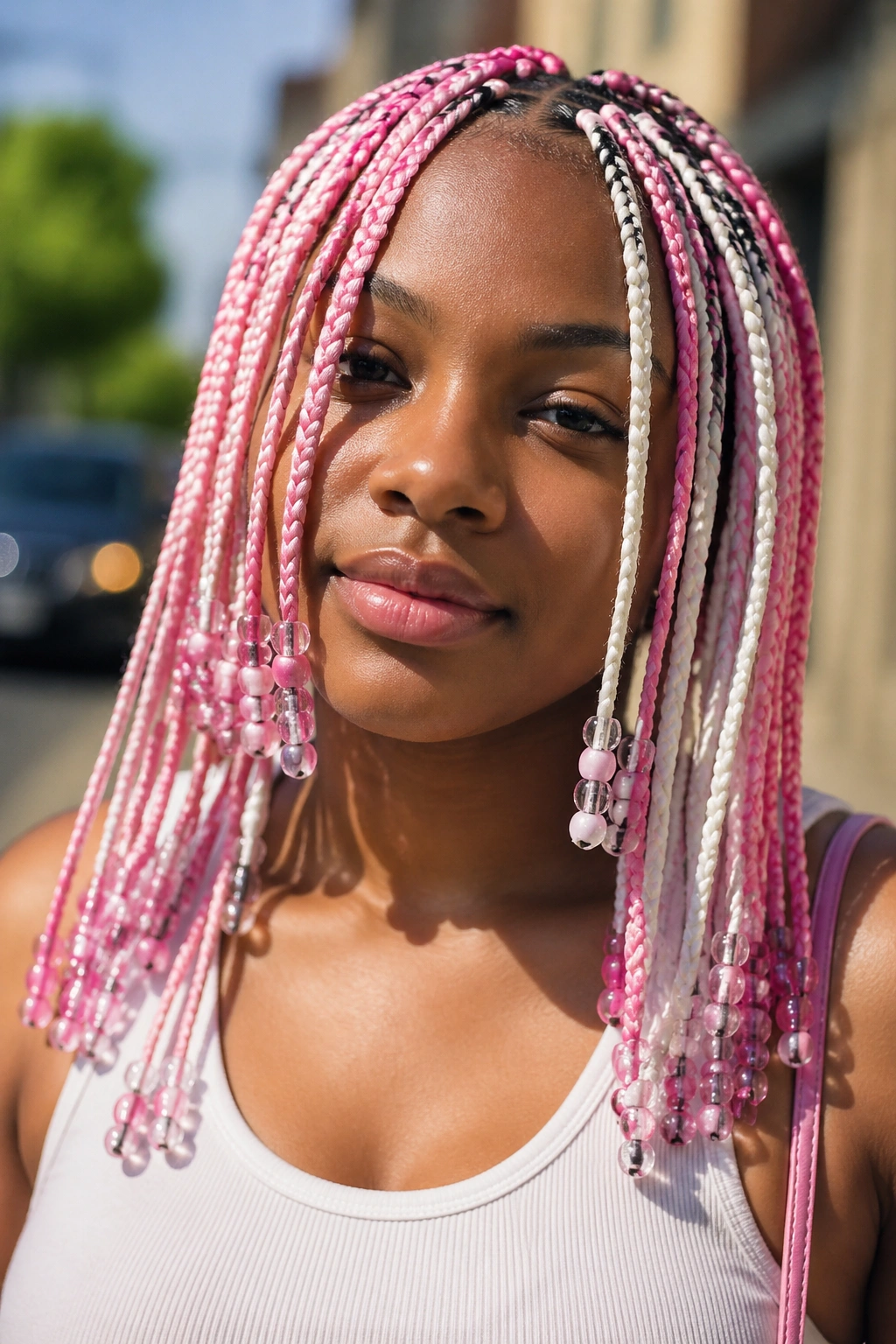
A braid style can be pretty on its own, but beads give it motion. Every step makes a little sound. Every head turn shifts the line of the braids. And with pink and white, the beads can either sharpen the look or make it feel playful, depending on what you hang at the ends.
What to use at the ends
Clear beads, pearly white beads, blush beads, and small gold cuffs all work. The trick is not to crowd the ends. Two medium beads on a braid is usually enough. Four starts to feel cluttered unless the braids are very long.
- Best bead size: 8 mm to 12 mm for most lengths.
- Best placement: ends only, or one bead near the tip and one small cuff above it.
- Best vibe: school-friendly, party-ready, or weekend casual depending on the bead finish.
- Avoid: mixing too many bead colors. That makes the style look busy fast.
Beads make the style younger in spirit, even when the braids themselves are neat and long. If you want the pink and white combo to feel less like a color block and more like a finished outfit piece, this is a good move.
Tiny sound, big payoff.
7. Shoulder-Length Box Braids With a Sharp Bob Cut
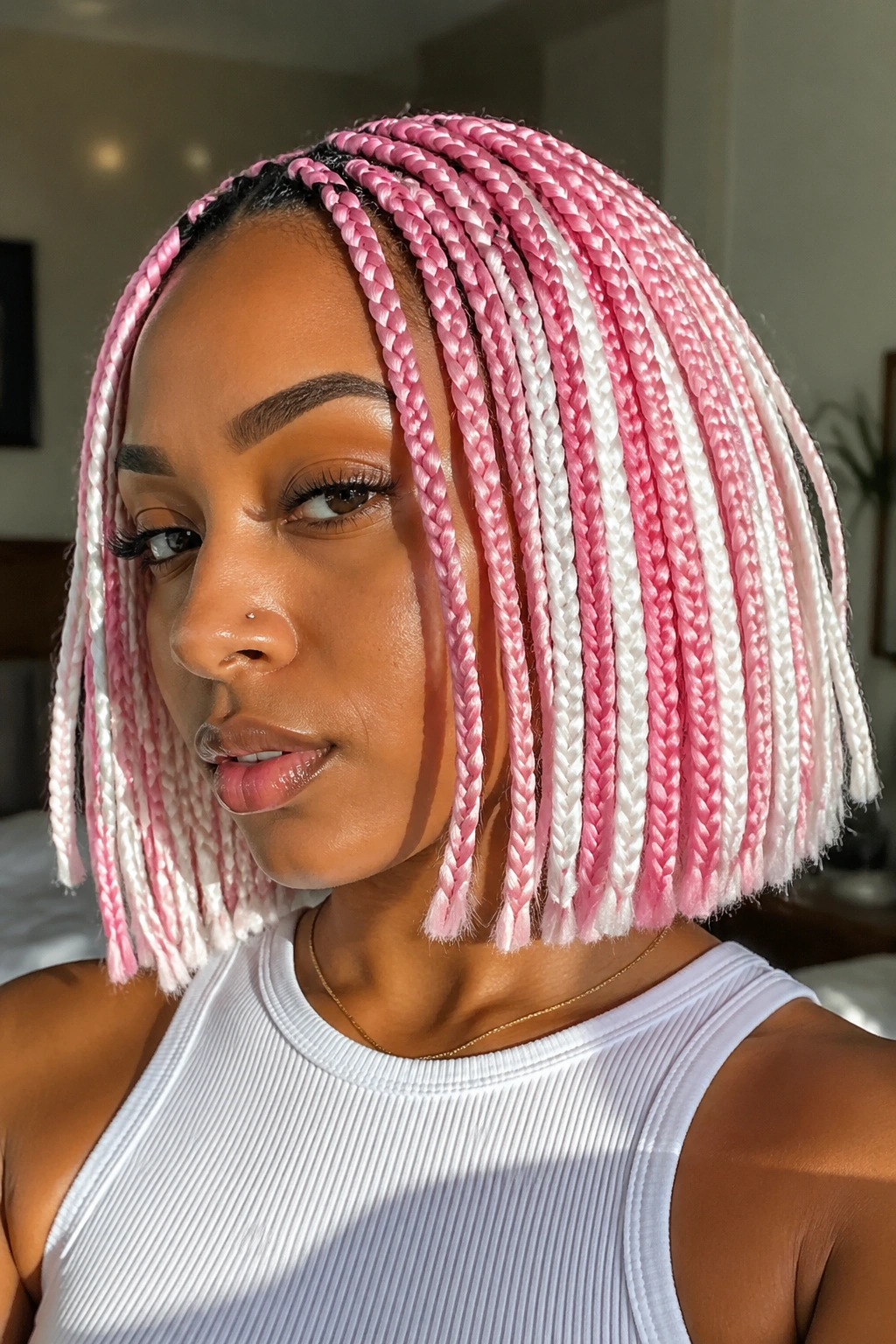
Shorter braids change everything. A shoulder-length bob keeps the color close to the face and cuts down on the visual weight that long braids can bring. It’s cleaner, quicker to dry, and much easier to sleep on without folding a mountain of hair under your bonnet.
The pink and white contrast feels sharper at this length because there’s less distance for the eye to travel. You see the braid pattern first. Then the color. Then the shape of the cut.
Why a bob works so well here
Long braids can hide a weaker color plan. A bob doesn’t give you that escape. If the parts are off or the colors don’t balance, you’ll notice it immediately. That sounds harsh, but it also means a good install looks excellent without extra styling.
This version is ideal if you want something light around the neck. It also fits a sharp, fashion-forward look better than people expect. A bob with pink and white braids looks intentional in a way that waist-length hair sometimes doesn’t, because the cut gives the style a clear edge.
Ask for the ends to fall just below the shoulders if you want movement, or cut them a little above the collarbone for a cleaner outline.
8. Waist-Length Goddess Braids With Curly Ends
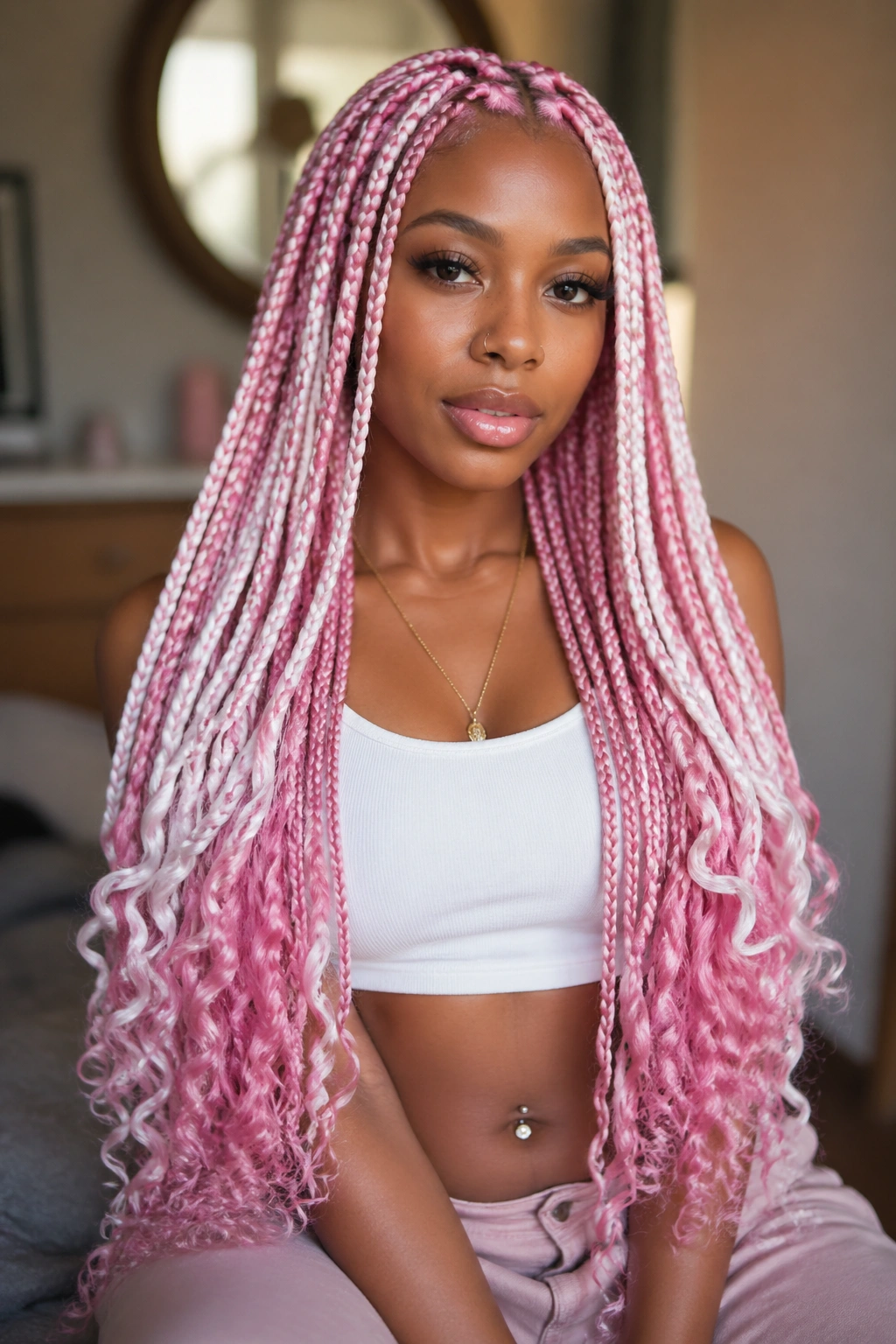
Can pink and white box braids feel soft? Absolutely, if you finish them with curly ends. The loose curl breaks up the straight braid line and gives the color somewhere to breathe. Without that soft finish, long pink-white braids can feel a bit rigid.
How to keep the curls from frizzing
The curl at the end should look shaped, not puffy. Use water wave or similar curly extensions at the tips, then set them with mousse and let them dry fully before touching them too much. Half-dry curls frizz faster, and once that happens, the whole braid length starts to look rough.
I like this style because it balances structure and movement. The braid itself stays neat. The curl adds softness near the end, which keeps the style from feeling too severe.
The best lengths here are long enough for the curls to hang below the shoulders, but not so long that the braid becomes a chore to flip around. If you like romantic styling, deep side parts and a few laid edges make the whole thing look smoother. If you do not like baby hairs, skip them. The braids can carry the style on their own.
Long, but not stiff. That’s the target.
9. Triangle-Part Pink and White Box Braids
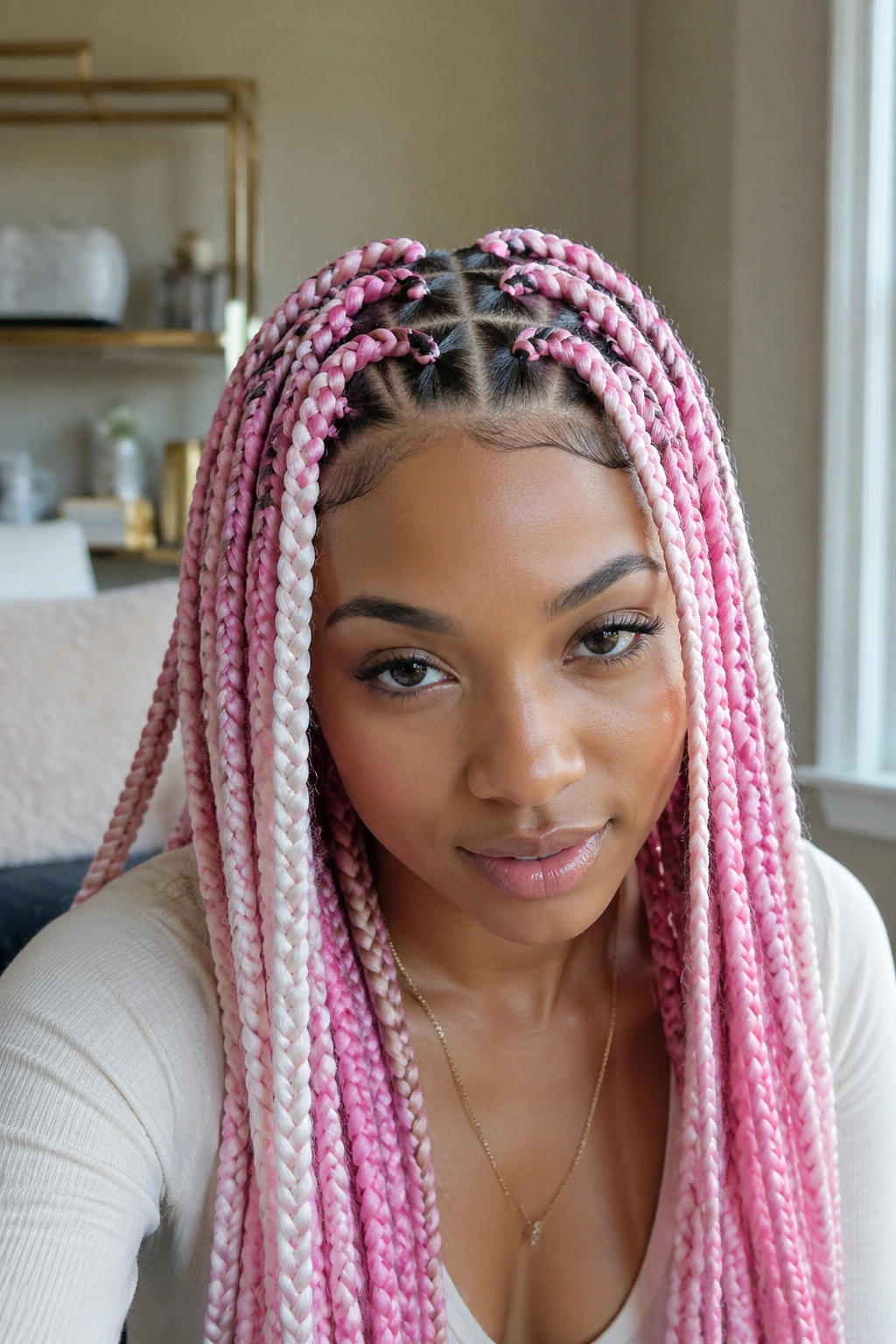
The parts matter almost as much as the color. Triangle sections change the whole mood of pink and white box braids, because the geometry adds movement before a single braid even gets finished. It’s a small switch with a big payoff.
Why the part shape changes the look
Square parts feel traditional. Triangle parts feel sharper, a little more modern, and less blocky. They also let the pink and white fall in a pattern that feels less predictable, which helps if you do not want a perfectly uniform head of color.
- Best braid size: small to medium, so the part shapes stay visible.
- Best color plan: alternate colors across the triangle sections instead of in random streaks.
- Best face frame: one or two front braids in white to brighten the front.
- Best vibe: dressy, editorial, or weekend-outfit friendly.
If your hair is dense, triangle parts can help the style feel lighter because the sections do not sit in a strict grid. If your hair is fine, they can still work, but the parts need to be clean and deliberate or the shape gets lost.
It’s a small design choice, but it changes how the whole head reads.
10. Half-Up Top Knot With Long Hanging Braids
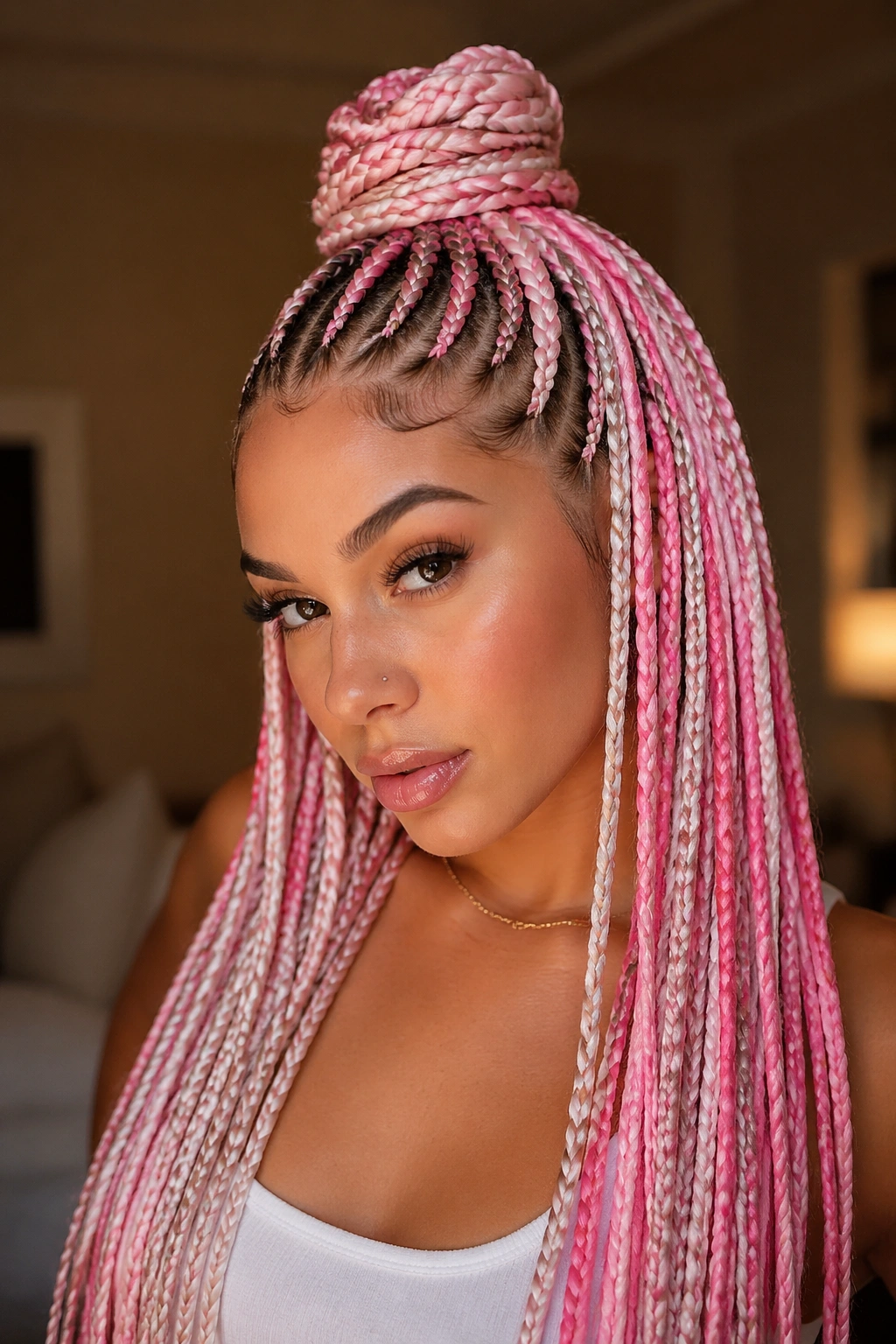
A half-up top knot is one of the easiest ways to show off both colors without doing much work. Pulling the top section up exposes the parting and the braid pattern, while the hanging braids let the pink and white move freely below.
This style works because it creates two zones. Up top, you get shape and lift. Down below, you get length and swing. The contrast is enough to make the style feel styled even on a plain day.
The knot should not be too tight. Use a satin scrunchie or a soft hair tie and wrap only the top third or so of the braids. If you try to force too much hair into the bun, it gets bulky in a bad way and can start feeling heavy by noon.
It’s also a smart choice when you want your braids out of your face but do not want to lose the color show. White pieces at the crown pop nicely here, while pink ends hang below and keep the look from feeling too stark.
Lazy in the best sense. Quick, but not careless.
11. Peekaboo Underlayer Braids
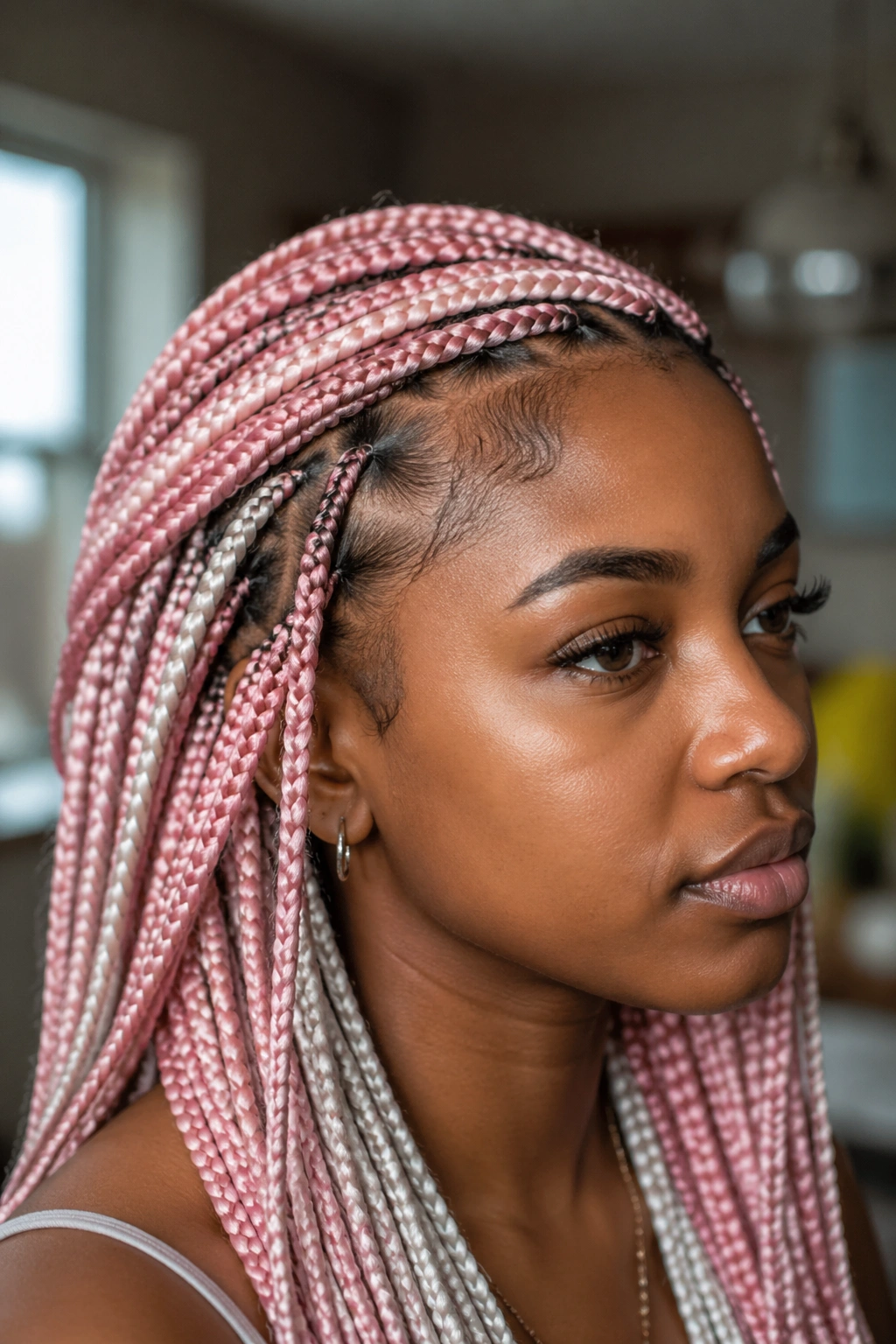
Not every color style has to shout from the top layer. Peekaboo braids hide the pink and white under a calmer outer layer, then flash the color when you move, tie your hair up, or tuck it behind your ears. It’s a cleaner option for people who want surprise instead of full-volume color all day.
Who this works for
This is a good fit if you wear your braids in buns, half-up styles, or ponytails often. The hidden section becomes the fun part, which means the style changes depending on how you wear it.
Unlike full-head pink and white braids, this version keeps the front softer and the back more playful. That split can make the style easier to wear in settings where you want the color to feel less aggressive.
Ask for a 60/40 split if you want the underlayer to show clearly when the braids move. If you want the reveal to be subtle, go closer to 80/20. That’s one of the few times part placement really matters more than braid size.
It’s a smart compromise. Not boring. Not overdone.
12. Zigzag Parts and Face-Framing Braids
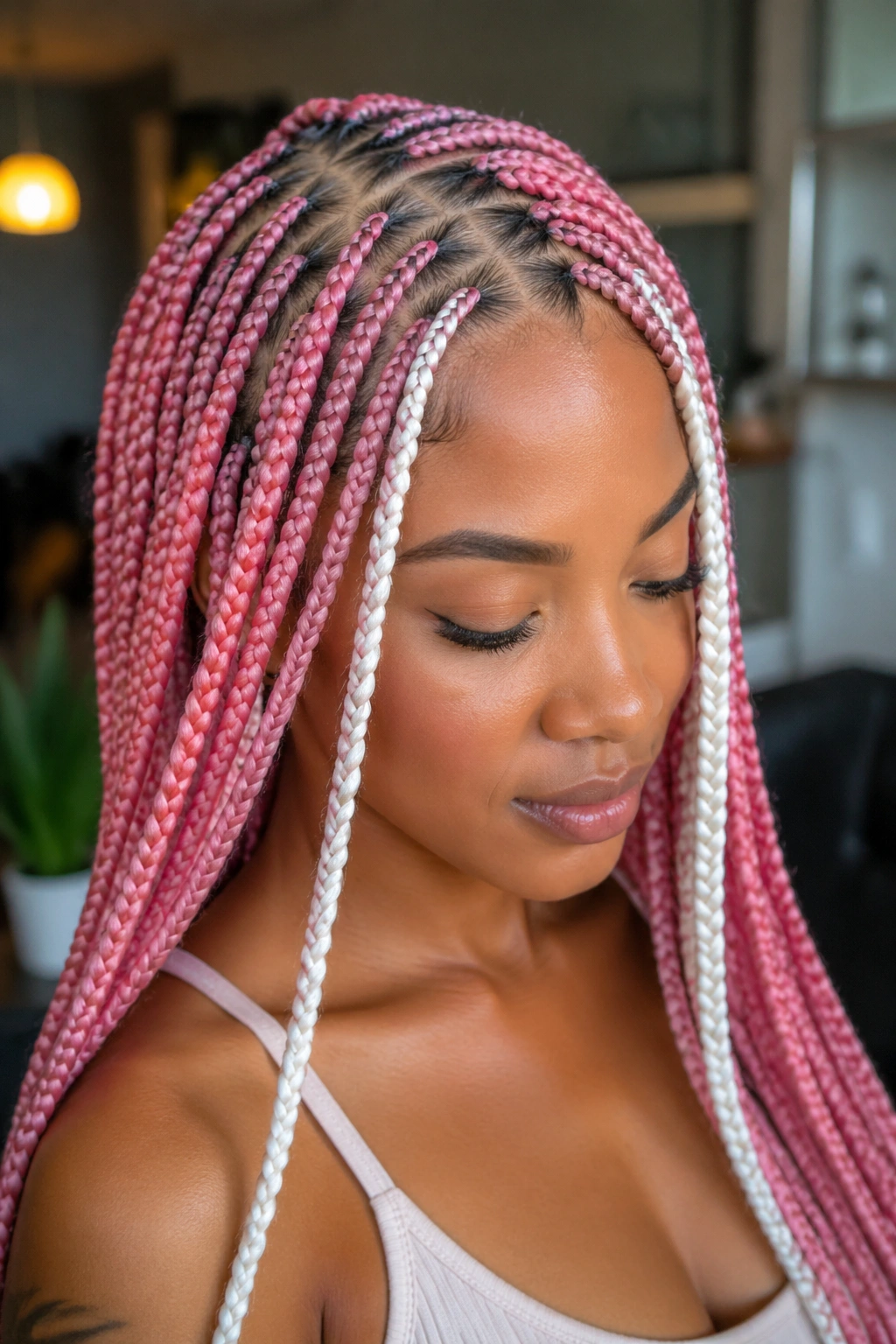
Why does a zigzag part change the whole attitude of box braids? Because the parting line stops being a grid and starts feeling like a design choice. Add pink and white to that, and the style gets a little more energy without needing extra accessories.
How to use it
Keep the zigzag clean and visible. If the lines are too tiny or crooked, the style starts looking messy instead of artistic. A deeper zigzag around the crown tends to show up best, especially when the hair is parted down the center or slightly off-center.
Face-framing braids matter here. Put one or two white braids close to the cheeks and keep the pink pieces just behind them. That pulls brightness toward the face without making the whole head neon.
This works well if you like wearing hoops, glasses, or bold lipstick. The parting creates a frame, and the front braids help hold the attention where you want it. If you prefer a softer finish, keep the front braids a little thinner than the rest. That takes the edge off fast.
It’s one of those styles that looks simple until you catch it from a different angle.
13. Mixed Pink Shades With Bright White Highlights
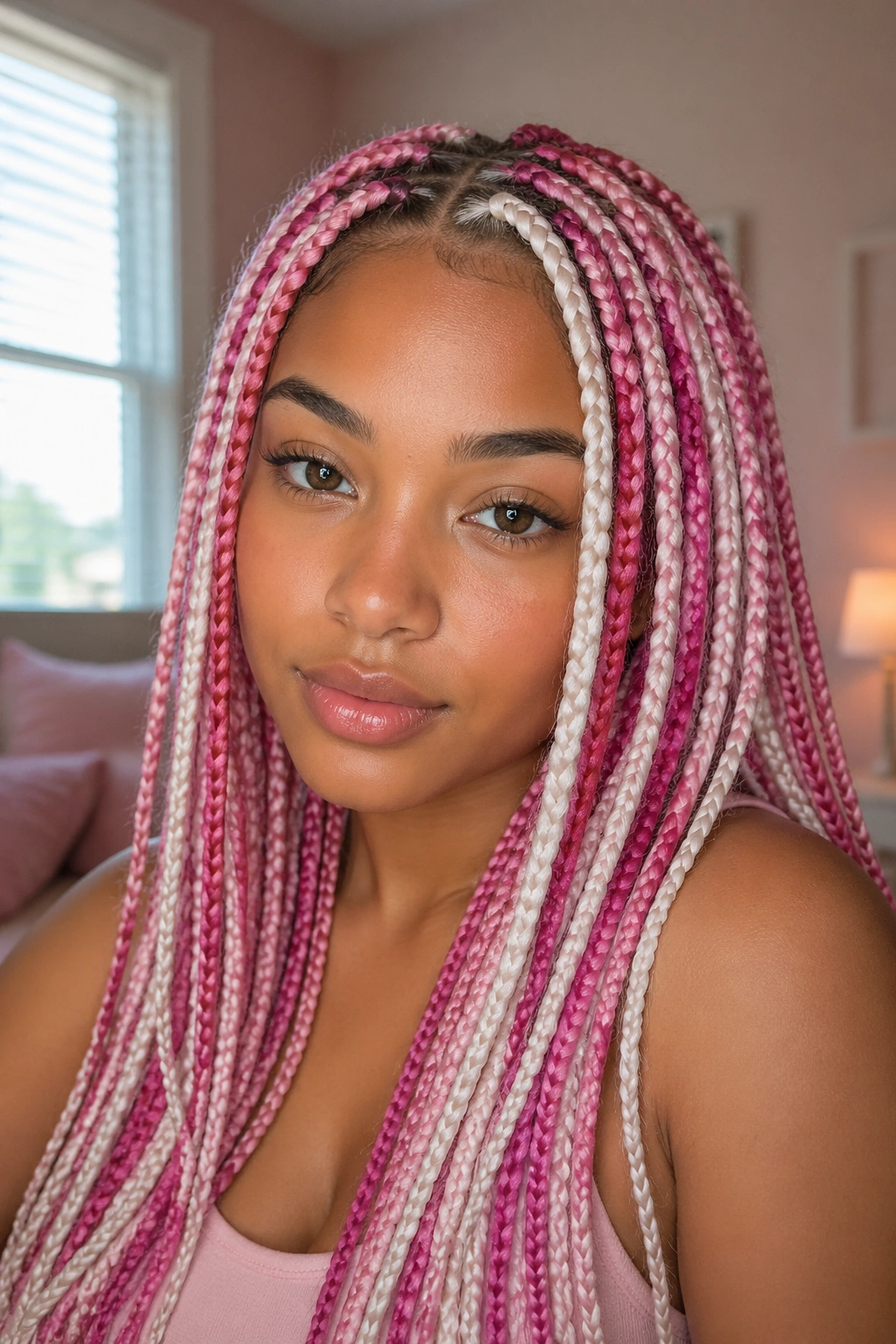
Plain two-tone braids can be sharp, but a mix of pink shades gives the style more depth. Use dusty rose, bubblegum, and a brighter pink together, then thread in white highlights where you want contrast to land hardest. The result feels layered instead of flat.
What makes the blend work
The colors need a role. One pink should act as the base. Another should act as the accent. White should stay the brightest piece, not fight for attention with every braid on the head.
- Good mix: one muted pink, one medium pink, one bright pink, plus white highlights.
- Best placement: brighter white near the front or on a few top-layer braids.
- Watch out for: using too many pink shades at the same strength. That flattens the style.
- Best outfit pairing: neutral clothes, denim, black, cream, or soft gray.
This version is for someone who likes dimension more than strict symmetry. It feels a little richer than a simple alternating set, and it gives the braids more movement even when the hair is still. The extra shades also help the style age a little better, because the visual noise of fuzz is less obvious when the color story already has layers.
It’s subtle, but not dull.
14. Side-Swept Pink and White Box Braids
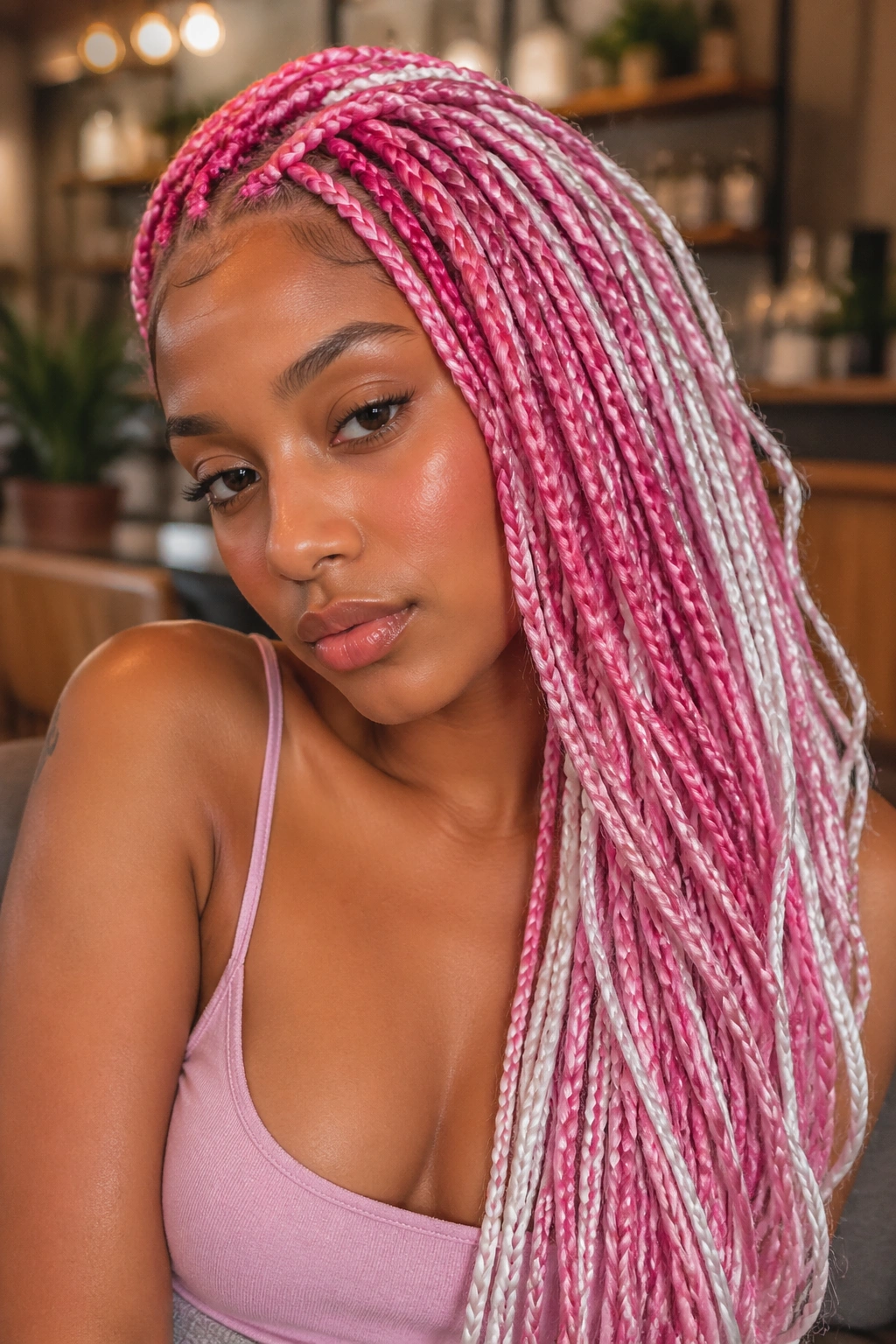
A side-swept style changes the way the color lands. Instead of showing the braid pattern evenly around the head, you push the bulk to one side and let the pink and white fall like a curtain. The result feels softer than a center part and more dramatic than a plain ponytail.
The comparison is simple. Center-parted braids look symmetrical and neat. Side-swept braids feel a bit more relaxed, and the color shows up in a different rhythm because one side carries more visual weight.
This is the style I’d pick if you like big earrings or a strong neckline. The open side of the face gives the braids room to move without crowding your features. It also works well on longer braids, especially when the ends are slightly curled or sealed cleanly.
Ask your braider to keep one side a touch thinner near the temple if you want the sweep to sit naturally. If the front section is too heavy, the style falls flat instead of gliding over the shoulder.
Soft, but not sleepy. That’s the sweet spot.
15. Festival-Ready Braids With Cuffs, Wraps, and Ribbon
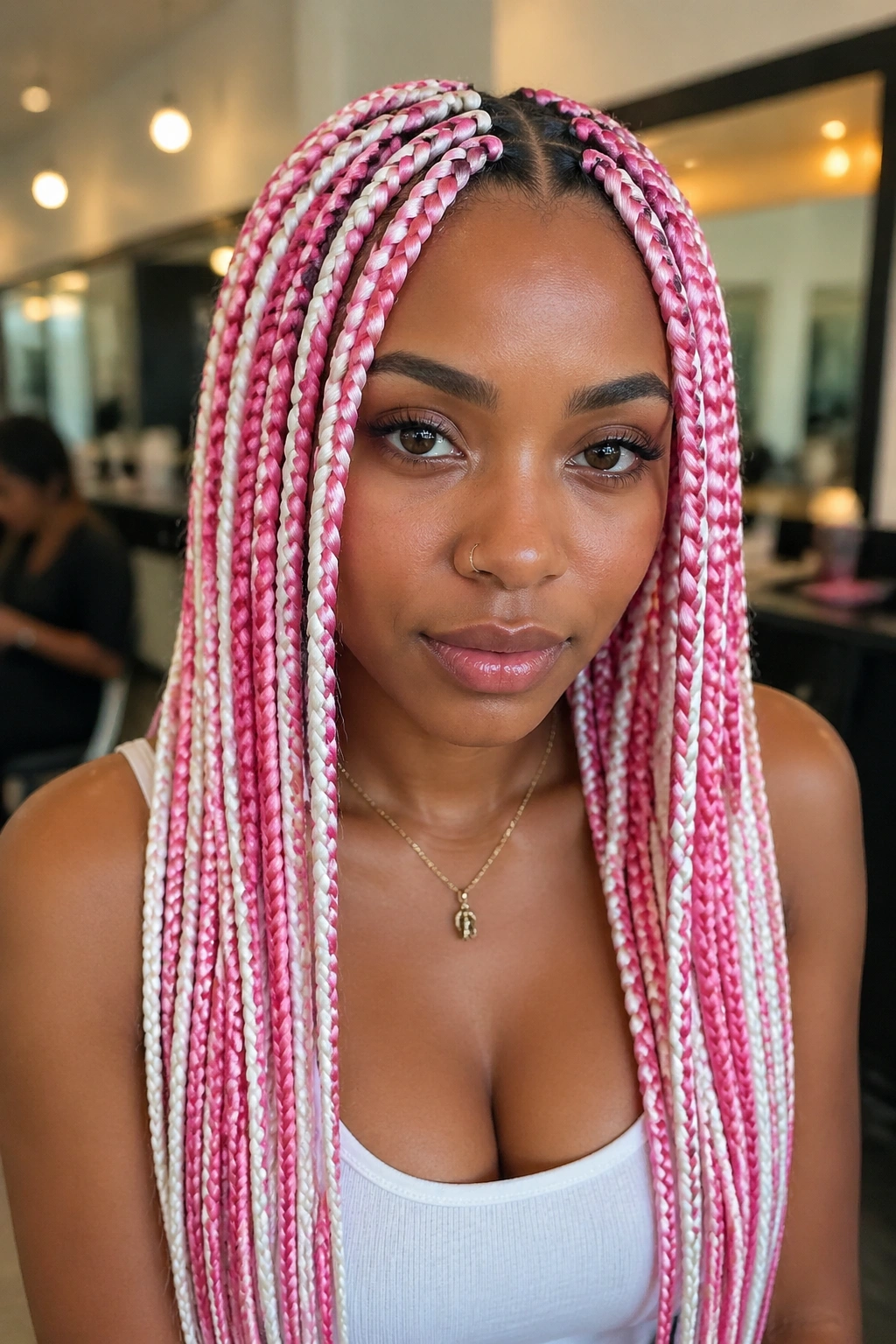
If you want pink and white box braids to feel playful all the way through, accessories are the final layer. Not a pile of them. Just the right ones. Gold cuffs, thin satin ribbon, a few wrapped braids, maybe a bead or two near the ends — enough to break up the color without turning the whole head into a craft project.
A good rule is restraint. Put cuffs on every third or fourth braid, not every braid. Use ribbon in one or two spots near the front, then leave the rest plain so the color can still do its job. Too many extras steal the focus from the actual braids, and that’s a waste.
This look suits concerts, weekends, birthday dinners, and any day when plain hair feels too quiet. It also works nicely with half-up styles, because the accessories show more when the top section is lifted. If you want the finish to last, choose ribbon with a smooth edge so it does not snag in the braid fibers.
Pink and white already carry the style. The accessories just give it a little extra motion. That’s enough.