



Tiny braids and soft curls can do more than one job at once. They can look neat from the front, playful from the side, and still feel like you have some hair left to move around in.
That’s why curly micro braid hairstyles keep showing up in real life, not just in saved photos. The braids give you structure; the curls keep the style from feeling stiff or boxy. And when the braids are small enough, the whole look gets a little more swing, which matters more than people think.
There’s a catch, of course. Micro braids are tiny, so the install can take time, and a heavy hand at the hairline will punish you by lunch. The prettiest versions leave the scalp calm, keep the perimeter clean, and use the curls on purpose instead of letting them happen by accident.
The fun part is how much the shape can change. A deep side part reads different from a halo. A high puff feels light and off-duty, while a braided bob can look crisp and sharp in a way long braids never quite do. Start with the shape, because one small choice about where the curls sit can change the whole mood.
1. Micro Braids with Loose Curly Ends
Loose curly ends are the easiest way to soften micro braids without messing with the braid pattern itself. The roots stay tidy, the length stays clean, and the finish gets that little bit of movement that keeps the style from feeling severe.
The trick is simple: braid down most of the way, then leave the last few inches curled instead of straight. A 1/2-inch flexi rod or perm rod at the ends gives a neat curl pattern, while a finger-coiled finish feels a little more relaxed and organic. Either way, the curl should look intentional, not like the last bit of the style gave up.
Why It Flatters So Fast
Loose ends draw the eye downward and soften the jawline. That helps if you want to balance a wider forehead, a round face, or just a sharp braid line that needs a softer finish. It also keeps the style from looking too uniform, which matters more when the braids are tiny and numerous.
- Best braid length: shoulder length or longer
- Best curl size: small rods for tighter spirals, medium rods for softer bends
- Best finish: light mousse at the ends, then air-dry or sit under a hooded dryer
- Best vibe: polished, but not stiff
My favorite part: this version still looks good on day three, especially if you smooth only the roots and leave the ends alone.
2. Half-Up Micro Braids with a High Puff
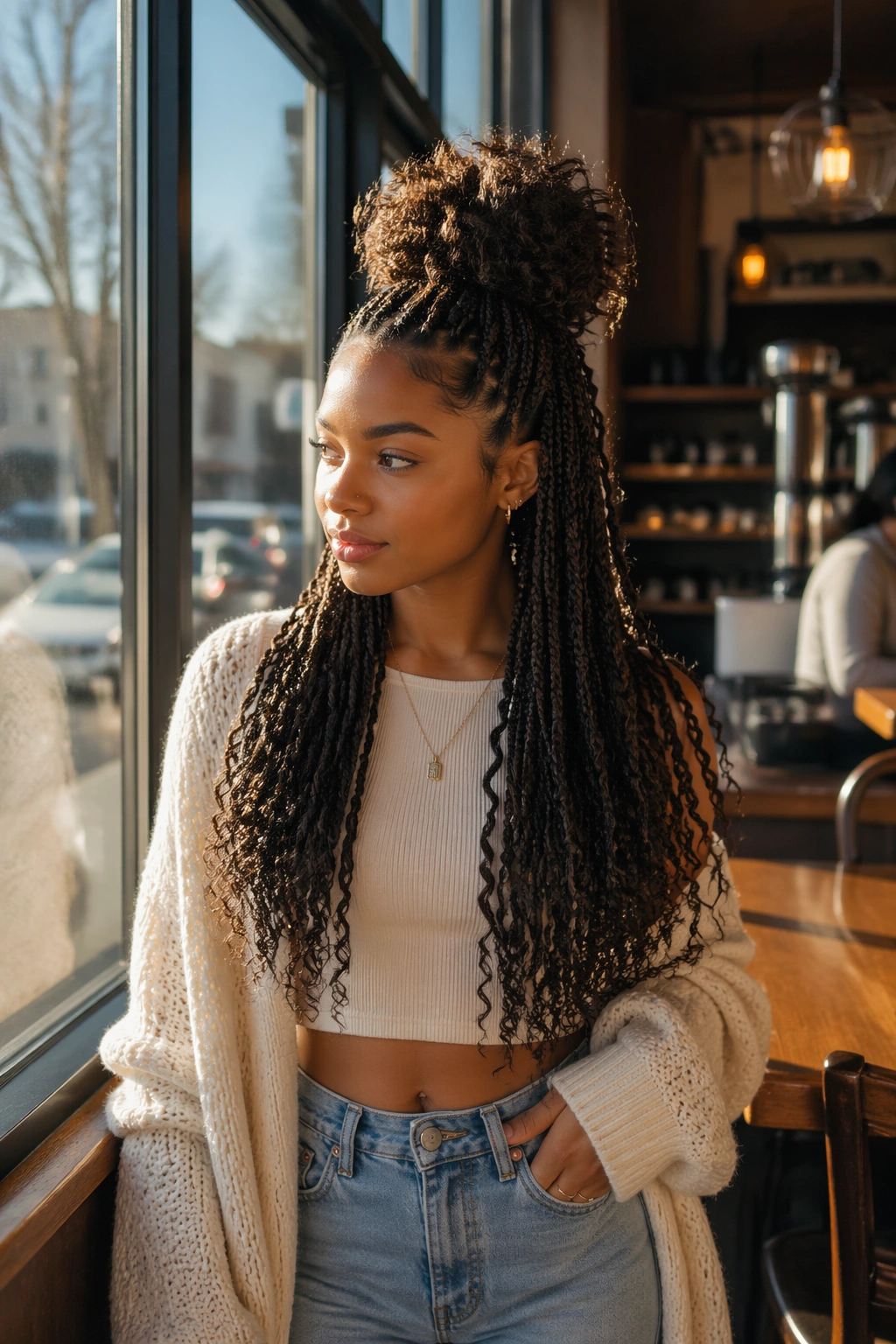
Want your braids off your neck without pinning up the whole head? This is the move. The top section gets pulled into a puff or puff-like ponytail, while the rest of the micro braids hang free.
It sounds small. It is not. The lift at the crown changes the whole shape, especially if your braids are long enough to swing. A satin scrunchie or a wrapped elastic keeps the base from snagging, and a soft brush or your fingers can smooth the front without flattening the puff.
The best version sits about an inch or two back from the hairline, not dead center on the crown. That keeps the front from looking stretched. If your braids are freshly installed, don’t yank the top tight; give the base a little slack so the scalp can breathe.
This style earns its keep on warm days, wash days, or any day when you want a little height without a full updo. It also pairs well with earrings because the hair stays up and out of the way. Clean, quick, and a little sporty. Done.
3. Side-Swept Micro Braids with Ringlets
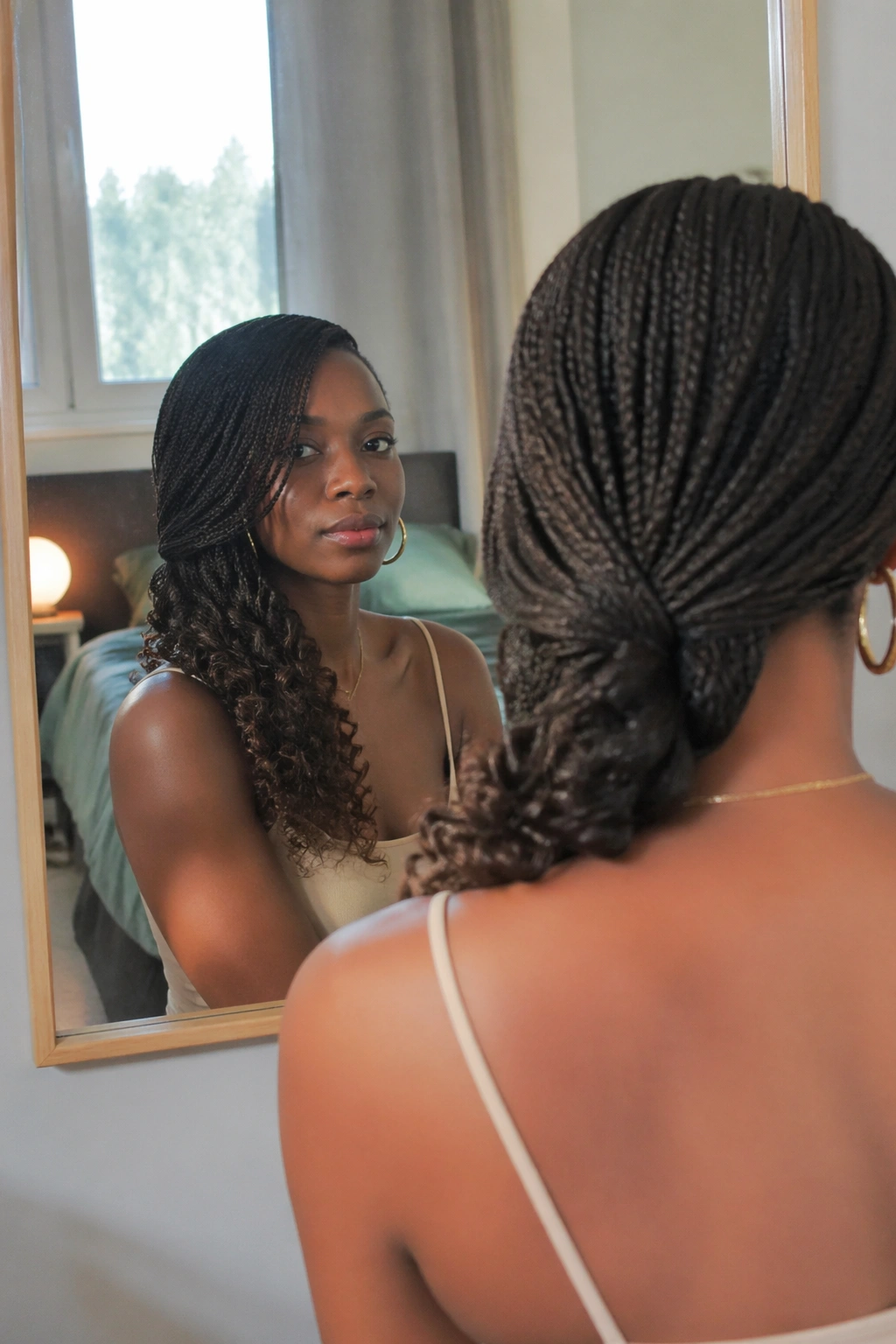
A deep side sweep changes the whole attitude of micro braids. Instead of falling evenly on both sides, the braids shift over one shoulder, and the curled ends gather there like a waterfall of texture.
That asymmetry does two nice things at once. First, it opens up the face. Second, it makes earrings, necklines, and collarbones do more work, which is handy if you want the hair to frame an outfit instead of swallowing it. The style looks especially good with a side part that starts a few inches off center and curves back gently.
What to Ask For
- A clean side part with no jagged zigzags at the front
- Braids that stay slightly looser around the temple for comfort
- Curlier ends set with small rods or flexi rods
- A shoulder-heavy drape so the hair falls in one direction
Small warning: if the front is pulled too tight, the side sweep loses its softness and starts looking severe. That’s a bad trade.
This is the kind of style that works for dinner, a wedding, a night out, or any day when you want your braids to feel a little more dressed up without adding extra hair accessories.
4. Micro Braided Bob with Soft Spiral Ends
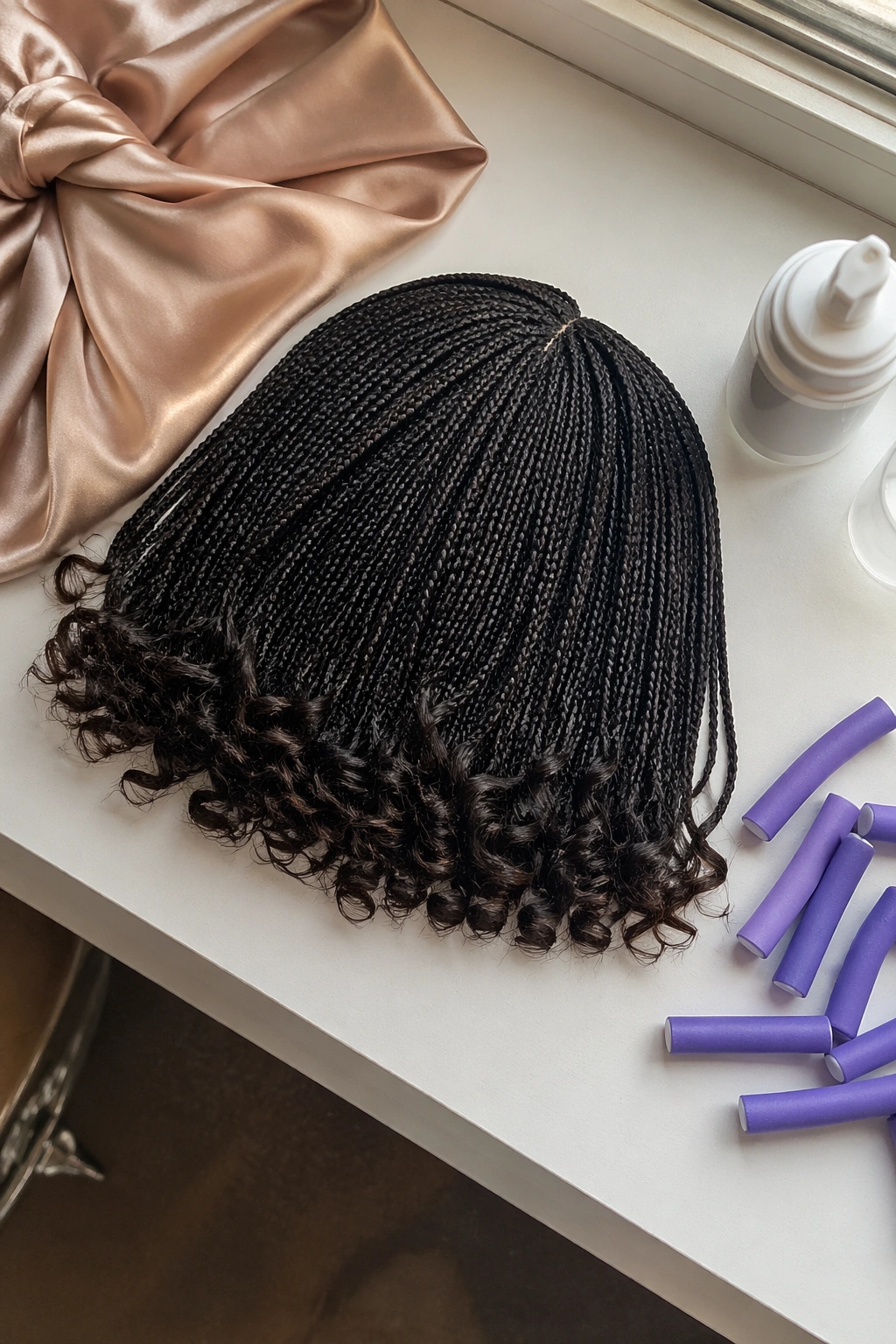
Short braids are underrated. People get stuck on length, then act surprised when a bob with micro braids ends up looking sharper and easier to wear than the waist-length version.
A braided bob sits around the jaw, chin, or just below the neck, which means less weight and less tug at the scalp. That matters if you wear protective styles often or if your hairline gets annoyed fast. The soft spiral ends keep the cut from looking blunt, and they give the bob a bit of bounce when you turn your head.
A bob works best when the perimeter braids are trimmed with care. You do not want a hard shelf at the bottom. Ask for a slightly staggered hemline so the edge moves instead of sitting like a ruler line. If the bob includes curled ends, the curl should start low enough to keep the silhouette neat.
This style has a certain calm to it. Not fussy. Not overdone. Just clean, light on the neck, and easy to live with if you hate hair brushing your shoulders all day.
5. Micro Braids with Beads at the Ends
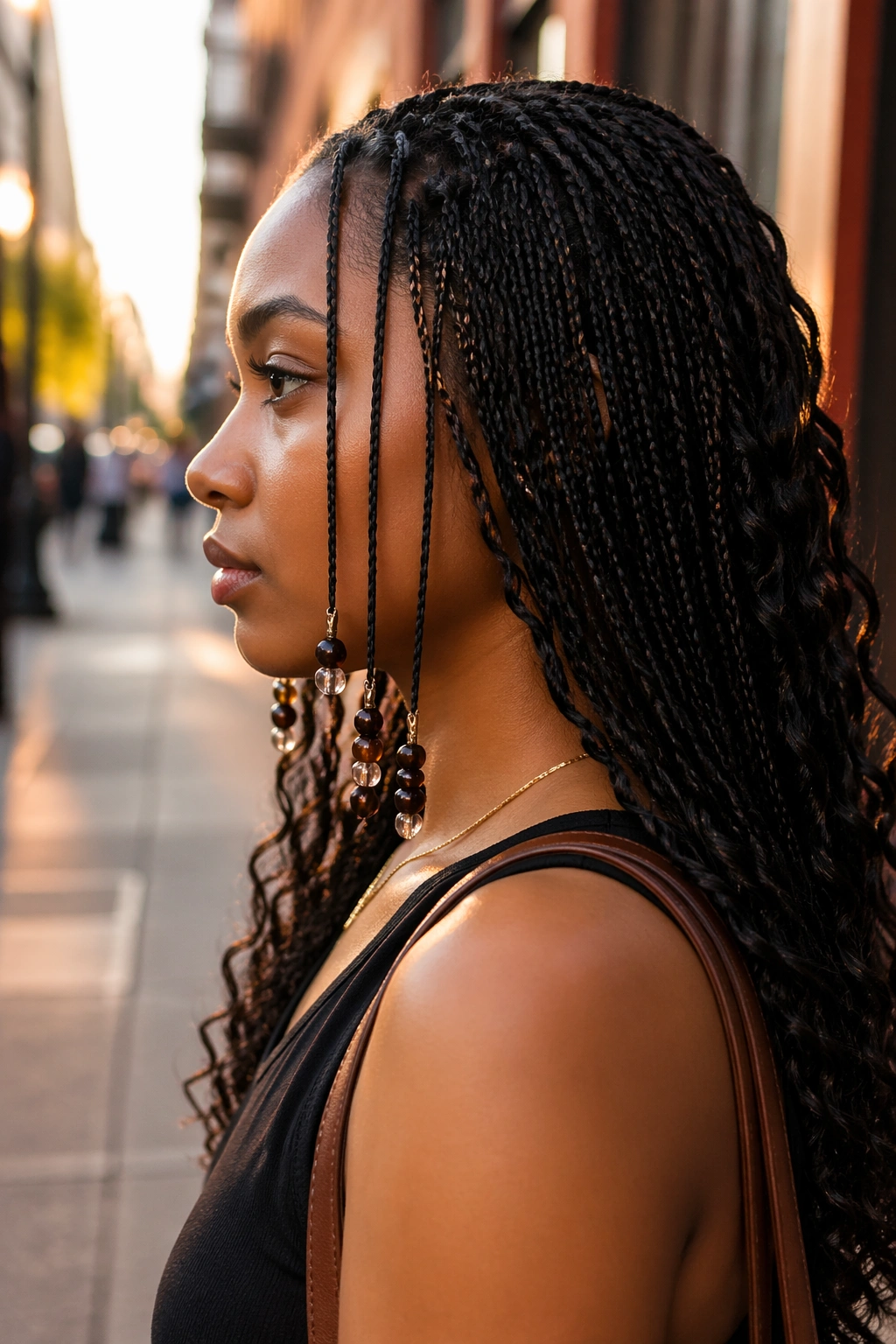
Beads change the mood fast. A few at the ends of micro braids add movement, a little sound, and enough detail to make the style feel personal instead of purely functional.
The key is restraint. One bead on every braid can look busy if the beads are large, so I usually like a more thoughtful pattern: a few beads near the face, a few at the nape, and then leave the rest plain. Wooden beads read earthy, clear beads feel lighter, and metallic accents bring more shine if your outfit needs it.
Where Beads Work Best
- On the front two or four braids to frame the face
- At the back hemline so the ends don’t look too plain
- Mixed with curly ends for a little motion at the bottom
- On medium-width braids, where the bead has enough grip
The biggest mistake is loading tiny braids with heavy beads. They pull, they clack, and they can make the ends sag in a way that feels annoying after a few hours. Keep the weight balanced.
If you like a style that announces itself a bit, beads give you that without changing the whole braid pattern. Easy win.
6. Micro Braided Space Buns
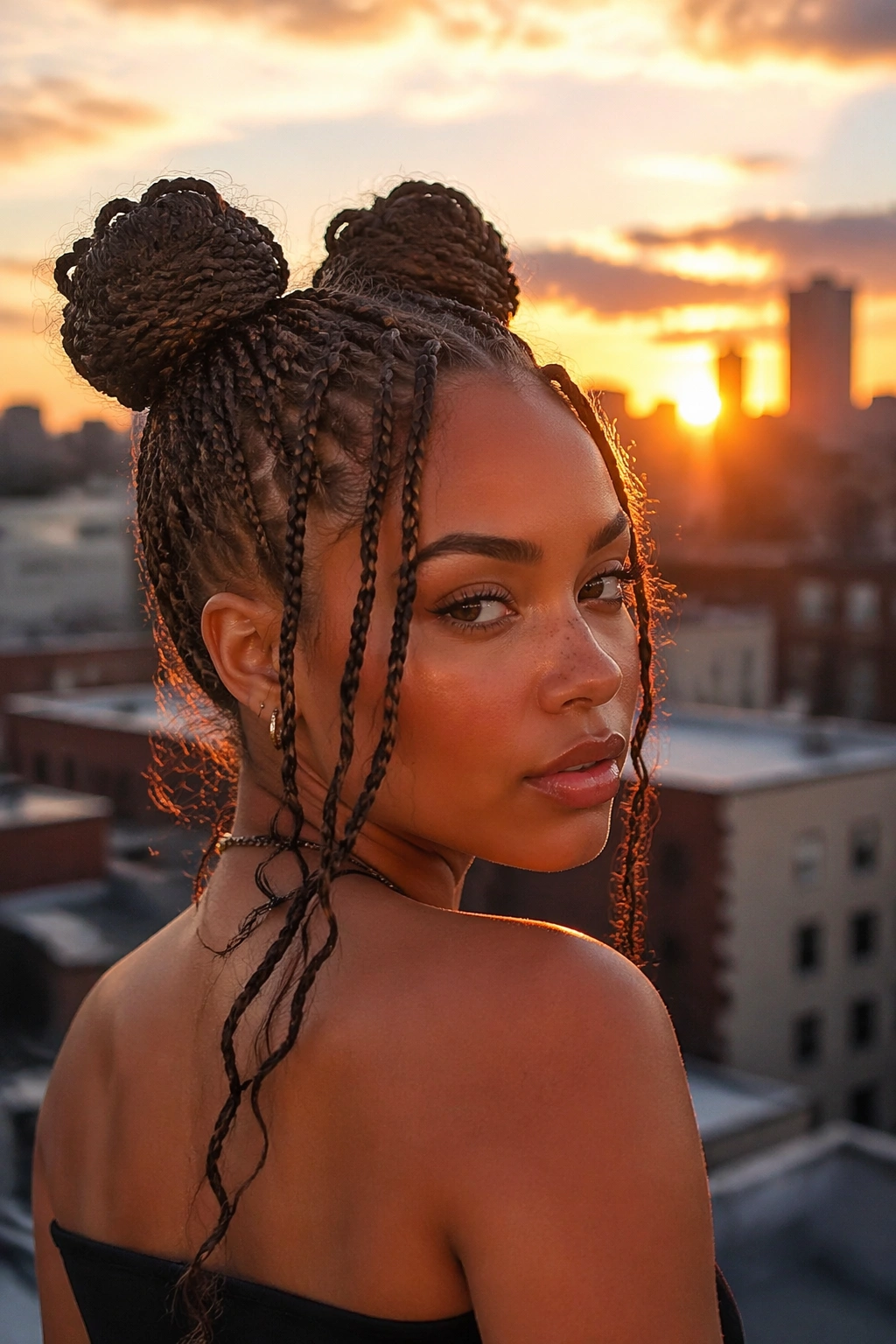
Two buns can make micro braids look playful instead of formal. That’s the whole appeal. The style pulls the braids up and away from the face, then turns the remaining length into twin knots that sit high on the head.
The cleanest version starts with a center part. Split the braids into two equal sections, then twist each side into a bun with enough tension to hold shape but not enough to make the scalp complain. U-pins hold better than tight elastics, and they’re kinder to tiny braids because they don’t pinch one spot over and over.
If your braids are freshly installed, give the style a day before throwing them into buns. Fresh installs often sit a little stiff at first, and the buns can flatten faster than you want. A touch of mousse at the ends helps the flyaways settle down.
This look is a little youthful, sure, but it can also read polished if the buns sit neat and high. Keep the part clean. Keep the buns symmetrical. That’s the part people notice first.
7. Micro Braids into a Low Twisted Bun
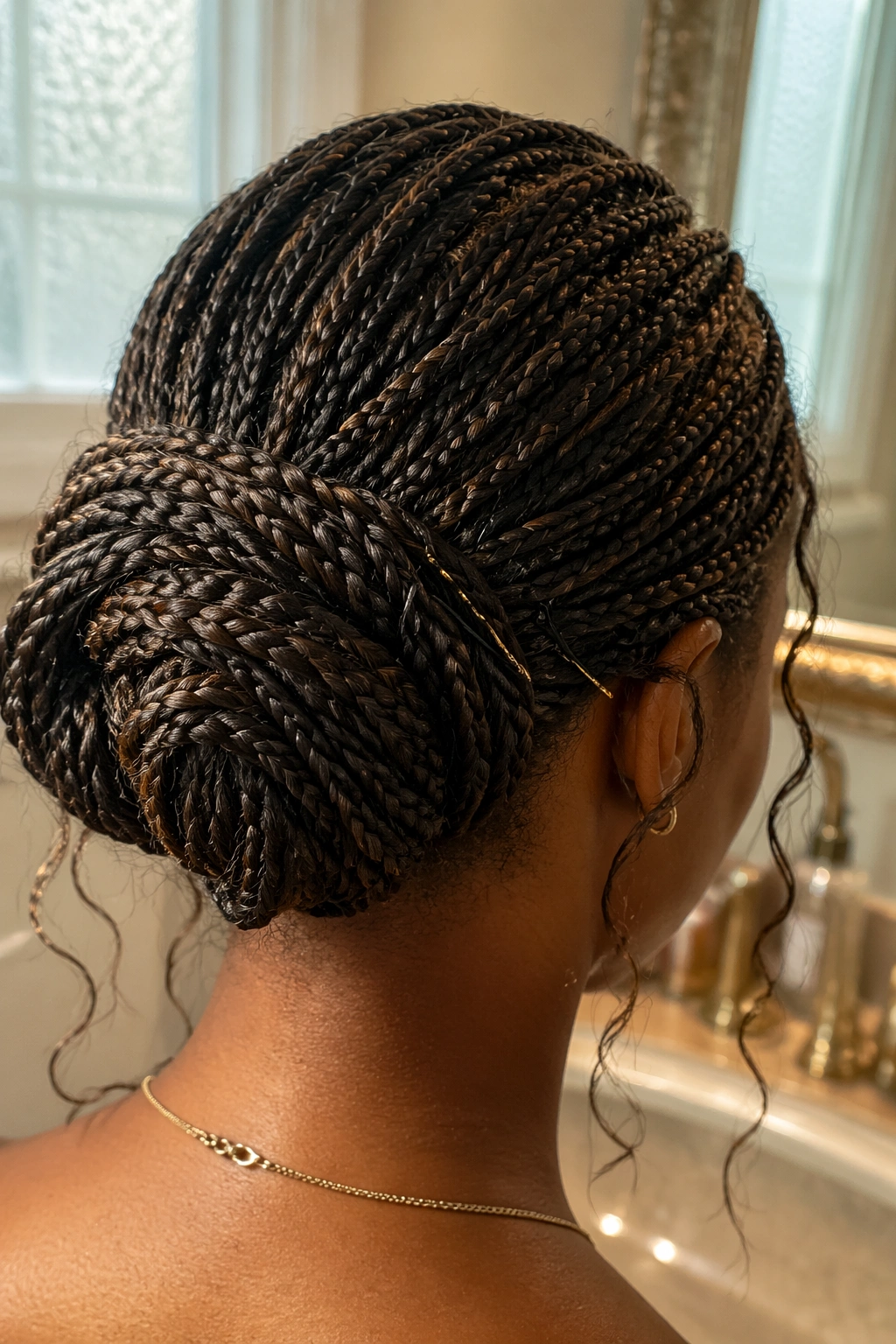
The low twisted bun is the most useful updo in this whole group. It keeps micro braids off your shoulders, hides the ends, and gives you a shape that works just as well with a T-shirt as it does with a dress.
Pull the braids back to the nape, twist them into one direction, and coil the length into a bun that sits close to the neck. A few discreet pins will hold it in place. If you want a softer finish, leave one or two thin braids loose near the temple or behind the ear. That tiny bit of slack keeps the bun from feeling too strict.
How to Keep It from Slipping
- Anchor the pins into multiple braids, not just the surface layer
- Cross two pins in an X for better grip
- Use pins that match the braid color or stay matte
- Avoid overloading the bun with one giant elastic
The shape is useful on days when the collar of your shirt keeps catching on your hair. It’s also a smart choice for events where you want your braids to disappear into a cleaner silhouette.
Simple. Reliable. A little bit grown-up, which is not a bad thing.
8. Micro Braids with a Deep Side Part
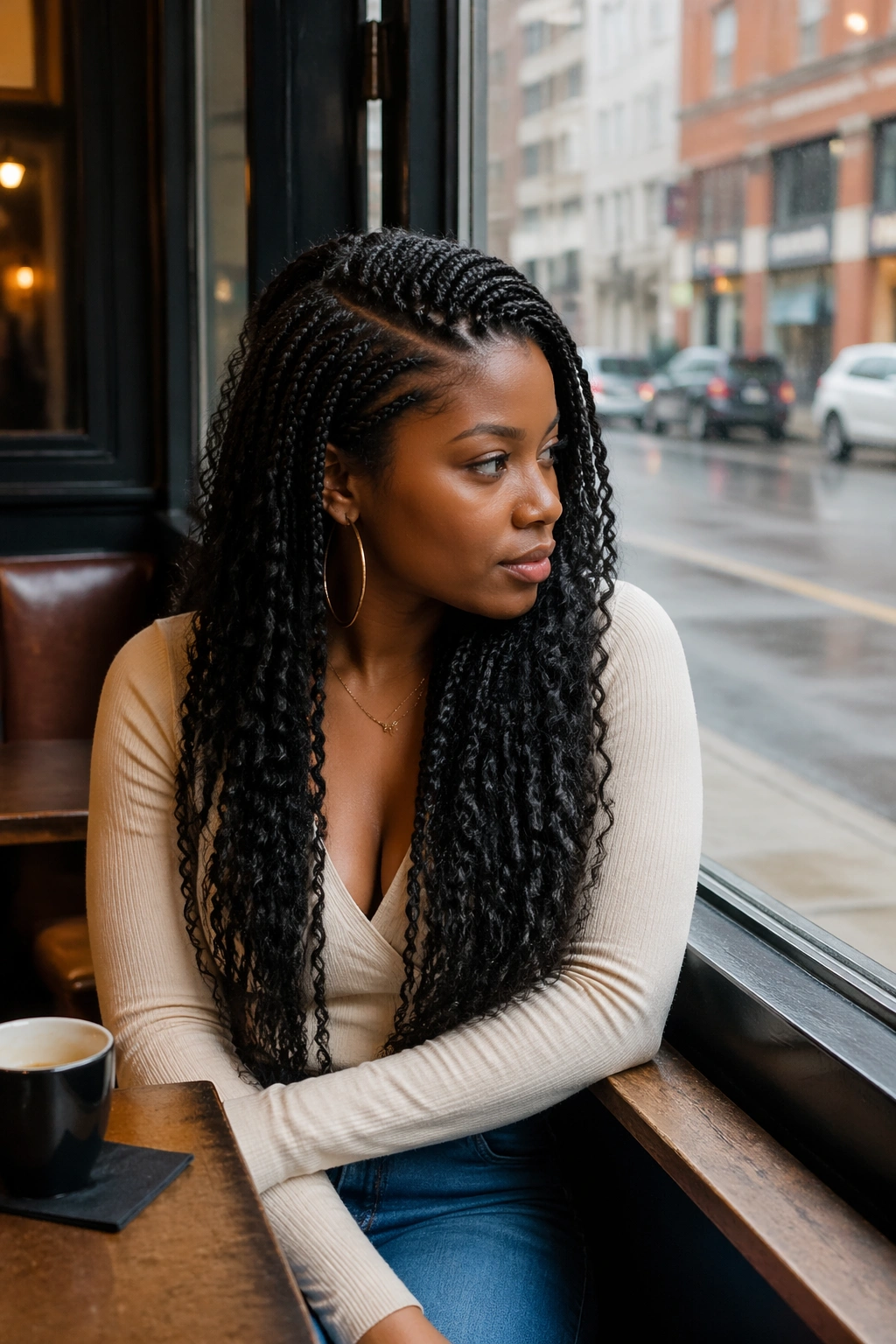
A part can do more than people think. Shift micro braids deeply to one side and suddenly the whole head gets shape, lift, and a little attitude.
This works because the part creates asymmetry at the crown. One side lies flatter, the other gains volume, and the eye reads the difference as style rather than randomness. If your face is round or you like a longer-looking profile, the side part helps stretch the silhouette. If you have glasses, it also keeps the front from competing with the frames.
That tiny shift changes the whole silhouette.
The cleanest way to wear it is to decide on the part and leave it alone for a while. Moving a deep side part around every day can make the scalp feel irritated, and the roots start looking fuzzy where they keep getting redirected. A rat-tail comb and a small amount of lightweight oil are enough to keep the part neat without making it greasy.
This is the easiest choice if you want the braids to feel different without changing the installation. No extra hair. No extra pins. Just a small line in a different place, which is often enough.
9. Micro Braided Ponytail with a Curly Tail
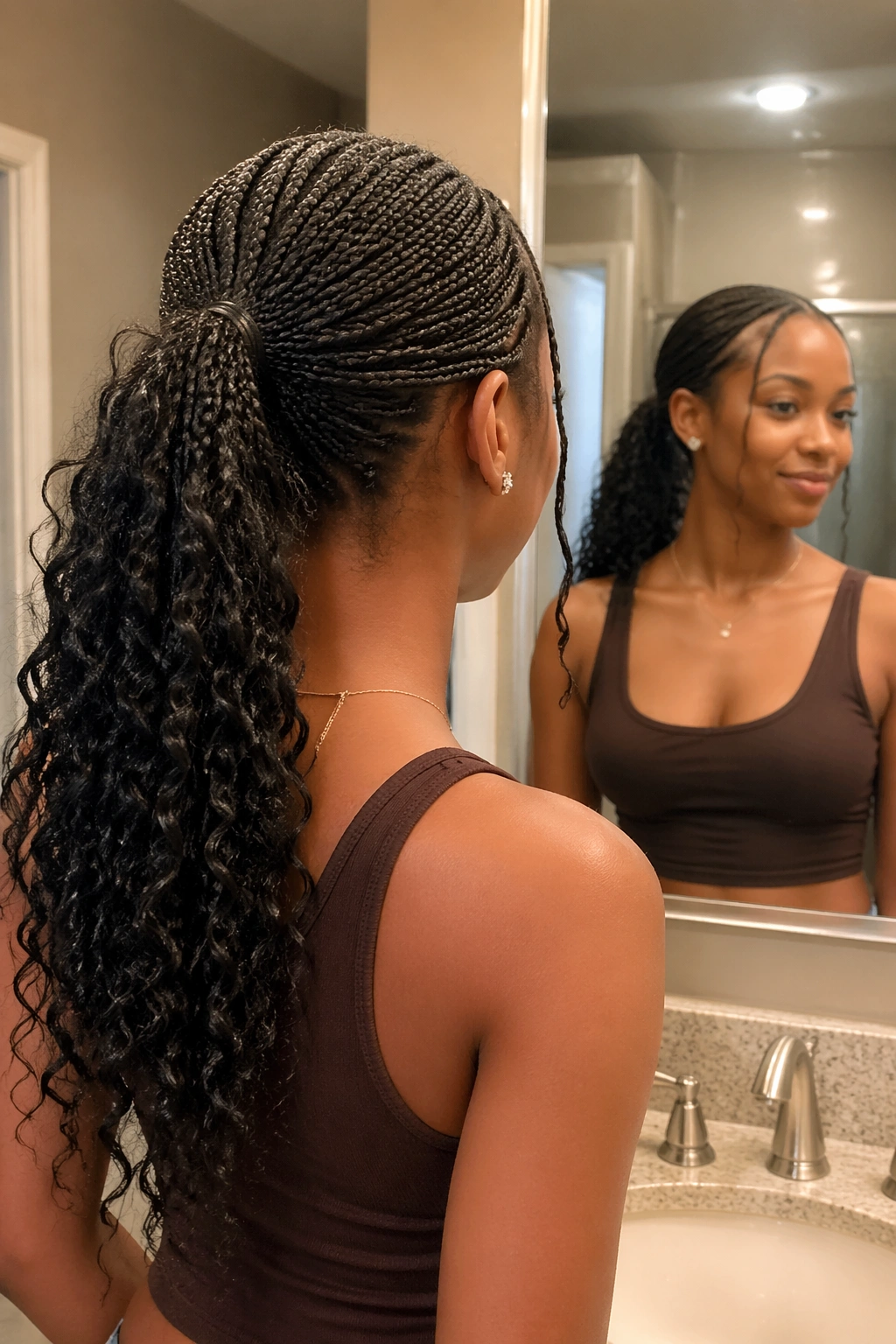
A ponytail makes micro braids feel sporty, clean, and a little longer than they really are. Put the braids into a high, mid, or low pony, then let the tail keep its curl or wave instead of tucking everything in.
The best version hides the elastic with one wrapped braid. That keeps the base looking finished. If the ponytail is heavy, split the inside into two anchor points before you secure the outer wrap. That spreads the weight and keeps the pull from concentrating in one spot.
High, mid, and low each give a different mood:
- High ponytail: more lift, more drama, more face
- Mid ponytail: easy and balanced
- Low ponytail: polished, calm, and good with collars
The curly tail matters because it stops the pony from looking too severe. Straight micro braids in a pony can feel a little boxy. Add the curl and the shape loosens up right away.
This is one of the best ways to show off highlights or color changes, too. The movement at the tail makes the tones catch the eye without doing anything extra.
10. Micro Braids and Cornrows in a Combo Pattern
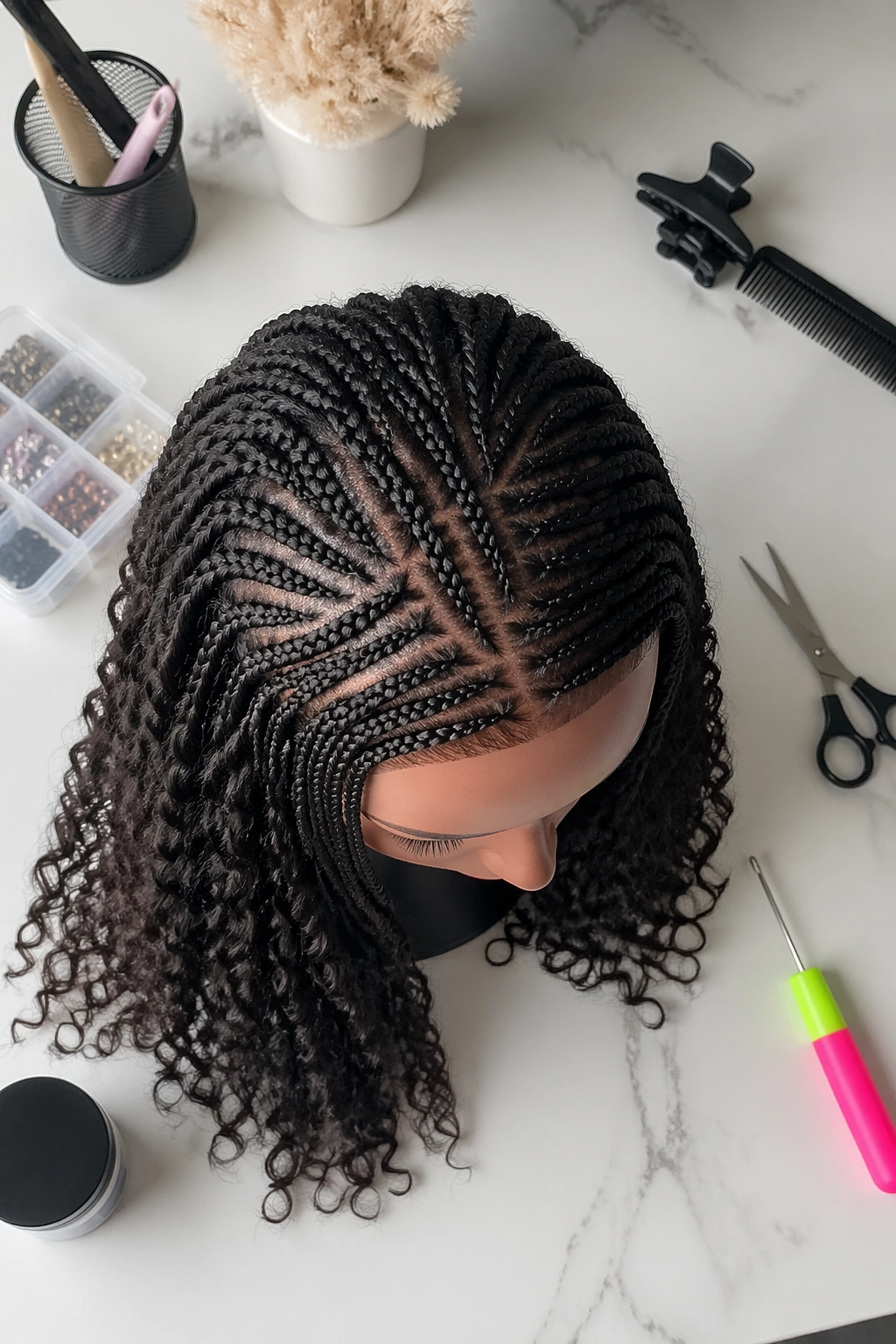
Front cornrows leading into micro braids give the head structure before the length even starts. It’s a smart way to mix neat, flat roots with a fuller braided body, and it keeps the style from looking too busy at the hairline.
The pattern can go straight back, curve along the head, or angle into a V at the crown. Straight-back looks clean and simple. Curved lines feel softer. A V-shape gives a little lift without needing any extra height at the top. Each version changes the outline just enough to matter.
Pattern Ideas That Actually Read Well
- Straight-back cornrows into micro braids for a sleeker finish
- Curved feed-ins for a softer, more feminine line
- Triangle parts if you want the scalp pattern to show
- One or two wide front rows if you want the roots to stay flatter under hats
This layout is a strong choice if you want the front of the style to stay neat for longer. The cornrows help control the first few inches, which is often where fuzz and lift show up first. It also lets the braids fall with a clear direction, so the whole head feels more designed.
If you like a braid style that looks thought through without screaming for attention, this one does the job.
11. Micro Braids with Face-Framing Curly Tendrils
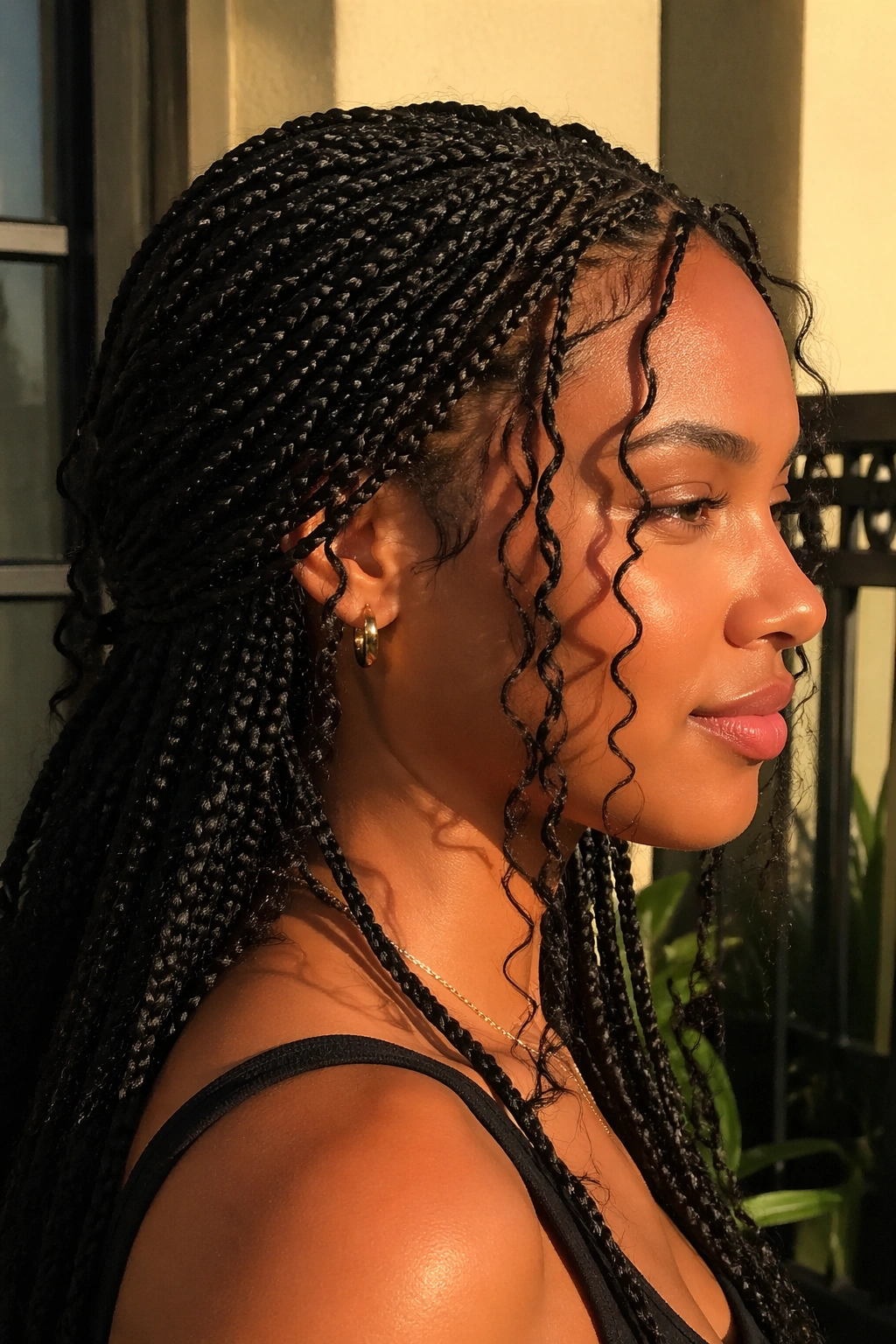
A few curled strands at the temples can change the whole face. Not a lot. Just enough to soften the front and break up the line where the braids meet the forehead.
This version works because the rest of the braids stay tidy while the front pieces do a little quiet work. Two to four tendrils on each side is enough for most people. Too many, and the style starts to look messy instead of intentional. Keep the tendrils narrow, and let them sit near the cheekbones or just in front of the ears.
If the curls need shaping, set them on small flexi rods or twist them lightly while damp, then let them dry fully before taking them down. A little mousse on the ends helps them hold the bend without getting crunchy. And yes, the front pieces should be lighter than the rest of the style. Heavy tendrils drag the face down, which is the opposite of what you want.
Among curly micro braid hairstyles, this one feels the least formal with the least effort. It’s good with glasses, good with soft makeup, and good when you want your braids to look a little less severe around the forehead.
12. Micro Braided Mohawk with Full Volume
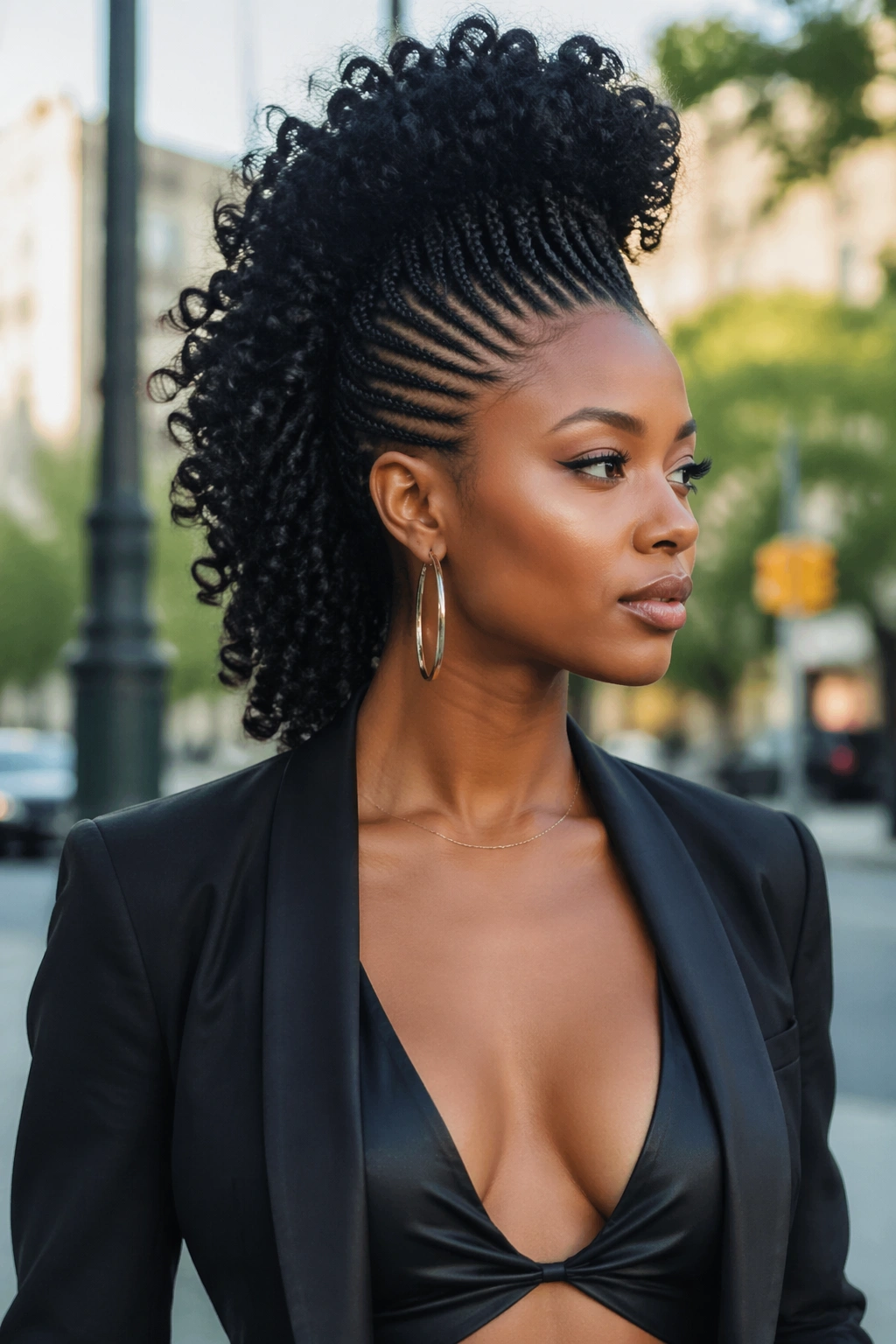
You do not need shaved sides for a mohawk shape. That’s the part people forget.
A micro braided mohawk keeps the sides flat or braided close to the scalp, then lets the center section rise with volume. The result is strong from the front and clean on the sides, with enough height to make earrings and necklines stand out. It looks sharp without needing much decoration.
How to Keep the Height
- Braid or pin the sides downward so they lie flat
- Leave the center section looser and fuller
- Set the top with mousse before shaping it
- Avoid heavy ends that drag the crown down
The style works best when the center section has enough length to hold shape without collapsing. If the braids are too short, the mohawk reads more like a flat row of sections. If they’re too heavy, the crown loses lift. So yes, balance matters here.
This is one of the bolder looks in the group, but it’s still wearable. The key is clean parting and enough control at the edges. Once those two pieces are right, the style does a lot of work for you.
13. Micro Braids with Color-Blocked Ends
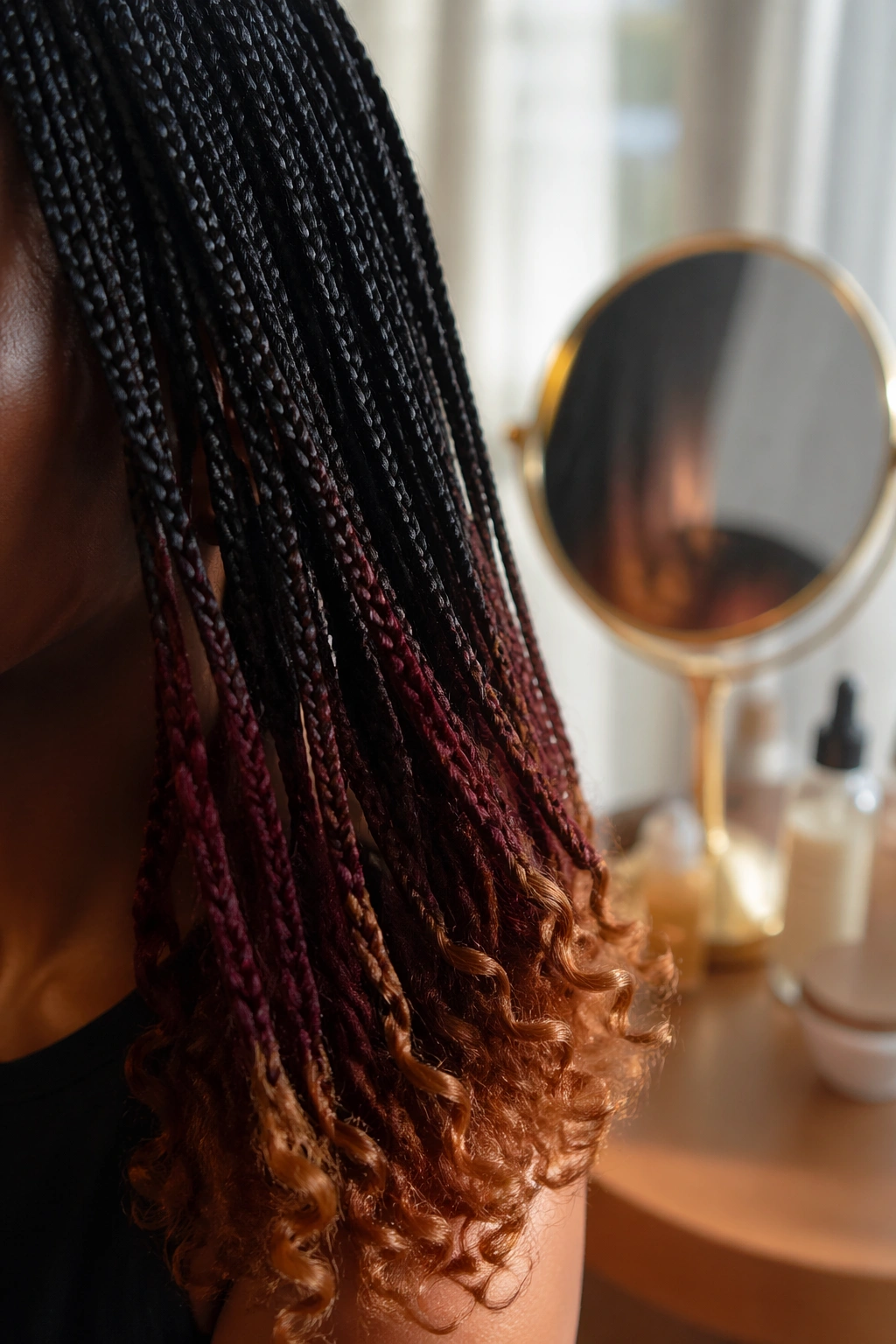
Color-blocked ends let micro braids carry more personality without needing full-head dye. The color can live at the ends, in alternating braids, or in a soft fade from root to tip. Because micro braids are so small, even a small change in tone gets noticed.
The quiet version uses one shade lighter than the base. Honey on brown. Caramel on black. Copper against deep espresso. That creates depth without making the hair look loud. The bolder version uses clear contrast — blonde ends, auburn tips, or a two-tone split that shows up as the braids move.
This is a smart option if you want color but do not want the upkeep of bleaching your own hair. Pre-colored braiding hair gives you the tone up front, and the style grows out without the same kind of root issue that permanent color brings. Keep products light, though. Heavy creams can dull the contrast and make the colors look dusty.
The nicest thing about this style is the way it catches movement. A still head looks nice. A moving one looks better, because each braid carries a line of color from root to tip.
14. Micro Braids Wrapped into a Crown Halo
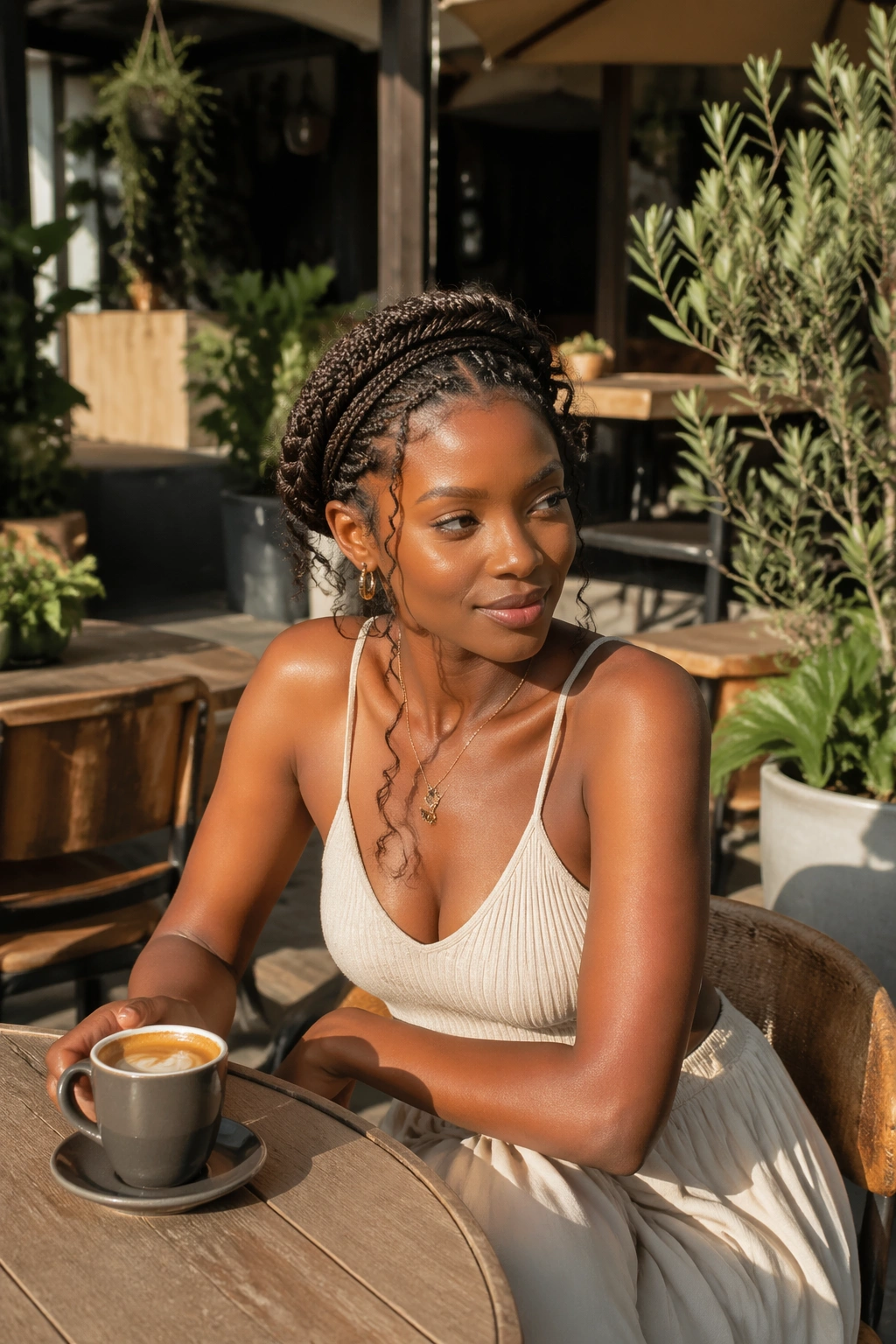
Braids wrapped around the perimeter can feel almost old-world, but the look stays clean instead of fussy when the lines are tight and the finish is smooth. A crown halo takes the micro braids and pins or wraps them around the head so they form a ring.
The shape is especially good for formal settings, but it does not have to stay formal. A halo with a few curls left loose at the back can feel softer, while a fully wrapped version reads more structured. The trick is making the braid path follow the head, not float above it.
How to Pin It Without Making a Mess
- Start the wrap above one ear and work around the crown
- Hide pin ends under the braid line, not through the middle of it
- Use 10 to 15 pins for a medium-length halo
- Leave a small gap at the nape if you want the style to breathe
This style holds well when the base braids are not too bulky. If the braids are very thick, the halo can sit high and look heavy. Tiny braids are better here because they lie flatter and make the ring shape feel smoother.
A crown halo gives structure without needing a lot of extra decoration. The shape does the work. That’s the appeal.
15. Micro Braids with Free Curls and a Soft Finish
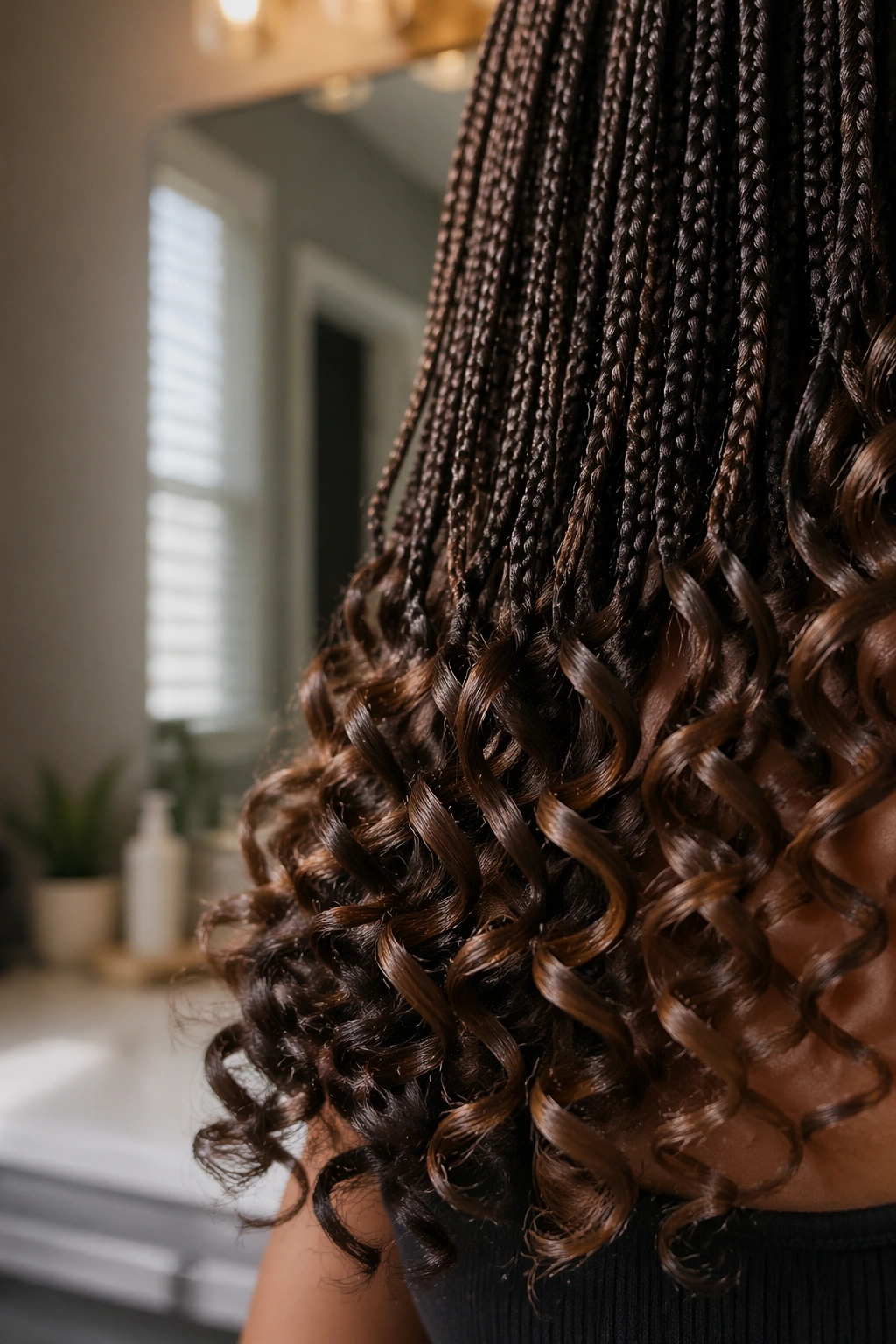
If you like movement, stop fighting it. Leave more of the curls free, keep the braid roots neat, and let the style soften on its own as the day goes on.
This is the most relaxed version in the bunch, and it often looks better after it has been worn once or twice. The curls loosen a touch, the braids settle, and the whole head gets a gentler finish. It’s the kind of style that looks good with a hoodie, a blazer, or a plain white tee because it never feels overworked.
A few habits keep it looking fresh. Sleep in a satin bonnet or scarf so the curls do not rub flat. Mist the lengths lightly when they need a little shape, but do not soak the braids. Too much water makes the roots frizz faster than you want. A small amount of mousse on the ends can revive the curl pattern without turning the braids sticky.
This is the one I’d keep if I wanted a style that could handle errands, dinner, and another full day without needing a redo. Soft, easy, and not trying too hard. That’s a nice place to end.
