
Flat roots can ruin an otherwise good curl day. One minute your hair has bounce, the next it feels weighed down at the crown and a little too polite at the ends.
Curly hair usually needs less product than people think and more shape than they expect. Heavy creams near the scalp, a sloppy part, or a cut that lets all the weight fall to the bottom can make even thick curls look flatter than they really are.
Volume is mostly geometry. Where the curls sit, how the layers stack, and how much space the roots get all matter more than a giant cloud of hairspray ever will. A little lift at the crown changes everything. So does a cut that leaves the perimeter round instead of dragging it into one long, tired line.
Some styles build height fast. Others make curls look fuller by shortening the visual length, shifting the part, or keeping the top section loose and lifted. The good ones do not fight your texture. They work with it, which is why a smart curly hairstyle can make hair look twice as full without making it feel stiff or crunchy. Start with the shape that does the most work, then move into the styles that fake fullness in a hurry.
1. Layered Shoulder-Length Curls
Shoulder-length curls hit a sweet spot for volume. The hair is long enough to swing and short enough that the weight does not pull every curl straight down.
Why it works is simple: the shape stays open. A cut that lands around the collarbone, with long layers starting near the chin, gives the curls room to spring instead of collapsing into one heavy sheet. If your hair is fine, this is often the first cut that makes it look like you have more of it.
What to ask for at the salon
Ask for long, blended layers rather than short, choppy ones. The goal is lift, not frizzed-up ends. A good stylist will shape the silhouette so the outer edge still looks full while the interior loses enough weight to let the curls bounce.
A few practical details matter:
- Best for 2B to 3B curls that lose shape when they get too long.
- A cut that sits just below the shoulders usually keeps the top from flattening.
- A diffuser on low speed helps preserve the round shape while drying.
- A light mousse at the roots gives more lift than a heavy butter.
Skip heavy oils near the crown. They can make this cut look limp by lunch.
2. Curly Shag with Short Crown Layers
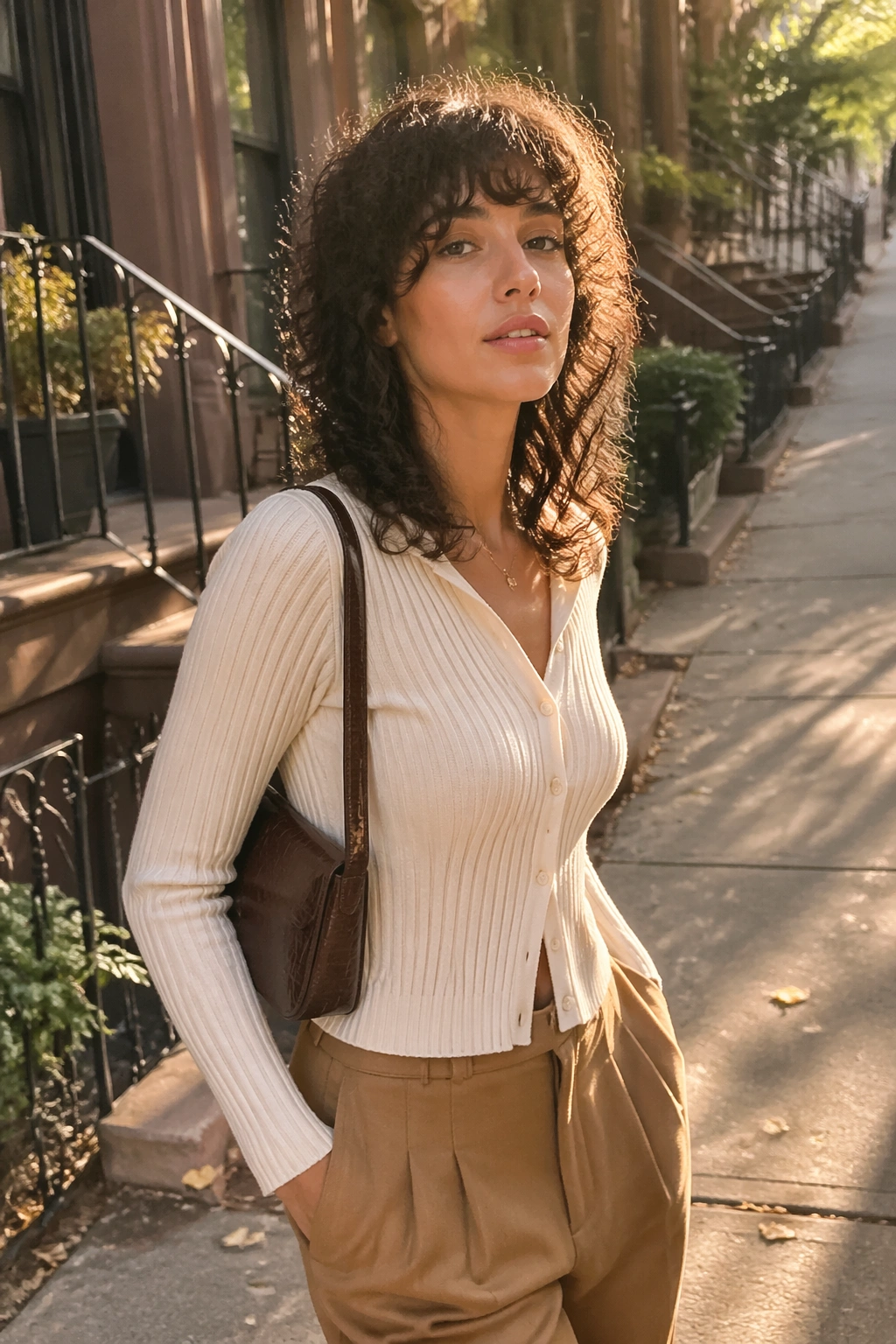
If you want volume without begging for it, the shag does a lot of the work. It builds height right where curly hair tends to go quiet: at the top.
The short crown layers are the magic here. They let the upper curls stand up instead of lying down under the weight of the lengths. Add curtain bangs or a soft fringe and the whole shape reads bigger, looser, and a little more alive. It can look messy in the best way, but only if the layers are cut with some restraint.
This is not the cut for someone who wants every curl to fall into one neat line. It is for people who like movement, air, and that slightly undone outline that makes hair look fuller from every angle. Too much layering turns it wispy. Too little and it loses the point.
I like this cut on medium-density curls because it gives immediate lift without needing much styling. A little curl cream at the ends, a touch of mousse near the roots, and a diffuser is often enough. If you’ve been fighting flat top layers for years, a shag can feel almost suspiciously easy. It isn’t magic. It just puts the weight in better places.
3. Deep Side-Parted Curls
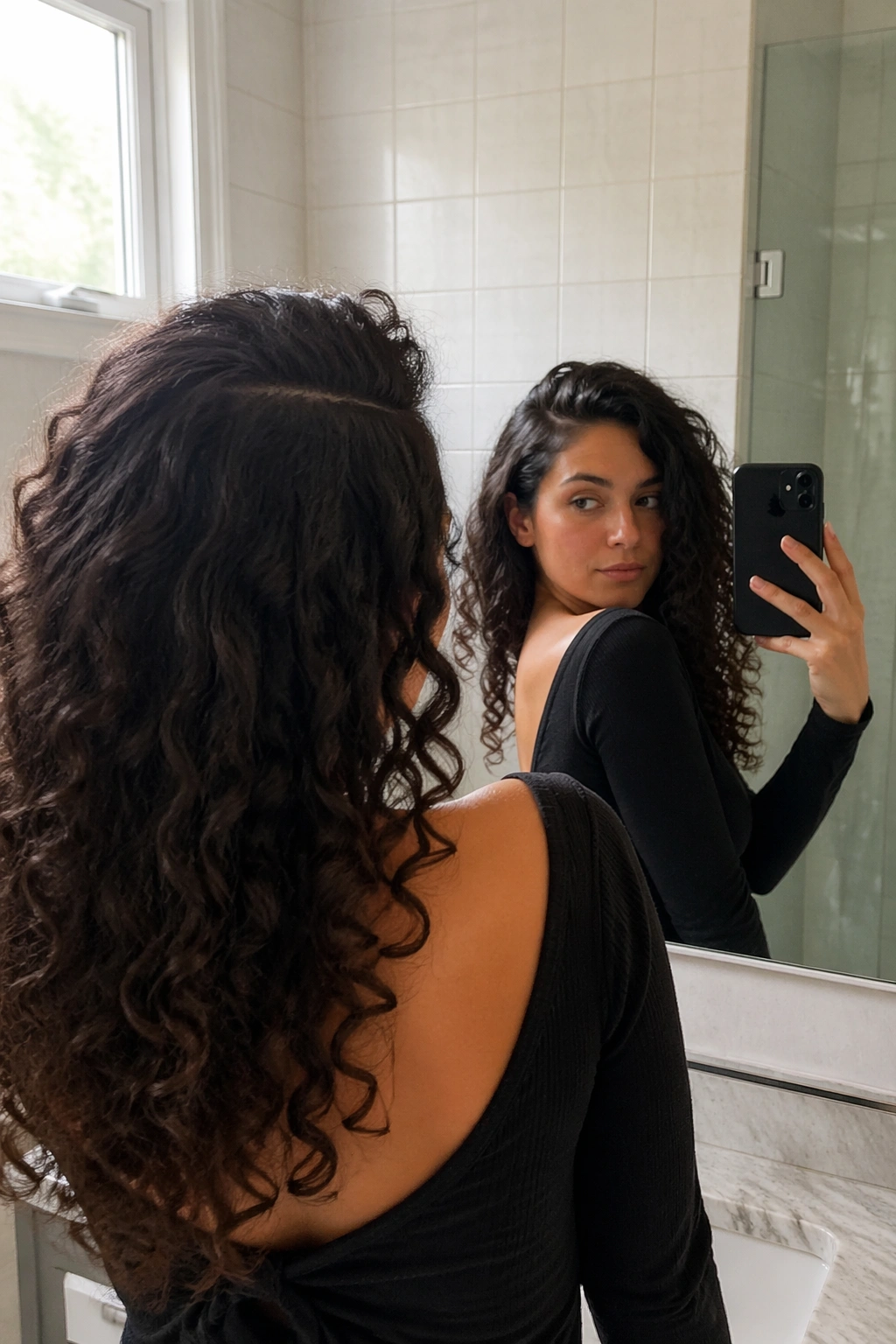
Why does a side part make curls look bigger? Because it changes the balance. A center part can split the hair so evenly that the crown sits flat. A deep side part throws the lift to one side and gives the root line something to stand on.
That shift matters more on fine or medium curls, where the top can look a little see-through if everything falls in the same direction. The asymmetry creates instant height near the part and a fuller look over the forehead and temple. It also makes curls feel less routine. A little drama never hurts.
How to set the part
Part the hair while it is damp, not dripping wet. Then clip the root on the smaller side up and away from the scalp for 10 to 15 minutes while the hair dries. That tiny pause makes more difference than people expect.
A few useful notes:
- Use a rat-tail comb for a clean, deep part.
- Clip the root 1 to 2 inches from the scalp if you want more lift.
- Flip the hair to the opposite side while diffusing for extra bend.
- Finish with a light gel at the part line so it does not puff out.
A deep side part is quiet, but it works hard.
4. Pineapple Updo
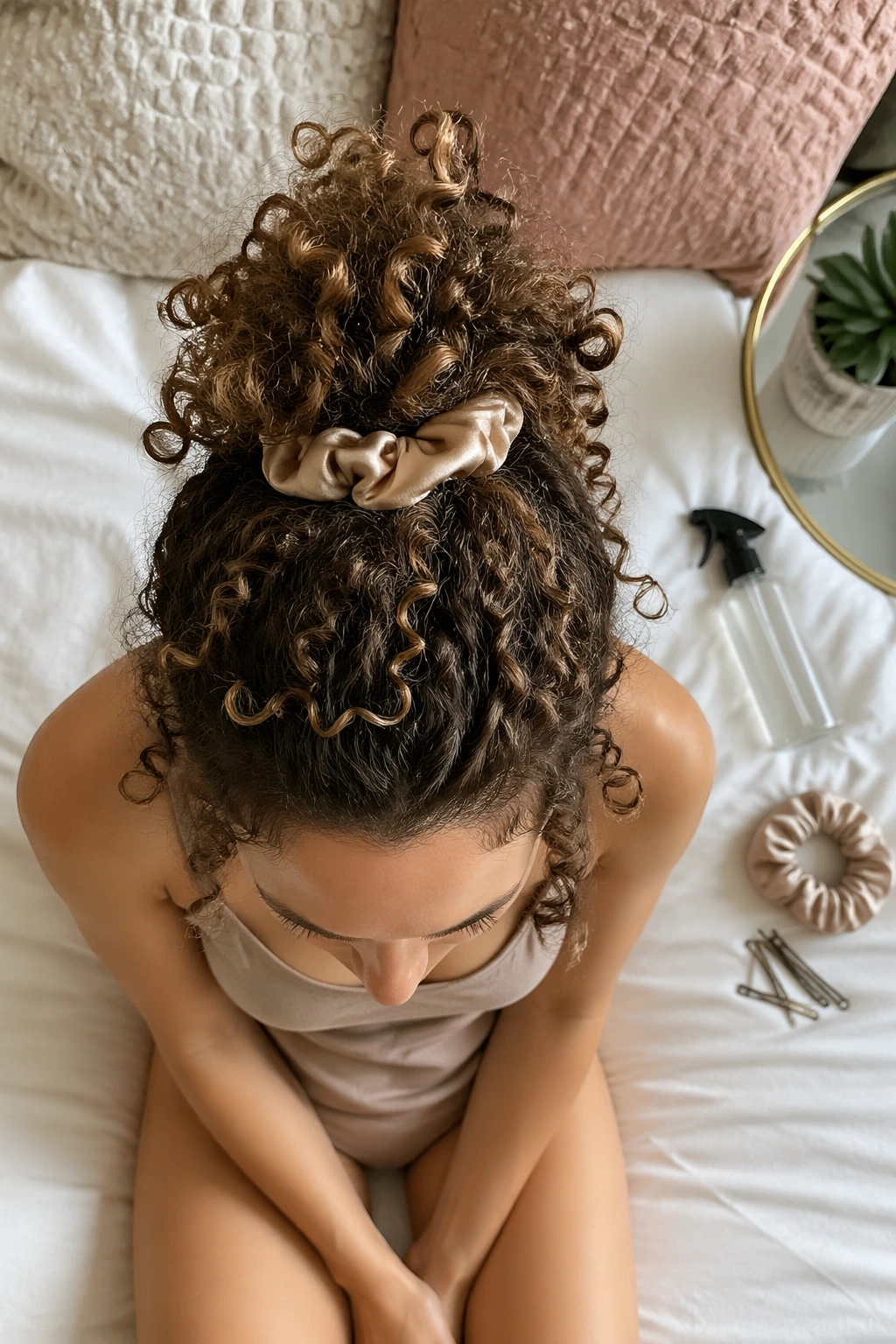
By the end of the day, curls can look tired at the crown and too heavy around the neck. The pineapple fixes that fast.
The style sits high on the head, usually with a loose scrunchie or satin tie, and lets the ends spill forward in a soft halo. That high placement creates the look of more height even when the roots are a little flat. It is also one of the few styles that can turn second-day curls into a feature instead of a rescue mission.
A pineapple is at its best when it is loose. Tight elastic means dents, breakage, and a sad ring around the head. Use enough hold to keep the shape, but leave the curls free enough to move.
- Gather hair at the very top of the head, not at the back.
- Use a satin scrunchie or coil tie.
- Leave a few front pieces out if you want softness around the face.
- Mist the ends with water and scrunch if they feel dry.
This is the style I’d reach for on a day when the roots need help and the lengths still have life left in them.
5. Half-Up Puff
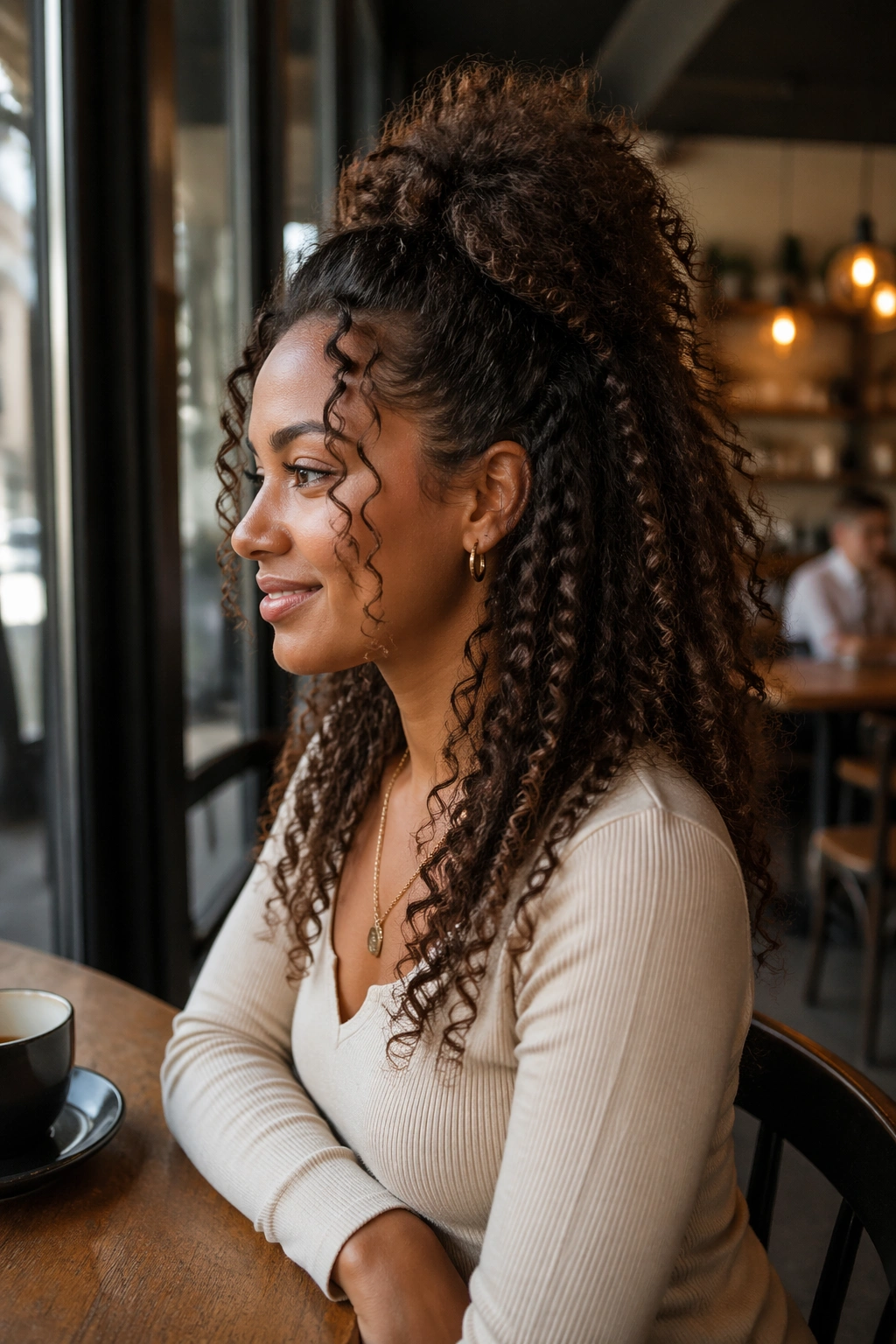
A half-up puff is one of those styles that looks effortless and still manages to do something smart with the shape of your hair. The top section goes up, the bottom section stays down, and the whole head reads fuller because the eye sees both height and length at once.
It works especially well on medium to long curls that have lost some lift at the crown. Pulling just the upper section back creates a little architecture near the top of the head, which is usually where curls start to go limp first. The loose lower section keeps the style from feeling severe. You get volume without giving up the softness that makes curls look good in the first place.
The best version is not slicked tight. Leave enough room at the scalp so the puff has a round, airy shape. If the front is pulled back too hard, the style loses the whole point and starts looking flat from the hairline to the crown.
A soft edge brush, a few pins, and a silk tie are usually enough. If you want a bit more height, gently tug the puff upward after it’s secured. Don’t pull the sides down. That’s where the shape gets sleepy.
6. Curly Bob with Invisible Layers
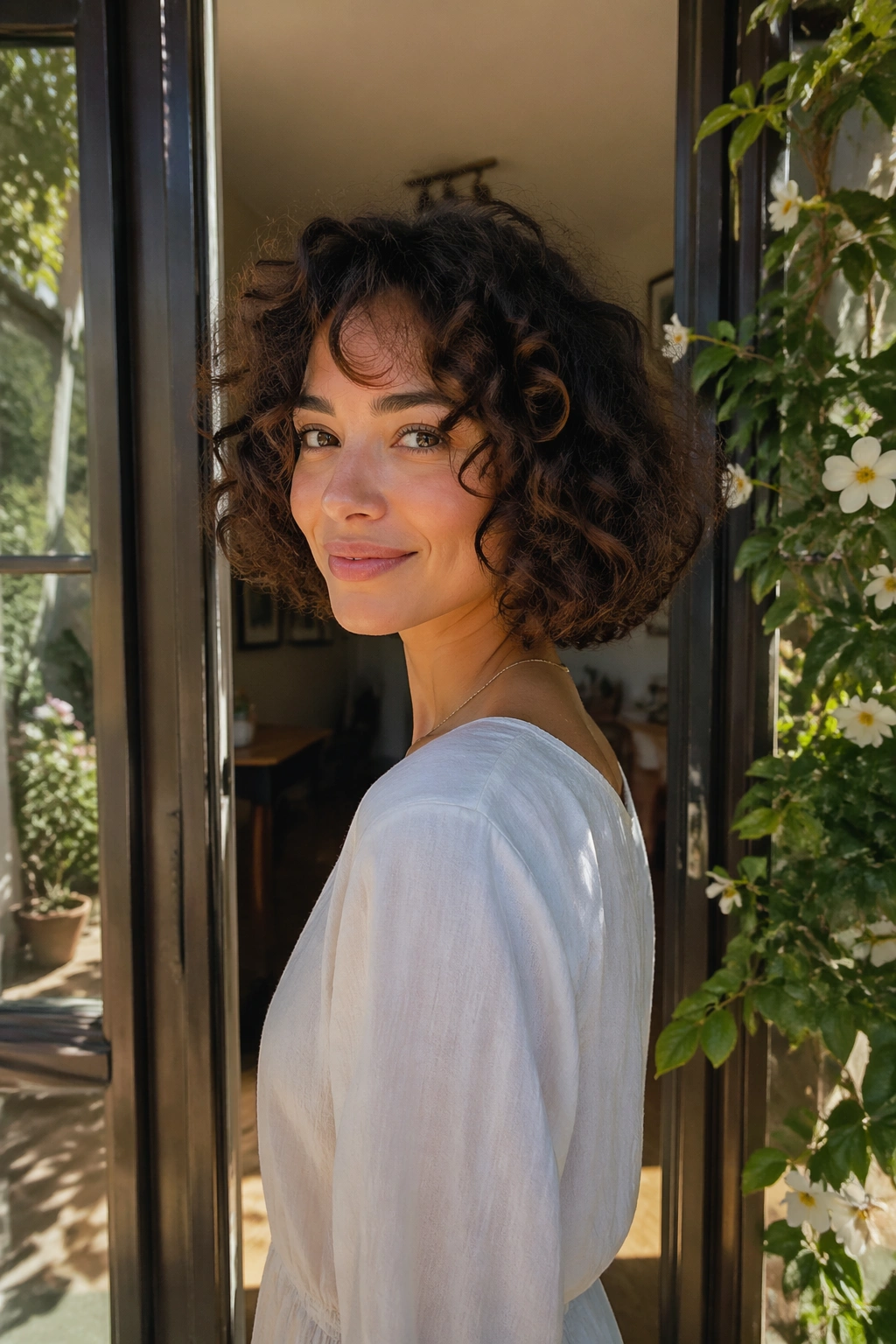
A blunt bob sounds neat, but it can be a trap for curly hair. It piles weight at the ends and leaves the top looking smaller than it should.
Invisible layers fix that without breaking the outline. The cut still looks like a bob from the outside, but the interior loses enough bulk to let the curls lift and separate. You get a rounded silhouette instead of a boxy one. That difference is huge on finer curls, where a single heavy line can make the whole head look narrower.
The best length usually lands between the jaw and the collarbone. Too short and the shape can puff out at the sides. Too long and it starts behaving like a longer cut again, which means more pull and less lift. A stylist who cuts curly hair dry can usually see the balance better, especially if your pattern shrinks a lot.
This style is good when you want movement around the face and a little bounce through the body of the hair. It is less good if your curls are very tight and you want a stacked, sculpted edge. Then you may need a different shape altogether.
7. High Curly Ponytail
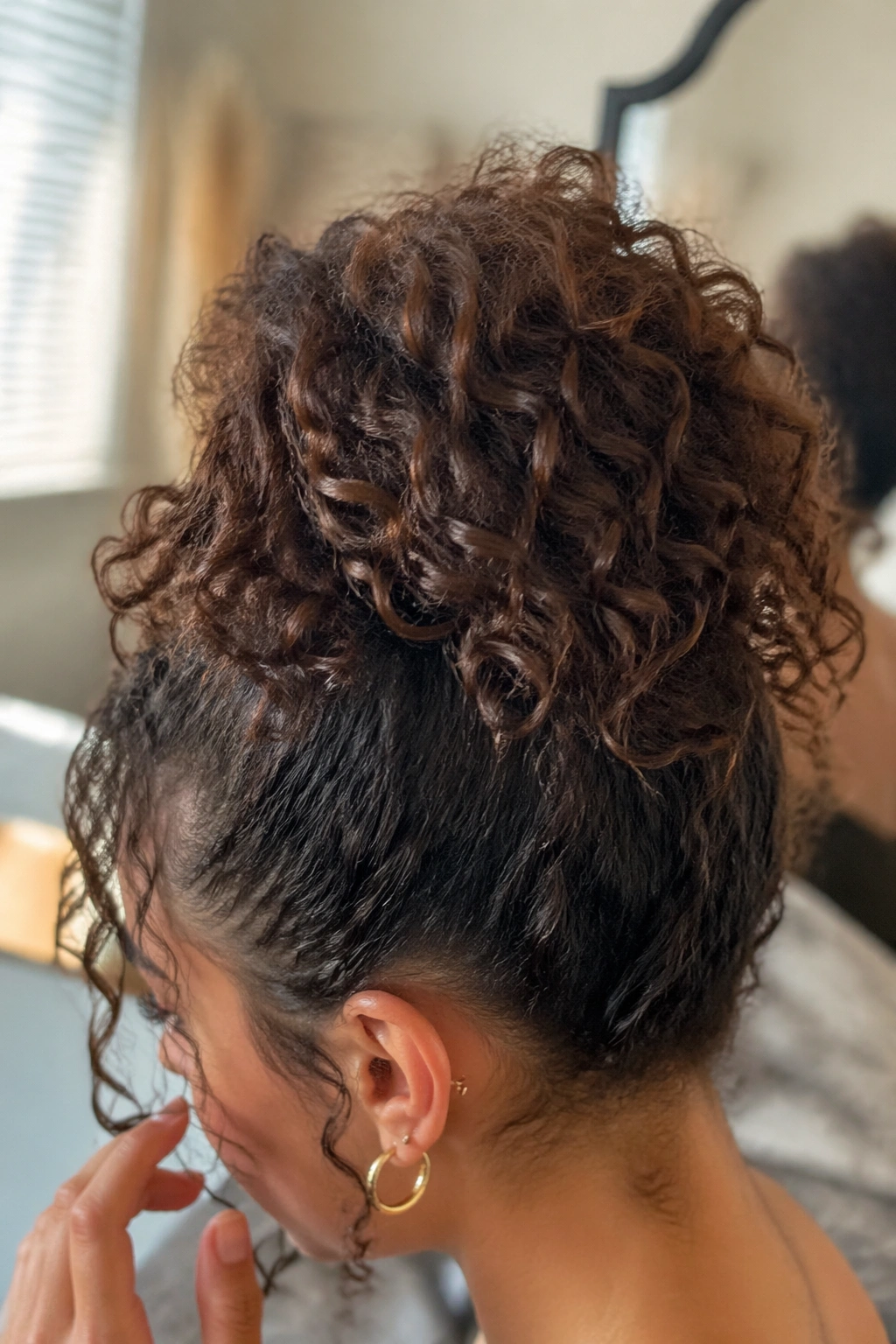
A high curly ponytail is a volume cheat, and I say that with respect. It lifts the whole silhouette in one move and makes the crown look taller before you even touch a diffuser.
The trick is placement. Set the ponytail high enough that the base sits near the crown, not halfway down the back of the head. That gives the top section a natural lift and lets the curls cascade in a fuller-looking line. A low ponytail can be neat. A high one has presence.
What keeps the crown from collapsing
The hair at the front needs a little help before you tie it back. A small amount of gel or mousse at the root keeps flyaways from puffing in the wrong place, while a soft brush helps you guide the shape without flattening it. Wrap a curl around the elastic so the base looks finished instead of hurried.
A few details help a lot:
- Use a covered elastic or spiral tie.
- Tie the ponytail right at the crown for the most lift.
- Leave a few curls loose around the temples if the hairline feels too strict.
- Fluff the ponytail with your fingers after securing it.
It works for casual days and dressy ones. That’s rare.
8. Long Face-Framing Layers
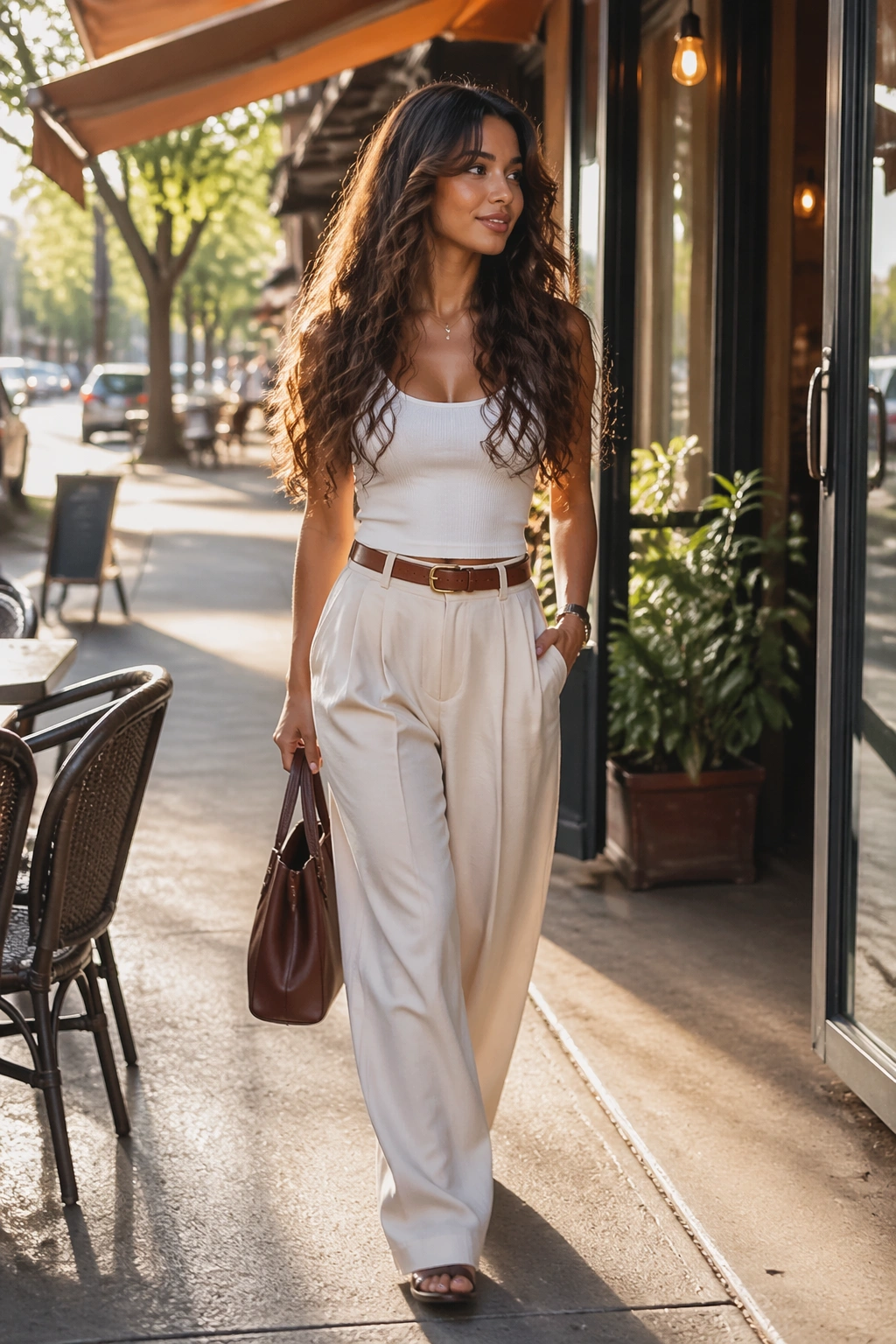
Long curls can look heavy fast. Not because length is bad, but because all that weight pulls the eye straight down.
Face-framing layers solve that by lifting the visual shape near the front and upper sides. The cut keeps the length, which many people want, while carving enough movement around the face to stop the hair from hanging like a curtain. If the shortest pieces hit around the cheekbone or chin, the whole head tends to look lighter and taller.
This is a good choice for people who like length but hate the flatness that comes with it. It also behaves well on 3A to 3C curls, where the shape can get dense through the middle and sparse at the ends if the cut is too blunt. The layers don’t need to be dramatic. They just need to be placed where the eye wants lift.
Dry cutting helps here because it shows the real fall of the curl. Wet hair tells lies. Curls shrink, bend, and spring in ways that only show up once they’ve dried. A careful layer placement can make the front pieces float instead of sitting straight down the cheeks.
9. Curly Pixie Cut
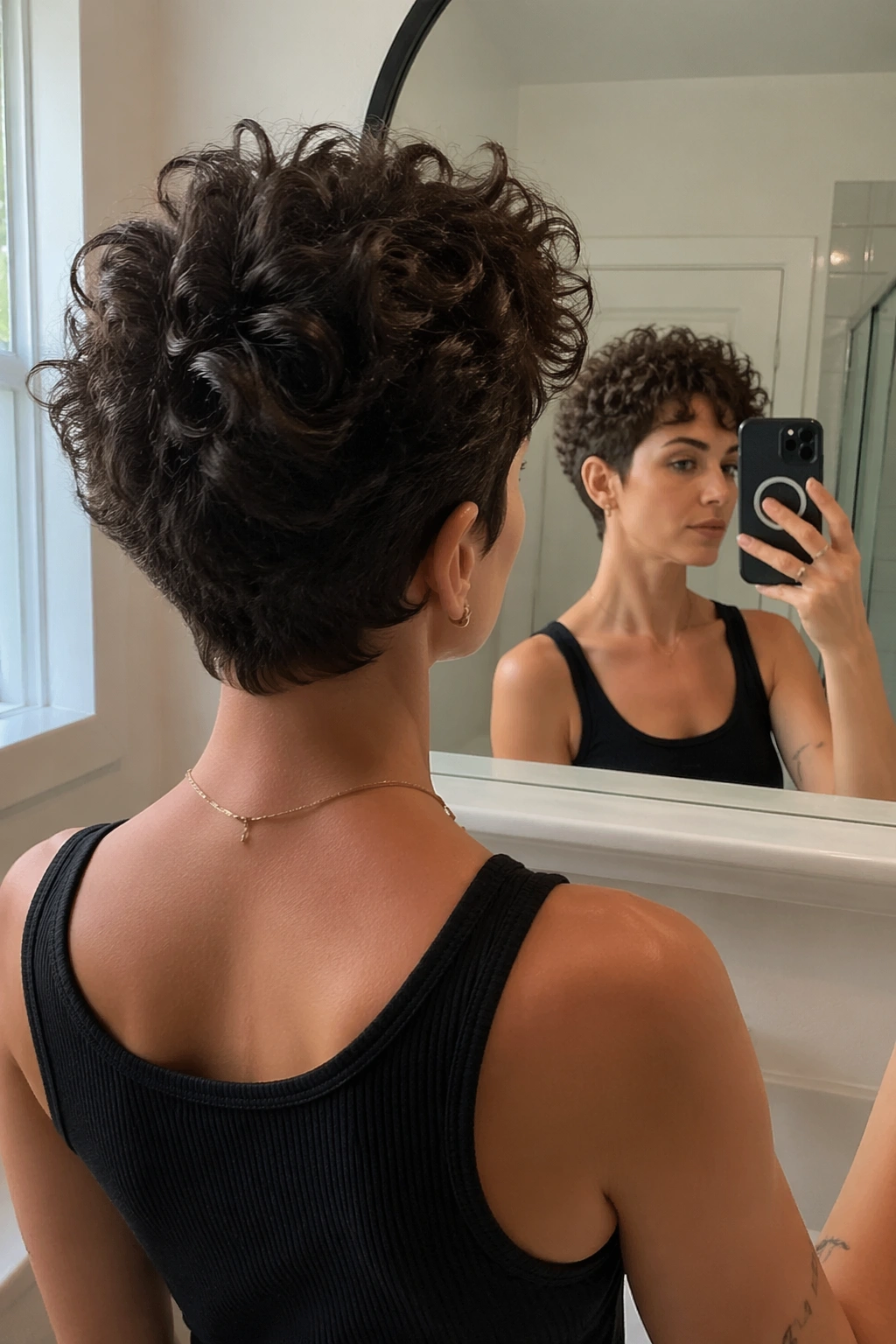
Short curls can have more volume than long curls. That sounds backward until you see it in the mirror.
A curly pixie removes the weight that drags the roots down, so the hair stands up instead of collapsing outward. The shape is compact, which makes the crown look dense and lifted. Tapered sides help the top read even bigger, because the eye goes straight to the height on top.
The cut works best when the top is left a little longer than the sides and back. That gives you enough length to scrunch, finger-style, or pin it into a soft wave. If everything is chopped too evenly, the result can look helmet-like. Nobody wants that. A good pixie keeps some unevenness on purpose.
It does need maintenance. Short curly hair loses shape faster than people expect, especially around the ears and neckline. Still, the payoff is real: quick drying, easy styling, and a lot of built-in lift. If you are tired of heavy curls dragging down your face, this is one of the boldest fixes.
10. Twist-Out with Lifted Roots
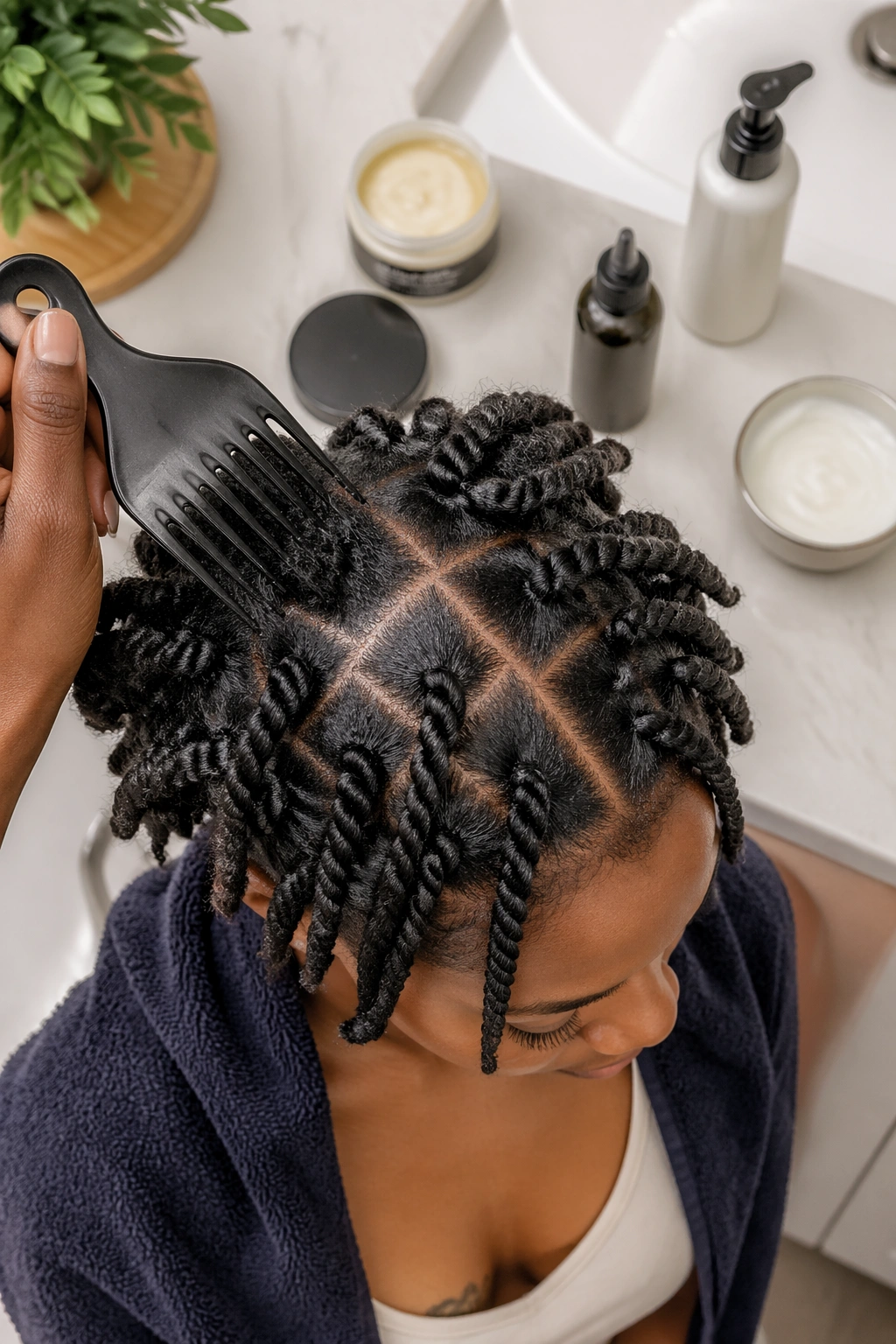
A twist-out is one of the easiest ways to get both definition and volume at the same time. The curls start out stretched, then they separate into a fuller cloud once the twists come down.
The real trick is not the twist itself. It is the root work. If the twists dry with the roots clipped up or slightly raised, the finished style stands away from the scalp instead of sticking to it. That gives the whole head more body and keeps the top from going flat as soon as you separate the sections.
How to stretch the roots
Set the twists on damp hair, not soaking hair. Medium-sized sections usually give the best balance of definition and fullness. If the sections are too small, the result can look stringy. If they’re too large, the style loses shape.
A few details matter:
- Use two-strand twists for a soft, full finish.
- Let the hair dry completely before taking them down.
- Separate each twist only when it feels cool and dry through the middle.
- Lift the roots with a pick, not a brush, so you keep the curl pattern.
I like this style because it looks deliberate without feeling stiff. That’s a nice line to walk.
11. Braided Crown with Loose Ends
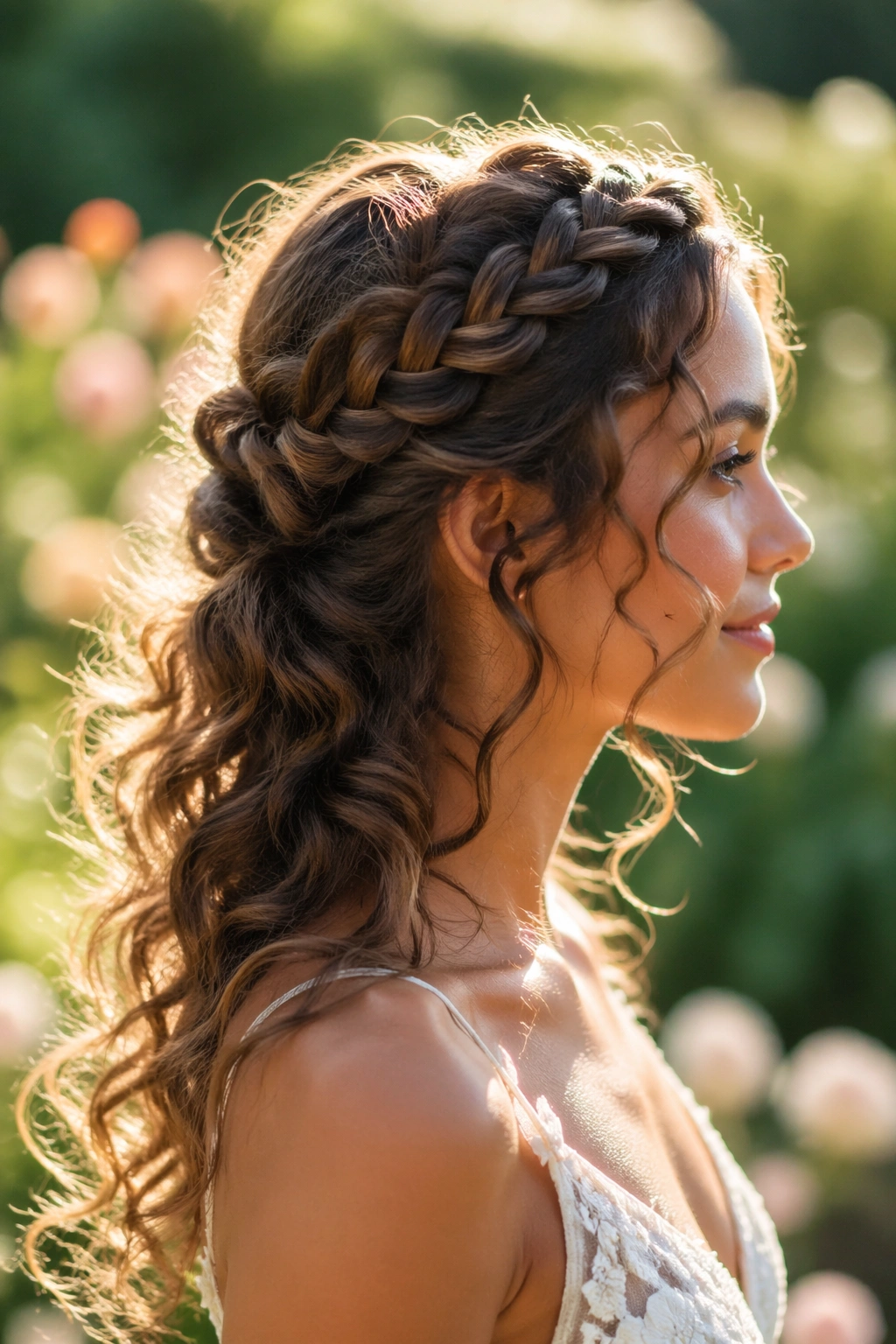
A braided crown changes the silhouette before anyone notices the braid itself. It pulls the top section back from the hairline, which makes the crown look higher and the face more open.
The loose ends do the rest. Leaving the rest of the curls down keeps the style from looking too formal or too tight, and it preserves the fullness through the lengths. You get structure at the top and softness everywhere else. On thick curls, that contrast can be gorgeous. On finer curls, it keeps the head from looking too flat at the front.
The braid should be snug enough to hold, not tight enough to pull. Tight braiding can flatten the roots and make the temples look narrow. A loose braid with a few softened edges usually gives a better shape and a kinder feel on the scalp. That matters if you wear the style for hours.
This is one of the better choices for weddings, dinners, or any day when you want the hair off your face but still want the body of your curls on display. It has range. That’s why it keeps showing up.
12. Double Space Buns
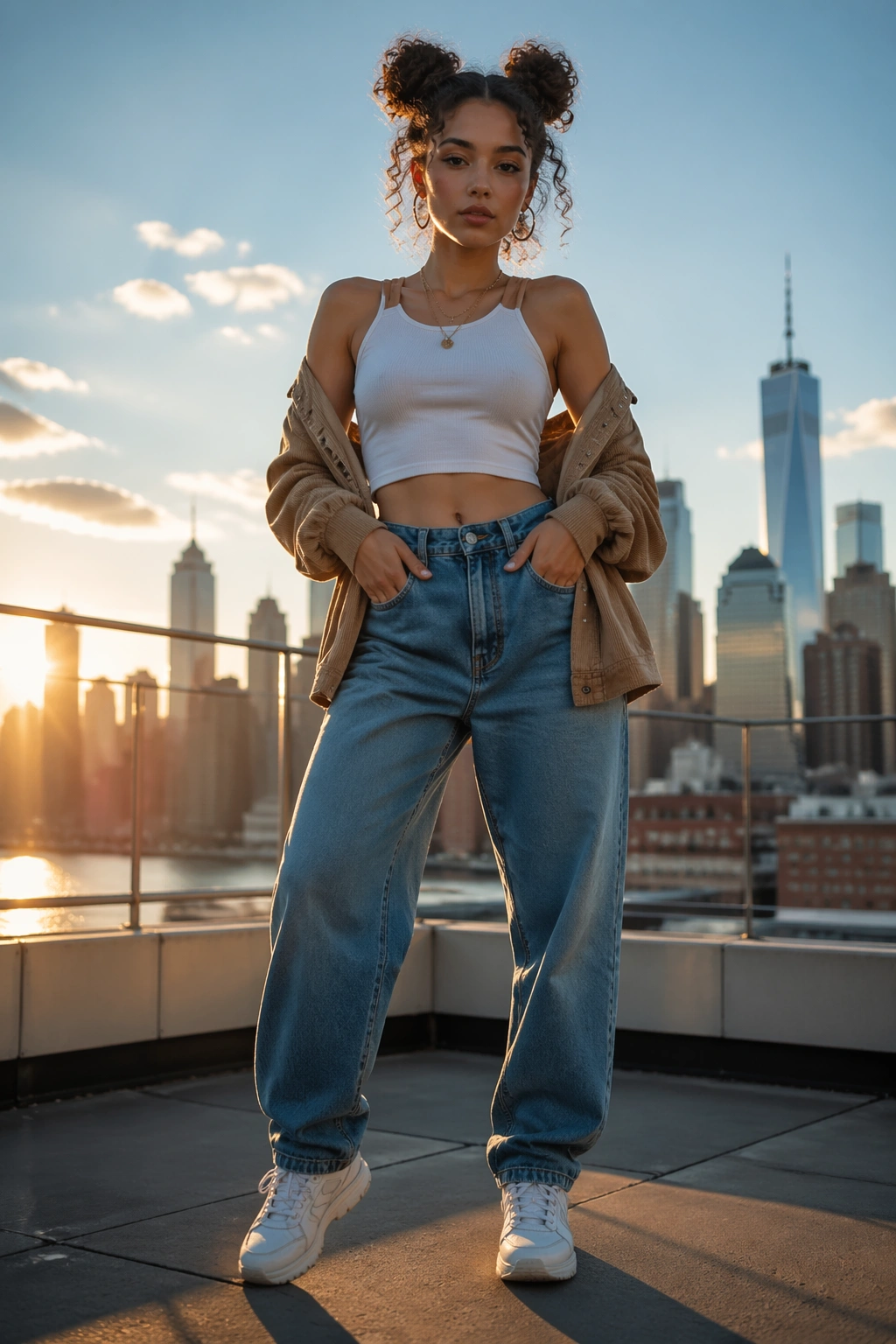
Two buns almost always read fuller than one. The split shape adds width on both sides of the head, and the lifted placement makes the top look taller.
The style works especially well if your curls are medium length and you want something playful without pinning every strand away. Each bun becomes its own little volume point. Leave the ends curly and messy, and the whole thing looks intentionally full rather than overworked. If you tuck the ends neatly, you lose some of that lifted texture.
There is a balance here. Put the buns too low and they flatten the back. Put them too tight and the scalp starts to show too much. The best version sits above the ears and a little behind the hairline, with enough looseness to let curls puff out around the base.
It’s also a good way to save second-day hair that has gone uneven in texture. A mist of water, a tiny bit of cream on the ends, and a few pins can turn frizz into shape. Not every fix has to be serious.
13. Curly Bangs with Rounded Shape
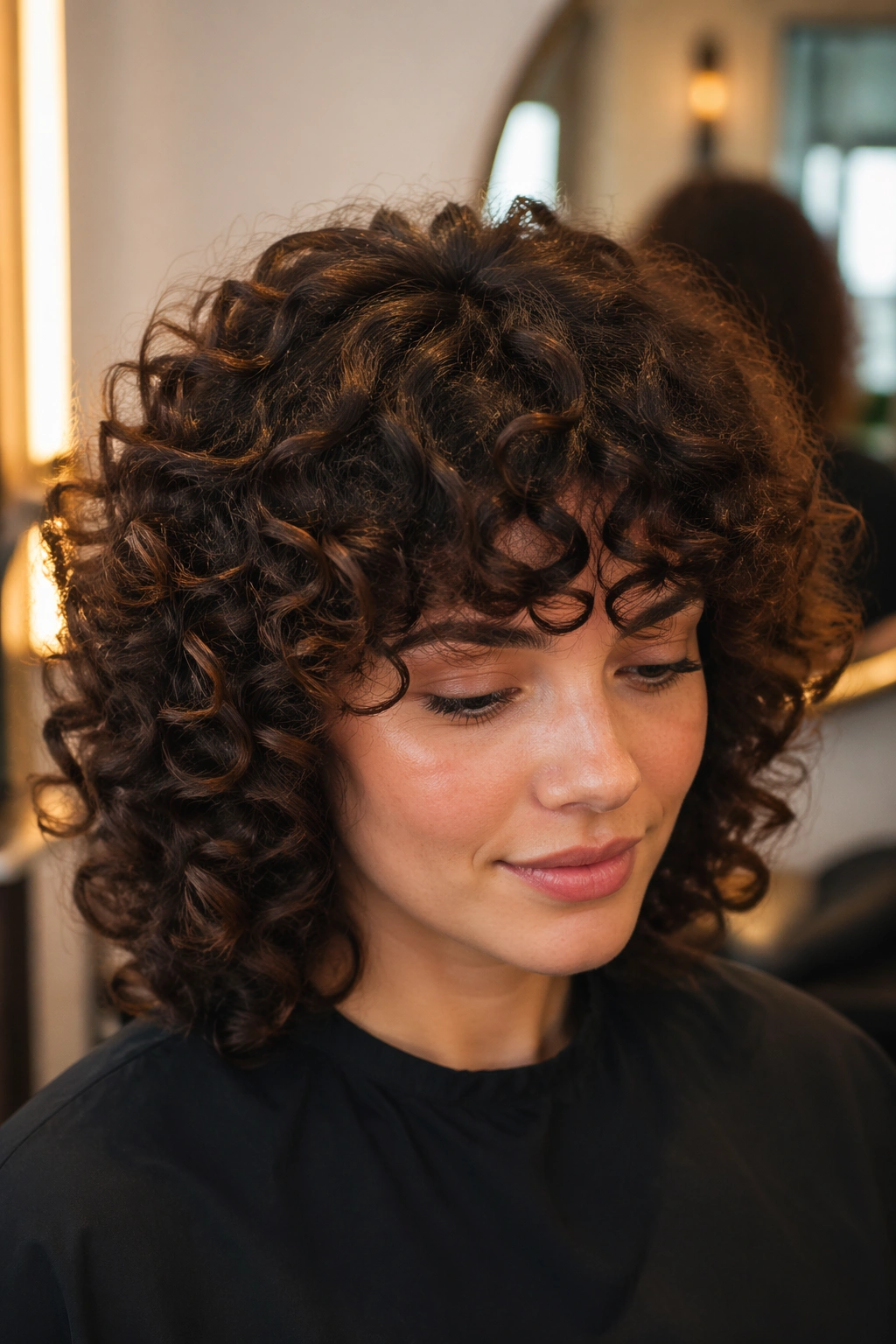
Bangs can make curls look fuller because they move the volume forward. Instead of all the body sitting around the shoulders, some of it lands right around the face, where the eye notices it first.
A rounded fringe works better than a blunt, heavy one on most curly textures. The shape should follow the curl pattern and taper softly at the sides so it blends into the rest of the cut. That keeps the front from looking boxy. It also means the bangs can sit high enough to show off the curl spring without taking over the forehead.
What to ask for at the salon
Ask for a dry cut if your curls shrink a lot. Wet bangs can look tame in the chair and jump up too high later. That’s one of the classic curly-hair surprises, and it is not a fun one.
A few useful notes:
- Keep the fringe light and layered, not heavy.
- Use a small amount of cream or gel so the bangs don’t clump.
- Trim bangs more often than the rest of the hair.
- Let them air-dry or diffuse without touching them too much.
Curly bangs are a commitment, but when they sit right, they make the whole haircut look bigger and more alive.
14. Big Rounded Afro
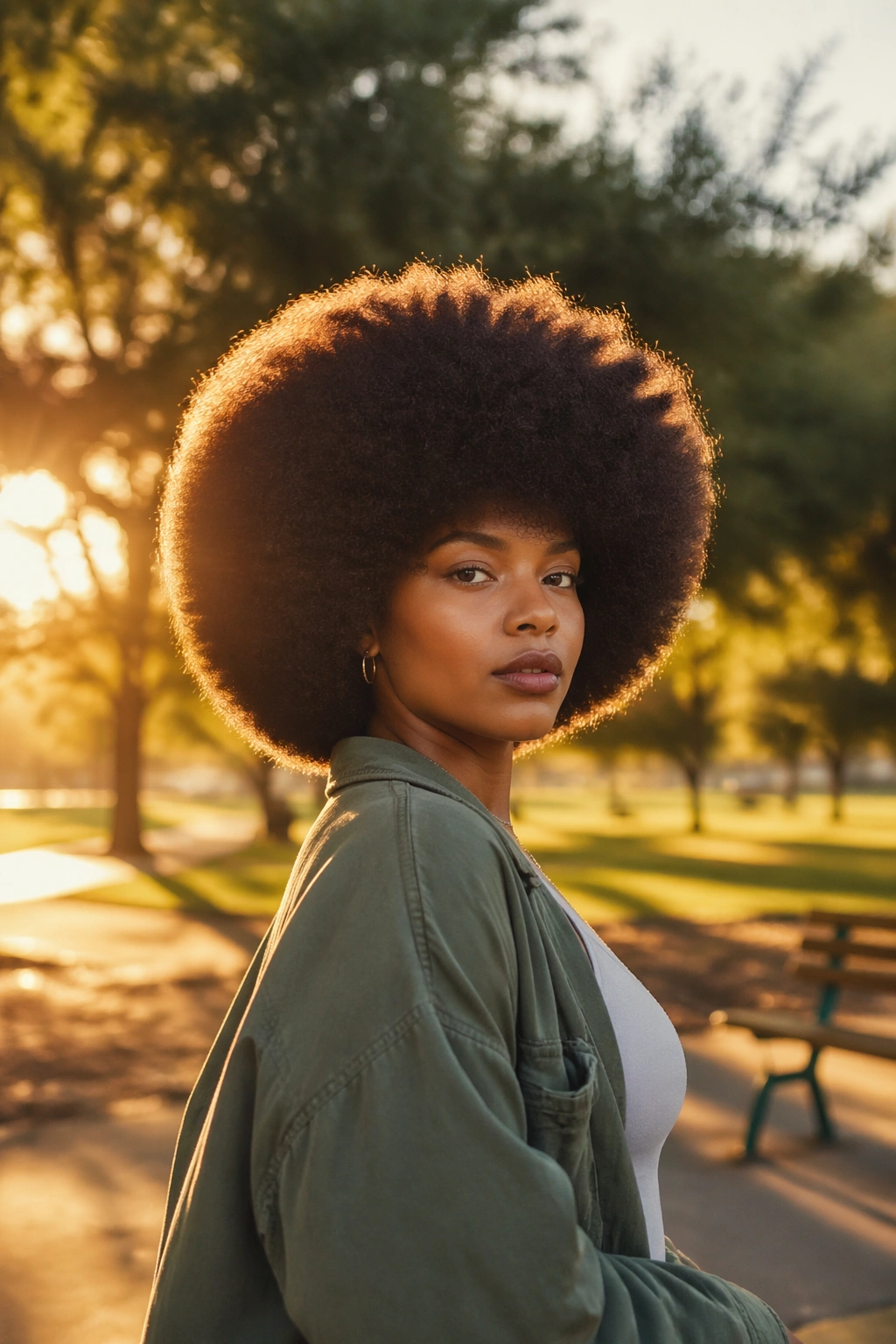
If maximum volume is the goal, a rounded afro does the heaviest lifting. The shape itself creates the fullness, and the hair’s natural texture does the rest.
The important part is the silhouette. A good afro is shaped on purpose, not left to grow in whatever direction it chooses. The sides round out, the crown sits tall, and the outline forms a soft sphere instead of a flat triangle. That shape makes the hair look fuller from every angle because there’s no dead weight dragging the top down.
Moisture matters here, but so does restraint. Heavy products can make the curls clump too much and lose their airy lift. A leave-in, a light cream, and a pick at the roots after drying are often enough. If the hair is too wet when you shape it, it shrinks unpredictably. Let it dry first. Then build the form.
This style suits tighter textures especially well, though denser 3C curls can wear it nicely too if the cut has enough support. It is bold, yes. More than that, it is practical. The shape keeps doing the work long after styling is done.
15. Curly Frohawk
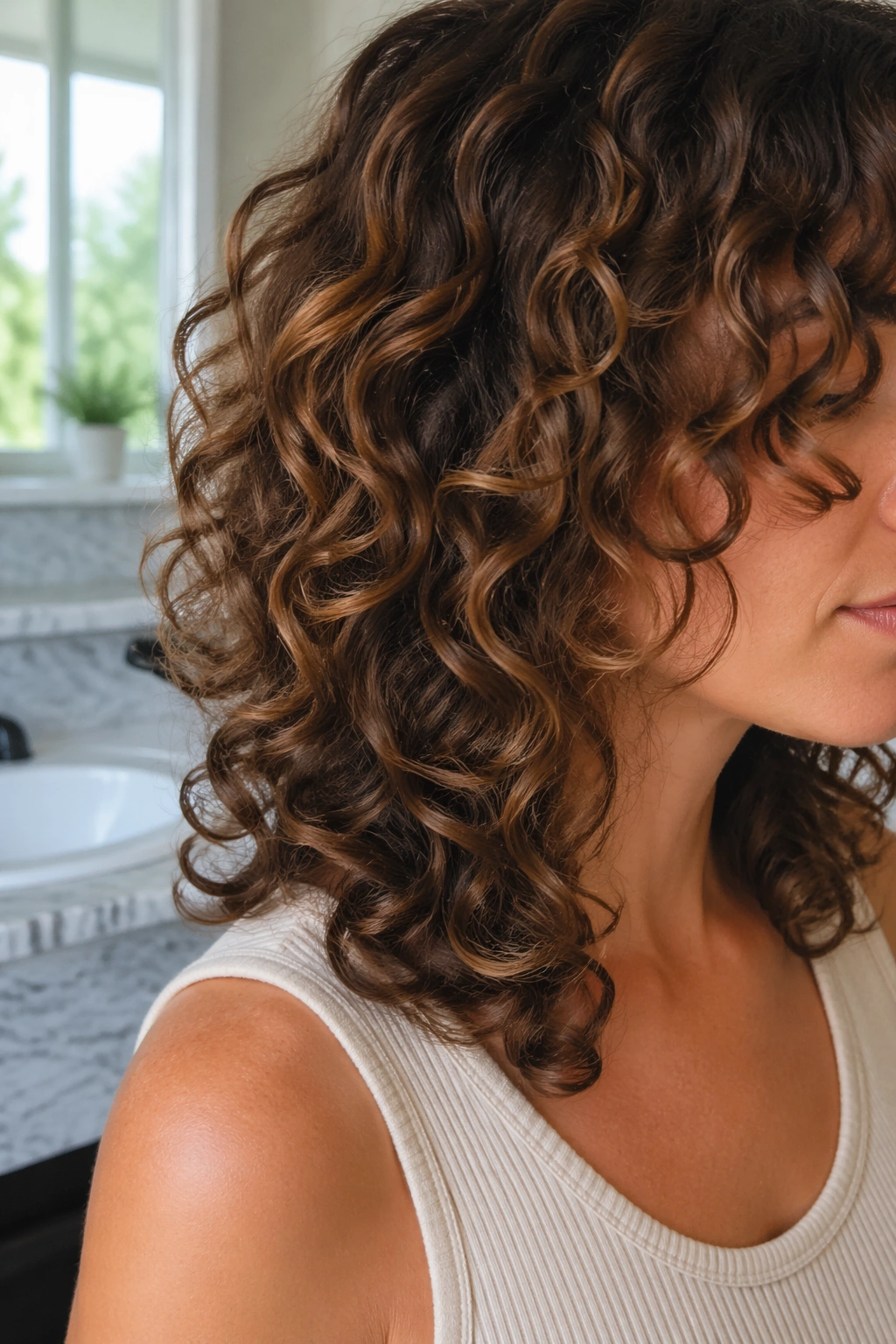
Unlike a full rounded afro, a curly frohawk concentrates the volume down the center of the head and keeps the sides tighter. That narrow shape makes the middle look taller, which is a nice trick when you want height without adding width at the temples.
The style can be built from natural curls, twists, pins, or a mix of all three. The sides are usually smoothed back with a light gel or tucked with bobby pins, while the center section stays loose and lifted. That contrast is what gives the frohawk its punch. It looks sharp, but not stiff. And because the curls stay clustered in the middle, the top often feels bigger than it would in an all-over loose style.
It works well for events, nights out, or any day when you want the hair to have shape with a little attitude. It also saves time on curls that have flattened at the sides but still have plenty of life in the center. That’s a common place to be, honestly.
A soft pick at the crown, a few hidden pins, and a careful squeeze at the roots are usually enough. If your curls tend to shrink, leave a little extra length in the center so the final shape has room to rise. The best volume styles do not hide the texture. They give it a better stage to stand on.