



Cornrow hairstyles for curly hair work best when you stop trying to flatten the texture and start planning around it. That sounds simple, but it changes everything. Curly hair gives cornrows grip, shape, and a little extra body at the roots, which is why these styles can look crisp on day one and still hold up after a few good nights of sleep.
The catch is prep. If the hair is tangled, dry, or sectioned too fast, the braid line gets fuzzy before lunch and the scalp starts to feel tight in all the wrong places. Clean parting, a light leave-in, and a bit of stretch on very coily hair make a bigger difference than most people expect. And no, you do not need to turn curls into pin-straight strands first. You just need them calm enough to braid.
I’ve always liked cornrows on curly hair because they solve two problems at once: they keep the hair out of the way, and they give the curls a built-in style plan instead of letting them do whatever they want. Some looks stay sleek all the way through. Others leave the ends free, which is where curly hair gets to show off. The styles below cover both moods, from low-key and practical to polished enough for a dressy event.
1. Classic Straight-Back Cornrows with Curly Ends
This is the style I’d hand to someone who wants the safest, cleanest starting point. Straight-back cornrows are easy to read visually, easy to maintain, and they work especially well when curly hair is left out at the ends instead of tucked all the way in. The braid rows do the tidy work up top, then the curls soften the finish so the style doesn’t feel severe.
Why it works on curly hair
Curly texture gives the braids a little tooth, so the rows stay put without sliding around. That matters if your hair is fine at the root but dense through the mid-lengths, which is a common curly-hair combo. You get grip where you need it, and the loose ends keep the look from feeling too tight.
If you want the cleanest result, stretch the hair first with banding, a low-tension blow-dry on cool, or a twist-out that has been fully dried. Damp hair and tight braids are a bad mix. The scalp looks flatter when the sections are neat, but the curls still have enough spring to keep the style from looking stiff.
A small amount of braid gel along each part helps the rows look sharper. Use a rat-tail comb, not your fingers, for the sections. Fingers are fine for fluffing. They are not fine for parting.
- Best for shoulder-length to long curly hair
- Good if you want a style that lasts several days
- Works with curly ends, spiral ends, or a tiny elastic at the tips
- Easy to dress up with cuffs or a side part
Tip: Keep the first inch at the hairline slightly looser than the rest. It makes the style more comfortable and helps prevent that sore, pulled feeling by the temples.
2. Deep Side-Part Cornrows That Sweep Over One Eye
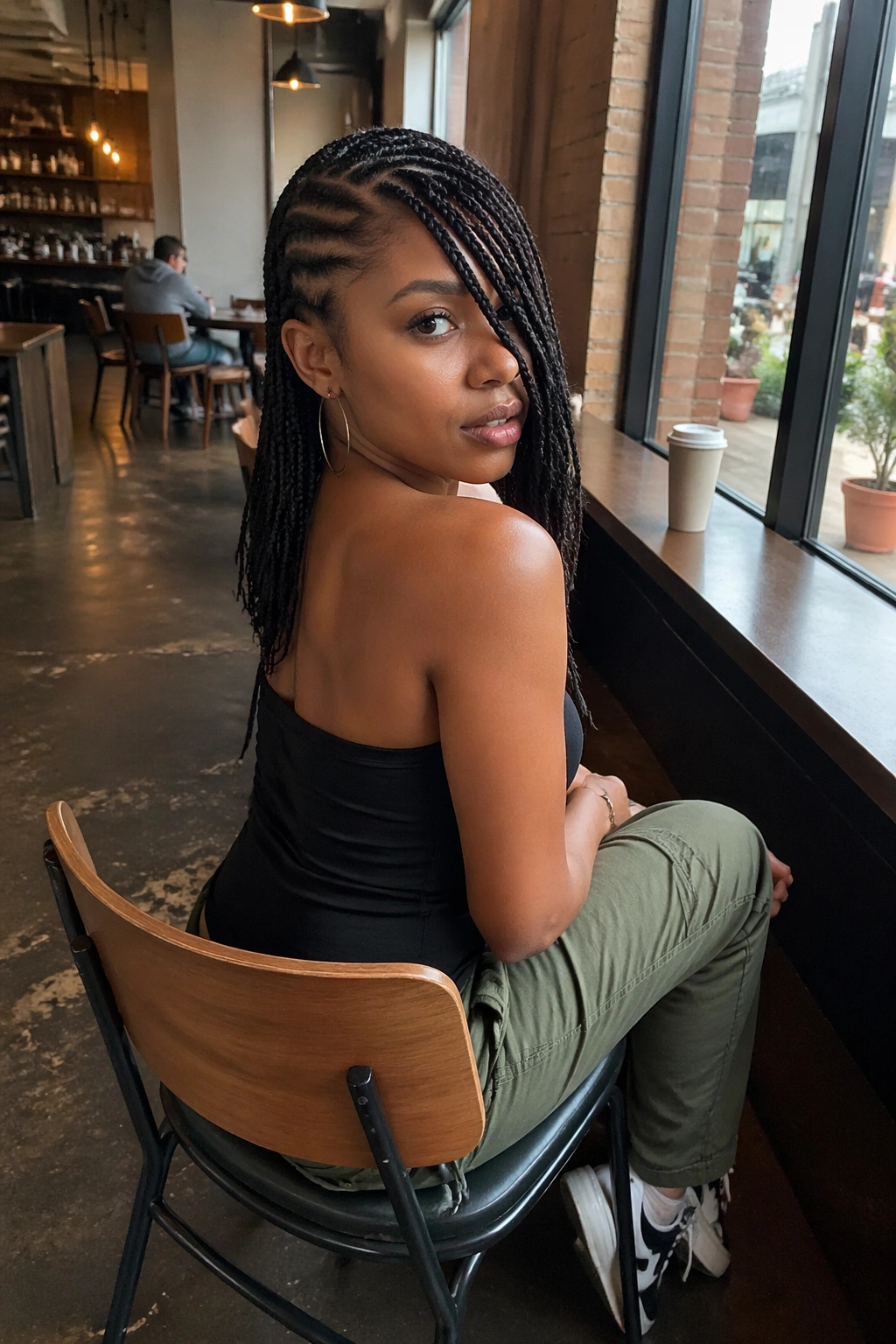
A deep side part changes the whole personality of cornrows. Instead of the rows reading as symmetrical and sporty, they start to feel softer and a little more styled, especially on curly hair that has volume at the crown. The part itself becomes part of the haircut illusion, which is useful if you like styles that frame the face.
The trick here is balance. Put the larger section on the side you want to show off, then braid the smaller side into tighter, more controlled rows. The bigger side can carry more weight, which gives you a nice swoop without needing a ton of product or pinning. On curly hair, that swoop looks even better because the texture catches light at the curve and makes the shape read clearly.
I like this style for people who hate hair falling into their face but still want movement. It’s polished without being rigid. If your curls are thick, ask for wider rows near the crown and narrower rows near the temple so the part sits cleanly instead of puffing out.
A side part also makes the style easier to customize. You can tuck the longer side behind one ear, pin a curl near the cheekbone, or add one small braid that trails along the hairline for detail. Small touches, but they matter.
3. Cornrow Ponytail with a Curly Puff
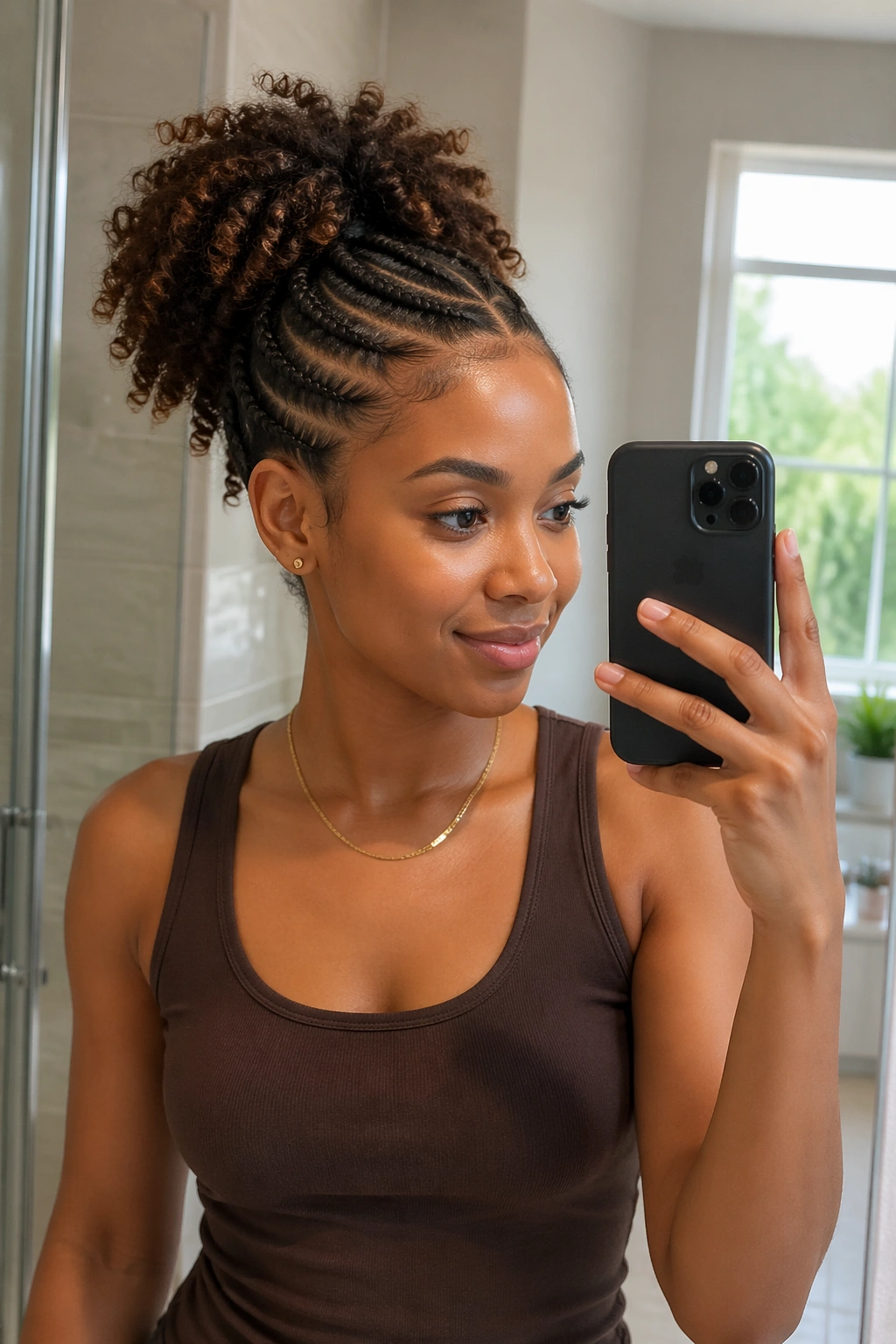
This one has a lot of energy. The front and sides are braided back, then everything gathers into a puff or ponytail at the crown or the nape, depending on where you want the weight to sit. Curly hair gives the ponytail body, so the style does not need fake fullness to look complete. It already has it.
What makes this style so useful is the way it clears the face without making the whole head look pulled down. A low ponytail feels calm and practical. A high ponytail feels sharper and more playful. Either way, the braided base keeps the hair neat while the puff keeps the texture visible. That contrast is the whole point.
If your curls shrink a lot, leave the ponytail a little longer than you think you need. It will spring up as the day goes on. If your ends are dry, braid the base first, then gather the ponytail with a soft elastic so you are not forcing the hair into a tight knot right away.
This style also wears well with a little edge detail. A few baby hairs smoothed with a light gel can soften the front, but don’t overdo it. The puff should still look like hair, not a helmet.
4. Braided Crown with Loose Curly Length
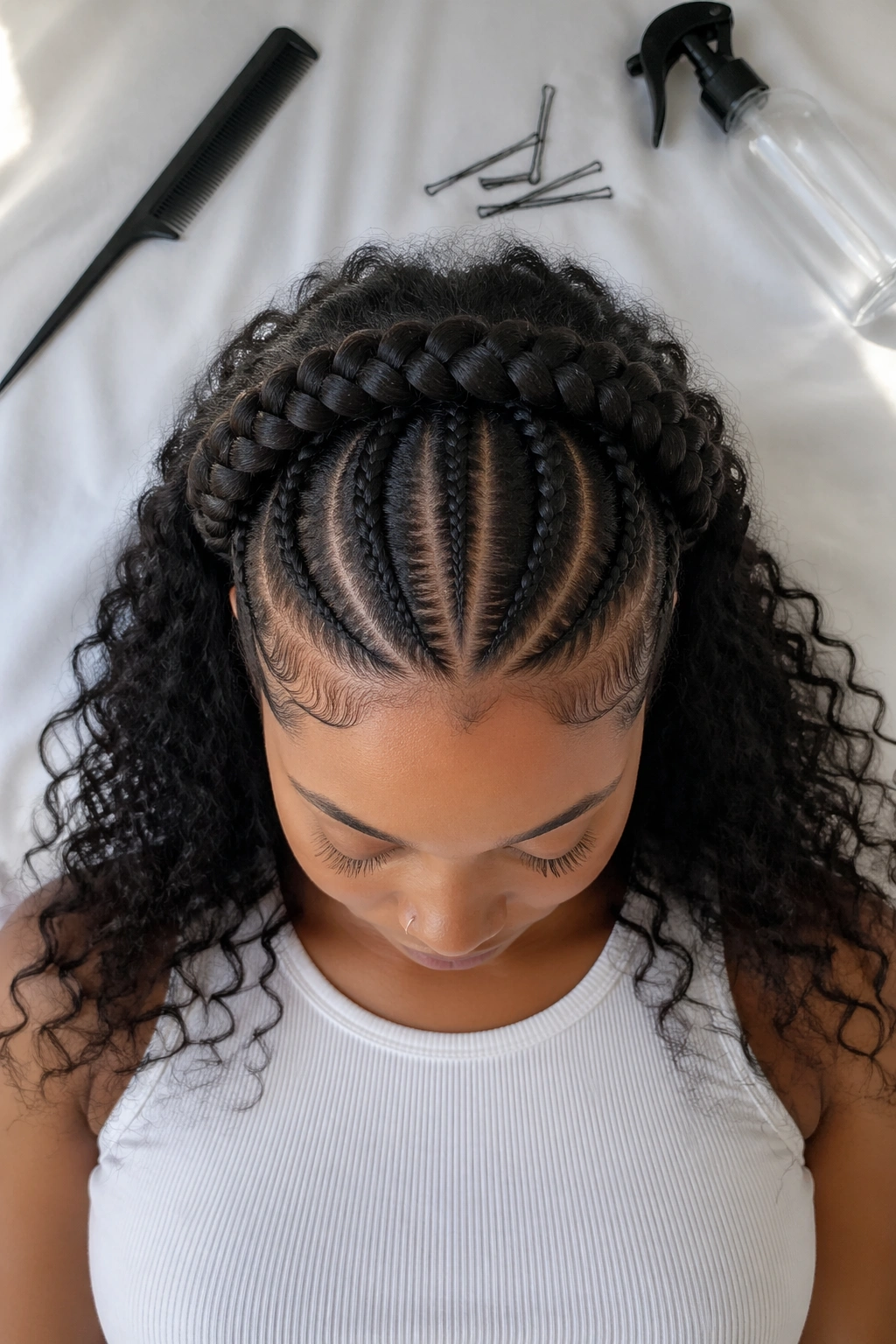
The braided crown is one of those styles that looks more complicated than it is. The braids curve around the head like a halo, while the back or lower half stays curly and loose. On curly hair, that loose section is the payoff. It keeps the style from feeling too formal and gives the whole look a little movement when you turn your head.
What makes this style stand out
The crown shape pulls attention upward, which is useful if you want to show off cheekbones, earrings, or a strong part line. It also keeps the top of the hair controlled while leaving the length to do its own thing. That combination works especially well on dense curls that can feel heavy when worn all down.
The cleanest version uses two braids that wrap from temple to temple, meeting near the nape. The looser version leaves some curls free at the sides, which softens the outline. If your hair is very layered, a little bit of curl may escape near the back. Let it. That’s part of the charm.
For extra hold, secure the ends under the crown with a few hidden pins instead of stacking on too much spray. Heavy spray can make curly hair feel dry and crunchy fast. A couple of pins placed under the braid line usually do more work than a whole can of hold product.
5. Zig-Zag Part Cornrows
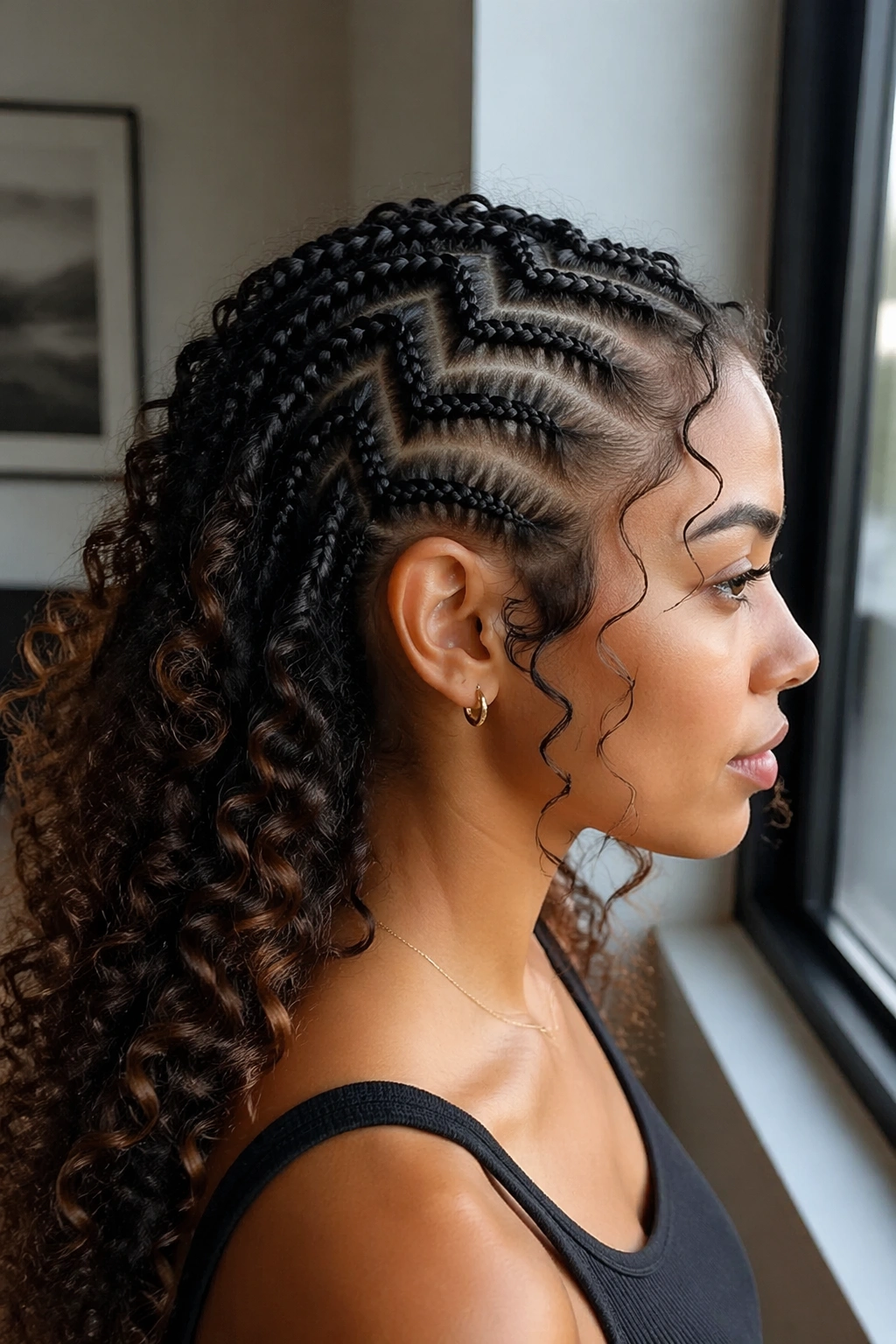
Zig-zag parts are for anyone who wants the braid pattern itself to be the feature. Straight rows are clean. Zig-zag parting is cleaner in a different way — it shows care, and on curly hair, that contrast between patterned scalp and textured length looks sharp. The style has a graphic feel without needing accessories.
The first thing to know is that the parting has to be deliberate. Wobbly zig-zags just look unfinished. Use the tail of a comb and create even angles, moving from left to right in a steady rhythm. Once the parts are set, the braids can be simple straight-back rows or curved rows depending on the shape you want. The part lines do the talking either way.
This style is a good match for people who wear their curls often and want something different for a few days without committing to a huge change. It also works well on medium-density hair because the zig-zag lines keep the scalp visible in a neat pattern. Dense hair can do it too, though the design reads best when the sections are controlled and not overloaded with product.
- Looks strongest on freshly parted hair
- Needs a steady hand more than a heavy styling product
- Works with clear braid lines and minimal accessories
- Can be worn loose, tied back, or pinned up
Tip: If your parting starts looking fuzzy fast, use a tiny dab of gel on the comb, not the scalp. Too much gel near the roots can make the hair slippery and harder to braid.
6. Feed-In Cornrows into a Low Bun
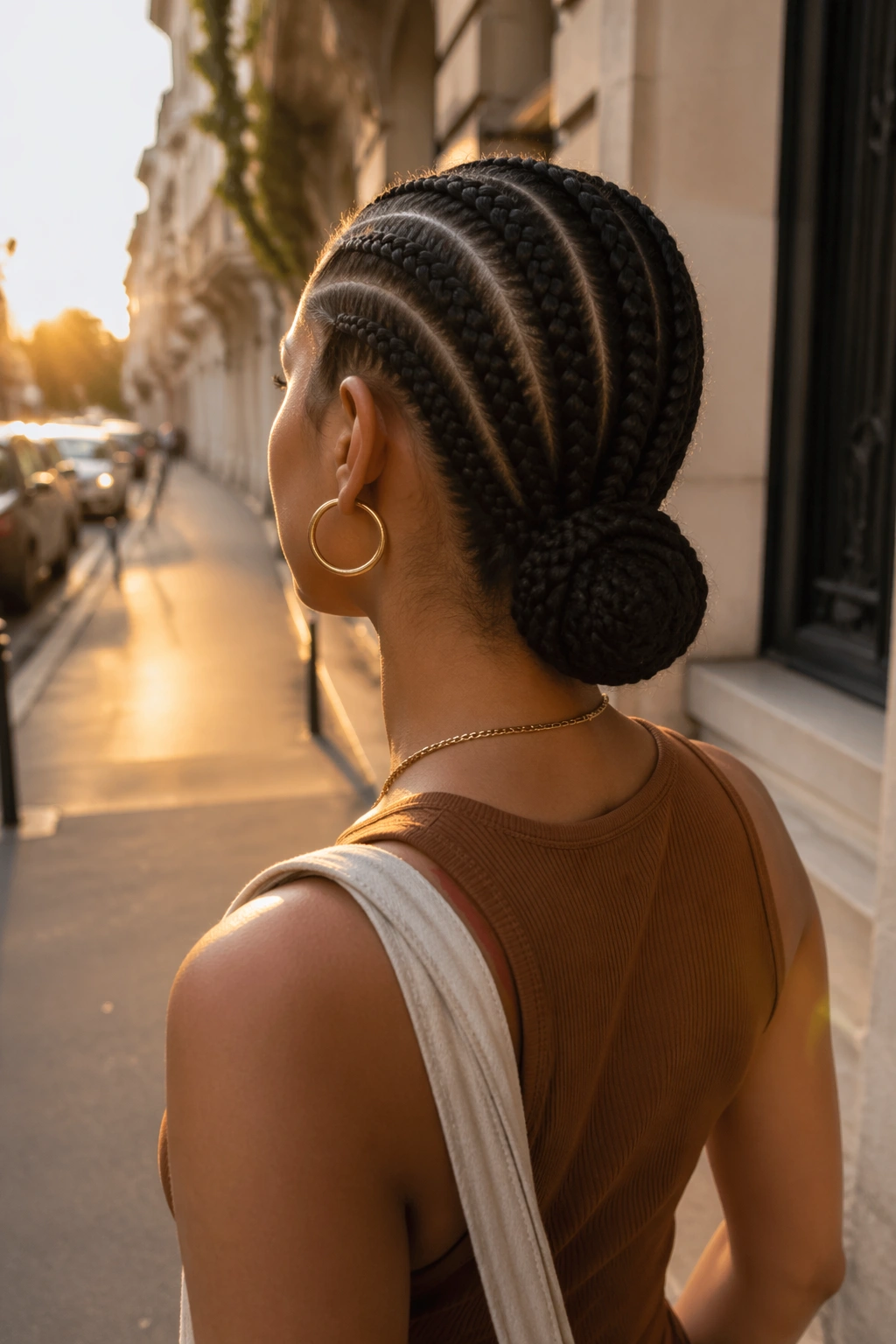
Feed-in cornrows are useful when you want the braid to start slim at the hairline and grow fuller as it moves back. That taper makes the style look smoother, which is especially nice on curly hair because curly roots can puff up fast if the sectioning is rough. A low bun at the end keeps the whole thing tucked in and practical.
This is one of my favorite styles for long days because it stays out of the way. No loose ponytail bouncing around. No curls snagging on a jacket collar. Just clean rows flowing into a bun that sits near the nape. If you’ve ever had a high style feel too heavy by mid-afternoon, this solves that problem.
The bun itself can be a tight coil, a wrapped bun, or a slightly messy puffed bun if you want the back to feel softer. The key is to keep the braid feed consistent so the rows don’t bulge in strange places. On curly hair, that usually means adding hair in small, even amounts instead of dropping in a big section all at once.
This style also pairs well with a middle part or a clean side part. Middle part gives it symmetry. Side part gives it a little more shape. Pick the one that matches your face and move on.
7. Two Jumbo Cornrows with Spiral Ends
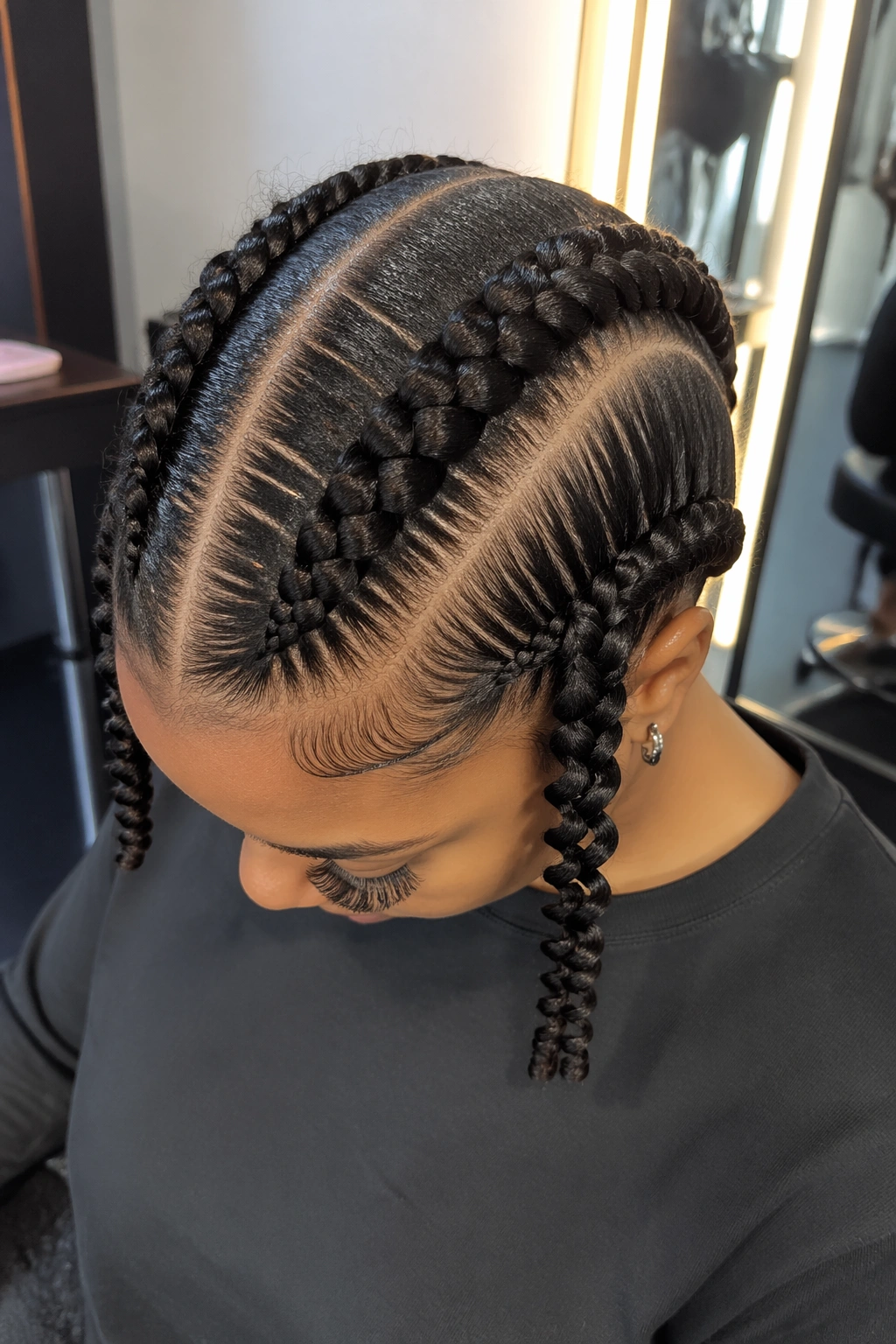
Two jumbo cornrows are blunt, bold, and easier to manage than a full head of small braids. They’re a smart choice for curly hair when you want a style that feels protective but doesn’t take forever to install. The larger braid size also means less manipulation on the scalp, which matters if your head gets sore easily.
Why jumbo braids can be the smarter choice
Big braids usually create less tension than tiny, tight rows. That does not mean they can be sloppy. It means the sectioning has to be even so the weight sits evenly across the head. When they’re done right, jumbo cornrows look strong and clean instead of bulky.
Leaving the ends in spiral curls gives the style some bounce. You can wrap the ends on flexi rods overnight or set them with a curling method before braiding. If your hair already has a tight curl pattern, the ends may coil naturally once they’re released. That’s the nicest version, honestly. No extra work.
This style fits both casual and dressed-up settings. It looks good with hoop earrings, a glossy lip, and a simple neckline. It also holds up well when you need something that won’t need much fuss for a few days.
8. Stitch Cornrows with a Clean Grid
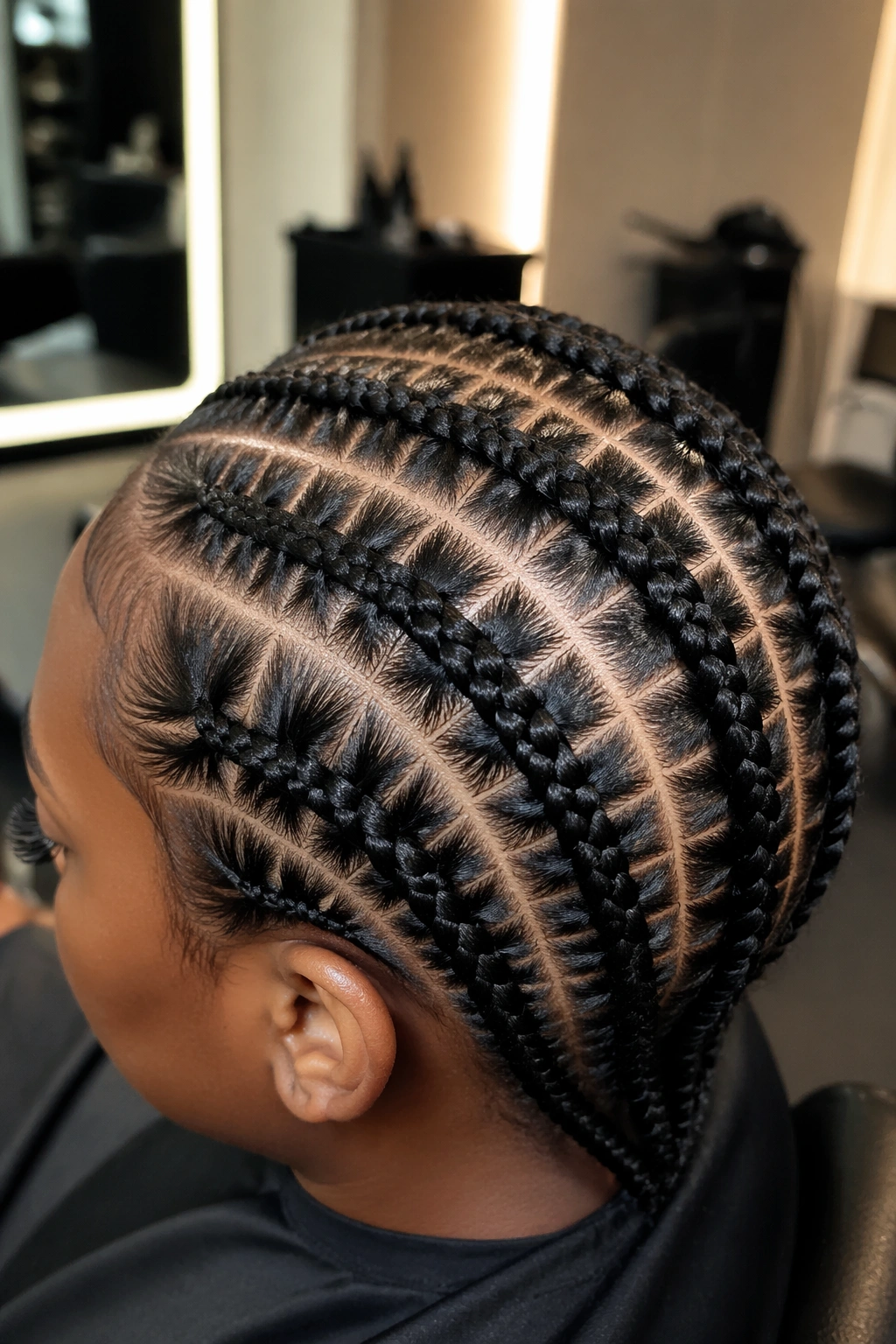
Stitch cornrows are all about the part lines. The braid itself has that stitched, segmented look because the stylist feeds in hair with sharp, visible sections. On curly hair, this style looks especially crisp when the roots are smoothed and the sections are spaced evenly. It has a neat, almost architectural feel.
The clean grid makes the style work best on hair that has been properly detangled. If there’s a knot hidden near the root, it will show up fast once the braid pattern starts. That’s why stitch braids reward patience. Rushing this style is a waste of time. The whole point is the line work.
You can keep the rows straight back, curve them toward the nape, or build them into a ponytail. The stitch pattern stays the same; the finish changes. If you want a little more softness, leave the ends curly. If you want the sharpest version, tuck the ends into a bun or wrap them under.
One thing people often miss: stitch braids look best when the width of each section is consistent from start to finish. If one braid starts huge and ends narrow, the pattern breaks. Keep the spacing even and the style does the rest.
9. Cornrow Mohawk with Curly Top Volume
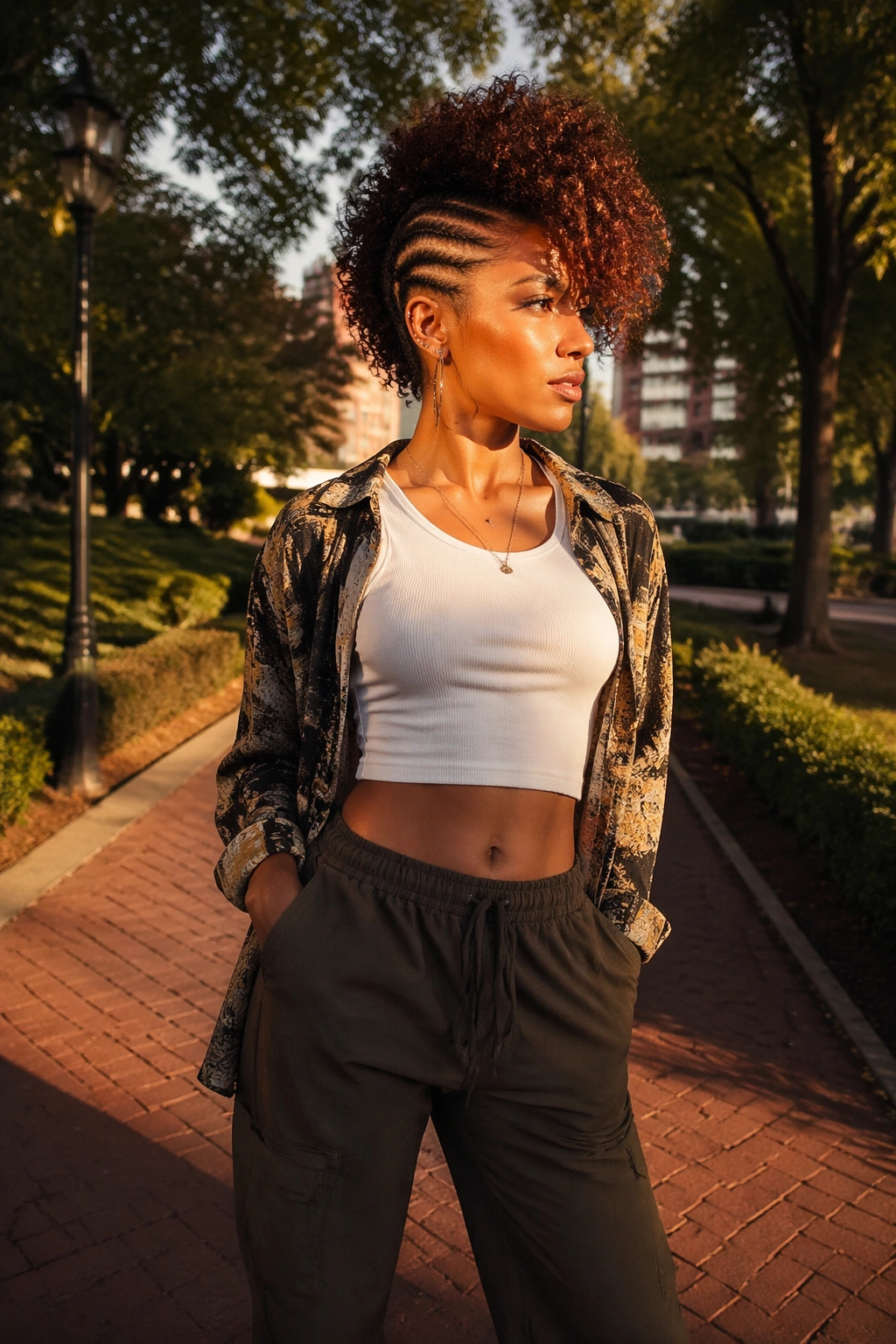
A cornrow mohawk is the style you choose when you want the sides under control and the center to do the talking. The braids on the sides sweep back close to the scalp, while the top stays full, lifted, and curly. On naturally curly hair, that contrast looks strong without needing much styling trickery.
It’s a smart choice for people who like volume but hate hair in their face. The center section can be shaped upward, forward, or slightly to one side, depending on the length and density of the curls. If your hair is short-to-medium length, the mohawk effect can be dramatic. If it’s longer, the curls can fall over the braid base and create a softer outline.
You can make the style sharper with thin braids along the sides or keep it chunkier with just two or three rows per side. Both work. The decision comes down to how much scalp detail you want to show. More braids mean more structure. Fewer braids keep the look looser.
A good mohawk should feel intentional, not like the sides were shoved back at the last minute. That’s the line to watch. If the top has good lift and the sides are smooth, the style lands.
10. Half-Up Cornrow Halo with Free Curls
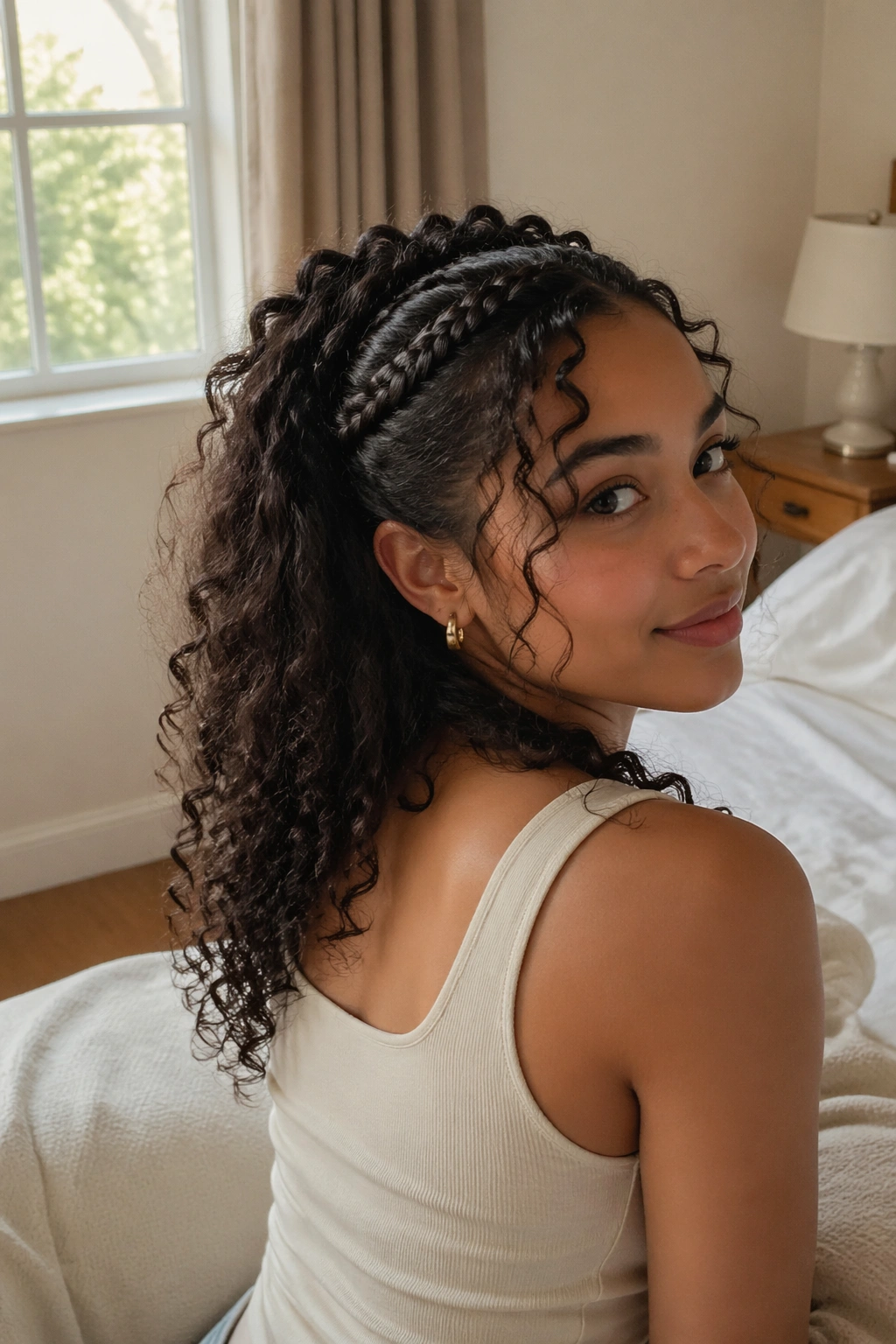
Half-up styles are where curly hair gets to stay curly and still look organized. In this version, the front or top sections are braided into a halo, then the rest of the curls stay loose. The result is tidy where you need it and soft everywhere else.
This is one of the most wearable styles on the list. It keeps hair out of the eyes, helps the crown sit flatter, and still lets your curl pattern be visible. If you’ve got a long day and do not want a full updo, this is usually the smart pick. It also works nicely when the ends are dry and you want to avoid pulling all the hair into one place.
Styling notes that matter
- Keep the halo braid low enough to hug the head, not float above it.
- Leave the loose curls defined with a little leave-in or curl cream.
- Pin the braid ends under the back section so the finish looks clean.
- If the front is frizzy, smooth only the root area, not the whole curl.
The half-up halo has a nice balance: structure on top, movement below. That’s why it works for everyday wear, dinners, and anything that sits in that middle zone where you want to look put together without trying too hard.
11. Heart-Part Cornrows for a Statement Look
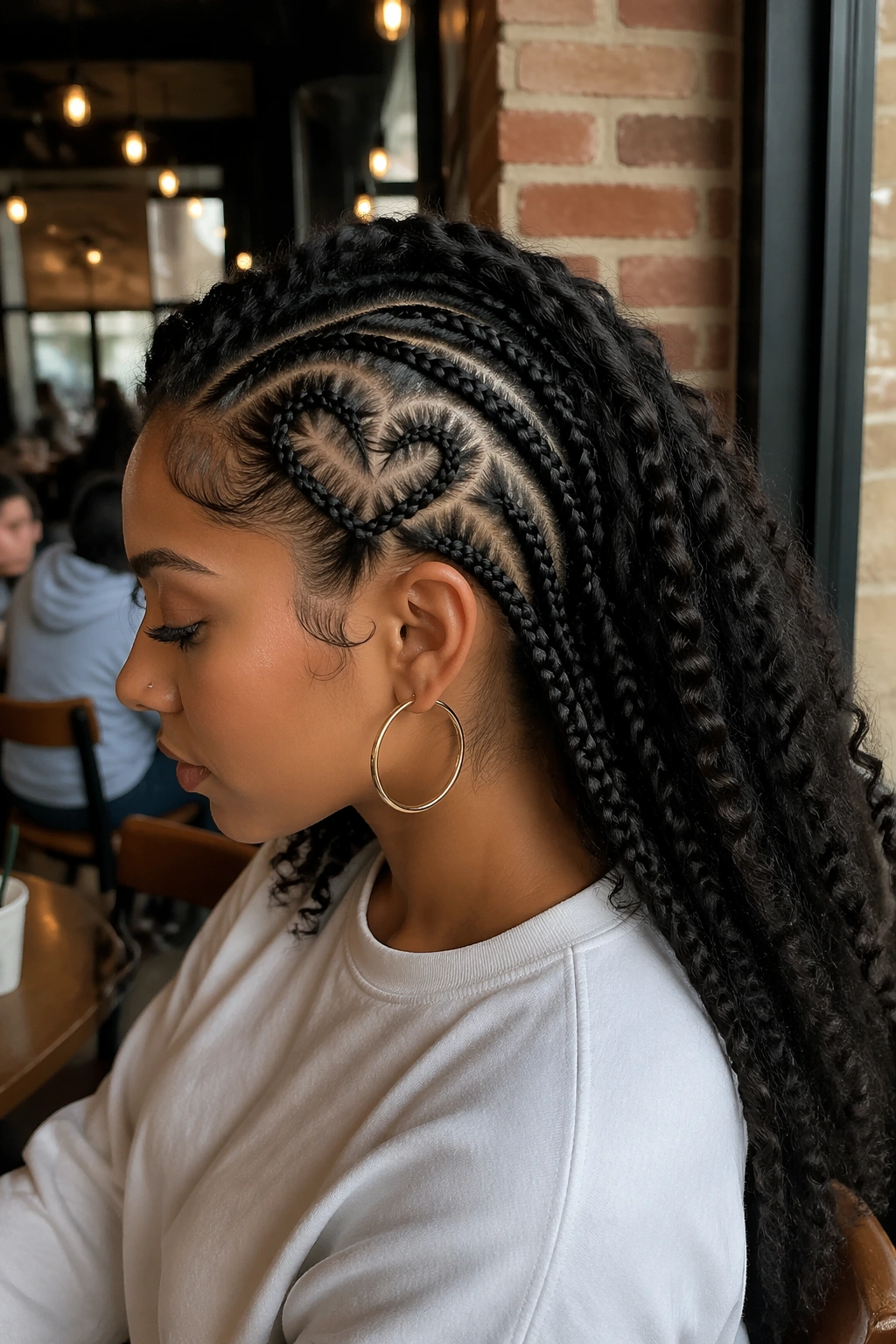
Heart parts are decorative, yes, but they also show real skill. The shape takes a steady hand, and on curly hair it pops because the clean scalp design contrasts with the soft texture around it. If you like braids that feel personal, this is one of the more fun options.
The heart can sit near the front hairline, beside a central part, or tucked into a side row. Smaller hearts tend to look more refined. Bigger ones read louder and work better if you want the design visible from a distance. The rest of the braids can stay simple so the parting stays the star.
I like this style when the rest of the outfit is plain. A black tee, denim, a clean neckline — let the hair do one interesting thing. If you pile on accessories and loud makeup too, the heart part loses impact. That sounds picky, but it’s true. Some styles need room.
The heart part also looks best when the parts around it are neat enough to frame it. Messy neighboring sections make the shape feel accidental. Keep the surrounding rows tidy and the design reads clearly.
12. Basketweave Cornrow Pattern
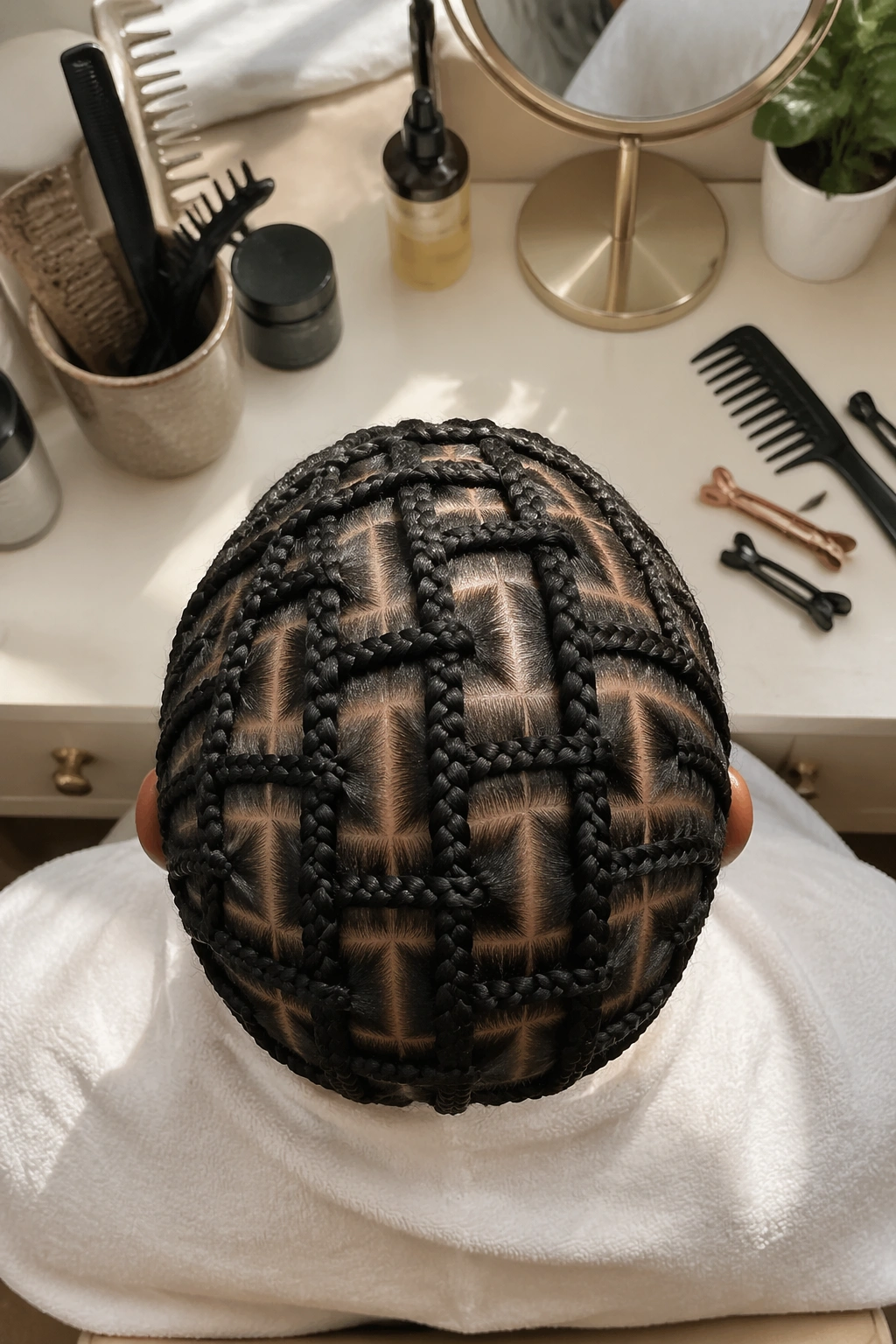
Basketweave cornrows take more time, and I’m not going to pretend otherwise. The pattern crosses and overlaps in a way that looks almost woven into the scalp, which makes it one of the most detailed cornrow hairstyles for curly hair. When it’s done well, the finish is elegant in a very specific, handmade way.
The style works best on medium to thick curly hair because the pattern needs enough density to hold its shape. Fine hair can do it too, but the weave may look softer and a little less dramatic. Sectioning matters a lot here. If the rows are uneven, the basket effect gets muddy fast.
The parting pattern makes or breaks it
A basketweave style depends on consistent spacing. The lines should move in measured arcs, not random curves. That means you need to work slowly, check the shape in a mirror, and adjust before braiding too far down. Once the pattern is set, the braiding itself feels easier because the road is already laid out.
This is a style for someone who likes detail. It’s not the quickest braid option, and that’s the whole point. You wear it when you want the hair to look like someone spent time on it — because someone did.
13. High Bun Cornrows with Face-Framing Curls
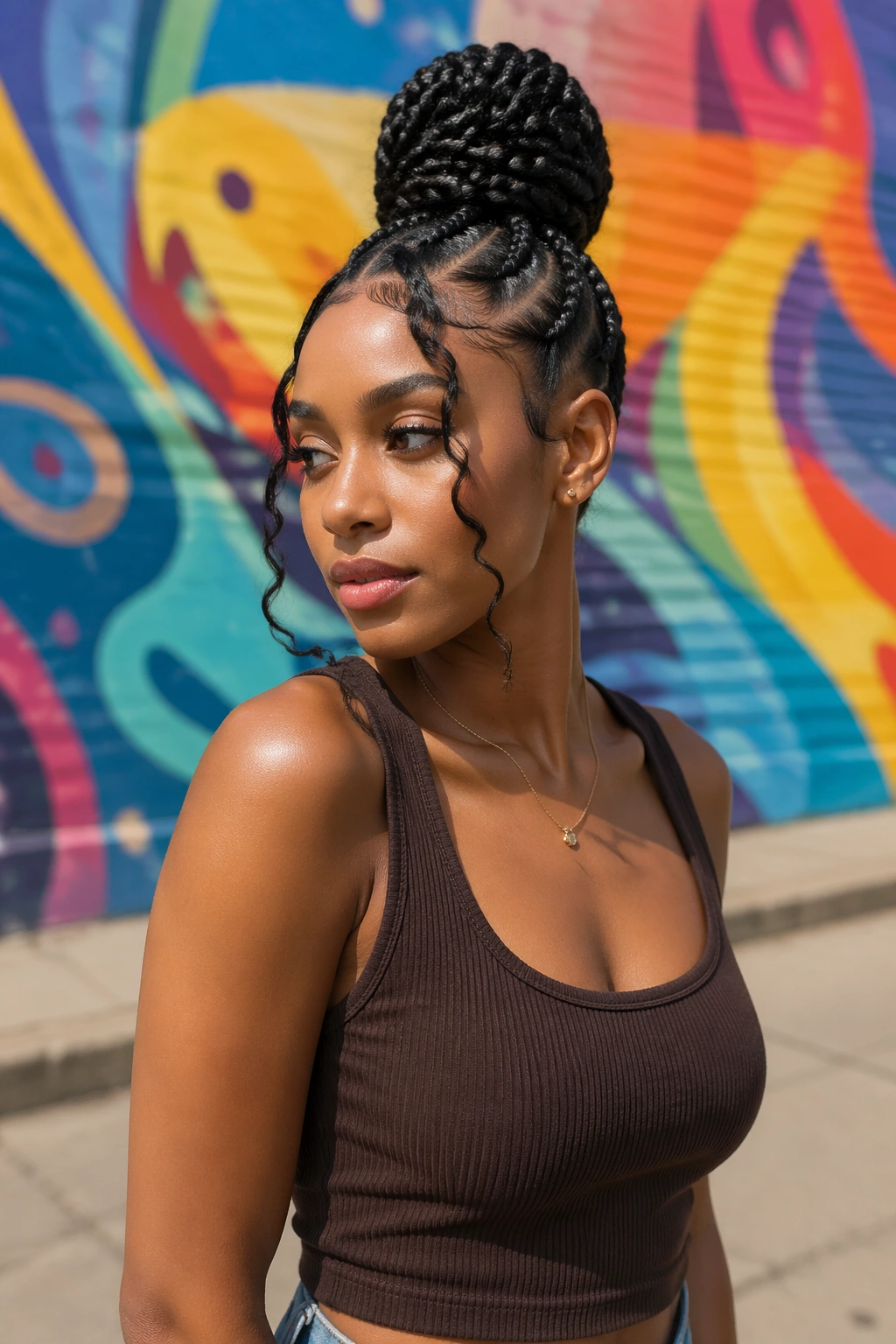
A high bun can read formal, athletic, or somewhere in between depending on how you braid it. On curly hair, the addition of a few face-framing curls stops the style from looking too pulled back. That little bit of softness near the cheeks makes a huge difference.
The cornrows can rise from the sides into the bun at the crown, or they can sweep upward from the nape and build into the top. Either way, the bun should sit high enough to lift the face and leave the neck open. If you’re wearing earrings or a collared shirt, this style shows both off nicely.
The face-framing curls should not be over-styled. Two strands near the temples are enough. Curl them lightly, let them fall where they want, and keep the rest sleek. Too many loose pieces make the whole thing wobble between polished and messy. You want clear intent.
This is also a good choice if your curly hair gets puffy at the roots by day two. A high bun hides that growth line better than a low style does. Practical, yes. Still pretty. Which is probably why people keep coming back to it.
14. Cornrow Bob with Tucked Ends
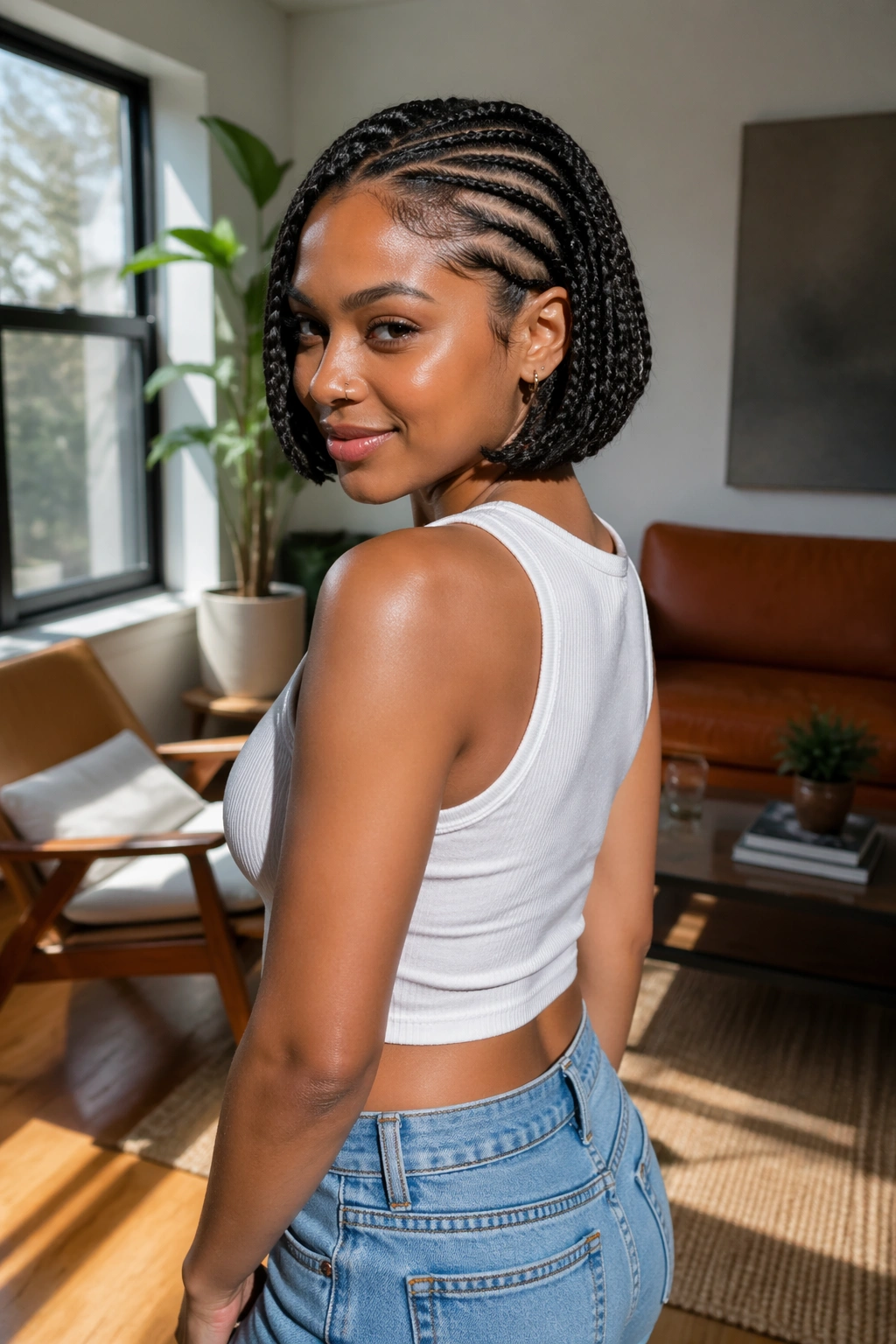
A cornrow bob gives curly hair a shorter, sharper outline without forcing you to cut your length. The braids are installed so the ends stop around chin or jaw level, then the curly or tucked ends create a bob-like shape. It’s neat, slightly retro, and easier to wear than a long braid set if you get tired of hair brushing your shoulders.
The style works best when the rows follow the curve of the head closely. Loose, sagging braids ruin the bob effect because the whole silhouette depends on shape. If you want the ends to curl under, set them with rollers or braid them into a small wrap before finishing. If you want a flicked finish, let them spring outward a little.
Best way to wear it
- Keep the ends clean and shaped, not bulky.
- Add a side part for a softer line.
- Use lightweight oil on the ends only.
- Sleep with a silk scarf so the bob shape stays neat.
This is one of the few braided looks that can make curly hair feel lighter immediately. Not physically lighter, obviously. Just less visually crowded. That matters more than people think.
15. Accent Cornrows on a Curly Wash-and-Go Base
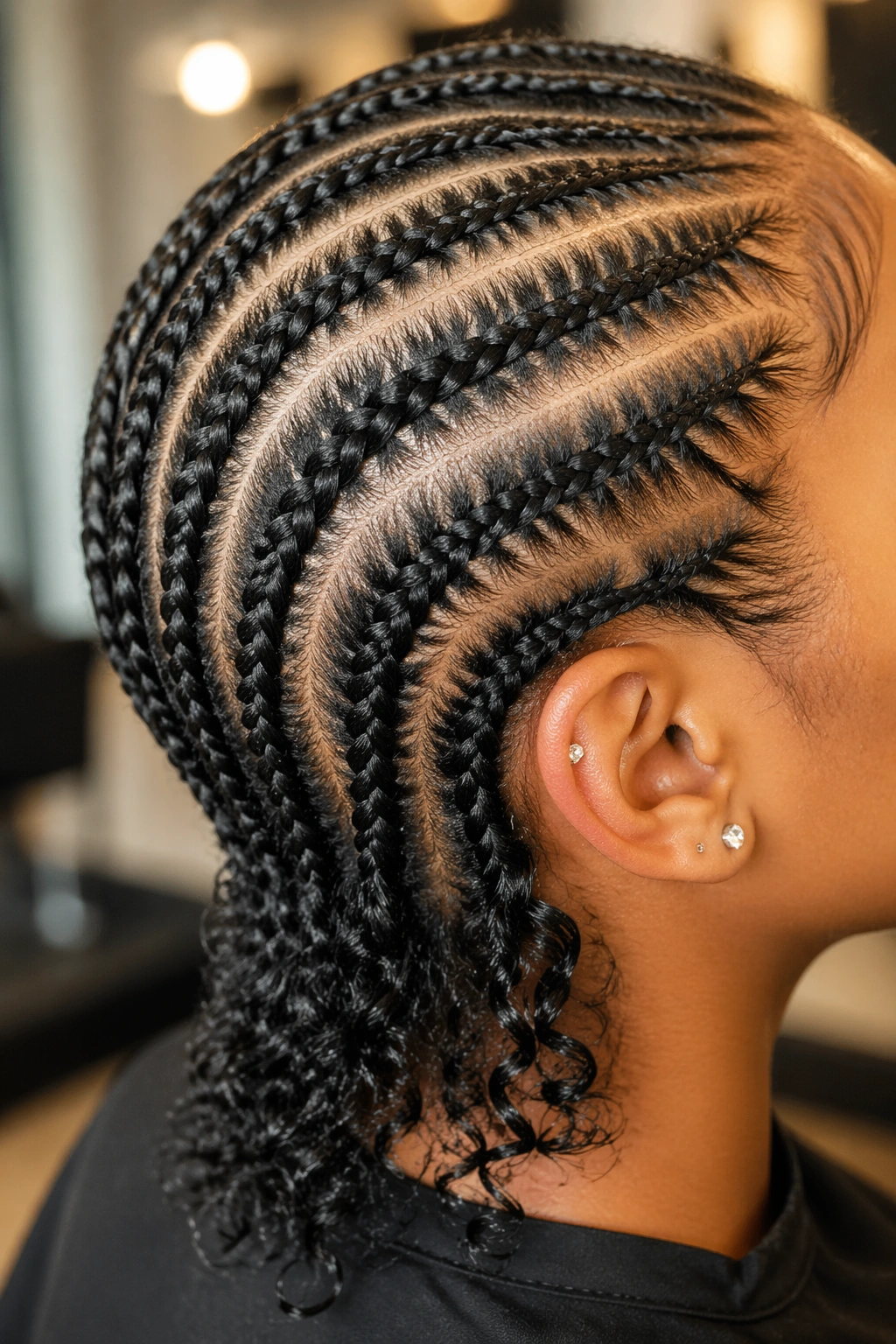
Accent cornrows are the easiest way to wear braids without giving up your curls. Instead of braiding the whole head, you braid just a few sections — usually along the front, one side, or the crown — and leave the rest in a defined wash-and-go. The contrast is the appeal. Sleek lines meet free curls, and neither one has to compete too hard.
I like this style because it works when you want a small change, not a full reinvention. It keeps curls visible, shows off parting, and gives you a little control around the hairline where frizz usually starts first. If your hair is medium or long, the contrast reads especially well. Shorter curly hair can do it too; the braids just sit closer to the scalp and feel more minimal.
The best version uses two to four slim braids, not a crowded cluster. Too many accents and the style starts to lose its breathing room. Keep the rows purposeful. One braid near the temple, one near the part, maybe a third tucked behind the ear — that’s enough.
A wash-and-go base also means the curls can be refreshed separately. Mist the loose sections with water, scrunch in a bit of cream, and leave the braids alone. That kind of split routine is handy when you want your style to last without having to redo everything.
By the time you start trying these, the main thing to remember is simple: cornrows on curly hair look best when the braid pattern respects the curl pattern instead of fighting it. Clean parts, controlled tension, and a finish that suits the texture will always beat a style that looks forced. And once you find the braid shape that matches your routine, you’ll probably keep reaching for it more than once.
