



We have all stood in front of the mirror at some point, staring at a ponytail that just refuses to cooperate. Maybe your hair is lacking volume, or perhaps the curls you spent an hour defining have decided to go flat before you even leave the house. A curly ponytail extension acts as an instant fix, shifting the entire shape of your style in seconds. But finding one that actually looks like it grew out of your own scalp? That is where things get complicated. Most synthetic pieces scream “cheap plastic” from a mile away, and the wrong shade can make the whole look feel disjointed. The goal isn’t just to add hair; it is to add a texture, length, and volume that looks so convincing, even your closest friends won’t be able to tell what is yours and what is a cleverly placed extension.
Getting these pieces to blend requires more than just strapping them on and walking out the door. It takes a bit of preparation, the right styling products, and an understanding of how different hair textures interact with your natural hair. You have to account for the sheen, the weight, and the way the curls fall. A ponytail that looks stiff or artificial can kill an outfit, while a well-blended, voluminous ponytail can make you feel completely put together. Let’s look at the options available and how to make them work for you, rather than against you.
1. The Classic Drawstring Curly Ponytail
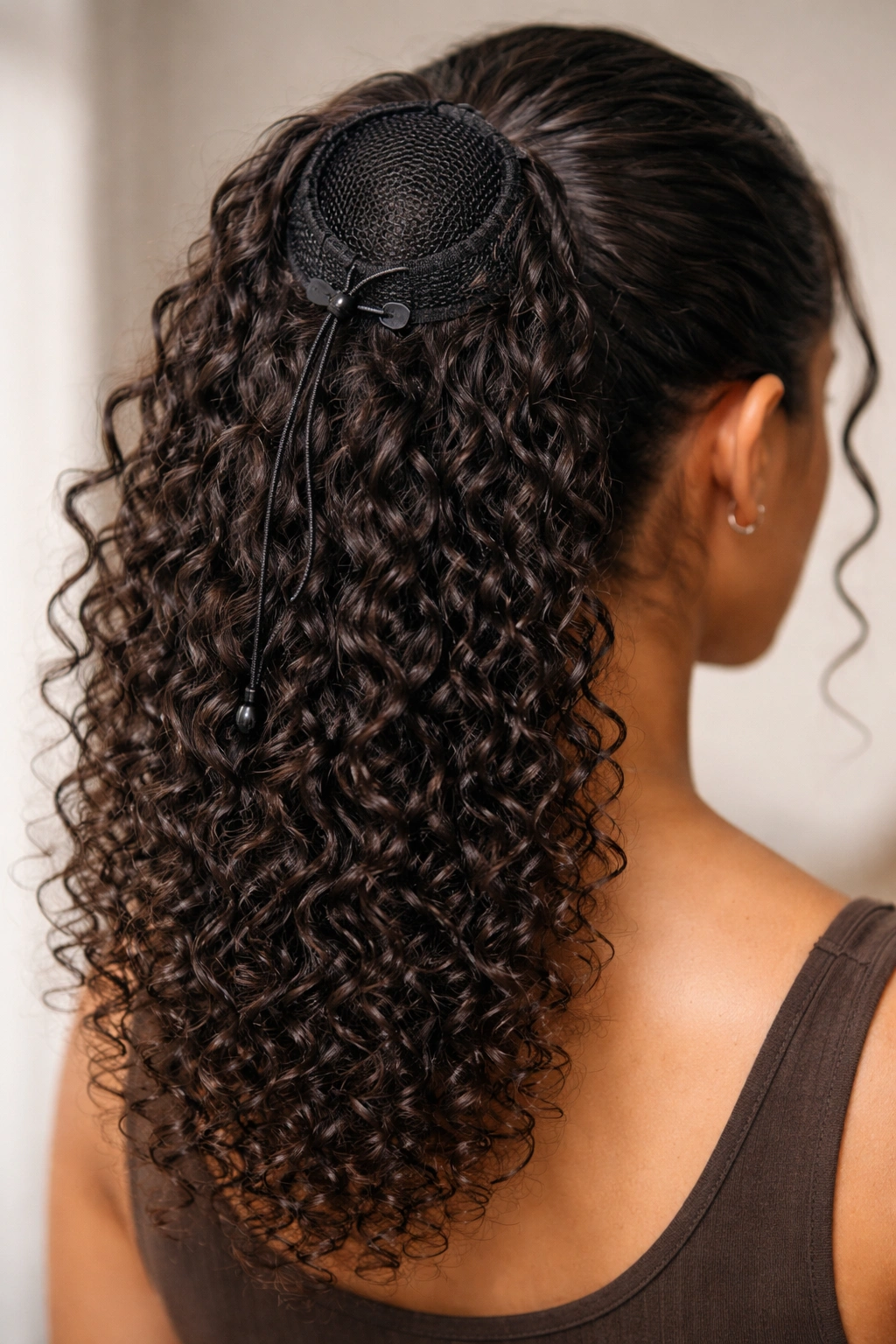
This is the workhorse of the hair extension world. Most of these pieces feature a small, mesh-like cap with an elastic cord and two small combs—one at the top and one at the bottom. You pull your own hair into a bun or a tight ponytail, tuck the combs in, and pull the drawstring tight to secure it. It is incredibly secure.
Why This Style Succeeds
The beauty of the drawstring is the tension control. You decide how tight that base sits against your head. If you have fine hair, you can cinch it down so it does not sag or pull. If you have thicker hair, you can loosen the cord to accommodate a larger bun. It creates a very sturdy foundation, which is crucial if you are going to be moving around or if you are wearing the style for long hours.
How to Blend It
The trick is hiding the base. Since the drawstring mechanism can sometimes be a bit bulky, use a small section of hair from your natural ponytail to wrap around the base. Secure it with a bobby pin underneath. This creates the illusion that your hair is flowing directly out of the base of the ponytail, masking the seam where the extension meets your head.
2. Synthetic Wrap-Around Pieces
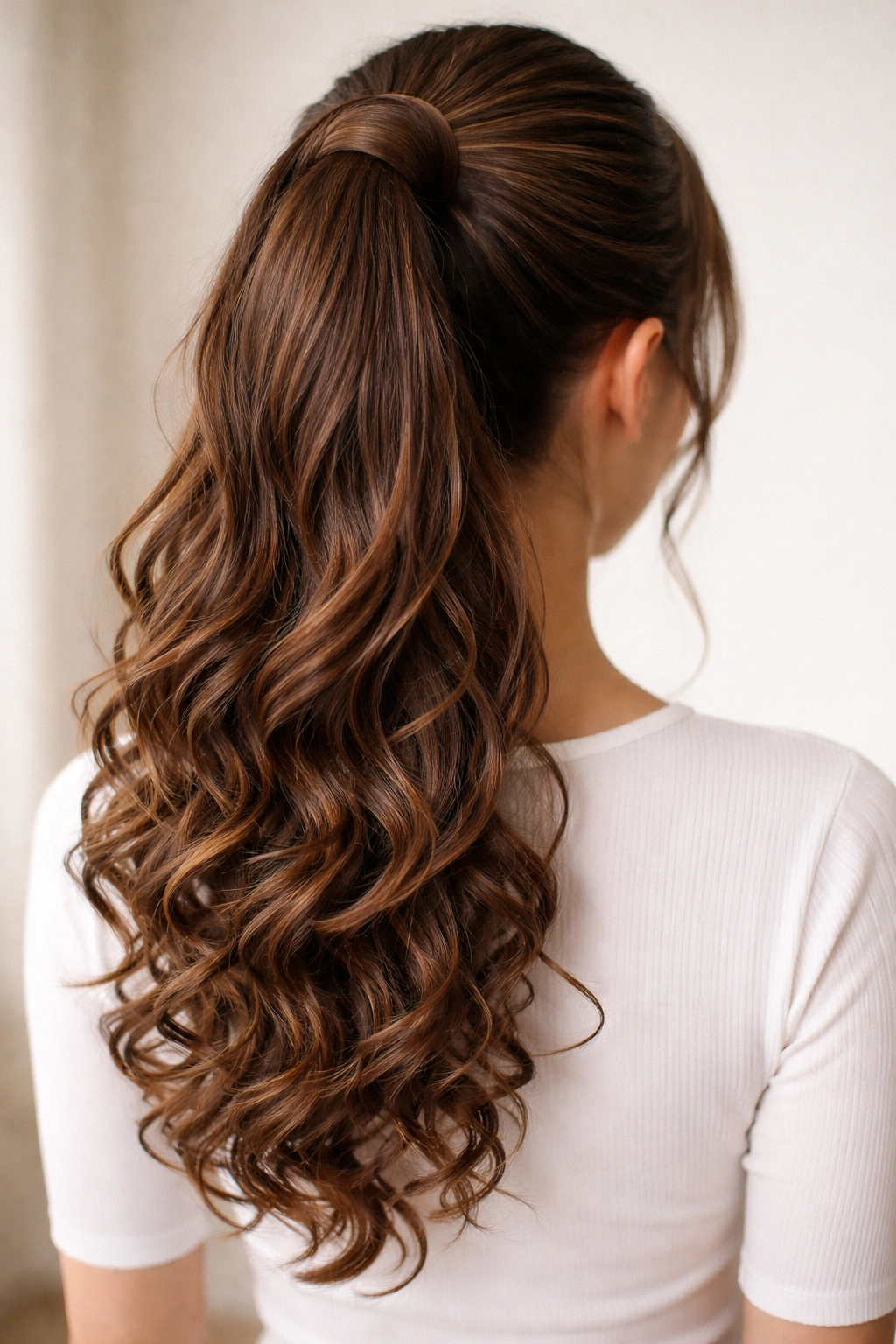
Wrap-around ponytails are designed with a specific tab or long piece of hair attached to the extension. You secure the main hairpiece to your existing ponytail, and then you wrap that extra tail around the elastic to cover the binding. It mimics a DIY look without the hassle of pinning extra hair.
The Secret to Natural Appearance
Synthetic fibers have come a long way, but they still reflect light differently than human hair. If you choose a synthetic wrap-around, prioritize a matte finish. Avoid anything that looks overly shiny or plastic-like under direct light. The best versions of these extensions use multi-tonal fibers, meaning there are subtle highlights or lowlights woven into the hair, which breaks up the artificial look.
Managing the Texture
If the synthetic curls start looking a little too “stiff,” you can gently separate them with your fingers to create more volume. Do not use a brush, as that will create a frizzy, tangled mess that is nearly impossible to fix on synthetic fiber. Instead, use a wide-tooth comb or just your hands to fluff the curls outward.
3. Human Hair Kinky Curly Textures
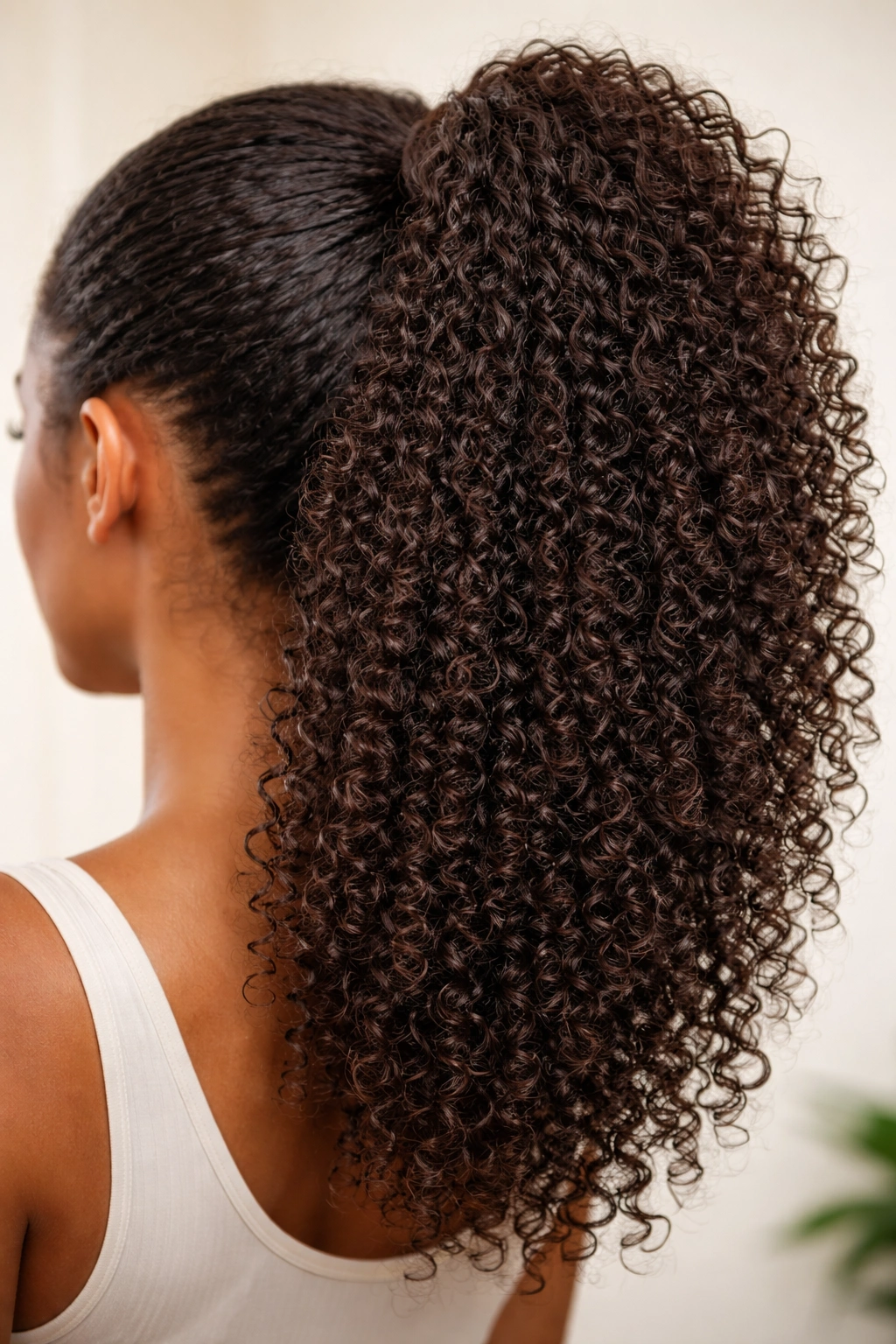
If you have natural hair with a tight, kinky-curly pattern, human hair extensions are almost always the better investment. Synthetic hair tends to have a more uniform, springy curl that might not match the irregular, beautiful pattern of your natural texture. Human hair allows you to treat the extension like your own.
Maintenance and Styling
You can wash, condition, and even lightly color or tone these extensions to match your hair perfectly. Because it is human hair, it responds to moisture. If you notice the ponytail looking a bit dry or fuzzy, you can apply a tiny amount of lightweight oil or a curl-defining cream. This brings the shine and elasticity back to the hair, making it look vibrant and healthy.
Heat Styling Flexibility
Because this is human hair, you have the option to use a curling wand to tighten the curls if they start to droop, or you can straighten a few pieces to blend them with your leave-out. However, be cautious. Using heat too often will eventually degrade the hair quality, just as it would with your natural strands. Use a heat protectant every single time.
4. Clip-In Ponytail Extensions
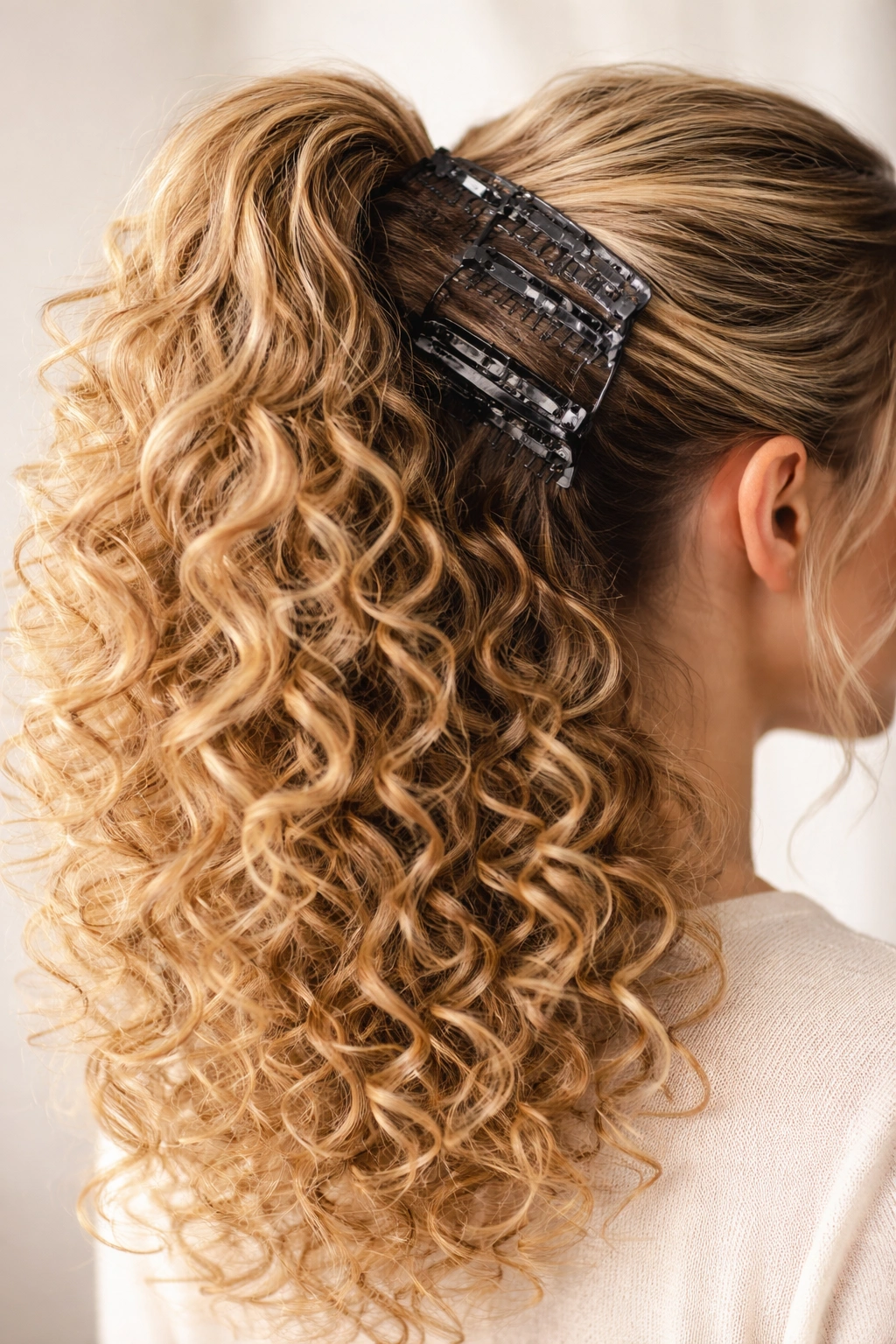
Clip-in systems are for those who want a more customized, segmented approach. Unlike a full cap that slides over your bun, these involve smaller wefts of hair that clip directly into your existing ponytail. This gives you total control over the volume and where the hair sits.
Strategic Placement
You can layer these clips to build up density exactly where you want it. If your ponytail looks thin at the nape of your neck, add a clip there. If you want more height on the crown, add a clip higher up. This flexibility is excellent for people who feel that full-cap extensions are too heavy or too bulky.
The Practical Reality
The only downside is that clip-ins require more finesse. You need to ensure your natural ponytail is strong enough to hold the clips without slipping. If your natural hair is very fine or slippery, tease the base of your ponytail before attaching the clips to give them something to grip. A little bit of dry shampoo or texturizing spray on your natural ponytail helps significantly with this grip.
5. Deep Wave Drawstring Styles
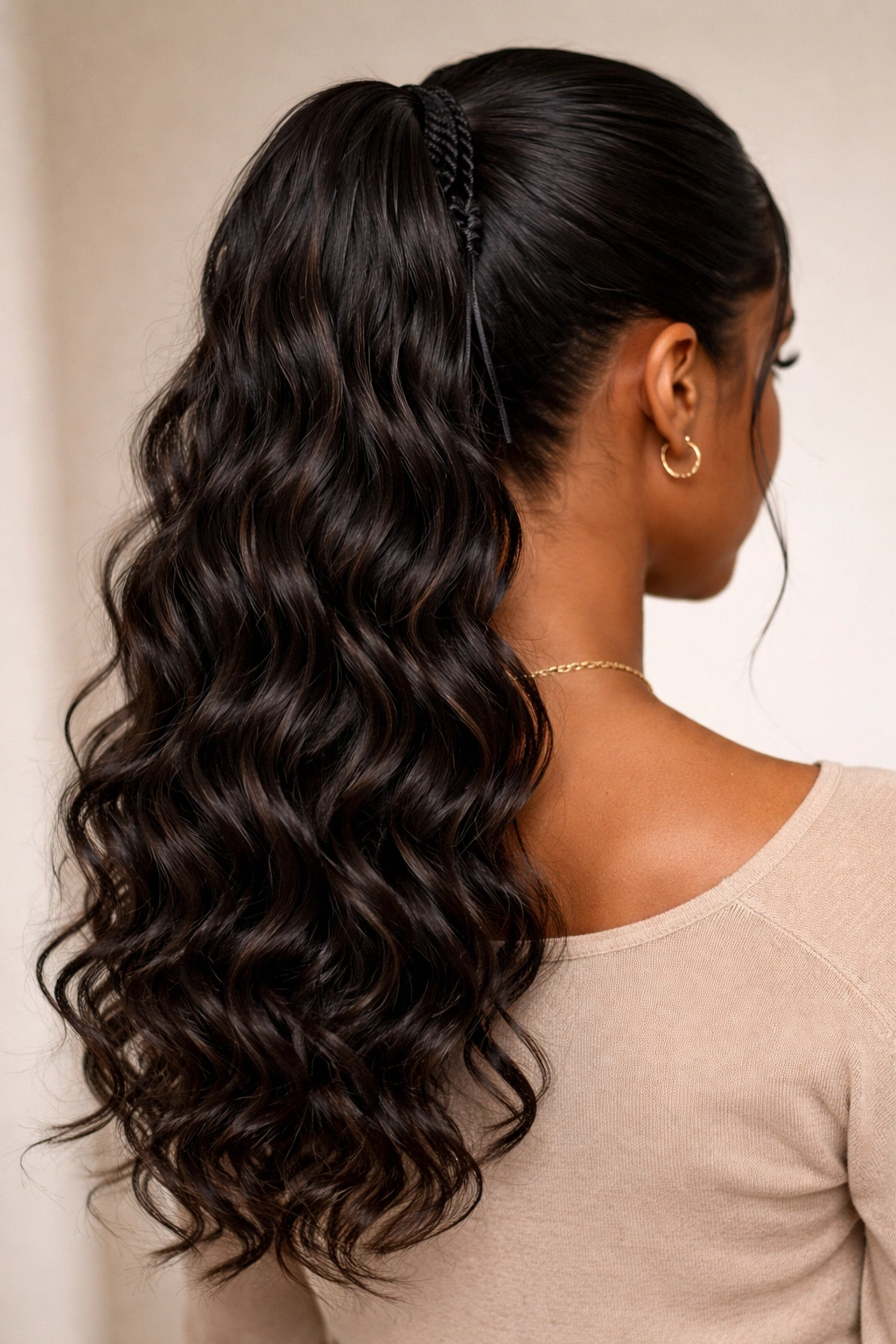
Deep wave textures provide a gorgeous, “fresh-out-of-the-water” look. The curl pattern is usually more of an ‘S’ shape than a tight coil. It looks elegant, polished, and works well for formal events or just upgrading your look on a random Tuesday.
Handling the Moisture Look
The appeal of deep wave is that slightly wet, glossy appearance. You can maintain this by using a leave-in conditioner spray or a curl mist. Avoid heavy gels, which will make the extension look crunchy and stiff. You want movement; you want the hair to sway when you move your head.
Avoiding the “Wiggy” Look
Sometimes deep wave synthetic extensions can look too perfect. If they feel too artificial, gently run a steam wand over the hair or use a light spritz of water and scrunch it. This breaks up the uniform curl pattern and makes it look more like natural, air-dried hair.
6. High Puff Afro-Textured Pieces
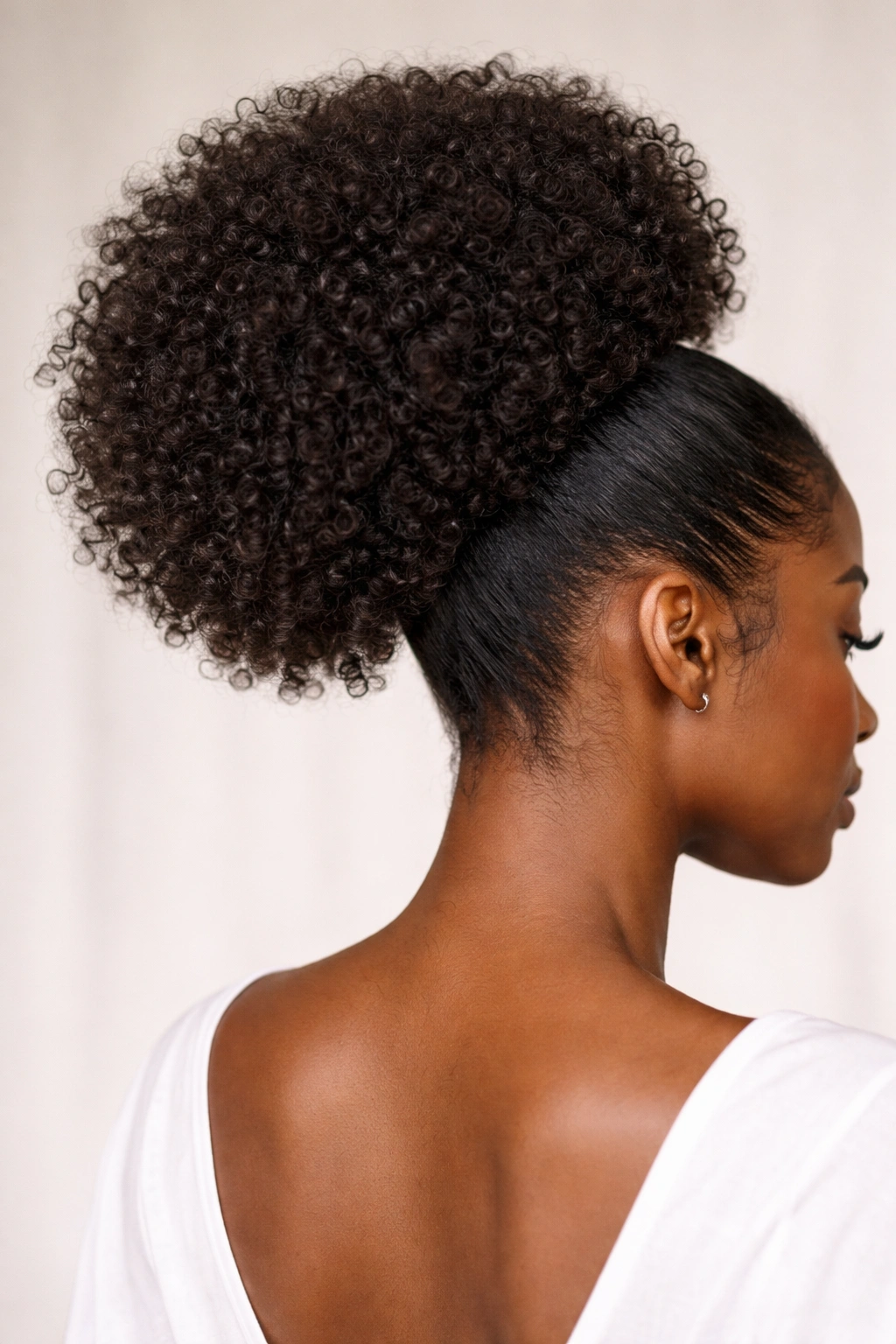
For those with natural hair, a high puff is a style staple. It is quick, it looks sophisticated, and it keeps your hair protected. A high-puff extension essentially acts as an extra layer of hair that slips over your own small, gathered puff.
Why It Works So Well
It provides instant volume without the need for styling your own hair into a perfect shape. You just need to get your natural hair into a secure, tight bun or puff, and the extension provides the rest. This is a massive time-saver in the morning.
Blending Tips
The key here is the hairline. Since you are pulling your hair back, make sure your edges are laid or styled in a way that feels intentional. If you have baby hairs, use a soft-bristle toothbrush and a small amount of edge control to swoop them. It bridges the gap between your scalp and the voluminous puff, making the whole look seamless.
7. Spiral Curl Ponytail Extensions
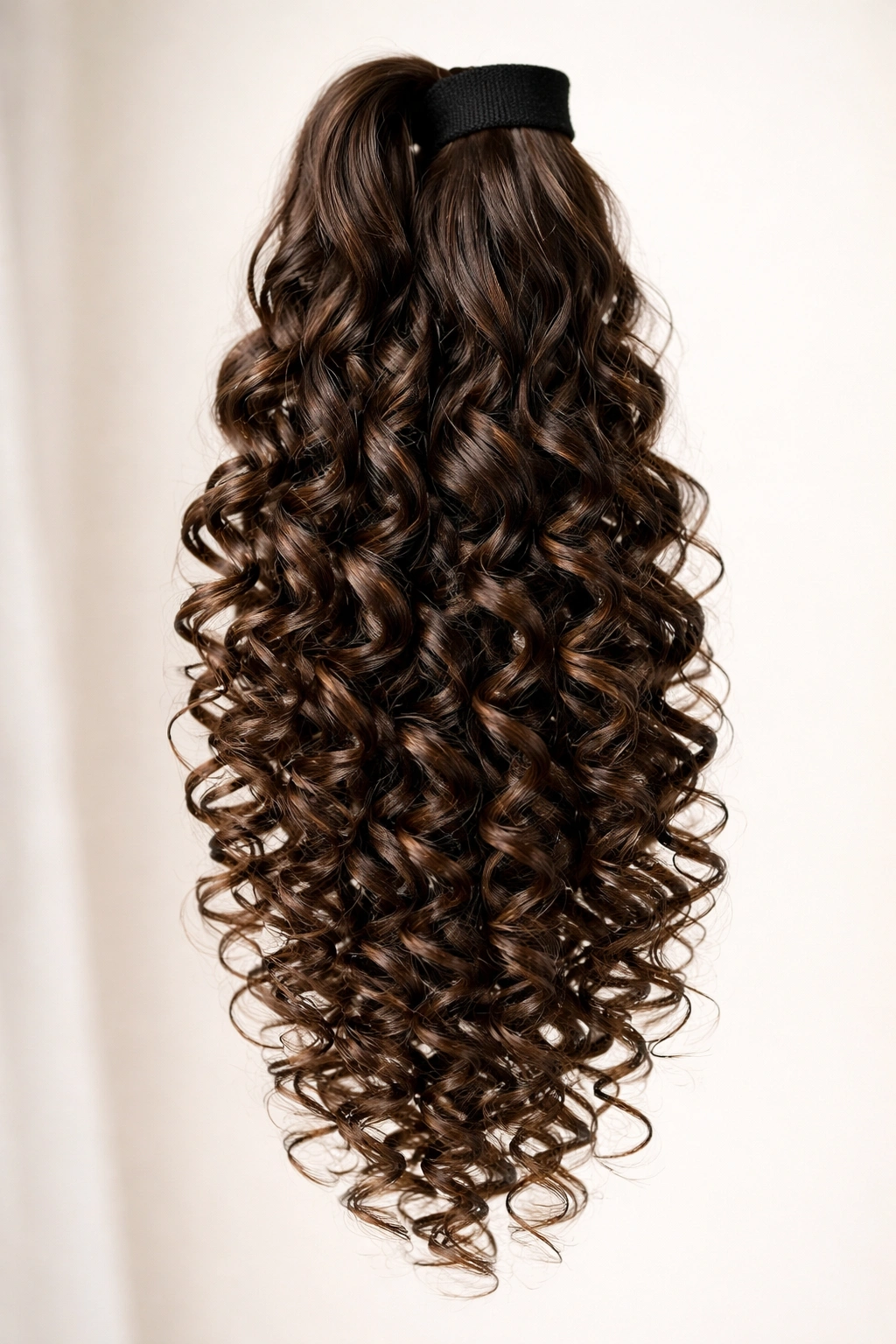
Spiral curls offer a distinct, bouncy look. Think ringlets. These extensions are great for when you want a fun, playful vibe. They have a lot of spring and tend to stay in their pattern longer than loose waves, which makes them quite low-maintenance.
Addressing Tangling
Spiral curls are notorious for tangling because the hair tends to wrap around itself. If you buy a spiral ponytail extension, keep a bottle of detangling spray in your bag. Whenever you feel the hair getting knotted, spray it lightly and use your fingers to gently separate the coils. Do not force a comb through the bottom of the hair or you will destroy the curl pattern.
Styling the Top
Because these curls are so defined, they can sometimes clash with the smoother hair at your crown. You can smooth your own hair back with a pomade or a light gel before attaching the extension. This creates a sharp contrast—sleek at the root, curly at the end—which is a very chic, editorial look.
8. Loose Wave Synthetic Blends
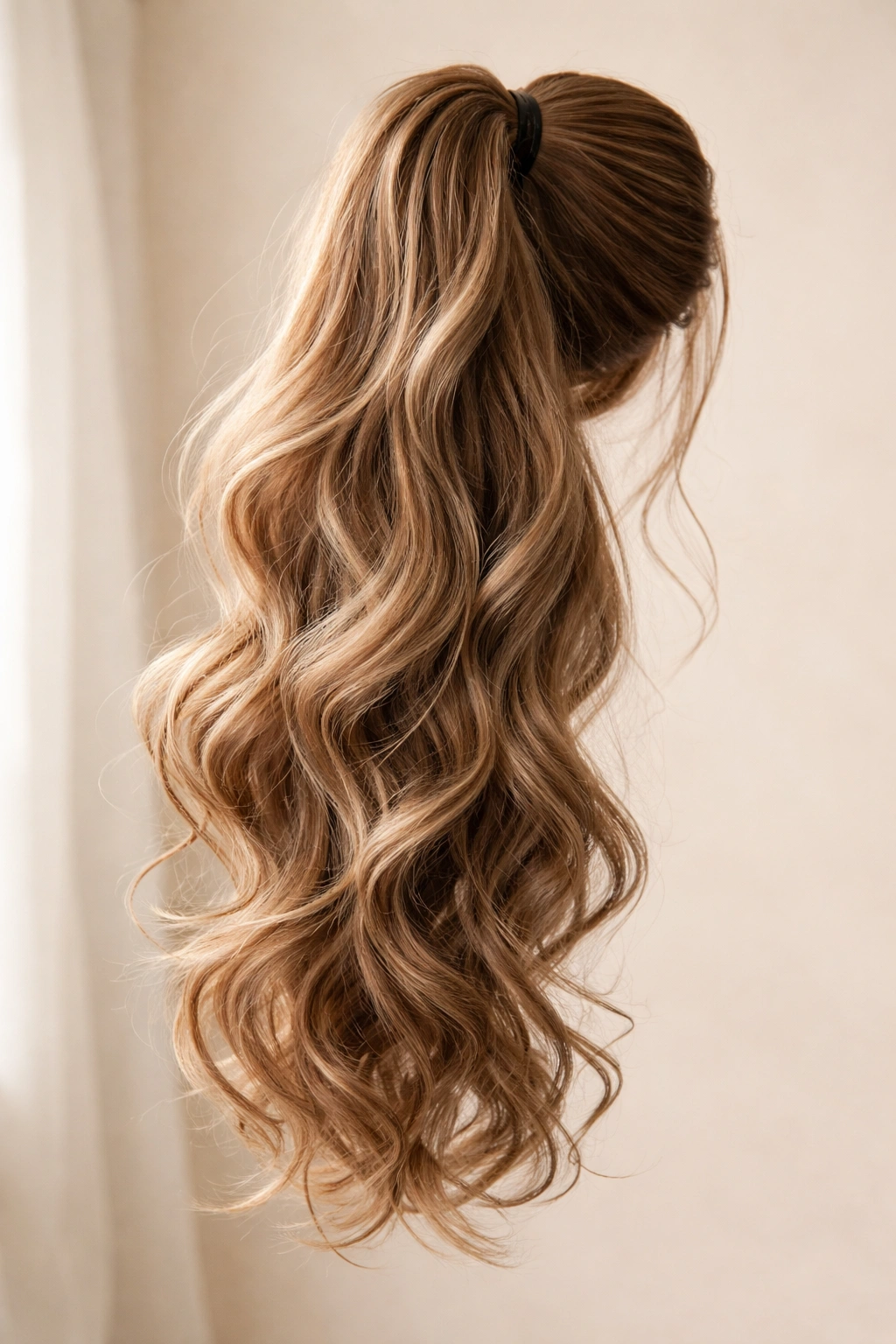
Loose wave textures are the most relaxed option. They offer a beachy, air-dried aesthetic that feels effortless. These are typically made from a synthetic blend that mimics the feel of human hair. They aren’t as tight as a deep wave, and they aren’t as uniform as a spiral.
Who Should Choose This
If you prefer a style that doesn’t look like you spent hours on it, this is the one. It looks like you just woke up with great hair. Because the wave is loose, it is much more forgiving if the hair gets a little bit messy throughout the day. In fact, a little bit of flyaway texture actually adds to the realism of this style.
Care Instructions
The main enemy of loose wave extensions is static. Since these are often synthetic, they can pick up static electricity and start clinging to your neck or clothes. A tiny drop of hair oil on the palms of your hands, smoothed over the hair, stops the static immediately and keeps the hair hanging straight.
9. Color-Matched Balayage Curly Pieces
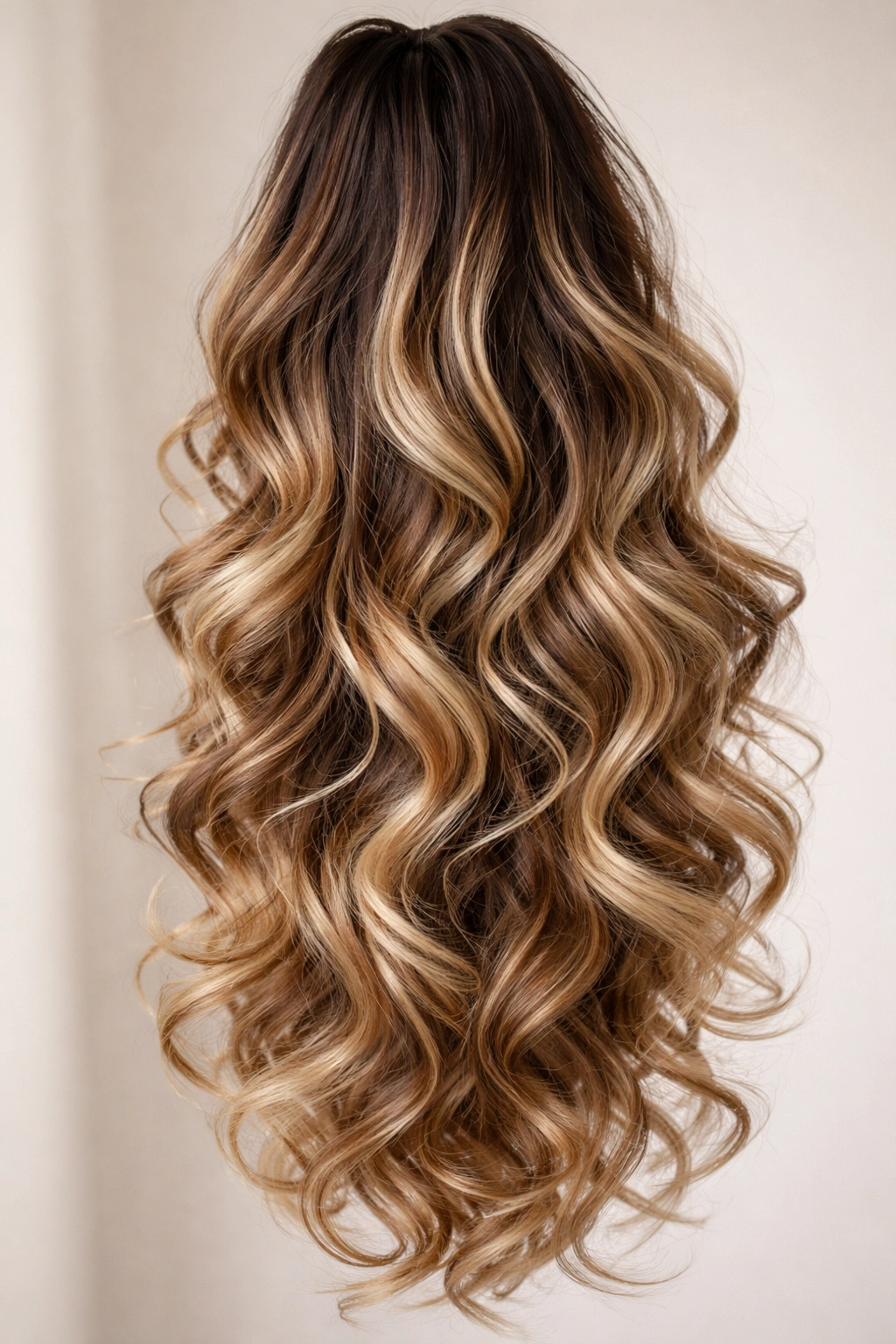
One of the biggest mistakes people make with extensions is a poor color match. If your natural hair has highlights, you need an extension that has highlights. A solid color ponytail on highlighted hair is an immediate giveaway. Balayage-style extensions are designed with a darker root and lighter ends, which blends perfectly with most modern hair color styles.
The Power of Dimension
The multi-tonal nature of balayage pieces is incredibly forgiving. If your hair is just slightly off in shade, the mix of light and dark strands in the extension will mask the discrepancy. It creates a visual depth that single-tone synthetic hair simply cannot provide.
Checking the Tone
When looking for a balayage piece, pay attention to the temperature of the color. Is your natural hair an ash blonde or a golden honey? Does your brown have cool undertones or warm, reddish ones? Matching the undertone is just as important as matching the lightness level. If you can, look at the hair in natural, outdoor lighting, not just through a screen.
10. Short and Sweet Curly Ponytail Wraps
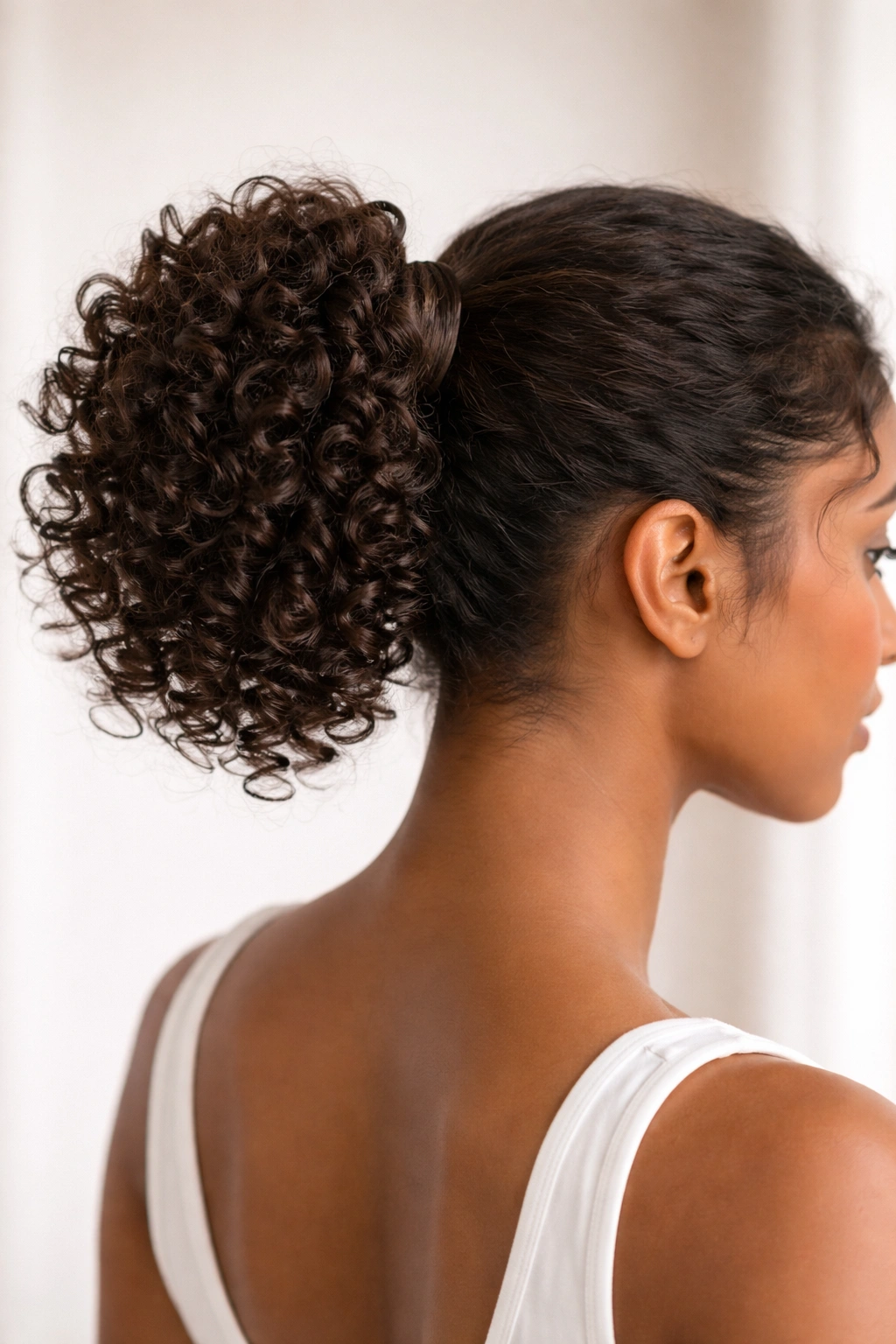
Not every ponytail needs to be waist-length. Shorter, chin- or shoulder-length curly ponytails are incredibly practical and often look more realistic because they don’t have the weight that usually exposes an extension as fake. They sit closer to your head and move more naturally.
Why They Look Real
Shorter hair has less “gravity” pulling on the extension, meaning it doesn’t shift or pull on your natural hair as much. It’s also much easier to blend if your own hair is a similar length. It’s a great option for professional settings where a massive, floor-length ponytail might feel a bit distracting.
Styling for the Office
Keep the style clean. Use a smoothing cream on the top section of your hair to ensure there are no frizzies at the roots. A shorter ponytail looks very polished when the roots are sleek and the ends are full of soft, manageable curls.
11. Textured Bohemian Curly Extensions
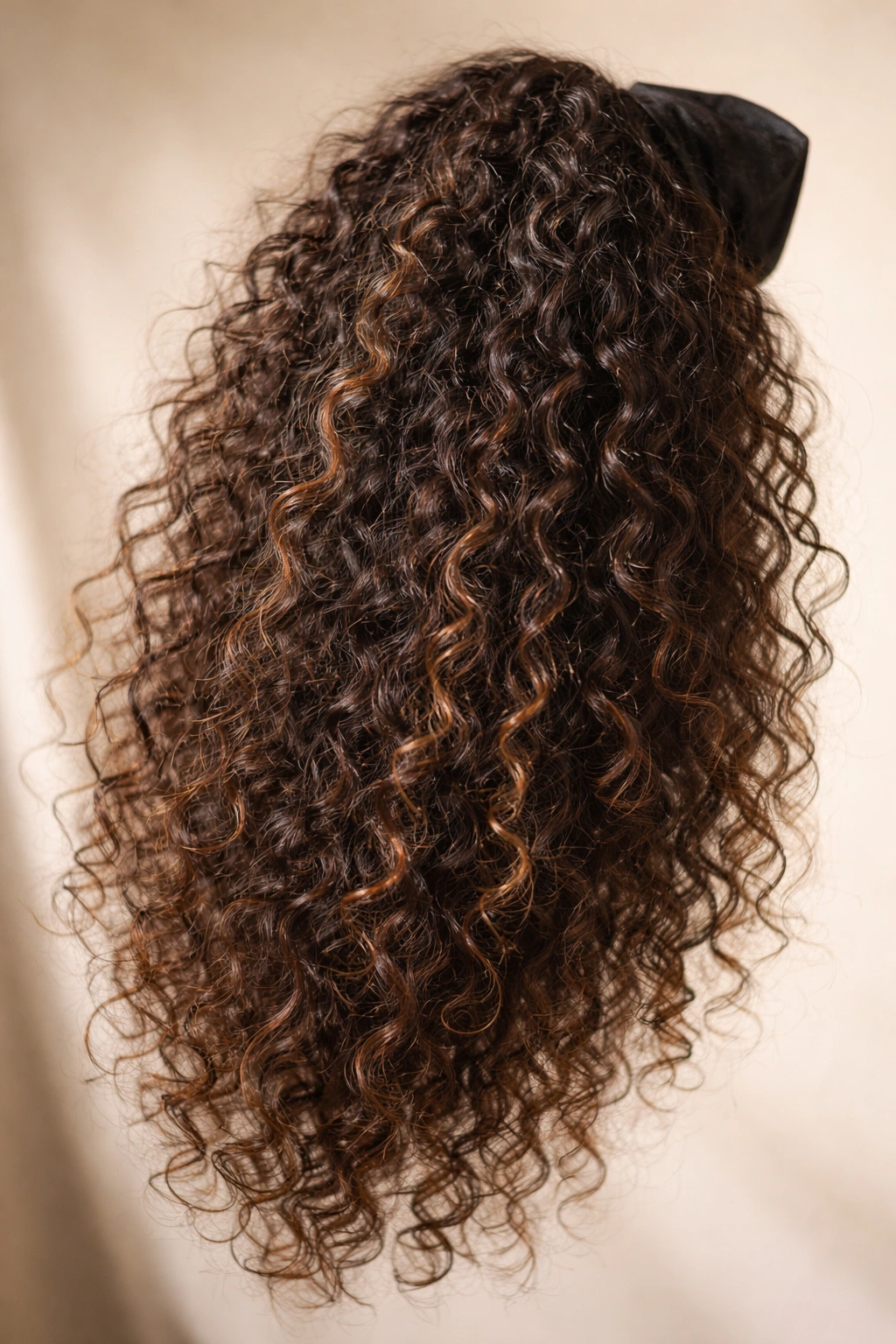
Bohemian styles are defined by a mix of textures—think tight coils mixed with loose, wavy strands. This gives the extension a “lived-in” look that mimics how natural hair actually behaves. Nothing in nature is perfectly uniform, so these mixed-texture pieces often look the most authentic.
Embrace the Frizz
With bohemian styles, you don’t have to worry about the hair looking perfect. A little bit of texture is part of the aesthetic. If the ends start to fray, it just adds to the wild, free-spirited vibe. This makes these extensions very long-lasting because you don’t have to constantly obsess over keeping them sleek.
Mixing Your Natural Hair
You can blend this by leaving out a few small pieces of your own hair at the front, framing your face, and curling them slightly. The mix of your natural curls and the bohemian extension creates a seamless blend that looks completely intentional.
12. Tapered-End Curly Ponytails
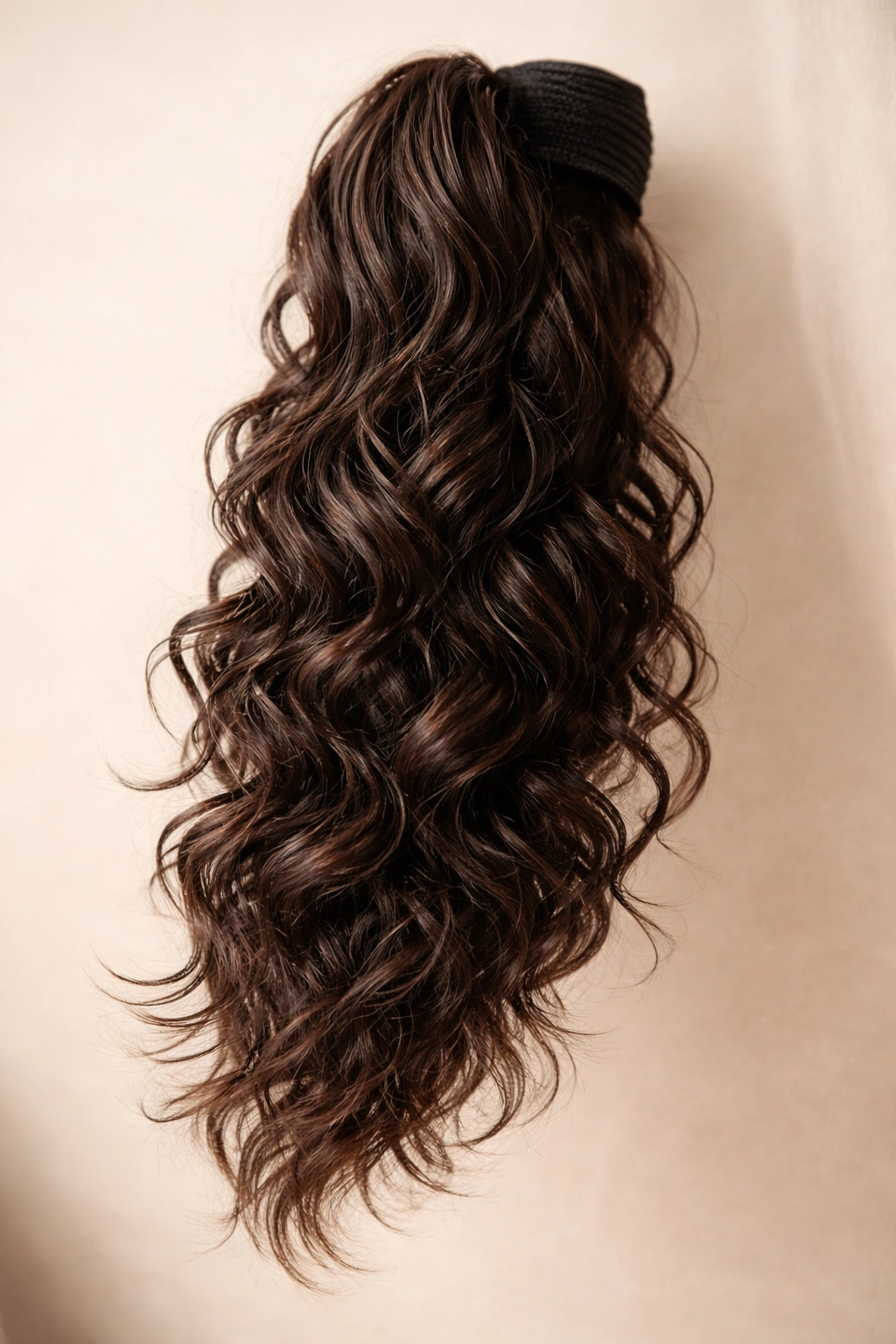
A tapered end mimics a natural haircut. Cheaper extensions often come with a “blunt cut” at the bottom, which can look thick, blocky, and incredibly fake. Tapered ends mean the hair is layered, getting thinner and more delicate toward the bottom.
How to Identify Quality
When shopping, look at the ends of the hairpiece in the photos. If the bottom looks like it was chopped with scissors in a straight line, stay away. If it looks soft, feathery, and layered, that is a good sign. If you buy a ponytail that is too blunt, you can carefully trim the ends yourself with thinning shears to add that natural movement.
The Benefit of Movement
Layered, tapered hair moves when you walk. It doesn’t just sit like a heavy weight. This movement is the biggest indicator of a high-quality extension. If it sways and bounces, people are much less likely to stare at it and wonder if it is real hair.
13. Voluminous Tight-Coil Ponytails
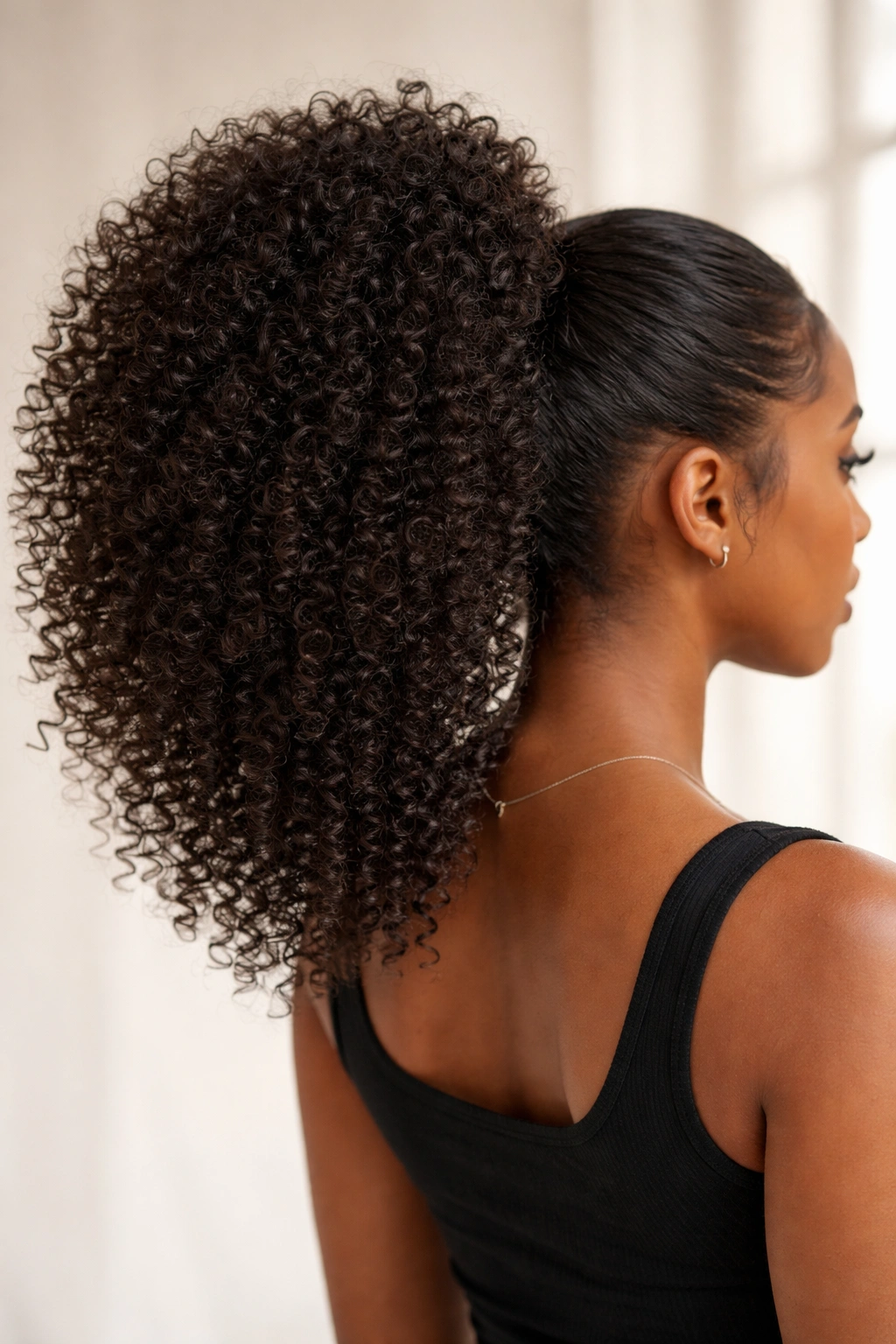
If you have a 4C hair texture and want a high-volume ponytail, tight-coil extensions are your best bet. These provide the volume and density that natural hair takes years to grow. They are usually very lightweight because the hair is tightly coiled, not long and heavy.
Managing the Volume
These extensions are large. They can swallow your face if you aren’t careful. Use them to create high ponytails or top knots where the volume is focused on top, rather than dragging down the sides of your face. This keeps the look balanced.
Scalp Health
Since these often cover your entire natural ponytail, make sure you don’t wear them too tight. The weight of a large, high-volume puff can cause tension on your hairline. When you attach the piece, ensure the weight is distributed evenly across your own secured bun, and always give your scalp a break in the evenings.
14. Lightweight Water-Wave Texture
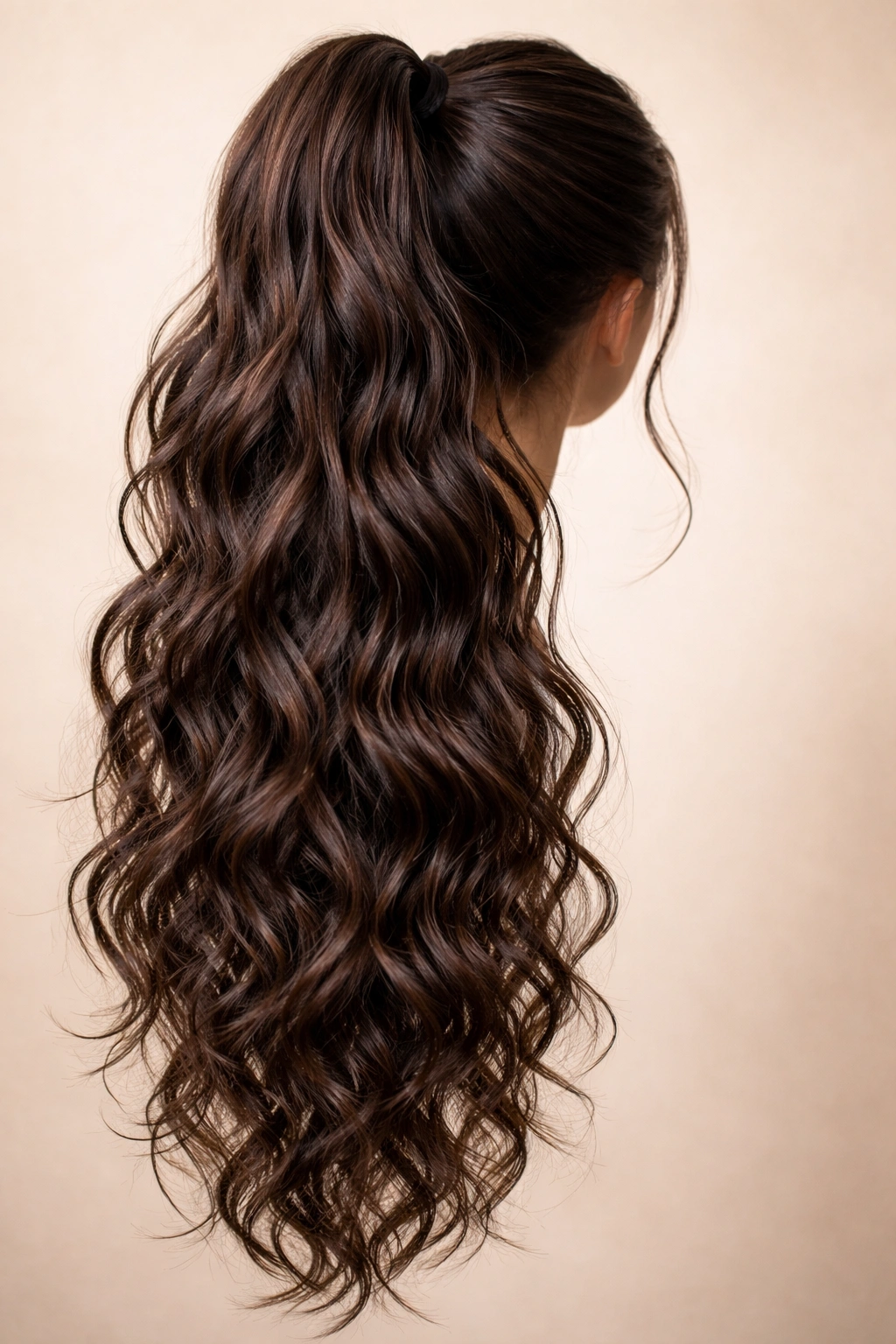
Water-wave hair is famous for its sheen and soft, flowing texture. It isn’t a tight coil, nor is it a loose wave—it sits right in the middle. It looks like you just stepped out of the shower and air-dried your hair with a little bit of product.
The Look of “Product”
Because this texture looks naturally moisturized, it pairs well with styles where you use a little bit of hair cream or gel on your own roots. The extension matches the “sleek top, wet-look bottom” style perfectly.
Maintaining the Shine
Water-wave synthetic fibers can lose their sheen over time. You can refresh them by using a shine spray, but use a light hand. Too much spray will make the hair look greasy and attract dust, which will ruin the texture. A light mist from a distance of about 10 inches is usually sufficient.
15. Heat-Resistant Fiber Options
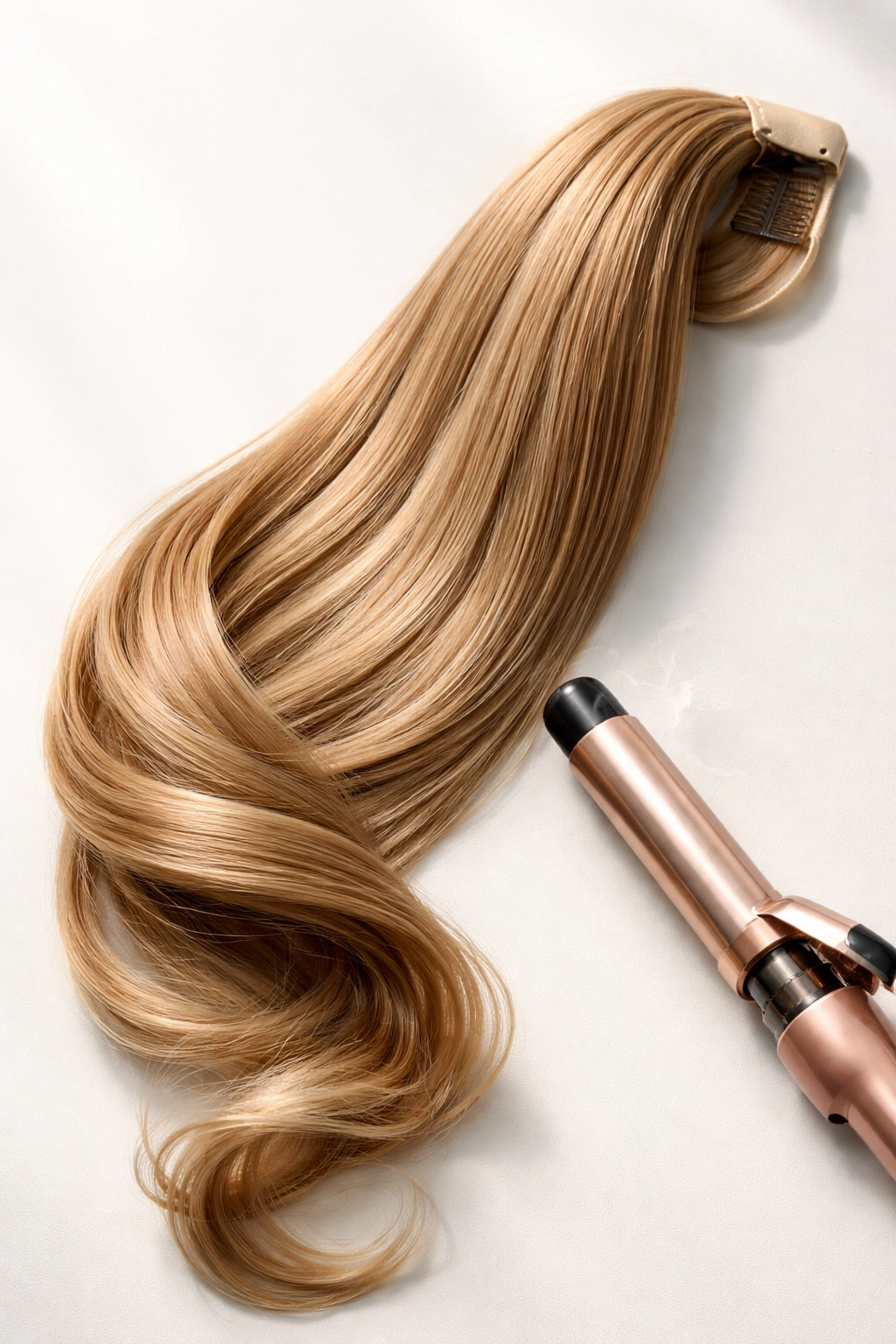
If you want the flexibility of human hair but at a fraction of the cost, heat-resistant synthetic fibers are the solution. These materials are engineered to withstand temperatures that would melt standard synthetic hair. This means you can use a curling iron or flat iron to customize the shape of the ponytail.
The Customization Process
You can straighten the hair for a sleeker look or curl it more tightly to blend with your natural hair. However, keep the heat setting low. Even “heat-resistant” fiber has a limit. Test a small, hidden section of the extension first. If the hair feels rough or starts to lose its texture after one pass with the iron, that is your signal to stop.
Long-Term Care
Because you can heat-style these, you can also “reset” the hair if it gets messy. If the ponytail starts to look like a tangled bird’s nest after a week, you can wash it, let it dry, and then carefully flat-iron or curl it back into its original shape. This dramatically extends the life of the piece, making it a sustainable choice for your collection.
Essential Blending Techniques for Any Extension
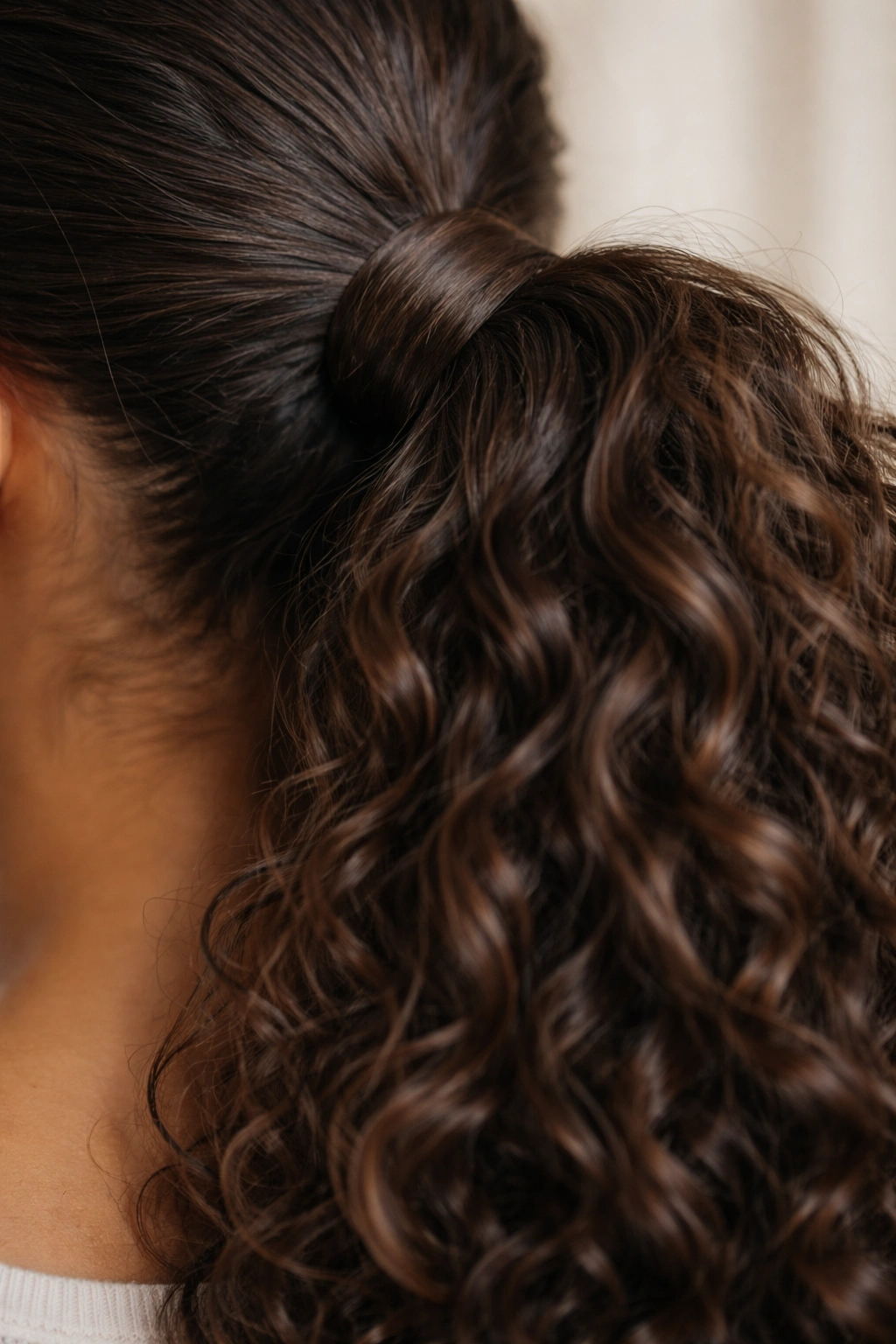
Regardless of the type of ponytail you choose, the way you attach and style it is the final factor in how “real” it looks. The most expensive human hair extension will look terrible if it is attached improperly, while an affordable synthetic piece can look seamless with the right blending techniques.
The Power of the Hair-Wrap
We touched on this earlier, but it deserves emphasis: never leave the base of the ponytail exposed. Whether your extension comes with a wrap piece or not, always take a small, thin section of hair from the underside of your natural ponytail and wrap it around the base. Secure it with a bobby pin pushed upward into the bun. This is the single most effective way to make any ponytail look like it grew out of your head.
The “Swoop” and Edge Control
If you are wearing a high ponytail, the hairline is fully exposed. This is where most people give away the secret. Spend time on your edges. A small amount of edge control or even a light hold hairspray used with a clean mascara wand can tame those baby hairs. When your hairline looks neat and intentional, the brain is less likely to look for the “seam” where the extension begins.
Mixing Textures
If your natural hair is finer or straighter than the extension, do not try to make the extension match your hair. Make your hair match the extension. Use a small curling wand or braid your natural hair the night before to create a texture that mimics the ponytail. When your own hair has texture, it blends into the curly extension almost invisibly.
Managing Weight and Security
A heavy ponytail can drag your skin and cause a headache by the end of the day. If the extension feels heavy, ensure your natural hair is secured into a very tight, solid bun before you attach the extension. If your bun is loose or wiggly, the extension will slide and pull, which is uncomfortable and makes the style look “off.” Use two hair ties for your base bun—one to create the ponytail, and one to create a tight, secure donut or twist.
Maintaining Your Investment
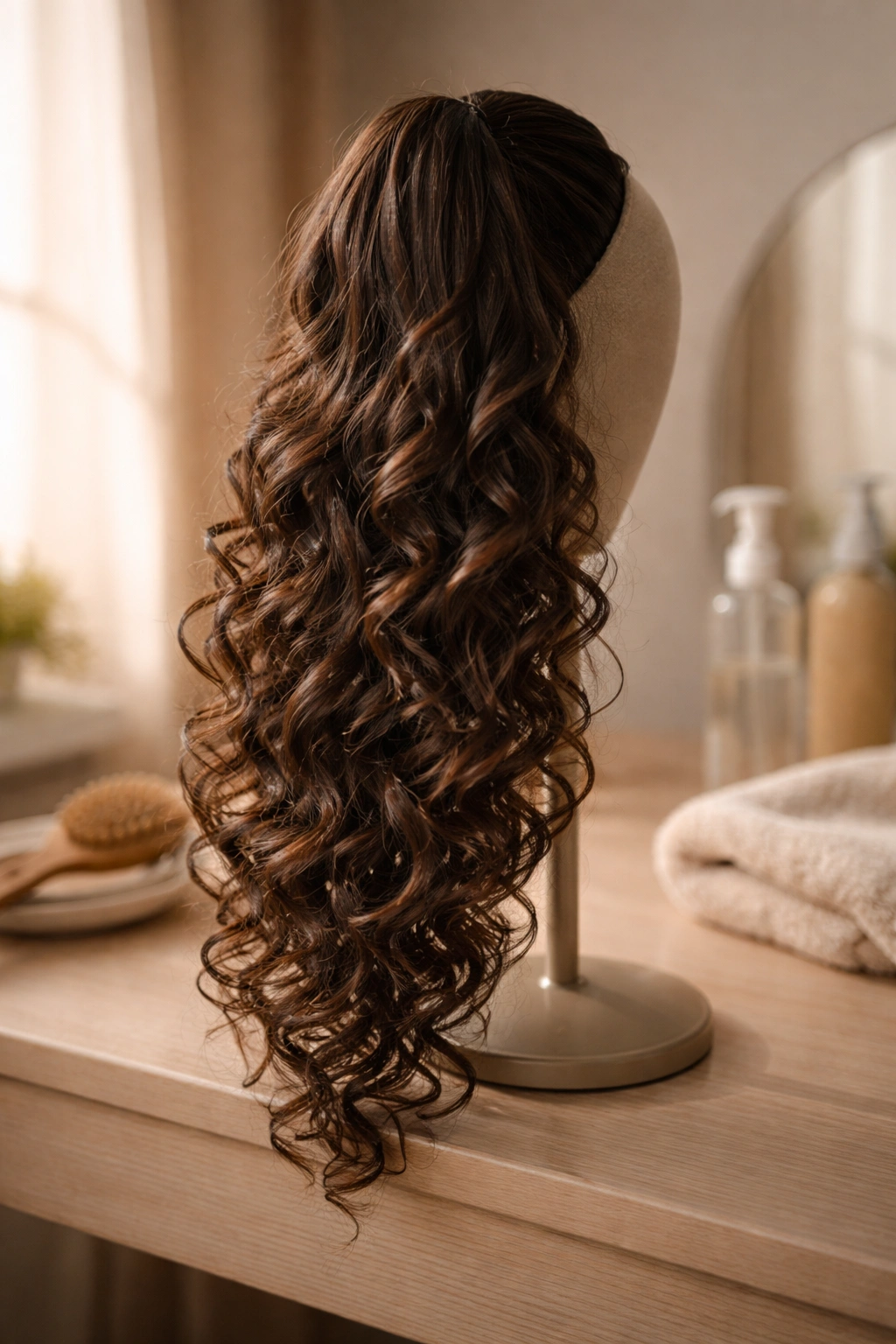
You might think that because you aren’t wearing your natural hair, it doesn’t need care. That is a mistake. Taking care of your extensions—even the affordable ones—means they will look good for months rather than weeks.
Nighttime Storage
Never sleep in your ponytail extension. Even if you are exhausted, take it out. Sleeping on the fibers will mat them and destroy the curl pattern, especially if you toss and turn. Store the ponytail on a wig stand, or simply drape it over the back of a chair or a hook. If it is a synthetic piece, keep it away from direct heat sources like radiators.
Deep Cleaning
If you wear your extension frequently, it will accumulate oils, sweat, and hairspray. Wash it gently in a sink with lukewarm water and a mild, sulfate-free shampoo. Do not scrub the hair; just dip it in the soapy water and gently swish it around. Rinse with cool water, and apply a conditioner or a detangling spray while it is wet. Let it air dry on a rack. Never, ever use a hair dryer on a synthetic ponytail unless the packaging explicitly states it is safe—the heat will ruin the texture instantly.
The Refresh
If the ends of your synthetic ponytail are looking frizzy, you can sometimes “refresh” them by steaming them carefully over a pot of boiling water. Hold the ponytail away from the steam and let the vapor pass through the hair. The moisture from the steam can help relax the fibers back into a smoother, less frizzy state. It is a bit of a process, but it can salvage a ponytail that you thought was destined for the trash.
Final Thoughts
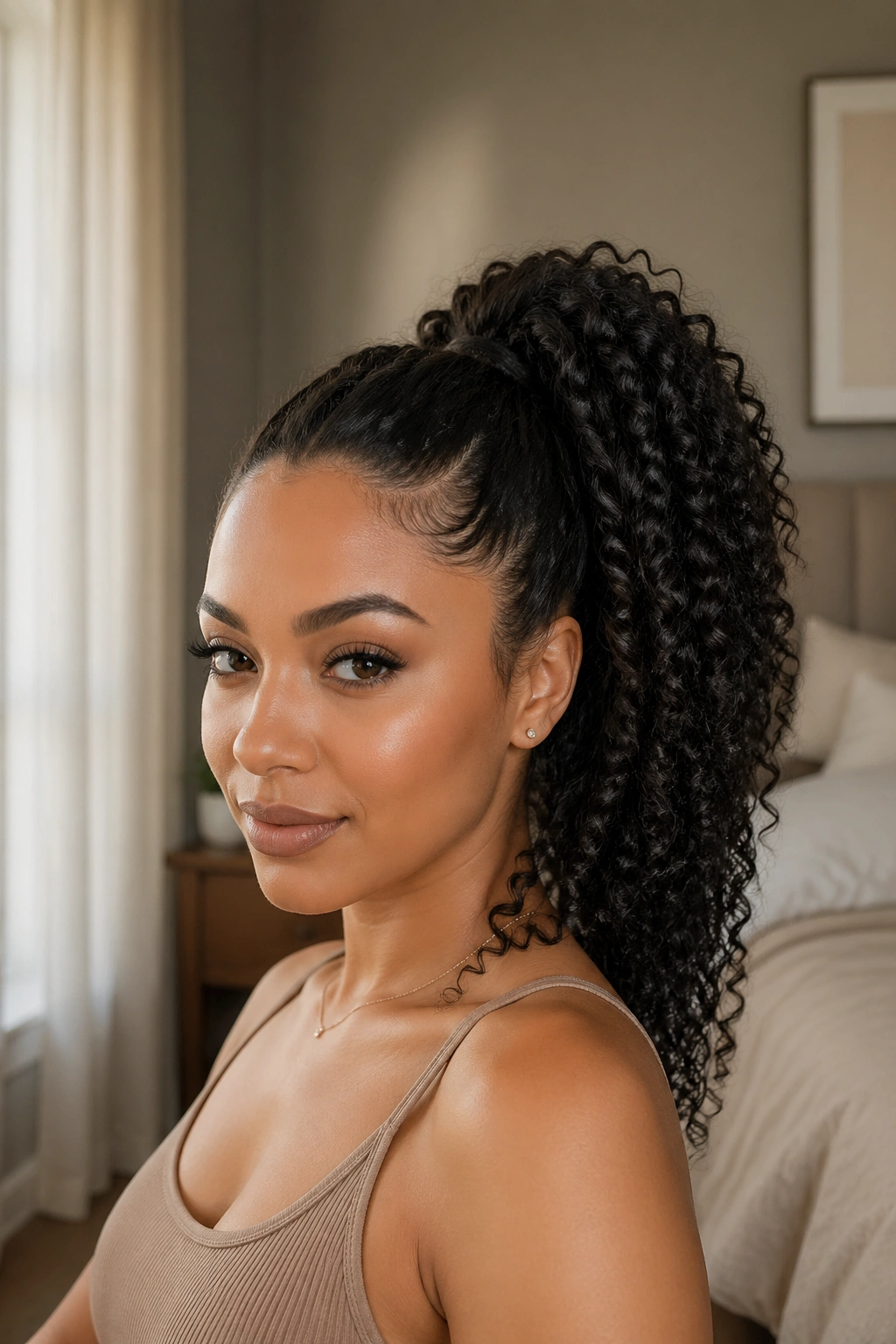
Ultimately, the best curly ponytail extension is the one that makes you feel confident the moment you clip it in. It is not about spending the most money or finding the most complex, multi-layered system. It is about matching the texture to your natural hair, taking the time to secure the base, and treating the hairpiece with the same care you would give your own strands.
Whether you are looking for that dramatic, high-volume look for a night out or a simple, chic way to keep your hair out of your face during a busy day, there is a texture and style out there that will blend so perfectly, you might even forget you are wearing it. Start by assessing your natural curl pattern, be honest about how much maintenance you are willing to do, and don’t be afraid to try a style you haven’t worn before. The beauty of these pieces is their versatility; you can be a spiral-curl woman one day and a loose-wave woman the next, all without a single drop of dye or a drop of sweat from styling tools. Your hair routine is a playground, and these extensions are just another way to experiment and have fun with it.
