

Curly hair and braids have a funny relationship. They can look like they were made for each other, or they can turn into a puffy, uneven mess if the sections are rushed and the tension gets sloppy. The difference is usually not the braid itself. It’s the way the braid works with shrinkage, volume, and the natural bend of the curl pattern.
A good braided style for curly hair does three things at once: it keeps shape, it respects texture, and it holds up when the hair starts doing its own thing. That last part matters more than people admit. Curly hair doesn’t behave like smooth hair, and trying to force it into a flat, stiff mold usually backfires fast.
The nicest part is that curls give braids something straight hair often lacks: body. Even a simple braid can look rich and full when the texture is allowed to show. So instead of hiding the curls, the smartest styles frame them, tuck them, or let them spill out on purpose.
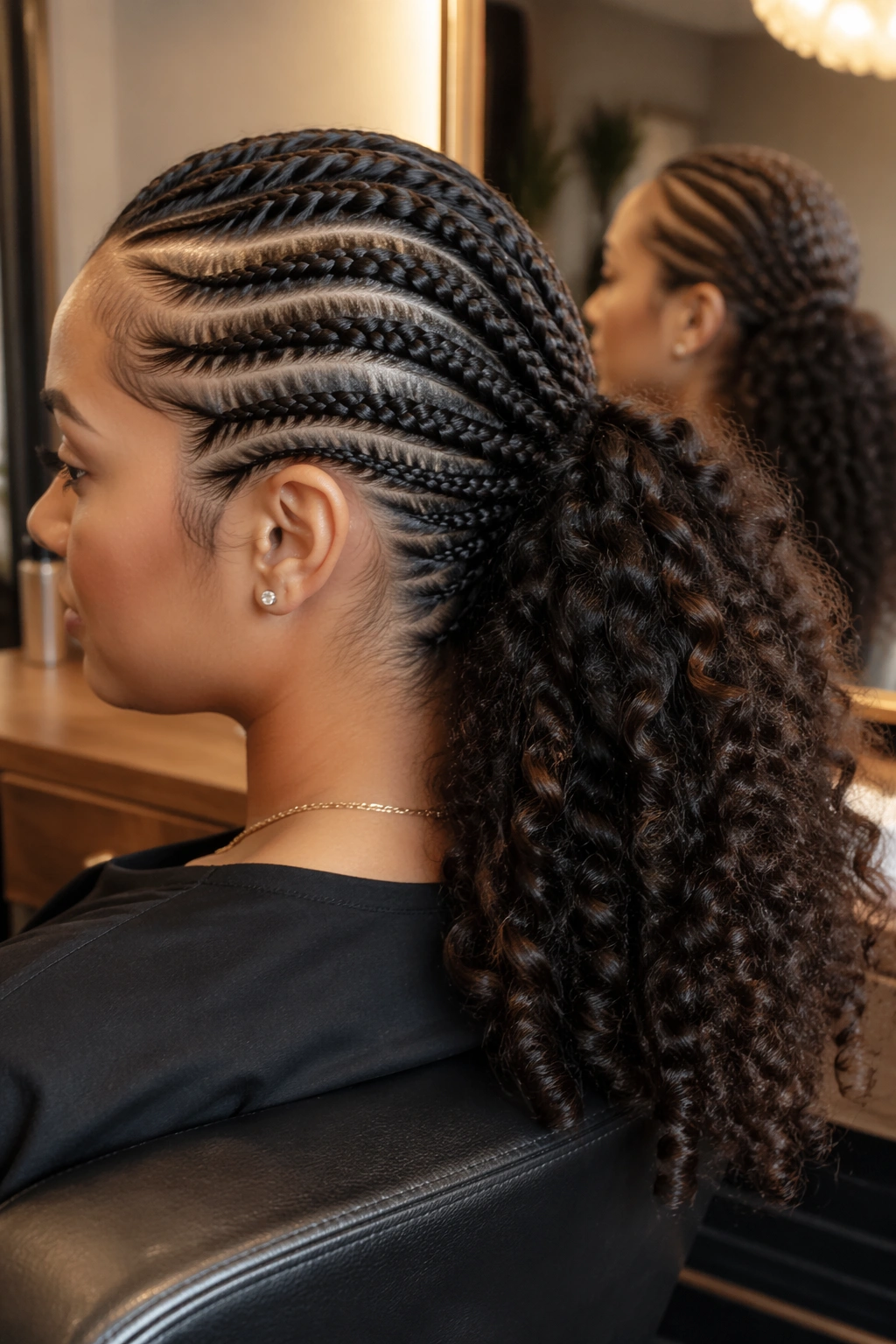
1. Side Cornrow Into a Curly Ponytail
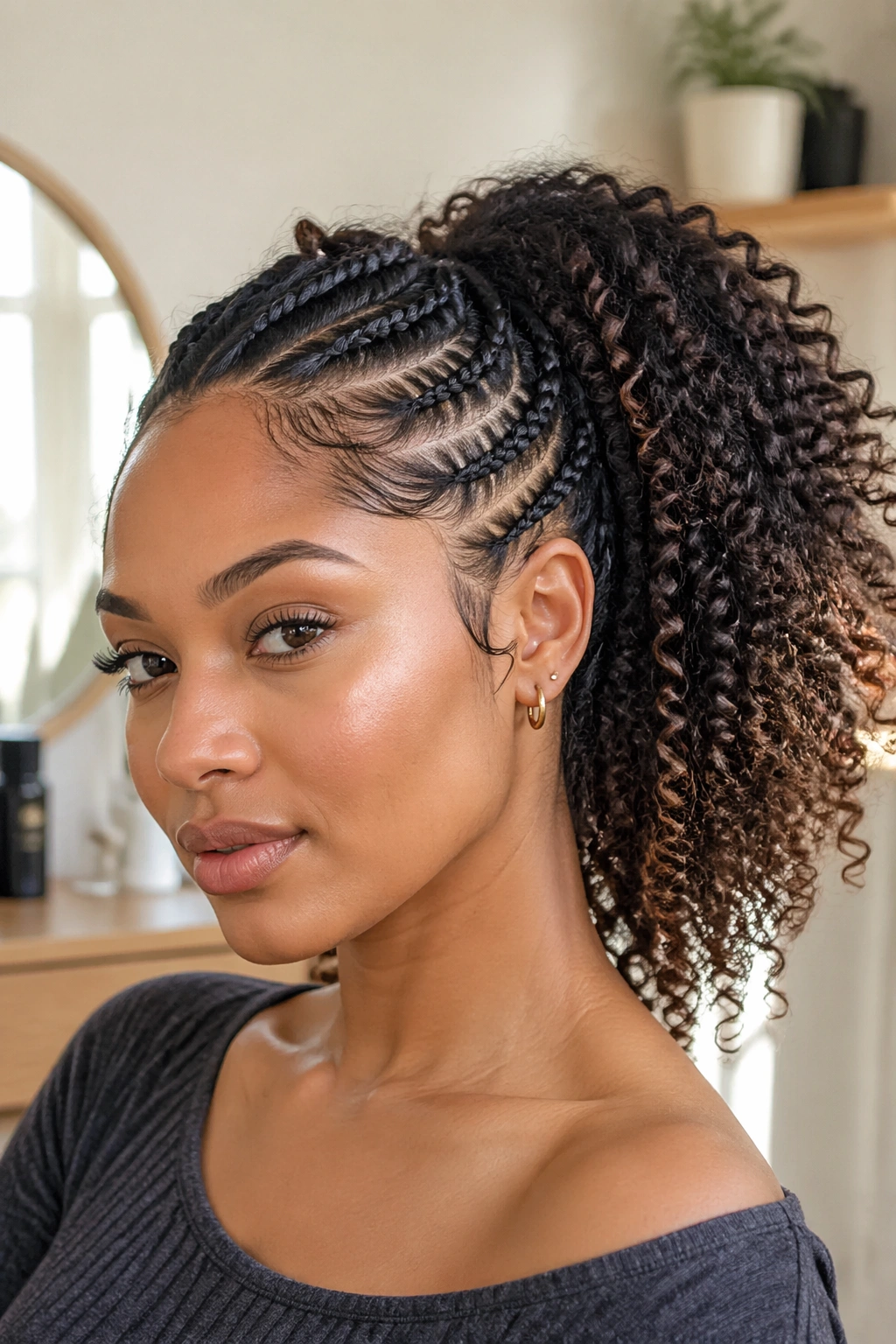
A side cornrow does more than sweep hair away from the face. It gives curly hair a clean line on one side and a big, soft ponytail on the other, which is a combination that almost always looks polished without feeling stiff. If your curls are thick, this style also helps reduce bulk at the hairline, which is a relief on humid days and a blessing when you do not want your front sections puffing up by noon.
Why It Works So Well
The braid controls the root area, where curly hair tends to frizz first. The ponytail keeps the length visible, so you still get movement and texture instead of a tight, overworked finish. I like this style most on medium to long curls because the contrast is the whole point.
A clean side part makes the braid pop. Use a rat-tail comb, a little gel or styling cream, and part on dry or lightly stretched hair so the sections stay neat. If you braid while the hair is soaking wet, the braid can swell as it dries and lose that crisp look.
Best for: school, work, gym days, and any time you want one side to stay controlled.
A small tip: start the cornrow just behind the temple, not too close to the hairline. It looks softer and usually feels better by the end of the day.
2. Double Dutch Braids for Curly Hair
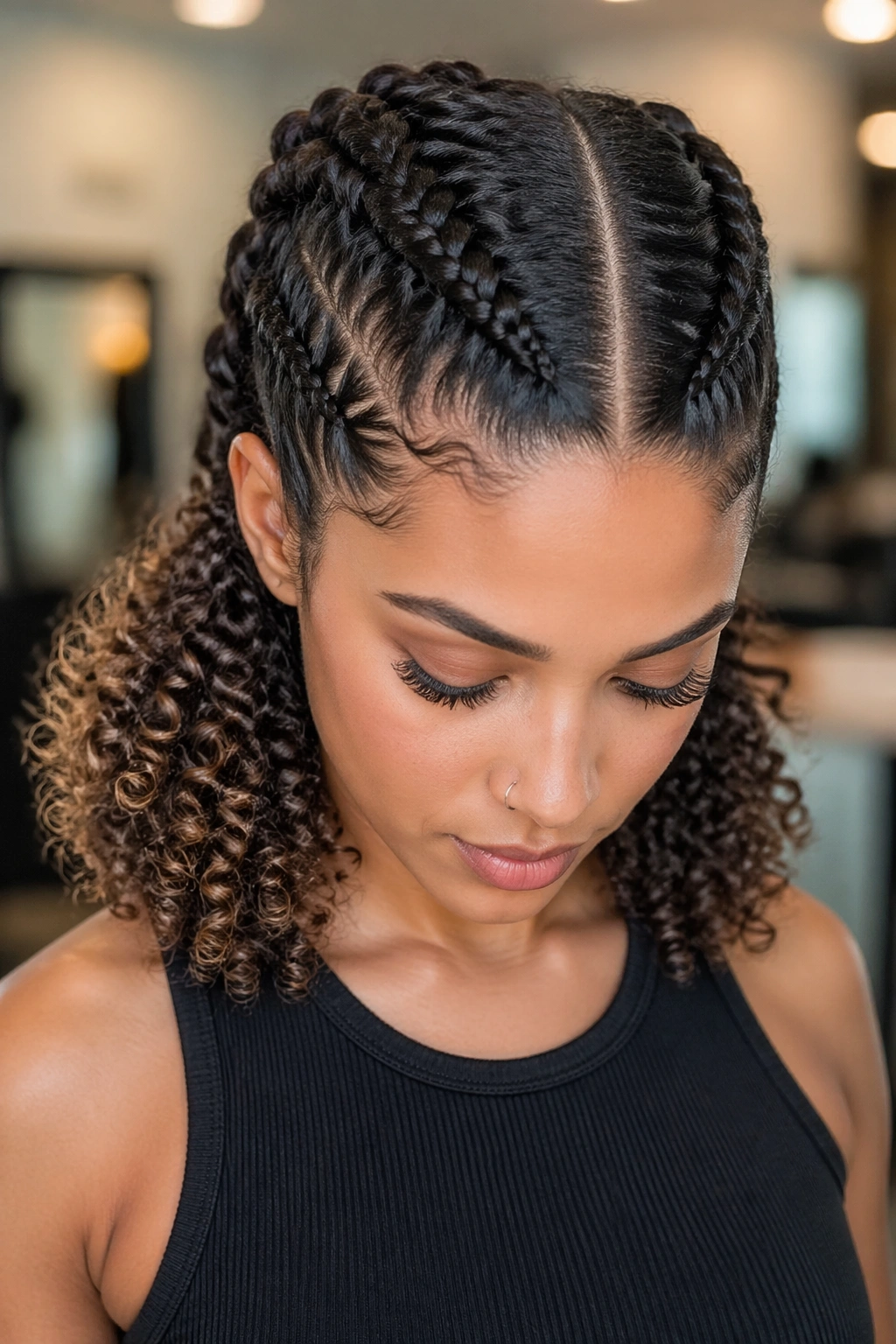
Need a braid style that keeps curls contained but still lets them show off at the ends? Double Dutch braids do exactly that. The raised braid pattern gives curly hair more height and shape than a flat braid, and the loose curly tails keep the whole look from feeling too severe.
Dutch braids sit on top of the hair instead of disappearing into it, which matters when your curls already have volume. That little bit of lift makes the style read as intentional, not compressed. The ends can be left curly, curled under, or tied off with small elastics if you want a cleaner finish.
What to Ask For or Do Yourself
If you are braiding at home, section the hair down the middle and keep the parts even. Uneven parting shows up fast with this style, especially at the back of the head. A light leave-in helps the strands stay soft, but skip heavy butter near the roots or the braid can feel slippery.
Best curl patterns: 3A through 4C, especially if you want a protective style that still looks playful.
How to wear it: wear the braids tight enough to hold, never tight enough to tug at the scalp. That’s the line. Crossed too snugly, they stop feeling cute and start feeling annoying.
3. Crown Braid Halo
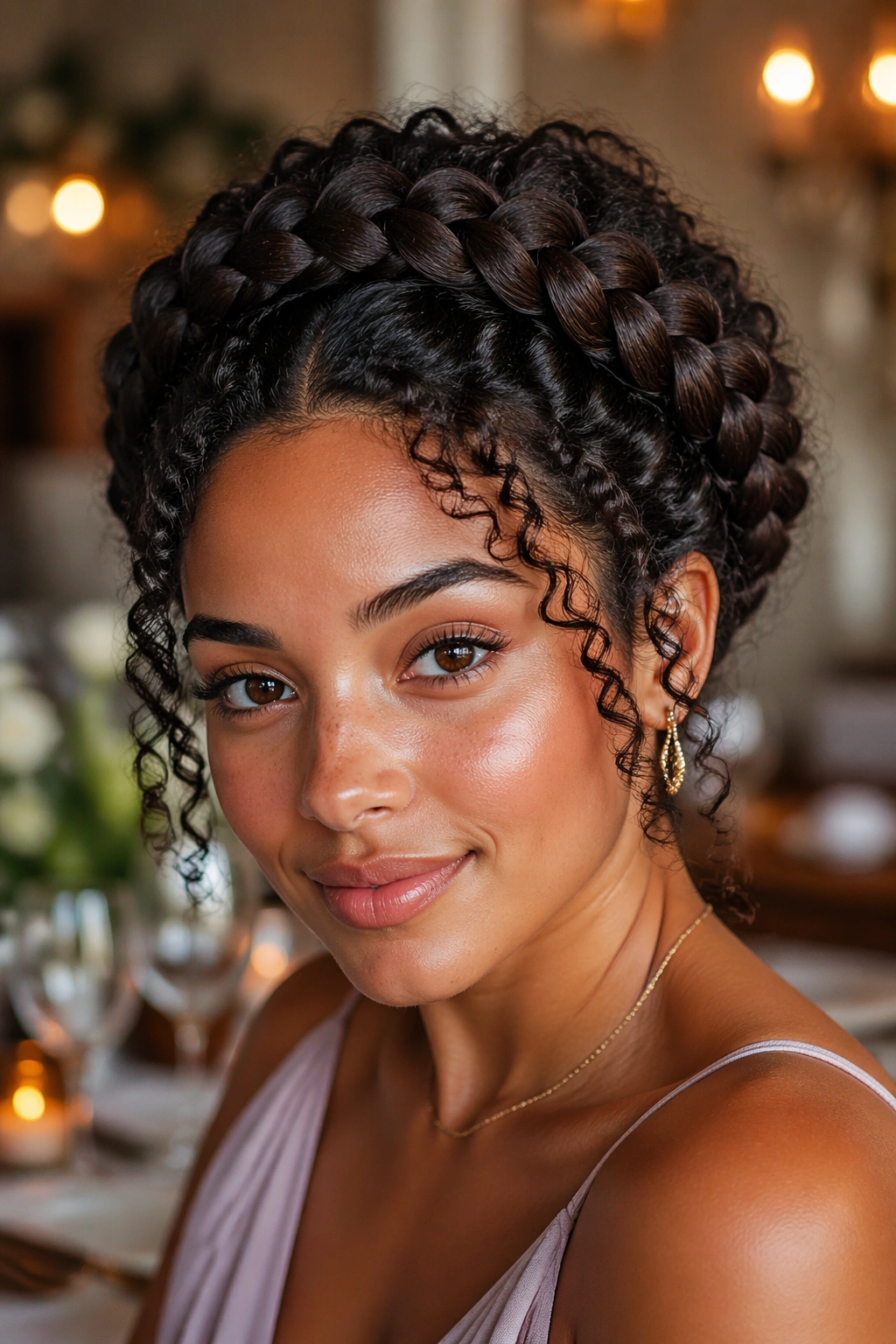
A crown braid looks like the kind of style people assume takes forever, but the trick is simpler than it looks. You braid hair around the perimeter of the head, pin it, and let the rest of the curls fill in the center or soften the edges. On curly hair, that halo effect gets a little extra fullness, which is exactly why it works so well for dressy events.
The shape is the star here. Curly hair gives the braid a plush edge, so the crown doesn’t need to be perfectly tiny or perfect-looking. In fact, a slightly fuller braid usually looks better. Too small and it can disappear into the hair; too tight and the whole thing loses that soft frame around the face.
You can leave a few curls loose near the temples if you want it less formal. I usually prefer that. The face-framing pieces break up the circle and keep the style from feeling too rigid.
A crown braid is especially good when your curls are fresh, moisturized, and a little stretched. If the hair is extremely shrunken, the braid can get bulky in the wrong places. Pin it with bobby pins that match your hair color, then mist the finished style very lightly instead of saturating it.
4. Half-Up French Braid for Curly Hair
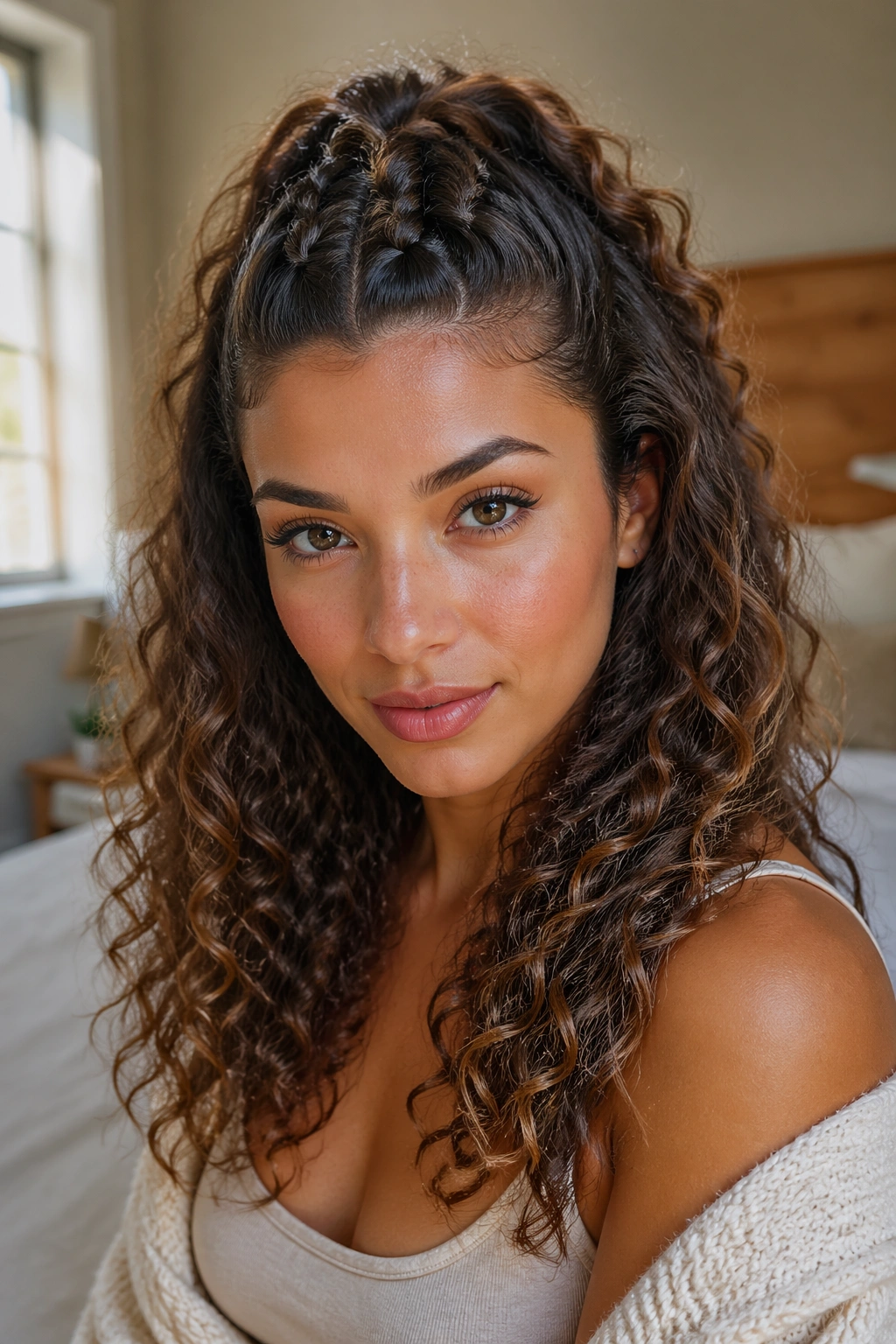
A half-up French braid is not only for straight or wavy hair. On curls, it creates a nice mix of structure and volume, and that combination is hard to beat for everyday wear. The braid pulls the top section back so your face stays open, while the rest of the curls stay loose and visible.
The Part That Makes It Look Good
Start the braid at the crown, not too far back. That placement keeps the top from puffing out in a weird hump and gives the braid a cleaner line. If your curls are layered, take a little extra care with the shorter face-framing pieces; they love to escape early. A few escaped curls are fine. A fuzzy crown is not.
This style works especially well when you want something quick but not boring. It also plays nicely with second- or third-day curls, since the braid can hide a little frizz at the roots. That’s one of its best tricks.
How to Keep It Neat
- Use a pea-sized amount of curl cream on the top section only.
- Braid on dry hair for the cleanest finish.
- Secure the half-up section with a small elastic, then wrap a curl around it if you want to hide the band.
My honest take: this is the braid I reach for when I want low effort but still want people to think I planned ahead.
5. Waterfall Braid on Defined Curls
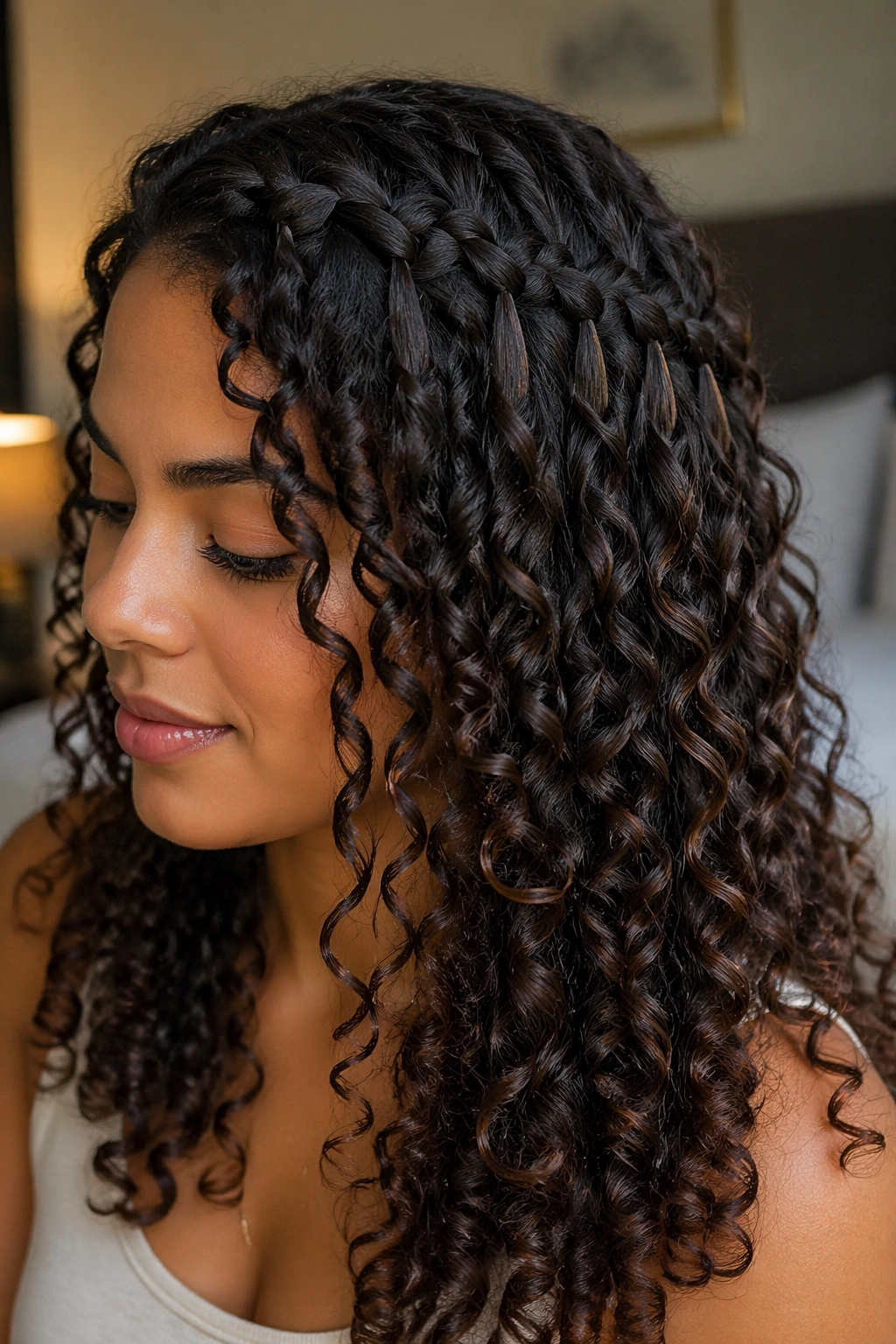
Waterfall braids look delicate, but on curly hair they have real grip. That’s because the texture gives each dropped strand a little body, so the braid doesn’t collapse as easily as it might on very smooth hair. The result is soft, pretty, and a little bit old-school in the best way.
The style works best when the curls are defined, not fluffy. A wash-and-go with a decent hold gel, or a stretched curl set, gives the braid enough control to stay visible. If the hair is too slippery, the little “falling” sections slide out before you finish the second side.
Where It Shines
Waterfall braids are lovely for brunch, photos, and any event where you want texture without a heavy updo. They also work well on shoulder-length curls that are too short for a full crown braid but long enough to make the braid pattern visible.
A narrow braid usually looks better than a thick one here. Thick waterfall sections can eat up the curl pattern and make the whole thing feel bulky. Keep the braid small, let the curls do the rest, and avoid overworking the front section. That front row of curls is the part everyone sees first.
If you like a little romance in a style, this one delivers without trying too hard. And thankfully, it does not need perfect symmetry to look good.
6. Feed-In Braids into a High Ponytail
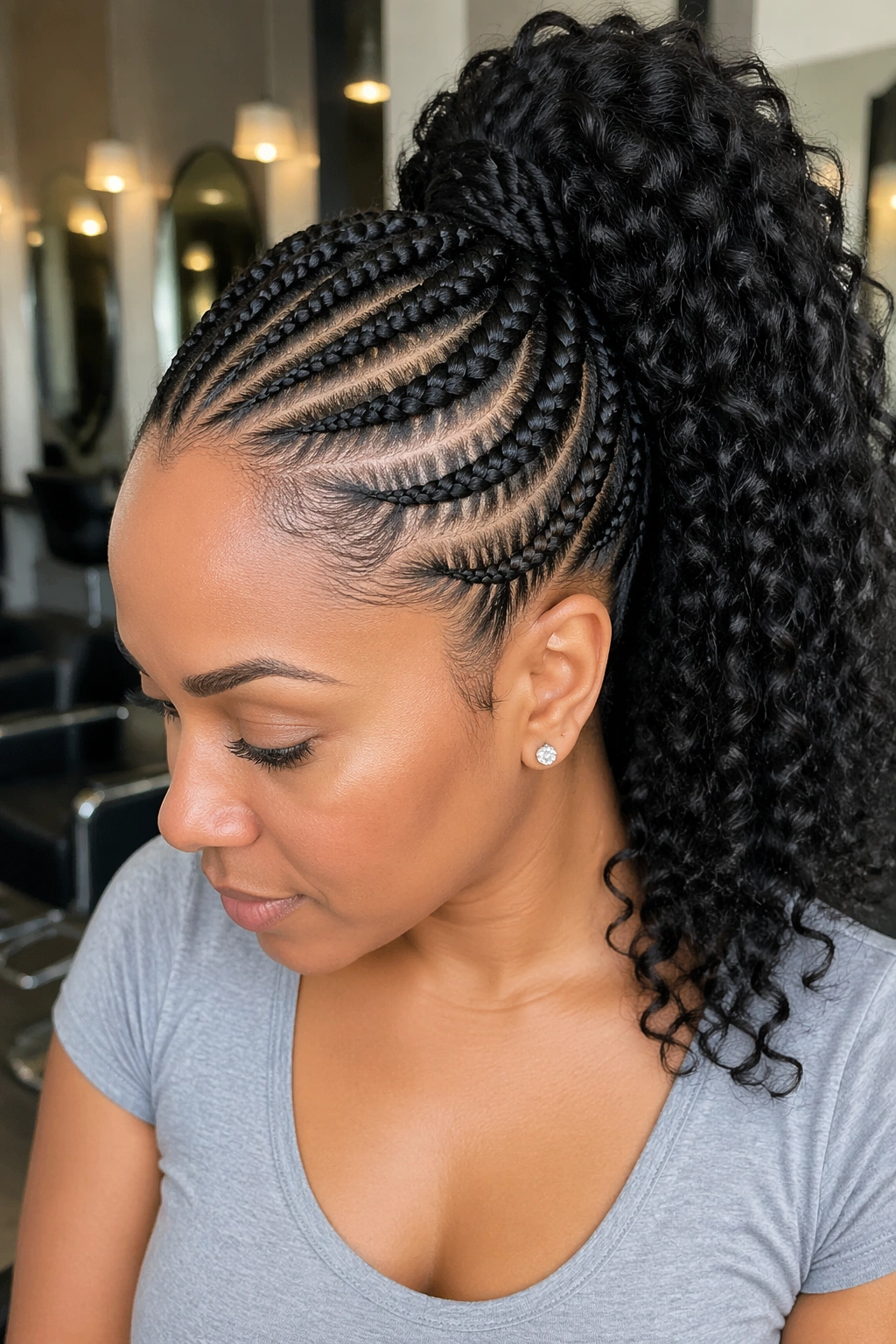
Feed-in braids are sleeker than standard braids, and that difference matters on curly hair. Because the braid adds hair gradually, the base stays flatter and the scalp line looks cleaner. Then the ponytail gives you the volume and movement that curly hair does so well.
This style is a strong pick when you want a polished root area but don’t want to give up the drama of a high ponytail. The contrast is what makes it work. Tight at the top, soft at the tail. Controlled at the scalp, full through the length.
If you are getting this style done, ask for the braid to be anchored without pulling at the edges. Too much tension around the front hairline is a fast way to ruin an otherwise sharp look. If you are doing it yourself, start with a moisturized base and smooth the top section with a light gel, not a heavy paste.
A braided high ponytail also works when curls are a few days old and a little stretched. Fresh, fluffy curls can make the base harder to smooth. The ponytail can then be left curly, curled with flexi rods overnight, or tied with a satin scrunchie for less breakage.
7. Braided Space Buns
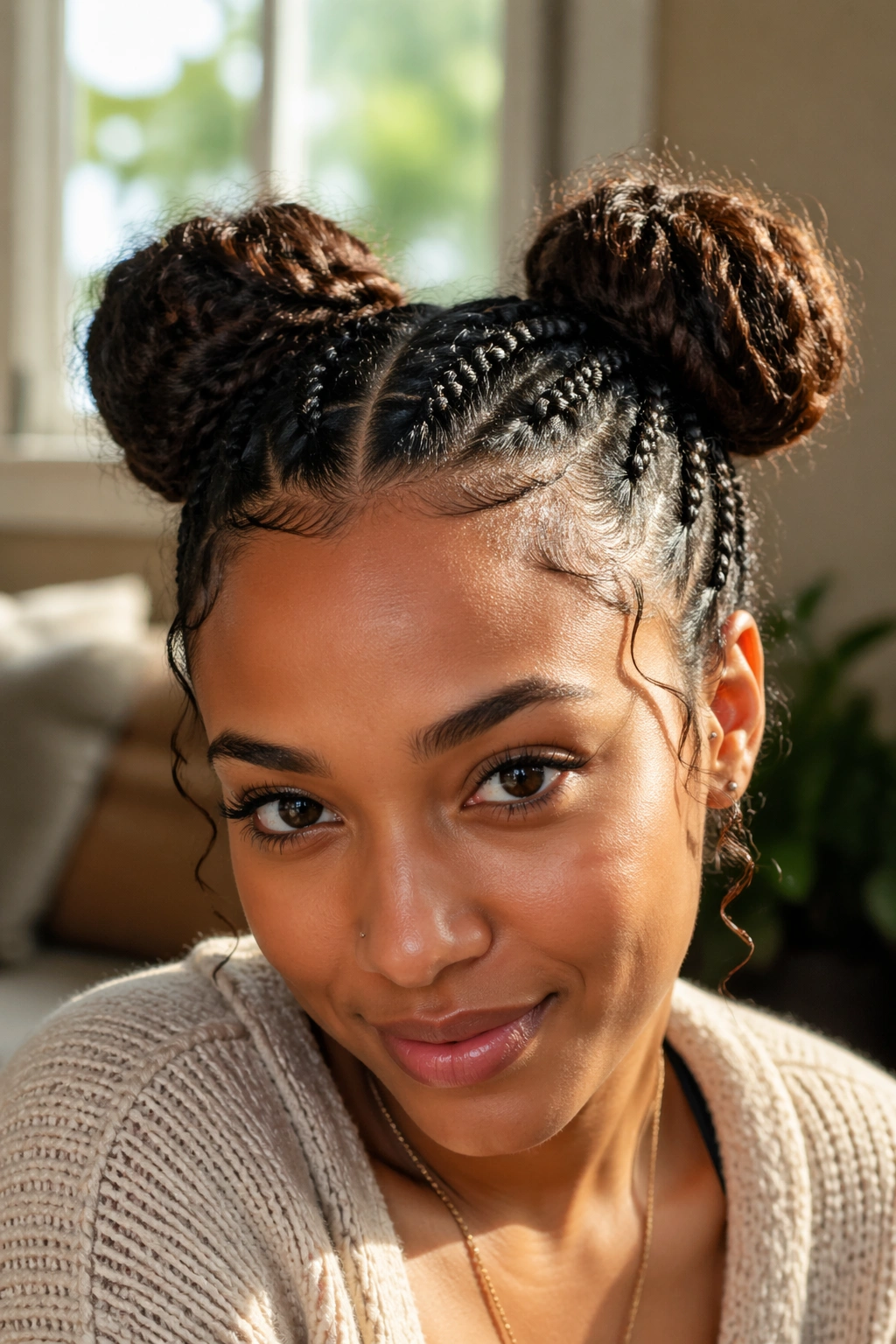
Braided space buns are playful, but they are not just for festivals and photos. On curly hair, they keep a lot of texture tucked away while still letting the buns look full and rounded. That fullness is the reason this style works. Straight hair buns can look tiny. Curly hair buns have shape.
How the Shape Changes the Look
Two braids leading into buns create a clear center part and make the whole style feel balanced. If your curls are thick, the buns will look fuller, which is a good thing. If your hair is finer, a little teasing at the ends before wrapping helps build the bun without adding fake bulk.
This is a good style for shorter curly hair too, especially if the length sits at the shoulders and refuses to stay in one ponytail. The braids corral the front, and the buns keep the back from unraveling. No need to make them identical down to the millimeter. Slight asymmetry looks more relaxed.
What Helps
- Use small clear elastics for the braid ends.
- Pin the buns with long U-pins if you want them to stay flatter.
- Leave a few curls loose around the ears if the style feels too strict.
Small warning: braids that are pulled too close at the temples make space buns feel childish in a bad way. Looser at the front is better.
8. Two-Strand Rope Braids into a Low Bun
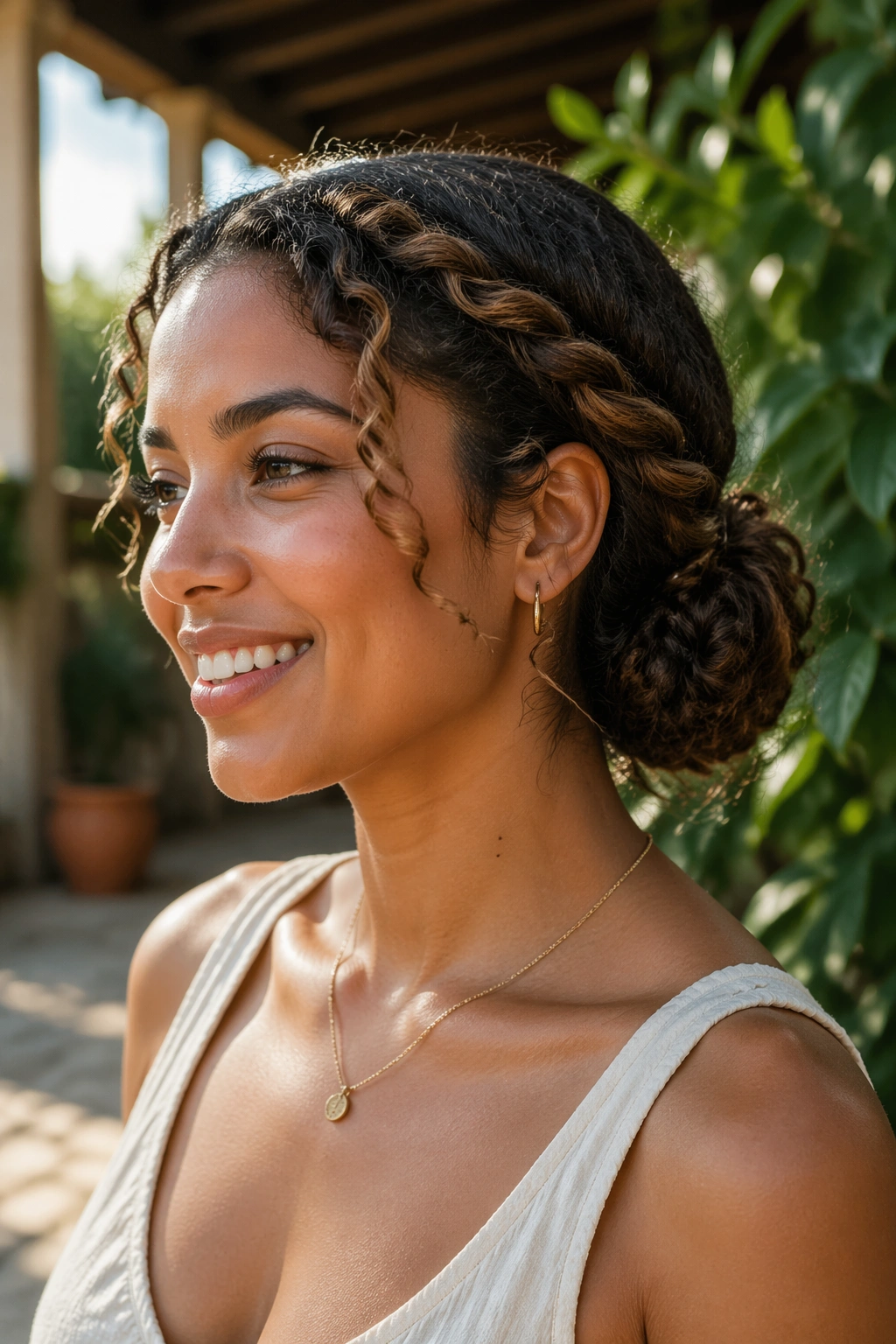
Two-strand rope braids are a quiet favorite. They are gentler than some tighter braid patterns, and curly hair usually likes that. The twist of the rope braid lets the natural curl pattern peek through, which makes the style look softer than a standard plait.
A low bun built from rope braids is one of those styles that looks like you spent longer on it than you did. That’s partly because the twists catch light and texture in a nicer way than a plain bun. It also works well when the hair is not at its freshest. A little lived-in texture helps here.
The best version starts with two sections at the front, twisted back toward the nape, then tucked into a low bun. If your hair is long, you can wrap the ends around the base. If it’s medium length, pin the ends underneath and let a few curls escape on purpose.
I like this one for days when the goal is calm, not drama. It sits close to the head, feels secure, and can survive a full day without needing much fuss. That alone makes it worth keeping in rotation.
9. Boxer Braids with Bubble Ends
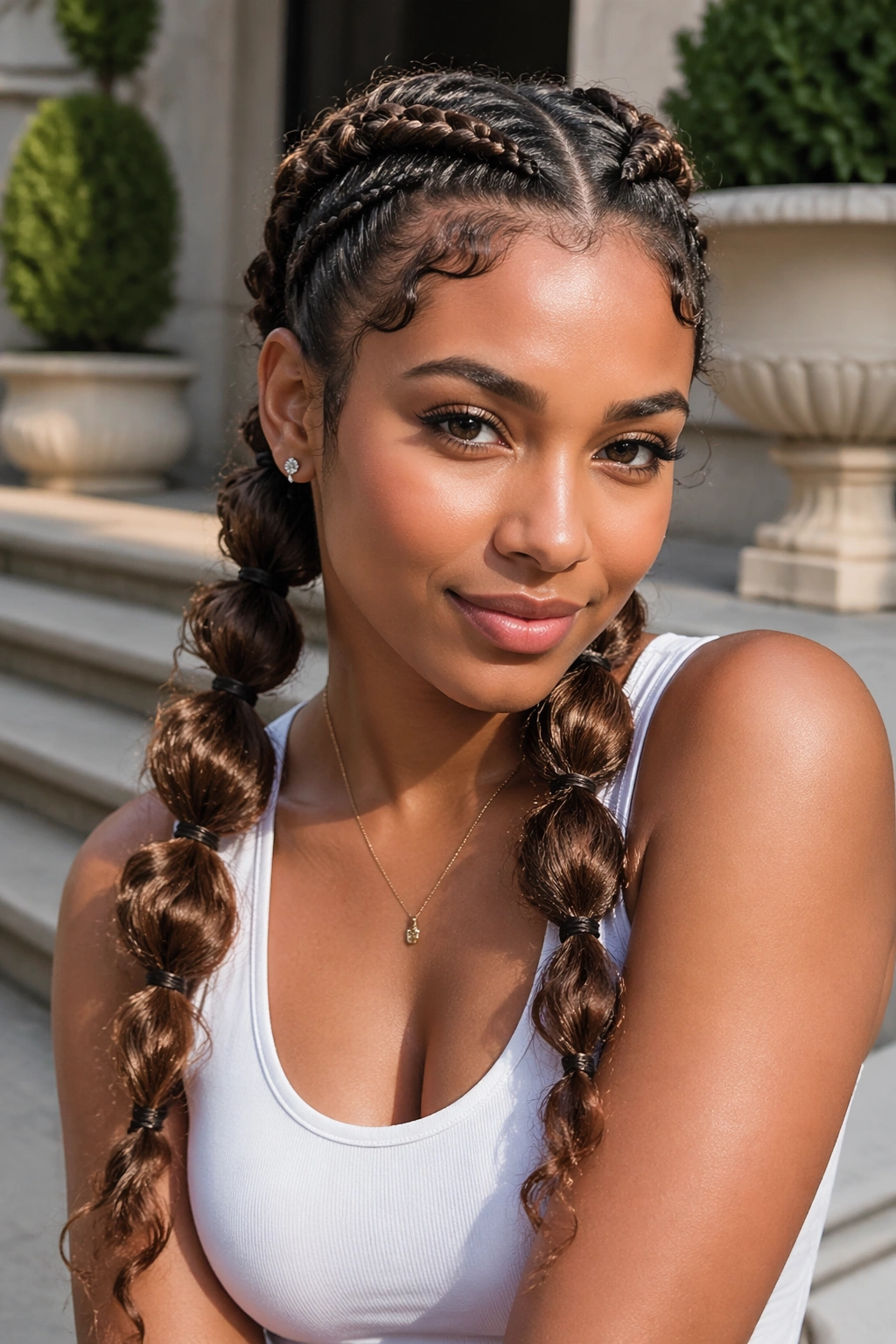
Boxer braids are often treated like a sporty, straight-hair style, which is a shame. Curly hair gives them extra texture right away, and the bubble ends make the look feel more modern without turning it into a heavy braid all the way down. The bubbles also let the curl pattern show through instead of hiding it.
What makes this style useful is the control at the scalp. Two tight Dutch or French braids keep the roots neat and off the face. Then the ponytail sections are broken up with small elastics every few inches, creating soft rounded bubbles that work especially well on thick curls.
If your hair is long enough, you can stretch the tail a bit before adding the elastics so the bubbles look fuller. If your hair is shorter, fewer bubbles are better. Too many tiny sections can make the style look busy.
This is a good option for workouts, travel, or long days when you want the hair out of the way but still visible. It holds better than a loose braid, and the bubble tail keeps the style from feeling too severe. Clean roots. Soft ends. That’s the whole appeal.
10. Braided Mohawk with Curly Sides
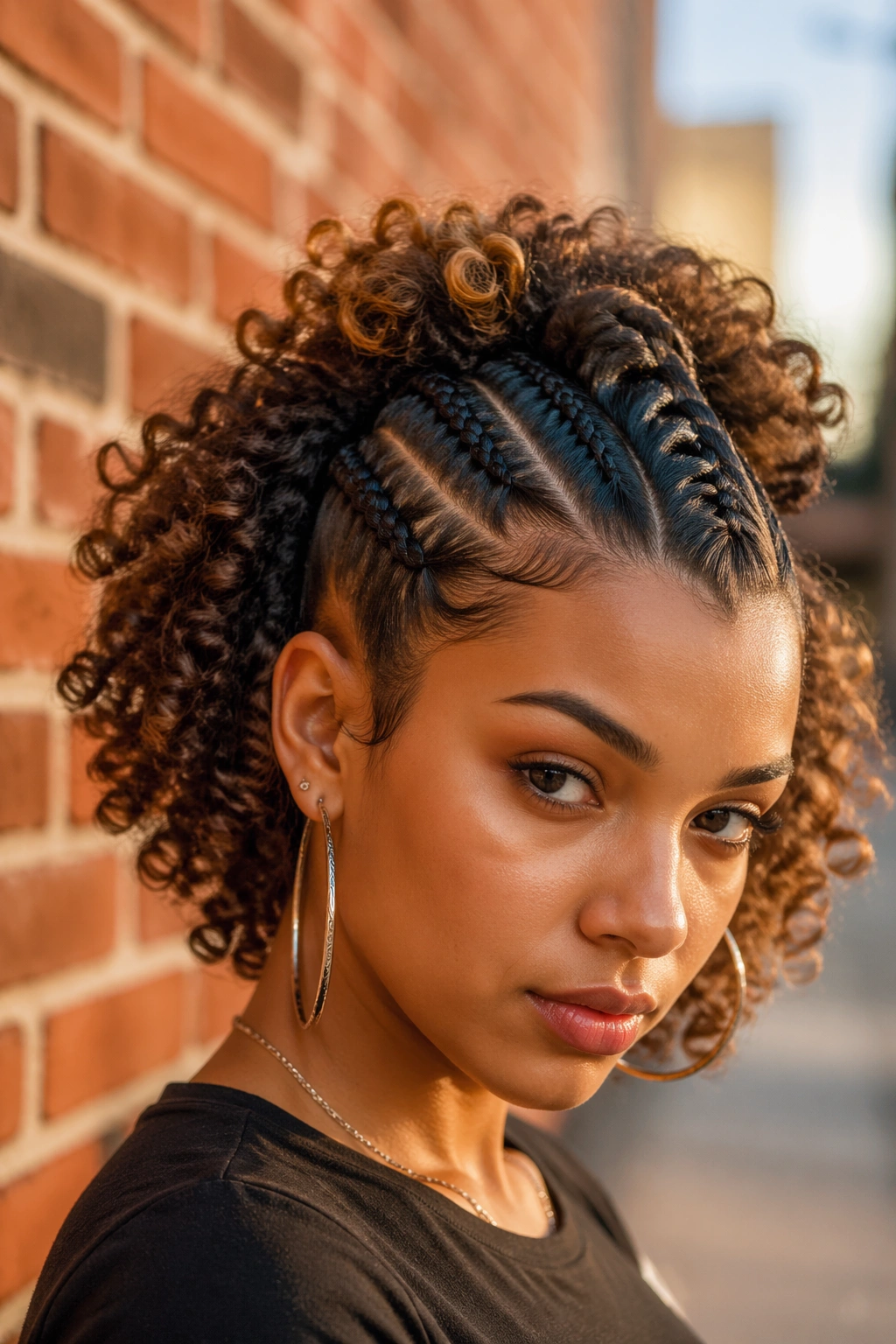
A braided mohawk has edge, no question. It also happens to be one of the smartest ways to show off curly hair’s volume because the braid creates a central line while the sides stay lifted, clipped, or pinned back. The shape is bold, but the texture keeps it from looking stiff.
Why This Style Stands Out
The center braid can be a single Dutch braid, several narrow cornrows, or one chunky braid that runs from the forehead to the nape. The sides can stay curly and loose for contrast, or they can be pinned back for a sleeker effect. Either way, the middle ridge gives the style its backbone.
This one is especially flattering on thick curls and coily textures. It lets the sides expand a little, which is exactly what makes the mohawk shape dramatic. If you have shorter curls, the style still works, but the braid needs to be anchored well so the center doesn’t collapse.
A Few Practical Details
- Keep the side sections moisturized so the curls don’t frizz into the braid.
- Use duckbill clips while you work; they help hold the shape.
- Finish with a light mist of holding spray, not a wet soak.
The best part? It can look fierce without needing polished perfection. A few flyaways only make it better.
11. Side Braid on a Wash-and-Go
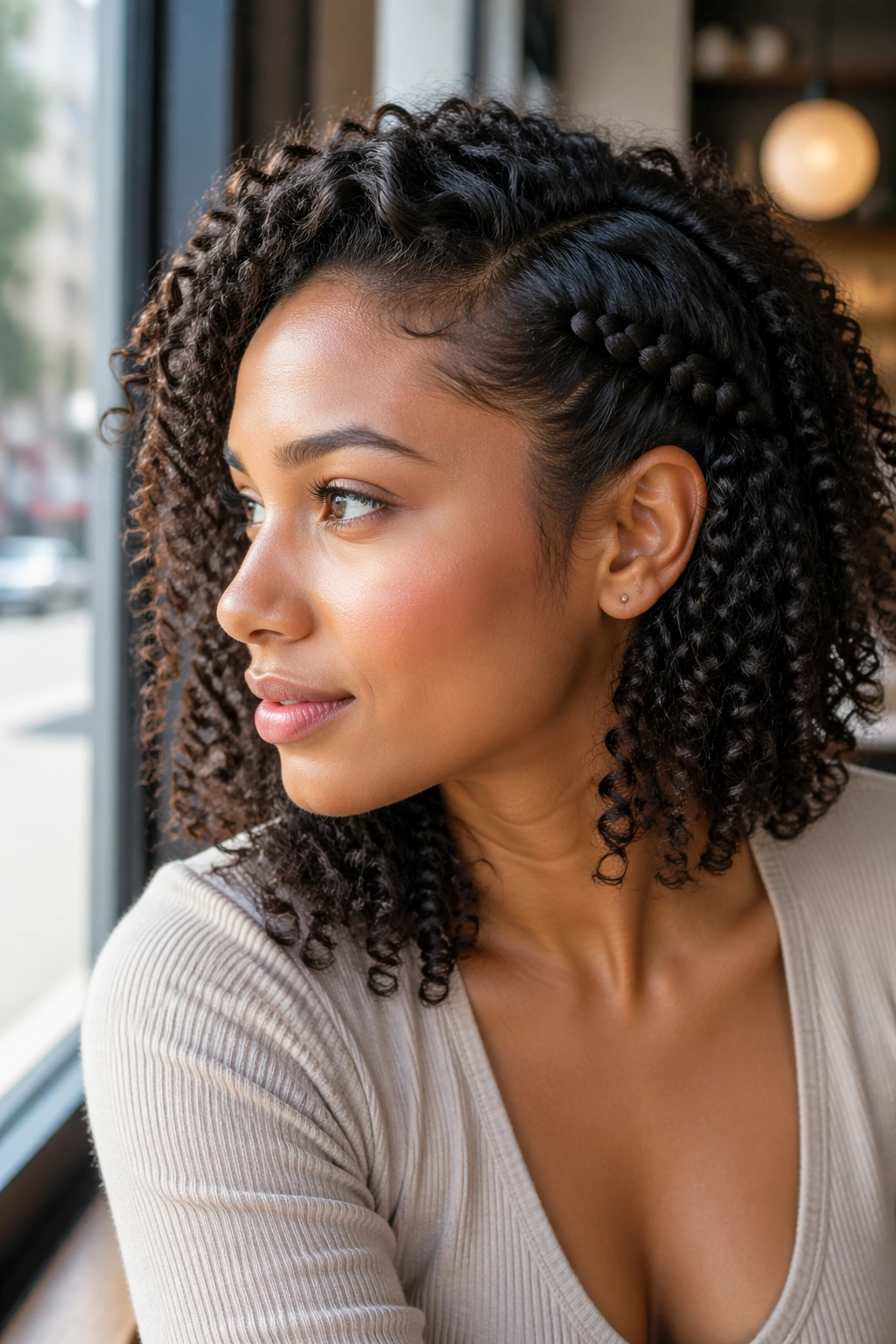
A side braid is the style you reach for when you want to change the shape of your curls without starting over. On a wash-and-go, it can create a deep side sweep that looks polished in five minutes and still keeps the curls visible. It is fast. That matters.
The braid can be loose and chunky, then pinned behind the ear or wrapped toward the back. If you have layers, the braid will look slightly undone in a good way, with small pieces escaping naturally around the face. That soft edge is part of the charm.
This style works best on curls that already have some definition. If the hair is too dry, the braid can snag. A small amount of leave-in or curl cream on the section you braid makes the strands easier to handle without flattening the whole head.
I like this look for dinner, meetings, and days when you want your curls to feel intentional but not overworked. It’s also one of the easiest ways to refresh a tired wash-and-go. One braid. One side. Done.
12. Twisted Milkmaid Braid
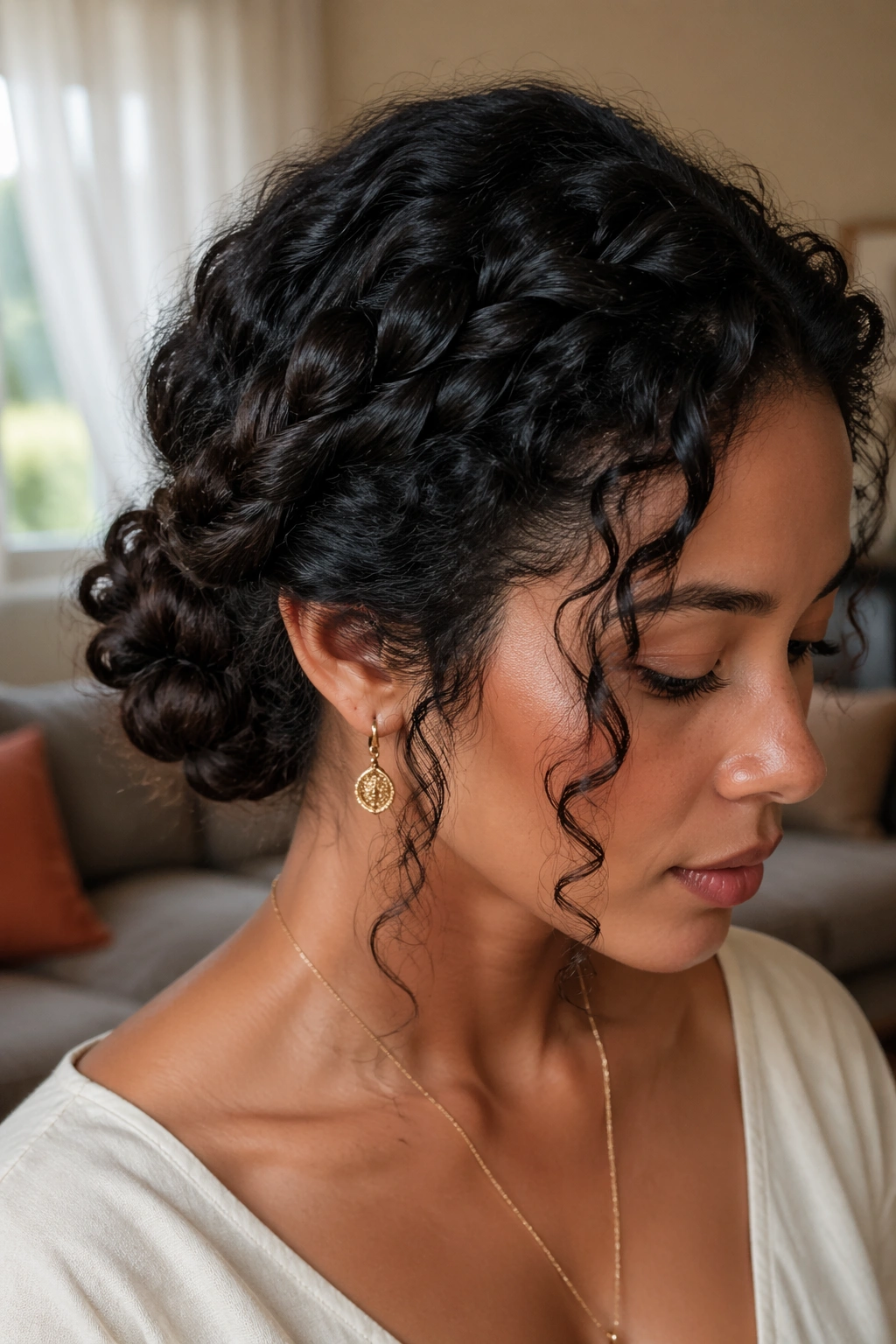
A twisted milkmaid braid sits lower and feels a little softer than a full halo braid. That lower placement matters on curly hair because it leaves more room for volume at the crown, which keeps the style from looking too tight or formal. It also works beautifully when you want the hair off the neck but still want a little softness around the face.
This style is made from two braids or twists that wrap around the head and meet near the top or side. On curly hair, the texture helps the twists hold shape, so you can keep the sections a little thicker than you might on smoother hair. Thin sections tend to disappear. Chunkier ones read better.
It looks especially good with a few loose curls left out at the temples. Not because it needs a “messy” touch, but because those pieces stop the braid from looking like a costume. The goal is balance, not neatness for its own sake.
Use pins that grip well and tuck the ends well under the braid. If the finish feels too stiff, pull the braid open gently with your fingers once it’s secured. That little widening step gives the style a more relaxed profile.
13. Curly Ponytail with a Braided Base
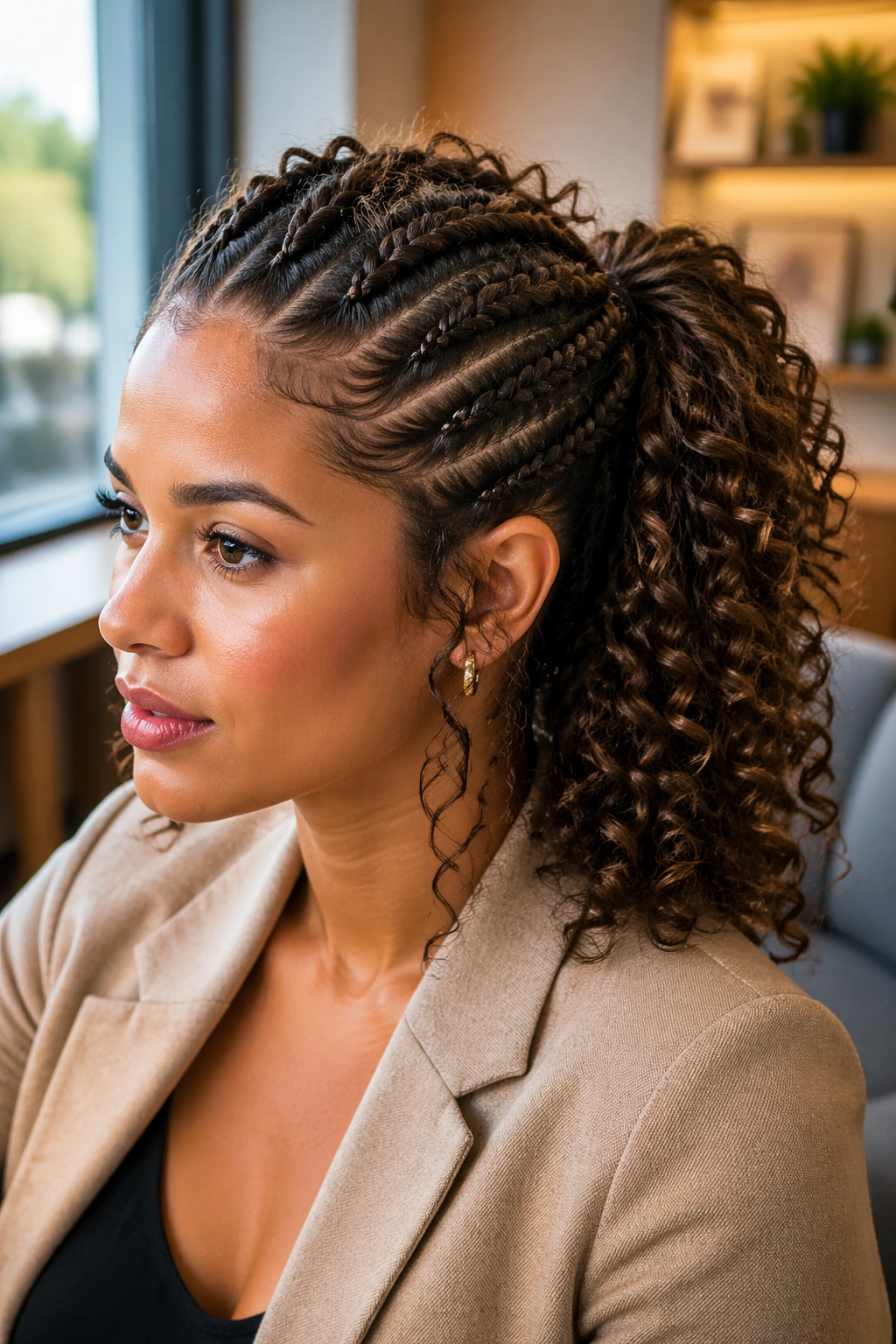
There’s something useful about a style that handles the roots and leaves the length alone. A curly ponytail with a braided base does exactly that. The top section is braided back from the front or sides, then gathered into a ponytail that keeps the curls free to move. It’s simple, but not plain.
The Braid Is Doing the Heavy Lifting
The braided base keeps the front clean and gives the ponytail a stronger anchor. That means less slipping and less fuss during the day, which is a relief if your hair tends to puff up where the elastic sits. The curls in the tail keep the style from looking too controlled.
This is a good office style, but it also works for casual weekends. It depends on how tight you make the braid and how smooth you want the crown to be. A little root volume looks fine. A flat, pulled-down crown usually does not.
Tiny Changes That Matter
- Wrap a small curl around the elastic to hide it.
- Use a satin scrunchie for less breakage.
- Braid the front section while the hair is slightly damp if you want more control.
If you like a style that feels clean at the top and lively at the bottom, this one earns its place fast.
14. Micro Accent Braids in Loose Curls
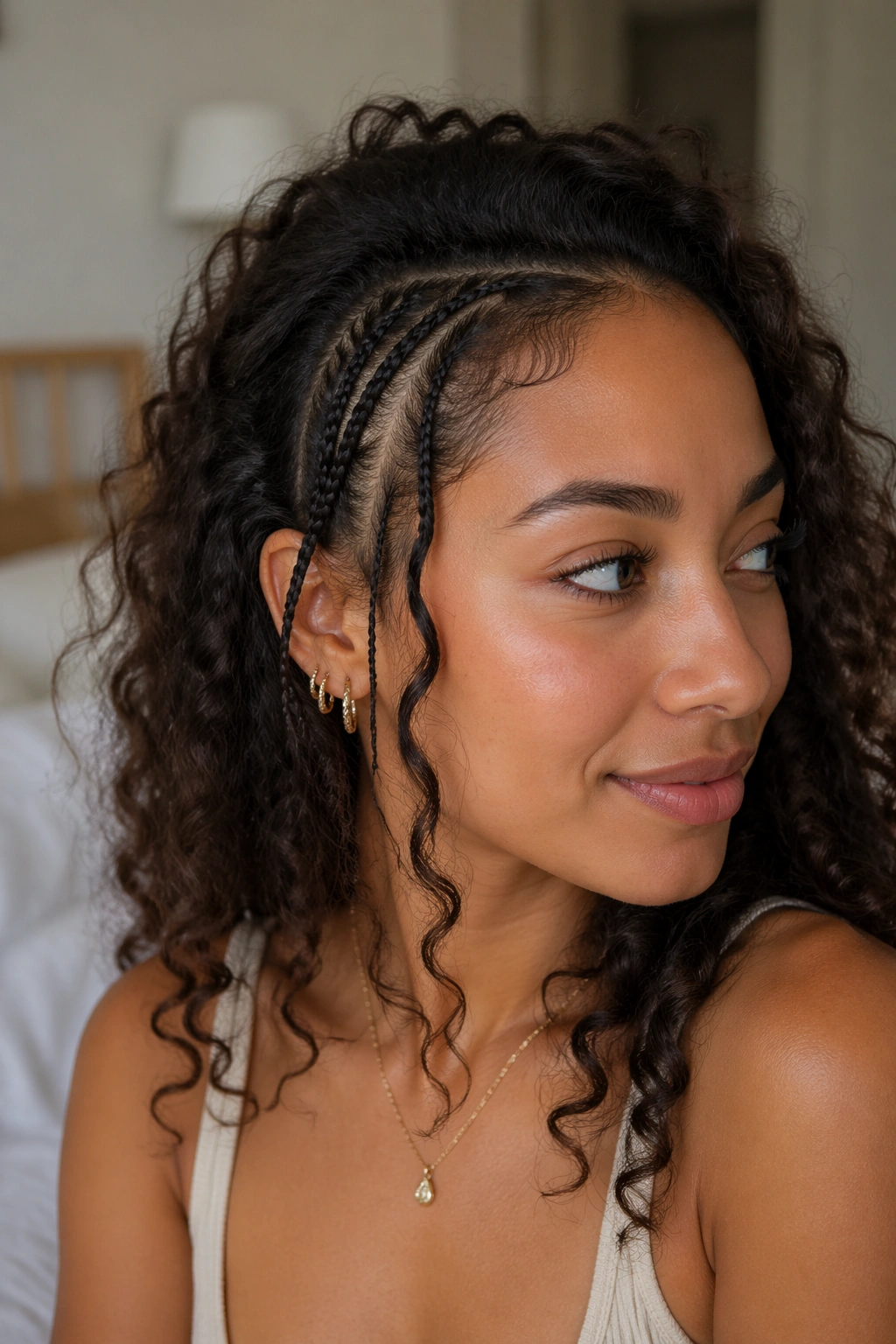
Want braid detail without committing to a full braided style? Micro accent braids are the answer. A few tiny braids scattered through loose curls can change the whole feel of the hair. They catch the eye, break up a big curl pattern, and give the style some direction without taking away the volume.
These work especially well when the curls are worn down. You can place two braids near the temple, a couple behind one ear, or a thin braid tucked into the side for a peek-a-boo effect. On curly hair, the contrast between the tiny braid and the fuller curl pattern makes the whole style look richer.
The trick is restraint. Too many micro braids and the hair starts looking busy. Two to six is usually enough, depending on density. If you want a little sparkle, braid in a small cuff or bead at the end. That one detail is enough. No need to overdecorate.
This is also a good option for people who want a style that can grow out without looking awkward. The braids age well because they are not carrying the whole hairstyle. They’re accents. That’s the point.
15. Chunky Side Braid with Curly Ends
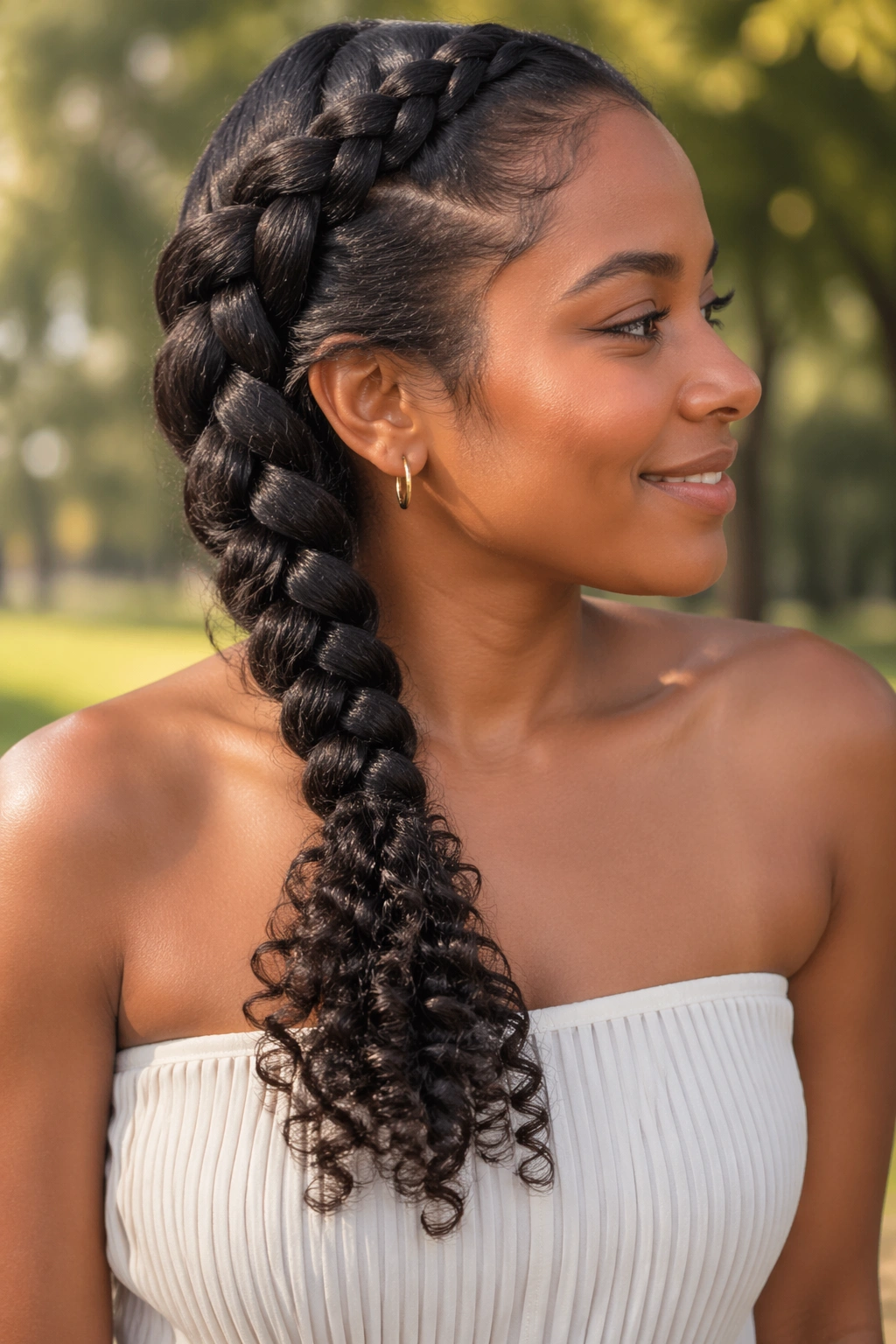
A chunky side braid is one of the most forgiving braided styles for curly hair, and that is part of why I like it so much. It does not need perfect sectioning or razor-straight part lines. It wants texture. It wants a little fullness. Curly hair gives it both.
The braid sits over one shoulder and lets the ends stay curly, which keeps the style from looking too finished in a stiff way. That loose tail is where the curl pattern gets to shine. If your hair is long enough, the braid can stay chunky all the way to the ends. If not, stop braiding midway and let the rest fall naturally.
This style is especially good when the hair has a lot of density. A small braid would get lost. A chunky braid has presence. It also makes a strong case for second- or third-day curls, since the slight roughness gives the braid more grip.
If you want it to look softer, tug the outer loops of the braid a little after securing it. Not too much. Just enough to widen the braid and let the texture breathe. It’s a small move, but it changes the whole finish.
Final Thoughts
The best braided styles for curly hair are the ones that respect the hair’s natural shape instead of fighting it. Some people want sleek roots and big ends. Others want the braid to be the main event. A few want the braid to do nothing more than keep the front from falling into the face. All of those are valid, and all of them can look good on curls.
What matters most is tension, section size, and how much of your curl pattern you want to keep visible. Tight is not the same as neat. Small is not the same as elegant. A braid that leaves room for curl movement usually looks better, feels better, and lasts longer.
If you’re choosing between styles, start with the one that matches your day, not the one that looks the hardest on someone else’s head. Curly hair has enough personality already. The braid just needs to work with it.