



Green and pink box braids do not whisper. They walk into a room and decide the mood for everyone else.
What makes this color combo fun is that it can go in two totally different directions. Neon green with hot pink feels loud and graphic. Mint with blush pink feels softer, almost sweet, and a lot easier to wear if you want color without looking like you borrowed a paint marker from a teenager.
The braid pattern matters just as much as the shades. Put the pink near the face and the green underneath, and the whole style reads one way. Flip that balance, add a clean part, or throw in beads and cuffs, and you get a completely different result. That’s the part people miss when they shop for colored braiding hair and only think about the colors themselves.
What follows are 15 ways to wear green and pink box braids that actually look distinct from one another, not just like the same idea repeated in different lengths. Some are bold. Some are surprisingly wearable. A few are the sort of set that only works if the parts are clean and the braid tension is handled with care. That detail matters. A lot.
1. Split-Screen Green and Pink Box Braids
This is the sharpest version of the look, and honestly, one of my favorites. One side of the head is green, the other side is pink, with a clean center part that makes the color break feel intentional instead of random.
Why the split works
The strong division gives your braids a graphic edge. You do not need extra accessories when the color placement is doing the heavy lifting. A center part also keeps the style balanced, which matters when the two shades are equally bright.
The trick is keeping the braid sizes consistent on both sides. If the green side is full and chunky while the pink side is finer, the whole thing starts to feel lopsided fast. Clean symmetry saves the style.
- Ask for a straight center part if you want the split to read from a distance.
- Use pre-stretched braiding hair so the braid thickness stays even from top to bottom.
- Keep the front braids near the temples slightly smaller if you want the face frame to sit neatly.
- Seal the ends carefully. Hot water finishing only works with hair that can handle it.
A split-screen set looks best on someone who likes a bold, straight-up contrast. No subtlety. No halfway measure.
2. Pastel Ombre Green and Pink Ends
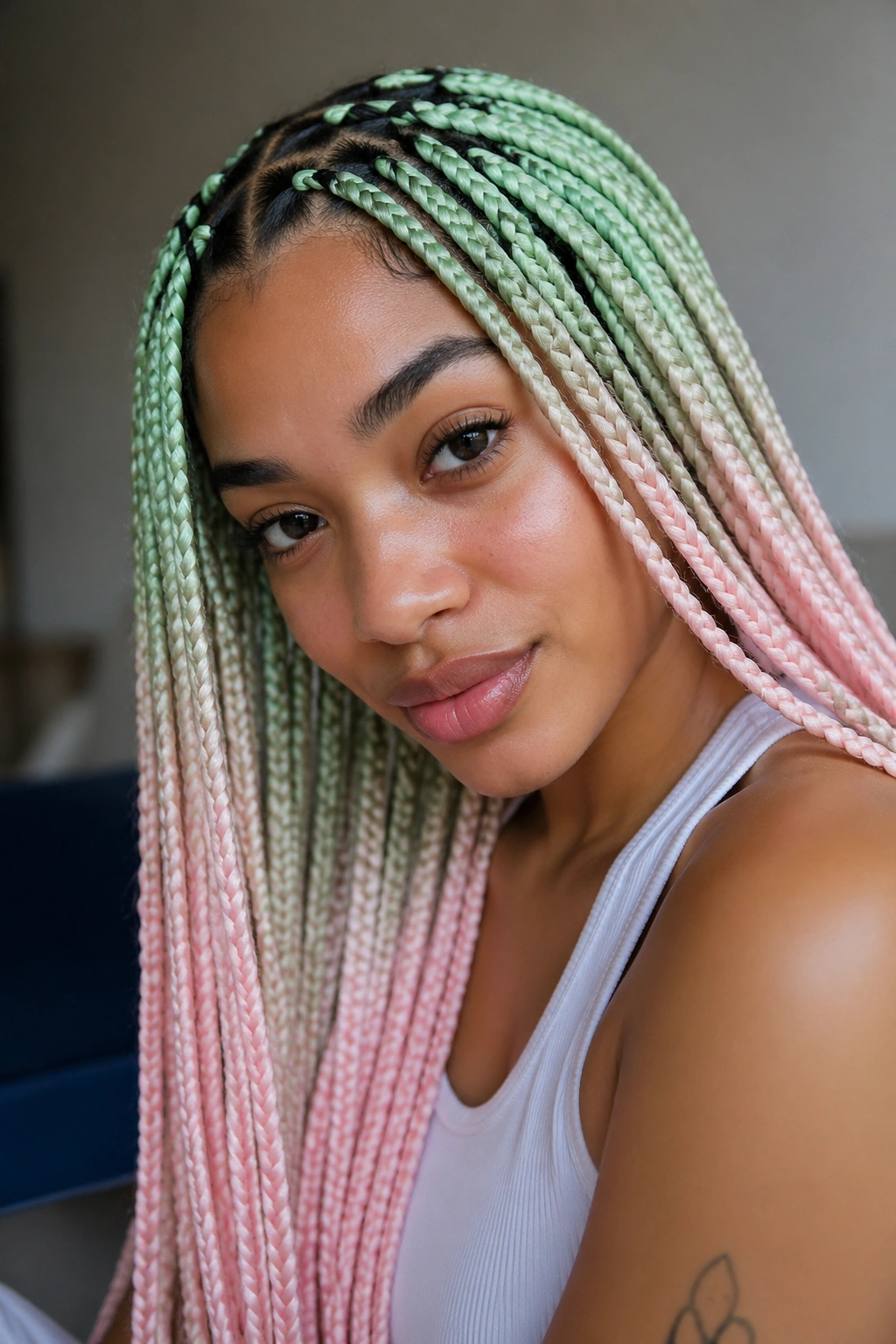
Pastel ombre braids are softer, and that softness changes everything. Instead of a hard color break, the green fades into pink or the pink melts into green near the ends, which makes the whole set feel lighter on the head.
The nicest thing about this version is that it keeps color interest without shouting from the scalp. Mint, seafoam, blush, and baby pink all play well together, especially on medium or long braids where the fade has room to show itself.
There is also a practical side here. Ombre hair hides the tiny variations that happen when braid lengths are not perfectly even. A blunt color split can exaggerate every little mismatch. A gradient forgives more.
If you like your braids to feel wearable but not boring, this is a smart place to start. The color still does the talking, but it does not scream over your outfit.
3. Jumbo Box Braids with Big Color Blocks
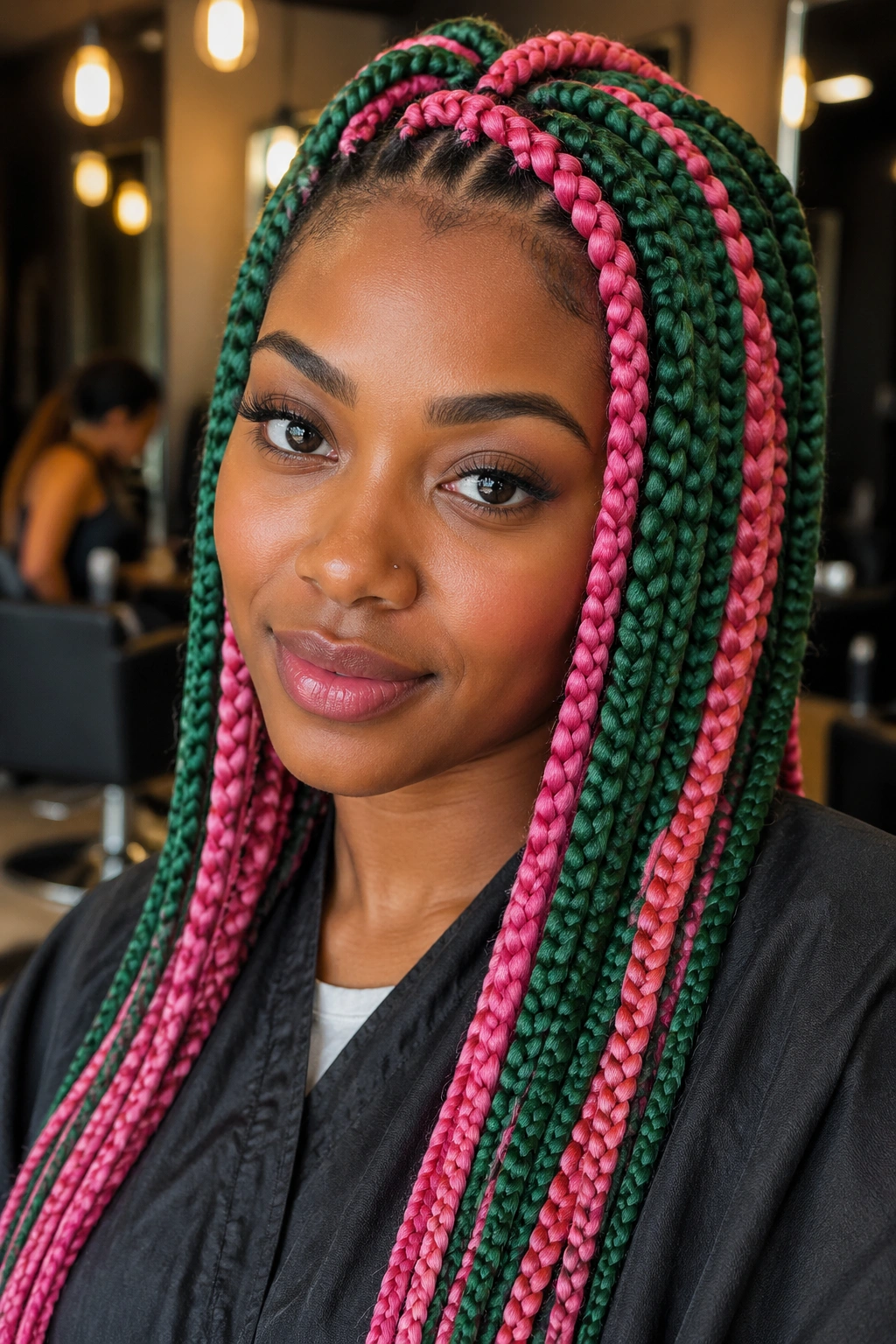
Jumbo green and pink box braids are not subtle, and that is the point. Thick sections make each color block easier to see, so the style reads strong even from across a room.
The payoff is that jumbo braids take less time to install than micro braids, and the color contrast looks bigger because each braid holds more surface area. That means you can alternate green and pink braid by braid, or stack two pink braids next to one green braid if you want a less rigid rhythm.
What to ask for at the salon
- Keep the parts at least 1 inch wide if you want a true jumbo finish.
- Use lighter extension hair if you plan to wear the style for a while; oversized braids get heavy fast.
- Ask for a little extra root room so the style does not feel cramped at the crown.
- Keep accessory use simple. One or two cuffs is enough.
Jumbo braids work best when you want the color to look deliberate, not busy. The downside is weight. If your scalp hates tension, this is not the set to choose for waist-length drama.
4. Knotless Green and Pink Braids with Face-Framing Pieces
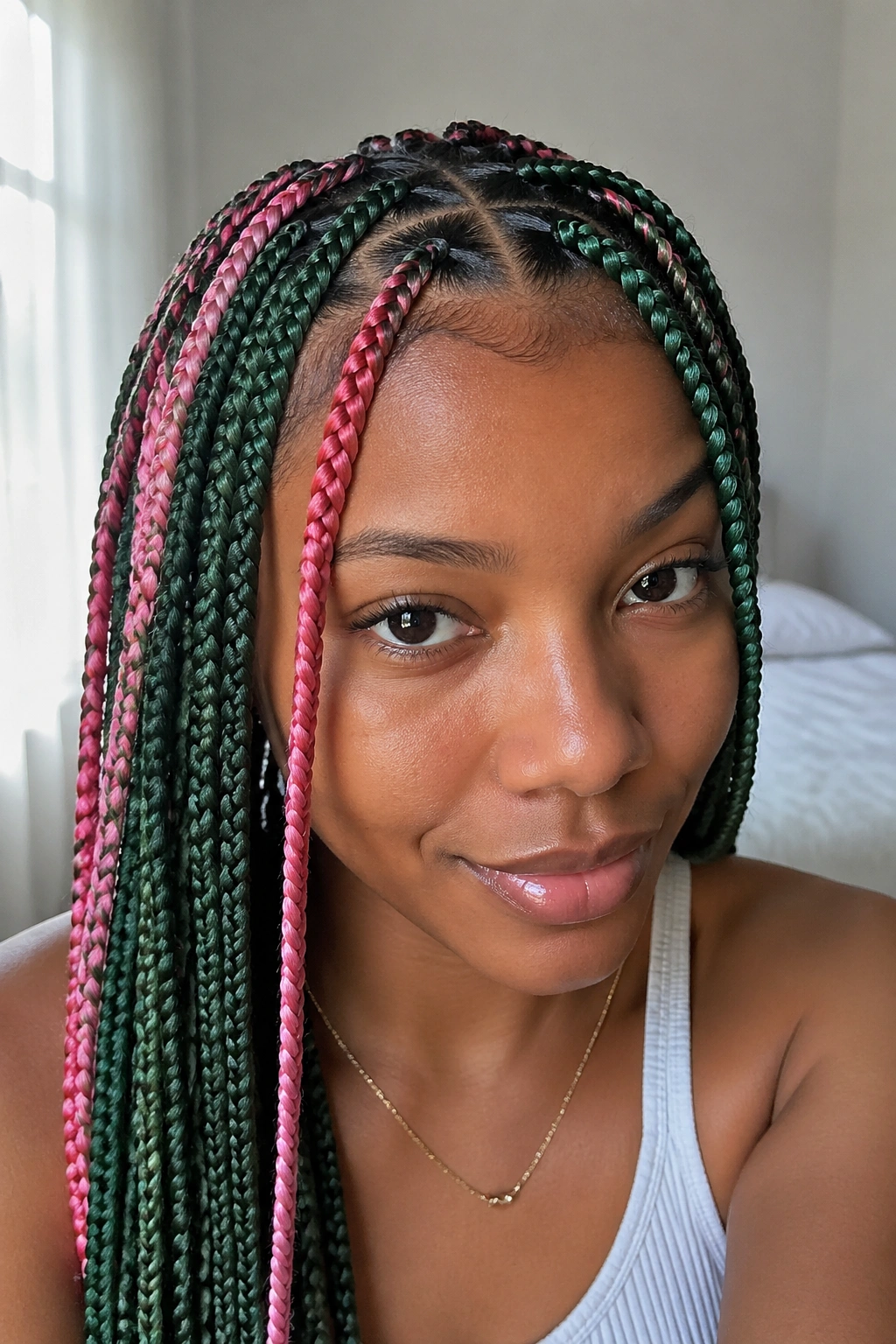
Why do knotless braids look so smooth? Because the braid starts with your natural hair and builds gradually, which keeps the root flatter and easier on the scalp.
That matters a lot with bright colors. Green and pink can look playful, but knotless braids keep the overall result sleek enough that the style does not cross into costume territory unless you want it to. Add two face-framing pieces in pink or green, and the whole set feels lifted around the cheeks.
A good knotless install also grows out more gracefully. The root does not puff up as sharply, so the style keeps its shape longer between maintenance days. That makes it a smart choice if you wear braids for several weeks and do not want the front to look rough after the first wash.
If your hairline is sensitive, this is the version I’d point you toward first. It is easier to live with. Plain and simple.
5. Triangle-Part Green and Pink Box Braids
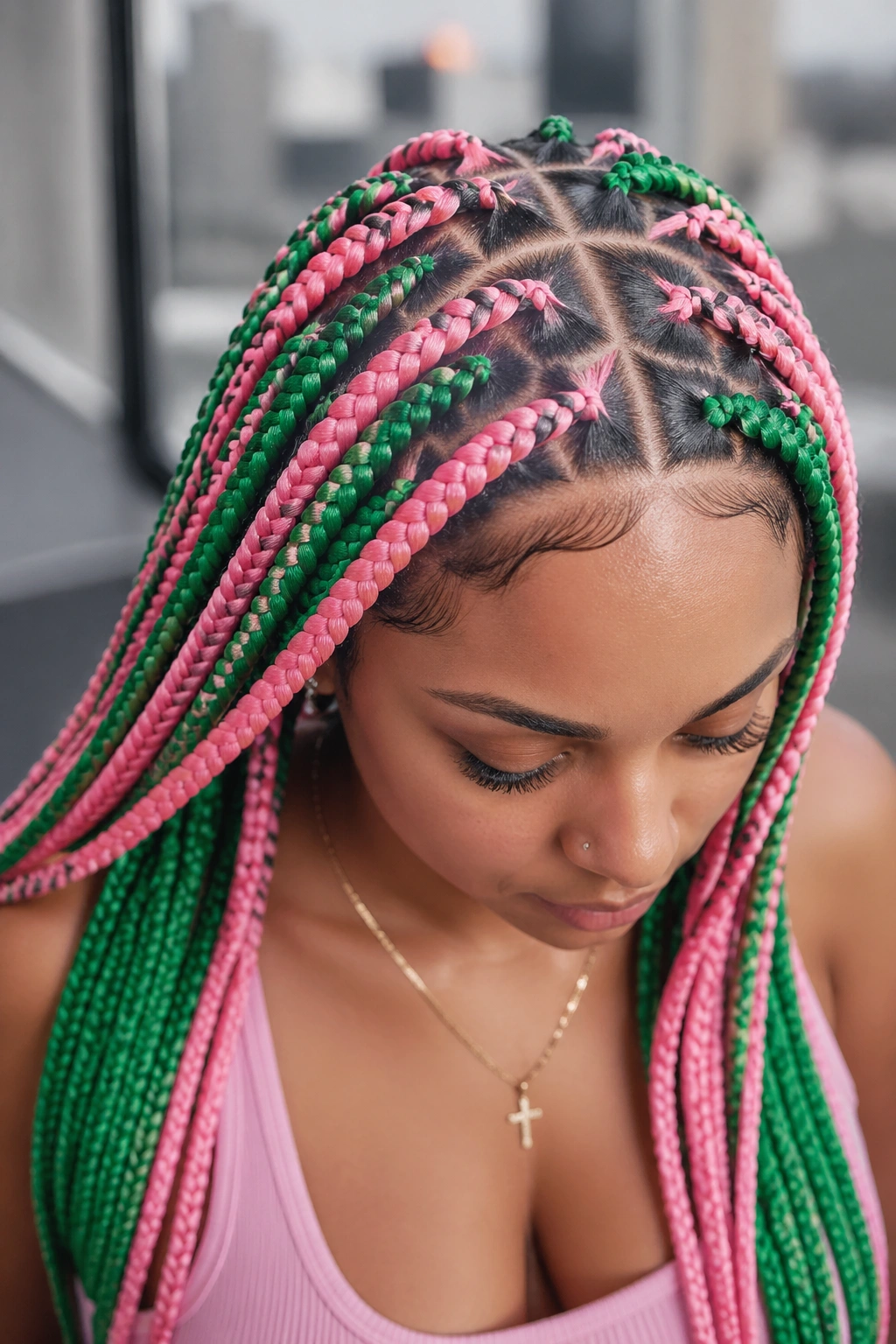
Triangle parts change the mood fast. Instead of looking neat in the usual square grid, the scalp pattern feels sharper and a little more styled, which gives the green and pink even more attitude.
I remember seeing a triangle-part set where the parts were tiny near the hairline and widened toward the crown. Small detail. Big difference. The color looked richer because the parting pattern kept the eye moving, instead of letting the braids sit in a flat grid.
What makes this version stand out
- Triangle parts work best when the braids are medium or small, not oversized.
- The scalp pattern becomes part of the look, so clean sectioning matters more than usual.
- A mix of hot pink and deep green gives the triangle shape extra punch.
- This style photographs from the top down better than a basic square part.
The only real downside is that triangle parts can take longer to section. Still, if you care about the finished shape, the extra time is worth it.
6. Shoulder-Length Green and Pink Box Braids
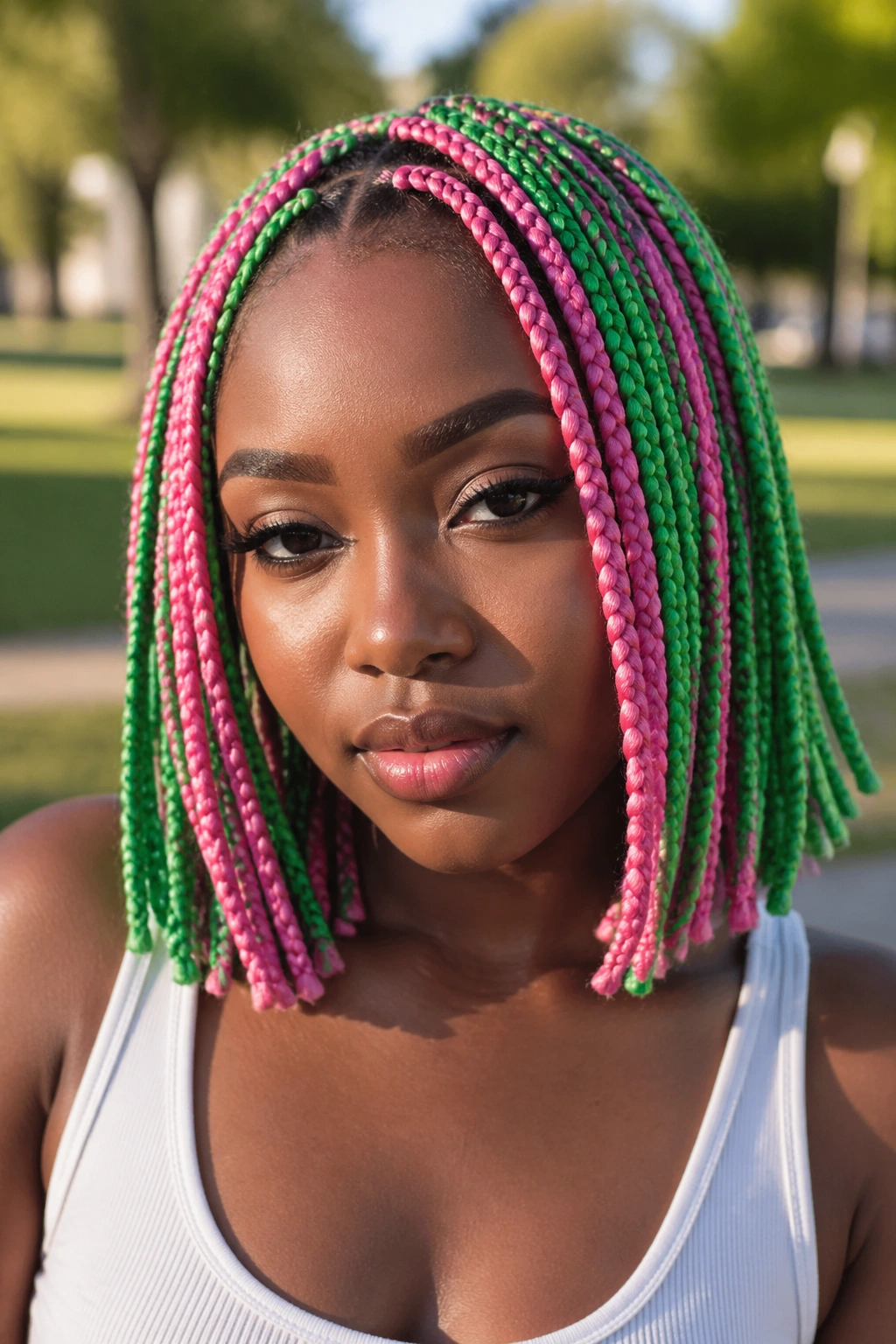
A bob-length set is one of the smartest ways to wear this color combo. Long braids can be dramatic, sure, but shoulder-length braids keep the colors close to the face and remove some of the weight.
Compared with waist-length braids, this version is easier to style in the morning. Less tangling. Less pull. Less time spent fighting the ends under a jacket collar. That matters more than people admit.
The shorter cut also makes the colors feel cleaner. When the hair stops around the shoulders, the green and pink sit in a tighter visual frame, so the shades read crisp instead of sprawling. If you want a style that looks fresh with hoops, lip gloss, and a plain T-shirt, this is a strong one.
There’s a nice bonus, too. Bob braids keep the neckline open, which helps the look feel lighter even when the color is loud.
7. High Ponytail Green and Pink Box Braids
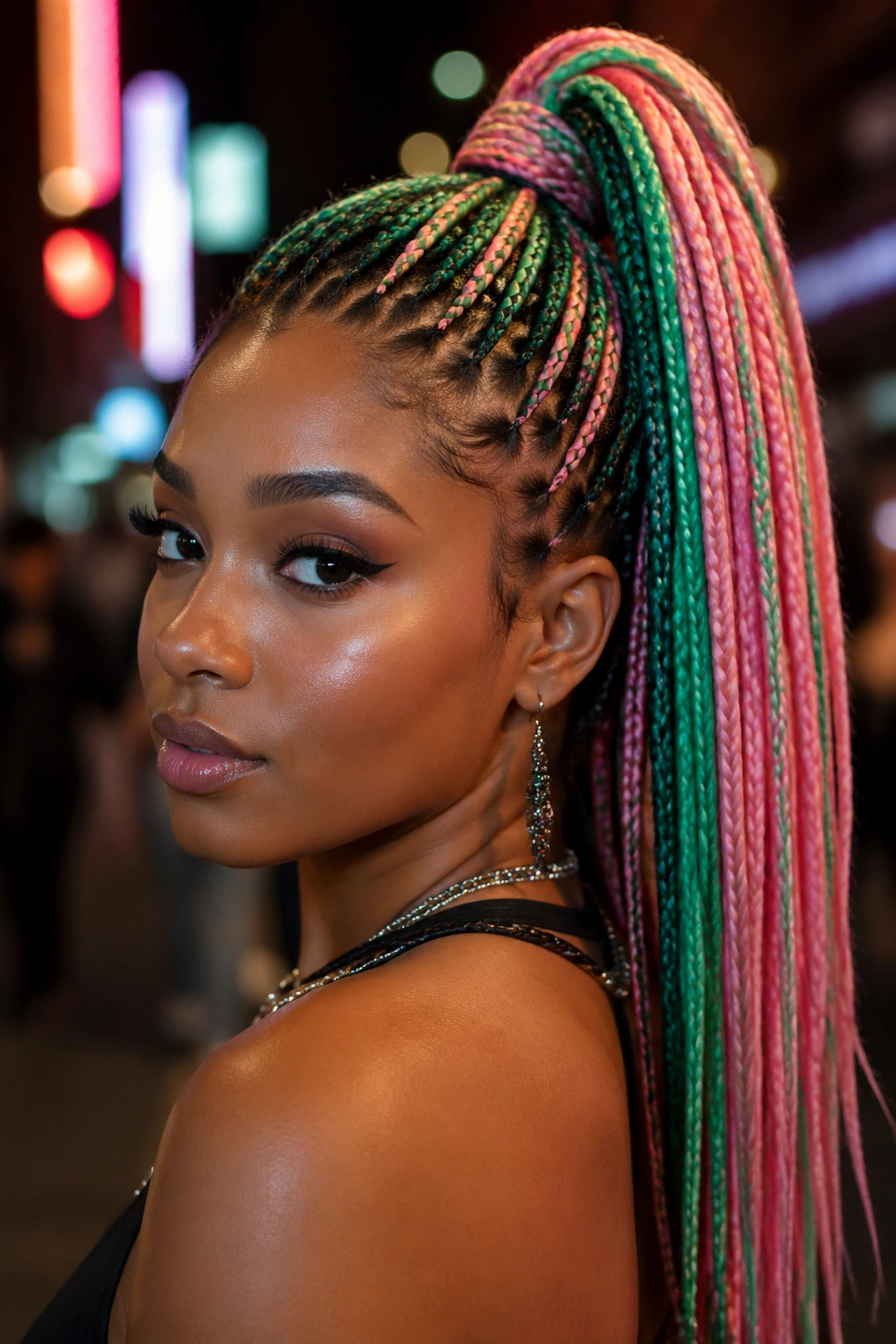
A high ponytail makes the color move. That sounds obvious, but it changes the entire feel of the braids because the green and pink swing together instead of hanging straight.
This works especially well if the top of the head is one dominant shade and the lengths alternate. When the ponytail is pulled up, the pattern becomes obvious from the crown down, and the braid ends can flip between pink and green as you move. That motion gives the style life.
The practical part is the base. You want a firm ponytail holder, a clean wrapped section around the band, and enough root tension to keep the pony in place without making your scalp angry by lunchtime. Too tight, and the style looks severe. Too loose, and it collapses.
A high ponytail is the version I’d pick for a night out, a party, or any day when you want the braids off your neck and still want the colors to do their job.
8. Micro and Mini Green and Pink Box Braids
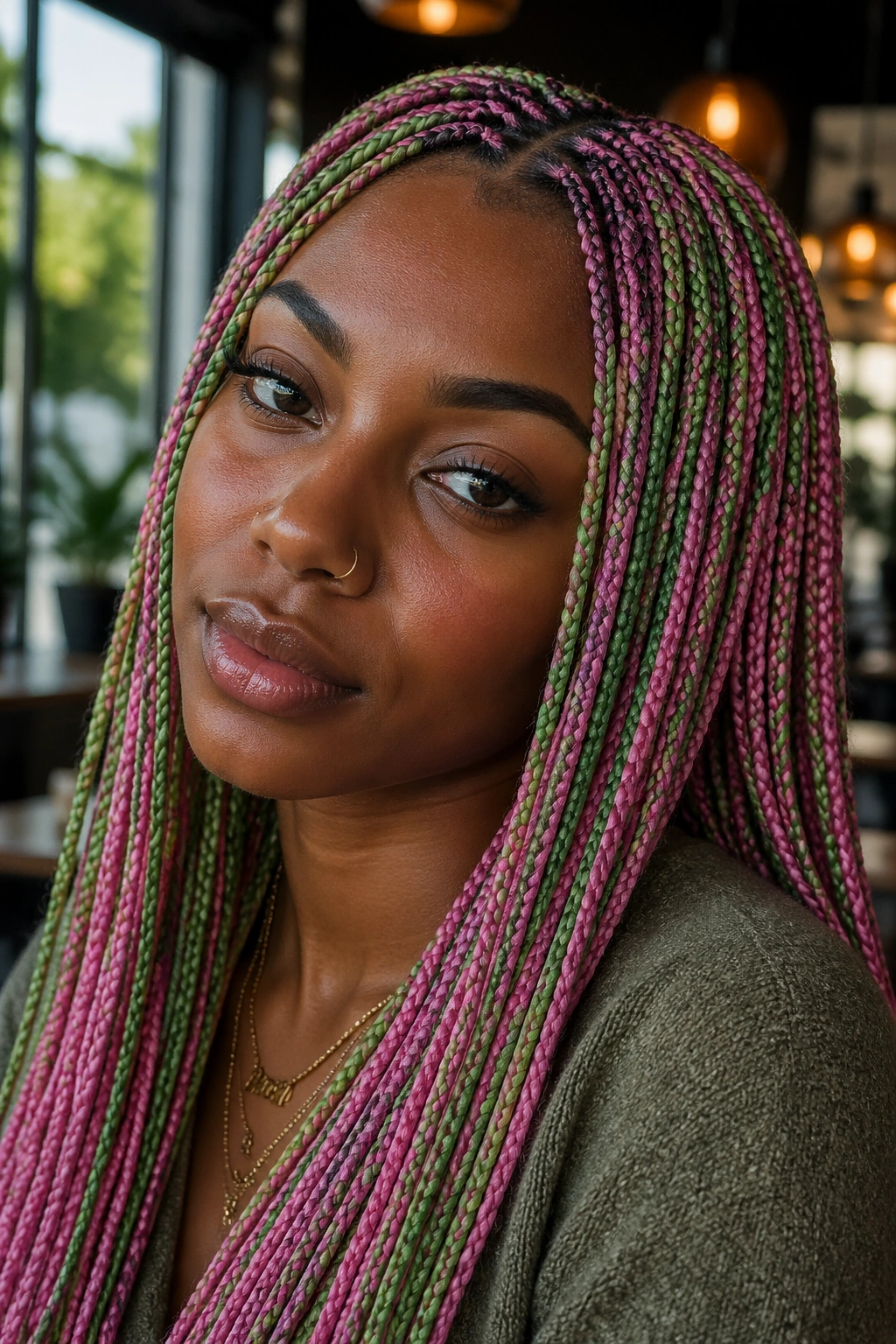
Can tiny braids carry bright colors? Absolutely. In fact, they often make the shades look richer because there are so many braid strands packed together that the eye reads the whole head like woven fabric.
Micro and mini braids are best when you like detail. The color shift is more gradual, more textured, and less blunt than it would be in jumbo braids. Green and pink can alternate randomly here, which gives the style a softer, confetti-like feel.
How to get the most from it
The section size needs to stay consistent or the braid density looks patchy. That is the part most people underestimate. Tiny braids also need a careful wash routine because they tangle if you rough them up in the shower.
If you want a long-lasting style and do not mind the install time, this is a solid choice. The finished result feels dense and full, and the color blend looks busy in a good way.
9. Half-Up, Half-Down Braids with Loose Ends
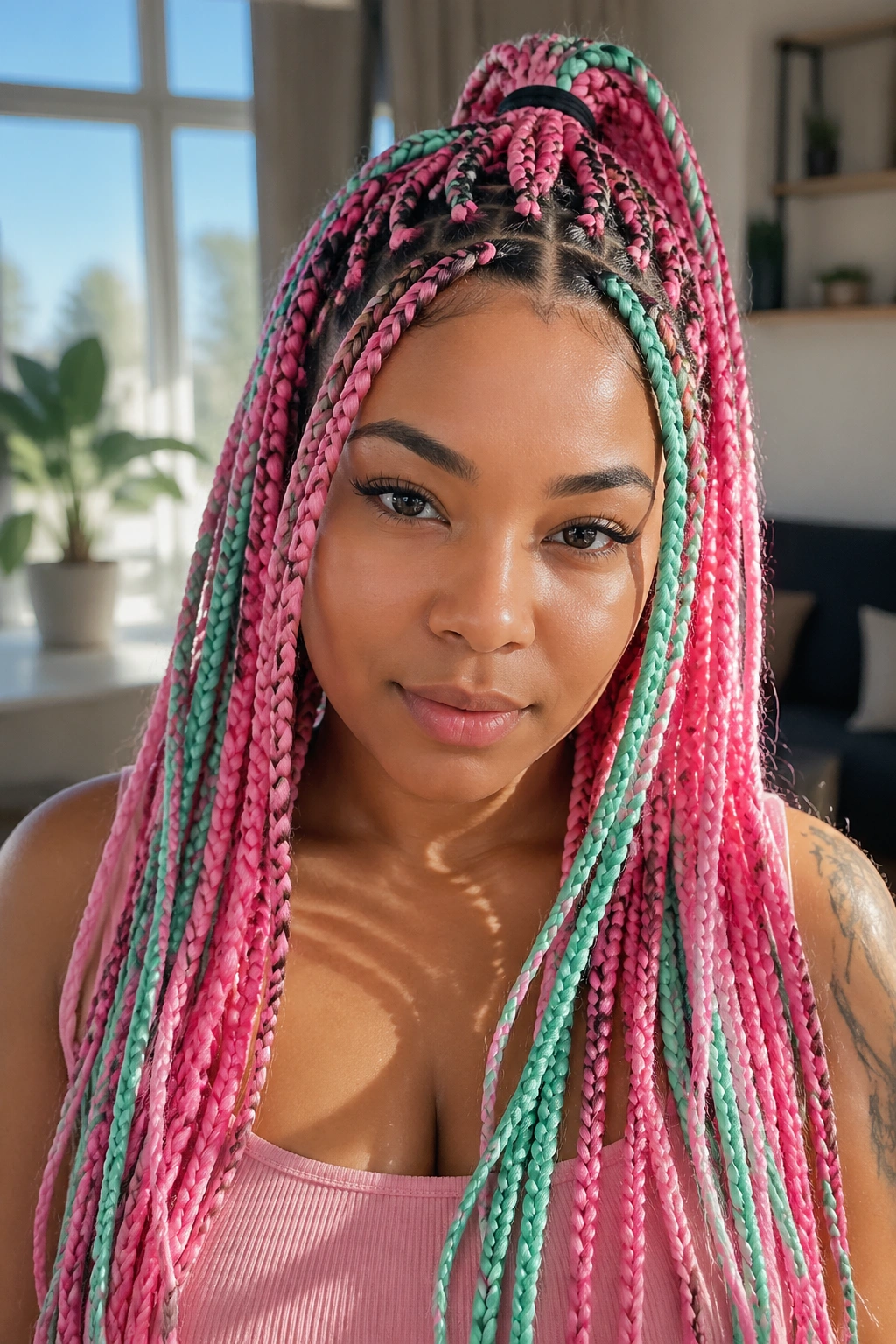
Half-up, half-down braids are the easiest way to soften a bright color set. Pulling the top section up gives you shape near the crown, while the loose length keeps the pink and green visible where it counts.
A style like this works especially well when the colors are split in a patterned way. Maybe the top ponytail has more pink and the lower braids lean green. Maybe the front pieces are mint and the back is neon. Either way, the contrast gets more interesting when some of the hair is lifted and some hangs free.
The half-up shape also gives you a place to add a large scrunchie, a wrap, or a few cuffs without making the whole head feel crowded. That is useful. Bright braids can go from stylish to overloaded fast if you pile on too much at once.
For everyday wear, this is one of the most forgiving options in the whole list. Easy to pin. Easy to change. Easy to live with.
10. Wrapped Green and Pink Braids with Thread Accents
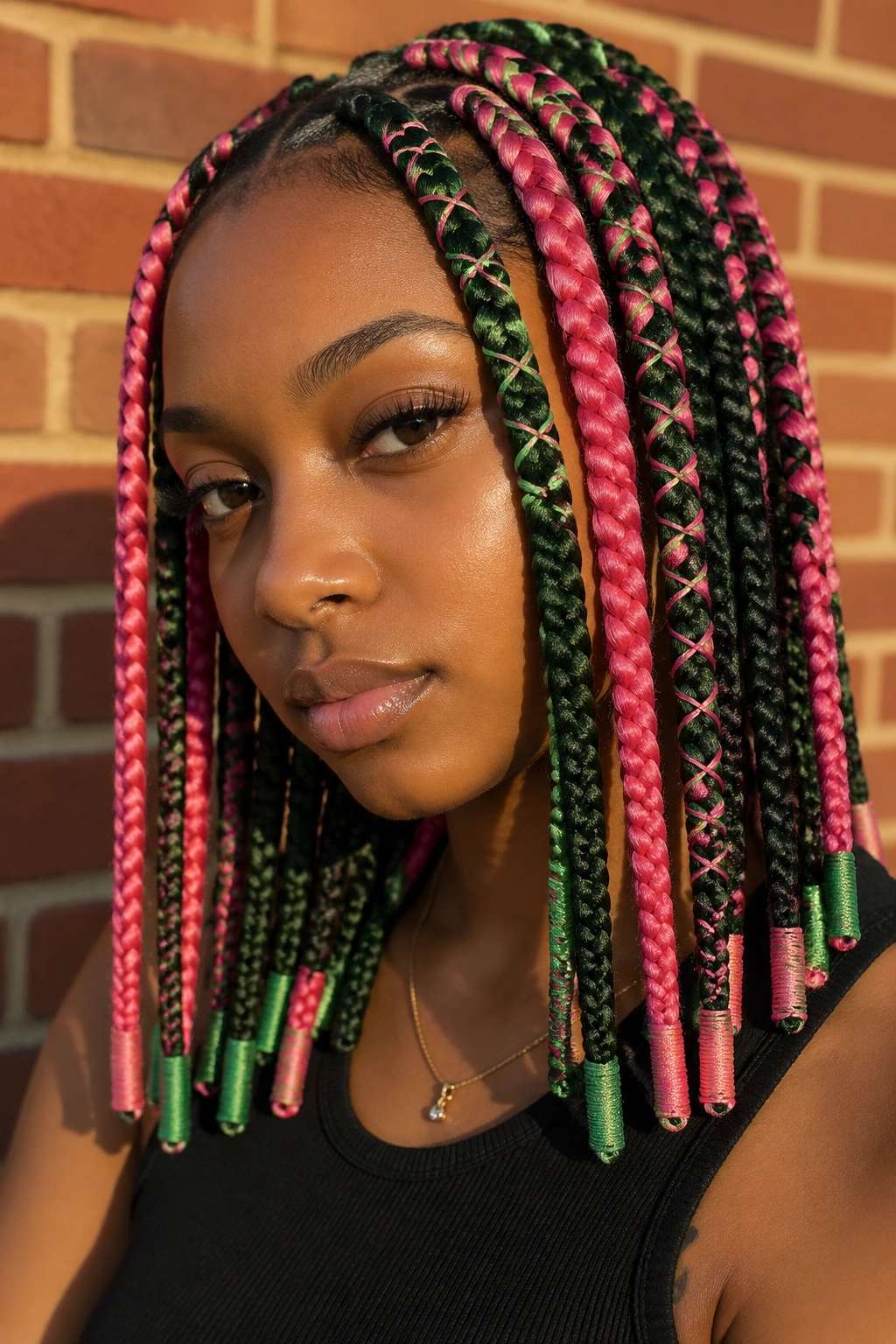
Thread wrapping changes the tone of the braids without changing the braid pattern itself. It is a small move, but it can make green and pink look more layered and handmade.
You can wrap a few sections in matching thread, then leave the rest plain. Or wrap the ends only, which keeps the scalp area clean and lets the color show through in strips. A narrow ribbon of pink thread around a green braid feels sharper than a full wrap, so think about how much texture you actually want.
- Use light thread if the braids are already thick.
- Keep wraps loose enough that the braid beneath does not bunch up.
- Match the thread to one of the main colors, then use the other color as the contrast.
- Add cuffs after the wrapping is done so nothing gets twisted awkwardly.
This look is small on effort and big on payoff. It is also one of the few versions here that works well when you want the hair color to stay the main event but still need a little extra detail.
11. Side-Swept Green and Pink Box Braids
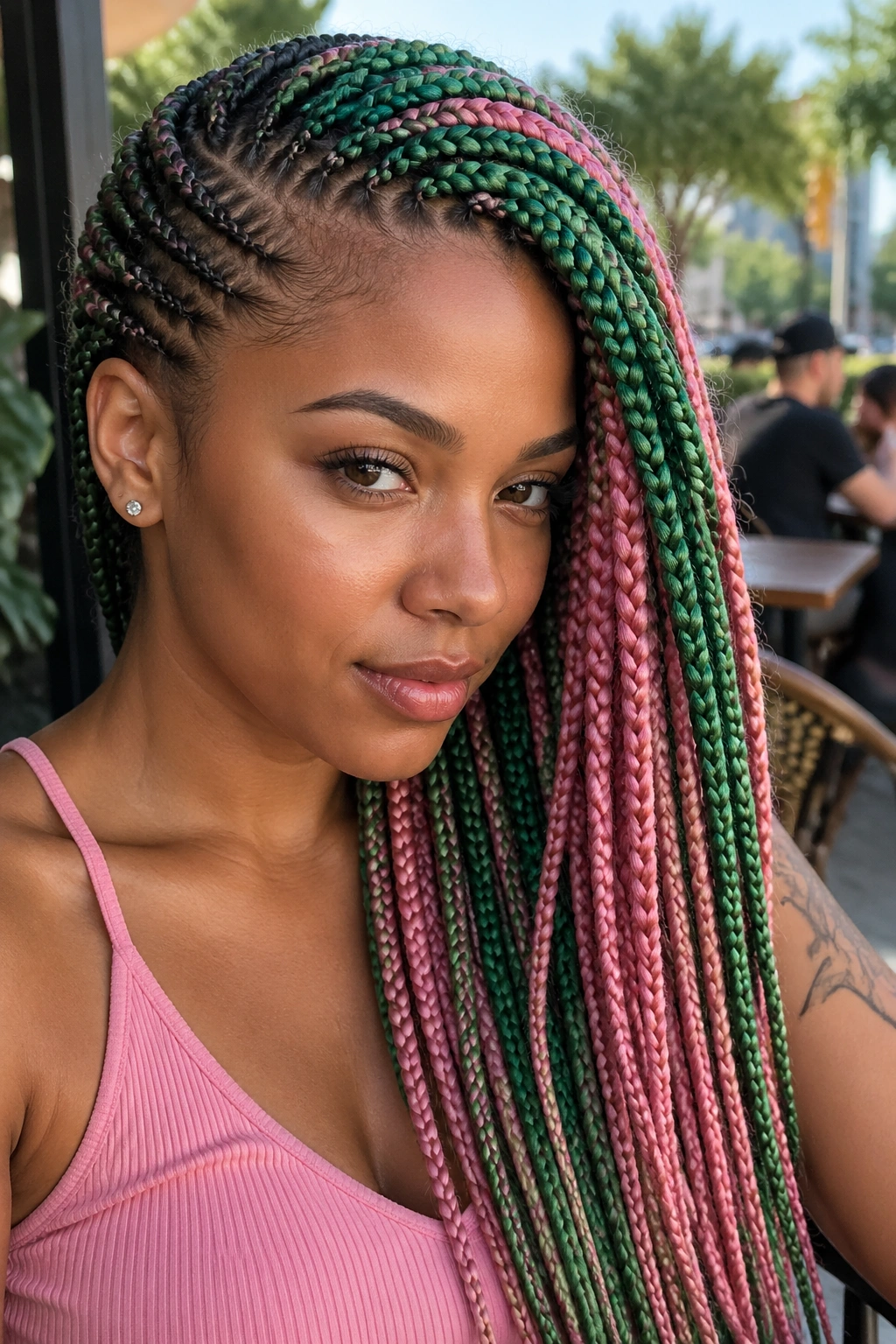
A deep side part changes the whole geometry. Instead of sitting evenly around the face, the braids fall into one side, and that asymmetry makes the pink and green look more dramatic.
Compared with a center part, a side-swept set feels looser and a bit more fashion-forward. One side gets the volume. The other side gets the clean reveal of the scalp. It is a small change, but the style reads differently the second you move the part over.
The color placement matters here. If the heavier side is mostly green and the lighter side is pink, the look has a built-in balance that feels intentional. If you want the style to feel more daring, push the brighter pink toward the front and let the green trail behind it.
This is the set for someone who likes a little drama but does not want a towering ponytail or a ton of accessories. The part does the work. The braids follow.
12. Mixed-Width Green and Pink Box Braids
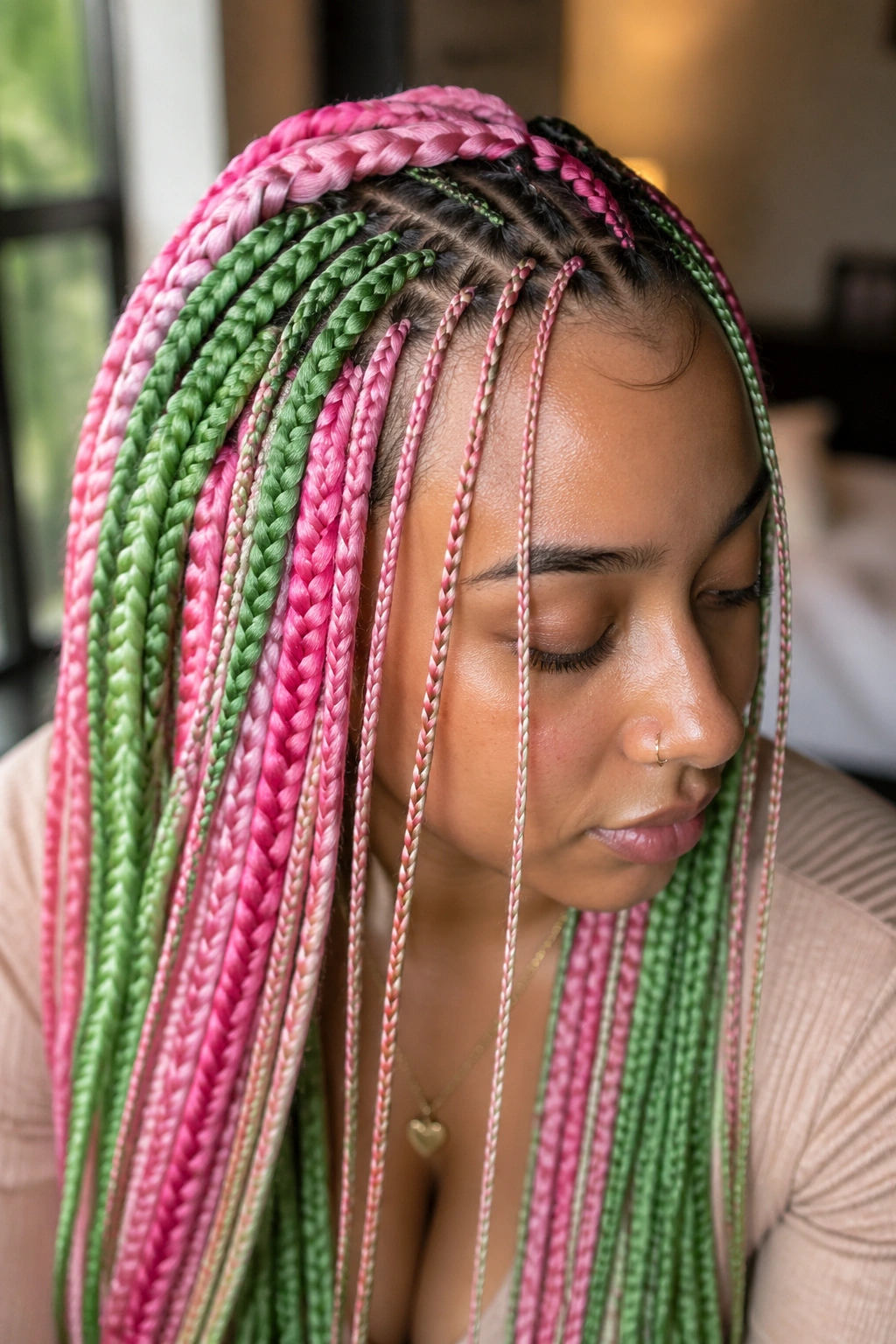
Do all the braids need to be the same size? Not if you want a more natural edge. Mixing widths is one of the easiest ways to stop a bright color set from feeling too stiff.
A few thicker braids near the back, smaller ones around the hairline, and medium sections through the crown can make the whole head move better. The color still pops, but the variation keeps it from looking like a rigid grid. That little bit of irregularity is what makes the style feel lived-in.
How to use mixed widths well
Start by deciding where the eye should land first. Usually that is the front and the crown. Put your strongest colors there. Then let the braid sizes shift a bit toward the nape, where the texture is less visible.
This setup is also kinder if you wear glasses or earrings. Smaller front braids sit better around the temples, while the thicker back sections carry most of the visual weight. It sounds fussy. It is not. It just makes the whole style easier to wear.
13. Ribbon-Tied Green and Pink Box Braids
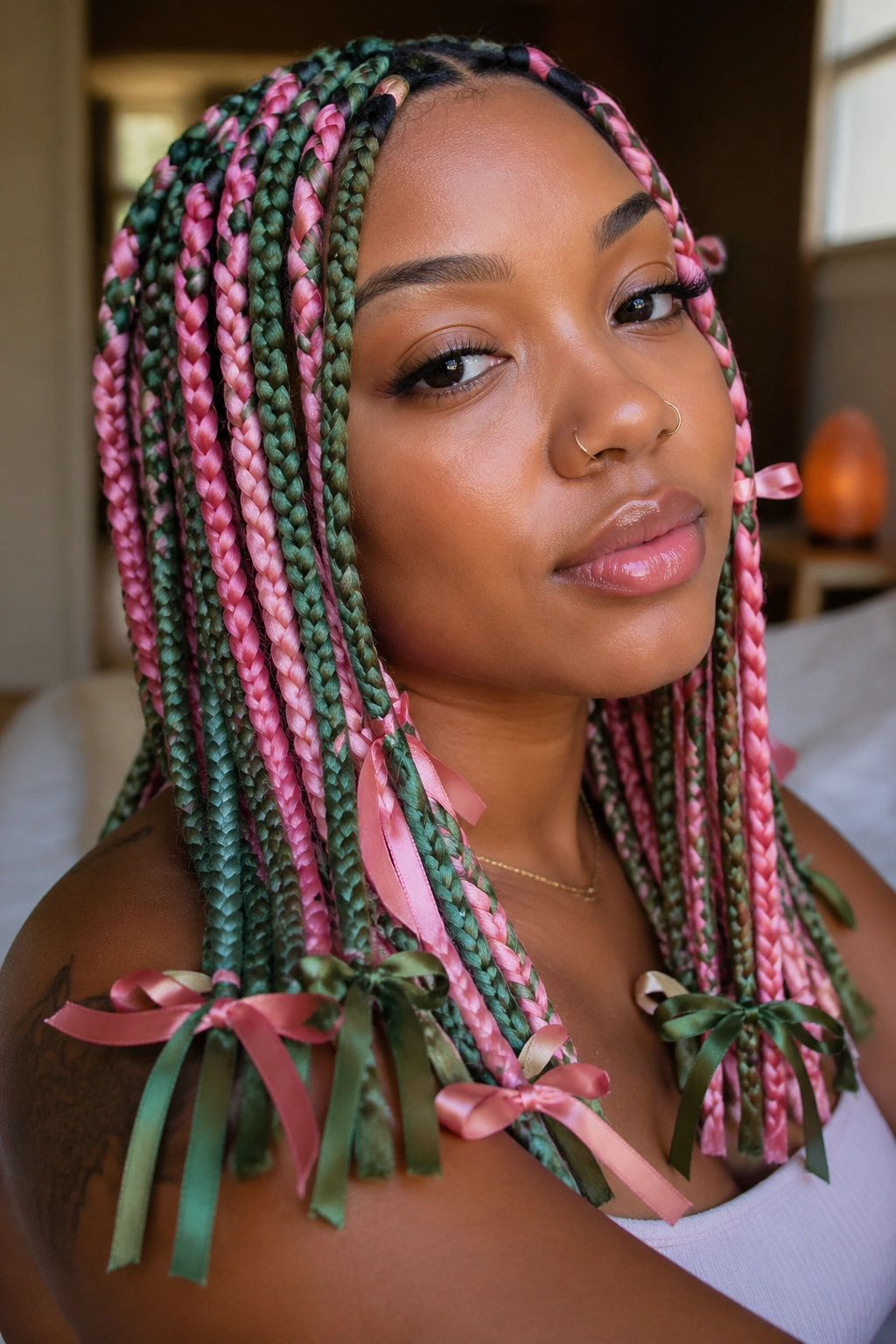
Ribbons make the colors feel playful without needing extra hair. Tie a thin ribbon around a braid end, or weave short ribbon tails through a few front braids, and the whole set takes on a softer finish.
This works best when the braids themselves are fairly simple. Straight parts. Clean color placement. Nothing too crowded. The ribbon gives you motion, especially when it peeks out from under braids in a half-up style or a low ponytail.
If the ribbon matches one of the braid colors, the look stays cohesive. If it clashes on purpose — say, a pale satin ribbon against neon braids — the set feels more editorial and less sweet. That’s a useful trick when you want the style to read grown-up instead of childlike.
A ribbon detail is also easy to change later. That matters if you like to refresh your hair without redoing the whole install.
14. Beaded Green and Pink Box Braids
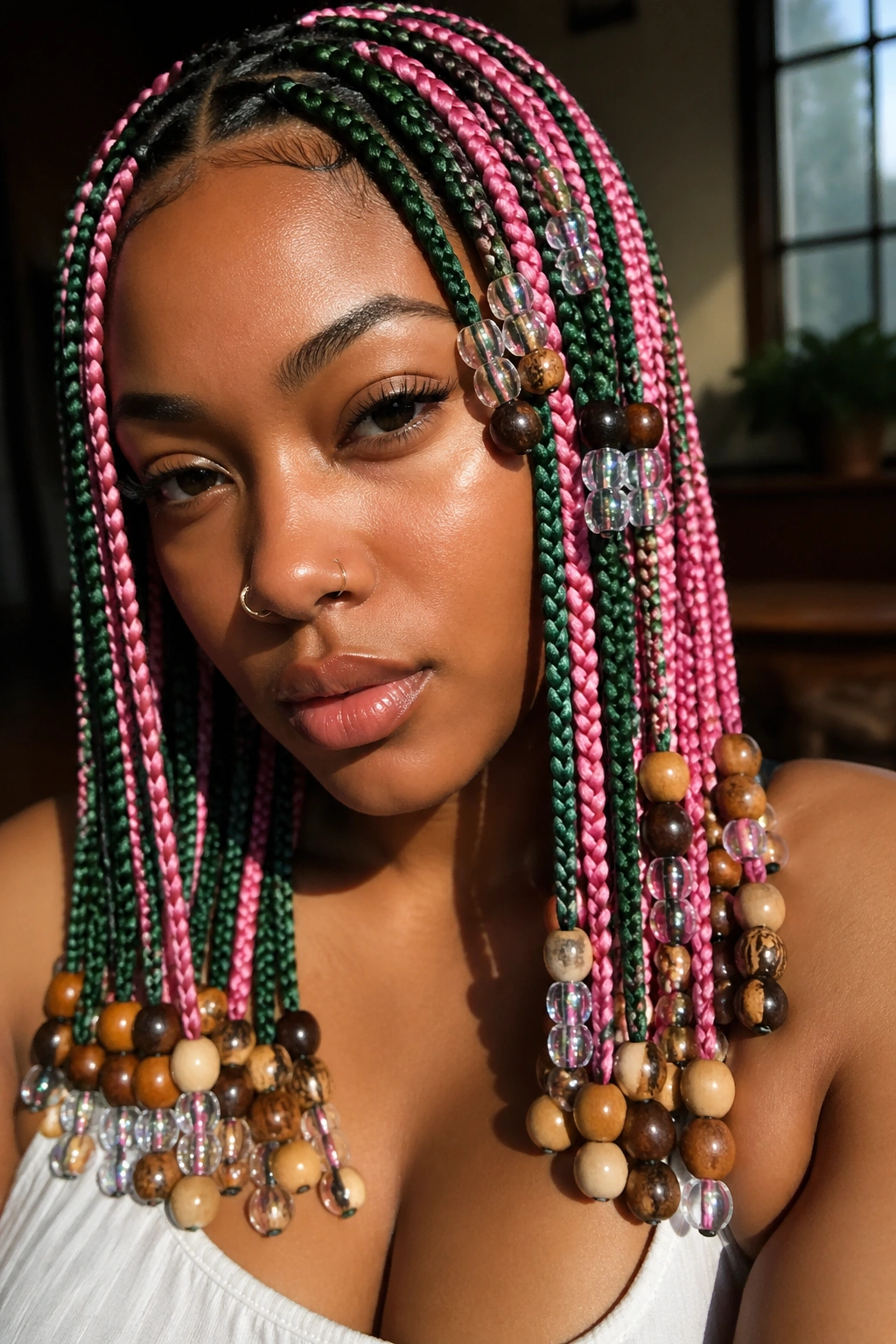
Beads are not just decoration. They add sound, weight, and movement, which makes the color set feel more alive when you walk.
I’ve always liked beaded braids better when the placement is uneven on purpose. A few beads near the ends on the front braids. A cluster on one side. Maybe a single cuff above a bead stack. That keeps the look from turning into a souvenir-shop display.
- Use wood beads if you want a warmer, softer finish.
- Use clear or iridescent beads if you want the colors to stay bright.
- Keep bead weight low on the edges so your braids do not pull at the temples.
- Put heavier beads lower on the length, not near the root.
Beads make the style more tactile, and that is the appeal. You see the braids. You hear them. You feel the movement. A plain set can’t do that.
15. Sleek Low-Bun Green and Pink Box Braids
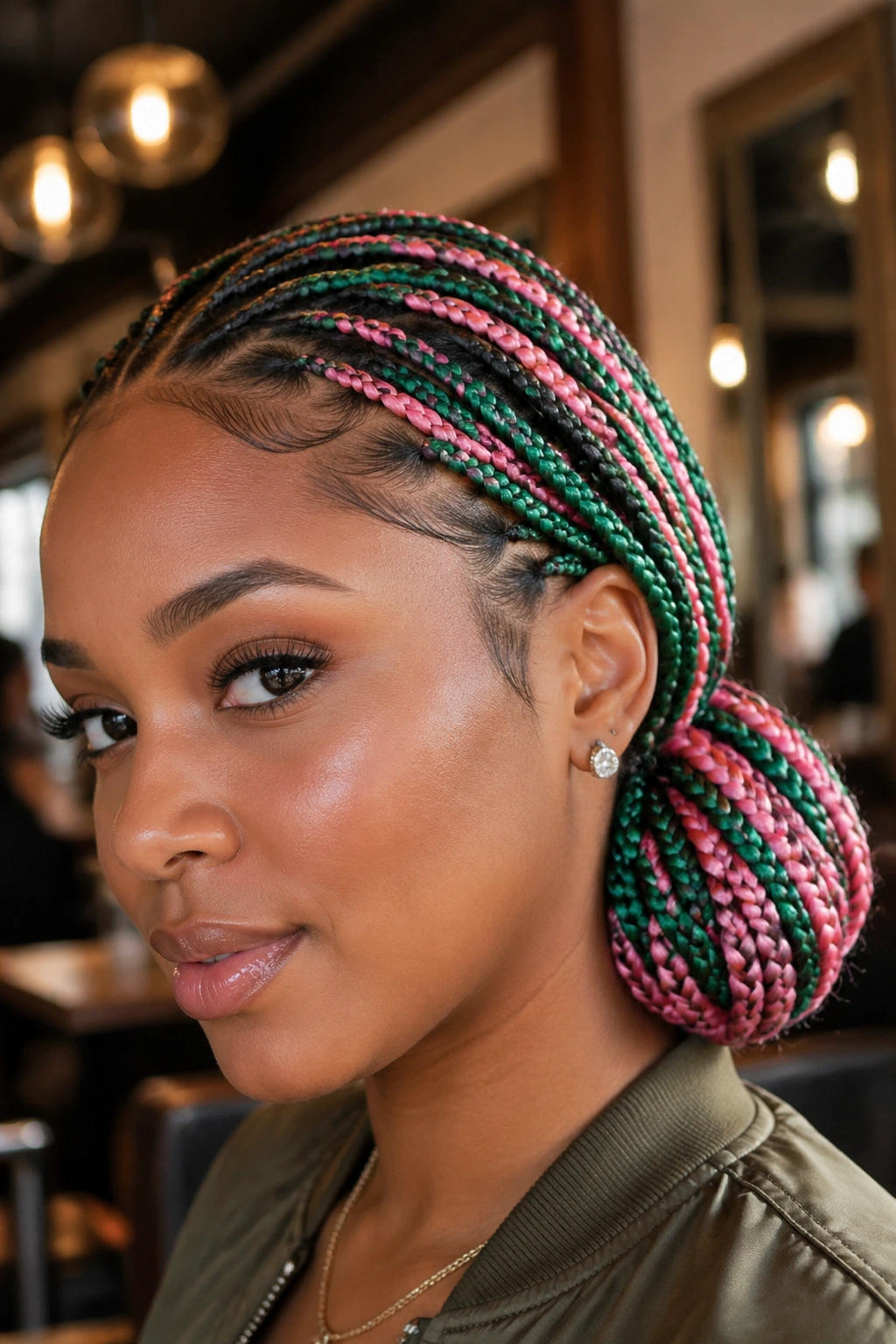
A low bun is the cleanest ending point for the color story. Pull the braids back, twist them low at the nape, and the green and pink settle into one tight shape instead of flying everywhere.
This look is a little more polished than the looser styles above, which is why it works so well when you want bright braids that still feel controlled. The bun keeps the length tucked away, and the color shows up in curves instead of straight lines. That makes the style look richer, not flatter.
A low bun also gives you a place to hide a few things. A scrunchie. A decorative pin. A wrapped section of braid that needs to disappear. Useful, and cleaner than leaving the ends loose if you are heading somewhere more formal.
If I had to pick one version for someone who wants green and pink braids but worries they might be too loud, this would be high on the list. It is still colorful. It just knows how to sit down.
Final Thoughts
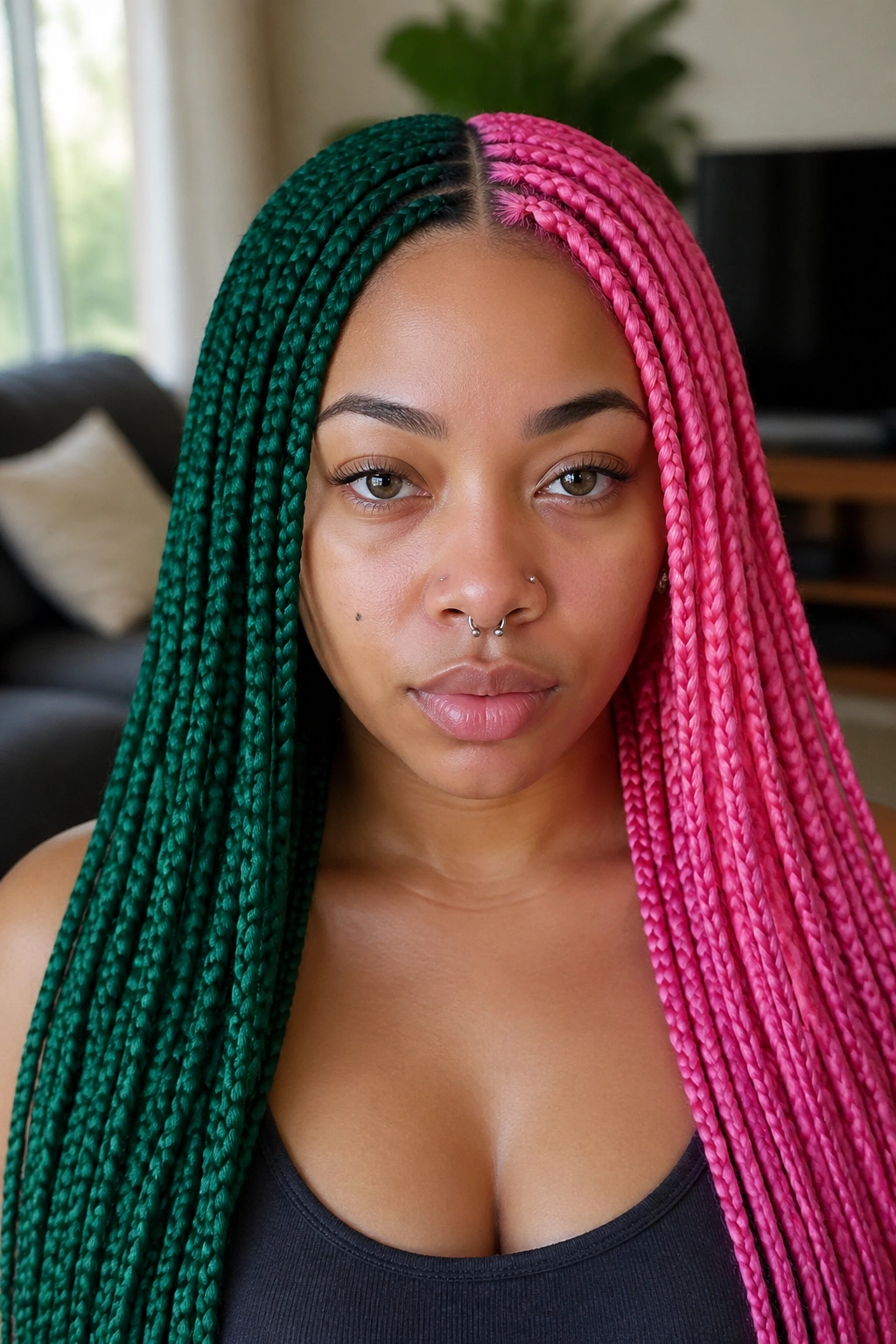
Green and pink box braids work because the color pair is flexible. Push the shades hard and they feel electric. Soften them with pastel tones, cleaner parting, or a lower shape, and they become easier to wear without losing the fun.
What matters most is not just the colors themselves. It is the braid size, the parting pattern, the length, and how much movement you want when you turn your head. Those details decide whether the style reads playful, sharp, or polished.
Bring swatches if you can. Two shades that look perfect under shop lights can read very differently in daylight, and that tiny mismatch is the sort of thing you notice every time you look in the mirror.
