



Orange and pink box braids can look loud in the best possible way. When the shades are placed with some thought, the style reads like a color story, not a random mix of bright hair.
That is the part people miss. Box braids give color a clean shape, so orange and pink do not have to fight each other; they can sit in neat vertical lines, blend at the ends, or split the head in two and still feel balanced. A braid with a warm orange base and a pink fade lands very differently from a braid where both colors are packed side by side from root to tip.
The details matter more than most people expect. Braid size, parting, extension length, and whether you keep one shade dominant can change the whole mood. A 24-inch braid with hot pink tips feels sharp and playful. A waist-length install with soft coral and peach reads easier, almost painterly. Same palette. Very different result.
What makes this color pairing fun is that it has range. It can look sweet, edgy, beachy, festival-ready, or polished, depending on how the tones are arranged and how much of each color you let show. Some versions feel like a sunset. Others feel like bubble gum with attitude. A few sit somewhere in the middle, which is usually where the best ideas live.
1. Sunset Ombre Box Braids
Sunset ombre is the easiest way to make orange and pink box braids feel intentional. The color shift does the work for you. When orange melts into pink over the length of the braid, the eye sees movement instead of two competing shades.
The cleanest version starts with a deep tangerine or burnt orange near the top and moves into rose, coral, or watermelon pink toward the ends. That gradient looks especially good on longer installs, usually 24 inches and up, because the fade has room to breathe. Shorter braids can handle ombre too, but the color change needs to happen faster or it gets lost.
Why the Gradient Works
A smooth fade lets the braid pattern stay visible. That matters. If the color blocks are too abrupt, the braid can look chopped up, especially when the parts are neat and the braids themselves are medium-sized.
Best shades: burnt orange, peach, coral, rose pink, and watermelon pink.
Best length: shoulder-grazing to waist-length.
Best add-ons: gold cuffs, a few clear beads, or a plain middle part.
Pro tip: keep the orange slightly deeper than the pink. If both colors are equally bright, the braid loses some of its shape.
2. Split-Dye Orange and Pink Box Braids
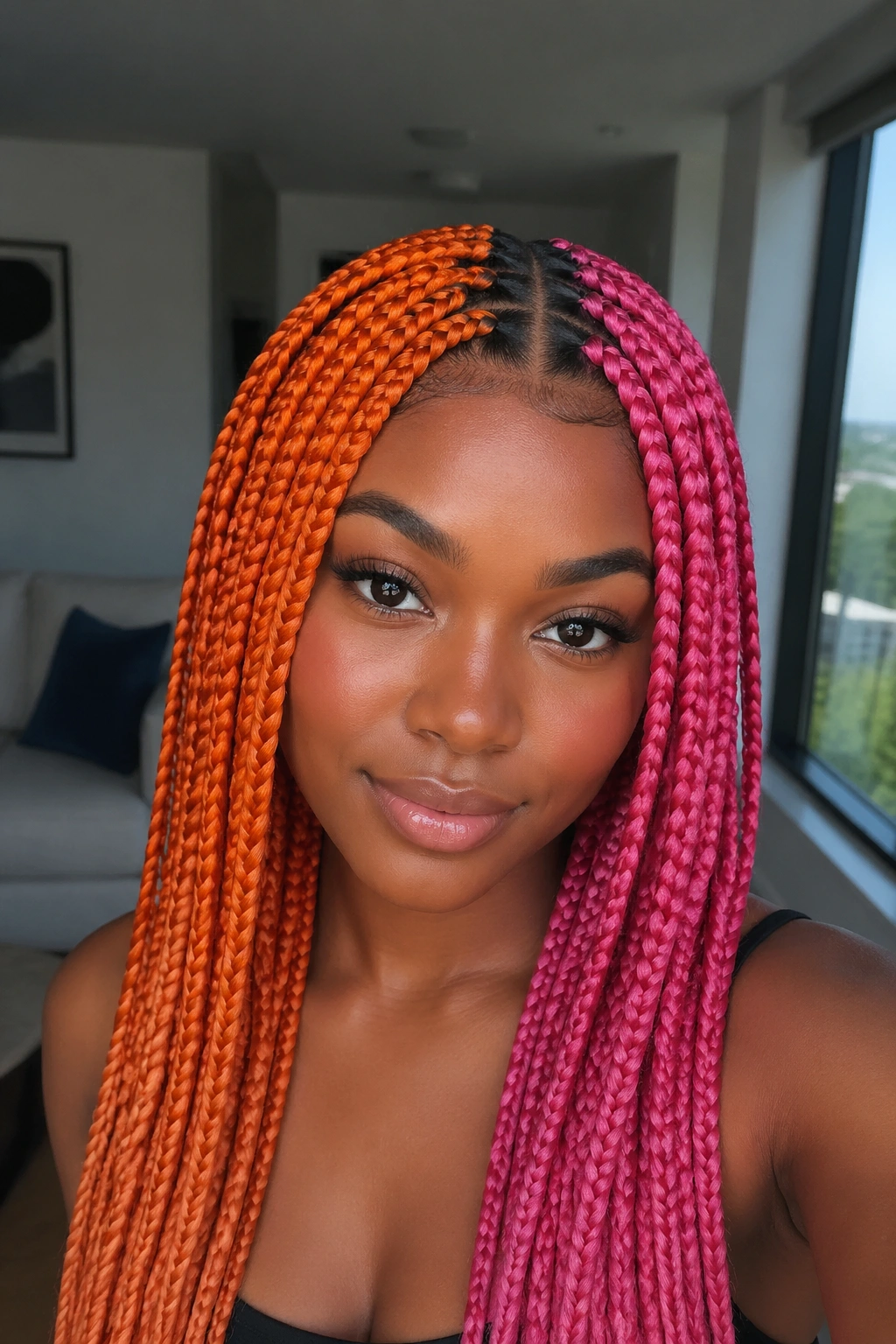
Want the color to look graphic instead of blended? Split-dye braids are the answer. One side of the head stays orange, the other side stays pink, and a clean center part keeps the whole thing from looking accidental.
This style has attitude. It is also one of the most honest ways to wear the palette, because nothing is hidden. The braid pattern becomes the frame, and the color blocks do the shouting. It works especially well on medium-length braids and waist-length installs, where the two sides have enough room to fall separately instead of tangling together.
Keep the Part Razor Clean
The middle part has to be precise. Not “close enough.” Precise. A crooked part makes the whole style feel off, even if the braids are tight and the colors are good.
Use clips or rubber bands to keep each side separated while braiding. If the orange and pink hair keeps crossing over during install, the split effect gets muddy fast. That little bit of discipline is what keeps the style looking expensive, even when the colors are playful.
Split-dye braids look sharp when worn down, but they get even better in a low bun or a half-up style. The contrast shows more clearly when the hair is pulled back, and that is the trick with this one. You want people to notice the color before they notice the effort.
3. Peekaboo Orange Under Pink Braids
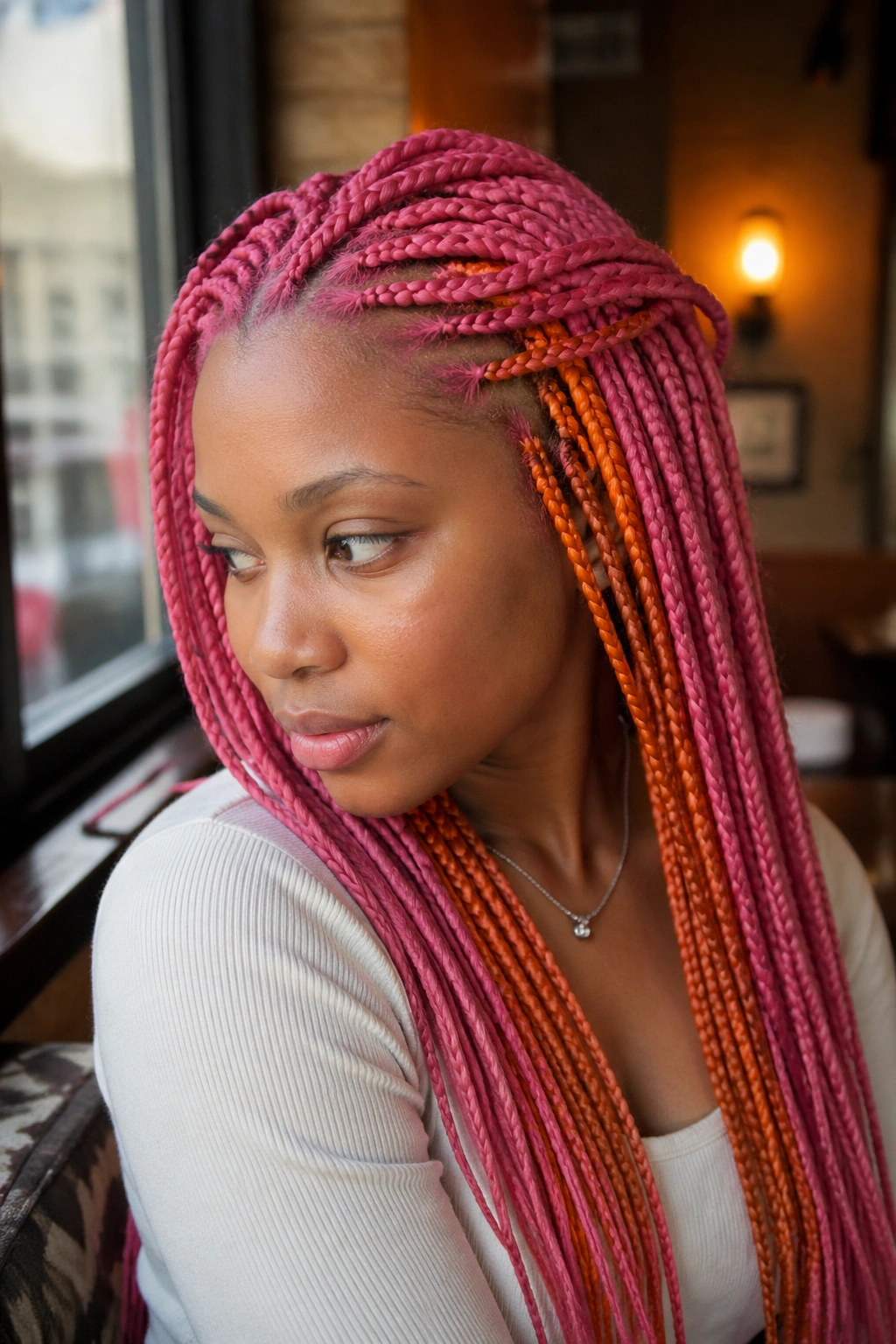
From the front, this look reads soft pink. Turn your head, and the orange flashes underneath. That little reveal is the whole point.
Peekaboo braids are for people who like color but do not want the color to sit on top of everything. The orange can live in the lower layers, at the nape, or tucked into inner sections around the crown. Pink covers the outer layer, which means the brighter undercolor only shows when the hair moves. It feels a bit mischievous. Nice, but with a secret.
Where to Hide the Orange
- Nape sections: the orange appears when the hair is put in a ponytail or bun.
- Inner crown rows: you get color flashes every time the braids swing.
- Face-framing undersides: a smarter pick if you want the orange to show near the cheeks.
- Tips only: the easiest version if you want less commitment.
This style is also forgiving as it grows out. The pink layer keeps the look polished, while the hidden orange keeps it interesting. If you are the sort of person who likes the idea of bright color but still wants something wearable with a black hoodie and sneakers, this one makes a lot of sense.
4. Alternating Orange and Pink Box Braids
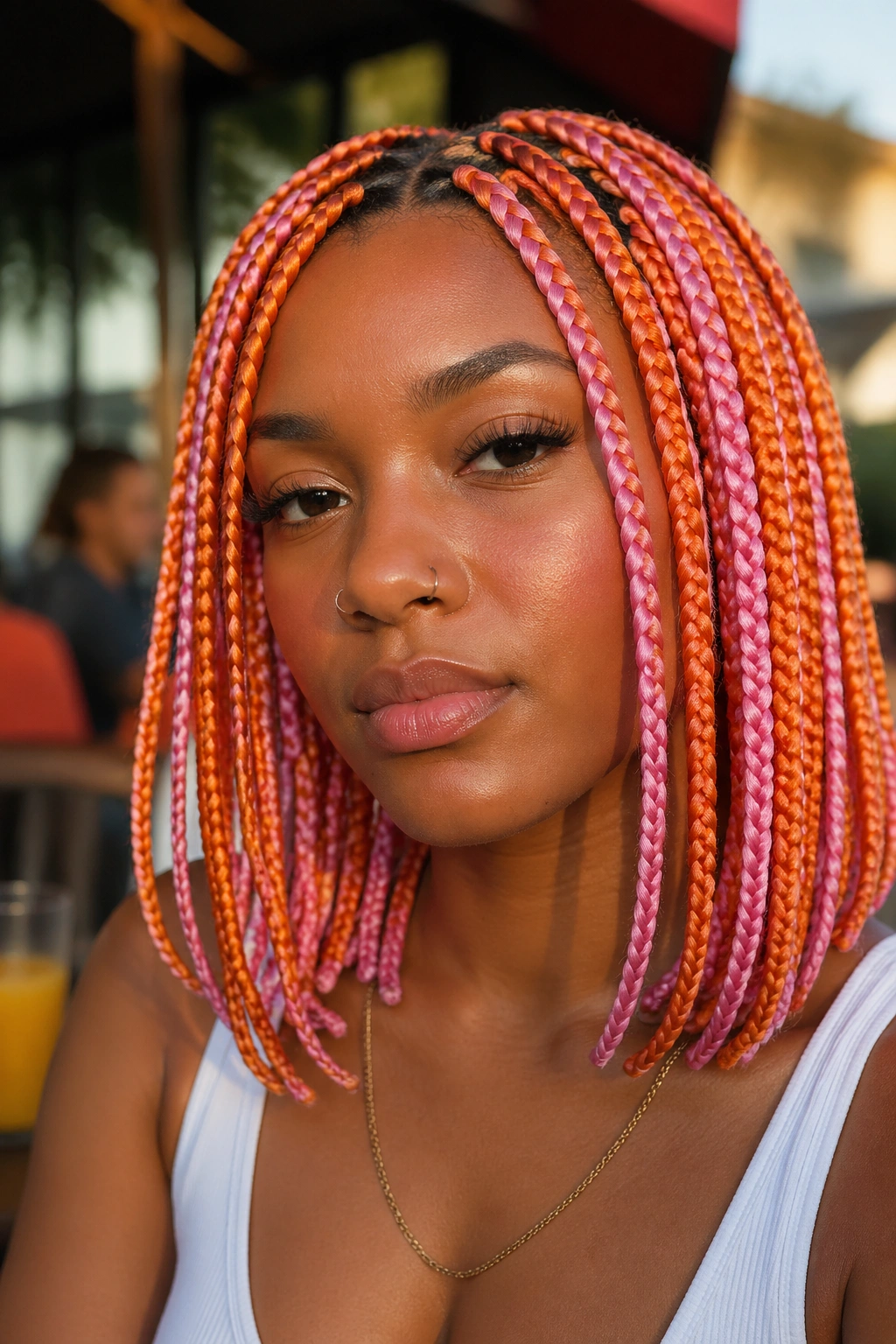
Alternating colors braid by braid is the loudest way to use the palette, and it has a rhythm that’s hard to fake. One braid orange. One braid pink. Then repeat until the head is full of clean, even stripes.
The style works best when the parts are neat and the braid size is medium, around the width of a pencil or a little thicker. Tiny braids can turn the pattern into visual static. Jumbo braids can make the alternation feel too blocky. Medium size keeps the color beat readable without turning the head into a checkerboard.
It is not shy.
A black outfit helps here, but so does simple denim or a white tee. The point is to let the braids carry the outfit, not fight it. If you want a style that looks lively even when the rest of your clothes are plain, alternating orange and pink does that job well.
One thing people forget: the parting grid matters just as much as the colors. If the rows wander, the alternation starts to look random instead of deliberate. Clean parting is what makes this style feel sharp.
5. Face-Framing Money Piece Braids
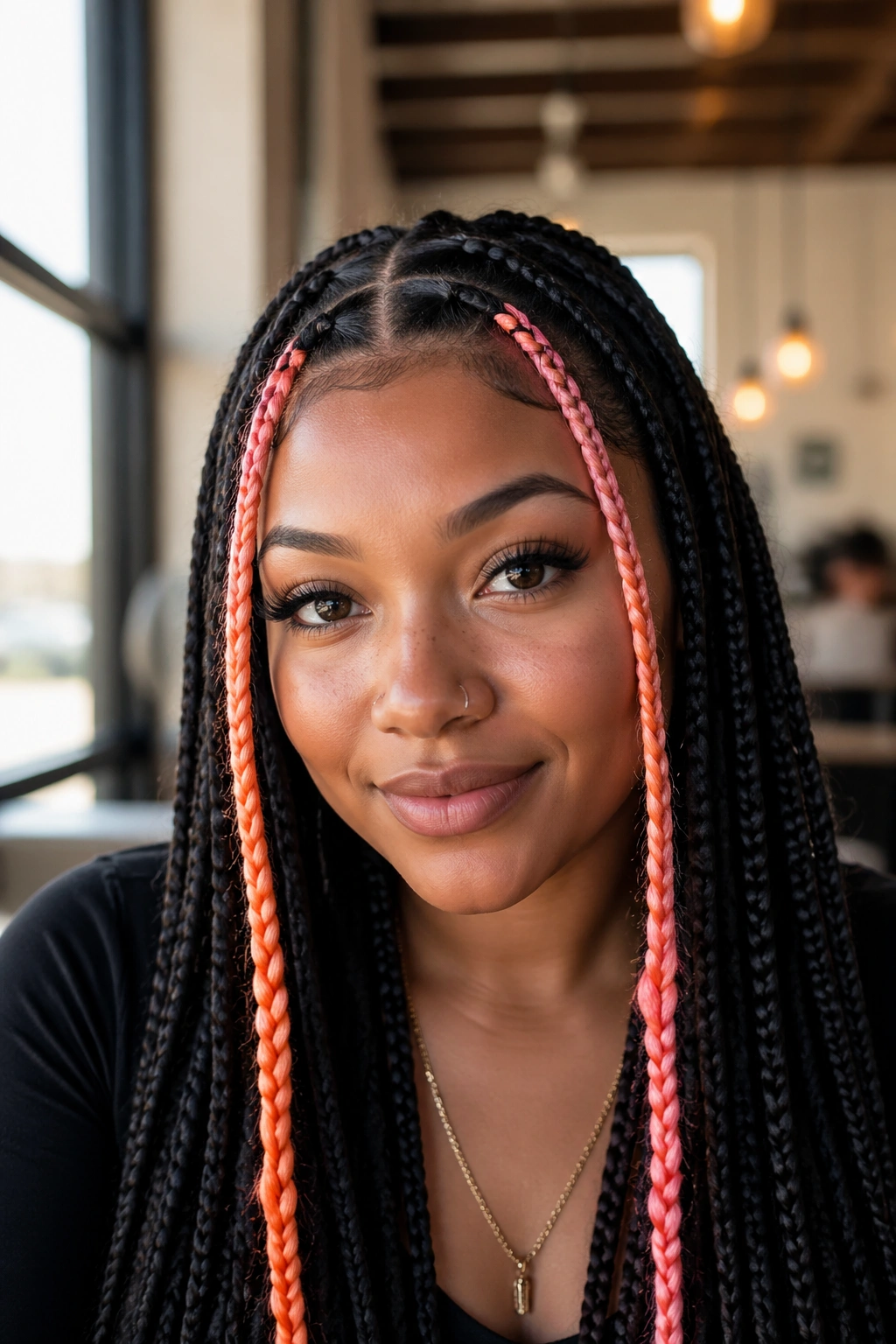
If all-over color feels like too much, put the orange and pink at the front and stop there. Two or four face-framing braids can change the whole mood without asking you to commit to a full head of bright color.
This is the version I would hand to someone trying orange and pink for the first time. It is easier to wear, easier to grow out, and easier to style around work, school, or a low-key routine. The rest of the braids can stay black, dark brown, or a natural-looking blend while the front section does the talking.
Why It Changes the Whole Look
Color near the face always reads first. That is why this idea works so well. A single orange braid on each side, paired with pink just behind it, gives you brightness where it counts and leaves the rest of the style calm.
The placement also helps if you wear glasses, hoops, or a strong lip color. The bright braids frame the face instead of swallowing it. If you want the look to feel polished, keep the front pieces a touch slimmer than the rest so they sit neatly along the cheeks.
This style is a good place to add small cuffs or one bead on each front braid. Nothing crowded. Just enough to make the color placement feel finished.
6. Hot Pink Roots with Orange Tips
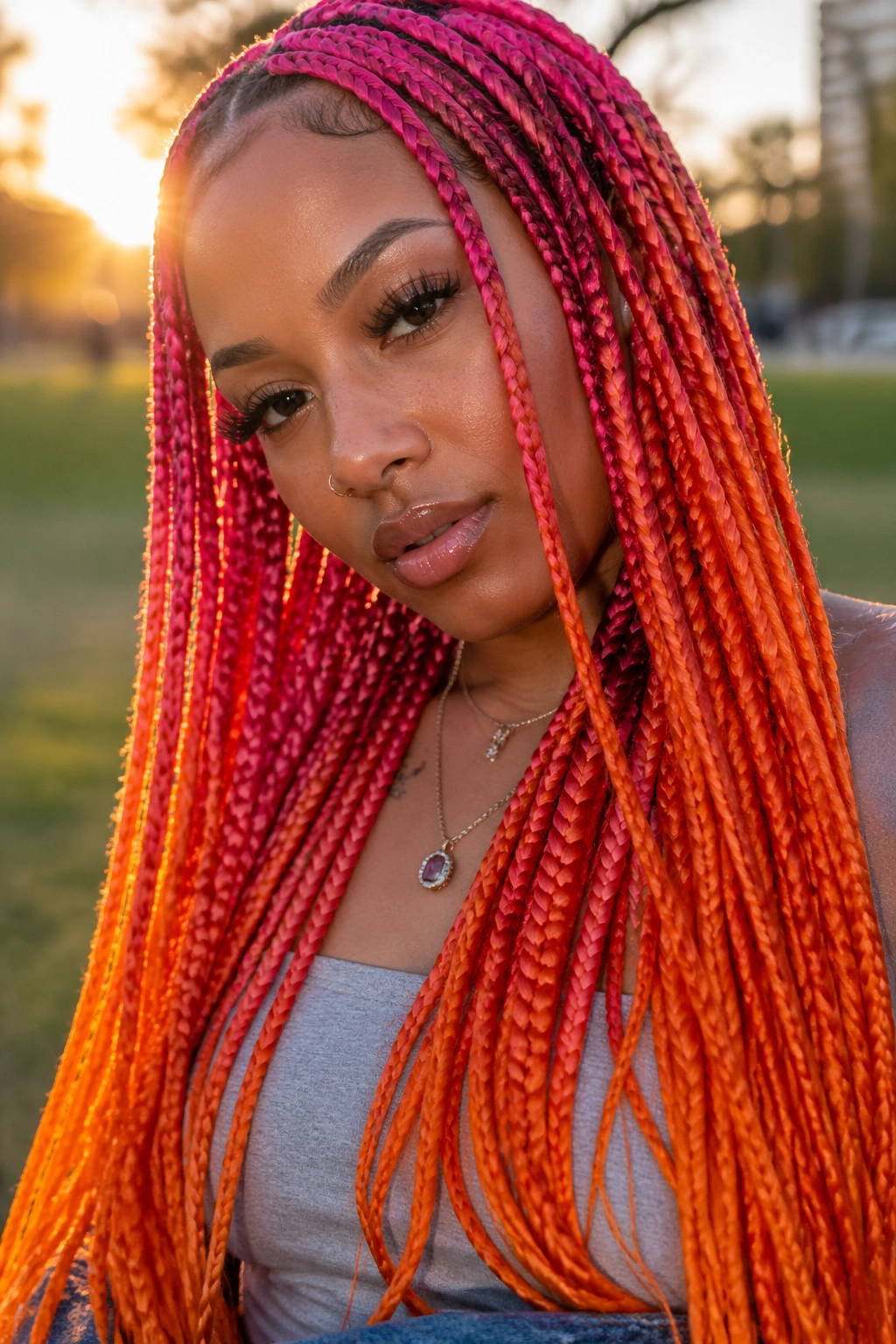
This is the loudest version in the bunch. That is exactly why it works.
Hot pink at the roots and orange at the tips gives the braid a punchy, almost electric start and a warmer finish. The shift feels energetic from top to bottom. It is especially strong on long box braids, because the eye gets a full color journey instead of a quick flash.
How to Keep It from Feeling Heavy
Start with crisp roots. That matters more here than on softer ombre styles. If the top looks fuzzy, the whole braid loses its edge fast. Use firm but comfortable tension at the scalp, and do not overload the root area with too much hair.
A length of 24 to 30 inches is usually enough for this look. You want movement, not drag. Longer hair can work, but it gets heavy if the orange tips are thick and the braids are already dense.
This style loves a high ponytail. It also loves a simple middle part and a stack of gold cuffs placed two-thirds of the way down the braid. The bright root color makes the style read from far away. The orange tips keep it from feeling flat.
7. Orange Roots with Pink Tips
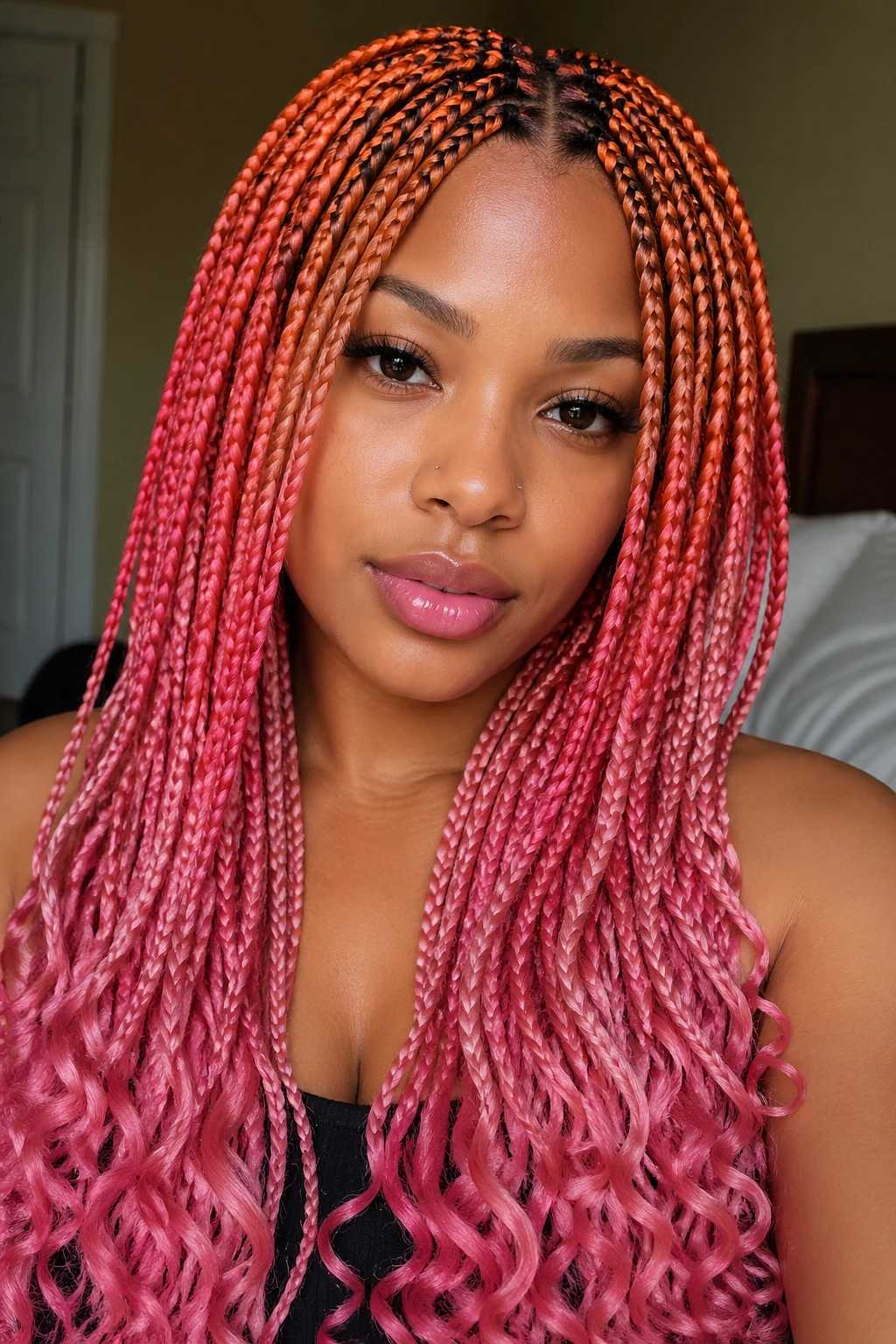
Picture a braid that starts like a clementine peel and ends like bubblegum. That is the mood here.
Orange roots with pink tips feel warmer and a little softer than the reverse version. The color seems to ease downward instead of exploding at the top. That makes it a strong choice if you want bold braids that still look friendly and easy to wear.
The pink at the ends also helps the hair feel lighter when it sways. Ends are where braids often pick up wear first, so giving them a softer shade can make the style age more gracefully. The contrast is still clear, but it does not hit the eye quite as hard as hot pink roots.
- Best with dark natural leave-out: the orange at the root sits nicely against darker hair.
- Best with medium braids: the transition has enough width to show.
- Best with curled ends: the pink finish looks even more playful when the tips curl inward.
- Best for weekend wear: this version leans fun first, polished second.
If the hot-pink-root version feels a little too sharp, this one gives you the same color story with a gentler start.
8. Cotton-Candy Pastel Box Braids
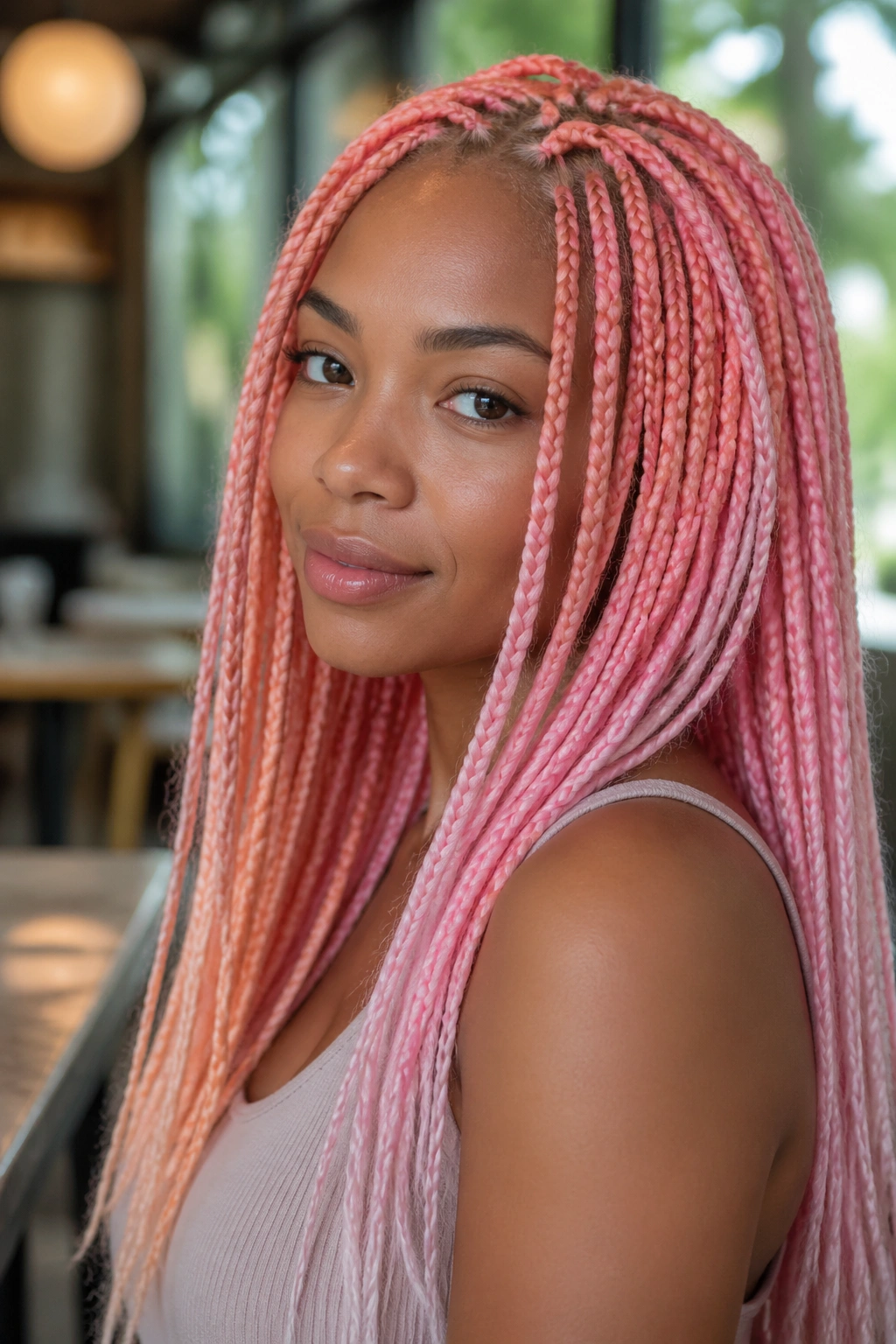
Pastel orange and pastel pink are not quiet colors. They only look quiet because the saturation is lower.
That softness changes the whole feel of the braid. Instead of shouting, the hair glows. Peach, blush, pale coral, and dusty pink can sit together in a way that feels airy and sweet, but only if one shade has a little more depth than the other. If both are washed out to the same level, the braid can look chalky under indoor light. That is the part people do not always notice in photos.
A shoulder-length or mid-back install works well here. The lighter shades have enough space to move, and the braid pattern stays visible even when the colors are gentle. Add translucent beads, pearl cuffs, or tiny silver rings if you want the style to feel finished without turning it into something fussy.
The nicest thing about pastel orange and pink box braids is how they sit against clothing. White, cream, light denim, and even charcoal all work. The palette has a softness that does not need much help. It just needs clean parting and enough braid size to keep the colors from blending into one flat tone.
9. Neon Festival Orange and Pink Box Braids
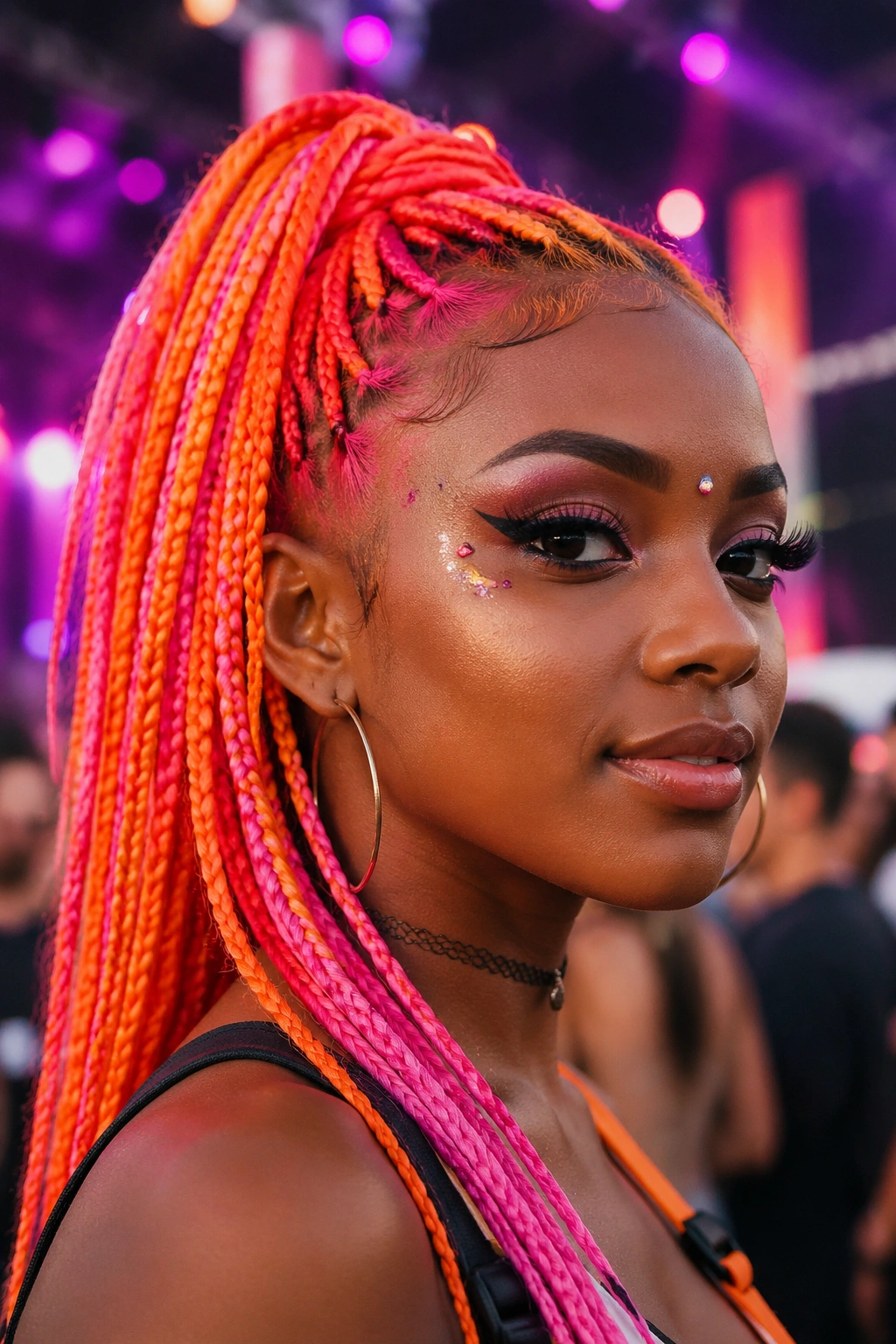
Why does neon look better in braids than in loose hair? Because the braid lines break up the color and give it structure.
That is the whole reason this style works. Neon orange and neon pink can feel chaotic when they are just hanging free, but on box braids the color gets chopped into neat, readable sections. The braid pattern acts like a frame, and suddenly the brightness feels intentional.
How to Wear It
- Put the braids in a high ponytail when you want the color to hit harder.
- Add clear beads or bright plastic cuffs for a festival look.
- Leave the ends blunt if you want the colors to look more graphic.
- Sweep the braids to one side if you want movement in photos.
This is a strong style for concerts, parties, beach trips, and any outfit that already leans bold. A plain black tank and big hoops can be enough. A printed top can work too, but keep the print simple or the look starts to compete with itself.
Neon braids can fade faster in harsh light than deeper tones, so they need a little more care. Keep them wrapped at night, and do not scrub them hard when washing your scalp. The brightness is the point. Protect it.
10. Jumbo Orange and Pink Box Braids
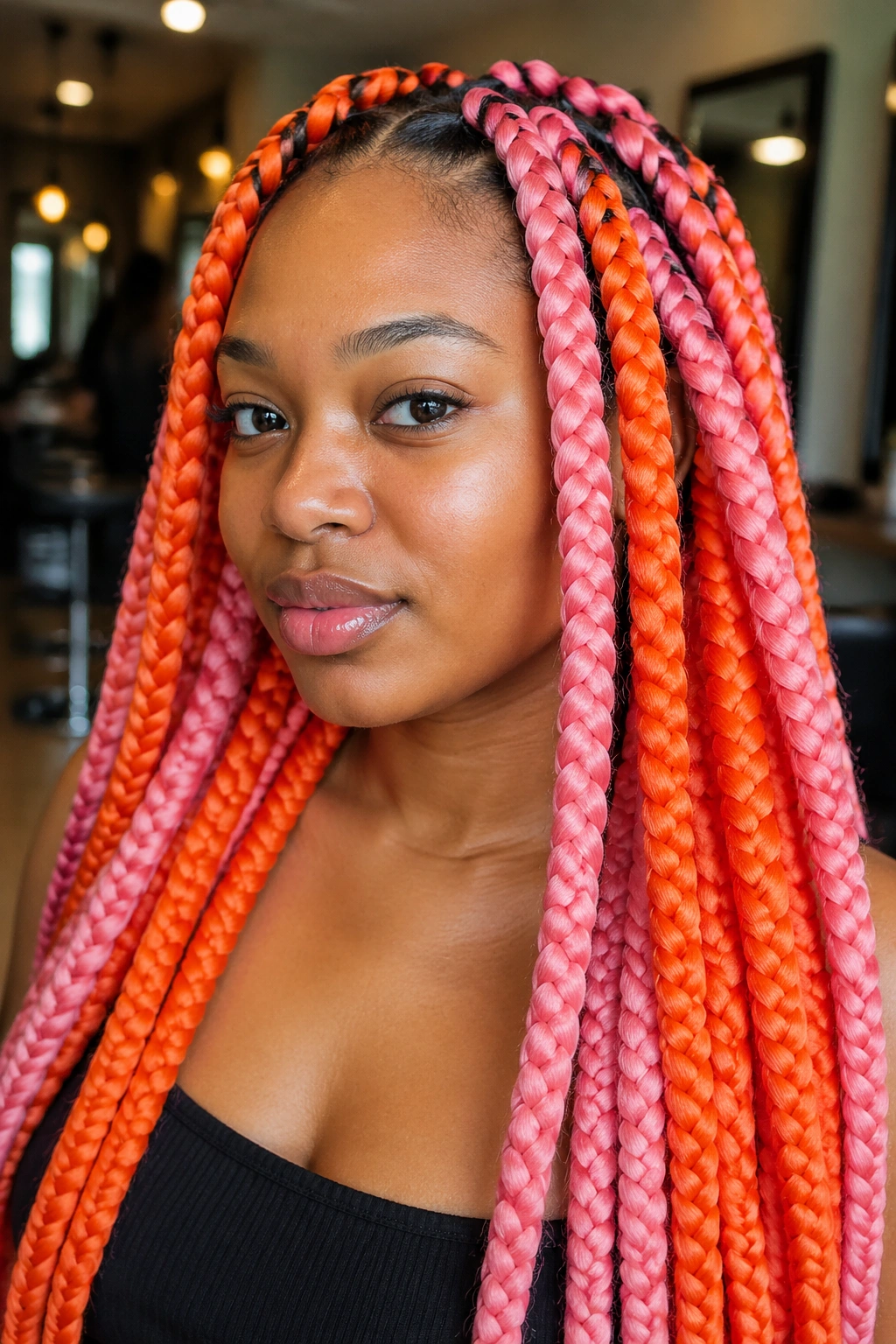
Jumbo braids change the math. Fewer braids mean bigger blocks of color, faster install time, and a style that feels direct rather than fussy.
That makes jumbo orange and pink box braids a smart pick if you want drama without sitting in a chair forever. The thicker the braid, the stronger the color statement. You usually end up with enough visual impact from 12 to 18 braids, depending on head size and parting. Anything much smaller starts to lose that chunky effect.
Best For People Who Want Drama Fast
Jumbo braids also hold accessories well. A single large cuff can sit on one braid and actually be seen. On tiny braids, the same cuff can disappear. That sounds like a small point, but it changes how the whole style photographs and moves.
The tradeoff is weight. Long jumbo braids can tug if they are overloaded with hair, so I would keep the length around 24 inches unless you know your scalp can handle more. If you want a softer finish, ask for slightly tapered ends instead of blunt ones. That keeps the style from looking too square.
This is the version to choose when you want the color to do most of the talking and the braid count to stay low. Less fuss. More shape.
11. Shoulder-Length Orange and Pink Box Braids with Curly Ends
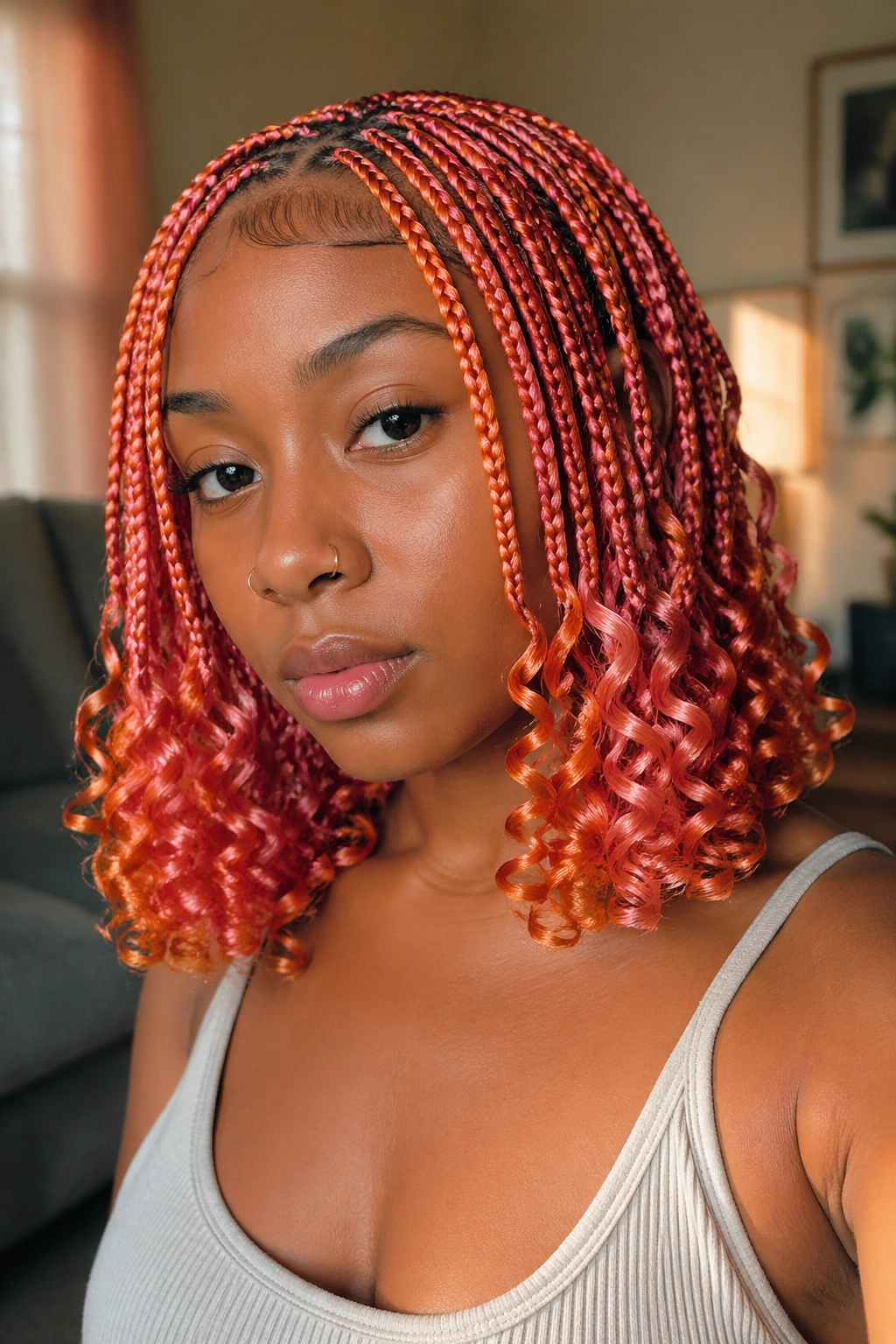
Shoulder-length braids are underrated. They keep the colors close to the face, and the curls at the ends stop the whole style from feeling too stiff.
There is something useful about this length. It keeps the head lighter, dries faster after washing, and lets the orange and pink show in a tighter visual space. That matters if you want the colors to feel bright without having long braids swinging everywhere. The curly ends soften the straight braid line, which gives the style a little bounce at the bottom.
The curls do a lot of the work.
If you want this finish, set the ends on flexi rods or perm rods before dipping them in hot water, then let them cool fully before taking the rods out. That little pause is worth it. Pull the rods out too soon and the curls fall flatter than you expect. Wait until the ends are fully cool and springy.
This style is a nice middle ground for people who want a fun color combo but do not want hair down to the waist. It sits well with earrings, high-neck tops, and jackets with a clean collar. The colors stay visible, and the silhouette stays tidy.
12. Triangle-Part Orange and Pink Box Braids
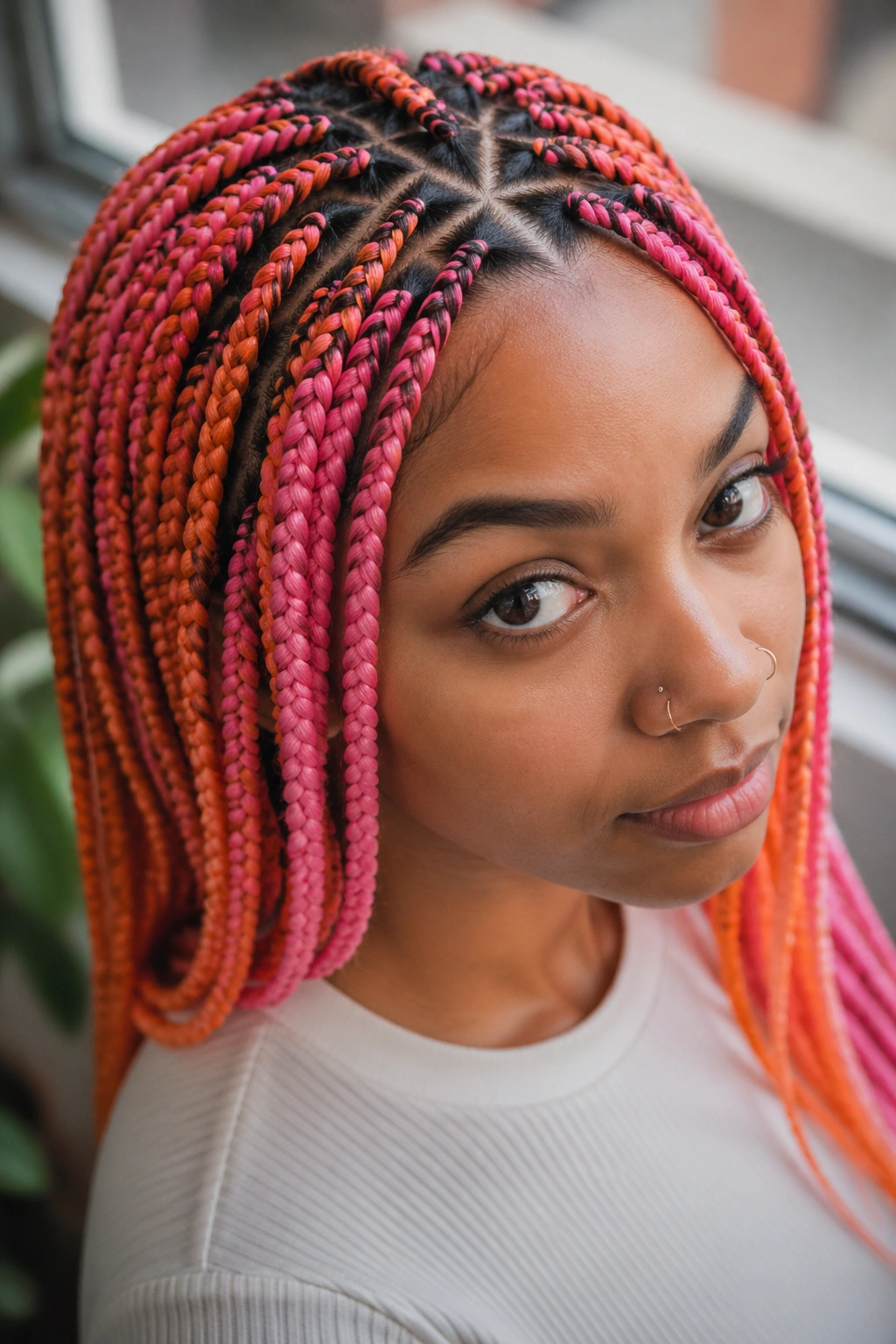
If square parts feel plain, triangle parts fix that fast.
Triangle-part box braids give the whole head a sharper, more sculpted look. The color seems to catch in little angles instead of straight boxes, so orange and pink feel a bit more dynamic. The style works especially well when the colors are already bright, because the parting adds another layer of shape without needing extra accessories.
What to Watch For
- Part size: triangles around 1 to 1.5 inches wide tend to read cleanly.
- Braid size: medium or medium-large works best; tiny braids can make the pattern too busy.
- Color choice: a stronger orange paired with a softer pink keeps the geometry from feeling harsh.
- Finish: a light shine spray is enough. Too much product can make the triangular parting look slick in a bad way.
This is the kind of detail that people notice even if they do not know why they notice it. The angles make the style feel more designed. If you like hair that looks a little sharper and less standard, triangle parts are one of the easiest ways to get there.
13. Small Knotless Orange and Pink Box Braids
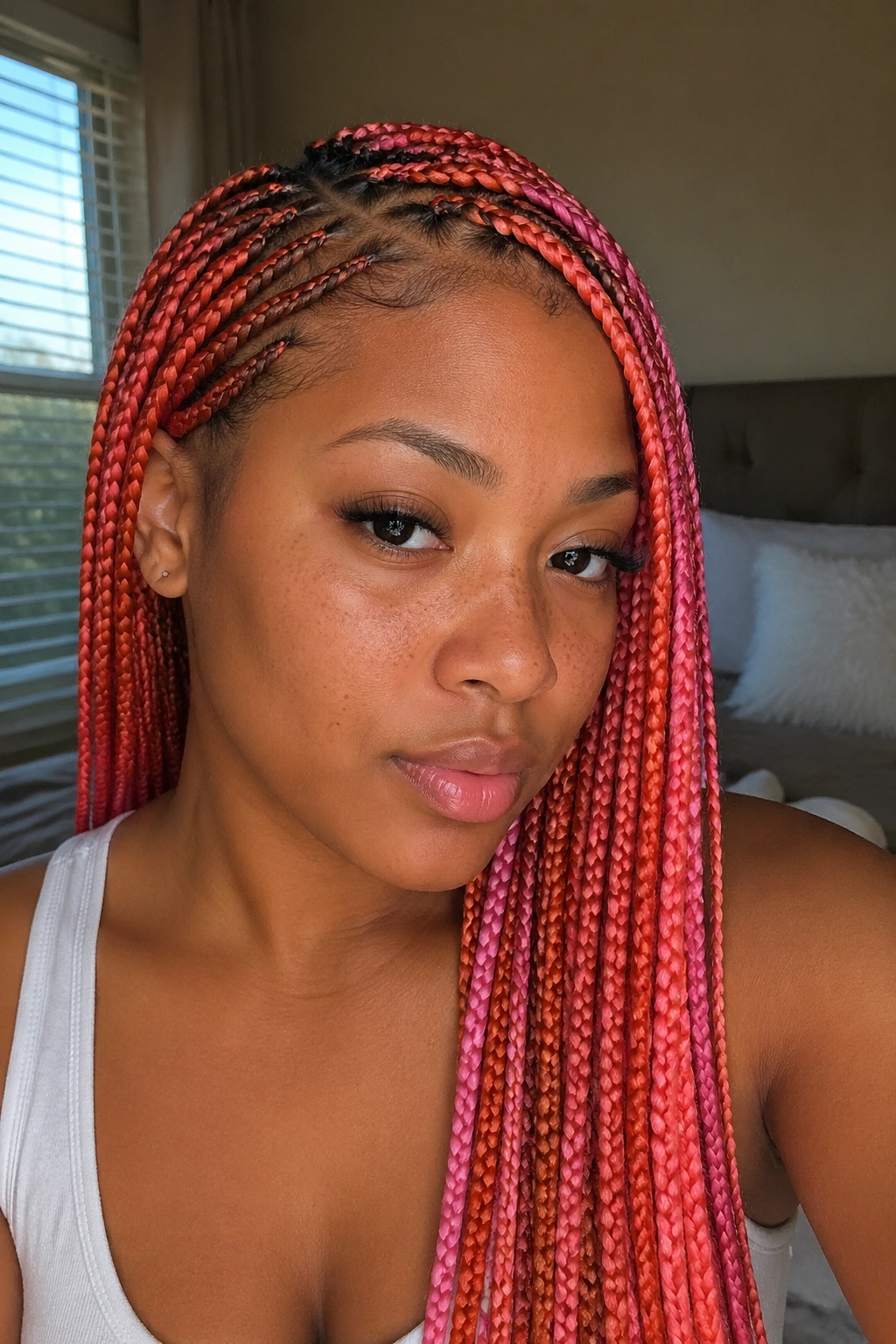
Small knotless braids make orange and pink feel softer, lighter, and more layered at the scalp.
That flatter root is the reason people keep coming back to knotless installs. The hair sits more gently against the head, so the color becomes the star instead of the braid knot. With small braids, the orange and pink can mix in subtler ways too — one braid may lean orange, the next pink, and the whole head still reads as a single idea.
What Makes Them Different
Knotless braids need patience. The install takes longer, and the sections have to stay tidy or the small size turns messy fast. But the payoff is good. The color looks like it belongs to the braid rather than sitting on top of it.
This style also wears well with a side part. A side part lets the color sweep across the face in a softer line, which can be easier to wear than a strict center part if you already have a strong brow or angular features. If the shades are coral and rose rather than neon, the result feels polished without becoming quiet.
This is a smart choice if you want the palette to last longer in your rotation. Small knotless braids tend to stay neat looking when cared for properly, and the lighter tension at the root is a plus if your scalp is sensitive.
14. Braided Bob with a Side Sweep
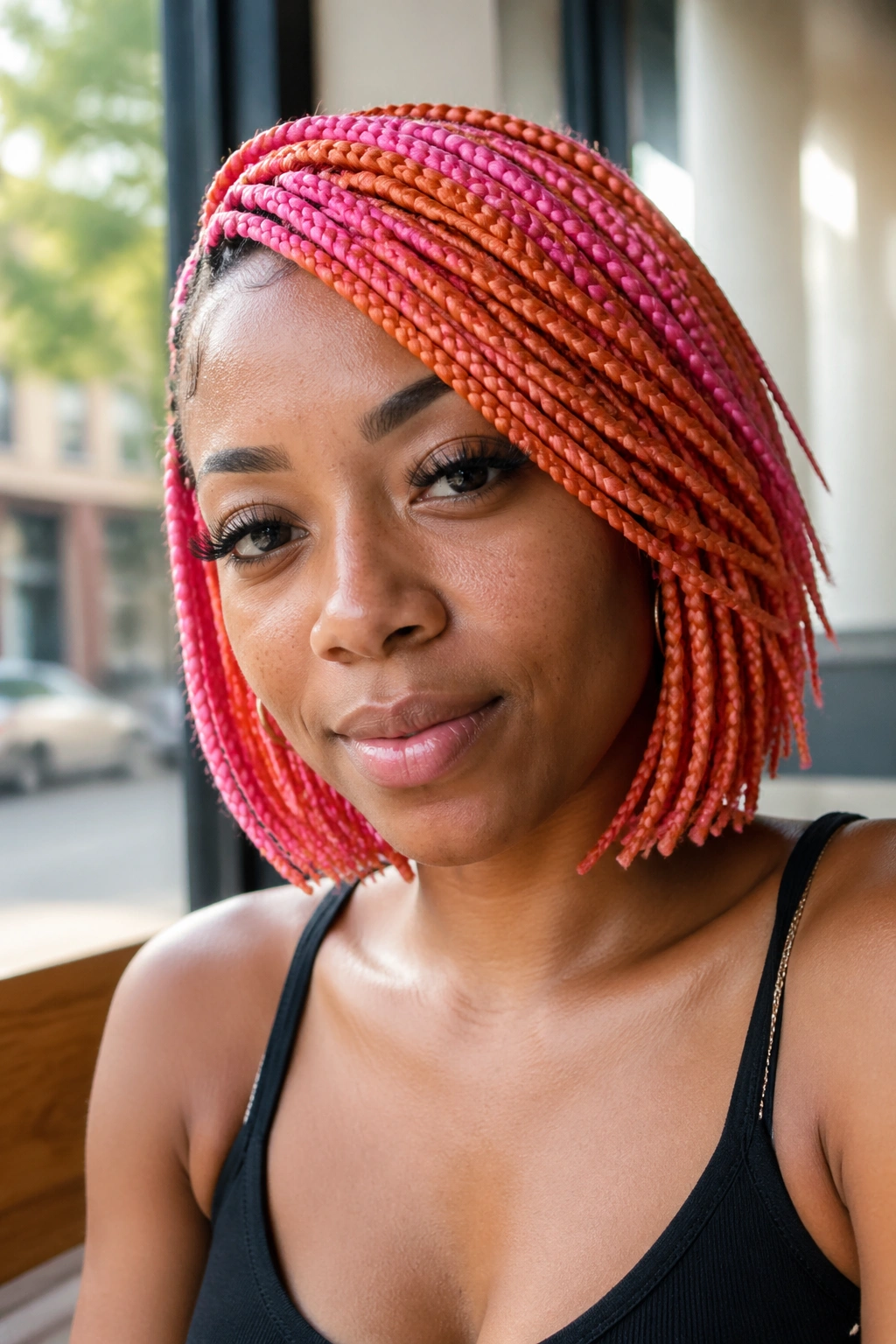
A braided bob puts the color in the face. That is the difference, and it matters.
Long braids can be dramatic, but a chin-length or collarbone-length bob makes orange and pink feel sharper and more immediate. The color does not have to travel far before the eye sees it, so the whole style lands fast. A side sweep adds movement and keeps the haircut-like shape from feeling boxy.
This version is best if you want something easy to wear with earrings, turtlenecks, crewnecks, or jackets that already have a lot going on around the neck. The bob clears space around the shoulders, so the braids do not compete with your clothes. It also dries faster after a wash, which is not glamorous, but it matters.
Keep the ends either blunt or lightly curled. Too much taper can make the bob look thin at the bottom, and that is a hard shape to fix once the braids are installed. A clean edge keeps the style strong.
If the long versions feel like too much hair, the bob is the one to try first. It still gives you the full orange-and-pink effect, just in a more compact shape.
15. Half-Up High Ponytail Orange and Pink Box Braids
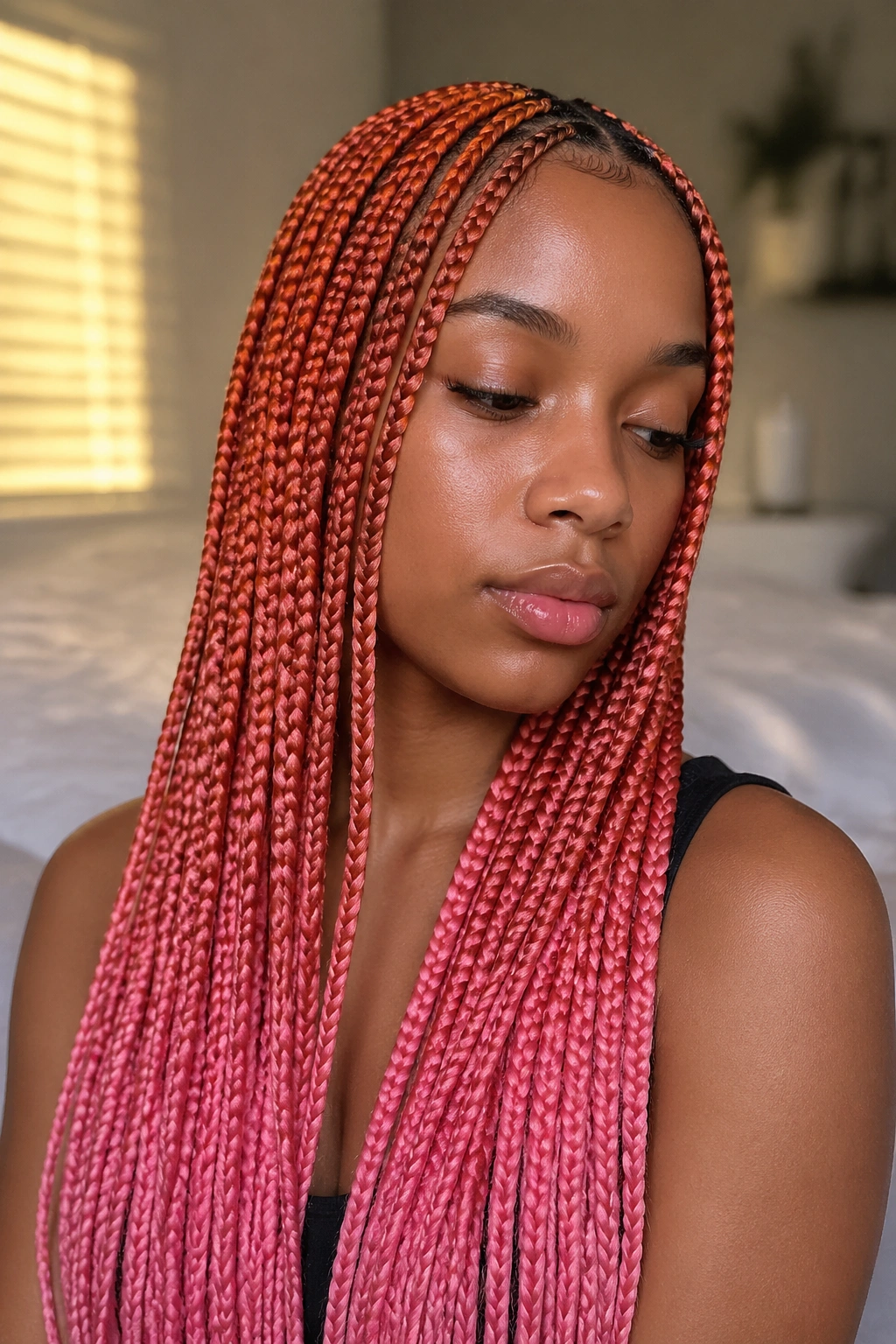
If you want one style that pulls the whole palette together, a half-up high ponytail does the job.
The top section lifts the orange and pink into a single focal point, while the lower braids hang free and keep the style from feeling too heavy. It is one of the easiest ways to make bright braids feel party-ready without needing a full updo. The color is on display, the face stays open, and the shape reads clean from every angle.
A wrapped base makes this look better. Take one braid and wind it around the ponytail holder so the elastic disappears, then pin the end underneath with a small bobby pin. That tiny finishing step matters more than most people think. It turns a regular ponytail into a style.
This works with long, medium, or even shoulder-length braids, though the dramatic effect is strongest when there is enough length for the lower section to swing. A few loose front pieces can soften the hairline, but keep them intentional. Random flyaways are not the goal.
For birthdays, photo days, concerts, or any week when you want the color to do the talking, this is the one to keep near the top of the list. It is simple. Not plain.
