



A good set of box braids on a little girl should look neat, feel light, and survive real life: playground swings, car seats, naps, and the occasional burst of chaos at the kitchen sink. If the parts are too tight or the braids are too heavy, the style may look polished for an hour and then become a headache for everyone. That is not a trade-off I’d call worth it.
Box braids are a favorite protective style for kids because they tuck the hair away, cut down on daily detangling, and give you a lot of styling room once the braids are in. Still, little girls are not tiny adults. Their scalps are more sensitive, their hairline needs gentler handling, and the style has to match their energy level, not just the picture in your head.
The best kid-friendly box braid styles are the ones that balance three things at once: comfort, weight, and staying power. Beads can be adorable, but they should not swing so hard that the braids pull at the roots. Tiny parts can look crisp, but they need patience and a steady hand. And if your child hates sitting for hair day, you probably want a style that gets finished before everyone loses the will to live.
Some looks are sweet and simple. Others are bold, bright, and a little extra. The trick is choosing the one that suits her hair texture, her age, and the amount of maintenance you can realistically keep up with during the week. Start with the styles below, and the right one usually makes itself obvious fast.
1. Classic Box Braids with Neat Square Parts
Classic box braids are the style people picture first, and for good reason. The square parts give the whole look a tidy rhythm, and on little girls that neatness reads clean rather than fussy. I like this version when the goal is something dependable: it looks finished, it works with school uniforms, and it does not fight with sweaters, collars, or hoodies.
The sweet spot is usually medium-size braids with parts that are clean but not scalp-tight. Too small, and the install takes forever. Too large, and the braids can feel clunky on fine hair. Keep the length sensible too; shoulder length or just below it tends to wear better on kids than braids that swing all the way down the back.
A satin scarf at night makes a bigger difference than people expect. So does a light mist on the scalp, not a soaking one. Dry, clean parts stay fresher than greasy ones, and the braids keep their shape longer.
2. Small Box Braids with Beaded Ends
Want something playful that still looks tidy? Small box braids with beads at the ends hit that line nicely. The smaller braid size makes the style look detailed, while the beads add movement and a little sound — kids love that part more than they admit.
Why This Style Works
The braid stays light because the braid itself carries most of the shape, and the beads are only a finish. That matters on younger children, especially if their hair is fine or their scalp gets sore easily. A clear pattern of 2 to 4 beads per braid keeps the look neat without turning every strand into a heavy chain.
Choose beads with smooth holes and soft edges. Cheap plastic beads can snag or crack. Wooden beads are lovely too, though they sit a little heavier.
Best for: school days, birthdays, and children who like to twirl the ends of their hair.
3. Jumbo Box Braids for Busy Mornings
Jumbo box braids are the shortcut style I keep coming back to when time matters. Fewer sections mean less sitting, less fuss, and less chance of a child getting cranky halfway through. They also give a bold, chunky look that feels cheerful on little girls without swallowing up their face.
The big thing here is balance. Jumbo does not mean heavy. Keep the braid size generous, yes, but don’t load the ends with too many accessories. A few cuffs or one ribbon per side is enough. If you pile on beads, the braids start to slump.
This style suits thick hair especially well, because the sections hold their shape and the braids sit upright instead of looking limp. On finer hair, I’d keep the braid length shorter — collarbone length is usually safer than anything longer.
4. Triangle-Part Box Braids
Triangle parts change the whole mood of box braids. Same braids, different geometry. Instead of square sections, the parts fan out in tiny triangles, which gives the style a softer, slightly more playful look that still feels neat and intentional.
This one is lovely when you want a small twist without making the whole hairstyle loud. The parts show up clearly, especially if the braids are medium or small. And because the pattern is visible from the front, it gives the style a bit of texture even before you add beads or cuffs.
A triangle-part style is also forgiving if the braids are being worn for two or three weeks. Growth at the roots doesn’t show as sharply as it does with a stiff square grid. That little bit of softness helps the style age better.
5. Side-Part Box Braids for a Softer Frame
A side part can be a tiny change, but on a child’s face it makes a big difference. Side-part box braids soften the look around the forehead and can make the whole style feel a touch more relaxed than a center part. I reach for this when the child has a round face or when I want the braids to sweep gently to one side instead of sitting symmetrically.
What Makes It Different
The part line creates movement before the braids even start. That means you do not need a lot of extra accessories to make the style interesting. A single clip near the temple or a bow tucked over one side is enough.
- Works well with shoulder-length braids
- Looks especially nice with medium braid sizes
- Easier to style into a side ponytail later
- Pairs well with soft curls at the ends
Tip: If your child has a cowlick at the front, a side part often behaves better than a center part.
6. Center-Part Box Braids with a Clean Finish
Center-part box braids are sharp in the best way. They give you a balanced frame on both sides of the face, and that symmetry looks especially polished on little girls with oval or longer faces. There’s nothing flashy about it. That is part of the appeal.
This style does ask for a steady hand, because a crooked center line stands out fast. But once it is done well, the braids sit evenly and can be styled in half-up looks, low ponytails, or twin buns without fighting the part. It is a strong base style, which means you can dress it up later or leave it plain.
I like this one best when the child has plenty of patience for parting time and wants a look that feels neat without becoming overly decorative.
7. Heart-Part Box Braids
Heart parts are one of those styles that makes children grin as soon as they see the mirror. The little heart shape near the front or crown gives the braids a sweet detail that feels special without taking over the entire head. Keep the heart small and clean; if it gets too large, the shape loses its charm.
A single heart part is enough. You do not need hearts everywhere. In fact, too many decorative parts can make the style look busy instead of cute. One heart near the front paired with simple box braids lets the shape do the talking.
This style is especially nice for birthdays, school photos, or any day when you want the hair to feel festive but still easy to manage. It is the kind of detail kids notice right away.
8. Zigzag-Part Box Braids
Zigzag parts bring energy to a braid style without adding weight or length. The pattern moves across the scalp in a playful line, which makes the whole look feel more animated than straight parts do. Kids who like something a little different tend to love this one.
The best version uses crisp zigzags that are visible but not too sharp. If the lines are too tiny, the pattern gets muddy. If they are too broad, they start to look accidental. A medium-width zigzag usually gives the cleanest finish.
This style works well with plain braids if you want the parting to be the statement. It also looks good with one or two colored accessories, though I would skip heavy decoration here. The pattern already carries enough personality.
9. Shoulder-Length Box Braids Bob
A box braid bob is one of the easiest styles to live with. The shorter length means less tangling, less pulling, and less time spent untangling the back after a nap or a long car ride. That alone makes it worth a serious look for younger girls.
The bob shape also keeps the braids close to the face, which looks cute without getting in the way. You can tuck one side behind the ear, pin it back with a clip, or leave it loose. It has range, which is more useful than people expect.
If the child is active, this is one of my top picks. The braids stay out of the way during sports, dance class, or just climbing every piece of furniture in the house. Shorter braids are easier on the neck too.
10. Box Braids with Curly Ends
Curly ends make box braids feel softer and a little dressier. Instead of finishing in a blunt line, the braids taper into loose curls or spirals, which gives the whole style more bounce. On little girls, that softness matters. The result looks playful instead of severe.
How to Get the Most From It
Keep the curls light and touchable. Tight ringlets at the ends can tangle faster than you want, especially if the child sleeps with the hair down. Soft curls hold up better and keep the style from looking messy after a few days.
- Best with medium or long braid lengths
- Nice for birthdays and family events
- Needs a satin bonnet at night
- Looks best when the ends are trimmed evenly
A little curl cream on the ends can help, but go easy. Too much product turns the curls limp.
11. Half-Up Half-Down Box Braids
Half-up half-down box braids are practical in a way that parents appreciate fast. The top half gets pulled away from the face, which keeps the hair out of the eyes, and the bottom half still shows off the braid length. It is a tidy compromise.
This style works especially well when the braids are medium-length. If they are too long, the half-up section can feel bulky on top. If they are too short, the style loses its shape. Medium length gives you enough hair to create a small puff, bun, or ponytail at the crown.
I also like it because it changes the mood of plain box braids without needing extra parting work. One quick tie-back, and the whole look feels fresh again.
12. High Ponytail Box Braids
A high ponytail gives box braids a lively, lifted look. It keeps the braids off the neck and away from the face, which is handy on busy school days or warm afternoons. There’s also something cheerful about the height. It has bounce.
The key is to avoid pulling the ponytail too tightly at the base. Little scalps do not need that kind of tension. Use a soft hair tie and secure the braids high enough to stay up, but not so high that the front gets yanked backward.
A high ponytail looks best when the braids are medium weight. Very heavy braids can slide down over the day, which means constant fixing. Nobody wants that. A bit of lightness saves you time later.
13. Low Ponytail Box Braids with Ribbon
Low ponytails are calm, tidy, and easy to wear. Add a ribbon, and the style suddenly feels more finished without becoming elaborate. I like this when the braids need to look neat for school, church, or a family event, but the child still wants something pretty.
Choose a ribbon that is soft and wide enough to tie without digging into the braid base. Satin ribbon works well because it slides cleanly and looks smooth. Thin ribbon can cut into the hair and looks fussy after a while.
This style also works well if the braids are a little older and need a refresh. Pulling them low and tying in a ribbon makes the style feel intentional again. Simple trick. Good payoff.
14. Box Braids with Colorful Rubber Bands
Colorful rubber bands are one of the easiest ways to make box braids feel fun without changing the braid pattern itself. Small bands at the roots, around a few braids, or stacked in tiny clusters can add color in a way that kids usually love right away.
The trick is moderation. Too many bands make the style look cluttered, and tight bands can snag if they’re left in too long. Use them as accents, not armor. A few near the front and sides is often enough.
This style is a strong pick when you need something cheerful for school pictures, holiday events, or just a week when your child wants her hair to feel special. The color does the decorating for you.
15. Box Braids with Wooden Beads
Wooden beads give box braids a warmer, more natural feel than bright plastic ones. They have a soft, earthy look that sits nicely on little girls, especially when the clothes are simple and the hair needs a little texture instead of a lot of shine.
What Makes Them Different
Wood beads are usually heavier than plastic, so they work best when the braids are not overly long or thick. A handful of beads at the ends is enough. Full-length beading can start to drag, and that’s where the style stops being cute and starts feeling bulky.
- Better on medium-length braids
- Nice match for neutral outfits
- Less noisy than plastic beads
- Works well with cream, brown, or gold accents
If you’ve never tried them, start small. Wooden beads can be lovely, but they do have weight.
16. Box Braids with Gold Cuffs
Gold cuffs give box braids a little shine without making the hairstyle look overworked. I like them because they sit quietly on the braid shafts and catch the eye only when the child moves. That is enough. You do not need a head full of metal to make the style feel special.
This is a style I’d pick for older little girls who want something polished but not babyish. One cuff near the front, maybe two more scattered through the sides, and the braids suddenly look dressed up. If you use too many cuffs, though, they start to look noisy and can snag on clothing.
Gold cuffs also pair well with medium parts and shoulder-length braids. The look stays clean, and the accents stay visible.
17. Box Braids Wrapped with Ribbon
Ribbon-wrapped box braids feel playful in a handmade way. Instead of adding accessories at the ends, you wind thin ribbon around a few braids from top to bottom or halfway down. The effect is soft, colorful, and a little whimsical.
This style works best when the ribbon is narrow enough to wrap without bulk. Satin or grosgrain ribbon tends to hold better than flimsy craft ribbon. If it frays easily, it will look tired fast.
I like this for special days when a child wants color but does not want beads clacking around her shoulders. The ribbon adds decoration without a lot of weight, which is exactly the sort of compromise that makes parents happy too.
18. Feed-In Front Cornrows into Box Braids
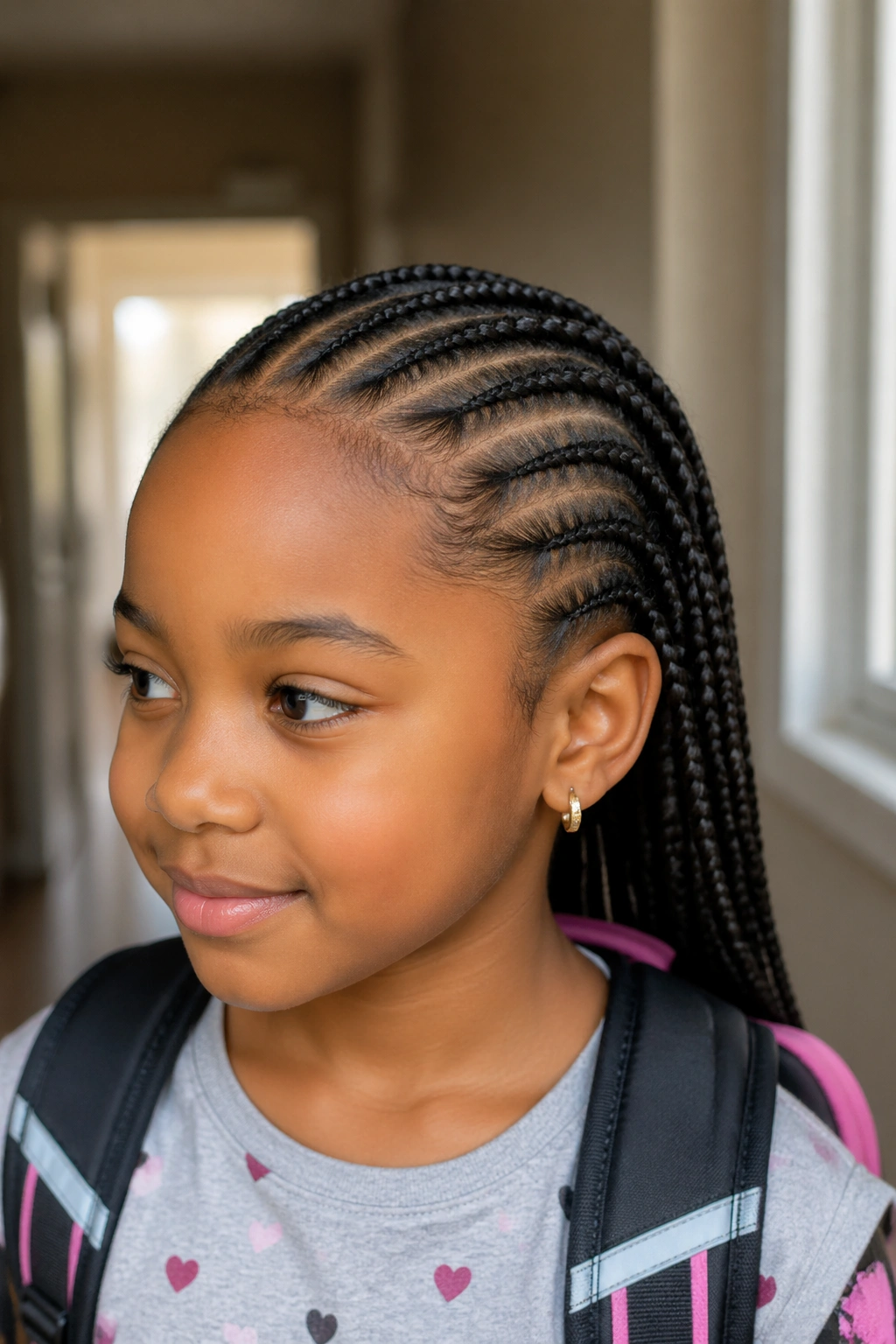
This style gives you the neatness of cornrows at the front and the freedom of box braids through the rest of the head. It creates a clean hairline, especially around the forehead, and then opens into braids that hang loose at the back. The contrast is sharp in a good way.
It’s useful when you want the front to stay close and controlled. That can help if your child gets flyaways at the hairline or tends to tug at the front section. The back can still move and swing, so the style doesn’t feel stiff.
A few parents skip this because it sounds complicated. It does take more planning, but the payoff is a style that stays neat around the face longer than a plain all-over braid set.
19. Fulani-Inspired Box Braids for Little Girls
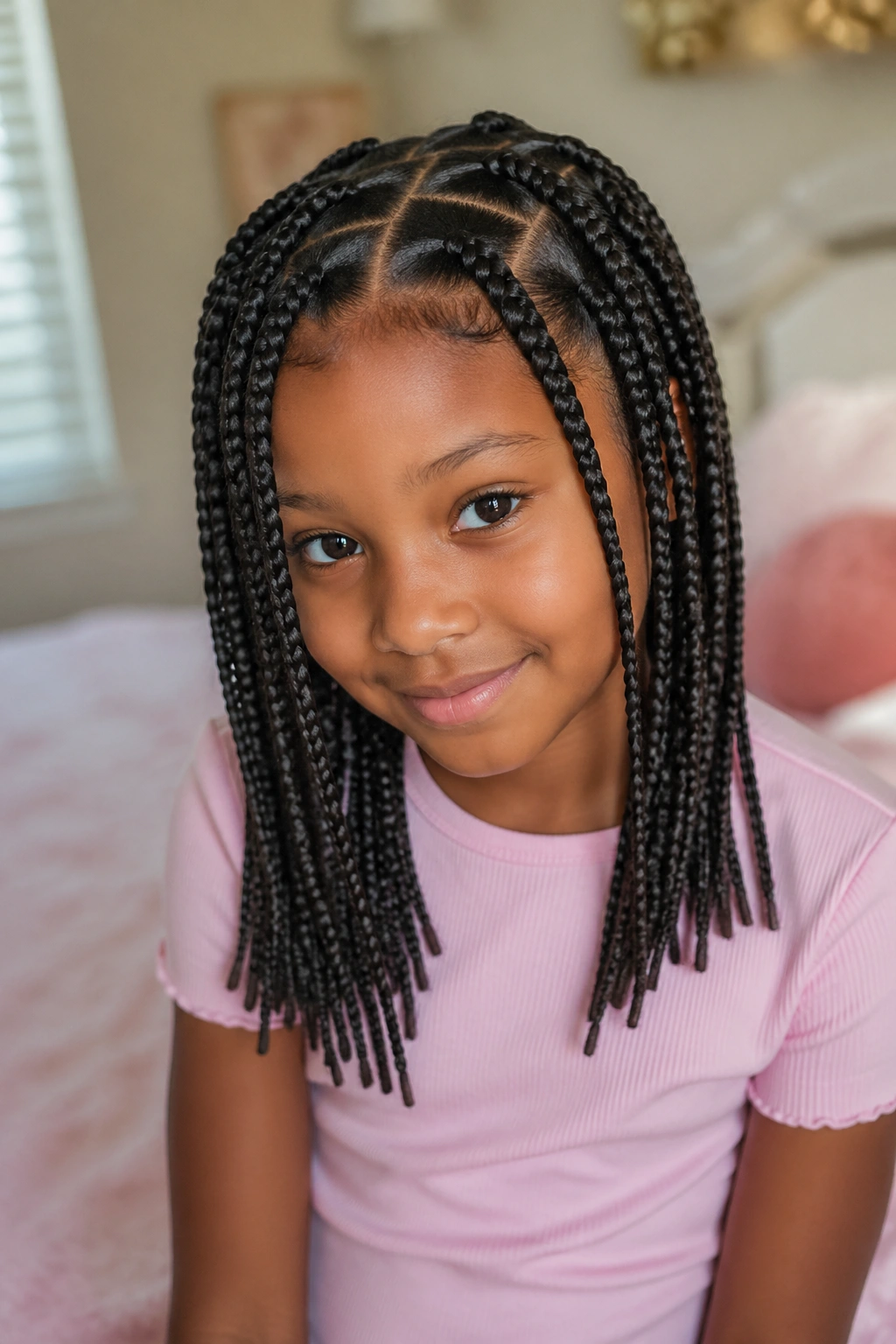
Fulani-inspired box braids mix central braids with side pieces, beads, or a decorative front braid, and the result can be beautiful on little girls when it stays age-appropriate. I’m careful with this one. It should feel graceful, not overloaded.
The best version keeps the center braid simple and uses just enough decoration to give the style a sense of pattern. A few beads near the ends or one neatly placed cuff line is usually enough. Too many extras and the hair starts wearing the outfit instead of the other way around.
This is a good choice when you want something a little more dressed up for family photos or cultural events. It has presence, but it still works as an everyday protective style if you keep the accessories light.
20. Lemonade Side-Swept Box Braids
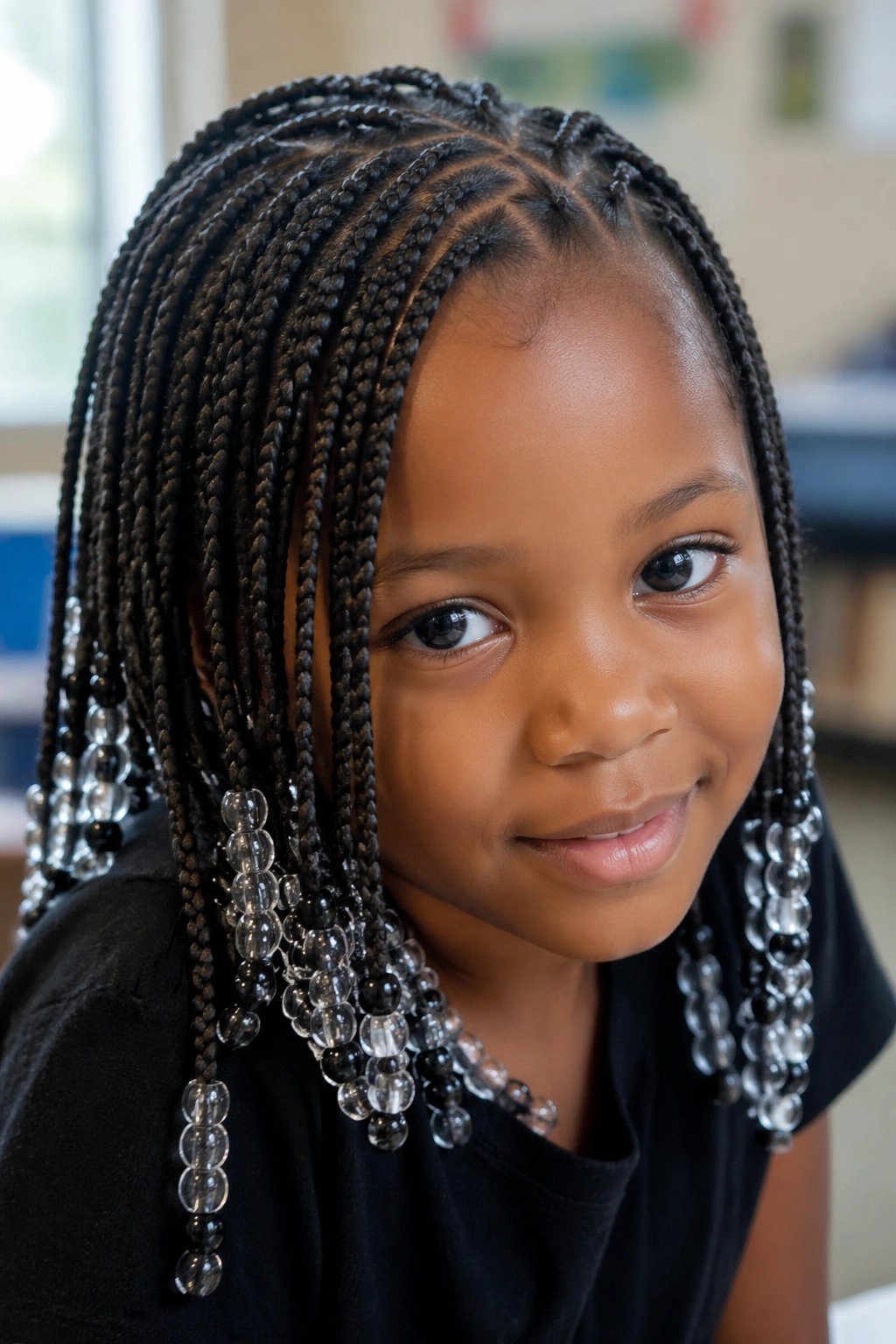
Side-swept box braids have movement built right in. Instead of falling evenly on both sides, the braids lean across one direction, which gives the style a soft slant. On little girls, that angle can look sweet and modern without feeling too grown-up.
What Makes It Different
The sweep changes how the braids frame the face. It can slim a rounder face or soften a strong forehead line, and it makes a simple braid set look more styled. The shape also works nicely with clips or a few small beads on the heavier side.
- Best when the braids are medium length
- Easier to pin back if needed
- Nice for one-sided bows or barrettes
- Looks fresh without much extra work
This style can feel a touch dramatic. That’s part of the charm.
21. Box Braids Space Buns
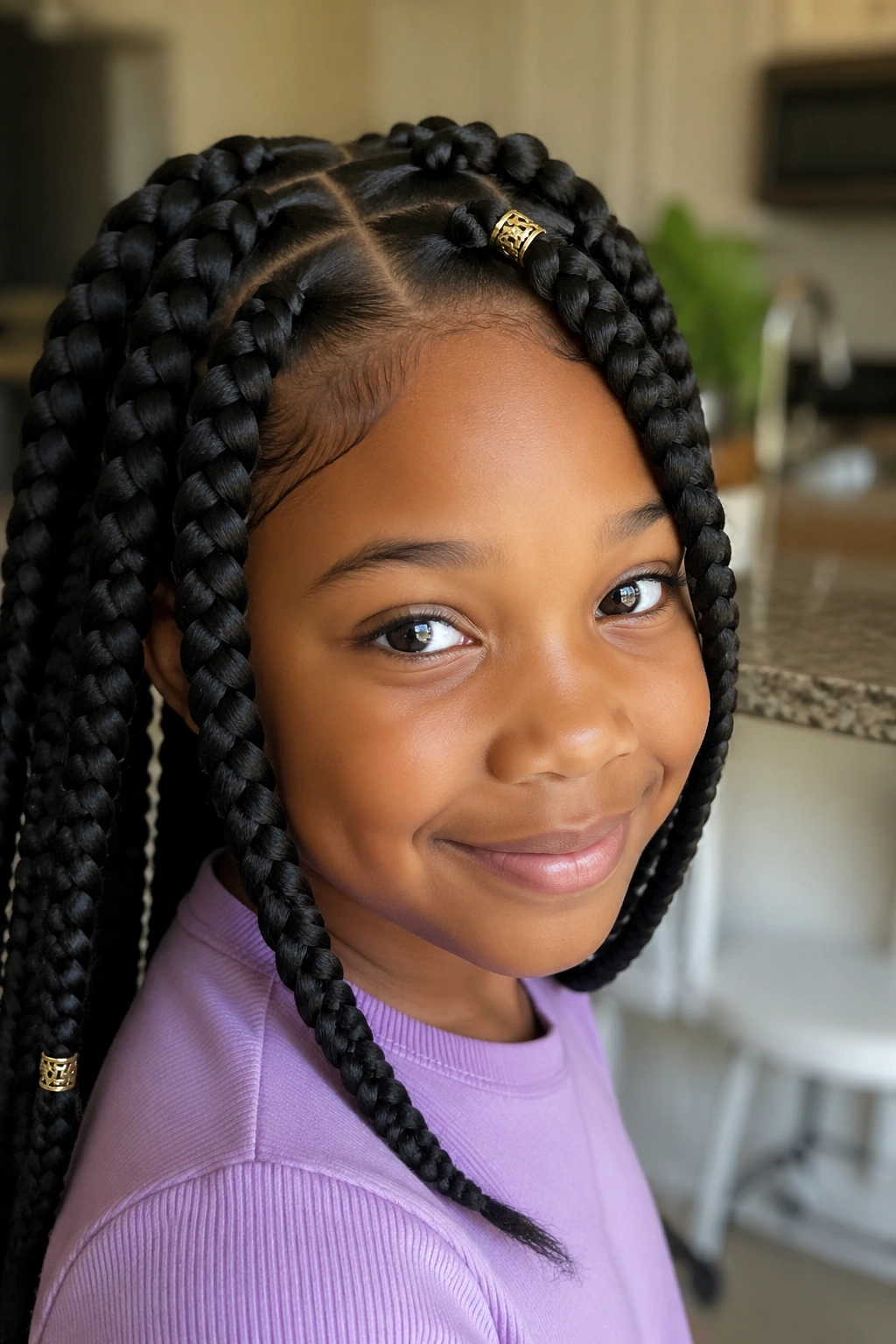
Space buns with box braids are pure fun. Two buns sitting high on the head give the style a bouncy, childlike feel, and the loose braids left underneath keep it from looking too fixed or stiff. It is one of the easiest ways to turn plain braids into something playful.
I like space buns for weekends, parties, and days when your child wants to look a little extra without spending another hour in the chair. The buns can be neat and tight or loose and fluffy, depending on how much hold you want. Either way, they draw attention in a cheerful way.
A middle part helps keep the two buns balanced. If the braids are very thick, keep the buns small and leave the rest hanging. Otherwise the shape can get bulky fast.
22. Crowned Halo Box Braids
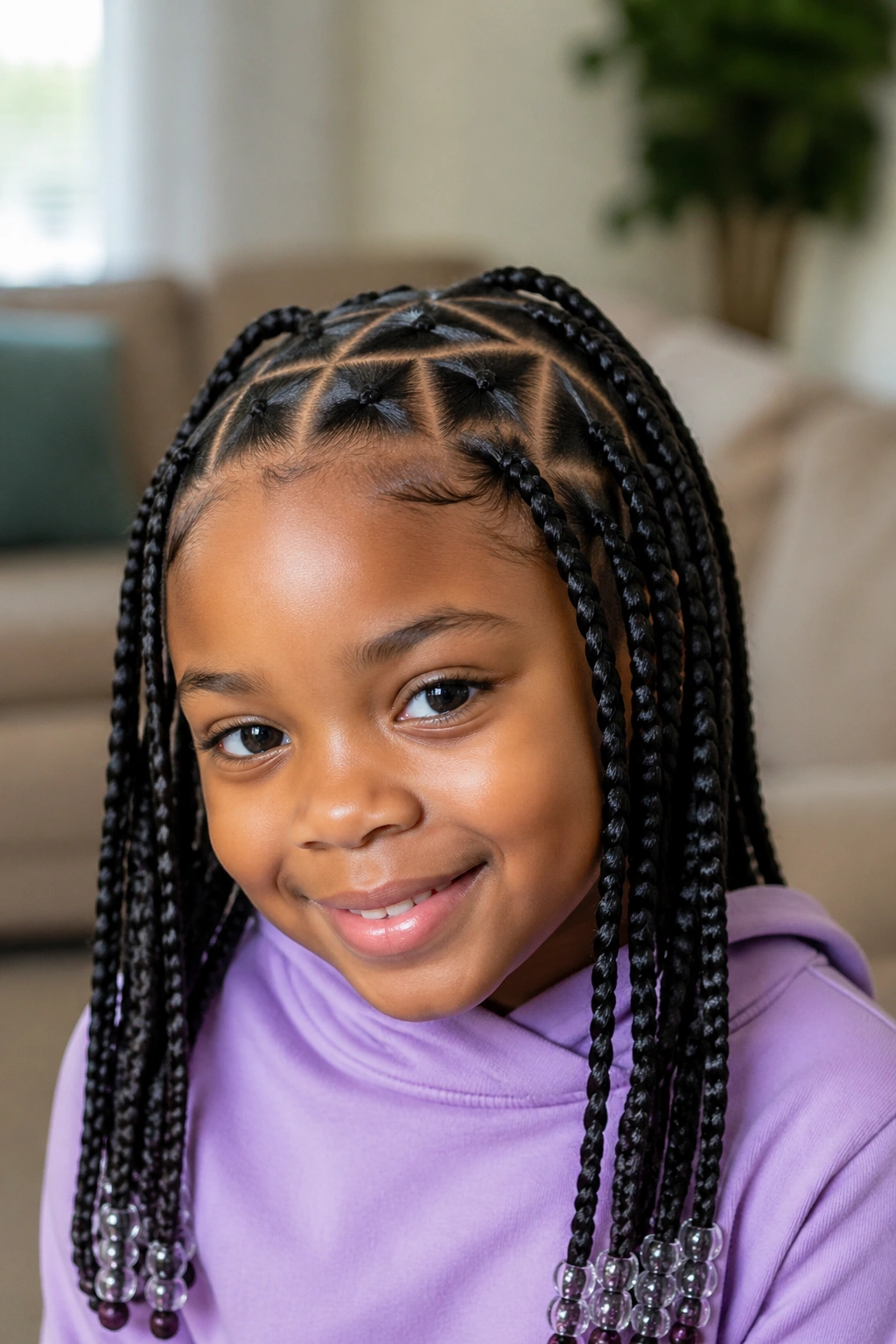
Halo box braids wrap around the head in a circular shape, almost like a braided crown. The look is gentle and polished, and little girls often carry it well because it sits close to the head instead of bouncing around everywhere. There’s a calmness to it.
This style works best when the braids are medium or small. Large braids make the halo too bulky and can cause the circle to sit awkwardly. A smooth pinning pattern helps the braids follow the head shape instead of jutting out.
Good Details to Keep in Mind
- Use lightweight pins or small elastics
- Keep the braid ends tucked away neatly
- A soft edge brush helps smooth the front
- Best for formal events or photo days
It is one of those styles that looks more complex than it is. That is always a win.
23. Box Braids Pigtails
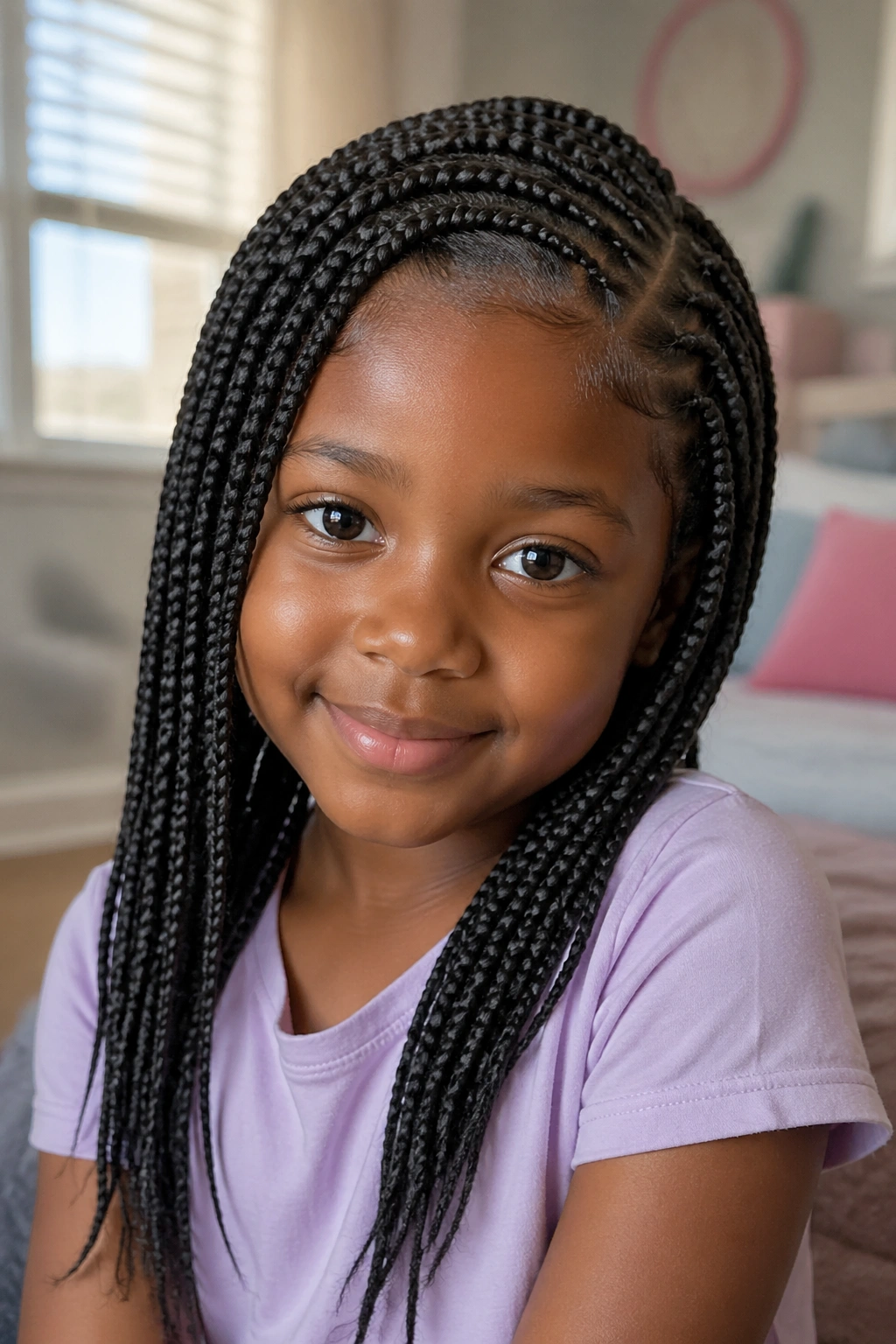
Pigtails with box braids are simple, sweet, and deeply practical. Pulling the braids into two low or mid-height sections keeps the hair off the neck and gives the child a face-framing style that feels youthful without trying too hard. Sometimes simple wins.
I especially like this for younger girls because the shape is easy to recognize and easy to fix if one side slips. You do not need a perfect finish for the style to look good. A little looseness can even make it feel softer and less rigid.
Add matching ribbons or tiny bows if you want, but the style doesn’t need much. The split itself is the charm.
24. Layered Shoulder-Length Box Braids
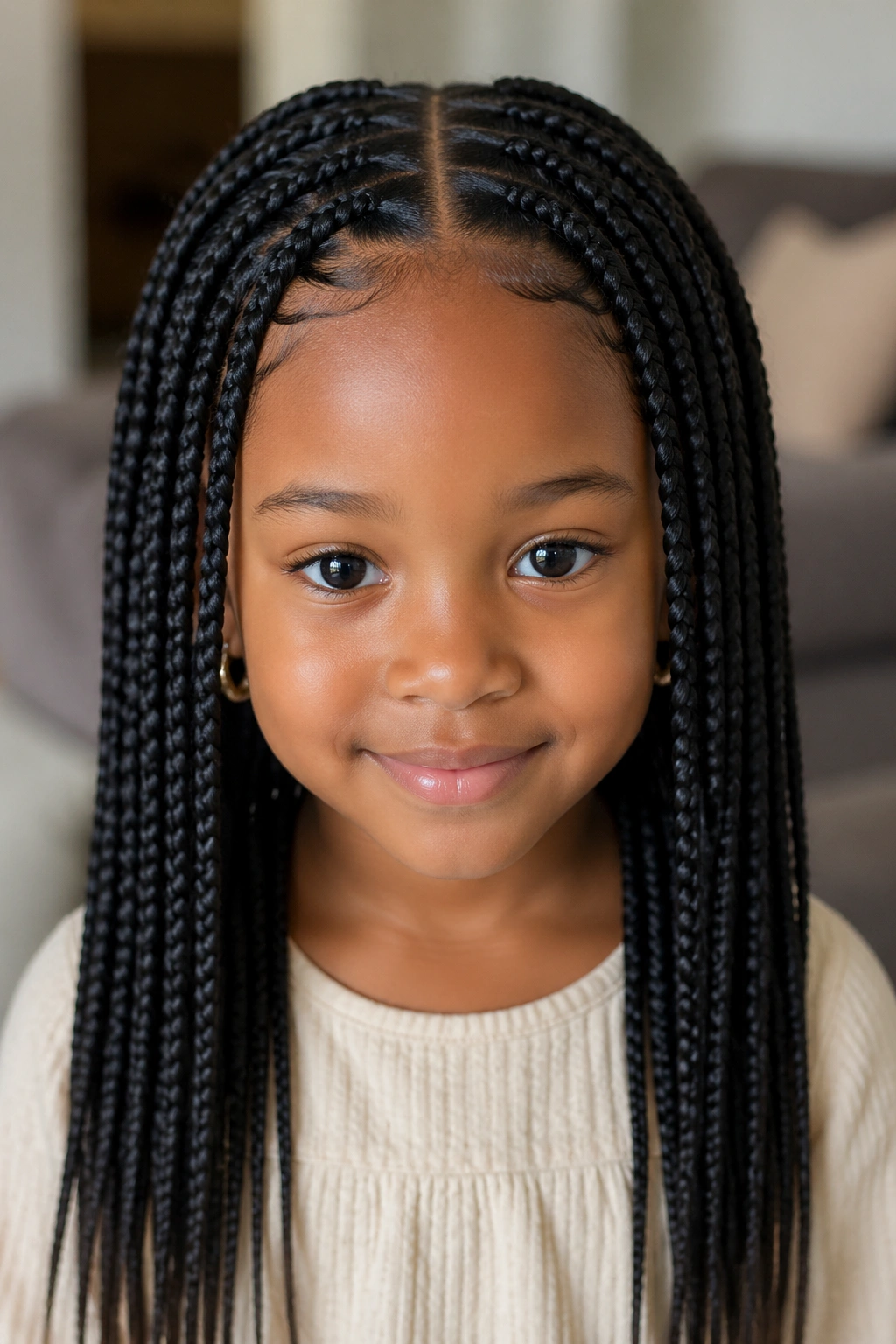
Layered shoulder-length braids bring shape without too much bulk. Instead of every braid landing at the same spot, the ends fall at slightly different lengths, which keeps the style from looking like a hard line across the shoulders. That matters more than people think.
The layered shape also makes movement look nicer. The braids bounce a little as the child walks, and the whole style feels lighter than a blunt cut. On kids with thinner hair, that lighter feel can make the braids easier to live with all day.
If you want a style that looks thoughtful but still easy, this is a strong one. It does not need many accessories. The layers do the work.
25. Asymmetrical Box Braids Bob
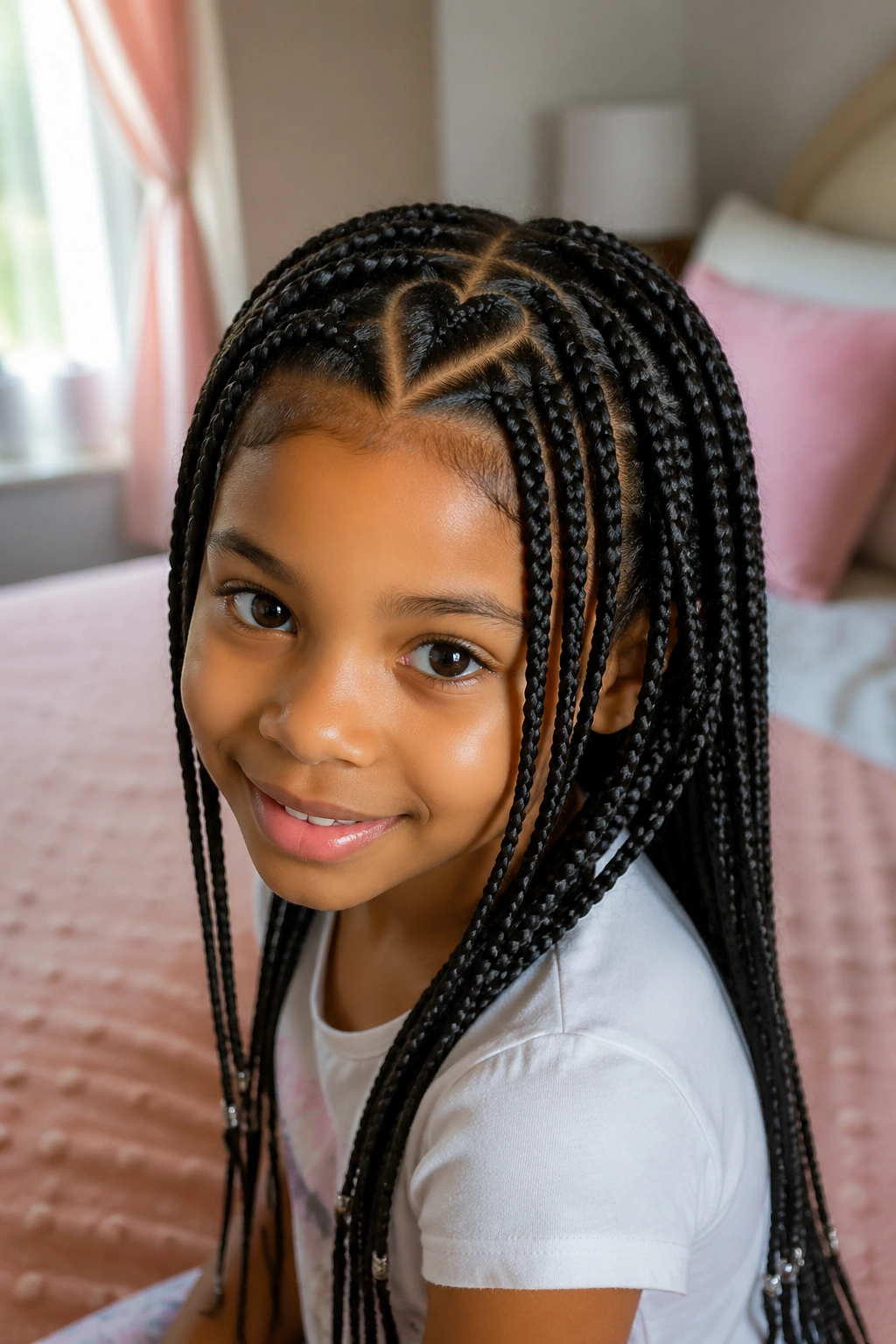
An asymmetrical bob is the cooler cousin of the regular braid bob. One side sits a little longer than the other, which gives the cut some shape and a quiet bit of attitude. On a little girl, that can look adorable without crossing into too much drama.
Why It Stands Out
The uneven line keeps the eye moving. One side brushes the jaw, the other grazes the neck, and the effect is more interesting than a plain straight bob. It also works well for children who like styles that feel a bit different from everyone else’s.
- Best with medium or small braid sections
- Easier to manage than long braids
- Looks good tucked behind one ear
- Needs a clean trim at the ends to stay sharp
This is one of my favorites for a child who wants something stylish but not fussy.
26. Lightweight Box Braids on Natural Hair
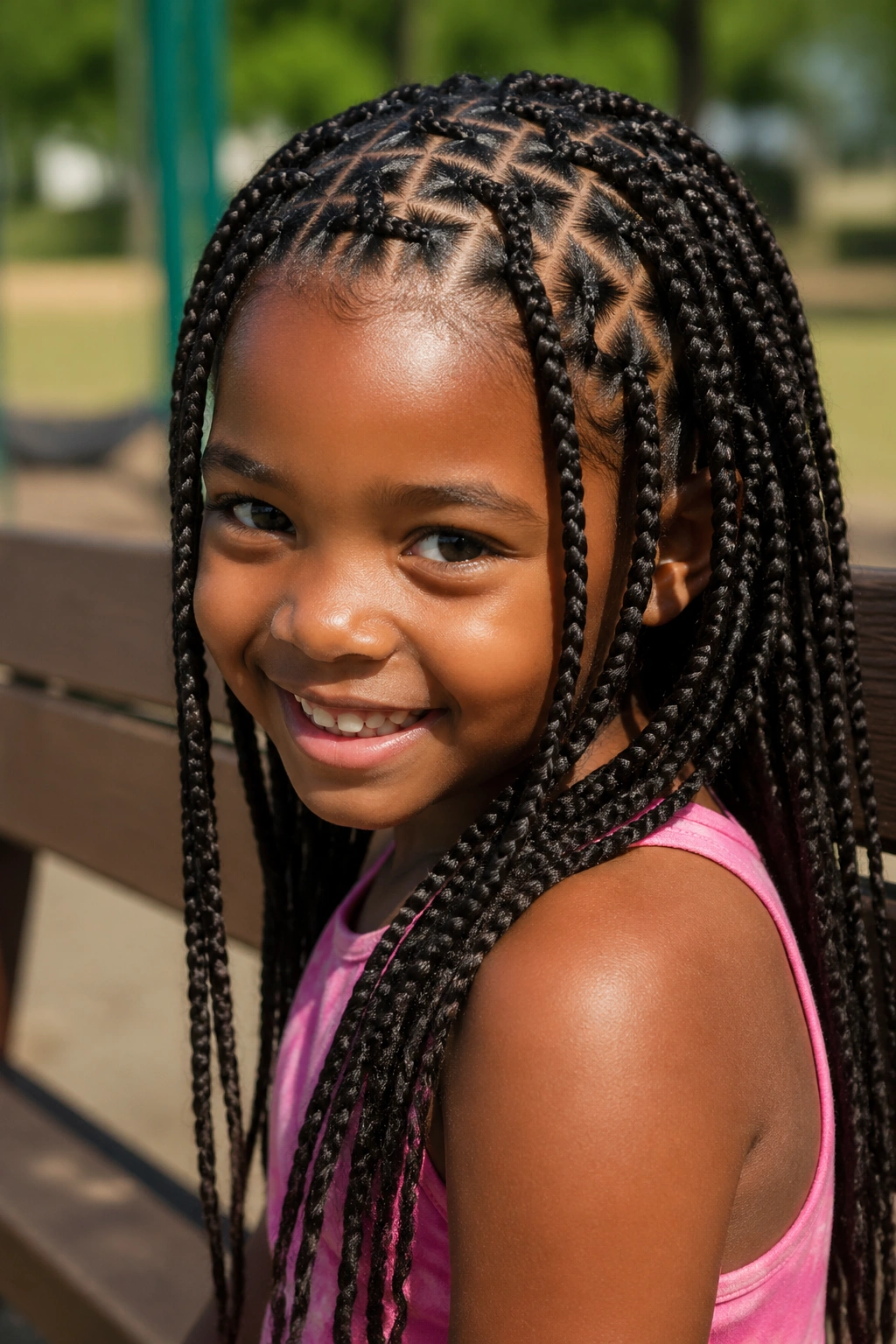
Sometimes the best box braids are the lightest ones. That means using smaller add-ins, keeping the braid size modest, and avoiding a lot of extra bulk near the roots. The style still looks full, but it feels easier on the scalp and neck.
This approach is especially smart for children with fine hair or tender edges. A lighter braid set usually sits better for longer stretches and makes washing or refreshing the scalp less of a battle. The result may not look as dramatic as longer, heavier braids, and that is exactly why it works so well.
I would pick this style for younger kids who need comfort first and decoration second. The look is clean, simple, and easier to keep fresh.
27. Mixed-Size Box Braids
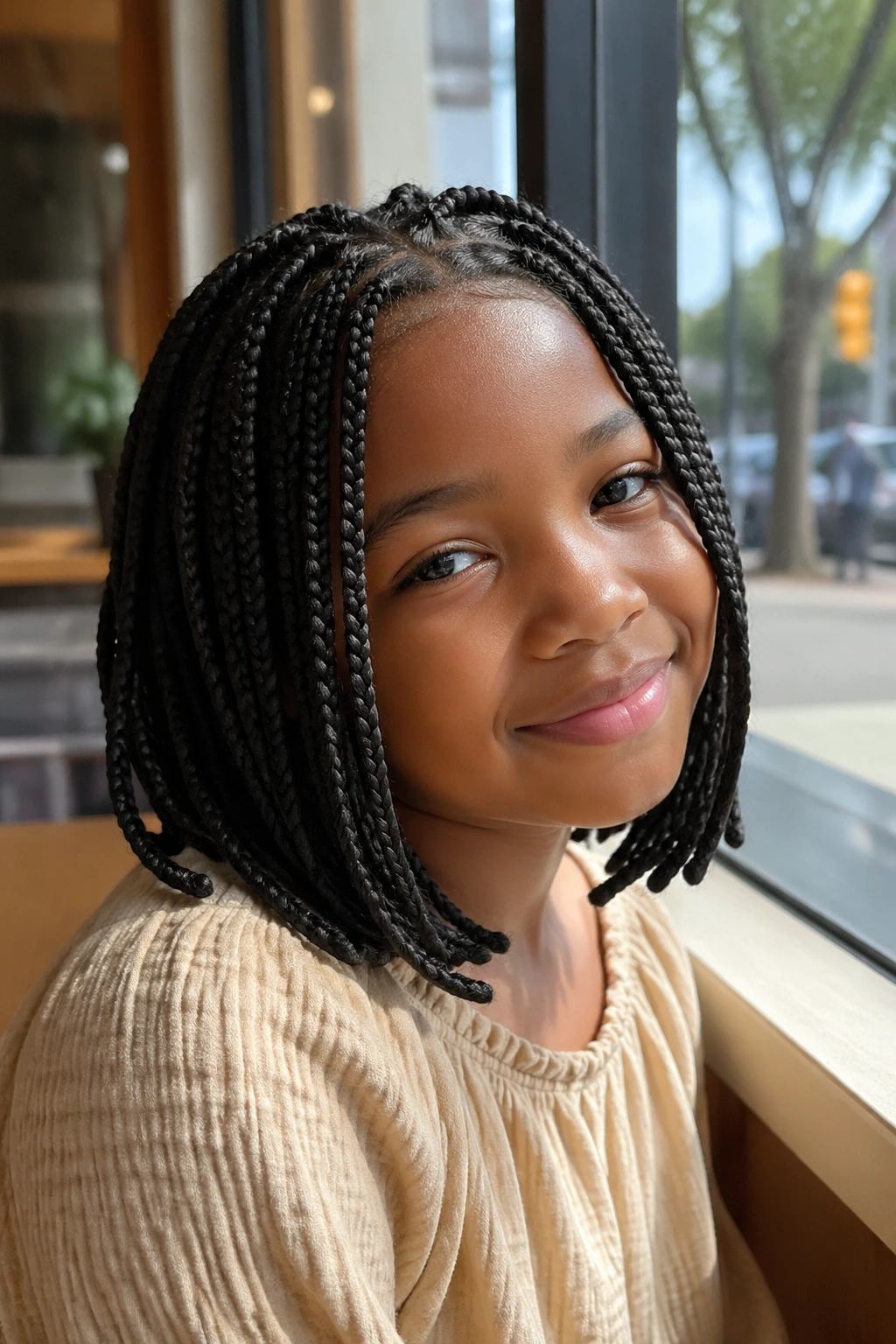
Mixed-size braids are a nice way to break up the symmetry of a standard set. A few smaller braids around the hairline, medium braids through the crown, and slightly thicker ones toward the back can make the style look fuller without becoming heavy all over.
The advantage is visual interest. The different sizes create movement before you even style the hair. It also helps if the child’s hair density varies in different sections, because you can work with what each area naturally gives you instead of forcing every braid to match.
Quick Style Notes
- Use smaller braids around delicate edges
- Keep the back slightly fuller for balance
- Works well with a center or side part
- Best if you want texture without extra accessories
This one feels a little more custom, and I like that.
28. Ombre Box Braids
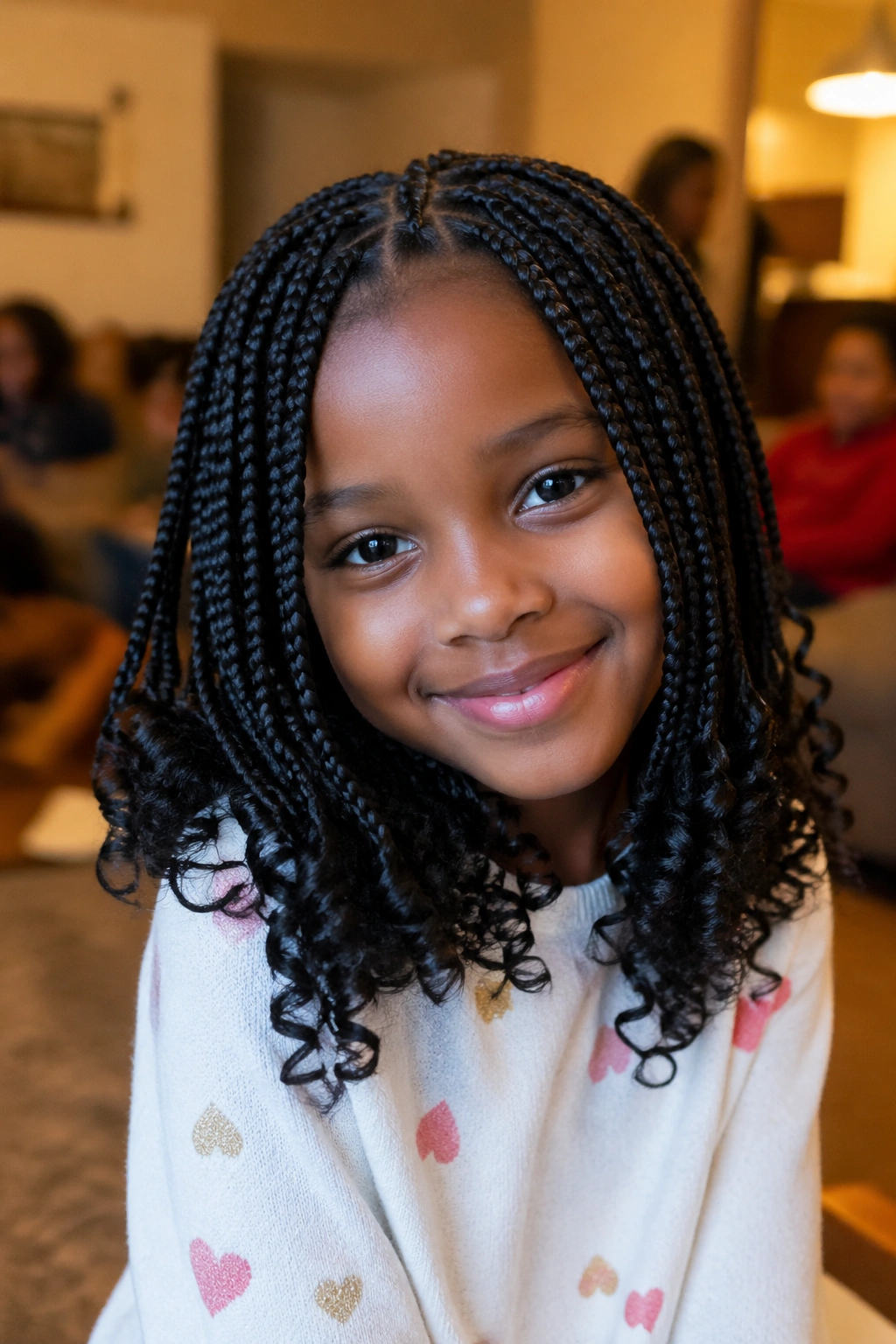
Ombre box braids bring color from dark to light or from one shade to another in a gradual blend. On little girls, the effect can be soft and playful if the color choices are gentle. Think brown to honey, black to burgundy, or dark root with a warm caramel finish.
The nice thing about ombre is that it gives the braids dimension without needing a pile of beads or clips. The color does the decorating on its own. It also helps the braids look lively in photos because the shading catches the eye as the child moves.
I’d keep the blend subtle for younger kids. Loud neon ombre can be fun, but it can also start to feel costume-like. A soft fade tends to age better and looks easy to wear.
29. Box Braids with Rainbow Accent Plaits
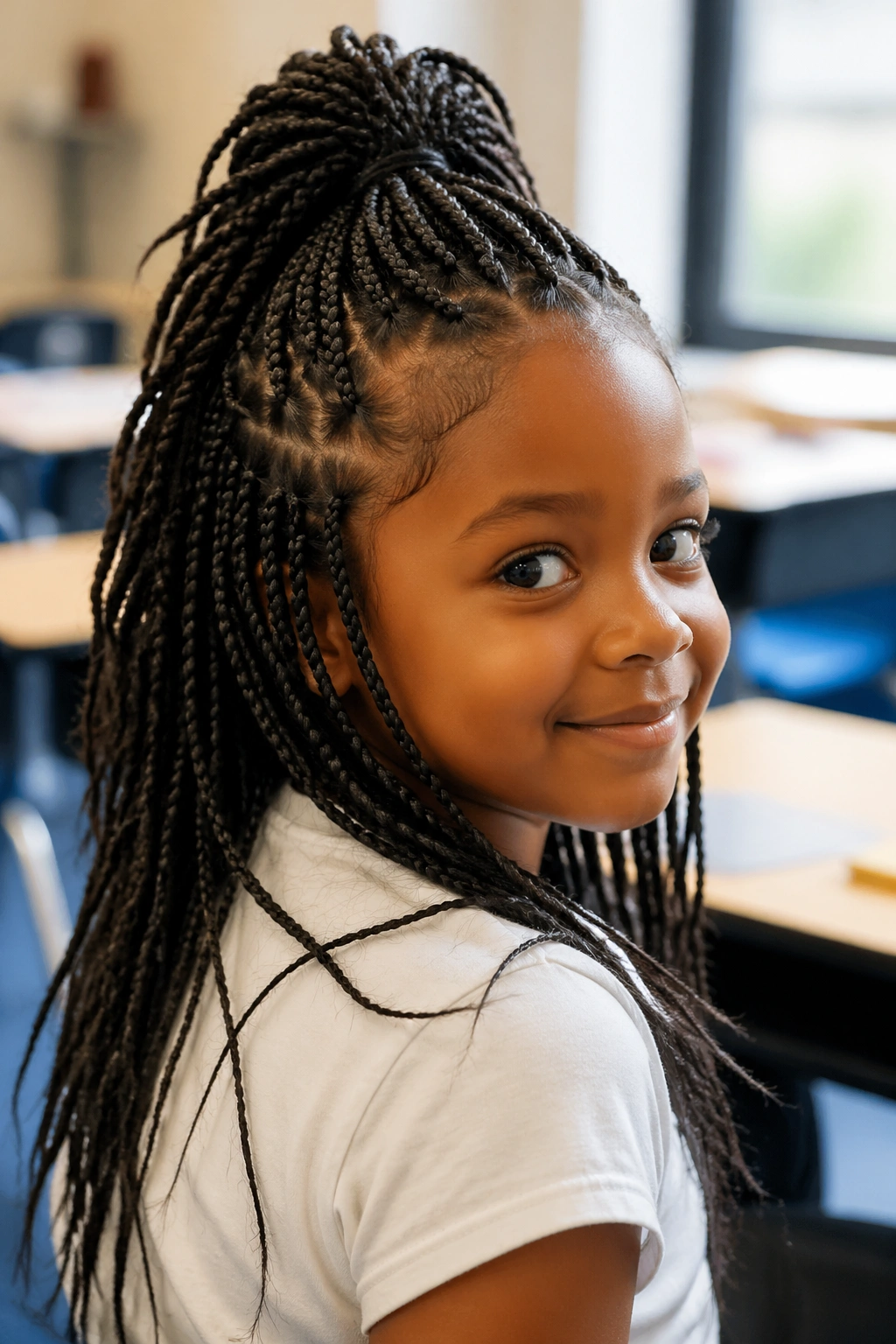
Rainbow accents work best when they are limited to just a few braids. That keeps the style bright without turning the whole head into a color explosion. A single row near the temple, a few strands in the back, or a small cluster at the side is usually enough.
This style is pure joy for a lot of kids. It looks playful in a way that says, yes, this is hair for fun. The trick is making the rainbow intentional rather than random. Keep the other braids neutral, and the colored strands will stand out better.
If your child loves bright things, this may be the style that gets the biggest smile. It can be cheerful without being hard to wear.
30. Box Braids with Puff-End Curls
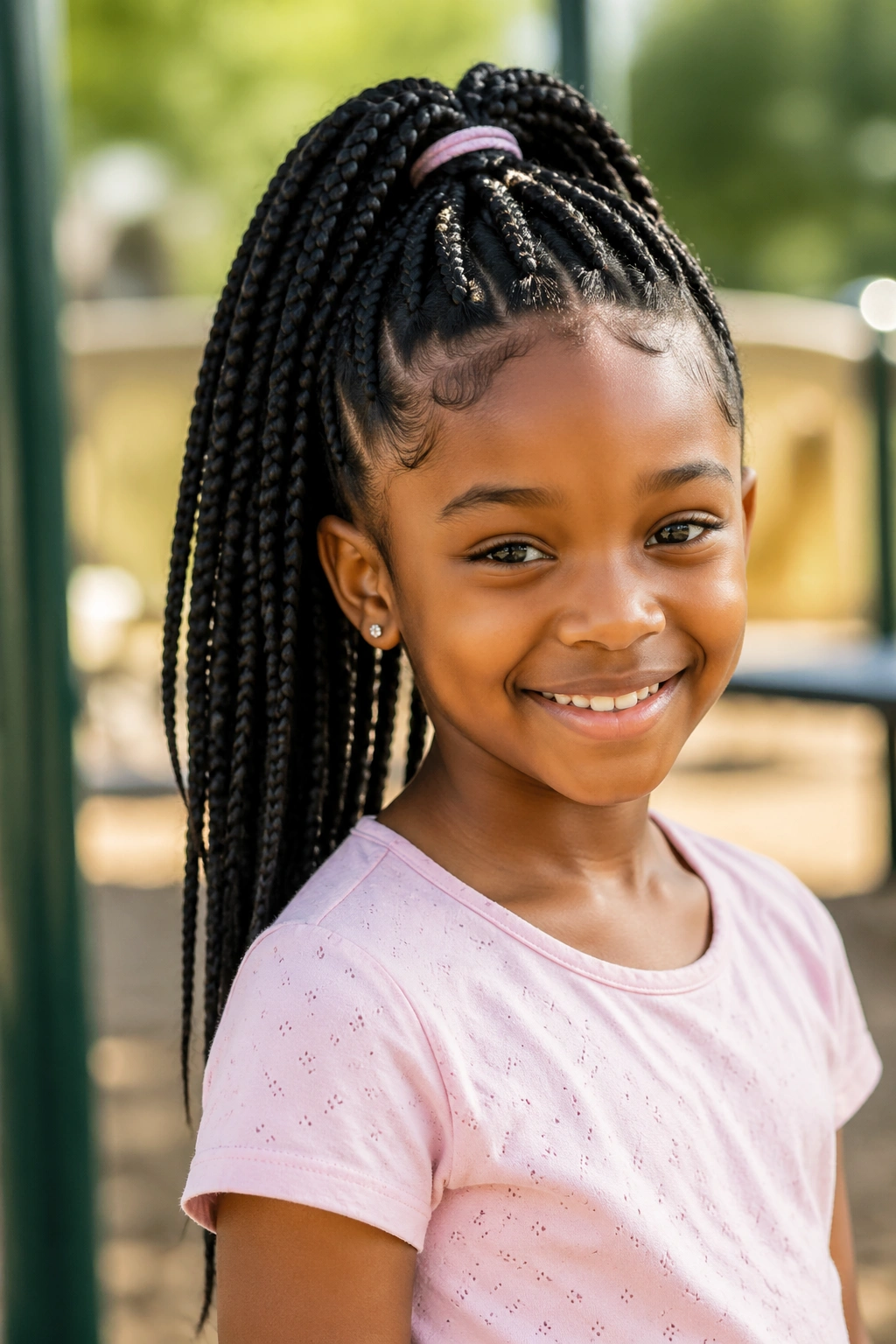
Puff-end curls give box braids a soft finish that feels lively and child-friendly. Instead of a blunt or beaded end, the braids open into little puffs or curled sections that move around easily. The style has a light, airy feel that suits children who like hair with bounce.
How to Style It Well
The curls should look soft, not stiff. If they’re too tightly set, they can look crunchy after a few days. A gentle curl pattern keeps the ends from tangling too fast, and it makes bedtime easier because the hair lies flatter under a bonnet or scarf.
- Better on medium-length braids
- Cute for birthdays and school events
- Needs a little fingertip reshaping in the morning
- Looks especially nice with a side part
There’s something charming about the way the ends move. Kids notice that.
31. School-Ready Tucked-Under Box Braids
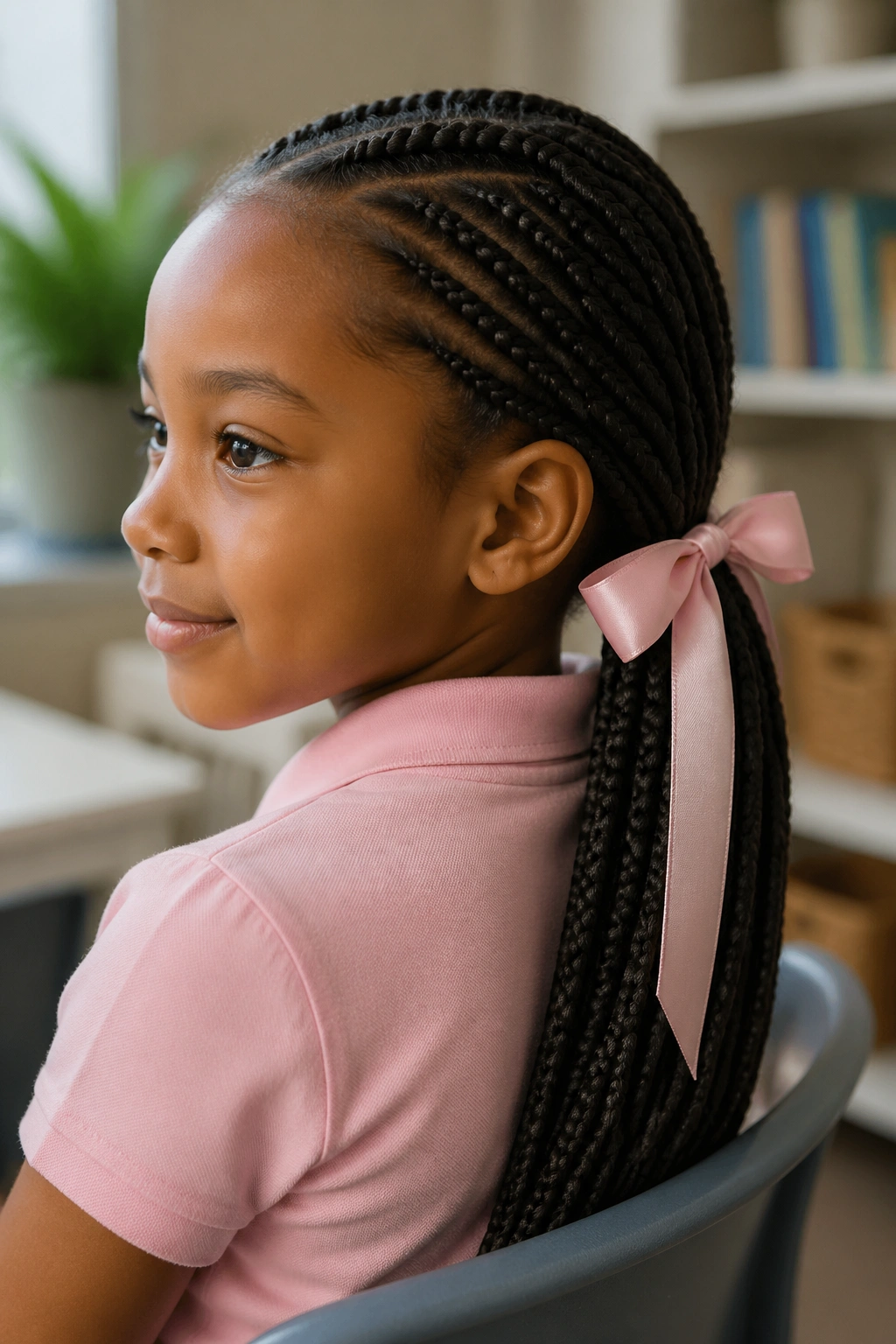
Tucked-under box braids are the neatness lovers’ answer to long hair. The ends are folded or pinned under so the style sits close to the head and stays out of the way. It looks tidy, and it behaves even better than it looks.
This is a smart pick when a child has PE, dance, or a long school day and you do not want braids flying everywhere. The tucked shape keeps everything contained, which also helps if the child tends to pull on the ends. No ends, no problem.
I like this one because it solves a real daily issue without needing a special accessory. It is plain in the best way.
32. Elegant Side-Bun Box Braids
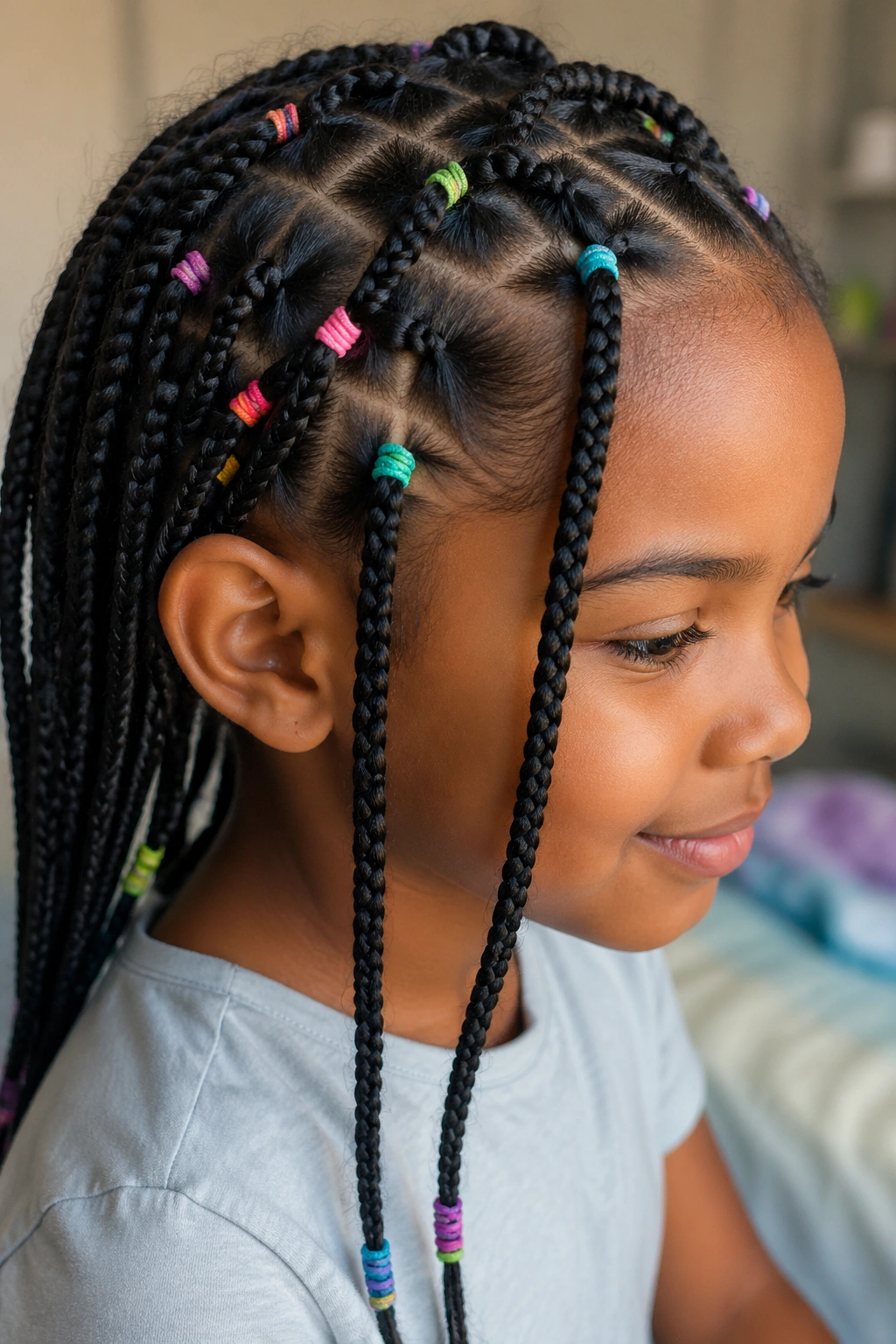
A side bun turns box braids into something a little more dressed up. Pulling the braids to one side and twisting them into a bun creates a shape that feels polished for events, but it still looks like a child’s hairstyle, not an adult updo trying too hard.
The bun should sit low enough to be comfortable and secure enough to last through moving around. If you place it too high, it can feel heavy and fall out of shape. A side position near the ear or jawline usually works well.
Add a bow or one simple cuff if you want to finish it. More than that can start to crowd the look. The bun itself is the statement.
33. Bead-Free Minimal Box Braids
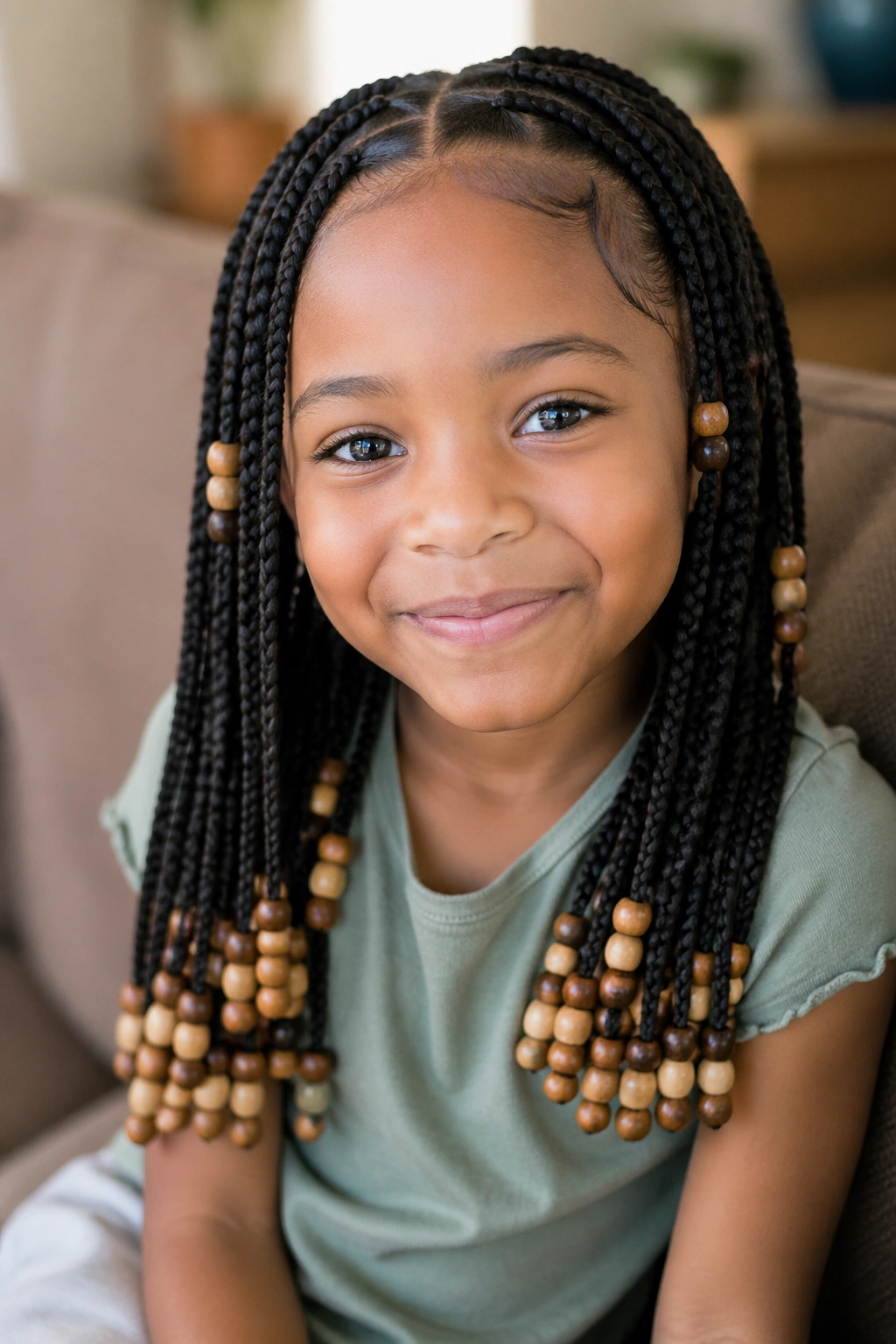
Not every braid set needs bells and whistles. Bead-free box braids keep the look clean, quiet, and low-maintenance. That can be a relief on a child who dislikes noise, weight, or all the fiddly bits that come with accessories.
I tend to recommend this style when the braid pattern is strong enough on its own. Clean parts, consistent braid size, and a tidy finish at the ends are enough. No extra work required. It also helps if the child has sensitive ears or just finds beads annoying when she sleeps.
Best For
- Children who prefer simple styles
- Fine hair that needs light weight
- Long school weeks with little styling time
- Parents who want the easiest nighttime routine
Simple does not mean boring. It means the braid work gets to speak for itself.
34. Festival Box Braids with Cuffs and Threads
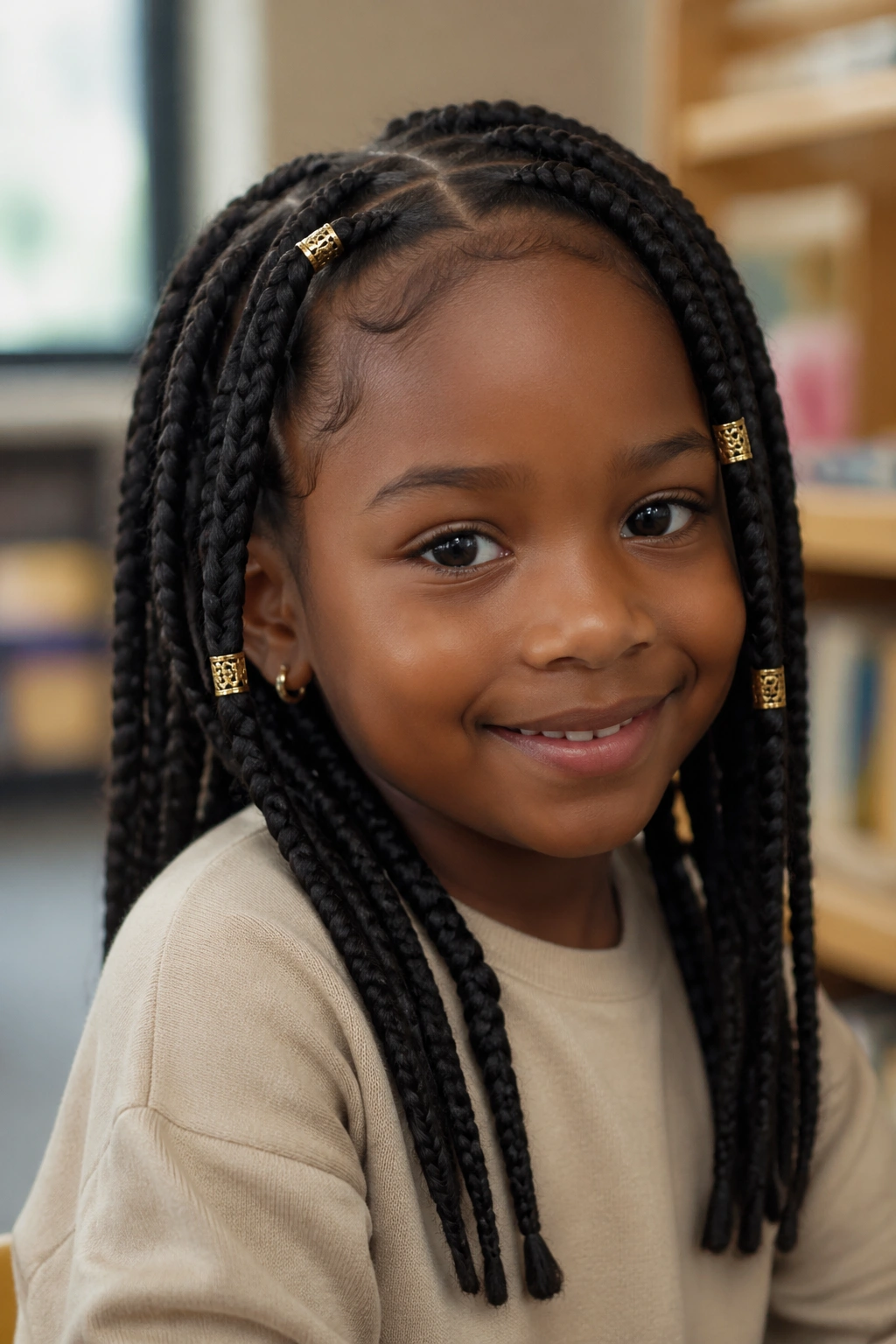
Festival-style box braids are where you let the accessories have a little fun. A few gold cuffs, colorful threads, maybe one ribbon twist here and there — enough to make the style feel celebratory without turning the head into a craft project.
The best version still keeps some restraint. Pick one color family or one metal tone and stick with it. That keeps the style from looking scattered. If you mix every bright color at once, the eye doesn’t know where to land.
This is a lovely style for birthdays, family gatherings, and picture days when the child wants to feel dressed up. It’s cheerful, but it still respects the braid structure underneath.
35. Tiny Micro Box Braids with Tiny Parts
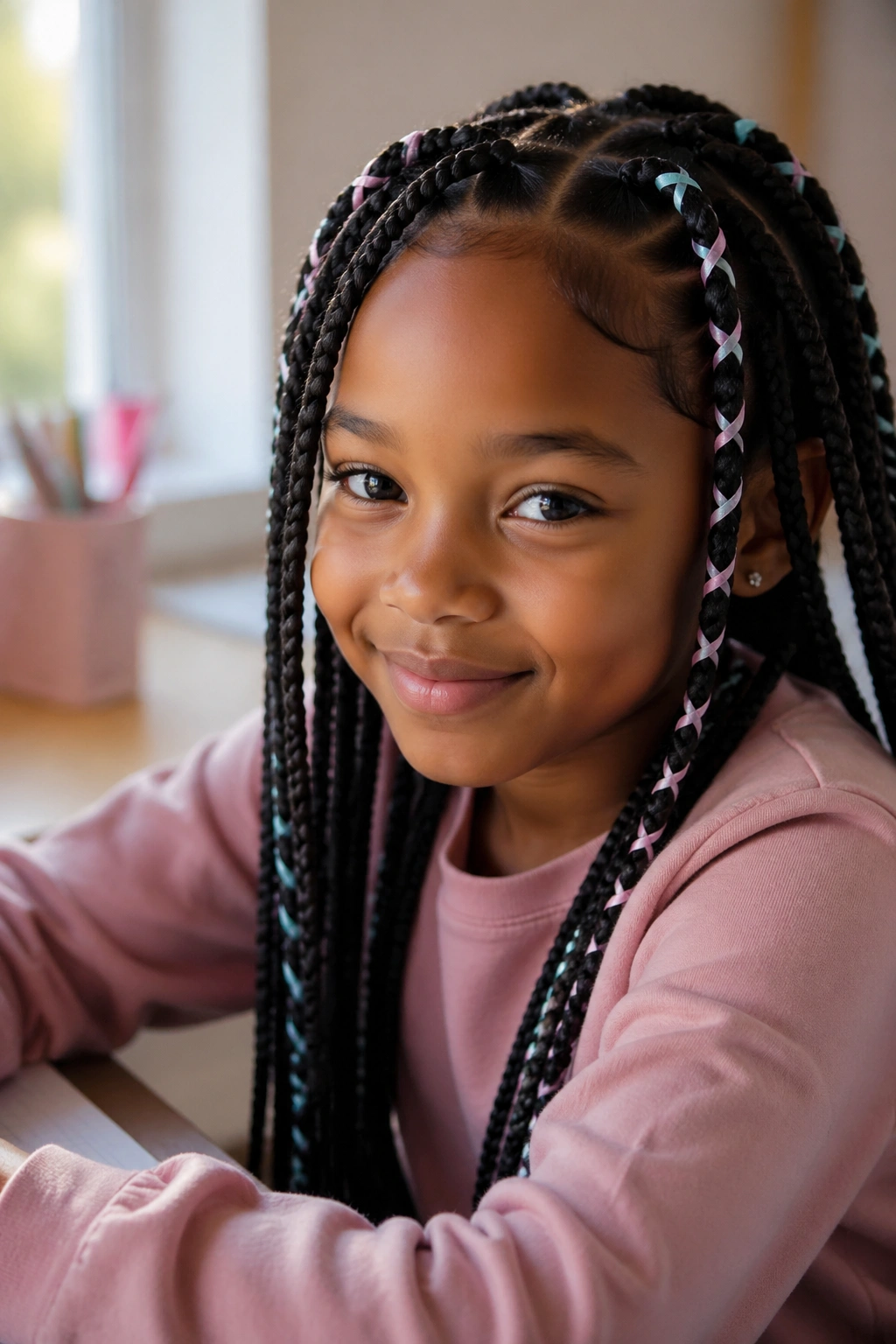
Tiny micro box braids are the delicate end of the box braid family. They have a lot of detail, and the small parts can look beautiful when they are done with patience and care. On little girls, though, I’d only choose this if the child has the sitting tolerance for it and the hair is healthy enough to handle the time involved.
The upside is the finish. The braids move easily, take accessories well, and create a very neat, intricate look. The downside is time. This style asks for more of it, both during the install and when it is time to take the braids out later. That trade-off matters.
If you go this route, keep the installation gentle and the wear time sensible. Tiny braids should never come at the cost of comfort. Pretty is nice. Comfortable is better.
