



Small peekaboo knotless box braids with curly ends hit that sweet spot between neat and playful. You get the clean scalp line of knotless braids, the softness of loose curls at the ends, and that little flash of hidden color that only shows when you move, turn, or toss your hair over one shoulder.
I like this style because it does a lot without trying too hard. The braids stay small, so the whole look reads polished. The peekaboo color keeps it from feeling flat. And the curls at the bottom stop the style from looking too severe, which can happen fast with very structured braids.
There’s also a practical side to it. Smaller knotless braids tend to feel lighter than chunky versions, especially if the braid length is kept around shoulder-grazing, bra-strap, or mid-back length. Add curly ends, and you get movement instead of a stiff curtain. That matters more than people admit. A braid style can be beautiful and still feel annoying if it pulls, flares out awkwardly, or tangles at the ends by day three.
The styles below focus on color placement, length, and finish rather than tiny cosmetic changes. That’s where the real difference lives. A little color hidden under black braids can look sleek, bold, soft, expensive, or almost mischievous depending on where you put it.
1. Honey Blonde Peekaboo Layers
Honey blonde is the safest place to start if you want peekaboo color that shows up without screaming for attention. It sits in that warm middle ground — lighter than caramel, softer than platinum, and less harsh than bright yellow blonde. On small knotless box braids, that warmth peeks through beautifully when the braids swing apart or get tucked behind the ear.
Why It Works So Well
The trick is placement. Ask for the honey blonde to live mostly in the middle and lower layers, not all over the head. That way, the top reads as a classic dark braid style, while the blonde flashes out from underneath in motion. Curly ends make the contrast feel even softer because the curls break up the straight braid line.
This version looks especially good if you keep the braids around collarbone to mid-back length. Longer braids can make the blonde feel heavier; shorter braids keep it crisp. Use human hair curls or high-quality curly pieces at the ends if you want the spirals to stay defined instead of puffing out.
- Best for warm or neutral skin tones.
- Looks strongest on black, dark brown, or deep auburn base hair.
- Works well with side parts and soft middle parts.
- Needs a satin bonnet at night, or the curls at the ends lose shape fast.
Best move: ask your braider to place the blonde 2 to 4 rows under the crown, not right at the hairline.
2. Burgundy Hidden Panels
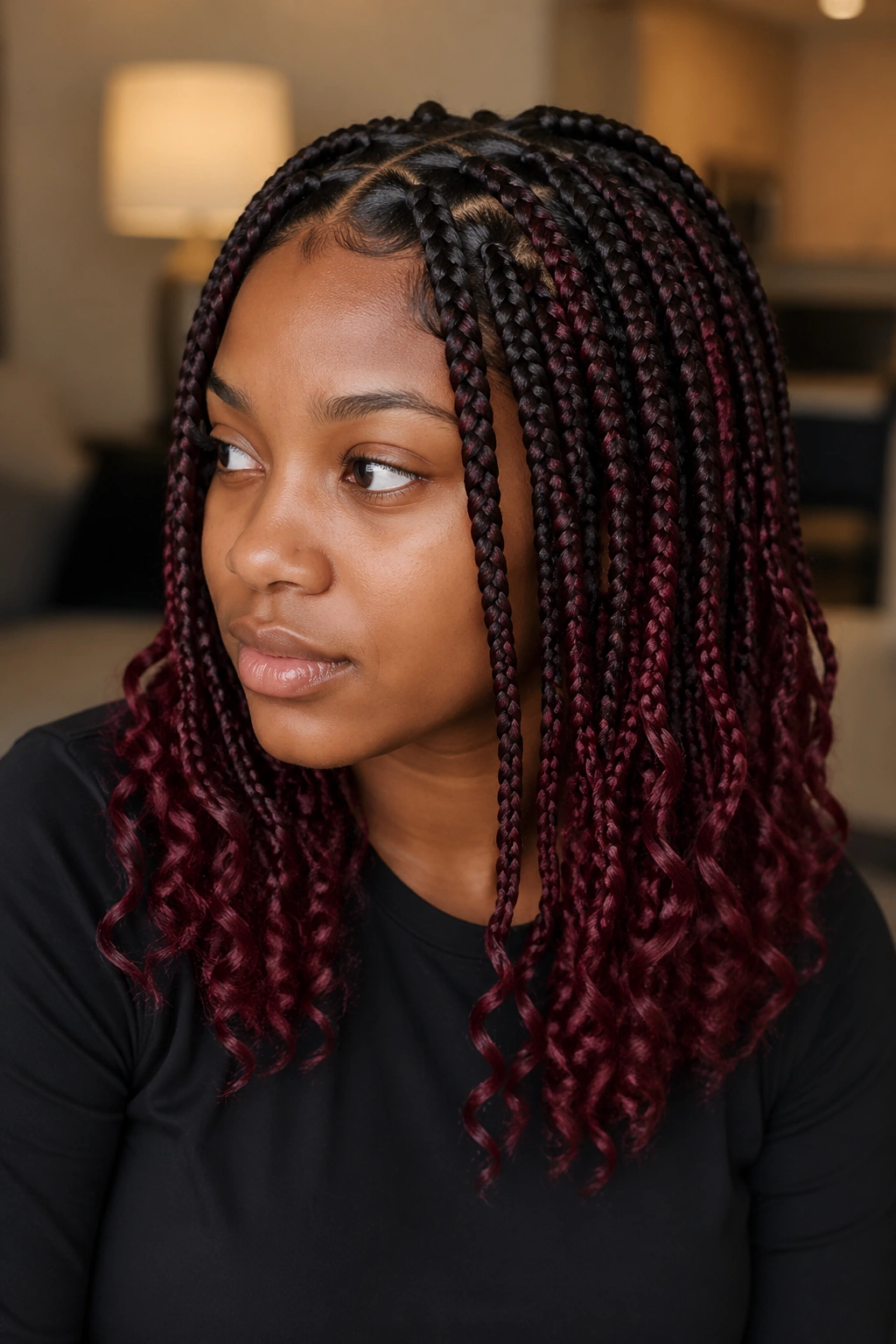
Burgundy is bolder than honey blonde, but it still feels wearable because it lives in the braid layers instead of taking over the whole head. The color has enough depth to read rich in indoor light and enough red in it to flash when sunlight hits the curls. On small knotless box braids, that gives the style a little drama without turning it into a full-color moment.
What I like most here is the way burgundy changes depending on the outfit. With black clothes, it looks sharp. With cream, tan, or denim, it feels softer and more expensive-looking. The curly ends help because the loose shape keeps the red from looking too blocky. Straight braid ends can make bold color feel harsher than it needs to.
If you want this style to stay neat, keep the base braids medium-small, not micro-small. Tiny braids can make very saturated color look busy if the pattern is too dense. A shoulder-length cut works well, but a longer bob also looks good if you want the color to peek through mostly at the sides.
The one thing to watch is fading. Burgundy tends to lose its richness if you overwash or scrub the ends too hard. Use diluted shampoo at the scalp only, then let the suds run through the lengths.
3. Copper Money Pieces
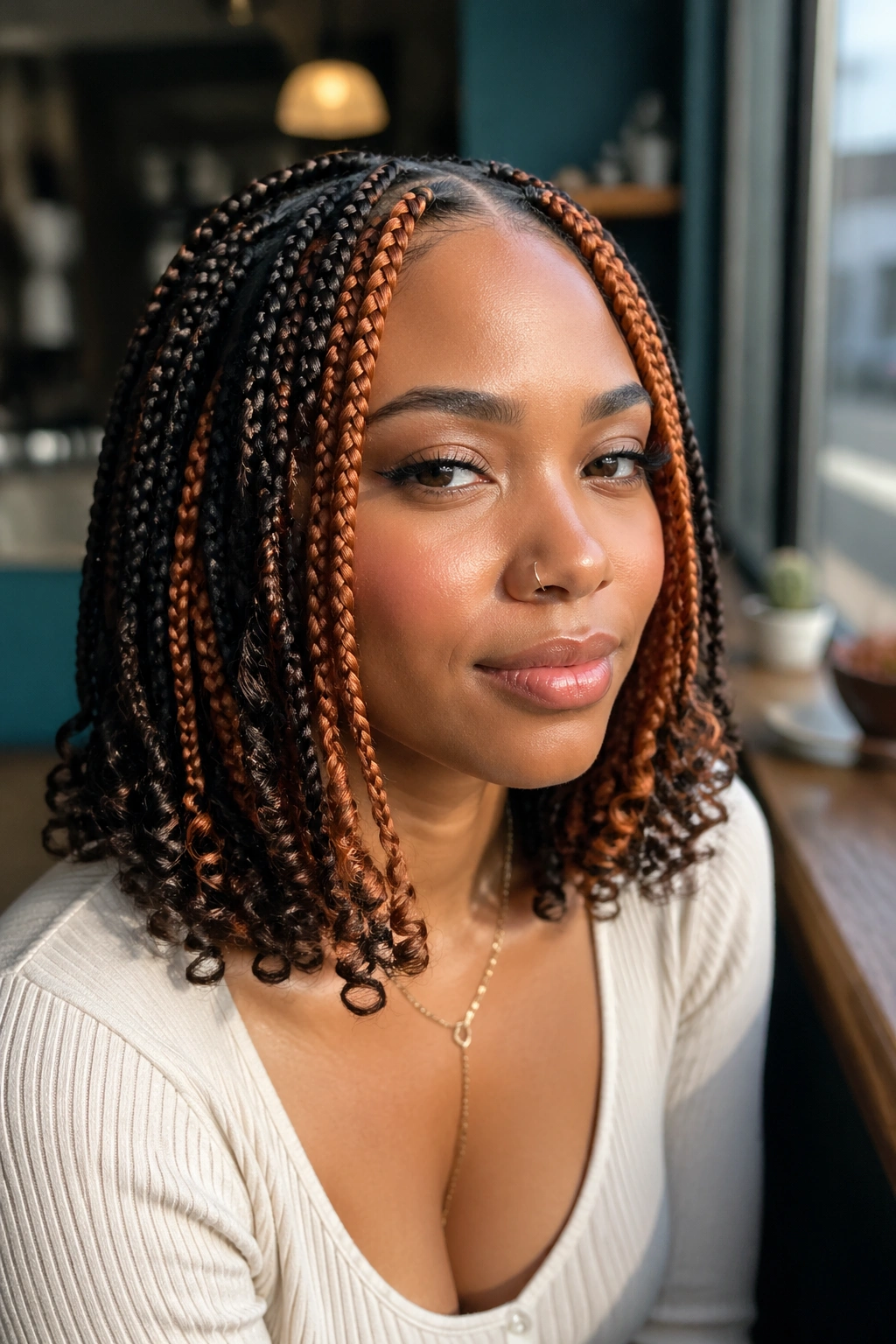
Copper peekaboo pieces are for people who want movement and heat in the style, not just color. Copper reads brighter than brown but softer than orange, which makes it a smart choice if you’re nervous about vivid shades. Place it near the front and around the temples, then hide a few strips deeper in the braids so the tone shows up when you turn your head.
How to Use It Without Making It Too Loud
The front placement matters more here than with most color choices. If the copper sits too low, it disappears. Too high, and you lose the peekaboo effect. A good braider will weave in narrow copper sections at the crown and temple area, then echo that color again in two or three random braids near the back. That keeps it from looking like a stripe.
Curly ends make copper look softer because the loops catch light in small bursts. Straight braid tips can make copper feel blunt. Curls fix that. They also help the front pieces blend into the rest of the hair instead of sitting there like highlights from a completely different style.
If your natural base is dark brown, copper is especially good. It gives the braids a warm glow without needing a huge amount of visible color. And because the color is concentrated up front, regrowth doesn’t look messy as fast.
Watch for this: copper can look orange under some indoor lights. If you hate that, choose a deeper cinnamon-copper mix instead.
4. Platinum Streaks at the Nape
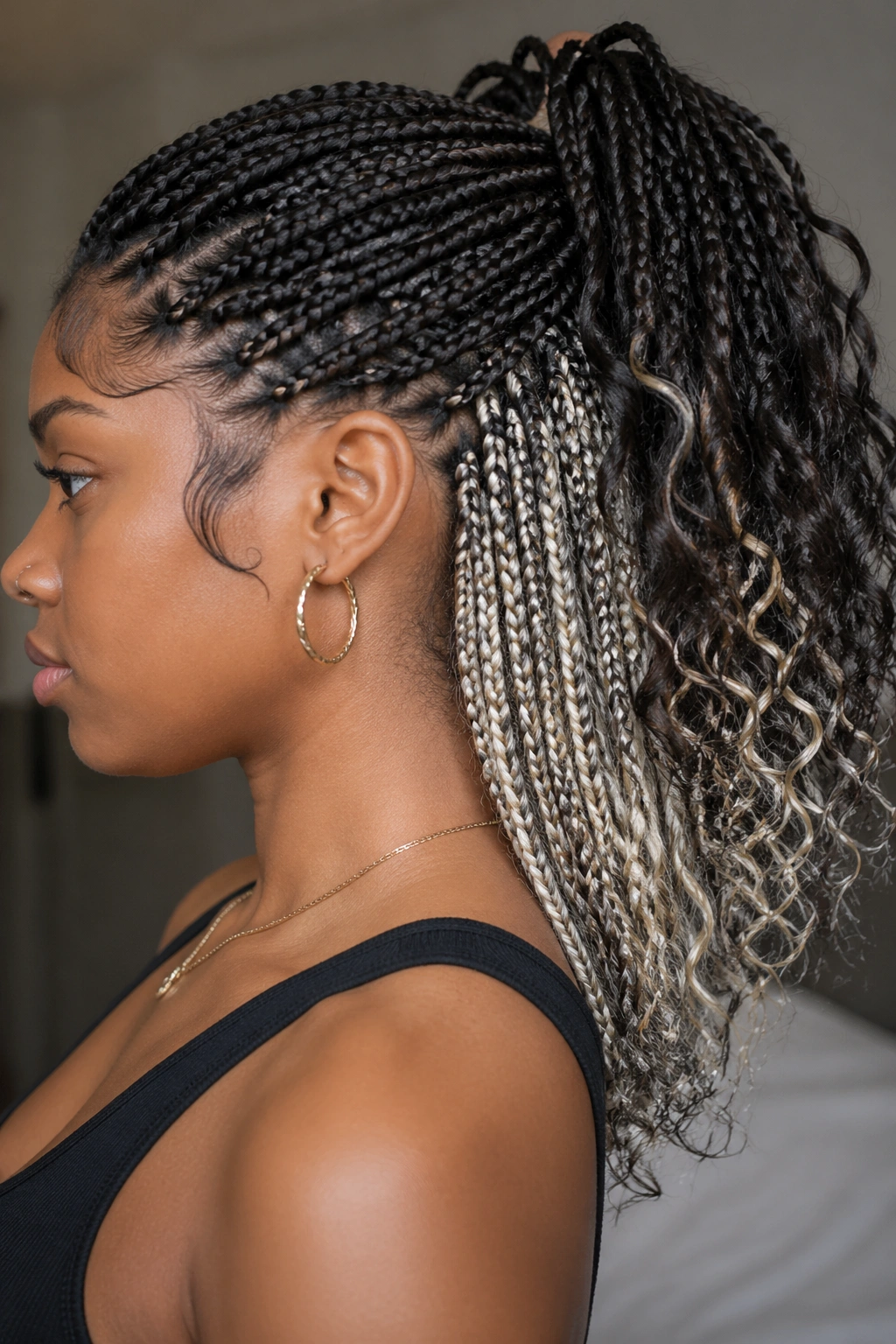
Platinum in the nape area is the kind of detail people notice only after they move behind you. That’s the whole appeal. The top stays dark and grounded, and then the lower back section throws out these cool, pale flashes when the braids are gathered into a ponytail or half-up style.
Do not put platinum everywhere unless you want the entire style to read high-contrast from across the room. For peekaboo braids, restraint is what makes it sharp. A few platinum strands hidden in the bottom two rows do more than a whole head of light braid hair would. The curly ends soften the brightness so it doesn’t feel icy or harsh.
This style is a favorite if you wear your braids up a lot. The hidden light color shows more in buns, claws, and ponytails than it does when the hair hangs loose. That little reveal is the point. It feels deliberate, almost like a private detail built into the style.
How to Keep It Clean
- Ask for platinum only in the bottom third of the braid install.
- Keep the braid size small enough that the contrast doesn’t look choppy.
- Use a purple-toned shampoo only if the synthetic hair is labeled safe for it.
- Seal the ends carefully so the curls stay defined, not frizzy.
The cut matters too. A blunt bob with platinum underneath can look sharper than long layers, which is a nice change if you want the style to feel a little cooler and more modern.
5. Caramel Curly Ends
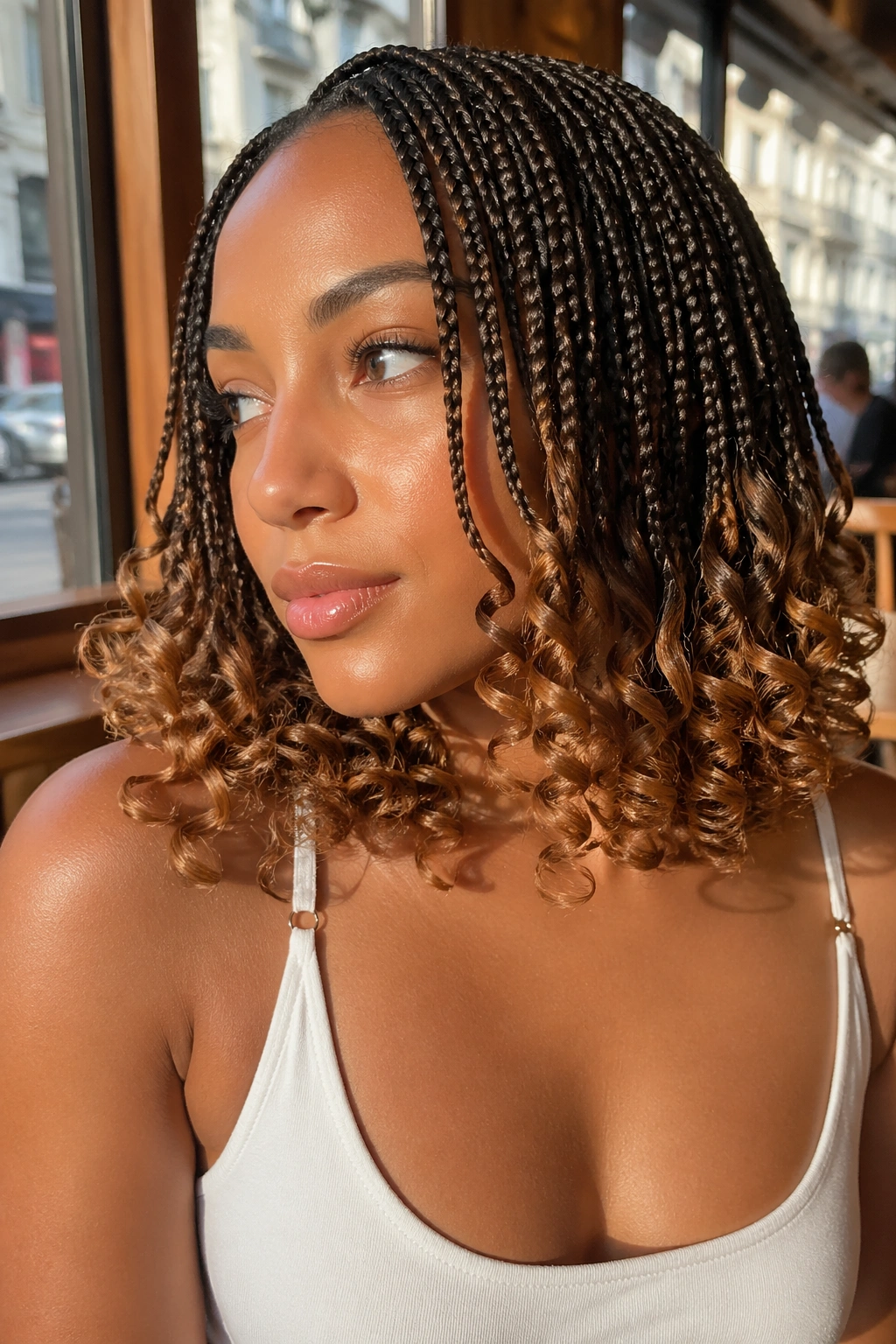
Caramel on the ends is a softer take on peekaboo color, and honestly, it’s one of the easiest styles to wear. Instead of hiding a bright strip of color underneath, you work caramel tones into the lower braids and let the curly ends carry that warmth all the way down. The result feels sun-touched without crossing into obvious blonde territory.
That gentler approach makes the whole hairstyle easier to live with. If you want something office-friendly, interview-friendly, or just less flashy, caramel does the job. It still gives the eye a place to land, which is what peekaboo color should do. It just does it quietly.
The best version uses a dark root with caramel woven into the mid-lengths and ends. If the braid is too uniformly light, the peekaboo part gets lost. You want the color to appear in patches, not as one long block. Curly ends help because they separate the color into little spirals and keep the finish airy.
Caramel also looks good on people who hate maintenance. It doesn’t show frizz the way lighter blonde sometimes does. That alone is worth something.
6. Red Wine Peekaboo on Jet Black Braids
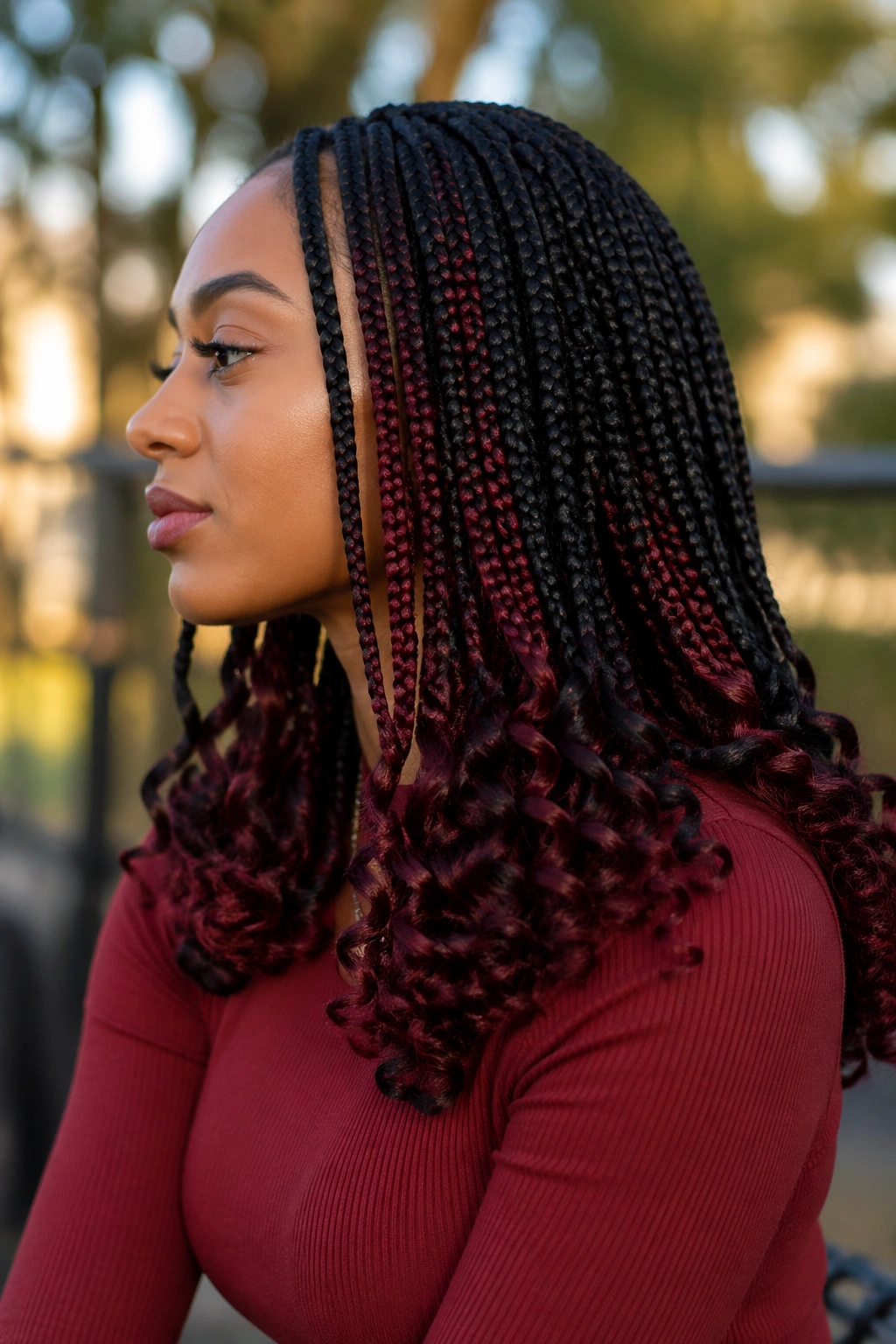
Red wine color has a rich, grown-up feel that works beautifully with small knotless braids. It’s deeper than burgundy and less playful than cherry red, which gives the style more weight. When the peekaboo panels sit under jet black braids, the whole look feels hidden and moody until the hair moves.
Why It Feels Different From Burgundy
Burgundy has more brown in it. Red wine leans deeper and cooler, so it gives a stronger contrast against black hair. That contrast matters if you want the color to show through even in low light. The curly ends make the red soften at the bottom instead of stopping in a hard line, which is where some red braid styles go wrong.
This is one of those styles that looks especially good with a side part and a tucked-behind-one-ear shape. The color then shows in little flashes instead of all at once. If you wear a lot of black, silver, or deep green, the whole thing feels intentional fast.
A few practical notes help here:
- Keep the red panels underneath the top two rows.
- Use small braids so the color looks layered, not patchy.
- Choose curls that are not too tight; tight curls can make red ends look busy.
- If the hair is synthetic, avoid rough towel drying after washing.
My take: this is one of the best choices if you want color that feels adult rather than loud.
7. Blonde Face-Framing Pieces
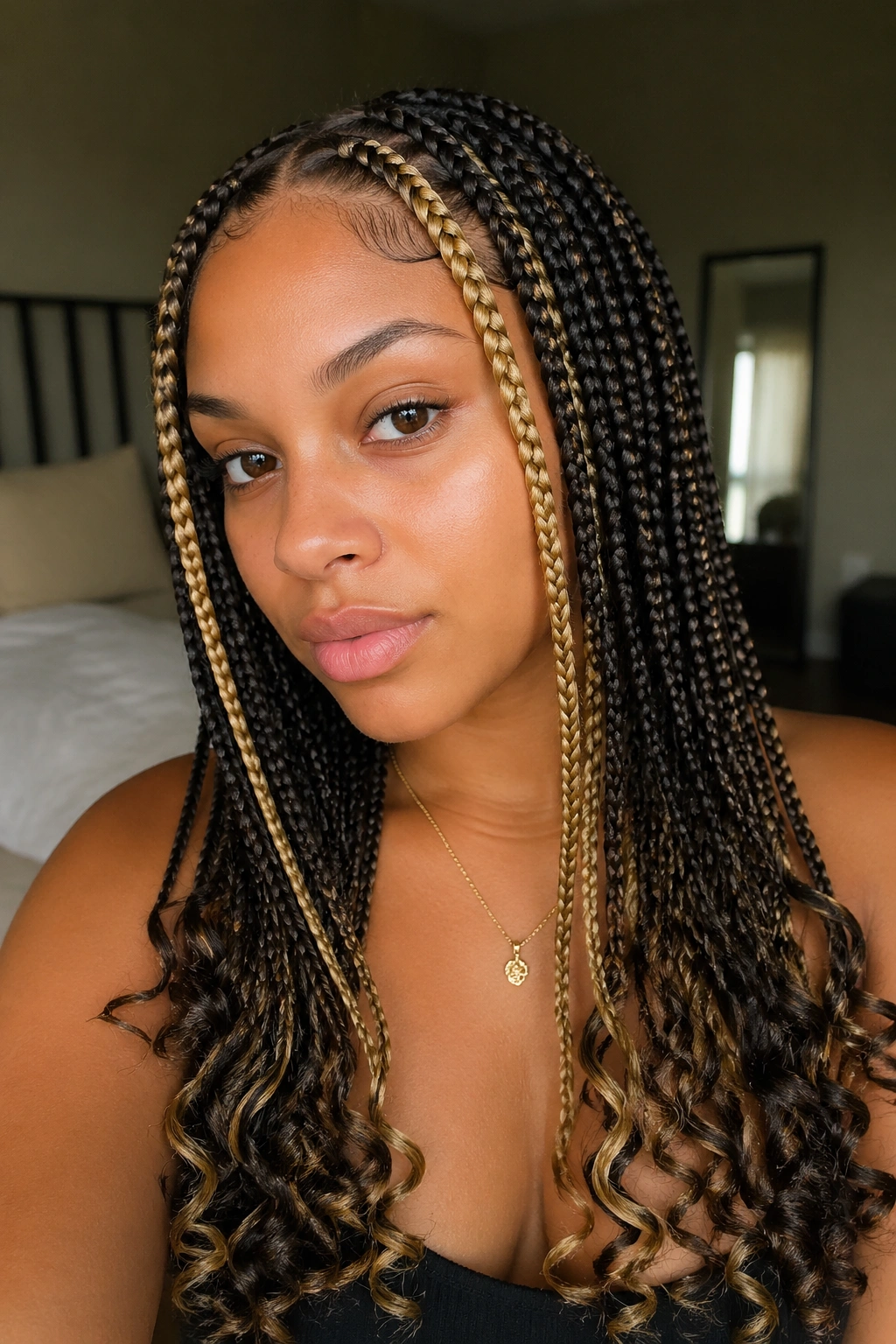
Face-framing peekaboo blonde pieces can change the whole mood of knotless box braids. You don’t need to put blonde all over the head. A few small strips near the temples, cheekbones, and crown can brighten your face far more than a full install of lighter hair. That’s the appeal. It looks strategic.
The curly ends help because they pull the eye downward in a soft line. Without curls, front blonde pieces can look stiff or overly graphic. With curls, the style feels more relaxed. It also works well if you like wearing hoop earrings, sunglasses, or bold lip color — the blonde frames those details instead of fighting them.
Best Ways to Wear It
- Middle part for a cleaner, sharper face frame.
- Soft side part if you want the color to blend more gradually.
- Half-up styles if you want the blonde to show from every angle.
- Shoulder-length or bra-strap length if you want easy movement.
This version is a smart pick if you are new to peekaboo color and don’t want a huge commitment. The grow-out is less obvious than full highlights, and it is easier to refresh one or two front sections than a whole head. That part matters. A style should look good on day one and not turn into homework by week three.
8. Ash Brown and Beige Mixing
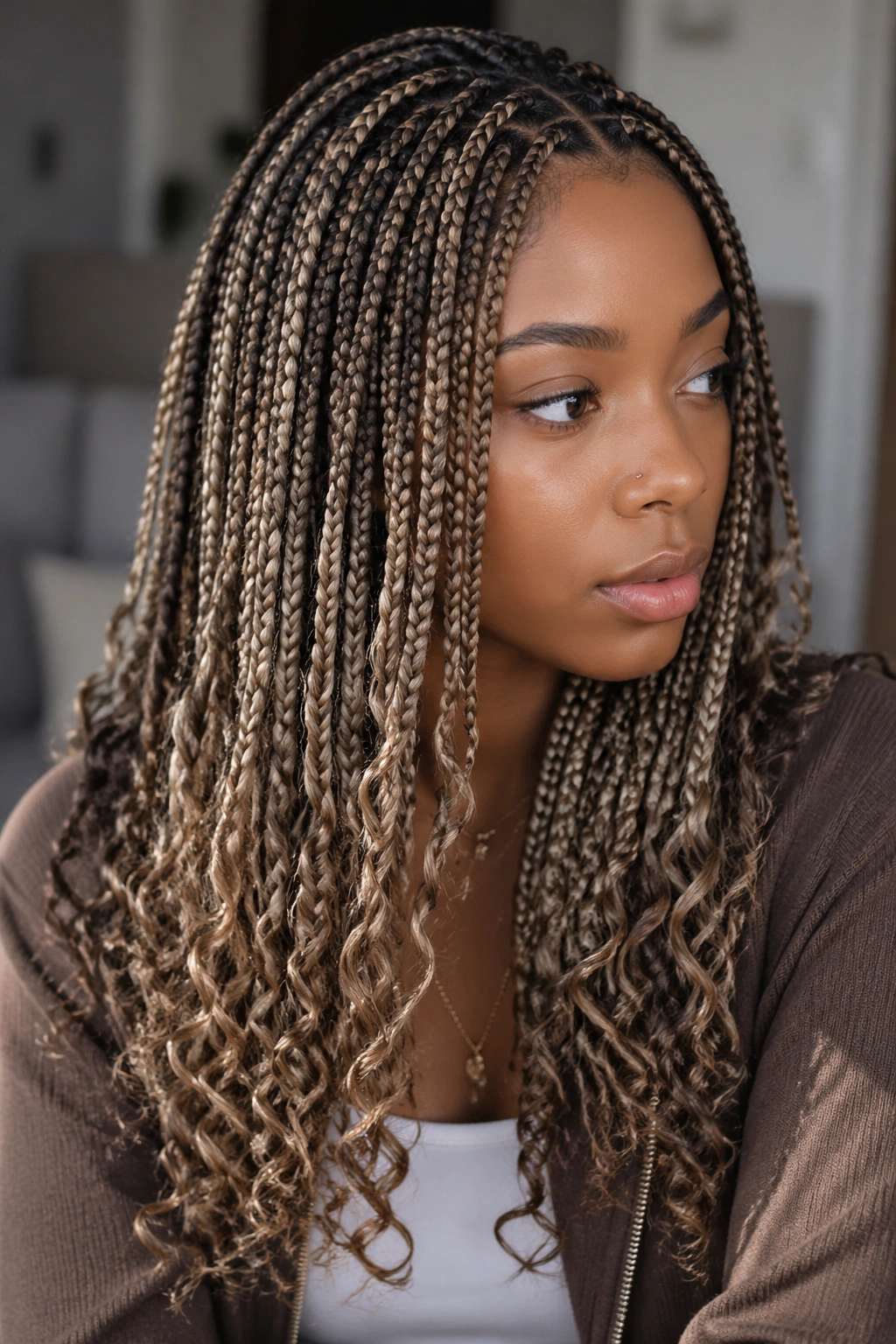
Ash brown mixed with beige tones is for people who want depth more than drama. The color contrast is softer, cooler, and a little more subtle than gold or red. On small knotless braids, it creates a smoky effect that looks expensive without needing bright pieces to prove the point.
What makes this style work is the lack of harsh edges. Instead of one obvious peekaboo stripe, you spread ash brown and beige across a few hidden layers. The result shifts depending on the light: cooler indoors, warmer outdoors, and quieter in low light. Curly ends help the braid hair feel less rigid, which matters a lot when the color palette is muted.
This is also a smart option if you’re picky about matching your wardrobe. Neutral braid color tends to work with everything, but ash tones are especially nice with black, gray, cream, olive, and denim. No fuss. No weird clashes.
If you want the style to read clean, ask for braids that are small but not paper-thin. Too many tiny sections can make muted color look busy. A tidy medium-small size lets the color blend instead of shouting.
9. Auburn Peekaboo Layers
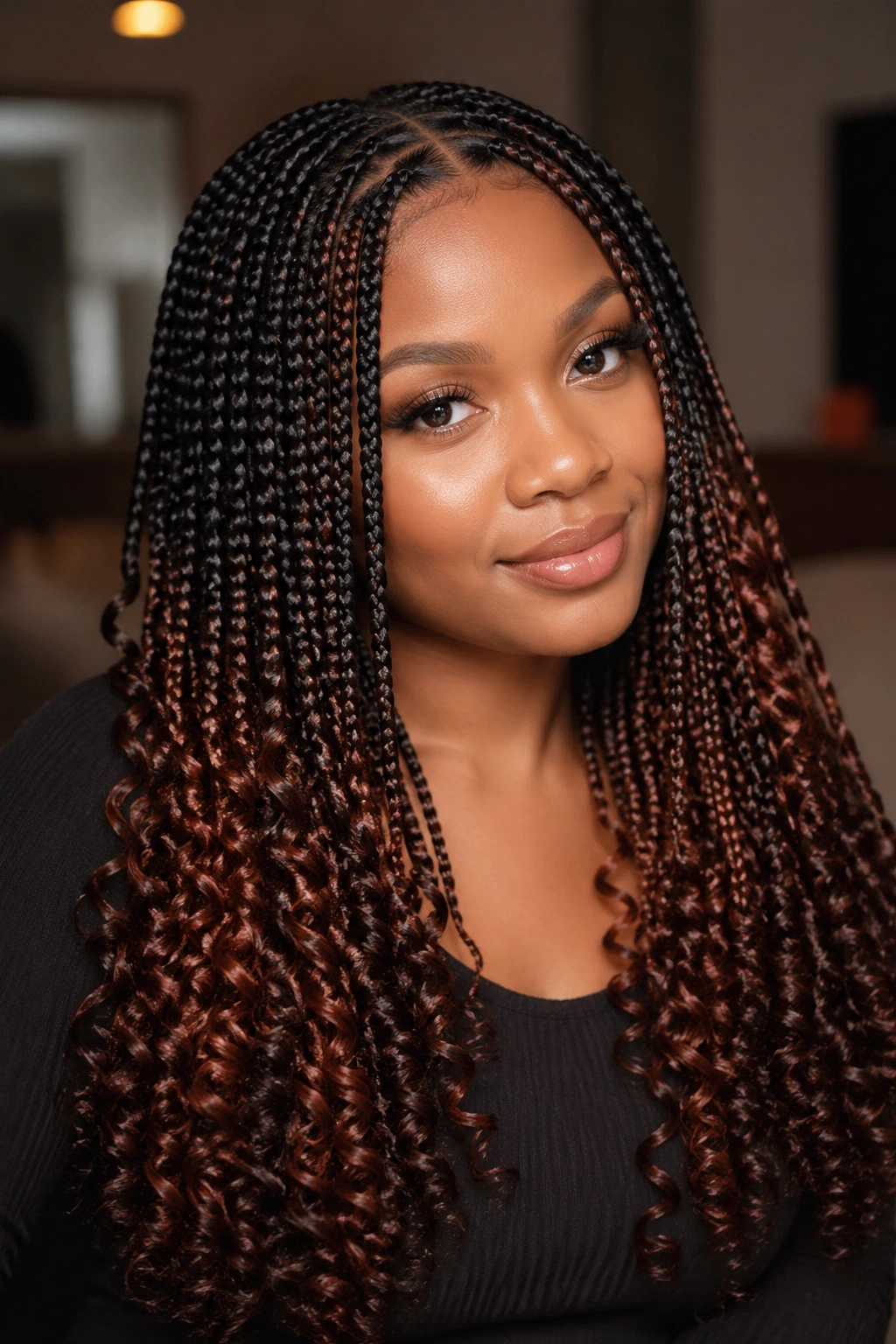
Auburn is one of the easiest colors to overlook and one of the nicest to wear. It lives somewhere between brown and red, which gives small knotless braids a warm, grounded feel. If you want peekaboo color that does not scream for attention, auburn deserves more credit than it gets.
How It Shows Up
Auburn works best in the lower half of the install, where the color can peek out as the braids move. Pair it with dark roots and curly ends, and you get a style that looks soft instead of flat. The curls matter here because they separate the auburn into little ribbons of color rather than one solid panel.
The whole thing can read either cozy or polished depending on length. Mid-back auburn braids feel richer. A shorter bob with auburn underneath feels a little sharper. Both work.
One small detail: auburn tends to look best when the braids are clean and the parts are straight. Messy sections can make the warm color look accidental instead of intentional. And because the color is already warm, you do not need extra shine spray every day. Too much gloss can make the hair feel greasy.
Use a light mousse at the ends if the curls start to frizz. That’s enough.
10. Side-Swept Peekaboo Panels
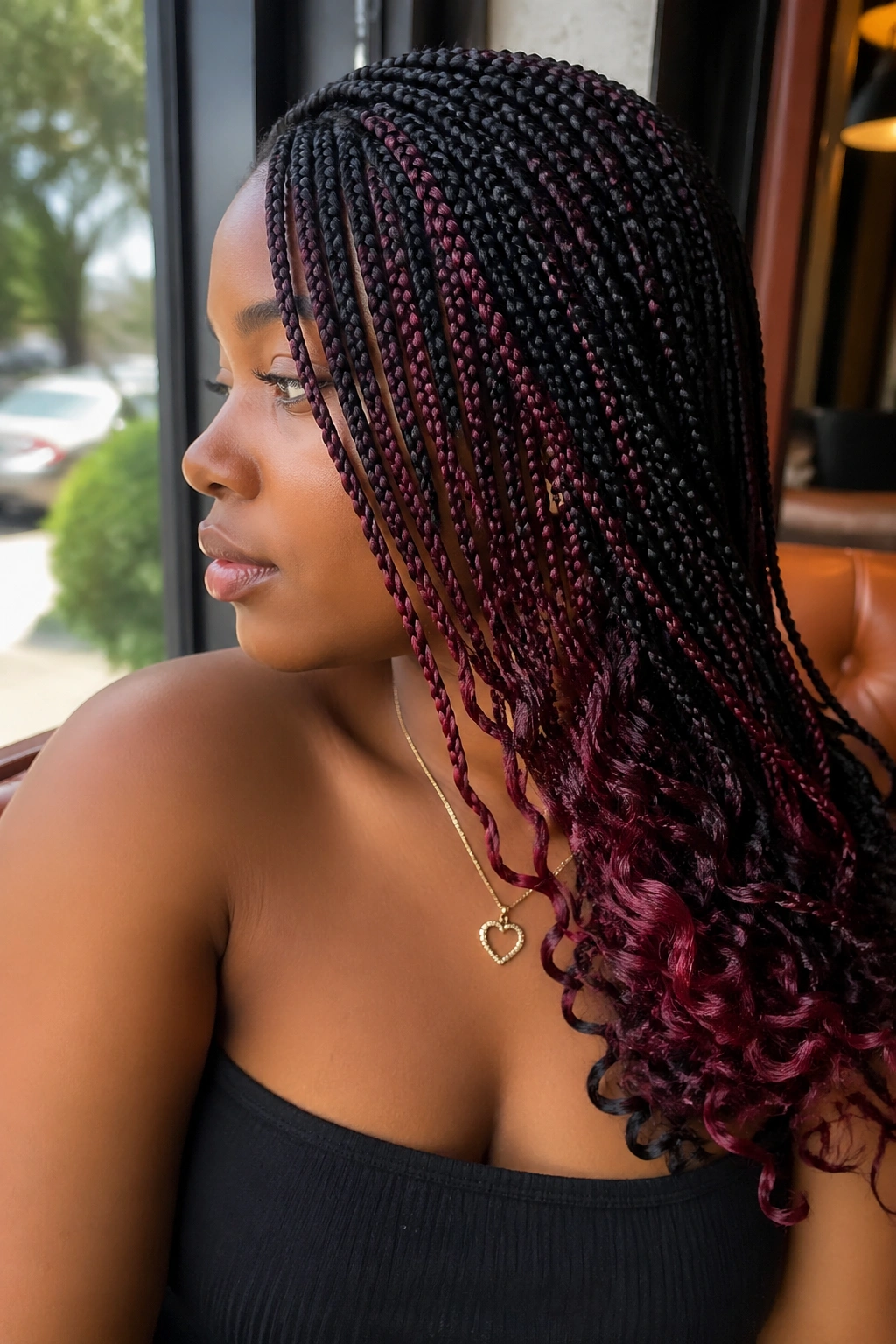
Side-swept peekaboo braids are for the person who wants the color to show only when the hair is shaped a certain way. One side hides the surprise. The other side gives it away. That asymmetry makes the style feel a little more fashion-forward without requiring a hard haircut or a complicated install.
The best version uses color concentrated on the heavier side of the part. If you sweep the braids over one shoulder, the peekaboo panels show up in a ribbon-like line through the lengths. The curly ends then fan out and keep the shape from feeling too stiff. There is a nice bit of motion here. You feel it when you walk.
What to Ask For
- A deep side part, not a shallow one.
- Color placed in the side with more volume.
- Small braids that fall cleanly over one shoulder.
- Curly ends that are the same size across the whole head for balance.
This style is especially good if you like putting your braids into half-up looks. The side color becomes more visible that way, and the curls keep the top from looking too tight. It is a good style for anyone who wants a little edge but does not want a full dramatic color job.
11. Two-Tone Underlay
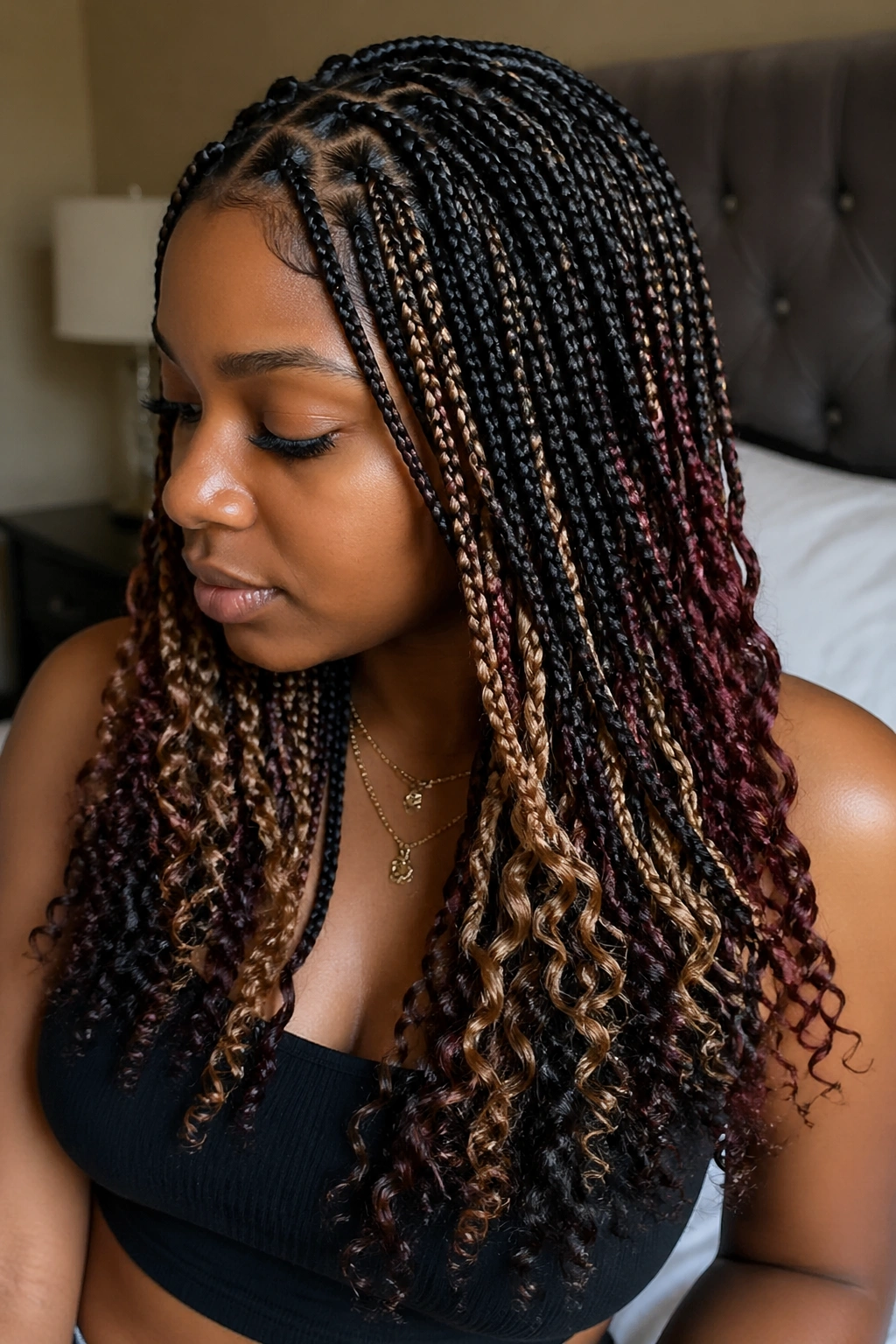
Two-tone underlay braids give you more depth than a single peekaboo color because the hidden layers do the work together. Think black on top, then one warm tone and one cool tone underneath — maybe caramel and burgundy, or beige and auburn. Done well, the mix looks layered instead of random.
That layered effect is why this style feels richer. A single color flash can be pretty, but two tones create movement even before the curls start. As the braids shift, one color catches first, then the other shows behind it. It is a small thing. It changes everything.
If you try this, keep one color more dominant. The second tone should support the first, not fight it. A 70/30 split usually looks cleaner than an even split. Curly ends help merge the shades near the bottom so the whole look reads as one style rather than two competing ideas.
Good pairings
- Burgundy + black
- Caramel + honey blonde
- Auburn + deep brown
- Beige + ash brown
This is a smart choice if you enjoy color but do not want the install to look busy. It has personality, but it still respects the braid pattern.
12. Triangle Part Peekaboo Braids
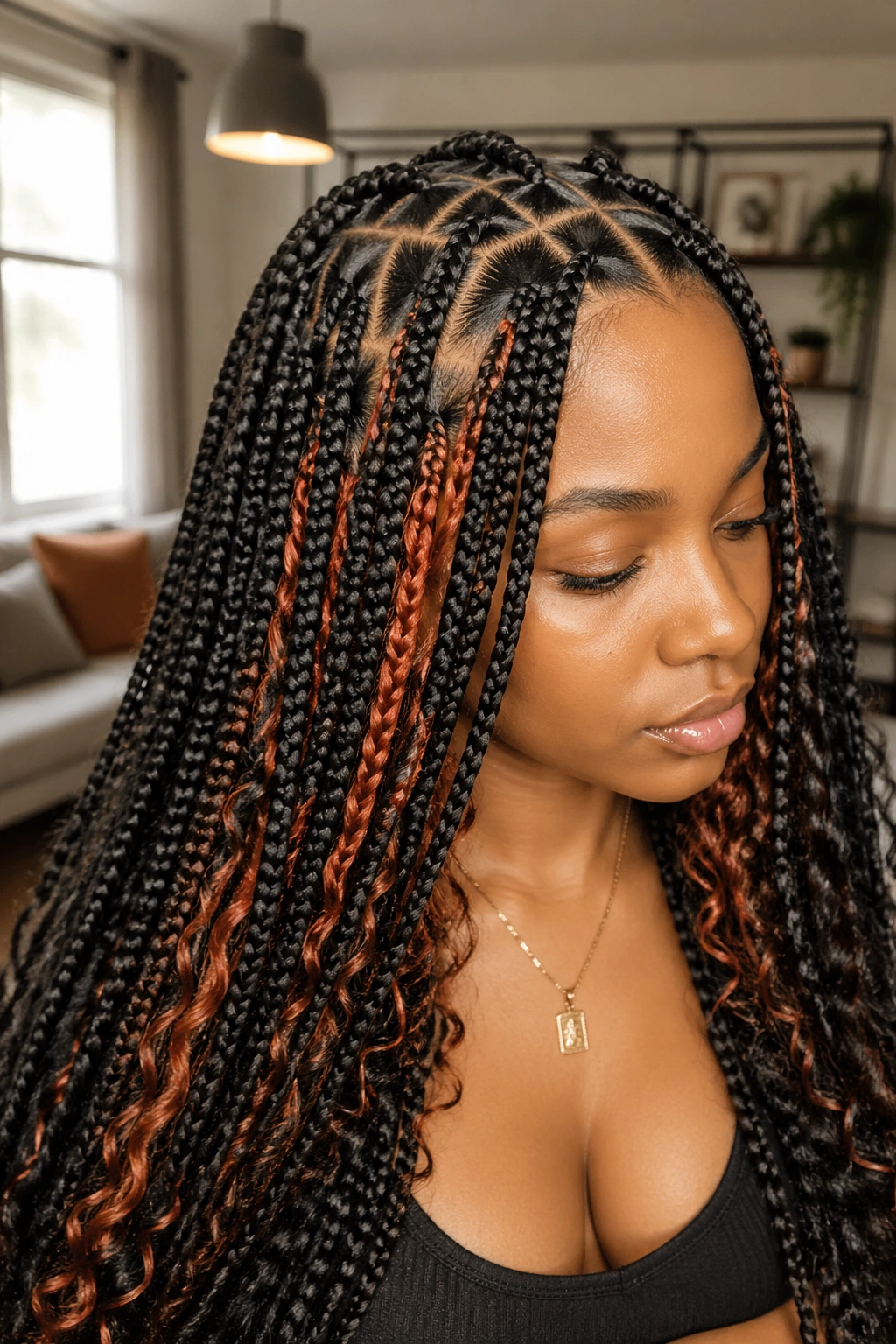
Triangle parts change the whole energy of knotless box braids. Instead of the standard square grid, you get little pointed sections that look sharper and a bit more custom. Add peekaboo color beneath that, and the style starts feeling intentional in a different way — less classic, more styled.
The reason triangle parts work so well with hidden color is that the parting already creates movement at the scalp. The eye notices the pattern first, then the color underneath. Curly ends help keep the look from turning too geometric. Without the curls, triangle parts can feel severe. The loose ends soften all those lines.
This style shines if you like wearing your hair down most of the time. The parting detail is visible even when the color is mostly hidden. If you pull the braids into a ponytail, the triangles and peekaboo shades both show more, which gives you two looks for the price of one.
The install can take a little longer than standard square parts. Worth it? I think so, if you care about detail. If not, skip it and keep the parts clean and simple.
13. Half-Up Peekaboo Ponytail
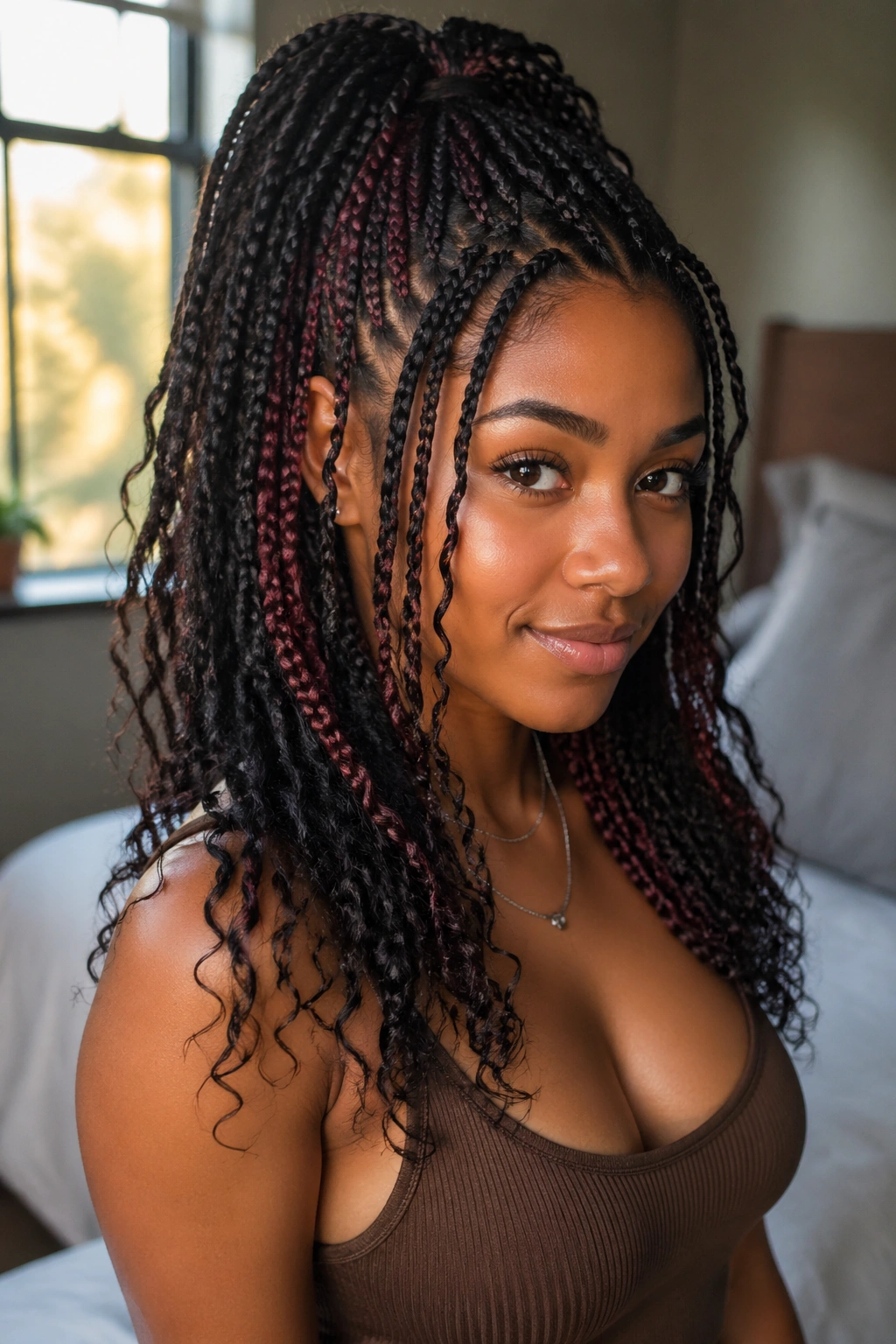
A half-up ponytail is one of the easiest ways to make peekaboo color feel louder without adding more color. The top section gets pulled away, and suddenly all the hidden panels underneath are visible. That reveal is the whole point. It turns the style into something that changes shape during the day.
Why This Style Is So Useful
You do not have to wear the braids the same way every day. Down for work, half-up for dinner, high ponytail for errands. Each version shows a different amount of color, which makes the install feel more flexible than a one-note braid style. Curly ends are especially nice here because they spill out of the ponytail and give the style some softness at the crown.
If you want the ponytail to look clean, keep the braids around the top perimeter small and neat. A messy top section can hide the peekaboo panels instead of revealing them. Also, use a soft scrunchie or covered elastic. Tight bands can flatten the braids and pull on the scalp.
This is a strong option if you want a style that works in pictures and in real life. It holds up well, and it gives you an easy way to show off hidden color without doing much at all.
14. Bra Strap Length with Curly Drops
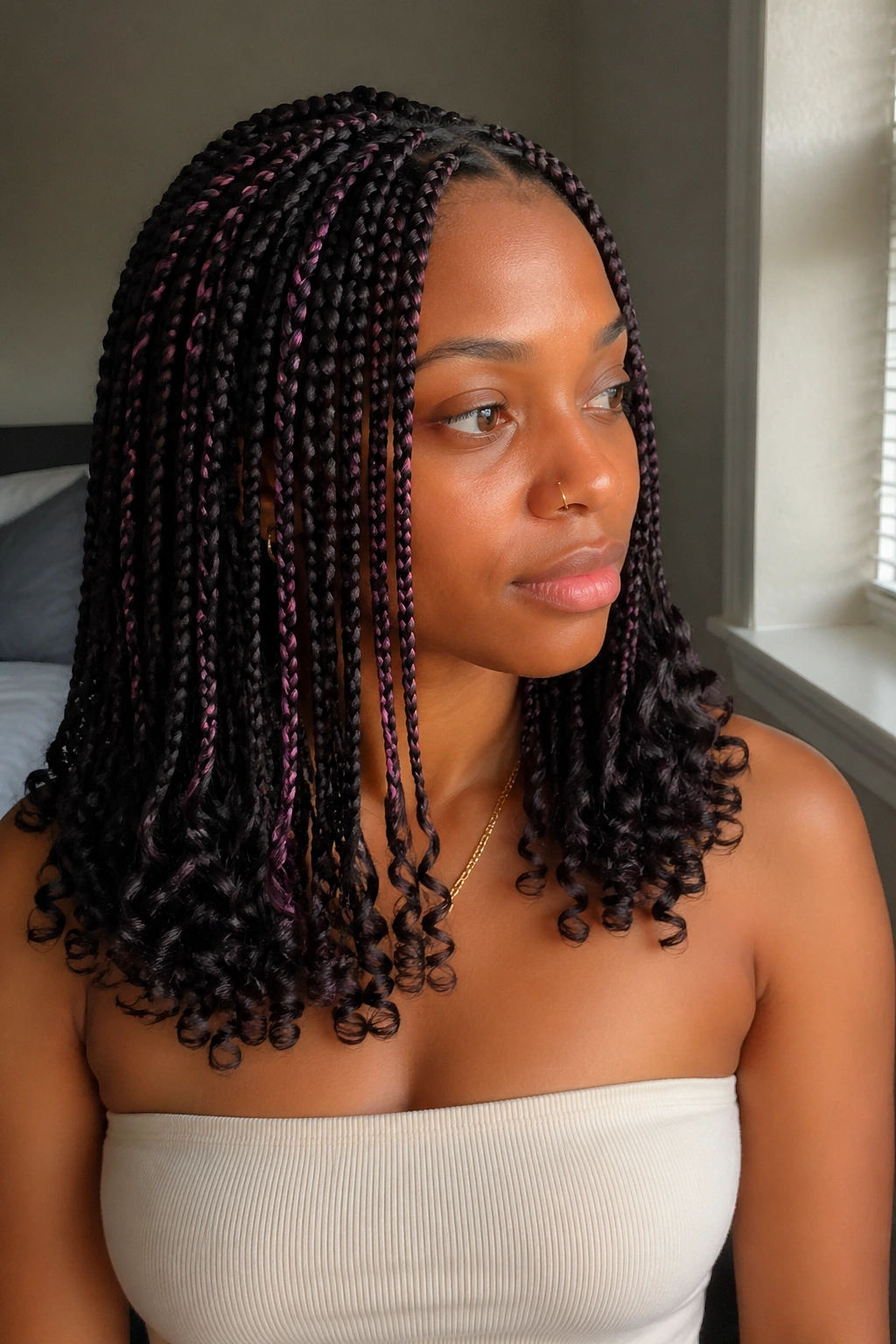
Bra strap length is the sweet spot for a lot of people because it gives you movement without dragging the whole style down. On small peekaboo knotless braids with curly ends, this length keeps the hidden color visible while making the curls look intentional instead of overwhelmed by extra inches of hair.
Does length matter that much? Yes. It changes how the color lands. At bra strap length, peekaboo sections show faster because the eye meets the hair at a comfortable distance. The curly ends also stay more bouncy because they are not weighed down by too much braid length. If you like the style to swing when you walk, this is a very good place to stop.
A few details help here. Keep the ends trimmed evenly after the install so the curls line up. Use mousse lightly, not heavily. And sleep with the braids loosely gathered, or the lower curls will flatten into sad little bends by the second night.
What to ask for
- Small knotless braid size.
- Hidden color in the middle and lower rows.
- Curly ends starting about 3 to 5 inches from the bottom.
- A clean cut on the last section, not ragged layers.
This length looks good on almost everyone. That’s the honest answer.
15. Waist-Length Curly Cascade
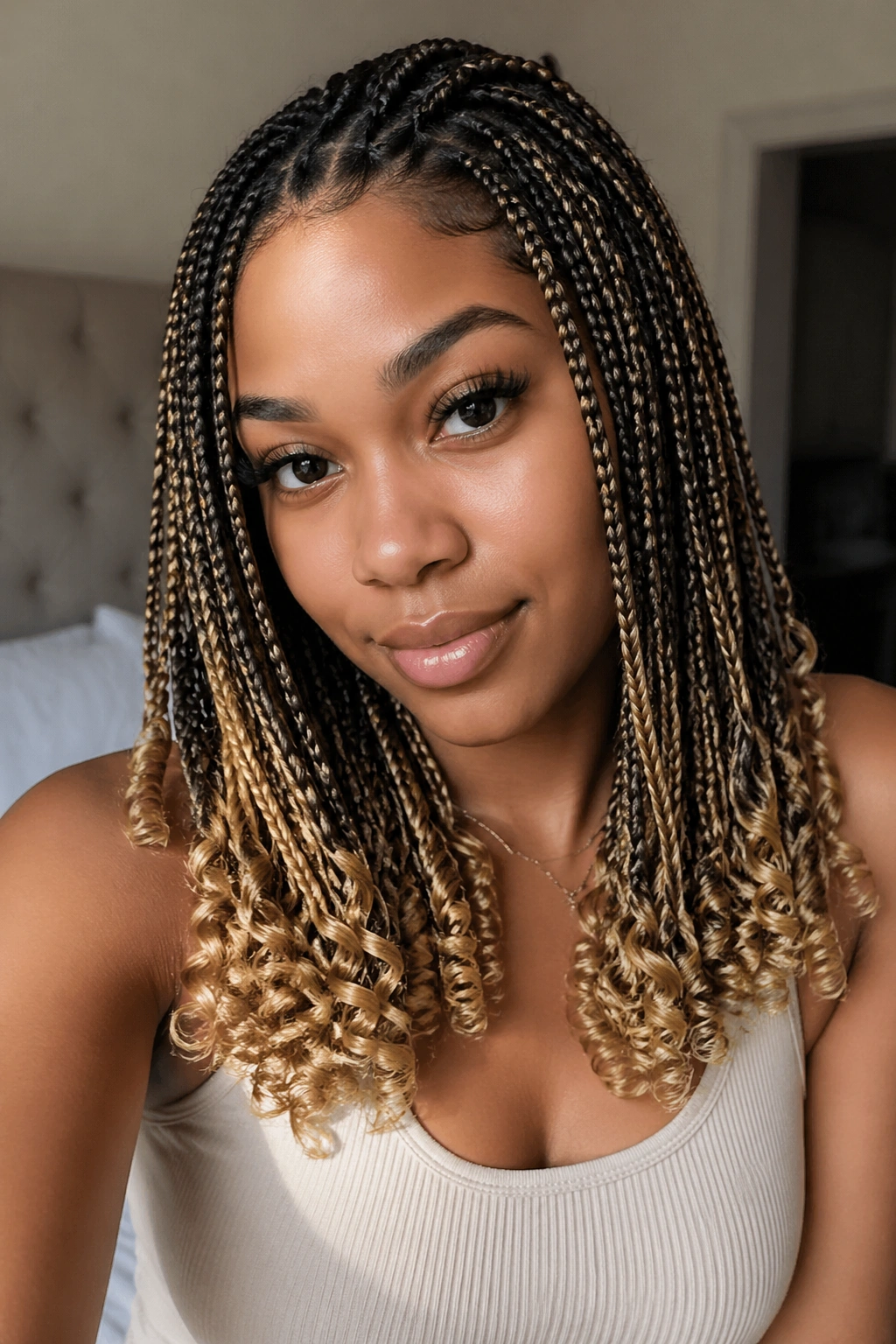
Waist-length braids with peekaboo color and curly ends are not for the faint of heart. They are beautiful, yes, but they ask for more patience, more maintenance, and more respect for your scalp. If the install is too heavy or the parts are too tight, the style stops being fun fast. Done right, though, the result is a full curtain of movement with hidden color gliding through the lengths like a second layer of texture.
The upside is obvious the moment you put the hair into motion. The curls spill, the color appears in waves, and the long lines make even dark braid shades look richer. This is one of the few braid styles where peekaboo color can feel almost dramatic without being bright. You get the reveal, then the softness, then that long sweep of curly ends at the bottom. A lot happens. That is the point.
If you choose this length, keep the braid size small but not overly tiny, and do not overload the install with extra hair. Weight becomes the enemy here. Ask for balanced density from crown to ends, and plan on wrapping the hair at night every single time. Skipping that step will show within a week.
This is the style for someone who wants the full effect, not a subtle nod. It is also the one most likely to turn heads when the curls are fresh and the color is placed well. Not because it shouts. Because it keeps unfolding as the hair moves.
Small peekaboo knotless box braids with curly ends work best when the color placement feels thoughtful, not random. A little honey blonde tucked under the crown, a burgundy strip near the temple, or a hidden platinum panel at the nape can change the entire mood of the style without making it harder to wear.
The part people miss is balance. Small braids already give you detail. Curly ends already give you softness. Peekaboo color should add another layer, not compete with the rest. If you keep that in mind, the style stays clean, wearable, and fun long after the first day.
