
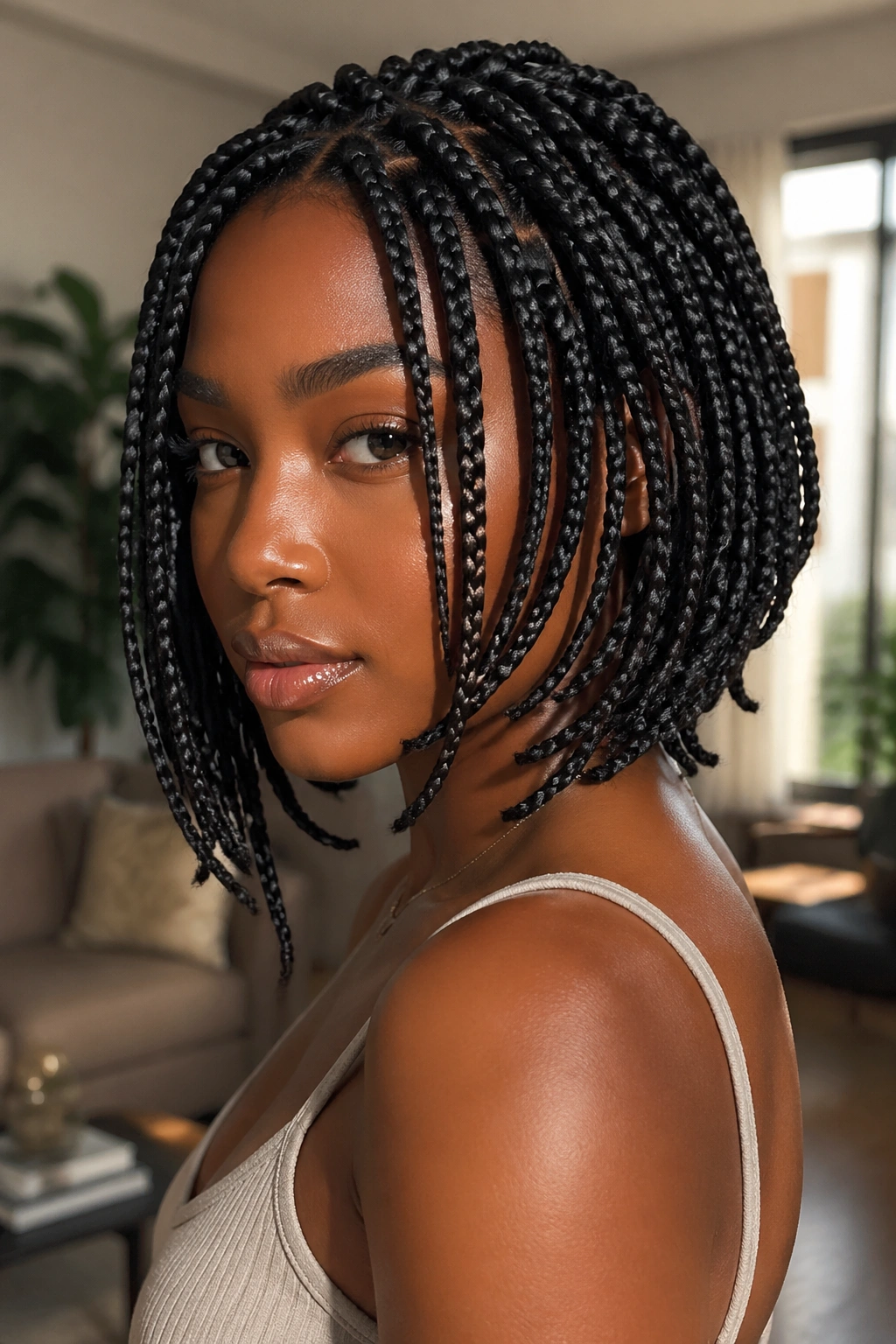
Bob-length box braids just work.
They hit that rare spot between polished and easygoing. The braids sit at the jaw or chin, so they keep the neck open, show off earrings, and don’t spend the whole day swinging into your shoulders. A good bob can look sharp enough for a suit, then feel relaxed with a tee and gloss. That kind of range is hard to beat.
The length matters more than people think. An inch or two changes the whole mood. Chin-grazing braids read crisp and neat; a slightly longer cut feels softer and less blocky; a side part or a few layered pieces can keep the style from turning into a solid square. If the parts are clean and the ends are finished well, the whole look gets expensive fast — even with simple hair.
I also like the practical side. Bob-length box braids are lighter on the scalp, less likely to catch on coat collars, and easier to sleep on than long braids that pile up behind your head. They still give you room for beads, cuffs, color, curls, and shape. The fun part is deciding which version feels like you. A blunt line says one thing. An angled bob says another. Start with the silhouette, and the rest falls into place.
1. Chin-Grazing Classic Bob
The chin-grazing version is the easiest bob-length box braid style to wear, and that is exactly why it stays a favorite. The braids land right around the jawline, which gives the cut a neat frame without making it feel stiff or overworked.
That length does a lot of quiet work. It keeps the braids from brushing your shoulders, lets your earrings show, and gives the whole style a clean outline that reads polished even when the rest of your outfit is simple. If the ends are sealed evenly and the parts are tidy, the result looks deliberate without trying too hard.
Why the Length Works
- The ends sit around the chin or just below it, so the style stays light.
- Medium-sized parts, around 1/2 inch to 3/4 inch, usually give the best balance of fullness and weight.
- The shape works with hoops, studs, glasses, and high necklines.
- A slight inward bend at the ends makes the bob feel softer.
My favorite version keeps the line clean but not severe. If the braid ends are all cut to the same spot, the style looks strong; if they sit a touch uneven, it feels a little more natural and less like a helmet.
2. Blunt-Cut Box Braid Bob
Want a sharper edge? Go blunt. A blunt-cut bob gives bob-length box braids a crisp finish that reads modern, neat, and a little bit fearless. Every braid ends at nearly the same spot, which makes the outline do the talking.
The blunt version works best when the braids themselves are not too large. Chunky braids can make the bottom line feel bulky, while small to medium braids keep the edge tight and intentional. I also prefer this style when the ends are dipped or trimmed after installation, because one stray braid can break the whole line.
A blunt bob looks especially good with straight center parts or very clean side parts. It has a strong shape, so it does not need much else. A glossy lip, a clean pair of hoops, and a jacket with a good collar are enough.
And yes, it can feel bold. That is the point.
3. Angled Side-Swept Bob
If you want movement without giving up the bob shape, an angled side-swept cut is the one I’d point to first. The back sits a little shorter, while the front pieces fall a bit longer along the cheek and jaw. It creates a nice diagonal line, which gives the braids motion even when you are standing still.
This shape is especially good when you want your face to look framed rather than boxed in. A round face gets a little length from the front pieces. A square jaw gets some softness from the angle. The style also plays nicely with side parts, because the part and the braid line start echoing each other instead of fighting for attention.
The trick is subtlety. You do not need a dramatic V-shape. Two to three inches of difference between the back and the front is often enough to change the whole read of the style. Too much angle and it starts looking like a full asymmetrical cut; too little and you lose the point.
Clean, slanted, easy to wear. That’s the sweet spot.
4. Knotless Bob-Length Box Braids
Knotless bob-length box braids feel lighter from the first hour. That is the main reason people keep coming back to them. Instead of starting with a knot at the root, the braider feeds the hair in gradually, so the scalp gets a smoother start and the base lies flatter.
What Changes at the Scalp
- The top of the braid sits closer to the head.
- The root looks softer and less bulky.
- Tension usually feels lower than with classic box braids.
- The braid line can look cleaner around the part.
That lighter feel matters more on a bob than people expect, because a shorter style still needs shape. If the roots are bulky, the whole look can feel puffy in the wrong way. Knotless braids solve a lot of that, especially when you want the ends to stay crisp and the perimeter to hug the face.
I reach for knotless when the goal is wearability. If your scalp gets sore fast, if you plan to keep the braids in for a while, or if you just dislike the hard knot look, this version makes sense. It costs more time in the chair, though. No way around that. The finish is smoother, but the install takes patience.
5. Triangle-Part Bob
Those triangle parts on the scalp look crisp before the braids even move. That is the whole charm of this style. Instead of the usual square grid, the parting forms little geometric points, and the result feels sharper and more designed.
Triangle-part bob-length box braids are for people who like the parting to be part of the style, not something hidden under the hair. The triangles peek through beautifully when the braids are medium-sized, because the scalp pattern stays visible between the rows. On very small braids, you lose some of that shape. On very large braids, the triangles can feel crowded.
A triangle part also keeps the style from reading too predictable. Square parts can look classic and tidy. Triangle parts add a bit of edge without needing color or accessories. If you want something that looks deliberate from every angle, this is one of the cleanest ways to get there.
The silhouette is still bobbed and wearable. The scalp just has more attitude.
6. Middle-Part Minimal Bob
Two straight lines can do a lot.
A middle-part bob-length box braid style has a calm, balanced look that feels almost architectural. The center part divides the head evenly, and the braids fall in a way that makes the face look symmetrical and open. It is one of the easiest ways to make box braids feel neat without piling on extras.
This version works best when the ends are trimmed evenly and the front braids are not too thick. If the front pieces are heavy, the center part can make the face look narrower than you want. A small taper near the temples helps the whole thing breathe. So does a little inward curve at the ends.
I like this style with simple clothes and strong makeup, but it can also be very low-key. It doesn’t need much. A center part, a smooth finish, and bob length are enough to carry the look all by themselves.
Clean is the point.
7. Layered Box Braid Bob
A layered bob is the easiest way to keep box braids from looking like one heavy block. Instead of every braid ending at the same level, the lengths shift a little. Some sit closer to the jaw, some fall lower, and the whole shape gets movement.
How Layering Changes the Silhouette
- The bottom line looks less square.
- The front can frame the cheekbones better.
- The style gets more swing when you turn your head.
- Dense hair often looks lighter with this cut.
Layering works especially well when the braids are medium-sized and the hair is thick enough to hold shape. The difference between layers does not need to be dramatic. One to one and a half inches is often enough. Too much layering can make the bob feel choppy instead of intentional.
I think this is one of the most useful bob-length box braid options for real life, because it looks finished but not fussy. If you like styles that move when you walk, this is a strong pick. If you want a stiffer, more graphic line, skip it.
8. Beaded Bob-Length Box Braids
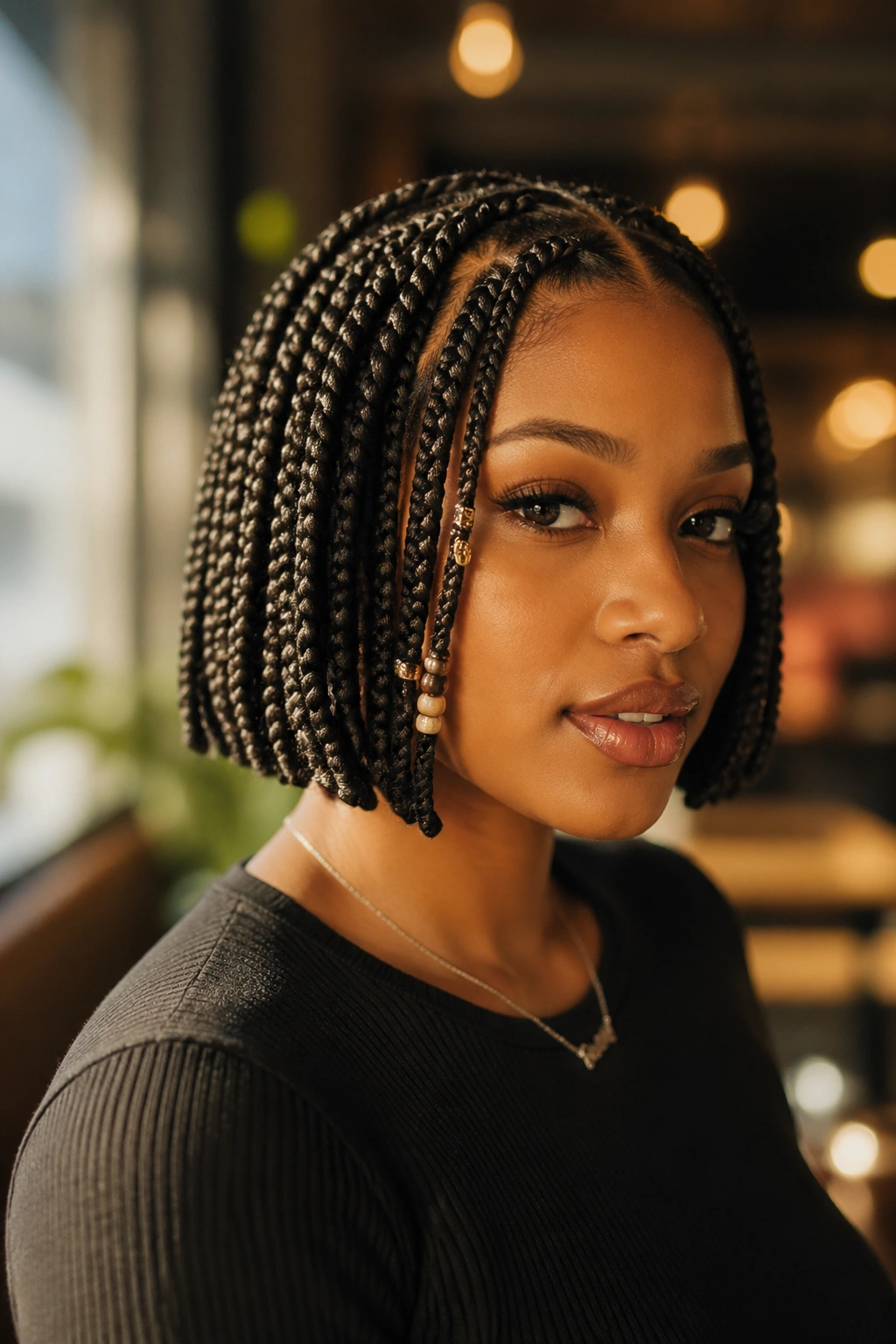
Beads change the sound of a braid. That little click when you turn your head? It gives the whole style a bit of life. On a bob, beads land fast and stay visible, so you do not need many to make an impact.
The nicest beaded bob-length box braids usually keep the decoration in one or two places. A few wooden beads at the ends. A row of clear beads near the front. A pair of larger beads on the braids that sit by the ears. That is enough. If every braid is loaded up, the style starts to feel heavy and noisy.
Here’s the part people miss: bead placement changes the mood. Beads near the face read playful. Beads near the ends read more relaxed. Metal beads or cuffs mixed in with wood can make the style feel sharper, while all-wood finishes feel softer and more earthy.
A simple rule helps.
- Use 1 to 3 beads per braid.
- Keep the heavier pieces away from the temples.
- Match the bead color to your braiding hair or your jewelry.
- Leave some braids plain so the eye has a place to rest.
A little shine goes a long way here.
9. Curly-End Bob
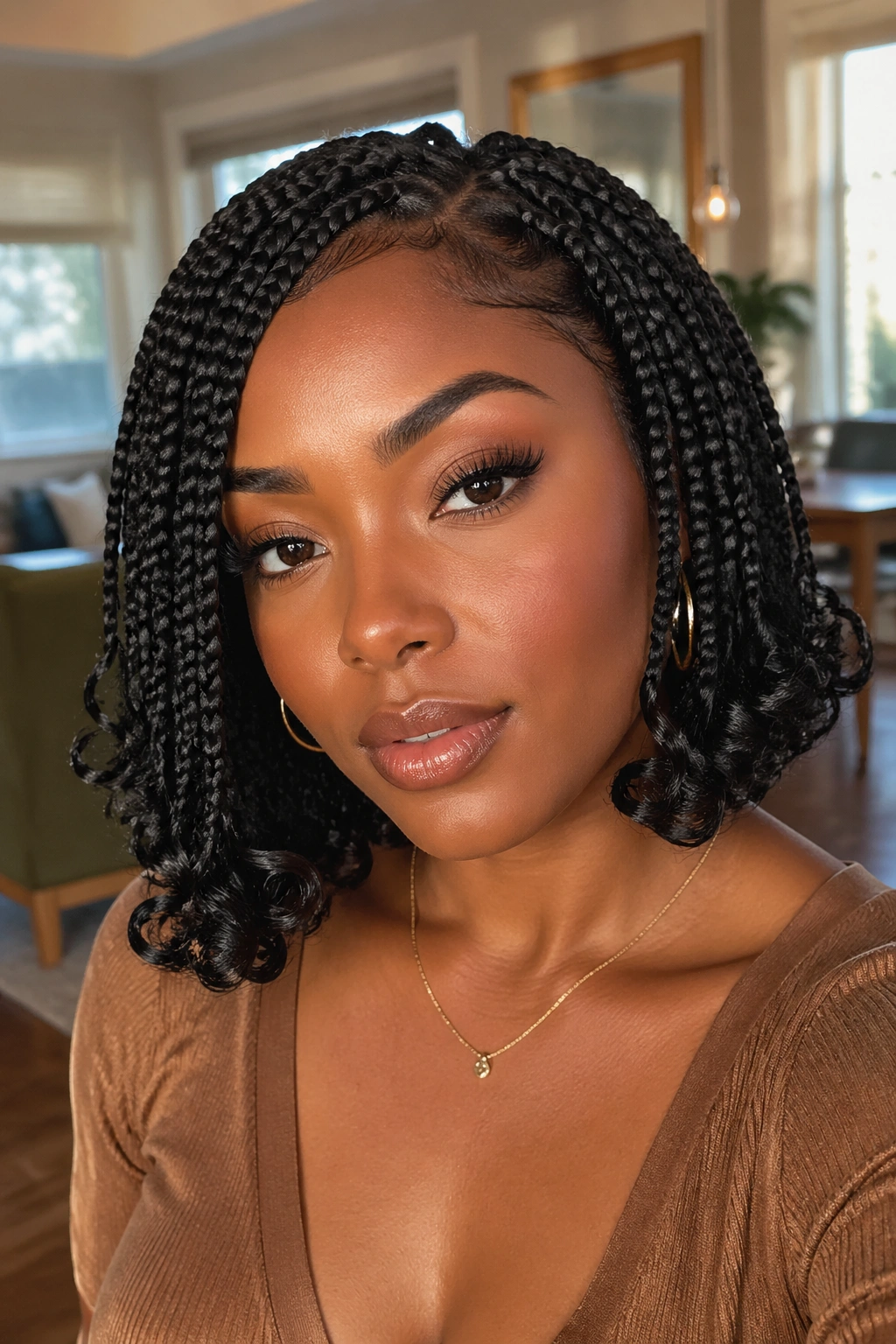
What if you want the braid to finish soft instead of blunt? Curly-end bob-length box braids solve that right away. Instead of cutting every braid straight across, the ends are left to curl, coil, or bend under with a rod set.
That detail changes the whole mood. Straight ends make the bob look stricter. Curly ends take the edge off and make the style feel a little more romantic, a little more open. It works especially well when the bob sits just below the jaw, because the curls bounce a bit and keep the silhouette from looking too solid.
How to Set the Ends
Use flexi-rods or perm rods on the last few inches of the braid, then seal with hot water if the hair type allows it. Small rods give tighter curls. Larger rods give a smoother bend. If you want the curl to stay visible, do not overload the ends with heavy product before setting them.
I like this version when the braids need a softer finish but I still want the structure of a bob. It feels less severe than a blunt cut, and it can be dressed up fast with earrings and a clean part.
10. Boho Bob-Length Box Braids
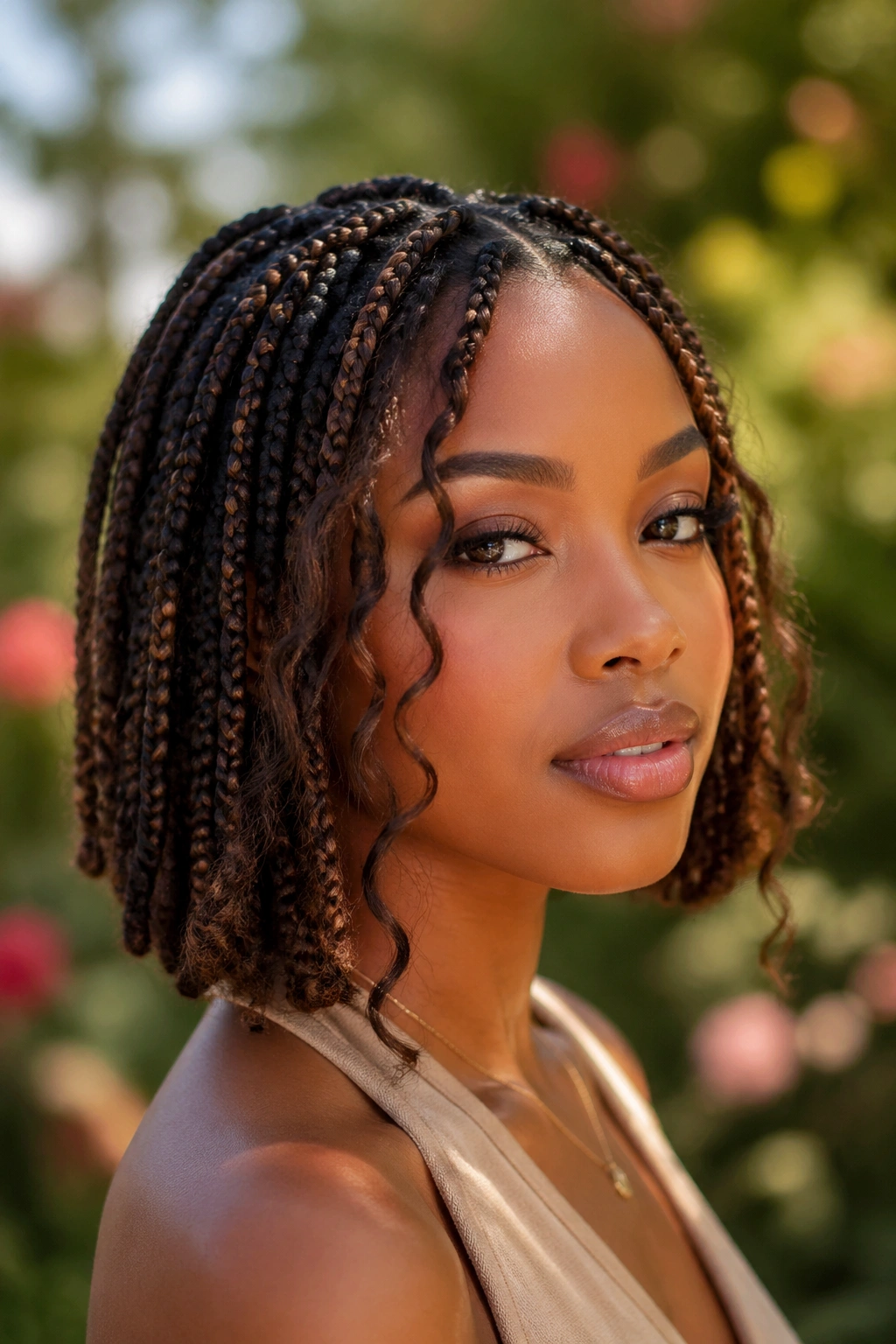
A few loose curls can keep bob-length box braids from looking too hard. That is the whole game with a boho bob. You keep the braid base neat, then weave in curly strands so the style has a little chaos on purpose.
The key is restraint. Six to ten loose tendrils around the top layer and the face is usually enough. More than that, and the style starts to blur. The point is contrast: structured braids below, soft pieces above. If the curls are too uniform, the look feels planned in a bad way. If they are too many, it loses the bob shape.
I like boho bobs for people who want movement without giving up the braid look. They also make shorter braids feel less formal, which is useful if your closet leans relaxed. A blunt outfit with a boho bob can look a little cooler than you expect.
And yes, the curls need care. Friction eats them fast, so a silk scarf at night matters more here than in a plain bob.
11. Jumbo Bob-Length Box Braids
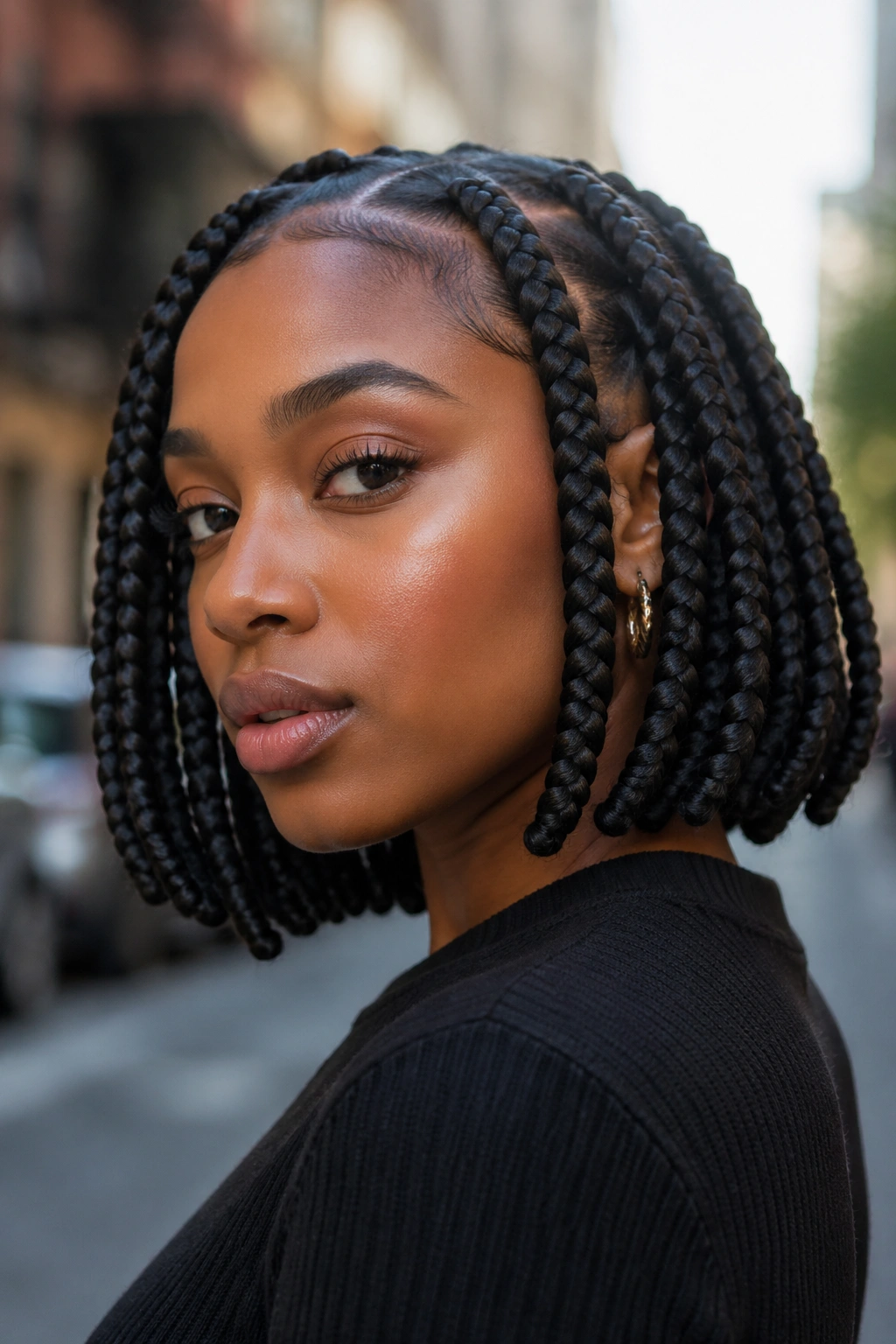
If you want chair time to feel shorter, jumbo box braid bobs make a lot of sense. Fewer sections mean fewer braids, and fewer braids mean a fuller shape with less all-day weight. The result is bold and direct.
Jumbo braids change the visual rhythm of the cut. Each braid reads clearly, so the bob gets chunkier texture and a more obvious outline. That can be a strength. It means the style looks intentional from far away, not just up close. It also works well if your hair is dense and you want to keep the install from becoming too crowded around the scalp.
The trade-off is movement. Bigger braids swing less and can feel stiffer than smaller ones. I like them when I want the bob to look solid and sculpted. If you want softness, this is not the first place I’d go.
Still, there is something satisfying about a jumbo bob. It is quick, strong, and a little bit loud in the best way.
12. Micro Bob-Length Box Braids
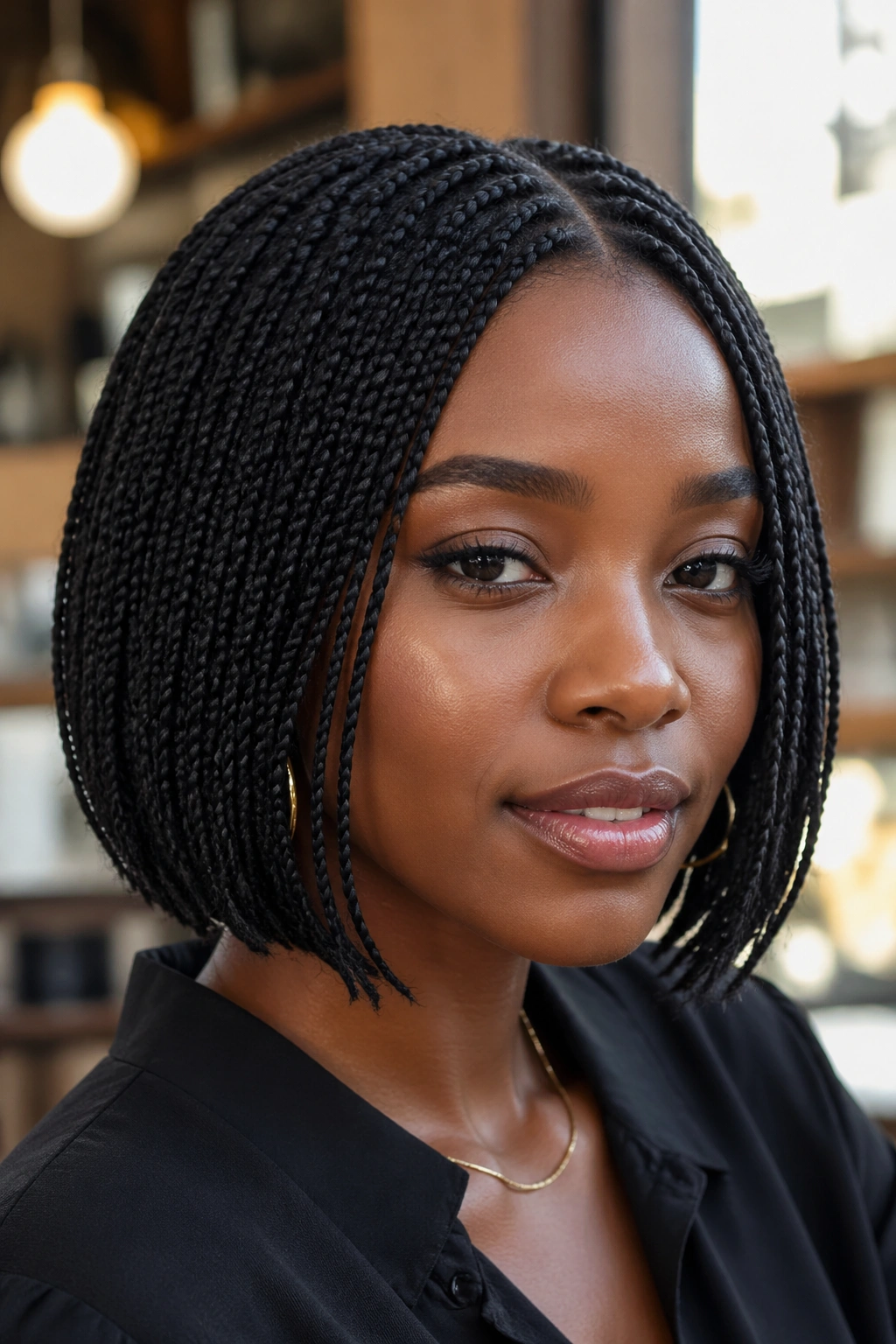
Tiny braids are not the only way to get a light style, but they do give the most movement. Micro bob-length box braids sit in that sweet spot where the cut feels airy and detailed at the same time. The braids are so small that the bob can swing and shift in a way larger braids never quite manage.
The price you pay is time. Micro braids take longer to install, and the scalp has to support more sections. If your edges are fragile or your braider pulls too tight, the style can stop being worth it fast. That is not a flaw of the look itself. It is just the reality of very small parts.
What I like here is the texture. From a distance, the bob looks smooth. Up close, it has a lot of detail. The ends can also be tucked, curled, or left blunt, so the style still has room to change shape.
If you love light movement and do not mind the time in the chair, this one rewards patience.
13. Fulani-Inspired Bob
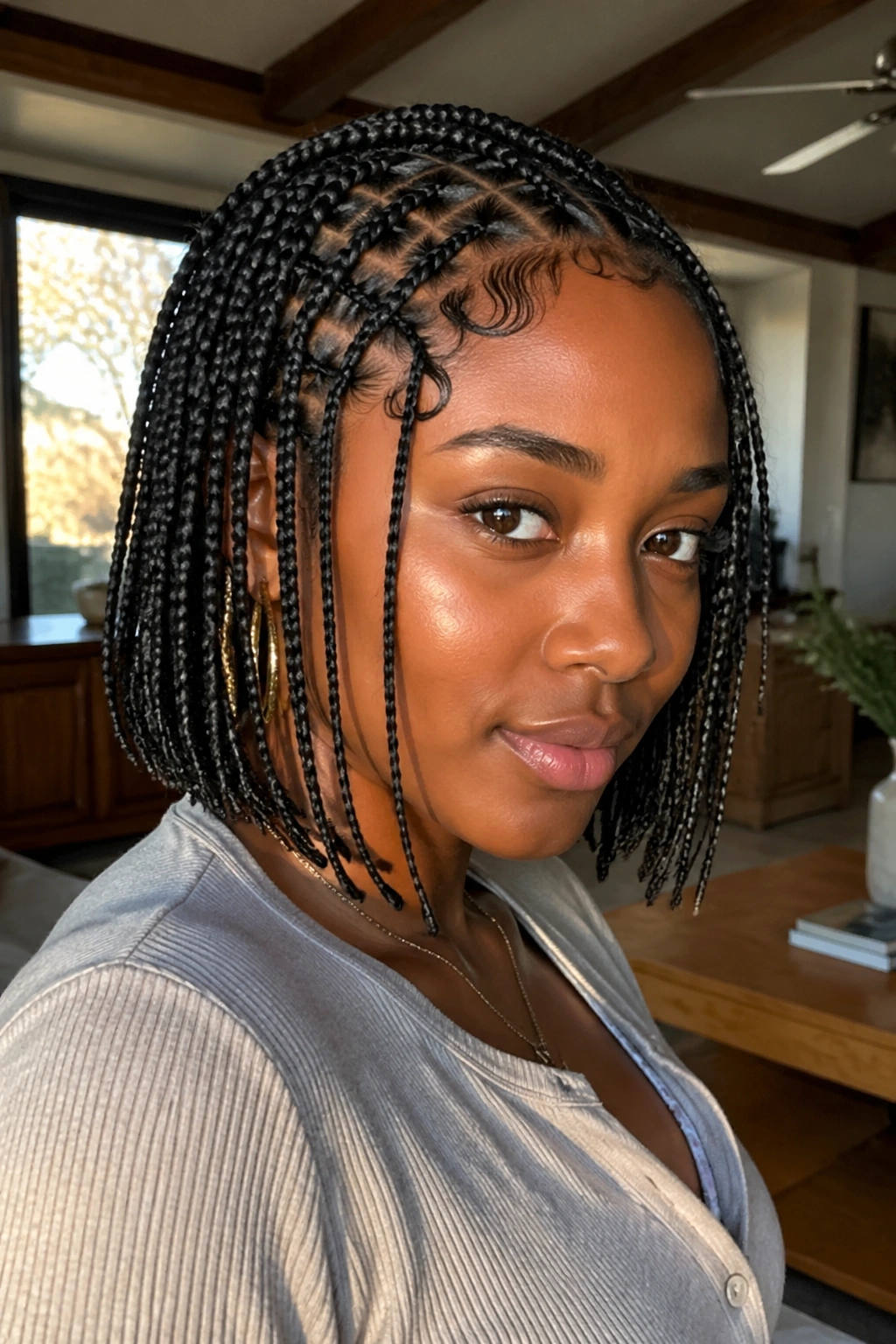
The scalp pattern is the whole point here. A Fulani-inspired bob-length box braid style usually mixes a few cornrow or braid rows along the top with hanging braids that land in a bob shape below. The contrast is what makes it interesting.
The Braid Map
- A center row or cornrow line through the crown.
- One or two side braids that frame the face.
- Hanging braids cut to chin or jaw length.
- Optional beads or cuffs on the front sections.
This style feels designed from the top down, which is why it looks good even before accessories are added. The top pattern draws the eye in first, then the bob shape finishes the line. If you want something with shape and history, but you still want a clean, modern bob, this is one of the strongest choices.
It does ask for a steady hand from the braider. The rows need to be crisp, and the front pieces should not be too bulky or the crown gets crowded. When it is done well, though, it has a sharp, almost framed look that stands out without feeling overloaded.
14. Braided Bangs Bob
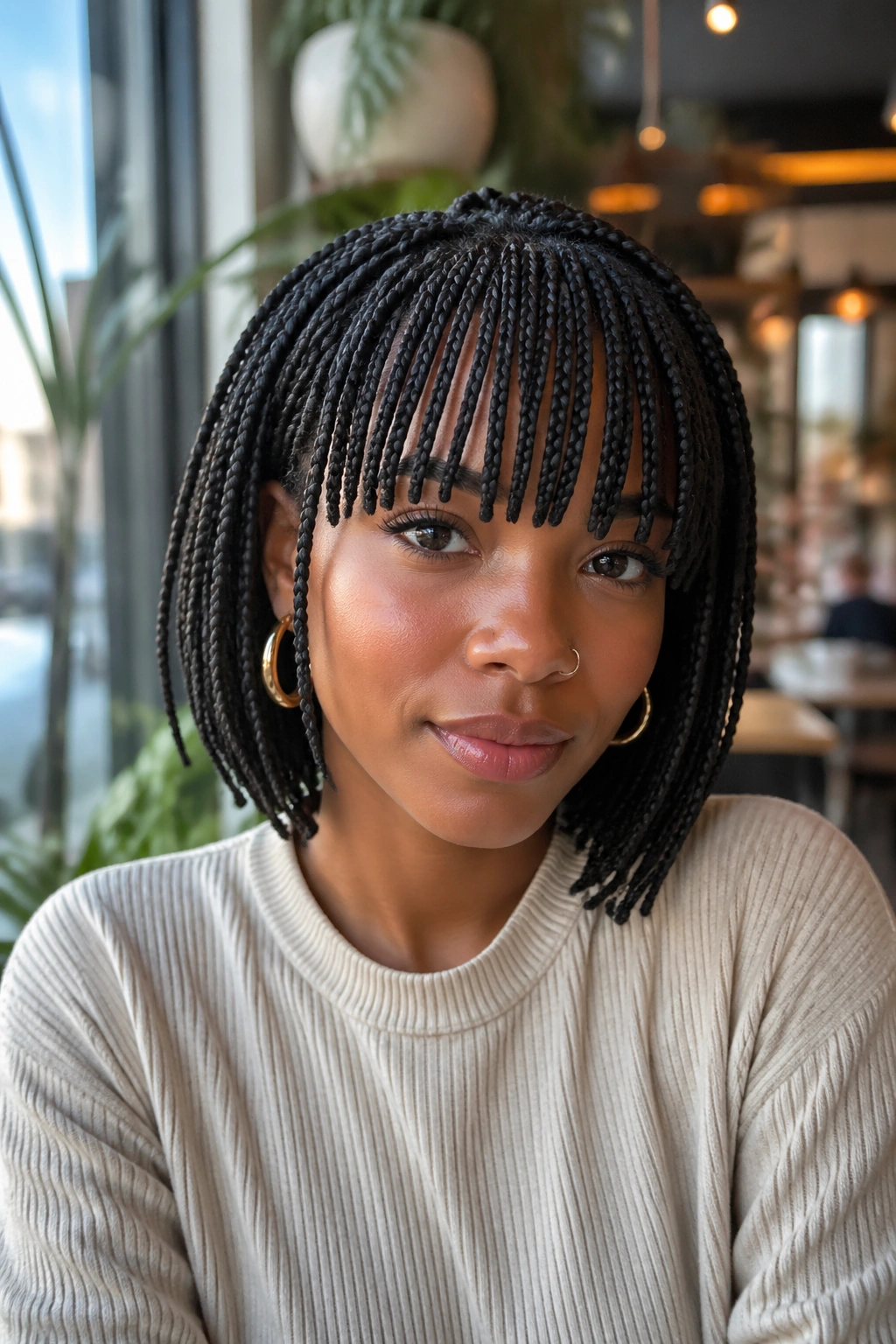
Can a bob have a fringe? Absolutely.
Braided bangs make bob-length box braids feel younger and a little more playful, without turning the whole style into costume territory. The front section is braided shorter and worn across the forehead or lightly swept to one side, while the rest of the braids fall in the usual bob shape.
This works best when the bang pieces are a touch thinner than the main braids. If they are too thick, they can sit heavy over the eyes and steal the whole show. A few slimmer pieces are enough to soften the forehead and break up a strong hairline. That tiny difference changes the balance a lot.
I like this look on anyone who wants a little edge without cutting actual bangs. It gives you the feeling of a fringe, but you can still move the front section out of the way when you want to. Practical and fun. A rare combination.
The whole style reads bolder than a regular center-part bob, which is why it works so well.
15. Half-Up Bob-Length Box Braids
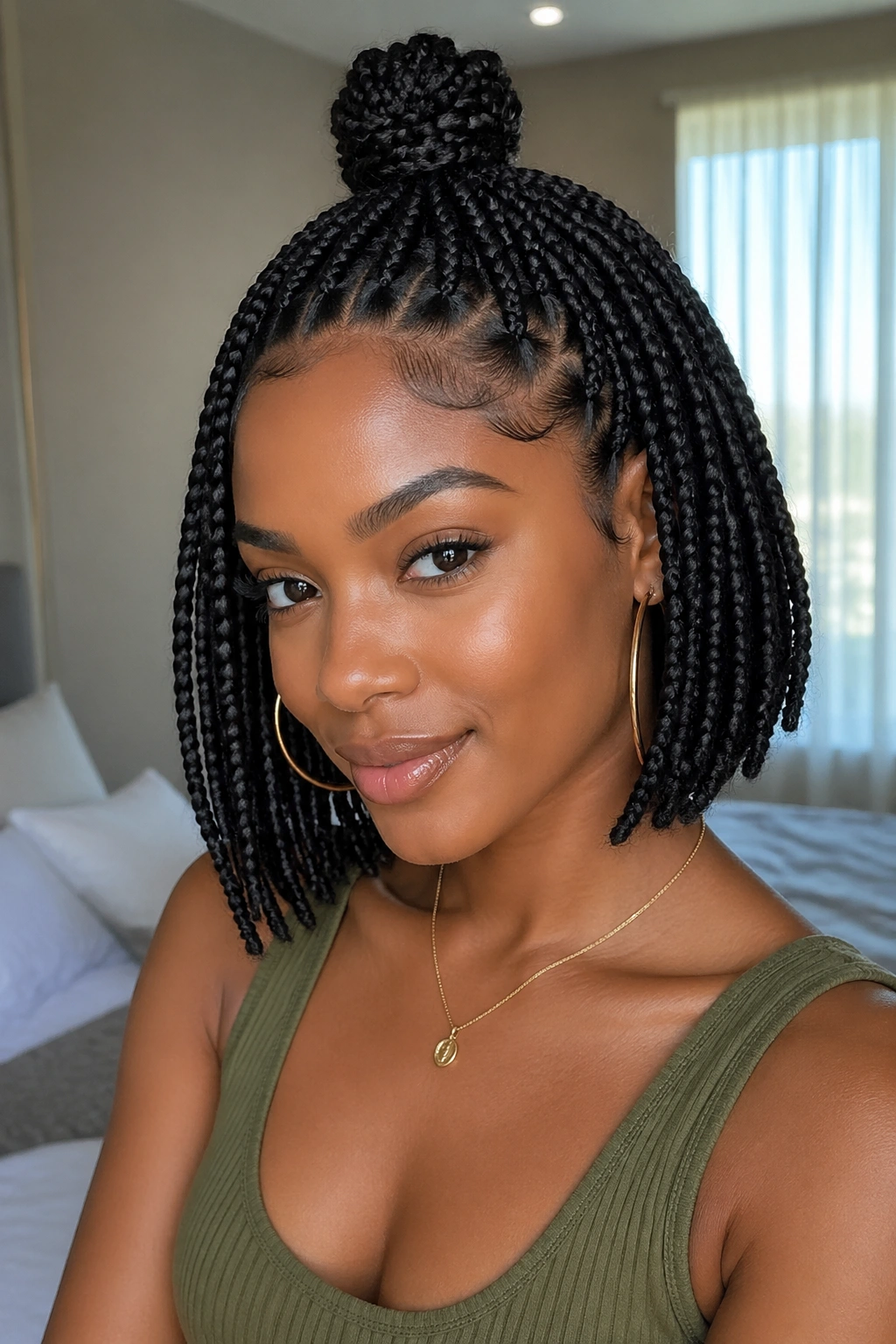
Half-up box braid bobs are built for days when you want hair off your face but still want the shape to show. Pull the top section back, leave the bottom section loose, and the cut gets instant lift at the crown.
Three Easy Ways to Wear It
- A small top knot centered above the crown.
- A braided half pony secured with a snag-free band.
- A twisted half-up bun with the ends left loose.
The best part is the silhouette. Because the bob is already short, the half-up style does not swallow your head the way it can with long braids. It just gives the shape a little height. That makes the face look open, and it keeps the style from feeling flat.
I also like how forgiving it is. If the front pieces are not perfect, the half-up section hides a lot. If the ends are a little uneven, the loose bottom layer makes it look intentional. It’s a useful style, not a precious one.
And if your day involves a lot of movement, this one stays out of your eyes.
16. Colored-End Bob
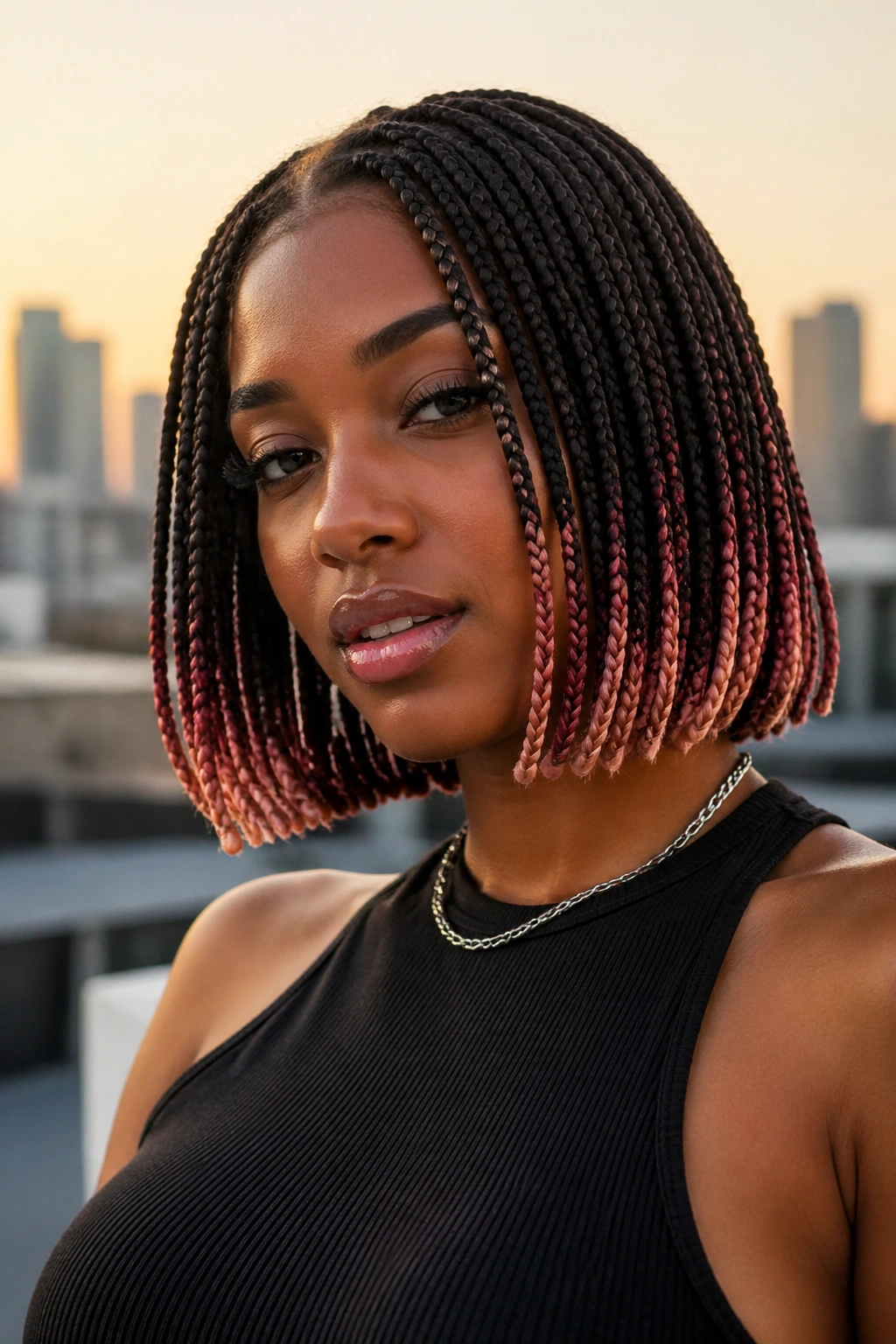
One inch of color changes everything.
A colored-end bob keeps the roots and most of the braid in one tone, then switches to a brighter shade at the last section. Blonde tips on black braids. Copper ends on dark brown. Burgundy tips on deep auburn hair. The contrast lands fast, and the bob shape makes it even easier to see.
This style is a smart way to play with color without covering the whole head. The roots still look neat and grounded, which keeps the style from becoming too busy. The color hits at the perimeter, where the eye naturally lands, so even a small change gets noticed.
I like this version when someone wants a little drama but not a full color commitment. It gives the braid movement without turning the scalp into a patchwork of shades. Front-row pieces can be brighter if you want the color to show more around the face.
The effect is direct. A little sharp, a little fun, not fussy.
17. Ombré Box Braid Bob
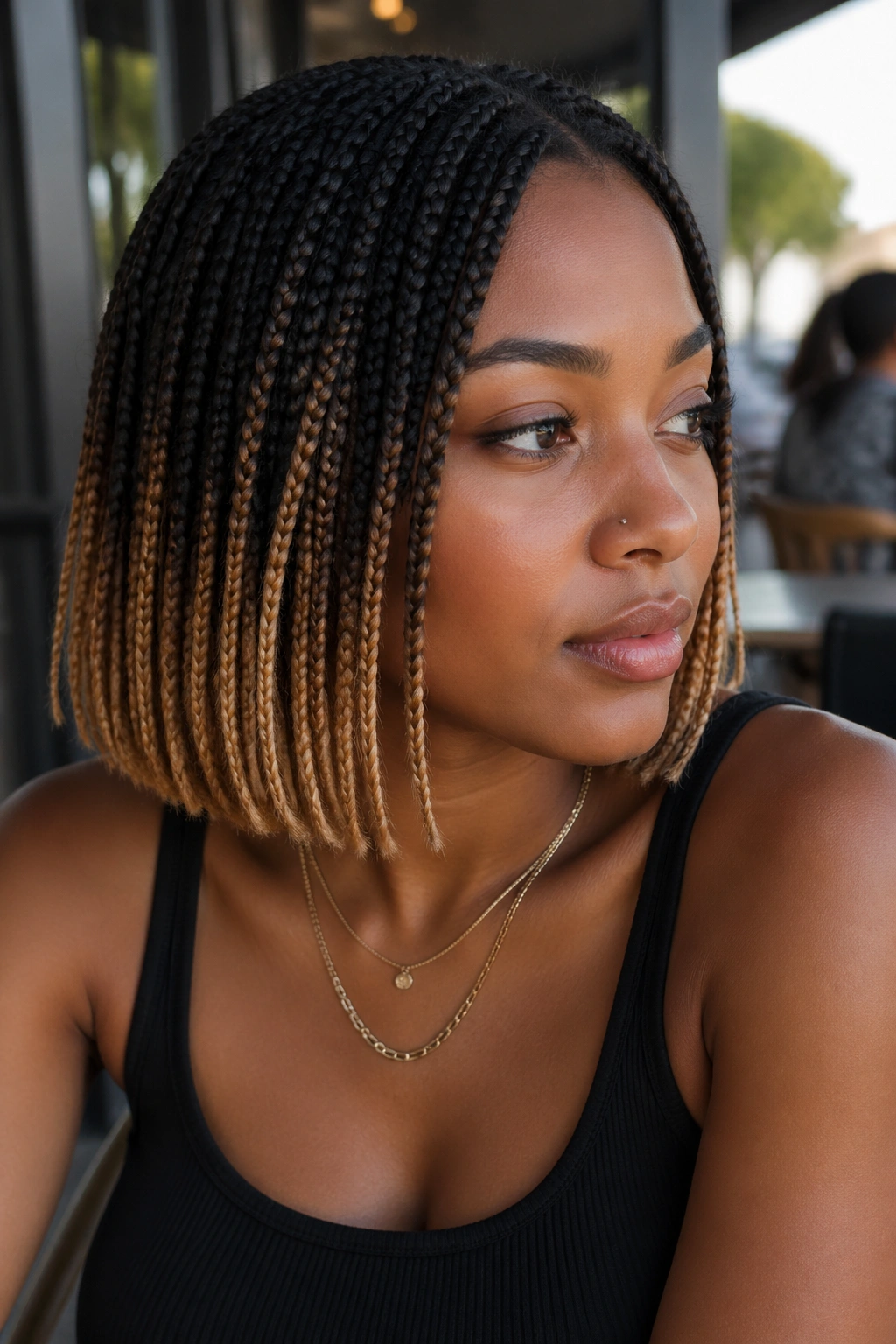
A smooth fade looks calmer than a hard color block. That is why ombré bob-length box braids feel different from colored-end styles. The color shifts gradually from one shade to another, so the eye sees motion instead of a sudden jump.
The fade can be subtle or loud. Dark roots into warm brown. Brown into honey. Black into ash blonde. The bob shape makes all of it easier to read, because the color change happens close to the face and the chin instead of disappearing down the back. That means even a soft ombré makes an impact.
I think this style works best when the parting stays clean and the color shift starts a few inches away from the scalp. If the change happens too high, the braids can look patchy. If it starts too low, the fade loses its point. Balance matters.
It is a good choice if you like dimension but want the color to feel blended rather than loud. The cut does half the work for you.
18. Gold-Cuffed Bob-Length Box Braids
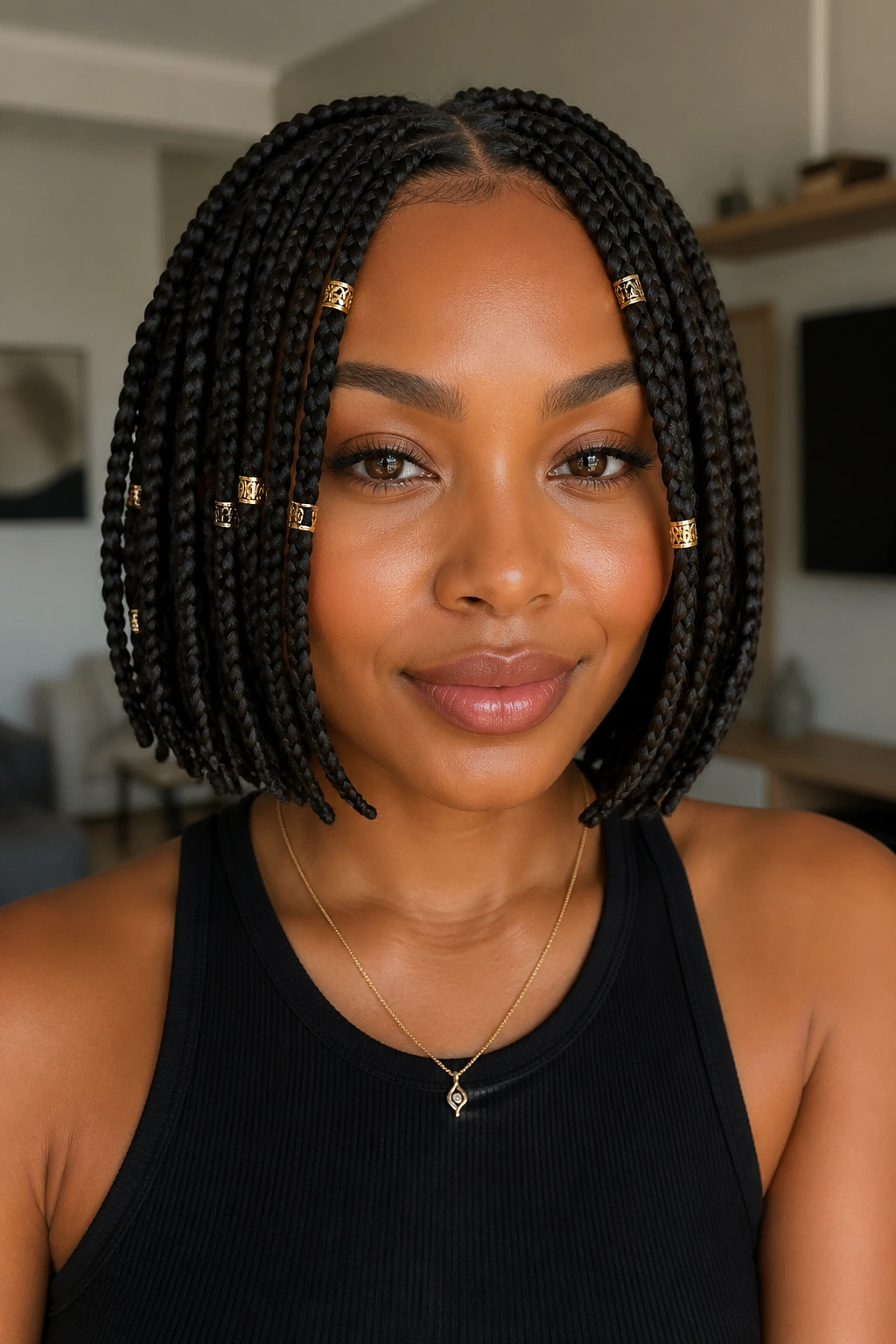
When braids are this short, accessories land fast. Gold cuffs on bob-length box braids don’t need much help to stand out, because the ends and the temples sit right in your line of sight. A few well-placed cuffs can change the whole look.
The smartest way to do it is with pattern, not clutter. Put cuffs on the front rows, or place them every third braid so the eye gets rhythm instead of noise. You can also mix sizes — one larger cuff near the face, smaller ones along the side. That gives the style a little movement without making it busy.
I like gold on dark braiding hair, but silver and antique brass can work too. The finish should match the mood of the rest of the look. Bright cuffs feel sharper. Duller metal feels more relaxed.
Too many cuffs can pull at fine hair, so keep an eye on weight. A bob does not need much. A few pieces are enough.
19. Face-Framing Accent Bob
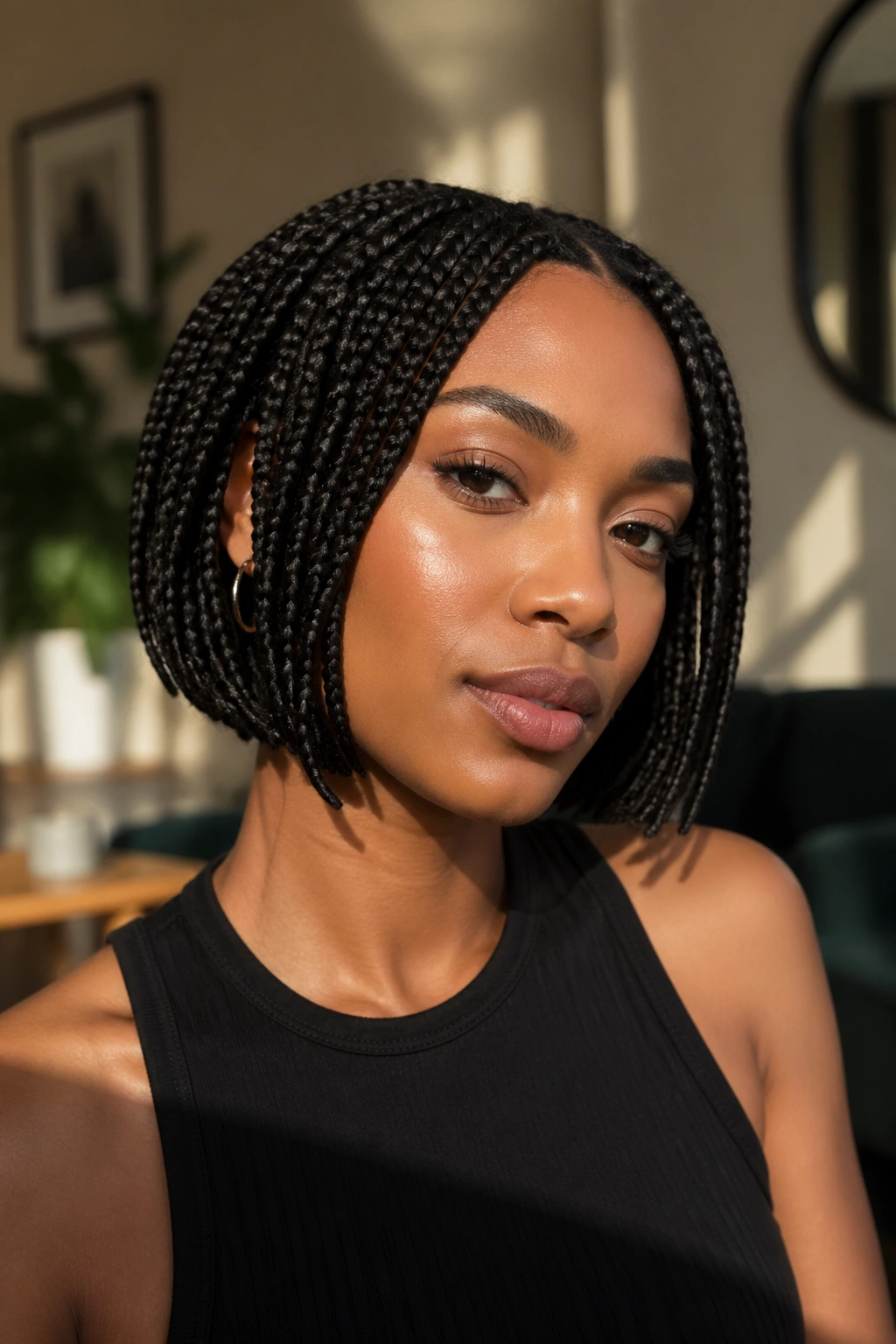
A pair of slim braids near the cheekbones can soften the whole cut. That is the appeal of face-framing accent braids. The rest of the bob stays neat and even, but a few front pieces are left thinner, shorter, or slightly more visible so the face gets a softer outline.
This is not the same as bangs. The accent braids sit more to the side, brushing the cheeks or skimming the jaw. They work well if you want the bob to feel less square, especially when the rest of the style is blunt. A couple of narrow front pieces can do more than a full layer change.
I also like this on people who wear their hair tucked behind one ear a lot. The accent pieces keep the style from looking too plain when one side is pulled back. That little asymmetry helps.
If you want the safest version, ask for two to four slim front braids that sit a touch shorter than the rest. Simple. Clean. Enough.
20. Flipped-Under Ends Bob
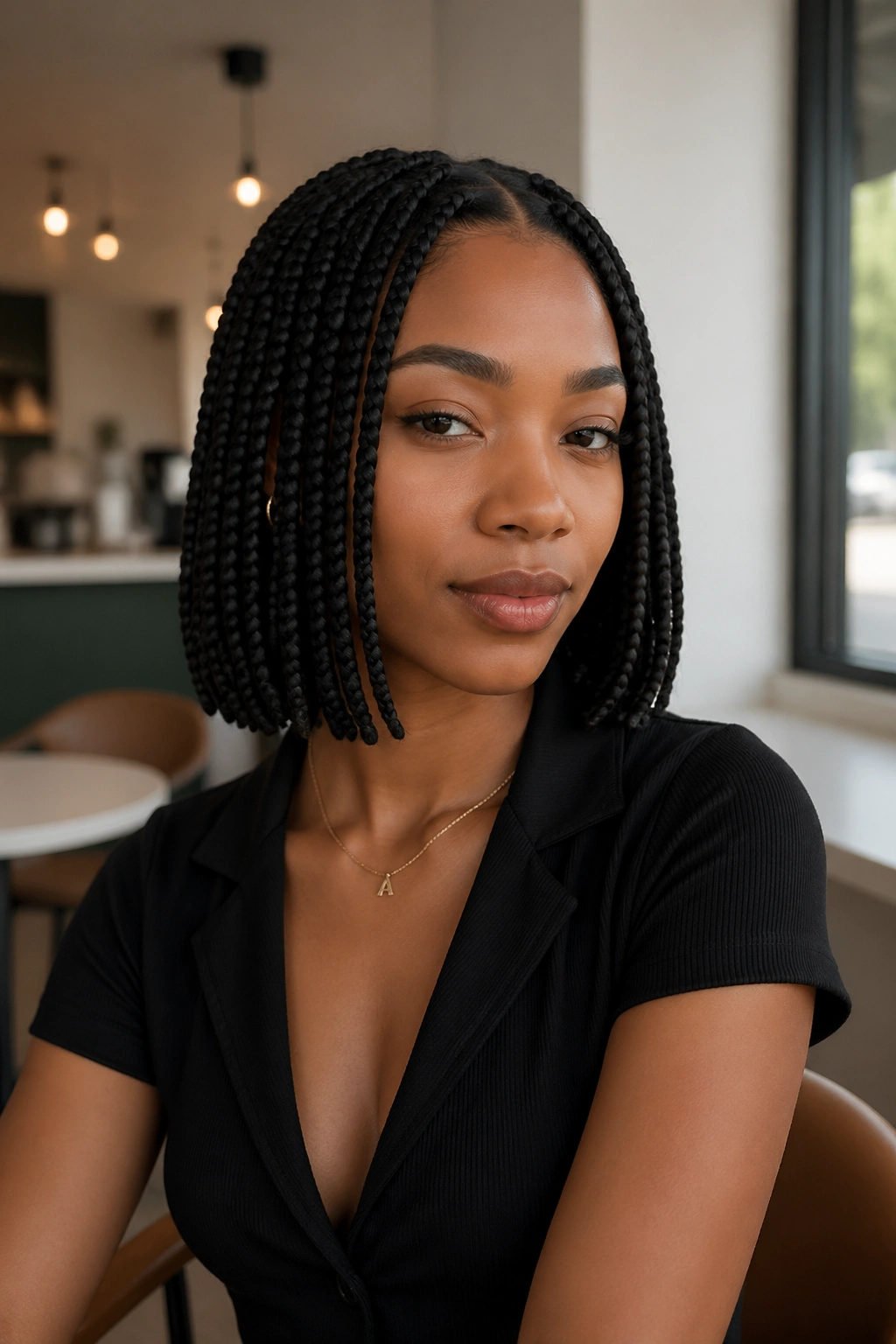
A bob that curves under reads cleaner than one that sticks straight out. Flipped-under ends give bob-length box braids that neat inward bend you usually get from a good blow-dry or a well-set cut. With braids, the look comes from rod sets, hot water shaping, or careful drying.
How to Set the Curve
- Use medium or large rods for a soft bend.
- Set the ends with hot water if the braiding hair allows it.
- Let the braids dry completely before taking out the rods.
- Add a light mousse only if the hair needs extra hold.
The curve is subtle, but it changes the line at the bottom of the bob. Instead of a blunt edge, you get a tucked finish that sits closer to the jaw. That makes the face look a little more lifted and gives the cut a more polished feel.
I like this style when I want structure without stiffness. It looks finished in a quiet way, and it holds up well with simple outfits. No extra decoration needed.
21. Tapered Nape Bob
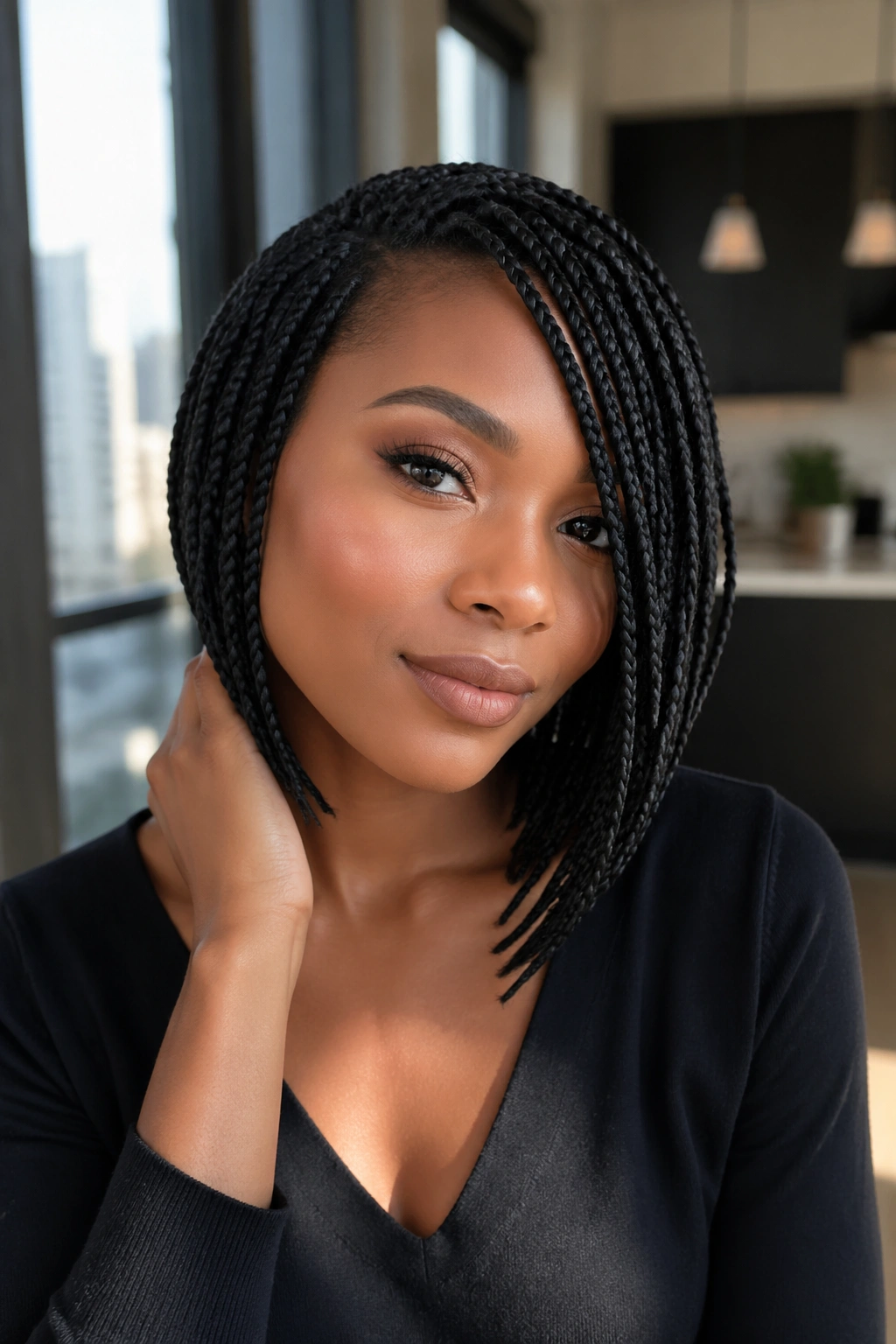
A shorter back keeps the bob from feeling boxy. That is the whole point of a tapered nape bob. The braids at the back sit a little higher and shorter, while the sides and front hang a bit longer, which creates a stacked shape around the neck.
This version works nicely on thick hair because it removes some of the visual bulk from the back of the head. It also makes the neckline feel lighter. You get the shape of a bob without the solid block that sometimes happens when every braid ends at the same level.
The taper should be gentle. Too much stacking can start looking like a wedge cut, which is a different thing altogether. A small lift at the nape, a little more length near the cheeks, and the silhouette stays elegant enough to wear anywhere.
I think this style is underrated. It looks neat from behind, which matters more than people admit. You do see the back of your head in photos.
22. Zigzag-Part Bob
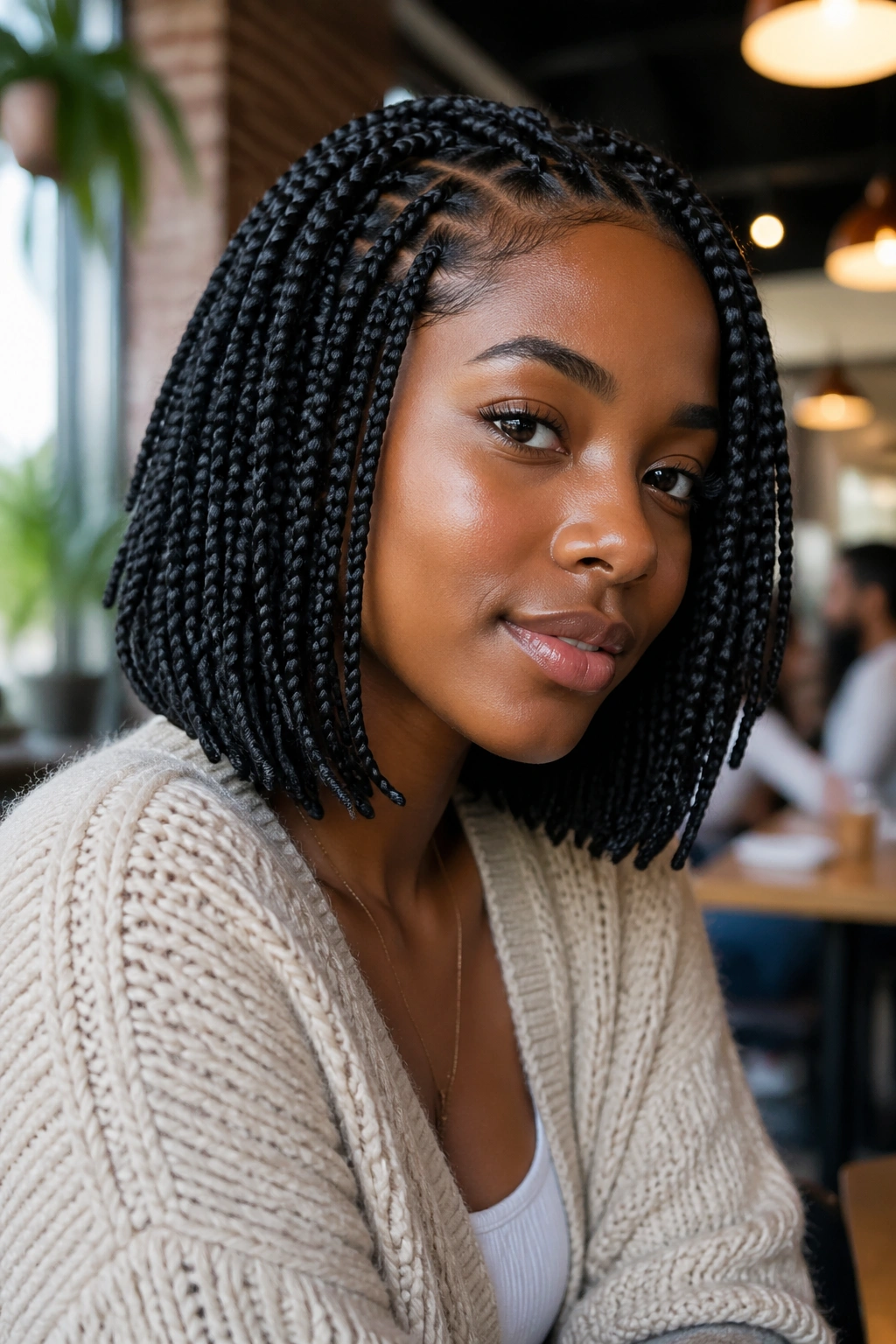
Why keep the part straight when the scalp can do something more interesting? Zigzag-part bob-length box braids put the pattern front and center, and the result feels playful without losing the structure of the bob.
Where the Pattern Starts
- Begin the zigzag at the front hairline or crown.
- Keep the lines clean so the shape reads clearly.
- Use medium parts so the zigzag is visible.
- Let the braids fall simply underneath, so the scalp detail stands out.
The zigzag works best when the rest of the style stays pretty simple. A blunt bob or a mid-length angled bob gives the parting room to shine. If you add too many other details, the eye gets lost.
What I like most is the surprise factor. From far away, it looks like a normal bob. Up close, the parting has a little attitude. That is a nice trick if you want detail without turning the whole style into a statement piece.
It is one of those styles that makes people lean in a little.
23. Scalp-Hugging Sleek Bob
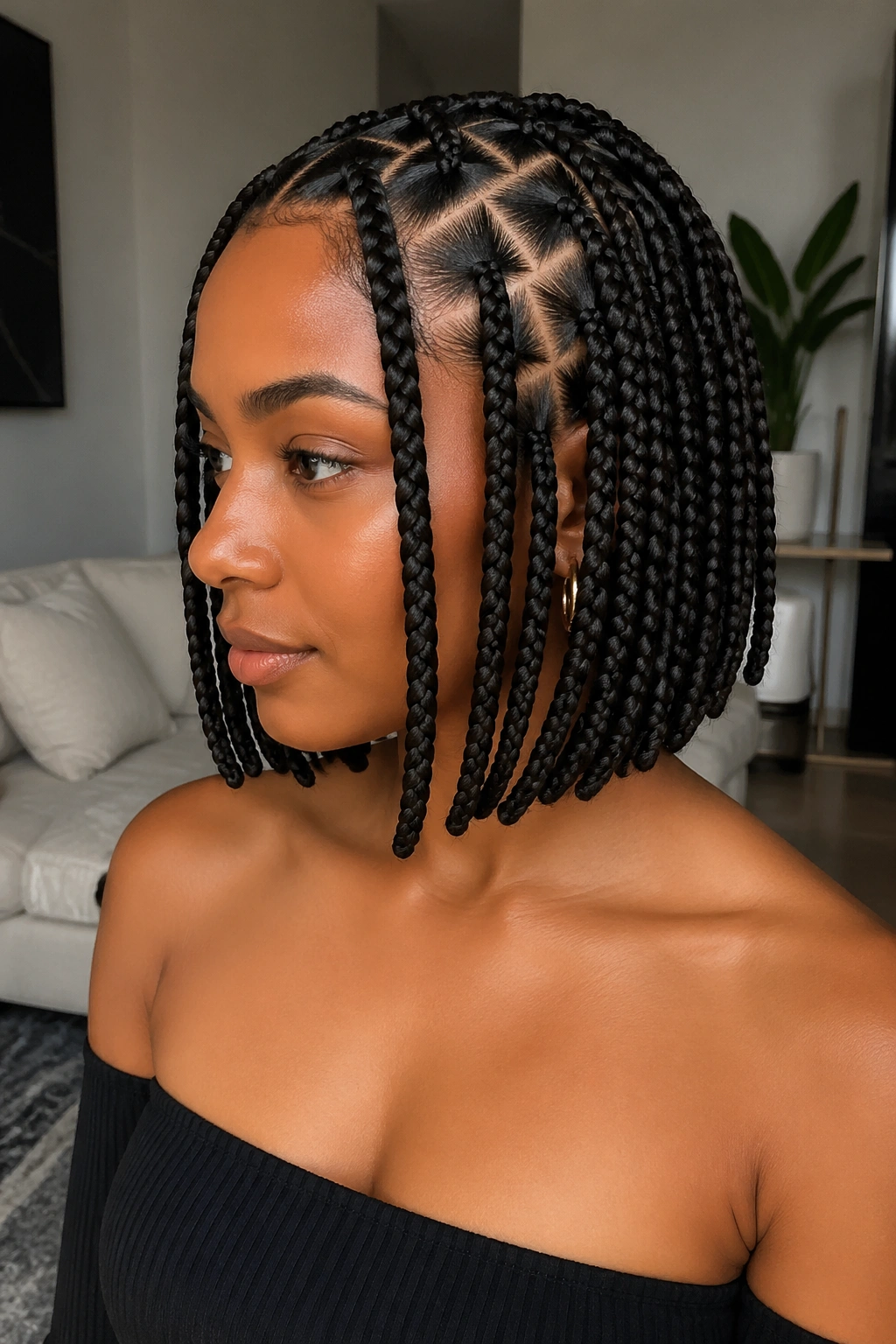
Some bobs look fuller; this one stays close and neat. A scalp-hugging sleek bob keeps the braids flatter at the root and tighter to the head, so the whole style reads smooth and controlled. There is less lift, less puff, and more line.
That makes it useful in a lot of settings. It slips under hats more easily, sits neatly under collars, and keeps the head shape streamlined. If your taste runs clean and minimal, this is a strong place to start. It also pairs well with very neat edges and small to medium parts, because the visual language is all about order.
I would not call it boring. Not at all. A close-fitting bob can look sharper than a fuller one, especially if the ends are trimmed well and the braid rows are precise. The lack of excess is what gives it its edge.
Sometimes the best move is to keep everything tight and let the shape do the work.
24. Curved-Side Part Bob
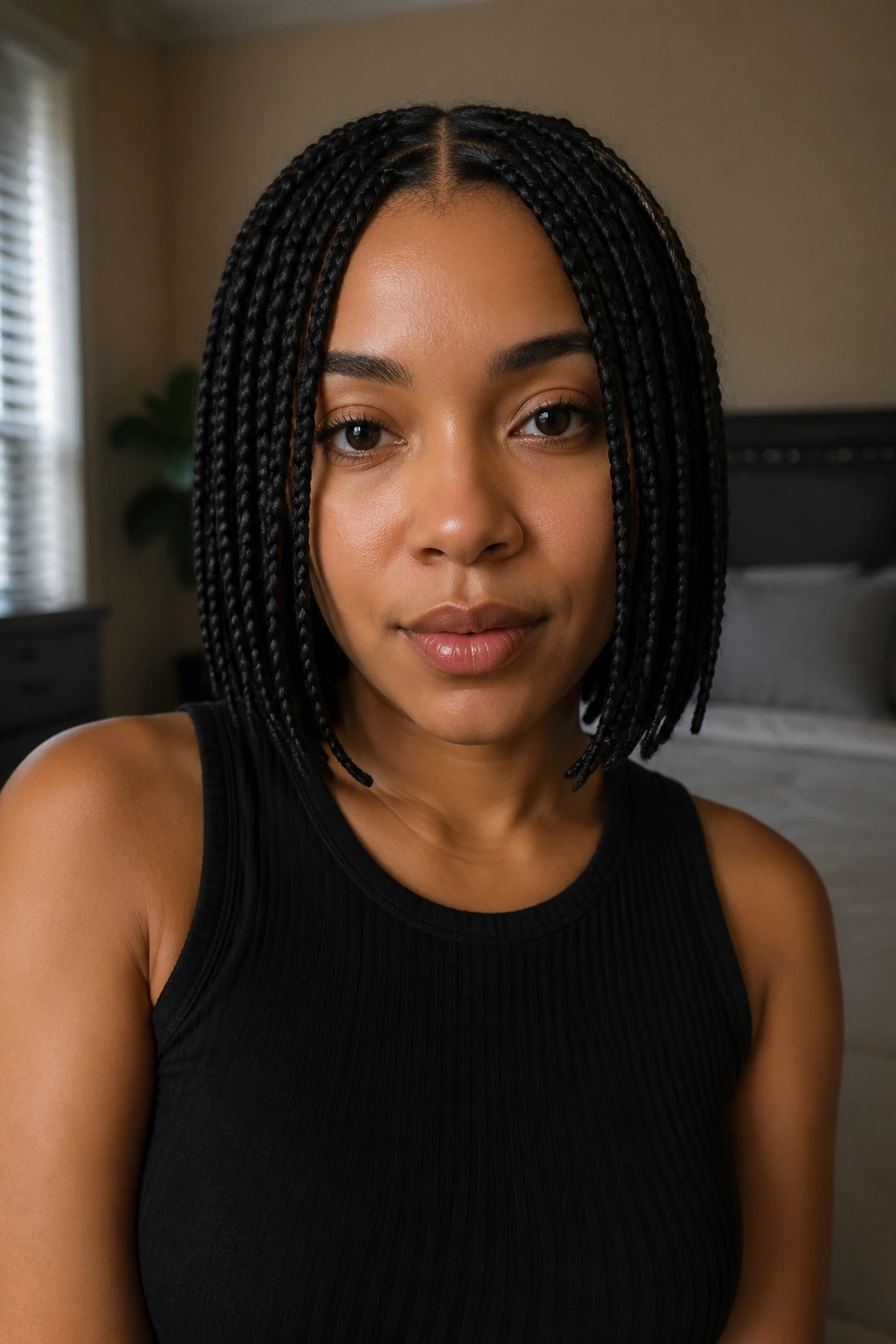
A side part does not need to be stiff to work. A curved-side part bob-length box braid style softens the usual straight line by arcing the part gently from the front hairline toward the crown. That tiny shift changes the whole mood.
The curve helps break up strong face shapes and keeps the front from feeling too severe. It also gives the braids a little natural movement before the strands even start. Unlike a hard side part, the curve feels less formal. It looks arranged, but not ruler-straight.
This style is especially good if you like tucking one side behind the ear. The curved part makes that move feel intentional instead of accidental. It also works nicely with simple accessories like a single cuff or a small hoop, because the line already has enough detail.
Clean, soft, and a little less obvious than the straight side-part version. That’s the appeal.
25. Wrapped-Tip Bob
Tiny wraps, big payoff.
Wrapping the tips of bob-length box braids with thread, yarn, or thin cord changes the finish without changing the shape. A few inches of wrap at the ends can add color, texture, or contrast, and because the bob is short, the detail shows right away. You do not need to wrap every braid. In fact, I’d argue that would be too much.
Tiny Details That Matter
- Wrap only 6 to 12 braids if you want the effect to stay clean.
- Keep each wrap section around 1 to 2 inches long.
- Choose one accent color and one neutral if you want the style to stay balanced.
- Avoid heavy yarn on fine hair, because weight at the ends adds up fast.
This is the kind of style that rewards a steady hand and a clear eye. It works when you want the bob to feel personal without relying on full color or lots of accessories. The wraps can match nails, earrings, or a scarf, but they do not need to. Sometimes the best version is the one that just gives the ends a little graphic edge.
And if you want the safest route, start with a classic chin-length bob and add wraps later. That way the shape stays simple, and the detail only shows where you want it.