

Small tight curls can look shorter than they are, and that is not a problem to solve. It’s part of the shape.
The trick with hairstyles for small tight curls is not forcing the hair to pretend it has a different texture. It’s choosing styles that either let the coil pattern stay crisp or stretch it just enough to change the silhouette without flattening all the life out of it. That line matters more than people think. Go too heavy on brushing, pulling, or slicking, and the curls lose the very thing that makes them interesting.
Shrinkage is not the enemy.
What usually ruins the style is tension in the wrong place, sections that are too big to set cleanly, or products that make the hair look coated instead of defined. If your curls sit in the 4A to 4C range, you already know the hair can change shape fast once water, cream, gel, and drying time enter the picture. That flexibility is a gift, but it also means the style has to be built with some care.
Once you start thinking in shapes instead of rules — puff, halo, braid, coil, bun, part, lift — the options open up fast. A few styles are neat and structured, some are soft and fluffy, and a few sit in that sweet spot where they look polished without acting precious about it.
1. Wash-and-Go for Small Tight Curls
A good wash-and-go is not a lazy style. It is a controlled one.
On small tight curls, the wash-and-go works because it lets the curl pattern do the heavy lifting. You clean, condition, apply leave-in, add a styling gel or cream-gel mix, and then leave the coils alone long enough to set. That last part matters. If you keep touching wet curls, the definition breaks apart before the hair has a chance to dry into its shape.
What the curl pattern needs
Use products on soaking-wet hair, not damp hair. Wet strands separate more evenly, and that gives you cleaner clumps and less fuzz at the surface. Small sections help too — about 1 inch wide is a good starting point — because tight curls need product to reach the full strand, not just the outside layer.
A diffuser can be your best friend here. Keep it on low heat, hold it a few inches away from the head, and dry until the roots feel set and the curls no longer feel cool or damp. If you want more lift, clip the roots while they dry. If you want a flatter shape, let the hair set without clips and don’t disturb the crown.
- Apply stylers in sections, not all at once.
- Scrunch gently from the ends upward.
- Avoid heavy oils before gel; they can block hold.
- Break the cast only after the hair is fully dry.
Best tip: if the curls look crunchy after drying, that usually means the hold is doing its job. Fluff them only after they’ve cooled.
2. Twist-Out With Soft, Rounded Volume
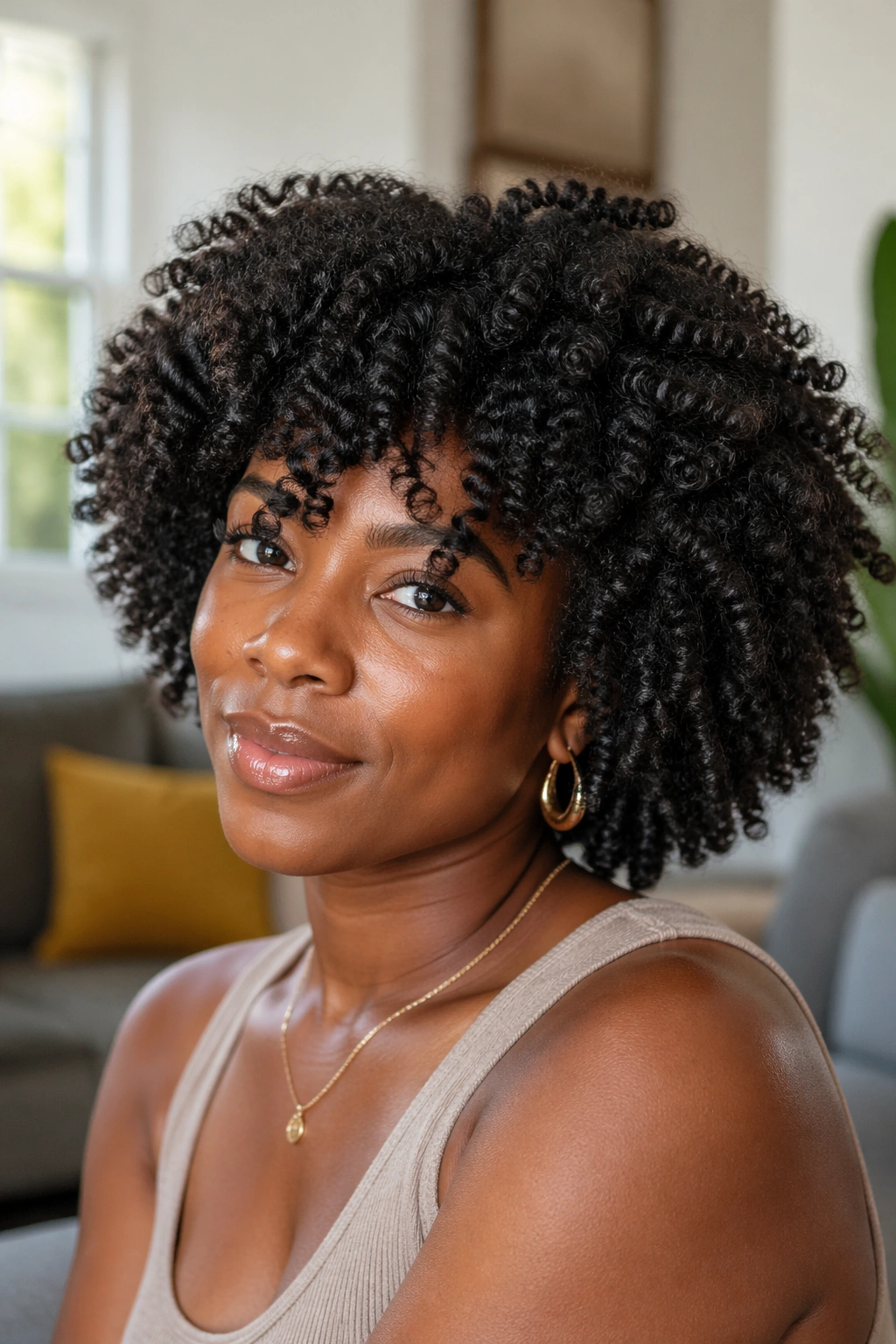
If you want a style that stretches tight coils without fighting them, the twist-out still earns its place.
A twist-out gives small curls a softer, rounder outline than a wash-and-go. Two-strand twists create a set pattern, and once they dry, you unravel them into larger coils with a bit more stretch at the root. That extra stretch can be flattering on dense hair because it shows length without making the hair look pressed flat.
The parting does not need to be perfect, but the twist size matters. Smaller twists give you more definition and a tighter look; larger twists give you more volume and a looser finish. On fine or low-density hair, large twists can fall apart fast. On thick hair, tiny twists can take forever to dry. The sweet spot is usually somewhere in the middle, with sections about 1/2 inch to 1 inch wide.
Do not rush the unraveling. That is where a lot of the frizz happens. Use a tiny bit of lightweight oil on your fingertips, separate each twist slowly, and stop pulling once the curl has opened enough to sit naturally.
One more thing: dry time is not optional. If the twists still feel cool in the middle, leave them alone a few hours longer. Damp roots can make the whole style collapse before lunch.
3. Braid-Out for Small Tight Curls
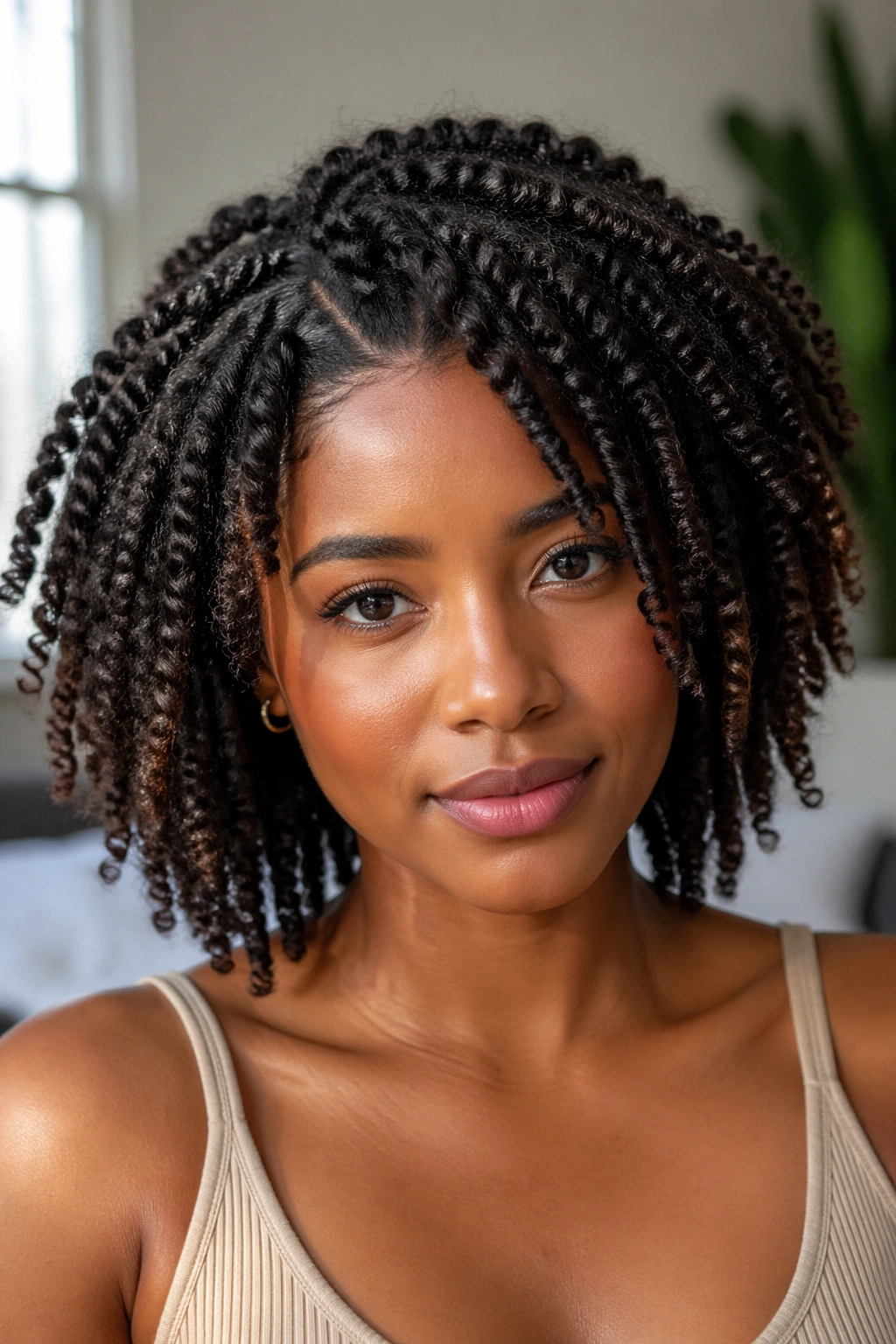
A braid-out gives a different read than a twist-out, and that difference is the whole point.
Where a twist-out makes round coils, a braid-out makes a more stretched, rope-like pattern with a flatter root. That can be a smart move if your small tight curls shrink a lot and you want a style that shows more length. The braid pattern also breaks up density in a way that can make thick hair feel lighter around the face.
Where braid-outs beat twist-outs
Braid-outs tend to hold a more obvious pattern along the strand, especially if the hair is dense or coarse. If your curls puff up fast when you separate them, braids usually stay more defined for longer. They also work well if you like a little order at the crown and more movement through the ends.
The catch is dry time. Braids are thicker than twists, so they need more time to set all the way through. That is not a small detail. If the inside is still damp, the unraveling turns messy fast.
Try a braid-out when you want:
- more stretch than a wash-and-go
- a less round shape than a twist-out
- a style that can be worn loose or pinned back
- a finish that looks neat even after the first day
Use a creamy styler with enough hold to keep the sections together, braid on stretched damp hair, and wait until the braids feel fully dry from root to tip. Then separate slowly. No rushing. That’s where the shape lives.
4. High Puff for Small Tight Curls
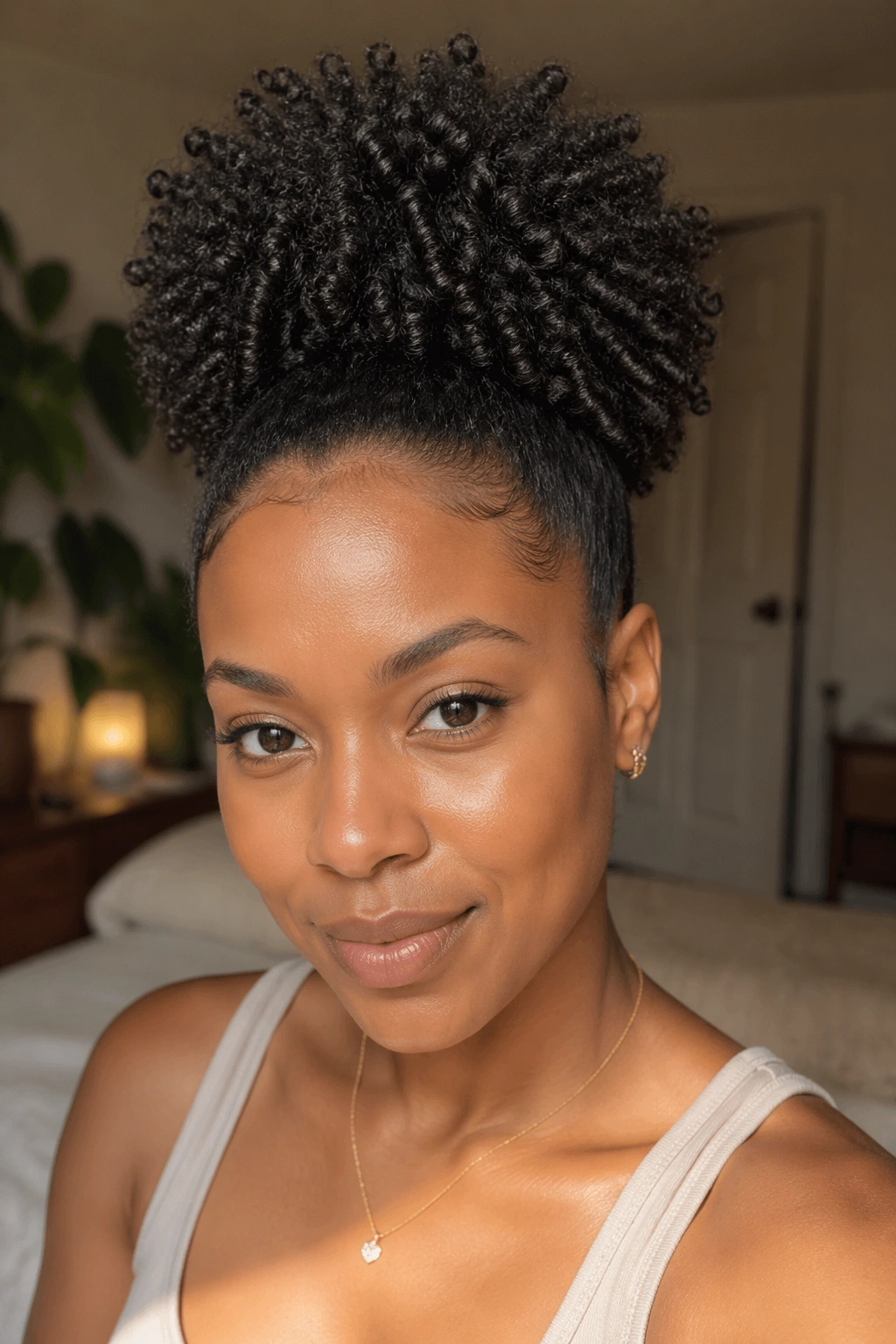
Second-day curls, a satin scrunchie, and five minutes. That is the high puff in a nutshell.
The reason this style works so well on small tight curls is simple: it puts the volume where the hair already wants to go. Instead of flattening the crown, you lift it. Instead of fighting shrinkage, you use it to build a full, rounded shape at the top of the head. The style feels easy, but it still looks intentional, which is a nice balance.
What to watch at the hairline
The high puff should not feel like a tug-of-war. If you have to stretch the elastic so hard that your temples ache, it’s too tight. A soft brush or your hands can smooth the perimeter, but the goal is control, not strain. Use a puff cuff or a satin scrunchie if the hair is thick enough to swallow a regular elastic.
A little pick at the roots can help the puff look fuller without messing up the curl pattern. And if the curls around the front are shorter, let them be shorter. A few coils escaping at the hairline often look better than over-slicked edges.
- Best on medium to dense curls
- Works on second- and third-day hair
- Needs very little product
- Looks stronger when the crown has some lift
The high puff is one of those styles that saves time without looking rushed. That’s rare.
5. Pineapple Puff at the Crown
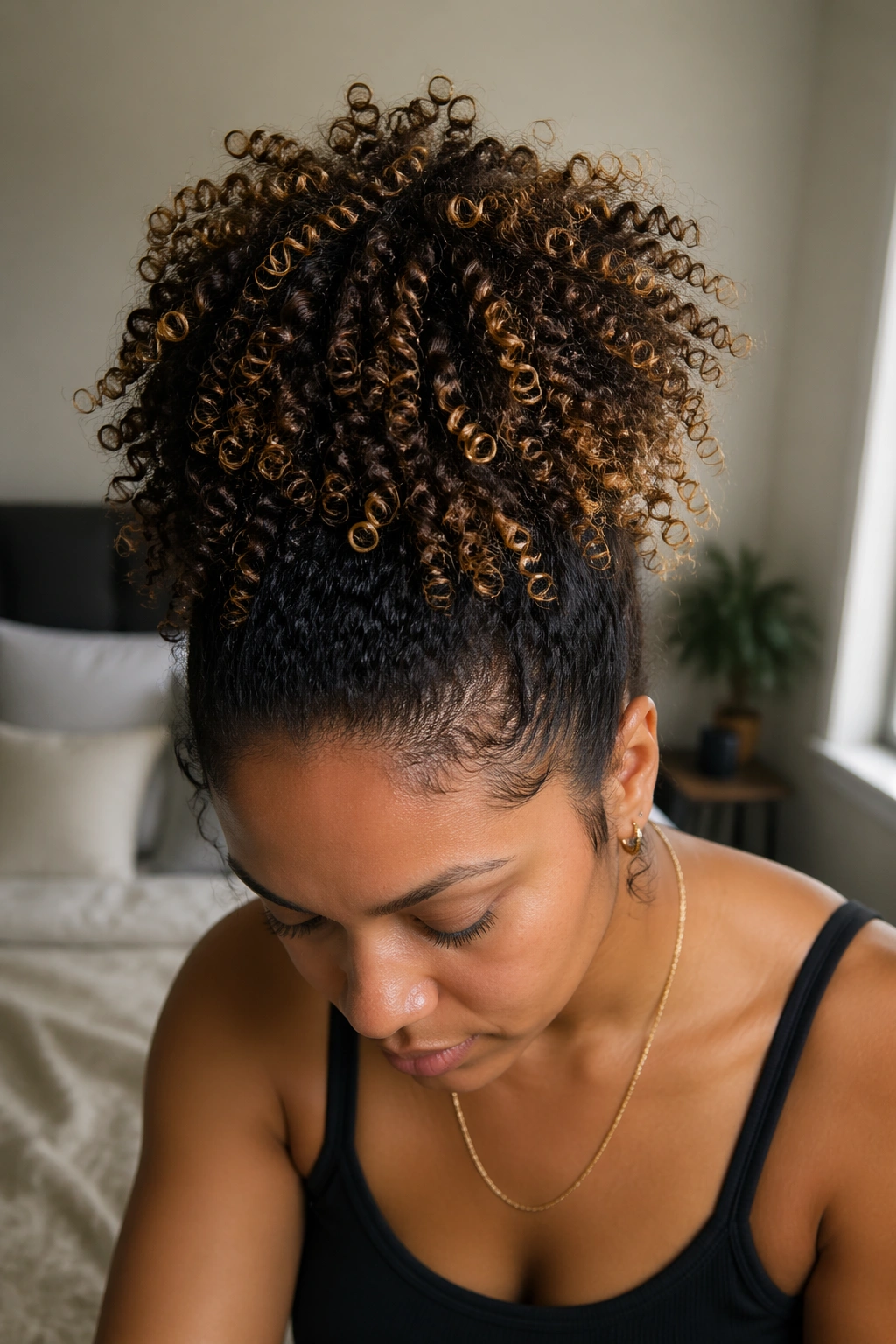
Need the hair off your face without flattening the crown? The pineapple is a neat answer.
This style sits a little higher and a little looser than a classic high puff. The hair is gathered at the top of the head, but instead of being pulled tight into a smooth sphere, it keeps more of its curly shape and drape. On small tight curls, that difference matters. The pineapple lets the texture stay visible, so the style feels soft rather than sealed off.
How to keep the crown from flattening
Use a loose satin scrunchie and gather the hair with your head tilted forward. That keeps the curls stacked on top of each other instead of being dragged backward. If the hair is short, don’t force the whole head into one bundle. A half-pineapple can look better and feel more secure.
This style is also one of the easiest ways to refresh curls overnight. Put it up before bed, wrap a scarf around the edges if you need extra hold, and release it in the morning. The crown stays lifted, and the lower curls keep their shape better than they would if they were slept on flat.
A pineapple works best when the curls already have some definition. It’s not the style for a rough day with no product and no plan. It’s the style for hair that wants to keep moving but still needs a little control.
6. Finger Coils for Dense Coil Patterns
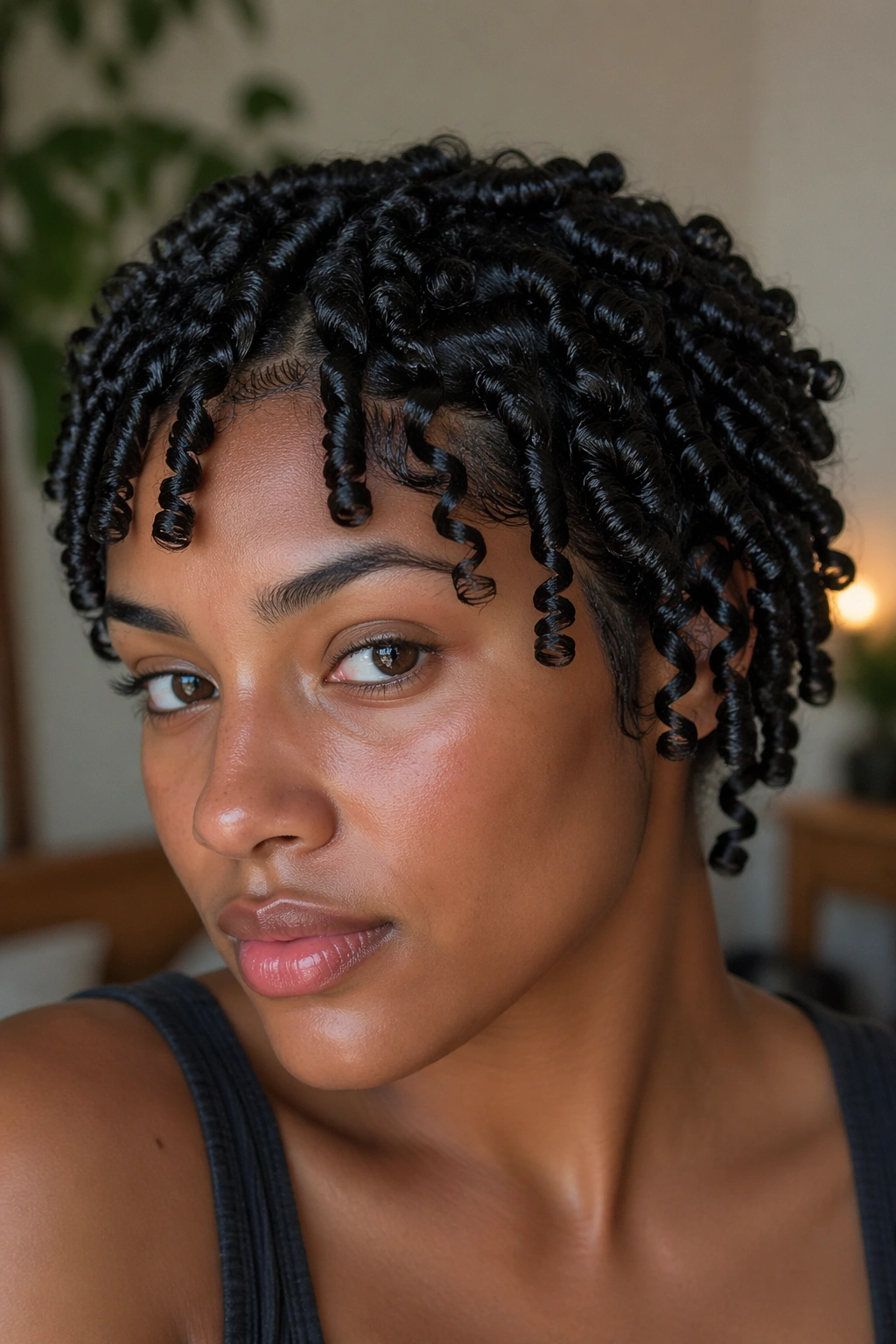
Finger coils are slow, and that is why they look so neat.
Each coil is made by wrapping a small section around a fingertip until the strand wants to hold that spiral on its own. On small tight curls, this style can look almost sculpted. The coil pattern becomes the hairstyle, which is especially useful if the hair is short or uneven and you want a cleaner finish than a loose wash-and-go can give.
Patience is the price tag.
The best finger coils start with damp, detangled hair and a light layer of styling cream or gel. The sections should be small enough that each coil is obvious when it’s finished — think a pencil-width to pinky-width section, depending on density. Too much product makes the coils limp. Too little and they fray before they dry.
What I like about finger coils is how honest they are. If the hair is moisturized and the parts are clean, the style looks crisp. If the sections are sloppy, the result shows it immediately. There is no hiding.
Let them dry all the way before touching them. If you separate or fluff too soon, you lose the shape and get surface frizz instead. On tight curls, the final look is often best when the coils stay compact near the scalp and loosen a little at the ends. That tiny imbalance gives the style movement.
7. Mini Twists That Stay Neat
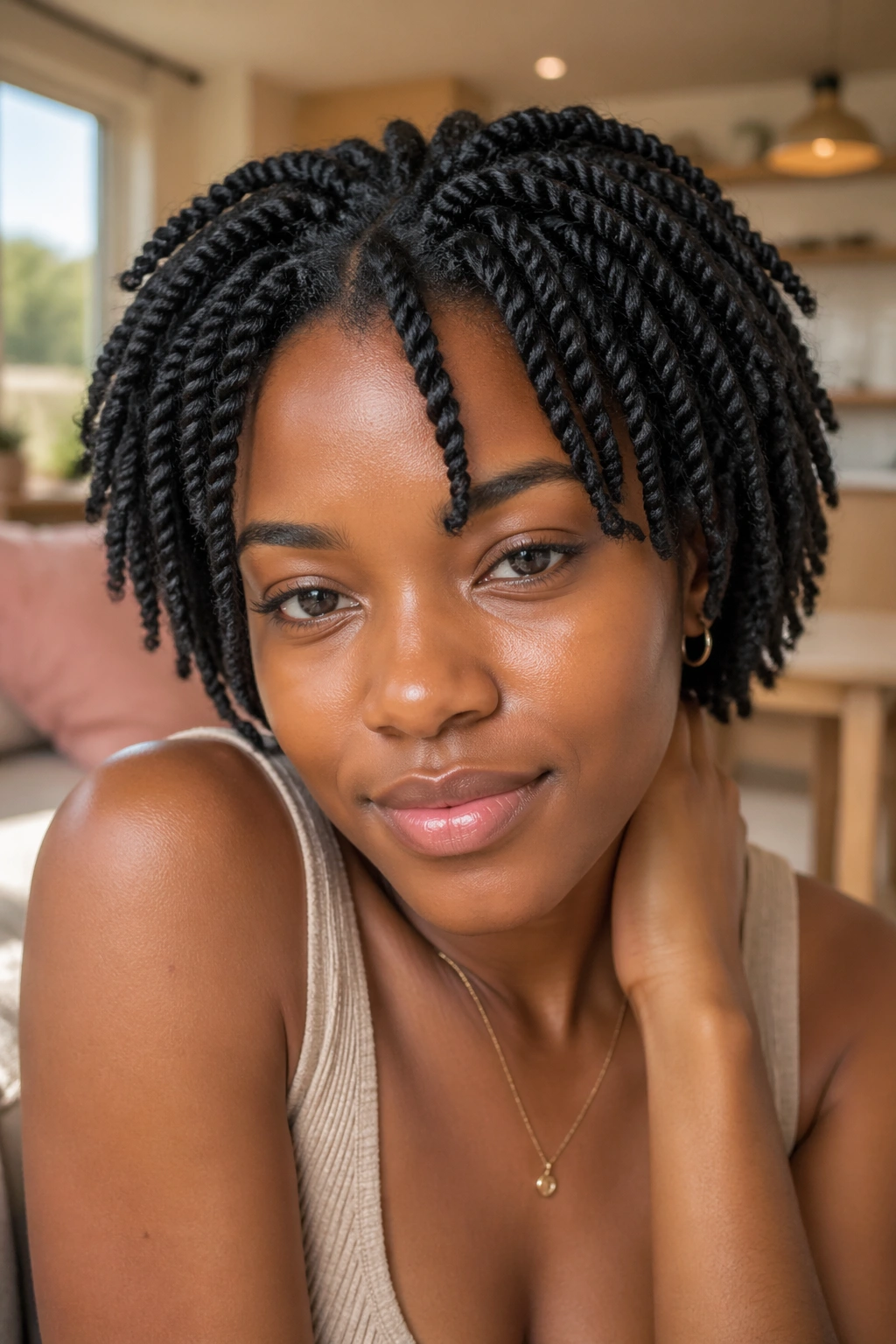
Mini twists are the style you pick when you want your hair to stop asking for attention every morning.
They are smaller than a regular two-strand twist-out, and that is exactly why they work so well on small tight curls. The smaller the section, the easier it is for the twist to hold its shape and protect the strand underneath. You can wear them loose, pin them back, tuck them into a puff, or leave them as a clean, low-drama style for days.
What makes them practical
Mini twists usually start with clean, damp hair and a cream or butter that gives slip without turning the strands greasy. A section around 1/4 inch to 1/2 inch wide is often enough. If the twist is too thick, it can unravel at the ends. If it is too thin, it may take forever and feel delicate at the scalp.
The nice thing is that mini twists do not need much daily work. You can mist them lightly, smooth the frizz with your palms, and keep moving. They also give you options later. Take them down carefully, and you can turn them into a twist-out with a new texture.
- Good for low-manipulation weeks
- Easy to tuck under hats or scarves
- Can be parted in rows, triangles, or a side pattern
- Work well with medium to thick density
The only real catch is time on wash day. They take longer than a puff or a bun. Still, that hour or two pays off later.
8. Bantu Knot-Out With Springy Ends
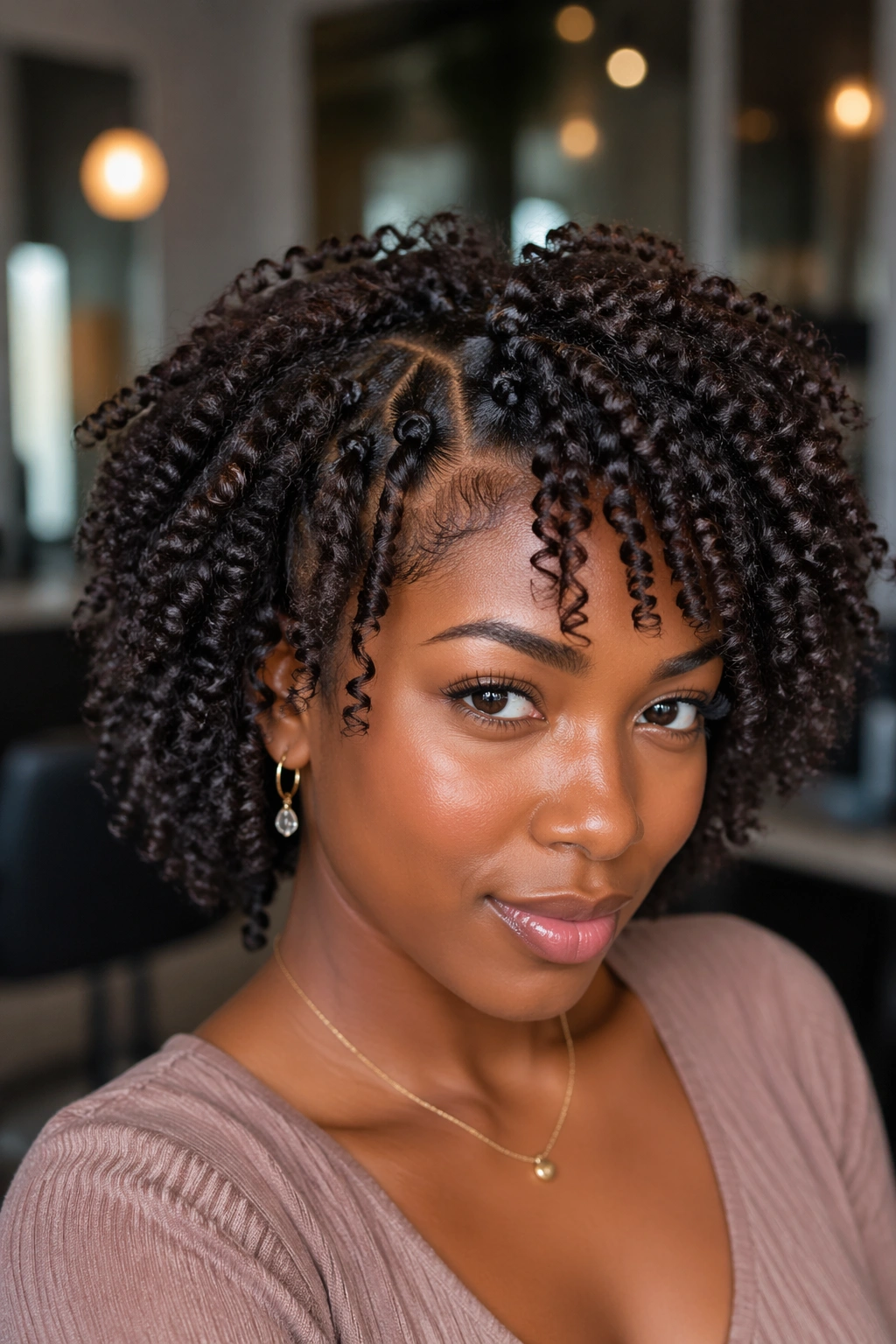
Bantu knots give tight curls a shape that feels playful and deliberate at the same time.
The reason they work so well on small tight curls is that the curl is already compact. Once you coil the hair into little knots and let it set, the result can be round, springy, and full of bounce. It’s a good choice when you want a style that stretches the hair a bit but still keeps plenty of texture.
What knot size changes
A knot the size of a walnut gives a looser finish. Smaller, marble-sized knots give tighter definition and more uniform curls. That part is worth paying attention to, because knot size controls the final shape more than almost anything else.
The hair should be damp, not dripping. Too much water makes the inside of the knot take forever to dry. Use a styler with enough hold to keep the coil together, then wrap the section until it forms a firm little knot at the base. If the knot feels unstable, pin it or tuck the end more securely.
Unravel only when the hair is fully dry. If you take them down too early, the style frizzes fast and the pattern goes limp. Once dry, separate gently and stop before the curls turn fuzzy.
Bantu knot-outs can be worn as a set style too, which is handy on days when you do not want to unravel anything at all.
9. Flat Twists Into a Puff
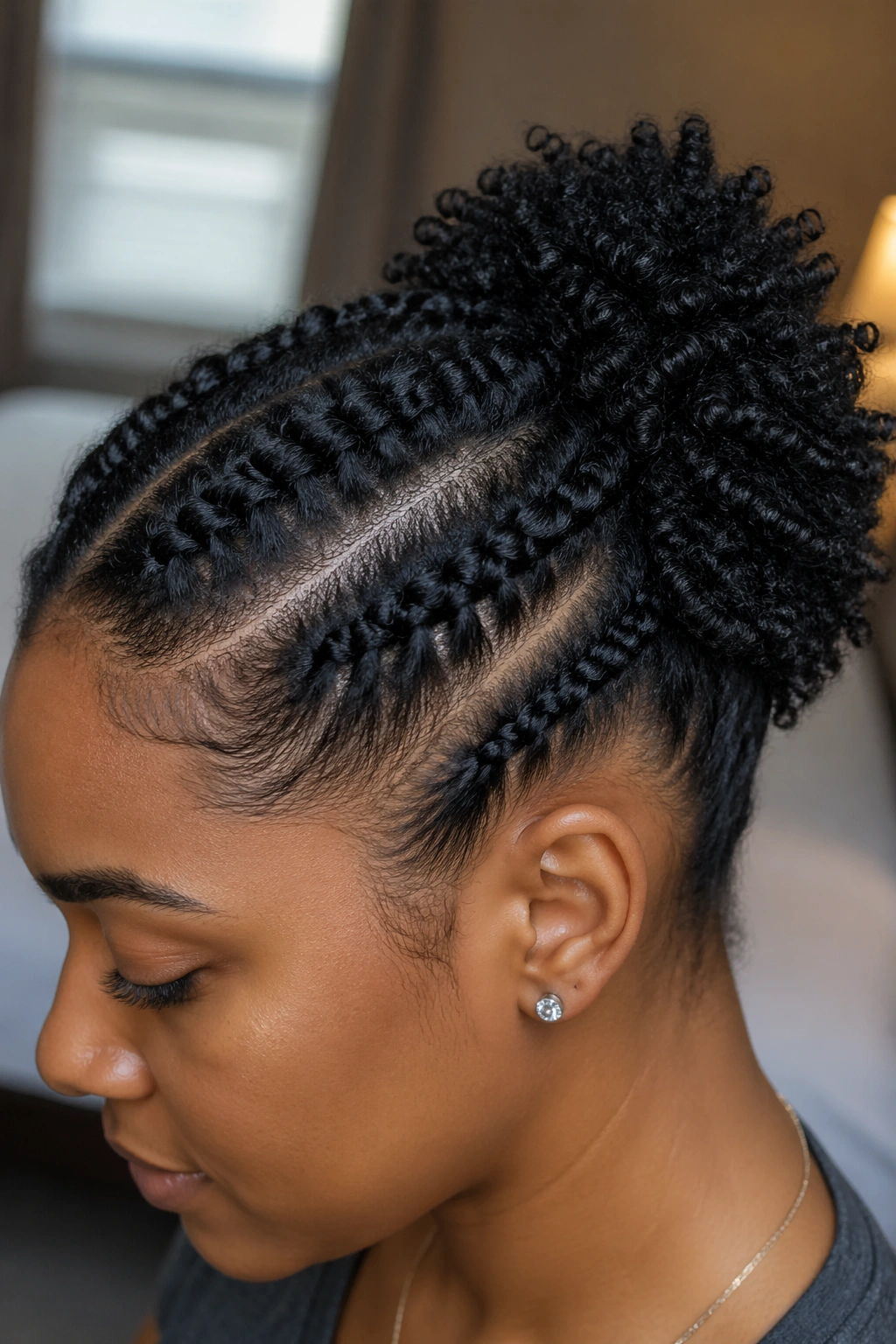
Flat twists are kinder at the scalp than braids if your hairline is touchy.
That is why this style shows up so often on small tight curls. The hair is twisted close to the head, which keeps the front neat, and then the rest can be gathered into a puff, bun, or loose cascade at the back. It has shape, but it does not feel overdone. That balance is hard to get with tighter textures, and flat twists help.
The twist pattern can run straight back, curve along the part, or fan out from the front. You do not need a ton of sections. Two flat twists can frame the face cleanly; four can create more detail; six or more start to look more intricate and structured. Pick the version that matches the rest of the outfit instead of the version that looks hardest.
Use a product with light hold and enough slip to keep the sections smooth. If the twists get puffy at the roots too soon, they were probably started on hair that was too dry. Damp hair grips better and lies flatter.
Flat twists into a puff are one of those styles that work for work, dinner, and everything in between. They are plain in the best sense of the word: neat, useful, and easy to wear.
10. Tapered Cut With a Curly Crown
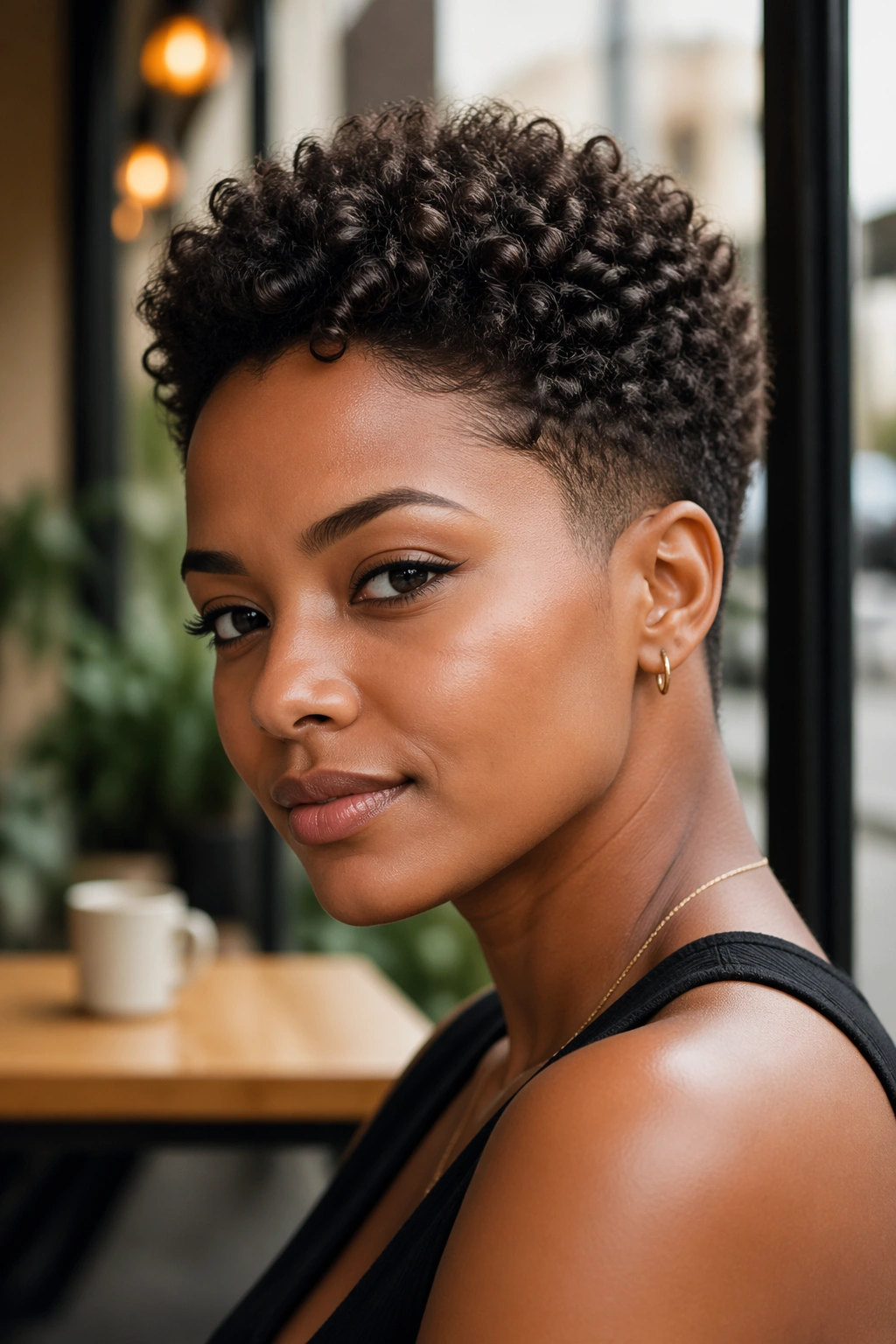
Why do tapered cuts look so good on small tight curls? Because shape matters more than length here.
When the sides and nape are shorter and the crown stays fuller, the haircut creates its own styling plan. You do not have to push the curls into a shape they refuse to hold. The silhouette is already there. On tight coils, that outline can look sharp even on a day when the curls are only half defined, which is part of the appeal.
How to keep the outline crisp
The crown wants moisture and a little hold, but it does not need to be drenched in product every day. A small amount of leave-in and a light gel can keep the top defined without making it look stiff. For the sides and back, a quick refresh with water is often enough.
A tapered cut also makes the shrinkage work for you. The curls at the top rise into a rounded dome, while the shorter sections at the back and sides stay close to the head. That contrast gives the style energy. It looks intentional even when the hair is a little frizzy around the edges.
- Great if you want low daily styling
- Works well on dense, springy coils
- Needs regular shaping around the neck and ears
- Looks especially good with a side part or finger coils at the front
If you hate spending ten minutes every morning fixing one curl at a time, this cut is worth serious thought.
11. Half-Up, Half-Down With Loose Length
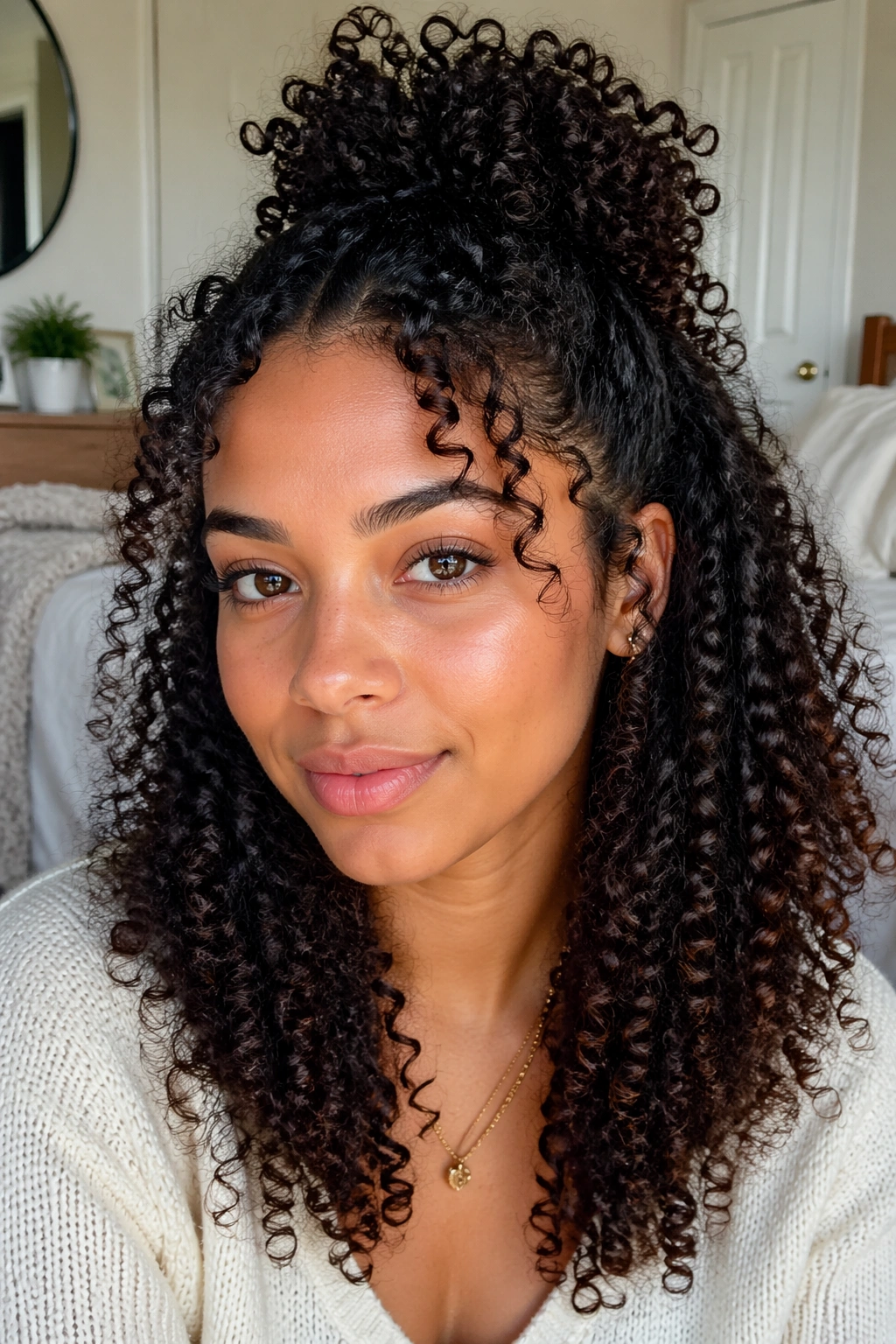
Half-up styles solve the “I want my face free, but I still want volume” problem.
On small tight curls, that is a useful middle ground. You can pull the top section into a puff, clip, mini bun, or twisted knot and leave the rest loose. The result keeps the curls visible while taking the weight off the forehead and temples. It also works on hair that is not long enough for a full ponytail, which makes it more flexible than people expect.
The ratio is the secret. If you take too much hair from the top, the bottom section can look thin. If you take too little, the style loses the lifted shape that makes it interesting. A clean horizontal part from temple to temple is a good starting point, but a diagonal part can soften the whole look.
A half-up style is also a solid way to rescue curls that are fuller at the back than at the front. The top half can hide some unevenness, and the loose lower section gives the style movement. It looks especially good when the front pieces are left a little soft instead of slicked back into a helmet.
Four clips, a soft band, or a small scrunchie is usually enough. You do not need more than that unless the hair is very dense.
12. Space Buns for Short or Medium Coils
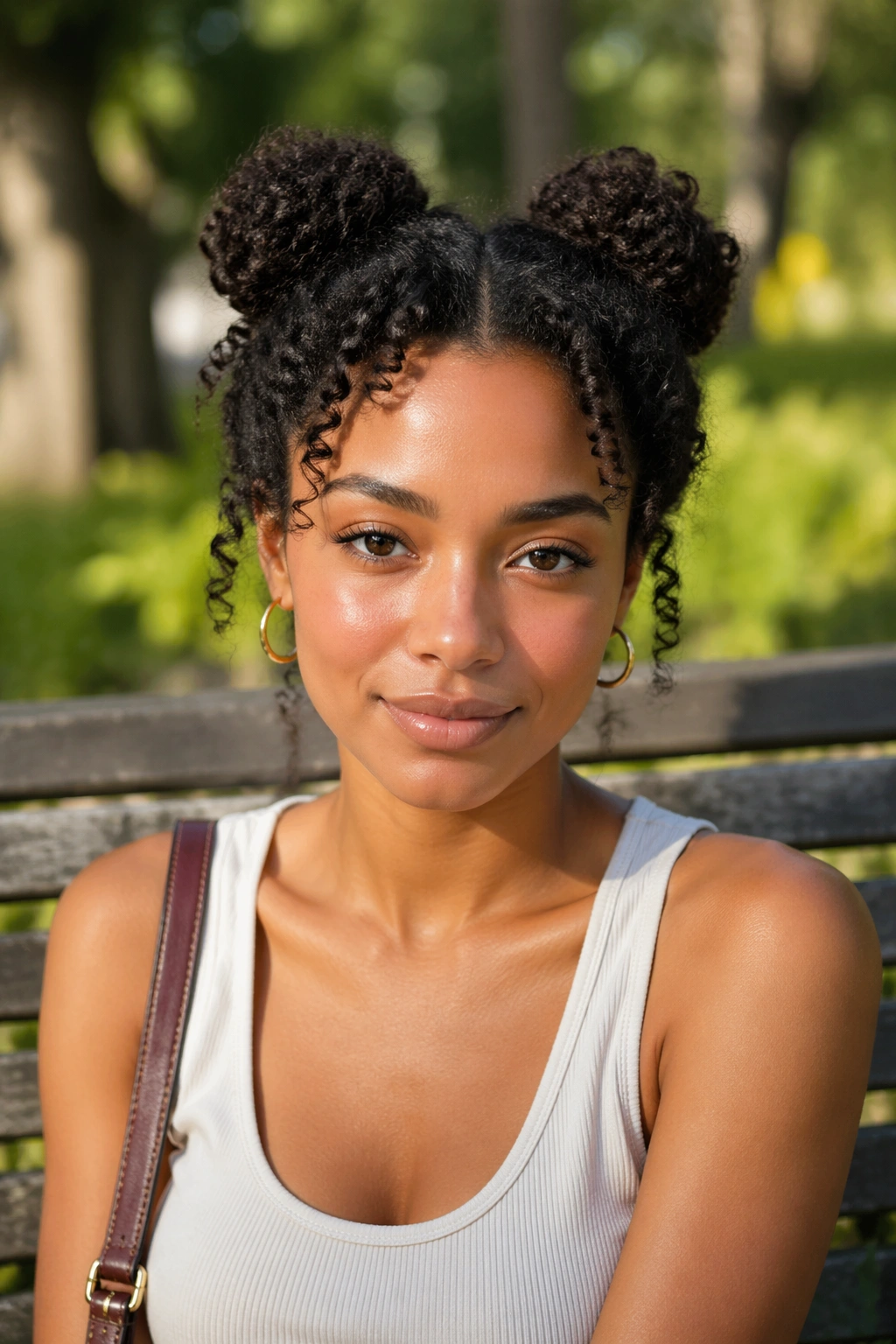
Space buns are what I suggest when you want structure and a little play.
They split the hair into two sections and put each one into its own bun, puff, or twisted knot. On small tight curls, that means the style can look full without requiring a lot of length. If the ends are short, leave them textured and visible. If the hair is longer, tuck the ends in for a cleaner finish. Either way works.
Placement changes the whole mood
High buns feel more energetic. Mid-level buns look softer. A lower placement can feel almost dressy, especially if the buns are small and the parts are neat. Two equal sections create symmetry, while a slightly off-center part makes the whole style feel less rigid.
Use soft elastics or pins that do not scrape the scalp. That part matters more than people think, especially if the coils are dense and springy. Tight elastic bands can snag the hair when you take the style down, and there is no reason to invite that mess.
- Works on short curls that won’t form one large puff
- Easy to dress up with clips or cuffs
- Can hide frizz better than a single ponytail
- Good for active days because the hair stays off the neck
Space buns are fun, yes. They are also practical. Those two things do not always show up together.
13. Crown Braid Along the Hairline
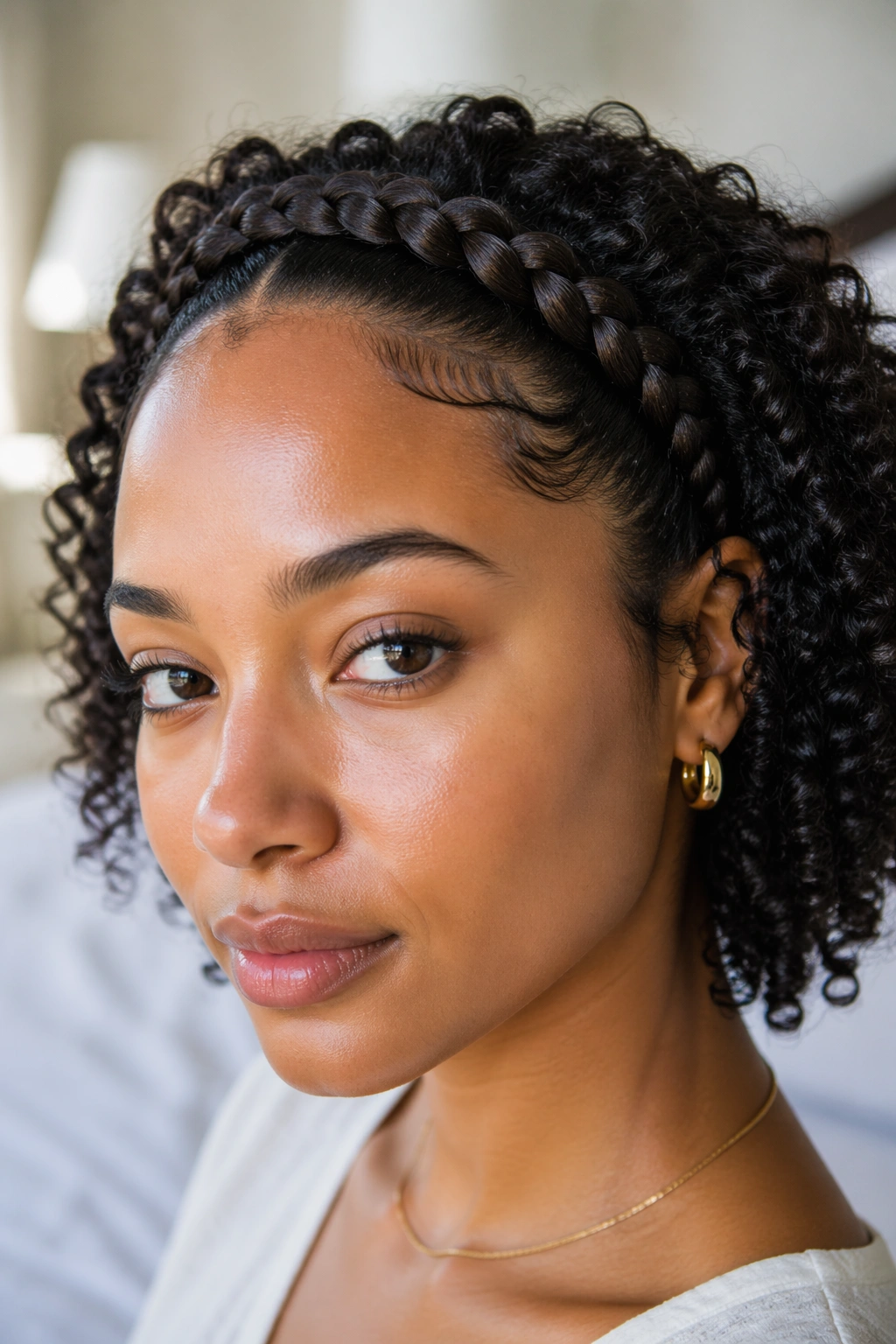
A crown braid changes the whole mood of tight curls.
Instead of pushing volume everywhere, it pulls the eye around the head in a clean line. That makes the curls underneath feel softer and more dimensional. It is a strong choice for events, but it also works on a normal day when you want the front of the hair under control and the rest left loose.
What to do if braiding feels awkward
Try a flat twist instead of a braid. Seriously. The look is close enough for many people, and the twist is easier to manage on small tight curls when the hair is dense or a little shorter. If you do braid, keep the sections even and start with hair that has enough slip to move without snagging.
A crown braid usually needs a little help from pins, especially near the nape where the braid ends meet. Hide the pins under the hairline instead of leaving them exposed. That small move makes the style feel finished instead of improvised.
You can leave the rest of the curls loose, gather them into a low bun, or tuck them into a side puff. The braid does the framing either way.
This style works best when the hairline is smooth but not slicked flat. You want the braid to read as shape, not as a rescue mission.
14. Side-Part Pin-Up With Curly Volume
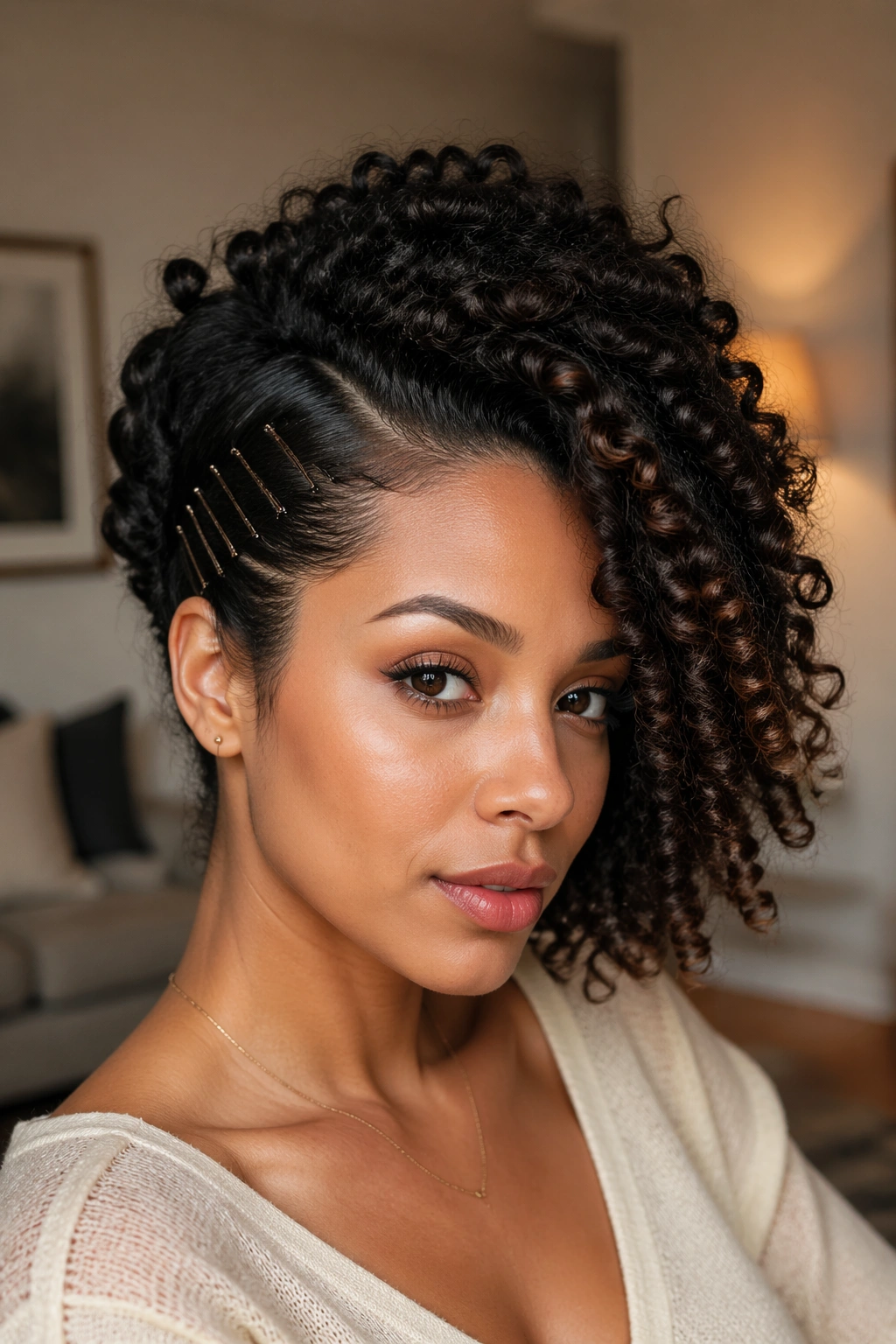
A deep side part can rescue even the fluffiest day-three curls.
That shift alone changes the balance of the whole head. One side gets lifted and pinned back; the other side keeps its volume and movement. On small tight curls, the contrast looks sharp because the texture already carries so much detail. You are not inventing shape from scratch. You are just tilting it a little.
Four pins are enough.
Place them under the top layer, not on top of it, so the hardware disappears into the curls. A barrette can work too, but pins usually give a cleaner hold if the hair is thick. The part itself can sit an inch or two off center, depending on how dramatic you want the effect to feel.
This style is useful when the curls are defined but a little uneven. Maybe one side is fuller. Maybe the front has lost shape while the back still looks good. The side-part pin-up lets you use that imbalance instead of fixing every strand.
If you want a softer finish, leave one curl out near the temple. If you want something sharper, smooth the pinned side with a small amount of gel and keep the rest untouched. Both look good. The difference is mood.
15. Low Curly Bun With Face-Framing Tendrils
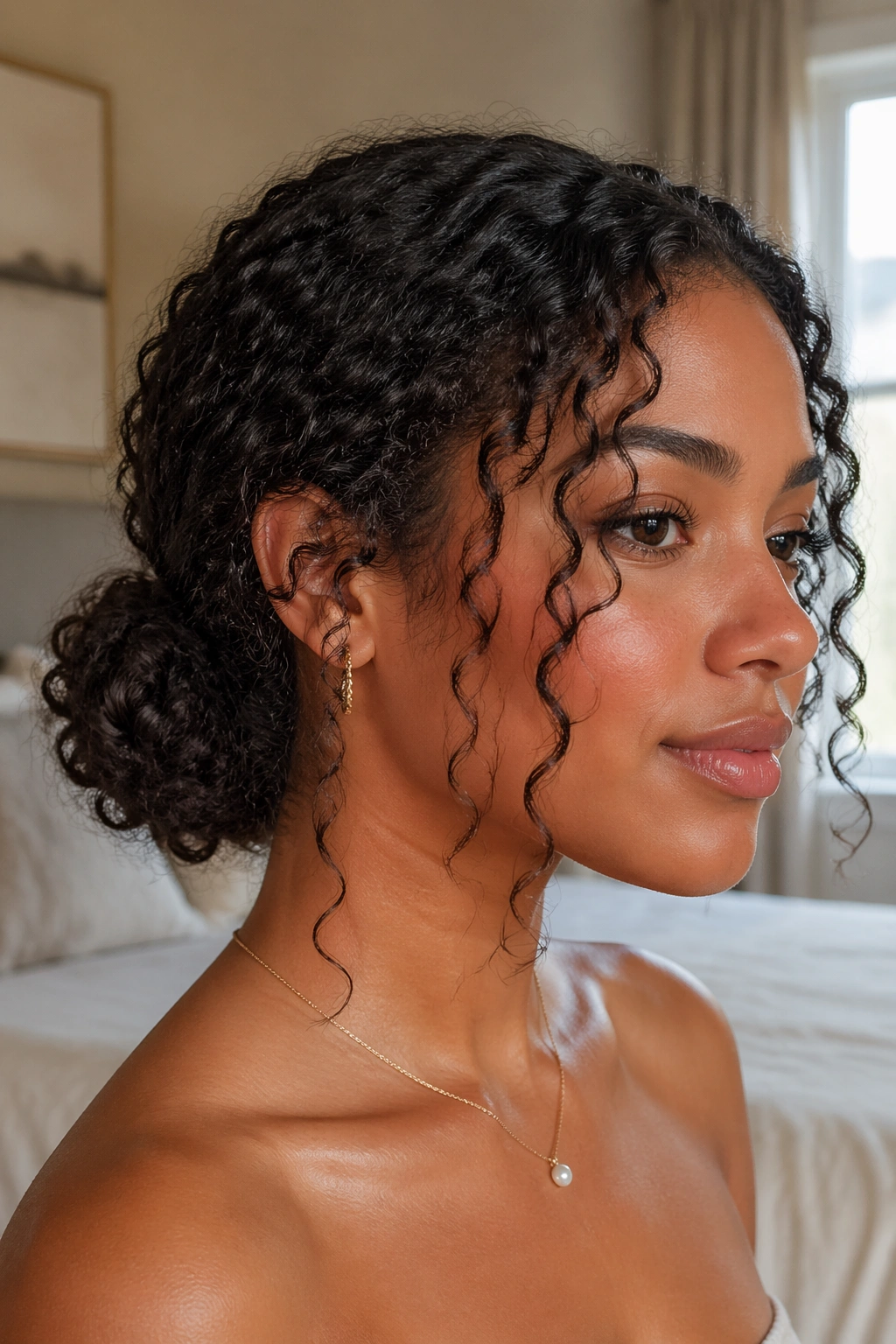
Unlike a puff, a low bun keeps the weight close to the neck, which gives small tight curls a calmer shape.
That makes it a smart pick when you want the hair controlled but not flattened. The bun sits at the nape or slightly above it, and a few curls can be left out around the face to soften the line. On dense coils, that small bit of softness keeps the style from looking too severe.
Where the tendrils matter
Leave them long enough to curl naturally, but not so long that they hang in the way. A strand or two on each side is usually enough. If the front curls are very short, let them stay short. Trying to force perfect tendrils usually backfires and makes the front look fussy.
The bun itself can be smooth or loose. A looser wrap feels relaxed and works well for everyday wear. A tighter wrap looks cleaner for dressier settings, but I would still avoid pulling hard at the roots. Tight curls already carry tension well; they do not need more of it.
This style is especially good when you want your earrings, neckline, or collar to show. It clears the face, shows the texture, and does not fight the curl pattern.
If you only want one low-effort updo in your rotation, this is the one I’d keep.
Final Thoughts
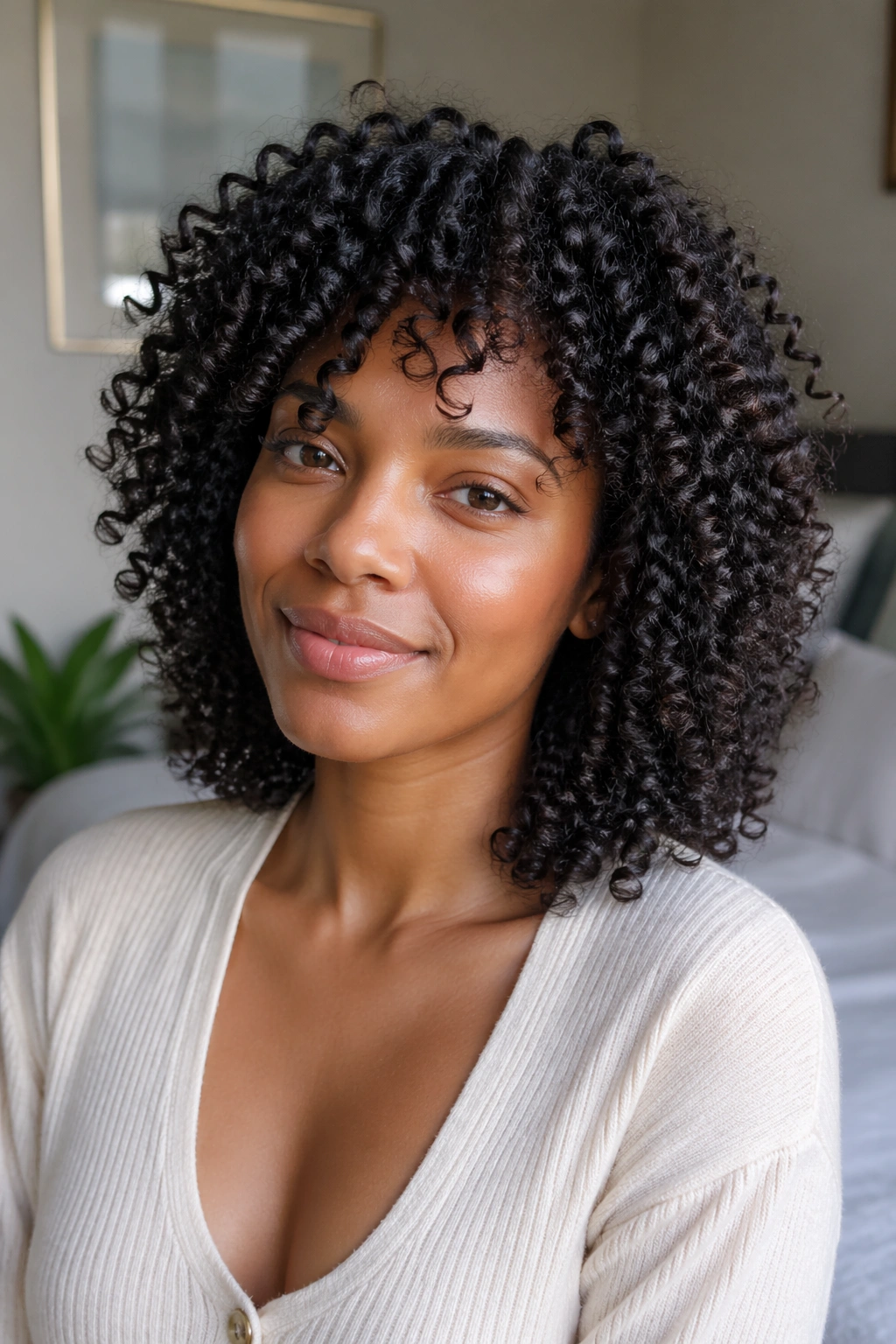
The best curly hairstyles for small tight curls usually do one of two things: they let the texture show, or they stretch it just enough to change the shape. The styles that work hardest are rarely the styles that look fussy. Usually, the cleanest result comes from smart sectioning, gentle tension, and enough drying time to let the hair settle into itself.
If you’re choosing between styles, start with the shape you want first and the technique second. A puff gives height. A twist-out gives softness. A tapered cut gives structure with almost no daily effort. That decision is worth more than any product bottle.
And keep a satin scrunchie and a spray bottle nearby. Those two small things save more styles than people admit.