



Double ponytails on locs can look sweet, sharp, sporty, or straight-up regal, and the style changes fast depending on where you place the part, how much hair you pull forward, and what you do at the ends. The same locs can read playful on one day and polished on another. Small changes matter.
What usually makes or breaks the look is not the ponytails themselves. It’s the balance. A clean center part, even section sizes, and the right amount of lift at the crown can make the style feel intentional instead of hurried. Too much tension near the hairline, though, and the whole thing starts to look stiff before you even leave the house.
Locs also have their own rules. Traditional locs, sisterlocks, microlocs, and faux locs sit differently, carry weight differently, and react differently to elastics. A style that looks airy on medium-length locs can feel heavy on thick, long locs if you anchor it too high. That’s why the same twin-pony idea can be worn in so many ways without feeling repetitive.
The 23 looks below range from clean and simple to dressed-up and decorative, with options for short locs, long locs, thick locs, and days when you want the style to stay put without pulling your scalp around all afternoon.
1. Classic High Double Ponytails for Locs
The classic high version is the one people picture first, and for good reason. It gives you that lifted, youthful shape without asking for a lot of extra styling. If the parts are crisp and the two ponytails sit at the same height, the whole look feels sharp from the front and balanced from the side.
Why It Works on Locs
Locs have weight, so the height matters. Place each ponytail just above the crown, not right on the edge of the hairline, and the style holds its shape better. A center part about 1/2 inch to 1 inch wide is usually enough to keep the line clean without making the scalp look overexposed.
- Use two snag-free elastics with a soft grip.
- Keep the front section smooth, but not glued down.
- Let the ponytails fall slightly outward for shape.
- Add cuffs only after the base feels secure.
Pro tip: If your locs are long, tilt your head slightly forward while tying so the ponytails sit evenly once you stand back up.
2. Low Twin Ponytails at the Nape
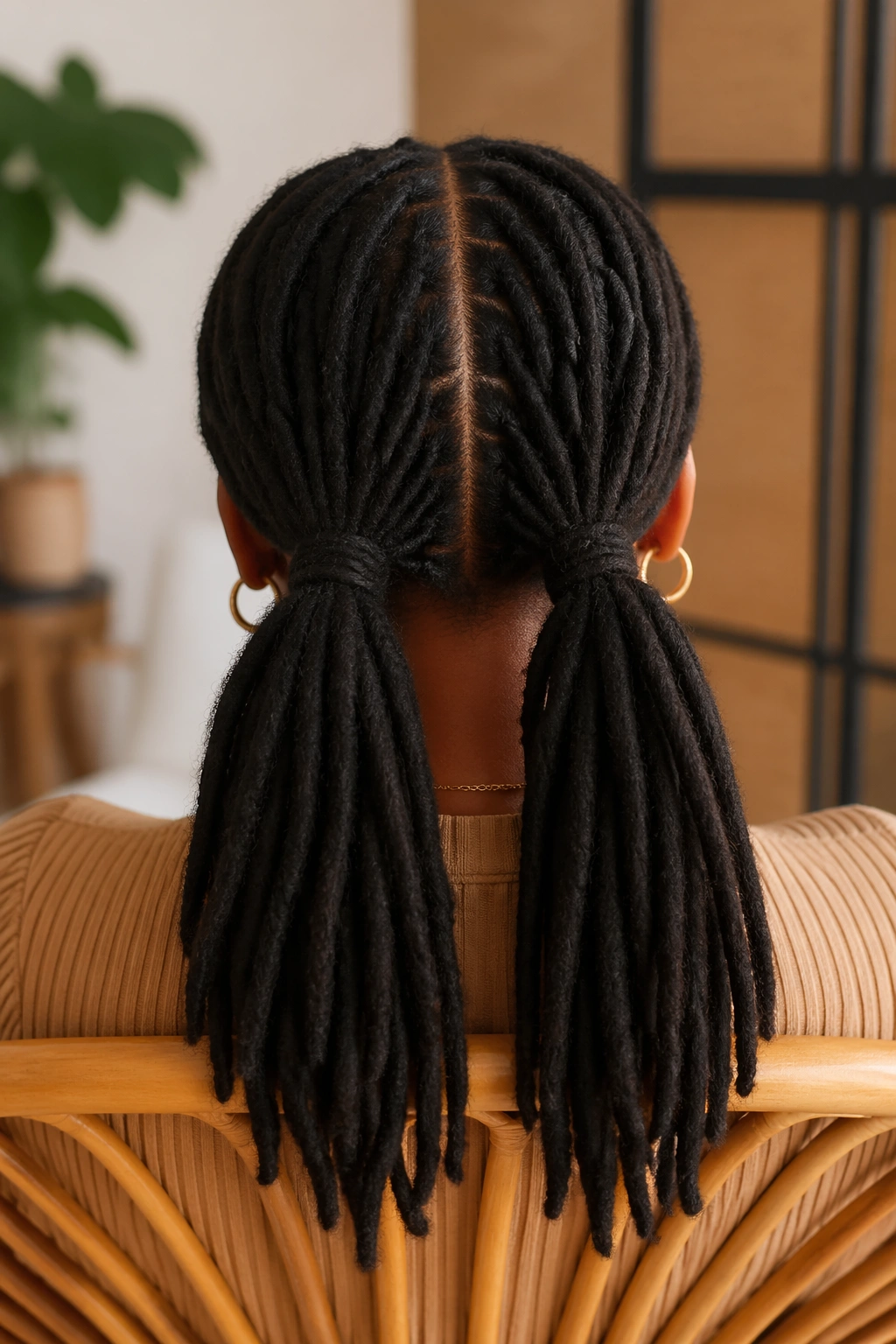
Low double ponytails have a calmer feel. They sit close to the neck, so the weight of the locs spreads out in a way that feels easier on the scalp. If high styles leave you reaching for your temple by midday, this is the smarter move.
The beauty of this version is how clean it can look with very little effort. A middle part and two low anchors are enough. No drama. No hard pull. And because the ponytails sit lower, the style works well with heavier locs that would droop if lifted too high.
Wear this one when you want your hair out of your face but still want the length to show. It also pairs well with hoop earrings or a strong lip because the silhouette stays tidy and doesn’t fight your clothes.
3. Side-Swept Double Ponytails with a Deep Part
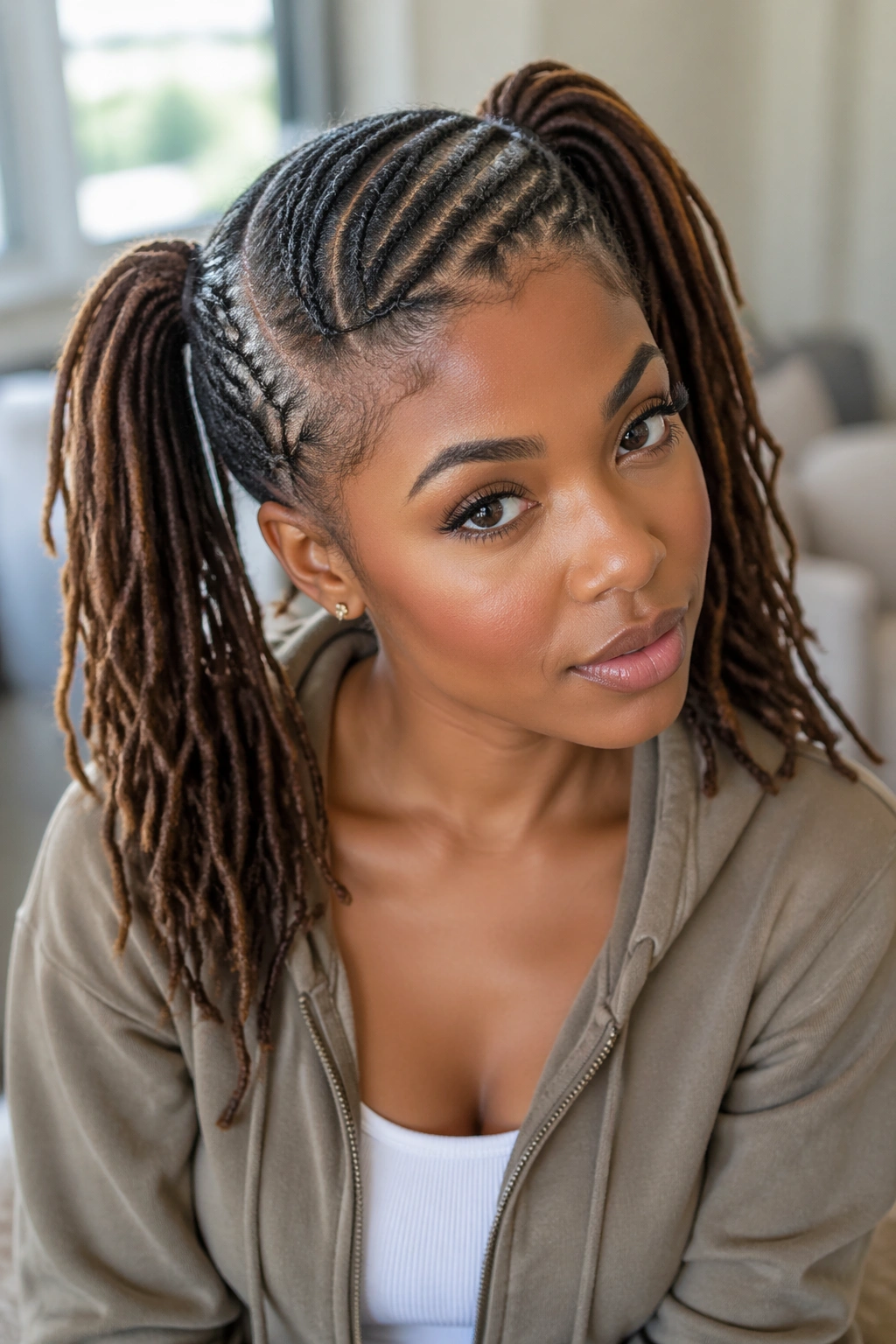
Why does a side part change the whole mood? Because it shifts the weight before the ponytails even start. A deep side part gives one side more presence, which makes the style feel softer and a little less symmetrical in a good way.
The trick is to keep the heavier side smooth enough to show the part clearly. You want the eye to move from the part into the two ponytails, not get stuck on uneven bumps at the scalp. On locs, that means sectioning carefully and using your fingers to settle the roots before you band them.
How to Wear It
Pull the front section from the deeper side back at a slight angle, then keep both ponytails low-to-mid height. If you leave one side slightly fuller, the style looks deliberate rather than off-center. It’s a good choice when you want movement around the face without giving up the double-pony shape.
4. Half-Up Double Ponytails with Hanging Length
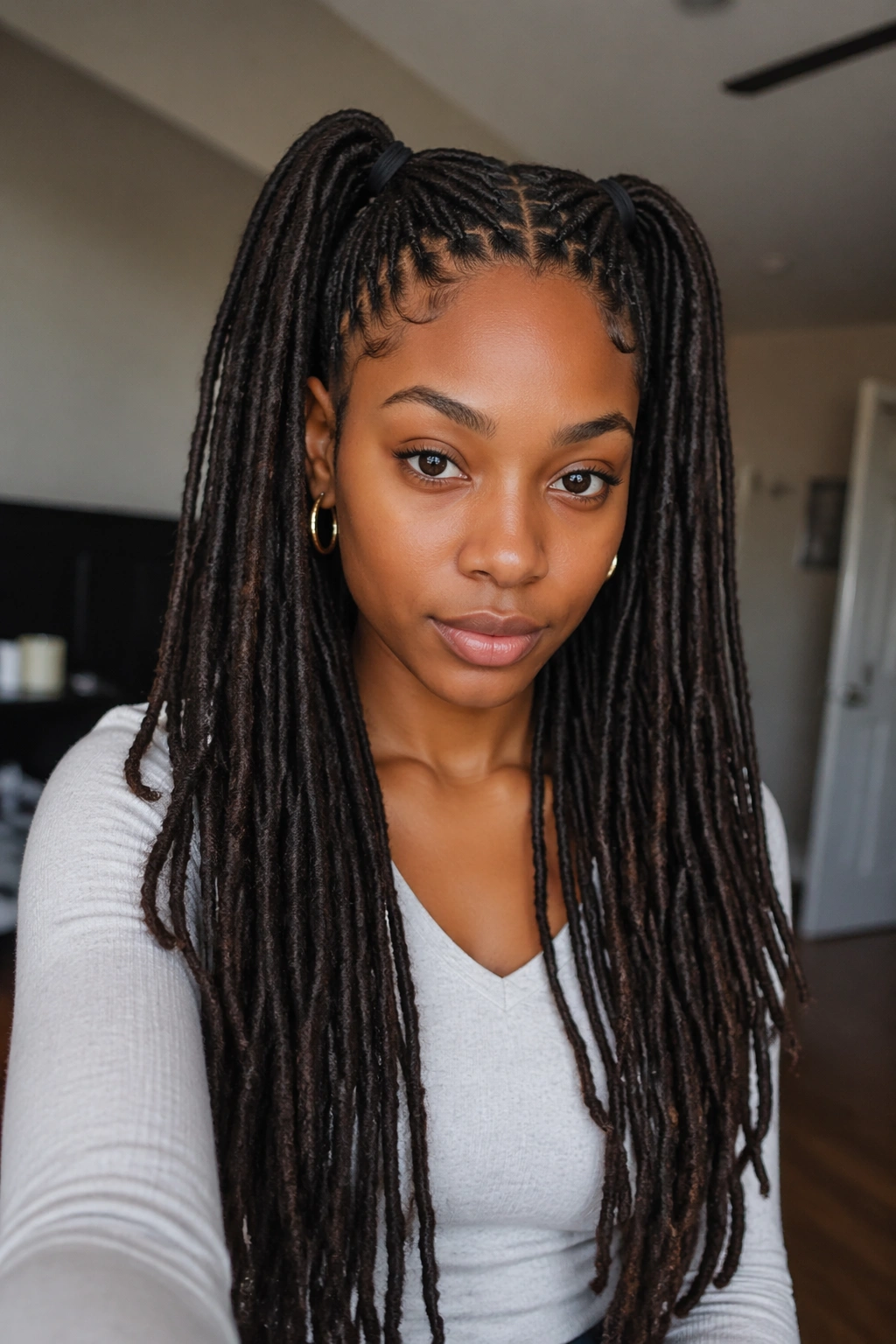
Picture this: the top half of your locs is tied into two ponytails, and the rest stays free. That mix of lifted and loose is what makes this version easy to wear for long stretches without feeling overdone. It gives structure near the crown and lets the length do its own thing.
The mechanism is simple. By only gathering the upper section, you reduce the weight on the scalp while keeping the style visible. That matters a lot if your locs are dense or pass shoulder length. The look also gives you room to show off shape at the back, which full twin ponytails can hide.
- Best for medium to long locs.
- Use one clean horizontal part from temple to temple.
- Leave the lower section brushed downward, not fluffy.
- Works well with both blunt and tapered ends.
One good thing about this style: it still looks fresh if a few locs slip loose. That looseness reads as relaxed, not messy.
5. Braided-Base Double Ponytails
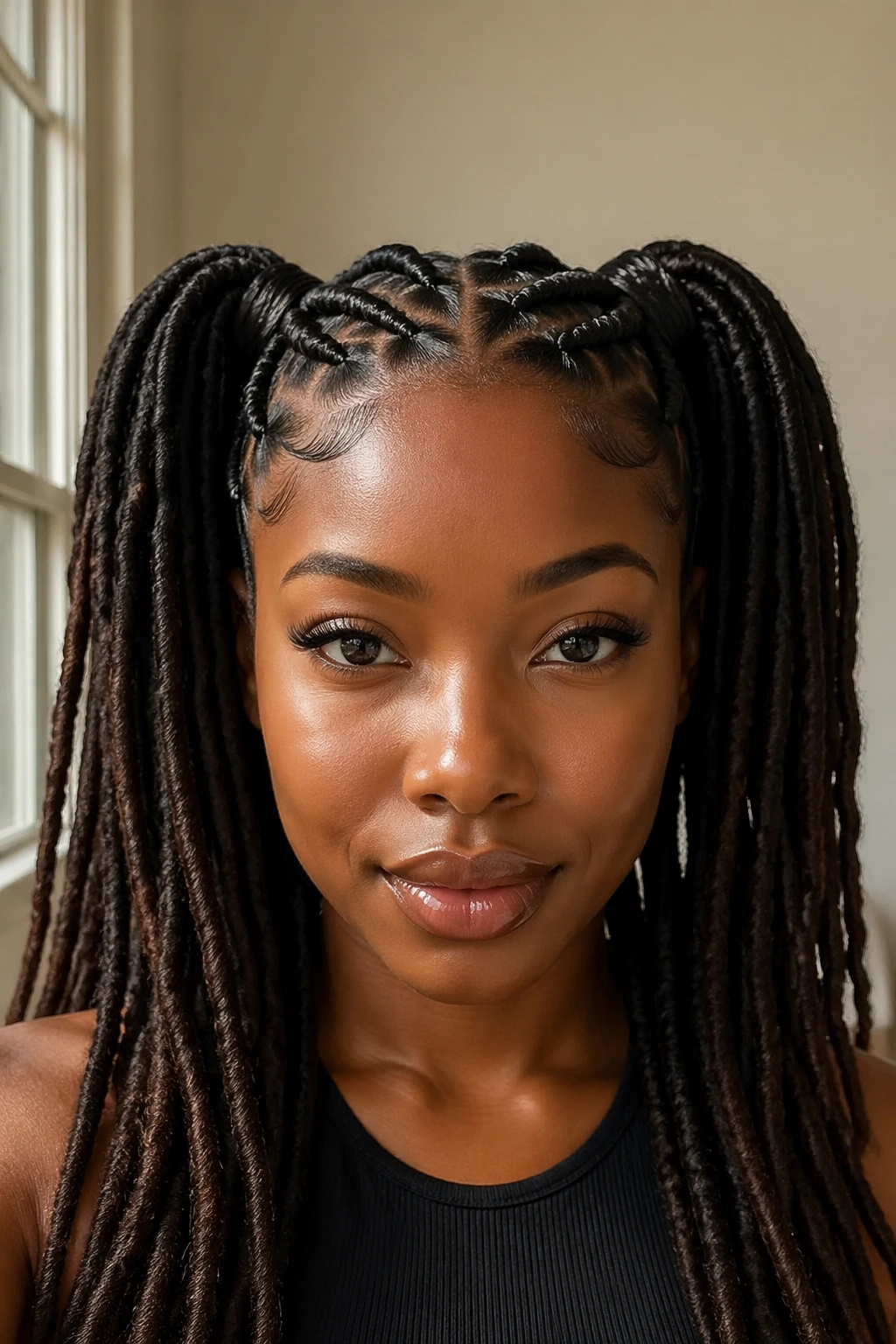
A braided base changes the whole texture of the style. Instead of tying the locs straight into ponytails, you braid or plait the front section first, then secure the ponytails behind it. The result feels a little more built-in and a little less like a quick tie-up.
This version gives the hairline some visual structure. It’s also useful when your roots need a little extra control, because the braided base helps distribute tension over a slightly wider area. That doesn’t mean you should pull harder. It means the style can hold with less strain if your sections are neat.
I like this one on locs that have medium density and enough length to show the braided detail. You can keep the braids thin and tight, or make them chunky and more visible. Either way, the ponytails get a stronger frame.
6. Bubble Double Ponytails with Clear Bands
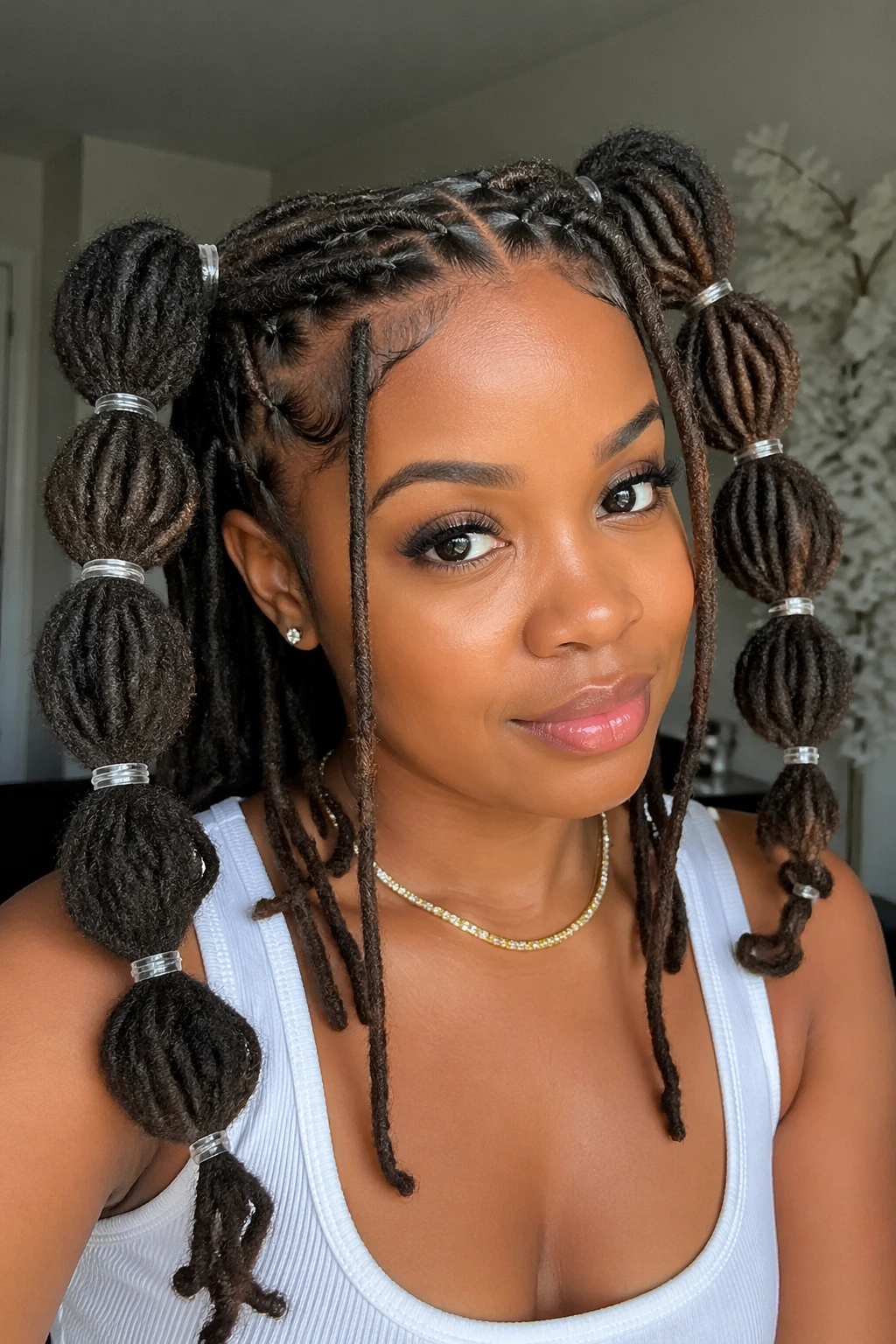
Unlike a plain twin ponytail, the bubble version breaks the length into little sections that bounce separately. That gives locs a fun, slightly graphic look, and it’s especially useful if your locs are very long or thick enough to feel heavy when they hang straight.
The clear bands do most of the work. Place one every 2 to 3 inches, then puff each segment gently with your fingers. The bubbles should look rounded, not squeezed flat. If one section is too tight, the whole line starts to look stiff, so keep your spacing even and your pulls gentle.
This style is a strong pick for weekends, concerts, school, or any day when you want a little movement without adding extra hair. It also photographs in a nice way from the side because the shape shifts as you move.
7. Wrapped-Base Double Ponytails with Gold Cuffs
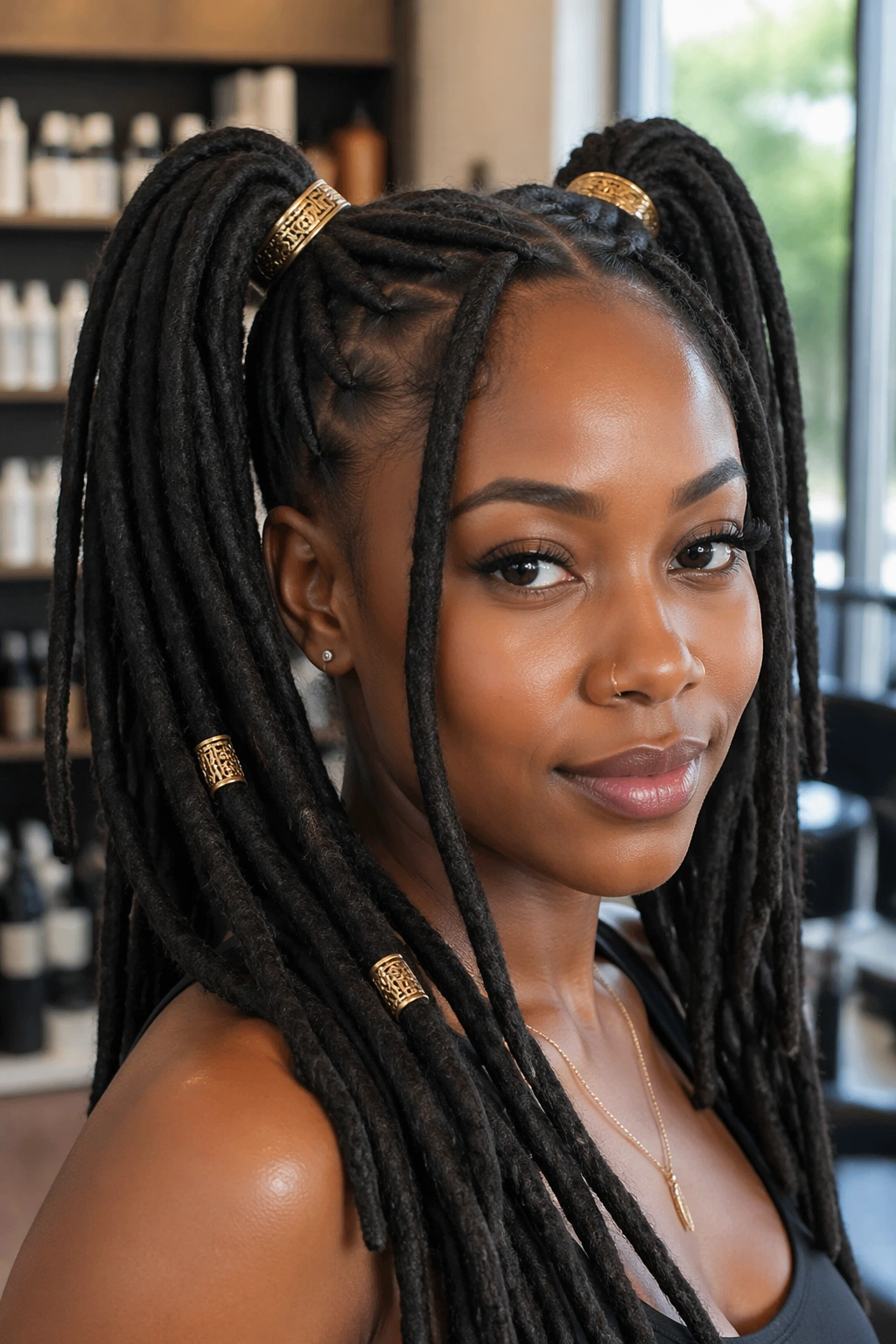
Wrapped bases give the style a finished look, almost like the ponytails were dressed on purpose. You can wrap each base with a strand of thread, a narrow ribbon, or even a small loc itself before locking it down with an elastic. Then add gold cuffs or rings where the light catches them.
What Makes the Wrap Matter
The wrap hides the elastic and makes the base look neater. That’s useful if your locs are a little frayed at the roots or if you want the ponytails to feel more polished without changing the shape. The accessory should not be the whole story. It should frame the style and leave room for the locs to do their part.
- Choose a wrap material that lies flat.
- Keep the wrap short, about 2 to 4 turns around the base.
- Place cuffs lower on the locs, not jammed into the elastic.
- Stick with one metal tone if you want the look to stay clean.
My favorite part: the style looks intentional even when it’s simple. That’s rare, and it saves time.
8. Sleek Center-Part Double Ponytails
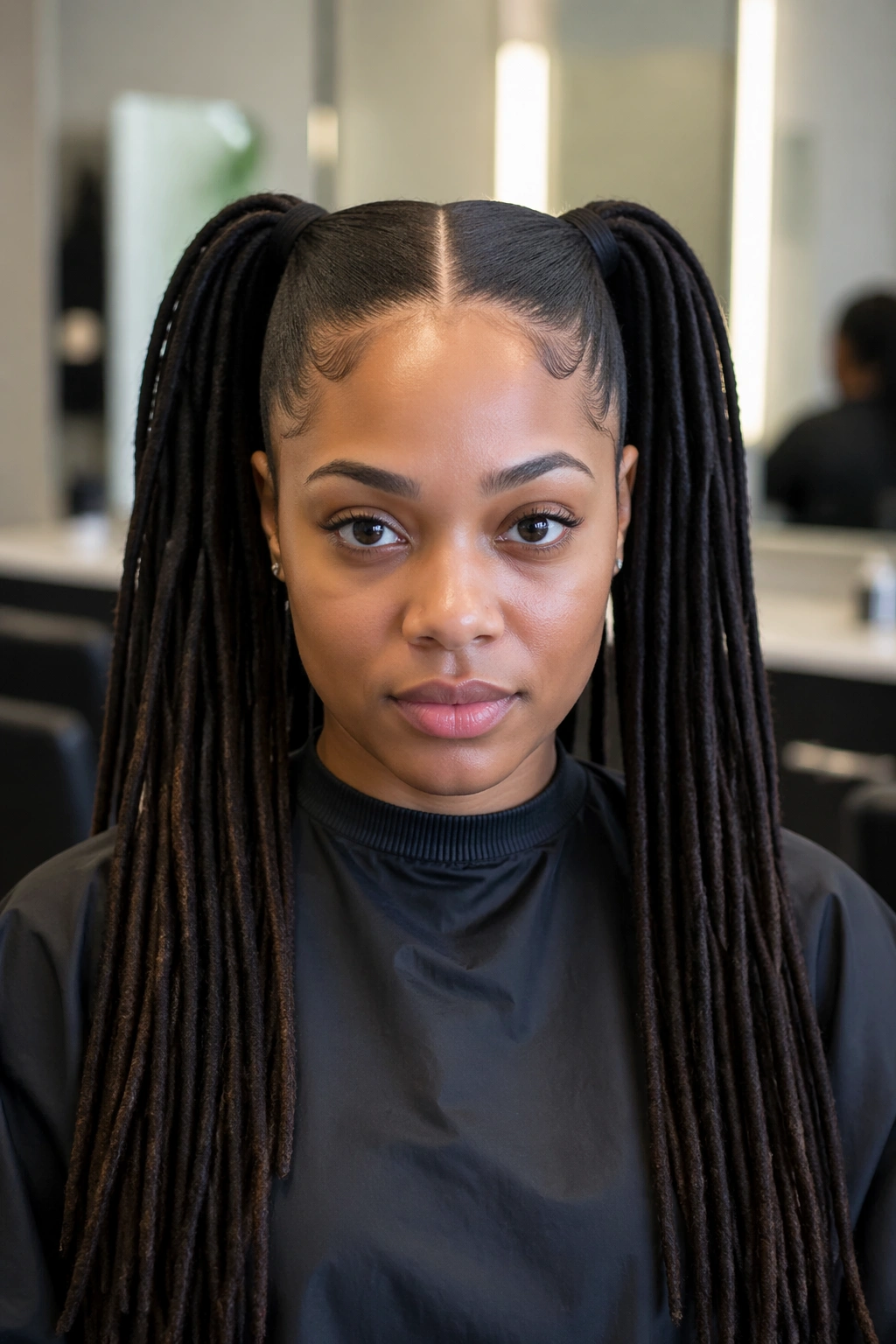
A sharp center part can make locs look almost architectural. Clean, straight, and balanced. That’s the whole appeal. When the part runs true and the ponytails mirror each other, the style has a polished edge that doesn’t need much extra decoration.
The key is prep. Smooth the roots first, then part with a rat-tail comb or the tip of a tail comb so the line stays straight. If the part drifts, the ponytails will show it. Locs don’t hide mistakes kindly.
Apply a small amount of product at the roots if you need hold, but don’t overload the scalp. Too much buildup near the part can make the style look greasy or blunt. A little goes a long way here, and the neatness is the selling point.
9. Soft, Puffy Twin Ponytails
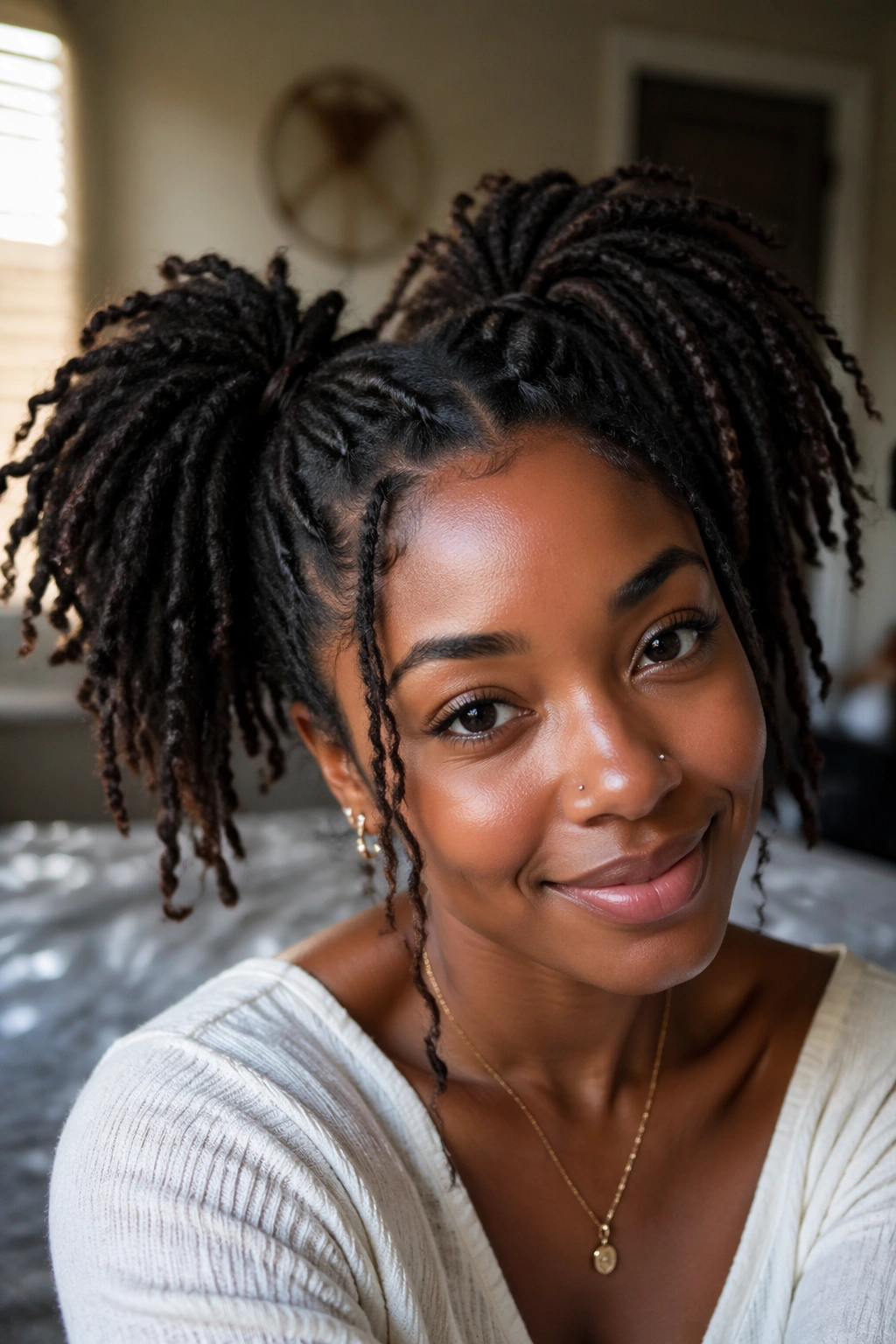
Do the ponytails have to be slicked flat? Not at all. A softer, fuller version can look better on locs, especially when you want more volume around the face and less tension at the crown. The shape feels easy and a little rounder.
To get that look, leave the roots slightly looser when you gather the hair, then finger-fluff the ponytails after you secure them. You’re not trying to create frizz. You’re trying to keep the body of the locs from collapsing into a tight line. That extra air around the base can make the style feel kinder on the scalp too.
How to Get the Soft Look
- Keep the elastics about 1 inch behind the hairline.
- Don’t brush the roots so hard that they go flat.
- Separate the locs in each ponytail with your hands.
- Skip heavy edge gel if it starts to flake.
This one works best when you want the style to feel a little casual without losing shape.
10. Double Ponytails with Curled Ends
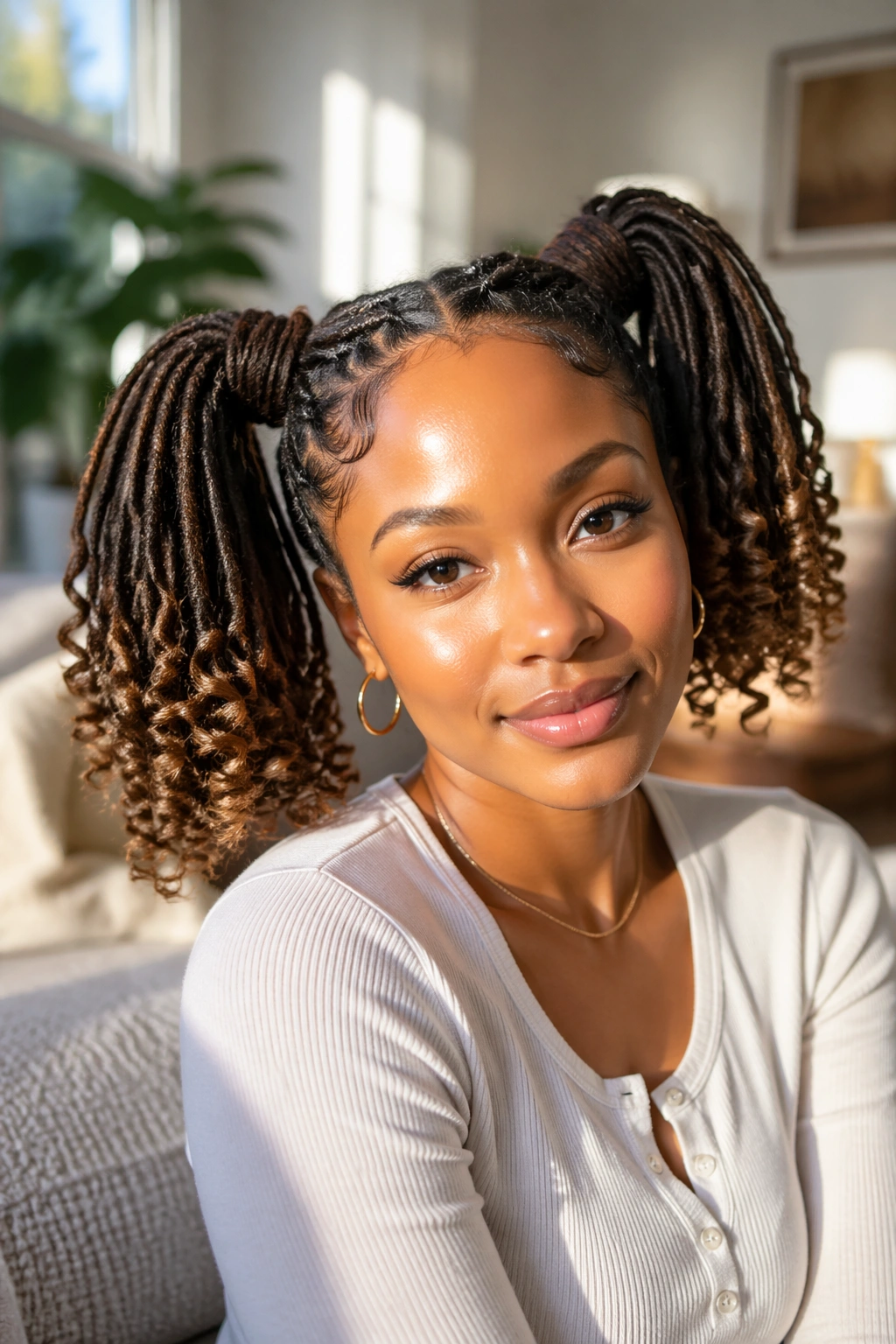
A lot of people forget the ends. That’s a mistake. Curled tips can change the whole outline of double ponytails, especially on longer locs where the ends would otherwise hang straight and heavy.
The curl can come from flexi rods, pipe cleaners, or a braid-and-set method, depending on your loc type and the softness of the ends. The important part is that the curl starts lower down, not right at the elastic. You want the ponytails to keep their shape at the base and then open up near the tips.
- Wrap the ends in small sections.
- Set them long enough to cool or dry fully.
- Take them down with dry fingers, not a comb.
- Separate only once or twice so the curl stays defined.
The finish reads playful, but not childish. It’s one of those details people notice even if they can’t name why the style looks better than plain hanging ends.
11. Crisscross Front Twists into Double Ponytails
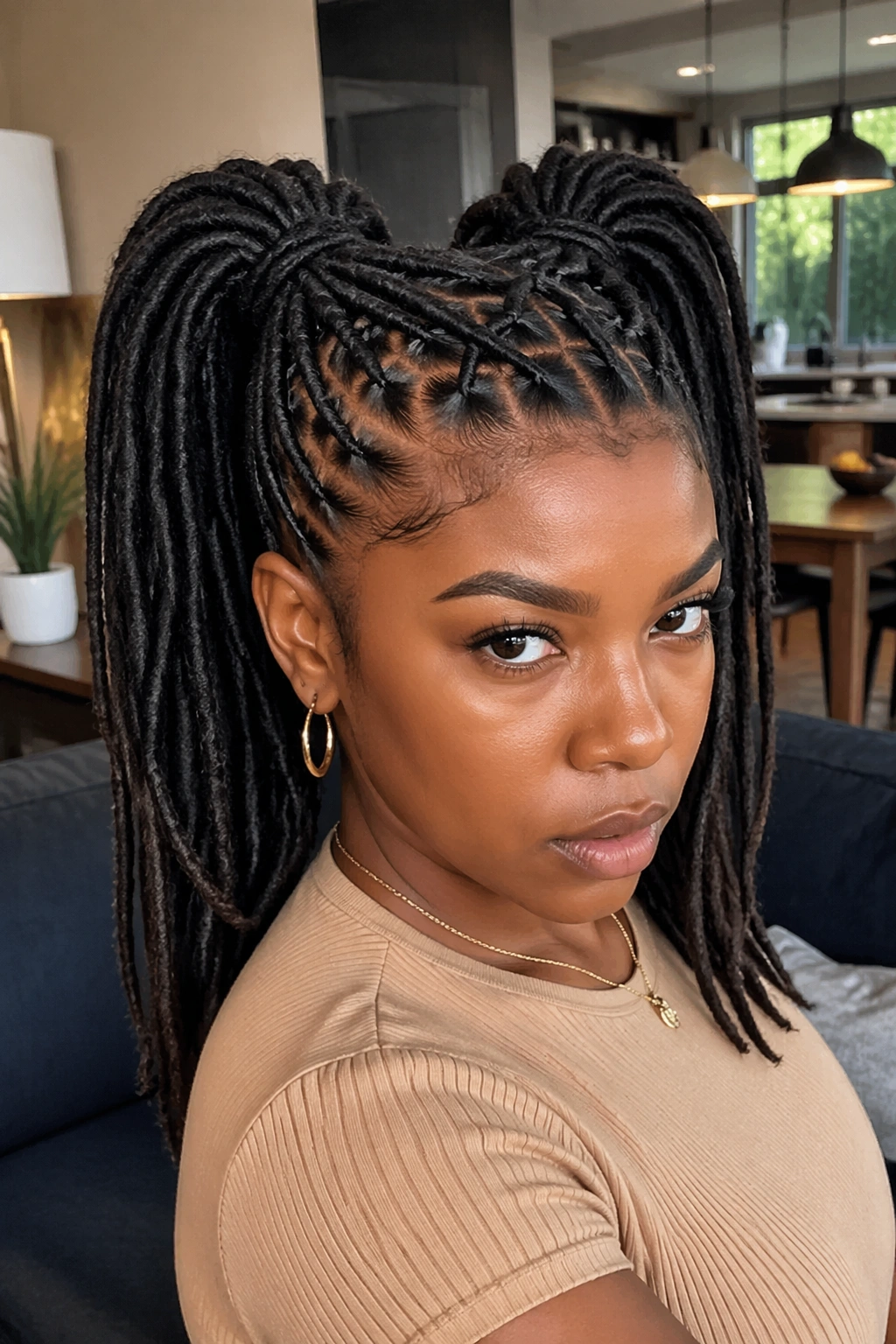
A crisscross front changes the face of the hairstyle before the ponytails even begin. Two front sections cross over each other at the crown, then lead back into the twin ties. That small crossing gives the style a sense of movement without making it fussy.
The reason it works is simple. The eye follows the twist lines toward the ponytails, so the whole shape feels connected. On locs, this is useful because loose front sections can sometimes break up the silhouette. The crisscross pulls the front into one clear design.
You do need neat parting here. If the lines are crooked, the crossover can look accidental. Keep the front sections even, and keep the twist itself snug but not tight. That balance is the whole game.
12. Asymmetrical Double Ponytails
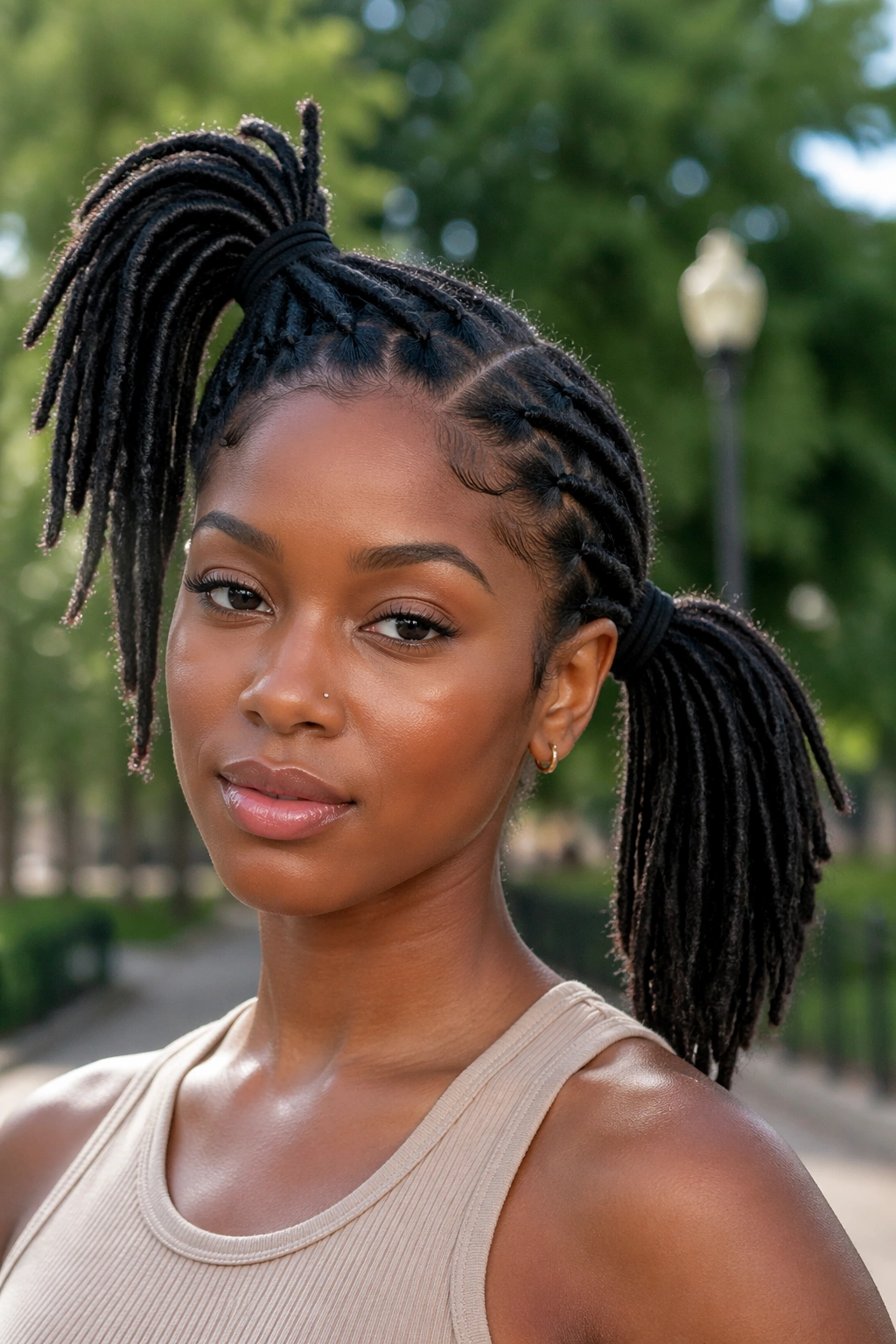
Unlike mirrored styles, asymmetrical double ponytails play with uneven height on purpose. One ponytail sits a little higher, the other a little lower, and that difference gives the style a sharper edge. It’s a small change, but it reads immediately.
This version is good when you want the look to feel less formal. It also suits side parts better than dead-center parts, because the slight imbalance has somewhere to live. If your locs are thick, asymmetry can actually help the style sit more naturally since both sides don’t have to carry the same visual weight.
What Makes It Different
- One side can sit about 1 to 2 inches higher.
- The lower side can hang longer for contrast.
- Works well with side-swept bangs or face-framing locs.
- A single accessory on the higher side keeps it from feeling random.
If you like styles that look a little more styled and a little less matched, this one has real personality.
13. Double Ponytails with Front Barrel Twists
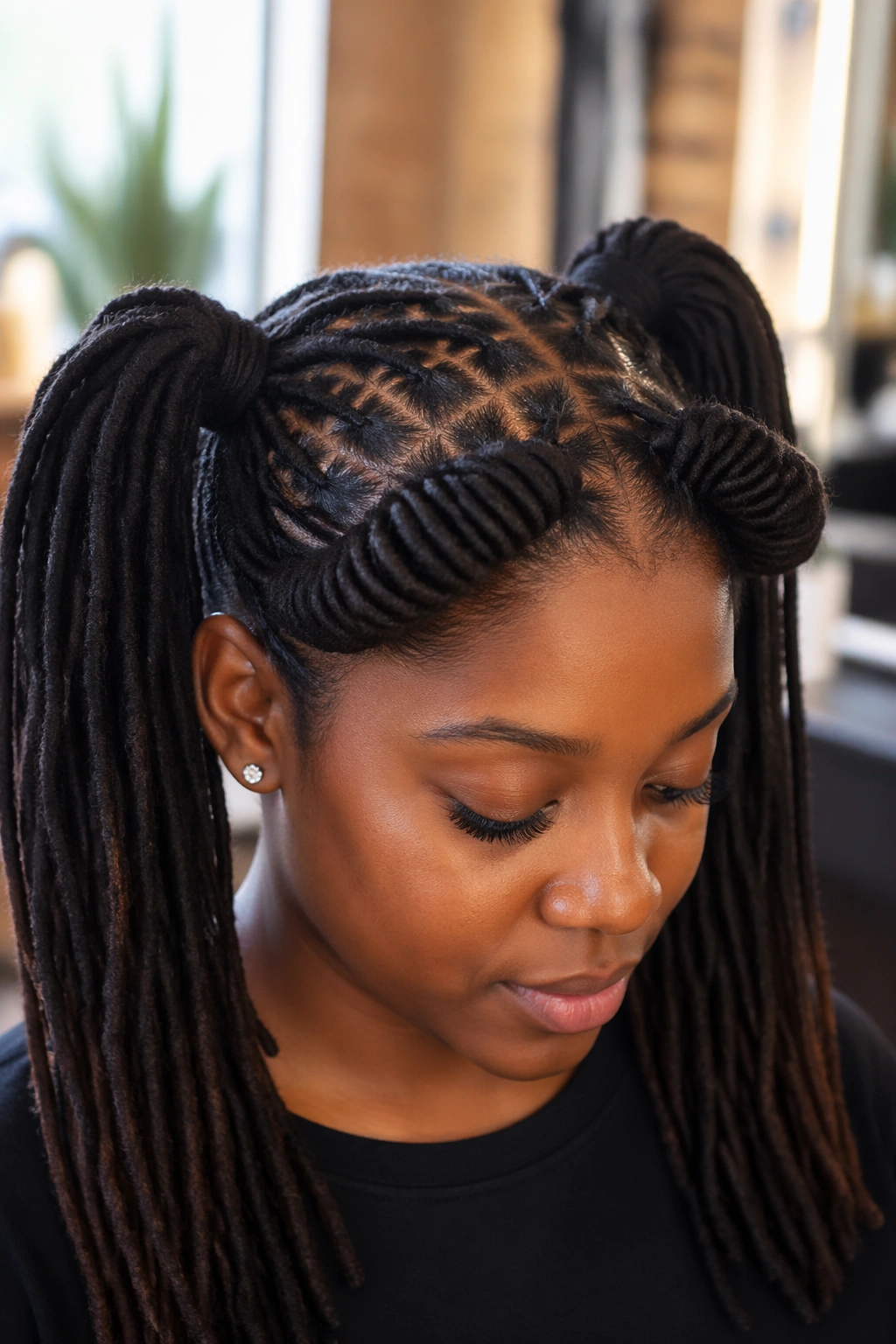
Front barrel twists give the hairline some shape before the ponytails begin. Instead of a straight pullback, the front sections are rolled or twisted into smooth ropes that sit along the scalp and feed into each ponytail. That extra structure looks rich without needing much extra hair.
Why It Looks So Good on Locs
Locs already have texture. Barrel twists add pattern. Together, they make the front of the style feel fuller and more finished, especially if your roots are freshly maintained. If your locs are older and a little fuzzier, the barrel twist can hide some of that while still looking neat.
- Use two even front sections.
- Keep each twist the same thickness.
- Secure the twist ends before they meet the ponytail.
- Add cuffs only after the base sits flat.
Best part: the style looks detailed from the front and clean from the back. That’s a rare combination.
14. Double Ponytails with Scarf Ties
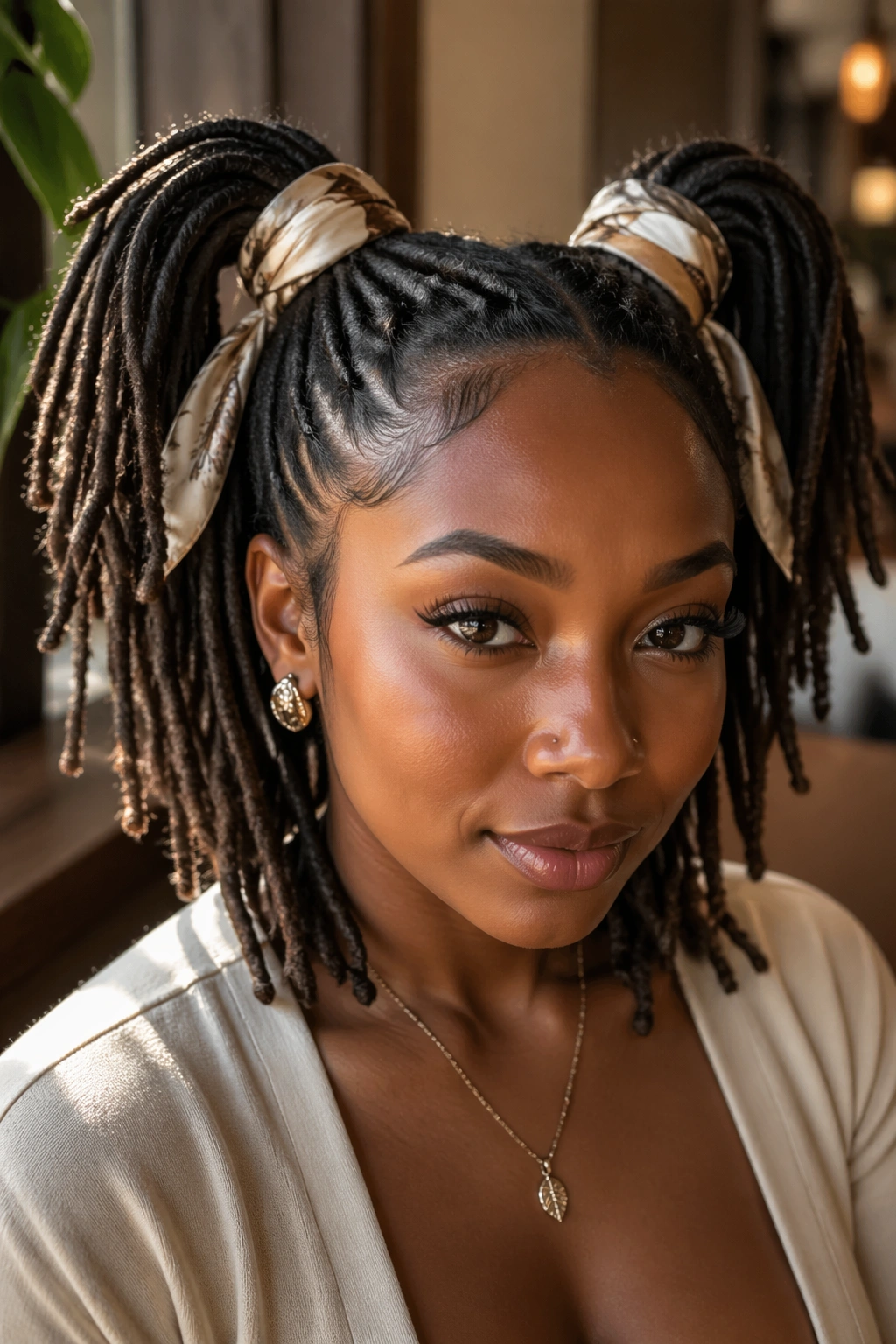
A scarf can change the mood fast. Tie a narrow silk or satin scarf around each ponytail base, or use one scarf across both bases if you want a connected look. The fabric softens the style and adds color without making the locs feel overloaded.
The practical side matters too. A scarf can help hide a less-than-perfect elastic, especially if your hair is a little stretched or you’re working with an in-between day between maintenance sessions. Keep the knot secure, though. A loose scarf slides, and once it slides, the whole style starts to sag.
This version works best when the scarf is thin enough to sit flat. A bulky knot can sit awkwardly at the crown. Go narrow, not thick. The result feels lighter and more put together.
15. Double Ponytails with Bead Accents
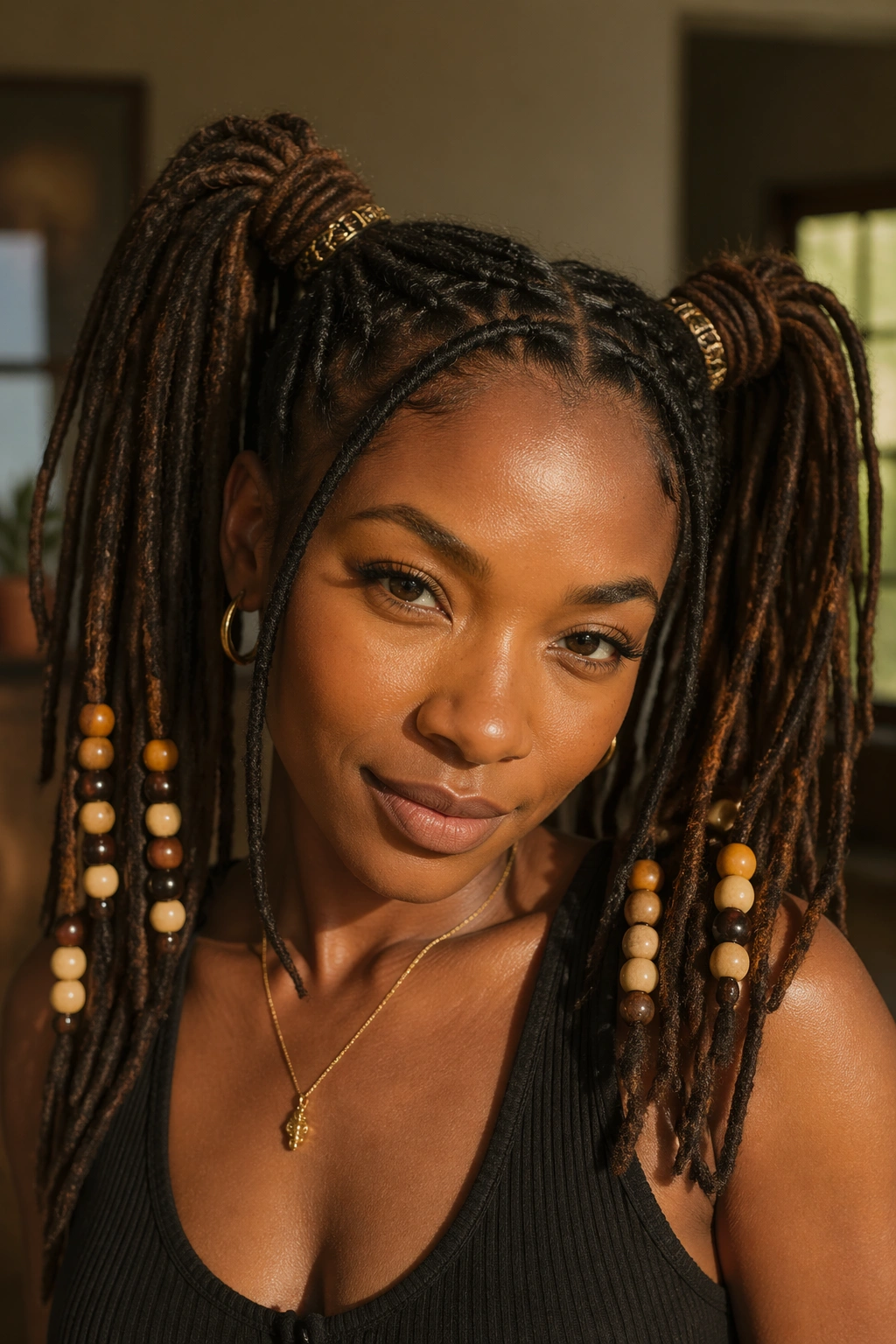
Beads are not just for the ends of locs. They can frame the ponytails too, especially if you use a few larger pieces near the last third of the length. A small row of beads adds sound, weight, and movement, which gives the style a bit of rhythm as you walk.
Why do beads work here? Because double ponytails already split the hair into two clear shapes. Beads make each shape read a little more clearly. If your locs are medium length, a few beads can be enough. If they’re long, you can spread them out so the style doesn’t feel overloaded.
How to Keep Beads from Slipping
- Pick beads with a snug opening.
- Place them on dry locs so they grip better.
- Use a small knot or stopper bead if needed.
- Don’t stack too many near the roots.
A few beads go a long way. More is not always better.
16. Double Ponytails for Thick Locs
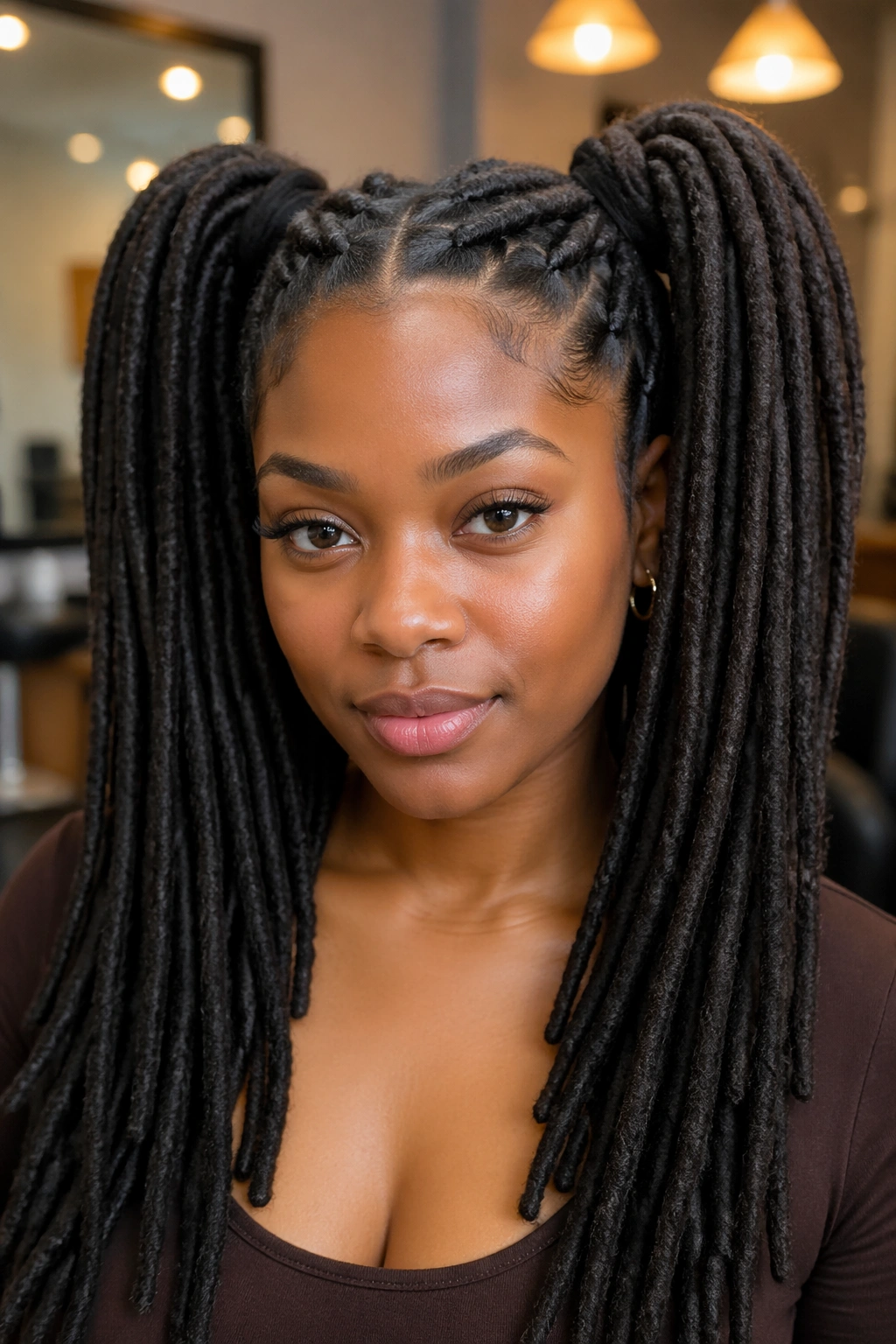
Thick locs need a different plan. If you treat them like fine locs, the style pulls too hard at the roots and droops before noon. Bigger sections, lower anchors, and fewer tight points keep the shape usable and the scalp happier.
The best approach is to divide the hair with enough room for the density to breathe. A center part still works, but the ponytails may need to sit a little lower so the weight doesn’t ride the hairline. If the locs are very full, a half-up version can be easier than a full high tie.
- Use stronger snag-free elastics.
- Keep the parts slightly wider.
- Support each ponytail with a second tie if needed.
- Leave the ends loose instead of forcing a tight finish.
This style should feel sturdy, not strained. Thick locs look excellent in double ponytails when the bases are respected.
17. Double Ponytails for Short Locs
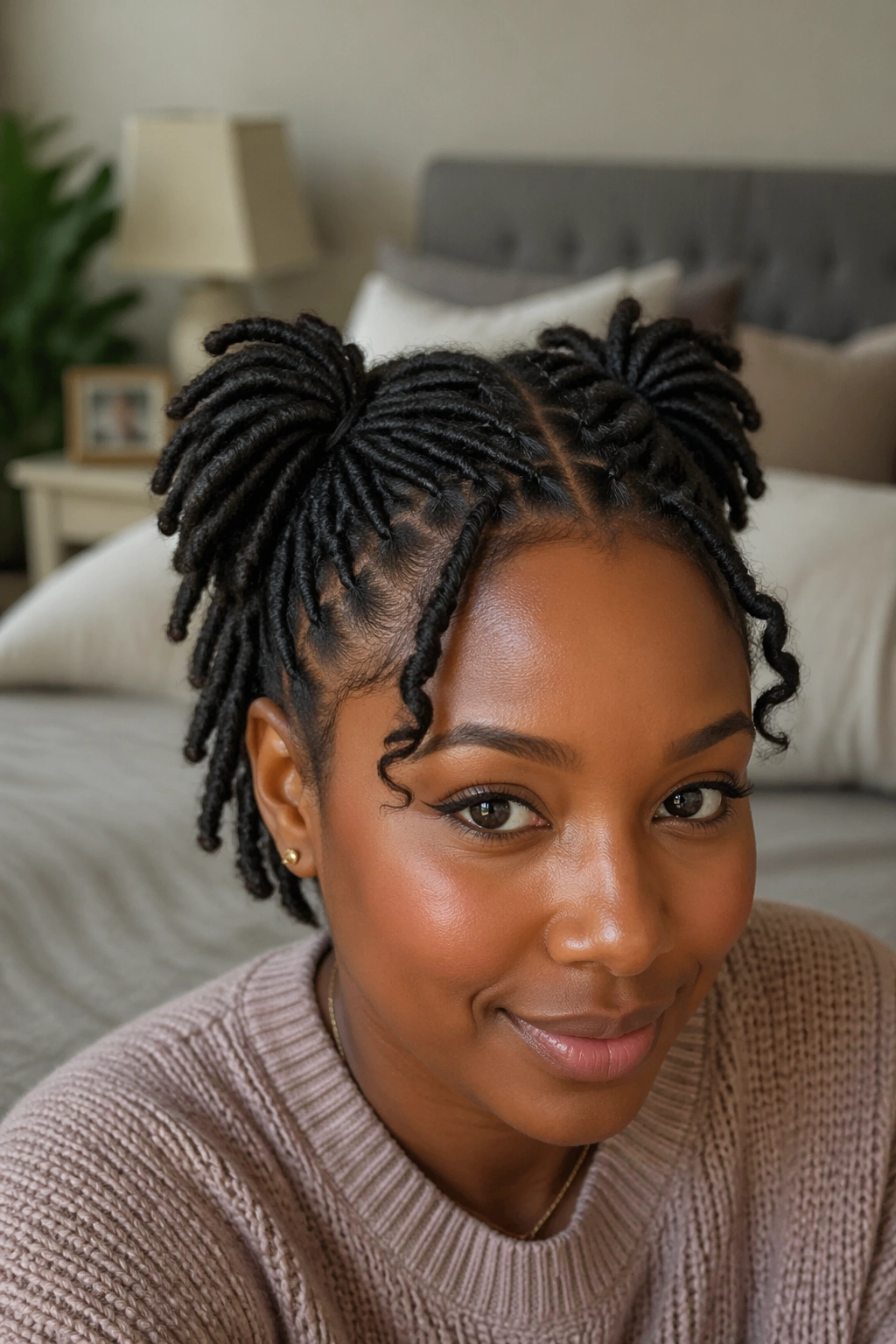
Short locs can wear double ponytails beautifully, but the proportions are different. The ponytails sit closer to the scalp and the shape reads more compact. That’s not a weakness. It’s part of the charm.
The key is to keep the sections small enough to gather cleanly. If the parts are too large, the ponytails may stick out awkwardly instead of falling into a neat twin shape. Shorter locs also tend to do better with fewer accessories, because heavy beads or cuffs can drag the ends down.
Keep the look tidy and close to the head. A low-to-mid position often works better than trying to force high ponytails that can’t hold their shape. Tiny details matter here — a clean part, a soft tie, and a little smoothing at the roots can make the style feel finished.
18. Colored Wrap Double Ponytails
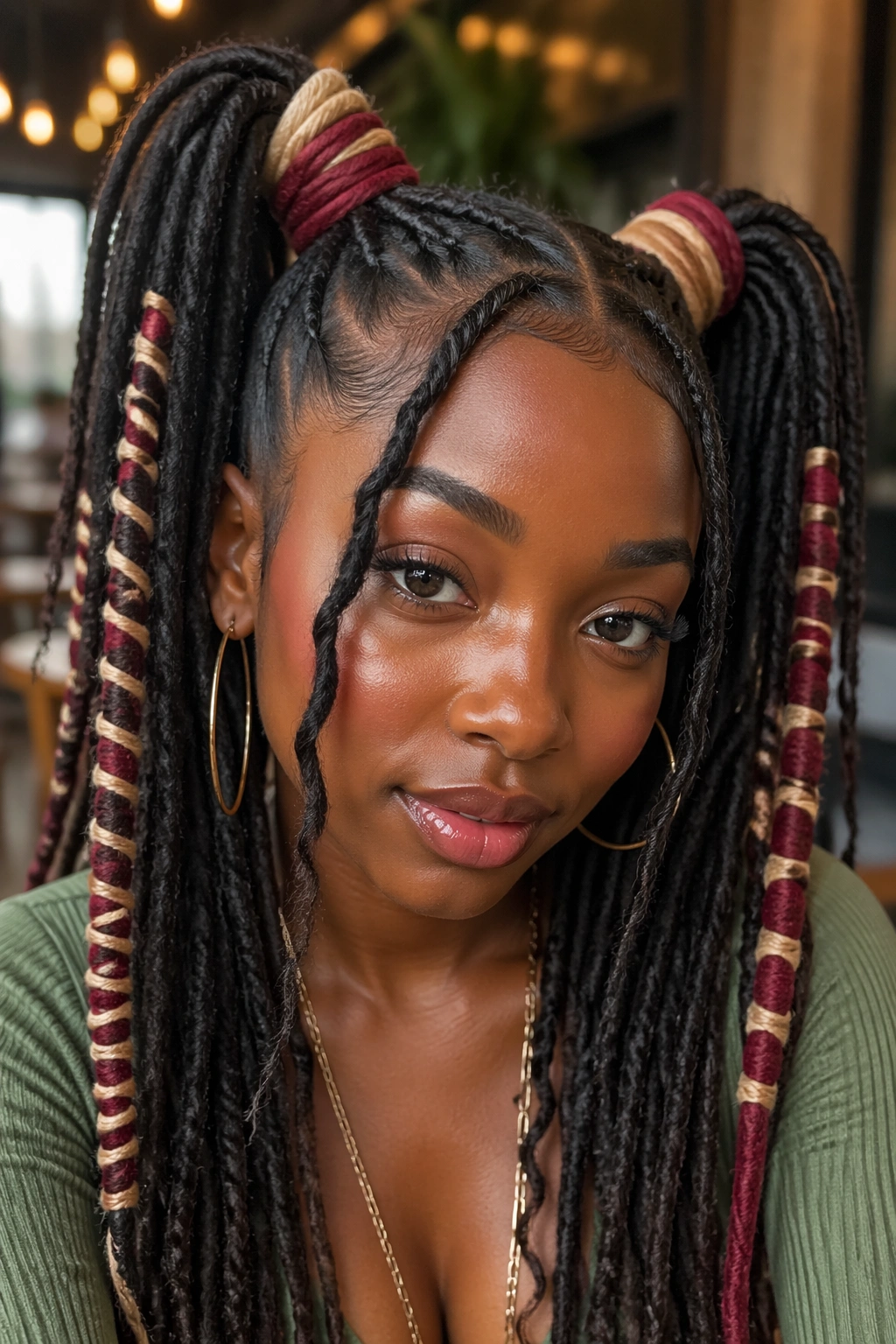
Thread wraps, yarn wraps, and narrow cords can turn a plain double ponytail into something with color and texture. They’re a good choice when you want the style to show personality without changing the base structure. The wraps can sit at the base, trail down the ponytail, or hit only the lower third.
Unlike a scarf, which reads soft and fabric-like, colored wraps give a tighter, more graphic line. That makes them a strong match for locs because the texture stays visible under the wrap instead of disappearing under cloth. Keep the colors limited if you want the style to stay clean. Two tones usually look more controlled than five.
This version suits anyone who likes to change the mood of a style without starting over. One day it reads subtle. The next day it leans bold. Same ponytails. Different mood.
19. Rope-Twist Bases Leading into Ponytails
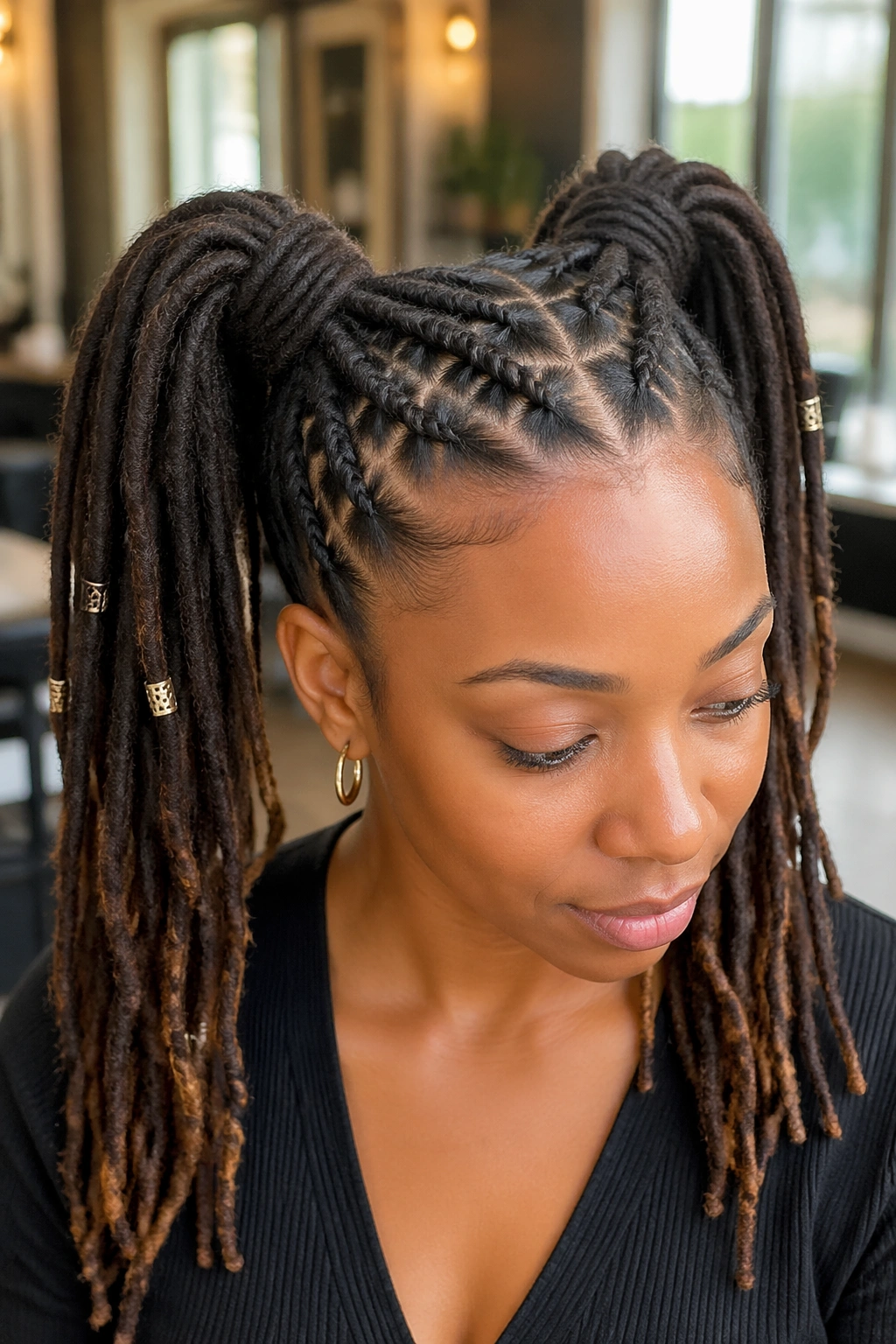
A rope-twist base creates a little lift before the ponytail starts. You twist each section in two strands, then secure it into the ponytail so the root has a sculpted shape. It’s a small detail, but on locs it adds just enough structure to make the style feel built, not slapped together.
The Shape It Creates
The twisted base helps the ponytails sit with more direction. Instead of falling flat from the elastic, they rise a touch and then drop. That’s useful if your locs are medium to long and need a little support near the crown. The twist also keeps the front from looking too plain.
- Keep each twist even from root to tie.
- Stop twisting before the hairline starts to strain.
- Use a small elastic to lock the base before the main tie.
- Smooth the outer edge with your fingers, not a stiff brush.
This is a strong option for days when you want the style to look finished but not formal. It sits nicely in that middle zone.
20. Low-Tension Double Ponytails for Active Days
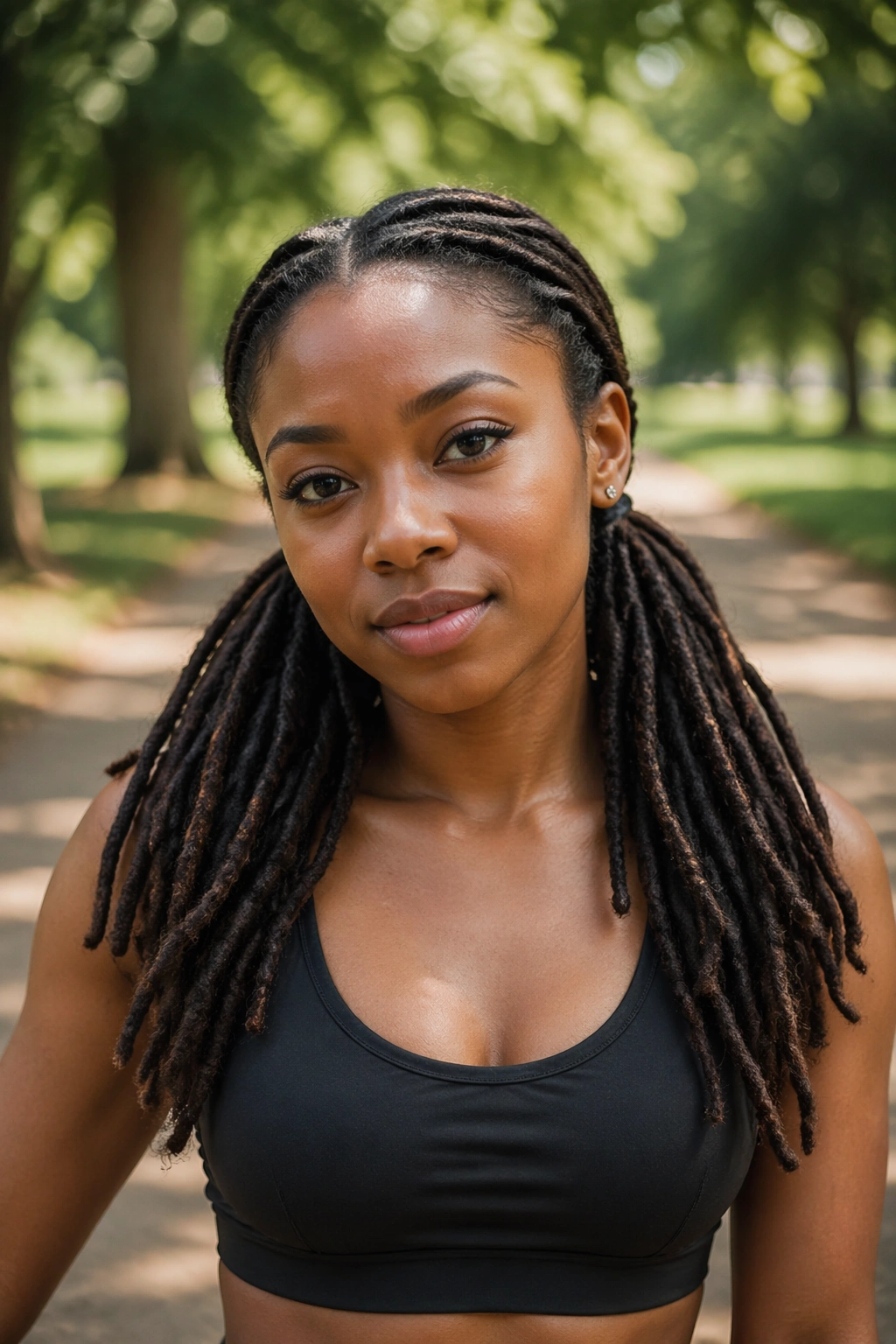
If you’re wearing your locs for a long day of movement, low tension should come first. That means lower ponytails, softer parting, and enough slack at the root so the style doesn’t yank when you bend, walk, or spend hours upright.
The best active-day version keeps the bases close to the middle of the head or lower. High ponytails tend to swing more and pull harder. Lower ones stay calmer. You can still make them look neat by keeping the part clean and the lengths even. The look will not be as dramatic, but your scalp will notice the difference.
Use this when you need hair out of the way for errands, work, travel, or long stretches on your feet. A plain, well-made style often outlasts a dramatic one.
21. Sleek Double Ponytails with Clean Edges
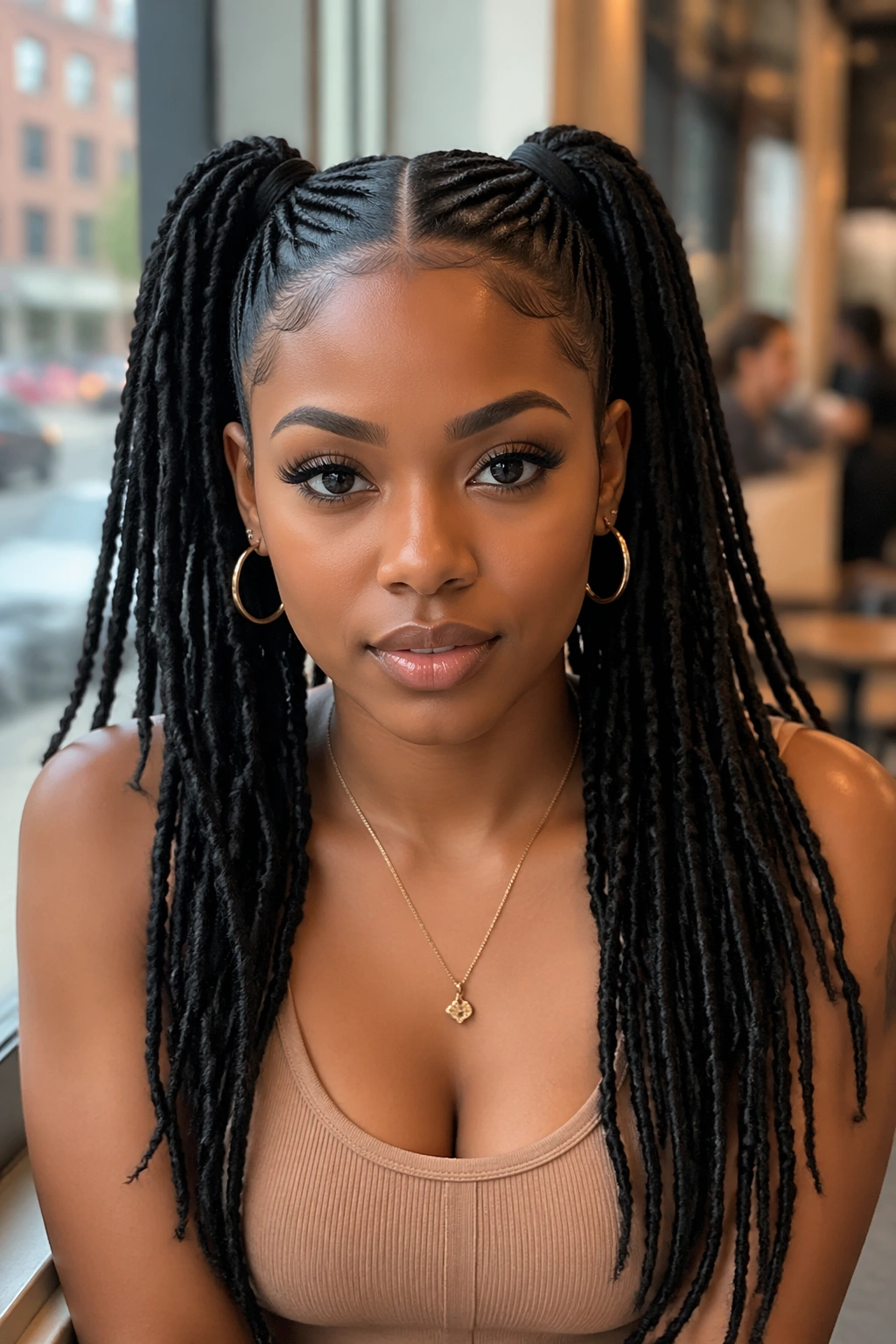
Can double ponytails look dressy? Absolutely. The trick is in the finish. Smooth roots, clear parts, and edges that are laid down without looking painted on can make the style feel sharp enough for a dinner out or a formal event.
The front matters most here. If the part is neat and the sides are even, you don’t need a lot of extra decoration. A small cuff or a pair of plain hoops is often enough. Too many accessories can fight the clean line and make the style look busy.
What to Focus On
Keep the parting precise, the elastic placement symmetrical, and the flyaways controlled without flattening the locs into a hard shell. That shell look is where a lot of sleek styles go wrong. You want gloss and control, not stiffness. A soft shine at the roots usually looks better than a thick layer of product.
22. Festival Double Ponytails with Mini Sections
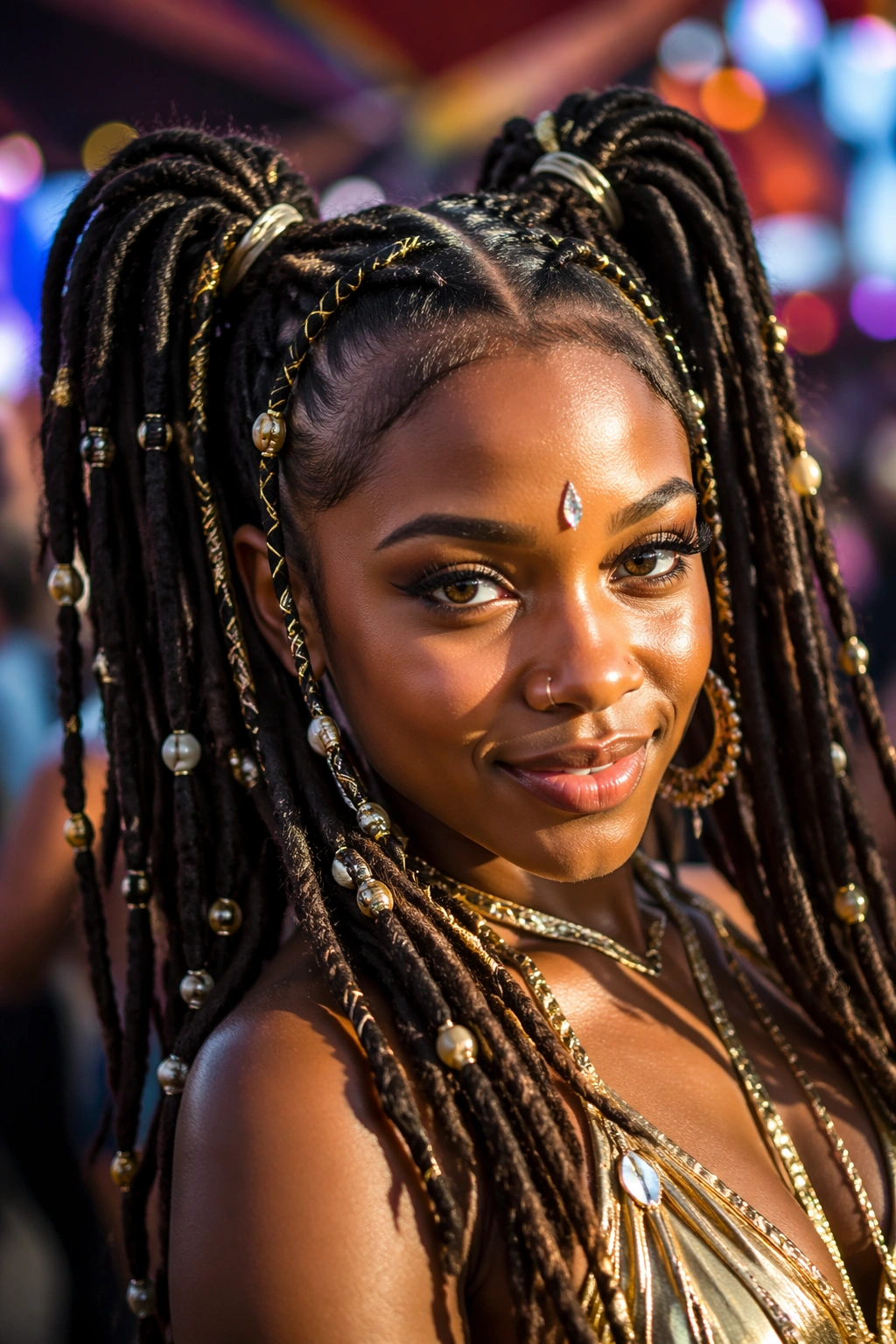
Festival hair can handle a little chaos, but the chaos should be planned. Mini sections inside each ponytail — tiny braids, small twists, or staggered bands — give the style movement and texture without losing the twin-pony shape.
This is a good one when you want the locs to feel lively and decorated. Each ponytail becomes its own little field of detail. The style can carry beads, thread, cuffs, and even bright wraps if you want them. Just don’t crowd everything into the first two inches near the scalp. Let the details travel down the length.
- Break each ponytail into 3 to 5 mini sections.
- Vary the bands slightly so the shape doesn’t look stiff.
- Keep accessories light if the locs are already heavy.
- Leave some sections untouched so the style can breathe.
The whole point is motion. The style should shift when you move, not sit like a helmet.
23. Overnight Double Ponytails for Protection
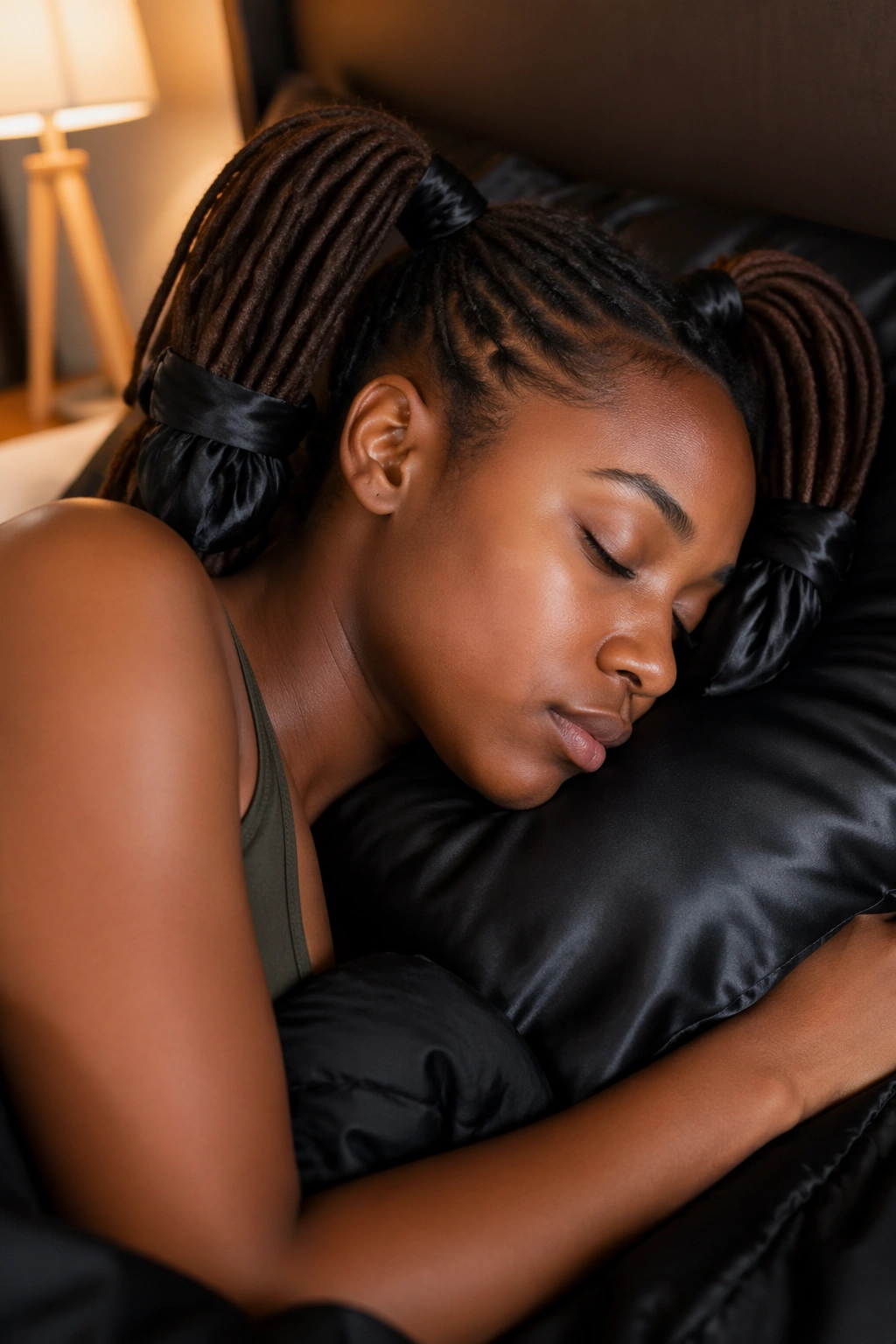
A loose double-pony setup can work as a protective sleep style if you keep the bases soft and the lengths contained. The idea is not to lock the hair down hard. It’s to stop the locs from tangling across the pillow and flattening into odd bends.
Tie the ponytails low enough that they don’t press into your scalp when you lie down. If the locs are long, fold them gently upward or to the side, then cover everything with a satin scarf or sleep on a satin pillowcase. That one detail does more than most people expect.
This version is for maintenance, not show. It’s the quiet style in the group. Still, it matters. A neat nighttime setup can save you from needing to redo your hair the next morning — and that is worth a lot when your locs are long, dense, or freshly maintained.
Final Thoughts
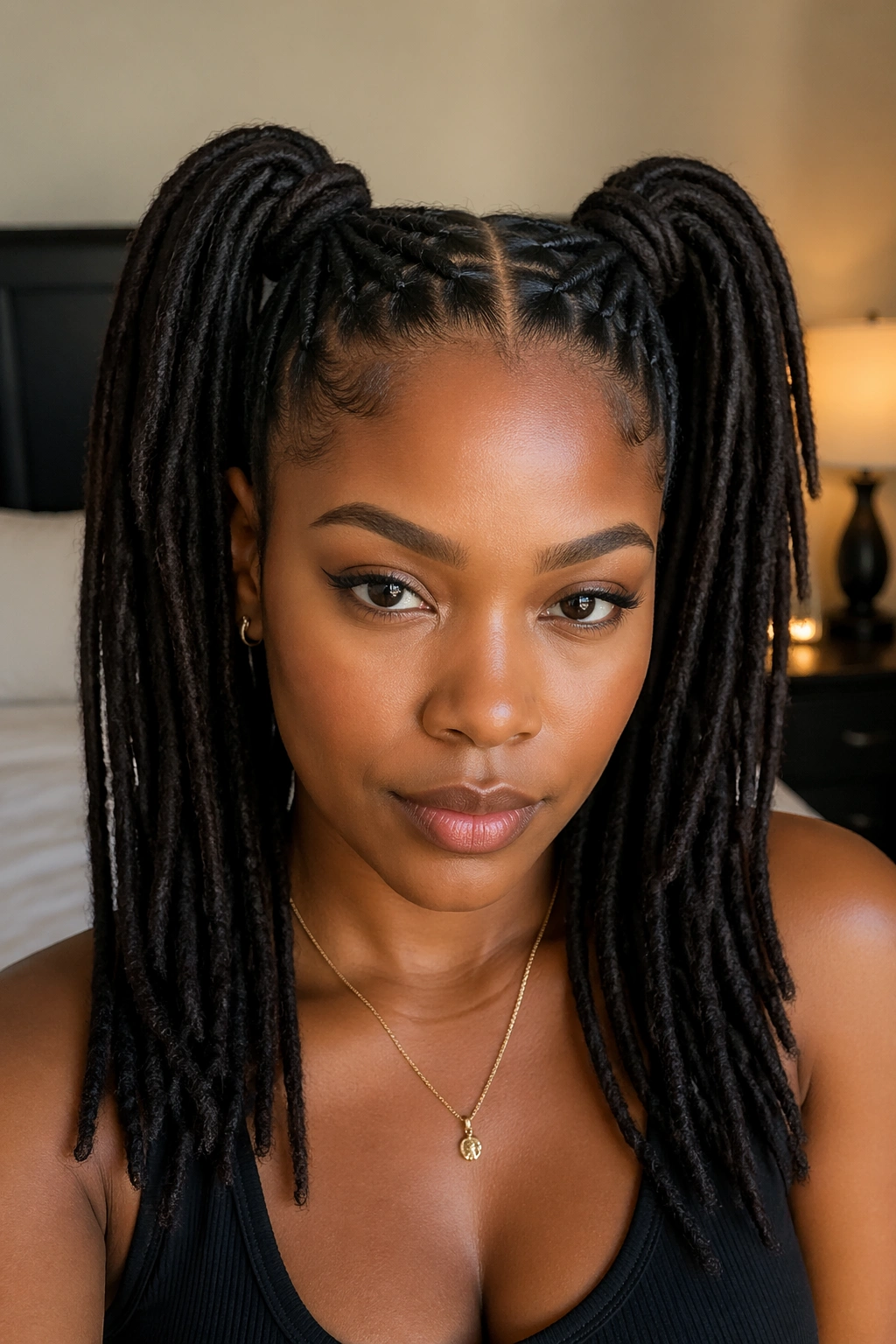
Double ponytails on locs work because they give you structure without forcing the hair into one narrow look. You can make them soft, sharp, playful, or polished, and the difference usually comes down to parting, placement, and how much weight you ask the scalp to carry.
The best version is the one that suits the length and density of your locs without fighting them. That might be a high pair with clean lines, or a low pair with beads, or a half-up style that keeps the crown light. The good news is that once you know where your locs like to sit, the rest gets easier fast.
And if a style feels beautiful but gives you a headache by lunch, it’s the wrong style. Simple as that.
