



Thick curls make ponytails act like they have opinions. A ponytail can sit high and proud, sag by lunch, or turn into a frizz halo the second humidity shows up.
Ponytails for thick curly hair work best when you stop trying to flatten the hair and start working with its shape, weight, and shrinkage. A single thin elastic usually gets swallowed by dense curls. A satin scrunchie, two stacked elastics, or a few well-placed pins often does more than a lot of brushing ever will.
A lot of the trouble starts at the root. If you pull thick curls too tightly, the front goes flat and the back fights back harder. If you leave too much slack, the ponytail droops and spreads out like a fan. The sweet spot is somewhere in the middle, and it changes a little depending on curl pattern, length, and how much volume you want to keep.
These are the ponytail styles I keep coming back to when I want thick curly hair to look deliberate, not wrestled into place. Some are polished. Some are soft and easy. All of them respect the bulk instead of pretending it isn’t there.
1. High Crown Volume Ponytail
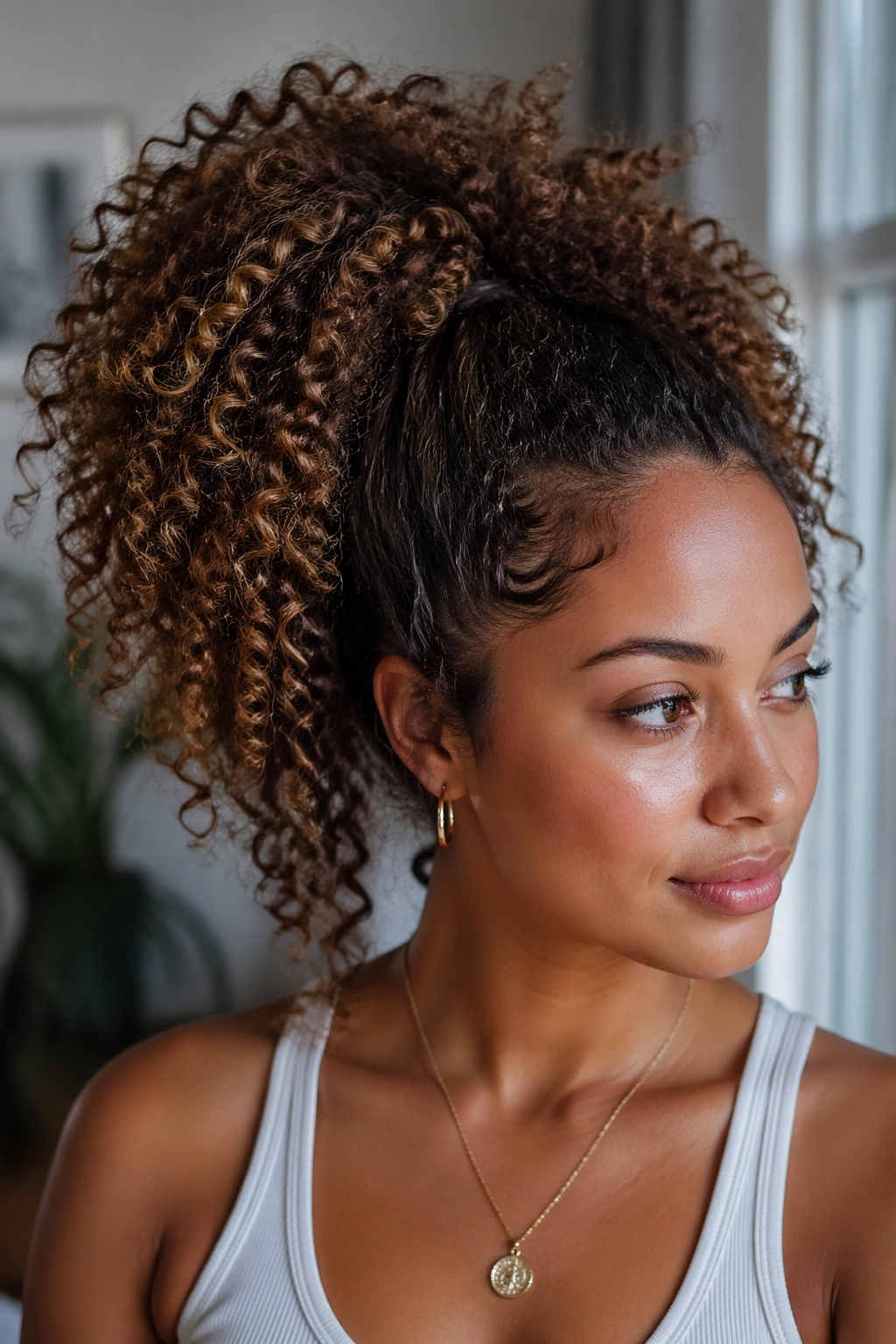
A high crown ponytail gives thick curls the lift they were born for. Put the elastic too low and the whole style starts to feel heavy; put it high enough, and the hair suddenly looks lighter without losing any density.
Why it works on thick curls
The trick is placement. Find the highest point on your head that still feels comfortable, then gather the hair there without dragging the front sections tight. A high crown ponytail lets the curls stack upward instead of hanging all their weight at the neck. That matters more than people think.
I like this one when the curls are full but slightly stretched from day two or day three. It makes the hair look intentional, not deflated. If your roots are soft, a tiny bit of mousse or gel at the hairline helps keep the shape. If your ponytail sags after ten seconds, add a second elastic under the first one.
A few small details that help
- Gather the hair with your fingers first, then smooth only the outer layer.
- Use a snag-free elastic, then secure with a second one if the first feels loose.
- Leave a little lift at the front instead of flattening everything.
- Pin any puffing at the temples with two bobby pins crossed in an X.
If the base hurts, it’s too tight. Thick curls already carry enough weight.
2. Low Nape Ponytail With a Clean Part
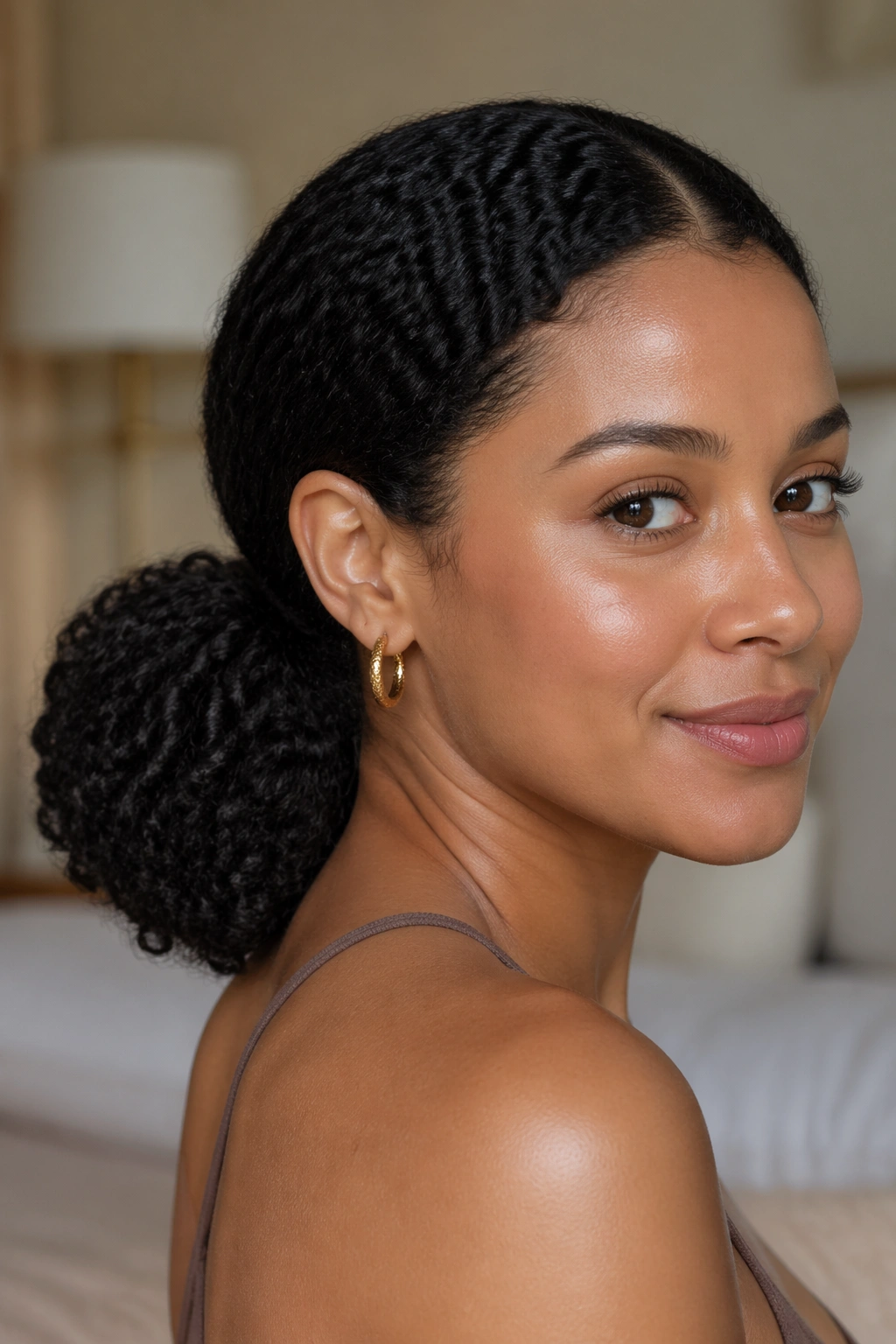
Why does a low ponytail look so elegant on thick curls? Because it lets the hair behave like hair instead of a helmet. The weight sits at the nape, the shape stays long, and the whole style feels calmer right away.
This version works especially well with a center part or a deep side part. A center part gives a quiet, symmetrical look. A deep side part gives the curls a little sweep and makes the ponytail feel softer around the face. I usually smooth just the part and hairline with a small brush, then stop. If you brush the whole head until it’s sleek, thick curls tend to puff at the back anyway.
A low ponytail is also a good choice when you do not want the crown pulled up too much. It sits neatly under jackets, scarves, and collars, which sounds boring until you wear it for a full day. Then it becomes the whole point.
One small thing. Leave a couple of curls loose near the temples or ears. It keeps the style from looking severe, and thick curly hair almost always looks better with a little movement around the face.
3. Bubble Ponytail for Heavy Length
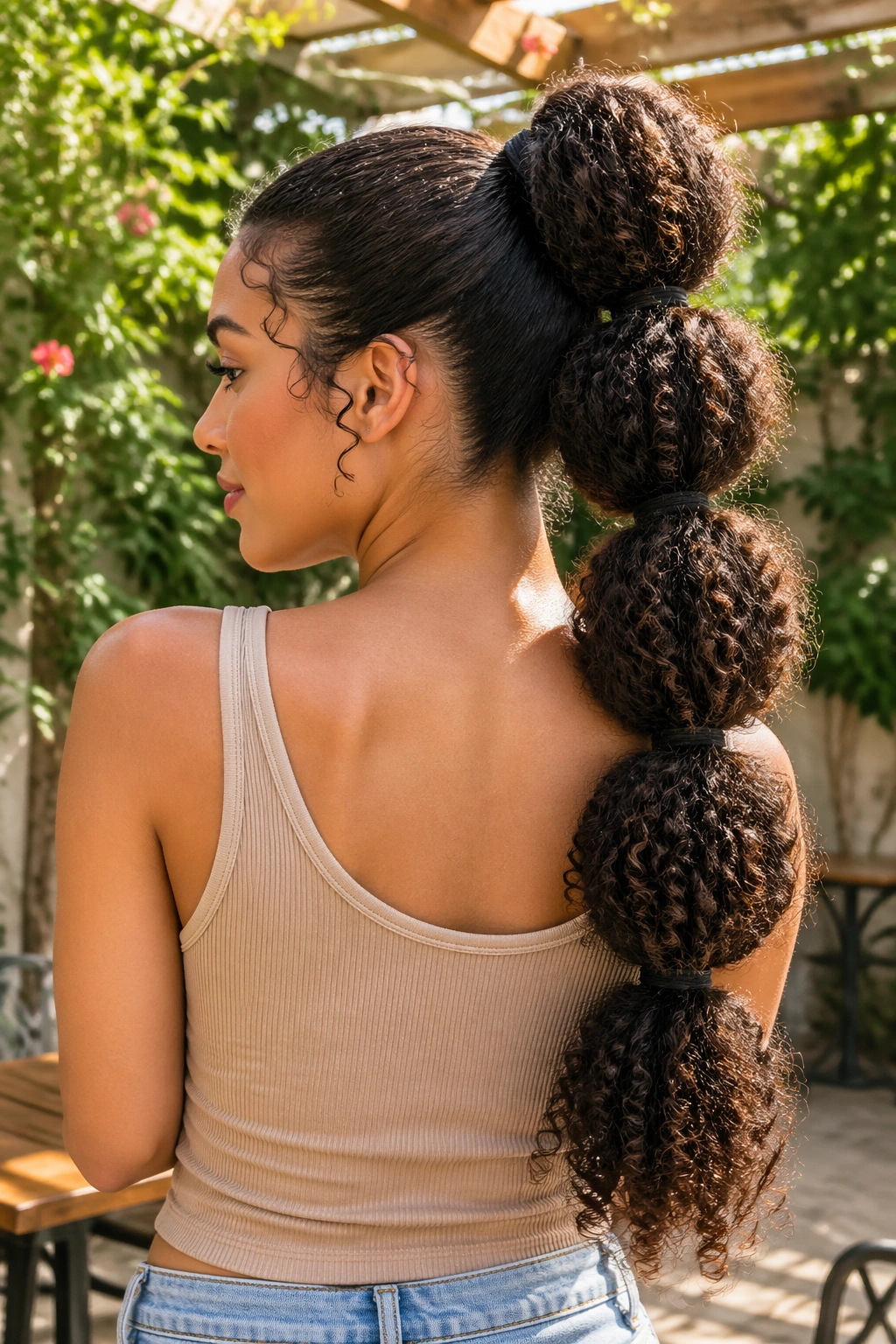
A bubble ponytail is one of the easiest ways to make a lot of hair look controlled. Each section becomes its own round little puff, which is perfect when the hair is dense and wants to spread out instead of hang straight.
Spacing matters more than volume
Start with a regular ponytail, high or low. Then place clear elastics every 3 to 4 inches down the length, depending on how long your curls are. After each elastic, gently pull the section between the ties outward with your fingers so it forms a soft bubble. Don’t yank. You want fullness, not frizz.
This style is especially good if your curls are long and heavy because the sections hold each other up. The shape also stays visible even when the hair shrinks a little. That’s a nice bonus with curly hair, since shrinkage can flatten a lot of styles that look great on straighter textures.
What helps this style hold
- Use 3 to 6 small elastics, depending on length.
- Place the first elastic snugly, then loosen the bubbles by hand.
- Keep the spacing even, or the shape gets lopsided fast.
- Wrap a tiny curl around each elastic if you want a cleaner finish.
A bubble ponytail looks playful, but it is also practical. That mix is hard to beat.
4. Side-Swept Ponytail for a Softer Shape
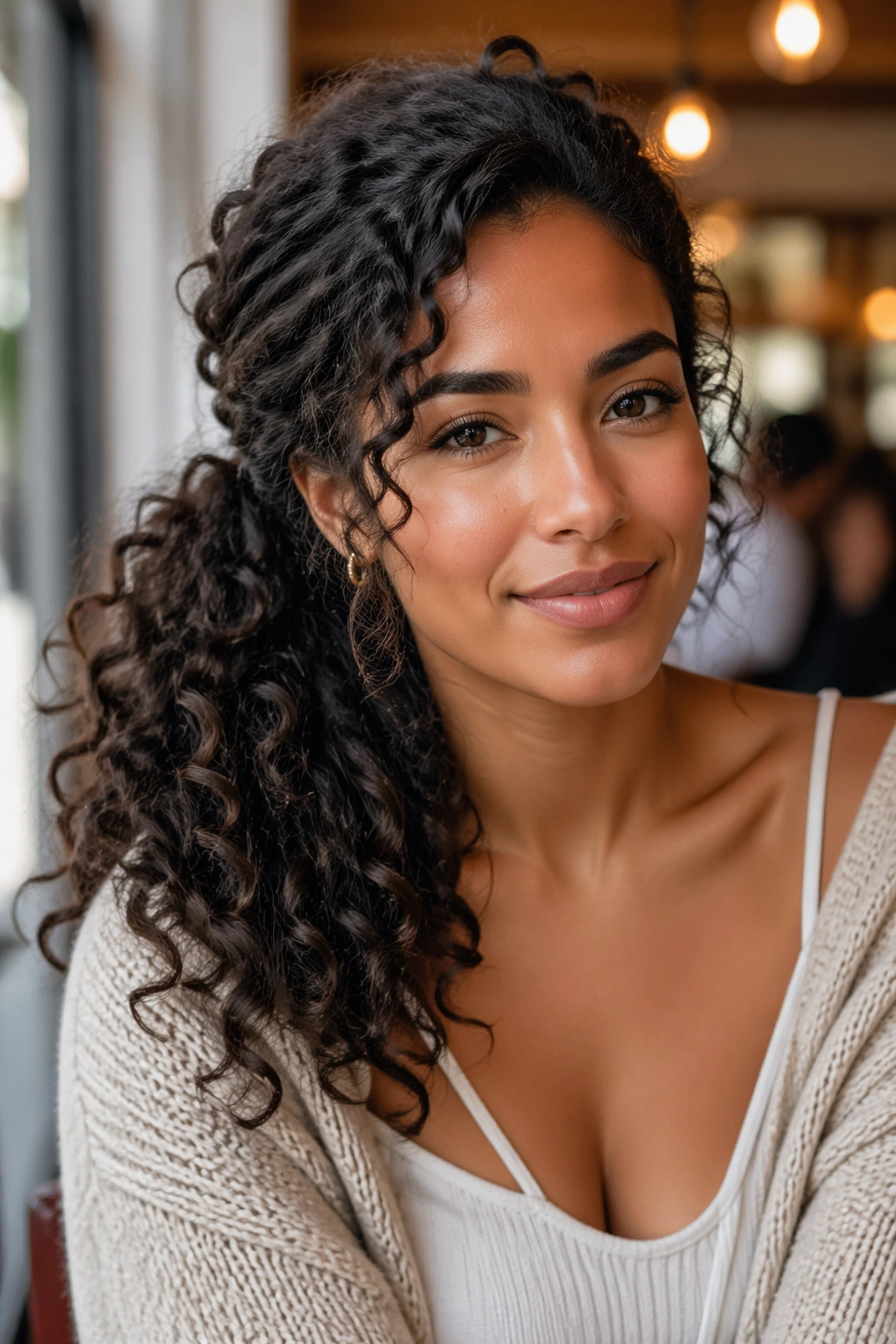
Side ponytails are not childish when the hair is thick enough to carry them. On curly hair, the side placement can actually solve a weight problem, because it shifts the mass away from the center and lets the curls fall with a little more drama.
I like this style with a deep side part and a ponytail sitting just behind one ear or slightly lower toward the jawline. The hair gets pulled to one side, but not flattened down. That matters. Thick curls need room to expand, and a side ponytail gives them a shape that feels loose without looking unfinished.
It also works well on days when the back of the head feels bulky. Some ponytails just sit better when they are off-center. This is one of them. If the style starts sliding, pin a small section underneath the base so the elastic has something to grip.
A side ponytail is one of those styles that looks better when you stop fussing. Let the front pieces curve on their own. Let the ponytail land where it wants. The asymmetry is the point.
5. Half-Up High Ponytail
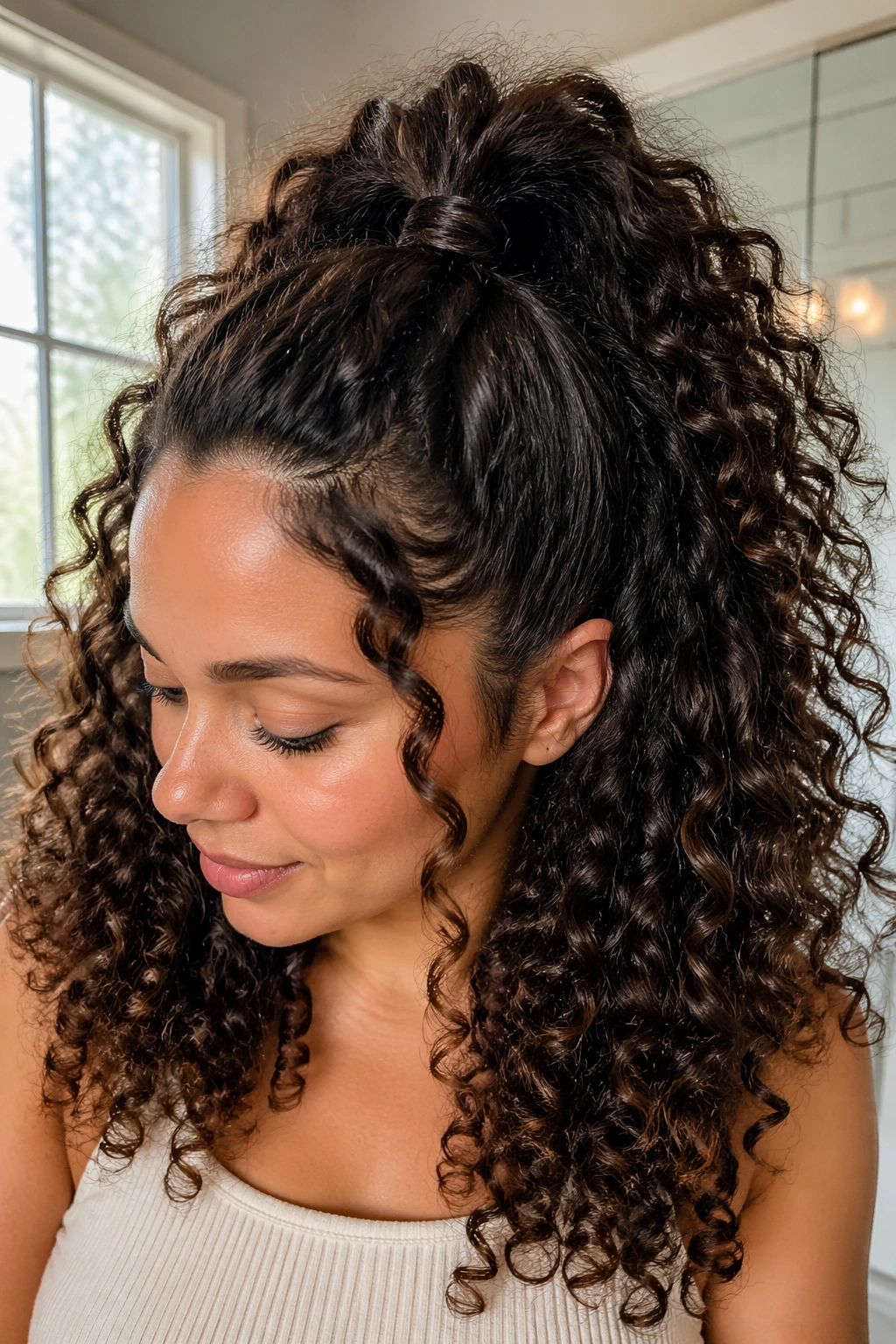
The first thing you notice is the weight leaving your neck. A half-up high ponytail lifts the top section, gives the face some height, and leaves the lower curls free to move. It is a good answer when your hair is too full for a fully slicked-back style.
How much hair to grab
For a fuller half-up look, take hair from temple to temple and gather it at the crown. For a smaller version, pull only the top third of the hair back. Both work, but they give a different mood. The larger section feels bold and sculpted. The smaller one feels lighter and a little more relaxed.
I like this style on wash day or the day after, when the curls still have good shape but the roots need a little lift. It keeps the upper half from puffing into a triangle and lets the lower curls do what they do best. A light mist of water on the top sections helps if the hair has gone too puffy.
A few things to watch
- Don’t take the section too low, or the style starts to look collapsed.
- Use a satin scrunchie if you want less tension.
- Keep the bottom curls finger-separated, not brushed out.
- Add a small curl cream only to the ends if they look dry.
It’s an easy style, but it doesn’t feel lazy. That matters.
6. Pineapple Ponytail
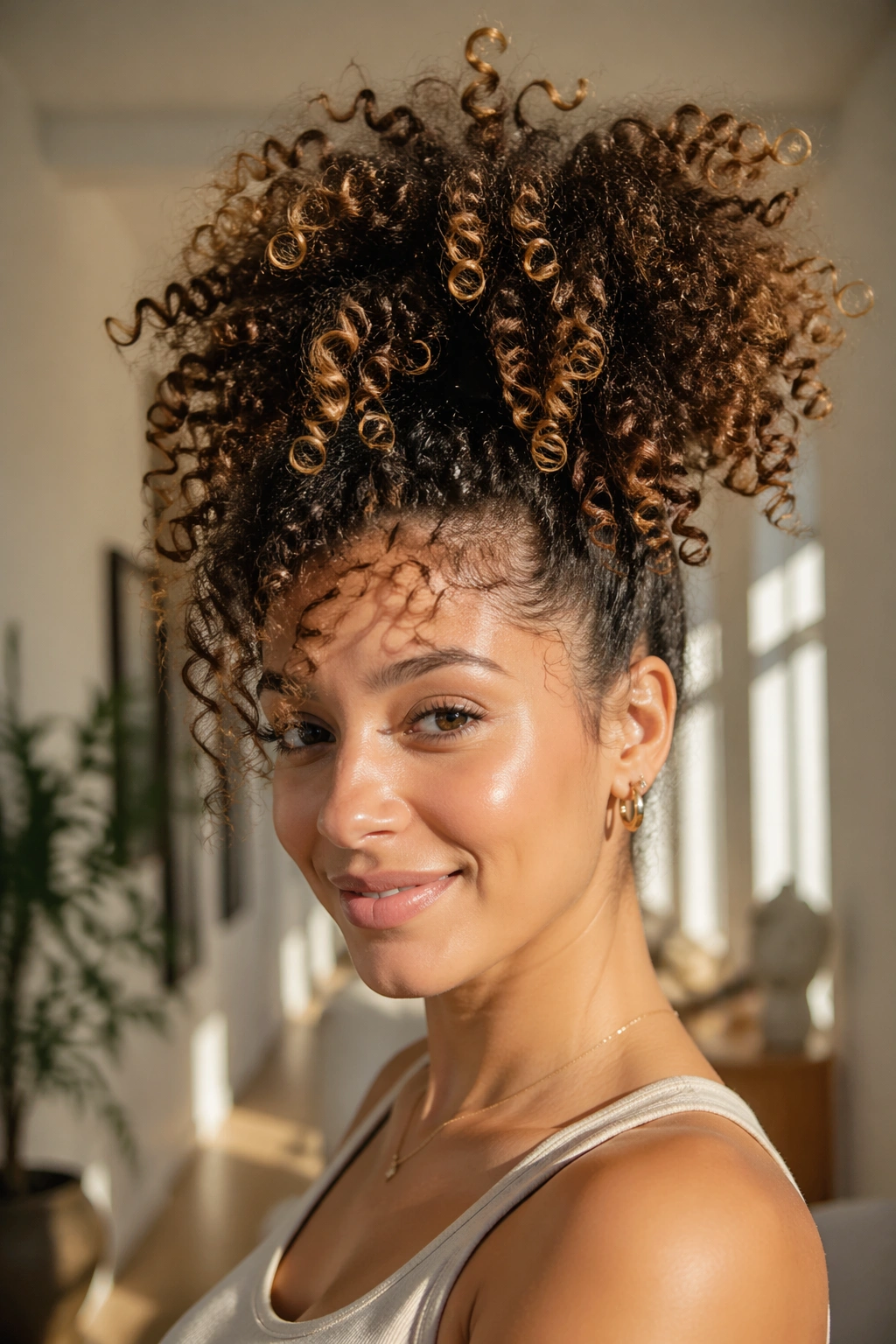
Pineapple, but make it wearable. This is the style I reach for when I want the curls protected, lifted, and out of the way without forcing them into a tight shape.
The ponytail sits high on the head, usually near the very top, and the curls fall forward and outward instead of straight down. That placement keeps the ends from getting crushed and makes the whole style feel airy. On thick curly hair, the pineapple is almost unfairly useful because it handles volume instead of trying to hide it.
It’s also one of the few ponytail styles that can survive a long day and still look soft. Use a loose satin scrunchie or a large gentle elastic. Pull the hair up just enough to stay put, then stop. If you make it too tight, the shape loses the point and the curls at the back get flattened.
Best moments for a pineapple
- Running errands when you want minimum fuss.
- Keeping curls from rubbing against coats or scarves.
- Refreshing old curls without restyling everything.
- Sleeping if you swap the regular tie for a satin scrunchie.
This one looks casual. It also happens to be practical in a way that never really goes out of style.
7. Braided-Base Ponytail
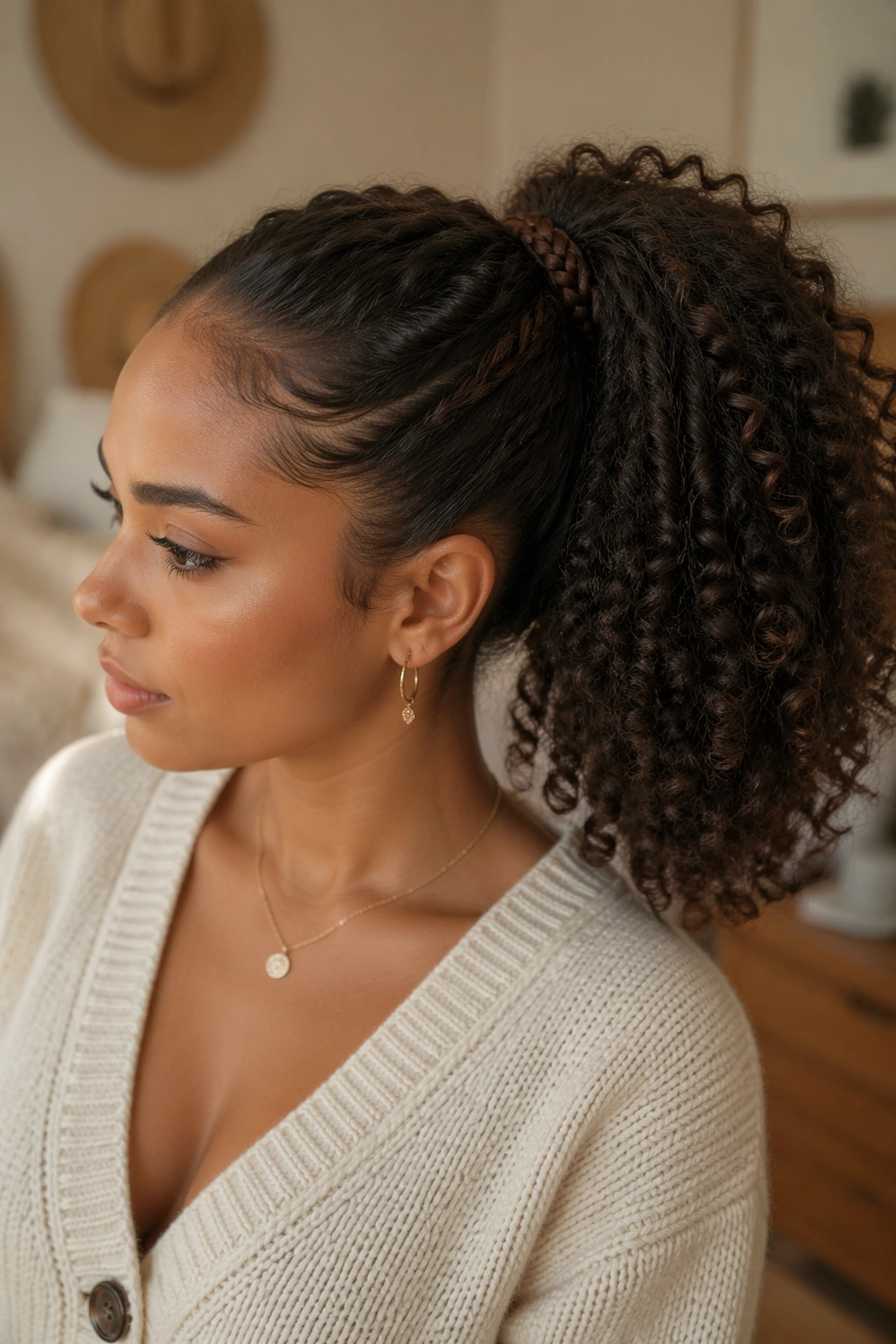
A tiny braid at the base solves two problems at once: flyaways and sag. Thick curls can tug hard on a regular elastic, so adding a braid where the ponytail begins gives the style a stronger anchor and a cleaner line.
You can braid a front section into the ponytail, braid a strip from the temple back, or braid a small piece around the elastic itself. All three give the style a little more shape. I usually like the simplest version: gather the hair, secure it once, then wrap a small braided piece around the base to hide the tie. It looks finished without feeling stiff.
This is a good choice when you want a ponytail that lasts. The braid acts like a little brace. It also makes the root area look deliberate, which helps a lot when your curls are dense and the base gets bulky fast.
- A three-strand braid around the base gives the softest finish.
- A Dutch braid into the ponytail feels more structured.
- A small braid from one side keeps the style off-center and less formal.
Use a tight enough braid to hold, but not so tight that it dents the curl pattern. That’s the balance.
8. Twisted Front Ponytail
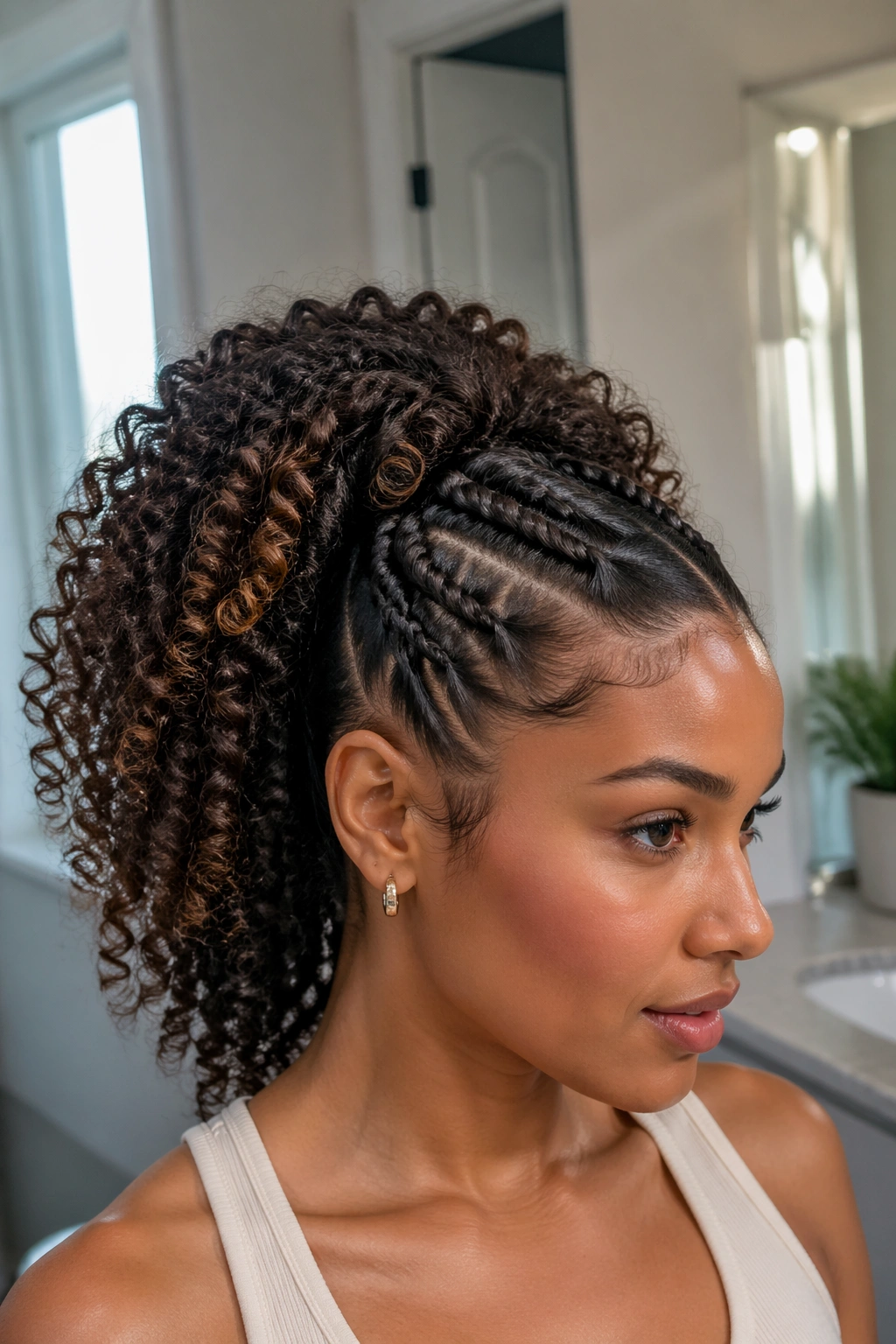
You do not need a braid to make the front feel finished. A pair of twists from the temples back toward the ponytail can clean up the hairline in about half the time, and on thick curls that matters.
Start by taking one section from each temple. Twist each section back on itself, then pin it into the base of the ponytail with two bobby pins per side. If the hair is very dense, a little gel on the front edge keeps the twist neat for longer. The rest of the curls can stay loose and full.
I like this style because it gives shape without taking away volume. A full braid can sometimes feel like a lot when the hair is already heavy. Twists are lighter. They leave the face open and let the ponytail stay big.
The trick is to keep the twists even. If one side is thicker than the other, the ponytail can look lopsided. And if the bobby pins are hidden under a curl instead of shoved straight through, the whole thing holds better.
It’s a small change, but it makes the ponytail look thought out.
9. Scarf-Wrapped Ponytail
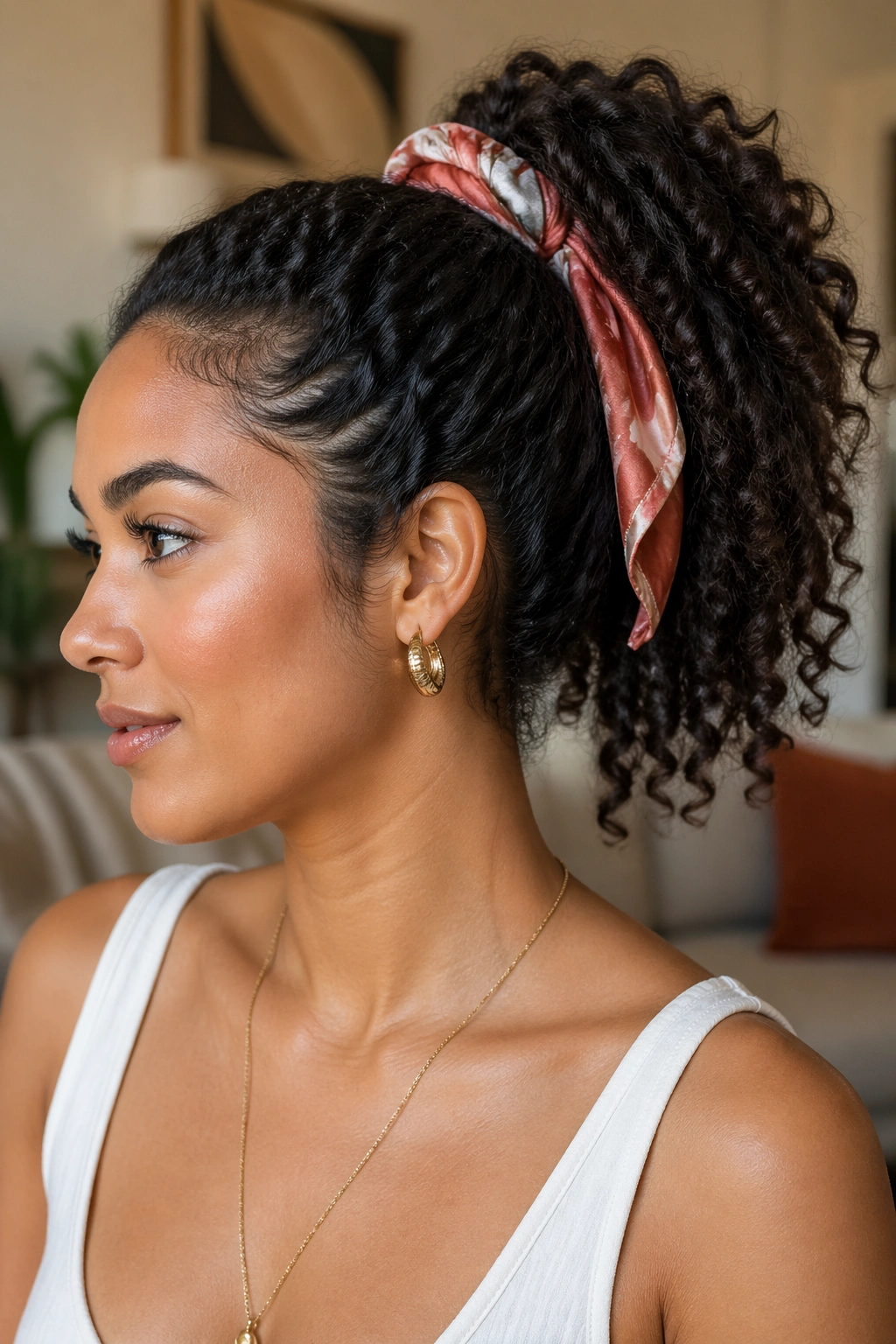
A 2-inch satin scarf changes the whole mood of a ponytail. It hides the elastic, adds color, and gives thick curly hair a softer edge around the base without smashing the curls flat.
What to use
- One elastic underneath the scarf for real support.
- A satin or silk scarf about 2 to 3 inches wide.
- Two bobby pins if your hair is very dense and the scarf tends to slide.
Tie the ponytail first, then wrap the scarf around the base once or twice and knot it underneath. Don’t rely on the scarf alone if your hair is heavy. It should decorate the ponytail, not carry all the weight. That’s where people get annoyed and blame the style, when the problem was the support underneath.
A scarf-wrapped ponytail works well when the rest of the hair is textured and full. The scarf creates a small visual break, which helps the style read clearly instead of looking like a giant cloud of curls tied in the middle. It also comes in handy when the base of the ponytail is a little frizzy and you’d rather not fight it.
I’m partial to this one on days when the hair needs a fast fix but I still want it to look finished.
10. Faux-Hawk Ponytail
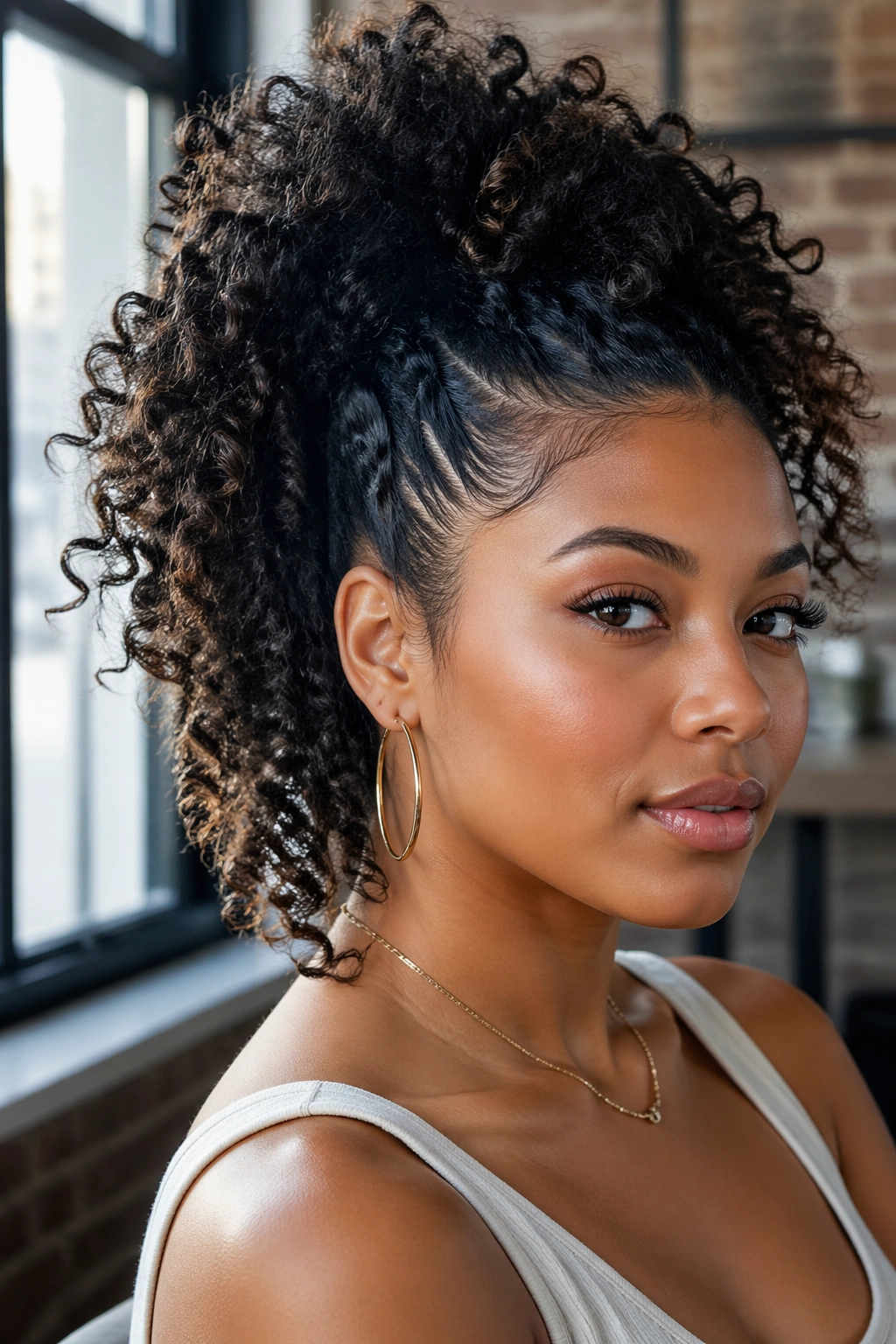
If your curls collapse at the sides, a faux-hawk ponytail gives the shape back. It lifts the hair through the center and keeps the sides sleek enough to feel sharp without turning the whole head flat.
There are two easy ways to do it. One version uses a single central ponytail with the sides pinned back tightly. The other uses a few small ponytails stacked down the middle before everything gets gathered together. Both create height. The second one creates more texture. Thick curly hair can handle either, but the stacked version usually looks better when the curls are especially heavy.
This style has attitude. Not in a costume-y way. It just has more edge than a plain ponytail, and it uses the bulk of the hair instead of pretending to tame it. If the sides puff out, smooth them with a tiny amount of gel or cream and pin them close to the head.
Quick shape rules
- Keep the center section narrow if you want more height.
- Pin the side sections flat before securing the ponytail.
- Leave the curls in the ponytail loose enough to keep their shape.
- Use strong pins if your hair is long enough to pull the whole style down.
A faux-hawk ponytail looks especially good when the curls are dense from root to tip.
11. Low Ponytail With Hidden Lift
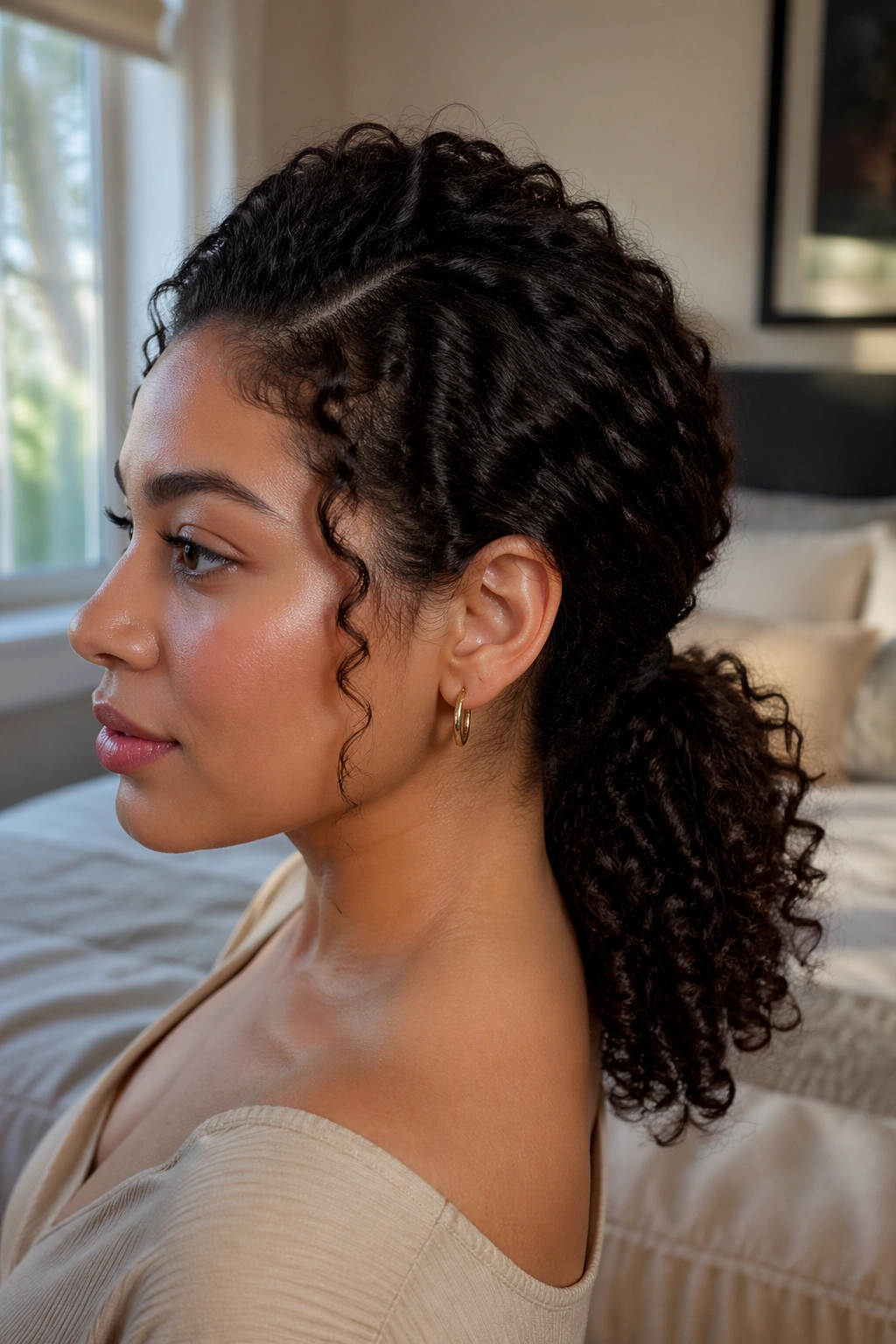
Flat crown? Not if you cheat a little. A low ponytail with hidden lift keeps the front smooth enough to look tidy, then sneaks a bit of shape back into the crown so the style doesn’t feel plastered down.
The trick is to leave a small pocket of volume above the ponytail. After you gather the hair low at the nape, lift a thin section right above the elastic and pin it underneath with a small claw clip or two crossed bobby pins. That creates a soft bump at the crown without making the style look puffy. It’s subtle. Which is exactly why it works.
I use this on thick curls when I want a low ponytail but don’t want the head to look too round or too flat. The hidden lift helps balance the profile. It also makes the ponytail feel more intentional from the side, which matters when curly hair is doing the most.
A little root spray can help here, but don’t overdo it. Too much product and the crown gets sticky, then the lift starts to collapse. Light hands win.
This is a quiet style. Quiet is not a bad thing.
12. Double Ponytail for Extra Support
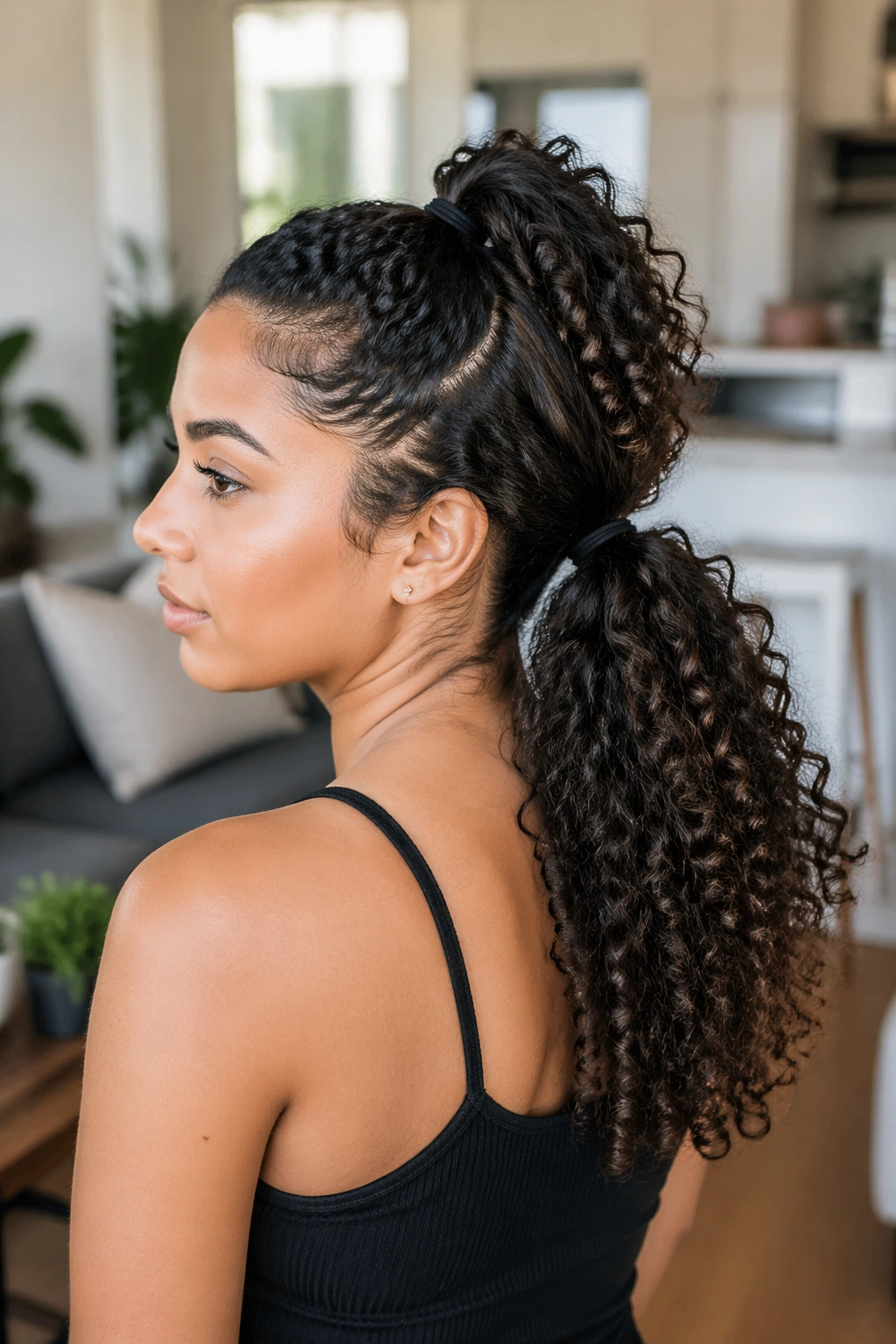
Why does one ponytail feel heavier than it should? Because thick curly hair is carrying its own weight all day, and one tie at one point can struggle to hold it without drooping.
A double ponytail spreads the load. Make one ponytail at the crown, then another just below it at the nape. From the front, the two sections blend into one longer, fuller ponytail. From the side, the weight sits a little better and the shape stays cleaner. It’s a smart trick for long curls or hair that’s dense from root to end.
How to place it
- Gather the top section first and secure it tightly.
- Pull the lower section into a second ponytail directly under the first.
- Use the same curl cream or smoothing product on both sections so they match.
- Wrap a small curl around the elastics if you want the base to look seamless.
This style is one of my favorites when the hair is too heavy for a single tie but I still want the length to show. It also helps if the ponytail tends to sag at the back of the head, since the second tie carries some of the strain.
Not fancy. Just clever.
13. Rope-Twist Ponytail
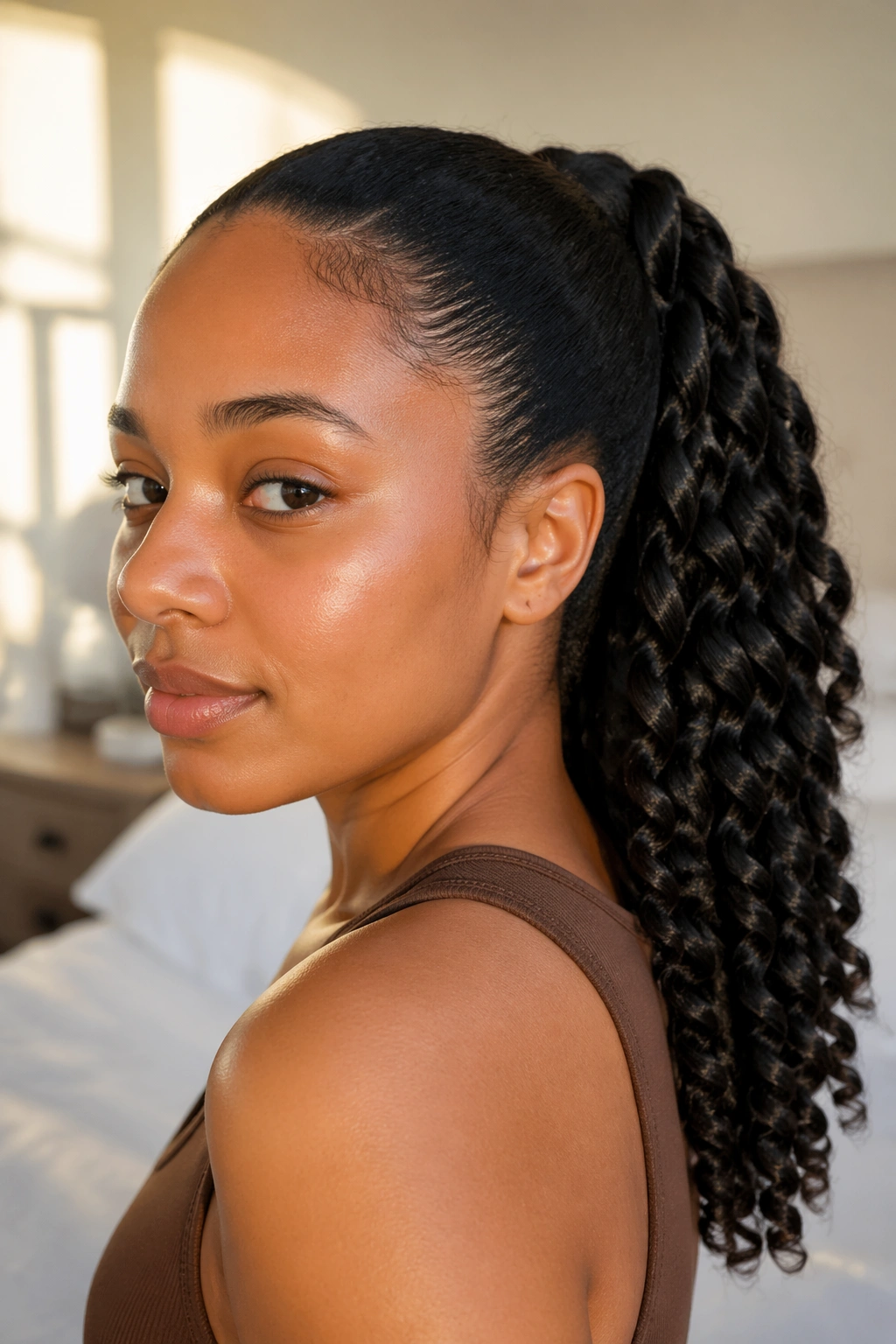
When the curls have more stretch than definition, a rope twist gives them a cleaner line. It’s a good middle ground between a braid and a plain ponytail, and it works especially well when you want less fuzz around the length.
Split the ponytail into two sections, twist each section clockwise, then wrap them around each other counterclockwise. That’s the whole trick. Secure the end with another small elastic. If your curls are long, the rope twist keeps them organized and stops the length from getting tangled up on itself.
This style feels neat without being stiff. Thick curly hair often has enough body to make a rope twist look full instead of skinny, which is the main reason it works so well here. If the curls start to separate, smooth just the outer layer with a little cream before twisting.
The ends can stay curly, or you can tuck them under for a tighter finish. I usually leave them loose. It looks less fussy, and the texture at the bottom keeps the style from feeling too engineered.
A rope twist is one of those styles that looks harder than it is.
14. Sleek Roots, Loose Ends Ponytail
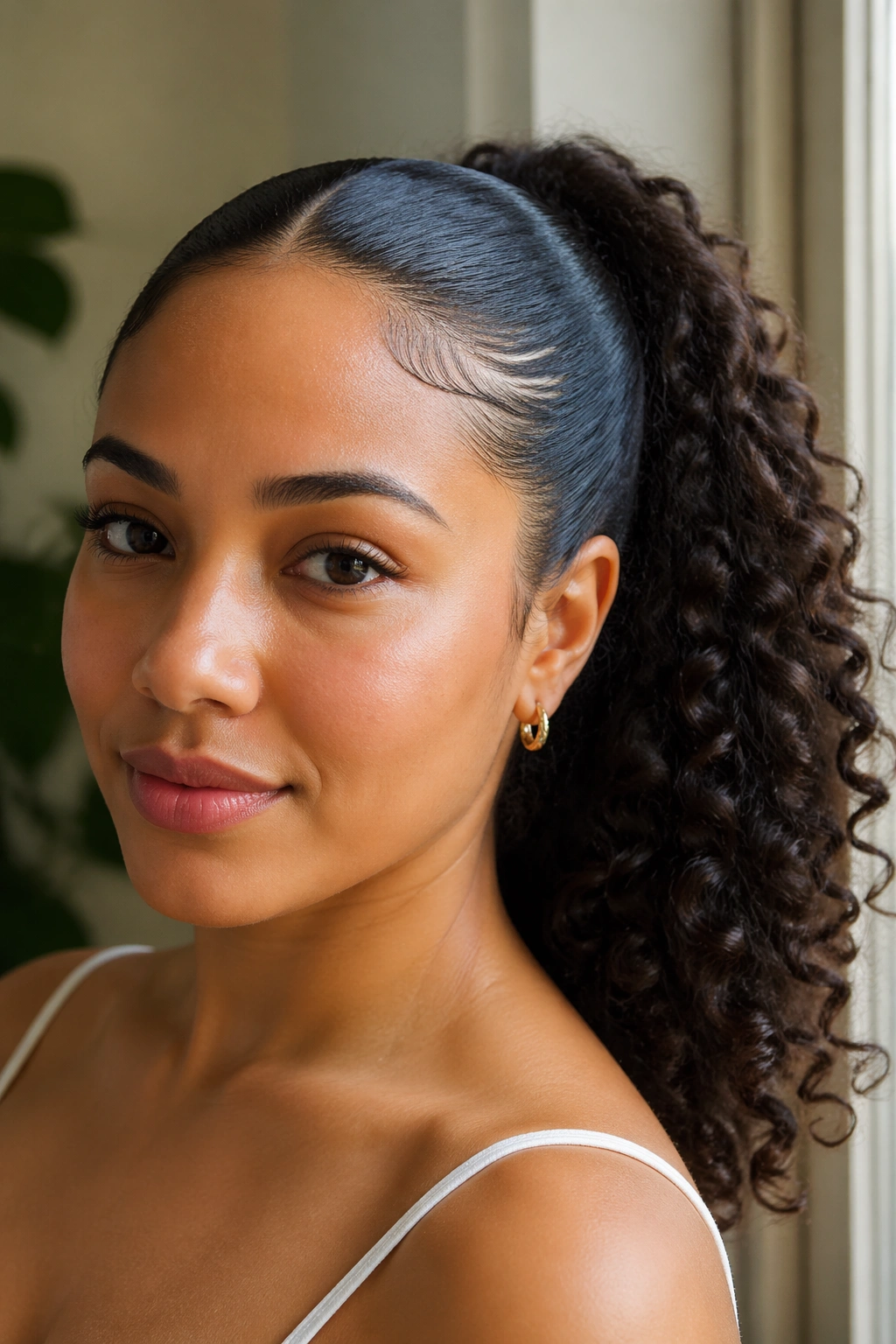
The cleanest ponytail is not the one with the most gel. It’s the one that knows where to stop. On thick curly hair, that usually means smoothing the roots and leaving the lengths alone.
Where to smooth, where to stop
Use gel or styling cream only on the front hairline, the part, and the first inch or two near the scalp. Brush that section back until it lies flat, then stop touching the rest. The curls in the ponytail should still have body. If you flatten them all the way down, the style starts to look stiff and smaller than it should.
This hybrid style is one of the most useful shapes for curly hair because it gives you polish without that helmet effect. The crown looks neat. The ponytail still looks like curls. That balance is harder to fake than it sounds.
I like this version for thick hair that tends to puff at the roots but still has good curl pattern through the length. It keeps the face tidy, and the loose ends move well. If the edges need extra help, an edge brush and a tiny bit of gel are enough. Heavy product usually backfires.
The whole point is to look controlled, not sealed.
15. Loose Day-Three Ponytail
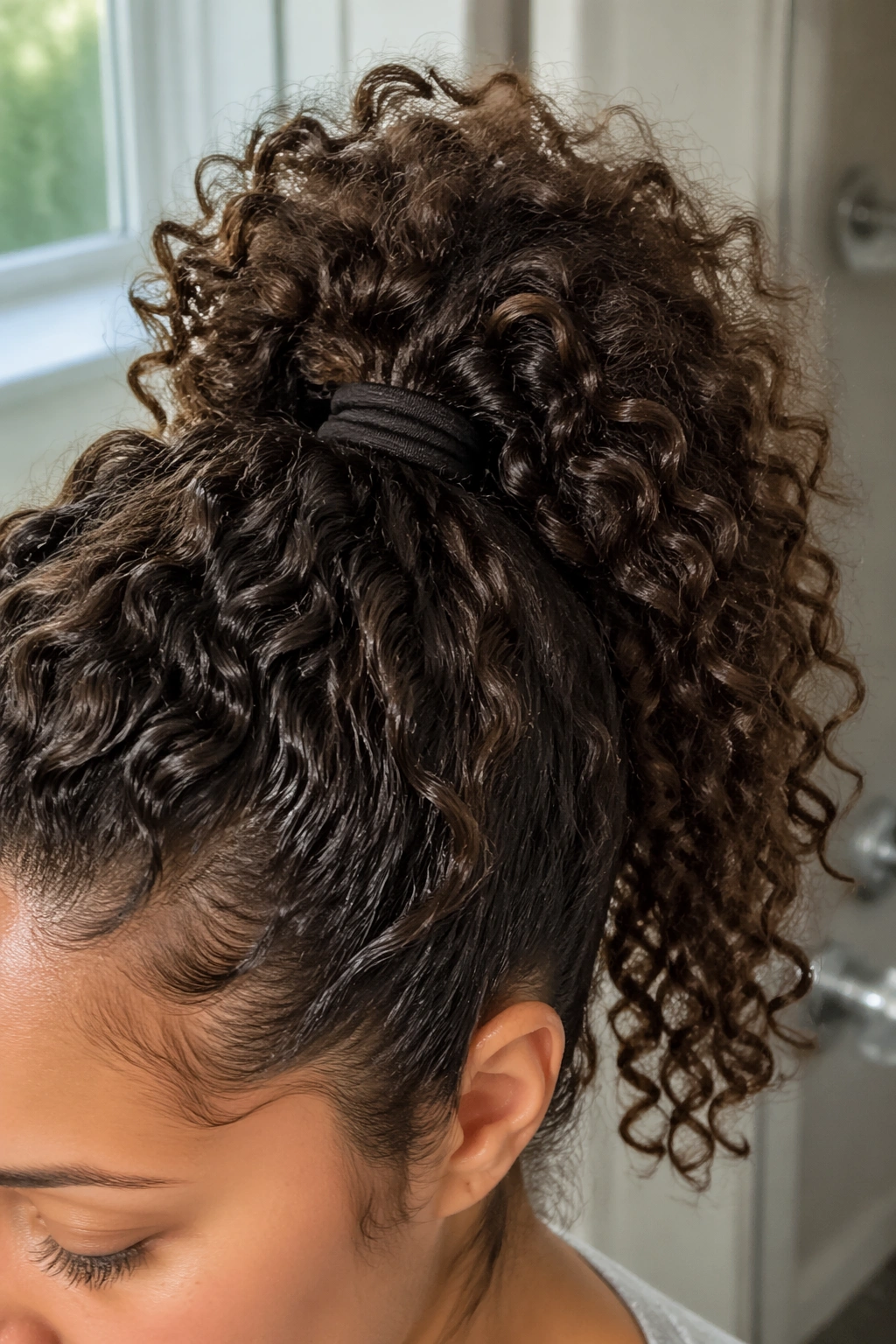
Day-three curls make the easiest ponytail in the room. The texture has settled, the shrinkage has softened a little, and the hair already wants to sit in a lived-in shape.
This is the ponytail I reach for when I do not want to fight the hair. Pull it low or mid-height, smooth only the front where needed, and let the rest keep its natural bend. A small mist of water can wake up the curls, but don’t soak them. A drop of leave-in on the ends is usually enough if they look dry or fuzzy.
The looseness is what makes it work. Thick curly hair often looks best when it is not overmanaged on the second or third day. A few softer flyaways around the crown are fine. A little frizz at the ponytail’s edge is fine too. The style stops looking perfect and starts looking real, which is a better outcome anyway.
If you want a quick finish, wrap a single curl around the base and pin it underneath. If you want it more casual, leave the elastic visible and call it done. That’s the version I keep coming back to when I want the hair to look lived in, not managed.
