



Short curly afro hairstyles can look soft, sharp, playful, or polished with almost no length at all. That’s the fun part. A few inches of curl can read one way in the chair and something completely different once the hair dries and shrinks.
That’s also where people get tripped up. Curly afro hair never stays exactly where you think it will, and that unpredictability is half the charm. A cut that looks small when wet can bloom into a rounded halo, while a tapered shape can make the crown look much fuller than it felt five minutes earlier.
The styles below work because they respect that reality. Some lean on shape, some on definition, some on parting, and a few on a little sleight of hand with pins, gel, or a twist set. The common thread is simple: the haircut does not have to be long to have personality.
1. Rounded TWA With Soft Edges
A rounded TWA, or teeny weeny afro, is the cleanest place to start if you want your curls to look intentional without a lot of fuss. The shape is tiny, but the effect is not. When the cut follows the curve of the head and the curls are left a little longer on top, the whole style feels balanced instead of bare.
Why the shape matters
The rounded outline keeps the eye moving in a smooth circle, which makes short hair look fuller than it is. That is the trick. A blunt, boxy outline can feel harsh on tight curls, while a softer dome gives the hair room to breathe and move.
How to wear it well
- Keep the sides even and lightly shaped every few weeks.
- Use a leave-in and a small amount of curl cream, then let the curls dry before picking them out.
- If your hair shrinks hard, ask for the cut to be shaped on dry or stretched hair so the final result does not vanish.
A rounded TWA works especially well if you like low-maintenance mornings. You wash, moisturize, define a little, and leave. No drama.
Pro tip: Don’t overpick the sides. Lift the top more than the edges, or the whole shape can balloon into a fuzzier version of itself.
2. Tapered Curly Afro
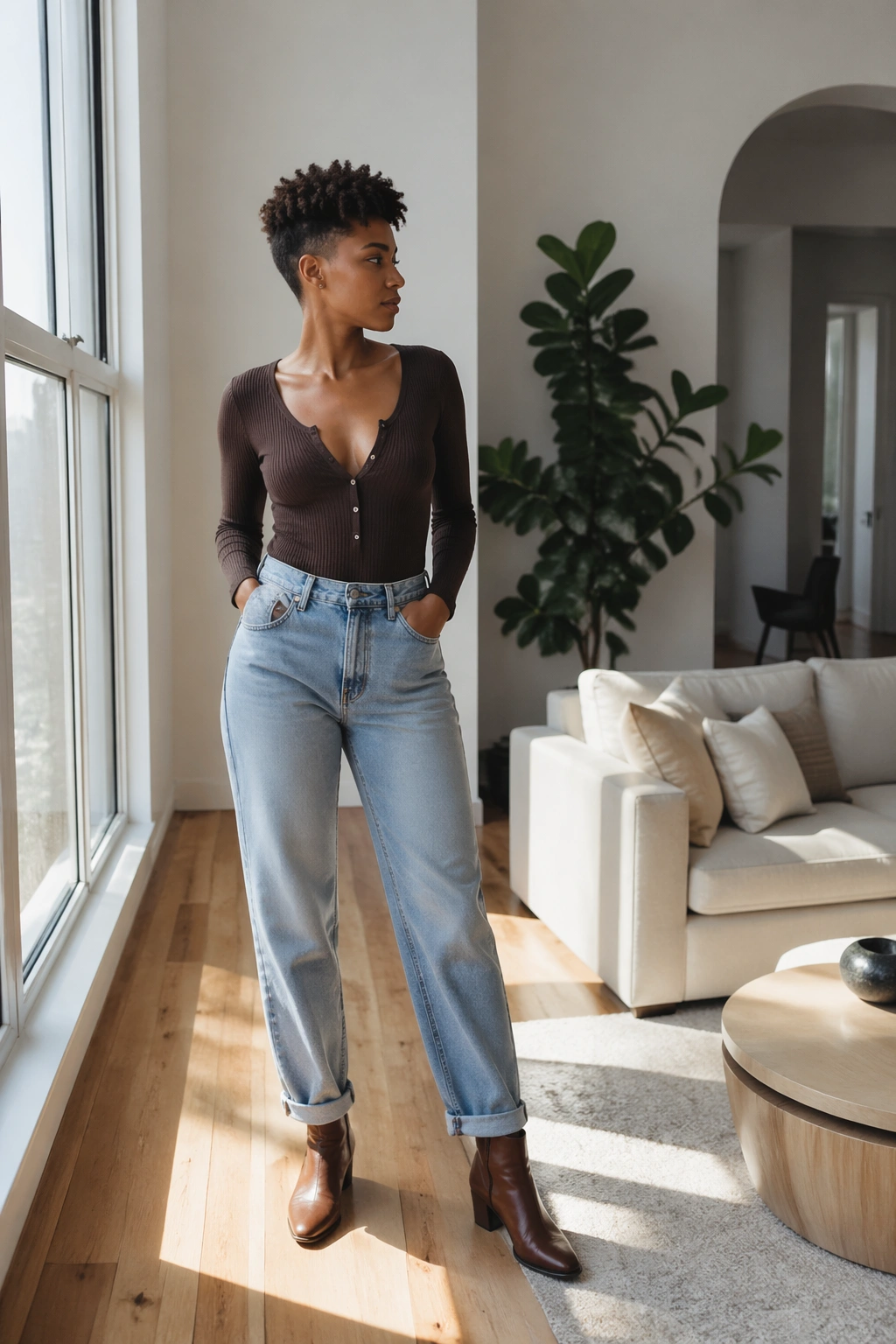
Want the sides neat and the crown fluffy? Then a tapered curly afro is probably the one you keep coming back to. It gives you that clean, fresh outline around the ears and nape, but it still leaves enough length on top for real curl movement.
The beauty of a taper is that it makes short hair look styled even on days when you did almost nothing. That matters. A little shape at the sides changes the whole read of the haircut. Instead of “I let it grow out,” it looks like “yes, this was planned.”
The crown can be left around 2 to 4 inches long, depending on your curl pattern and how much lift you want. Tighter curls tend to make a taper look fuller than loose curls at the same length, so the exact cut matters more than the number on the ruler.
This style is also forgiving during the grow-out phase. The faded sides keep the shape tidy while the top gets bigger. No awkward triangle if the barber or stylist keeps the outline clean.
A good taper is crisp, but not severe. If the fade climbs too high, the head can start to look top-heavy. Keep the transition soft, and the curls do the rest.
3. Deep Side-Part Afro
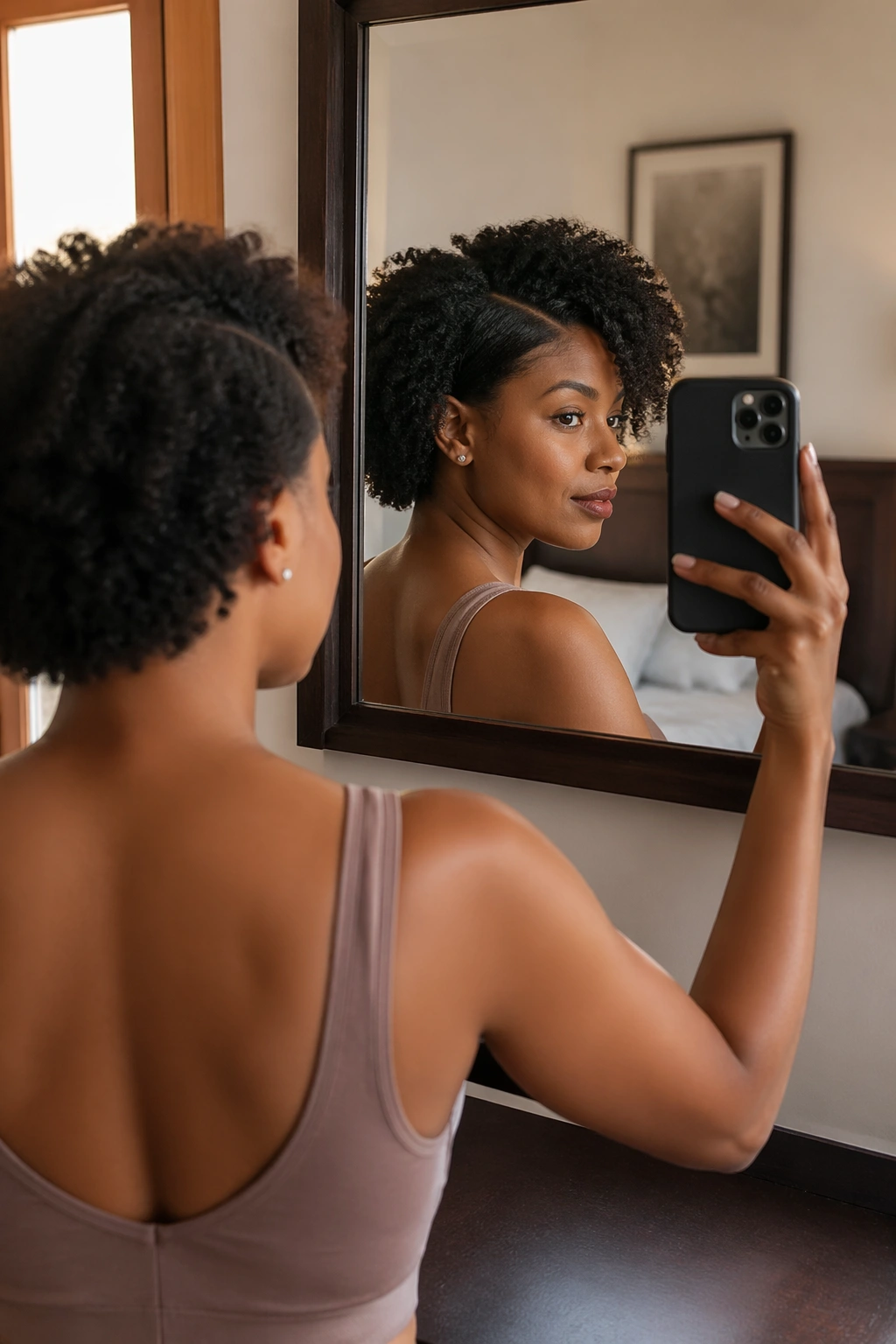
A deep side part can change the mood of short curls in seconds. One shift in direction, and suddenly the whole style feels more deliberate. That is why this one never gets old. It works on wash-and-go curls, twist-outs, and even a quick puffed shape when you are between styles.
How to draw the part
Use a rat-tail comb on damp hair and trace the part where your curl pattern naturally gives you some separation. If the hair fights you, don’t force a razor-straight line across every strand. A slightly curved part usually looks better on short curly afro hair because it blends into the texture instead of sitting on top of it like a hard line.
What makes it flattering
- The part adds asymmetry, which softens round faces and gives oval faces more shape.
- One side can be tucked with a bobby pin or small clip.
- A tiny bit of gel at the root helps the part stay visible, but too much will make the hair stiff and patchy.
The main thing is balance. You want the part to look like it belongs there, not like it was carved into the hair with a ruler. Let a few curls fall across the line. That little messiness looks better than perfection.
4. Curly Frohawk
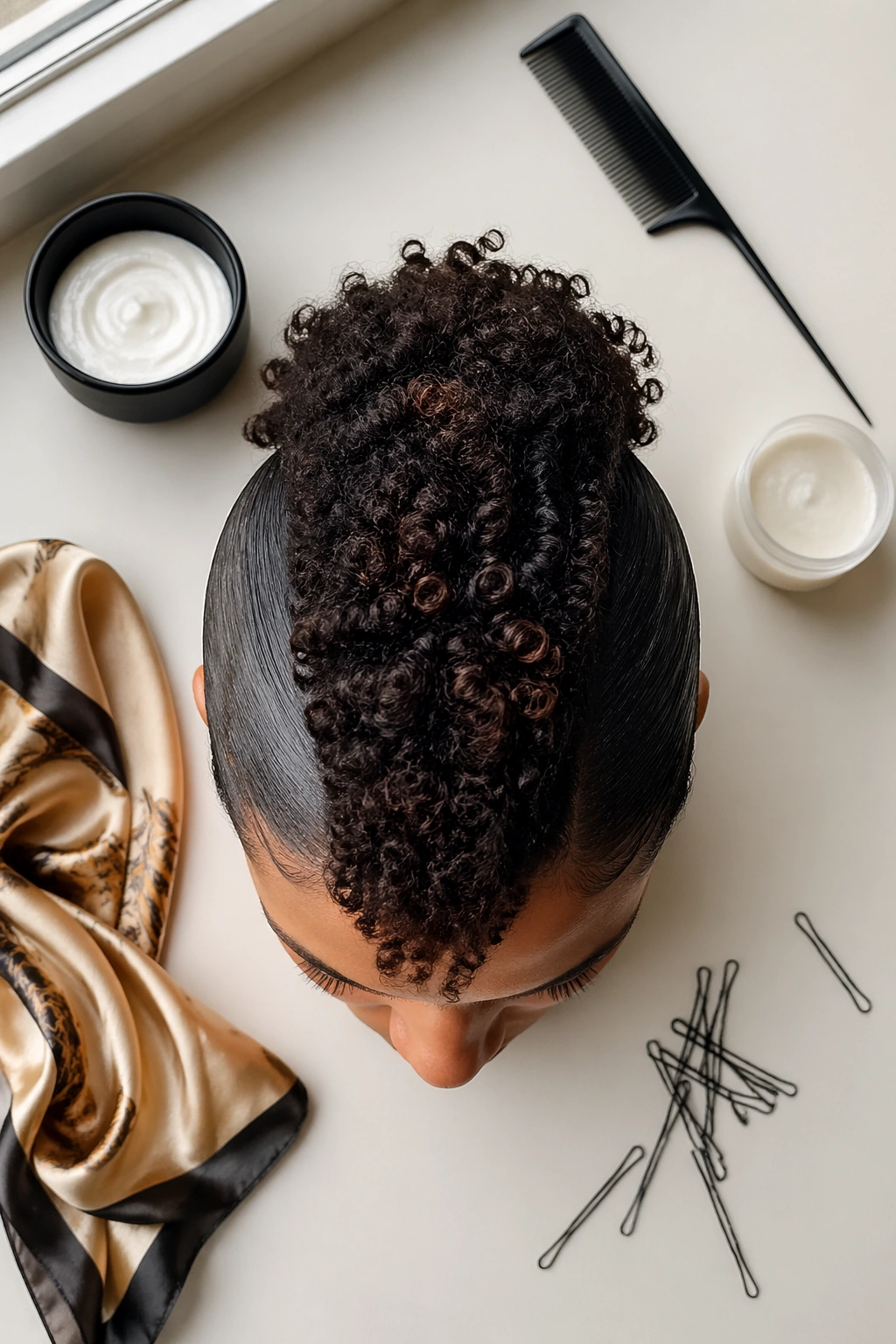
The curly frohawk is the easiest way to make short hair look like you meant business. Sides pinned down, center section lifted up, and suddenly the whole head has attitude. It is a strong shape, but not a loud one unless you want it to be.
The center strip can be puffed, twisted, or defined with a little curl cream and finger shaping. On tighter textures, a frohawk with a bit of height in the middle reads especially well because the contrast between the sleek sides and the textured center gives the style its punch.
You can get the sides flat with gel, bobby pins, or a clean tapered cut. If your hair is too short to pin flat neatly, braid or flat twist the side sections close to the scalp first, then pin the ends back. That keeps the style from slipping halfway through the day.
A frohawk is also one of those styles that looks good from the side, which matters more than people admit. Turn your head, and the shape still holds. Nice.
Use a satin scarf at night if you want the center to keep its shape. The sides usually need a quick refresh in the morning, but that is a small price for a style that looks this sharp.
5. Finger Coils
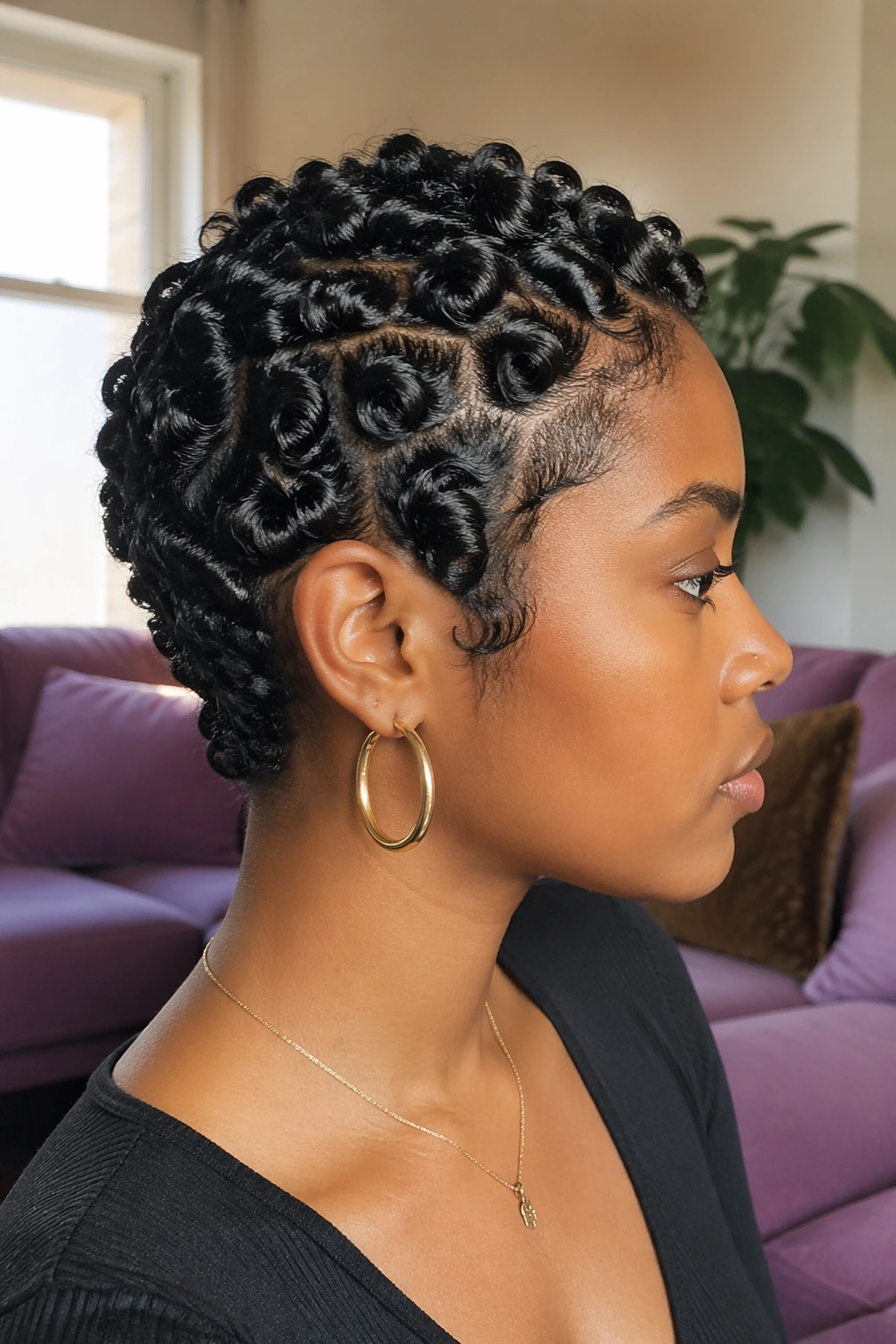
Finger coils are one of those styles that looks more complicated than it is. The result is neat, springy spirals that sit close to the head and make short curls look polished without losing softness. They take time, yes. They also hold shape in a way that loose styling never quite does.
Why do they work so well on short hair? Because each coil trains the curl to sit where you put it. On type 4 textures, that can make the difference between a fuzzy crop and a clean, defined look. The finished style is small but detailed, almost like each curl got its own tiny frame.
How to keep the coils neat
- Work on damp hair with leave-in and a styling cream or gel.
- Take sections about the size of a pea to a dime, depending on density.
- Wrap each piece around your finger in the same direction so the curls dry evenly.
- Let the coils dry fully before separating anything.
If you rush the drying stage, the coils puff out and lose that tidy look. That part matters. A hooded dryer helps, but air-drying works if you have the patience.
The nice thing about finger coils is that they age well. On day two or three, they loosen into a softer coil-out instead of collapsing into a mess. That softness can be lovely.
6. Twist-Out Afro

A twist-out is the style people keep choosing when they want a little more body than finger coils give them, but not the full commitment of redoing their hair every morning. It starts in twists, which sounds simple because it is. The payoff comes when you unravel them and the hair opens into a fuller, fluffier shape.
The main rule is boring but non-negotiable: the hair has to be fully dry before you take the twists down. Damp twist-outs frizz up fast and lose definition in the first hour. Dry twists release into those soft rope-like waves and curls that make short hair look twice as lively.
This style works with a lot of curl patterns, but it shines on hair that already likes a little stretch. If your hair is dense, use smaller twists so the shape does not collapse in the middle. If your hair is finer, bigger twists can give you more volume.
A few things help a lot:
- Use a cream or mousse that gives hold without crunch.
- Separate the twists gently once they are dry.
- Fluff the roots with your fingertips or a pick, not a brush.
The twist-out is one of those styles that looks casual but still reads put-together. That is a useful combination. Not fussy. Not plain either.
7. Wash-and-Go Short Curly Afro
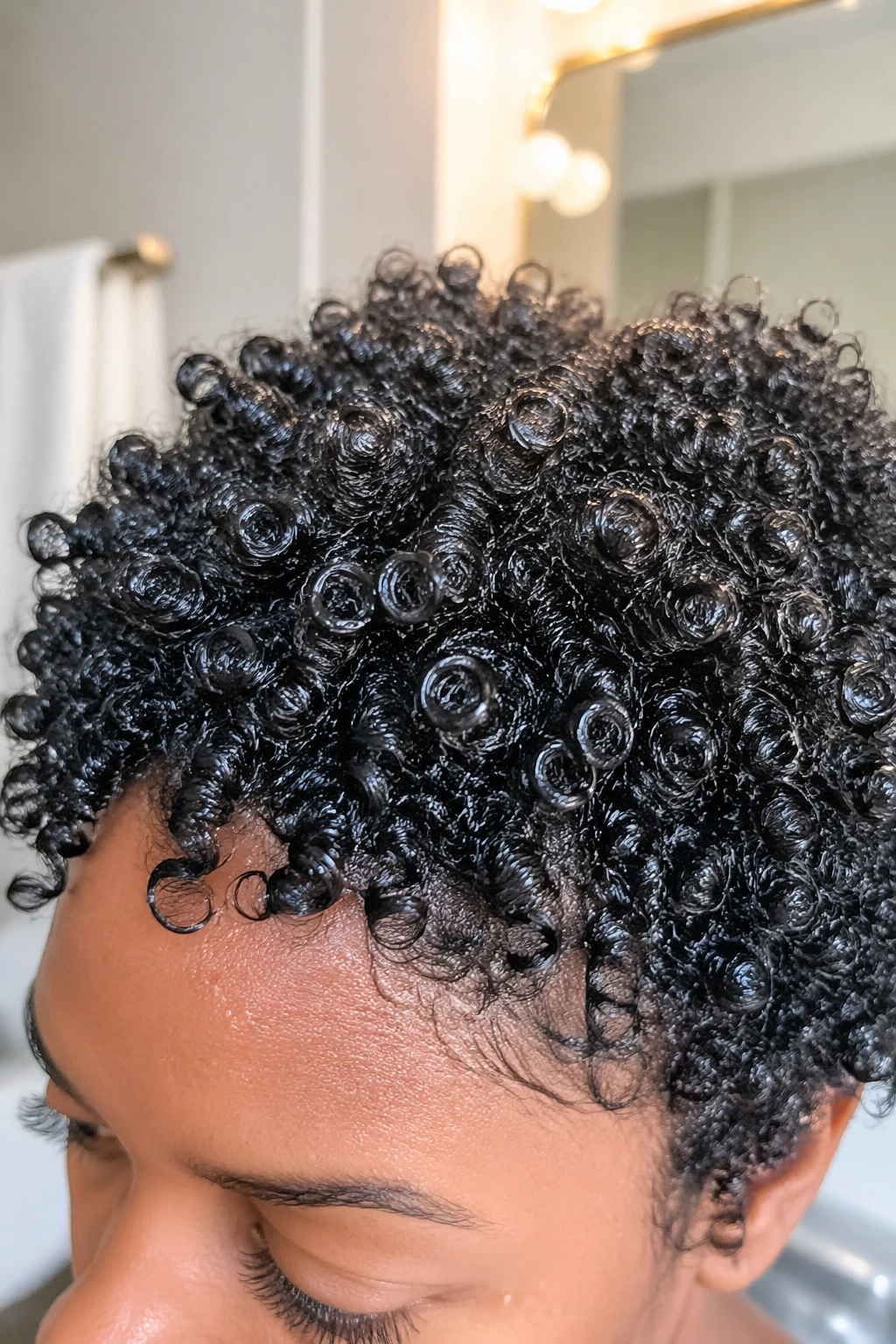
A good wash-and-go on short curly hair has a specific kind of charm. The curls clump, dry, and settle into their own shape, and if the cut is right, the whole head looks easy in the best possible way. No elaborate twist set. No hidden pins. Just curl pattern, moisture, and a little patience.
The haircut matters more here than people want to hear. If the shape is uneven, the wash-and-go will show it immediately. If the cut has a soft round outline or a tapered edge, the style suddenly looks intentional even when the styling itself is simple.
For this look, product choice matters less than people think and more than they think at the same time. You do not need a shelf full of jars. You do need a leave-in that your hair likes, plus a gel or cream that can hold the curl clumps until they dry.
The nice thing about a wash-and-go is that it keeps the natural texture front and center. There is no pretending. If your curls are loose, the style looks airy. If they are tight, it reads plush and dense. Either way, the shape should carry the look.
A diffuser can help if you want more lift at the roots. Air-drying gives a softer finish. Pick the one that matches your morning, not the one that sounds better on paper.
A bad cut can ruin a good wash-and-go. That is not dramatic. It is just true.
8. Mini Puff Pairs
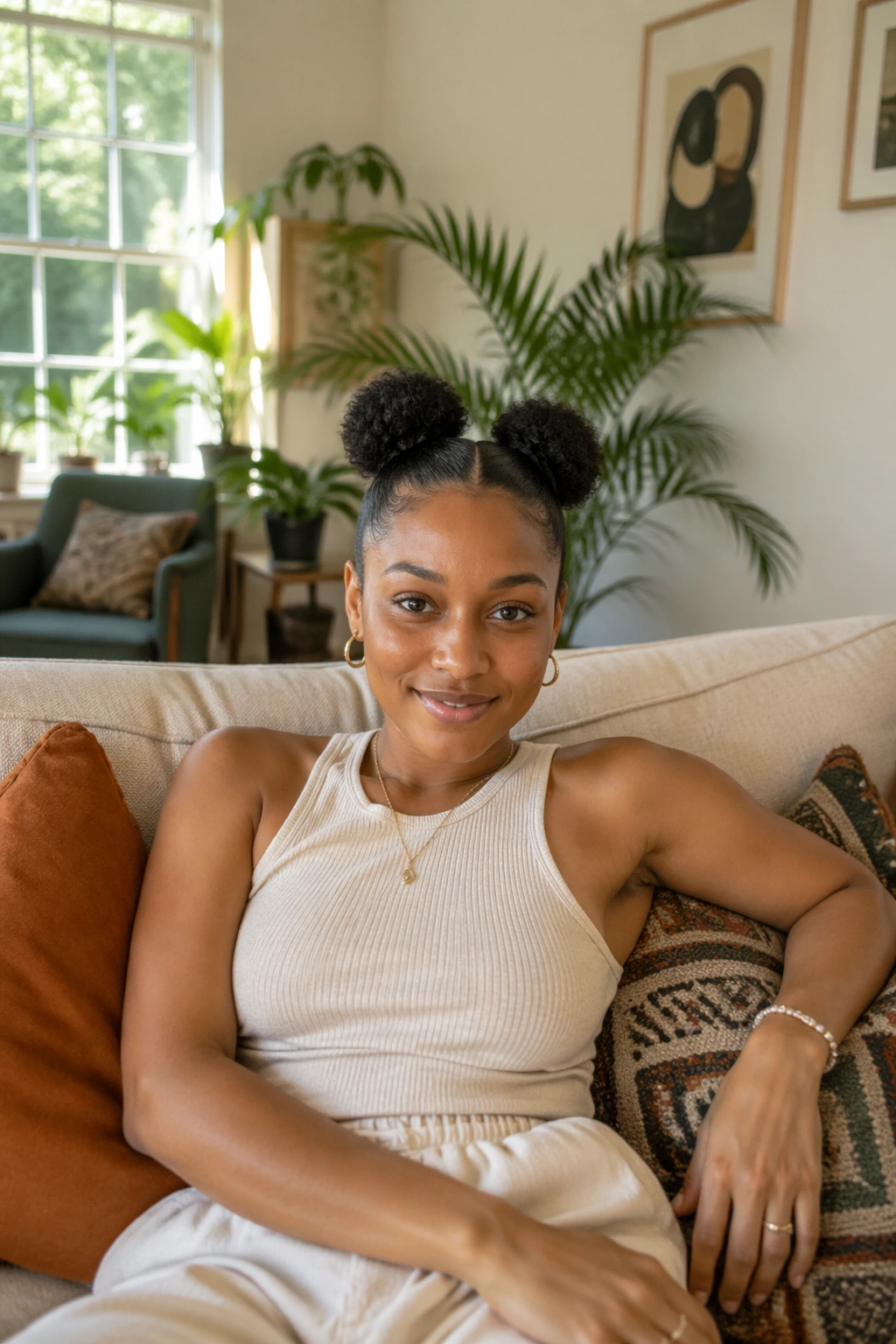
Two small puffs can be playful, neat, and a little bit sweet all at once. On short curly afro hair, mini puff pairs work because they use parting and placement to create structure where the length is limited. The style is simple, but it does not feel lazy when the sections are clean and the puffs sit evenly.
Parting map
Start with a center part if you want the most balanced look. A side part gives the style more motion and can make one puff sit a little higher than the other, which is fine if you like asymmetry. Use gel only at the roots and part line; the goal is to smooth the base, not glue the whole head down.
Edges and finish
A soft edge control along the hairline can sharpen the style without making it stiff. Small puffs look better when the roots are slightly lifted, not flattened into the scalp. If the bands are too tight, the whole thing can pull uncomfortably and leave dents you did not ask for.
Mini puffs are a nice choice when you want something that feels light on the head. They also work well with small earrings, which sounds minor until you see the whole look together. Then it makes sense.
Keep the puffs moisturized, but not soaked. Too much product makes them droop. A little definition goes a long way here.
9. Flat Twist Crown
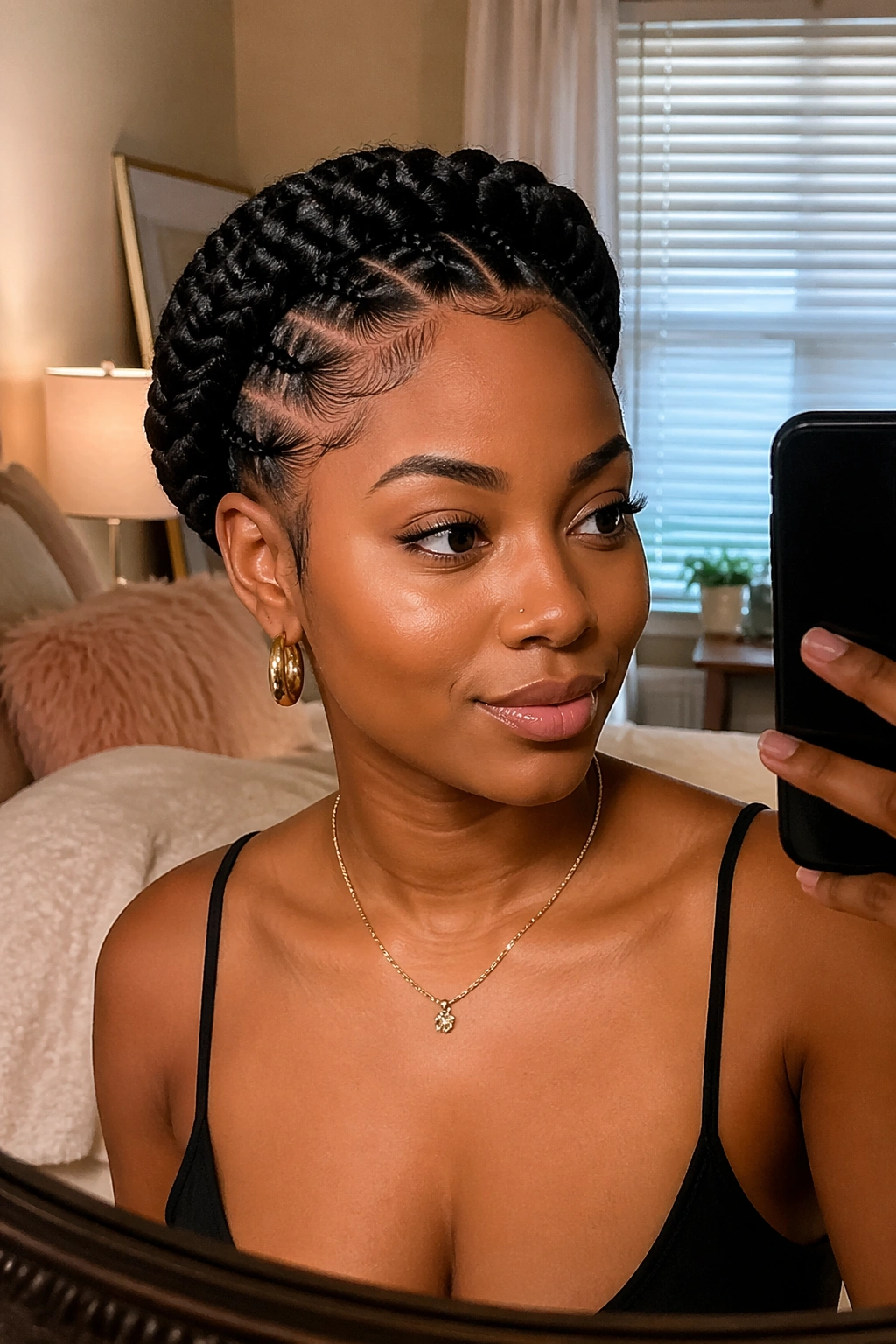
Flat twists get treated like a backup plan, which is unfair. On short hair, a flat twist crown can be one of the smartest styles you wear all month. It keeps the edges tidy, protects the ends, and gives the top a neat, patterned finish that reads more thoughtful than people expect.
The crown shape is the point. Instead of piling all the hair upward or leaving it loose everywhere, the twists follow the head and build a ring or halo around it. That framing effect is strong. It can make short hair feel almost sculpted.
Why it lasts
Flat twists hold because they sit close to the scalp and reduce daily handling. Less touching means less frizz, and less frizz means the style keeps its shape for longer. If your hair is dry or fragile, that matters more than a cute first-day finish.
Where it shines
- Busy workdays
- Gym stretches where you do not want strands everywhere
- Travel days
- Anyone trying to stretch a wash day
A little shine product at the roots can make the twists look clean, but heavy oils can build up fast and make the scalp feel greasy. Light hand. That is the rule.
If you want a style that looks calm without trying too hard, this is one of the strongest picks on the list.
10. Curly Bangs and a Rounded Shape
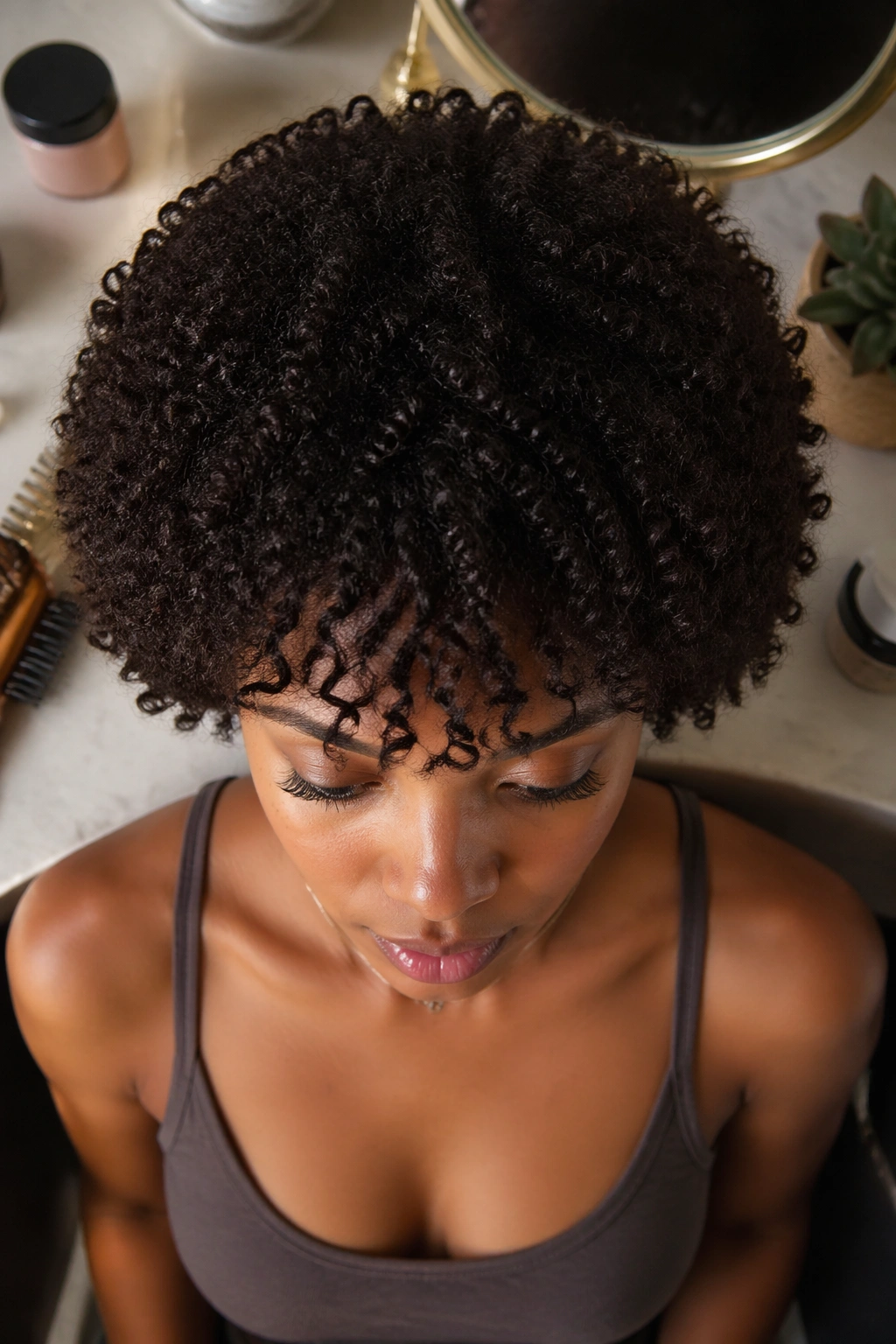
Curly bangs change the whole mood of short hair. They bring the curls down toward the forehead, which softens the face and makes the eyes feel more open. The style can look romantic, sharp, or a little playful depending on how the bangs are cut.
The catch is shrinkage. Curly bangs almost always spring up shorter than you think, sometimes much shorter. So if you want fringe that actually brushes the brows, the hair has to be cut with that bounce in mind. Cutting on stretched hair or shaping the bangs while dry gives you a much better read than guessing from wet curls.
Rounded bangs work well when the rest of the afro stays soft and full. They can also sit a little uneven in a good way, especially if your curls form different-sized ringlets across the forehead. Perfect symmetry is not the goal. Movement is.
This style is a gift for people who want the face to take center stage. It can also balance a long forehead or add a bit of softness to a strong jawline. No miracle involved. Just smart placement.
If the bangs start to separate too much during the day, mist them lightly with water and reshape with your fingers. Avoid brushing them flat unless you want a helmet. Nobody wants that.
11. High-Top Curly Afro
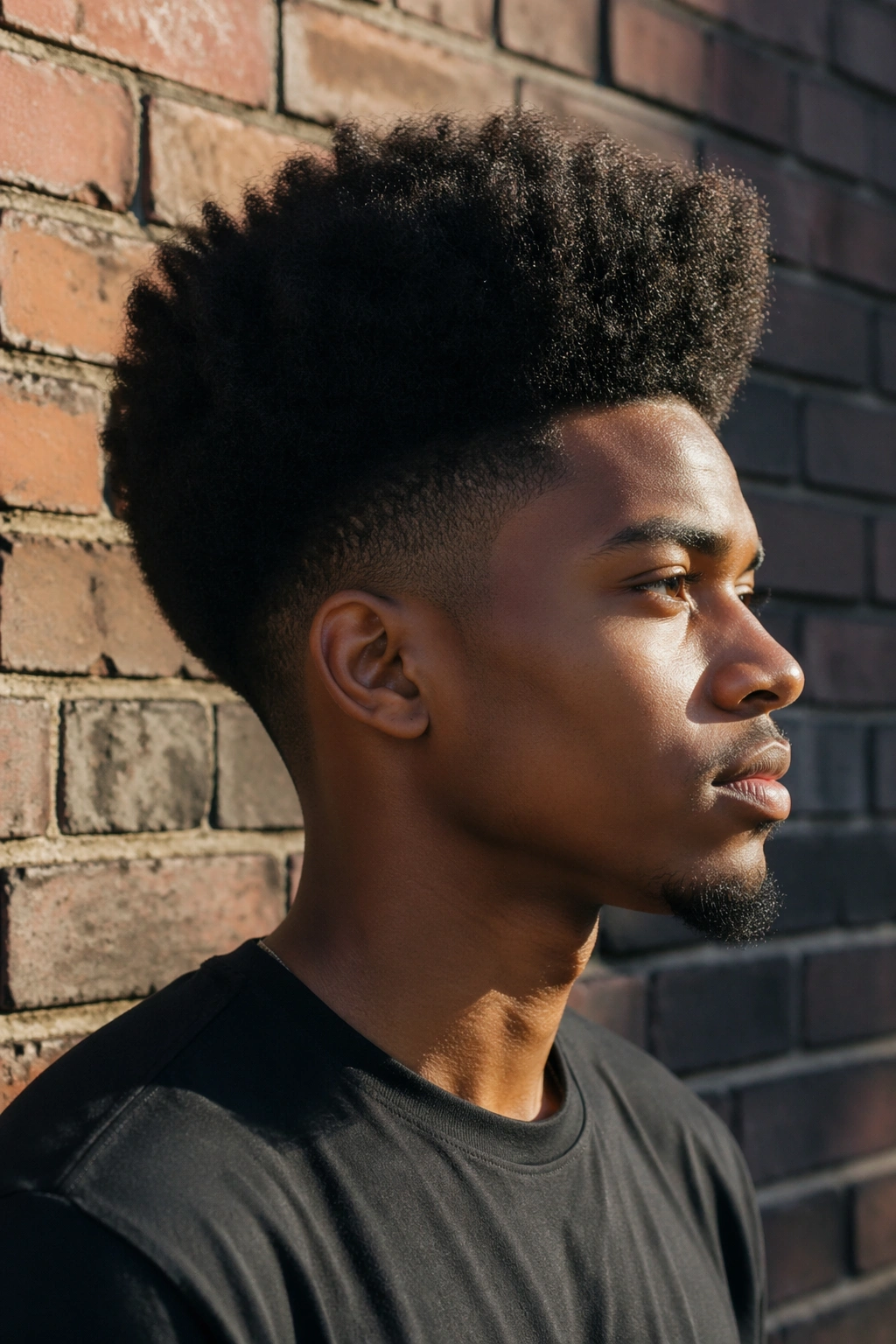
A high-top curly afro is all about lift. Unlike a rounded shape that spreads evenly in every direction, this cut keeps the height concentrated up top, which gives the face a longer line and the whole style a bolder silhouette. It is one of those cuts that makes short hair look purposeful the second you walk in.
The sides are usually tapered or faded, while the top keeps the volume. That contrast is what makes the shape work. Without it, the style can lose its edge and just become a bigger afro. Not bad, but different. Very different.
This cut suits people who like a little drama in the shape and do not mind keeping the top moisturized and shaped. A pick at the roots helps if you want lift, but you do not want to rip through the curl pattern every day. Gentle upward fluffing is enough.
The high-top also works well if your hair grows outward faster than it grows long. A clean shape-up at the sides keeps the style looking deliberate between trims. The outline matters here more than the exact curl definition.
It is a strong look. Clean, vertical, and a little proud. That last part is probably why it keeps coming back.
12. Side-Swept Afro with Clips
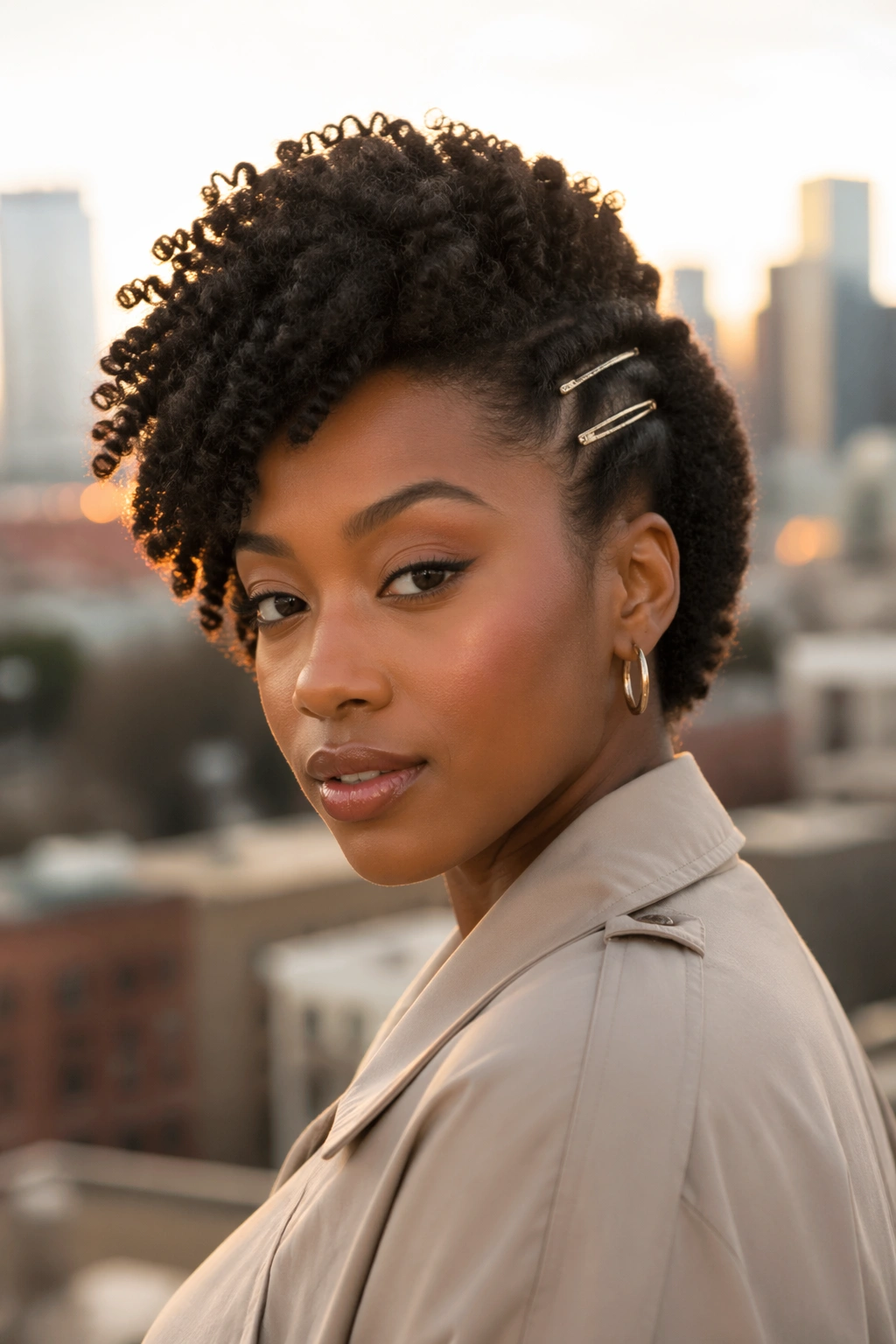
A side-swept afro can be as simple as tucking one side back and letting the other side fall forward in a soft curve. Add a clip or two, and the style shifts from everyday to polished without becoming stiff. It is the kind of small change that saves a whole bad hair day.
I like this one because it feels honest. You are not pretending the hair is long. You are working with the length you have and giving it direction. That usually looks better anyway.
What makes it work
- Sweep the hair away from the heavier side so the volume stays balanced.
- Use one flat clip, two small barrettes, or a decorative pin near the temple.
- Keep the front section moisturized enough to move, but not so slick that it falls flat.
- Let a few curls spill near the cheek. The style needs that softness.
A side-swept look is especially useful when you want your face to open up a bit. It can soften sharp features and show off earrings, glasses, or a strong brow line. That sounds cosmetic because it is cosmetic. There is nothing wrong with that.
If you are heading somewhere and have 5 minutes, this is one of the fastest ways to make short curls look considered. A clip does a lot of work.
13. Bantu Knot-Out
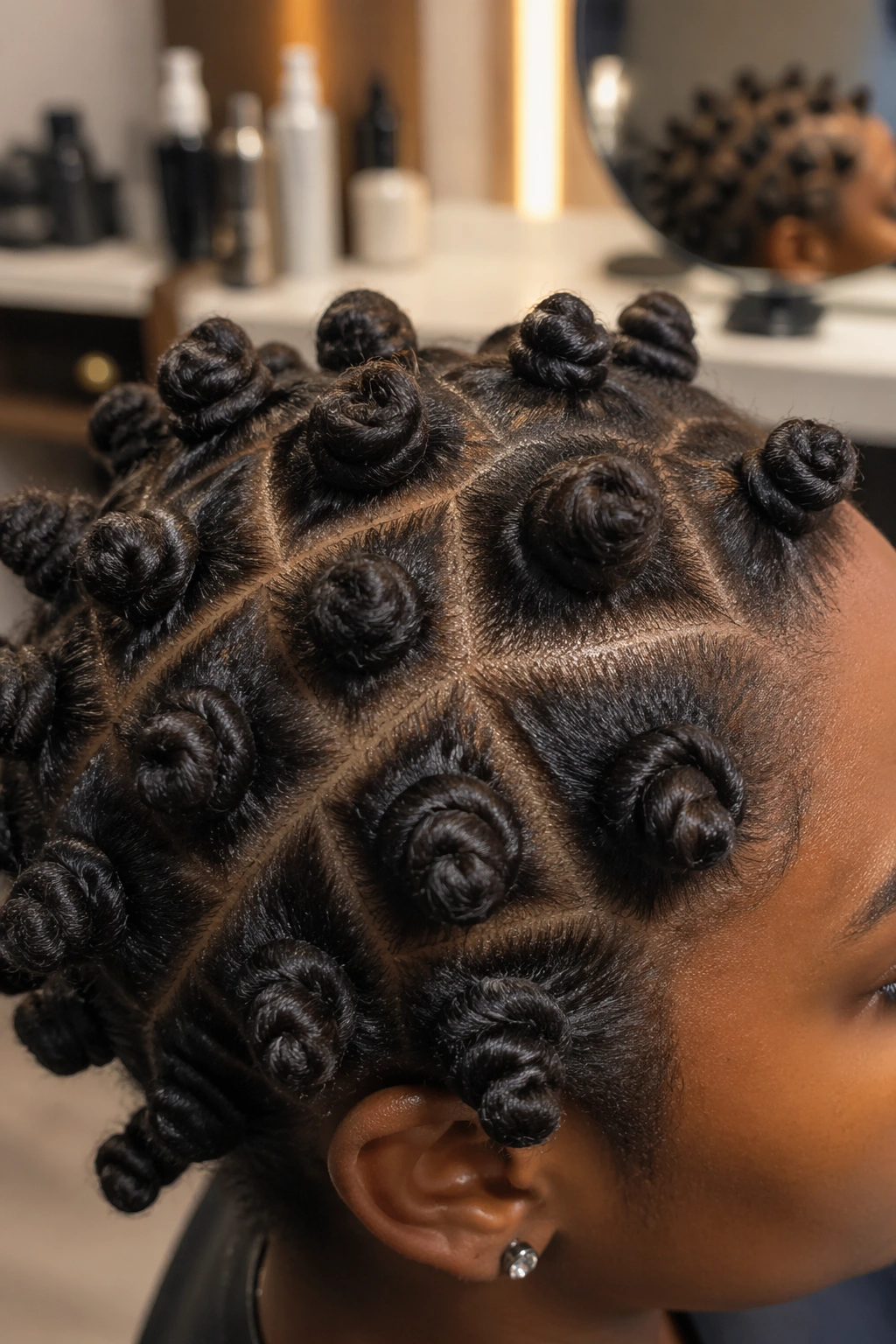
What if you want more curl pattern than a twist-out gives you? A Bantu knot-out is the answer a lot of people come back to. The hair is sectioned, twisted or coiled into small knots, dried fully, then taken down for a springier, more patterned result.
The style is especially useful on short curly afro hair because the knots do not need a lot of length to work. Tiny sections can still make a big difference. On tighter textures, the result can be beautifully compact and bouncy; on looser curls, it creates a more obvious spiral.
How to use it
- Make the sections small if you want tighter definition.
- Use enough product to keep the strands smooth, but not so much that the knots stay wet for hours.
- Let the knots dry all the way through. Half-dry Bantu knots turn into frizz fast.
- Unravel with clean hands and separate the curls only as much as you need.
The hairstyle can look playful on its own, or it can be the set you use before another style, like a side part or a shaped afro. That flexibility is useful. You get style and texture at the same time.
A Bantu knot-out does take patience. Still, the payoff is worth it when you want a defined curl pattern that looks a little more polished than a basic loose set.
14. Asymmetrical Curly Afro
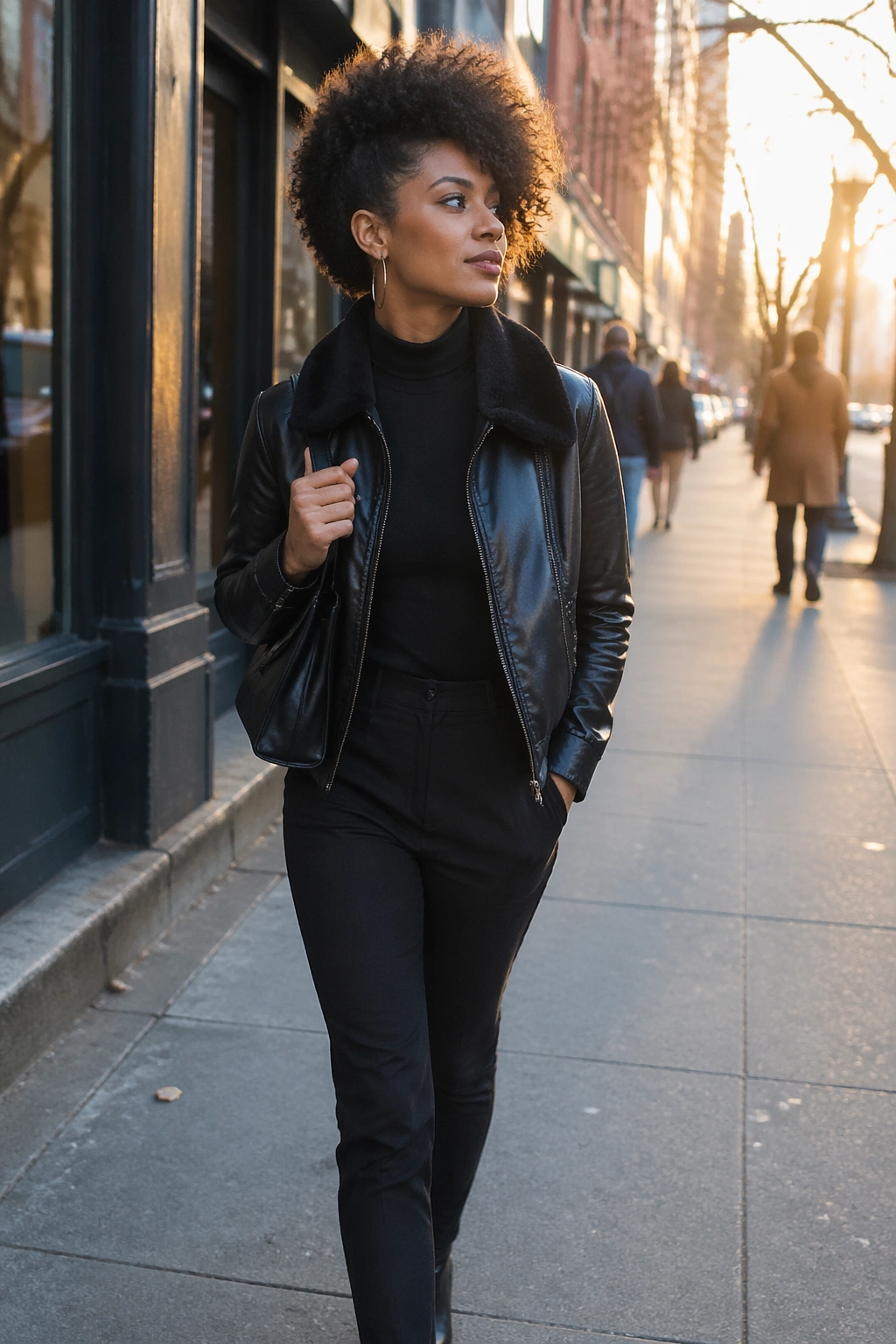
An asymmetrical curly afro is one of the most underrated short styles because it uses imbalance on purpose. One side is fuller, longer, or more forward than the other, and instead of looking off, it looks sharp. The eye notices the difference right away, which is the whole point.
This shape works especially well if your curls already have a lot of personality. The haircut just gives that texture a direction. One side can be tucked behind the ear while the other side stays loose and rounded, or the back can sit lower while the front lifts a little higher. There are many ways to do it, and none of them need to be identical.
The cut itself matters more than the styling. If the outline is too vague, the asymmetry disappears into ordinary fluff. A good stylist will shape it with the head’s natural angles in mind so the difference between sides looks clean, not accidental.
This is a good choice if you like hair that feels a little artistic without becoming difficult to wear. It is not a costume. It is just a strong outline.
Regular trims help keep the balance from drifting. Once the shorter side starts to grow out, the shape loses some of its bite. A quick reshape fixes that.
15. Sponge-Set Shape-Up
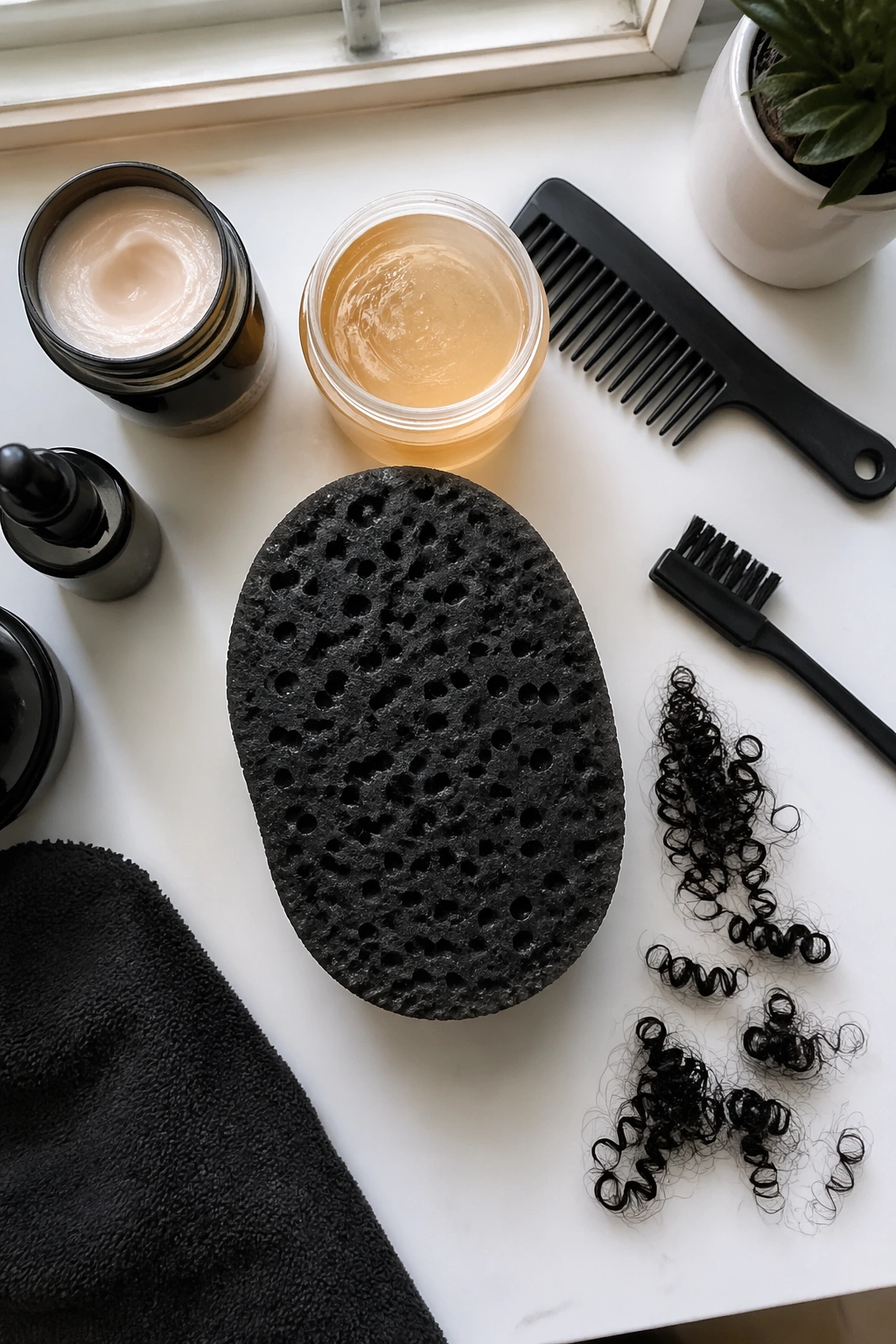
A sponge-set shape-up is a smart move when your hair is short, tight, and a little stubborn about definition. The sponge helps coax the curls into a more uniform pattern, while the shape-up around the hairline keeps the style looking fresh and edged in.
The process is simple enough: damp hair, a little product, and small circular motions with the sponge until the curls start to form. You do not need to press hard. In fact, pressing too hard can flatten the roots and make the texture look tired instead of lively.
This style is especially useful for type 4 hair that wants definition without the time cost of hand-coiling every section. It gives a textured finish fast, which is why people keep reaching for it on shorter cuts. The trick is knowing when to stop. A little texture looks good. Overworking the sponge can rough up the hair and pull at fragile strands.
A clean line-up around the edges makes the whole look pop. Without it, the sponge-set can read unfinished. That line at the temples, forehead, and nape is doing more work than people realize.
Keep the sponge clean, too. Product buildup changes the way it moves through the hair, and a dirty sponge can leave the texture dull. Small thing. Big difference.
Final Thoughts
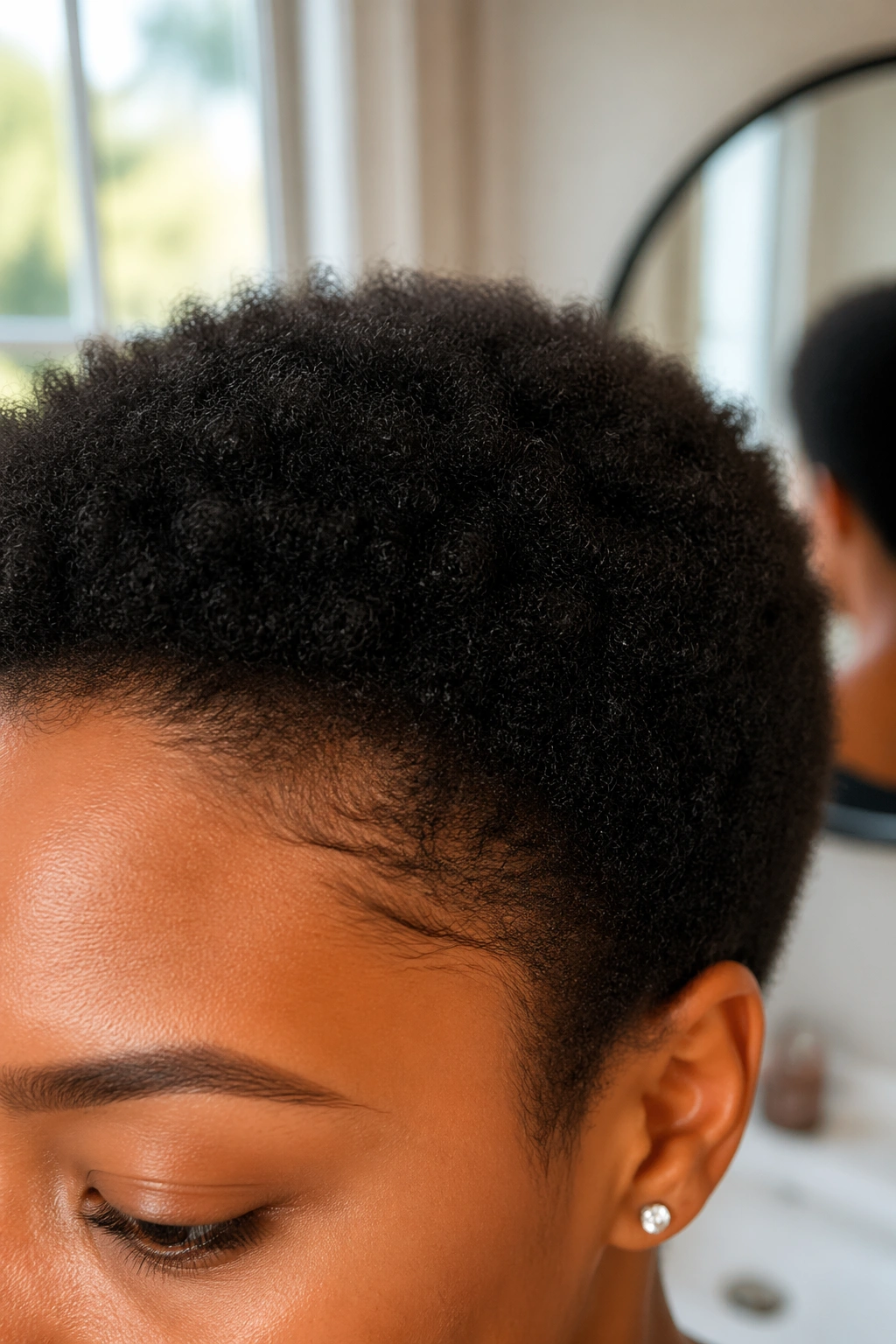
The best short curly afro hairstyles are the ones that work with your curl pattern instead of fighting it. A rounded TWA, a tapered cut, a twist-out, or a frohawk can all look completely different on the same person depending on how much lift, parting, or edge detail you use.
Length matters less than shape. That’s the part people often miss. Two inches of curls can look plush and full when the outline is clean, and the same haircut can look flat if the styling ignores the natural direction of the hair.
If you are trying to choose between styles, take one photo in daylight from the front and one from the side after styling. That quick check tells you more than a mirror glance ever will. The style that holds its shape from both angles is usually the one worth keeping.
