



A good pageant hairstyle for curly hair has to do three jobs at once: hold shape under hot lights, survive a long walk and a polite smile that lasts longer than it should, and still look soft in photographs from six feet away. That sounds simple until you actually try to make curls behave.
The trap is usually one of two extremes. Either the curls are left too loose and drift into frizz by the time you reach the stage, or they’re sprayed into a stiff shell that looks fine from the front and strange from every other angle. The sweet spot is more interesting than that. It’s control with movement, shine without grease, and enough structure that the style still makes sense after a crown, earrings, and a full gown enter the picture.
Curly hair gives you a real advantage here because it already has body. You do not need to fake volume the way straight hair often does. What you do need is shape, balance, and a plan for the crown area, because that little square inch at the top of the head can make or break the whole look.
A dress with a high neckline wants something different from a sweetheart bodice. Tight ringlets behave differently from loose spirals. Dense curls can swallow pins if you’re careless. Fine curls can look flat if you overwork them. The styles below lean into those realities instead of pretending every head of curly hair behaves the same way.
1. Soft Defined Hollywood Curls
Soft Hollywood curls are one of those styles that never looks accidental. They sit between formal and relaxed, which is exactly why they work so well for pageant stages. The curl pattern is smooth, glossy, and deliberate, but it still moves when you turn your head.
The key is not “curling hair” in the casual sense. You want uniform sections, usually wrapped around a 1-inch curling iron or wand, then pinned until they cool so the shape stays clean. Once the hair is cool, brush the curls out with a soft boar-bristle brush or a wide paddle brush. That’s when the magic happens. The curl becomes a polished wave, not a bouncy ringlet.
Why It Reads So Well on Stage
The eye likes rhythm. Hollywood curls give you that rhythm in a way that’s easy to read from a distance, even under harsh lighting. They also frame the face without stealing attention from the gown, which matters more than people admit.
- Best with strapless, sweetheart, or off-the-shoulder gowns
- Works especially well on medium to long hair
- Needs shine spray, not heavy oil
- Stays cleaner-looking when the part is crisp and intentional
Tip: curl every section in the same direction on each side of the head, then brush only after the curls are fully cool. That keeps the wave pattern smooth instead of messy.
2. Deep Side-Swept Curly Cascade
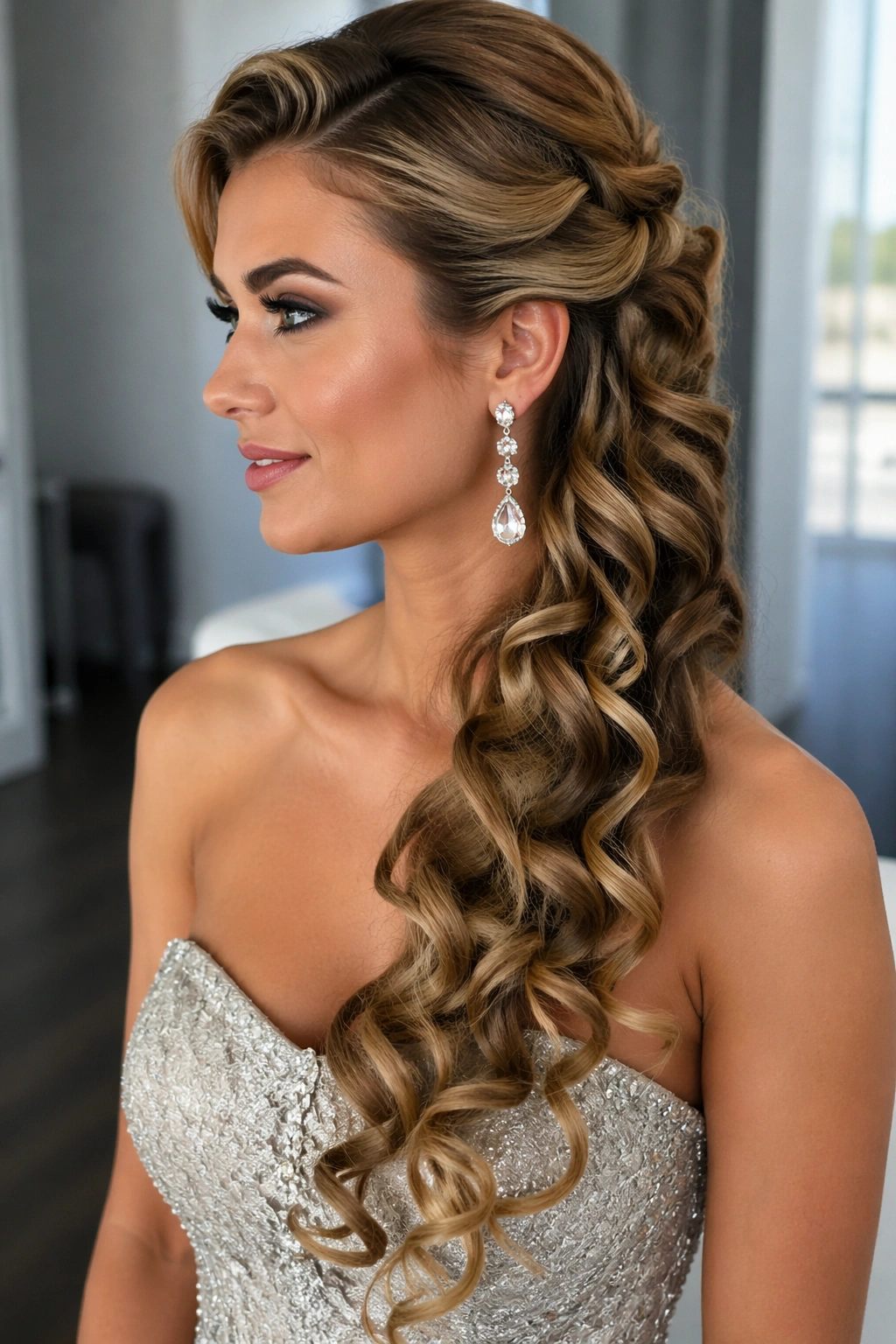
Why does a deep side sweep keep showing up in pageant styling? Because it solves two problems at once. It gives curly hair drama, and it keeps the front from looking too busy.
The look starts with a side part that is deeper than you think you need. Then the hair is swept over one shoulder or pinned lightly at the opposite temple so the curls spill in a controlled cascade. The result feels glamorous, but not stiff. It also photographs well when the dress has a lot happening at the neckline.
How to Pin the Sweep
A side-swept style lives or dies by the pinning. If the top layer is too loose, it collapses. If it’s too tight, the whole style looks dragged back and loses its softness.
Use a small flat iron only at the root area if your part resists staying open, then pin the heavier side behind the ear with two or three crossed bobby pins. After that, let the curls fall naturally over one shoulder. A light mist of flexible hairspray is enough. Heavy spray can make the visible side look dusty, and nobody wants that.
The best thing about this style is the balance. One side feels open and elegant. The other side gives you volume and movement. That contrast is what makes it feel pageant-ready rather than like a casual side ponytail that got dressed up at the last minute.
What to Watch For
- Keep the part clean and visible
- Do not bury the sweep under too many pins
- Leave the ends soft so the finish still moves
- Add a small earring on the open side if the dress can handle it
3. Half-Up Half-Down With Crown Volume
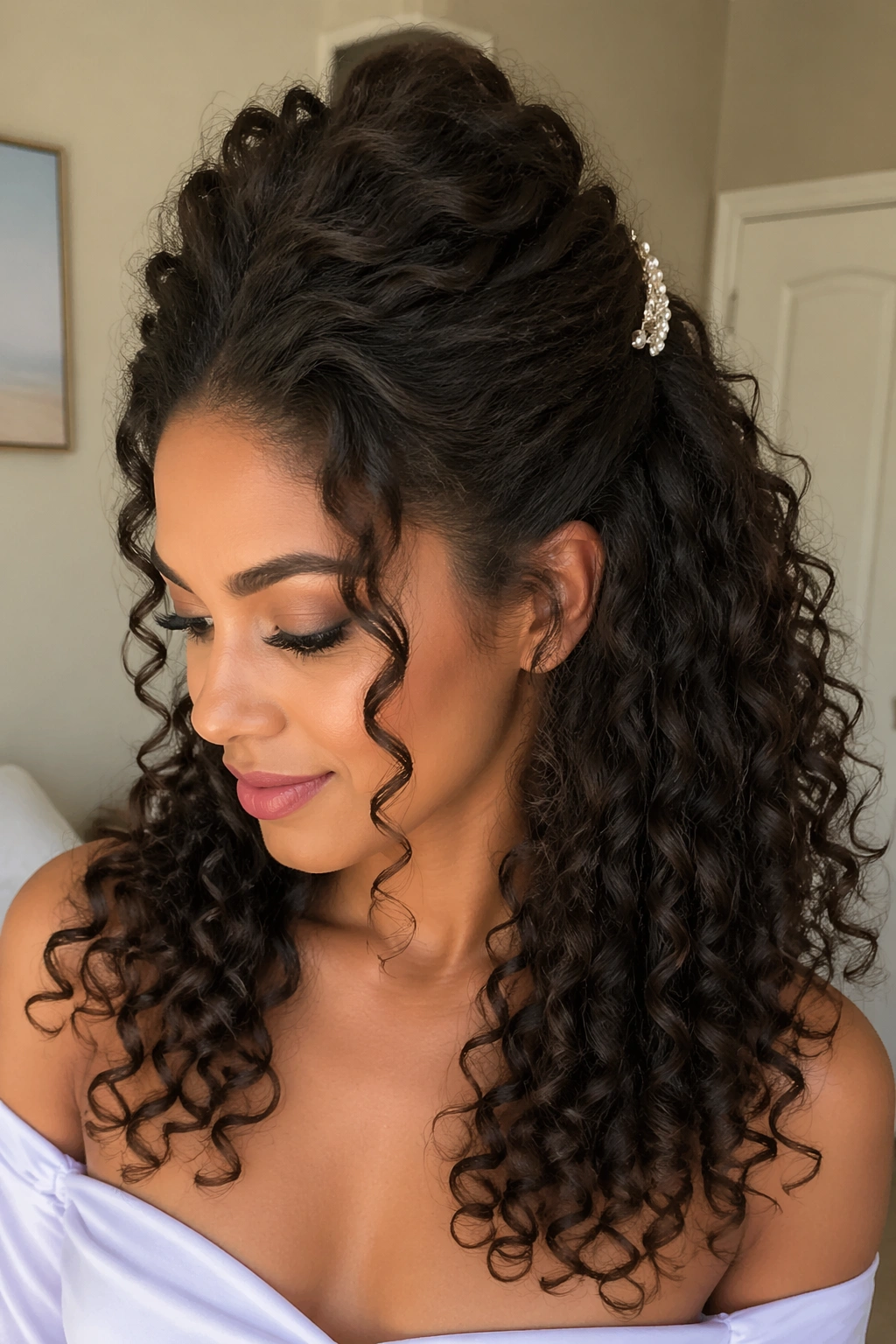
If the gown has an open neckline and you want the crown to sit higher, this is the sweet spot. Half-up half-down styling gives you structure around the face and shoulders while leaving enough curl length to keep the look feminine and soft.
The trick is volume at the crown, not just length at the back. A lot of people pull the top section back too tightly and end up with a style that looks flat from the front. Better to lift the roots gently, tease the underside a little, then secure the half-up section with hidden pins or a small decorative clip.
A crystal comb or pearl barrette can help here, but only if it’s small enough to disappear into the hair. The accessory should support the shape, not shout over it.
What Makes It Work
Curly hair already gives the half-up section enough texture. You don’t need much more than a few well-placed pins and a careful lift at the crown. The bottom half should stay defined, not brushed into fuzz. Let the curls sit in separate ribbons so the eye can still see the shape.
This style also plays nicely with side parts, center parts, and soft face-framing pieces. That flexibility is handy when you’re matching the hair to a gown, because the gown usually decides more than anyone likes to admit.
Best for: medium-density curls, long layers, and dresses that need a little height without a full updo.
4. Low Curly Chignon
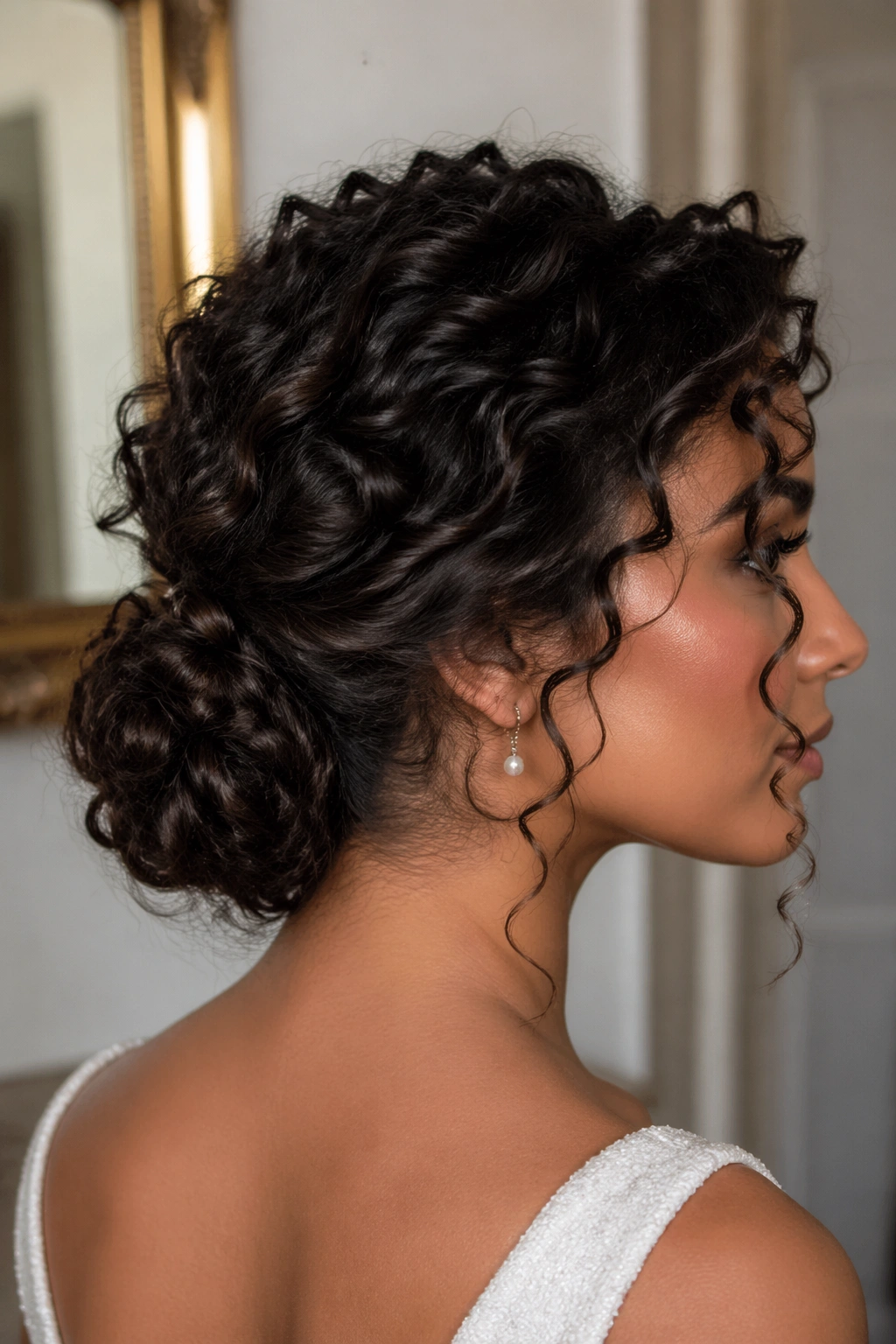
A low curly chignon is the opposite of lazy. It looks calm, which makes it harder to pull off than a style with more obvious drama. The bun sits low at the nape, but the curls are still visible, softly pinned, and shaped so the finish feels intentional rather than compressed.
This is the hairstyle I reach for when the outfit already has a lot going on. Heavy beading, a high neck, a detailed back panel—those things can fight with big hair. A low chignon gives them space. It also keeps the profile clean, which is useful if the judges will see you from the side during an onstage turn.
Why It Reads Polished, Not Severe
The danger with a chignon is making it too neat. Curly hair needs a little softness around the edges or the style can look harsh. Leave a few curl pieces visible near the ears or at the nape. Not loose enough to frizz out, just loose enough to look human.
A good version uses twisted sections pinned into a low bun, then a few curls wrapped around the base so the structure disappears. If your hair is thick, build the bun in layers and pin each layer securely. If it’s finer, a small hair donut can help create shape without adding bulk.
The Little Details That Matter
Keep the bun low, not flat
A low bun that sits too close to the head can look plain in photos. Give it a little roundness.
Soften the hairline
Use a touch of edge control or styling cream around the temples, then smooth with a brush or fingertip. Too much product turns shiny in a bad way.
Add one focal point
A pearl pin, a small crystal comb, or even one sculpted curl at the side is enough. Anything more can get fussy fast.
5. Braided Crown with Loose Curls
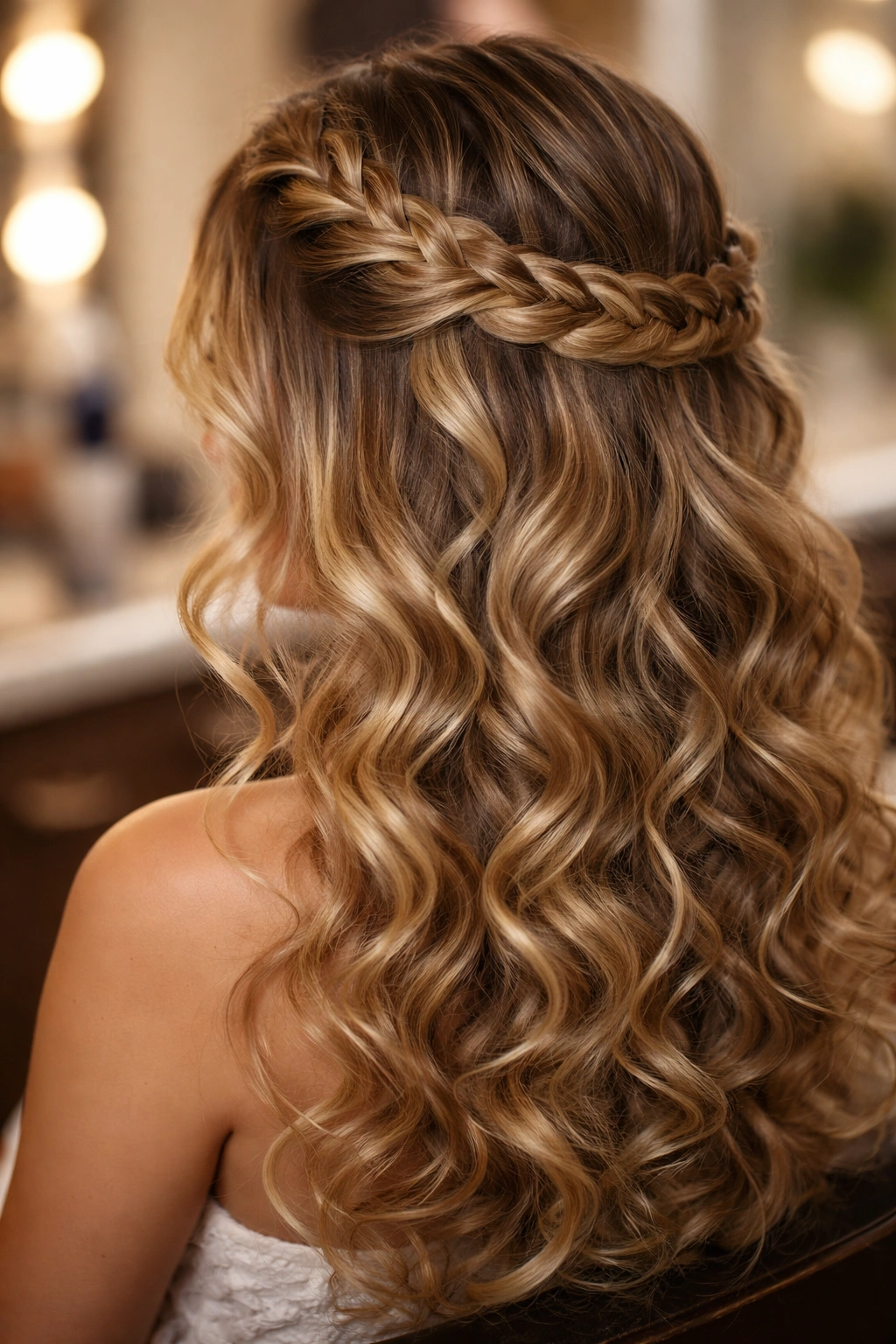
The braid does the heavy lifting here. It wraps the head like a built-in frame, which is useful when you want a style that looks detailed without needing a full helmet of curls.
A braided crown is especially useful on curly hair because texture gives the braid grip. That means fewer slipping strands and less time fighting the style into place. Once the braid is secured, the rest of the curls can fall loose down the back or over one shoulder. The result feels regal without being heavy.
There’s a catch, though. If the braid is too thick and too tight, the look can start to feel young in a way that doesn’t suit pageant styling. Keep the braid clean, but not chunky. Pull it slightly wider after braiding so it looks deliberate and soft.
What Makes This Different
Unlike a full updo, this style lets the curl pattern stay visible. Unlike a loose down style, it keeps hair away from the face so your expression stays open. That middle ground is the whole point.
Use a French braid, Dutch braid, or rope braid depending on how formal you want the texture to feel. A Dutch braid reads bolder and sits higher. A rope braid feels a little sleeker. Either can work if the transition into the curls is smooth.
Best when you want: a romantic look, a floral accessory, or a neckline that needs a little framing without too much bulk.
6. High Curly Ponytail
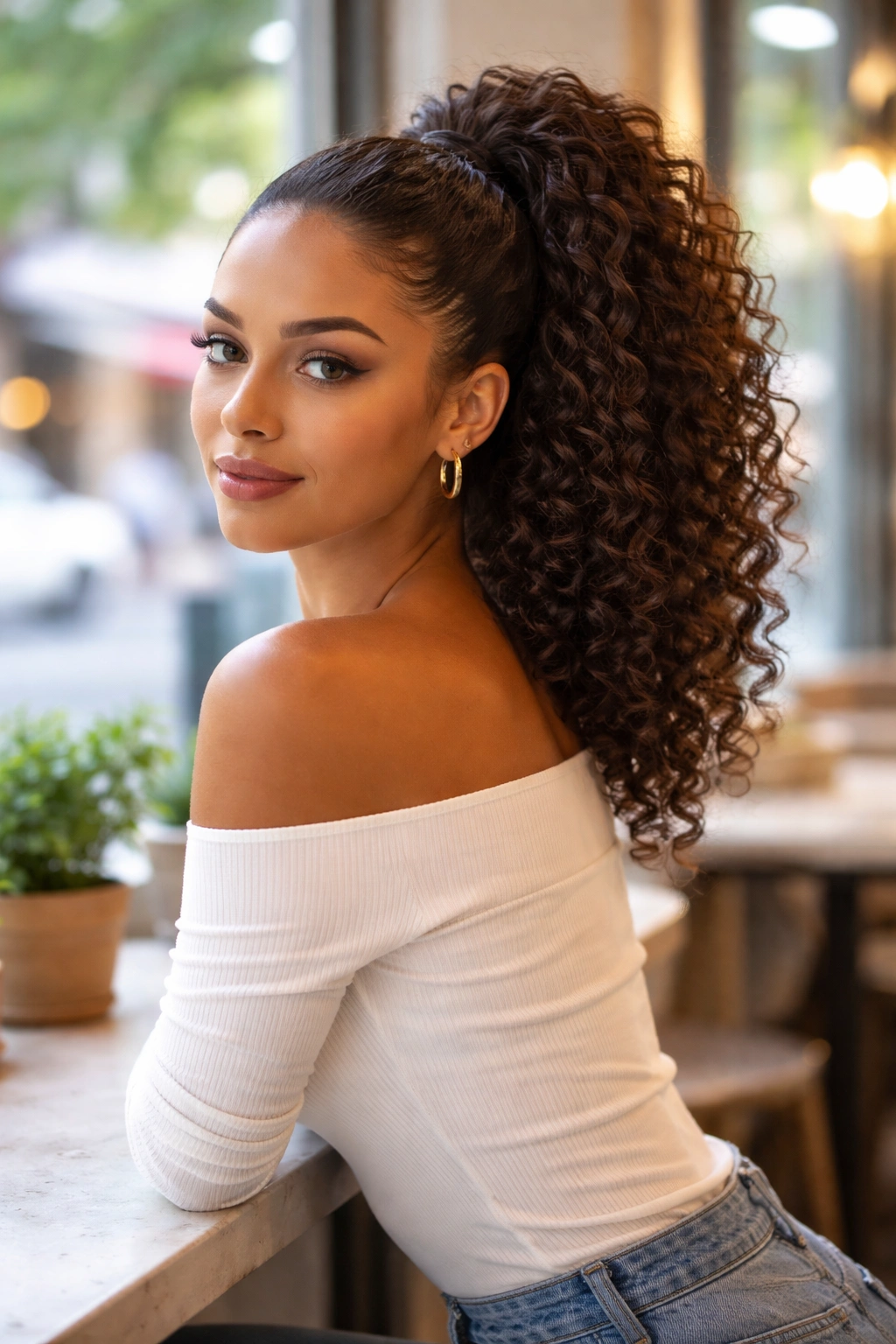
Can a ponytail really look pageant-level? Yes—if you place it high enough and make the curl pattern do the work.
A high curly ponytail gives you lift, energy, and a clean line through the face. That makes it a smart pick for contestants who want something youthful and sharp rather than soft and sleepy. The ponytail should sit high on the crown or just above it, not halfway down the back of the head. Placement matters more than most people think.
The base needs to look polished. Wrap a small section of hair around the elastic, then pin the tail under it so the wrap hides the band. After that, shape the curls with your fingers. Do not comb them out unless you want a cloud instead of a ponytail.
Where the Elastic Should Sit
A high ponytail works best when the base aligns with the lift of your cheekbones. Too low, and the style drags your features down. Too high, and it can look cartoonish.
- Use a snag-free elastic
- Secure the base with 2 to 4 bobby pins
- Curl the ponytail in 1-inch sections for defined ends
- Finish with light-hold spray so the tail still swings
A high ponytail also pairs well with statement earrings because the hair clears the shoulders. That detail sounds small. It isn’t.
7. Curly Top Knot with Face-Framing Tendrils
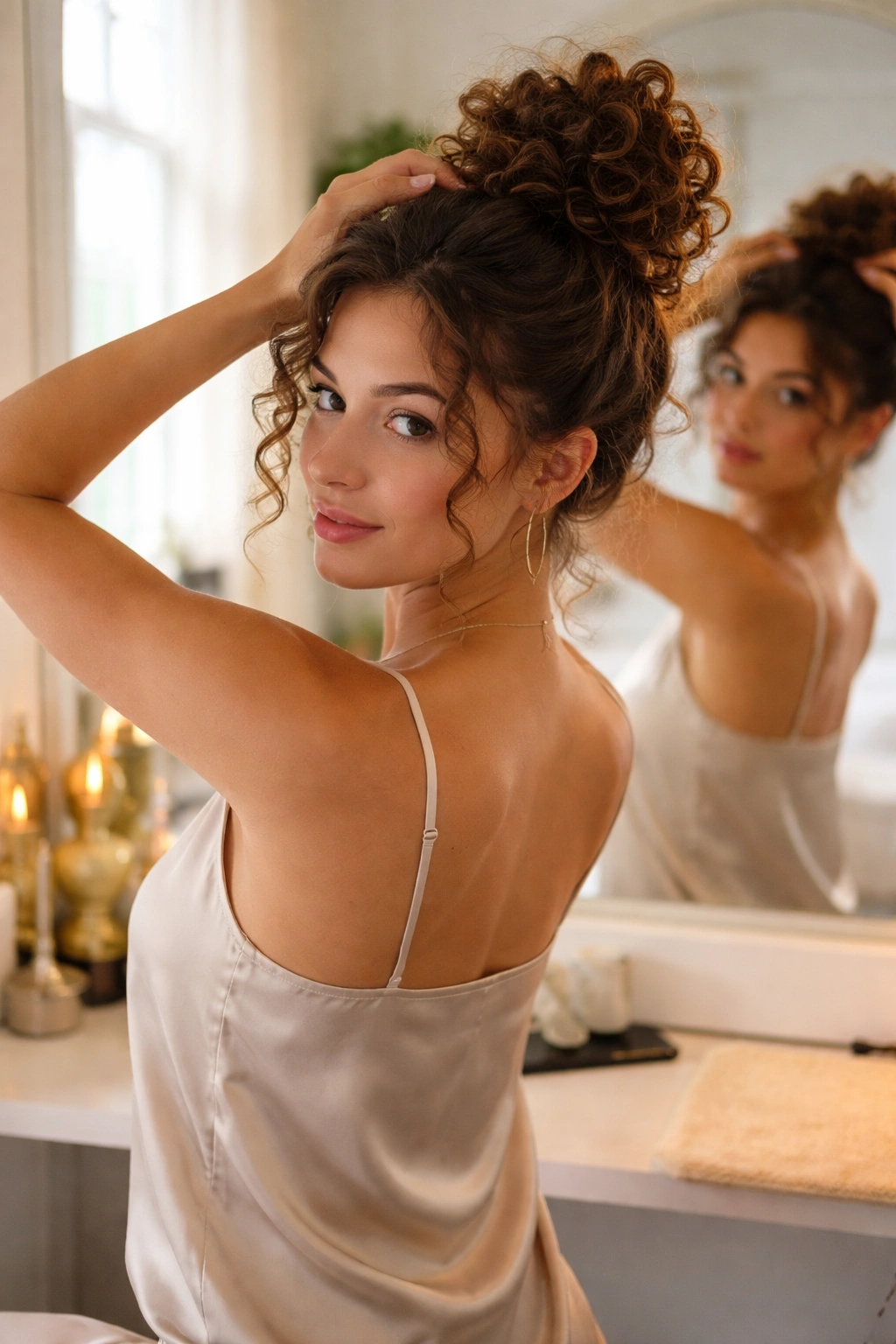
This is the style I’d pick when the dress already has a lot going on and the hair needs to stay out of the way without disappearing. A curly top knot gives you height and polish, while the tendrils at the front keep the look from becoming severe.
The knot should sit high, but not so high that it looks unstable. Gather the curls loosely, twist them into a rounded shape, and pin from several directions so the knot holds its outline. Then leave two narrow pieces in front—one on each side of the face—or only one if the neckline already feels busy.
That little bit of softness changes the whole read. Without it, the look can feel like a dance recital style that wandered onto the wrong stage. With it, the top knot feels intentional and grown-up.
What to Smooth and What to Leave Alone
Slick the crown just enough to keep flyaways down. Do not flatten the top so much that the curly texture vanishes. The knot itself can stay a little airy; it doesn’t need to be a perfect round donut.
Keep the tendrils defined with a touch of curl cream or a tiny bit of gel. They should look like they belong to the style, not like they escaped it. If your hair frizzes quickly, twist each tendril around your finger while damp and let it dry that way before the final spray.
One-sentence truth: this style looks best when it doesn’t look overthought.
8. Sculpted Side Bun
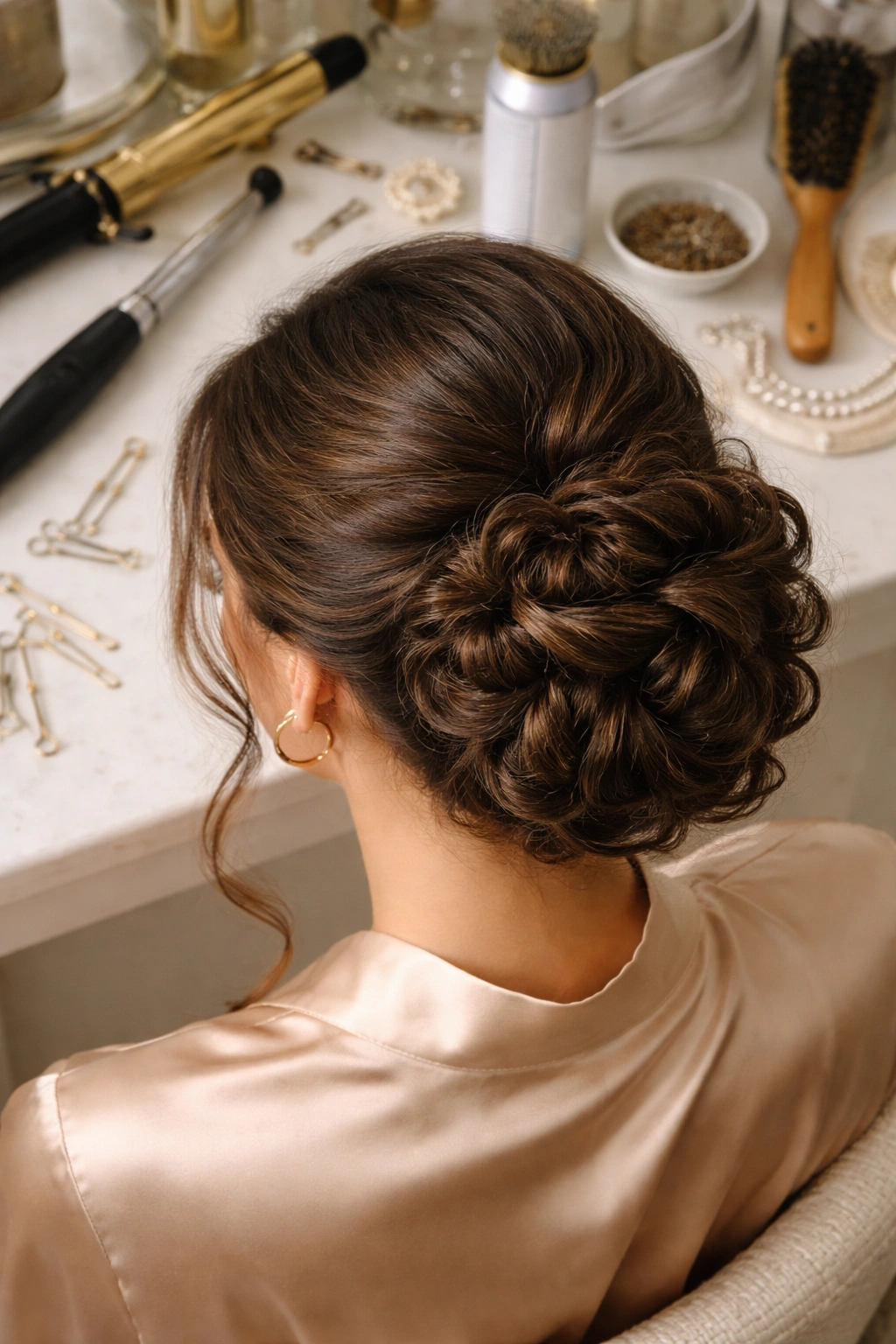
A sculpted side bun is the glamorous cousin of the low chignon. It carries more attitude because the weight shifts to one side, which makes it excellent for one-shoulder gowns, asymmetrical necklines, or dresses that need a stronger hair shape to balance them out.
The bun itself should sit below the ear or just behind it, not too far back. That side placement creates a visible silhouette from the front and a nice profile line from the side. On curly hair, the bun can be built from twisted sections, pinned curls, or a rolled base wrapped with softer ends.
This is one of those styles where the shape matters more than the polish. A perfectly sleek side bun can look a little severe. Let the curls keep some texture. Let a few pieces loop around the base. That’s where the interest is.
Where It Beats a Centered Bun
A centered bun is tidy. A side bun has motion. That’s the difference.
- Better for one-shoulder gowns
- Good choice when you want to show earrings on the open side
- Works with deeper side parts
- Needs a stronger pin base than a loose bun
The danger is overloading the side with hair so the head looks lopsided. Keep the bun full, but not huge. The shape should feel balanced, not heavy.
9. Voluminous Curly Afro With Shape
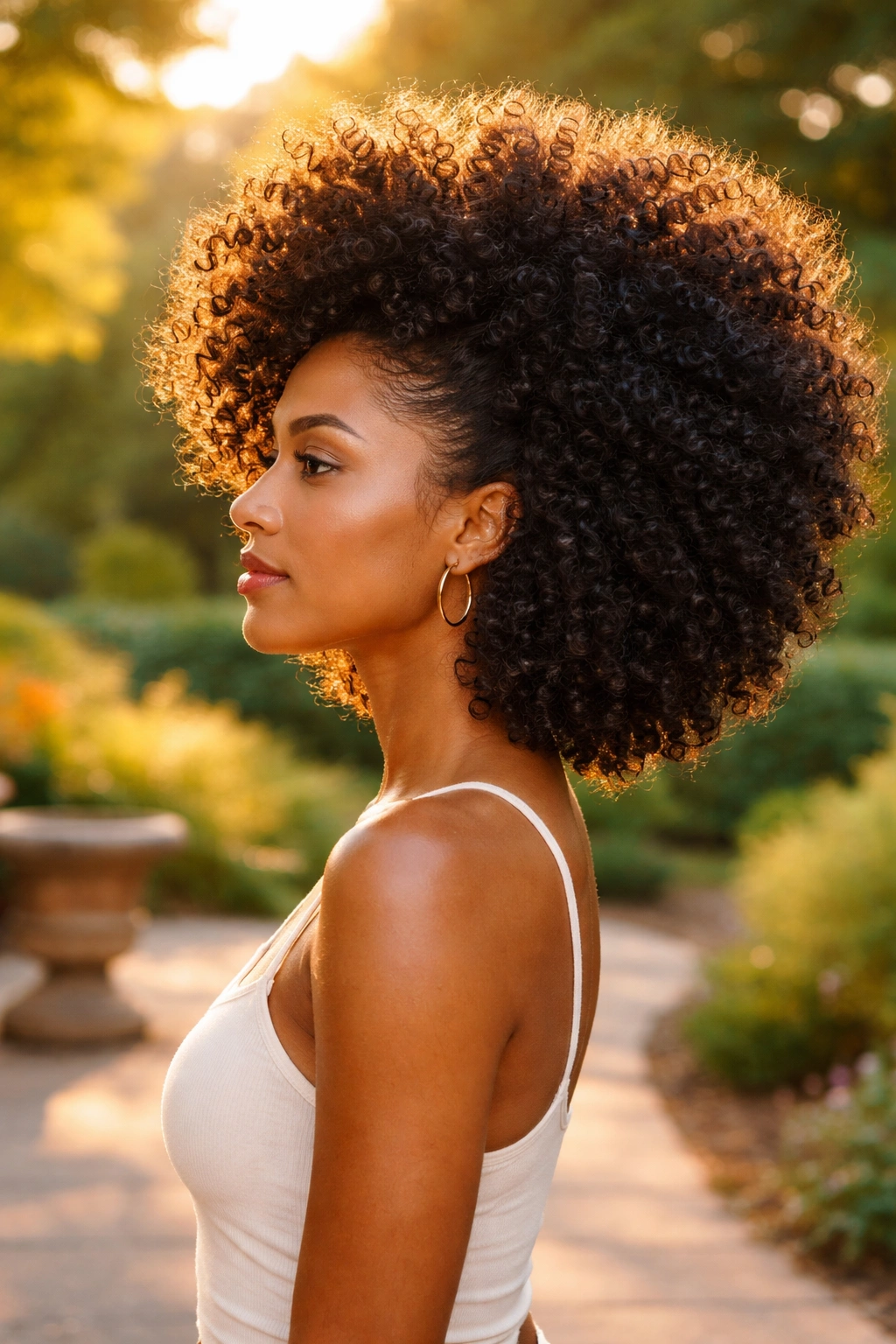
If you have a curly afro, the smartest pageant move is not to tame it into something smaller. It’s to shape it with purpose. That kind of volume can look magnificent on stage because it gives you presence before you say a word.
The most important thing is the silhouette. Round it too much and the style can swallow the face. Leave it too narrow and the whole point disappears. You want a shape that frames the head while still leaving some lift at the crown and some openness near the cheeks.
A pick at the roots can help, but use it with restraint. Too much picking breaks the curl pattern and can leave the outer layer fuzzy. Better to define the outer shape with a curl cream or light gel, then lift only the roots that need height.
What to Pay Attention To
- Keep the top and sides balanced
- Define the hairline and crown
- Use a product with soft hold
- Leave the edges clean, not slicked flat unless that’s the intended look
This style looks strongest when the curls themselves remain visible. You’re not hiding texture here. You’re presenting it.
10. Waterfall Braid Into Curls
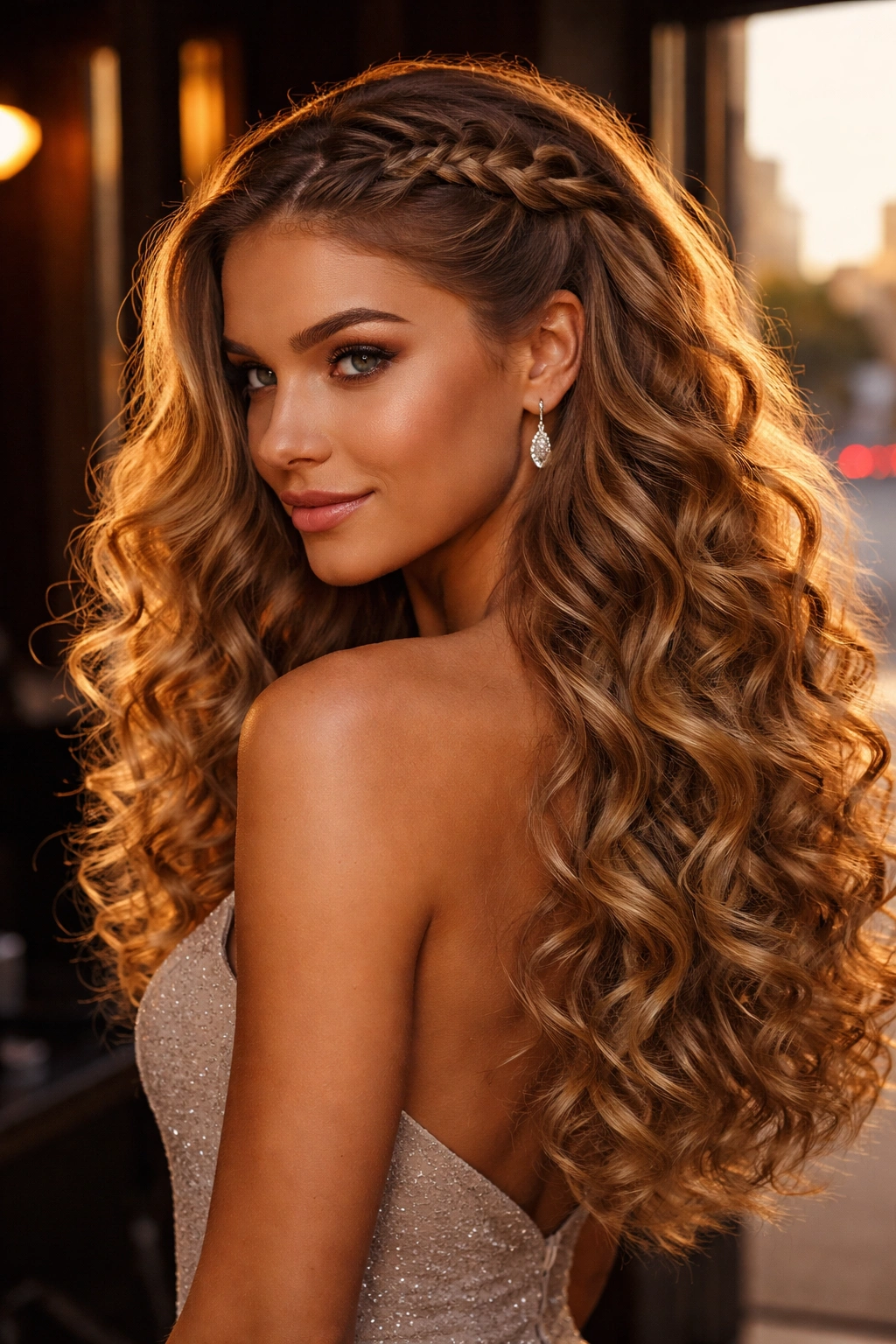
A waterfall braid is a smart answer when you want detail near the face and movement through the rest of the hair. It gives the front of the style a little architecture, then lets the curls fall freely below it.
The braid usually starts near the temple and travels along the head, dropping strands in a pattern that looks more intricate than it is. Once the braid reaches the back, the remaining curls can stay loose or be softly pinned on one side. The effect is elegant without feeling busy.
This style works especially well if the hair is long enough to show off the braid and the curls beneath it. Medium-length curly hair can handle it too, though the braid may need more support from pins tucked under the surface.
How the Braid Should Travel
The braid line should follow the curve of the head, not cut across it like a belt. That line is what gives the style its grace. If the braid sits too high, the look can get crowded. Too low, and it loses its point.
Best placement
Start the braid just above the eyebrow or slightly behind the front hairline. Let it arc toward the back of the head, then stop before it gets too heavy.
Best finish
Keep the curls below the braid defined and separated. A mist of shine spray on the finished lengths is enough. Anything heavier can weigh the braid down.
11. Slicked-Back Curly Puff
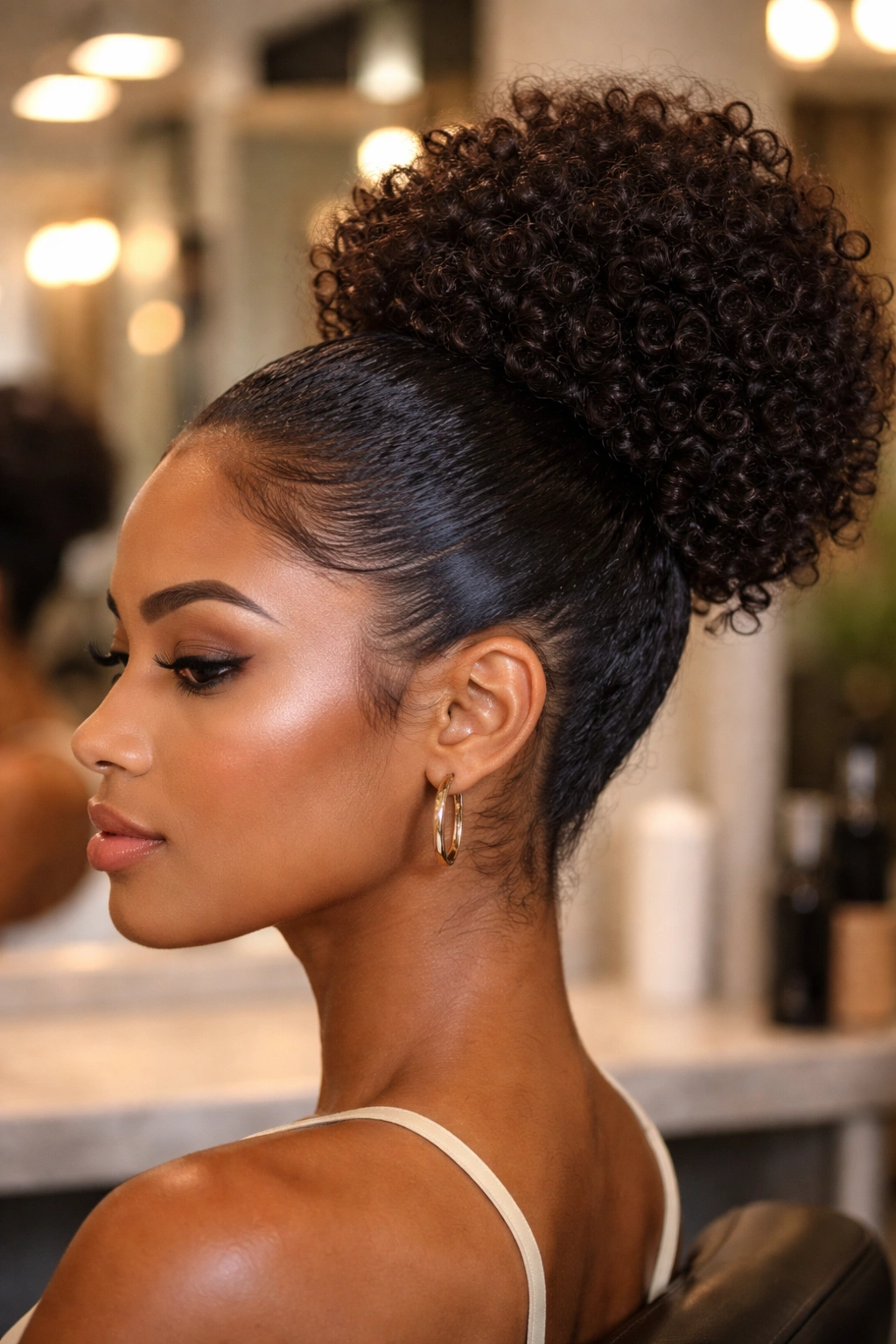
This is not a soft look. That’s the point.
A slicked-back curly puff turns curly texture into the headline instead of the backdrop. The front and sides are smoothed back tightly, while the puff or gathered curl mass sits high or mid-back and stays full. It has presence. It has attitude. And on the right head, it can look far more striking than a style that tries to be delicate.
The front needs control. Use gel, styling cream, or both, then brush the hair back in sections so the surface lies flat without obvious bumps. The puff itself should stay textured and alive. That contrast is the whole style. If you smooth the puff too much, you lose the drama.
The look is especially strong on natural curls and coils because it lets texture stay visible where it counts. It also pairs well with bold makeup and sharp jewelry. Clean lines up front. Full shape in back. Easy to read, even from far away.
Don’t Skip These Details
- Smooth the hairline in small sections
- Use a dense brush for the front, not the puff
- Secure the puff with a strong elastic and 2 hidden pins
- Leave the puff shaped, not brushed into one flat mass
A few flyaways at the puff are fine. A halo of frizz around the hairline is not.
12. Old Hollywood Finger Waves With Curly Ends
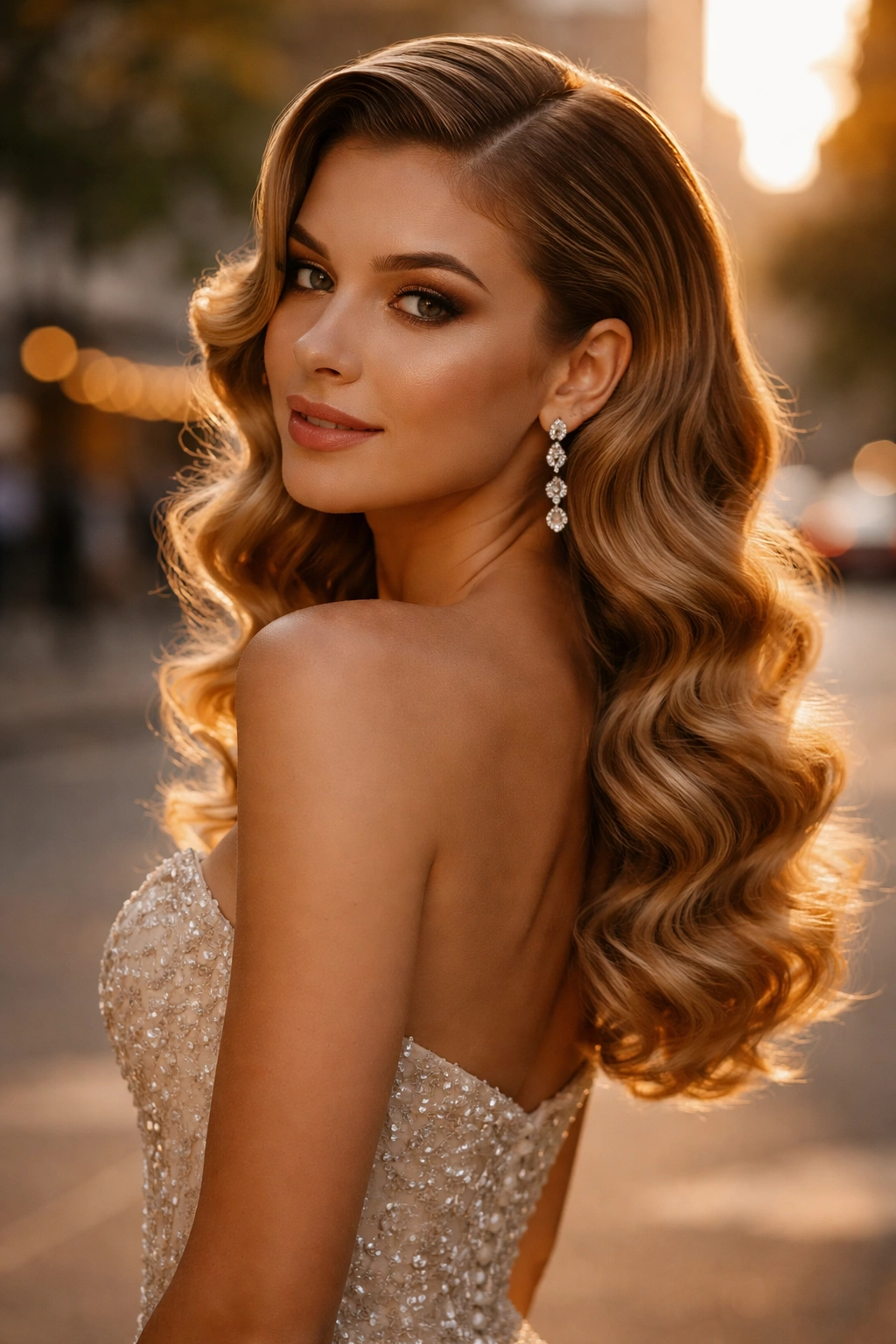
Finger waves on curly hair can look stunning when they’re done with care. The front gets sleek, sculpted movement, and the ends stay curly so the style does not turn into a flat retro costume.
That combination is what makes it pageant-friendly. You get the old-school polish judges tend to notice, but you keep enough softness in the length that the hair still feels modern. It’s also a smart style for shorter curly lengths or layered hair that doesn’t want to stay in a traditional updo.
The waves should be shaped with gel and clips, then dried fully before you touch them. This part takes patience. If the waves are removed too early, the whole style slumps. After the front is set, the remaining hair can be curled with a wand or defined with natural texture cream, depending on the base you’re working with.
Best Curl Length for This Look
Shoulder-length hair and shorter mid-back lengths usually handle this best. Very long curls can still work, but the balance gets harder to manage because the front looks restrained and the back looks huge.
A good version has one clean wave pattern near the face, a crisp side part, and curled ends that sit just below the jawline or collarbone. That shape reads vintage without looking frozen.
One practical note: this style lives and dies by shine. Dry hair ruins the effect fast.
13. Twisted Half-Up Pageant Crown
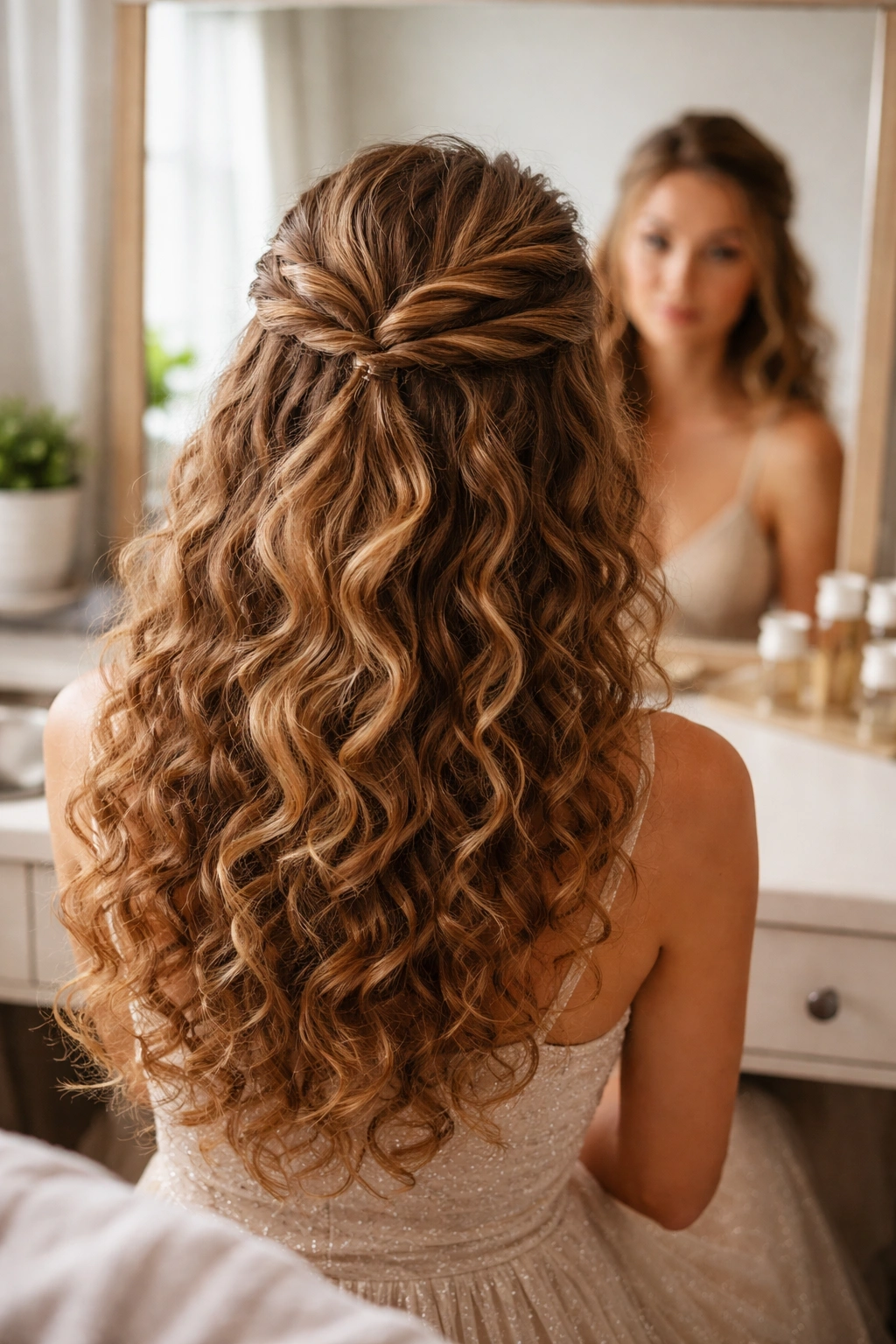
Braids get all the attention, but twists often look softer and cleaner on curly hair. A twisted half-up crown takes small sections from each side of the head, twists them back, and secures them at the center or slightly off-center. The rest of the curls stay down.
The result feels elegant because the twists add structure without building too much bulk. That matters if the hair is already dense or if the gown has detail at the shoulders. A braid can sometimes get visually heavy. Twists stay lighter.
This is one of the easiest ways to make curly hair look intentional without overworking it. The twist lines create a subtle frame, and the remaining curls keep the style from getting too formal. It’s a useful middle ground when you want polish but don’t want a full updo.
Twist Size Matters
Small twists look delicate. Larger twists read bolder and are easier to pin securely. I tend to prefer medium twists because they hold shape better and don’t disappear into thick curls.
You can tuck a small crystal pin where the twists meet, but keep the accessory low-key. The twist pattern should still be the star. Too much decoration here starts to look cluttered fast.
Best use: when you want a half-up style that feels softer than a braid and neater than loose hair.
14. Deep Side Part With Loose Spiral Curls
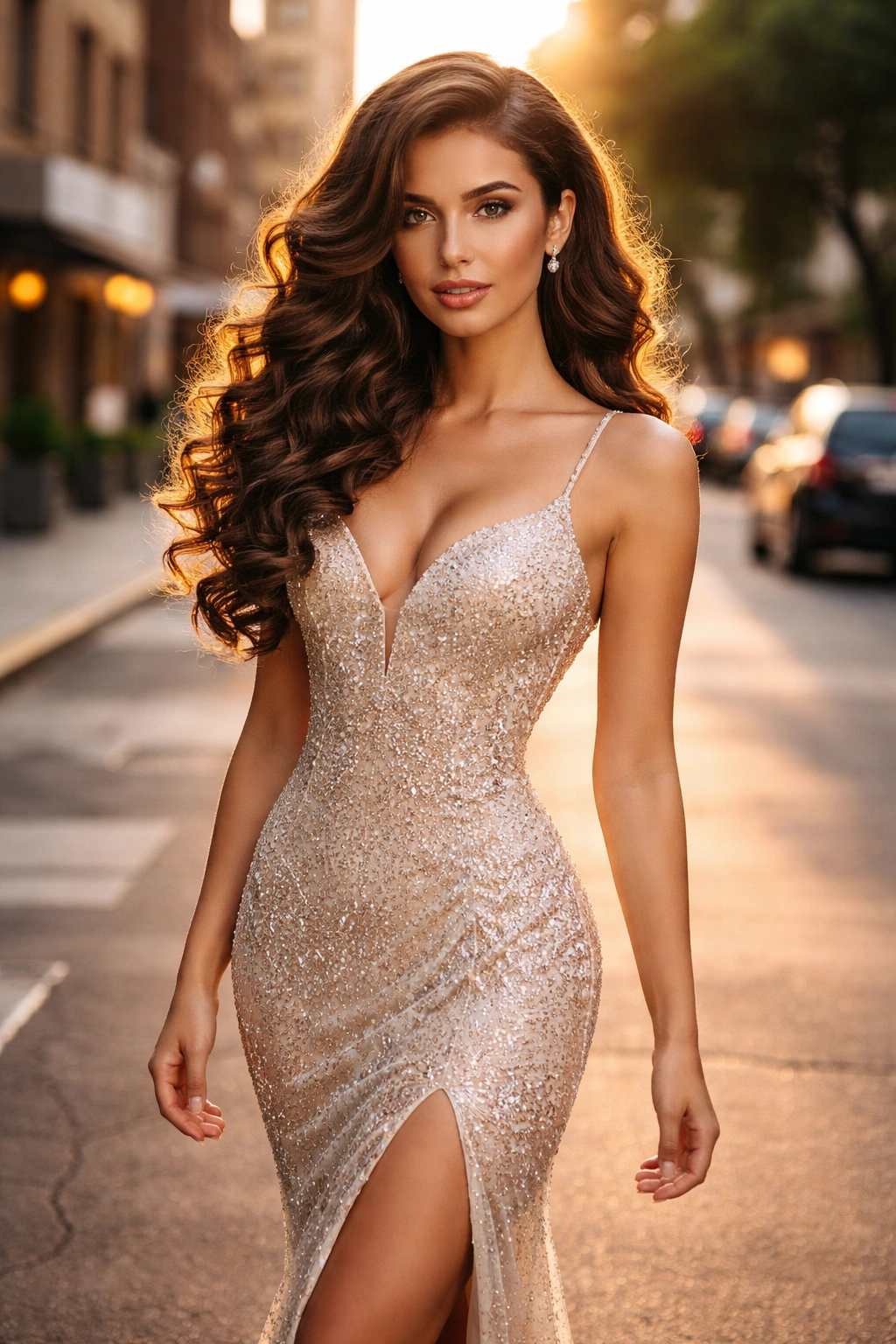
A deep side part with loose spiral curls is one of the most underrated pageant looks for curly hair because it gives you movement without sacrificing control. The part creates instant drama, and the loose spirals keep the silhouette airy.
Unlike the fully swept cascade, this version leaves more hair in place on both sides of the head. That means more volume around the crown and more bounce through the lengths. It’s less pinned, less severe, and often a better choice if you want the hair to feel youthful and touchable.
The style works best when the spirals are defined from root to end. If the top section is frizzy and the bottom section is polished, the eye goes straight to the mismatch. A diffuser on low heat, a touch of curl cream, and a careful side part usually do the job. After that, let the curls fall naturally over the shoulders and shape them with your fingers rather than a comb.
The part line should be sharp. That’s the anchor. Everything else can stay softer.
One clean line. Then movement.
15. Glamorous Curly Updo With Sculpted Ends
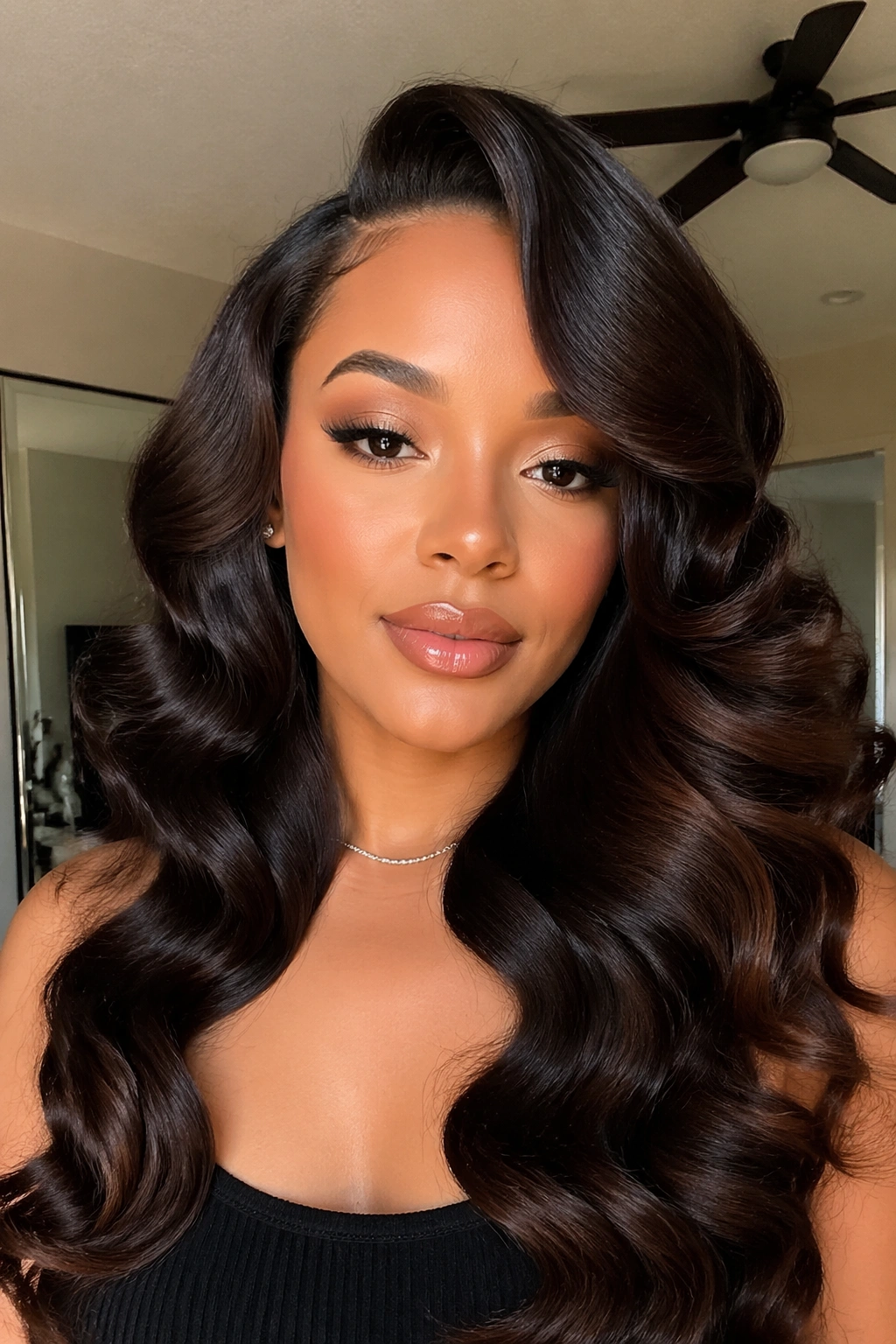
If you need one pageant style that can survive interviews, stage lights, a crown, and a long final walk, a sculpted curly updo is hard to beat. It gives you height, keeps the neck visible, and still leaves enough curly detail to feel feminine instead of severe.
The look usually starts with a structured base at the nape or mid-back of the head, then moves into pinned curls that are arranged so the ends stay visible. Those ends matter. If they vanish completely, the updo can look too tight. If they stick out carelessly, it looks unfinished. The sweet spot is curled pieces tucked and guided into place so the finish feels deliberate.
Where the Curls Should Sit
The most flattering versions place a little width at the crown, then narrow gently as they move down the head. That shape gives the face room and keeps the profile elegant. A few soft pieces near the temples can help, but they should be controlled enough to hold through movement.
Use a strong hold hairspray, but spray in light layers instead of flooding the whole style at once. Pin the foundation first, then shape the visible curls on top. If you build the style in the wrong order, you’ll end up fighting loose sections for the rest of the day.
What Keeps It From Looking Stiff
Curly updos fail when every piece is forced into the same direction. Let one curl loop slightly higher. Let another tuck lower. That small imbalance makes the style feel real instead of molded. A tiny amount of asymmetry keeps the hair from looking like it was copied from a mannequin head.
The best pageant hairstyles for curly hair do not hide the curls. They frame them, control them, and let them do some of the work. That’s the whole trick, really. Pick the shape that fits your gown, your curl pattern, and the amount of movement you want on stage, then hold the line with careful pinning and a light hand on the spray.
