



If your curls hit your eyes halfway through a sprint, the problem is not your hair. It is the style.
Soccer asks a lot from curly hair. You need movement, sweat resistance, and a shape that still looks like curls after hard running, not a flattened helmet that aches at the roots. The styles that hold up best do three things at once: keep hair off the face, spread tension so your scalp does not feel punished, and let your texture stay recognizable when the whistle blows.
Curly hair has a stubborn little talent for changing shape the moment you step outside. A ponytail that looks neat at home can puff at the crown, shrink at the ends, and start escaping around the temples before warm-up is over. That is why soccer hairstyles for curly hair need more than a tight elastic and optimism. They need structure.
Pick the style that fits your curl pattern, your length, and how much time you actually have before practice. A good game-day hairstyle should stay put through headers, sprints, and a ride home with a sweaty neck — without making you regret every bobby pin by halftime.
1. High Puff Ponytail
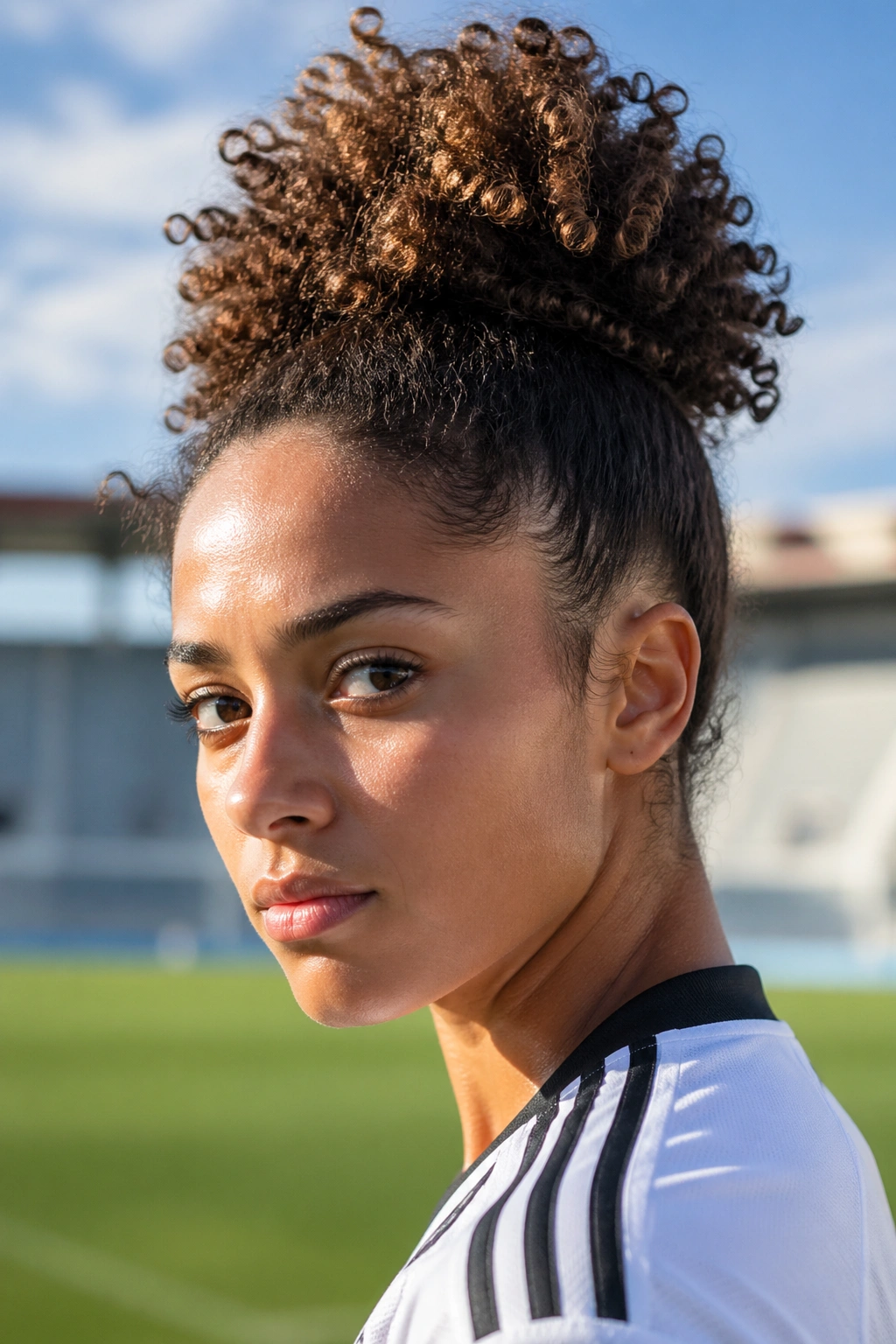
The high puff is the blunt instrument of soccer hairstyles for curly hair. It gets the job done fast, and it does not pretend to be fussy.
Why the High Puff Works on the Field
The magic is in the placement. When the puff sits high enough, the neck stays clear and the curls are lifted away from your face, but the style still keeps the natural volume that makes curly hair look like curly hair. That matters more than people think. If you force a tight, low shape on dense curls, the hair can pull in weird places and start creeping loose where you need it most.
Use a little water or leave-in on the roots first, then smooth the crown with your hands or a soft brush. A snag-free elastic or a satin scrunchie makes a better anchor than a cheap band that snaps at the worst time.
- Gather the hair at the highest point that still feels comfortable.
- Smooth the sides with a pea-size amount of gel or edge control.
- Keep the puff loose enough that the roots do not ache.
- Wrap a small curl around the base if you want a cleaner finish.
One good puff beats a perfect puff that hurts. If your scalp feels tight before kickoff, it will only get worse after twenty minutes of running.
2. Double Dutch Braids
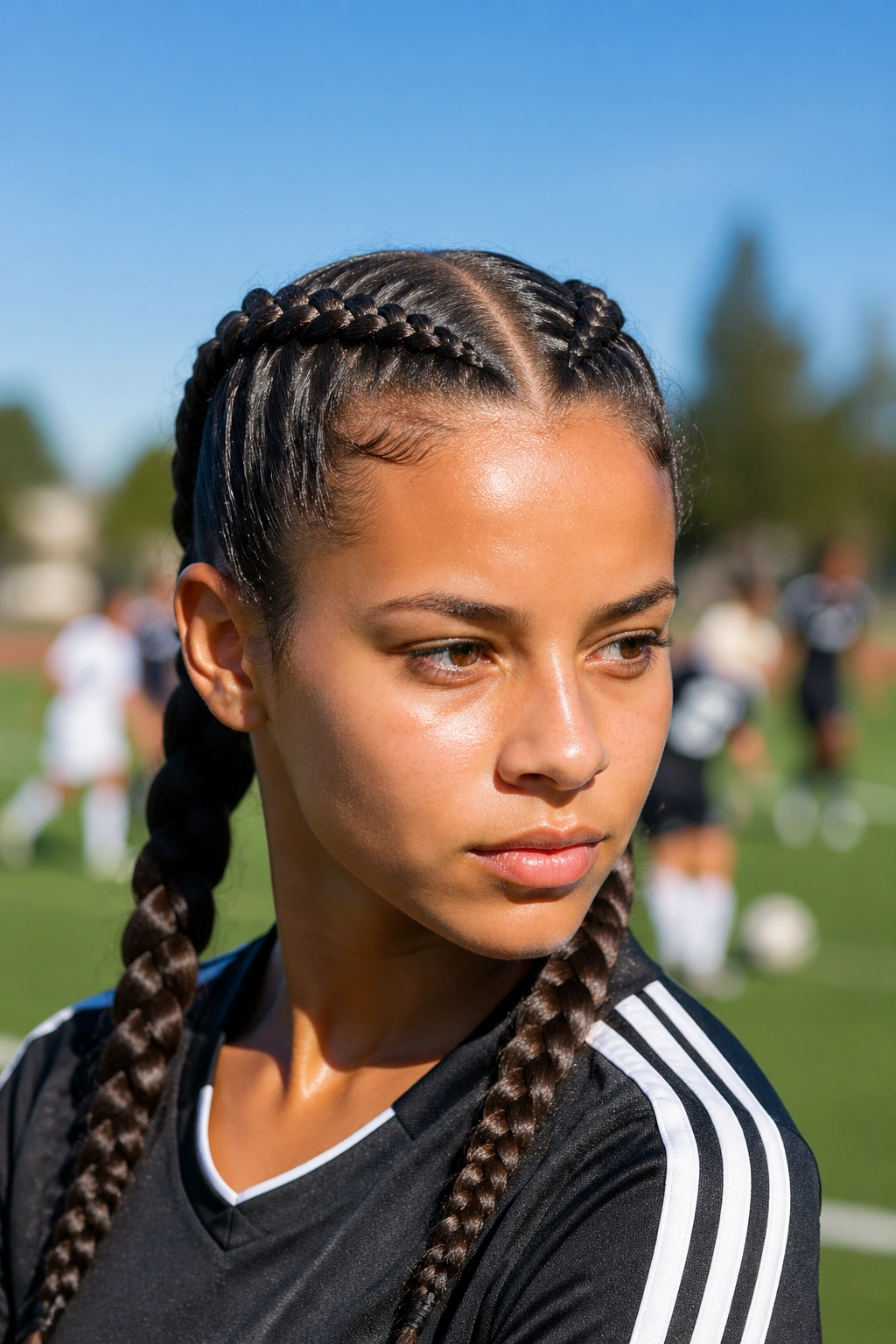
Two Dutch braids are the style I trust when someone wants hair that stays glued to the head and does not turn into a cloud by the second half. They sit on top of the scalp, which gives them more grip than flat braids, and that extra hold matters when you are changing direction every few seconds.
This style works especially well for thick curls, coily textures, and hair that gets bulky when pulled into a single ponytail. The braid pattern keeps the front under control, and the rest of the length stays compact instead of swinging around like a loose tail. That is a nice trade on a soccer field.
The parting matters. Clean center parts make the whole style look sharper, but a slight off-center part can be kinder if your hair naturally falls that way. Start the braid close to the hairline, then keep each section even as you work down toward the nape. If the strands are slippery, a tiny bit of styling cream on the first few inches can help the braid hold.
Tension is the only real trap.
If you braid too tight, the style can feel great for five minutes and miserable after that. A snug braid is fine. A pulled-back scalp that feels shiny and sore is not. Leave a little give at the edges, especially near the temples, and the style will last longer because you are not fighting your own head.
3. Sleek Low Ponytail with a Curly Tail
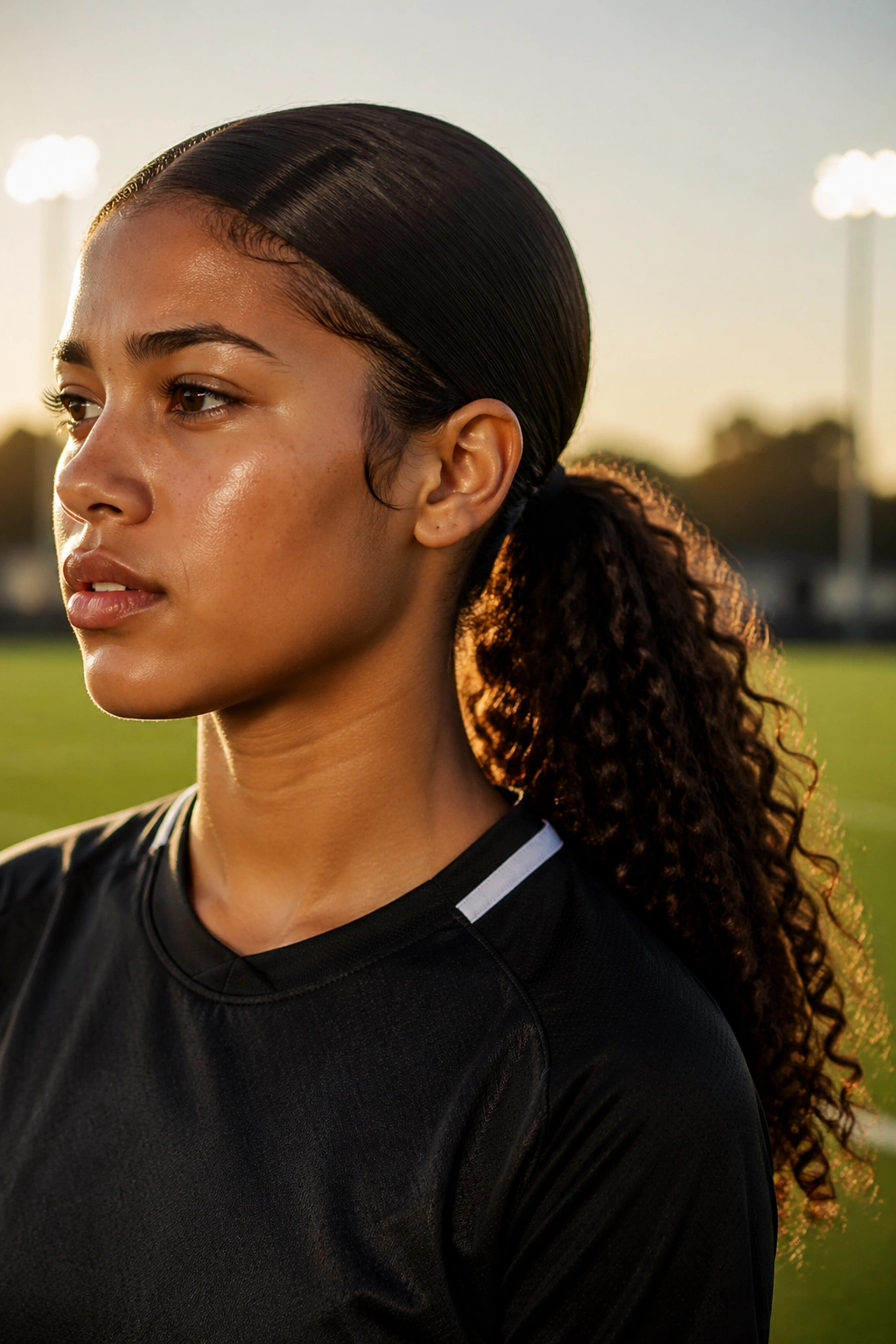
Need something that looks neat before kickoff and still feels calm after warm-up? This is the one.
How to Keep the Crown Smooth
The sleek low ponytail is a good answer when you want your curls out of your face but do not want to flatten the whole head. The trick is to smooth only the top and sides, then let the ponytail keep its natural texture. That balance makes the style feel less stiff than a full slick-back look.
Start with damp, not dripping, hair. A water-based gel or a light styling cream works better than heavy product, because too much product can make curly hair feel sticky under sweat and helmet-less pressure from a headband or jersey collar. Use a brush only on the roots and front section. Leave the ends alone unless you want them stretched out.
- Apply a small amount of gel at the hairline.
- Brush the crown back in short strokes.
- Place the elastic at the nape, not halfway up the head.
- Leave the tail curly, or run a little curl cream through it for definition.
The best part is comfort. A low ponytail spreads the weight lower, so you are less likely to get that throbbing feeling that comes from a high, tight style. If you have layers, tuck the shortest front pieces behind the ears or pin them with two small bobby pins crossed in an X.
4. Space Buns
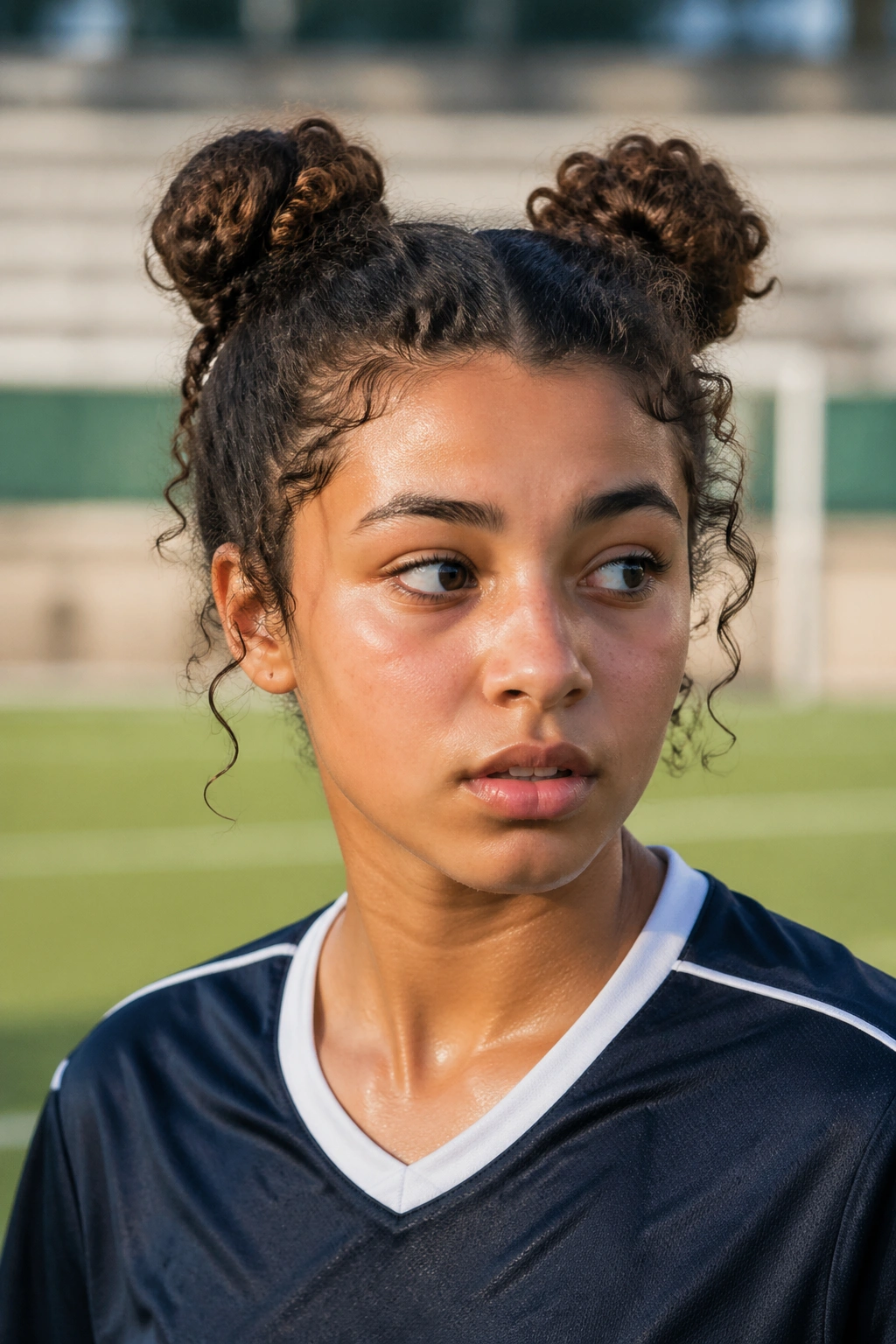
Space buns sound playful, but on a soccer field they act like two small anchors.
If your curls sit around shoulder length and keep flipping into your mouth, split them down the middle and build one bun on each side. The shape keeps the bulk balanced, which helps if your hair is too short for a full ponytail but too thick to leave loose. It also keeps the weight from dragging on one side of your head.
The easiest version uses two elastic bands, a center part, and a little patience with the ends. Twist each side into a bun, then pin any loose pieces underneath. You do not need a perfect round bun. In fact, a slightly messy one usually holds better because the curls have something to grip.
- Make the part as clean as you can.
- Gather each side high, just above ear level.
- Twist once or twice, then coil the hair into a bun.
- Secure with two pins or one strong elastic per side.
- Leave a few curls around the front if you want softness.
This style shines for medium-length curls. Short layers can slip out, and very long curls may make the buns heavy. If your hair is dense, keep the buns a little smaller and tighter so they do not drift apart while you run.
5. Bubble Ponytail
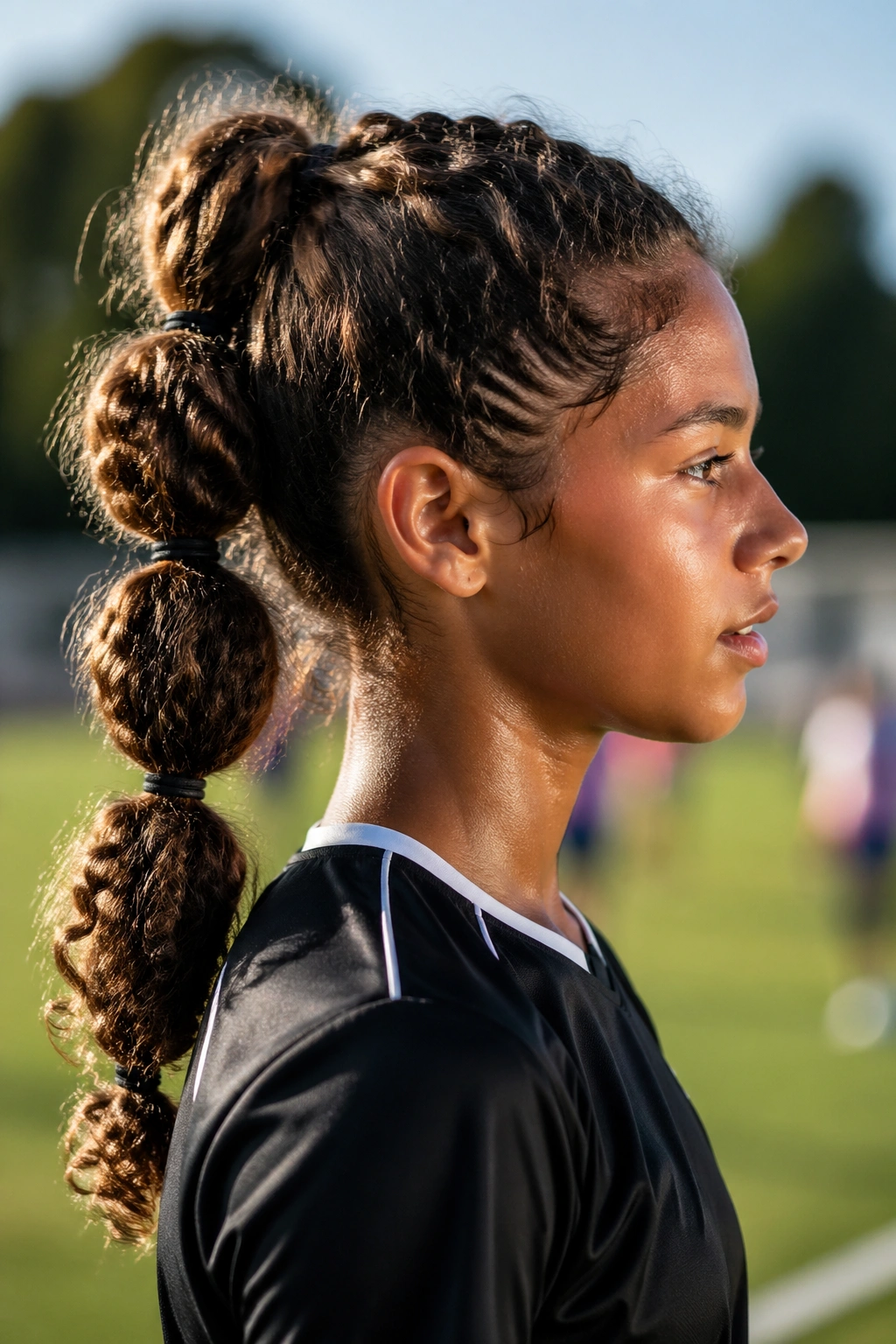
A bubble ponytail keeps the whole length in one lane.
That is why it works so well for long curly hair on game day. Instead of letting the length swing freely or forcing it into a braid that hides all the texture, you divide the ponytail into sections with small elastics and puff each section out a little. The result is secure, practical, and easier on curls than a tight braid that gets frizzy at the ends.
The spacing between elastics matters more than people realize. Two to three inches between bands usually gives the right shape for most lengths. If the sections are too close together, the ponytail looks pinched. If they are too far apart, the bubbles sag and the style loses its hold. Each bubble should feel rounded, not stiff.
This is a good choice when you want to keep the ponytail high or mid-height but you do not want the weight of a single loose tail bouncing on your back. It also works nicely if your curls are thick and you do not want to spend ten minutes braiding.
A small trick: after each elastic goes in, tug the hair outward from the center of that section, not from the ends. That gives you shape without pulling the whole style loose. If your curls are layered, pin the shorter pieces into the first bubble so they do not slide out by halftime.
6. Cornrow Front with a Puff Back
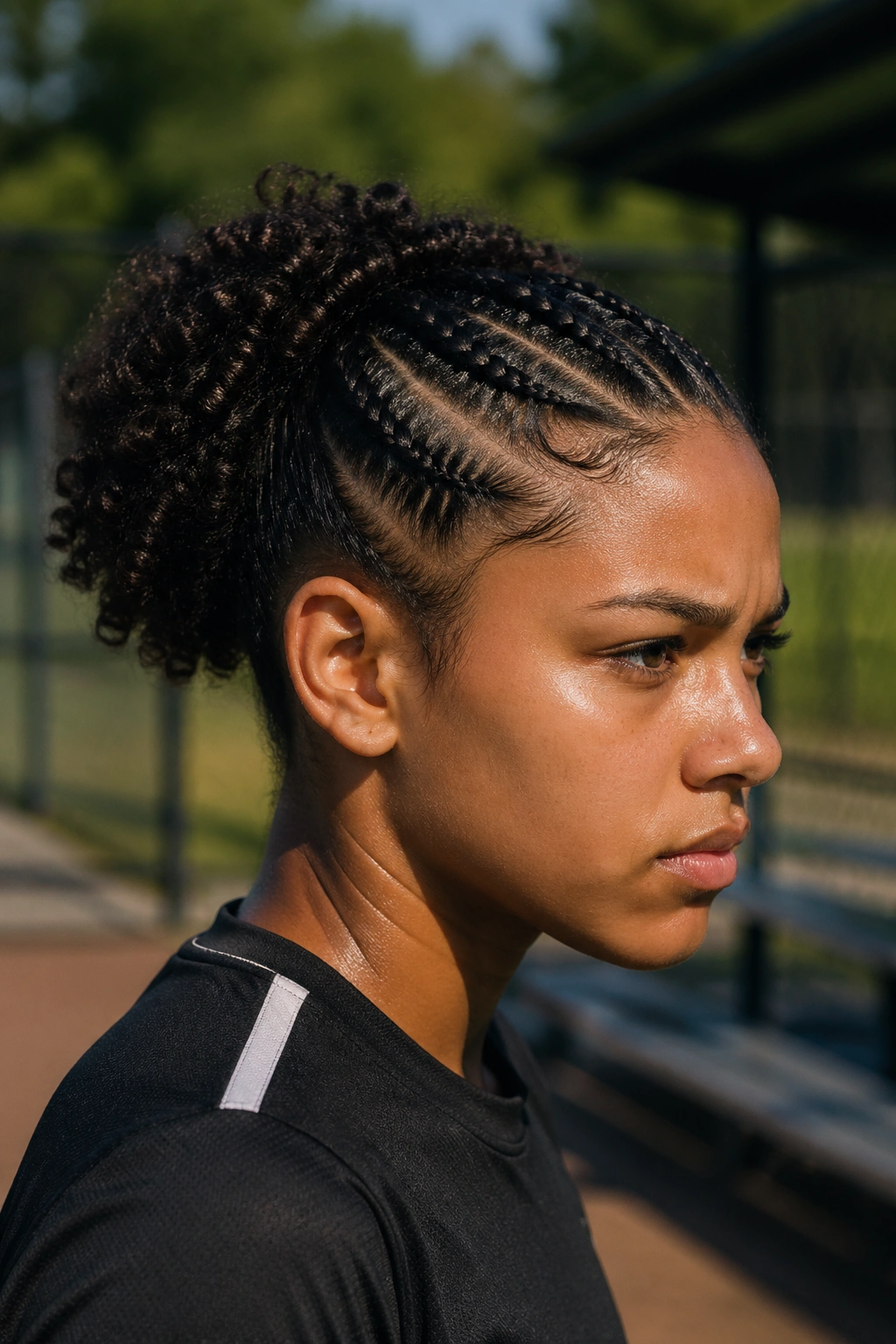
Want the front of your hair to stay put while the back still looks like curls?
This style is one of the smartest options for tighter textures and coily curls. The cornrows keep the hairline flat and controlled, which is where sweat and flyaways usually cause the most trouble. The back stays in a puff or ponytail, so you still get the volume and texture that curly hair does best.
A clean part gives this style its shape, but do not force the rows too close to the scalp. Braids that are pulled too tight can leave your edges sore, and nobody wants that before a match. A little space near the hairline is better than a style that looks sharp for ten minutes and then starts hurting.
What Makes It Hold
- Braid the front in 2 to 4 rows, depending on hair density.
- Keep the braids close enough to stay in place, but not so tight that the scalp feels pulled.
- Gather the back into a puff with a satin scrunchie or snag-free elastic.
- Use a light gel at the front if the baby hairs tend to lift.
This style is practical, not precious. It is a strong pick when you know you will be sweating hard and moving a lot. It also makes a nice base for the next day if you want to refresh the puff and keep the front braids in place.
7. Halo Braid into Tucked Ends
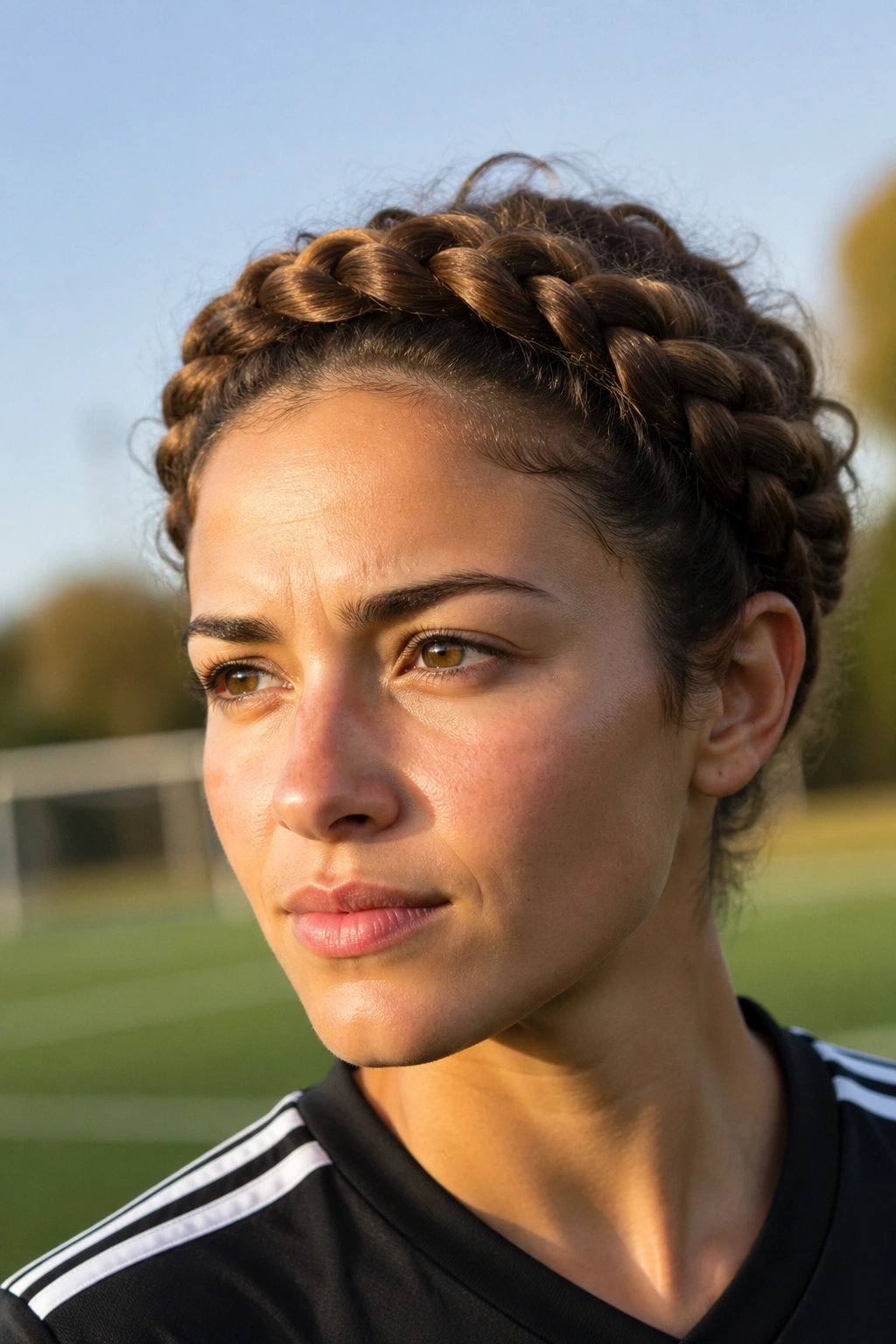
Some styles solve the front, the sides, and the back all at once. The halo braid is one of them.
The braid circles the hairline like a crown, which keeps curls from drifting into the eyes and gives the whole head a secure frame. Then the ends are tucked or pinned low, so nothing swings around while you run. It takes longer than a ponytail, sure, but the payoff is a style that feels calm once it is done.
This is a strong choice for medium to long curly hair, especially if you get annoyed by side pieces slipping loose the minute you start moving. It also helps when the weather feels humid and your curls want to expand at the edges. The braid gives them a place to stay.
Where It Shines
The halo braid is not the fastest thing on this list. That is the trade.
If you have a few extra minutes before practice, it gives you a polished base that does not need much fixing later. For layered hair, tuck short ends under the braid with 2 or 3 crossed bobby pins instead of trying to force them into the braid itself. A little mist of water before you start helps the braid grip without making the hair soggy.
I like this style for players who hate touching their hair between drills. Once it is pinned, it tends to stay where you left it.
8. Twisted Low Bun
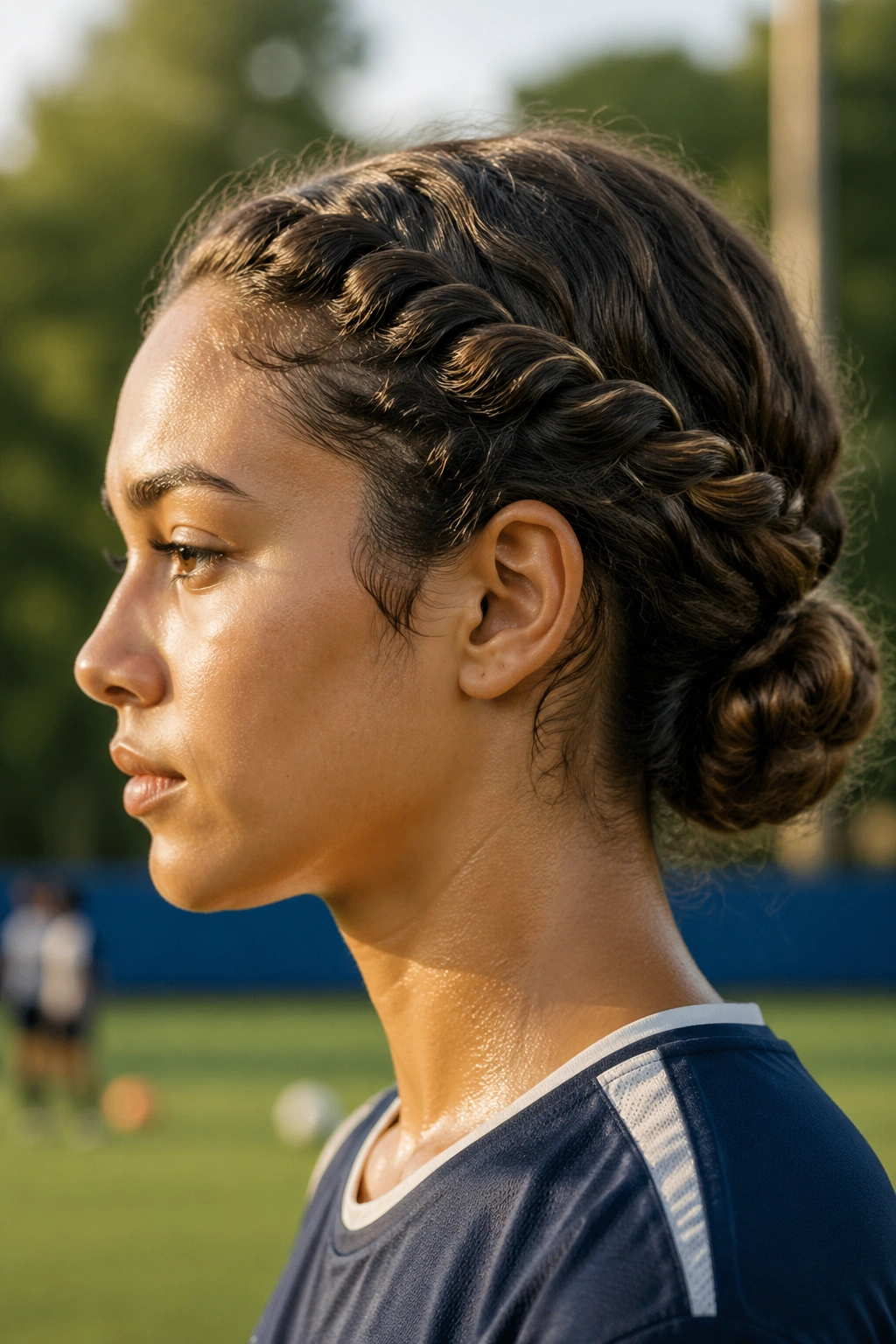
Unlike a braided bun, the twisted low bun keeps more of the curl pattern visible and takes less time to build.
That is why it has a loyal following among players with thick curls or coils. You split the hair into two sections, twist each side back, then coil everything into a low bun at the nape. It looks tidy, but it does not feel like your scalp is trapped in a clamp.
The shape is especially nice if your hair shrinks a lot after styling. Twists hold up better than a standard ponytail when the length is uneven, because the pattern helps the hair stay together as it moves. A low bun also keeps the back of the neck cooler, which sounds small until you are halfway through a hard run and suddenly grateful for every inch of free skin.
A few pins help a lot here. Use 4 to 6 bobby pins around the perimeter of the bun, not just one in the center. That spreads the hold and keeps the bun from leaning to one side. If your hair is very layered, twist the shorter pieces first so they have somewhere to hide.
This is one of those styles that looks more complicated than it is. Once you have done it twice, it becomes a quick option for practice days.
9. Half-Up Curly Ponytail with Braided Front
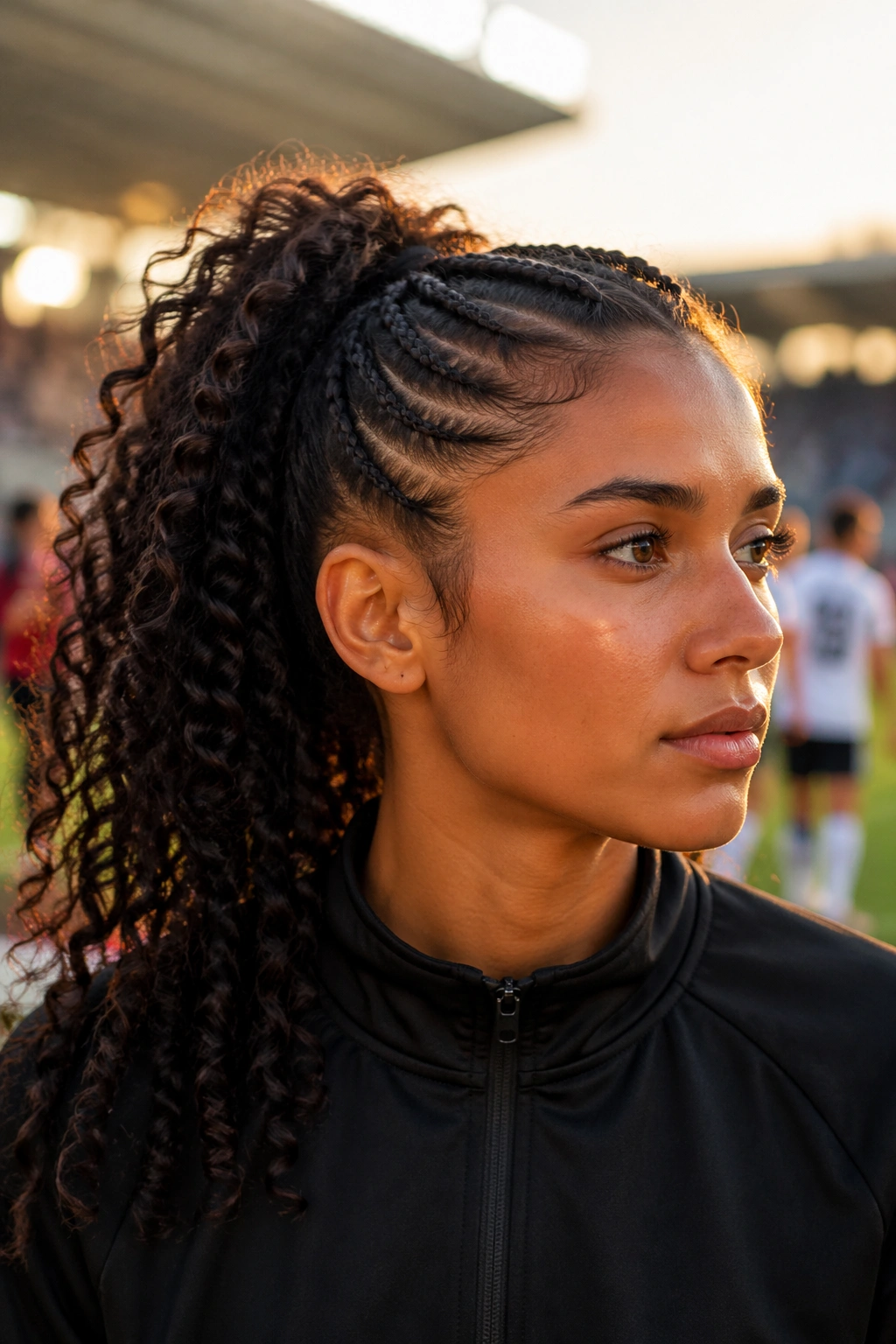
If your ends need room but your face needs a break, this is a clean compromise.
The half-up curly ponytail keeps the lower curls free while pulling the top and front sections out of the way. That makes it a smart fit for layered cuts, looser curl patterns, or anyone who wants to keep a little volume visible instead of hiding everything. It also works well when your curls get flat under full ponytails.
A braid or twist at the front helps this style stay soccer-friendly. Take the hair from temple to temple, braid or twist each side back, then join it into a half-up ponytail at the crown. The back stays loose and springy. The front stays controlled.
- Section from temple to temple.
- Smooth the front lightly with your fingers or a soft brush.
- Braid or twist the front pieces back.
- Secure the top section with a small elastic.
- Leave the back loose, or define it with a touch of curl cream.
This style is nice when you want movement. The curls at the back bounce, but they are not in your eyes. If your hair is very slippery, a little mousse on the top section gives the elastic something to hold onto. And if the front pieces are short, pin them in a tiny crisscross before you tie the ponytail.
10. Side Part French Braid into Ponytail
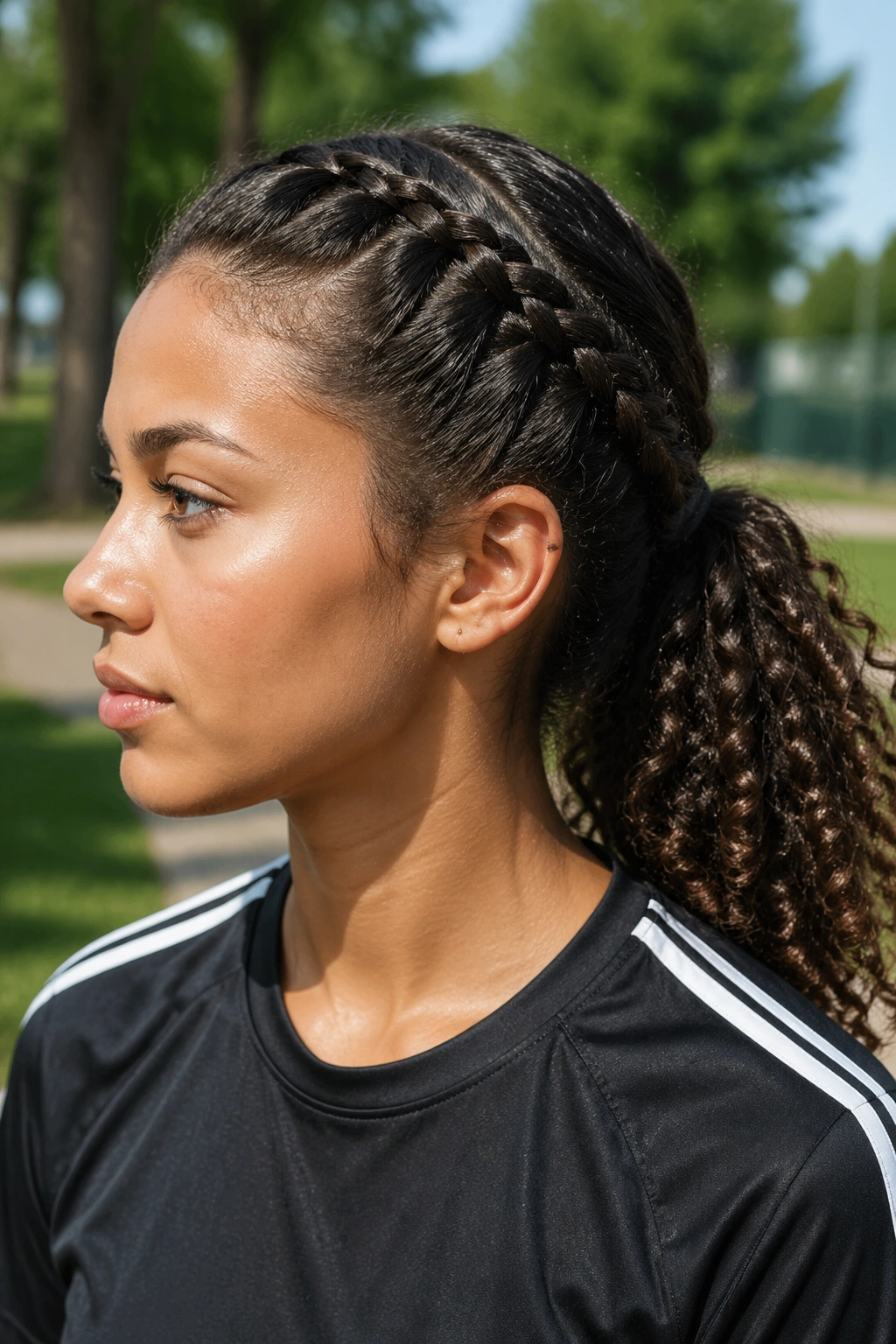
A side part changes the whole feel of a soccer hairstyle for curly hair. It shifts where the weight sits, and that can make a big difference if one side of your hair naturally falls heavier than the other.
The French braid starts on the fuller side and travels back toward the nape before joining a ponytail. That gives you control at the front, where curls like to slip into the face, while leaving the rest of the hair in a shape that still moves. It is a useful option if a center part feels too severe or if your curls usually break loose on one side more than the other.
The braid does the heavy lifting. The ponytail finishes the job.
That is why this style works so well for players with medium to long hair. The braid holds the front line in place, and the ponytail keeps the back from feeling overworked. If the hair is dense, braid only one side and let the other side stay smoother. That can feel lighter on the head than braiding both sides.
A fine rat-tail comb helps with the part, but your fingers are usually enough once the sectioning is set. Finish with a secure elastic at the nape, then smooth the braid tail if it starts to fray. A little frizz at the ends is fine. It is a soccer field, not a photo shoot.
11. Athletic Headband Pineapple
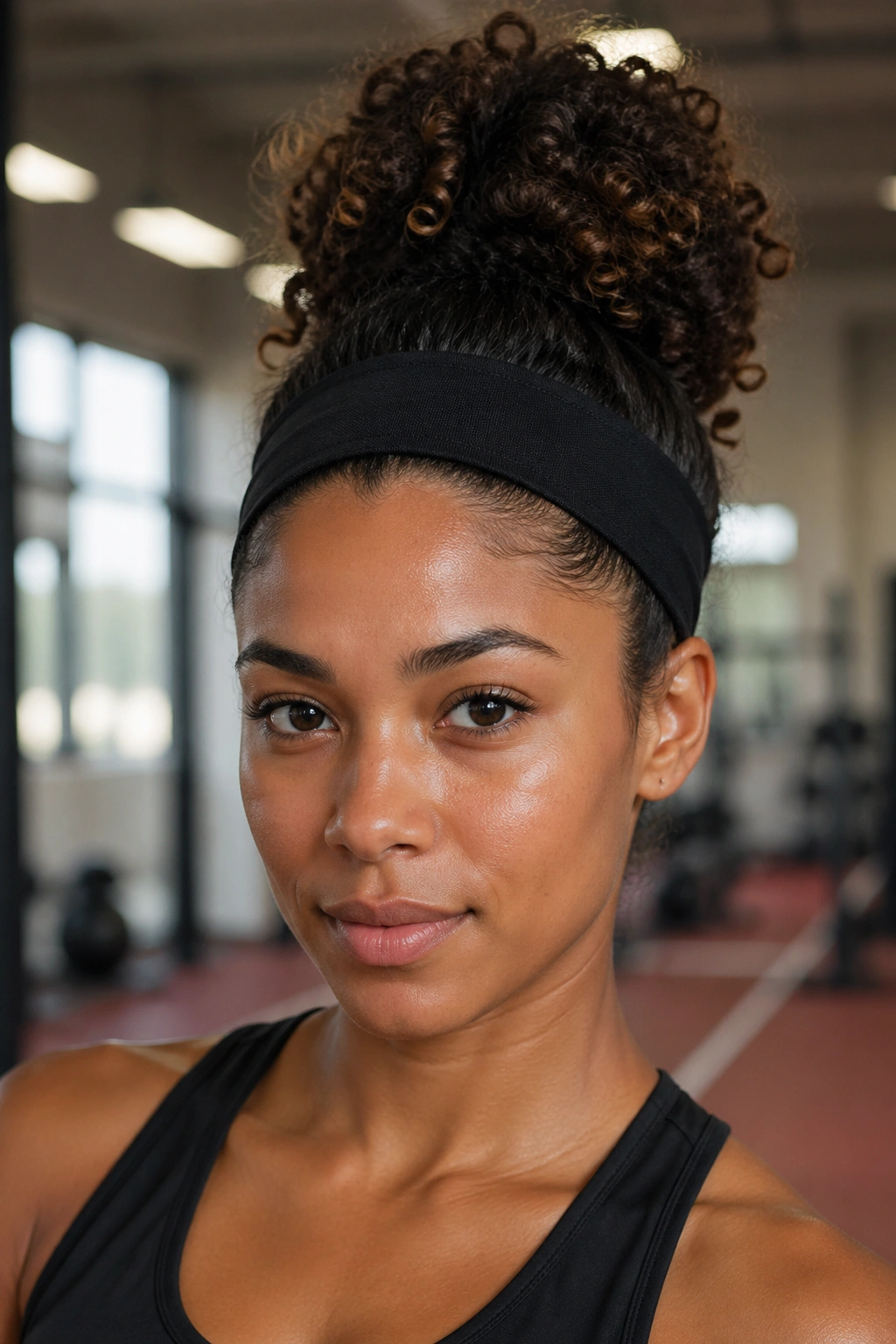
Can a headband be enough? Sometimes, yes.
This style is good for players whose curls like height and whose scalp hates too much tension. You gather the hair high at the crown — more pineapple than ponytail — then slip on a wide athletic headband to keep the front and sides under control. The curls stay lifted, the face stays clear, and the style comes together fast.
How to Make It Stay
- Use a 2-inch or wider stretchy headband with a grippy inside.
- Gather the curls high on the head, not at the back.
- Let the ends stay loose, or tuck the longest pieces lightly under the band.
- Smooth only the front hairline if you need a cleaner finish.
This is a good choice for warm-ups, training, or lighter soccer sessions when you want speed over ceremony. It is not the best pick if your hair is extremely heavy or if the band tends to slide on smooth hair. In that case, add a tiny bit of mousse at the roots or choose a band with a textured inside surface.
The pineapple shape keeps curl definition better than a tight ponytail because the strands are not stretched flat. That means less weird bend in the hair when you take it down later. And honestly, that matters. Nobody wants to spend a long practice session creating a style that needs a full recovery plan afterward.
12. Faux Hawk Puff
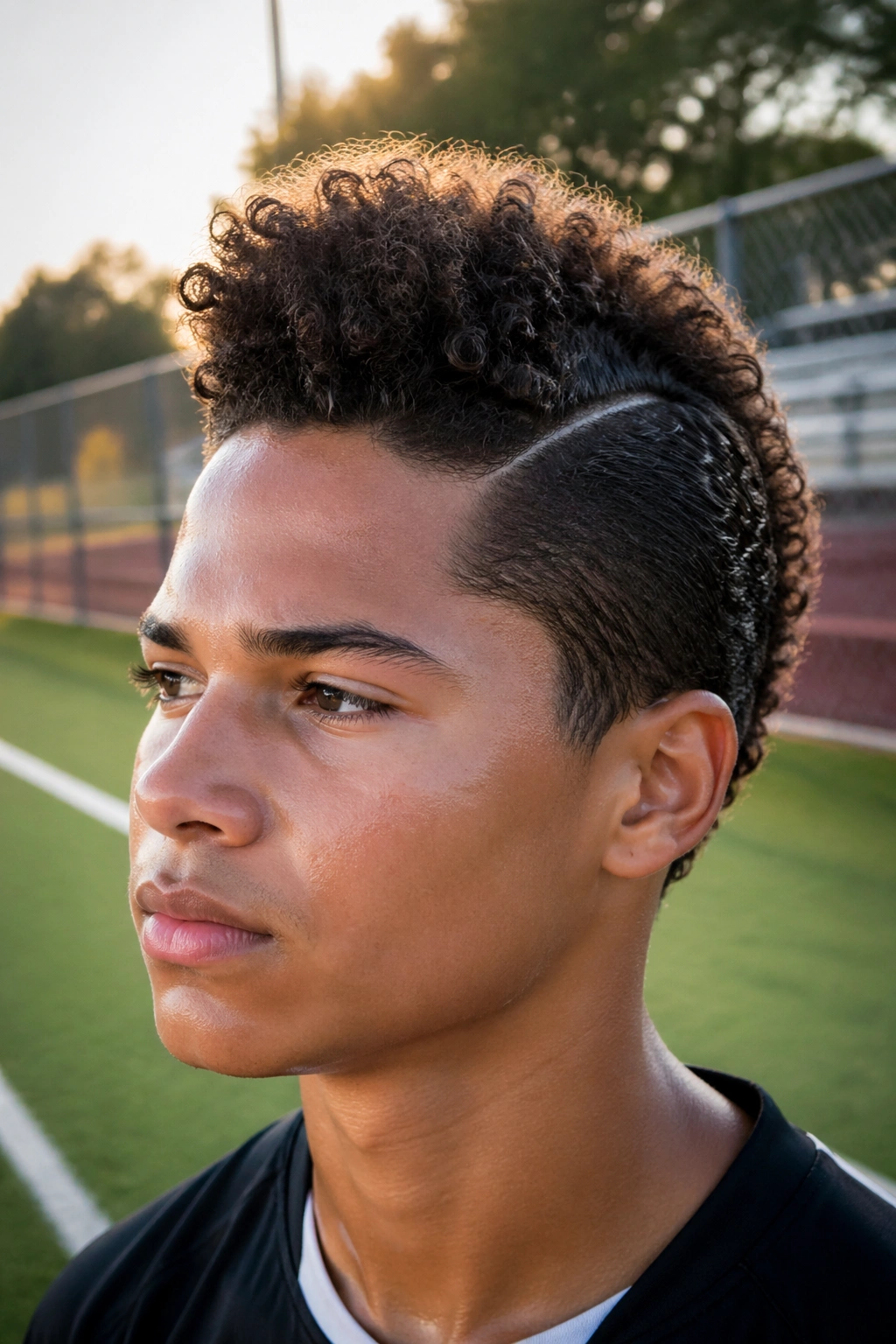
If you want the most sport-forward look on this list, the faux hawk puff gets it done.
It keeps the sides controlled and leaves the center strip of curls with some height, so the whole style feels bold but practical. For soccer, that means less hair in the face and less bulk around the ears, which is where a lot of curly styles get uncomfortable once you start sweating. The shape also suits coily and dense curl patterns because it lets texture stack upward instead of flattening sideways.
The style usually starts with flat twists, small braids, or slicked sections along the sides. The center stays loose and can be gathered into one long puff or split into two or three smaller puffs down the middle. Either way, the visual line goes from front to back, which helps the hair stay organized while you move.
What to Watch For
- Use a rat-tail comb to part the center strip cleanly.
- Keep the side sections smooth with gel, but do not overdo it.
- Secure the center puffs with small elastic bands about 2 to 3 inches apart if you want a segmented look.
- Pin any loose pieces near the crown before they escape.
This style takes longer than a simple ponytail, and that is the honest truth. It pays you back with a strong hold and a shape that still looks like your hair, not a compressed version of it. If you have thick curls and a little extra time, it is one of the most satisfying game-day options on the list.
Pick the style that matches your hair density, not the one that looks hardest on someone else’s head. A good soccer hairstyle should survive warm-up, headers, and the ride home, and the best ones leave your curls looking like curls instead of a fight between a brush and a stopwatch.
