

Blue and red box braids have a built-in edge. The colors do half the work before you even think about length, parting, or accessories.
The part people miss is placement. A strip of blue hiding under red braids feels completely different from a neat half-and-half split or a full head of alternating panels, and the same two colors can swing from polished to playful fast.
I like this color pairing on box braids because the square parting gives the eye somewhere to land. If the rows are clean and the sections are even, the style looks intentional; if the parts are sloppy, the colors start fighting each other.
That is why the details matter here. Some versions need chunky braids and bold contrast, some need tiny parts and a softer gradient, and some work best with beads, cuffs, or a ponytail that shows off the color from the back.
1. Alternating Blue and Red Panels
Alternating blue and red box braids are the easiest way to make the colors feel balanced. One braid red, the next braid blue, and suddenly the whole head looks patterned instead of random.
Why It Works
The rhythm matters. When the color changes braid by braid, the eye reads the style as a whole design, not two separate shades fighting for attention.
This setup works especially well on medium to long box braids, where the color can repeat down the length and still look clean from the front. It also plays nicely with pre-stretched braiding hair because the finish stays smooth and the ends seal neatly in hot water.
- Use medium sections, about 1/2 inch wide, if you want the color change to read clearly.
- Keep the parting lines straight so the braid pattern stays crisp.
- Choose this layout if you want both colors visible from every angle.
My take: this is the most straightforward blue and red box braids look, and honestly, it’s hard to mess up when the parts are neat.
2. Blue-Left, Red-Right Split Braids
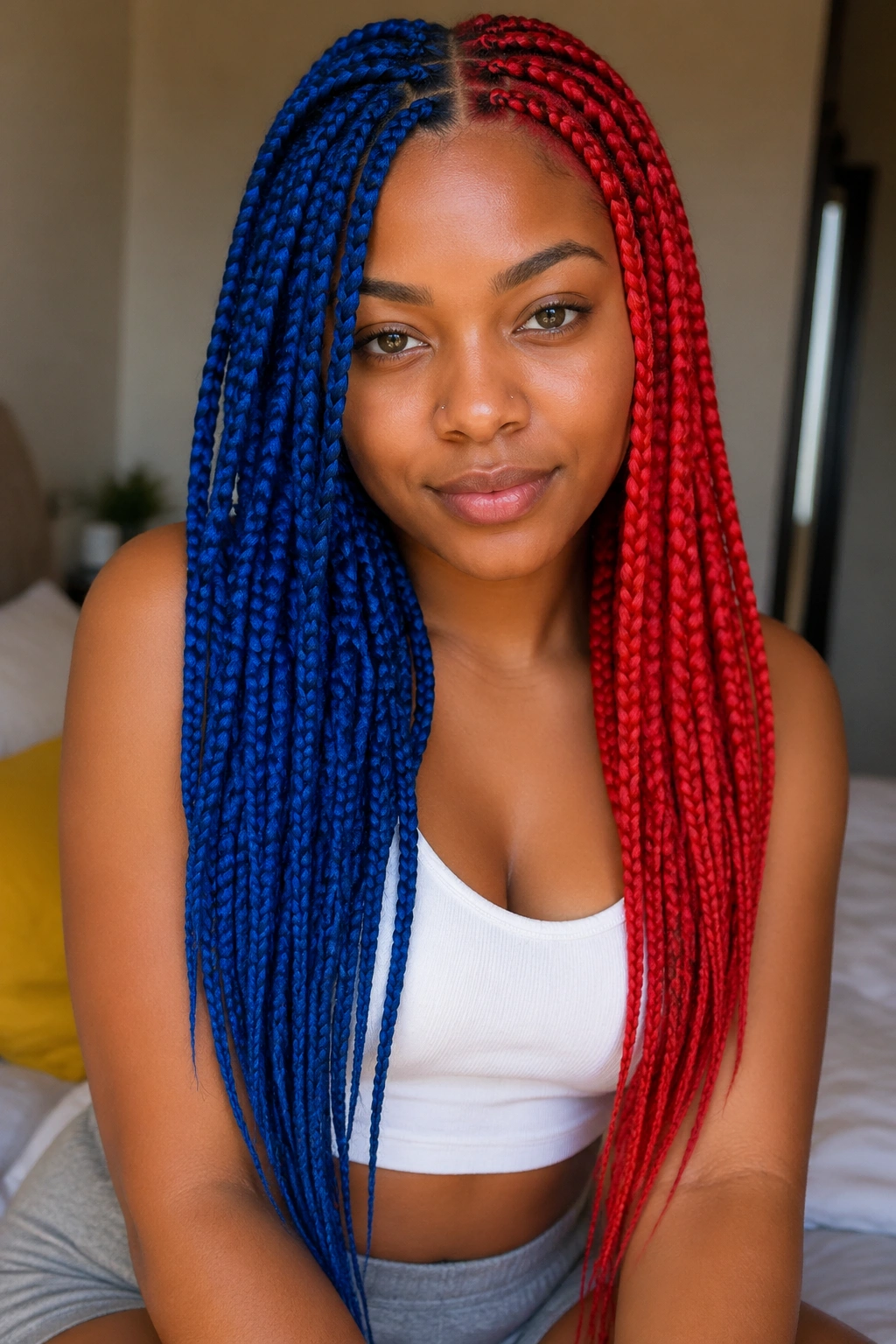
Want the most graphic version? Divide the head right down the center and keep one side blue, the other side red.
The effect is blunt, which is exactly why it works. There’s no guessing, no blending, no soft fade trying to make peace between the shades. Just color on one side and color on the other, with the middle part acting like a clean seam.
This style looks sharp on long box braids because the weight helps the two halves fall in separate curtains. If the braids are too short, the split can feel abrupt. If they’re long enough to brush the shoulders, the contrast looks deliberate and a little dramatic in a good way.
Keep the part line straight from the hairline to the nape. If it drifts even a little, the whole look starts to feel off-center.
3. Peekaboo Blue Under Red Braids
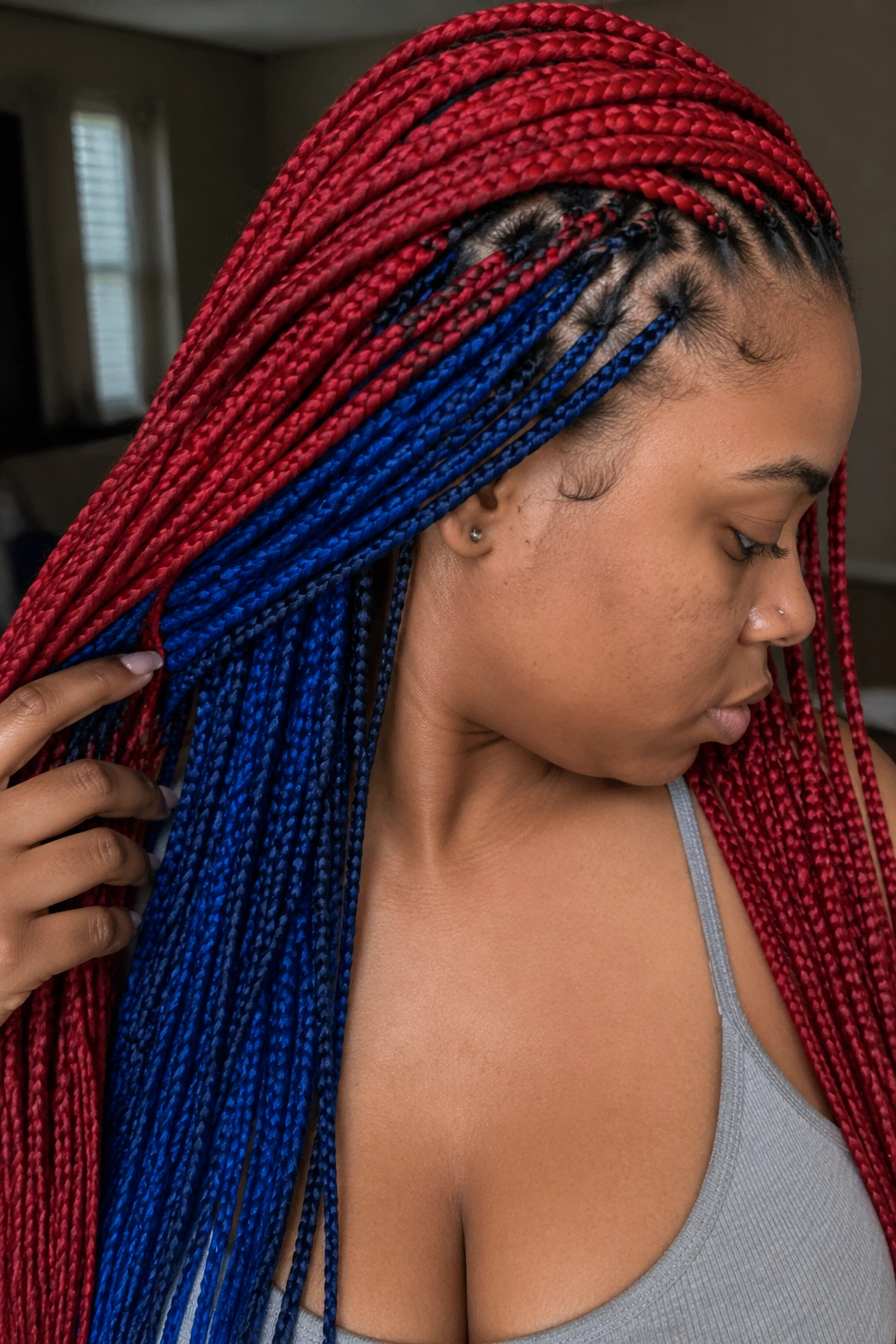
From the front, it looks like a red set. Turn your head, and blue flashes underneath.
That little reveal is the whole point. Peekaboo color keeps the look wearable while still giving you the shock of blue when the braids move, part, or get swept behind one ear. It’s also a smart option if you want color without having every inch of the style shouting at once.
How to Keep the Reveal Clean
The hidden layer should sit underneath the top braids, not mixed through them. A rough estimate that works well is using about one-third of the hair for the underlayer and the rest for the visible red on top.
Ask for a neat top layer so the red sits flat and the blue shows only where you want it. If the upper rows are too thin, the underlayer peeks through too much and the effect gets messy fast.
This style is especially nice when you wear half-up styles or high buns. The blue comes out to play without turning the whole head into one loud block.
4. Jumbo Blue and Red Color-Block Braids
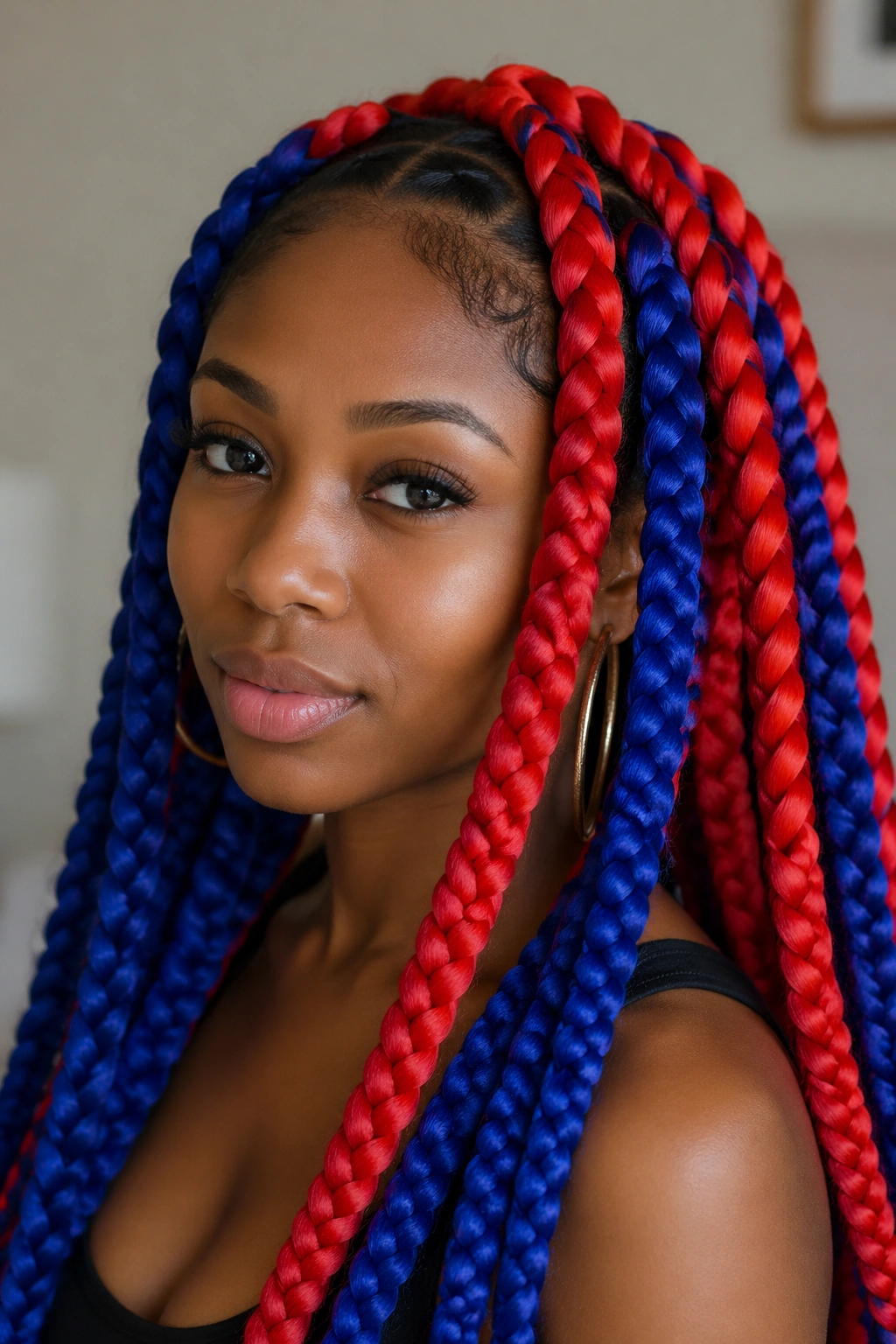
Tiny braids get all the attention, but jumbo box braids make blue and red look stronger.
The reason is simple: each braid becomes a thicker stripe of color, so the contrast hits faster. On larger braids, a deep cobalt strand beside a cherry-red strand looks almost like ribbon work. It is bolder, yes, but it also installs faster because there are fewer sections.
Heavy is the tradeoff. Jumbo braids pull more than small ones if the sections are too thick or the hair is packed too tightly at the root. A skilled braider can keep the base neat and reduce tension, but you still want to be careful if your scalp tends to complain after an install.
This is the style for someone who wants the colors to be obvious without needing beads, curls, or extra styling. A clean middle part and a long length are enough.
5. Knotless Blue and Red Waist-Length Braids
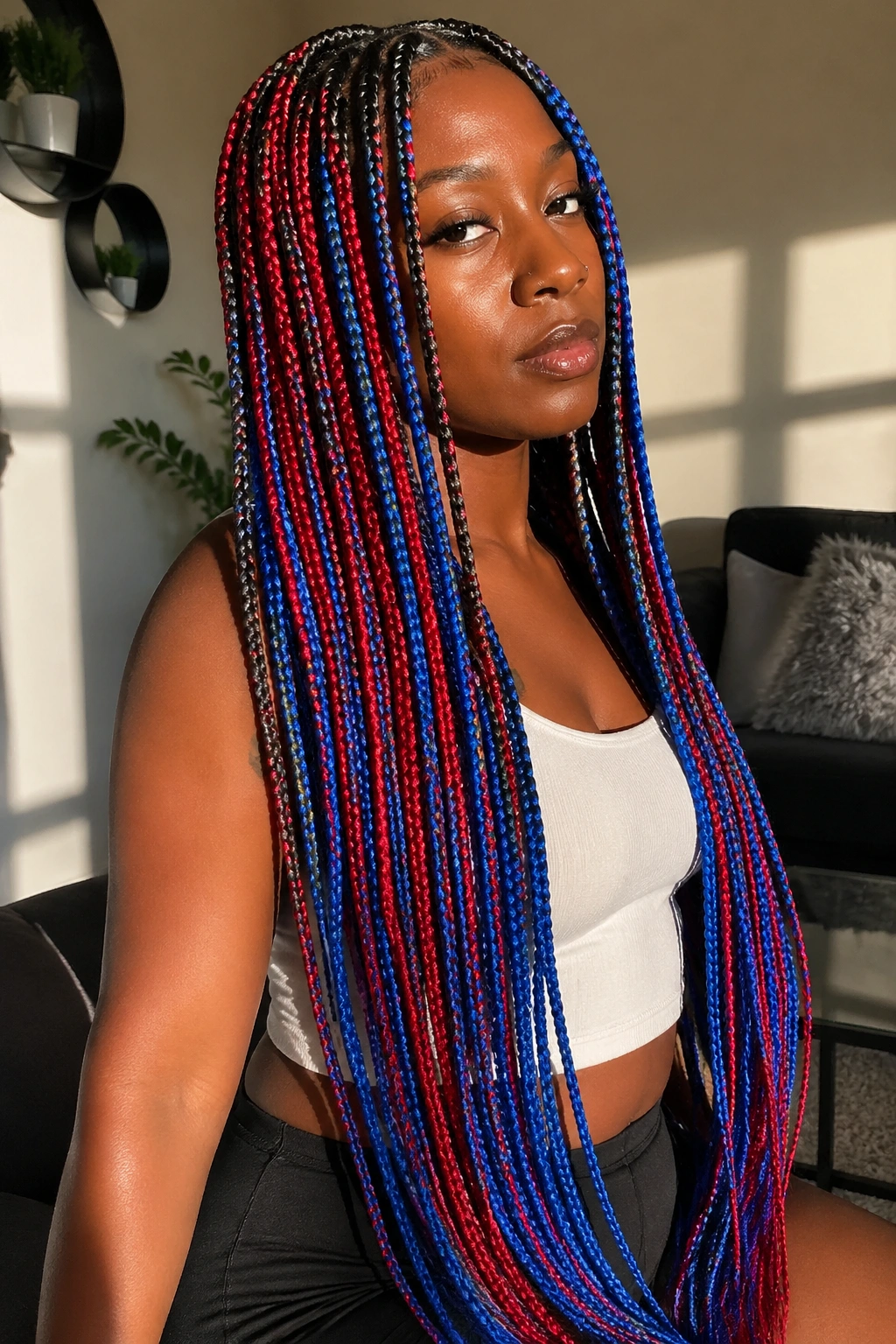
At waist length, the braids swing with a little weight, and the blue and red have room to show off.
Knotless braids make that length feel smoother at the root. Instead of a bulky knot at the scalp, the braid starts flatter and feeds in gradually, which can be kinder on the hairline and easier to wear for long stretches. That flatter base matters even more when the color is vivid, because the eye notices both the movement and the transition between shades.
This is one of my favorite ways to wear blue and red box braids when the goal is polish rather than chaos. The long fall of the braids softens the color split, and the ends have enough length to pool over a shoulder or gather into a thick low ponytail.
Use this style if you want the color to feel rich, not busy. It works best when the braids are kept light at the root and the ends are sealed cleanly so the lengths stay tidy instead of fraying early.
6. Small Blue and Red Braids with Clean Parts
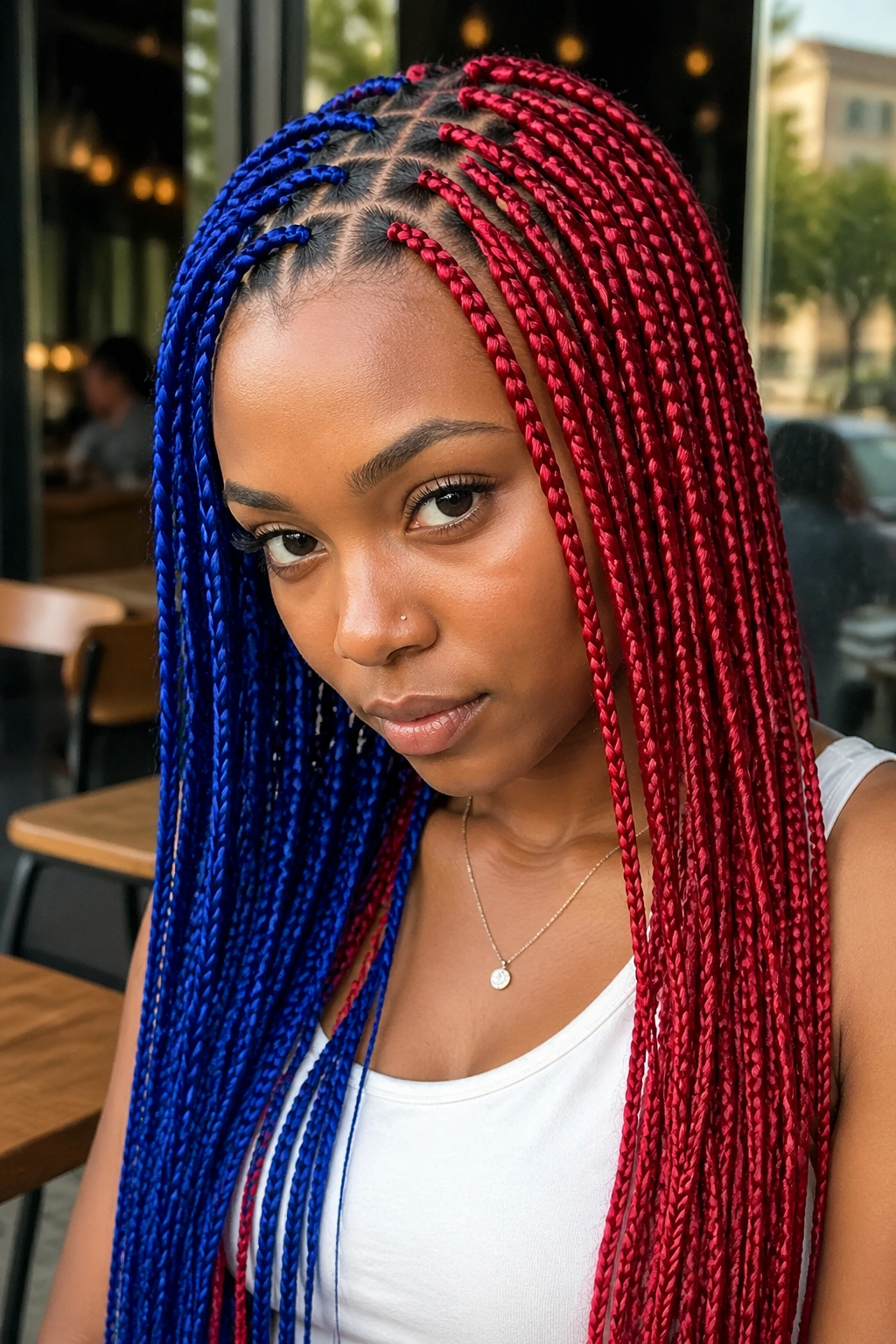
Nine or ten rows across each side can turn a color mix into something sharper.
Small box braids make blue and red feel more detailed, almost like mosaic work. You see the color pattern, yes, but you also notice the parting itself, which is part of the appeal. On a head full of tiny braids, the contrast looks finer and more controlled than it does on jumbo sections.
Why Small Braids Change the Mood
They sit flatter. They move less in heavy chunks. And they let the scalp pattern stay visible, which gives the style a more finished look.
The downside is time. Small braids take longer to install, and they show crooked parting faster than larger ones do. If the rows are uneven, the whole style reads untidy from the start.
- Ask for clean square or slightly rectangular parts if you want a classic box-braid look.
- Keep the braids light enough that your scalp does not feel tugged at the end of the install.
- Choose this version when you want blue and red to look neat, not oversized.
7. Chin-Length Blue and Red Braided Bob
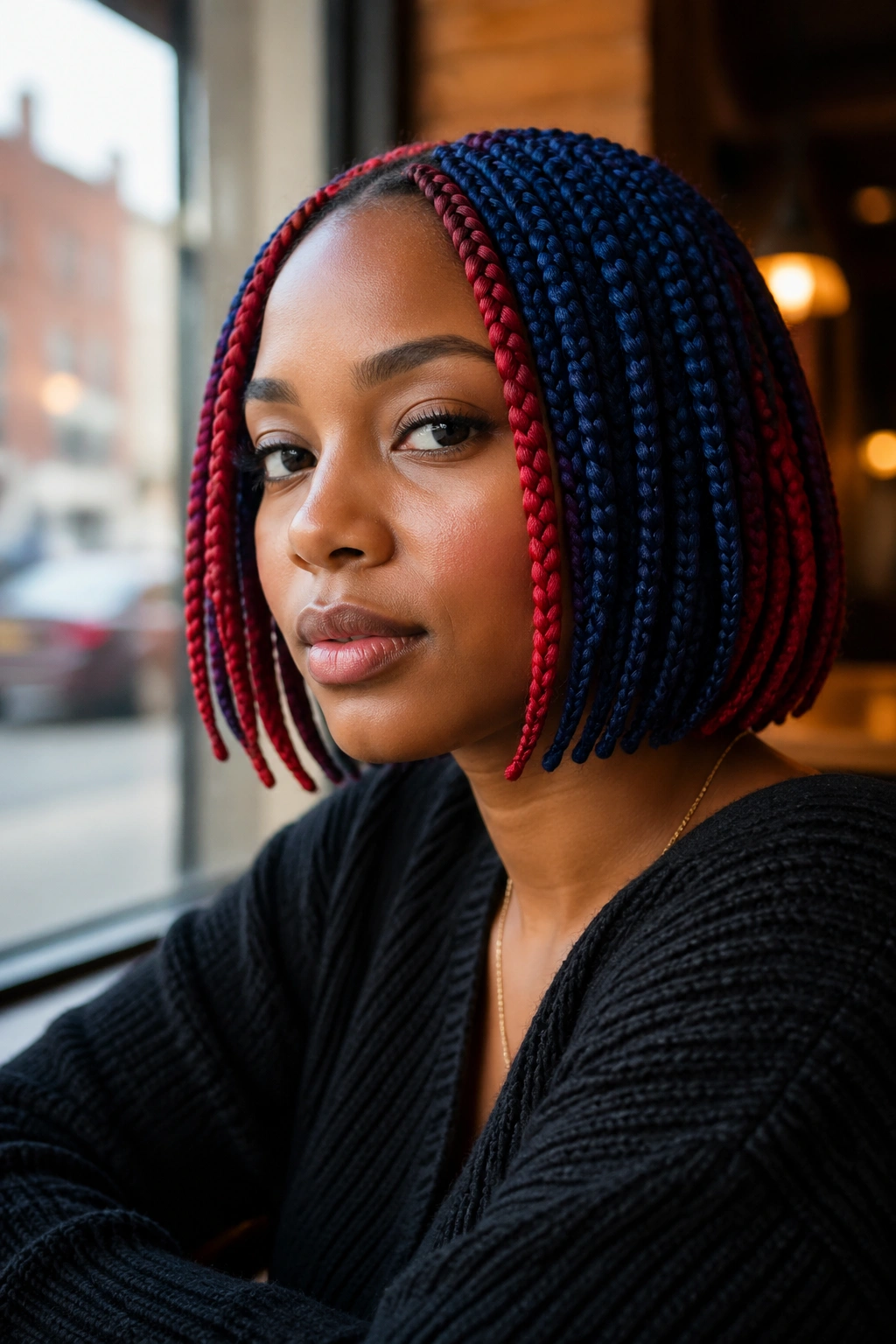
Short and sharp.
A bob with blue and red box braids keeps the color close to the face, which means the shades show up before the length does. That makes the style feel lively even when you wear simple clothes, and it stays cooler around the neck than a waist-length set.
The clean line of a bob also makes parting and braid size matter more. If the ends sit around the jawline or just below it, the style gets a crisp shape that looks intentional instead of improvised. A blunt bob with alternating colors can feel almost graphic, while a slightly staggered cut gives the braids more movement.
This is a smart choice if you do not want to babysit long braids all day. Fewer inches means less tangling at the ends, less weight, and less hassle when you tuck the hair under a hat or scarf.
8. Blue and Red Goddess Braids with Loose Curls
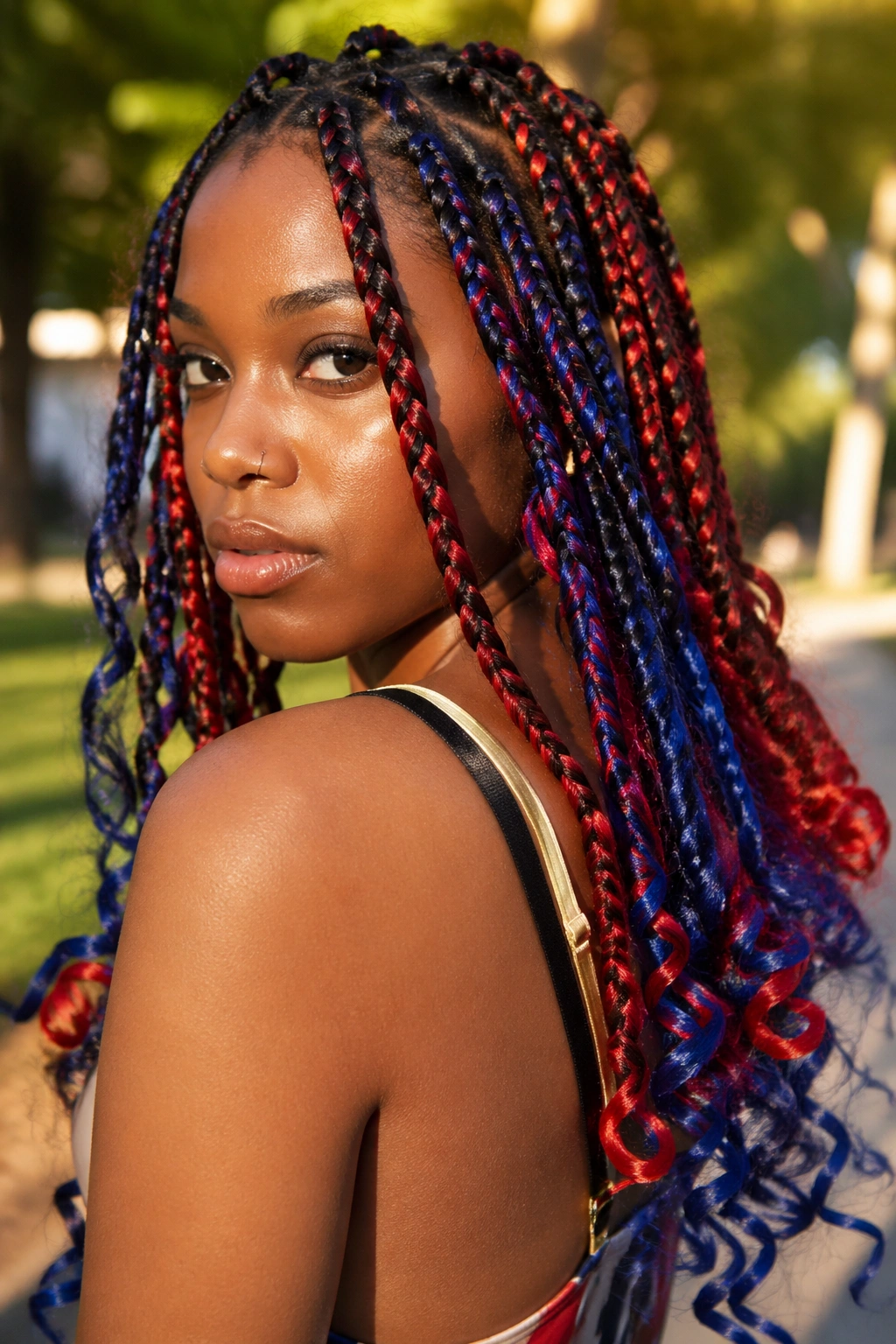
A few loose curls soften what is otherwise a strong color mix.
That contrast is the whole charm of goddess box braids. The braids bring structure, but the curls break the hard lines and let the blue and red show up in layers instead of blocks. If the colors feel too bold on their own, curls at the ends or tucked between the braids take the edge off without hiding anything.
A style like this looks especially good when the curly pieces are placed near the face. Those soft ends move first, which means the color gets a little flicker every time you turn your head. If you want more volume, leave a few braids in the front with curly tips and keep the rest sleeker toward the back.
Use mousse lightly if the curls need shaping. Too much product weighs them down and makes the whole style feel damp, which is not the mood here.
9. Triangle-Part Blue and Red Braids
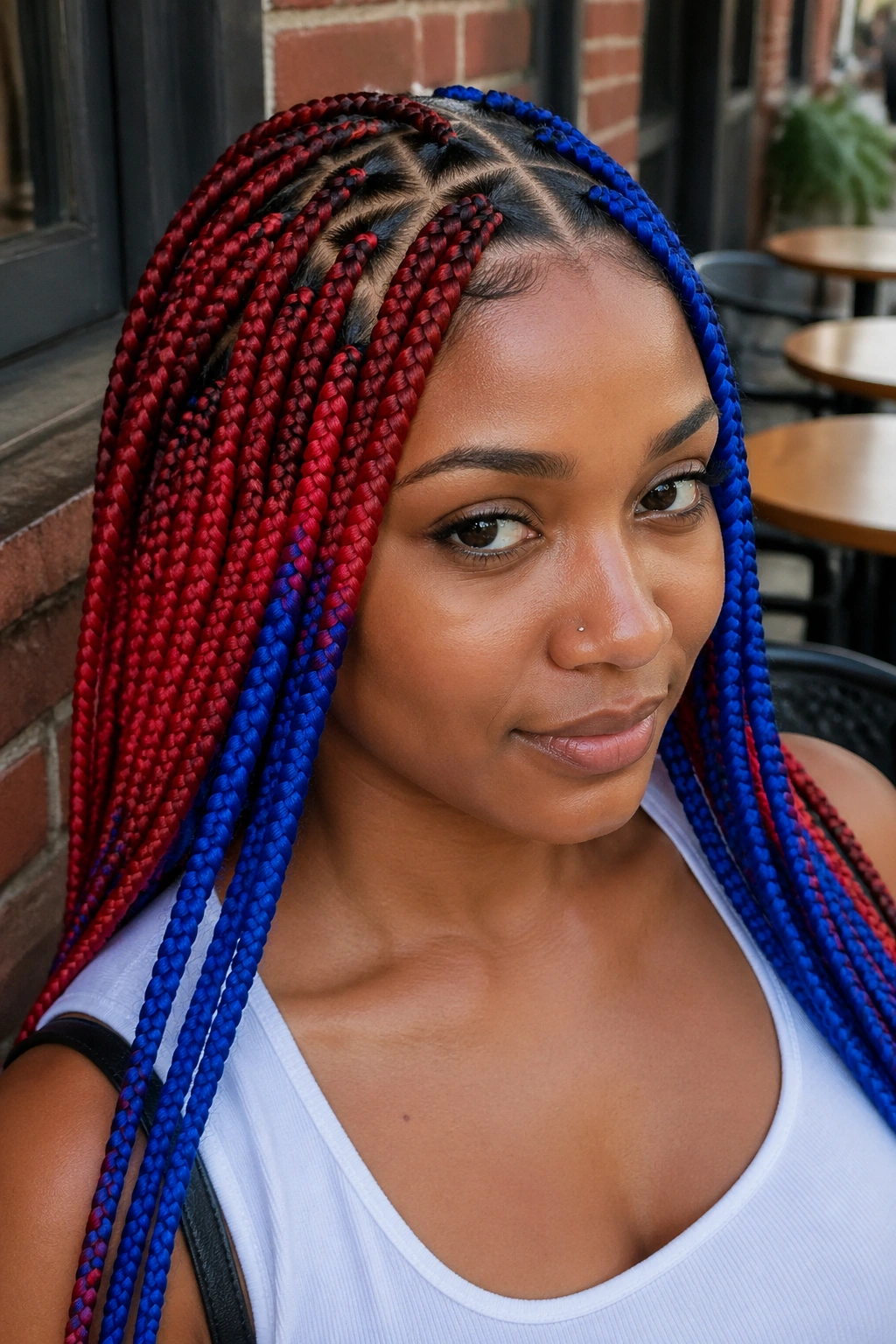
Why does triangle parting change the look so much?
Because the parting becomes part of the design. Square parts are classic and easy to read, but triangle parts push the style a little farther and give the scalp a more geometric feel. When blue and red are already doing a lot visually, that extra shape keeps the style interesting from the root down.
What to Ask For
- Ask for triangle bases around 1 to 1.5 inches wide if you want the shape visible without making the sections too large.
- Keep the triangles even on both sides so the color pattern stays balanced.
- Let the color repeat through the parting instead of clustering in one area.
This style works well if you like your braids to look designed rather than plain. It has more personality than standard squares, and it photographs with a lot of clean angles. The only catch is that uneven triangle points show fast, so the parting has to be neat from the start.
10. Side-Swept Blue and Red Braids
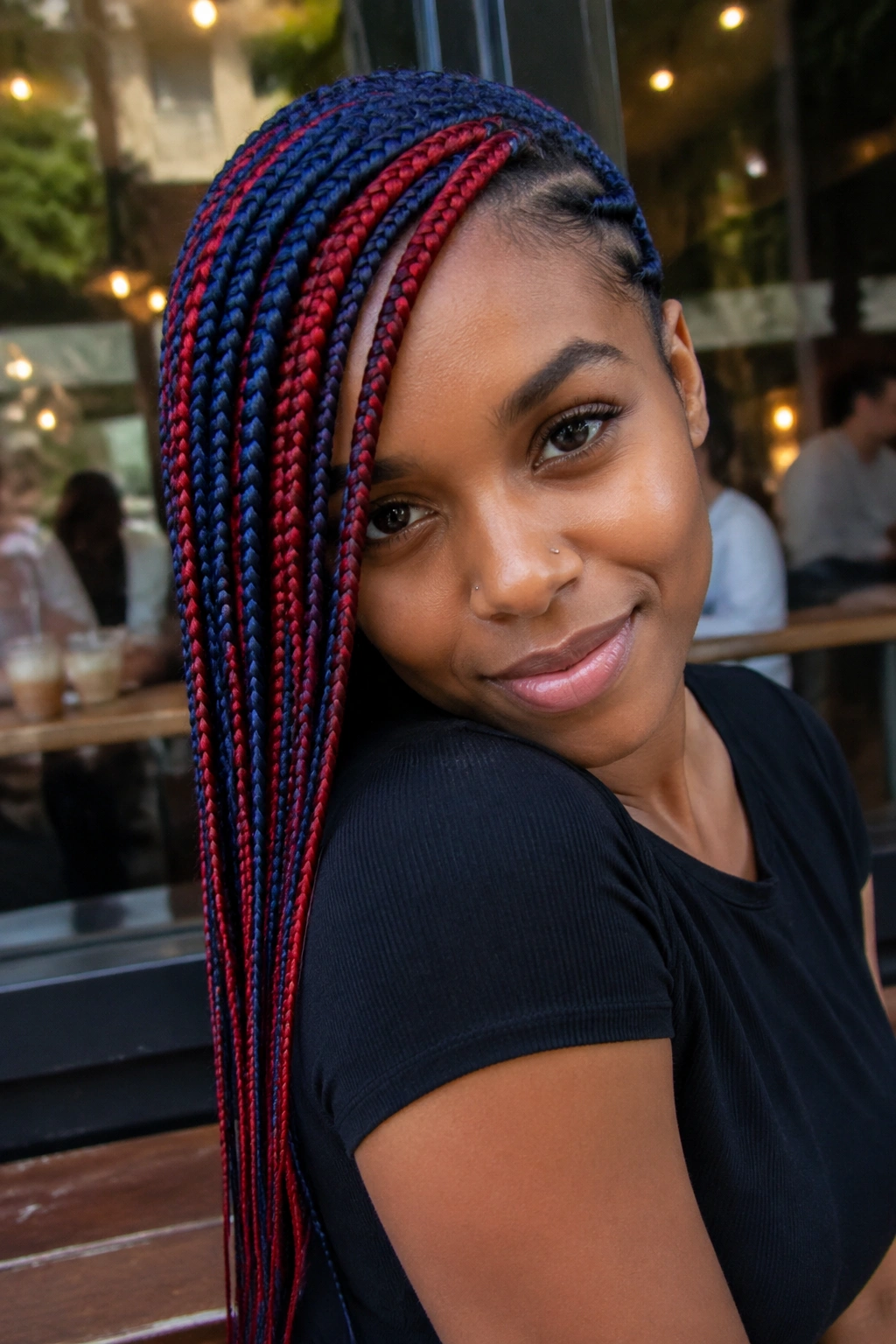
One side falls over the cheekbone, the other stays tucked back.
That asymmetry gives blue and red box braids motion before you even start styling them. A side-swept braid set is good when you want the color to feel active and a little softer around the face. The sweep also gives the front sections room to show off whichever shade you want people to notice first.
This look can lean elegant or casual depending on how heavy the braids are. Long, medium-size braids fall with a smooth curve. Smaller braids create more swing and show the color change faster. If you wear glasses, this is a practical style too, because the hair stays off one side instead of fighting your frames all day.
Keep the part deep enough that the swept side holds its shape. A shallow side part falls flat; a deeper one gives the color a real arc.
11. Blue and Red Braided Ponytail
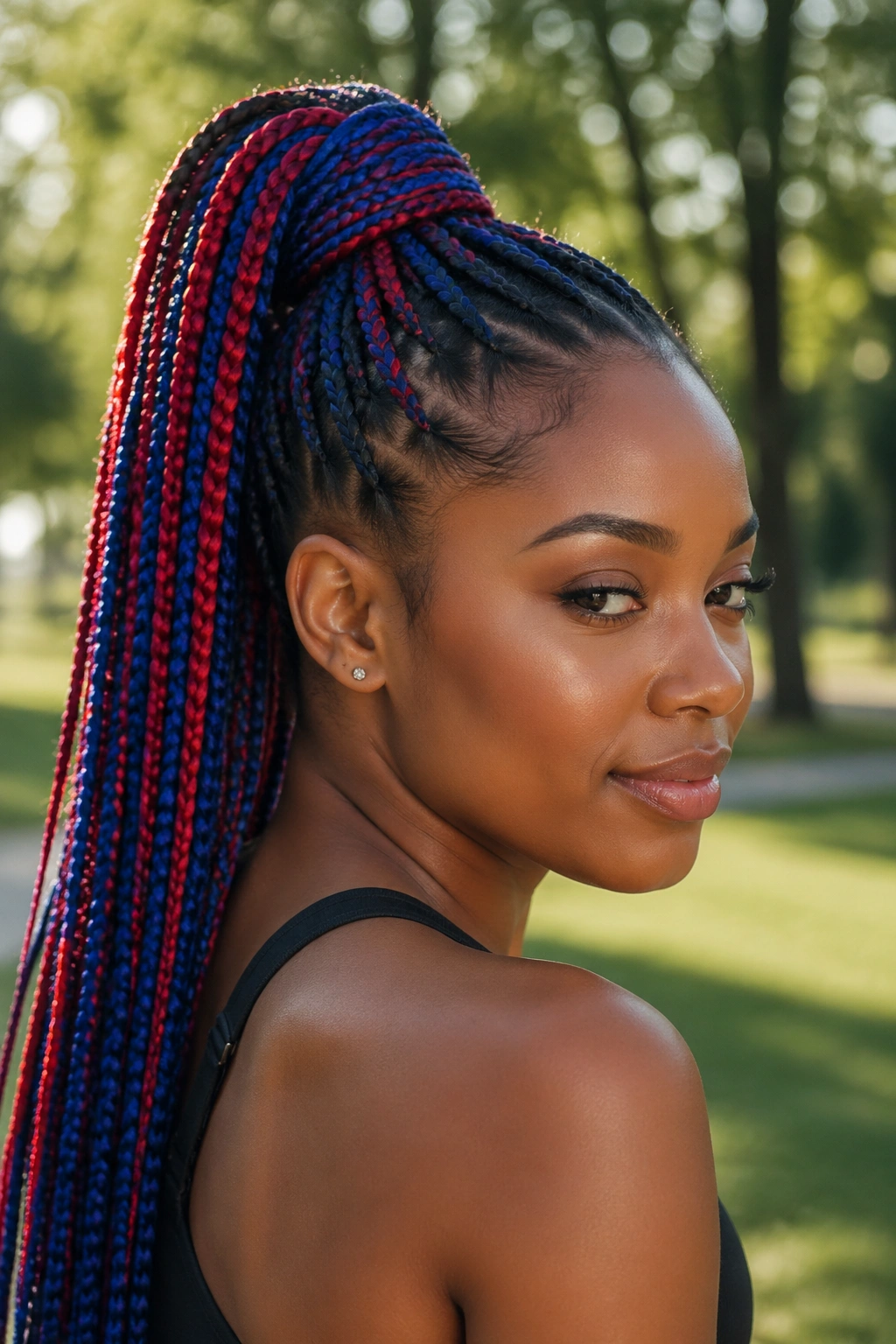
A ponytail makes blue and red box braids look cleaner, not simpler.
Pulling the braids up changes how the color reads. Instead of hanging in one long curtain, the shades stack upward at the base and then spill down in a thick tail. That makes the style feel sharper and more controlled, which is handy if you want your hair out of the way but still want the color to do something visible.
A high ponytail shows off the roots and parting. A mid ponytail feels easier to wear every day. Either way, use a strong, snag-free tie and wrap one braid around the base so the elastic disappears. Thin rubber bands are a bad idea here; they chew up synthetic hair and leave a rough patch at the anchor point.
This is one of the easiest ways to get a polished look without restyling the whole head. The ponytail does the work for you.
12. Blue and Red Box Braids with Beads and Cuffs
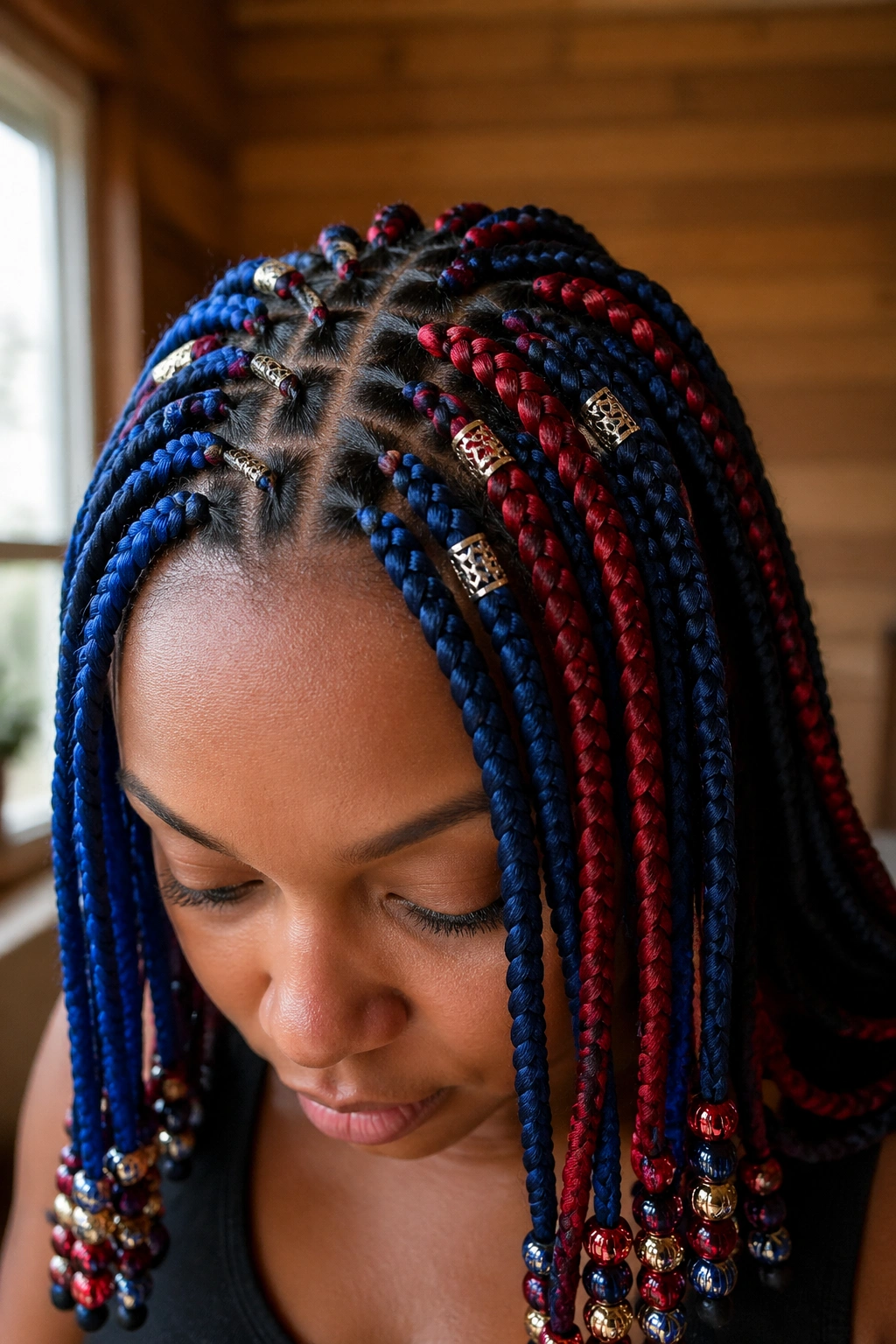
Metal cuffs clicking lightly against red and blue hair is one of those details that reads from across the room.
Beads and cuffs give the braids a little edge without changing the whole install. A few cuffs near the ends make the length feel finished. A few more near the roots create structure and draw the eye to the parting. You do not need many; too much hardware starts to feel noisy and can weigh the braids down if the sections are small.
A Small Rule of Thumb
- Use two or three cuffs per braid cluster if you want the look to stay clean.
- Place heavier beads on thicker braids, not tiny ones.
- Mix metal with one or two matte beads if you want a softer finish.
This style works best when the accessories are picked with intention. Bright blue and red already carry the look. The beads are there to frame it, not compete with it.
13. Blue and Red Space Bun Box Braids
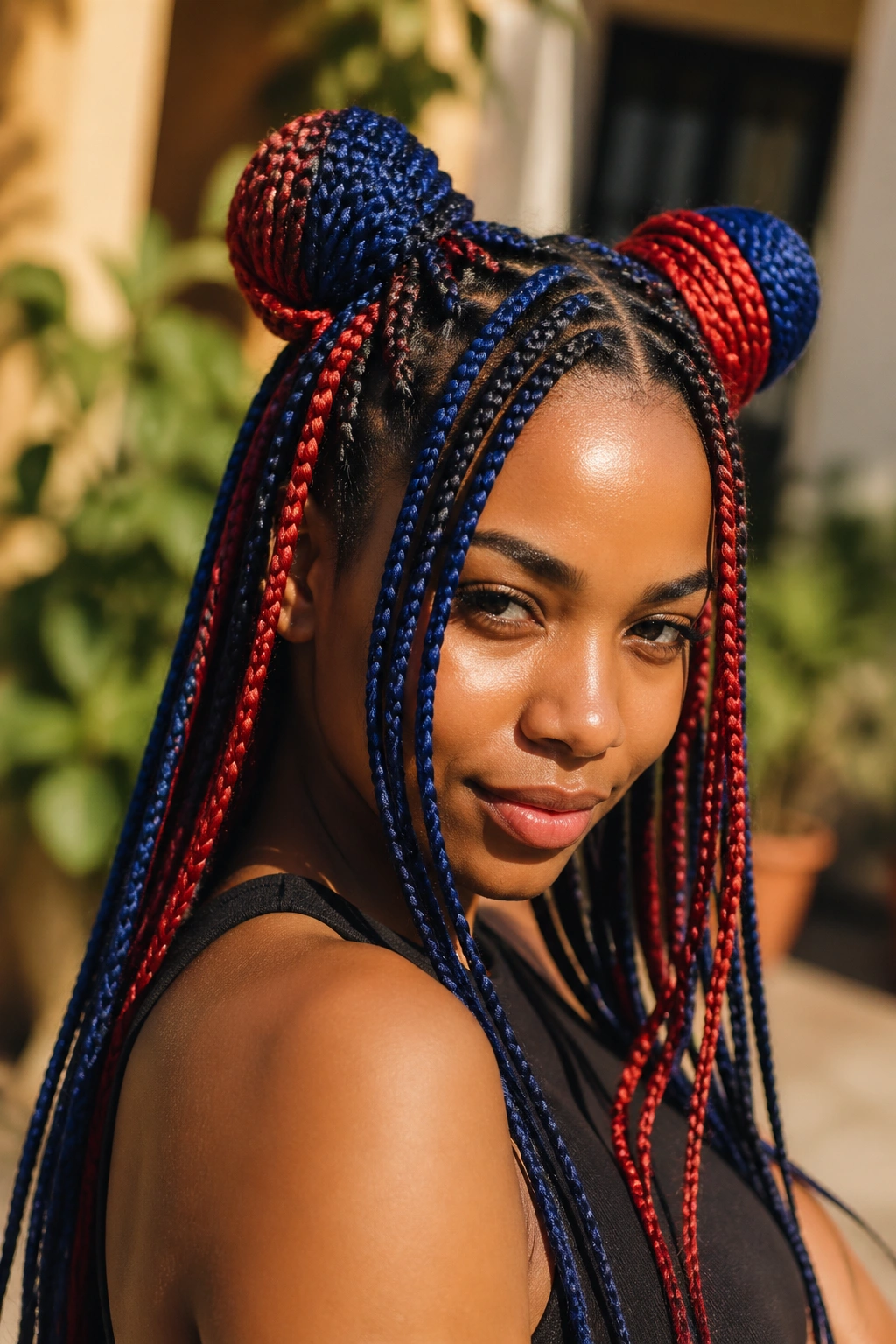
Space buns are not childish when the braids are long and the colors are saturated.
Put the same blue and red box braids into two high buns, and the shape suddenly feels more playful, almost sporty. The buns show the roots, the lengths, and the color order all at once. If you leave a few braids hanging from the buns, the style gets a little extra movement and avoids looking too stiff.
This version is useful on warmer days because it gets the hair off your neck fast. It also gives you a reason to show off both colors at the crown, where people usually notice first. If the braids are heavy, keep the buns low and loose enough that the base does not ache by noon.
A clean part from ear to ear helps here. Without that line, the buns can look lopsided, and the whole style loses the sharpness that makes it work.
14. Blue and Red Box Braids with an Undercut
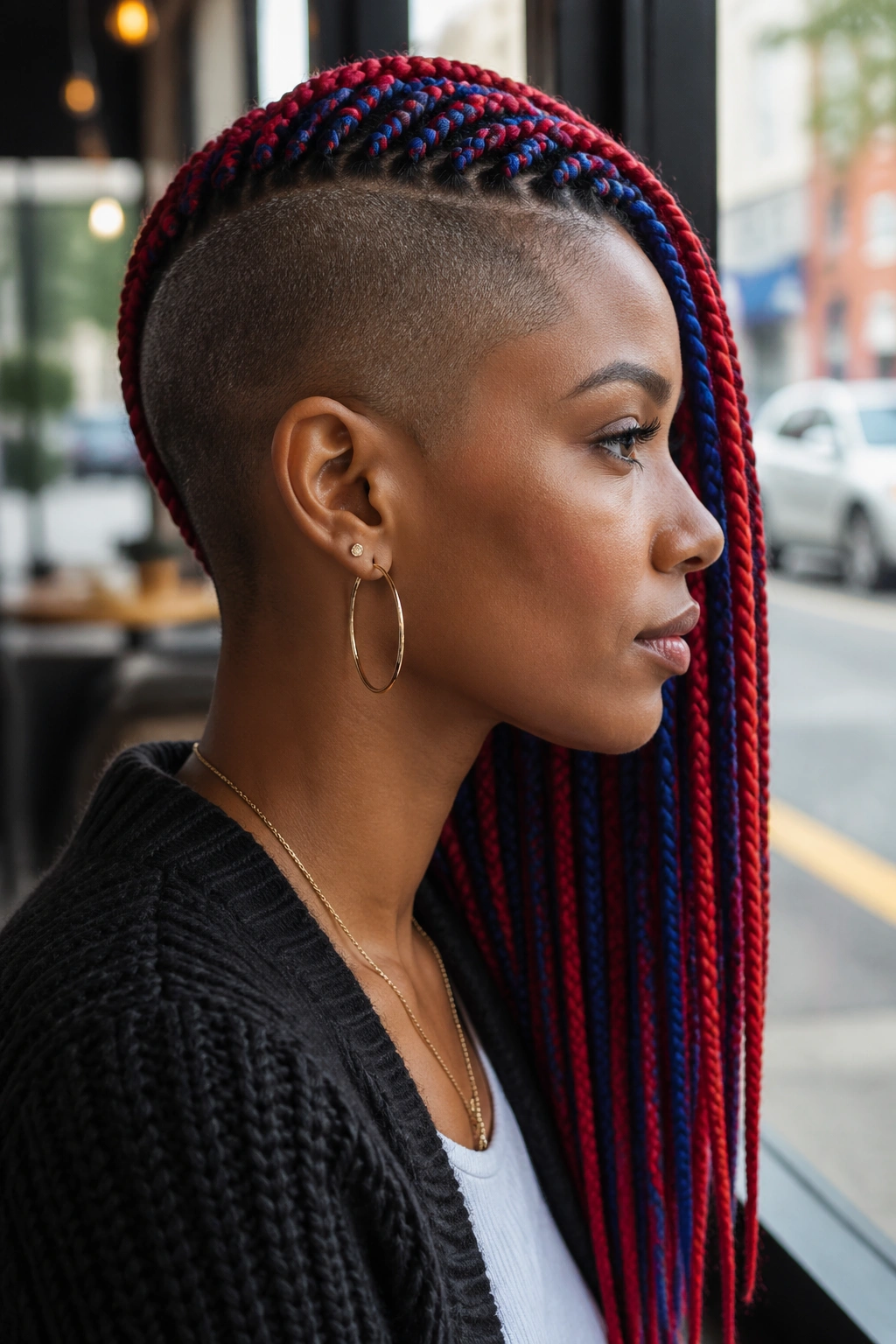
If you want the color to look sharper, remove some of the hair it has to compete with.
That is the real appeal of pairing box braids with an undercut or shaved sides. Blue and red need room to stand out, and an undercut gives them exactly that by clearing away bulk around the sides or nape. The look feels lighter on the head, too, which matters when the braids are long or thick.
This style is not for everyone, and that is fine. Once the sides are clipped short, there is more upkeep involved, because the cut grows out fast compared with the braids themselves. Still, if you already wear an undercut or you like a strong silhouette, the contrast can be fantastic in a blunt, almost architectural way.
Keep the braid rows above the undercut neat and not too crowded. The clean strip of hair below needs to stay visible, or the effect gets lost.
15. Navy, Cobalt, Burgundy, and Cherry Mix
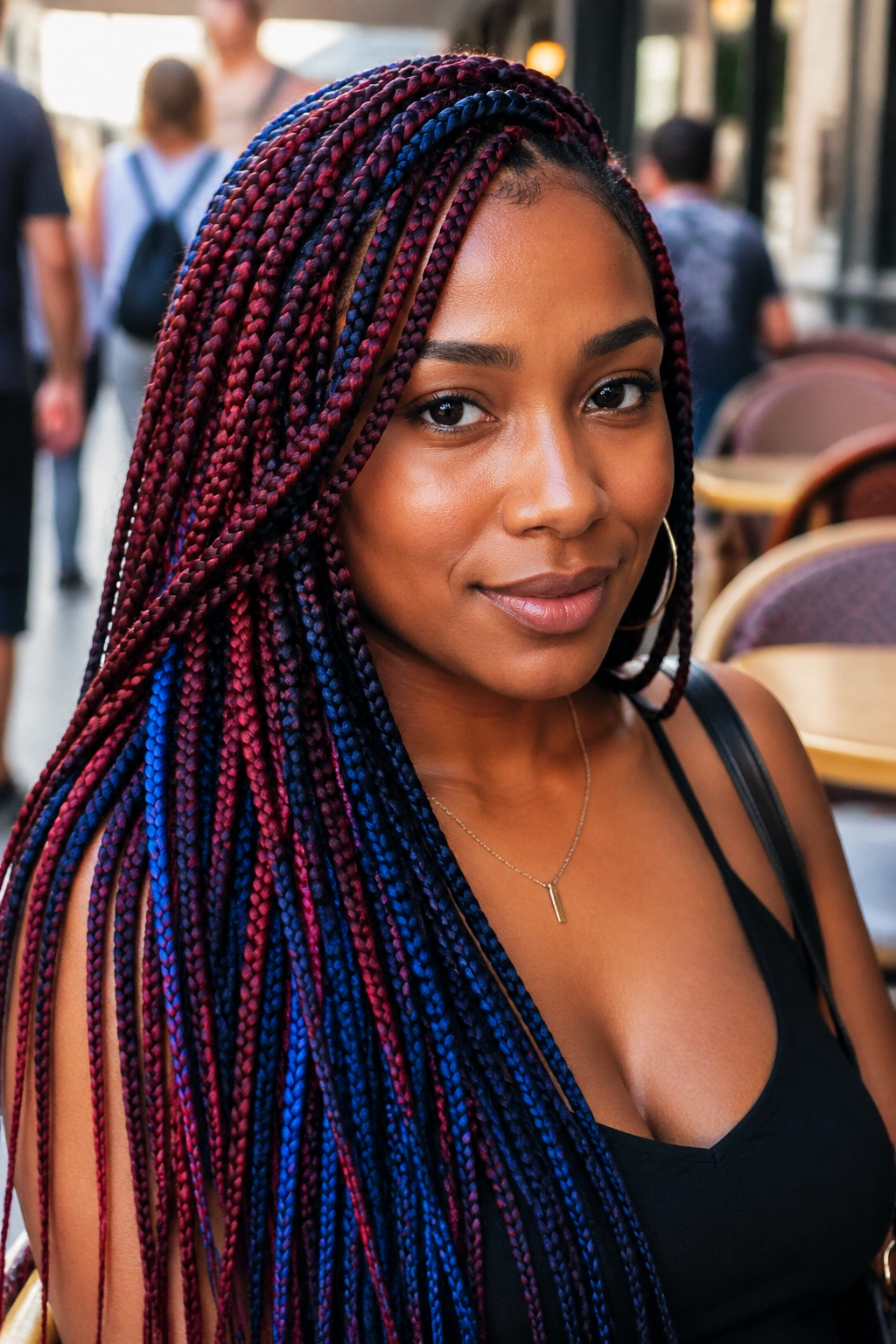
Not every blue and red set has to shout.
Using navy with cobalt and burgundy with cherry gives the style more depth. The deeper shades sit quietly in the background, while the brighter ones show up near the front or along the outer rows. That makes the whole head feel richer, not louder. It also lets you wear color without every strand reading like a neon sign.
Why This Mix Feels Different
The darker shades add shadow. The bright pieces add spark. Together, they create movement even when the braids are still.
A useful ratio is about three parts deep shade to one part bright shade if you want the color to stay grounded. If you want more pop, reverse it and let the cobalt and cherry take the lead near the face.
This is the kind of install I recommend when someone likes blue and red but does not want the colors to flatten into one flat note. The layering keeps the set interesting for weeks, which matters more than people admit.
16. Feed-In Blue and Red Streak Braids
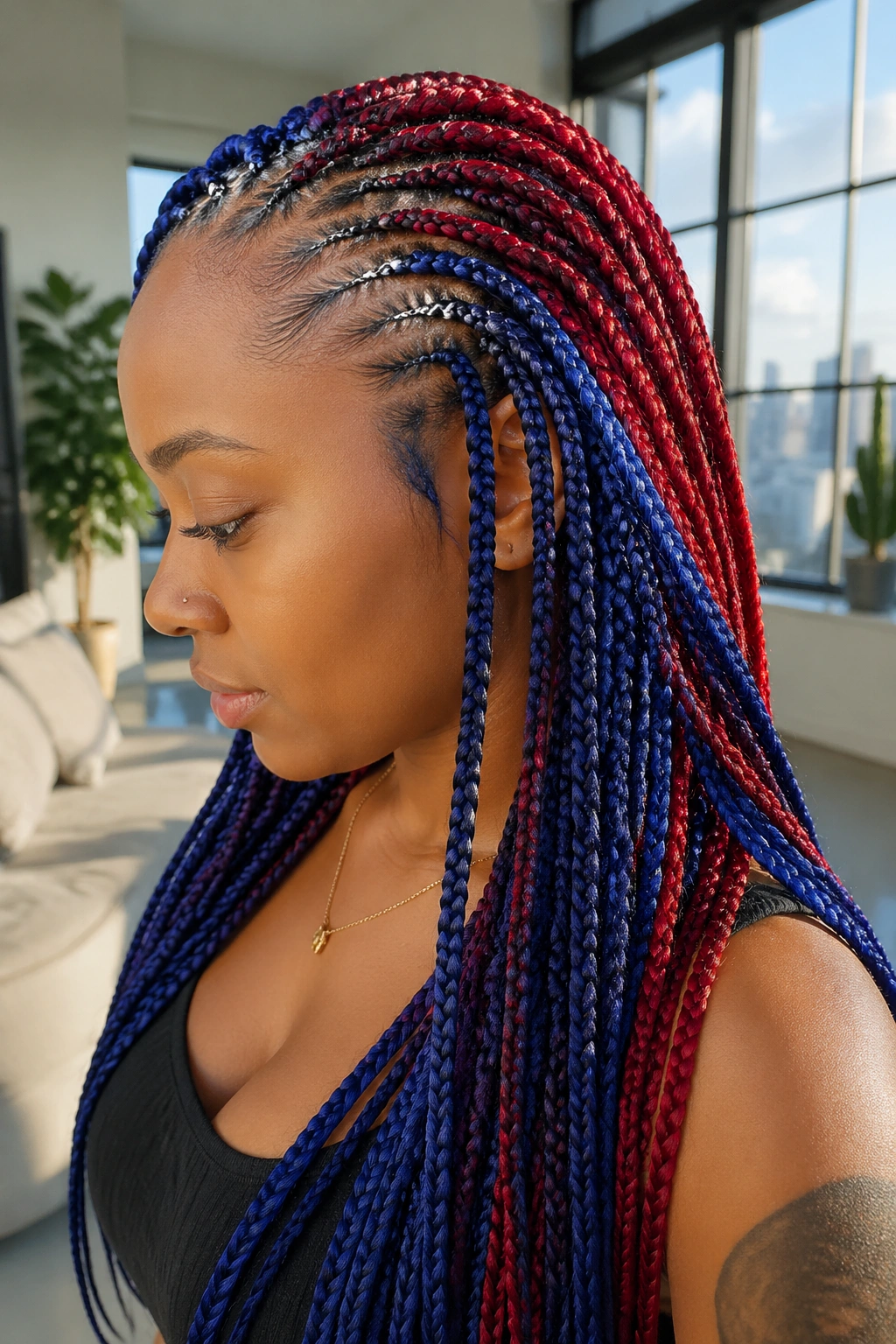
Feed-in braids are the move when you want the color to build from the scalp instead of sitting in one block.
The braid starts thin, then grows as more hair is fed in. That makes the root area look smoother, and it gives you a natural place to slide in a blue strand or a red strand without the front line looking bulky. For colored braids, that gradual build is useful because the eye gets a slow reveal instead of a hard start.
This style works well if you want the colors to appear as streaks across the head rather than in heavy panels. You can ask for blue at the front rows and red through the middle, or alternate the shades every few braids so the color bands move across the scalp. The effect is tidy, not fussy.
It also plays nicely with delicate edges because the first section of each braid stays small. Less bulk at the hairline usually means less tension, and that matters more than people want to admit.
17. Long Center-Part Blue and Red Cascade
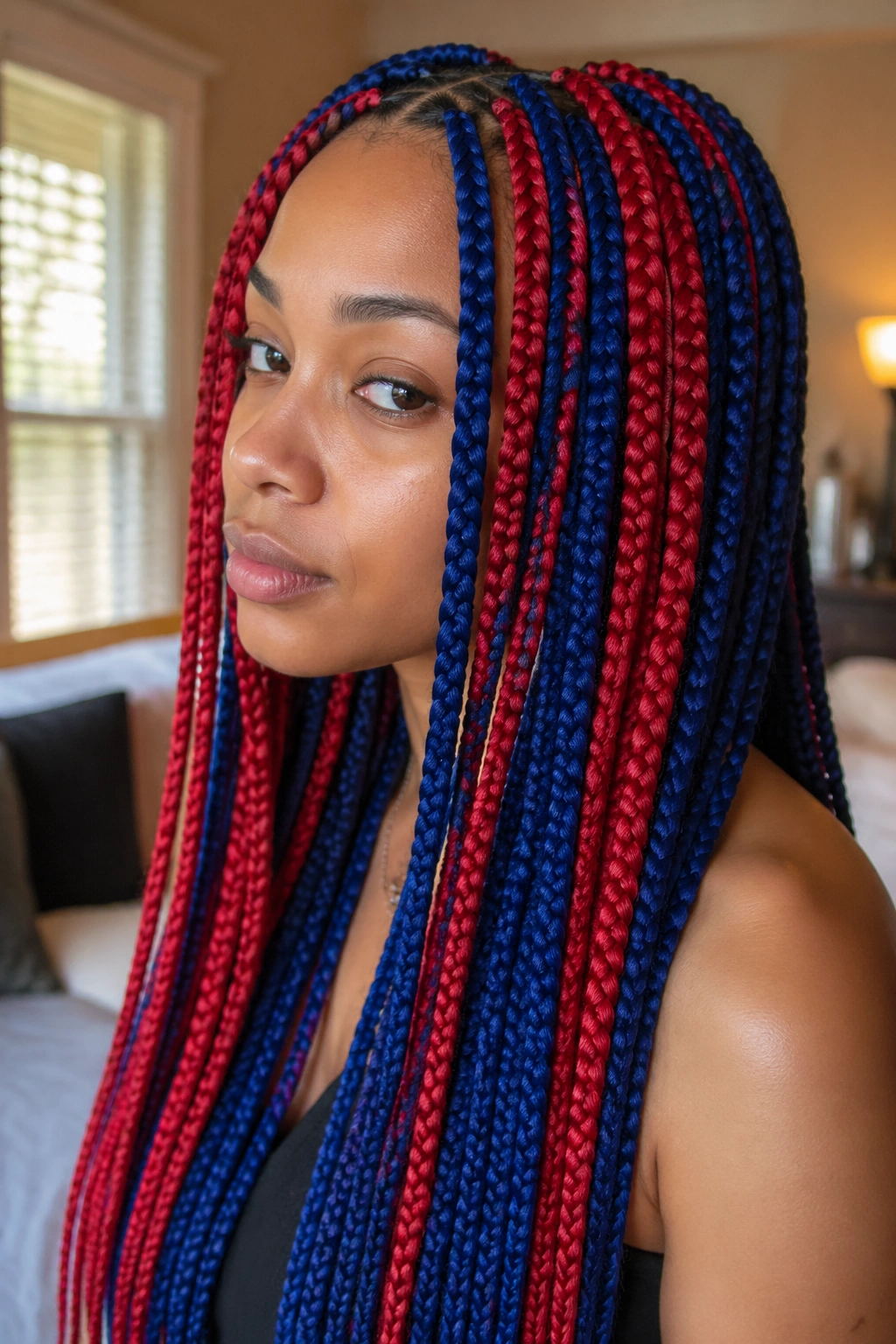
Neat in a bun. Dramatic down your back.
That is the appeal of a long center-part cascade. It gives you a clean, symmetrical frame at the front and a lot of movement at the back, which is a strong combination when blue and red box braids are doing the color work. The middle part keeps the style orderly, and the length gives the shades space to repeat without feeling crowded.
This version is especially good if you want one set to do a few jobs. Down, it reads bold. In a low ponytail, it looks sleek. Twisted into a bun, it still shows color at the ends and around the perimeter. There is a reason people keep coming back to long middle parts; the shape is simple, and the styling options do not run out fast.
If I had to point someone toward one blue and red box braid look that still leaves room to play, it would be this one. The color stays visible, the part stays clean, and the whole style gives you room to move without turning into a maintenance project by day three.