



Box braid ponytails look easy until the base starts pulling, the elastic starts sliding, and the whole style loses its shape by lunch. The gap between polished and painful is usually a couple of inches and one bad tie.
The best box braid ponytails are the ones that respect weight. Braids have their own heft, and once you gather them up, the placement matters more than the shine spray or the accessories. A ponytail that sits a little lower, or a little tighter in the wrong place, can feel fine for ten minutes and then start nagging at your temples. Pain is not part of the look.
I keep coming back to one boring truth: a good braid ponytail should hold the hair, not wrestle it. Dermatologists and hair stylists repeat that same advice in different words because it keeps saving people from sore edges and headaches. If your scalp feels tender, the style is already too ambitious.
Some braid ponytails are about clean structure. Others are about movement, weight, or a little drama. Once you know where the braids want to sit, the rest gets a lot easier.
1. High and Slick Box Braid Ponytail
The cleanest box braid ponytails are rarely the highest ones in the room. A high crown ponytail looks sharp when the base sits just above the midpoint of the head, not jammed straight into the hairline.
That small shift matters. It gives the braids room to fall without dragging the front too hard, and it makes the whole style look intentional instead of strained. A thin layer of edge control at the front is enough; you do not need to plaster the hair down like a helmet.
A wide satin scrunchie or a snag-free elastic keeps the base neat without biting into the braids. I like this style for dressier days, but it works just as well with a plain tee and hoops. The shape does the talking.
One-sentence rule: if the crown starts aching, the ponytail is too high.
2. Low Nape Ponytail with a Wrapped Base
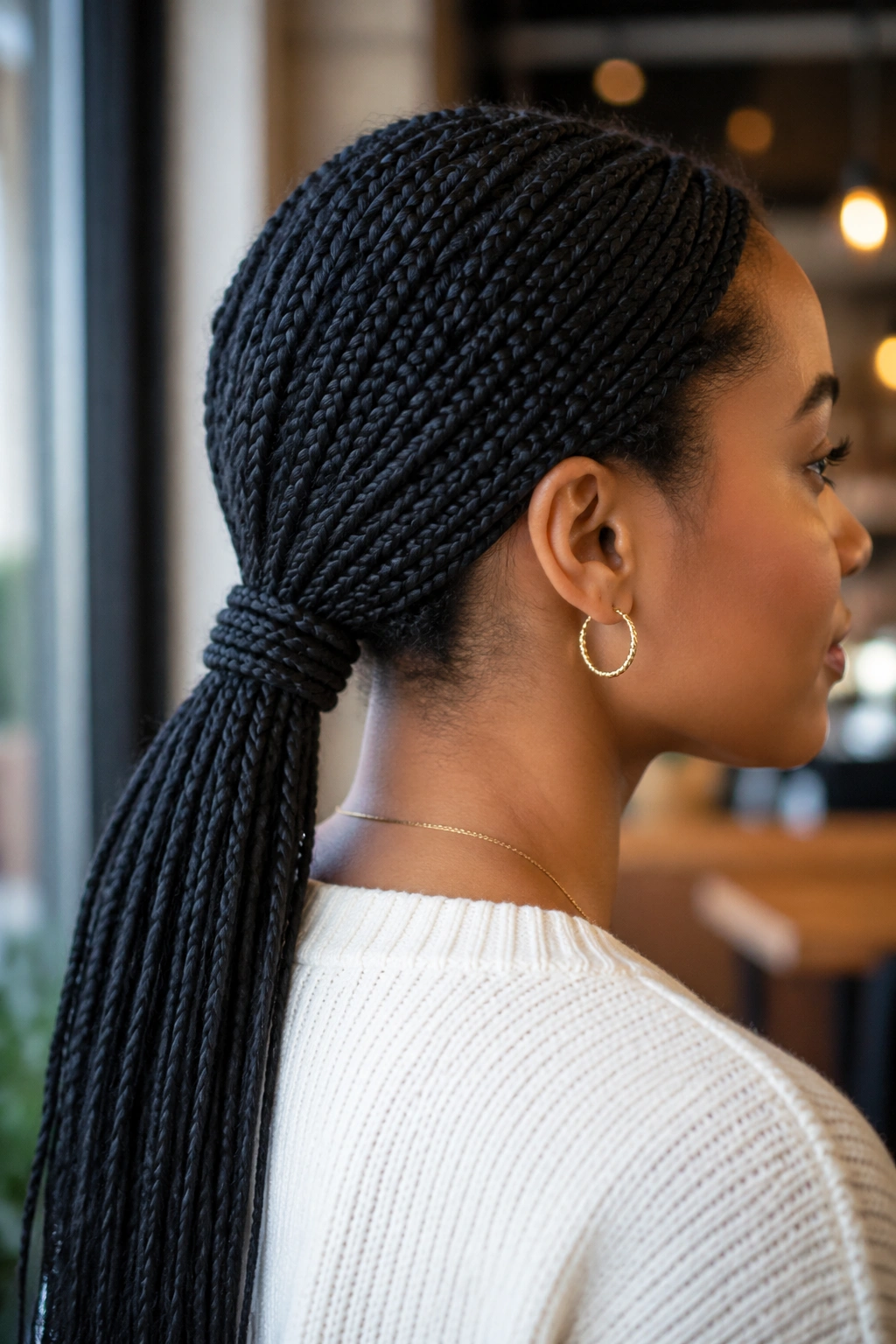
Why does a low ponytail look so polished on box braids? Because the weight lands where the head is built to carry it, and the line at the nape feels calm instead of crowded.
Why It Saves the Hairline
A low nape ponytail takes pressure off the front perimeter, which is the part that gets abused the fastest. That makes it one of the easiest choices for long wear, heavy braids, or any day when you know you will forget about your hair for hours.
The wrapped base gives it a finished look. Take one braid or a small extension piece, wrap it around the elastic, and pin or tuck the end underneath so the tie disappears. The whole style suddenly looks more expensive, even though the mechanics are plain.
- Best when your braids are medium to long
- Better for all-day wear than a tight high ponytail
- Easier on the scalp if your braids are heavy
- Looks neat with both center parts and side parts
Use a soft tie, not a tiny rubber band. That tiny detail saves you from snagging three braids when you take it down.
3. Bubble Box Braid Ponytail
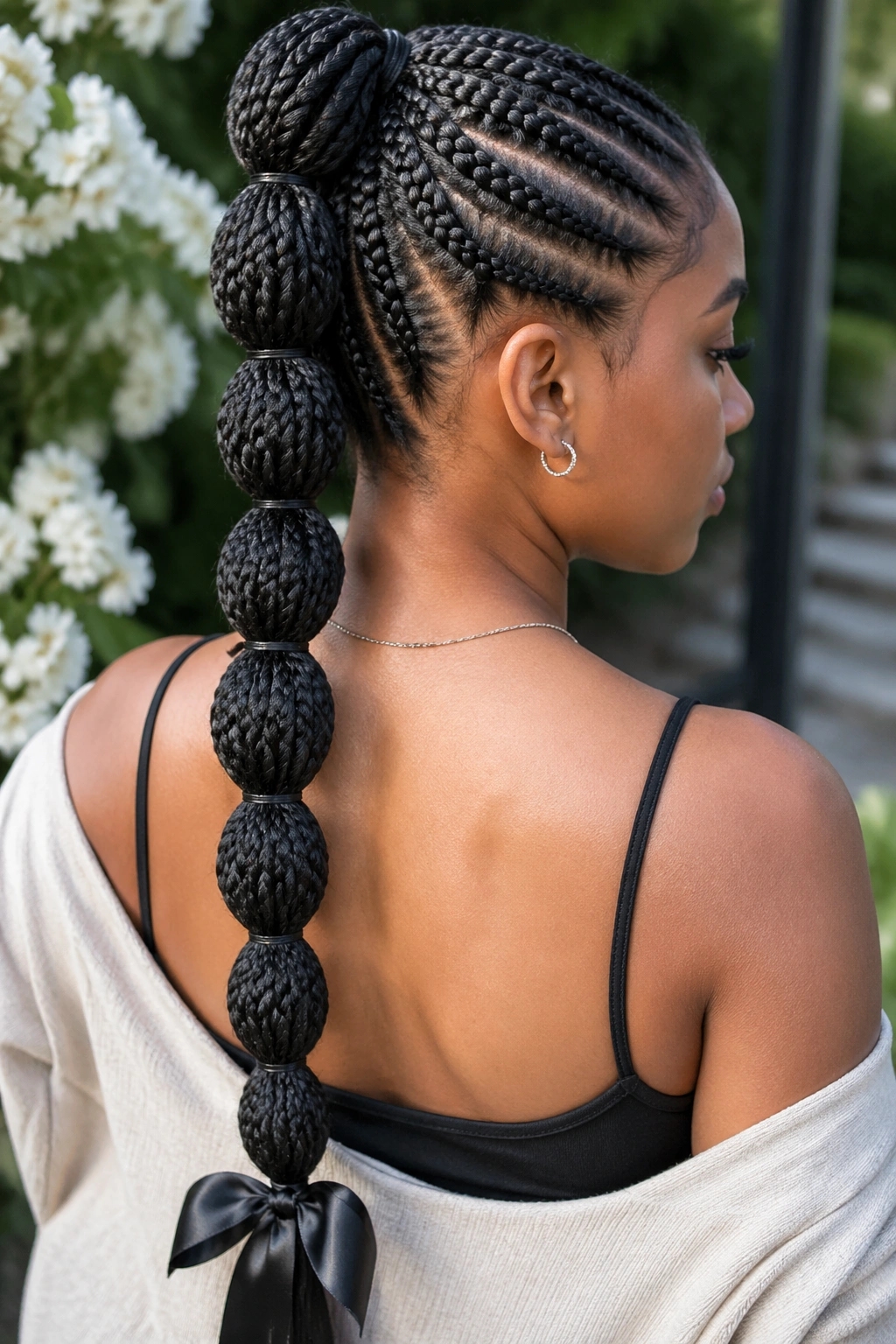
If your braids feel too long to behave, a bubble ponytail gives them a shape to land in. The style breaks one heavy tail into smaller, rounded sections, so the whole thing moves instead of hanging like a rope.
How to Build the Bubbles
Start with a secure ponytail at the height you want. Then add small elastics every 2 to 3 inches down the length, puff each section gently with your fingers, and stop before the braids start to look overworked. You want a round shape, not a frayed one.
The trick is spacing. Too close, and it gets cramped. Too far apart, and the bubbles sag. Match the intervals to the thickness of your braids, because jumbo braids need fewer sections than small ones.
- Use clear or matching elastics so the sections look clean
- Tug the braid mass outward, not upward
- Keep the first bubble slightly tighter than the rest
- Finish with a satin ribbon if you want a softer edge
This is one of those styles that looks playful without asking for much skill. Which is probably why it keeps showing up everywhere.
4. Side-Swept Ponytail with a Deep Part
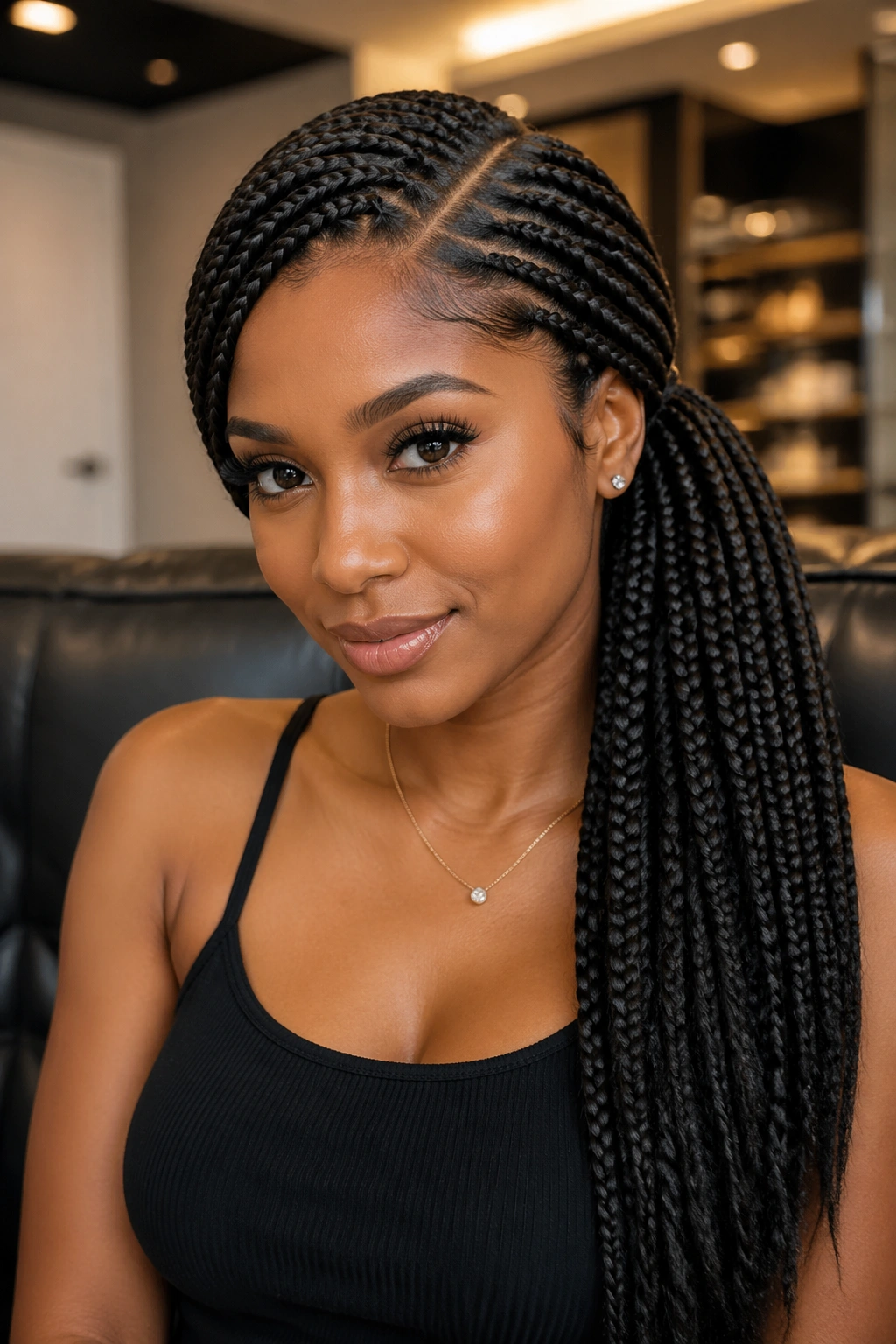
A side ponytail is not childish when the part is sharp and the base is smooth. On box braids, it reads as deliberate, not casual, because the weight falls over one shoulder in a way that frames the face fast.
The deep part does most of the work. Pull the braids from the fuller side across to the opposite side and anchor them low near the ear or just behind it. That low anchor keeps the style from fighting the part line all day.
This one flatters thick braids because it creates shape without forcing the hair straight back. It also softens the profile if your braids are long and blunt at the ends. The look is easier than it sounds, and that’s part of the appeal.
A loose braid or two can stay near the front if you want a little movement. Just do not overdo it. Too many loose pieces and the style starts to unravel visually.
5. Half-Up Box Braid Ponytail
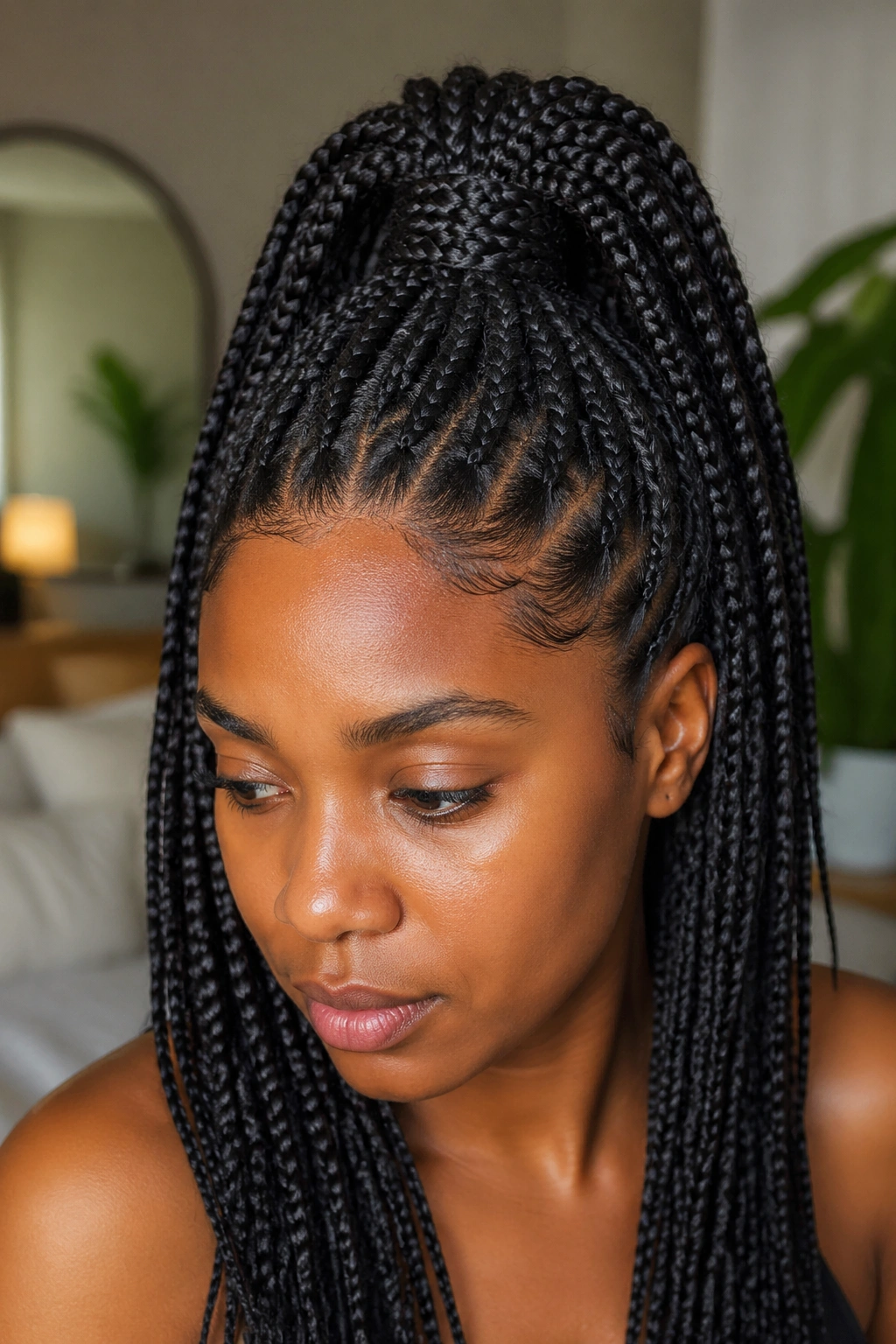
The first thing you notice is the relief on your neck. Half-up box braid ponytails lift the top section away while letting the rest swing free, and that balance makes them useful on long braid days.
I like this style when the braids are shoulder length or longer, because it keeps the shape visible without putting all the weight in one spot. The top section should start around the temples and crown, then gather into a modest ponytail at mid-crown. If you pull too much from the front, the style gets tight fast.
A half-up ponytail is the easiest way to fake structure on a tired braid set.
The lower section does not need much fuss. Leave it smooth, brush it lightly with your fingers, and let the ends rest. If the top needs more polish, a satin wrap for ten minutes will flatten the flyaways without making the braids crunchy.
This is also one of the nicer options for people who want their length visible but cannot stand full weight on the scalp. Simple. Useful. Done.
6. Jumbo Box Braid Ponytail
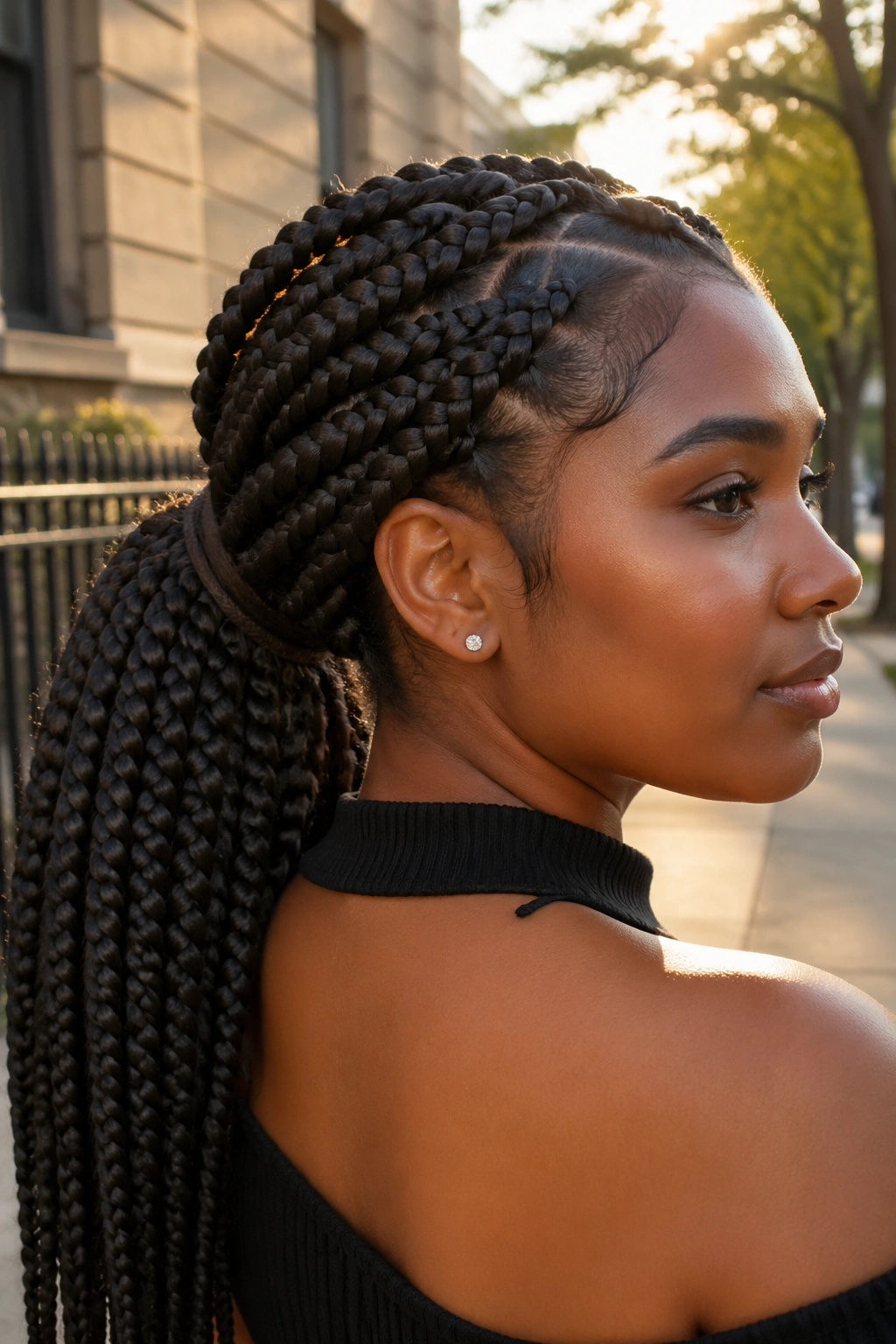
Big braids. Small rules.
Jumbo box braids look best when the ponytail placement stays modest. A low or mid ponytail usually works better than a sky-high one, because the braids already carry enough bulk on their own. Push them too far up and the style starts to feel top-heavy.
A wide elastic matters here. Thin bands cut into the bundle and can pinch individual braids, which is annoying to remove later. I prefer one strong wrap and, if needed, a second band hidden right under it for backup.
This style shines when you want the braids to look sculptural. It has presence without extra decoration, and that’s rare. Keep accessories light, though. Jumbo braids with oversized cuffs can tip straight into costume territory if you are not careful.
If the ponytail feels like it’s pulling your head backward, lower it. That’s the whole fix.
7. Medium-Length Swing Ponytail
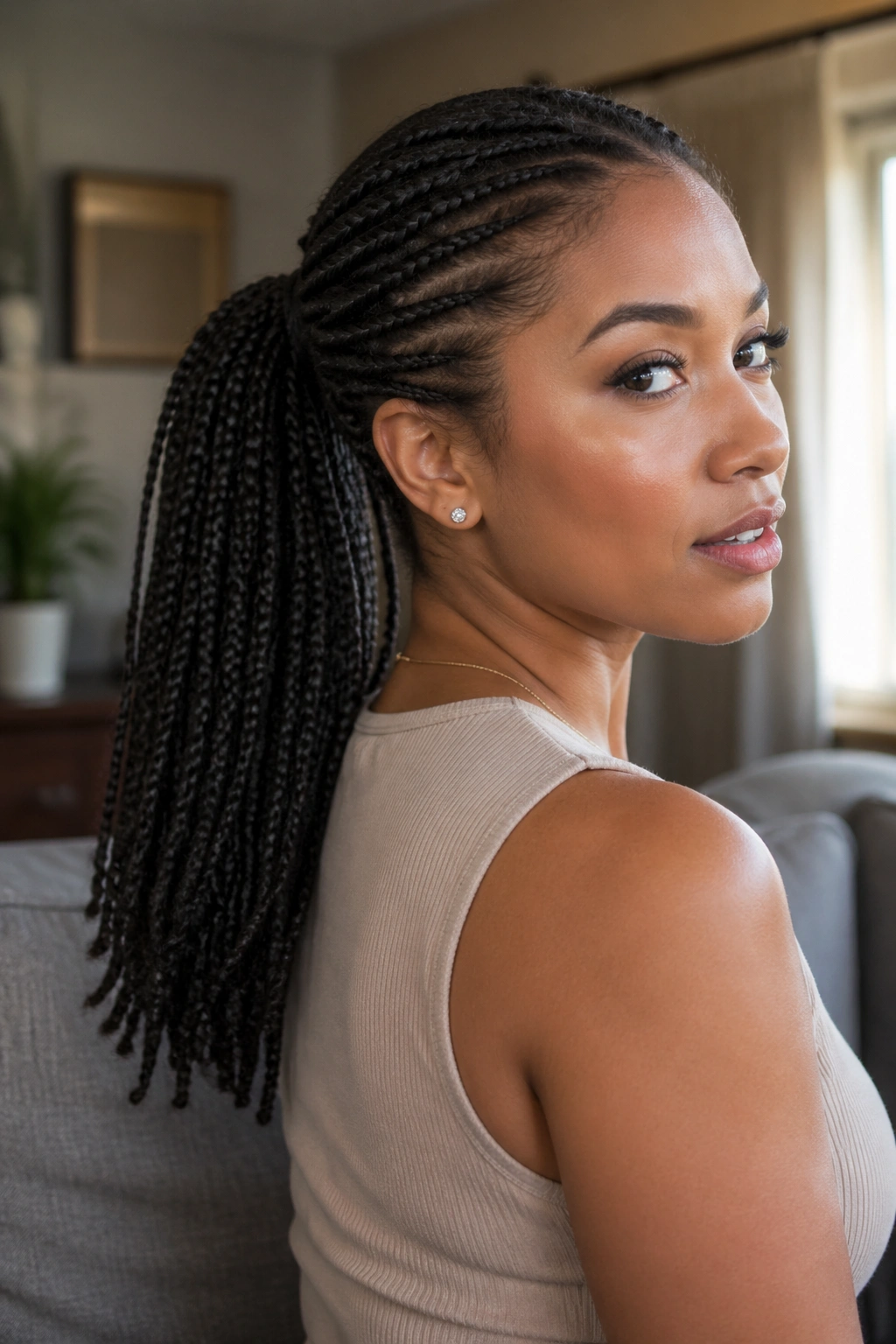
Twelve to eighteen inches of braids can move in a way that feels almost airy when the ponytail sits at mid-back. That length has a sweet spot: long enough to swing, short enough to stay controlled.
The base should land just below the occipital bone, where the head starts to slope into the neck. That placement keeps the tail from whipping around too much and gives the braids a natural curve as they fall. The style looks clean from the side and neat from behind, which is not always true of longer ponytails.
I like this one for everyday wear because it does not demand much. A smooth tie, a light wrap if you want it, and maybe a small braid cuff on one side are enough. The shape is the point, not the extras.
It also works when your braids are a little uneven in length. The ponytail disguises that better than loose wear ever will.
8. Extra-Long Floor-Sweeping Ponytail
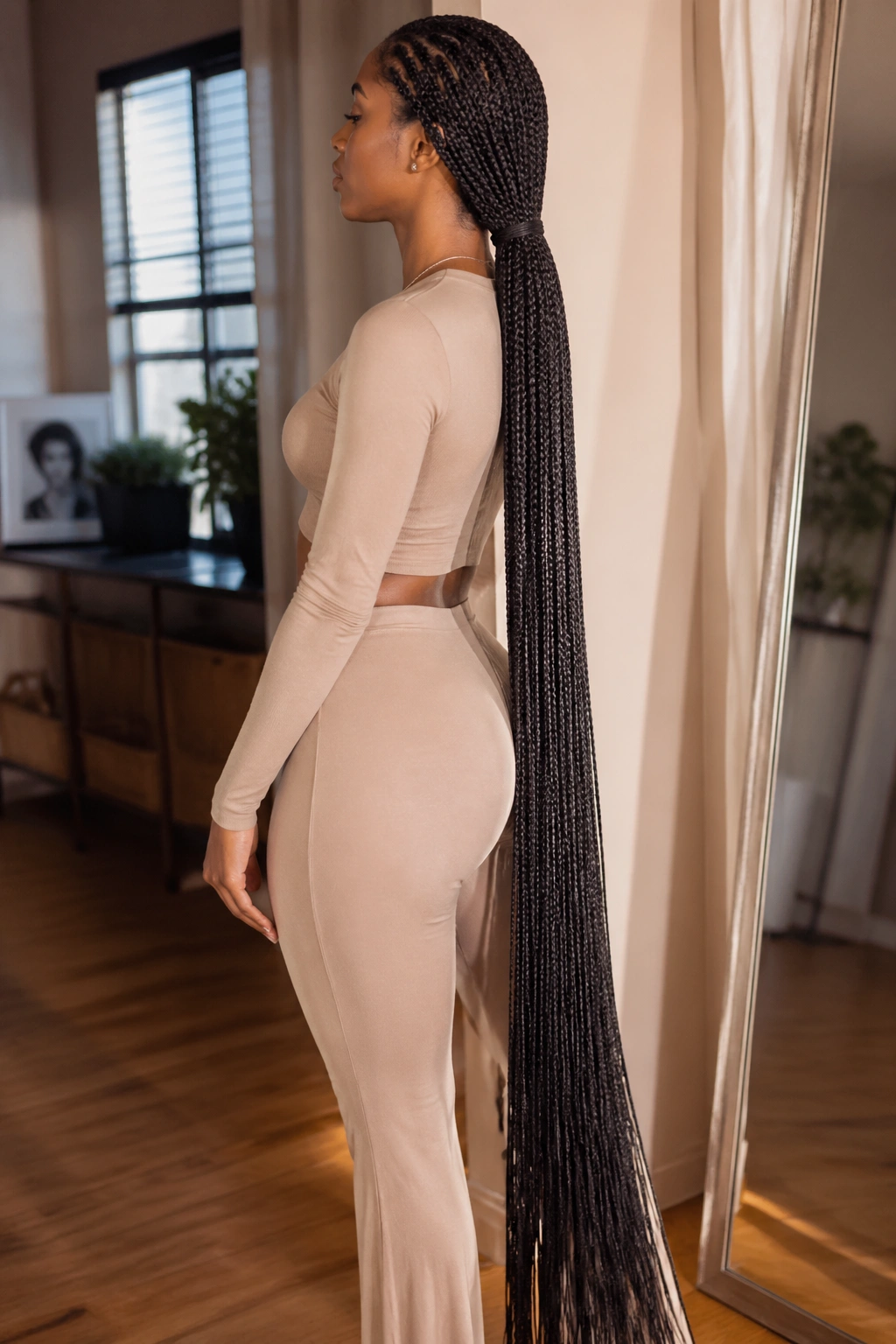
I always think extra-long braids look best when the ponytail sits a little lower than your first instinct says. The extra length already gives you drama; the lower base keeps the weight from fighting your neck.
Long box braids can be heavy enough to matter, so one tie is not always enough. A second support elastic hidden a few inches down the tail helps distribute the pull, and it stops the top from stretching out during the day. That tiny bit of structure keeps the style from looking sloppy by lunchtime.
One-sentence truth: the lower the ponytail, the less your scalp complains.
You can leave the ends free or fold part of the tail over one shoulder for a softer line. If the braids are very long, that little shift takes pressure off the back of the head. It also photographs better, though I hate saying that because it sounds like advice from a catalog. Still, it works.
This is the style for people who want movement first and neatness second.
9. Beaded Box Braid Ponytail
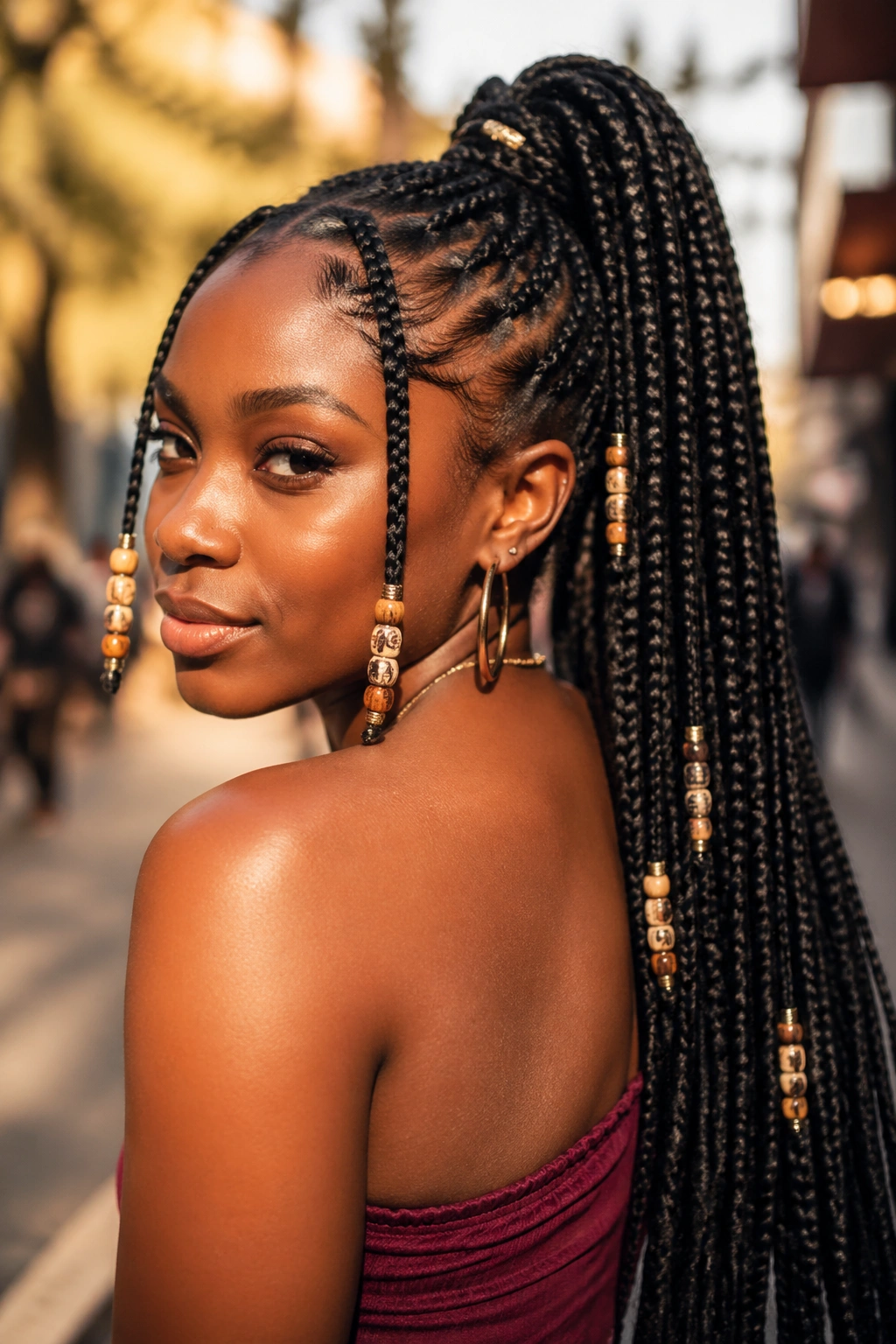
Beads change the whole sound of a ponytail. They click, they swing, and they make box braids feel more alive the second you move your head.
The catch is weight. Too many beads near the crown and the ponytail starts to tug where it should be resting. Keep heavier beads farther down the length, and let the decorated braids sit around the face or the outer edges instead of loading the top layer with hardware.
- Use 4 to 6 accented braids, not every braid
- Balance wood, metal, or acrylic pieces so they do not all pull on one side
- Keep the base smooth and plain
- Choose bead colors that repeat once or twice, not ten times
This style looks especially good on high or side ponytails because the beads get room to move. The motion is half the point. If the beads sit too close to the scalp, the whole thing gets clunky fast.
There’s nothing subtle about it. That’s the fun.
10. Scarf-Wrapped Ponytail
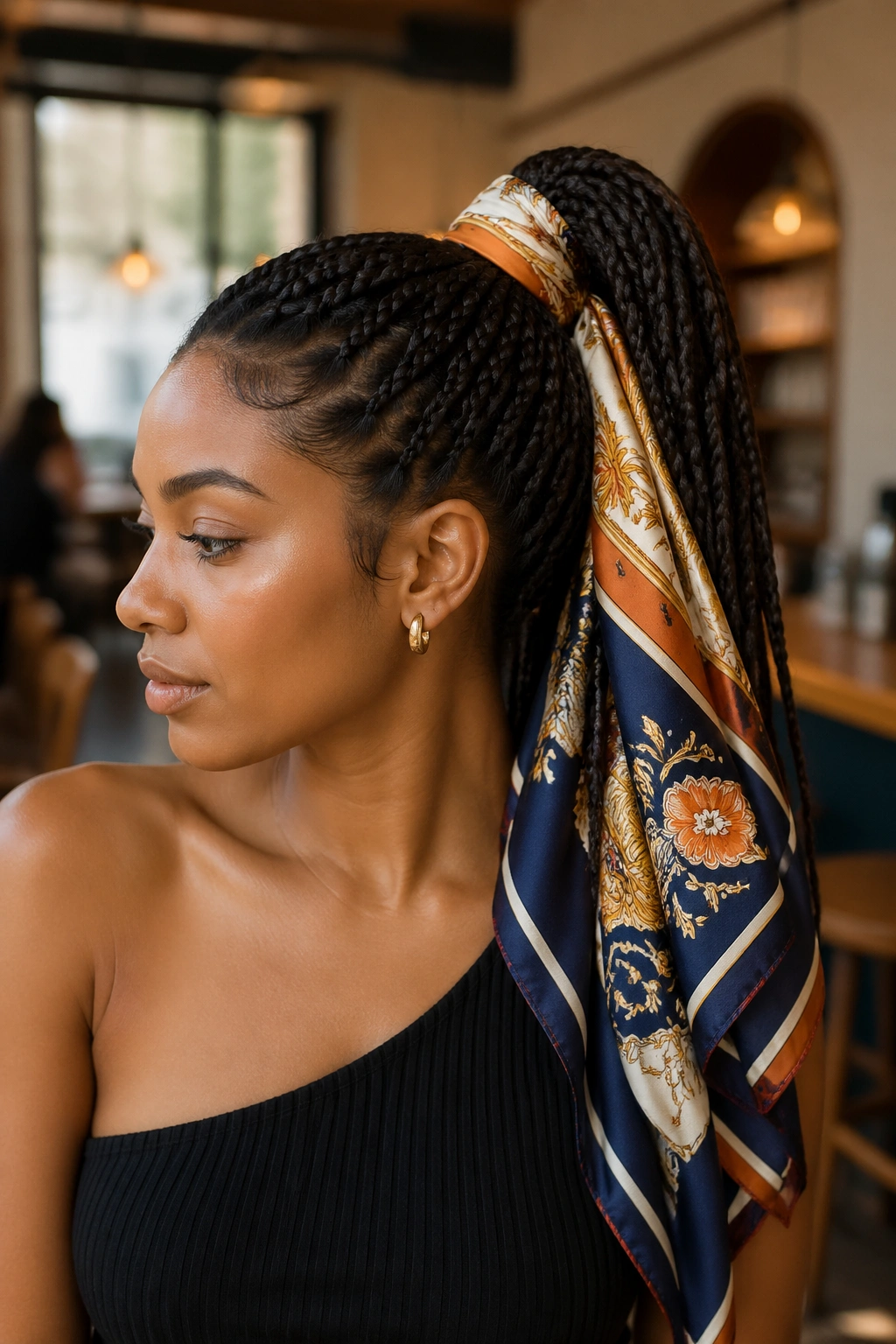
A scarf can fix a ponytail that feels too plain. It hides the elastic, adds color, and keeps the base from looking like an afterthought.
What the Scarf Does
A silk or satin scarf works best because it glides instead of catching on the braid texture. Fold it into a strip about 2 to 3 inches wide, place it under the ponytail, and tie it once or twice at the base before letting the tails fall. If you want more shape, knot the scarf at one side so the ends cascade over the shoulder.
The fabric also helps protect the braid surface from friction. That matters more than people think, especially if you wear the style for long stretches. A rough cotton scarf can fray the look by the end of the day, while a smooth one keeps everything neat.
- Best with plain black or brown braids
- Good for a pop of pattern without extra hardware
- Works at low, mid, or high placement
- Easy to remove without disturbing the braids
If the scarf feels too wide, it probably is. Trim the visual bulk before you tie it.
11. Curled-Ends Ponytail
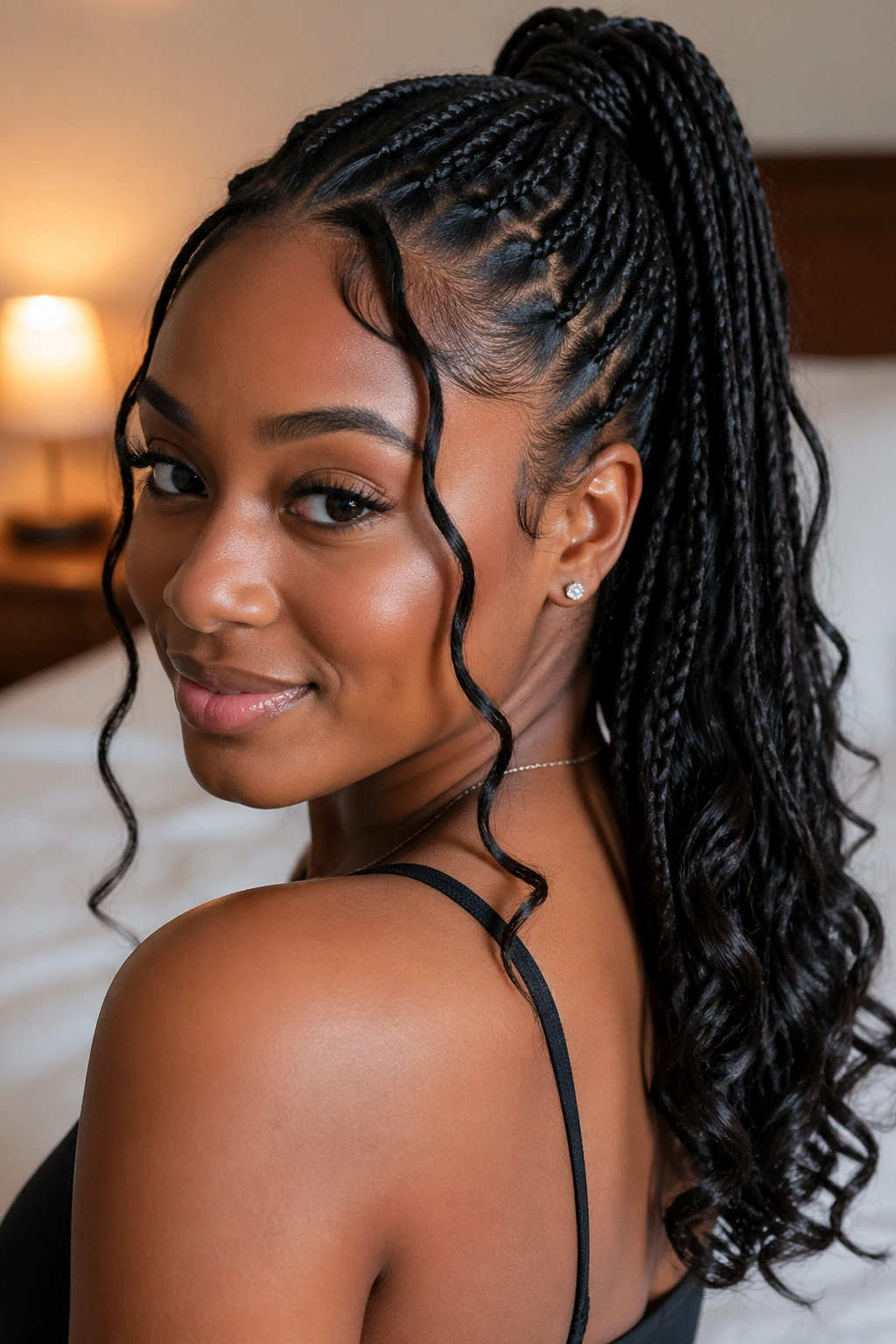
What if you want the swing of curls without losing the structure of box braids? Curled ends do that job neatly, and they make the ponytail feel softer at the finish.
A rod set on the ends works better than curling the whole braid length. Wrap the final few inches around flexi rods or perm rods, dip or set them as your styling method requires, and let the ends cool fully before unrolling. Half-set ends look worse than straight ones, so patience matters here.
The shape at the bottom changes everything. Straight ends can feel blunt and heavy, while curled ends make the ponytail move in little arcs as you walk. That small shift brings a cleaner finish, especially on long braids.
Do not overdo the number of curled pieces. A few on the outer layer are enough. If every single braid ends in a curl, the style starts to look busy instead of polished.
This one is all about restraint.
12. Braided-Base Ponytail
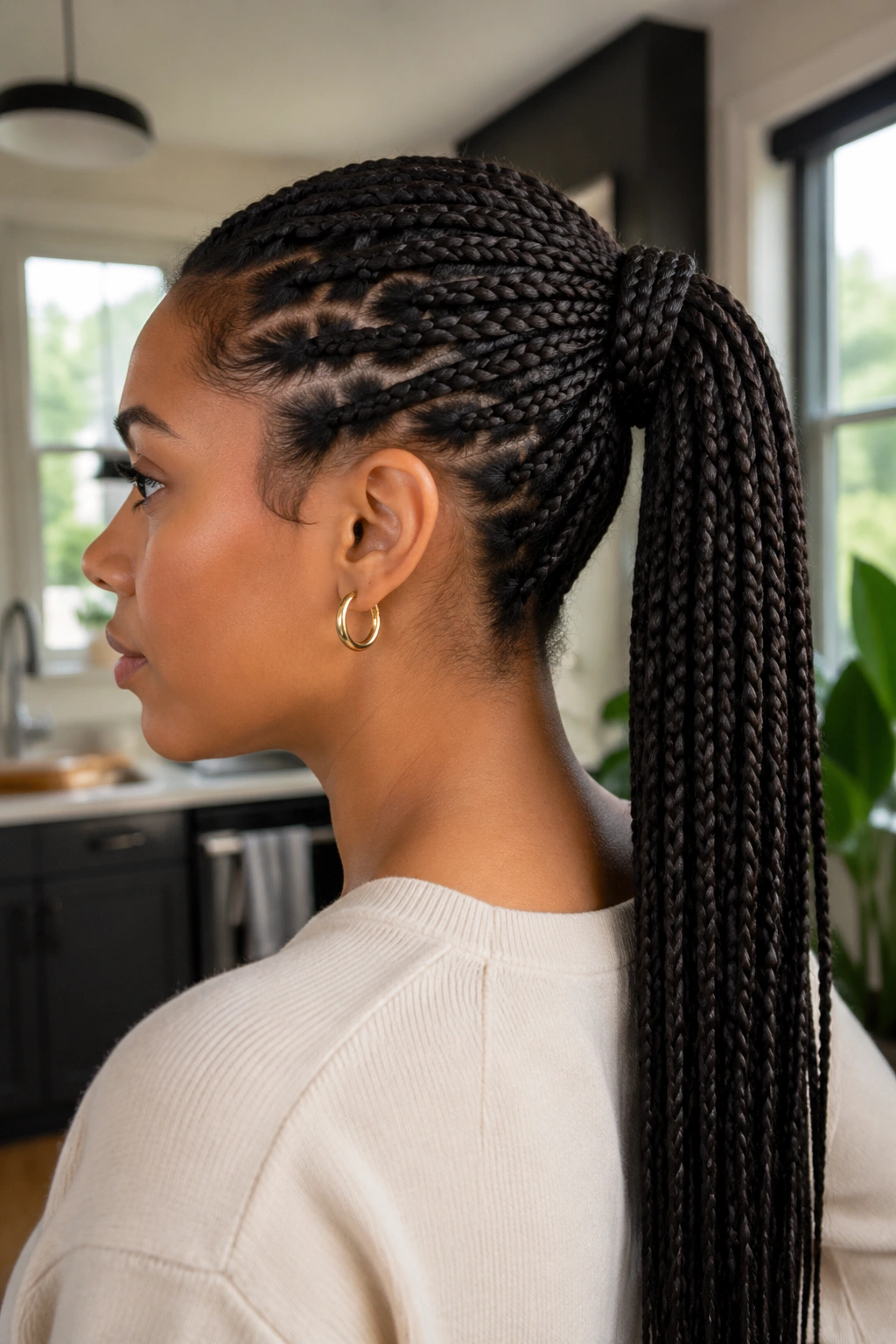
A three-strand braid at the base changes the whole mood. It takes an ordinary ponytail and gives it one clean line that hides the elastic and tightens the silhouette.
The base braid can be made from a small section of the ponytail itself or from a thin wrap piece drawn from the back. Cross it once, tuck it under, and pin it flat. The effect is subtle from a distance, but up close it makes the style feel finished instead of rushed.
This is one of the more practical choices if your ponytail tends to loosen during the day. The braided base grips the bundle better than a plain tie, especially when the braids are smooth or freshly moisturized. It is a small fix with a big payoff.
I like it for work, dinners, and any moment when I want the hair to stay quiet. The braid at the base says you paid attention, even if the rest of the style stayed simple.
13. Mohawk-Style Ponytail
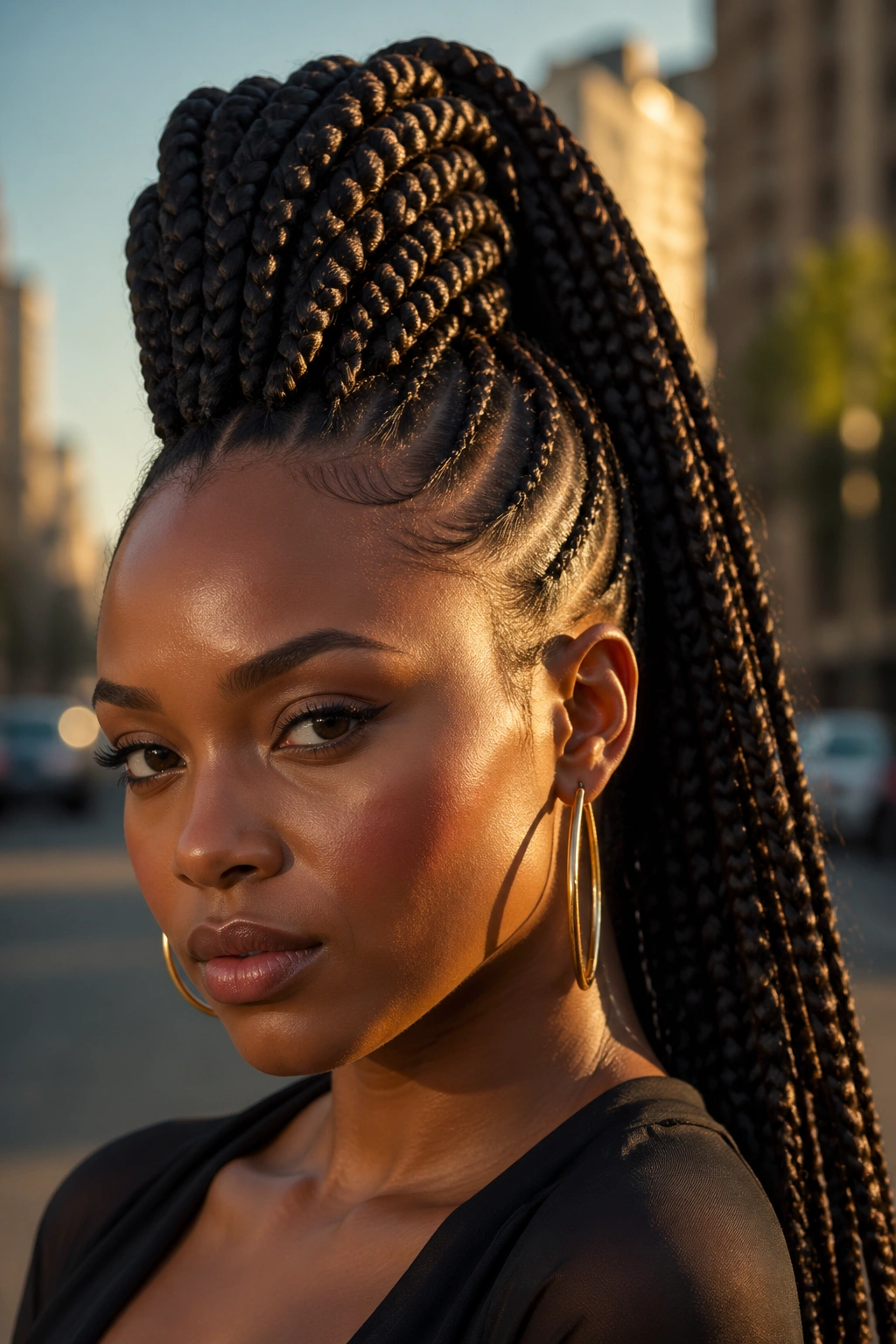
This is the style for people who say they do not want “too much” and then wear the loudest ponytail in the room. The sides get slicked down, the middle section rises, and the whole shape leans into height.
A mohawk-style ponytail works because it uses contrast. The temples are pressed smooth, the center stays fuller, and the ponytail sits like a crest rather than a simple tie-back. That line is flattering on box braids because it keeps the face open while giving the top some lift.
You do need to be careful with tension. The sides should be smooth, not yanked. If the hair at the temples feels tight, you have gone too far, and the style will stop being fun pretty fast.
This one pairs well with hoops, bold brows, and a clean neckline. It feels sharper than a standard high ponytail, and that’s the whole point. There is nothing timid about it.
14. Crown Braid into Ponytail
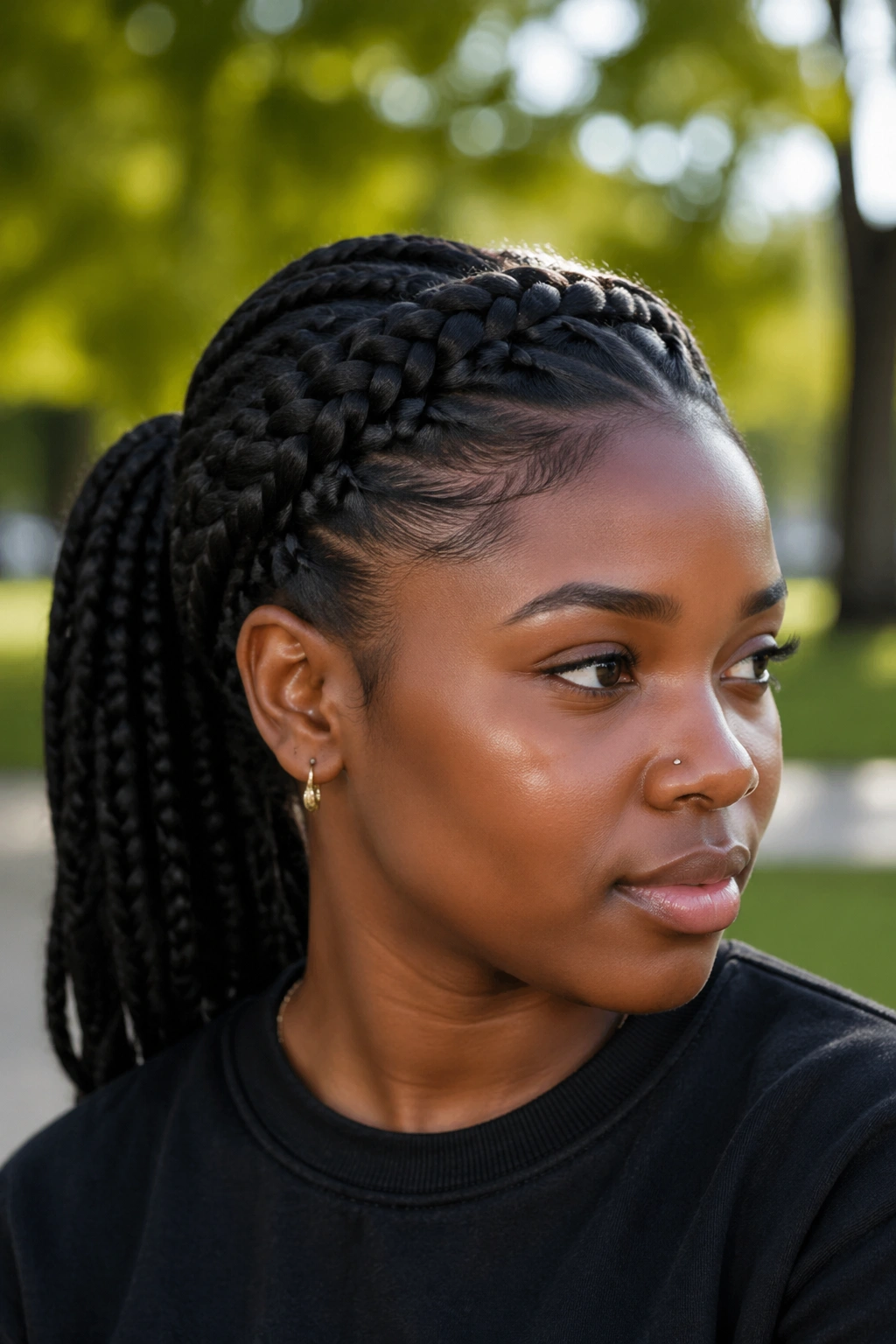
The braid line around the head does the quiet work; the ponytail is just the payoff. That’s why crown braid ponytails look so put together even when the rest of the outfit is plain.
Start by bringing a front section across the hairline, either from one side to the other or by building a braid-like band around the crown. Feed that into a ponytail at the back, then smooth the remaining braids into the same tie. The result is part headband, part ponytail, and part trick.
Where It Helps
- Keeps the front section from slipping into the face
- Gives medium-length braids a more finished outline
- Works when you want a style that looks fuller without extra volume products
This is a good option for events, but it also works on regular days when the front pieces keep escaping. The crown line holds the shape in place. That alone makes it worth learning.
15. Twisted Rope Ponytail
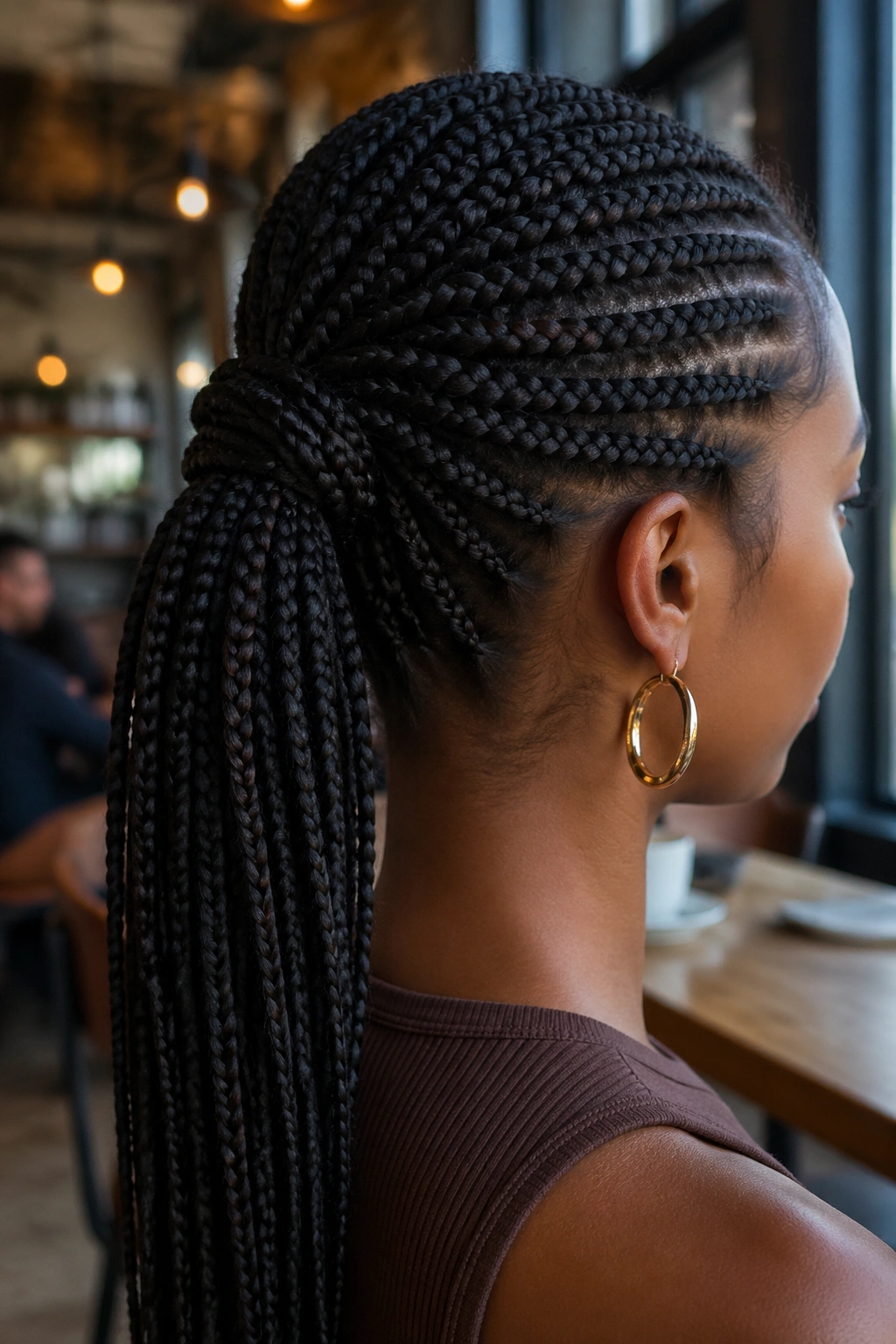
Two strands. One cleaner line.
A rope-twist base on box braids gives the ponytail a smooth, spiraled look that feels neater than a plain tie. You can make the twist from a small section at the base or twist two thin braids around each other before they join the rest of the ponytail.
The best part is how tidy it looks from the back. A rope twist reads as controlled, but it does not feel stiff. It also helps hide the tie if your braids are dark and the elastic wants to show through.
This style works especially well when the rest of the braids are medium or long and you want the base to carry a little more detail. Keep the twist snug, not tight. A twist that digs in at the side will undo the whole point.
One small detail, and the ponytail looks considered. That’s the appeal.
16. Layered Ponytail with Mixed Lengths
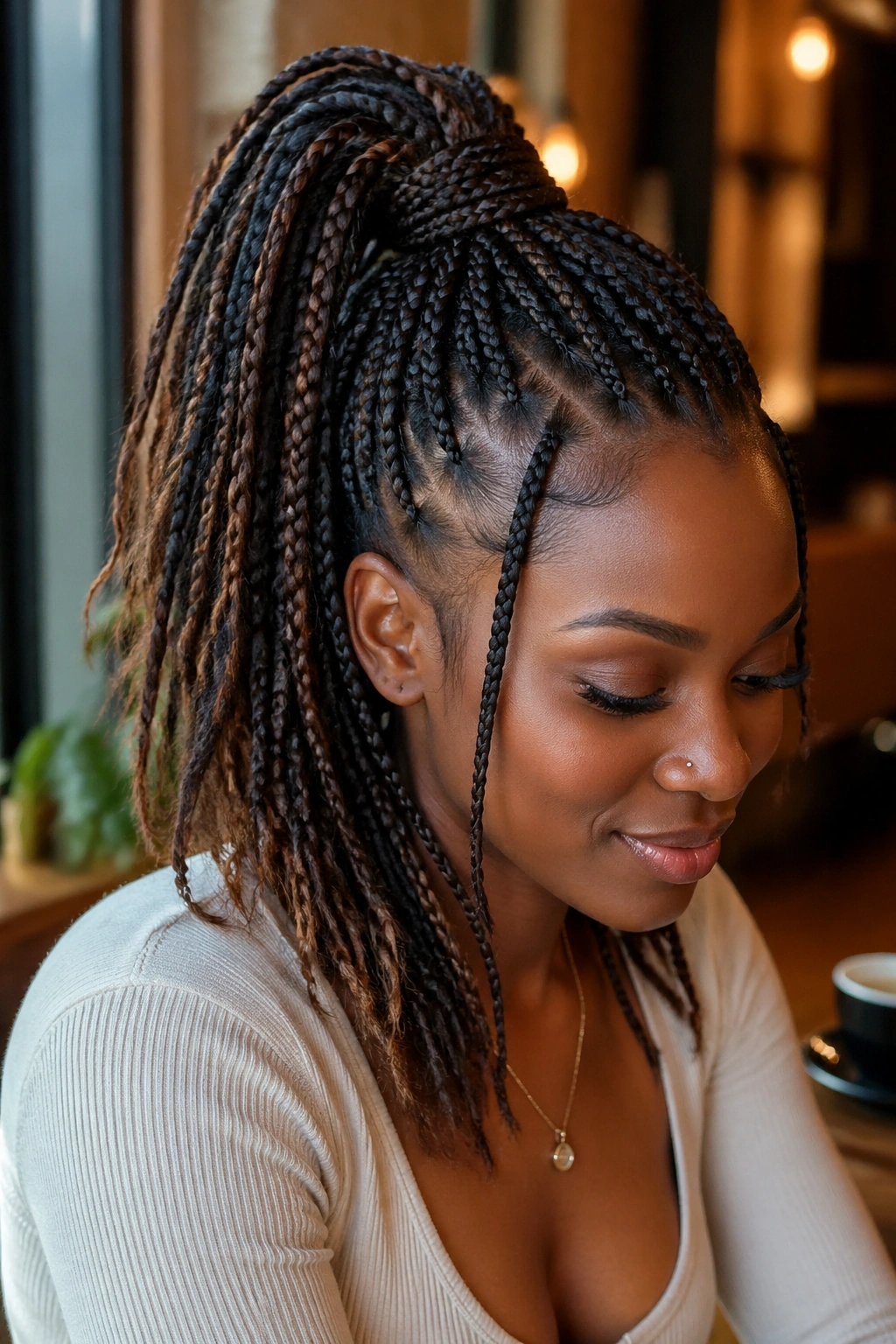
I like this style because it accepts that not every braid has to land at the same point. Some braids can sit shorter, some longer, and the layered finish makes the ponytail look fuller rather than uneven.
The key is to gather the longest section where it can anchor the weight, then let shorter pieces fall around it like soft tiers. That creates movement without forcing the ends into one hard line. It is especially useful when the braids were cut or installed at slightly different lengths.
You can leave the layered effect obvious, or you can smooth the base until it reads more cleanly from the front. Either way, the structure feels lived-in in a good way. Not messy. Just real.
This style is kinder to heavy hair because the weight is spread across more than one visual line. That matters when the ponytail would otherwise feel like a single solid block.
17. Color-Blocked Ponytail
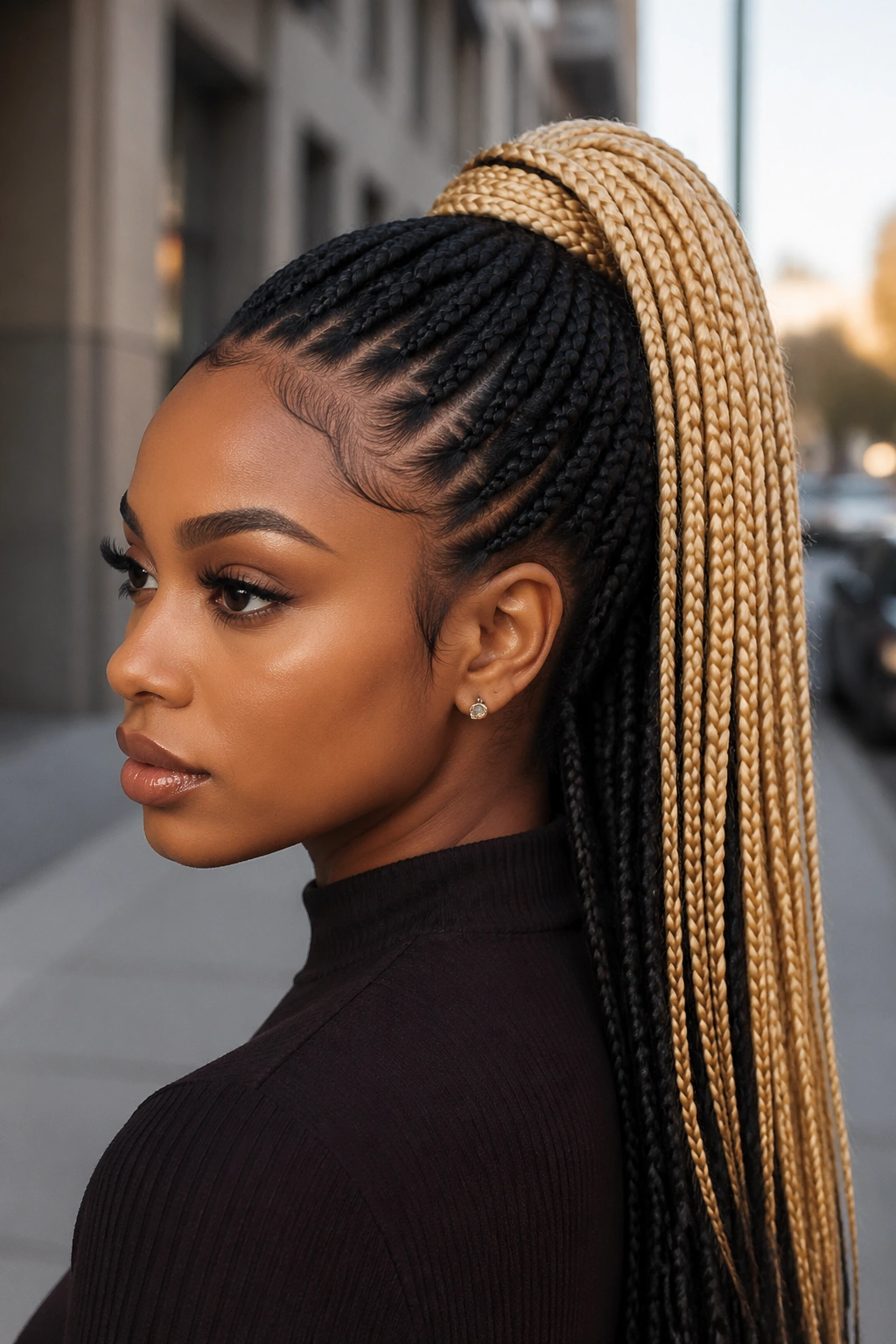
Two colors. One sharp silhouette.
A color-blocked box braid ponytail works because the ponytail exposes the contrast in a way loose braids sometimes hide. Put the darker section at the crown for depth, or reverse it and let the bright tone sit on top if you want the style to read louder right away.
How to Place the Color
- Keep one block dominant so the look has a clear focal point
- Repeat the accent color near the face, not everywhere
- Avoid scattering too many shades unless you want a full playful mix
- Let the ponytail placement show the border between colors
This style needs a bit of planning before the braids even go in, but the payoff is worth it if you like graphic hair. The ponytail makes the color story obvious. That is the whole point.
It looks best with clean parts and a smooth base. A messy root can distract from the color split, and you want the contrast to stay readable.
18. Ombre Length Ponytail
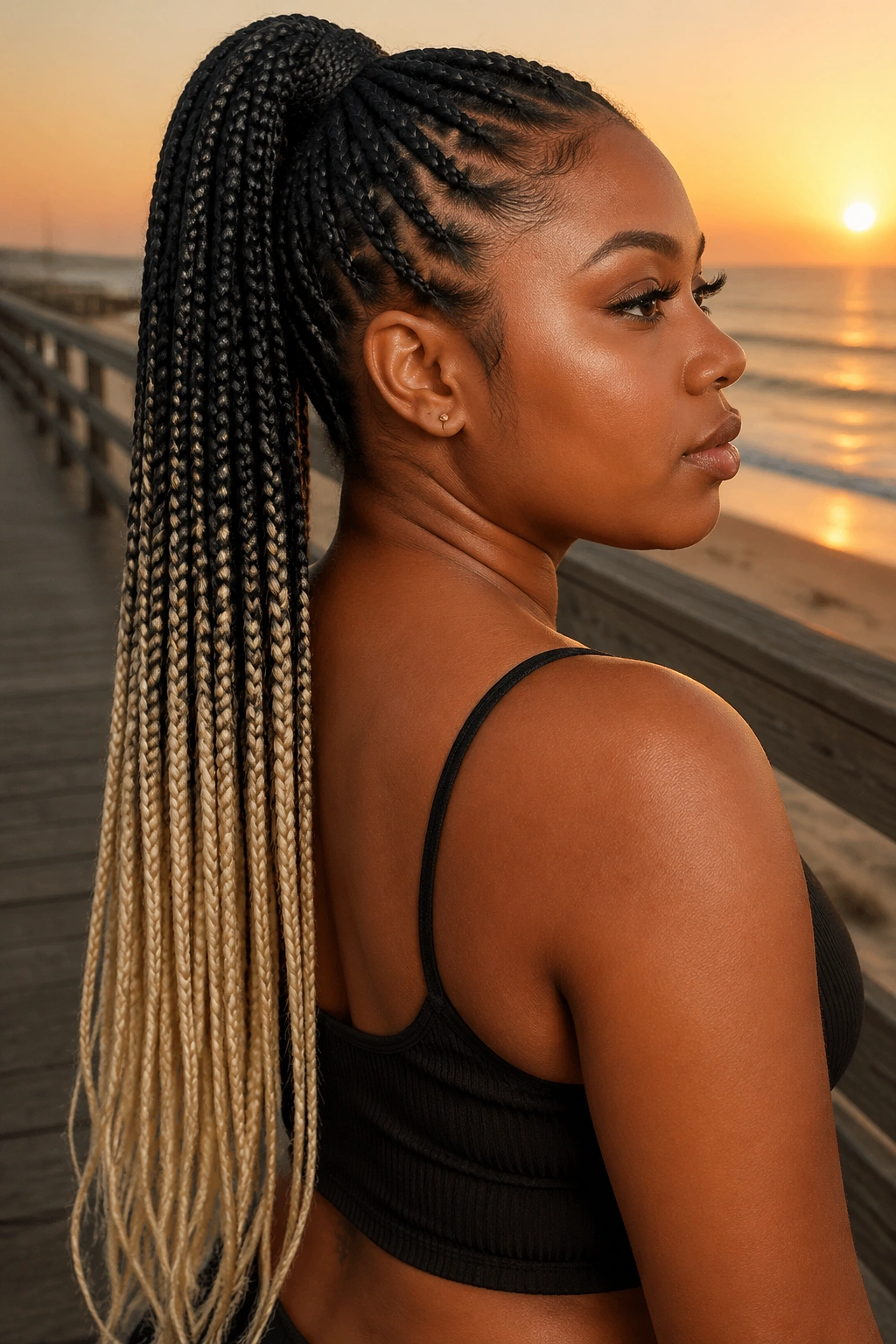
Does ombre work better on a ponytail than loose braids? Often, yes, because the tail gives the color fade a straight path to show itself.
A gradient that starts deep at the roots and lightens toward the ends looks especially good once the braids are gathered. The ponytail lets the shift happen in one clean vertical line, so the eye catches the movement from dark to light without fighting through the rest of the hair.
This is a quieter style than color-blocking, but it has more depth. The base stays grounded, and the ends do the talking. That balance is why I keep liking it.
If your braids are extra long, the fade becomes even more obvious once the ponytail is swept over one shoulder. That little move reveals the color transition in a way that feels natural instead of staged.
I would pick this one when the braid color itself is part of the style, not an afterthought.
19. Workout-Ready Low Ponytail
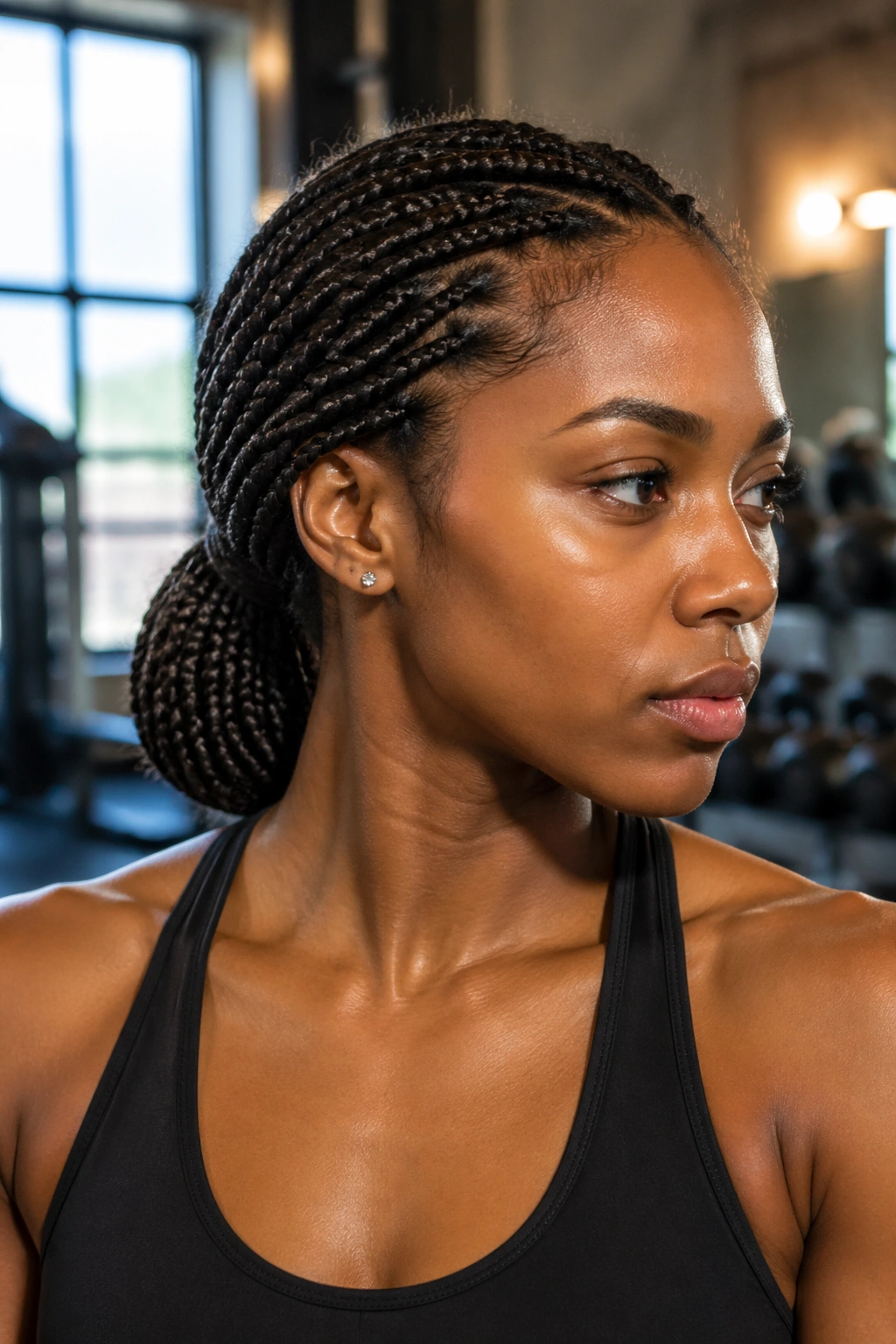
Heavy braids and a hard workout do not mix well if the ponytail sits too high. A low tie keeps the weight out of your face, and it cuts down on that annoying bounce that makes you want to re-tie the style halfway through.
What Makes It Gym-Safe
- The base sits below the occipital bone for less pull
- A soft elastic or scrunchie avoids snagging sweaty braids
- The tail stays close to the neck instead of swinging around
- A thin headband can keep flyaways in place without extra gel
This style is plain on purpose. The goal is to keep the hair out of the way, not to make a statement. Afterward, you can take the tie down, shake the braids loose, and the style still looks decent enough to leave on for errands.
A lot of braid wearers learn this one by trial and error. The higher ponytails are cute until they start smacking the back of your neck. Then the low version starts looking genius.
20. Event-Ready Sleek Ponytail
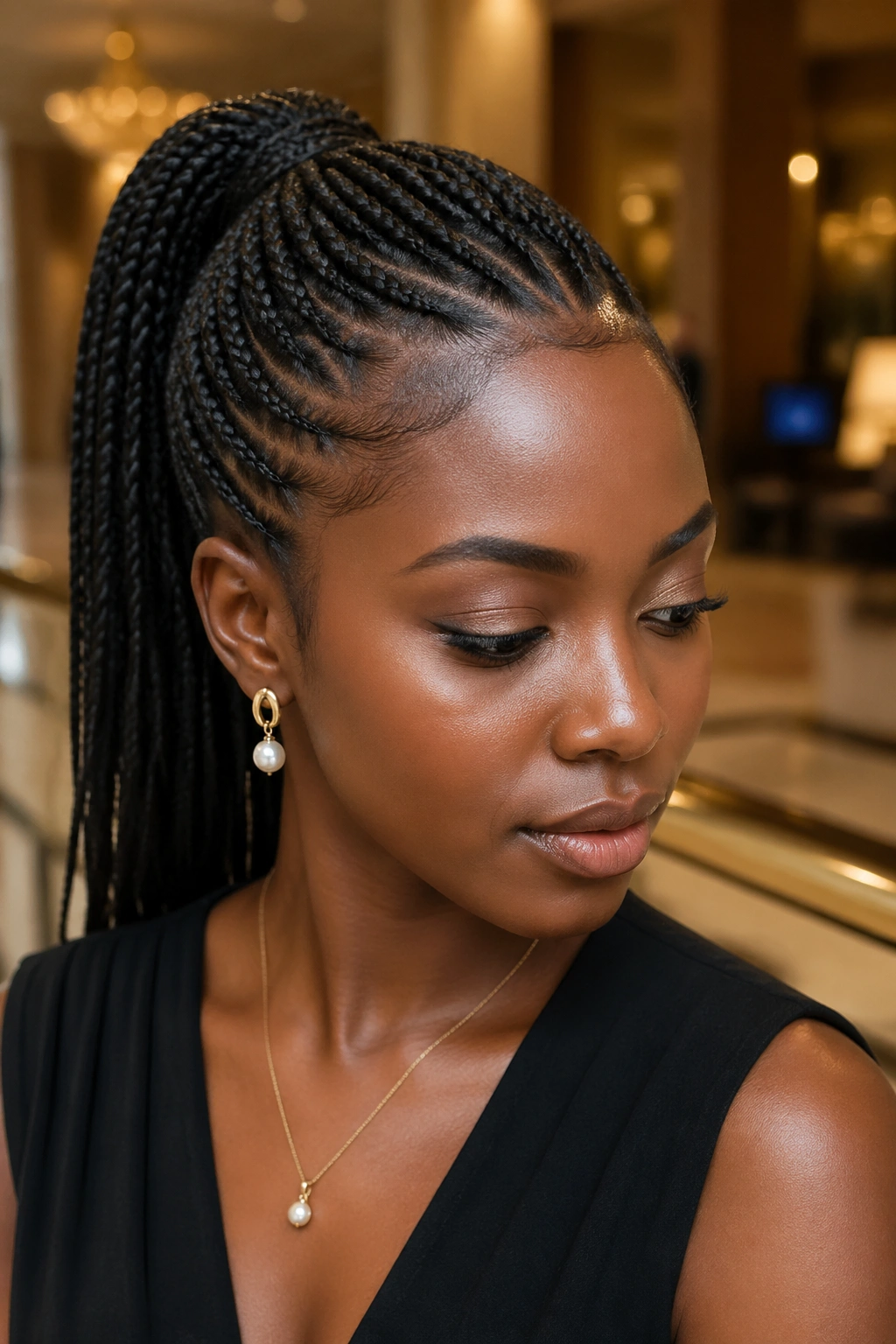
A sleek ponytail on box braids works when the part is crisp and the base is controlled. That is the whole game.
The front should be smooth enough to show the part line, but not so coated in gel that it turns shiny in a hard, crunchy way. A small amount of edge control and a fine brush is enough. Press the hair flat, wrap a scarf for ten minutes, and let the base set before you move the braids around.
Shine is nice. Crust is not.
I like this version for dinners, parties, and dressy settings because it gives the braids a formal shape. A gold cuff, a ribbon, or one clean wrap of hair around the base is enough decoration. More than that and the style starts losing its elegance.
This is one of the few braid ponytails that can look expensive with almost no extra effort. The clean line does all the work.
21. Bubble-and-Wrap Hybrid Ponytail
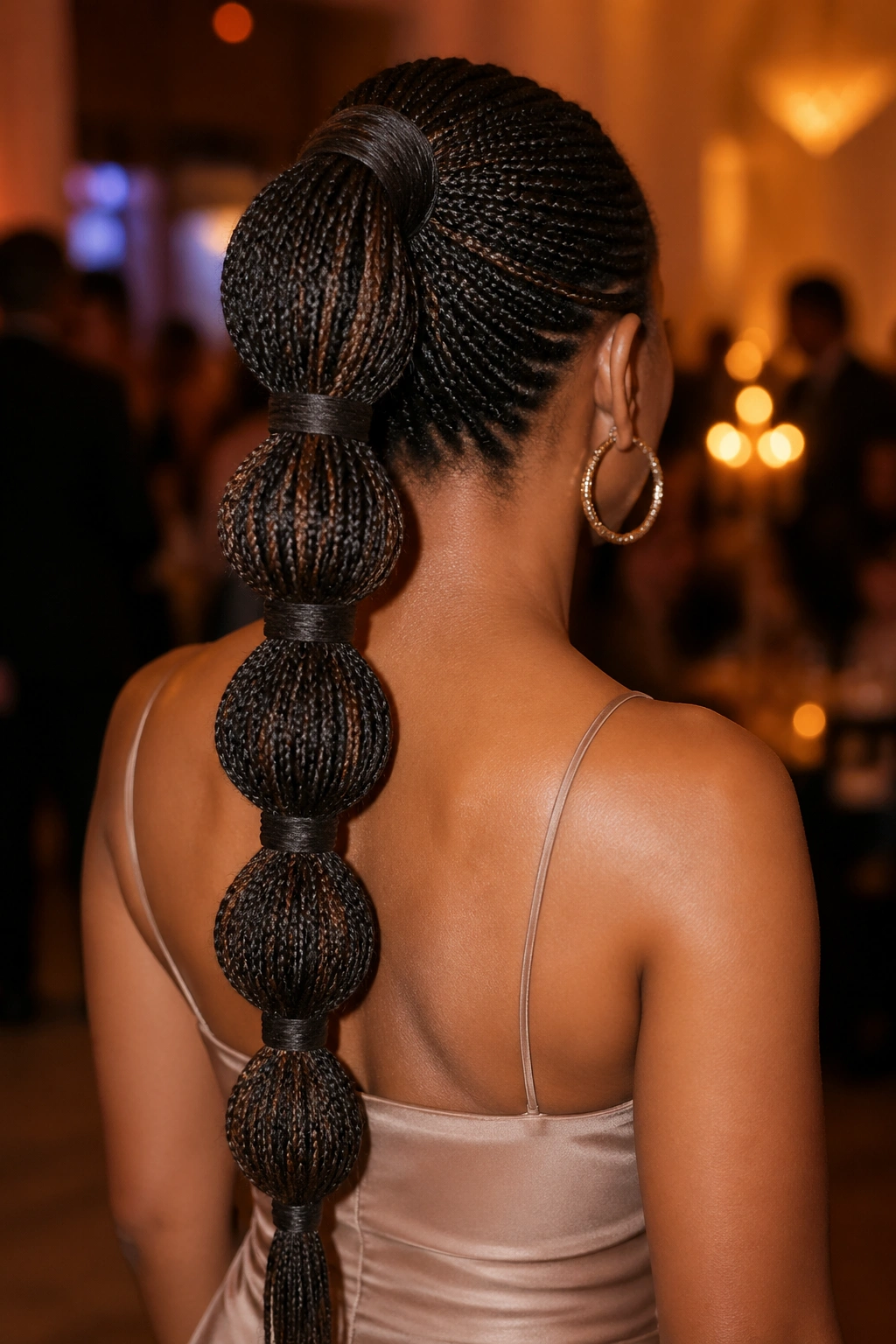
When one style feels too flat and bubble style feels too playful, split the difference. A bubble-and-wrap hybrid gives you both the rounded segments and the polished base.
Start with a standard ponytail, wrap the base neatly, then add small elastics down the tail every few inches. Puff each section with your fingers, but leave the wrapped base sleek so the style has a clear beginning. That contrast makes the whole ponytail feel designed rather than random.
This one works especially well with medium to long box braids. The bubbles break up the weight, and the wrap at the top keeps the style from looking unfinished. It is a good pick for parties, photo days, or any moment when you want something a little more styled without going full costume.
Keep the spacing even. Uneven bubbles look accidental. Even bubbles look like a plan.
22. Side Ponytail for Thick Braids
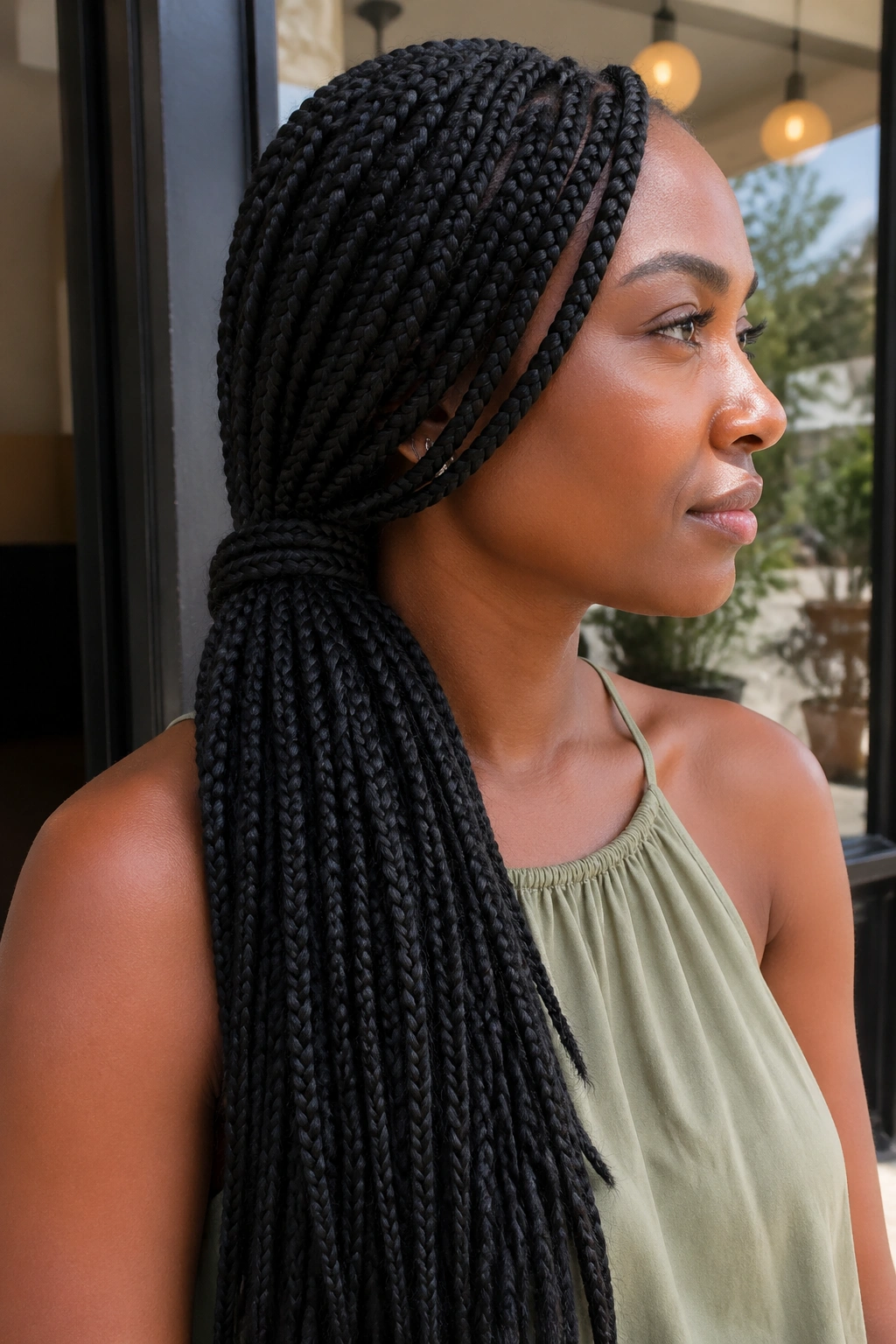
Heavy braids feel lighter when the weight sits over one shoulder. That is why a side ponytail can be a lifesaver for thick sets that feel too bulky in the center.
The side placement takes strain off the crown and spreads it across the head in a different way. I usually pull the braids to the side opposite the part so the shape feels balanced, then anchor the tie low enough that the base does not rub the jaw. If the ponytail lands too high near the ear, it can get annoying fast.
- Great for thick, large-section braids
- Easier on the scalp than a high center tie
- Works with both casual and dressed-up outfits
- Lets the braid ends fall forward instead of straight down the back
This style has a quiet charm. It is not flashy, but it solves a real problem, which is usually how the best braid styles happen.
23. Accessory-Heavy Ponytail
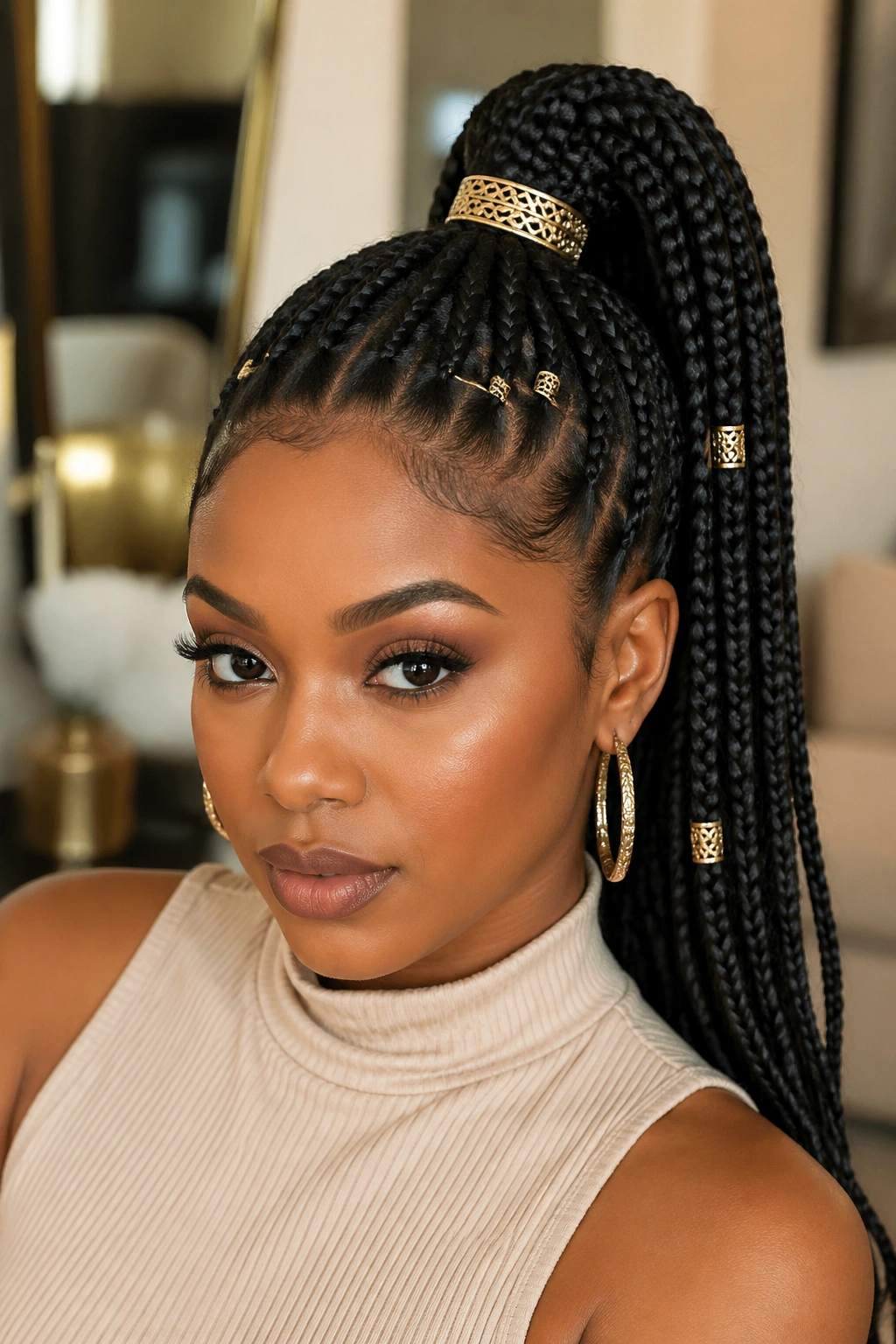
Not every clip makes a braid ponytail busier in a bad way. When the accessories are chosen with a little restraint, they can turn a plain ponytail into something with actual shape and rhythm.
How to Keep It from Looking Crowded
Pick one metal tone or one color family and stay inside it. That is the easiest way to keep cuffs, rings, ribbons, and pins from competing with each other. Then place the largest accent near the base, where the eye lands first, and let the smaller pieces trail farther down.
- Use 3 to 5 braid cuffs, not 12
- Put decorative clips on the outer braids, not every strand
- Match shiny pieces with a cleaner base
- Leave a few braids plain so the eye gets a pause
This style is fun because you can make it feel like you without changing the actual braid structure. That matters. Sometimes the ponytail itself is ordinary, and the personality comes from the accessories. No shame in that.
24. Face-Framing Ponytail with Loose Pieces
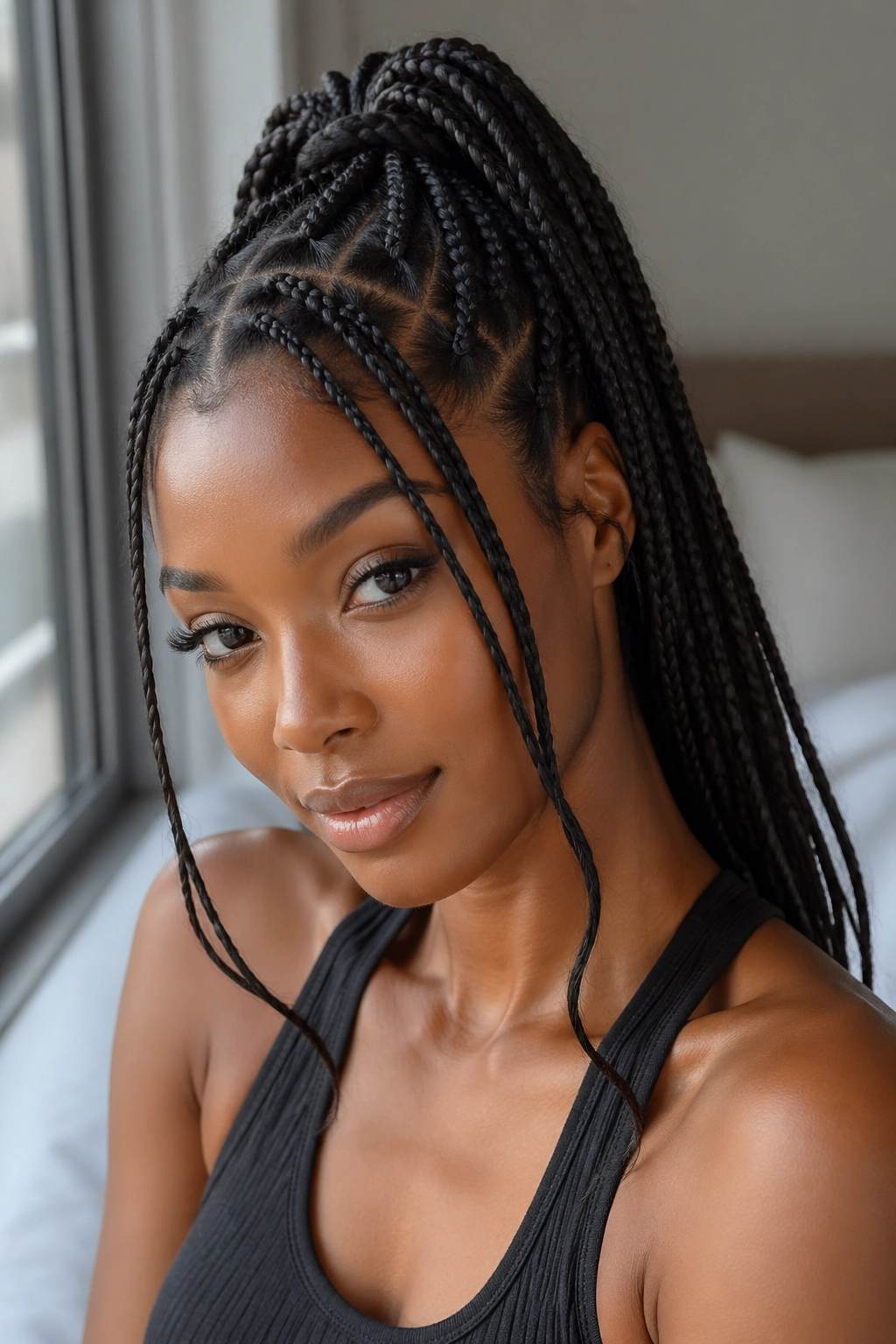
A few loose braids near the face can soften a ponytail that feels too strict. The trick is to leave out only two or four pieces, not half the head, or the style loses its shape fast.
Those front pieces can skim the cheekbones, fall near the temples, or tuck behind the ears depending on what you want the face line to do. I like this look when the ponytail is high or mid-height, because the loose braids break up the severity and make the style feel more relaxed.
The important part is control. The loose pieces should look chosen, not forgotten. Keep them smooth and let them follow the shape of your face rather than fighting it. If they start frizzing, a tiny bit of braid spray on the ends usually helps.
This one is useful when you want softness without giving up the clean structure of the ponytail. It is a small edit, but a smart one.
25. Classic Everyday Ponytail
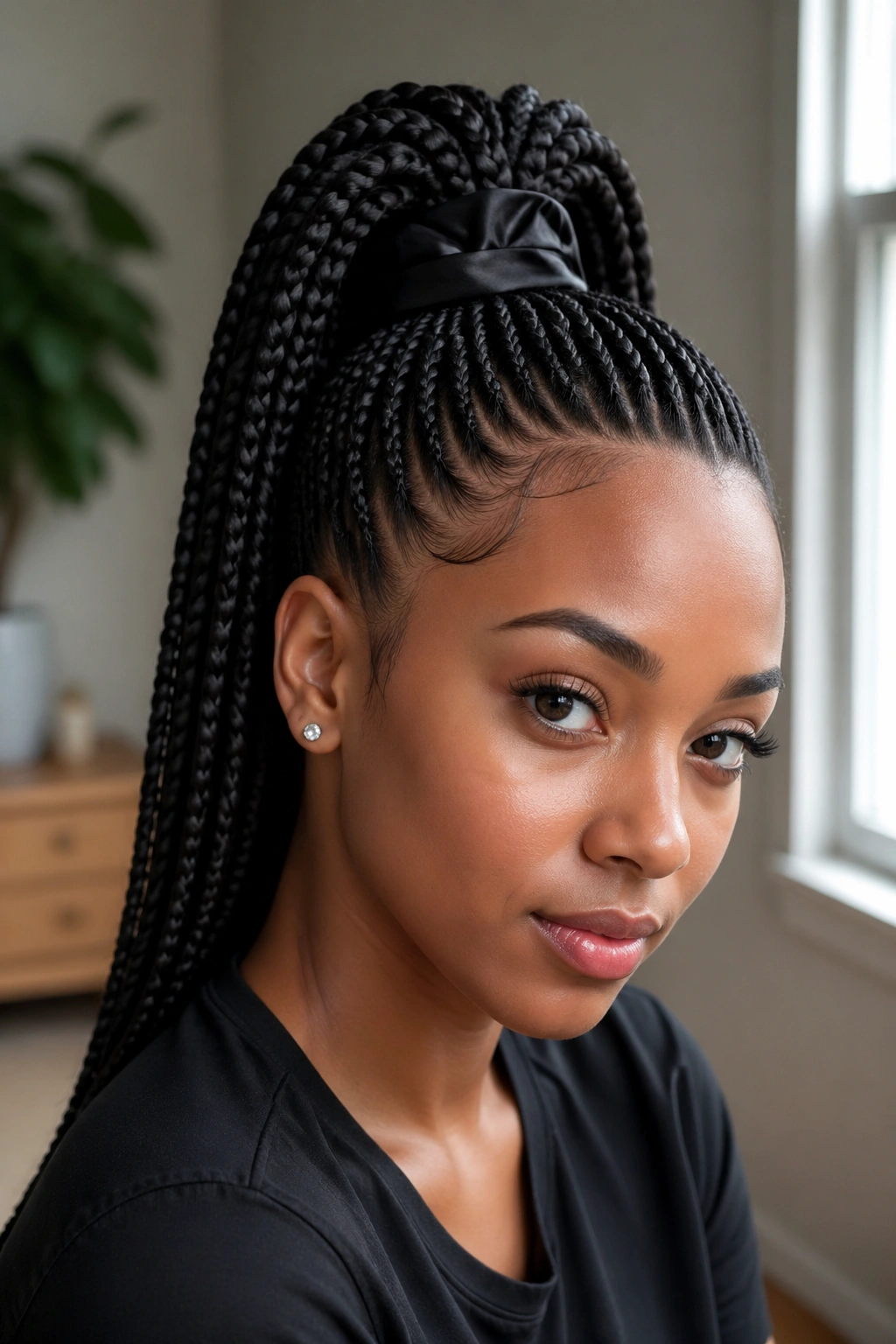
The style I come back to most is the plain one. A classic everyday box braid ponytail, set low or mid with a soft tie, does the job without asking for a second thought.
It works because it knows when to stop. No extra wrap, no extra bubbles, no heavy hardware. Just a clean base, braids gathered smoothly, and enough slack that your scalp stays calm through the day. If the front is neat and the tail lies flat, you are already done.
That simplicity makes it useful for errands, travel, work, school runs, and those days when your hair needs to look good without being the main event. A satin scrunchie helps, but even that is optional if the braids are already behaving.
The plain version earns its keep. It is the one that survives heat, wind, long walks, and a forgotten hairbrush in the bottom of your bag. And honestly, that’s the kind of braid ponytail I trust most.
