



Box braid styles don’t need a lot of fuss to look deliberate. That’s the part people underestimate. Change the length, change the parting, add beads, leave a few curls out, and the same basic braid can feel neat, playful, sharp, or expensive-looking in the plainest sense of the word.
The base technique stays familiar, but the mood changes fast. A medium braid with a clean center part reads one way. A jumbo set with triangle parts reads another. Then there’s the small stuff that makes a big difference in real life: how heavy the style feels by day three, how much scalp you can actually access, whether your edges are getting pressed too hard, and whether the finish still looks good after you’ve slept on it twice.
That’s why people keep saving box braid styles even when they already know they like braids. You can keep the same protective style and still move between tidy, dramatic, low-key, playful, and polished without starting from scratch. Some looks are all about the structure. Others lean on movement, accessories, or color. A few are pure function, which is honestly underrated.
And yes, some styles are easier to wear than others. Bigger braids install faster but can feel heavier. Smaller ones take longer but give you more styling room. The sweet spot is usually the one that matches your scalp, your schedule, and how often you want to re-do your ponytail before leaving the house.
1. Classic Waist-Length Box Braids
This is the version that made box braids a long-running favorite in the first place. Waist-length braids give you swing, movement, and enough length to style without turning the whole thing into a project. They look clean with a middle part, soft with a side part, and strong pulled back into a low ponytail.
What I like here is the balance. Long enough to feel special, not so long that every braiding session becomes a test of patience. If you want a style that works with big hoops, a sharp lip, or a plain tee, this one does the job without trying too hard.
2. Shoulder-Grazing Box Braids
Shoulder-grazing braids have a different energy. They sit right where the jacket collar hits, which means they move with you instead of dragging down your whole silhouette. This length is a smart choice if you want something lighter than waist-length braids but still full enough to style.
A shoulder-length set is also easier to tuck into coats, scarves, and seatbelts, which sounds boring until you’ve worn longer braids through a busy day. That little bit of convenience matters. The style still reads polished, but it’s less likely to snag on everything in sight.
3. Mid-Back Box Braids
Mid-back braids sit in the sweet spot between easy and dramatic. They give you enough length for a braid flip, a low bun, or a half-up style, but they do not carry the same weight as a true waist-length set. That matters more than people think.
The look is especially good if you like movement around your back without wanting the ends to trail too far down. It feels finished, not fussy. I’d call this one a practical favorite for anyone who wants length without constantly thinking about it.
4. Tailbone-Length Box Braids
Tailbone-length box braids are for people who want the roomiest possible silhouette. The length gives the braids a long line that looks dramatic in motion, and that makes the style feel very different from a shorter set even when the parting is simple.
There’s a catch, though. More length means more weight, and weight changes how the style sits on your scalp by the second or third week. If you choose this length, ask for clean parting and avoid making the braids too thick. That keeps the look sleek instead of bulky.
5. Bob-Length Box Braids
A bob changes the whole story. Instead of hanging down the chest or waist, the braids stop around the jawline or just below the chin, which makes the face feel more open and the neck look longer. Short box braid styles like this can look sharp without feeling severe.
I like bob-length braids for people who wear glasses, bold earrings, or structured clothes. The shape does some of the styling for you. If you want a braid style that feels neat in the morning and still looks intentional by evening, this is one of the easiest wins.
6. Jumbo Box Braids
Jumbo braids are the big-sister version of the style. They install faster, look bold right away, and make the parting visible from a distance. The tradeoff is weight, so the best jumbo sets keep the sections tidy and the extensions light enough not to pull.
They work especially well when you want a strong shape with less time in the chair. That’s the real appeal. A good jumbo set has clean parts, smooth braiding, and ends that don’t look ragged. When people say a style “makes a statement,” this is usually the kind they mean.
7. Medium Box Braids
Medium box braids are probably the most adaptable version on this list. They’re big enough to feel full, small enough to style, and balanced enough to wear without the braid size shouting over everything else. If you want one set to do the most jobs, this is the safe bet.
They take a little longer than jumbo braids, but they tend to look more refined than very large sections. You can wear them loose, tie them back, or split them into half-up styles without the shape collapsing. That’s a useful middle ground.
8. Small Box Braids
Small box braids give you density. Lots of it. The overall look is finer and more detailed, and the braids tend to fall in a smoother curtain than a thicker set. They also open the door to more styling options, especially if you like neat ponytails and compact buns.
The downside is time. Small braids take patience, and your scalp will notice if the parts are rushed or the tension gets too high. But when the sectioning is clean, the finished style has a tidy, almost tailored feel that holds up well in photos and in real life.
9. Micro Box Braids
Micro braids are the smallest version most people are willing to sit through, and they have their own following for a reason. The braids move softly, stack beautifully in buns, and give you a lot of styling room because the individual plaits stay light.
They are not a casual choice. Installation time is long, and you need someone who can keep the parts even and the tension controlled. Still, if you want a set that feels delicate rather than chunky, micro box braids do that better than almost anything else on this list.
10. Knotless Box Braids
Knotless braids are the version many people graduate to after wearing standard box braids for a while. The braid begins more gradually, which gives the root a flatter look and usually makes the scalp feel less boxed in. That softer start changes the whole feel of the style.
Why People Save This Version
The base looks cleaner, the braids often sit lighter, and the finish feels less bulky near the hairline. That matters if your edges are sensitive or if you plan to keep the style in for a stretch.
What to Ask For
- A gradual feed-in at the root, not a heavy knot.
- Clean parting so the scalp still shows.
- Lightweight extensions if you’re going long.
Small warning: lighter does not mean loose. Good knotless braids still need enough grip to stay put.
11. Triangle-Part Box Braids
Triangle parts change the mood immediately. Instead of the standard square sectioning, the scalp shows off little geometric points that make the whole style look sharper and more deliberate. It’s one of the easiest ways to make braids feel styled, not routine.
The best thing about triangle parts is that they work on almost any braid size. Jumbo triangle parts feel bold. Smaller ones look detailed and crisp. Either way, the parting becomes part of the design instead of just the hidden structure under it.
12. Diamond-Part Box Braids
Diamond parts have a softer geometry than triangles but still feel special. The sections sit at angles that catch the eye in a way square parts don’t, and the style looks especially nice when the braids are long enough for the pattern to peek through.
This is a good pick if you want something that stands out quietly. It’s a cleaner kind of detail, the sort people notice after they’ve looked twice. Diamond parts can also make a braid set look more custom, which is a nice upgrade without adding accessories.
13. Square-Part Box Braids
Square parts are the classic pattern for a reason. They look neat, even, and familiar, and they let the braids fall in orderly rows that are easy to maintain visually. If you want a style that reads clean from every angle, this is still one of the best bets.
There’s nothing boring about square parts when the sectioning is precise. In fact, the simplicity is part of the appeal. Good square parts make the braids themselves look better, because the clean grid frames them without competing for attention.
14. Zigzag-Part Box Braids
Zigzag parts give the scalp a little movement before the braids even start. The pattern adds a playful edge without changing the whole style into something loud. It’s a clever option if you like subtle detail and want the parting to feel handmade instead of mechanical.
This style works especially well on medium and small braids, where the pattern can show without being crowded out by heavy sections. It’s also a nice way to freshen up a braid set when you’ve already worn the same square-part look a dozen times.
15. Side-Part Box Braids
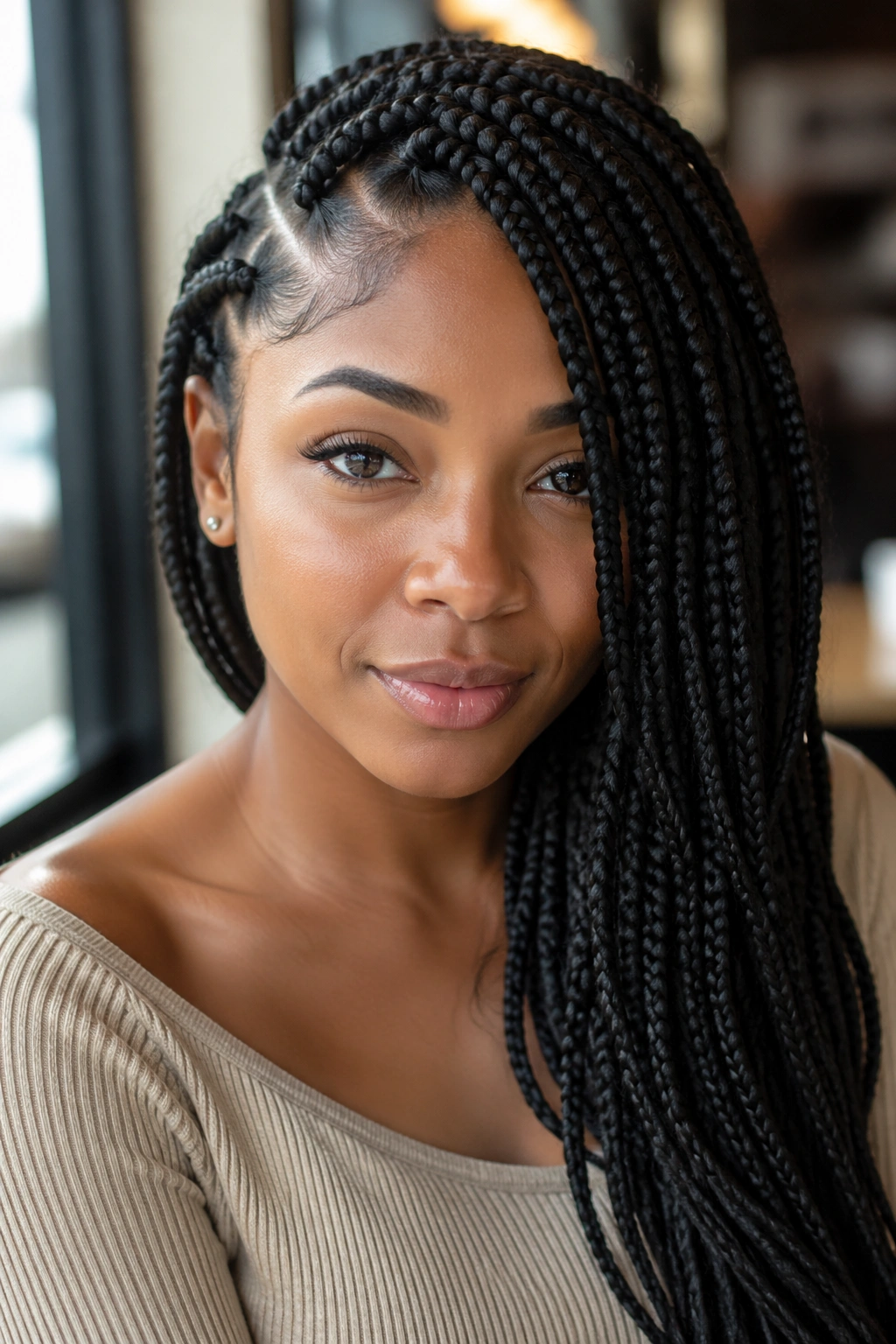
A side part changes the face framing in a way people notice right away. It softens one side, lifts the other, and gives the braids a little asymmetry that feels more relaxed than a center part. If your face looks better with movement across the forehead, this is the one.
Side parts also make it easier to lean into earrings, makeup, and a strong neckline. The style doesn’t need extra accessories to work, which is part of the charm. It does the flattering part on its own, and that’s useful on a day when you want the braids to carry the look.
16. Middle-Part Box Braids
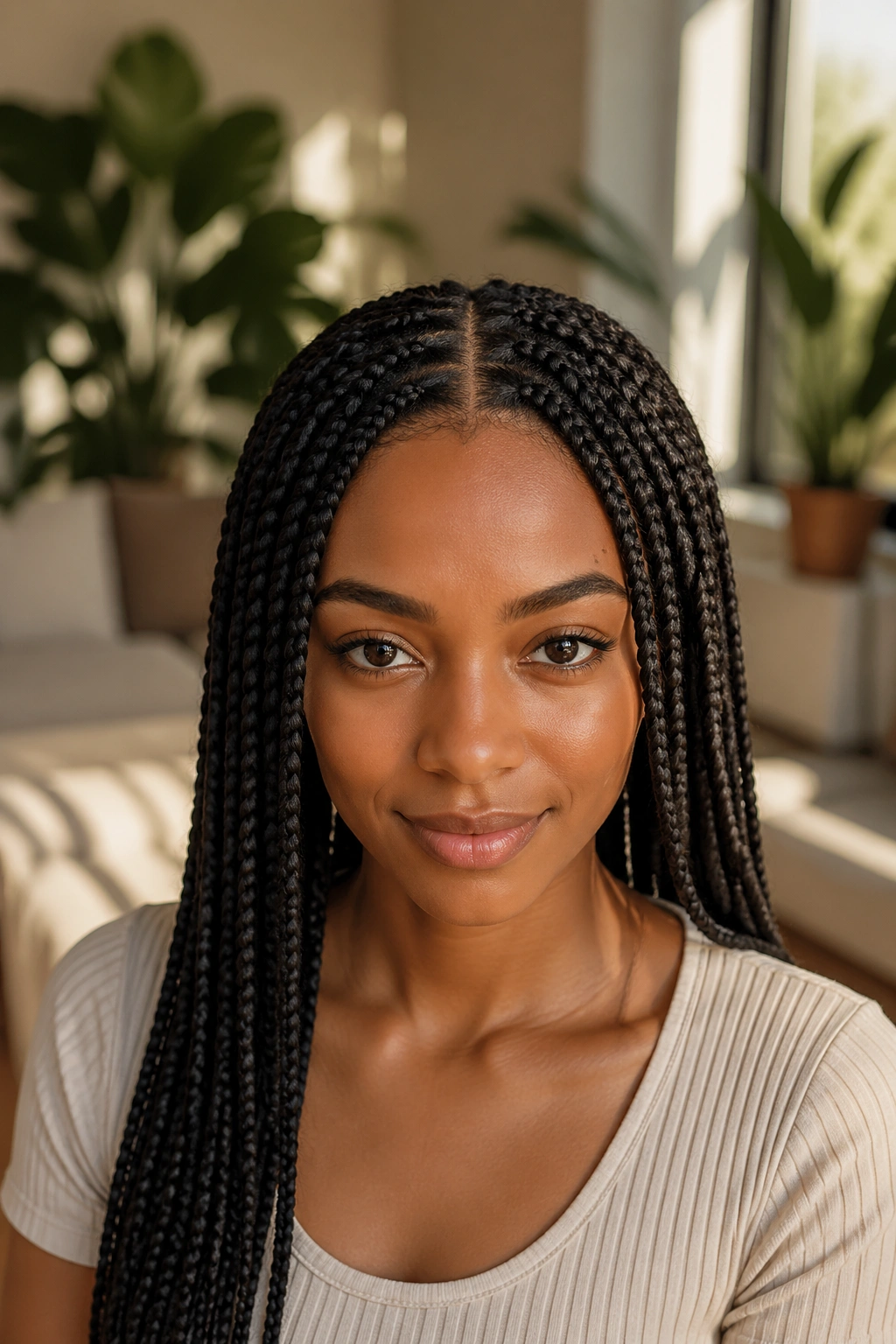
Middle-part braids have a cleaner, more direct energy. They split the face evenly and create a long vertical line that can make the whole style look neat and symmetrical. That line matters more than people realize. It changes how the braids fall over the shoulders and how the rest of the outfit reads.
I reach for this look when I want the braids themselves to feel crisp. There’s no extra drama needed. A well-done middle part with clean edges and even sizing has a plain-spoken confidence to it, which is probably why it keeps coming back.
17. Fulani-Inspired Box Braids
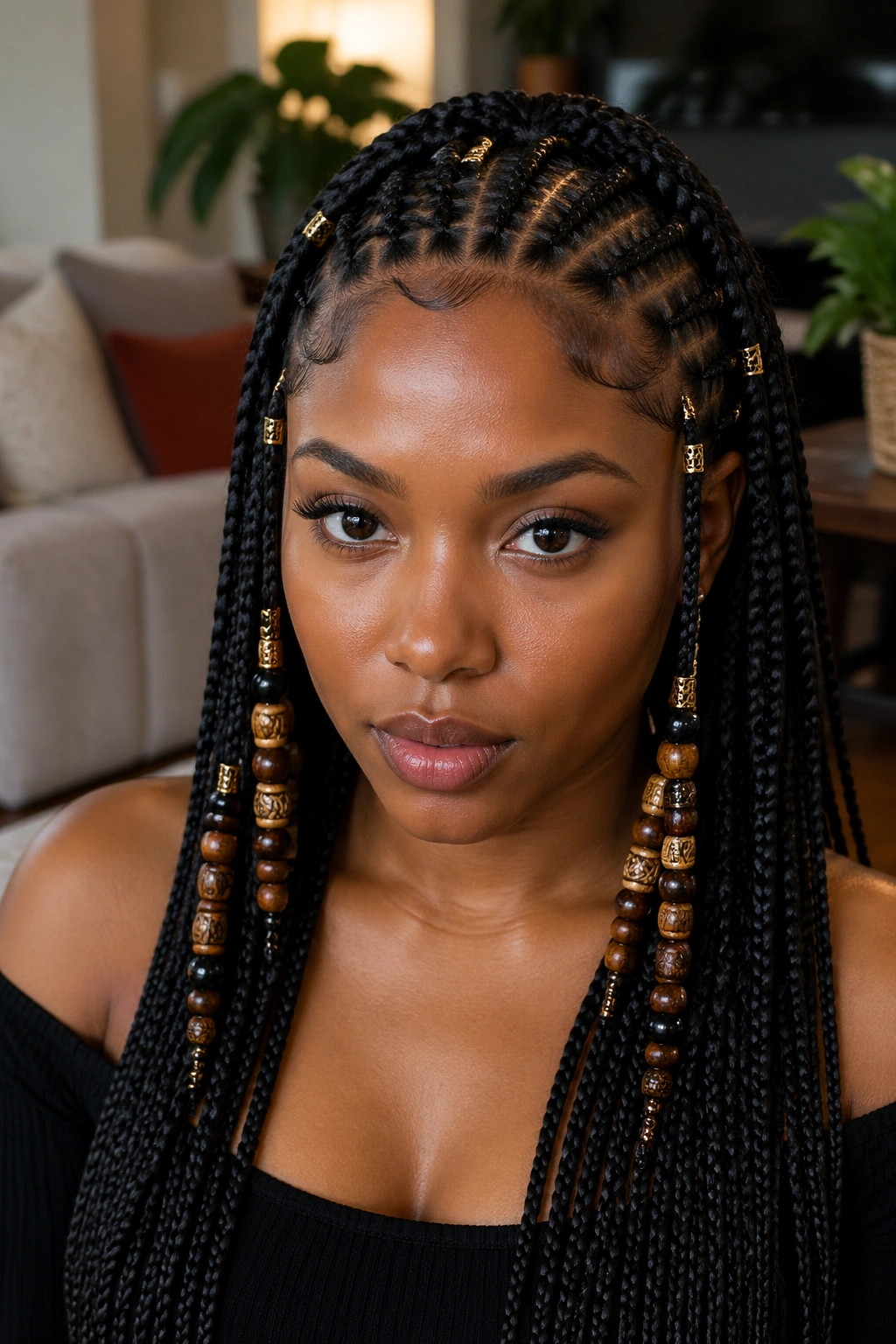
Fulani-inspired box braids usually combine box braids with cornrows at the front, center, or sides, plus a few decorative pieces that give the style a more layered feel. The front details matter here. They draw the eye before the length even gets a chance to do its thing.
What Makes It Distinct
The braid line often includes a center braid, face-framing cornrows, beads, or cuffs. That mix creates a style with a clear shape from the top down.
Where It Works Best
- Special events where you want structure.
- Long braids with room for detail.
- Anyone who wants the front to look more styled than the back.
The style feels rooted and polished at the same time, which is a hard combination to fake.
18. Goddess Box Braids
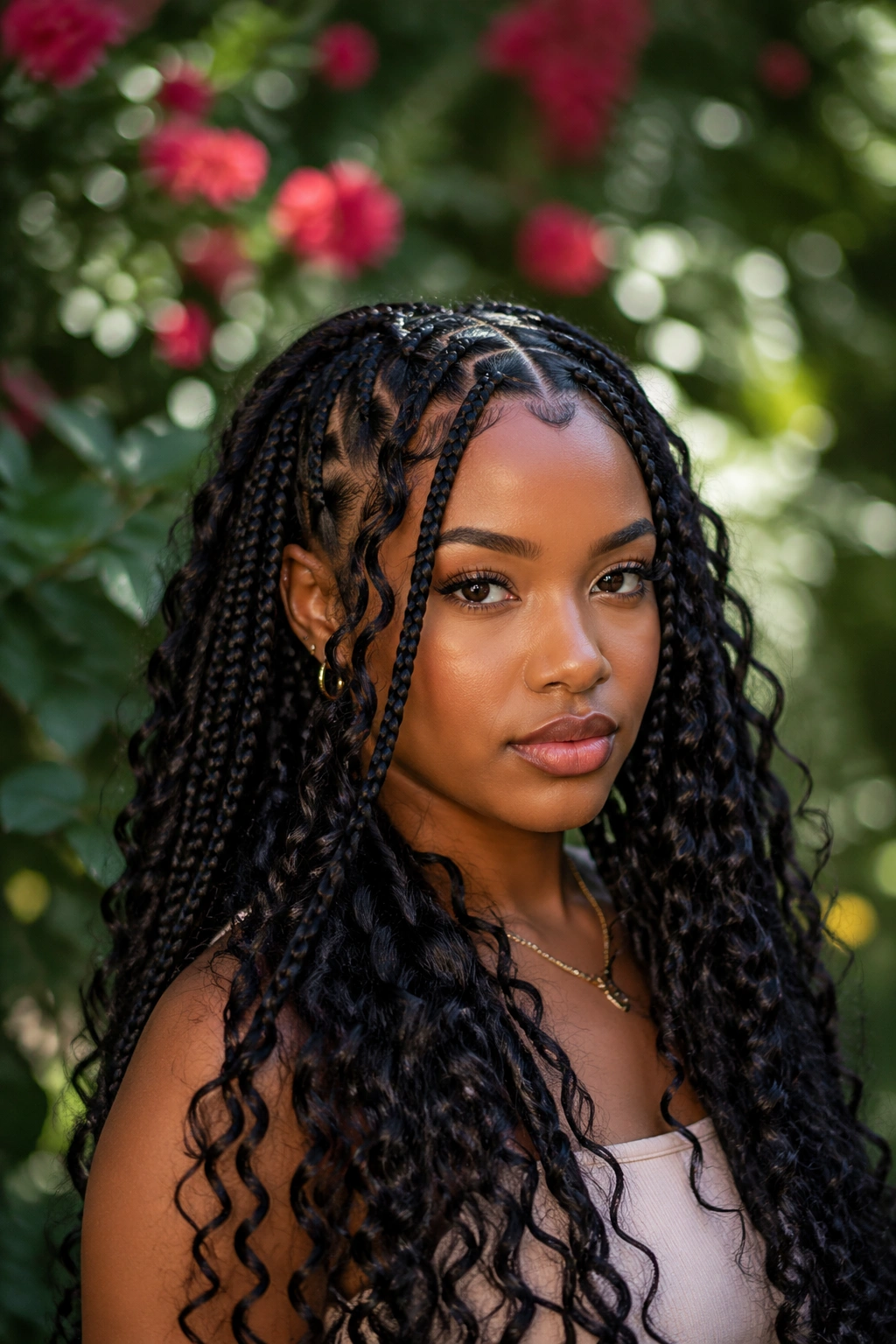
Goddess braids with box braids usually mean a set with loose curly pieces mixed in, either throughout the length or concentrated near the ends. Those soft strands break up the boxy look and give the style movement that feels less rigid than a standard braid set.
This version shines when you want the braids to look fuller and a little more romantic. The curls catch the eye and keep the style from feeling too heavy. It’s one of those looks that can go dressy without needing a full updo, and that’s a nice trick.
19. Boho Box Braids
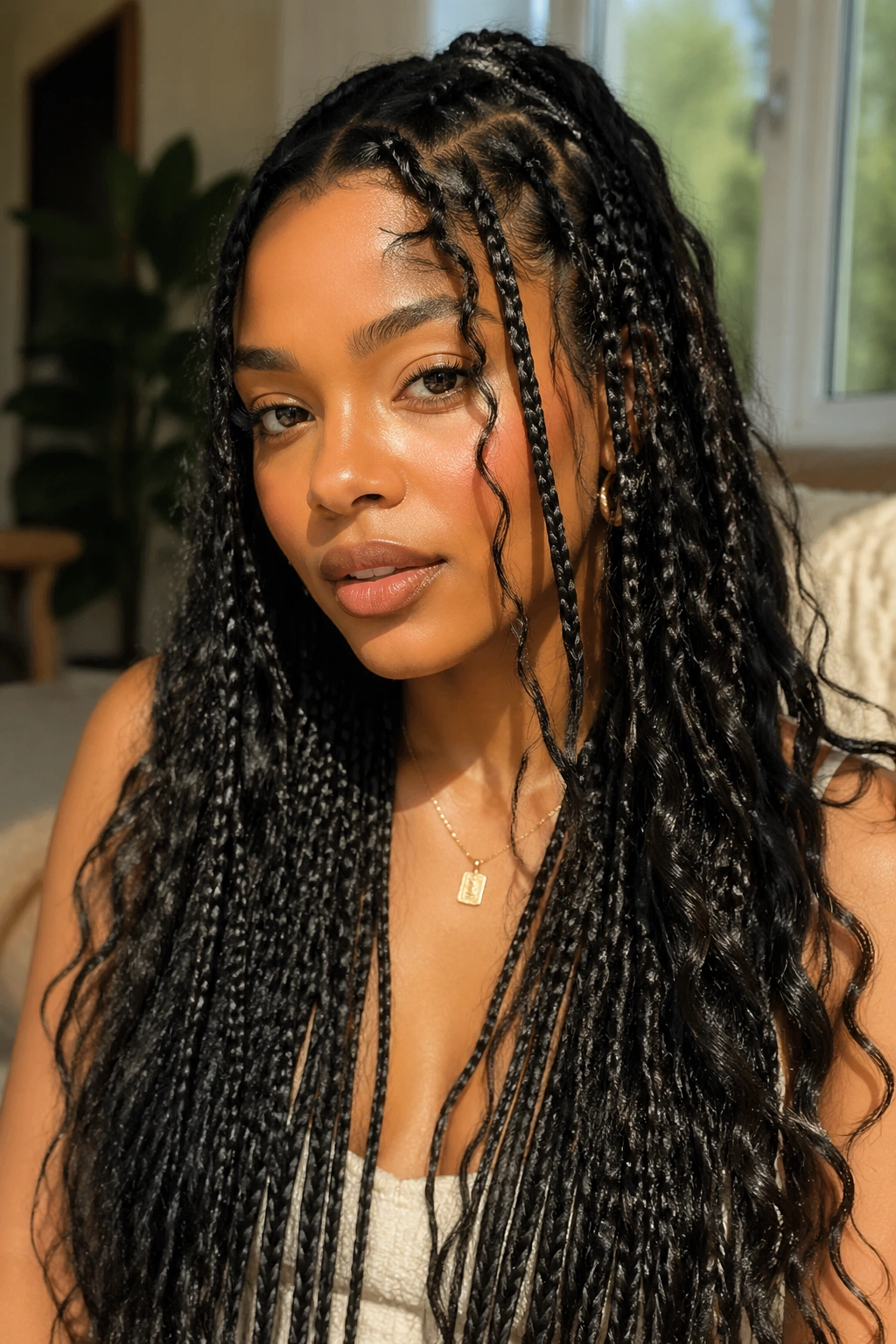
Boho box braids lean into a freer, messier finish. You get the braids, but you also get loose texture, wavy ends, or face-framing pieces that soften the structure. The result feels lived-in on purpose, which is harder to pull off than people think.
Why They Get Saved
They’re less strict than a polished braid set. They look good with oversized sweaters, linen, and simple dresses. They can soften a strong jawline or a sharp outfit.
The key is not overdoing the texture. A little loose movement goes a long way. Too much, and the whole style starts to look unfinished instead of easy.
20. Curly-End Box Braids
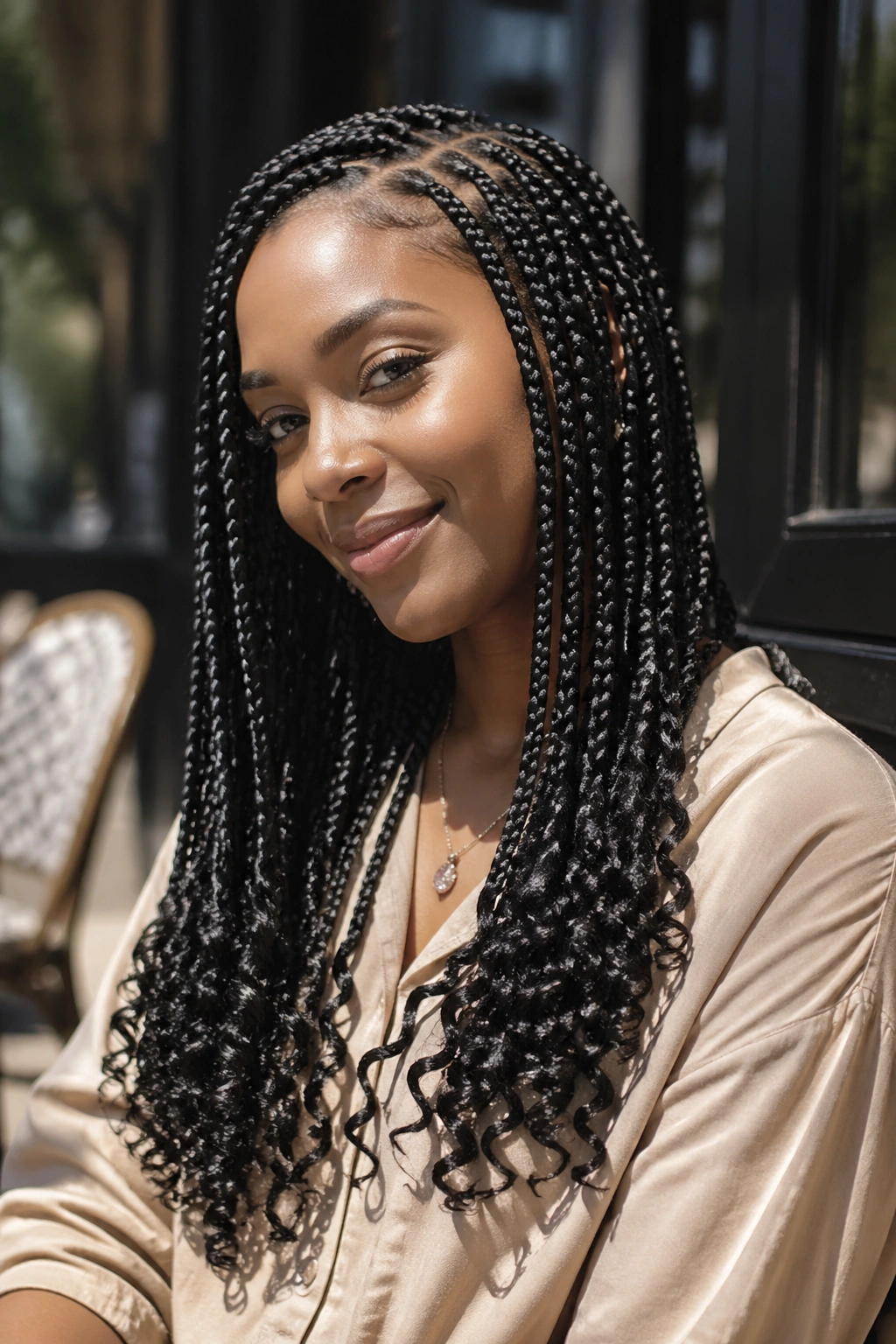
Curly ends make box braids feel lighter at the bottom. Instead of sealed tips or straight extension ends, the curls give the silhouette a softer finish and a bit of bounce. That small change can make a whole braid set feel fresher.
This style works especially well on medium to long braids, where the curls have room to show. The ends look airy, which helps offset the density at the roots. If you like braids but don’t want the finish to feel too severe, this is a strong middle path.
21. Layered Box Braids
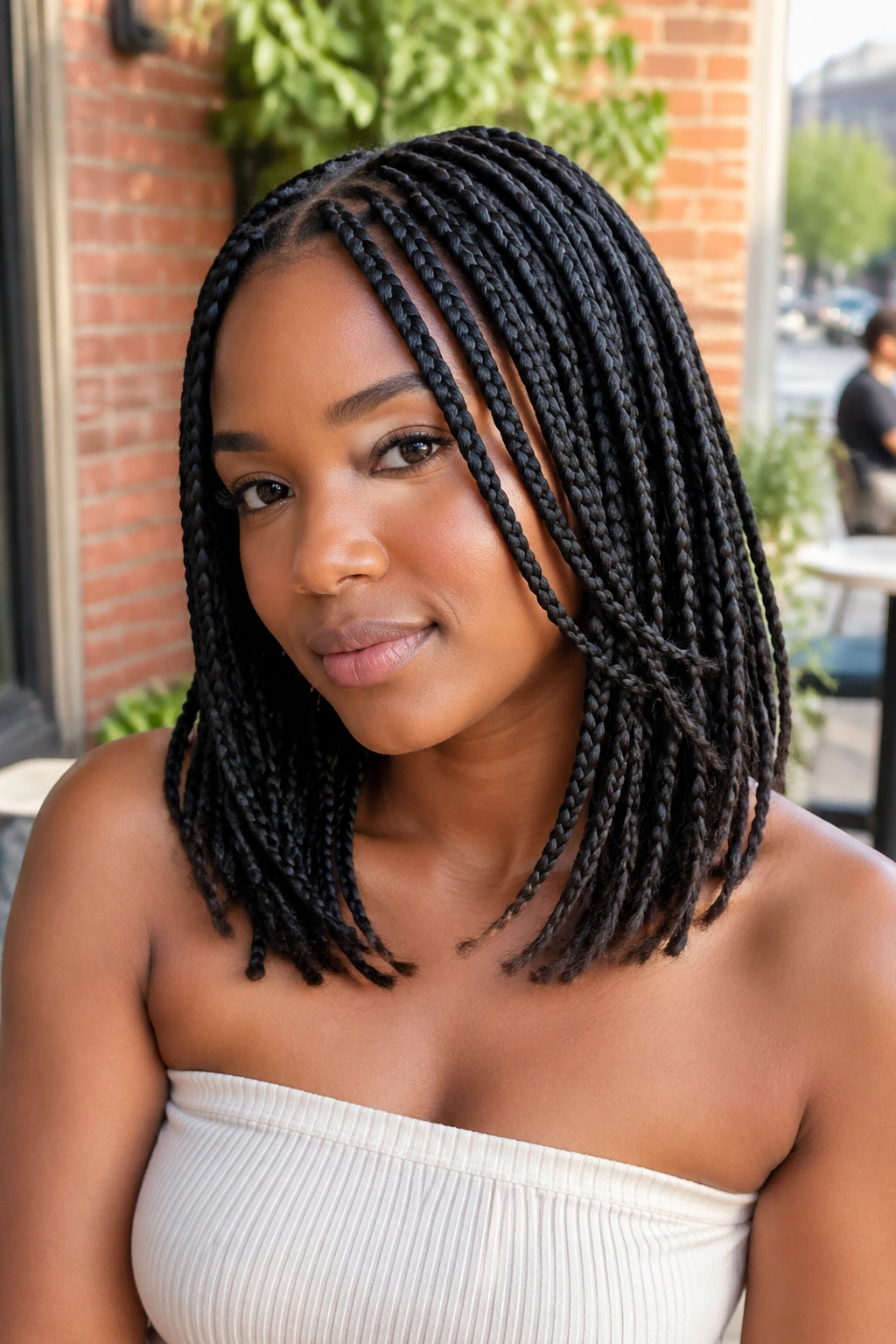
Layered box braids are one of the easiest ways to keep long braids from looking like one heavy curtain. The top layers sit a little shorter, which brings shape to the face and movement to the shoulders. Layers break up bulk. That’s the whole point, and it works.
Where the Shape Helps
- Around the jaw, where shorter pieces can frame the face.
- Near the collarbone, where the braids move more easily.
- On long sets that need a little structure.
A layered braid style looks especially good when the lengths are cut with intention instead of accidentally staggered. That difference shows.
22. Blunt-Cut Box Braids
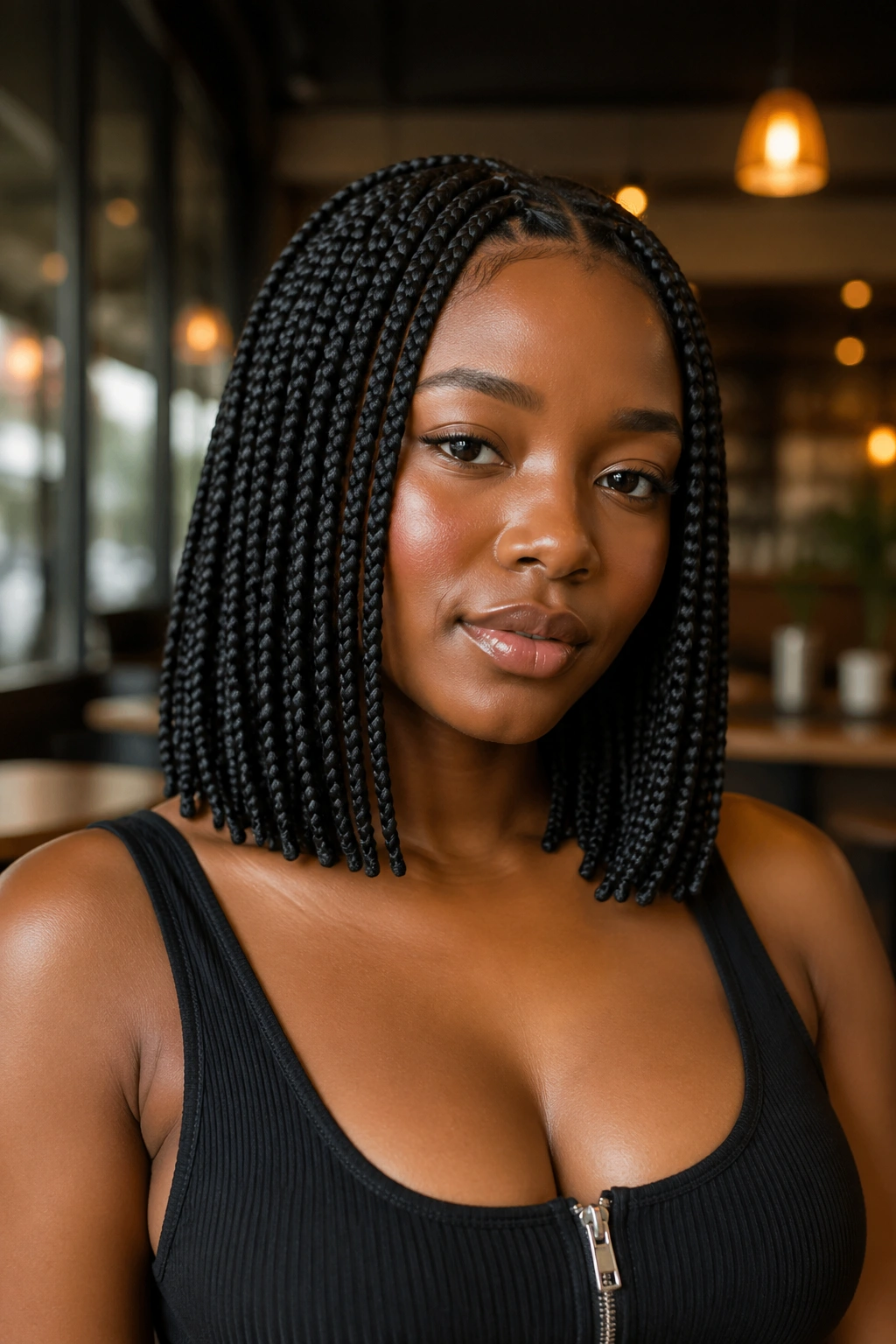
Blunt-cut box braids end at the same point, which gives the style a harder line and a cleaner outline. The finish is crisp. Very crisp. If layered braids feel soft, blunt-cut braids feel edited.
This style is a good match for people who like strong silhouettes and minimal fuss. It also photographs clearly because the ends line up in one shape instead of scattering. You can still wear them loose or pulled back, but the real appeal is in that sharp bottom edge.
23. Asymmetrical Bob Box Braids
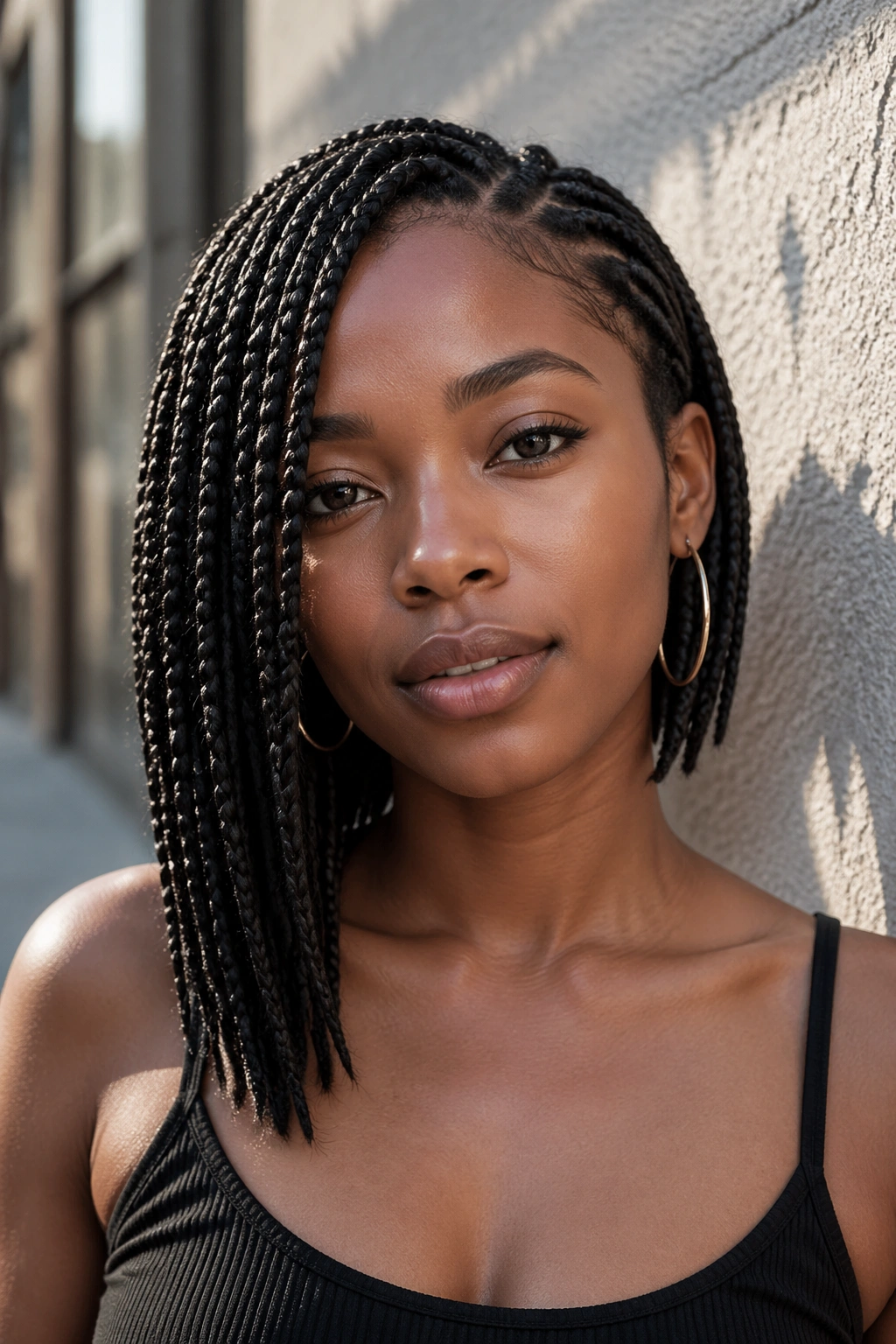
An asymmetrical bob means one side is slightly longer than the other, and that tilt gives the style instant personality. It’s a small adjustment with a big payoff. The uneven line makes the hair feel modern without needing color or accessories.
This is a good choice if you like short braids but want something less standard than a simple bob. It also works well for someone who wants to draw attention to one side of the face, especially with earrings or a dramatic eye look. The shape does the talking.
24. Half-Up, Half-Down Box Braids
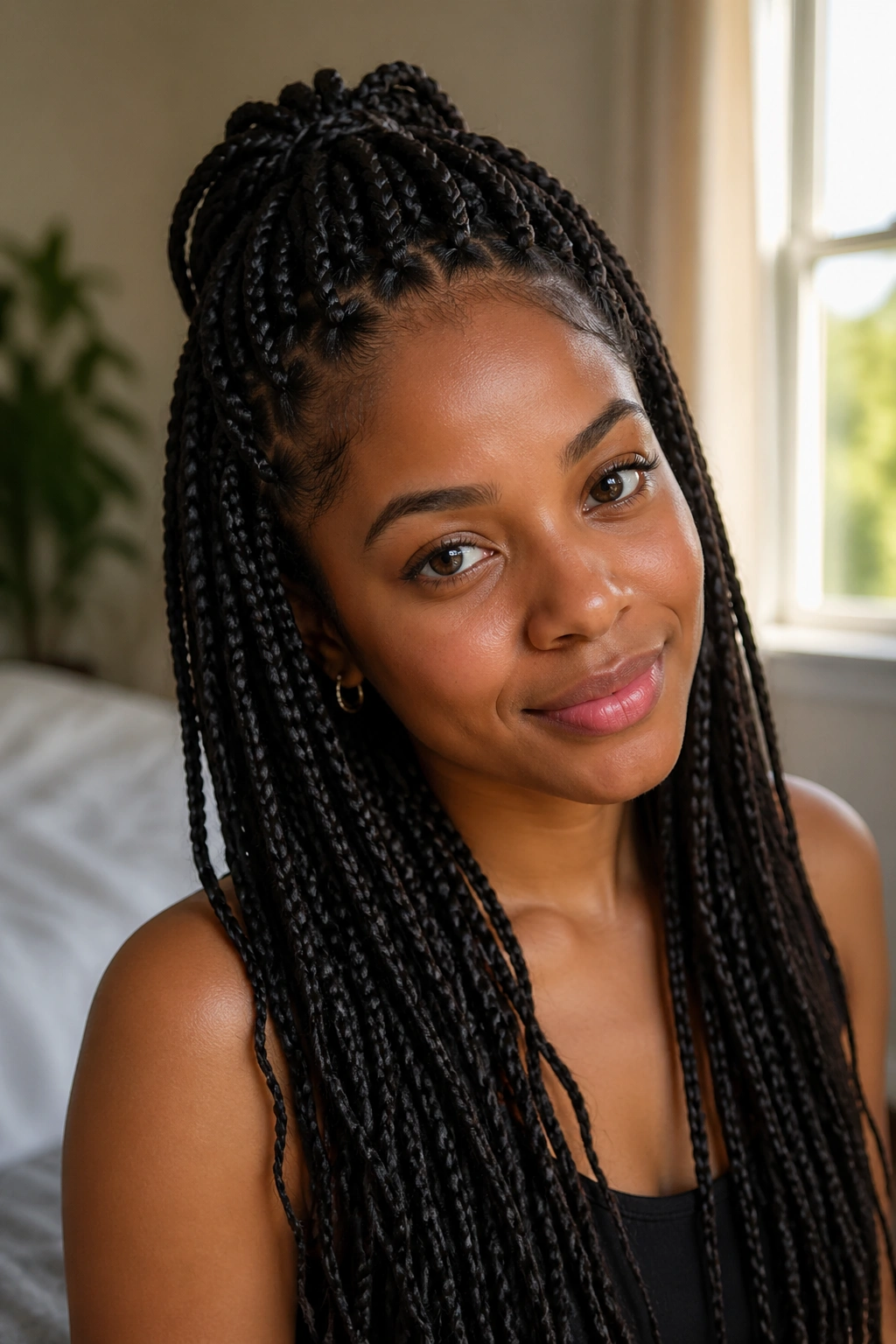
Half-up, half-down braids are the style you save when you want your hair out of your face but still want the length visible. The top section pulls back neatly while the rest stays loose, which gives you both structure and movement. It’s practical and still looks styled.
You can keep this one simple or add a puff, a bun, or a wrapped tie at the top. The style works on medium, long, and even layered braids. It’s one of the easiest ways to change a braid set without redoing the whole head.
25. High Ponytail Box Braids
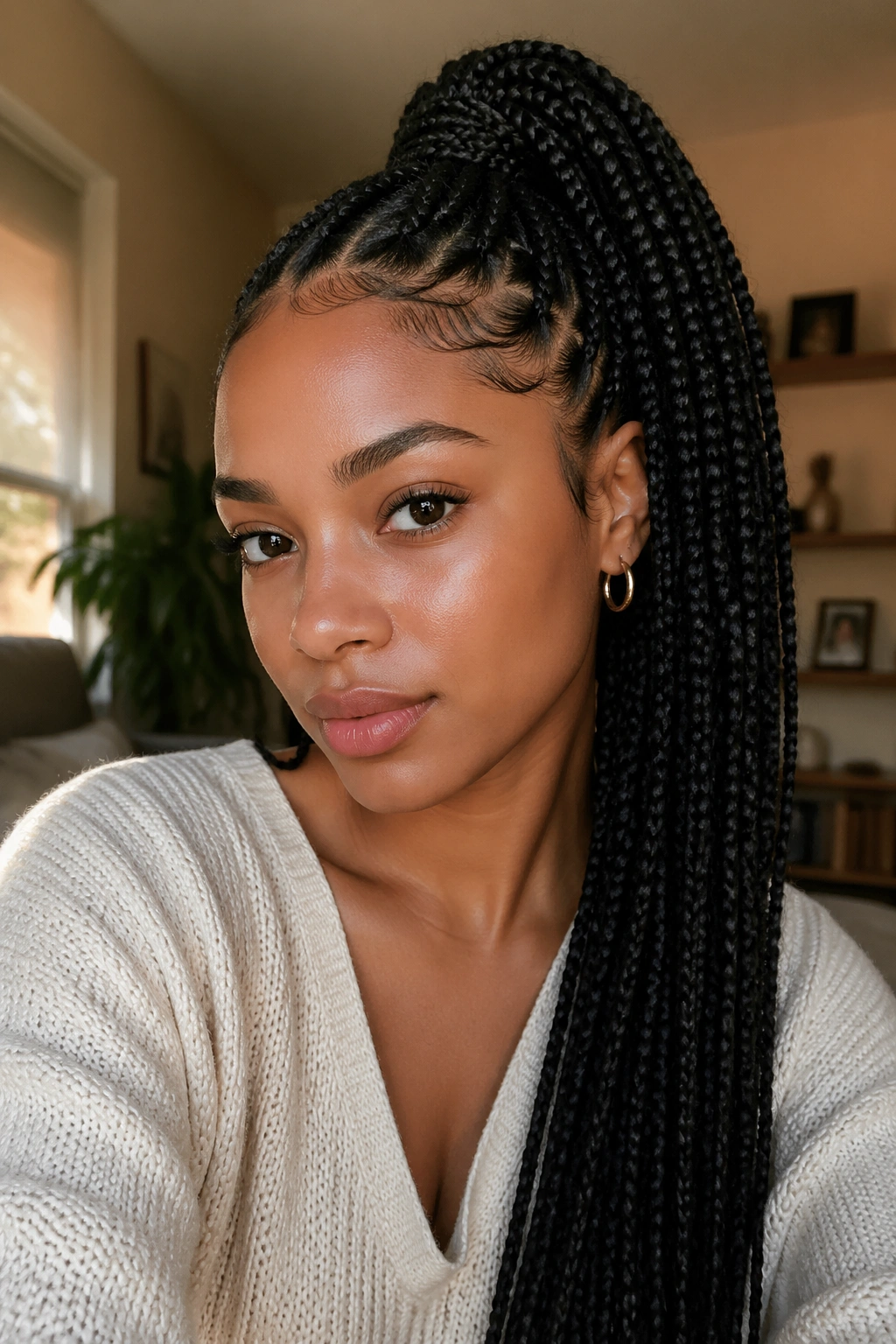
A high ponytail makes box braids feel athletic, sharp, and a little dramatic all at once. The lift at the crown opens the face, and the long tail gives the style motion. It’s a strong look for braids that are already clean at the roots.
This one relies on a secure base, so the braids need to be light enough to sit up without pulling. If the ponytail looks stiff, it usually means the braid length or density is too much for that style. When it works, though, it looks clean from every angle.
26. Low Ponytail Box Braids
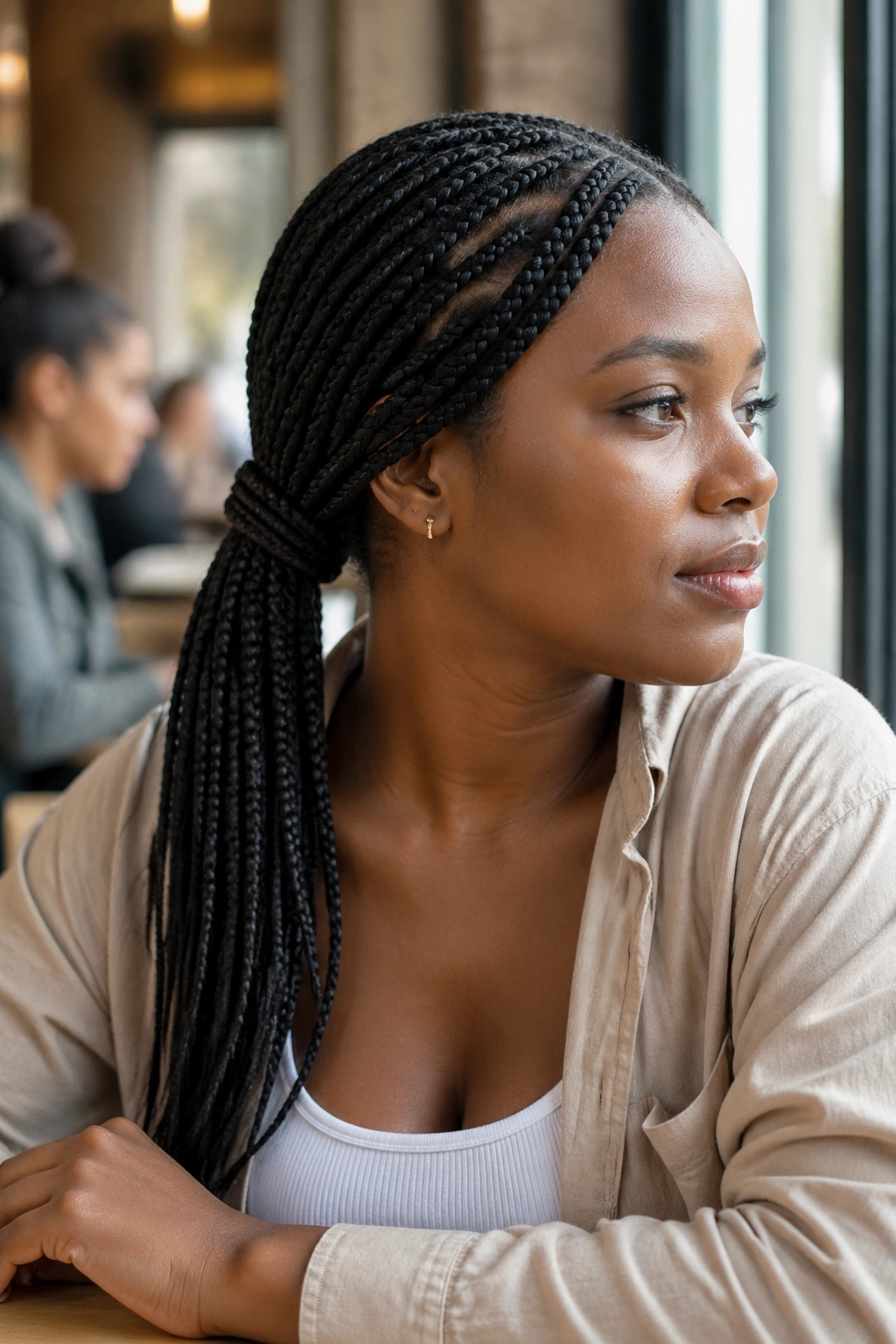
Low ponytail braids feel calmer than a high ponytail. They sit at the nape, which gives the style a grounded shape and keeps the length close to the body. It’s the kind of look that feels neat on purpose.
That low placement also makes the braids easier to wear under hats or with high collars. A wrapped base can make it look even more finished, but even a plain tie looks good when the parting is clean. This is one of those styles that stays useful week after week.
27. Space Bun Box Braids
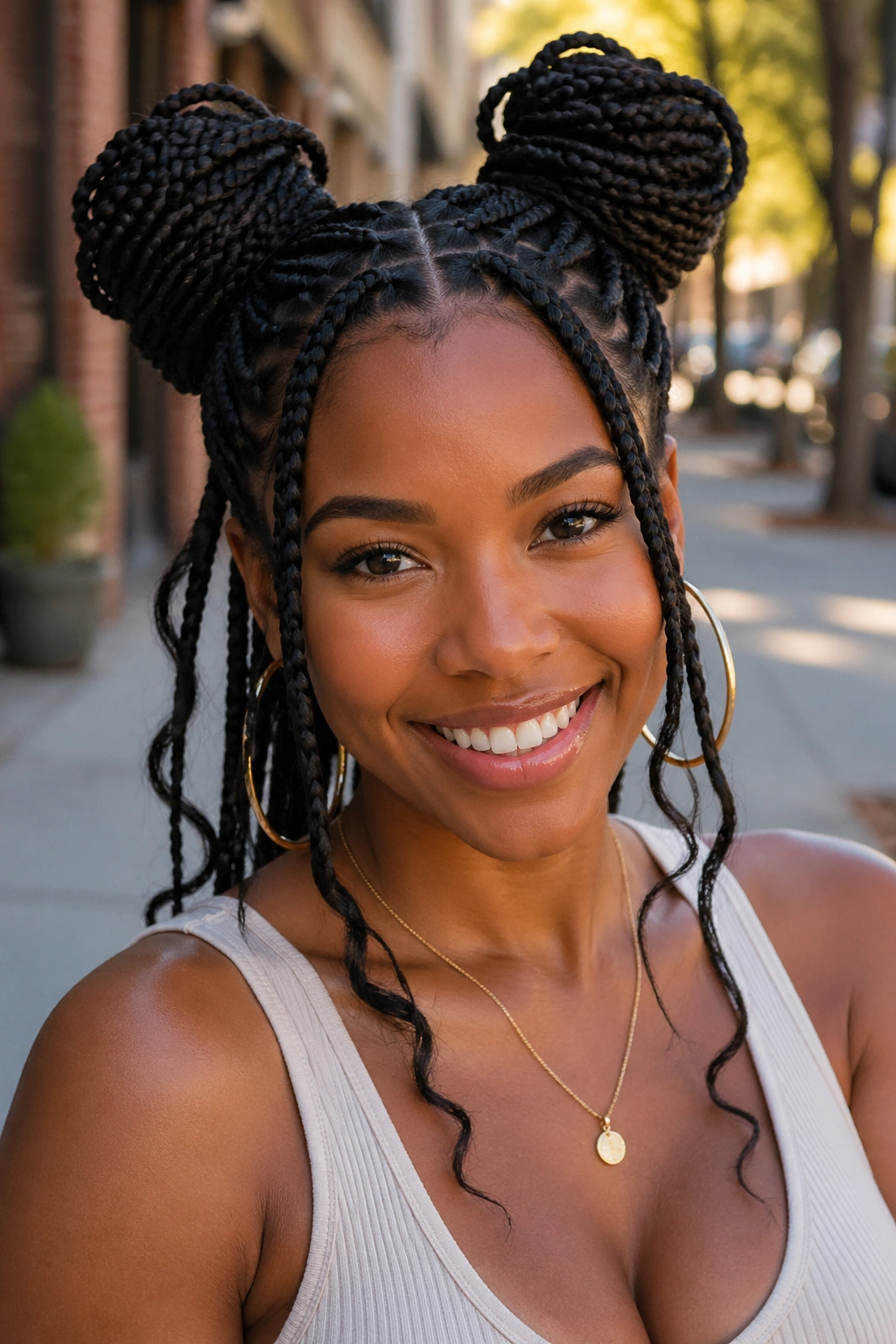
Space buns are a playful way to break up a braid set. Splitting the hair into two buns gives you height, symmetry, and a little edge without changing the braids themselves. The style reads fun first, practical second.
It works best when the braids are medium or small enough to gather without too much bulk. You can leave the rest loose, tuck everything into two full buns, or mix the look with some dangling lengths. Either way, it feels younger and more energetic than a standard updo.
28. Side-Swept Box Braids
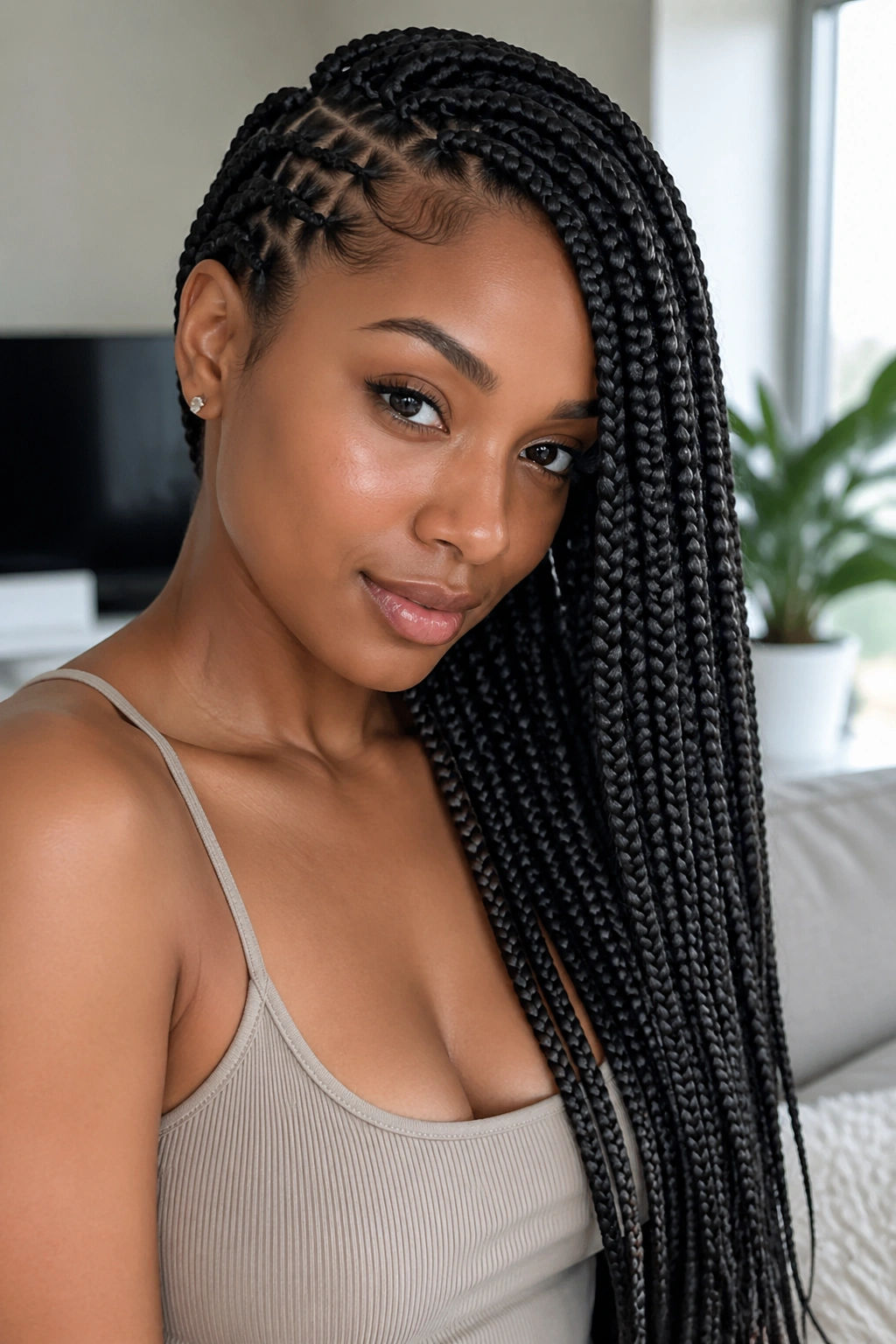
Side-swept braids move everything over one shoulder, and that simple shift changes the whole mood. The style feels softer and a little more relaxed than a center-part set worn straight down. It also gives the face more opening on one side, which is flattering without being obvious.
This look is especially nice on longer braids because the sweep creates a visible curve. Shorter braids can do it too, but the effect is stronger when there’s enough length to drape. It’s the sort of styling move that takes ten seconds and still looks intentional.
29. Braided Bang Box Braids
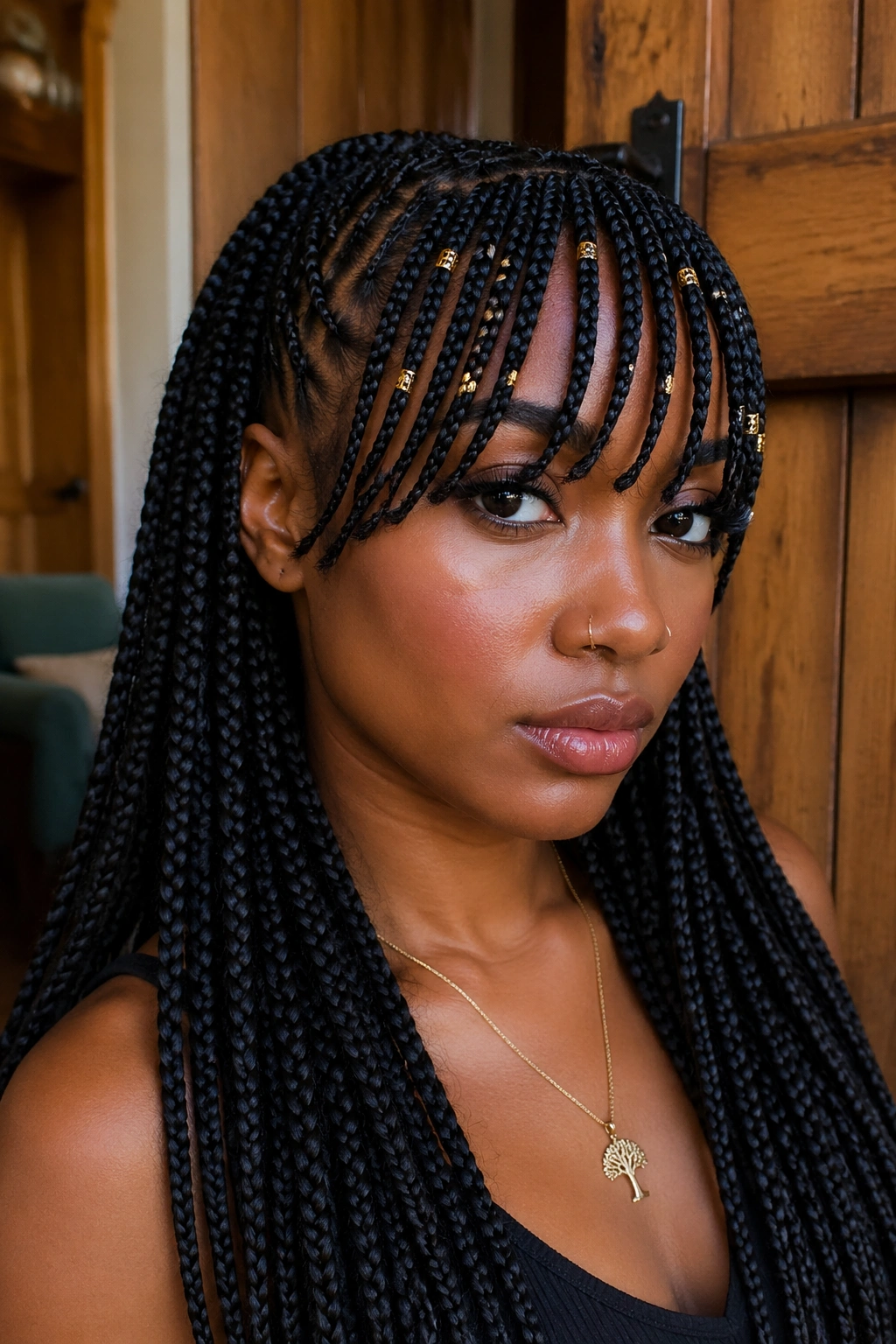
Braided bangs bring the front section forward, either as shorter braids that sit across the forehead or as a shaped fringe made from the braids themselves. That front detail changes the whole balance of the style and makes it feel more face-focused.
This is a smart pick if you like the idea of bangs but do not want actual cut hair in your face. The braids can be swept, pinned, or worn loose depending on the day. It also helps soften longer face shapes by breaking up the forehead line.
30. Crisscross-Front Box Braids
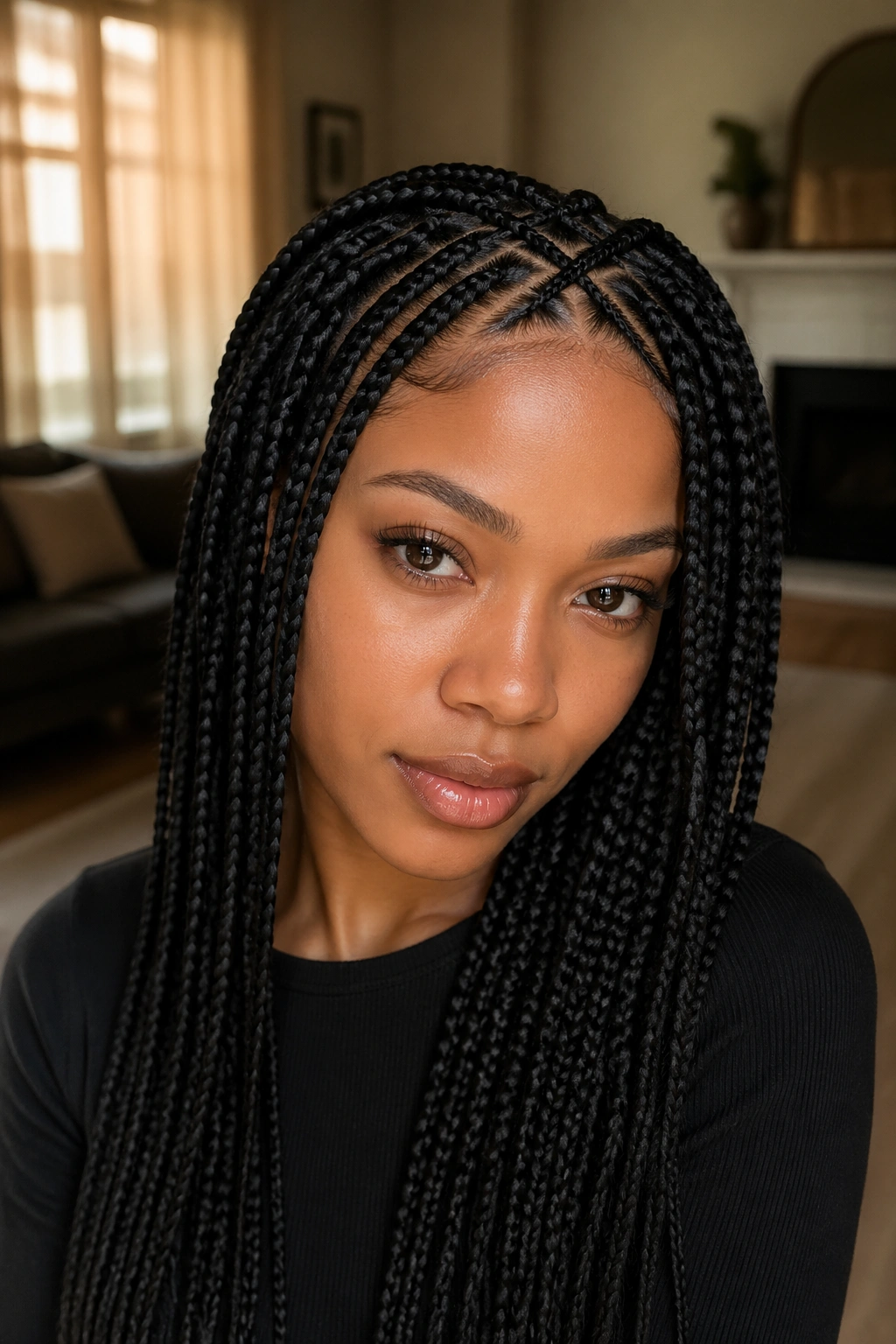
Crisscross fronts add a little architecture to the hairline. The front braids cross over each other before dropping into the rest of the style, which gives the look a built-in detail without needing beads or color. It’s a front section that earns its keep.
This works especially well when the rest of the braids are kept simple. You don’t need a lot more once the front already has movement. The style feels especially good if you like symmetry with a twist, or if you want the hairline to look styled on purpose.
31. Feed-In Front Box Braids
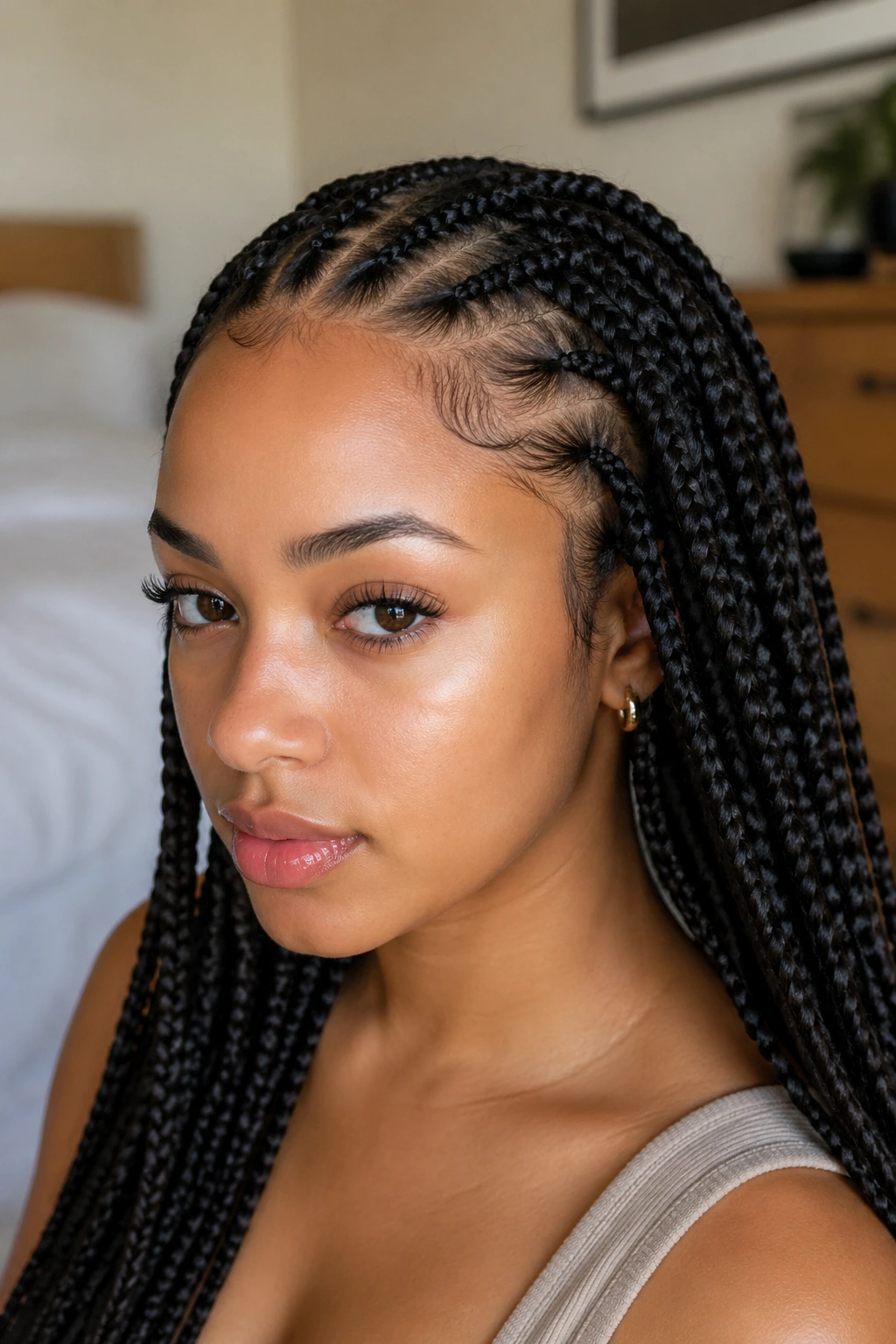
Feed-in front braids give the hairline a softer, more gradual start before the full box braid length takes over. The front section looks smoother and less heavy, which makes the whole style feel lighter near the face. That matters when the front is what people see first.
This is a nice bridge between a braid style and a more sculpted front. It works well with middle parts, side parts, and half-up looks because the front can stay neat even when the rest is loose. Clean edges help here, but the real magic is in the gradual build.
32. Crown-Updo Box Braids
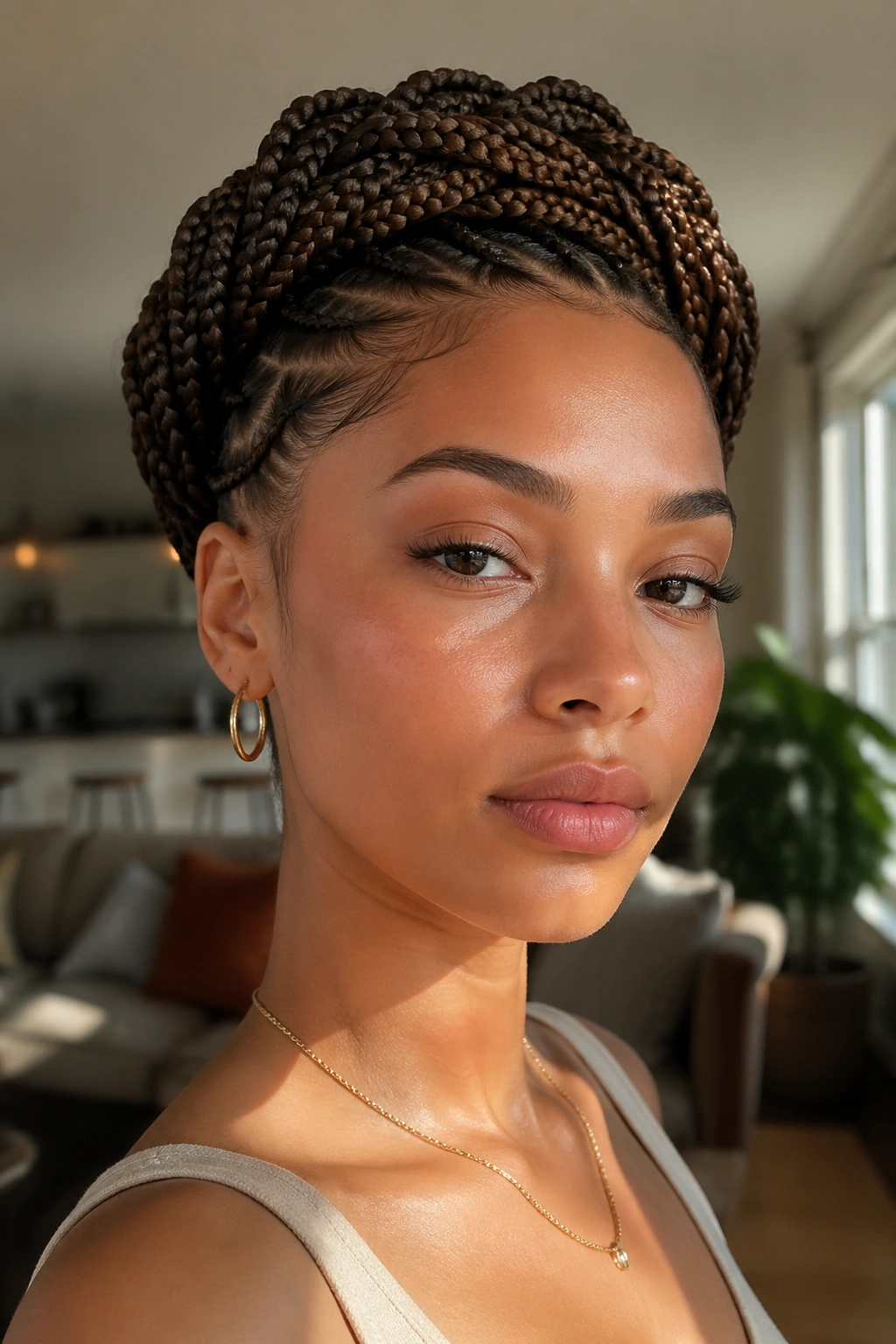
A crown updo wraps the braids around the head or lifts them into a halo-like shape. The style takes the length and pushes it upward, which changes the vibe from casual to formal almost immediately. It’s a good one when you want braids off the shoulders.
The beauty here is that the updo can be tidy or slightly loose. Tight crown shapes look polished; softer ones feel romantic. Either way, the style keeps the braid texture visible while giving you a neck-baring silhouette that works well with earrings and open necklines.
33. Pigtail Box Braids
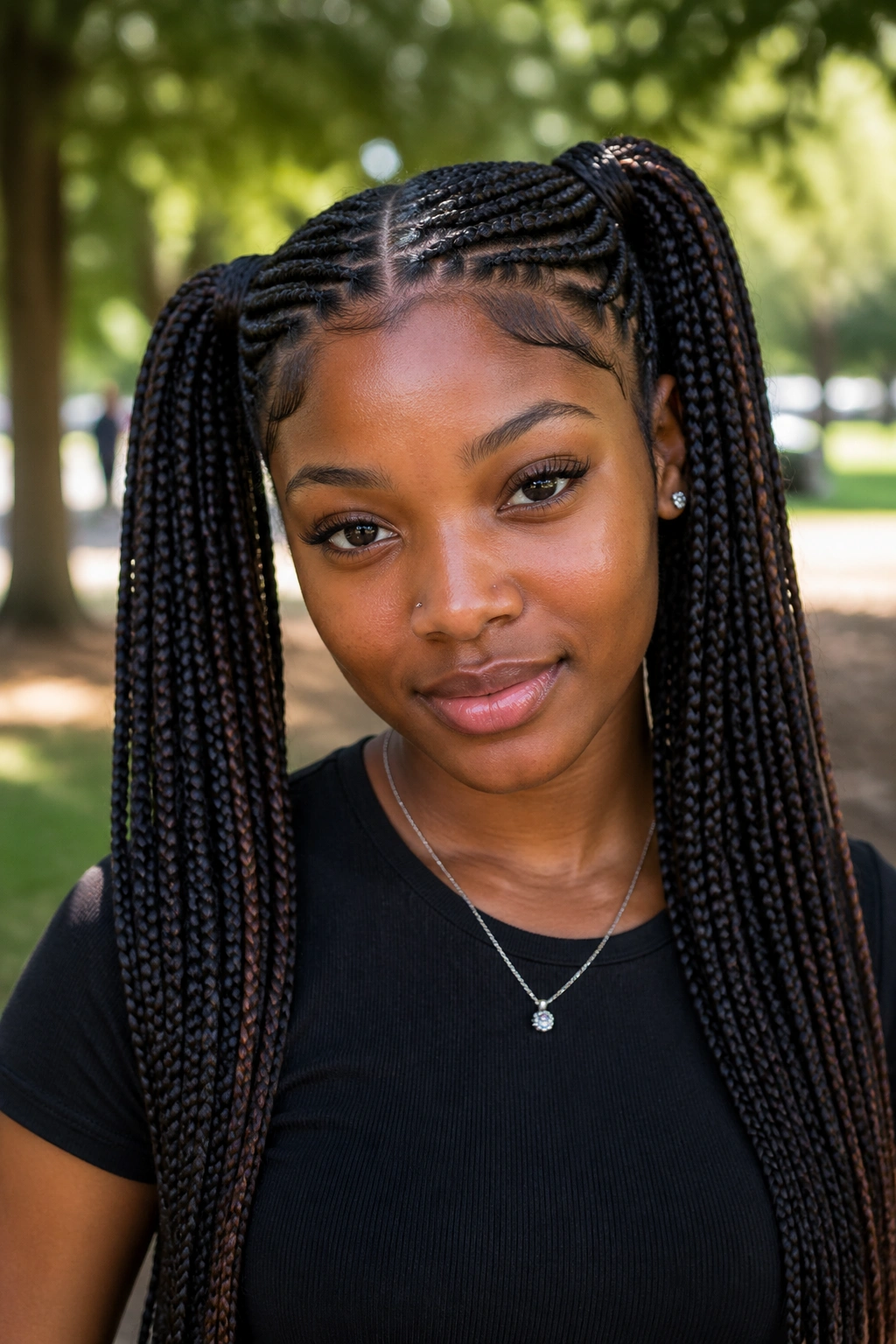
Pigtail braids split the whole set into two sections, and the result can feel playful, sporty, or straight-up cute depending on how tightly the parts are drawn. It’s a style that looks younger without looking childish when the parts are clean.
This one works best with medium to long braids because the sections need enough length to hang well. You can keep the pigtails low for a calmer look or higher for more bounce. It’s also a nice way to make a full braid set feel different without changing a single braid.
34. Top-Knot Box Braids
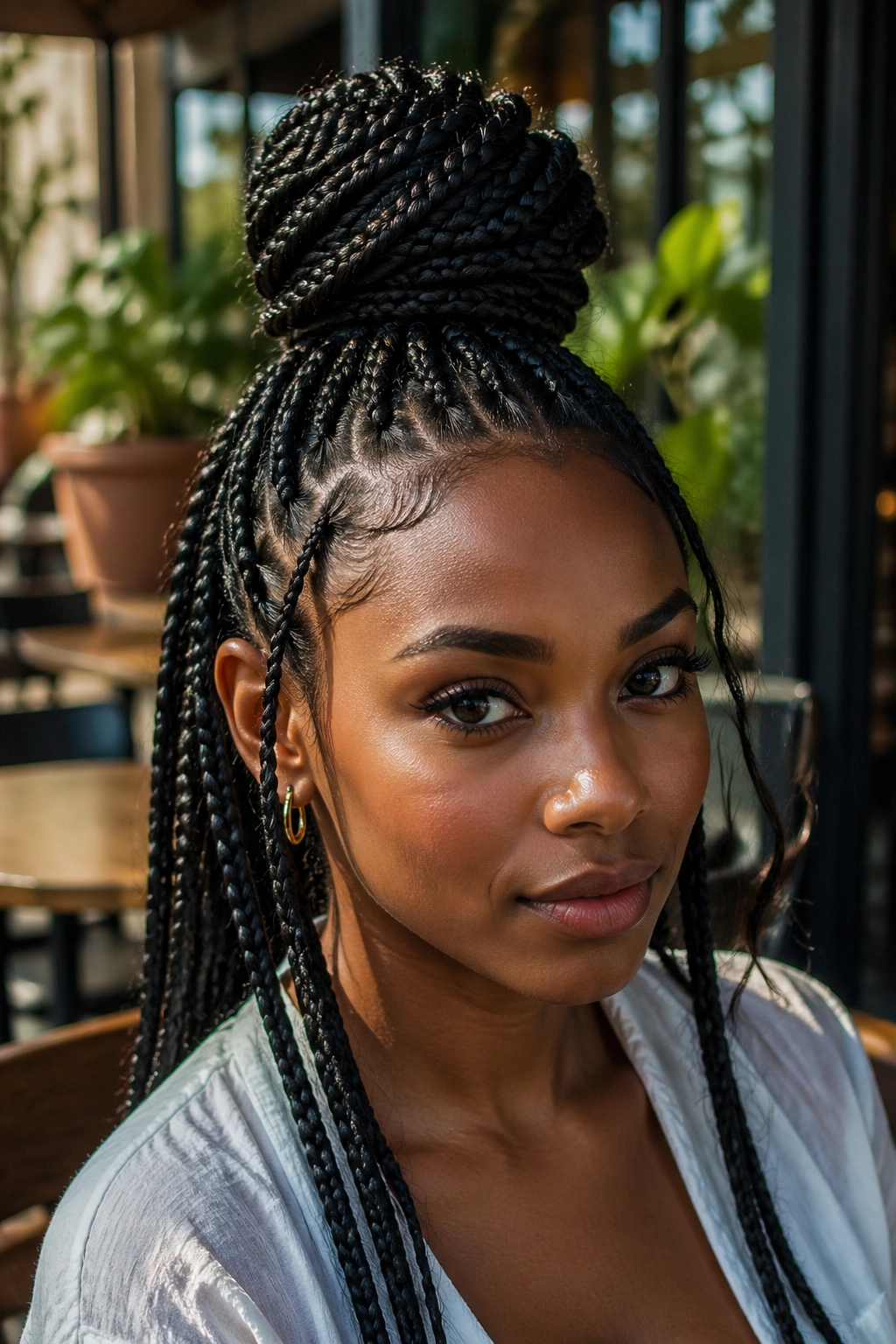
A top knot gathers the braids into a single knot or bun at the crown, leaving the rest lifted out of the way. It’s one of the cleanest ways to handle braids on hot days or busy mornings. No mystery there.
What makes it worth saving is the shape. A good top knot keeps the profile neat and gives the face a clear frame. If the braids are long, the knot can look substantial; if they’re medium, it stays compact. Either way, the style reads practical without giving up polish.
35. Beaded Box Braids
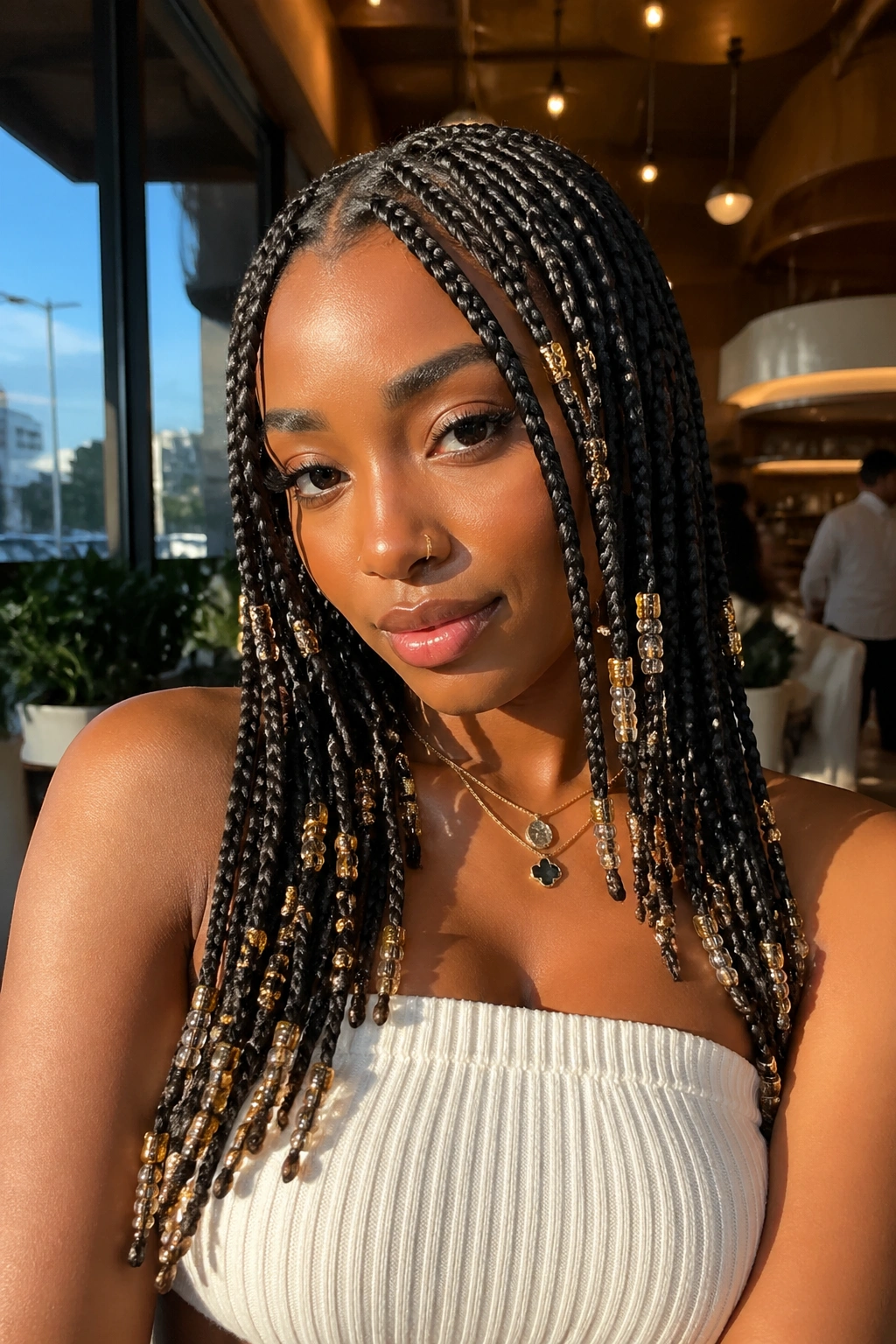
Beads add movement you can hear as much as see. A few strands of wood, acrylic, or glass at the ends make the braids click softly when you walk, and that tiny sound changes the whole mood. Beads turn box braids into a finished look.
Where Beads Help Most
- At the ends of longer braids, where they create weight and swing.
- On a few front pieces, where they draw the eye.
- With simple clothing, where the hair becomes the accessory.
Beads can be the whole style or just a detail. Either way, spacing matters. Too many in one place and the finish feels crowded.
36. Gold-Cuff Box Braids
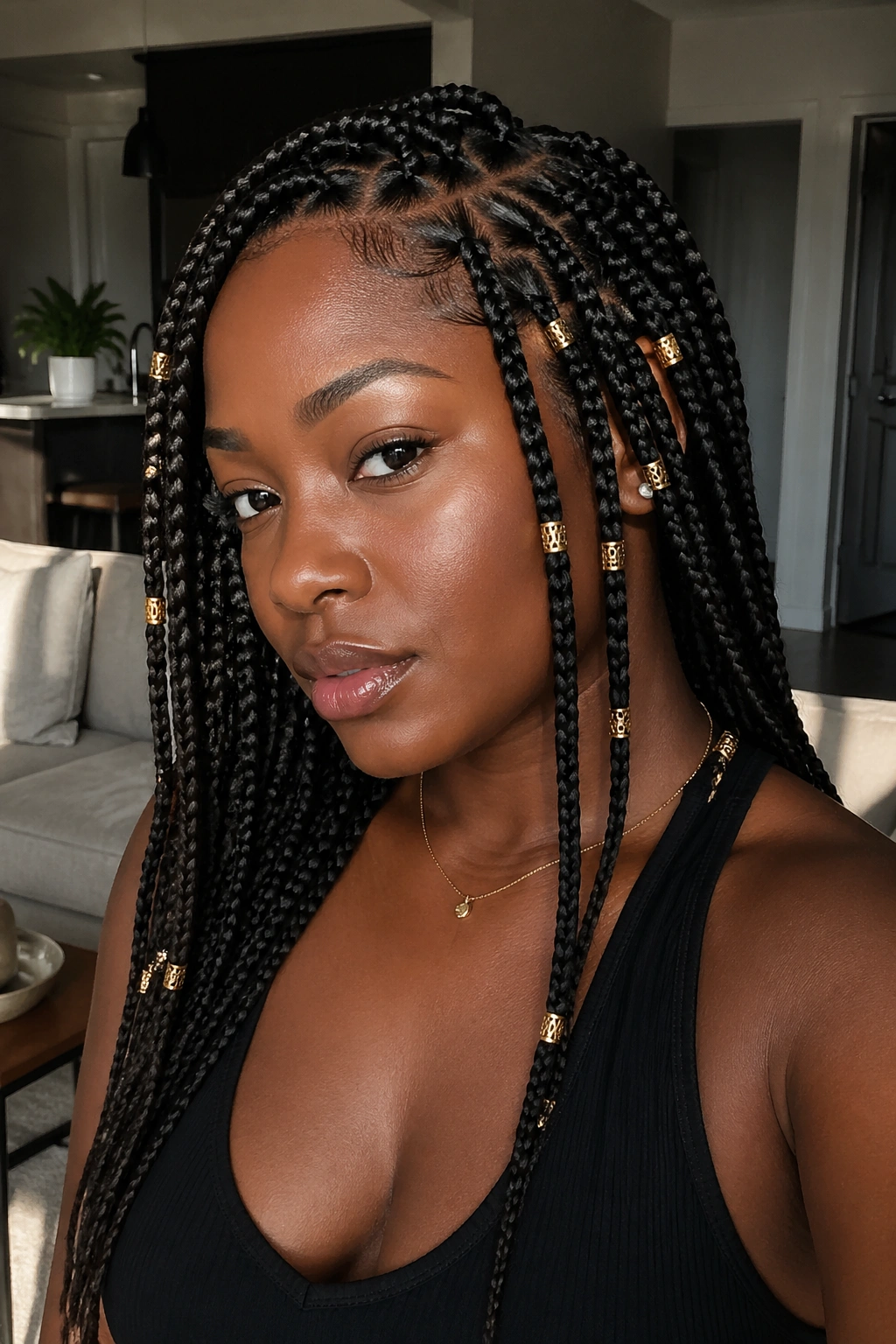
Gold cuffs are the easiest metallic add-on for box braids. They slide onto the plaits, catch the eye, and give the style a little shine without changing the structure underneath. They work because they interrupt the braid line just enough.
I like cuffs best when they’re placed unevenly. A few near the front, a few lower down, maybe one or two around the face-framing pieces. That keeps the style from looking too rigid. They also pair well with plain black braids because the contrast does the work on its own.
37. Shell-Accent Box Braids
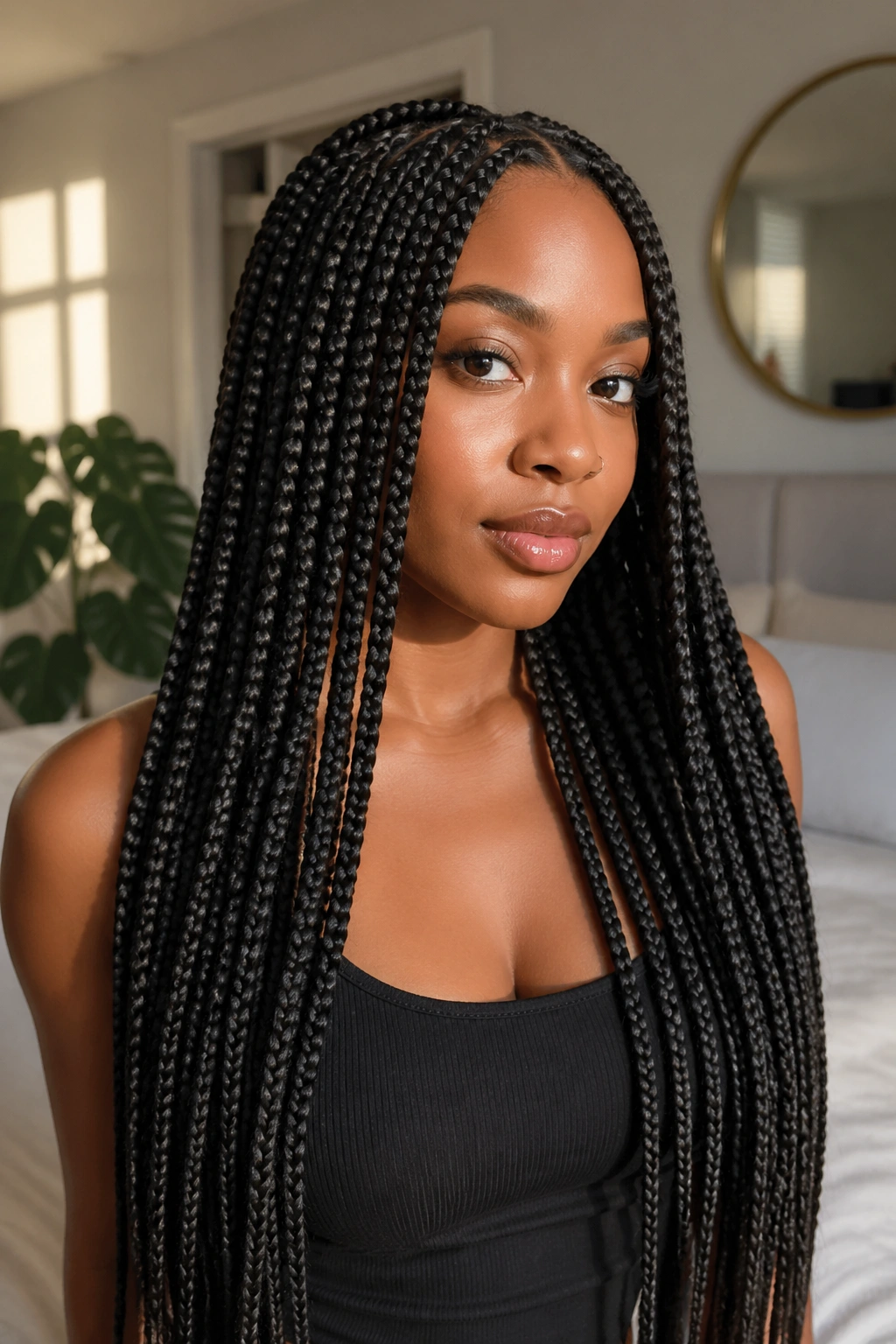
Shell accents give box braids a coastal, textured feel. They’re smaller and a little more specific than beads, which makes them good when you want detail but don’t want the look to turn loud. The shell pieces add personality fast.
This style usually works best in small doses. A few shells threaded into the front or scattered through long braids is enough. Push it too far and the balance gets lost. Kept simple, though, the effect is memorable and slightly unexpected, which is the whole point.
38. Thread-Wrapped Box Braids
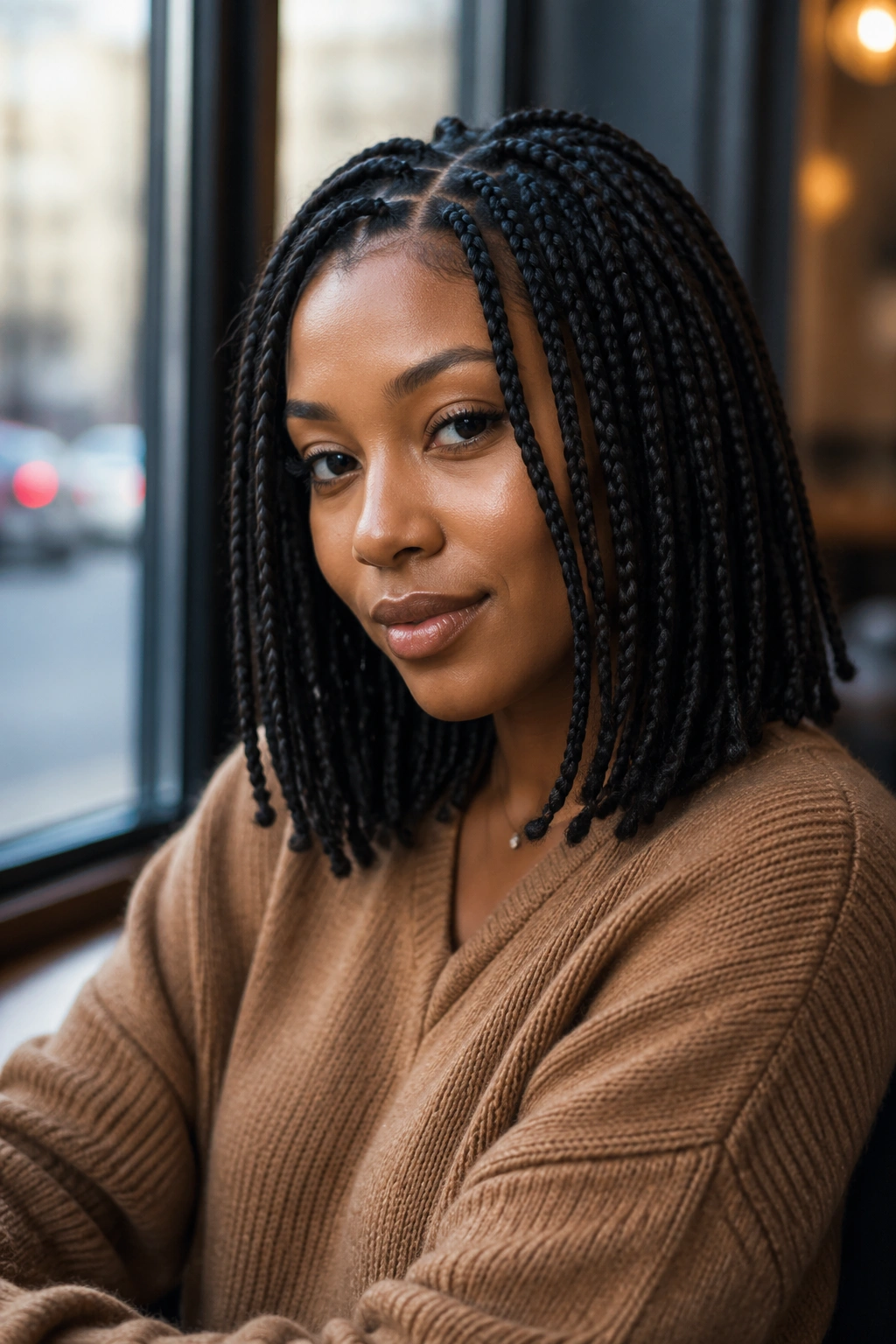
Thread-wrapped braids bring color in a softer, more handmade way than dye or extensions alone. The thread can spiral around sections of the braid, adding stripes or bands of color where you want them. It’s a good choice when you want detail without changing the whole head.
The look works best with smooth, even braids because the wrapping stands out more on a tidy base. You can keep the thread close to the ends for a subtle effect or wrap longer sections for more contrast. Either way, it gives the braids a more crafted feel.
39. Ribbon-Woven Box Braids
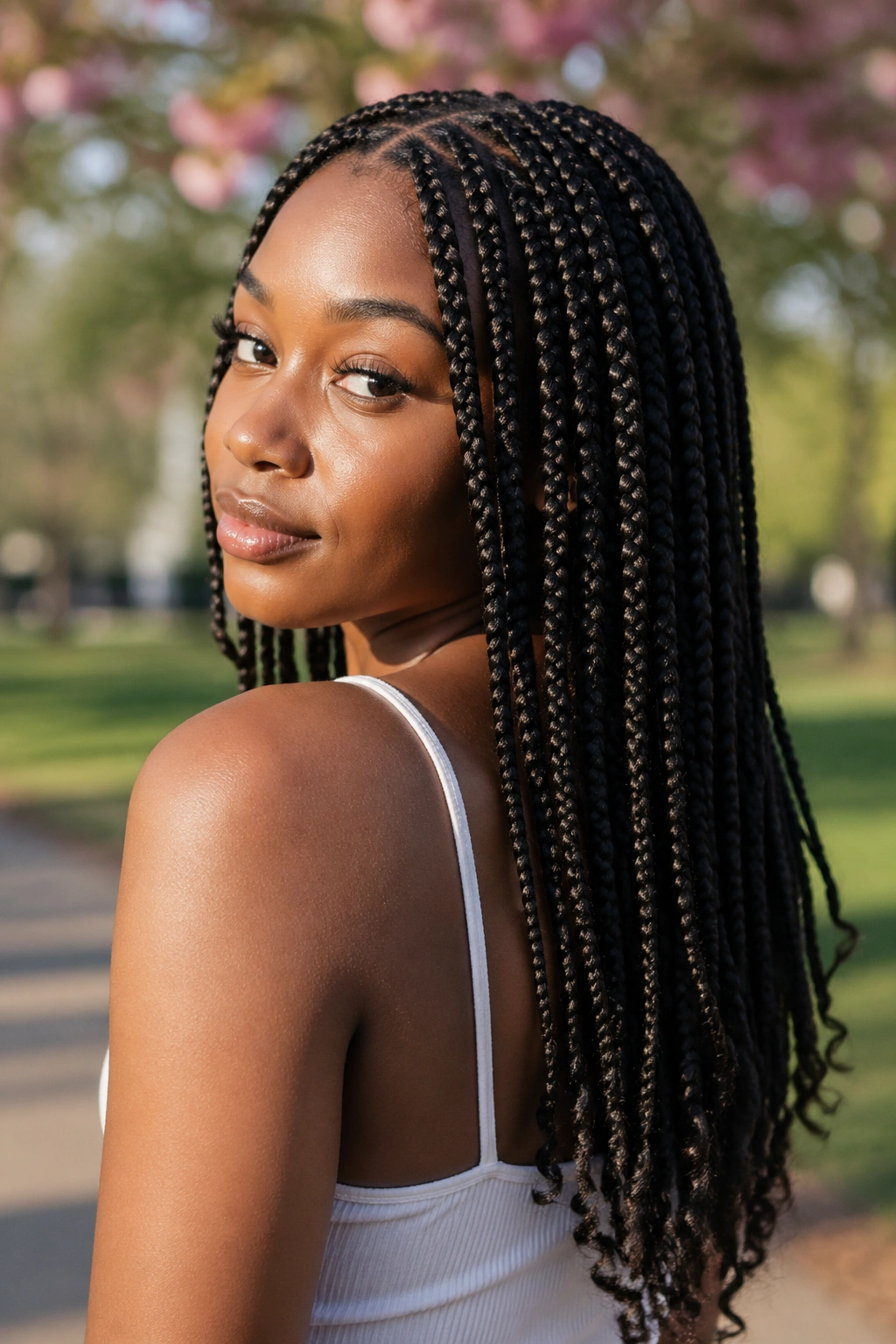
Ribbon-woven braids are lighter and softer than thread-wrapped versions. The ribbon sits in the braid like a stripe of color, and when it moves, it changes the way the plaits catch the eye. It feels a little more playful, a little less rigid.
This style is good for events, photos, or just breaking up a plain braid set. The ribbon can match your clothes or clash on purpose. Either approach works. The important thing is to keep the ribbon thin enough that it doesn’t overpower the braid structure underneath.
40. Colored Box Braids
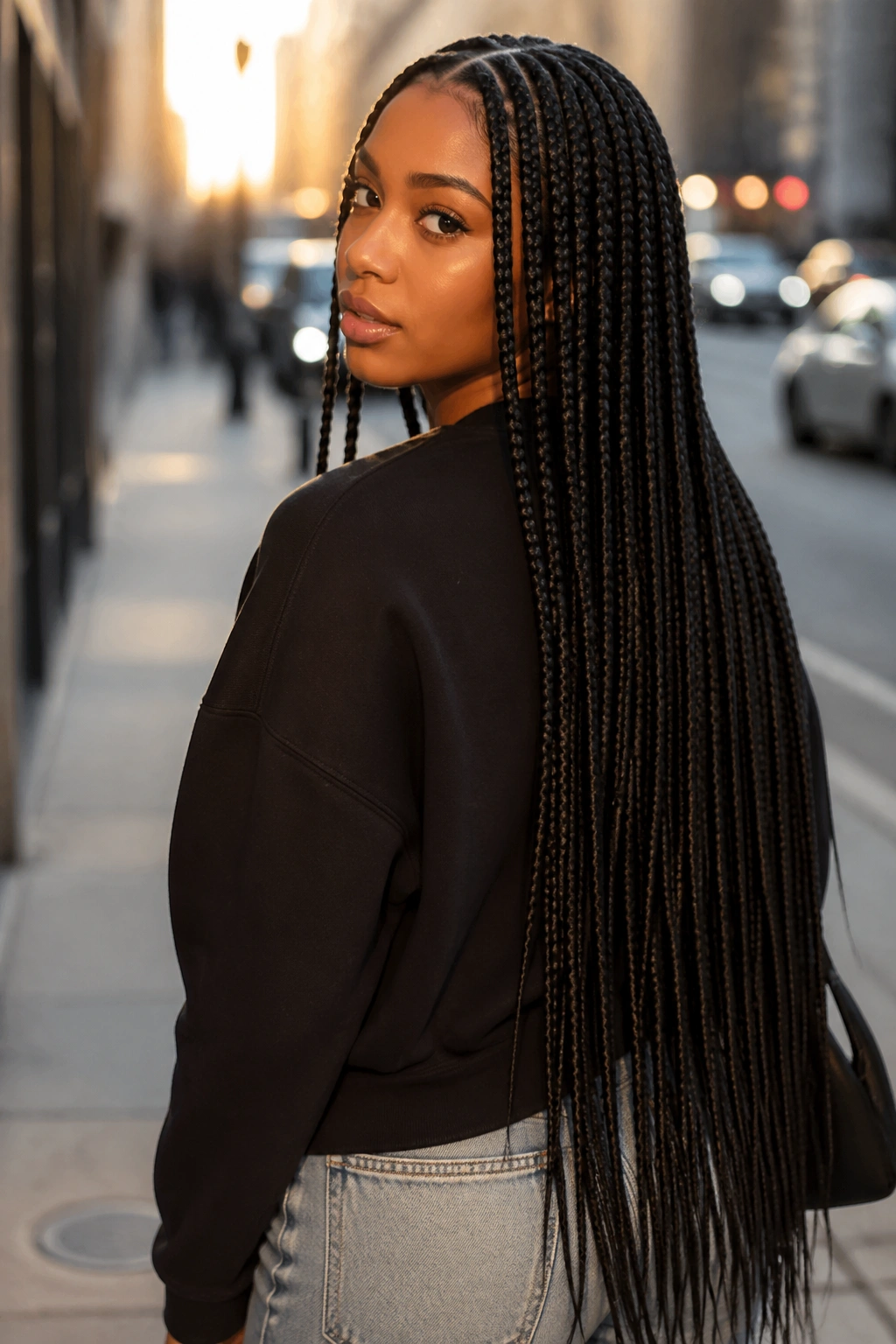
Color is where box braids stop being just a style and start becoming a full mood. Bright reds, soft browns, black-blue blends, plum tones, and even pastel shades can shift the vibe more than a change in length ever could. Color changes the temperature of the whole look.
A Simple Way to Think About It
- Darker shades feel smoother and more grounded.
- Bright shades read bolder and more playful.
- Mixed colors can either look rich or chaotic, depending on placement.
The best color choice is the one you can live with next to your clothes and makeup. That’s the part people skip, and then they wonder why the style feels off.
41. Ombré Box Braids
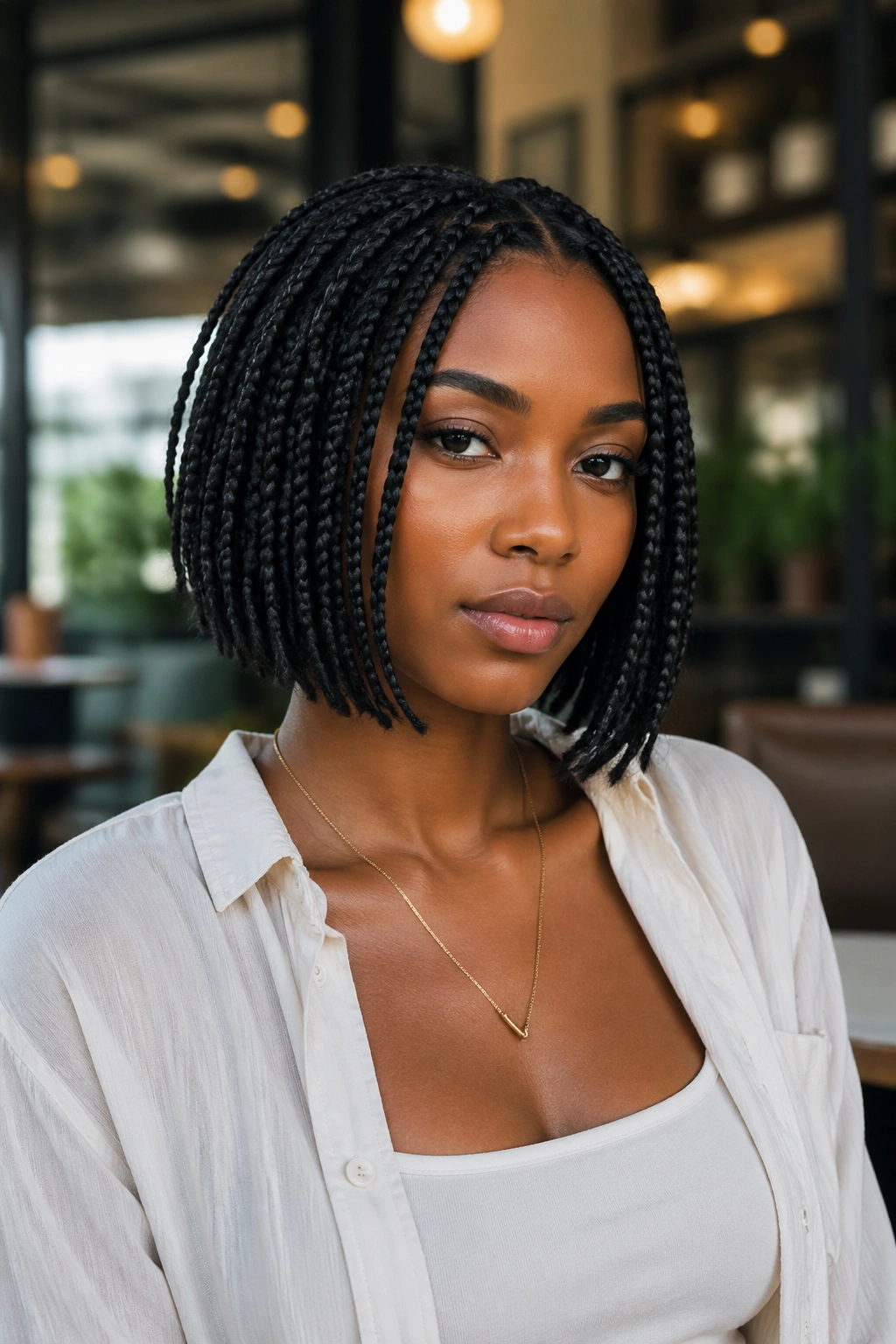
Ombré braids fade from one shade into another, usually darker at the root and lighter toward the ends. That transition makes the style look longer and more dimensional, even before you add any accessories. The fade does a lot of visual work.
This is a smart option if you want color but do not want every braid to shout at once. The blend can be soft or bold depending on the shades. A good ombré set looks intentional from a distance and even better when the ends move, because that’s where the shift really shows.
42. Burgundy Box Braids
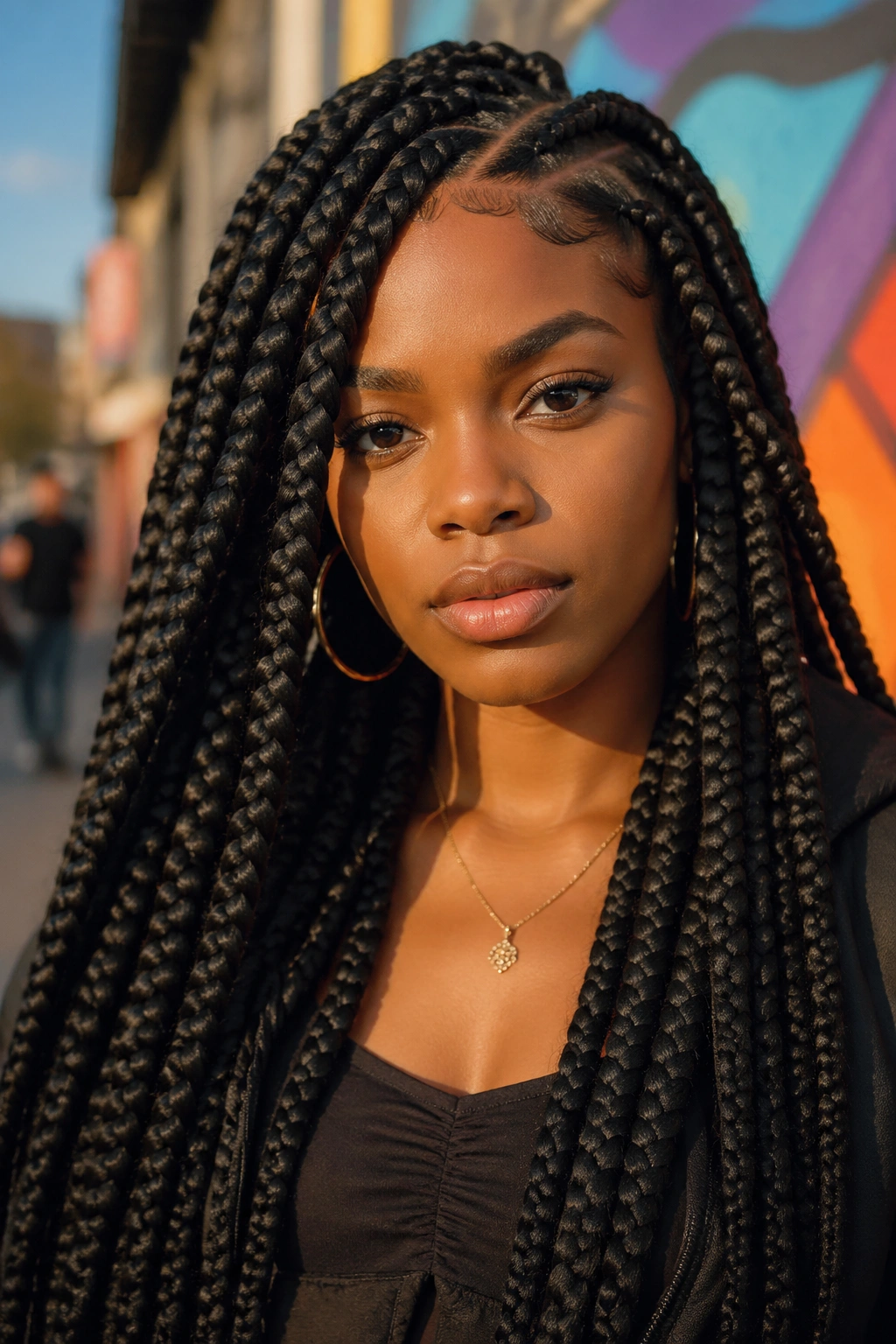
Burgundy braids have a deep, wine-dark richness that looks especially good in low light. The color feels warm without being bright and gives the style a more moody, dressed-up edge. It’s one of the easiest bold colors to wear.
The shade pairs well with black clothing, gold jewelry, and simple makeup because it already brings enough presence on its own. If you want color but do not want neon-level attention, burgundy is a smart place to land. It’s strong, but not noisy.
43. Blonde Box Braids
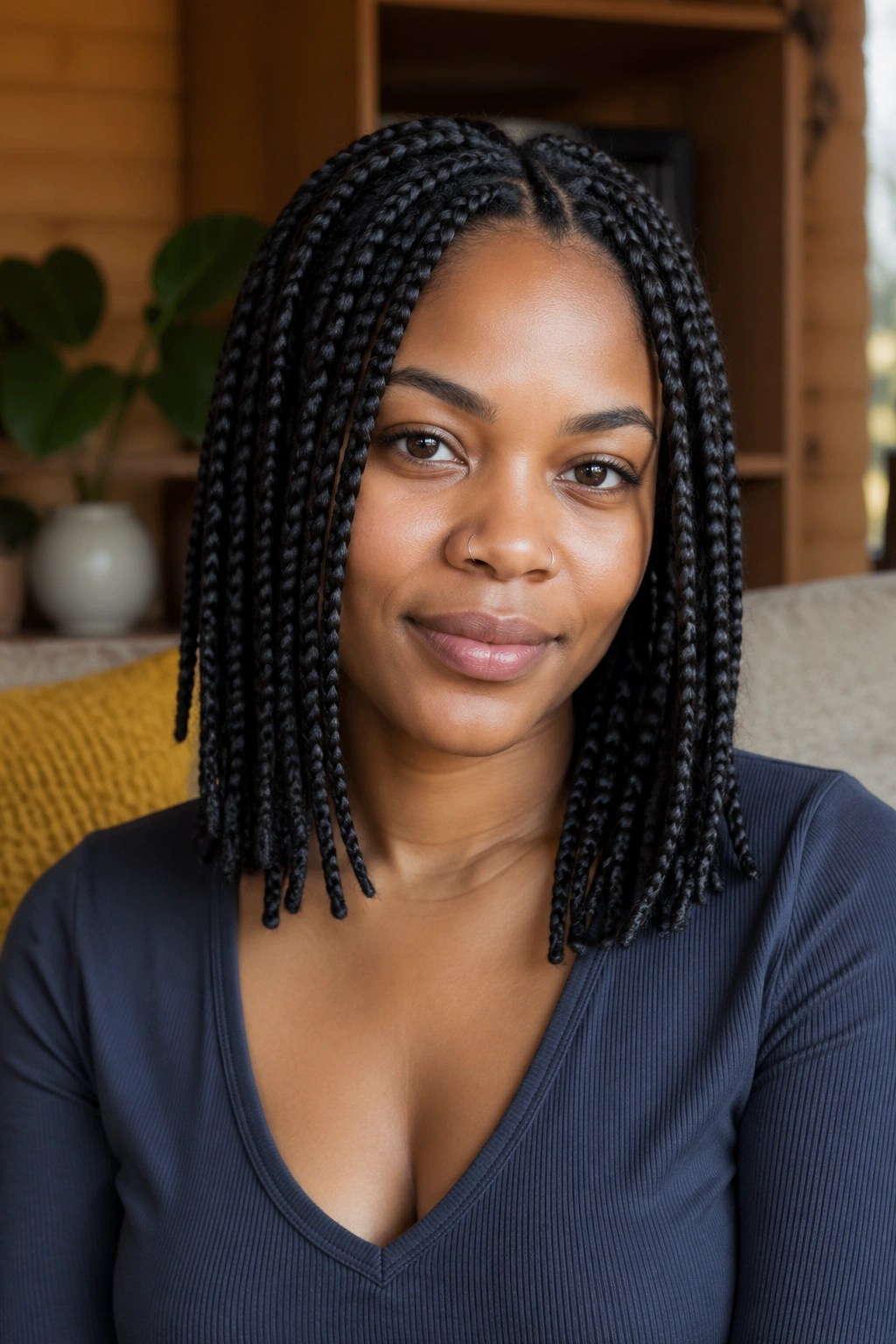
Blonde braids make the whole look brighter from the first glance. Depending on the tone, they can lean honey, ash, honey-gold, or nearly platinum, and each version gives the braids a different feel. Blonde is high-contrast by nature.
This style looks especially sharp when the parting is clean, because the light color makes every section more visible. It can be a lot if you like low-key hair, but that’s also the appeal. When you want the braids to lead the outfit, blonde gets there quickly.
44. Copper Box Braids
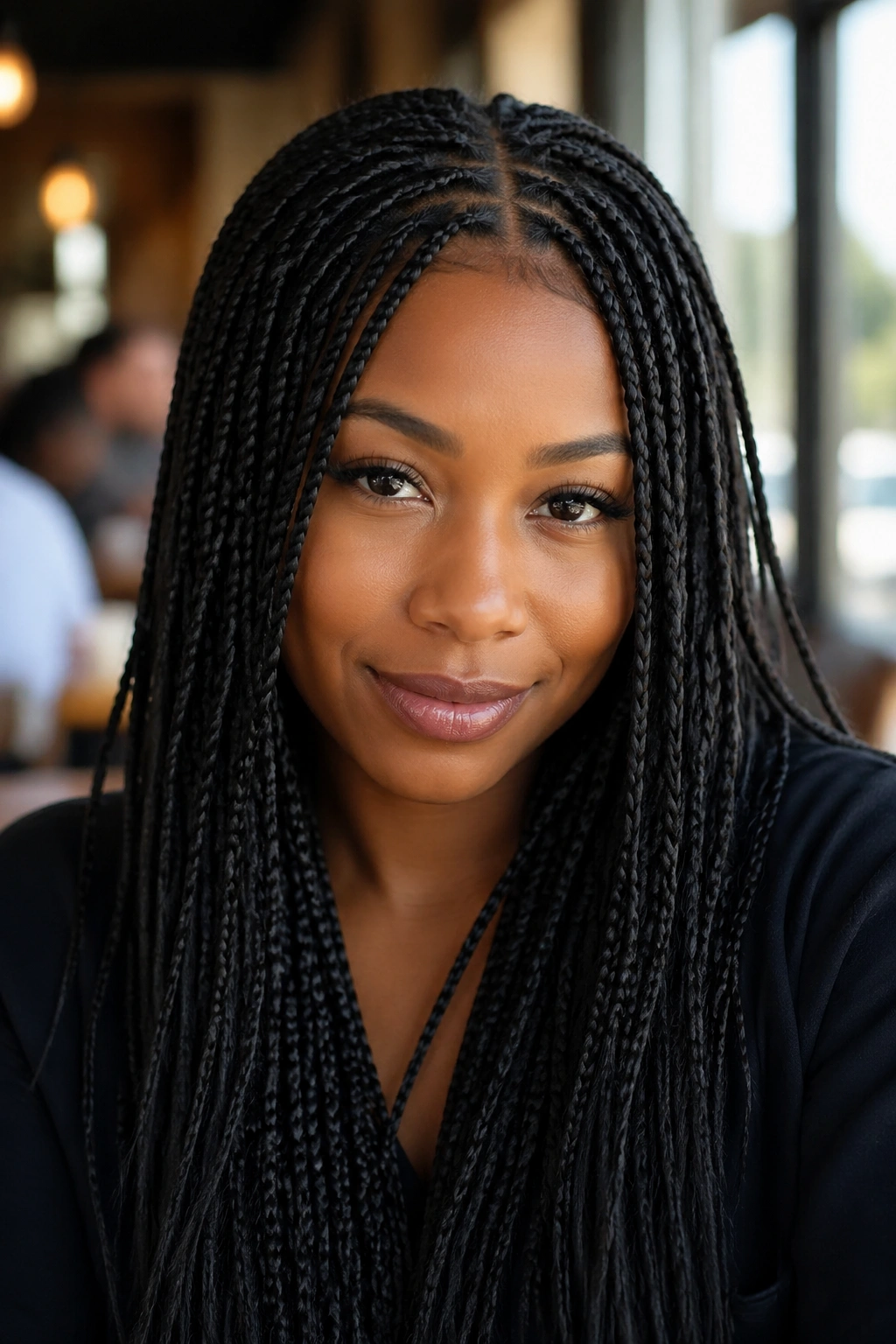
Copper braids sit between red and brown, which makes them warm, rich, and a little unexpected. The color has enough depth to stay grounded while still catching light in a way darker shades don’t. It’s a strong compromise color.
Copper works beautifully when you want something warmer than burgundy and softer than bright orange. It also looks good against deeper skin tones because the warmth tends to show up clearly without flattening the braid texture. The result feels earthy, not loud.
45. Two-Tone Box Braids
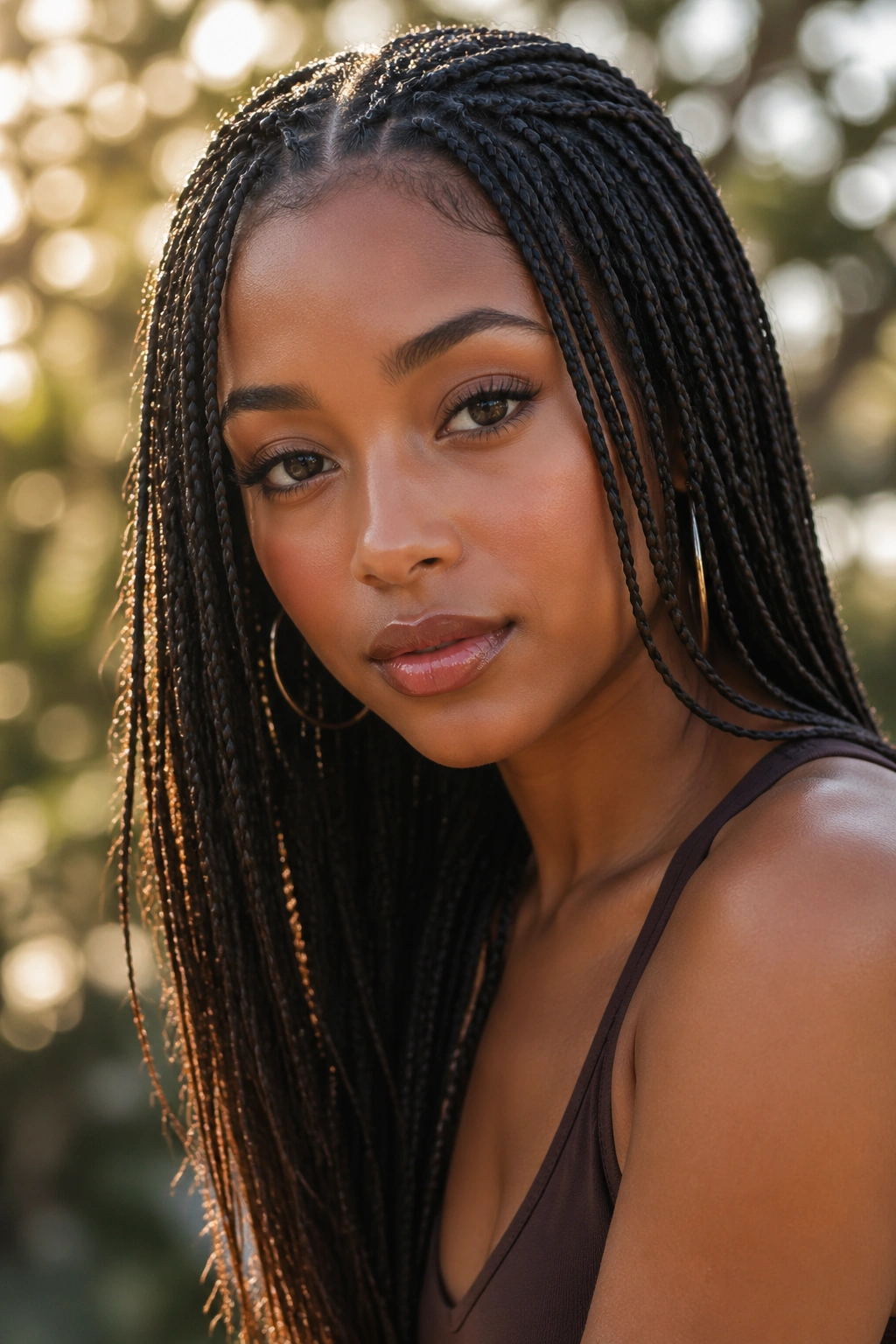
Two-tone braids use two clear shades in one set, and that split can be done in stripes, panels, or a layered mix. The contrast is the whole point. You get more movement in the hair even before you touch it.
This style is especially nice if you want a braid set to look custom. A dark root with lighter ends, black with caramel streaks, or even a bold black-and-red pairing can make the braids feel alive. The trick is keeping the combination deliberate instead of random.
46. Mixed-Size Box Braids
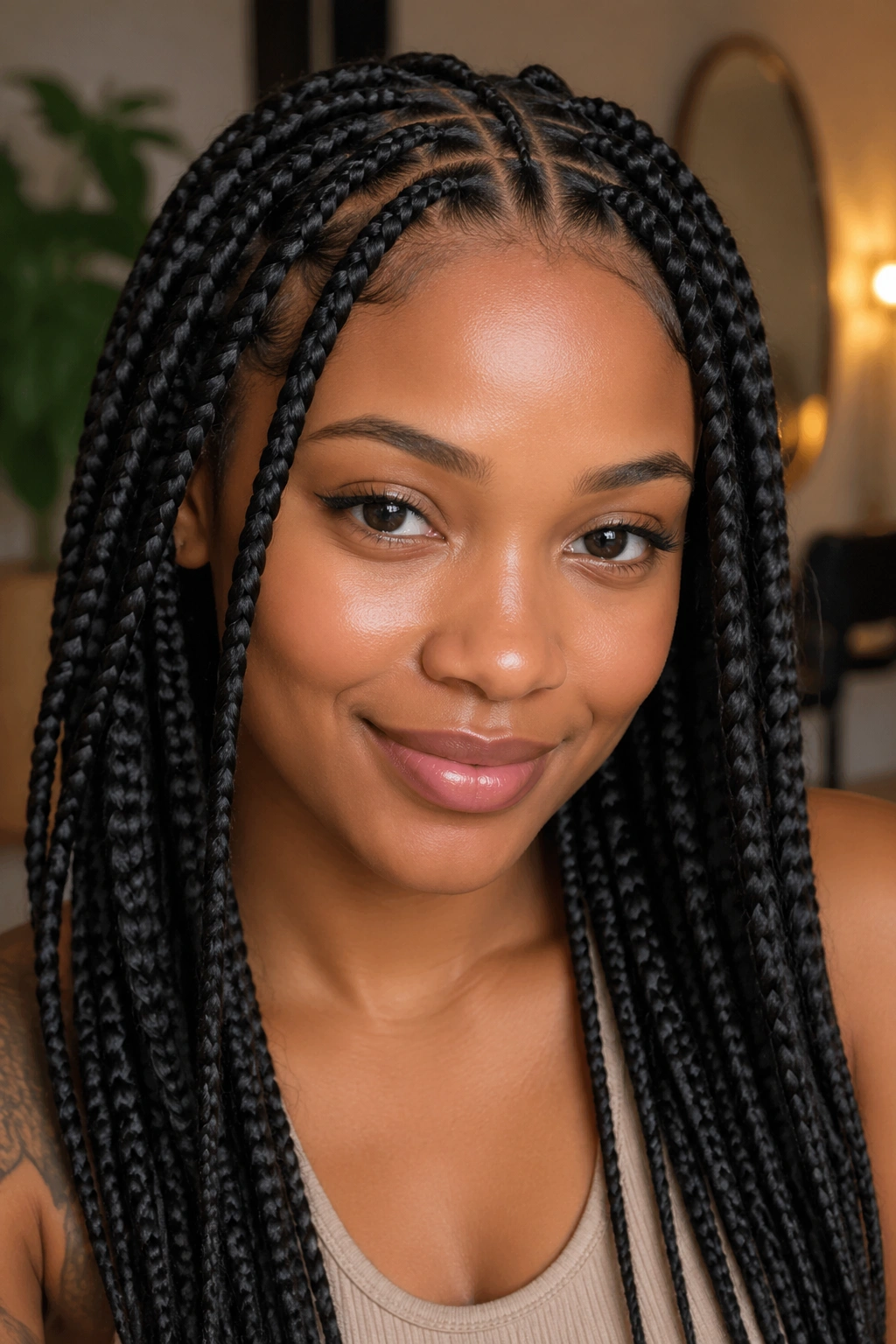
Mixed-size braids use different braid widths in the same set, and that gives the style a more relaxed, less formulaic look. Some pieces can be thick, others slim, and the mix keeps the whole head from feeling too uniform. That variation is the point.
This is one of my favorite ways to make braids feel personal. The size shift creates movement and texture without needing color, beads, or a complicated part pattern. It can also help balance the face if you use larger braids in some areas and smaller ones where you want a softer frame.
47. Shaved-Side Box Braids
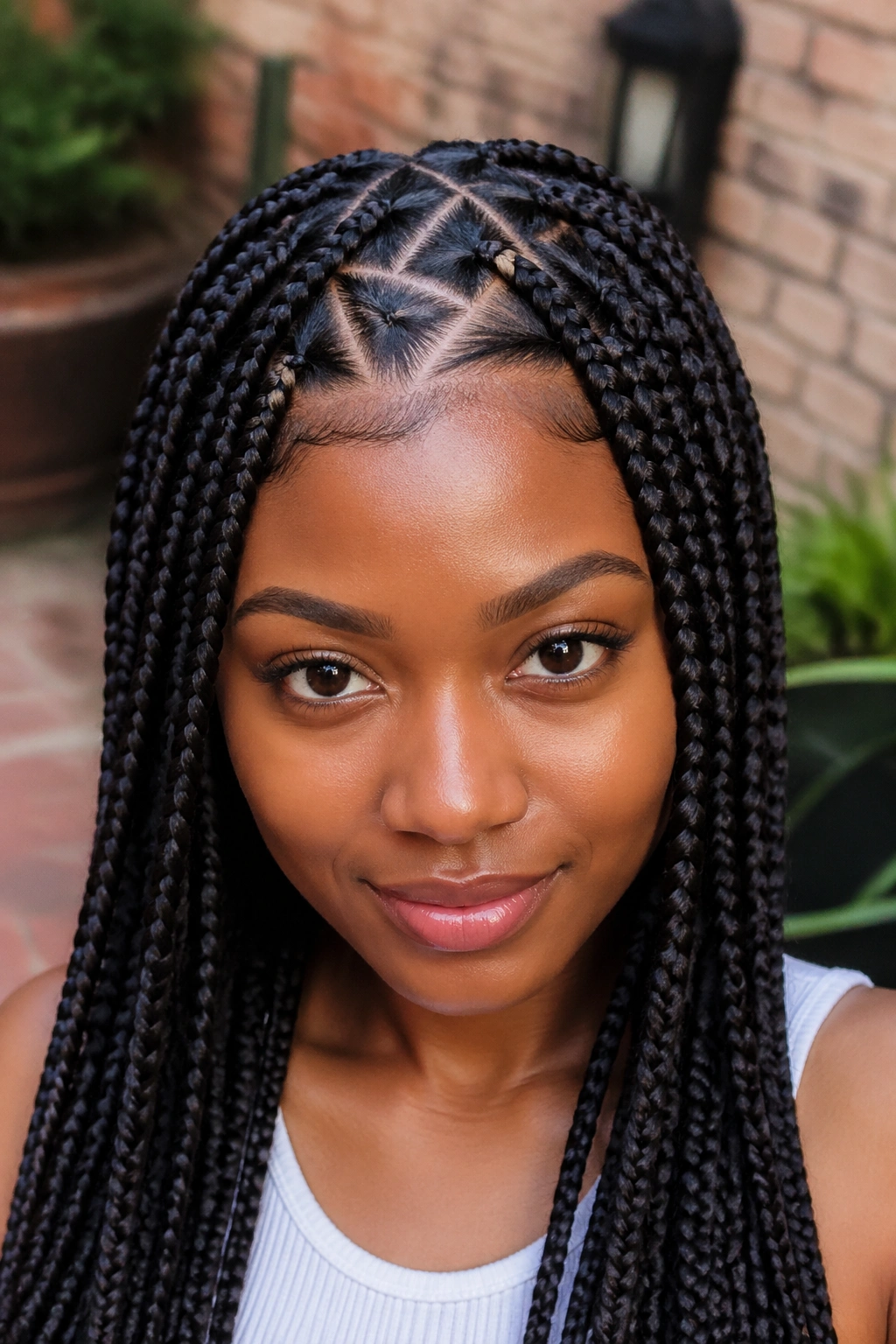
Shaved-side braids bring contrast in the strongest possible way. The shaved section sharpens the braid line and makes the remaining braids look fuller by comparison. It’s a bold cut paired with a familiar style, which is why it hits so hard.
What to Know
- The exposed side needs upkeep.
- The contrast looks best with medium to long braids.
- The style works well if you like structure more than softness.
This is not a quiet look, and that’s fine. It has edge, and it knows it. If you want a braid style that feels strong before you even get dressed, this is it.
48. Undercut Box Braids
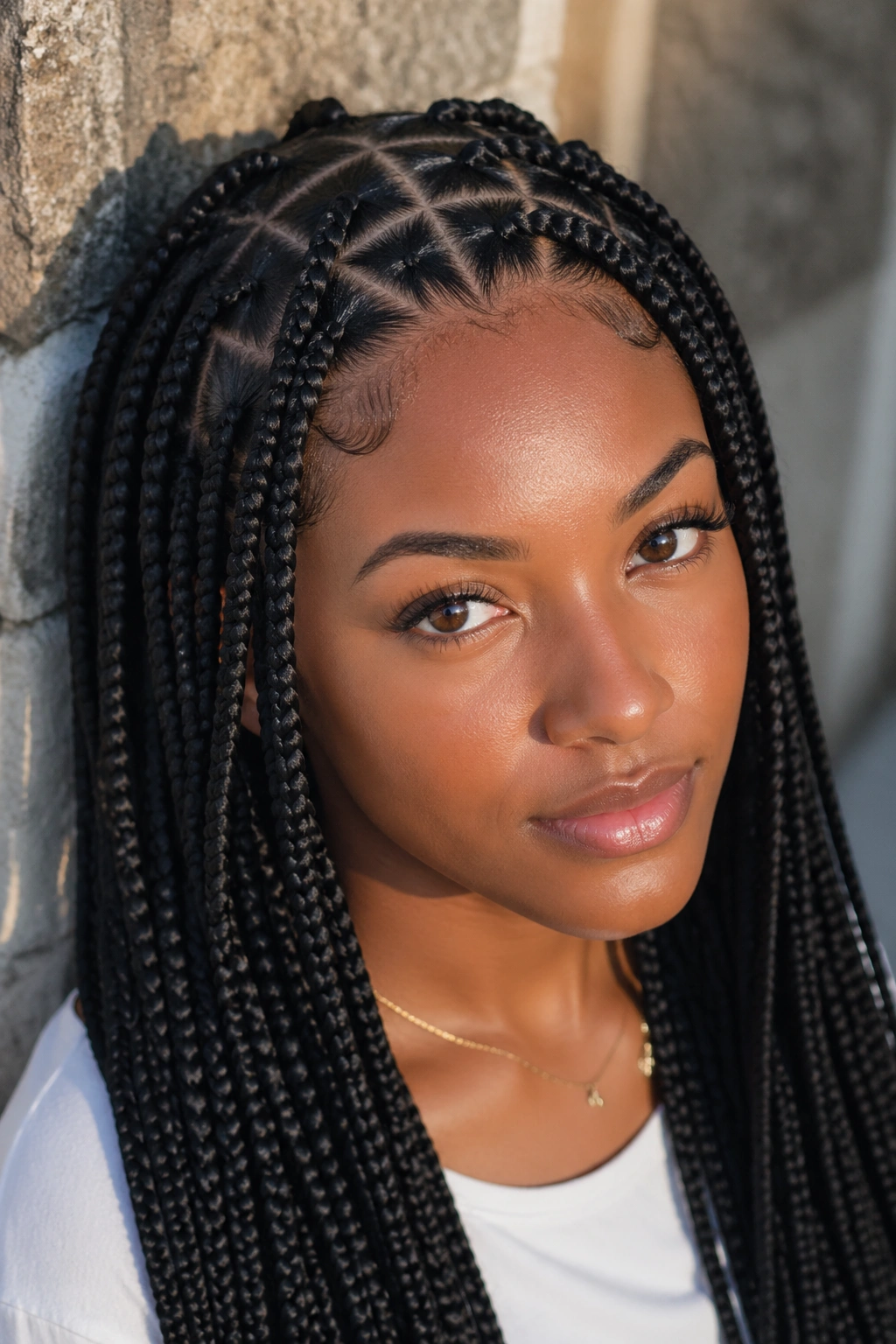
An undercut gives you a hidden short section beneath the top layer of braids, which keeps the style lighter and cooler around the nape or sides. It’s a practical detail with a sharp visual payoff.
The best part is that the undercut changes the way the hair falls without making the style look unfinished. You can wear the top loose, pull it back, or gather it into a bun and still keep the undercut tucked away when you want. That flexibility is what makes it worth saving.
49. Face-Framing Box Braids
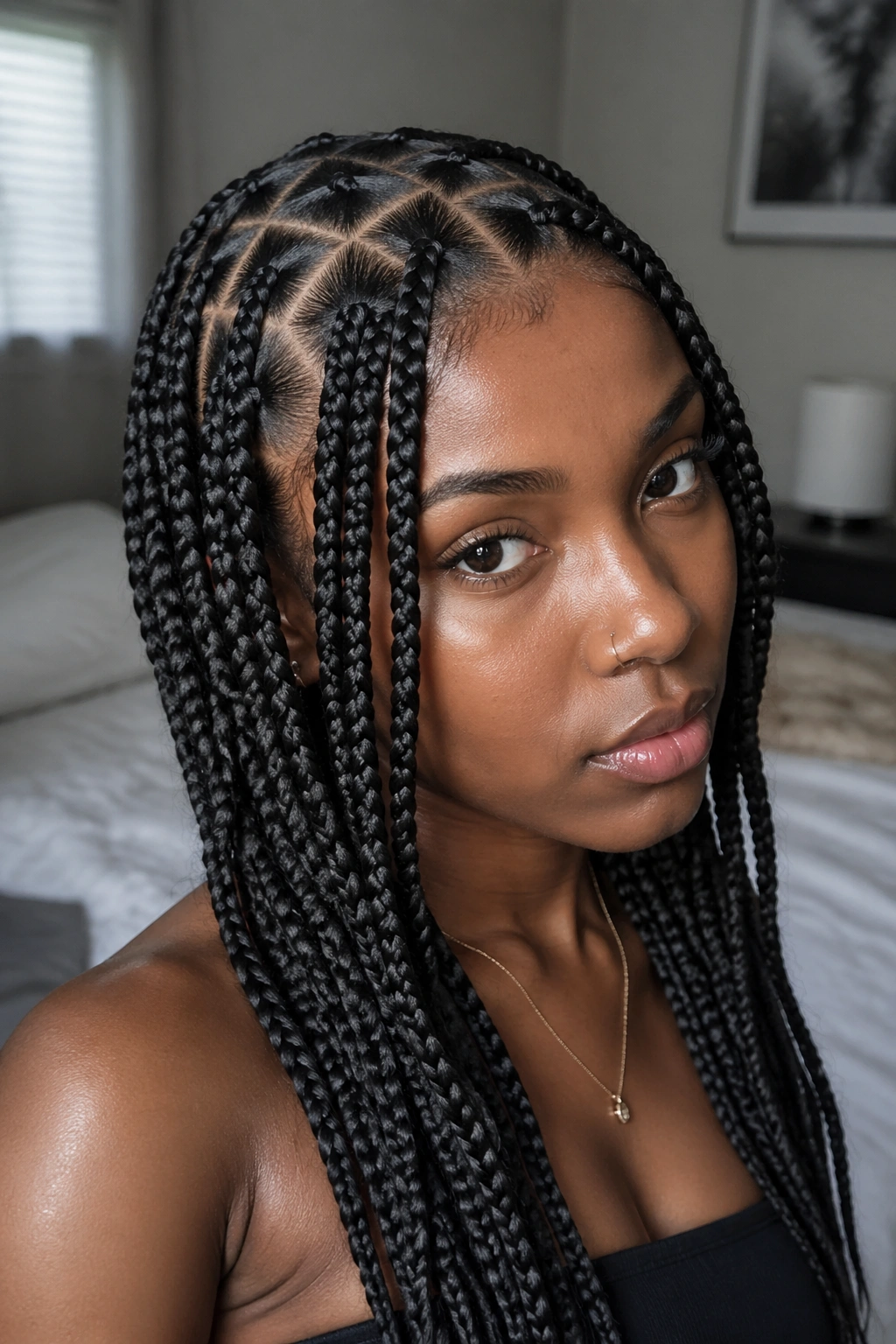
Face-framing braids are all about placement. A few slimmer pieces near the cheeks or temples soften the front and make the whole style feel more tailored to the face. It’s a small adjustment that changes the read immediately.
This style is useful if you want box braids but don’t want the front to feel heavy. The framing pieces can sit loose, be tucked behind the ear, or blend into a bigger style like a ponytail or half-up look. It’s a simple detail, but a good one.
50. Freestyle-Part Box Braids
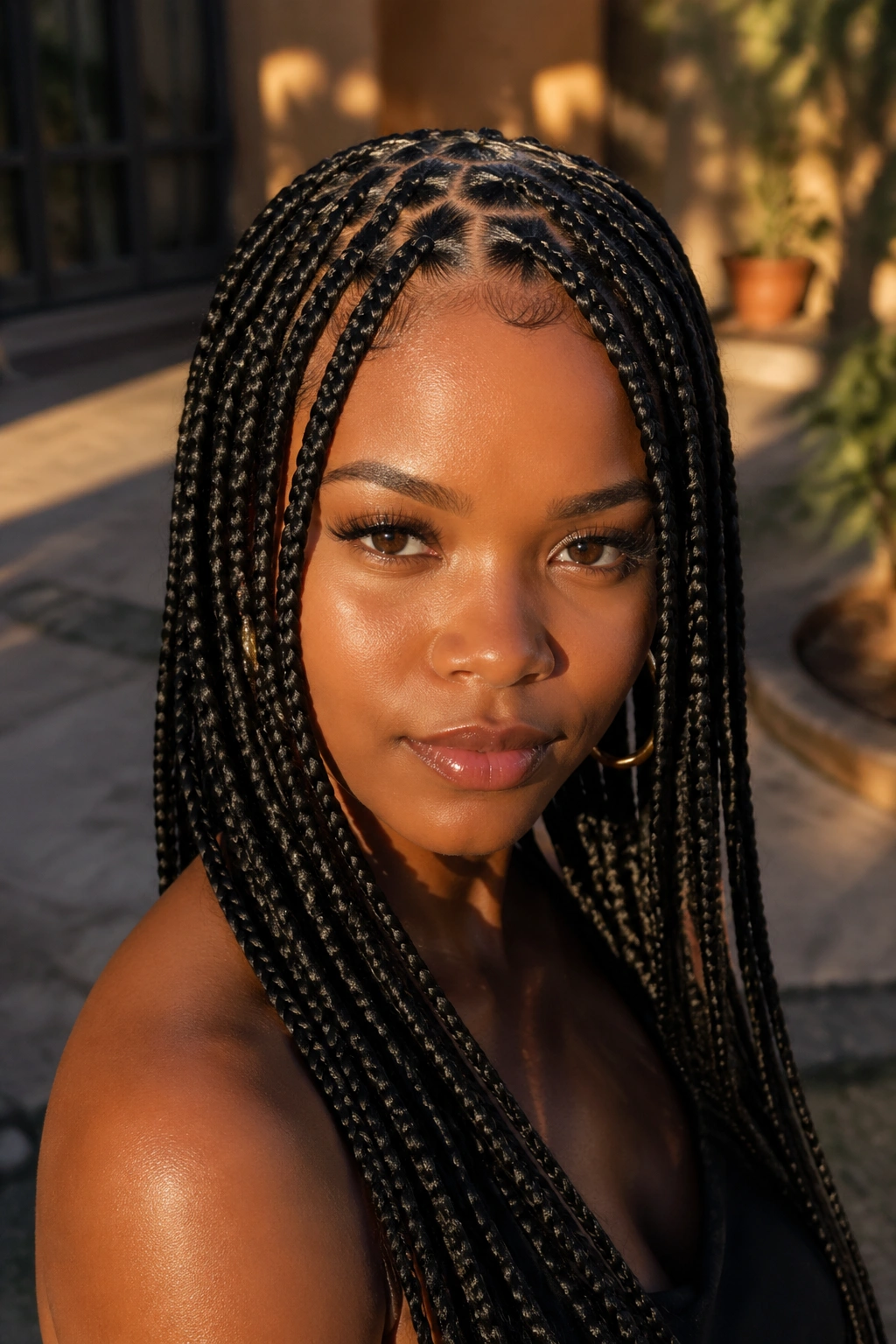
Freestyle-part braids skip the perfectly repeating grid and let the parting move in different directions. Some sections may curve, some may angle, some may break the usual symmetry on purpose. That unpredictability is what gives the style its charm.
It’s a strong choice if you’re tired of rigid rows and want something that feels more personal. The best freestyle parts still look controlled, though. They’re not random in the sloppy sense. They just leave room for a little movement, which is a nice way to end the list because it reminds you box braids do not have to stay in one lane.
