



A bad blue-and-green braid job looks muddy fast. The colors can fight each other, especially when the blue is too flat or the green tips go neon without anything to anchor them. But when the shades are chosen with a little care, blue and green box braids can look sharp, cool, and far more wearable than people expect.
The real trick is not “more color.” It’s placement, depth, and braid size. Deep cobalt near the roots gives structure. Teal in the middle keeps the eye moving. Emerald or seafoam at the ends keeps the whole style from feeling heavy. On box braids, those choices matter because every braid acts like a little stripe, and stripes tell the truth. If the sectioning is sloppy, the whole style shows it.
That’s why the best versions are rarely random. A clean part, a solid root color, and a deliberate color mix make the style feel planned instead of thrown together. Some people want a bright, electric effect. Others want something darker and richer they can wear every day without feeling like their hair is wearing them. Either way, the braid pattern and the color placement do most of the work.
1. Deep Teal Blue and Green Box Braids
If I had to pick one version that looks rich without trying too hard, this is the one. Deep teal sits between blue and green, so it softens the jump between shades and keeps the whole braid stack from looking choppy. It also plays nicely with dark roots, which matters more than people think. A smooth root-to-midshaft transition makes the color feel intentional, not pasted on.
Why It Works
Deep teal is forgiving. If the blue leans a little navy and the green leans a little forest, the braid still reads clean because teal sits in the middle and does the blending for you. That makes it a smart choice for long braids, especially when you want the color to look polished from day one through week six.
- Best braid size: medium sections around 1/2 inch wide keep the color mix visible without making the style feel bulky.
- Best length: 18 to 30 inches gives the teal room to show movement.
- Best base: dark brown or black roots make the color look deeper.
- Best finish: a slightly glossy synthetic braid fiber, not a chalky one.
The other reason this shade works is simple: it does not scream for attention from across the room. It pulls people in when they get close. That’s a better kind of bold, at least in my book. If you want color that still feels wearable with a black hoodie or a crisp white shirt, start here.
2. Split-Dye Blue and Green Box Braids
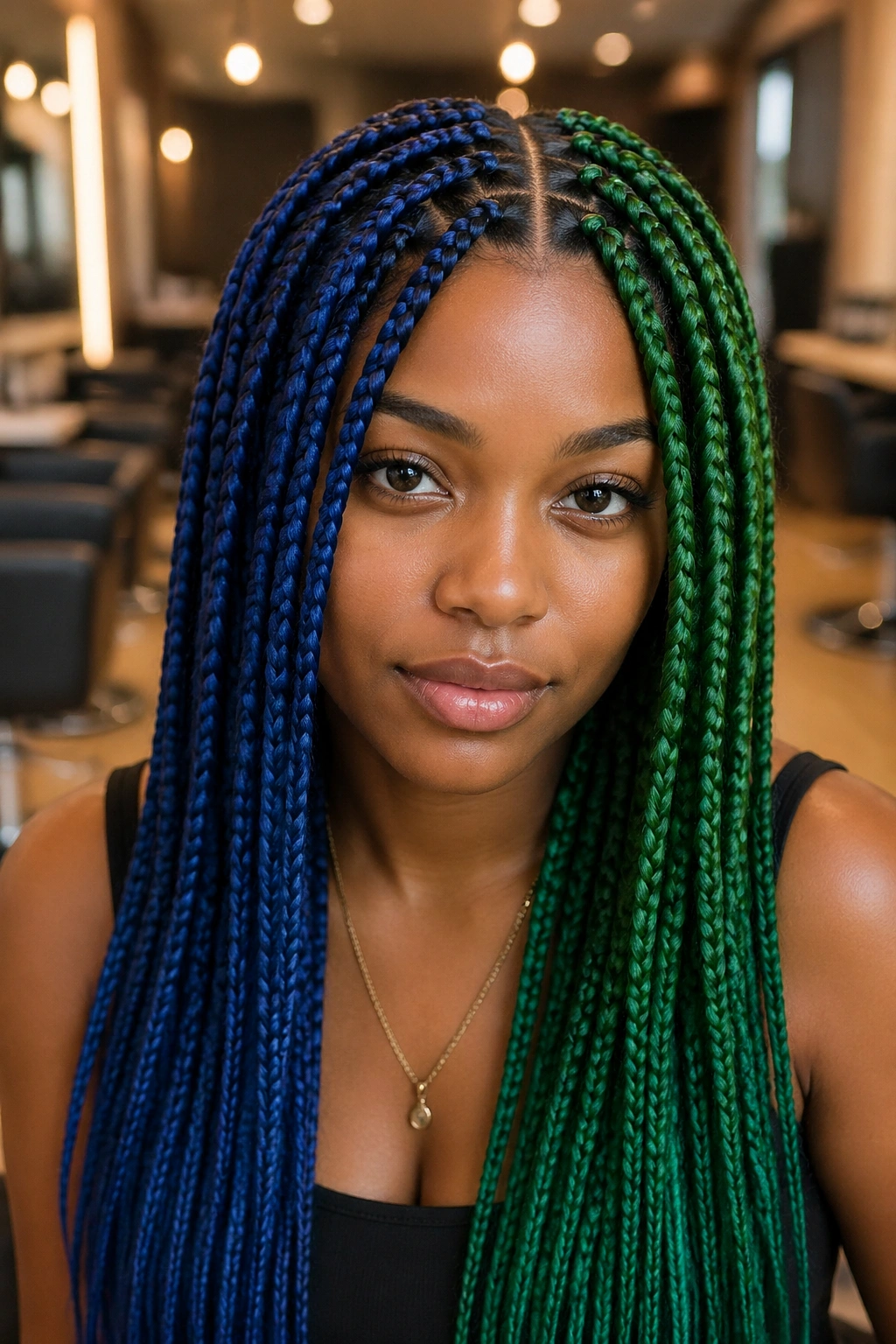
Why choose one color story when you can split it right down the middle? A center part with blue on one side and green on the other gives the whole style a graphic, almost editorial feel. It is sharp. It is obvious. And that is exactly the point.
The cleanest versions depend on parting. If the part line is crooked, the look loses its edge fast. A neat middle part and tidy box sections make the color split feel deliberate, almost architectural. One side can run cobalt, the other emerald, or you can keep the palette softer with teal and sage. The idea is contrast, not chaos.
This is the style I recommend when someone wants people to notice the hair first. It has a little attitude in it. It also photographs in a very direct way because each side tells its own story, and there is no guessing where the color begins or ends. If you like symmetry with a little bite, this is your look.
3. Jumbo Blue and Green Box Braids
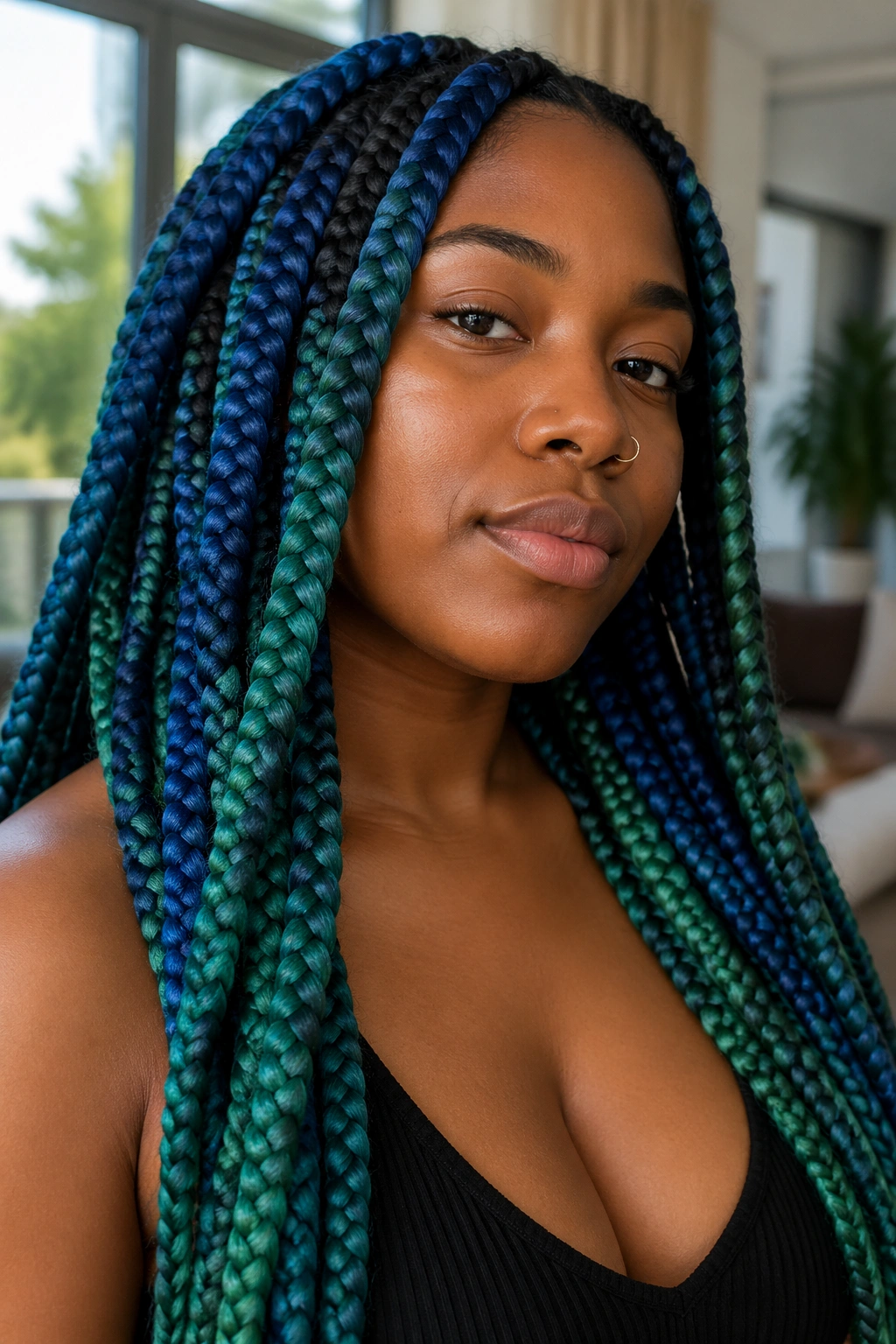
Walk into a room with jumbo braids and nobody misses the color. That is the whole appeal. Bigger braid sections mean more visible surface area, so every blue-and-green strand reads louder, cleaner, and farther away. If you want your hair to do the talking, jumbo box braids do not whisper.
The tradeoff is weight. Jumbo braids can pull more at the scalp, especially if the lengths are long or the synthetic hair is dense. I like them most when the sections stay around 3/4 inch to 1 inch wide and the length stops at mid-back instead of going all the way down the waist. That keeps the braid from feeling like a helmet by day three.
- Best for: bold color placement and quicker installs.
- Best pairing: oversized hoops, a matte lip, and simple clothes.
- Watch the tension: the roots should feel secure, never tight or sore.
- Color tip: block the blue and green in larger chunks so the pattern stays readable.
There’s a reason jumbo braids stay popular for statement looks. They let the color breathe. No squinting. No tiny details lost in the mix. Just color, size, and shape doing their thing.
4. Peekaboo Blue and Green Box Braids
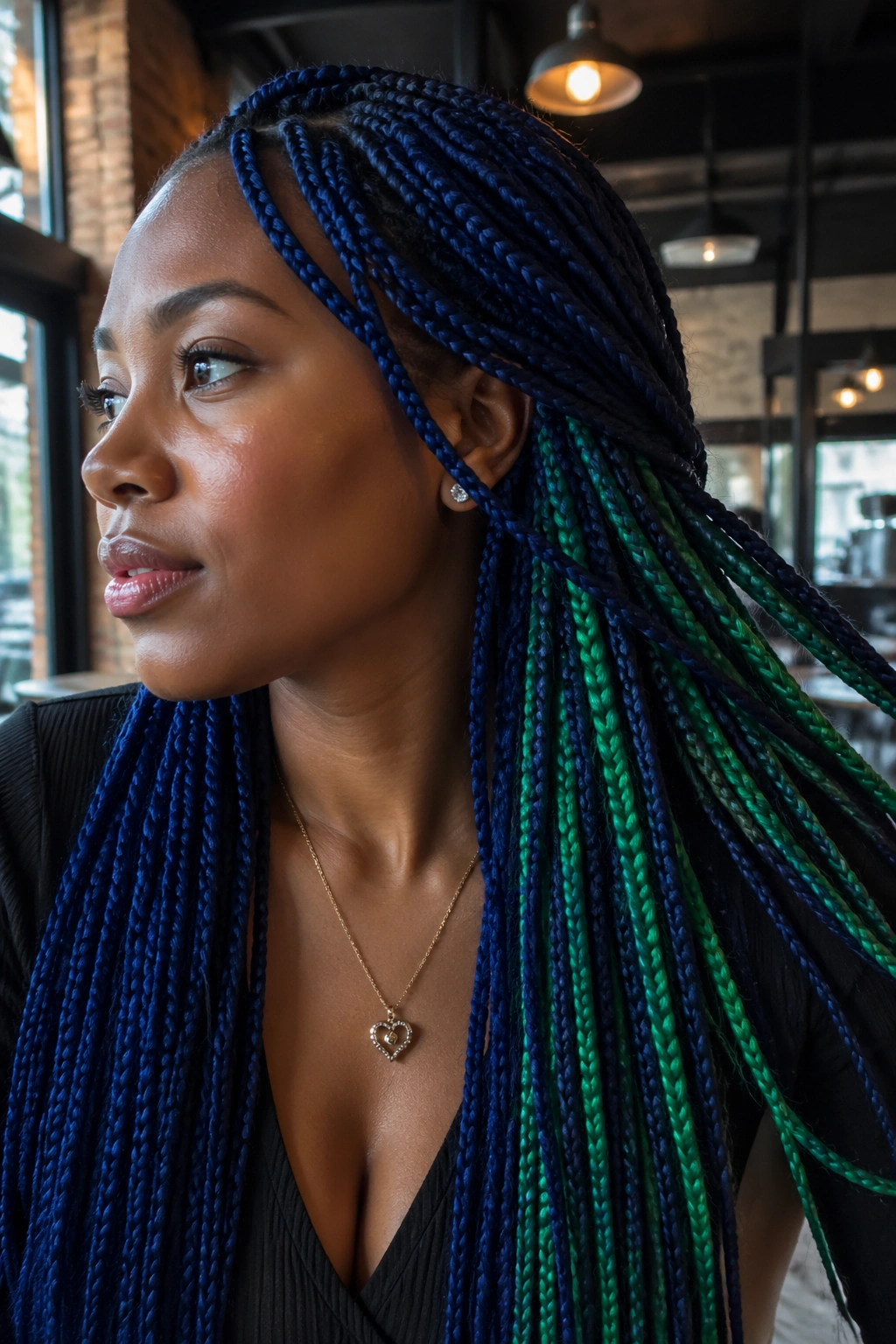
Want the color to show only when the hair moves? Peekaboo braids solve that neatly. You keep most of the outer layer dark or deep blue, then tuck green underlayers inside the braid stack. The result is a style that looks calmer from the front and louder the second you turn your head.
That hidden-layer effect works because braids move in chunks, not in loose waves. So when the underlayer flashes through, it feels deliberate instead of accidental. I like this version for people who want color at work, at school, or anywhere they do not want the hair to enter the room before they do. It gives you a little drama without making the whole style read as full-time rainbow.
How to Wear It
- Try a half-up bun to show the hidden green.
- Pull one side over the shoulder when you want the blue to dominate.
- Use a low ponytail if you want the underlayer to peek through at the ends.
This style is all about timing. The surprise should happen when the braids swing, not when you first sit down under the cape.
5. Bob-Length Blue and Green Box Braids
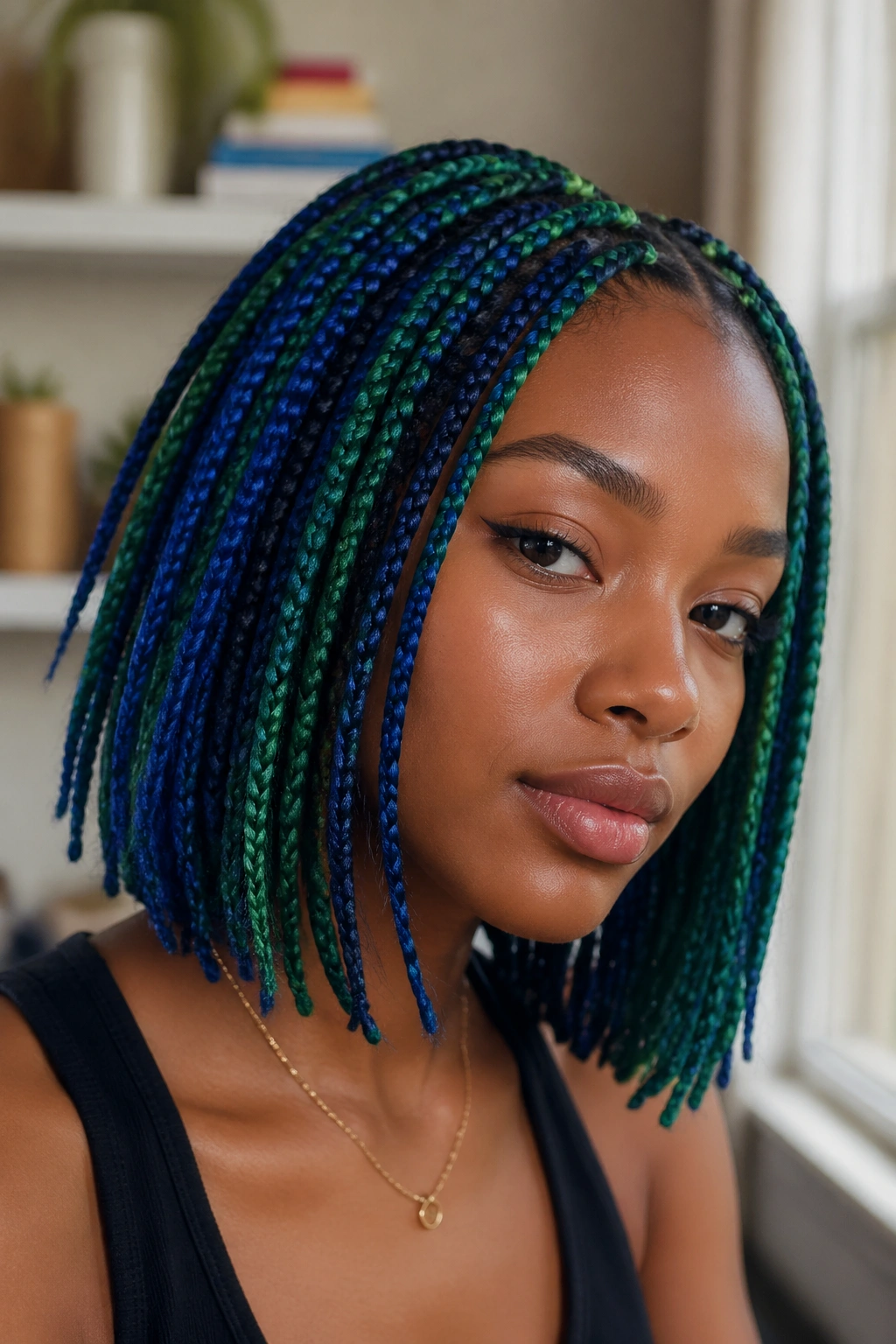
Short braids change the whole mood. A bob-length cut makes blue and green box braids feel sharper, neater, and a little cooler than the same colors at waist length. When the braids stop around the chin, jawline, or top of the shoulders, the color has less room to drift, so every shade looks more defined.
I reach for this look when someone says they want color but do not want to babysit it all day. Fewer inches means less weight, less tangling at the ends, and less hair getting caught in jacket zippers or seat belts. That sounds boring until you’ve worn long braids through a day full of errands. Then it sounds smart.
The best bob versions usually sit between 8 and 12 inches. Long enough to swing. Short enough to stay neat. If the blue is darker and the green is brighter, the shape becomes even cleaner because the contrast lands right around the face instead of disappearing down the back. Short braids make the color read as design, not just length.
6. Knotless Blue and Green Box Braids
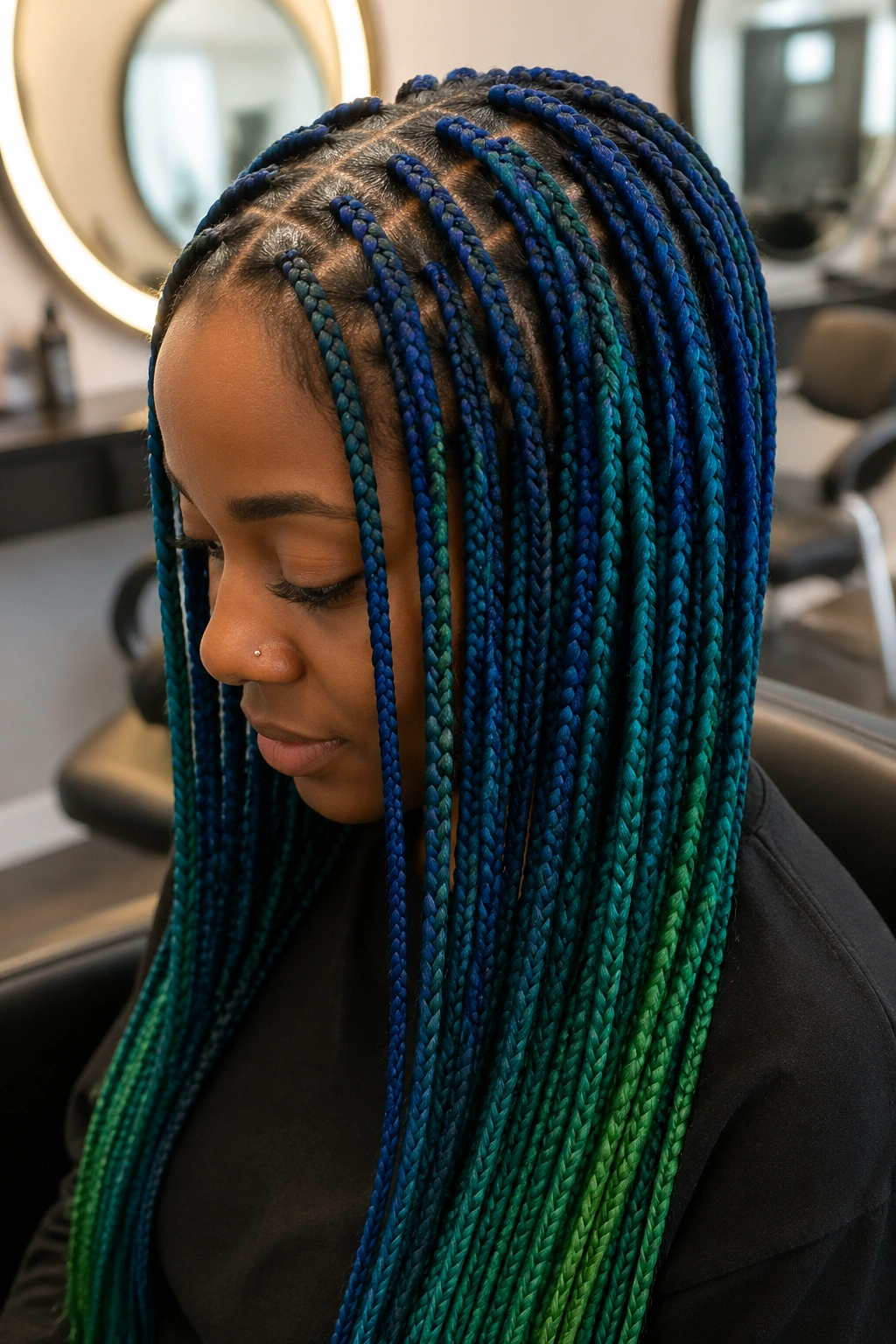
Compared with traditional knot-in braids, knotless blue and green box braids sit flatter at the scalp and feel lighter at the root. That matters when the color itself is already doing a lot. A smooth base gives the braid room to look polished, and it keeps the style from feeling too thick at the hairline.
This is the version I point people toward if they care about comfort. Knotless braids usually move more naturally, and the color transition can look smoother because the braid starts with your own hair before the extensions take over. That works especially well if you want a dark root that fades into teal or emerald instead of a hard color block.
The downside is time. Knotless braids take longer to install, and they ask for more patience in the chair. But the payoff is worth it when you want a style you can wear without feeling the roots every time you turn your head. If your scalp gets fussy, knotless is the nicer choice.
7. Triangle-Part Blue and Green Box Braids
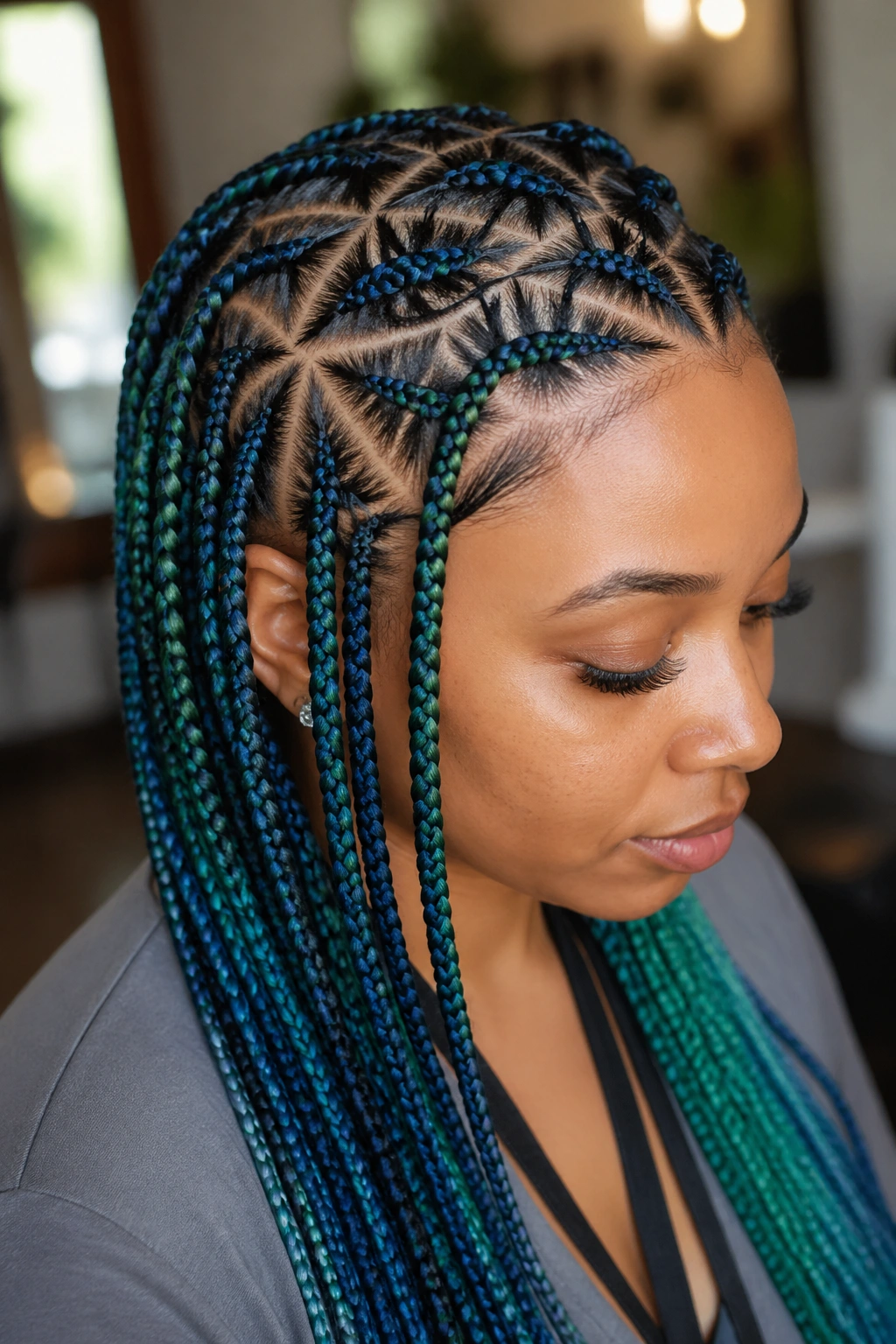
The parting becomes the design here. Triangle parts change the whole geometry of the style, and blue and green only make that shape more obvious. Instead of the familiar square grid, you get little points and angles across the scalp, which gives the braids a more modern, sharper look.
That matters more than people realize. When the part lines are crisp, the color distribution feels better too. Each triangle can hold a different mix of blue and green, or you can alternate shades from braid to braid and let the part pattern do the heavy lifting. The style reads detailed even before you notice the colors.
- Best braid size: medium sections so the triangle points stay visible.
- Best color pattern: alternating blue and green in a steady rhythm.
- Best hairline finish: clean edges, but not painted-on edges.
- Best vibe: structured, neat, a little playful.
If regular box parts feel plain, triangle parts wake the whole look up. They are a small change on paper. On the head, they change everything.
8. Waist-Length Cobalt and Emerald Braids
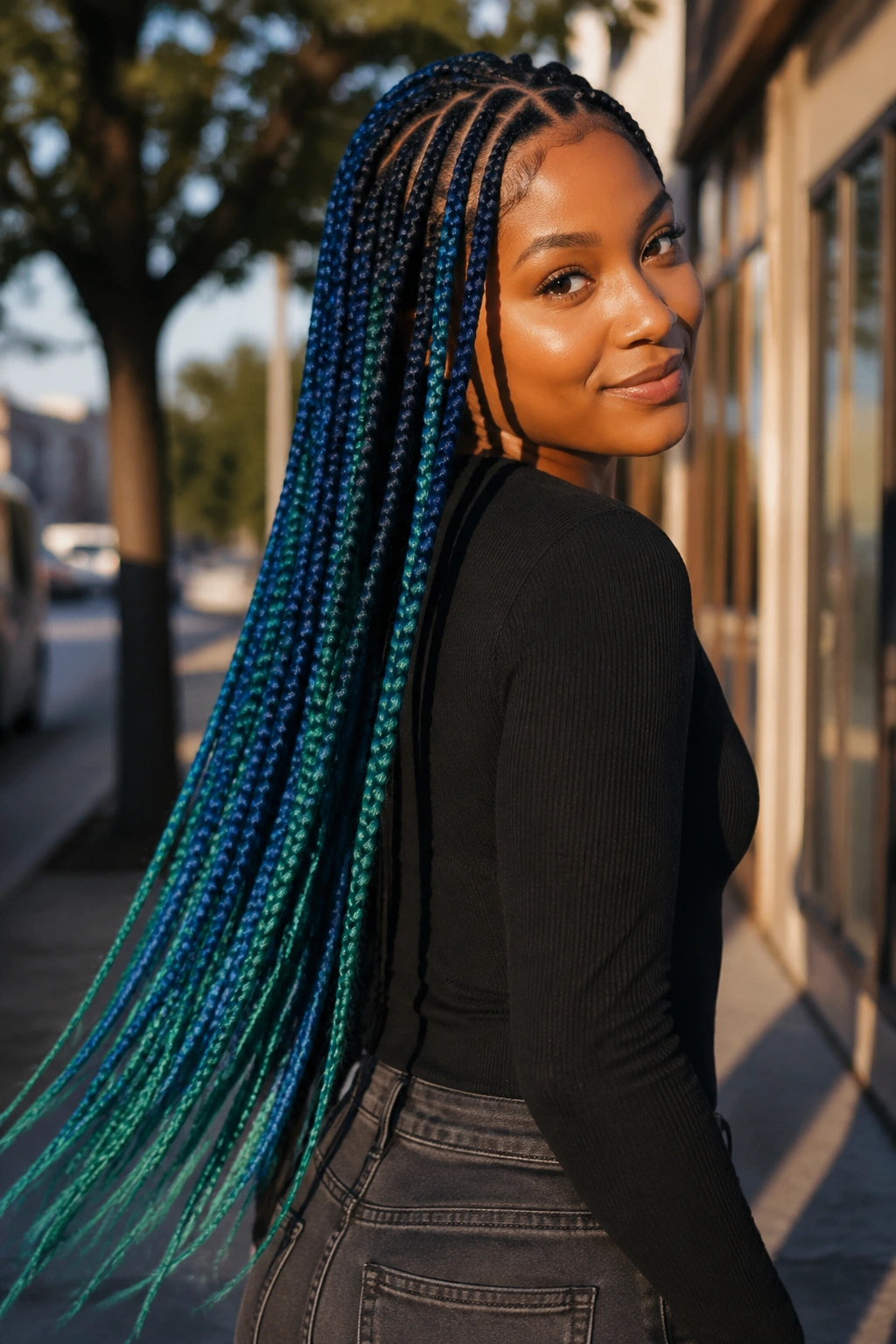
The first thing you notice is movement. Waist-length braids swing in a way short braids never quite can, and cobalt with emerald gives that movement extra weight. The colors stay distinct even when the hair shifts, so every turn of the head sends a clean ribbon of blue or green down the back.
There is something especially good about this look when the roots are dark and the ends run brighter. It keeps the long length from feeling flat. Instead of one long sheet of color, you get a slow fade that keeps changing depending on the light and the angle. I know people say that phrase too often, but here it actually matters. Long braids can eat color if the tones are too similar. Cobalt and emerald avoid that problem.
The style also has a kind of practical glamour to it. You can wear it down and let it move, or pull it into a low ponytail and let the color stack in layers. It feels fuller than shorter braids, but not sloppy if the sections are neat. That balance is hard to fake.
9. Micro Blue and Green Box Braids
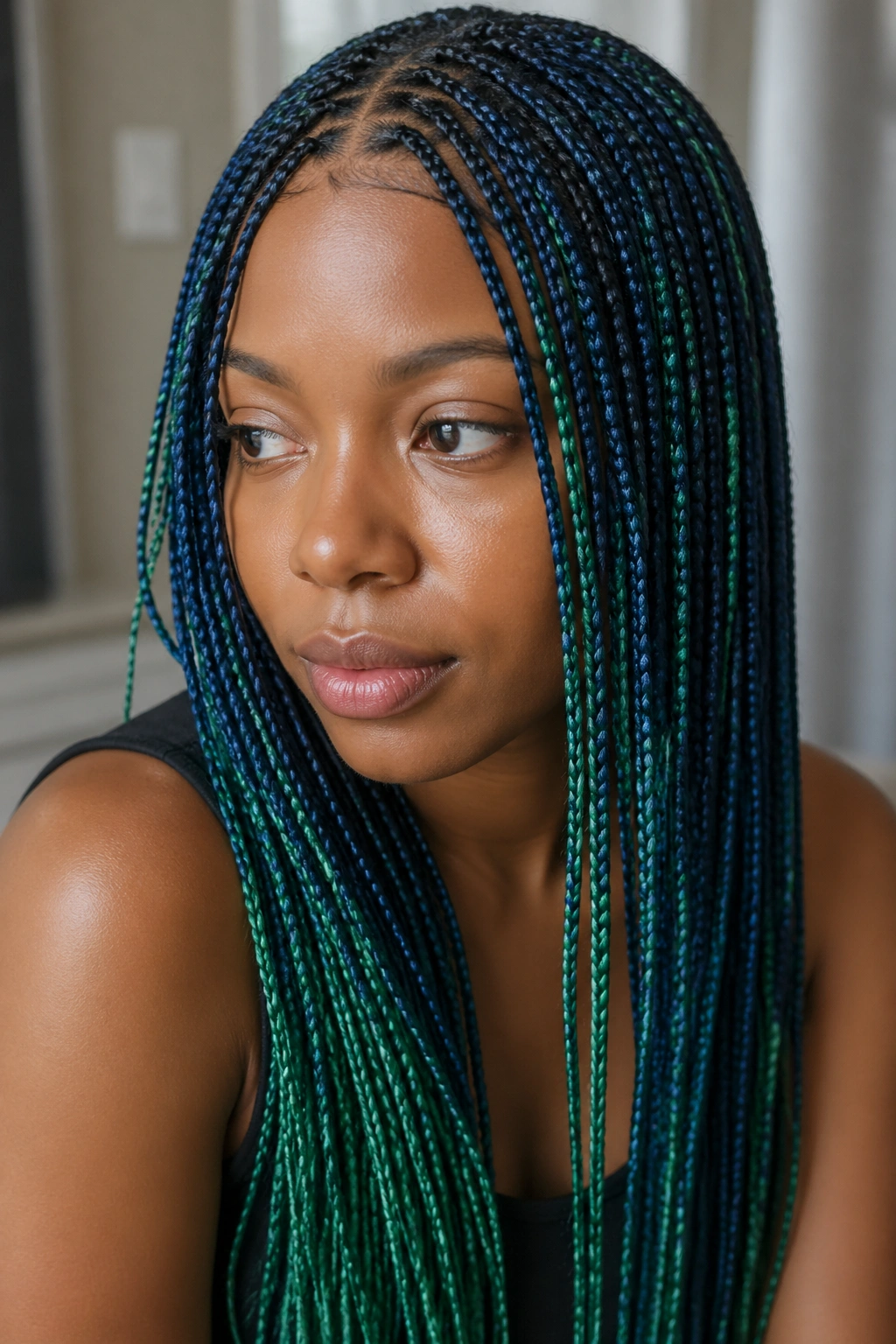
Why do micro braids make blue and green look softer? Because tiny sections break the color into finer lines, and fine lines blend better from a distance. The whole style feels almost woven, which is a nice effect when you want the colors to shimmer together instead of shouting over each other.
Micro box braids are not a casual choice. They take patience, and they ask for careful sectioning. But if you like detail, they are a dream. The blue and green can be mixed braid by braid, or even within a single braid if the hair piece is split cleanly enough. That creates a subtle shift that looks especially good in motion.
How to Get the Most From It
- Keep the color ratio balanced, like 60/40 or 70/30, so one shade does not vanish.
- Use neat, small parts so the braid pattern stays crisp.
- Save heavier accessories for the ends, not the roots.
- Wear the style long enough for the tiny color blend to show its full effect.
Micro braids are for people who like detail more than drama. The style rewards close looking.
10. Blue and Green Box Braids With Beaded Ends
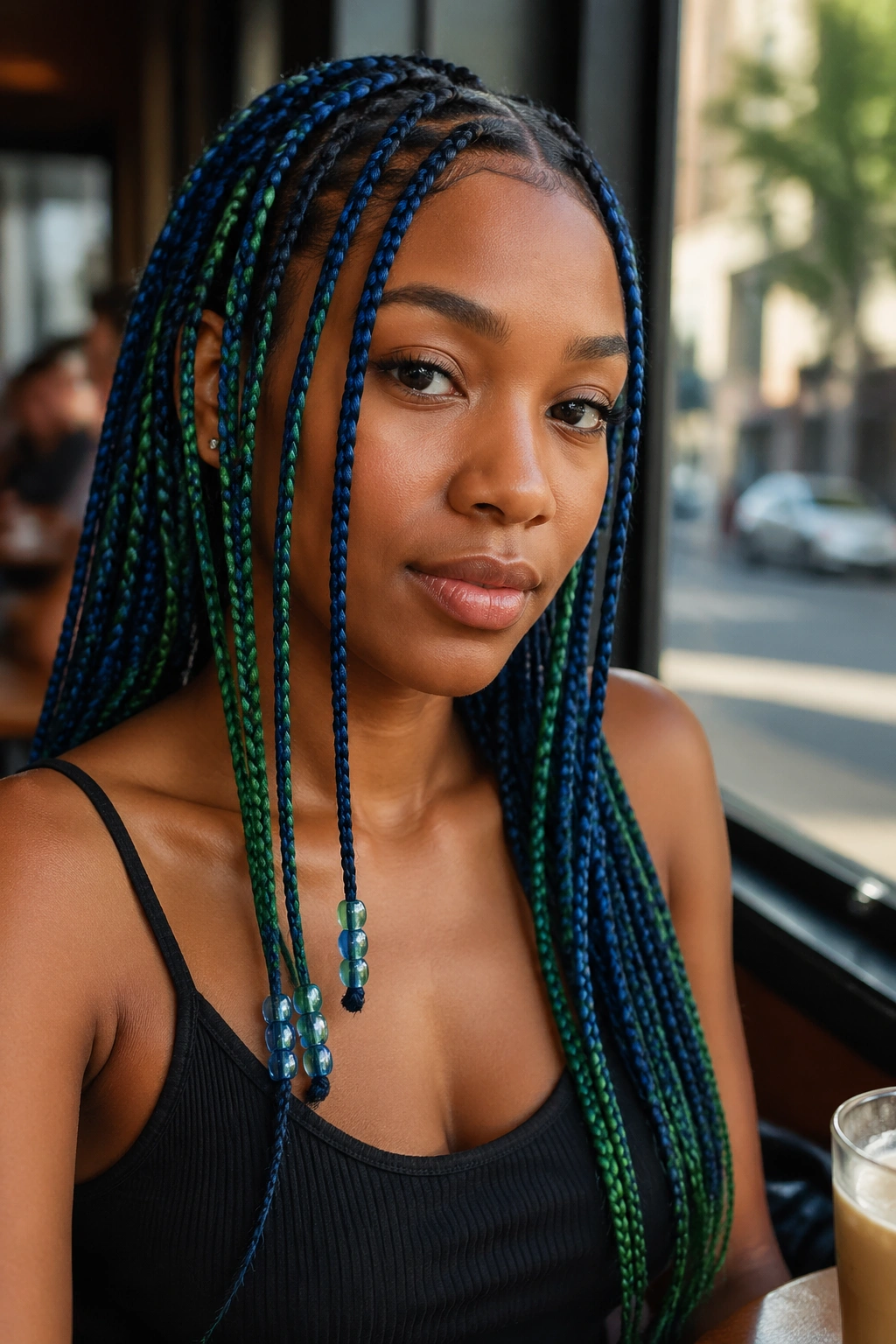
If you grew up thinking beads were only for kids, ignore that nonsense. Beaded ends can make blue and green box braids feel finished in a way plain ends sometimes do not. Clear beads keep the color visible. Black beads make the ends look sharper. Metallic cuffs add a little edge without taking over the braid.
This works best when the beads are placed with a bit of restraint. Two or three braids at the front is enough for a front-facing accent. A bead on every end can get noisy fast, especially on long braids. I prefer the look when the beads appear near the lower third of the braid, where they add weight and movement without dragging the whole style down.
The sound matters too. A few beads click softly when you move, which gives the style a bit of life. That is a tiny detail, but tiny details are what keep braids from looking flat in person. The right bead placement makes the blue and green feel more styled, not more decorated.
11. Face-Framing Blue and Green Box Braids
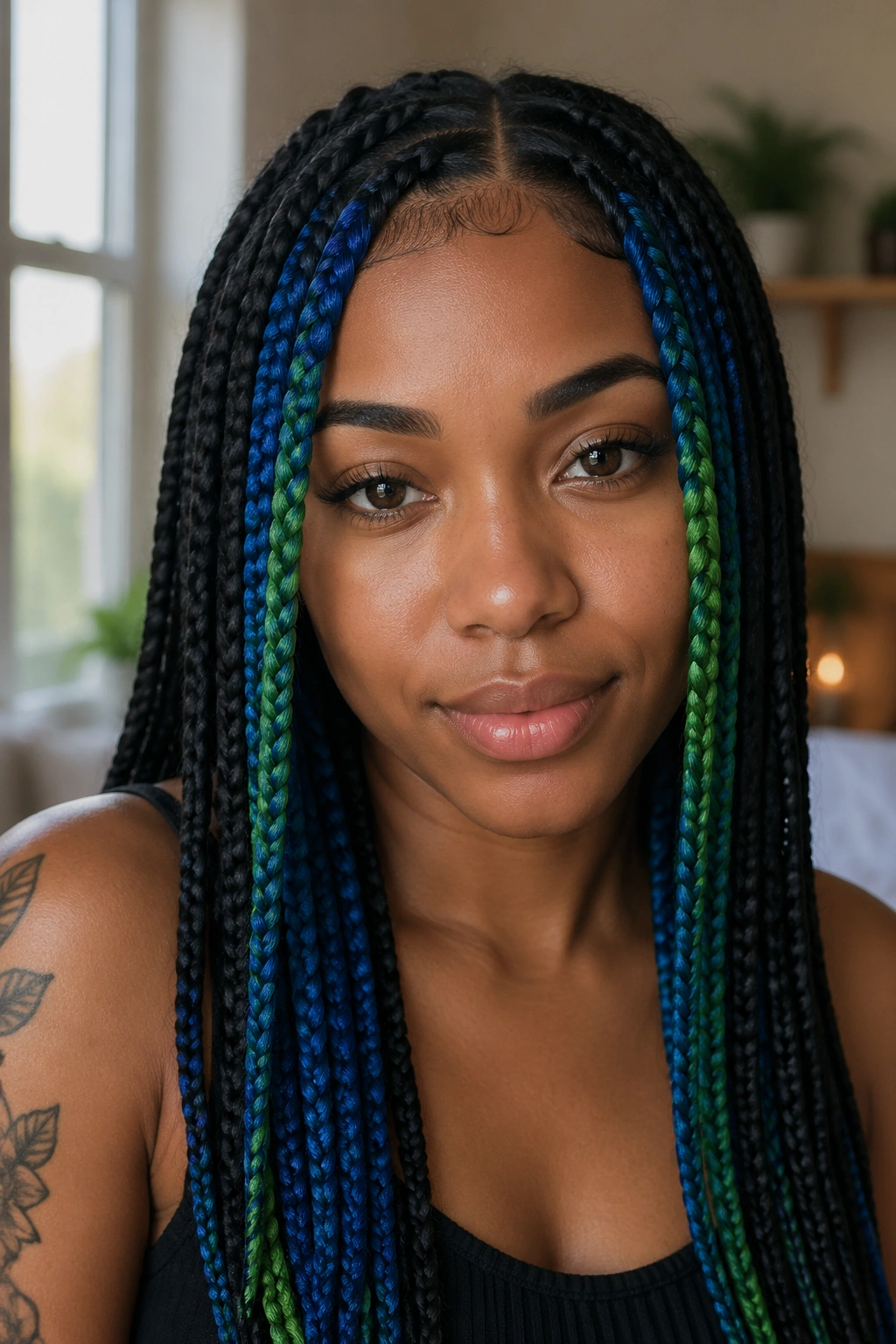
Unlike full-head color, face-framing braids let you keep most of the style dark and put the bright blue and green right where people look first. Two to four front braids are enough. Sometimes six if you want more drama. Either way, the color lands near the face and does most of the work from there.
This is the version I like for first-time color wearers. It gives you the fun part without committing the whole head to saturation. The rest of the braids can stay black, dark navy, or deep forest green, and the front pieces can run electric blue, lime, or teal. That mix keeps the face from getting swallowed by the color.
The other advantage is styling flexibility. You can wear the braids down and let the colored pieces frame the cheekbones, or pull the rest back and let the front braids act like ribbons. If you want a color accent that feels controlled, this is the cleanest route.
12. Half-Up Blue and Green Box Braids
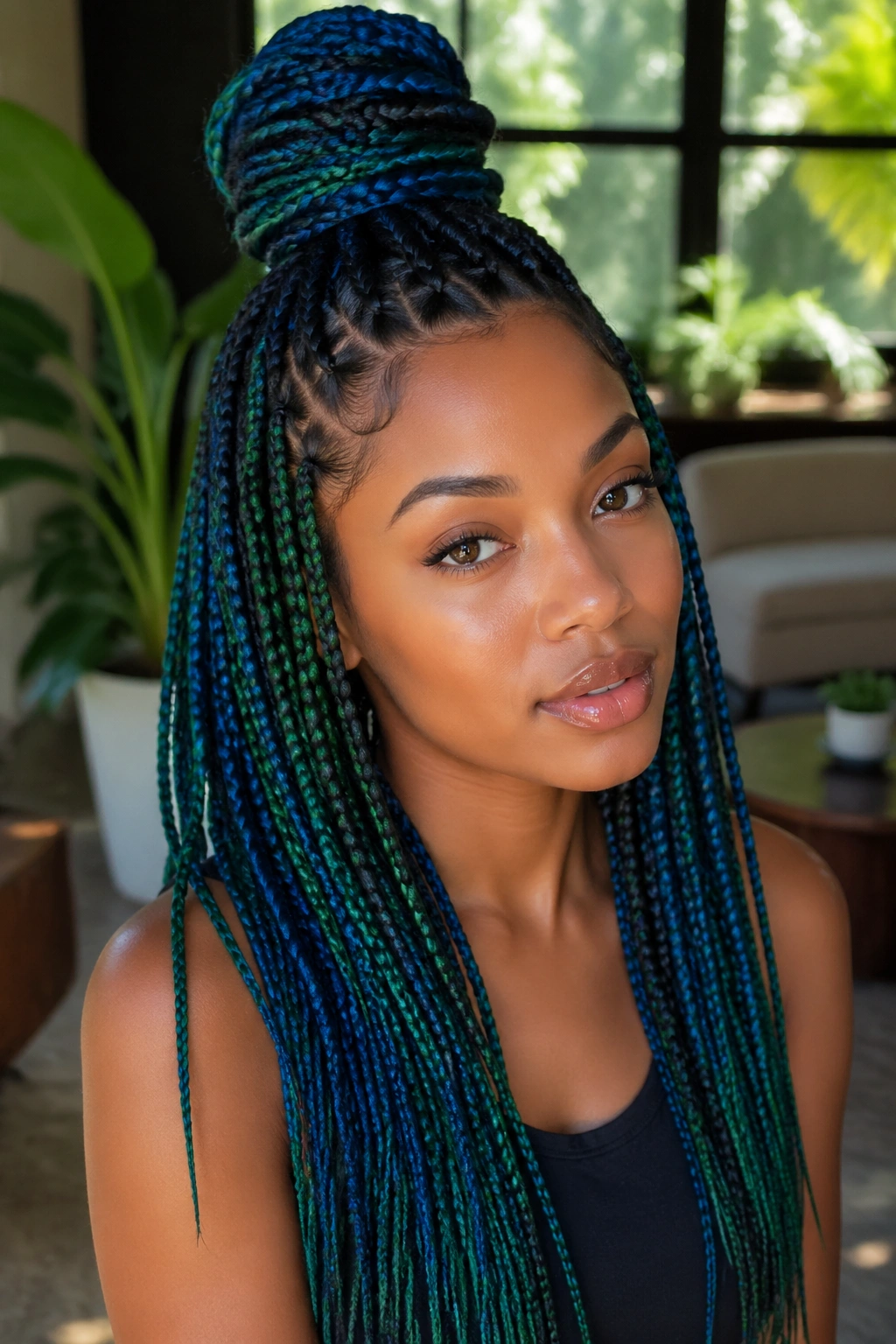
The easiest way to make blue and green box braids feel dramatic is to gather them high. A half-up style lifts the crown, shows more of the braid length, and stacks the colors so the blue and green are visible from the front and the back. It changes the whole mood in five seconds.
This works especially well with longer braids, around 20 inches and up, because the tail has enough length to fall cleanly after the top section is tied up. If the braids are too short, the half-up style can look stubby. If they are long enough, the shape gets sleek fast. I like a wrapped base or a hidden elastic so the top section looks neat instead of rushed.
It also solves a common problem with bold colors: sometimes the hair is strongest when it moves, and too quiet when it sits still. Half-up styling gives it movement even when you are standing in place. That’s why it works for events, dinners, and any day you want the hair to look a little more finished than usual.
13. Side-Swept Blue and Green Box Braids
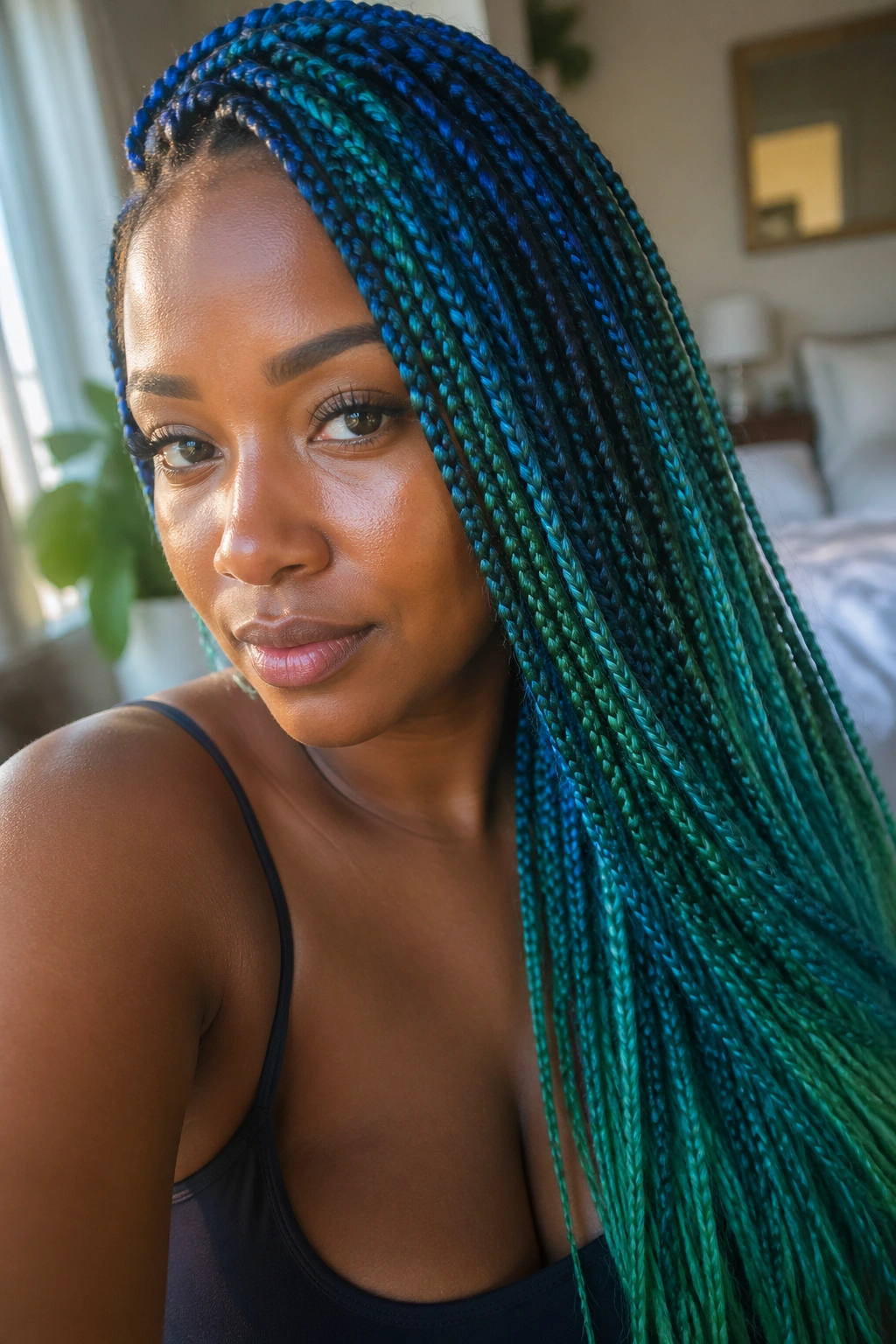
Want the color to feel softer? Sweep the braids to one side and let the part line curve instead of sitting dead center. Side-swept blue and green box braids have a looser shape, and that small change makes the palette feel less rigid. The blue and green start to blend in the eye instead of landing as two separate blocks.
What Makes It Gentle
- The off-center shape breaks up symmetry, which softens bold color.
- One shoulder gets the full curtain of braids, so the style feels intentional.
- Earrings show better on the open side, which helps the face balance the hair.
- A deep side part gives the roots a little lift without needing extra styling.
The look works especially well with teal, aqua, and darker green tones because those shades already sit close to each other. Put them on one side, and the whole thing feels easier. If a center part feels too severe, the side-swept version fixes that fast.
14. Alternating Blue and Green Box Braids
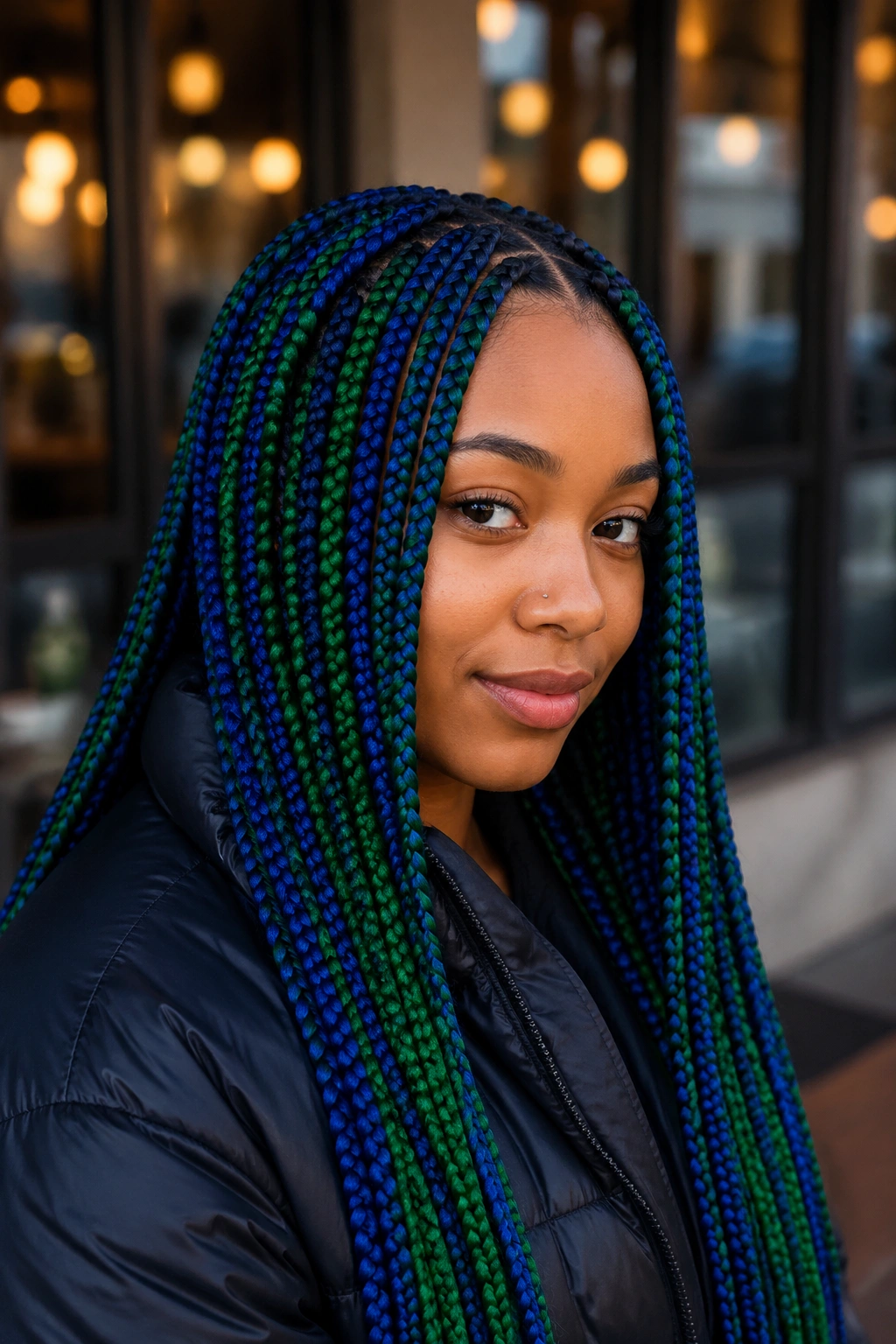
This is the most graphic version of the bunch. One braid blue, one braid green, repeat. It sounds simple, and it is, but the result is stronger than people expect because the eye starts to pick up a rhythm. The style has almost a checkerboard feel when the parts are tight and the colors stay consistent from root to tip.
The key is discipline. If the blue wanders into three braids in a row and then the green shows up randomly, the pattern gets muddy. Keep the alternation steady, and the whole head starts to feel organized. Medium-width braids work best here because each color block stays visible without becoming too chunky.
I like this option on people who enjoy clean lines and do not mind their hair having an opinion. It is bold, but not messy-bold. That distinction matters. This version works best when the parting is neat enough to let the color pattern do its job. If the sections are sloppy, the whole thing loses its snap.
15. Emerald Fade Blue and Green Box Braids
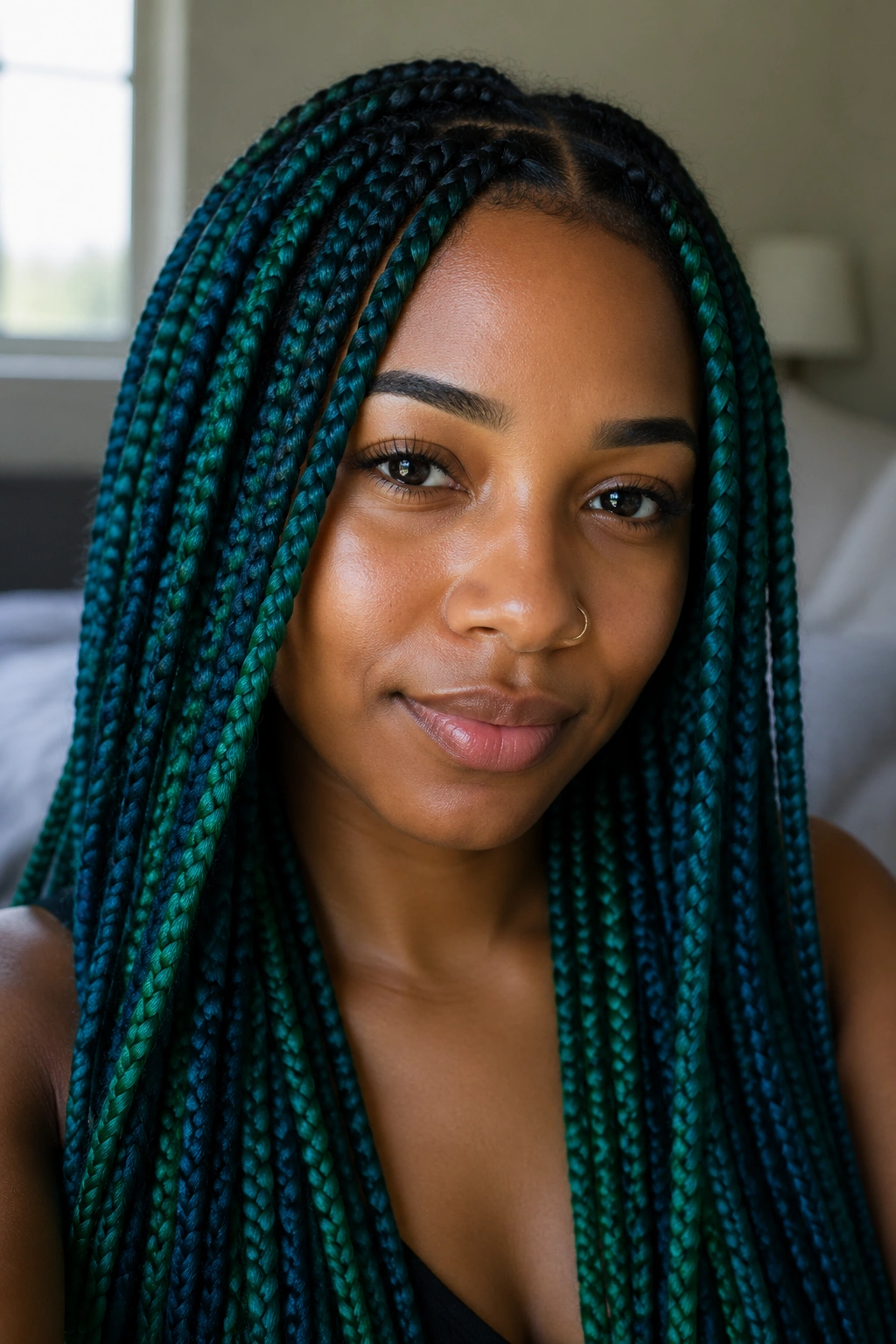
A good fade is the quietest strong look in the group. Start with darker blue near the roots, let the color drift into emerald through the middle, and finish with a lighter green or seafoam at the ends. The braid keeps changing as it drops, which makes long hair feel lighter even when the actual length is serious.
This is the version I’d pick for someone who wants the palette to feel finished instead of busy. It gives blue and green a clear order. Nothing fights. The darker base holds the style down, and the brighter ends keep it awake. Add a few cuffs or leave the ends plain; either way, the shape does most of the work.
If you’re torn between bold and wearable, start with where you want the eye to land. Roots, mids, or ends. That’s the real choice. The rest is just arranging the color so it behaves the way you want it to, which is half the fun and most of the result.
