



The first thing worth saying is that curly hairstyles for Asian hair do not have to look forced, crunchy, or overdone. A lot of people start with the wrong goal: tiny ringlets everywhere, tons of hairspray, and a shape that fights the hair instead of working with it. That usually ends in frizz at the crown, flat roots, and curls that collapse by lunch.
Asian hair can be pin-straight, thick, fine, coarse, soft, or naturally wavy. That’s the part people keep flattening into one stereotype, and it’s a mistake. The better question is how your hair behaves when it’s curled, layered, pinned, braided, or allowed to bend at the ends. Once you think that way, the options open up fast.
I’ve always liked styles that give hair a real shape instead of trying to make every strand do the same thing. A blunt bob with a soft inward curl feels completely different from long spiral ringlets, and both can work beautifully on straight, slippery hair if the cut and styling line up. That’s the real trick here. Shape first. Curl pattern second.
1. Soft S-Waves with a Center Part
Soft S-waves are the easiest place to start because they don’t ask your hair to hold a tight curl. They ask for a bend, a ripple, a little movement through the middle and ends. On Asian hair that tends to fall flat fast, that’s a smart trade.
Why This Shape Works
A center part keeps the look calm and balanced, while the S-shape adds enough softness to keep straight hair from looking severe. I like this on medium to long lengths, especially when the hair is one length or has only a few long layers. You get movement without losing the clean outline.
- Use a 1 to 1.25-inch curling iron for the easiest bend.
- Curl 1-inch sections away from the face, then switch directions below the cheekbone.
- Leave the last 2 inches of each section out for a looser finish.
- Finish with a light mist of flexible-hold hairspray, not a stiff shell.
Best tip: clip the front pieces up for 10 minutes after curling. That little cool-down sets the wave better than a second pass with the iron.
2. Korean C-Curl Bob
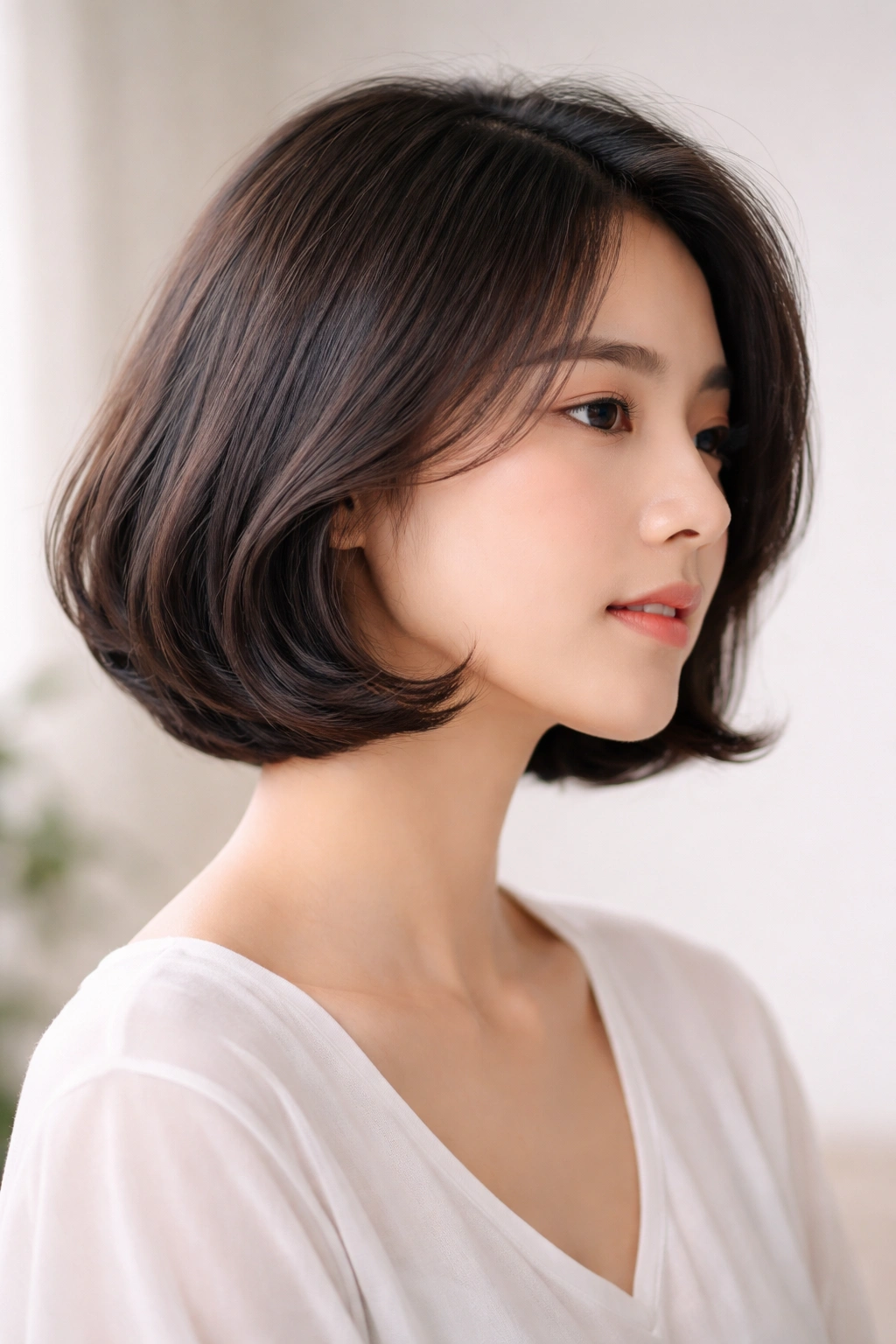
A C-curl bob earns its place because it makes short hair look polished without asking for much length. The ends turn inward, which gives the haircut structure and keeps the profile neat even when the rest of the hair is naturally straight and heavy.
That inward curve is the whole point. On hair that drops curls quickly, a blunt bob can go boxy fast, while a C-curl bob keeps the line soft around the jaw. It also plays nicely with thicker Asian hair, which can swell out at the bottom if the ends are left blunt and untrained.
I like this best when the cut hits somewhere between the chin and just below the jaw. Too short, and the curl can flip out in a way that feels abrupt. Too long, and you lose the bob shape. Ask for the ends to be slightly texturized so the curl doesn’t look like a hard hook. A round brush blowout or a large hot brush usually does the job faster than a curling iron.
3. Layered Curly Shag
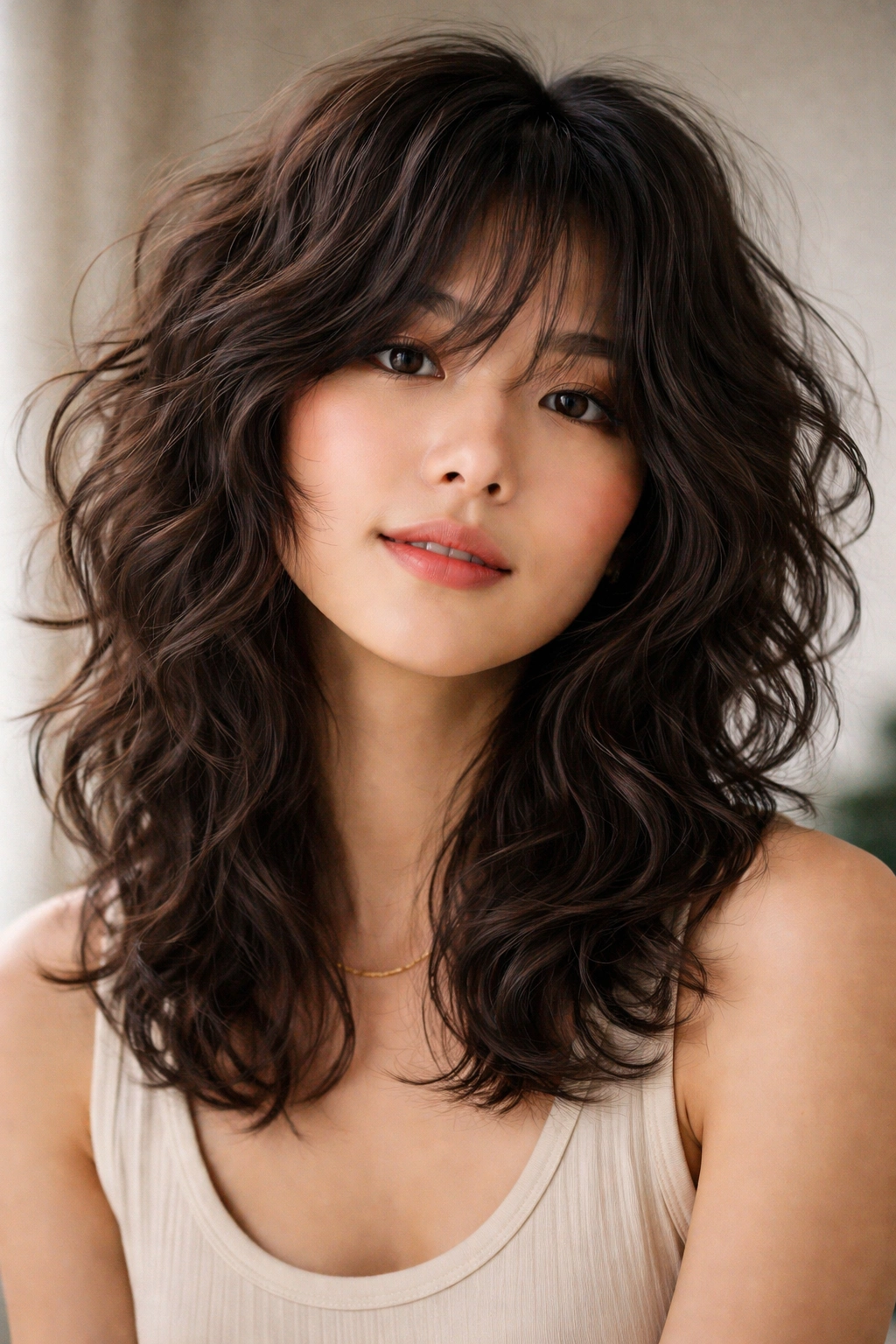
Why does a curly shag work so well on Asian hair that has a lot of density? Because the layers take away bulk where you do not want it and leave lift where you do. That matters. A single-length cut can turn into a heavy curtain once curls are added, but a shag keeps the shape light and a little bit messy in the best way.
How to Ask for It at the Salon
Ask for shorter crown layers, then longer face-framing pieces that hit around the cheekbone or lip. If your hair is thick, the stylist should remove weight inside the shape, not just chop the outside. That’s the difference between movement and a frizzy puff.
A shag also gives you room to be imperfect. Good. It’s supposed to look a little lived-in. If you spend 20 minutes trying to smooth every piece into place, you’ll miss the point. Use mousse on damp hair, scrunch, diffuse until the roots are mostly dry, then let the ends finish on their own. The cut carries a lot of the work here, which is why I keep recommending it to people who are tired of flat, helmet-like hair.
4. Curtain Bangs and Loose Curls
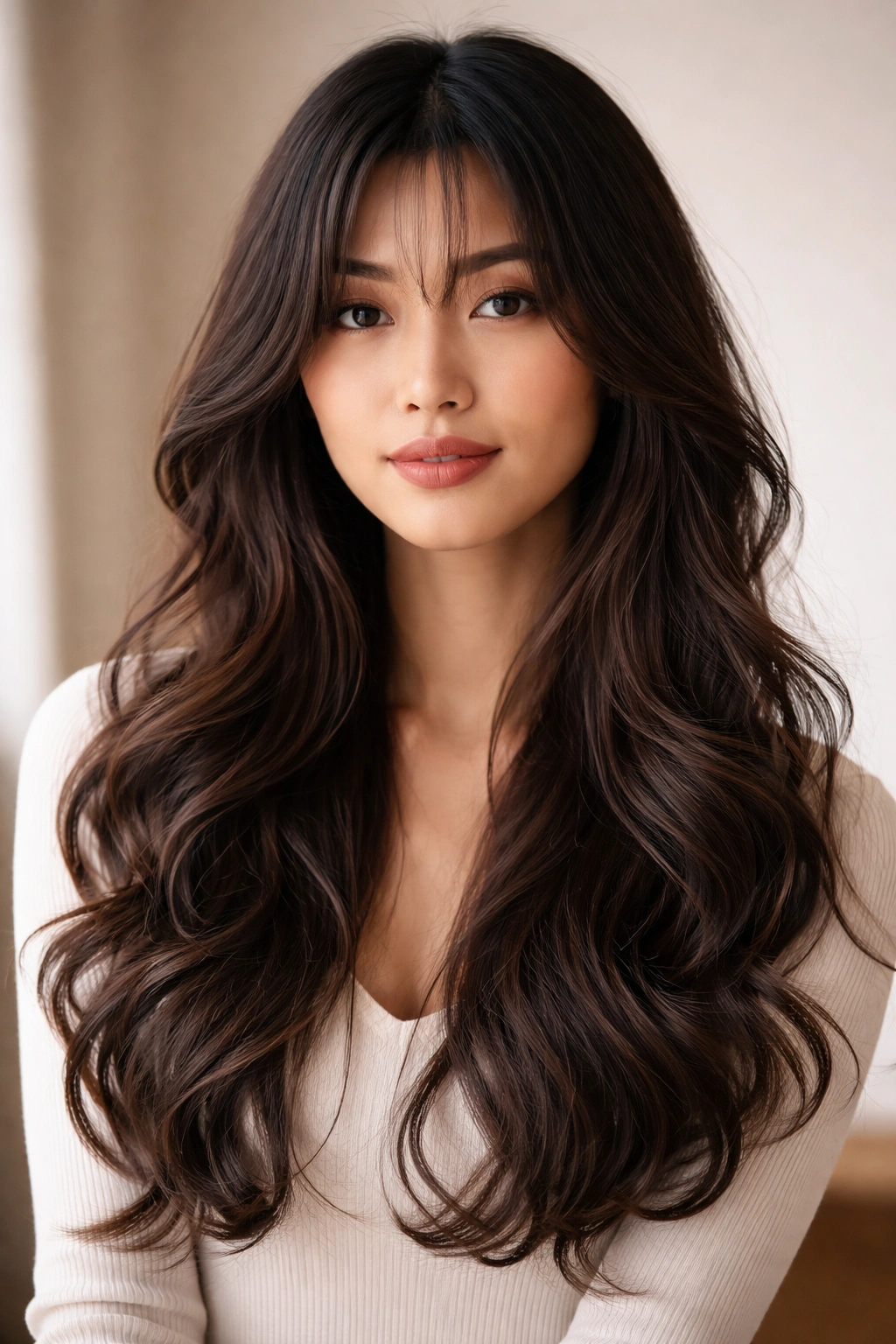
Picture this: your hair is down, the face is framed, and the bangs drift open in the middle instead of sitting in a hard straight line. That’s the charm of curtain bangs with loose curls. They soften the face without shouting for attention.
The only catch is length. Curtain bangs on straight Asian hair should usually be cut a touch longer than you think, because curls and blowouts shorten them fast. If the bangs are trimmed too short, they can spring right up and sit awkwardly above the cheekbone. No one needs that.
- Keep the bang pieces around lip to chin length before styling.
- Curl them with a small round brush or 1-inch iron away from the face.
- Use a pea-sized amount of styling cream on the ends, not near the roots.
- Blend the bangs into layers so the transition does not look chopped.
I like this look on oval and round faces in particular, because the opening in the middle draws the eye vertically. It’s a small change, but it makes the whole haircut breathe.
5. Half-Up Claw Clip Curls
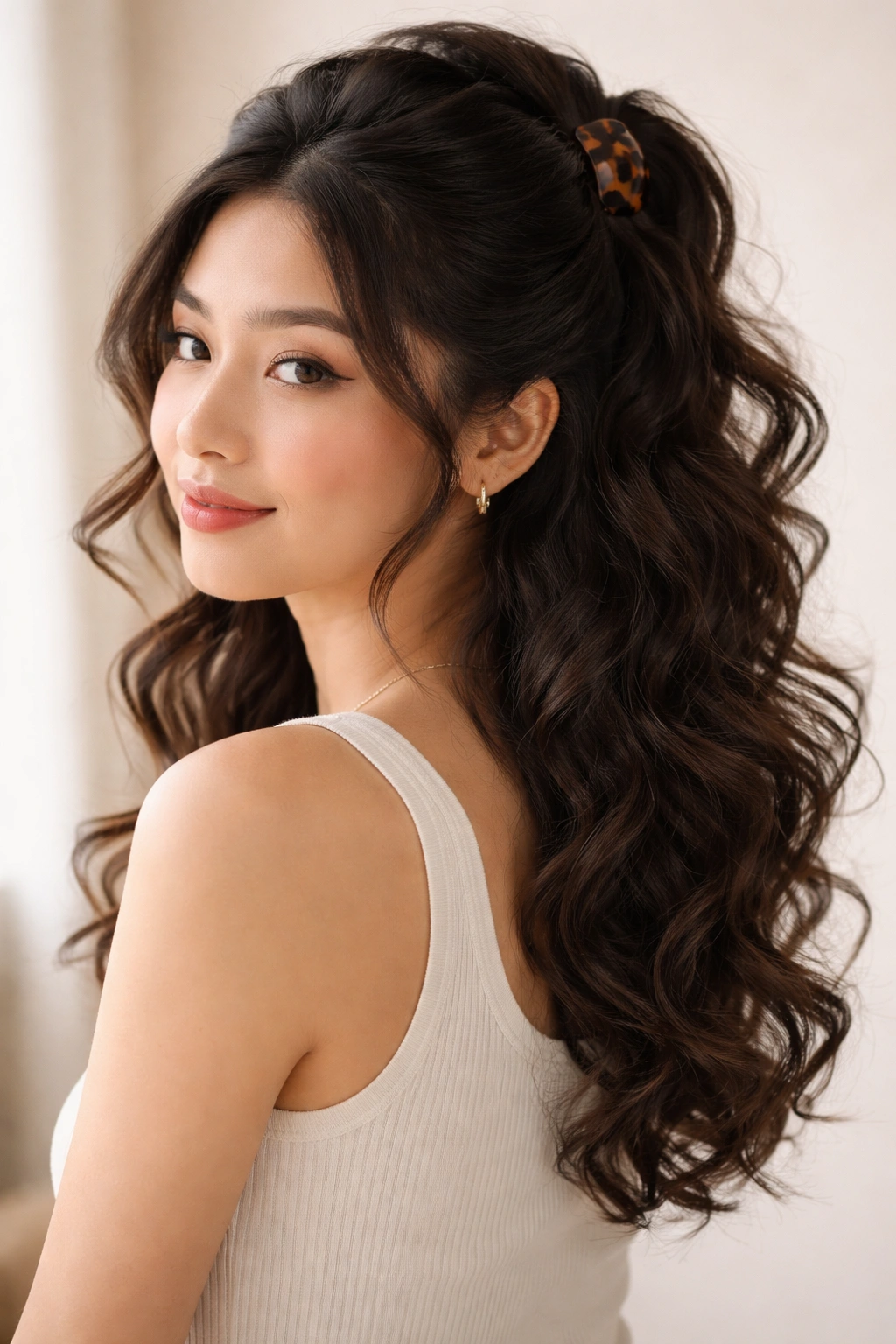
Half-up claw clip curls are one of those styles that looks casual until you notice how much shape it actually gives the hair. The top section lifts the crown, the clip keeps things off the face, and the loose bottom half lets the curls keep their movement.
This works especially well on Asian hair that’s thick through the middle or long enough to feel heavy when worn all the way down. The lift at the crown stops the style from sinking. That matters more than people think. If the top is too flat, even pretty curls can look tired.
I prefer a clip with a strong grip and a curved shape, usually around 3 to 4 inches wide for medium hair. Pull the top section back gently, twist once, and secure it high enough to show the ends of the curls underneath. Leave out two face-framing pieces if you want a softer finish. That tiny detail keeps the style from reading too strict.
It’s a good everyday style, but it also saves second-day curls. When the bottom is already a little messy, the clip gives the hair a reason to look intentional.
6. High Curly Ponytail with a Wrapped Base
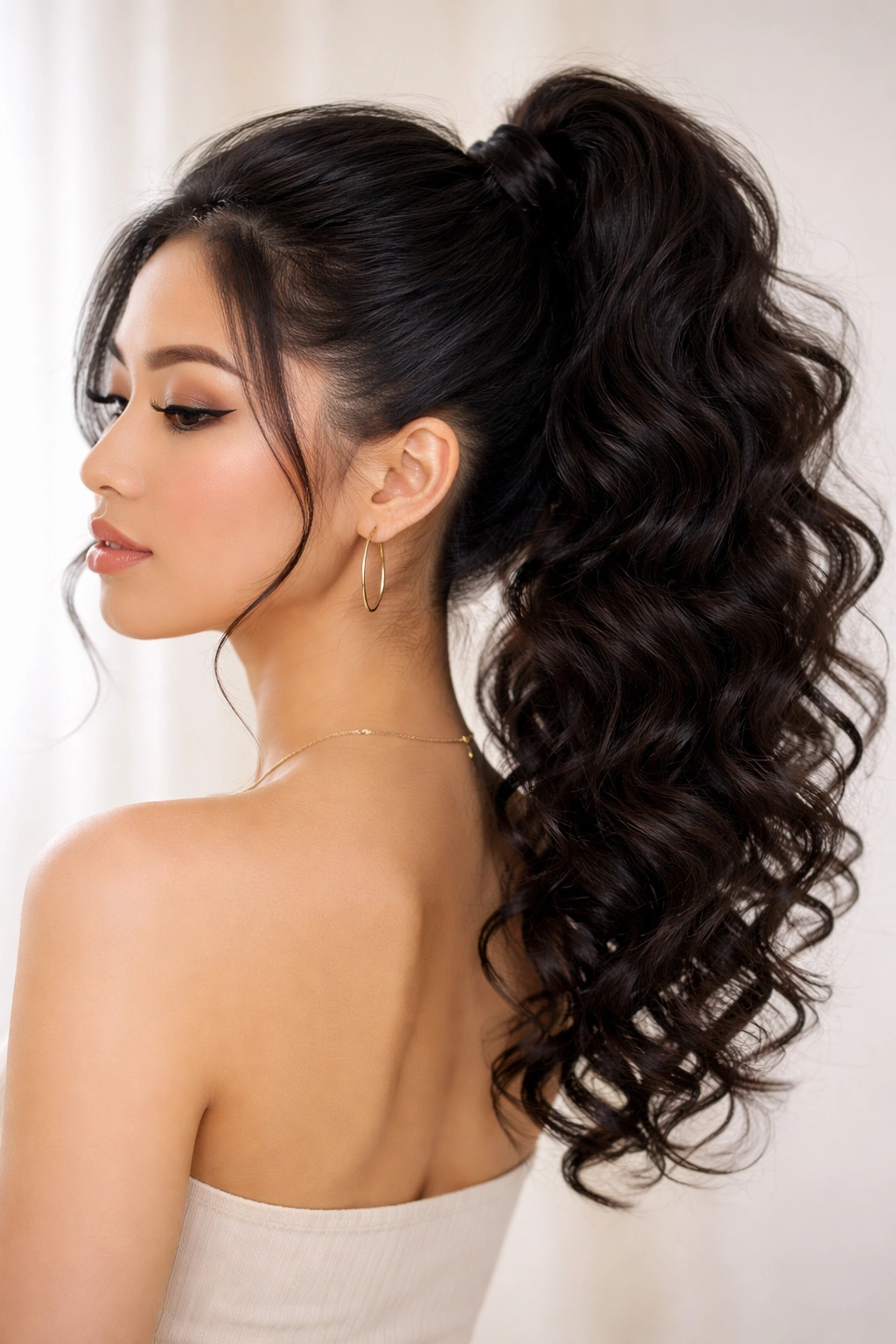
A high ponytail with curls is not the same thing as a sleek gym ponytail. This version wants volume at the crown and a wrapped base that hides the elastic, which gives the whole style a cleaner finish. On hair that holds bend poorly, the height helps the curls look fuller than they are.
Compared with a low ponytail, this one shows off the curl pattern instead of compressing it. That’s why I like it for thicker Asian hair that can feel heavy when worn loose. The height pulls the face up a bit, and the ends swing instead of hanging limp.
Use a brush only at the roots. Keep the body of the ponytail textured. Then take a 1-inch strip of hair from underneath, wrap it around the elastic, and pin it with a small bobby pin. That one move makes the style look finished. A little teasing at the crown helps too, but don’t go wild — a half-inch of lift is enough.
If you want something polished but not stiff, this is an easy winner.
7. Low Textured Bun with Face-Framing Pieces
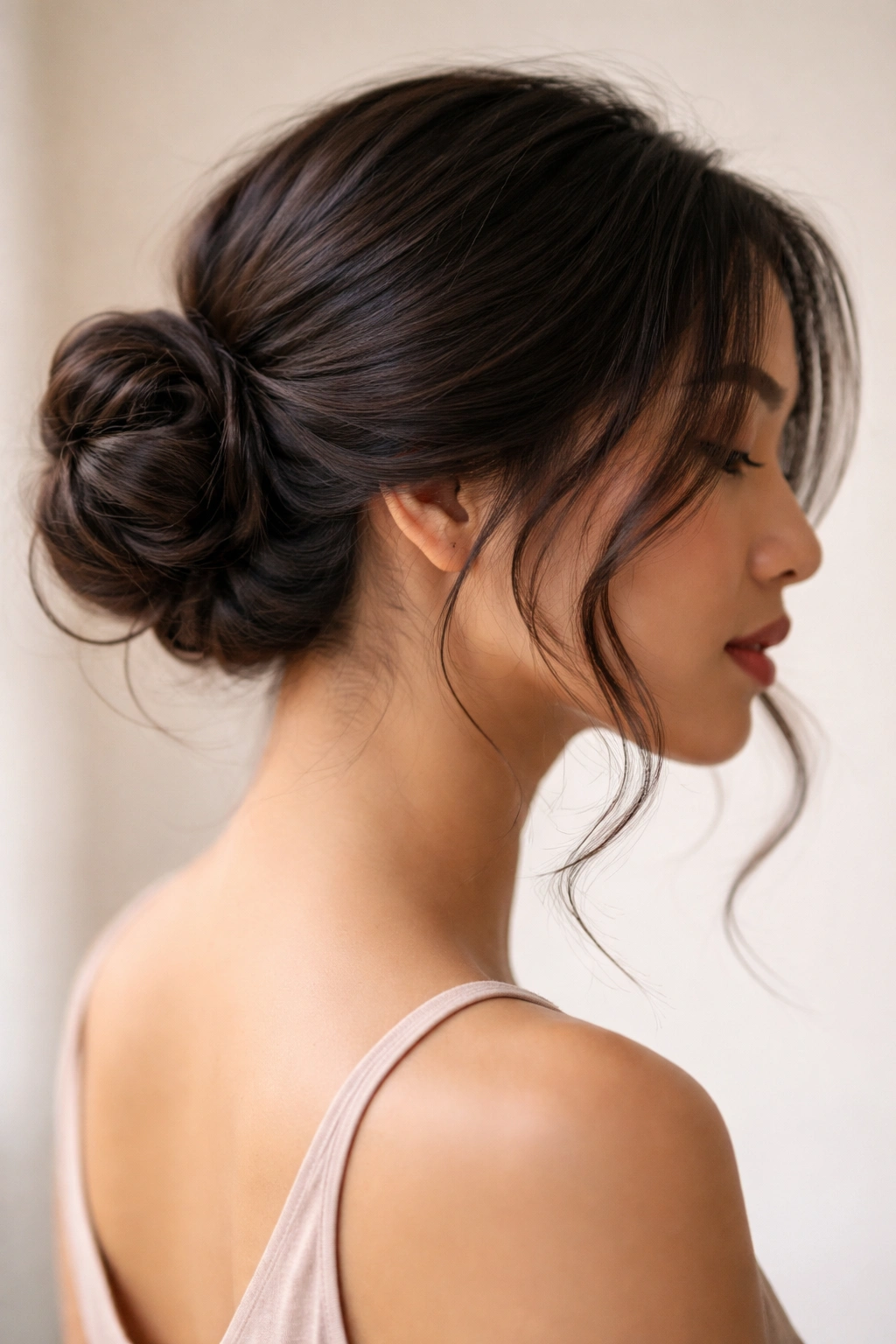
A low textured bun can look plain in a hurry if the hair is slicked back too hard. The better version keeps a little softness around the temples and leaves a few curled pieces near the jawline. That’s where the style comes alive.
Keeping It Soft, Not Tight
The bun should sit low, right near the nape, and it should look pinned rather than packed. I’d use two to four bobby pins for medium hair, more if the hair is dense or layered. Twist the lengths loosely before wrapping them into the bun so the texture stays visible.
This style is one of my favorites for formal events because it works with curly, waved, or permed hair without needing perfect symmetry. A little shine spray on the surface helps, but only a light pass. If you spray too much, the bun can look wet in a bad way.
Leave the front pieces loose and curl them with a small iron if needed. They should skim the cheekbones, not stick to the face. That one detail turns the bun from functional into flattering.
8. Curly Lob with Blunt Ends
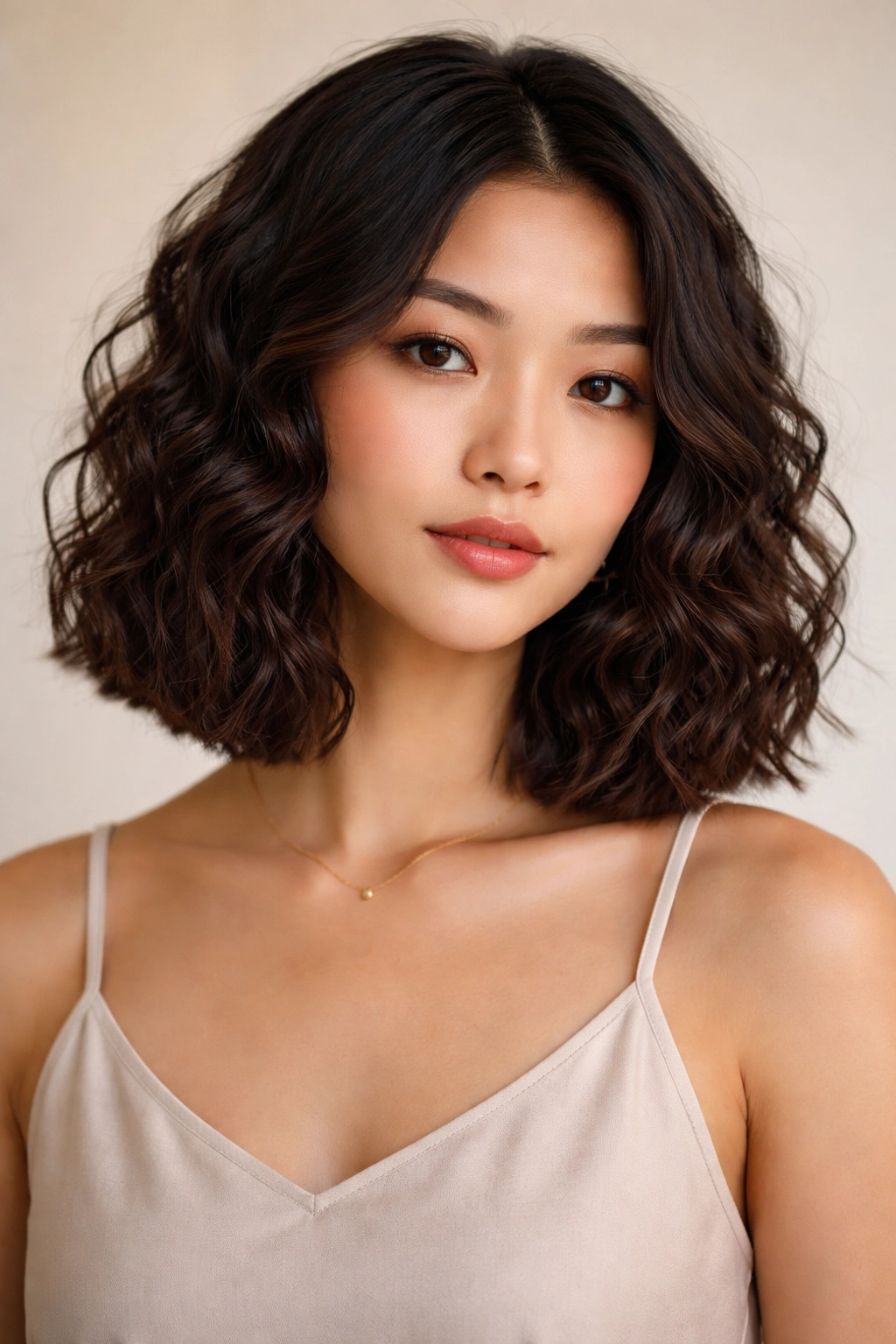
Can a lob feel curly without turning into a triangle? Absolutely, if the cut and curl placement are handled with some care. A blunt lob gives the hair a strong lower line, while the curls add movement above it.
The reason this shape works on Asian hair is simple: the blunt edge keeps fine or straight hair from looking wispy, and the curl adds enough texture that the haircut does not read heavy. I like it around collarbone length. Shorter than that, and the shape can puff out too much. Longer than that, and the lob starts losing its clear outline.
How to Style It
Curl the mid-lengths first, then leave the ends a little straighter for a modern finish. That keeps the look from becoming too round. A side part can make the lob feel softer, while a center part makes it sharper and cleaner.
Use a smoothing cream before heat styling, but go easy. Too much product on straight Asian hair can drag the curls down. A dime-size amount is usually enough. Clean lines matter here. Messy can work, but muddy cannot.
9. Spiral Ringlets with a Side Part
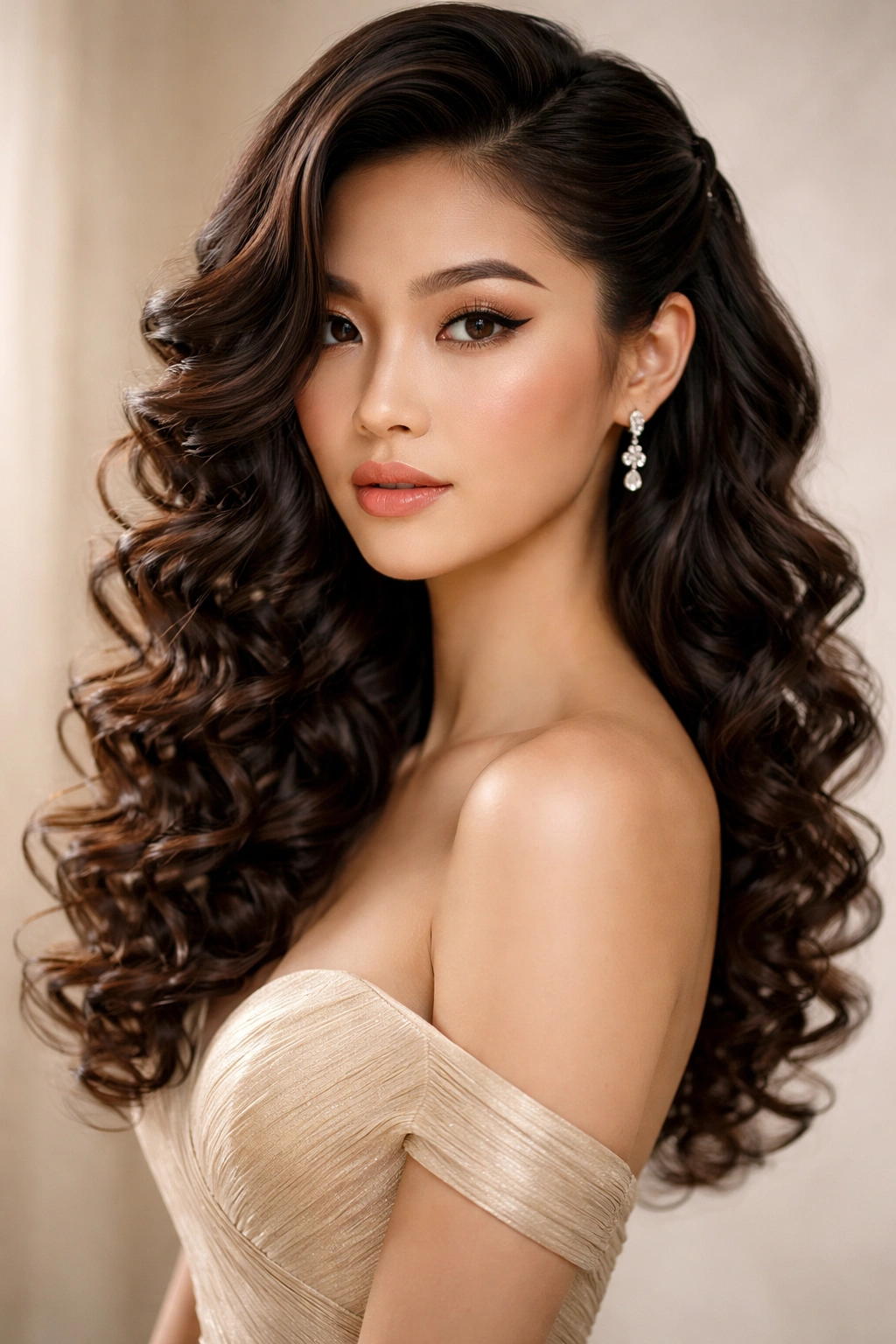
A deep side part gives spiral ringlets more drama than a center part ever will. The asymmetry builds height at the front and lets the curls cascade down one side of the face, which can be a nice way to add fullness where straight hair often looks too uniform.
This style suits hair that can hold a curl for more than an hour — permed hair, naturally wavy hair, or straight hair that has been prepped with the right heat protectant and set while warm. Use a 0.75 to 1-inch barrel if you want a tighter spiral. Anything bigger and the curl will drift toward a wave.
Pin the first few curls while they cool. Seriously, do not skip that part. A hot curl still thinks it’s malleable, and the pin helps it remember the shape you want. Once the curls are cool, shake them out with your fingers instead of a brush.
I like spiral ringlets when the goal is formal, a little glamorous, and a bit old-school in the best sense.
10. Wolf Cut with Loose Curls
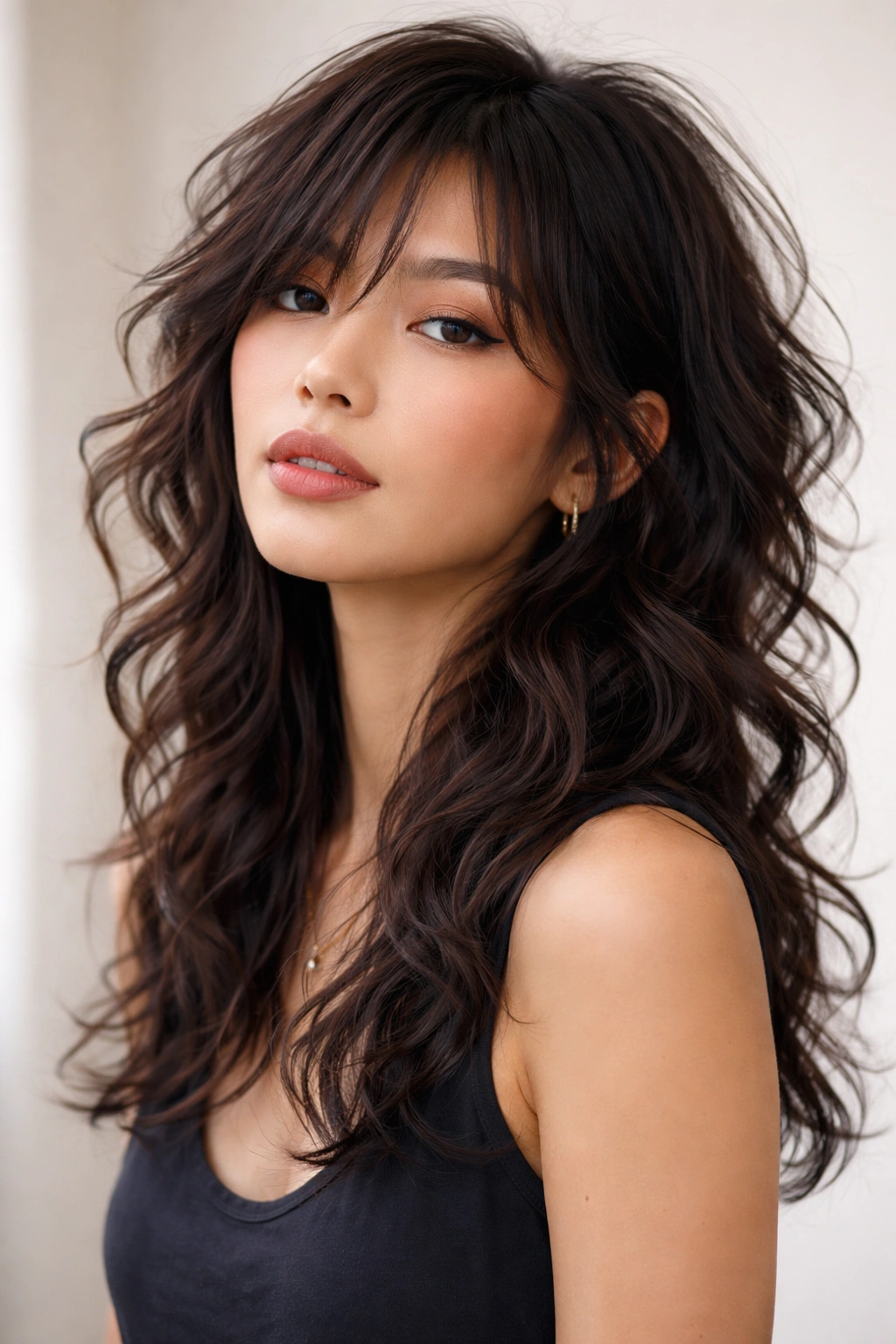
The wolf cut has bite because it’s messy by design. Shorter layers around the crown, longer pieces through the back, and enough texture to keep the shape from feeling stiff. On Asian hair, that can be a gift, especially if the hair is thick and prone to sitting like a sheet.
It does ask for confidence. A wolf cut is not the haircut you choose if you want everything sleek and quiet. It wants edge. The curls make it feel softer, though, which helps balance the sharper parts of the cut. I think it works best with loose curls or soft perm waves rather than tight ringlets, which can make the shape look too busy.
- Ask for short crown layers and longer lengths in the back.
- Style with mousse and a diffuser to keep the texture airy.
- Refresh with water and a tiny bit of leave-in cream on day two.
- Skip heavy oils near the roots; they flatten the top fast.
If your hair gets bulky at the sides, this haircut can actually help. The layers break up the weight instead of letting it sit there.
11. Braided Crown into Soft Curls
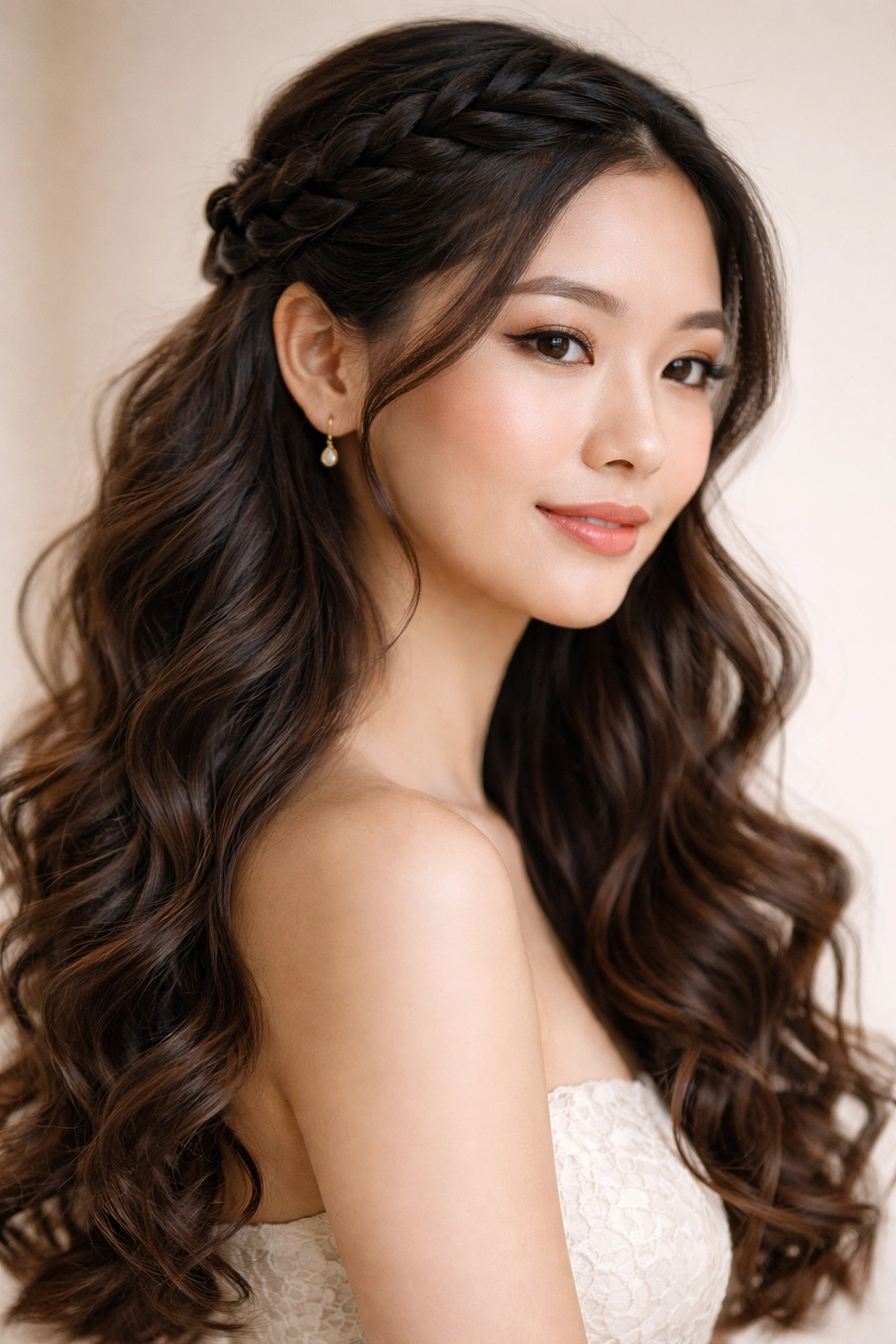
A braided crown gives soft curls a frame. That’s why I like it more than a plain half-up style when you want the hair to feel a little dressed up. The braid keeps the front controlled, while the curls through the back stay loose and touchable.
This is a nice choice for medium to long Asian hair because the braid can anchor hair that would otherwise slip out of clips. Start the braid just behind one ear, work it across the top, and pin it behind the other side. Keep the braid fairly flat against the head; a thick, chunky braid can take over the whole style.
Compared with a crown twist, a braid lasts longer and keeps the hair from sliding. That’s the practical part. The prettier part is the texture contrast — woven detail up top, softness below.
I’d leave the ends curled in wide sections so they don’t fight the braid. If you have fine hair, mist the braid with texturizing spray before pinning it. It gives the braid more grip and keeps it from looking like it’s trying too hard.
12. Shoulder-Length Flip-Out Curls
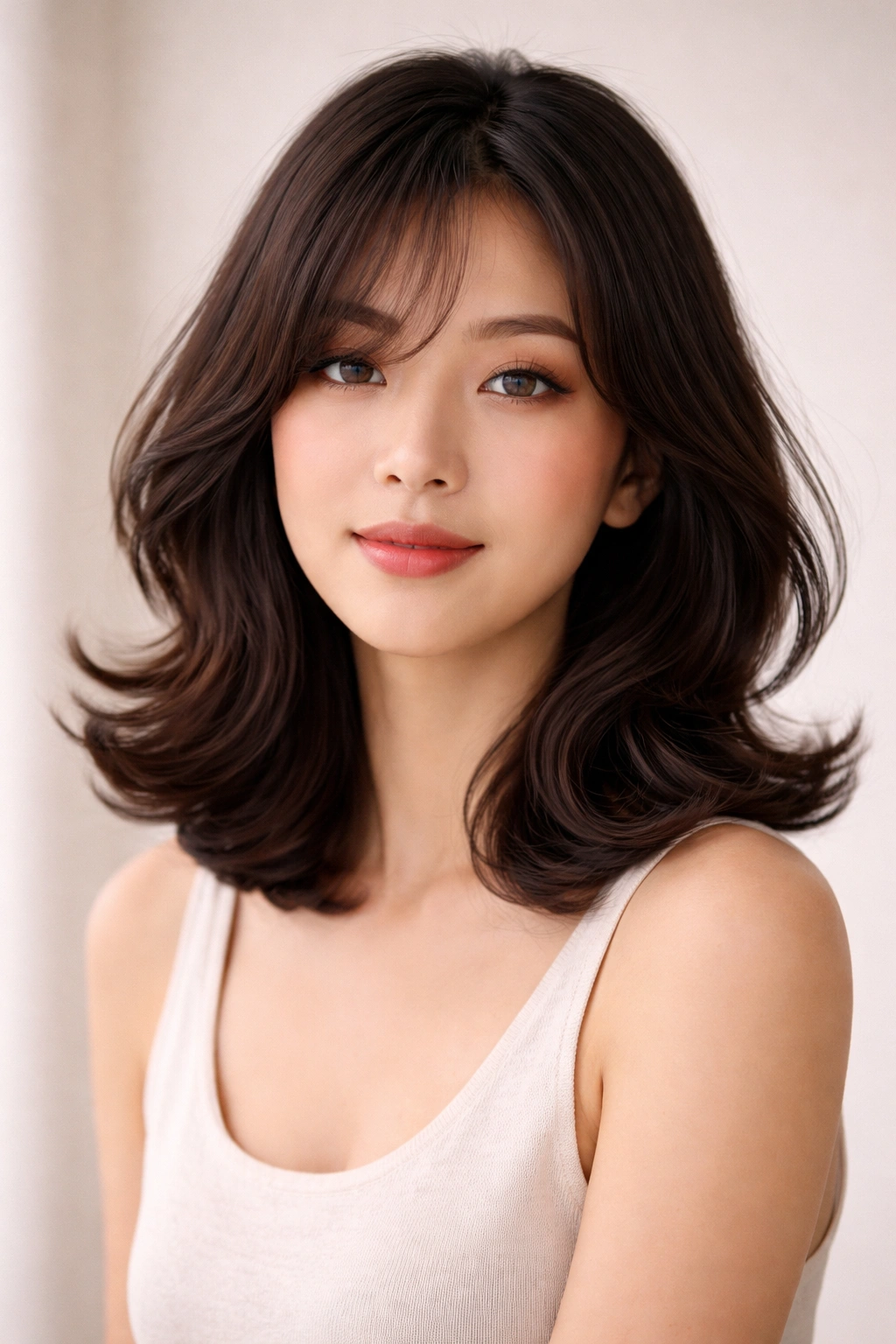
Shoulder-length hair with flipped-out ends has a certain retro energy that never really leaves. It’s tidy, but not stiff. The ends curve away from the neck and collarbone, which gives the haircut a little bounce even when the curl pattern itself is mild.
This shape is especially kind to straight Asian hair because it doesn’t require a full head of tight curls. You can create the flip with a round brush, a blow-dry brush, or a curling iron turned outward at the ends. The important part is direction. The end should turn away from the face, not under it.
The style looks best when the cut has some layers around the cheeks. Without those, the flip can seem abrupt. With them, the whole shape feels easy. I also like this on thick hair because the shoulder-length cut removes enough weight that the flip can actually stay visible.
It’s a low-drama hairstyle that still looks styled. That’s hard to beat.
13. Pixie with Finger Waves and Curls
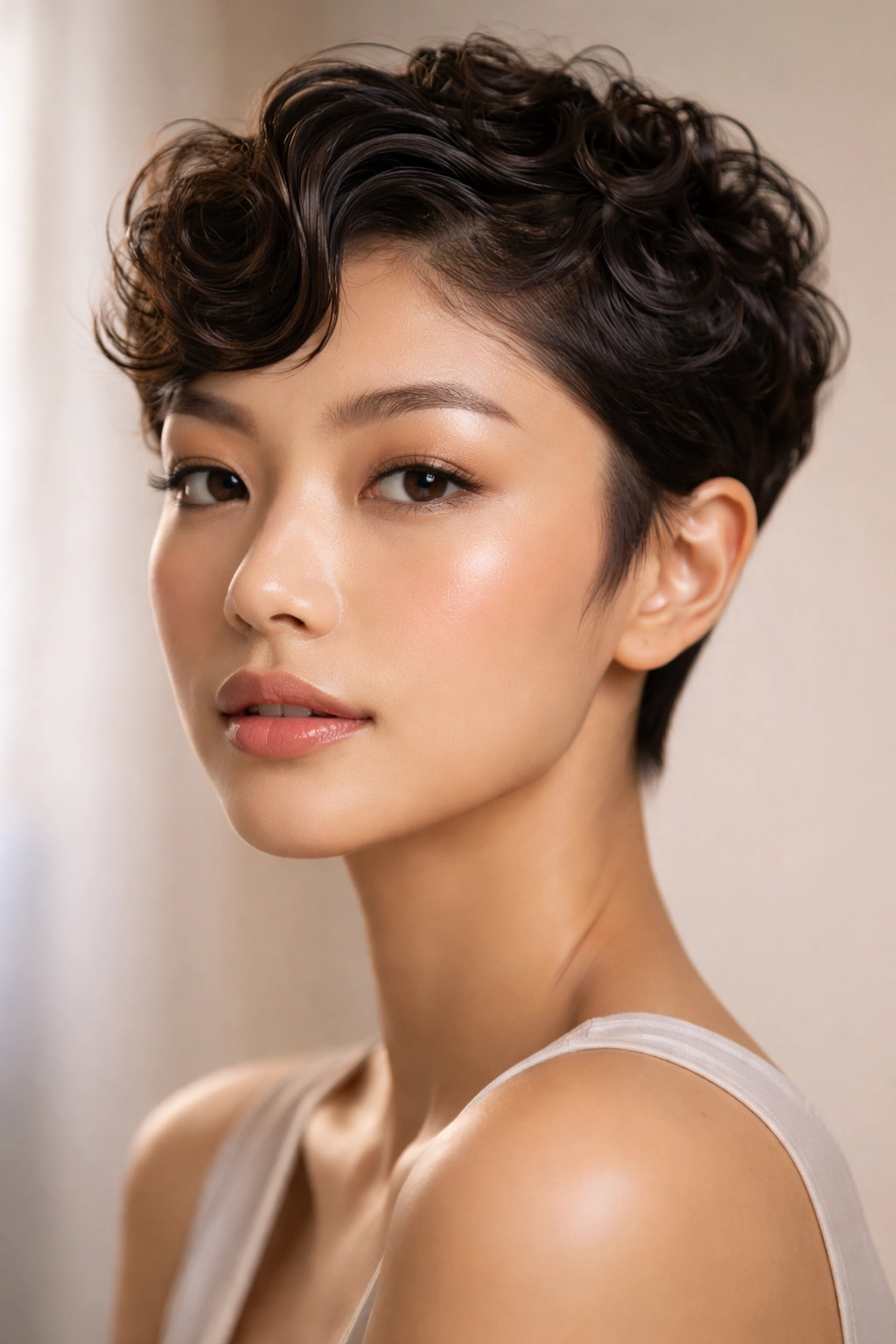
Can short hair carry curls? Yes, and it can look striking when the pixie has enough length on top to play with. The trick is to use the shape of the cut, not fight it. Finger waves at the front and small curls or bends through the crown give the style movement without making it fluffy.
What Makes It Work
The top should usually have at least 2 to 3 inches of length so the wave can bend and hold. Too short, and the curl disappears into the cut. Too long, and it stops reading pixie. That narrow window matters.
This style likes strong hold products. A small amount of gel at the roots and a touch of mousse through the top can help the shape stay put. Short hair collapses quickly when it’s overloaded, so use less than you think.
I like this on people who want something bold but low on daily fuss. Once the shape is in, a pixie with waves can look sharp all day. And yes, you will probably need a trim more often than with longer cuts. That’s the trade-off. Worth it, if you love short hair.
14. Deep Side-Swept Glam Curls
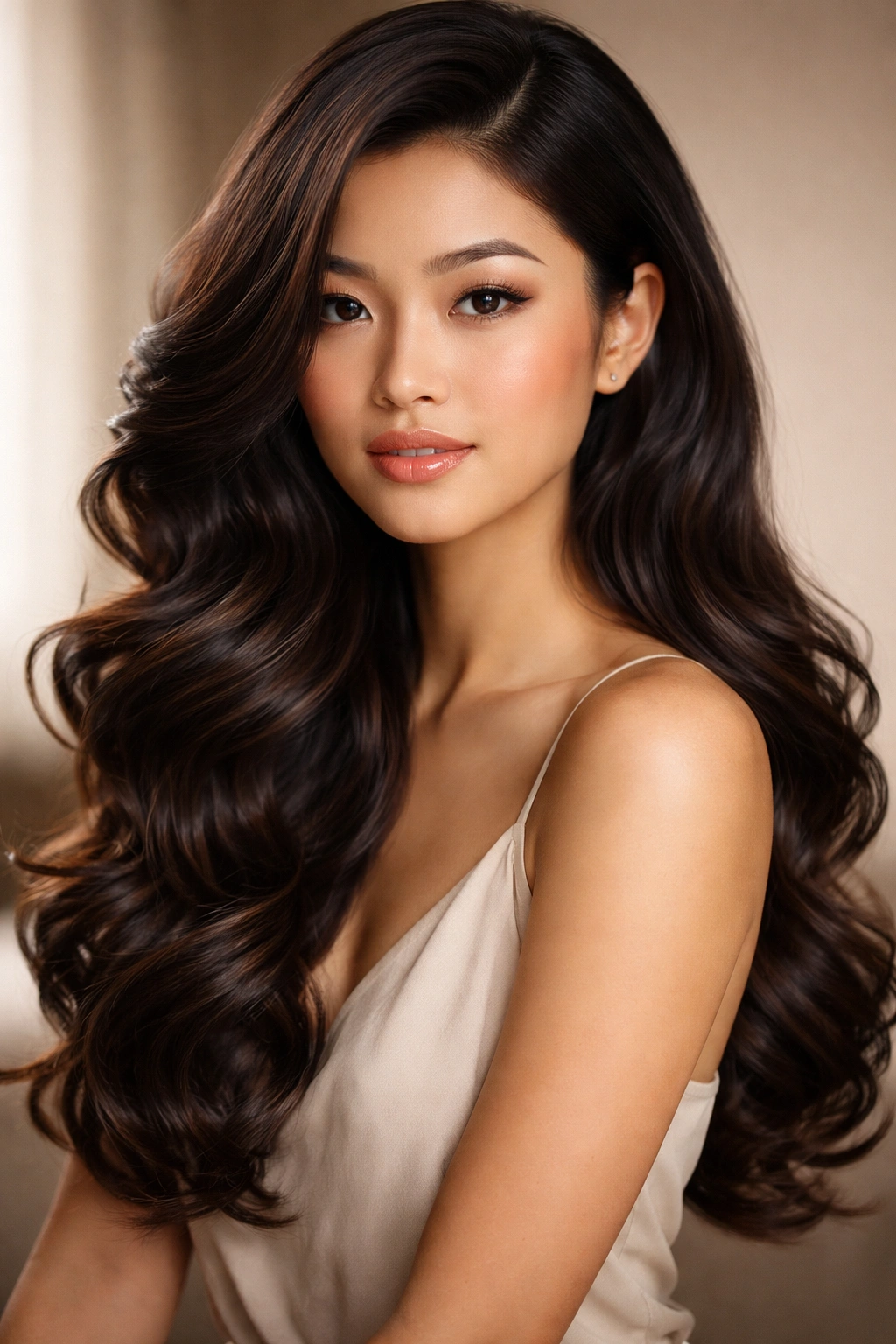
Deep side-swept curls have real presence. They move the eye across the face, create height on the heavier side, and give long hair a sense of direction that straight-down styles often miss. If you want something polished for a formal event, this is one of the easiest ways to get there.
The side part should start farther over than you think — usually about 2 to 3 inches from the natural center, depending on your face shape. Then the curls fall to one side in a smooth sweep. I prefer larger curls here, around 1.25 inches, because tiny curls can look too busy once they’re brushed out.
A little shine serum goes a long way on Asian hair, especially if the strands are thick and glossy already. You want light reflection, not grease. Pin the heavier side behind the ear or at the nape if you want the face exposed more clearly. That gives the style a finished line.
This is the look I’d choose when you want the hair to feel dressed up without looking rigid.
15. Bubble Ponytail with Curly Sections
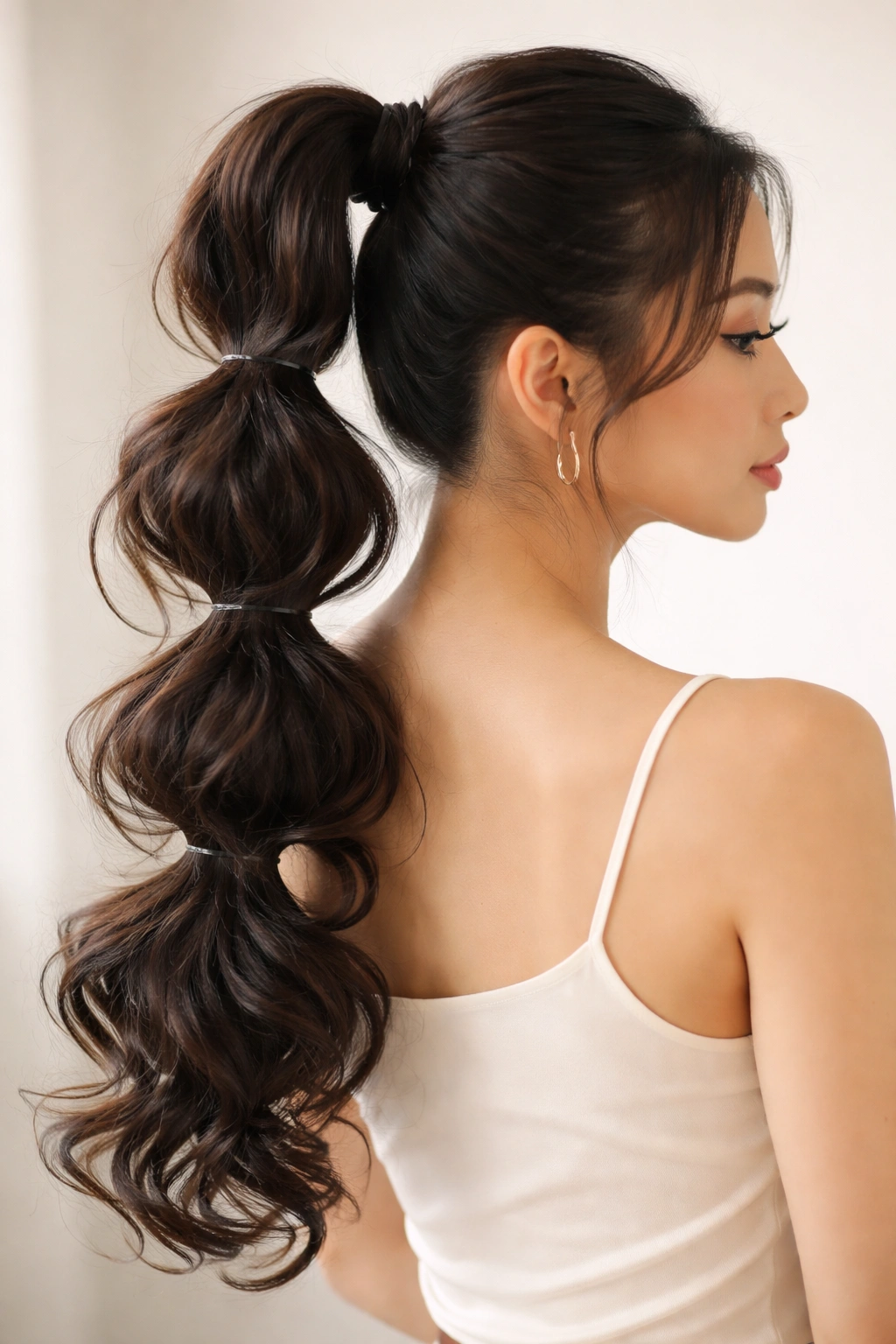
A bubble ponytail sounds playful because it is, but there’s more structure here than people expect. The curls make the sections puff naturally, so the “bubbles” look fuller with less teasing. That’s a nice fit for long Asian hair that tends to sit flat in a single ponytail.
I like starting with a high or mid-height ponytail, then placing elastics every 2 to 3 inches down the length. After each elastic goes in, gently pull the section apart with your fingers so it rounds out. Don’t yank. You’re shaping, not stretching.
- Use small clear elastics or soft bands.
- Curl the ponytail before sectioning if you want extra volume.
- Wrap hair around the top elastic to hide it.
- Tug each bubble from the sides, not the middle.
The style lands somewhere between fun and practical. It keeps the length controlled, but it still shows off movement. Great for long straight hair that gets heavy when worn loose. Also good when you want a high-energy look without braids taking over the whole head.
16. Twin Braids into Curly Ends
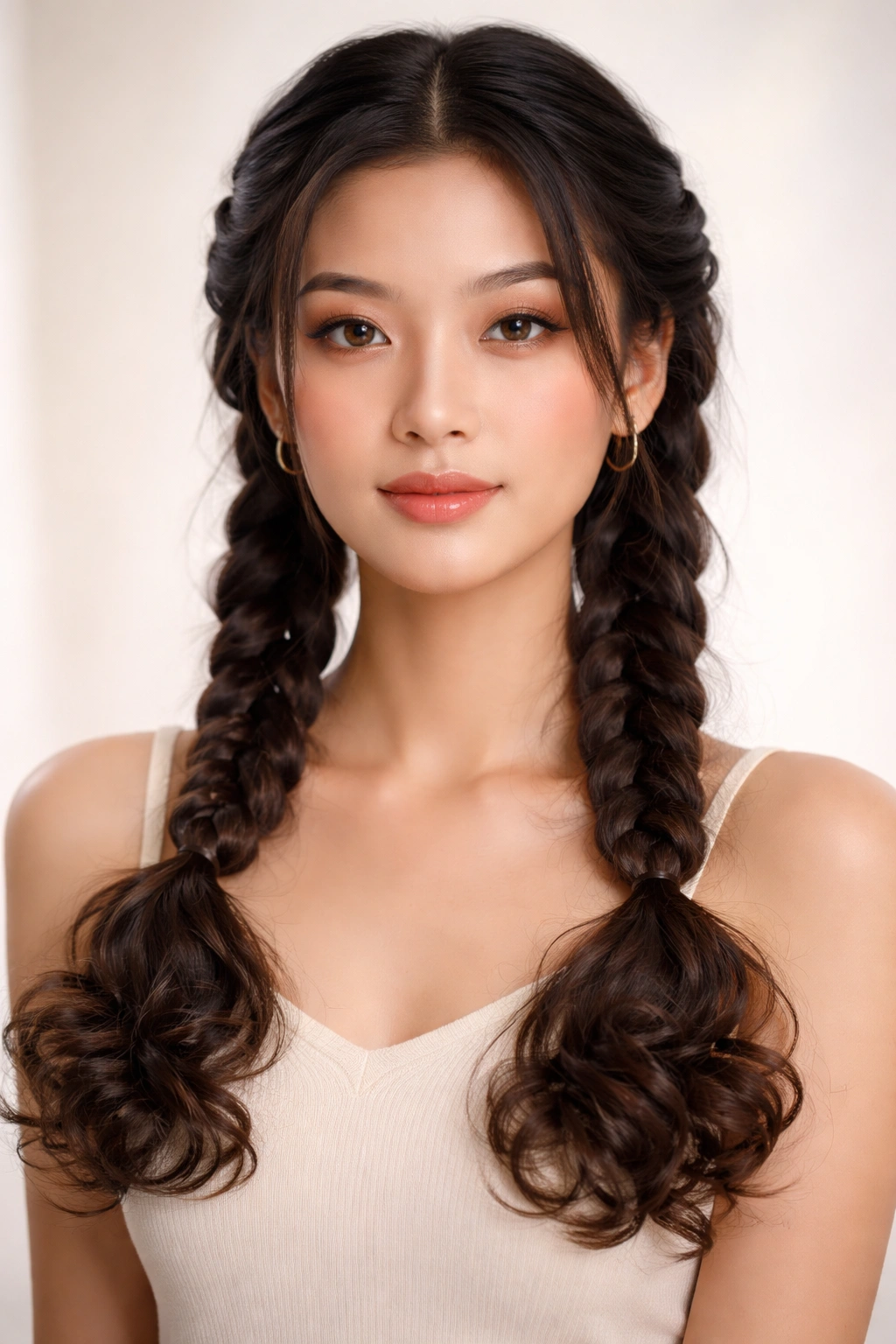
Twin braids are one of those styles that can look sporty, sweet, or a little edgy depending on how tight you make them. Keep them loose near the scalp and let the ends curl, and the whole thing feels softer. Tight braids, straight ends — that’s a different mood entirely.
How to Keep the Part Clean
Start with a neat center part, then braid each side from the front hairline down to just below the ear. Stop there. Leave the remaining length free so the curls can show. If the hair is thick, this is a smart way to control the top while keeping the bottom airy.
I’d avoid braiding hair that’s soaking wet. It can leave weird dents and make the ends frizz once they dry. A light mist of water is fine if you need to smooth the sections, but the hair should still feel mostly dry before you start.
This style is good for active days, travel, or any time you want curls that stay out of your face. It also works well with permed hair because the braid adds structure and the ends still keep their bounce. Simple. Not fussy. That’s the appeal.
17. Wet-Look Defined Curls
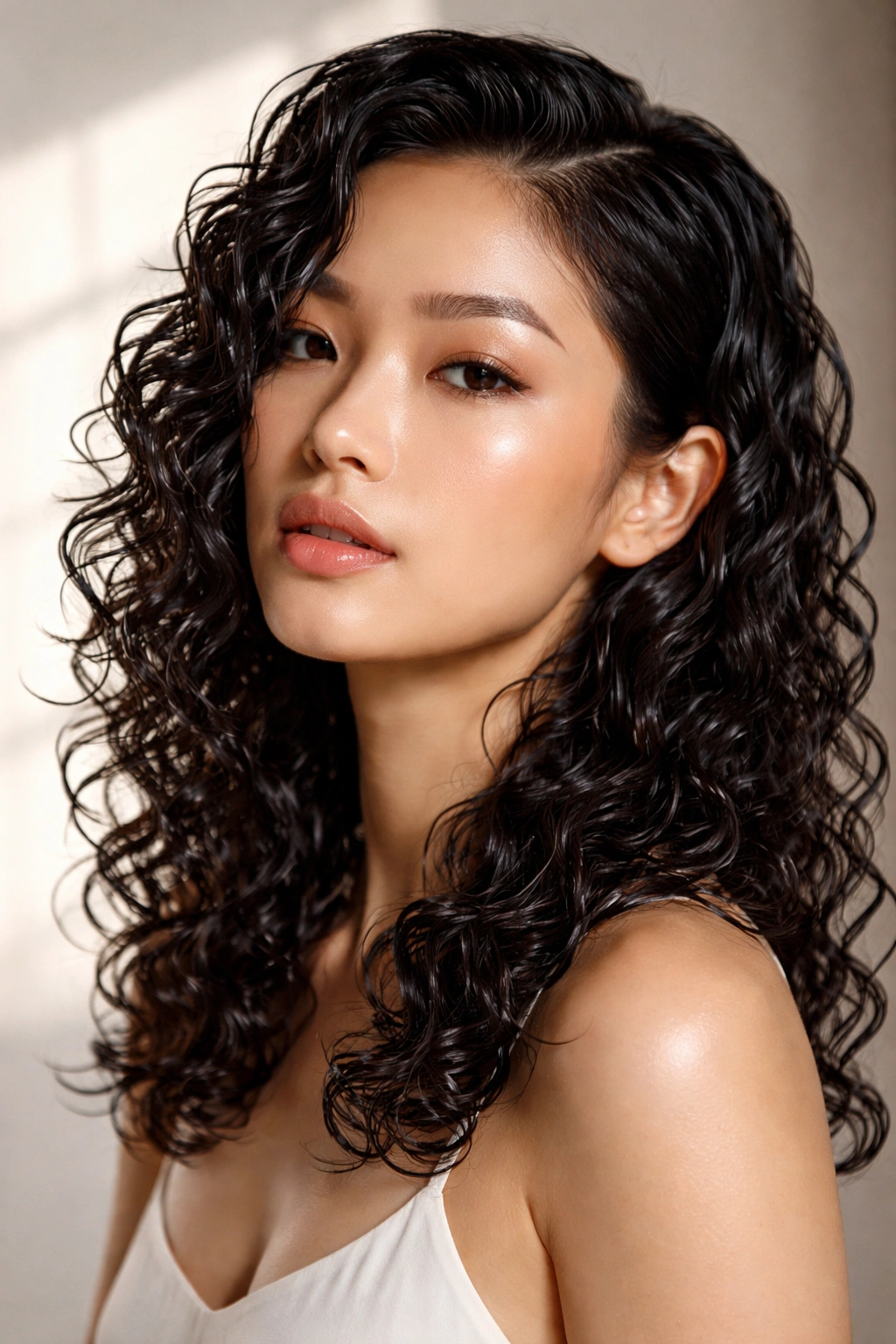
Wet-look curls are not for everyone, and that’s part of why I like them. The finish is sleek at the roots, shiny through the lengths, and more defined than fluffy. On Asian hair with a curl pattern that tends to separate or frizz, the gelled finish can actually look cleaner than a brushed-out style.
The trick is using enough product to create a cast without drowning the hair. Apply gel to damp curls, scrunch, then let the hair dry until it feels firm. After that, break the cast gently with dry hands or a drop of serum. Do not rush this part. If you touch the curls while they’re still wet and soft, they can puff up in ugly ways.
What to Watch For
Use a diffuser on low heat if you want more control at the roots. A few clips at the crown can help lift the top while it dries. If the hair is very thick, divide it into sections and work the gel through each one. That keeps the product from sitting on the surface and turning sticky.
I like this style on naturally curly or permed Asian hair more than on hair that has to be forced into curl. It rewards the hair that already wants to bend.
18. Long Layered Perm with Airy Volume
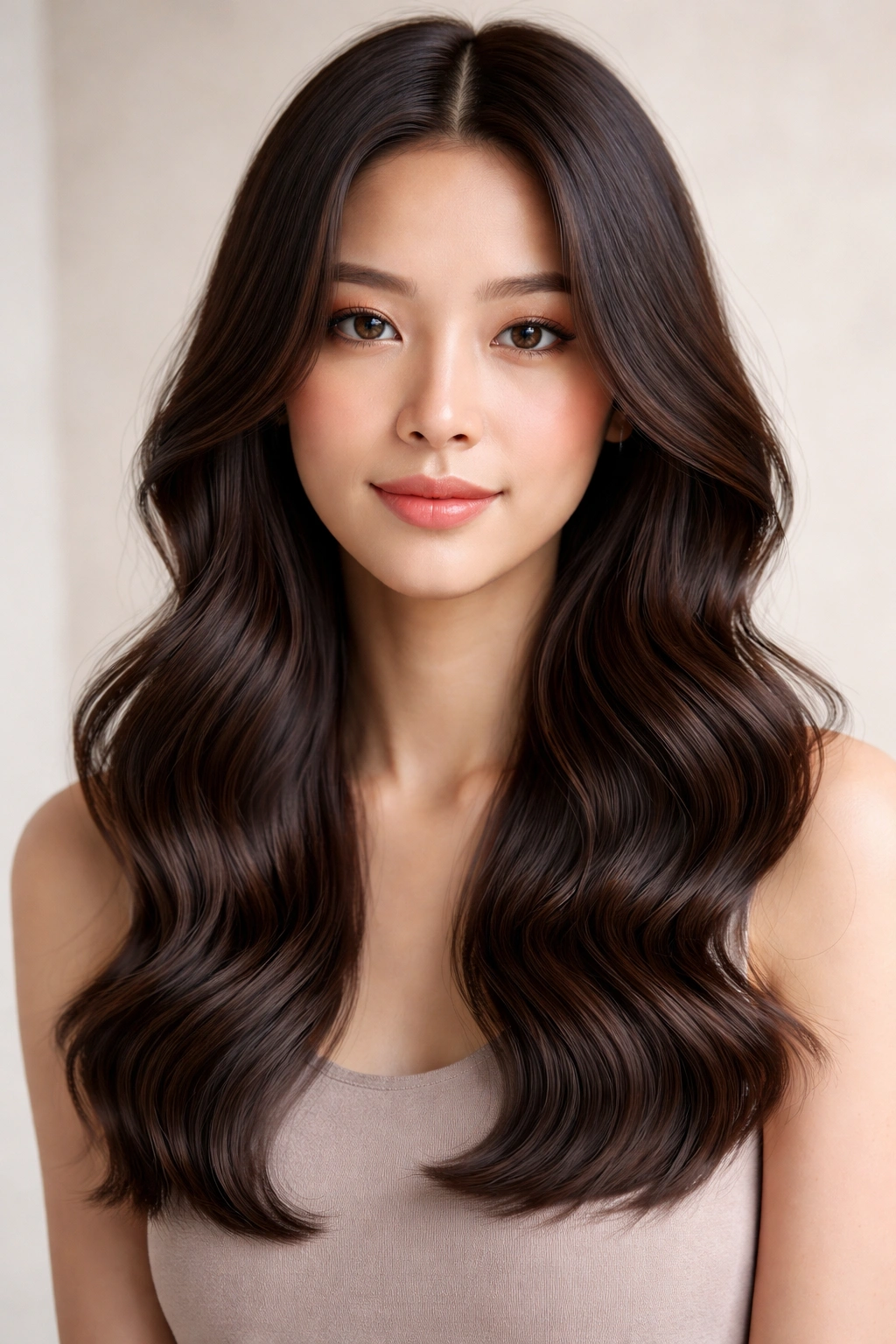
A long layered perm is the style for someone who wants curls to be part of the haircut, not an afterthought. The layers keep the body from turning triangular, and the perm gives the hair a shape that lasts without daily heat. On straight Asian hair that resists curling, that can save a lot of time.
Compared with a single-length perm, layers make the whole look lighter around the face and shoulders. I’d ask for the layers to start around the chin or collarbone, depending on length, so the curls can stack without puffing too wide at the sides. The curl size matters too. Looser rods give a soft bend; smaller rods make a tighter, springier texture.
This style suits people who don’t want to reset their hair every morning. You can wash, scrunch, and go. That’s the charm. It does need maintenance, though — trims every 8 to 12 weeks keep the shape from sagging, and a gentle sulfate-free shampoo helps the curls stay less dry. If the hair is fine, use a lighter cream. If it’s thick, the curl can take more moisture.
For anyone who likes long hair but hates how flat it can look, this is the one I’d put near the top of the list. It has body, movement, and enough softness to feel easy rather than theatrical. And that’s a nice place to end: curls that look like they belong there, not curls that had to be convinced.
