



Short afro hairstyles for natural hair work best when they respect the curl pattern instead of fighting it. That sounds obvious, but a lot of styles still get built around straight-hair habits: too much tension at the roots, too much product at the ends, or a shape that looks neat for ten minutes and then caves in.
Shrinkage is part of the deal. So is density. And once you stop treating those things like problems, the whole category opens up. A tight coil, a soft puff, a tapered cut, a little side part, a few flat twists — each one changes the silhouette in a different way, which is exactly why short natural hair can look so good when the shape is doing the heavy lifting.
The styles below lean into that. Some are fast. Some take a little more hand work. A few are the kind of styles you do when your hair is having one of those stubborn mornings and you want something that still looks intentional by lunch. Keep a spray bottle, a light leave-in, and a rat-tail comb nearby. The rest is mostly about choosing the right shape.
1. Tapered Short Afro Hairstyle for Natural Hair
A tapered cut is one of those styles that makes short coils look fuller without asking them to do extra work. The sides are kept closer to the head, the nape is clean, and the crown gets to stay soft and rounded. That contrast is the whole point.
Why the taper works so well
When the sides are trimmed down, the eye goes straight to the top. That makes even a few inches of curly length look deliberate instead of accidental. It also keeps the shape from turning into a puffed-out triangle, which is the fate of a lot of short cuts after a few days of wear.
The best version of this style has a little height at the crown and a neat outline around the ears. Not sharp. Just tidy. If you like your natural hair to look fresh with minimal styling, this is one of the smartest cuts you can ask for.
What to ask for
- Keep the top rounded, not boxy.
- Taper the nape and temples low.
- Leave enough length on top for coil definition or a soft twist-out.
- Ask for a clean outline around the hairline, but not a hard line if you want a softer finish.
- Use a curl cream on damp hair, then lift the roots with a pick once the hair is dry.
Best tip: a tapered short afro holds its shape longer when the top is left a little longer than you think you need. Too short and the style loses its contrast fast.
2. Wash-and-Go Mini Afro
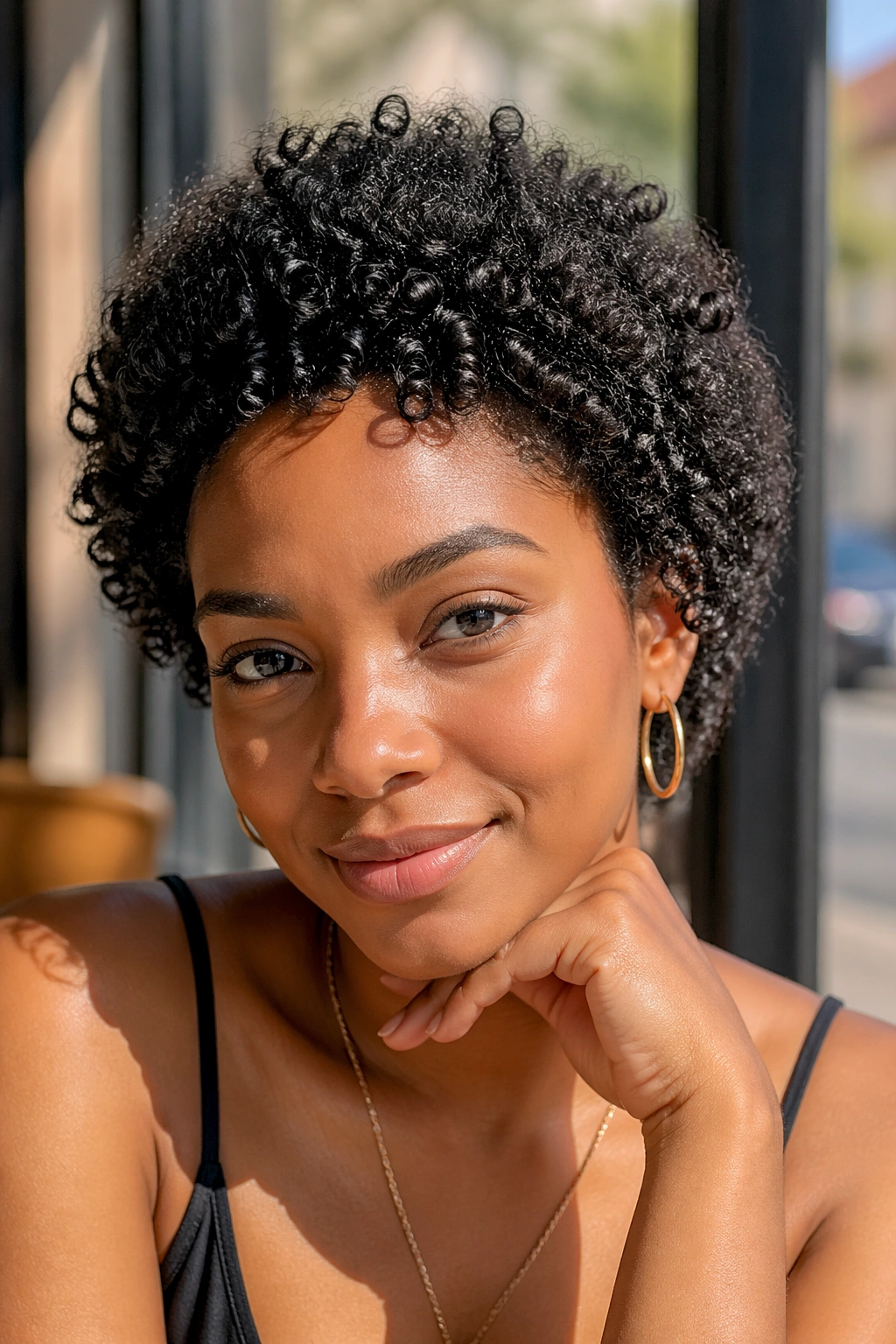
Can short natural hair look defined without turning into helmet hair? Yes, if you keep the product light and work in sections. A wash-and-go on a mini afro is really about clumping the curls enough to show their pattern, then letting the silhouette stay soft.
What makes it look clean instead of crunchy
The first mistake people make is piling on product all at once. Don’t. Start with water, then a leave-in, then a gel or mousse that gives hold without making the curls feel sticky. If your hair is very coily, raking product through with your fingers usually works better than rough combing, which breaks up the clumps before they set.
Drying matters, too. Air-drying keeps the shape soft, but it can leave the roots flat if you never touch them. A diffuser on low heat gives more lift at the crown and helps the style last longer. That’s especially useful when the hair sits close to the head and every little bend shows.
What to use on damp curls
- A light leave-in conditioner.
- A curl cream with enough slip to coat the strands.
- A gel or foam with flexible hold.
- A spray bottle for rewetting sections that start drying too fast.
- A diffuser if you want more root lift.
Best tip: once the curls form a cast, leave them alone. Picking at them before they dry usually creates frizz in the top layer and makes the shape collapse faster.
3. Two-Strand Twist-Out Fro
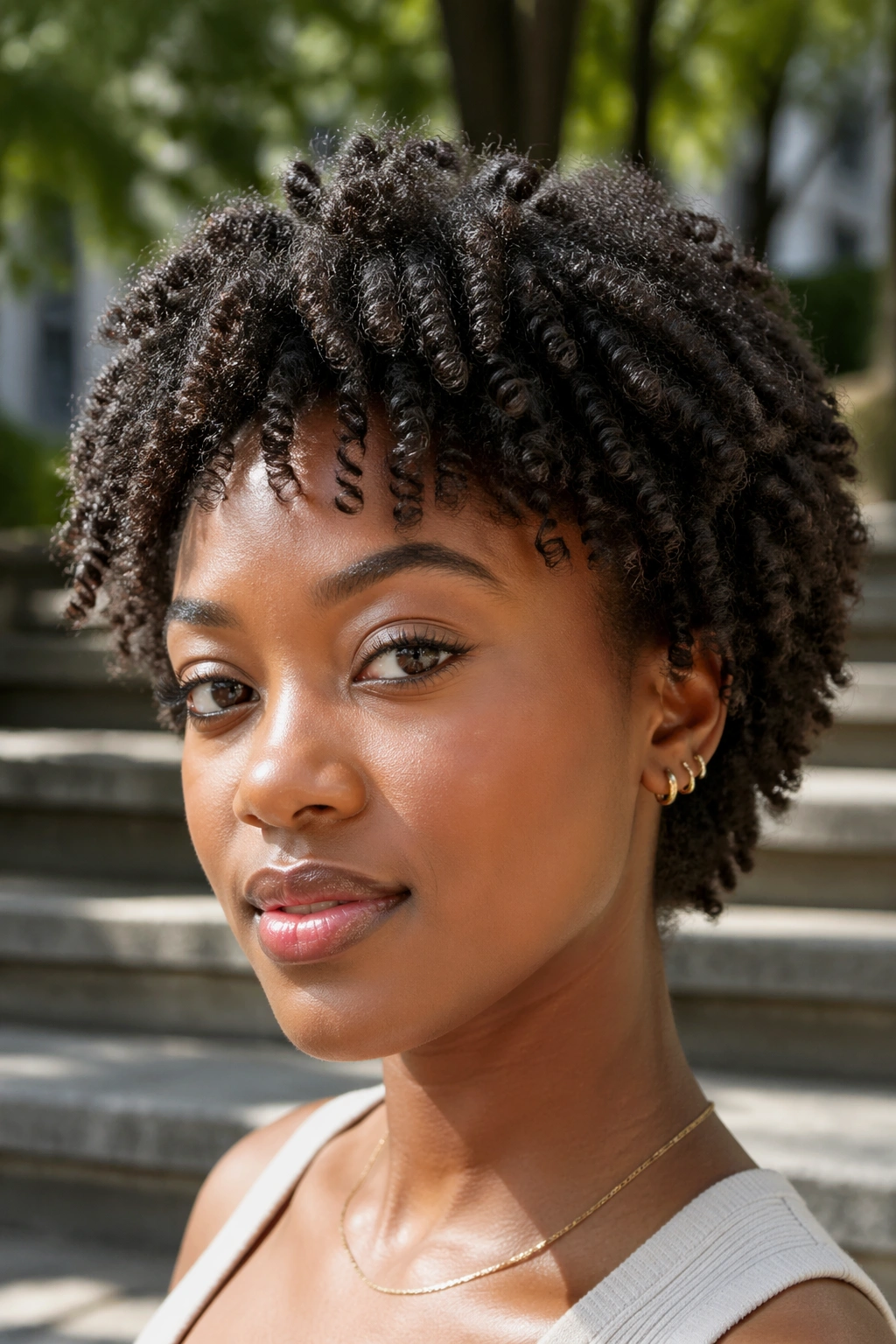
If your hair looks good the minute the twists come out and then gets fuzzy too soon, the issue is usually either twist size or dryness. A two-strand twist-out gives short natural hair a little stretch, a little texture, and a shape that feels softer than coils but still defined.
The part people rush
Twists on short hair need enough product to hold the strands together, but not so much that they stay damp forever. Medium sections usually work better than tiny ones, because tiny twists can frizz up before the interior dries. And yes, the hair has to be fully dry before you unravel it. Not mostly dry. Fully dry.
The way you separate matters, too. One pass with oiled fingertips is enough. If you keep pulling apart the twists over and over, you’ll turn the edges fuzzy and destroy the clean bend pattern that makes the style look good in the first place.
What gives the best shape
- Twist on damp, not soaking, hair.
- Use medium-sized sections for a fuller finish.
- Set the twists in the direction you want the final shape to fall.
- Let the hair dry overnight or until every twist feels cool and dry to the touch.
- Separate each twist only once, gently.
Best tip: a twist-out on short hair looks best when the ends are slightly tapered and not over-separated. A little frizz at the edges is fine. Flat, overhandled twists are not.
4. Finger Coils for Maximum Definition
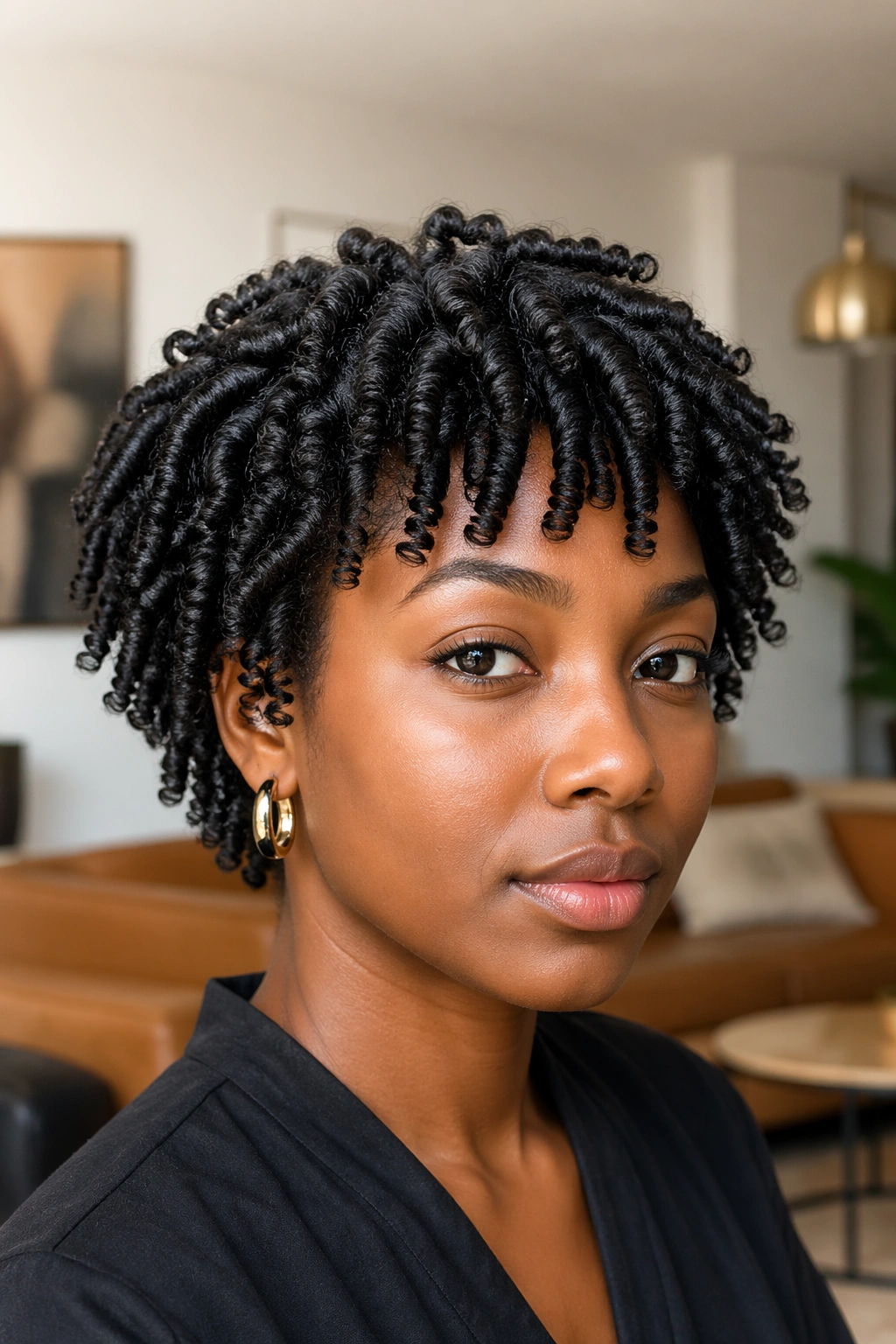
Finger coils are the cleanest short natural style when you want every curl to read. They take time. No way around that. But they give you a neat, springy finish that looks especially good on short coils and teeny weeny afros.
How to get clean coils without stiffness
Work on very damp hair. Each section should have enough slip to glide between your fingers, but not so much water that it drips down your neck. Use a lightweight gel or curl custard, then coil the strand around your finger from root to tip until it wants to wrap on its own.
Small sections matter here. Too large, and the coil loosens before it dries. Too tiny, and you’ll spend forever on your head. The sweet spot is usually small enough that each coil stands on its own when you let go, but not so small that the style turns stiff and poky.
What to watch for
- Use a comb once at the start, not repeatedly.
- Coil in the same direction across each section for a uniform look.
- Keep product off the scalp; it belongs on the strands.
- Dry fully before separating or fluffing.
- If the coils feel too hard, scrunch them lightly after they dry or use less gel next time.
Finger coils are not the fastest style on this list. They are, however, one of the best when you want your short afro to look deliberate and crisp instead of airy and loose.
5. Afro Puff on Short Natural Hair
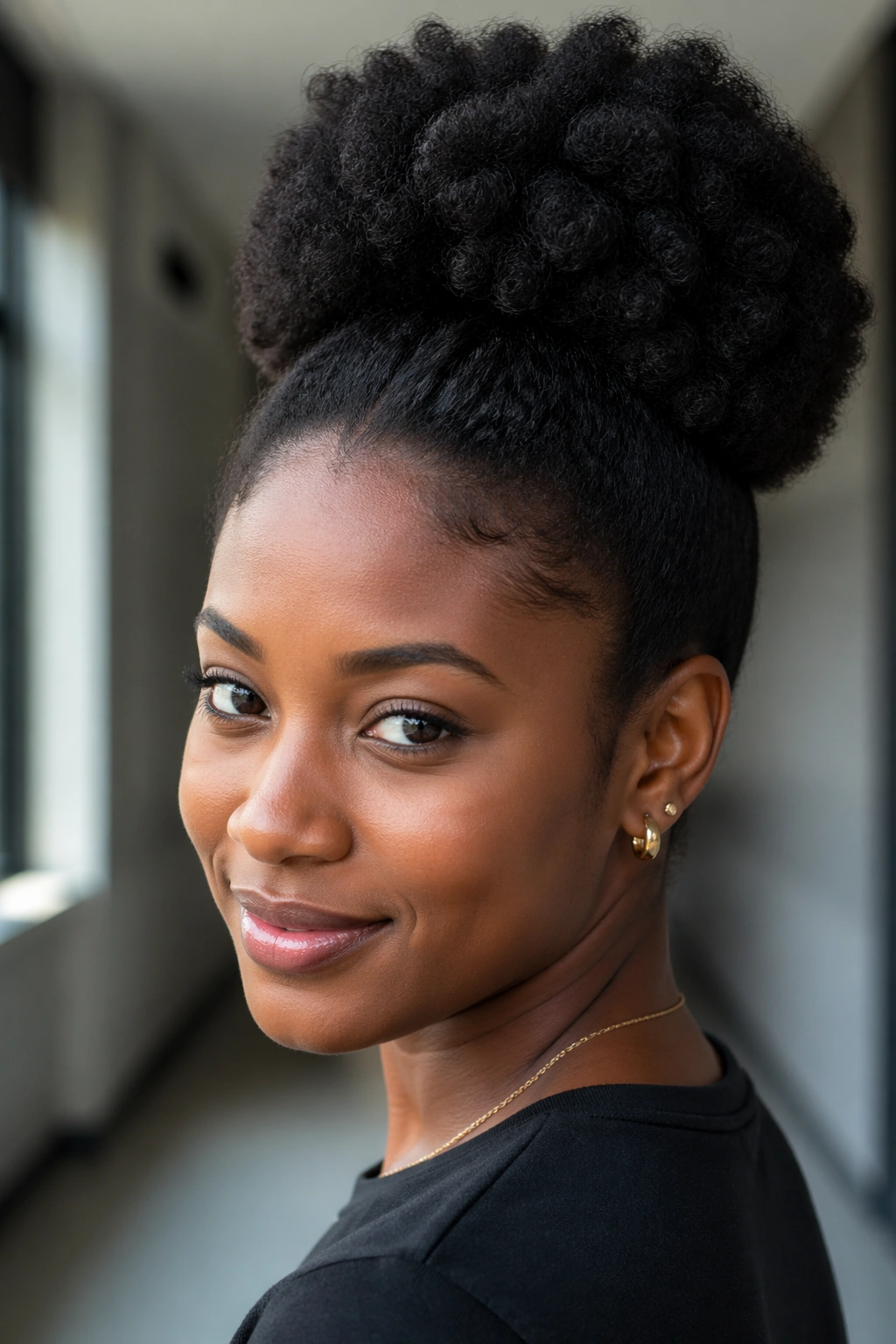
The puff is the old reliable.
On short natural hair, it does not have to sit low at the nape to count. A higher puff at the crown can look cleaner, and sometimes better, because it keeps the shape compact and keeps the sides from puffing out in weird directions. If your hair is too short for a full puff, that does not mean you missed the style. It usually means you need a softer elastic or a puff cuff that grips without crushing the curls.
A good puff starts with stretched hair, even if only a little. You can do that with a twist-out, a light blow-dry on cool, or even a fresh wash-and-go that has been fully dried and fluffed. Then gather the hair gently. Not tight. Tight puffs pull the front flat and can make the back look pinched.
Small puff. Big attitude.
Edge control can help, but it should not be the star of the show. A little smoothing around the hairline is enough if you want a polished finish. Too much gel makes the front look shiny in a way that clashes with the softness of the puff itself. And if your hair slips out of regular elastics, a satin scrunchie is a better fix than tugging harder.
6. Side-Parted Short Afro
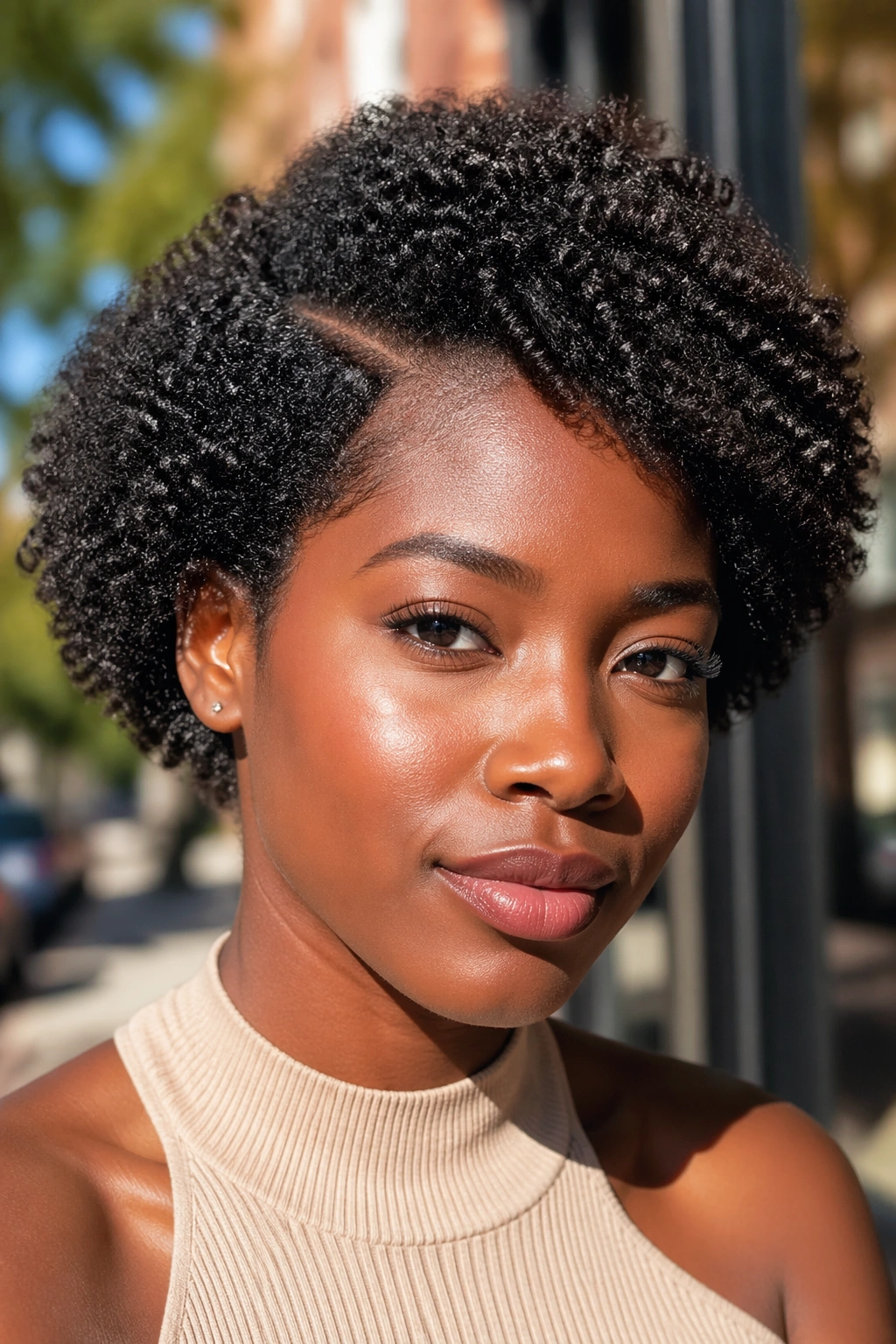
A side part changes the mood without changing the cut. That is why it works so well on a short afro. You keep the same natural texture, the same density, the same low-maintenance length — but the shape feels less centered and a little more styled.
This look is especially good if your hair tends to sit evenly all around the head. A deep side part breaks that roundness and gives the style movement. On denser hair, it also keeps the front from looking too heavy, which can happen fast when curls shrink up close to the scalp.
Center part or side part?
A center part gives balance. A side part gives attitude. That’s the blunt version.
If your face already has plenty of width through the cheeks, a side part can make the whole style feel longer. If your hairline is strong and you want to soften the front, the part helps there too. I like a soft side part better than a harsh one on short coils, because it looks more natural once the hair starts moving during the day.
Best way to wear it
- Make the part on damp hair with a rat-tail comb.
- Add product in the direction the hair will fall.
- Lift the opposite side lightly with a pick after drying.
- Keep the front pieces slightly longer if you want the part to show.
Best tip: don’t force a perfectly straight line on hair that wants to bend. A slightly imperfect side part usually looks better on short natural hair than a sharp, overdrawn one.
7. Flat Twist Crown on Short Hair
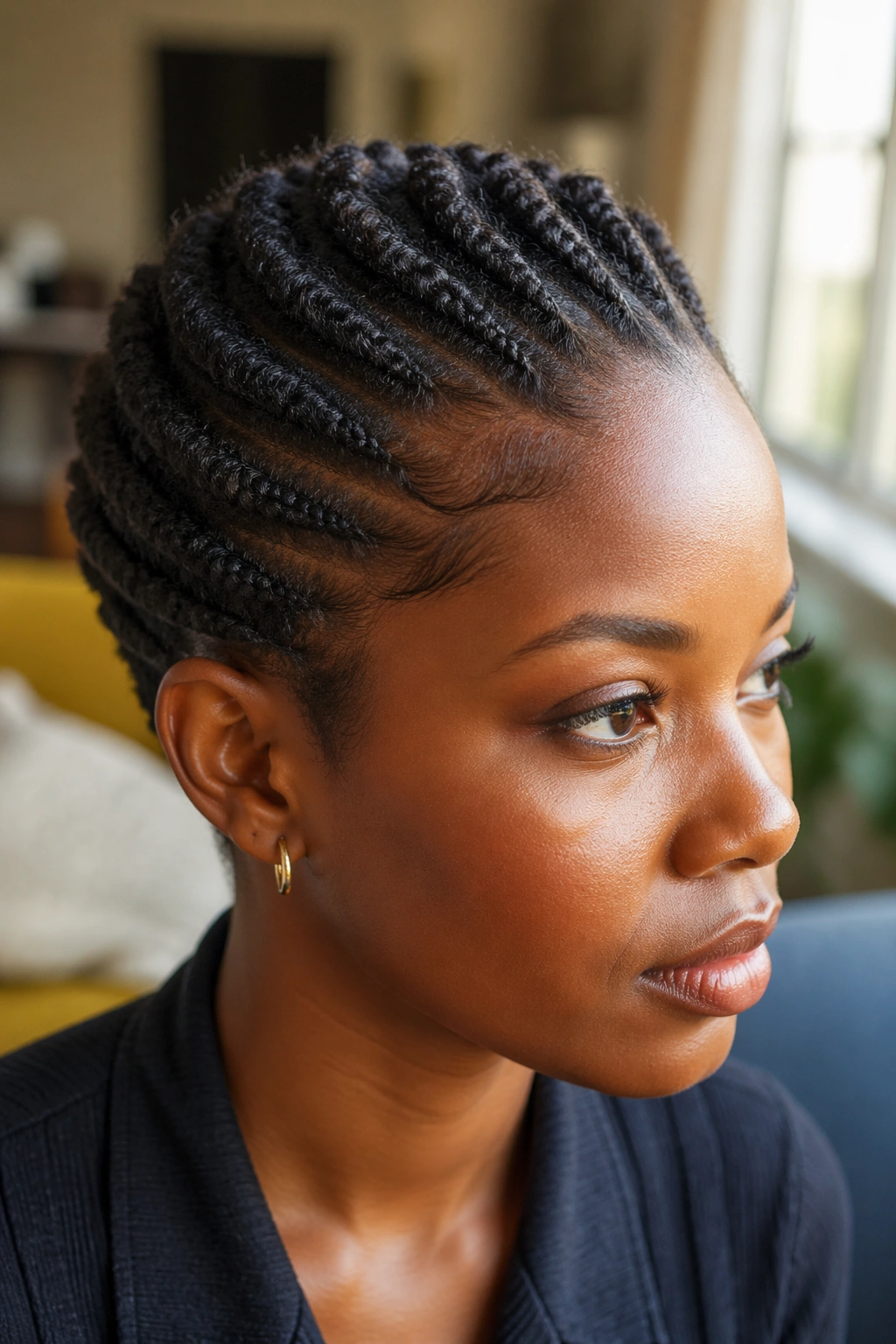
What if your hair is too short for braids but you still want something close to the scalp and neat around the edges? Flat twists solve that problem fast. They hug the head, keep the sides controlled, and make short natural hair look styled without demanding much length.
How to flat twist on short length
Start by parting the hair into small sections. Bigger sections tend to slip if your hair is very short, and that gets annoying in a hurry. Work a little cream or gel through each section, then split the section into two pieces and twist them over each other while adding hair from the scalp as you move back.
The crown version is especially pretty on short hair because it leaves the front open. You can twist back from one side, from both sides, or create a halo effect that meets near the back and pins down. It looks neat, and it keeps the top from shrinking into a shape you didn’t choose.
Things that make the style hold
- Use a product with grip, not a slippery oil alone.
- Keep each section small enough to stay tight.
- Anchor the ends with a pin or tiny elastic if they won’t tuck in.
- Smooth the roots as you twist so the braid base stays clean.
Flat twists do not need to be perfect. If the part lines are clean and the direction is consistent, the style reads well even when the hair itself is short and compact.
8. Bantu Knot-Out on Short Hair
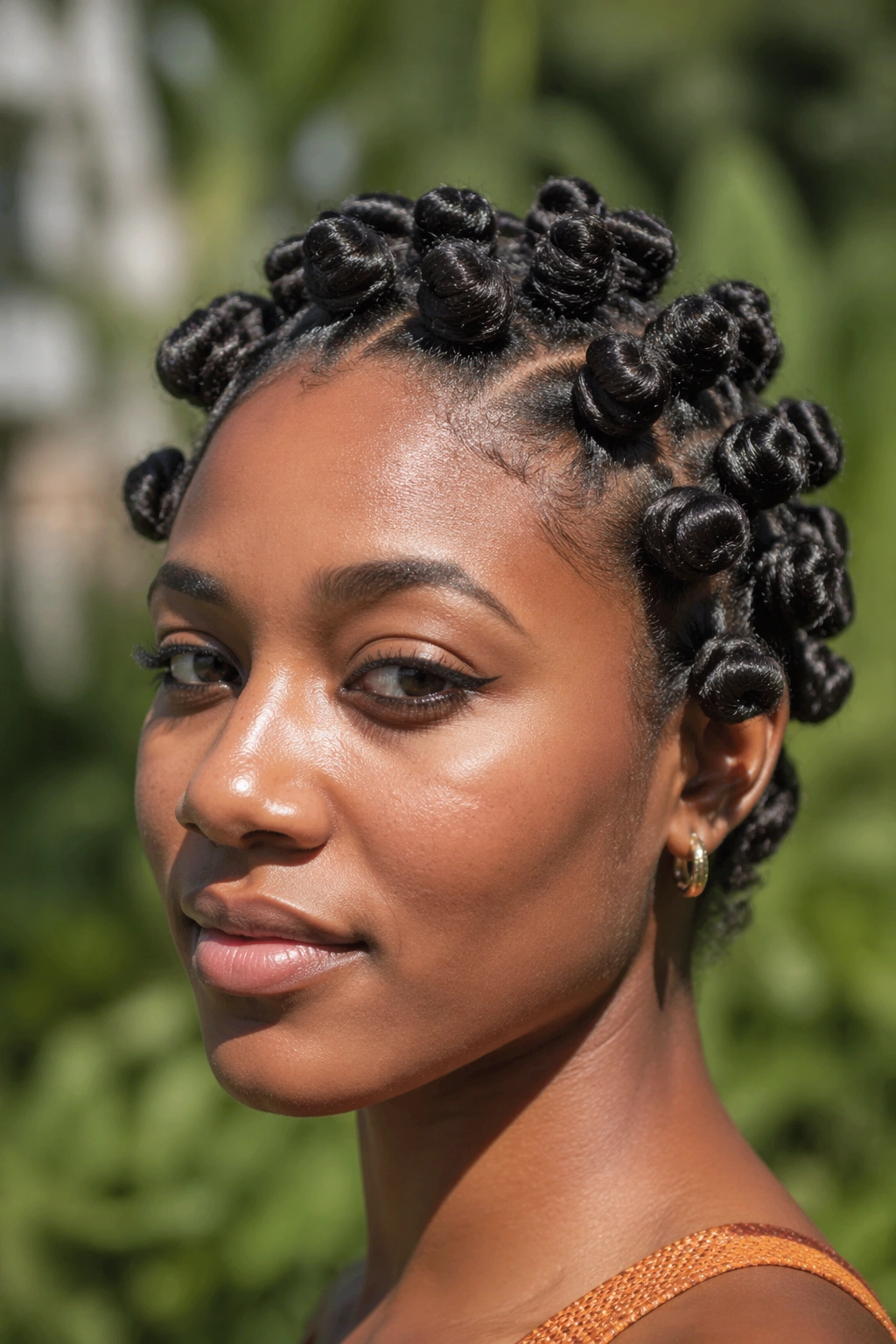
A few tiny knots can turn a close crop into a springy halo. That is the magic of a Bantu knot-out. On short natural hair, the style gives you bends and curves that look different from a twist-out, with more bite in the pattern and a little more lift at the roots.
The knot size controls the finish. Smaller knots give you tighter definition. Larger knots create a looser, wavier shape. For short hair, medium-small sections usually hit the sweet spot because they show the pattern without making the scalp look crowded.
What makes the knots actually set
The hair should be damp, coated with a leave-in and a setting product, and twisted tightly enough that the knot holds its shape while drying. That drying step matters more than people want to admit. If the center is still wet, the shape unravels into fuzz the second you start taking it down.
When you release the knots, rub a tiny amount of oil between your fingertips and unwind each one slowly. Don’t rush the ends. They’re where the pattern lives.
Quick notes
- Use smaller sections for tighter curls.
- Let the knots dry completely before uncoiling.
- Lift from the root with your fingers only after the whole head is down.
- Stop separating once the shape looks full enough.
Bantu knot-outs are not lazy-day hair. They take patience. But the finish on short afro hairstyles can be worth the effort because the curls look springy and sculpted instead of flat.
9. Frohawk With Tapered Sides
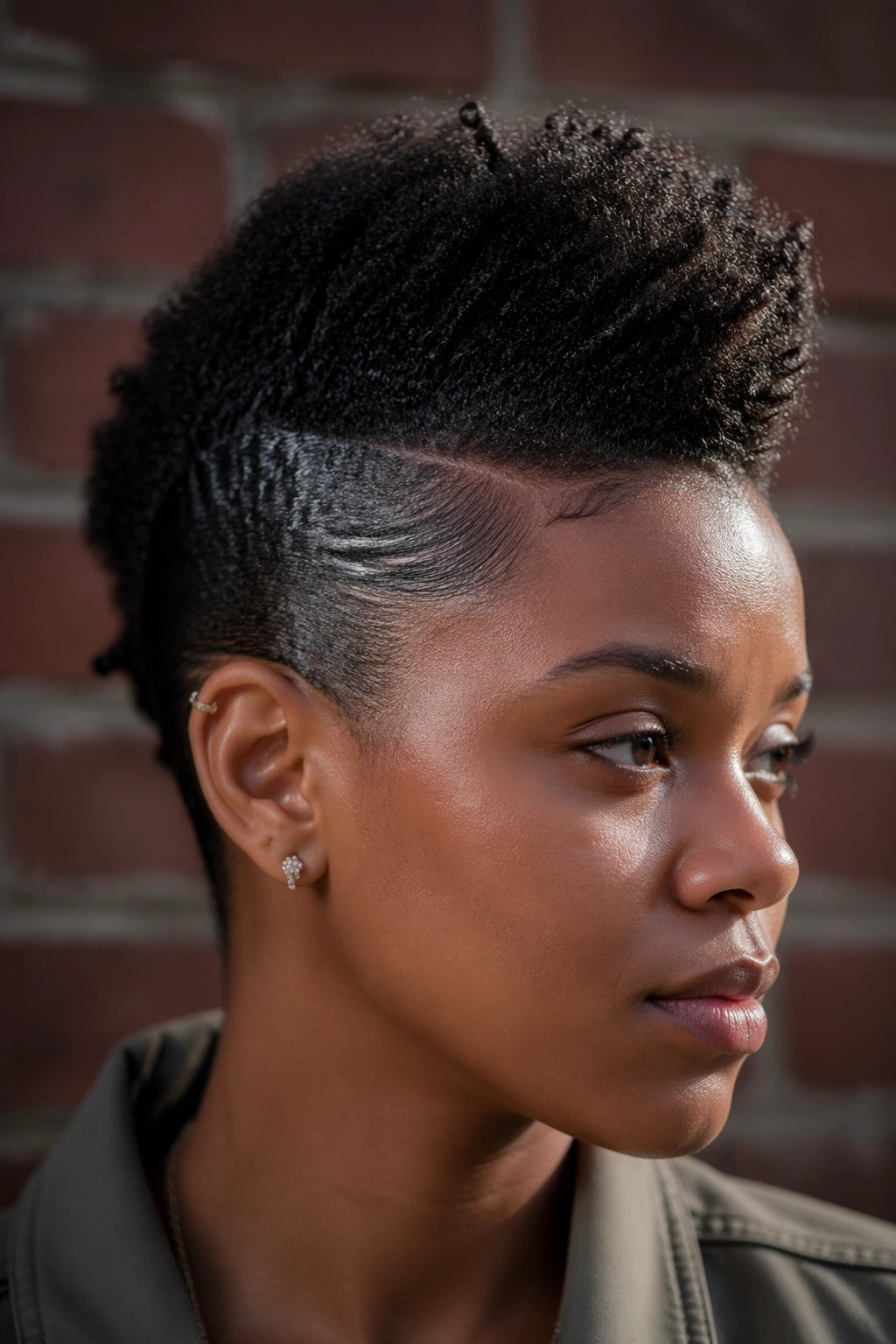
You do not need long hair to pull off a frohawk. In fact, short natural hair can make it look sharper, because the contrast between the sides and the center ridge shows up more clearly. The style has energy. A little edge. Not everyone wants that every day, but when you do, it hits.
The sides can be slicked down with gel, flattened with flat twists, or pinned close if the hair is too short to stay put on its own. The center section is the part you want to leave textured and full. That strip across the top does the visual work. It gives the whole style height without asking for a long length.
Who this suits best
This is a good pick if your hair naturally grows out thick at the sides and you want to redirect that volume instead of fighting it. It also works when you want something more dramatic than a simple puff or wash-and-go, but you do not want to use heat or spend an hour shaping coils.
How to keep it from looking stiff
- Leave the center section soft, not helmet-like.
- Smooth the sides with a light gel and a brush or your palms.
- Use pins that match your hair color if you need extra hold.
- Keep the ridge slightly loose so it still looks like natural hair, not a molded shape.
The frohawk is one of those short afro hairstyles that looks best when there’s a little movement left in it. Too much product ruins the point.
10. Picked-Out Round Afro
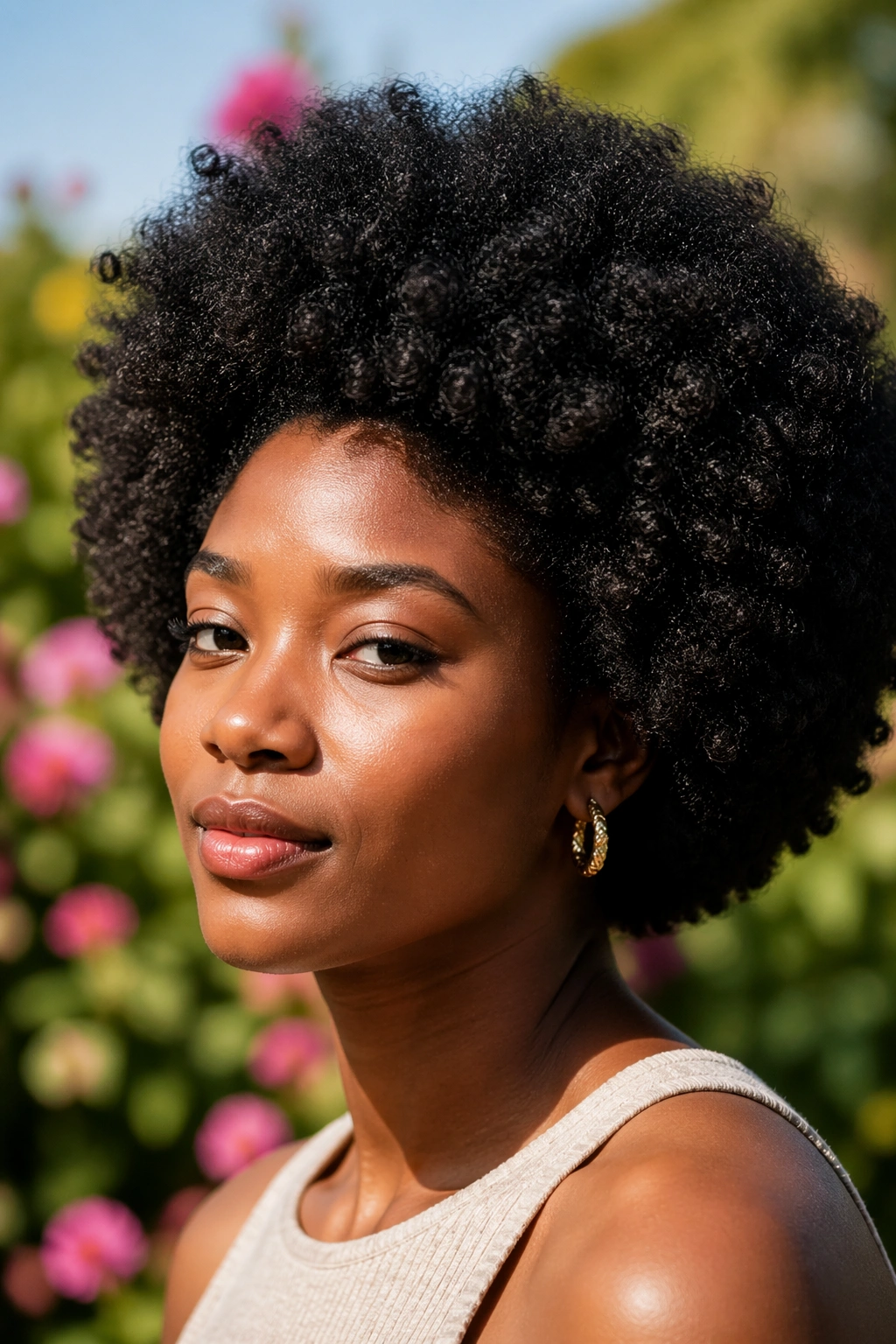
A good picked-out afro feels airy, almost cloudlike, but the roots still have shape. That balance is what makes this style work on short natural hair. You’re not blowing the hair out into something else. You’re lifting the roots just enough to show the silhouette.
How to keep the crown round
Start with dry hair. Wet or damp hair does not pick well, and you’ll just snag the ends. Use a wide-tooth comb or pick at the roots first, then stop before the teeth reach all the way through the curls. That keeps the volume near the scalp without turning the whole head into a fuzzy halo.
The shape should grow outward, not upward only. Think round, not tall and narrow. If you keep lifting from the same spot at the crown, the top gets too high and the sides stay flat. Move the pick around the head in sections so the volume spreads evenly.
Small things that make a big difference
- Pick from the roots only.
- Work in short, gentle lifts.
- Stop once the outline looks full.
- Smooth the outer layer lightly with your hands if needed.
- Use a light moisturizer earlier in the day so the hair does not feel dry and rough.
This is a style for people who like their short afro to look soft and natural, but still shaped. It does not try to pretend the curls are longer than they are. That honesty is part of the charm.
11. Double Puff or Mini Space Buns
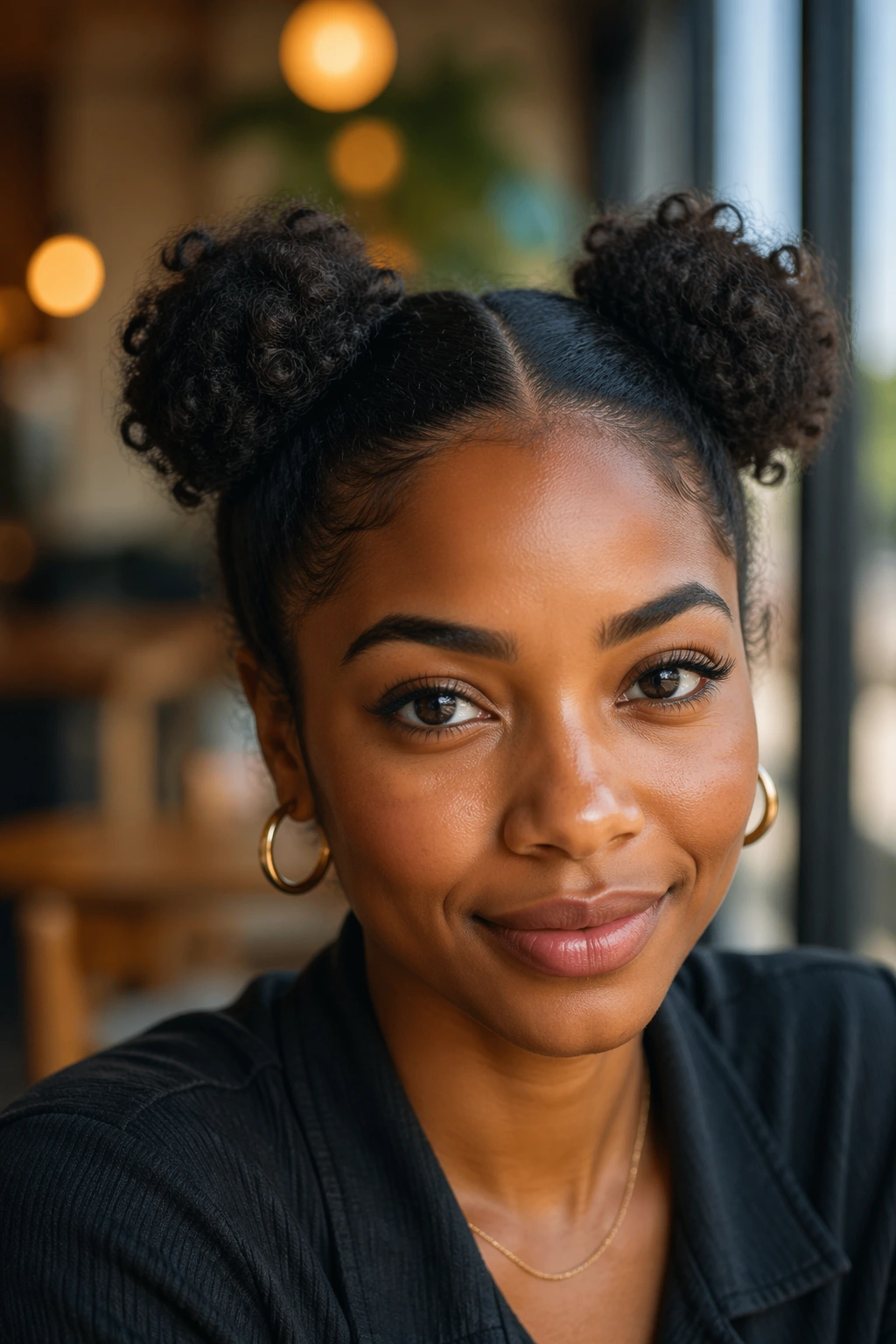
On days when one puff feels too plain and a full bun is out of reach, two smaller puffs solve the problem. They’re playful, quick, and surprisingly practical for short natural hair because each side only has to hold a modest amount of length.
Why this style works on short hair
A center part creates symmetry, which helps the style read clearly even when the puffs are small. If the hair is too short to gather cleanly, you can stretch each side with a twist or two before securing it. That gives the puffs a little more body and keeps the elastics from digging in.
Mini space buns work for the same reason. They let you turn short hair into a shape that feels deliberate. Not fussy. Just neat enough to look styled and casual enough to wear on an ordinary day.
The part that matters most
- Make the center part clean with a rat-tail comb.
- Use snag-free elastics so the hair does not catch and break.
- Leave the puffs a little soft at the edges instead of tight and round like buttons.
- If your hair is too short for actual buns, twist the sections first and pin them into small loops.
The style feels young without looking childish, which is a nice line to walk. And if you want to dress it up, you only need one accessory — a scarf, a clip, or a couple of cuffs. More than that starts to get busy.
12. Short Afro Hairstyles for Natural Hair With Silk Scarves and Clips
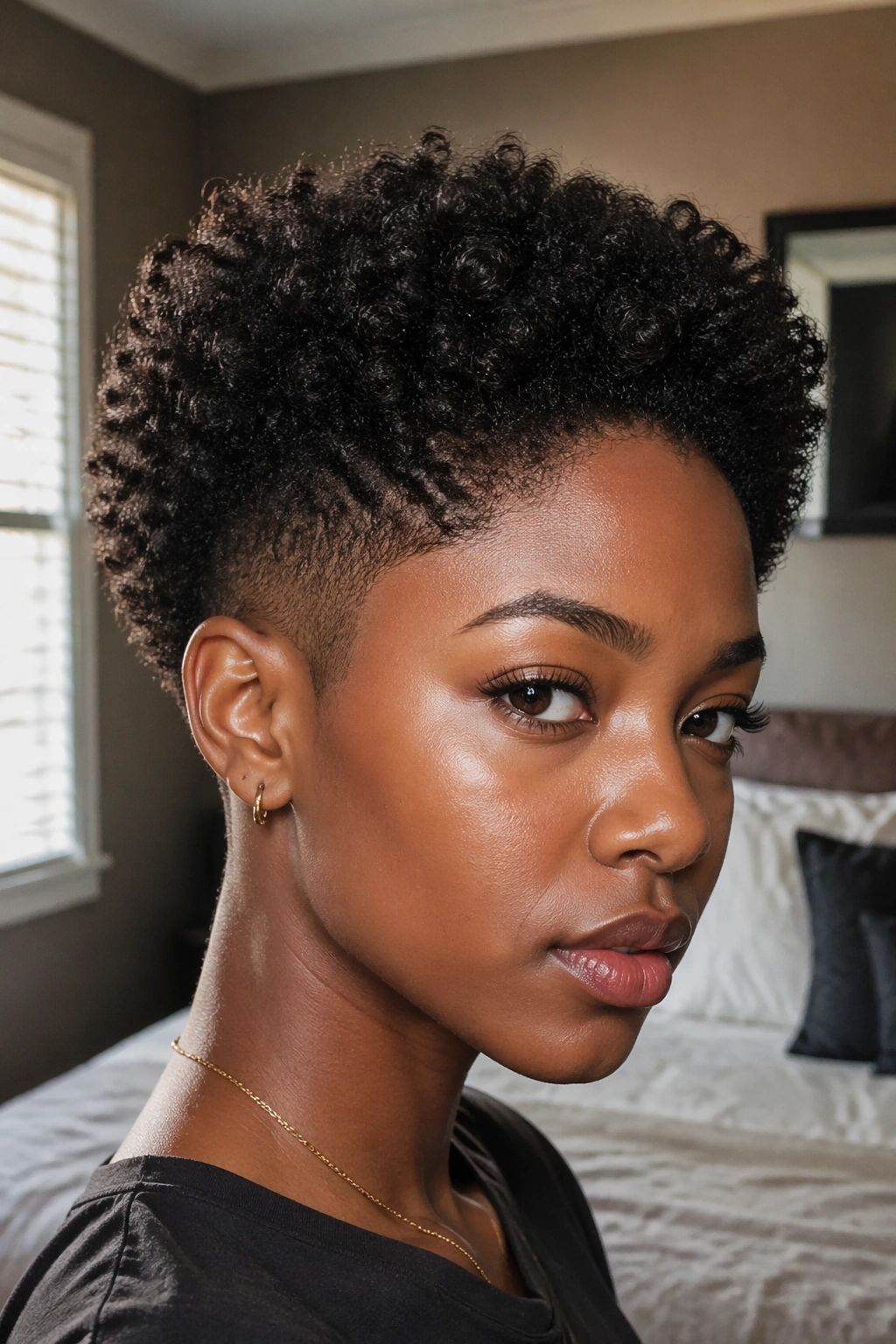
Accessories can carry a short afro farther than people expect. A silk scarf tied low across the forehead, a wide satin headband, a single metal clip on one side — all of it changes the shape without making the style feel heavy. On short natural hair, that’s useful because sometimes the hair itself is already doing enough.
The best accessory looks are not overloaded. One scarf can frame the face and hold the front curls down just enough to show the texture around the crown. A clip can sweep one side back and leave the rest loose. A few cuffs on a tiny flat twist or a short side section can make the whole style feel finished without taking away the softness of the afro.
This is also the easiest move when your hair is between styles. Not in a bad way. Just in a “I washed it, moisturized it, and now I want it to look intentional before I leave the house” way. Short afro hairstyles for natural hair do not need a lot of decoration, but they do benefit from a little structure around the edges.
If you want the look to hold, choose accessories that grip without tearing. Silk and satin are kinder than rough elastic, and larger clips usually sit better than tiny pins that slip out after an hour. The finish should look calm, not crowded. That is the whole point.
And honestly, this is where short natural hair gets fun. You are not waiting for more length to have a style. You already have one. You just get to change the frame around it.
