



Two-braid box braid styles have a way of looking polished without trying too hard. That is the sweet spot most people want and, annoyingly, not every braid style gives it to you.
The difference usually comes down to three things: the part, the height, and how much weight sits at the ends. A center part can feel crisp. A side part can soften the whole look. Pull the braids too tight at the base and the style starts fighting your scalp before the day is half over.
Box braids also give you room to play. You can keep the install exactly the same and change the entire mood with a middle part, a zigzag, a few cuffs, or a high pigtail tie. That’s why two-braid styles stay useful long after the original install has settled in. They’re practical, but they’re not boring unless you make them boring.
The best versions are the ones that work with the braid length you already have. Shorter braids need a different finish than long, heavy ones. Thin braids behave differently from jumbo ones. Once you stop forcing every install into the same shape, the options open up fast.
1. Classic Center-Part Twin Braids
The middle part is the cleanest place to start, and honestly, it still works because it does so much with so little effort. If your box braids are neat at the root, a straight center part and two even pigtails let the braid pattern do the talking.
Why It Works
A center part gives both sides the same visual weight, which makes the whole style look balanced right away. It also shows off fresh parts along the scalp, so if your install has a sharp grid or clean sections, this style puts that work on display.
The trick is keeping the two braids loose enough at the base that they sit flat. If you drag them too high, the style starts looking stiff and the scalp feels tugged. Keep the elastic or tie snug, not crushing.
- Best on medium or long box braids
- Works with plain ends, cuffs, or beads
- Easy to dress up with a scarf at the base
- Looks especially sharp with a crisp middle part
Pro tip: if the middle line starts drifting, stop and reset it before you secure anything. A crooked part is much harder to ignore than a slightly messy braid.
2. Deep Side-Swept Twin Braids
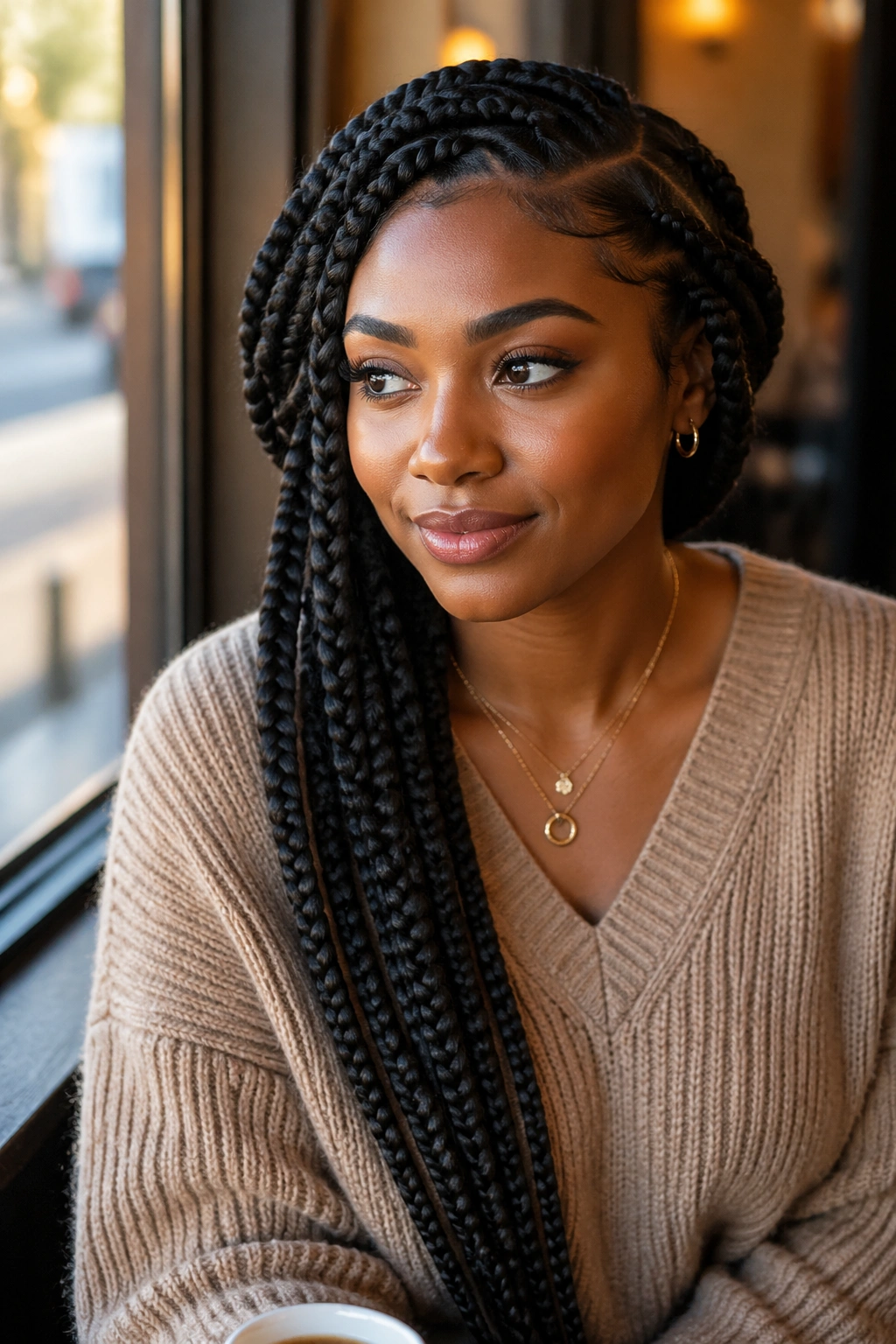
A deep side part changes the whole mood in one move. The style stops reading as strict and starts feeling softer, more relaxed, and a little more face-framing without needing extra hair left out.
That shift matters. A hard center line can look beautiful, but it also feels formal on some installs. Slide the part several inches off center and one braid naturally lands heavier than the other, which gives the style motion before the braids even move.
This works especially well when your braids have a bit of length, because the heavier side drapes nicely over the shoulder. If your hair tends to sit flat, the side part gives it a shape that looks intentional instead of symmetrical for symmetry’s sake.
Use a rat-tail comb and trace the part from the front hairline back toward the crown. Keep the line clean, then gather each side low or mid-height depending on how much swing you want.
3. High Pigtail Box Braids
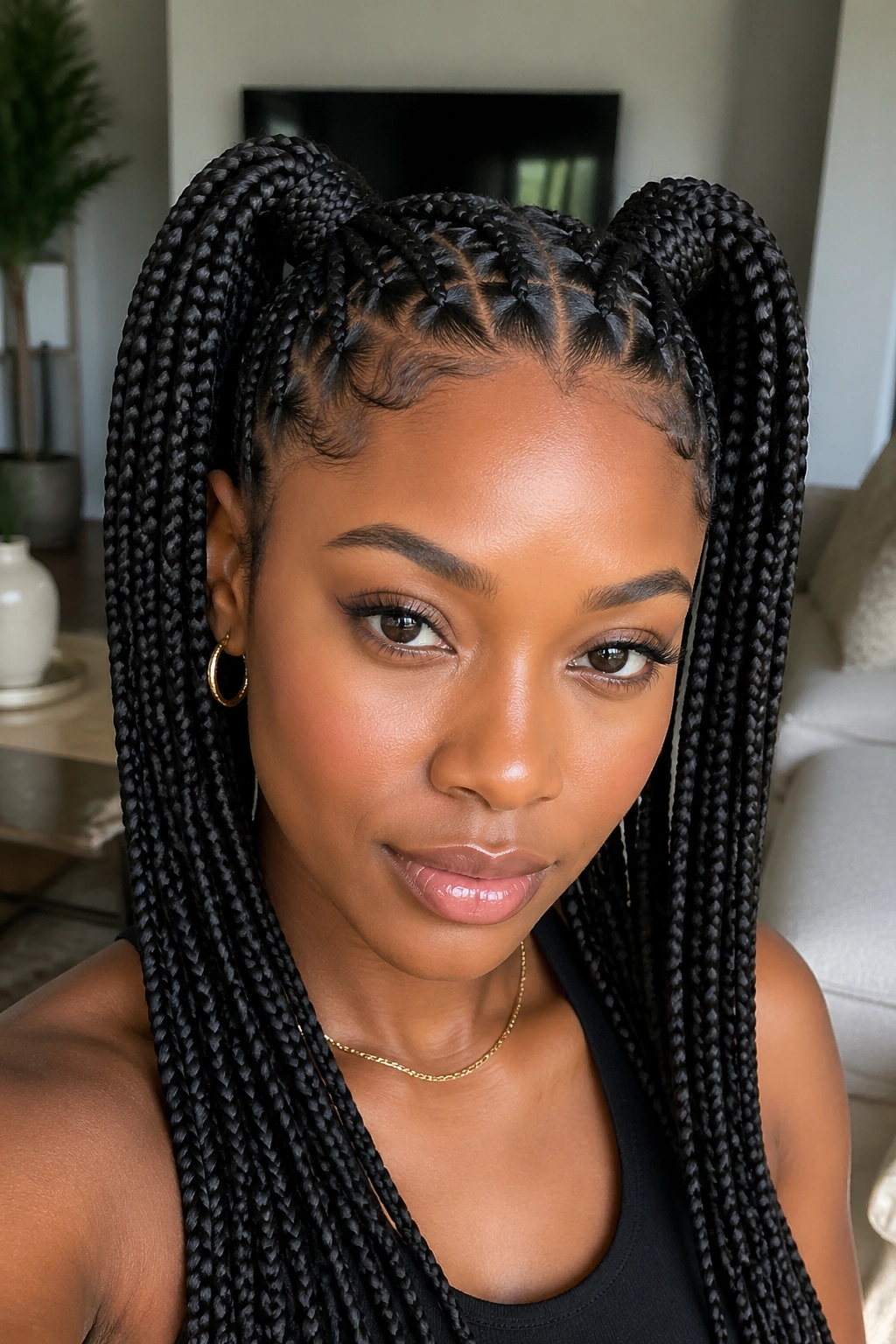
Why do high pigtails look so fresh on box braids? Because the lift changes the whole proportion of the style, and suddenly the braids feel lighter even when the install itself is not.
The height pulls attention upward, which is useful if your braids are long and heavy. It also gives the face more room, so the style feels lively instead of weighed down. A high tie can be a little dramatic, but that is the point. It should look like you meant to do it.
How to Wear It
Start by parting the hair down the middle and gathering each side at the crown, not at the exact top of the head. That tiny shift makes the braids sit better and stops the style from looking like it’s trying too hard to stand straight up.
Wrap each section with a snag-free elastic, then cover the tie with one braid if you want a cleaner finish. Finish with a light mist of mousse on the roots and edges. Do not pull the braids so high that the base feels tight after twenty minutes. If the scalp complains, the style is wrong.
4. Low Nape Pigtails
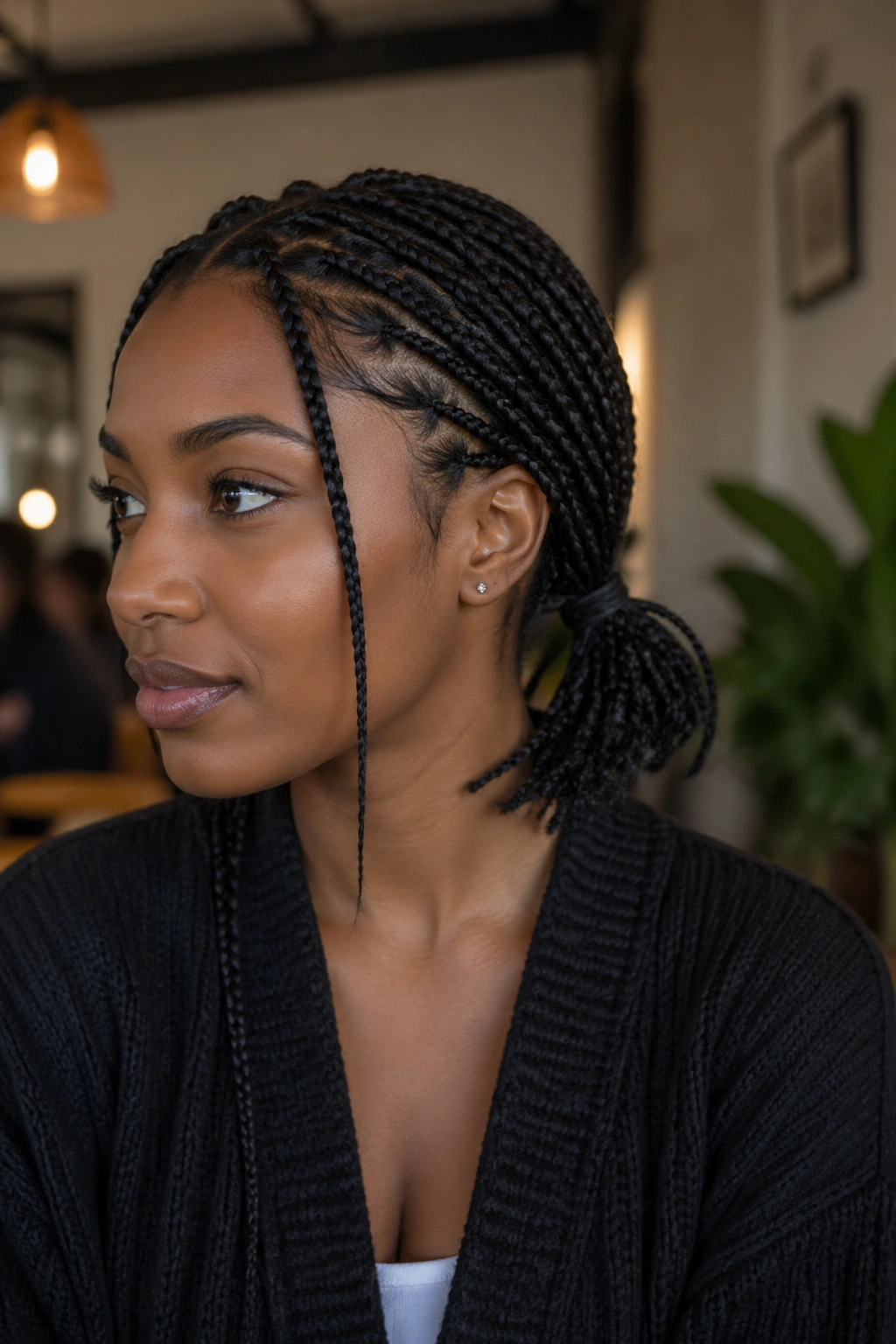
Picture a day when you want your hair controlled, but not stiff. Low nape pigtails are the answer, and they are often the most wearable two-braid box braid style for long hours, travel, or anything that involves leaning back in a chair.
The lower placement keeps the weight near the neck instead of floating around the crown. That can make the braids feel easier to manage, especially if your install is dense or the ends are bead-heavy. It also works well under a hood, a coat collar, or a hat, which sounds small until you need it.
- Good for long workdays
- Easier to rest against a seat or car headrest
- Feels less tight at the scalp
- Looks neat with simple black elastics or covered ties
I like this version when I want the braids to stay out of the way without looking severe. It’s tidy, but it doesn’t read as precious. That’s a nice line to walk.
5. Half-Up, Half-Down Twin Braids
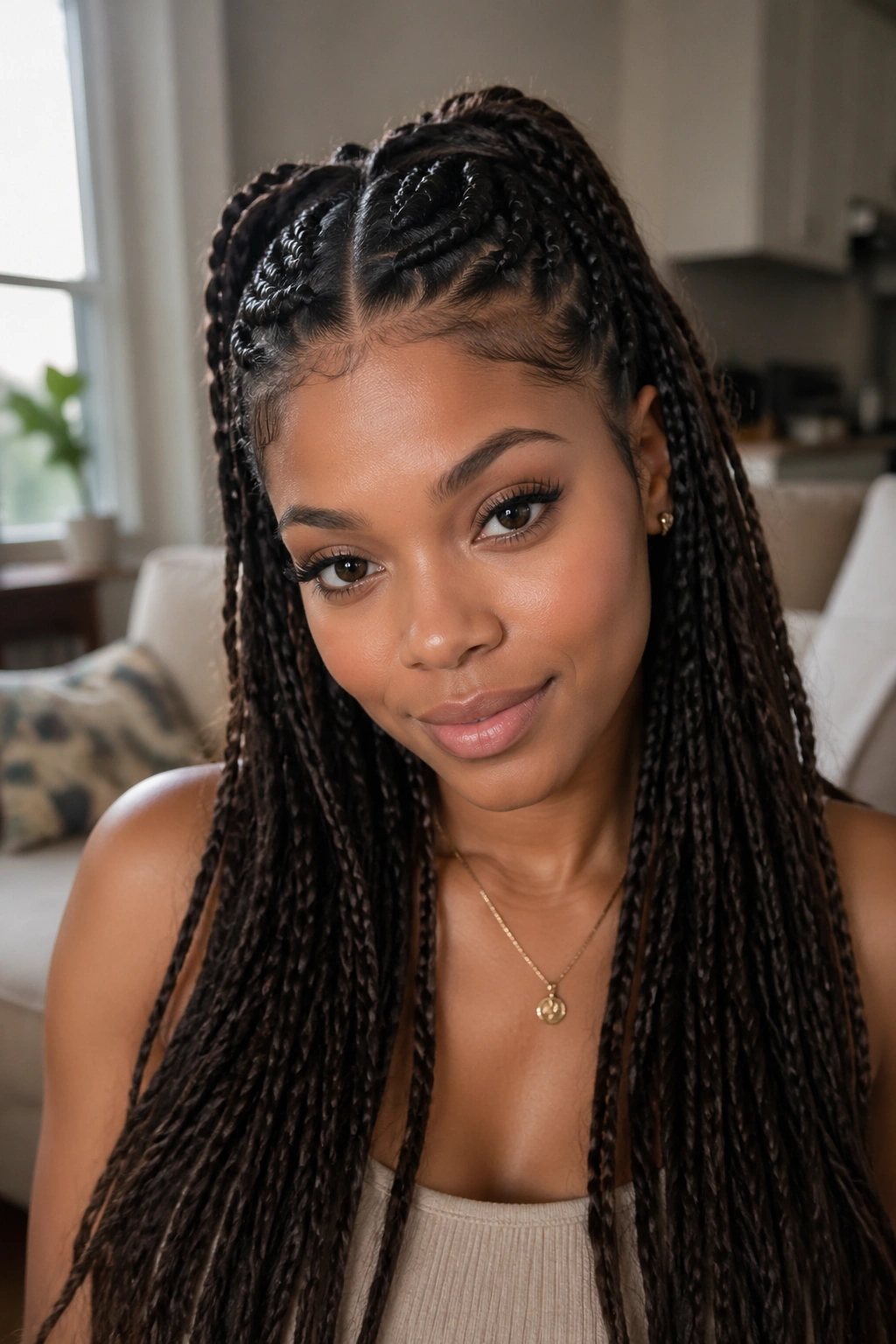
Half-up, half-down twin braids are the style I reach for when I want to show length but still get the front hair off my face. It gives you that useful middle ground: controlled at the top, loose at the bottom, and not nearly as flat as a fully tied-back look.
The style works because the top half adds structure while the lower half keeps movement. On longer installs, that lower section swings when you walk. On shorter ones, it creates a softer frame around the shoulders. Either way, the result feels more relaxed than a full pigtail set.
A neat version uses the top section only to create the two anchor points, leaving the bottom braids to hang straight. A slightly dressier version folds the lower lengths into soft curves before securing them. Both work. One feels more casual, the other looks better with earrings or a clean neckline.
If you want the style to stay sharp, keep the top section separated by a straight part from temple to temple. If you want it softer, loosen the top just a touch and let a few braids fall naturally near the temples. That one detail changes the whole read.
6. Curved-Part Twin Braids
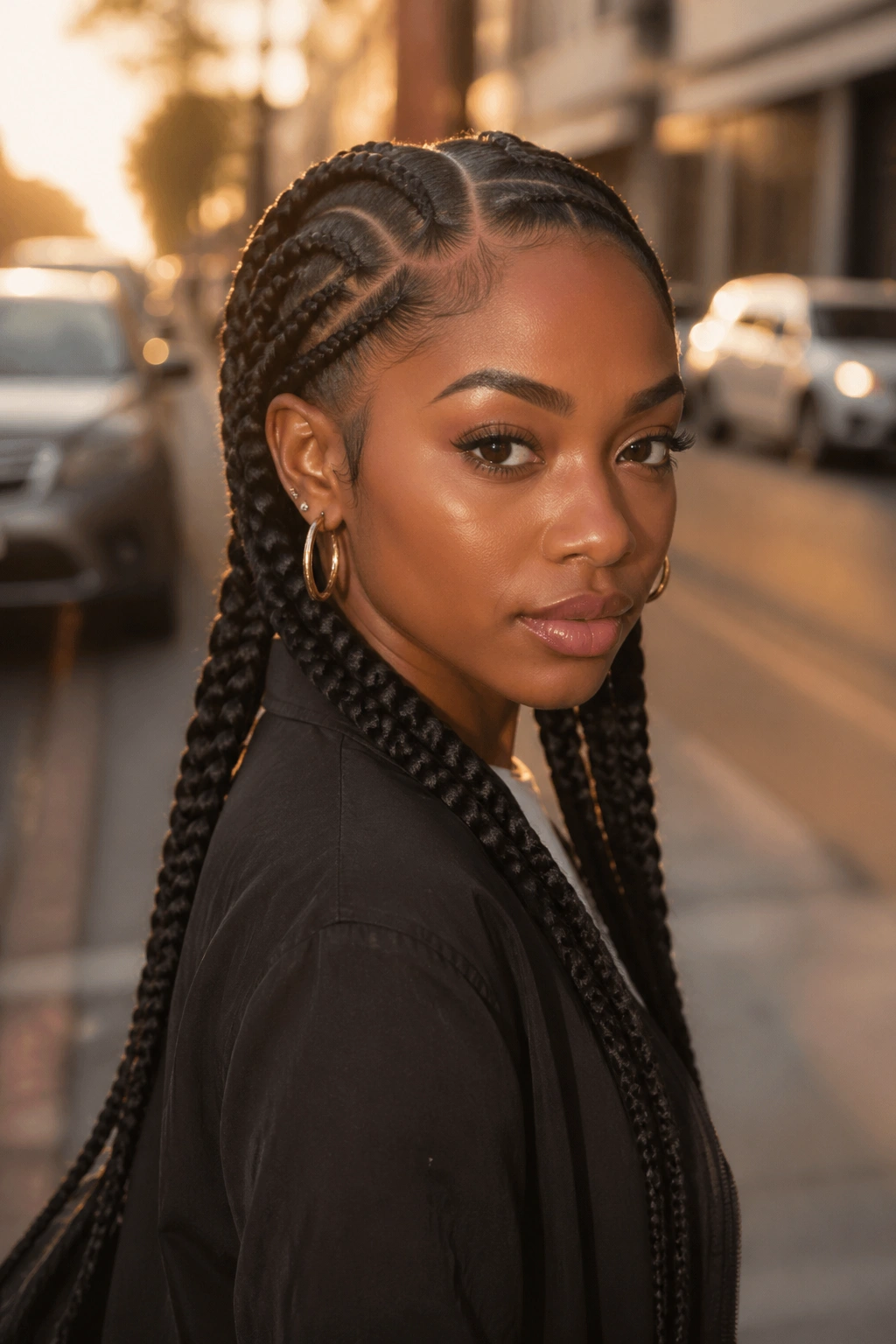
A curved part gives box braids a softer profile than a plain middle line ever will. The part bends slightly as it moves back, so the style feels less rigid before the braids are even tied.
That small curve is useful when you want motion without adding accessories. It breaks the straight lines that can make box braids feel boxy in the wrong way. The eye follows the arc, and the braids feel a little more organic because of it.
Unlike a dead-center part, a curved part also gives you room to adjust the balance. You can keep one side a touch fuller, then let the curve guide the eye toward the face and down to the braid length. It looks especially good on medium-size braids, where the part is still visible but not shouting for attention.
If you try this, use the tail of a comb to sketch the curve first, then clean it up with a lighter hand. A heavy, jagged line ruins the effect fast. The curve should feel smooth, not drawn with a ruler and corrected three times.
7. Zigzag-Part Twin Braids
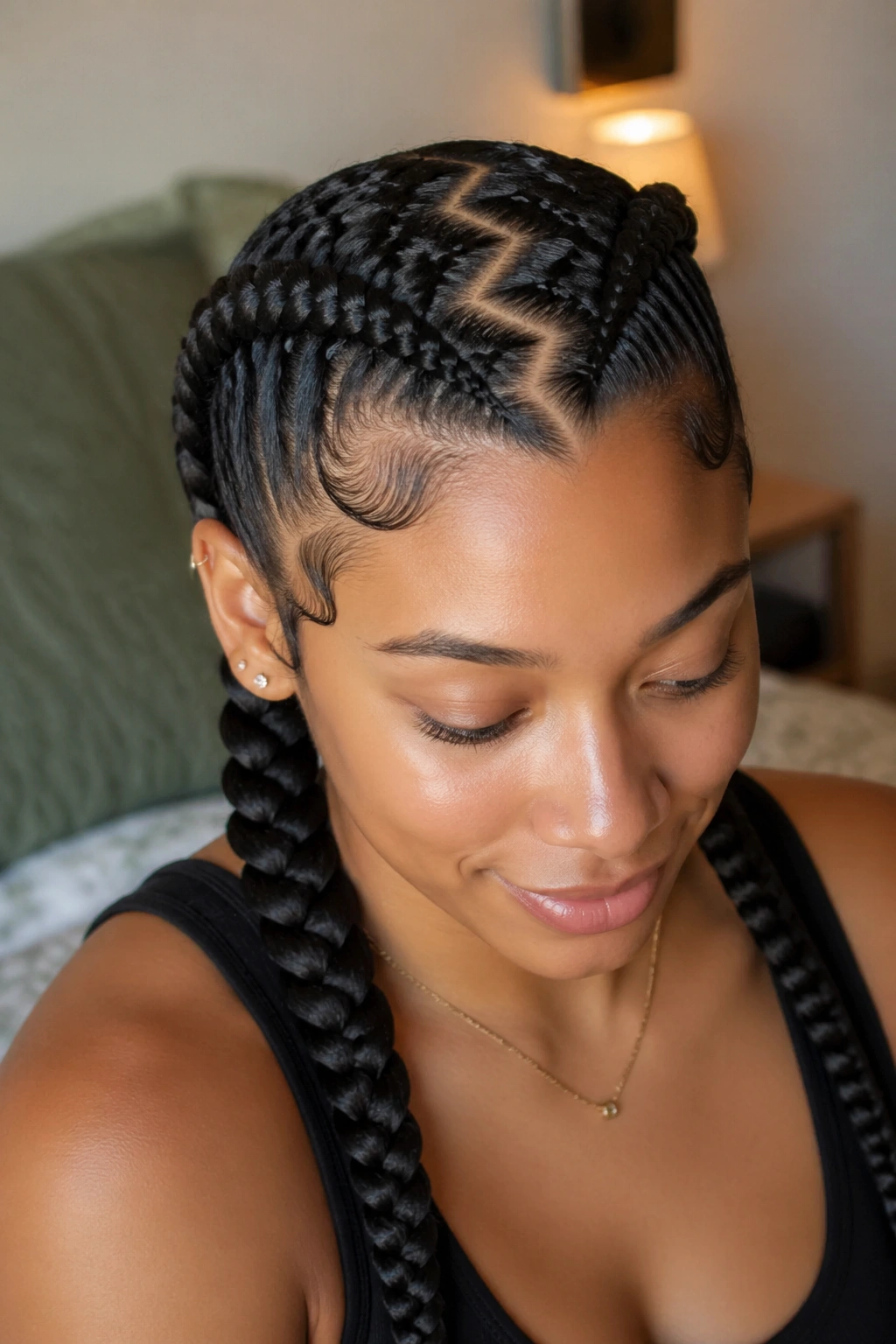
A zigzag part is one of those details that can rescue a style that otherwise feels too plain. It adds movement at the scalp, which means the braids already look styled before the lengths do anything at all.
Why It Stands Out
The part pattern gives the style a little edge without needing color or beads. That makes it a smart option when you want the braids themselves to stay simple. It’s playful, but not loud.
It also works well on medium and smaller box braids because the line stays readable. On very thick braids, the zigzag can get lost unless the sections are crisp. If your install is fresh, this is one of the easiest ways to make it look custom.
What to Watch For
- Keep the zigzag shallow so it stays clean
- Use a rat-tail comb with a fine tip
- Don’t press too hard on the scalp
- Smooth the roots with mousse before tying the pigtails
Best tip: if the zigzag starts looking busy, make the pigtails lower. That gives the part room to breathe.
8. Triangle-Part Twin Braids
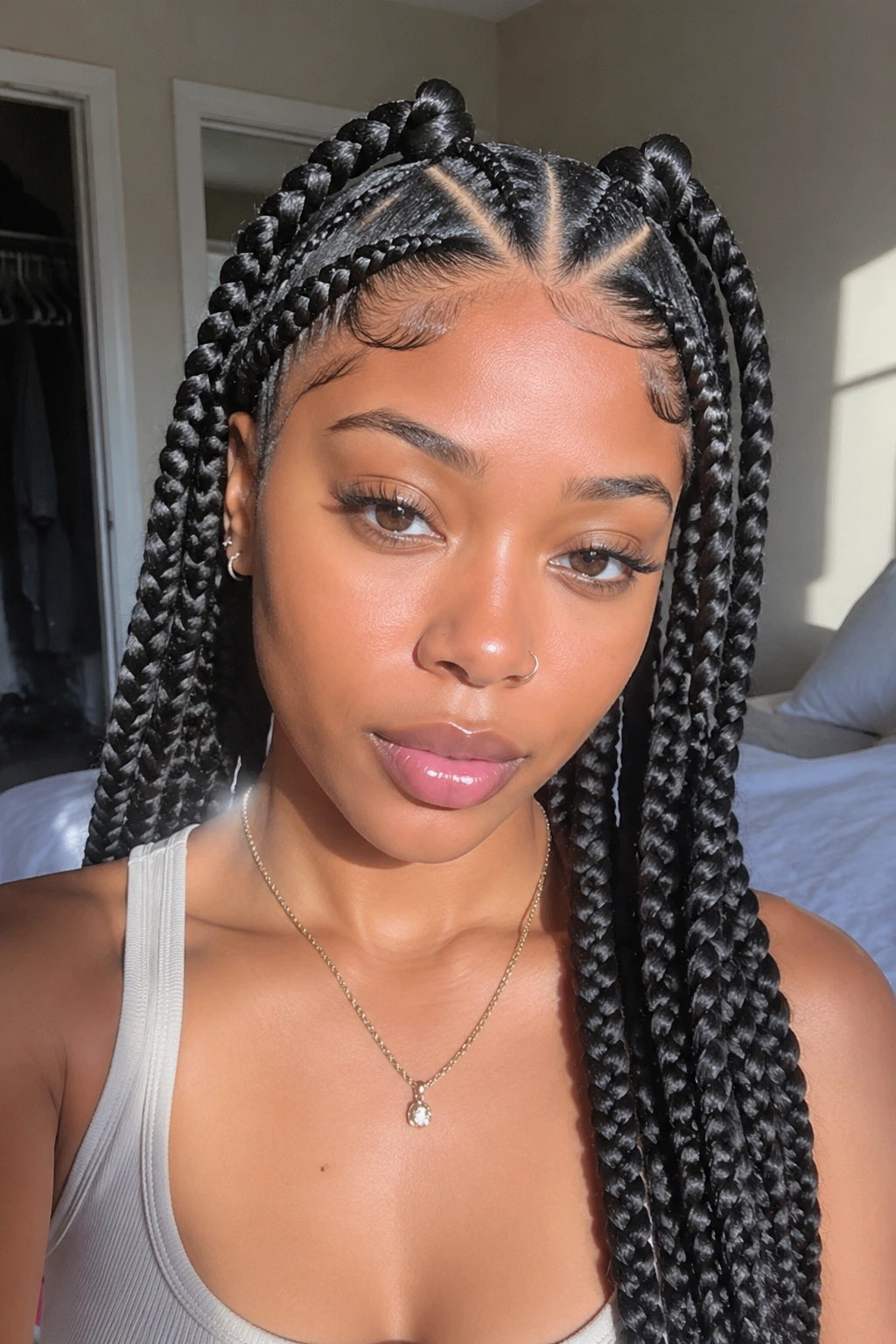
Triangle parts change the tone of box braids in a way people notice right away. The root pattern looks more geometric, which gives the two-braid style a sharper edge than the usual square-grid install.
That matters because the braids are already doing one visual job; the part can either match that energy or flatten it. Triangle sections tend to feel a little more designed, almost like the braid pattern is doing double duty. You get clean rows, but they don’t feel repetitive.
This style is a good choice if you like seeing the parting work from the front. It looks nice when the braids are gathered low because the triangle shapes remain visible near the crown. If you tie them high, the pattern can get hidden under the lift, so the style loses some of its best detail.
Use this one when you want the install to look thoughtful without adding beads, cuffs, or color. It’s a quiet flex, which is the best kind. Not flashy. Just precise.
9. Jumbo Box-Braid Pigtails
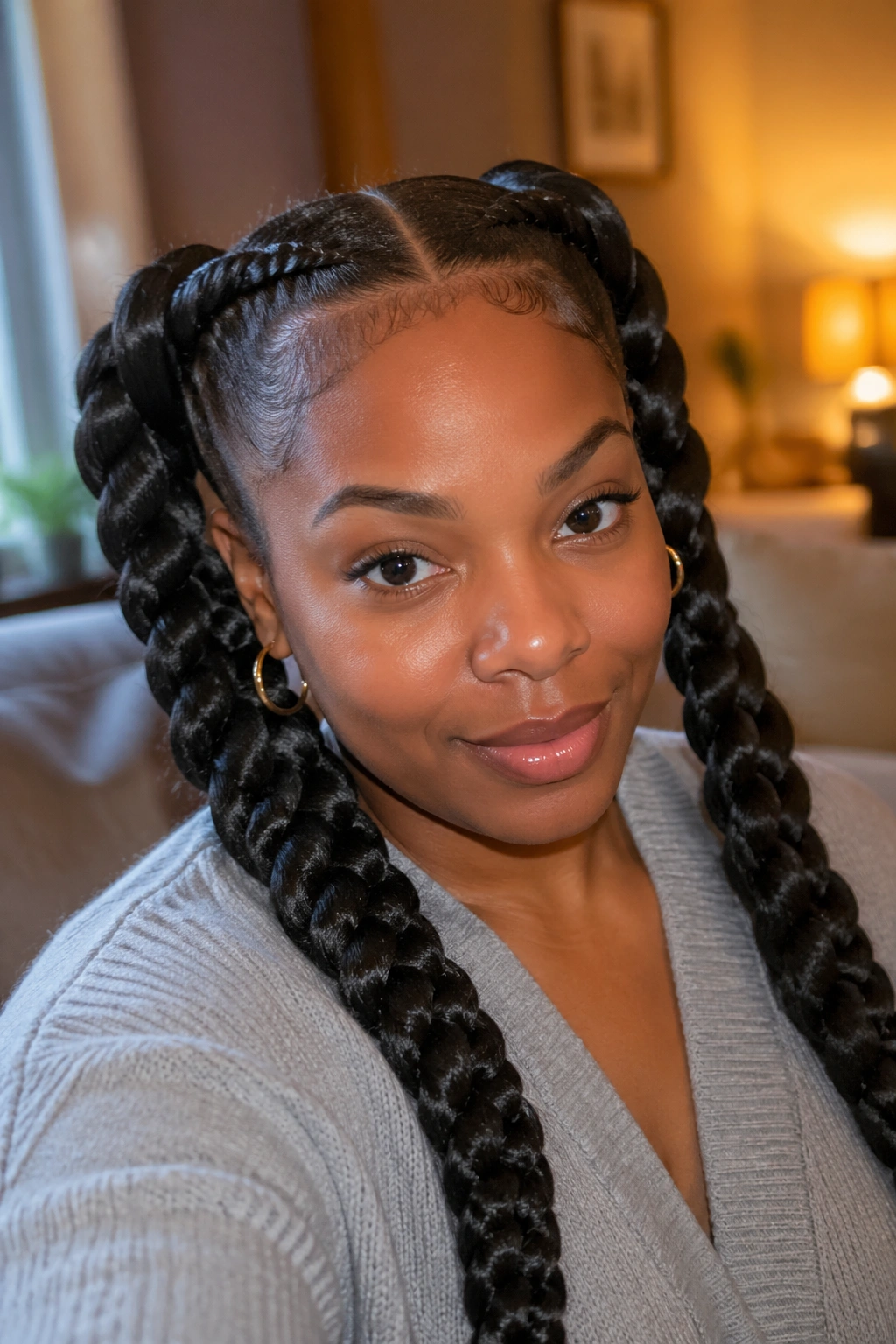
Jumbo braids change the whole conversation. When the plaits are thick, two-braid pigtails feel fuller, bolder, and heavier in the best possible way, but they also need a different approach at the base.
How to Style Them
Start lower than you think. Jumbo braids have weight, and a high tie can create a lot of pull at the roots. A mid-low anchor keeps the shape controlled and the scalp happier.
Use a larger elastic or a soft braid tie so you’re not cramming thick sections through a small band. If you want a polished finish, wrap one braid around the base once or twice instead of layering on a bunch of accessories. Less is better here.
Why People Reach for This Look
- The volume shows from across the room
- The braid pattern reads well even on simple outfits
- It takes fewer accessories to feel finished
- The style works well with chunky gold cuffs or one or two beads per side
The main thing to respect is weight. Jumbo pigtails should look full, not strained. If the scalp feels stretched, shift the anchor lower and give the roots a break.
10. Slim Micro-Braid Pigtails
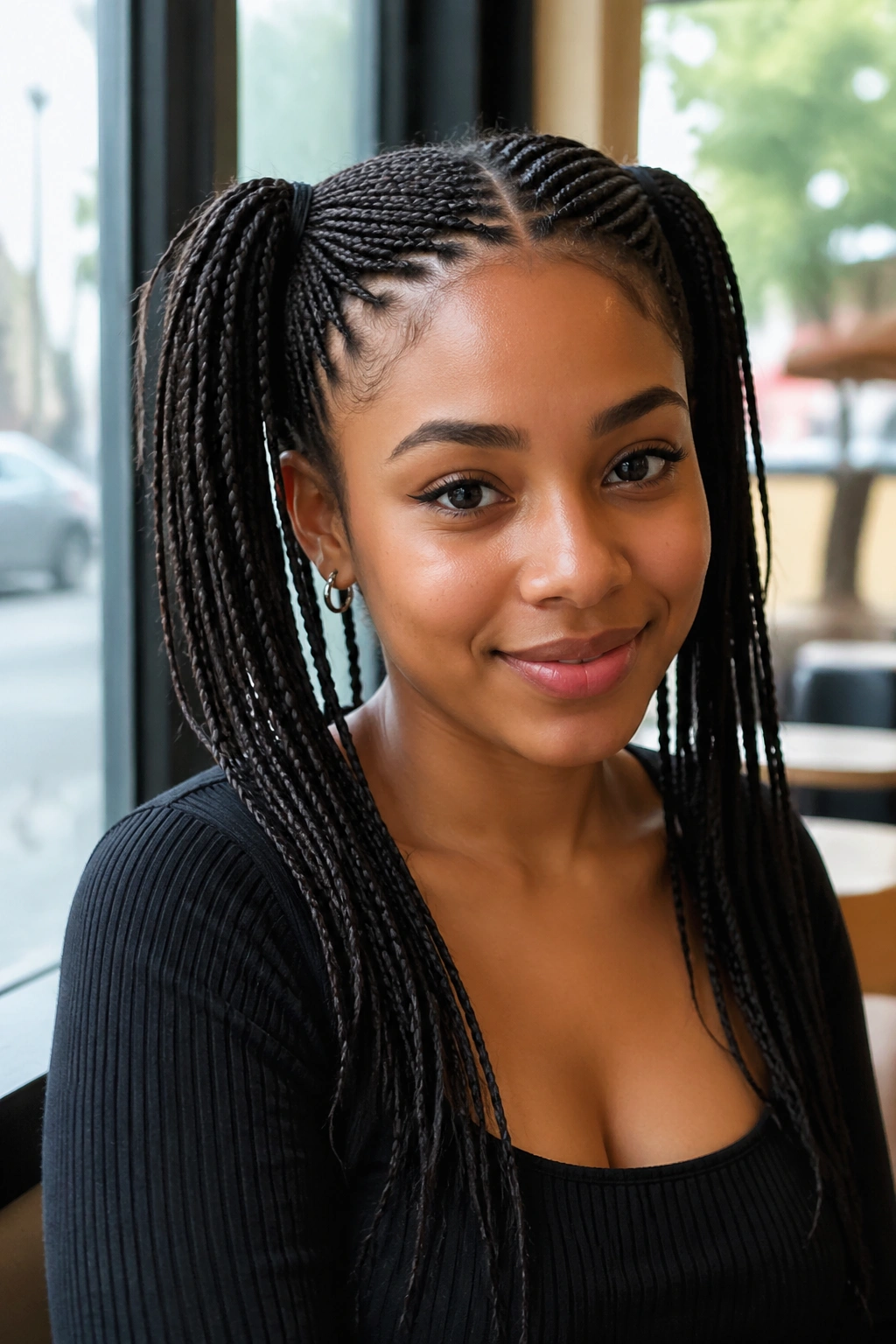
Slim braids do the opposite of jumbo ones, and that contrast is exactly why they deserve their own place in the list. They feel lighter, swing more, and can sit closer to the head without making the style look flat.
These are the pigtails I think of when someone wants a more delicate finish. The individual braids move more easily, so the whole style has a soft, almost draped look. It’s a good fit if you wear glasses, headphones, or a lot of collars that can catch on thicker braid bundles.
A side benefit: tiny braids make the parting details show up more clearly. A neat center part or a zigzag line stays visible longer because the sections are smaller and less bulky. That gives the whole style a precise, close-up kind of polish.
- Nice for lighter days when you do not want heavy ends
- Easier to tuck behind the shoulders
- Good with minimal accessories
- Less bulky under scarves or jackets
There’s no drama in this version, which is exactly why it works.
11. Beaded-End Twin Braids
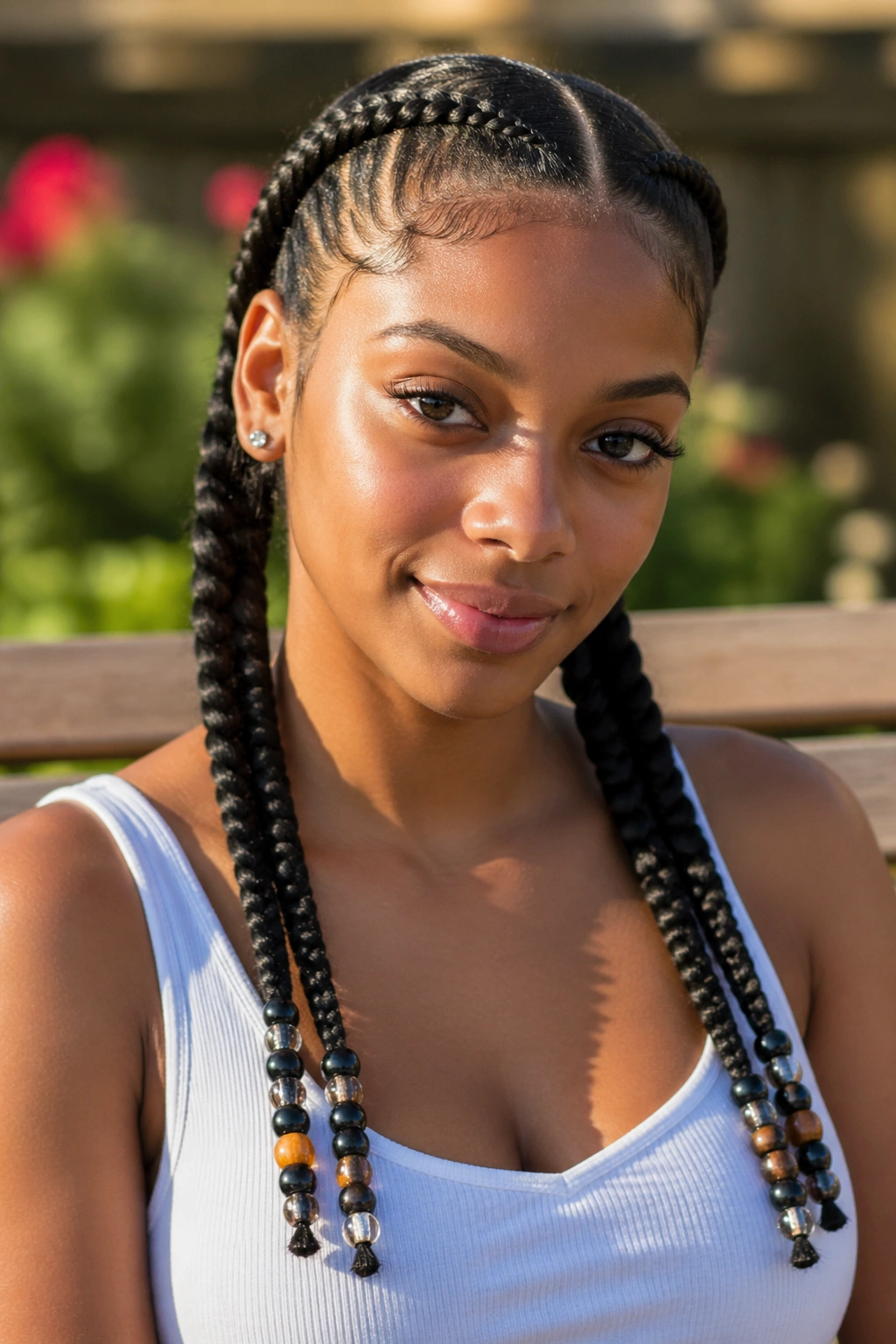
Beads change the sound and the movement of braids, and that alone makes this style feel different the second you walk across a room. The ends click softly, the weight shifts a little more, and the braids stop reading as plain.
This is one of my favorite ways to finish two-braid box braid styles because the beads turn the ends into part of the look instead of an afterthought. You can go with clear beads, wooden ones, metal accents, or a mix of sizes. What matters is scale. The bead should match the thickness of the braid, or the ends start looking awkward.
A lighter bead set works best on medium and small braids. Big beads on thin plaits can overpower the style and drag the ends down in a weird way. If the braids are long, using three to five beads per braid is enough. More than that can feel noisy fast.
Beads also pair well with simple clothing. A plain tee and a clean pigtail set look finished once the ends are dressed up. That is the trick: let the accessory do the talking while the braid shape stays simple.
12. Cuffed Metallic Twin Braids
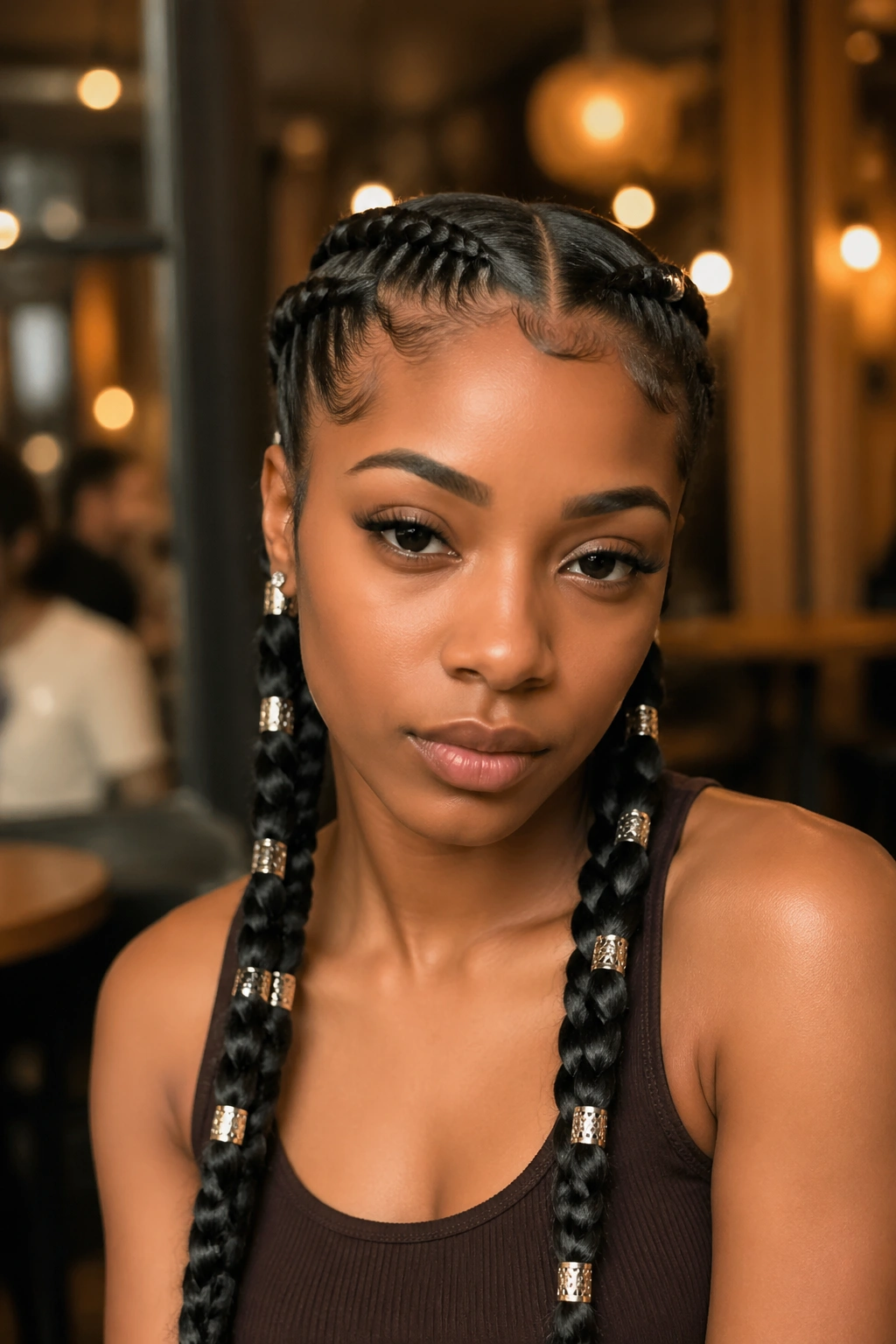
Metal cuffs give box braids a clean flash that reads a little more grown-up than beads. They’re smaller, lighter, and easier to place along the length of the braid without changing the whole silhouette.
Unlike beads, cuffs do not add much weight, so they work well when you want decoration without pulling on the ends. That makes them a smart choice for medium or long pigtails where the shape is already doing enough work. A few cuffs near the face and one near the end can be enough.
This style feels especially sharp on box braids that are part-worn and slightly softened at the roots. The metallic pieces bring the eye back to the structure. If you place them too evenly, though, they can look stiff. I like an uneven rhythm: one cuff near the front, one lower down, and then a few inches of bare braid in between.
Best use case? Days when you want the braids to look finished with almost no effort. That’s the whole point. The cuffs do the heavy lifting.
13. Wrapped-Base Twin Braids
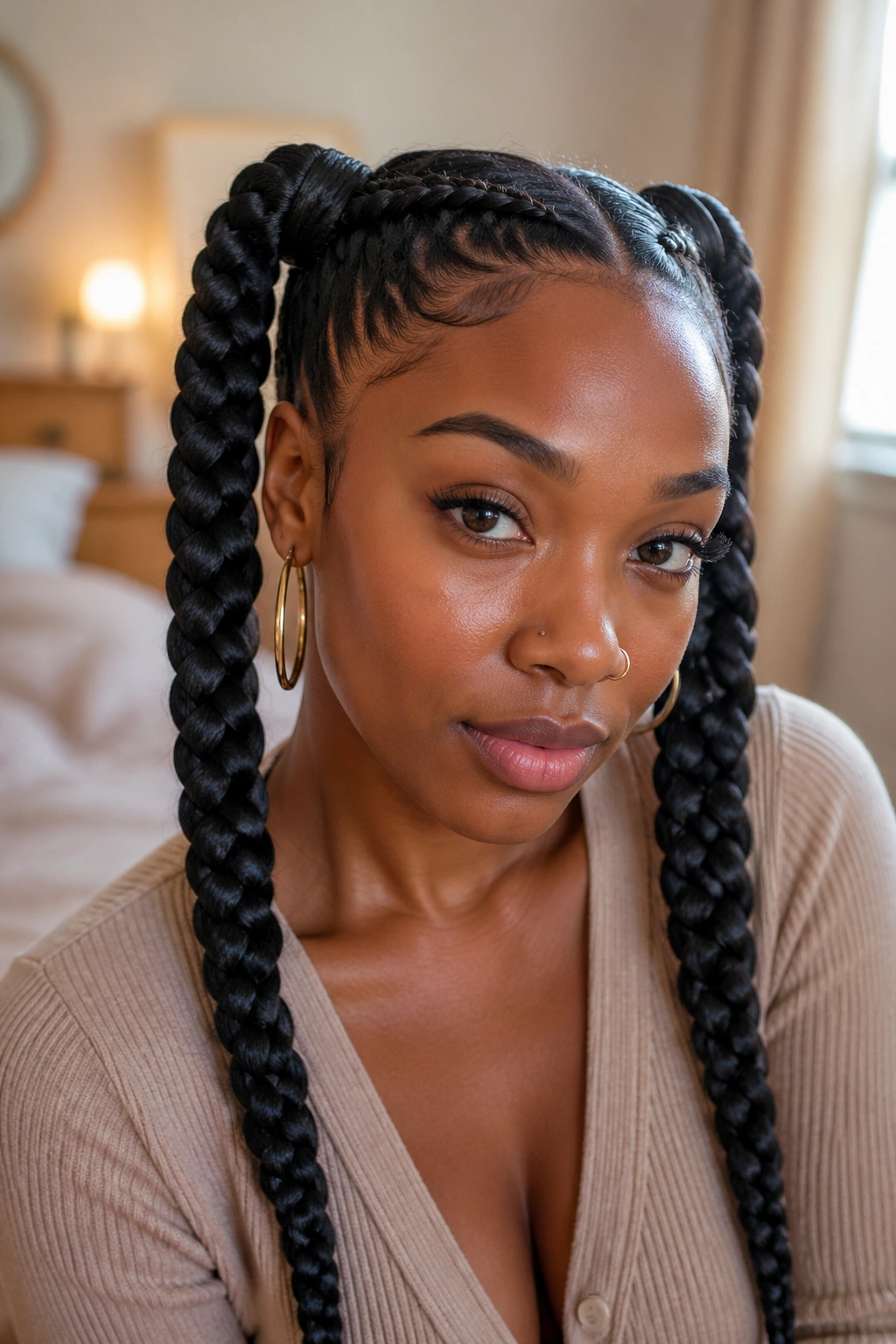
Wrapped-base pigtails are one of those styles that looks more polished than it is. You gather the two braids, secure them, then wrap a small section of braid or extension hair around the elastic so the tie disappears.
That hidden base makes the style look cleaner from every angle. It also helps if your elastic is starting to look tired or if you’ve been wearing the same install long enough that the tie needs a little cosmetic help. Small fix. Big payoff.
What Makes It Useful
- The base looks smooth instead of bulky
- Great for work, events, or photos
- Easy to pair with a single braid cuff or a matte ribbon
- Helps old elastics stay out of sight
The style is strongest when the wrap is snug and the end is tucked neatly underneath. If the wrap starts slipping, pin it once with a small bobby pin and move on. No one needs a wrestling match in the mirror. A neat base is the whole trick here.
14. Space-Bun Braided Pigtails
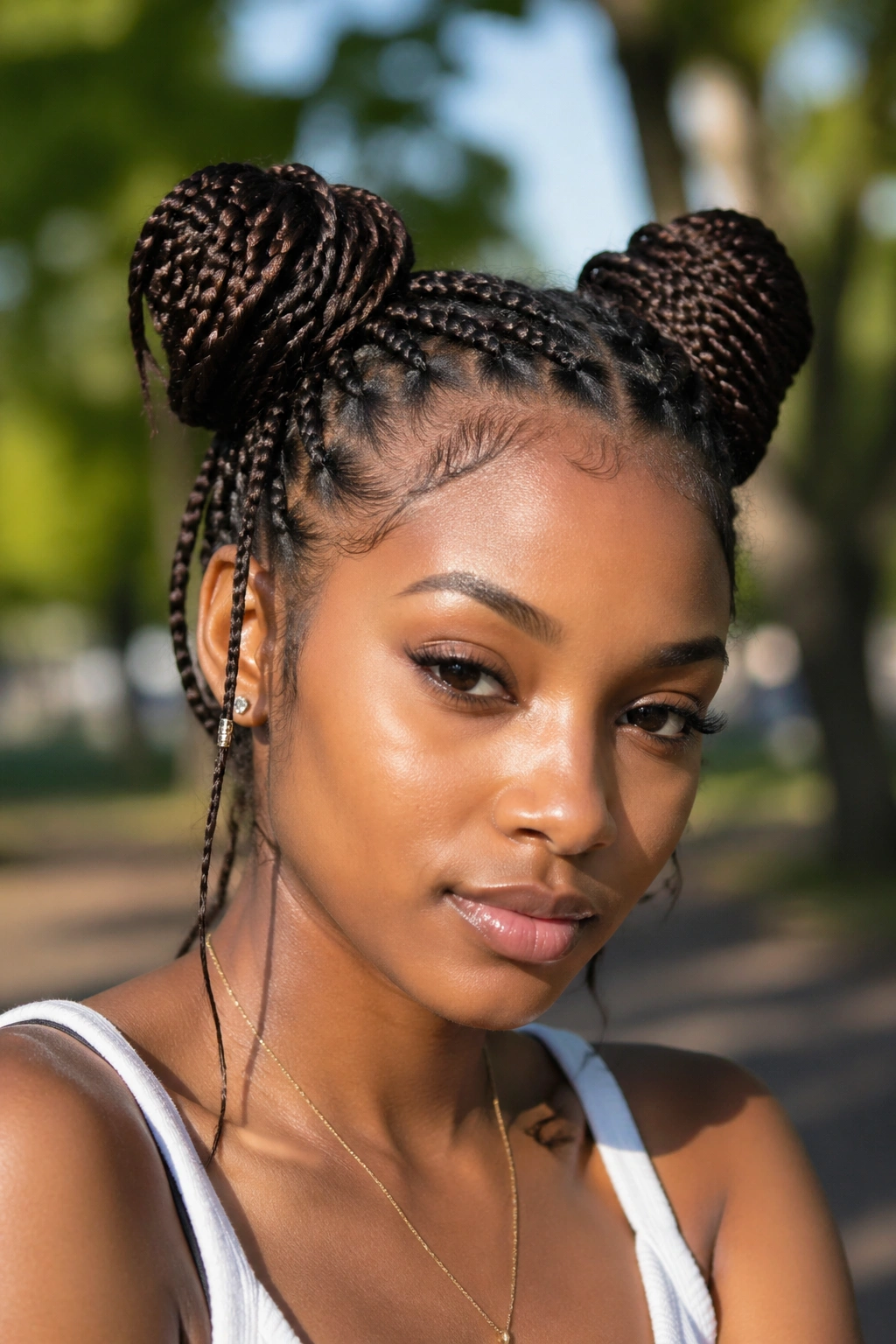
Space buns made from box braids have energy. A lot of it. If you want a style that feels playful without taking the braids apart, folding each pigtail into a bun is a very good move.
The look works best when the braids are long enough to coil without forcing the ends into a knot. Start with two high pigtails, twist or loop each length around itself, then pin the bun so it sits round and secure. Leaving a few ends out gives it a more relaxed finish. Tucking everything in makes it neater.
This is a style for days when you want the hair away from your neck. Hot rooms, dancing, chores, errands — all of it. It also gives you a chance to show off the parting at the scalp while changing the silhouette completely.
If your braids are extra long, do not force every inch into the bun. That’s how the bun gets too heavy and starts slipping. Let the ends help rather than fight the shape. The best versions look like they settled there on purpose.
15. Shoulder-Length Twin Braids
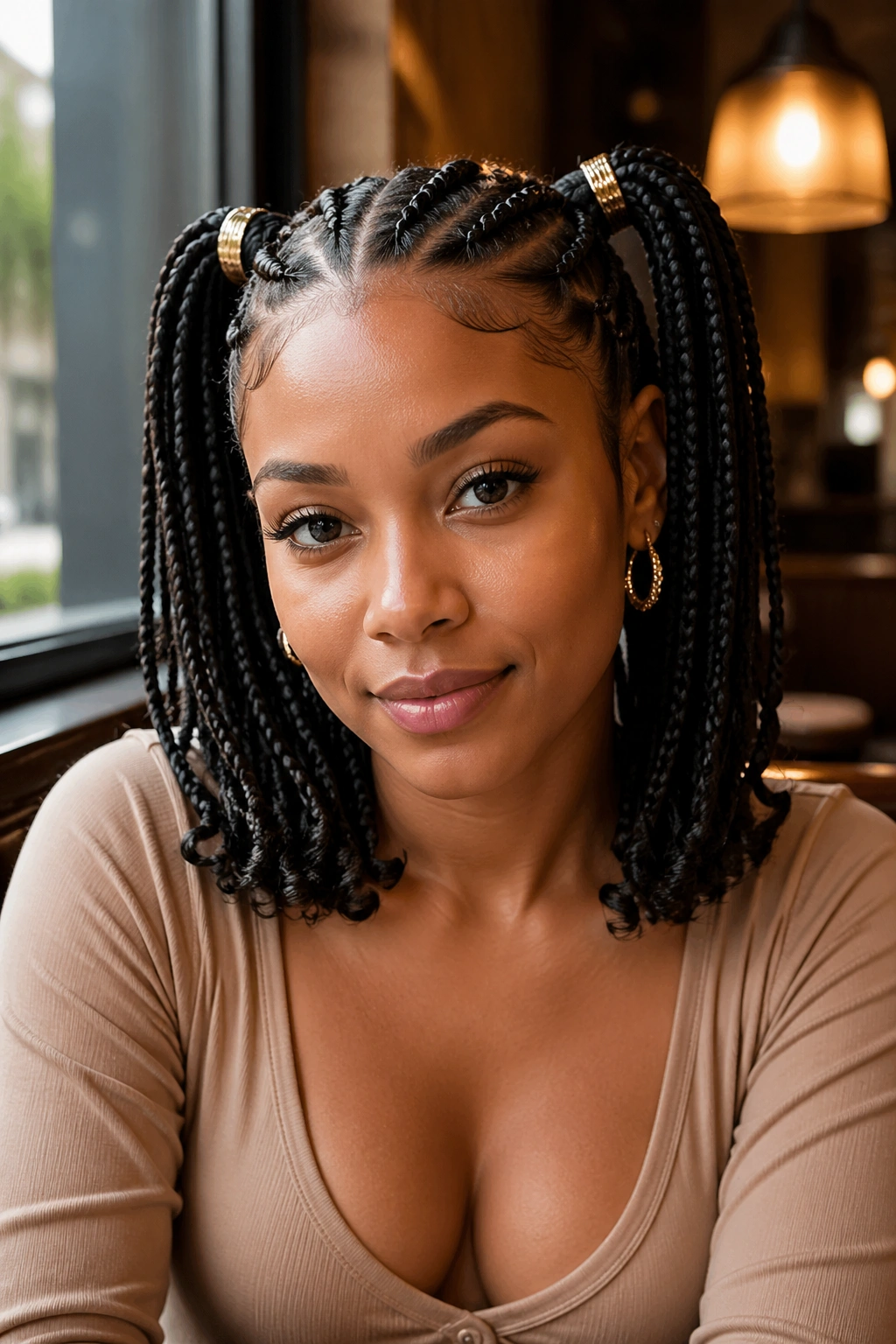
Shoulder-length pigtails are proof that box braid styles do not need dramatic length to feel finished. In fact, shorter braids can look sharper because the shape stays compact and the movement feels easier to control.
Why does this work so well? Because shoulder-length braids frame the face and upper body without getting in the way of everything else. They are less likely to tangle in coats, less likely to brush against dinner plates, and less likely to feel heavy after a long day. That last part matters more than people admit.
How to Wear It
Keep the part clean and the pigtails even, then let the ends sit right around the collarbone or just above the shoulders. If the braids are a touch longer, you can curl the ends under with warm water set in the install, or leave them blunt for a more direct finish.
This length also makes accessories easier to place because the braids are not competing with a huge amount of hair. A simple cuff near the front or a small ribbon at the base can carry the whole look. Shorter does not mean smaller. It just means the shape has to be deliberate.
16. Boho Loose-End Twin Braids
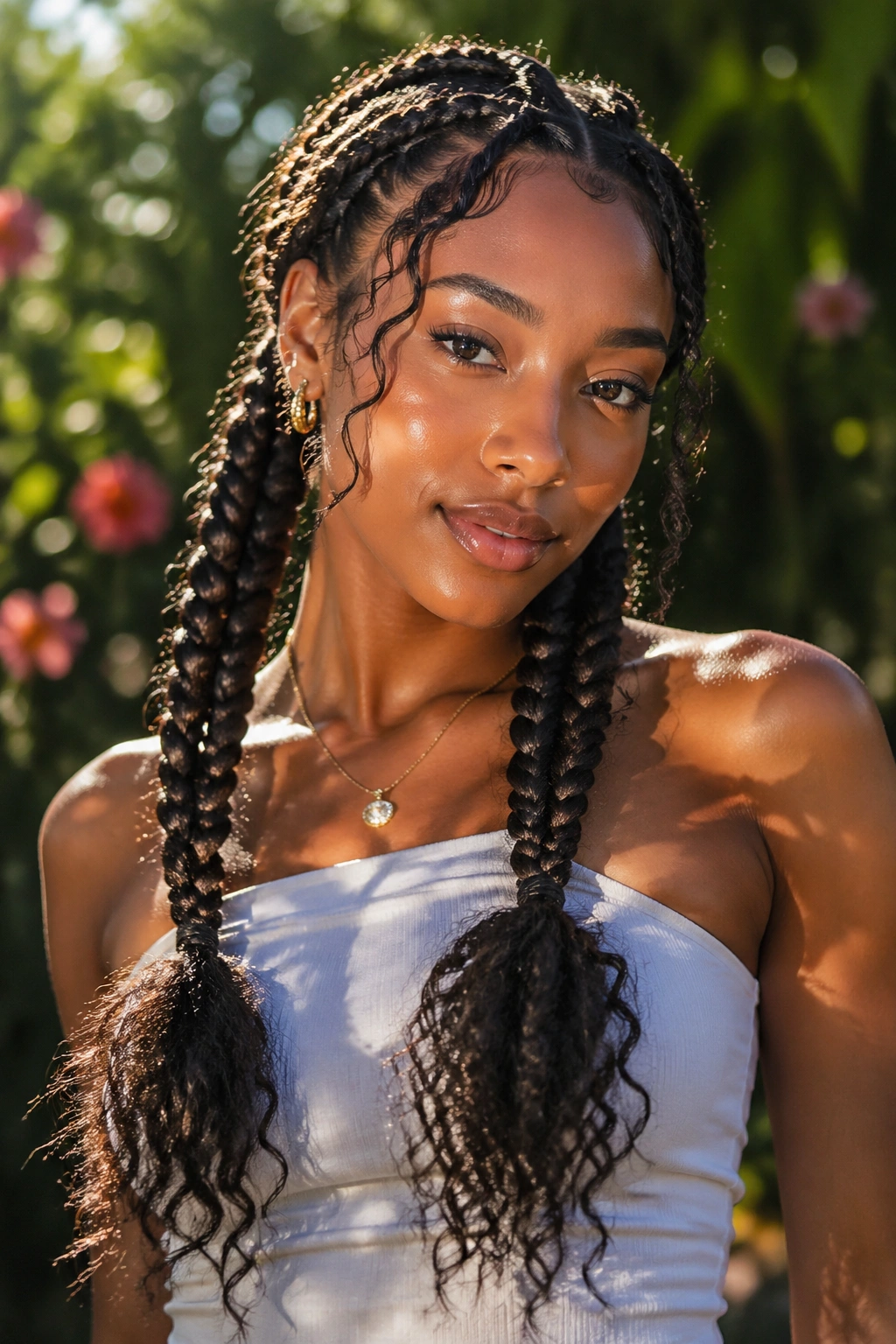
Boho twin braids soften the look in a way that feels lived-in instead of rigid. The braids stay in two sections, but the ends can be loose, curly, or slightly undone so the finish has movement.
That loose texture is the part people usually like most. Straight, blunt ends can feel formal. Curly or separated ends make the style look touched, not forced. If your install includes curly pieces, leave them visible near the end of each braid instead of tucking them away. They do the work.
- Best with human-hair pieces or curly ends left out on purpose
- Looks softer when a few face-framing braids are left free near the temples
- Pairs well with simple gold jewelry
- Needs a light touch so the curls do not get frizzy too fast
This is not the style to over-pin or over-smooth. The charm comes from the bit of looseness. If it looks too tidy, you’ve gone too far. A little frizz at the ends can even help, as long as the roots stay clean.
17. Color-Pop Twin Braids
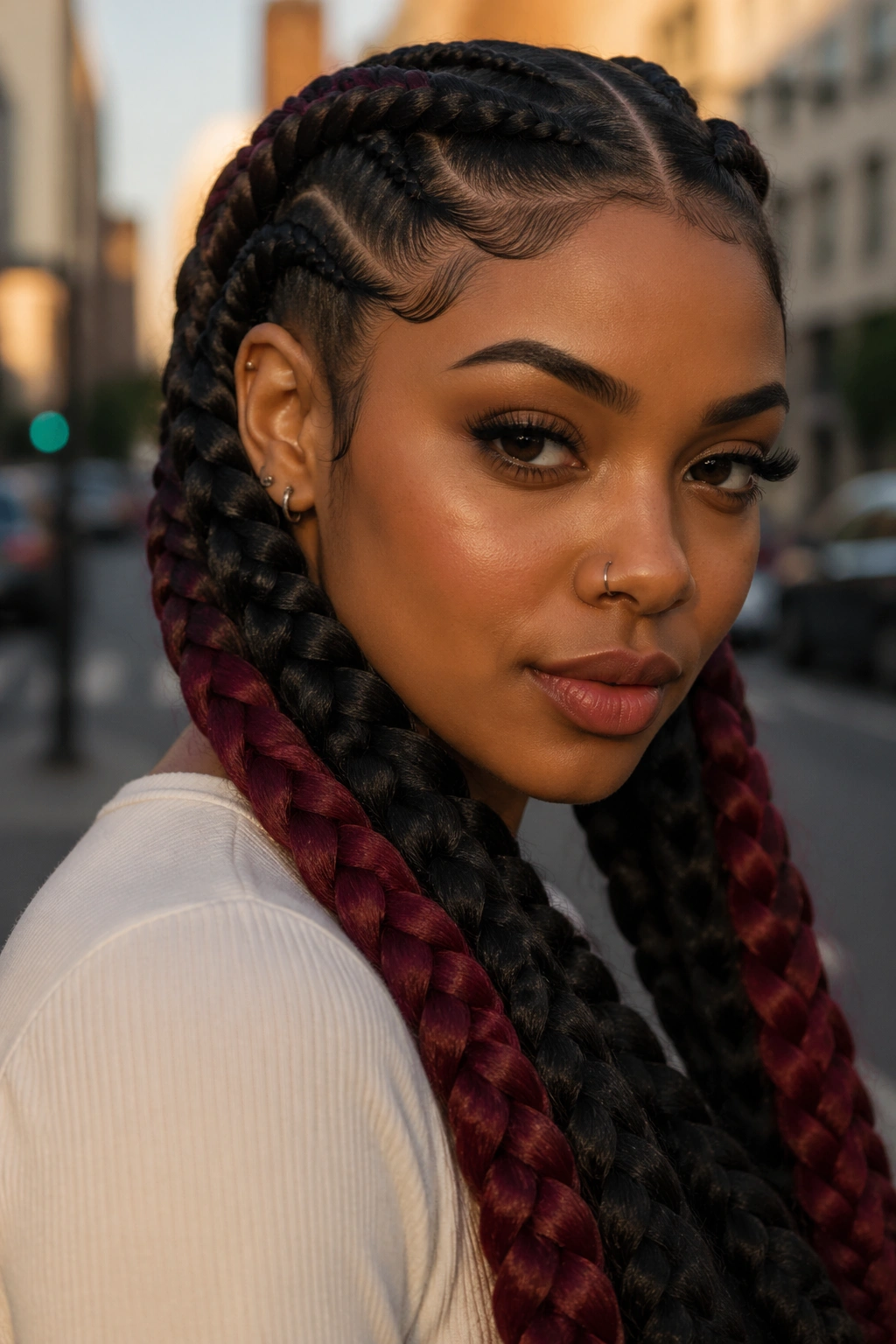
Color changes everything in two-braid box braid styles because the braids are grouped into such clear sections. The eye can read the color faster, which means even one accent shade can shift the whole style.
A single streak of burgundy, honey brown, copper, or blue can be enough if the base is dark. If the braids are already bright, a softer ombré or a high-contrast root-to-end fade can keep the style from looking busy. The point is not to cram in every color at once. The point is to let the braid shape and the shade play together.
This is one of the few styles where the ends matter just as much as the roots. Color at the bottom makes the movement easier to see when the braids swing, especially in pigtails. A little shine spray helps too, but only a light mist. Too much and the color starts looking greasy, which nobody wants.
If you like jewelry, keep it simple here. A color-heavy braid set does not need five different accessories fighting for attention. One cuff or one wrapped tie is enough.
18. Crown-Feed Twin Braids
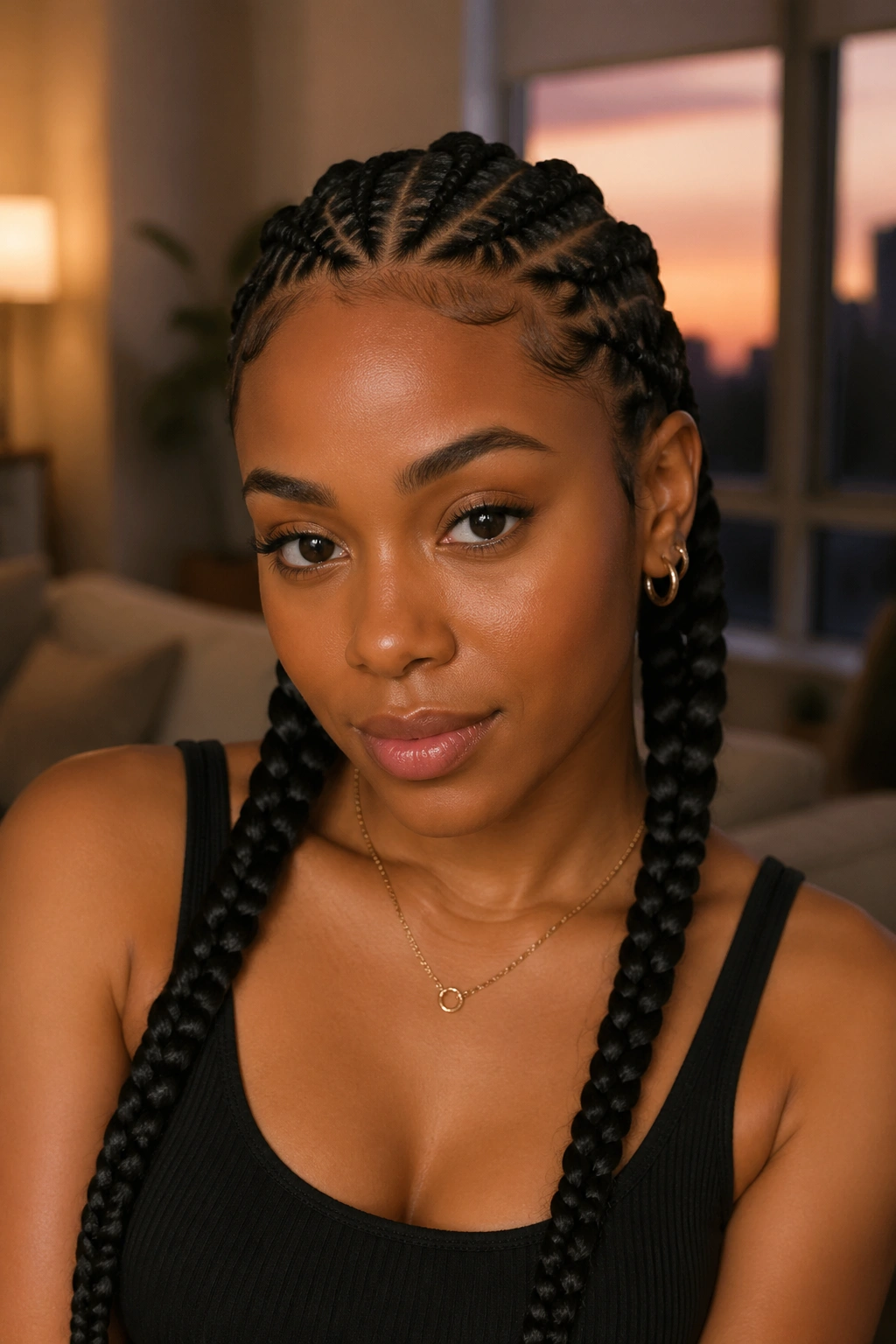
Crown-feed twin braids sit somewhere between a classic pigtail and a more dressed-up half-up look. The front sections are braided or swept back into a crown-like shape before the two main braids drop into place.
That difference matters because it keeps the face open while still giving the style a finished top line. If plain pigtails sometimes feel too simple for you, this version solves the problem without adding extra length or weight. It also works nicely when you want the hairline area to look intentional from the front and side.
Use it when you want a cleaner frame for earrings, makeup, or a neckline with details you want to show off. The crown section guides the eye upward, then the twin braids finish the shape. It’s a smart balance. Not showy. Just well put together.
Secure the crown pieces with small pins or hidden elastics, then let the two main braids fall from that anchor. If the front feels too tight, loosen it before you finish the back. A style like this should sit smoothly, not grip the scalp like it’s trying to hold on for dear life.
Final Thoughts
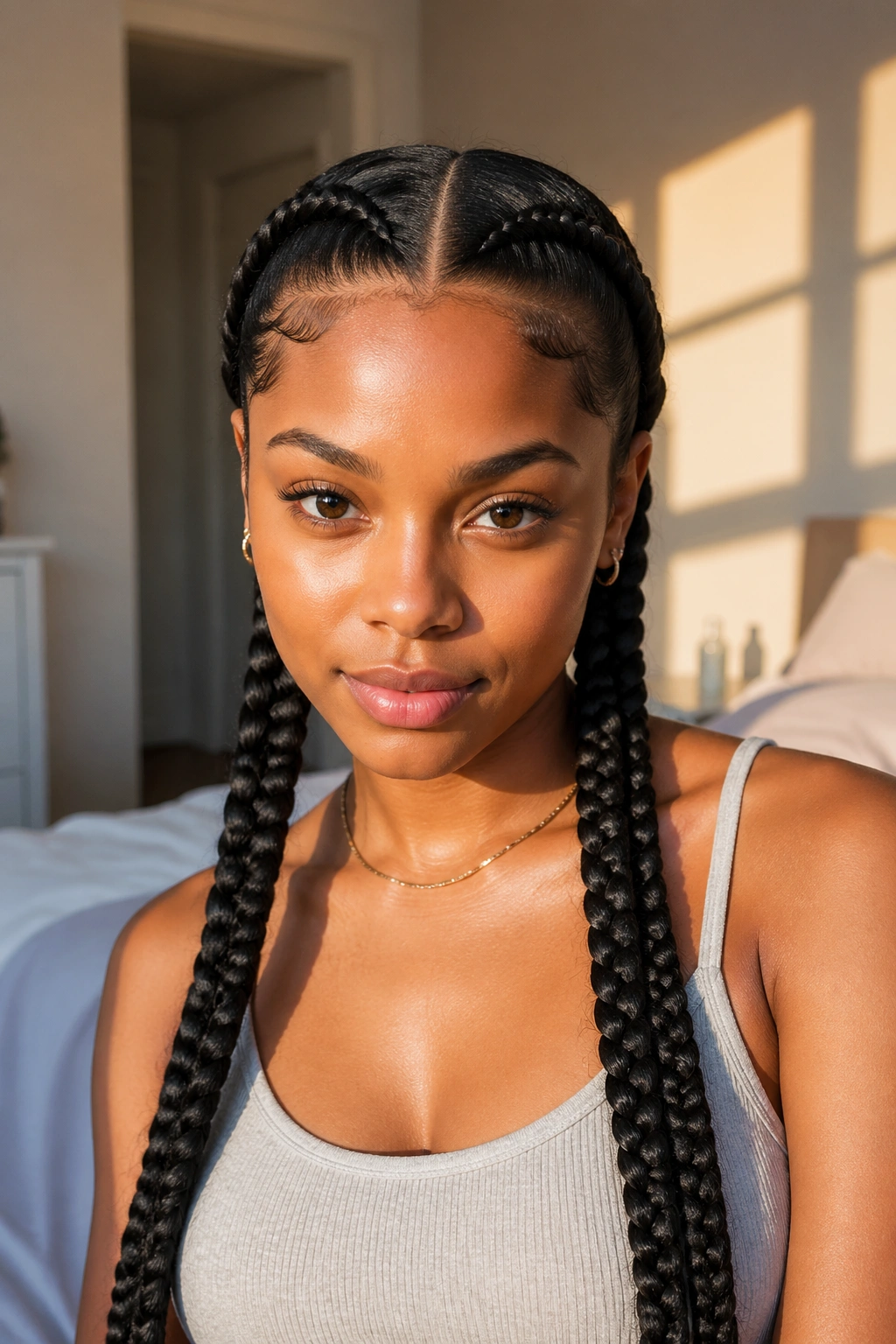
Two-braid box braid styles work because they give you structure without locking you into one look. A middle part, a side sweep, a high tie, or a set of beads can change the whole feeling in minutes.
The smartest move is to match the style to the braid length and the weight of the install. Heavy braids want lower anchors. Shorter braids can take more lift. Once that part makes sense, the rest gets easier.
And that’s the real appeal here. You do not need a new install every time you want something different. You just need a new way to wear the same one.
