
Ombré box braids have a useful little trick: they give you color without making the whole style feel loud from root to tip. The darker base keeps the look grounded, then the shade shift steps in near the mid-lengths or ends and does the interesting part. Some fades feel soft and sun-kissed. Others look like they were dipped into paint with a steady hand and a little attitude.
That range is why people keep coming back to ombré box braids. The braid pattern does one job, and the color does another. You can keep the parts neat and the length sleek, or go big with jumbo sections, waist-skimming braids, beads, cuffs, and sharp parting that makes the whole head look deliberate. The color choice changes the entire mood.
A good ombré style is never only about the dye pattern or the synthetic hair mix. Braid size matters. Parting matters. Length matters. A honey-blonde fade on medium box braids reads nothing like the same color on tiny knotless braids, and that difference is half the fun.
These 20 looks lean into that. Some are soft. Some are bold. A few are the sort of thing you put on when you want your hair to enter the room before you do.
1. Black to Honey Blonde Waist-Length Ombré Box Braids
This is the one people often mean when they say they want ombré box braids without getting too experimental. The black base keeps the look neat and anchored, then the honey blonde warms up the ends so the whole style feels brighter from the shoulders down. It’s classic for a reason.
Why this fade works so well
Honey blonde sits in a sweet spot. It’s lighter than caramel, but it doesn’t jump straight to icy blondness, so the transition feels softer on the eye. On waist-length braids, the color has enough room to breathe, which matters more than people think. Short braids can make a fade look chopped; longer ones let the shift happen gradually.
- Best braid size: medium to small.
- Best parting: center part or soft side part.
- Best vibe: clean, warm, easy to wear.
- Best add-ons: gold cuffs, clear beads, or a single braid wrap.
Pro tip: Ask your braider to start the blonde lower than you think. A fade that begins around the lower third of the braid usually looks richer than one that starts too high.
2. Espresso to Chestnut Medium Knotless Box Braids
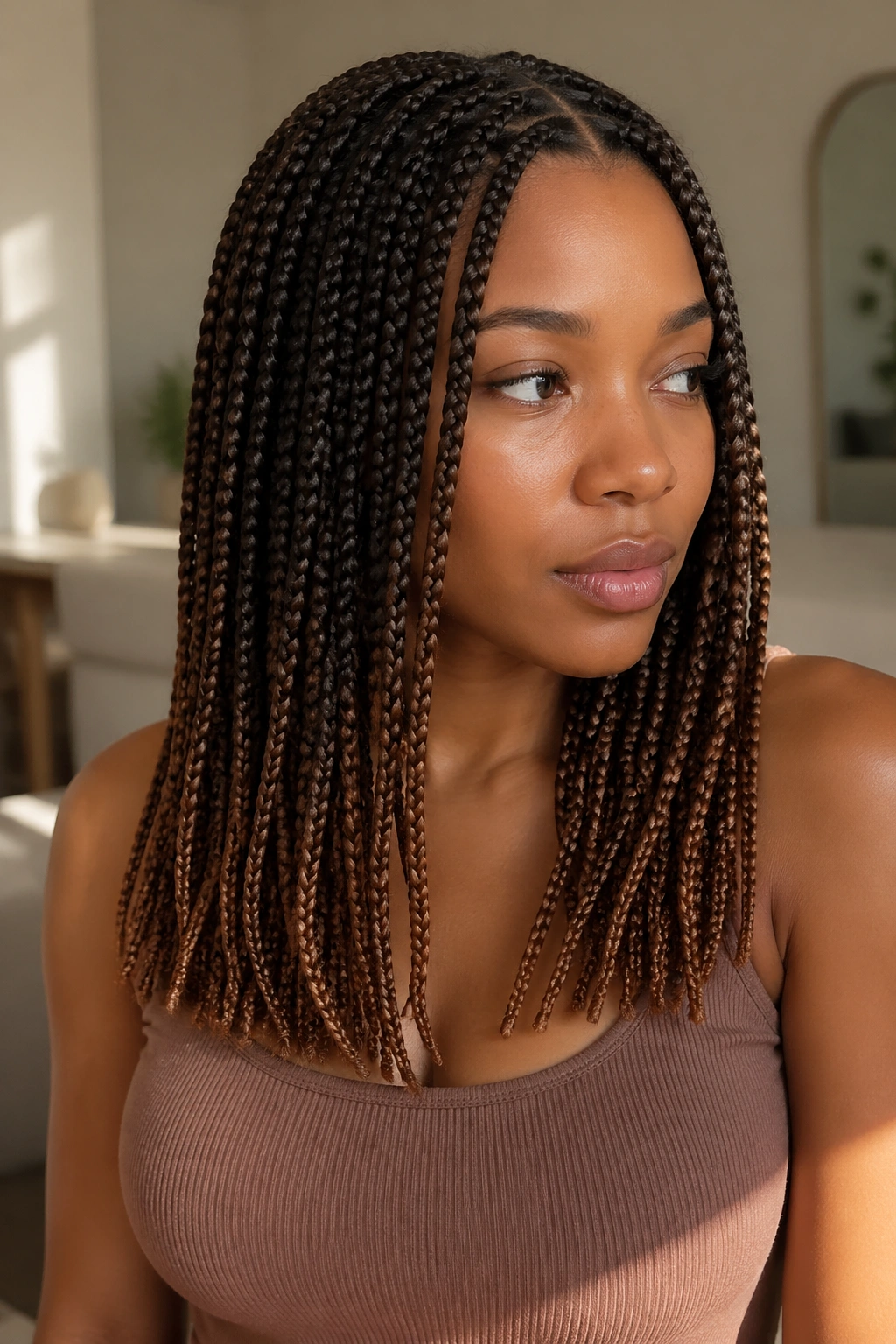
Why do brown-on-brown braids look so expensive without trying too hard? Because the shift is subtle enough to feel natural, but not so subtle that it disappears. Espresso roots fading into chestnut ends give you dimension without the sharp contrast that some people want to avoid.
Knotless braids help here. The base sits flatter, so the color reads first and the installation stays lighter on the scalp. If you wear your braids pulled back often, this is one of the easiest ombré choices to live with because the color doesn’t scream from every angle. It just sits there looking rich.
I especially like this look on medium braids around mid-back length. Too small, and the brown gradient can vanish into the texture. Too jumbo, and the chestnut can look blocky instead of blended. Medium is the sweet spot.
What to ask for
- A dark brown or espresso base.
- Chestnut or warm auburn ends.
- A fade that begins around halfway down the braid.
- Clean, rounded ends sealed neatly, not frayed.
3. Jet Black to Copper Ends on Jumbo Box Braids
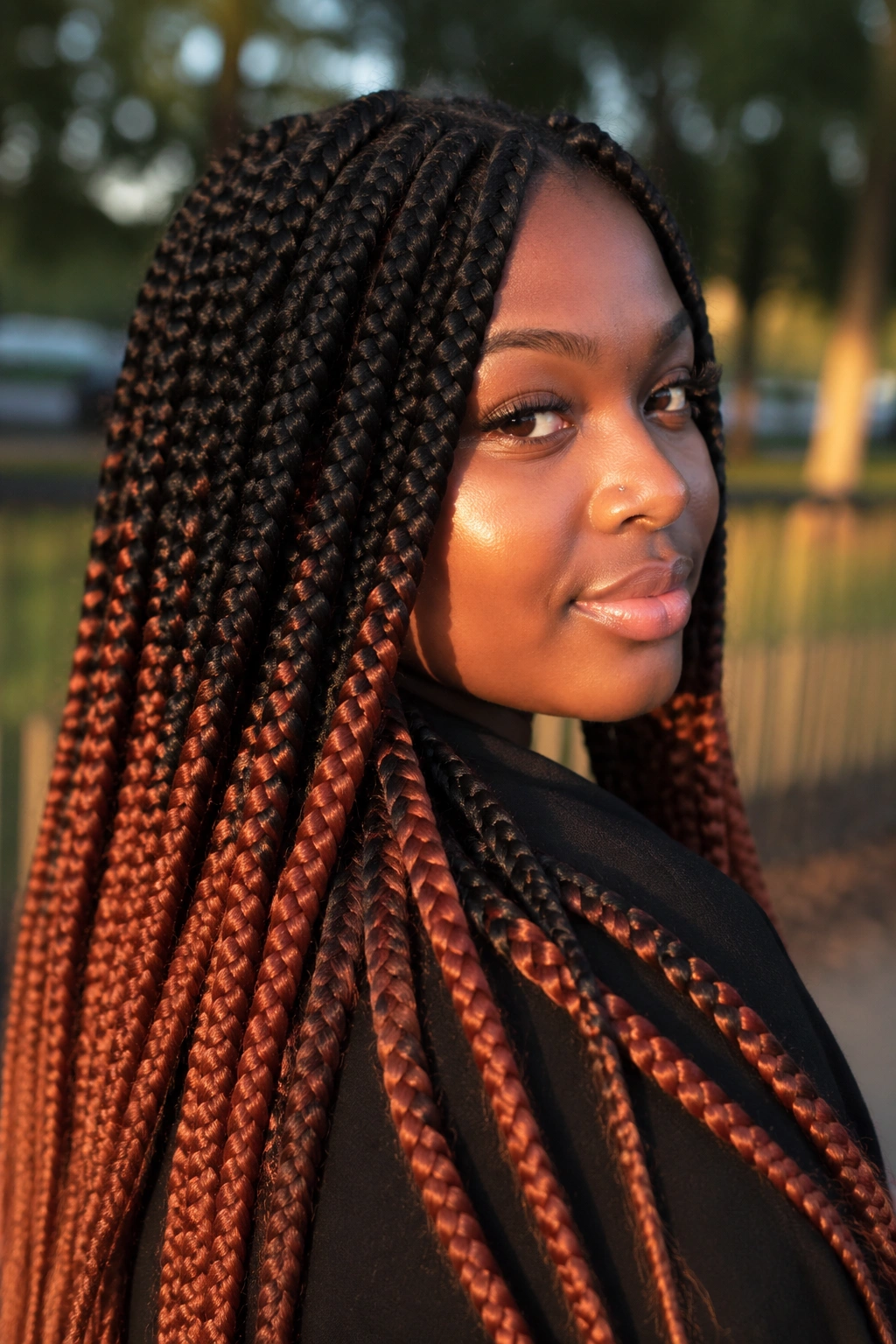
Copper ends on jumbo box braids have real presence. Not in a shy way. In a “yes, I meant to do this” way. The black base keeps the style grounded, while the copper pops at the ends like a line of fire that only shows up when the light hits it.
Jumbo braids show color faster than smaller sizes, which is exactly why this style works. You don’t need a long, slow fade here. You need a decisive shift. A few inches of copper at the end is enough to change the entire mood, especially if the braids hang past the collarbone and swing a little when you move.
Copper also looks best when the braid pattern itself is clean. If the sections are sloppy, the bold color starts doing all the work, and that’s when the style feels off. Sharp parts, neat rows, and a smooth braid finish are what make this look hit.
One small thing: copper tones can make lint more visible than darker shades. Keep a lint roller nearby. Seriously.
4. Burgundy Fade on Small Knotless Braids
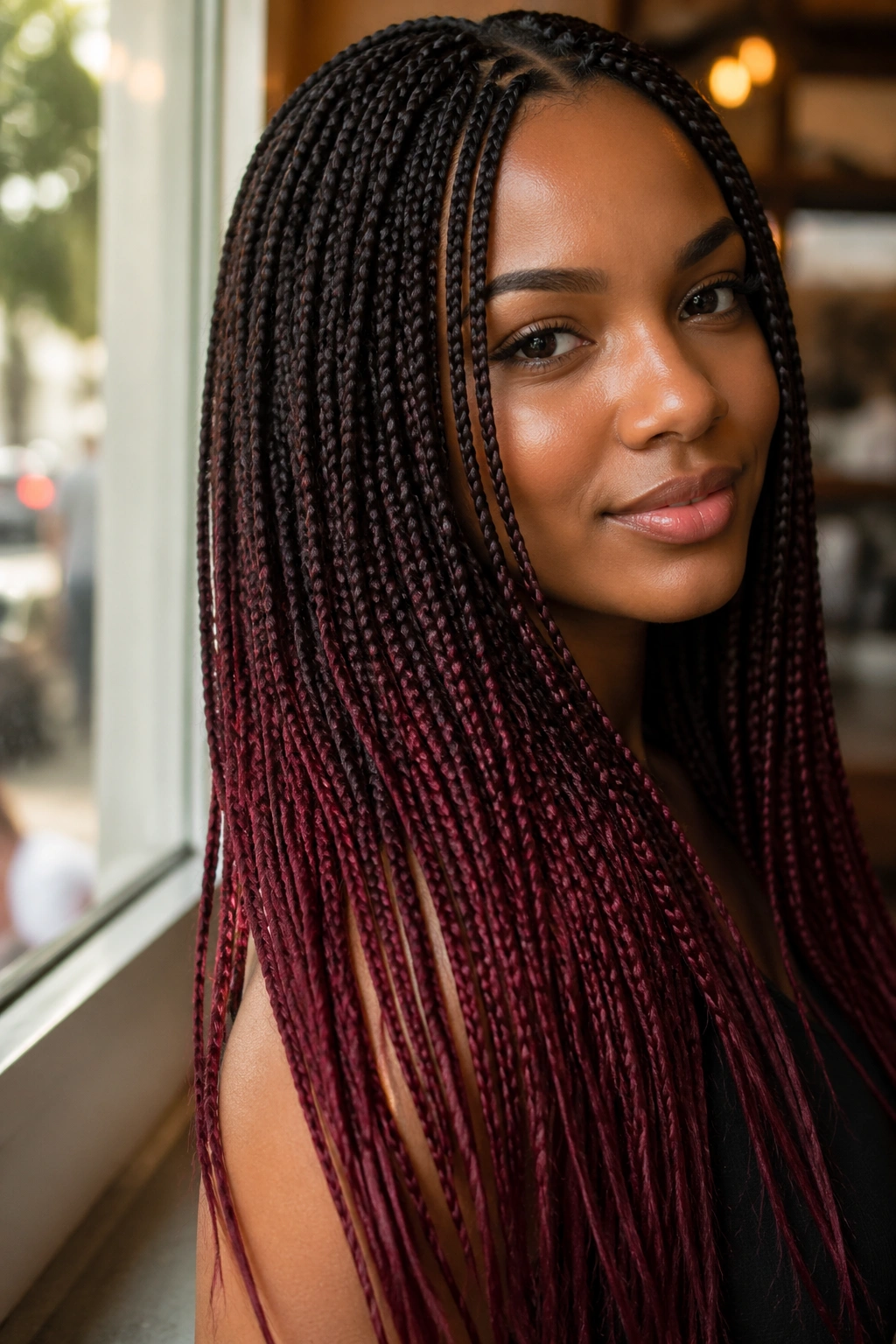
Burgundy on small knotless braids has a darker, moodier feel than the bright red styles most people picture first. It’s still colorful, but it doesn’t shout. The shade shift usually reads like black turning into wine at the ends, and that depth looks especially good when the braids move.
Small knotless braids give the burgundy more surface area to shimmer across. That matters because darker red tones can look flat if the braid size is too large. With smaller braids, the color catches in little pieces instead of one heavy block. The result feels layered and polished without being fussy.
This is one of those styles that looks strongest when the ends stay slightly glossy. A light mousse or foaming wrap product helps the finish stay tidy, especially around the nape where friction is constant. Don’t drench the braids. A thin coat is enough.
If you like jewel tones but want something you can wear with plain clothes and no extra effort, burgundy is the easy answer.
5. Rooted Platinum Blonde Braids with Clean Parts
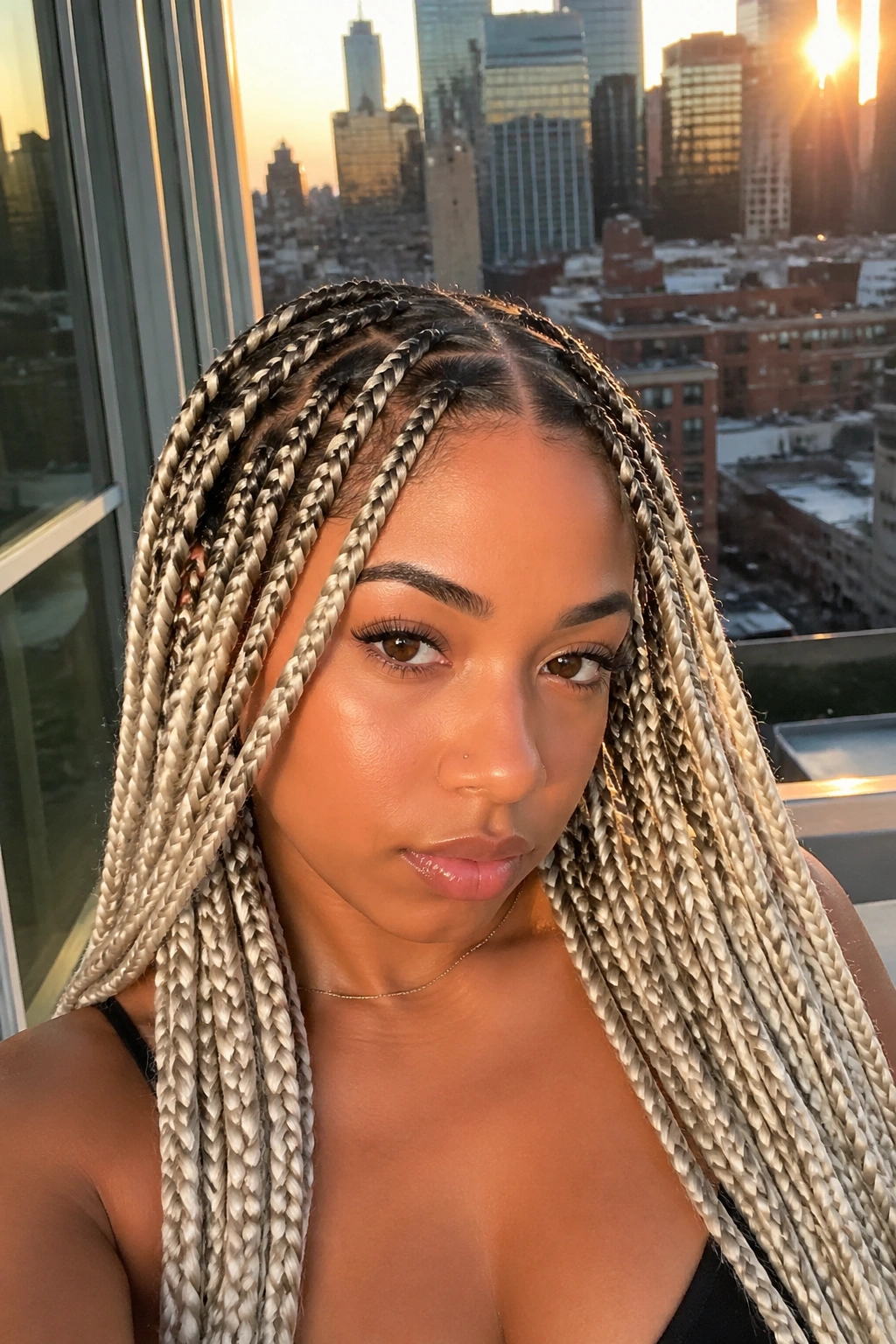
Platinum blonde at the ends is not subtle. That’s the point. A dark root under icy lengths creates a hard contrast, and the whole style feels crisp when the parts are straight and the rows are even. It’s the kind of look that makes neatness matter.
Keep the structure tight
Platinum works best when the braid pattern has a strong shape. Straight parts, triangle parts, or a very clean middle part all help the contrast land properly. If the sections are uneven, the eye notices that before it notices the color. That’s the wrong order.
- Best braid length: shoulder to mid-back, though longer lengths work too.
- Best finish: smooth, sealed ends with no fuzzy tail.
- Best clothing match: solid colors and simple silhouettes.
- Best attitude: confident, not crowded.
The thing about platinum is that it reflects more light than warmer blondes. That makes every loose strand, every frizzy edge, and every dusty sleeve more visible. So yes, it looks sharp. It also asks for maintenance. A scarf at night helps. A little braid sheen helps. Skipping both shows fast.
6. Chocolate to Caramel Triangle-Part Braids
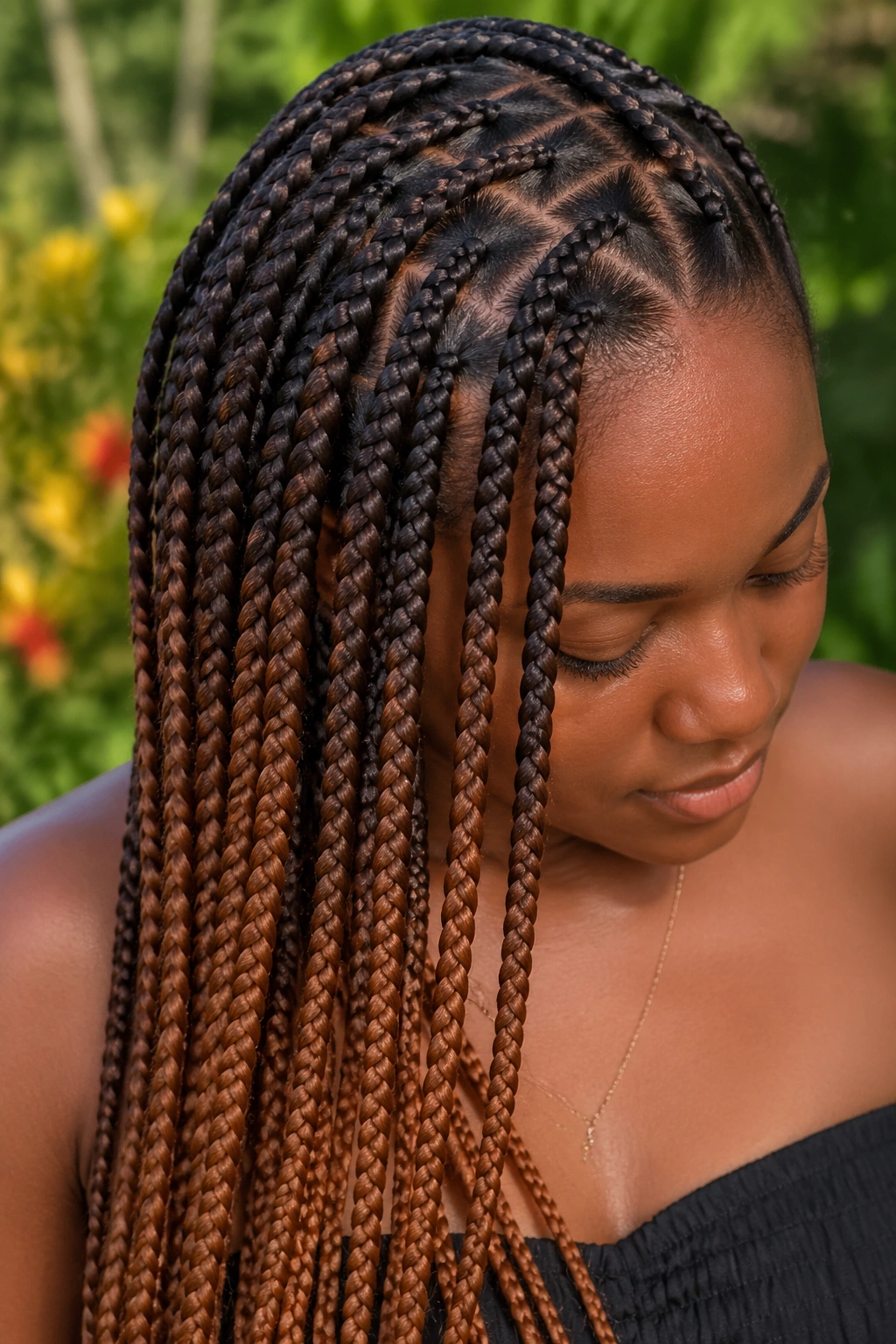
Triangle parts change the whole feel of ombré box braids. They break up the neat grid pattern that square parts create, so the caramel ends move a little more visually. Chocolate roots into caramel tips on triangle-part braids can look cozy, soft, and surprisingly modern without needing a dramatic color jump.
This is a good style for people who want movement but don’t want the braid pattern to feel too rigid. Triangle parts create a bit more visual interest at the scalp, and the warmer color at the bottom keeps the eye traveling downward. That matters if you like fuller-looking braids that still feel light.
If you wear your braids in buns often, triangle parts are worth a look. They’re less predictable when pulled back, which sounds minor until you see the back of your head in a mirror and realize the pattern is doing some of the styling for you.
A caramel fade also plays nicely with gold jewelry, but that’s almost too easy. The better detail is this: on medium to long braids, caramel keeps the ends from looking blunt and heavy.
7. Ash Brown to Beige Blonde Braids
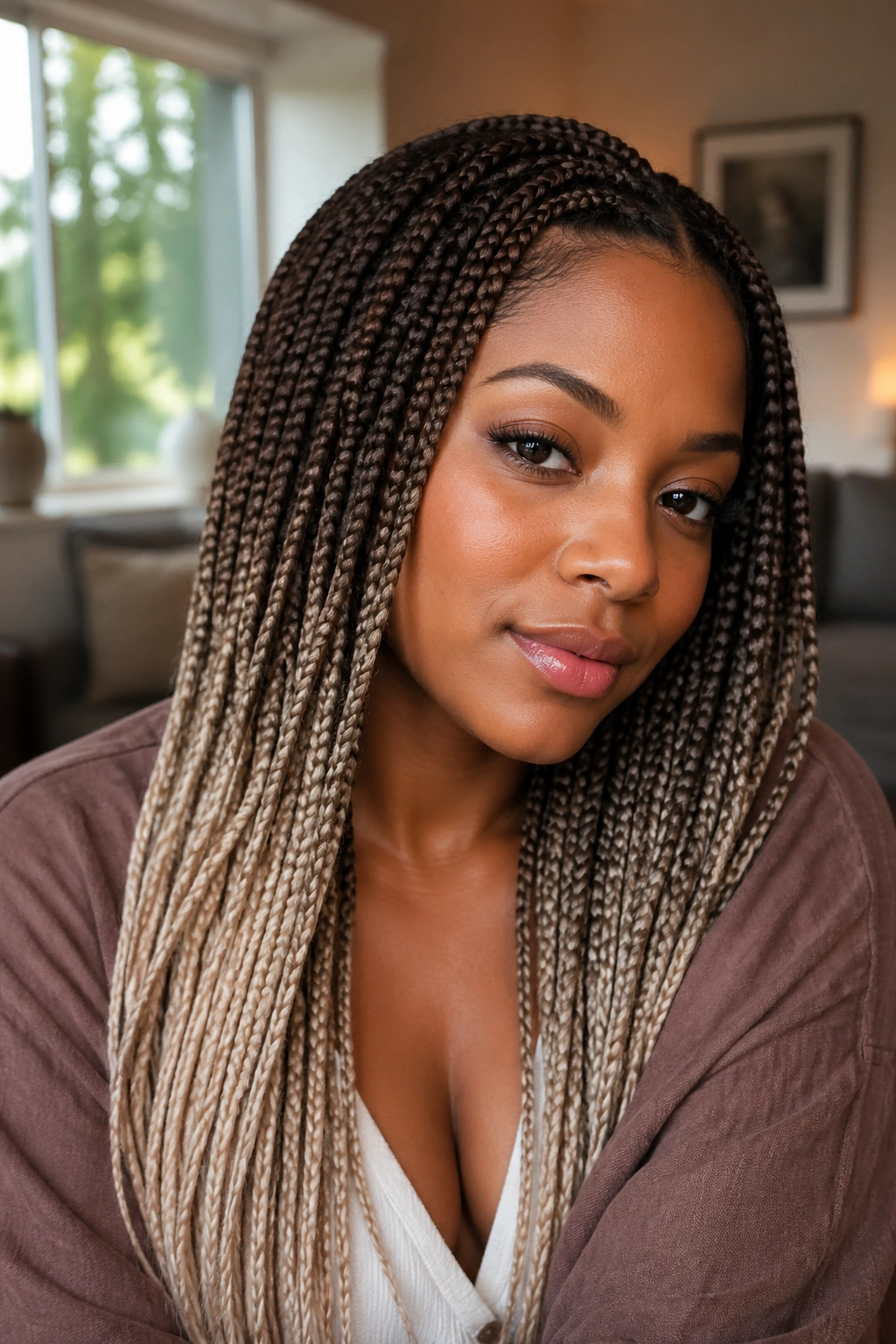
Cool-toned ombré braids are a little quieter than the warm blondes everyone notices first. Ash brown moving into beige blonde gives you that muted, smoky look that feels intentional without leaning flashy. The color story is soft, but not dull. There’s a difference.
What makes the shade pair special
Ash brown has a cooler base, so it cuts some of the sweetness out of blonde and keeps the style from going yellow. Beige blonde then adds lightness without turning the whole head into a bright gold sheet. If you like neutral makeup, silver hoops, or clothes in black, cream, and gray, this palette fits easily.
- Best for: medium braids, knotless installs, and mid-back length.
- Avoid if: you want the contrast to read from across the street.
- Ask for: a gradual blend over 4 to 5 inches, not a sudden switch.
- Use when: you want blonde without the warmth of honey or caramel.
This one is deceptively elegant. No, that word is not too fancy here. The reason is practical: it stays wearable in almost any setting, because the colors sit in a muted range and don’t fight with your face or clothes.
8. Midnight Blue Dip-Dye Braids
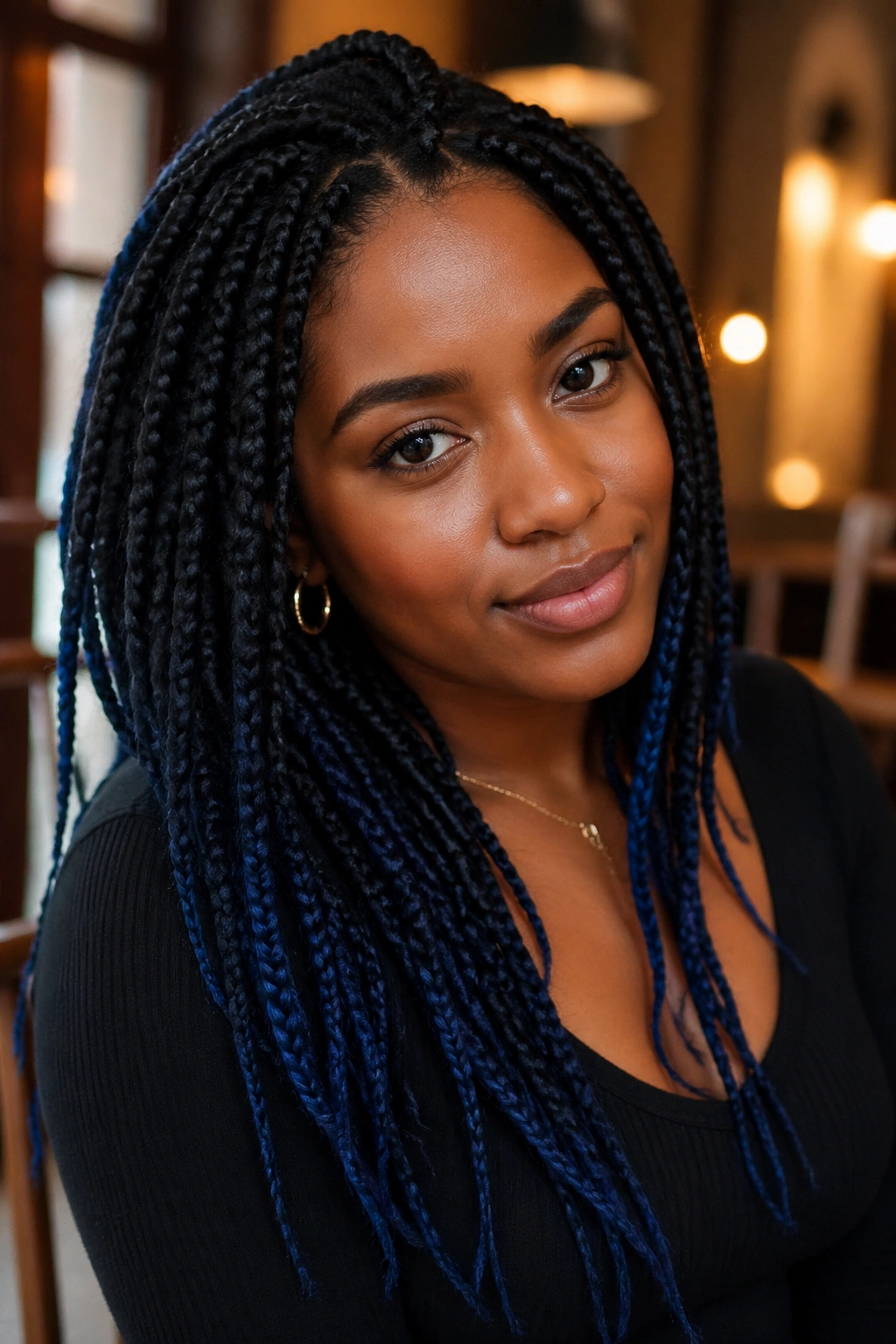
Midnight blue dip-dye on box braids has an easy advantage: it looks dark enough to stay grounded, but blue enough to feel like a real choice. Indoors, it can read almost black. Step into brighter light and the blue comes forward in streaks. That shift keeps the style from flattening out.
This is a strong pick if you want color but don’t want neon energy. The blue sits at the end of the braid instead of taking over the whole style, which makes it easier to wear with work clothes, a gym look, or something dressy. It’s a quiet flex. Not silent. Quiet.
How to keep it looking clean
- Keep the dip section to roughly the last 2 to 4 inches for a sharp finish.
- Pair it with silver cuffs or plain black hair jewelry.
- Choose medium or jumbo braids if you want the color to show faster.
- Smooth the braids with a light mousse so the blue ends don’t look dusty.
This style is especially good in a ponytail. The dark roots hold the shape, and the blue tips fan out at the bottom like a little secret.
9. Purple Wine Ombré Braids
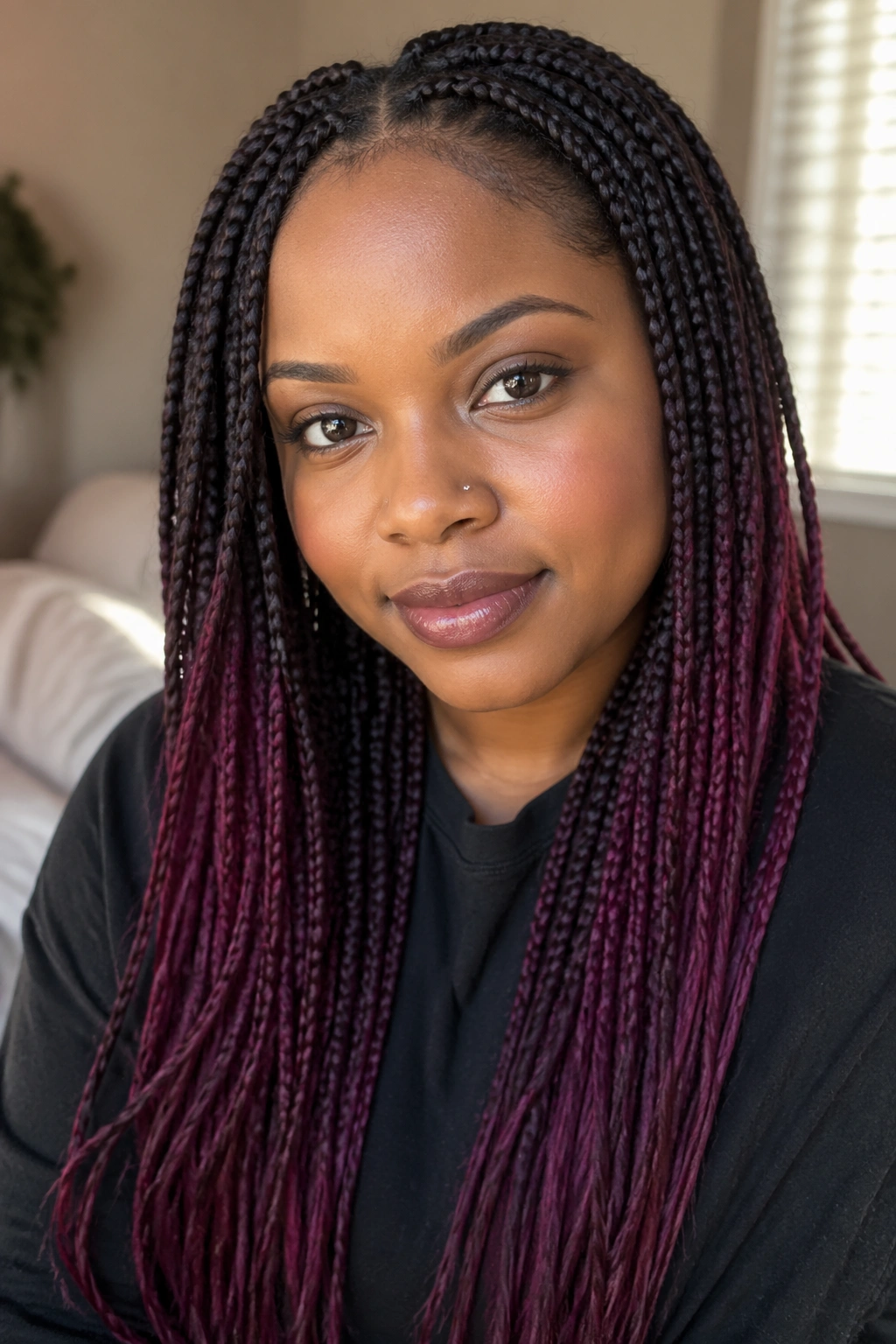
Purple wine is one of those colors that gets better when it’s not trying too hard. It carries the depth of burgundy with a little more coolness, which makes the fade feel richer and less expected. On box braids, that matters because the braid texture already brings enough visual structure. The color should add mood, not noise.
I like this shade on small or medium braids because the color layers show more clearly as the braids move. A big braid can swallow a dark purple tone, especially indoors. Smaller braids let the transition breathe. The result feels lush without becoming obvious from every angle.
You can lean the whole look romantic or sharp depending on how you part it. A middle part makes the purple feel stronger. A side part softens it. That kind of flexibility is rare enough to deserve attention.
If burgundy feels a little too warm and plum feels too cool, purple wine sits in the middle and handles both sides.
10. Auburn to Cinnamon Shoulder-Length Braids
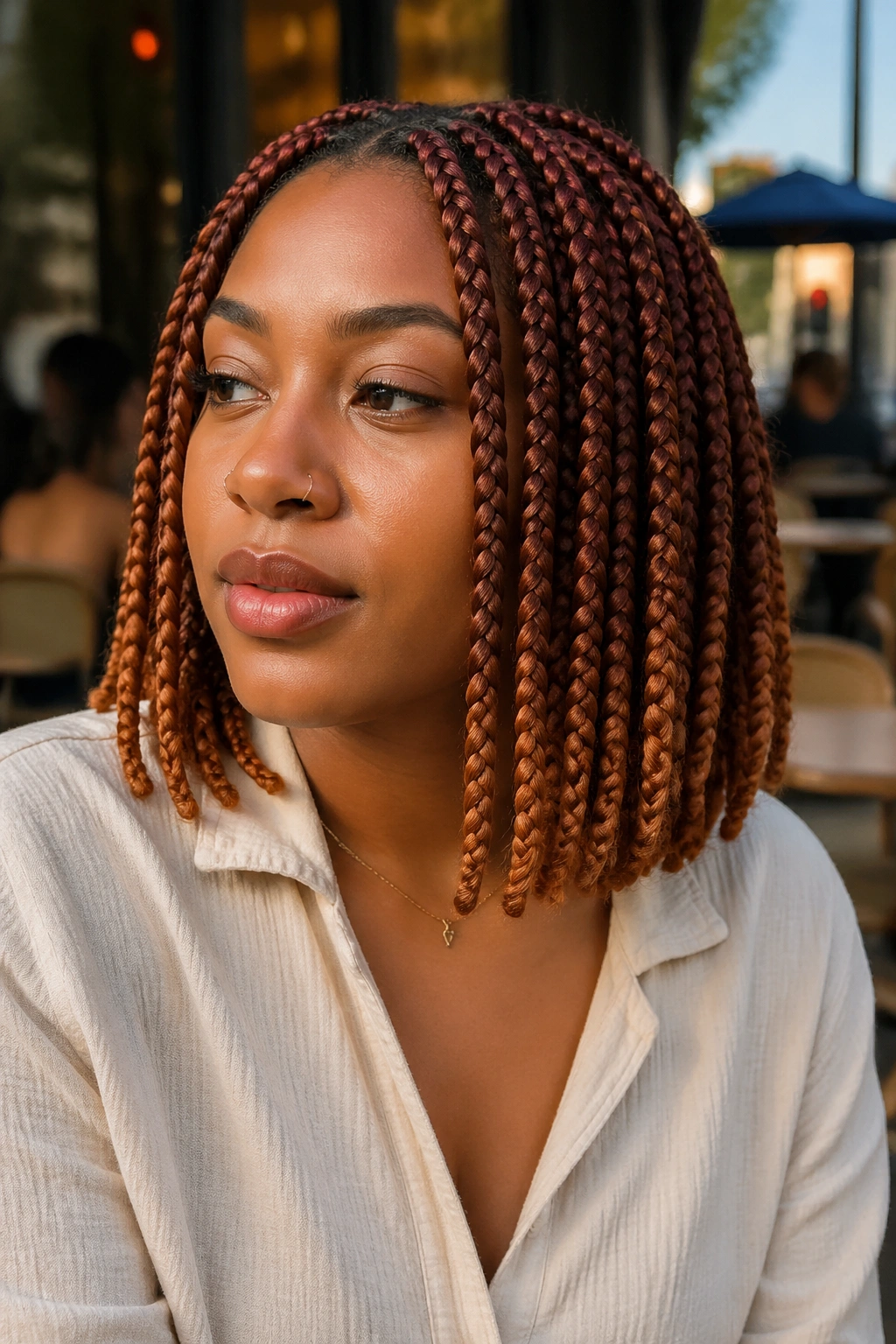
Shorter ombré braids deserve more respect than they get. Shoulder-length braids with auburn fading into cinnamon are easy to wear, easy to style, and less likely to get caught under coat collars, bag straps, and everything else that tugs at longer hair. Sometimes that convenience matters more than drama.
The color combo is warm, but not syrupy. Auburn gives the ends a deeper red-brown base, then cinnamon lightens the finish just enough to keep the look moving. On shoulder-length braids, the transition feels punchy because there’s less length to dilute it. The color gets to the point faster.
Where this style shines
- Busy days when you do not want hair grazing your waist.
- People who like color but hate heavy installs.
- Styles that live in buns, half-up ponytails, or loose shoulder drapes.
- Braids that need to sit well under jackets and scarves.
One thing I appreciate here: the shorter length makes the color easier to maintain visually. You’re not chasing frizz on three feet of hair. You’re just keeping the ends smooth and the parting neat.
11. Smoky Silver Ends on Micro Braids
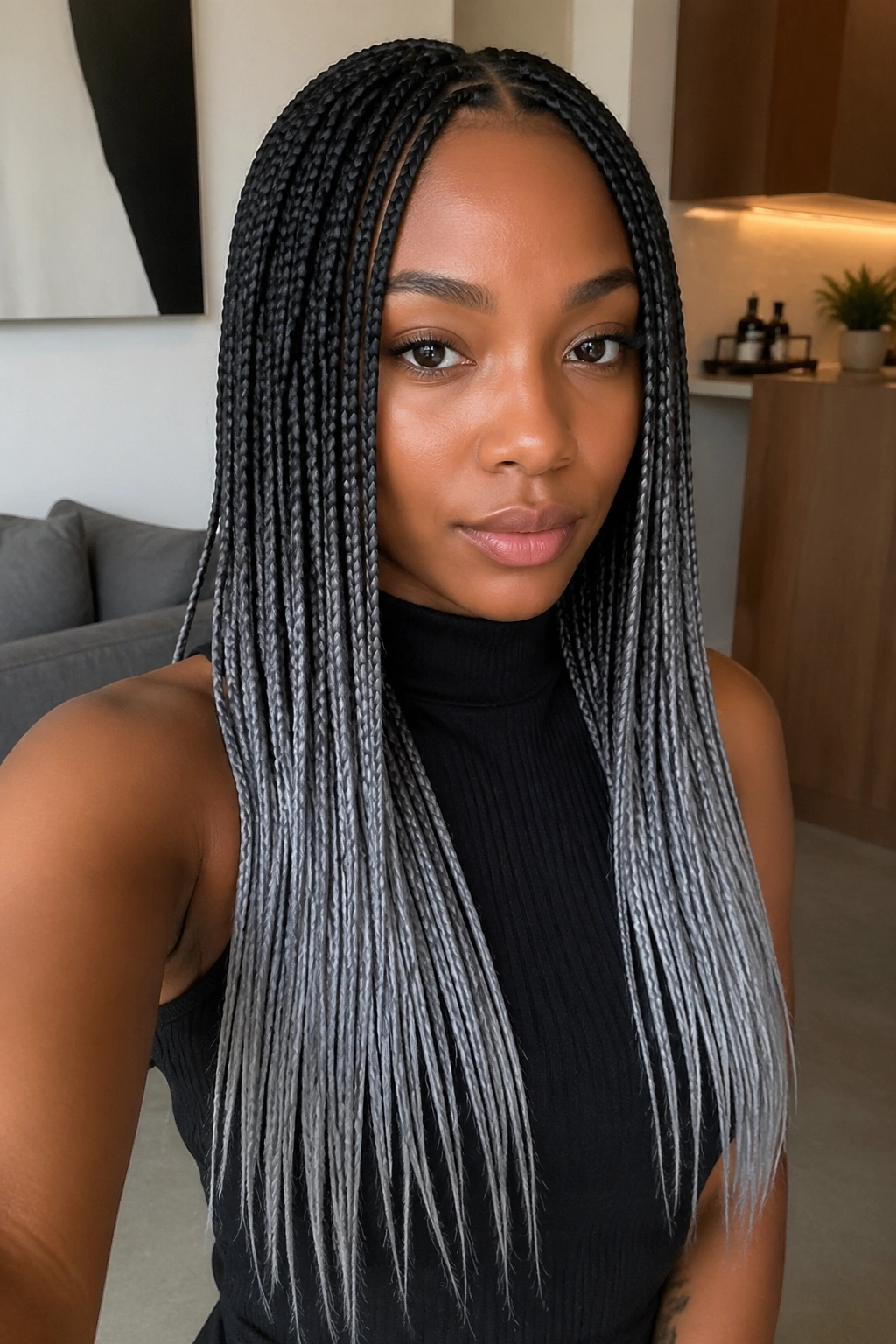
Smoky silver on micro braids is not for the impatient. Micro braids take time, and silver ends ask for even more patience because the color shift is so fine that any roughness shows quickly. But once it’s done, the result has a sleek, glassy quality that bigger braids can’t quite match.
The real appeal here is motion. Micro braids move like fabric. Add smoky silver at the ends and the whole head shifts softly when you turn, bend, or sweep it into a low ponytail. It looks clean, expensive-looking, and slightly futuristic without drifting into costume territory.
This style needs neat parting. No way around it. Because the braids are small, the scalp pattern becomes part of the design, and a sloppy base will distract from the silver ends. Keep the parts crisp and the tension even. Your head will thank you later.
If you’re the type who likes detail more than loud color, this is one of the most satisfying ombré box braid choices on the list.
12. Forest Green Fade on Sleek Mid-Back Braids
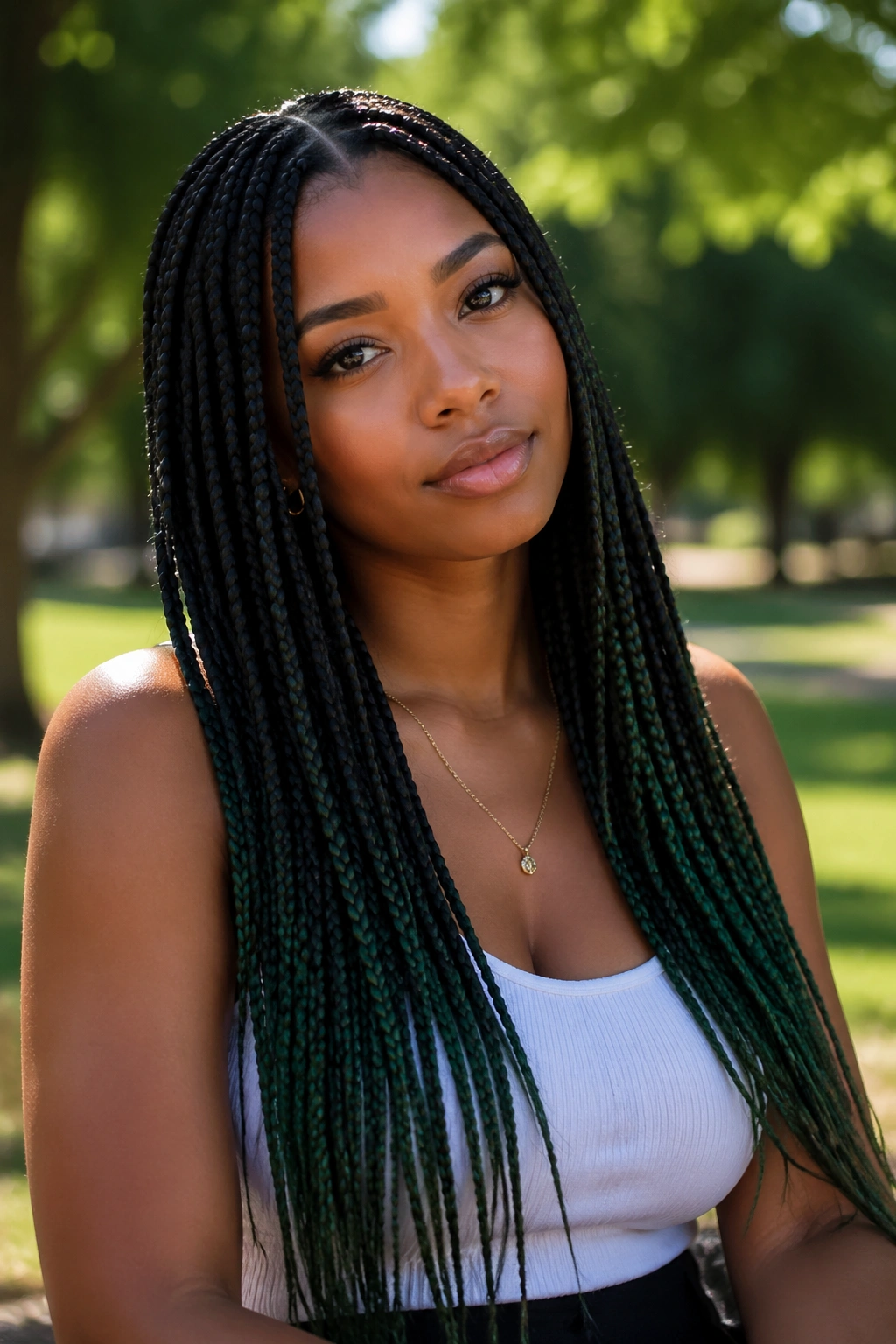
Green braids can go wrong fast if the shade is too bright. Forest green avoids that problem. It sits deep enough to feel grounded, but it still gives you something different from the usual reds, blondes, and browns. The color lands with more confidence when it starts in a dark base and fades into green in the lower half.
Mid-back braids are a smart length for this shade because the green has room to show without becoming the whole story. The style reads richer when the braids swing past the shoulders, especially in a straight down style. A bun or ponytail will still show the green, though it won’t hit as hard as loose lengths.
What makes it work
- The shade stays darker and less neon.
- Black or deep brown roots keep the look anchored.
- Sleek, straight parts help the green stand out.
- A matte finish can make the color feel even deeper.
I’m a fan of this one on people who want something unexpected but not cartoonish. It has edge. It also has restraint. That combination is harder to find than it should be.
13. Rose Gold Ends on Micro or Small Braids
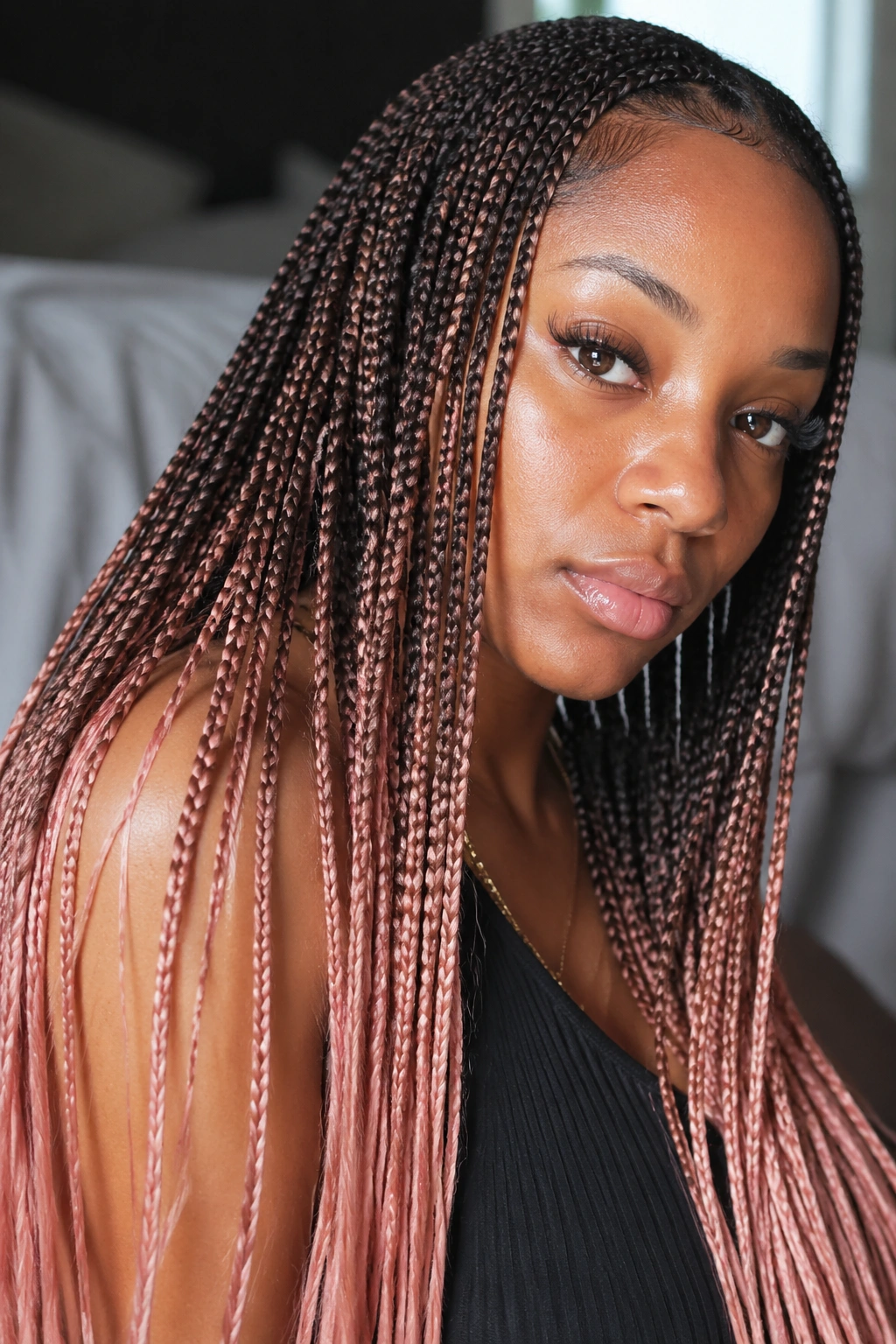
Rose gold sounds soft, and it is, but on braids it can also look sharp in a way people don’t always expect. The warm pink-gold tone picks up light at the ends, especially when the braids are small enough for the color to shimmer in little pieces. On dark roots, that shift feels delicate instead of sugary.
A few things make a big difference
- Start the rose gold lower on the braid so the pink tone doesn’t take over the whole head.
- Keep the base dark brown or black for contrast.
- Use small or micro braids if you want the color to look woven through the style.
- Add minimal accessories; the shade already does enough.
Rose gold is one of the easiest colors to overdo, so restraint helps. If every braid turns pink too high up, the look loses its balance. Keep the fade low and the parting neat, and the style stays grown-up without getting stiff.
This is also a good option if you want color that doesn’t fight with makeup. Soft browns, peach blush, and even bare skin all sit well beside it. The ends do the work. The rest can stay simple.
14. Red Velvet Ombré on Shoulder-Length Braids
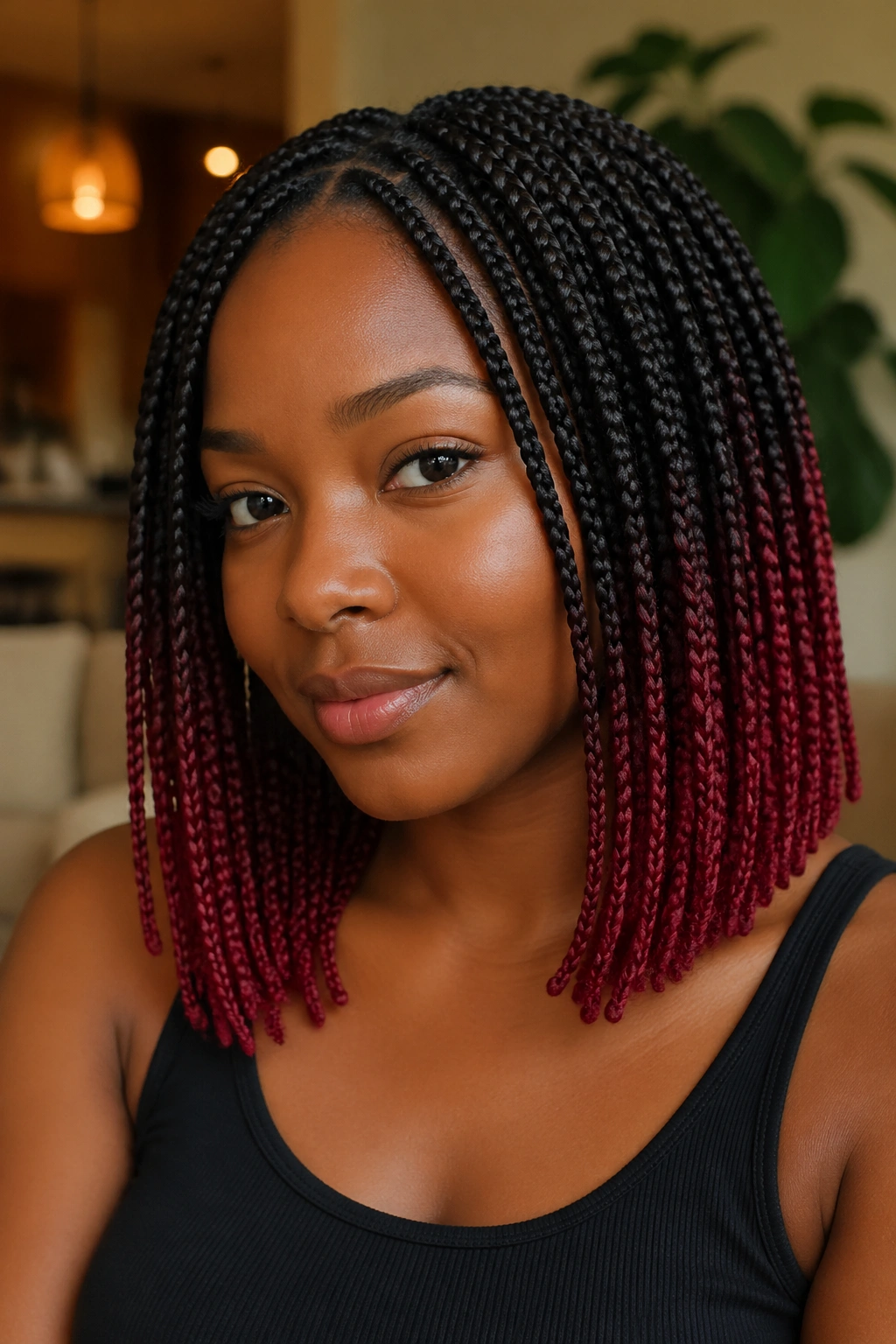
Red velvet is the darker cousin of cherry red. It’s deeper, richer, and less sugary, which makes it easier to wear than the brighter reds some people love in theory but back away from in real life. On shoulder-length braids, the color feels concentrated, almost like it was chosen on purpose to be seen.
The shorter length helps the red stay bold. Long braids can sometimes spread a strong color too thin. Shoulder-length keeps the finish focused, so every movement shows the shade shift in a clean, direct way. That is a good thing when the color is this rich.
If you want the style to feel more polished, keep the ends even and the braid size uniform. Red shows every little difference in texture, so inconsistency stands out fast. A tidy install is worth the extra attention here.
This is one of those colors that can make a plain black top look intentional. No jewelry required, though a simple gold hoop never hurts.
15. Sunset Orange and Gold Braids
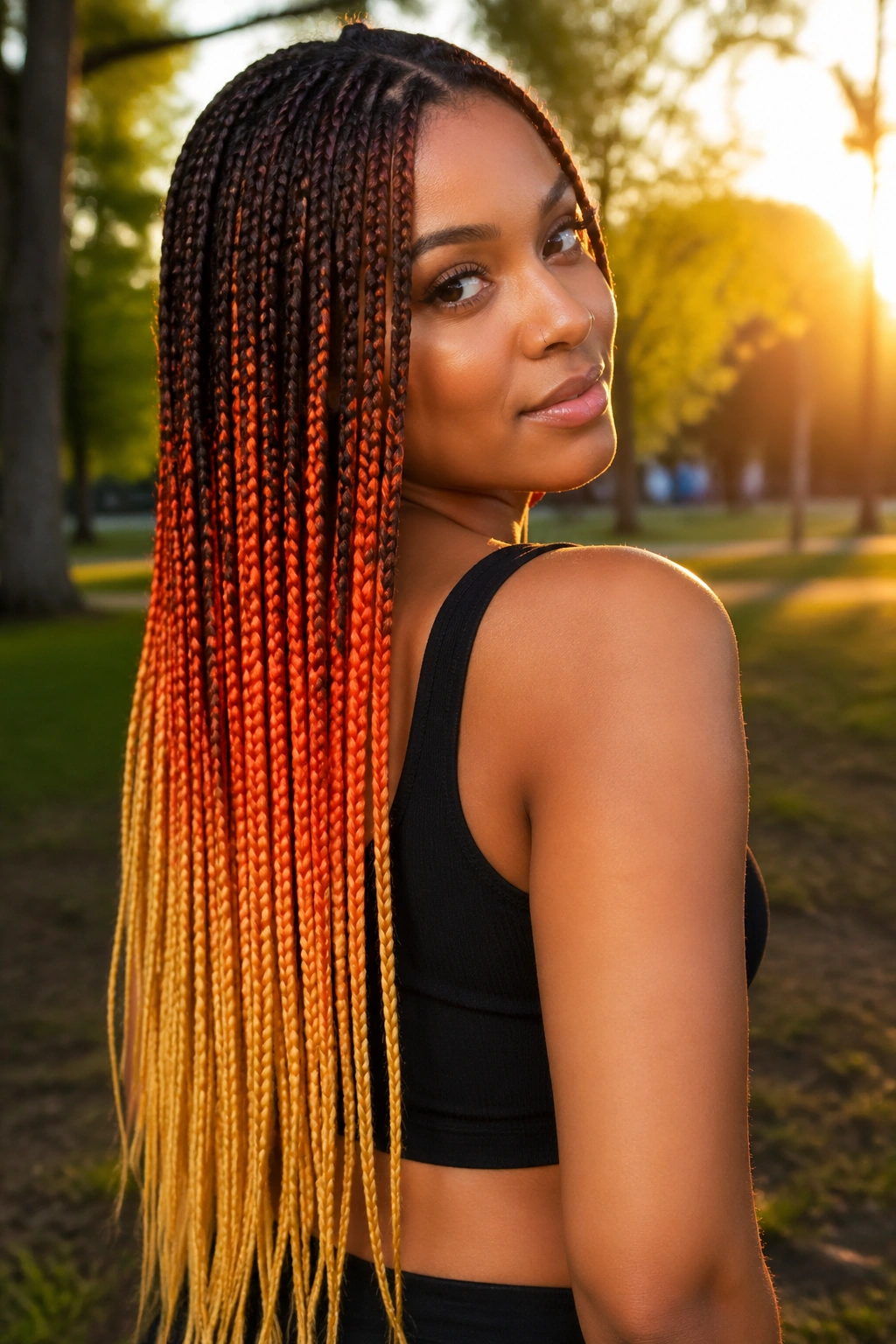
Sunset ombré is one of the boldest choices on the list, and it only works when the colors are treated with enough control. A good sunset braid doesn’t look random. It moves from a warm base into orange and then into gold, so the finish feels like light rather than paint splatter.
How to keep it from looking chaotic
Orange can turn loud fast, which is why braid size matters so much here. Medium to large box braids give the colors enough room to blend in visible bands. If the braids are too tiny, the shade shift can feel busy. The fade should be clear, not tangled.
- Best length: mid-back or longer.
- Best base: black, dark brown, or deep auburn.
- Best styling move: a loose half-up style that shows the color layers.
- Best caution: don’t pair it with too many colored accessories.
This one is for days when you want the hair to do the decorating. Keep the outfit plain and let the braid color handle the visual work. It can carry the whole look if you let it.
16. Soft Mocha to Milk Tea Braids
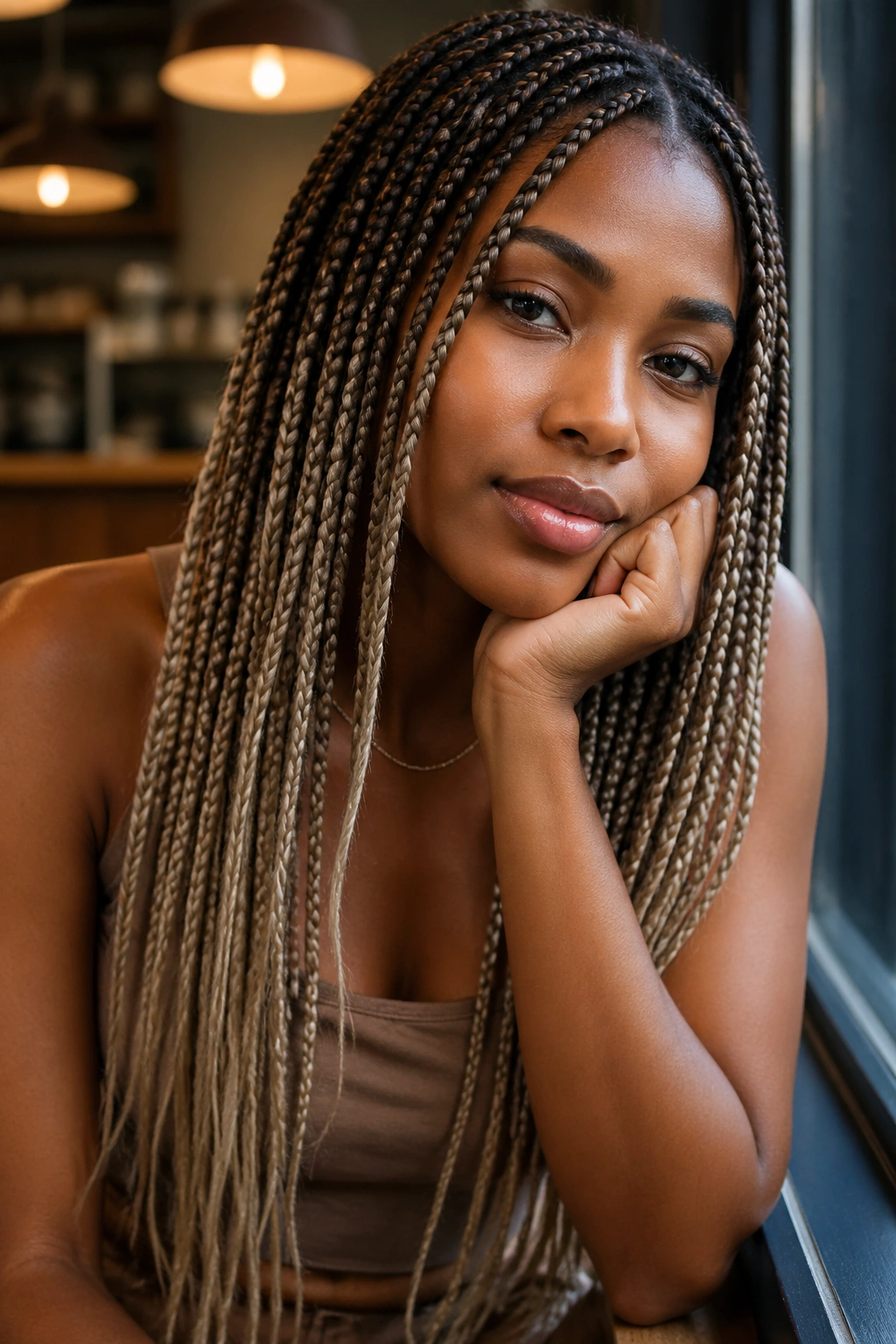
Soft mocha to milk tea is a gentler ombré choice, and that gentleness is its strength. The fade stays in a creamy brown range, so the color shift feels calm instead of dramatic. It’s the kind of braid style that looks expensive in a quiet way because the tones are blended so closely.
This works especially well on long braids. A longer length gives the mocha and milk tea shades room to stretch out, and that prevents the lighter ends from looking abrupt. Medium braids are a safe choice here too, but I like the look best when there’s enough length for the color to move slowly.
The finish matters. A smooth braid surface makes the creamy tones read as intentional, while fuzzy ends make the lighter shade look accidental. That’s the trap with soft shades: they punish neglect faster than bright colors do.
If you want ombré box braids without the drama of high contrast, this is one of the smartest picks. It’s calm. Not boring.
17. Black to Turquoise Dip-Dye Braids
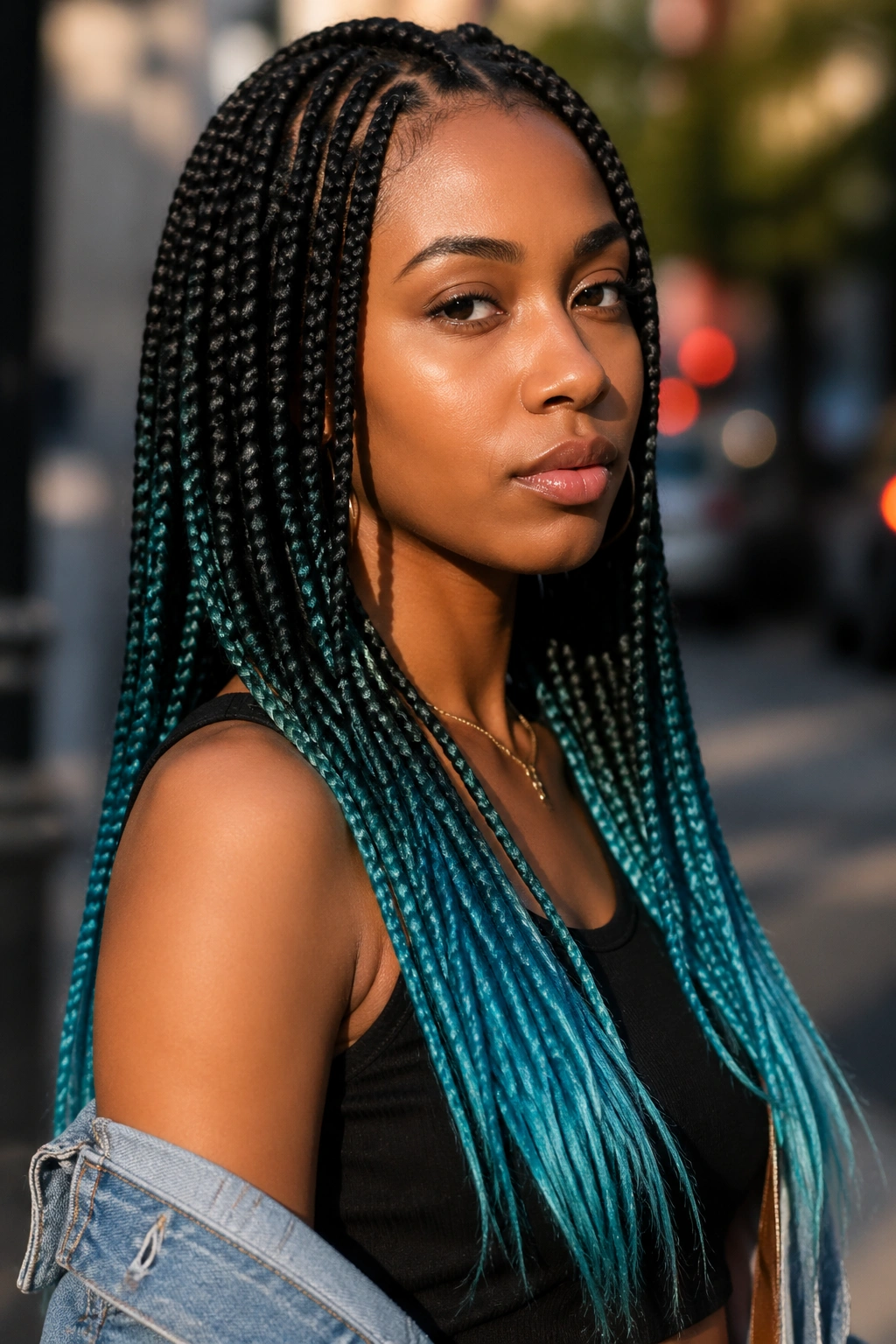
Turquoise is loud in the best possible way, but only when you let it breathe. A black base with turquoise dip-dye at the ends keeps the color story controlled, and the dark root gives the bright shade somewhere to land. Too much turquoise up top can get messy fast. A few inches at the ends is enough.
Why the dip-dye format helps
The color sits where the eye expects movement, which is at the bottom of the braid. That means you can wear the style loose, in a bun, or in a ponytail and still get the same payoff. The contrast is strong, so you don’t need a complicated braid pattern to make it interesting.
- Keep the turquoise section compact.
- Use larger braids if you want the color to show from farther away.
- Wear silver accessories, not mixed metals.
- Choose a sleek edge finish so the contrast feels intentional.
Turquoise braids are playful, sure. They’re also graphic. That graphic quality is what keeps them from feeling childish when the parts are clean and the fade is neat.
18. Brunette to Champagne Blonde Braids
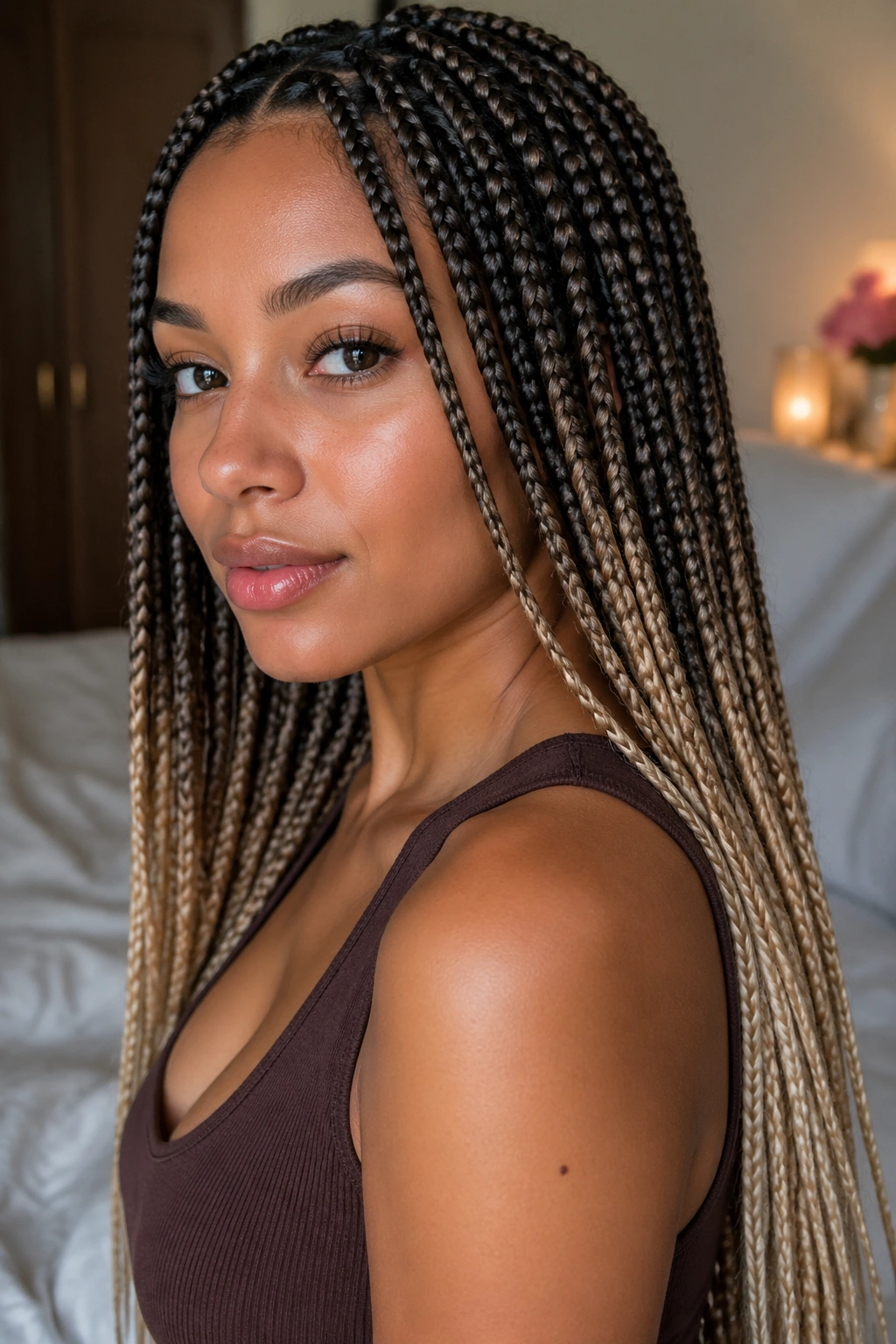
Champagne blonde sits between honey and platinum, which makes it a useful middle ground for people who want light ends without going full icy. On brunette roots, the color shift feels polished and bright, but not harsh. That’s a hard balance to hit, and this shade does it well.
How this one wears in real life
Champagne blonde is softer than white-blonde, so it tends to work with more skin tones and more outfits. It also looks good whether the braids are down, swept into a high ponytail, or twisted into a bun. The lighter ends give the braid movement, while the brunette base keeps the style from looking washed out.
A clean part is worth the extra minute here. The contrast between dark and light already does enough talking, so the scalp area should stay neat and even. If the base looks fuzzy, the light ends can make the whole style seem less tidy than it actually is.
I’d reach for this one if I wanted blonde energy without a hard edge. It has brightness, but it doesn’t glare.
19. Rainbow Peekaboo Ombré Braids
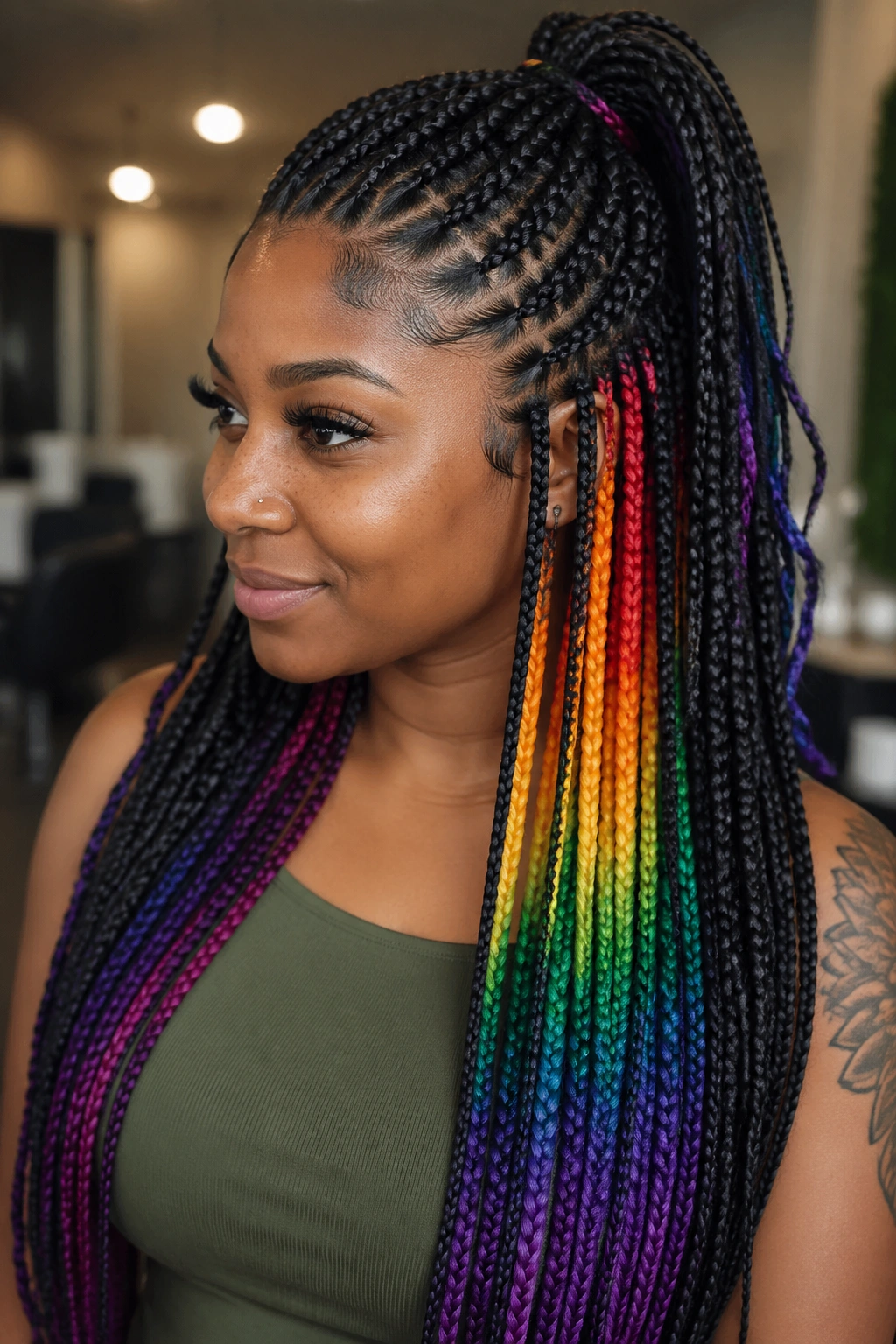
Peekaboo color works when you don’t want every braid to shout at once. Dark outer braids with rainbow pieces tucked underneath give you the surprise factor without making the whole head look crowded. When the braids are lifted into a ponytail or half-up style, the hidden color shows up fast. Down, it stays more restrained.
This is a smart move on medium or jumbo braids. Smaller braids can hide too much of the color story, and then the peekaboo idea loses its point. You want enough braid thickness to hold the darker outer layer and still leave room for the bright panels underneath.
A lot of people think rainbow color has to be chaotic. It doesn’t. If the shades are spaced cleanly and the placement is deliberate, it can feel organized, almost architectural. That’s the version I like more.
One warning: this style often takes longer in the chair than a straightforward two-tone fade. Worth it if you love a surprise. Not worth it if you get bored after two hours.
20. Classic Black to Blonde Face-Framing Ombré Box Braids
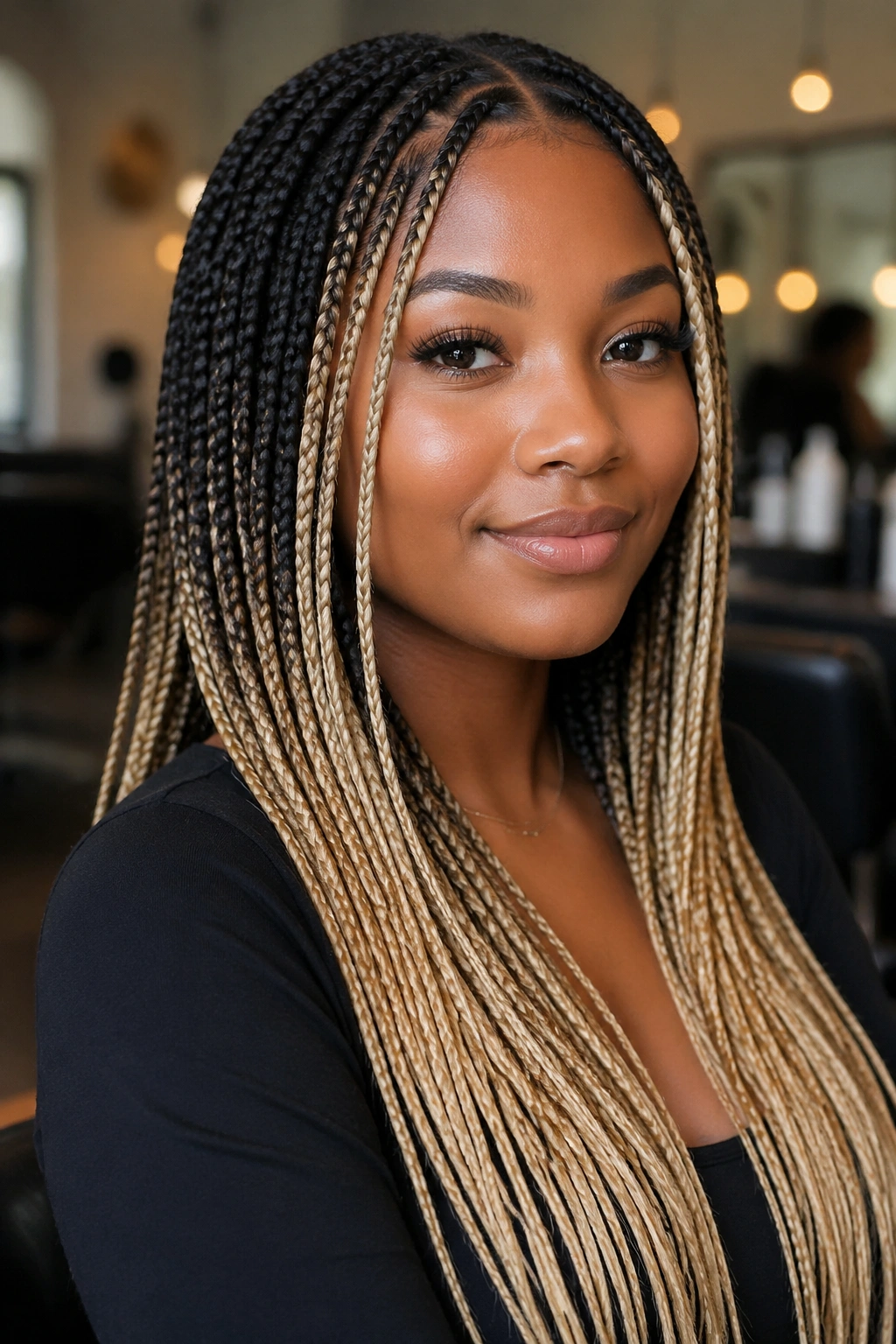
This is the safest entry point if you want ombré box braids that still feel like a real style choice. A black base with blonde ends works because the contrast is familiar, but the face-framing placement gives it a small twist. Lightening the front braids or the front few rows softens the face and keeps the style from reading flat.
That little bit of placement matters more than people expect. Blonde only at the ends can sometimes disappear when the braids are pulled back. Putting a lighter frame around the face keeps the color visible even in buns, half-up ponytails, and side-swept styles. It also gives you something nice in pictures without needing a complicated install.
If you’re torn between warm blonde, honey, and platinum, this is the style that helps you decide. Start here. Then adjust the shade warmer or cooler on your next install once you see what you actually wear most.
The Finish
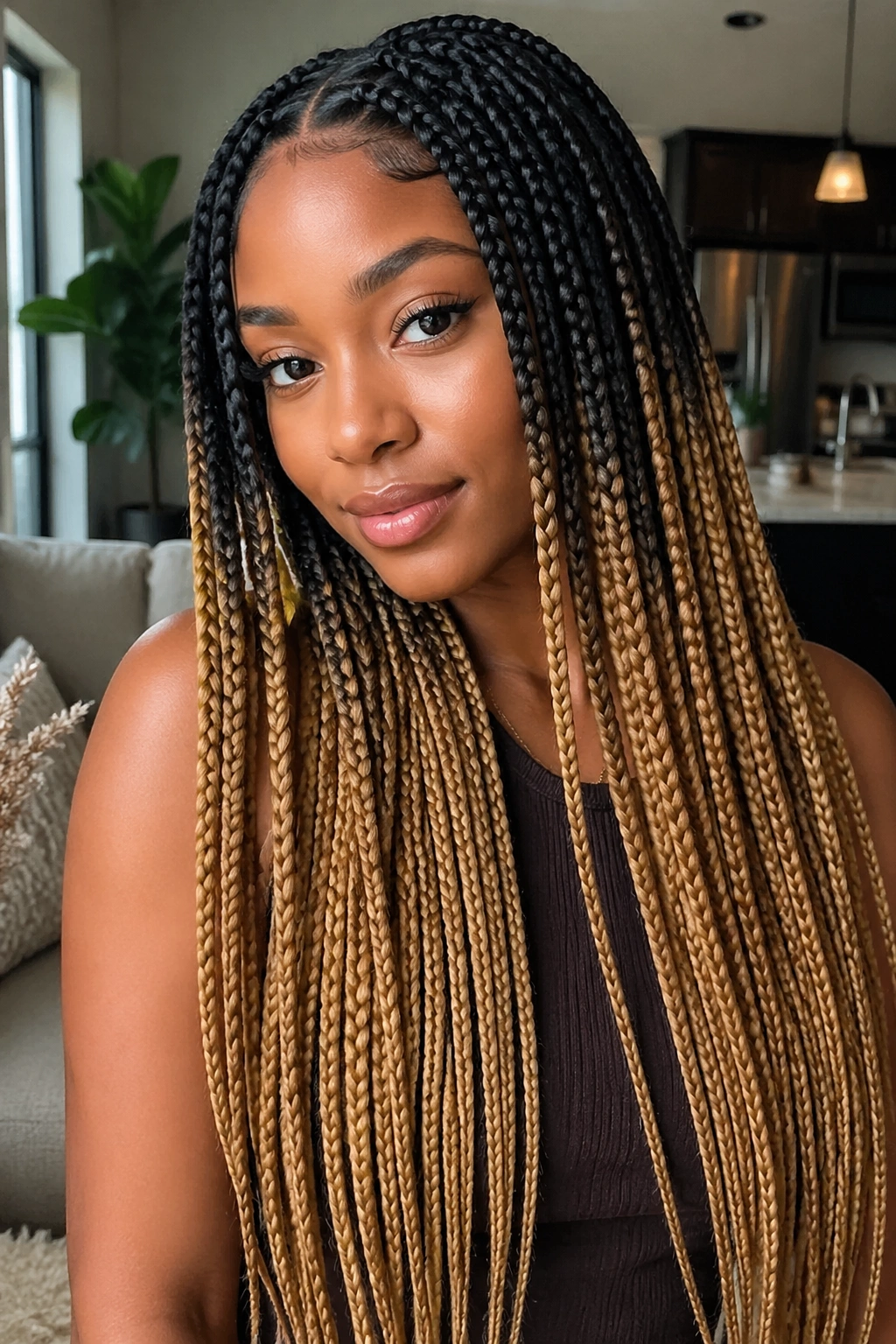
Ombré box braids work best when the color change feels tied to the braid size, the length, and the parting pattern instead of treated like a separate idea. That’s what makes one style look thoughtful and another one look rushed. The best versions always seem to know exactly where to stop.
If you want the safest place to begin, black-to-blonde with a warm fade is hard to beat. If you want more edge, copper, turquoise, blue, or green can carry a lot more personality than people expect. Pick the one that matches how much attention you’re ready for, because that part matters just as much as the color itself.