

Pink braids can look soft, loud, expensive, playful, or all four at once. The difference usually starts at the root: where the ombré begins, how much dark base you leave showing, and whether the pink sits like a whisper or lands like a neon sign.
Placement matters.
That’s the part people miss when they pick a pink braid color from a photo and hope for the best. Box braids have shape, weight, and movement of their own, so a blush fade on waist-length braids reads completely differently from the same color on a chin-length bob. Add in braid size, parting pattern, and the shine level of the braiding hair, and you can go from sweet to sharp in one appointment.
The nicest thing about ombré and pink box braids is that they do not all have to shout. Some of them look almost muted in indoor light and then turn bright when you step outside. Others stay bold all day long, no matter what you wear. That range is why pink keeps showing up in braid culture: it can do delicate, edgy, romantic, and high-contrast without changing the basic structure of the style.
1. Blush-to-Black Ombré Box Braids
Blush fading out of black is one of those braid looks that feels calm instead of busy. The dark root keeps the style grounded, while the soft pink toward the middle and ends gives you color without turning the whole head into a statement piece. If you like pink but do not want bubblegum energy every time you look in the mirror, this is the one to start with.
Why It Works So Well
The trick is contrast, but not the harsh kind. A 1B or natural-black base lets the blush shade look richer, because the eye sees the pink as a finish instead of a costume color. That’s why this style reads polished on long box braids, especially medium-sized ones where the gradient has enough space to show off.
It also grows out kindly. Dark roots are forgiving, and the fade means the line between new growth and old braids is not as obvious as it is with a solid light color. That matters more than people admit.
- Ask for the pink to start below the ear or around the mid-shaft if you want softness.
- Use a dusty blush rather than neon if you want the braid pattern to stay the focus.
- Gold cuffs look good here, but one or two is enough.
- A center part gives this look a cleaner, more balanced feel.
Tip: If your braider is blending synthetic hair, ask to see one finished braid in daylight before the full install. Pink can shift warmer or cooler once it’s under real light.
2. Rose Gold Box Braids with Warm Brown Roots
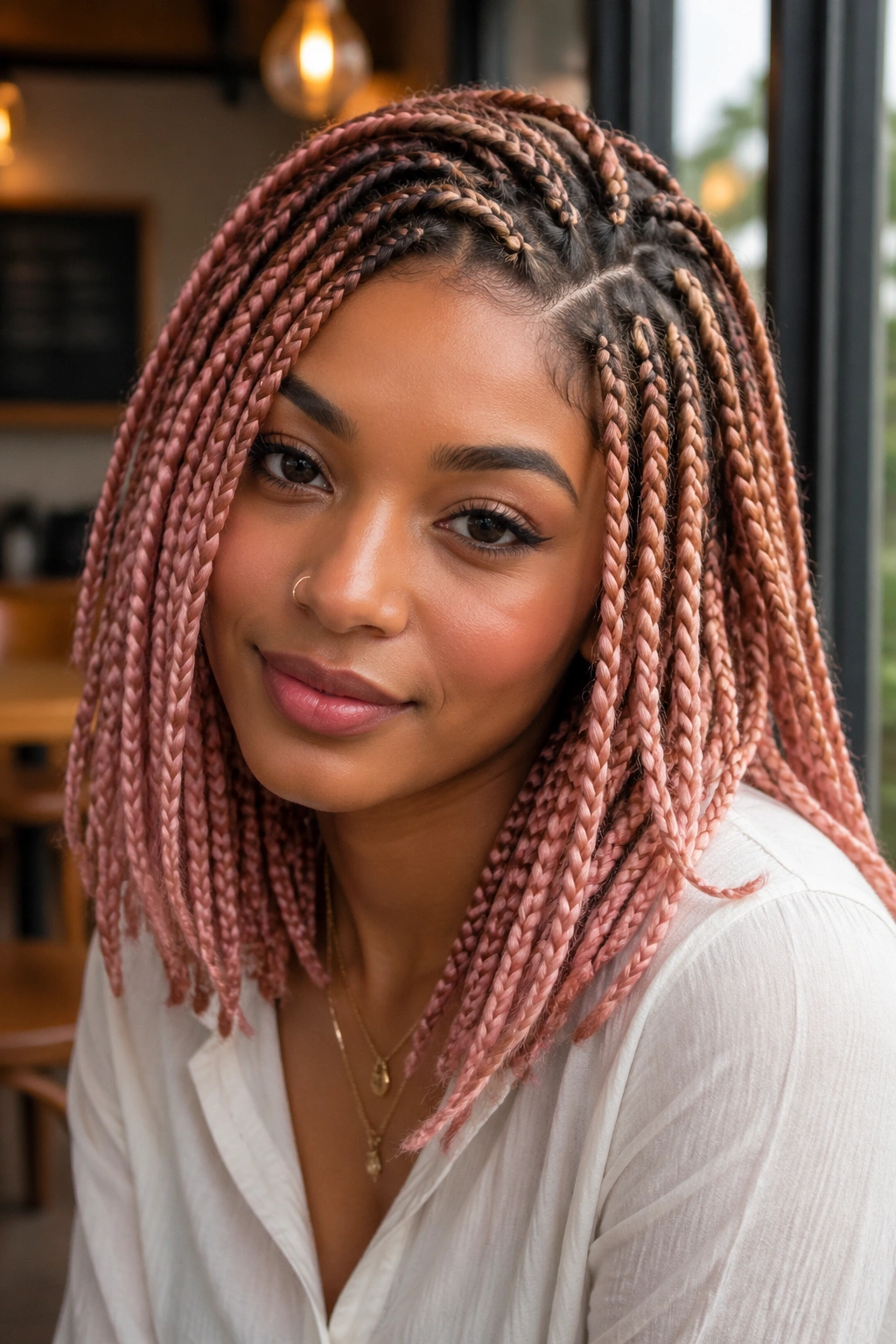
Rose gold is the least fussy pink for box braids. It has enough peach and copper in it to feel warm, so it does not fight with brown roots the way a cooler pink sometimes can. The result is smoother, richer, and a little more grown. Not boring. Just smarter.
What I like about this shade is how well it sits against chocolate, espresso, and chestnut roots. The brown at the top gives the style depth, then the rose tone softens the whole braid instead of flattening it. That mix is especially nice on shoulder-length and mid-back braids, where the color can move a bit without taking over.
There is also a practical side. Rose gold hides little changes in brightness better than pale pastel pink, so it stays readable even if your braids have a few different tones in the synthetic hair. That makes it a safe pick if you want a pink look that still feels tidy after a couple of weeks.
The styling is easy. Pull it into a low bun, leave two face-framing braids loose, or wear it down with a middle part and a simple lip gloss. You do not need much else.
3. Bubblegum Pink Ends on Jet-Black Braids
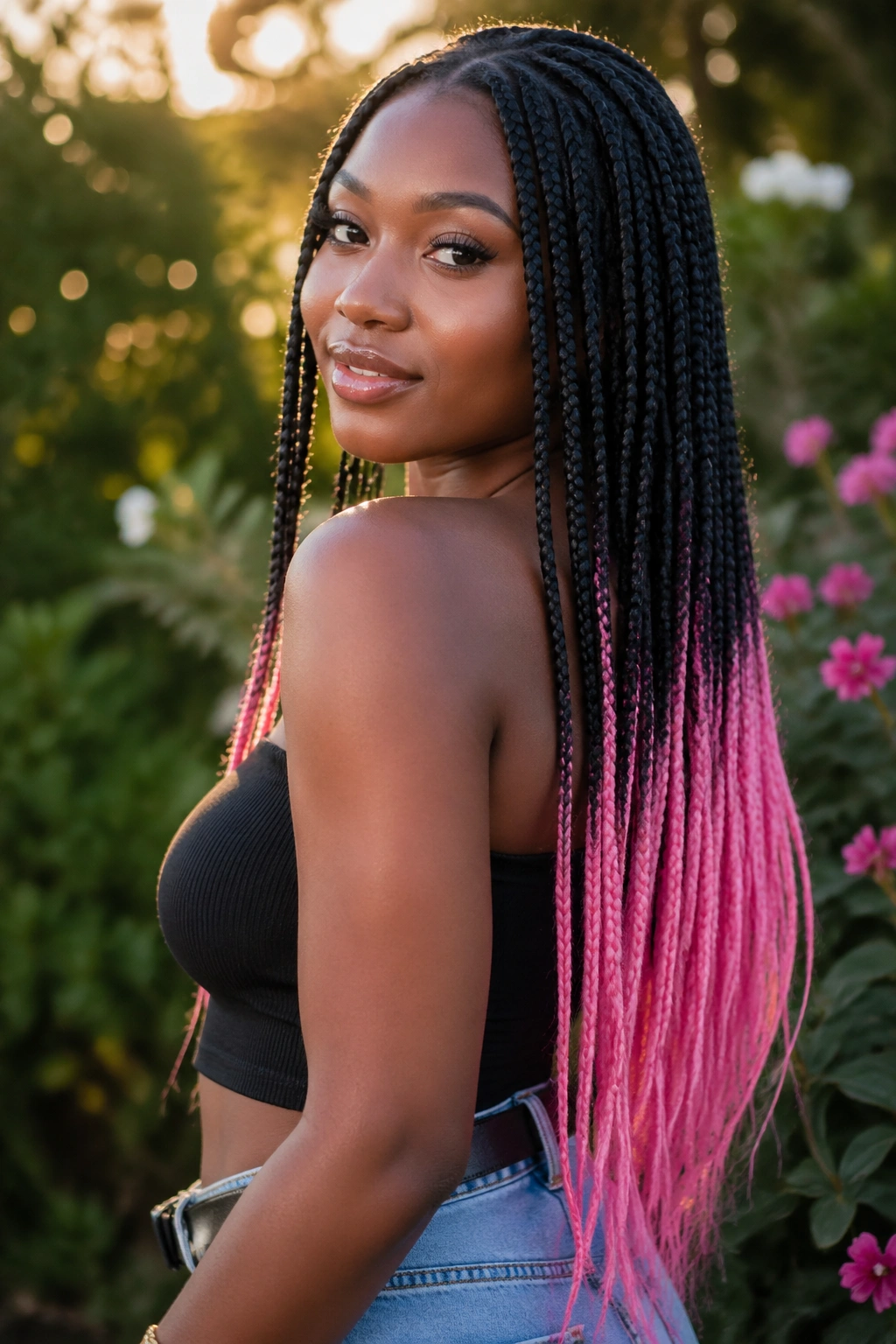
Want the pink to show from across the room? Put it on the ends and keep the braids black all the way down to the last few inches. That high-contrast dip-dye look is the most direct way to wear pink box braids, and it has a fun, unapologetic feel without asking the whole head to do the work.
What to Watch For
This style looks sharp when the line between black and pink is clean. Too much blending, and it starts to lose the point. You want a clear switch, usually somewhere in the last quarter of the braid, so the pink feels like an accent instead of a haze.
It works especially well on longer box braids because the color gets room to show. Short braids can handle it too, but the effect is more subtle. Long braids give you that swing at the ends, and that movement is half the appeal.
- Choose a bright bubblegum tone if you want the contrast to be obvious.
- Keep the root color deep black or dark brown.
- Wrap the ends at night so the lighter pieces do not fray as quickly.
- This style looks good with glossy lipstick and a plain outfit. Let the braids do the talking.
A small warning: if you love neat, tucked-in looks, this one can feel a little wild in a ponytail. That is part of the charm, though.
4. Face-Framing Pink Ombré Box Braids
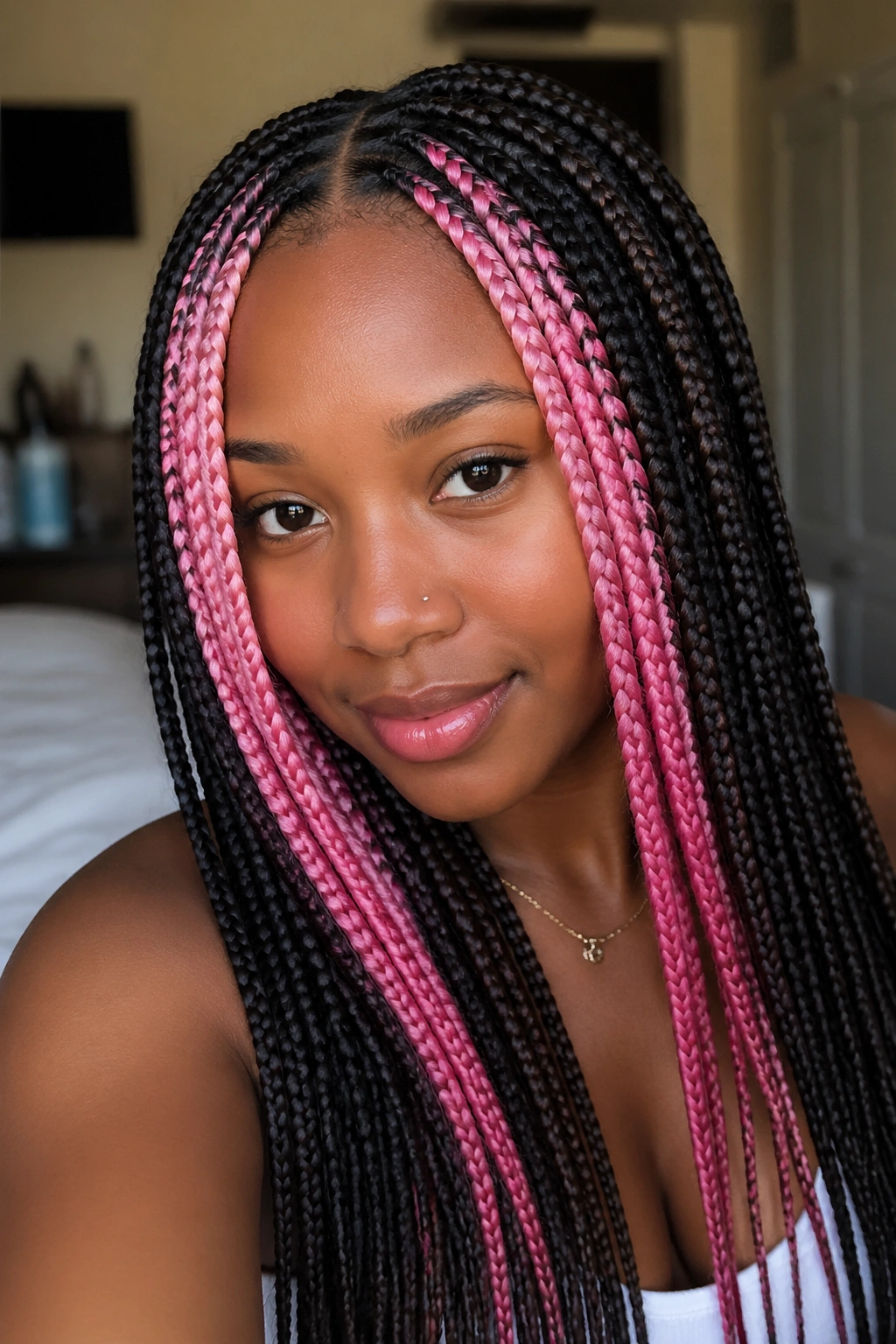
Sometimes the smartest move is not coloring the whole head. It is putting the pink where people actually look first. Face-framing ombré box braids do that beautifully, with the front braids carrying blush, rose, or magenta while the rest stay dark and calm behind them.
I keep coming back to this style because it changes the whole mood without the same level of commitment. You get a bright edge around the face, a little extra lift near the part, and none of the visual weight that comes with a full pink install. If you wear a middle part, the effect is even stronger. The color makes the shape of the face look more open.
This is also one of the easiest ways to test whether you enjoy pink braids at all. You can be shy about color and still pull this off. If you hate it after a few weeks, the darker back braids keep the style from feeling overdone.
Ask your braider for pink on the first two to four rows of braids near the front hairline. That keeps the color concentrated where it counts. A few slim braids mixed into the fringe can be enough. Too many, and the whole thing stops feeling intentional.
5. Hot Pink Dip-Dye Box Braids
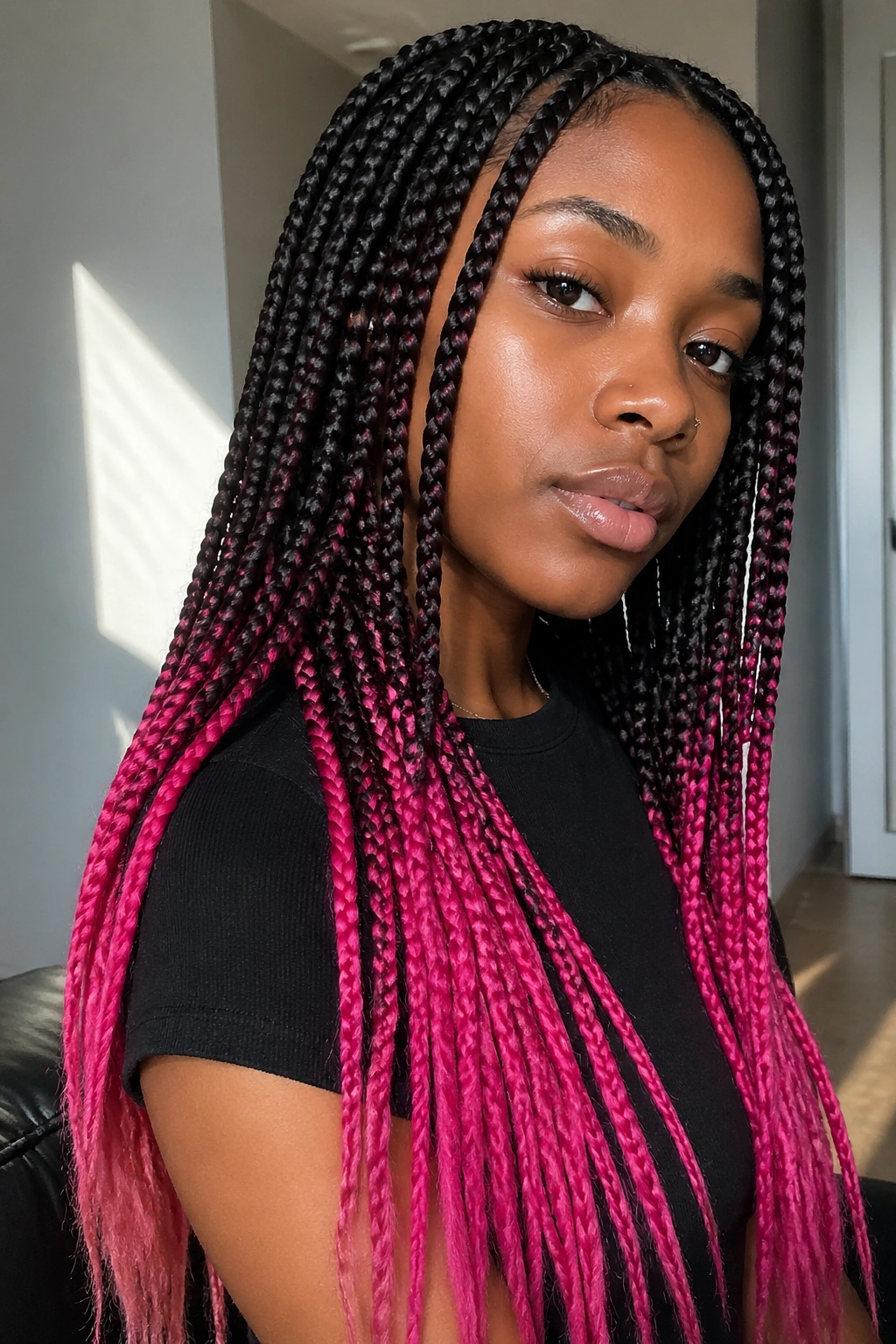
Hot pink dip-dye box braids are the loudest option here, and I mean that in a good way. They look sharp, clean, and a little rebellious, especially when the color sits only on the last section of long braids. There’s no soft fade to hide behind. It’s black or brown, then pink, and that’s the whole point.
The strongest version of this style uses solid, saturated hot pink with no pastel middle ground. On very long braids, the lower third becomes a bright block of color, which gives the braid pattern a stronger outline. You notice the movement more. You also notice the shape of the ends more, which is why this style works well with neat, square parts and a clean install.
I like this look with fewer accessories. One or two cuffs. Maybe one clear bead here and there. Anything more starts to compete with the brightness. The braids already have enough personality.
If you’re the type who likes your hair to feel like an outfit, this is a strong choice. It does not need to be paired with anything fancy. A black tank, a denim jacket, even a plain white tee—done. That contrast is part of the fun.
6. Mauve and Plum Box Braids
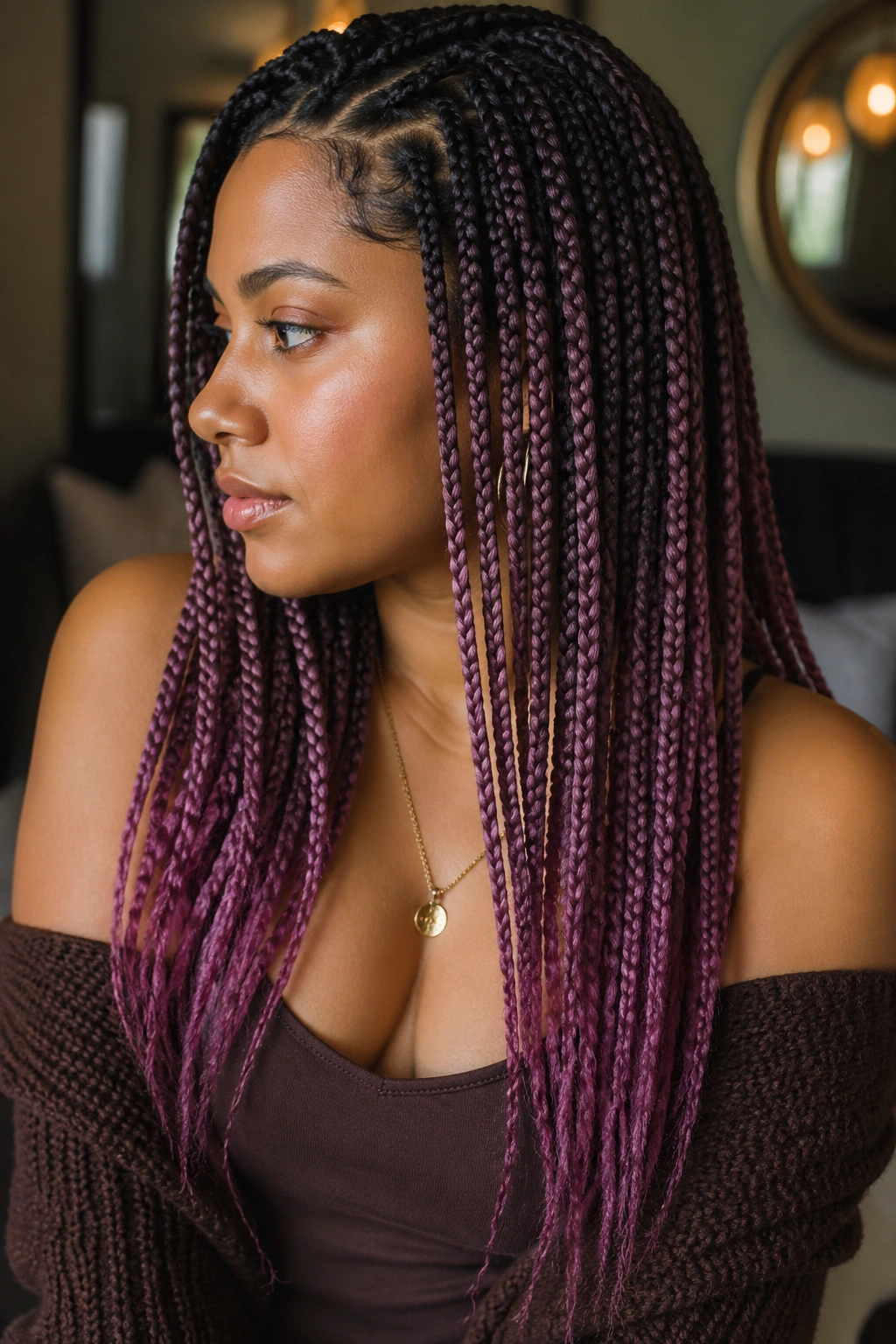
Not every pink braid has to feel sweet. Mauve and plum box braids go darker, moodier, and a little cooler, which is a relief if you like color but dislike candy-bright hair. The result sits somewhere between pink, purple, and dusty wine, and that uncertainty is exactly what gives it depth.
A Softer Kind of Pink
Mauve is useful because it behaves like a neutral with personality. It does not fight with your clothes. It does not demand extra makeup. It just gives the braids a smoky finish that reads rich rather than sugary.
Plum in the lower sections deepens the whole look. If you ask for a faint ombré from dark root into mauve, then a slightly deeper plum toward the tips, the braid gets dimension without losing its edge. On medium and small box braids, that color shift can look especially nice because there are more lines for the light to catch.
This style suits people who want pink braids that still work in a low-key wardrobe. Think black knits, gray hoodies, leather jackets, brown coats. It has an easy kind of drama.
If you want one detail to make the color feel finished, use matte or brushed-metal cuffs instead of shiny rhinestones. The softer finish matches the shade better.
7. Pink-to-Blonde Candy Floss Braids
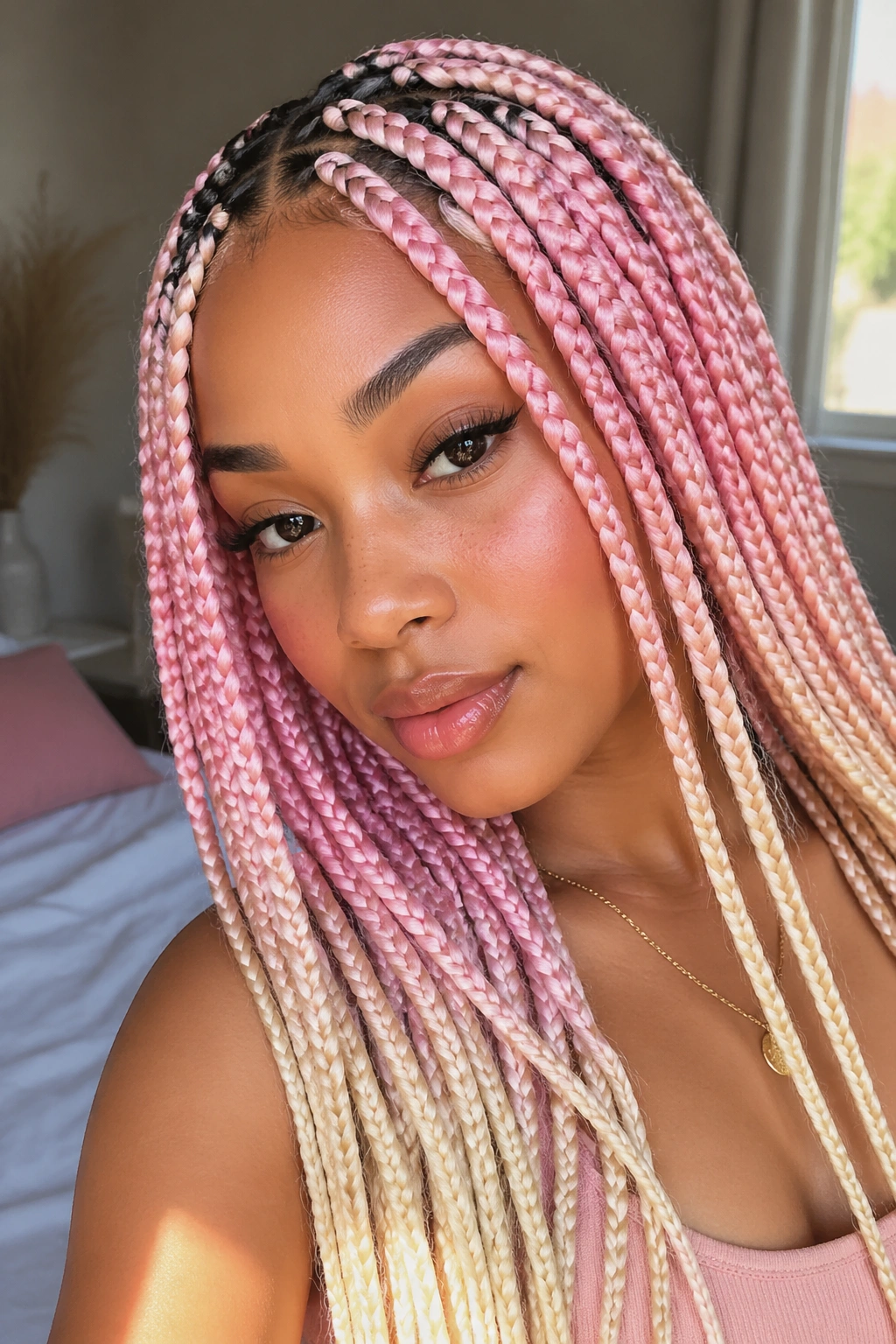
Pink fading into blonde is a sweet, airy combination, but the look is stronger than people expect. The blonde brightens the braid pattern, while the pink keeps it from drifting into a plain blond style. Together, they give you that cotton-candy feeling without turning the whole head into a costume.
Why This Blend Feels Light
The blonde section does a lot of visual work. It lifts the braid, reflects more light, and makes the plaiting texture easier to see from a distance. Pink in the middle or lower half softens the transition so the blonde does not feel harsh or overexposed. That’s especially useful if the base is dark brown or black.
This combo looks best when the pink is not too muddy. A clean blush, rose, or soft bubblegum tone helps the blonde stay bright instead of yellowed. If the pink is too orange, the whole braid can start to feel busy. Keep the palette clean and the result stays fresh.
- Start with a dark or brown root if you want the braid line to look crisp.
- Put the pink in the mid-shaft, not all the way at the root.
- Finish with 613 or honey-blonde tips, depending on how warm you want it.
- Keep the braid size medium so the color change is easy to read.
One small opinion: this looks better with minimal jewelry. The color combination already has enough movement.
8. Cherry Blossom Pink Box Braids
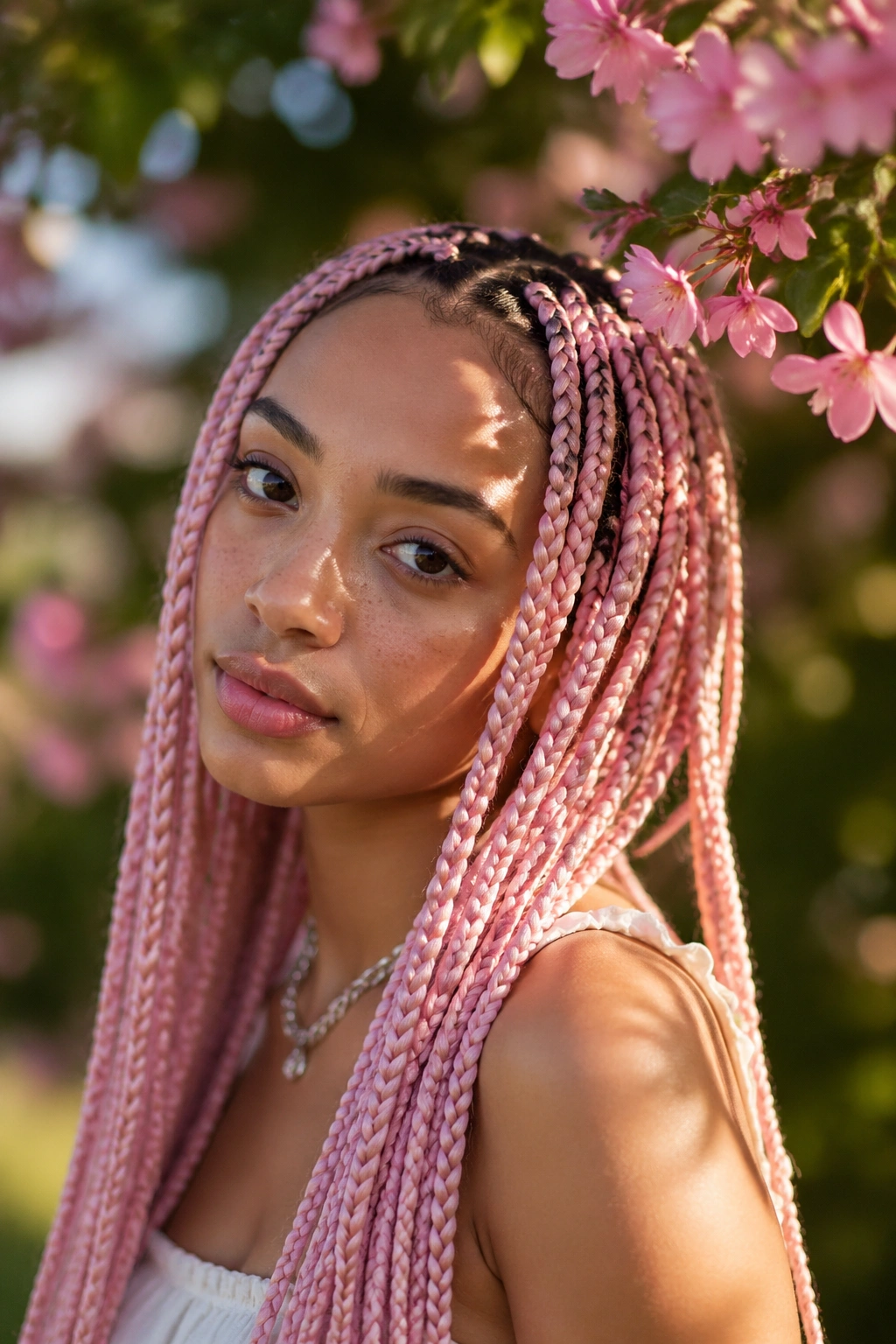
Cherry blossom pink has a softer mood than hot pink and more life than baby pink. It sits in that delicate middle zone where the color feels fresh, petal-like, and a little luminous without becoming sugary. On box braids, that balance matters because the braid structure itself is already geometric. You do not need an aggressive shade to make it interesting.
This color works especially well when the braids are slightly layered around the face or cut into a bob. Shorter lengths show off the shade more quickly, and the pink reads as intentional rather than hidden. I also like it with knotless box braids because the scalp area stays clean, which lets the color do its own thing.
Cherry blossom pink has one more advantage: it plays nicely with both cool and warm makeup. A soft brown lip works. So does a mauve gloss. Even a tiny bit of shimmer on the eyes feels right, which is rare for bright hair colors.
If you want the style to stay from drifting childish, keep the braid parts clean and the accessories limited. A few gold cuffs, maybe a single beaded accent on one side, and that’s enough. The color should stay the star.
9. Magenta Waist-Length Braids
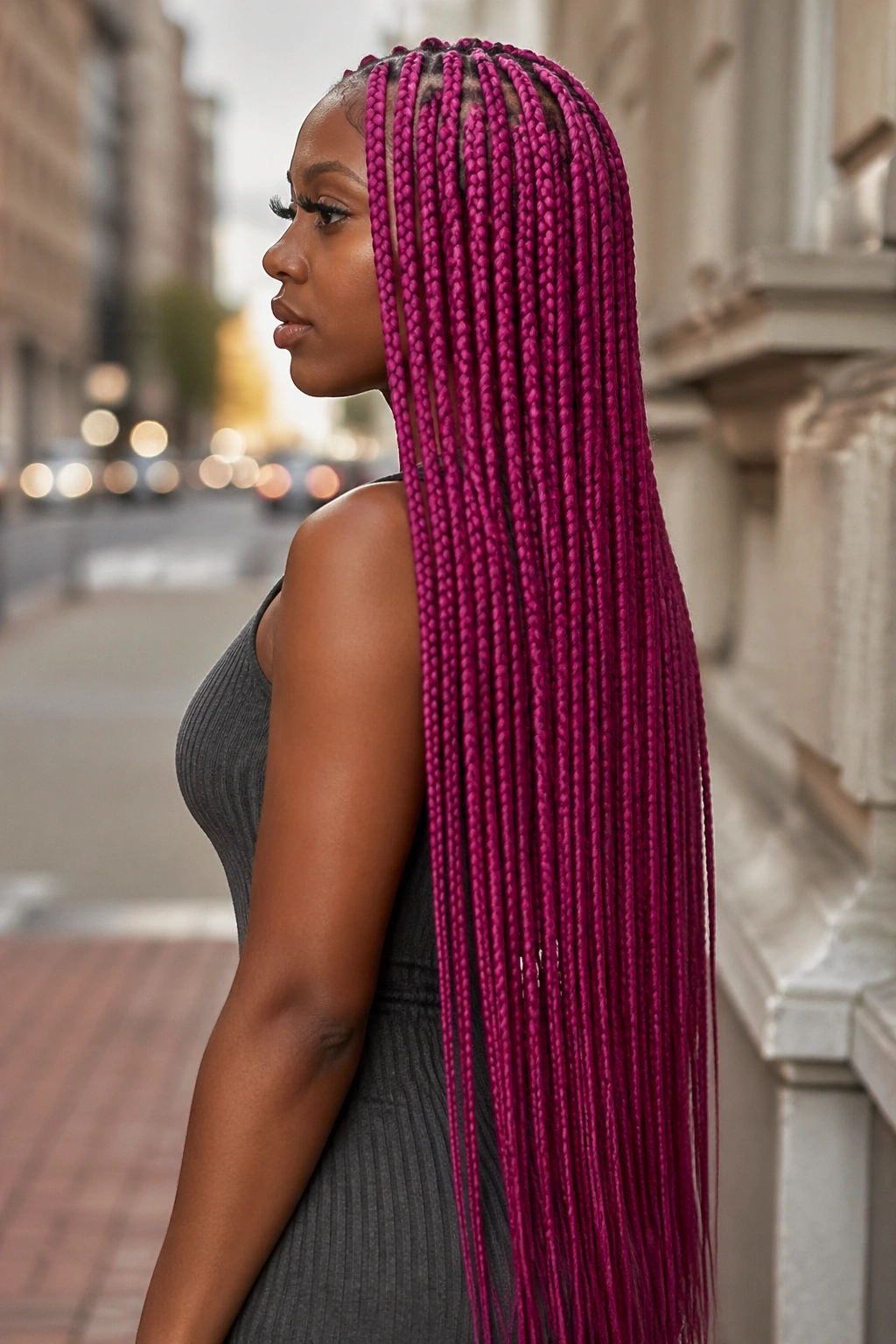
Magenta is the color you choose when pink needs to mean something. It is deeper than bubblegum, richer than fuchsia, and a lot more polished than people expect from a bright shade. On waist-length box braids, it looks bold in a way that still reads structured, which is why it works so well when you want impact without chaos.
The longer length matters here. Magenta needs room to move. On shorter braids, it can feel abrupt. On long braids, the color falls in a clean line and shows off the twist and plait of each section. You also get more styling options—high ponytail, half-up top knot, side sweep, low braid bundle—and each one changes how much of the color shows.
A middle part keeps this look crisp. Triangle parts soften it a bit. Square parts make it sharper. I prefer square parts for magenta because the shade already has enough softness built in.
One thing people forget: magenta can dominate an outfit fast. If you wear it, let your clothing and makeup breathe. Black, cream, olive, and denim all work without fighting the hair. A busy print can be fun, but it can also make the look feel heavier than it needs to.
10. Hidden Pink Peekaboo Box Braids
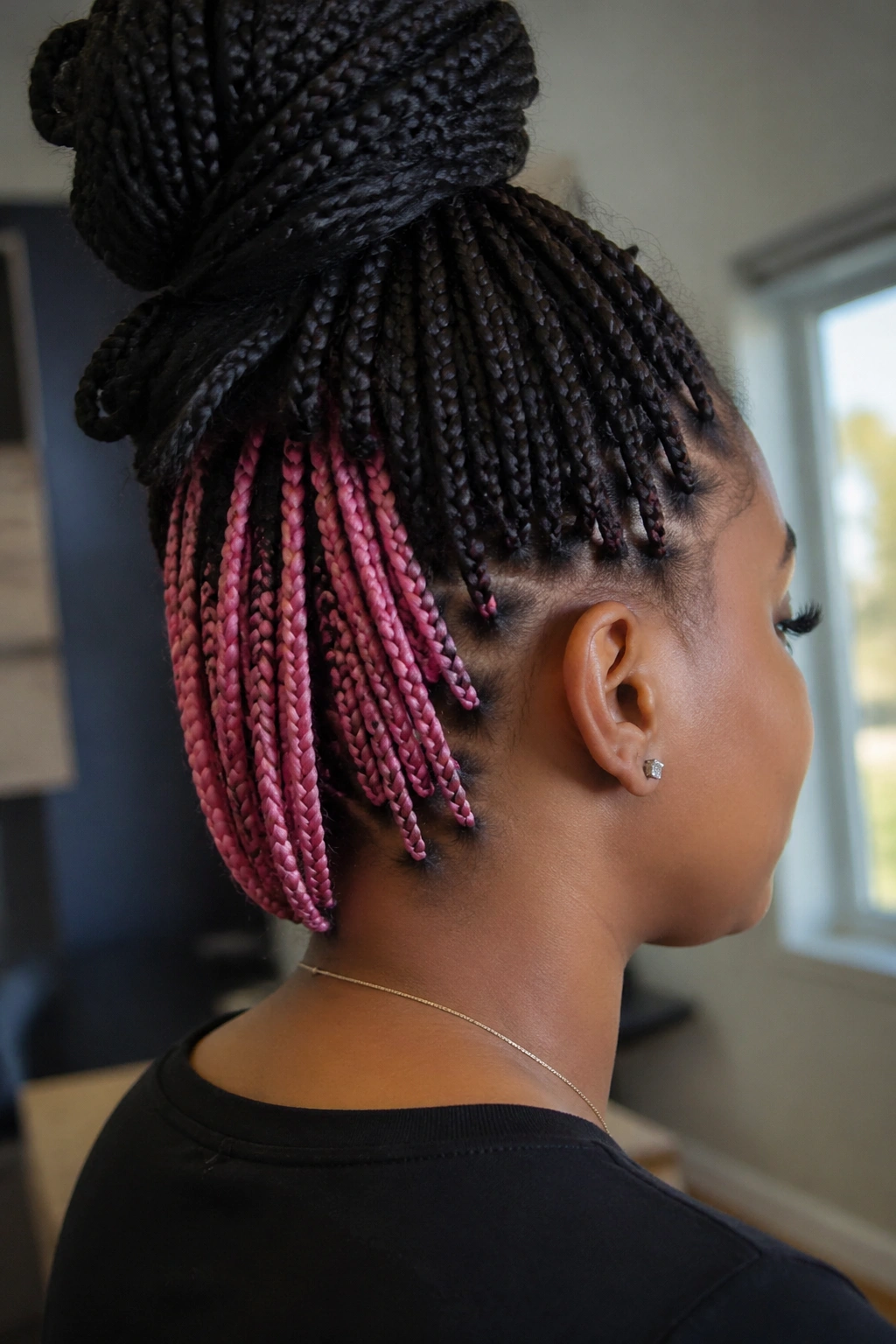
Peekaboo pink is for the person who wants the surprise, not the announcement. The outer layer of braids stays dark or brown, while the lower layers hide pink underneath. From the front, it can look almost conservative. Turn your head, pull it into a bun, or wear a half-up style, and the color shows itself.
How It Behaves in Motion
This is one of the most fun braid styles to wear because movement reveals it. A plain down style keeps the pink tucked away. A ponytail exposes it. A twist at the crown shows it in streaks. You get a little drama every time you change your styling, which makes the install feel more versatile than a single-view photo suggests.
It also gives you more control over color intensity. If you’re nervous about pink, keep it only in the underlayers. If you want more impact, ask for thicker hidden sections or deeper layers of pink near the nape. That way the reveal feels fuller when you tie your hair up.
- Best for people who switch between down styles and buns.
- Great if you want pink at work without making it the whole story.
- Keep the top layer darker so the contrast stays crisp.
- Add one or two beads near the ends of the hidden braids if you want the reveal to feel playful.
This style is sneaky in the best way.
11. Pastel Cotton-Candy Box Braids
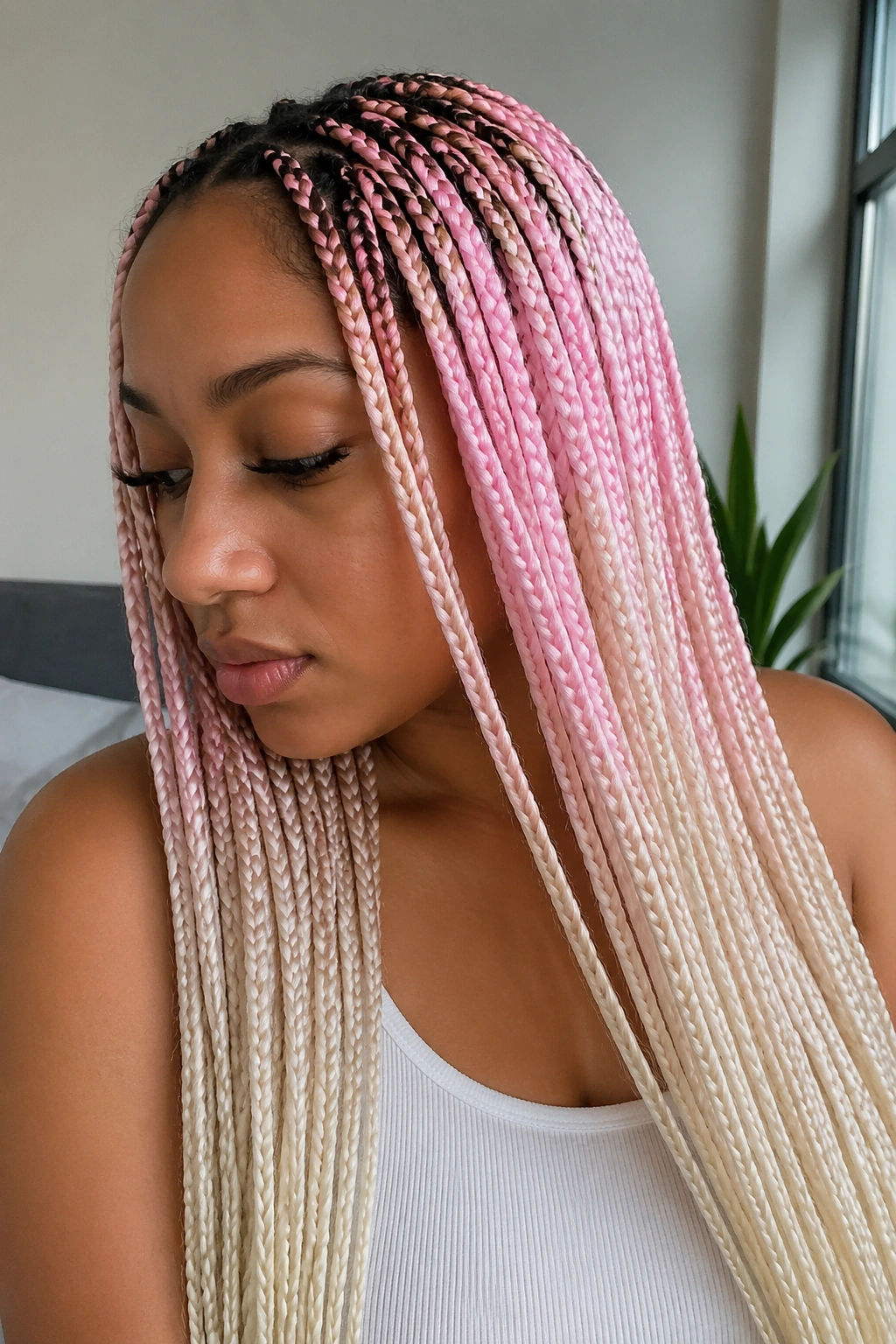
Can pink braids be soft enough to almost melt into the hair? Yes, if you keep the color pale and the transition gradual. Pastel cotton-candy box braids are all about lightness, which sounds simple until you see how much planning the shade actually needs. Too much darkness at the root, and the pastel disappears. Too much yellow in the blonde, and the pink looks muddy.
The cleanest version uses a pale pink midsection over a light blonde base. That gives the color a place to sit without looking dusty. If your natural hair is dark, the ombré needs a careful bridge, not a sudden jump. A gentle fade is what keeps the pastel believable.
This style is at its prettiest in medium or small braids. The thinner the braid, the more delicate the color field looks. Large braids can wear pastels too, but the effect becomes chunkier and less airy.
I’d keep the styling very simple here. A center part. Maybe a half-up tie with a soft scrunchie. That’s enough. Pastel pink gets dragged down fast if you pile on heavy accessories or loud makeup. Let the shade stay light.
12. Coral Pink Box Braids
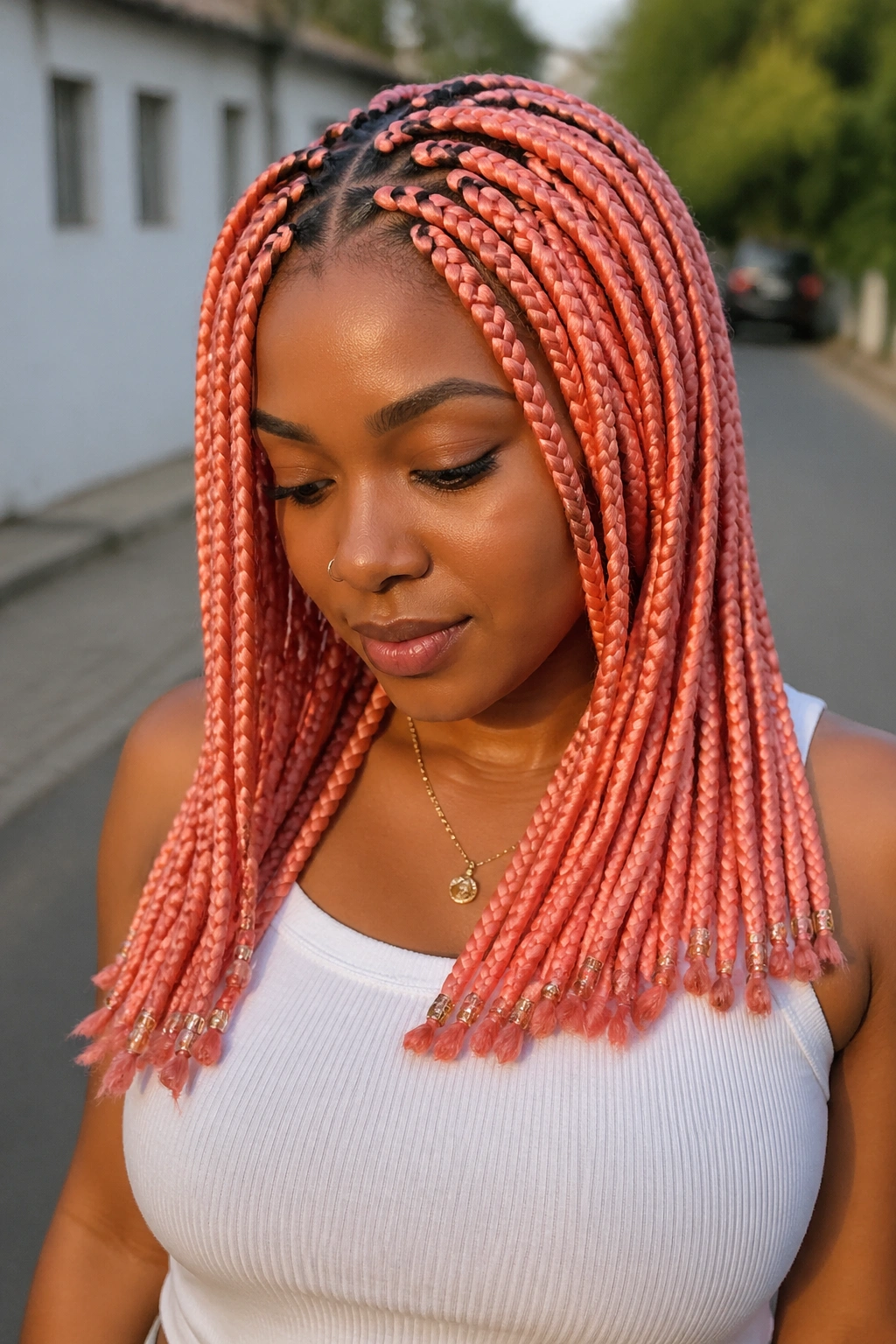
Coral pink is what happens when pink decides to borrow a little orange and become warmer, livelier, and easier to wear than people expect. On box braids, that warmth gives the style a cheerful pull without making it look juvenile. It feels energetic, but not frantic.
The color is especially flattering when the braids are medium thickness and sit around chest length or longer. Coral needs a bit of surface area to show its peachy side. On super-short braids, it can look more like a flat pink. Give it length and the color opens up.
This is one of those shades that makes simple outfits look finished. White, cream, olive, faded denim, warm brown—those are all easy matches. You do not have to build a whole look around the hair, which is one of my favorite things about coral. It does the work for you.
A small styling note: avoid overloading it with pink accessories. Coral already has enough warmth. If you want extra detail, choose clear beads, matte gold cuffs, or plain wrap thread in a neutral tone. Let the color sit on its own.
13. Fuchsia Box Braids with Clear Beads
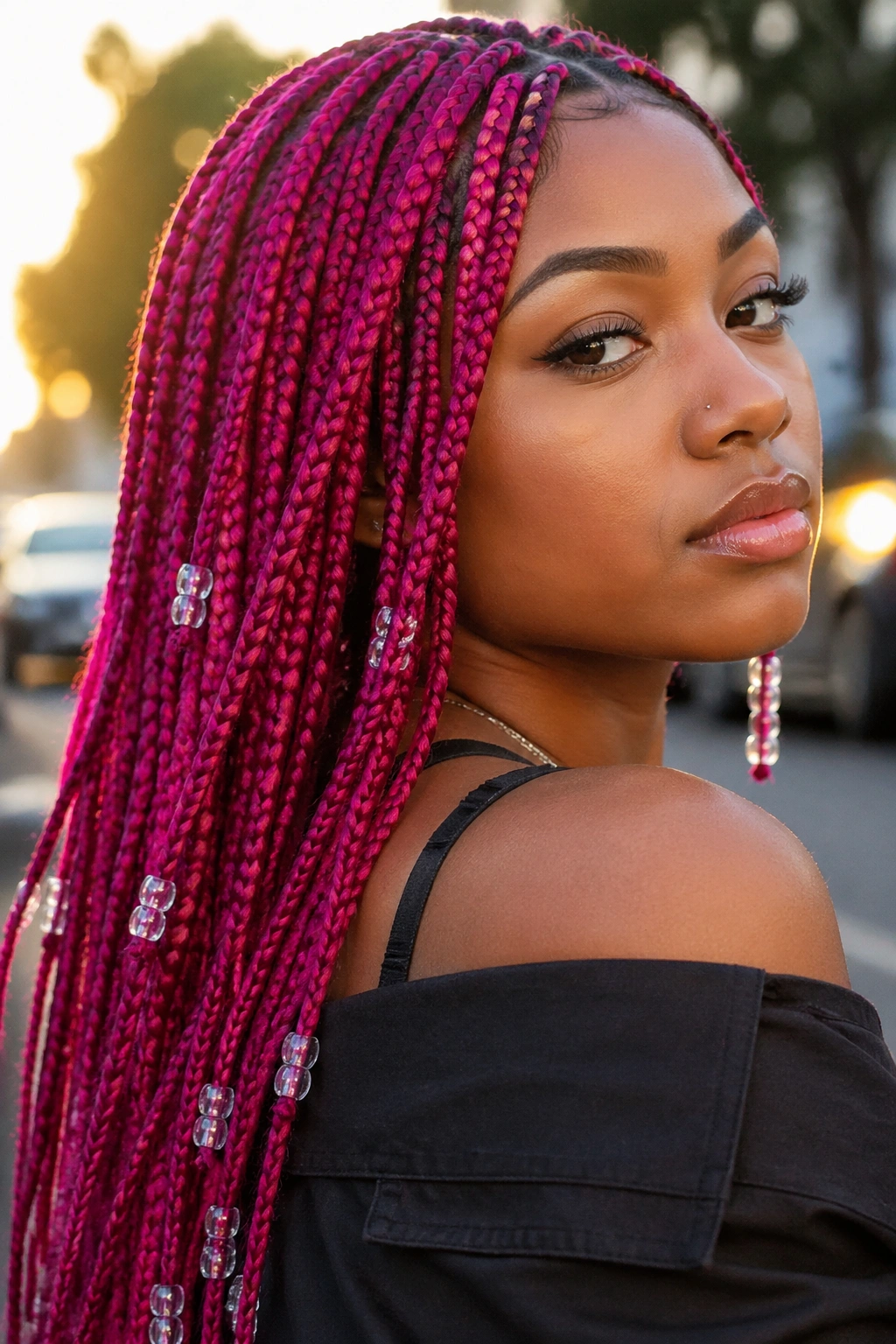
Fuchsia box braids with clear beads have a crisp, bright energy that feels more structured than playful. The color is intense, but the clear beads keep the ends from getting crowded. That matters. When the braid shade is strong, the accessories should either support it or get out of the way.
What Makes It Different
Clear beads act like punctuation. They do not steal attention from the fuchsia, and they do not change the color story at the ends. You still see the braid shape clearly, which is useful if the install is long and the parts are neat. The whole look ends up feeling polished instead of messy.
This style shines when the braids are long enough for the beads to move. A shoulder-length cut can handle it, but the visual effect gets better as the length increases. Fuchsia has a lot of energy on its own; the beads just add rhythm.
- Keep the bead count low if you want the color to stay dominant.
- Use medium-sized clear beads rather than tiny ones that disappear.
- A middle part makes the shape more balanced.
- If the hair is very glossy, matte beads can look flatter and less distracting.
This one is a good fit for anyone who likes a bright braid look but still wants the finish to feel clean.
14. Strawberry Blonde to Pink Ombré Braids
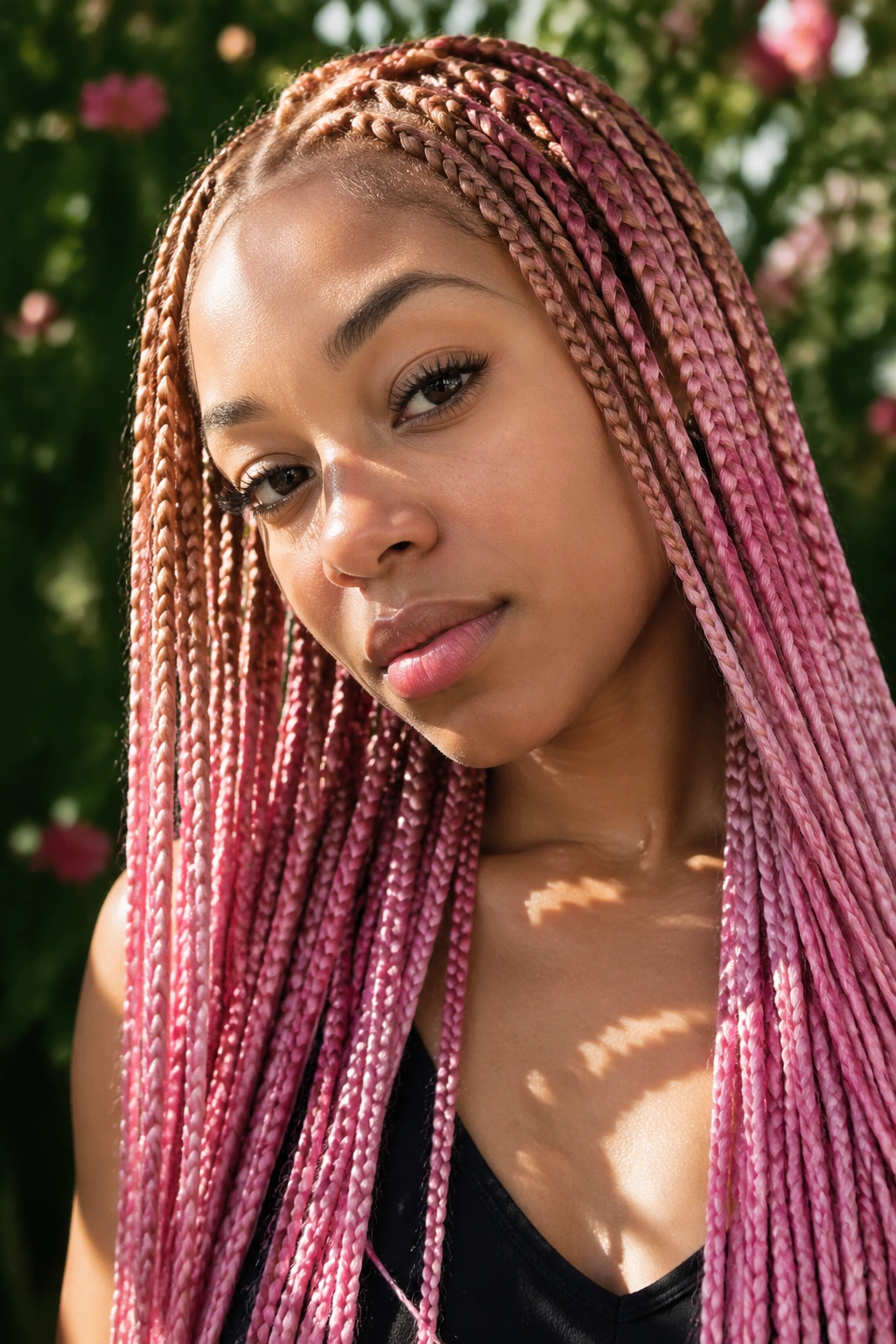
Strawberry blonde into pink is softer than it sounds. The strawberry tone brings warmth first, then the pink slides in at the ends or middle and gives the braid that faint sweet finish. It is a nice choice if you want a pink braid style that feels sunlit instead of bold.
Unlike the harder black-to-pink contrast, this blend looks gentle from the start. The root area can be a warm brown or a soft strawberry blonde, then the color shifts into rose or blush. That means the whole style stays in the same temperature family, which makes it easy to wear with warm-toned makeup and simple clothes.
This is one of the few pink braid looks that can read almost natural in certain light. Not invisible. Just smoother. That makes it good for people who want color but prefer a low-argument hairstyle. You know the type. Pretty, but not trying to win a contest.
I like this style with a soft side part and loose styling around the face. It feels less rigid that way. If you want to add accessories, pick small gold cuffs or a couple of translucent beads. Keep the finish airy.
15. Two-Tone Pink Ends with Gold Cuffs
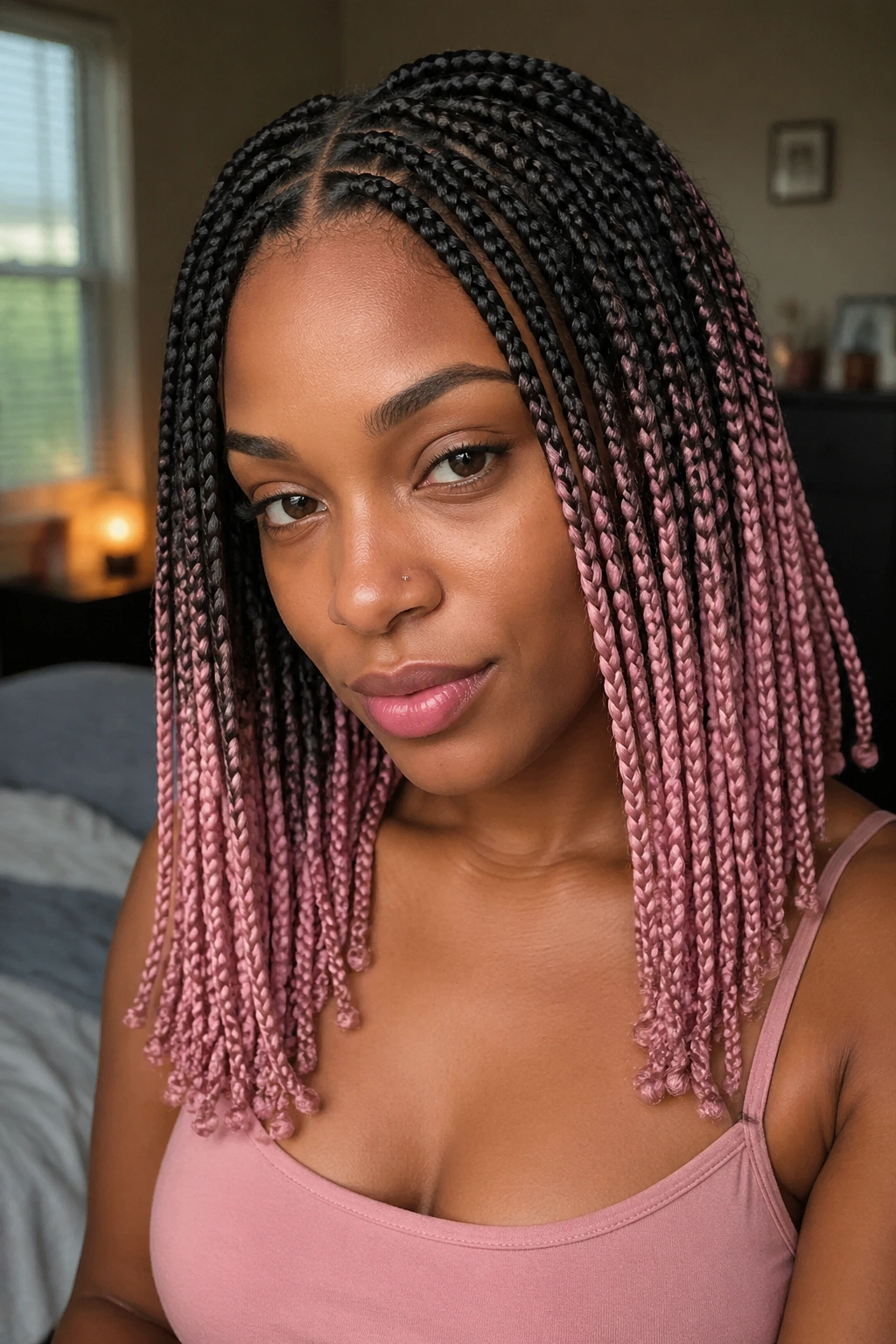
Two-tone pink ends with gold cuffs are for the person who wants the braid to look finished from every angle. The color shifts first, then the metal detail sharpens the whole thing. It is one of the easiest styles to make look intentional because the cuffs give structure to the softness of the pink.
The version I like most starts with a dark base, moves into a richer pink mid-shaft, and finishes with a brighter shade at the ends. That gives the braid depth before the accessories even go on. Then the gold cuffs sit near the lower third or around the mid-length, where they break up the color in a way that feels neat rather than crowded.
Where to Put the Details
Use cuffs sparingly. Three or four on a full head is enough if the pink is strong. More than that and the eye stops moving cleanly across the braid. You want the shine to feel like an accent, not a second theme.
This style works well for long box braids because there’s space for both color and metal to show. It also photographs well in plain settings—brick walls, black tops, denim jackets, all of it. The braid pattern stays visible, the pink stays readable, and the gold adds a little structure without making the hair feel heavy.
If you want one pink ombré braid look that sits comfortably between soft and bold, this is the one I’d pick first.