



A good set of Fulani box braids should do three jobs at once: shape the face, sit comfortably at the scalp, and still look neat after the first scarf comes off in the morning.
That sounds easy. It isn’t.
The style sits in a sweet spot between cornrow detail and the fuller body of box braids, which is why tiny choices matter so much. A clean center part, a deep side part, one or two front cornrows, a row of beads, a few cuffs — each piece changes the whole read of the style. If the front is too tight, the look feels harsh. If the braid size is too bulky near the temples, the shape starts to fight the face instead of framing it.
The 25 looks below stay inside the Fulani box braid family, but they solve different problems: lighter weight, more drama, easier upkeep, or a shape that sits better with your features and daily routine. Some are quiet. Some are loud. A few sit right in the middle, which is where this style often shines best.
1. Center-Part Fulani Box Braids With Slim Face-Framing Cornrows
If you like symmetry, start here. A center part gives Fulani box braids a calm, balanced shape, and the slim cornrows at the front keep the style from looking blocky.
The front braids should be narrow enough to trace the hairline without crowding it. That little detail matters more than the beads. When the temple pieces are thin and clean, the whole style opens up and your features do the talking instead of the braid bulk.
This version is especially good when you want something polished without going stiff. I like it on medium-to-long lengths because the hanging braids add weight in a nice way, while the front stays tidy and light.
2. Side-Part Fulani Box Braids That Soften the Face
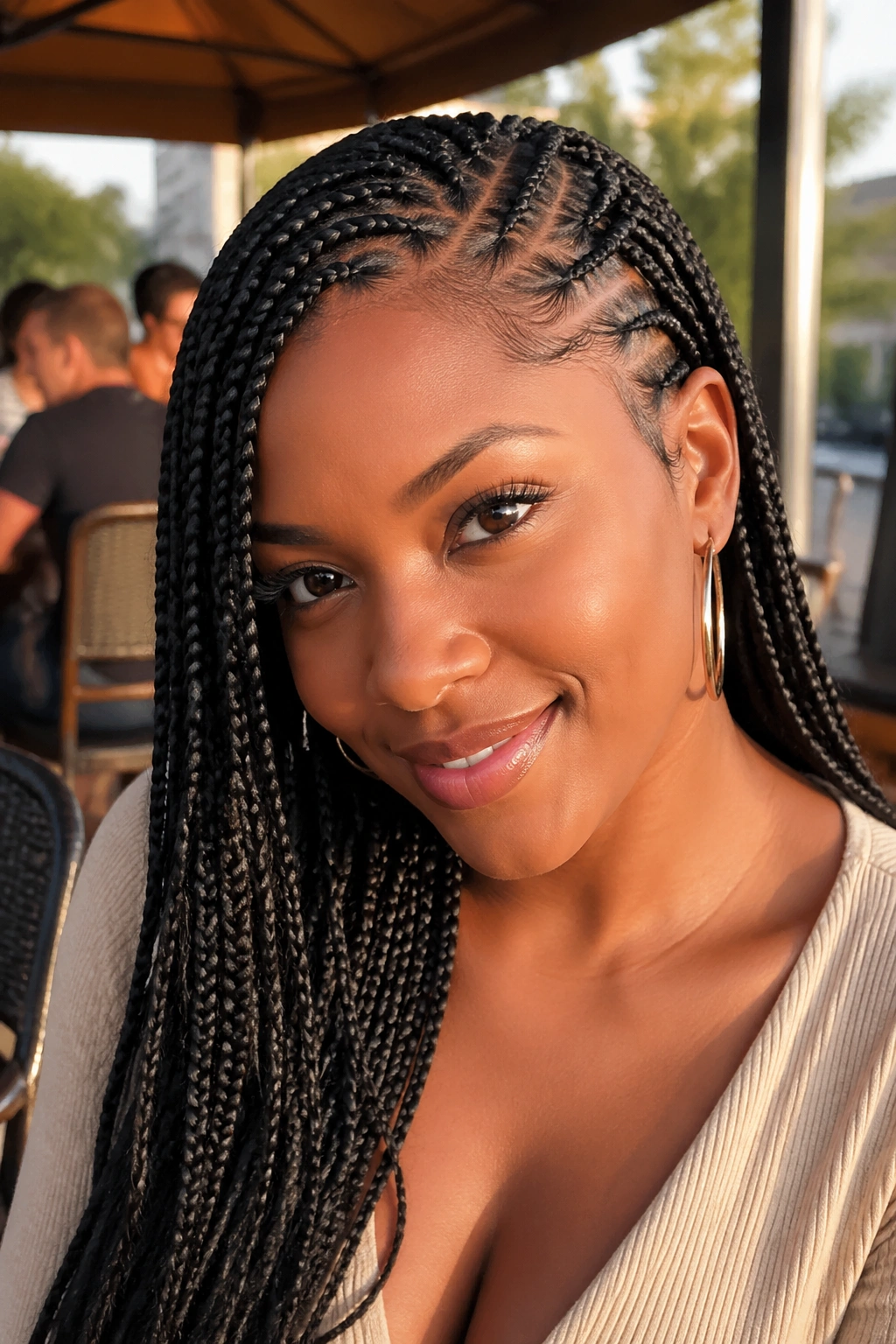
A side part changes the whole mood fast. It breaks the straight line down the middle and gives the style a little movement before the braids even start hanging.
That softer shape can be useful if you do not want the front of your hair to feel too severe. One deep side cornrow, then smaller feed-ins along the hairline, usually gives enough structure without making the style feel crowded. It also gives you a place to stack beads or cuffs on the heavier side if you want extra detail.
This is a good choice when your face shape already has strong angles. The diagonal parting makes the braids fall in a less rigid way, and the result feels a touch more relaxed. Not sloppy. Just less formal.
3. Half-Up Fulani Box Braids for Easy Shape
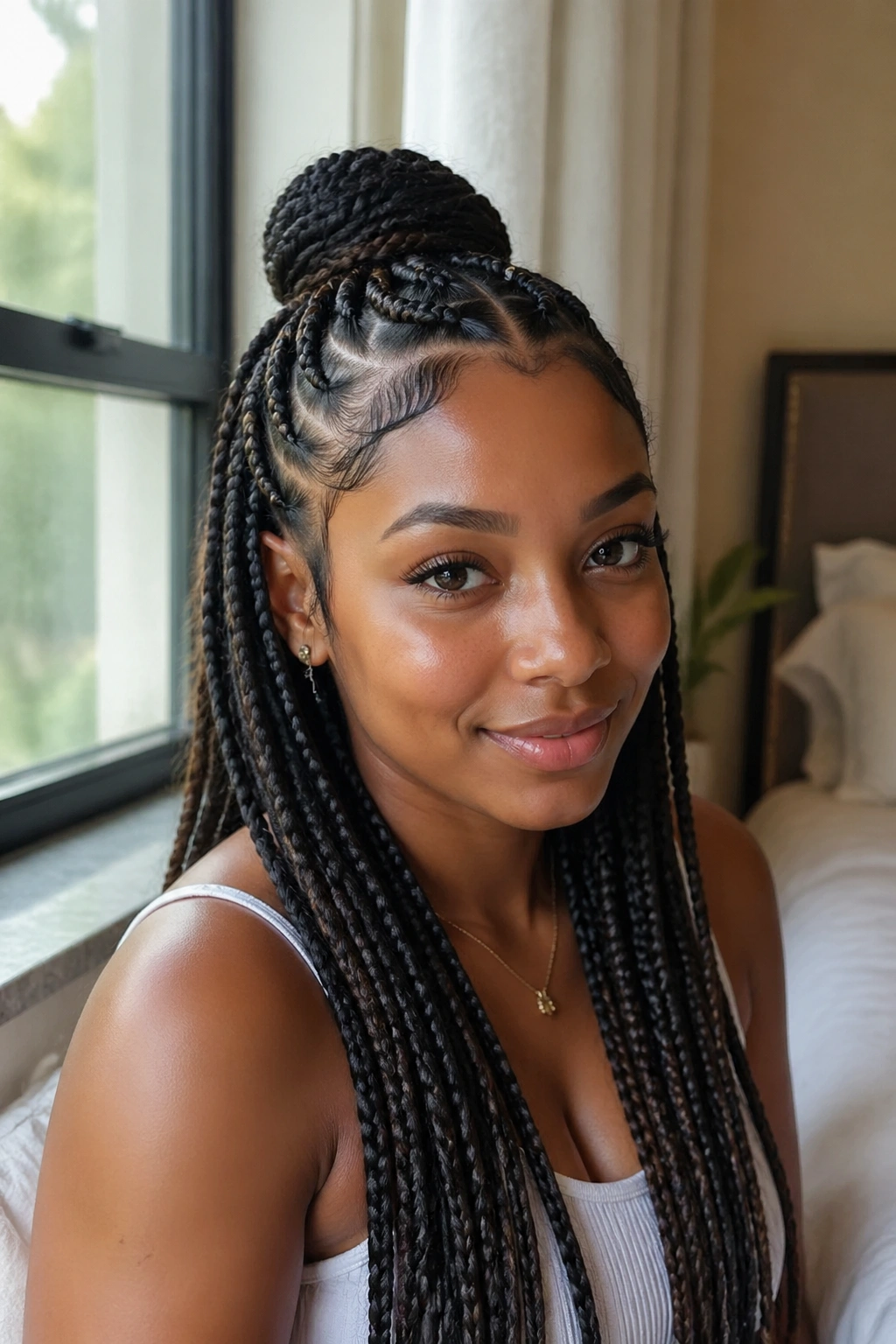
Why do half-up versions work so well? Because they solve the “too much hair in my face” problem without hiding the braids you paid for.
Why the top section matters
Pulling the top half into a small bun or ponytail shifts the weight away from your shoulders, which matters more than people think. A full set of long Fulani box braids can feel heavy by the end of the day; taking some of that length up and back gives your neck a break.
It also gives the front cornrows room to show. If your braider placed the temple braids cleanly, this style lets those lines stay visible instead of burying them under length.
- Best with medium or long braids
- Use a snag-free elastic or a wrapped braid to secure the top
- Keep beads off the very top section if you want less weight
- Leave the bottom braids loose for movement
The top knot should feel secure, not tight.
4. Long Fulani Box Braids With Beaded Ends
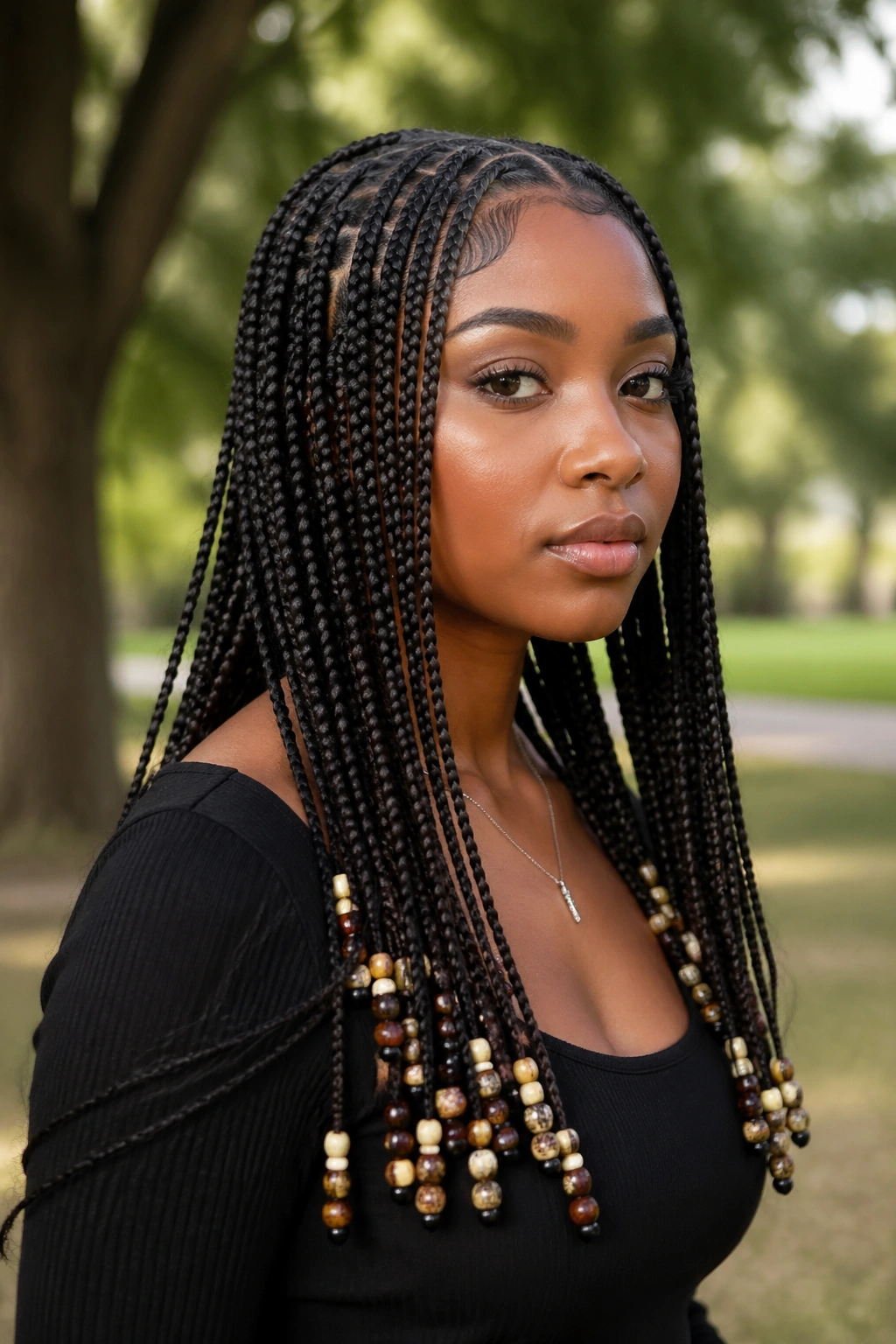
Long braids make a strong statement. They swing, they fall, they move when you turn your head, and the beads at the ends give the whole look a bit of sound and rhythm.
But long length asks for discipline. If the beads are too heavy or piled onto every single braid, the front starts pulling harder than it should. The better approach is to place the heavier beads lower down and keep the crown area lighter. That way the style looks rich without feeling like it is dragging at your scalp.
I prefer this version when the parting is crisp and the braid size is medium. Tiny braids plus long length can look gorgeous, but they can also take forever to install and forever to dry. Medium sections give you more shape with less fuss.
5. Knotless Fulani Box Braids for a Lighter Feel
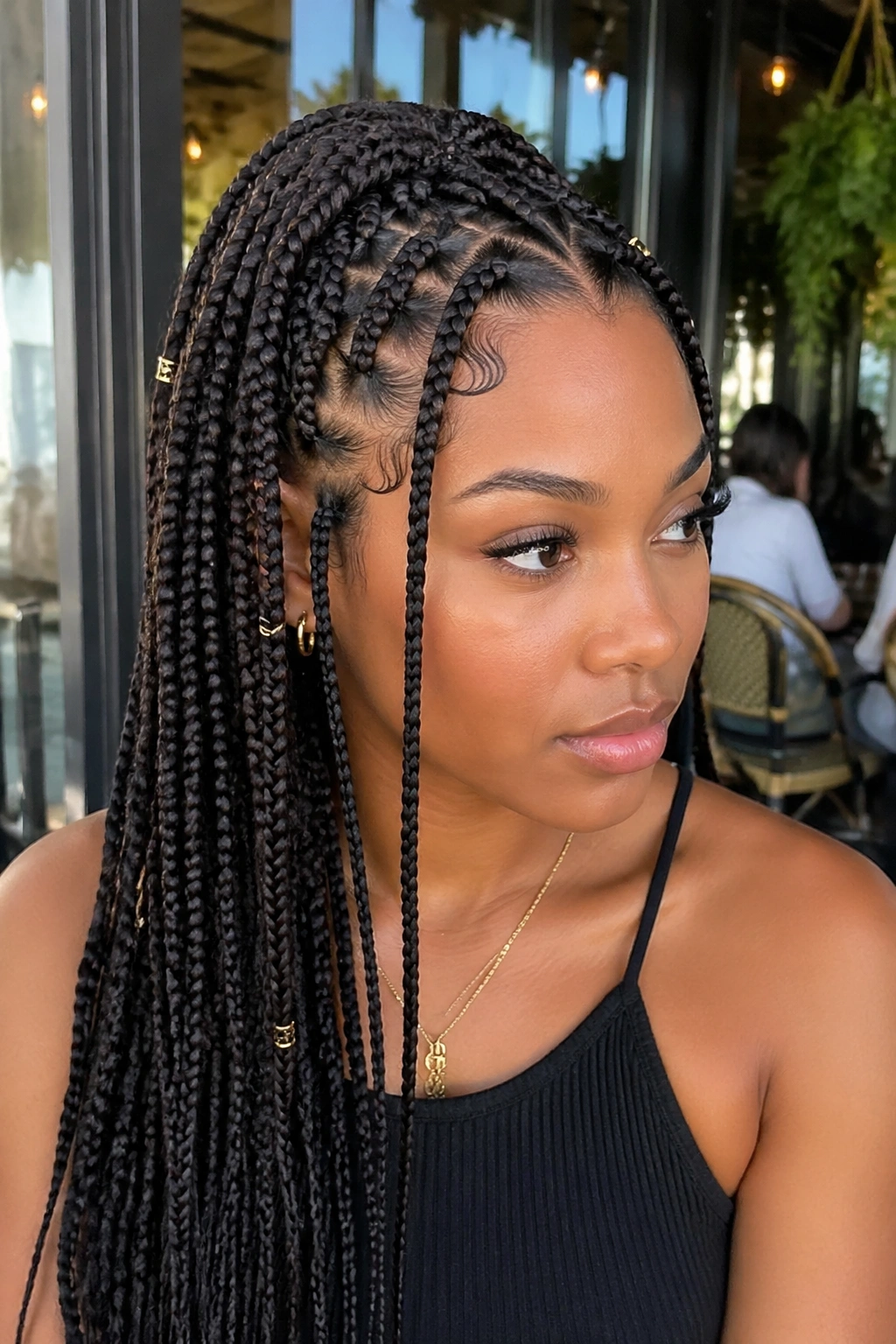
Knotless braids change the front of the style in a big way. Instead of starting with a knot at the root, the braid is fed in gradually, which makes the scalp line look smoother and the first inch feel less bulky.
What to ask your braider
If you want this version, ask for feed-in cornrows at the front and knotless braids in the body of the style. That gives you the Fulani look without a hard bump where the braid starts. It can make a huge difference if your scalp is tender or if you wear braids often.
- Better for people who dislike heavy roots
- Easier to wear up in buns and ponytails
- Usually looks cleaner around the hairline
- Takes a steadier hand to install
The tradeoff is time. Knotless work takes patience, and rushed versions can get loose at the base fast. A careful braider is worth waiting for here.
6. Jawline Fulani Box Braids That Stop at the Bob
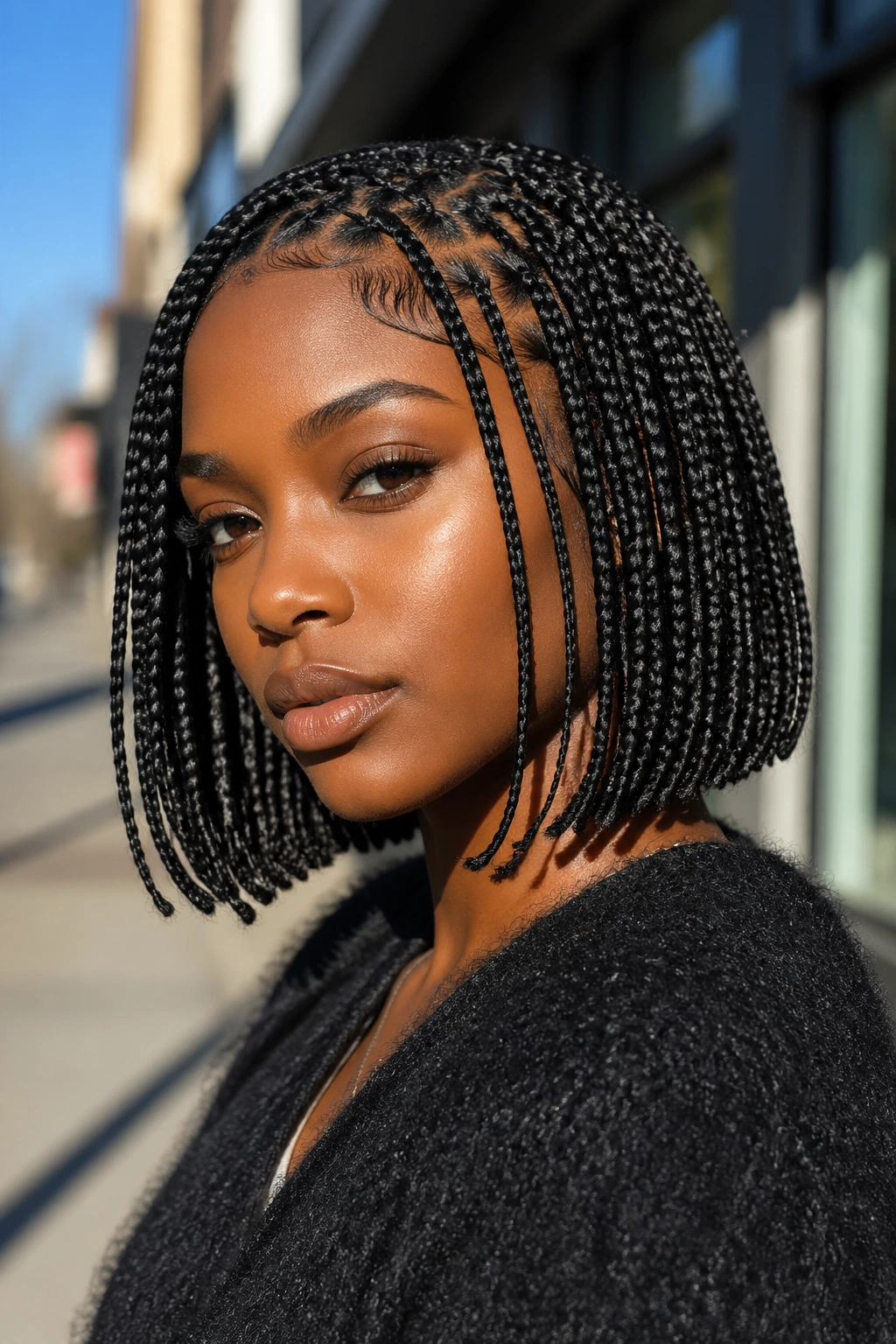
Unlike waist-length styles, a bob-length Fulani set keeps the whole look sharp and close to the face. It is one of my favorites when someone wants the tribal braid detail but not the weight of a long install.
The cut line at the jaw or just below it gives the style a neat edge. Add a few beads at the front, and the shape reads clean from the front and side. It also leaves your neck open, which is a relief if you do not want hair brushing your collar all day.
This length works especially well when the front cornrows are simple. Too many front details can make a short set feel busy. A clean part, a neat feed-in, and a blunt bob line do enough on their own.
7. Triangle-Part Fulani Box Braids With Graphic Parting
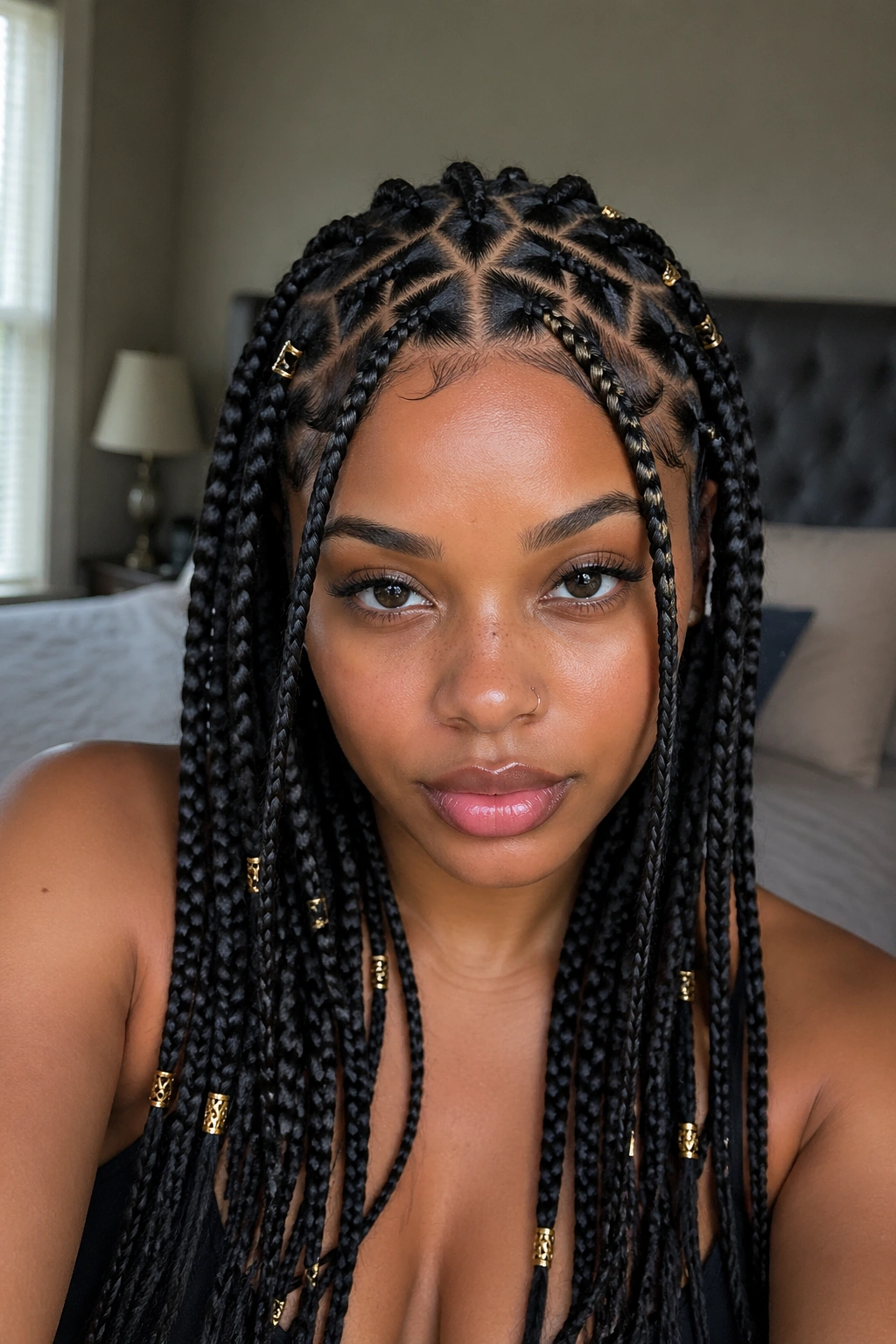
Why does triangle parting stand out so much? Because the braids do not sit in a grid. They sit in angled sections that make the scalp pattern part of the design.
That matters when you want the parting to do some of the work. Triangle sections add shape even before you touch accessories, and they look especially good with medium-size braids. The geometry gives the style a sharper edge, which I like when the rest of the look is kept simple.
Where triangle parts shine
Triangle parts are a smart move if you want visible scalp design without loading the braids with beads, thread, and cuffs. The parting already brings enough detail. Keep the front cornrows neat and let the angles carry the style.
A small warning: triangle sections are less forgiving if the lines are crooked. If your braider is shaky with parting, this is not the style to test them on.
8. High Ponytail Fulani Box Braids That Lift the Face
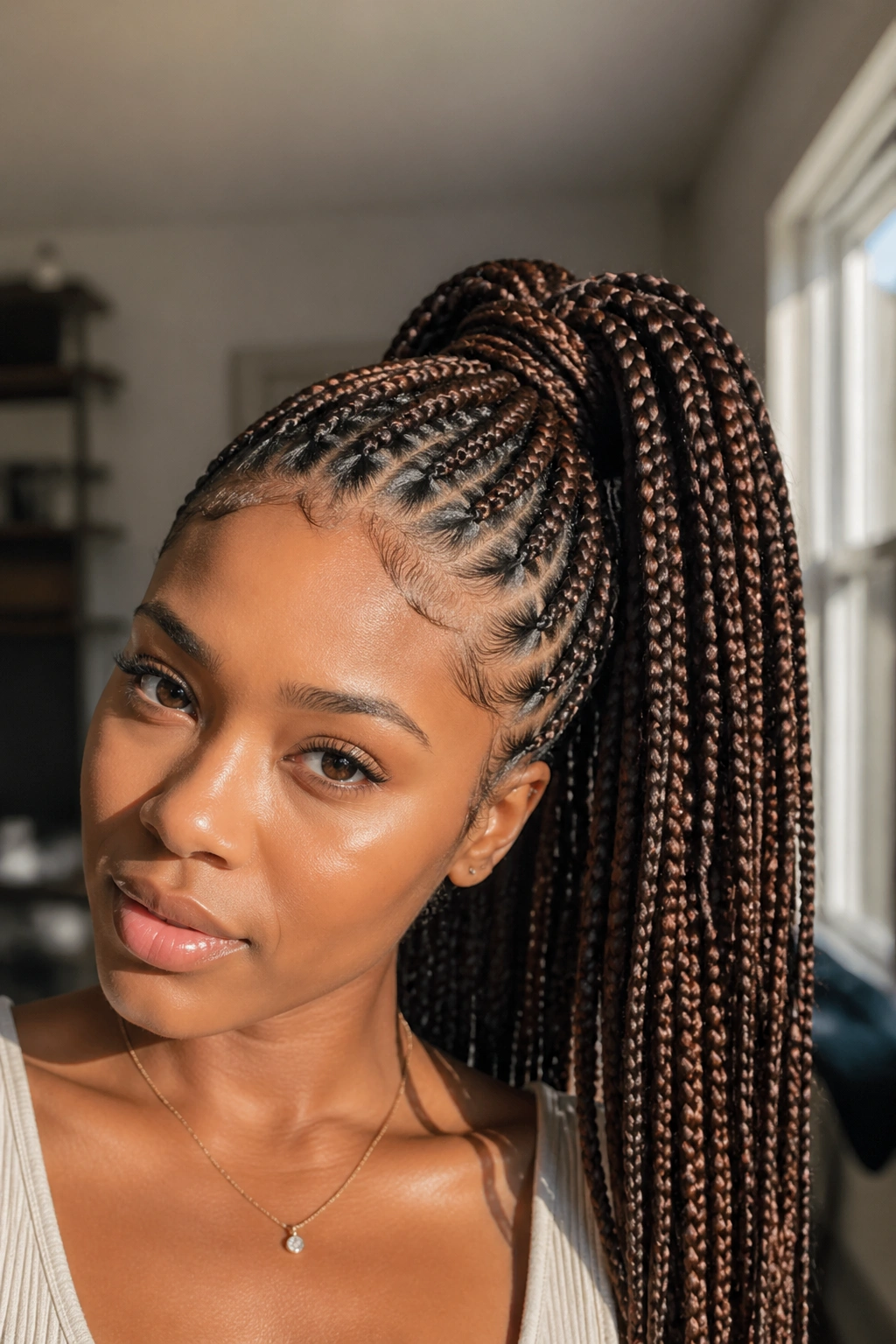
A high ponytail changes the silhouette immediately. The braids go up, the face opens, and the front cornrows stay in view instead of disappearing into the length.
This version is clean and energetic, and it is useful when you want your hair off your neck but do not want a full bun. A wrapped base with a few braids left loose around the ponytail keeps it from looking too stiff. If you want a little movement, leave the very front braids free and let the ponytail fall behind them.
I like this look best with medium-weight braids. Heavy jumbo braids can pull harder when they are gathered high, and the ponytail starts feeling too dense. If the style is built with lighter sections, the lift feels easier to wear.
9. Fulani Box Braids With Gold Cuffs and Thread
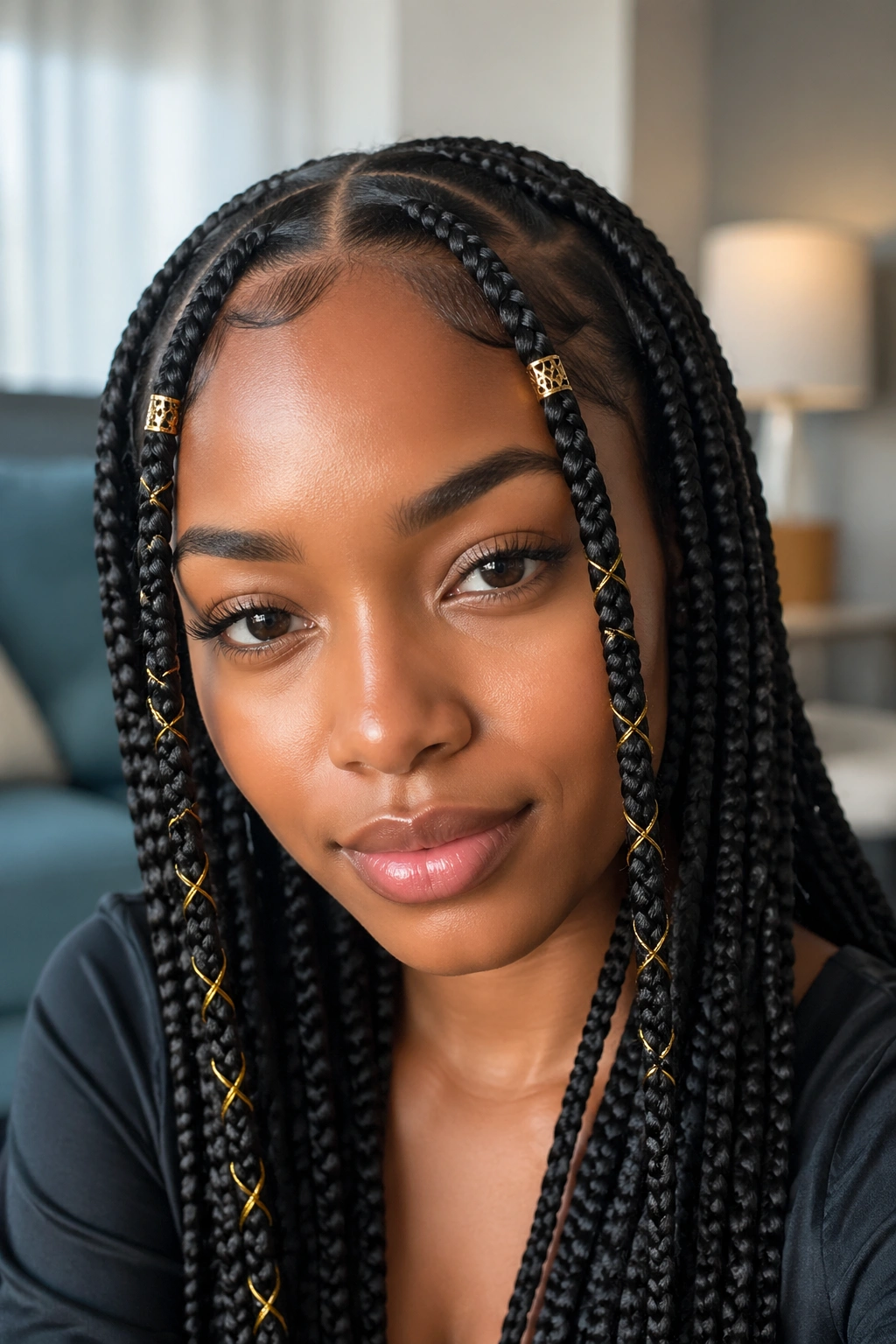
Do you want decoration without adding bulk? Gold cuffs and wrapped thread are the cleanest answer.
How to keep the look balanced
The trick is restraint. One or two cuffs on a front braid can do more than a whole pile of them. Thread wrapping works best when it is used as an accent, not a blanket. A few braids near the face, a few down the length, and the rest left plain gives the eye somewhere to rest.
- Use cuffs on braids that sit near the temples
- Pick thread in one color family, not five
- Keep the crown lighter than the ends
- Avoid loading every single braid with hardware
This style looks especially good when the parting is simple. If the scalp pattern is busy, the accessories can push it over the top. Clean parts, then one or two strong accents, usually lands better.
10. Shoulder-Length Fulani Box Braids That Stay Practical
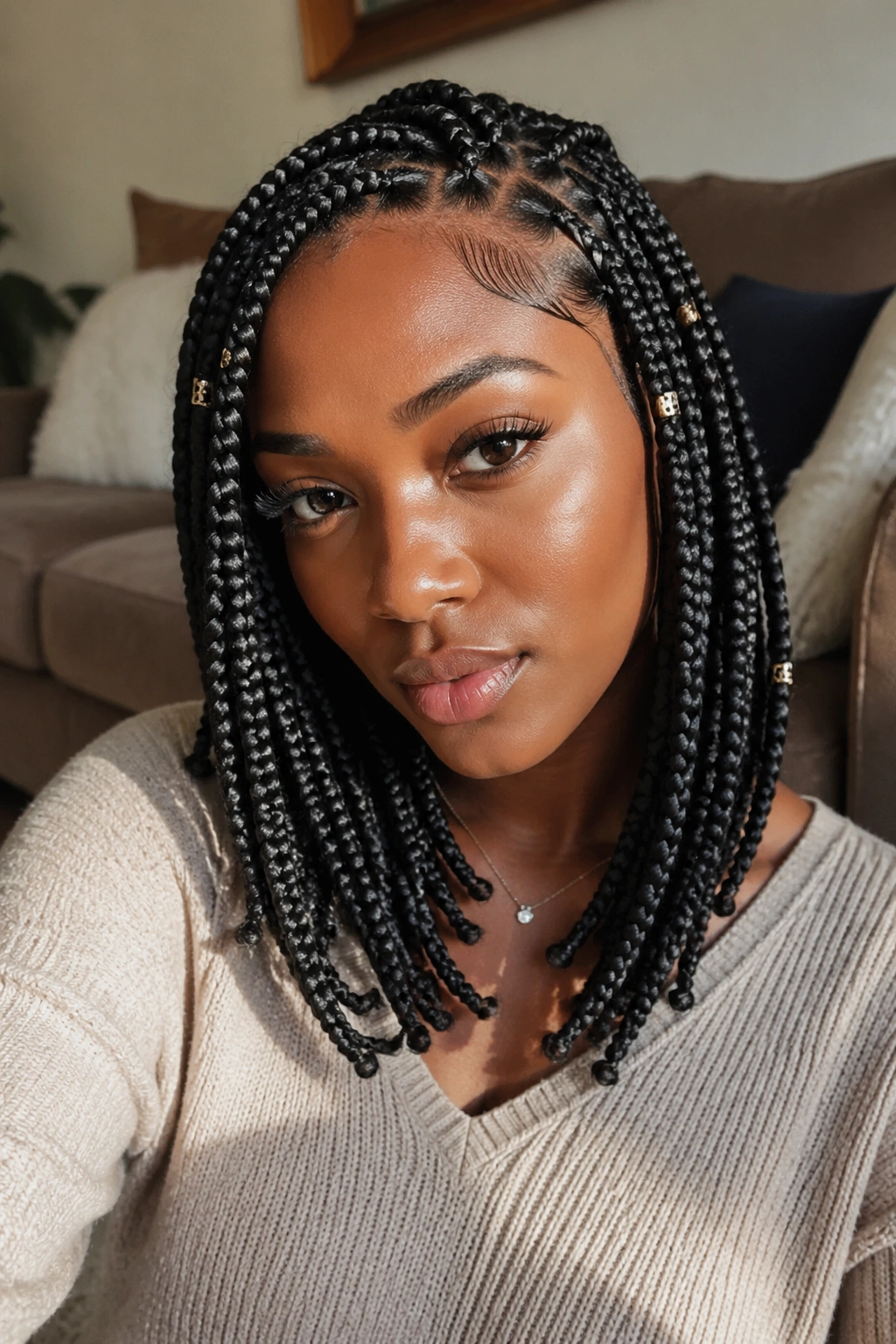
Shoulder-length braids are one of those choices people overlook until they wear them once. Then they get it.
The hair sits close enough to the body that it does not swing into everything, and it dries faster after washing than long braids do. That matters. Wet braids held at the nape for too long can feel heavy and flat, so a shorter cut can make day-to-day care easier.
This length also keeps the style neat under jackets, hoodies, and seat belts. A lot of people think they want length because it looks dramatic in photos. Maybe. But shoulder length is often the version you can actually live with for weeks without feeling fed up by day four.
11. Low Braided Bun Fulani Box Braids for a Clean Finish
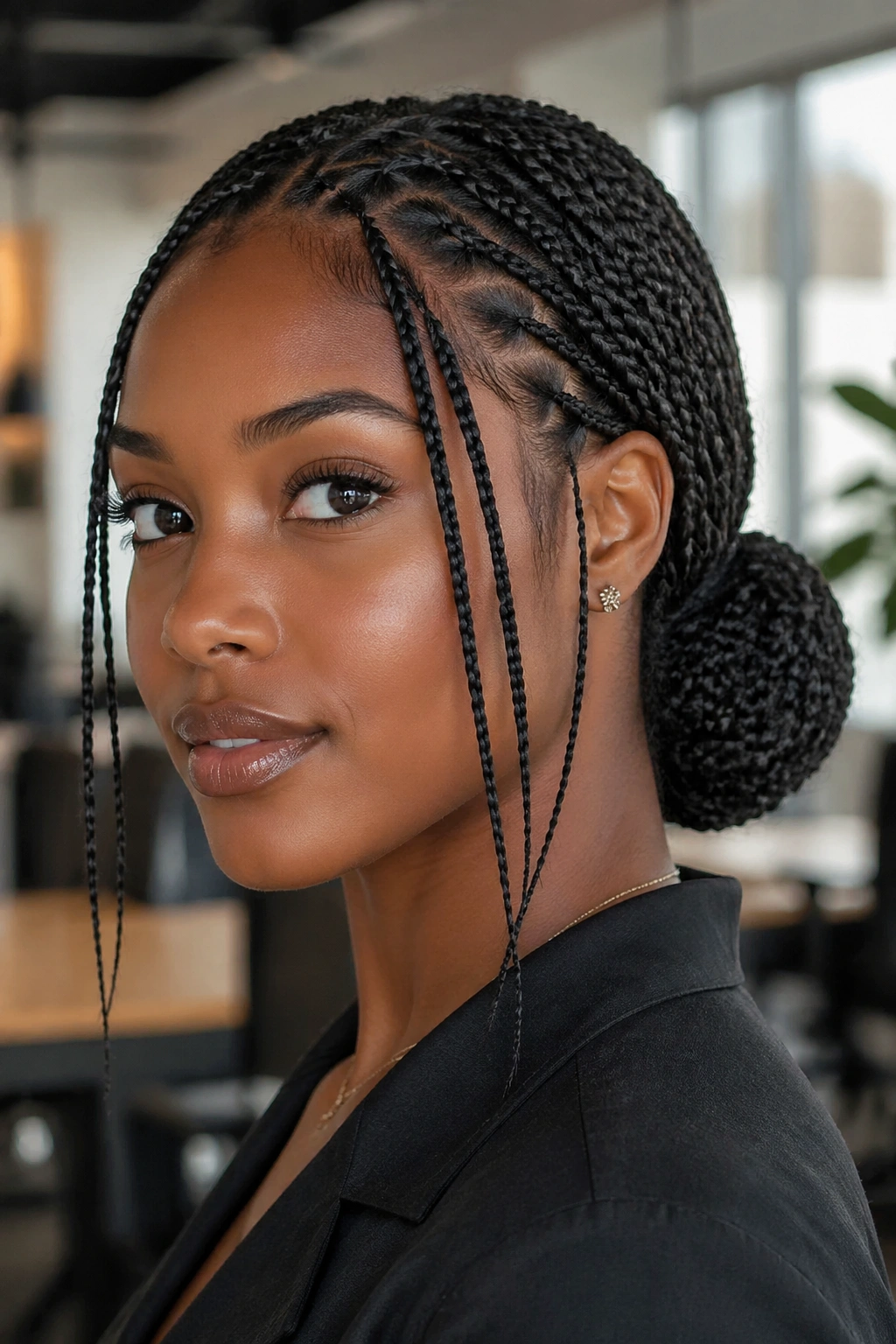
A low bun changes the energy from flowing to tucked. The front still gives you the Fulani braid detail, but the back sits close to the head and stays out of the way.
What to ask for
Ask for medium box braids with two or three slim cornrows at the front, then have the rest gathered into a low bun at the nape. Keep the bun compact and anchor it with pins instead of a tight elastic if the braids are heavy. That keeps the base calmer and reduces stress at the roots.
The look works for formal events, office days, and any time you want the face-framing pieces to do the talking. A little sheen on the braids helps. So does a clean hairline.
Leave the bun slightly rounded, not smashed flat. It looks better and it is easier to secure.
12. Mixed-Size Fulani Box Braids That Play With Texture
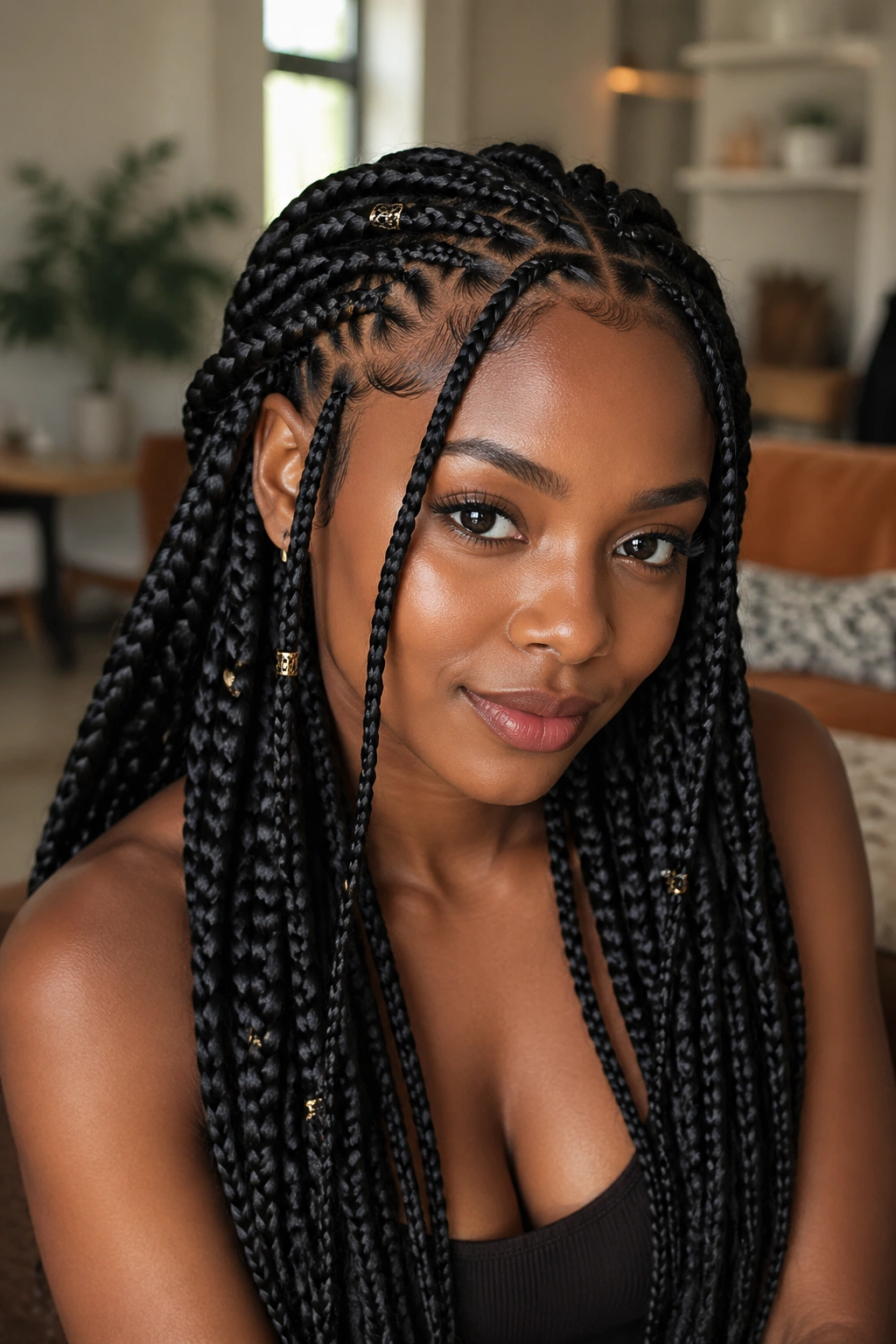
Unlike one-size braids, mixed-size versions add visual rhythm. Some pieces are thicker, some are slimmer, and the front braids can stay narrow while the back carries more body.
That contrast gives the style a more layered feel. It is useful if you want the front to look delicate and the back to look fuller. You also get a little flexibility with accessories, because cuffs and beads sit differently on a thick braid than they do on a skinny one.
The main thing to watch is balance. Too many big braids near the hairline can make the style feel top-heavy. Keep the heaviest sections farther back, where they can hang without pressing on the temples.
13. Fulani Box Braids With Curled Ends
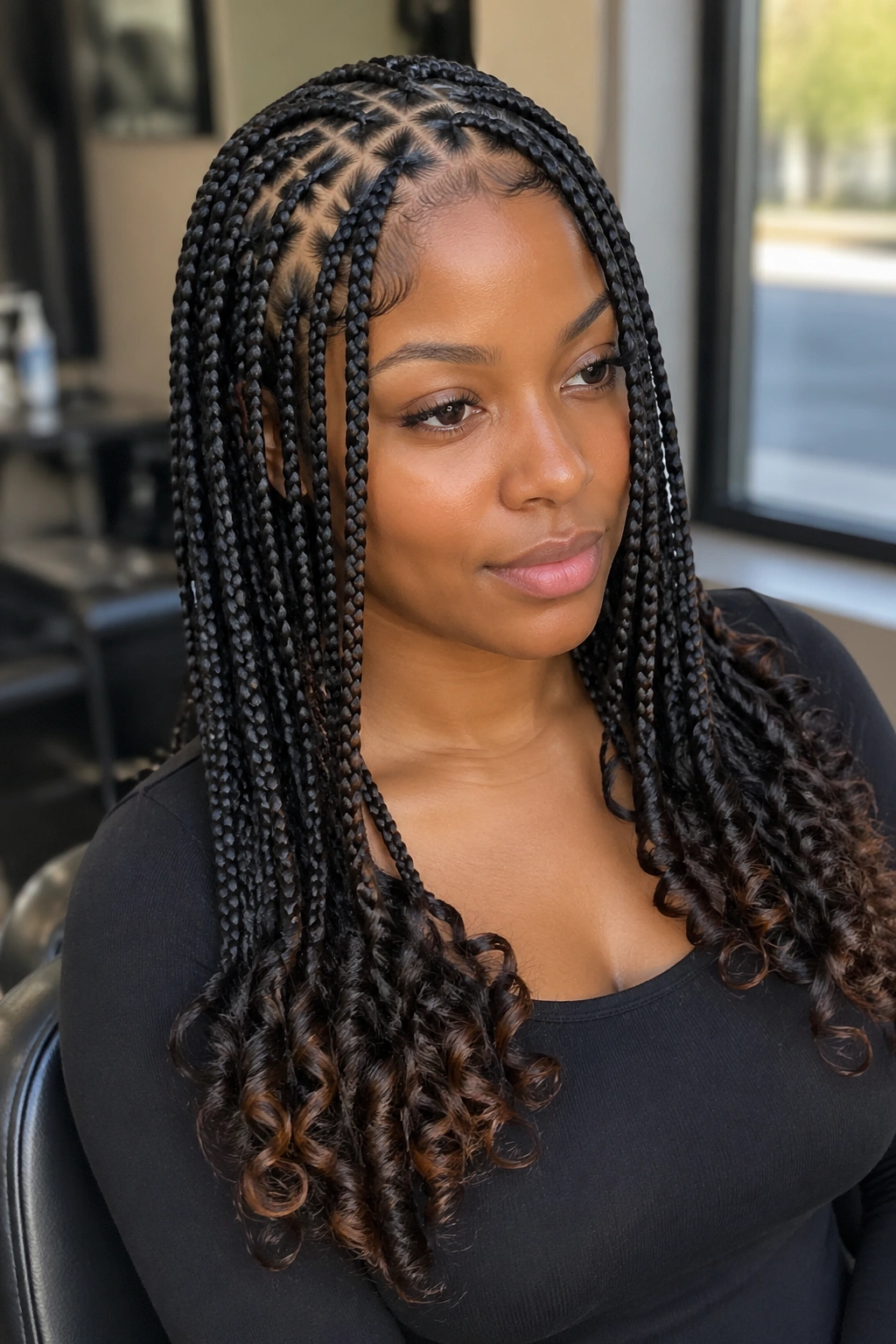
Curled ends soften the whole look fast. Instead of a blunt finish, the braids end in bends or spiral pieces that move when you walk.
That small change matters more than people expect. Straight ends can make a set feel firm and structured. Curled ends loosen the mood and make the braids sit with a little more bounce. If you want the style to feel less severe, this is one of the easiest ways to get there.
The care is different, too. You do not want to drown the ends in product. A small amount of mousse and a light wrap at night usually keeps the curl pattern from getting fuzzy. Water can help revive the shape, but too much can make the ends frizz faster than you want.
14. Jumbo Fulani Box Braids for a Bigger Shape
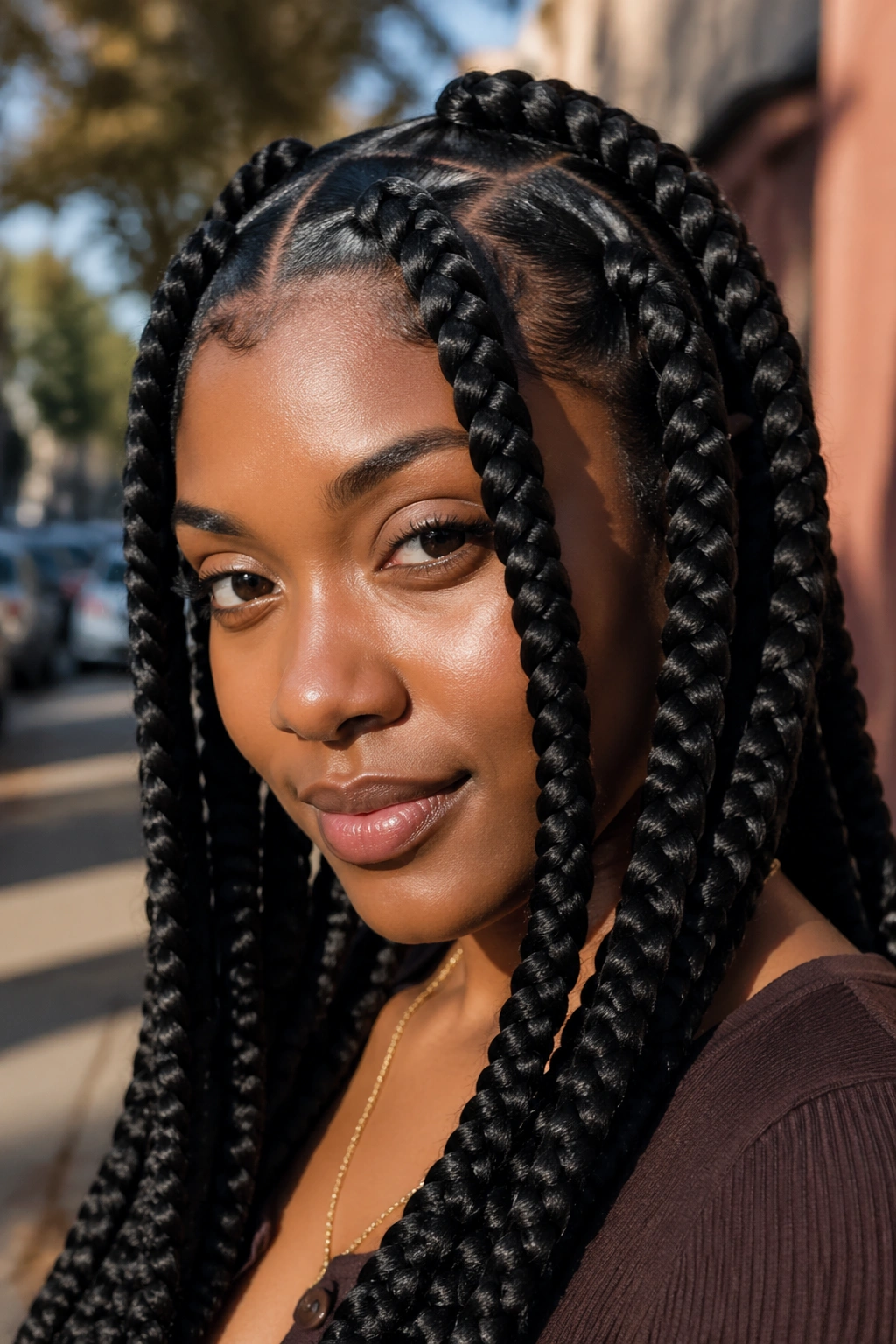
Why go jumbo? Because fewer braids mean faster installation, thicker lines, and a style that reads bold from across the room.
How to keep jumbo braids wearable
The trick is not to let the size overwhelm the scalp. Jumbo braids need a steady foundation, especially near the front where the style starts. If the front cornrows are too thick, the whole look can feel heavy before you even add accessories.
- Keep the front feed-ins neat and narrow
- Ask for a lower braid count so the weight stays spread out
- Use fewer beads, since each braid already has plenty of presence
- Make sure the parting is straight and clean
Jumbo styles are strong on shape, which is why they do not need much decoration. One good bead placement can be enough. More than that starts to feel crowded.
15. Asymmetrical Fulani Box Braids With One Heavy Side
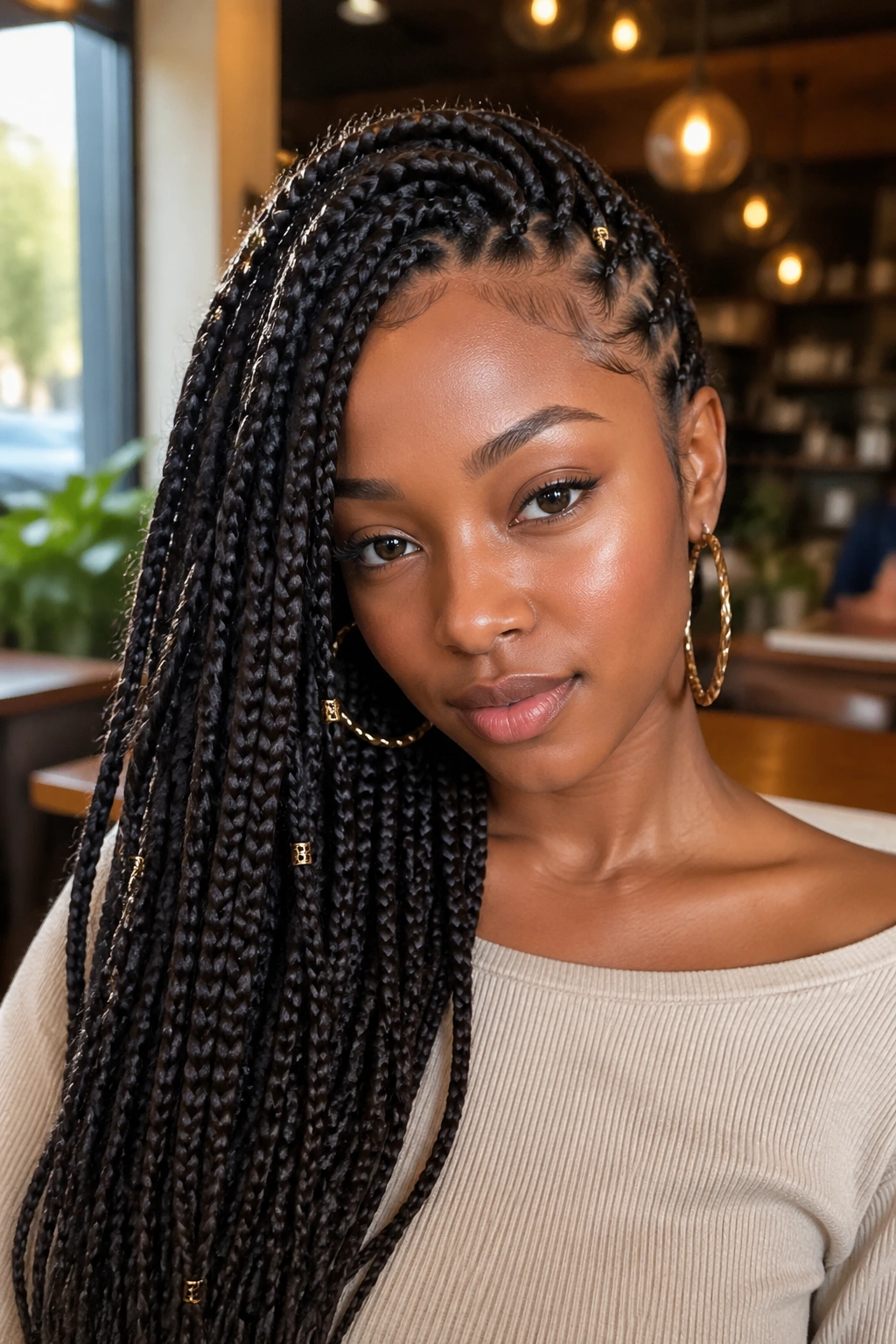
A full center line is not the only way to do Fulani box braids. Shifting the weight to one side gives the style a little attitude and keeps it from feeling too neat.
One side can be slightly longer, thicker, or more decorated than the other. The front cornrows can still follow the Fulani pattern, but the fall of the hair becomes less even. That diagonal movement changes the whole face shape in a nice way. It also works well if you like your hair to tuck behind one ear and fall over the other.
This is not the place for perfect symmetry. If anything, the slight imbalance is the point. Keep the accessory choice simple so the shape stays readable.
16. Micro Fulani Box Braids for Dense Detail
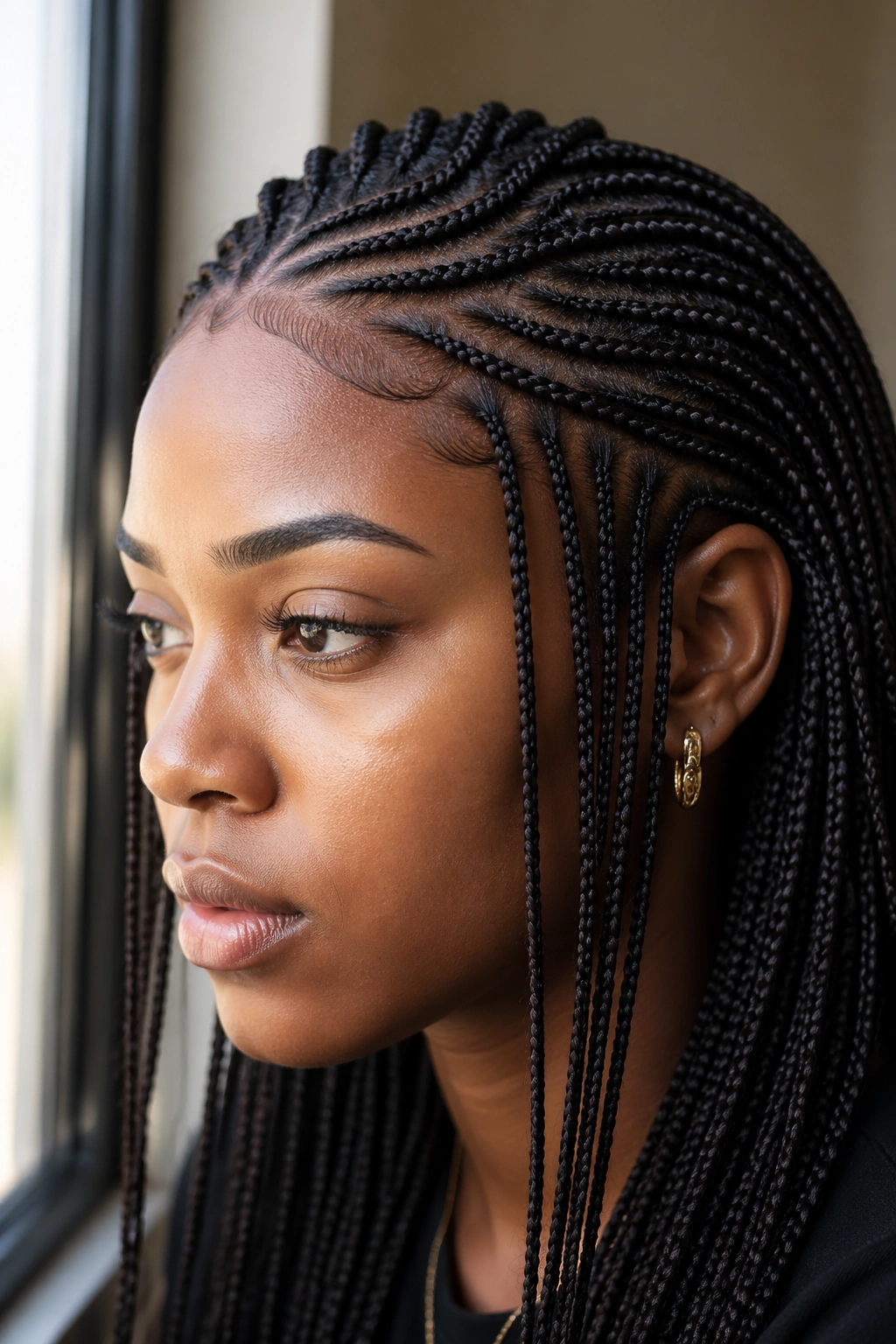
Micro versions are for people who love detail and do not mind a long install. The braids are tiny, the parting is fine, and the finished style has a dense, textured look that moves almost like fabric.
Who should skip it
If you want a quick chair session, walk away now. Micro braids take time, and they ask for patience during both installation and takedown. They are also not the best choice if you know you dislike spending time separating strands at night.
- Best for people who want a delicate finish
- Works well with small beads or minimal cuffs
- Can look heavy if the front is packed too tightly
- Needs careful maintenance to avoid tangling
I like micro Fulani box braids when the braid count is high but the front design stays simple. Too many accessories can drown the fine parting. Let the small braids do the visual work.
17. Fulani Box Braids Wrapped With String
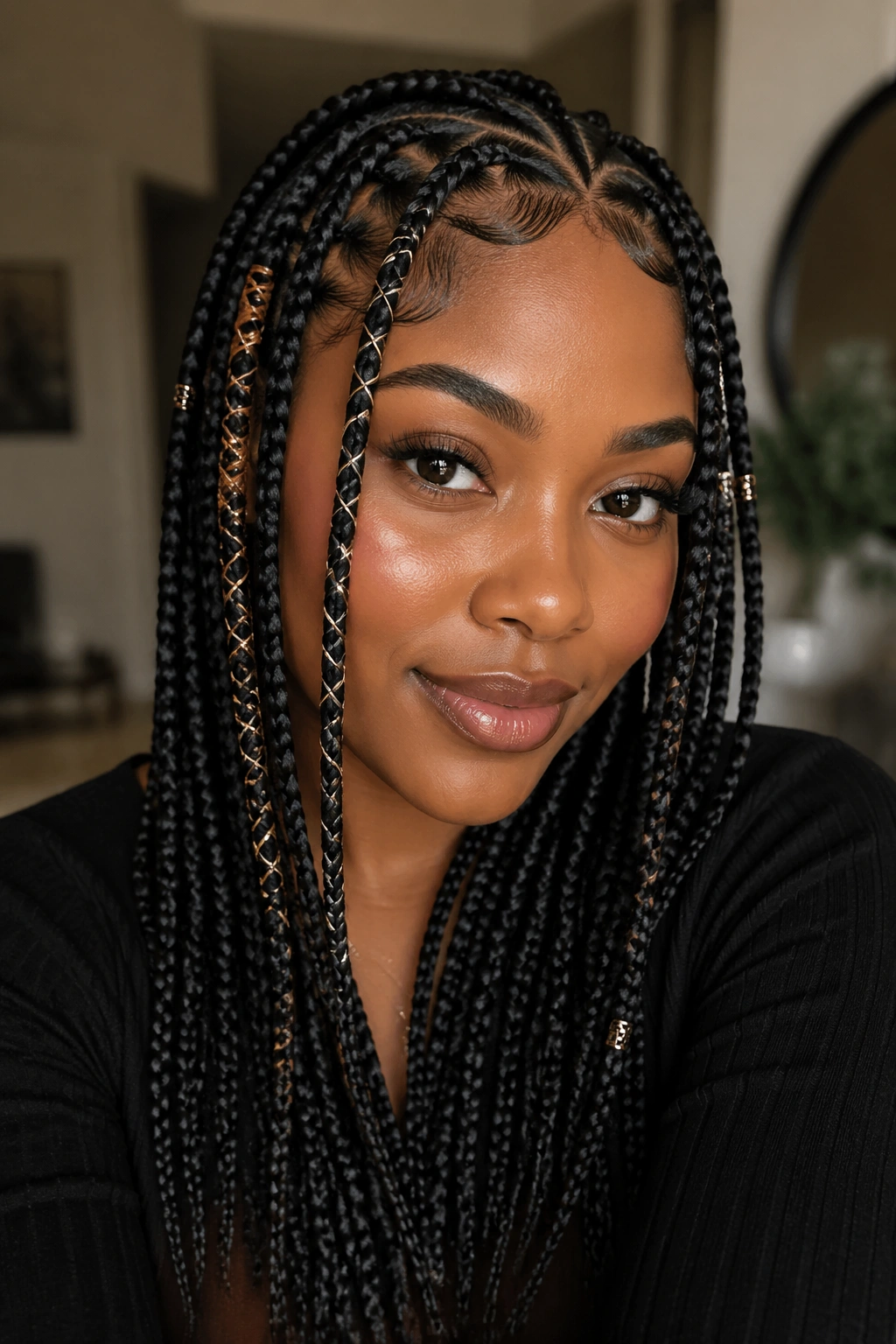
String wrapping brings color without dye, and that alone makes it worth a look.
Placement rules
Wrap the string around a few front braids, then stop. That is the whole trick. If every braid gets wrapped, the style starts to look busy and the parting disappears. A few accents near the face, maybe one or two deeper in the length, are usually enough.
The nicest version keeps the string color tied to one simple palette. Earth tones, metallic thread, or a single bright color can all work. What does not work as well is random mixing that has no structure.
String-wrapped braids are useful when you want a style that feels personal without adding weight. It is decoration that stays light in the chair and light on the scalp.
18. Mid-Back Fulani Box Braids With Clean Ends
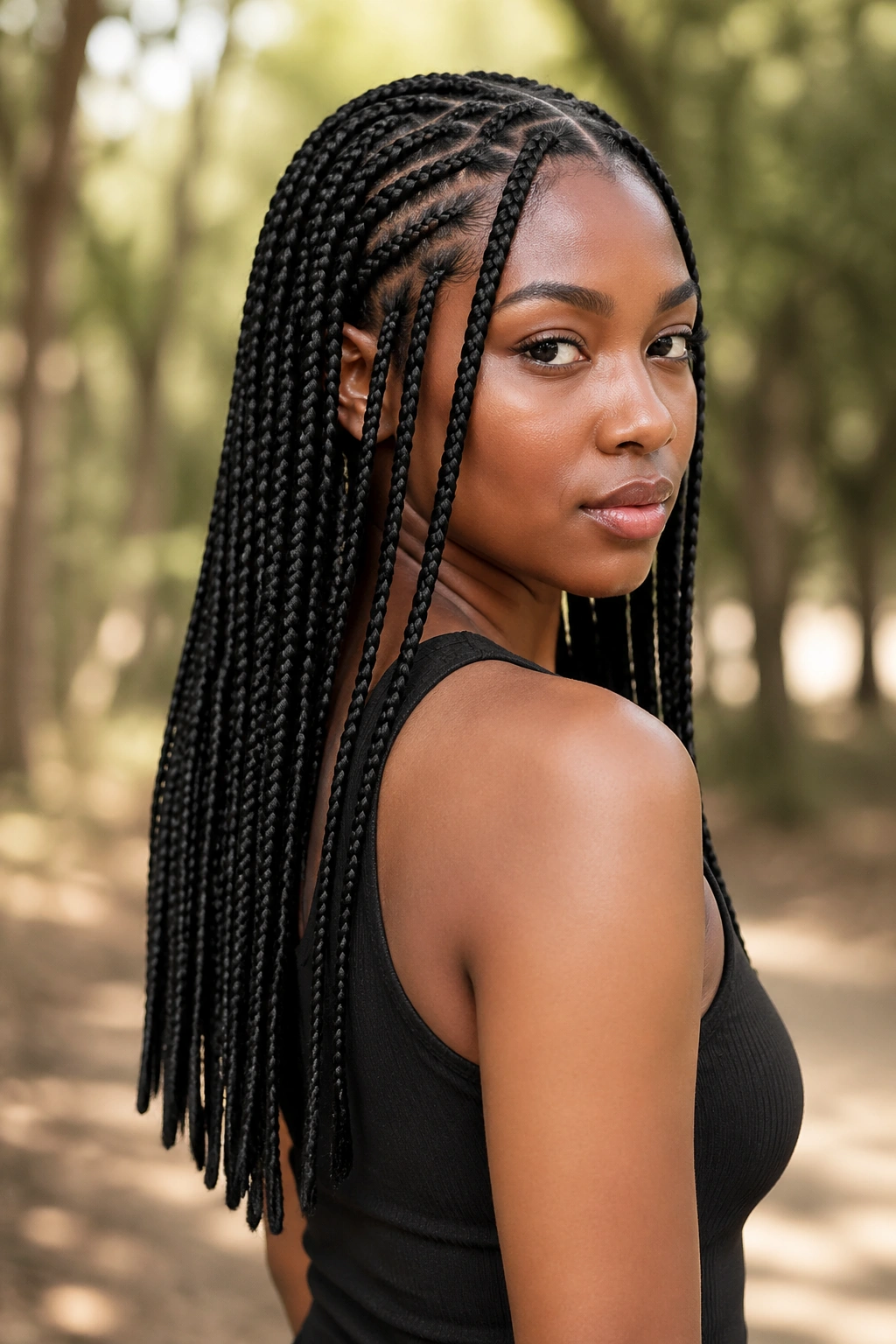
Mid-back length sits in a sweet spot. It gives you length, but not so much that you spend all day flipping hair off your shoulders.
That middle range is one of the easiest lengths to live with. The braids have enough drop to show movement, and the ends stay manageable in a scarf, bun, or low ponytail. If you wear headphones, drive a lot, or spend time with jackets and collars, mid-back braids behave better than waist-length ones.
I also like this length for first-time wearers. It gives you the drama of Fulani braids without the constant reminder that there is a lot of hair hanging around. Clean ends keep the shape sharp, especially when the front cornrows are slim and well spaced.
19. Crown-Braid Fulani Box Braids Across the Hairline
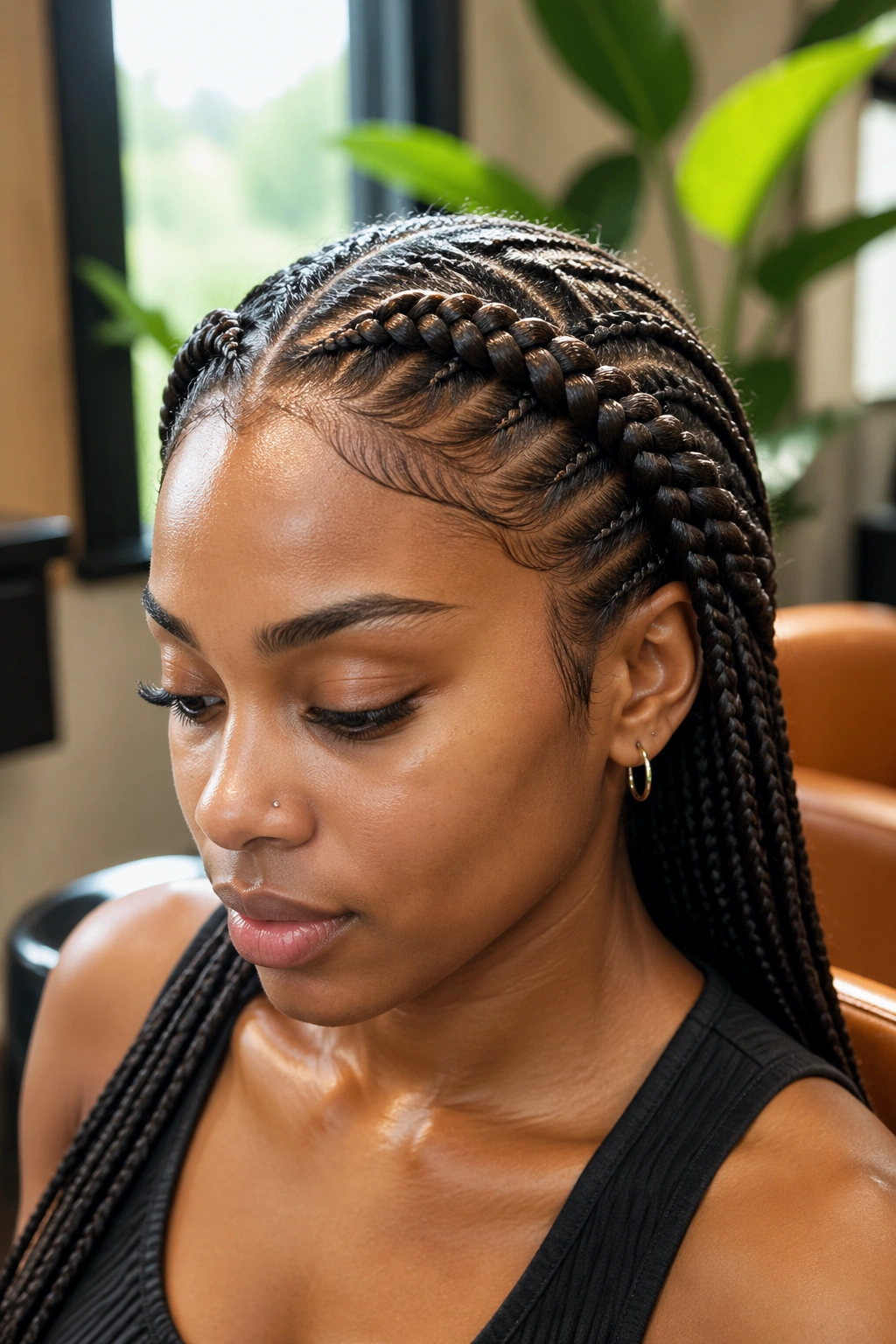
A crown braid across the hairline makes the style feel framed from the top down. It draws the eye around the face instead of straight through the middle.
That matters if you want a more structured, almost wrapped look. The crown section can be built with feed-in cornrows that arc gently from temple to temple, then drop into box braids behind. The result has shape before the length even starts.
The only caution is tension. A crown shape can get pulled too tight if the braider tries to make the line too sharp. Ask for a clean arc, not a stretched one. Your edges will thank you for that. And honestly, so will the final look.
20. Side-Swept Fulani Box Braids With One Statement Part
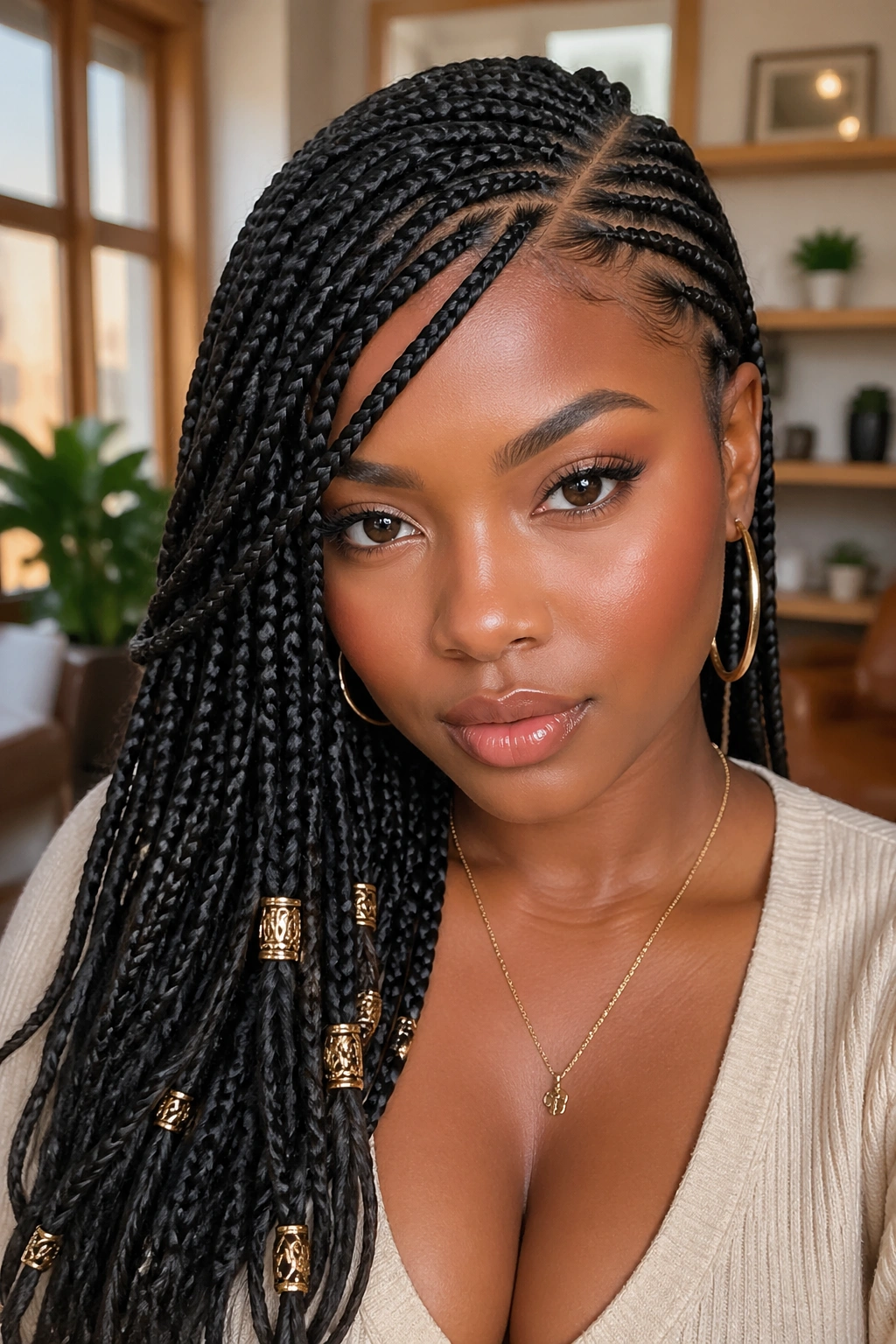
A side-swept look works because it breaks the mass of the braids and gives one side of the face more room. It feels intentional without needing extra decoration.
The statement part can sit deep enough to be obvious, or soft enough to look like the hair naturally falls that way. Either way, the shape creates a diagonal line that makes the style feel active instead of static. A few beads on the heavier side can echo that line nicely.
What makes it different
The front cornrows do not have to match perfectly. In fact, a slight asymmetry can make the whole set look more natural. Keep the other side cleaner and lighter so the sweep has space to breathe.
This is a smart pick if you wear your braids behind one shoulder a lot. The style already wants to go there.
21. Boho Fulani Box Braids With Loose Curly Pieces
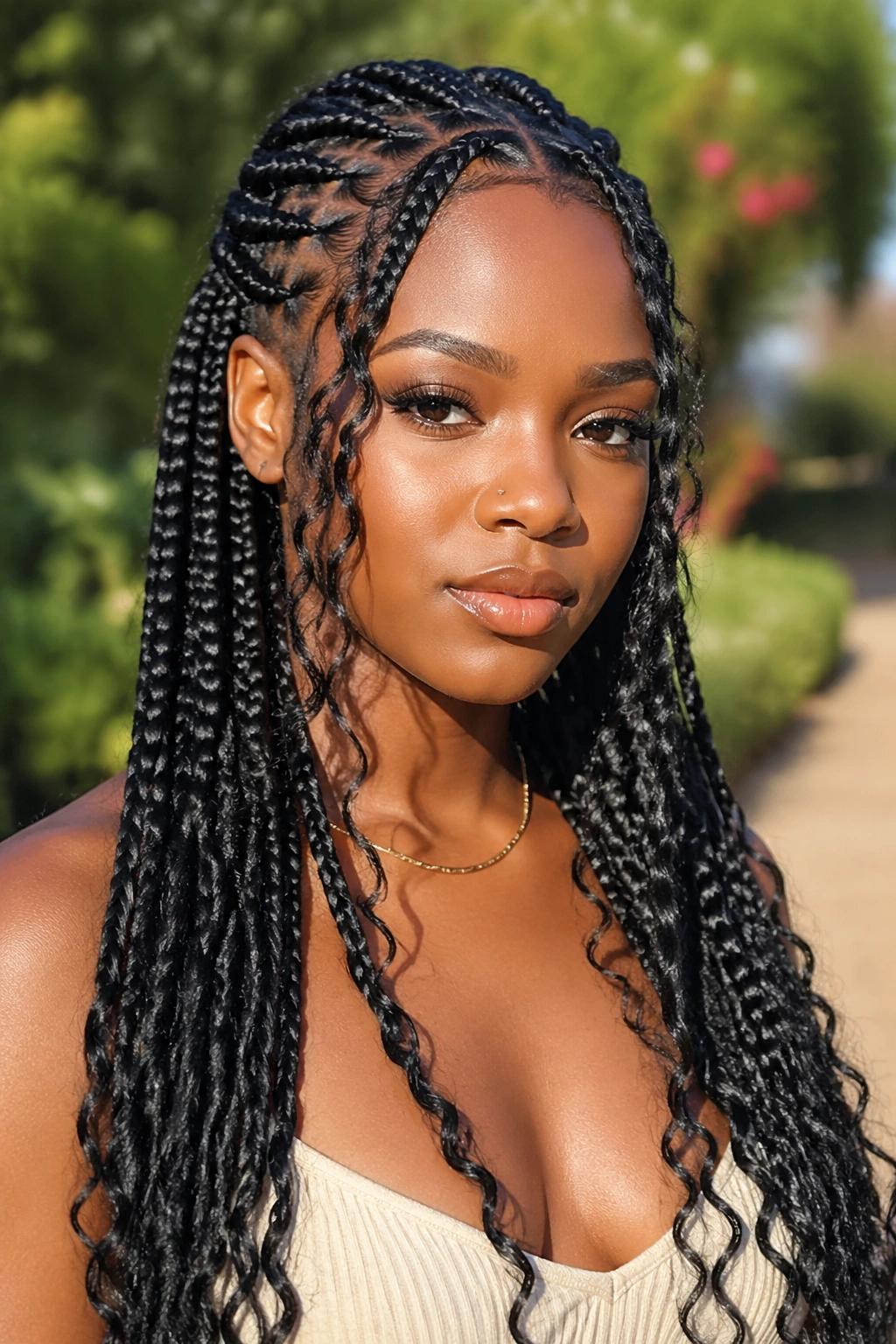
Boho versions trade some neatness for movement. A few loose curly pieces break up the braid line and make the set feel softer.
This look works best when the curls are placed with some restraint. Too many loose pieces and the braids stop being the main event. A few around the face, a few through the length, and the rest left crisp gives a much better result. The curl texture should look chosen, not accidental.
The upkeep is a little higher because loose curls frizz faster than sealed braid ends. A light mousse and a satin bonnet at night help a lot. If you like a softer finish and do not mind refreshing the ends now and then, this version has a lot of charm.
22. Side Bun Fulani Box Braids With Face-Framing Pieces
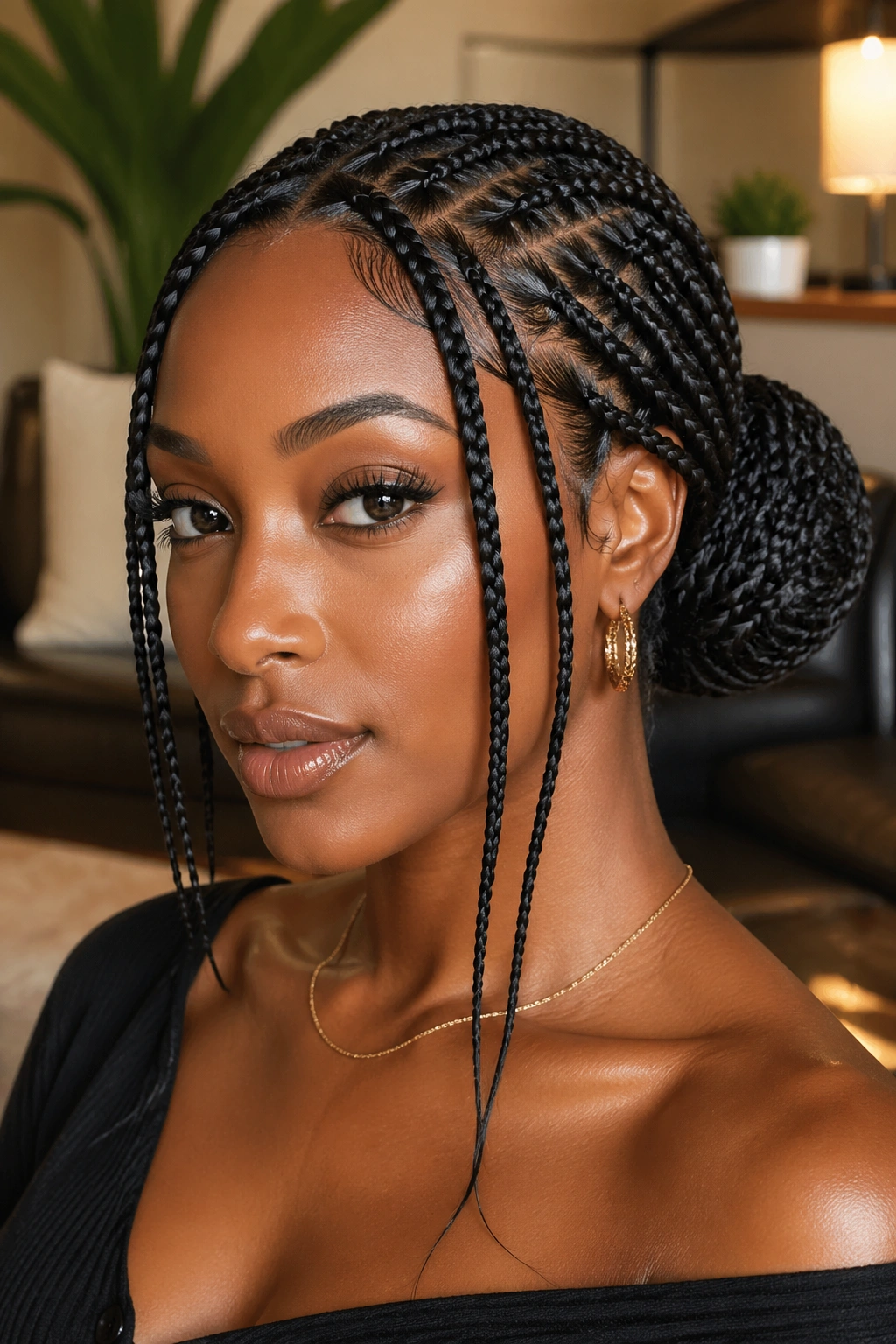
A side bun changes the silhouette the second you pin it up. One side becomes the anchor, and the other side gets to show off the front braids and accessories.
That asymmetry is useful if you want the style to feel less formal than a low bun but more controlled than fully loose braids. A few face-framing pieces keep the look from becoming too tight around the jaw. The bun itself should sit close to the ear or just above it, not float too high.
- Best with medium or long braids
- Use pins that grip the bun without crushing it
- Keep the front accessories visible on the swept side
- Leave one or two thin braids loose near the cheek if you want softness
The side bun is one of those styles that looks easier than it is. A sloppy bun shows fast, so the base needs to be secure.
23. Sleek Middle-Part Fulani Box Braids With Minimal Accessories
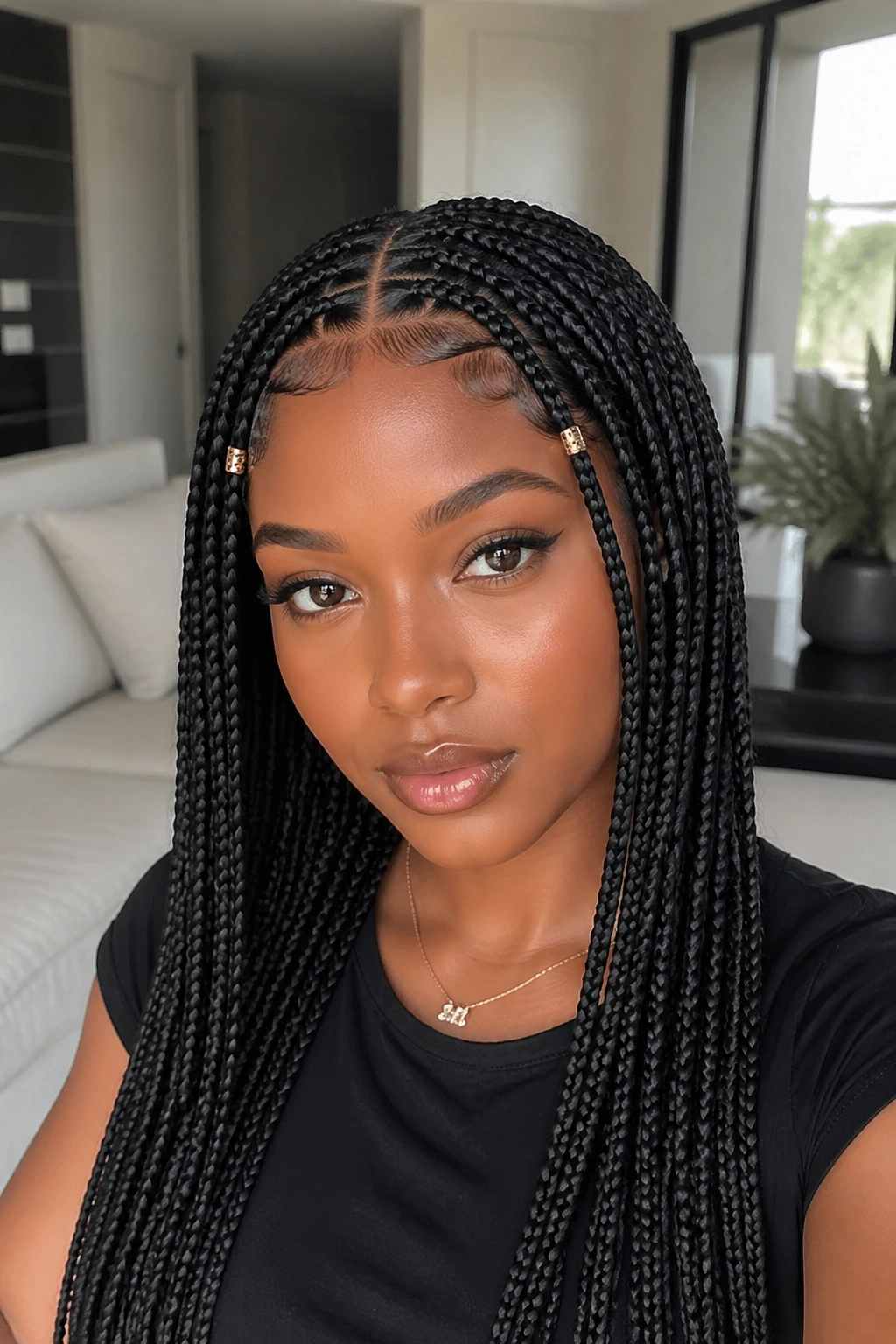
If you like a clean shape, minimal accessories are not boring. They let the braid pattern breathe.
Why minimal accessories work here
The middle part, the front cornrows, and the braid size already create enough structure. Adding too many cuffs or beads can make the front feel crowded. One small accent near each temple, or even none at all, can leave the style looking crisp and expensive without trying too hard.
This version suits people who want the braid work to speak for itself. The scalp lines are neat, the braids are uniform, and the finish looks deliberate. It also makes maintenance easier because you are not checking loose hardware every day.
A small shine spray can help here. Nothing sticky. Just enough to keep the parts looking clean.
24. Layered Fulani Box Braids That Build Shape From Short to Long
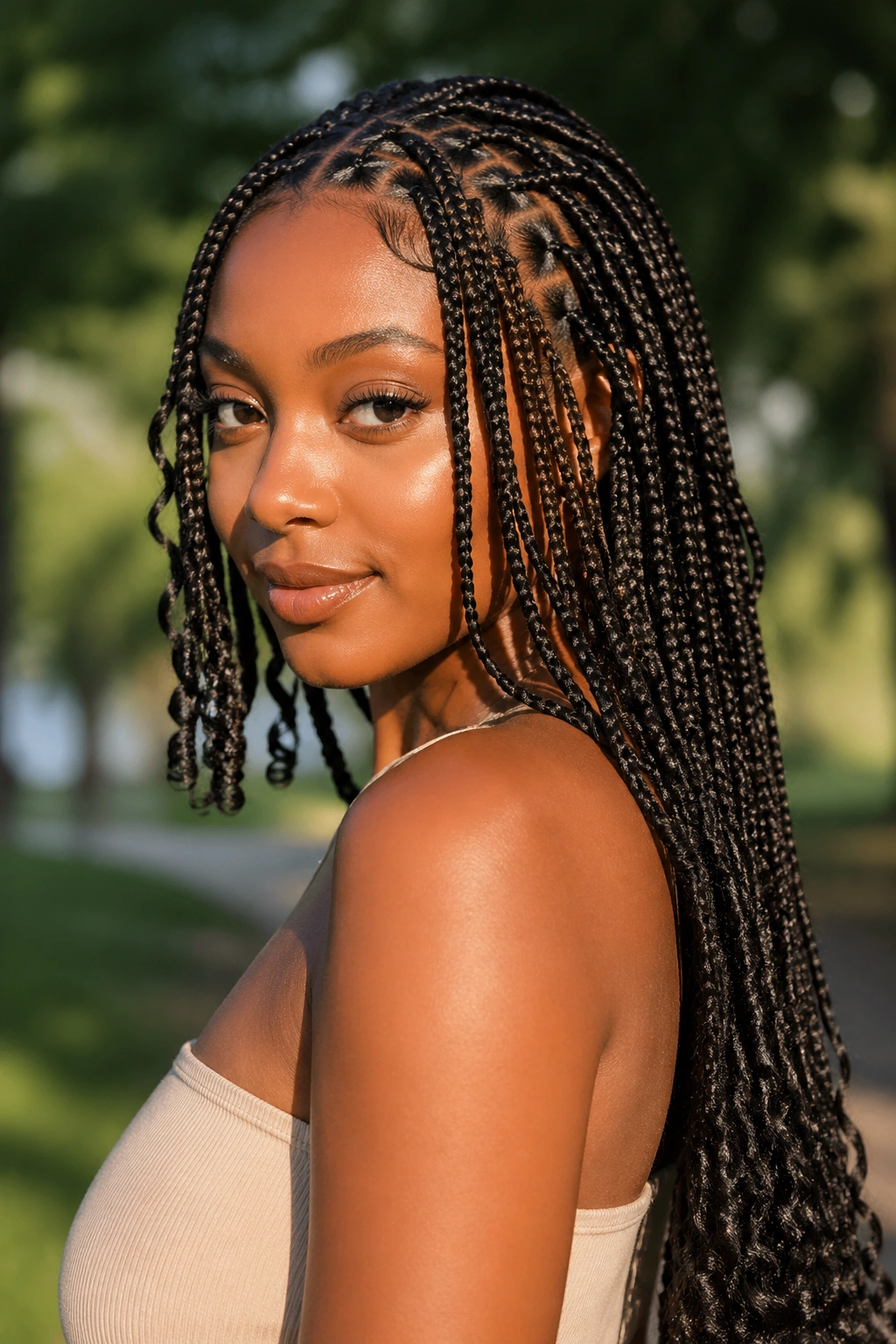
Layered lengths give the style movement without needing extra curl or decoration. Shorter pieces around the face ease into longer ones through the back, so the whole set falls in steps instead of one flat line.
That shape is useful if blunt ends tend to hang heavy on you. Layers take some of that weight away visually and make the hair move more naturally when you turn. They also help the face-framing pieces stay visible instead of getting lost in the rest of the length.
This is one of the more flattering options for people who like a softer outline. It is not loud. It just makes sense when you look at it for a minute.
25. Fulani Box Braids That Let the Cornrows Do the Talking
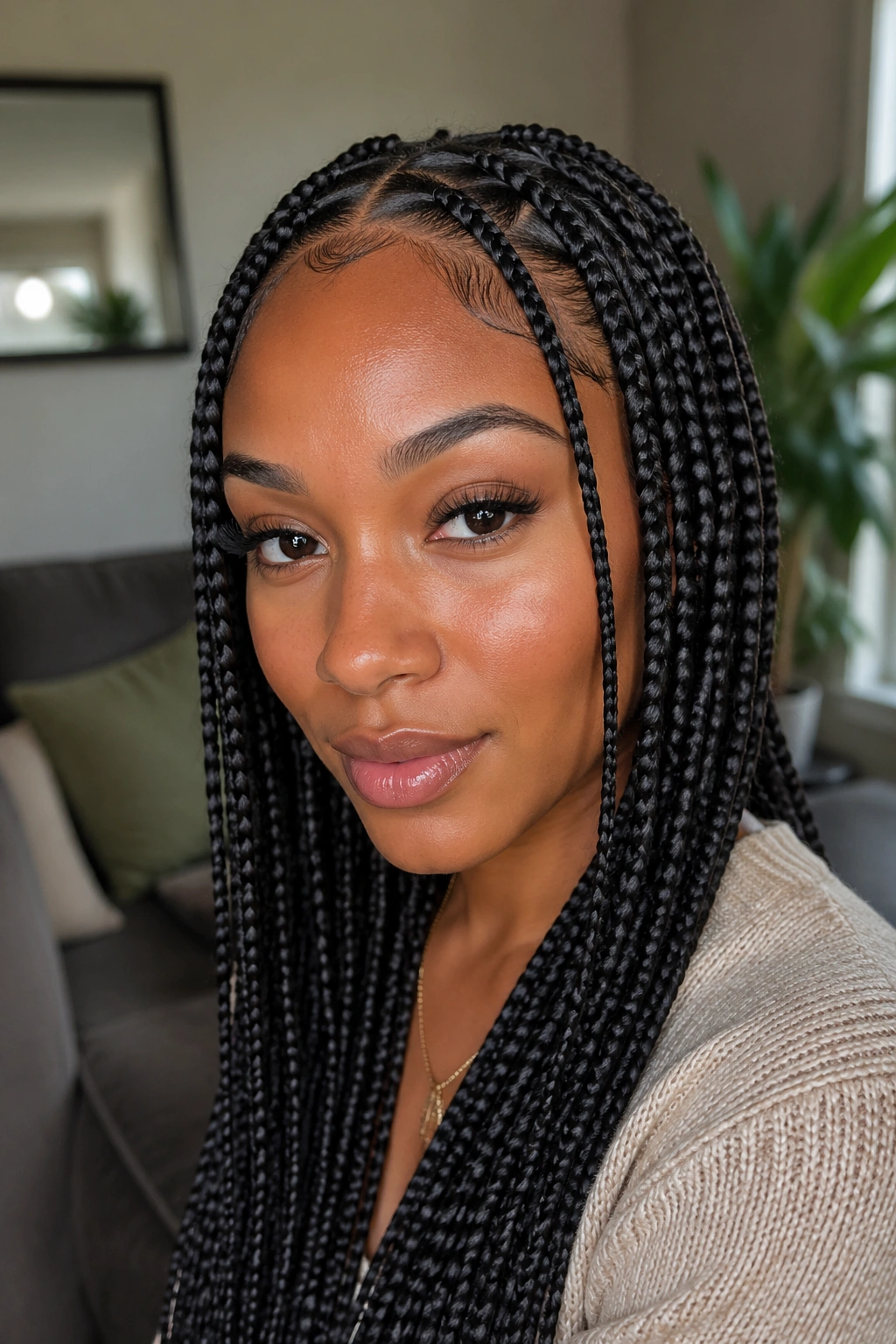
Sometimes the cleanest choice is the strongest one. A few precise front cornrows, a neat box-braid body, and almost no extra decoration can look better than a pile of beads and cuffs.
That is because the pattern itself is already a statement. The parting has shape, the braids have rhythm, and the hairline is doing real work. If the sections are clean and the tension is comfortable, the style does not need much else.
I like this version for anyone who wants the Fulani structure without the sparkle. It feels grounded. It also holds up well when you are tired of fussy maintenance and just want a style that sits neatly, day after day, without asking for a lot in return.
