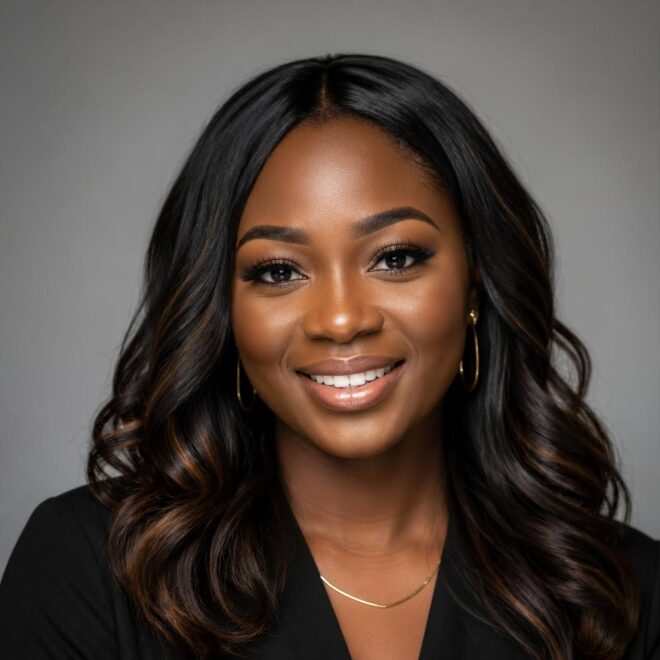


A good quick weave ponytail can save a messy morning fast. When the base is flat, the part is clean, and the bundle texture matches your own hair, the style can look pulled together in 10 or 15 minutes without looking rushed.
That’s why I like quick weave ponytails so much. They’re practical, but they don’t have to look basic. Straight hair gives you sharp lines, yaki hair softens the finish, and curly textures hide small bumps in the base better than people expect.
The real trick is prep. A molded foundation, a silk scarf, and the right wrap piece do more for the final look than piling on extra hair ever will. Too much product near the hairline can make the style slide, and too much heat can flatten the movement you actually want.
So let’s go style by style. Some of these are sleek, some are soft, some lean braided, and a few are the sort of ponytail you can build from a good base and a little confidence.
1. Sleek High Quick Weave Ponytail
This is the one that makes people think you spent much longer than you did. A high quick weave ponytail lifts the face, shows off the cheekbones, and gives you that sharp, polished shape without needing a pile of extra details.
I like it with 18- to 24-inch yaki straight hair because the texture reads smooth but not fake-shiny. Set the ponytail high, smooth the crown with mousse and a soft brush, then wrap a small strip of hair around the base so the elastic disappears. That wrap matters. It makes the whole style look finished.
Use a little edge control at the hairline, but don’t drown the front in gel. Too much can get crunchy by lunchtime. A light scarf for 10 minutes after styling keeps the top flat and gives the base a cleaner hold.
2. Deep Side Part Quick Weave Ponytail
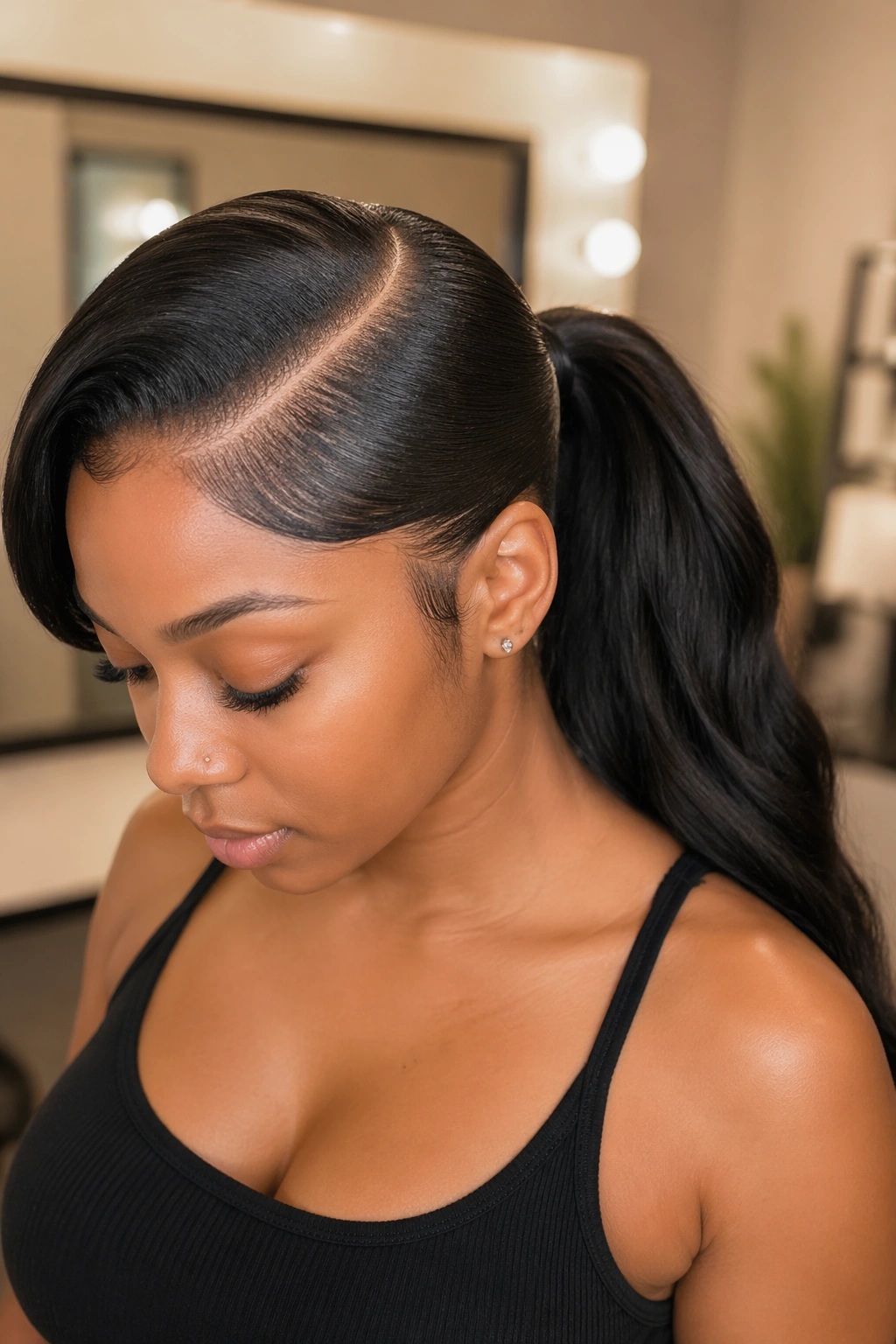
Want drama without extra work? A deep side part changes the whole mood of the ponytail before you even attach the bundle. It’s one of those styles that looks more deliberate than a center part, even when the actual install is simple.
Start the part from the arch of one brow and angle it back toward the crown. That gives you a nice long sweep across the forehead and makes the ponytail sit with more shape. I like this with straight or body wave hair, because both textures keep the front soft instead of stiff.
Why It Works
A side part breaks up the width of the face and gives the eye something to follow. The ponytail itself can stay simple—a mid-height base works fine—but the part does the heavy lifting.
Quick Notes
- Best with 16- to 22-inch hair
- Looks cleanest with a flat crown
- Use a rat-tail comb for a crisp line
- Keep the heavier side pinned while you lay it down
3. Curly Quick Weave Ponytail
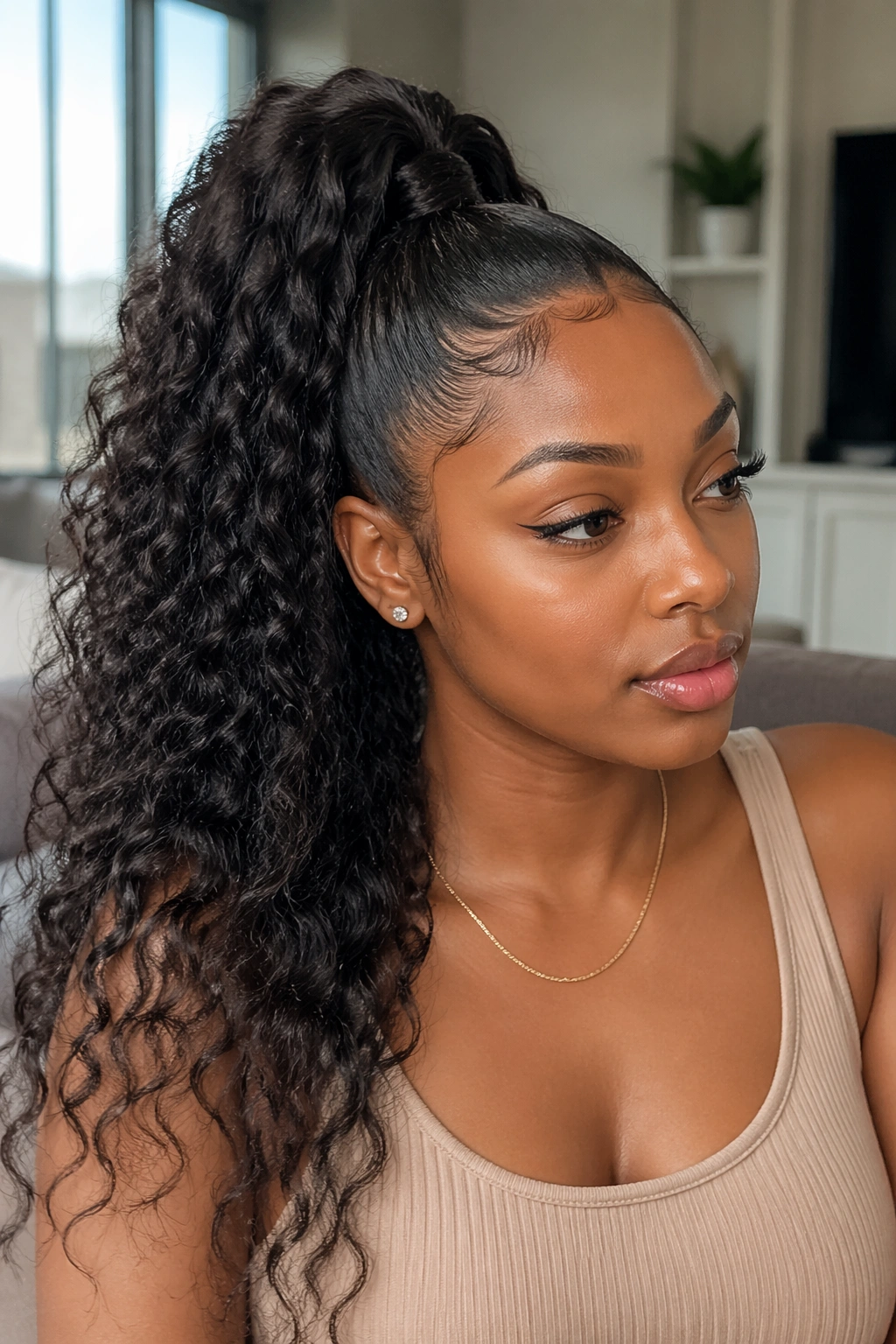
Not every quick weave ponytail needs to be bone straight. A curly ponytail is faster on busy days because the texture forgives little bumps, uneven sections, and the occasional rushed wrap at the base.
Water wave and deep wave hair work well here. Mist the ponytail with water, scrunch in mousse, and separate the curls only after they dry a little. If you pull at them while they’re soaked, they get stringy and lose that full shape. That’s the part a lot of people miss.
This style also holds up well if you want movement. The curls bounce. They don’t sit there and behave like a helmet.
4. Bubble Quick Weave Ponytail
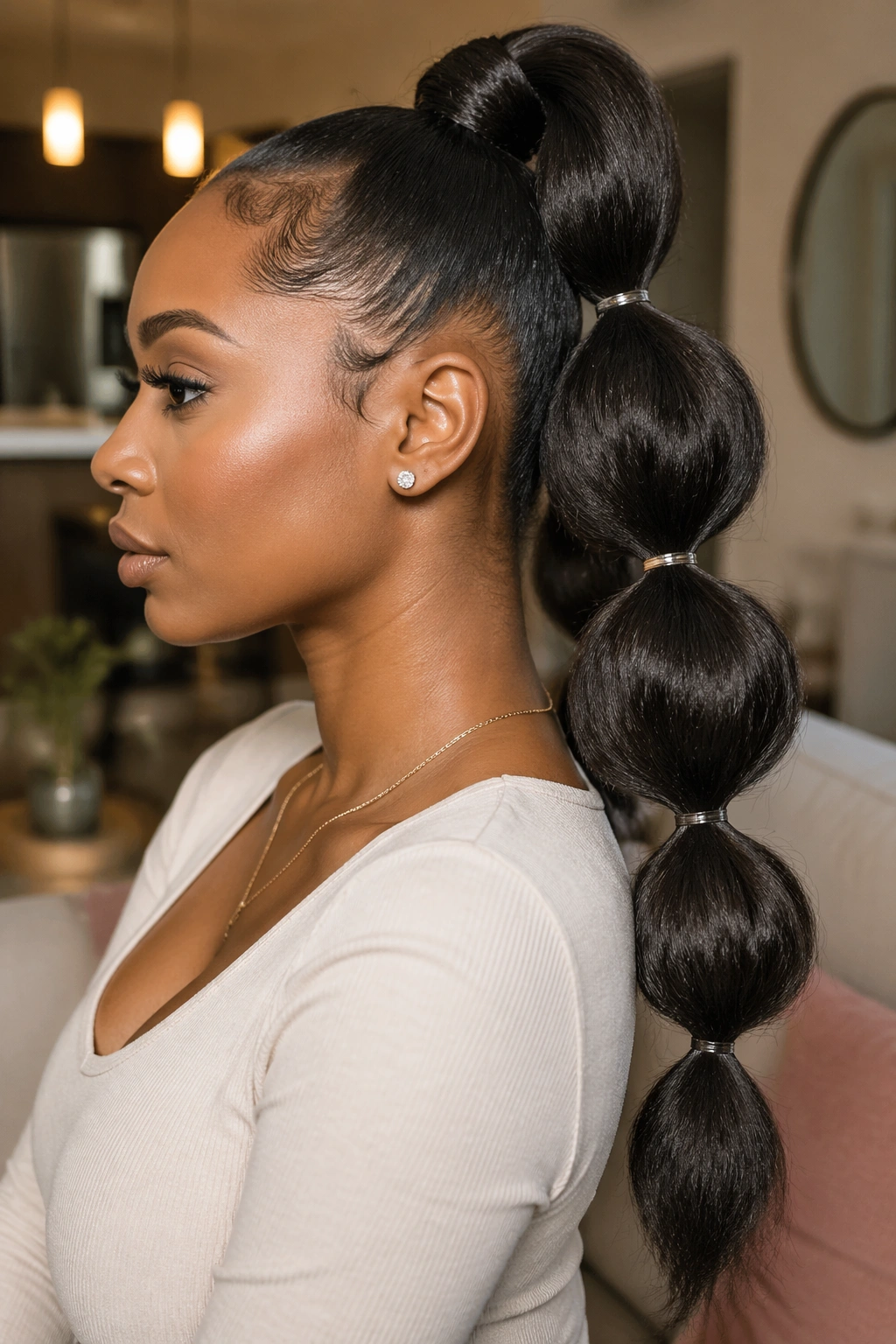
A bubble ponytail is basically a shortcut with personality. Instead of trying to make one long, perfect tail, you break it into rounded sections with small elastics spaced about 3 inches apart.
That means you don’t need super precise curling or elaborate braiding. Straight or wavy bundles both work, and longer hair—around 22 inches or more—gives you more room to create those full, even bubbles. Once the sections are secured, gently pull each one wider with your fingers until it looks rounded.
If your ends are thin, this style hides that fast. It’s forgiving. And honestly, that’s why I keep coming back to it.
5. Wrapped Low Quick Weave Ponytail
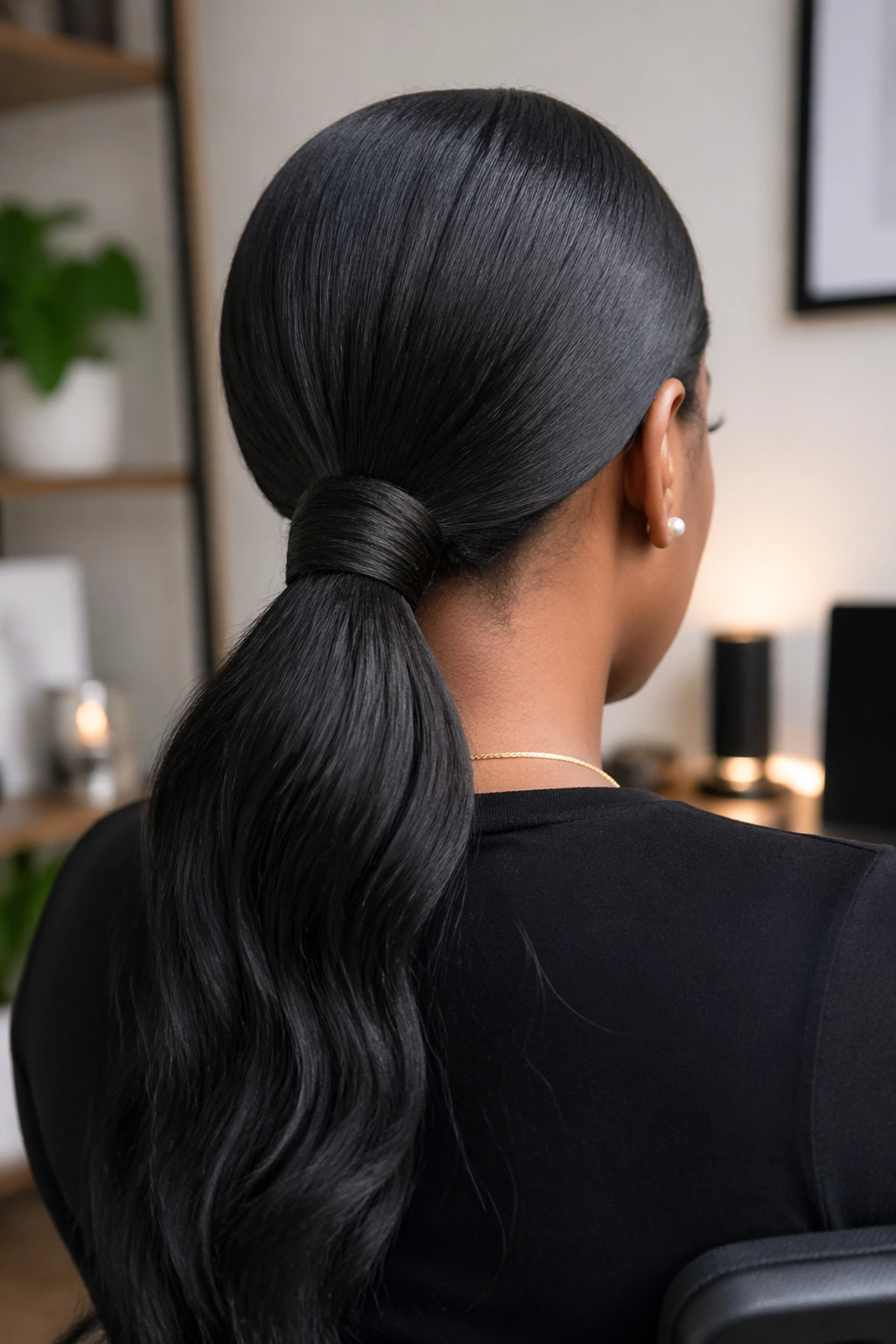
The base disappears here, and that’s the whole point. A wrapped low ponytail sits at the nape, stays neat, and looks good with work clothes, dresses, or a plain white tee.
Pull the hair low and tight, smooth the crown, then reserve a 2-inch strip to wrap around the elastic. Slide one bobby pin under the base to lock the wrap in place. That little pin does more than people think. It keeps the wrap from slipping after an hour or two.
I like this style with straight hair or a soft yaki finish. It feels calm. Clean. No fuss.
6. Side-Swept Ponytail with a Swoop Bang
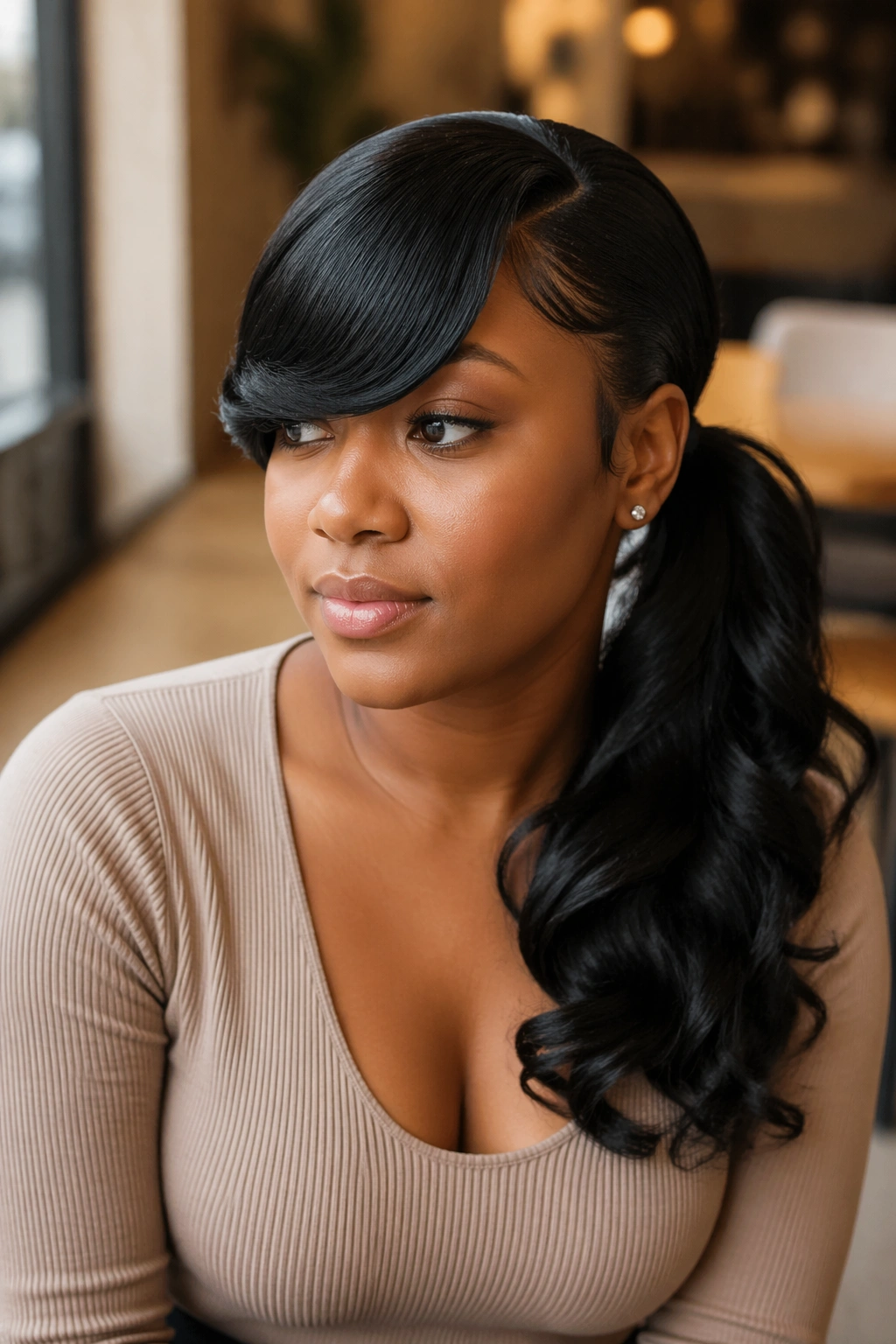
A side-swept ponytail with a swoop bang gives you face framing without making the whole style busy. It’s a good pick when you want movement near the front and a smooth finish in the back.
How to Keep the Bang Soft
Leave enough front hair to create a sweep that lands at about the cheekbone, not the jaw. If the bang is too short, it flips awkwardly. If it’s too thick, it starts looking heavy. A 1-inch curling wand helps bend the ends away from the face so the front sits softly instead of sticking out.
Small Detail, Big Difference
- Best for oval and heart-shaped faces
- Use light mousse on the bang area
- Keep the ponytail base tight
- Finish with a satin scarf for 5 to 10 minutes
That last step matters. A swoop without set time usually won’t sit where you want it.
7. Braided Quick Weave Ponytail
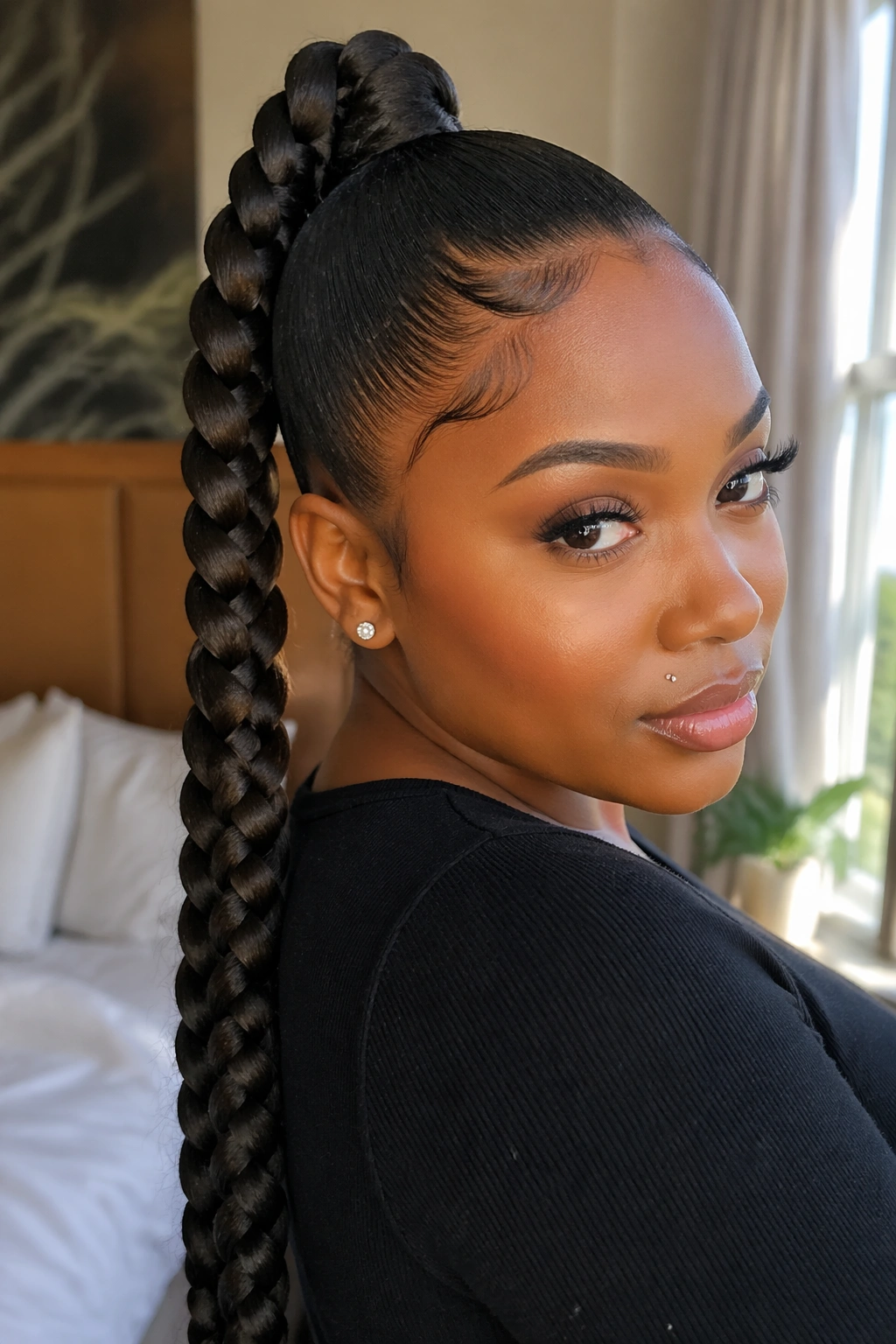
This is one of the strongest styles on the list when you want a ponytail that lasts and still looks neat from every angle. A braided quick weave ponytail keeps the length controlled, and it’s a smart choice if you don’t want loose hair swinging around all day.
You can braid the ponytail all the way down with braiding hair, or start with a weaved pony and finish the length in a single thick plait. Either way, the braid gives structure. That makes it a little heavier, sure, but it also stays put better than soft textures do.
I prefer this with pre-stretched braiding hair because it saves time and lays flatter near the base. Less puff. Better shape.
8. Half-Up Quick Weave Ponytail
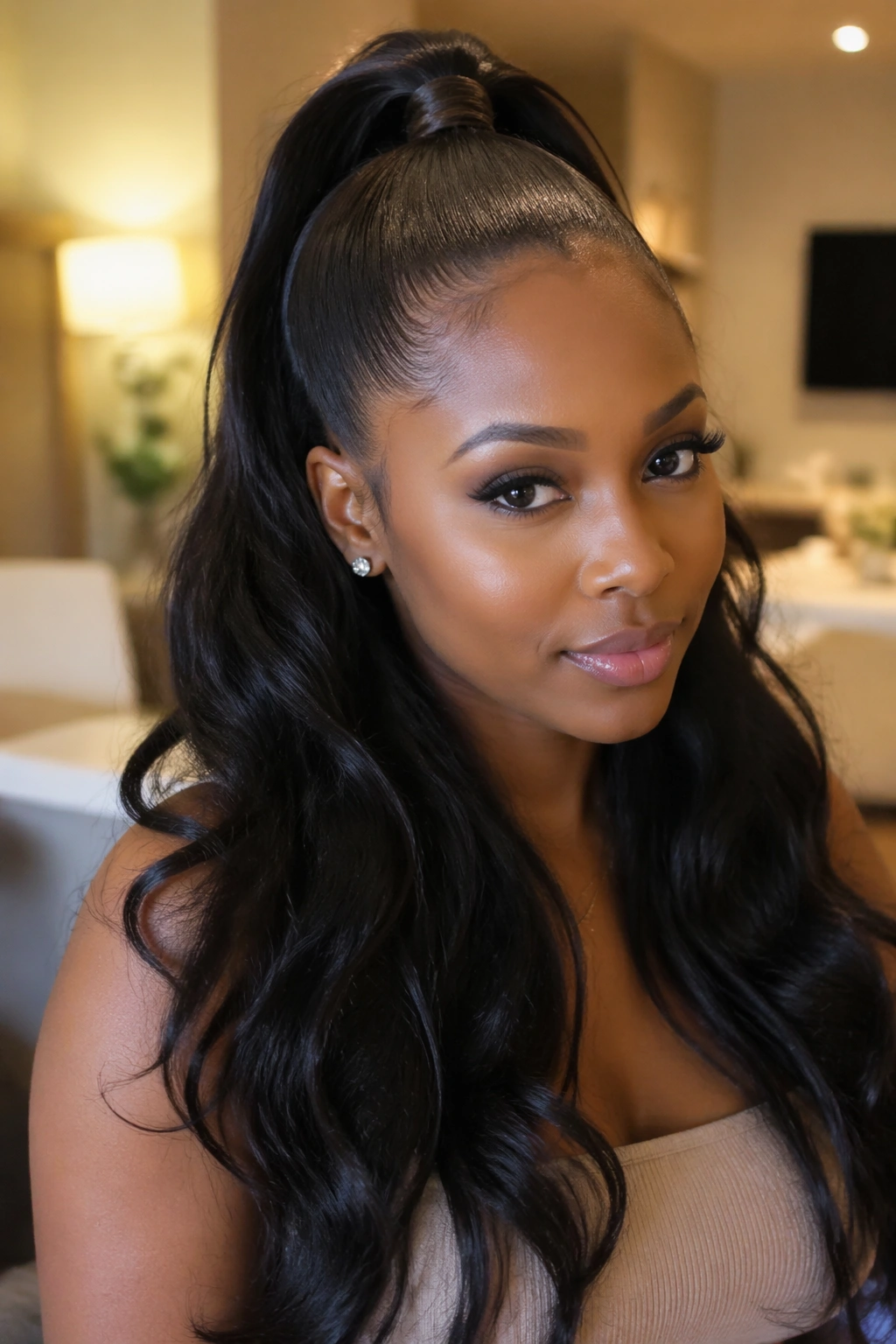
What if you want volume and movement at the same time? A half-up quick weave ponytail gives you both without forcing you to choose.
Pull the top section into a ponytail and leave the rest down, curled, waved, or straightened. That top section keeps the style lifted, while the bottom section adds softness around the shoulders. It’s especially handy when your install isn’t long enough for a dramatic full ponytail but still needs a little life.
This one works fast because it doesn’t ask for perfection everywhere. Get the top smooth, keep the split clean from ear to ear, and let the lower half do its own thing.
9. Body Wave Mid Ponytail
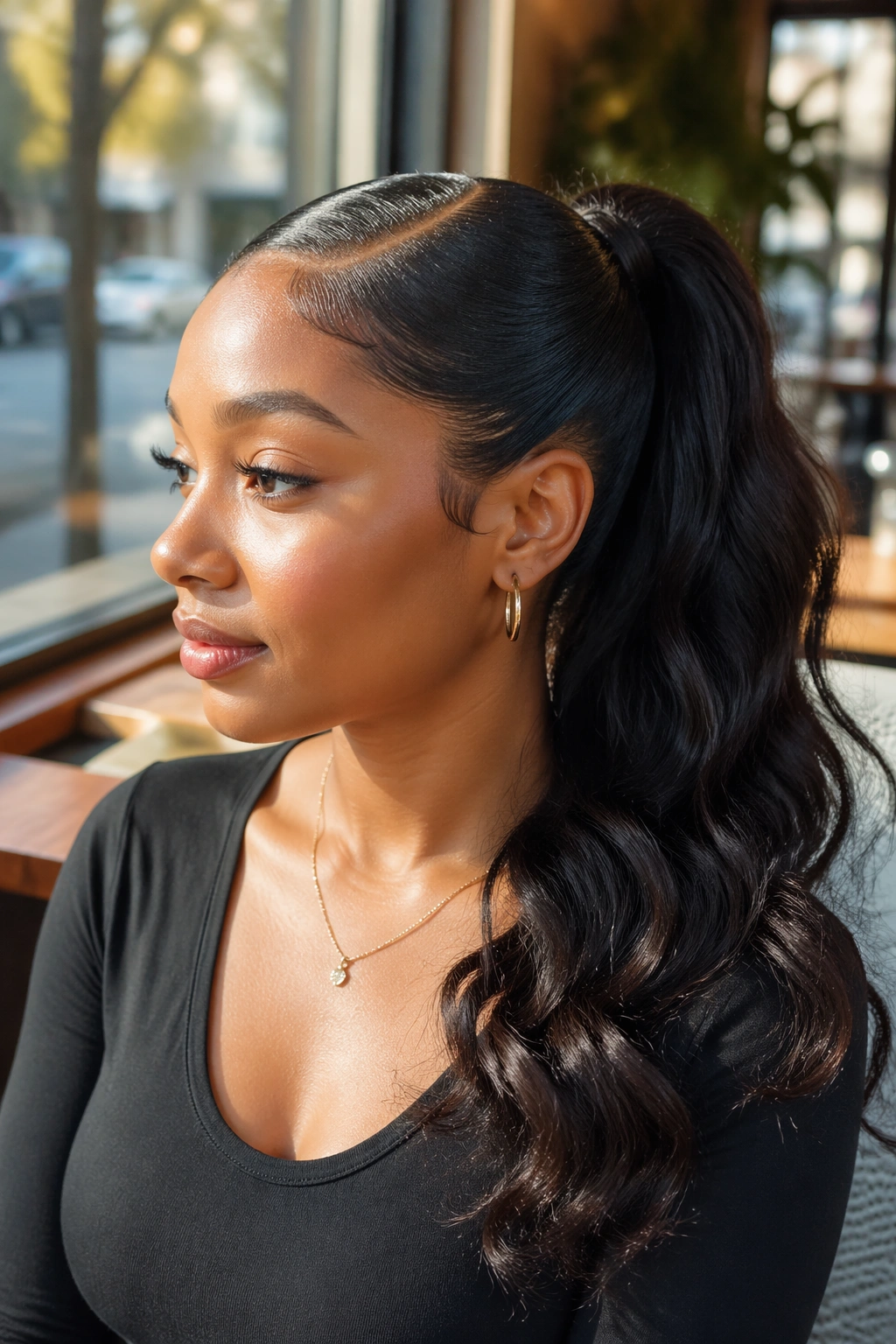
Body wave hair sits in that sweet spot between sleek and curly. It moves, but it doesn’t tangle the way looser textures can when they’re left alone too long.
A mid-height quick weave ponytail with body wave hair feels relaxed in a nice way. It’s not trying too hard. Place the ponytail around the center of the back of the head, then let the waves fall naturally rather than brushing them out into fluff. That small restraint keeps it from looking puffy.
I like this one for dinners, date nights, or any time you want a style that reads soft but still put together. It takes little effort to refresh with mousse, too.
10. Kinky Straight Quick Weave Ponytail
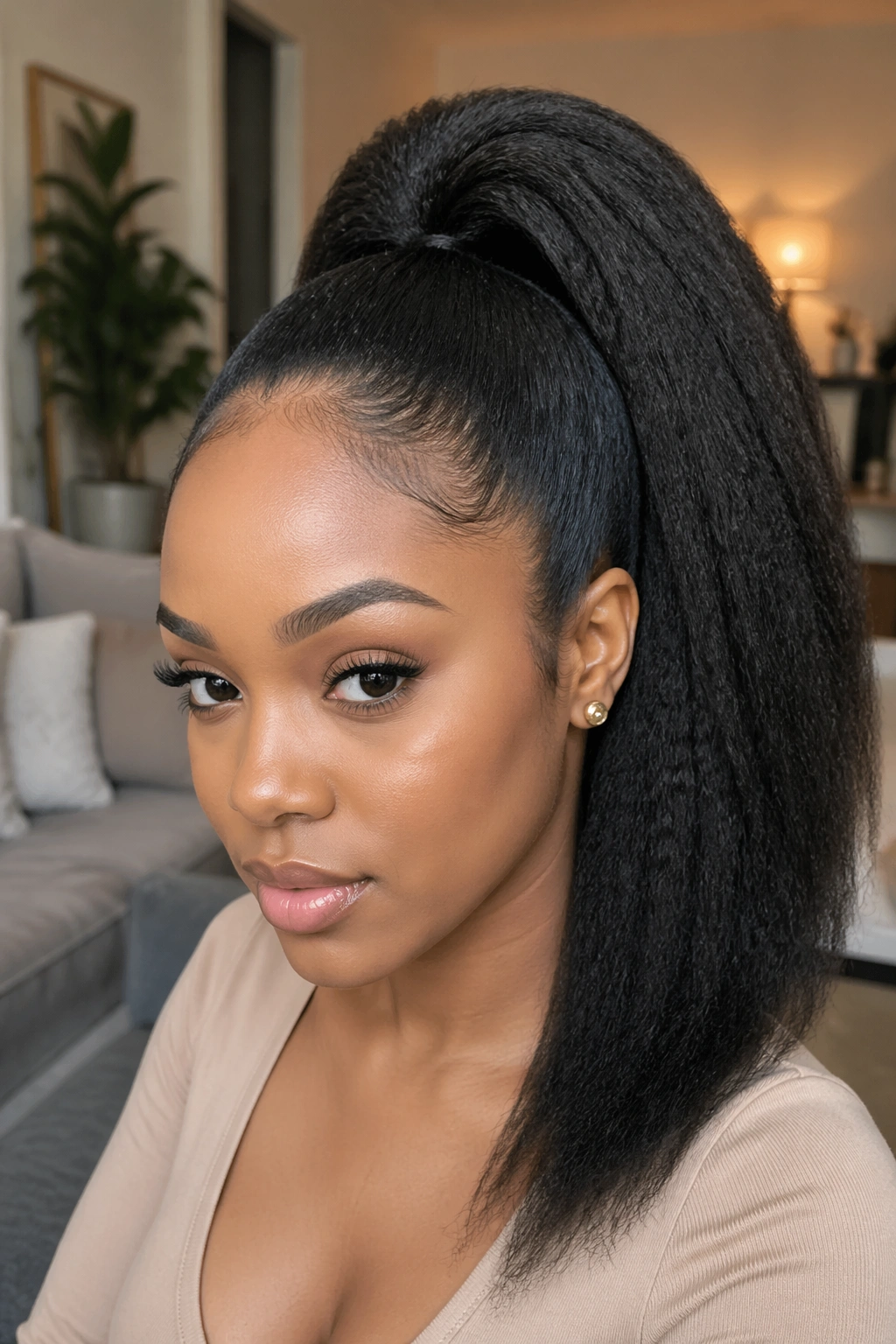
This is the ponytail I reach for when I want blend, not shine. Kinky straight hair has that textured, blown-out look that sits closer to natural hair, so it’s easier to match and easier to wear if you like a softer finish.
A paddle brush works better than a fine comb here. Keep the texture intact. If you brush it to death, it loses the whole point. A medium-high ponytail works especially well because it gives the hair enough lift without forcing the base to look too slick.
It’s a quiet style, but not a plain one. That’s the difference.
11. Straight Quick Weave Ponytail with Flipped Ends
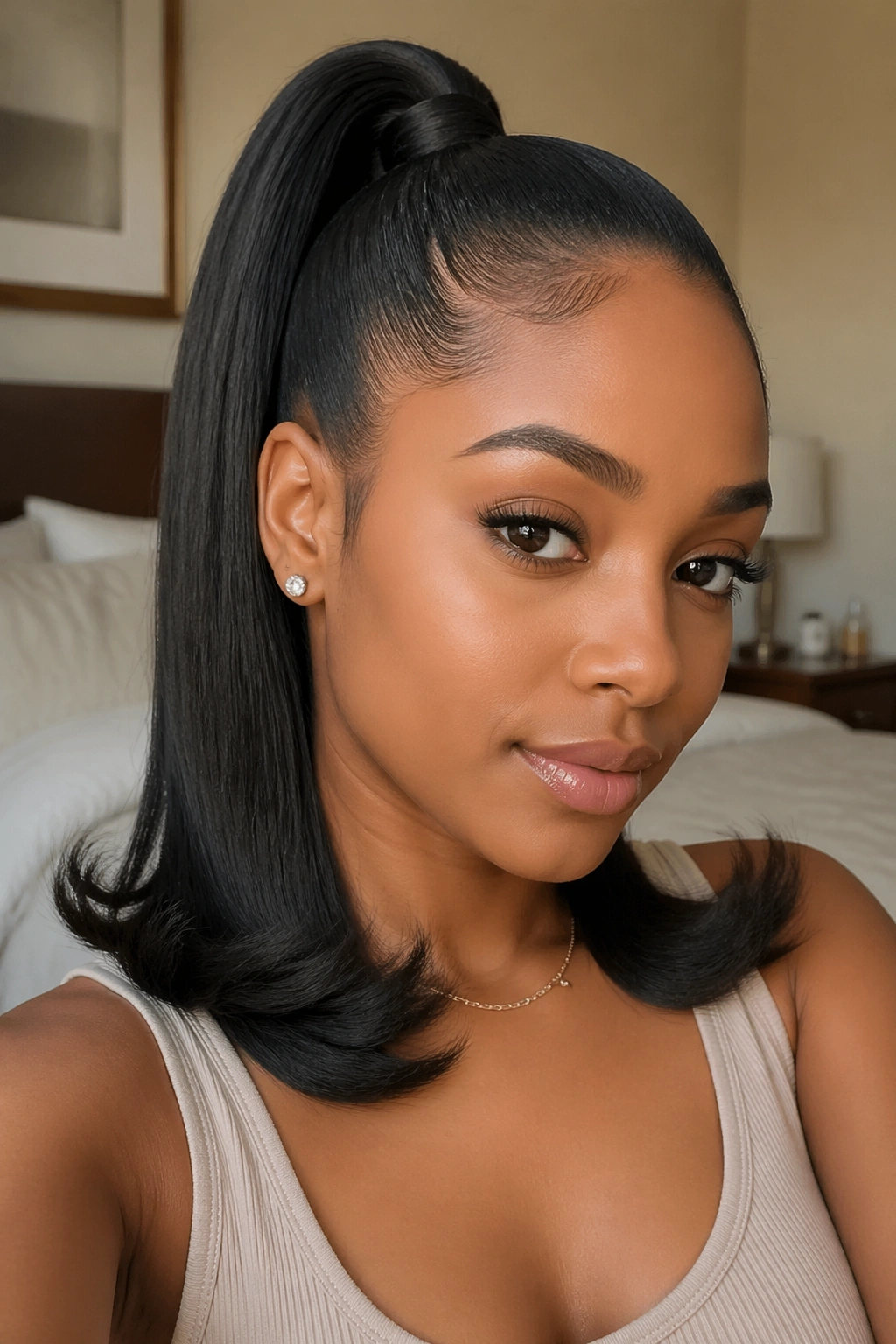
A straight ponytail can look a little flat if you leave it hanging without shape. Flip the ends, and the whole thing wakes up.
Use a flat iron on the last 1 to 2 inches of the tail or set the ends on a large roller if you prefer less heat. The bend keeps the length from feeling heavy and gives the style a little swing. I like this with hair between 20 and 24 inches because shorter lengths don’t show the flip as clearly.
It’s a small thing, but small things matter here. A ponytail with turned-up ends looks finished in a way a plain straight tail often doesn’t.
12. Crisscross Quick Weave Ponytail
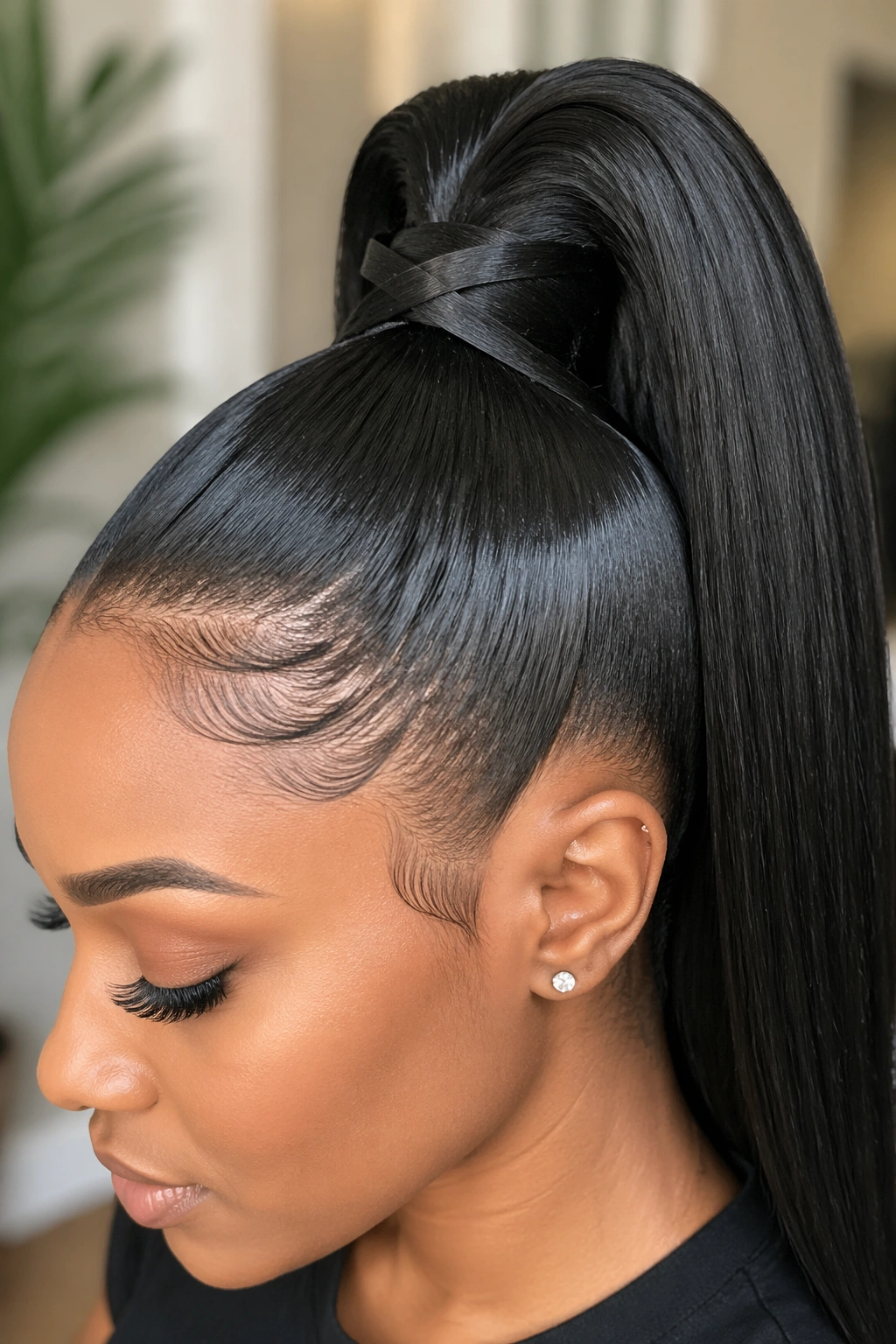
A crisscross ponytail looks detailed, but it’s not nearly as fussy as it seems. You’re really just using two slim strips of hair to cross over the ponytail base and hide the elastic from view.
What You Need
- 2 thin strips of hair for the cross
- 4 to 6 bobby pins
- A soft brush or fine comb
- Light mousse for the crown
How It Sits
Cross the strips in an X pattern over the base, tuck the ends underneath, and pin them flat. That little weave of hair gives the style a more styled look without adding extra length or bulk. It’s a nice option when you want the ponytail itself to stay simple but still want some visual interest near the base.
13. Jumbo Braid Quick Weave Ponytail
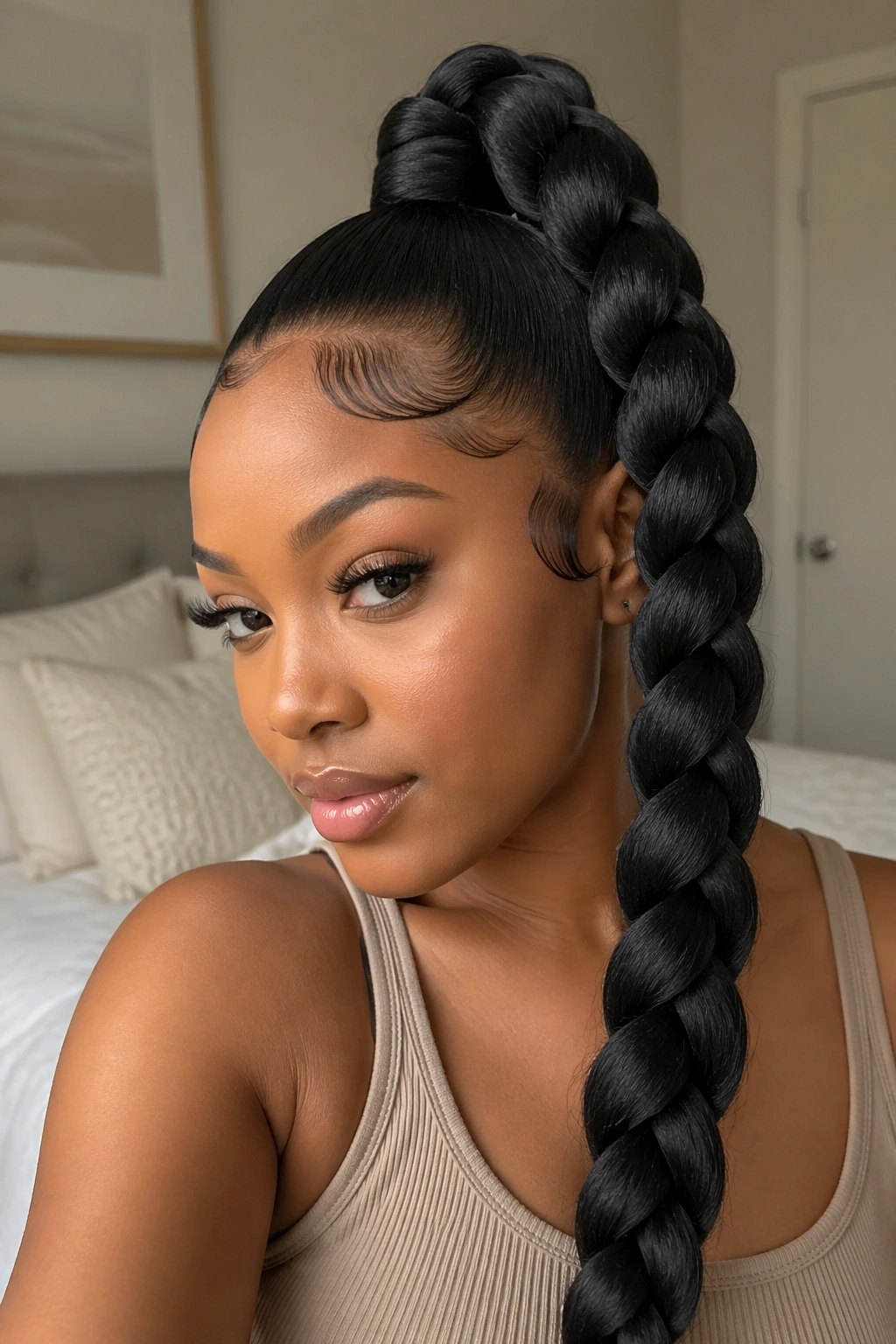
A jumbo braid ponytail has presence. It’s thick, bold, and easy to read from across the room, which is partly why people love it.
Use pre-stretched braiding hair if you want the braid to fall neatly without fighting the ends. A single large braid from a ponytail base is enough. You don’t need to stack extra tricks on top of it. In fact, that’s usually where the style starts to feel too busy.
This one is heavier than the others, so keep the base secure. If the ponytail feels loose before you braid it, it will feel worse after. Tight base, loose hands on the braid itself. That balance matters.
14. Quick Weave Ponytail with Curly Ends
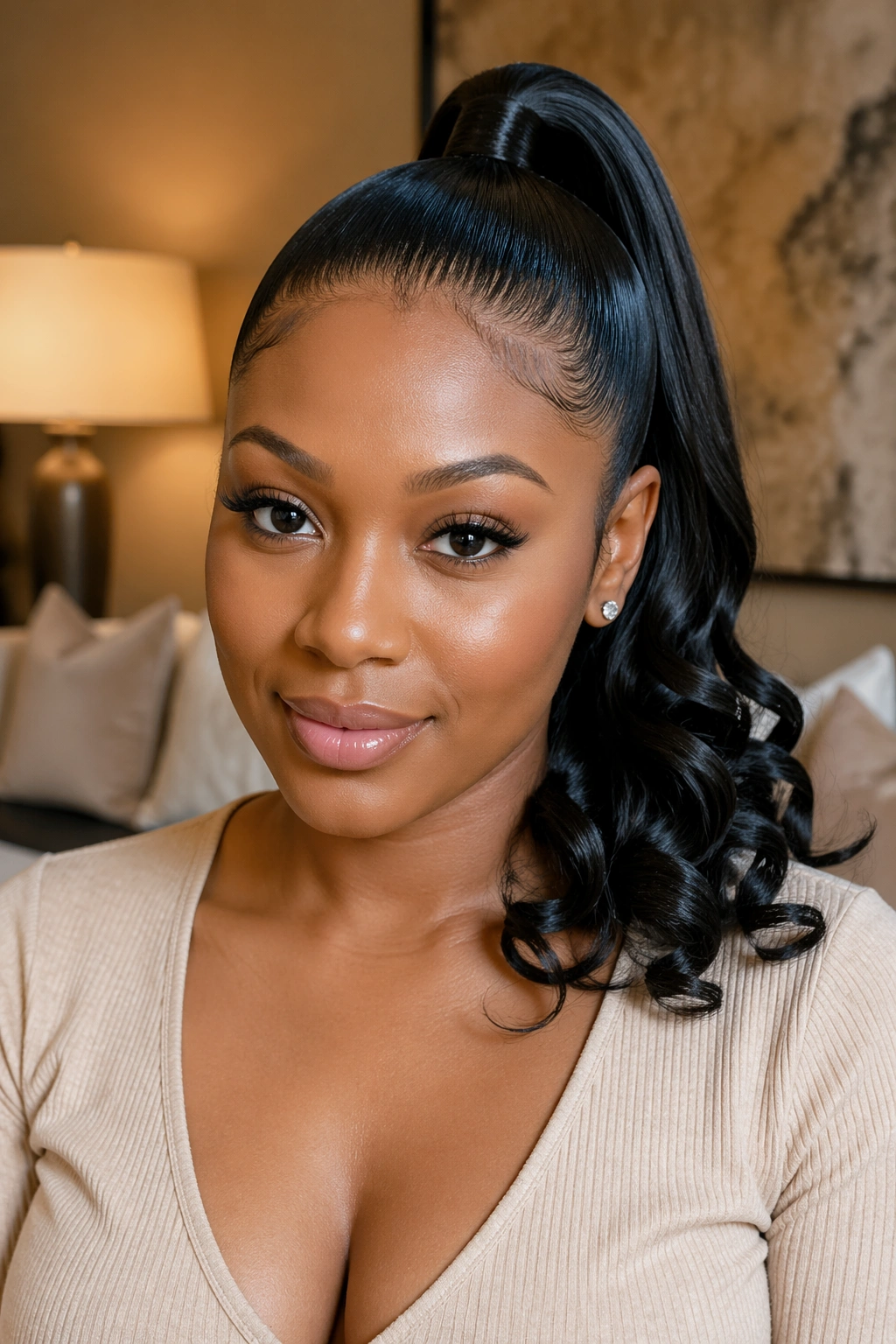
Why do curly ends work so well? Because they give a straight or sleek base a softer finish without forcing you to curl the whole ponytail.
Keep the top smooth, then leave the last 4 to 6 inches curled or attach a curly piece at the end. A 3/4-inch wand works if you’re shaping the ends yourself. The idea is to keep the base controlled and let the bottom move.
It’s a nice fix for hair that feels a little too serious. You still get the clean ponytail shape, but the curls stop it from looking stiff.
15. Low Side Quick Weave Ponytail
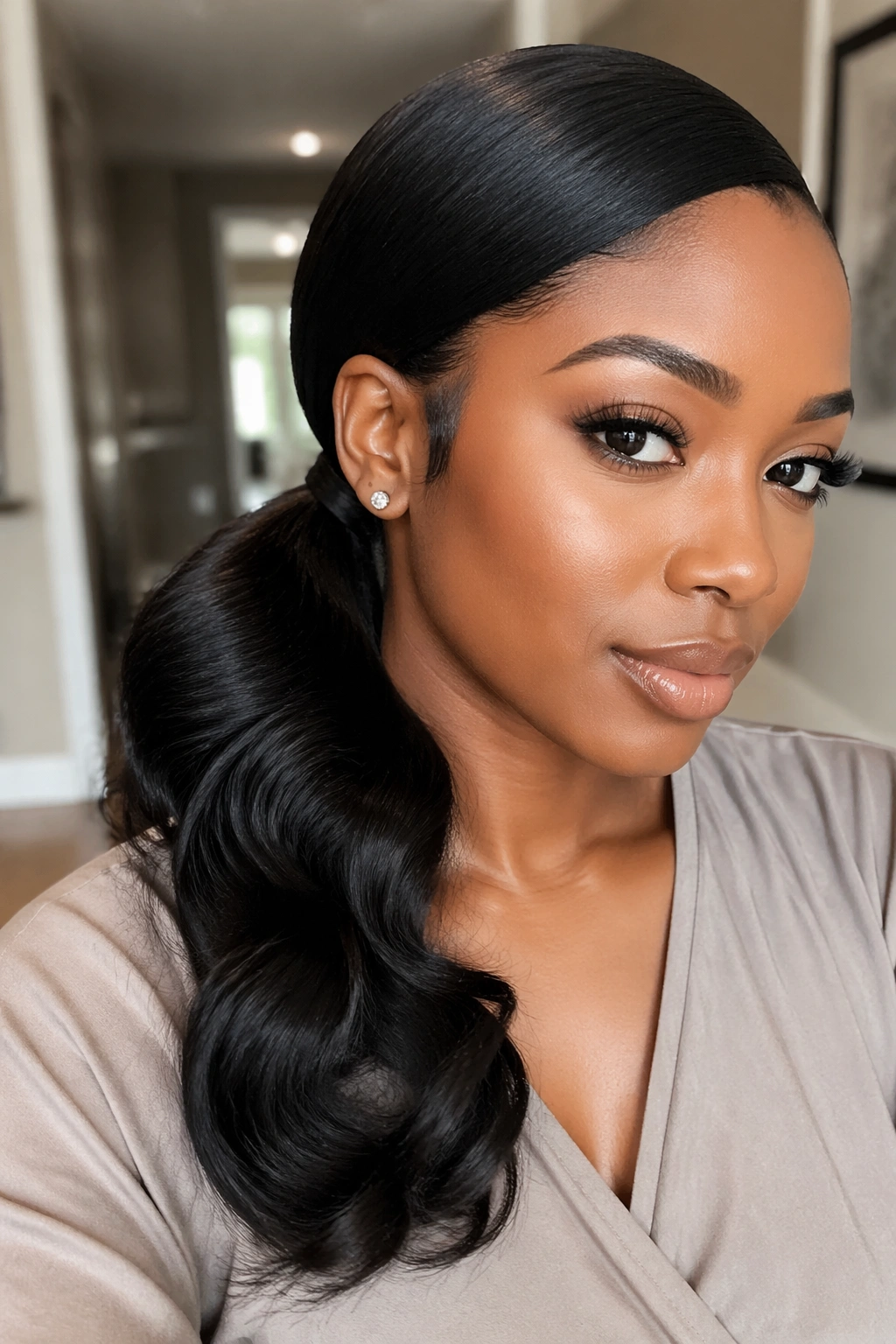
A low side ponytail changes the face in a gentle way. It sits a little off-center, which makes the whole style feel softer and less predictable than a straight middle low ponytail.
Keep the base just below the ear line, not down on the neck. That placement gives the hair room to drape instead of collapsing flat. A light shine spray works here, but go easy. Too much and the pony starts looking oily instead of glossy.
This is one of those styles that works on days when you want calm hair. No big statement. Just a neat shape with a little personality.
16. High Ponytail with Bangs
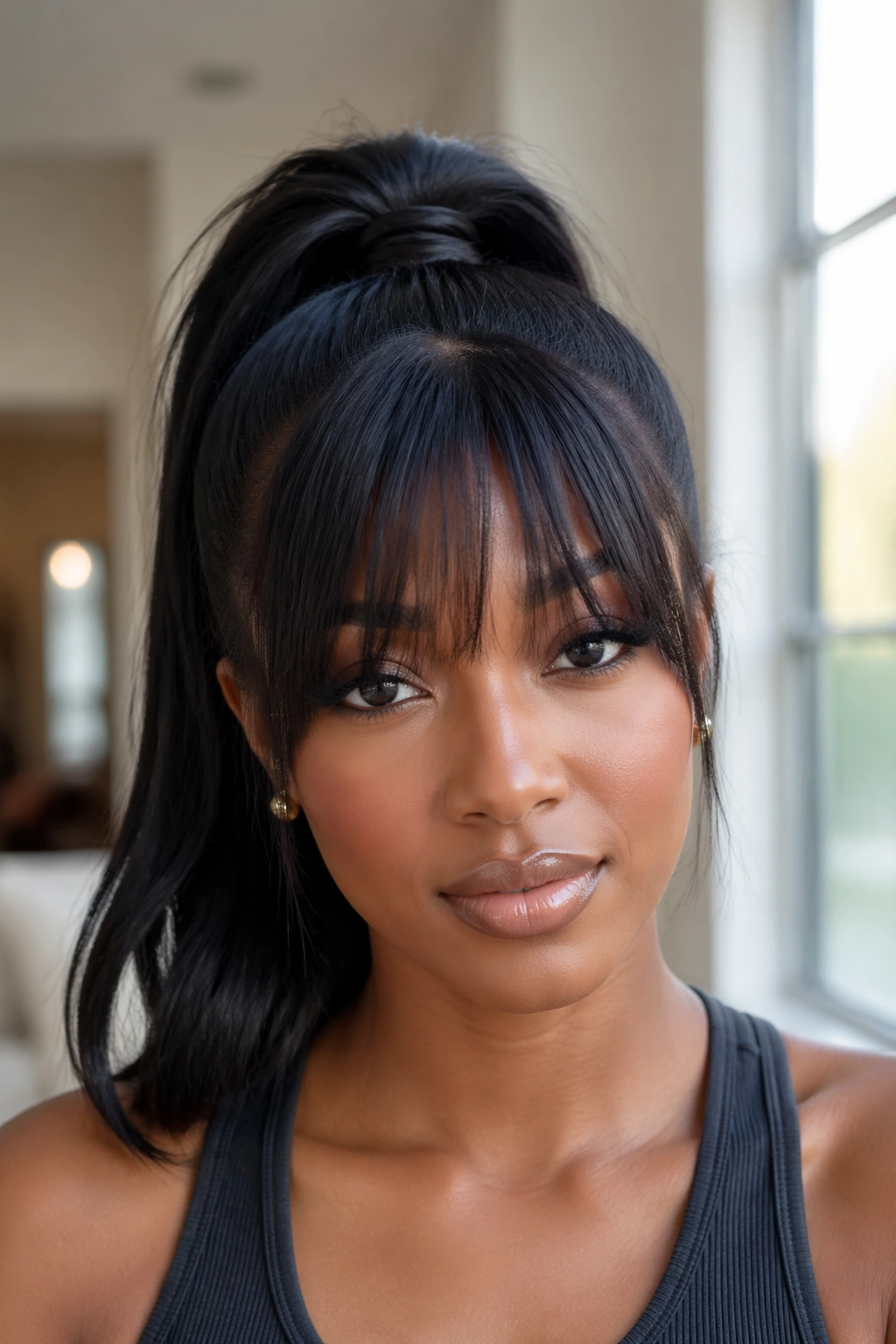
Bangs change the whole read of a ponytail. They pull attention forward, which is handy if you want the face framed without relying on long side pieces.
A high ponytail with bangs works with blunt bangs, wispy bangs, or a soft side fringe. The ponytail itself can stay straight or wavy; the bang is the detail that makes it feel styled. I like this with 18- to 22-inch hair, because the top keeps the face open while the tail still gives enough drama.
Don’t make the bang too thick if you’re after a light look. A smaller section usually wears better and is easier to refresh.
17. Ponytail with Hair Cuffs
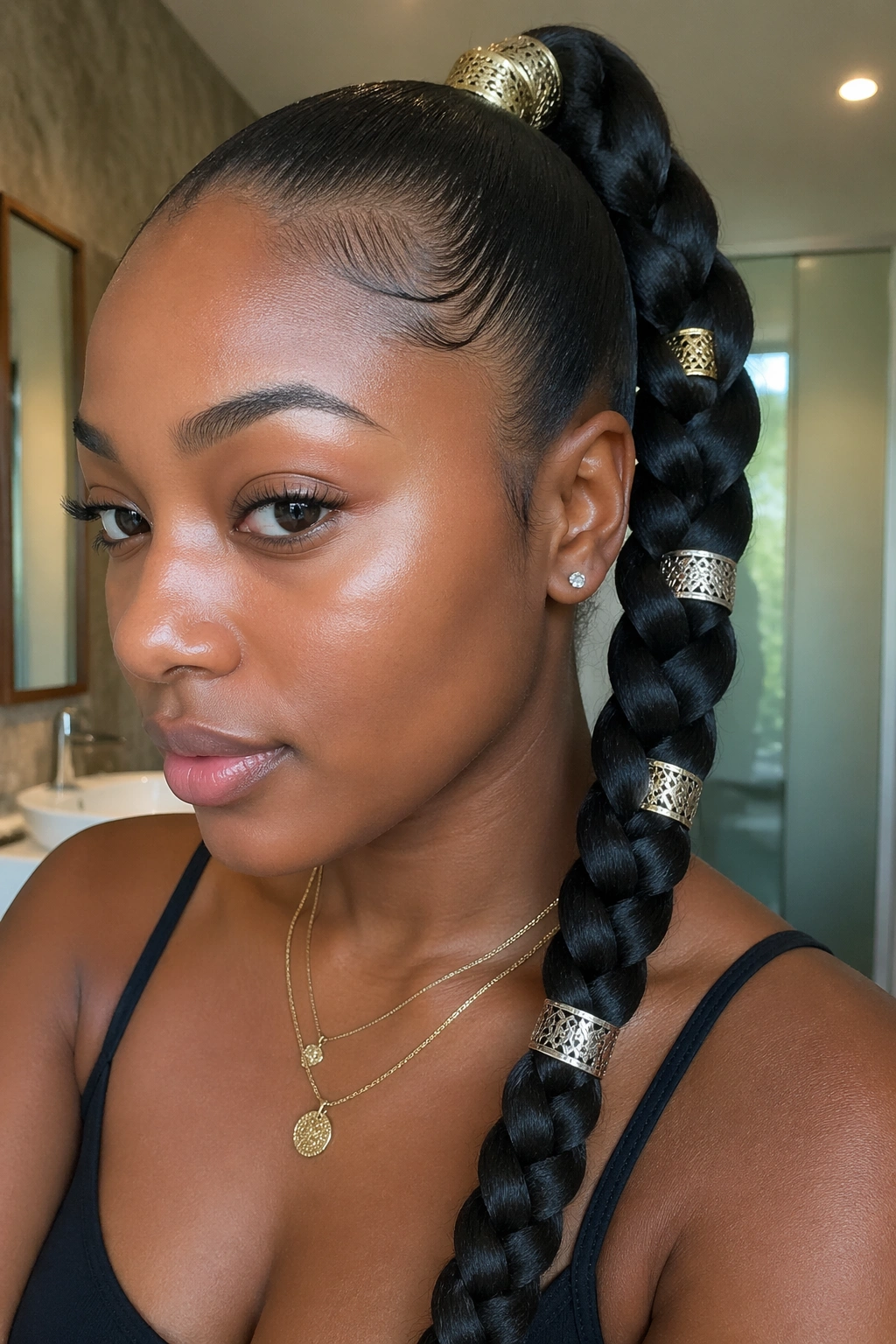
Accessories earn their place when they do something useful, and hair cuffs do exactly that. They hide plain braid sections, break up long lengths, and give you a way to dress up a simple quick weave ponytail without changing the shape.
Where to Put Them
- One cuff near the base
- One halfway down a braid
- Two or three spaced evenly for a stacked look
- A few mixed metals if you want contrast
I like them on braided ponytails and rope twists most. They can work on straight hair too, but they look strongest when there’s some structure for them to sit on. Don’t crowd the hair with too many. Three or four usually does the job.
18. Fishtail Braid Quick Weave Ponytail
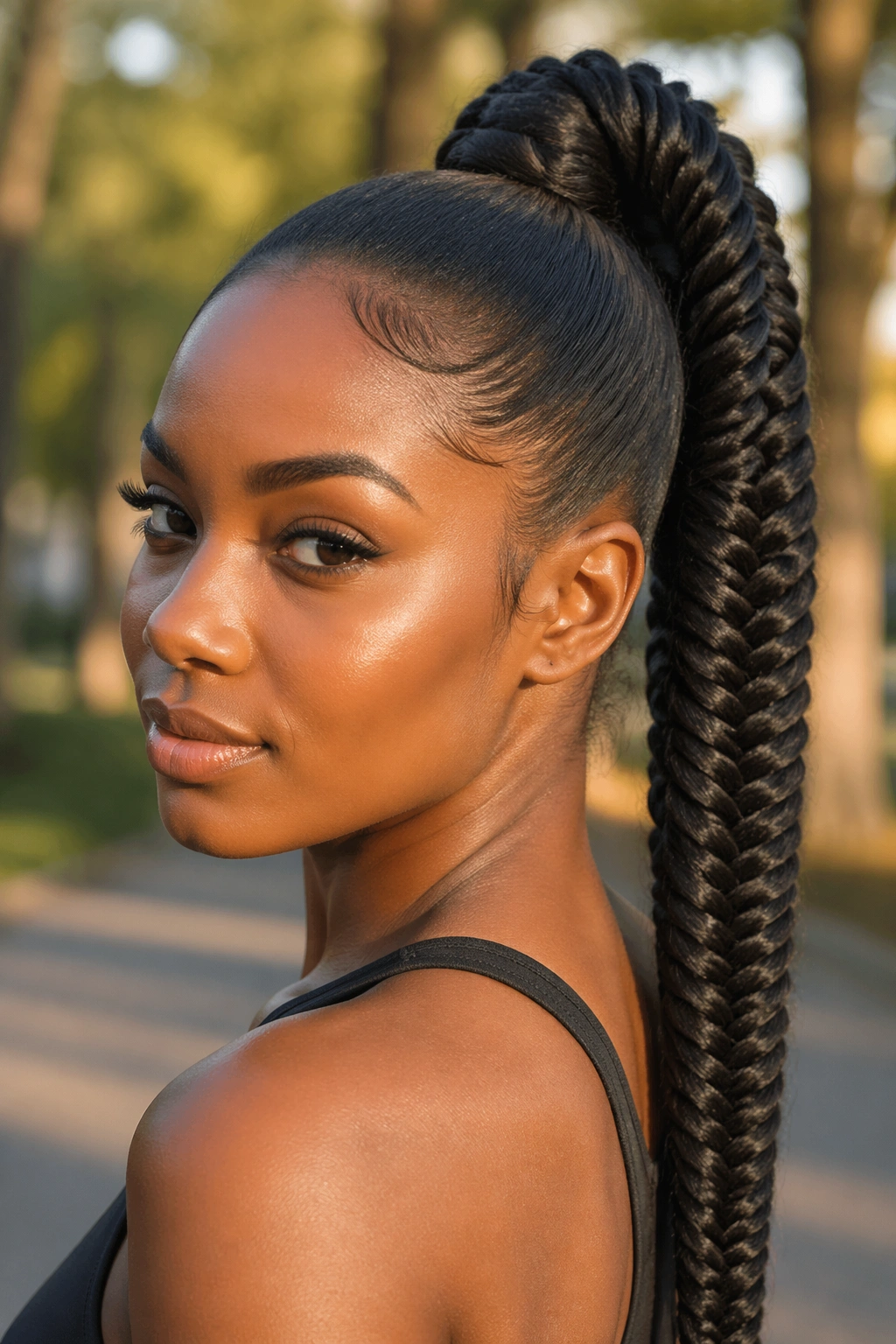
A fishtail braid sounds harder than it is, which is probably why people avoid it. Start with a ponytail base, split the length into two sections, then take tiny outer pieces and cross them over one at a time.
The trick is to keep the pieces small and even. Hair with a bit of texture helps because it grips itself better, so you’re not fighting a slick surface the whole time. If you’re doing this on very straight hair, a little mousse before braiding helps the strands behave.
It’s not the fastest style on the list, but it’s still manageable. And the finish looks far more detailed than the effort suggests.
19. Braided Base Quick Weave Ponytail
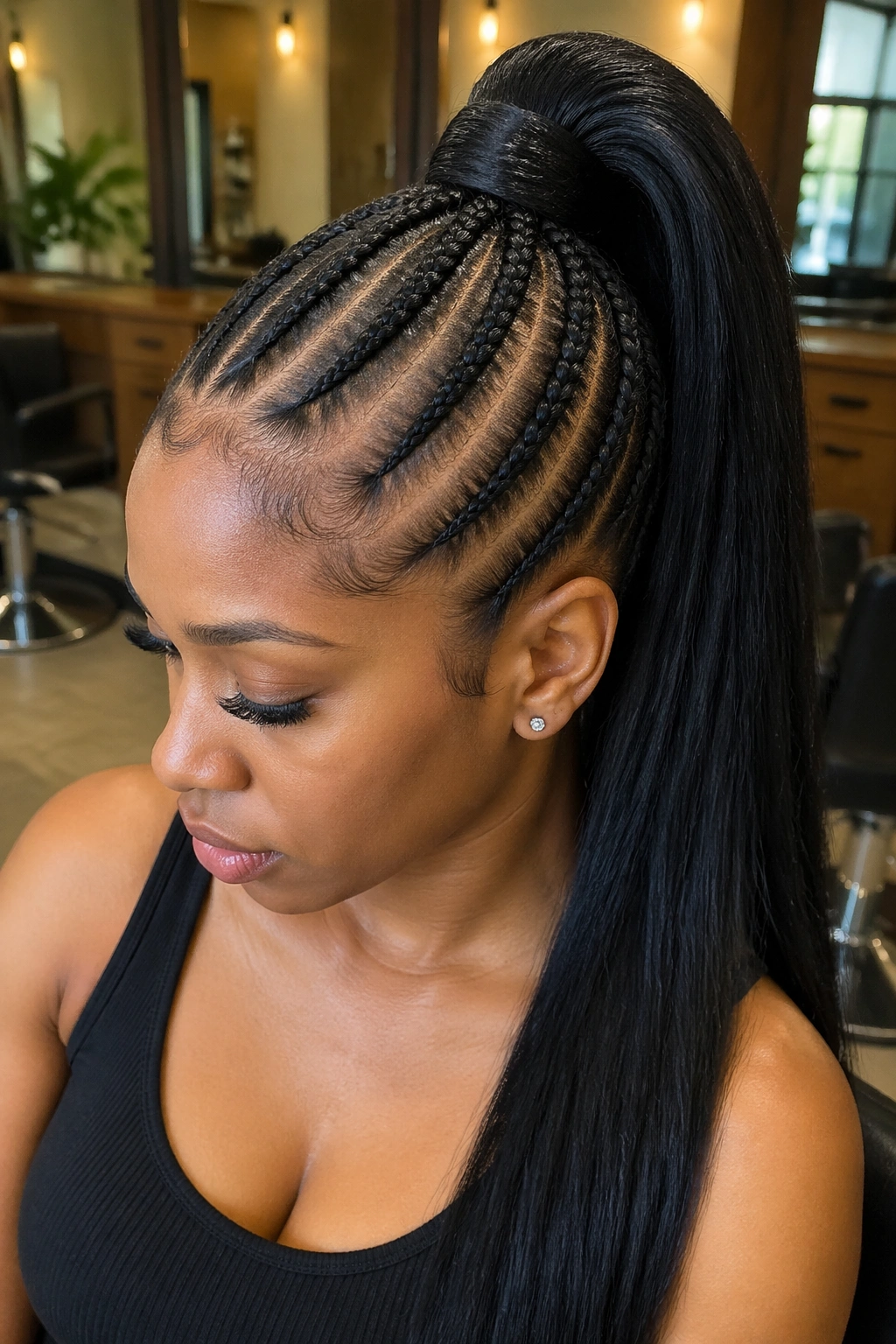
This is the sturdy cousin of the braided ponytail. Instead of making the braid itself the main event, the braid here is the anchor underneath the ponytail.
Flat braids or feed-in cornrows across the base help the style sit close to the head and last longer. That makes the ponytail feel secure, especially if you’re moving around a lot or just don’t want to keep retying it. I usually recommend 6 to 8 small cornrows for a flat foundation, depending on head size and the shape you want.
The nice part? The base is doing its job quietly, so the ponytail on top can stay simple.
20. Water Wave Quick Weave Ponytail
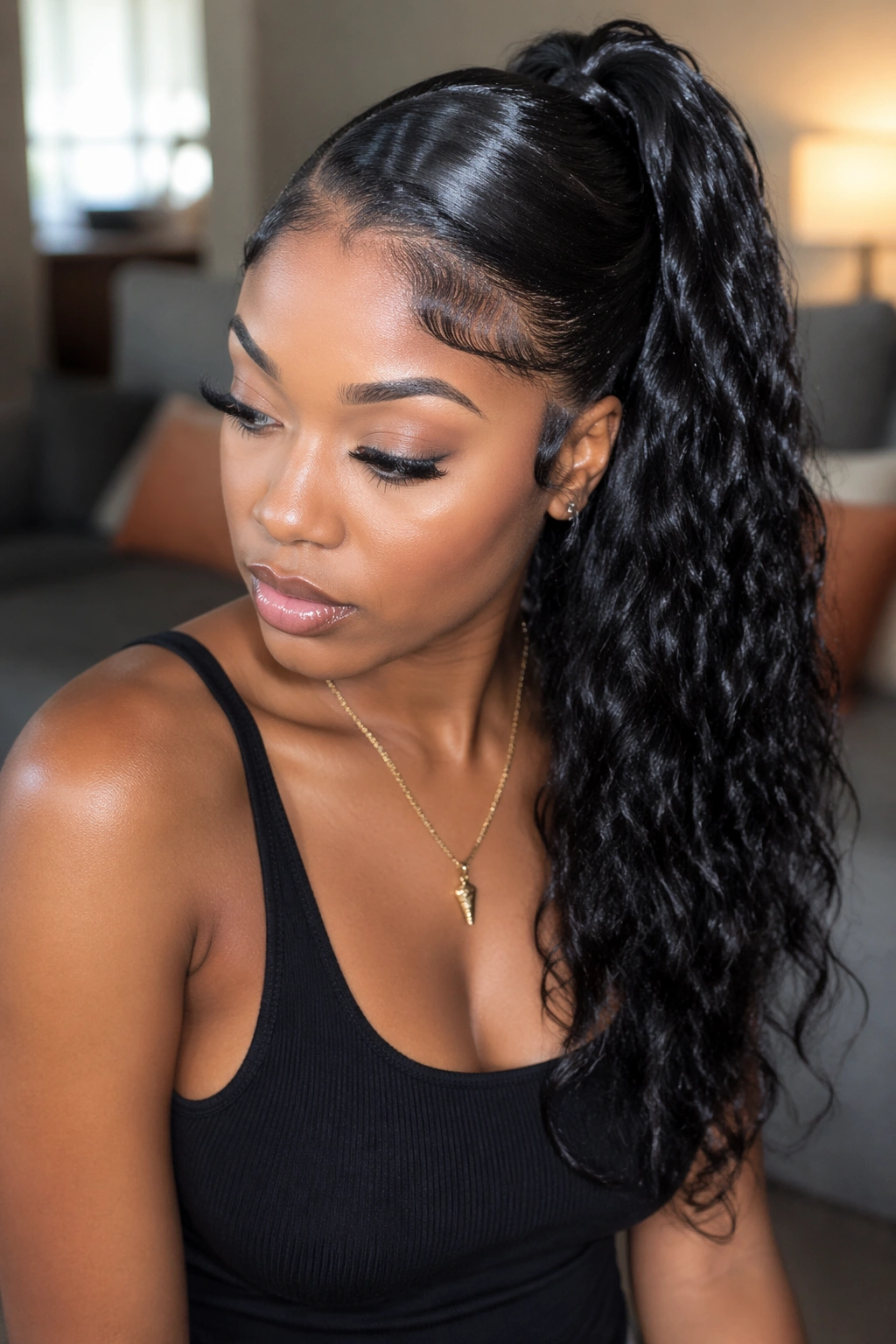
A water wave ponytail has that soft, piece-y movement that looks nice even when it’s not perfect. In fact, a little unevenness helps it.
Keep a spray bottle nearby. Mist a small section, not the entire tail, then scrunch with mousse and let the texture settle. If you soak all of it, the curls lose definition and the style can turn frizzy faster than you want. Small sections are easier to control.
This one reads relaxed, but not sloppy. That’s a fine line, and water wave hair usually stays on the right side of it.
21. Asymmetrical Quick Weave Ponytail
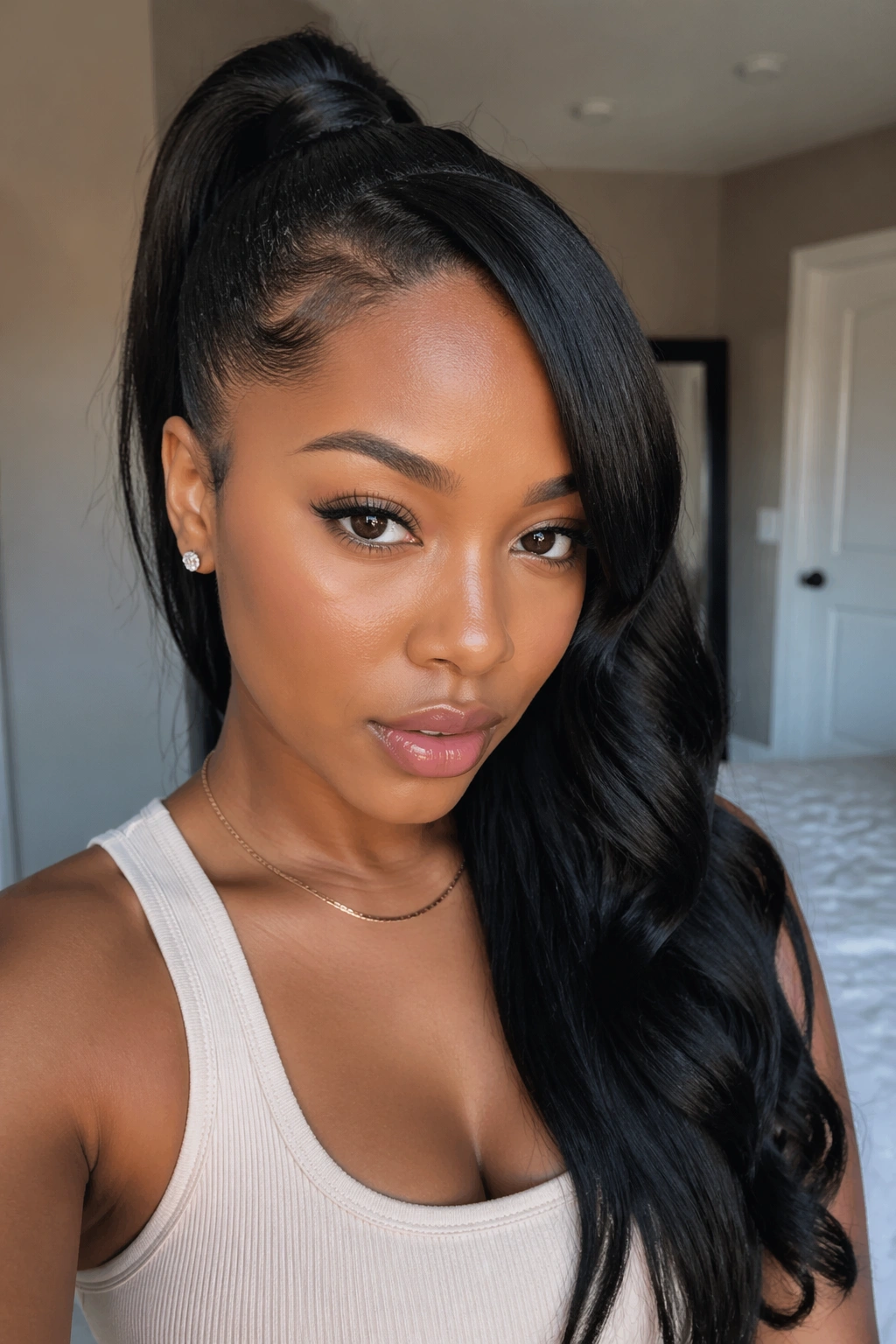
A ponytail doesn’t have to sit dead center. Move it a little off to one side, and the whole silhouette feels sharper.
Set the base about 1 to 2 inches off center, then keep the length falling over one shoulder or down the back at an angle. The shape changes the face in a subtle way, which is why I like it for people who want something different without wearing a full statement style.
It’s also a nice fix when your part isn’t perfectly even. A slight asymmetry can make a less-than-perfect base look intentional. Funny how that works.
22. Two-Tier Quick Weave Ponytail
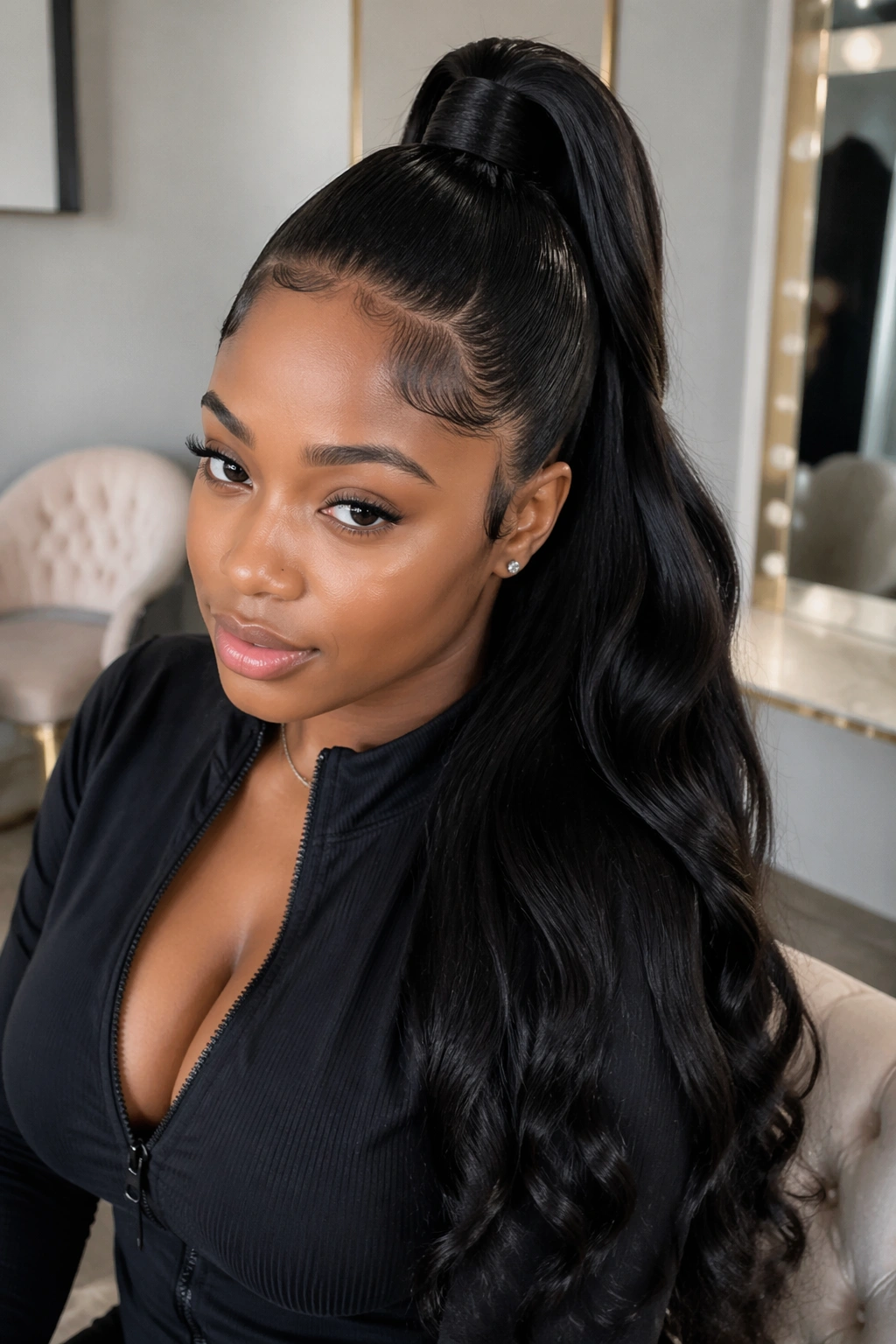
A two-tier ponytail gives you more fullness without forcing you to use a mountain of hair. You make one ponytail high on the crown, then another just below it, and blend them so the top hides the lower elastic.
That second tier adds lift. It also helps if your natural hair or install length isn’t quite enough for the volume you want. It’s a smart visual trick, and I like that it doesn’t rely on heavy teasing or big filler pieces.
If you’ve ever wanted a fuller ponytail but didn’t want it to look fake, this is a solid middle ground.
23. Ribbon-Wrapped Quick Weave Ponytail
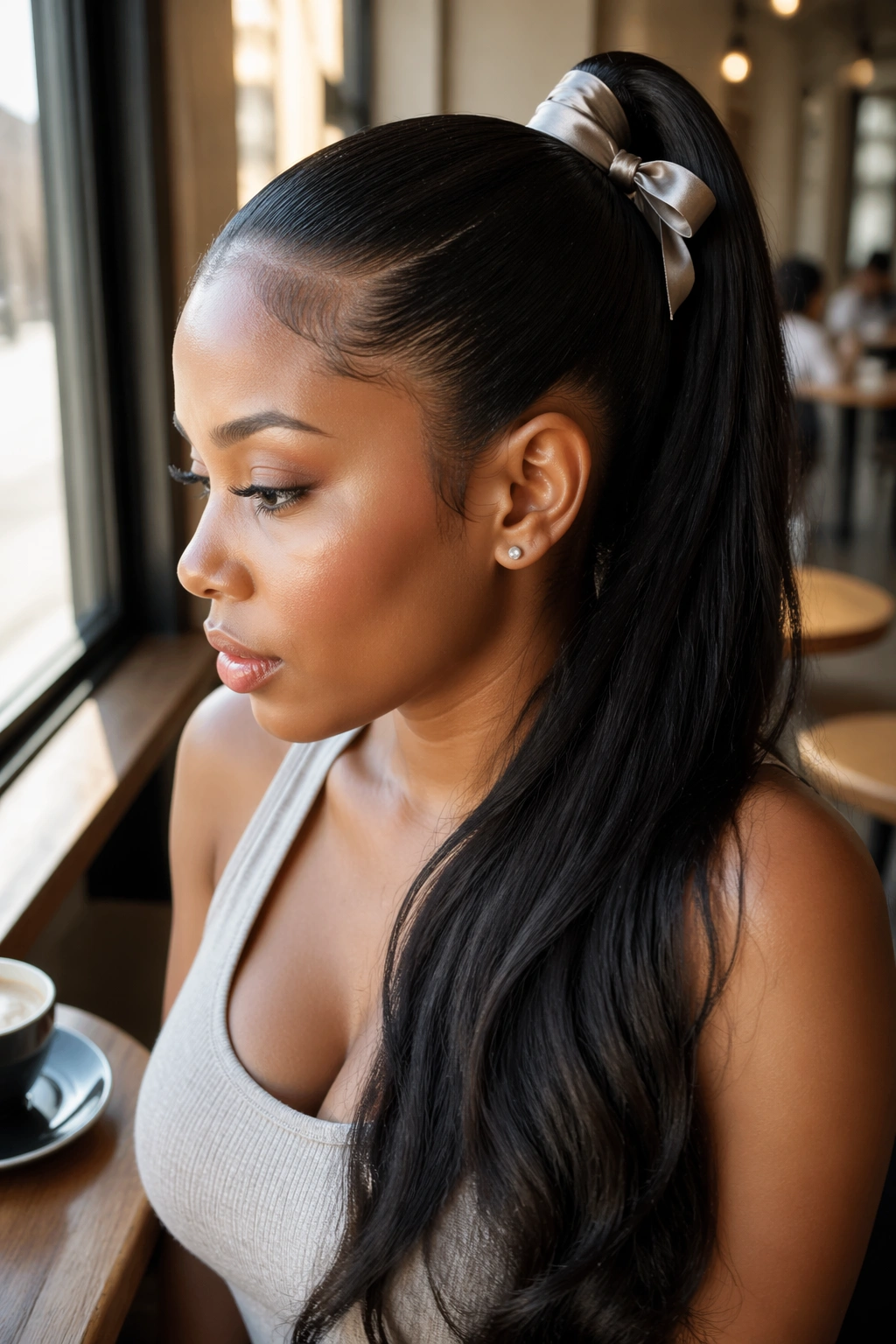
A ribbon or scarf changes a ponytail in about 30 seconds, and that’s exactly why I like it. You can use satin ribbon, a narrow scarf, or a long fabric tie to hide the base and add color at the same time.
How to Wear It
Wrap the ribbon around the base once or twice, then tie it into a neat knot or bow if that fits the look. A 1- to 2-inch-wide ribbon usually sits best because it doesn’t swallow the ponytail. Satin works well since it slides smoothly and doesn’t tug at the hair.
This is one of the easiest ways to make a simple ponytail feel dressed up. It’s also kind to the hairline because the fabric sits softly instead of scraping across it.
24. Faux Loc Quick Weave Ponytail
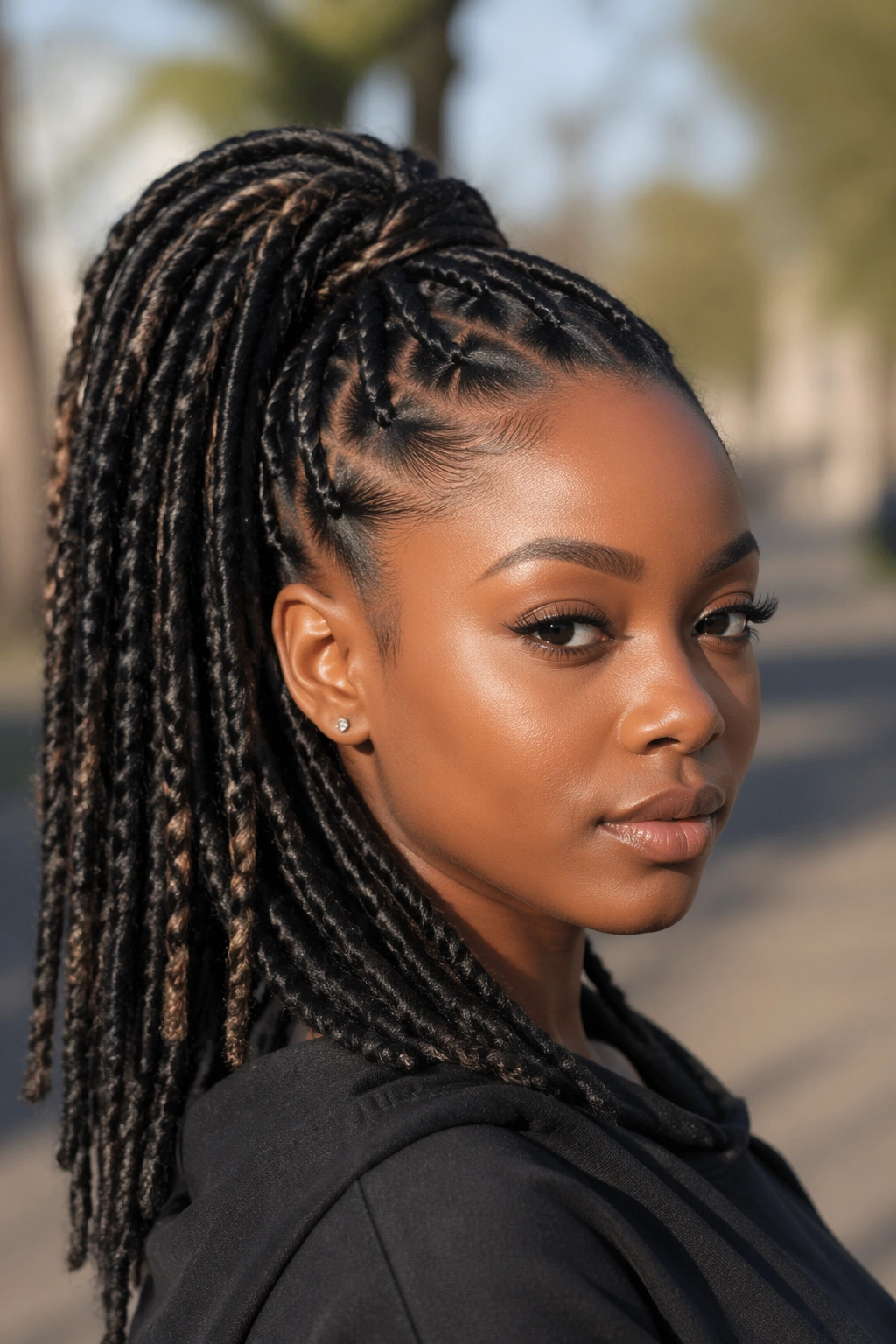
A faux loc ponytail makes a strong statement without needing much styling once it’s in place. You attach a pre-made loc ponytail piece or finish a ponytail with loc extensions, then let the texture do the rest.
I prefer medium-sized locs here. Tiny locs can take longer to install and sometimes look too busy in a ponytail. Very thick locs can feel heavy fast. Medium usually lands in the sweet spot—full, but still wearable.
Best Use
- Protective style days
- Weekend events
- When you want a bold shape with low daily upkeep
The beauty of this one is that it already looks finished. You’re not chasing perfection after the install.
25. Mohawk-Inspired Quick Weave Ponytail
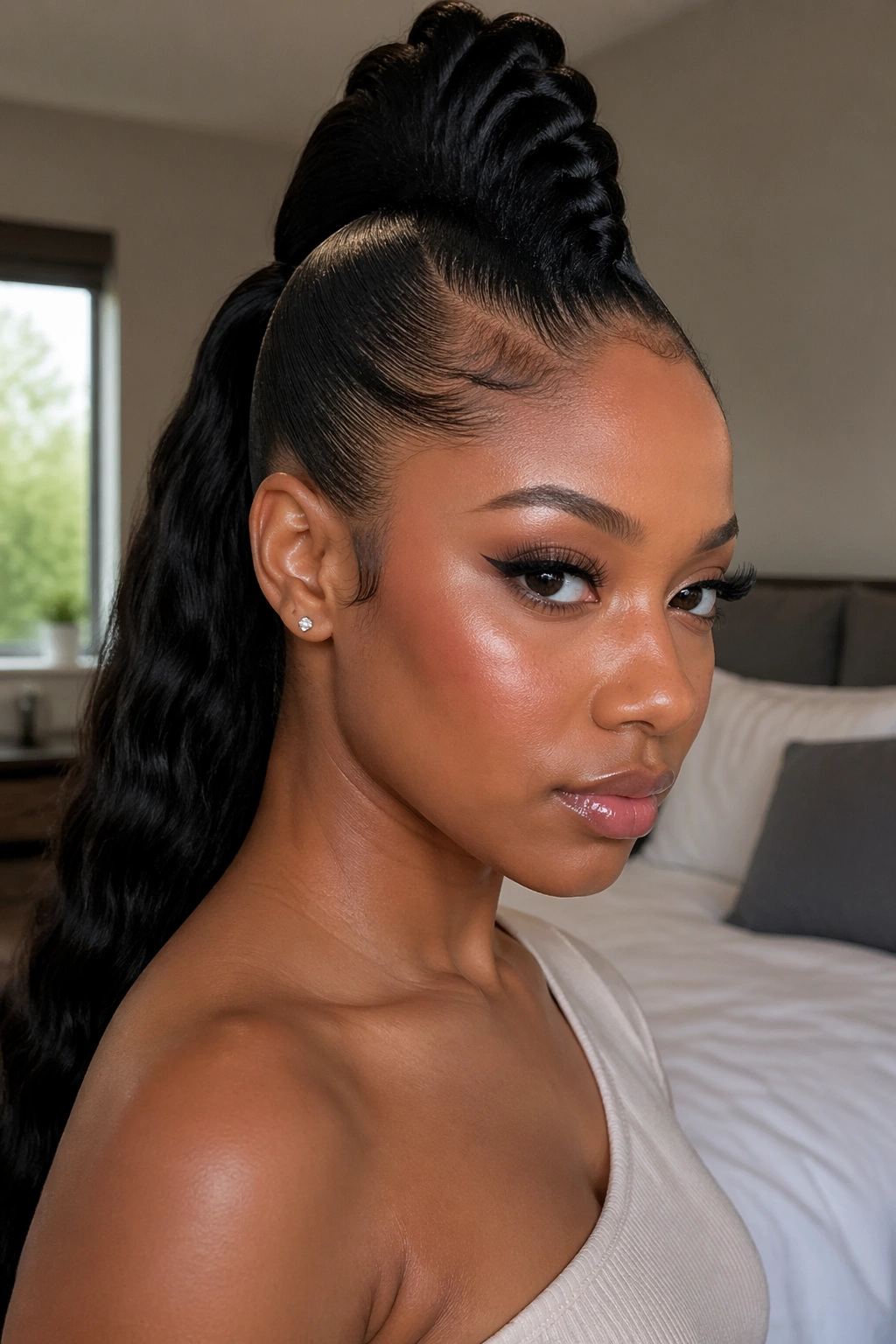
A mohawk-inspired ponytail is for the days when you want height through the center and sleek sides that stay out of the way. It’s a strong shape, but it’s still simple enough to move fast.
Slick the sides close to the scalp, then leave the center section fuller so the ponytail sits along the ridge from forehead to crown. That center lift gives the style attitude without making it hard to wear. A few layers of mousse and a snug band usually do the work.
It’s a good choice if a plain high ponytail feels too safe. This one has a little edge.
26. Textured Messy Quick Weave Ponytail
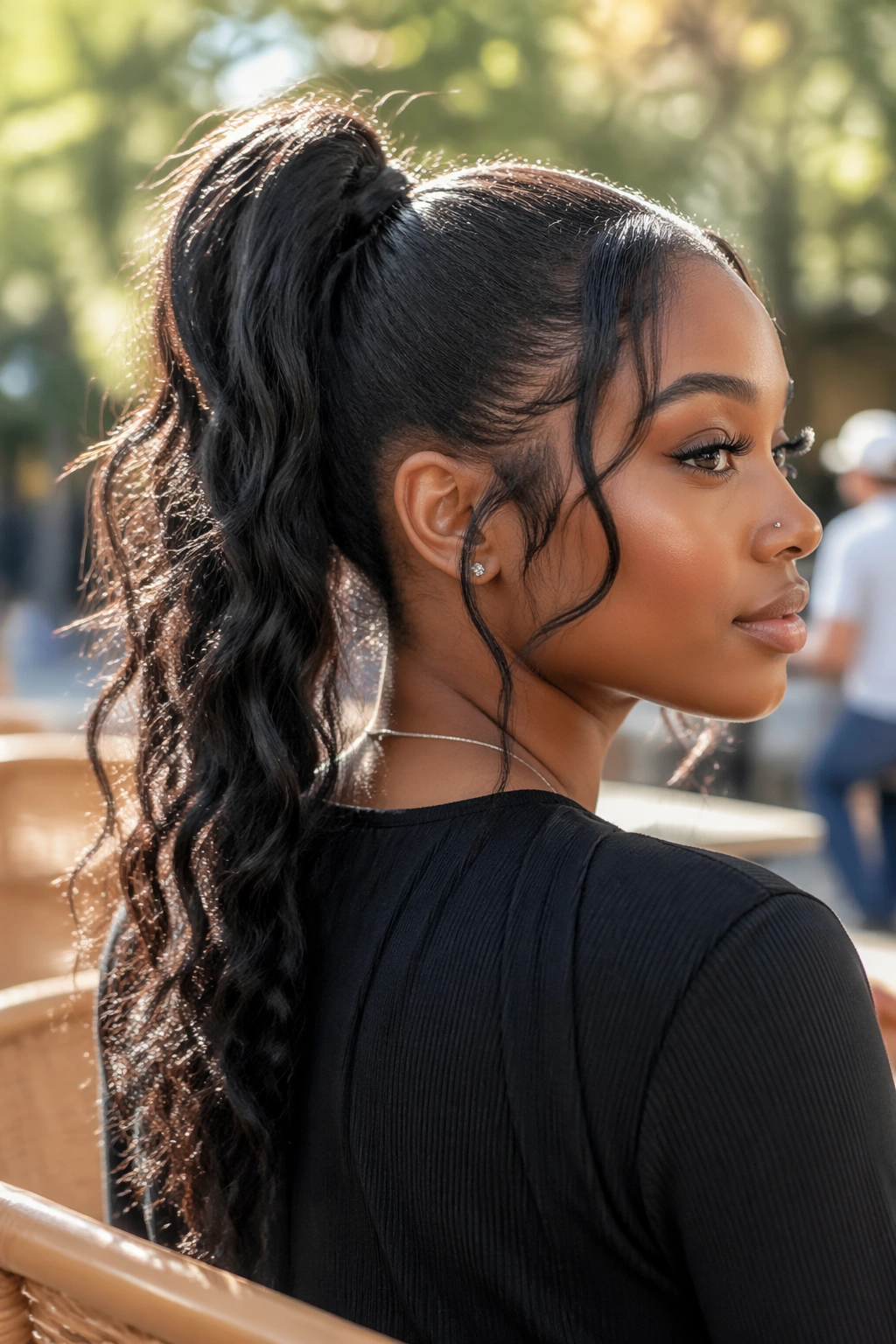
Can a quick weave ponytail look undone on purpose? Yes, and when it’s done well, it looks better than a style that’s been over-smoothed to death.
Leave out two skinny face pieces, add soft waves to the tail, and avoid packing on too much gel at the front. A little frizz is fine here. Actually, it helps. The point is movement, not perfection. If the ponytail looks too polished, it loses the whole vibe.
This is the style for days when you want soft hair with some shape. It’s easy, and that’s part of the appeal.
27. Low Quick Weave Ponytail with a Wrapped Base
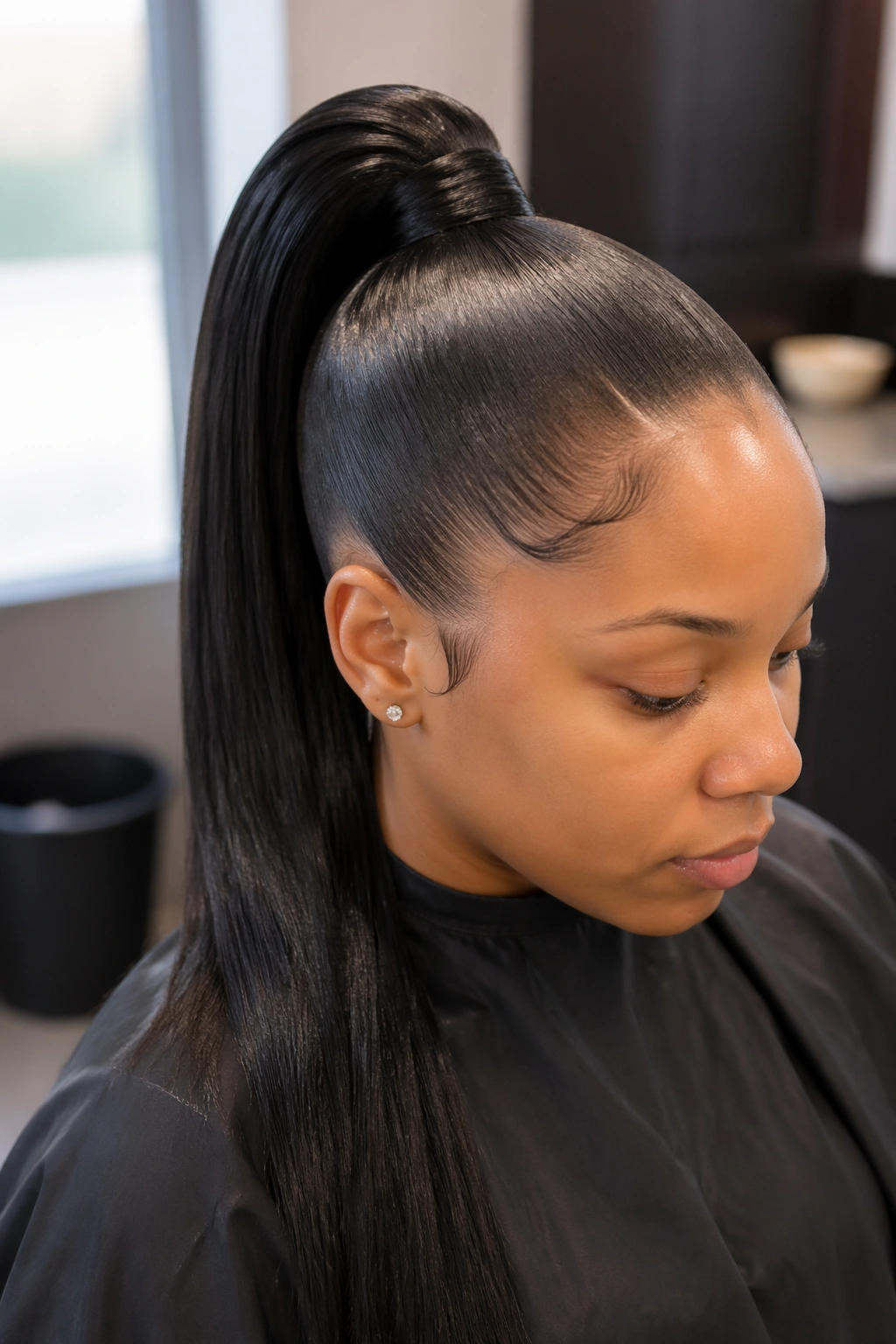
This is the version I’d call the safest bet. A low quick weave ponytail with a wrapped base works on a lot of face shapes, moves fast, and looks neat even when the rest of the day gets messy.
Keep the base flat, place the pony at the nape, and wrap a 1-inch strip of hair around the elastic until nothing shows. Straight lengths look crisp here, but a soft curl at the ends can make the style feel less severe. If you want one ponytail you can wear to work, dinner, or a weekend event without changing much, start here.
A clean base and one good wrap piece go a long way. That’s usually enough.