



Money piece hair on natural curls is one of those techniques that manages to feel both effortless and incredibly intentional at the same time. Those bright, face-framing sections of color — typically lighter than the rest of the hair — work like a built-in highlighter for your face, drawing attention to your features without doing much of anything at all. For Black women with natural textures, the money piece has become a go-to way to add color personality without committing to a full head of processed hair, and the results can be stunning whether you’re working with tight 4c coils or loose 3a waves.
What Is a Money Piece and Why Does It Work
The money piece is a face-framing color technique where the sections of hair closest to your face — typically at the temples and the hairline — are lightened or colored significantly lighter than the rest of the hair. It’s a strategic placement that mimics the way sun naturally lightens hair at the face, which is why it looks so natural even when it’s clearly done.
The name says it all. It’s your most valuable color placement — not just because of the aesthetic payoff, but because it delivers maximum visual impact for minimum processing. You’re only lightening or coloring a small section, which means less damage, less upkeep, and less cost at the salon. But the effect reads like a full color transformation because the sections frame everything that matters most: your face.
On natural curls specifically, the money piece has a quality that’s hard to replicate on straight hair. Because curls spring up and move, the lighter sections catch light differently with every angle. They bounce with your hair, disappear into the bulk of the style, and reappear when you move — creating a dynamic color experience rather than a static stripe of lighter hair.
The face-framing effect also works to contour and brighten. A well-placed money piece can make your eyes look larger, your skin look more luminous, and your overall style look more finished. It’s the hair equivalent of a really good highlighter.
How to Choose the Right Money Piece Color for Natural Curls
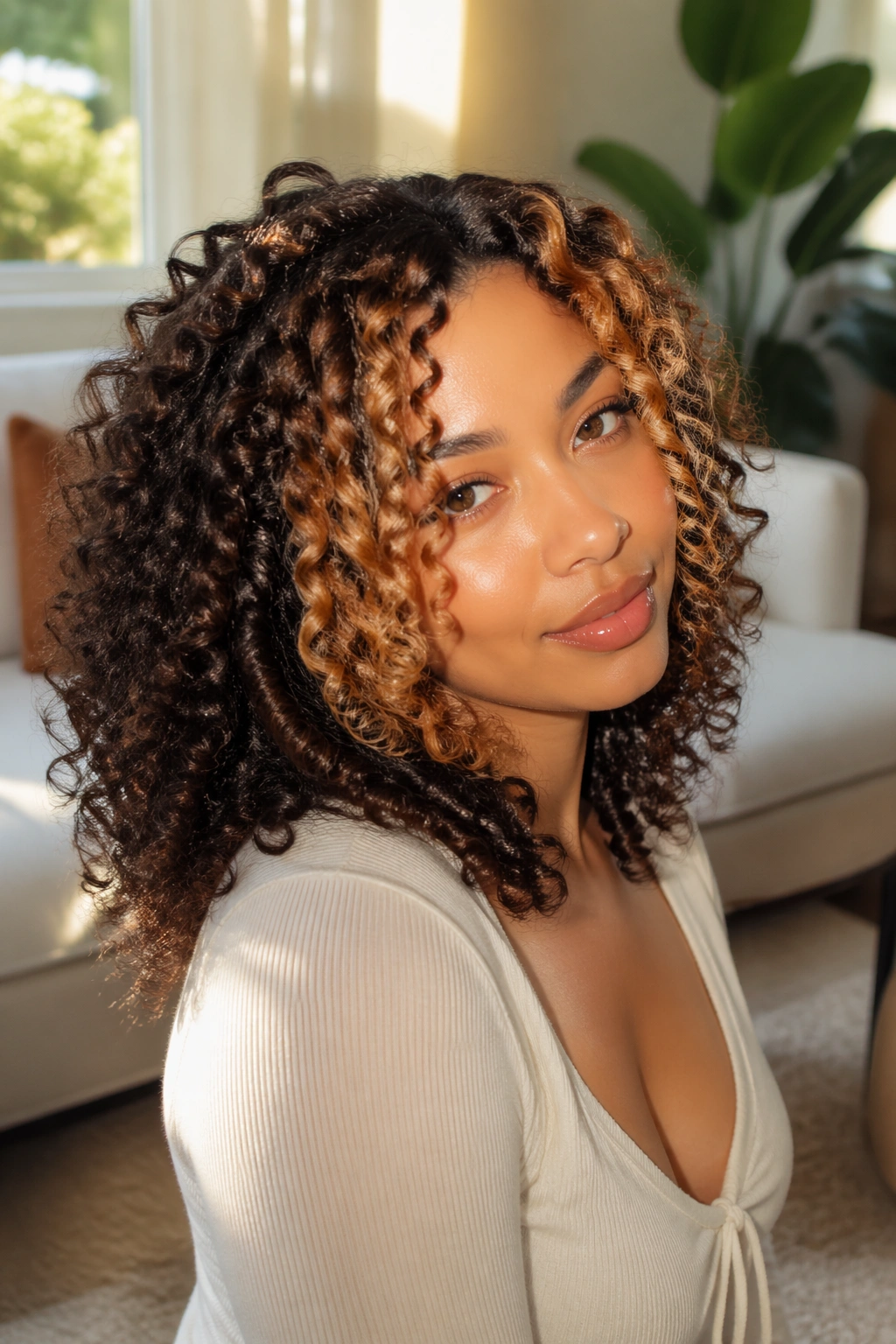
The money piece isn’t a one-size-fits-all technique. The color you choose for your face-framing sections matters just as much as the placement — and for women with natural hair, the choices are genuinely exciting.
Classic honey blonde is the most popular choice — for good reason. On medium to deep complexions, honey blonde at the face creates a warm, sun-kissed contrast that reads as natural and flattering. It doesn’t compete with your features; it complements them.
But honey isn’t your only option. Caramel, copper, auburn, and even bold choices like platinum blonde or vivid red can all work as money piece colors depending on your skin tone, base color, and how dramatic you want the result to be. Copper and auburn money pieces work especially well on warm-toned skin, creating a harmonious warmth between face and hair. Platinum creates a high-contrast, editorial look that’s bold and fashion-forward — especially stunning on deeper complexions. Even a money piece that’s only a level or two lighter than your natural color can create a beautiful, subtle dimension without a dramatic lift.
The rule of thumb is this: the bolder your skin tone contrast, the bolder your money piece can be. Deep complexions can carry platinum, bright blonde, and vivid colors with power. Medium complexions tend to shine with caramel, honey, and copper. Lighter complexions often get the most flattery from a soft, warm blonde or a subtle chestnut.
Placement Matters: Where the Money Piece Goes on Curly Hair
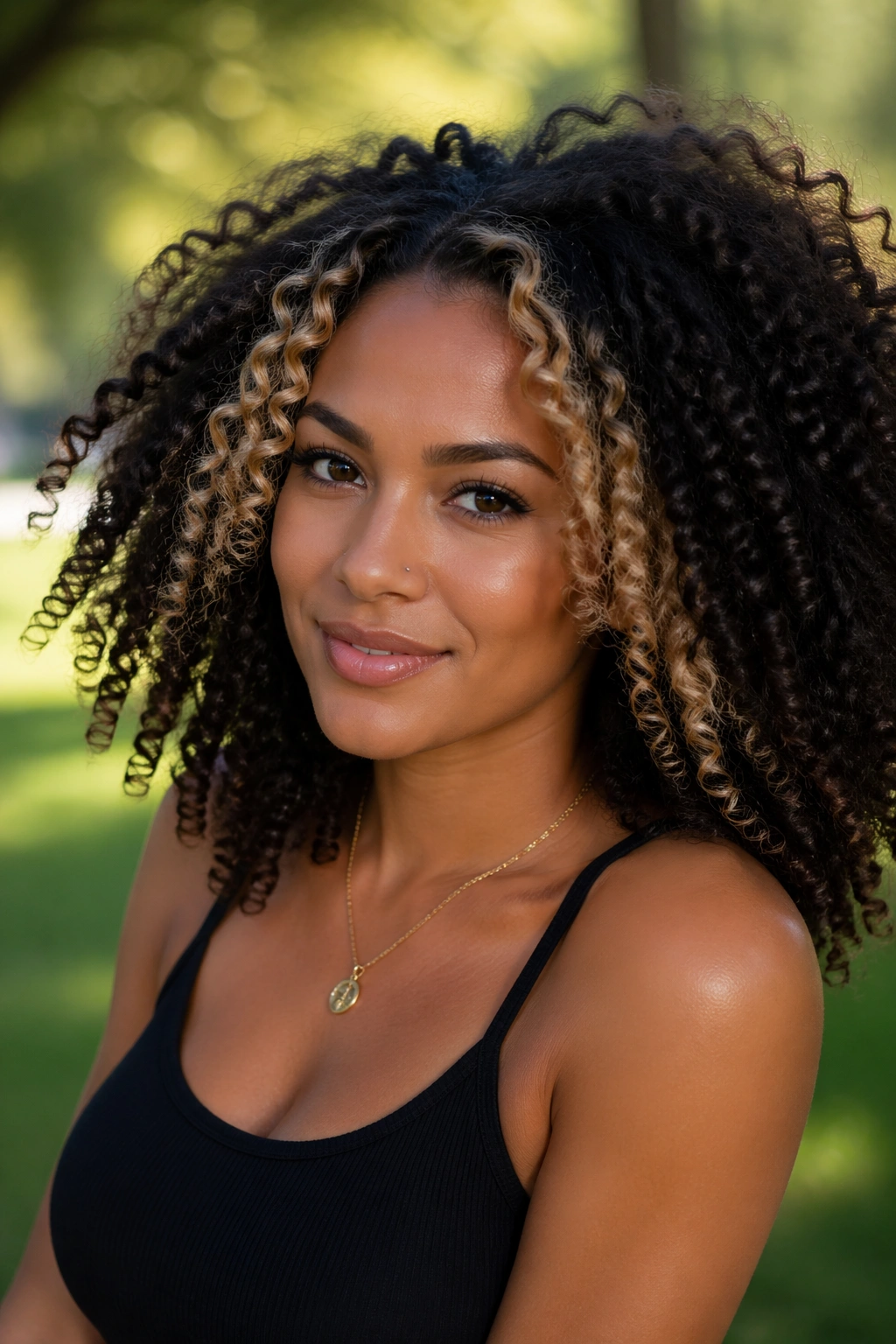
Getting the placement right is everything. A money piece that’s placed too far back into the hair loses its face-framing effect — it just looks like a random highlight. A money piece placed too narrowly looks like an accident. The right placement makes the whole technique work.
For most natural hair textures, the money piece should start at the very front of the hairline — including the baby hairs if you have them — and frame the face along the temples. The sections should be wide enough to be clearly visible even when your curls are at their most voluminous, which means taking more hair than you think you need.
On curly hair, the sections pulled forward to frame the face are not always where they appear to be when your hair is stretched. Your stylist should assess where the hair falls when it’s in its natural state — not when it’s pulled straight — before deciding where to place the color. This is especially important for 4a-4c textures where shrinkage is significant. A section that looks like it frames the face when pulled down might spring up to the top of the head when released, completely losing the framing effect.
The thickness of the money piece is a personal preference, but thicker sections tend to be more visible on voluminous curly styles. On a big afro or a full wash-and-go, thin money piece sections can disappear into the bulk of the hair. Thicker sections ensure the color stays visible and impactful even in bigger styles.
Protecting Natural Curl Texture Through the Money Piece Process
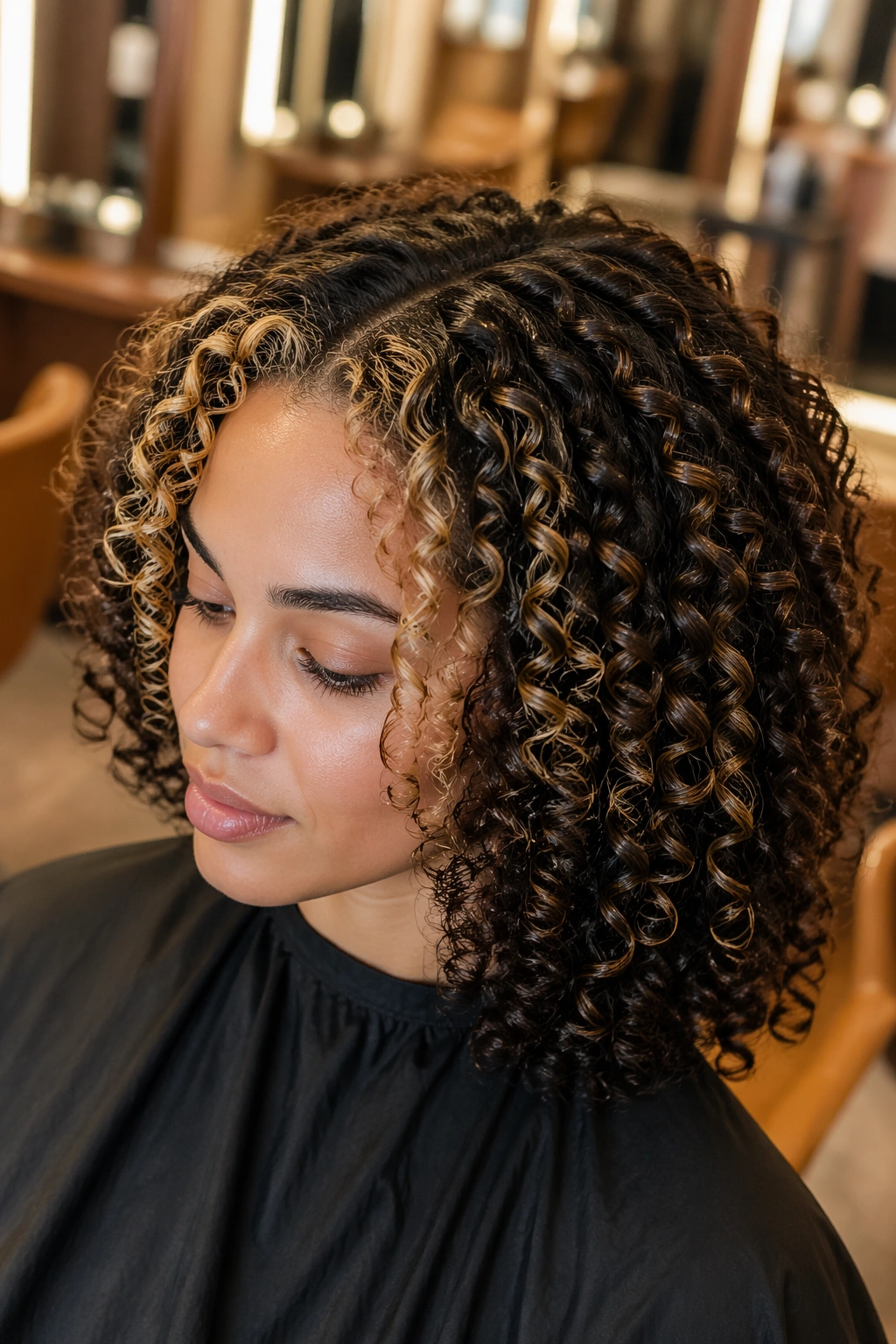
Any time you’re lightening natural curls, the health of your hair needs to be the first consideration. The money piece is a smaller-area service than a full color, but the lightening process is the same — and the potential for damage is just as real if the service isn’t done carefully.
The porosity of your hair determines how fast it lifts. High-porosity hair — which is common after any previous chemical processing, heat damage, or simply through genetics — lifts color faster and can become more vulnerable to breakage during lightening. If your hair is on the high-porosity end, talk to your colorist about using a lower-volume developer and a shorter processing time to get a lift that’s healthy rather than aggressive.
For 4c hair in particular, the tension point between wanting a visible lighter color and protecting the integrity of tightly coiled strands is real. The good news is that a money piece on 4c hair doesn’t need to reach platinum blonde to look stunning. A lift from black to a warm caramel or auburn can deliver a beautiful contrast that frames the face powerfully without requiring the kind of aggressive bleaching that puts fragile strands at risk.
Bond-building treatments like Olaplex or similar in-salon options added during the lightening process significantly reduce damage. They reconnect the broken disulfide bonds inside the hair shaft that bleach disrupts, leaving the hair stronger after the service than it would be without the treatment. They add to the cost, but they’re worth it — especially for natural hair that you want to keep healthy while experimenting with color.
How to Style and Maintain Your Money Piece at Home
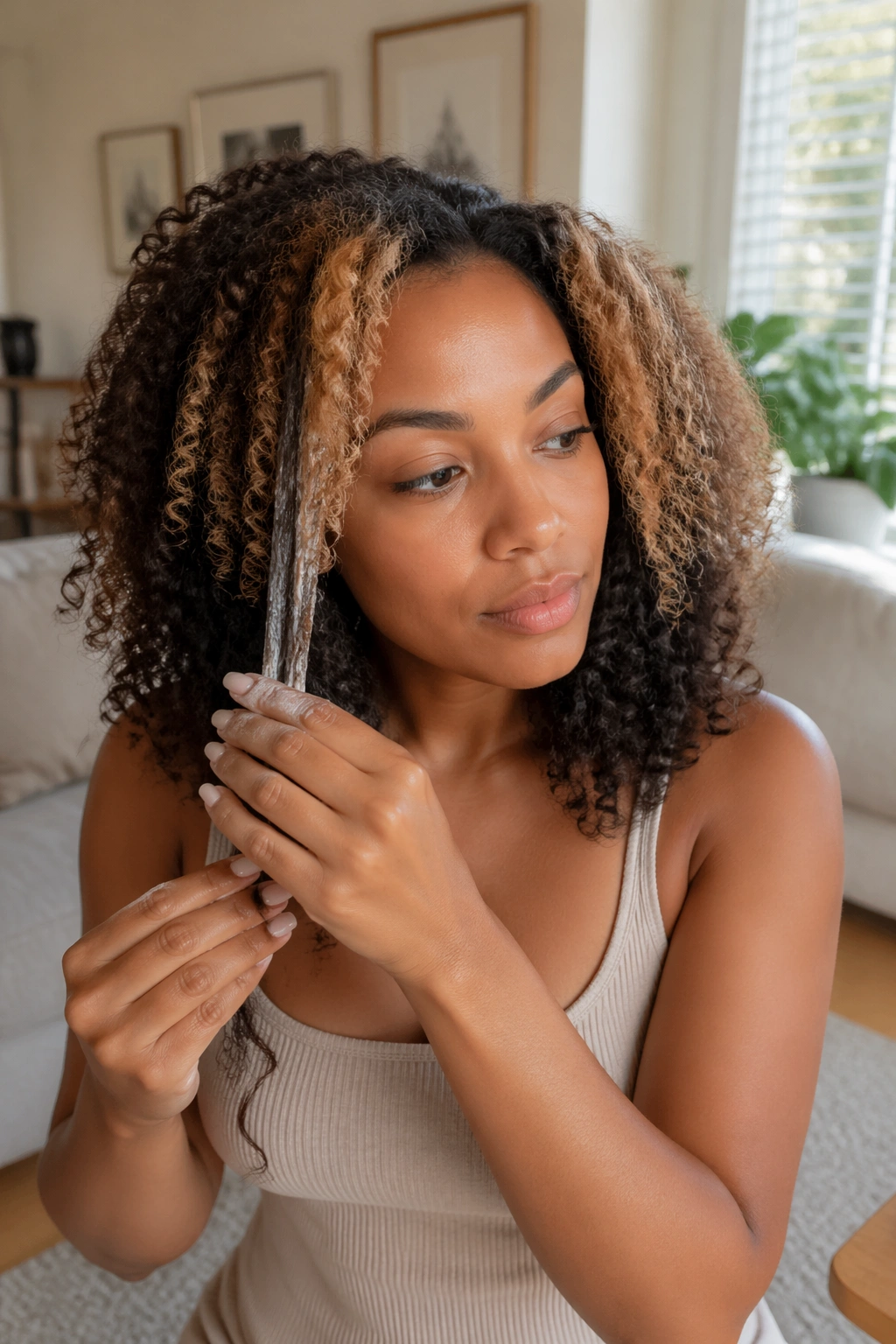
Once you’ve got your money piece, keeping it looking fresh and vibrant between appointments comes down to a consistent, intentional care routine. The lightened sections of your money piece are more porous than your natural color, which means they absorb and lose moisture faster — and they’re more susceptible to color fading.
Deep condition every week. Not every other week. Every week. The lightened sections especially need that moisture replenishment to stay healthy and maintain their elasticity. Use a protein-infused deep conditioner once a month to reinforce the structure of the lightened strands, and a pure moisture deep conditioner on other weeks.
Use a sulfate-free shampoo on your money piece sections specifically, or switch to a gentle co-wash routine. If your wash routine involves a stronger clarifying shampoo for the scalp, apply conditioner to your money piece sections before washing to create a protective layer that limits how much the shampoo strips from those already-porous strands.
A toning conditioner in a warm blonde, honey, or gold shade applied during your wash routine refreshes the tone of your money piece and prevents it from fading to brassy or orange. This is especially important if your money piece was taken to a lighter level — lighter blondes have a tendency to shift warmer over time without regular toning.
1. Honey Blonde Money Piece on Wash-and-Go
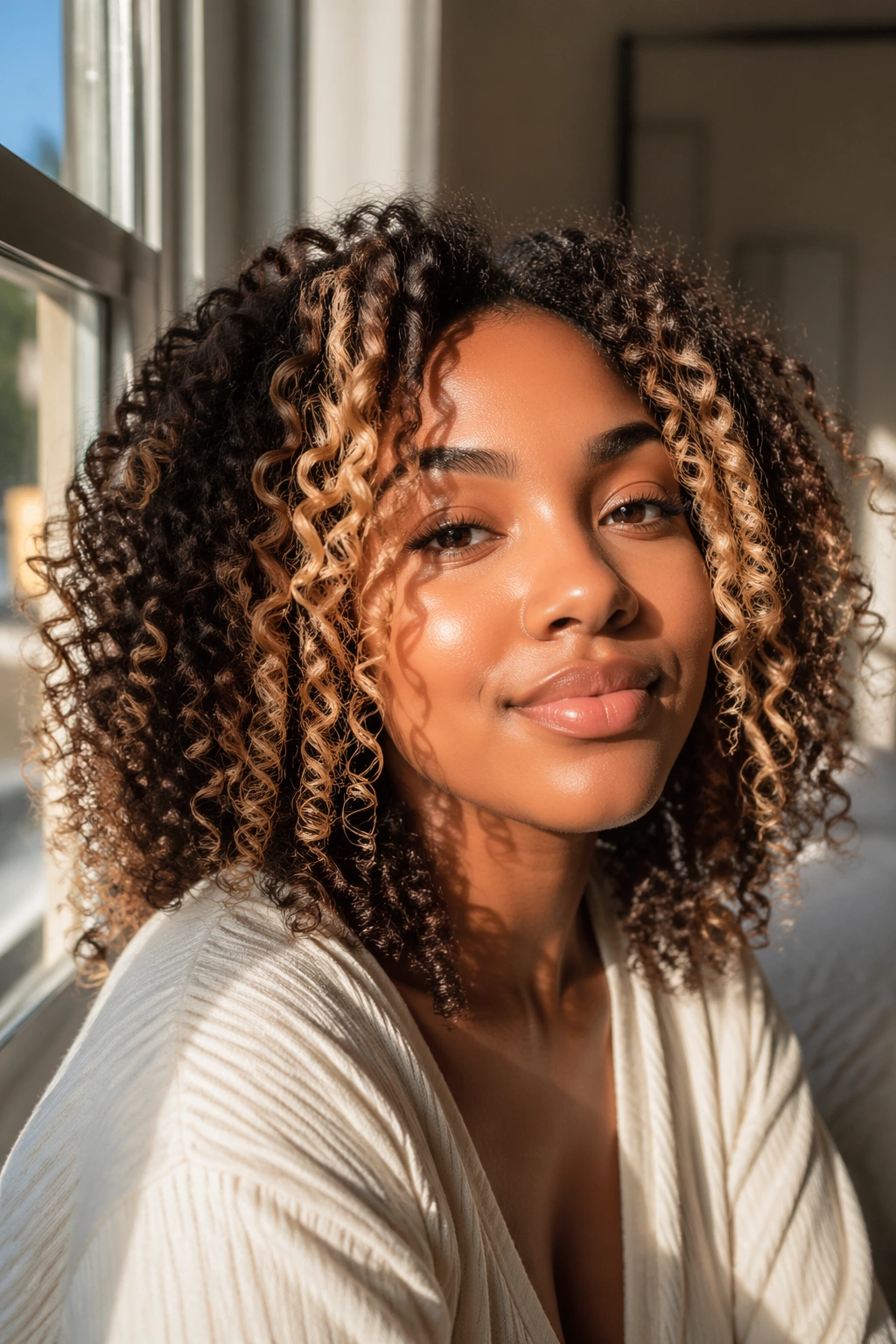
This is the classic money piece for a reason — and on a wash-and-go, it’s an absolute showstopper.
A honey blonde money piece on a wash-and-go style lets the color do its work naturally. As your curls clump and define, the honey blonde sections at the front create a warm, face-lit frame that makes the entire style look intentional without any additional effort. No special styling required — just your wash-and-go routine, and the money piece takes care of the rest.
How to Achieve This Look
- Pre-lighten your face-framing sections to a warm golden tone before applying a honey-blonde toner
- Keep the sections 1-2 inches wide on each side of the face for maximum visibility in voluminous wash-and-go styles
- Use a curl-defining product in a clear or light-hold formula so the color of the money piece isn’t muted by heavy product buildup
Tip: Apply your leave-in and gel to the money piece sections first, scrunching them fully before moving to the rest of your hair — this ensures the lighter sections define just as well as your natural color.
2. Caramel Money Piece on 4c Coils
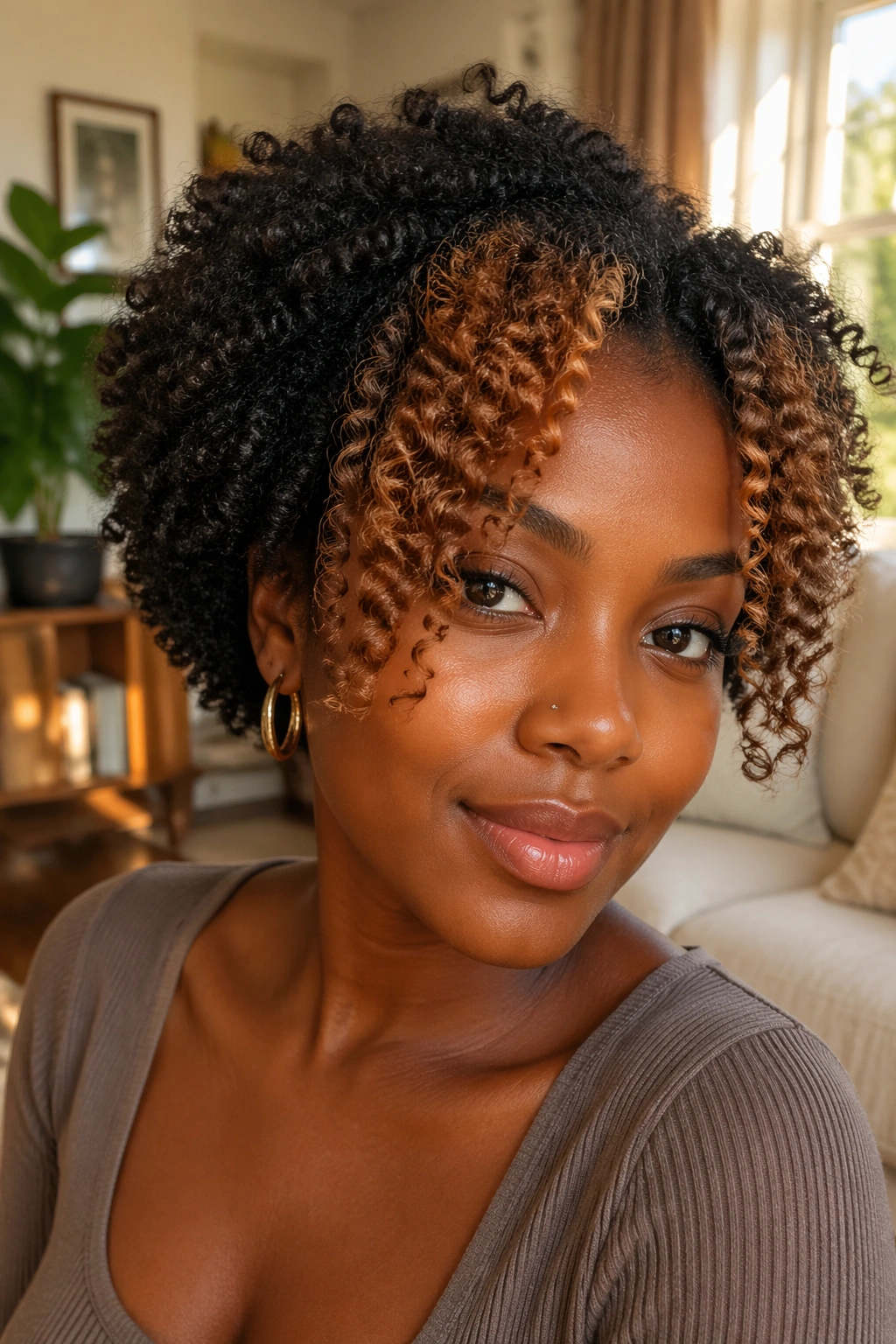
Caramel on 4c hair is a match made in heaven. The warmth of caramel reads beautifully against deep complexions, and on tight 4c coils, the color adds a richness that makes the texture look even more beautiful.
The key to a great caramel money piece on 4c hair is achieving a warm, golden-brown tone rather than a bright, cool blonde. Too much lifting can take the hair to an ashy or pale tone that looks harsh rather than warm. A caramel that sits around Level 6-7 is the sweet spot — enough contrast against a natural black base to be clearly visible, warm enough to look intentional and flattering.
On 4c textures, the money piece may need to be styled slightly differently than the rest of the hair to show up well. A light gel-and-smooth technique on the front sections — or finger coiling the money piece while leaving the rest of the hair in a wash-and-go — creates visible definition in the lighter sections.
3. Platinum Money Piece on Natural Hair
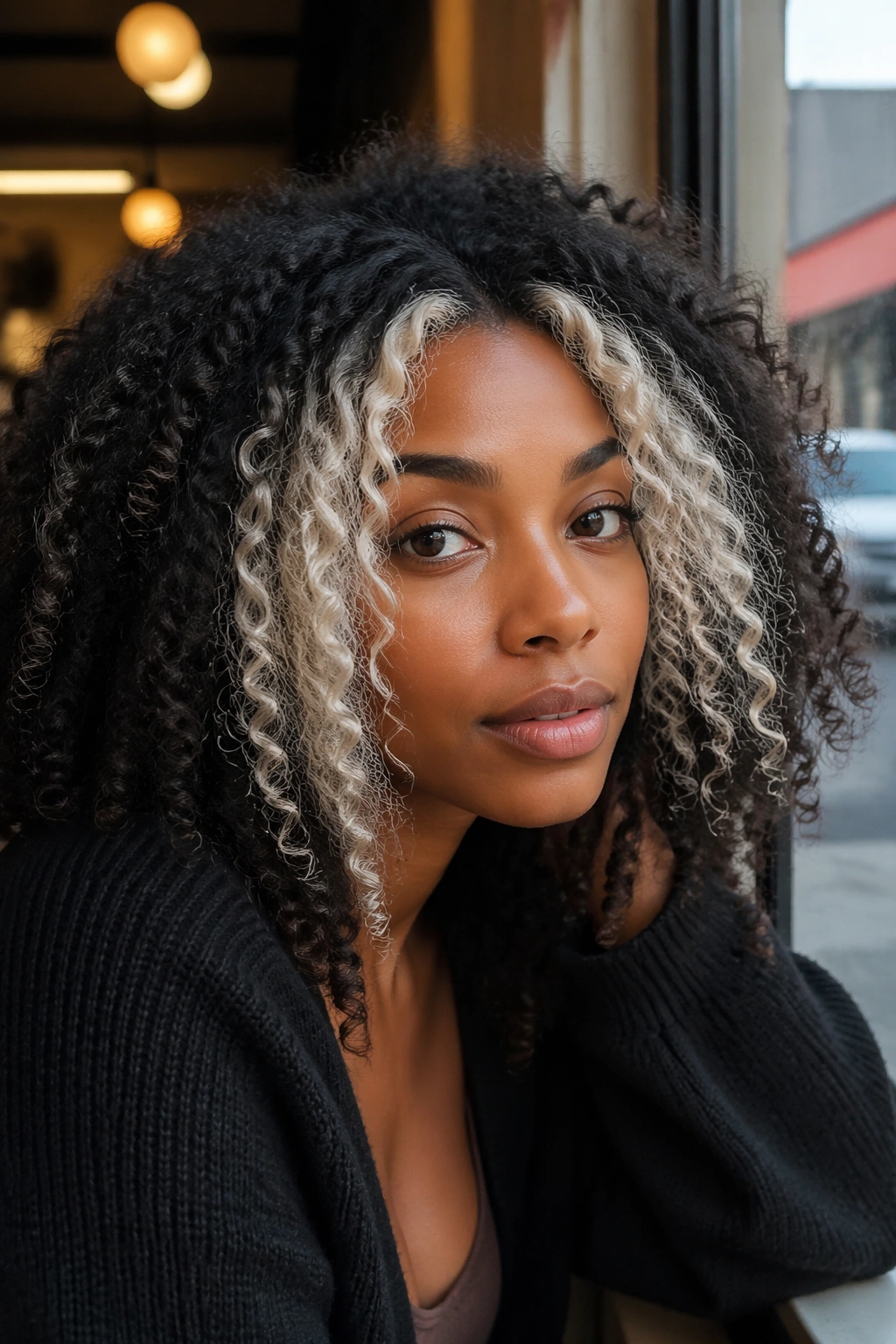
For the woman who wants maximum impact, a platinum money piece is the boldest choice on this list. And on deep, rich complexions, it’s absolutely breathtaking.
The contrast between a deep natural base color and an icy platinum money piece is dramatic, intentional, and completely stunning. It’s the kind of contrast that commands attention and communicates a clear personal style. Done well, a platinum money piece on dark natural hair reads as editorial and fashion-forward.
How to Achieve This Look
- Platinum requires significant lifting — plan for 2-3 sessions to reach true platinum safely, especially from a very dark base
- Use an Olaplex or K18 treatment at every session to protect the integrity of the lightened strands
- Tone with a purple or silver-violet toner to achieve a cool, icy blonde rather than a warm yellow
Tip: Keep the platinum sections extremely moisturized — platinum-lifted hair is the most porous hair type and needs intensive hydration to stay healthy and elastic.
4. Auburn Money Piece on Curly Bob
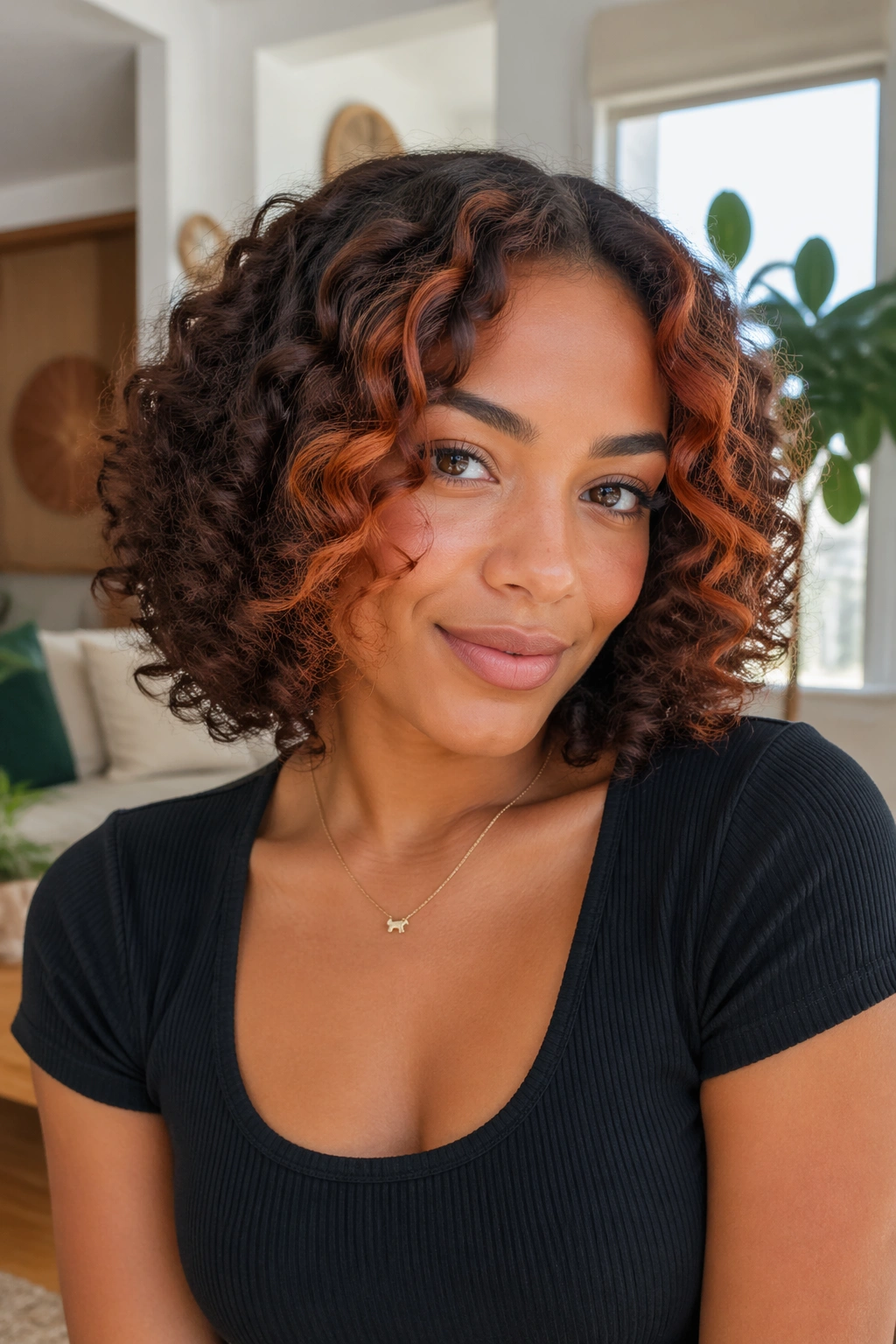
An auburn money piece on a curly bob is a warm, rich look that balances bold color with a classic silhouette.
Auburn — that deep, warm red-brown — is one of the most flattering colors against medium and deep complexions. It doesn’t have the brightness of red or the warmth of copper, but it sits beautifully between both, reading sophisticated and intentional without being aggressive.
On a curly bob, the money piece sections are very visible because the overall length is shorter — the framing sections stay right at face level where they can do their best work. And on the defined curls typical of a curly bob, the auburn catches light beautifully as each curl bounces.
This is a genuinely low-maintenance option. Auburn fades to a warm, reddish-brown that still looks intentional — it doesn’t shift to an obvious brassy tone the way lighter blondes tend to.
5. Copper Money Piece on Big Chop Hair
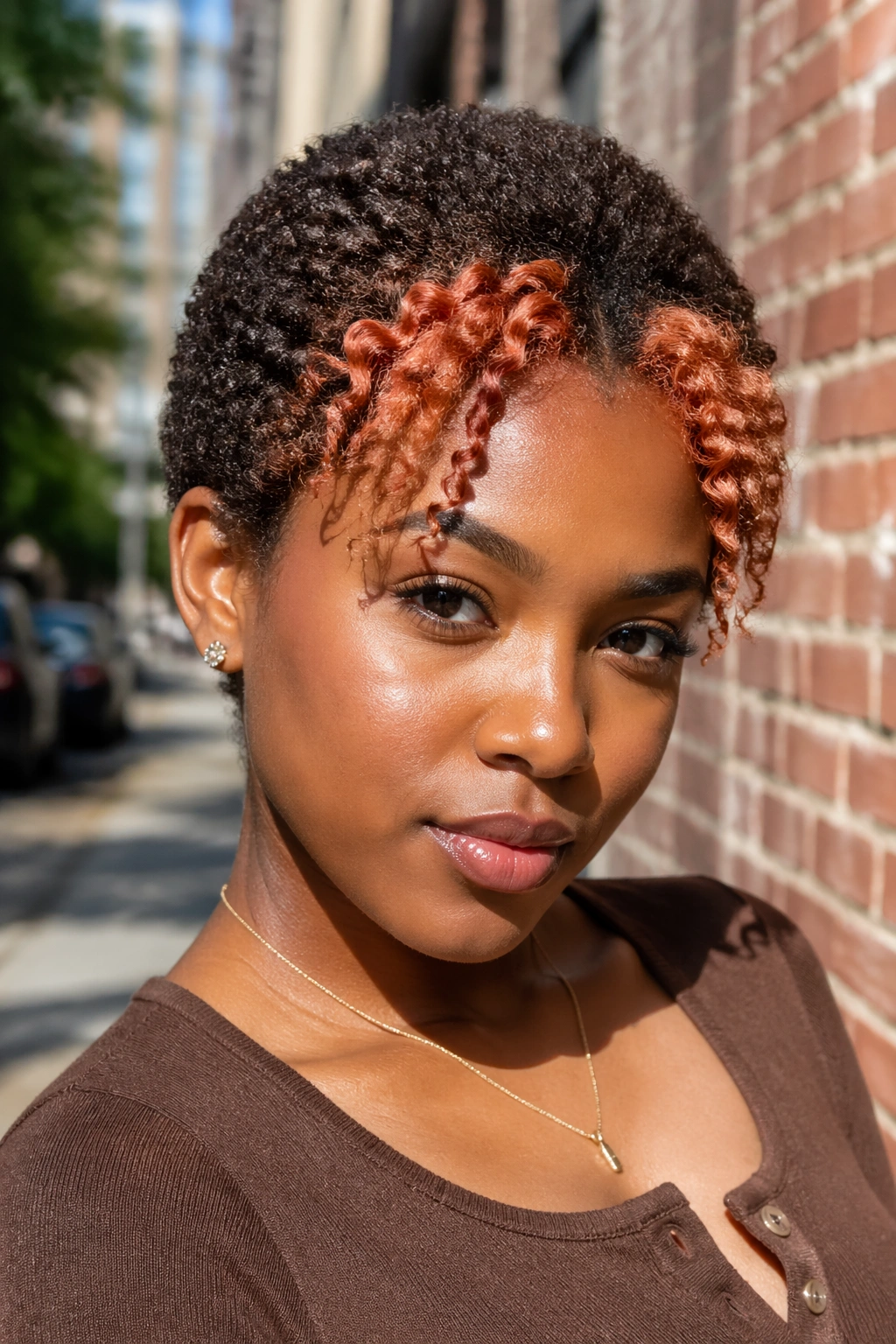
Just because your hair is short doesn’t mean the money piece isn’t for you. On big chop or TWA (teeny weeny afro) hair, a copper money piece packs a serious punch.
On short natural hair, the money piece becomes more of a front section highlight — the sections at the front of the hairline in a bright copper tone create a warm glow that frames the face beautifully without needing length to be effective.
Copper on short natural hair actually reads differently than on longer styles — it’s more concentrated and immediately visible, which makes the effect bolder. Pair it with well-defined TWA coils and your natural hairline pattern, and it becomes a fully considered, polished look.
6. Chunky Blonde Money Piece on Fro-Hawk
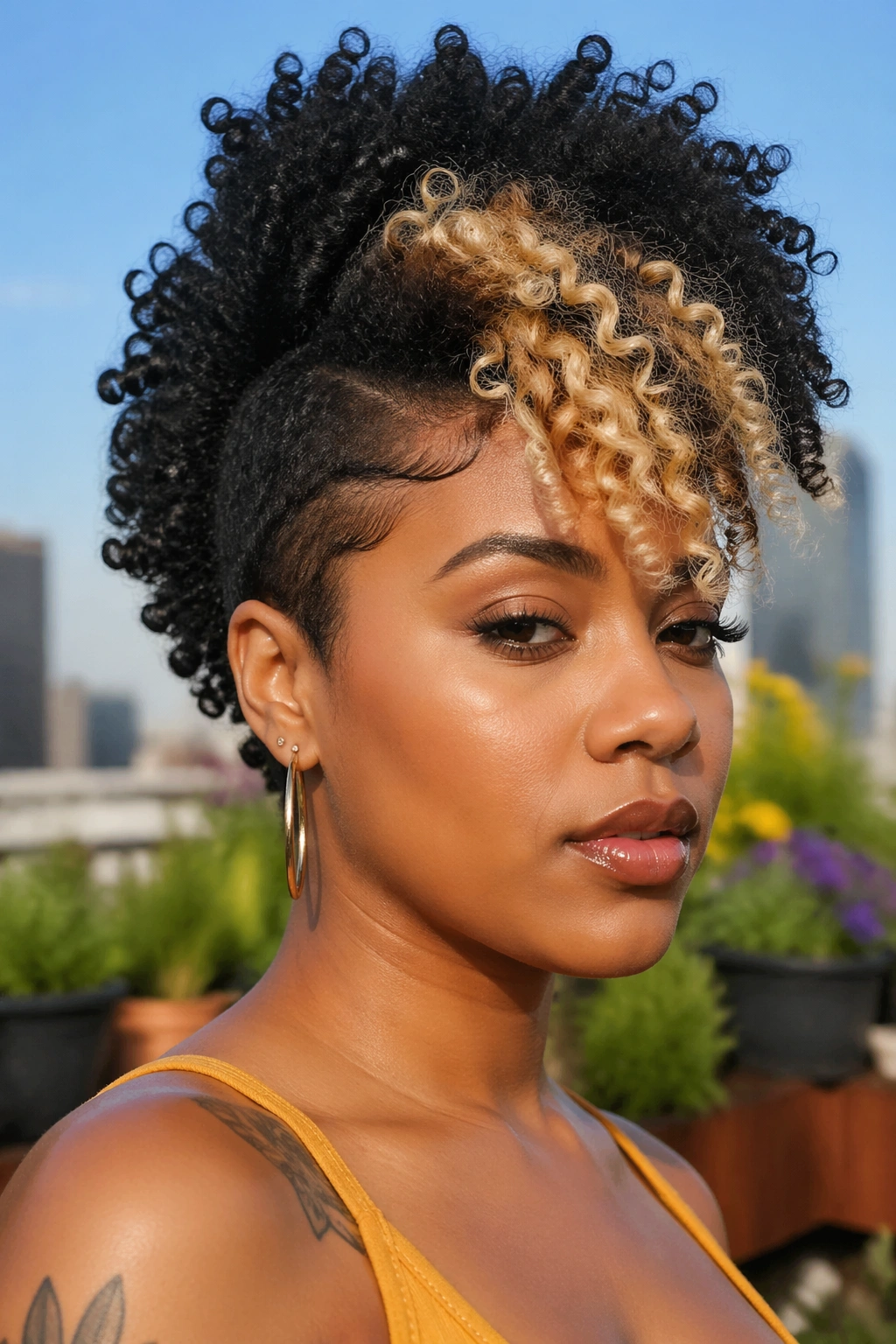
The fro-hawk — where the sides are laid down or pressed and the top section is rocked in full natural glory — is a style that already commands attention. A chunky blonde money piece at the front of the hawk section turns it into something truly spectacular.
In a fro-hawk, the front section is the crown — the most visible, most forward part of the style. Placing a thick, chunky money piece there in a warm blonde creates a color focal point that draws the eye exactly where you want it.
How to Achieve This Look
- Ask your colorist to take thicker sections at the front — 2-3 inches wide — rather than the standard narrow money piece
- Request a chunky application without blending into the natural sections behind it, so the contrast is sharp and intentional
- Style the front money piece sections with a curl-defining product that enhances shine to maximize the color’s visual impact
7. Red Money Piece on Loose Waves
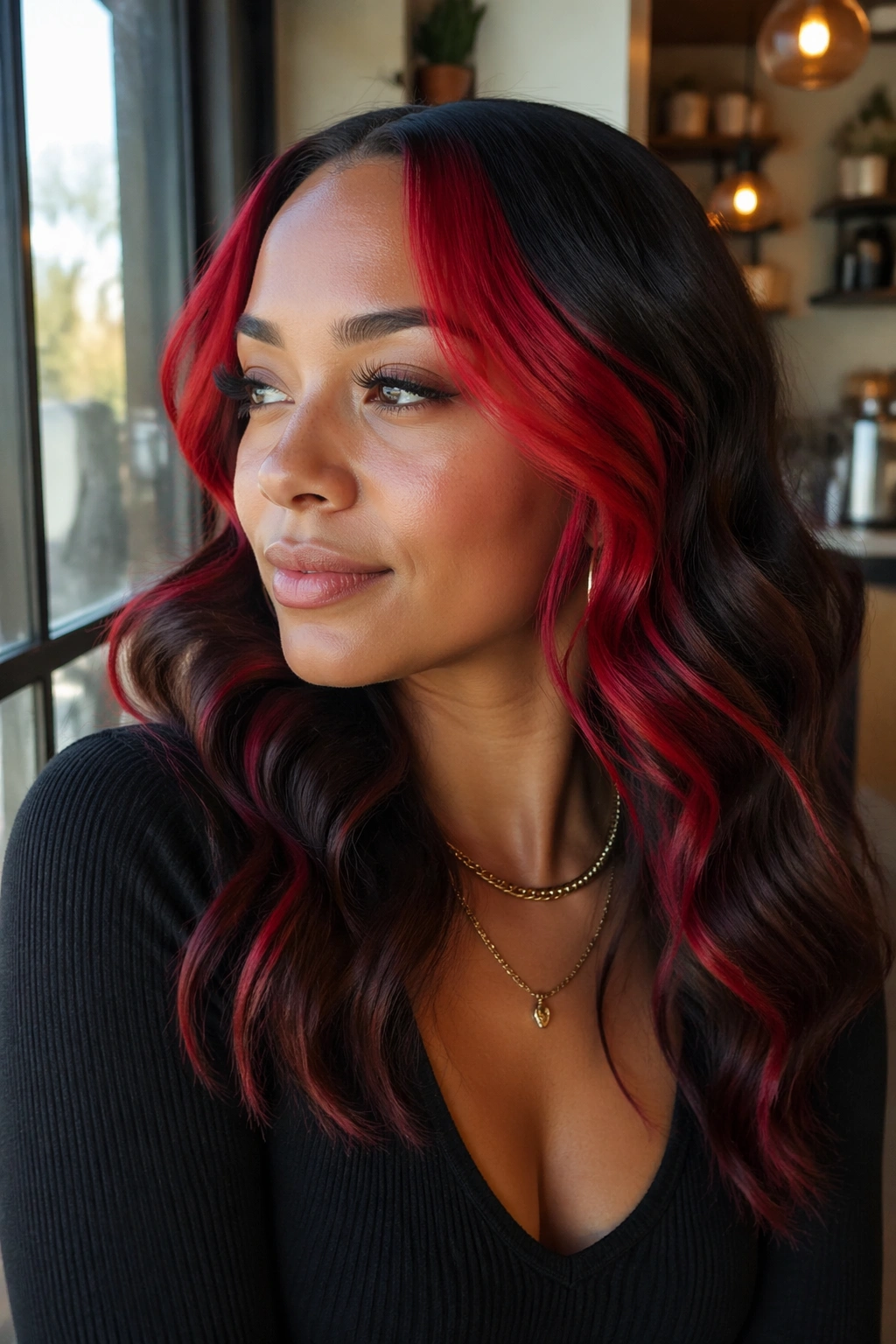
A vivid red money piece on naturally loose waves is a look that sits right at the intersection of bold and romantic. The loose, flowing quality of waves makes the red sections move gracefully with the style — not harsh, not aggressive, just powerfully warm and present.
Vivid red is different from other money piece colors. It’s not a lifted shade — it’s a direct dye applied over a lightened base. Which means the vibrancy can be stunning, but the maintenance is real: vivid red fades faster than any other color category. You’ll want to refresh it every 4-6 weeks to keep it looking saturated.
A red money piece on loose waves looks especially good on warm, medium complexions where the red tones echo the natural warmth in the skin. It creates a cohesive warmth between face and hair that feels natural even though the color is bold.
8. Chunky Blonde Money Piece on High Puff
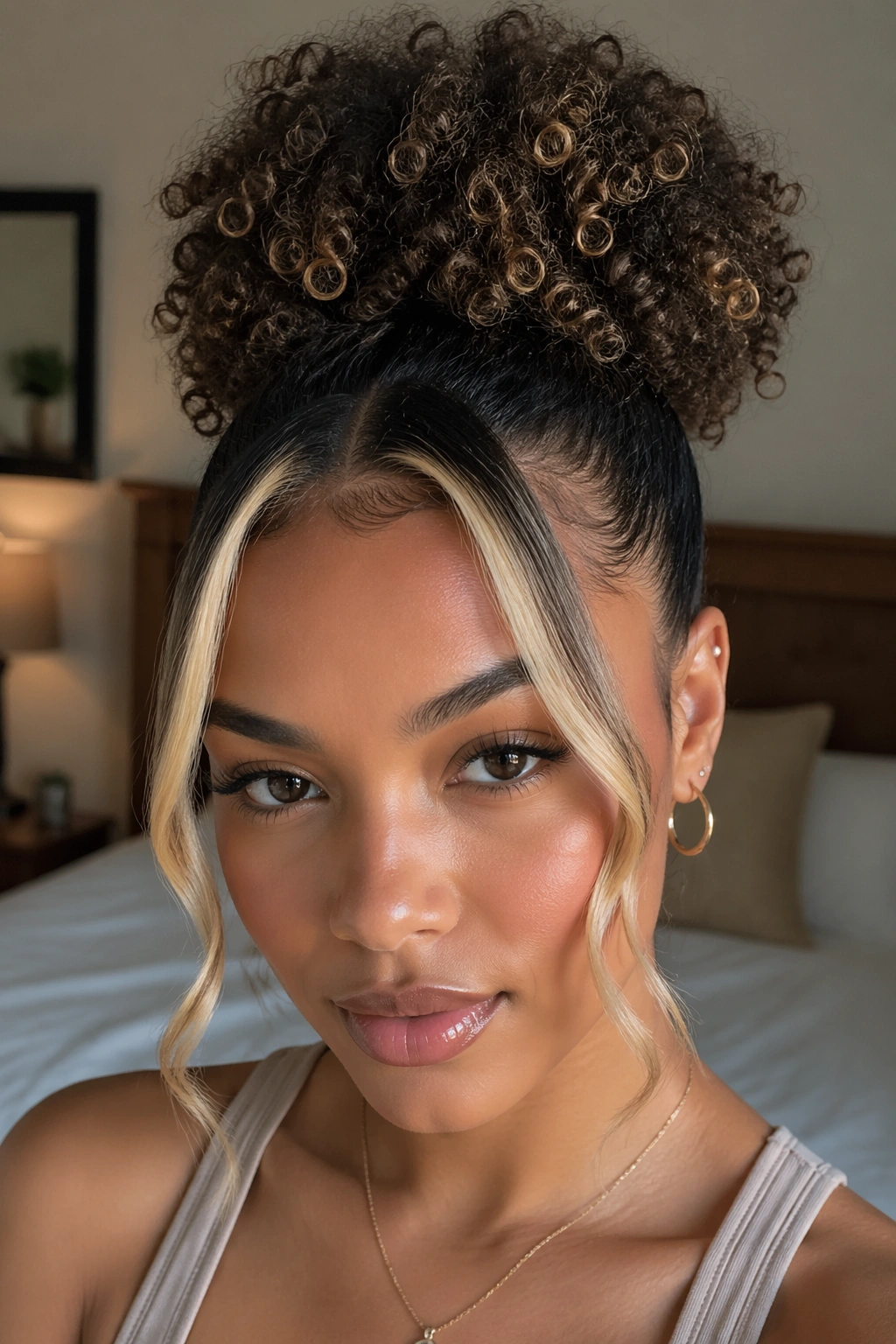
The high puff is one of the most practical and beautiful natural styles out there — and a money piece makes it instantly more polished and purposeful.
When you put your hair up into a high puff, the face-framing sections of a money piece are still right there at your hairline, still doing their work of lighting up your face. In fact, a puff can be an even better showcase for a money piece than wearing your hair down — because the bulk of the hair is pulled back and up, the lighter sections at the front have nothing competing with them.
Tip: When styling a high puff with a money piece, slick the front sections first and let the money piece sections fall naturally in front of the puff for the most flattering frame.
9. Golden Money Piece on Protective Style
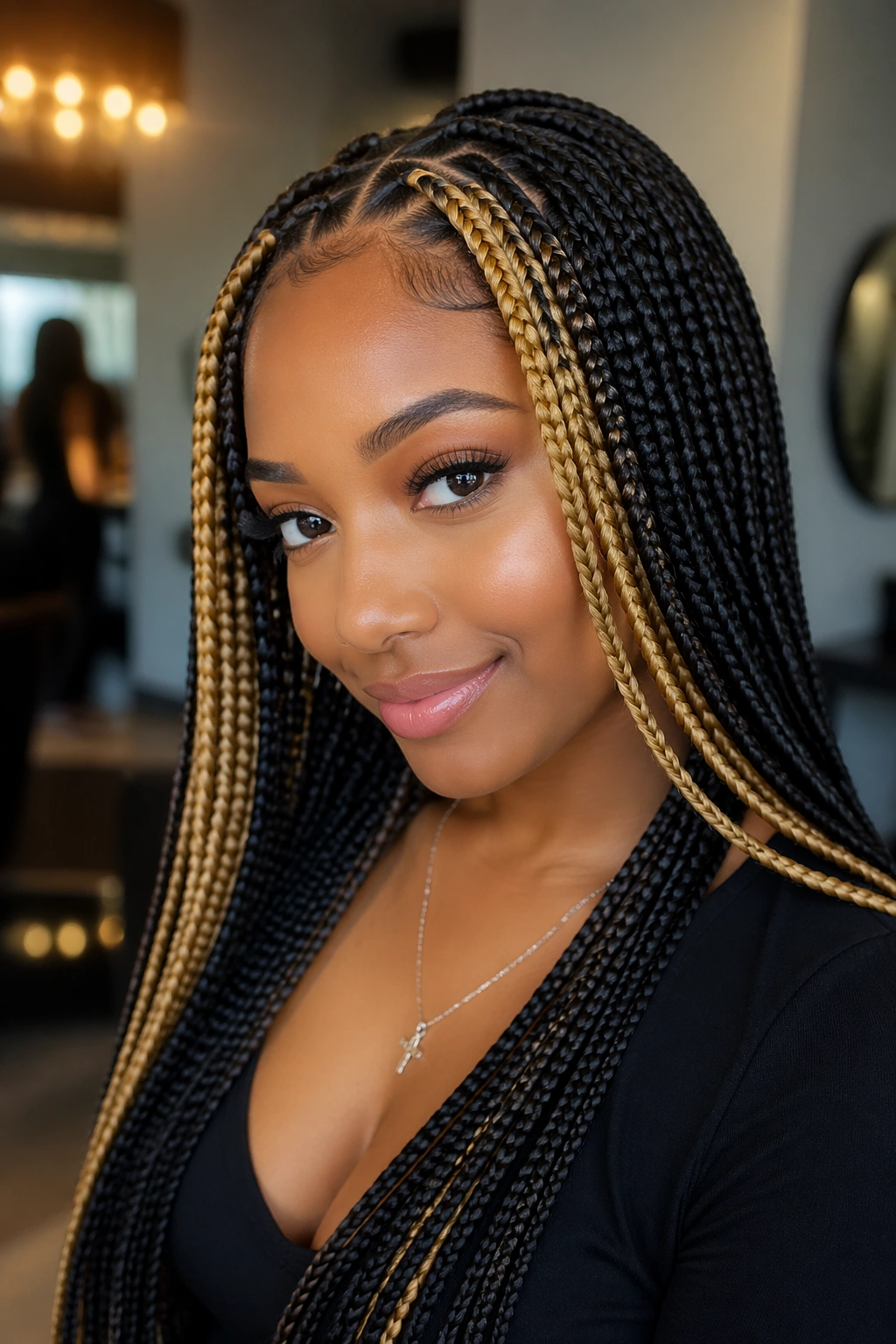
Money pieces aren’t just for wear-your-hair-out styles. They work beautifully as part of a protective style — especially braided looks like box braids, knotless braids, or even Senegalese twists.
By using golden blonde braiding extensions for the face-framing sections of a protective style, you create a money piece effect that’s protective-style-friendly. The result is a braided style that has all the color impact of a money piece without any chemical processing on your natural hair.
This is an especially smart option for naturals who want to experiment with a money piece look before committing to the chemical version. You can test different shades of gold or blonde in the face-framing sections and see what you like best before making a permanent decision.
10. Ash Blonde Money Piece on Coily Hair
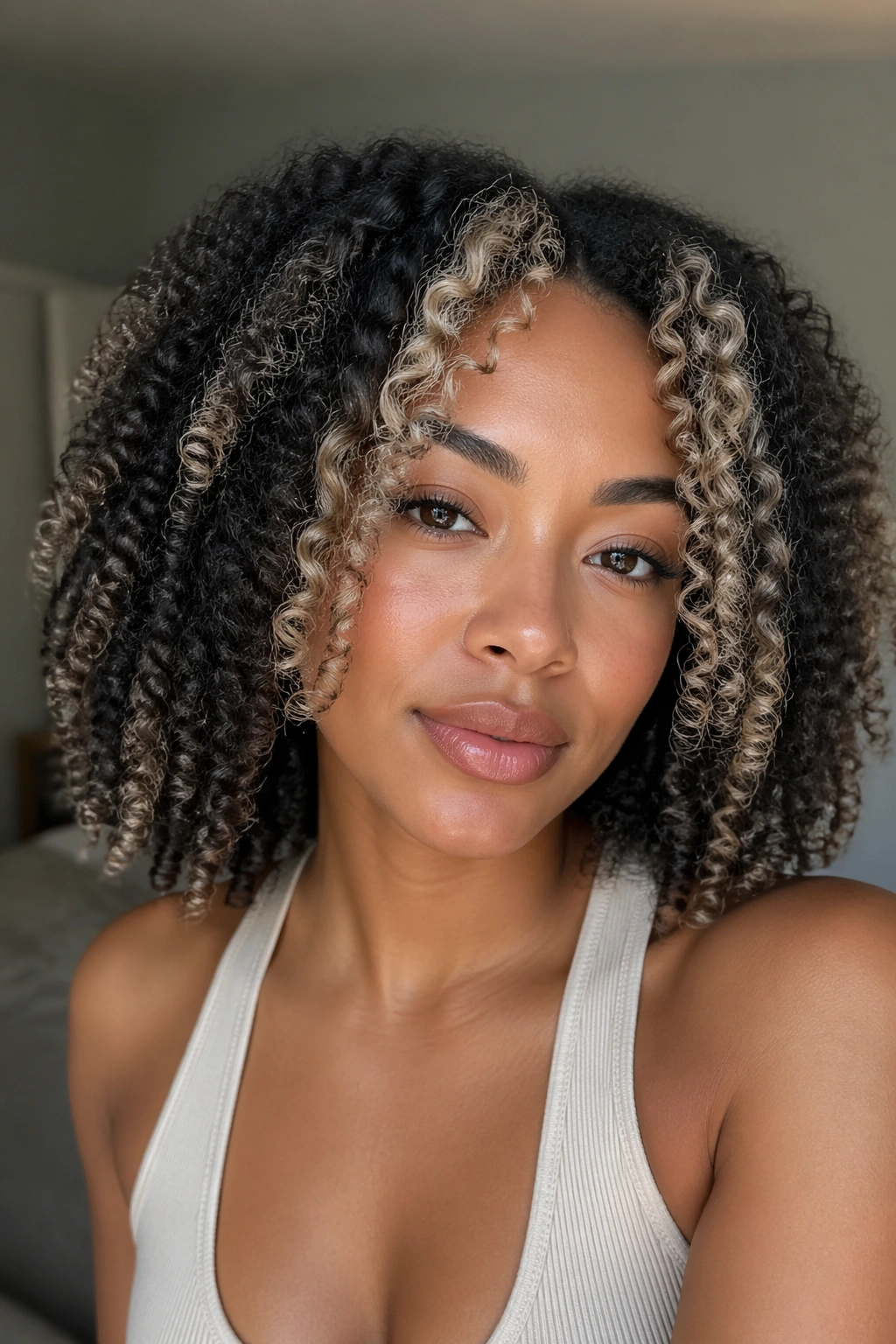
Ash blonde is the cooler, less warm sibling to honey and golden blonde — and on the right complexion, it’s a money piece choice that reads as deeply sophisticated.
Ash blonde contains blue-gray undertones that neutralize warmth. On medium-light complexions with cool undertones, ash blonde can look absolutely stunning — clean, precise, and editorial. On very deep complexions, ash blonde creates a cool high-contrast look that reads as intentionally bold.
Where ash blonde gets tricky is on warm-toned skin — the coolness of the shade can sometimes create a jarring contrast rather than a flattering frame. It’s worth having a real conversation with your colorist about whether an ash tone works with your specific complexion before committing.
On coily hair, ash blonde needs a very good toner application because the underlying yellow pigments that show up during lightening need to be fully neutralized for the ash to read clearly.
11. Blonde Money Piece on Twist-Out
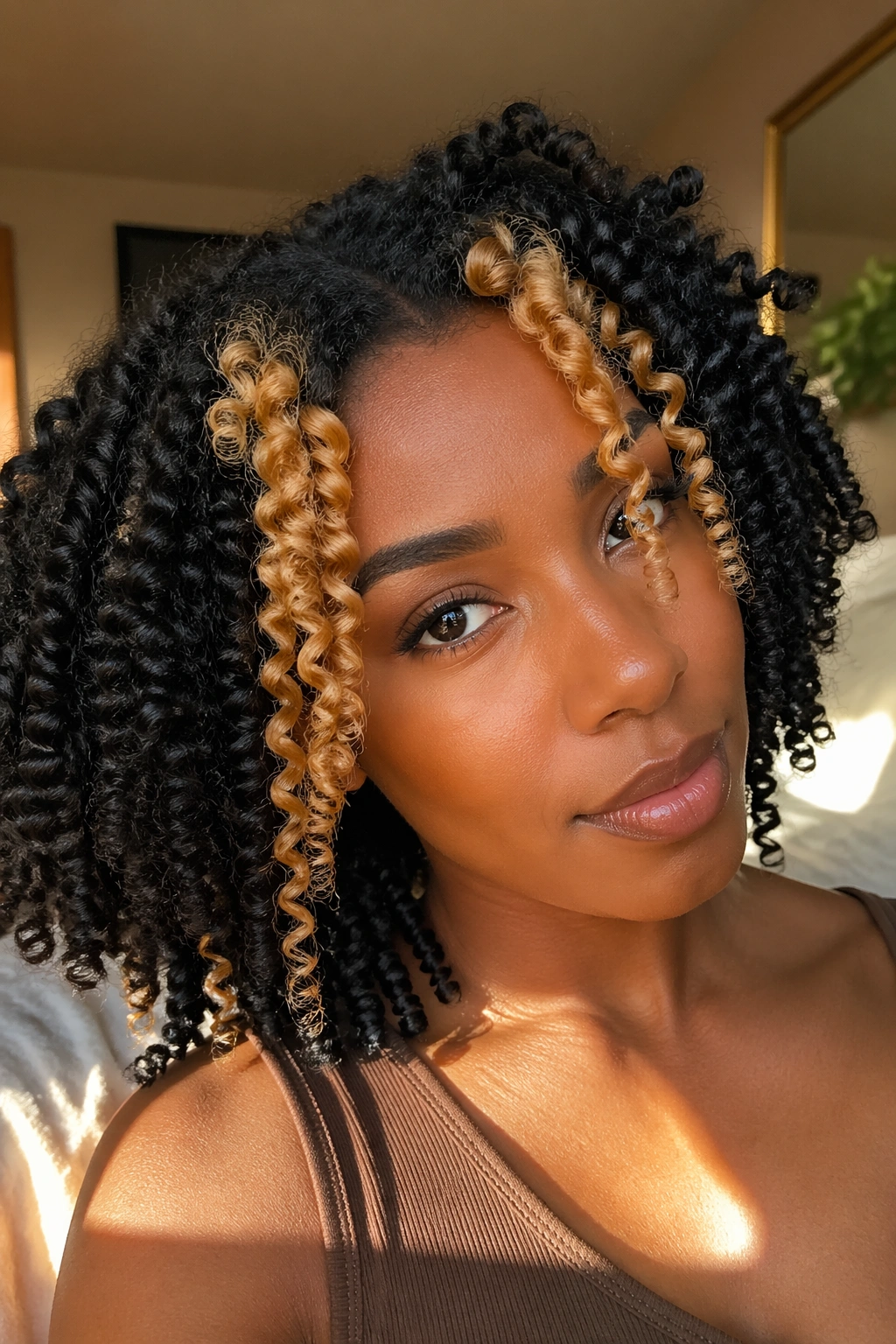
The twist-out and the money piece are a natural pairing. After you unravel each twist, the defined coils throughout your style showcase color beautifully — and the money piece sections at the front twist into the same defined coils as the rest, but with a warm, bright tone.
The visual effect when you unravel money piece sections in a twist-out is almost striped — golden or blonde sections unraveling into dark coils, creating a face-framing effect that’s dynamic and full of movement.
How to Achieve This Look
- Twist the money piece sections first, making sure to use the same twisting technique and product as the rest of your hair so they unravel at the same rate
- Let all twists dry completely before unraveling — partially dry twists unravel into frizz, which muddles the color definition
- Separate the unraveled sections gently with your fingers, pulling the money piece sections forward to frame your face
12. Money Piece on Bantu Knot-Out
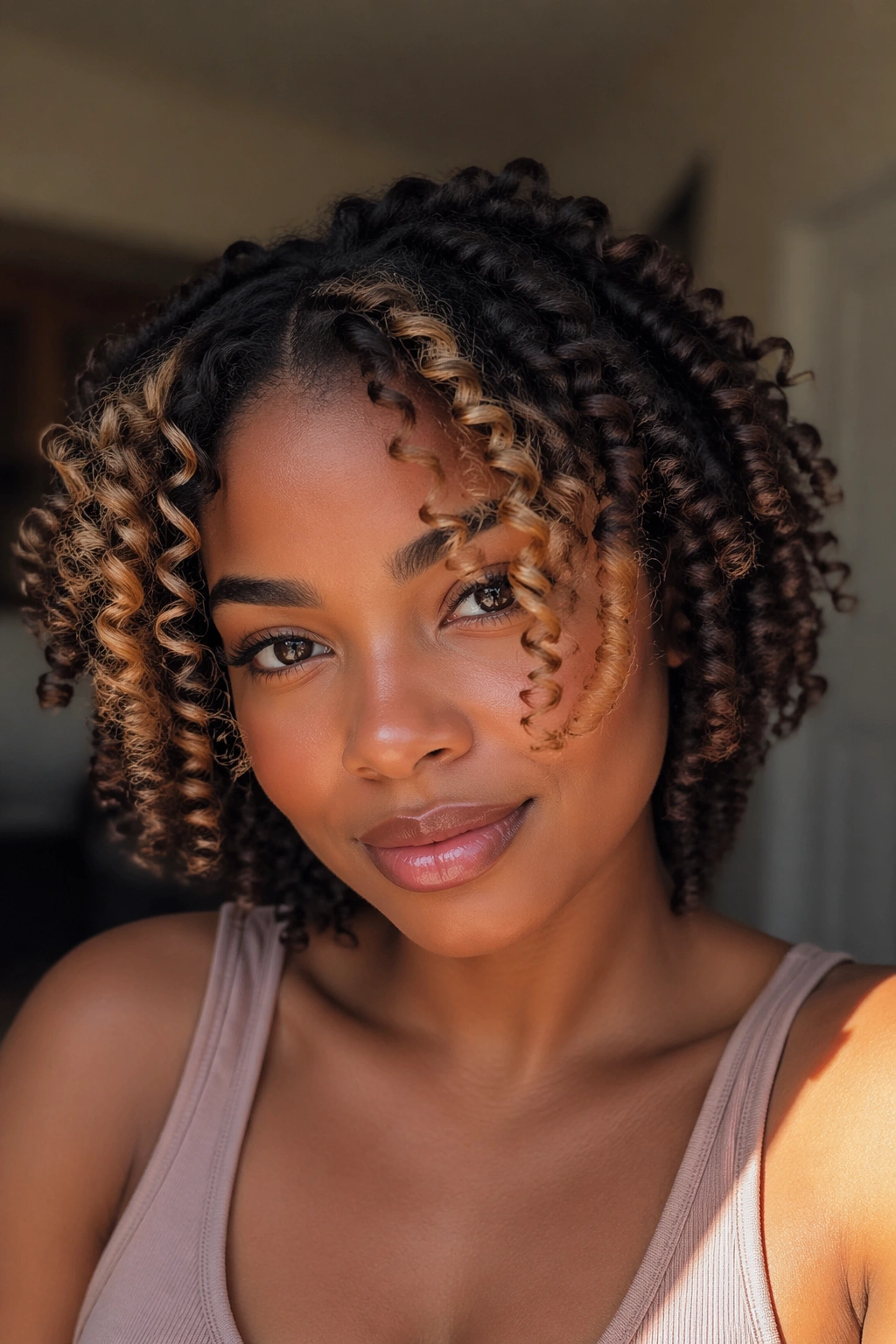
Bantu knot-outs and money pieces are an unexpectedly beautiful combination. The tight spirals created by unraveling Bantu knots give the money piece sections a spring-coil quality that’s visually interesting and texturally rich.
The lighter sections of a money piece after a Bantu knot-out look almost kinetic — each spring coil in the face-framing section catches light differently as it bounces, creating a shimmering, energetic quality that heavier styling techniques don’t produce.
For the money piece to show up well in a Bantu knot-out, the sections need to be wide — a thin strip of lighter color can disappear into dense knot-out coils. Keep the face-framing sections generous and pull them forward deliberately after unraveling.
13. Bold Red and Blonde Dual Money Piece
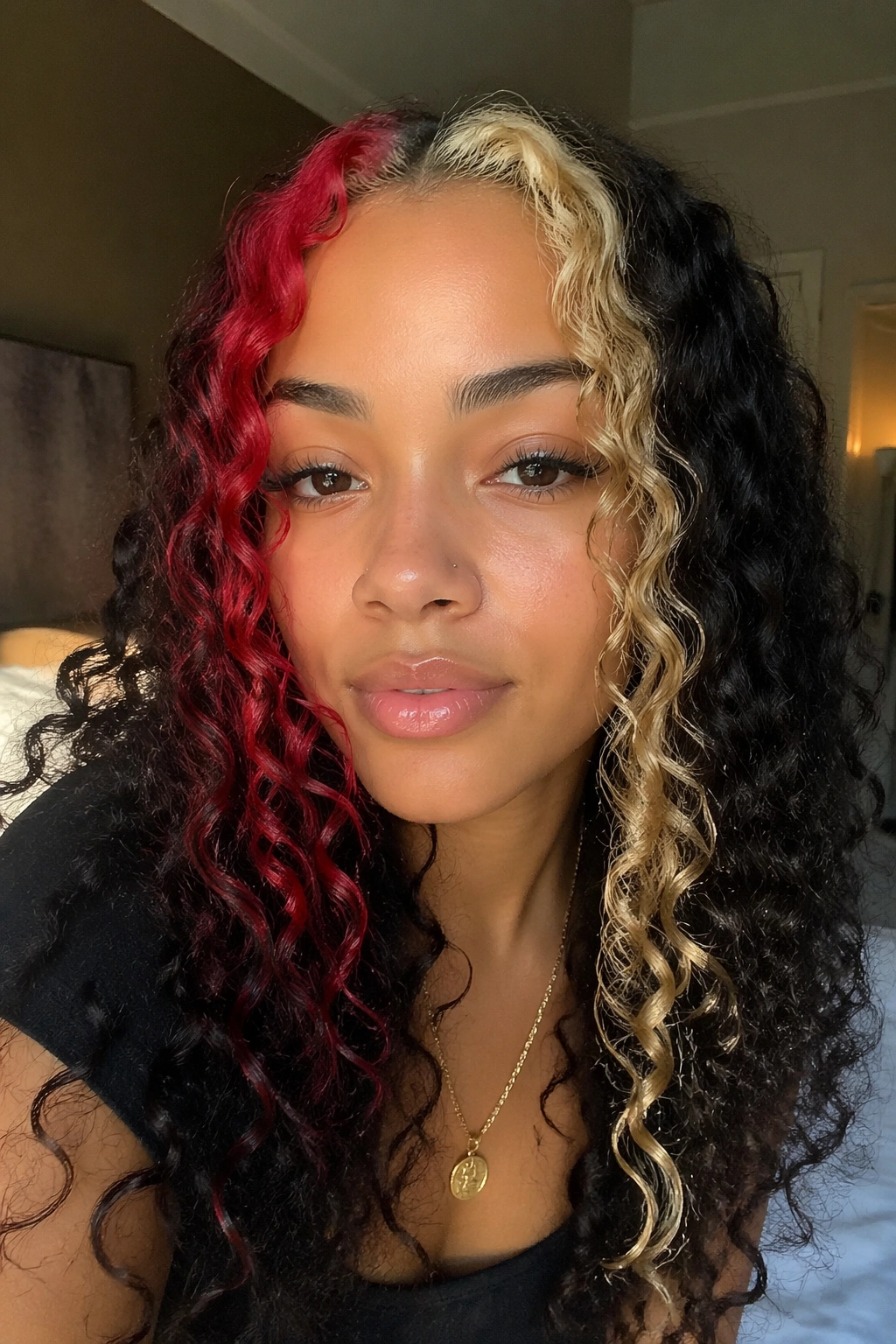
Who says you can only pick one money piece color? A dual money piece — with one face-framing section in red and the other in blonde — is a creative interpretation of the classic technique that creates an entirely different visual effect.
This is an artistic choice that works especially well on women who wear center parts. With red on one side and blonde on the other, the asymmetry creates a deliberately designed contrast that reads as intentional and fashion-forward rather than accidental.
The trickiest part of a dual money piece is keeping the two colors clean and separate at the root level. Work with a colorist who has experience in split-color techniques to ensure the red and blonde don’t bleed into each other at the hairline.
14. Bronde Money Piece on 3b Curls
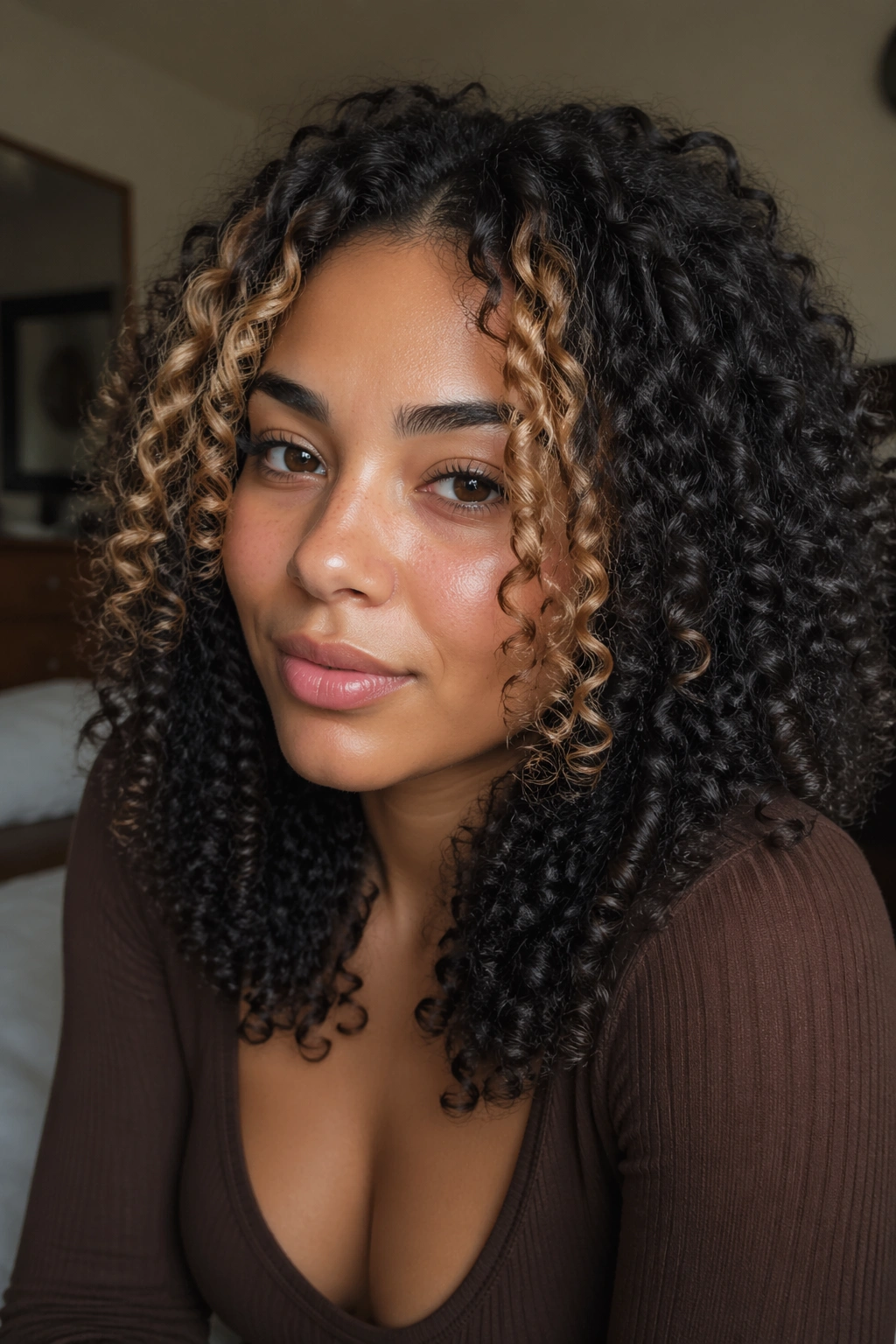
Bronde — the blend of brown and blonde that lives exactly between the two — is a soft, natural-looking money piece option for 3b curls that wants dimension without drama.
On 3b curls, which have a defined, springy curl pattern with visible curl loops, a bronde money piece blends beautifully with the natural dark base. The transition from dark brown to bronde at the face is soft enough to look like natural sun-lightening — the kind of subtle warmth that makes people say “something looks different about you, but I can’t figure out what.”
This is the lowest-maintenance money piece option because the color stays so close to the natural base. Grow-out is nearly invisible, and the bronde tone holds its warmth without requiring frequent toning.
15. Copper Money Piece on Naturally Loc’d Hair
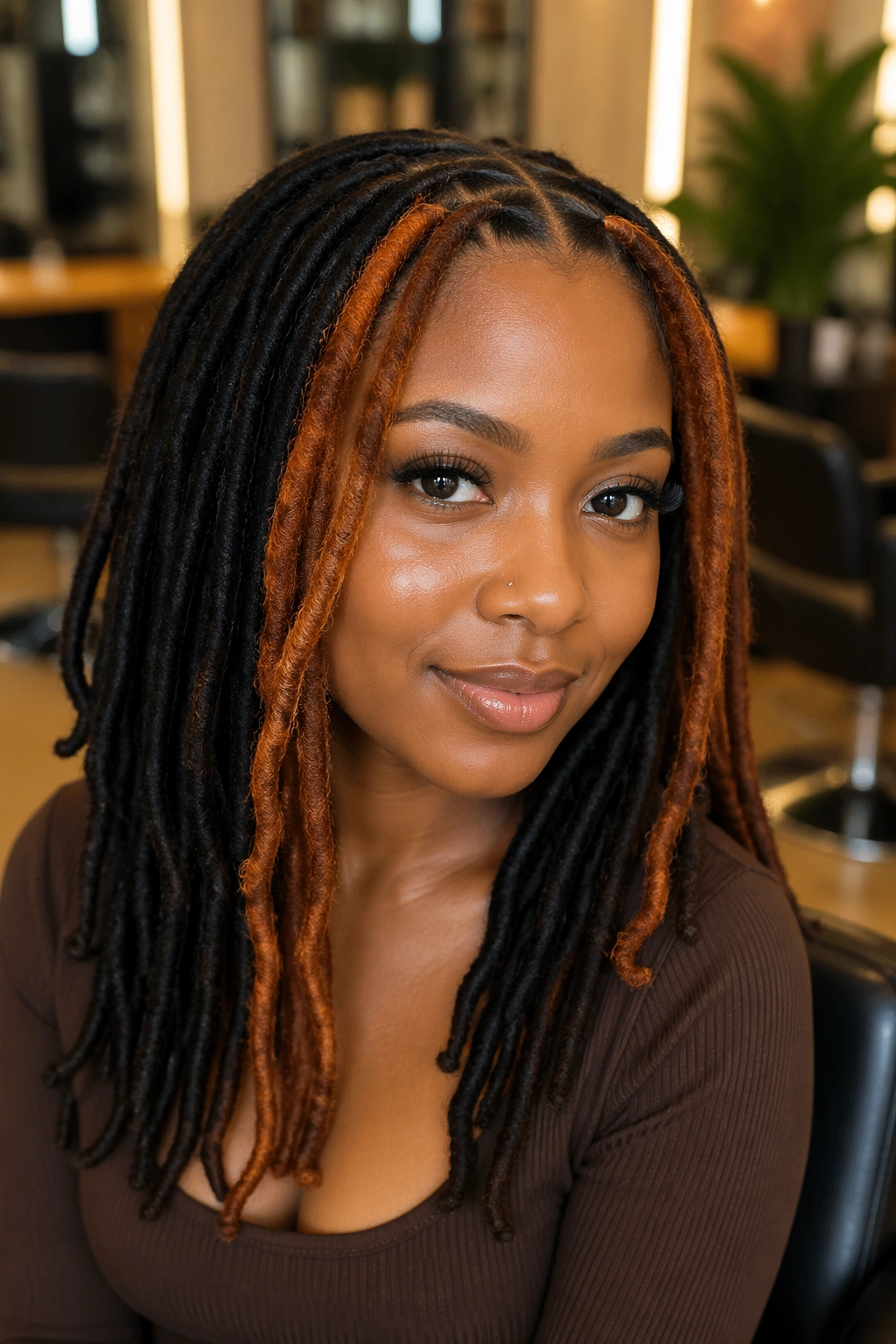
Locs and money pieces don’t get paired together nearly enough — and a copper money piece on loc’d hair is a look that deserves way more attention.
On locs, a money piece works slightly differently than on loose natural hair. Because locs are a permanent style, the color placement needs to be precise and the decision considered carefully — lightening a section of locs requires real care to avoid weakening the loc structure.
For locs, a copper money piece is often achieved by applying a deposit-only red-copper color to the face-framing locs rather than using bleach. This avoids the structural risks of aggressive lightening and still creates a beautiful warm contrast at the face. Over time, the copper fades naturally and can be refreshed with regular color service appointments.
16. Money Piece as Part of a Full Highlight
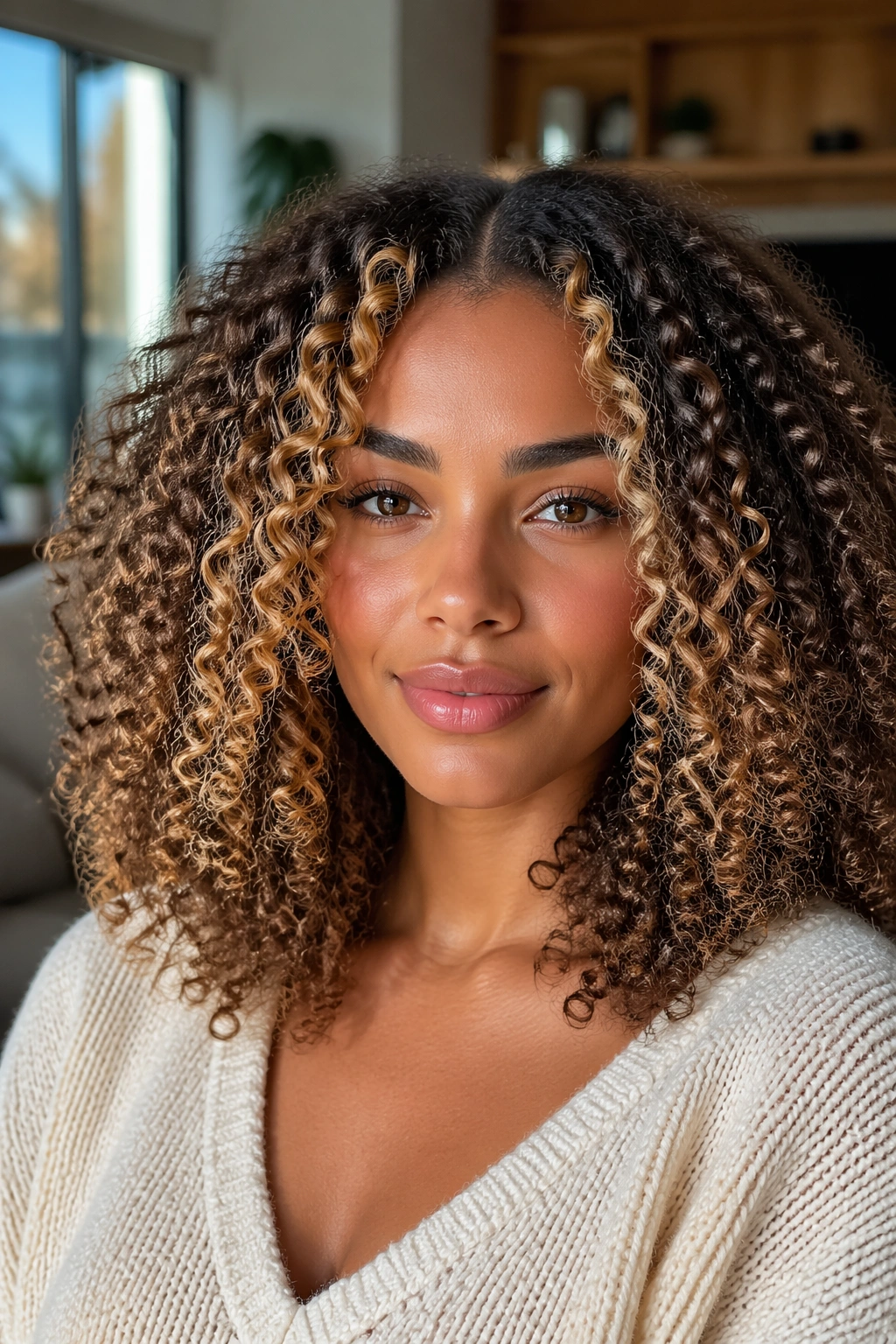
The money piece doesn’t always have to stand alone. Incorporating it as the most prominent element of a full highlight service creates a look where the face-framing sections are brighter and more impactful than the lighter pieces scattered throughout the rest of the hair.
This gives you dimension throughout the style — which keeps the look from feeling too contrast-heavy — while maintaining the clear face-framing effect that makes the money piece so flattering. Think of it as a money piece plus highlights, where the money piece is simply the highest-priority, most visible piece.
On naturally curly hair, this combination looks especially rich because the highlights throughout the hair add depth and dimension to the curl pattern, while the front money piece does the job of brightening the face.
17. Chunky Caramel Money Piece on Box Braids
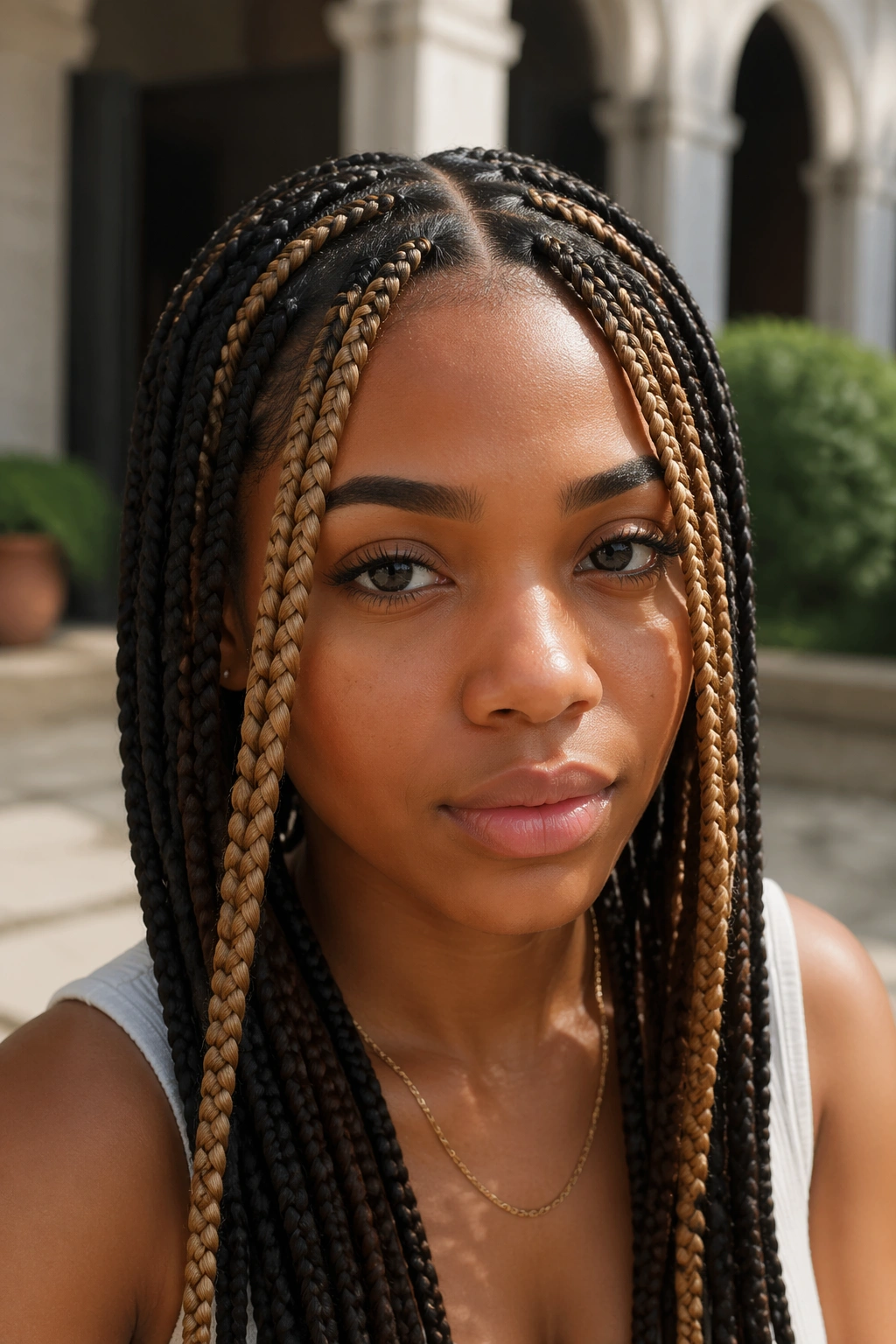
A chunky caramel money piece integrated into box braids is the protective-style money piece at its most impactful. Use caramel-colored braiding hair for 2-3 braids on each side of the face, and the rest of the braids in your natural color or a color close to it.
The caramel framing sections are immediately visible as you wear your braids — whether they’re down, half-up, or in a bun. And because the color is coming from the braiding extension rather than your natural hair, your natural strands stay fully protected and completely unprocessed.
Tip: Ask your braider to use a caramel extension color that’s 2-3 shades lighter than the main braid color for the most natural-looking money piece effect — too stark a contrast can look costume-like.
18. Silver Money Piece on Natural Hair
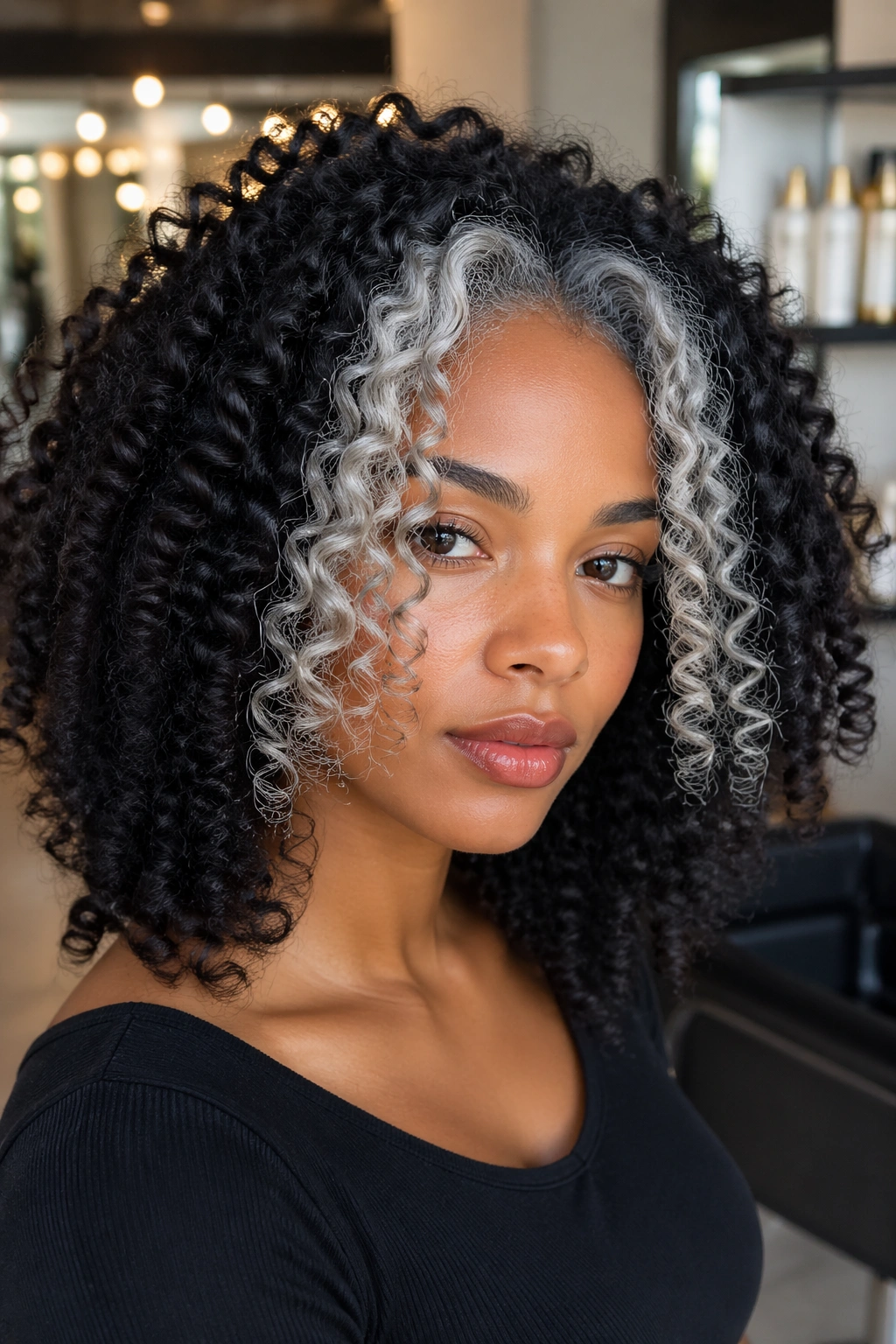
Silver or gray as a money piece color is a bold, fashion-forward choice that’s become increasingly visible in natural hair spaces. It’s not the most traditional option, but it’s one of the most striking.
On dark natural hair, a silver money piece creates a cool, high-contrast frame that reads as deliberately styled rather than age-related. The key is getting the silver to look intentional — which means it needs to be a bright, clean silver rather than a dull or muddy gray.
How to Achieve
- Silver requires significant lightening — you’ll need to reach near-platinum before applying a silver or ash-gray toner
- Use a blue-violet or silver toner applied over the lightened sections to achieve a clean silver rather than a yellowed or warm gray
- Maintain with a purple or blue toning shampoo used once a week to keep the silver bright and avoid yellowing
19. Blonde Money Piece on a Slick Back Style
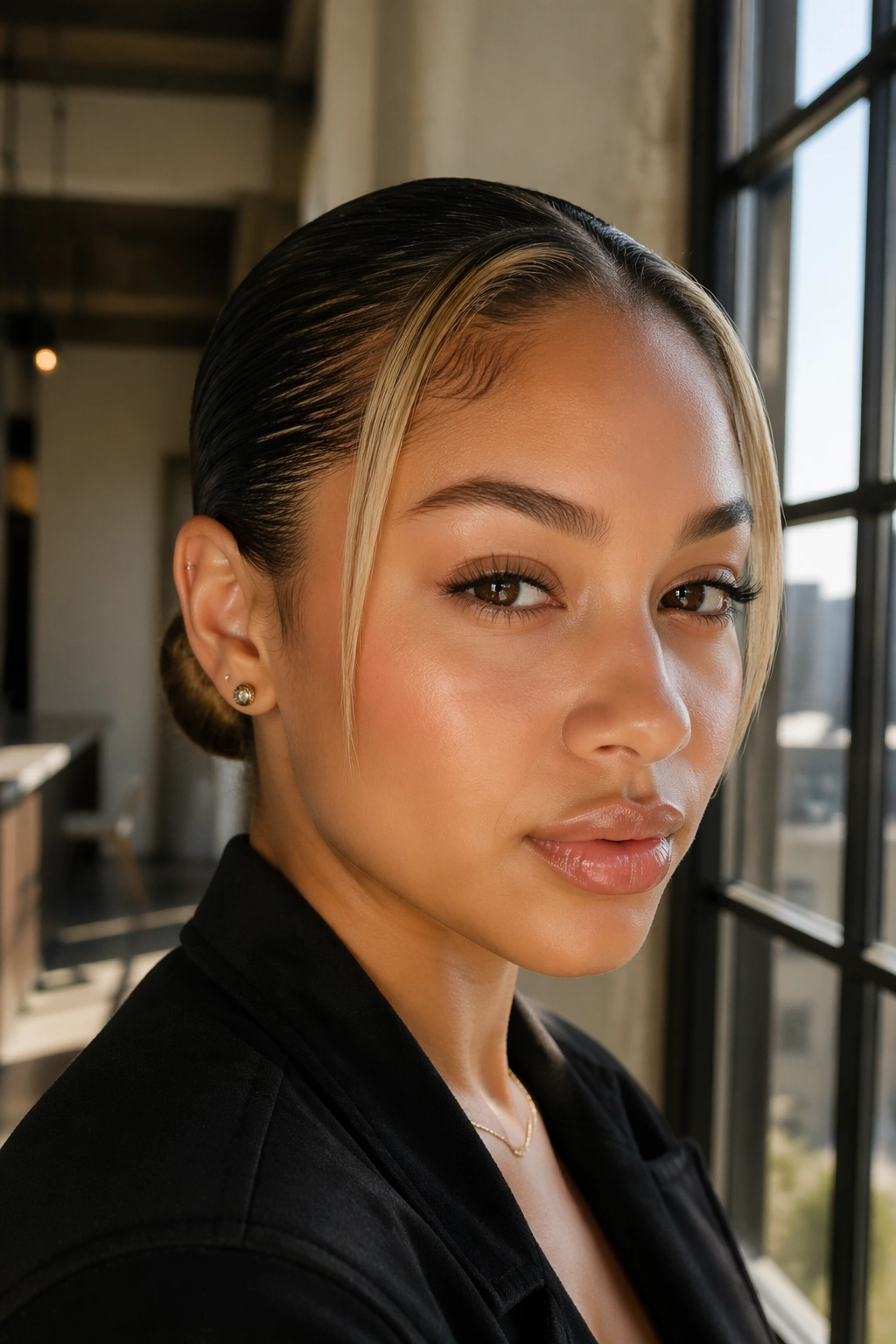
Slicking the hair back — whether into a sleek puff, a low bun, or a laid-back style using edge control — showcases the money piece differently than wearing your hair down. When the hair is pulled back, the money piece sections at the hairline become the defining feature of the entire look.
A slick-back style with a money piece is one of the most polished natural hair looks available. The controlled silhouette of the slicked-back hair, combined with the bright warmth of a well-placed money piece, creates a finished, editorial look that works equally well for office environments and evening events.
The baby hairs matter here. If you have edges you like to lay, incorporating the money piece color into the very front of your hairline — including the baby hair zone — creates a warm, glowing frame right at your face’s edge.
20. Gradient Blonde Money Piece on Defined Coils
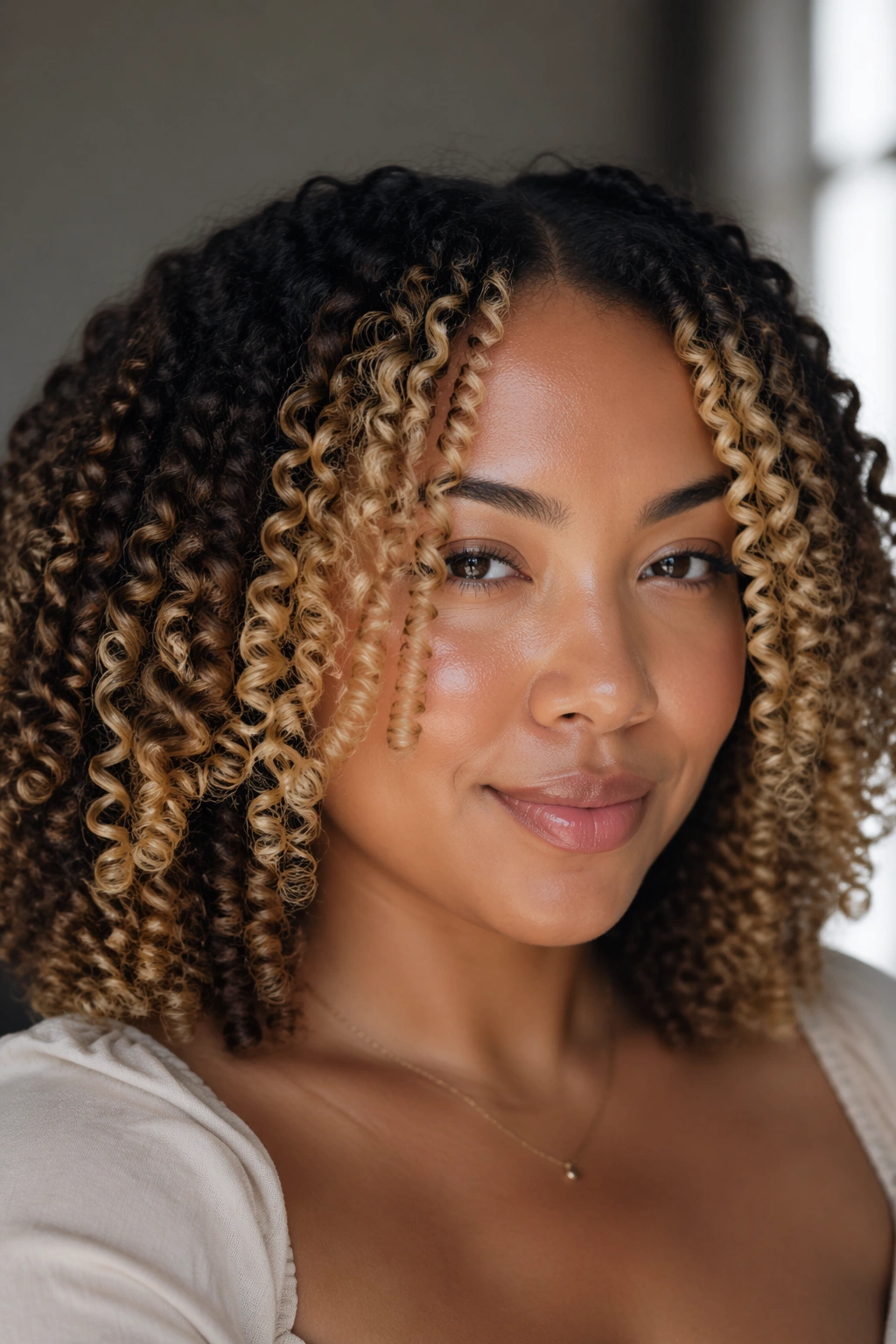
A gradient money piece — where the color transitions from your natural dark tone at the root to blonde at the tips within the money piece section itself — adds an extra dimension to the classic technique.
Rather than having a solid section of blonde color from root to tip, the gradient money piece starts dark and gets progressively lighter toward the ends. On defined coils, this gradient reads as a natural sun-lightening effect — the kind of color variation that makes people think you were born with it rather than processed it.
How to Achieve This Look
- Ask your colorist to use a balayage technique within the money piece sections — painting color only on the mid-lengths and ends, leaving the roots natural
- Request a very gradual transition — the midpoint blend should be subtle, not abrupt
- Style your defined coils with a shine-enhancing gel to help the gradient color catch the light
Keeping Your Money Piece Fresh Over Time
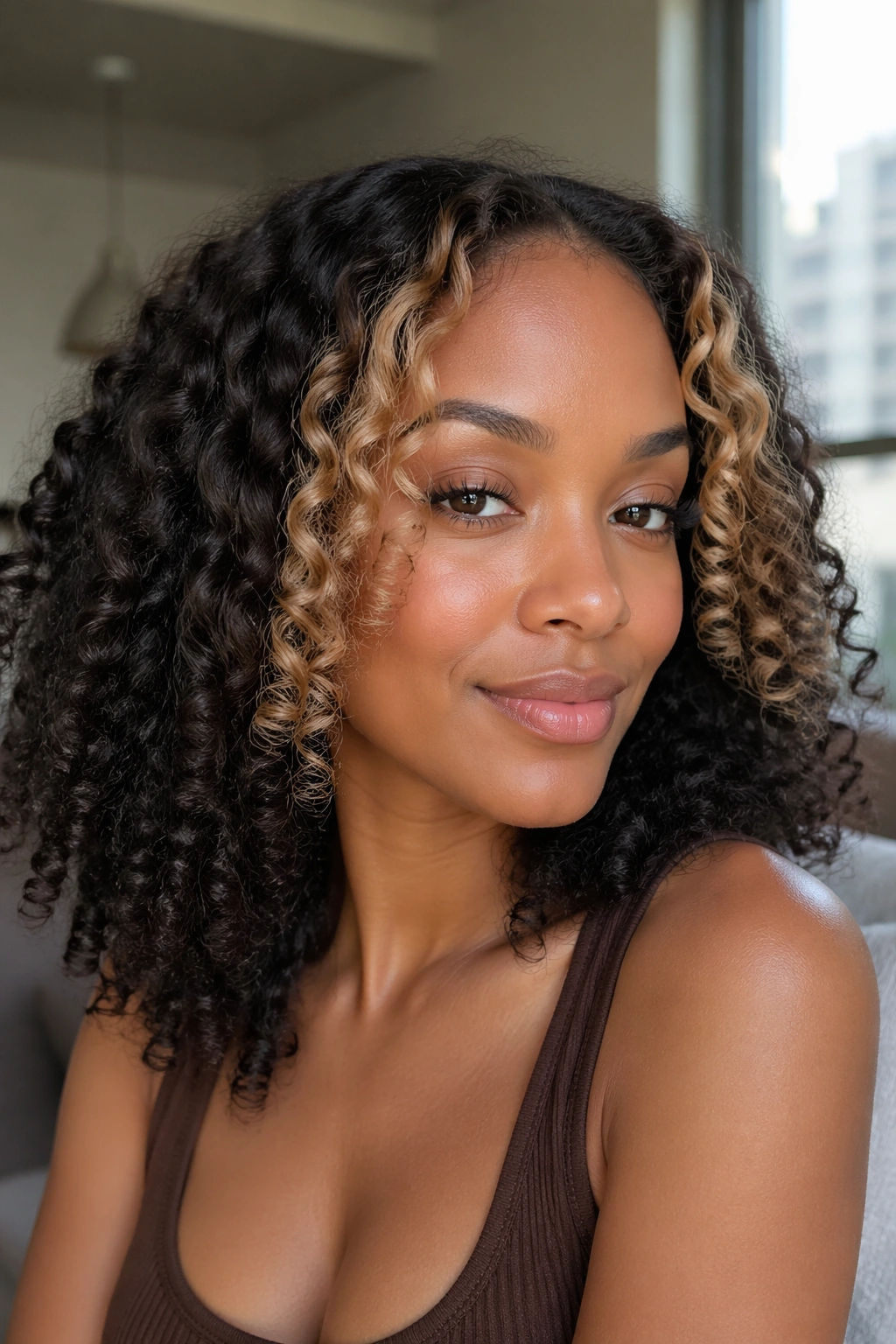
A money piece is one of the most forgiving color techniques in terms of grow-out — but it still needs regular maintenance to stay looking intentional.
How often you need a touch-up depends on how lifted your money piece is and how fast your hair grows. Platinum money pieces that are very different from your natural color will show root grow-out more quickly. Caramel or bronde money pieces that are closer to your natural base can go much longer between appointments without looking unkempt.
Color-depositing shampoos and conditioners in your money piece’s shade are your best friends between appointments. Use them consistently to maintain tone and prevent fading — especially in the first few weeks after your service, when the color is most vulnerable to environmental factors.
Why the Money Piece Works for Every Natural Hair Type
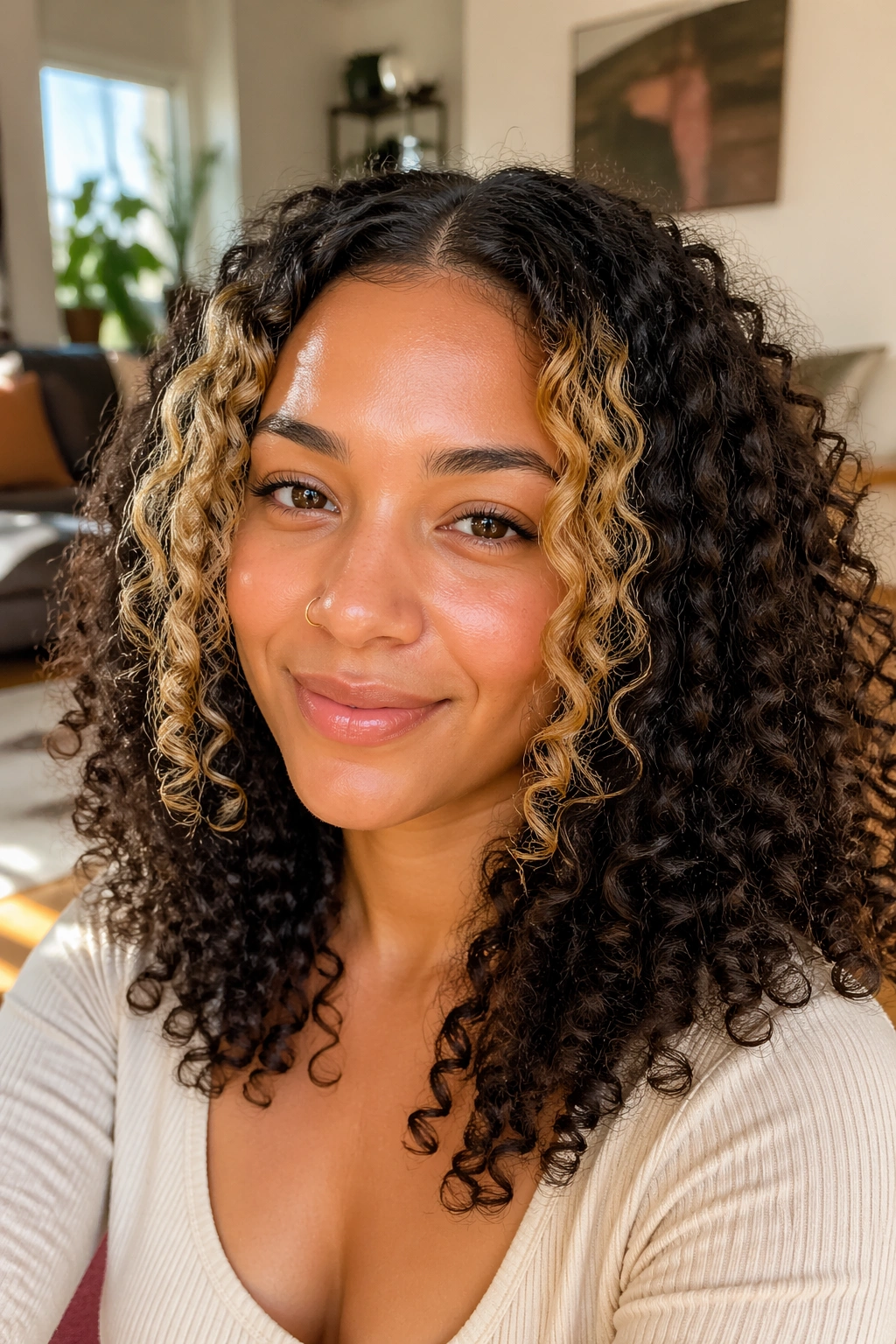
One of the best things about the money piece technique is that it genuinely works across the full spectrum of natural hair textures. From 3a waves to 4c coils, the face-framing principle translates — because what the money piece is doing is fundamentally about your face, not your hair texture.
The placement, the thickness, and the color choice may need to be adjusted for different textures — but the effect is consistent. Lighter, warmer sections at the face brighten your skin, frame your features, and create a look that’s polished without being overdone.
For women who’ve been on the fence about hair color, the money piece is the perfect entry point. It’s not a full commitment — it’s a strategic experiment that delivers real results and teaches you a lot about how color behaves on your specific hair before you decide whether to go further.
