



Color has always been part of how Black women tell their stories through hair — but the conversation around curly hair color ideas for Black women has shifted dramatically. Where chemical straightening was once considered a prerequisite for color, natural hair has claimed the full spectrum. Vibrant reds, deep purples, warm caramels, icy blondes, and every shade in between — all of them look extraordinary on curly and coily natural hair, and the curl pattern itself adds a dimension to color that straight hair simply can’t replicate.
Why Color Looks Different on Curly Natural Hair
This is the thing colorists who specialize in textured hair understand that generalists sometimes miss: color on curly hair is not a static thing. On straight hair, a highlight sits where you put it. On curly hair, that same highlight moves — it coils, it springs back, it sits on the outer face of the curl and catches light from different angles as the hair moves. A single section of highlighted coil reflects color differently when the curl faces forward versus when it faces to the side. That’s dimensional color without any special technique.
The curl pattern also creates natural depth. The inside of a coil is in shadow; the outside is in light. So even a single-process color — one shade applied all over — creates a two-tone effect on curly hair because the light and shadow within the curl structure creates visual contrast. This is why flat, lifeless color that would look boring on straight hair can look rich and alive on coils.
Understanding this means you can actually get away with less. You don’t need as many highlighting sections to create dimension on curly hair. You don’t need an elaborate technique when the hair’s own structure is doing half the creative work. A good colorist who knows textured hair uses this to their advantage — they work with the curl, not around it.
The Natural Hair Color Health Conversation
Before exploring specific color ideas, there’s a conversation that needs to happen honestly. Chemical coloring — particularly lightening with bleach — affects natural hair differently than it affects straight hair. Curly hair’s structure (the zig-zag and coil patterns of the hair shaft) means that damage is distributed differently. The cuticle on very tightly coiled hair is already more likely to have gaps and lifted areas, which makes it more porous and more vulnerable to chemical stress.
This doesn’t mean you can’t color natural hair. Millions of Black women do it beautifully and healthfully. But it does mean that the approach matters more for curly natural hair than it does for straight hair. Over-lightening, lightening too quickly, using formula that’s too strong, or neglecting post-color care can result in significant texture change, breakage, and in extreme cases, permanent curl pattern alteration.
The solution isn’t avoidance. It’s preparation, professional guidance, and a realistic understanding of what your hair can handle. Get a consultation from a colorist who specifically has experience with natural curly hair. Discuss your hair’s history — heat damage, previous chemical treatments, overall health. Be honest about your maintenance capacity. And approach the whole thing as a long-term relationship with color, not a one-time event.
Starting Points: Low-Commitment Color First
One of the most intelligent approaches to color on curly natural hair is to start with low-commitment options before committing to bleach or permanent color. Semi-permanent and direct-dye colors can be applied to unlifted dark natural hair and create real, visible color effects — particularly in deeper, richer shades.
Direct dyes like dark purple, deep burgundy, wine, and midnight blue show beautifully on dark natural hair without any lightening. They sit on the surface of the hair shaft rather than penetrating the cortex, which means they fade over time (usually four to eight weeks) rather than leaving a permanent mark. That fade is often gradual and pretty rather than abrupt.
Color-depositing conditioners work on this same principle — each wash-day application adds a little color, and the cumulative effect over a few weeks can produce noticeable tonal shifts. This is a genuinely zero-risk way to experiment with color direction before committing to anything permanent.
Understanding the Lightening Process for Curly Hair
If you want lighter colors — caramel, copper, auburn, blonde, or any of the pastel or vivid colors that require a light base — some degree of lightening is necessary. Understanding what that process actually does helps you make informed decisions.
Bleach (or high-lift hair color) lifts the natural pigment from the hair shaft by opening the cuticle and breaking down the melanin molecules inside. The cuticle must be opened for this to work, which is why all lightening processes are inherently more disruptive than toning or direct dyeing.
On curly natural hair, the key variables are: the current condition of the hair (dry, brittle hair handles lightening poorly), how many levels of lift are needed (one or two levels is much safer than five or six), and the processing time (longer isn’t always better — it just increases damage risk).
A responsible colorist will do a strand test before any lightening service. They’ll assess your hair’s strength, porosity, and elasticity. They’ll choose a formula that achieves the needed lift with the least possible damage. And they’ll have a clear plan for after-care that begins the moment you leave the salon chair.
Hair Color Maintenance for Natural Curly Hair
Post-color care is where most people fall short — and it’s where the success or failure of a color investment is actually determined. Colored natural hair has specific needs that standard natural hair care doesn’t fully address.
Sulfate-free everything. Sulfates in shampoo strip color, particularly lighter shades. They’re also harsh on the already-porous cuticle of colored hair. Switch every cleanser in your routine to sulfate-free options.
Deep conditioning is mandatory. Not optional, not occasional — every single wash. Colored hair loses moisture faster than uncolored hair because the cuticle is more open after chemical processes. Deep conditioning replaces what washing takes away.
Protein balance matters. Lightened hair often needs protein reinforcement because the lightening process can weaken the protein bonds in the hair cortex. Monthly protein treatments help maintain strength. But too much protein makes hair stiff and brittle — it’s a balance, not a one-direction approach.
1. Auburn Balayage on Natural Coils
Auburn — that warm, red-brown shade that sits between copper and chocolate — is one of the most flattering hair colors for Black women across the widest range of skin tones. On natural coils, an auburn balayage concentrates at the ends and outer sections of the curls, creating a look that catches golden light in a way that makes the hair seem to glow.
Why Auburn Works on Natural Hair
- The warm red tones harmonize with the warm undertones in brown and dark complexions
- Auburn requires moderate lightening — typically two to three levels — which is achievable without extreme processing
- On 4C coils, auburn creates a rich warmth that appears within the afro shape rather than on defined strands
- It fades beautifully into warm copper, then honey, then gradually back to the natural base
Pro tip: A warm-toned toner after lightening helps achieve true auburn rather than settling for a plain orange. The toner is what gives auburn its signature depth.
2. Caramel Highlights on Dark Natural Hair
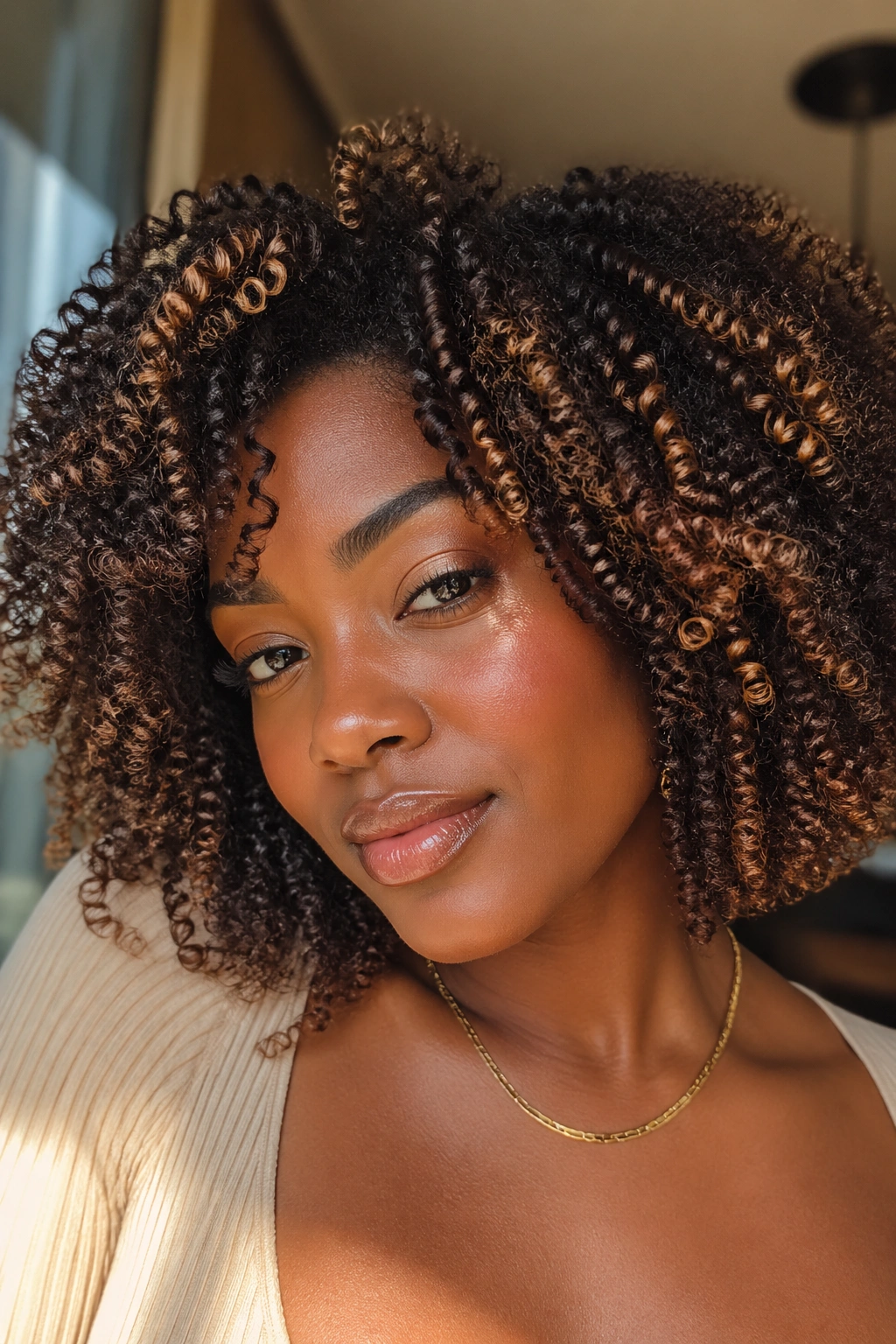
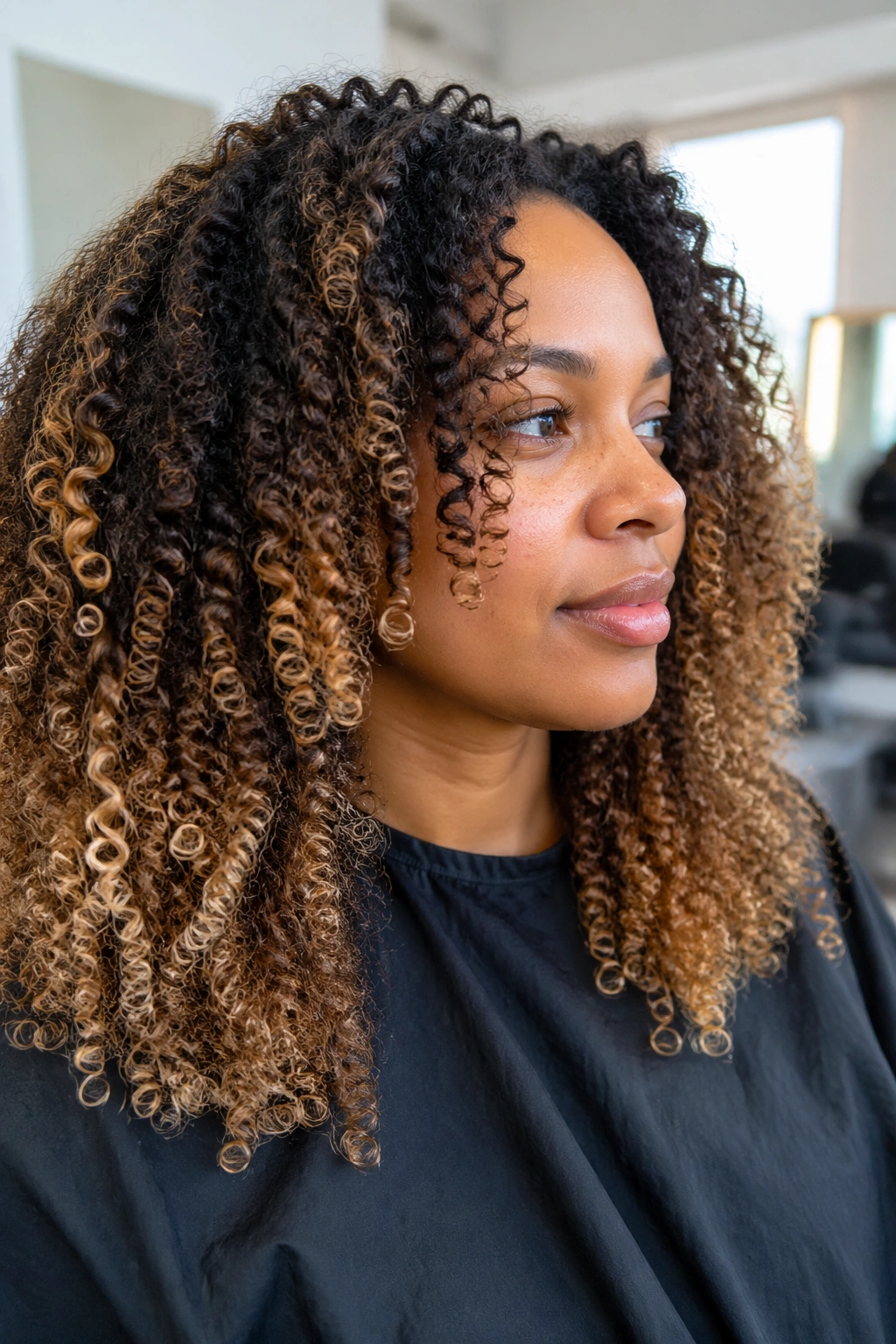
Caramel highlights on black or dark brown natural hair are the gold standard of dimensional color for natural hair — they’ve earned that reputation. The warm amber-gold of caramel against deep coils creates a sun-kissed effect that looks both natural and deliberate. On curly hair where each coil captures and releases light differently, caramel highlights produce a constant, shifting shimmer.
Bold fact: Caramel highlights on 4C hair create an effect that’s different from any other curl type — because 4C hair has so much density and shrinkage, the caramel appears as a warm glow within the afro rather than distinct streaks. In stretched styles, the individual highlighted strands become visible and dramatic.
3. Honey Blonde Ombré
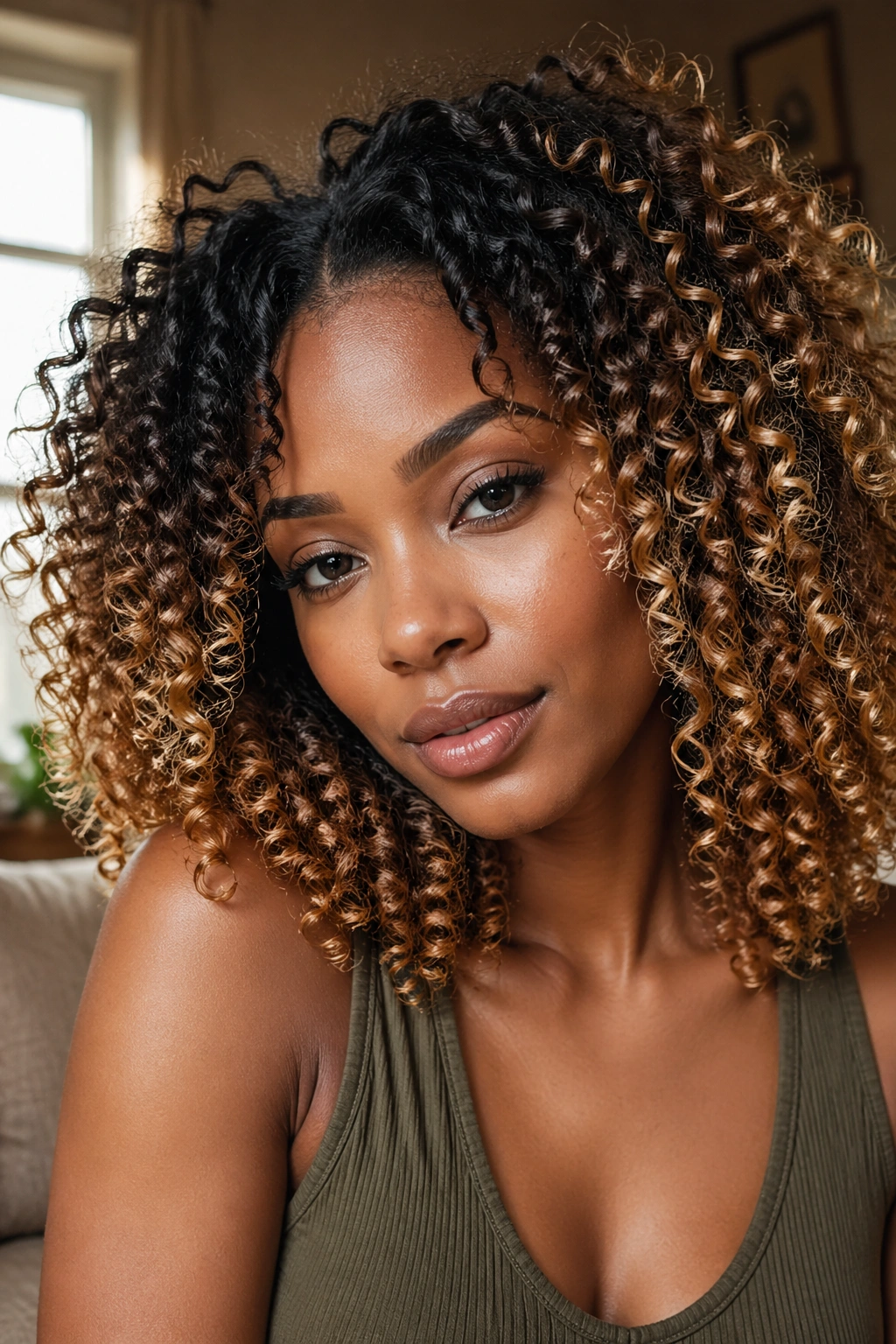
An ombré that transitions from dark brown or black roots to honey blonde at the ends is one of the most dramatic and beautiful color looks on curly natural hair. It requires significant lightening at the tips (typically to a Level 8 or 9 to achieve true honey blonde), which means careful preparation and diligent post-care.
But when done well on healthy natural hair, honey blonde ombré on curls is genuinely stunning. The blonde catches light at the ends of each coil, creating a halo of warmth around the overall curl shape. In a wash-and-go or a defined twist-out, the ombré effect shows at its most dynamic — the transition visible along every curl.
4. Burgundy and Wine Color
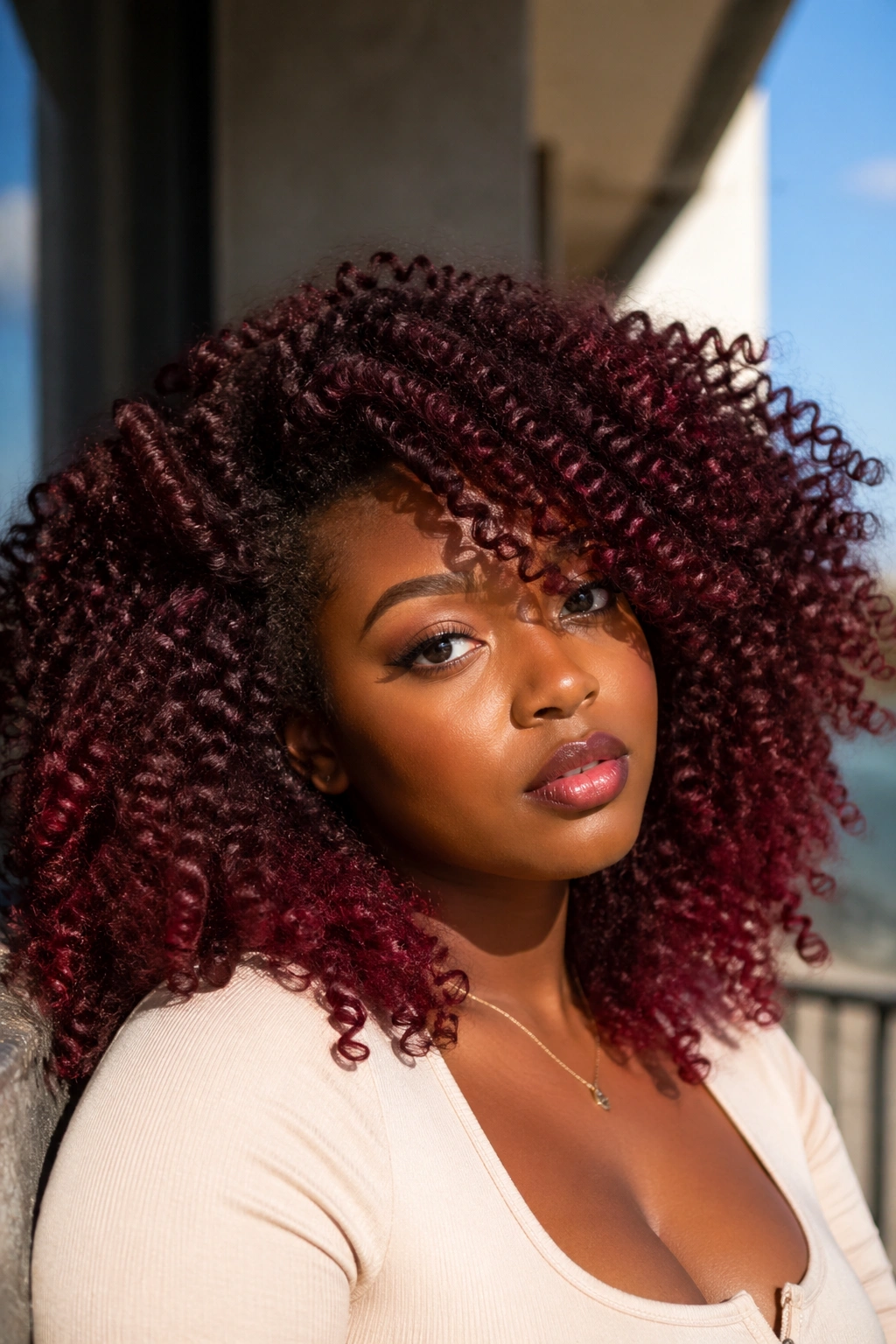
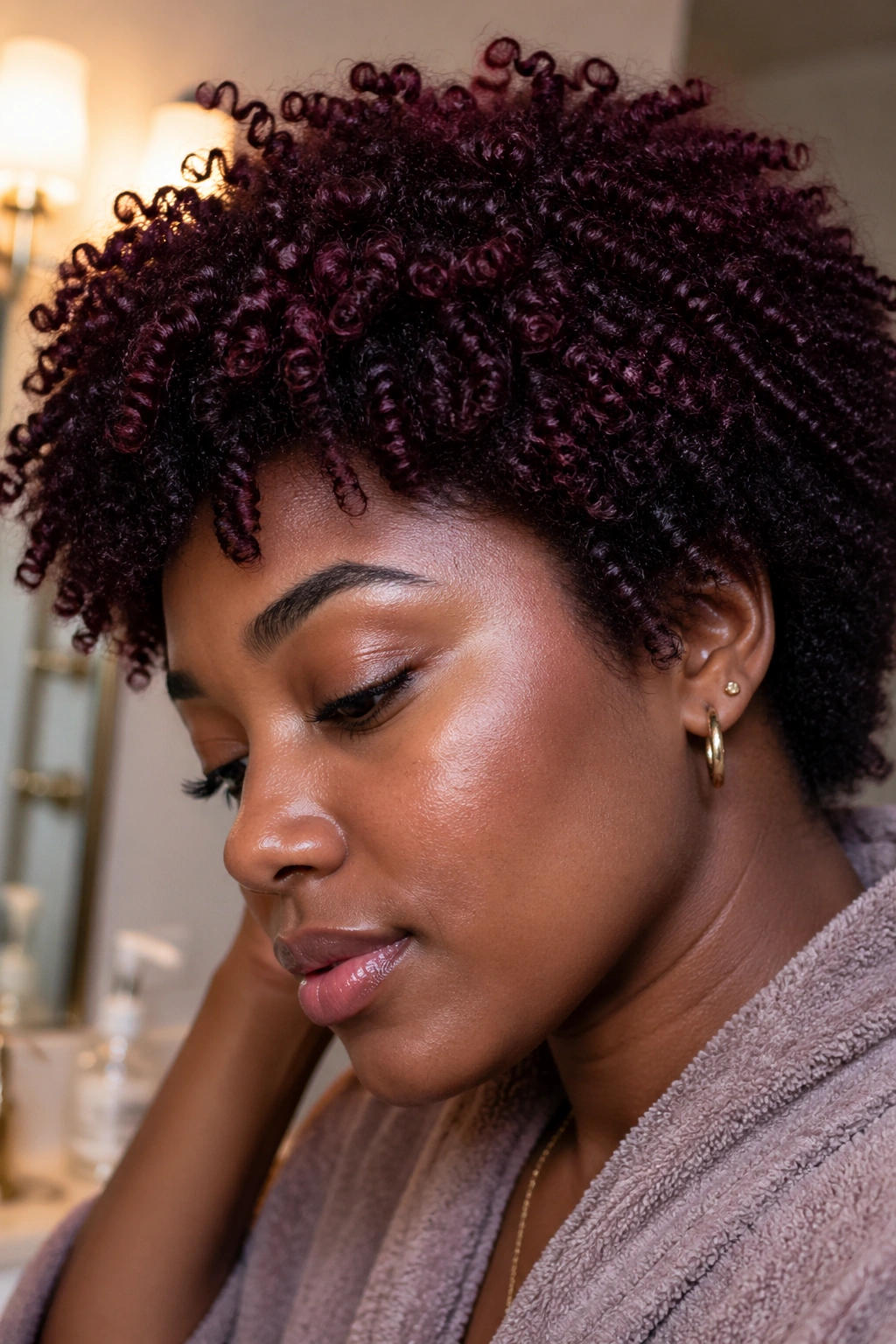
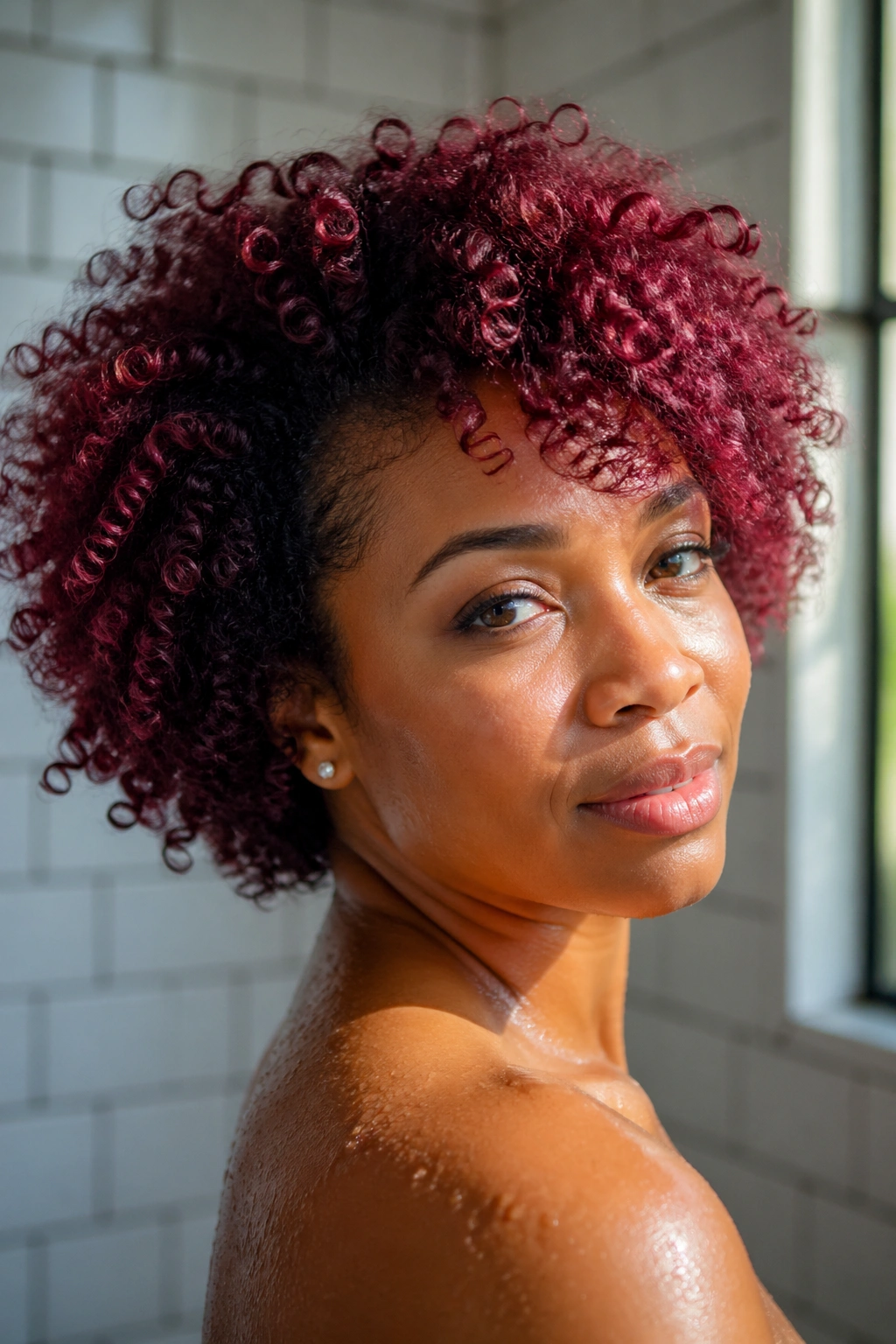
Burgundy — a deep, cool red with purple undertones — is one of the most striking colors on dark natural hair because it doesn’t require lightening to show. Applied as a semi-permanent or permanent single-process color on dark natural hair, burgundy creates a rich, jewel-toned shift that reads as an obvious color change in sunlight but looks like a very deep, mysterious base shade in low light.
Wine (slightly more purple, slightly less red than burgundy) has the same appeal. Both shades photograph beautifully, complement a wide range of complexions, and fade gradually rather than abruptly — through progressively lighter shades of reddish-brown before eventually returning to the natural dark base.
5. Copper Color on Natural Hair
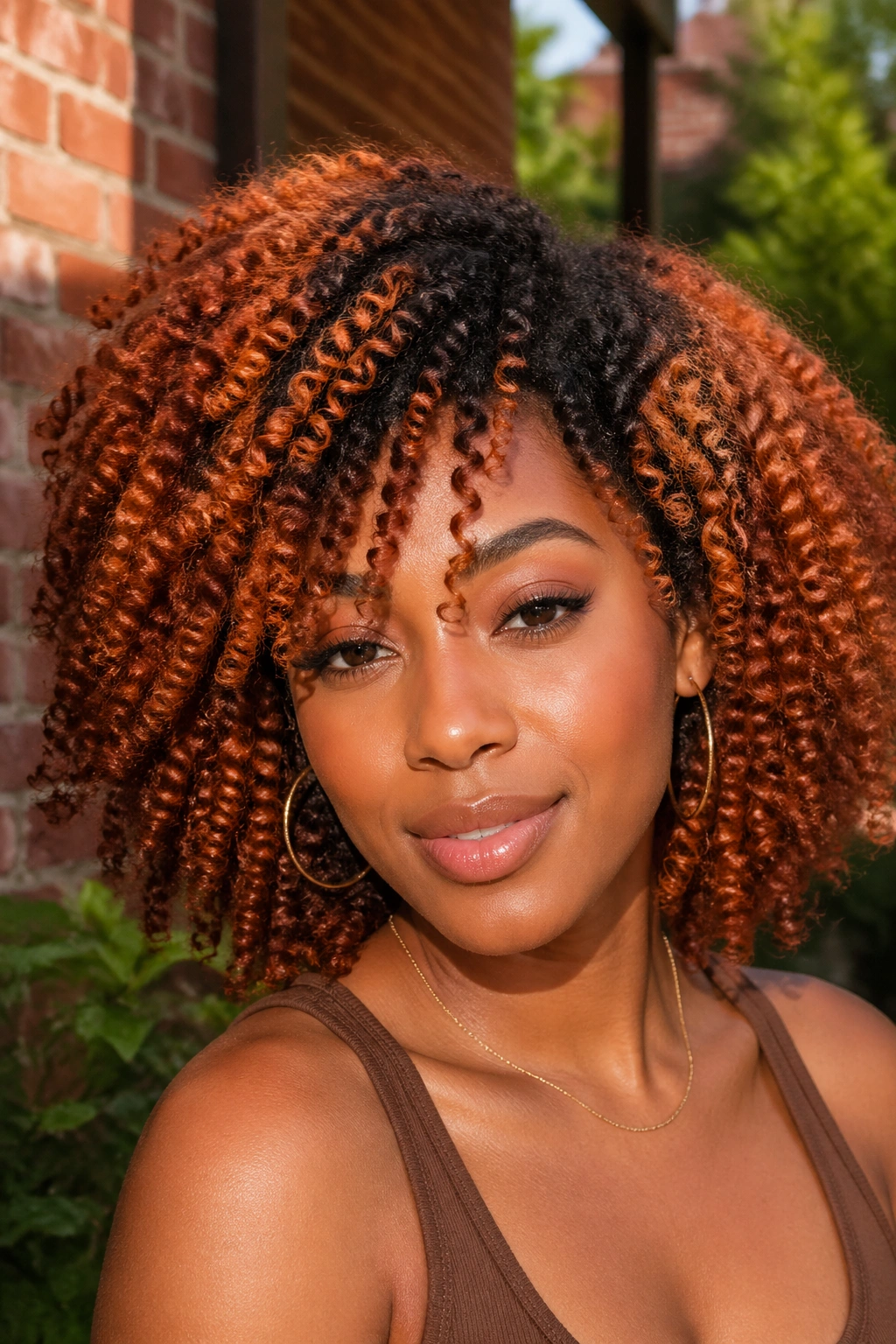
Copper is a bold move — it’s a vivid, warm, orange-adjacent shade that makes a clear statement. On natural coils, copper creates a look that’s almost iridescent in direct sunlight. The way light plays through copper-colored coils is extraordinary — the color shifts between orange, gold, and bronze depending on the angle and intensity of light.
Copper works on multiple complexions — warm brown, medium, and golden skin tones specifically benefit from copper’s harmonious warmth. On deeper ebony complexions, copper creates a dramatic, high-contrast look that reads as bold and intentional. Neither is wrong. Both are beautiful.
6. Dark Cherry or Cola Red
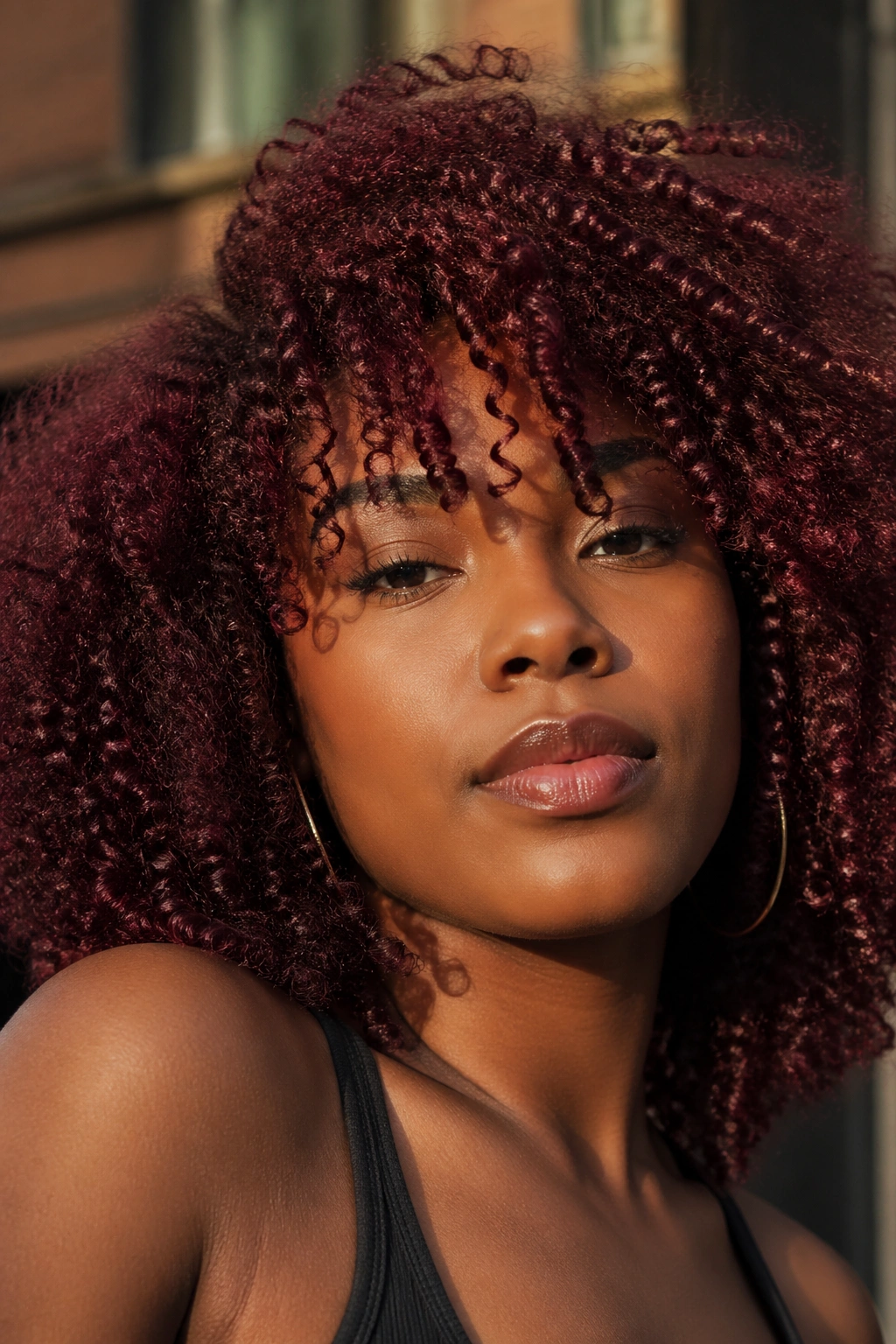
A deep cherry or cola red is a single-process color that adds richness and warmth to natural hair without requiring lightening. Applied over black or dark brown hair, it creates a subtle reddish shift — visible in sunlight, barely noticeable indoors — that makes the hair look richer and more complex than uncolored dark hair.
This is the “I’ve done something but I’m not sure what” color effect. People will notice your hair looks particularly beautiful without being able to pinpoint why. The subtlety is the point.
7. Blue-Black Natural Hair
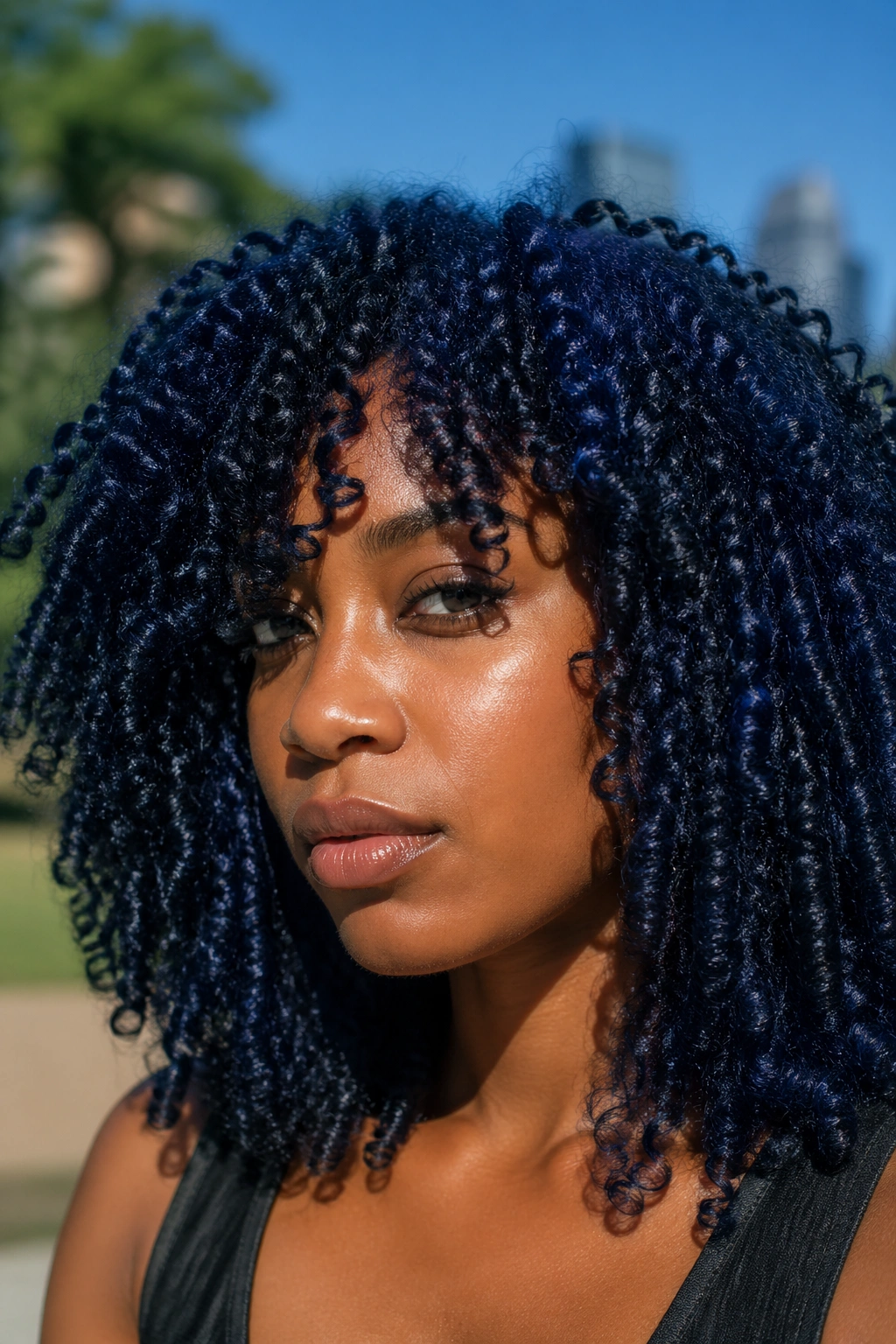
Blue-black is the single-process answer for natural hair that’s already dark but wants a specific, luxurious color effect. The blue in blue-black creates an optical coolness — a sheen that shifts between deep black and midnight blue depending on how light hits the hair. On coily natural hair, blue-black creates an almost reflective quality at the surface of the curls.
It requires no lightening and can be achieved with a direct dye or a semi-permanent color. On very dark natural hair, the blue-black effect is subtle — most visible in bright light or flash photography. But that subtlety is beautiful in its own right.
8. Natural Red (Henna or Chemical)
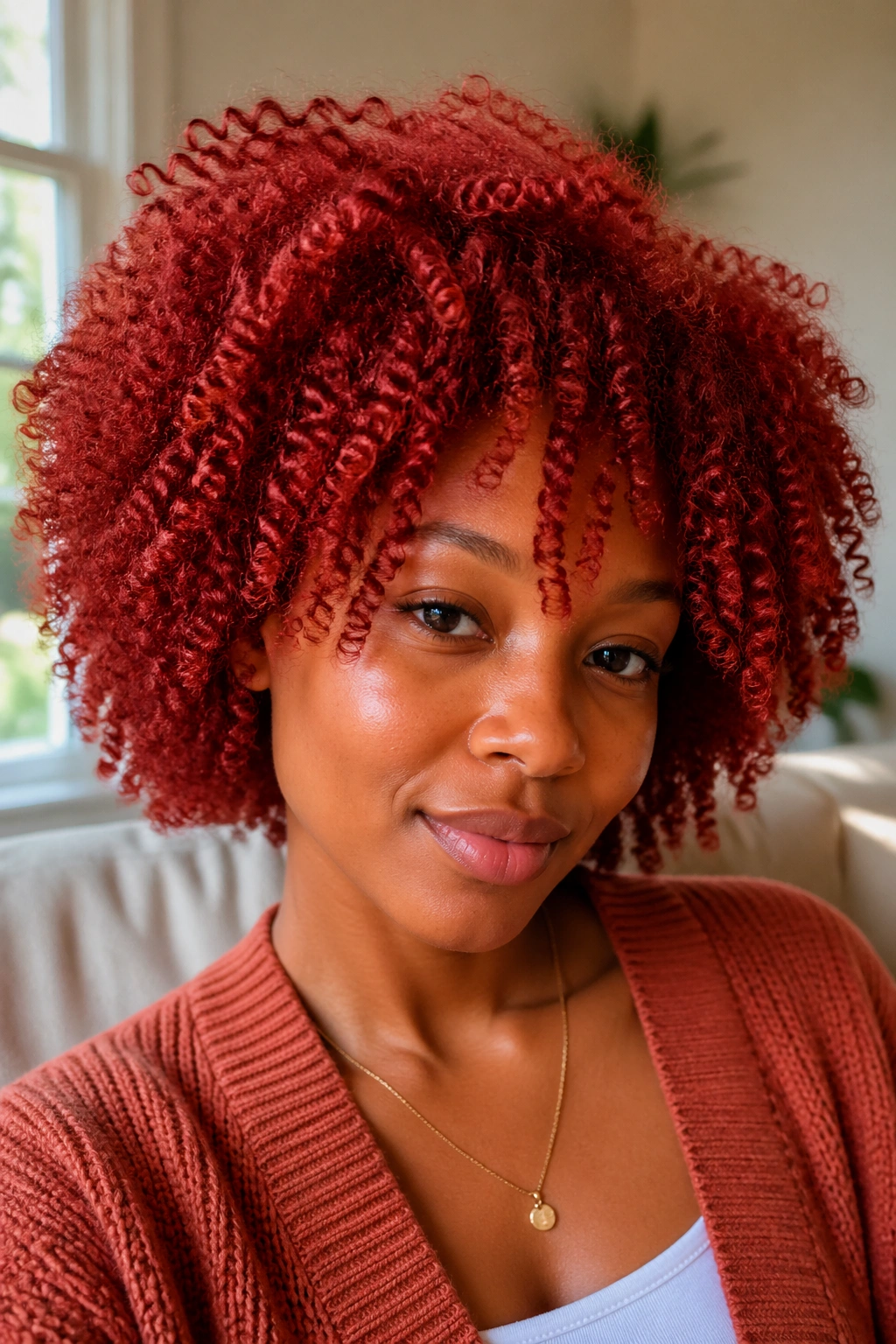
Red natural hair on curly coils is commanding. Whether achieved through henna (which deposits a warm orange-red that builds over applications and interacts with your natural base color) or chemical color, a vivid red on natural curly hair is one of the most striking color combinations in existence.
Henna specifics: Henna builds color gradually — one application may give a subtle warm tint on dark hair; multiple applications over time produce a more vivid, deeper red. Henna also conditions the hair, which makes it a great option for color without compromise on hair health. But henna makes subsequent chemical coloring unpredictable, so choose your path before you start.
9. Chocolate Brown Color
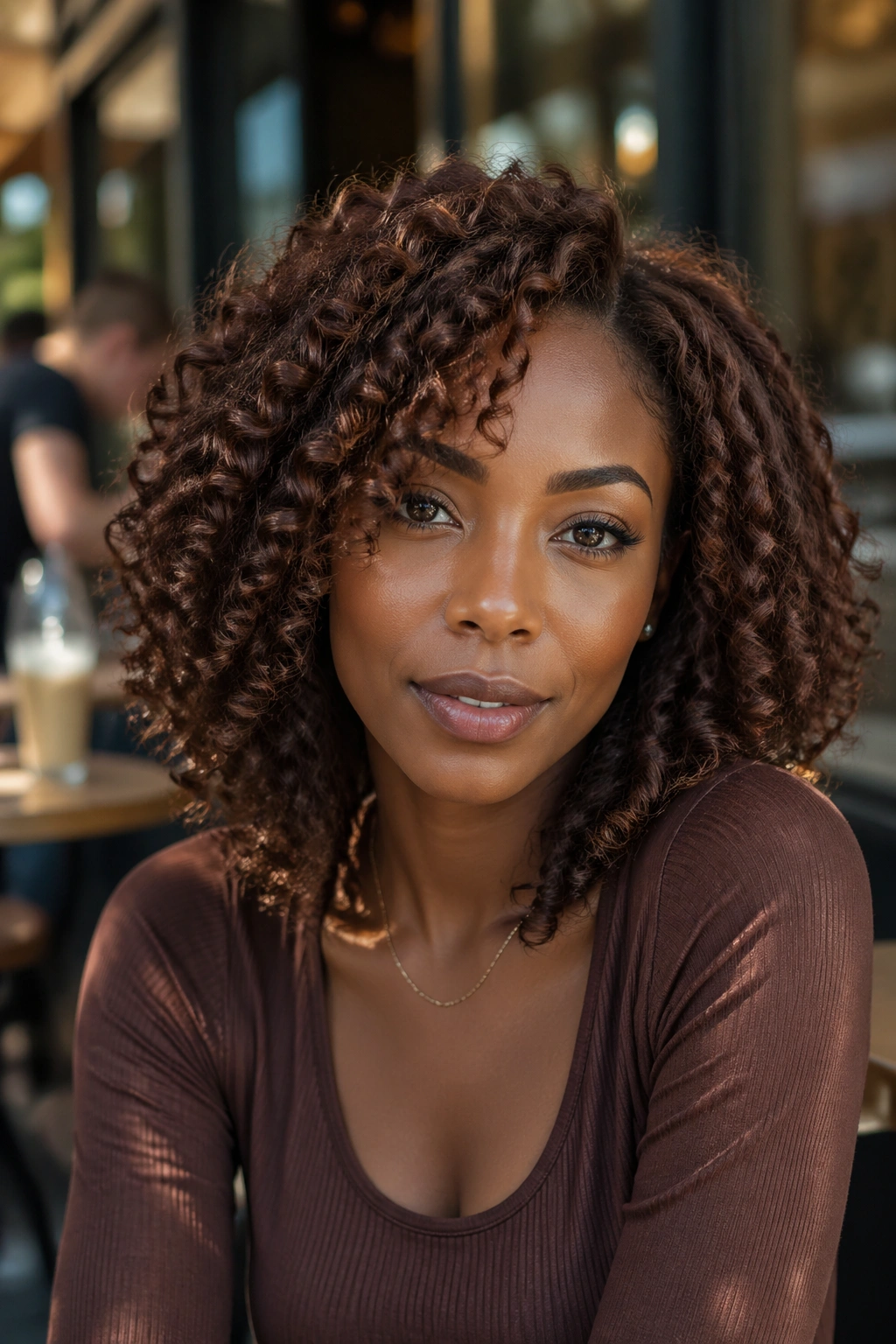
Chocolate brown — a warm, rich medium brown — is a color upgrade that’s accessible for women who want to change their look without the commitment or risk of vivid colors or significant lightening. On black natural hair, chocolate brown lightens the overall appearance by two to three shades, creating warmth and dimension.
It’s the most natural-looking color change on this list. Done right, it looks like your hair always had warm undertones that you’re just now letting show. That seamlessness is its appeal — and its quiet power.
10. Purple Balayage
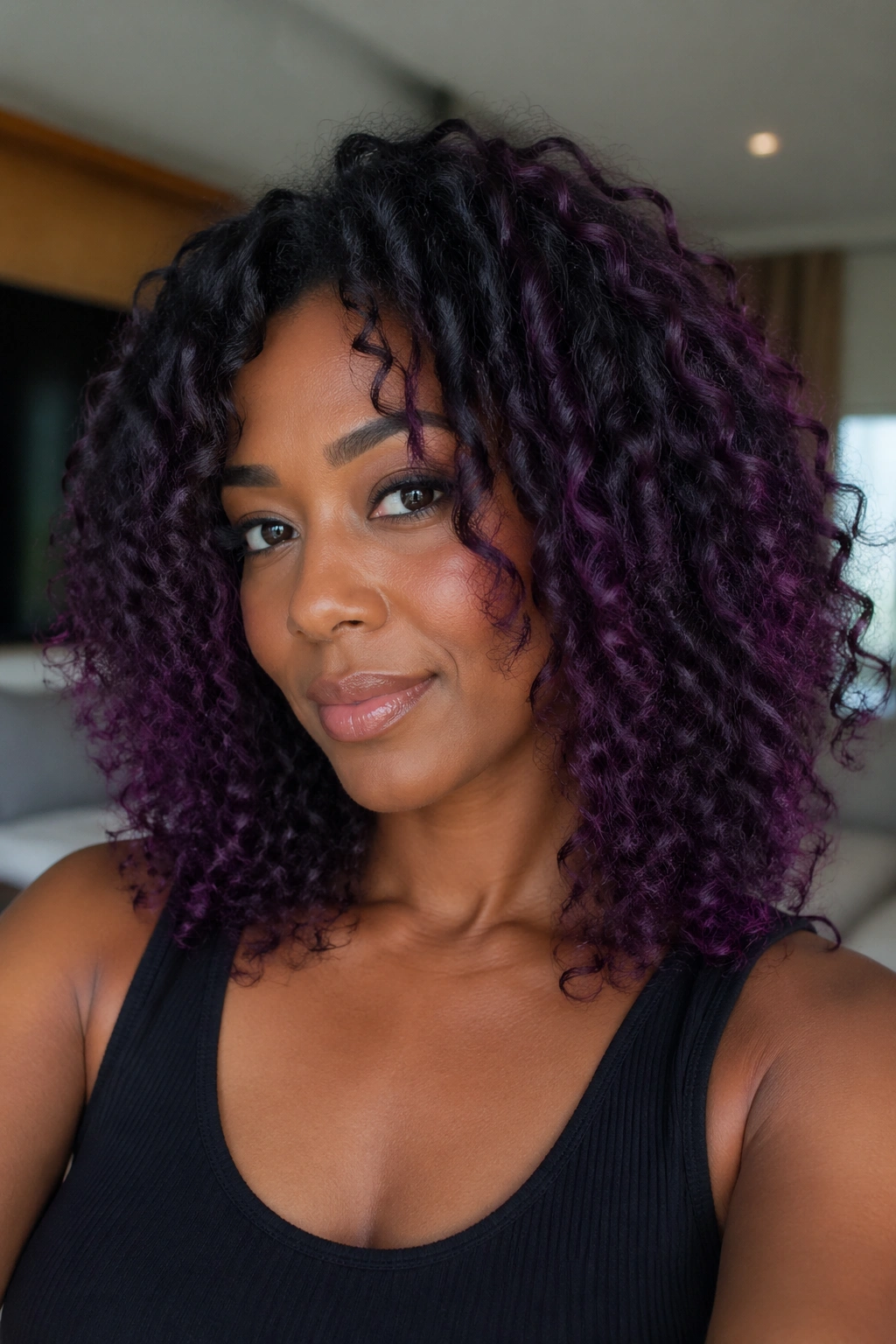
Hand-painted purple balayage on curly natural hair is an arresting look that stops people mid-scroll. The purple concentrates at the mid-lengths and ends, where the coils and spirals catch and display the color in three dimensions. Every movement of the head reveals a new angle of the purple — sometimes vivid, sometimes deep, always dynamic.
The depth of purple that works without lightening (plum, dark violet, wine-purple) is different from the brighter shades (true purple, lavender, lilac) that require a lighter base. Both are beautiful — the choice depends on how much commitment to the lightening process you’re ready to make.
11. Platinum Tips on Natural Hair
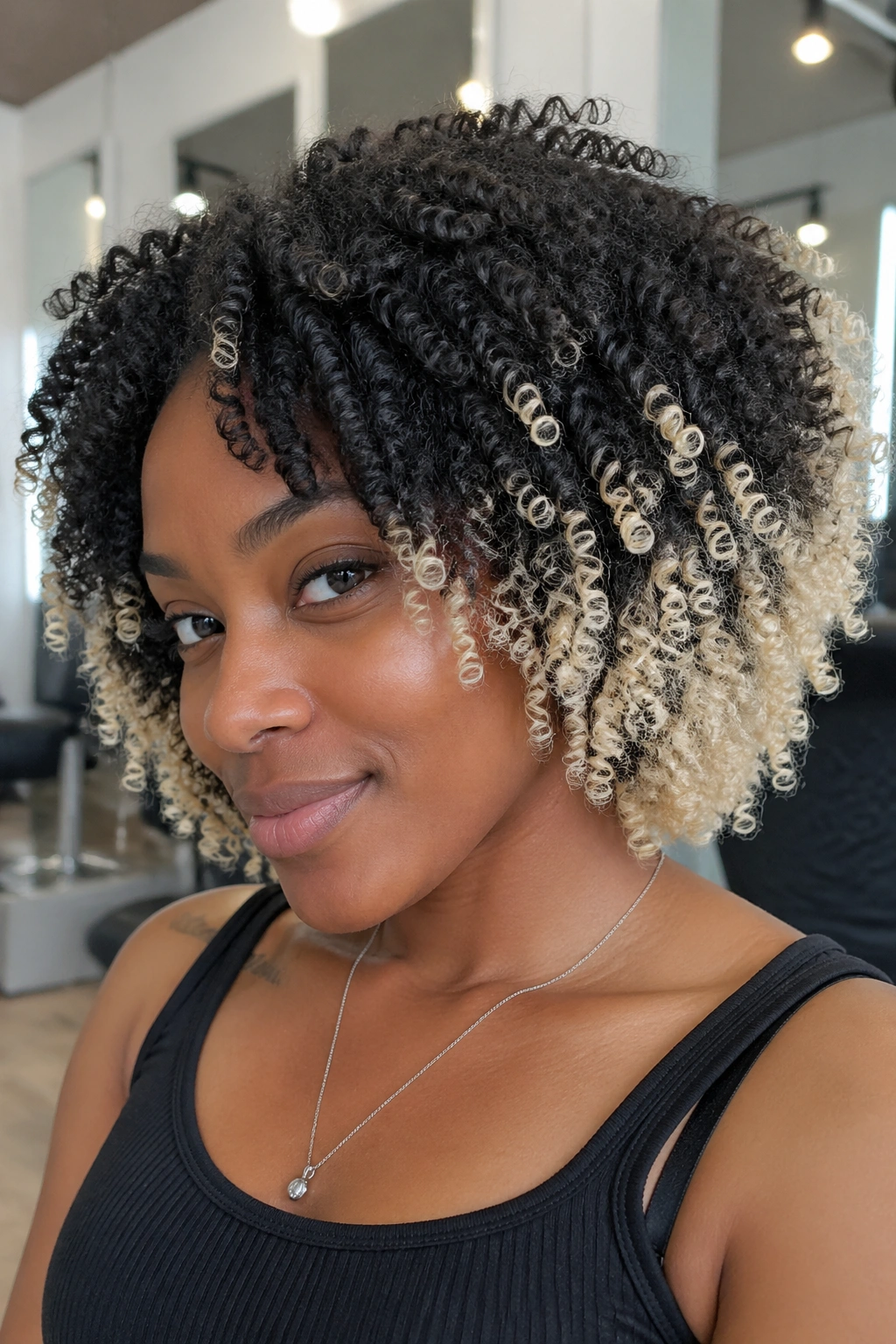
Platinum tips — the most extreme end of the ombré spectrum, where the ends of natural hair are lifted to near-white — are a fashion-forward, high-impact color statement. They require significant lightening and meticulous care, but the contrast of near-white tips against dark coils is genuinely electrifying.
This is a look for women who are committed to intensive color maintenance and who approach hair care with the same discipline as any other high-maintenance beauty practice. Done at a salon with experience in natural hair, the results can be extraordinary.
12. Two-Toned Color: Natural Base With Vivid Tips
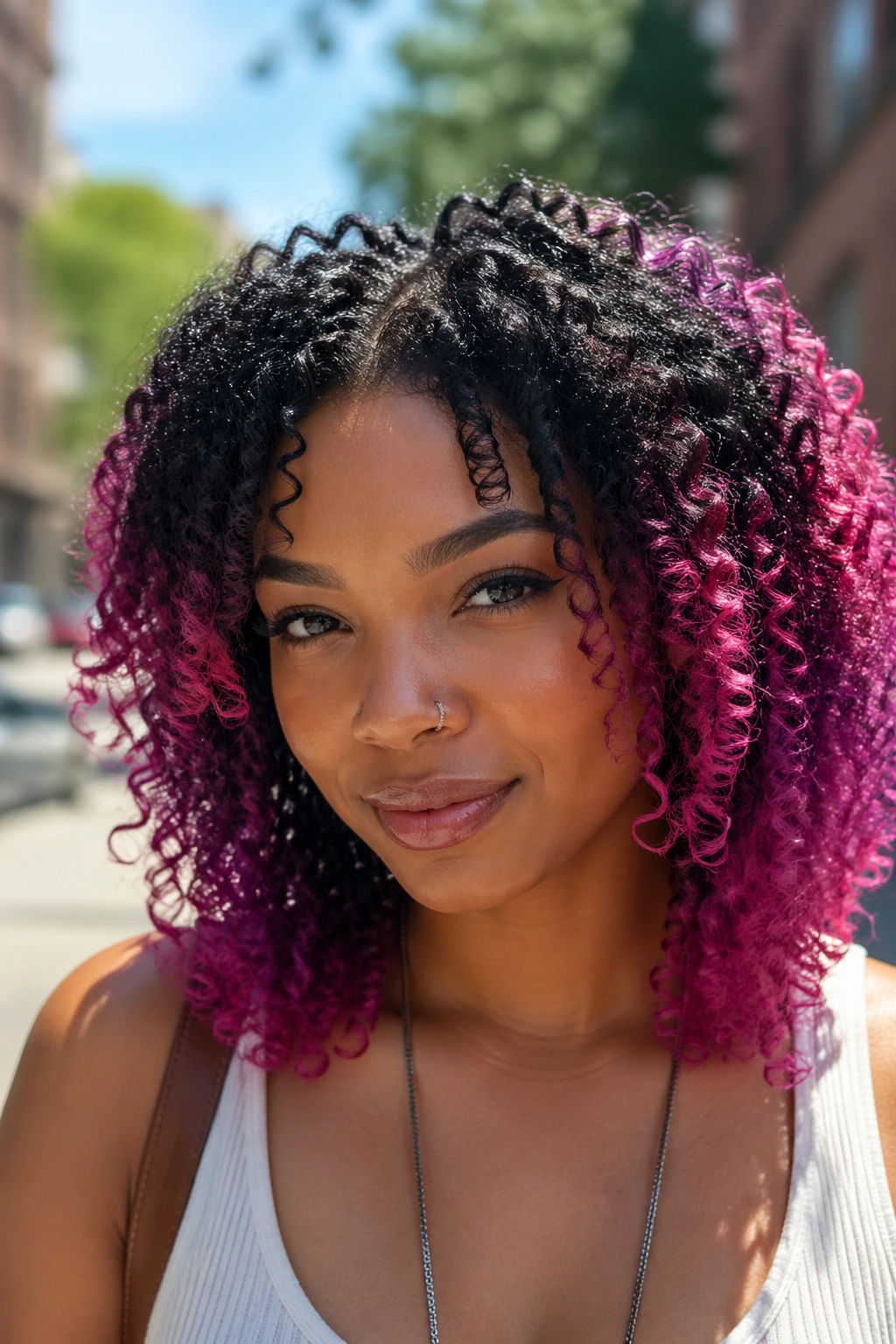
A two-toned look keeps the roots and crown in the natural base color and applies a vivid, contrasting shade to just the ends. The transition between the two can be soft (balayage-style) or sharp (a clear line where the natural ends and the vivid begins).
On coily natural hair, two-toned color creates a look where the top of the afro or style is dark and natural, and the perimeter and tips light up with the vivid shade. In a puff or a defined wash-and-go, that lighting-up effect at the perimeter is dramatic.
13. Golden Blonde Highlights
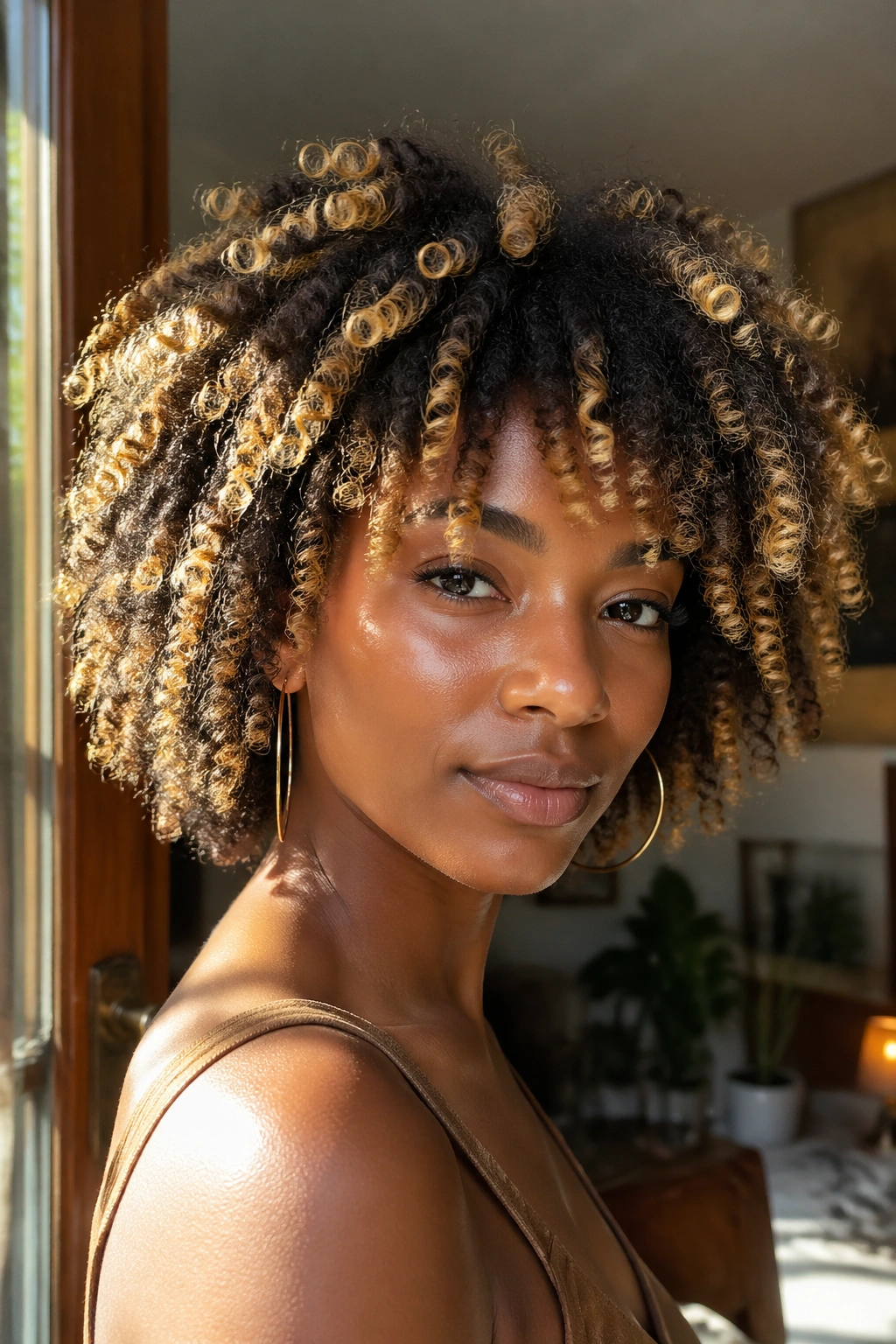
True golden blonde requires significant lightening on dark natural hair — but it’s achievable and beautiful when approached carefully. Golden blonde highlights on natural coils are luminous. The gold reads warm against most complexions, particularly warm brown and golden skin tones, and the way it catches light on curly hair is almost otherworldly.
Partial golden blonde highlights — concentrated at the crown and face-framing sections — minimize the chemical exposure while maximizing visual impact. Strategic placement beats all-over coverage every time for both aesthetics and hair health.
14. Rose Gold Toner on Lightened Natural Hair
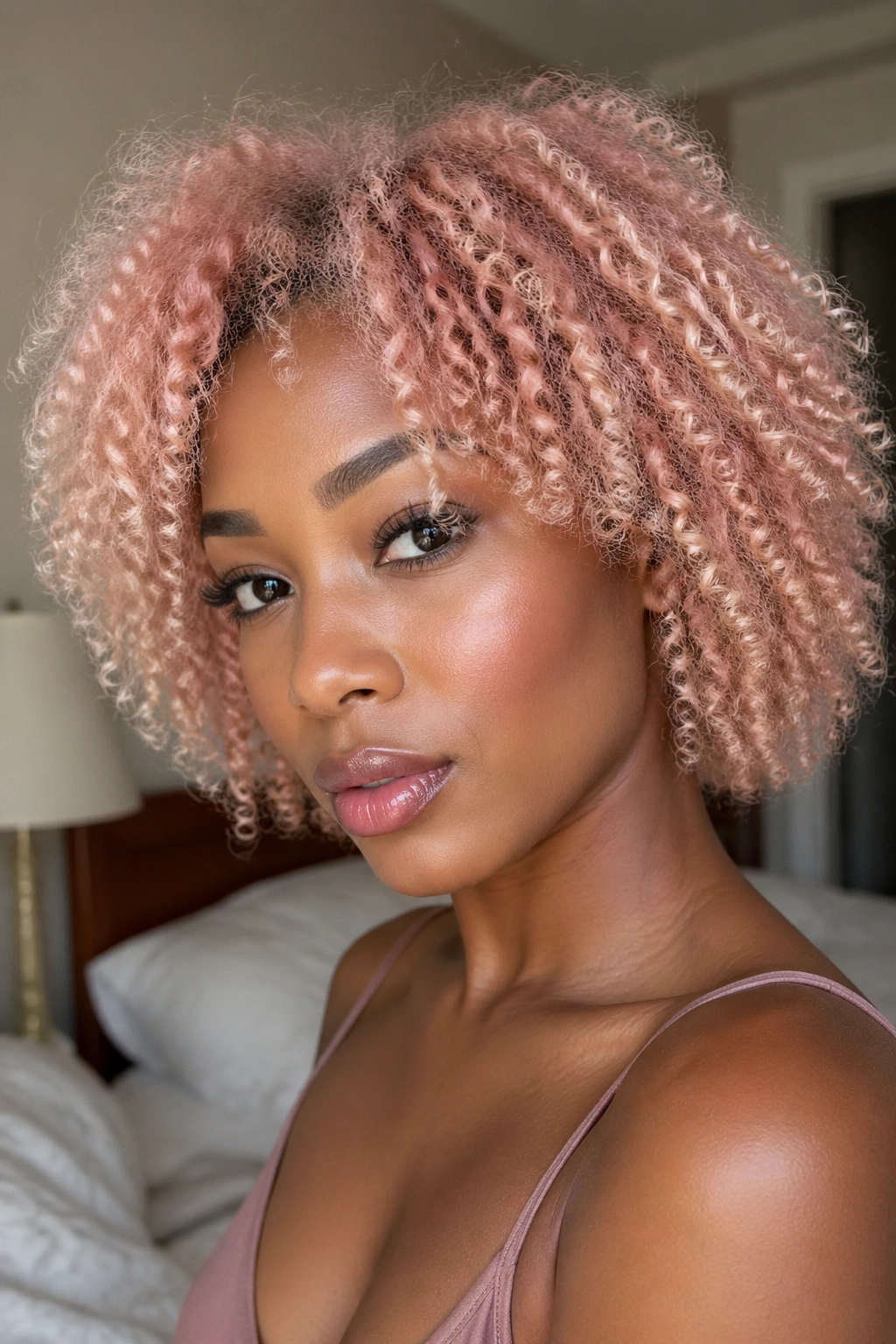
Rose gold is a soft, rosy-peachy pink that requires a light base to show properly. On lightened natural hair (bleached to a light yellow or pale blonde), a rose gold toner creates a warm, feminine, blush-pink effect that’s different from either pink or gold alone.
It fades into a softer, peachy-blonde over several weeks — and that fade is arguably even more beautiful than the initial rose gold. This makes it one of the more rewarding fade experiences in natural hair color.
15. Vivid Blue on Natural Hair
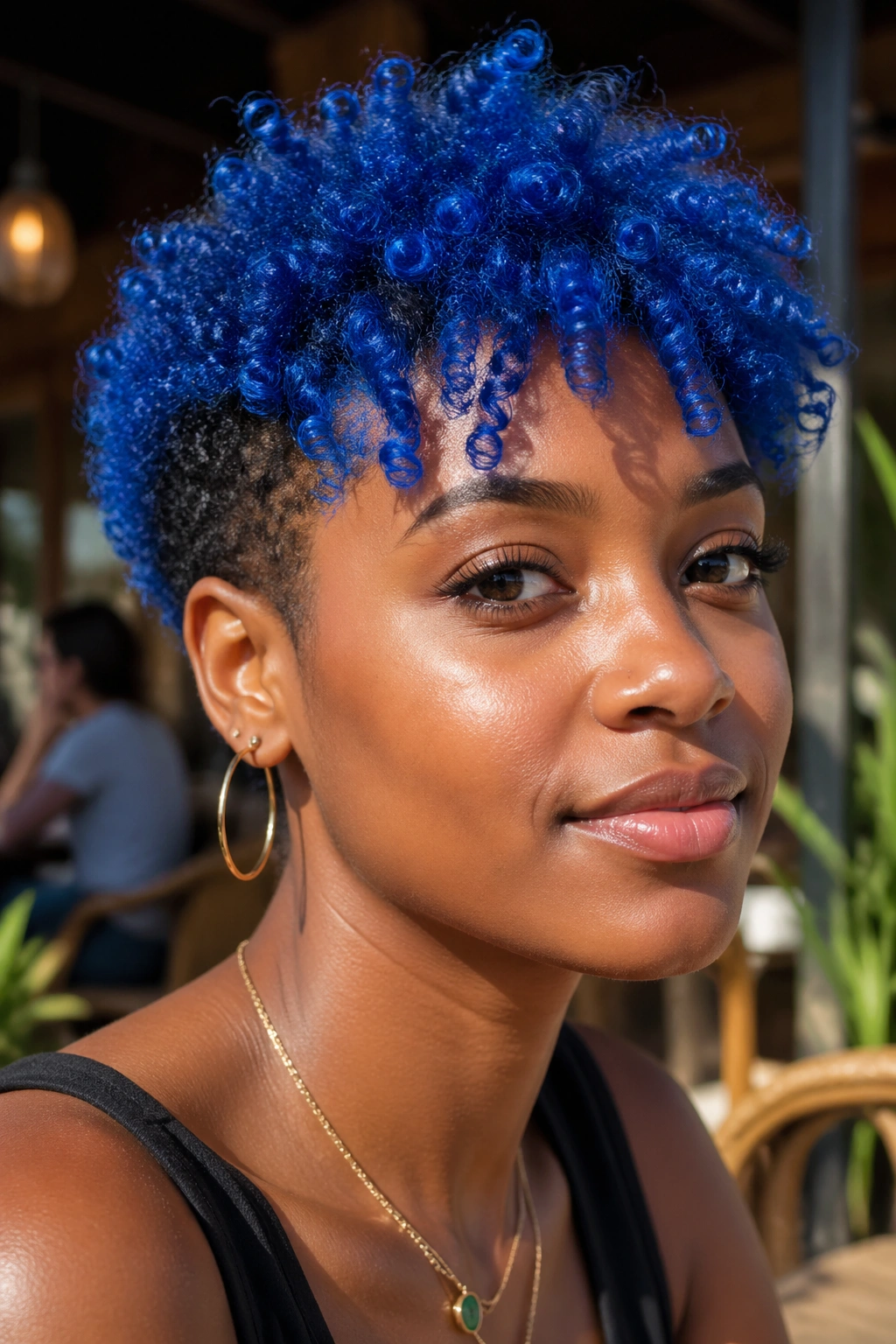
Electric blue on curly natural hair is a commitment to joy. The color is vivid, unmissable, and deeply unconventional in the best possible way. On dark natural hair, vivid blue requires lightening to show properly — on unliftened dark hair, blue reads as very dark, almost black, which creates a different (beautiful) effect.
On hair that’s been lifted to a medium golden-brown or lighter, vivid blue shows in all its electric glory. On a wash-and-go or defined curl set, the blue refracts through the coil pattern in a way that looks almost supernatural.
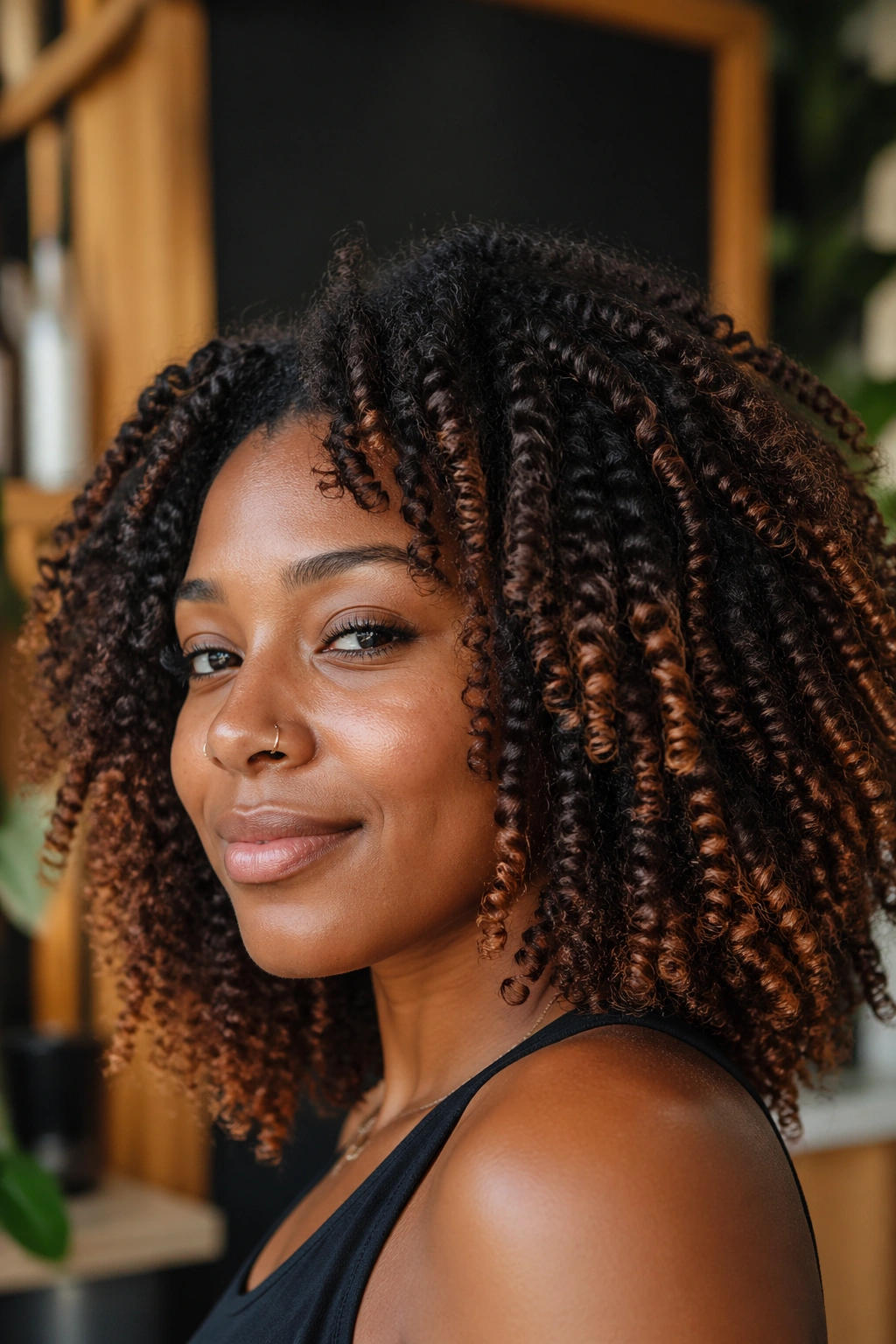
16. Ombre From Natural to Cinnamon
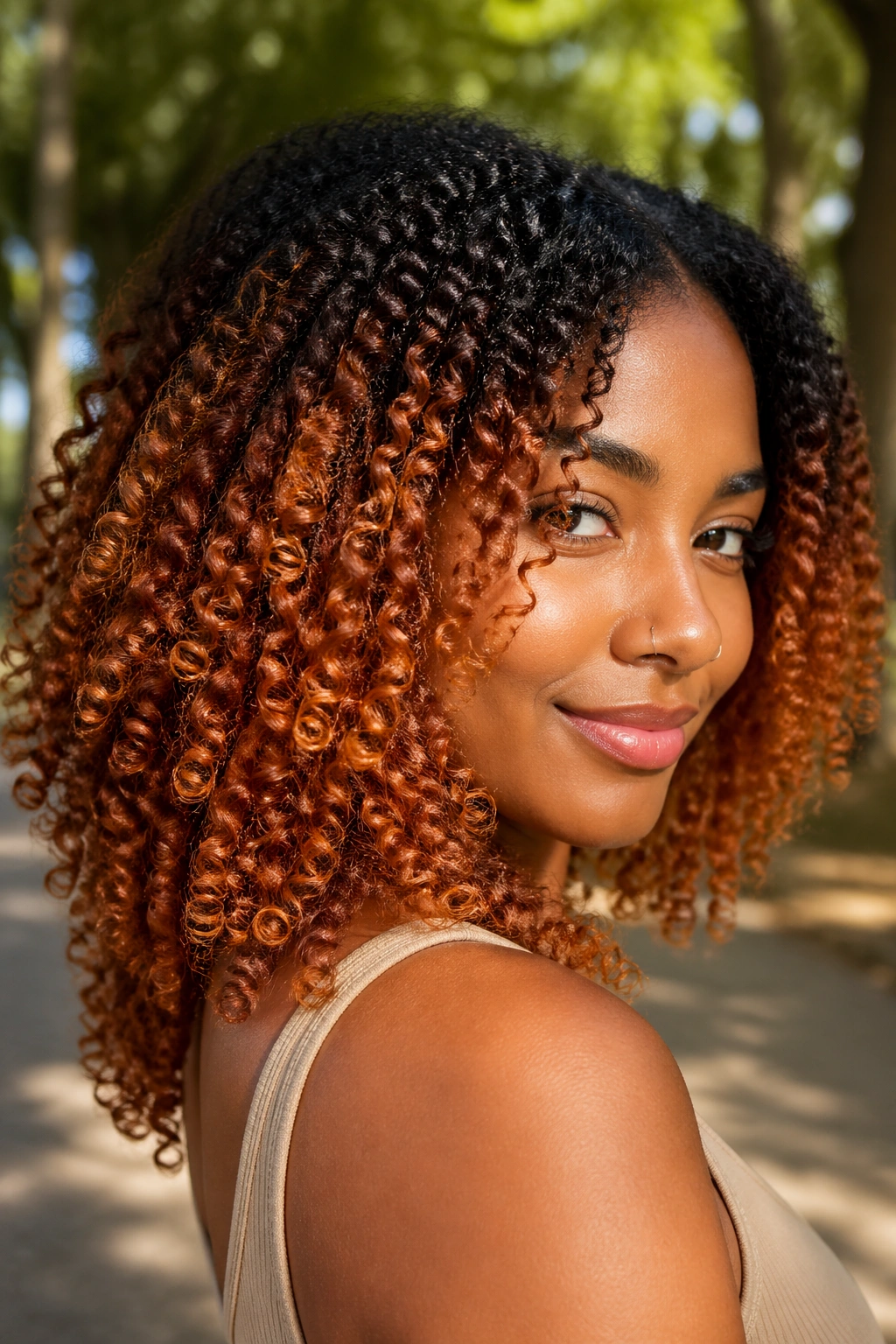
A cinnamon ombré — dark roots transitioning to a warm, red-brown cinnamon at the ends — is one of the most universally flattering ombré options for Black women. Cinnamon reads as warm and organic rather than vivid or fashion-forward, so it suits professional environments while still being clearly a style statement.
On 3C to 4A curls, a cinnamon ombré creates a look where the curl tips are noticeably warmer than the root area — the transition is visible with every bounce of the curl. The movement of curly hair is what makes this ombré so beautiful. On straight hair, you’d see the gradient once and that’s it. On curly hair, you see it from every angle as the hair moves.
17. Chocolate Cherry Highlights
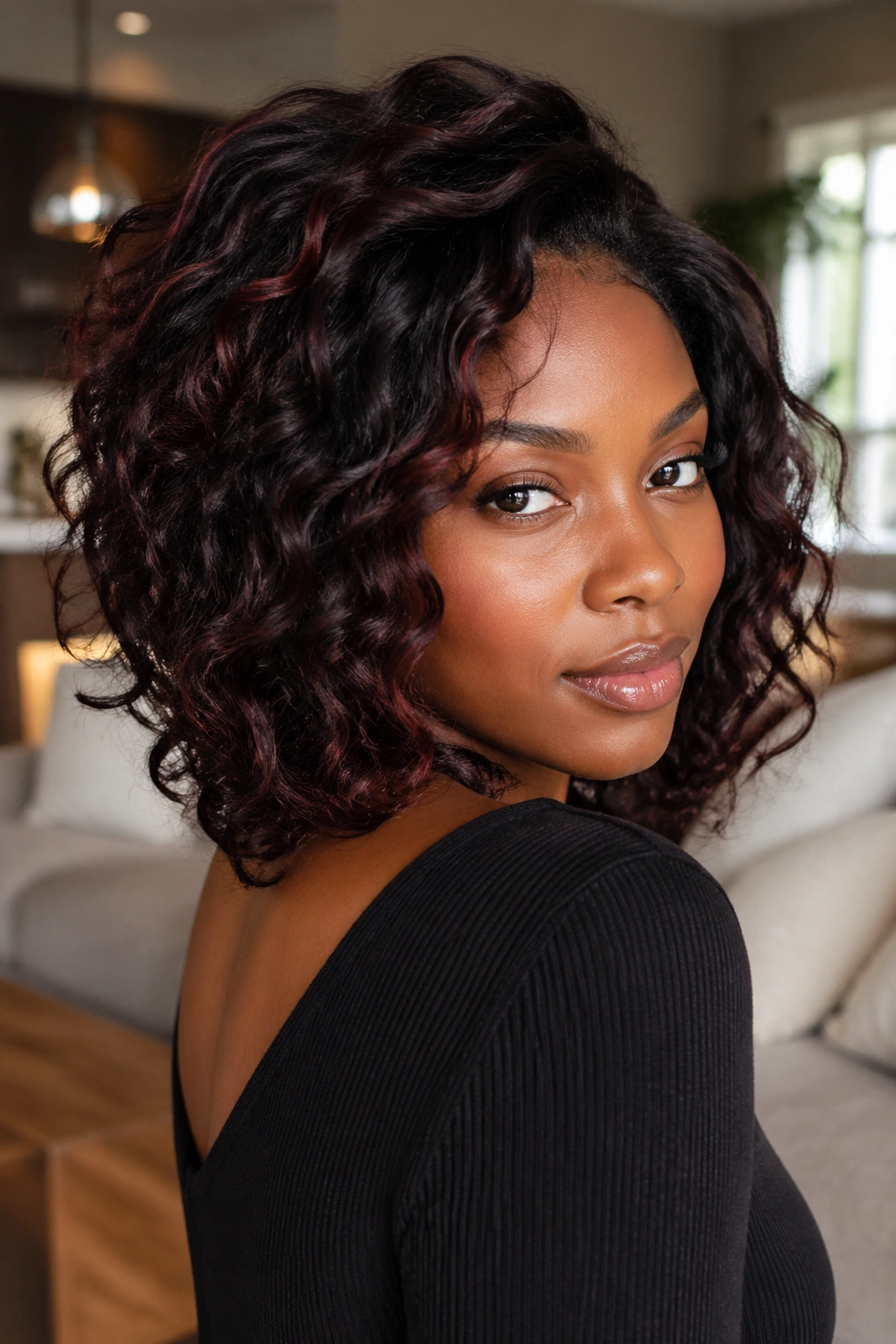
Chocolate cherry is the blend of deep brown and cherry red — on natural hair, this creates a tonal effect where the highlights read as rich, reddish-brown rather than an obvious cherry red. Applied as highlights rather than all-over color, it creates depth and dimension within the natural dark base.
This is a great choice for women who want something more interesting than their natural color but aren’t ready for vivid or light color. Chocolate cherry is subtle enough to read as “natural but really beautiful” rather than “obviously colored.”
18. Mushroom Brown on Natural Hair
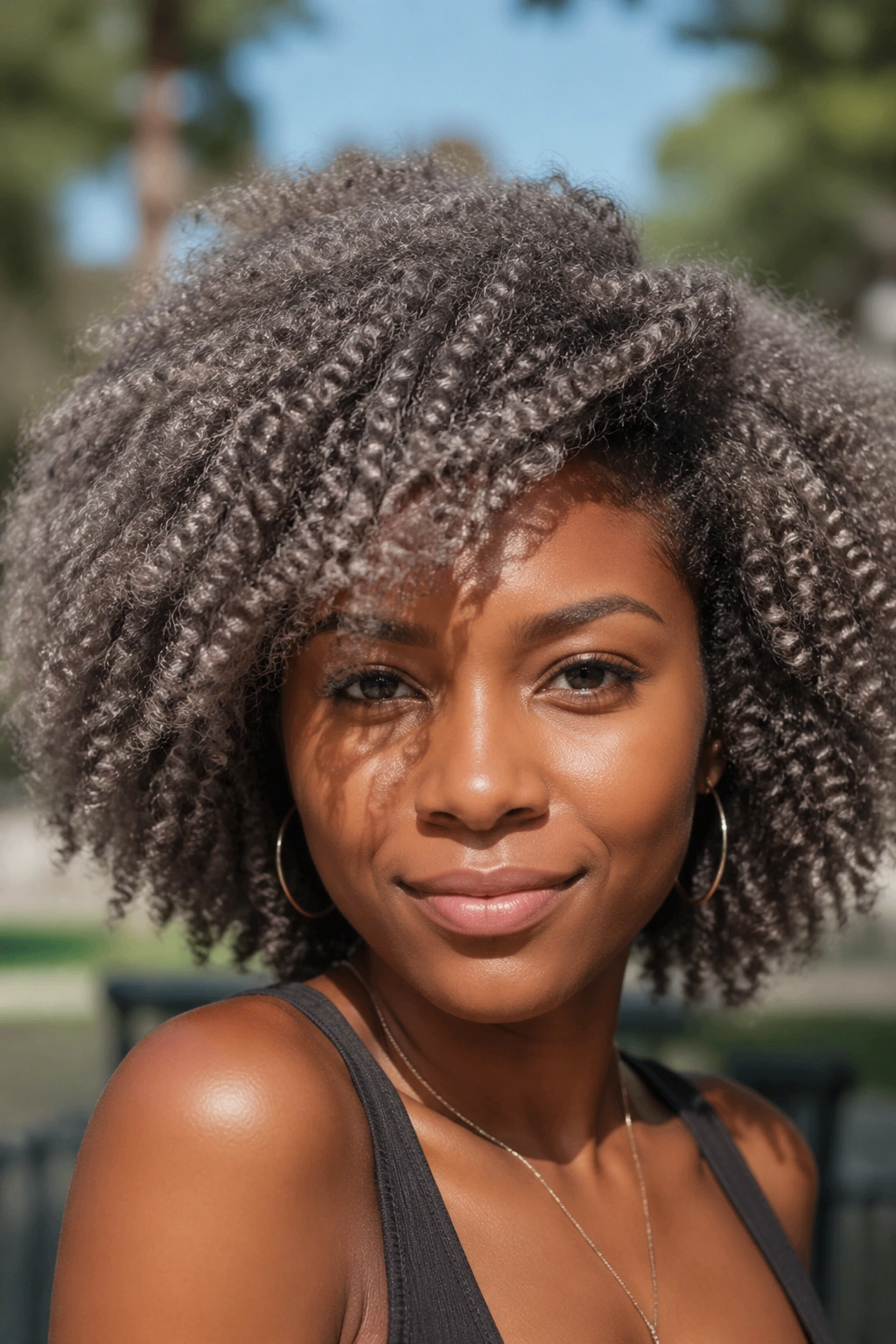
Mushroom brown is an ash-toned, cool brown that has a greyish, desaturated quality to it. It’s an unexpected color on natural hair — particularly on Black women — which is exactly why it works as a statement. The cool, slightly grey-brown contrasts with warm skin tones in a striking way, and on curly natural hair, the ashiness gives the hair an almost silver quality in certain light.
It requires lightening and then a cool-toned toner applied over it. The maintenance is moderate — you’ll need to refresh the cool tones periodically as they can become brassy over time.
19. Emerald Green or Teal Accent Color
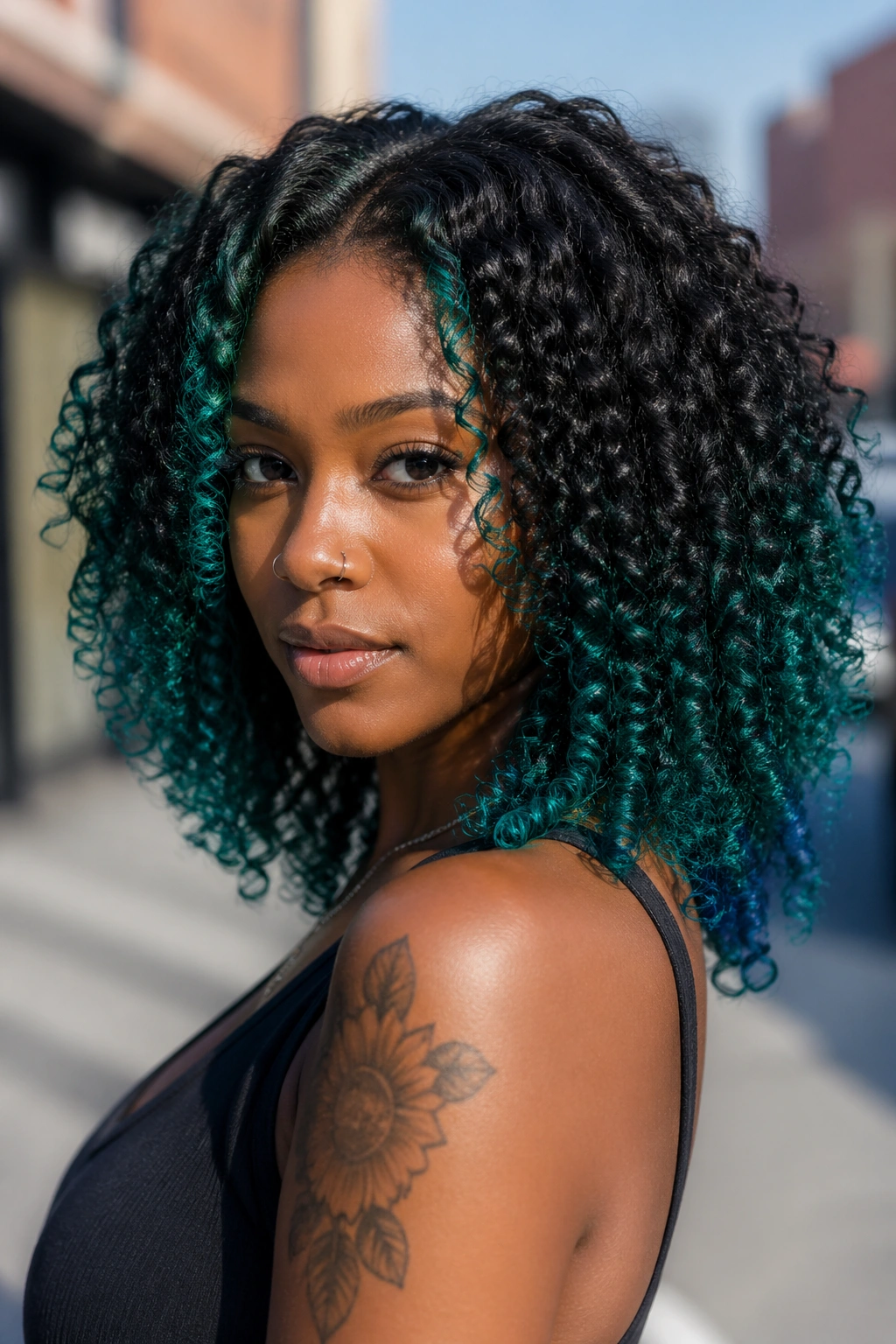
Green and teal are underutilized as natural hair colors — which makes them immediately distinctive. An emerald green or dark teal applied as accent highlights, a money piece, or tips creates a look that’s genuinely unexpected and visually arresting.
Dark greens and teals are visible on dark natural hair without extreme lightening — especially when applied as direct dyes to hair that’s been lifted to a medium golden brown. On tighter coil patterns, the green creates a subtle dimensional effect; on looser curl patterns, it reads more vividly.
20. Blonde Balayage (Warm Tone)
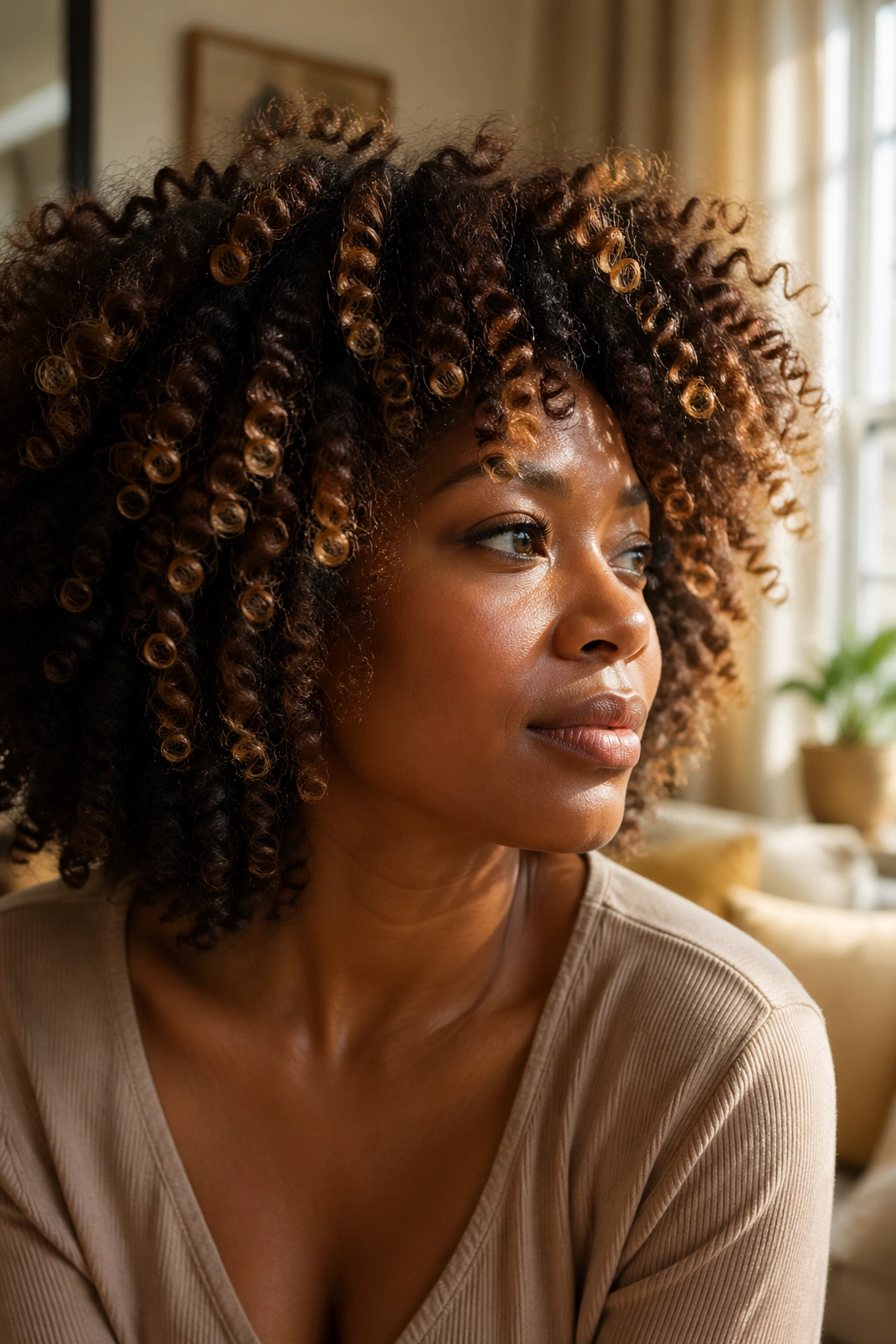
A warm blonde balayage — honey, golden, or butterscotch blonde rather than icy platinum — is the most natural-looking “big” color change you can make on dark natural curly hair. The balayage technique’s gradual, freehand application means the blonde doesn’t have hard edges or obvious demarcations — it transitions from the dark base in a way that suggests natural lightening.
On curly natural hair, warm blonde balayage reads as sun-kissed even when you’re nowhere near the sun. The warm tones against dark coils create a look that looks organic rather than artificial — which is the highest compliment a color technique can receive.
21. Gray Blending and Silver Accents
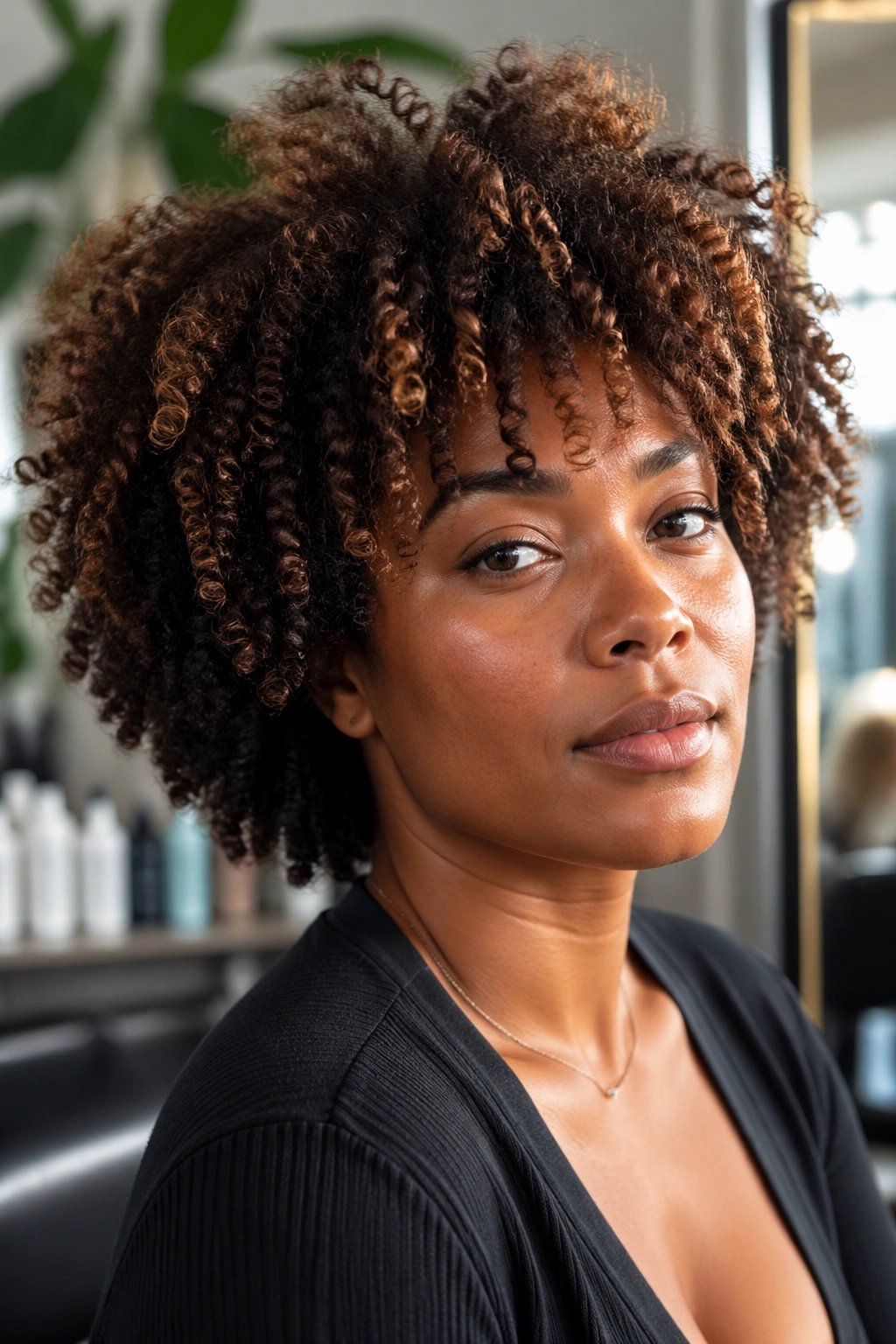
Natural gray hair on curly natural hair is increasingly celebrated rather than hidden. But beyond simply accepting the gray, some women add intentional silver or gray accents to create a more striking, multi-tonal look that plays up rather than plays down the incoming silver.
Silver balayage applied to dark natural hair — which sounds paradoxical if you’re thinking of gray as something to hide — creates a stunning duochrome effect: dark coils with silver threading through them. It looks deliberate and sophisticated, not aged or neglected.
22. Strawberry Blonde on Curly Hair
Strawberry blonde — blonde with notable pinkish-red undertones — is one of the rarer colors on Black women with natural hair, which makes it all the more striking when it’s done well. It requires lifting the hair to a light golden base, then toning with a strawberry (peach-pink) cast.
On warm skin tones, strawberry blonde creates a beautiful harmony — the peachy warmth of the hair color reflects the warmth of the skin. On deeper complexions, the contrast is bold and beautiful in a completely different way.
23. Deep Violet on Coily Natural Hair
Deep violet — darker and more saturated than a typical purple, approaching indigo — is one of the most striking colors on coily natural hair. It doesn’t require lightening on dark hair — a direct-dye deep violet will show on unlifted dark brown or black natural hair as a rich, dimensional color that shifts between purple and black depending on the light.
In a shrunk 4C afro, deep violet creates a color that’s invisible indoors but vivid in sunlight — a surprise that reveals itself in good light. That reveal is the magic of color on natural hair that no product shot can fully capture.
24. Balayage Color Refresh on Previously Colored Hair
The final color idea isn’t a shade — it’s an approach. If you’ve had color before that’s grown out, faded, or simply evolved into something less than its original intention, a color refresh using the balayage technique is the most graceful way to update it.
A skilled colorist can work with the existing color — painting fresh tones over the faded sections, deepening areas that have lost their richness, or shifting the color direction entirely by layering a new shade over the old one. What already exists in your hair becomes the foundation rather than the problem.
Faded color on natural hair is not a failure — it’s information about how your hair holds and releases color, and it’s the starting point for a richer, more complex look than a fresh single-process application could create.
Making Your Color Decision With Confidence
The best curly hair color for any Black woman is the one she chooses for herself — not because a trend said so, not because a colorist pushed a particular look, not because someone said it would “work for her skin tone.” Color is personal. It’s expressive. And the range of options available for curly natural hair has never been wider or more beautiful.
The practical framework: start low-commitment if you’re new to color. Build trust with a colorist who genuinely understands natural textured hair. Invest in your post-color care as much as you invest in the color itself. And be willing to evolve — the color relationship is ongoing, not a single decision made once. Your hair will keep growing, the color will keep fading, and you’ll keep making new choices. That’s not a burden. That’s the point.
