



Blonde low ponytails have a useful trick: they look restrained at the neck and expensive at the same time. The lower placement keeps the silhouette tidy, while the blonde color picks up every bit of shine, braid, ribbon, and wave you add. On lighter hair, small details show fast — a clean part, a wrapped elastic, a bend at the ends — so the style reads polished instead of plain. That’s the whole appeal.
And honestly, that’s why I keep coming back to them. A high ponytail can feel sporty. A bun can feel severe. A low ponytail sits in that useful middle ground where hair is out of the face, but the shape still feels finished. It works for office days, dinner plans, weddings, and those times when your hair needs to behave but you do not want to look like you gave up.
The best versions are rarely complicated. A low ponytail with a center part can look razor-clean. A side part softens the face. A wrapped base hides the elastic. Add a ribbon, a braid, or a few loose tendrils, and suddenly the same haircut looks dressed up in a completely different way. Blonde hair makes all of that easier to see, which is why these styles photograph well in real life, not just on a screen.
1. Sleek Center-Part Blonde Low Ponytail
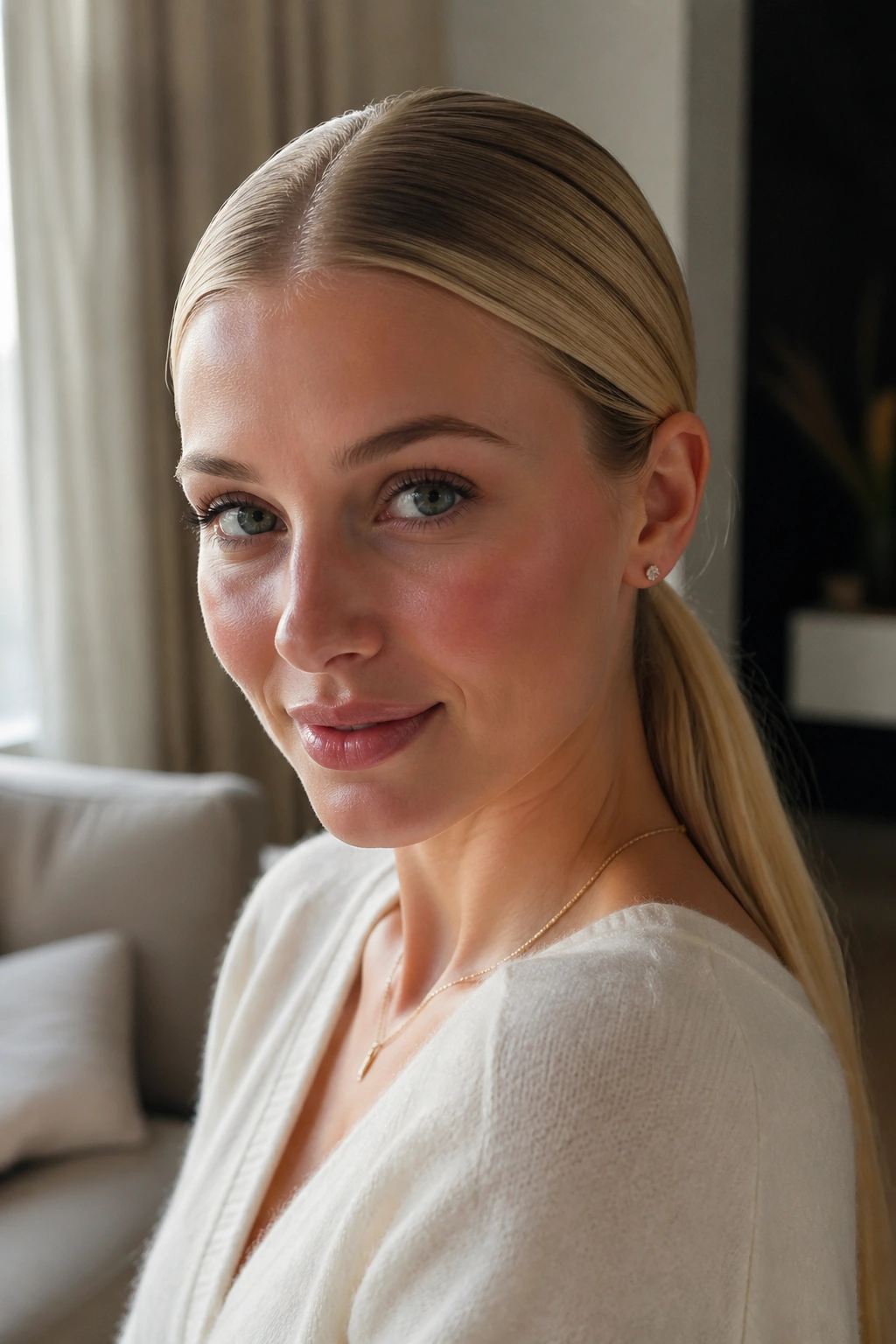
A center part gives a blonde low ponytail a crisp, almost tailored line. It’s the version I reach for when the rest of the outfit has detail and the hair needs to stay calm. The part lands the eye right down the middle, and the low placement keeps the shape from feeling fussy.
The polish comes from restraint. Smooth the hair flat at the crown, keep the part clean all the way back, and tie the ponytail at the nape rather than halfway up the back of the head. A tiny amount of serum on the lengths helps the blonde look glossy without turning greasy.
One thing people miss: the ends matter more than the roots. If the ponytail is sleek up top but frayed at the tail, the whole look slips. I like a soft brush-through after tying it, then a quick pass with a flat iron only on the last few inches if the ends need direction.
Best on straight and slightly wavy hair.
2. Deep Side-Part Blonde Low Ponytail
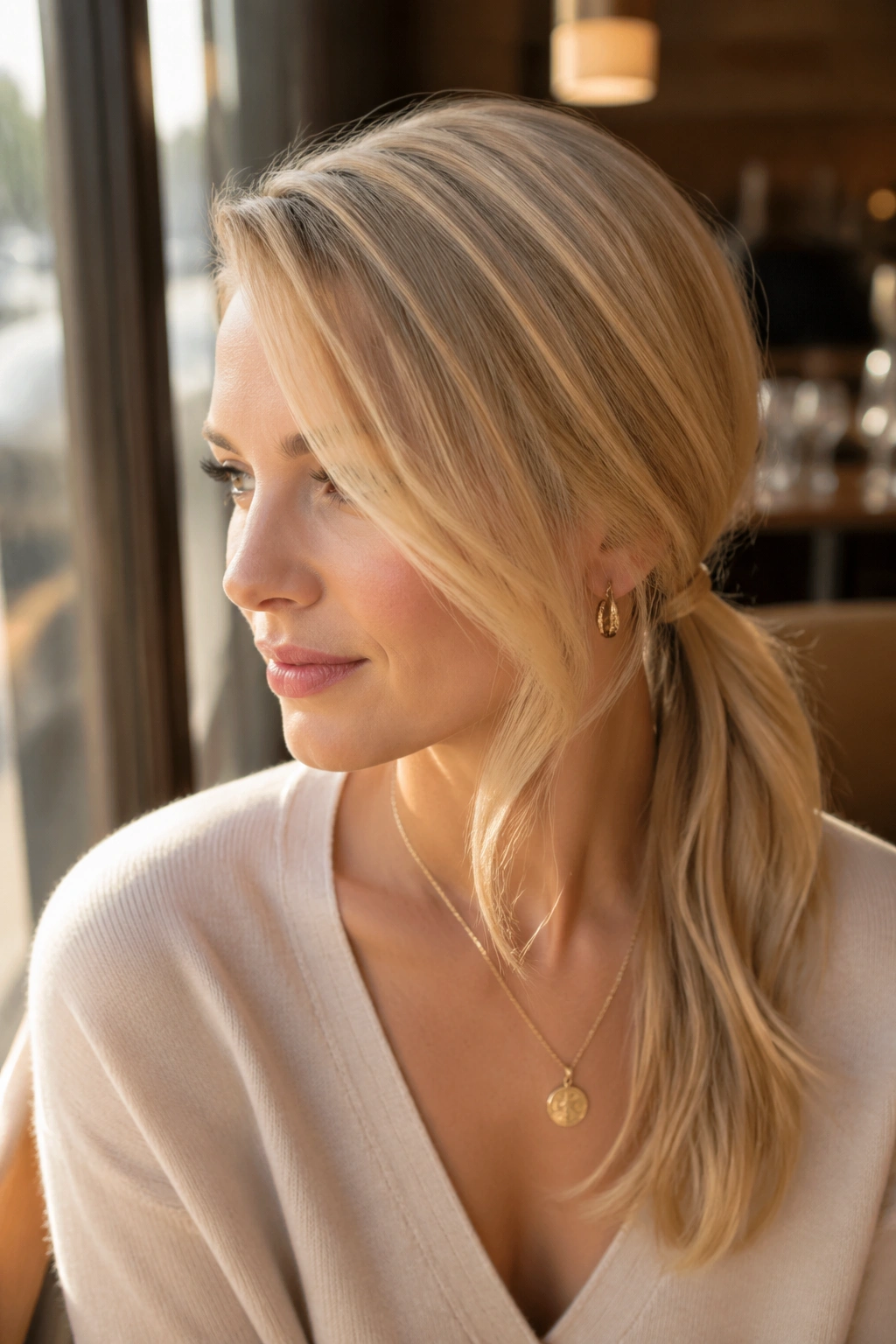
Want the same polish with a little more softness around the face? A deep side part does that in one move. It breaks up the symmetry, gives the front a gentle sweep, and makes blonde tones look richer because the light hits the hair at different angles.
This is a smart choice if you wear side bangs, long face-framing layers, or a little bend at the front. The part should be obvious but not dramatic for the sake of drama. Aim for a clean line, then brush the rest of the hair back low and secure it snugly at the nape.
Why It Looks More Relaxed
The asymmetry keeps it from feeling severe. That matters more than people admit. A center part can read sharp and architectural; a deep side part softens the profile and gives the ponytail a bit of motion before the tail even starts.
- Works well with honey blonde, beige blonde, and highlighted brunettes going lighter
- Gives fine hair a fuller look around the forehead
- Keeps long earrings or a statement neckline from fighting the hair
My favorite part: it looks styled even when the rest of your look is simple.
3. Wrapped-Base Blonde Low Ponytail
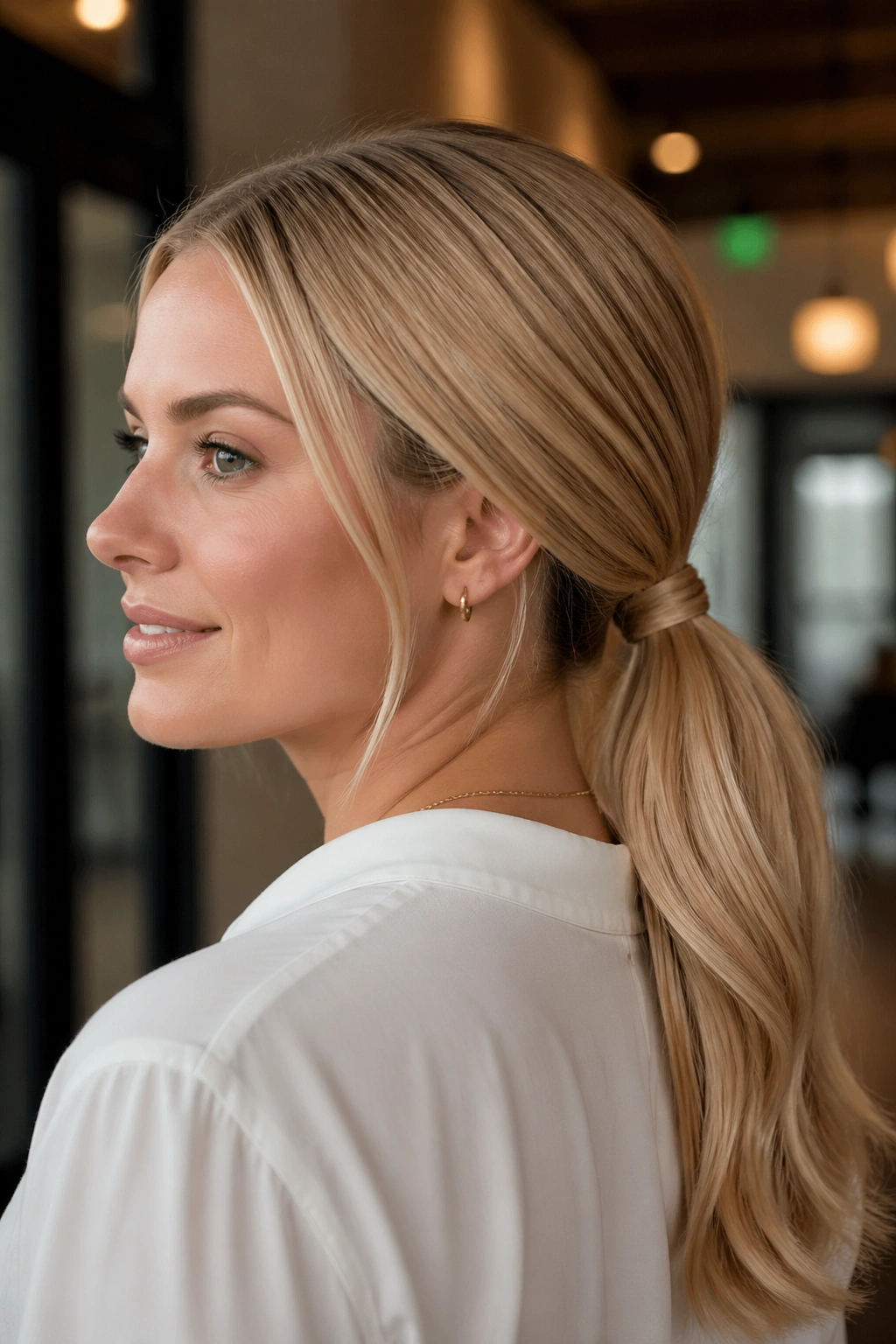
If the elastic shows, the ponytail always looks slightly unfinished. Wrapping a strip of hair around the base fixes that fast, and on blonde hair the wrapped section blends in enough to look clean without much effort. It’s the version I use when the outfit is sharp and I want the hair to match it.
Take a small strand from the underside of the ponytail, smooth it with a little cream, and wind it around the elastic until nothing but hair is visible. Pin the end underneath with a bobby pin that matches your shade as closely as you can. That tiny hidden pin is doing more work than it looks like.
A wrapped base also works when you need the ponytail to stay in place for hours. The cover strand helps disguise grip, which is useful if your hair slips easily. The trick is to keep the wrap thin and taut; if it gets bulky, the base starts to look heavy instead of neat.
Simple. Clean. Hard to beat.
4. Blonde Low Ponytail With Curtain Bangs
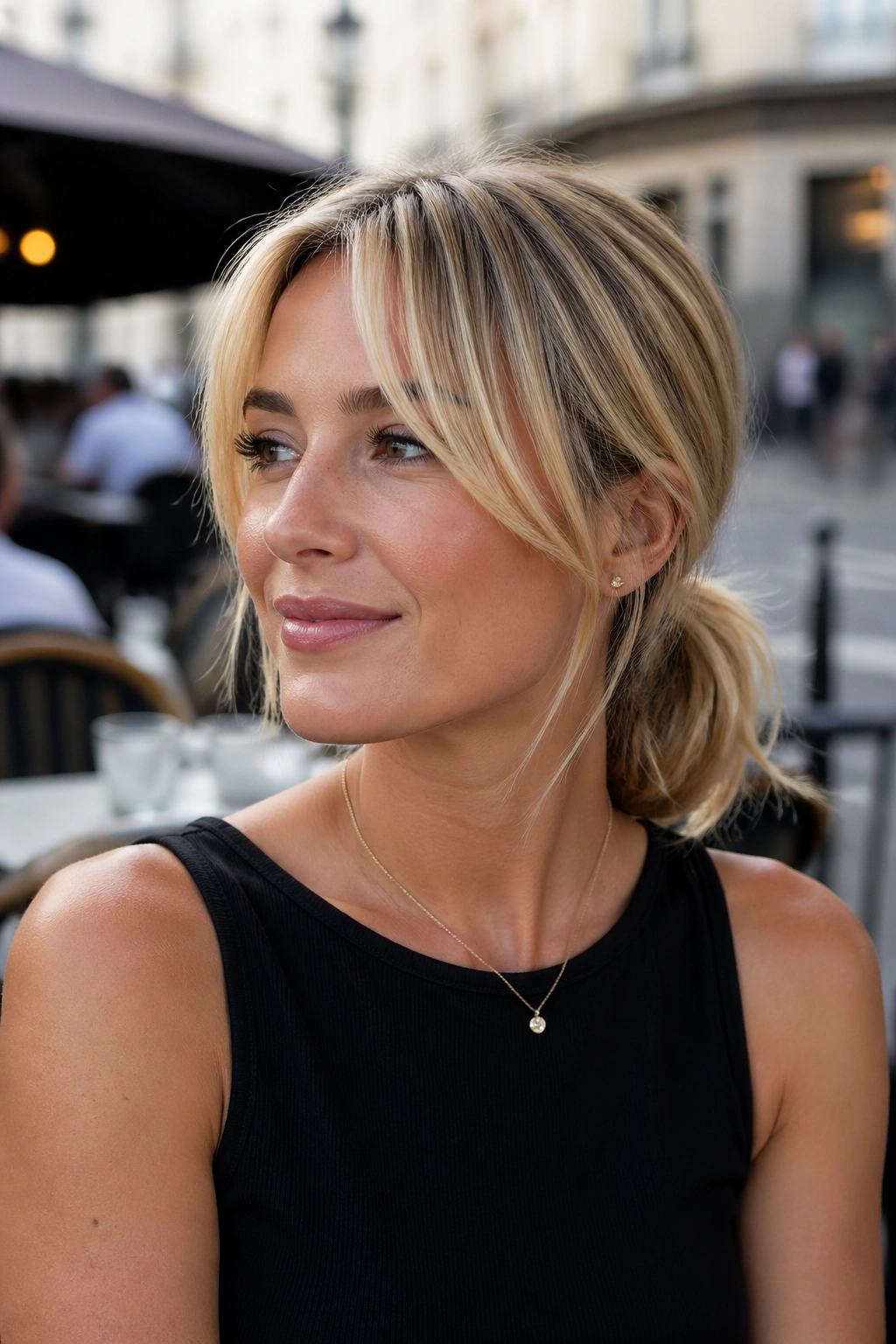
Curtain bangs do half the styling work here. They frame the face, soften the forehead, and stop a low ponytail from reading too bare at the front. If you have warmer blonde tones, this style is especially flattering because the movement around the face keeps the color from looking flat.
The ponytail itself should stay low and compact. Blow-dry the bangs or front pieces away from the face with a round brush, then let the rest of the hair fall back into a smooth tail. If the bangs are too stiff, the style looks overworked. If they’re too loose, the face framing disappears into the rest of the hair.
What I’d Watch For
Curtain bangs can get oily faster than the rest of the hair, so keep the front clean and touch it with a dry brush if needed. The ponytail should not compete with the fringe. It should just support it.
- Best with shoulder-length cuts and longer layers
- Looks good on golden, beige, and strawberry blonde hair
- Feels polished even when the face framing is a little soft
I like this one because it never feels too severe. That helps.
5. Tucked-Under Blonde Low Ponytail
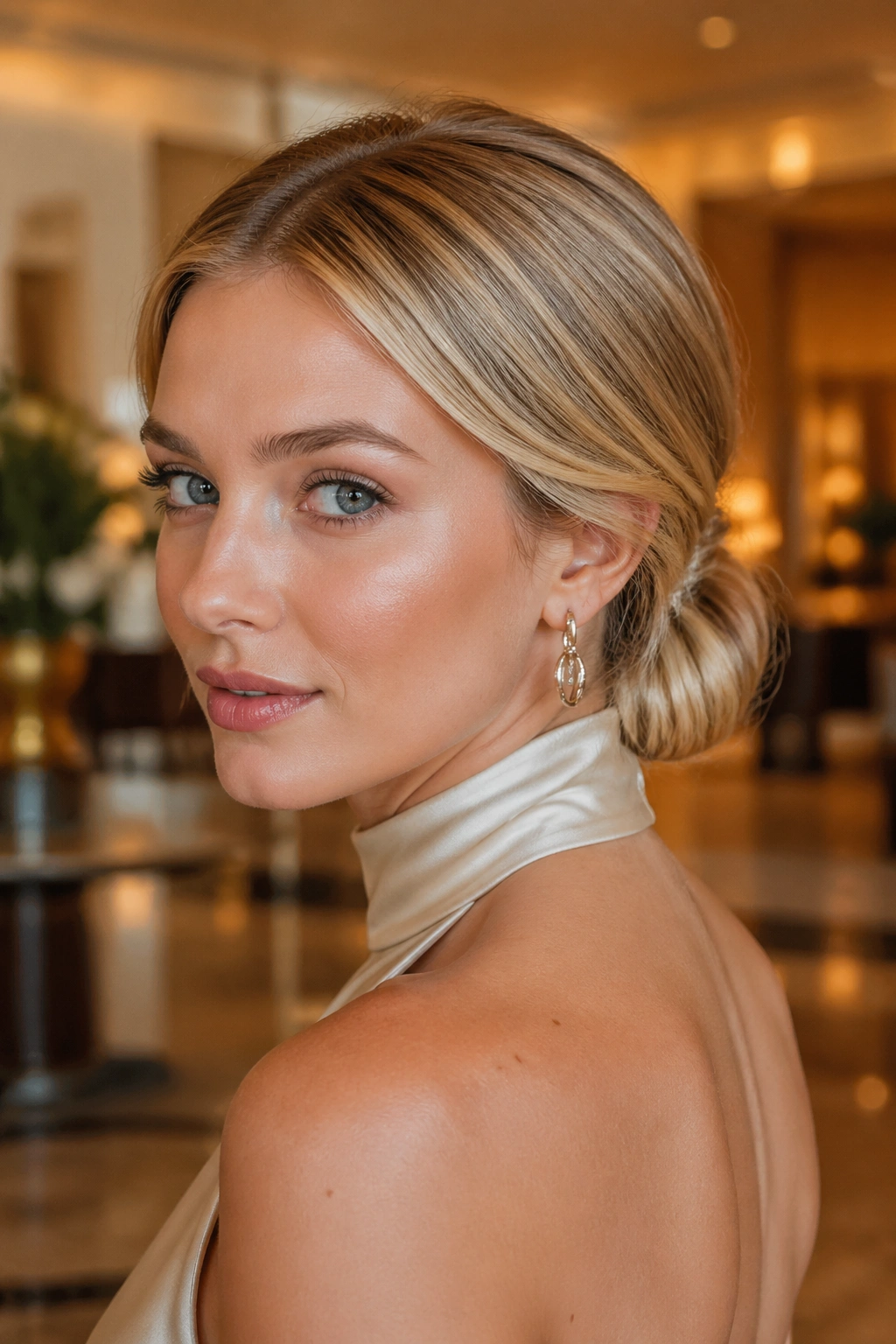
A tucked-under low ponytail has a neat, almost understated shape that makes it look more deliberate than a standard tail. Instead of letting the ends hang straight down, you fold them under once and pin or set them so the tail curves toward the neck. It sounds minor. It changes the whole line.
This works especially well on bob-length hair growing out, or on medium-length hair that hits the collarbone. The tucked shape keeps shorter layers from sticking out in odd places. It also gives blondes a softer edge because the end of the ponytail catches light in a rounded shape rather than a blunt line.
Use a flat iron only if you need to guide the ends. Don’t press them flat to the point that the hair looks stiff. A little bend is better than a hard crease. The goal is clean, not frozen.
A small mist of flexible hairspray keeps flyaways from escaping near the nape.
6. Bubble Blonde Low Ponytail
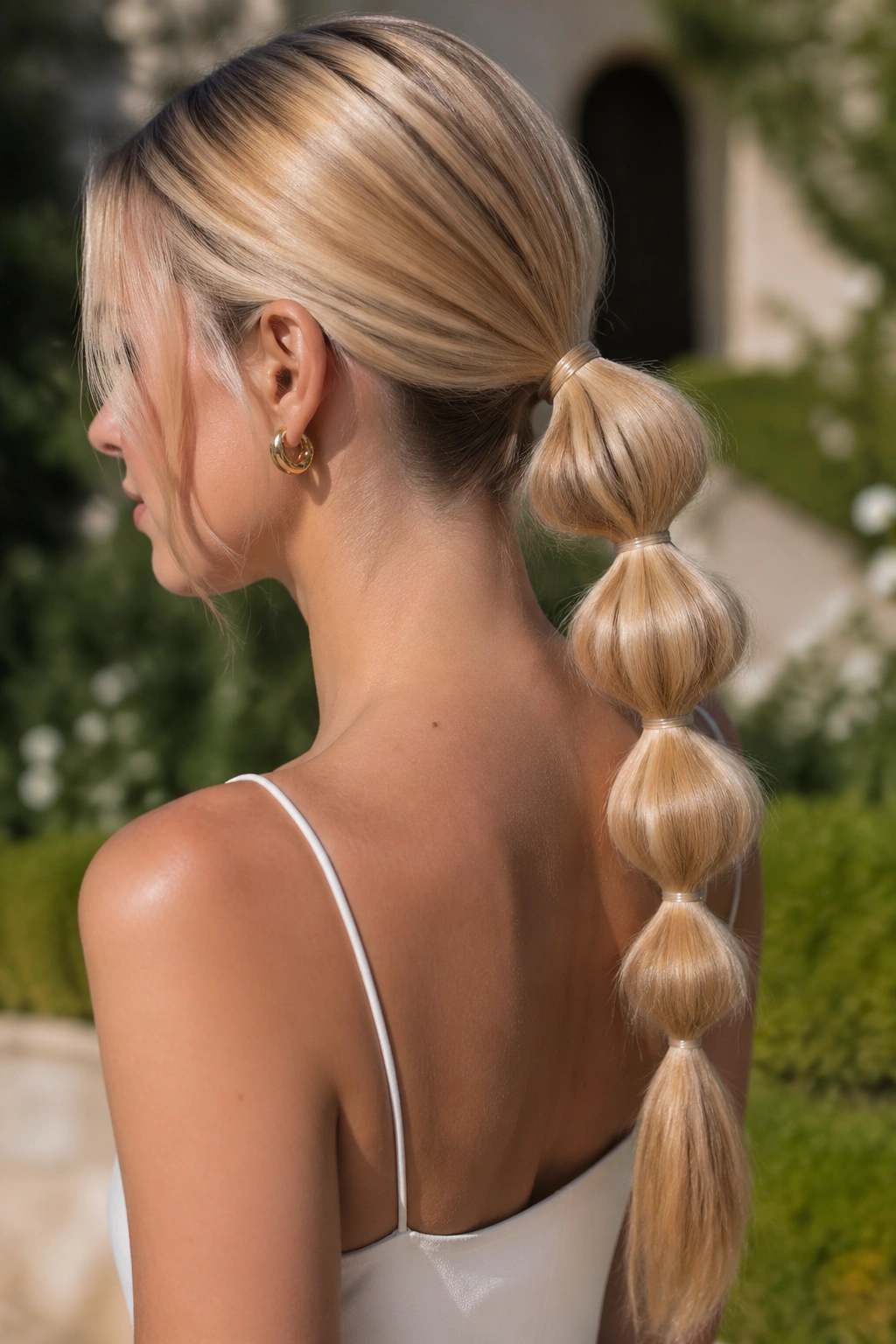
A bubble ponytail sounds playful, but on blonde hair it can look sharper than people expect. The segmented shape shows off highlights and lowlights in a way a plain ponytail never can. Each section becomes its own little panel of color, which is why this style looks good on balayage and dimensional blondes.
Start with a sleek base, then add clear elastics every 1½ to 2 inches down the length of the tail. Gently tug each section outward so it rounds into a bubble. Keep the top smooth; if the crown is messy, the whole thing shifts from polished to accidental.
Quick Details That Matter
- Use clear elastics or skinny bands that match your hair shade
- Make the first bubble the largest and the last one the smallest
- Pull each section evenly on both sides so the tail stays balanced
- A touch of shine spray on the surface helps the blonde catch light cleanly
This one is a little more playful, but it still looks finished when the spacing is even.
7. Soft Wavy Blonde Low Ponytail
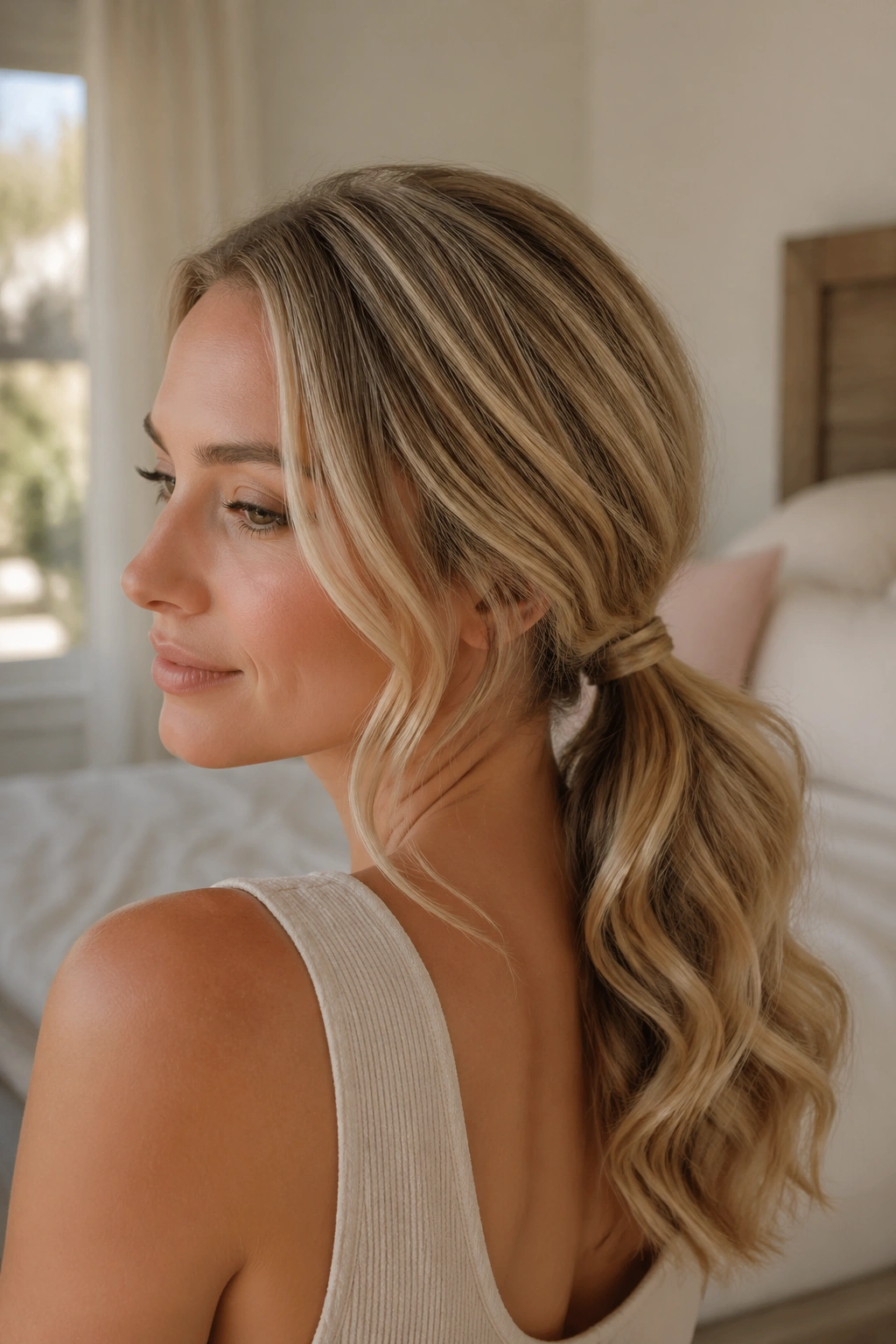
A low ponytail does not need to be straight to look polished. Soft waves give it a quiet kind of movement, the sort that makes blonde hair look fuller and more expensive without making a big statement. The wave should be smooth, not frizzy, and the tail should still sit low and controlled.
The easiest way to keep it neat is to curl the hair first, brush the curls out lightly, then gather the hair low at the nape. You want bends, not ringlets. A 1-inch curling iron usually gives a wave that feels natural rather than overdone, especially on mid-length hair.
How to Keep It Clean
Use your fingers before a brush. Once the wave is too brushed out, you lose the shape and end up with a puffier tail than you wanted. I also like leaving the last inch or two a little straighter so the tail doesn’t shrink too much.
This is a good choice for highlighted blonde hair because the wave shows off the color changes in a softer way than a tight style does. It feels easy, but not sloppy.
8. Braided-Base Blonde Low Ponytail
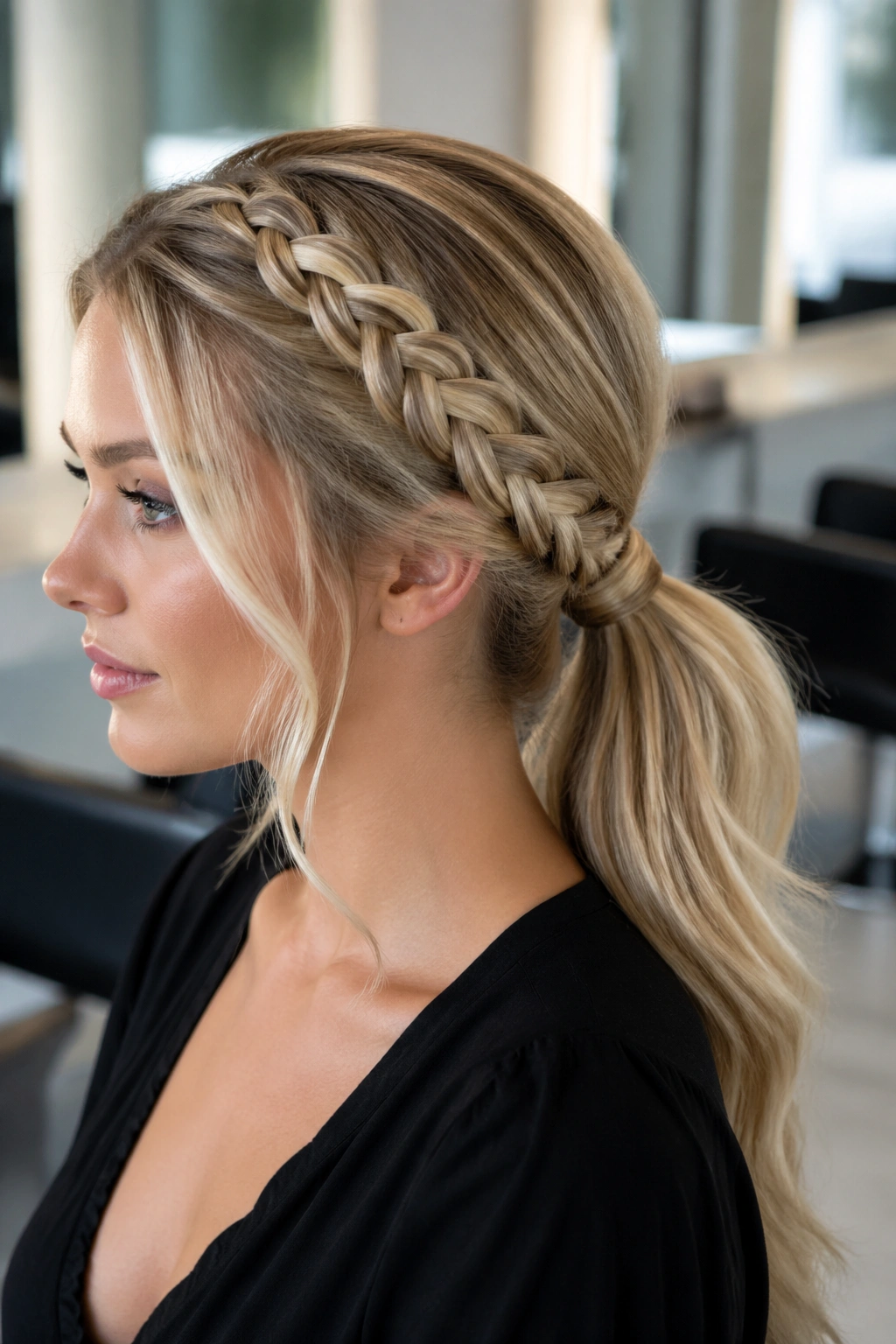
If your hair tends to slip, braid the first section before the ponytail starts. That little detail keeps the base tight and gives the style a built-in finish, almost like the hair is anchored before it falls into the tail. On blonde hair, the braid also adds enough texture that the style doesn’t vanish from the side view.
A small three-strand braid from the hairline back to the nape is enough. You do not need a full head of braids. Just one neat section on top or along one side can make the ponytail look intentional. If your hair is layered, keep the braid close to the scalp so shorter pieces don’t pop out.
- Best for medium and thick hair
- Looks especially good with highlighted blonde lengths
- Helps keep shorter layers controlled at the crown
- Hides a seam between the front section and the tail
I like this version for travel, long workdays, and any moment when you need hair to stay put without looking dull.
9. Twisted Blonde Low Ponytail
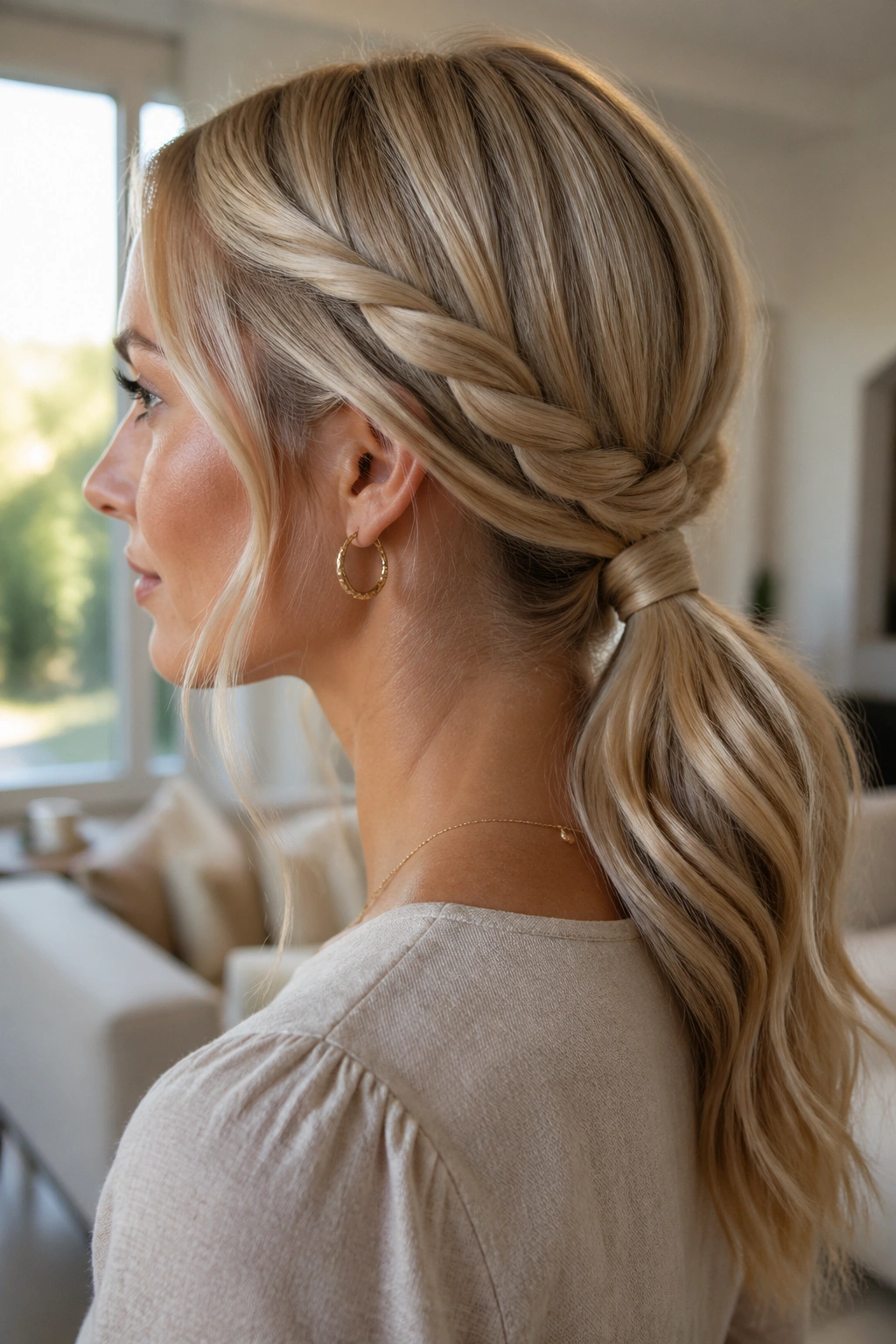
Twists give you a softer finish than braids do. That’s the main difference, and it matters. A twisted blonde low ponytail looks refined without the tighter pattern of a braid, which makes it a nice middle ground for people who want detail but not a lot of visible structure.
Split the front sections, twist each one back toward the nape, and pin them where the ponytail sits. Then gather the rest of the hair low and smooth the tail down. The twists can be symmetrical or slightly off to one side, depending on how formal you want the style to feel.
The finish works well on beige blonde and ash blonde hair because the twist lines show the color shift along the surface. You get shadow and shine without having to pile on accessories. Keep the twists snug, though. Loose twists fray fast and lose the clean shape that makes this style worth wearing.
10. Glass-Hair Blonde Low Ponytail
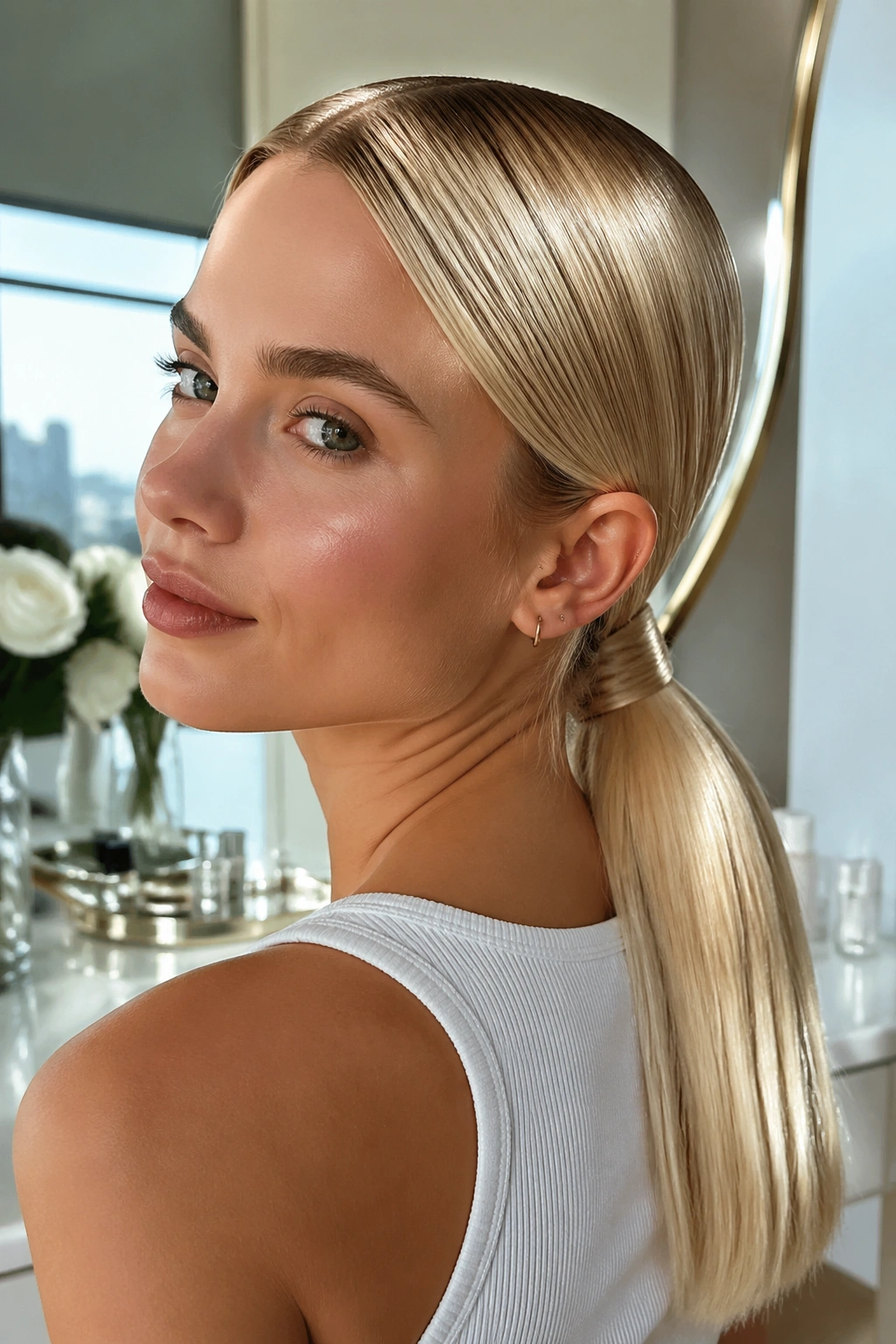
There’s a specific kind of shine that makes a low ponytail look expensive. Not greasy. Not wet. Just smooth enough that the surface reflects light in a clean line. That’s the glass-hair effect, and blonde hair shows it beautifully because the gloss sits on top of the color.
Start with a smoothing cream or lightweight serum, then brush the hair back with a fine-tooth comb. The crown should lie flat, the part should stay straight, and the ponytail should sit low and narrow. If your hair is fine, use less product than you think. Too much turns the surface limp.
The Look In Practice
It should feel almost slippery between your fingers, but not coated. That distinction matters. The hair needs control, not weight. If the ends are dry, work a drop of serum only through the bottom third of the tail.
This is one of the strongest polished looks in the whole group. It’s severe in a good way. Clean neckline, clean part, clean shine.
11. Voluminous Crown Blonde Low Ponytail
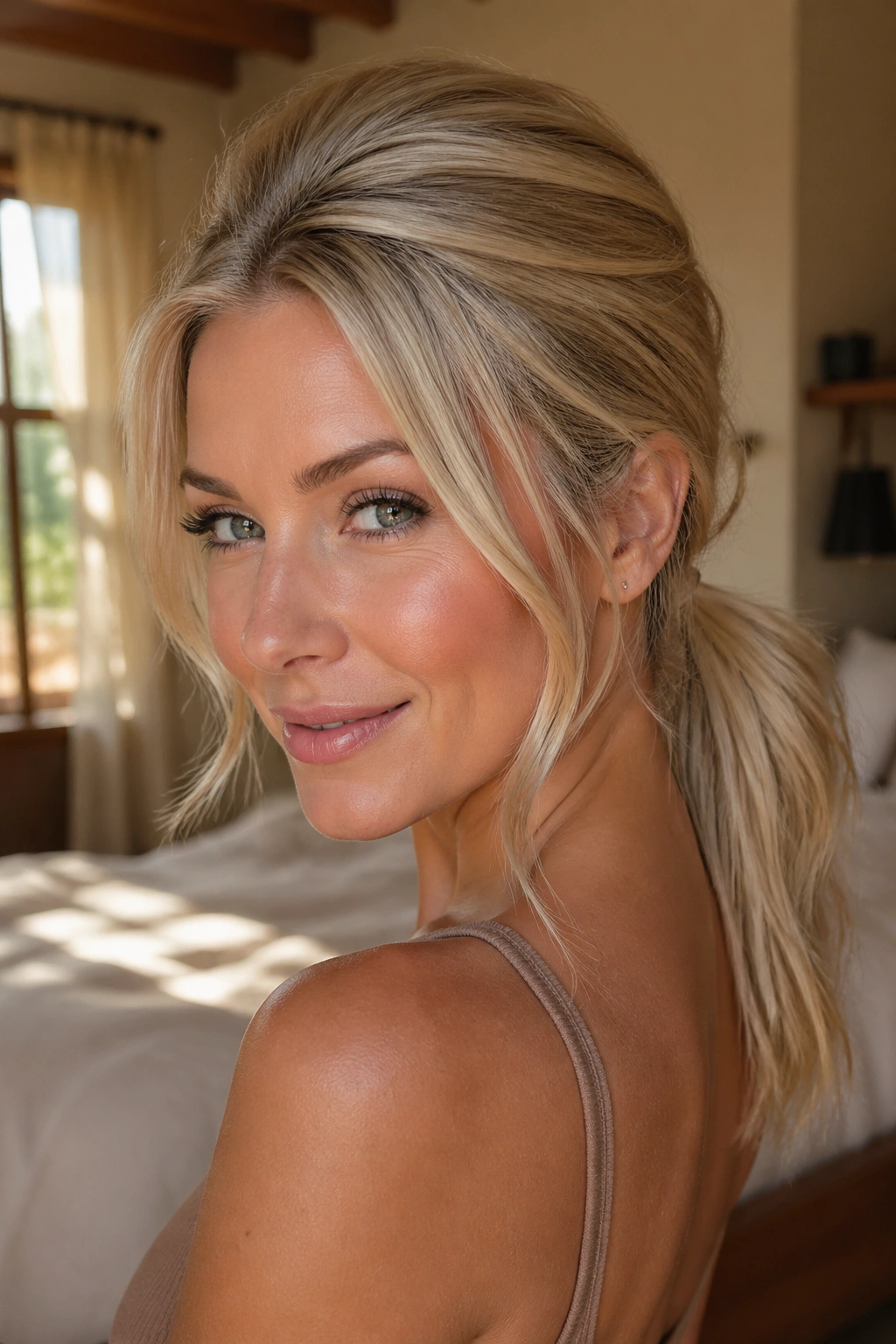
A little crown lift changes everything. Too flat at the top, and the ponytail can feel strict. Add a small bump at the crown, and the style opens up. It makes the face look softer and gives the tail more presence, especially on long blonde hair that can otherwise fall a bit too neatly.
Backcomb only the top layer at the crown, not the whole head. That’s enough. Smooth the surface over the teased section with a brush so the finish still looks neat, then secure the ponytail low and let the lengths fall naturally. The goal is shape, not height.
This style suits people who like a bit of body around the head but don’t want a high ponytail. It also helps if you’re wearing earrings or a higher neckline. The crown lift balances the rest of the silhouette.
Skip the giant bump. Small is smarter here.
12. Silk-Scarf Blonde Low Ponytail
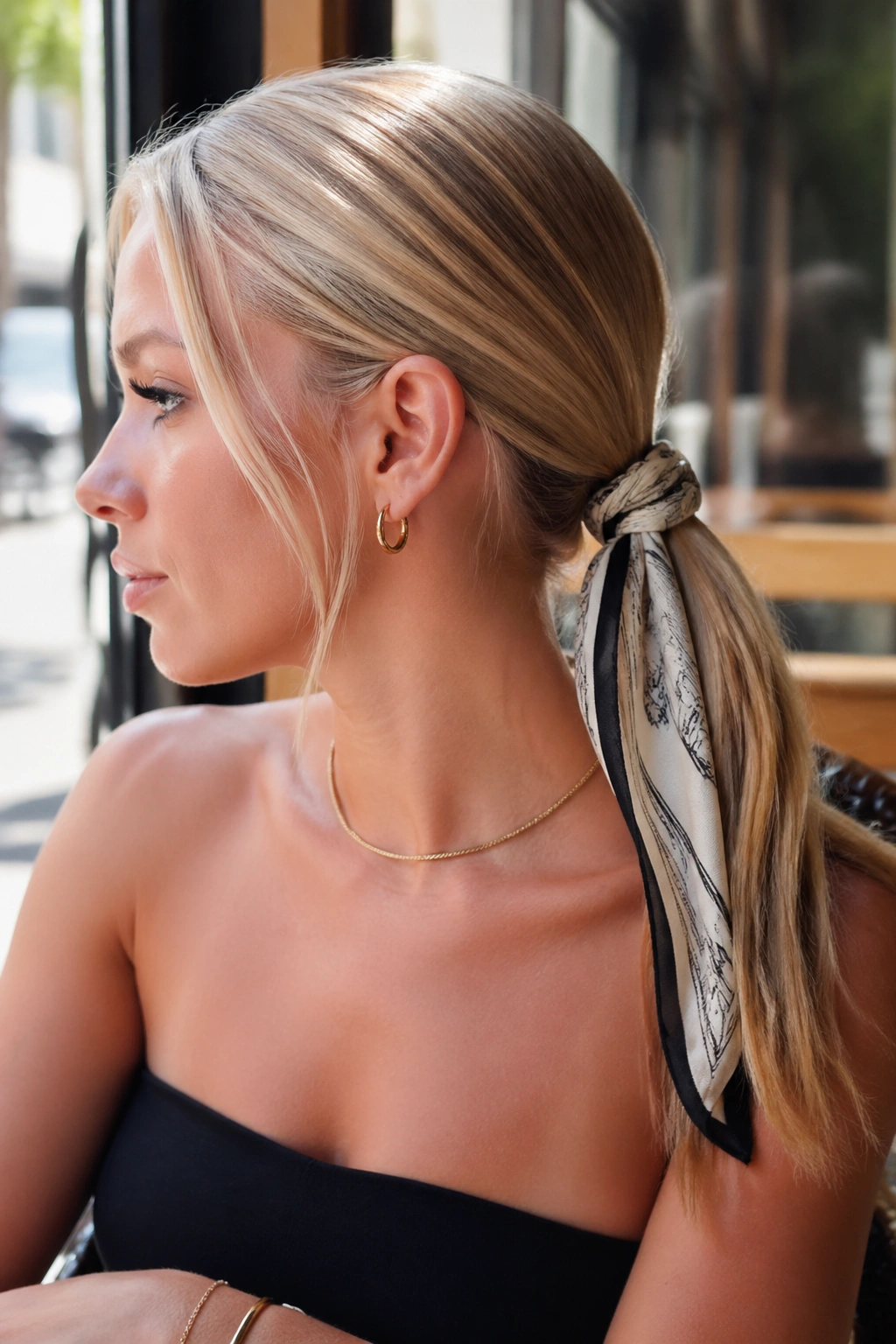
A silk scarf can make a plain low ponytail look intentional in seconds. Tied neatly around the base, it adds color and texture without hiding the shape of the hair. On blonde hair, a scarf reads almost like an accessory built into the style instead of something added afterward.
Fold the scarf into a narrow band so it doesn’t swallow the ponytail. Tie it under the base or just off to one side, then let the tails hang a few inches down the back. I prefer satin or silk because they don’t rough up the hair the way a textured fabric can.
Choosing the Right Scarf
- Narrow scarves work better for fine hair
- Wider scarves suit thicker ponytails
- Solid colors feel cleaner than busy prints
- A matte scarf softens platinum blonde; a glossy scarf sharpens golden tones
The nice part is that this style can look dressed up without any heat tools at all. That matters on days when your hair wants to do less.
13. Pearl-Pin Blonde Low Ponytail
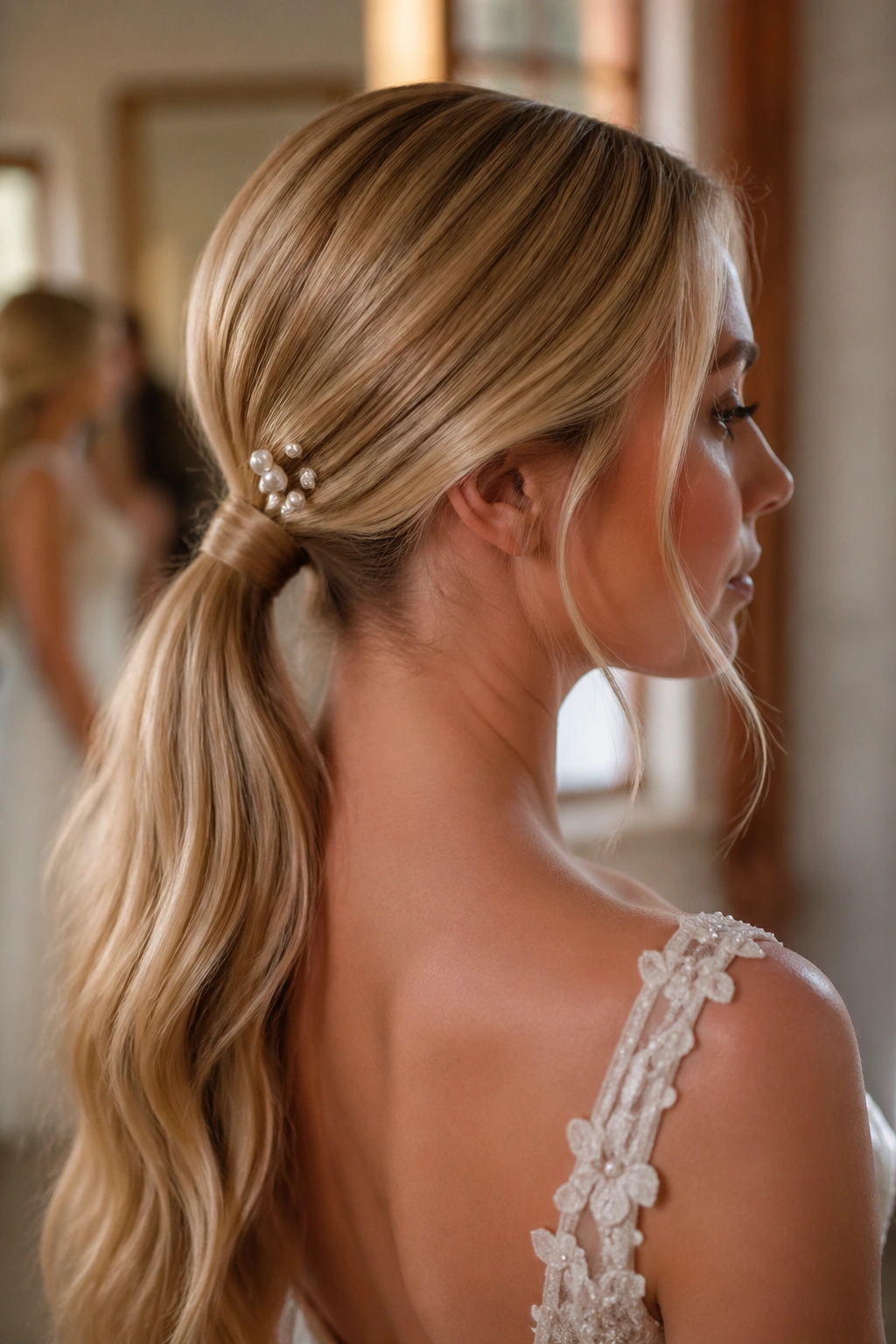
A few pearl pins can make a blonde low ponytail look dressed for an event without tipping into costume territory. I prefer small pins placed on one side of the base or just above the elastic. Too many pearls, and the whole thing starts to feel busy. Three or four is enough.
This works especially well with smooth hair and a wrapped base. The clean surface gives the pins somewhere to sit, and the pearls catch the light against blonde lengths in a way that feels soft rather than loud. If your hair is very textured, secure the pins where the hair is most compact so they do not slide.
The trick is to treat the pins like punctuation. One small cluster says finished. A whole row starts to look crowded. Keep the rest of the ponytail simple, maybe with one curve at the ends or a very gentle wave.
I like this for weddings, dinners, and any moment when the hair needs a little jewelry.
14. Side-Swept Blonde Low Ponytail
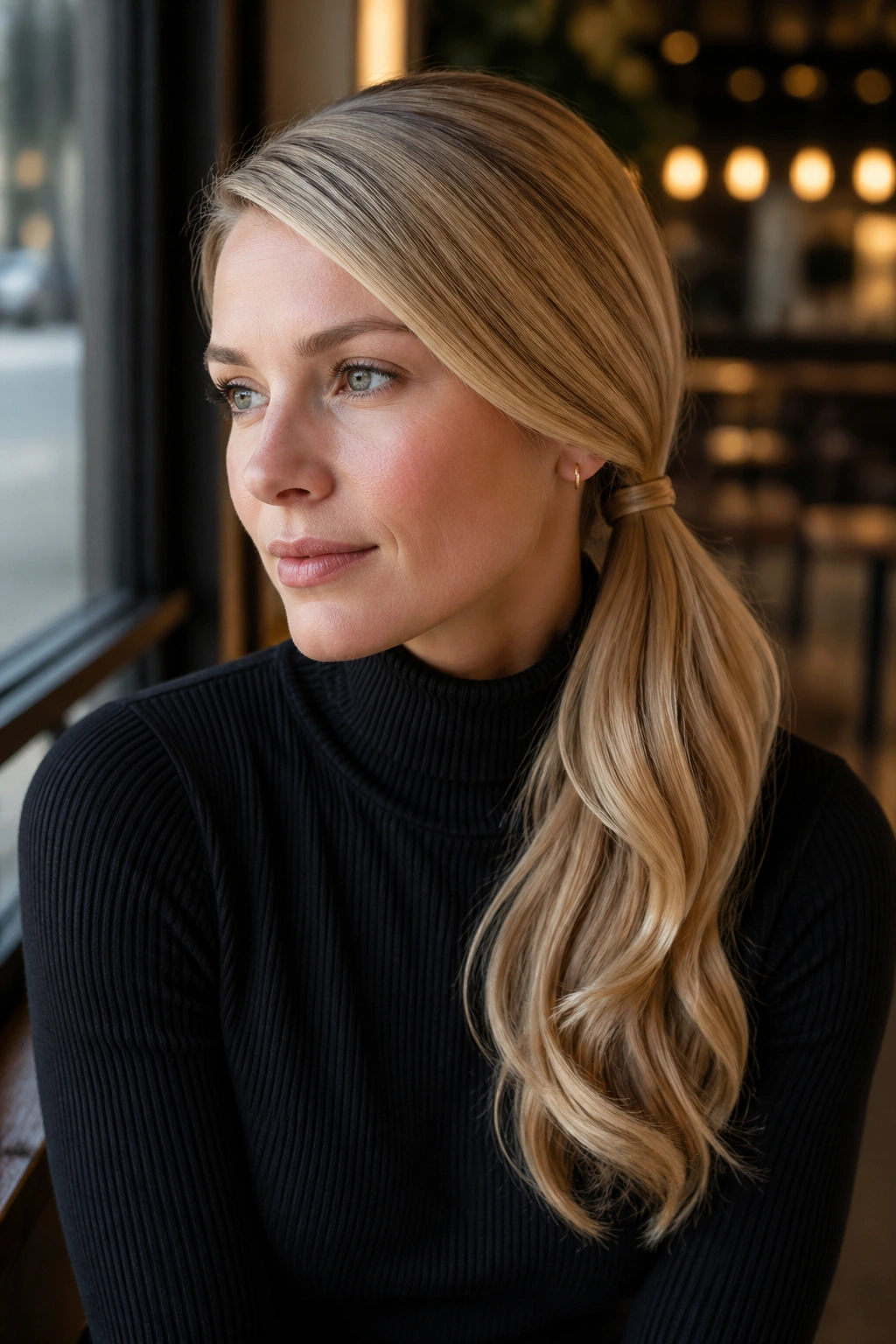
A side-swept ponytail has more drama than a centered version, but it still sits low enough to feel polished. The sweep changes the balance of the style. Hair falls over one shoulder or just behind one ear, and the whole shape feels more deliberate.
This is a good move when the neckline of the outfit does some work on its own. Off-shoulder tops, asymmetrical collars, and long earrings all pair well with a side sweep. Keep the roots smooth, then direct the ponytail toward the side you want to show. A little bend at the tail ends helps it settle into place.
What Gives It Shape
The side sweep needs tension at the crown and softness at the tail. That contrast is what makes it look finished. If everything is sleek, it can feel severe. If everything is loose, it loses direction.
A side part can support the sweep, but you don’t have to commit to one. Sometimes a slight diagonal is enough. That tiny shift is more useful than people think.
15. Rope-Braid Blonde Low Ponytail
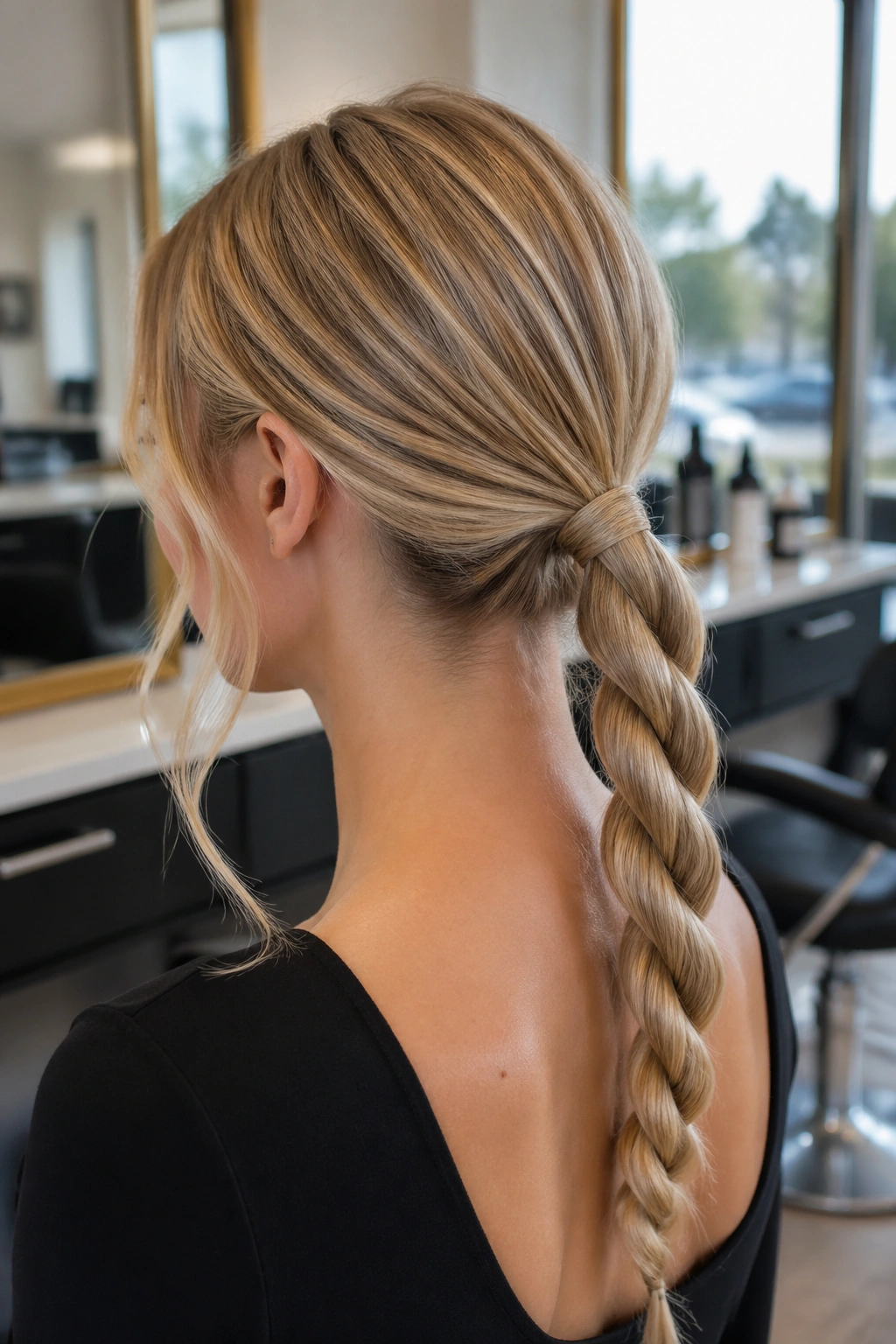
A rope braid gives the ponytail a cleaner, tighter texture than a regular three-strand braid. It twists the hair into a smooth spiral, which works especially well on blonde hair because the light moves along the twist in a neat line. It looks tidy from every angle.
You can use the rope braid as the entire tail or just through the section that starts at the base. I like the second option for a more polished feel: a smooth crown, then a rope-braided tail that stays controlled. Fine hair benefits here because the twist makes the length look denser.
Unlike a loose braid, a rope braid needs even tension all the way down. If one side is tighter than the other, the twist starts to lean and the finish loses its clean edge. Hold the two sections firmly and keep the turns even.
It’s fast, practical, and a little different without being fussy.
16. Curly Blonde Low Ponytail
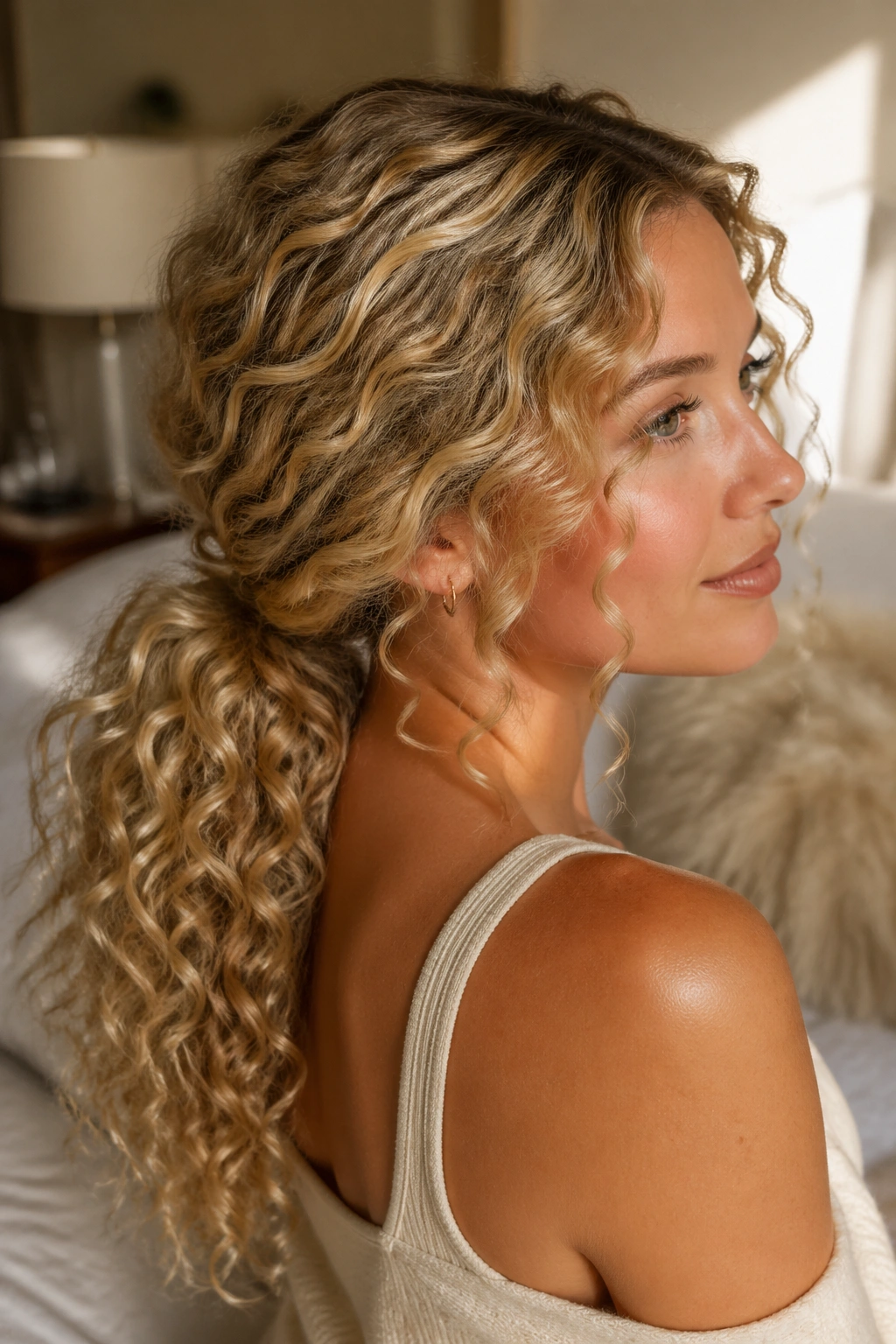
Natural curls deserve their own lane here. A curly blonde low ponytail looks polished when the curls are defined, moisturized, and shaped with care. The style should keep the curl pattern intact rather than flattening it into a generic tail.
Use a curl cream or light gel, then gather the hair low without stretching the curls too hard. Leave a few face-framing coils free if they help balance the shape. Blonde curls can look dry if they’re not given enough definition, so a little shine product on the outer layer makes a real difference.
What to Watch For
- Don’t pull the ponytail so tight that the curl pattern at the crown disappears
- Use a soft brush only on the top layer if you want the base smoother
- Let the ends keep their spring instead of forcing them straight
- A satin scrunchie helps avoid dents and frizz
The finished look should feel controlled, not shellacked. That line is easy to miss. Tight enough to be neat, loose enough to keep the curl alive.
17. Fine-Hair Blonde Low Ponytail
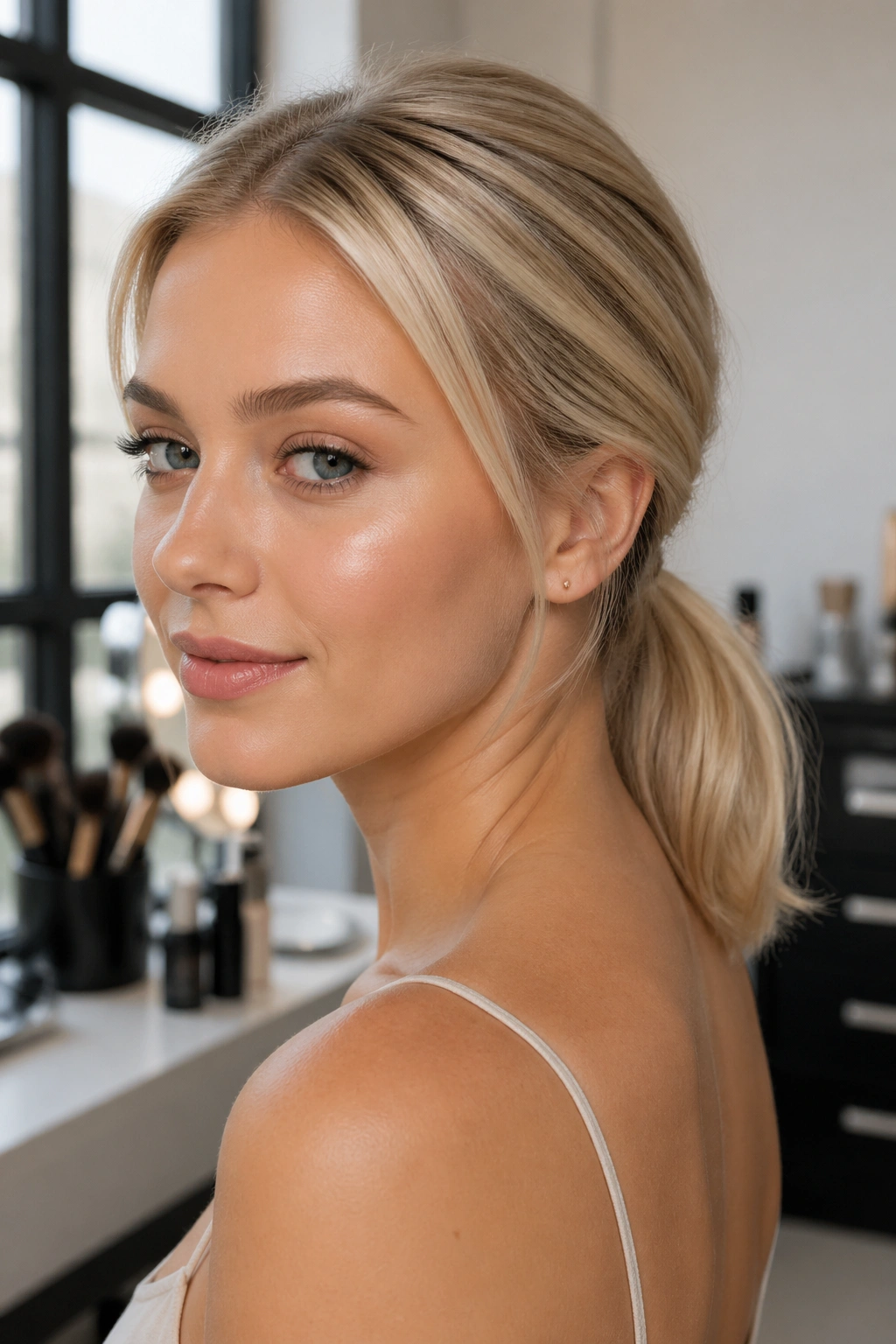
Fine hair can wear a low ponytail and still look full. The trick is to create a little lift at the crown and keep the tail itself compact enough to look dense. If you leave the hair too flat, the ponytail can disappear against the head. A tiny bit of strategic teasing fixes that.
Backcomb only the roots at the crown and along the top side sections. Smooth the outside layer over the teasing so the shape stays neat, then gather the hair low and secure it with a small elastic. A smaller elastic often works better than a bulky one because it does not create a heavy-looking base.
Small Moves That Help
- Use a texturizing spray before gathering the hair
- Wrap a tiny strand around the elastic to hide it
- Keep the tail slightly curved, not pin-straight
- Pull a few millimeters of volume out at the crown after securing it
This style gives fine blonde hair a little body without pretending it has more hair than it does. That honesty is part of why it works.
18. Braided-Crown Blonde Low Ponytail
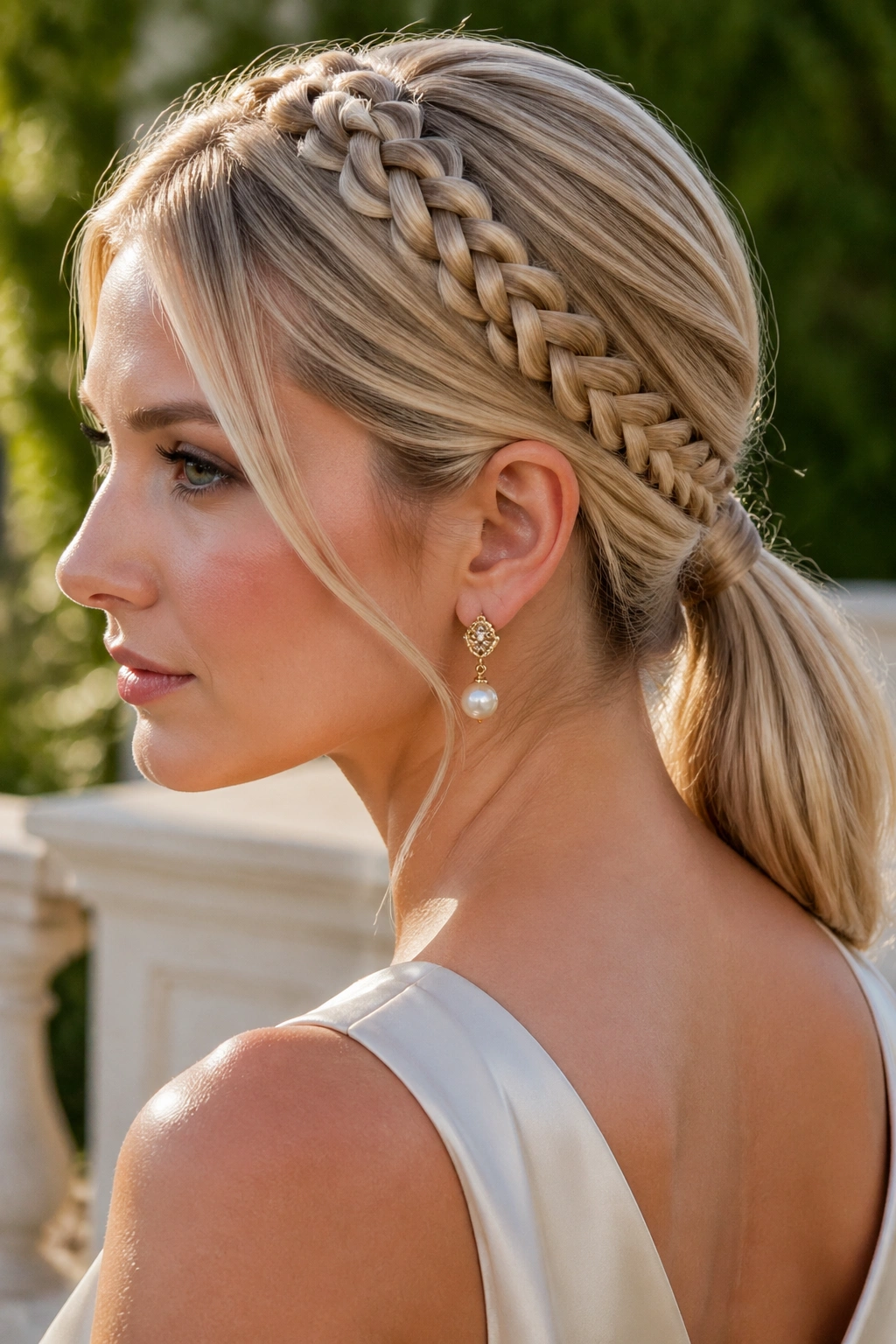
A braided crown gives the low ponytail a built-in frame. Instead of starting with a plain top, you braid along the hairline or from each temple and feed the braid into the base. The result feels more finished than a simple ponytail, and the braid adds enough texture to keep blonde hair from looking too smooth.
This is a smart choice for second-day hair or for anyone trying to hide small frizzy sections near the front. The braid handles that job without needing a lot of product. Keep it close to the scalp so it blends into the ponytail instead of sitting like a separate piece on top.
The style works well with highlights, since the braid pattern shows the color shifts clearly. It also lasts well through the day because the braid holds the front section in place. If your hair is layered, pin the shorter pieces flat before they escape from the braid.
It’s practical. It also happens to look expensive.
19. Office-Neat Blonde Low Ponytail
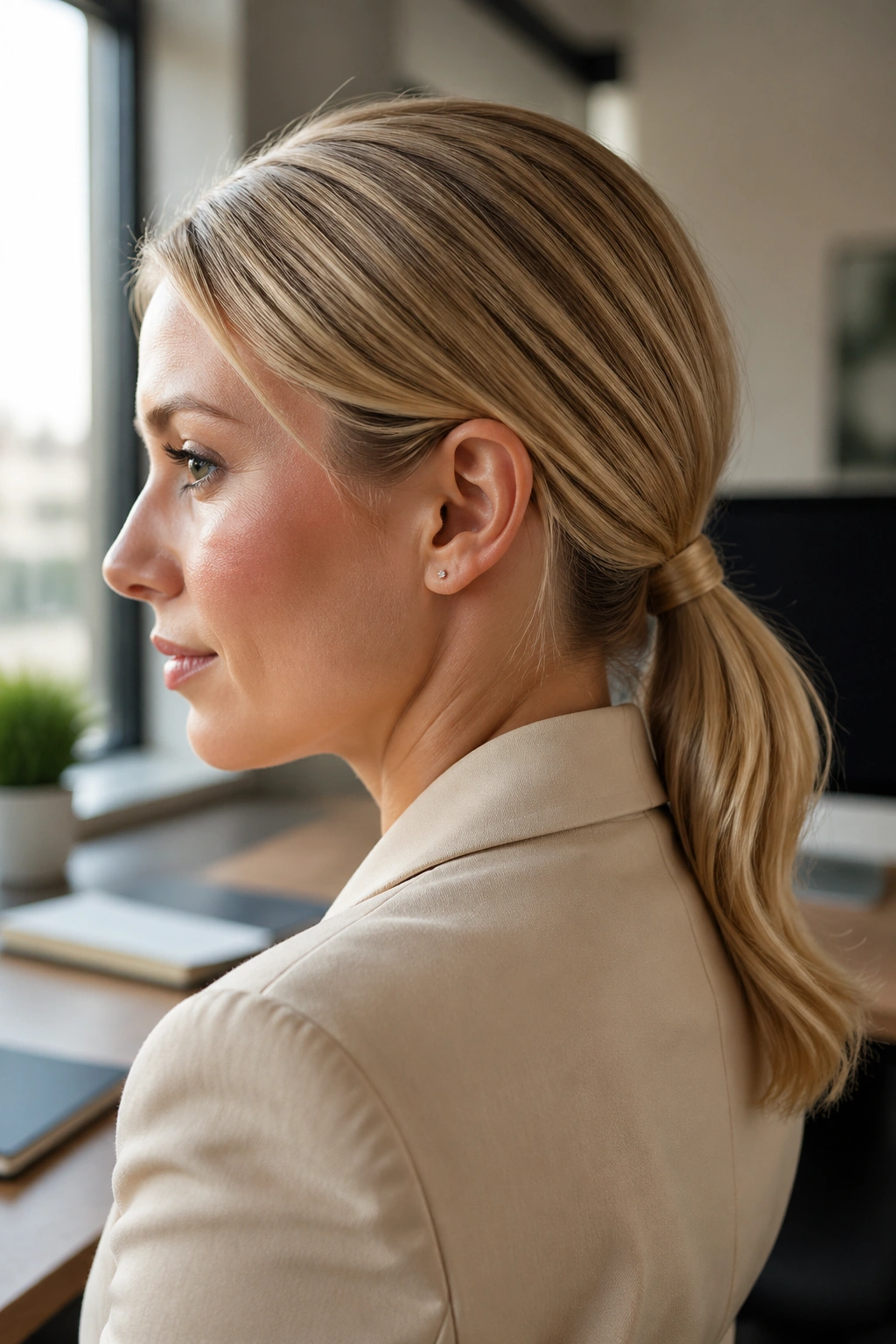
Some ponytails are for parties. This one is for desks, meetings, interviews, and the kind of day when you want your hair to stay out of the way and still look sorted. The office-neat version keeps the crown smooth, the part clean, and the tail low enough that it doesn’t bounce around.
The best part is how little it asks from you. A center part or slight side part, a quick brush back, a tight elastic, and maybe one wrapped strand around the base. That’s all. If you want a sharper finish, tuck the hair behind the ears and mist the top layer with a light-hold spray.
This style sits well under blazers, scarves, and collared shirts. It also avoids the odd little bump that can happen when a ponytail sits too high on the back of the head. Low is quieter. Quieter usually looks better at work.
And yes, it still counts as polished even when it takes five minutes.
20. Ribbon-End Blonde Low Ponytail
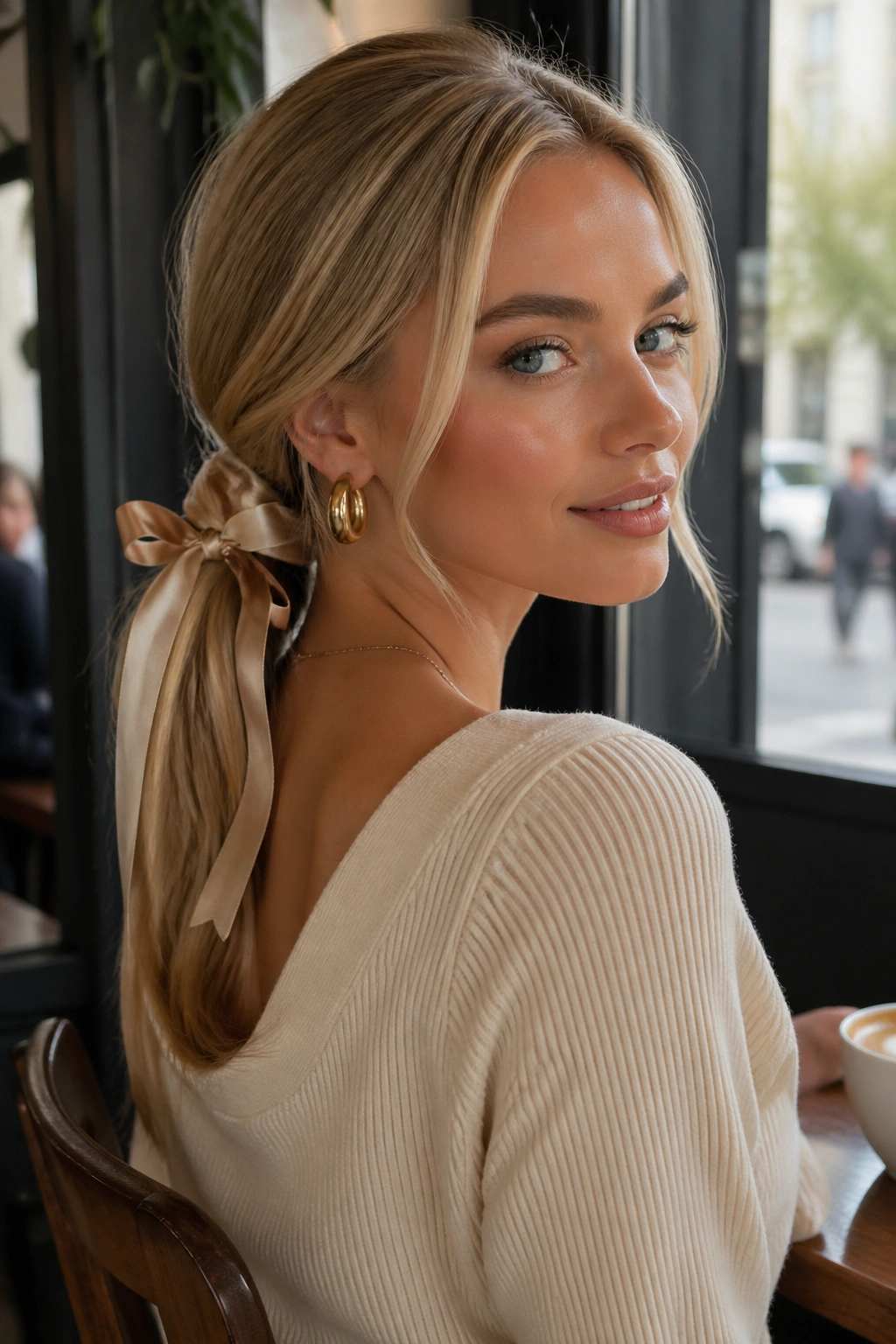
If the base is simple, dress the tail instead. A ribbon tied around the lower length of a blonde ponytail adds softness fast, especially when the color matches the undertone of the hair. Satin ribbons make ash and beige blondes feel smoother. Velvet ribbons give warmer blondes a richer edge.
I like this style when I want the ponytail to look finished but not overworked. Tie the ribbon a few inches below the elastic so the base stays visible, then let the ends hang loose. If the hair is long, you can weave the ribbon through the tail once or twice before tying it off. That keeps it from looking like an afterthought.
Small Choices, Big Difference
- Use a narrow ribbon for fine hair
- Choose a wider ribbon if the ponytail is thick
- Keep the bow slightly off-center for a softer line
- Avoid stiff wired ribbon unless you want a more formal shape
This one leans feminine without being delicate. That balance is the reason it keeps showing up.
21. Sculpted Blonde Low Ponytail With Face-Framing Tendrils
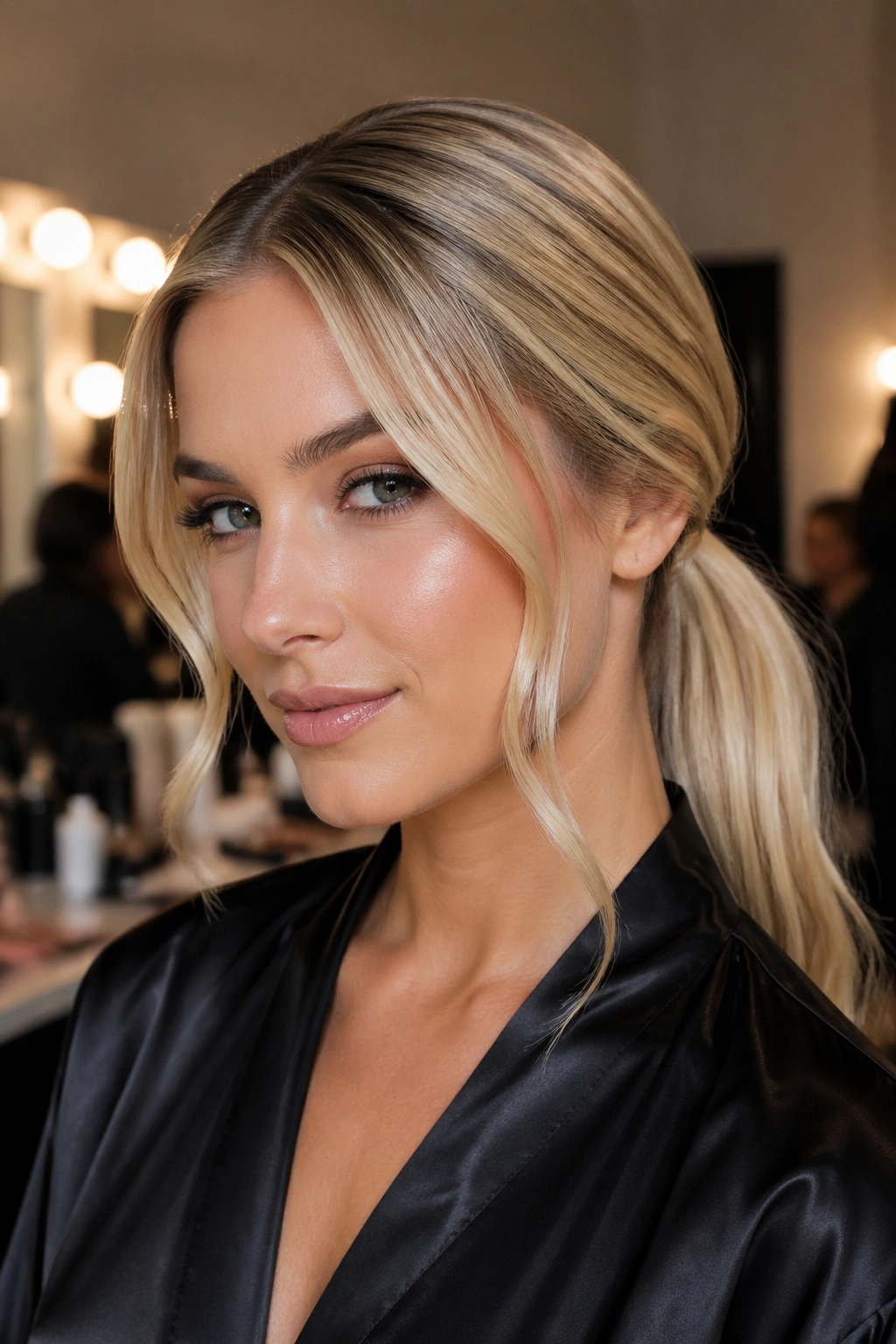
This is the version that feels the most finished when everything else is kept quiet. The crown is smooth, the base sits low and tight, and a few face-framing tendrils stay out on purpose — not as a mistake, but as part of the design. On blonde hair, those soft front pieces catch the light and keep the style from looking too locked down.
The tendrils should be deliberate. Too thin, and they look accidental. Too thick, and they start to compete with the ponytail. I usually like two pieces, one on each side, curled just enough to bend away from the face. The rest of the hair stays sleek so the contrast feels clean.
This is the low ponytail I’d choose for an event when I wanted the hair to look done but not stiff. It works with simple earrings, strong makeup, or a dress with a clean neckline. It also holds up well if your hair is layered, because the loose pieces give the cut somewhere to live.
The whole point is control without heaviness. That’s what makes blonde low ponytails look polished in the first place.
