



Swoop ponytails for long hair have a funny effect: they can make a regular ponytail look planned, polished, and a little dramatic without asking for much more than a comb and a few pins. The trick is that long hair changes the whole shape. It weighs down the crown, swallows tiny front sections, and makes anything flimsy collapse by noon.
That’s why the best swoop starts wider than you think. A skinny front piece disappears once the tail goes in. A stronger section — usually a deep side sweep or a soft diagonal from the hairline — gives the style enough presence to survive long lengths, wind, and the old problem of hair that wants to slide right back to center.
One more thing. Long hair loves shine, but it also exposes every mistake. Too much oil near the roots makes the swoop slip. Too little grip leaves the front puffing up. A rat-tail comb, a soft brush, a handful of bobby pins, and a light spray of hold are usually enough if you place everything with care.
So here’s the fun part: the shape can go sleek, curly, braided, bubble-like, romantic, sporty, or red-carpet sharp, and the ponytail still feels like a ponytail. Just with better manners.
1. Sleek Swoop Ponytail for Long Hair
This is the cleanest version, and I keep coming back to it because it never looks accidental. A deep side part, a smooth front sweep, and a ponytail sitting either high or mid-height give long hair a sharp line that reads polished fast.
Why It Works on Long Hair
Long lengths need structure. If the front section is too narrow, the weight of the ponytail drags attention away from the swoop and into the tail.
- Use a 1½- to 2-inch-wide front section for the sweep.
- Brush the roots flat with a boar-bristle brush or soft paddle brush.
- Mist the front with light-hold spray, not heavy gel, unless you want a very stiff finish.
- Place the elastic where the head starts to curve, not too low on the neck.
Best tip: pin the swoop in place for 30 seconds before you gather the ponytail. That tiny pause makes the front sit flatter and last longer.
2. Glossy High Swoop Ponytail
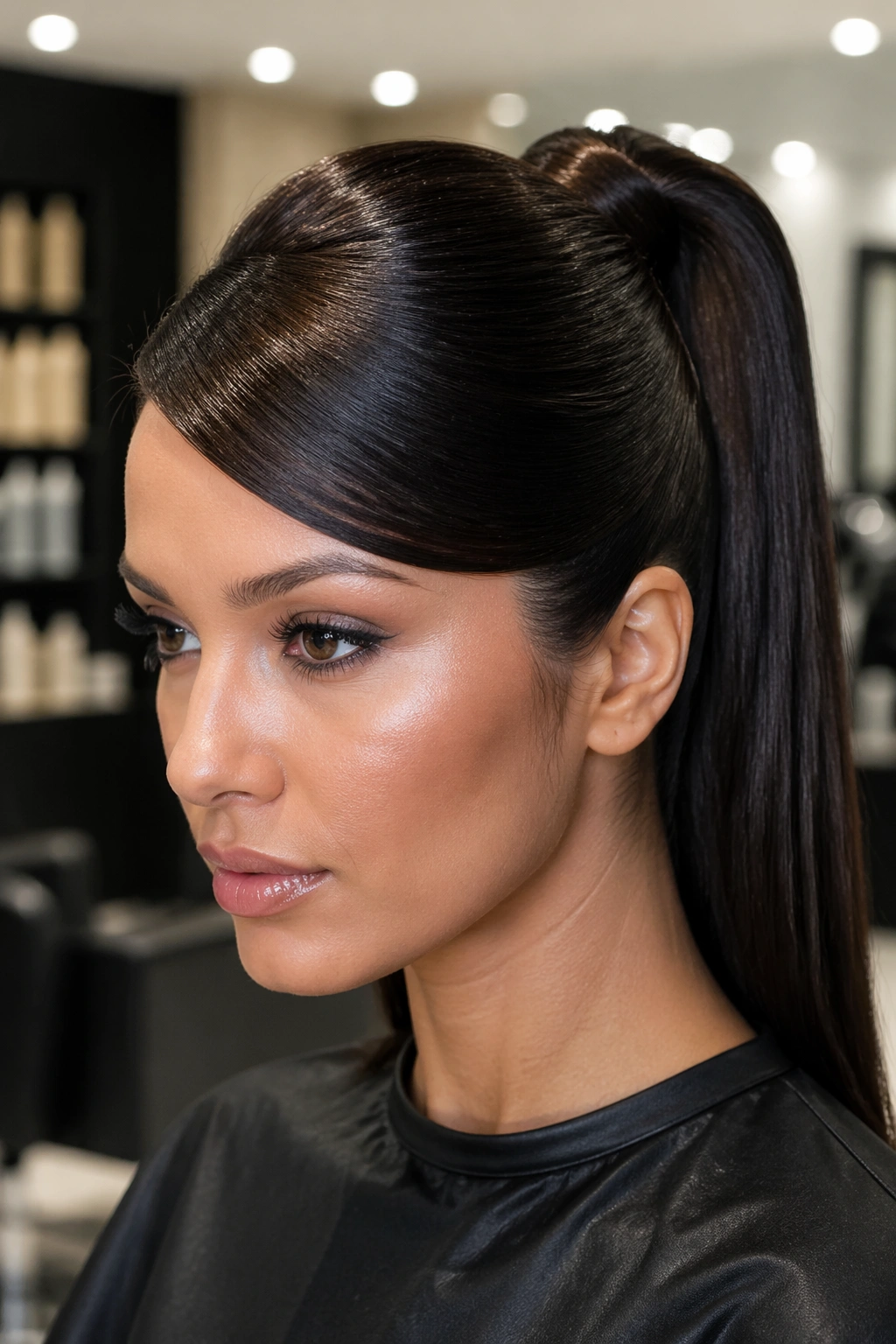
A high swoop changes the mood right away. It gives lift at the crown, shows the cheekbones, and keeps the whole style feeling energetic instead of too formal. Long hair helps here because the tail has enough length to fall with weight, which keeps the pony from looking flimsy or toy-like.
I like this version when the roots need volume but the ends still need control. A little mousse at the crown, a quick blow-dry upward with a round brush, and then the swoop gets brushed diagonally across the forehead. The ponytail itself should sit high enough to pull the face up, but not so high that it turns into a cheerleader knot.
The shine matters. A flat iron pass on the front section can help, but don’t overdo it. You want smooth, not pinched.
3. Soft Curled Swoop with Face-Framing Pieces
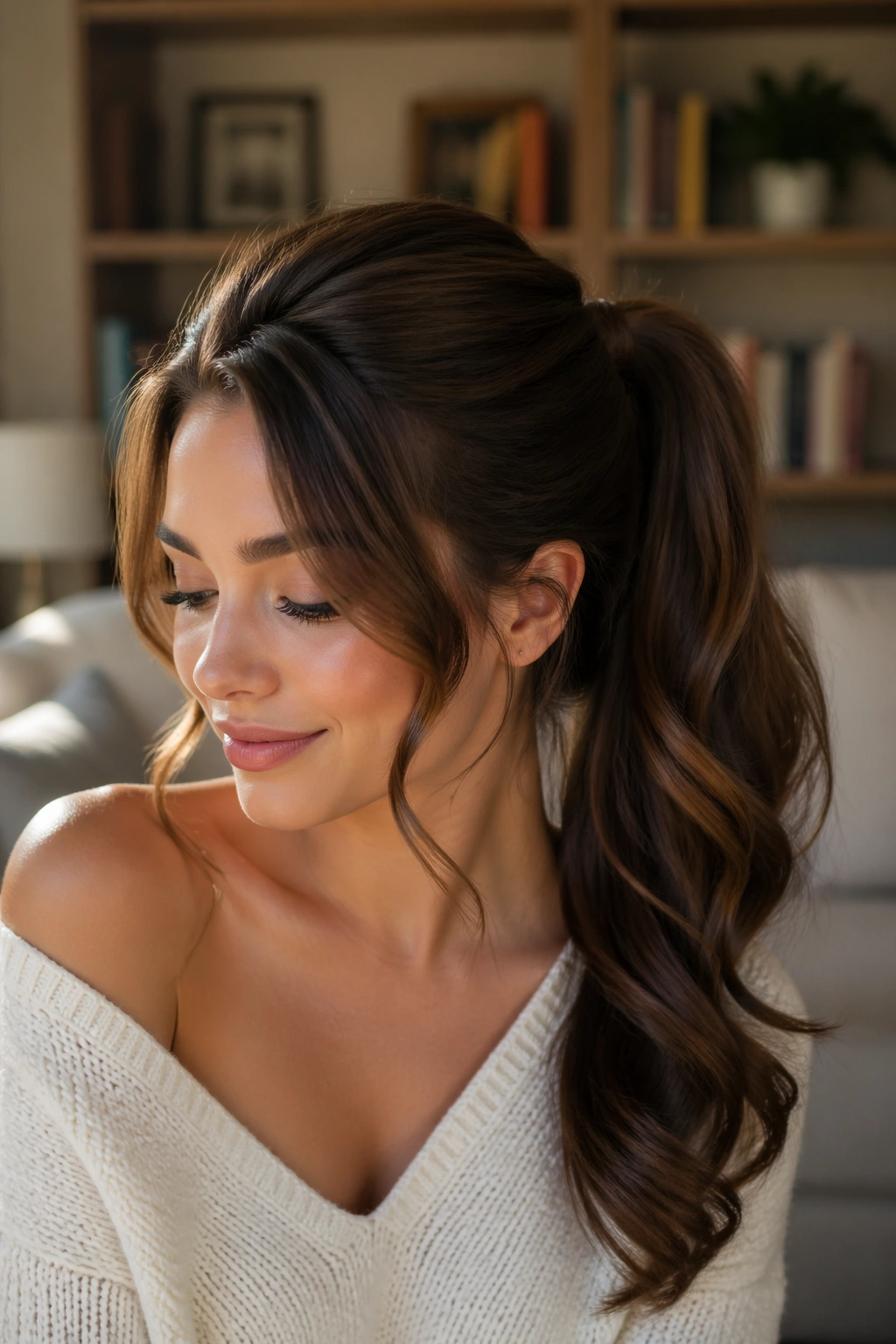
Want something less sharp and a bit friendlier around the face? This is the one. The swoop stays side-swept, but the ends get a bend, and two small face-framing pieces keep the front from feeling too strict.
How to Style It
Start by curling the tail in large sections — 1½-inch iron sections work well — then brush the curls out so they fall into waves. Leave the front sweep slightly loose at the root. It should still read as a swoop, not as a strand tucked out of the way.
The face pieces should bend around the cheekbone, not curl into tight ringlets. That detail matters more than people think. Tight curls near the temples can make the style look dated fast.
A good rule: if the front pieces hit your chin, they’re usually long enough to soften the pony without fighting it.
4. Braided Swoop Ponytail
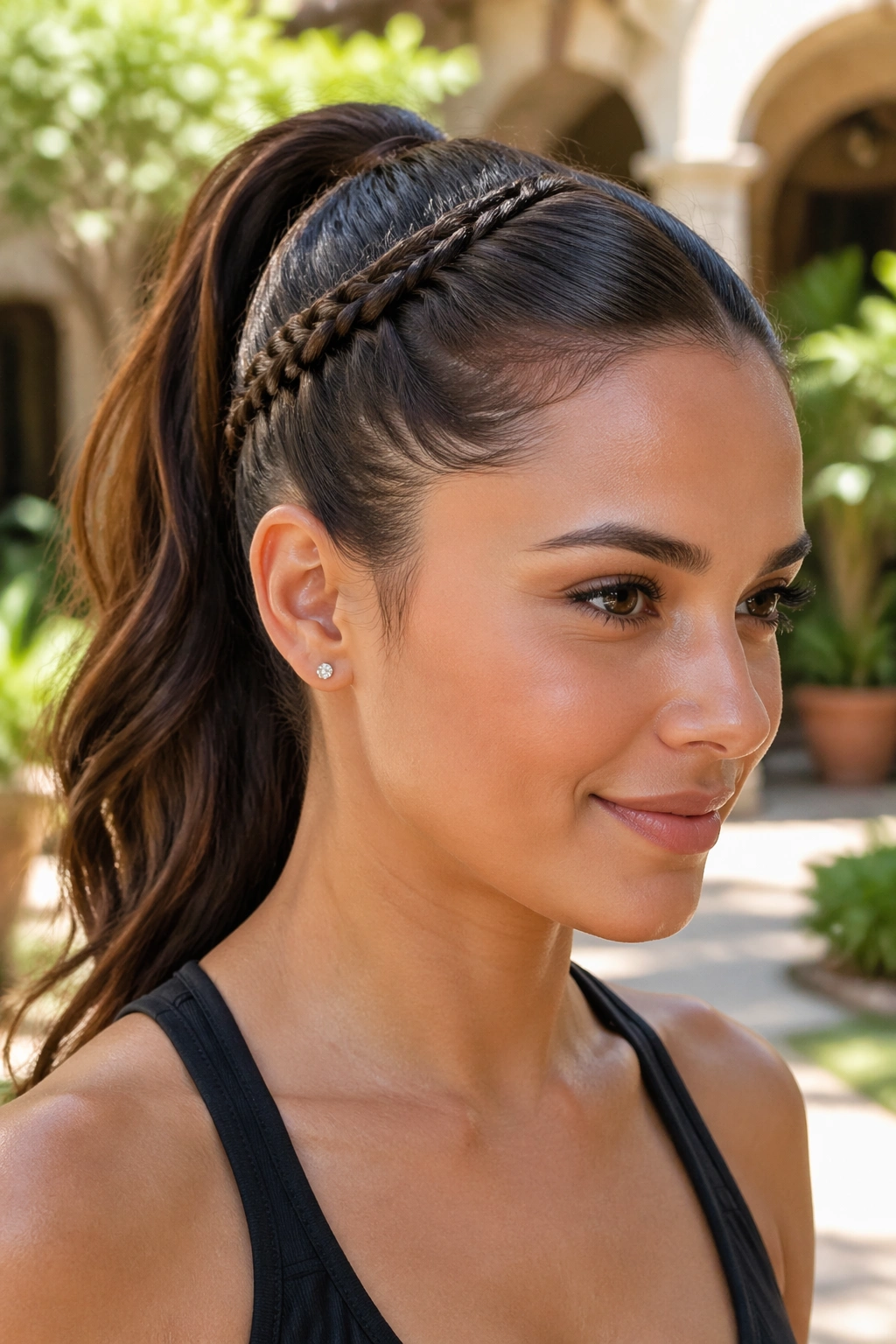
If the day is going to be long, braid the swoop first. That’s the move. It keeps the front controlled, adds texture right where you want people to look, and gives long hair a little more grip before the ponytail even starts.
I like this for humid weather, busy schedules, and hair that slips out of smooth styles by lunchtime. The braid can be a simple three-strand braid, or just a small braid at the temple that feeds into the rest of the sweep. Either way, it makes the ponytail feel finished instead of rushed.
- Keep the braid snug but not tight at the hairline.
- Use a small clear elastic if the braid ends inside the tail.
- Wrap a strand around the pony base so the braid and tail feel like one piece.
- Spray the braid lightly before you set it.
That last step matters. A braid that’s too dry starts puffing at the edges.
5. Low Swoop Ponytail with Wrapped Base
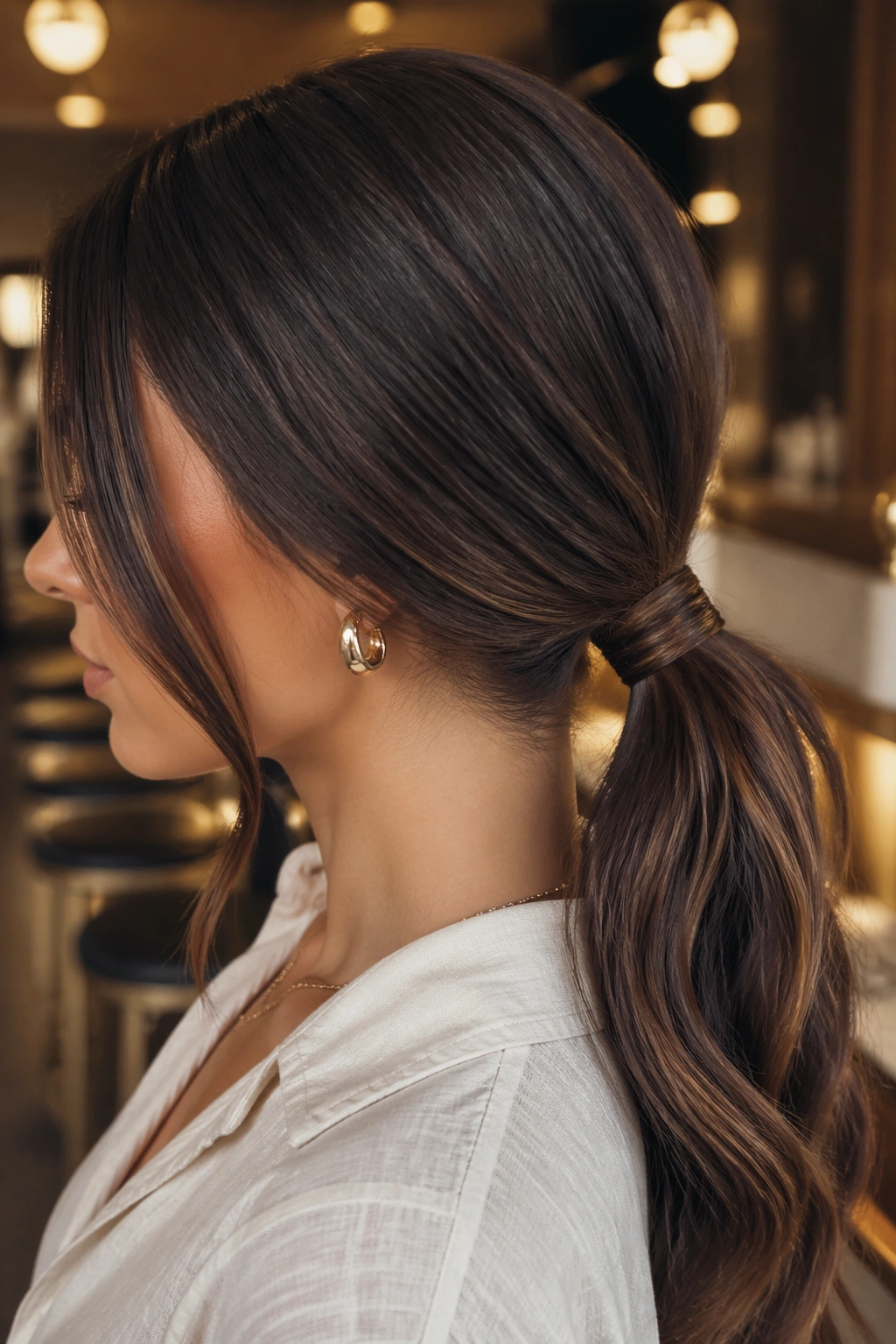
Low swoops are underrated. People think high ponytails do the most work, but a low swoop at the nape can look cleaner, softer, and a lot more expensive-looking without actually costing anything extra. Long hair makes this shape especially nice because the tail hangs with a heavy, tidy drape.
The magic is in the base. Once the front hair sweeps across, gather the pony near the nape and hide the elastic with a thin wrapped strand. That little cover changes the whole finish. Suddenly the style feels intentional, not like an elastic happened to be there.
This is also one of the easiest styles to wear with earrings, collars, or a jacket that sits high on the neck. It stays out of the way. It still has shape. And on long hair, the tail keeps enough movement that the style never looks flat.
6. Crisscross Swoop Ponytail
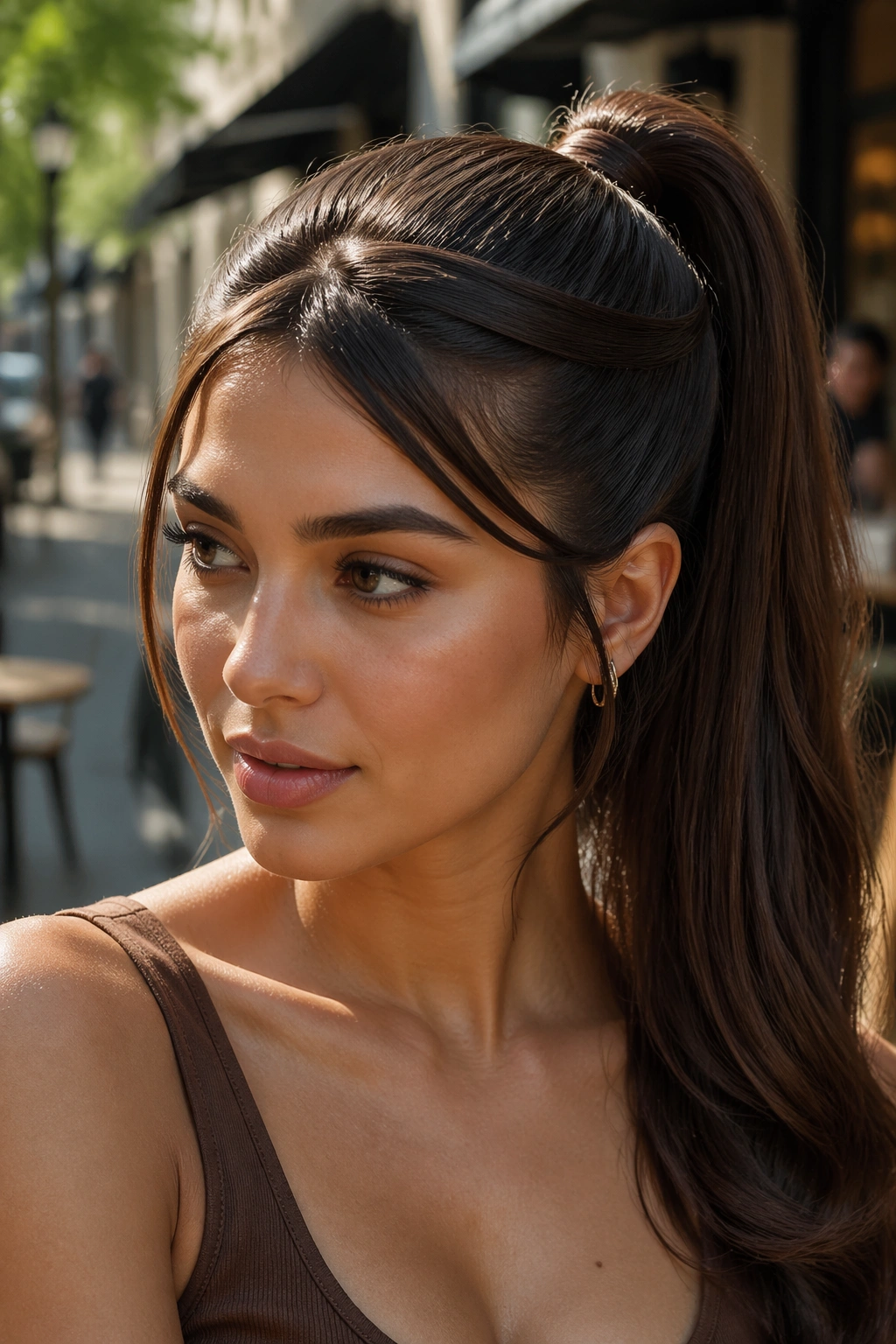
A crisscross front gives the swoop more tension and visual interest than a single sweep. Instead of brushing all the front hair one direction and calling it done, you cross two small sections over each other before they join the ponytail.
What Makes It Different
The structure is the point. One section supports the other, so the front holds better on long hair and looks a little more sculpted. That makes it a nice choice when your hair is thick, layered, or stubbornly smooth and slippery.
It also gives the style a built-in detail that people notice up close. Not loud. Just smarter.
I’d use this when a plain side-swoop feels too simple, but a full braid feels like too much effort. It sits in that useful middle ground, which is where a lot of the best ponytails live.
7. Bubble Swoop Ponytail
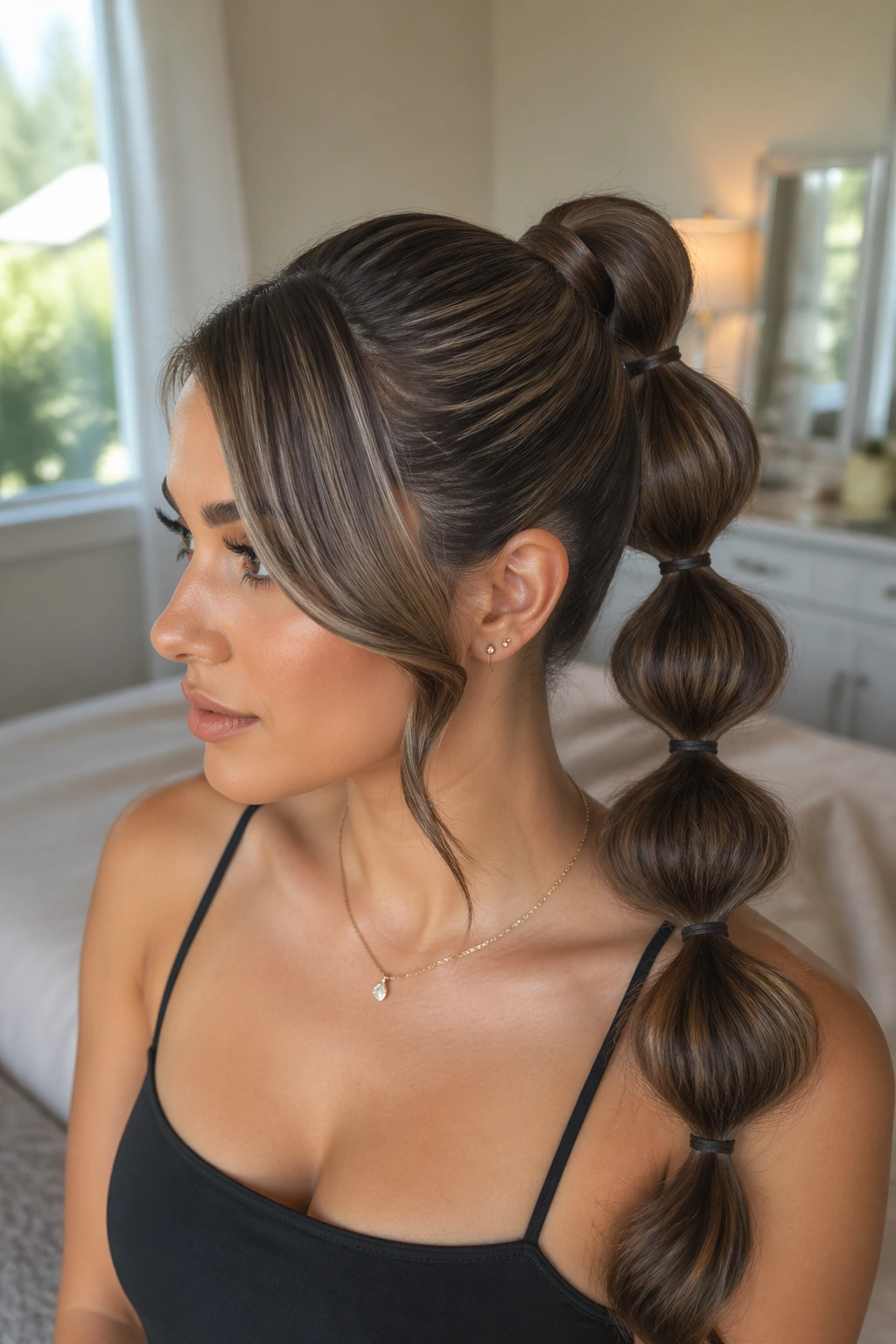
The bubbles do the work here. Once the swoop is set and the ponytail is in place, you add elastics every 2 to 3 inches down the tail and gently puff each section between them. On long hair, that creates a shape with real presence.
The front swoop keeps the look from turning playful in a costume-y way. Without it, a bubble ponytail can feel too casual. With it, the style has a sharper frame and reads more styled.
Use clear elastics if you want the sections to stand out, or wrap tiny strands around the elastics if you like a smoother finish. The key is consistency. Make the bubbles the same size, or close to it. Uneven sections can look messy fast, and long hair will exaggerate every mismatch.
8. Side-Swoop Ponytail with Barrel Curls
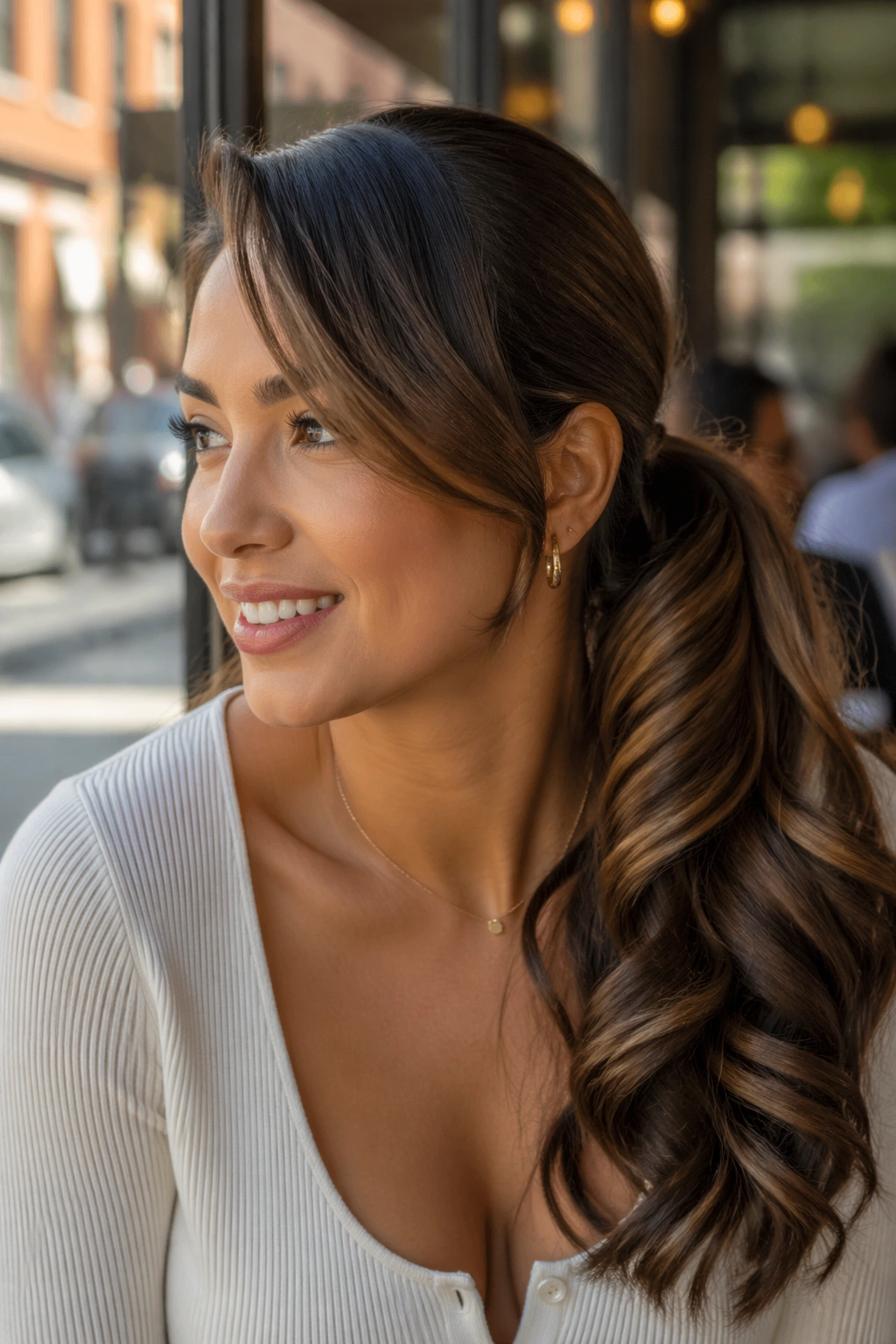
If you need a ponytail that can go from daytime to dinner without much fuss, this is one of the easiest options to trust. The side sweep gives the front shape, while the tail gets big barrel curls that fall in wide, soft loops.
The curl size matters. Use a 1¼- to 1½-inch iron and curl away from the face, especially on the top layers of the ponytail. Then brush lightly or finger-comb the curls so they land in broad waves instead of tight spirals. Long hair takes on that softness well because the extra length helps the curls hang.
I like this version for events where you want movement. It looks dressed up, but not stiff. A little glossing serum on the ends is enough; don’t drench the roots or the swoop will slip.
9. Middle-Part Swoop into Ponytail
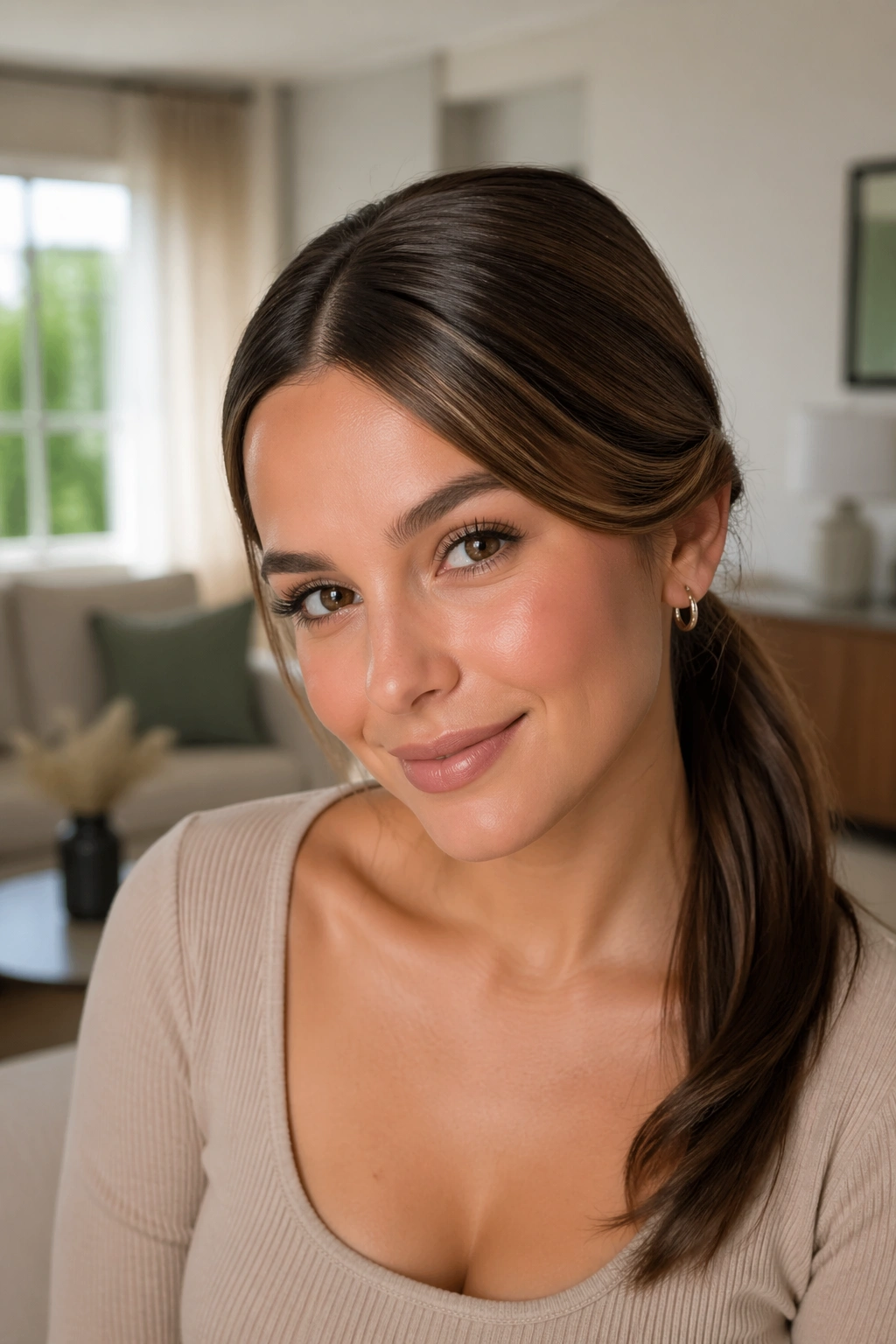
Can a swoop still feel soft with a center part? Yes, and the answer is in the angle. Instead of using a dramatic side part, you let one front section arc across the forehead while the rest stays centered and clean.
Where It Flatters
This shape works especially well when you want balance. The middle part keeps the face open, while the swoop adds a little asymmetry so the style doesn’t feel flat or severe.
- Best for long hair that needs a cleaner outline.
- Good if side parts make your hair collapse too fast.
- Useful when you want the ponytail to sit low and calm.
- Handy for showing off earrings or a defined makeup look.
The best version doesn’t look forced. It looks like the front hair decided to behave a little differently for once.
10. Rope-Braid Swoop Ponytail
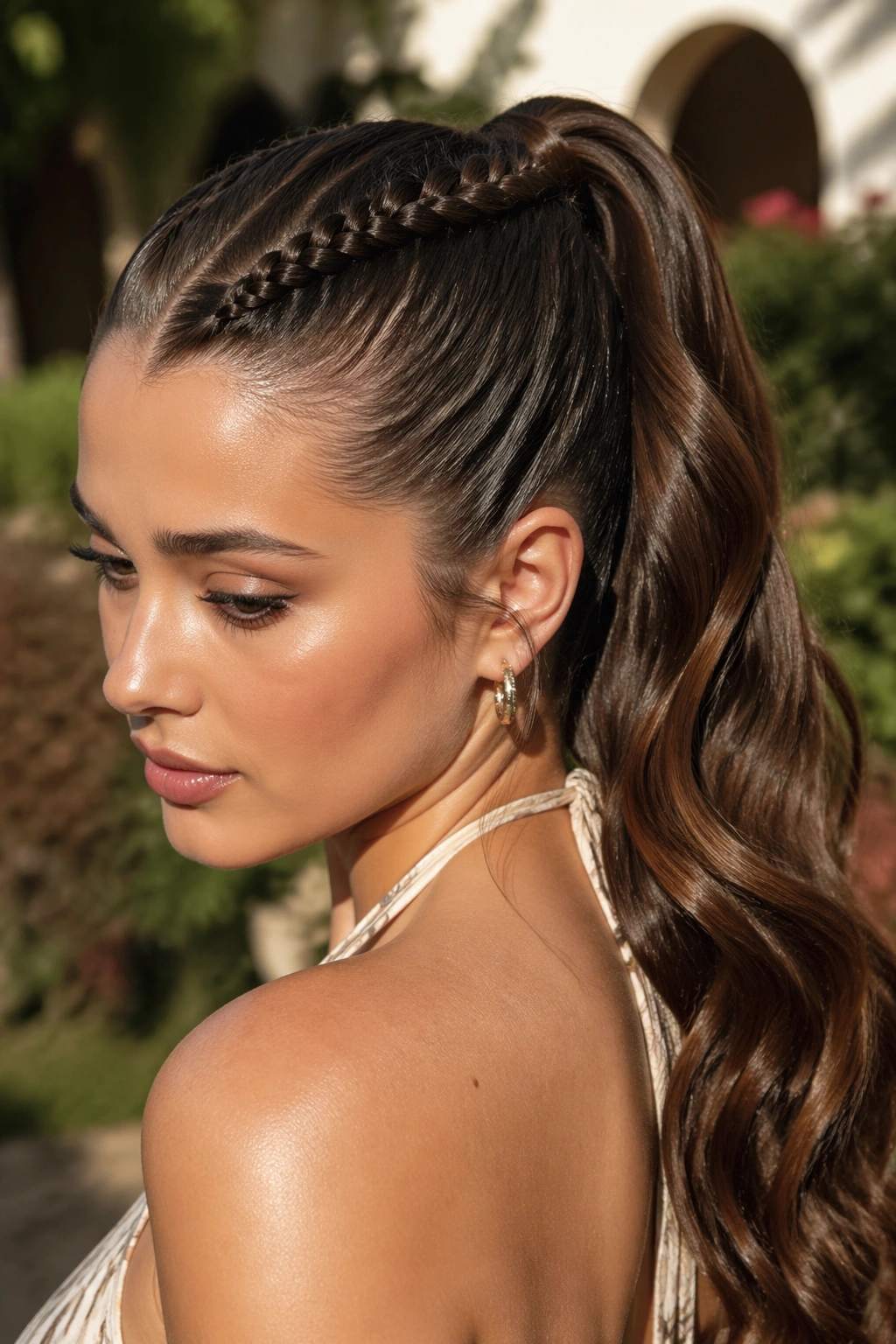
A rope braid in the swoop gives you a tighter, neater line than a loose twist. It’s a small detail, but it changes how the front reads. Instead of soft and airy, the style becomes more structured and a bit more polished.
Picture this: you sweep the front section toward the ponytail, split it into two, twist both pieces in the same direction, then twist them around each other in the opposite direction. That’s the rope-braid trick. It stays compact and works well on long hair because the extra length gives the braid enough weight to hold its shape.
I like this for days when flyaways are annoying. The rope braid controls them better than a plain sweep, and it gives the whole ponytail a neat edge that feels clean from every angle.
11. Voluminous Crown Swoop Ponytail
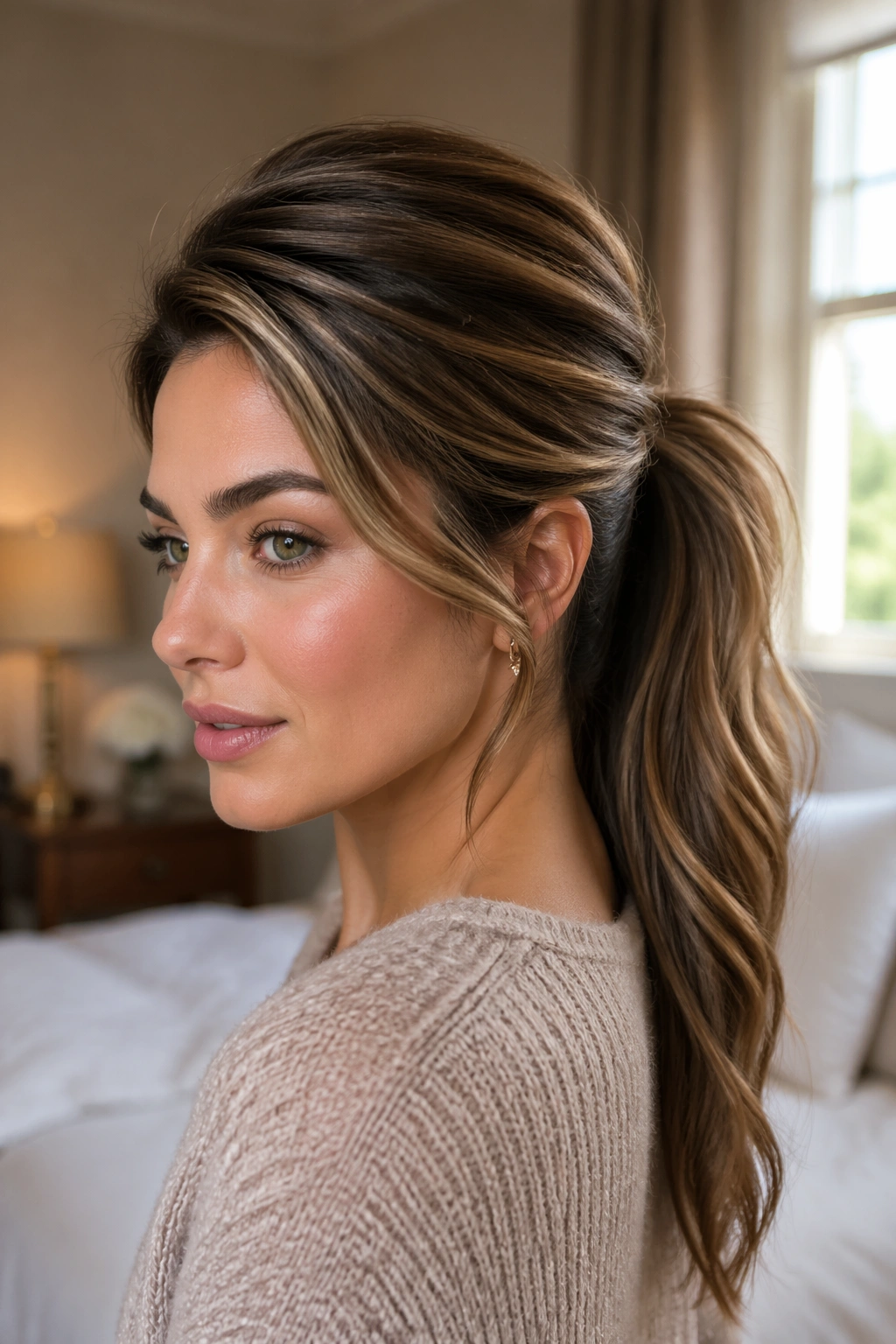
A little height at the crown changes everything. Long hair can pull the top flat if you let it, so a bit of lift near the roots keeps the swoop from looking tired or heavy.
Start by teasing the crown lightly — not a bird’s nest, just a soft lift at the roots — and smooth the top layer over it. Then sweep the front section across and secure the ponytail where the lift feels natural. If you place the elastic too low, all that crown work disappears. Too high, and the style can look stiff.
I prefer this when the hair is freshly washed and a little too slippery. Dry shampoo at the roots helps. So does a quick blast of cool air after the crown is set. The style lasts better once the shape is locked in.
12. Half-Up Swoop Ponytail for Extra Length
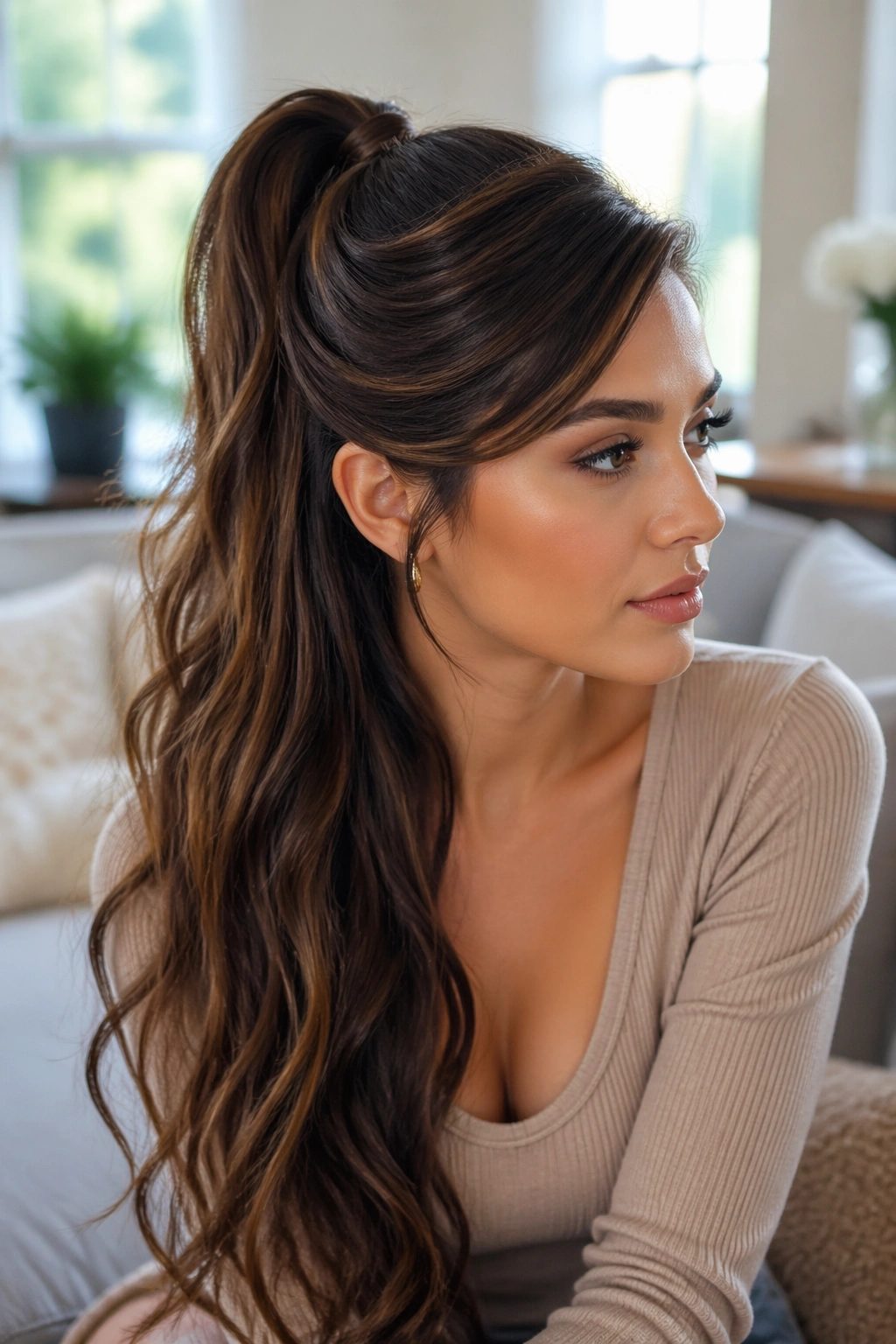
Half-up swoops are underrated on long hair because they let the length stay visible instead of packing everything into one elastic. The front sweep still gives that ponytail shape, but the lower half of the hair hangs free and keeps the whole look softer.
Why I Reach for It
If your layers are too short for a full ponytail, or if a full pony makes your hair feel heavy, this is a cleaner fix. It also works when you want to show off curled ends without fighting the weight of the top section.
The half-up version is easier on the scalp, too. Less tension. Less pulling.
That matters more than people admit. A style can look good and still be annoying to wear, and that usually shows up after an hour or two.
13. Sleek Swoop with a Braided Base
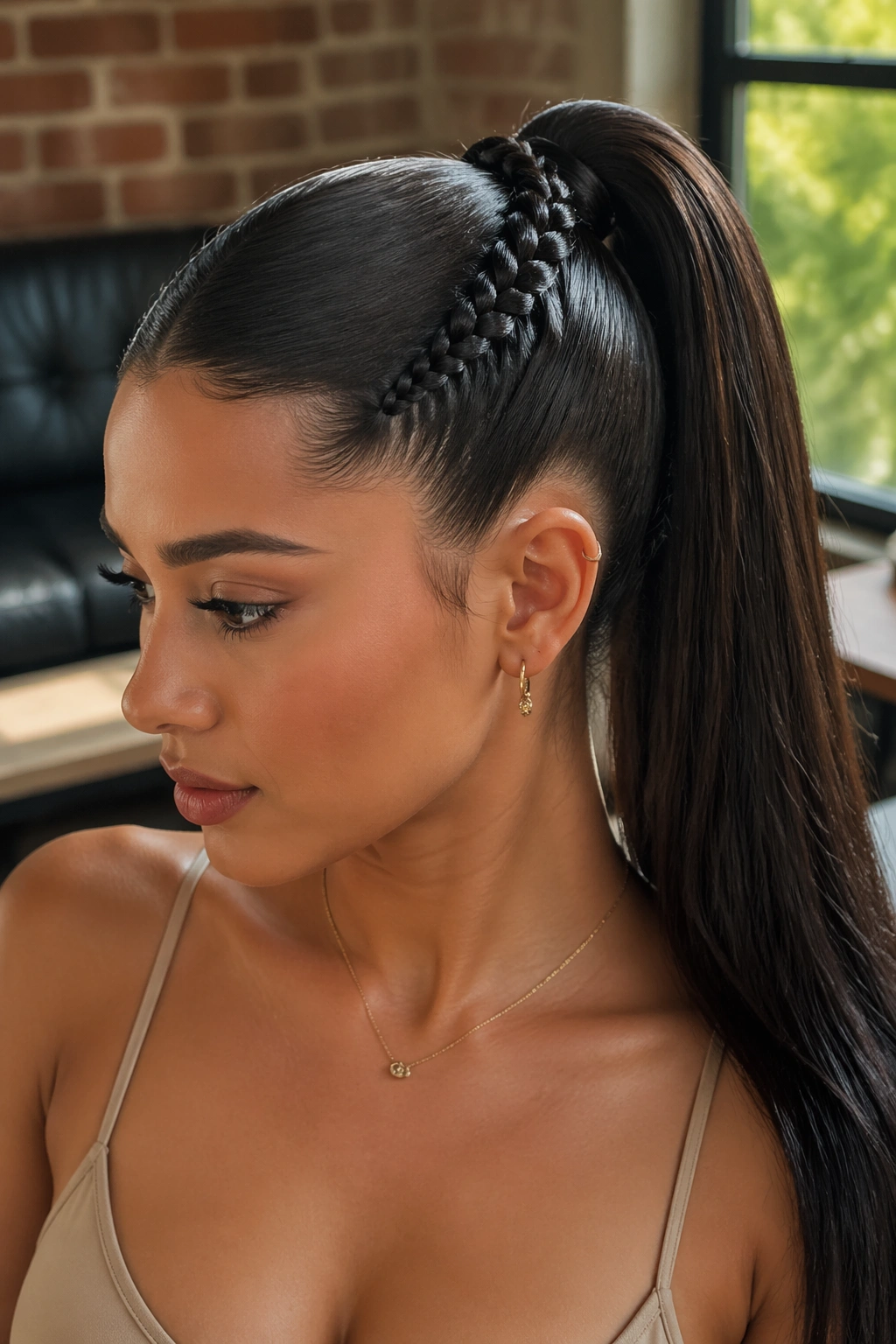
This one has real grip. You braid the first few inches near the base before the ponytail is secured, which gives the style a strong anchor and makes the swoop feel intentional rather than improvised.
The braided base is especially useful if your hair is slippery, fine, or freshly blown out. A smooth ponytail can slide. A braided root line hangs on better and gives the eye something to follow before it drops into the tail.
My take: this is one of the smartest long-hair options if you want a style that lasts through a full day without constant checking. It’s neat, a little sporty, and still polished enough for a nice dress or sharp jacket.
14. Scarf-Tied Swoop Ponytail
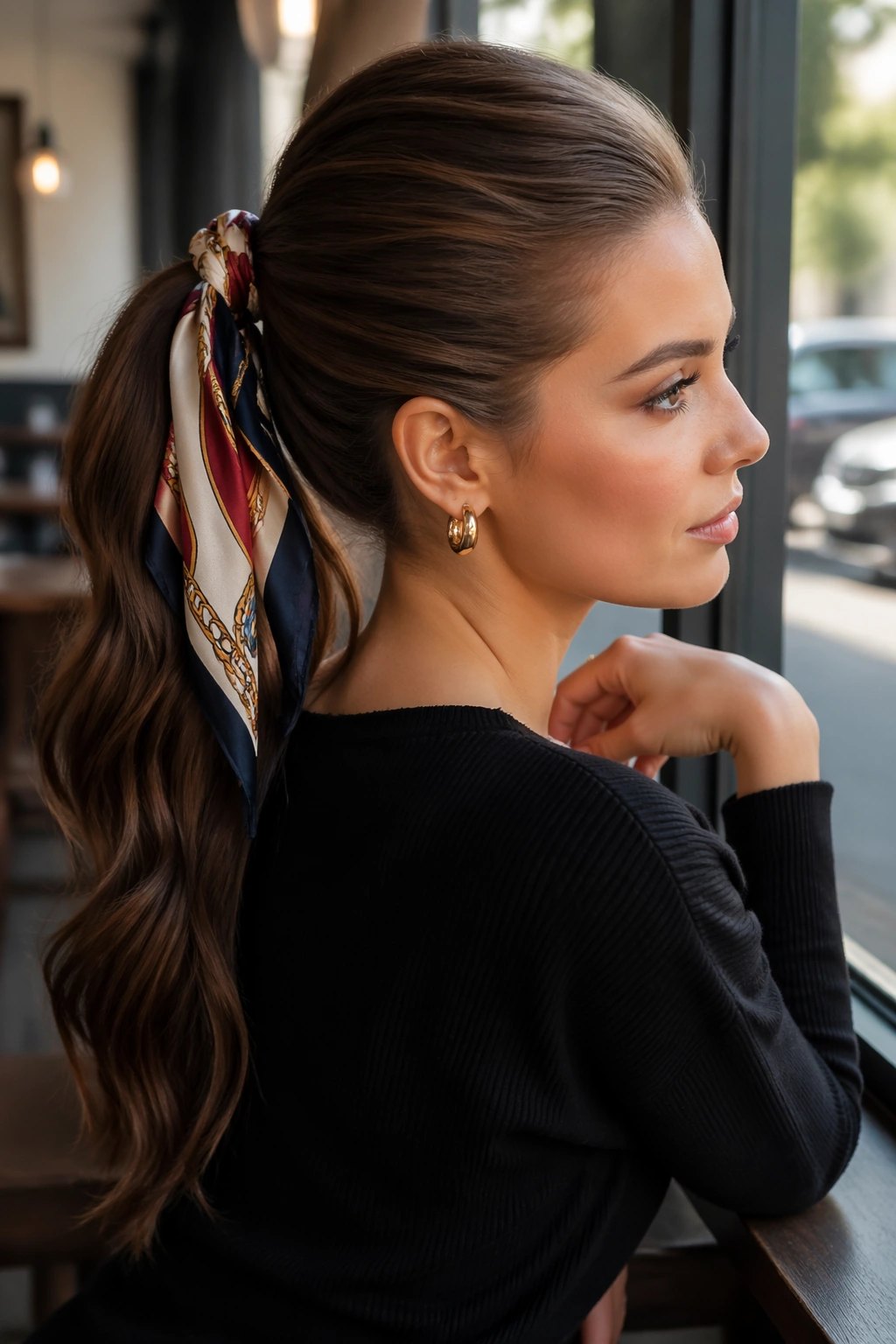
Can a scarf hold a swoop without fighting it? Absolutely, if you choose the right fabric and keep the knot low.
What to Use
A silk or satin scarf gives the softest finish, while a cotton ribbon keeps things more casual. Tie it around the pony base after the elastic is in place, or use it to cover the elastic completely if the style needs a neater finish.
This is a good move for day-two hair. The scarf adds color, hides small frizz patches, and turns a plain ponytail into something that looks chosen on purpose.
One warning: don’t use a scarf that’s too thick. It adds bulk fast, and on long hair, extra bulk can make the base feel clumsy. Thin is better here.
15. Twisted Swoop Ponytail
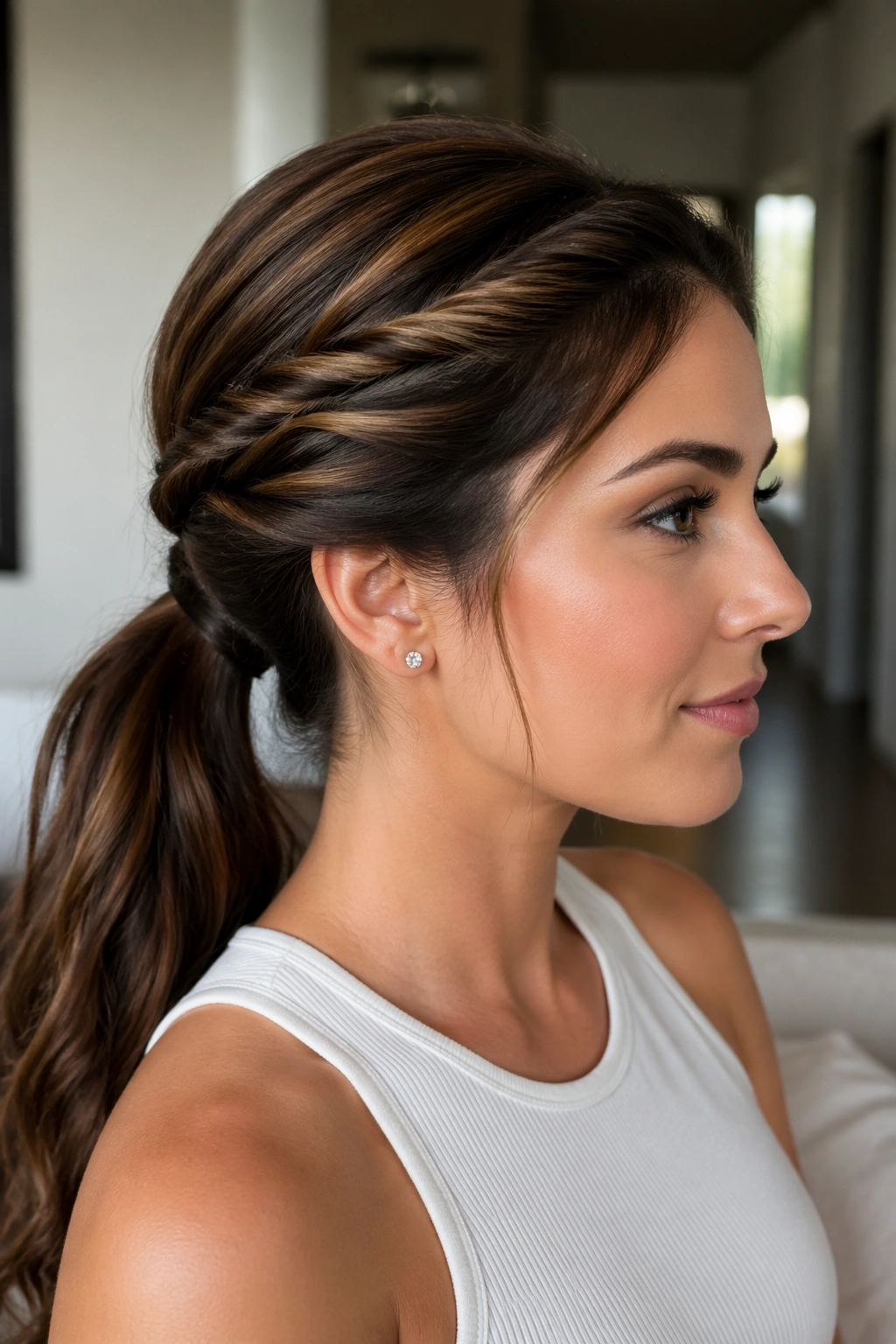
A twisted swoop sits between a braid and a simple sweep. It’s softer than a braid, but it still gives the front some structure, which is handy when you want the style to hold its shape without looking too done.
I usually twist two front sections back toward the ponytail, pin them low near the temple, and then gather the rest. The result feels clean but not severe. Long hair helps because the twist has enough length to lie flat against the head instead of popping loose.
- Twist each section in the same direction.
- Pin close to the scalp so the twist stays smooth.
- Keep the ponytail base low if you want the style to feel relaxed.
- Add a light spray before you leave the front alone.
That last part saves you from frizz around the hairline, which is where this style can go sideways.
16. Faux-Hawk Swoop Ponytail
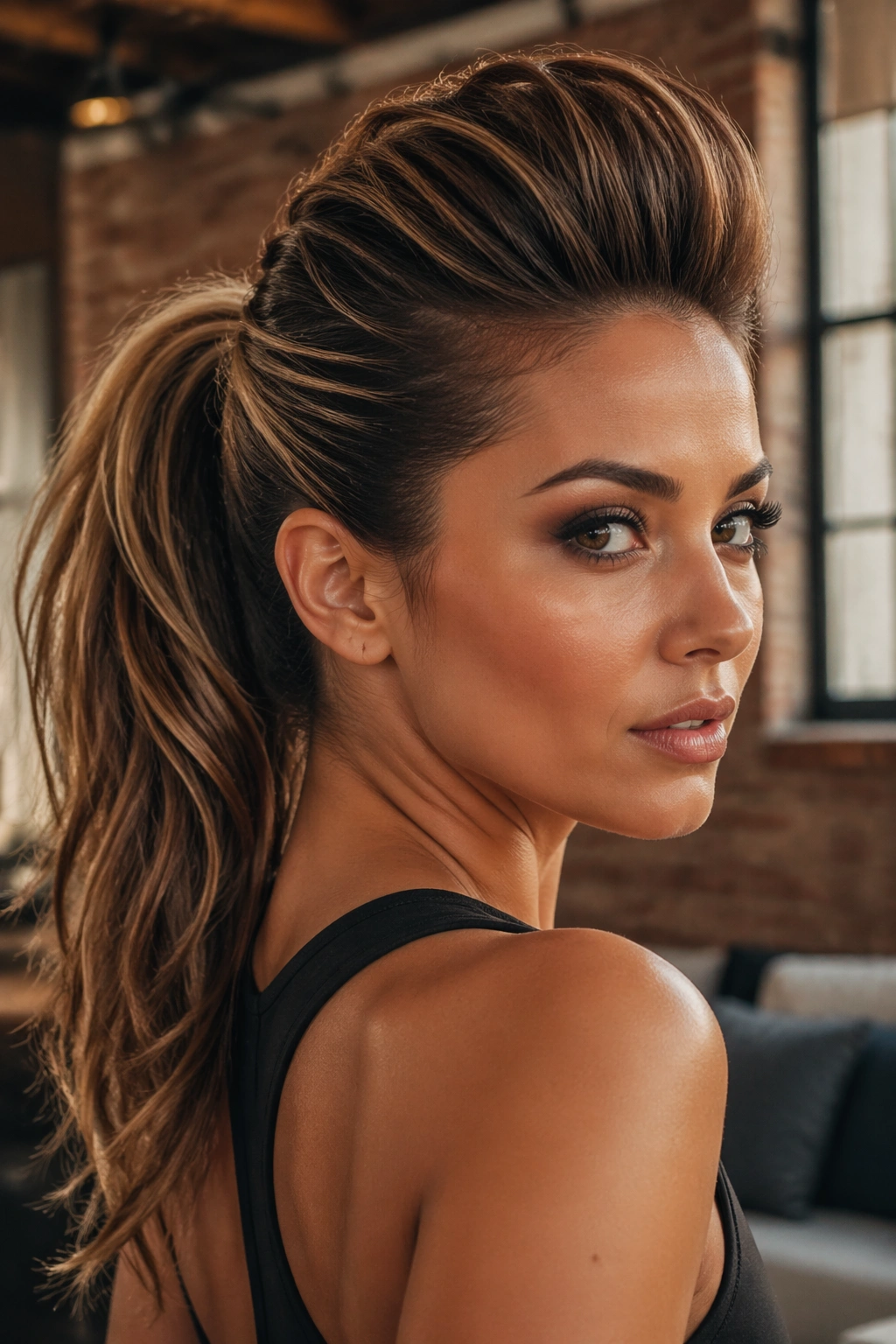
This version has attitude. The swoop starts high and the top stays lifted, which creates a sharper line down the center or off to one side before it drops into the ponytail. It’s a good choice when you want the ponytail to feel bolder than soft.
Compared with a classic side-swoop, the faux-hawk shape has more height and less softness. That sounds dramatic, but it can be really wearable on long hair because the length keeps the tail from feeling too severe. You get edge up top and movement below.
I’d reach for this when the rest of the outfit is simple. White tee, leather jacket, clean earrings — that kind of thing. The hair does the talking.
17. Textured Swoop Ponytail for Natural Curls
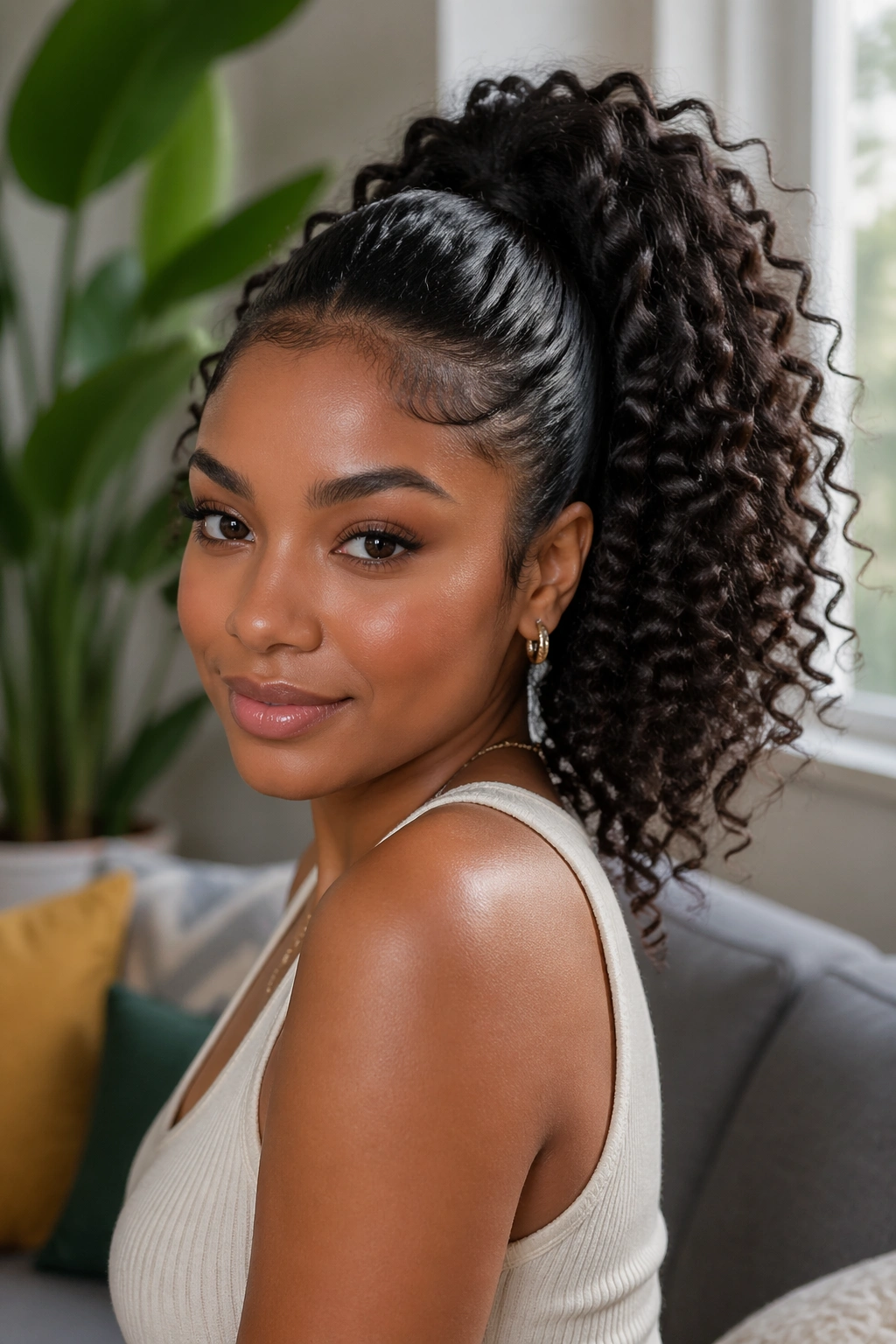
Natural curls make this style sing when you work with the texture instead of trying to sand it down. The swoop only needs to control the front; the ponytail can keep its curl pattern, shape, and bounce.
If your curls are dry or tight, use a light cream or leave-in on the front section first, then smooth it with your fingers or a soft brush. Don’t flatten the entire top. That’s the mistake. You want the swoop to sit on top of the curl pattern, not erase it.
A diffuser helps if the roots need a little lift before styling. After that, gather the pony loosely so the curls keep their spring. The front should look controlled, not glued down. That balance is the whole point.
18. Side-Swept Swoop with Tendrils
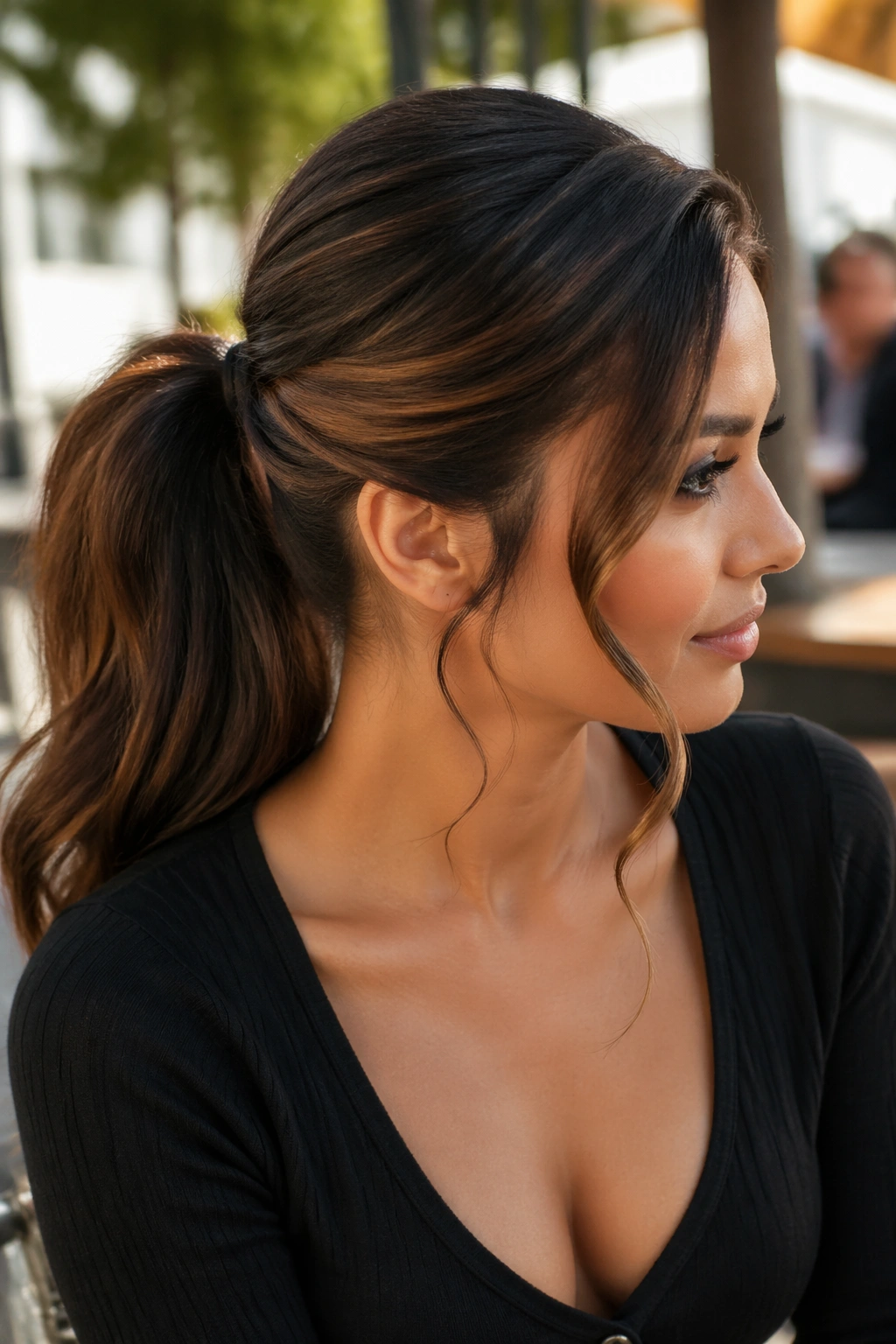
A few loose tendrils can make a long-hair ponytail feel softer in seconds. The swoop still frames the face, but the small pieces near the temples and cheekbones keep it from reading too strict.
The Detail That Matters
Keep the tendrils thin. Two thick front pieces can swallow the swoop and make the style feel messy. One or two narrow pieces, curled away from the face, usually does the job better.
This is one of those styles that looks even better in motion than in a mirror. It moves when you walk, and the tendrils give the ponytail a little life without making it busy.
If you wear glasses, this version is especially nice. The front pieces can soften the frame line instead of fighting it.
19. Long-Hair Swoop Ponytail with Clipped Accent
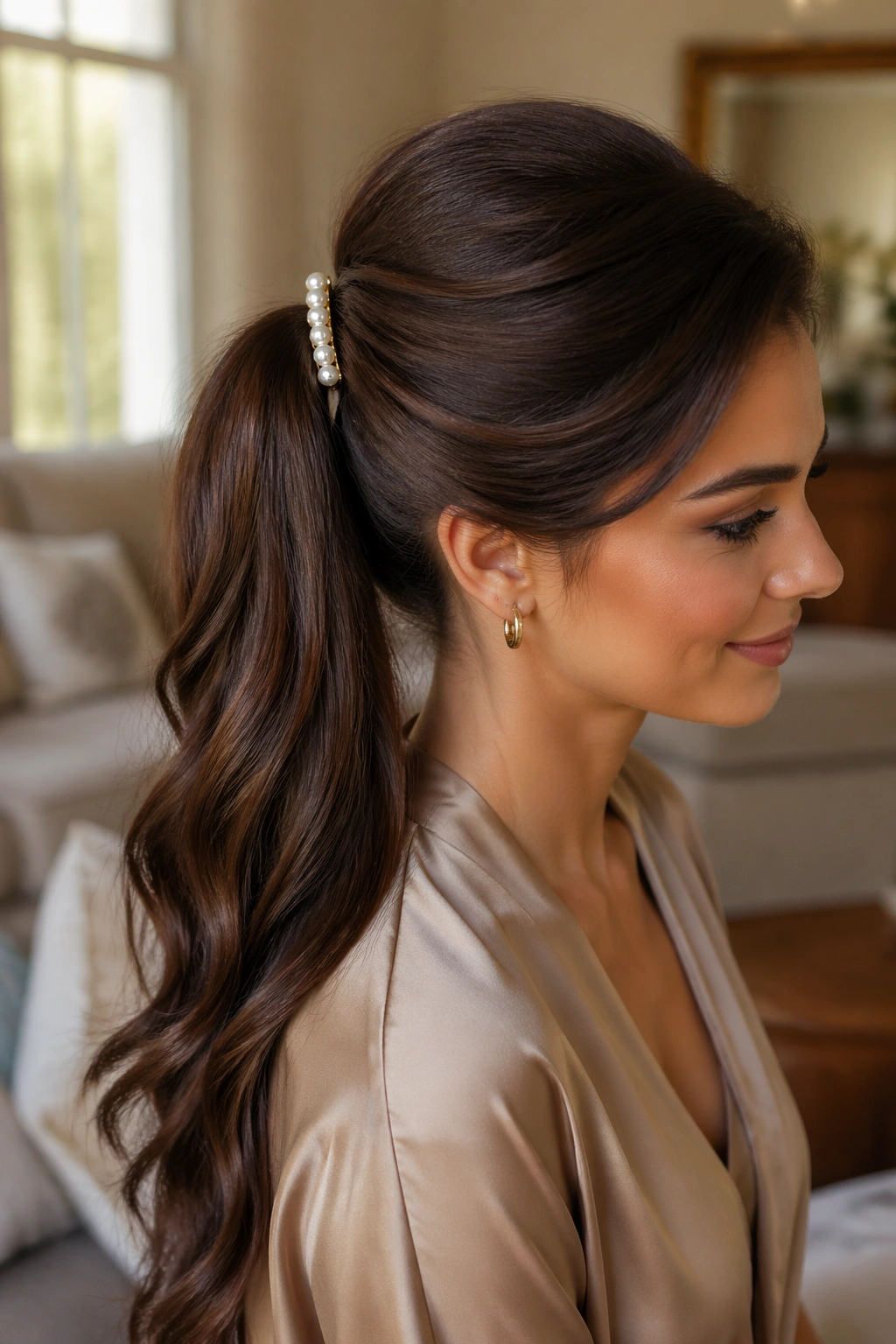
A small clip can fix a lot. If your swoop likes to slip, or if the front needs one extra point of interest, a barrette near the sweep can hold everything in place and give the style a cleaner finish.
Do you want the clip to show, or just do its job quietly? That choice changes the whole look. A pearl barrette reads dressy. A matte metal clip feels modern. A plain black clip disappears almost completely, which is handy if you just need support.
Long hair makes this trick useful because the ponytail can carry a stronger front detail without looking overloaded. The clip sits at the point where the swoop meets the base, which also helps hide any awkward join.
20. Low Swoop Ponytail with Waves
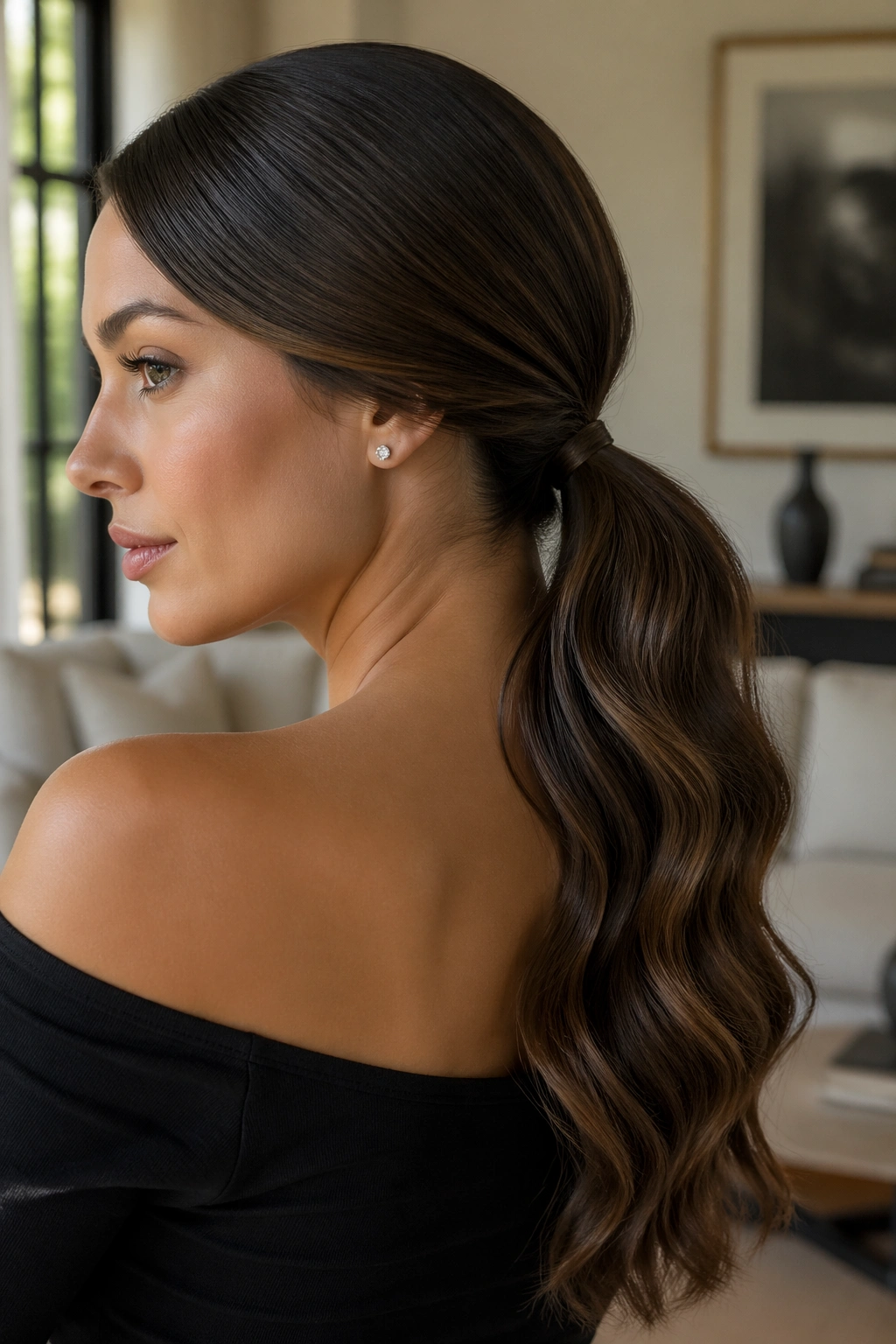
This is the style I’d pick for a long day that ends somewhere nicer than it started. The low placement keeps it calm, while the waves through the tail make it feel softer and less office-like.
You can build the waves with a curling iron, then brush them out lightly so they fall in broad bends. The swoop stays smooth at the front, but the ponytail itself should have enough texture to move when you turn your head.
- Keep the elastic snug at the nape.
- Curl away from the face for the top pieces.
- Leave the ends slightly straighter if you want a more modern finish.
- Use a flexible spray so the waves don’t freeze.
That last one matters. Hard hair spray can make the tail feel crunchy, and nobody needs that.
21. Double-Swoop Ponytail
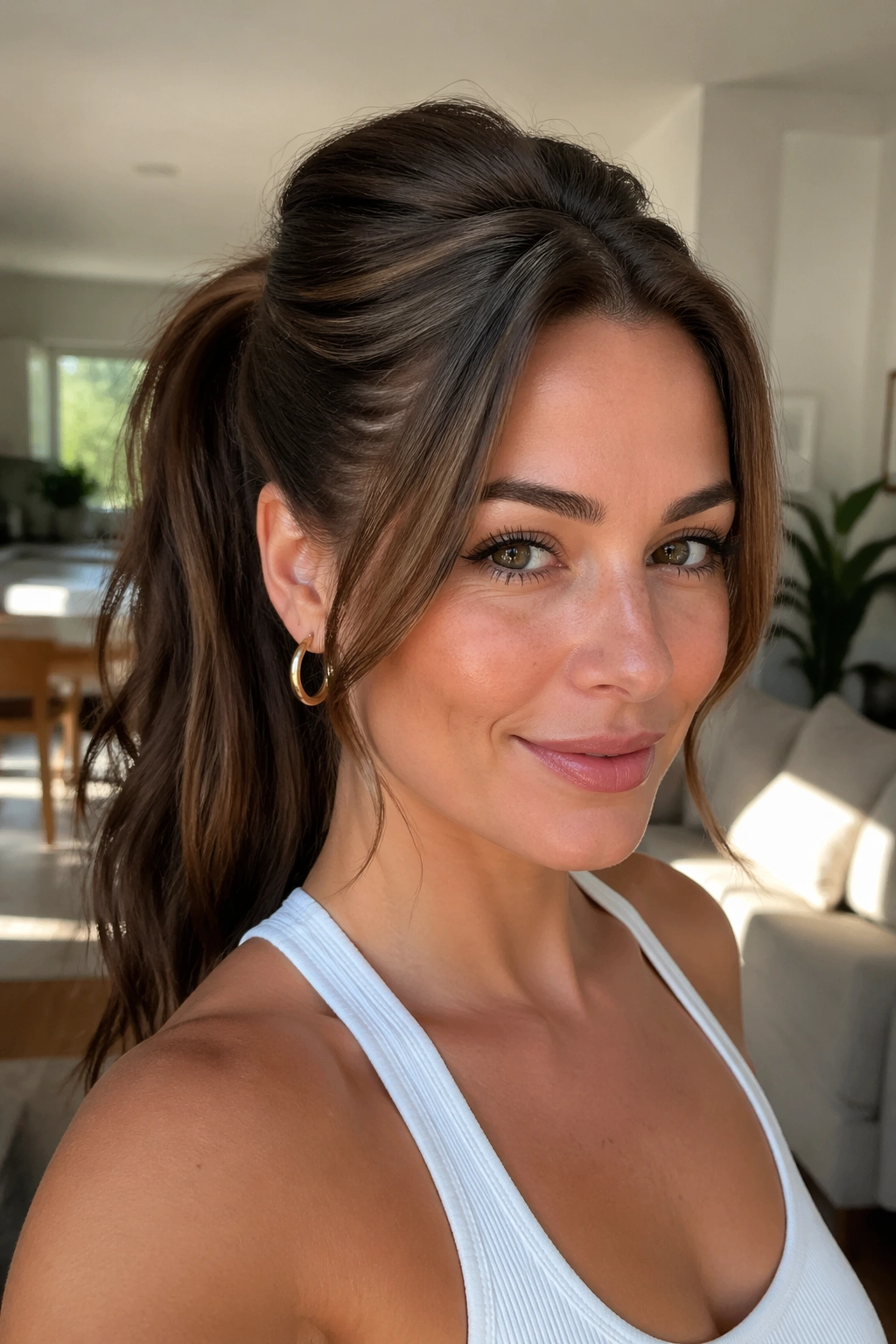
Double swoops sound fussy until you see them on long hair. Then the logic clicks. Two front sections are shaped and layered into the ponytail, which makes the top look fuller and gives the style more depth than a single sweep.
The first swoop sets the direction. The second one adds a little lift or crossing motion, depending on how you place it. On long hair, that extra layering helps because the weight of the tail can make a single section look thin fast.
I’d use this when the front of the hair is being stubborn. Two pieces can be easier to control than one giant sweep, especially if the hairline has shorter layers that keep escaping. It’s a tidy fix, and it photographs well from the side without needing a lot of extra ornament.
22. Fishtail-Braid Swoop Ponytail
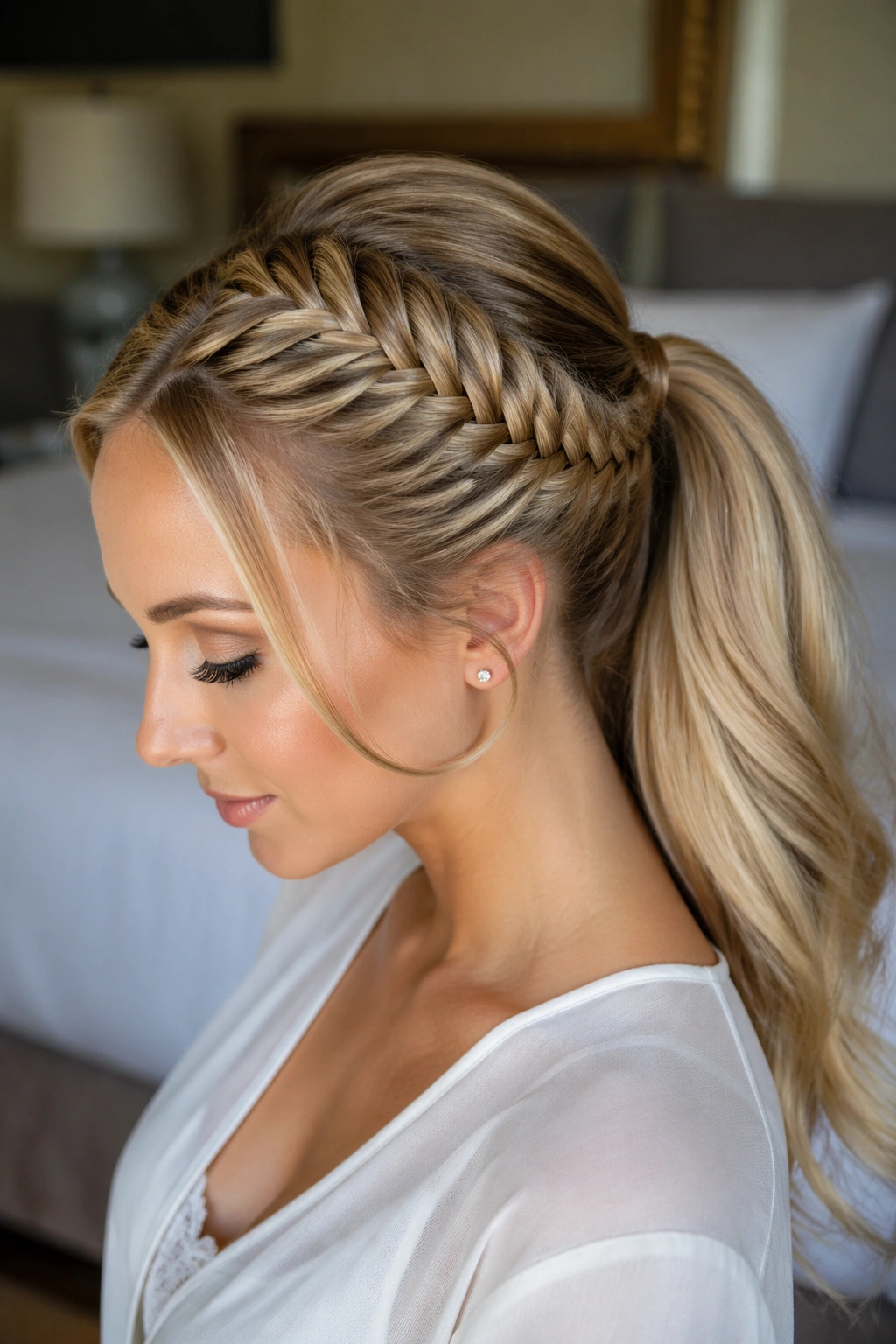
A fishtail braid gives the swoop a sharper, more detailed texture than a plain three-strand braid. It’s especially nice when the ponytail itself is long and thick, because the braid at the front helps break up the bulk.
The best part is the contrast. The front looks intricate, while the tail can stay smooth or softly waved. That mix keeps the style from becoming too busy. If you’ve ever felt like a full braid overwhelms long hair, this is a smarter compromise.
A fishtail doesn’t have to be tight. In fact, a loose fishtail with a little pancaking at the edges looks better with this style because the sweep needs a soft hand, not a stiff one.
23. Knotted Swoop Ponytail
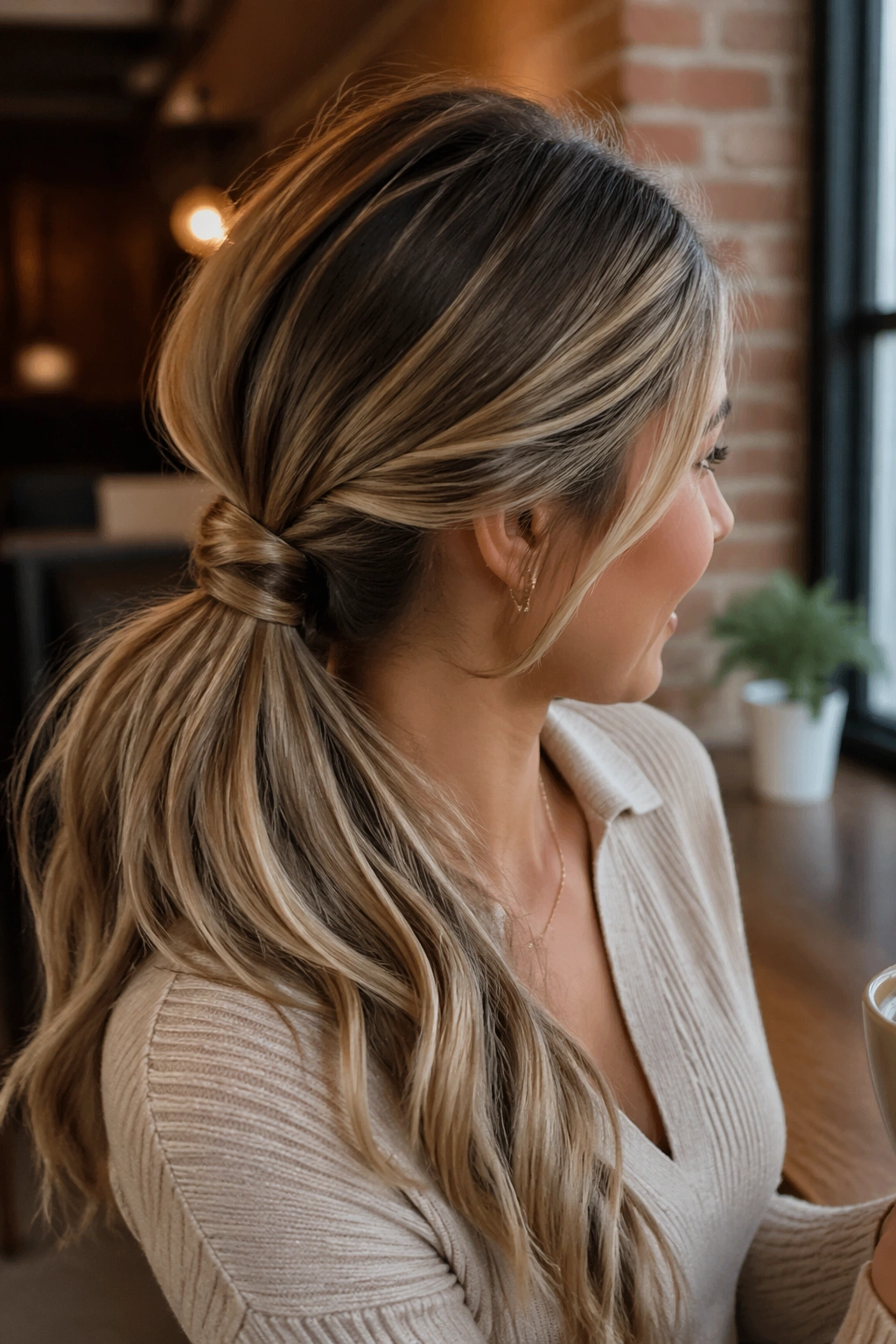
A knotted swoop looks clever without being loud. Two front sections are brought across, tied into a loose knot, and then tucked into the ponytail base. It gives the front a built-in detail that feels tailored.
What I like here is the shape. A knot adds a little roundness near the face, which softens long hair that might otherwise hang too straight and heavy. It also works well if you’re trying to disguise shorter layers that won’t stay in a braid.
Keep the knot low and secure it with bobby pins underneath. If it sits too high, it can look awkward. If it sits low and slightly off-center, it feels deliberate and clean.
24. Loose Romantic Swoop Ponytail
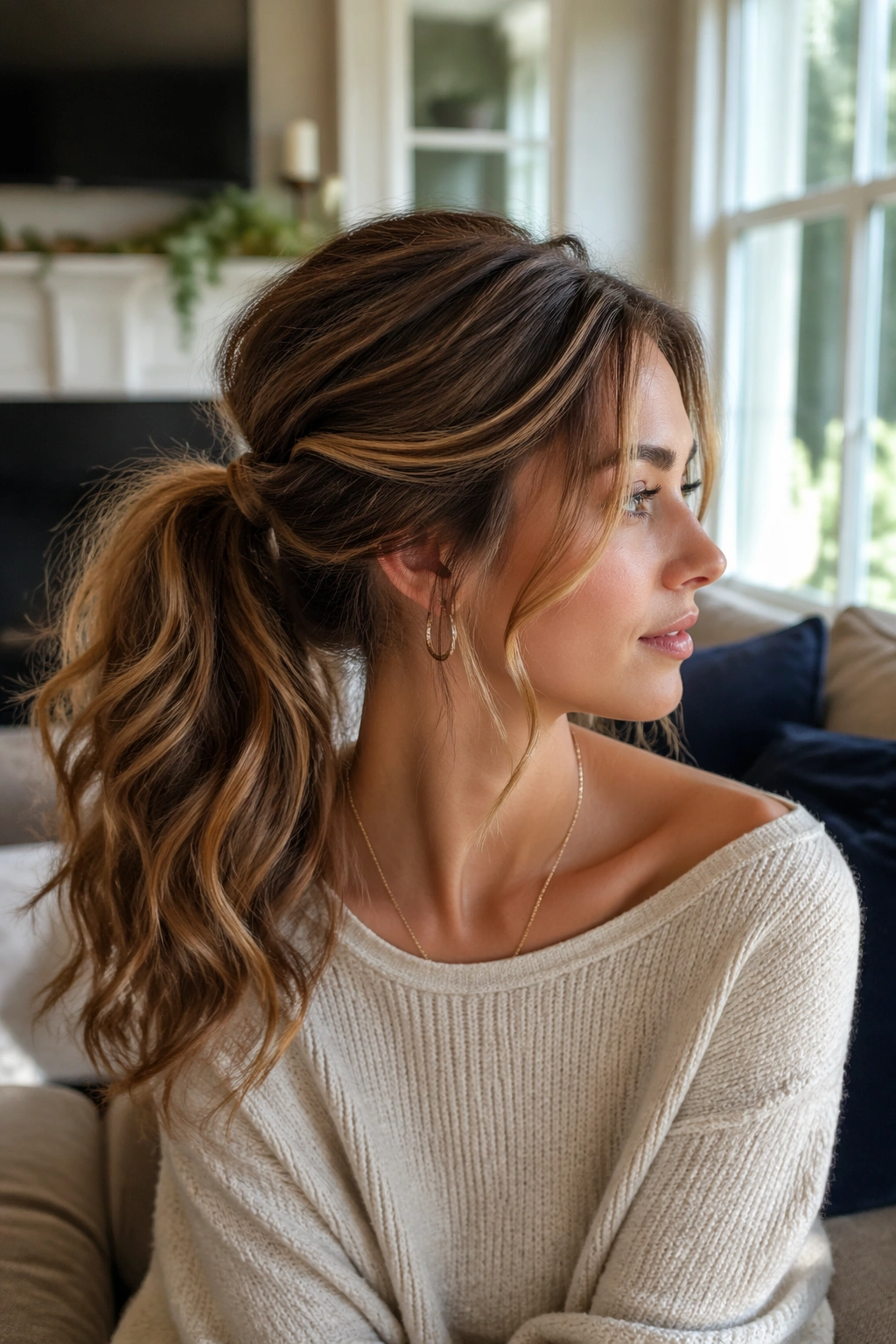
This one is for softness. The front sweep is loose, the tail is waved, and a few pieces around the face stay airy instead of pinned back hard. It’s the least strict version in the group, and on long hair that can be a good thing.
Don’t chase perfection here. A little bend in the front, a slight lift at the crown, and a brushed-out wave through the ponytail are enough. The style works because it leaves room for movement.
I’d wear this one with knitwear, a slip dress, or anything that needs the hair to feel a little less formal. It’s easy to over-style and lose the charm. Resist that urge. A soft swoop looks better when it keeps one foot out of the salon chair.
25. The Five-Minute Swoop Ponytail
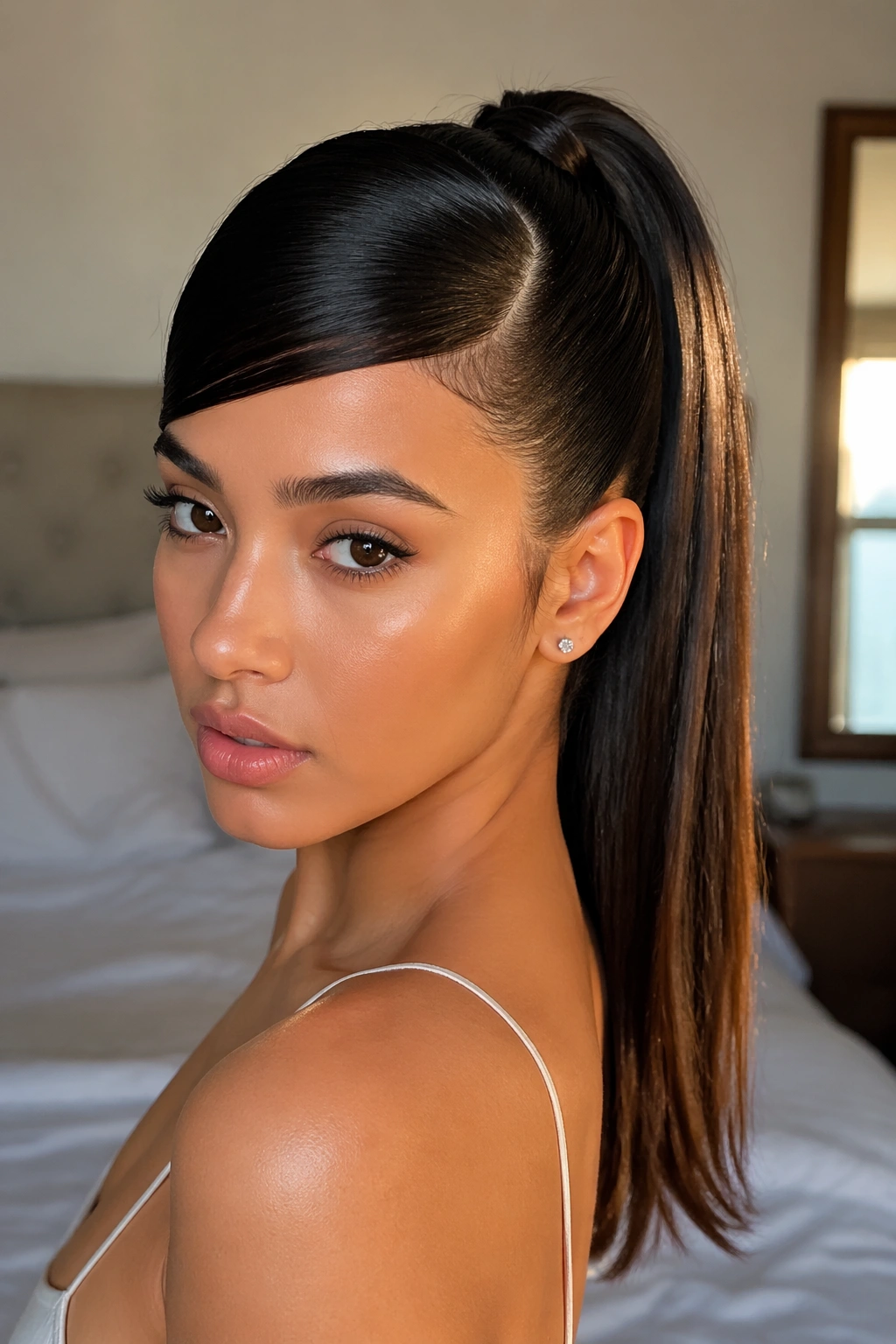
Sometimes the best version is the one you can do fast and still trust. A quick swoop, a low or mid ponytail, and a wrapped base can look far better than a style that took twice as long and lost the plot somewhere around the third bobby pin.
The secret is restraint. Use a wider front section than feels safe, smooth it once, secure the pony, then stop fiddling with it. Long hair rewards decisiveness. If you keep tugging, the swoop starts to look thin and the whole shape gets tired.
This is the style I’d keep in rotation when nothing fancy is needed but you still want the front to look intentional. Clean part. Soft sweep. Secure base. That’s enough. And honestly, on long hair, enough is usually the smart answer.
