



A bridesmaid hairstyle has a weird job. It has to look soft enough for a wedding, stay put through hugs and dancing, and still feel comfortable three hours later when nobody wants to think about their hair anymore. Messy ponytails for bridesmaids do that better than most styles, which is exactly why I keep coming back to them.
The trick is in the word messy. You are not aiming for sloppy. You want movement, a little air at the crown, and a base that looks touched by hand rather than locked into place with shellac. A good messy ponytail has shape. It has intention. And when the dress neckline is doing some heavy lifting, the hair should support it, not fight it.
What I like most is how forgiving these styles are. Fine hair can get lift from a bit of teasing and texture spray. Thick hair can be controlled with twists, braids, or a wrapped base. Curly hair can stay curly instead of being ironed into submission. That flexibility matters, because bridesmaid hair usually has to work across a group, not just one person.
The 30 looks below cover low, high, braided, curly, ribbon-tied, and veil-friendly options, with enough variety to match different dresses, hair types, and levels of formality. Some feel romantic. Some feel relaxed. A few are a little bolder. All of them keep the ponytail idea intact, which is the point.
1. Soft Low Messy Ponytail with Face-Framing Pieces
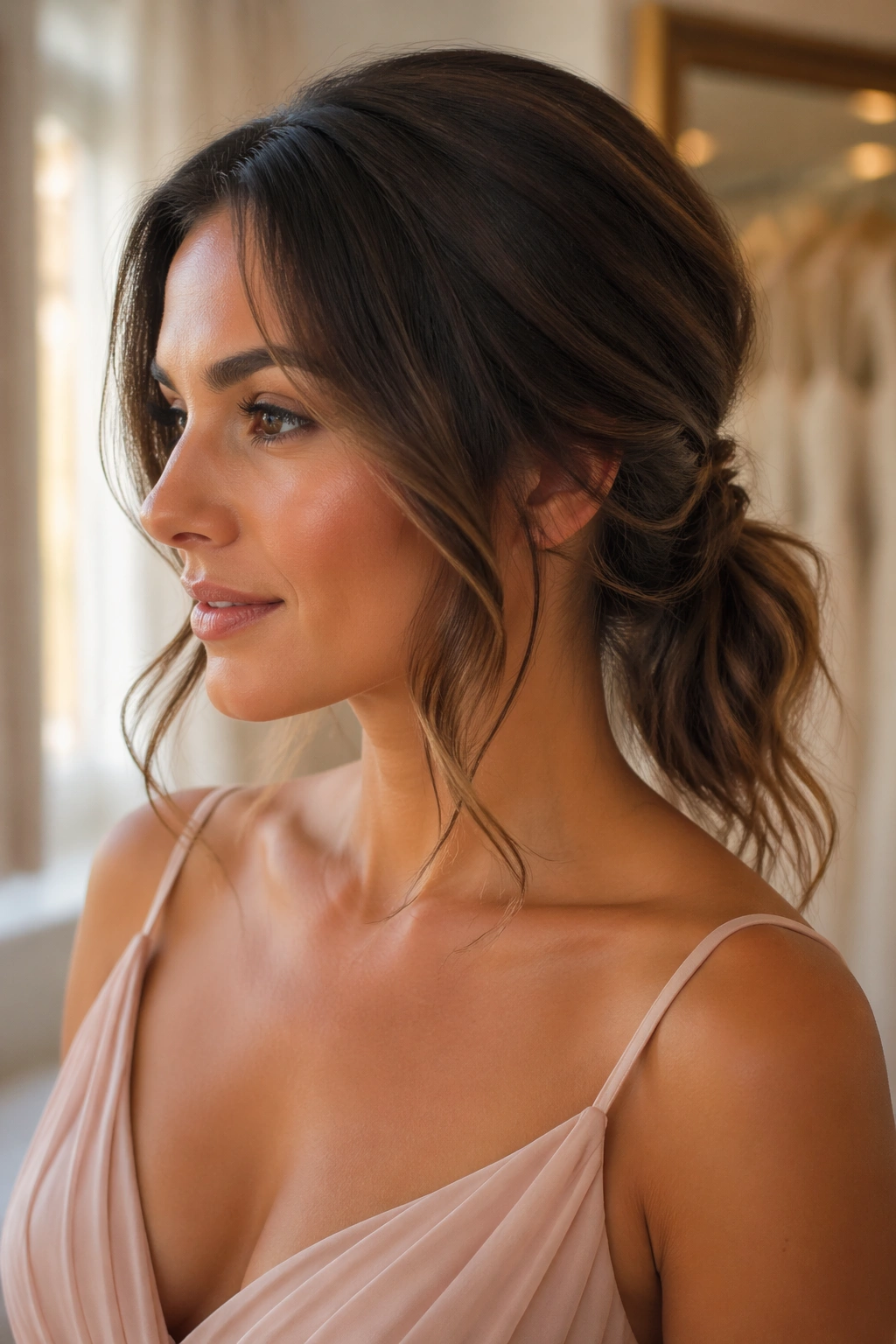
This is the one I reach for when the dress is already doing a lot. A low ponytail sits quietly at the nape, and the loose pieces around the face keep it from feeling severe. It is soft, flattering, and easy to adapt to almost any bridal party.
Why It Works
A low base gives the style weight, while the face-framing strands soften the jawline and cheekbones. Leave out two pieces about 1 inch wide, curl them away from the face with a 1-inch iron, and keep the rest of the ponytail loose enough to move. That tiny bit of bend changes everything.
A clean middle part or a slight off-center part both work. I like the off-center version when the dress has an asymmetrical neckline or a statement earring on one side.
- Tie the ponytail with a clear elastic first.
- Wrap a small strand of hair around the elastic to hide it.
- Secure the wrap with two crossed bobby pins underneath.
- Pull the crown up by about 1/2 inch for softness, not height.
Best for: almost everyone, honestly. It’s the safest bridesmaid ponytail and still looks pretty from every angle.
2. High Textured Ponytail with Lifted Crown
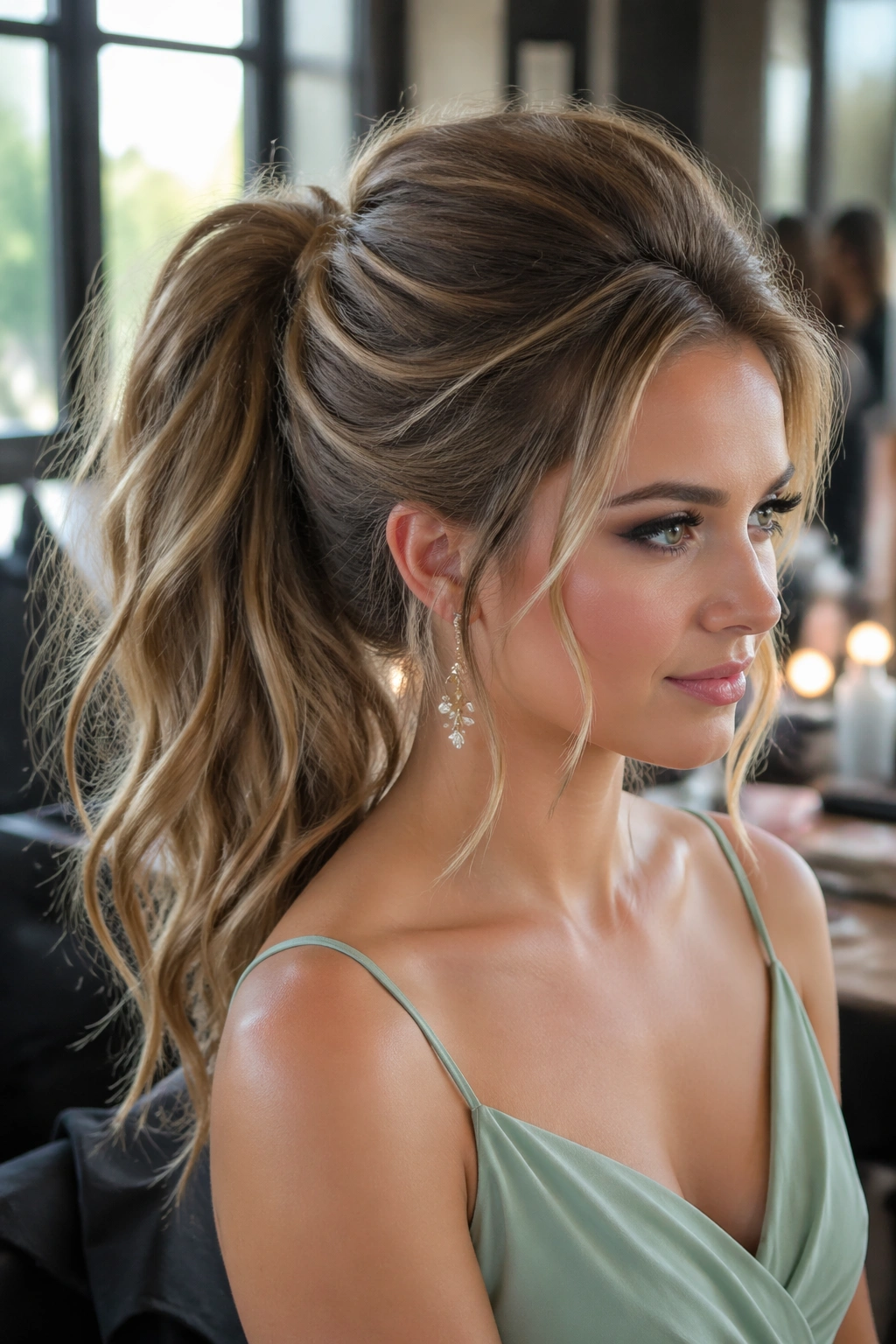
A high ponytail brings energy to the whole look. It opens the face, shows off the neck, and keeps the style from disappearing into the dress. If the bridesmaid dresses are simple, this adds motion without adding clutter.
The key is lift at the crown before the pony goes in. Tease a 2-inch strip at the top, then smooth only the outer layer so the volume stays hidden underneath. After that, curl the lengths loosely and brush them out once, just enough to make the ends swing instead of sit in stiff spirals.
It works especially well when the bridal party is moving a lot between ceremony, photos, and reception. Hair thrown high feels fresh. Hair that is too tight feels like a gym class accident.
Keep the base neat. Let the ponytail itself be softer. That contrast is what makes it look deliberate instead of rushed.
3. Braided Wrap Low Ponytail
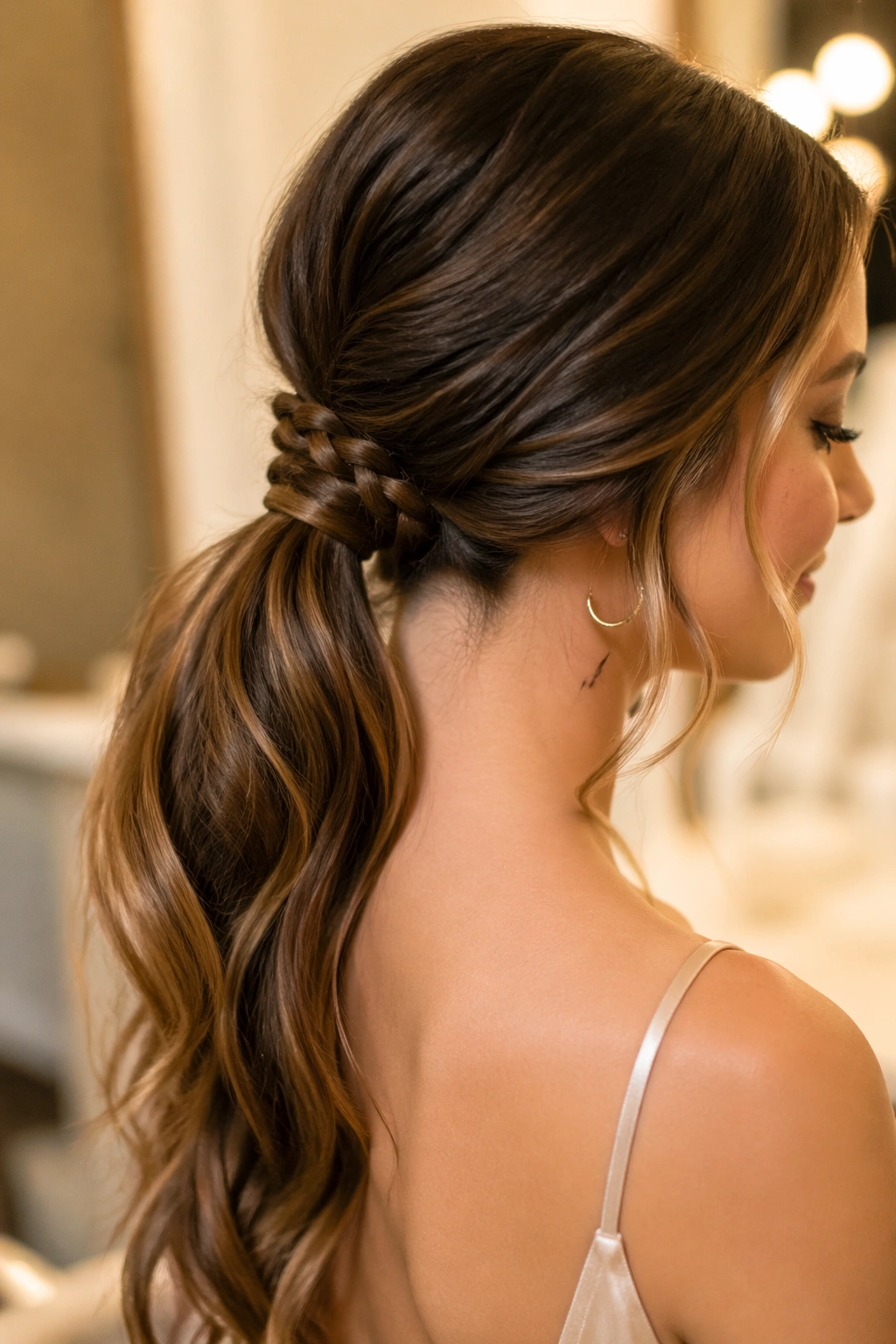
Why does a braid make a ponytail look more finished? Because it gives the base some texture and hides the elastic without making the style stiff. A braided wrap also helps slippery hair stay where it belongs.
Start by gathering the hair into a low ponytail and securing it. Then braid a small side section, pancake it gently so it looks wider, and wrap it around the base. Pin the end under the pony with two bobby pins that cross each other. That little cross-pin trick matters. It keeps the wrap from slipping during the day.
How to Style It
Use this when the dress fabric is smooth, like satin or crepe, because the braid adds a little visual texture. If the hair is fine, mist the section with dry texture spray before braiding so it does not collapse in your hands.
The overall effect is tidy at the base and soft through the ends. That’s the sweet spot for a bridesmaid look.
4. Bubble Ponytail with Soft Volume
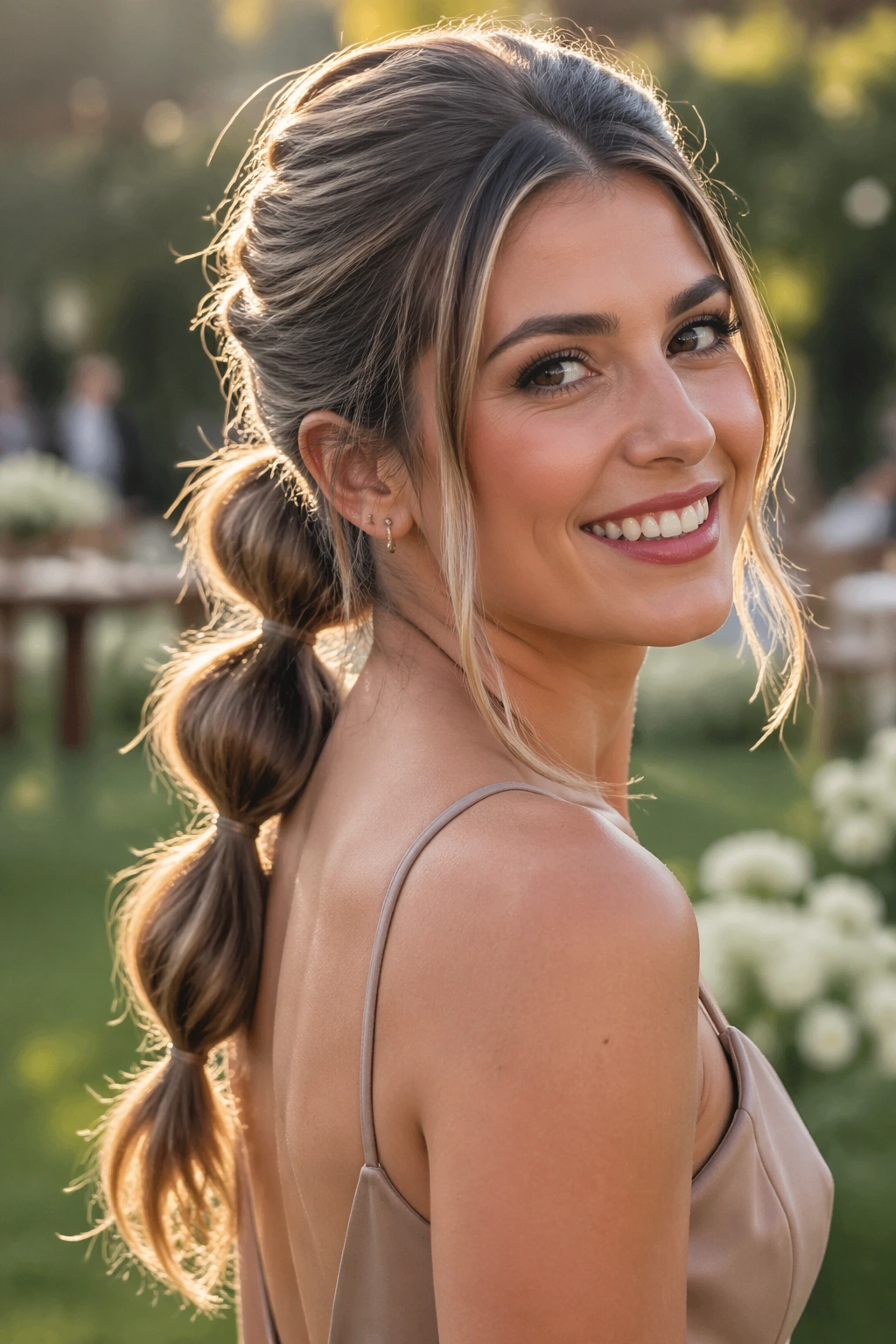
A bubble ponytail is a smart choice when the bridal party wants something playful but still polished. It looks more styled than a plain ponytail, yet it does not feel as formal as a chignon. That middle ground is useful.
Picture a ponytail tied every 2 to 3 inches down the length, then gently pulled outward between each elastic so the sections puff into rounded bubbles. The trick is to keep the bubbles uneven. Perfect circles can feel costume-like. Slightly irregular ones feel softer and more wearable.
- Use small clear elastics so the ties disappear.
- Tug each section until it widens by roughly 25 percent.
- Leave the very ends loose and lightly waved.
- Hide the top elastic with a wrapped strand if the base needs to look cleaner.
This style reads best on medium to long hair. Very short lengths can make the bubbles look cramped, and very heavy hair may need extra elastics to hold the shape.
5. Twisted Side-Swept Ponytail
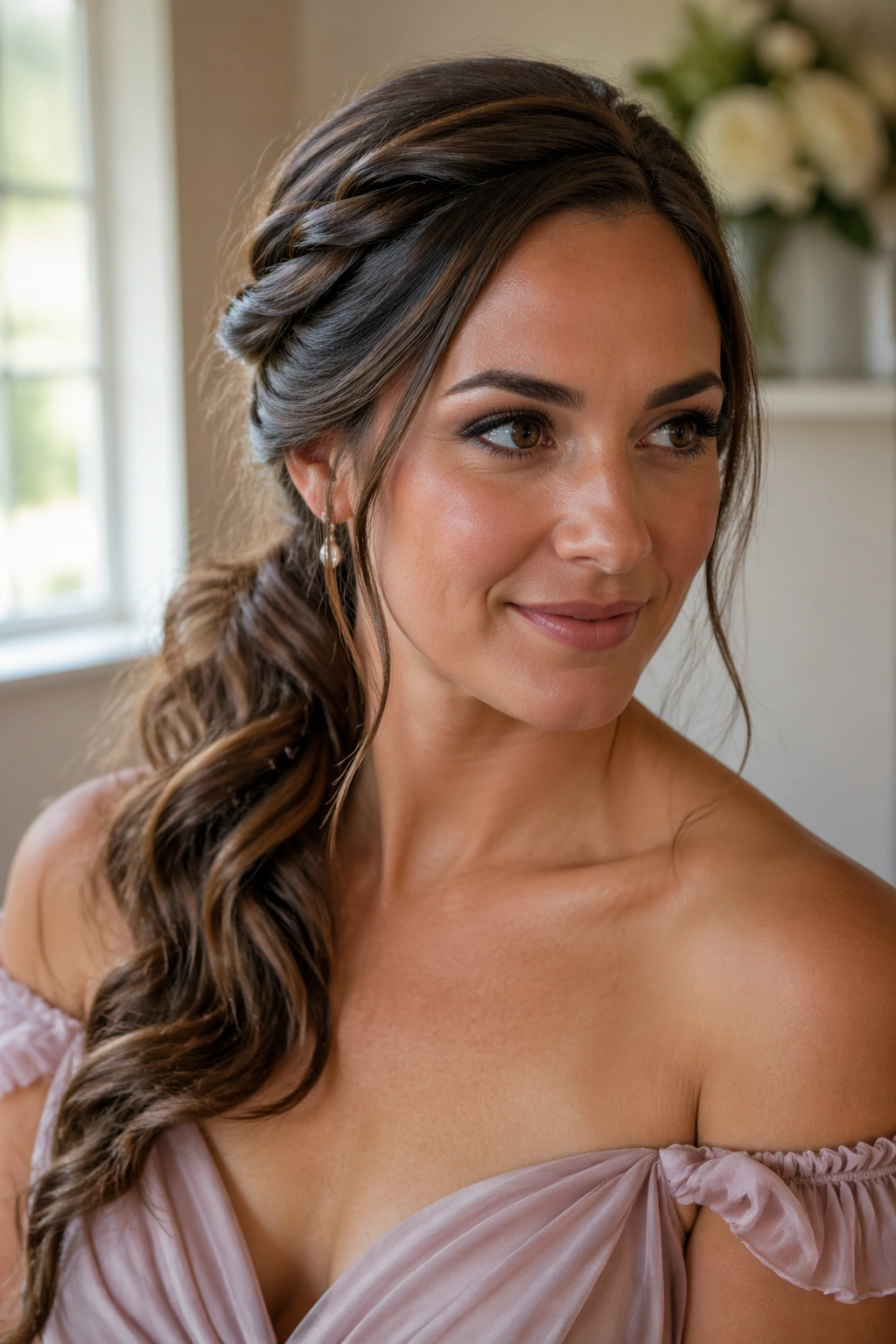
A side-swept ponytail is one of those styles that looks relaxed on purpose. It is not trying to be symmetrical, and that is part of the charm. The hair slides over one shoulder, which can be lovely with one-shoulder dresses or gowns that have a strong neckline.
Twist the front sections back from each temple, then gather the hair just behind one ear or slightly below it. Leave the ponytail itself loose and wave the ends with a curling iron, but do not curl every piece the same way. Some straight ends mixed in keep the style from looking too arranged.
I like this choice for bridesmaids who wear bold earrings. The side placement gives the jewelry room to show. It also works when the bride wants the wedding party to look coordinated without all having identical hair.
Soft, one-sided, easy to wear. That combination never gets old.
6. Curly Ponytail with Loose Tendrils
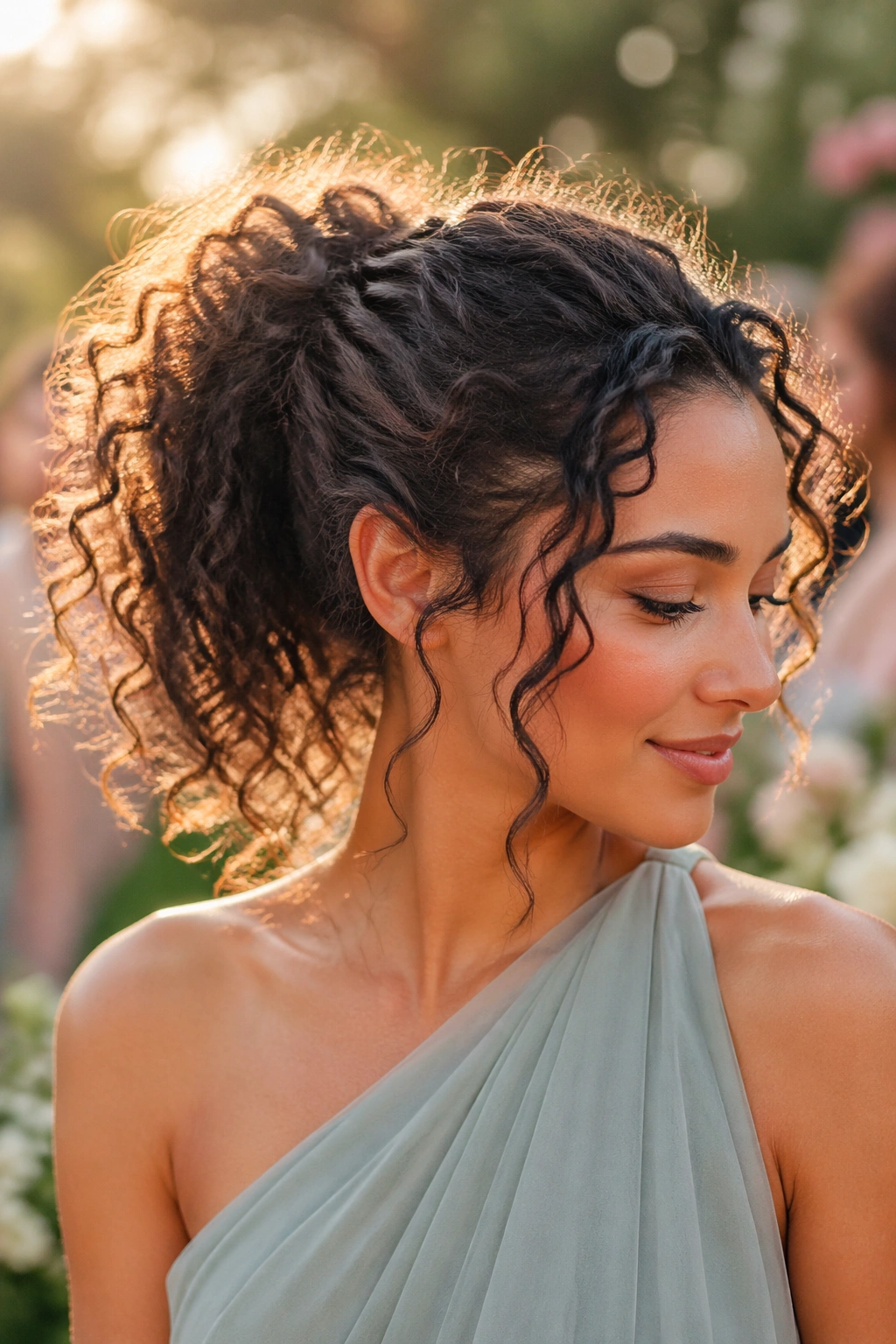
Curly hair already knows how to do movement, so the best bridesmaid ponytail often starts by not fighting it. Keep the curl pattern intact, gather the hair high or mid-height, and let a few tendrils fall near the cheekbones and temples. The result is lively, not rigid.
Best on Natural Texture
This style is a strong match for natural curls, spiral curls, or heat-set curls that have been left mostly intact. Use a moisturizing cream or light gel before styling, then scrunch the curls after tying them back. Do not brush the curls out at the end. That is how a defined ponytail turns puffy in the wrong places.
A diffuser can help if the hair needs a little extra shape at the roots. If the ponytail is gathered high, keep the crown smooth and let the curl volume live in the tail itself.
The best part is the way it moves. Curly ponytails do not sit still, and that liveliness suits a wedding party better than people admit.
7. Rope-Braid Ponytail
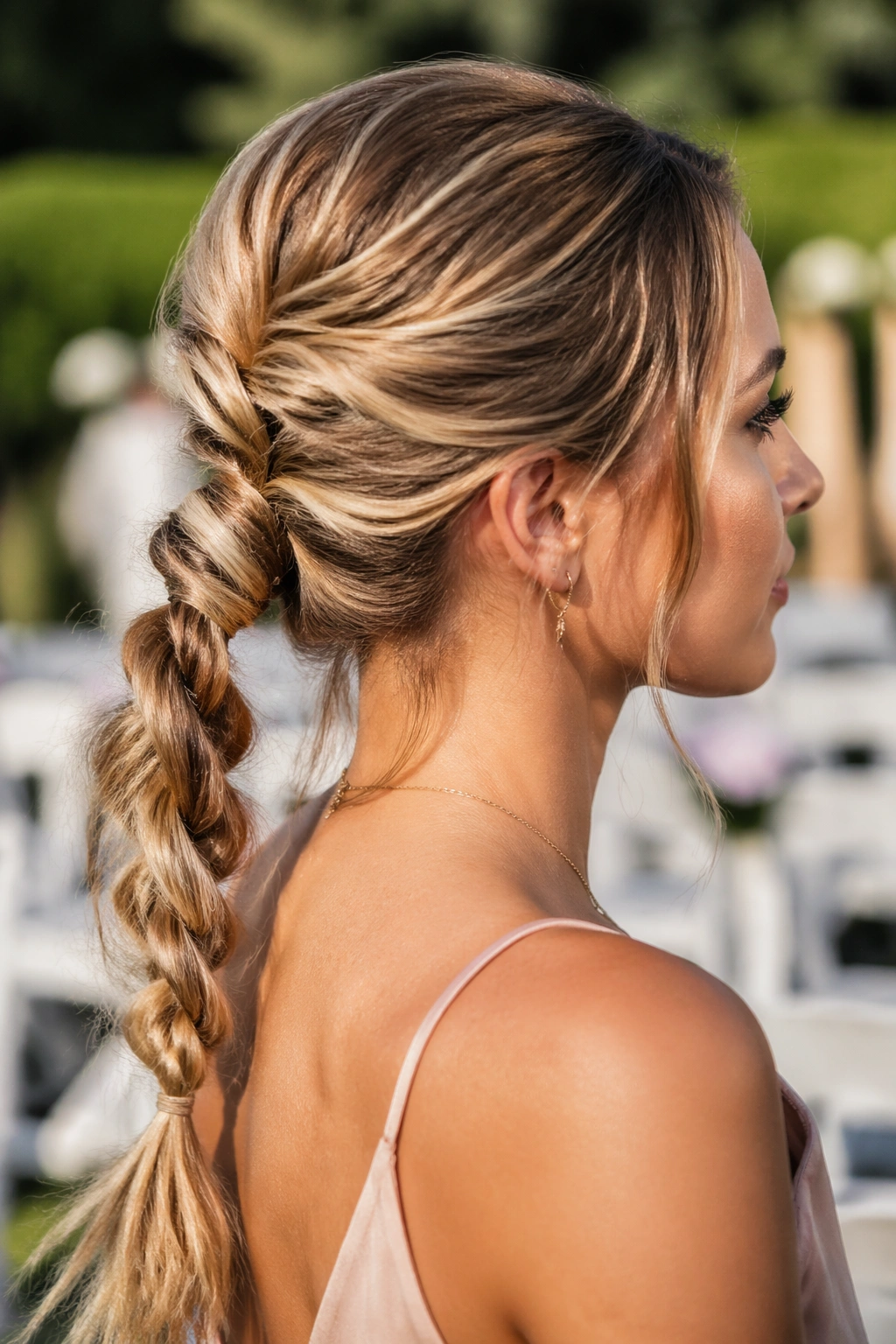
A rope-braid ponytail looks neat without feeling overworked. It has enough structure to survive a long day, and it gives the impression that someone actually spent time on the style, which is usually a good thing at a wedding.
Split the ponytail into two sections, twist both sections in the same direction, then wrap them around each other in the opposite direction. That opposite twist is what locks the braid in place. If the hair is silky, a light mist of texture spray before twisting makes the sections grip better.
- Use a clear elastic at the base.
- Twist each side firmly, but not so tight that the hair starts to coil back on itself.
- Secure the end with a second elastic 2 inches from the tail if the hair is long.
- Pull the rope braid apart slightly for softness.
This style works especially well for outdoor ceremonies because it does not fall flat quickly. It holds its shape with less fuss than a loose curl style.
8. Fishtail Wrap Ponytail
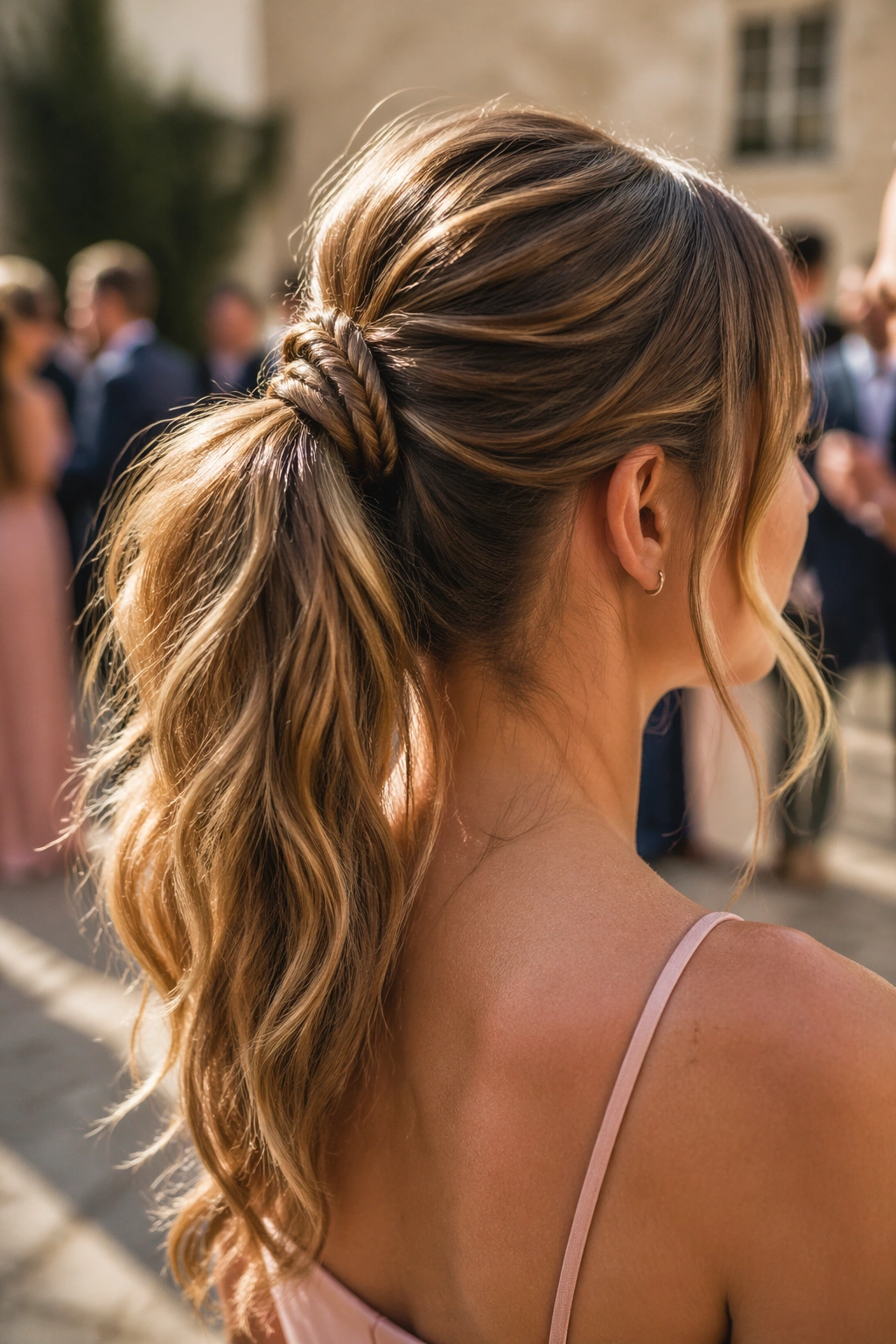
Why does a fishtail ponytail feel dressier than a regular braid? The answer is in the detail. Fishtail sections are tiny, so the braid looks more intricate from a distance and more interesting up close. It is one of those styles that rewards a second glance.
You can keep the fishtail as the tail itself, or use a small fishtail braid as a wrap around the base. I prefer the wrap when the dress is already textured, because it keeps the hairstyle from competing with lace or beading. If the dress is plain, letting the fishtail run through the length gives the whole look more personality.
Loosen the braid once it is secured. Not a lot. Just enough to keep it from feeling tight and shiny. A few face-framing strands help too, especially if the bridesmaid’s makeup is soft and dewy rather than sharp.
This is a good one when you want detail without heavy ornament.
9. Sleek Crown, Messy Ends Ponytail
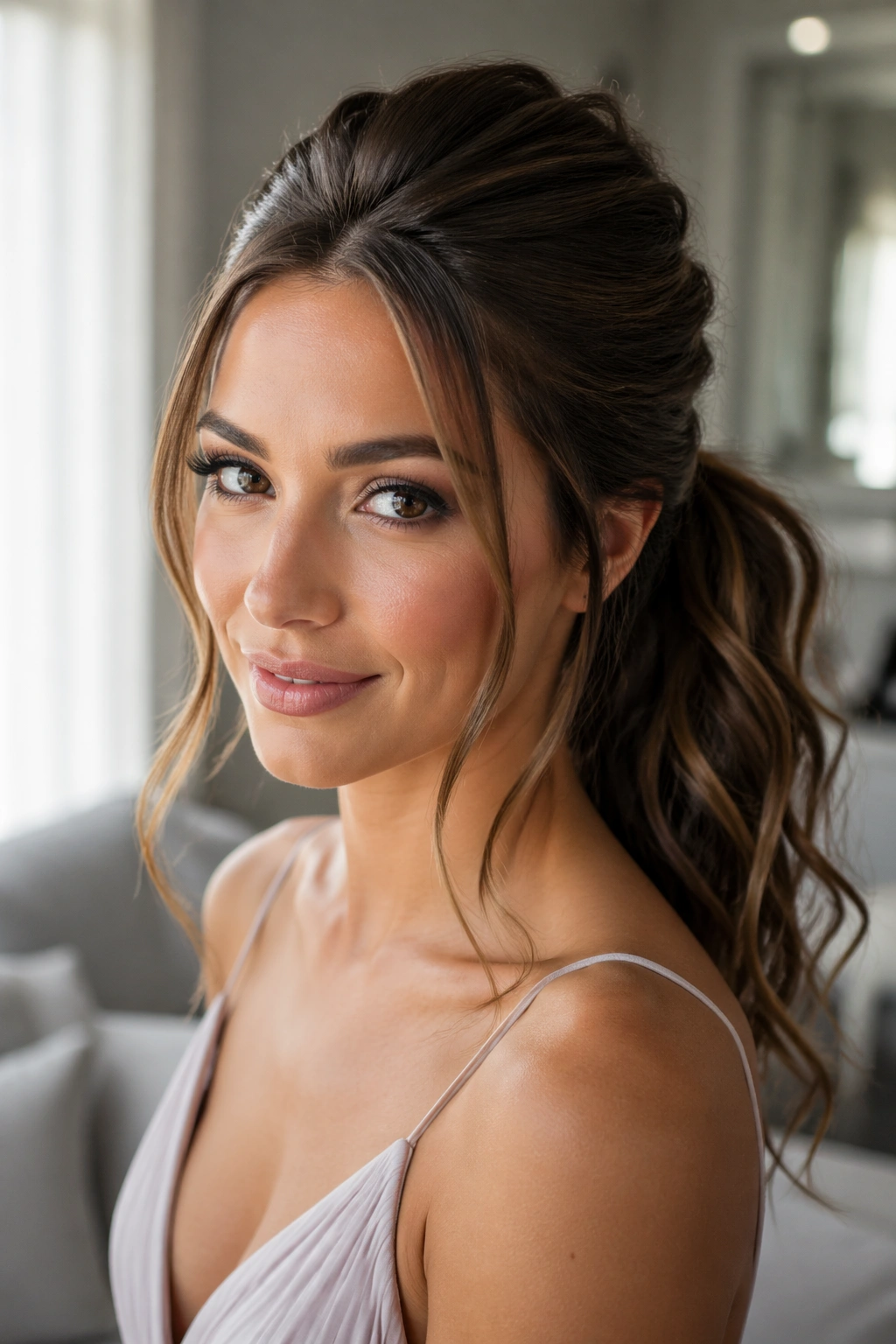
This style solves a common problem: flyaways at the top and limp hair at the bottom. Smooth the crown first, then let the ponytail ends be loose and textured. The contrast gives the style its shape.
Use a small amount of styling cream or gel around the hairline, then brush the hair back tight at the temples and crown. Once the ponytail is secured, switch gears. Curl only the mid-lengths and ends, then break them up with your fingers so they feel airy rather than ringleted.
That switch from neat root to softer tail is the whole point. If the top is messy too, the look can slide into frizz. If the tail is too polished, the style gets stiff fast.
I like this for bridesmaids with fine hair, because the smooth top makes the ponytail look more controlled than it really is. That matters in photos and in person.
10. Braided Crown Messy Ponytail for Bridesmaids
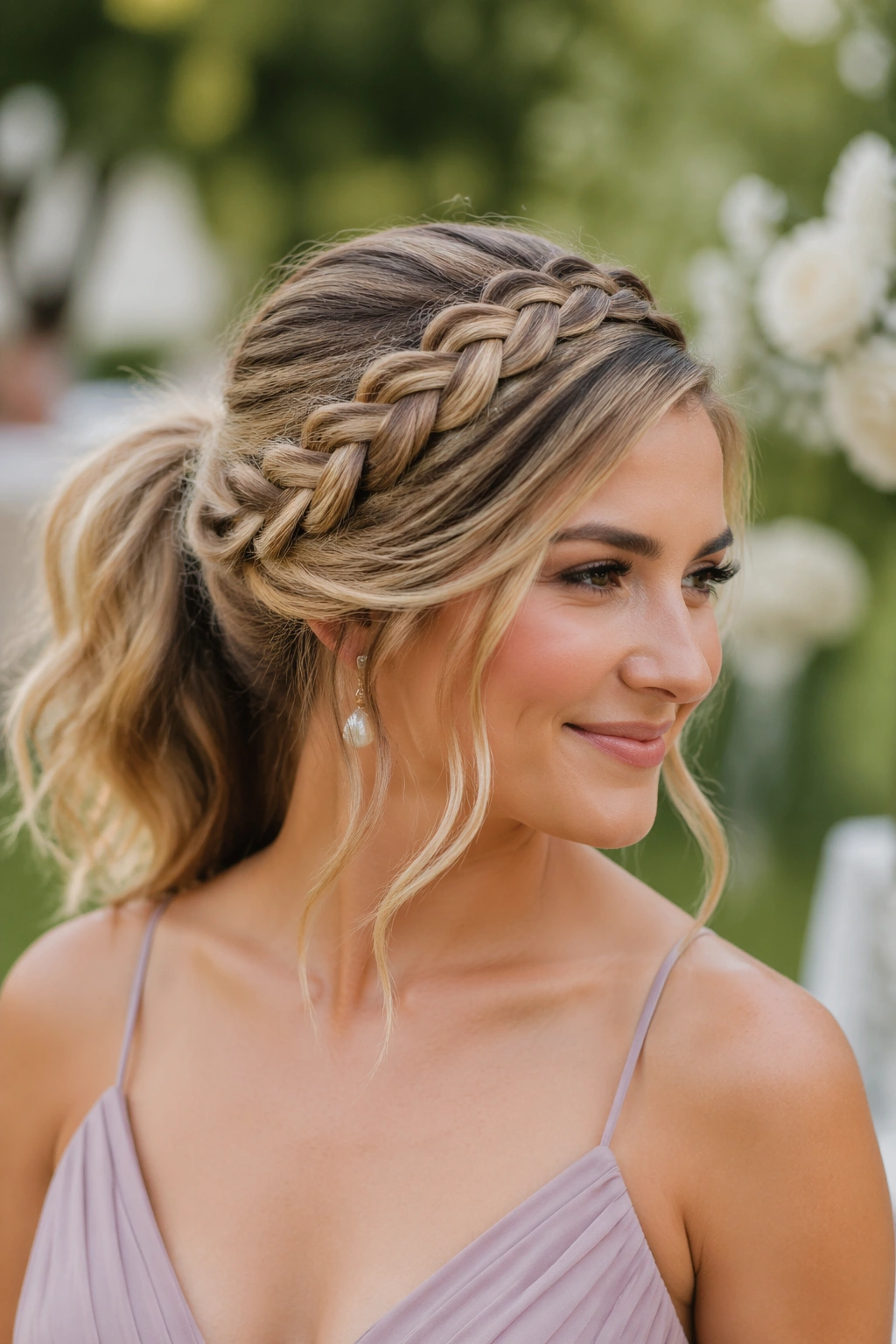
Some bridal parties need a style that can handle an outdoor ceremony, a warm reception, and a few hours of dancing without falling apart. This is that style. A braided crown gives the front of the hair structure, and the ponytail keeps the rest light and mobile.
Start a braid from one temple and work it across the head, or do two smaller braids that meet near the back. Gather everything into a low or mid ponytail, then loosen the braid a touch so it sits softly against the head. Keep the crown loose enough to breathe; if the braid is pulled too tight, it starts to look hard and the whole style loses charm.
- Pin the braid with matching bobby pins, not oversized clips.
- Place a floral pin or pearl pin where the braid meets the ponytail.
- Curl the tail in two directions so the movement feels natural.
- Leave one slim piece at the nape if the dress neckline is very high.
This is a bridesmaid look that feels stable and soft at the same time, which is harder to pull off than it sounds.
11. Low Ponytail with Invisible Elastic and Tucked Base
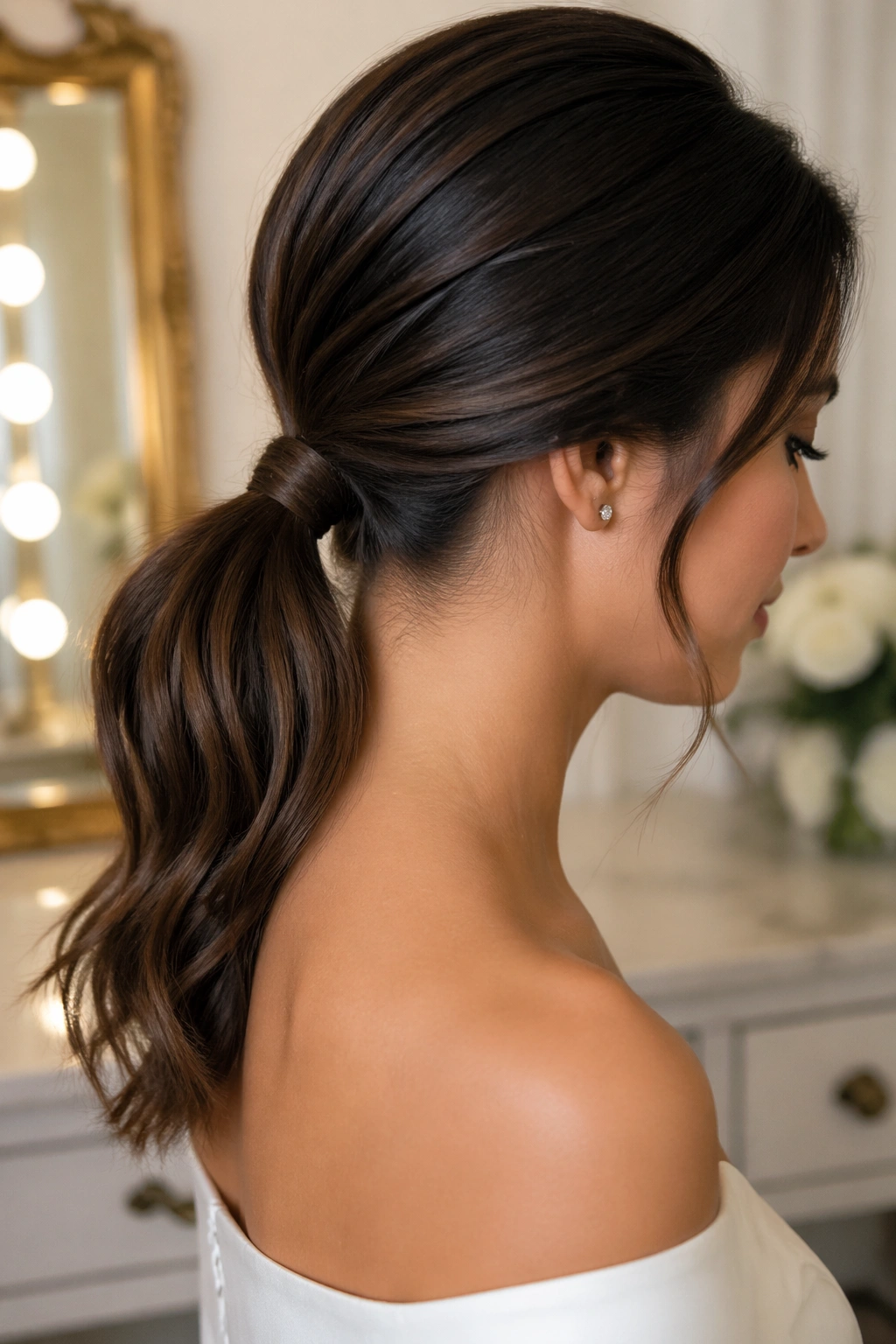
A tucked base gives a low ponytail a cleaner finish than a simple wrap. It looks almost knotted, but the hair is actually folded and pinned under itself. Very tidy. Very useful.
What You See
From the outside, you see a smooth low ponytail with a soft fold sitting where the elastic would normally be. That means the style looks finished even before the tail is curled or waved. If the dress is minimal, this kind of detail does the job of jewelry for the hair.
How It Holds
Tie the ponytail low, split a small opening just above the elastic, and flip the tail through that gap once. Then pin the tucked section flat against the head with two or three pins. Do not pull the loop too hard, or the fold will collapse and the style will start to sag.
This one suits bridesmaids who like clean lines but still want the hair to have movement. It is calm, and that is not a bad thing at a wedding.
12. Ribbon-Tied Ponytail
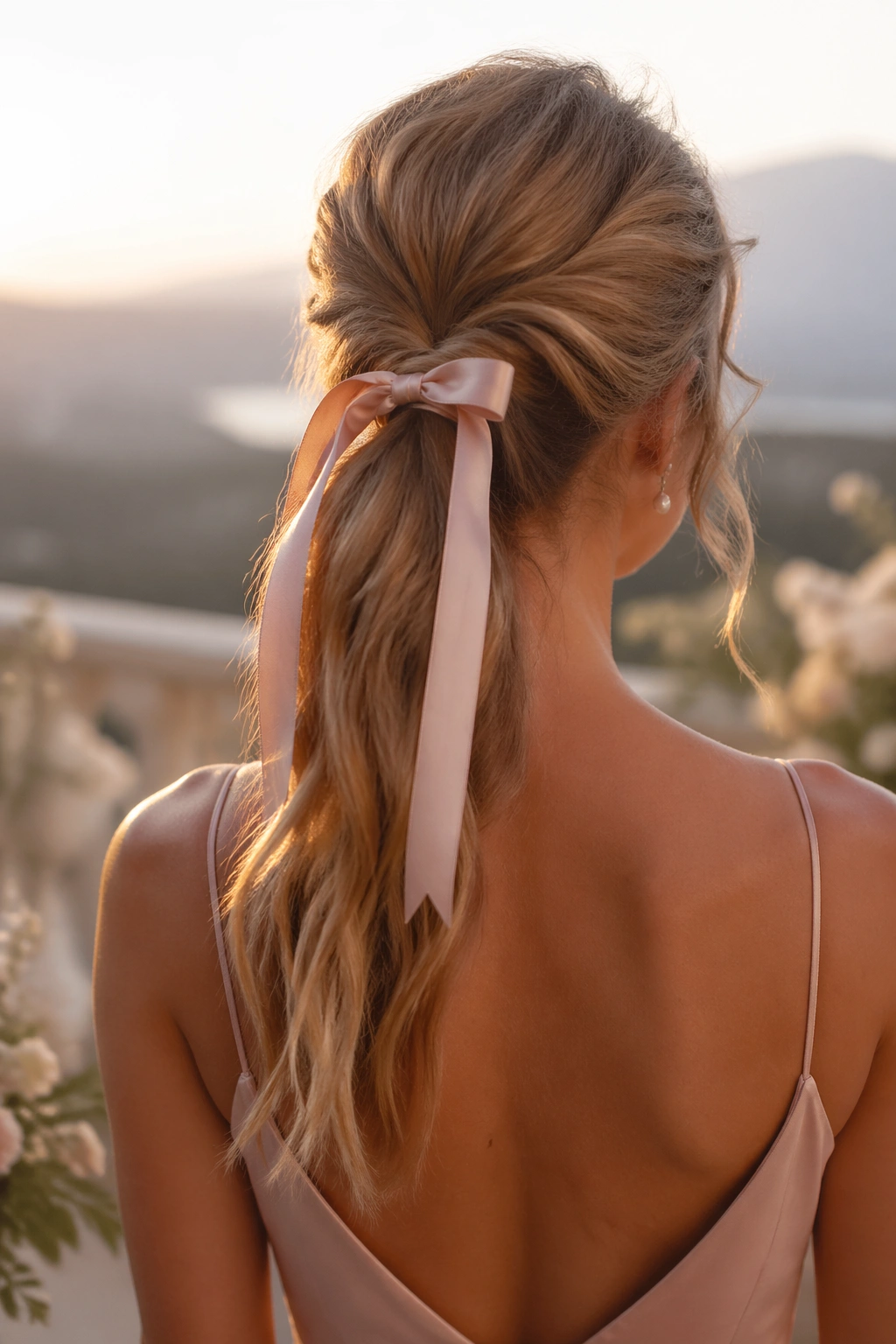
A ribbon changes the whole mood of a ponytail. Without it, the style can read casual. With it, even a loose, messy base feels more thoughtful. I like a matte silk ribbon best because it sits softly instead of shining like gift wrap.
Tie the ponytail first, then knot the ribbon over the elastic and let the ends trail 4 to 6 inches. If the ribbon is too wide, it can take over the style. Around 1 inch is usually enough. Narrower than that can disappear into the hair.
Color matters, but not in a matchy-matchy way. A ribbon can echo the bridesmaid dress, the bouquet wrap, or even the shoes if you want a subtle repeat. Pale blush, ivory, dusty blue, and muted sage all work well with soft hair textures.
The best part? You can remove the ribbon later and the ponytail still stands on its own. That makes it easy for a long reception.
13. Voluminous Teased Crown Ponytail
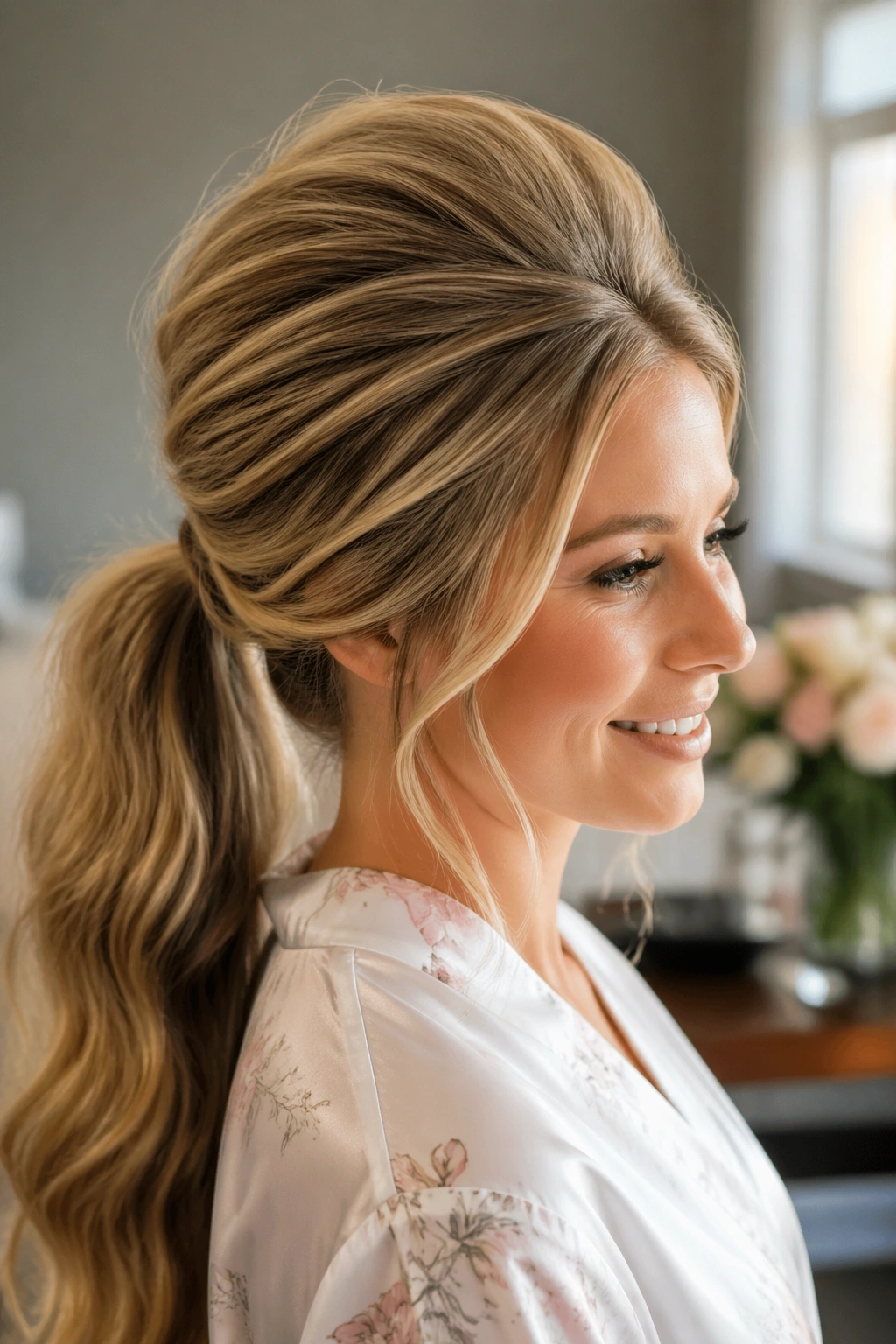
Fine hair often needs a little help at the roots, and teasing is still one of the fastest ways to get it. The trick is to do it sparingly. Backcomb 2-inch sections at the crown, mist them lightly, and smooth only the surface layer so the volume stays hidden.
How to Build the Lift
Use a tail comb and lift the hair straight up before teasing downward in short strokes. One or two passes is enough. If you keep going, the hair starts to feel fuzzy instead of full. After that, gather the ponytail and secure it a little lower than you think you need to, because the crown will still sit higher once you let it settle.
A big-barrel curl on the tail can help it look fuller too. Brush the curls out once so the ends do not form separate ringlets.
This style is good when the bridal party wants height without a full updo. It gives the head shape from the side and keeps the profile lively.
14. Side Ponytail with Loose Waves
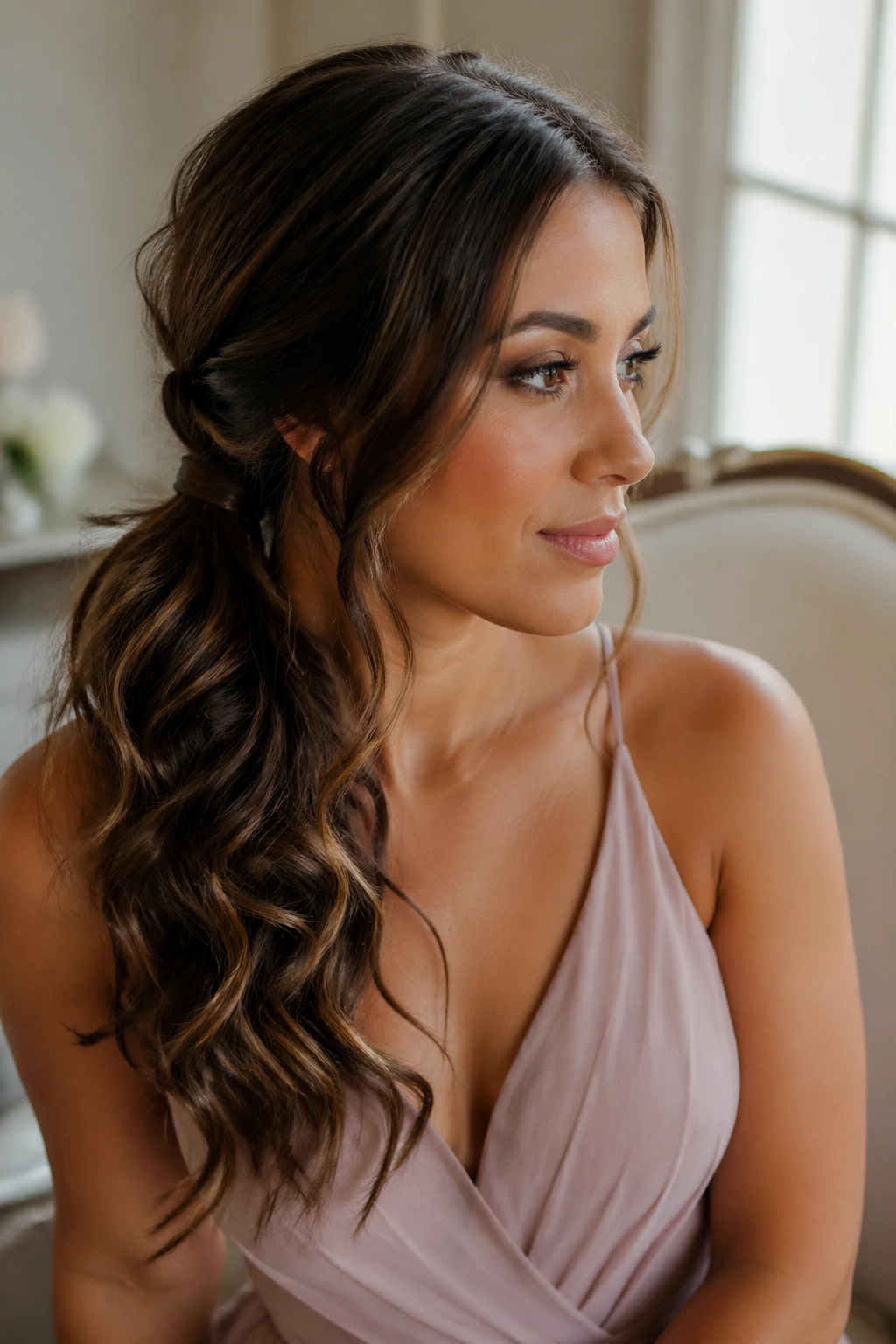
A side ponytail has a softer old-school feel than a centered one. It leans into the shoulder line and gives the hair a relaxed slope, which can be lovely with sweetheart necklines or one-shoulder gowns. It also makes earrings easier to see.
Keep the ponytail low enough that it sits on the collarbone or just below it. If it is too high on the side, the shape starts to feel awkward. Curl the lengths into loose waves, then separate the waves with your fingers so they do not look too uniform.
I like this one for bridesmaids who want movement but do not want a full down style. Hair stays out of the face, the neckline stays visible, and the whole thing feels easy to wear. Not boring. Just easy.
15. Crisscross Sectioned Ponytail
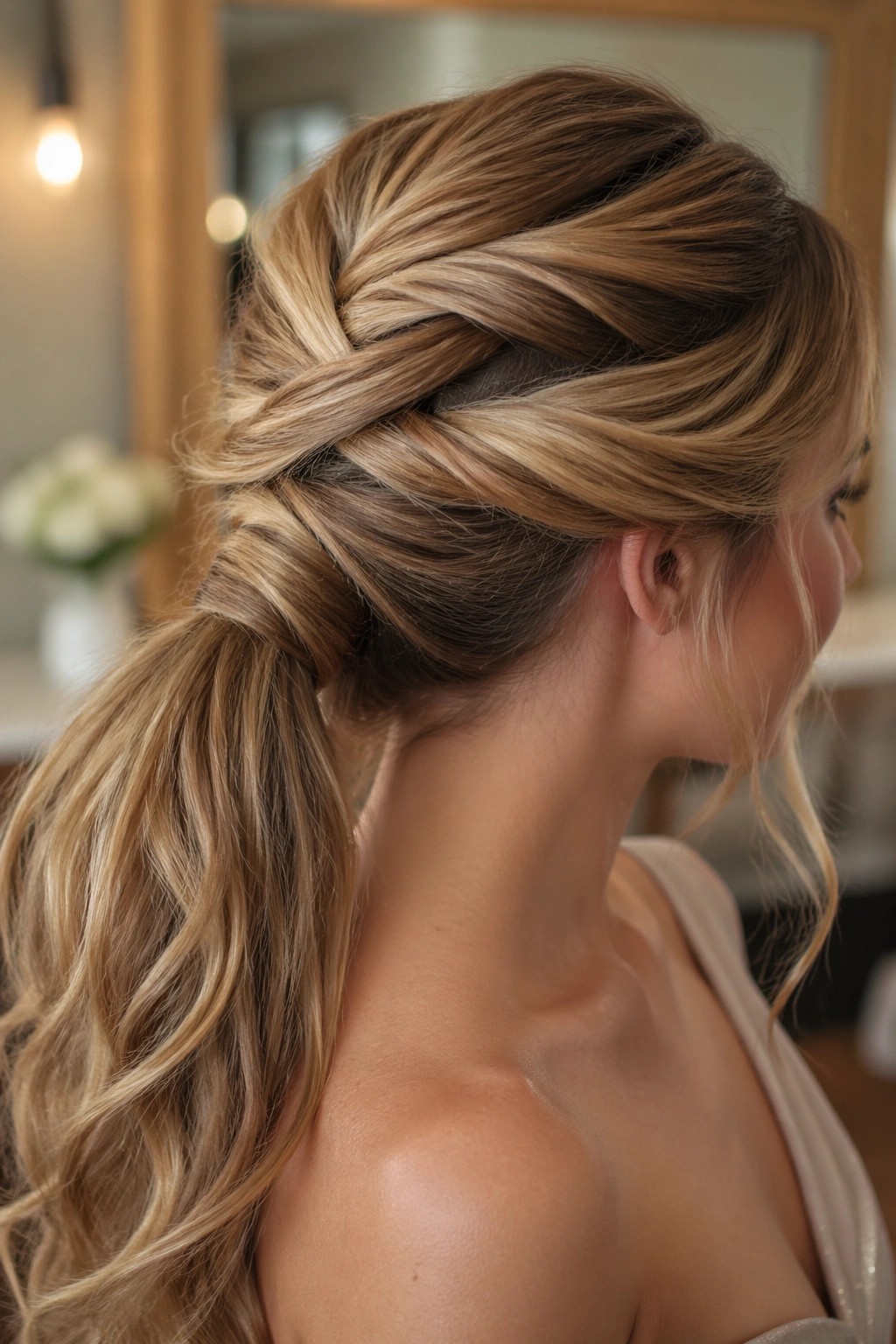
This is the style for someone who wants a little design without drifting into complicated territory. The front sections are crossed over each other before they are gathered, which gives the base a woven look and keeps the top from feeling plain.
It works especially well on thick, straight, or slightly wavy hair. Take two front sections from the temples, cross them over the back, and pin them into the ponytail anchor. Then repeat with another layer if the hair is dense enough. The shape should feel secure, not tight.
- Leave the sections broad rather than skinny.
- Pin each crossing point before the next one goes in.
- Keep the pony at mid-height for the cleanest line.
- Finish with soft curls or a rough wave through the tail.
The nice thing here is that the hairstyle does not rely on accessories to feel finished. The structure itself does the work.
16. Mini Braids Woven Through the Ponytail
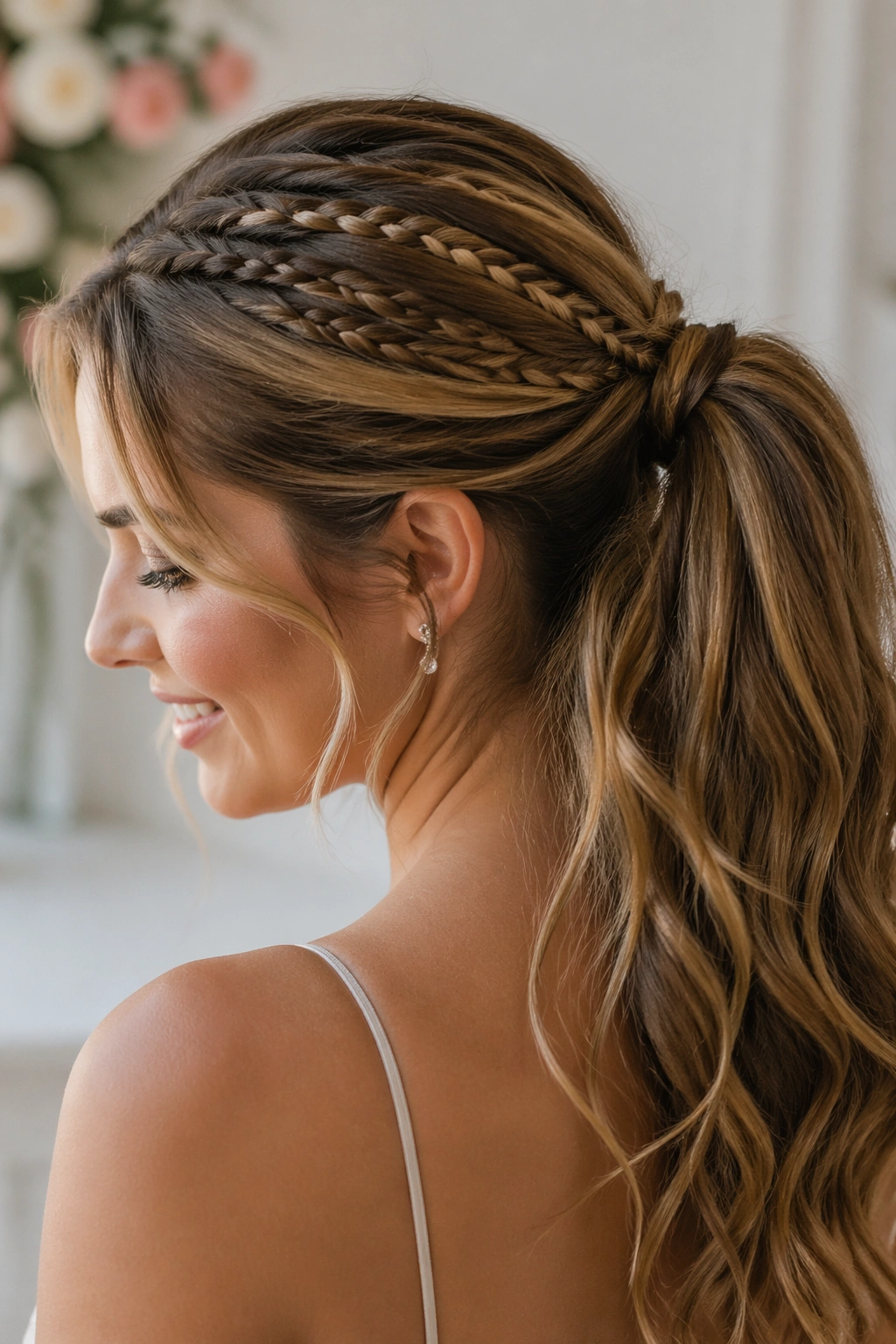
Tiny braids can rescue a ponytail that feels too plain. They add texture without making the style look busy, and they give the tail a bit of movement when the hair swings. I like them best as a detail, not the whole point.
Braid two or three pencil-width pieces from around the crown or temple area, then let them drop into the ponytail itself. Secure the ends with clear elastics if they are long enough to separate from the rest of the hair. If the hair is layered, leave some pieces unbraided so the style does not look over-planned.
This is a good option for a bridesmaid who wants a little edge in a soft way. It also helps with hair that tends to fall flat, because the braids create a visual break and keep the tail from looking like one large block.
Small detail. Big payoff.
17. Low Ponytail with Twisted Sides
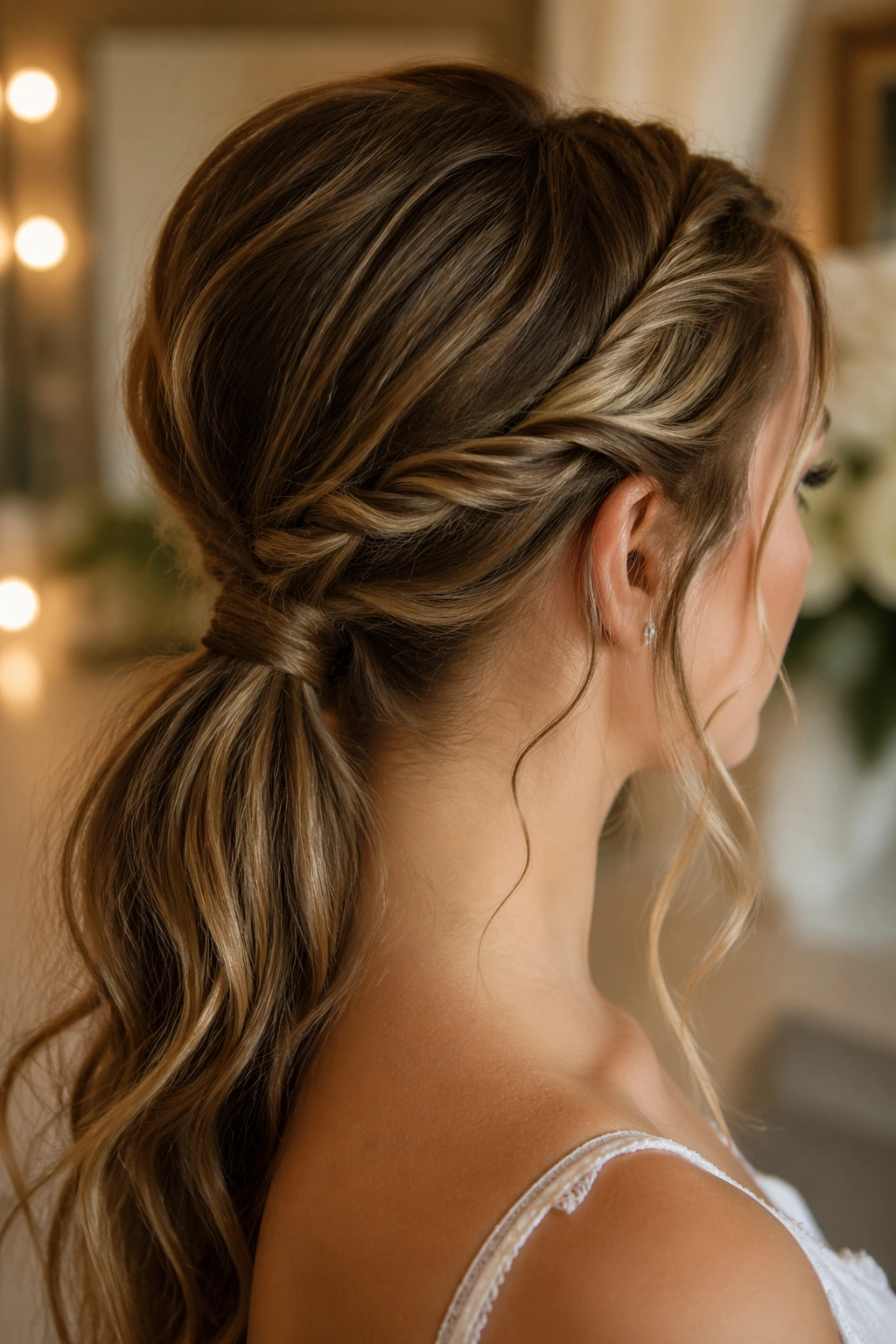
Twisted sides are one of the easiest ways to make a low ponytail feel more styled. You pull a small section from each temple, twist it back, and let the twists join at the nape. The rest of the hair falls into the ponytail with very little effort.
The beauty of this style is that it works with nearly every dress cut. It is neat around the face, soft at the back, and easy to tuck behind a veil or a floral pin. If the hair is layered, leave the twists a little loose so the shorter pieces do not pop out.
I’d pick this for a mixed group of bridesmaids because it is forgiving. You can adjust the twist size from person to person without changing the overall look. That keeps the group coordinated without making everyone identical, which I think is better anyway.
18. Curly Ponytail with Pinned-Back Front
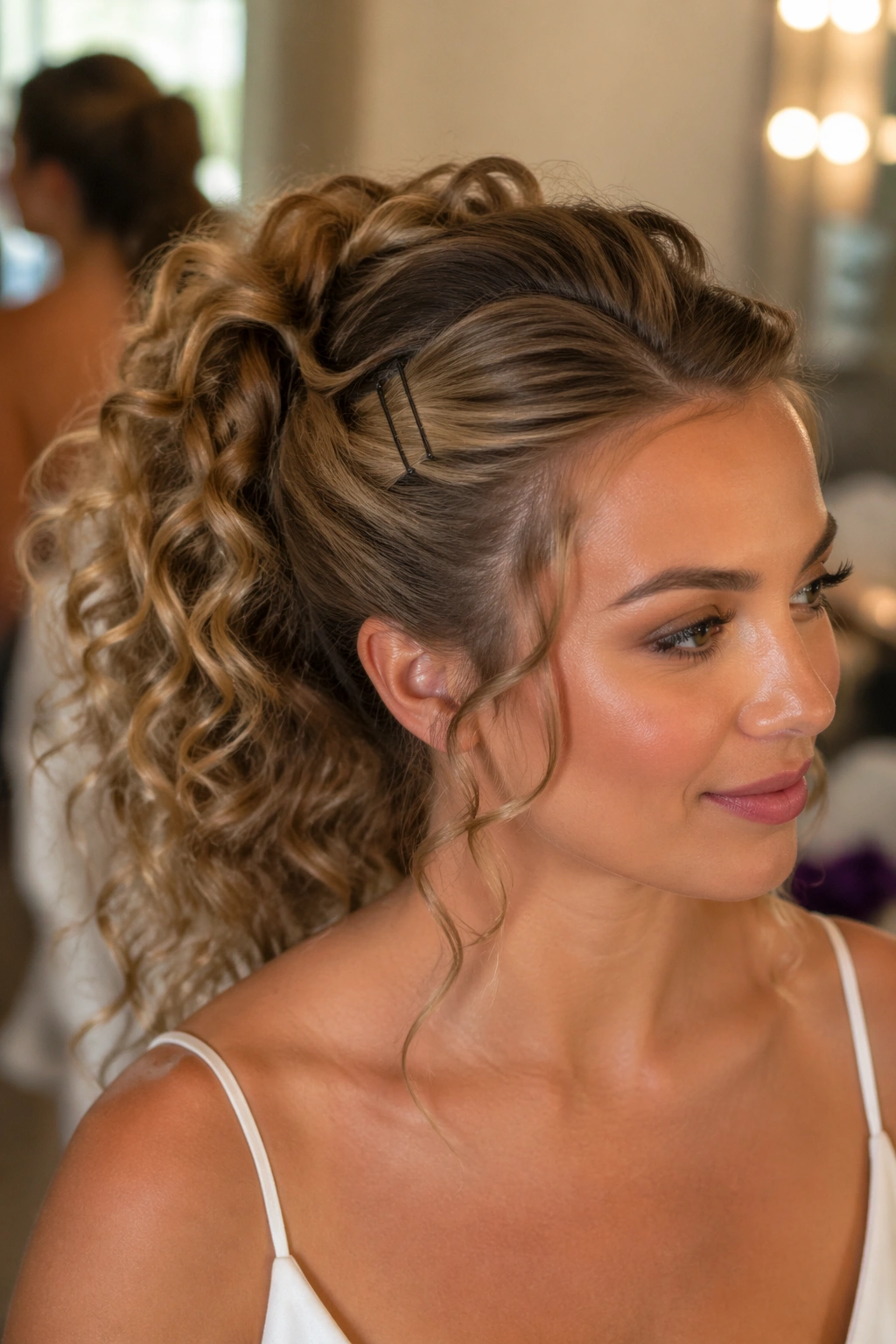
Why fight the front pieces when you can just pin them back and let the curls do the rest? That is the basic idea here. The hairline stays open, the curls keep their shape, and the whole style feels lighter around the face.
Use two bobby pins on each side to pin back the front sections, then gather the remaining curls into a ponytail that sits mid-height or low. The pins should sit flat and disappear into the hair. If they stick out, the style starts looking fussy. A small decorative pin can go on one side if the rest of the jewelry is simple.
This is one of my favorite options for bridesmaids with bold earrings. It gives the earrings room, keeps the curls from crowding the face, and still leaves plenty of hair in play.
19. Ponytail with Pearl Pins
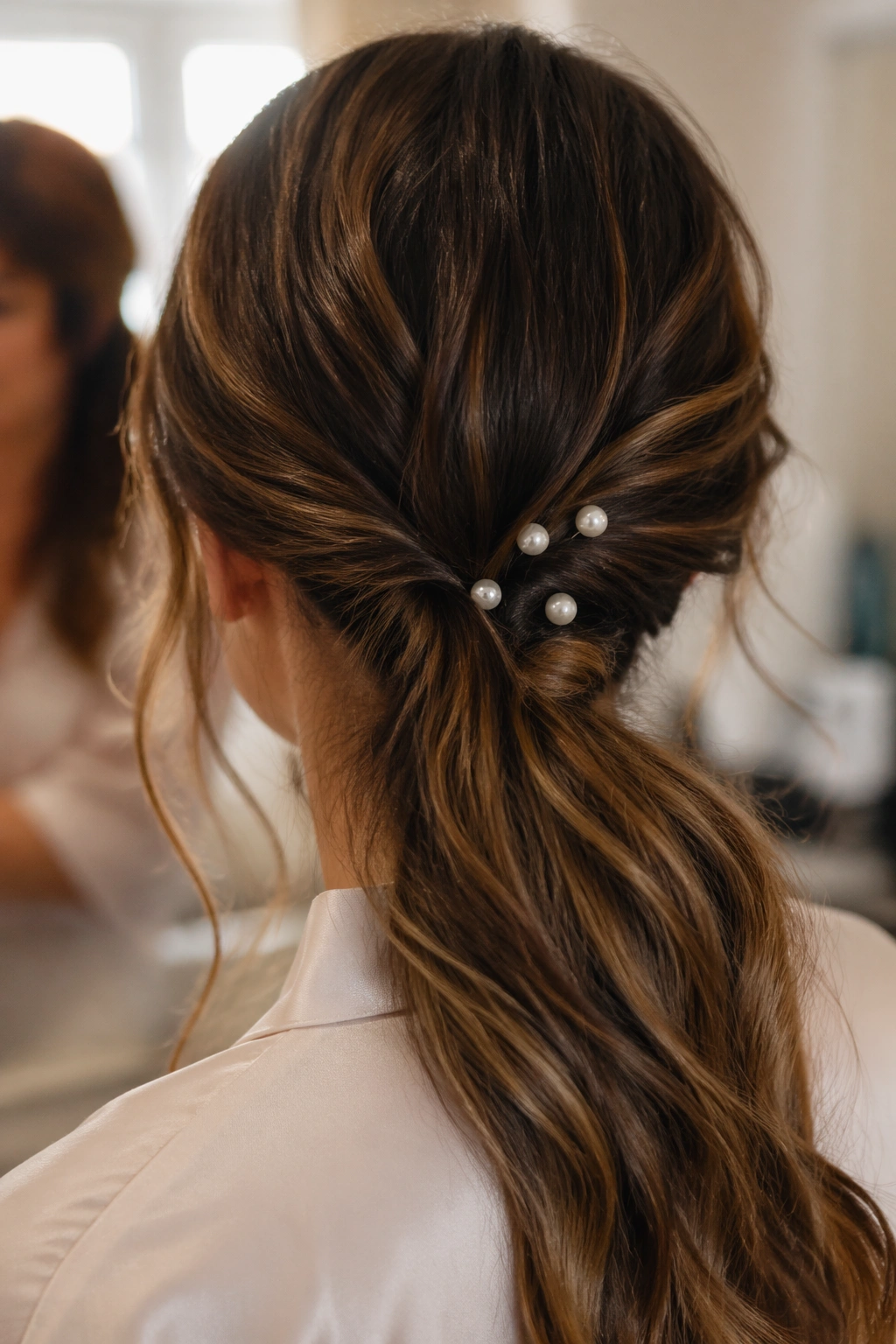
Pearl pins are one of the easiest ways to make a messy ponytail feel wedding-ready. They add a little shine, but not the loud, stiff kind that takes over the style. Use them with restraint and the whole look gets better.
Stick 3 to 5 pins near the base of the ponytail or along one side of the crown. Space them irregularly. A straight row can look too tidy, while a loose cluster feels softer and more natural. If the hair is darker, cream pearls stand out nicely. On lighter hair, smaller pins can be enough.
- Place the biggest pin closest to the base.
- Angle one pin slightly upward so the cluster does not sit flat.
- Keep the rest of the ponytail loose and touchable.
- Pair with low waves rather than stiff curls.
This style is good when the dress is plain and the hair needs a little detail to hold its own.
20. Half-Up Messy Ponytail for Bridesmaids
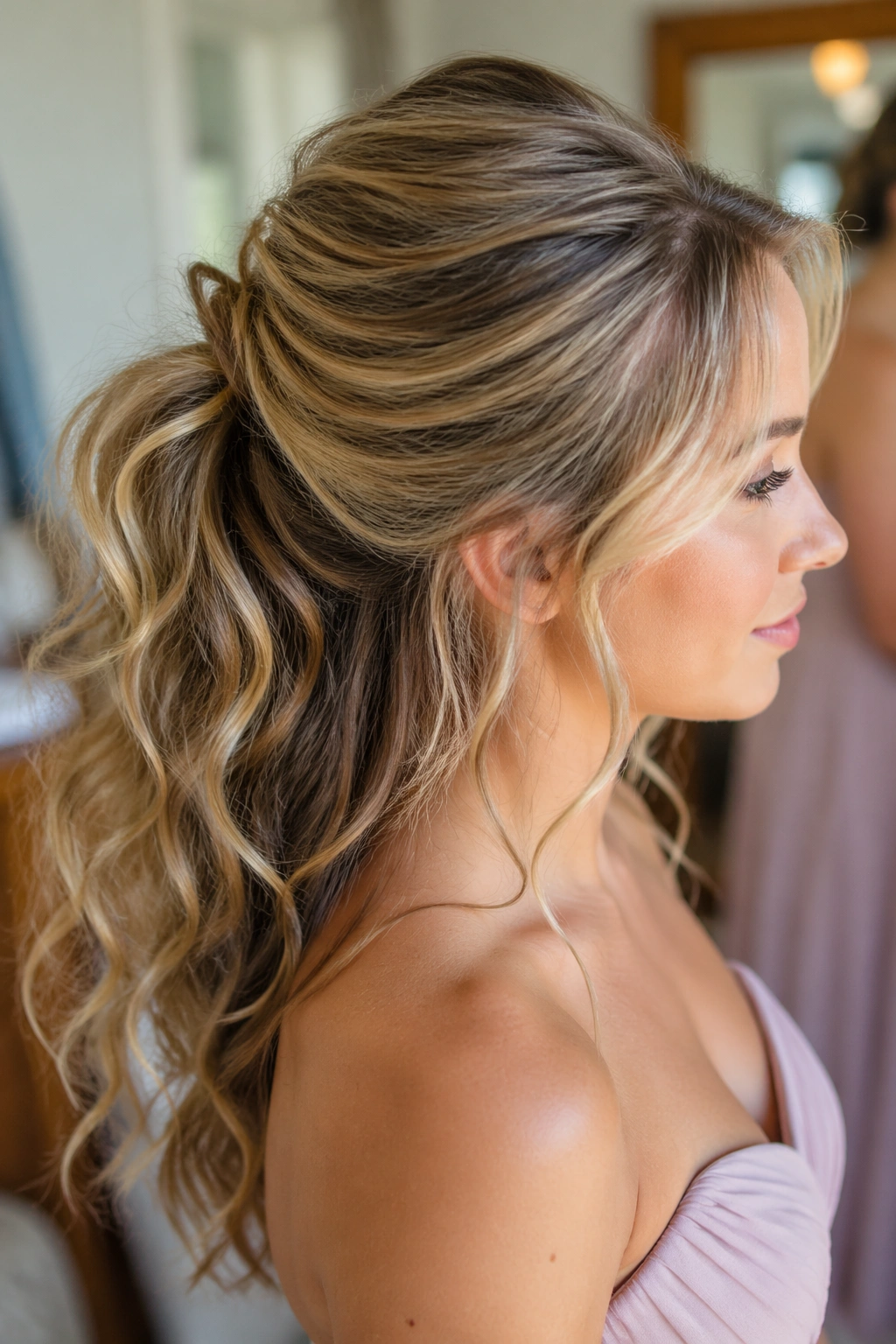
Not every bridesmaid needs a full ponytail. Sometimes the best move is to keep the top section out of the face and leave the lower lengths free. That is the advantage of a half-up messy ponytail. It gives control where you want it and softness where you need it.
Gather the top half of the hair from temple to temple, secure it mid-height, and then add a little wave through the remaining hair below. Tease the crown by about 1 inch if the hair is fine, and leave the sides slightly loose so the style does not read as severe. This is especially handy on warm days, because the neck gets some air while the length still shows.
I like this for bridesmaid groups that want movement and comfort at the same time. It feels youthful without looking juvenile. That distinction matters.
21. Double-Texture Ponytail for Thick Hair
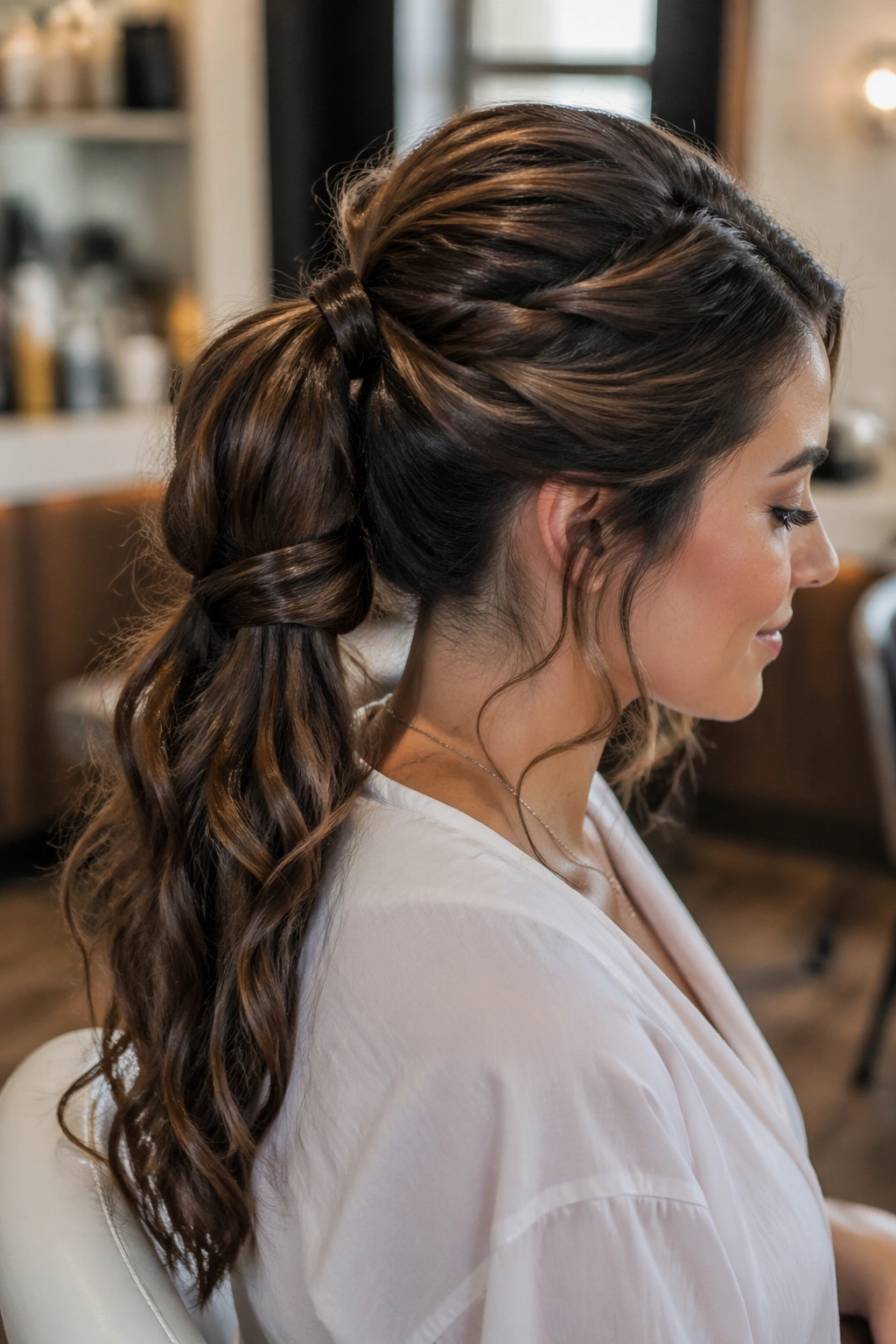
Thick hair needs a plan. If you just gather it all back and hope for the best, the base can puff up and the tail can feel bulky in the wrong places. A double-texture ponytail handles that better by mixing a controlled top with a softer lower length.
Start by smoothing or braiding the top section, then gather the rest underneath and let it stay a little looser. The contrast keeps the style from ballooning. If the hair is very dense, divide it into two anchor points before joining them, which spreads the weight and makes the pony sit more comfortably.
This is one of those styles that makes thick hair look intentional instead of heavy. The shape stays long and elegant, and the bridesmaid does not spend the whole night adjusting it.
22. Soft Fauxhawk Ponytail
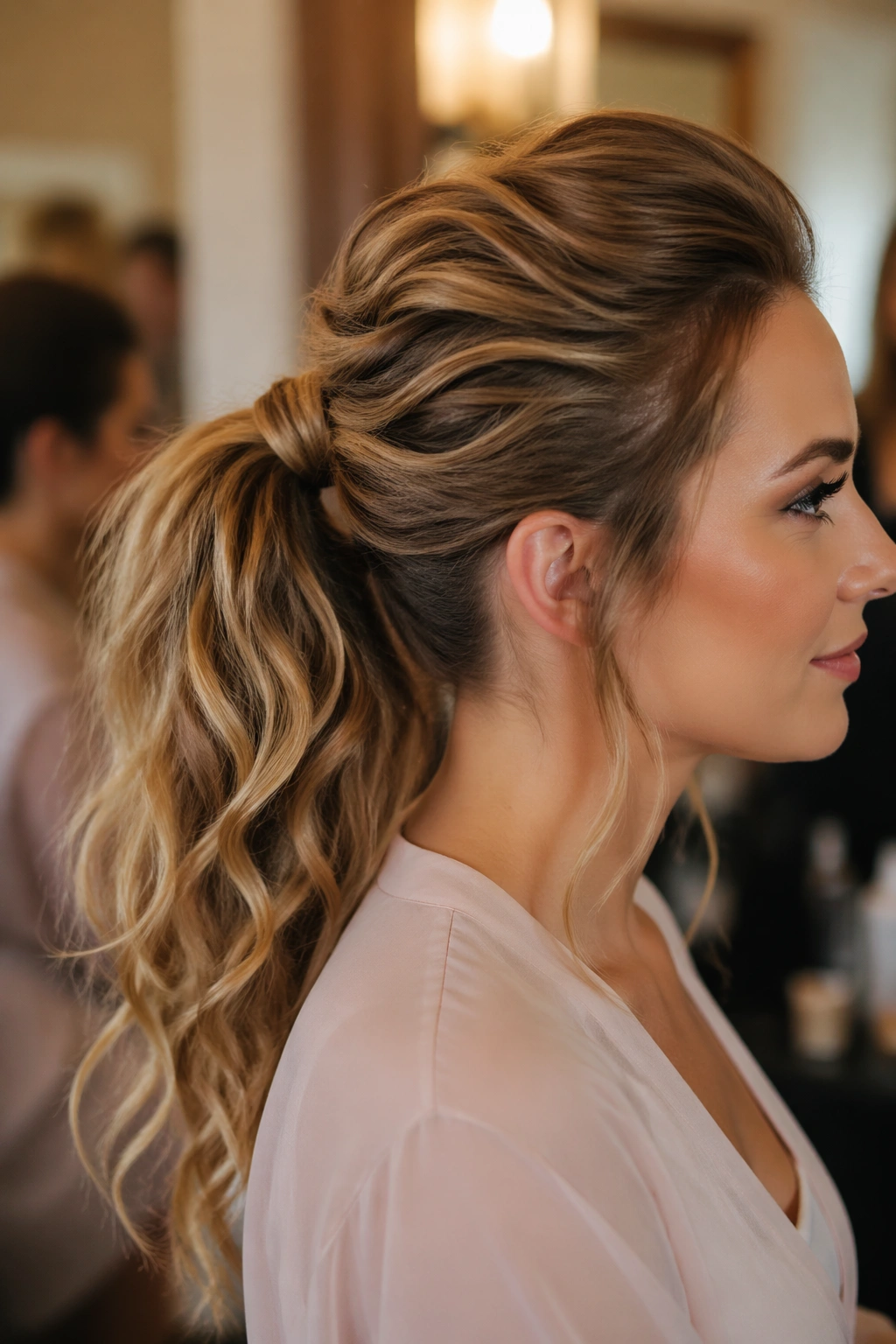
A fauxhawk ponytail sounds bold, and it can be, but it does not have to look sharp. Keep the side sections loose and the middle lifted, then gather everything into a ponytail at the back. The result has a little edge without losing the wedding feel.
The center ridge is the part that matters. Tease it gently, smooth the outside, and let the sides stay soft against the head. Once the ponytail is secured, curl the tail loosely or leave it wavy if the texture is already there. If you pull the sides too tight, the style turns harsh fast.
I would use this for bridesmaids wearing very simple dresses or strong neckline shapes. It gives the hair some attitude, which can be a nice contrast to clean fabric and minimal jewelry.
23. Low Ponytail with a Veil-Friendly Base
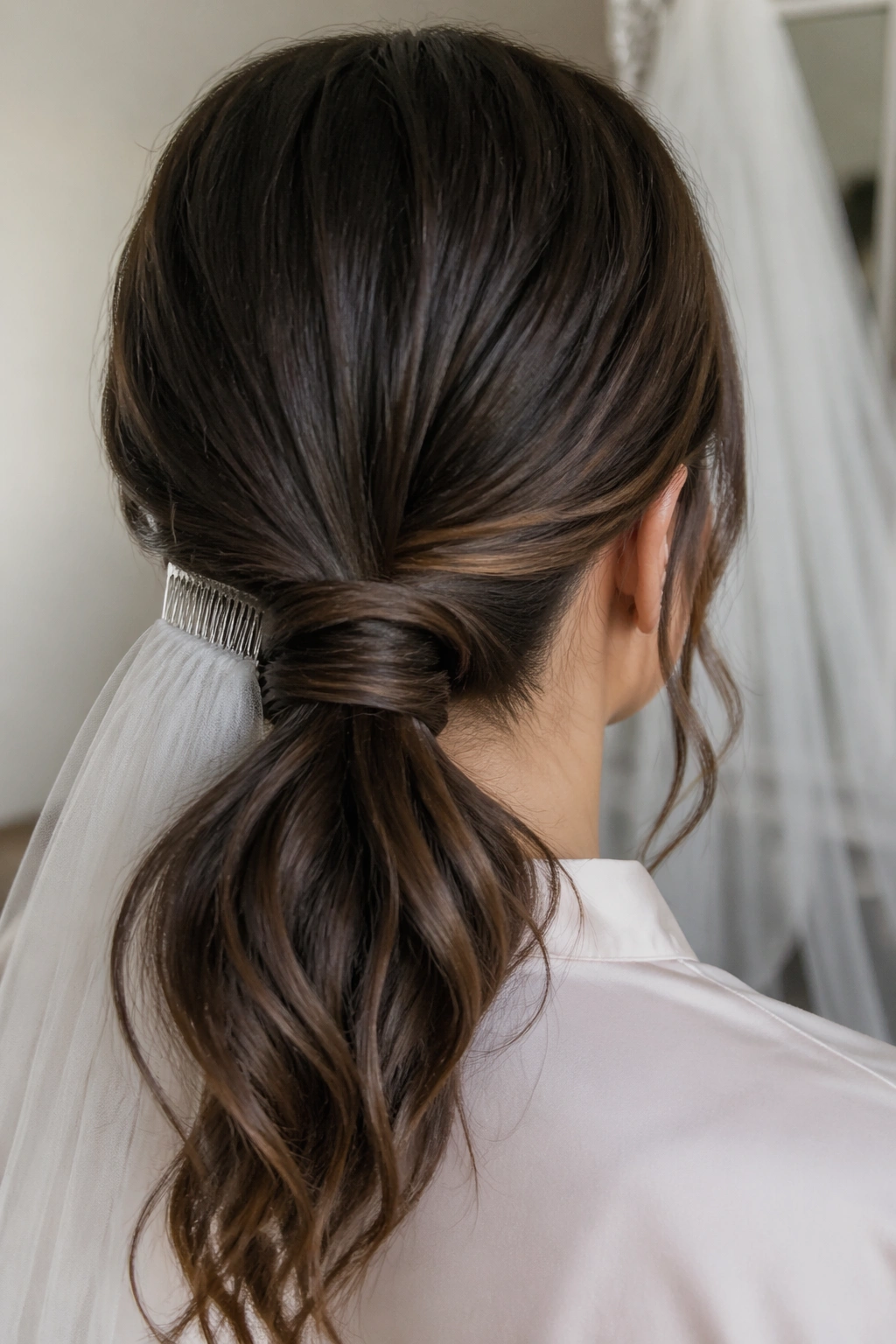
If a veil is in the picture, the ponytail base has to be placed with care. Too high, and the veil sits awkwardly. Too bulky, and the comb has nowhere to go. A low base solves that.
Placement Matters
Keep the ponytail at the nape or just above it, below where the veil comb needs to anchor. That leaves space for the veil to sit flat without fighting the hairstyle. A soft twist or wrap around the elastic helps the back look finished under the veil, which is useful because that area often shows during the ceremony.
Keep It Flexible
Use pins that lie close to the head, and avoid piling too much volume into the crown. The style should support the veil, not compete with it. After the veil comes off, the ponytail still needs to look like a complete hairstyle on its own.
That is why this option is so practical. It handles both moments with one setup.
24. Beachy Ponytail with Salt-Spray Texture
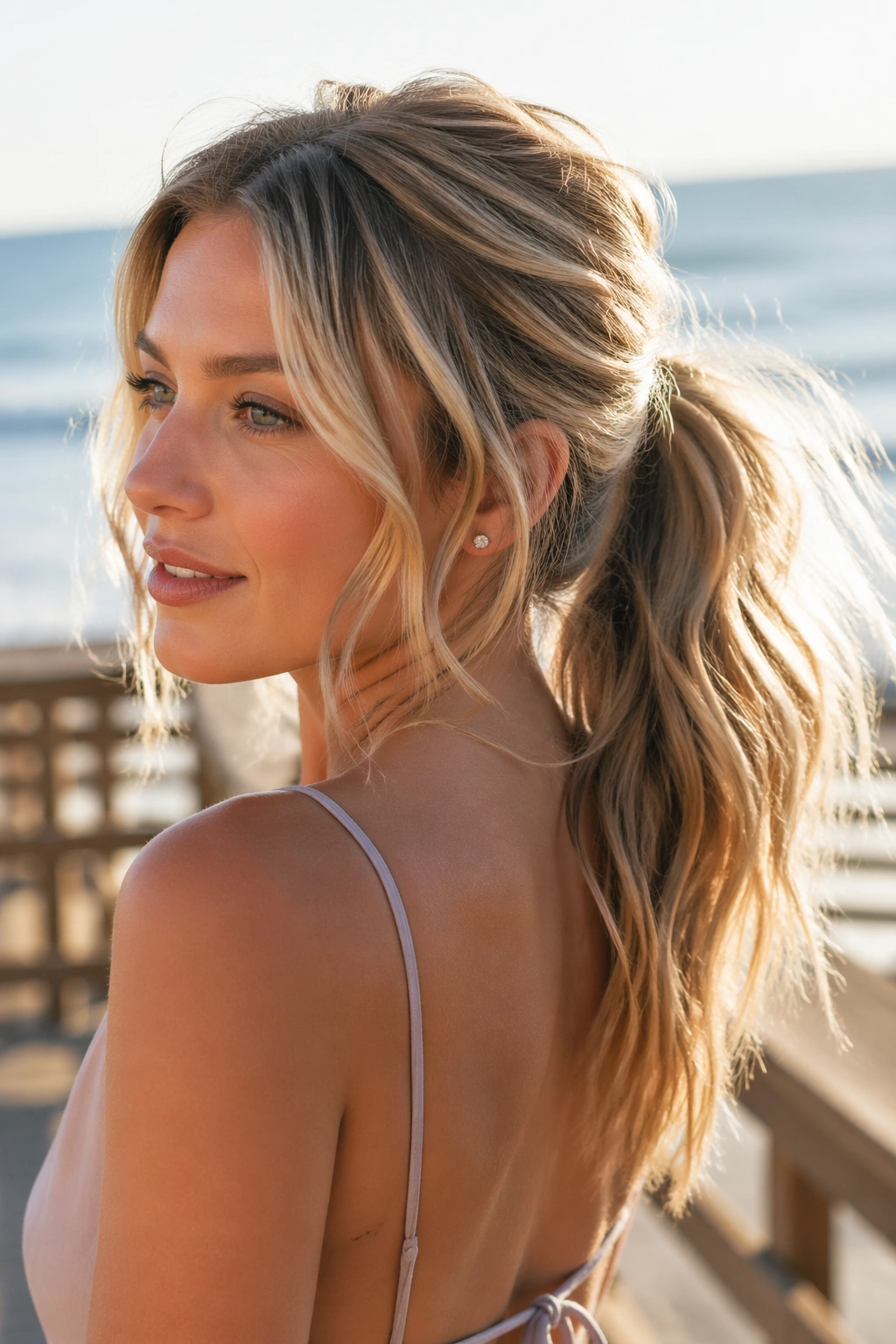
Beachy texture is useful when the wedding feels relaxed, outdoorsy, or close to the water. The ponytail does not need to be slick or formal; it just needs enough roughness to hold shape and enough softness to move in the air. Salt spray helps, but lightly.
Mist it onto damp hair, scrunch the lengths, and dry them until they feel touchable, not crunchy. Then gather the hair into a low or mid ponytail and bend a few sections with a curling iron if the waves need help. Do not drown the hair in product. Too much salt spray makes the ends look dry, and that is not the look anyone wants next to a wedding dress.
The nice thing about this style is how easy it is to dress up with one pin, one braid, or one ribbon. The base stays casual, and the details can do the formal work.
25. Romantic Ponytail with Oversized Wave Ends
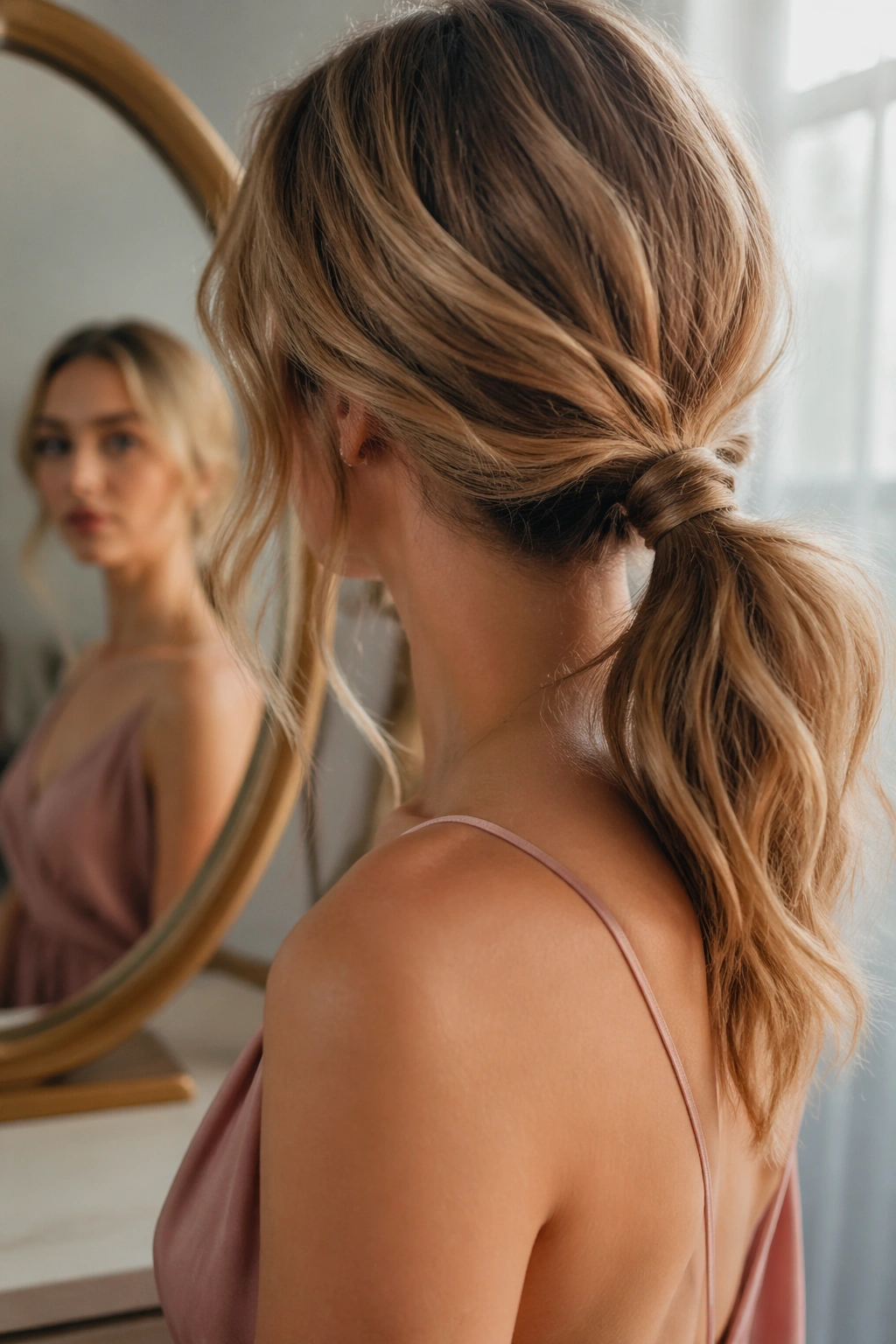
A ponytail with oversized wave ends feels softer than a curl that starts at the root. That is the appeal. The top stays cleaner, the tail looks plush, and the whole style keeps its movement without becoming overly styled.
Use a 1.5-inch curling iron or a wide wand on the lower third of the hair only. Then brush the waves once so they join into larger shapes instead of separate loops. If the hair is long, this matters even more, because tiny curls can make the tail feel too busy. A looser wave looks calmer and more expensive, though I hate that word and still think it fits here.
This style pairs well with chiffon, tulle, or any dress that already has softness in the fabric. The hair echoes the same mood without copying the dress line exactly.
26. Short-Hair Ponytail Illusion for Lob-Length Hair
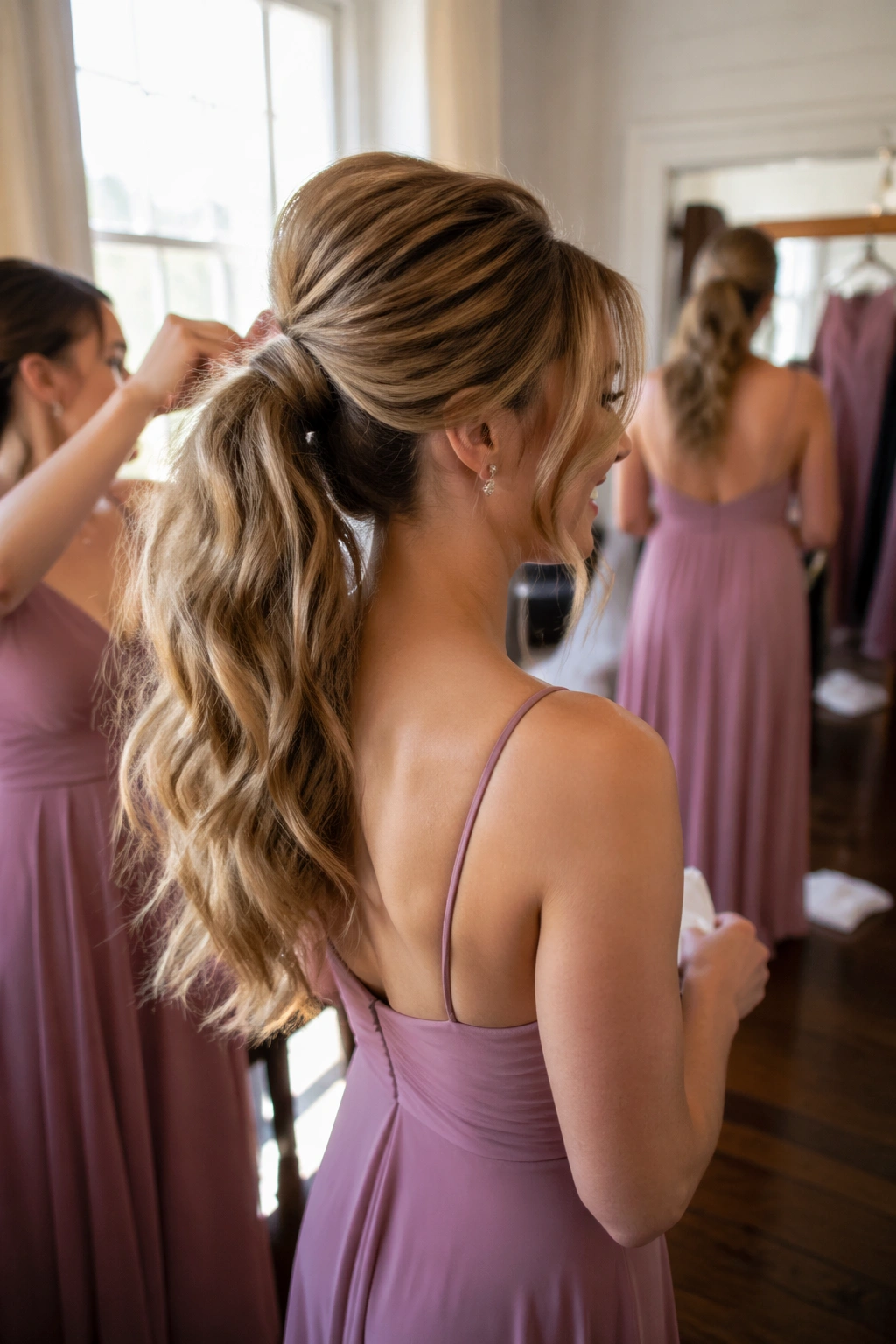
A lot of people think a ponytail needs long hair. Not really. With lob-length hair, you can fake the shape with a tucked ponytail, hidden pins, and a little volume at the crown. The result is shorter, yes, but still reads like a ponytail.
How the Illusion Works
Gather the top half into a small ponytail, then pin the lower sections up underneath so they blend into the shape. A curled end or a small clip-in ponytail piece can help if extra length is needed. The trick is to keep the attachment point hidden by leaving a few loose pieces around it.
This style is useful when the whole bridal party wants the same direction, but one or two people have shorter cuts. That happens all the time. A good stylist works with it instead of pretending it is a problem.
Keep the crown airy and the ends soft. The style should read as intentional from the front and slightly tucked from the back.
27. Braided Ponytail with Loose Pancaked Braid
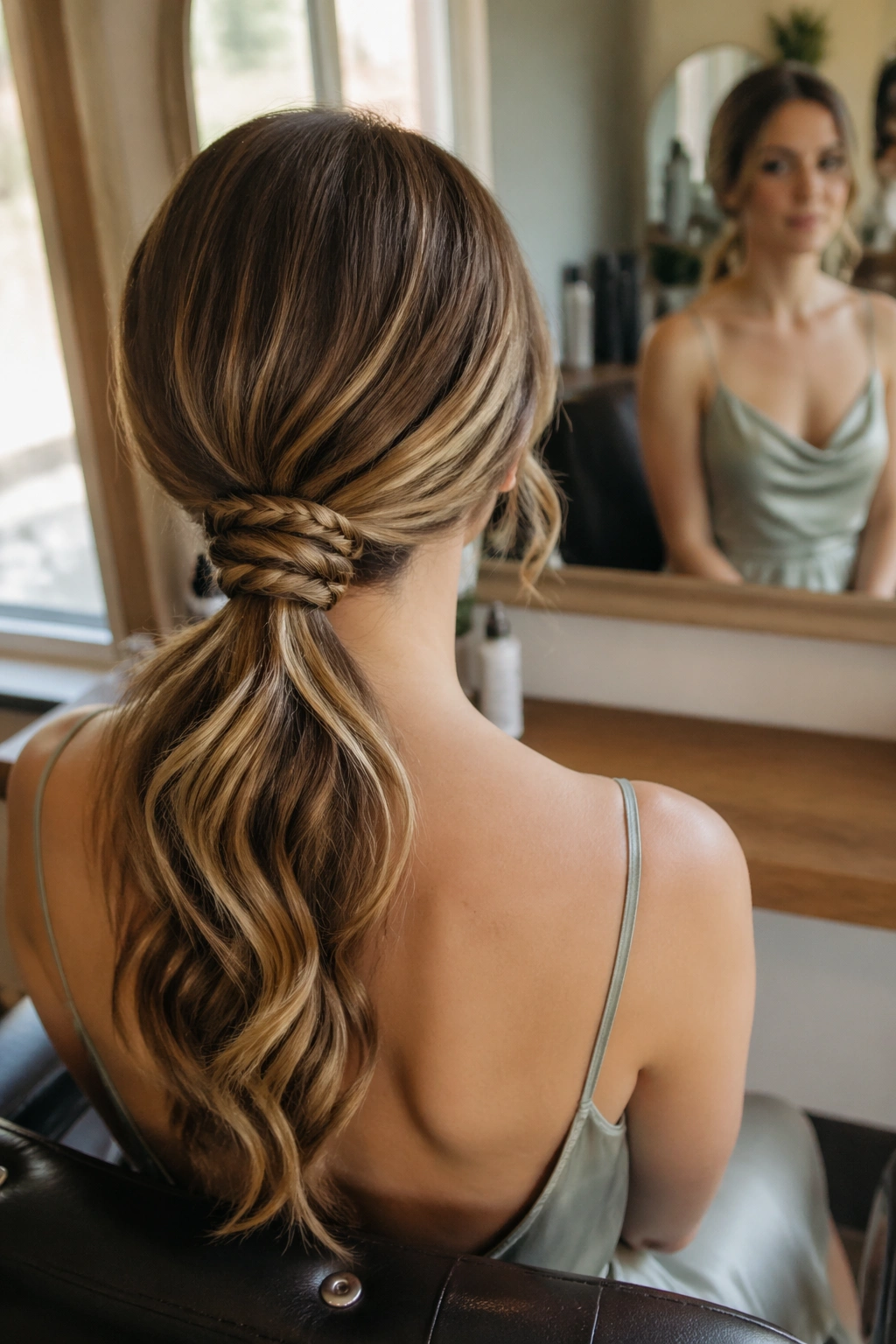
A braided ponytail gets a lot more life when the braid is loosened after it is done. Pancaking means pulling the outer edges of the braid gently so it widens. That makes fine hair look fuller and thick hair look more relaxed.
Start the braid a couple of inches below the elastic so the base still feels like a ponytail, not a braid with a tail. Braid down the length, then tug at the edges one section at a time. Stop before the very ends so the finish stays soft. If you pancake all the way to the end, the braid can lose its shape.
- Keep the braid loose enough to widen by about 1/3.
- Secure the end with a tiny elastic that matches the hair.
- Pull out one or two face-framing strands if the dress is clean and structured.
- Add a pin at the base if the style needs more finish.
This is a strong choice for bridesmaids who want texture without accessory clutter.
28. Messy Ponytail with Floral Sprigs
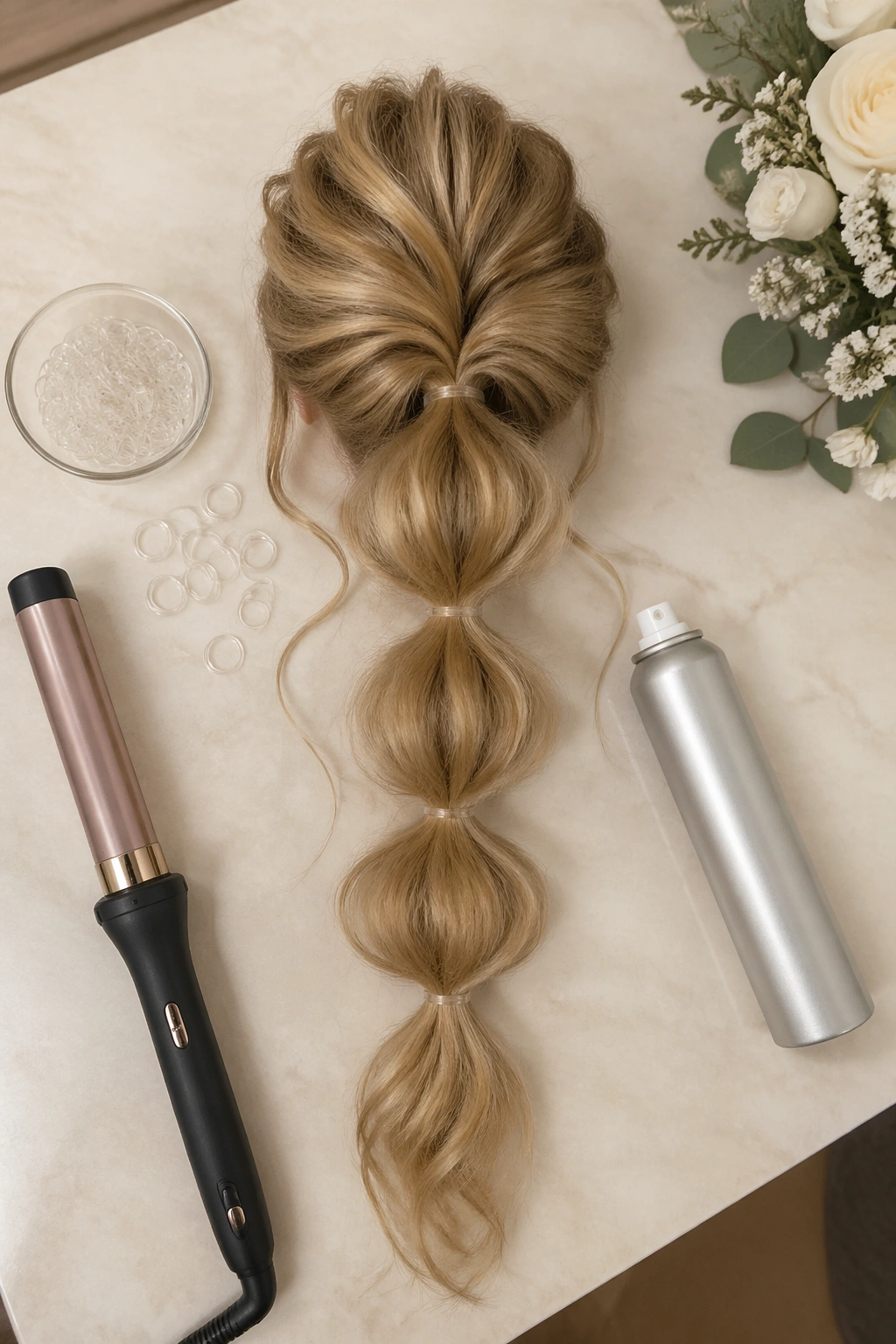
Floral sprigs can make a ponytail feel connected to the bouquet without turning the hair into a flower crown. The trick is to use them sparingly. Two or three sprigs tucked near the base usually do more than a handful scattered everywhere.
Choose small blooms or greenery that are already part of the wedding palette. Baby’s breath, eucalyptus, waxflower, and tiny rosebuds all work if they are trimmed short and pinned well. Keep the stems wrapped or covered so they do not poke through the hair.
A loose ponytail gives the flowers space to sit. A tight ponytail makes them look perched on top, which is less graceful. I also like floral sprigs better on a low or mid ponytail than on a high one, because the placement feels calmer and the flowers are easier to see.
That little bit of living detail can be lovely. It should look placed, not stuffed.
29. High Ponytail with Curtain Bangs
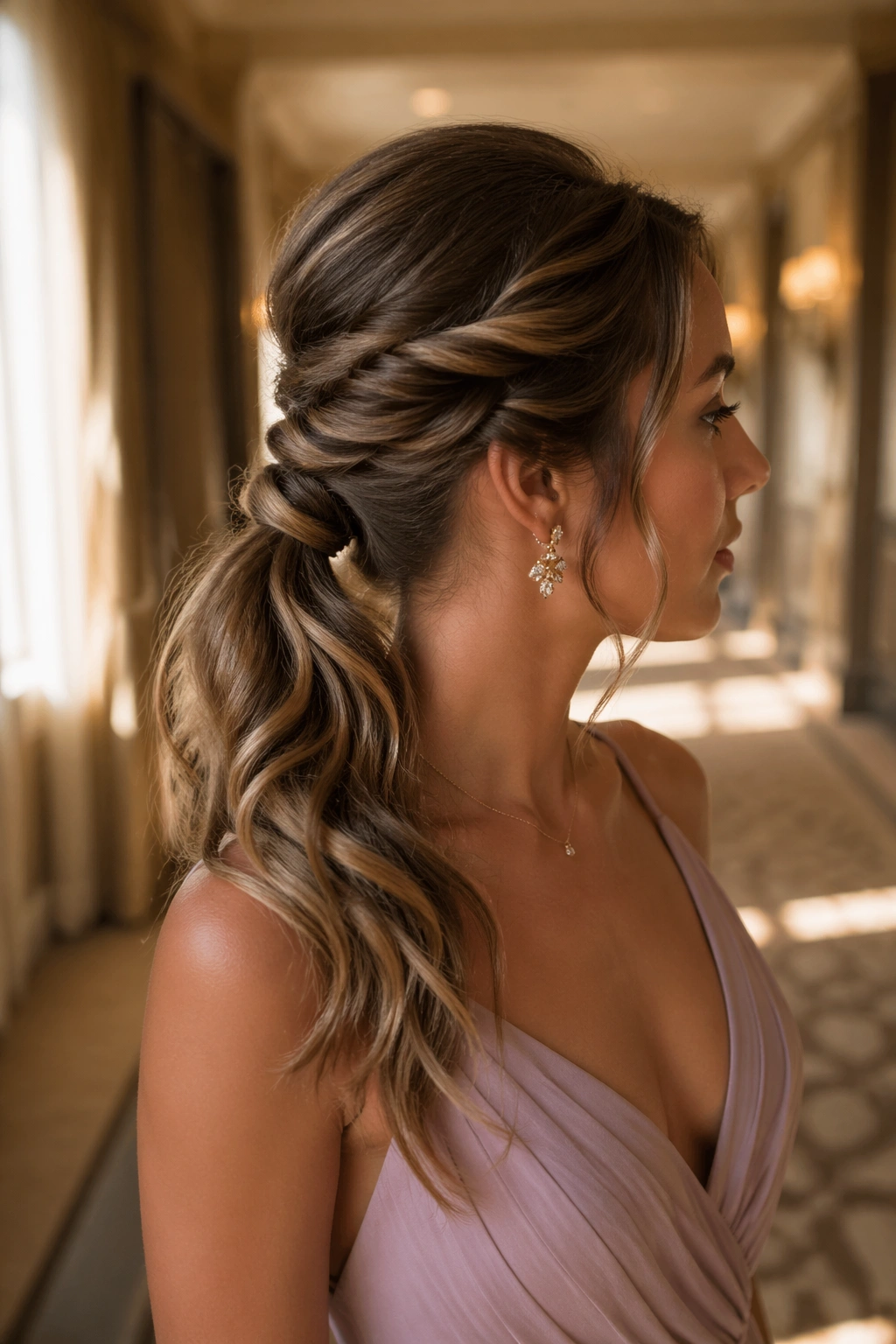
Curtain bangs change the whole game. They soften the forehead, frame the eyes, and keep a high ponytail from looking too severe. Add some lift at the crown and the style suddenly has shape from front to back.
Keep the bangs smooth with a round brush or a 1.25-inch iron, then gather the ponytail high and tight enough to hold. The crown should have a touch of height, not a bump you can spot from across the room. Once the tail is in place, wrap the elastic and let the bangs fall naturally around the face.
This style is a good one for bridesmaids who want energy. It opens the face, shows the neck, and gives the hair a little bounce. If the dress has a high neckline, the bangs keep the look from feeling too closed in.
30. Soft Knotted Ponytail with Tucked Ends
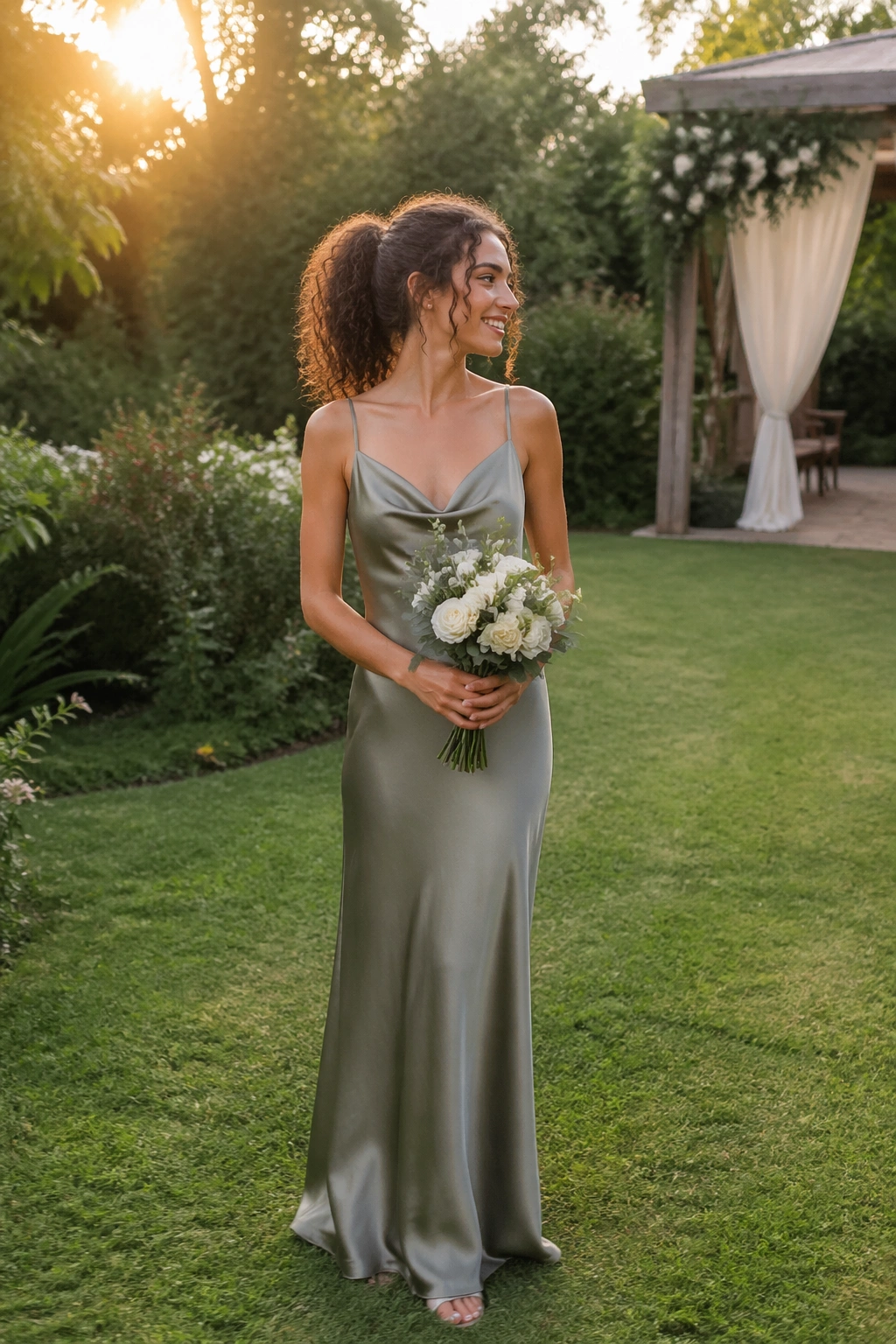
A soft knotted ponytail is a nice ending because it sits somewhere between styled and easy. The hair is gathered, looped, and tucked so the base looks almost like a small knot rather than a standard elastic tie. It feels a bit sculptural, but not fussy.
Start with a low or mid ponytail, split the tail in half, and wrap each section around the other before pinning the ends under the knot. Leave a few strands out near the temples if the face needs softness. If the hair is thick, use more pins than you think you need; if it is fine, keep the knot compact so it does not droop.
This is the style I would choose when the dresses are already doing the talking. It keeps the hair calm, holds well, and still gives the bridesmaid enough movement that the look does not stiffen up by the end of the day. That is usually the sweet spot.
