



A half up frontal ponytail only looks seamless when the front does its job first. If the lace sits even a little too flat, or the base gets built before the hairline is laid down, the whole style can slide from polished to obviously styled in a hurry.
That’s the part people miss. The ponytail itself is only half the story. The other half is the frontal: the melt, the part, the tiny bit of softness around the temples, and the way the crown is anchored so it doesn’t puff up like a helmet.
A good install gives you room to play. A rough one gives you nowhere to hide. And no, the answer is not always more gel. Sometimes it’s a lower anchor point, a cleaner wrap, a better parting pattern, or a style that lets the texture do some of the camouflage work for you.
These 23 half up frontal ponytails lean in different directions — sleek, curly, braided, waved, flipped, lifted, and softly undone — but they all share one rule: the front should disappear before the ponytail starts speaking. That’s the whole trick.
1. Sleek Half Up Frontal Ponytail with Bone-Straight Lengths
A bone-straight finish is the easiest place to start because there’s nowhere for sloppy work to hide. The part has to be clean, the hairline has to be softened, and the ponytail needs enough tension to sit like it belongs there.
Why It Looks So Clean
The front should be pressed flat with a hot comb or a flat iron on low-to-medium heat before the ponytail goes up. Keep the first inch around the hairline smooth, then gather the top half at the crown so the elastic sits out of sight. A 1-inch strip of hair wrapped around the base will do more for the finish than a pile of accessories.
- Use a 1.25-inch flat iron for the lengths so the ends stay sleek, not pin-straight and sharp.
- Keep the ponytail base no bigger than a golf ball if you want the style to stay light.
- Wrap the elastic with one clean section of hair, then pin it underneath with a small bobby pin.
- A silk scarf for 10 minutes after laying the front helps the lace settle.
This style flatters oval and heart-shaped faces especially well because the lifted crown gives height without crowding the cheeks. If the base looks bulky, the whole style feels heavy. Simple. Merciless, too.
2. Deep Side-Part Half Up Frontal Ponytail with Swingy Ends
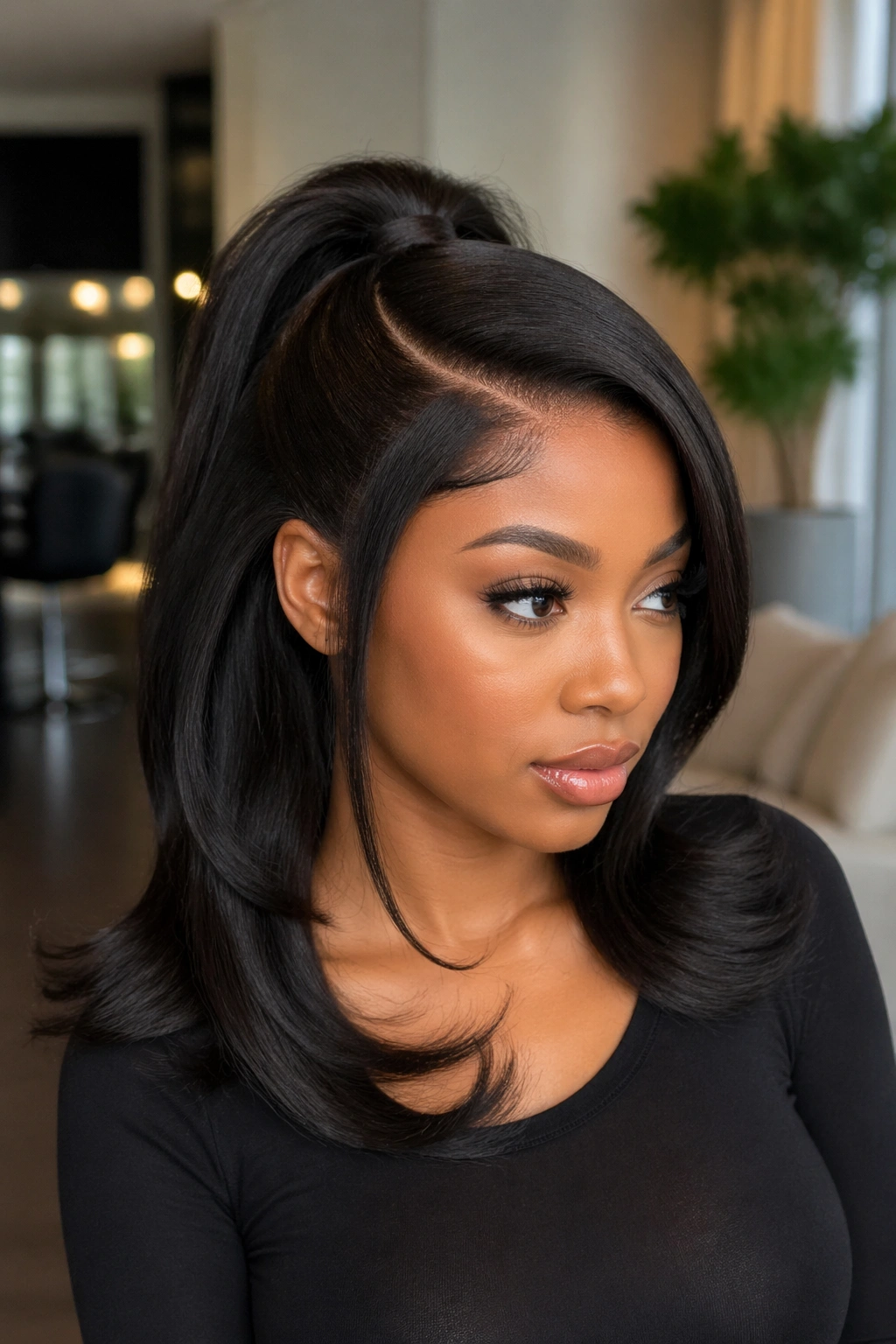
A deep side part is the fastest way to soften a frontal that feels too sharp. The diagonal line gives the eye somewhere to go, so the style reads deliberate instead of stiff.
Start the part just above the arch of the brow, then sweep the heavier side back and secure the ponytail a little off center. That slight shift matters. It breaks the symmetry enough to hide a lace edge that might not be perfect, and it gives the ponytail a prettier drop in the back.
This one loves a curled or beveled end. A 1.5-inch iron, a quick wrap for 8 to 10 seconds, and a cool-down before brushing is enough to make the ends swing instead of hang. Do not drown the front in gel. A deep side part already does most of the visual work.
3. Curly Crown Half Up Ponytail with Soft Baby Hairs
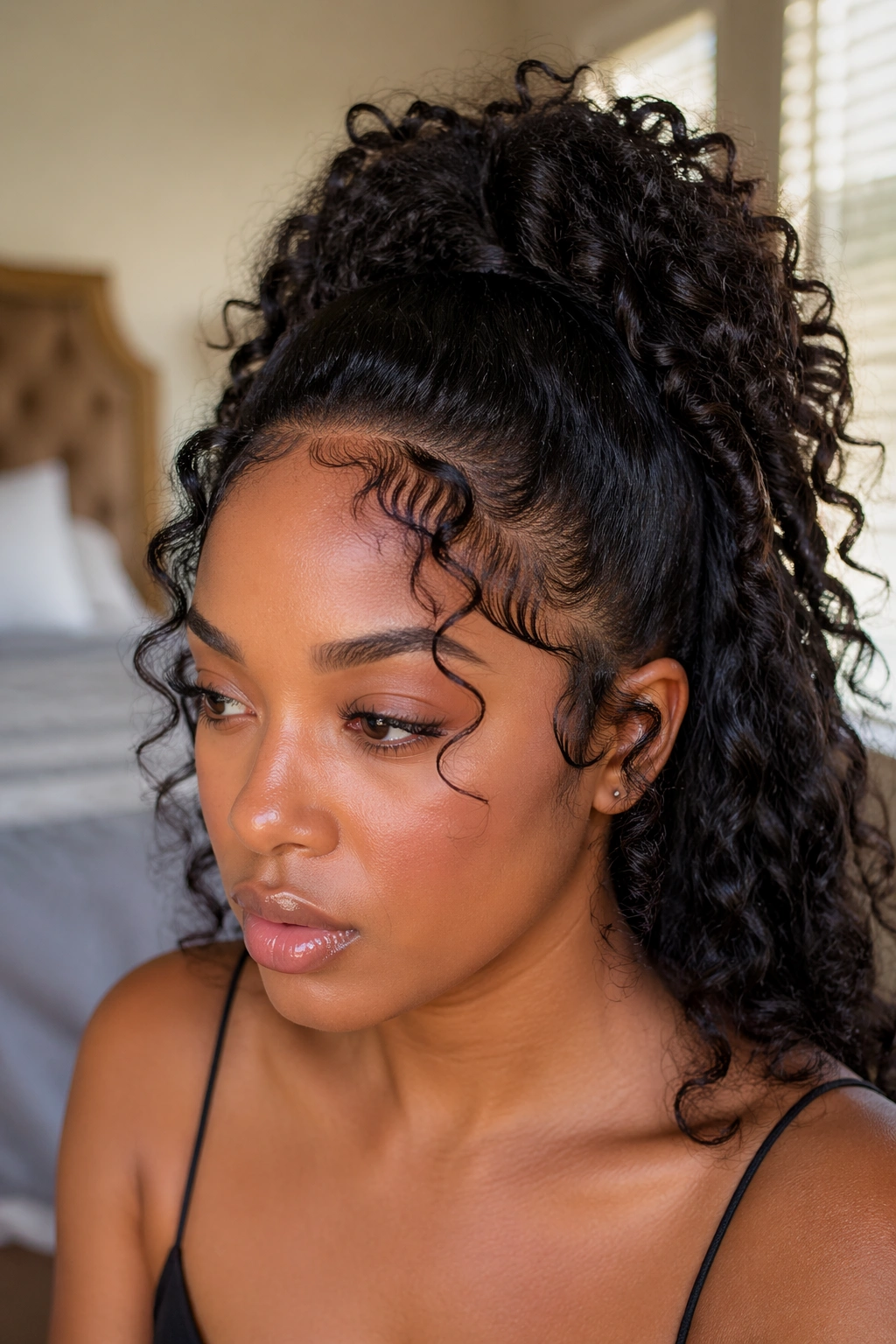
Why do curls make a frontal look easier to wear? Because texture breaks up hard lines. Straight hair can expose every small mismatch at the hairline, while curls blur the join in a way that feels almost unfair.
How to Wear It
Use mousse on the top half, then finger-coil or wand-curl the ponytail so the shape stays soft and round. A little frizz at the crown is not the enemy here; too much slickness is. The goal is controlled curl, not crunchy curls that look frozen in place.
A good move is to leave the hairline itself neat, then let the ponytail carry the texture. That contrast keeps the front looking fresh while the length feels airy. If you want baby hairs, keep them feather-light and short. Long swoops can start looking busy fast.
This is one of the easiest half up frontal ponytails for someone who doesn’t want everything polished to the edge. The curl pattern hides the seams. That’s the whole reason it works.
4. Half Up Frontal Ponytail with a Wrapped Mid-Height Base
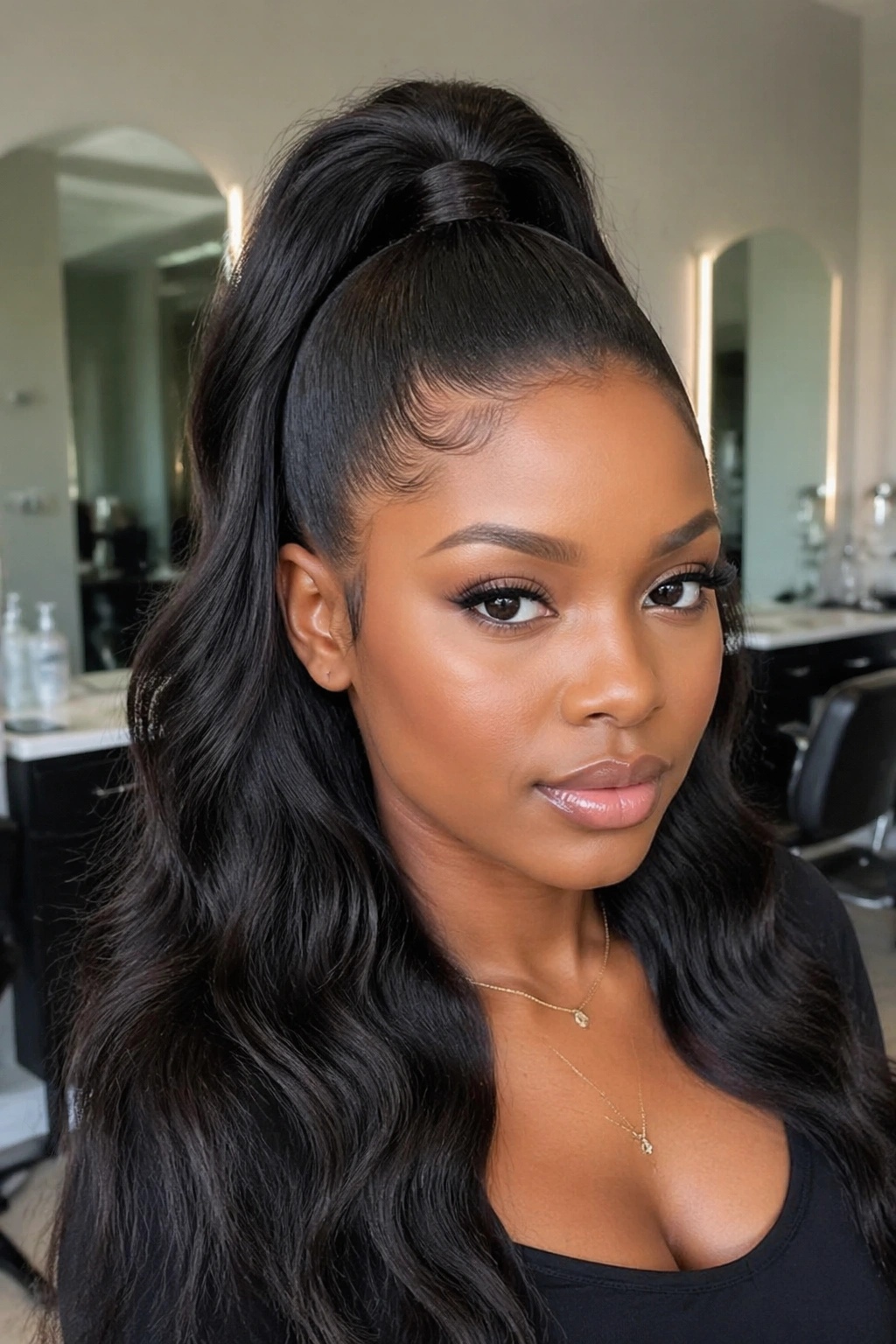
A client who wants hair off the neck but still wants length usually lands here. Mid-height is underrated. It keeps the ponytail lifted enough to show shape, but not so high that the frontal has to work overtime to stay invisible.
The trick is the anchor point. Set the ponytail at the midpoint between the crown and the occipital bone, then wrap a small strip of hair around the elastic so the base looks finished. If you’re wearing a 13×6 frontal, this is the height that tends to give the cleanest transition.
- Use a tail comb to smooth the top section before gathering it.
- Pin the wrapped section under the ponytail so it doesn’t loosen.
- Leave the ends straight, curled, or flipped under depending on the mood.
- Keep the front flat for a few minutes with a silk or satin strip before you leave the mirror.
Mid-height is the middle ground that rarely disappoints. It feels neat, but not severe.
5. Bubble Half-Up Ponytail with a Glossy Frontal
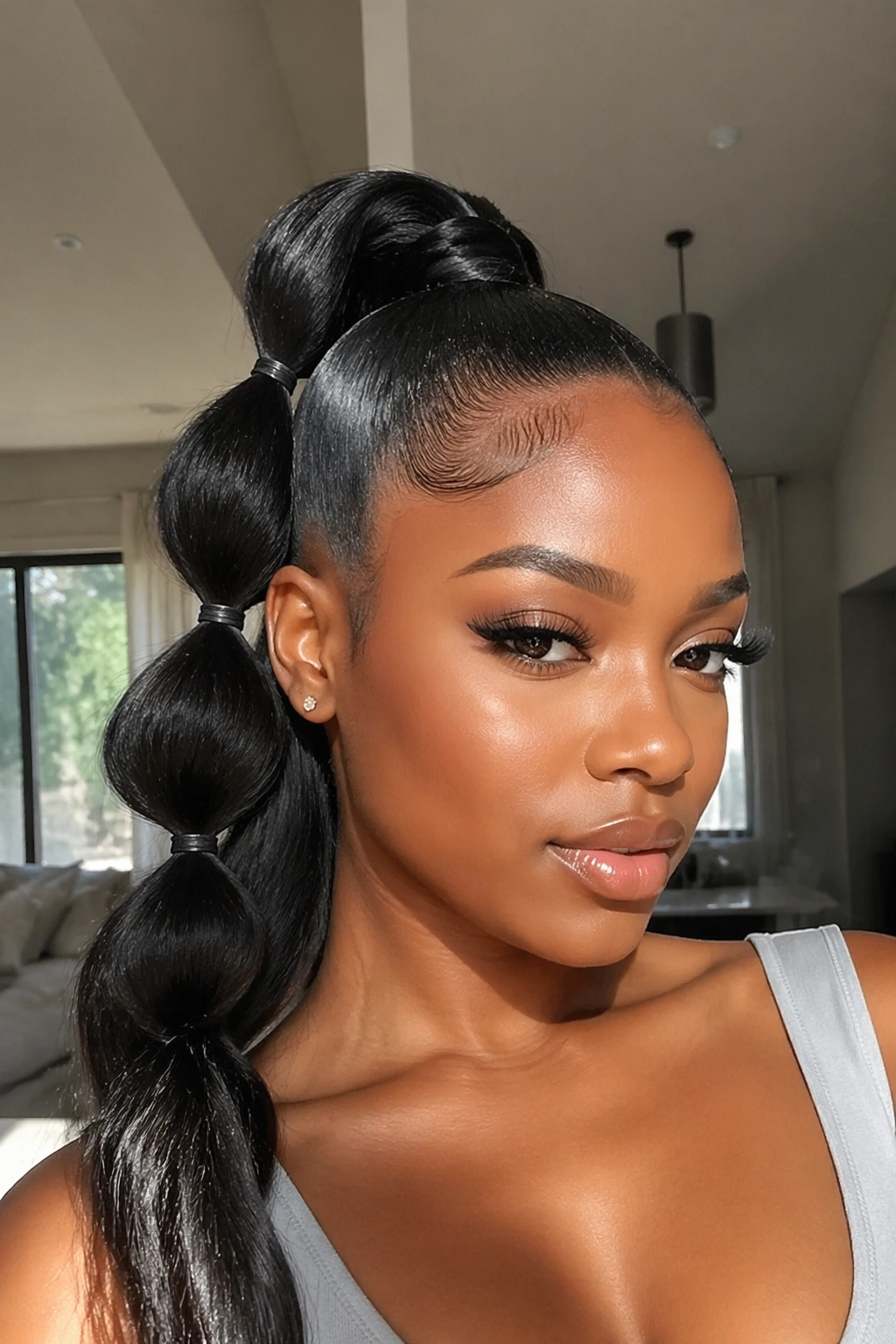
Bubble ponytails are one of those styles that look playful without turning childish, which is harder to pull off than people think. The bubbles create their own rhythm, so the front does not need to scream for attention.
The important part is spacing. Use clear elastics every 2 to 3 inches down the ponytail, then gently pull each section outward until it rounds into a bubble. Keep the top half smooth and the frontal flat, because the texture belongs in the tail, not at the hairline. If the base is already sleek, the bubbles look intentional instead of random.
A little shine serum on the lengths helps the sections separate cleanly. Use a drop, not a palmful. Too much product near the roots will collapse the shape, and that is a fast way to ruin a style that should feel light on its feet.
6. Half Up Braided Ponytail with Sleek Corners
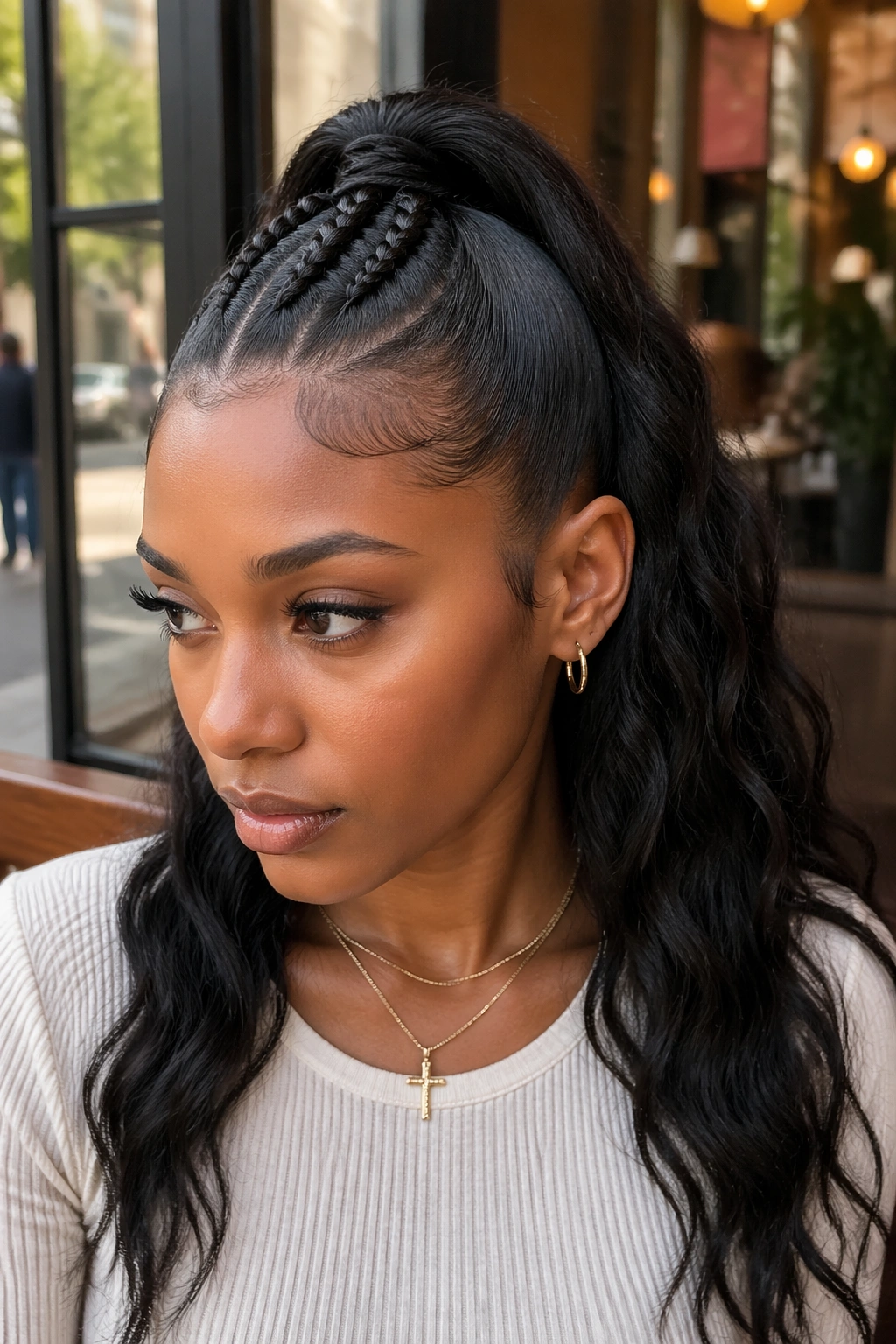
Unlike a loose ponytail, a braided half-up style gives you structure built into the look itself. That makes it a smart choice when the weather is humid, the hair is long, or you want the front to stay put for hours without fuss.
The braid can be simple or detailed. A single three-strand braid into the ponytail keeps things clean. Feed-in braids work if you want more drama and a tighter hold at the base. Either way, the braid acts like a built-in clamp, which is why the style holds its shape so well.
Best for someone who likes neat edges and hates touching their hair every ten minutes. Keep the frontal smooth, braid the lifted section snugly, and let the back stay long. This one is all about control. No loose ends wandering off into nowhere.
7. Half Up Frontal Ponytail with Criss-Cross Front Sections
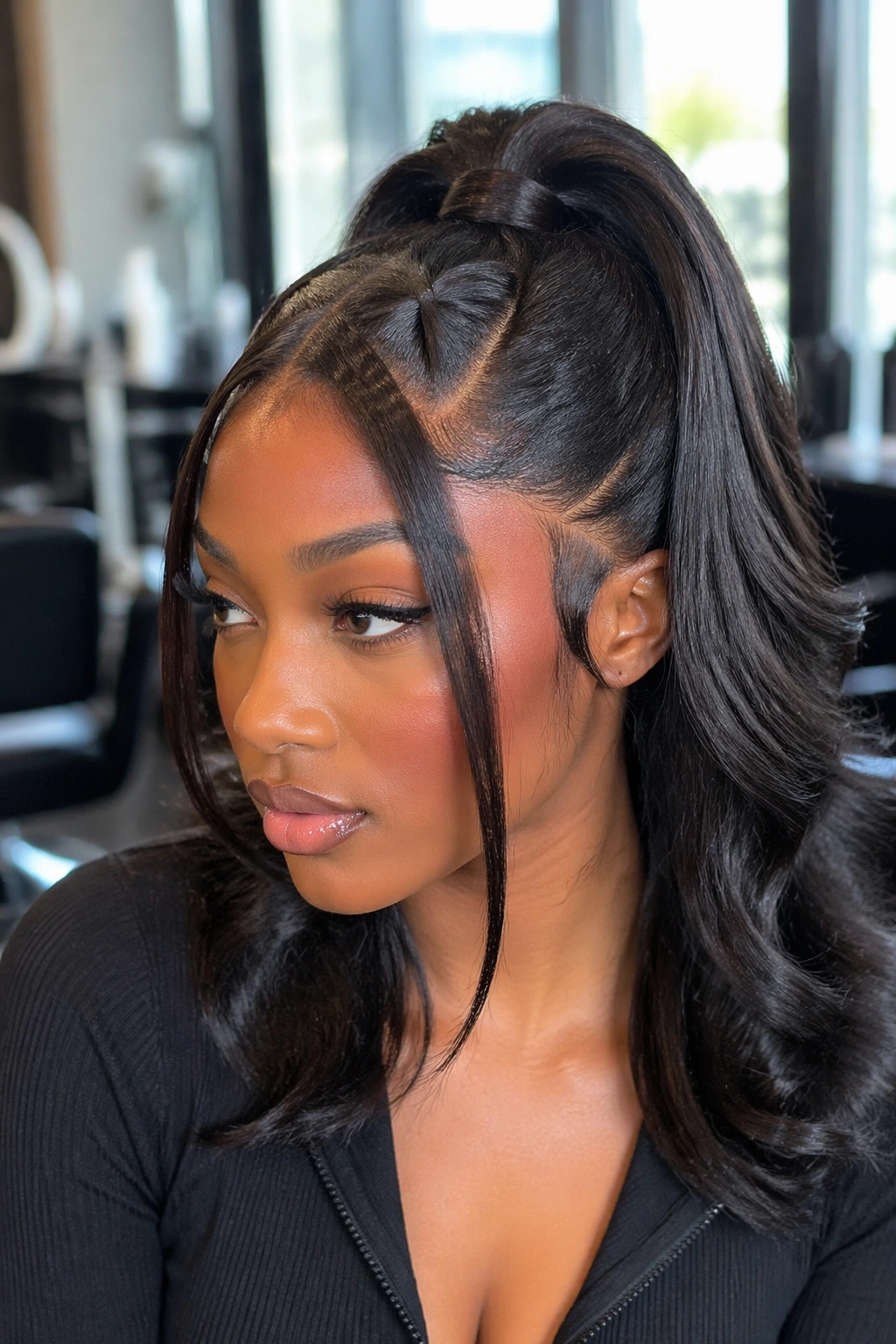
A criss-cross front is a good answer when you want the frontal to look styled without drowning it in edge control. Two slim sections cross over each other near the part, and that small detail changes the whole shape of the face frame.
What Makes It Different
The crossing lines distract from any tiny unevenness in the lace edge. They also create a little depth at the front, which helps if the install feels too flat against the scalp. Use sections no wider than half an inch, and anchor them with pins hidden under the lifted hair.
A style like this works well with straight or lightly waved lengths. If you add too much curl, the front can start fighting the detail instead of supporting it. Keep the criss-cross neat, then let the ponytail drop cleanly behind it.
One thing people forget: the criss-cross should look light. If it feels stacked or crowded, start over. Better to use fewer strands than to pack the front until it looks crowded.
8. Flicked-Ends Half Up Ponytail with Glassy Roots
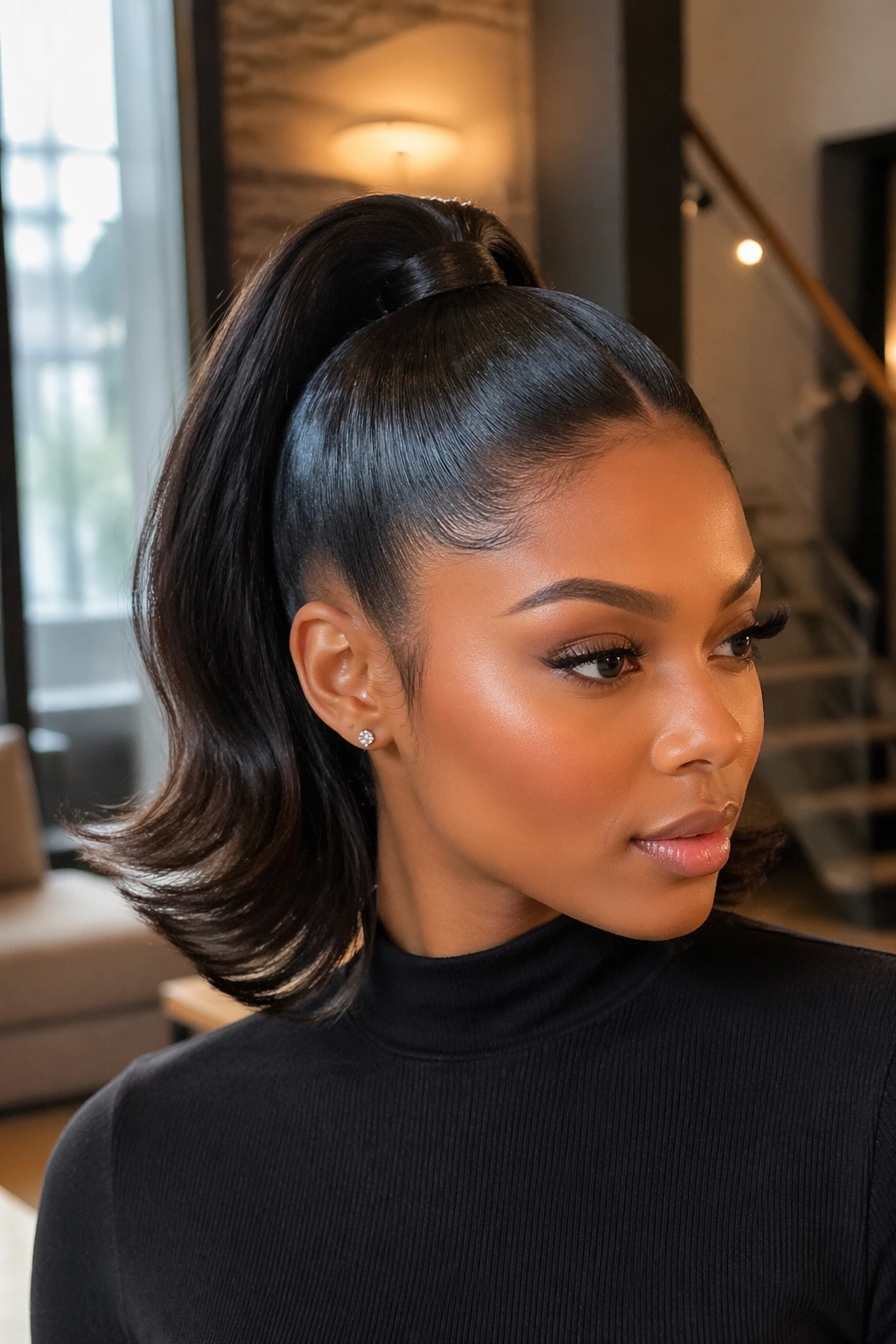
The roots can be immaculate and the style still falls flat if the ends die in a straight line. Flicked ends change that immediately. They make the ponytail feel styled, not merely tied up.
Brush the crown smooth, then curl the last few inches outward with a 1.25-inch iron or a round brush and dryer. You want a soft bend, not a hard flip. If the ends are too stiff, they start reading like a rehearsal wig from a school play, and nobody wants that.
This look is especially good on longer frontal installs because the flick gives the length some movement. It also works when you want the front to stay glossy and calm while the tail has personality. The contrast is the point. Flat roots, lively ends.
9. Half Up Ponytail with Face-Framing Tendrils
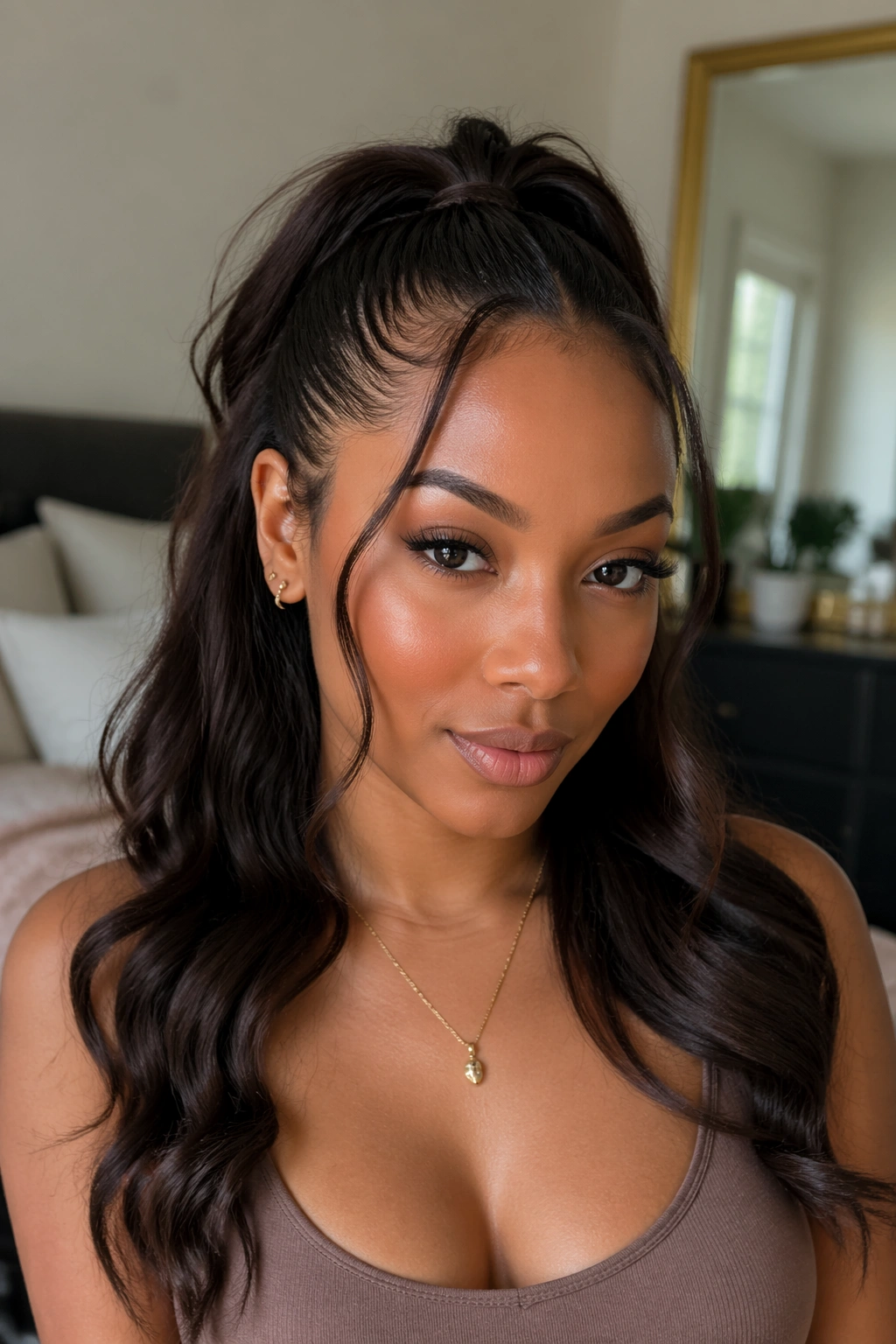
Why does a couple of loose pieces make a frontal look softer? Because the eye sees motion near the face and stops checking the hairline so hard. That’s the short answer, and it is a useful one.
Leave out two thin pieces near the temples, each about the width of a pencil or a bit thicker if your hair is dense. Curl them away from the face, not toward it, and keep them a little longer than chin length so they don’t sit awkwardly at the jaw. If the tendrils are too short, they can look like a mistake.
How to Wear It
This style is good when the frontal is very straight or when the face needs a little shaping. It’s also helpful if the lace is laid well but still feels too severe. The tendrils break up all that precision.
Skip this one if you do not want movement near the temples. Loose pieces near the front can reveal a weak install faster than a fully tucked style.
10. Soft Wave Half Up Ponytail with Textured Lengths
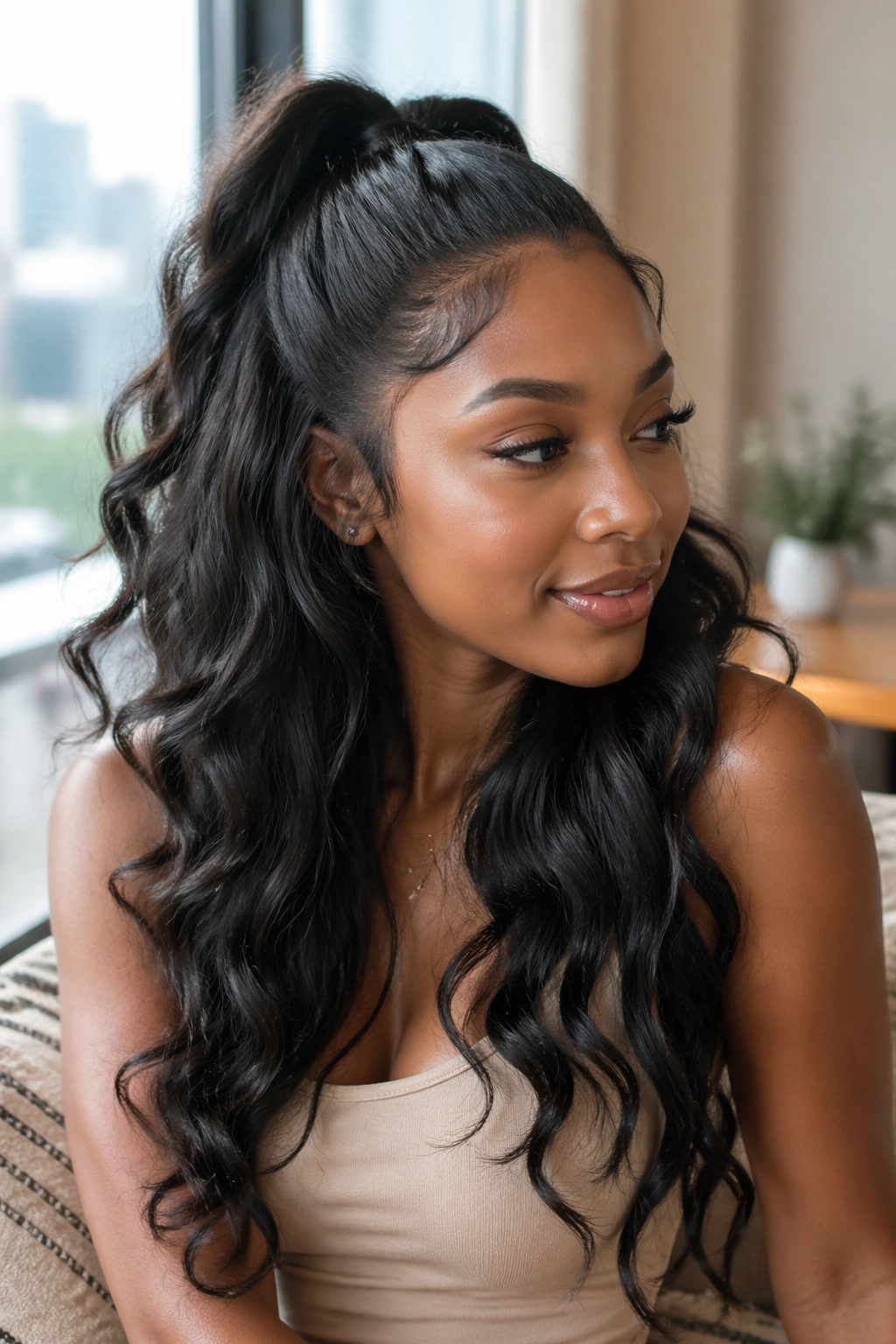
A layered install almost begs for waves. Straight hair can expose a blunt step between the lifted top and the lower section, while waves blur the join and make the whole thing feel easier on the eye.
Start with a center or slightly off-center part, then curl sections in alternating directions so the wave pattern doesn’t march in one line. Let the curls cool completely before brushing them out with a wide paddle brush. That one move turns the style from “freshly curled” into “soft and full.”
A wave set also gives the ponytail some body, which is useful if the hair feels a little thin at the ends. Brush too soon and you lose the shape. Wait for the heat to leave the hair first. It matters more than people think.
11. Wet-Look Half Up Frontal Ponytail
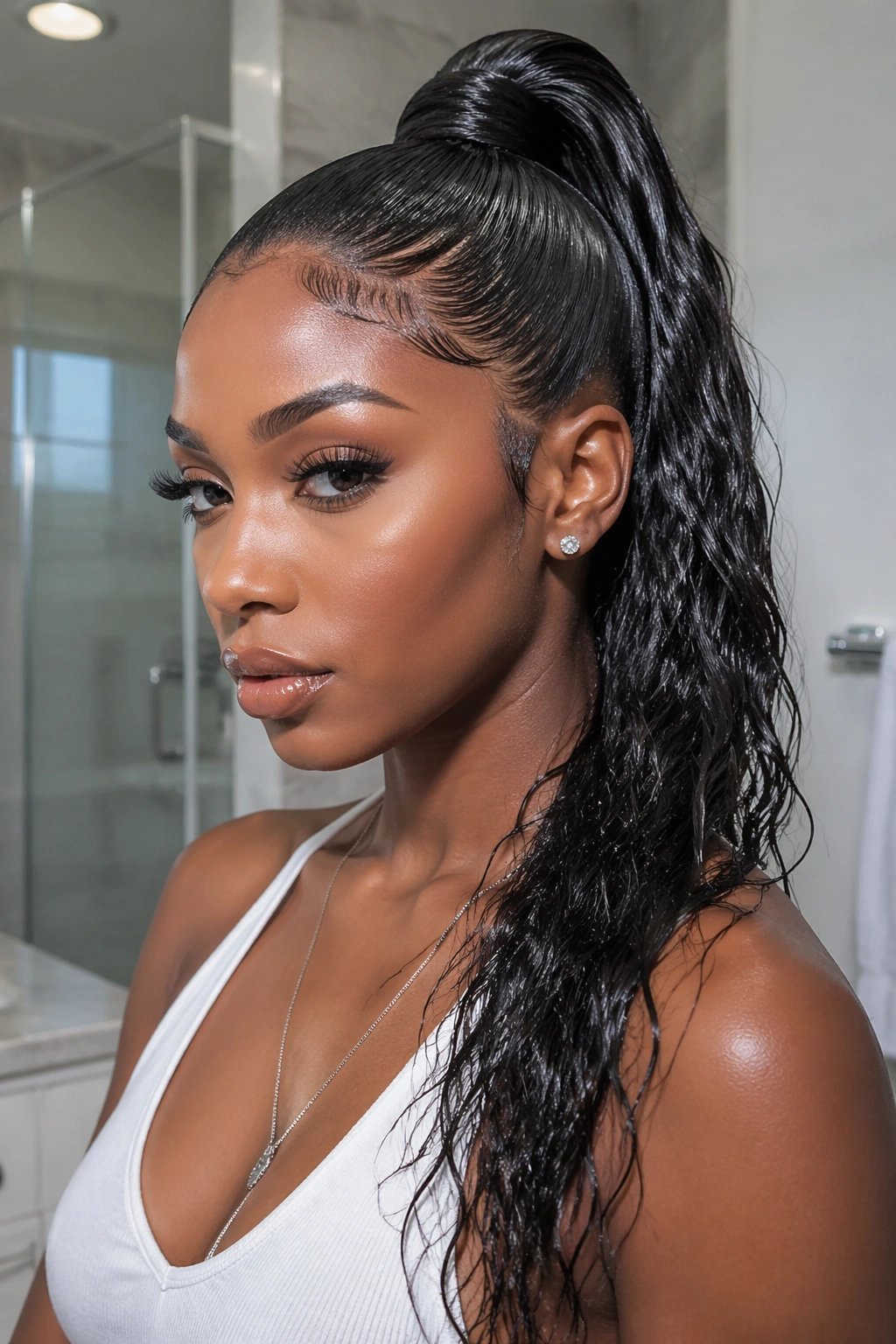
Wet-look hair is a commitment. There’s no pretending it isn’t. The payoff is that the style feels clean, sharp, and a little dramatic without needing a lot of length or accessories.
Use mousse through the top half, then smooth a small amount of shine serum through the ponytail lengths only. Keep product away from the hairline if the lace is delicate, because a greasy front will expose more than it hides. The finish should look damp, not coated.
This look works best when the front is laid neatly and the ponytail has enough density to hold a shaped silhouette. It can fall flat on fine hair unless you give the crown a little lift first. A soft, hidden bump at the base helps.
No surprise here: the wet look shows everything. If the frontal is messy, the mess is visible. If it’s clean, it looks sharp in a way a fluffy ponytail never can.
12. Half Up Frontal Ponytails with Braided Corners
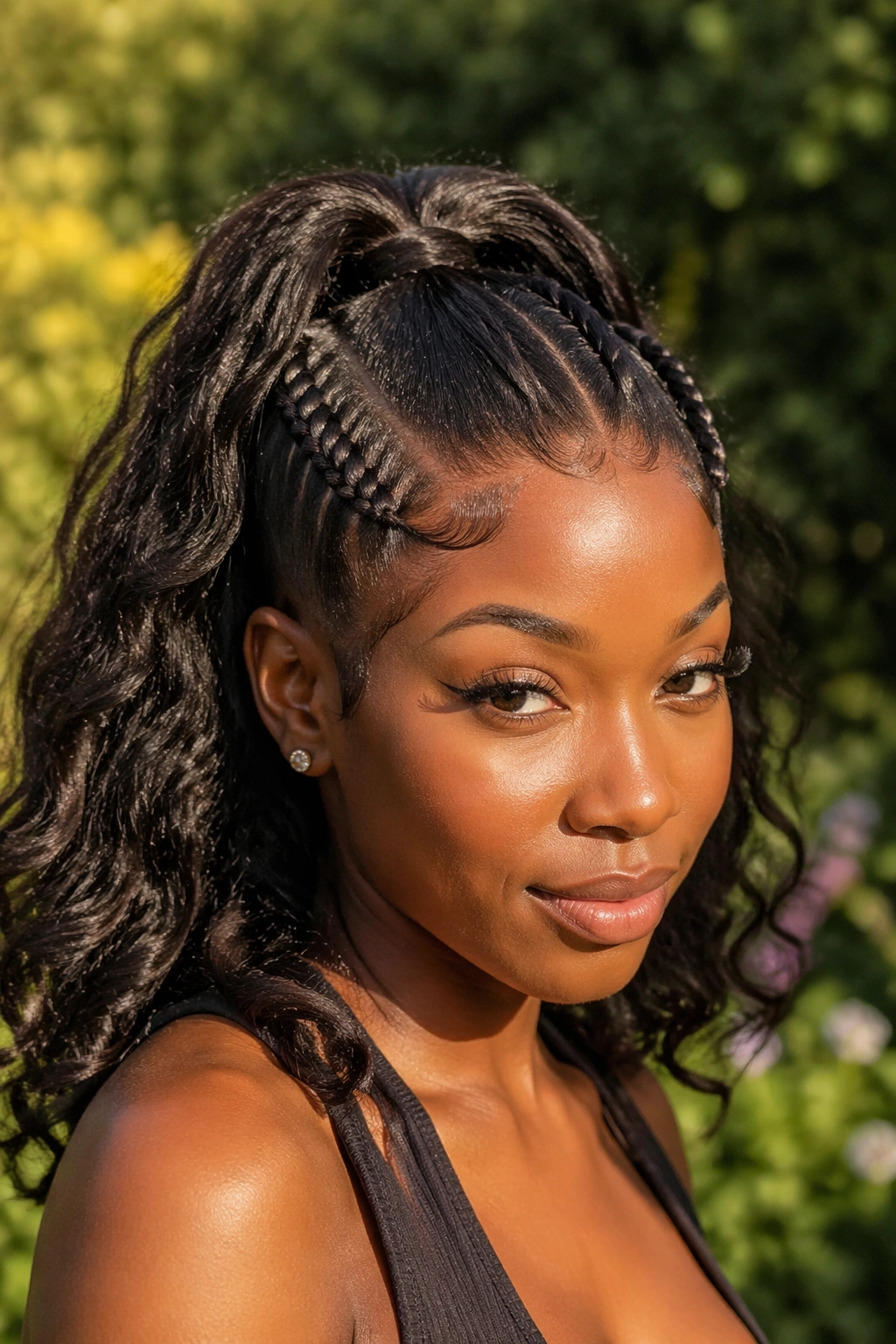
Braided corners are one of those details that quietly save the whole style. Instead of relying on gel to force the sides down, you braid the temple sections and tuck them into the lifted half. That gives the front a neat frame and keeps the edges from puffing out.
Why It Works
Unlike a plain slick pony, braided corners control the shape of the hairline before the ponytail even starts. They’re especially helpful if the frontal sits a little wider than you want or if the temple areas are dense and stubborn. Two slim braids, one on each side, are usually enough.
Best for active days, outdoor events, or anyone who wants a little more grip at the front. Keep the braids small and close to the scalp. Too much thickness there makes the top look busy, and that steals from the seamless finish you’re after.
If you like a polished look but hate the stiffness of a full slick-back, this is a smart middle path. Clean, but not stiff.
13. High Half Up Ponytail with Extra Crown Lift
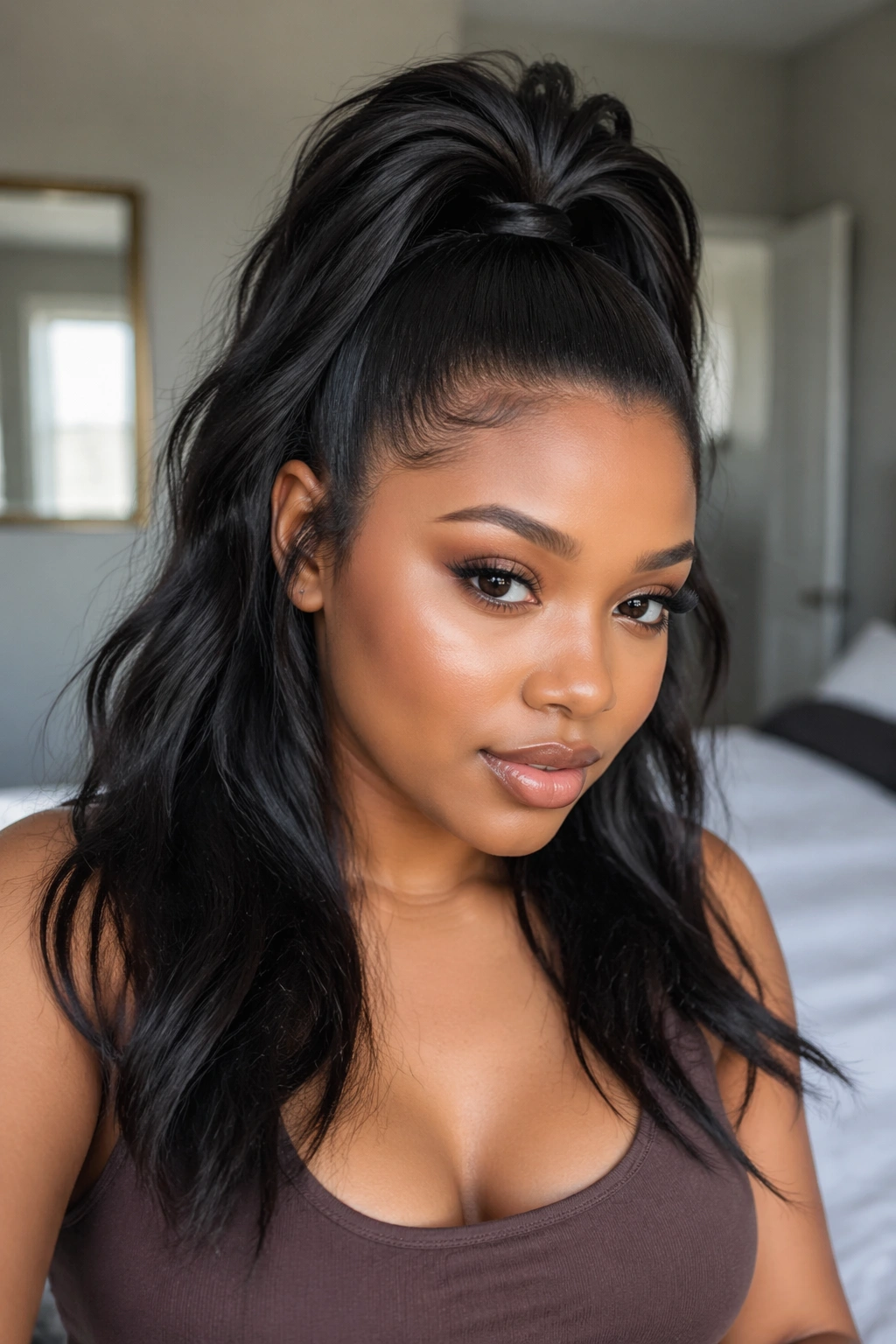
A high half-up ponytail changes the mood immediately. It lifts the face, shows off cheekbones, and gives the frontal a chance to disappear under height and motion instead of sitting there under a spotlight.
The crown needs to be built carefully. Tease the hidden underside of the top section with a teasing comb, then smooth the visible layer with a brush so the volume stays inside, not outside. That little bit of hidden lift keeps the ponytail from sagging by the end of the day.
- Use a strong but flexible elastic so the base does not collapse.
- Keep the frontal flat for the first 1 to 2 inches around the hairline.
- Wrap the base with hair that matches the dominant texture of the install.
- Set the shape with a light mist of holding spray, then let it dry before touching.
This one is not subtle. That is the appeal.
14. Half Up Ponytail with Gold Cuffs and a Center Part
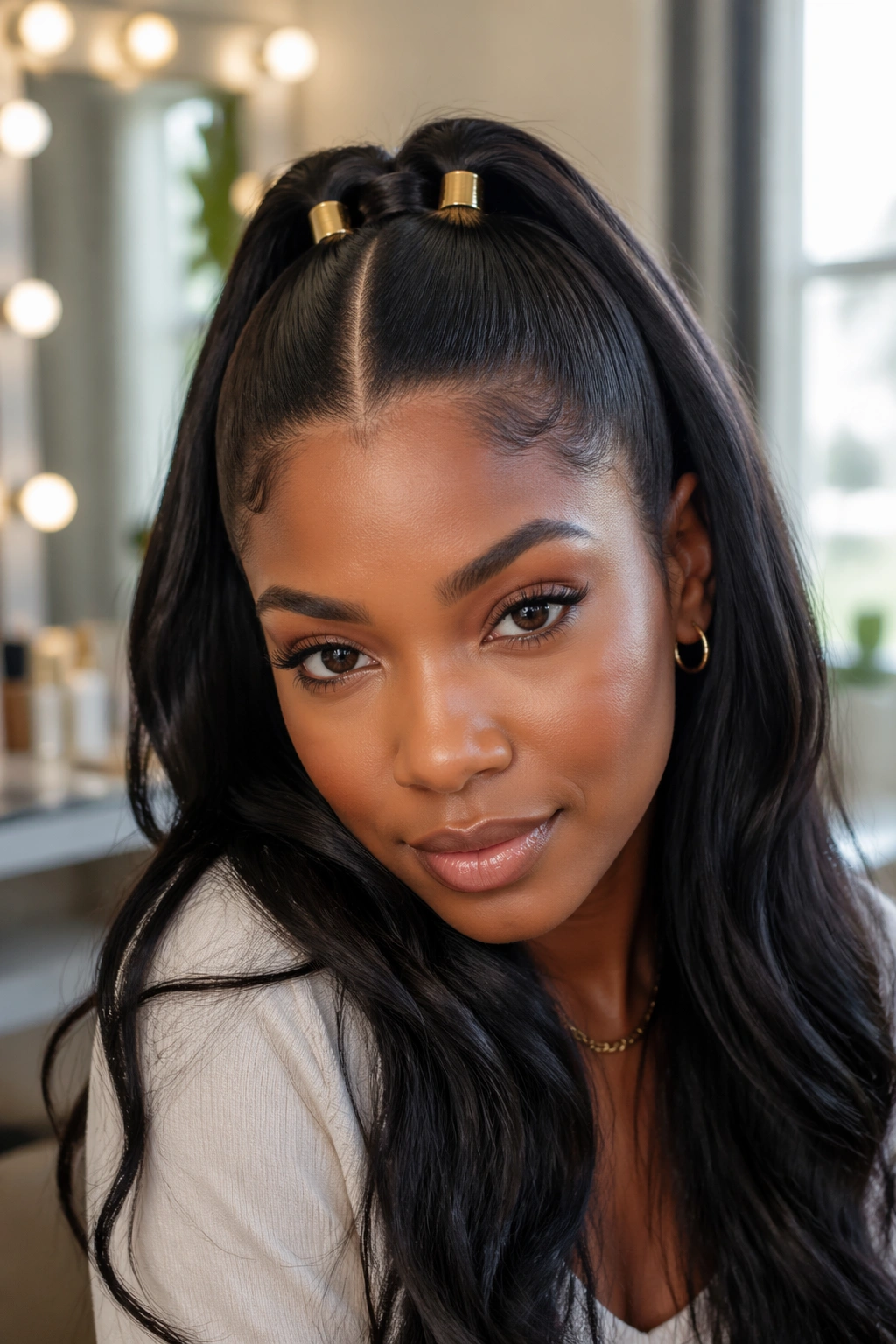
Accessories only help when the base is clean. If the frontal is rough, gold cuffs won’t save it. If the part is sharp and the ponytail is smooth, they look like a deliberate choice instead of a rescue mission.
A center part gives this style a balanced spine. Keep the part straight from the front hairline to the crown, then collect the lifted section and place the cuffs a few inches apart down the tail. One cuff near the base and two farther out usually looks better than scattering them all over the place.
This style works well when the rest of the outfit is simple. A black dress, a plain blouse, a clean neckline — those all let the hair carry the interest. The cuffs should feel like punctuation, not noise.
And yes, the front still matters most. Always.
15. Natural Curl Half Up Ponytail with Coily Texture
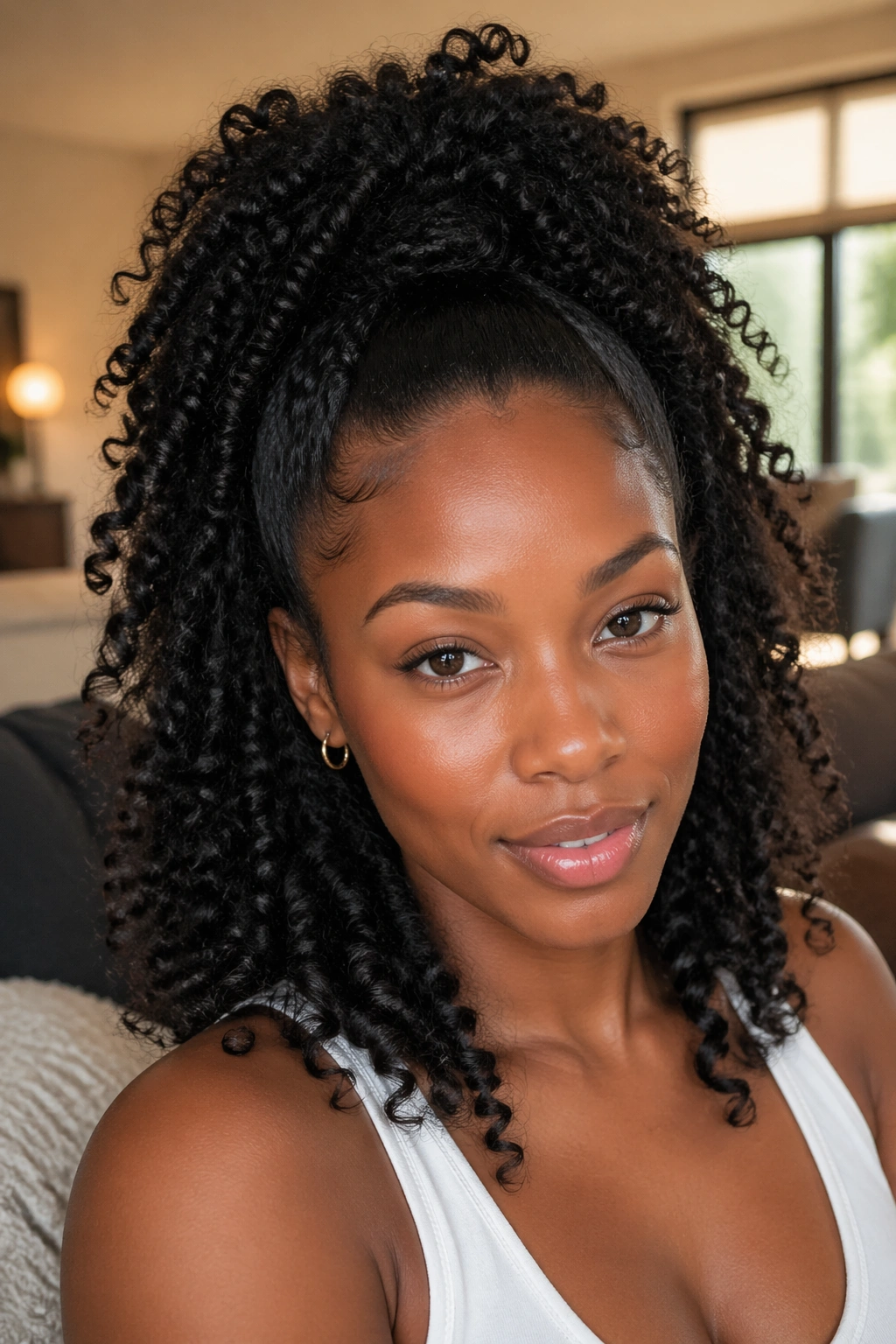
Why flatten texture that already looks good? That’s the question here. If your natural coils or curls are part of the install, leaving them visible can make the frontal feel more believable, not less.
The key is to shape the front without stripping it of life. Use a curl cream or mousse at the lifted section, then stretch the roots just enough to keep the ponytail from shrinking into a puff. You want definition at the front and spring in the tail.
How to Wear It
Pick the roots lightly for lift, then define the ends with fingers instead of a brush. A brush can pull the curl apart and make the style look frayed. If you’re wearing a lace frontal, keep the lace melt soft and skip overly dramatic baby hairs unless the texture naturally calls for them.
This is one of the easiest ways to make a half-up style feel like it belongs to you rather than to the styling chair. The texture does half the work. Sometimes more.
16. Half Up Ponytail with Twisted Sides
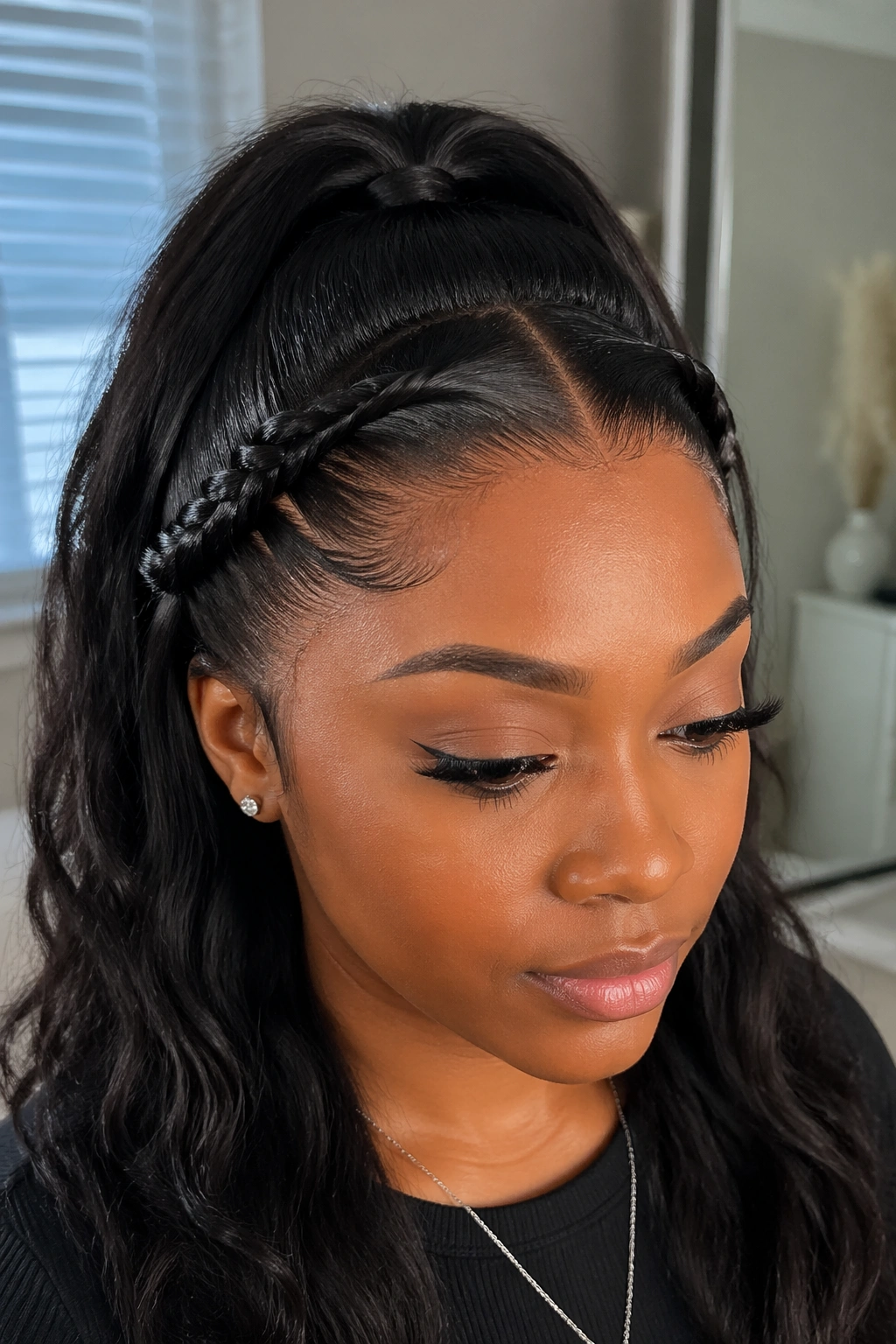
Two rope twists along the sides can hide a lot of trouble. They tame the temple area, create a little depth, and keep the front section from puffing away from the scalp.
Start with two slim sections from the front hairline back toward the ears, twist each one away from the face, then pin them into the lifted half. The twist should be snug enough to hold shape but not so tight that it pulls the lace edge. If the front is being dragged, the style will show it.
- Use a small amount of gel only at the base of the twist.
- Keep the twist thickness even on both sides.
- Finish the ponytail with loose waves if you want softness.
- Use a pair of flat bobby pins so the twists sit flush.
It’s a tidy style, but not a dull one. There’s enough shape to feel intentional.
17. Ombre Half Up Ponytail with a Color Melt
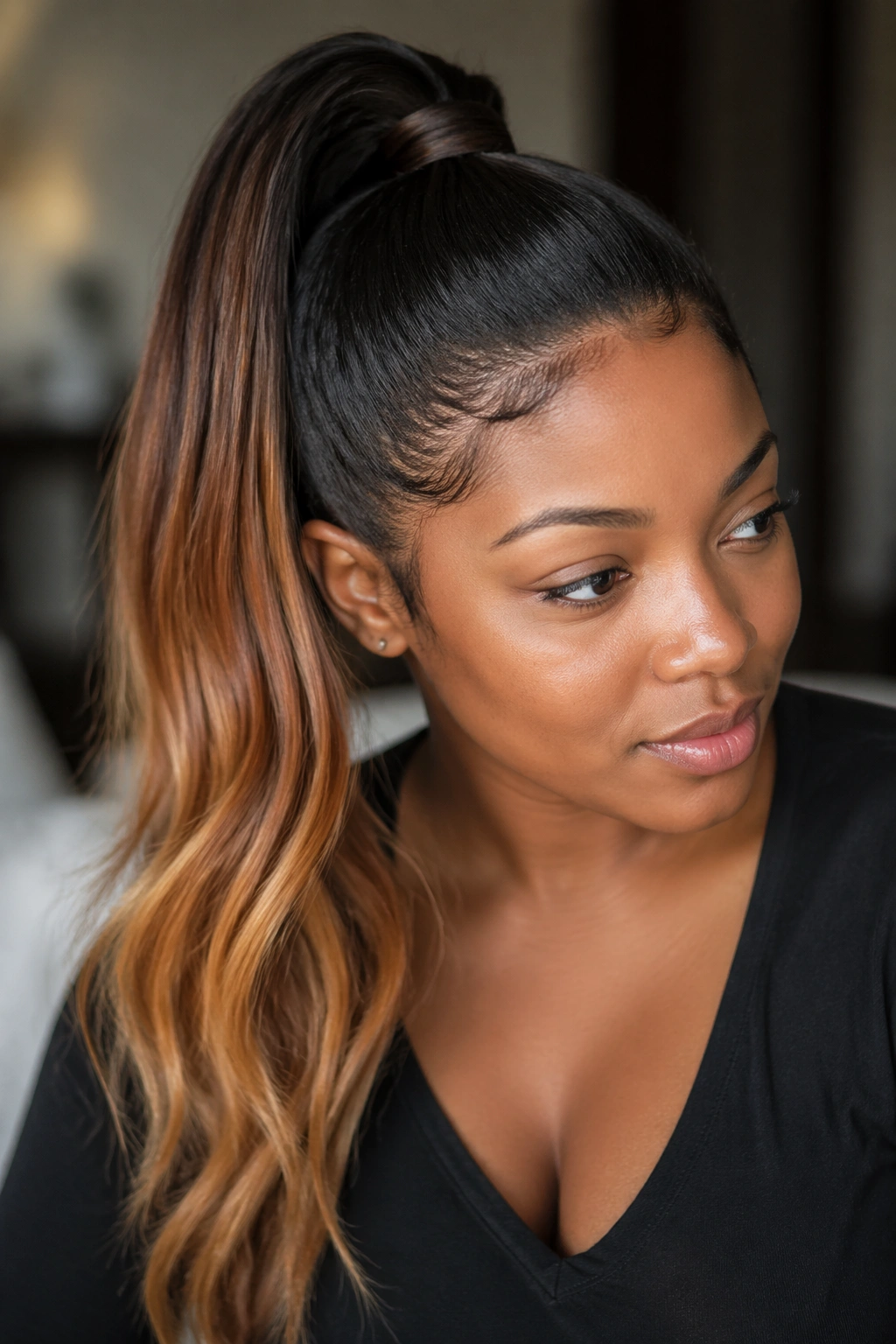
Color does something handy here: it distracts the eye. A soft ombre or color melt draws attention down the length of the ponytail, which makes the frontal area feel less like the main event.
The root color still matters. If the top is too stark against the lace or scalp tone, the style loses its smooth finish fast. Keep the transition gradual, usually starting a few inches below the crown, so the change feels natural rather than striped.
A lighter end on a darker root can look luxurious if the tones are blended well. Honey, caramel, ash brown, and deep blonde all behave differently under light, so the formula has to suit the base. Too many abrupt jumps in color make the weave obvious.
This look is a good answer when the install is sound but you want extra life in the silhouette. Color adds movement even when the ponytail is still.
18. Half Up Frontal Ponytail with a Zigzag Part
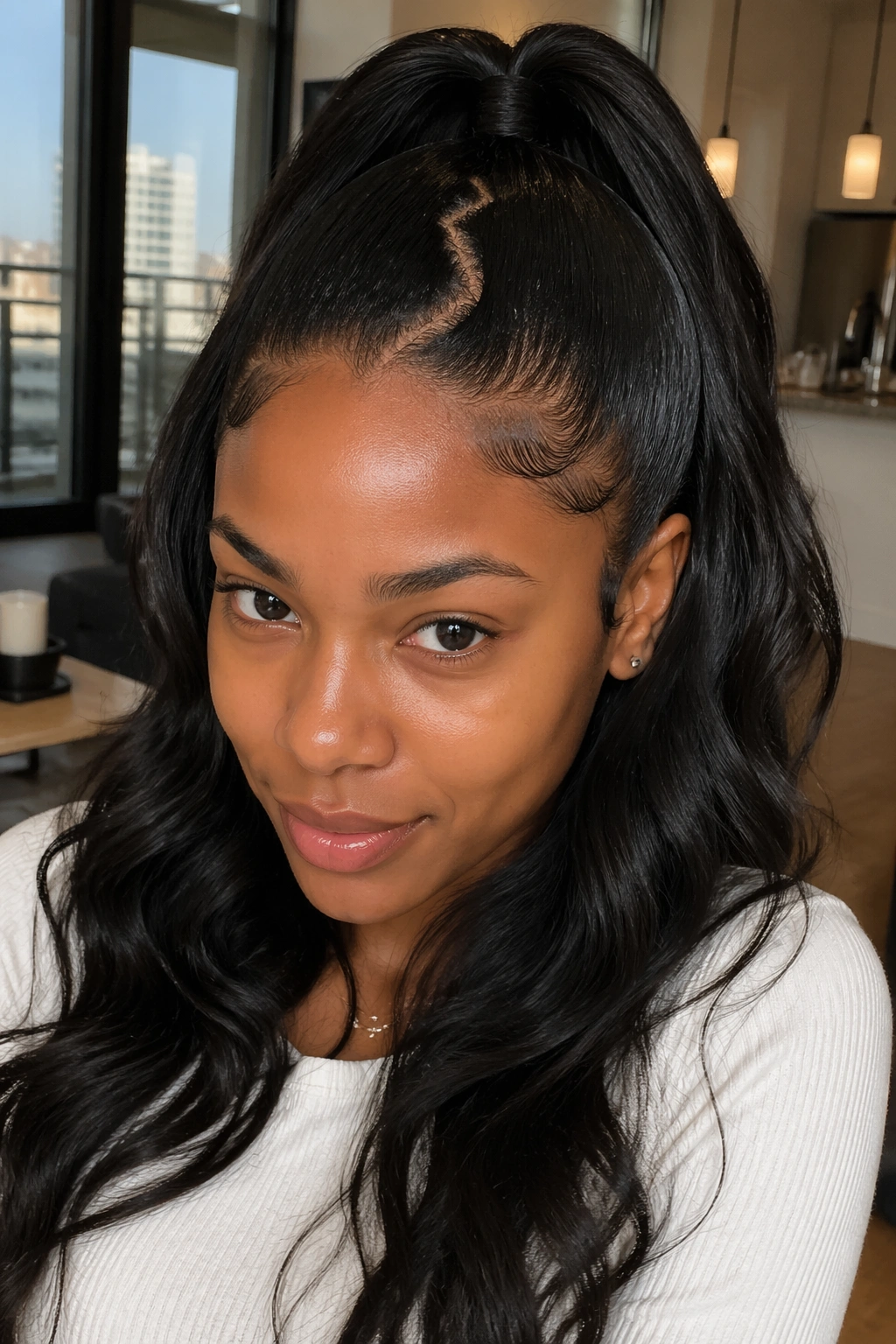
A straight part is tidy. A zigzag part is lively. That small change can make the entire style feel younger and more playful without sacrificing neatness.
What Makes It Different
The jagged line breaks up the eye’s path, which is handy if the frontal isn’t perfectly flat across the center or if you want a less formal shape. Keep the zigzag points small, about half an inch apart, so the part looks refined rather than scribbled on. Big zigzags can look clumsy fast.
This style is good when you want the ponytail to feel styled but not strict. It pairs well with waves, curls, or a straight tail with flipped ends. If the lace is especially visible, the zigzag can also help distract from a seam that doesn’t want to disappear.
Best for someone who likes a little edge without losing polish. It has personality. That’s the whole point.
19. Half Up Ponytail with a Hidden Elastic Wrap
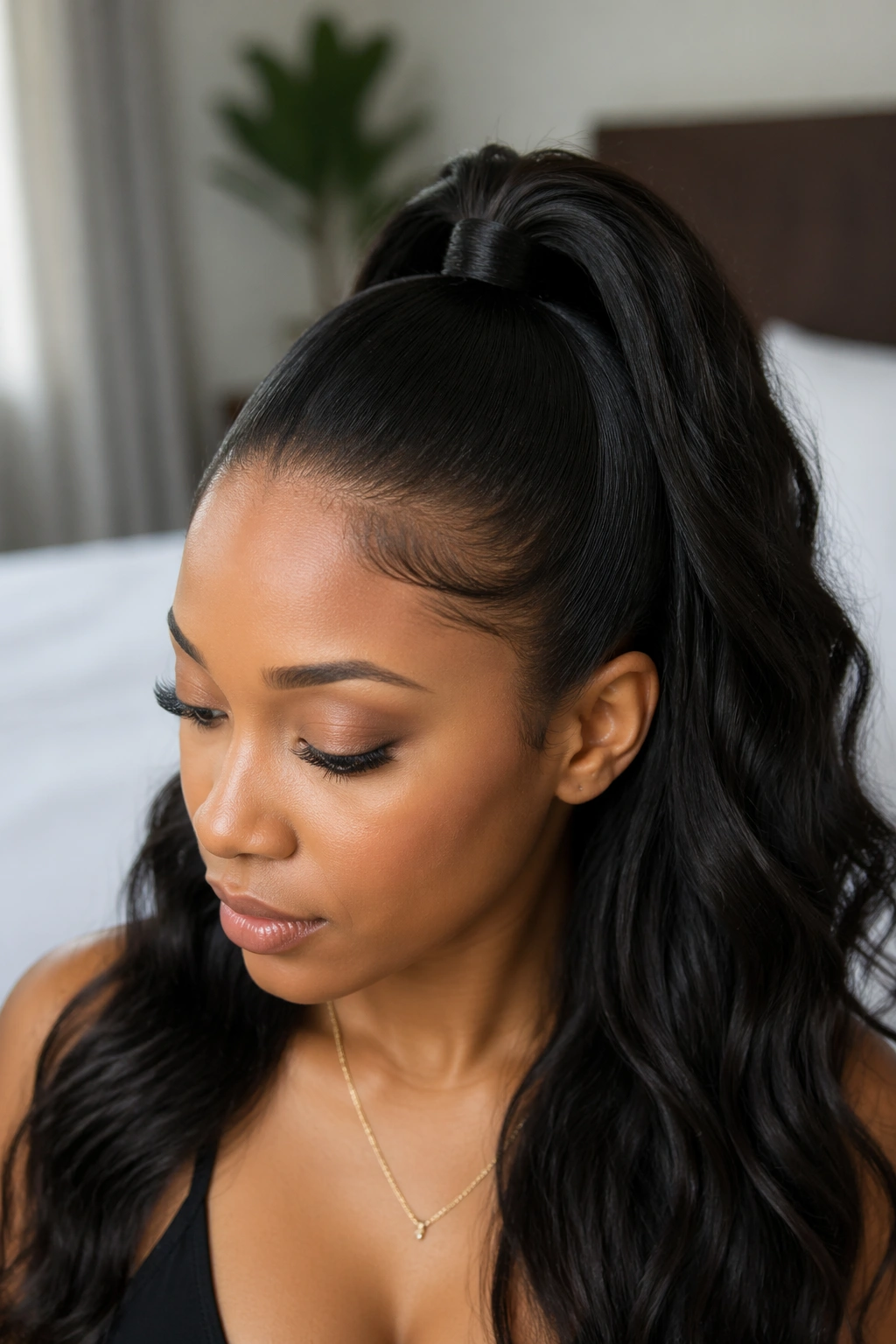
A hidden elastic makes a huge difference in the finish. Visible bands can be fine for casual hair, but a frontal ponytail asks for a cleaner look. The wrap is the part that makes the style feel finished.
Secure the lifted section with a clear or black elastic, then take a 1-inch strip of hair from underneath and wind it around the base until the elastic disappears. Pin the end underneath with a small bobby pin. If you want the cleanest result, cross two pins in an X so the wrap stays in place.
The Little Details
- Tuck the elastic under the ponytail before you wrap.
- Keep the wrapping strand smooth, not twisted into a rope.
- Match the wrap texture to the ponytail so it disappears.
- Spray a light mist on the wrapped section before pinning.
This style works for everyday wear and dressier looks alike. It’s the kind of finish people notice only because they can’t spot the band.
20. Sculpted Half Up Ponytail with a Deep Side Sweep
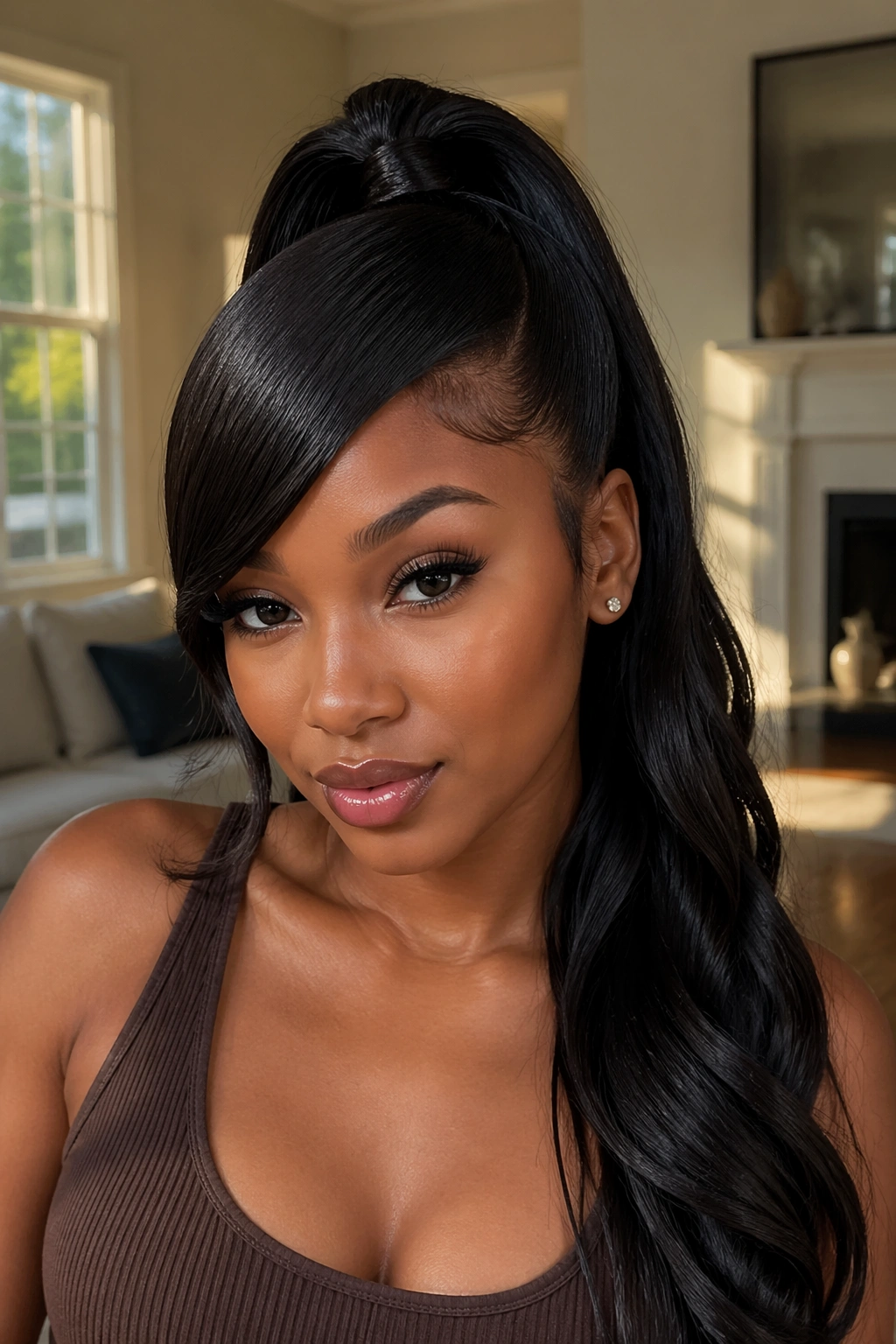
A side sweep can make a frontal look softer than a center part ever will. It frames the face in one strong line, then lets the rest of the hair fall away from it. That shape is flattering in a very direct way.
Sweep the front section from one temple across the forehead, then secure it low enough that the curve stays visible. The goal is not to hide the hairline completely. The goal is to guide the eye past it. A single hidden pin beneath the sweep is often enough.
This style likes smooth lengths and a ponytail with some body. If the tail is too flat, the side sweep can look disconnected from it. A light curl or bend in the ends ties the whole thing together.
Square and oval faces tend to wear this well, but the real advantage is simpler: it gives the frontal a softer entrance. That matters.
21. Half Up Ponytail with a Braided Base
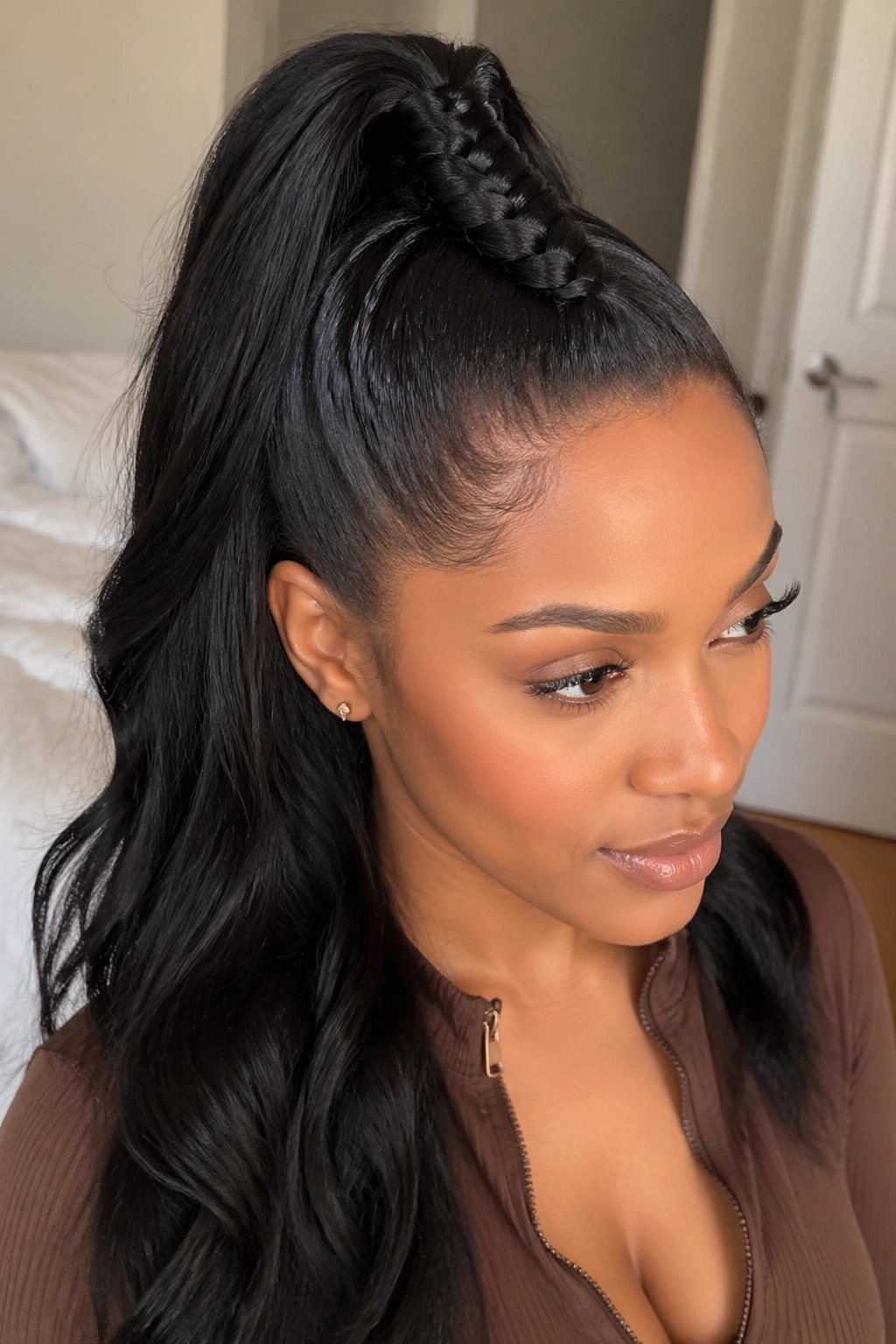
Why does a braided base stay looking fresh longer? Because the braid locks the lifted section into place before it becomes a ponytail. It gives the style some built-in grip, which helps if your hair tends to slide or swell at the roots.
Start with the top half, braid it into a single three-strand plait, then secure the braid where you want the ponytail to begin. You can leave it as a braid or feed the braid into loose extensions for a longer tail. Either way, the base stays neat.
How to Use It
If you want a stronger silhouette, make the braid a little tighter and keep the surrounding front smooth. If you want softness, loosen the braid slightly after securing it so it has a thicker, fuller shape. Just don’t overpull it. A braid that looks stretched and wiry ruins the illusion.
This is a strong choice for long wear because it doesn’t ask the frontal to do all the work by itself.
22. Half Up Ponytail with Retro Flip Ends
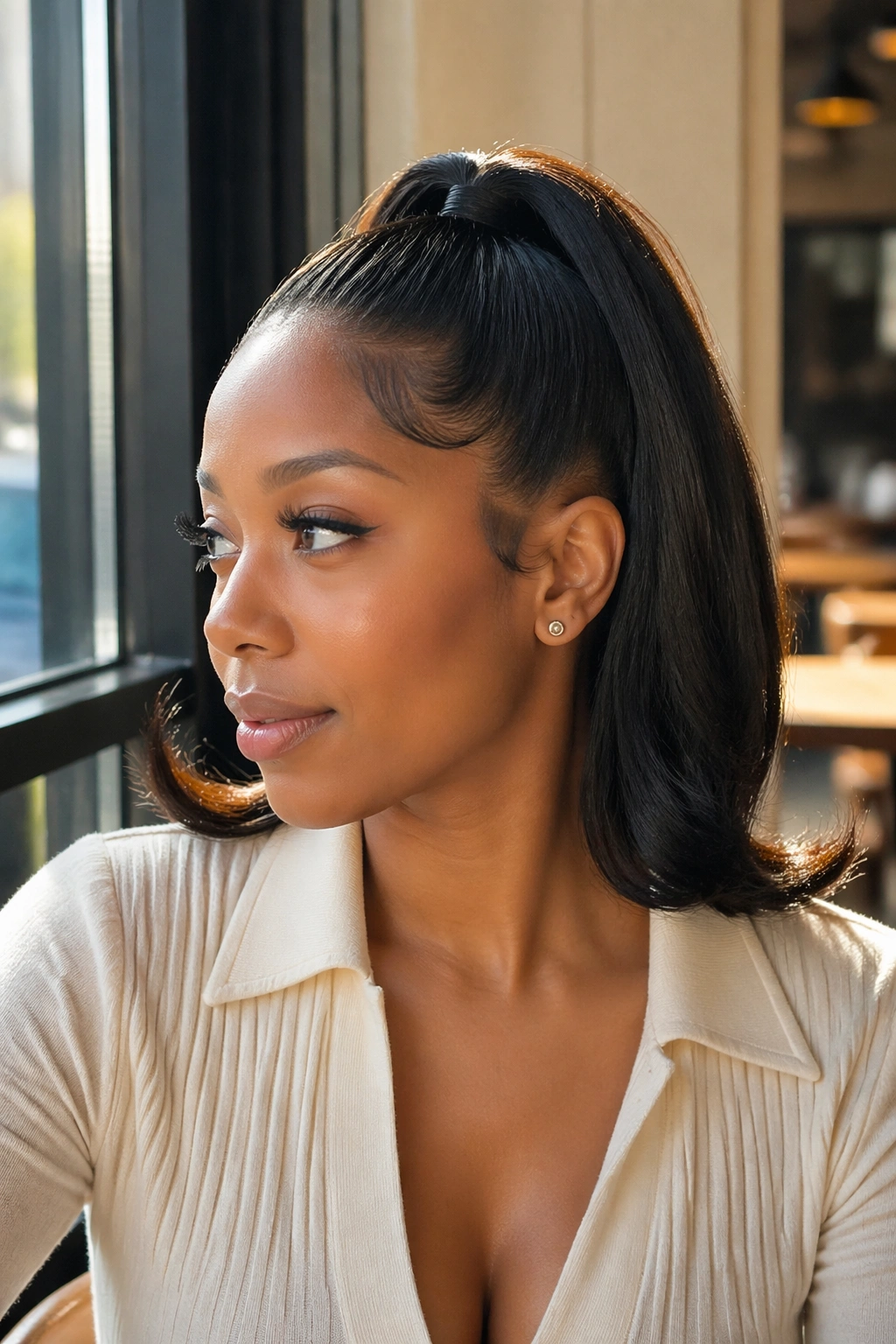
There’s something charming about flipped ends. They give the style a little throwback shape, the kind that works with winged liner, a satin blouse, or a sharp collar. The hair feels styled without feeling stiff.
The flip comes from the last few inches of the ponytail. Use a round brush and dryer or a curling iron to bend the ends outward, then let them cool in shape before touching them. If you brush too soon, the flip dies before it has a chance to hold.
- Keep the roots smooth and the crown controlled.
- Flip only the last 2 to 3 inches of length.
- Use a light-hold spray so the ends stay curved, not crunchy.
- Pair with a clean side or center part depending on the face shape.
This style has a little attitude. Not too much. Enough.
23. Satin-Gloss Half Up Frontal Ponytail
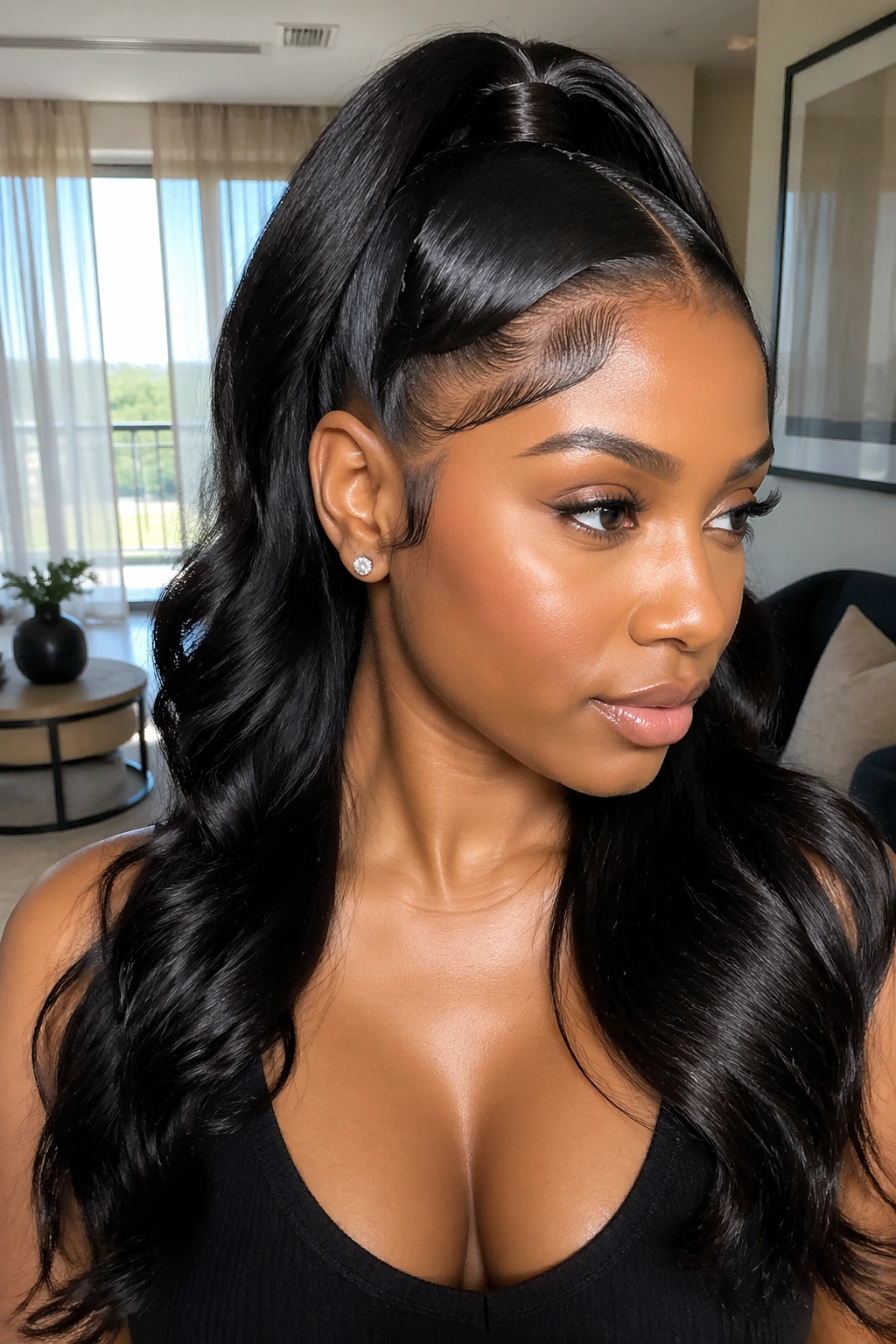
A satin-gloss finish is for the person who wants the hair to look healthy first and styled second. The shine should sit on the lengths, not on a greasy hairline, and the frontal should stay soft enough to look believable up close.
Keep the front neat, then smooth a tiny amount of shine spray through the ponytail from mid-length to ends. If the roots are shiny, they start exposing every little line and the lace becomes harder to hide. A barely-there edge finish usually looks better here than dramatic baby hairs.
This style works on straight hair, waves, or even relaxed curls. The common thread is restraint. No loud parting tricks. No crowded front. Just a clean half-up shape, a glossy tail, and a front that looks like it grew that way after a good blow-dry.
It’s a strong closing note because it proves the point of the whole list: seamless does not mean complicated. It means chosen with care.
Final Thoughts
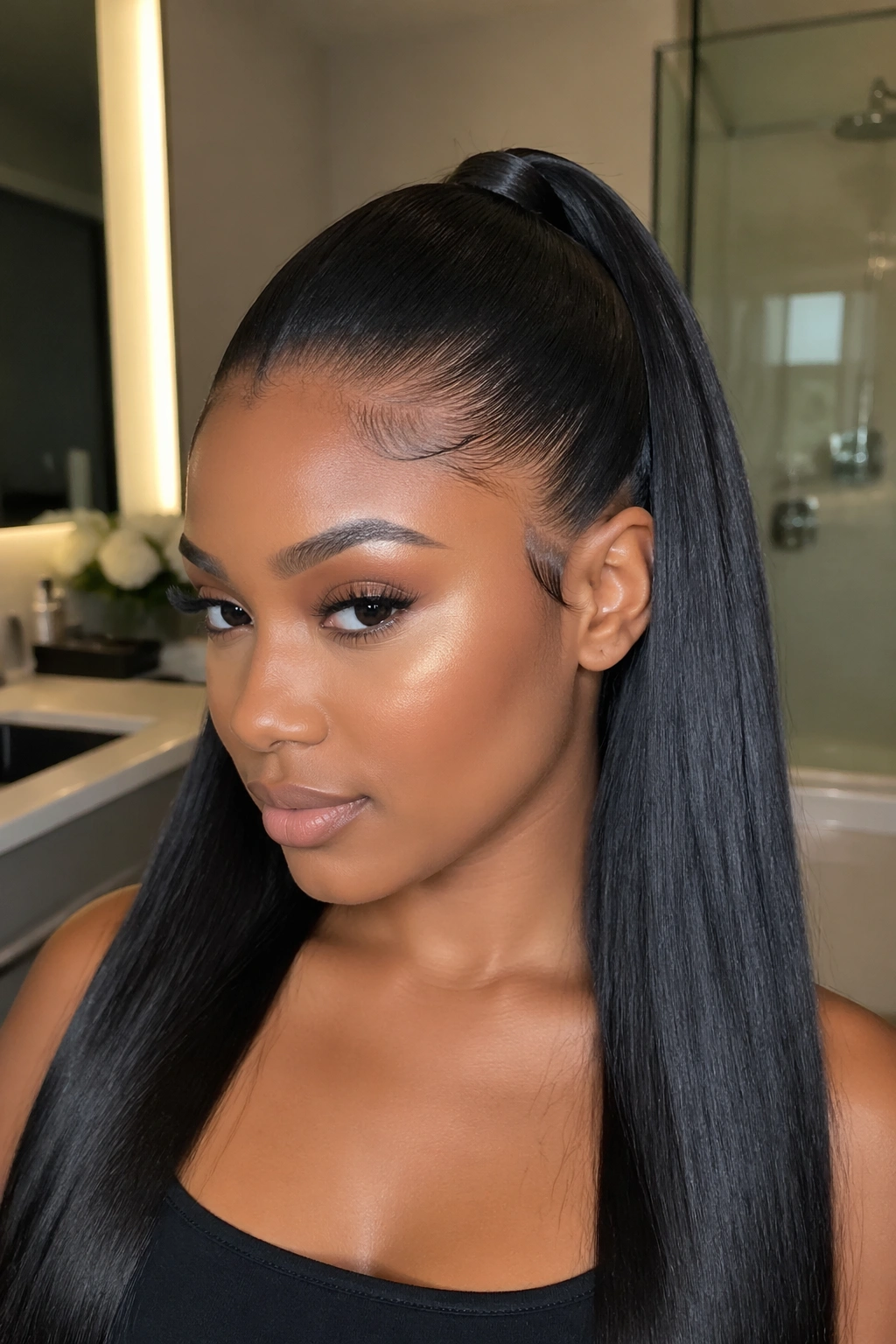
A seamless half up frontal ponytail is less about stuffing the front with product and more about choosing one thing to do well. A clean part, a soft melt, a wrapped base, a braid, a twist — any one of those can carry the style if the rest stays calm.
The biggest mistake is piling on too many effects at once. Too much shine, too much gel, too many baby hairs, too much volume at the crown. That’s when the install starts speaking louder than the hairstyle.
If you ever feel stuck, pick the version with the simplest base and the cleanest silhouette. A mid-height pony with a wrapped elastic is usually the safest place to start, and it leaves room for curls, waves, or accessories once the front is sitting right.
