



Gray ponytails for Black women can look sharp, soft, regal, or plain playful, and the difference usually starts at the scalp. A clean center part tells one story. A puff tells another. Same color. Different mood.
That matters because Black hair does not behave like flat photos make it seem. Density, shrinkage, edge tension, braid weight, and the way silver strands sit against darker roots all change the finish. A ponytail that looks polished on one head can look stiff or dragged down on another if the base is wrong.
Gray hair has its own attitude, too. It shows every line, every ripple, every bit of buildup. That is why the best styles pay attention to part width, wrap placement, and how much hair is left out around the face. Get those three things right and the style reads intentional instead of rushed.
The 21 looks below move from sleek to textured to dressed-up, with enough range that you can find something for natural hair, stretched hair, braids, locs, or extensions. Some are easy and fast. Some take more hands-on work. All of them can look strong when the shape fits the hair.
1. Sleek Gray Center-Part Ponytail
A center-part ponytail is the cleanest way to wear gray hair when you want the color to do the talking. The middle part gives the face structure, and the low placement keeps the whole look calm instead of overworked.
I like this style on stretched natural hair, relaxed hair, or a silk-pressed base. Use a rat-tail comb to make the part straight, then brush the hair back in small sections so you do not get a lumpy crown. A soft boar-bristle brush helps smooth the top without scraping the scalp raw.
Wrap a 1-inch strip of hair around the elastic and pin it underneath. That tiny step matters more than people think. It turns a basic ponytail into something finished.
2. High Wrapped Ponytail
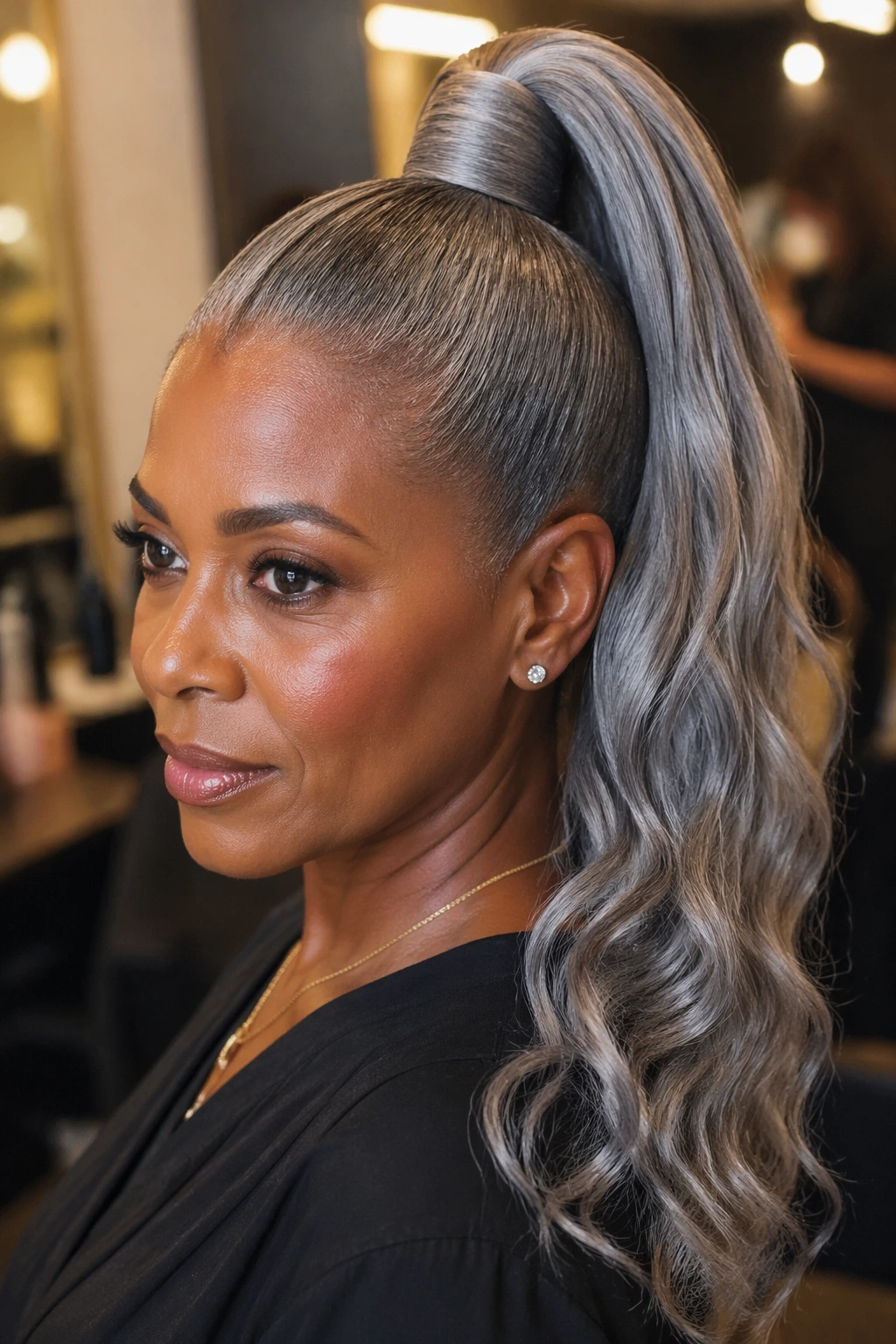
Want the crown to look taller without piling on extra hair? Go high and keep the base tight. A high wrapped ponytail gives gray strands a little drama, and the lift makes the face look more open.
How to Keep the Lift
- Gather the hair from the temples first, then smooth the back upward in sections.
- Use a bungee or two strong elastics if the hair is dense.
- Leave a 1.5-inch piece out to wrap around the base.
- Set the front with a light mousse, not a heavy gel layer.
- Pin the wrap piece under the elastic so it stays flat.
The trick is balance. If the ponytail sits too far forward, the style can feel top-heavy. A spot just behind the crown usually looks best, especially on fuller hair.
3. Feed-In Braid Ponytail
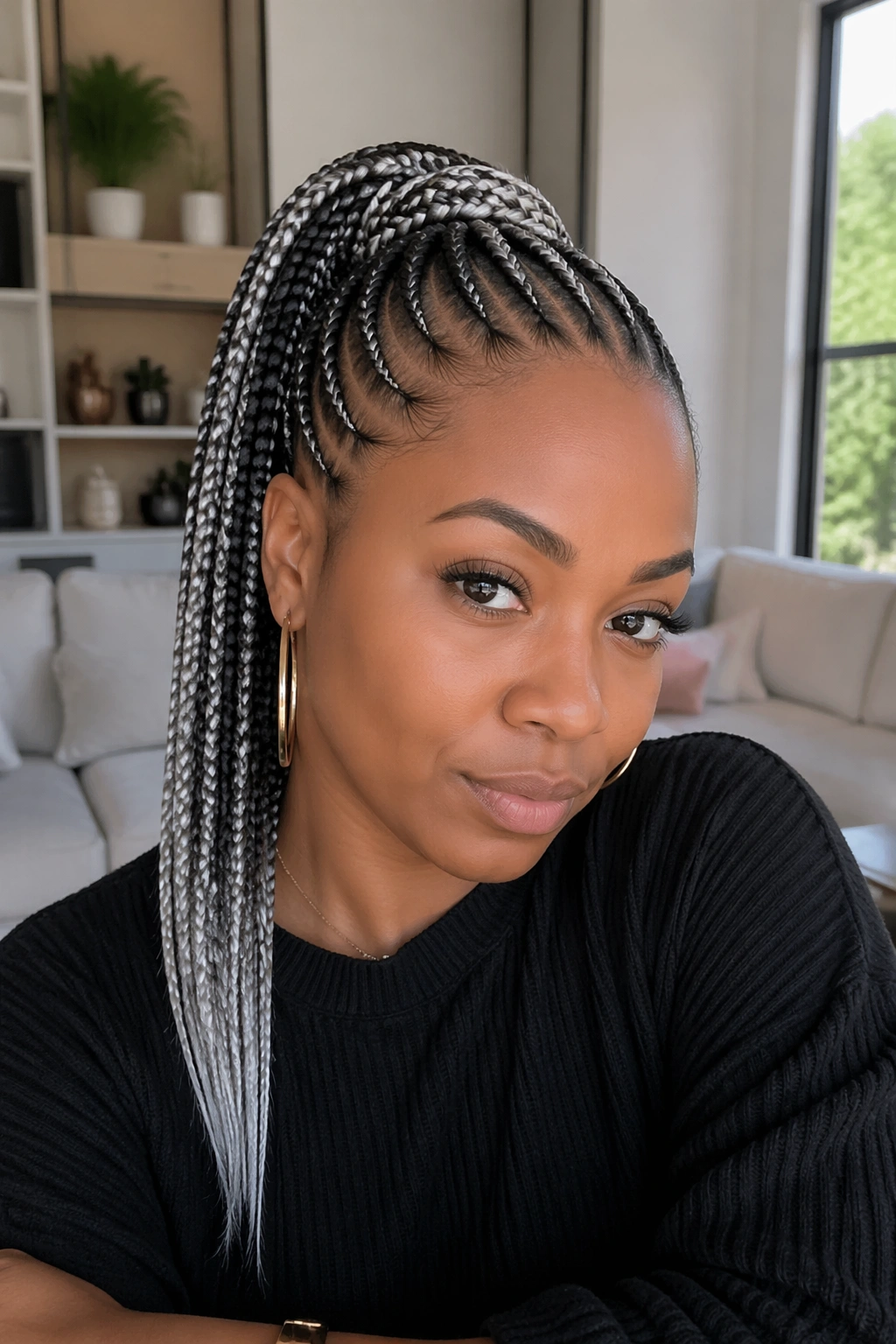
A feed-in braid ponytail gives gray hair a clean, graphic line that lasts. It is a smart choice when you want a style that stays neat for days and still looks like it had thought put into it.
The parts matter here. Keep them between 1/4 inch and 1/2 inch if you want the braids to sit evenly. Silver braiding hair can be mixed with darker strands for a softer finish, or used on its own if you want the color to read bold from a distance.
This style works best when the scalp is flat but not strained. Too tight, and the whole thing fights back by day two. Too loose, and the ponytail starts to wobble when you walk.
4. Curly Gray Puff Ponytail
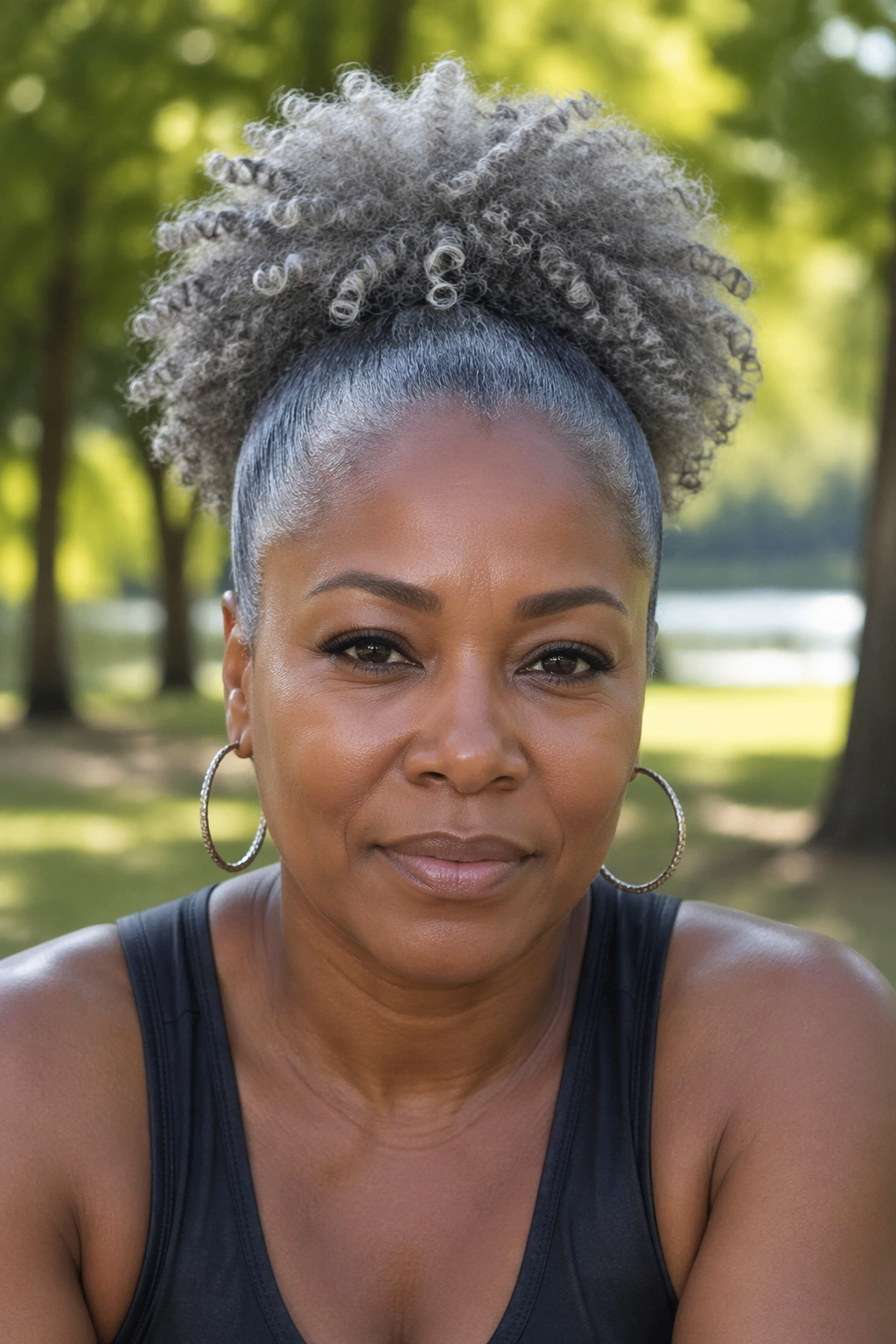
The first thing you notice is the shape. A curly gray puff ponytail looks soft around the edges and full through the middle, which is exactly why it works so well on coily hair.
Use a leave-in with a little slip, then seal it with a cream that does not leave the hair greasy. A satin scrunchie or drawstring puff keeps the base from snagging. If you want more height, stretch the roots with banding for 20 to 30 minutes before gathering the puff.
What Makes It Work
- The curl pattern stays visible.
- The edges do not need to be frozen in place.
- It looks good with a little frizz.
- It lets gray and silver tones show movement.
This is one of those styles that looks better when the hair still feels like hair. Not shellacked. Not stiff. Just shaped.
5. Side-Swept Low Ponytail
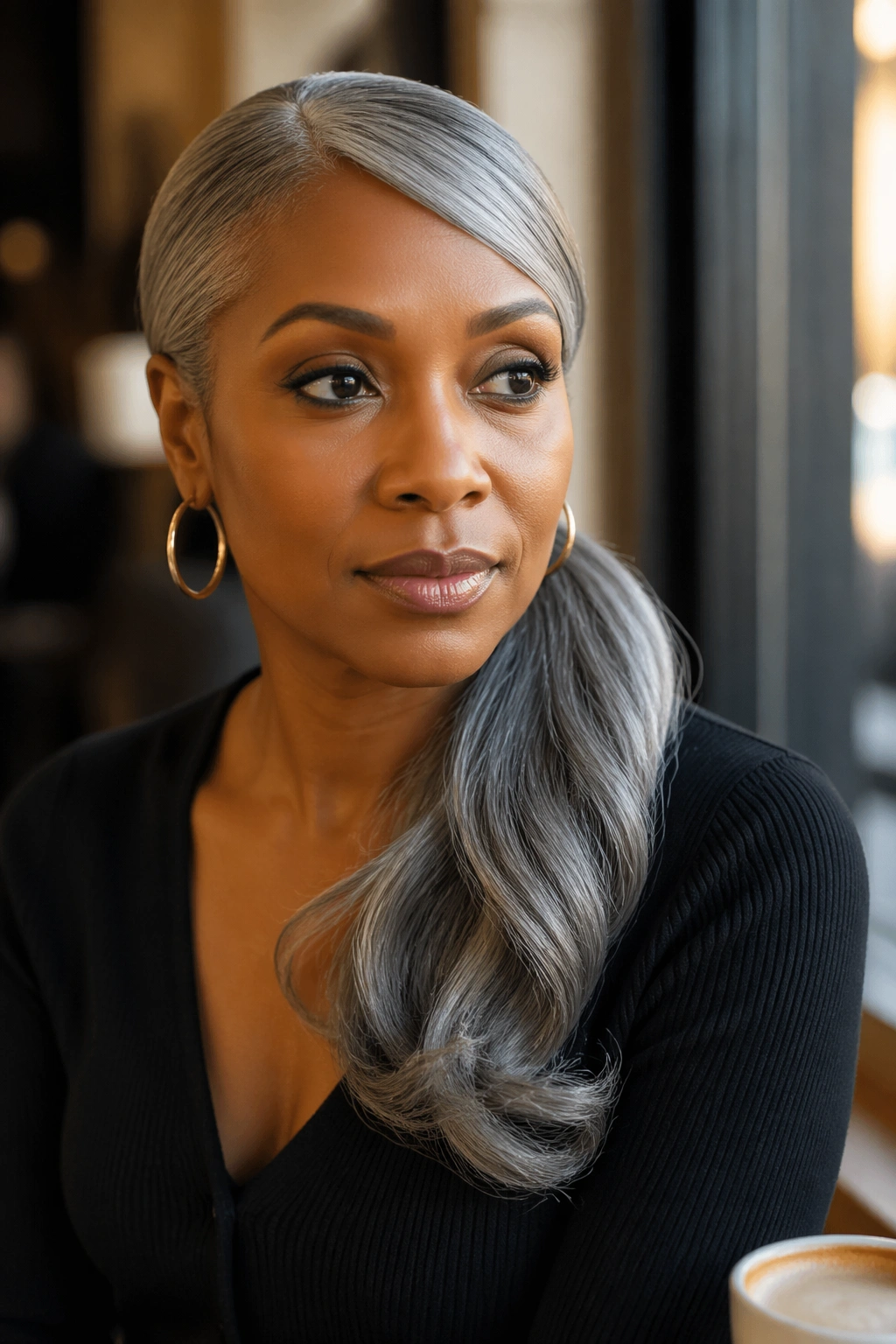
A side-swept low ponytail is my answer when someone wants softness without losing polish. The side part shifts the weight away from the center of the face, and the ponytail drapes naturally over one shoulder.
That little angle helps gray hair look less severe. Straight back can be a bit unforgiving on some faces, especially when the hairline is sparse or the color is bright silver. A side part breaks that hard line and gives the style some movement.
Keep the base low, around the nape or just above it, and let the tail curve instead of hanging straight down. If the hair is layered, leave the longest pieces on top so they sweep into the ponytail instead of sticking out at odd angles.
6. Bubble Ponytail
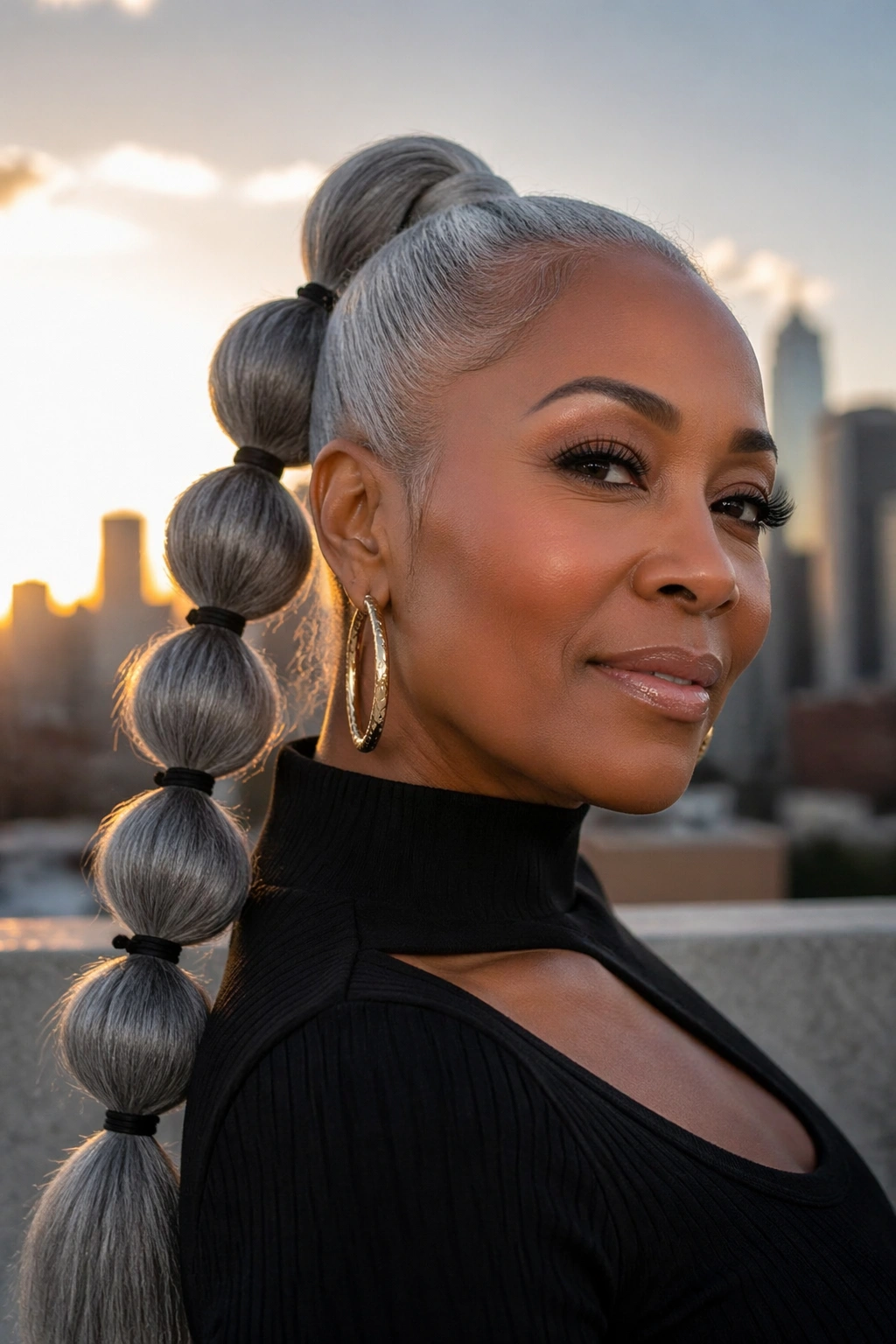
A bubble ponytail is playful, but it still needs discipline. The base has to be smooth first, or the whole thing reads messy instead of styled.
After securing the ponytail, place clear elastics every 2 to 3 inches down the tail. Then gently tug each section outward until it rounds into a bubble. Don’t pull so hard that the hair loses its shape. You want the bubbles full, not deflated halfway through the day.
Spacing Matters More Than Length
- Three elastics give a short, neat bubble.
- Five elastics work better on longer ponytails.
- Smaller bubbles look sharper.
- Bigger ones give a softer, dressier feel.
Gray hair makes the shape easy to see, which is half the appeal. Every round section catches the eye a little differently, so even a simple ponytail gets some life.
7. Jumbo Twisted Ponytail
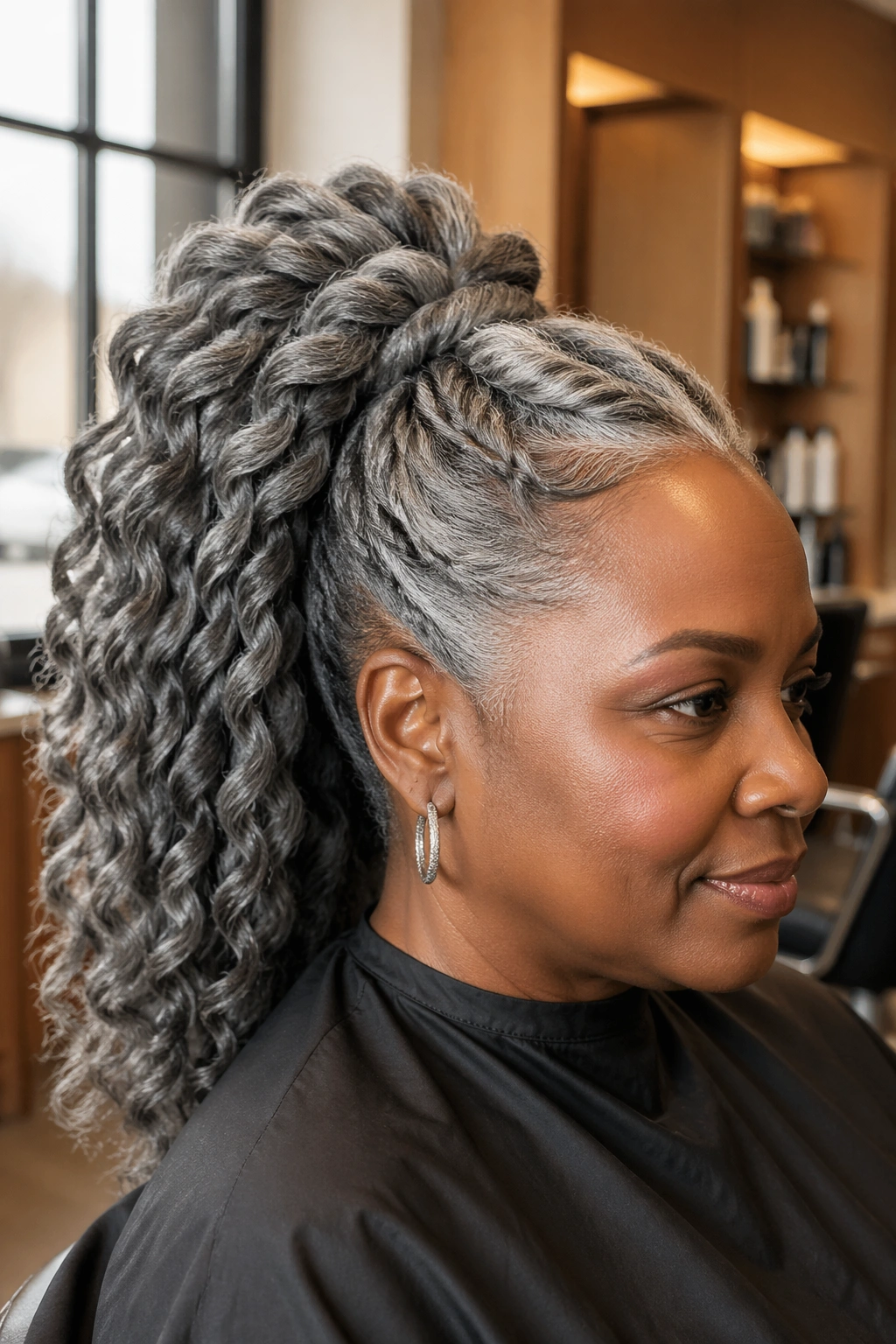
A jumbo twisted ponytail has more body than a sleek tail and less fuss than tiny braids. It suits Black hair that already has texture because the twist itself becomes part of the style instead of fighting against it.
Use kinky straight or Marley hair if you want the ponytail to hold a fuller shape. Two large twists feeding into one ponytail base work better than tiny, tight rope twists when the goal is volume. Keep the twist loose enough that the pattern still looks soft when the hair moves.
I like this style when the outfit is simple and the hair needs to carry the look. It has enough shape to stand on its own, which saves you from stacking on extra accessories.
8. Long Wavy Gray Ponytail
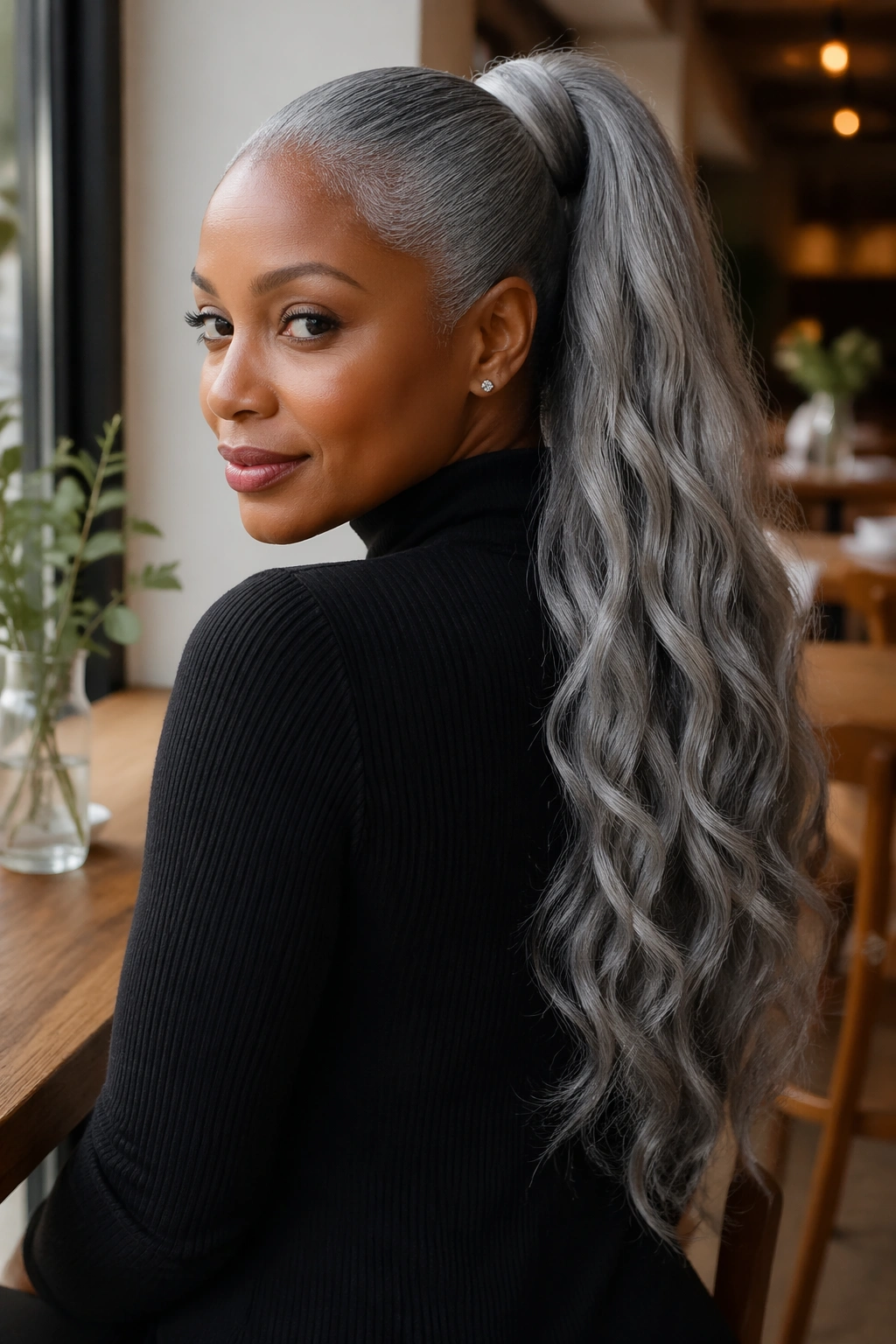
Long waves change the whole feel of gray hair. Instead of reading sharp or severe, the color looks softer and more layered, especially when the bends are loose rather than uniform.
A 1-inch curling iron gives the most control if you are using heat on extensions or pressed hair. Curl away from the face in alternating directions, then let the waves cool before you comb them out with a wide-tooth comb. If you skip the cooling step, the shape falls too fast and the ponytail looks limp by lunch.
What to Watch For
- Keep the top smooth.
- Leave the wave pattern loose.
- Avoid tiny ringlets.
- Use a light shine spray, not heavy oil.
This is the style I would pick for someone who wants length more than drama. It looks expensive without trying too hard, which is a nice place to be.
9. Stitch Cornrow Ponytail
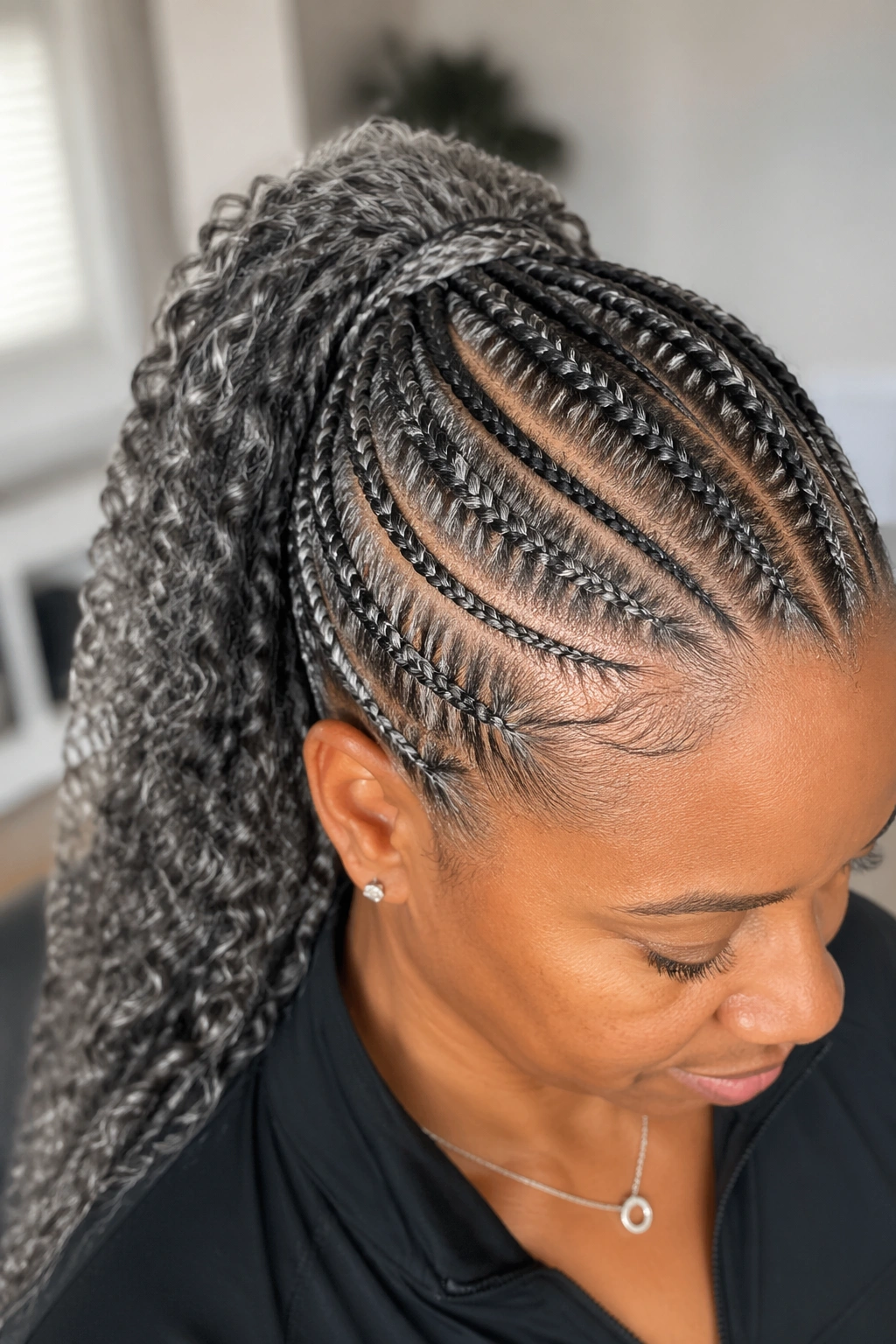
What makes a stitch cornrow ponytail so strong is the line work. The scalp pattern becomes part of the design, and the ponytail at the back gives it a clean endpoint.
The stitch effect comes from adding small bits of hair as you braid, which creates those neat, segmented rows. Parts around 1/4 inch wide keep the rows crisp. If the sections get too big, the pattern blurs and the style loses that sharp, stitched look.
Where the Parts Matter
A ponytail like this looks best when the crown is neat and the nape is flat. A little scalp oil along the part lines keeps the hair from looking dry, but do not soak the braids. Too much product makes the rows look dusty instead of clean. For workouts, errands, and long wear, this is one of the most dependable gray ponytail styles on the list.
10. Soft Afro Puff Ponytail
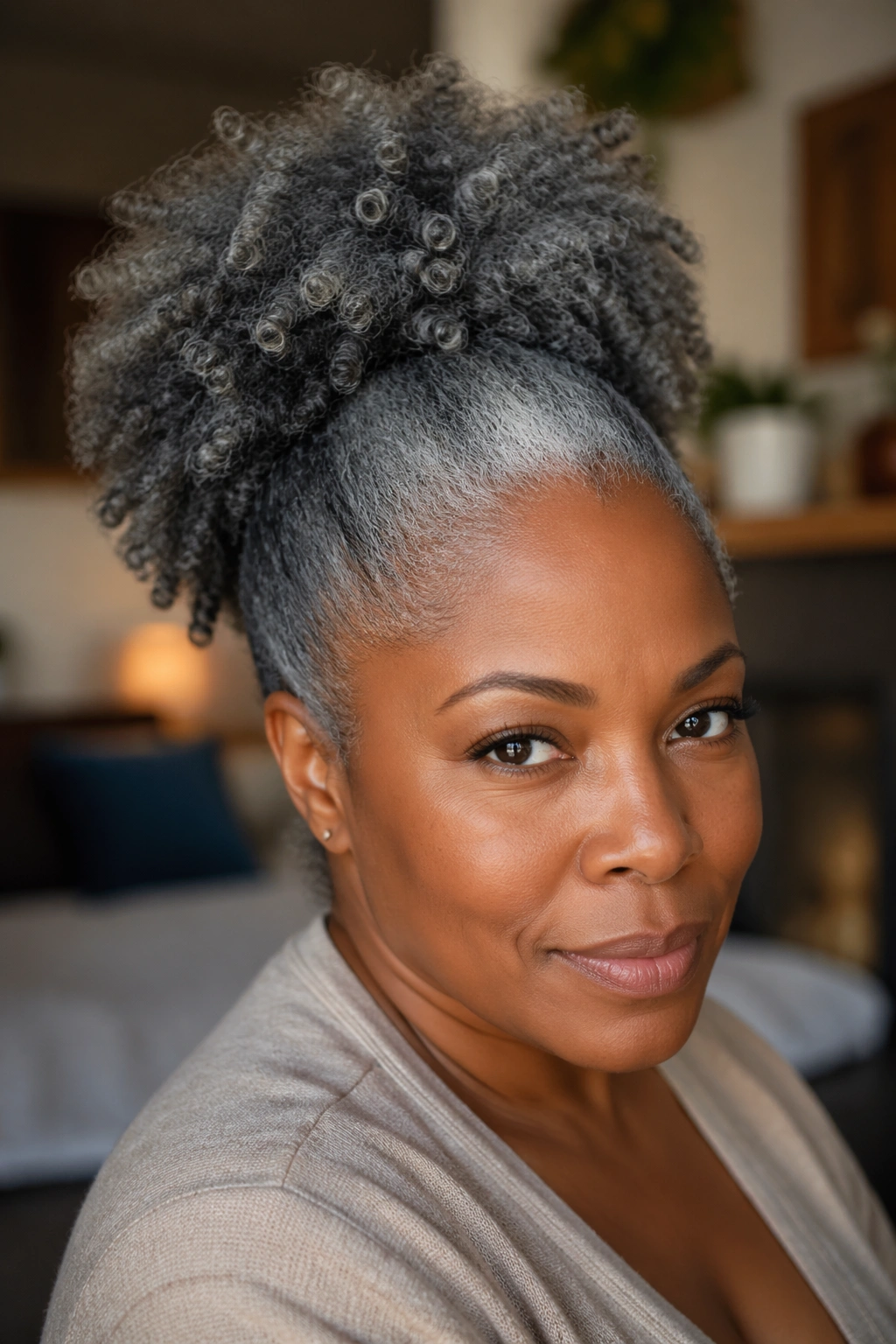
A soft afro puff ponytail has a different kind of confidence. It does not need slick edges or a glassy finish to make sense. It just needs shape.
Use your fingers or a pick to lift the roots, not the ends. That keeps the puff round without turning it into a frizz halo. A water-based spray on the hairline, followed by a light cream, helps the texture look alive instead of dry. A large satin scrunchie is better than a thin elastic because it spreads the tension.
Gray hair in a puff can look especially striking when the coils are loose and fluffy. The texture gives the color depth. The whole thing feels relaxed in a good way, not unfinished.
11. Half-Up Gray Ponytail
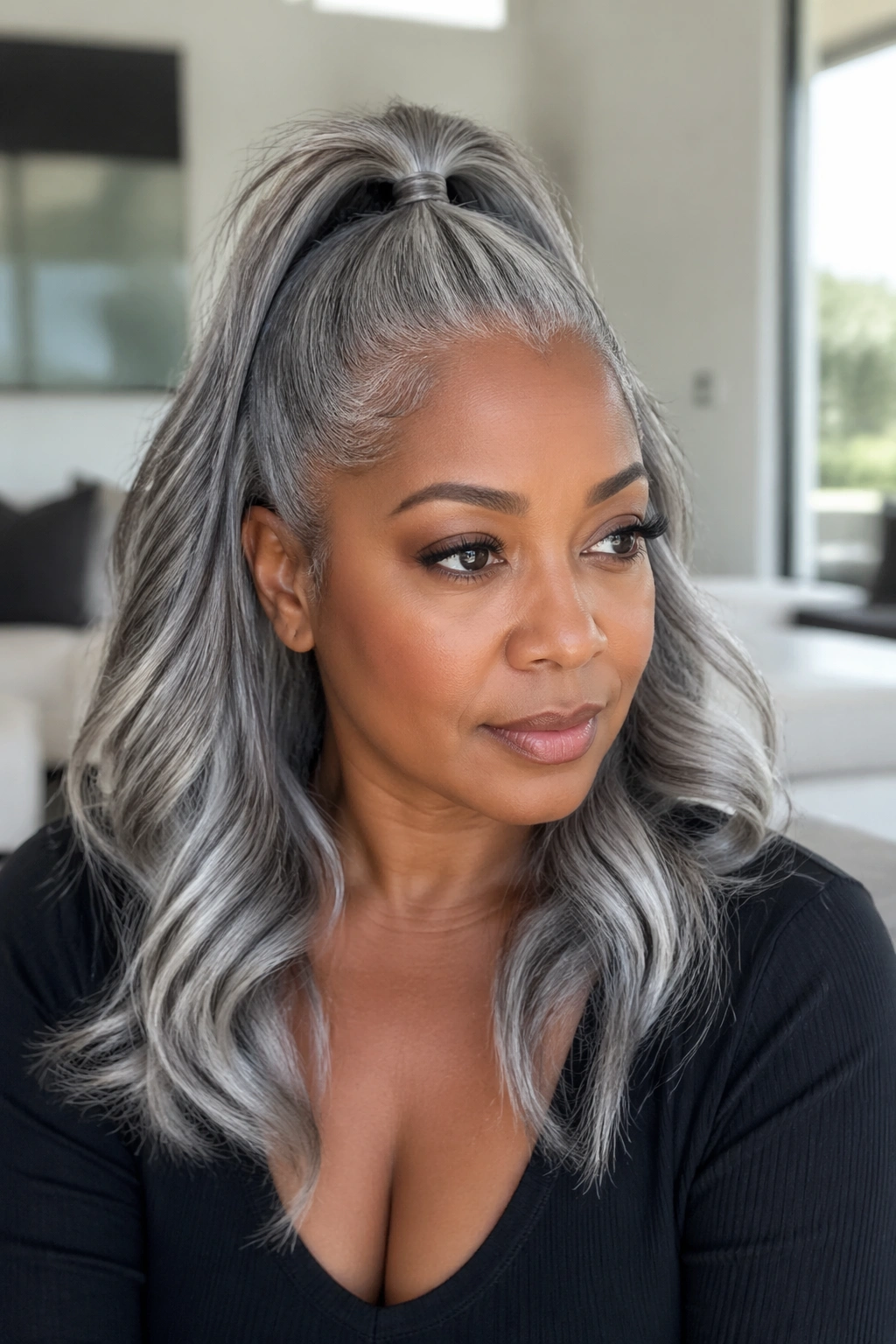
A half-up ponytail is useful when you want to show length and keep some hair off the face. It works especially well on layered gray hair because the lower section moves freely while the top stays controlled.
I like this style for shoulder-length to long hair, whether it is blown out, curly, or lightly waved. Pull the top third of the hair back, secure it at the crown, and leave the rest down. If the front pieces are short, let them stay loose instead of forcing them into the tie. Forced sections puff up later and ruin the line.
This is one of those styles that handles grow-out nicely. The color transition between gray roots and darker ends can look intentional when the hair is only half pulled back.
12. Loc Ponytail With Cuffs
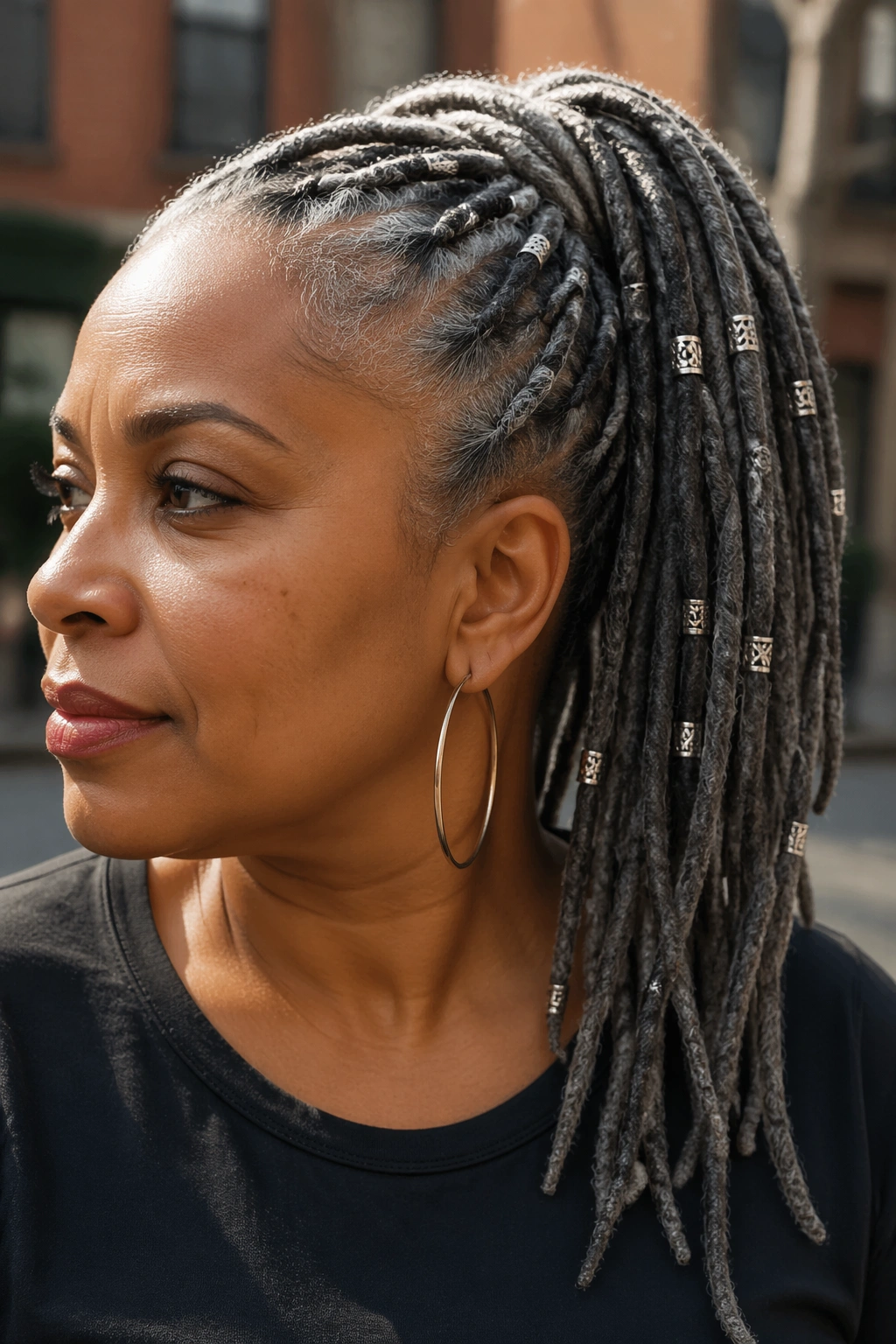
Locs in a ponytail already have presence. Add a few cuffs or a wrapped base, and the style starts to feel deliberate without getting fussy.
Keep the ponytail at a height that respects the weight of the locs. Too high, and the base can tug after a few hours. A low or mid-height ponytail usually sits better and gives the locs room to swing. Use a strong loc tie or elastic made for thicker hair; thin rubber bands will snap or pull.
Small Details That Help
- Silver cuffs echo gray locs nicely.
- Gold cuffs warm up cool-toned gray.
- A wrapped base hides the tie.
- A few loose locs around the face can soften the look.
This style works because it does not try to hide the locs. It lets them be the point.
13. Faux-Hawk Ponytail
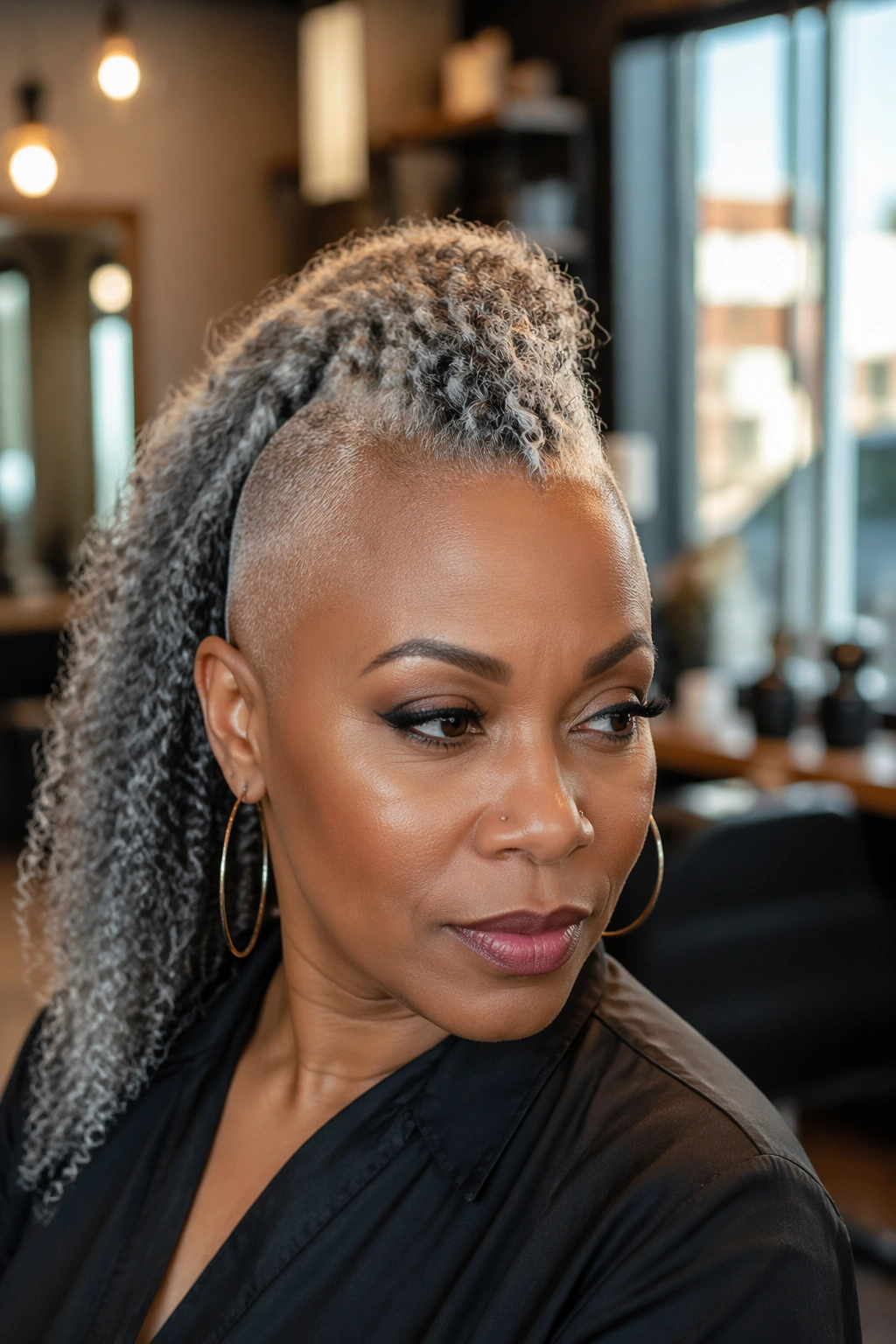
A faux-hawk ponytail is the boldest shape in this group, and that is exactly why it works. The sides stay close to the head while the center rises into a longer tail, which gives gray hair a lot of attitude.
You can build the shape with flat twists, cornrows, or a smooth brushed base, depending on how much texture you want to keep visible. The center section should sit about 2 to 3 inches wide at the crown if you want the mohawk line to read clearly. Wider than that, and the shape starts to lose its edge.
Do not overthink the finish. A faux-hawk should look slightly fierce. If every strand is too neat, the style gets stiff and loses the point.
14. Crown Braid Ponytail
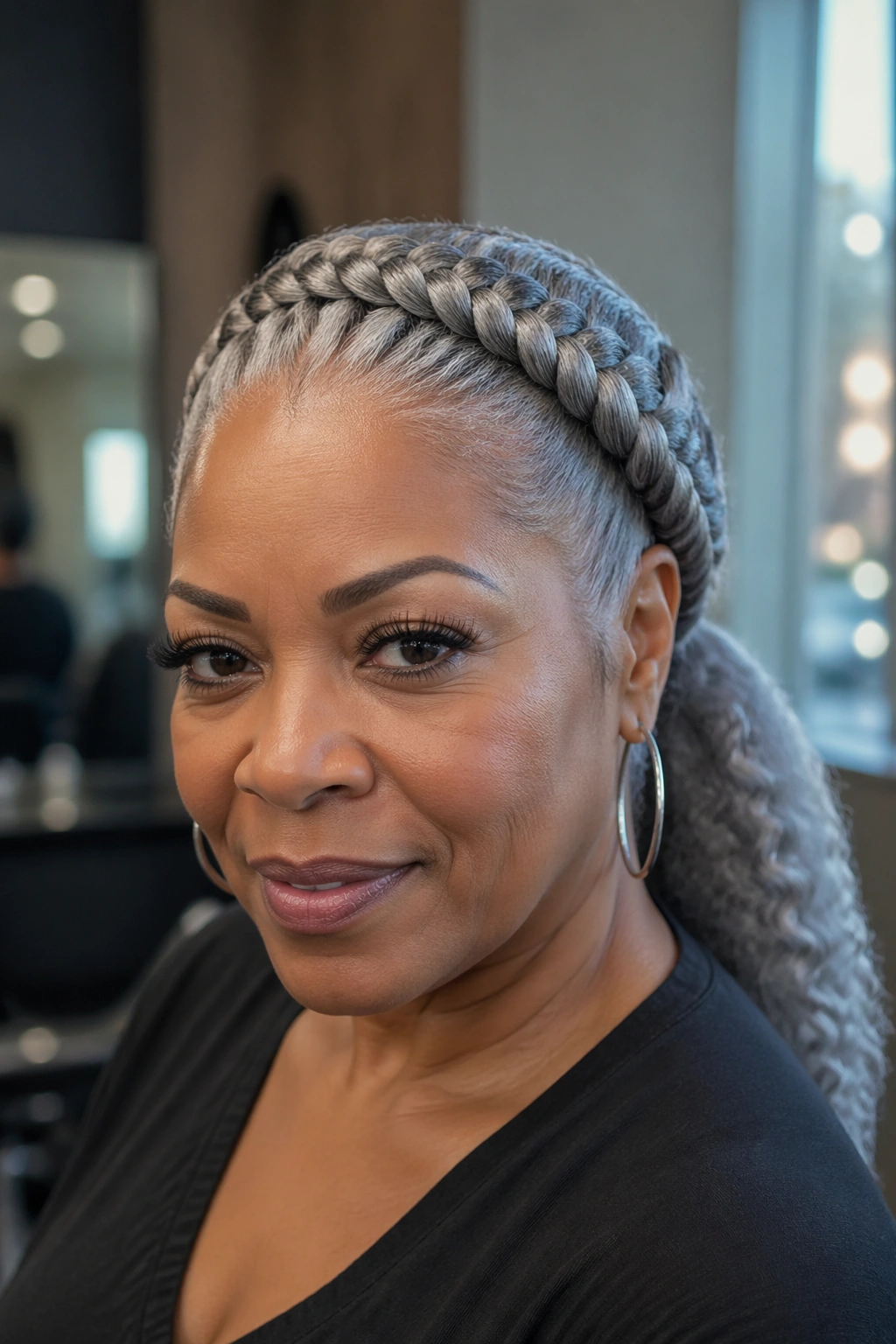
A crown braid into a ponytail is the style I reach for when a regular ponytail feels too plain but a full updo feels like too much work. The braid around the hairline gives the head shape, and the ponytail at the back keeps it wearable.
Braid along the front perimeter in one clean line, or split it into two braids that meet at the back. Either way, keep the braid close to the hairline and move steadily around the head. If you braid too loosely, the crown piece starts slipping and the whole style gets messy fast.
Add a few hair pins or a small cuff near the join if you want a dressier finish. This is one of those gray ponytail styles that looks especially good with earrings because the neckline stays open.
15. Face-Framing Low Ponytail
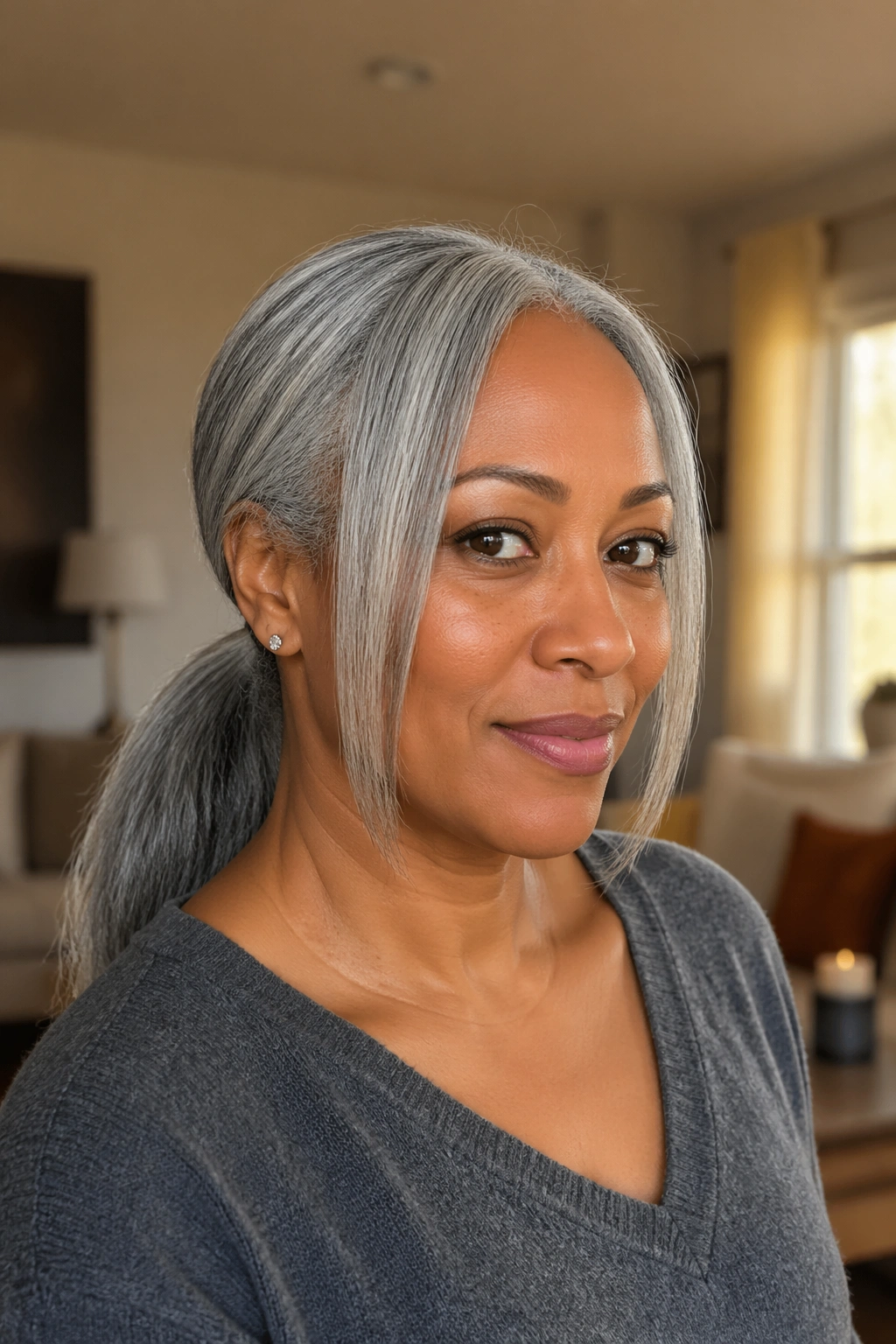
A face-framing low ponytail softens gray hair in a way a fully slicked style cannot. Two slim pieces left out near the cheeks make the ponytail feel gentler, and they keep the hair from pulling hard at the temple.
The key is proportion. If the face-framing pieces are too thick, they look accidental. Around 1 inch wide on each side is usually enough, and a soft bend from a curling wand helps them blend into the rest of the style. Keep the ponytail low and smooth, then let those front pieces do the talking.
I especially like this on natural hair that has been blown out but not pressed bone-straight. It keeps some texture in the style, which feels honest. And honestly, that suits gray hair.
16. Teased Volume Ponytail
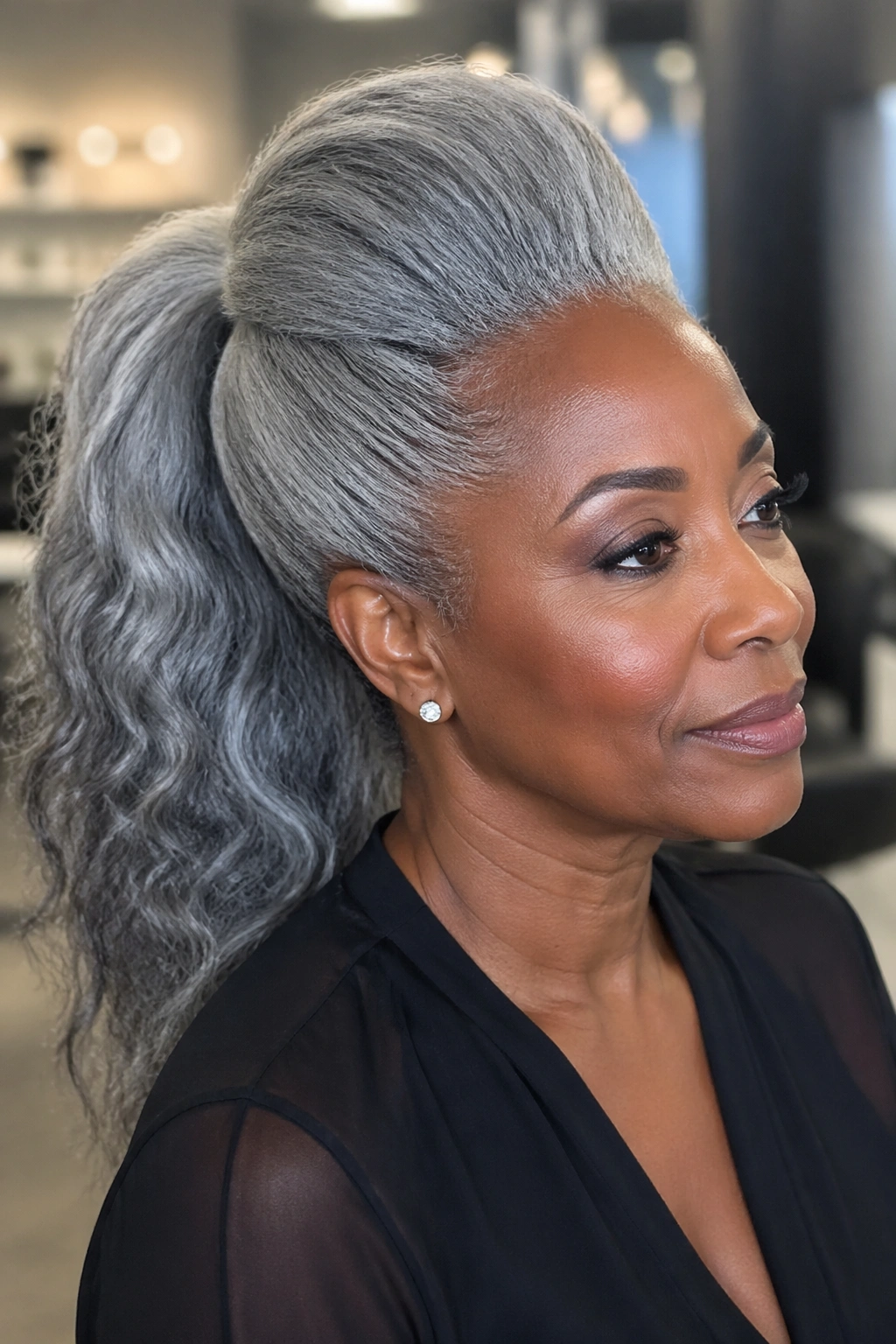
A teased volume ponytail is what you want when the hair needs height and the crown feels a little flat. Fine hair, medium hair, and stretched natural hair can all benefit from this, as long as the teasing stays under control.
How to Keep It from Collapsing
- Backcomb only the crown, not the ends.
- Spray the roots lightly before you tease.
- Smooth the top layer gently with a brush.
- Secure the ponytail with a firm elastic, then pin the base if needed.
- Do not rake through the teased area once it is set.
The goal is lift, not chaos. Gray hair shows shape very clearly, so a little height can make the whole style read fuller without adding a single bundle of hair.
17. Side Ponytail With a Metallic Accent
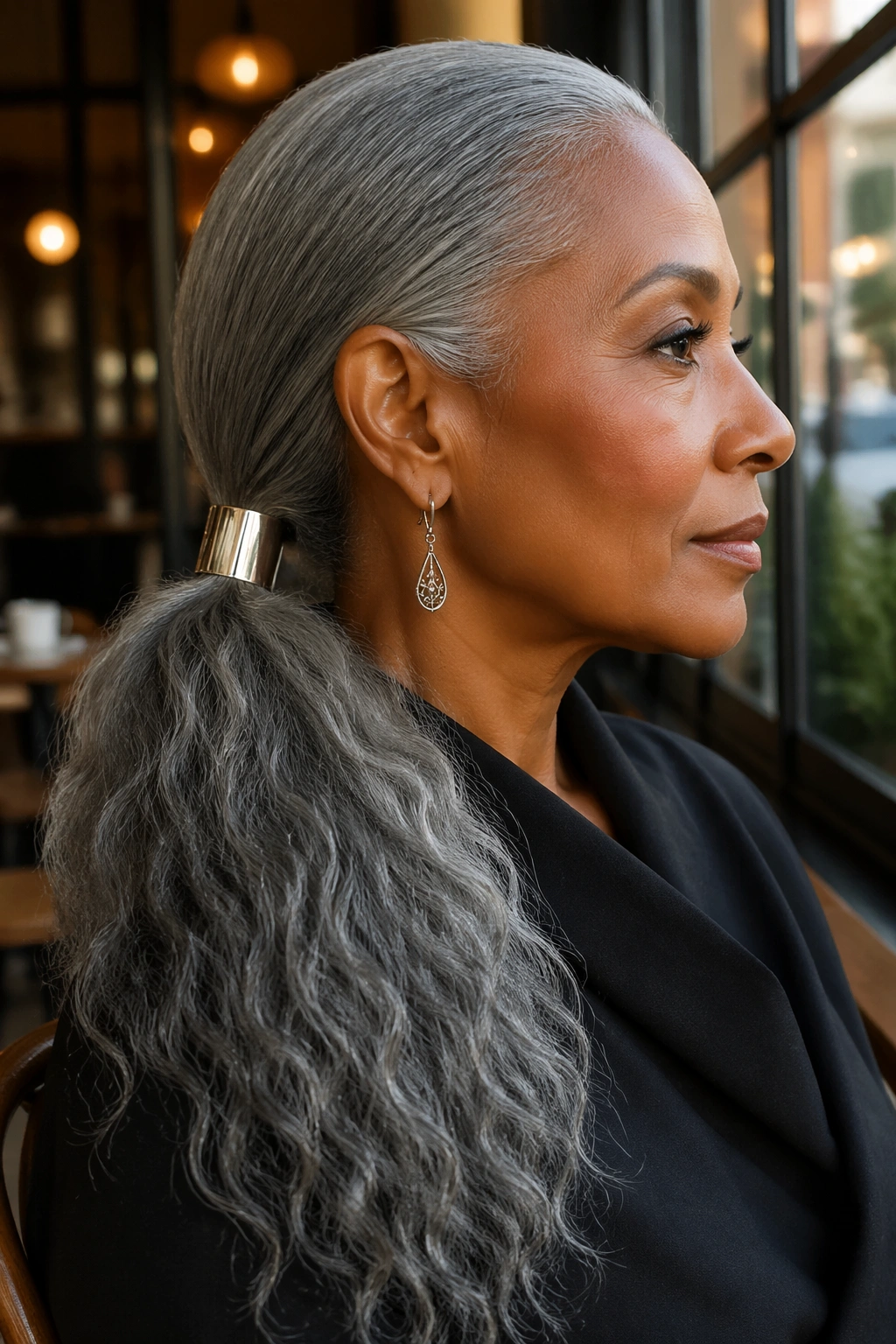
A side ponytail with a metallic accent works because gray and metal already speak the same language. Silver, gunmetal, and gold all sit nicely against the cool tone of gray hair, and the side placement gives the accessory a place to matter.
Keep the ponytail behind one ear or just below it. If it sits too low, the accent disappears; too high, and the style looks lopsided. One cuff, one ribbon clip, or one chain wrap is enough. More than that and the eye has too many places to go.
This is the kind of style I would pick when the outfit is simple and the hair needs one sharp detail. A plain black dress with a side ponytail and a single metal cuff can look more finished than a far more complicated look.
18. Knotless Braid Ponytail
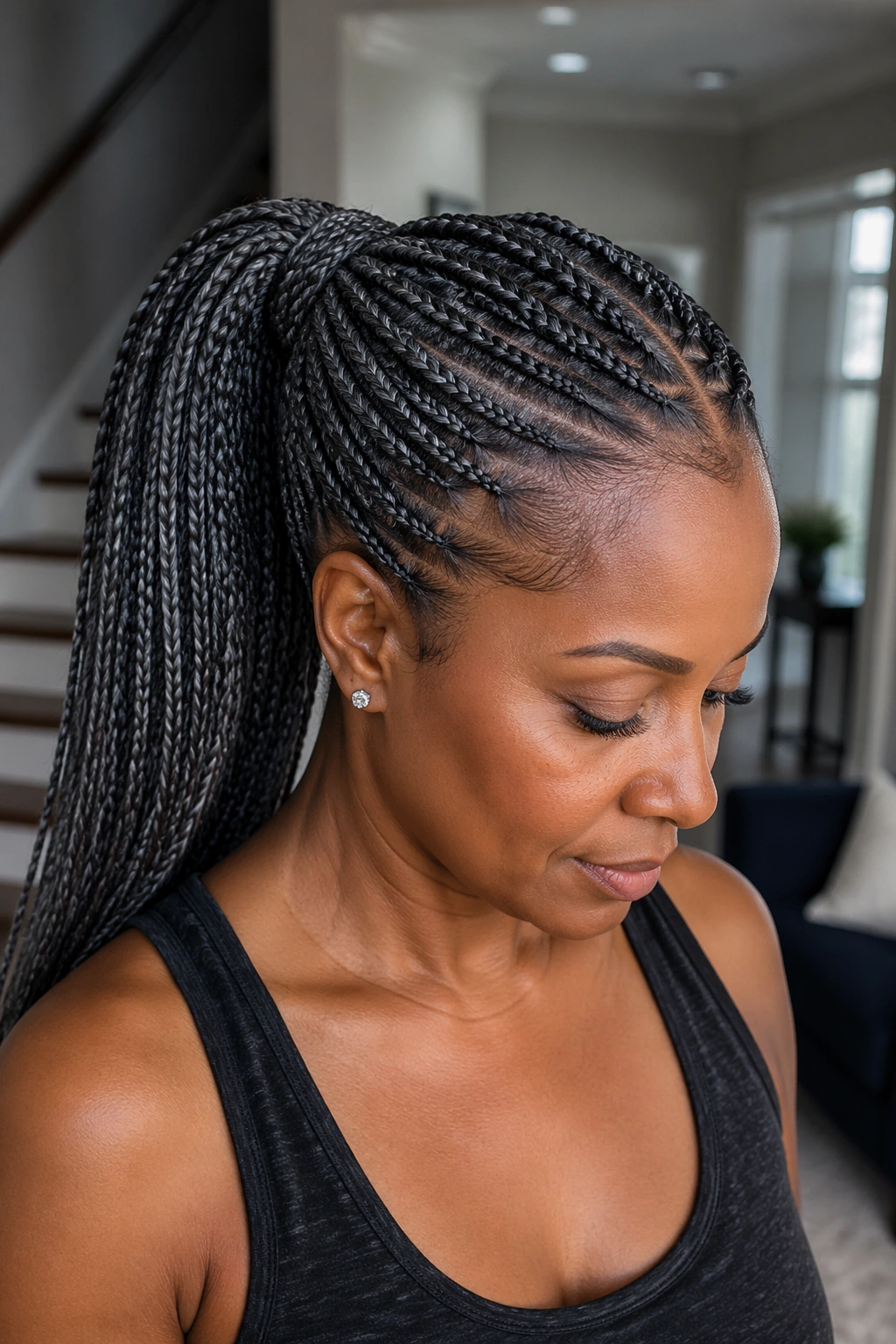
Knotless braids gathered into a ponytail give you a protective style with less bite at the scalp. That softer base matters, especially if you wear braids often or if your edges get tired easily.
The braids should be installed with a clean, gradual feed-in so the root does not feel bulky. Once they are in, gather them with a strong tie and let the tail fall straight, curled, or wrapped. Medium knotless braids usually sit better than very thick ones if you want the ponytail to stay light on the head.
A Few Practical Details
- Sleep with a bonnet or a silk scarf.
- Oil the scalp lightly every few days.
- Keep the ponytail low if the braids feel heavy.
- Refresh flyaways with a small dab of mousse on the hands.
The style lasts because it spreads the work across the head. That is the real advantage.
19. Scarf-Wrapped Ponytail
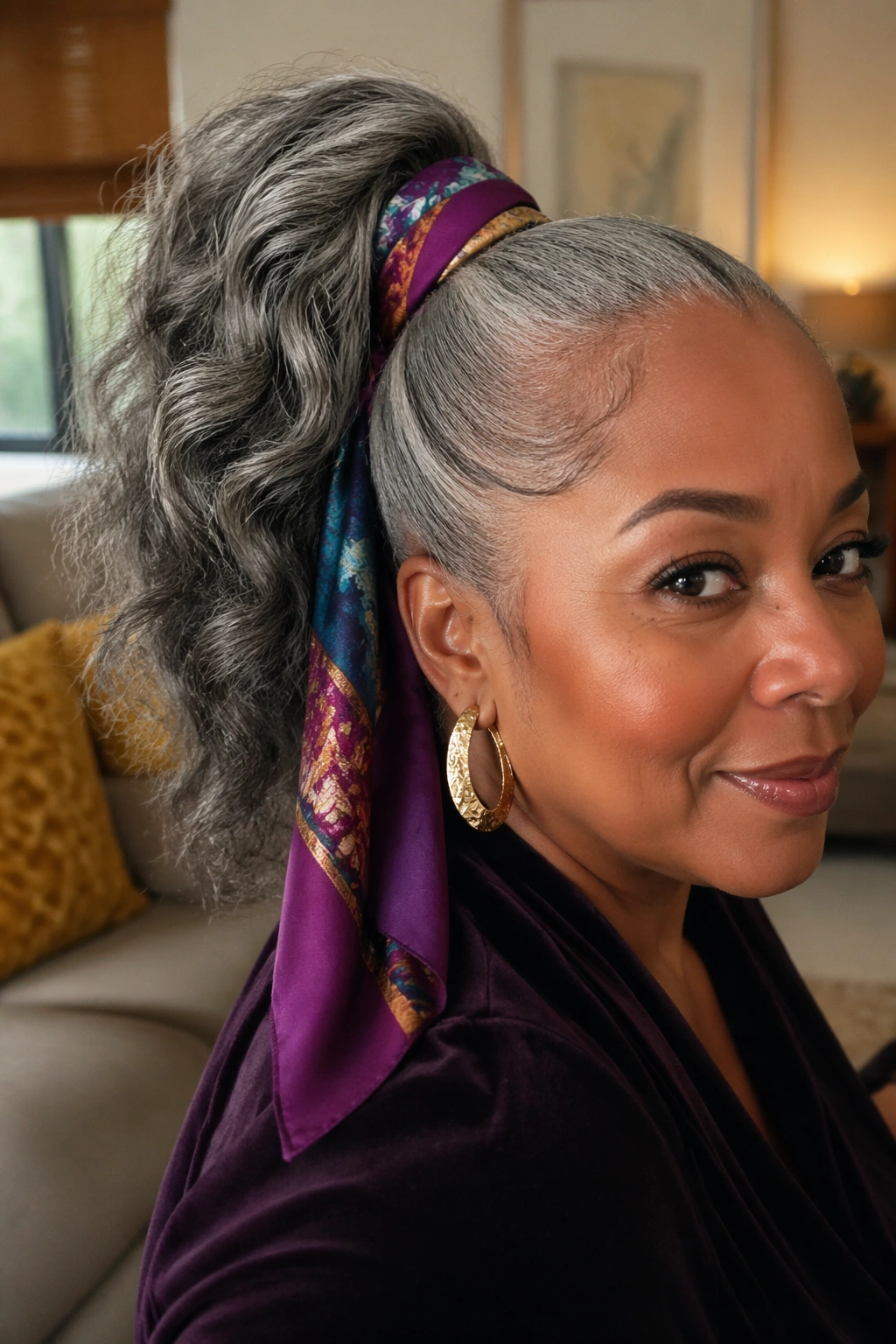
A scarf can rescue a ponytail that feels too plain. It can also hide a base that is growing out, and that alone makes it useful.
Choose a silk or satin scarf about 2 to 3 inches wide if you are wrapping it around the elastic. Wider scarves can work, but they start to dominate the style if the ponytail is short. Tie the scarf close to the base and let the tails hang, or tuck them under if you want a cleaner finish.
Why It Works
The scarf breaks up the shape in a good way. It gives the eye a place to land, and it keeps the ponytail from looking like a hurried gym tie. Gray hair pairs well with deep jewel tones, cream, black, and muted gold, so the scarf can either match the tone or throw in a little contrast.
20. High Curled Ponytail
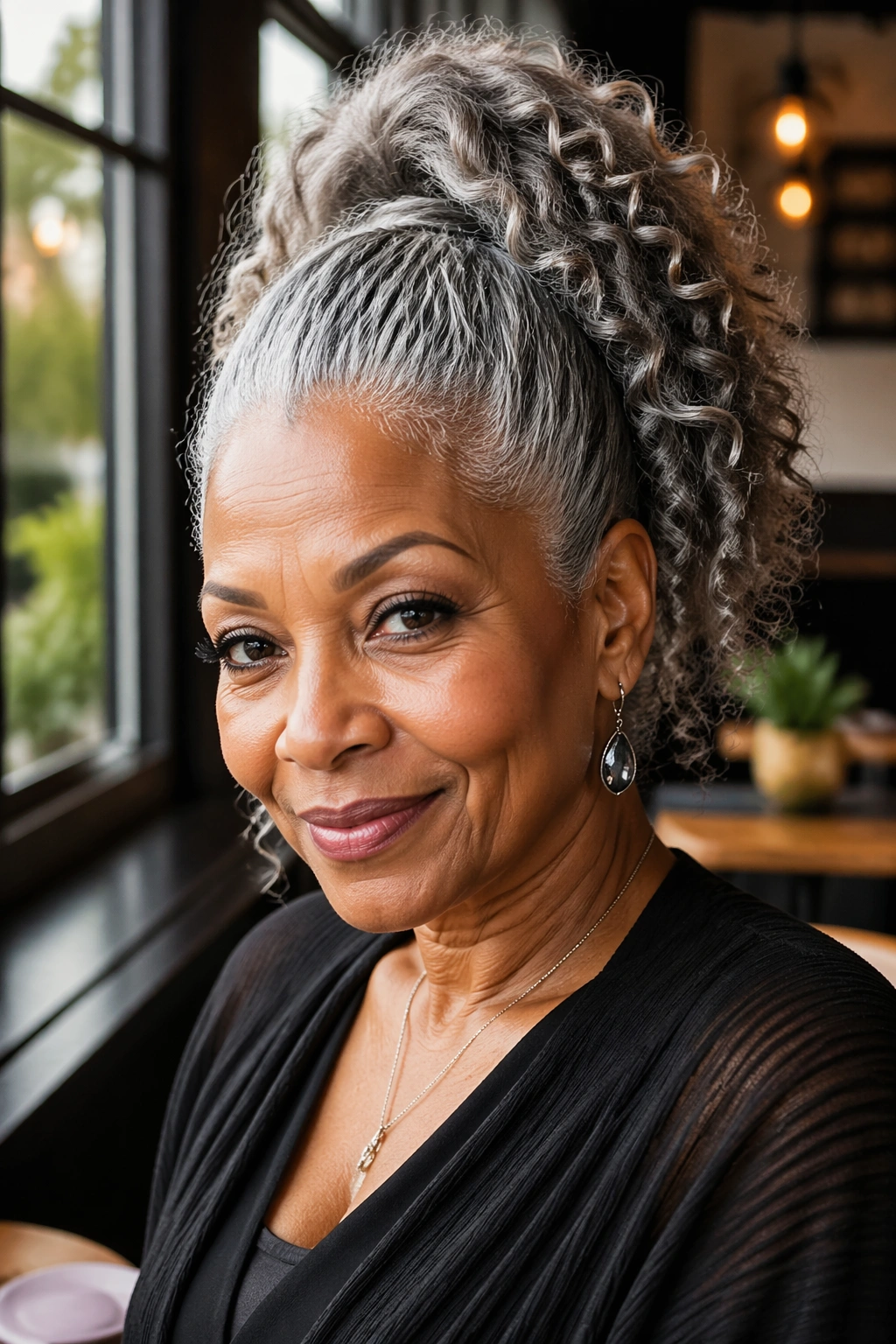
A high curled ponytail has more movement than a straight one, and gray hair makes every bend in the curl easier to see. That is part of the appeal. The shape reads lively right away.
Use a curling iron, flexi rods, or roller-set ends, depending on how much heat you want to use. If the hair is long, separate the tail into 4 sections before curling so the shape stays even. If it is short or medium length, tighter curls near the ends can keep the ponytail from drooping.
The crown should stay smooth, but not shellacked. A little softness at the hairline keeps the style from looking stiff. This is a good choice for parties, dinners, or any day when you want the hair to have a bit more swing.
21. Formal Low Ponytail
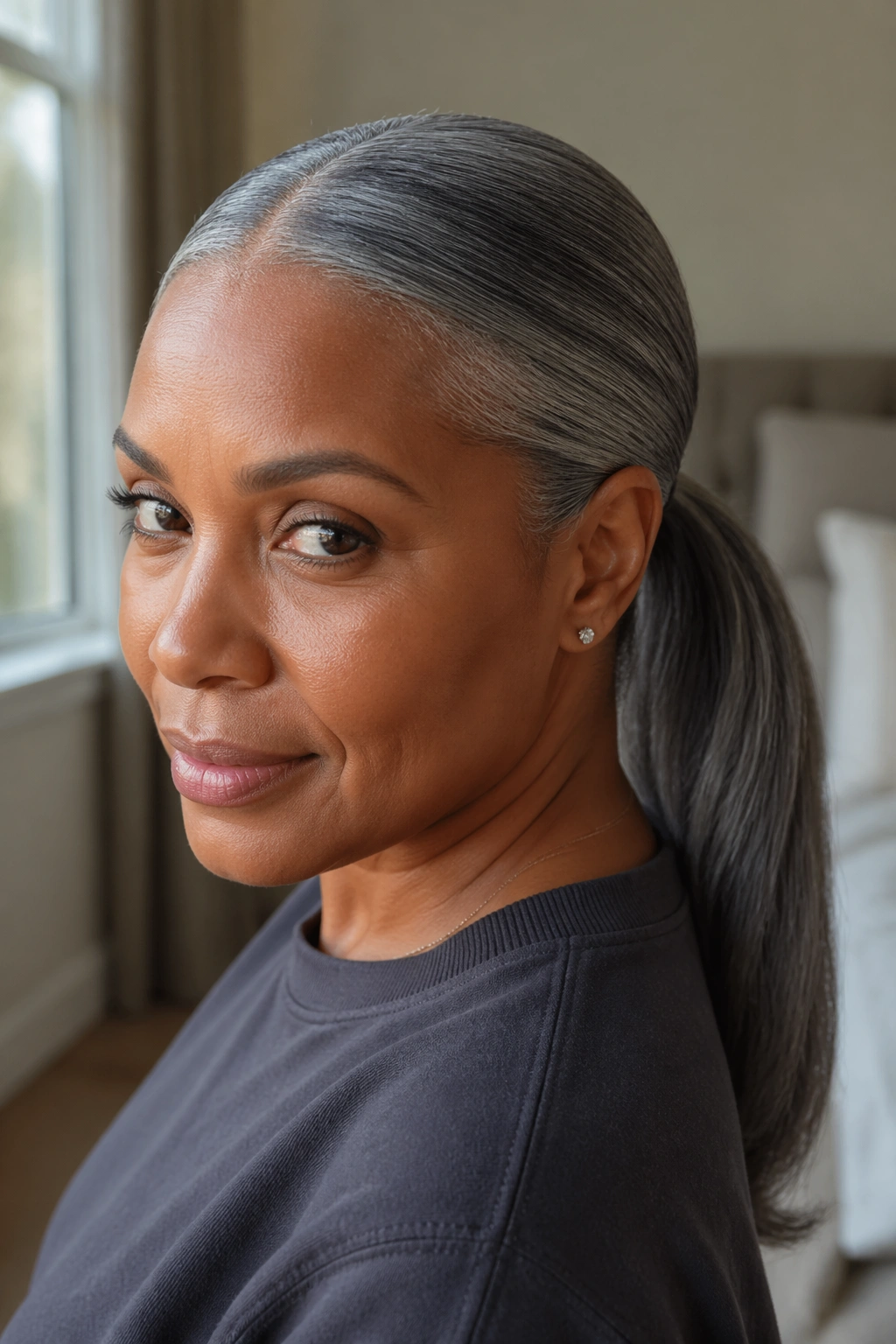
A formal low ponytail is the style I trust when the gray needs to look calm, sleek, and expensive in the plain old sense of the word: neat, deliberate, and finished. It works for Black women with straightened hair, stretched natural hair, or long extensions, and it never looks out of place when the outfit is doing more than usual.
Keep the base centered or slightly off-center, then wrap it with a narrow piece of hair or a satin ribbon in a tone that matches the outfit. If the tail is long, keep it straight and glossy. If it has curl, let the curl stay soft rather than tight. The point is control, not stiffness.
If you are choosing just one style from this whole list, pick the one that matches how much tension your scalp can handle and how much time you want to spend in the mirror. Gray hair will tell on sloppy work fast. It will also reward a clean shape faster than almost any other color.
