



Long hair has a way of making a simple ponytail look heavier than it should. The weight pulls at the crown, the ends feel like they’re fighting gravity, and by the time you check a mirror, the style can look half-done even if you spent ten minutes on it. That’s where updo ponytails for long hair earn their keep. They lift the shape, tuck the length into something cleaner, and keep the style from sagging into the same old low ponytail rut.
The good versions do more than pull hair back. They use the crown for height, the sides for control, and the ends for texture, movement, or a little drama. A sleek wrapped base looks sharp for work or evening plans. A braided version can hold up through wind, humidity, and a long day without looking fussy. A softer twisted ponytail gives you that lived-in feel that long hair does so well when it’s not weighed down.
And long hair does need a bit of strategy. If the base sits too low, the style drags. If it sits too high, the whole thing can feel tense. If the ends are left loose with no shape at all, the ponytail starts to look unfinished. The styles below handle those problems in different ways, from polished and neat to loose, braided, and a little undone. Pick the one that matches your mood, your hair texture, and how much time you’ve actually got.
1. Sleek High Knot Ponytail
A sleek high knot ponytail gives long hair a clean, lifted shape that feels neat without looking stiff. The high placement opens up the face, and the knot keeps the ends from hanging heavy down your back. It works especially well when you want the style to look intentional from every angle.
The trick is to smooth the crown first. A little styling gel or pomade at the hairline, followed by a boar-bristle brush, makes a huge difference. Tie the ponytail at the crown, then twist the length into a compact knot and pin the ends underneath.
Best detail: wrap a thin strand of hair around the elastic before pinning the knot. It hides the base and gives the style a finished look.
2. Braided Crown Ponytail
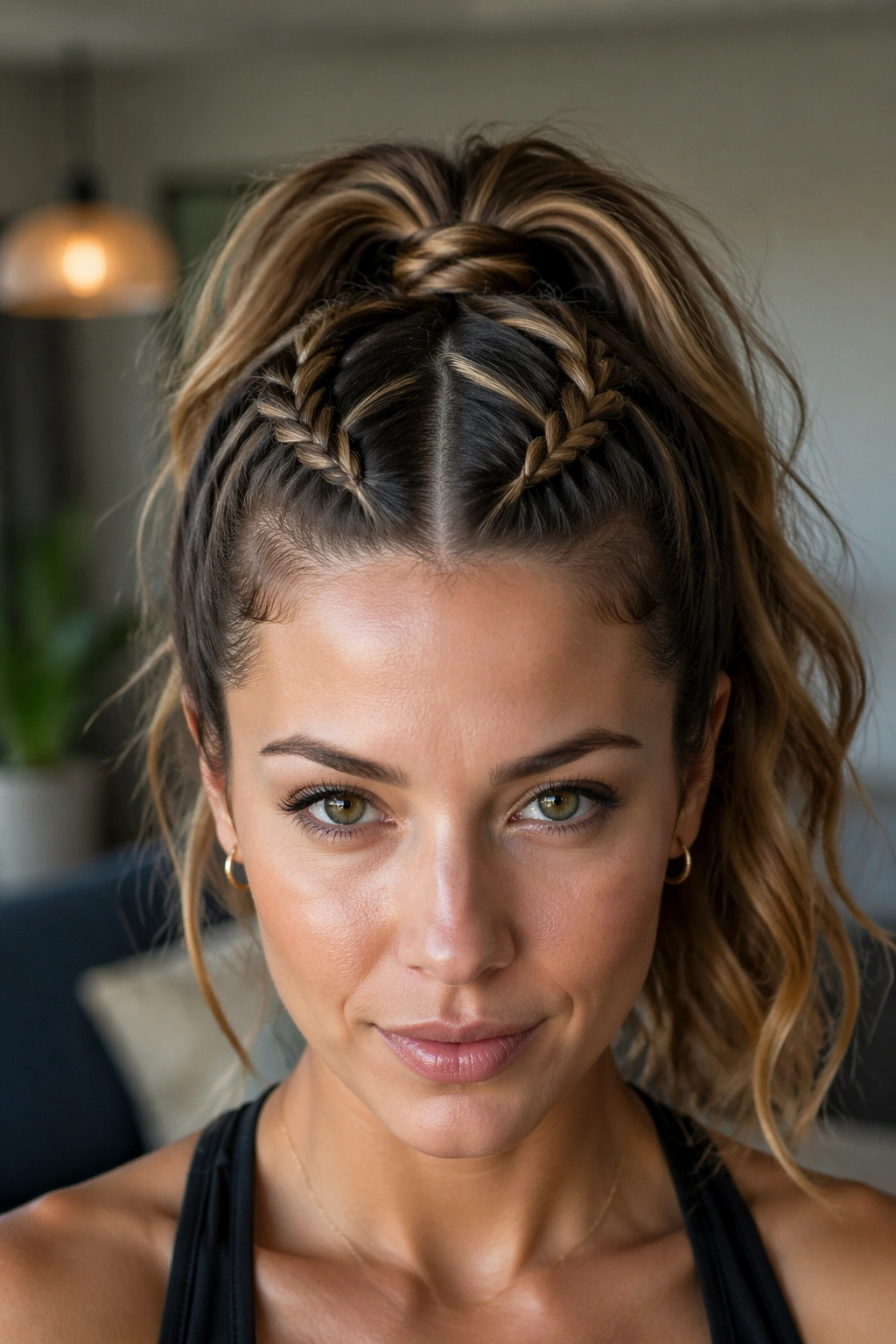
This one keeps the hairline tidy and the rest of the hair moving. Two braids start near the temples, travel back toward the crown, and feed into a ponytail that sits high or mid-height depending on how much lift you want. It has that “I made an effort” feel without looking overly formal.
Why it stays so secure
The braids act like anchors. Instead of relying on one elastic to do all the work, the braid structure helps distribute tension across the head, which is useful when your hair is long and dense. If your hair slips easily, mist the roots with texturizing spray before braiding.
A small tip helps here: keep the braids flat near the scalp, then loosen them a touch after tying. That gives the crown a little fullness.
3. Twisted Low Ponytail Roll
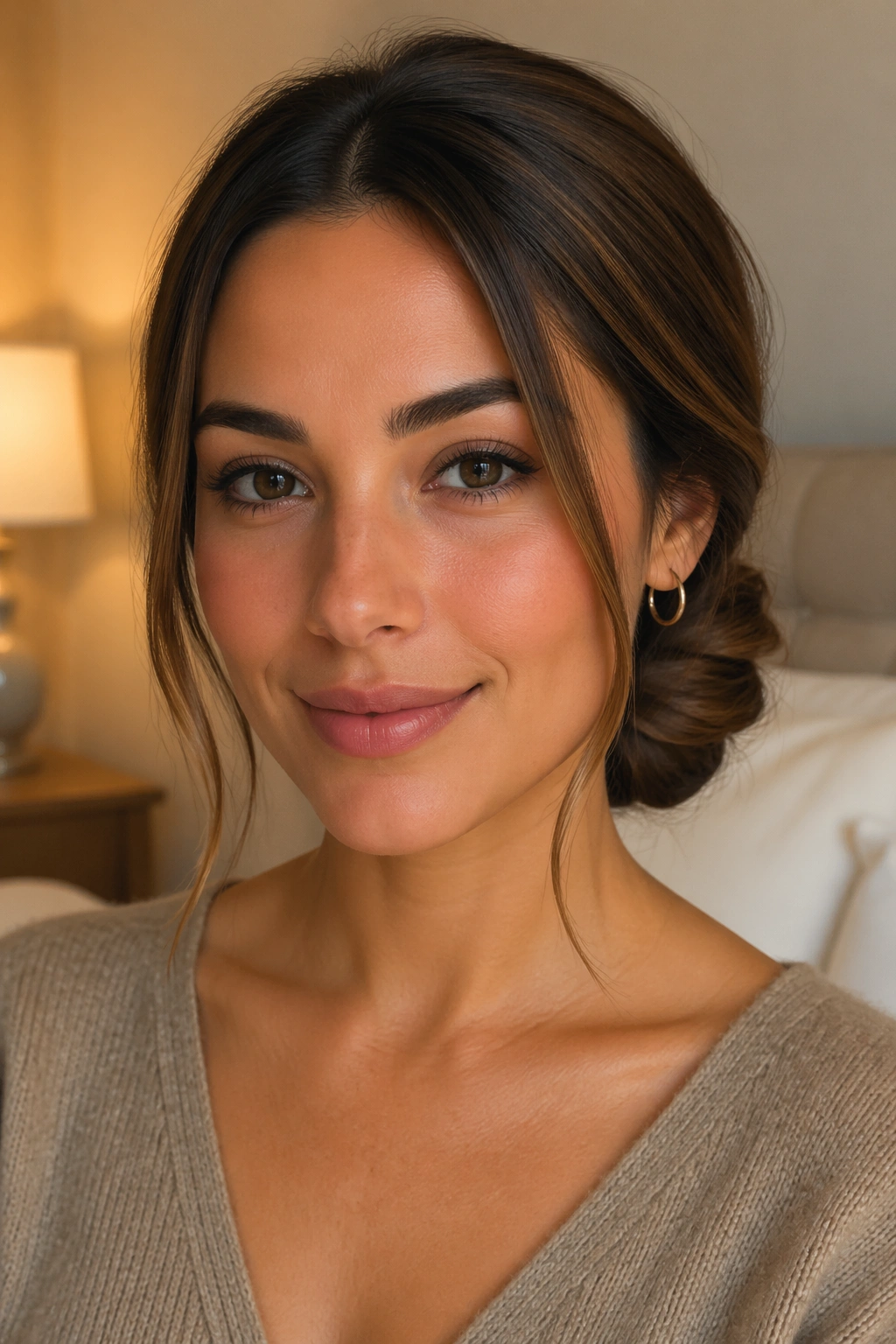
Why does a low twist work so well on long hair? Because it gives all that length somewhere to go without creating bulk at the nape. The sides are pulled back, the base sits low and smooth, and the tail can be rolled upward or tucked into itself so the style reads as an updo instead of a plain ponytail.
This is one of those styles that looks calm from the front and quietly polished from the side. It’s also kind to thick hair, which can feel crowded when everything is piled too high.
How to use it
Start with a low ponytail, split it into two sections, twist each section, then wrap them around each other before pinning. Use 4 to 6 bobby pins crossed in an X shape if the hair is heavy. The roll should feel secure but not tight.
4. Bubble Ponytail Updo
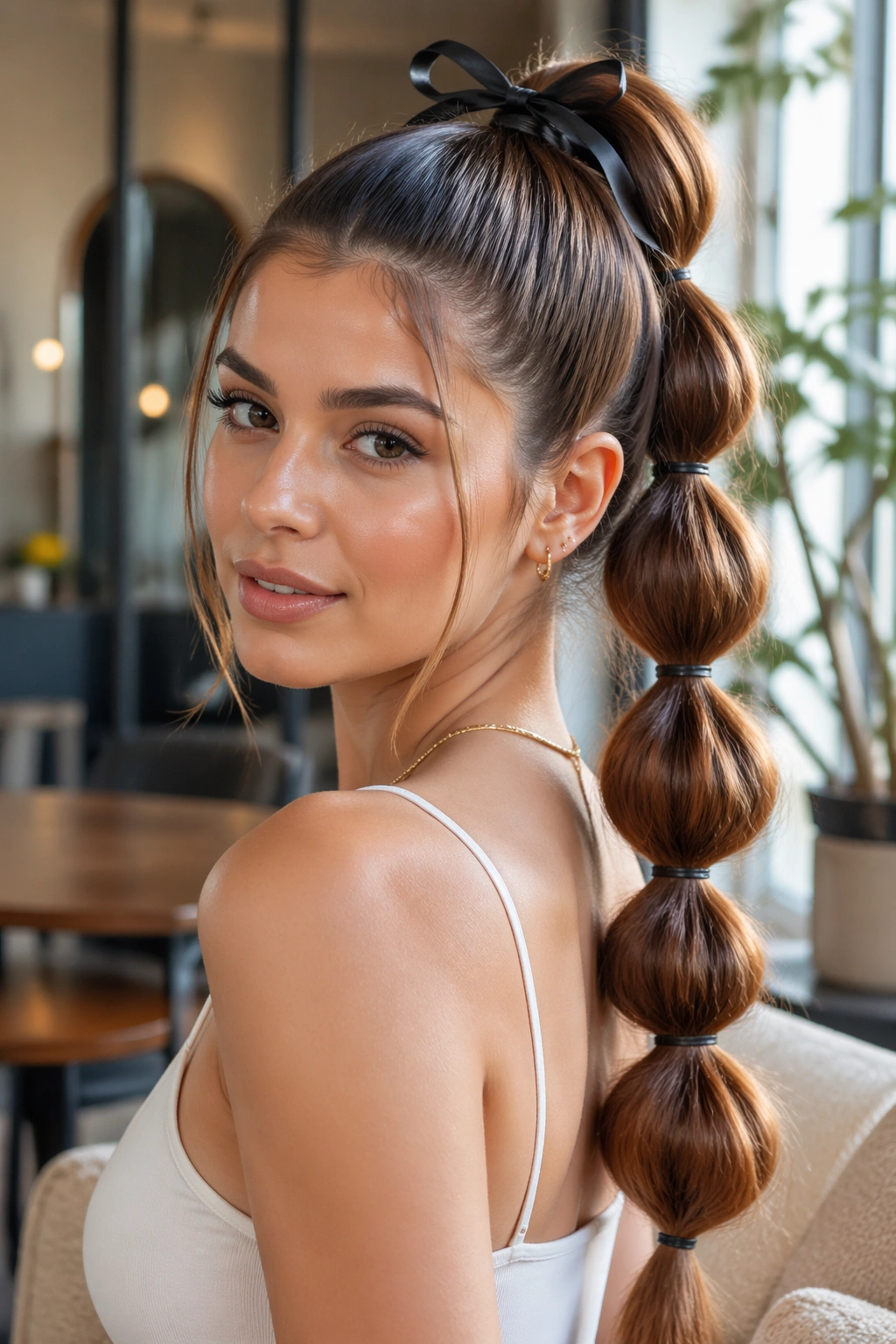
A bubble ponytail gives long hair a playful shape without asking for perfect curls or a lot of heat styling. You place small elastics every 2 to 3 inches down the length, then gently pull each section outward so it forms a soft bubble. On long hair, that shape looks fuller and more controlled than a straight tail.
This style works nicely when your hair already has some texture. Second-day hair usually behaves better than freshly washed hair, which can be too slippery. If the bubbles look flat, tug them out with the pads of your fingers instead of combing them. That keeps the shape soft.
A satin ribbon or a hidden wrap at the base gives the whole thing a more finished feel.
5. Fishtail Wrapped Ponytail
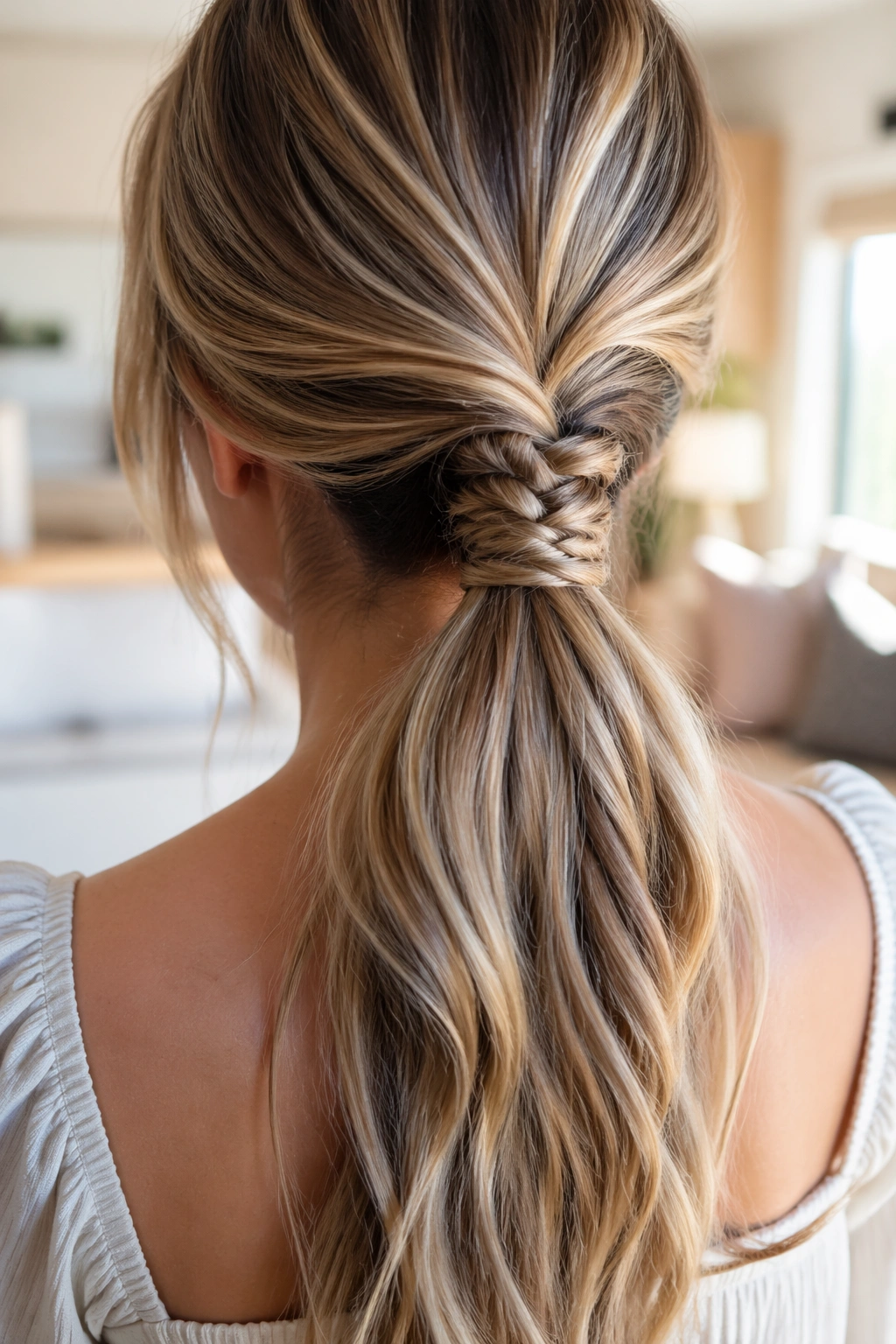
A fishtail braid brings in texture right away, and long hair gives you enough length to make the braid show. Start with a ponytail at the mid-back of the head, fishtail the tail, then wrap a strand around the elastic to hide the base. It looks intricate, but the structure is actually simple once your fingers get used to the pattern.
Longer hair makes fishtails easier to read. Shorter tails can disappear into the weave, but on long hair the braid has room to show off its thin, woven lines.
Keep the sections even, but do not stress about making it perfect. A slightly loose fishtail looks better than a tight one that turns narrow and flat.
6. Voluminous Teased High Ponytail
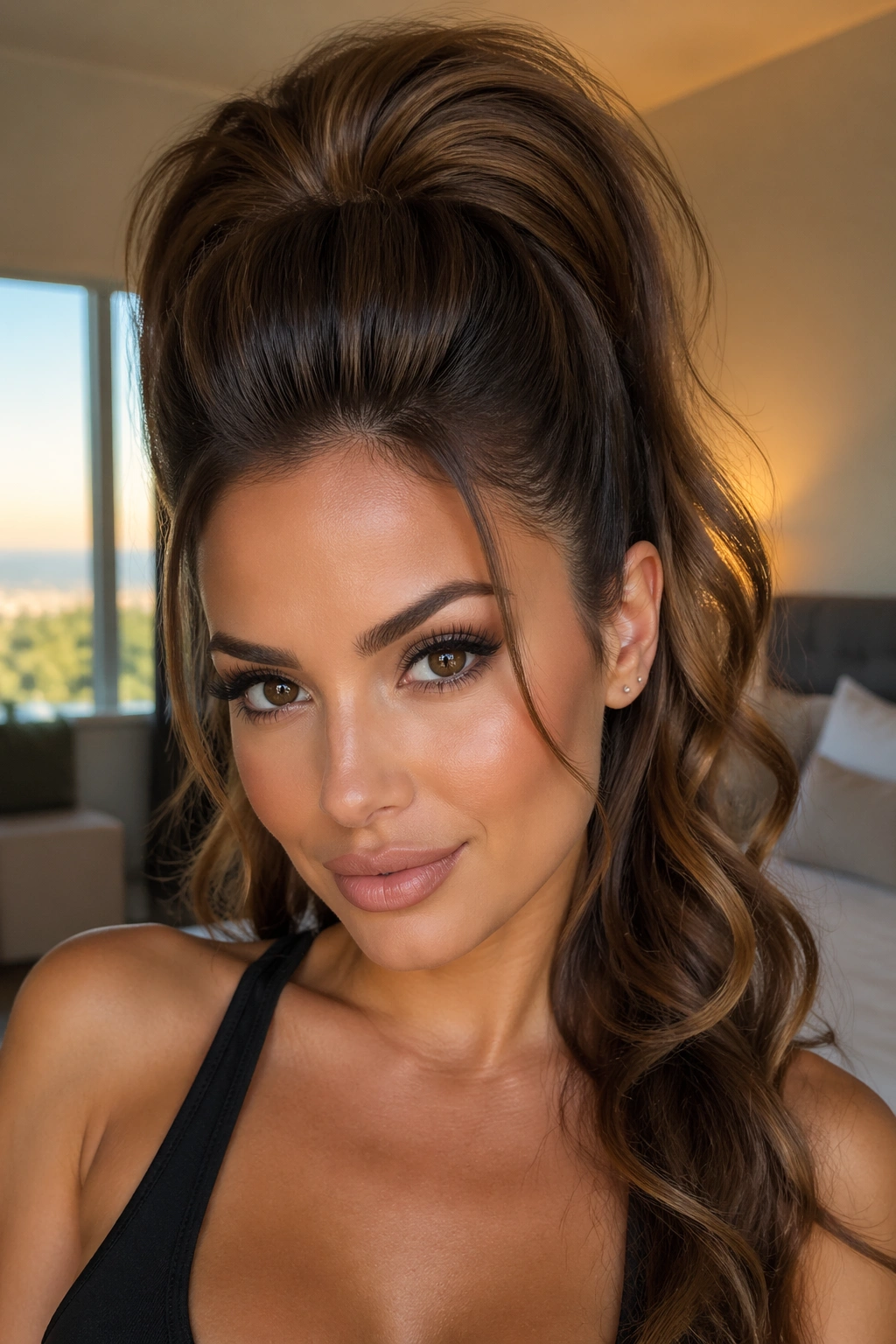
If you want height, start at the crown, not the ends. A voluminous high ponytail gets its shape from a bit of teasing at the roots, a smooth outer layer, and a ponytail that sits high enough to lift the whole face. Long hair makes this style look bold because the tail still has weight, even after the crown gets extra lift.
Backcomb a 1-inch section at the crown, smooth the top layer over it, then gather the hair high and tight. If the ends are thick, curl them with a 1-inch iron so they fall in loose bends rather than hanging straight down.
What matters most: don’t over-tease the crown. A small cushion of volume is enough. Too much and the style starts to look fragile.
7. Low Loop Chignon Ponytail
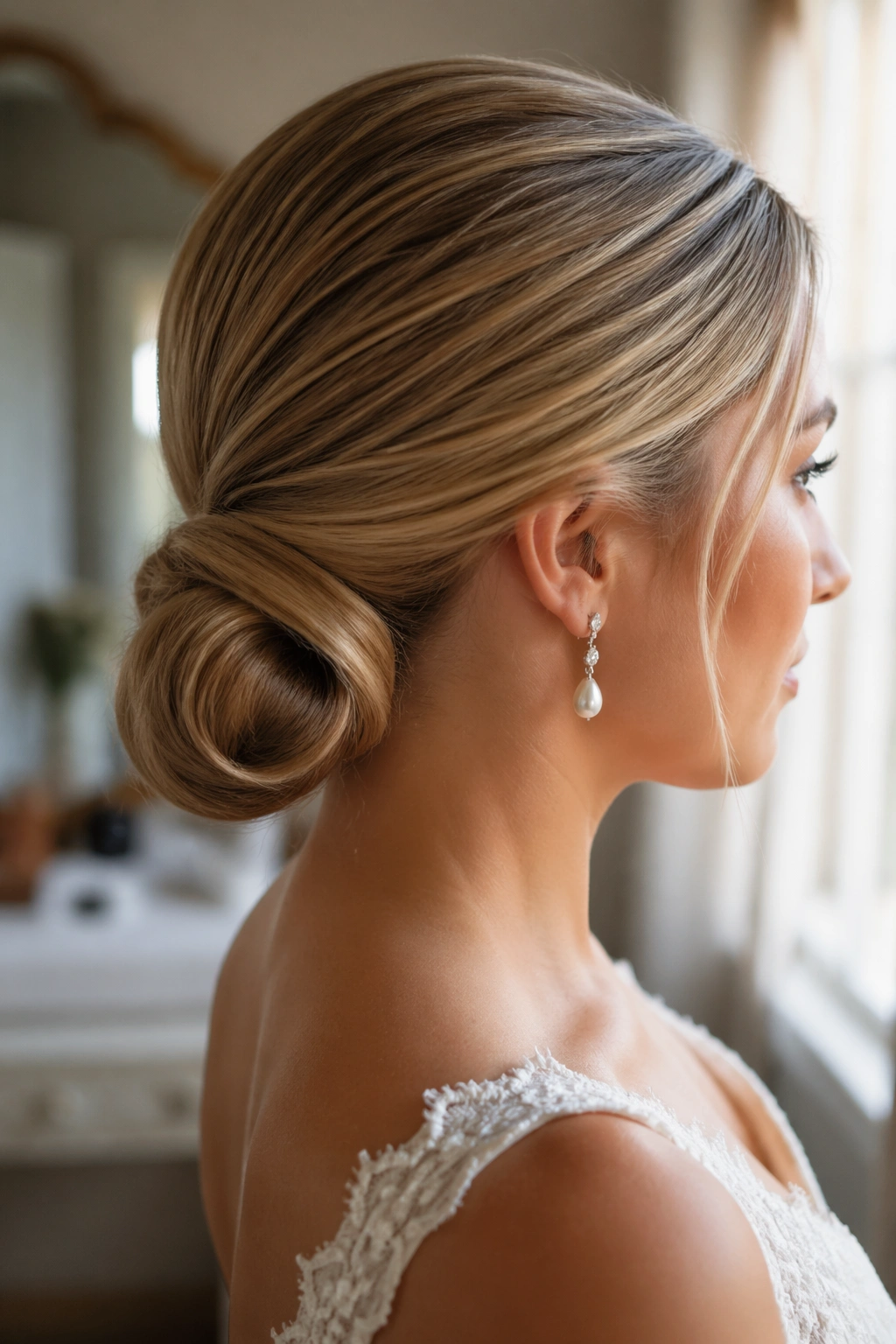
A low loop chignon ponytail sits right in the sweet spot between a ponytail and a bun. The hair is gathered low, folded through the elastic once so it forms a loop, then the ends are tucked into the base and pinned. On long hair, the loop can look rich and full instead of skimpy.
Best for formal events
This is one of the cleaner ponytail hairstyles for weddings, dinners, and dressy events because it keeps the neckline open and the hair controlled. It also pairs well with earrings, since the shape doesn’t compete with them.
Styling note
Use a comb to smooth the top before gathering. If you want a softer finish, leave a few face-framing pieces out and curl them with a barrel no wider than 1 inch.
8. Double-Braided Ponytail
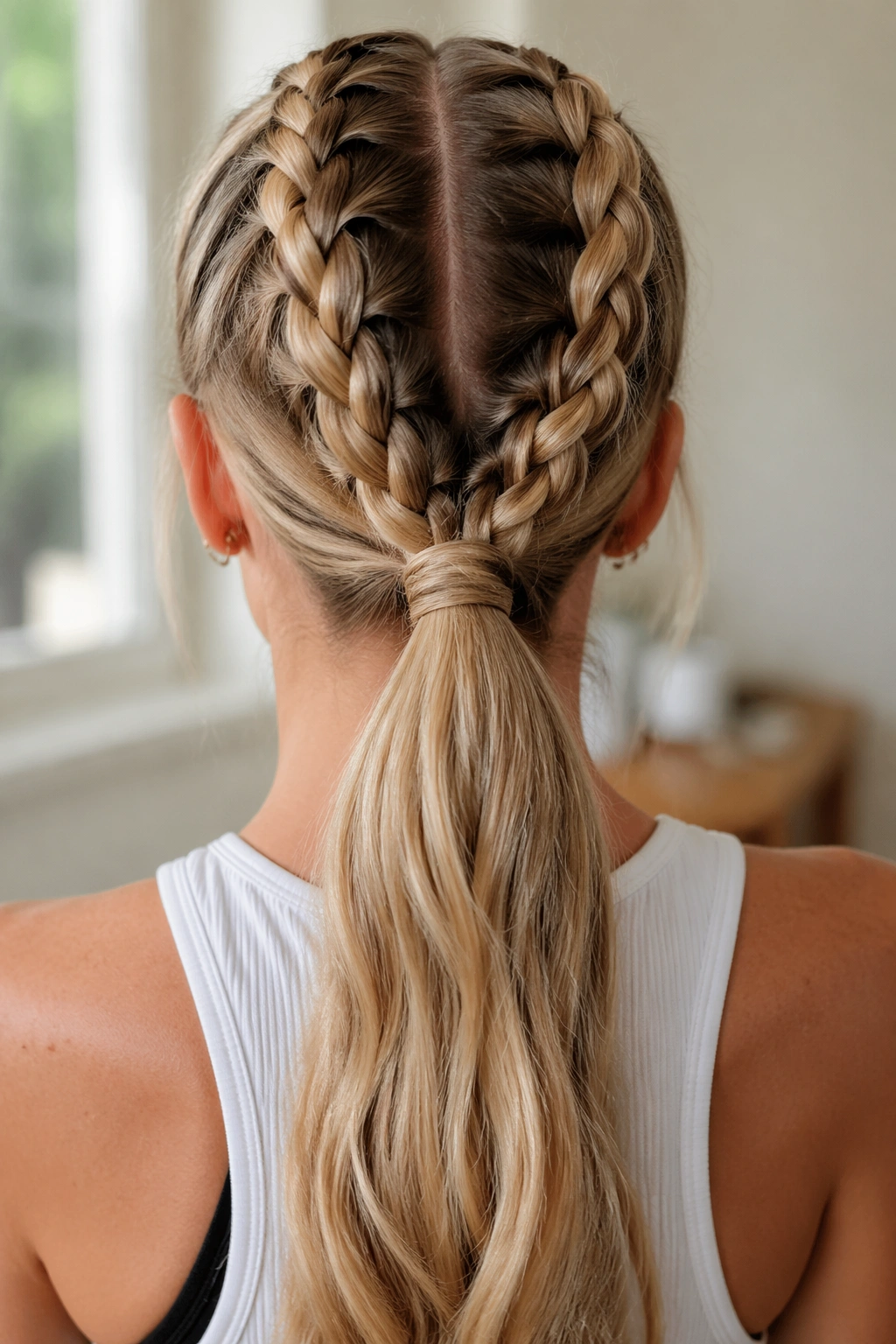
Two braids feeding into one ponytail give the whole style a little edge. You can braid the sides and bring them into a central tail, or start with a small braid on each side and let the rest of the hair flow into a ponytail at the back. Either way, long hair makes the braid lines more visible.
It feels sporty, but not lazy. That matters. A plain gym ponytail can look like an afterthought, while this version still looks deliberate if you’re wearing jeans, a blazer, or a casual dress.
Keep the braids fairly close to the scalp if you want a cleaner look. Leave them a touch looser if you want more softness around the face.
9. Messy Curled Ponytail Bun
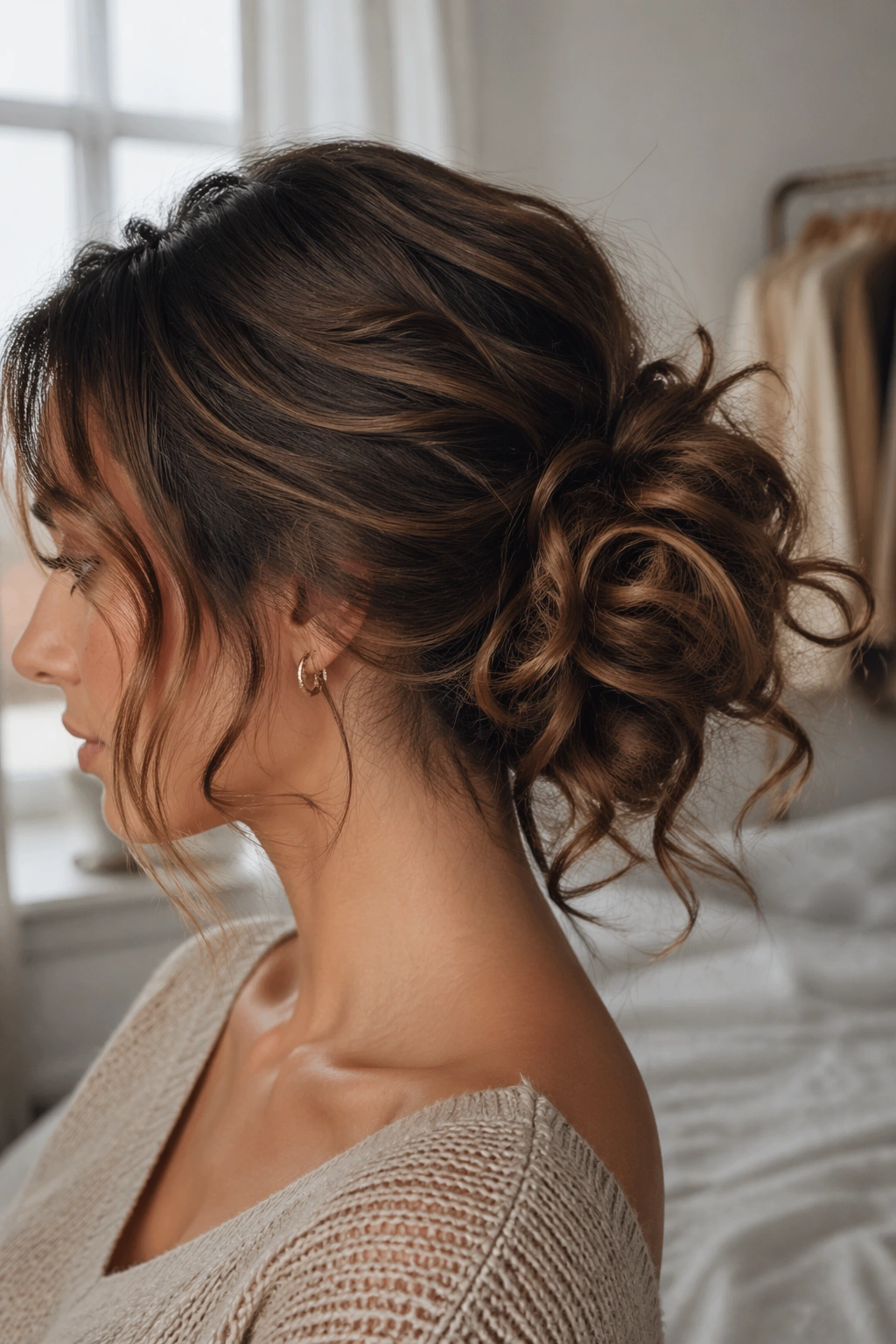
There’s a certain charm to hair that looks touched, not overworked. A messy curled ponytail bun uses loose curls, a low or mid ponytail, and a soft pin-up at the ends so the whole style has shape without feeling rigid. Long hair helps here because there’s enough length to build a fuller bun from the tail.
A quick way to make it work
Curl the hair in 1-inch sections, gather it loosely, then twist the tail into a soft bun and pin it at the base. Let a few ends spill out. That’s the point. You want movement, not a shellacked finish.
A little texture spray at the roots and through the mid-lengths keeps the curls from collapsing before you leave the house.
10. Rope-Braid Ponytail
Unlike a fishtail, a rope braid moves fast. You split the ponytail into two sections, twist each one in the same direction, then twist them around each other in the opposite direction. The result is clean, tight, and surprisingly elegant on long hair because the braid line shows from top to bottom.
This is a good style when you want structure but do not want to spend half an hour on your hair. It also holds up well in wind. The twist pattern keeps the tail from flaring out and tangling as much as a plain ponytail would.
If your hair is layered, secure the ends with a small clear elastic before the final wrap. That keeps the braid from unraveling.
11. Side-Swept Ponytail Updo
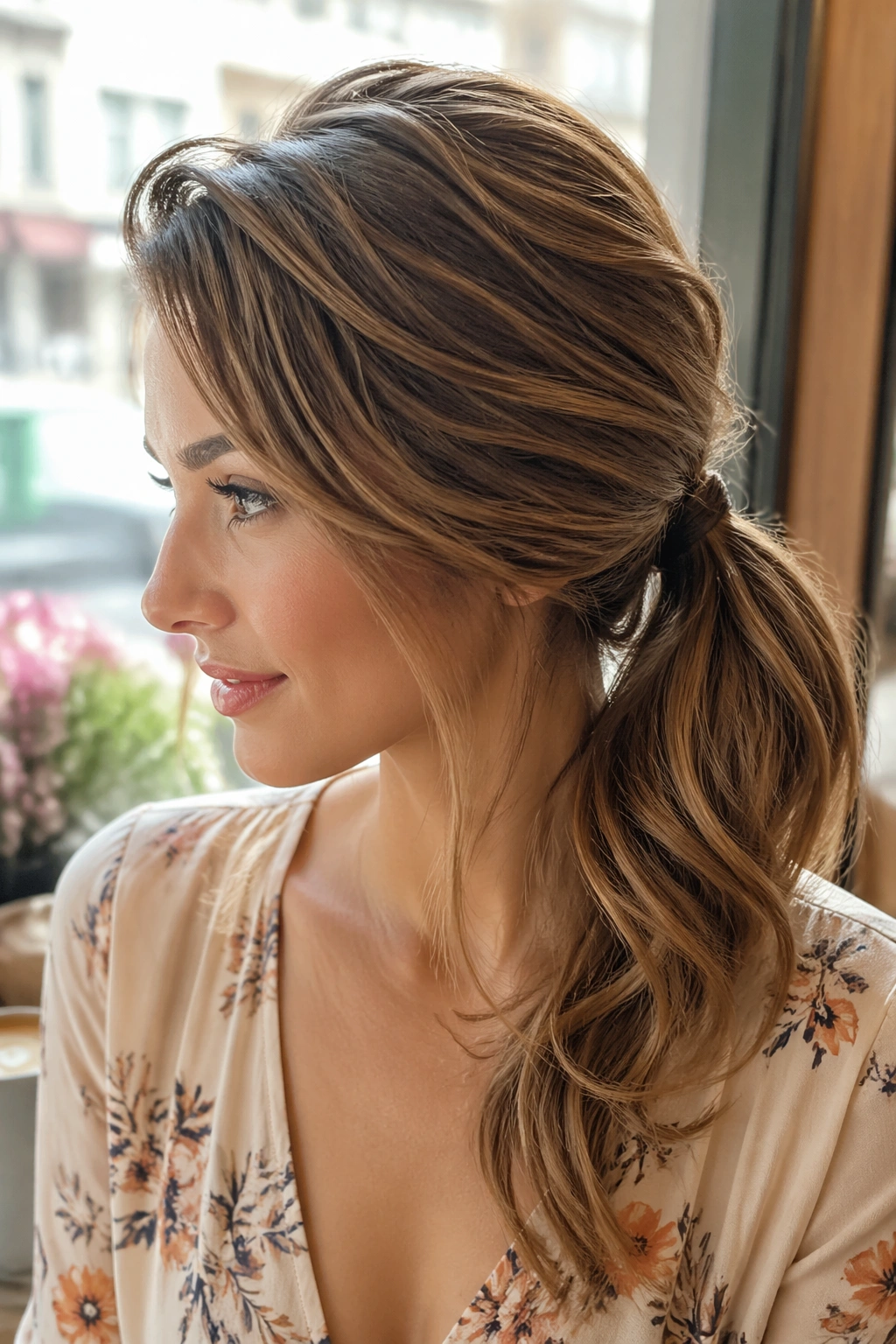
A side-swept ponytail changes the whole mood of long hair. Instead of going straight back, the hair is swept to one side, usually with a deep side part and some lift at the crown. The ponytail sits low behind one ear or just below it, which makes the style feel softer and a little more romantic.
A few bobby pins tucked under the heavy side help hold the shape. Long hair can drag this style down if you skip that step. The goal is a clean sweep, not a loose slide.
What to watch for
Keep one side smoother and the other slightly fuller. That contrast gives the style shape. If both sides are equally flat, the ponytail can look accidental.
12. Wavy Ponytail with Scarf Wrap
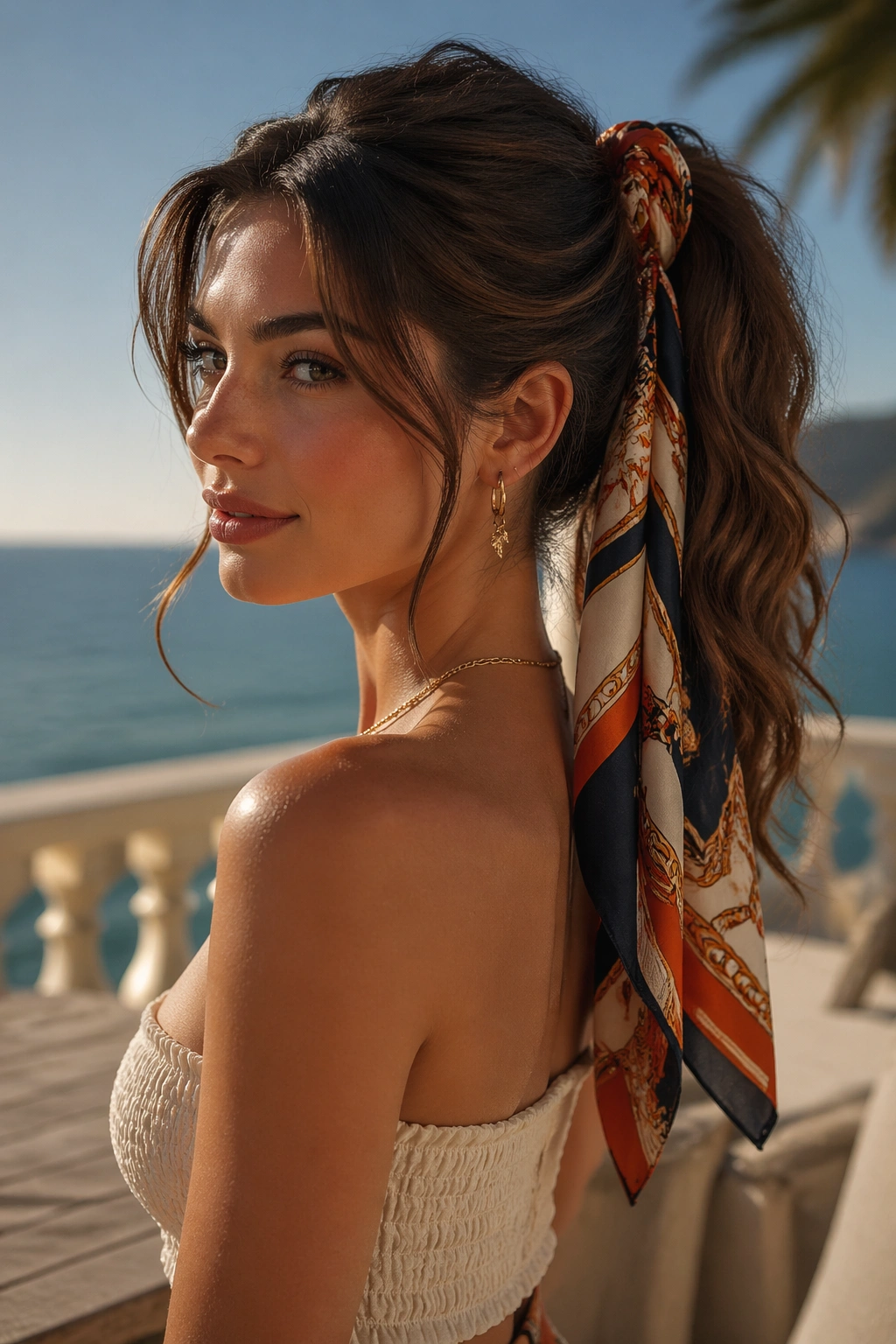
A silk scarf changes everything. Tie it around a ponytail base and suddenly the style has color, movement, and a little personality without needing much extra work. On long hair, the waves beneath the scarf make the ponytail look relaxed but not sloppy.
Second-day waves work especially well here. If your hair is too straight, bend the lengths with a large-barrel iron or a heatless wave method, then gather the hair low or mid-height. Wrap the scarf once around the base, knot it off to the side, and let the ends trail.
The scarf should feel like part of the style, not decoration tacked on at the end. Choose one with enough width to show, usually about 2 inches or more.
13. Crown-Twist Ponytail
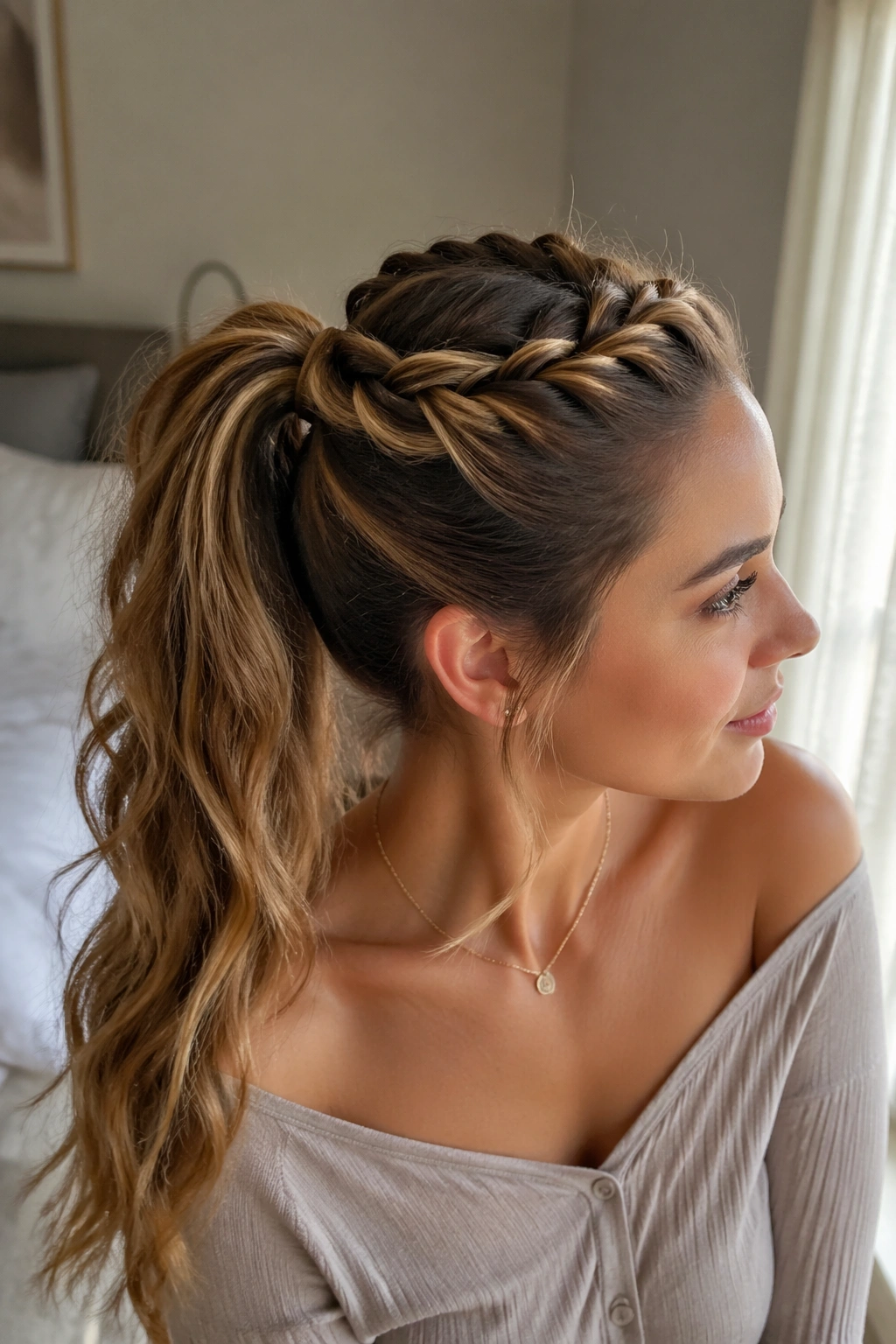
What if you want the front of the style to matter as much as the tail? A crown-twist ponytail does exactly that. Two sections from the front are twisted back along the head and joined into a ponytail, which gives the style shape before you even look at the length.
That front twist is useful on long hair because it controls flyaways and keeps the top from collapsing. It also gives the crown a little lift without teasing.
How to get the most from it
Twist each front section backward, pin it at the meeting point, then gather the rest into the ponytail. If the twists are too tight, they can pull hard at the temples. Keep them smooth, not strained.
14. Cornrow Feed-In Ponytail
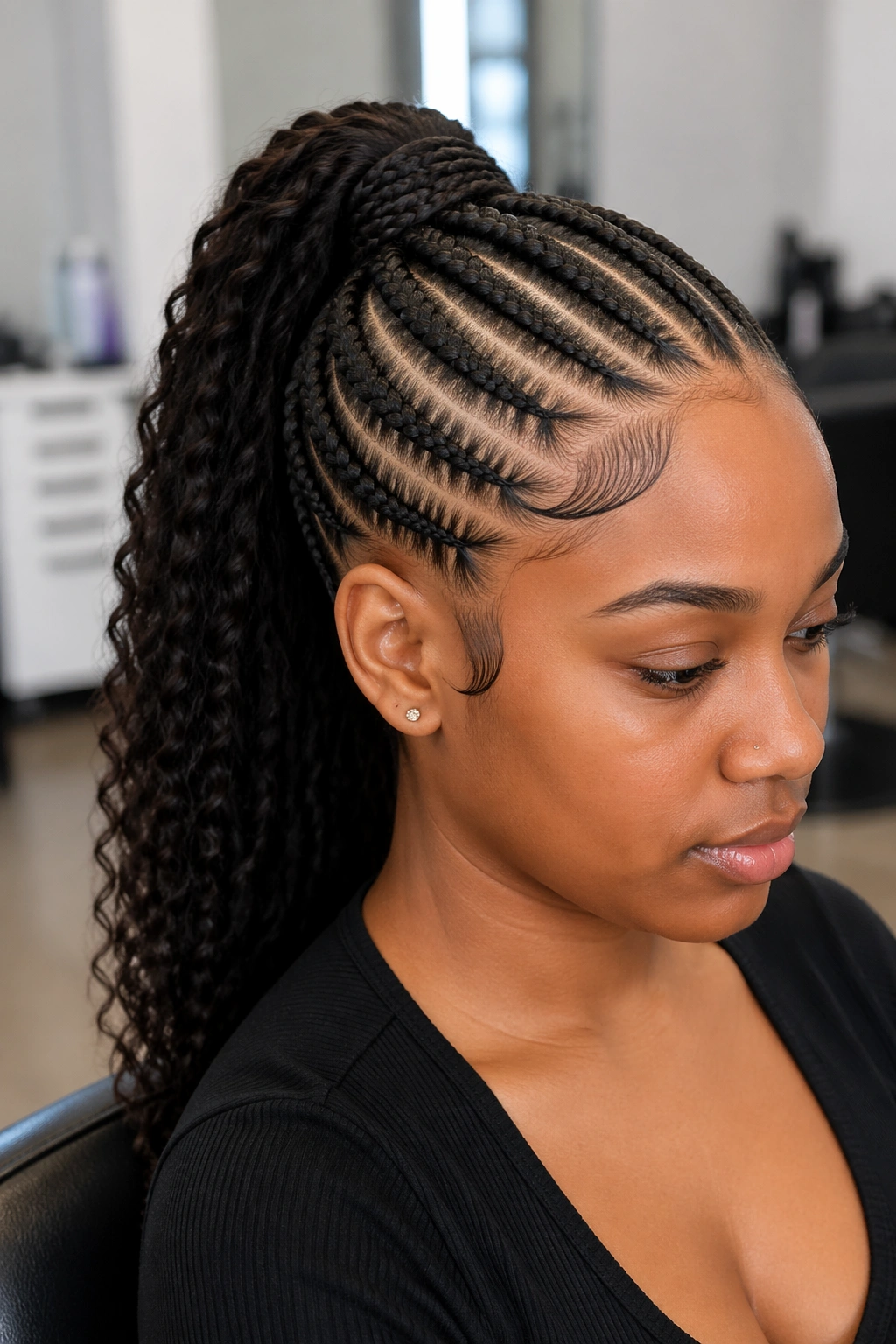
A feed-in ponytail built from cornrows has a strong, clean look that holds its shape for a long stretch. The braids move from the front or sides toward a ponytail base, and the long tail can be braided, curled, or left natural. It’s one of the most practical long hair ponytail hairstyles if you want your hair secured and off your face.
The scalp work matters here. Keep the tension firm enough to stay neat, but never painful. If the braids feel like they’re pulling at the hairline, they’re too tight.
Edge control, a rat-tail comb, and small sections make the finish cleaner. Long hair gives the tail enough weight to fall neatly instead of puffing out.
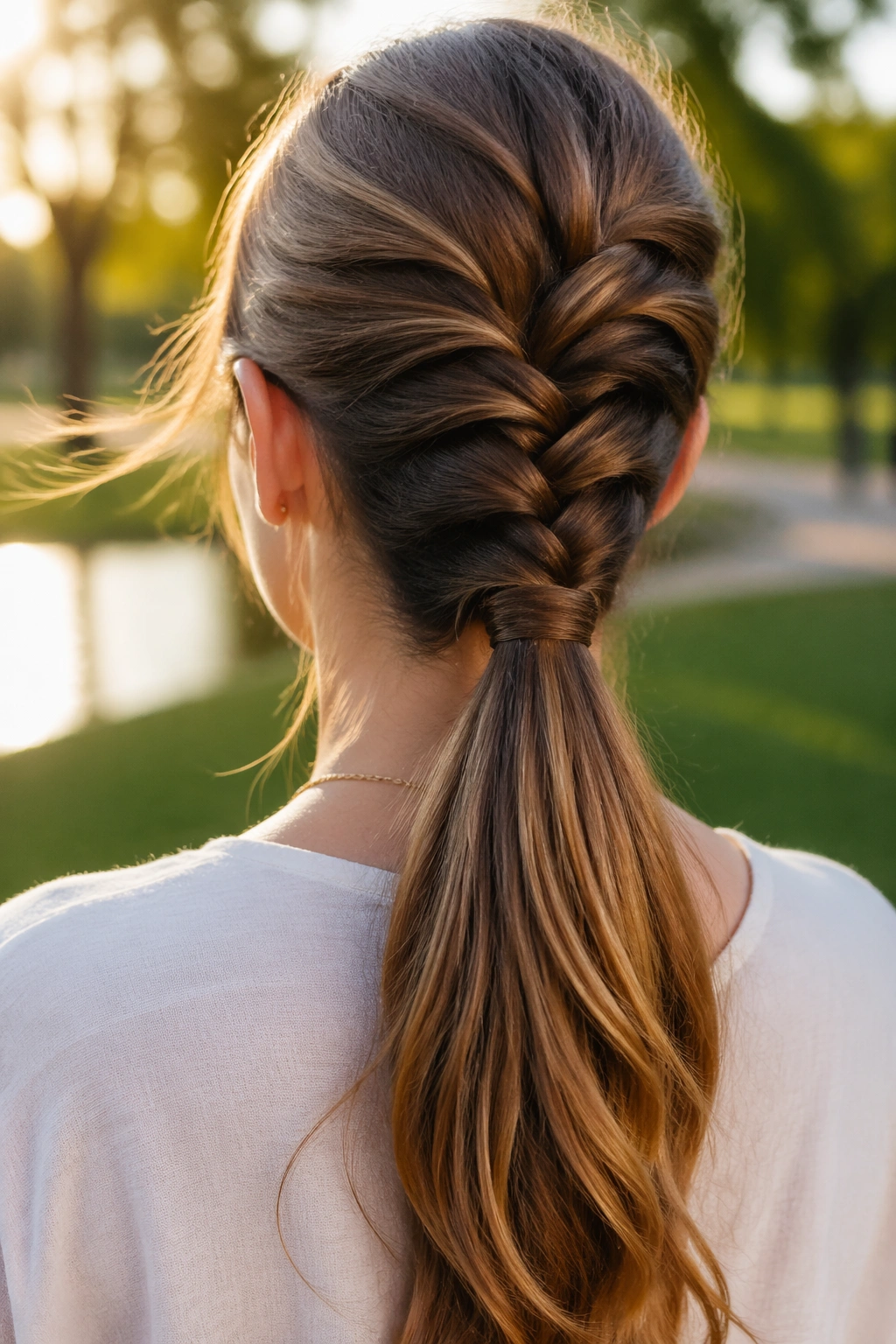
15. French Braid Ponytail
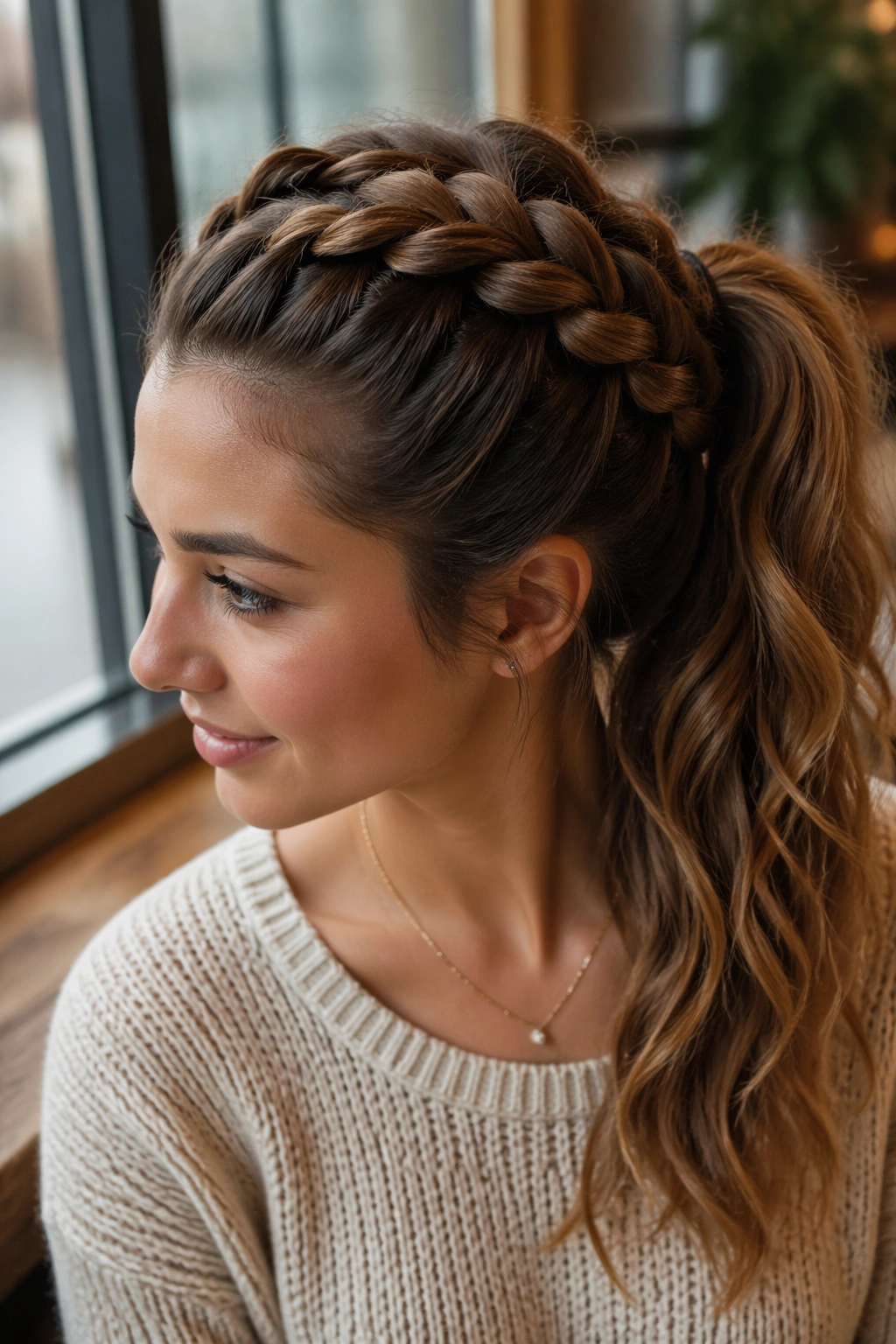
A French braid ponytail gives you two things at once: control up top and movement at the back. The braid starts near the crown, gradually picks up hair as it travels down, and then ends in a ponytail. On long hair, the transition from braid to tail looks intentional instead of abrupt.
What makes it different
A French braid sits flatter and more blended than a loose braid tied off at the back. That makes it useful when you want your hair secured close to the head but still want the tail to have length and swing.
This one works best with hair that has a little grip. If your strands are slippery, mist them first with dry texture spray or a light mousse.
16. Knotted Ponytail
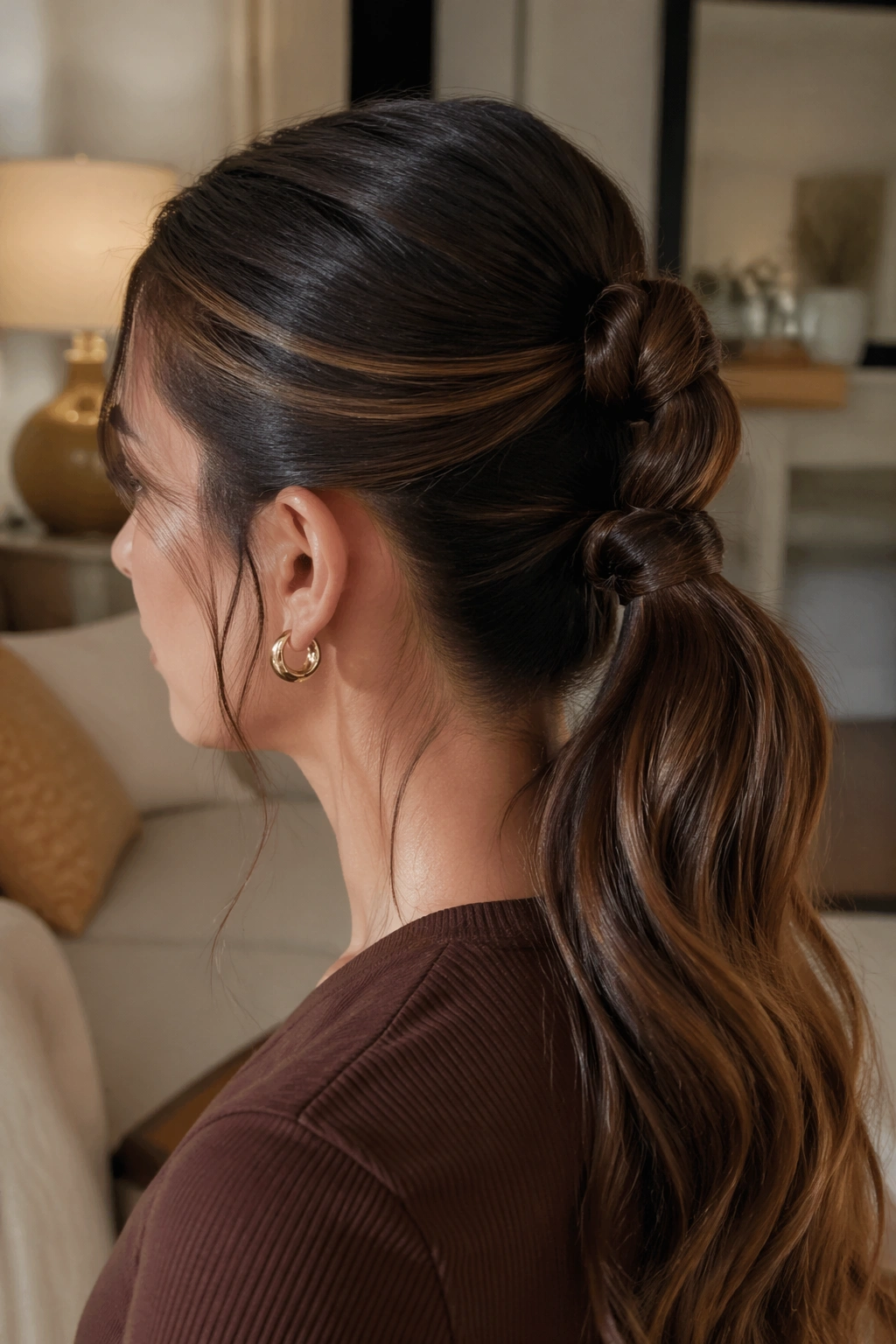
A knotted ponytail looks more complicated than it is. Hair is divided into sections, tied into one or two simple knots, and then secured into a ponytail or low updo shape. Long hair gives the knots enough material to look full instead of tiny and fussy.
The knot creates a nice break in the style. You get a visible detail in the middle, then a tail or tucked end below it. That makes the whole thing feel a little more styled than a standard tie-back.
- Keep the sections even if you want clean knots.
- Pull gently after the knot is tied so the shape sits flatter.
- Use small pins underneath if the hair slips apart.
A polished knotted ponytail is one of those styles that looks harder than it really is.
17. Dutch Braid Ponytail
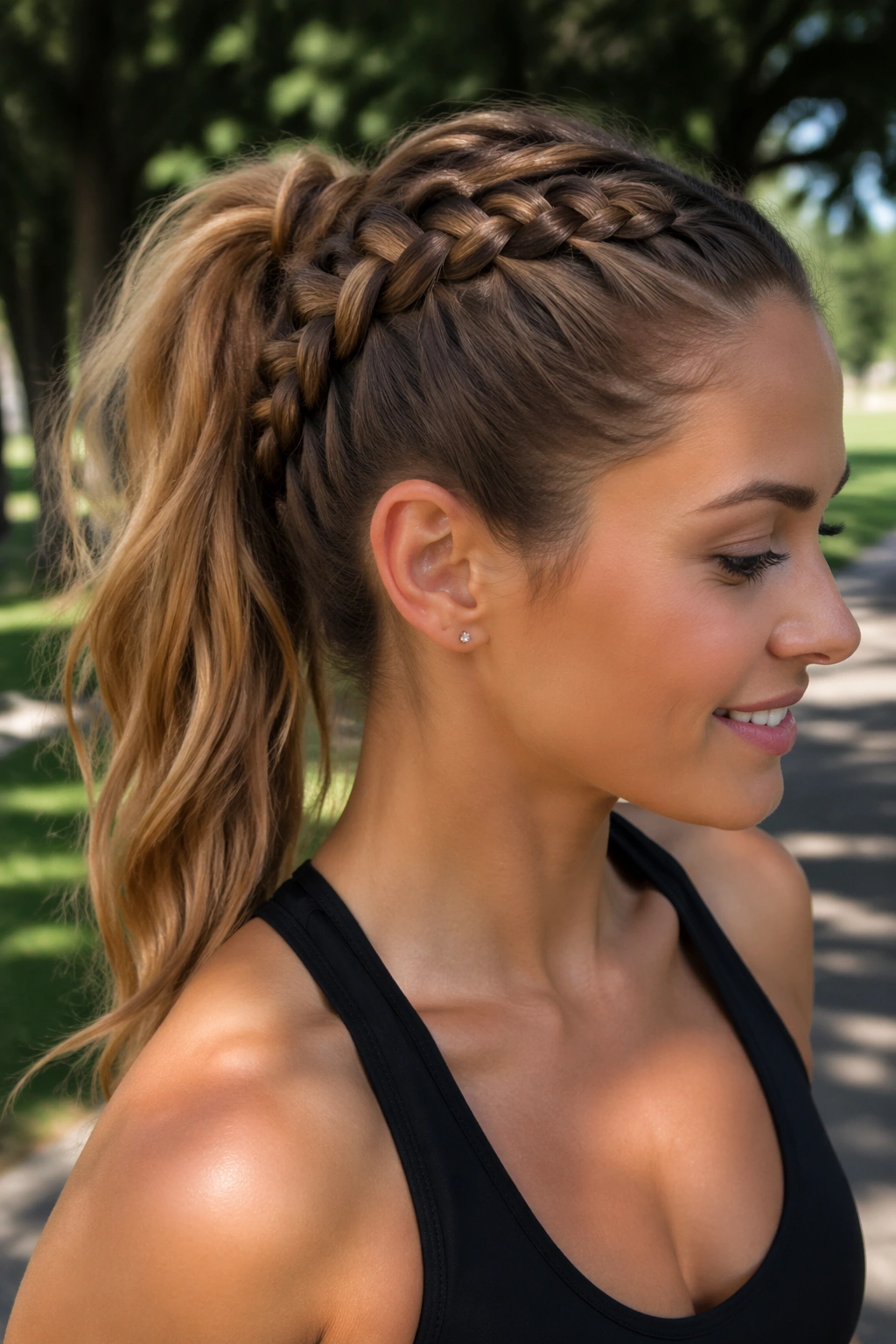
If you want the braid to stand out from across the room, use a Dutch braid. Instead of crossing hair over the middle, you cross it under, which makes the braid pop off the head. Feed it into a ponytail and the result is a style with built-in depth and a little edge.
Long hair helps the braid stay bold all the way down. Shorter lengths can vanish into the tail, but long lengths keep the lines visible. That matters if you want the braid to be part of the look rather than just a pre-step.
A Dutch braid ponytail is one of the strongest choices for thick hair, especially when you want the style to stay in place for hours.
18. Low Bubble Ponytail
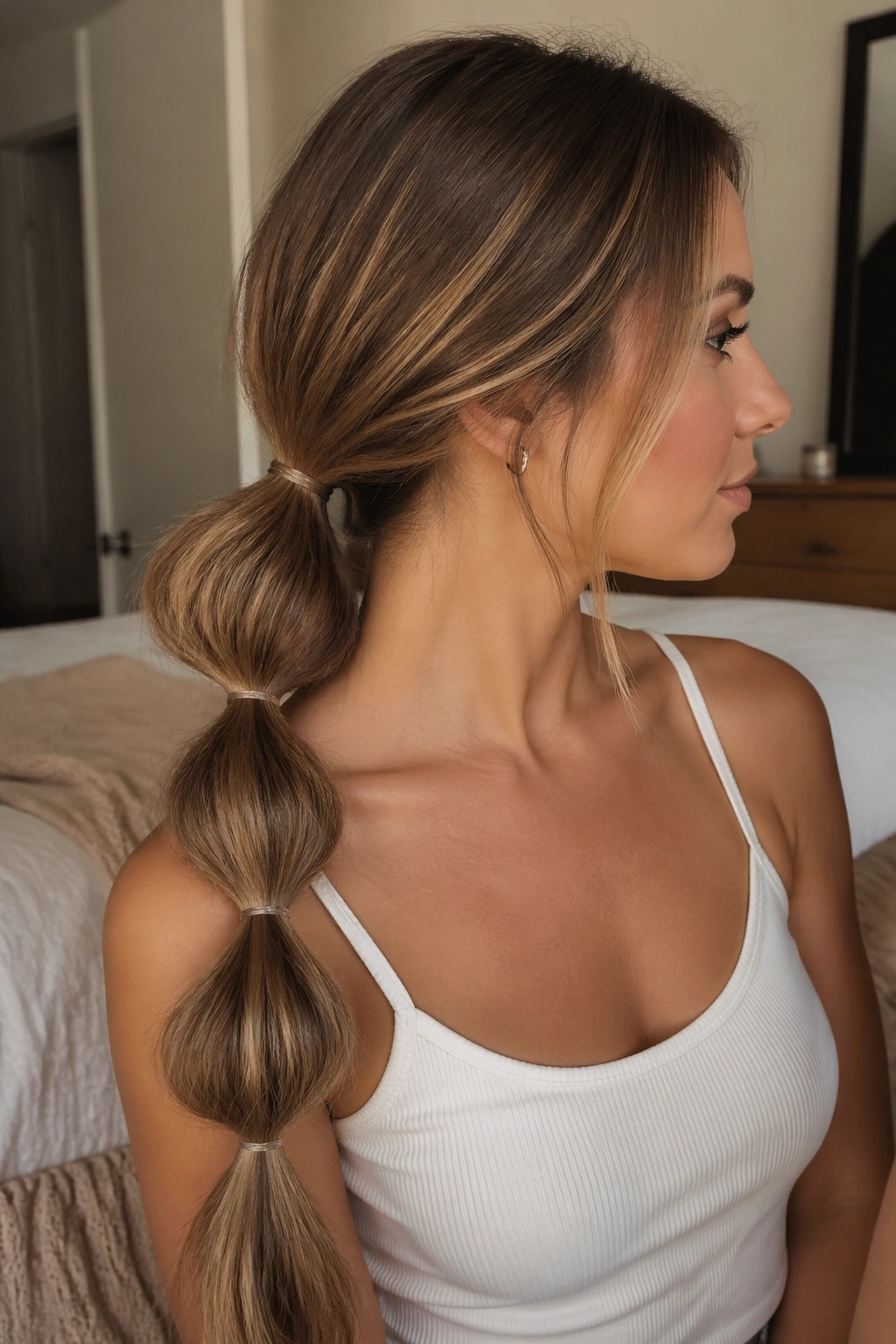
A low bubble ponytail feels softer than the high version. The base sits near the nape, the elastics create rounded sections down the tail, and the whole style looks a little more relaxed. On long hair, the bubbles have room to puff without turning lumpy.
This works well with hair that has body. If your hair is fine, tease each section lightly before pulling it into a bubble. Just a little. Too much teasing and the style starts to look rough.
A small styling rule
Keep the spaces between elastics even, around 2 to 3 inches, so the bubbles line up cleanly. Uneven spacing makes the tail look accidental, and long hair shows that kind of thing fast.
19. Curled-End Ponytail Bun
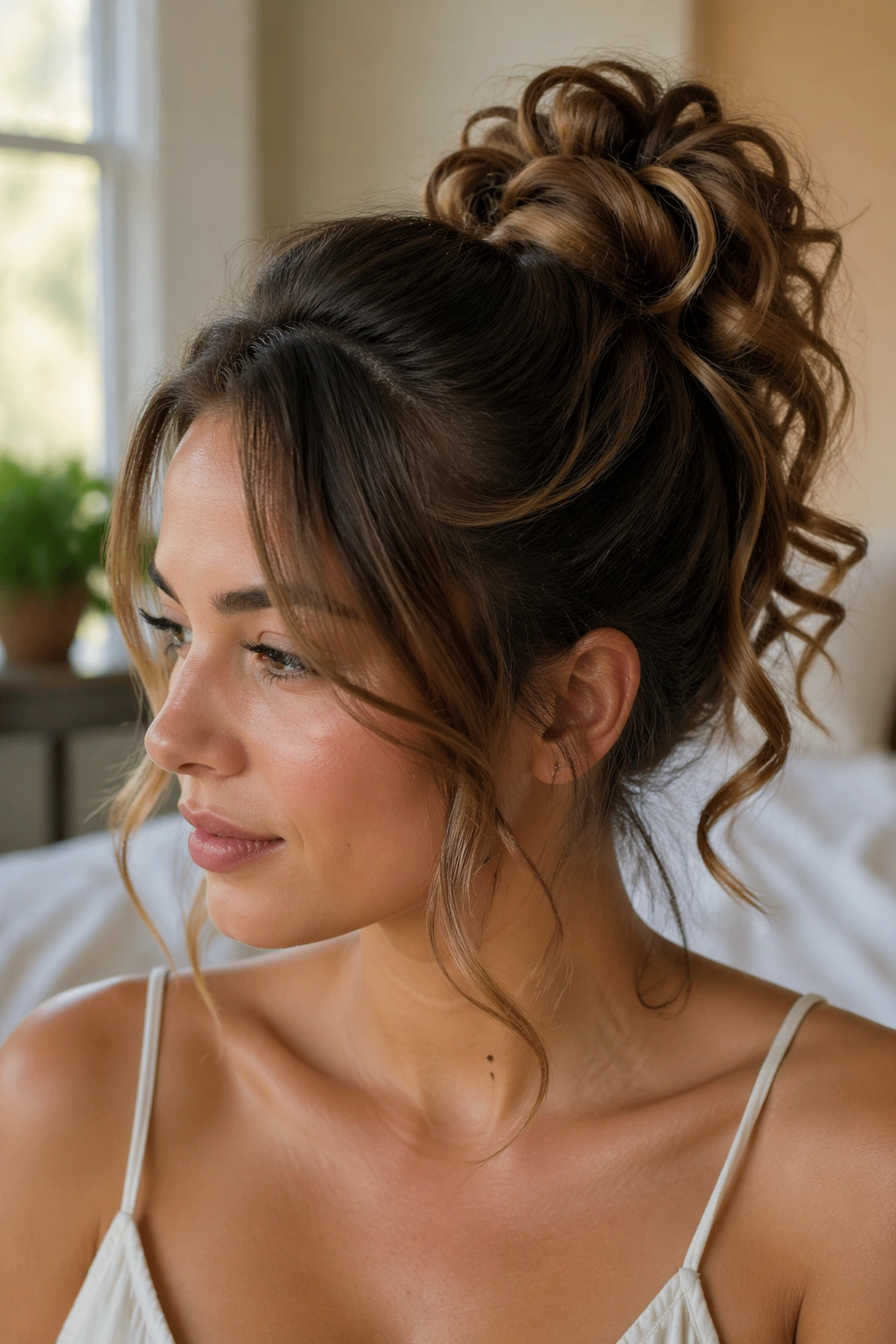
A curled-end ponytail bun lets the ends do the talking. The hair is gathered into a ponytail first, then the ends are curled in sections and pinned into a loose bun shape. Instead of a tight donut, you get soft coils that give the updo a little movement.
This style suits long hair because the length gives you more curls to work with. A few larger curls can be pinned inward while smaller pieces are left to frame the bun. It does not need to look exact. In fact, exact can make it feel stiff.
Use a medium-hold spray after pinning so the curls keep their shape without turning crunchy.
20. Braided Mohawk Ponytail
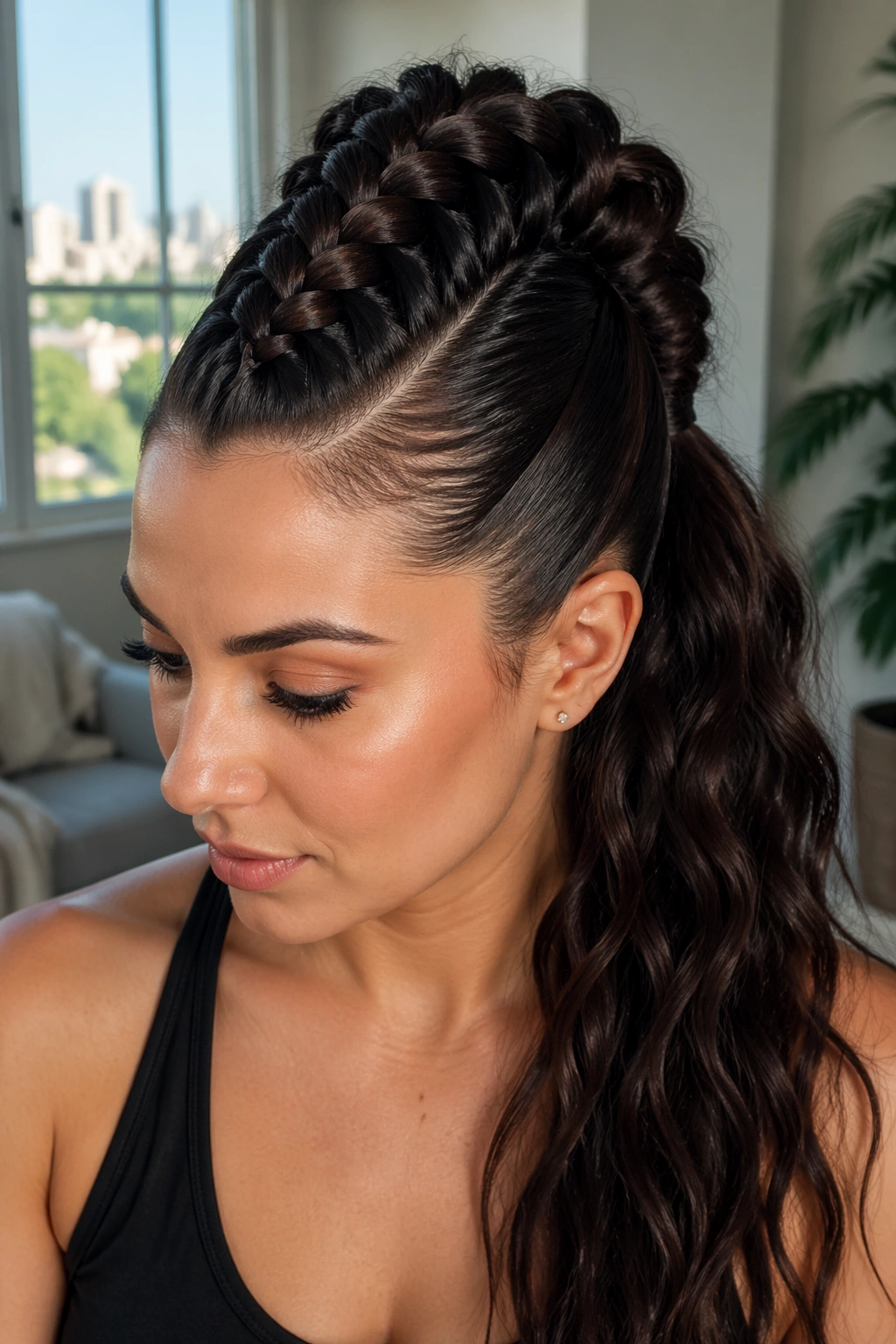
This one lives between edgy and polished. The sides are smoothed back or braided tight, the center section is braided or twisted in a raised line, and the rest of the hair drops into a ponytail. Long hair makes the mohawk shape more dramatic because the tail can be long and thick enough to balance the top.
It’s a strong choice if you want something with personality. The center braid pulls the eye upward, while the tail keeps the style from feeling too severe.
- Slick the sides with a small amount of gel or cream.
- Keep the center braid tight and straight.
- Let the ponytail stay slightly textured so it doesn’t feel overworked.
21. Wrapped Ponytail with Pins
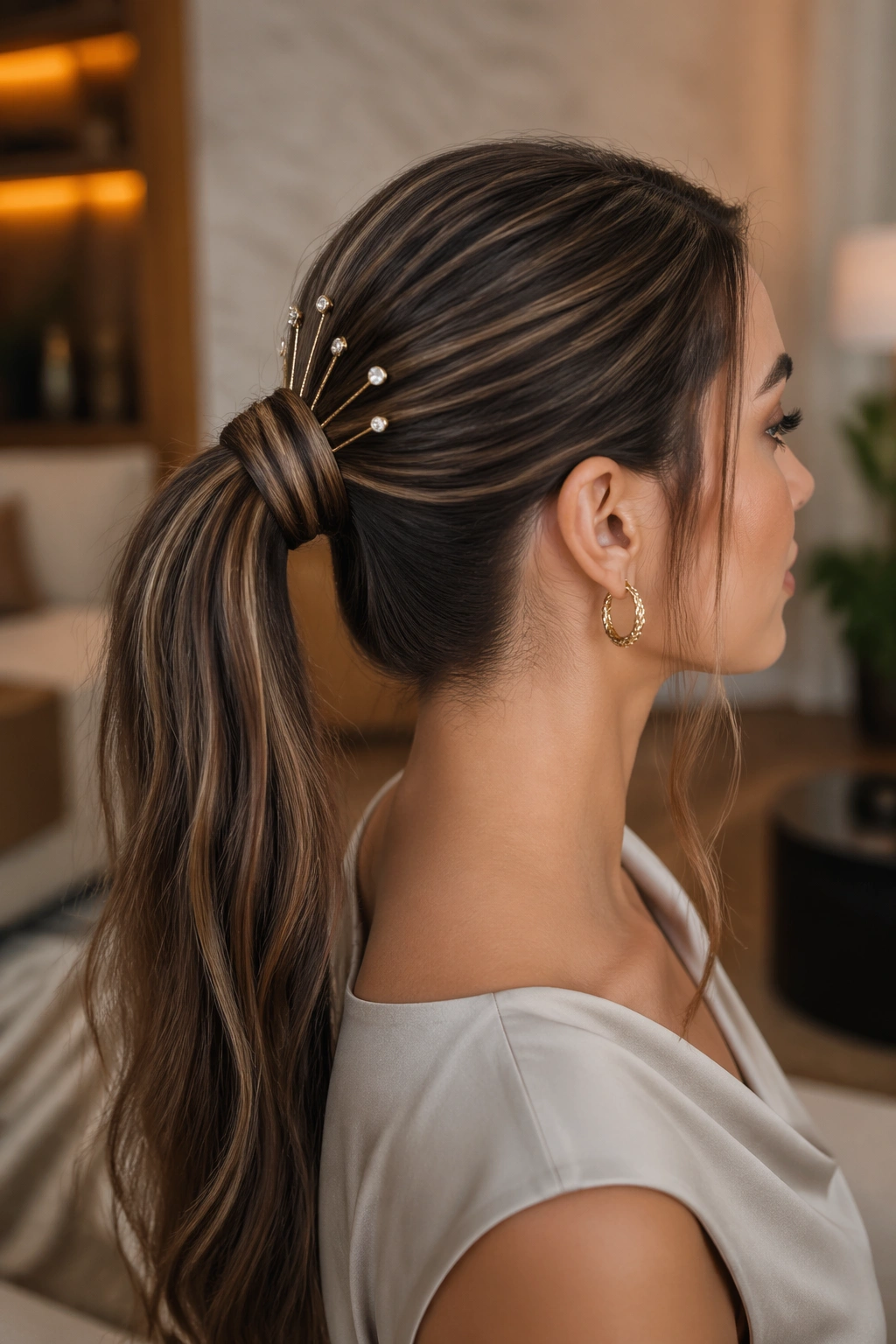
A wrapped ponytail is all about the finish. The hair is gathered into a base, a thin section is wrapped around the elastic, and decorative pins are placed in the wrap or near the base. On long hair, that tiny detail does a lot because the tail already has enough length to look substantial.
What makes this version useful
It’s one of the easiest ways to make a ponytail look dressed up without changing the whole shape. You can use gold pins, pearl pins, or plain matte ones depending on the outfit.
Keep the pins spaced out instead of clustering them. Three to five pieces usually looks deliberate. Too many and the base starts to feel crowded.
22. Soft Romantic Ponytail Chignon
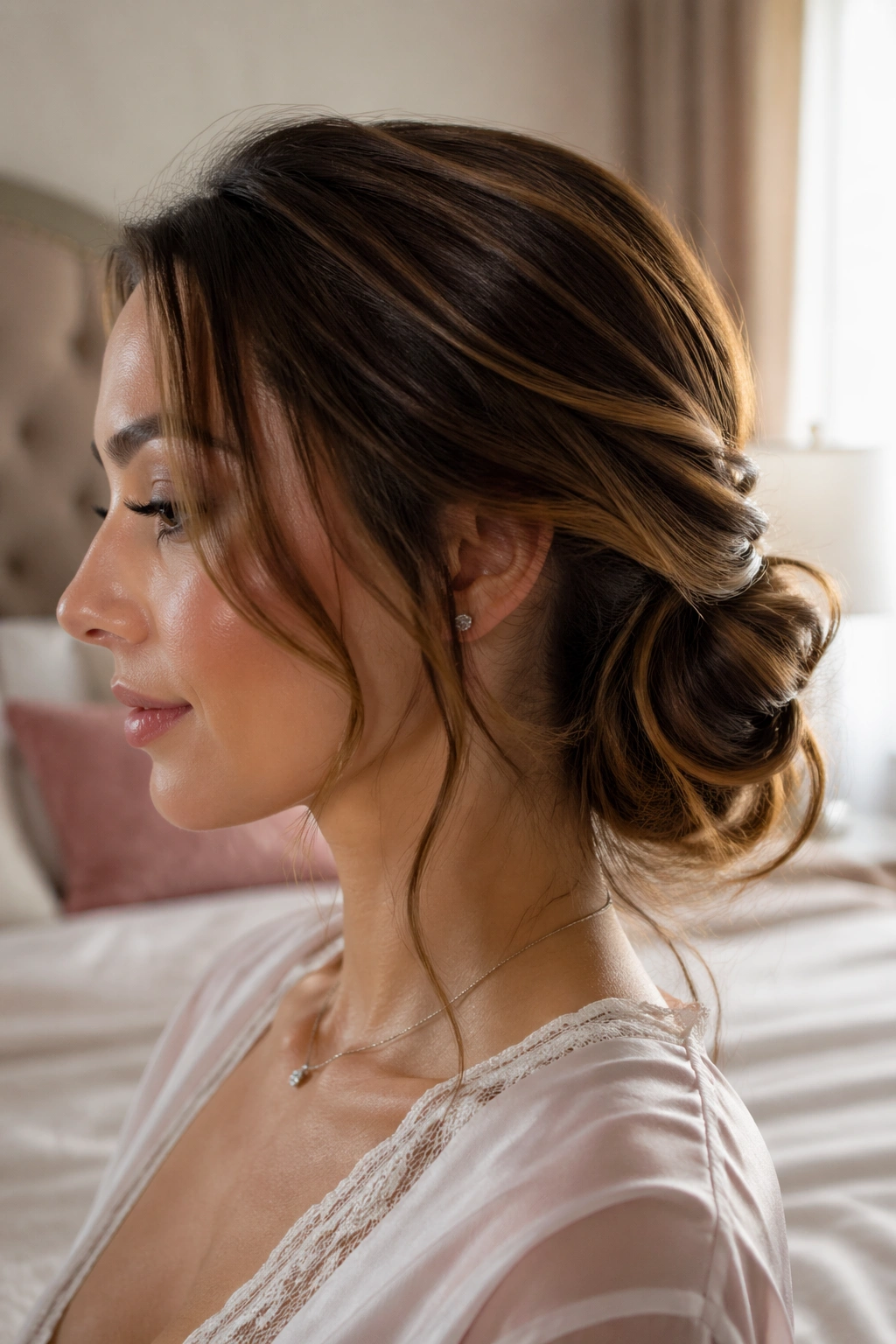
Can a ponytail feel soft instead of structured? Absolutely. A romantic ponytail chignon sits low, leaves a few face-framing pieces out, and tucks the length into a loose knot or fold that reads more gentle than formal. Long hair helps the style look full, even when it’s not tightly pulled.
The charm here is in the looseness. You want the top smooth enough to look intentional, but the ends can stay loose and curved. A curling iron with a 1¼-inch barrel gives the face-framing pieces a relaxed bend.
Best for softer outfits
This shape pairs well with dresses, knit tops, and anything with a lower neckline. It keeps the hair away from the face without making the whole look feel severe.
23. Mid-Ponytail Flip Base
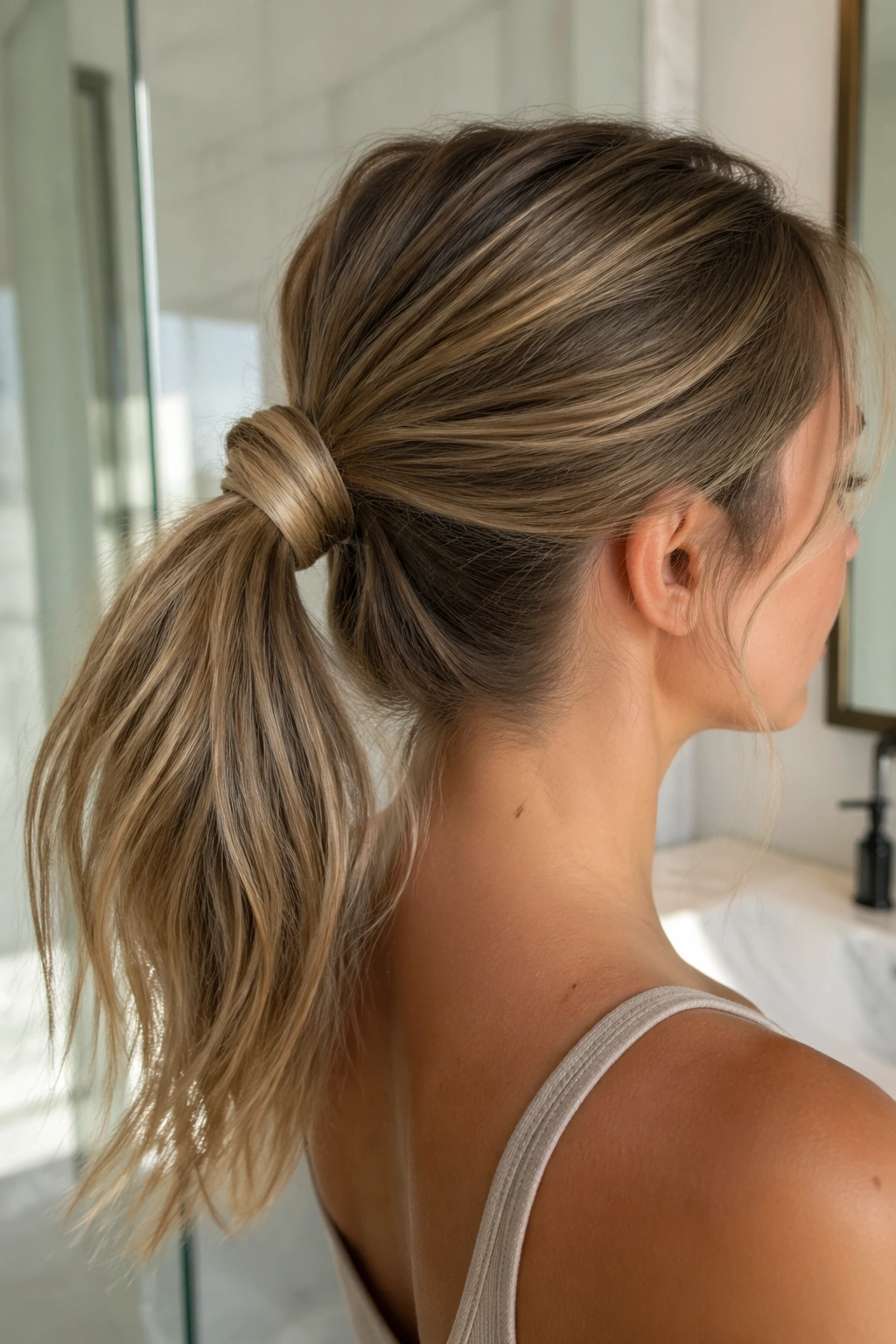
The flip-base ponytail is a tidy little trick that gives long hair lift without heavy teasing. The hair is tied at mid-height, the tail is split, and the length is flipped through the space above the elastic so the base turns inward. It’s simple, and that’s the appeal.
Long hair makes the flipped section look fuller because there’s enough length to create a clean loop. If the tail is layered, the flip can look a little softer and less rigid, which helps if you like movement.
- Tie the ponytail with a strong elastic first.
- Make a small opening above the elastic.
- Flip the tail through once and smooth the result.
It’s a tidy move that works fast.
24. Triple-Twist Ponytail
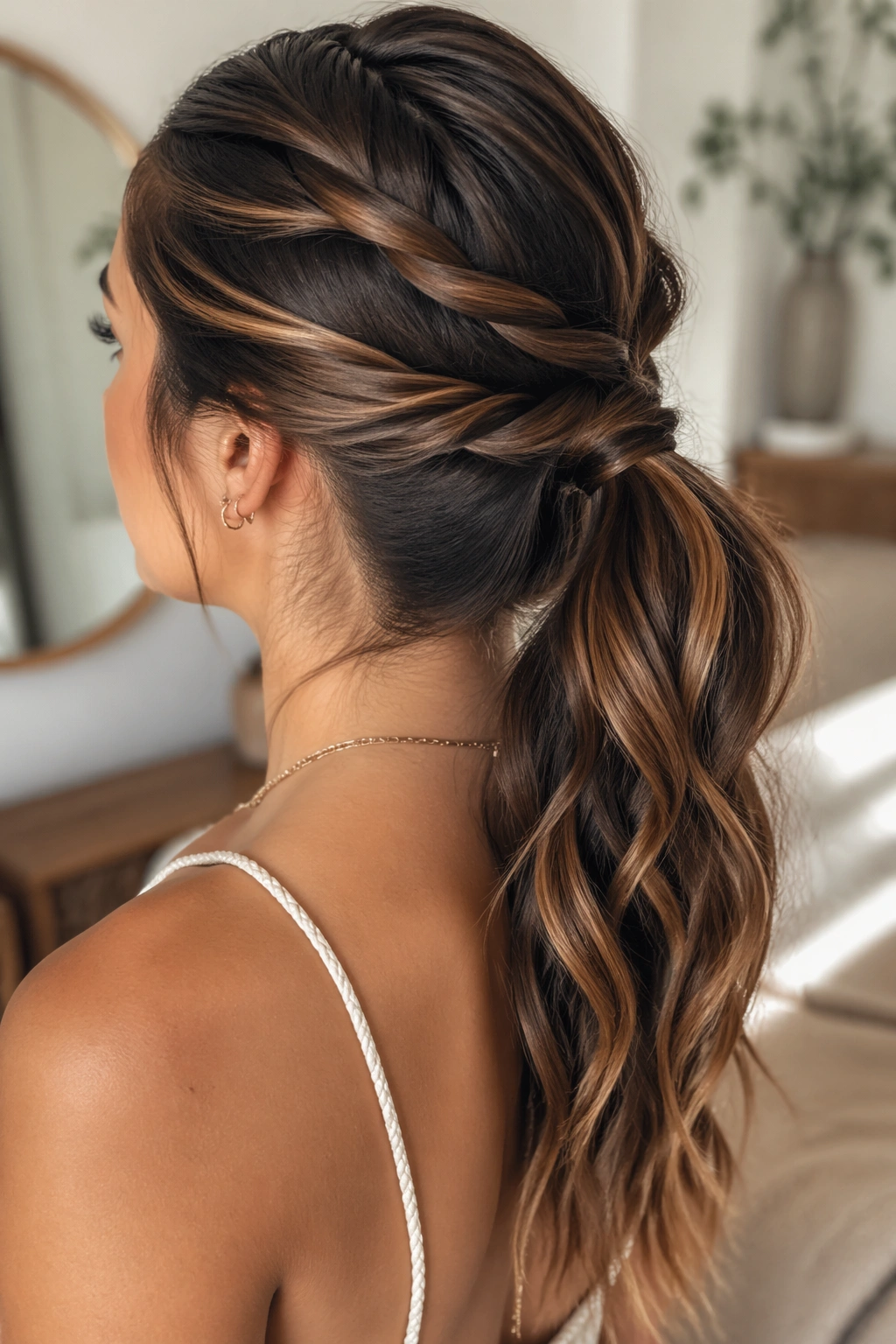
Three twists can do a lot more than one braid when you want shape without heaviness. Divide the hair into three sections, twist each section, then bring them together into a ponytail or a low tucked updo. Long hair gives the twists enough length to show, which matters here because the pattern is the point.
This style is useful when your hair wants to split or frizz. The twists keep the lengths controlled while still letting the tail move. If you want a softer look, loosen the outer edges a little after tying.
A small clip at the base can help hold the twist pattern in place before you pin it. That tiny bit of support keeps the style from collapsing mid-day.
25. Pearl-Accent Ponytail Updo
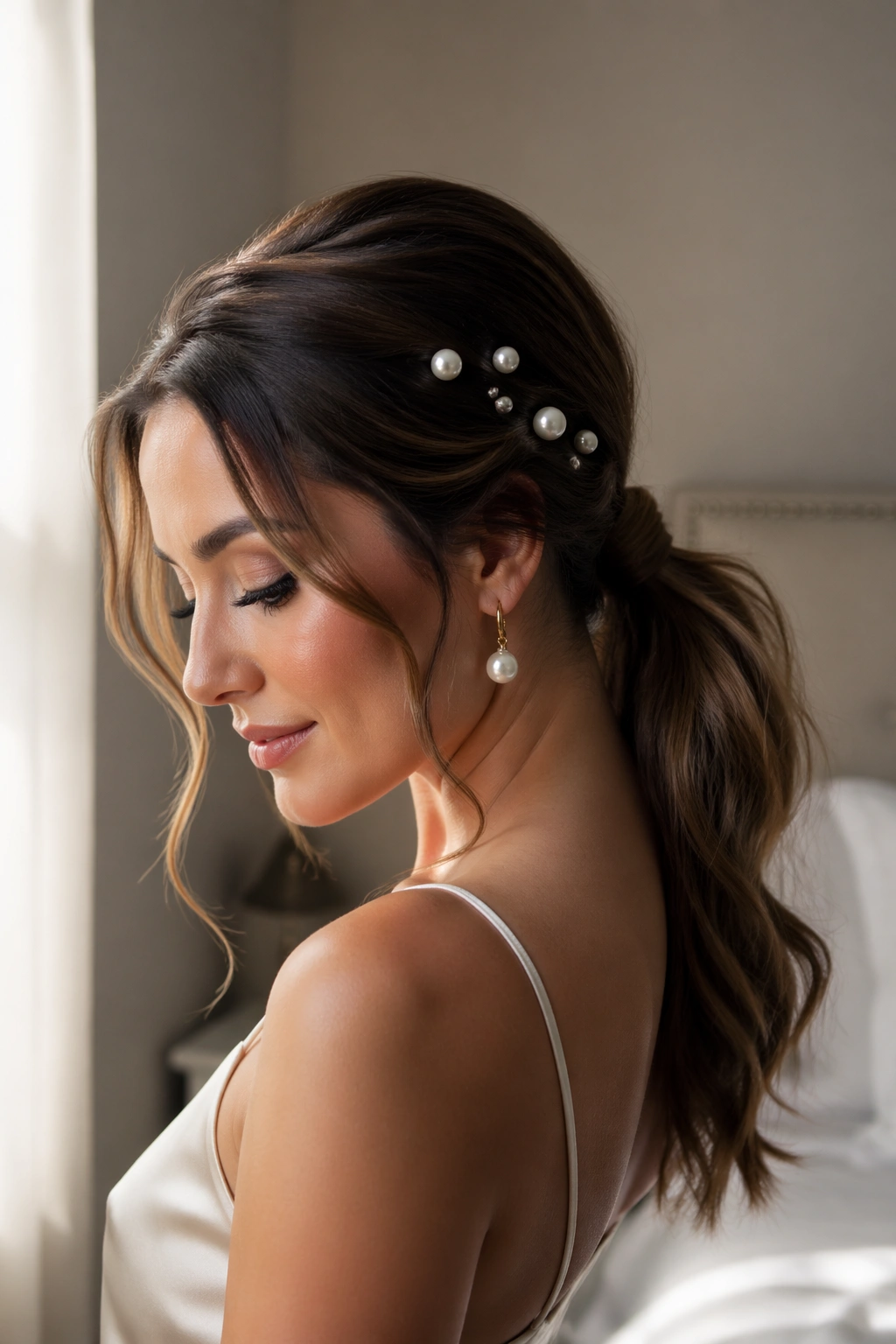
Pearl accents can change a ponytail from simple to dressy in seconds. A low or mid ponytail with a wrapped base gives you a clean canvas, and a few pearl pins or clips add detail without making the style heavy. Long hair helps the look because the tail still carries enough length to keep the style from feeling tiny.
How to place the accents
Put the pearl pieces near the wrap or along one side of the base. Keep them slightly uneven so the placement feels natural. A straight row can look stiff.
Do not overdo it. Three to seven accents usually reads better than a whole cluster. The goal is a touch of shine, not a costume effect.
26. Tucked Ribbon Ponytail
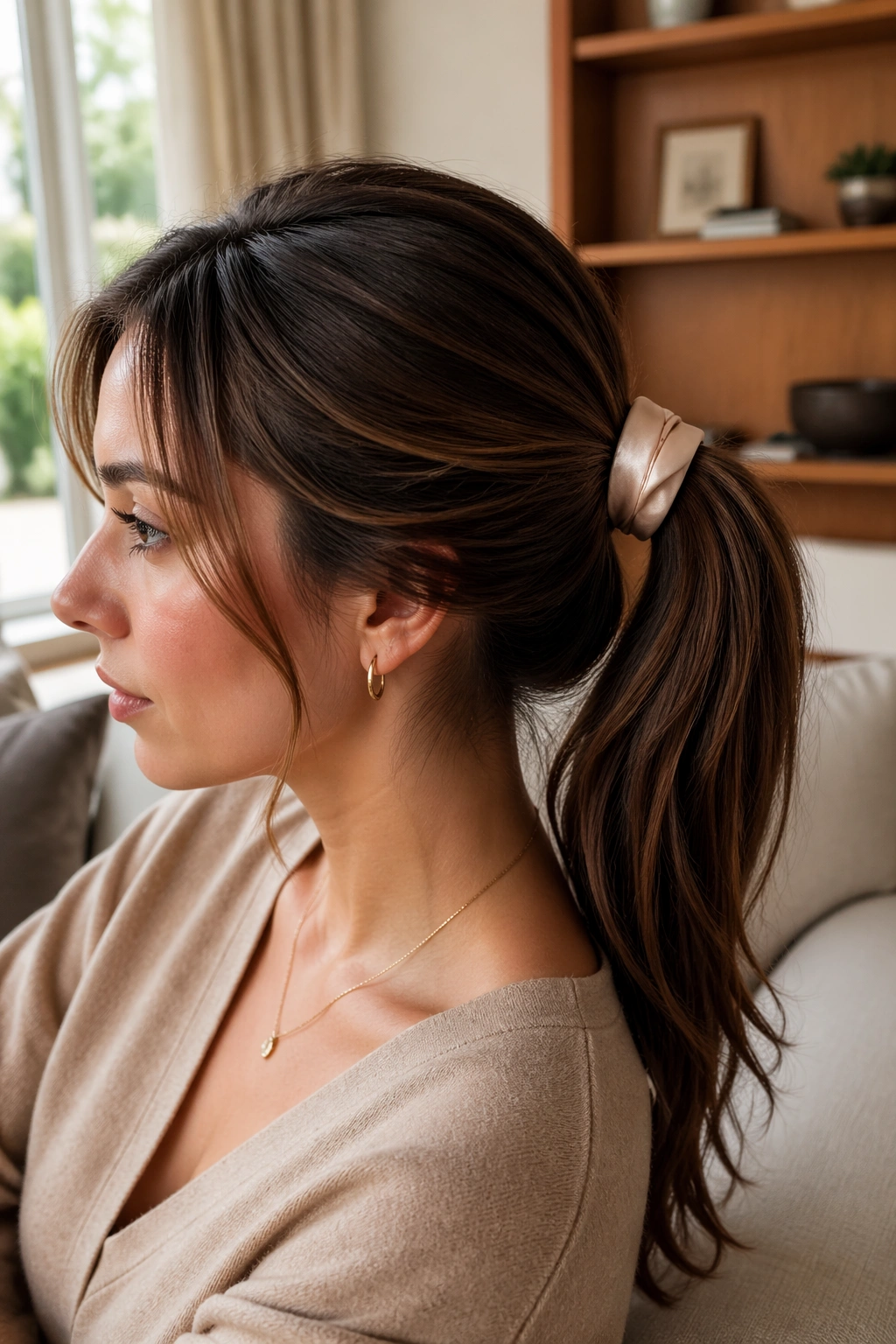
A tucked ribbon ponytail feels soft, feminine, and a little old-school in the best way. Tie a satin ribbon around the base, then weave or tuck the ends into the tail or low bun so the ribbon becomes part of the shape. Long hair gives the ribbon something to sit against, which keeps it from looking flimsy.
Why it works
The ribbon breaks up the mass of hair and adds contrast, especially if your hair is dark and the ribbon is pale, or the other way around. A 1-inch ribbon is a good starting point because it shows without swallowing the style.
Choose matte satin if you want a softer look. Shiny ribbon can feel dressy fast.
27. Glam Side Ponytail Roll
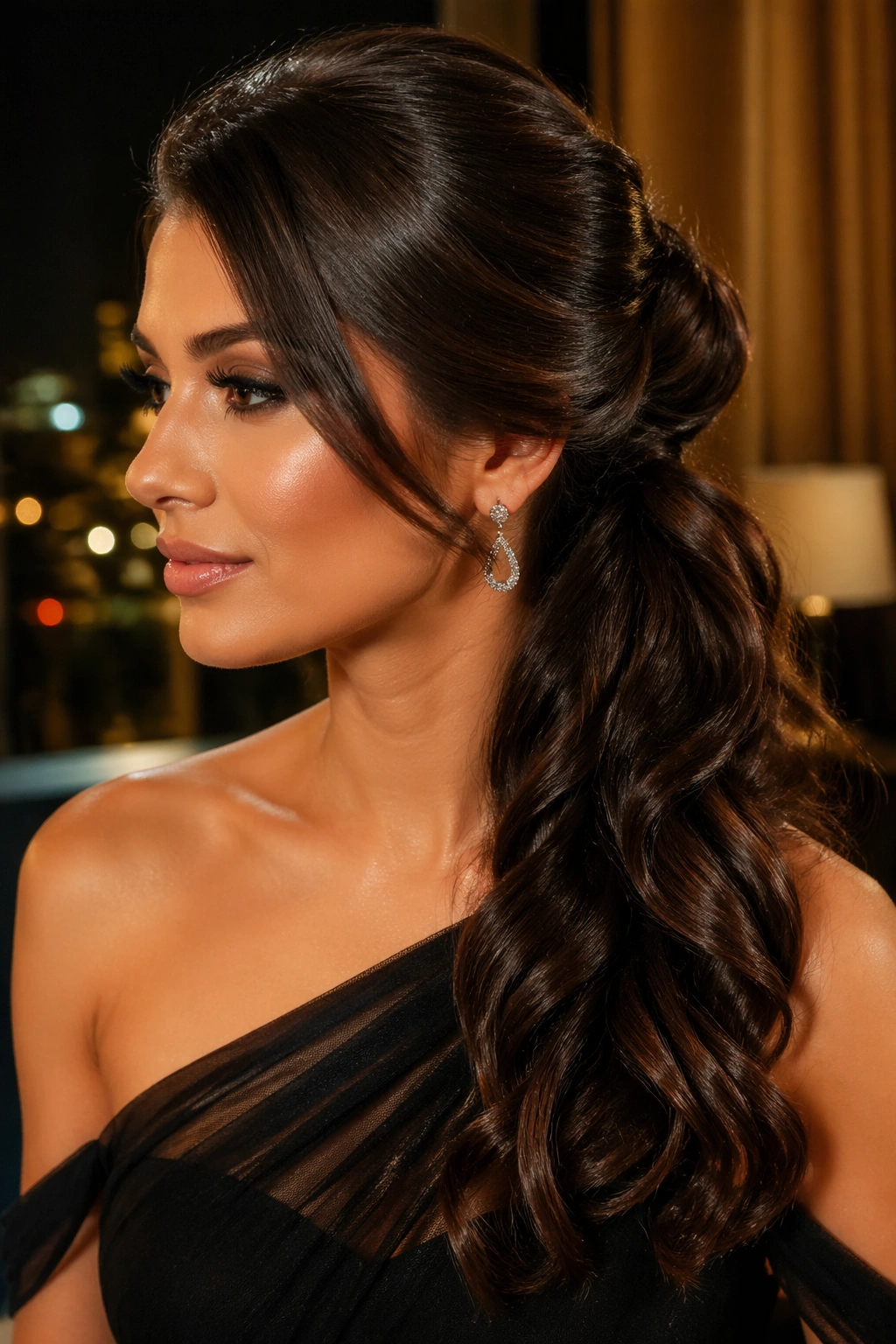
A side ponytail roll gives long hair that glossy, evening-ready shape without needing a full updo. The hair is swept low to one side, rolled back in sections, and secured so the tail falls over one shoulder. It feels dramatic, but it’s still a ponytail at heart.
The side placement changes the line of the whole style. Instead of pulling the eye straight down the back, it creates a curve that looks elegant and a little old-Hollywood. Long hair makes this especially satisfying because the shoulder-length fall of the tail still has room to move.
A large curl through the ends helps. So does a clean side part. That combination gives the roll a smoother start and a softer finish.
Final Thoughts
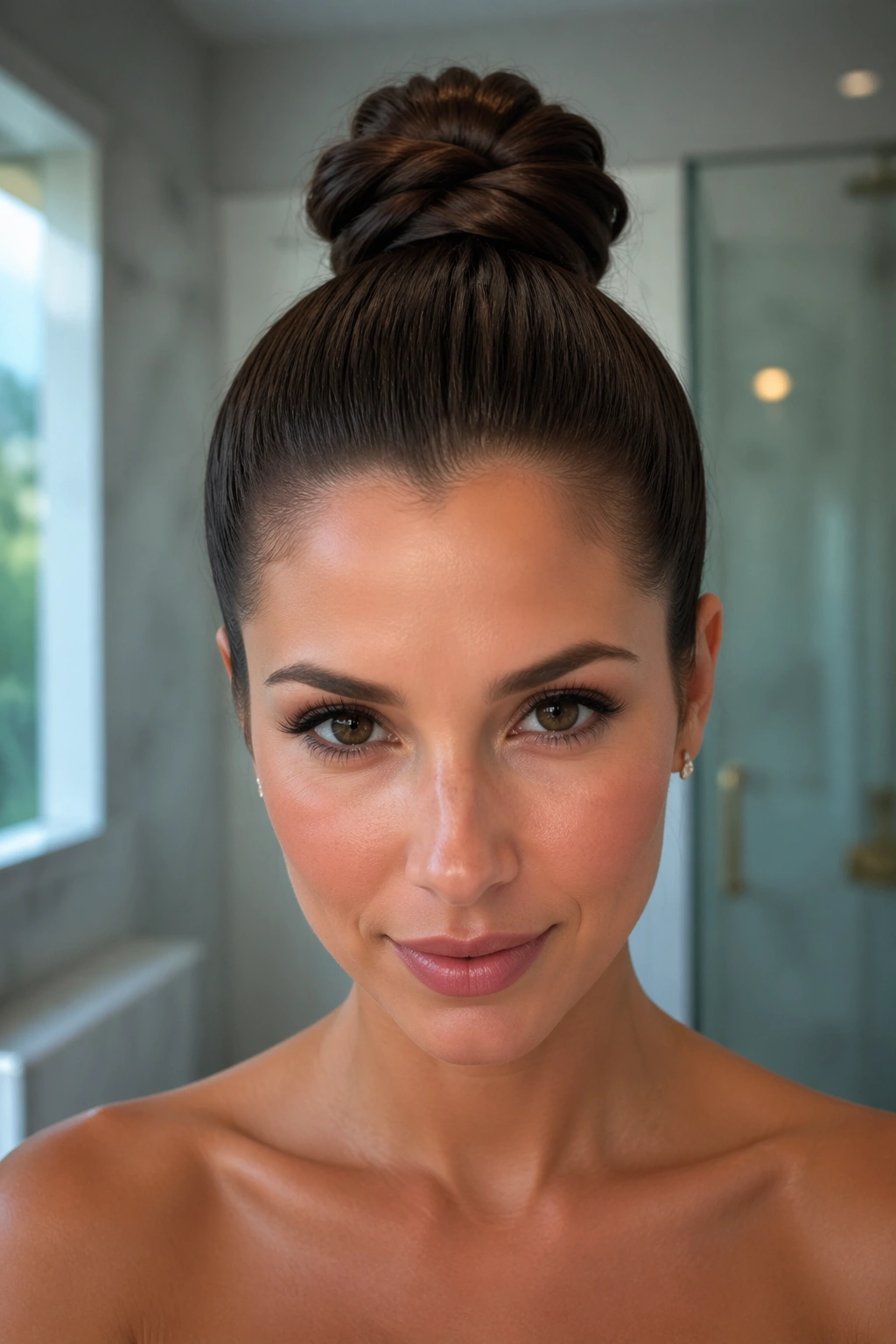
The best updo ponytails for long hair do one simple thing well: they give the length a job. Some styles lift it, some braid it, some tuck it into a knot, and some let it swing in a cleaner way than a plain ponytail ever could. That’s why they work across so many settings. They control the bulk without flattening the personality.
If your hair is thick, start with styles that anchor the crown or braid the sides. If it’s fine or slippery, reach for texturizing spray, a tighter base, and a wrapped elastic. Tiny choices matter here. A ponytail can go from ordinary to sharp just by changing where it sits and what you do with the ends.
A final trick I always like: wrap the elastic with a thin strand of hair and pin the end underneath. It takes a minute, maybe less, and the whole style looks more finished right away.
