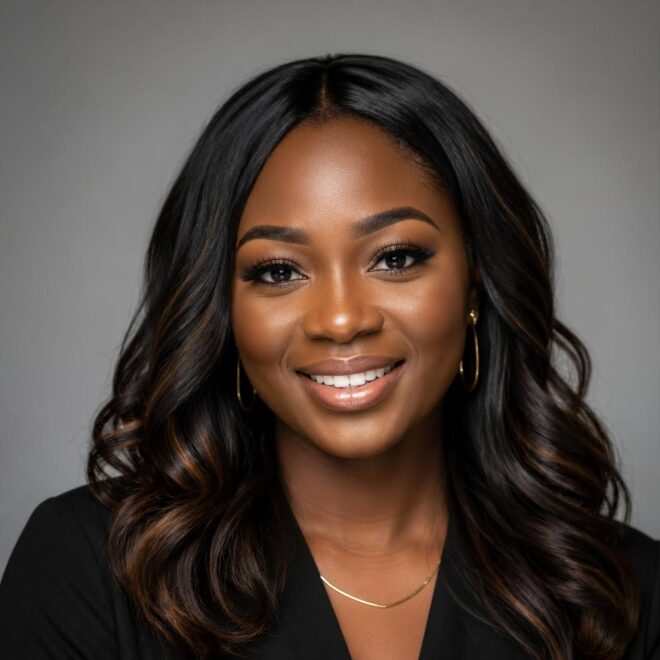


Short layered haircuts for curly hair are genuinely one of the most powerful transformations available in natural hair styling — and they’re still consistently underestimated. The combination of short length and strategic layering produces something that neither element achieves alone: a silhouette with extraordinary volume, a curl pattern that springs with maximum definition, and a style that looks deliberately crafted from the moment it dries. Layers in short curly hair aren’t just a styling detail. They’re the structural principle that makes short natural cuts work.
Why Layers Are Non-Negotiable for Short Curly Natural Hair
Short hair without layers on a curly texture has one significant problem: the curl pattern doesn’t have the interior structure it needs to create a balanced, three-dimensional silhouette. Without layering, short curly hair tends to look either flat at the top (where the heaviest sections sit) or oddly wide in the middle (where bulk accumulates). The silhouette is unpredictable and often unflattering.
Layers solve this by creating variation in length within the short cut. Some sections are shorter — they spring upward and create height and volume at the crown. Other sections are longer — they fall outward and create width. The interplay between these different lengths builds a silhouette that looks intentional and three-dimensional, rather than a uniform mass of hair that happens to be curly.
For natural hair specifically, layering also respects the individual behavior of different sections of your curl pattern. Different areas of your scalp grow hair with different curl tightness, different density, and different shrinkage factors. Layers allow the cut to work with those variations rather than imposing a single, uniform length on hair that doesn’t behave uniformly.
The Role of Shrinkage in Planning Short Layered Cuts
Shrinkage is the number one factor to plan around when designing short layered cuts for natural curly hair. For 4C hair with 75–80% shrinkage, what looks like a two-inch layer when stretched may sit at half an inch when fully coiled. For 3B hair with 30% shrinkage, the same stretched length looks dramatically longer when dry.
A skilled curl stylist will plan your short layered cut around your actual shrinkage — not around the stretched length. They’ll hold each curl section in its natural, relaxed state and measure from there. This is why it’s critical to visit a stylist who works with your specific curl type regularly and understands the shrinkage math without you having to explain it.
Short Layered Cuts vs. Short Unlayered Cuts — The Real Difference
It’s worth being direct about what you’re actually getting when you choose a layered versus unlayered short cut. An unlayered short cut — one length all over or with minimal graduation — gives you a clean, geometric silhouette that’s consistent and easy to maintain. But for curly hair, it often lacks the internal structure to look its best without significant product and styling intervention.
A layered short cut builds that structure into the cut itself. Your hair behaves better with less product. Your wash day is faster because your curl pattern is already guided by the architecture of the cut. Your silhouette is more consistent day to day because the layers create a framework that the curl pattern fills in naturally.
Choosing the Right Amount of Layering for Your Curl Type
How much layering is right depends on your hair’s density, your curl type, and your silhouette goals. More layering for higher density hair — it needs more bulk removal to achieve a balanced shape. Less layering for finer or lower density hair — removing too much bulk can make the hair look thin and sparse. The sweet spot is just enough layering to create three-dimensional shape and improved curl behavior without compromising the overall fullness of the style.
Your curl type also matters: tighter coil patterns (4A–4C) generally benefit from more dramatic layering because the coil’s structure provides natural volume that the layering can build on. Looser curl patterns (3A–3C) need subtler layering because the curls don’t create the same inherent volume, and too aggressive layering can leave the style looking thin.
The Consultation Questions to Ask Before Your Short Layered Cut
Walk into your appointment prepared. Ask your stylist: Do you cut curly hair dry or wet? (Dry is better — insist on it.) Have you worked with my curl type before, and can I see examples? How will you approach the layering — interior removal, exterior shaping, or both? How will the layers behave as the hair grows out? And critically: how short will each layer actually sit when my hair is fully dry and coiled?
These questions aren’t excessive — they’re the basic information you need to make a good decision. A stylist who can’t or won’t answer them clearly isn’t the right stylist for a short layered natural cut.
21 Short Layered Haircuts for Curly Hair
1. The Short Layered Tapered Natural
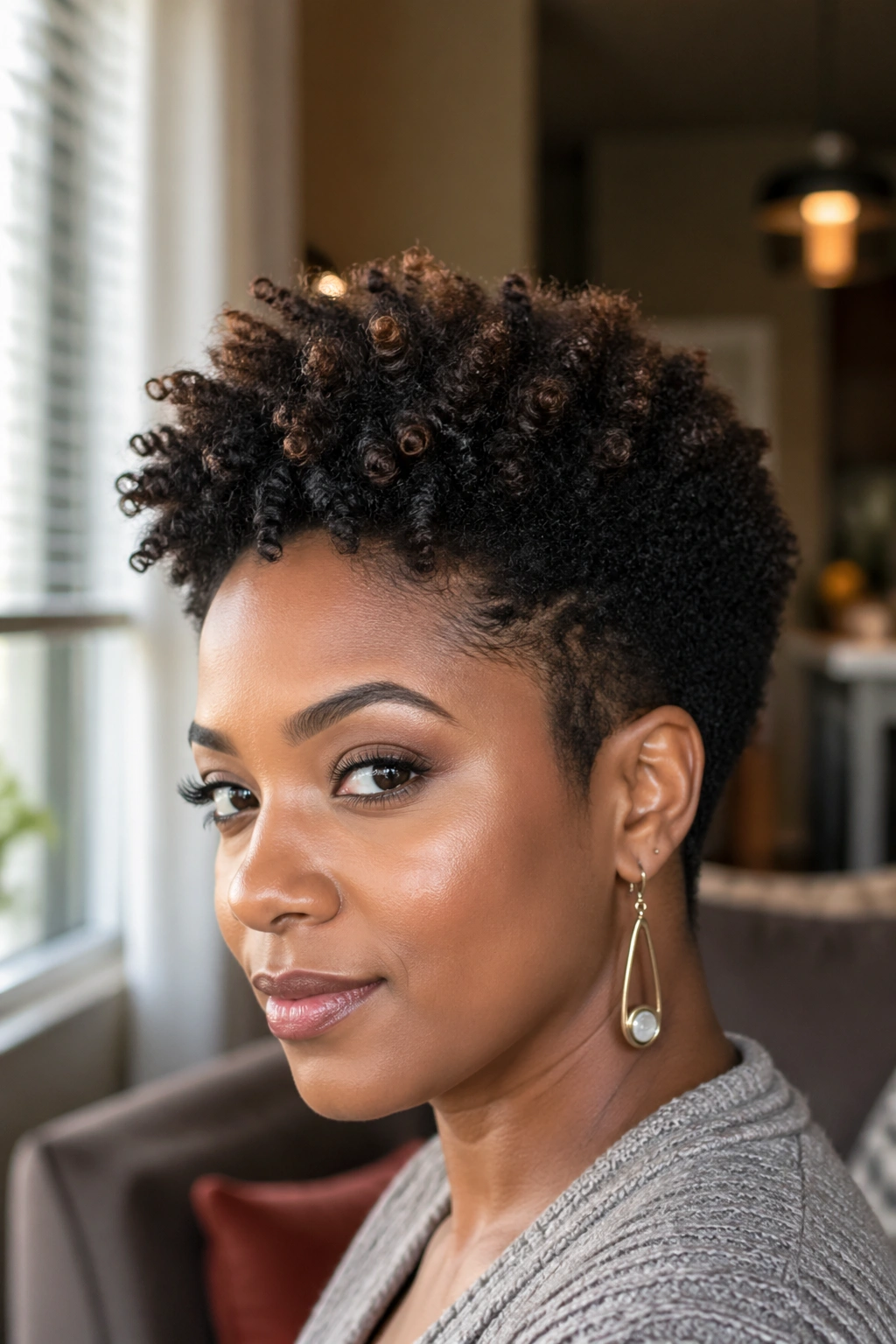
The short tapered natural with added interior layering is the most polished, refined short style for natural curly hair. The taper keeps the sides and nape close while the crown section’s length is shaped with layers that create height and volume at the top. The layering within the crown section ensures that the curls have room to spring and define rather than sitting in a flat, undifferentiated mass.
How to Style It
Apply a small amount of leave-in conditioner and a light gel to damp hair, concentrating the product at the crown section. Use your fingers to separate and encourage curl clumping. Allow to air dry or diffuse from underneath on low heat. The layers in the crown will create natural volume and definition without you needing to do anything beyond this.
- Best for: 4A–4C curl types
- Face shapes: suits most face shapes; especially flattering on oval and heart
- Styling time: 10–15 minutes
- Tip: Pick through the crown gently with an afro pick while your hair is still slightly damp to maximize height and definition.
2. The Short Curly Pixie With Face-Framing Layers
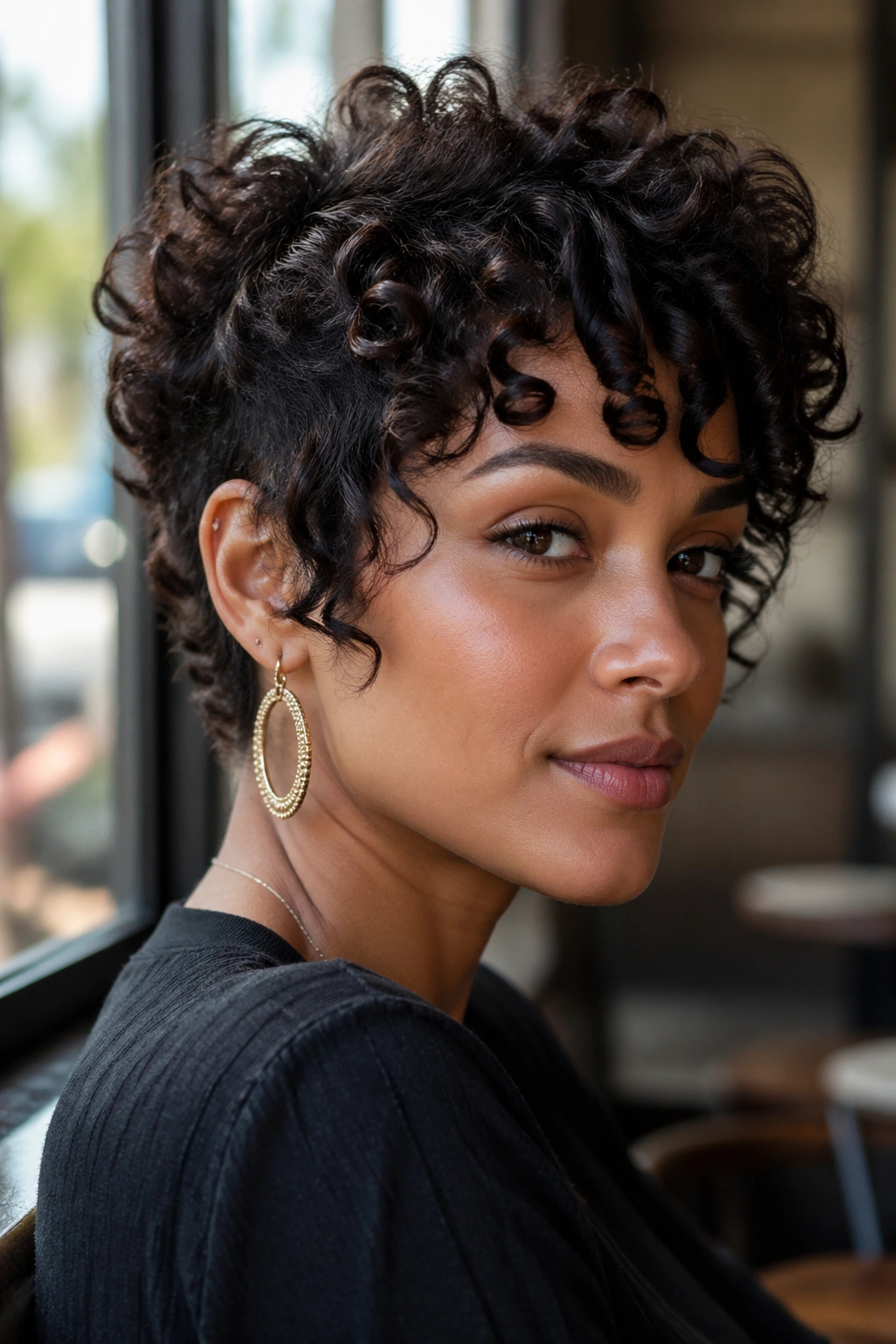
The curly pixie with specific face-framing layers — shorter sections around the temples and cheekbones that fall toward the face — adds a significant level of intentionality to the cut. The face-framing layers change the way the pixie reads: instead of an all-over short cut, it’s a short cut with a direction and a relationship to your features. It frames the face the way bangs do, but with the integration of the full short cut.
3. The TWA With Crown Layering
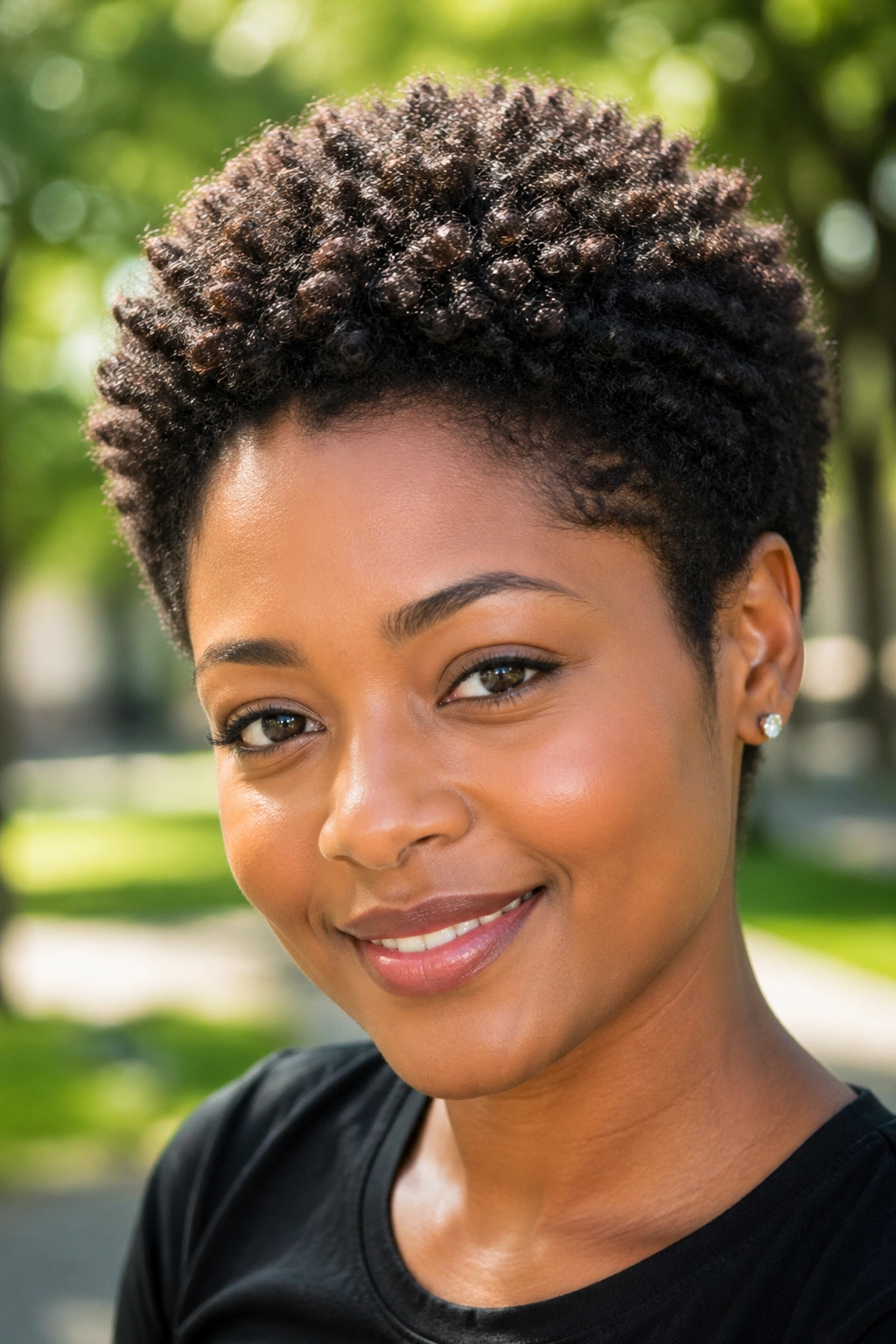
Even at the shortest natural hair length, layering is possible and impactful. Crown layering on a teeny weeny afro involves removing slightly more length from the outer crown perimeter and leaving just a tiny bit more length at the very top. This creates a subtle dome shape at the crown — the hair crowns upward rather than sitting flat — which adds immediate visual interest and intentionality to a close-cut style.
4. The Short Curly Shag
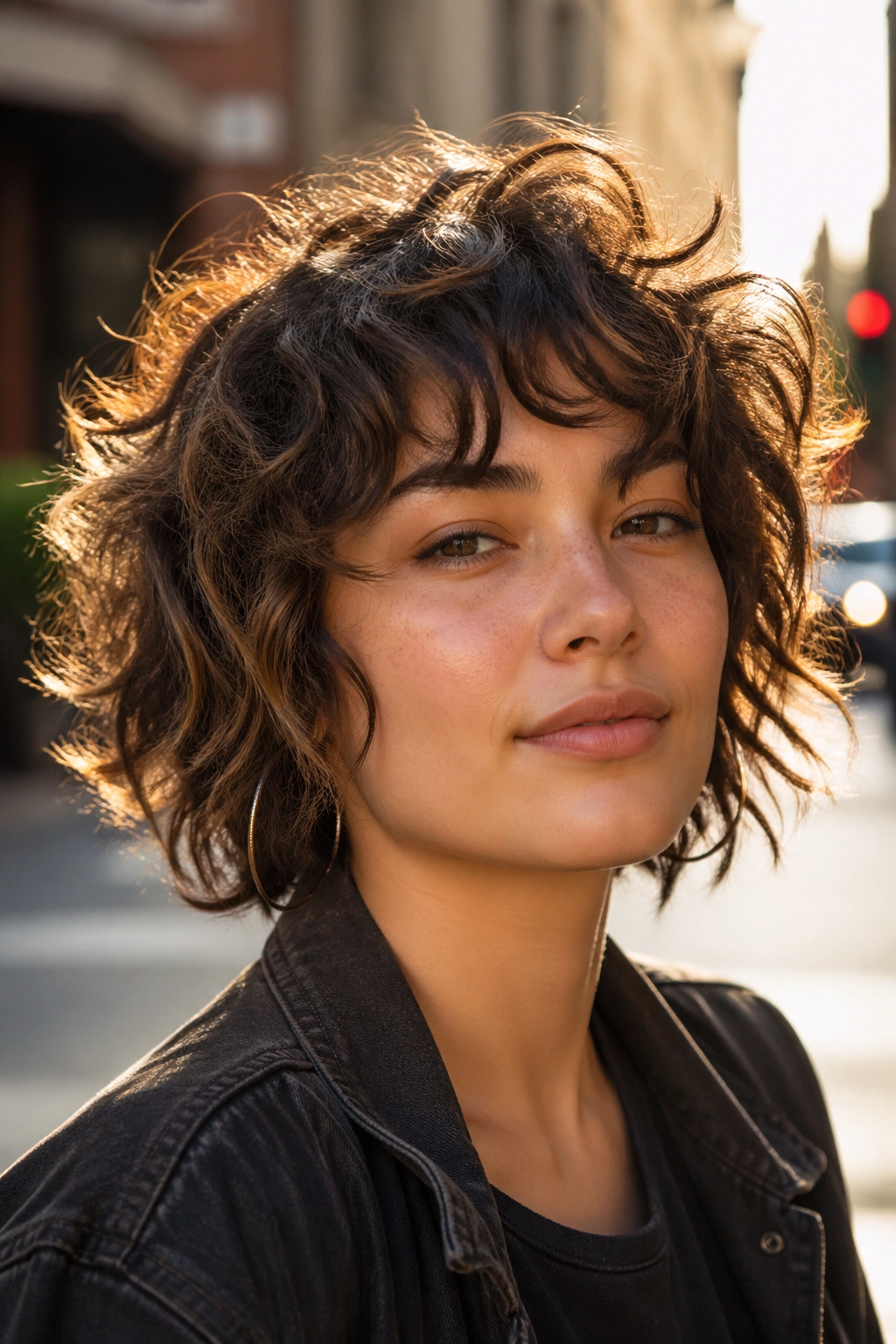
The shag at short length is all personality. Heavy layering throughout a short cut creates significant length variation — the shortest layers spring up tight and close, the longer layers cascade (relatively, at short length) outward. The effect is an explosion of texture and dimension that makes a short style look like it has far more going on than its actual length would suggest. This is the cut for people who want short hair to feel like a fashion statement.
Getting the Short Shag Right
The defining feature of the shag — at any length — is the intentionally undone, textured finish. Ask your stylist to avoid overcleaning the ends — wispy, imperfect ends are part of what makes the shag look its best. Point-cutting creates this effect.
- Best for: 3B–4B curl types at short length
- Works especially well for: high-density hair that needs significant bulk removal
- Tip: Air dry your short curly shag without touching it while it dries — the layering will create its own shape naturally.
5. The Low Fade With Interior Layered Crown
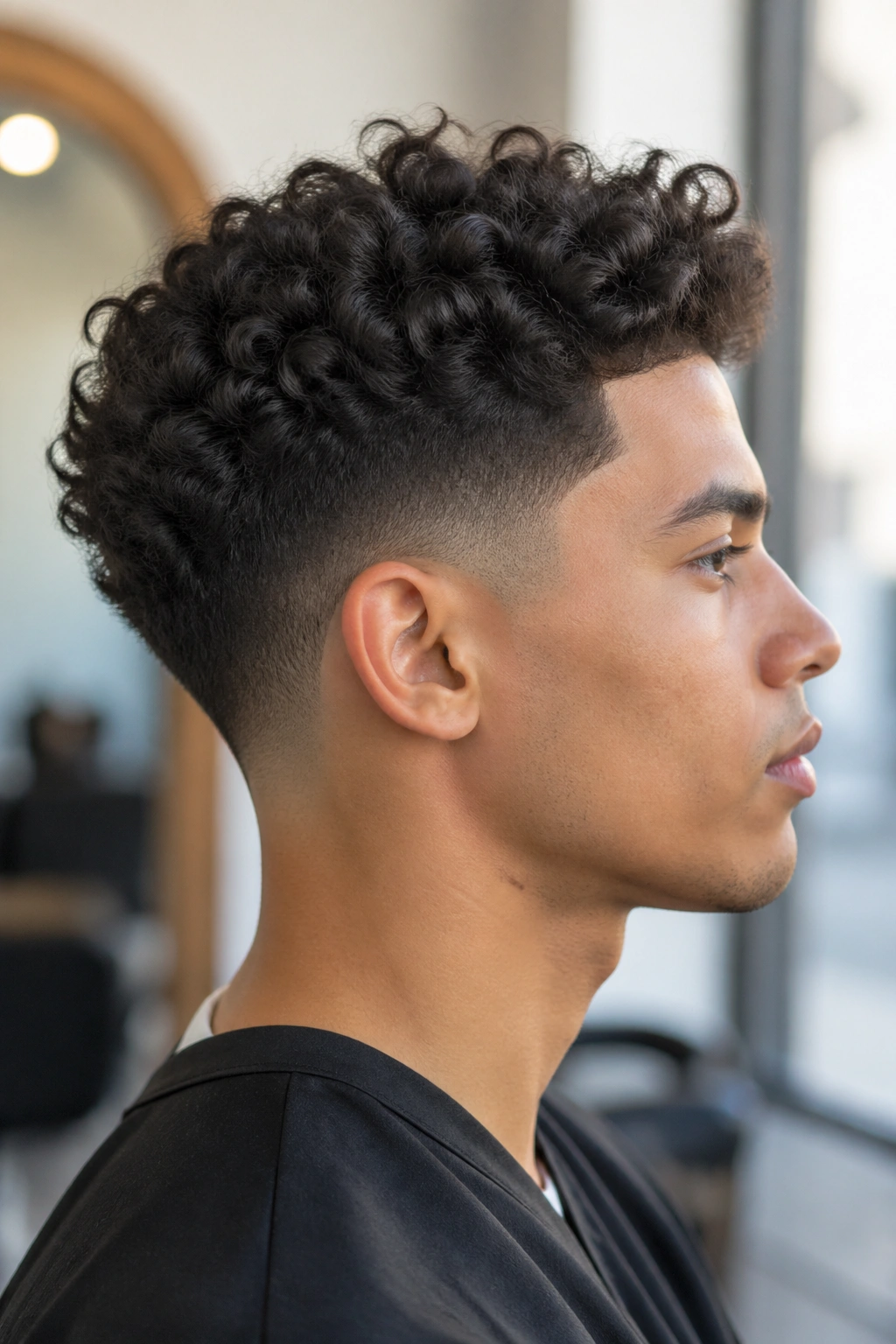
Combine the clean precision of a low fade at the sides and nape with interior layering in the crown section, and you get a short style that’s simultaneously barbershop-sharp and curl-specialist-precise. The fade provides architectural structure from the outside while the interior layers add volume and definition from within. It’s the best of both specialties in one cut.
6. The Short Natural With Heavy Crown Layers
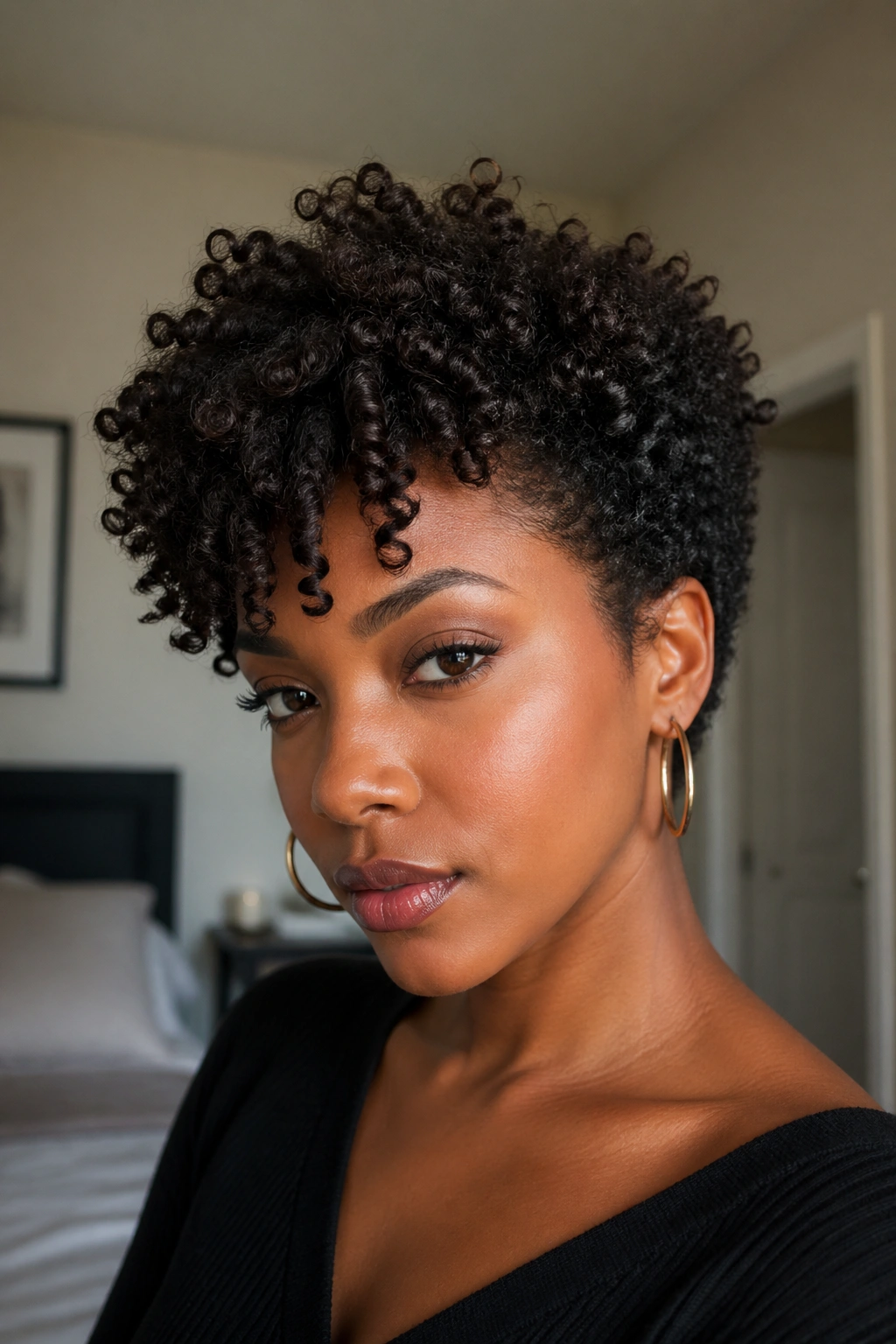
This cut concentrates the most dramatic layering specifically at the crown — the topmost section of the head — where removing weight creates the greatest increase in curl spring and definition. The sides and back may have lighter layering or none at all; it’s the crown section where the real work happens. After this cut, your crown section has visible height and volume that it couldn’t achieve before.
7. The Defined Short Curl Cut for 4C Hair
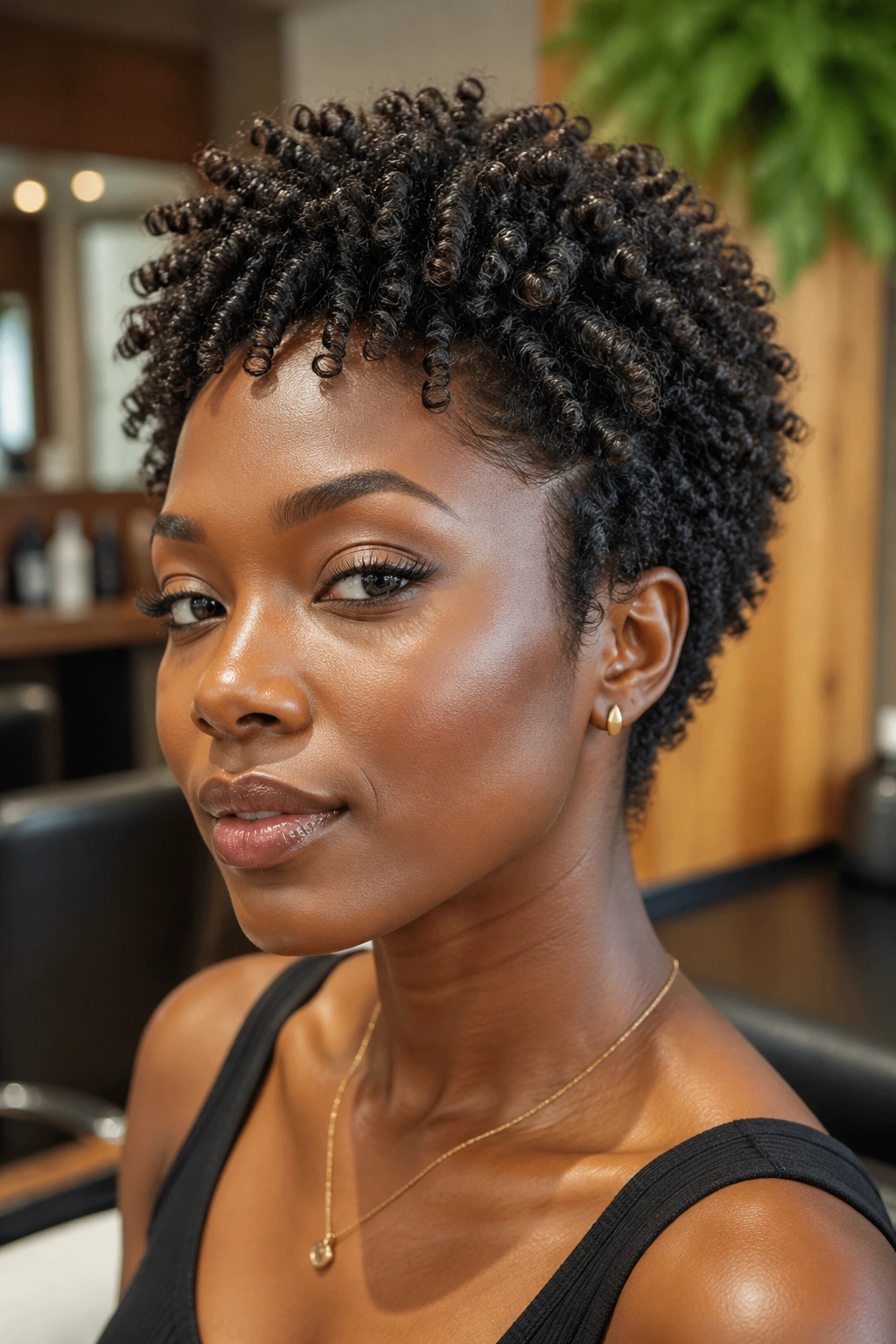
4C hair at short length is genuinely beautiful — the tight coil pattern creates a dense, richly textured surface that has real visual weight and presence. But cutting and layering 4C hair requires specific expertise. The coils are so tight that length differentials between layers need to be more dramatic to be visible. A skilled stylist will know to cut the layers with extra length difference so the layered structure shows in the final style.
Products for Short Layered 4C Hair
Leave-in conditioner applied to damp hair, followed by a styling cream or light gel, is the simplest and most effective routine for short layered 4C. Scrunch in upward motions to encourage coil formation. Air dry or diffuse on low. Minimal manipulation produces the best results.
8. The Short Rounded Afro With Internal Layering
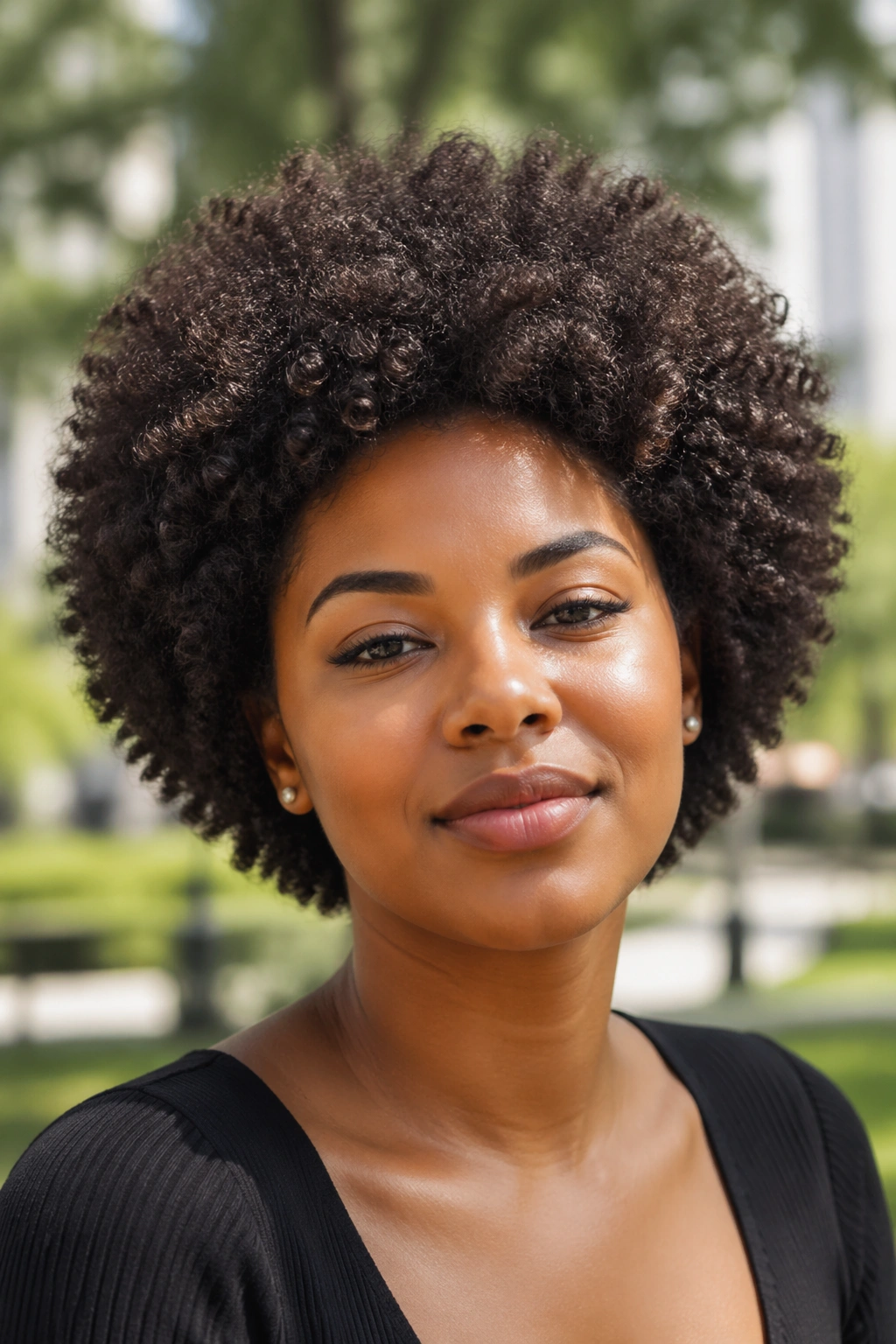
A perfectly rounded afro that has interior layering to remove bulk is a different experience than an unlayered afro of the same perimeter size. The internal layering makes the afro feel lighter, look fuller, and maintain its rounded shape longer between wash days because the reduced weight means individual coils don’t get pulled down as quickly.
9. The Short Side-Part Layered Cut
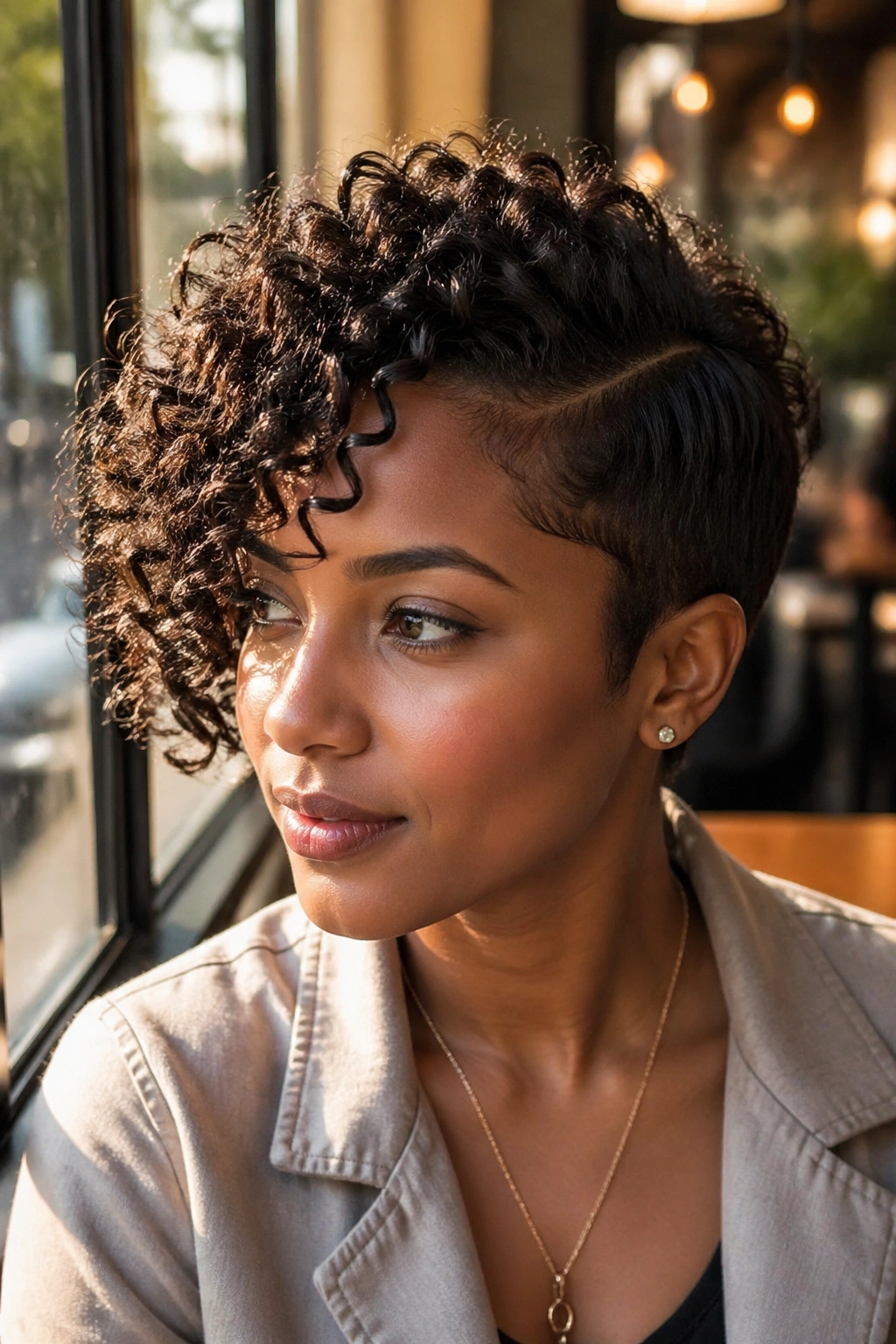
A dramatic side part on a short layered natural cut creates an asymmetrical silhouette that’s immediately eye-catching. The section on the parted side sits closer to the head; the fuller section swings across to the other side with all the volume. Layers in the fuller section add to the visual impact of the swing, making the asymmetry more pronounced and more flattering.
10. The Short Curly Cut With Undercut Layers
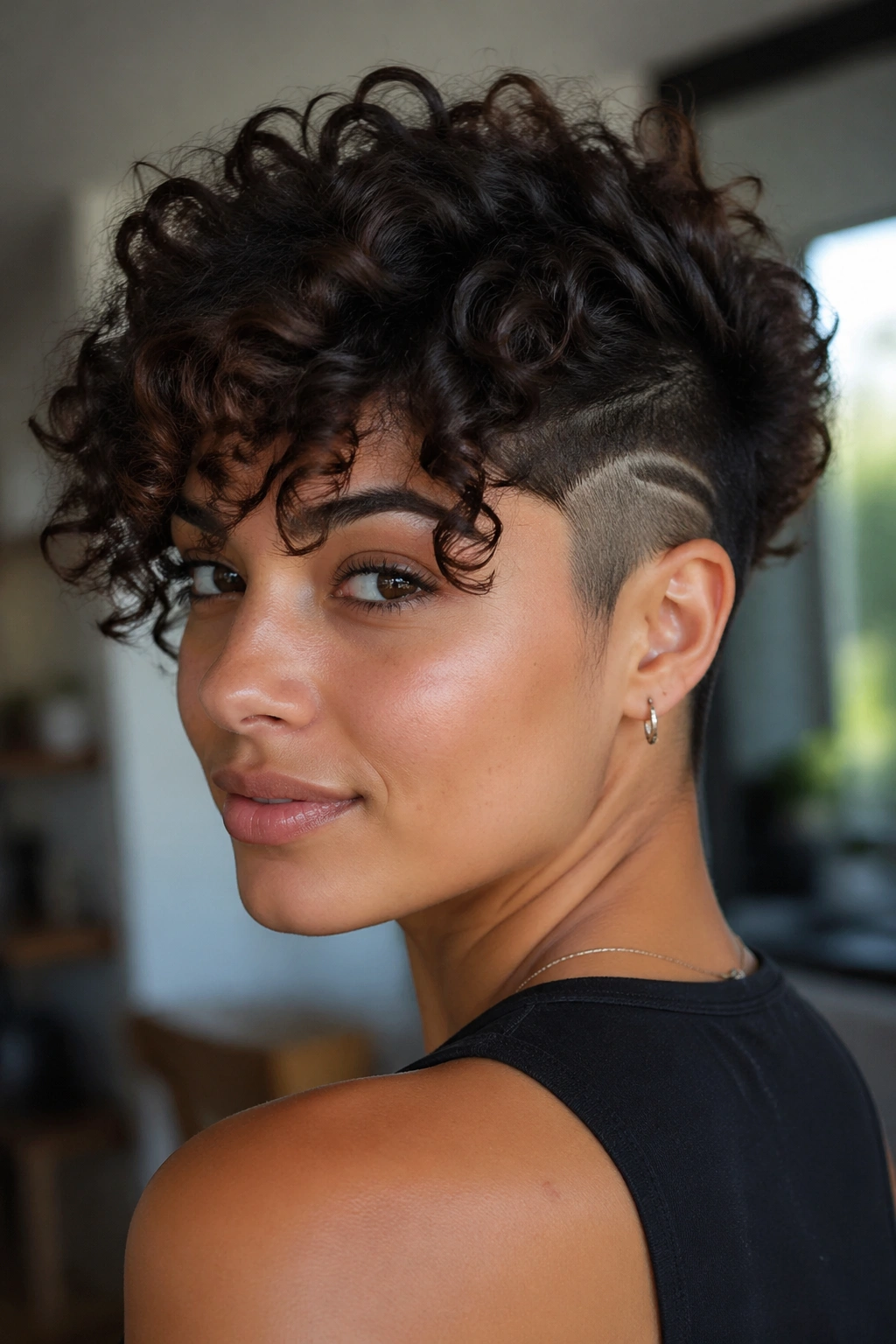
An undercut — where the underneath sections of the hair are cut very short or shaved — hidden beneath the visible exterior of a short curly cut creates a dual-texture effect. When the hair is worn down, you see only the curly exterior. When it’s pulled up or sectioned, the undercut is revealed. It’s a style detail that adds surprise and makes the cut significantly more interesting on a technical level.
11. The Short Natural Frohawk With Layered Center
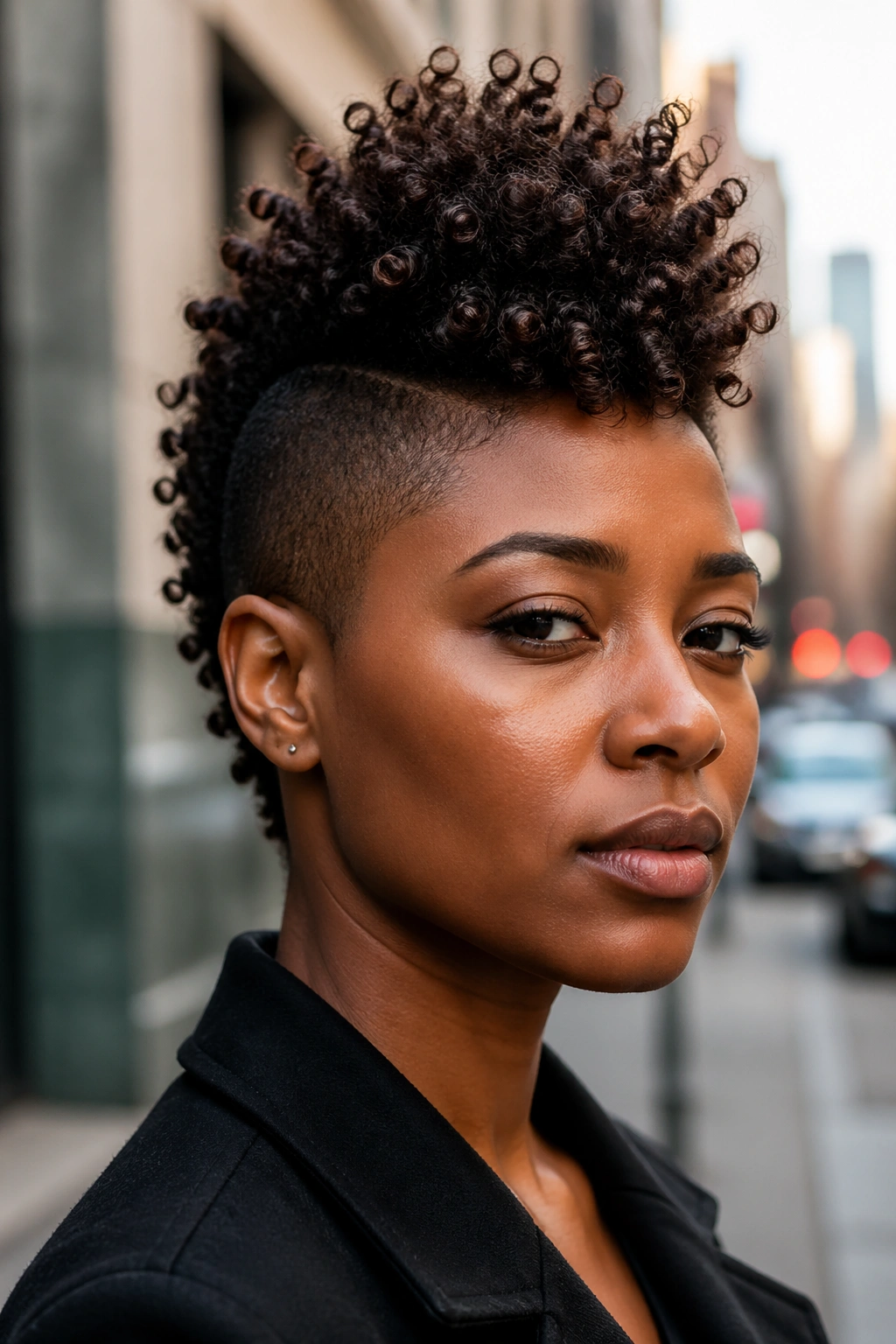
The frohawk shape — faded or close-cut sides with a center strip of hair from forehead to nape — at short length is enhanced dramatically by adding interior layers to that center strip. Without layers, the center strip at short length can look flat and undefined. With layers, the curls in the center strip have the structure they need to spring upward and create real height and presence — a true mohawk silhouette, not just a vague suggestion of one.
12. The Short Curly Cut for Fine Natural Hair
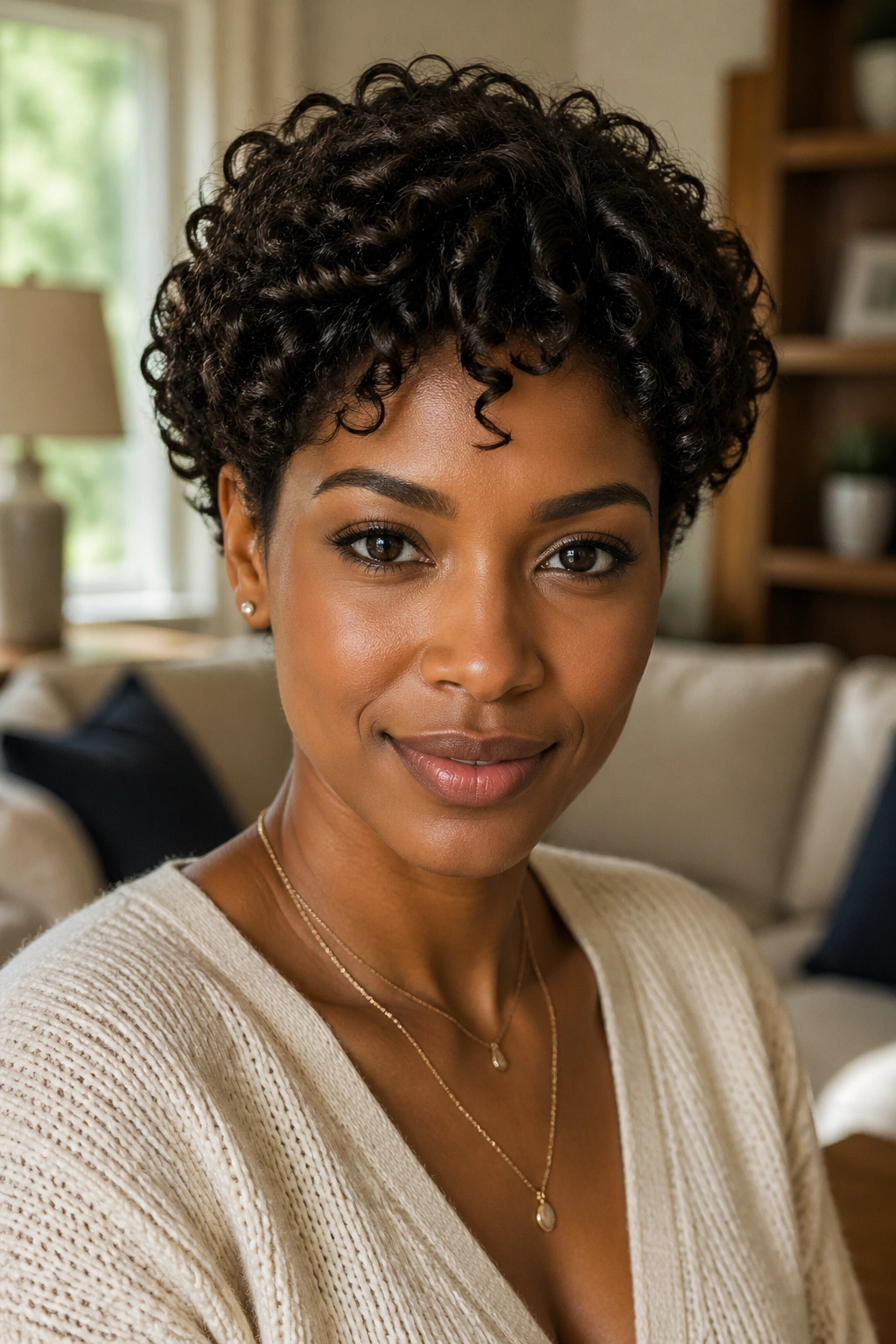
Fine natural curly hair has a particular challenge at short lengths: without density to fall back on, the cut has to work harder to create the appearance of fullness. Layers are especially important for fine natural curly hair because they create internal volume that the hair’s actual density can’t produce on its own. The layering should be subtle — removing just enough weight to encourage curl spring without making the hair look sparse.
What to Avoid
For fine natural curly hair at short lengths, avoid overcutting any single section. The hair can’t afford to lose bulk it doesn’t have. Ask for “light layering” or “soft internal layering” rather than the more aggressive layering appropriate for denser hair types.
13. The Short Natural With Graduated Layers
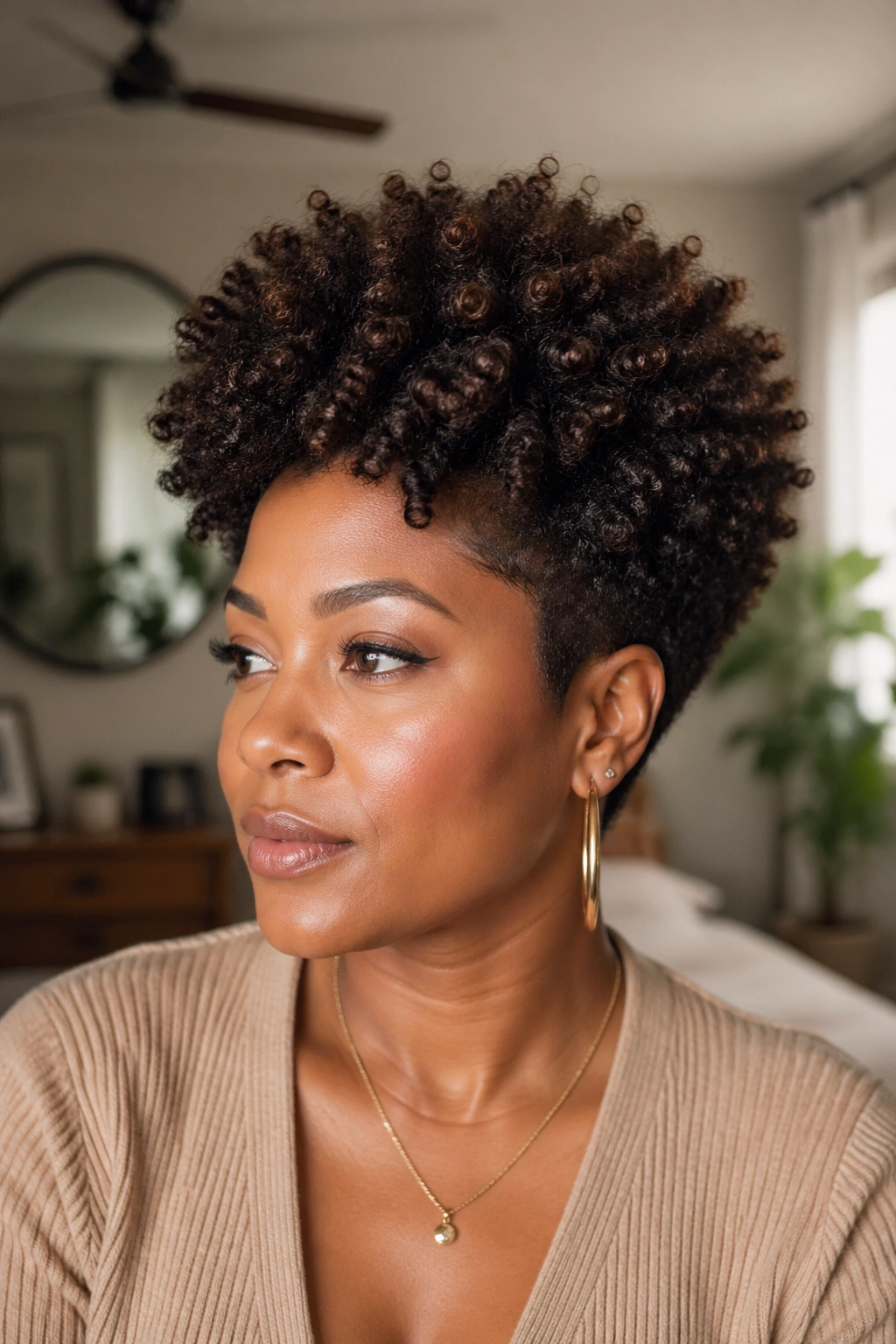
Graduated layers create a specific effect: the underneath layers are shortest, and each successive layer above is progressively longer. On short curly natural hair, graduated layering creates a stacked effect where the volume builds from the shortest underlayer upward, creating a rounded, balloon-like fullness at the crown. It’s a cut that creates maximum visual volume from minimum actual hair length.
14. The Short Curly Cut for Transitioning Hair
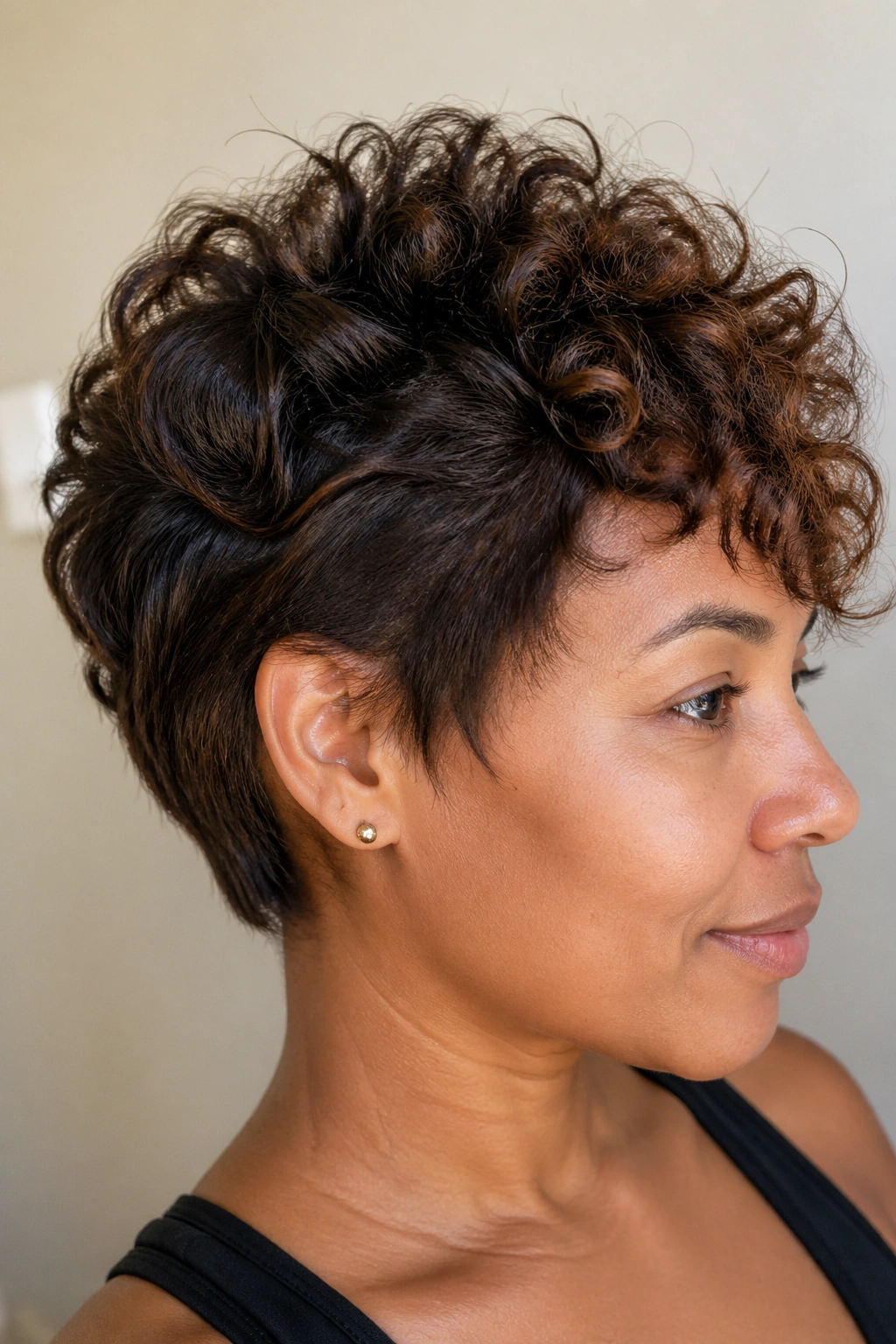
If you’re transitioning from chemically relaxed hair and have short natural growth at the roots with processed ends, a short layered cut can be your best tool for managing the transition. Layering allows the stylist to blend the different textures by creating layers where the natural growth lives at one length and the relaxed ends trail to another. The layering makes the two-texture situation look intentional rather than in-progress.
15. The Coily Short Cut With Height Layers
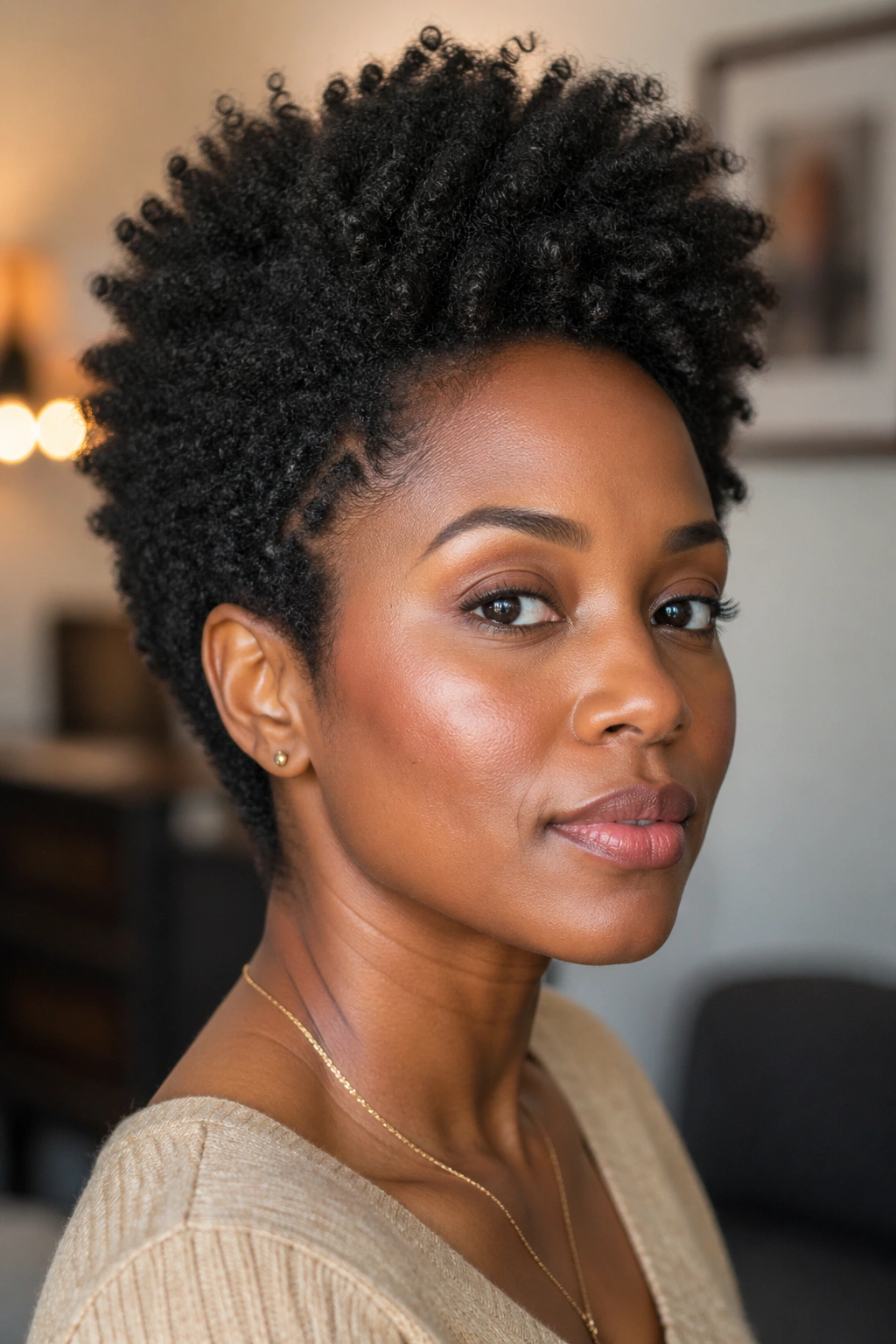
For 4C hair specifically, height layers are layers designed to build vertical height rather than outward width. The crown sections are layered to spring upward at the center, creating a domed, upward-reaching shape rather than a flat top. The visual effect is a short cut that looks taller than it is, with gravity-defying presence that’s entirely created by the layering strategy.
16. The Short Wash-and-Go Layered Cut
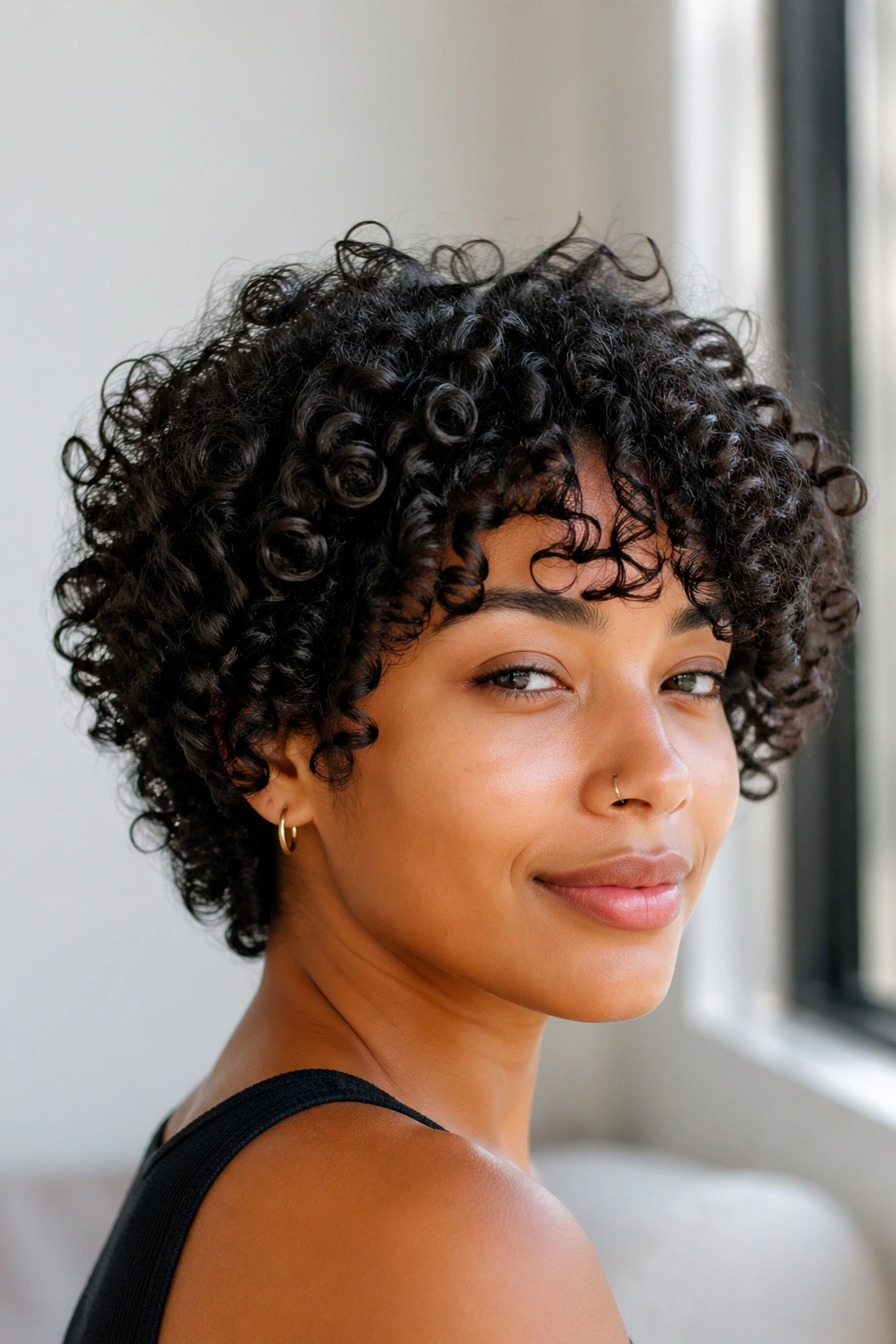
Designed to produce a complete, beautiful wash-and-go with no additional styling steps beyond applying products and scrunching. The layering builds the final shape into the cut so that when hair dries after washing, the style is finished. This requires precise layering from a stylist who has watched your hair dry in its natural state — which is another reason dry cutting is so important for this type of cut.
Ideal Candidates
This cut works best for people with a relatively consistent curl pattern throughout their hair — sections that all behave similarly when product is applied and the hair is left to dry. If your hair has dramatically different curl behaviors in different sections, the wash-and-go result may be less predictable.
17. The Short Afro With Architectural Layers
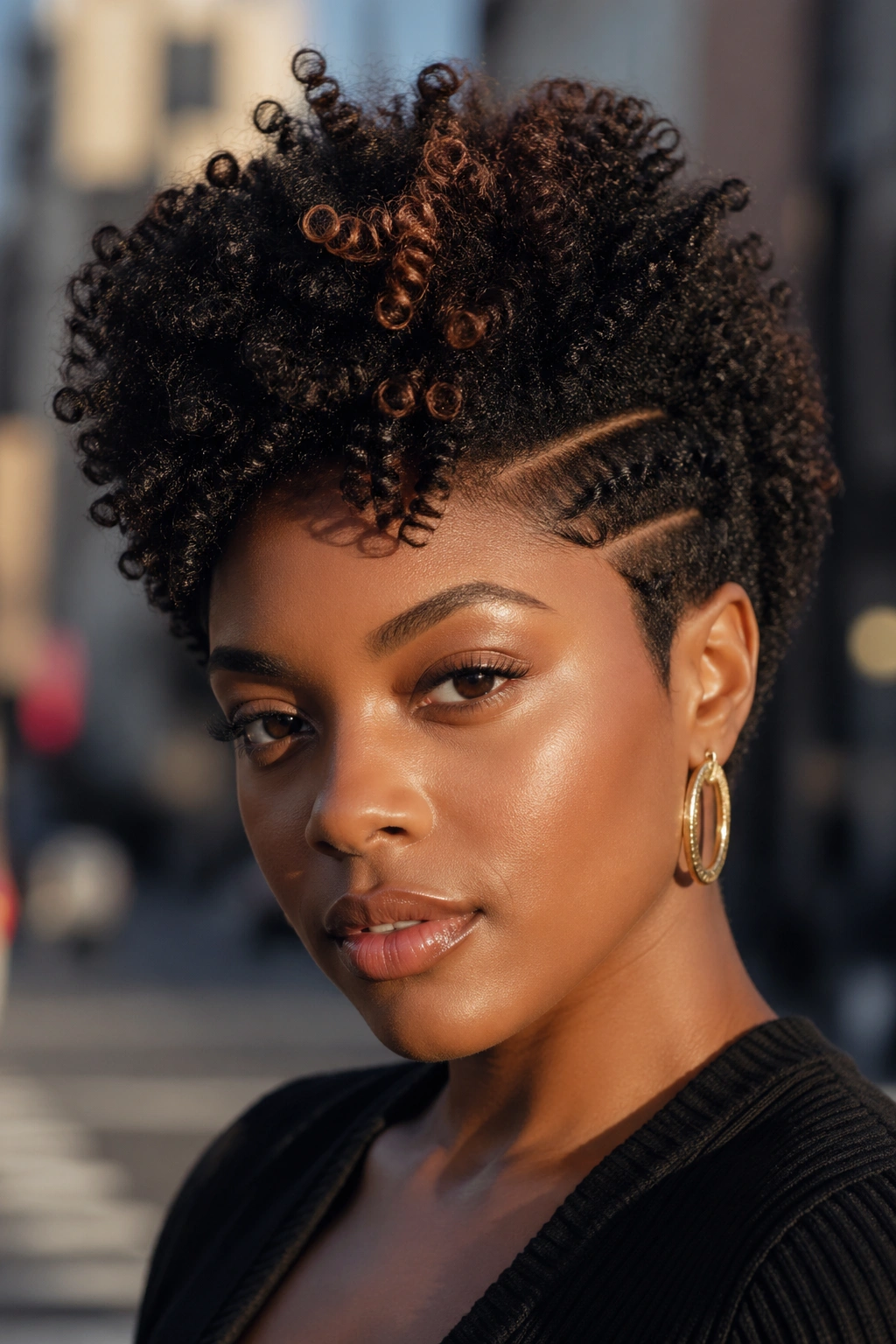
This cut takes the rounded afro concept and adds intentional asymmetry or geometric shaping through the layering. Rather than a perfectly symmetrical dome, the layers create an angular, structured shape — flat on one plane, rounded on another — that reads as deliberately sculptural. It’s art-school adjacent and completely intentional, a style that makes your hair look like a design object.
18. The Short Layered Cut for Type 3 Natural Curls
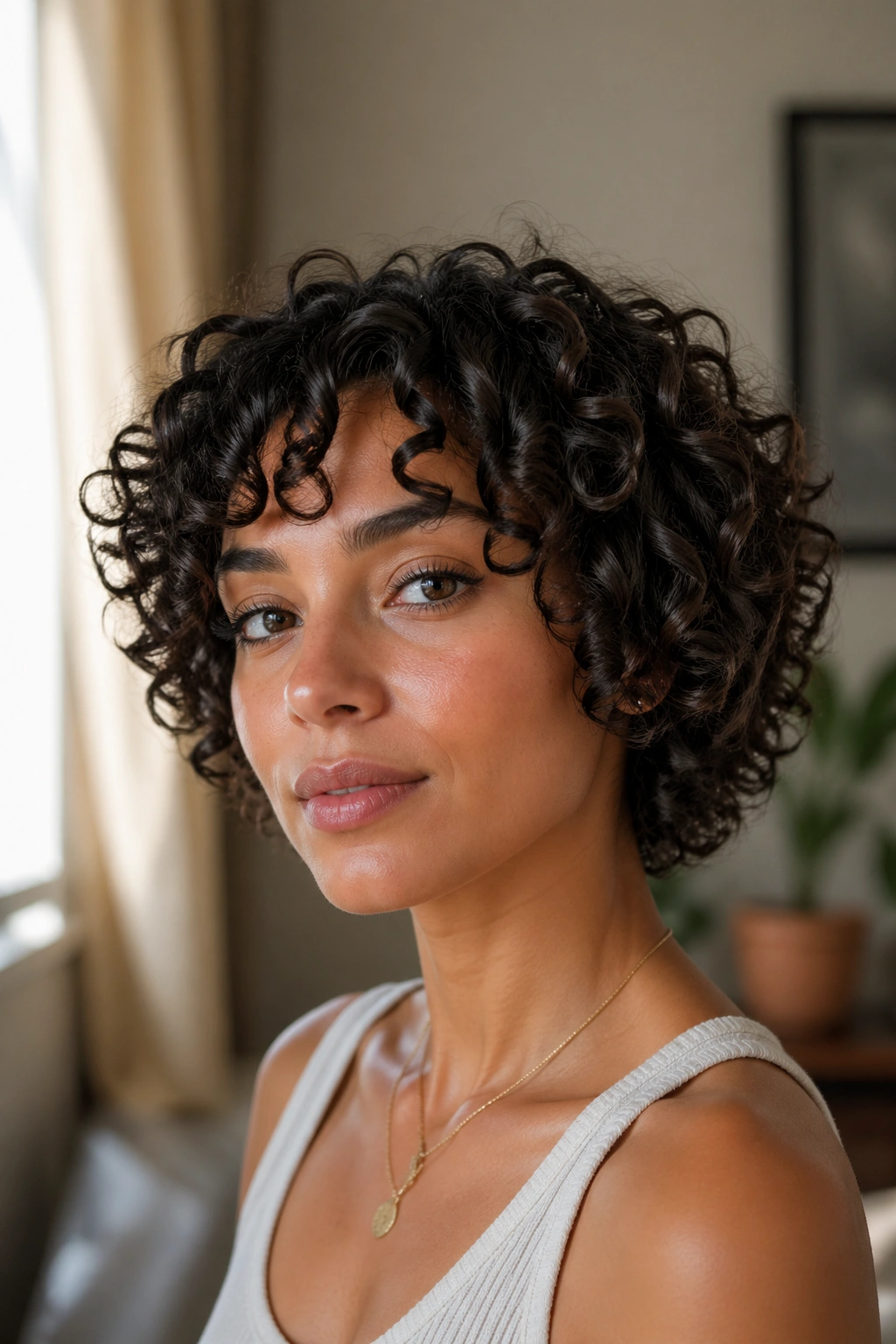
3A, 3B, and 3C curl types at short length with layering produce results that look quite different from tighter coil types — the looser ringlets hang and swing at short length in ways that tighter coils don’t, and the layers create movement that’s more visible because of the way looser curls catch and redirect light. For type 3 natural curls, short layered cuts can look almost like a deliberately styled short curly bob rather than a “natural” cut, and that quality can be exactly what someone is looking for.
19. The Short Natural With Disconnected Layers
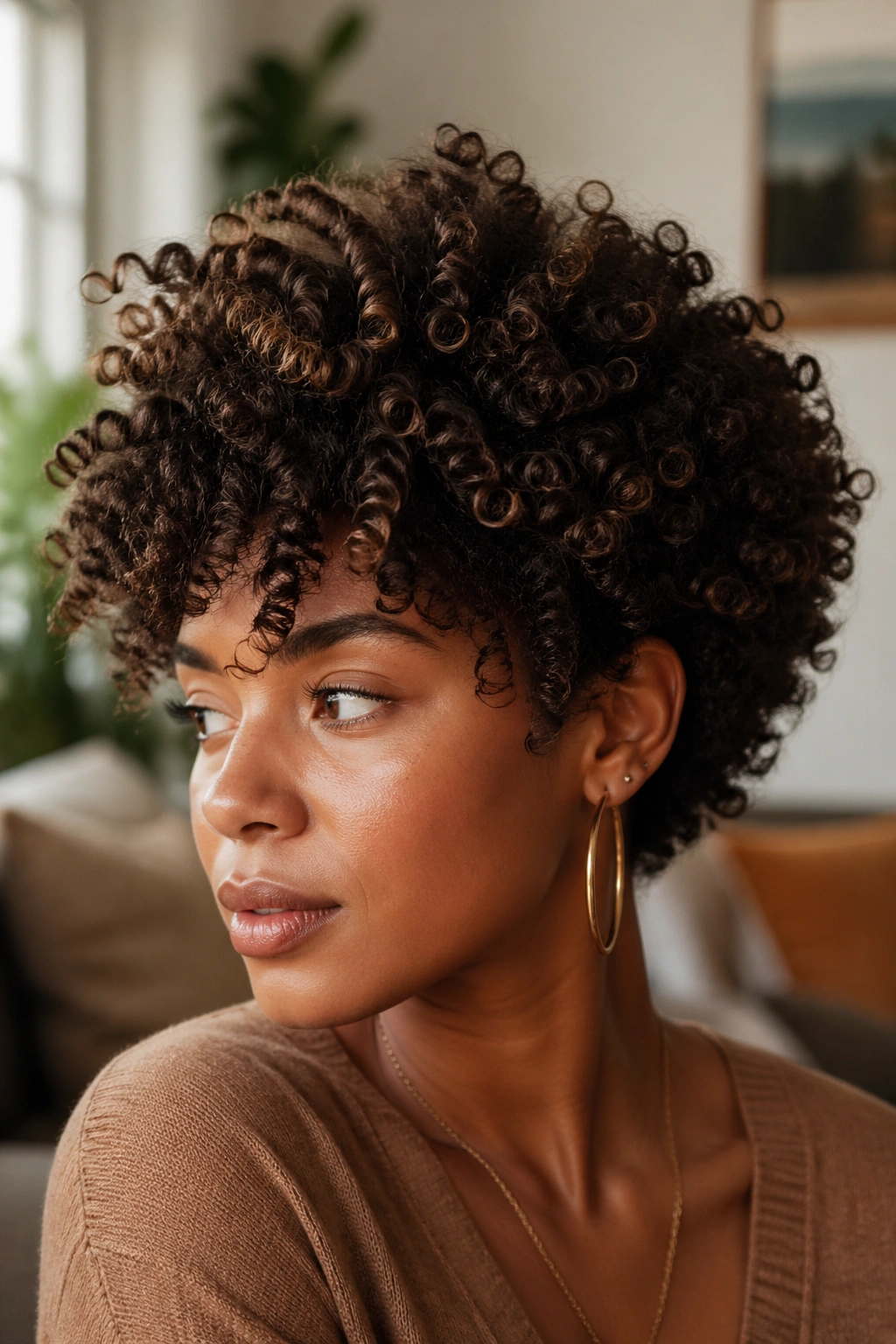
Disconnected layers are layers where there’s a visible gap or distinction between different length sections — rather than a gradual blend, the layers make a clear transition that’s visible and intentional. On short natural curly hair, disconnected layering creates a graphic, editorial look. The curl pattern at each disconnected layer section behaves distinctly, creating a visual contrast between sections that adds dimension and interest.
20. The Short Barber-Blended Natural With Layers
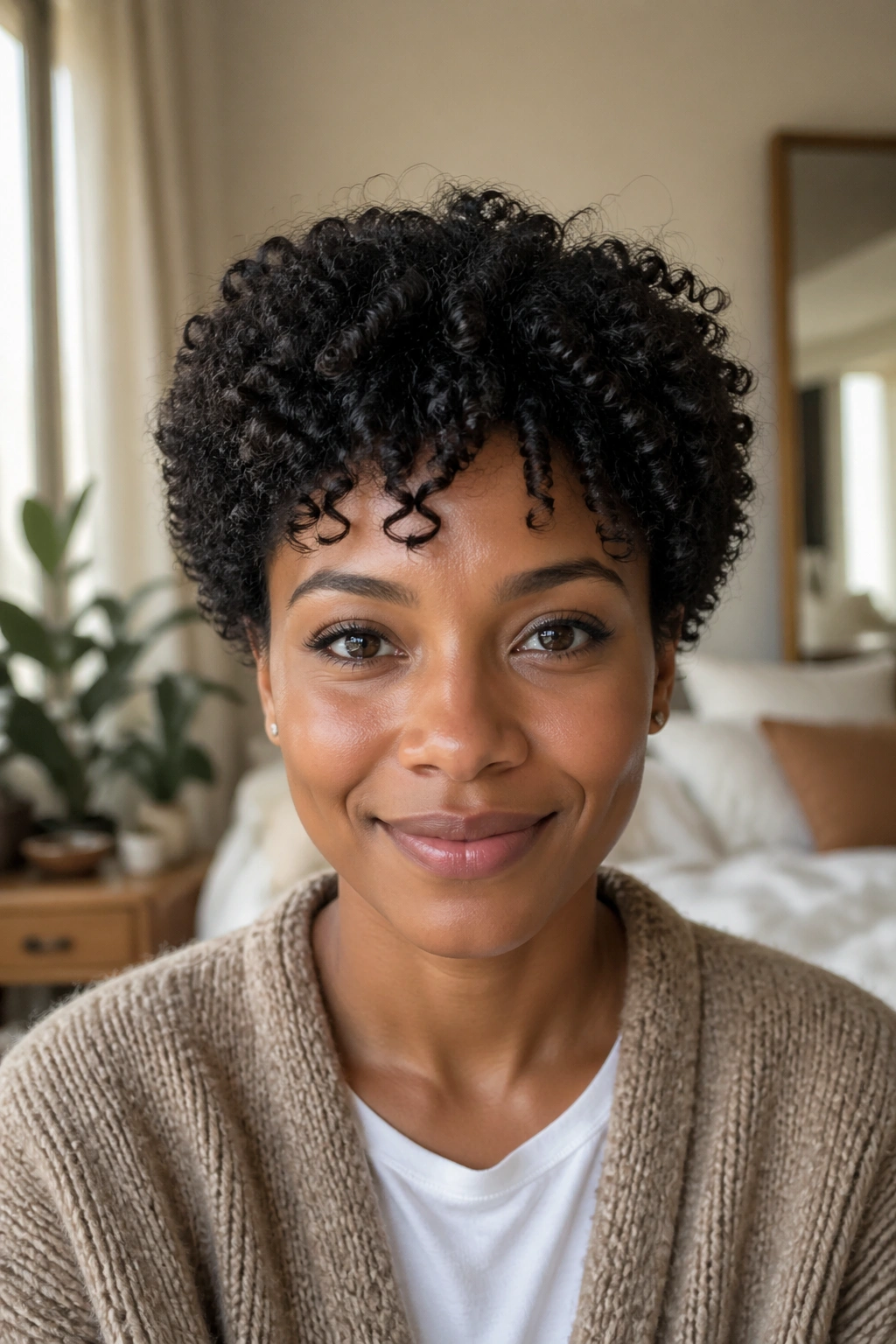
A combination approach where a skilled barber blends the sides and nape using clipper techniques, and a curl specialist adds interior layering to the top section. This hybrid approach gets the precision of barbershop tapering with the curl-specific expertise of natural hair cutting in the top section. It requires either a single stylist with both skill sets or a two-professional approach — but the result can be extraordinary.
21. The Bespoke Short Layered Natural Cut
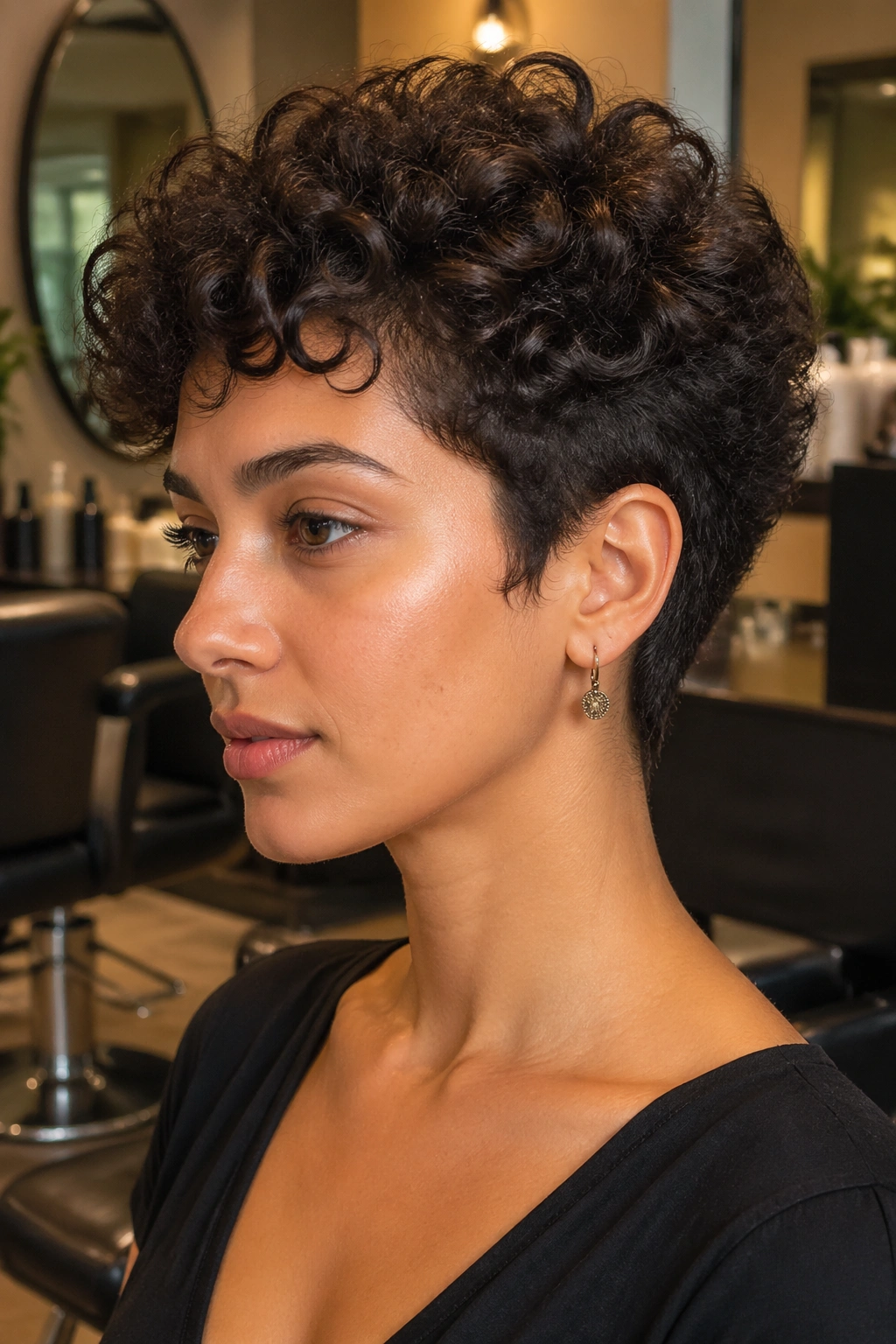
The best short layered cut is, ultimately, the one built specifically for your curl type, your density, your head shape, and the life you actually live. No template produces the same result on every head, and the stylist who understands this is the one who will give you a cut that works so well you’ll wonder why you didn’t go short and layered years ago.
The bespoke consultation covers: your curl map (where each section of your hair has its unique curl tightness), your density at different sections, your face shape and any features you want to highlight or minimize, your daily styling time budget, and how you want the cut to look as it grows out before the next appointment.
Caring for Short Layered Natural Curls
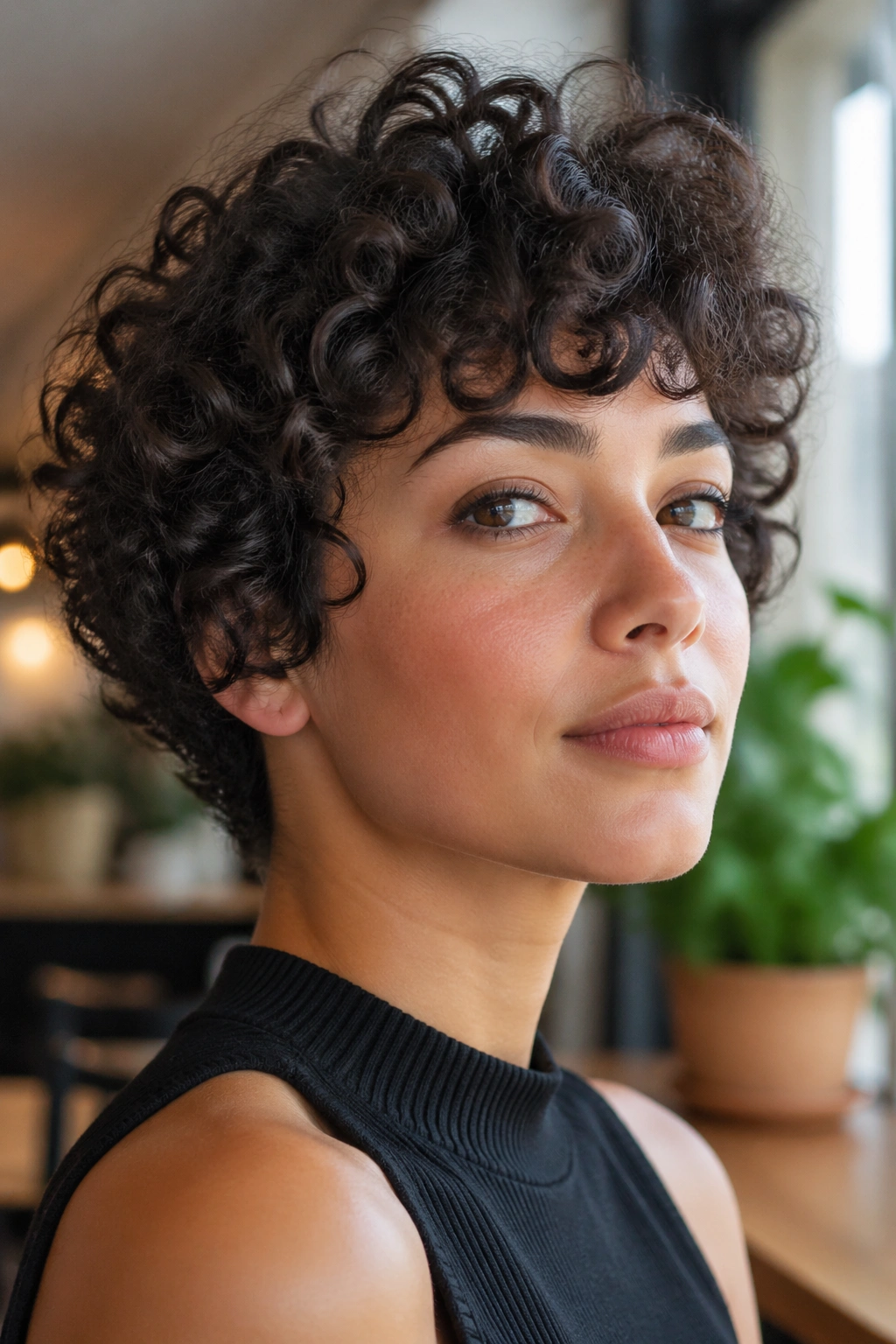
Short layered curly hair needs moisture applied consistently — just less of it per session than longer hair because there’s less surface area to cover. Use a water-based leave-in conditioner after every wash, seal with a light oil, and apply a curl-defining product (cream or gel) while hair is still damp. For very short cuts, your fingertips are actually better styling tools than any brush or comb — they work the product in without disrupting the delicate layer structure.
Sleep with a satin bonnet or on a satin pillowcase every night. Short layered curls are more susceptible to friction damage than longer hair because the short strands shift around more during sleep. Satin eliminates that friction completely.
Growing Out Your Short Layered Cut Gracefully
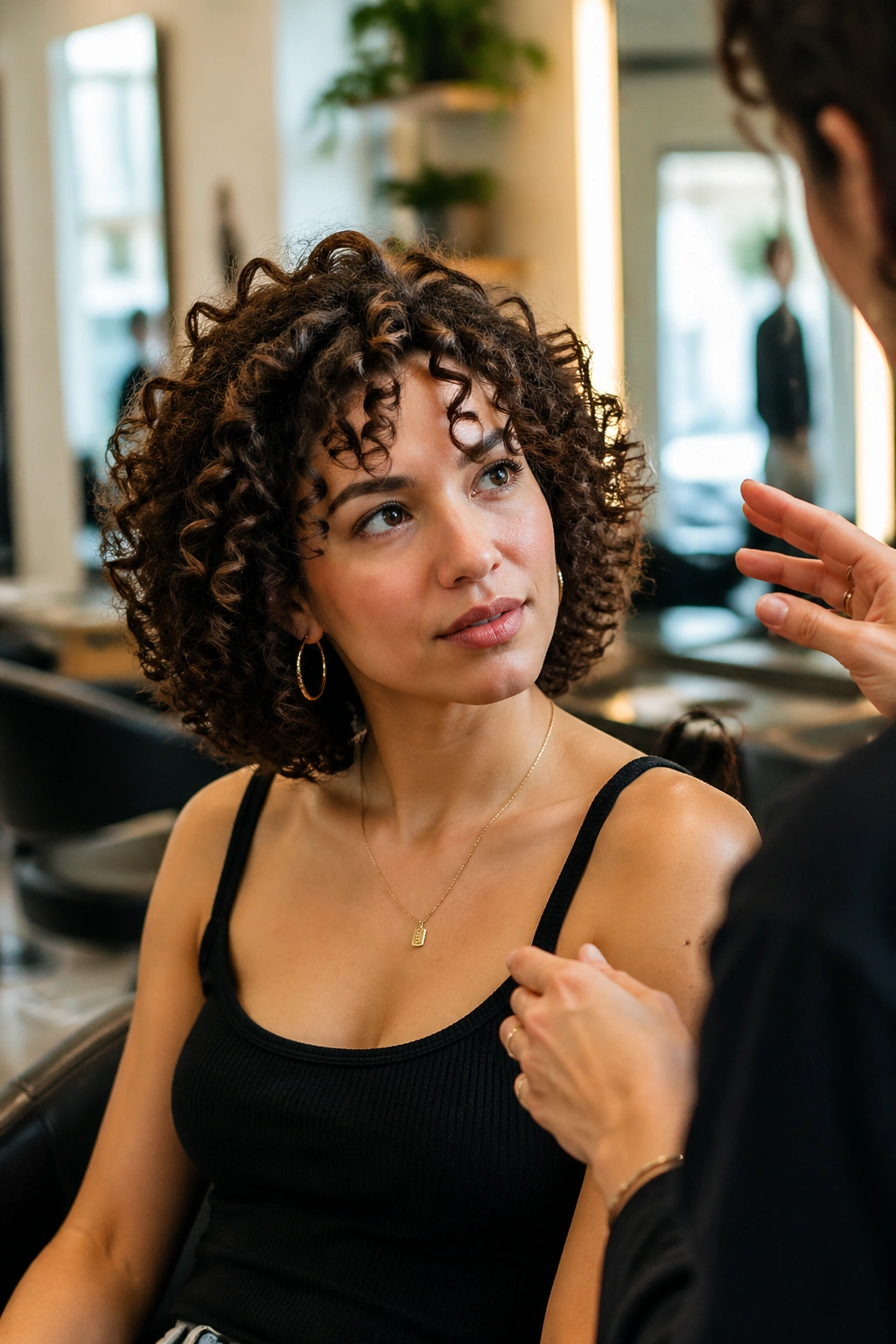
One of the pleasures of a well-done short layered cut is that the grow-out phase looks intentional at multiple stages. As the shortest layers grow, they move into the length of the adjacent layer — the style transitions smoothly rather than looking unkempt. Aim for trims every six to eight weeks on the shortest sections (if you have a fade or taper, that requires more frequent visits to maintain crispness — every two to three weeks) and full relayering every three to four months as the layers grow out of their original positions.
The Case for Going Short and Layered
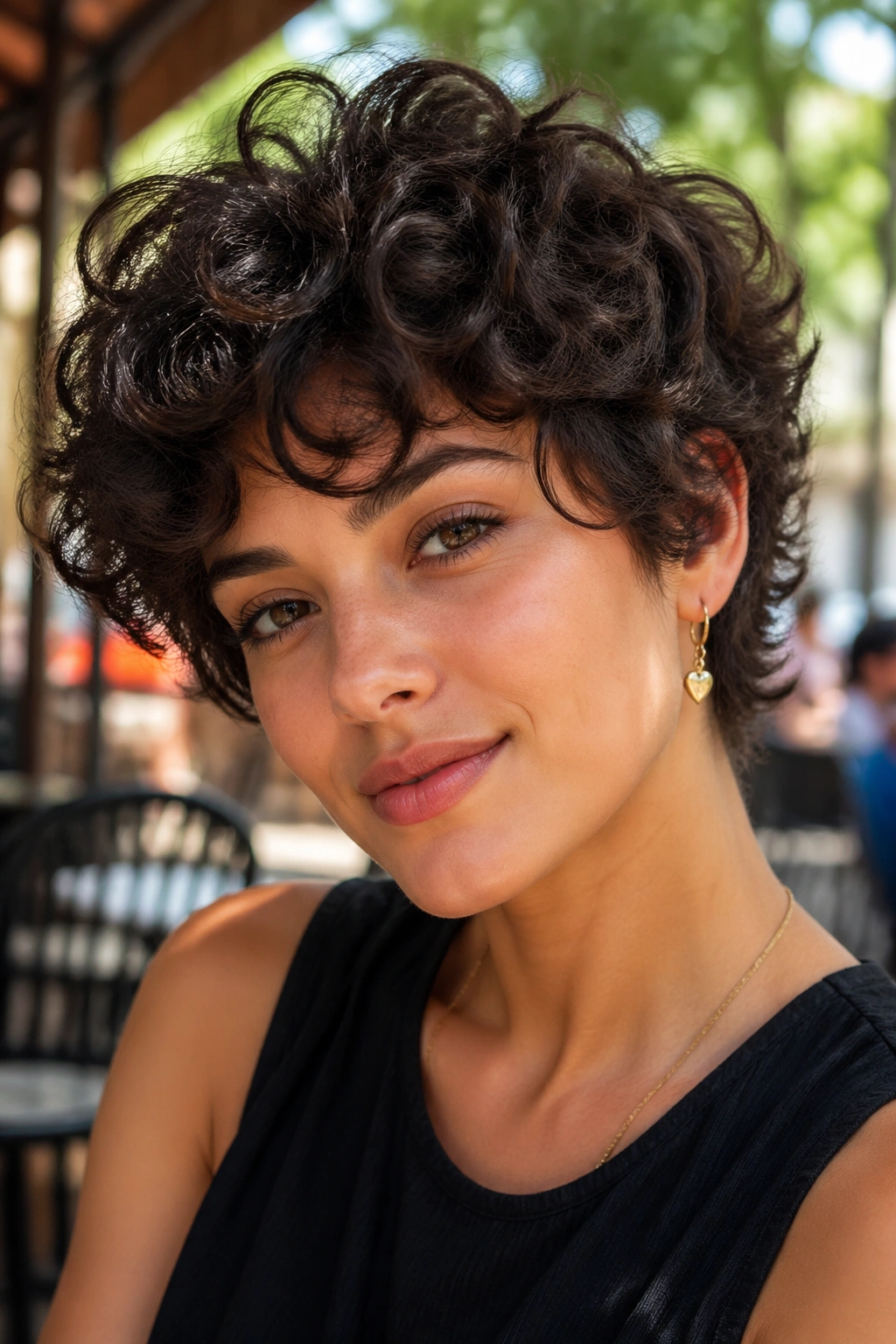
If you’ve been on the fence about short layered curly hair, the argument for trying it is simple: it shows your curl pattern more clearly than almost any other cut. At short length with strategic layering, your natural texture is front and center — the cut exists to serve the curl, not the other way around. And when a cut truly serves your curl pattern, your hair becomes the easiest it’s ever been to deal with and the most beautiful it’s ever looked.
That combination is hard to argue with.