



Red dyed curly hair is one of those combinations that stops you mid-scroll — it’s magnetic, it’s bold, and it looks like it was invented specifically for women with natural texture. The way red color moves through curls, catching light differently in every coil and twist, creates a dynamic effect that flat-ironed hair simply can’t replicate. If you’ve been on the fence about going red, this is your sign. Here are 22 red dyed curly hair ideas that range from barely-there auburn to full-on vivid fire.
Why Red Works So Beautifully on Curly Hair
Color theory has a simple explanation for why red lands so hard on natural curls: contrast and reflection. Each curl creates its own tiny shadow and highlight, and when those shadows and highlights are filled with red, the result looks like your hair is glowing from within.
Straight hair shows red in one flat plane. Curly hair shows it in three dimensions — darker in the valleys of each curl, brighter on the peaks. That’s why the same red shade looks twice as vivid on coily textures as it does on straight hair. You’re not imagining it. The math checks out.
There’s also a warmth factor. Most red shades have undertones that complement a wide range of skin tones — from the deepest ebony to the warmest medium brown to the coolest ivory. Red’s versatility is part of what makes red dyed curly hair such a universal choice. There’s a version of red for literally everyone.
The Red Spectrum: What Shade Are You Actually After?
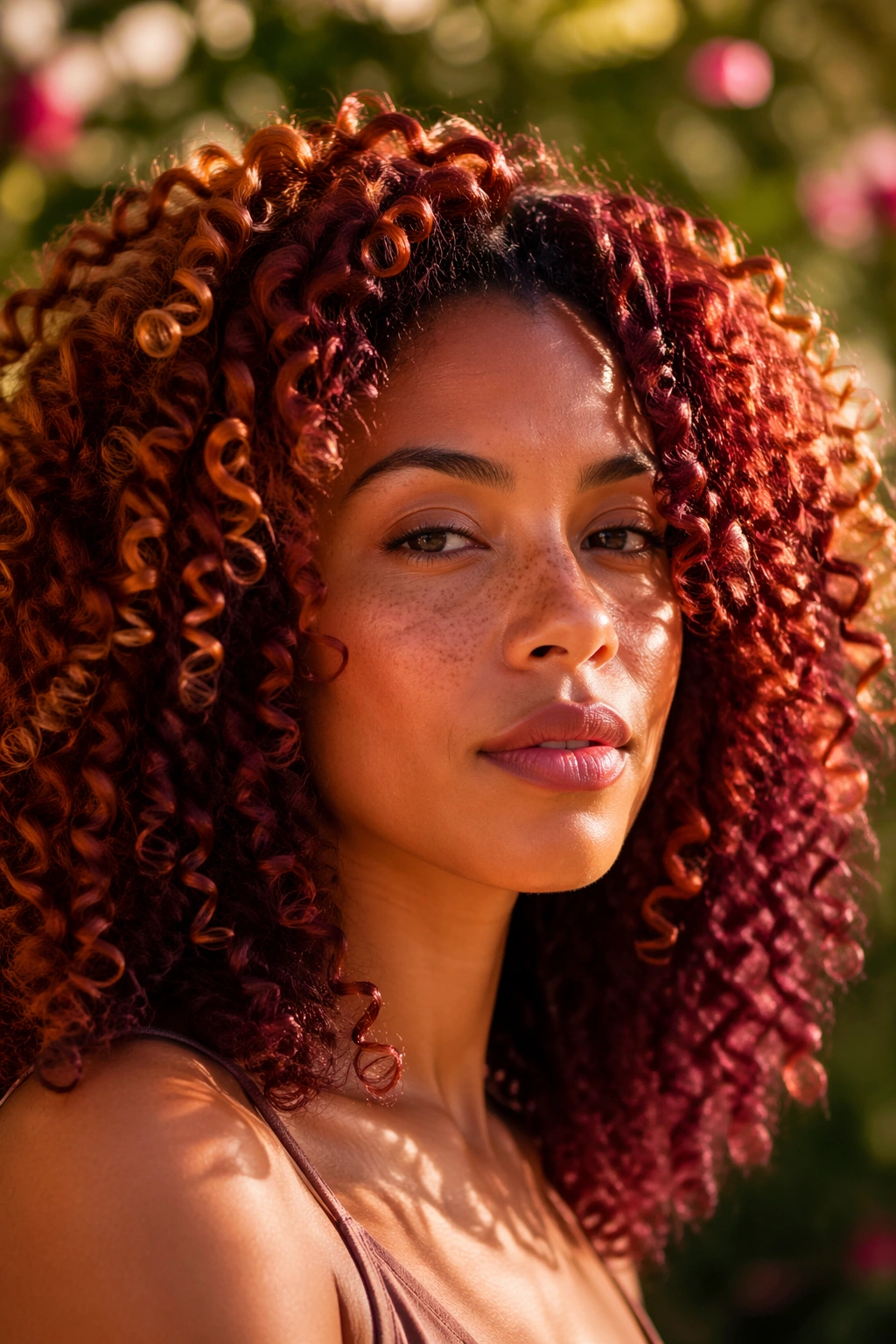
Red isn’t one color — it’s a whole neighborhood. Before you sit down in a salon chair, it helps to know where on the red spectrum you want to land.
Auburn sits at the red-brown border. It reads as a warm brown in low light and a rich red in sunlight. Low-maintenance, universally flattering, and doesn’t typically require bleaching on dark natural hair.
Copper is a warm red with strong orange undertones. It’s vibrant without being “costume” red, and on curly hair it reads like living fire — especially on 3B-4A curl types where individual curls catch the metallic warmth of copper tones.
Burgundy and wine push red into the cool-violet territory. These are deep, moody, rich reds that look incredible on deeper skin tones and don’t require as much lightening as brighter reds.
Cherry red and true red are your standard “red” shades — vivid, warm, and unmistakably intentional. These require pre-lightening on dark hair to achieve full vibrancy.
Scarlet, fire, and vivid red are the brightest of the bunch. Electric, saturated, and guaranteed to turn heads. These require the most lightening and the most maintenance — but the result is extraordinary.
Choosing the Right Red for Your Skin Tone
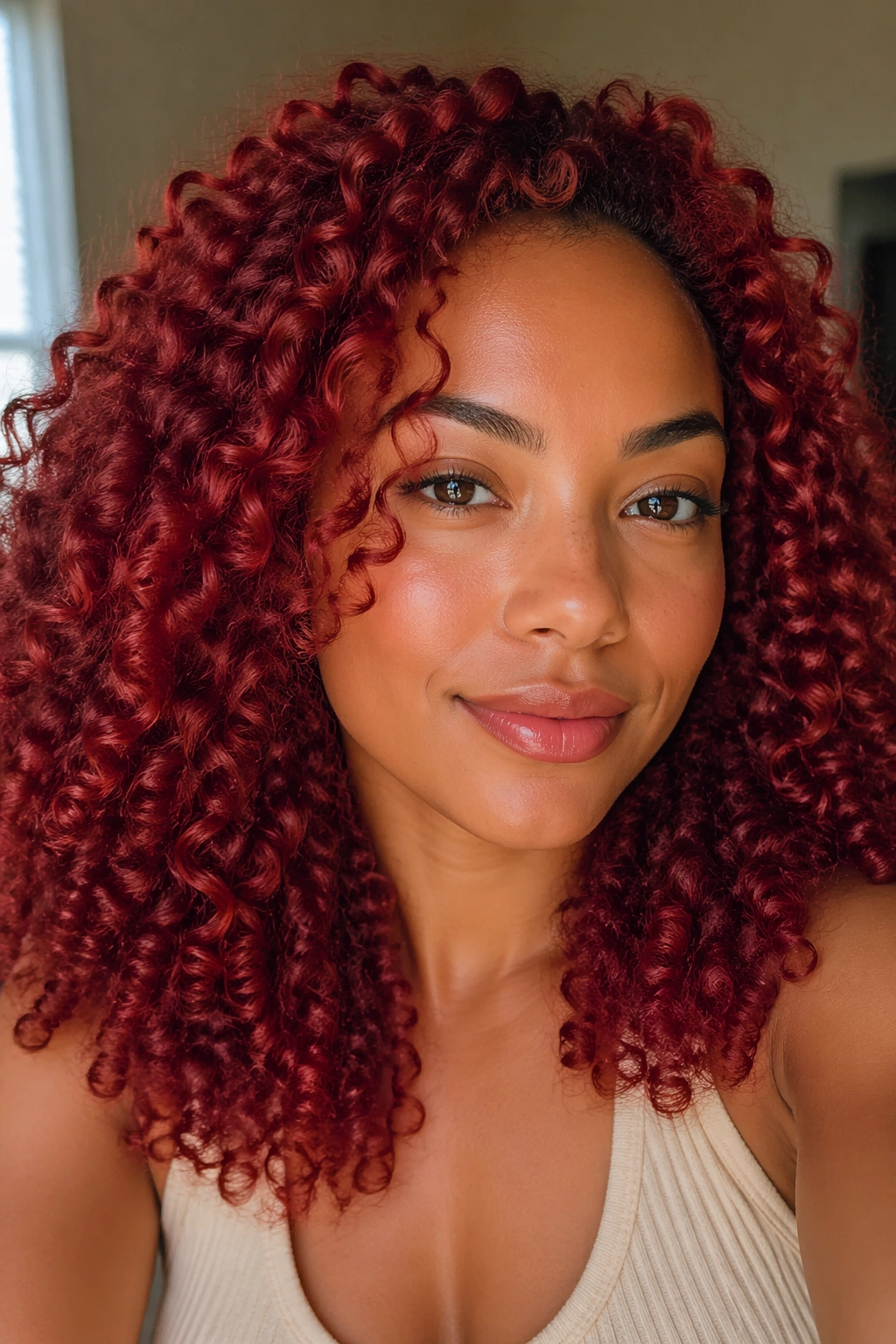
Skin tone guides don’t have to be restrictive — they’re just starting points. That said, some reds do play particularly well with specific undertones.
Warm undertones (gold, yellow, peachy): You’ll glow in copper, auburn, warm cherry red, and strawberry blonde. These shades add warmth that feels complementary rather than clashing.
Cool undertones (pink, blue, lavender): Burgundy, wine, and blue-based reds like crimson and scarlet look intentional and striking. Cool reds bring out the pink and blue in your complexion beautifully.
Deep skin tones: The entire red spectrum is open to you, but the most stunning pairings tend to be vivid copper (creates incredible warmth against dark complexions), deep burgundy (rich and elegant), and fire red (the contrast is simply unbeatable).
Neutral undertones: Lucky you — cherry red, auburn, and burgundy all work. Pick based on vibes, not rules.
What to Expect from the Coloring Process
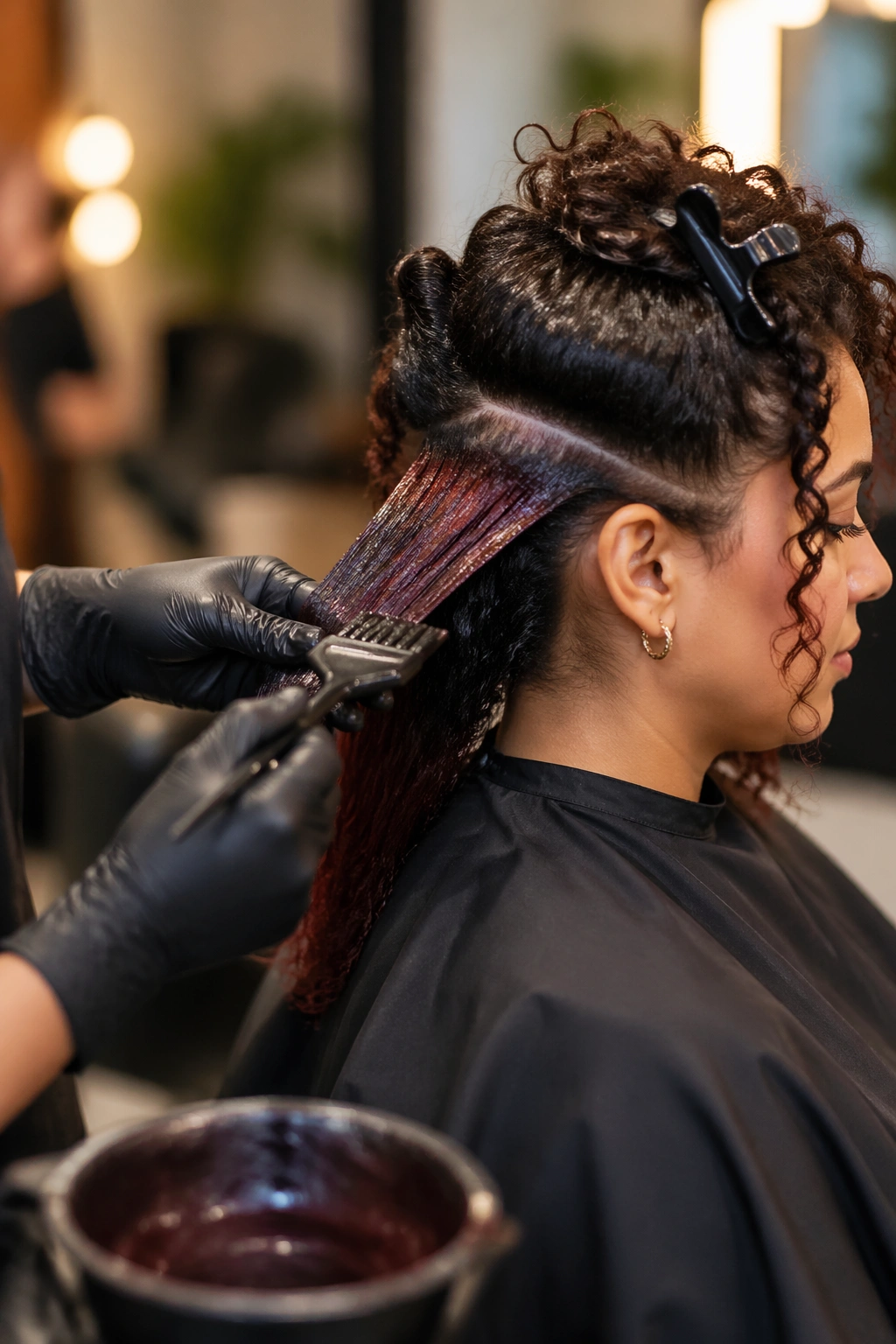
Getting red dyed curly hair isn’t always a single-appointment process, especially if your natural hair is dark brown or black. Here’s what to prepare for:
Dark natural hair usually needs to be pre-lightened before vivid or true red can show up properly. This might mean one or two bleaching sessions spaced 2-3 weeks apart, depending on how light you need to go and how your hair handles the process. Your colorist will assess your starting level and target shade.
Auburn and burgundy are the exception — these can often be achieved on dark hair without bleaching, using a high-lift or direct dye formula that deposits warm tones over your natural base.
After lightening, a red toner or direct dye brings the actual color. Most red shades on natural hair will need refreshing every 4-8 weeks because red fades faster than almost any other color family.
Always — always — follow coloring with a deep conditioning treatment. Pre-lightening opens the cuticle significantly, and replenishing moisture immediately after protects your curl pattern from damage.
Maintaining Red Curly Hair Without Losing Your Mind
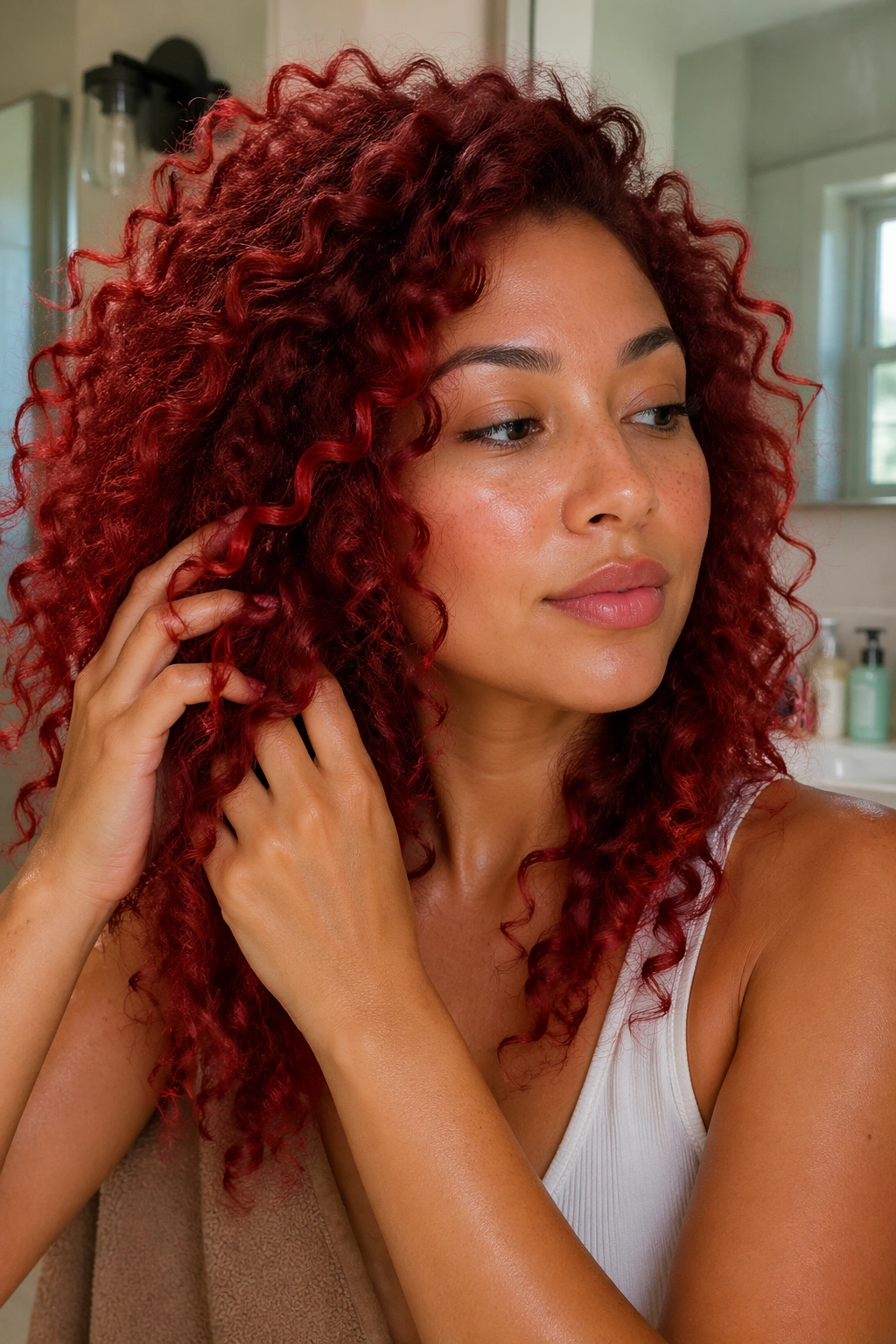
Red is stunning. Red is also a notorious fader. The upside? There are genuinely effective ways to extend your color between salon visits.
Wash less frequently. Every wash fades color slightly. If you can extend from washing every week to every 10-12 days, your color lasts noticeably longer. Co-washing between full shampoo days helps maintain moisture without stripping pigment.
Use cool water. Hot water opens the hair cuticle, which releases color molecules with every rinse. Cool or lukewarm water keeps the cuticle closed and the color locked in. It’s uncomfortable for about 30 seconds. Worth it.
Color-depositing products. A red-tinted conditioner or color gloss applied weekly replenishes some of the pigment lost to washing and sun exposure. These aren’t substitutes for salon color, but they meaningfully extend vibrancy.
Sun protection. UV rays break down color molecules, especially the warm-spectrum pigments in red. A leave-in with UV filters or a silk scarf during extended outdoor time makes a real difference.
1. Deep Auburn on 4C Coils
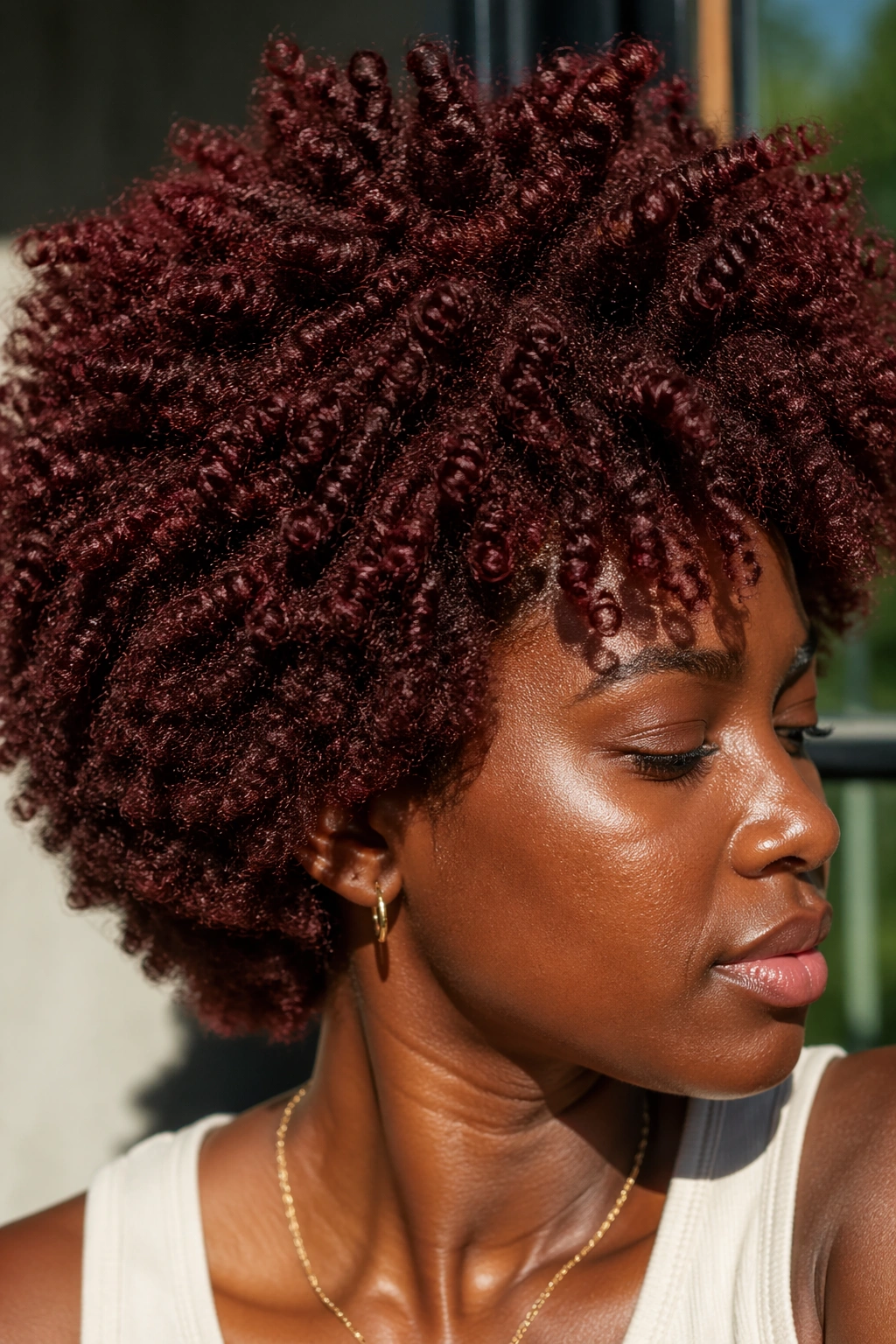
Deep auburn is the entry point of the red world — and what an entry point it is. On 4C hair, the warmth of auburn creates a rich, multi-tonal effect across tightly coiled strands that reads as both natural and carefully considered.
How to Achieve It
- No bleaching required for most dark brown bases — a permanent or high-lift formula in auburn deposits visible color
- Apply in sections, starting at the back and working toward the face
- Process for the full recommended time to achieve depth
- Finish with a deep conditioning mask before rinsing
Bold tip: A second application two weeks later deepens the color significantly on hair that initially absorbed unevenly due to porosity variation across different sections.
2. Vivid Cherry Red All-Over
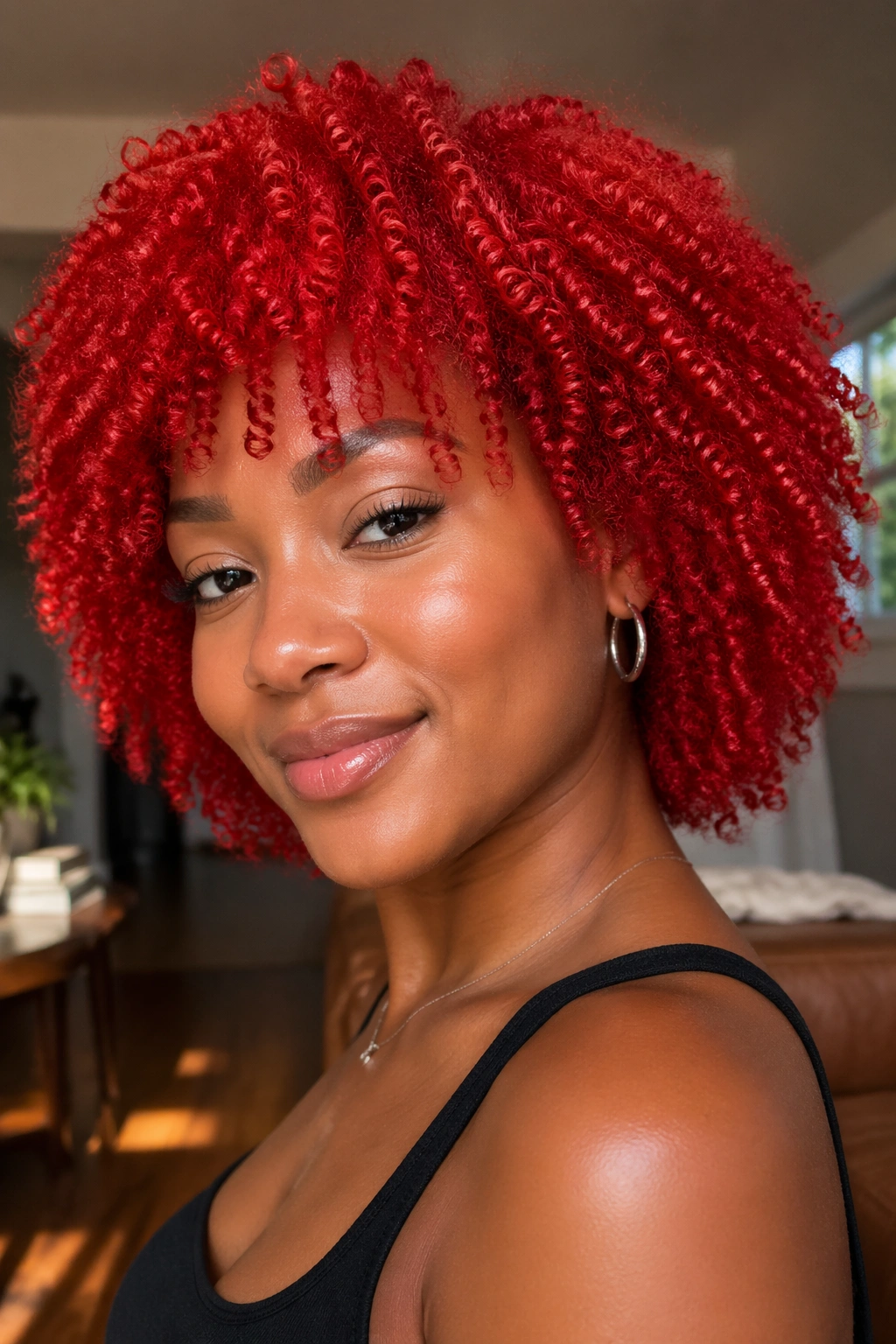
Cherry red is exactly what it sounds like: bright, saturated, unmistakably red. On natural curls, this shade looks almost electric — like your hair has its own light source.
This look requires pre-lightening to at least a level 7-8 orange-yellow before applying cherry red over the top. On dark natural hair, plan for this to be a multi-session process.
Once you have it, though? A full head of cherry red curls in a wash-and-go is one of the most striking hair looks in existence. No styling required — the color does all the work.
3. Copper Balayage
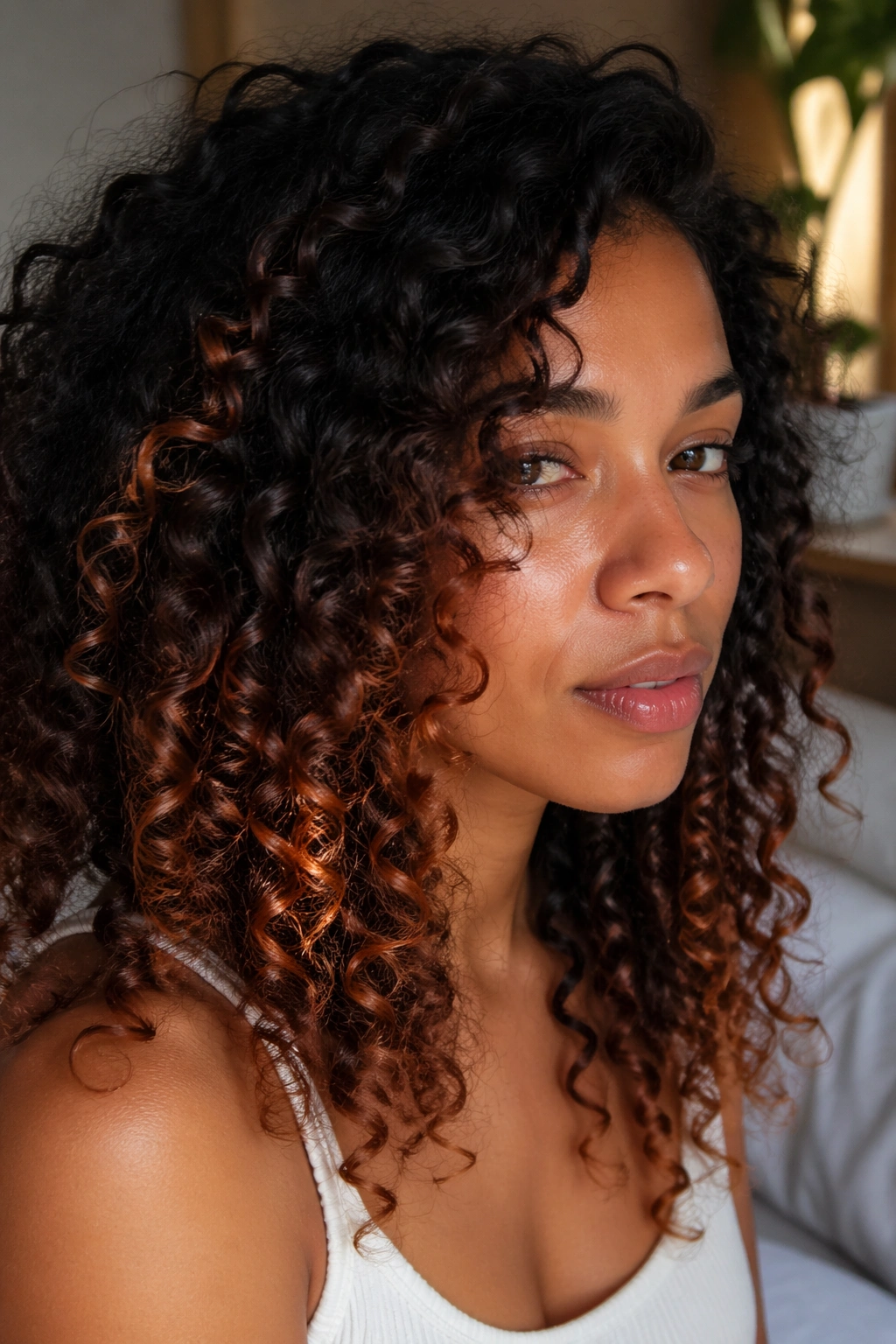
Copper painted through dark curls in a balayage pattern is a dimensional, low-maintenance way to get red color without committing to a full head transformation. The technique places color on the mid-lengths and ends, leaving roots dark and untouched.
On curly hair, copper balayage creates a gradient that looks sun-kissed at the ends and rich at the root — a completely natural-looking transition that grows out without a harsh line.
Who this suits best: Type 3 and early Type 4 curl patterns where the balayage placement is visible on individual curls rather than hidden by density. For very dense 4C hair, chunkier balayage sections ensure the color reads clearly.
4. Burgundy Wine Color
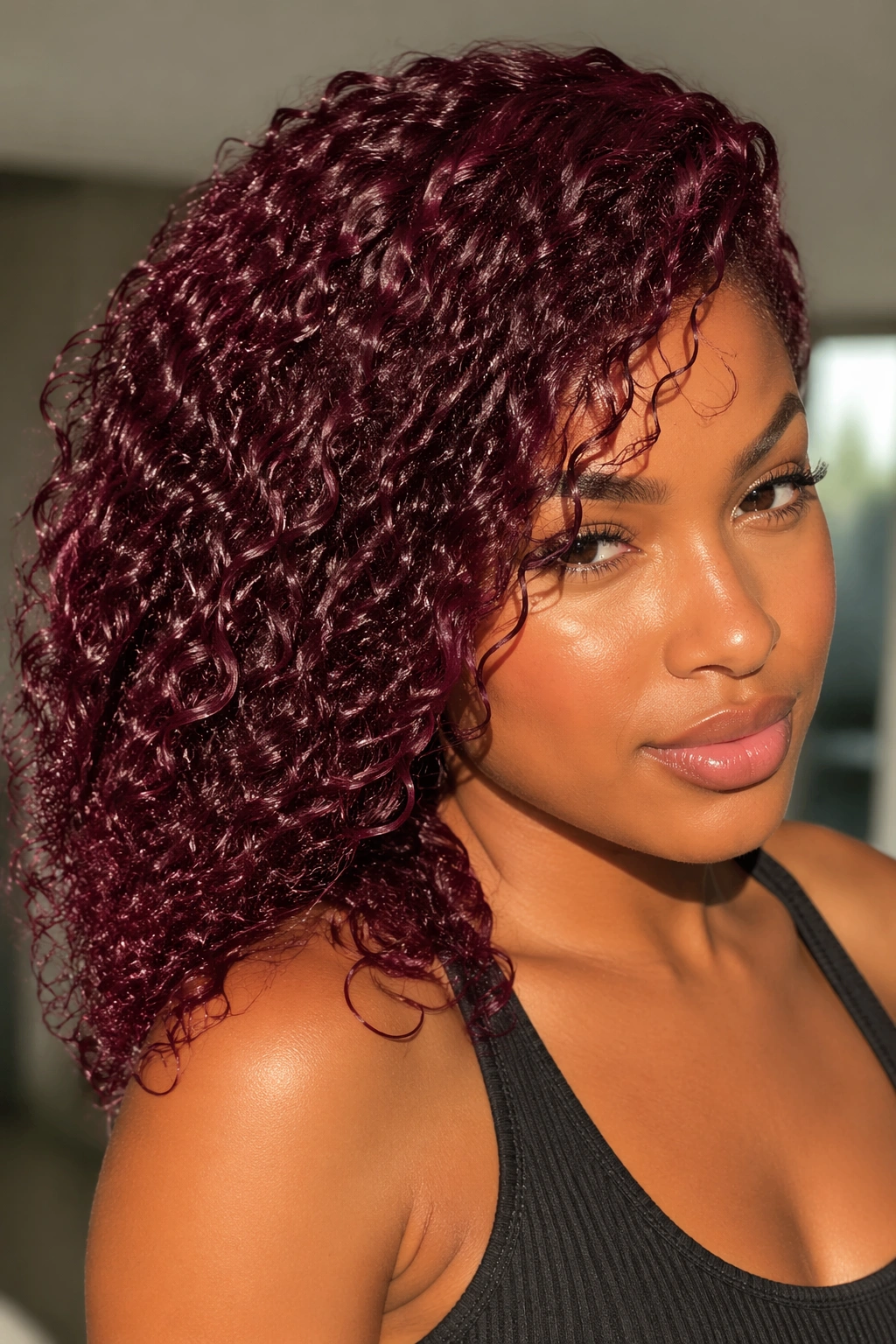
Burgundy is the sophisticated cousin in the red family. It’s deep enough to be low-key professional, rich enough to be unmistakably intentional, and varied enough in its undertones (some lean redder, some lean more violet) to suit a huge range of preferences.
The best thing about burgundy on dark natural hair? You don’t always need to bleach first. A quality permanent dye in burgundy applied over a dark brown base can create visible, beautiful color — especially in sunlight and photographs.
For brighter or more vivid burgundy, lifting to a warm brown or copper base first gives the color more to work with.
5. Fire Red Tips on Natural Roots
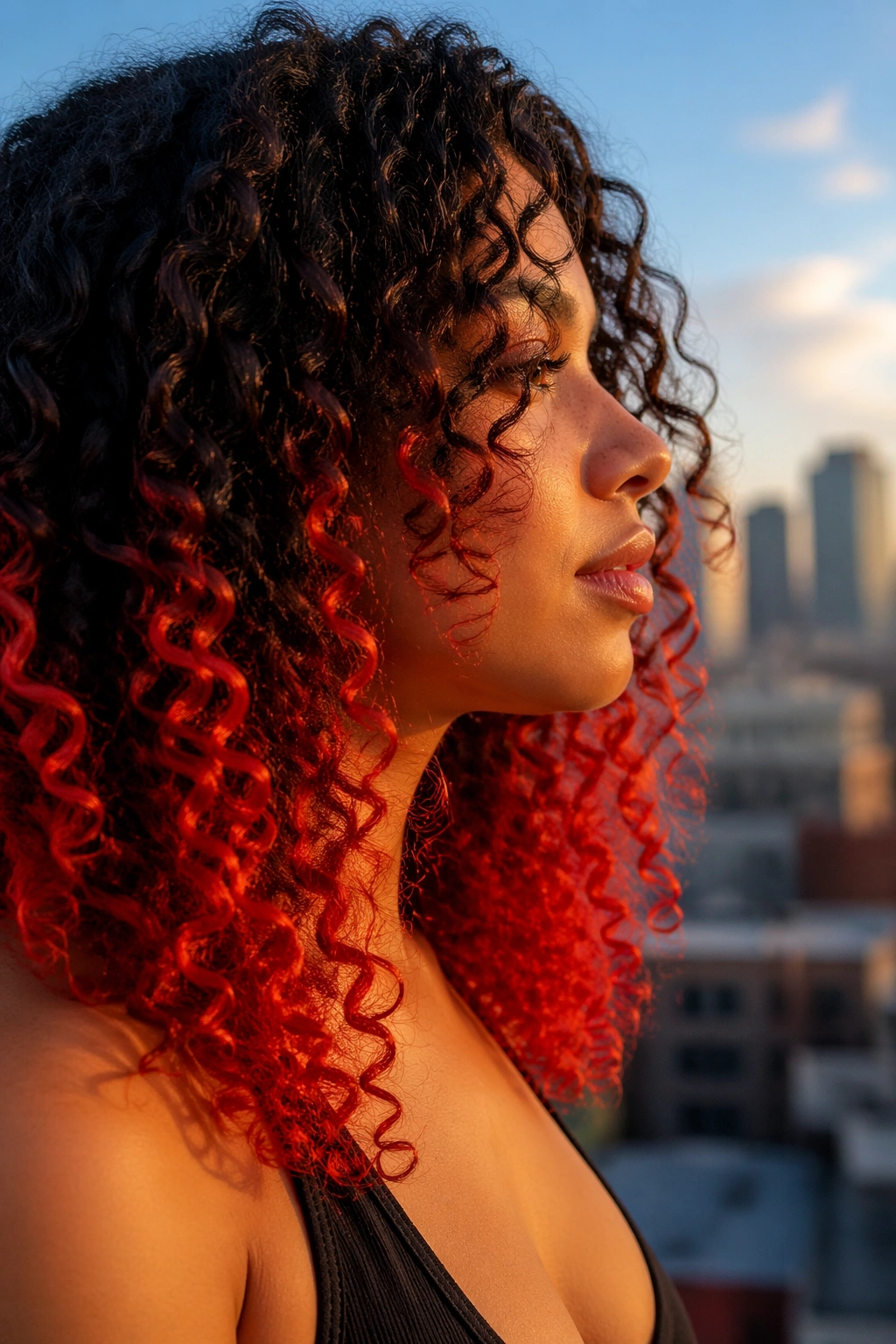
Dark roots graduating to vivid fire red at the ends — this ombre approach honors your natural color while giving maximum visual impact where the eyes naturally rest: at the ends of your curls.
The fire red tips catch light and movement as your curls bounce, creating a dynamic effect that changes dramatically depending on whether you’re inside or out in the sun.
Maintenance
- Touch up ends with a direct dye red every 4-6 weeks
- Roots require zero maintenance — they’re your natural color
- Deep condition ends weekly to prevent dryness from bleaching
6. Red and Black Contrast
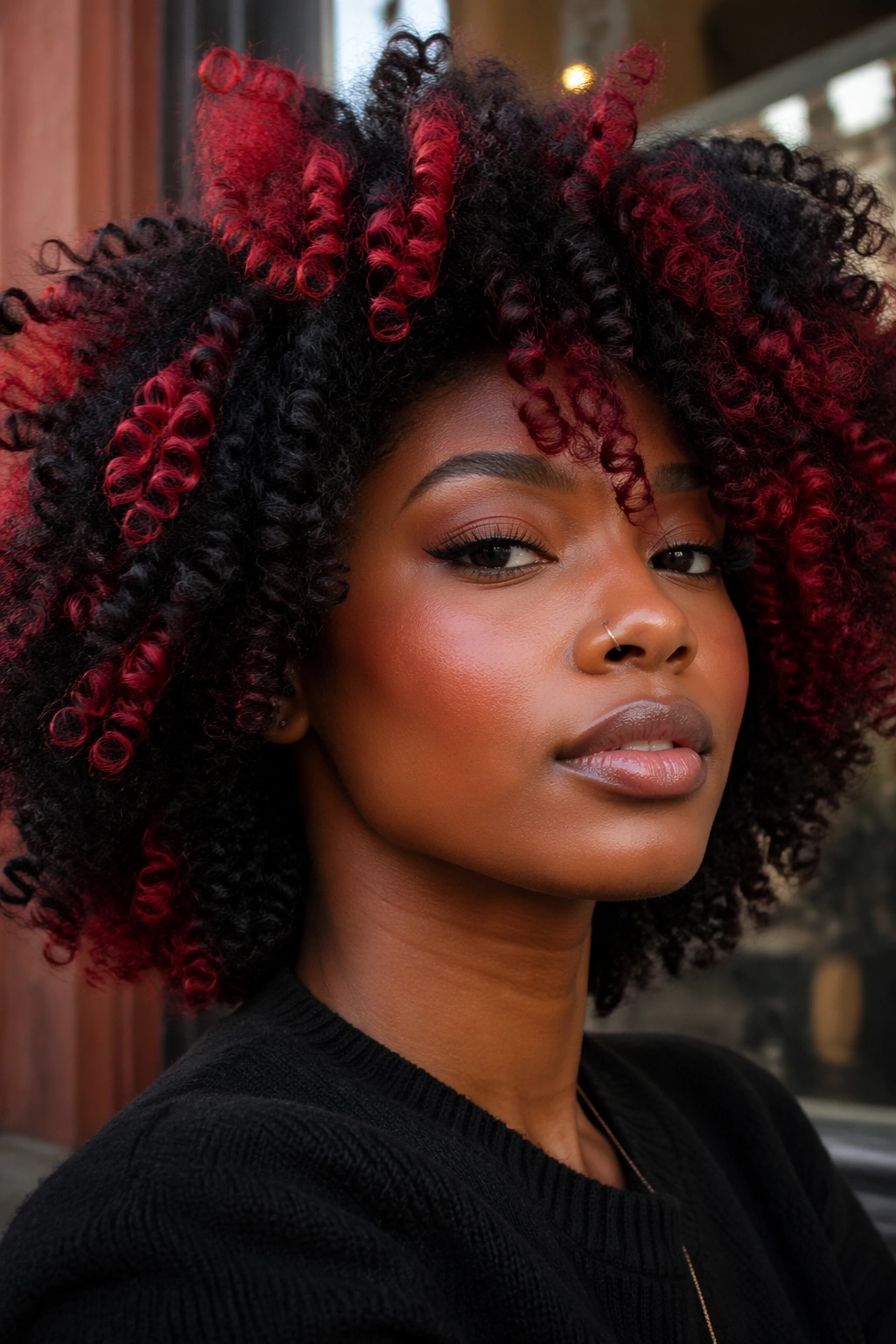
Two sections of distinctly different color — deep black and vivid red — either blended or placed in deliberate contrast. This isn’t a subtle look. It’s bold, graphic, and stunning.
On natural curls, the two tones can be achieved through a strategic highlight pattern (red highlights through a black base) or a more deliberate split placement. Either way, the contrast is heightened by the texture — curly hair makes color combinations look three-dimensional.
7. Strawberry Blonde Curls
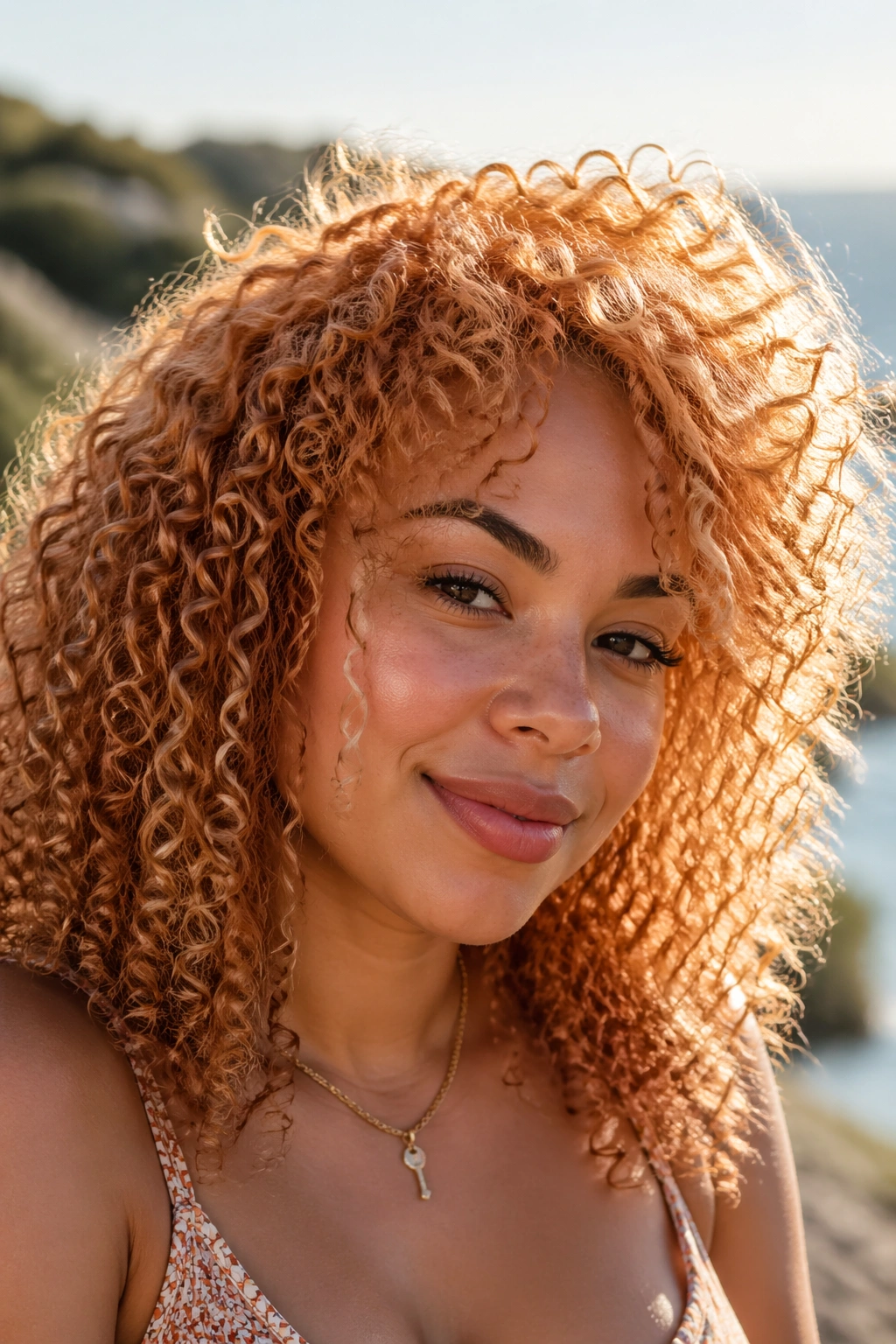
Strawberry blonde is the softest version of red — barely there, warm, almost peachy in some lights. It’s the color of someone who spent a whole summer outdoors. On curly hair, it’s romantic and effortlessly pretty.
Achieving strawberry blonde on dark natural hair requires significant lightening — to a level 9 or 10 at minimum — before toning with a peach-gold-red formula. This is a committed process, but the end result on loose curls or 3B ringlets is genuinely beautiful.
8. Bright Crimson on Type 3B Curls
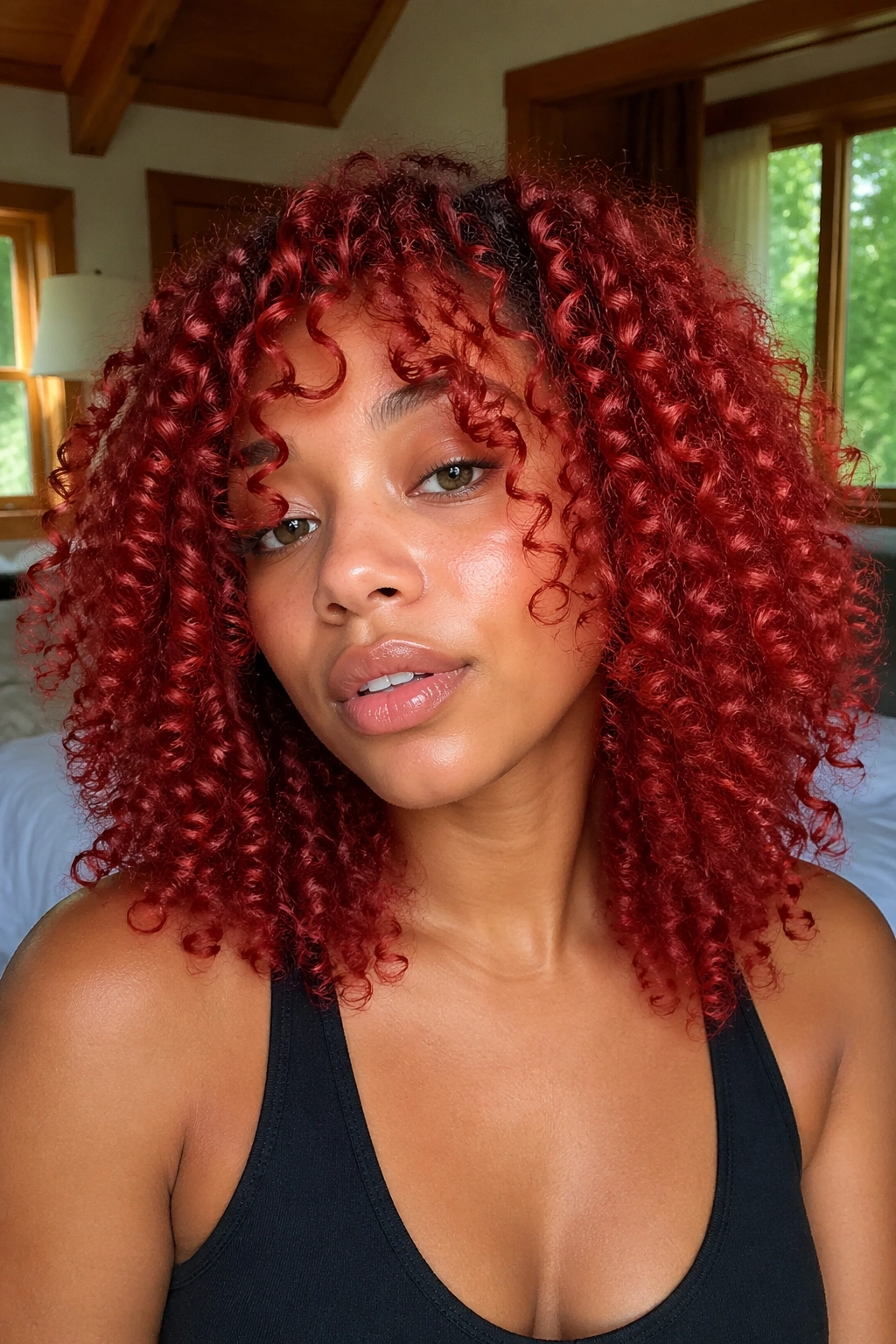
Crimson sits slightly cooler and darker than cherry red — it has just a hint of violet or blue in the undertone that makes it feel more dramatic and less candy-bright. On Type 3B curls, crimson appears to pulse with color as the ringlets catch light.
This is a look where the texture of the hair does as much visual work as the color itself. Defined, hydrated 3B ringlets in bright crimson are a combination that photographers love to shoot — and everyone else loves to look at.
9. Mahogany Red Brown
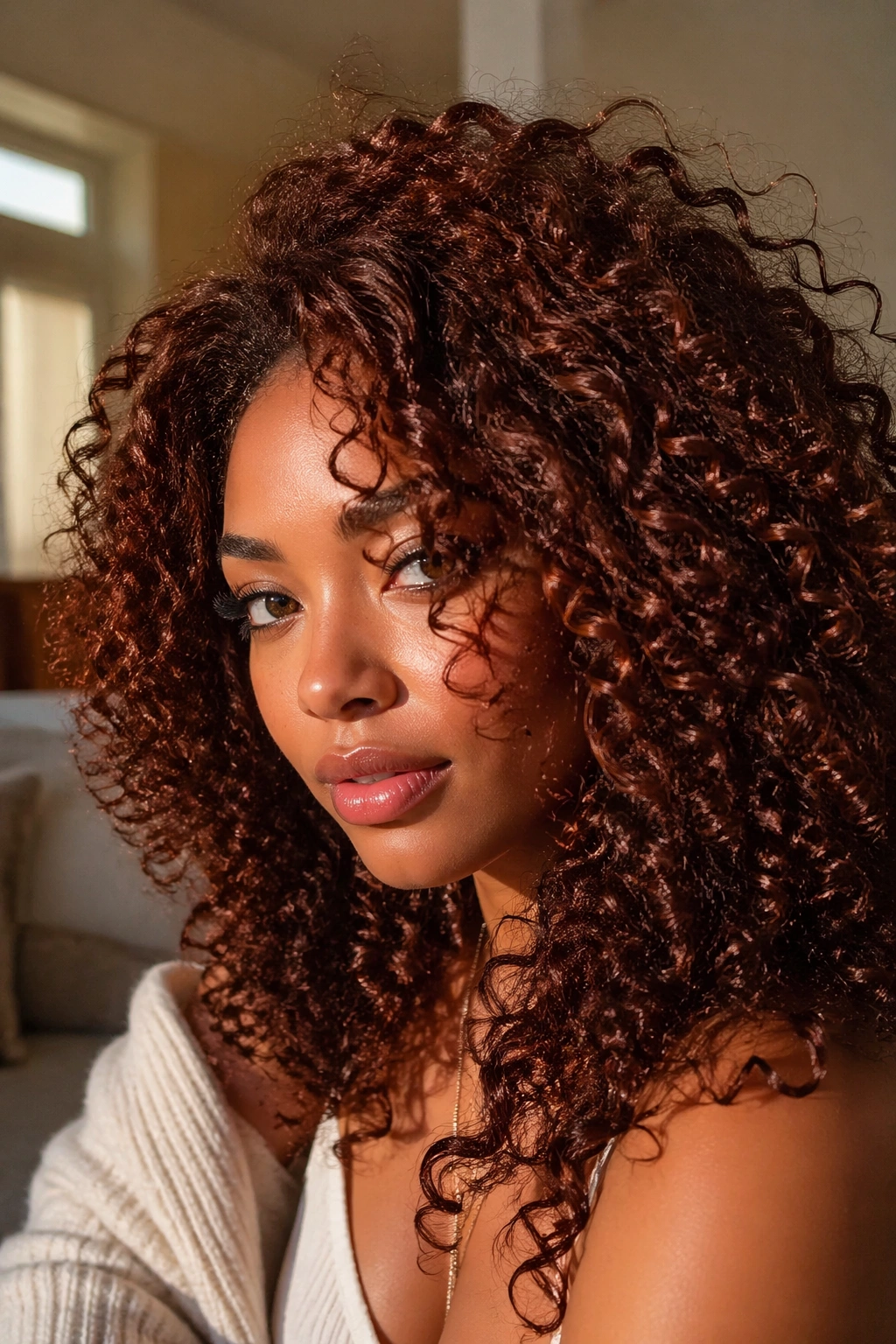
Mahogany sits comfortably between red and brown — it’s warmer than chocolate but not quite red enough to read as a true red in all lighting. The result is a versatile, wearable warmth that adds dimension to dark natural curls without making a loud announcement.
This is a great “first red” for naturals who want to dip into warm tones without fully committing to vivid color. No bleaching required, relatively low maintenance, and it works beautifully on every curl pattern.
10. Scarlet Ombre
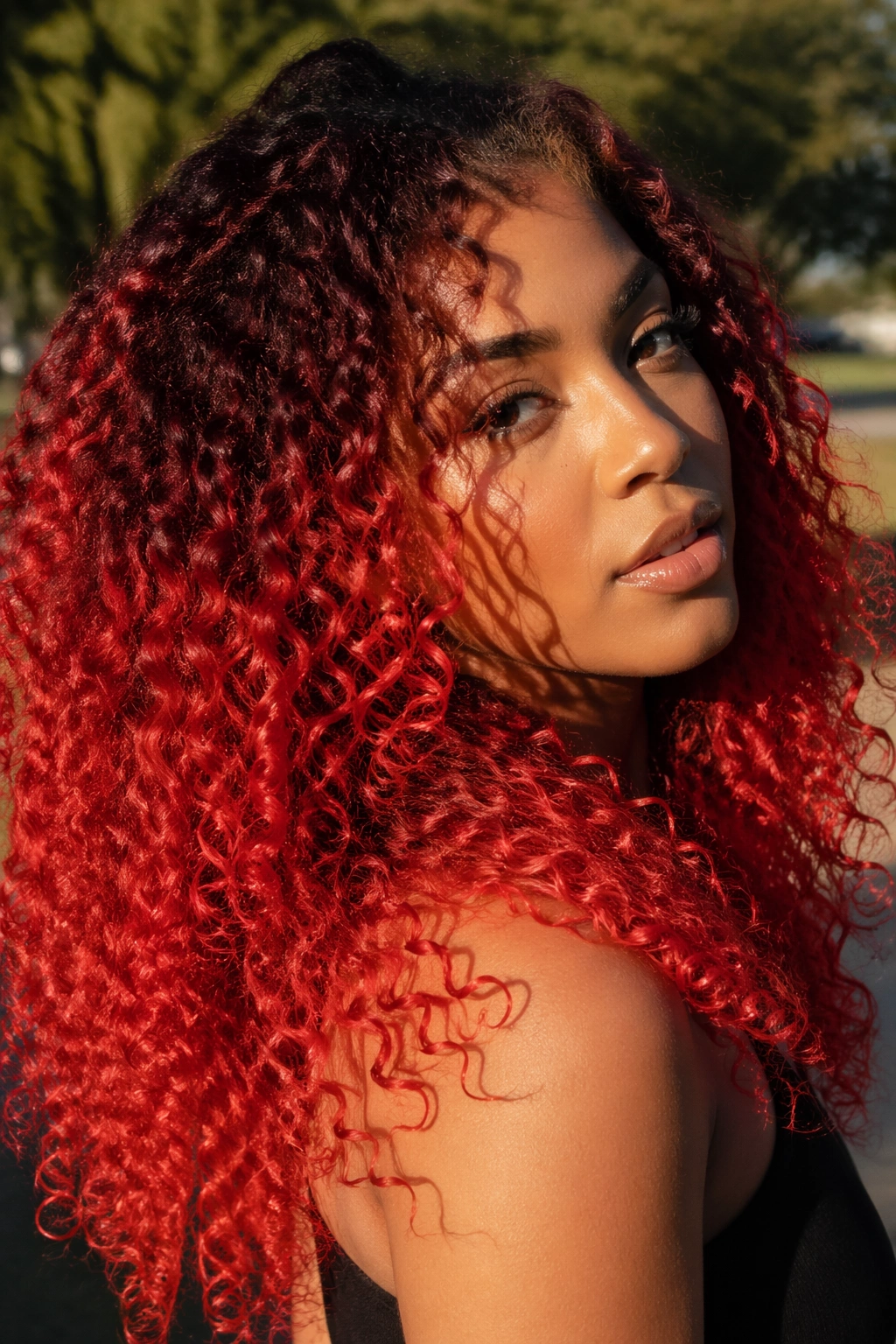
Scarlet — a true, bright, warm red — fading up from lighter ends to darker roots creates an inverted ombre that’s surprisingly rare and incredibly striking. Most ombres go dark-to-light; this reversal plays against expectations.
On natural curls, starting with a lighter scarlet at the ends and deepening toward a dark burgundy or even black at the roots creates a rich, gradient look that feels intentional and editorial.
11. Red Peekaboo Pieces
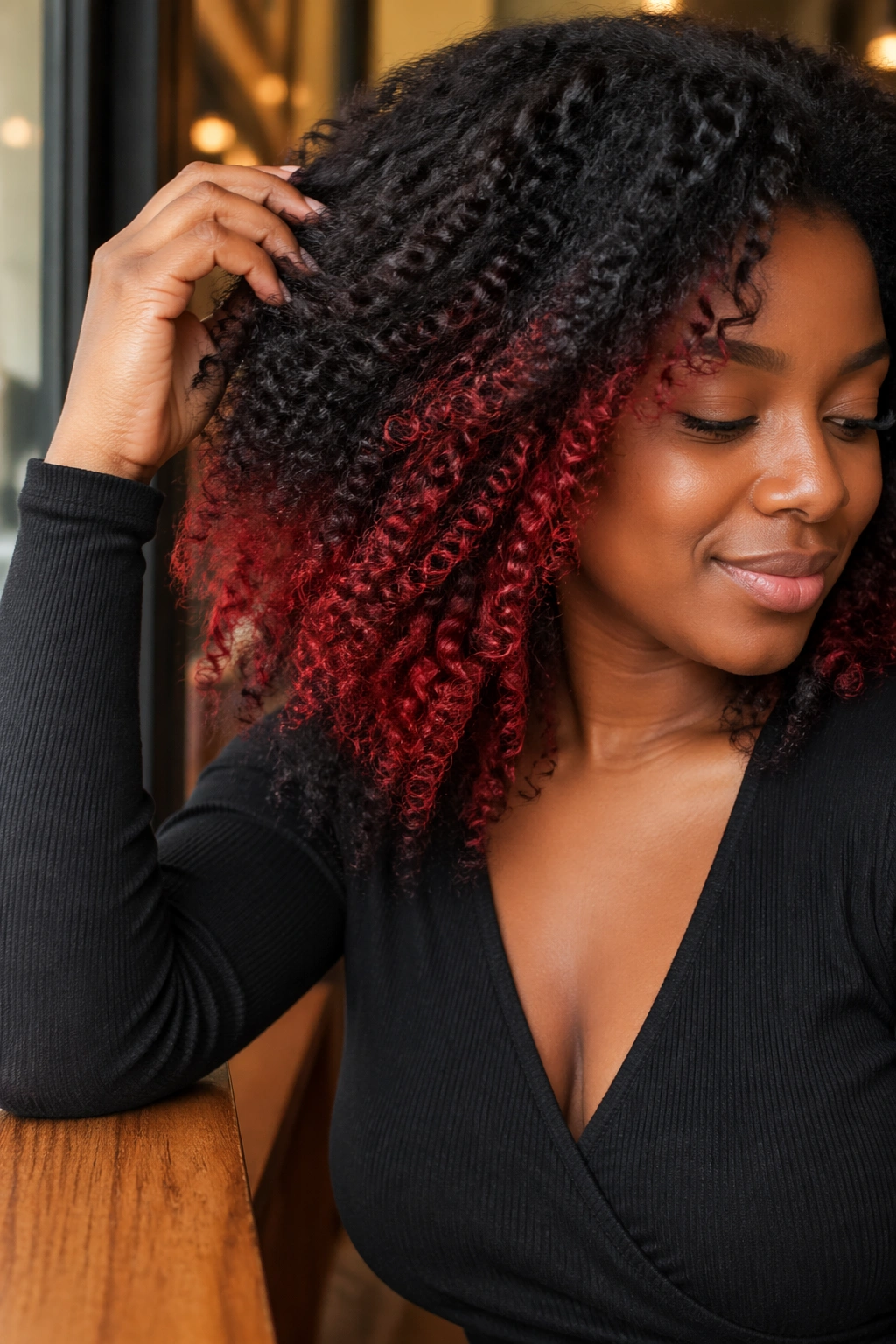
Not ready for a full commitment? Red peekaboo pieces — sections of vivid red hidden underneath the top layer of your natural hair — give you color impact with maximum flexibility.
When your hair is down and loose, the red sections are mostly hidden. When you pull your hair up, tie it to the side, or let your curls spread out, flashes of red appear throughout. It’s playful, unexpected, and far easier to manage than an all-over vivid color.
12. Copper-Toned Wash-and-Go
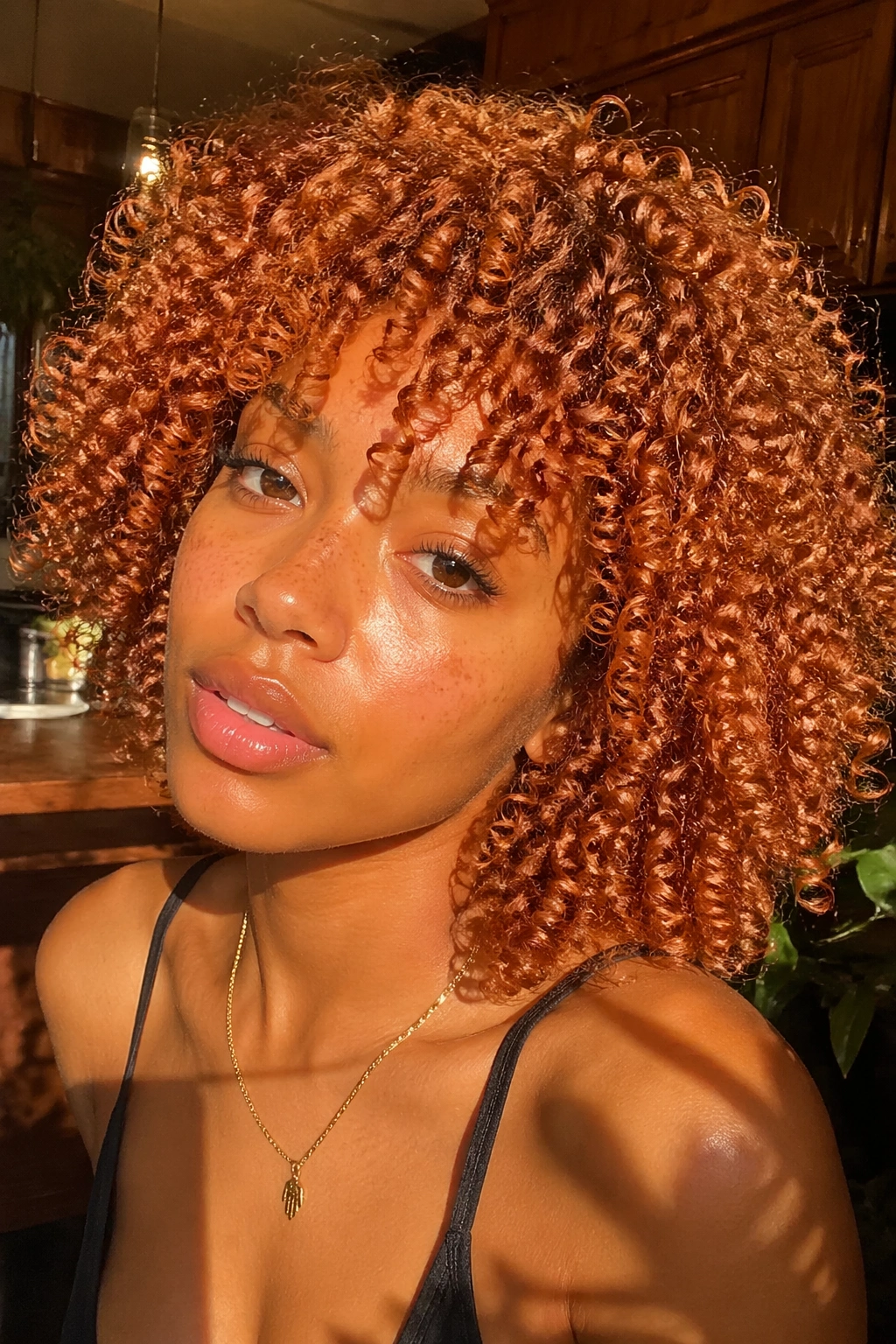
Copper all-over on a wash-and-go is one of the most gorgeous ways to show off a natural curl pattern. The metallic warmth of copper shifts between gold, orange, and red as your curls move — it’s not static, it’s alive.
This look works on 3A all the way through 4C, and the process adjusts based on your starting color. Light to medium brown naturals may only need a single copper dye application; dark brown and black naturals may need a one-step lift-and-tone formula.
13. Dark Red with Visible Highlights
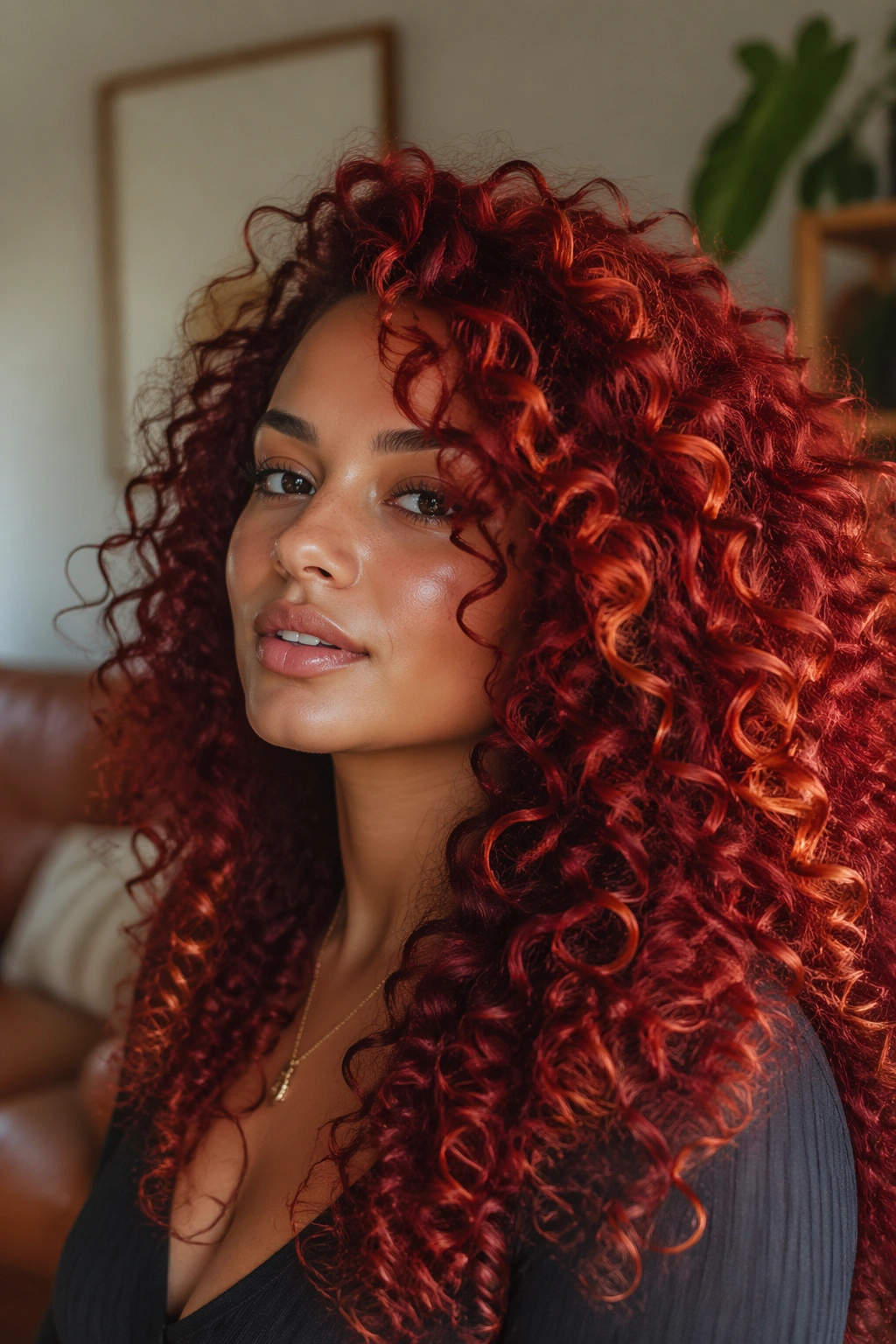
A dark red base with intentionally placed copper or golden-red highlights creates depth that single-process color can’t achieve alone. The highlights catch the eye and create the impression of movement even when your hair is still.
On curly hair, highlights can be applied as a traditional foil highlight or as a freehand balayage — both methods create different effects. Foils create more uniform placement; balayage creates a more natural, scattered look.
14. Red and Blonde Two-Tone
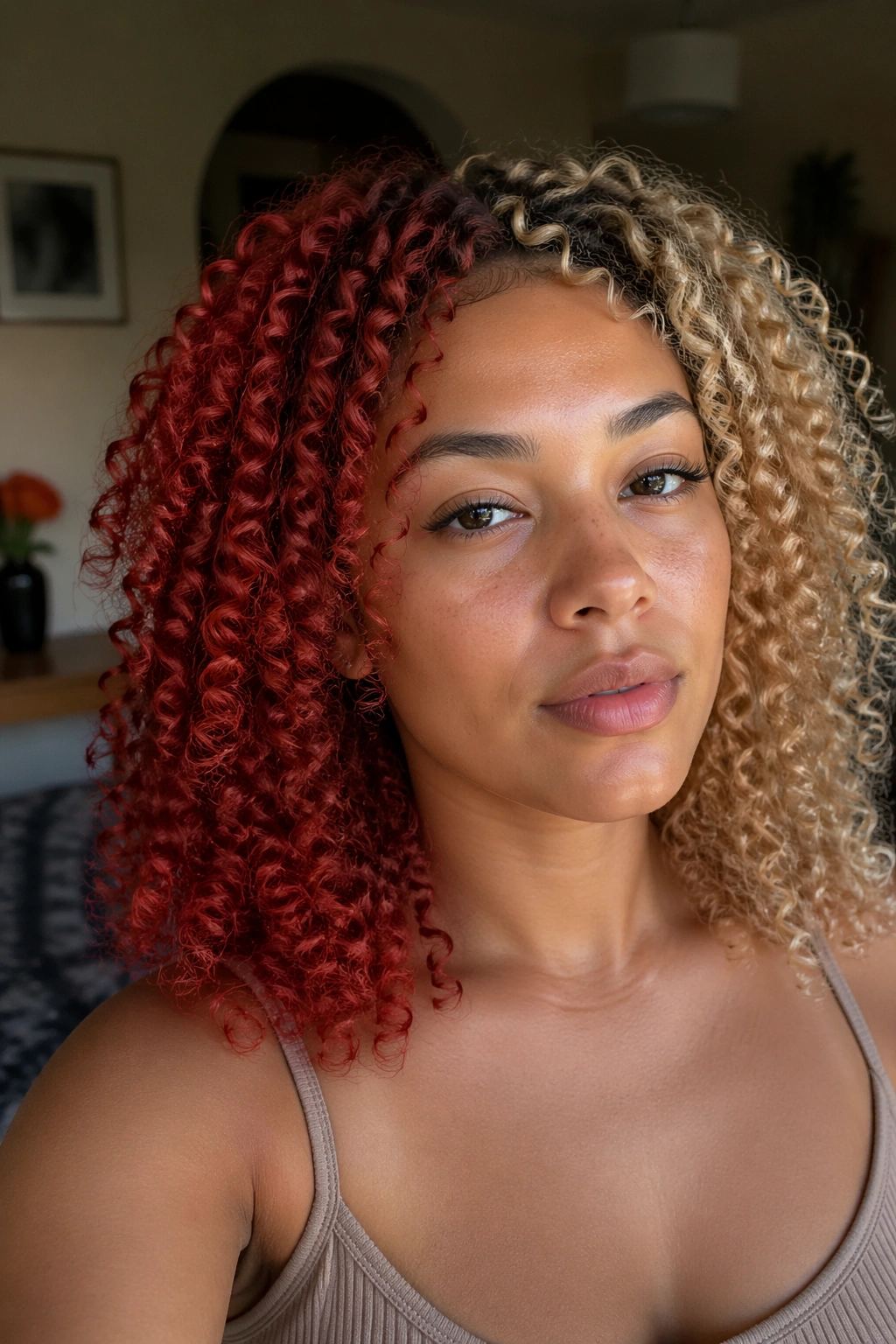
Red on one side, blonde on the other — or red underneath with blonde on top, or red highlights through a blonde base. However you combine these two warm colors, they work together rather than competing. They’re both on the warm side of the color wheel, which creates harmony rather than contrast.
This two-tone look on curly hair is especially stunning because the interplay of the two colors through textured strands looks naturally dimensional — like sunlight on autumn leaves.
15. Rust and Terracotta Tones
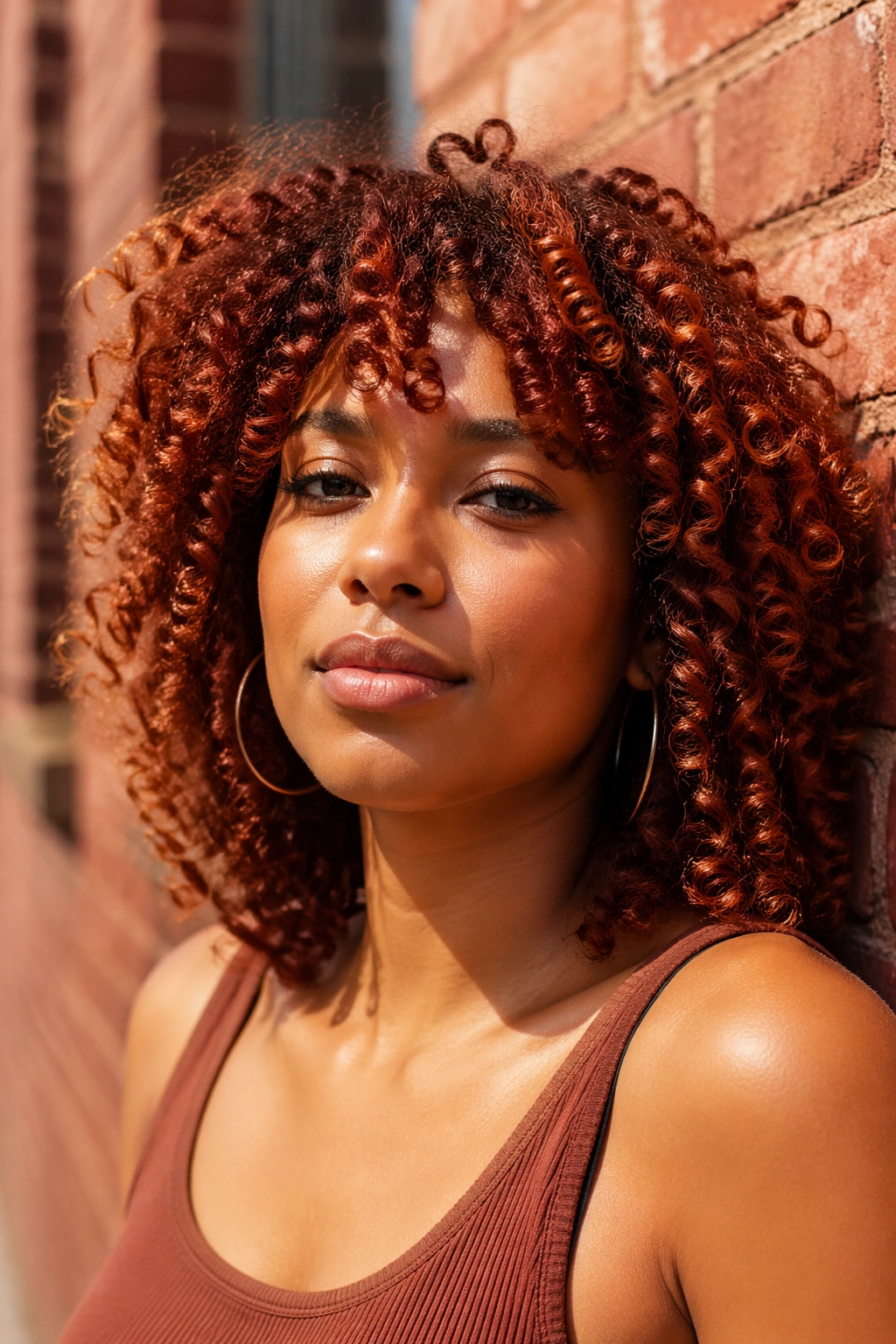
Rust and terracotta sit at the orange-red intersection — earthy, warm, and deeply flattering on brown and dark skin tones. These aren’t garish colors. They’re almost neutral in the way they blend with warm complexions.
On natural curls, rust and terracotta tones create a color that feels grown and intentional without being high-fashion or difficult to wear. It’s a go-anywhere, do-anything shade.
How to Achieve
Lift to a level 6-7 warm orange base, then tone with a rust or terracotta direct dye. The warm base minimizes the need for heavy toning and lets the natural warmth of the lifted hair enhance the final color.
16. Bold Red Fringe/Bang Color
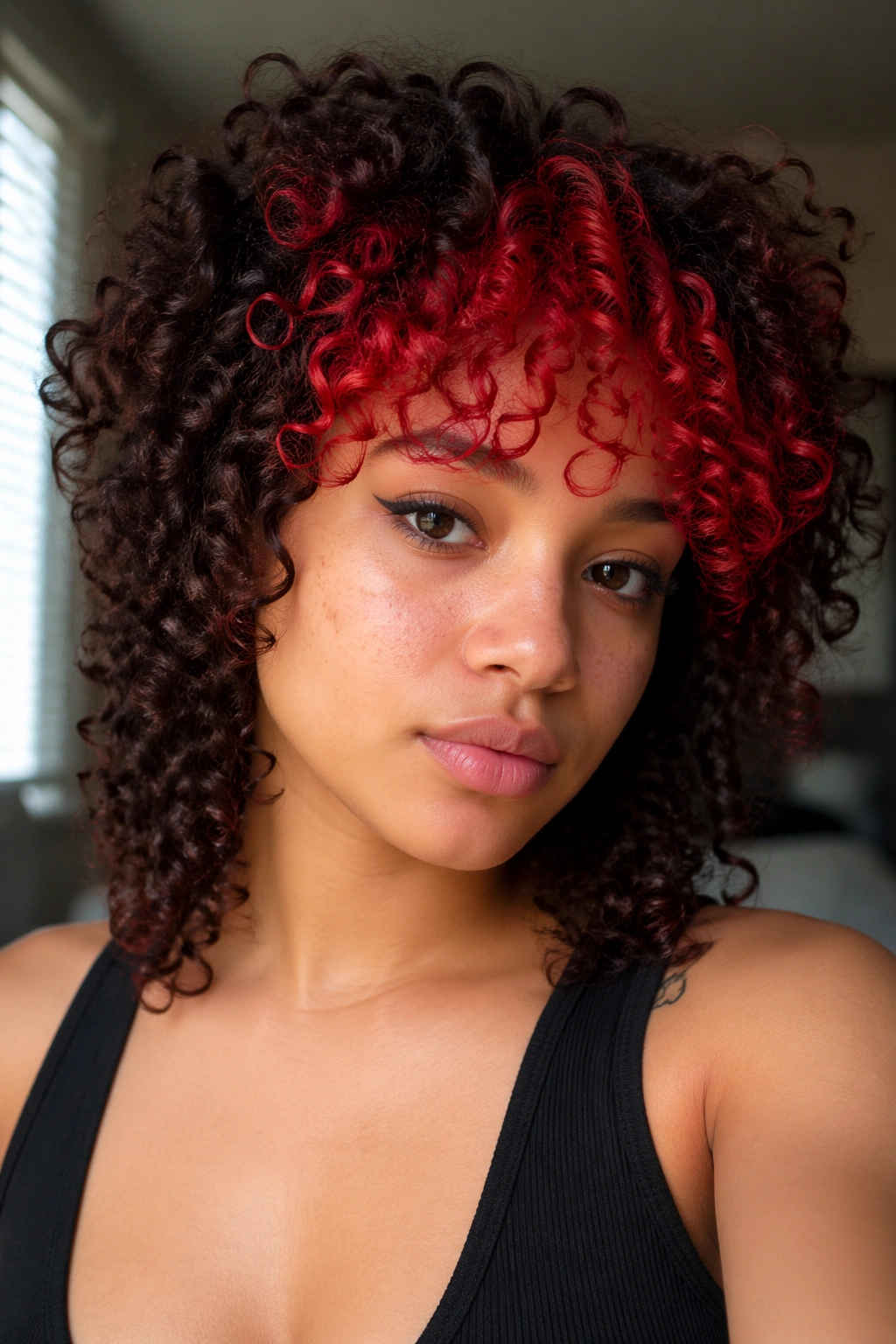
If you wear a fringe or have curly bangs, coloring just that section in vivid red while leaving the rest of your hair natural is a micro-commitment with maximum visual impact. Your bangs frame your face and are the first thing people notice — and a pop of vivid red there is immediately striking.
This approach also makes maintenance much simpler: only a small section needs color refreshing.
17. Gradient Red from Crown to Ends
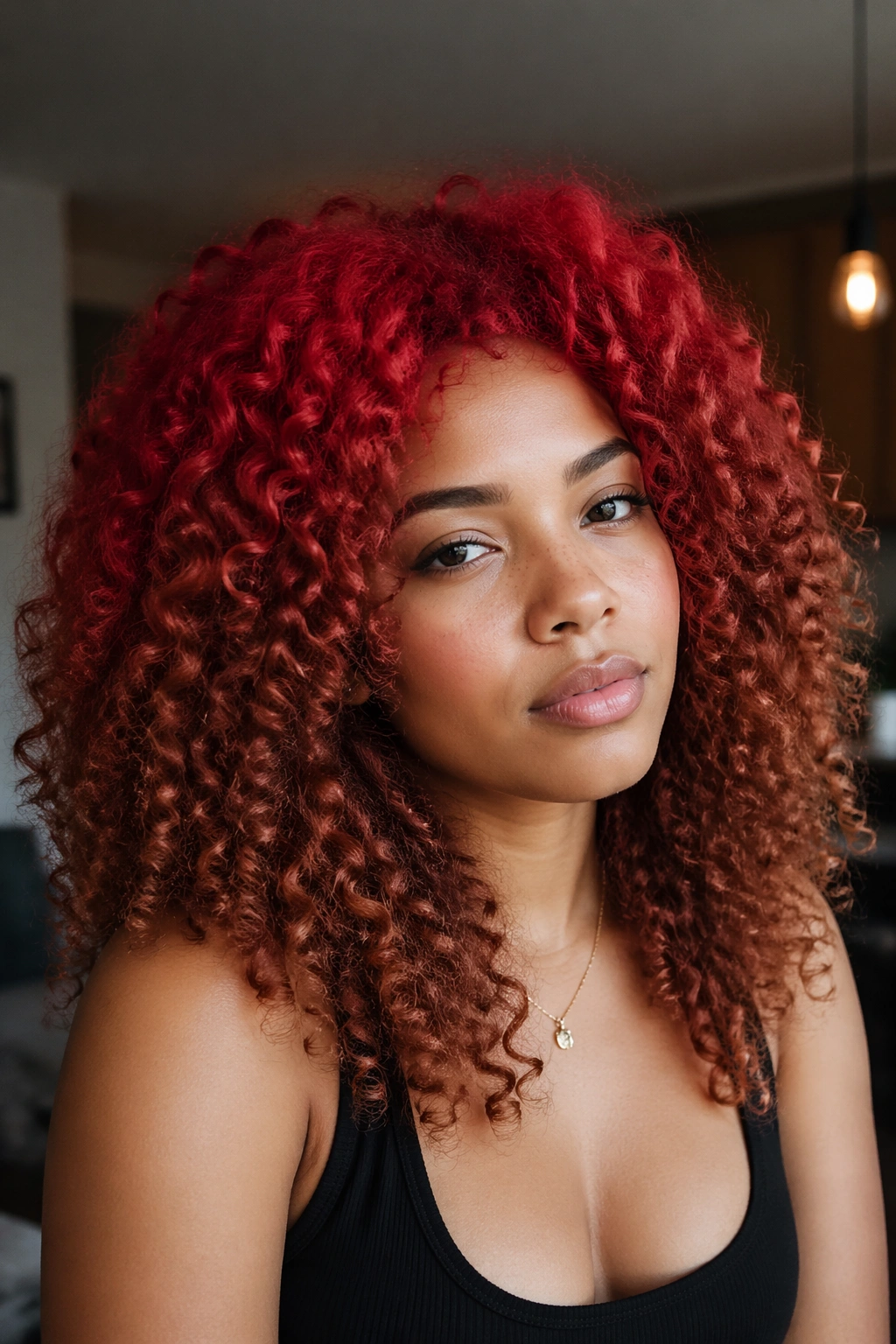
Color placed at the crown and fading toward the ends — the reverse of a traditional ombre — creates a halo effect of vivid color around the top of your head. On curly hair with volume, this crown placement makes the color visible from every angle.
This look is especially effective on hair worn in puffs or high styles where the crown is most visible.
18. Red Locs and Two-Strand Twists
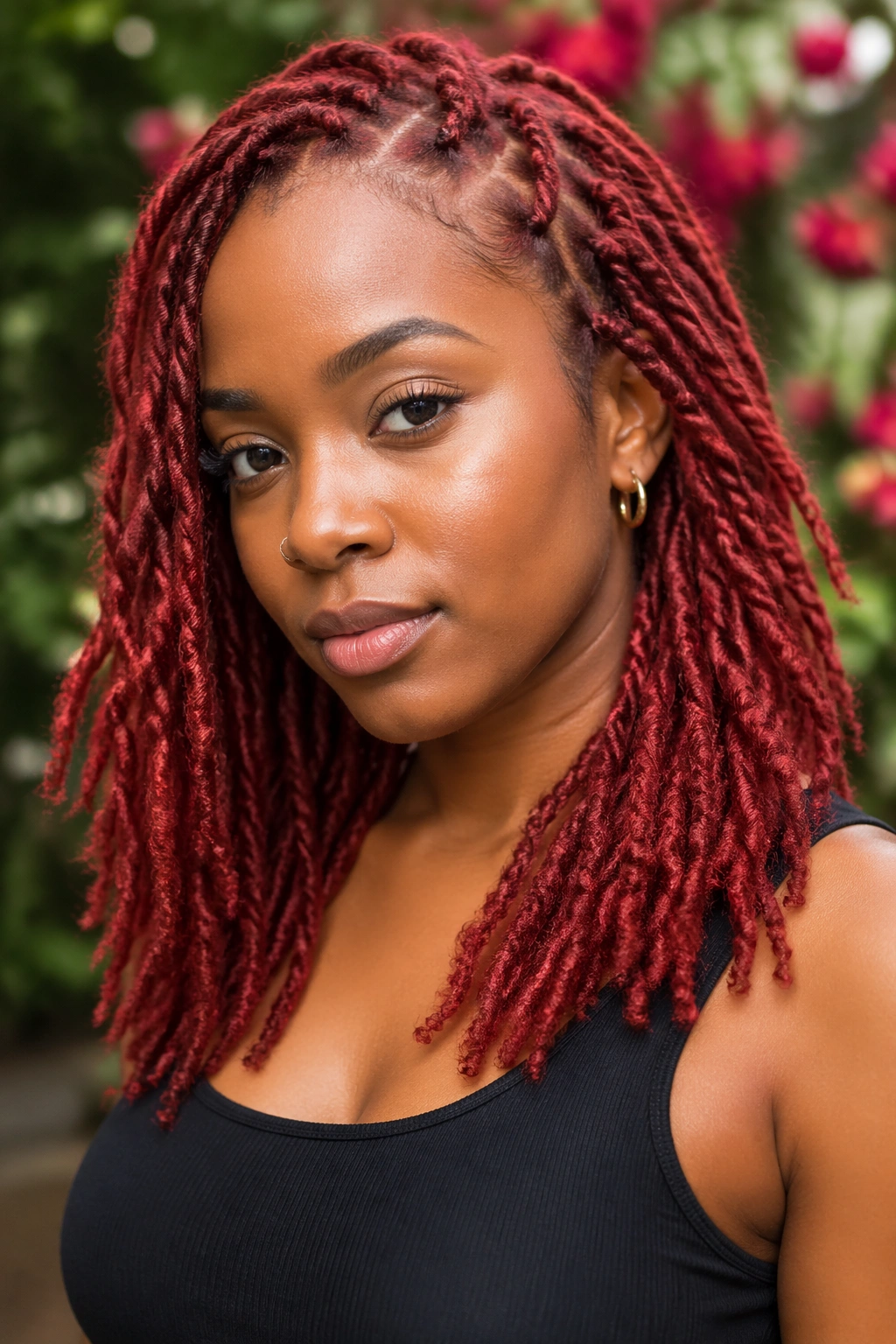
Red dyed curly hair doesn’t have to mean loose wash-and-go curls. Locs or two-strand twists in vivid red are deeply striking — and in protective styles, the color lasts longer because washing frequency decreases.
A direct dye applied to pre-moisturized twists or locs creates rich, even color that penetrates each strand. Vivid red on traditional or sisterlocs looks modern, intentional, and completely stunning.
19. Red Highlights on Natural Black Hair
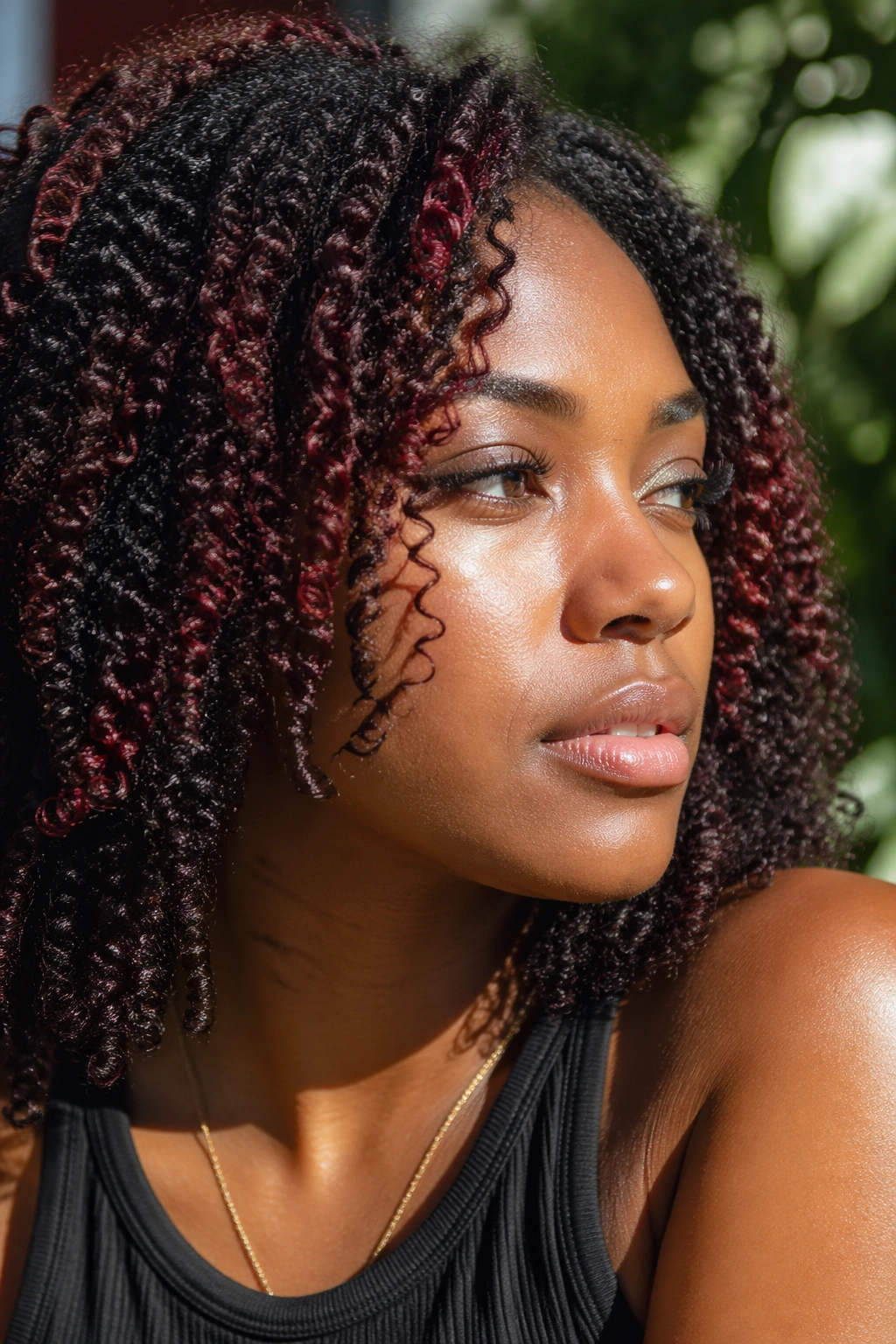
Thin, strategic red highlights through natural black hair are barely visible in indoor lighting — but step outside, and every red strand catches the sun like a spark. This is color for people who love a subtle reveal, a “wait, is that red?” moment.
No full bleach required if you use a high-lift or ammonia-based red on just the highlighted sections. Apply foils to keep highlighted sections isolated from the natural hair.
20. Pastel Red / Washed-Out Rose
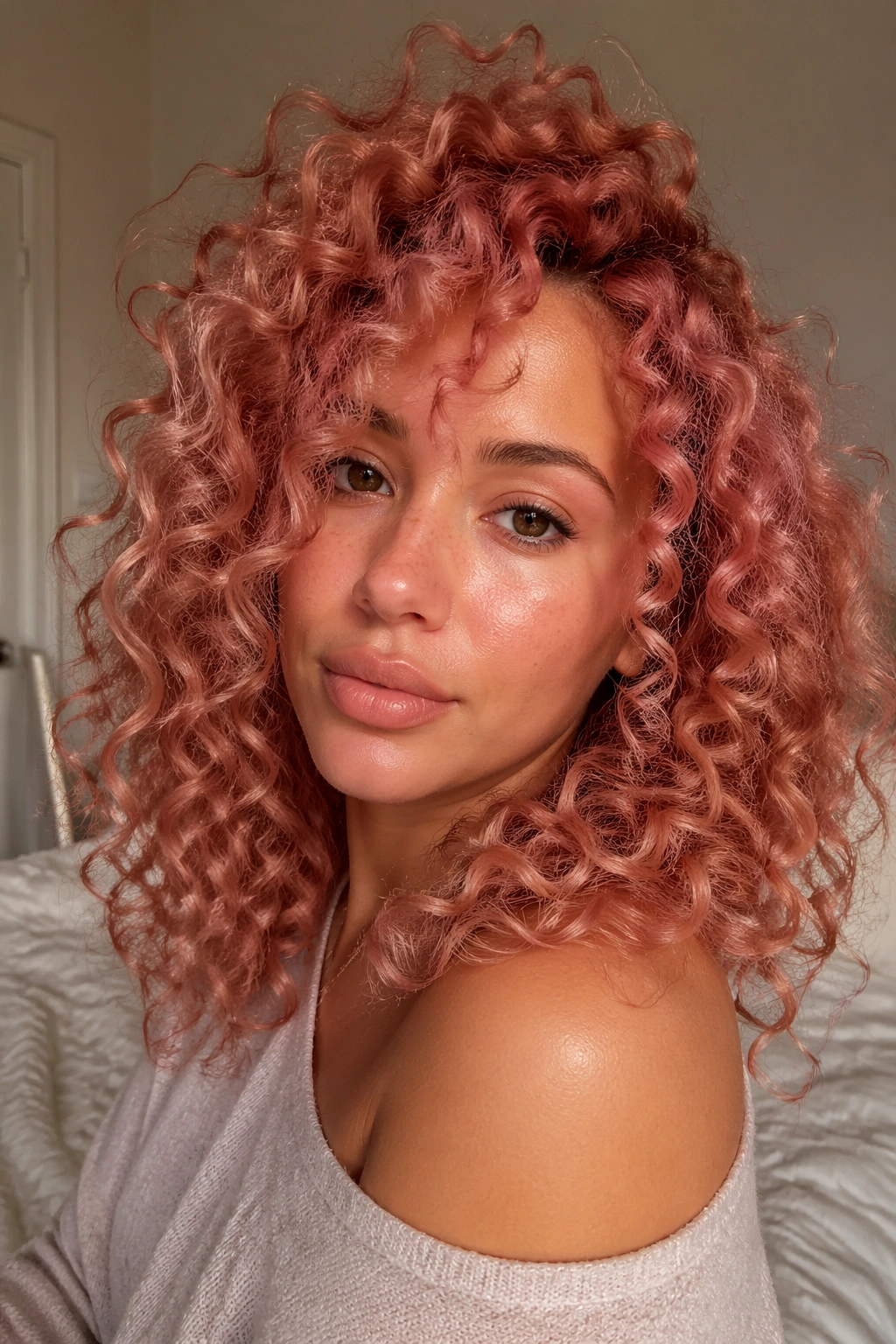
Pastel red — sometimes called “faded red” or “washed-out rose” — is what happens when vivid red fades toward a dusty pink-orange. Instead of fighting the fade, some women intentionally achieve this pastel-muted tone and maintain it.
On curly hair, this washed-out rosy tone is surprisingly sophisticated — think faded vintage, worn-in beauty. A pink-toned toner over a light blonde base creates this effect without waiting for the fade.
21. Red Goddess Braids Extension Color
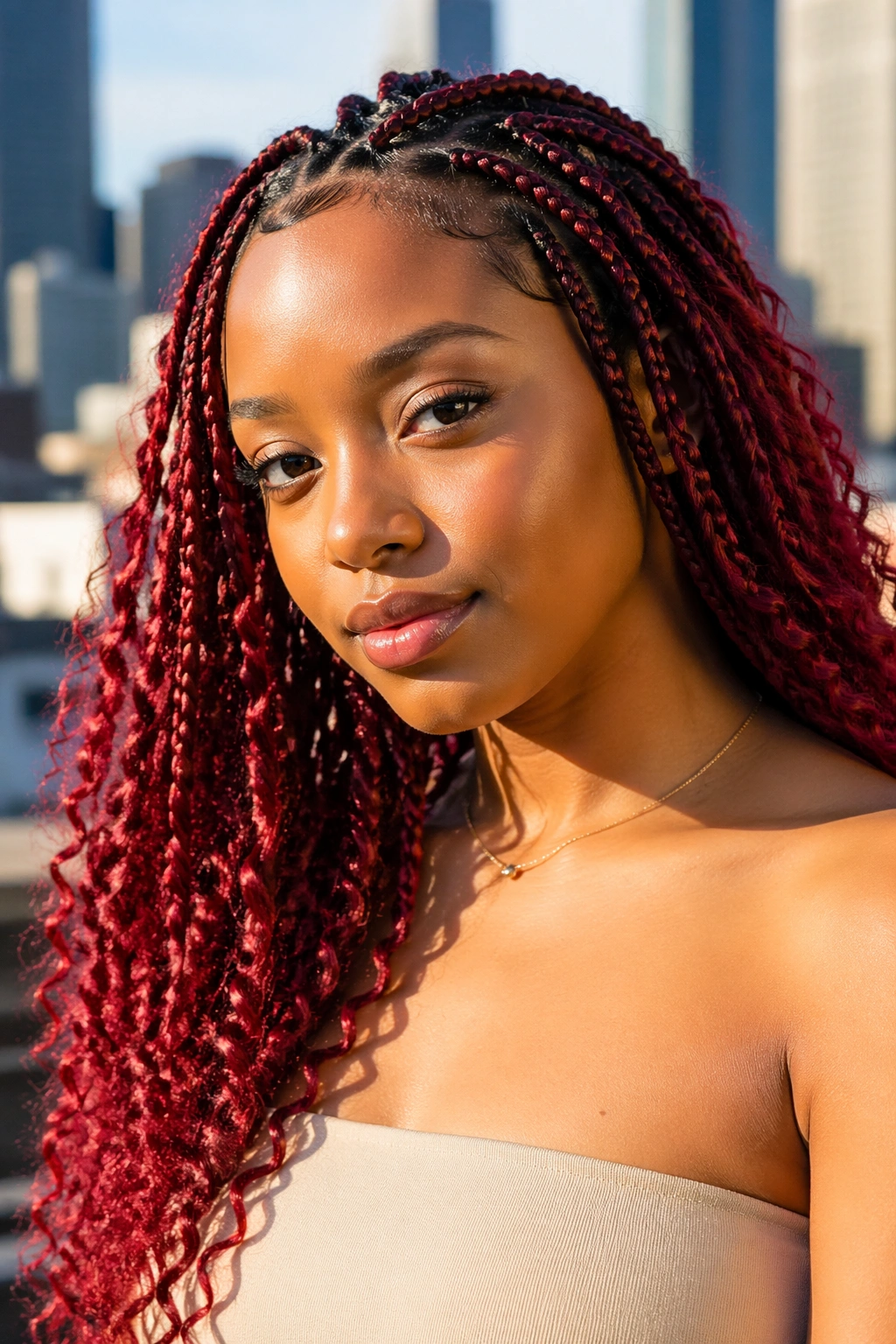
If you prefer protective styles or braids, there’s no reason color can’t be part of the picture. Red goddess braids — knotless braids in vivid red or auburn hair extensions — give you the color impact of red dyed curly hair without any chemical processing on your natural strands.
The loose curly ends of goddess braids show the color beautifully, and the style lasts 6-8 weeks, which means your “red hair era” can happen on your own timeline with zero commitment.
22. Dark Cherry with Purple Undertones
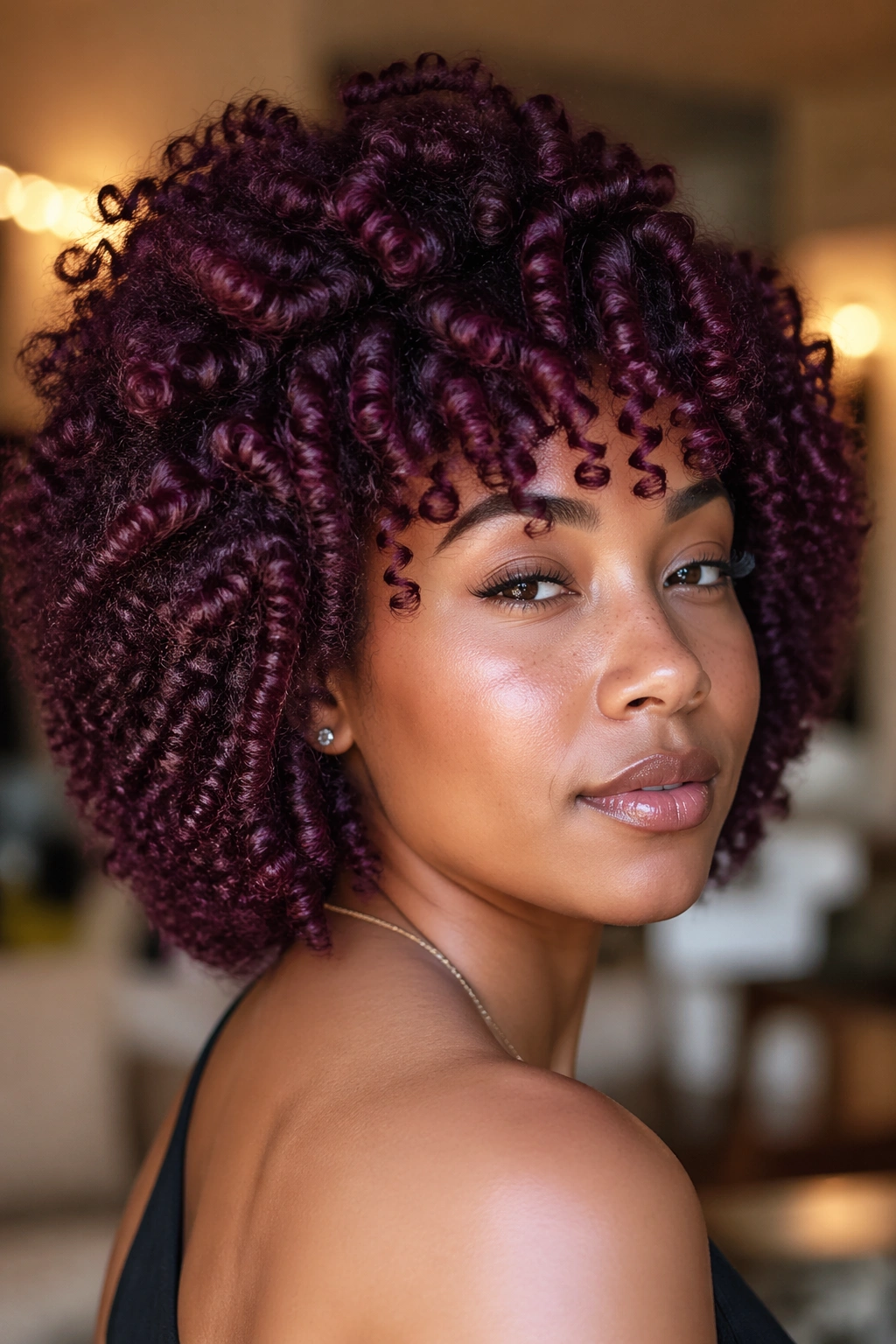
Dark cherry with a violet or purple base tone is a sophisticated, grown-up red that’s not trying to be noticed — but will be anyway. It’s the kind of color that reads as black in certain lighting and reveals its full depth (deep cherry with purple iridescence) in direct light.
On natural curls, this chromatic play is amplified. Different curl layers catch the light differently, so some appear near-black and others reveal their warm cherry-violet tones. The overall effect is dimensional in a way that’s hard to achieve with any single description.
This shade requires zero bleaching on dark natural hair and lasts longer than brighter reds because the dark base is less transparent.
After the Red: Keeping the Color Vivid
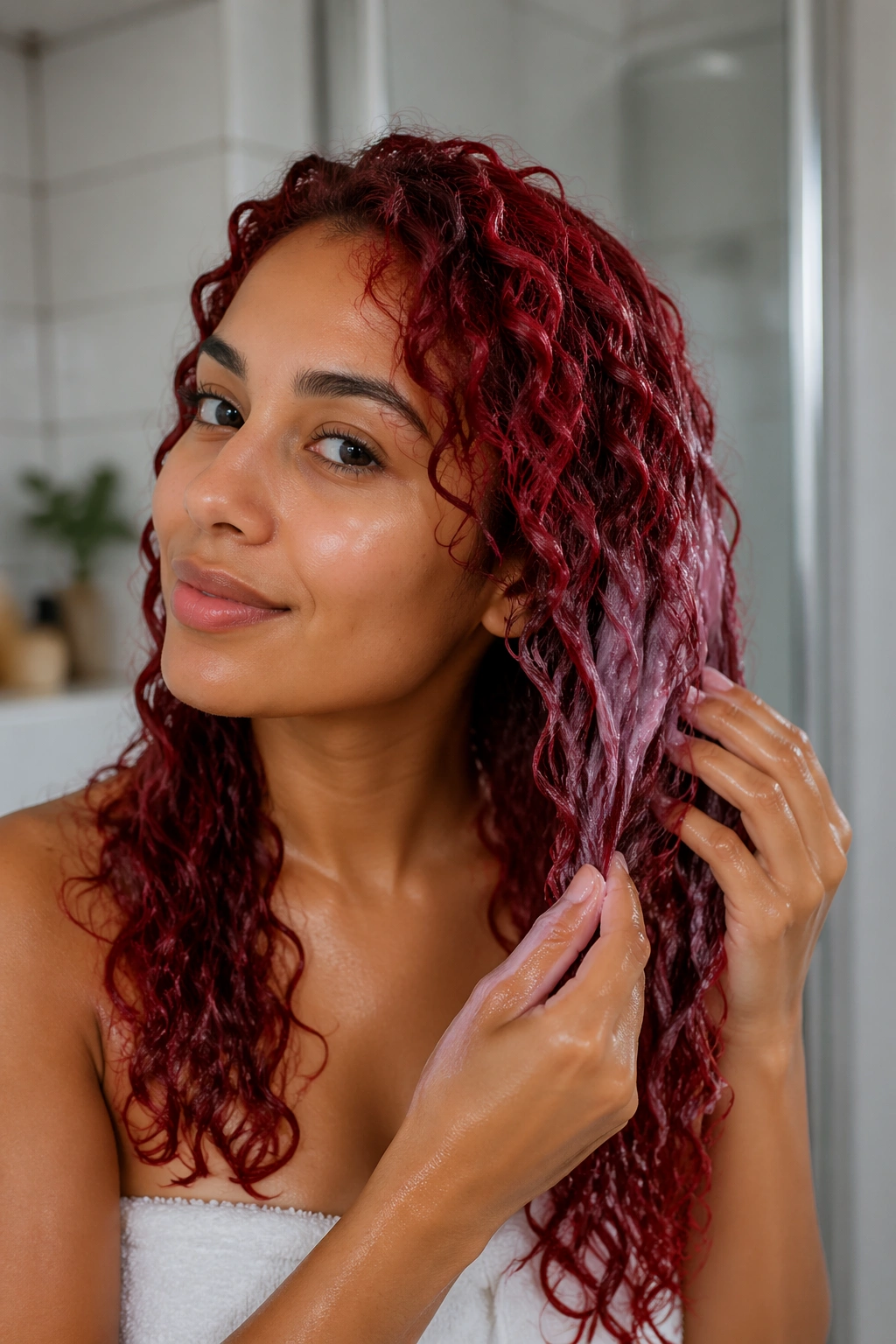
Red requires a care routine that respects how fast this family of colors fades. Invest in a red-pigmented color-depositing conditioner and use it once a week. Wash your hair with sulfate-free shampoo and cold water. Avoid daily styling tools that use heat — diffuse on low when you need to, air dry when you don’t. Protect your hair from sun exposure when you’re outdoors for extended periods.
The payoff for that extra care is red dyed curly hair that stays vivid for weeks longer than it would otherwise — and curls that stay healthy enough for your next color appointment without needing a break.
When Red Fades: Embrace the Transition
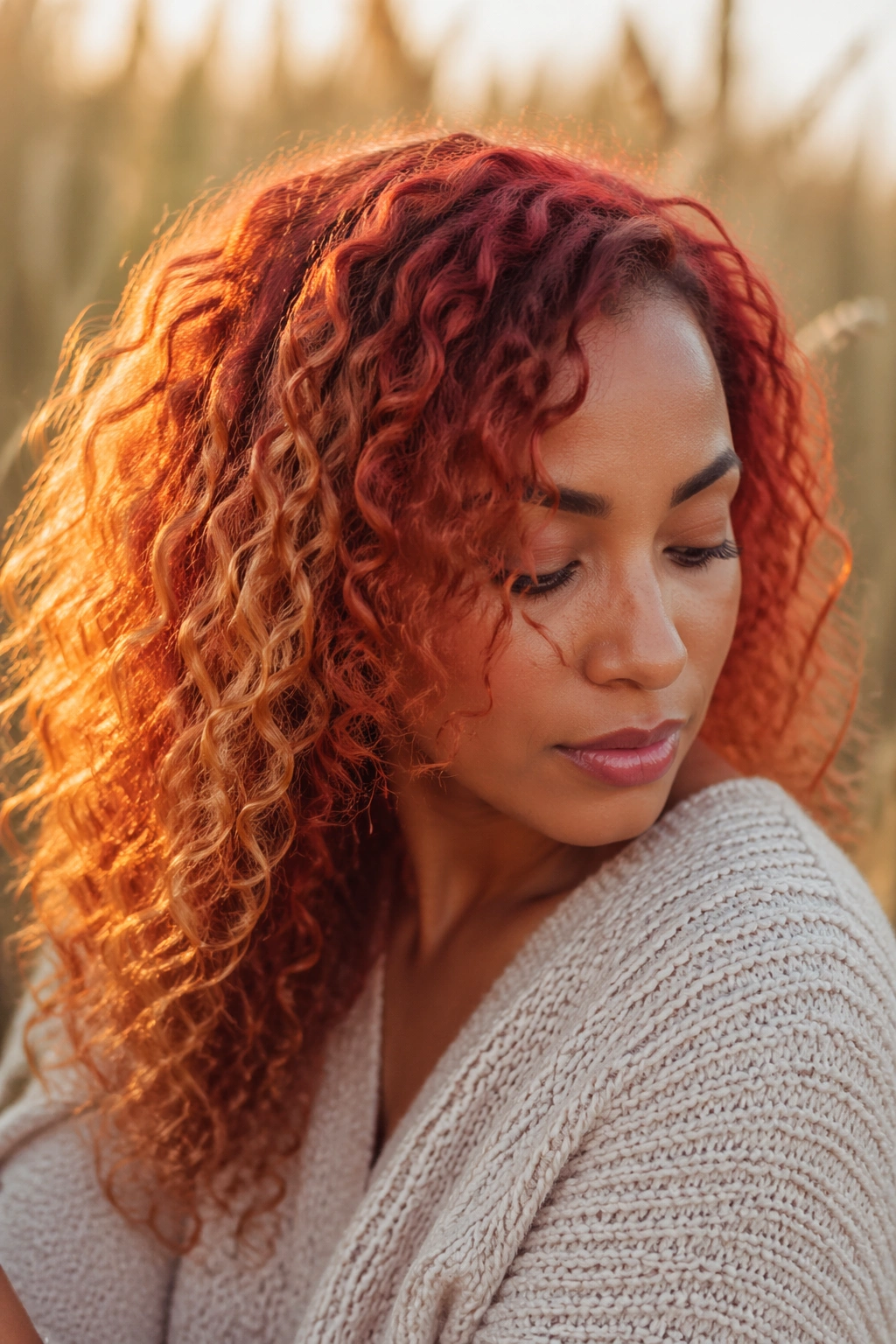
Red fades toward orange, copper, or pink depending on your starting base and the specific red family you used. These fade tones are genuinely beautiful on curly hair — often softer and more wearable than the original vivid shade. Many women intentionally maintain the faded state rather than refreshing back to full vivid.
If your vivid red has faded to a warm copper, you haven’t failed — you’ve accidentally achieved one of the most coveted tones in natural hair color. Embrace the evolution.
The Bottom Line on Red Dyed Curly Hair
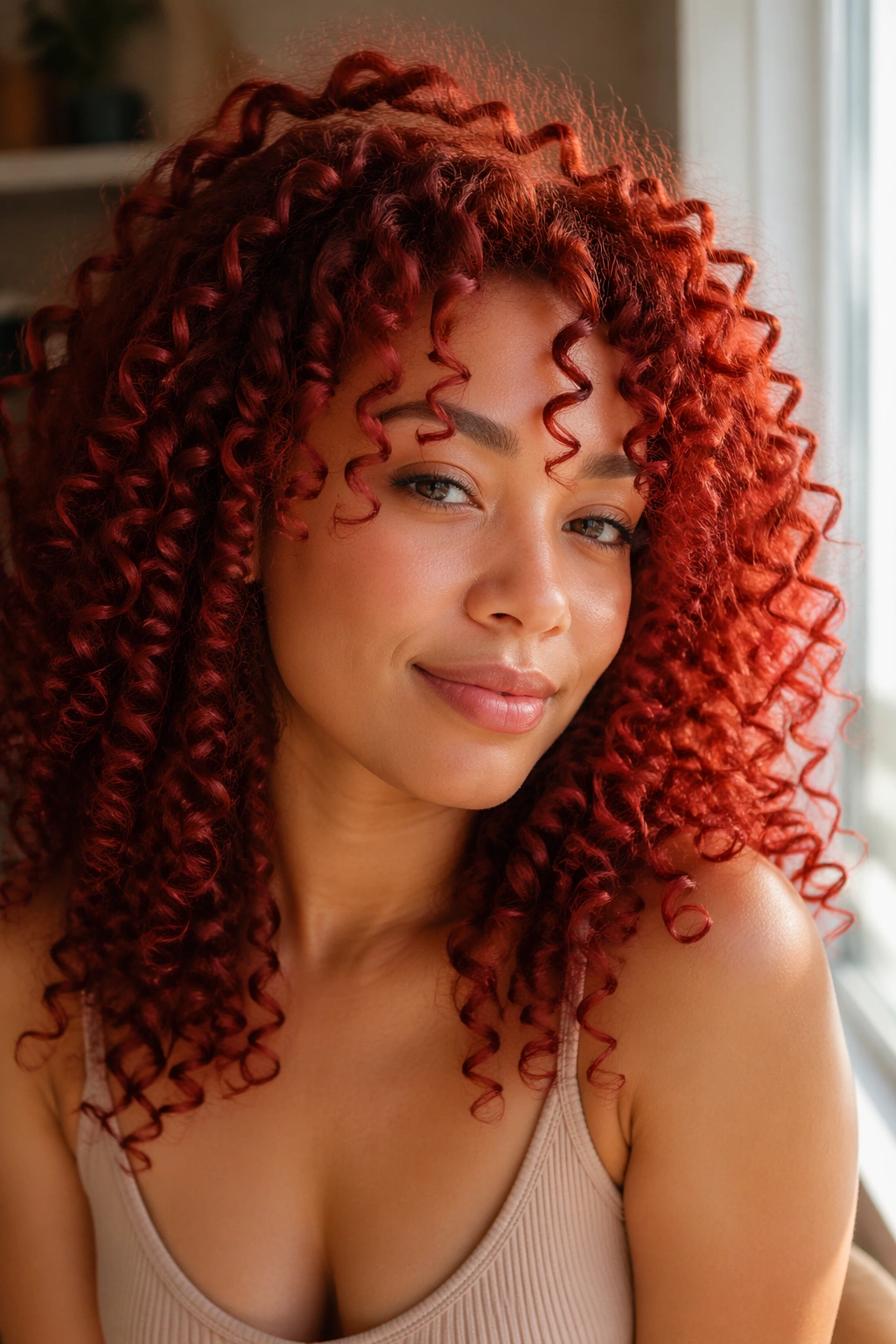
Red is the most expressive color family in the hair spectrum. It’s warm, it’s passionate, and on natural curls, it’s simply breathtaking. Whether you go subtle with auburn or vivid with fire red, whether you commit to all-over color or try a single peek-a-boo section — your curls will make red look better than it has any right to.
That’s the beauty of texture. Your natural hair doesn’t just wear the color. It transforms it.
