
Punk never belonged exclusively to white men with mohawks and safety pins. That version of the story erases a lot of history — the Black punks who showed up at early shows, the women of color who built their own DIY scenes, the African and diaspora aesthetics that have always carried punk’s core energy: defiance, self-determination, refusal to be contained. Afro punk looks for Black women are not punk “inspired” or punk “adjacent.” They are punk. They claim the full inheritance of the genre while centering Blackness as the lens through which that aesthetic gets expressed.
The visual language is confrontational and joyful in equal measure. Big natural hair against leather. Platform boots with kente. Shaved sides with gold earrings the size of saucers. Body jewelry and traditional beading together. Natural 4C coils under a fishnet headpiece. The mixing of references — what some people call “clash” and what Afro punk actually calls creativity — is the whole point.
This list contains 22 genuinely distinct Afro punk looks for Black women. Some are hair-focused. Others are about the interaction between hair, clothing, and accessories as one unified visual statement. All of them are real — not hypothetical editorial concepts but looks that women are actually building, photographing, and wearing with authority.
The Philosophy Behind Afro Punk Aesthetics
Understanding what makes something genuinely Afro punk rather than simply “punk with Black people in it” is worth examining before the list. Punk as a philosophy has always been about rejecting the dominant aesthetic — whatever the mainstream calls beautiful, punk calls that into question. For Black women, that philosophical stance takes on a specific dimension because the dominant beauty standard has historically excluded Black features entirely.
So when an Afro punk look uses a natural afro instead of straightened hair, that’s not just a style choice. It’s a statement that the standard was wrong and we’re not interested in meeting it. When it uses bold West African print fabric alongside a leather jacket, it’s saying that “punk” doesn’t have to mean anything European to be valid. The cultural mixing isn’t appropriation — it’s the reclamation of punk’s original disruptive energy and applying it to the specific cultural context of Black womanhood.
This distinction matters for how these looks are built. They’re not costumes assembled from a punk checklist. They’re personal, specific, rooted in a point of view.
Hair as the Foundation of the Aesthetic
In Afro punk styling, natural hair is typically the foundation on which everything else is built. This is one of the ways the aesthetic diverges most clearly from classic punk styling, where hair often means bleached, spiky, or chemically altered. In Afro punk, the natural texture — the density of a 4C afro, the coil of a twist out, the volume of a blown-out natural — is the base material, and the styling elevates what’s already there rather than transforming it into something else.
Big natural hair reads as inherently disruptive in a mainstream context that has historically demanded its suppression. The political charge is built in. Afro punk styling adds another layer of intentionality on top of that charge — specific shapes, colors, accessories, and pairings that make the statement deliberate rather than incidental.
Hair color is a significant element. Vivid unnatural colors — electric blue, bright crimson, silver, green — applied to natural afro hair create a look that reads as fully punk in the most classical sense while keeping the texture unapologetically Black. The color on the texture, together, is the statement.
Building an Afro Punk Wardrobe Foundation
The clothing in Afro punk looks doesn’t need to be expensive or elaborate to work. The key elements are edge, deliberateness, and comfort with visual loudness. What that looks like practically:
Leather and faux leather jackets — fitted or oversized, cropped or long — are perhaps the single most versatile Afro punk wardrobe piece. They work with virtually every hair style and every body silhouette, and they carry punk signaling without requiring any other costume-y elements to land.
Prints that aren’t conventionally Western — kente, ankara, bogolan, leopard, bold geometric patterns — create cultural layering that’s specifically Afro punk rather than just punk. These prints wear particularly powerfully over simple black bottoms, where the print gets the full visual space without competing with other elements.
Boots with significant sole height — platforms, lug soles, chunky block heels — are a functional choice as much as a style one. The height adds to the visual authority of the whole look.
Metal accessories — large earrings, chunky chains, sculptural rings, bold cuffs — create a sonic as well as visual element. When you move in heavy metal jewelry, it announces you before you speak.
1. Voluminous Natural Afro With Black Leather
The foundational Afro punk look: a full, picked-out natural afro at maximum volume, worn with a fitted black leather jacket, black jeans, and ankle boots. The simplicity of the color palette lets the hair volume and texture do all the visual work.
What makes this work is the specificity of proportion. A small faux leather jacket on a massive natural hair volume creates a compositional contrast — the hair is the dominant element. A large, oversized leather jacket balanced against a more compact afro creates a different effect, more structured and intentional. Neither is wrong; they’re two distinct looks built from the same elements.
The only accessory this look needs is a strong earring. A large sculptural hoop or a bold geometric drop earring — visible at the sides of the face where the hair parts to show the ears — completes the look without competing with the hair volume.
2. Colored Afro With Punk Accessories
A vivid color applied to natural afro hair — electric blue, crimson, merlot, silver — combined with classic punk accessories: a studded leather cuff, a chain necklace layered over a band tee, combat boots. The color on the texture creates the Afro punk signature; the accessories place it in conversation with punk’s broader visual history.
The color needs to be committed to. A subtle tint reads as tentative. A full, saturated color — applied to all the hair or to clearly defined sections — reads as intentional.
Semi-permanent color options that work without bleaching are available for darker natural hair, though they show less vividly on deep hair tones without a lightening step first. Vivid colors that work well on unbleached dark hair: deep crimson, dark violet, dark teal, and metallic tones that have enough opacity to show against natural dark color.
3. Afro Puffs With Band Tee and Chainwork
Two symmetrical afro puffs — worn slightly off-center or unevenly, which reads more punk than perfectly placed — with a vintage or oversized band tee (Black punk bands, African artists, whatever speaks to you), heavy chain jewelry layered at the chest, and chunky boots.
What Makes It Different
The puffs as a styling choice within punk is interesting precisely because it’s so associated with Black girlhood and joy — wearing it in a punk context is a specific reclamation that says both things simultaneously. The playfulness of the puffs and the edge of the chainwork and boots create the tension that defines Afro punk.
The band tee matters. Wearing a band you actually know and care about is the difference between costume and expression.
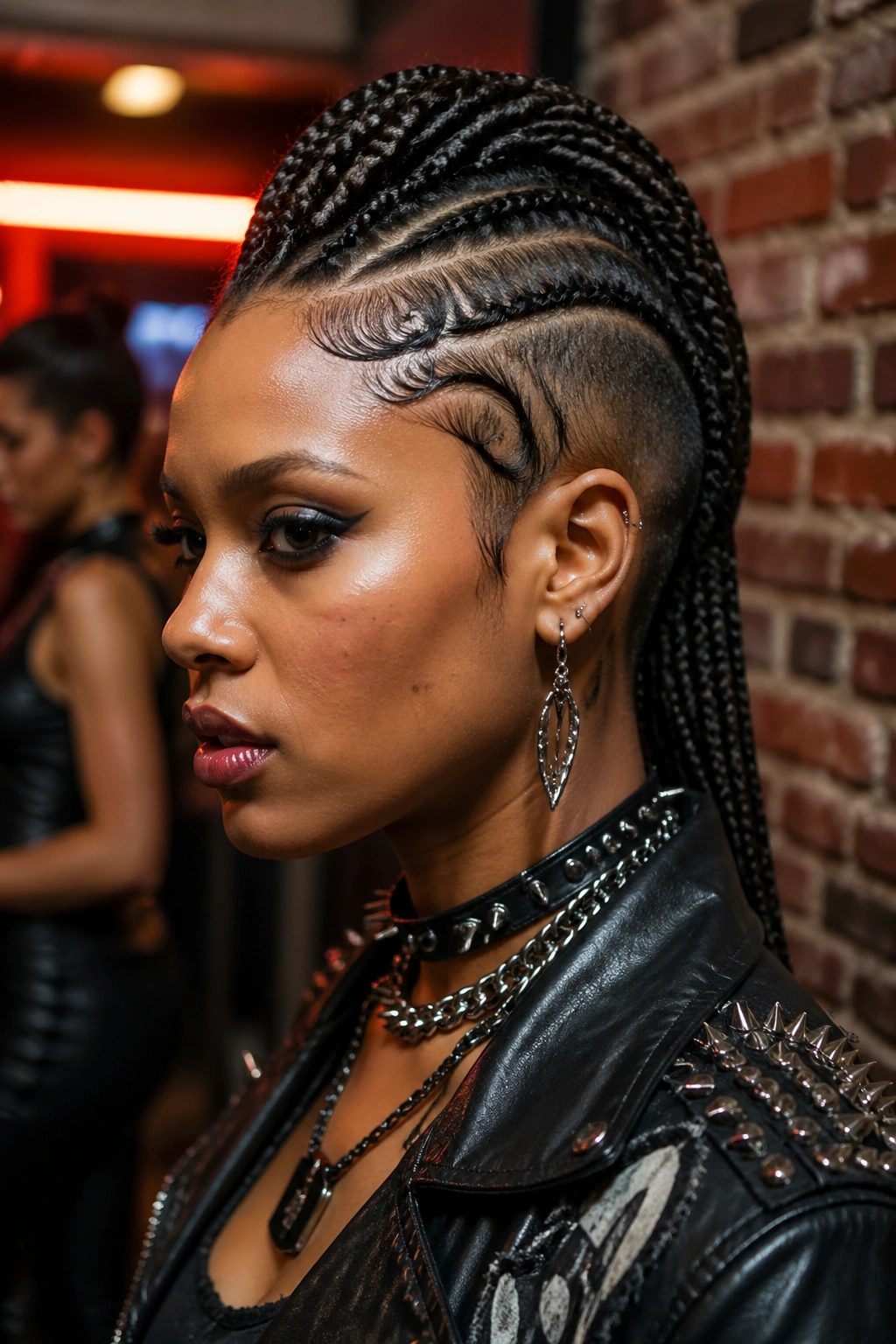
4. Braided Mohawk With Full Edge Design
Natural hair cornrowed into a tall central strip from the front hairline to the nape — the classic punk mohawk silhouette, but built from tight, flat cornrows rather than spiked product. The sides are either shaved or closely tapered. The center strip can be left as flat cornrows or pulled upward into a dimensional ridge using small sections of extension hair fed into the cornrow base.
The edge design at the hairline — shaved lines, curves, or geometric patterns at the temples — adds the precision that punk styling has historically used to signal intentionality. Natural 4C hairlines create particularly clean, sharp-looking edge designs because of the density of the hair at the perimeter.
This look translates across silhouettes. With a ripped concert tee and jeans it’s strictly punk. With a draped silk top it’s avant-garde. With an oversized traditional print jacket it’s distinctly Afro punk.
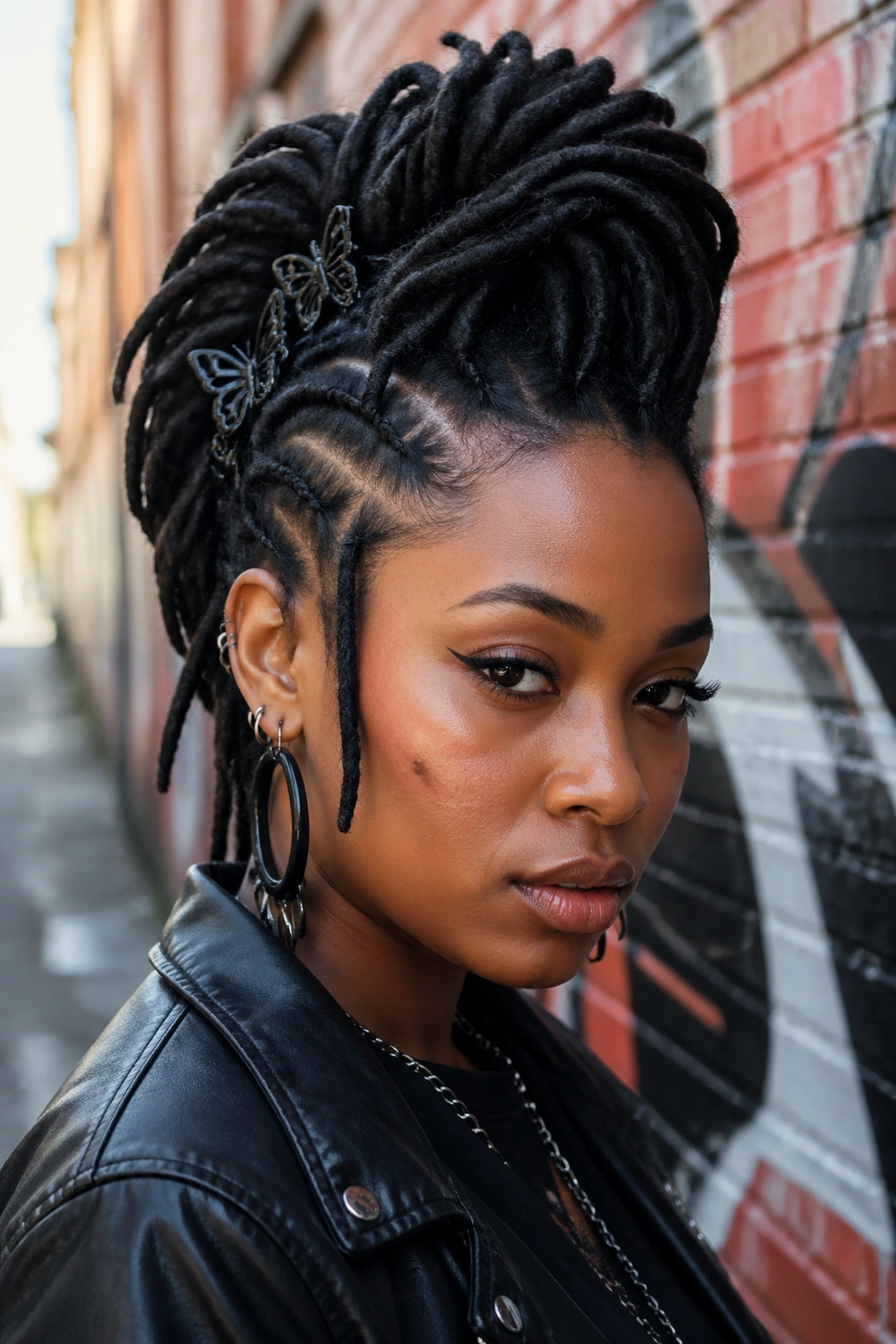
5. Loc Faux Hawk
For women with natural locs, the faux hawk — locs gathered and pinned into a central ridge — is a natural progression of the locs’ existing visual authority. Fully grown locs worn in a faux hawk have a weight and presence that smaller styles can’t match. Each loc is a substantial piece, and the sculptural ridge they form when gathered upright creates a silhouette that reads as both ancient and confrontational.
Fresh locs and very mature, long locs style differently. Fresh and mid-length locs gather cleanly into the faux hawk and hold with minimal pinning. Very long, heavy locs need more substantial pinning — large butterfly clips or thick bobby pins placed at the base of the gathered section — to stay elevated.
The clothing under a loc faux hawk barely needs to work. The hair does everything.
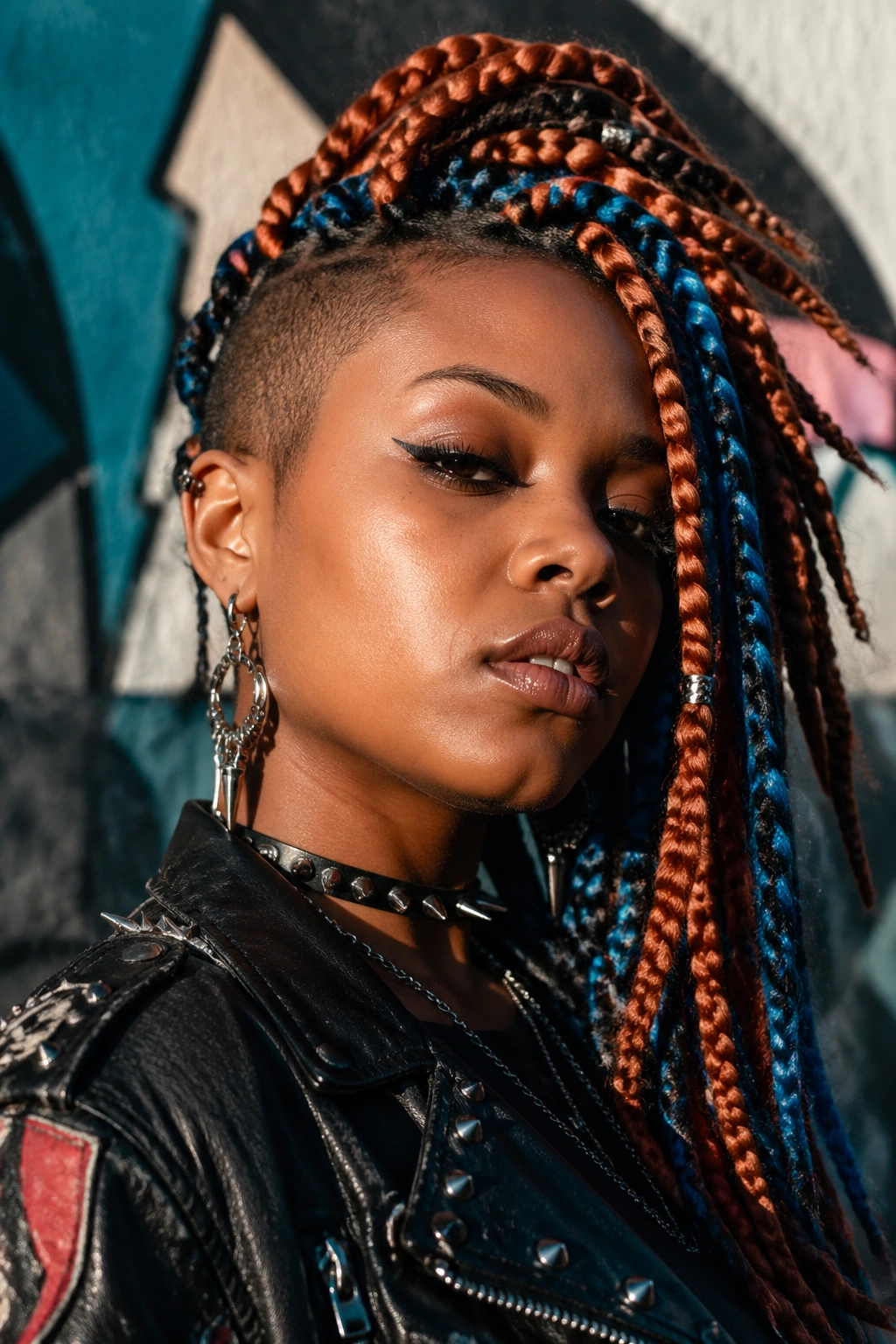
6. Colorful Crochet Braids in Punk Silhouette
Crochet braids in unconventional colors — bright copper and black, electric blue and natural brown, silver and deep burgundy — installed in a punk-inflected silhouette (heavy toward one side, shaved or closely trimmed on the other) create an Afro punk look that’s technically achievable in a few hours and wear-durable for weeks.
The color combination is what places this style in the Afro punk category. The same crochet braids in natural black and brown tones read as standard protective styling. In bold, clashing colors they read as a statement.
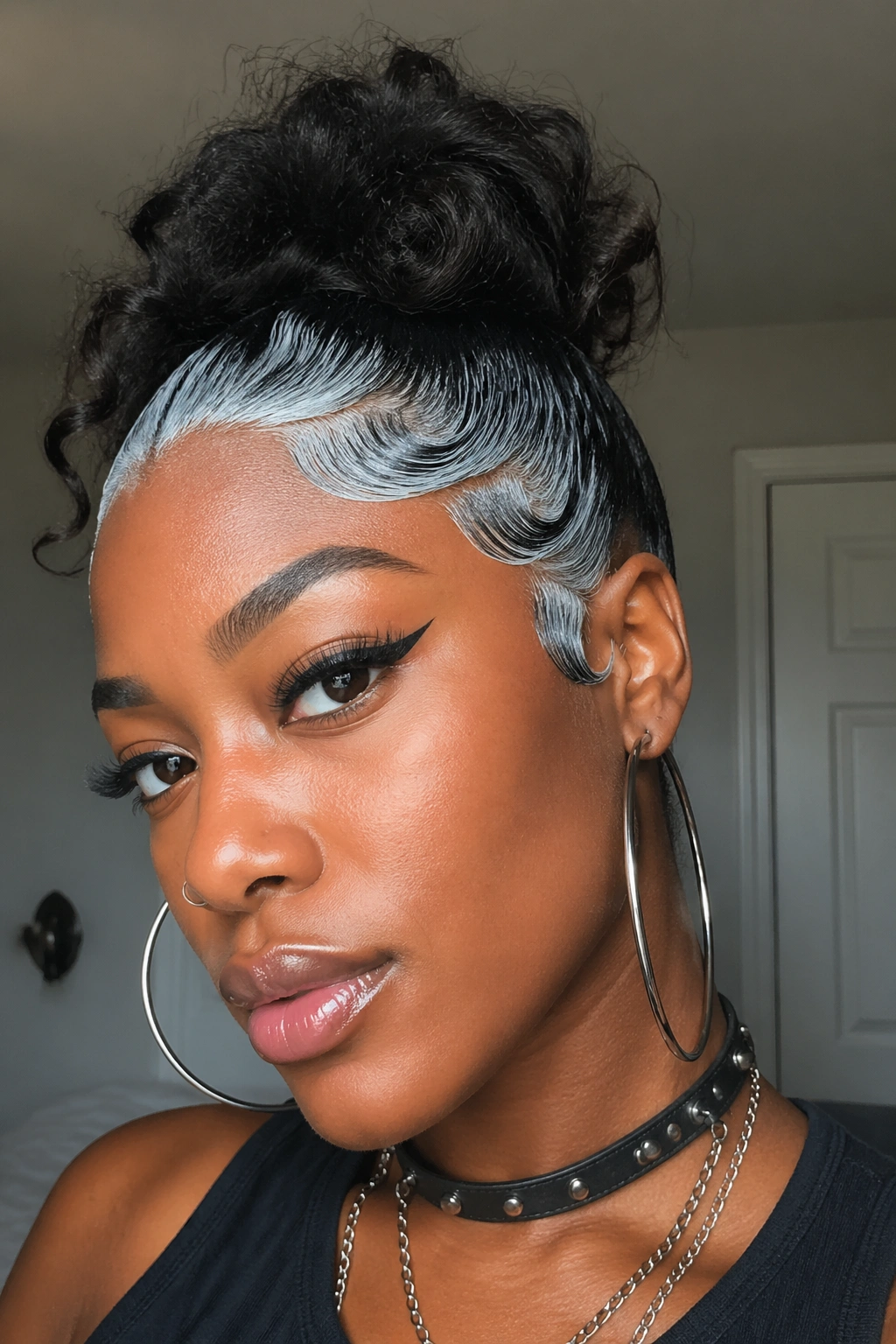
7. Tinted Edges and Bold Color Hairline
Edges — the fine, delicate hairs at the hairline — tinted or temporarily colored in a contrasting shade to the main hair color. Silver edges on a deep black natural. Blue edges on a dark brown afro. White or platinum edges on a fully dark natural. The tinted hairline creates a frame effect that makes the hairline itself a design element.
This technique requires care. The hairline hairs are the most delicate on the head, and chemical color applied to them without proper preparation can cause significant damage or loss. For short-duration color experiments, temporary color sprays applied carefully to the edge hairs are the safer approach. Permanent tinting of the hairline requires a colorist who understands fragile hair perimeters.
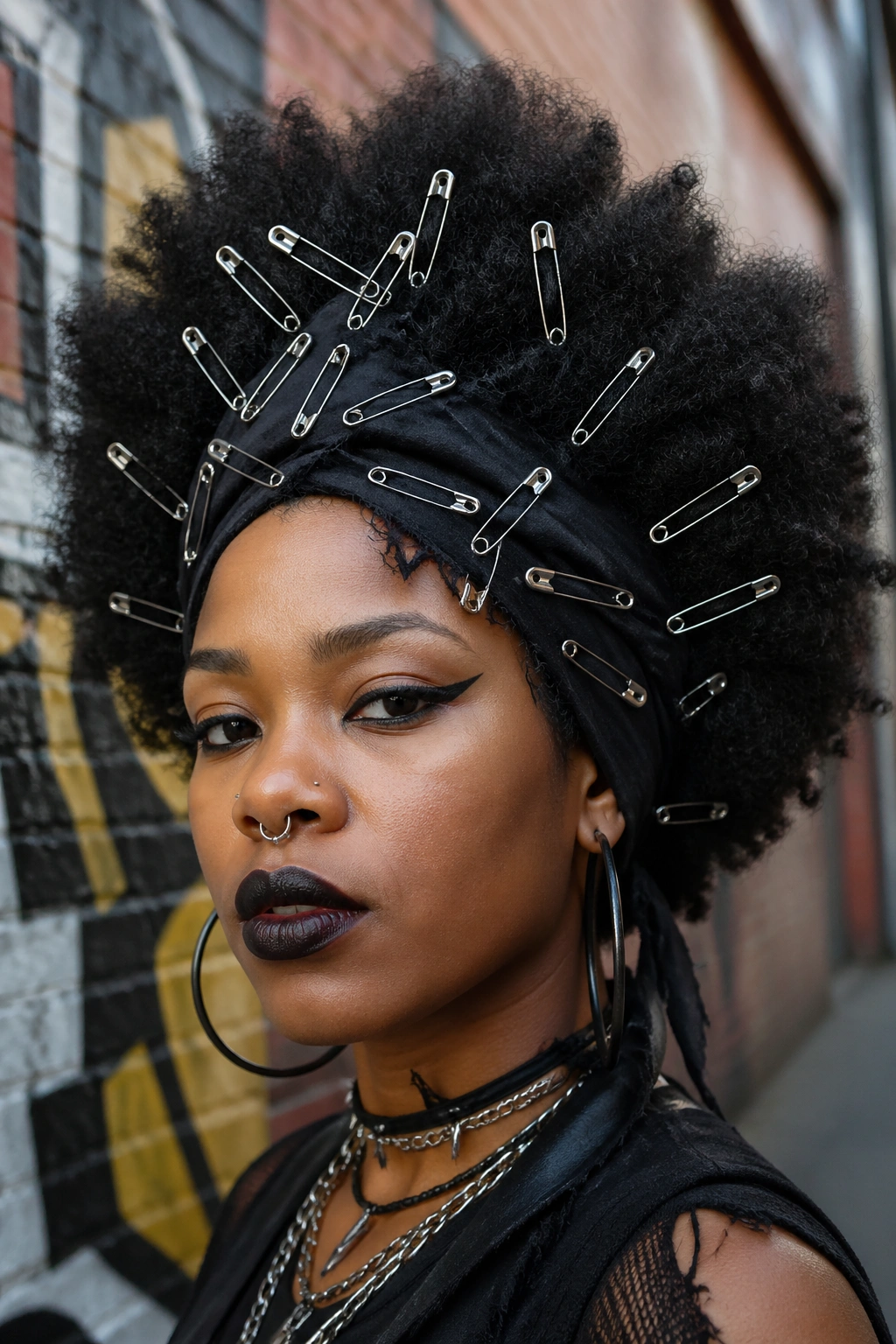
8. Afro With DIY Accessories and Safety Pins
Safety pins — the quintessential punk accessory — applied to a headband, woven through a fabric wrap, or attached to a wide-brimmed hat worn with a full natural afro. The DIY quality is the point here: handmade, imperfect, self-assembled.
A plain black fabric headband with twenty safety pins pressed through it costs almost nothing and takes five minutes to make. Worn with a full afro and a denim jacket with patches, it reads as a fully committed Afro punk styling choice.
The DIY ethic of punk is genuinely compatible with the resourceful styling traditions of Black women, who have historically created elaborate, beautiful aesthetics with minimal resources. The overlap isn’t accidental — it’s political alignment.
9. High Puff With Leather and Fishnet
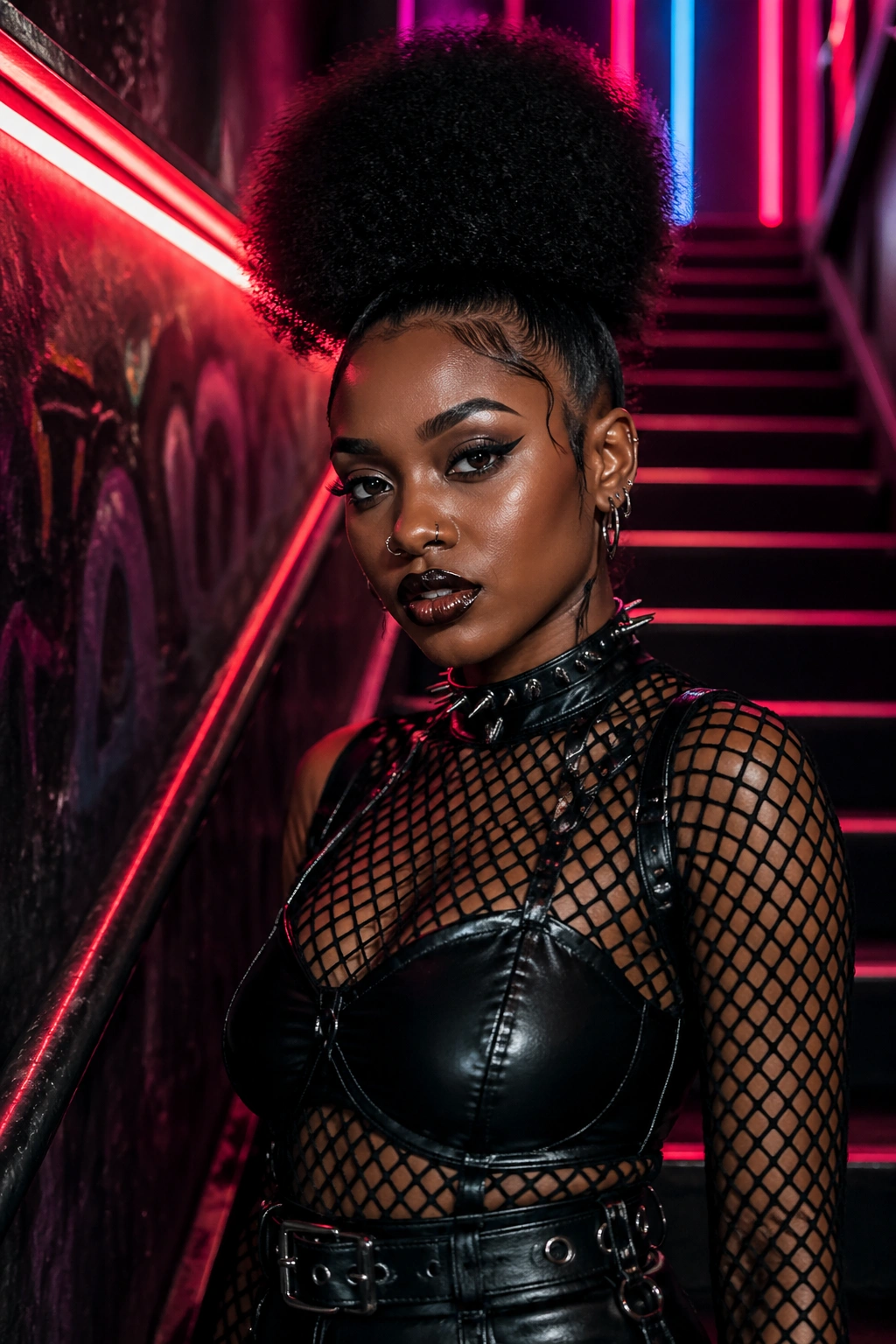
A tall, tightly gathered puff at the very crown of the head — as high as the hair length allows — worn with a leather or faux leather top, fishnet tights or a fishnet layer over solid clothing, and platform boots. The height of the puff creates a dramatic vertical line that anchors the whole look.
The proportions need consideration. A very high puff works best when the rest of the outfit keeps volume lower on the body — sleek leather pants, fitted fishnet over a bodysuit — so the puff reads as the intentional visual apex rather than competing with volume elsewhere.
Fishnet as a layering element — over a tank, over a bodysuit, over another sheer — is one of the most versatile Afro punk wardrobe tools. It adds texture and edge without committing to a fully leather or fully grunge palette.
10. Shaved Sides Natural Undercut
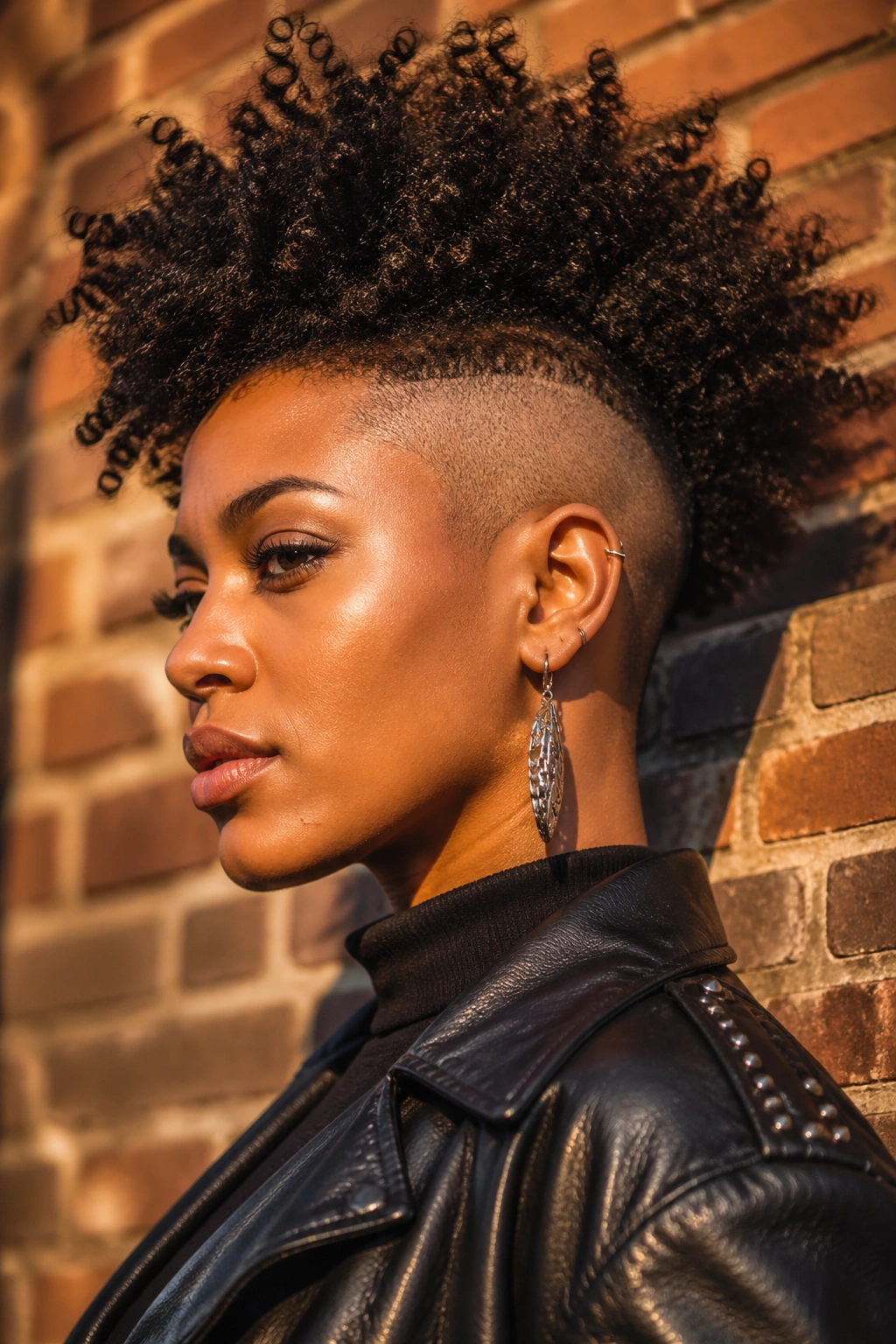
A look that lives at the intersection of natural hair and punk cutting: the sides and nape closely shaved or faded, while the top natural hair is left to grow in its full texture and volume. The contrast between the bare sides and the full textured top creates a dynamic silhouette with an obvious punk reading.
This is a commitment. Shaving the sides of your natural hair means at least several months of growing them back out if you change your mind. But for women who commit to it, the undercut natural afro is one of the most visually striking looks available — and it requires no styling beyond keeping the natural top moisturized and the shaved sides clean.
The shaved section can be left completely bare, given an edge design at the fade line, or used as a canvas for temporary color (silver or colored scalp powder applied to the shaved section creates a striking metallic or colored scalp effect that washes out easily).
11. Afro Punk Festival Look
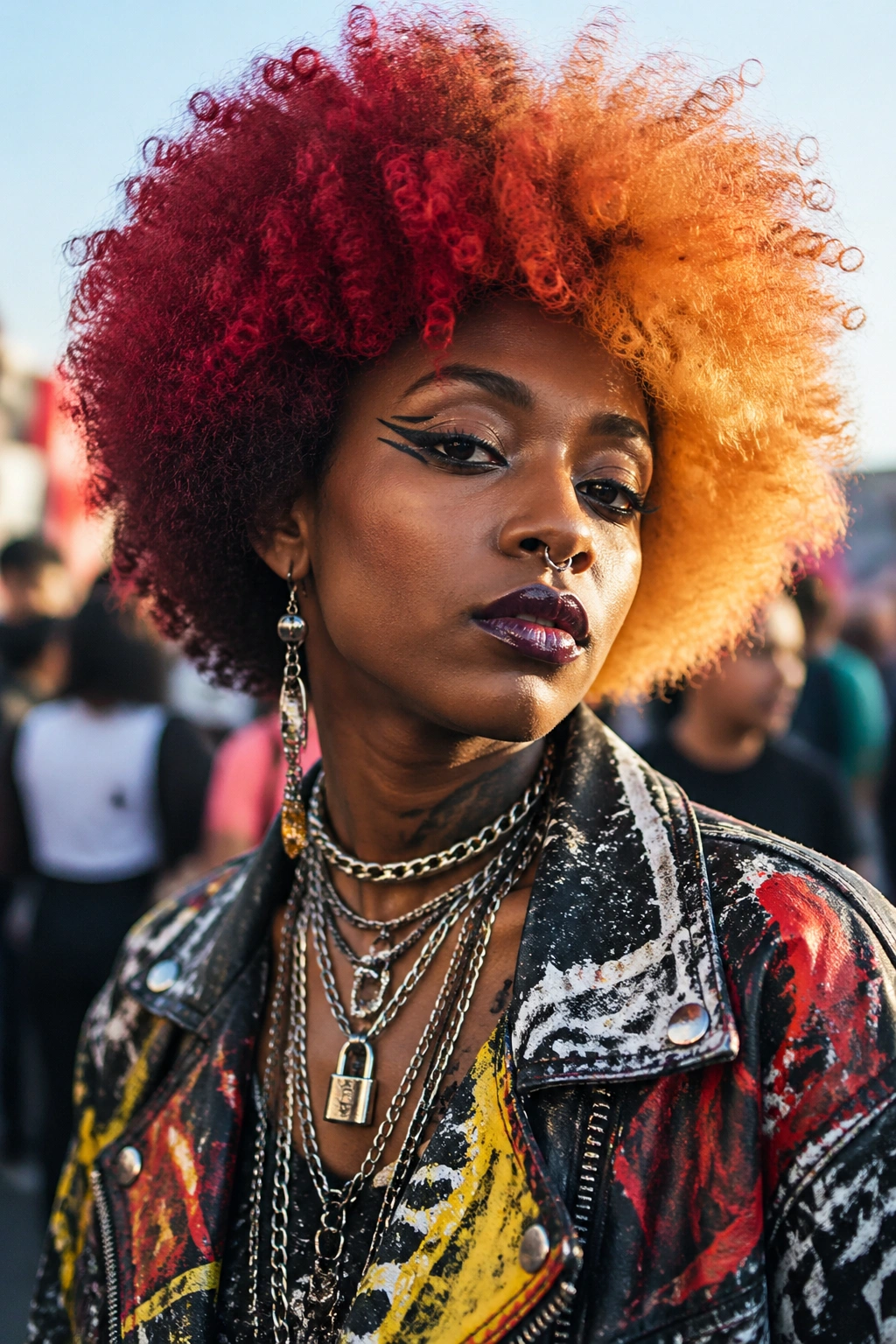
Festival dressing in Afro punk terms means maximum color, maximum volume, and maximum commitment — all at once. A full natural afro in a vivid or ombre color. A hand-printed or hand-painted jacket over a mesh or crocheted top. Layered metal jewelry and traditional beading together. Platform shoes that add four inches of height.
Nothing about this look is subtle or apologetic. The festival look exists at the most maximalist end of Afro punk expression, which means every element needs to be chosen deliberately rather than randomly assembled.
The jewelry layering is particularly important in festival looks. Multiple chains at different lengths, cuffs on both wrists, large statement earrings — when layered together, they create a cumulative visual weight that reads as intentionally constructed rather than thrown on.
12. Twisted Updo With Punk Edges
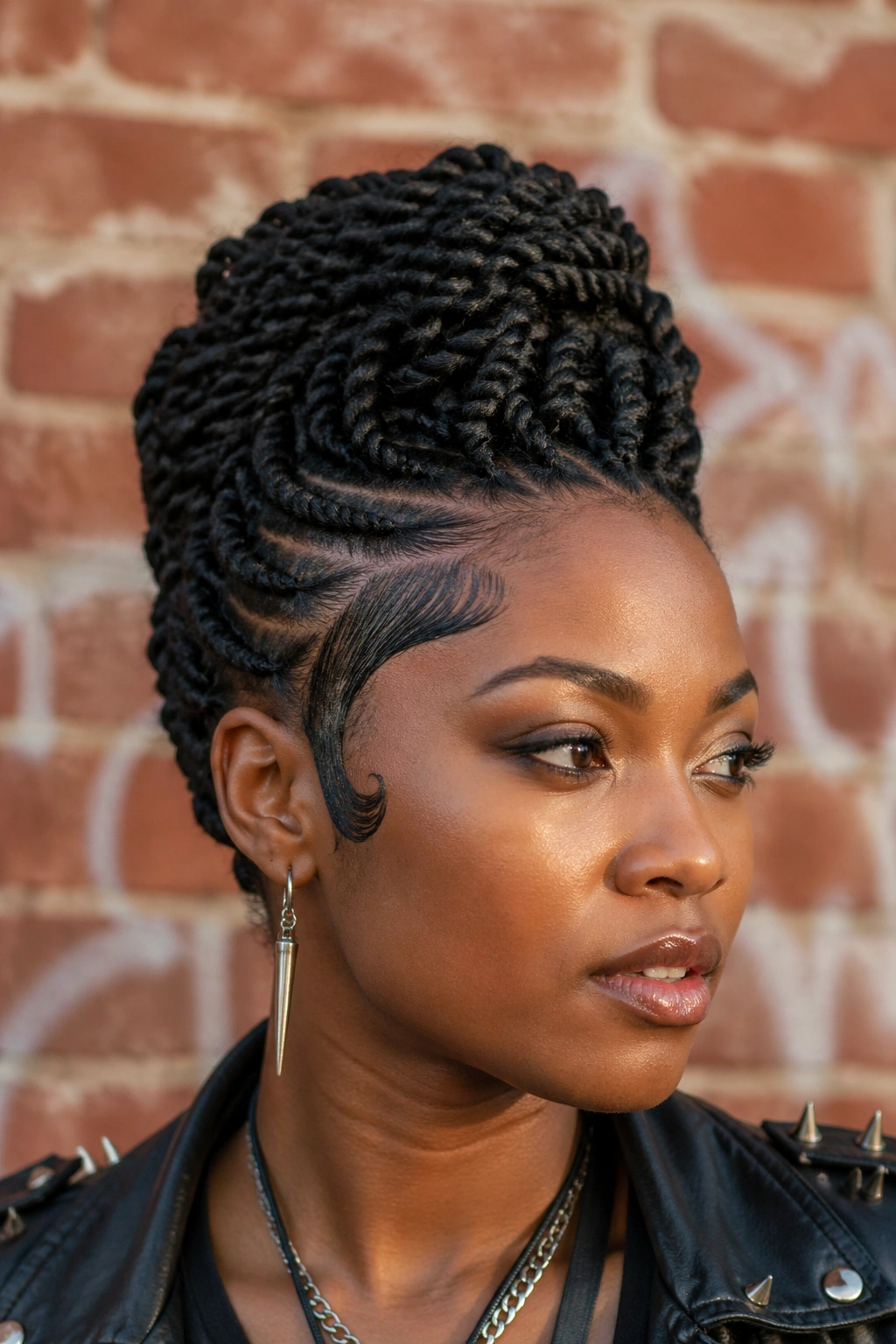
Natural hair twisted into an updo — small twists pinned and gathered at the crown into a shape that’s deliberately rough and asymmetric rather than neat and polished — combined with a precisely designed edge pattern at the hairline. The deliberate messiness of the updo against the precision of the edges creates the tension that makes this look work.
The edge design can be as simple or as elaborate as your stylist’s skill allows. A single curved line at each temple using edge control and a brush is minimal but effective. Elaborately swirled baby hair patterns covering the full perimeter, styled with a small amount of gel and defined with a toothbrush, are at the other end of the complexity spectrum.
13. Natural Hair With Vintage African Print and Leather
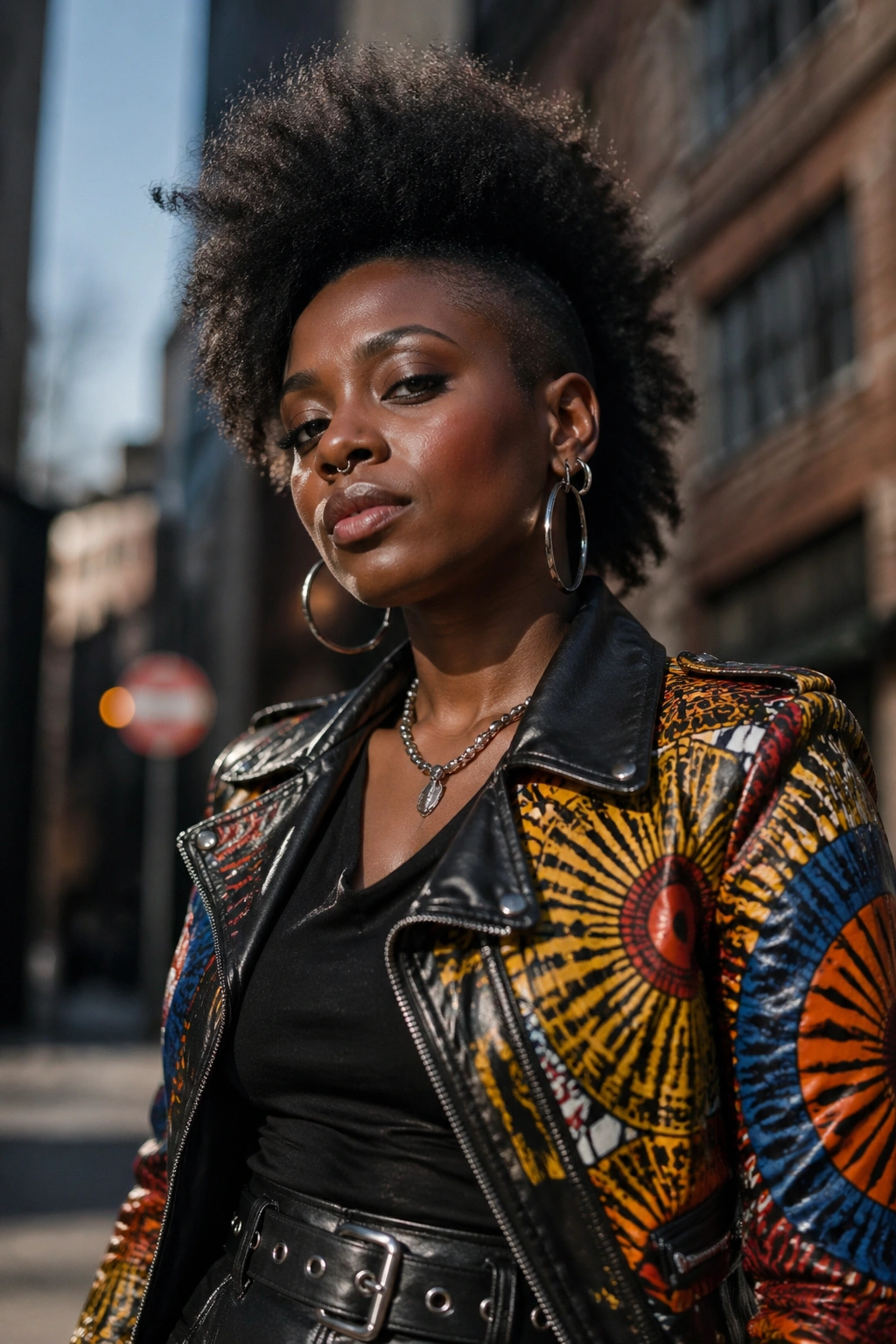
This is the look that most clearly articulates the “Afro” in Afro punk. Traditional African print fabric — ankara, kente, wax print — worn as a jacket, oversized shirt, or wrap top, combined with black leather pieces (belt, boots, bag) and a natural hair style at whatever length you’re working with.
The print and the leather are ideologically complementary in Afro punk styling. Both have histories of being claimed by people on the edges of dominant culture. Both carry material and cultural weight. Together against natural afro hair they create a look that requires no explanation — it explains itself.
14. Bold Lip With Geometric Edge Work
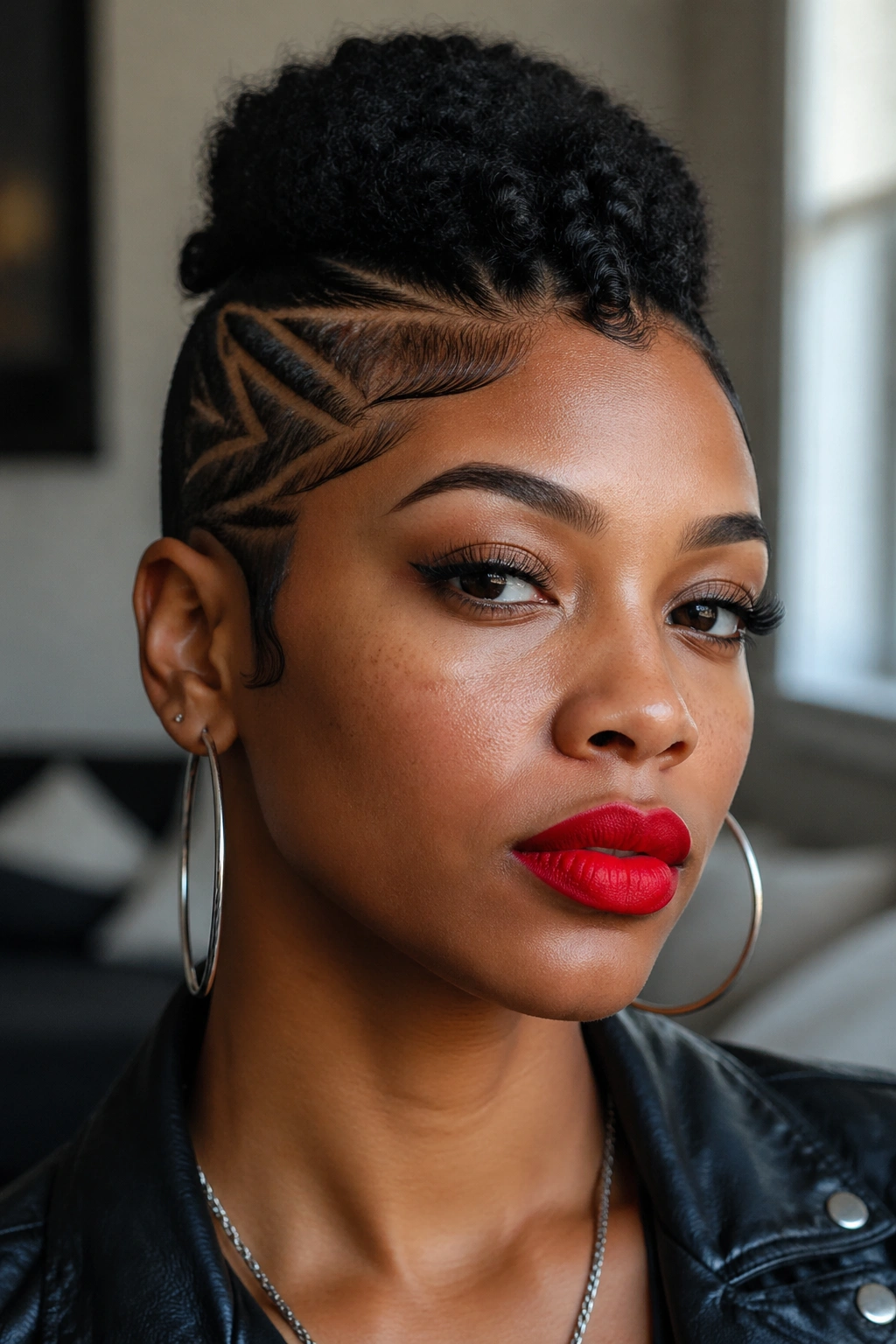
Not a hair style specifically but a face and hairline style: the edges of the natural hair styled into a precise geometric pattern — defined swirls, sharp angles, geometric shapes — while the lips are painted in a bold, high-contrast color. Rust, deep plum, electric red, or stark black.
The geometric edge work and the bold lip create two strong design elements that frame the face. The rest of the hair — whatever it’s doing — is secondary to these two focal points. This look works on natural TWAs, on larger afros, on twist outs, and on any hair length, because the focal points are at the face level rather than the hair level.
15. Afro Punk Bridal or Formal Look
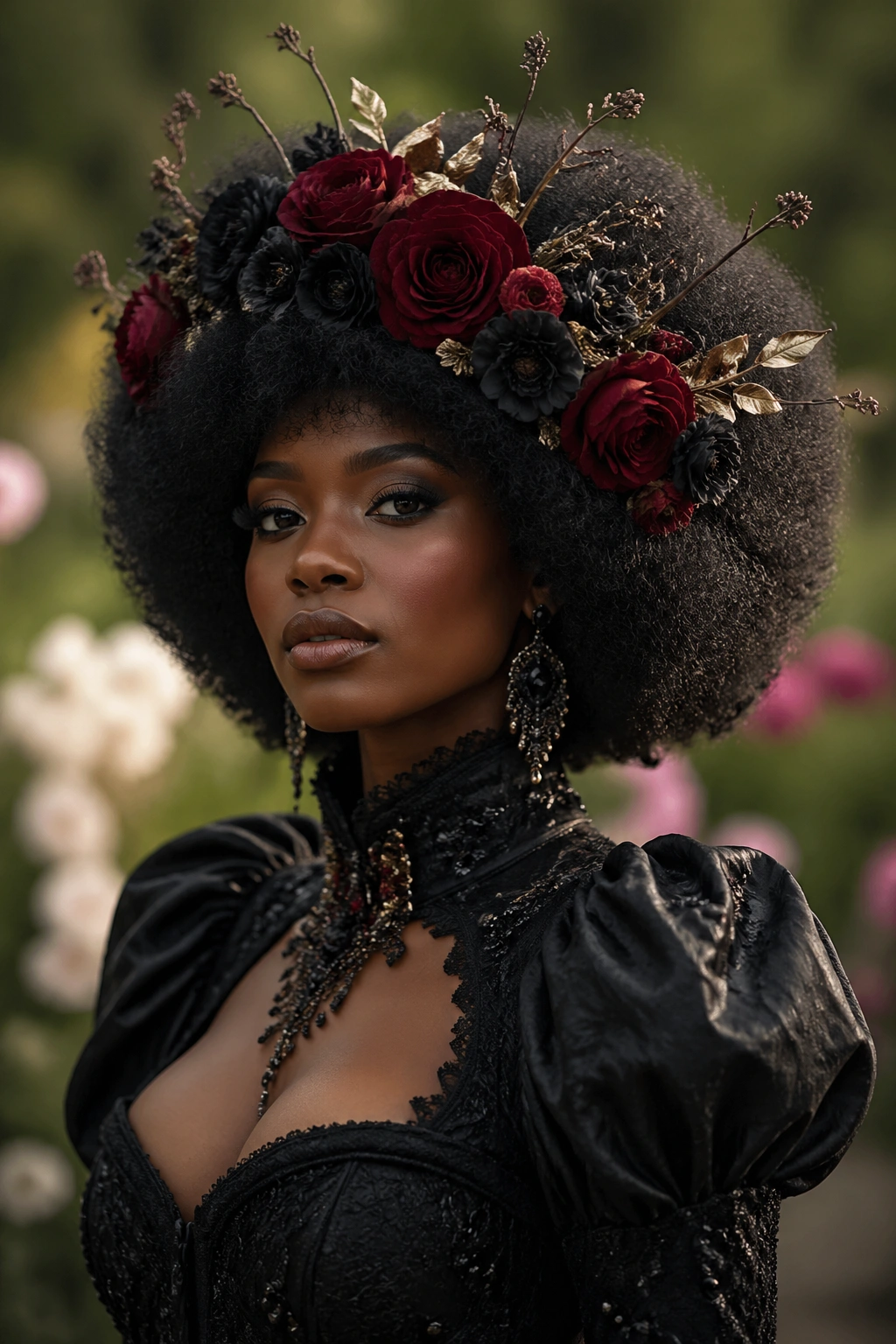
Formal occasions are not off-limits for Afro punk aesthetics — in fact, applying punk energy to formal styling is one of the most interesting things you can do with an invitation to dress up. A full natural afro with floral crown — not the delicate, Pinterest-friendly floral crown but a large, architectural, maximalist floral piece made from bold colors and big blooms — worn with a structured black gown or a bold print formal dress.
The surprise of the full natural hair under the elaborate floral crown is the defining feature. It says “I know what formal looks like, and I’m doing something else on purpose.” The alternative is a shaved-side look under a structured headpiece, or locs styled upward under a sculptural hat.
16. DIY Bleach and Tear Styling
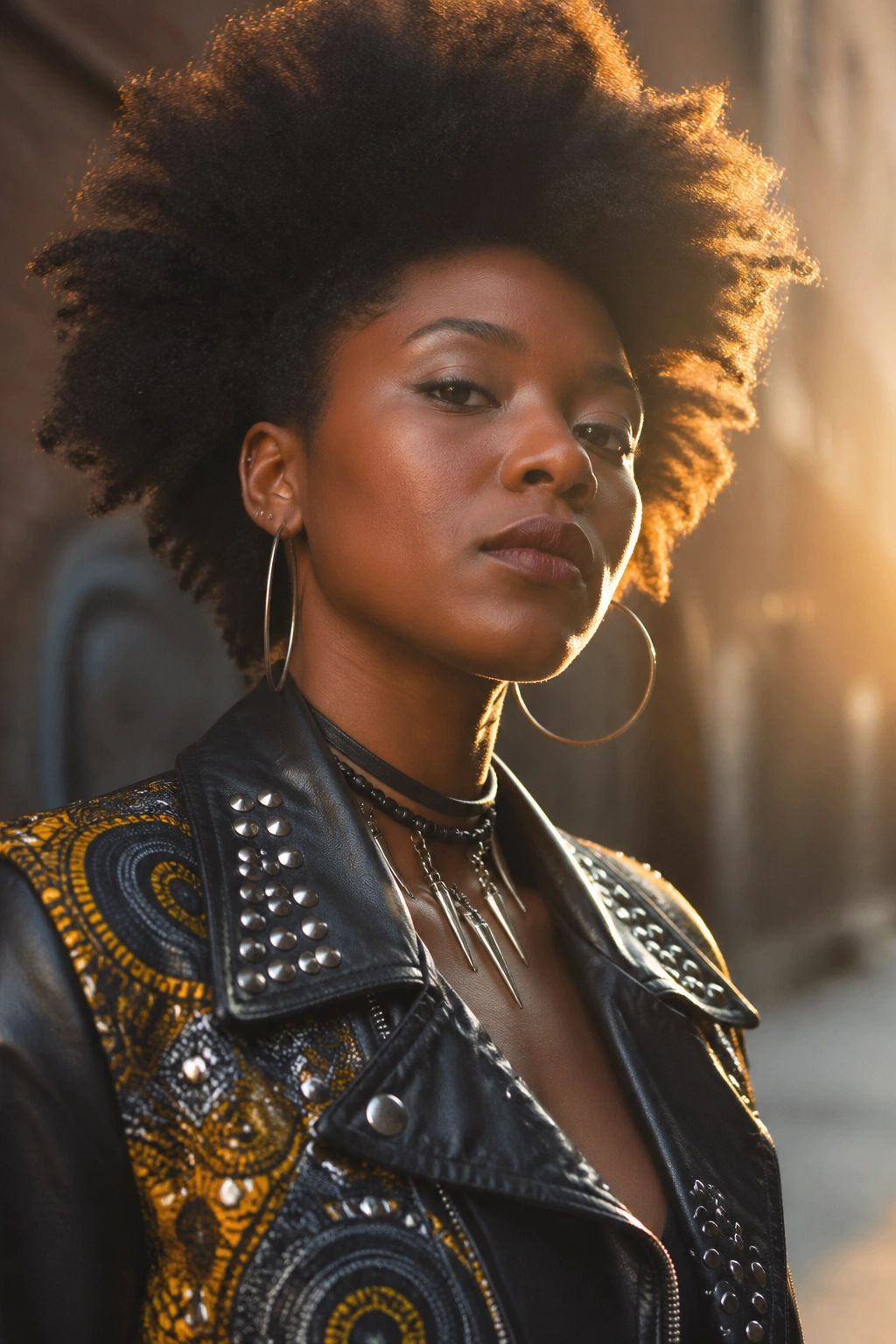
Bleach-marked denim — spots, splashes, or intentional patterns from a bleach pen or spray applied to a dark denim jacket before wearing — worn with a natural hair style and minimal other styling is a genuinely punk approach to personal style. The destruction of the fabric and its reshaping into something new is the classic punk gesture.
This extends to other garments: intentionally distressed leather-look pieces, hand-painted shoes, cut-up and reassembled tops. The DIY alteration of garments is a tradition shared between punk culture and the resourceful tailoring culture of Black women who made beautiful things from available materials. The overlap creates authenticity rather than imitation.
17. Metal Accessories Heavy Look
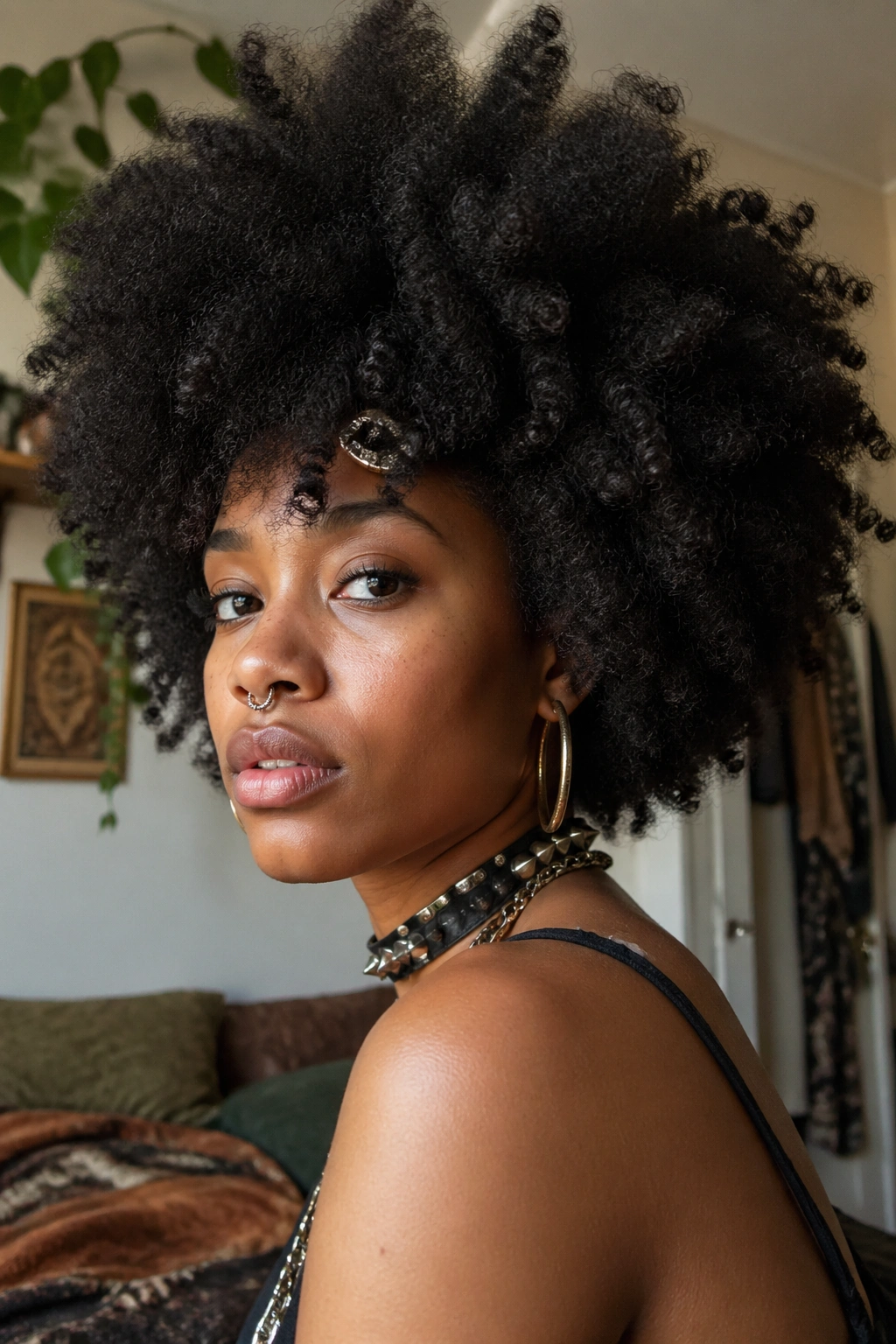
A look where the primary styling statement comes from the quantity and weight of metal accessories: chunky chain necklaces layered two or three deep, large cuff bracelets on both wrists, rings on multiple fingers, large sculptural hoop or geometric earrings. Natural hair worn in a simple style — a clean puff, loose twists, or even a compact TWA — so the jewelry has the full visual space.
The quantity of metal creates sound as well as visual impact. Moving in heavy chain jewelry creates an audible quality to movement that softer accessories don’t have. This is punk in the most literal, physical sense — your presence announces itself.
Traditional metal work from West African jewelry-making traditions sits beautifully alongside more Western punk-coded chain and hardware. Mixing brass hand-beaten African jewelry pieces with industrial chain necklaces creates the specific Afro punk layering that neither tradition achieves alone.
18. Afro With Studded Head Wrap
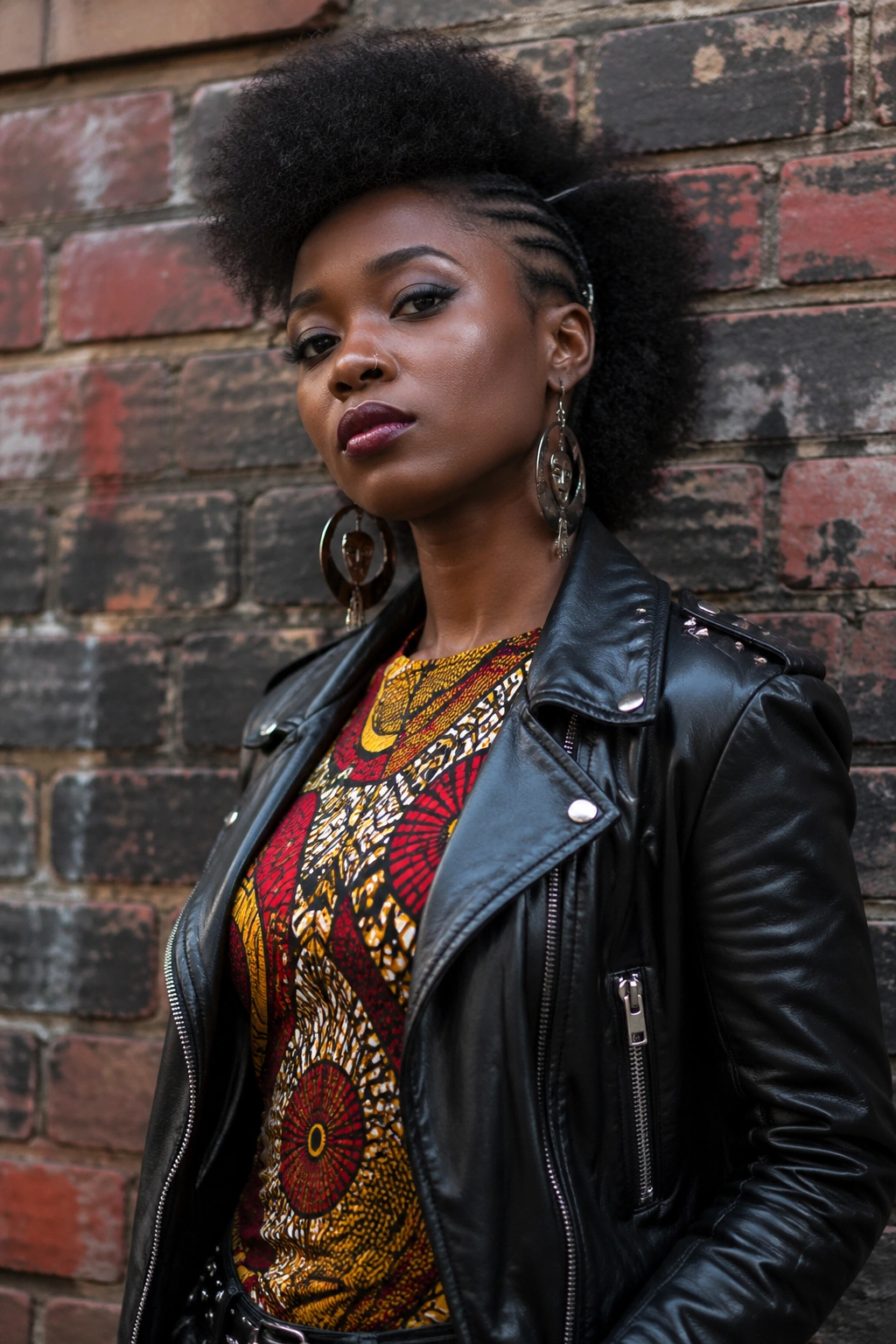
A head wrap — fabric tied at various points around a natural afro — is already a style with deep roots in African and diaspora traditions. Studding the fabric first — pressing metal punk studs through a plain cloth or canvas wrap before tying — creates a version of this traditional styling element that exists in direct conversation with punk’s visual vocabulary.
The wrapped natural hair peeking out from under and around the studded wrap creates the silhouette. Volume from the afro expands the wrap shape; the studs add edge to a traditionally soft accessory. The specific combination of these two references — traditional head wrapping and punk hardware — is distinctly Afro punk.
19. Deconstructed Formal With Natural Hair
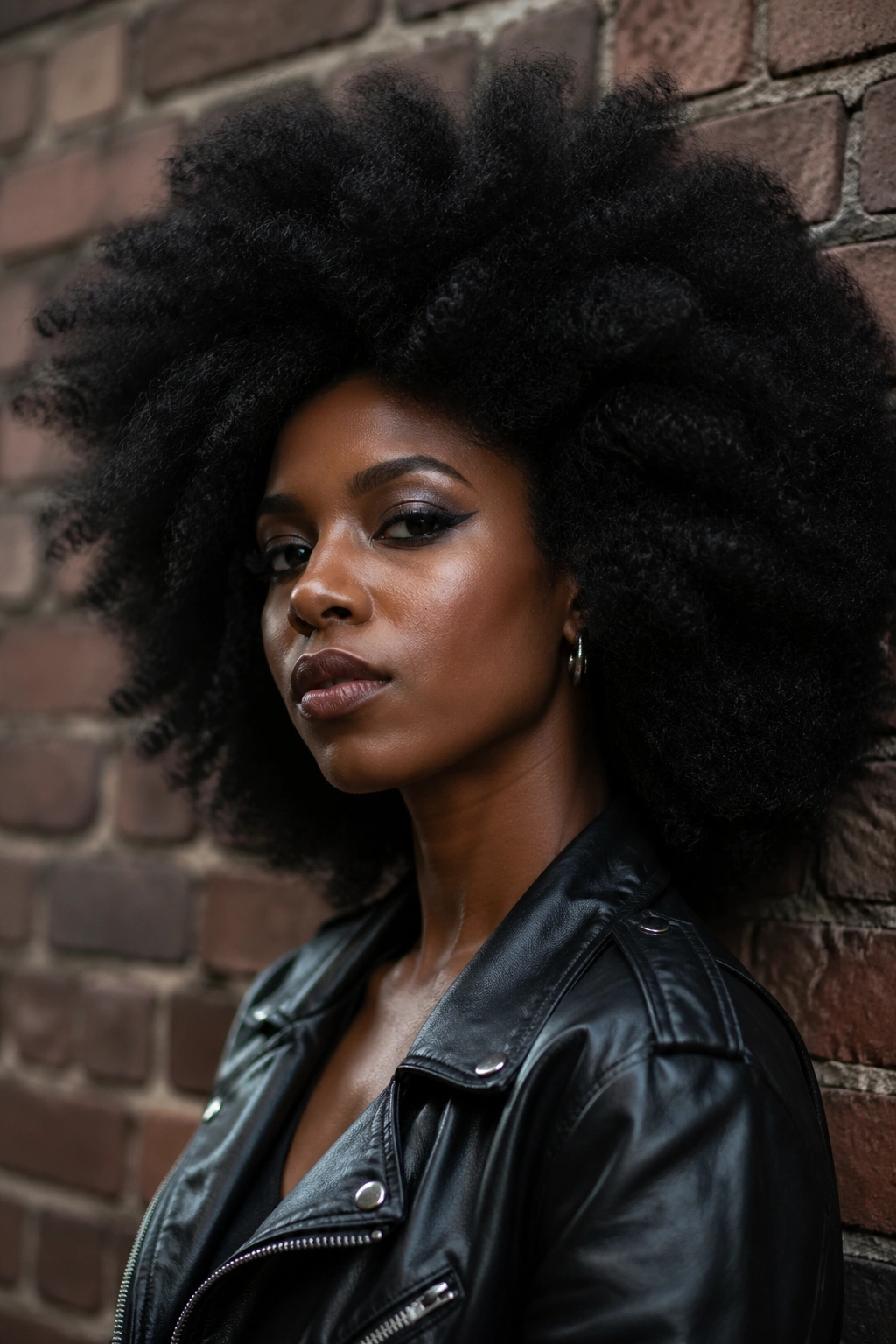
Taking formal wear apart and reassembling it in ways its original design didn’t intend: a formal blazer with the sleeves cut off and replaced with fishnet underlayers; a gown with the skirt slit dramatically high and worn over deconstructed tights; a formal shirt worn backward. Combined with a full natural afro or bold loc style.
The deconstruction is the punk act. Formal clothing exists within a very specific set of social rules; deliberately misusing it while remaining clearly aware of those rules is the intellectual gesture that punk has always made. For Black women, deconstructing formal wear that was designed without them in mind carries an additional dimension — it’s not just about punk, it’s about claiming and reshaping spaces.
20. All-Black Maximalist Afro Look
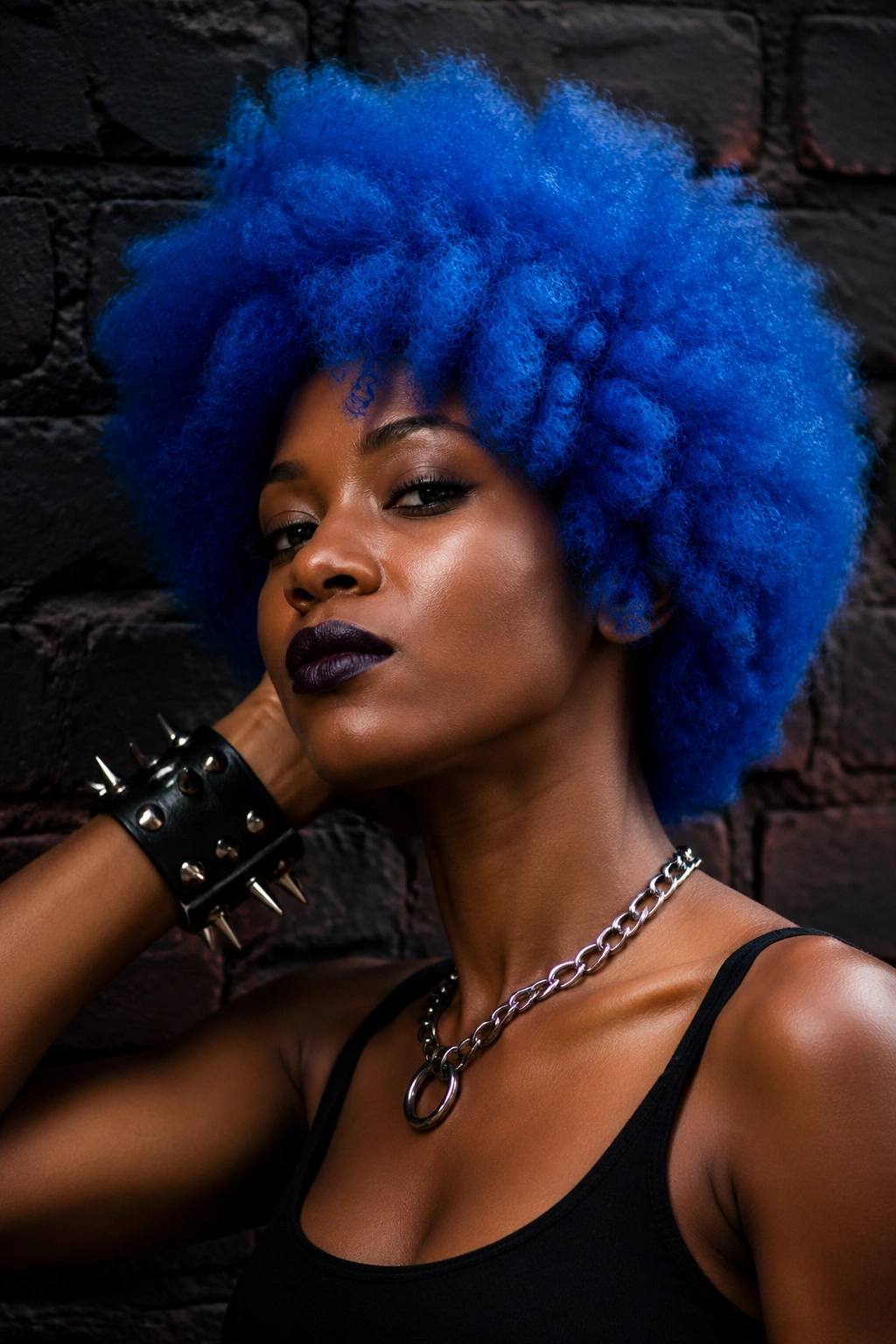
Every element is black — clothing, shoes, accessories, jewelry — except the hair. The hair, in its natural color or in a vivid non-black color, is the single point of contrast in an otherwise monochromatic look.
This approach works because the monochrome black palette creates a silhouette that reads almost like a shadow or a shape, and the natural hair — dense, textured, volumetric — creates the sole visual break. The effect is striking: the figure becomes almost abstract, with the hair as the only literal feature.
For maximum impact, the black pieces should vary in texture — matte leather against shiny vinyl against soft fabric against dull jersey — so the all-black palette has internal variation rather than reading as flat.
21. Loc Style With Punk Textile Mixing
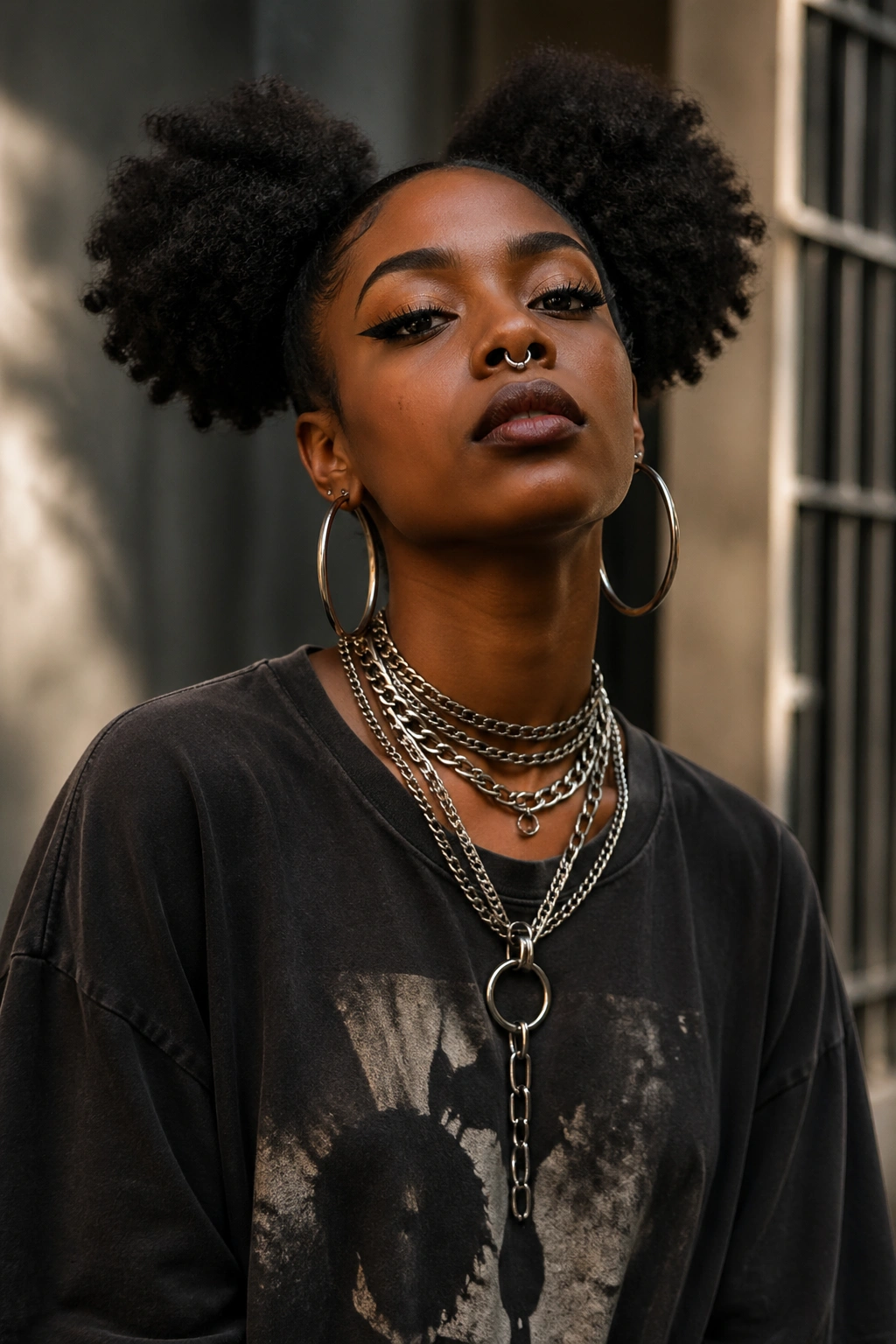
Fully grown natural locs styled in a specific arrangement — partly gathered, partly free, with deliberate length showing — worn with a combination of textiles that don’t conventionally go together: wax print skirt with plaid flannel over top, leather over a traditional embroidered blouse, velvet mixed with denim and metal hardware.
The textile mixing is the punk act here. Locs in their mature form already carry a visual authority that doesn’t need additional support. The textile combinations are the style’s gesture toward dissonance — the deliberate mixing of references that “shouldn’t” work together but absolutely do.
22. Full Commitment Afro Punk Look
The maximalist conclusion: every element of Afro punk aesthetics at maximum intensity, combined deliberately. A massive natural afro in a vivid or mixed color. Face gems or temporary makeup applied along the cheekbones or at the eyes. Large, architectural metal jewelry. A DIY or deconstucted garment in bold print or all-black. Platform boots. An edge design at the hairline. Layered textures and references that shouldn’t coexist but do, because you decided they should.
This is not an everyday look. It’s the look you build when you have both time and occasion. It’s the look that photographs in a way nothing else can replicate. And it’s the look that requires the most courage — not because it’s technically difficult, but because it claims so much visual space so deliberately.
Afro punk aesthetics have always been about exactly that kind of deliberateness. Taking up space. Making yourself impossible to overlook. Refusing the diminution that mainstream culture often asks of Black women, refusing it loudly, visually, and with genuine joy.
Makeup and Face as Part of the Afro Punk Look
Hair is the foundation, but face is the finishing layer — and in Afro punk styling, face is used expressively rather than conventionally. The goal isn’t a “flawless” face in the way that mainstream beauty defines it. The goal is an intentional face: a face that says something specific rather than simply being presentable.
Bold lip colors are the most accessible entry point. Deep oxblood, electric orange, stark white, cold silver — any of these on a bare or minimal face create a focal point that anchors the whole look without requiring elaborate technique. The lip does the work.
Graphic liner — thick, angular, drawn deliberately off from the lash line or extending significantly beyond the outer eye corner — adds an editorial quality that’s distinctly at odds with conventional makeup instruction, which is exactly the point. Smudged, imprecise, drawn-on graphic lines around the eyes suggest artistic process rather than flawless execution.
Face gems — small rhinestones or metallic dots applied with spirit gum or a skin-safe adhesive — are one of the more theatrical Afro punk beauty tools. Applied in clusters at the temples, in sweeping lines from the inner eye corner, or scattered across the cheekbones, they add light-catching sparkle and visual texture that photographs extraordinarily well.
For darker skin tones, the color choices that read most powerfully are ones with enough saturation to show clearly — deep, rich, or metallic tones rather than sheer or nude versions of bold colors. A sheer rust reads as wearable; a saturated brick red reads as a statement. Both have their place, but Afro punk calls for the latter.
Skincare as beauty practice — visible glow, clear healthy skin — is itself an Afro punk statement when presented in the context of a bold look, because it insists that Black skin is beautiful as a foundation rather than something to be covered or corrected.
Afro Punk in Practice: Getting Dressed With Intention
The actual process of getting dressed for an Afro punk look is different from the process of getting dressed for other aesthetics, and it’s worth describing. Most fashion aesthetics work top-down: decide the occasion, find clothes that match, add accessories, style hair to complement. Afro punk often works differently.
Start with the hair. The hair is the primary element — its volume, texture, and color determine what everything else does. A massive picked-out natural afro calls for a slimmer, more geometric clothing silhouette. A compact TWA opens up the option for big, voluminous clothing since there’s no visual competition from the hair. Locs worn down call for different clothing choices than locs gathered up in a faux hawk.
From the hair, build the clothing. Choose the one or two key garments — usually a statement piece (the print jacket, the leather piece, the deconstructed formal element) and one or two plain pieces to balance it. The plain pieces are important: without them, everything competes.
Accessories last. And in Afro punk, accessories are chosen for their specificity — the particular pair of earrings, the particular chain, the particular head piece — rather than as afterthoughts. Each accessory should feel chosen with reason.
The whole look should cohere not because everything matches but because everything has been selected with the same point of view. That coherence from a consistent point of view is what separates Afro punk from just wearing multiple loud things at once.
Caring for Your Pieces Through an Afro Punk Styling Phase
Bold styling phases — frequent layering, repeated pinning and gathering, periodic color applications on clothing and accessories — require active garment care to prevent cumulative wear. The styling itself isn’t the problem; it’s the accumulation of physical stress on fabrics and hardware without adequate maintenance.
Leather and faux leather need attention after heavy use. A damp cloth wipe-down after each wear removes surface grime before it works into the material. Store leather pieces flat or on wide hangers — never folded — to prevent permanent crease marks across visible surfaces.
Hardware on belts, chokers, cuffs, and boots can tarnish or corrode with frequent wear, especially in humid outdoor conditions. A quick buff with a dry microfiber cloth after each outing keeps the metal bright. If you’re mixing real metals with plated pieces, store them separately — contact between different metals accelerates tarnishing on both.
Creating Your Own Afro Punk References
The 22 looks in this list are starting points, not endpoints. The most authentically Afro punk thing you can do is develop your own specific visual references — the cultural touchstones, the artists, the textiles, the historical images that mean something personal to you — and build them into your styling practice.
That means going beyond what’s visible online. Looking at archival images of Black women’s styling from across different eras and different parts of the African continent. Pulling references from music, from fine art, from film, from family photographs. Building a personal visual vocabulary rather than replicating what already exists.
The Afro punk aesthetic at its most powerful is always specifically personal. The looks that make people stop, that generate genuine response, that feel like they couldn’t belong to anyone else — those looks don’t come from a list or a mood board. They come from the particular intersection of your history, your culture, your body, your hair, and your refusal to make yourself comfortable for anyone else’s viewing.
That’s punk. That’s Afro punk. It’s always been yours.