Honey blonde curly hair styles have a way of making you stop mid-scroll and double-tap before you’ve even had a chance to think about it. There’s something about that warm, golden tone sitting on a bed of full, bouncy curls that just hits different — and Black women have been rocking this color combination in ways that feel both timeless and completely their own. Whether you’re thinking about going honey blonde for the first time or you’re a seasoned color lover looking for fresh inspiration, this guide covers everything you need to know before your next salon appointment.
Why Honey Blonde Works So Well on Natural Curls
The relationship between honey blonde and natural curls is genuinely special. Most warm golden tones catch light in a way that’s flattering on almost every skin tone, but on natural curl patterns — especially type 3 and type 4 textures — the color does something extra. It creates depth and dimension within the coil structure itself, so every individual curl looks almost three-dimensional when the light hits it right.
Honey blonde sits in that sweet spot between too light and too dark. It’s warm enough to complement deeper skin tones without washing anyone out, and it’s rich enough to have staying power between touch-ups. Unlike platinum or icy blondes that can look stark against melanin-rich skin, honey has that golden undertone that blends naturally and beautifully.
Curl texture plays a huge role in how honey blonde shows up on your hair. Tighter coils tend to display the color in concentrated pops and bursts, while looser curls stretch it out into longer, more visible swaths. Neither is better — they’re just different, and both are gorgeous.
The Color Spectrum: Light Honey to Deep Golden
Not all honey blonde is the same shade, and that matters a lot when you’re planning your look. The term covers a range of tones from pale, almost buttery honey on the lighter end all the way to deep, amber-infused gold on the darker side.
Lighter honey blonde shades — think champagne mixed with warm gold — tend to work best on women with light to medium brown base hair who are willing to do significant lightening. The lift required is substantial, which means your curl health needs to be a top priority going in.
Mid-range honey blonde is probably the most popular version of this color because it reads as authentically “honey” — that warm, amber-kissed golden tone that shows up beautifully in photos and looks just as good in real life. It works on a wider range of base colors and skin tones than the lighter options.
Deep golden honey leans more toward amber and copper. It’s rich and warm without being too far into orange territory, and it’s the easiest version of honey blonde to achieve on darker natural hair without extreme lightening. This shade also tends to fade the most gracefully, often shifting into a beautiful warm brown as it grows out.
What to Know Before Coloring Natural Curls Honey Blonde
Color and natural curls have a complicated relationship, and going in without the right knowledge can cost you — in time, money, and hair health. There are a few things worth understanding before you sit in that salon chair.
Your starting point matters enormously. If your hair is a true deep black or very dark brown, achieving a true honey blonde will require significant lightening — often multiple sessions. Rushing this process is one of the fastest ways to damage your curl pattern. A good colorist will want to lift your hair gradually, and you should trust that process even when it feels slow.
Moisture retention is the biggest concern for naturally textured hair during the coloring process. Chemical lighteners open the hair cuticle to deposit or remove pigment, and curly hair is already naturally more prone to dryness because the coil structure makes it harder for natural oils to travel down the hair shaft. Deep conditioning before and after color appointments isn’t optional — it’s essential.
Protein-moisture balance also shifts during and after coloring. Some women find their curls become more fragile and need more protein support post-color, while others find their hair craves moisture above everything else. Pay attention to how your hair responds and adjust your routine accordingly.
Building a Color Care Routine That Preserves Your Curls
Once you’ve got your honey blonde curls, keeping them looking their best requires a consistent and intentional care routine. Color-treated curls have different needs than virgin hair, and understanding those differences will save you a lot of frustration.
Sulfate-free shampoos are non-negotiable for color-treated natural hair. Sulfates — the foaming agents in many traditional shampoos — strip color aggressively and can also strip the natural oils your curls need to stay moisturized. A gentle, sulfate-free cleanser used once or twice a week is the standard move for most color-treated curl types.
Co-washing (using a cleansing conditioner instead of shampoo for some washes) works really well for honey blonde curls because it cleanses without stripping. Many curl-focused routines use co-washing two to three times a week and sulfate-free shampooing once every one to two weeks.
Heat protection is also more important once you’re colored. If you stretch your curls with a diffuser, blow-dryer, or flexi rod sets, always use a heat protectant. Lightened hair is more vulnerable to heat damage than virgin hair, and protecting it keeps your color vibrant and your curls intact.
1. Full Honey Blonde Wash-and-Go
A wash-and-go done in a rich honey blonde color is one of the most effortlessly beautiful looks you can pull off. The idea is simple: your natural curl pattern does the heavy lifting while the color does the rest. This style celebrates your texture in its most natural state.
Why it works: The golden tones of honey blonde create instant visual interest across your curl formation, even without any extra styling. Every curl catches light differently, so the overall look has incredible natural dimension.
How to Achieve This Look
Apply a generous amount of curl-defining cream or gel to soaking wet hair after washing and conditioning. Rake the product through section by section, smoothing down the cuticle as you go. Diffuse on low heat or let your hair air-dry. The honey blonde color will show up brightest once the curls are fully dry.
- Use a microfiber towel to blot, not rub, excess water before applying products
- Section your hair into four quadrants for even product distribution
- Avoid touching the curls while they dry to minimize frizz
Pro tip: A lightweight oil applied to the top layer of dry curls adds shine that makes honey blonde look even more luminous in natural light.
2. Honey Blonde Twist-Out
The twist-out is a classic for a reason — it creates defined, elongated curls with gorgeous texture, and honey blonde color makes the definition pop even more than usual. Each twisted section becomes its own little color story when unraveled.
Bold fact: twist-outs on colored hair often look more defined than on virgin hair because lightened strands have a slightly rougher texture that holds curl patterns more readily. This is one of the rare benefits of color-treated curls that people don’t talk about enough.
The technique matters more on color-treated hair because over-manipulation can lead to breakage. Using a good leave-in conditioner as your base product before twisting adds slip and minimizes friction. Twist on damp hair — not soaking wet, not fully dry — for the best hold and definition.
When you unravel your twists the next morning, use a few drops of oil on your fingers rather than dry hands. This separates the sections without disrupting the curl pattern or causing frizz. The honey blonde tones will literally glow once the twists are opened up and separated.
How to Achieve This Look
Section clean, damp hair and apply leave-in conditioner followed by a curl cream or butter. Divide each section into two strands and twist downward. Allow to fully dry (overnight is ideal) before unraveling.
3. Honey Blonde Bantu Knot-Out
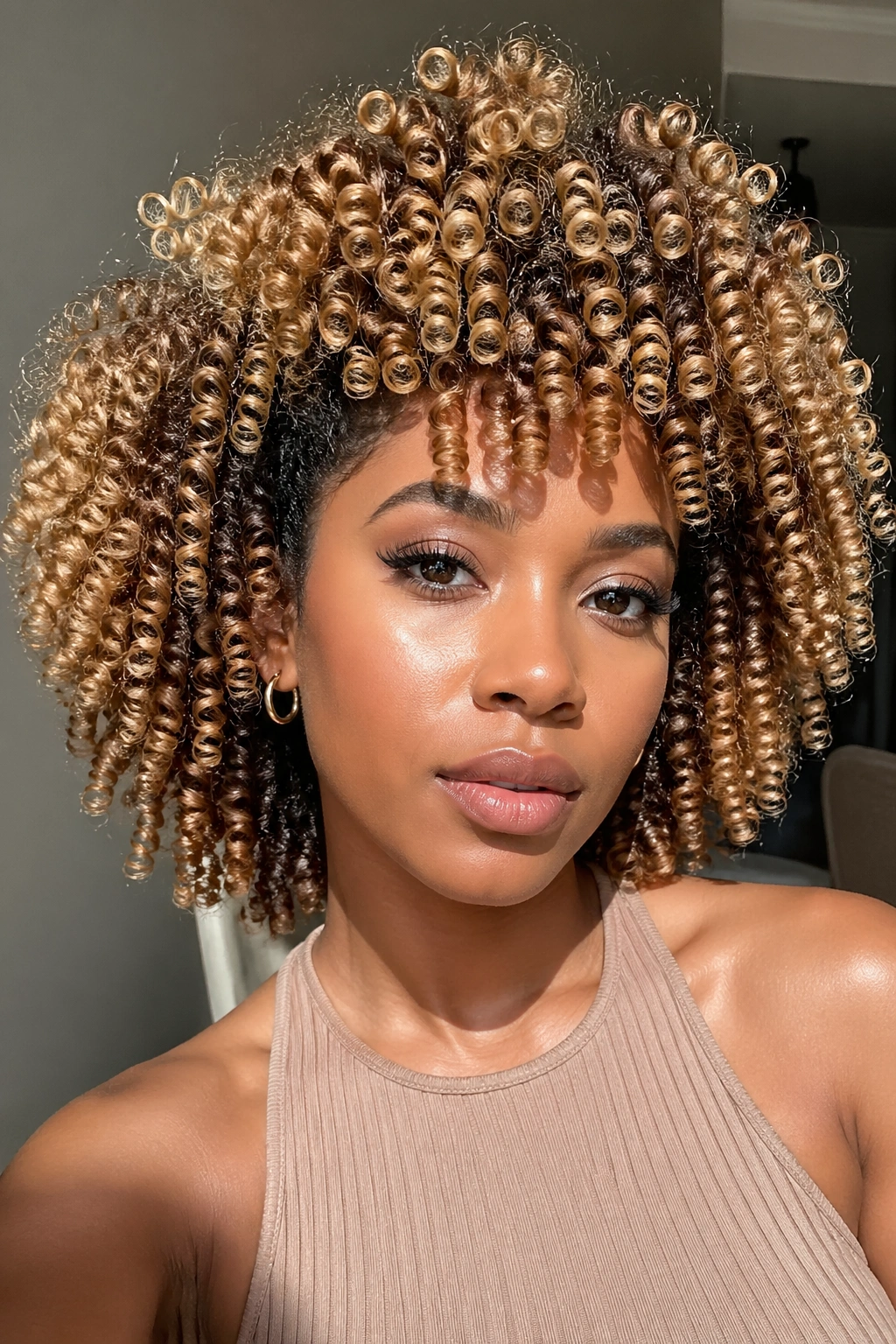
Bantu knots are one of the most versatile protective styles in natural hair culture — and the spring coils they create when unraveled are unlike anything a curling iron can replicate. On honey blonde hair, the effect is spectacular.
Picture this: you wake up, carefully unravel your Bantu knots, and reveal a head full of spiral curls in warm, glowing honey tones. Each coil catches light from multiple angles because of how tightly it was wound while setting.
The size of your knots determines the size of your curl when unraveled. Smaller knots create tighter spirals; larger knots create looser waves and curls. For honey blonde hair specifically, medium-sized knots tend to show off the color variation best because you get enough length in each coil to see the full range of gold tones.
- Apply a holding product (gel or curl cream) before knotting for longer-lasting definition
- Knot on fully dry or nearly dry hair for a longer-lasting style
- Use satin or silk to sleep in your knots if you’re setting overnight
Tip: Mist your hands with water and a little oil before separating the knots to keep the curls bouncy and defined without frizz.
4. Honey Blonde Box Braids
Box braids in honey blonde are a protective style power move. The color adds immediate visual interest to the classic braid pattern, and the warm tones work beautifully whether you’re going for natural-looking thin braids or bold, thick jumbo ones.
This isn’t exactly a natural curl style in the traditional sense, but it absolutely qualifies as a honey blonde curly look when you add curly ends to your braids. Curly braid extensions in honey blonde or golden tones matched to your own color create a style that looks like your curls just decided to grow longer overnight.
The protective element is the real draw here. Box braids give your natural hair a break from daily manipulation, and having honey blonde color in the braiding hair lets you experiment with the color without committing to a full chemical process on your own strands.
How to Achieve This Look
Choose pre-stretched or regular kanekalon braiding hair in a honey blonde or dark to honey ombre shade. Part your hair into clean, even sections and braid from root to tip, incorporating the extension hair. For curly ends, use expression curly hair or simply braid to the last inch and dip in hot water to set.
- Seal each braid tip with a lighter flame (quickly — just enough to seal the synthetic fiber)
- Moisturize your scalp with a lightweight oil every few days
- Protect your edges with a satin bonnet or scarf at night
5. Honey Blonde Wash-and-Go Puff
The high puff is the ultimate “I look intentional but this took me five minutes” style, and in honey blonde? It’s genuinely stunning. Pulling your curls up and securing them at the crown creates a voluminous, gloriously full shape that showcases the color from every angle.
Bold fact: The honey blonde puff works on every curl type. Whether your hair is loose and wavy or tightly coiled, the puff shape gives you that round, full silhouette that reads as elegant and effortless all at once.
The key to a great honey blonde puff is the foundation: well-moisturized, defined curls that have some hold but aren’t crunchy. Using a curl cream or light gel before air-drying gives you the definition you need without stiffness. Then simply gather your curls with a thick hair tie or satin scrunchie — never a tight elastic that can break color-treated strands.
For extra volume, gently loosen curls at the crown before securing. For a sleek base, smooth the sides and nape down with edge control or a light pomade before putting the puff up.
6. Honey Blonde Frohawk
The frohawk is dramatic in the best possible way. It takes the boldness of a mohawk silhouette and softens it with the fullness and texture of natural curls — and honey blonde color cranks the visual impact up several notches.
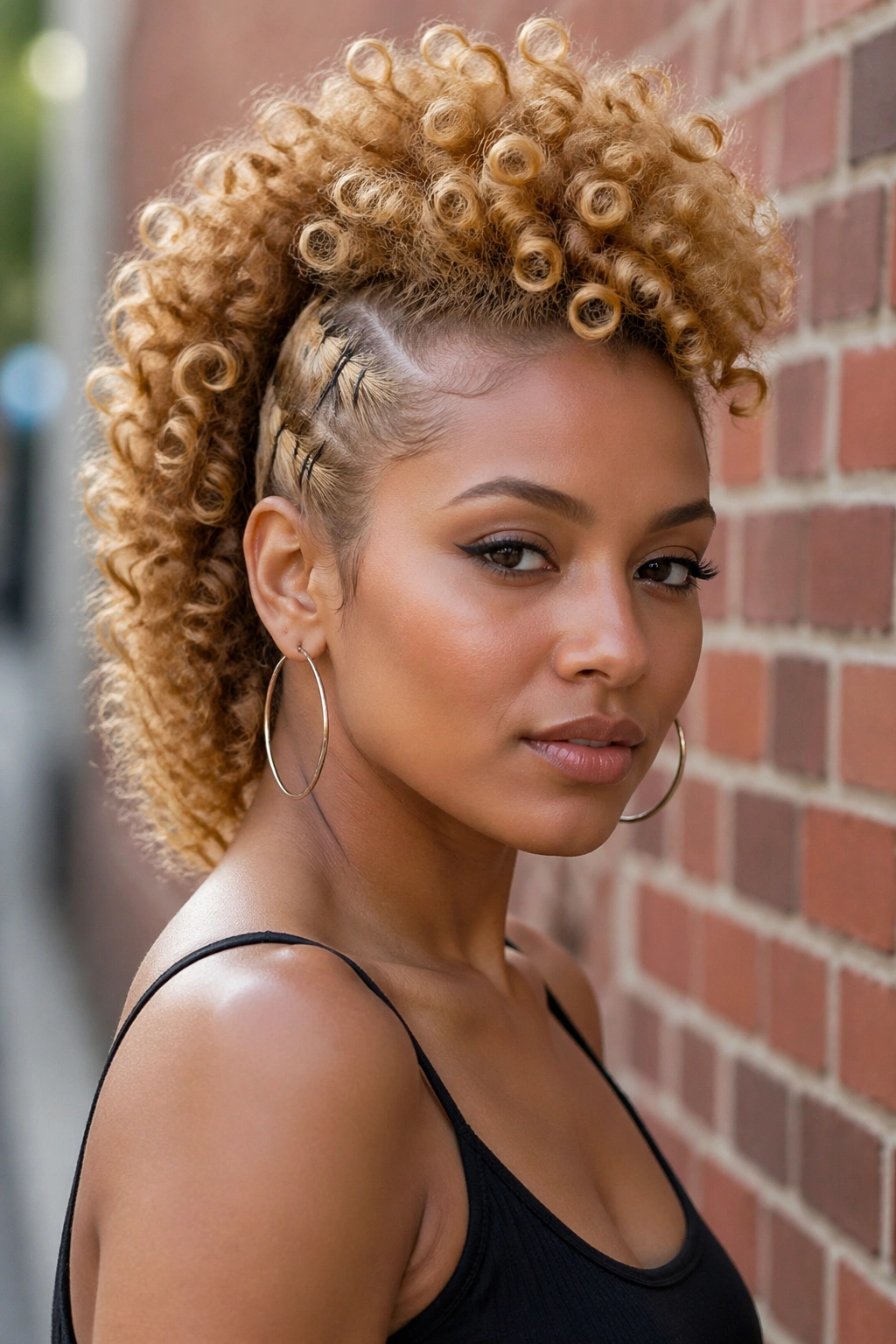
A frohawk is achieved by pinning or braiding down the sides of your hair and leaving the center section free to stand up in a ridge of full, voluminous curls. In honey blonde, that center ridge becomes the star of the entire look.
How to Achieve This Look
Section your hair from ear to ear across the top of your head, leaving a strip along the center from forehead to nape. The side sections get braided flat, twisted down, or simply pinned and smoothed. The center section gets styled with curl cream and diffused for maximum volume.
- The wider your center section, the fuller the hawk will look
- Use bobby pins or hair clips to secure the side sections cleanly
- A little edge control on the perimeter pulls the whole look together
Tip: Apply a light-hold gel to the center section while wet, then diffuse from underneath to encourage maximum volume and lift.
7. Honey Blonde Defined Coil-Out
A coil-out using finger coils or a styling tool creates precise, springy curls that have incredible definition and beautiful color payoff. This style is especially striking in honey blonde because each individual coil catches light like a small golden spiral.
The technique requires patience, but the results are worth every second. Finger coiling involves wrapping small sections of hair around your finger while applying a holding product, creating perfectly formed coils that dry in a uniform spiral shape.
The honey blonde tones look almost luminous in this style because the smooth surface of each coil reflects light cleanly. Unlike the more diffused look of a wash-and-go, coil-outs have sharp definition that makes the golden color look almost sculptural.
Working in small sections — and I mean small, like the width of a pencil — gives you the most defined result. Apply a curl pudding or styling cream before wrapping each section. Let your hair fully dry before separating the coils.
8. Honey Blonde Protective Updo
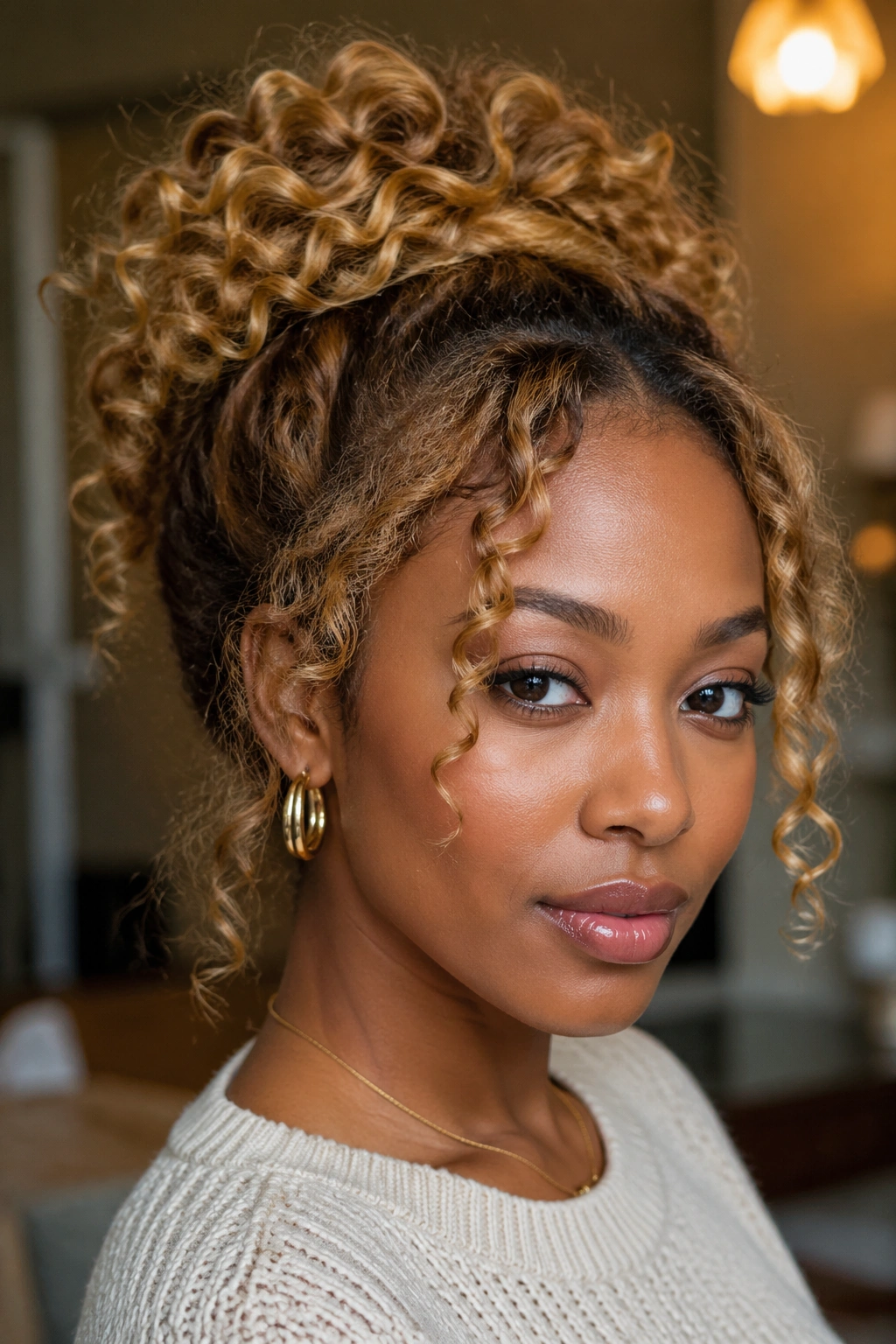
An updo on natural honey blonde curls is one of those looks that manages to feel both casual and completely put-together. Think loose, slightly undone — curls pinned up with a few pieces falling out intentionally, golden tones visible from every angle.
This style works especially well for protecting your ends while still looking styled. Natural hair breaks most often at the ends, which are the oldest and most fragile part of the hair shaft. Keeping those ends tucked away in an updo gives them a rest from environmental exposure and daily manipulation.
How to Achieve This Look
Start with stretched or freshly defined curls. Gather your hair loosely and use a combination of bobby pins and small clip pins to secure sections in an upswept shape. Don’t aim for perfection — a slightly imprecise, lived-in updo looks more intentional on natural curls than something rigidly neat.
- Use satin-covered pins or smooth bobby pins to avoid snagging color-treated strands
- Let a few face-framing pieces fall loose for a softer look
- Finish with a shine serum on the surface curls to enhance the honey tone
9. Honey Blonde Locs
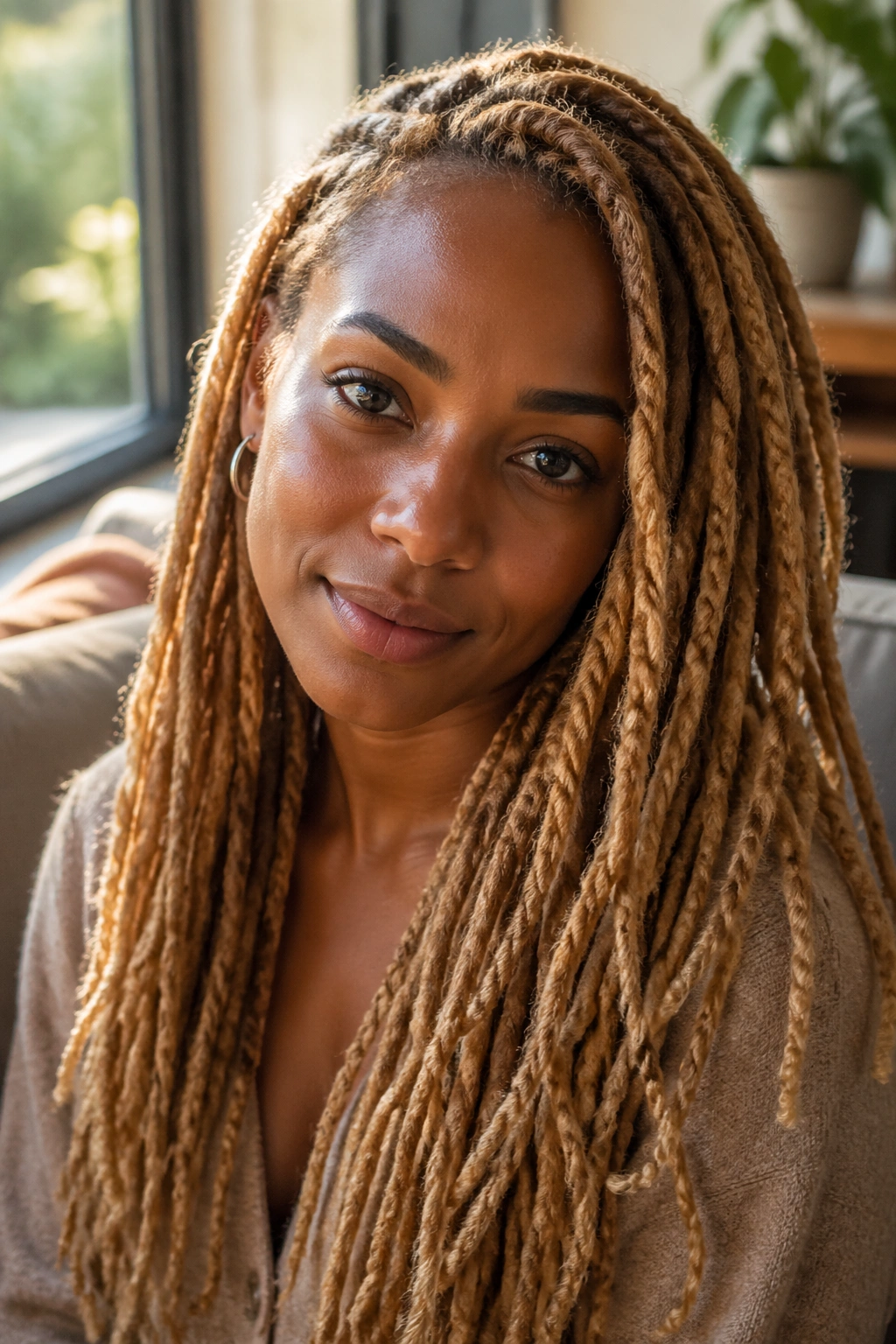
Honey blonde locs are a long-term commitment that pays off in genuinely beautiful ways. Whether you’re starting fresh locs in a honey blonde color or coloring established locs, the warm golden tones look striking against the structured, slightly matte texture of the loc itself.
Coloring locs honey blonde is different from coloring loose natural hair. The interior of a loc is more difficult to fully penetrate with color, which means the outside surface often takes color differently than the interior strands would if they were loose. This can actually create beautiful, complex color variations within each loc.
Locs that have been colored honey blonde tend to show the most vivid color in the first few inches of growth and in the thinner, more recently cultivated ends. The fuller, more mature sections often display a slightly darker, richer version of the tone — which looks intentionally graduated and beautiful.
10. Honey Blonde High-Top Fade with Curls
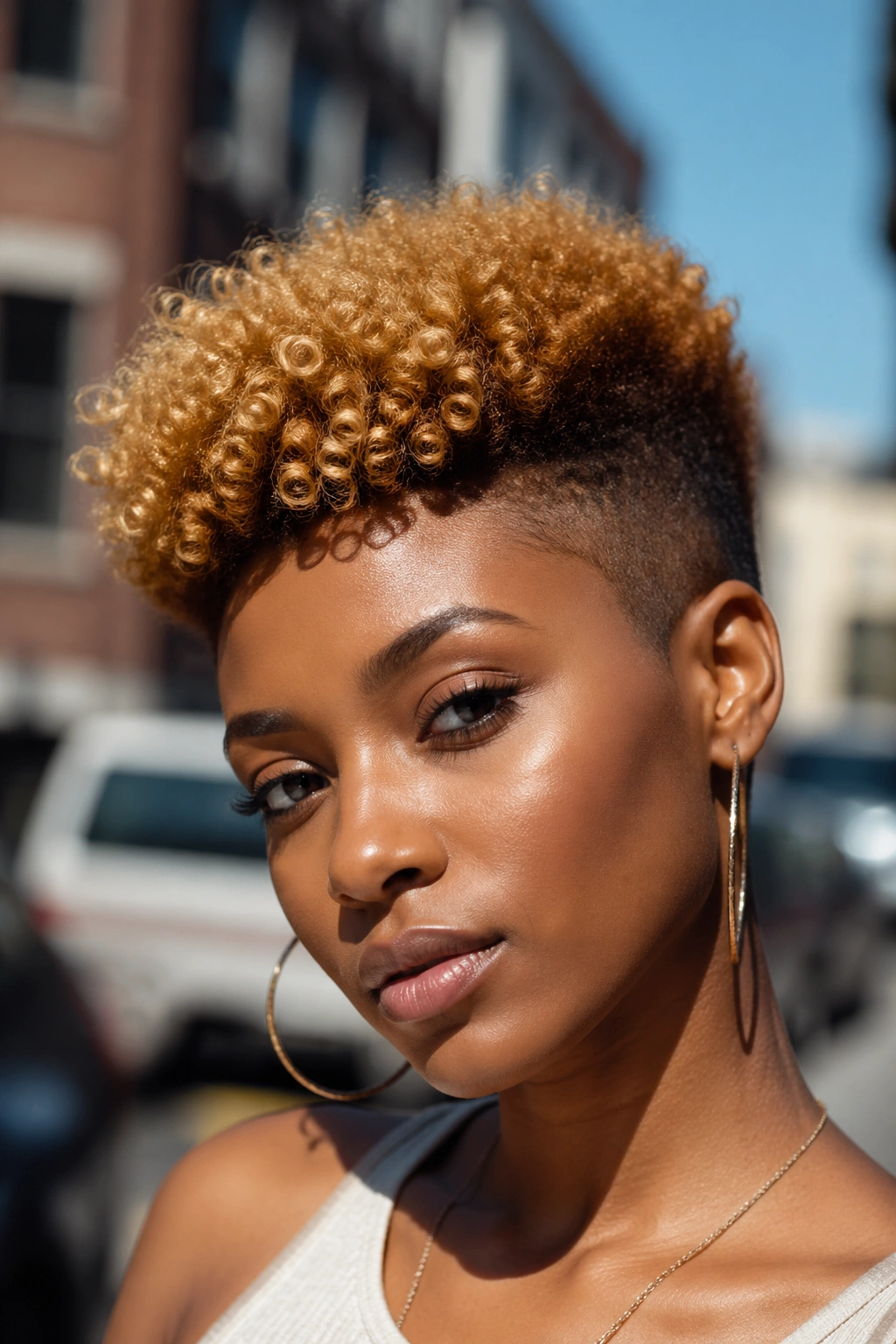
This is a bold, fashion-forward look that works beautifully on shorter natural hair. A tapered or faded sides combined with full, honey blonde curls on top creates a shape that’s dramatic and architectural.
Bold fact: High-top fades have a long, storied history in Black hair culture, and adding a warm honey blonde color to the crown curls is a fresh contemporary take on a classic silhouette.
The contrast between the shorter, often darker sides and the full, honey blonde crown creates visual height and shape. This style requires regular maintenance to keep the fade looking sharp, but the crown curls can be worn in various styles — wash-and-go, twist-out, or simply picked out for maximum volume.
11. Honey Blonde Goddess Locs
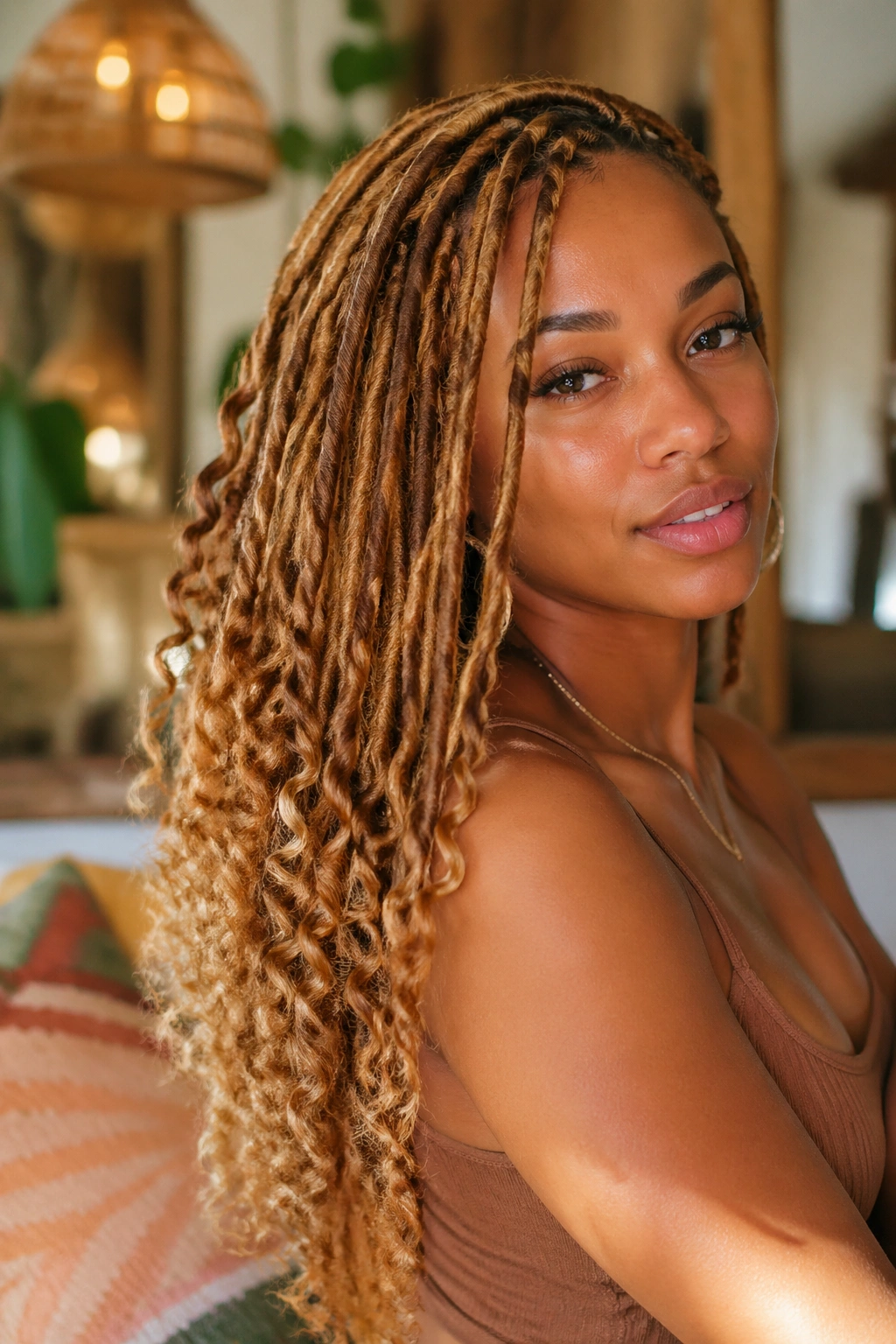
Goddess locs blend the structure of traditional locs with softer, more fluid curly ends, and in honey blonde color they look genuinely ethereal. The loose, wavy ends catch light differently than the wrapped loc body, creating a mixed-texture look with beautiful dimension.
How to Achieve This Look
Goddess locs are installed using a combination of braiding hair and curly hair extensions. The loc body is wrapped with straight or lightly textured extension hair, while the ends are left as loose curls using expression curly hair or water wave extensions in a matching honey blonde shade.
- Look for extension hair that’s specifically labeled “goddess” or “bohemian” for the curly ends
- Use a warm water rinse to set and define the curly ends after installation
- Maintain moisture at the scalp with a lightweight oil or loc spray
12. Honey Blonde Afro
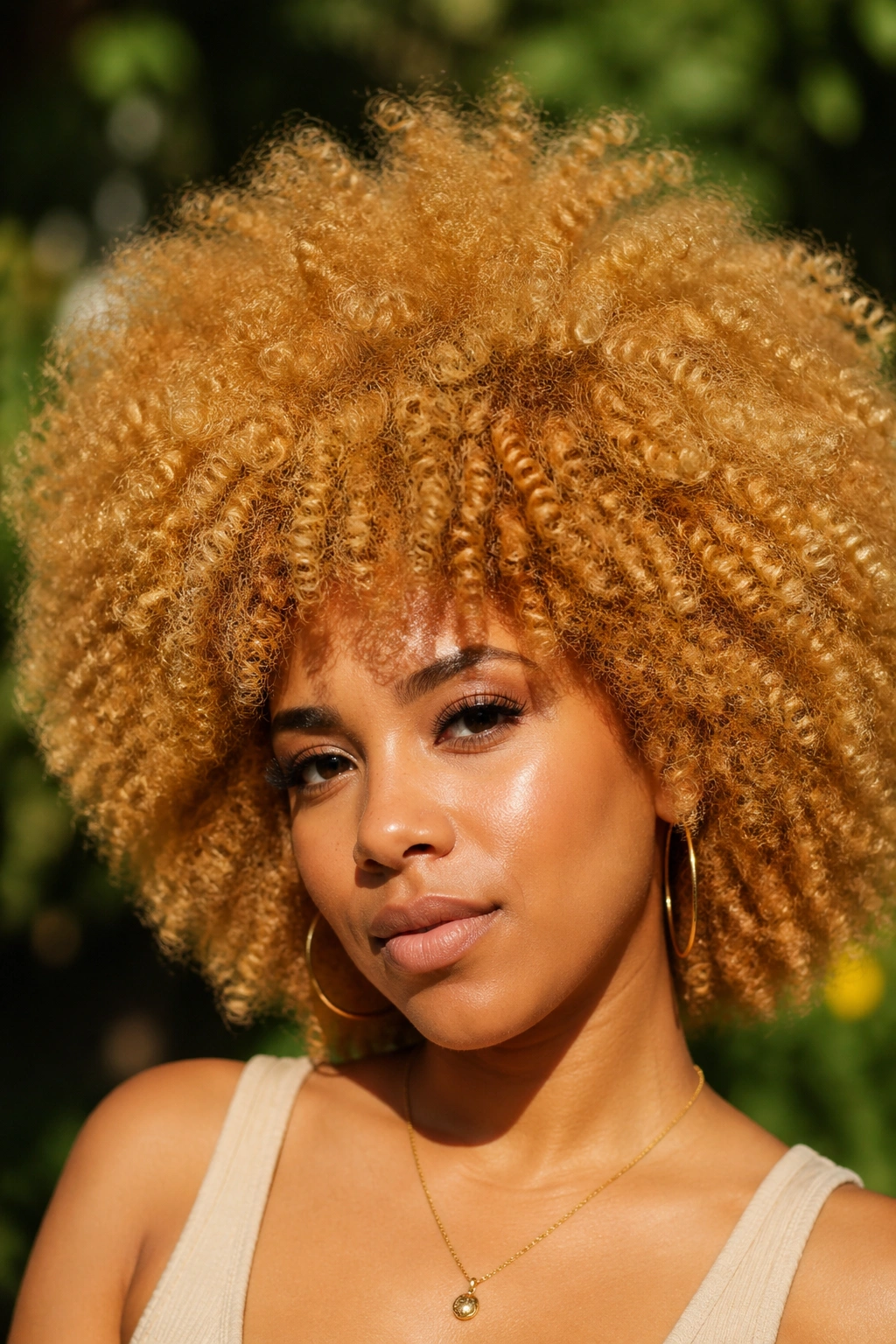
A full, round afro in honey blonde is one of the most visually powerful looks in natural hair. The sheer size and volume of a well-shaped afro combined with warm golden tones creates a halo effect that commands attention.
This style is about size, shape, and color working together. A well-maintained afro has a rounded silhouette that looks intentional and styled even without product definition. When that shape is bathed in honey blonde color, the overall effect is genuinely breathtaking.
Pick out your afro from root to tip using an afro pick or wide-tooth comb, working from the bottom up. A little shine serum or oil on your palms run lightly over the surface curls adds sheen that makes the honey blonde tones glow in natural light.
13. Honey Blonde Crochet Curls
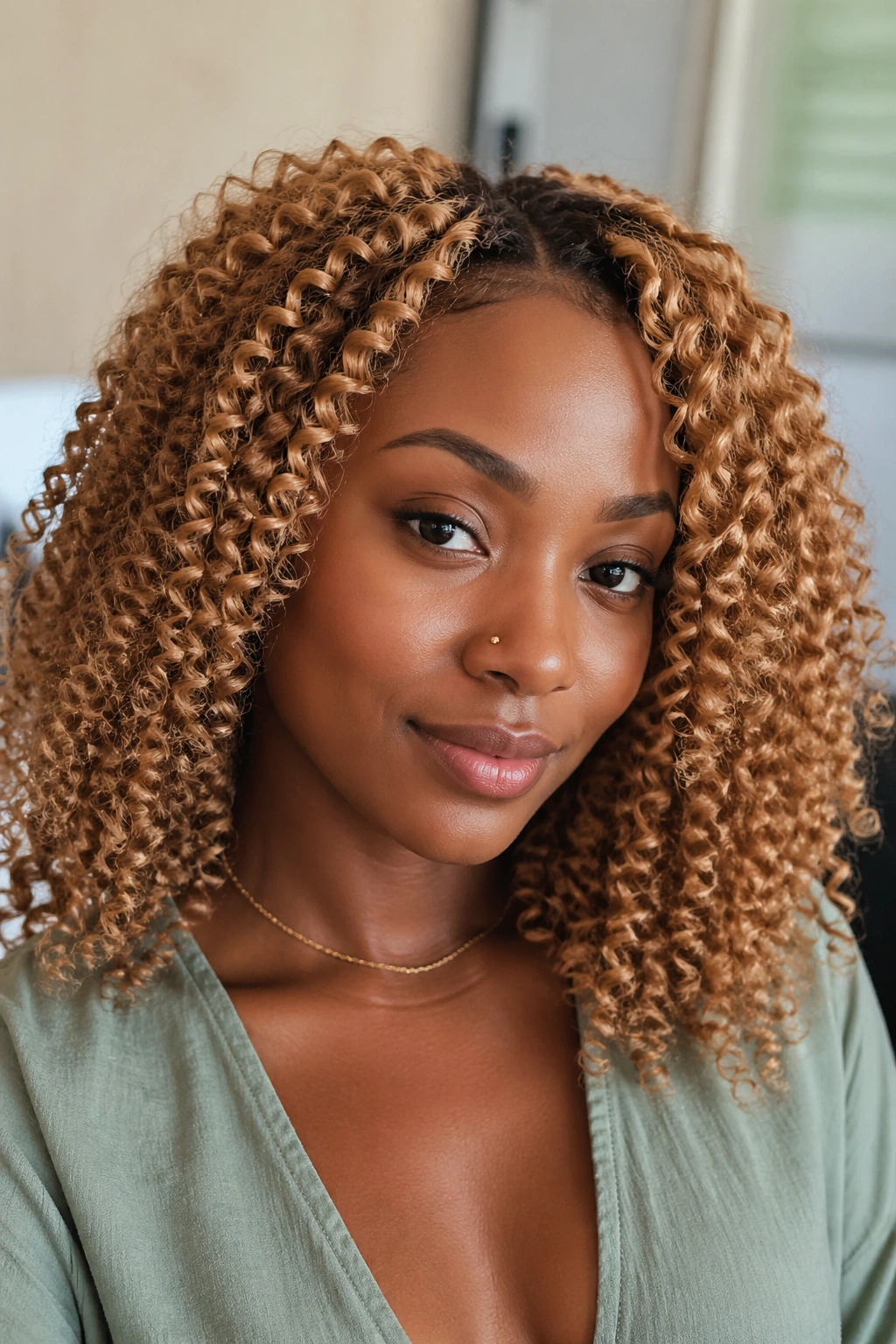
Crochet styles give you the look of natural curls without the wear on your actual hair — and in honey blonde, they’re indistinguishable from color-treated natural hair at a glance. The key is choosing extension hair that matches your natural curl pattern.
The protective benefit here is significant. Your natural hair is braided flat in cornrows underneath the crochet extensions, completely protected from environmental exposure and daily manipulation. Meanwhile, the honey blonde crochet curls take all the styling wear.
Look for crochet hair in curl patterns similar to your own — whether that’s loose spiral curls, kinky coils, or something in between. Marley hair, Afro kinky curly, and expression curly all come in honey blonde shades and can be crocheted in using a latch hook.
14. Honey Blonde Senegalese Twists
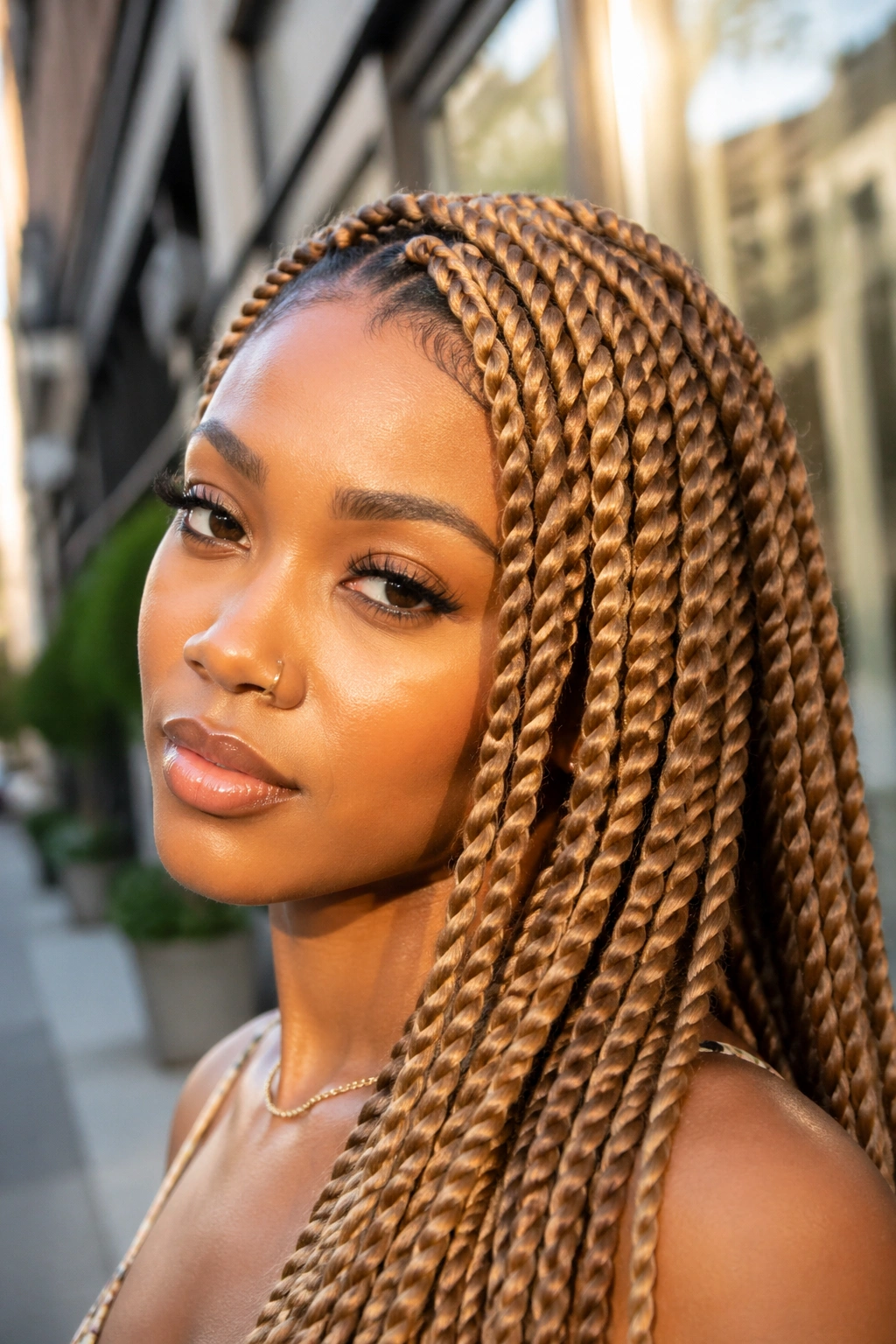
Senegalese twists in honey blonde are sleek and dramatic, with the smooth twist surface reflecting light in a way that showcases the golden tones beautifully. Unlike box braids, which have a rougher, more textured surface, Senegalese twists use a two-strand wrapping technique that creates a silkier finish.
Bold fact: The smoother surface of Senegalese twists actually shows color more clearly than box braids, making them an ideal protective style for displaying honey blonde tones.
How to Achieve This Look
Senegalese twists require kanekalon or toyokalon braiding hair in honey blonde. Your natural hair is divided into sections and two strands of extension hair are wrapped (not braided) around each section, creating the characteristic smooth, rope-like twist.
- Pre-stretch your braiding hair to remove the crinkle texture before installing
- Keep twists moisturized with a water-based spray or light oil
- Protect twist ends from unraveling by dipping briefly in hot water to seal
15. Honey Blonde Shag Cut with Curls
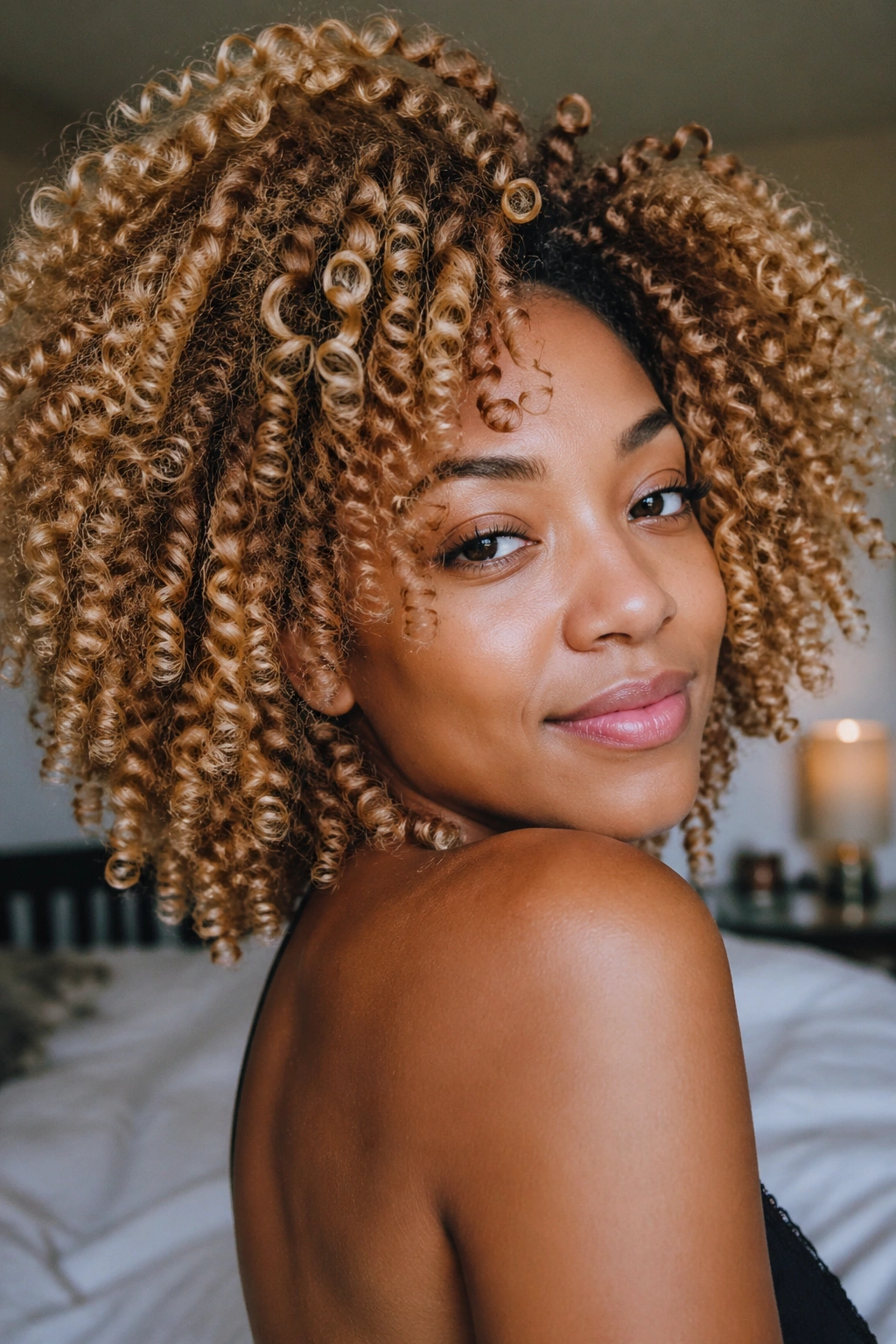
A shag haircut — layered, textured, and slightly undone — works beautifully on natural curls and looks absolutely stunning in honey blonde. The layers create movement throughout the curl pattern, and the honey tones highlight each layer as the hair moves.
This is a color-and-cut combination that takes some commitment, but the visual payoff is spectacular. The shag creates intentional shape and structure that makes wash-and-go styling look polished rather than accidental.
How to Achieve This Look
A shag on natural curls requires a stylist who understands how to cut curly hair — dry cutting is generally recommended so the stylist can see exactly how the curls fall before removing length. The cuts create layers that frame the face and add movement throughout.
- Ask for curtain bangs to soften the look and frame the face
- Face-framing layers in the front showcase the honey blonde tone beautifully
- Use a diffuser to enhance the layered movement when styling
16. Honey Blonde Space Buns
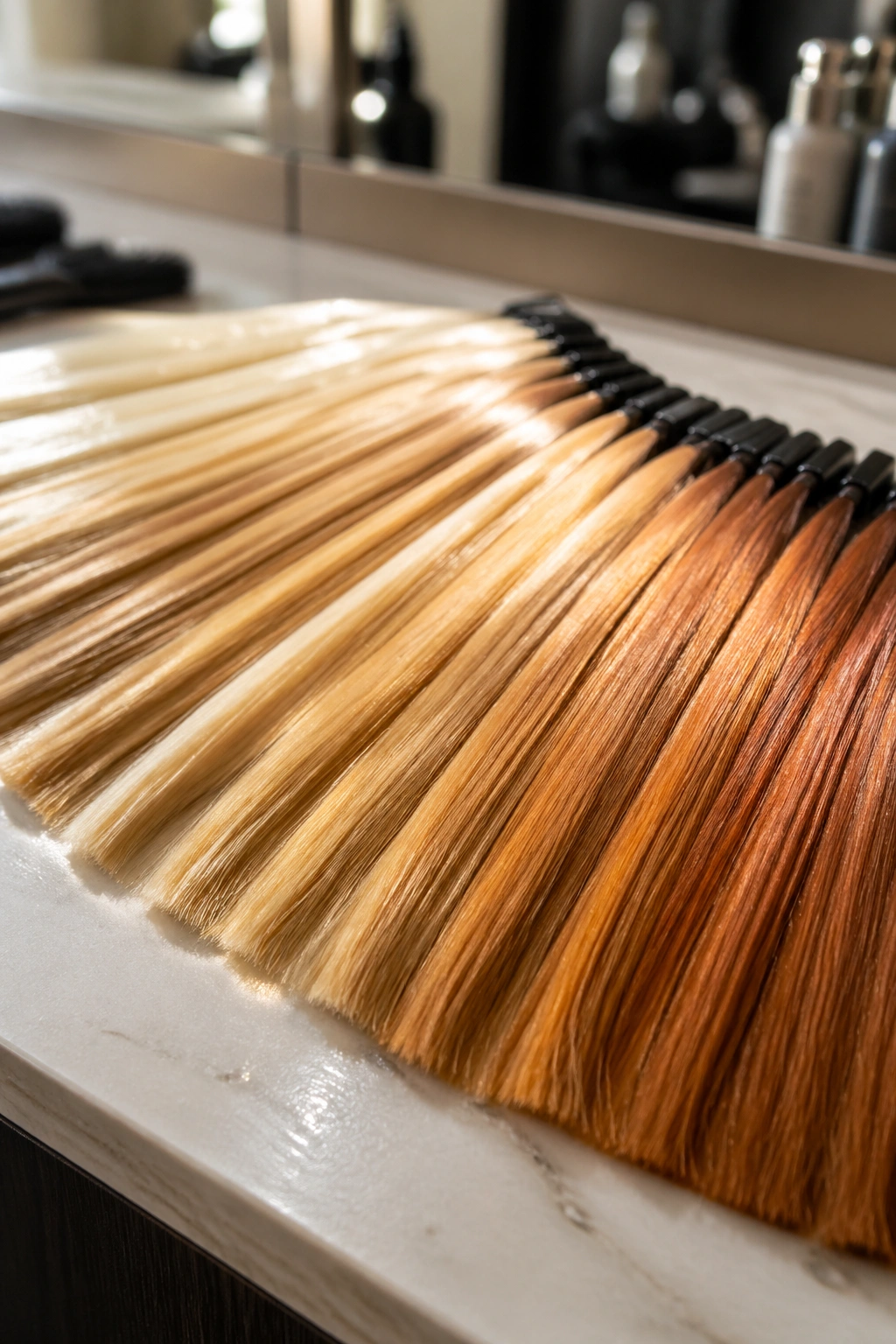
Space buns — two symmetrical buns positioned high on either side of the head — look playful and genuinely adorable in honey blonde curls. The style works best with looser curls or stretched natural hair because it shows off the volume and color most effectively.
This style has major personality. It’s confident, fun, and a little bit bold, which matches the energy of honey blonde hair perfectly. The two buns create a silhouette that’s visually striking and easy to achieve once you’ve done it a few times.
Divide your hair down the center from forehead to nape and separate into two equal sections. Gather each section and secure at the desired height with a thick hair tie or satin scrunchie. Fluff and shape each bun for volume, and let a few pieces fall loose around the face.
17. Honey Blonde Cornrows
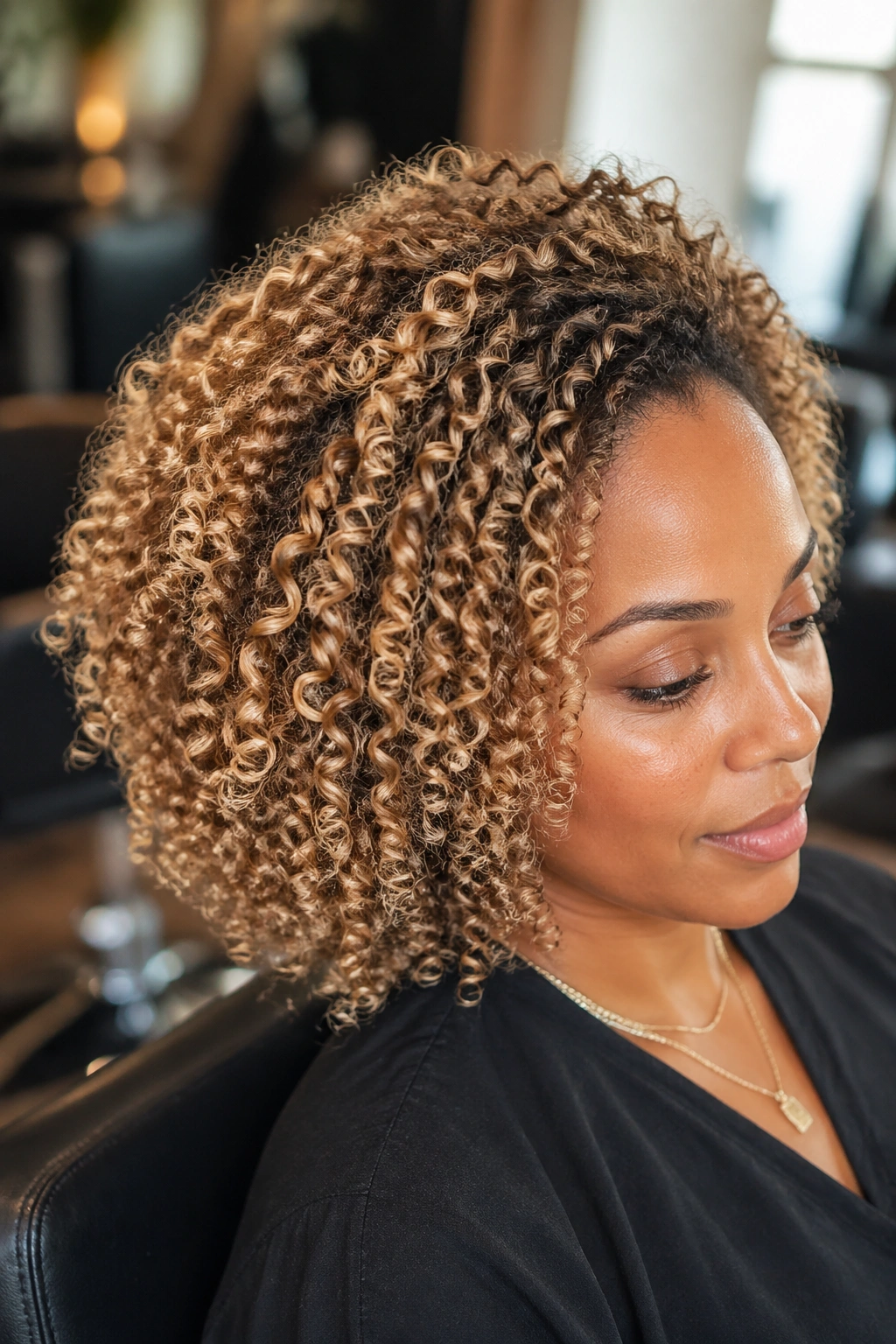
Cornrows in a honey blonde color — whether using your natural hair or extension braiding hair — have a geometric elegance that’s both classic and striking. The clean, precise lines of the braid pattern contrast beautifully with the warmth of the golden tone.
Cornrows made with honey blonde extension hair are especially effective because the color stays consistent throughout the braid from root to tip, creating a uniform warmth across the entire scalp pattern.
Straight-back cornrows are the most traditional pattern, but curved and geometric patterns have become increasingly popular and look stunning in honey blonde. Zigzag cornrows, curved swoosh patterns, and asymmetrical designs all showcase the color differently.
18. Honey Blonde Tapered Cut
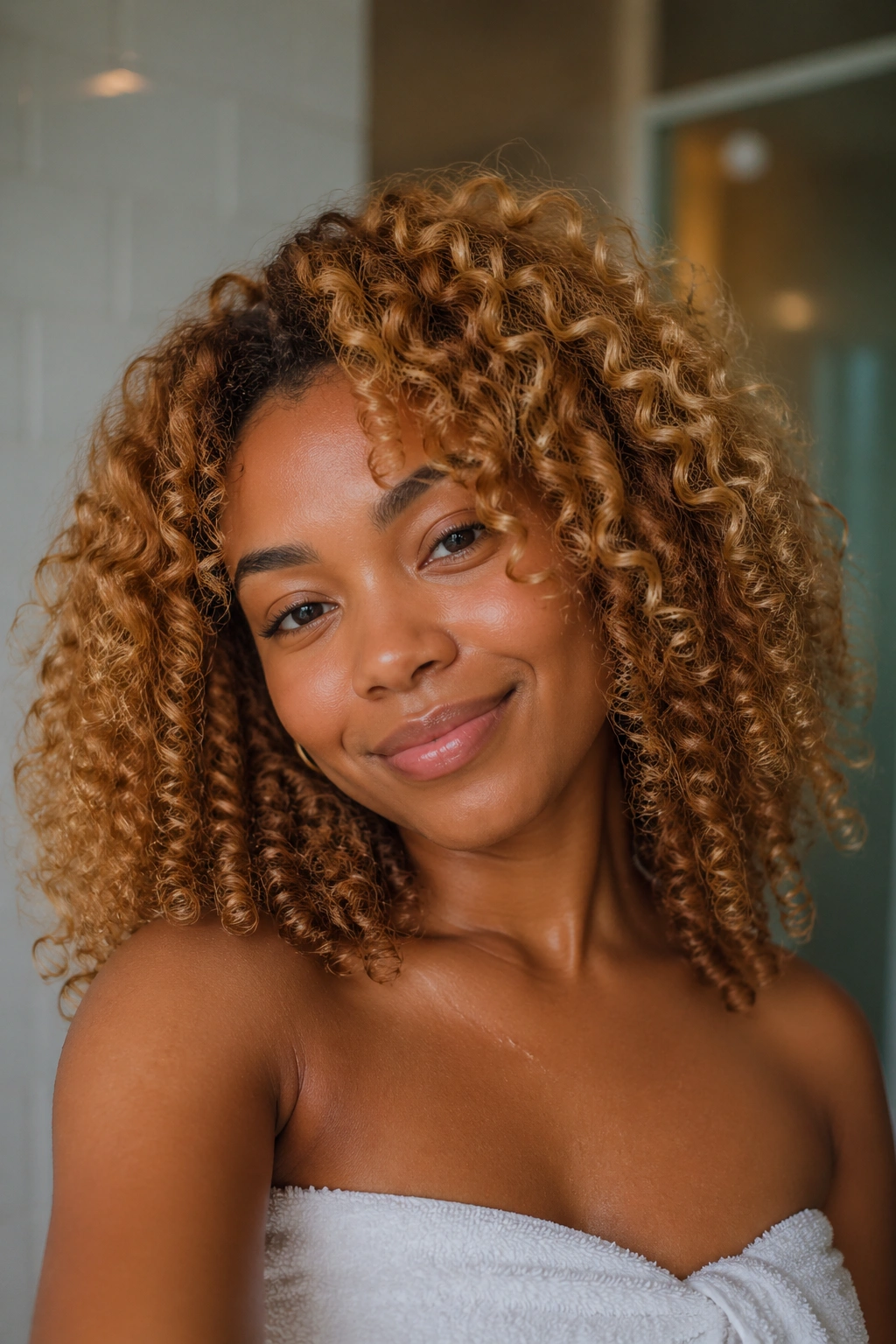
A tapered cut with honey blonde color on top creates one of the most polished and sophisticated looks in natural hair. The sides taper close to the scalp while the top maintains enough length to show off your curl pattern and the honey blonde tones.
Tapered cuts require minimal daily styling effort — a quick pick and a little curl cream is usually enough to look completely put-together. The honey blonde color does the heavy visual lifting.
How to Achieve This Look
This is a salon look that requires a skilled barber or stylist comfortable with natural textured hair. The sides and back are faded or tapered with clippers, while the top is cut and shaped to work with your natural curl pattern.
- Bring reference photos of tapered cuts specifically on natural hair — not relaxed styles
- Ask your stylist to cut the top dry so they can see how your curls fall naturally
- Use a small amount of curl cream on the top section daily to keep curls defined
19. Honey Blonde Kinky Twists
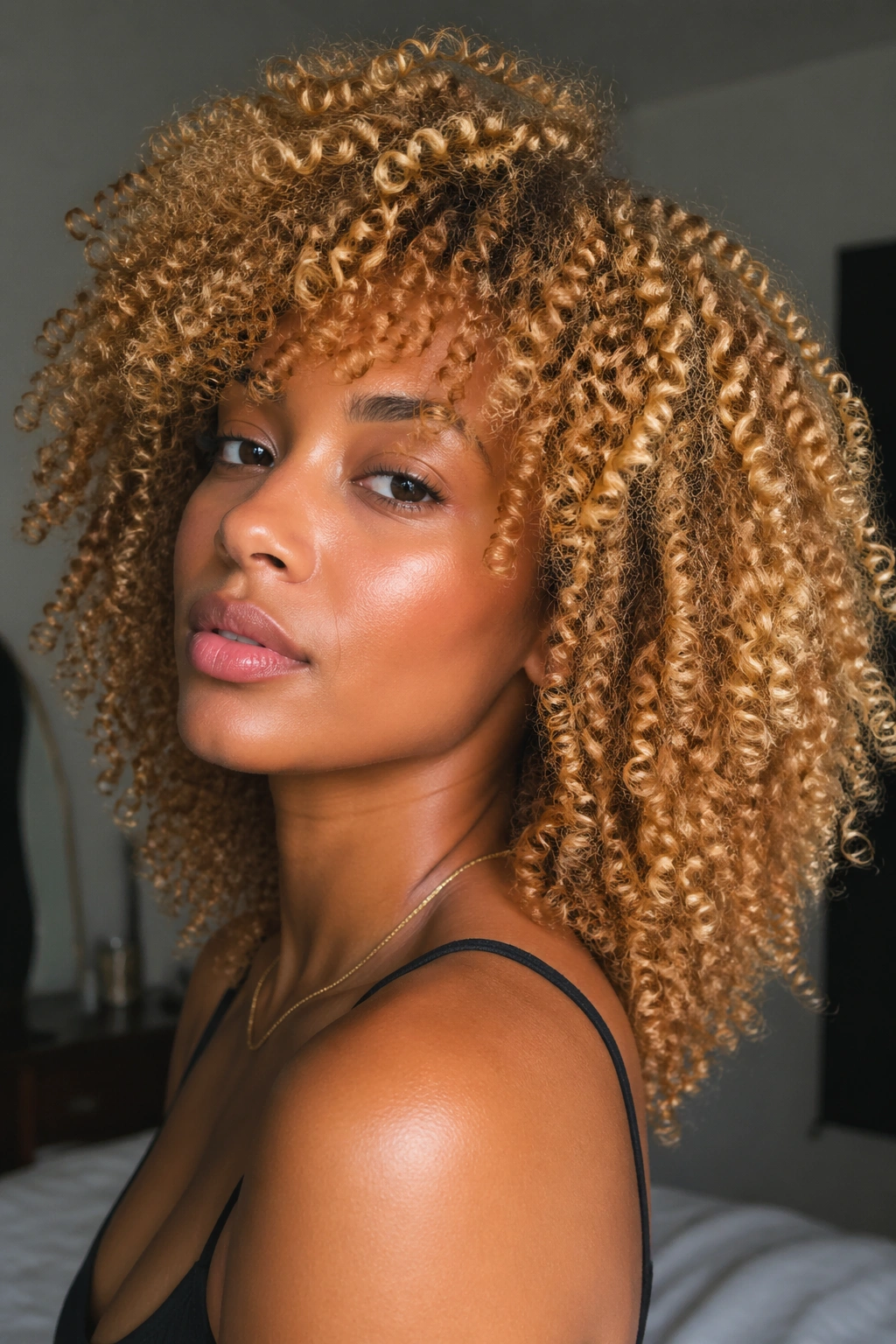
Kinky twists using honey blonde Afro kinky extension hair are one of the most natural-looking protective styles available because the texture of the extension hair closely mimics the look and feel of type 4 natural hair. The honey blonde tones run throughout each kinky twist, giving the style warmth and vibrancy.
The texture is everything here. Regular braiding hair has a smooth, almost plastic feel that reads as clearly artificial. Marley hair and Afro kinky extension hair have a rough, natural-looking crimp that disappears into natural hair visually.
Kinky twists are installed similarly to regular two-strand twists, but with the addition of the kinky extension hair incorporated into each twist. They can be worn loose, in updos, or half-up styles.
20. Honey Blonde Flat Twist-Out
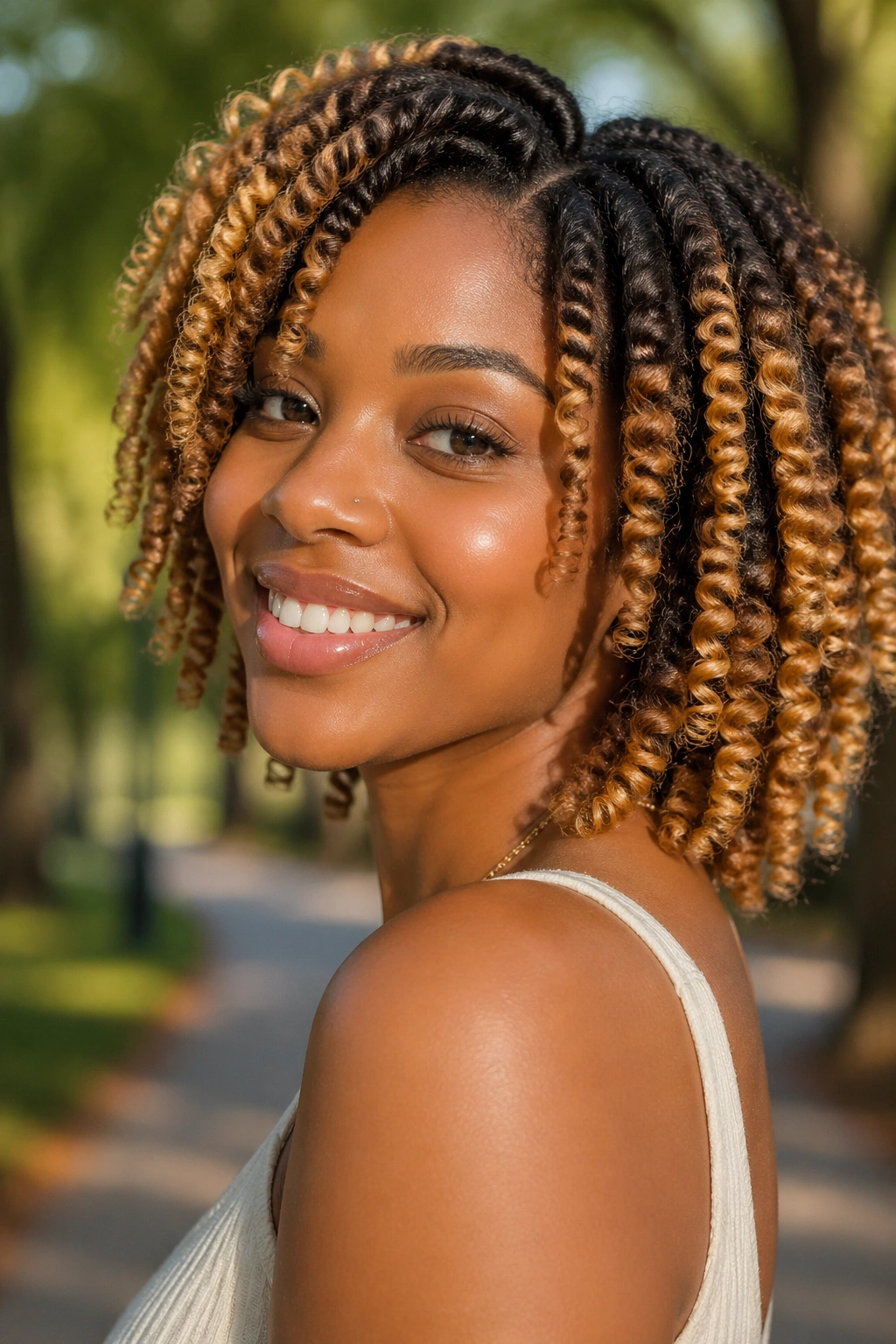
Flat twists laid against the scalp create a defined, structured look when they’re unraveled — different from the rounder, bouncier result of regular two-strand twists. On honey blonde hair, the result is a style that looks intentionally sculpted and wonderfully dimensional.
Bold fact: Flat twist-outs last significantly longer than regular twist-outs because the scalp tension holds the base of the curl in place, extending definition for three to four days with proper nighttime care.
Lay flat twists on damp hair using a curl cream as your base product. The direction you lay the twists determines the direction the curls fall when unraveled — laying them forward or to the side creates different effects. Cover with a satin bonnet overnight.
21. Honey Blonde Passion Twists
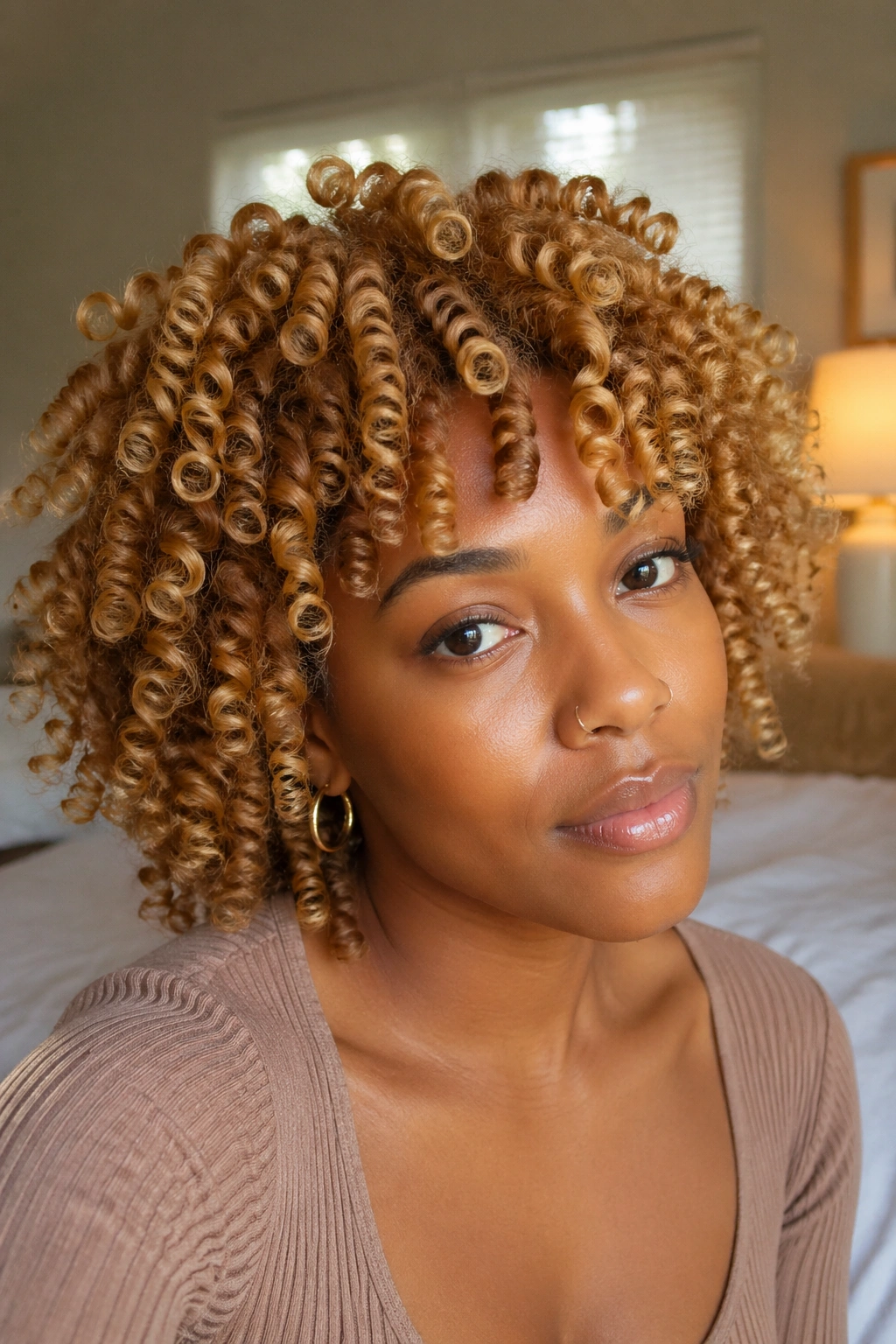
Passion twists combine the look of faux locs with the softness of spiral curls, and in honey blonde they’re genuinely beautiful. The style uses water wave or spiral curl extension hair wrapped around braided sections, creating soft, flowing twists with a slightly bohemian, effortless feel.
How to Achieve This Look
Your natural hair is divided into sections and small cornrows are braided at the base. Honey blonde water wave extension hair is then wrapped around each cornrow base and coiled downward, creating the characteristic wrapped and slightly messy-looking passion twist.
- Passion twists need light maintenance — a daily mist of water or leave-in spray keeps them looking fresh
- Use a satin bonnet or scarf at night to preserve the curl texture of the extension ends
- The style typically lasts four to six weeks with proper care
22. Honey Blonde Faux Locs
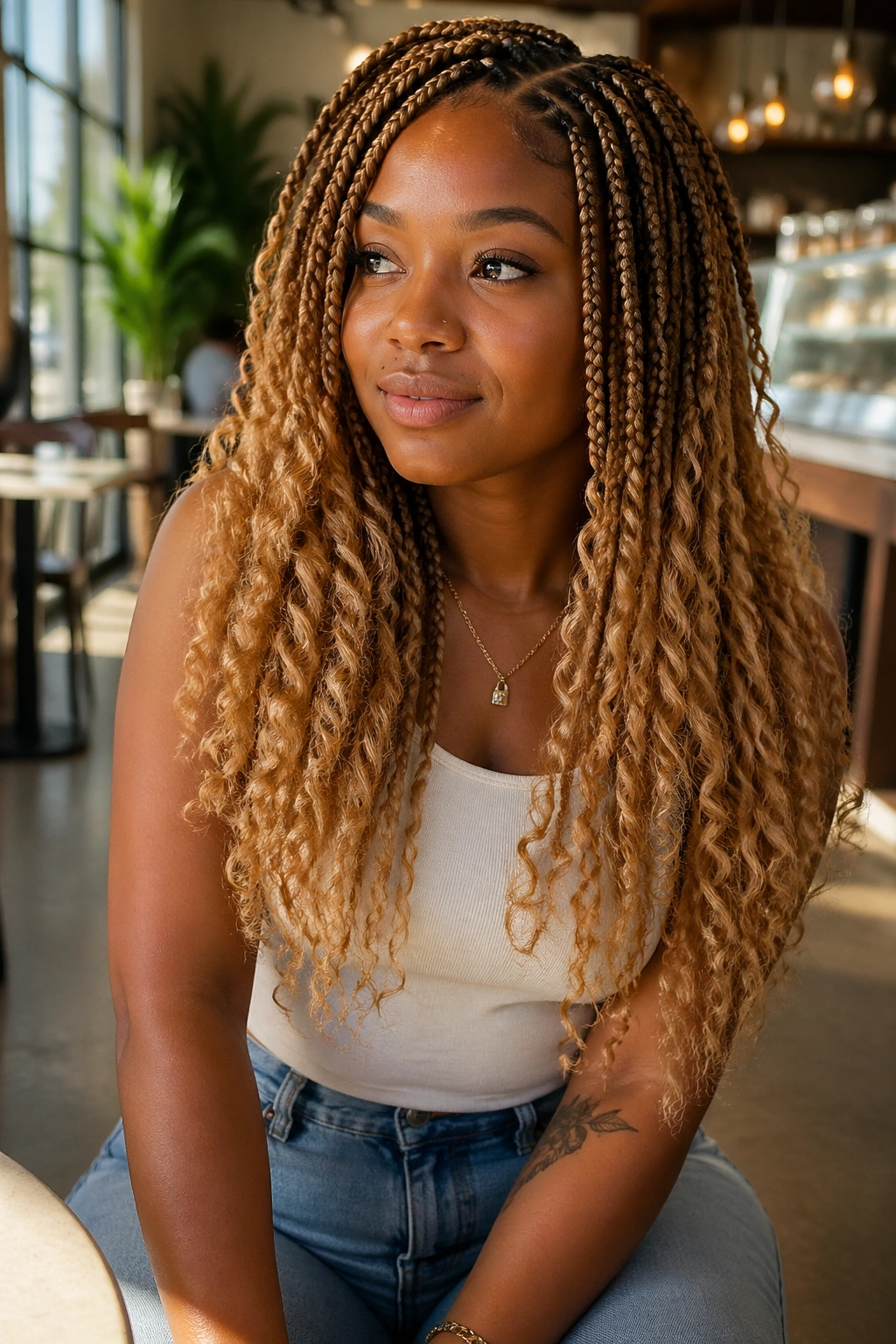
Faux locs in honey blonde are a commitment-free way to explore the loc aesthetic with beautiful warm color, and the results are consistently stunning. The wrapped, slightly rugged texture of faux locs holds honey blonde color in a way that looks organic and authentic rather than manufactured.
The warm, golden tones give faux locs an almost sun-kissed quality that makes them look like you’ve had them for a long time and they’ve naturally lightened from sun exposure. It’s a very convincing, very beautiful effect.
Honey blonde faux locs can be installed in multiple lengths — from shoulder-length to waist-length — and the longer they are, the more the warmth of the color shows. Maintaining the style involves keeping your scalp moisturized and protecting the locs at night with a satin bonnet or scarf.
Choosing the Right Honey Blonde Shade for Your Skin Tone
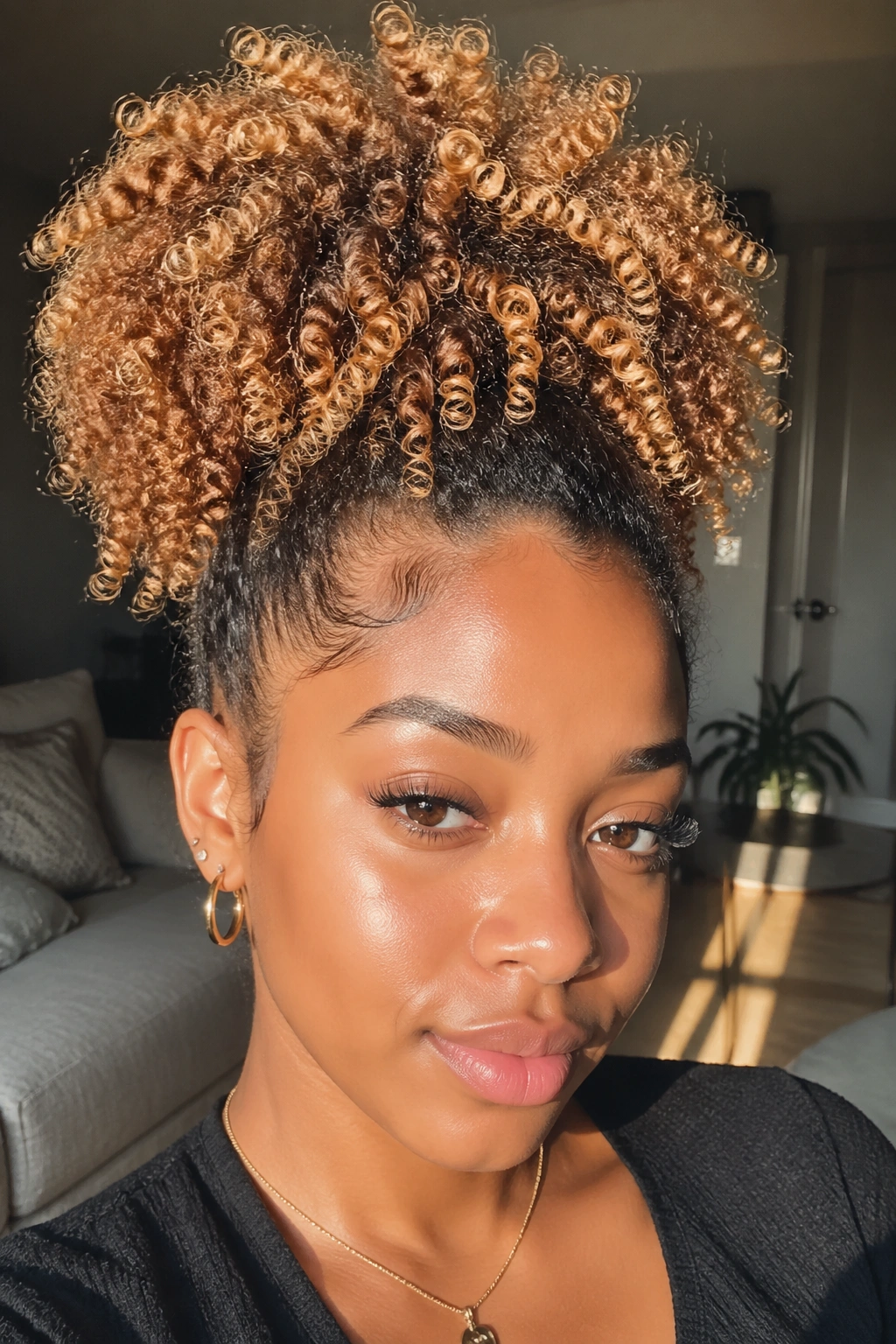
Not all honey blonde is created equal, and finding the specific shade that works for your complexion takes a little consideration. The good news is that honey blonde — because of its inherently warm, golden undertone — is one of the most forgiving color families for women of color.
Deeper complexions tend to shine in richer, more amber-infused honey blonde tones rather than the pale, buttery end of the spectrum. A deep golden honey with some copper or auburn warmth brings out the warmth in deeper skin tones beautifully and creates gorgeous contrast without looking harsh.
Medium complexions with warm or neutral undertones have the most flexibility in the honey blonde spectrum. Mid-range honey tones in the true golden range complement warm medium skin without overpowering it. If you have cooler undertones, edge toward honey shades with a tiny bit more warmth to balance.
Fair to light medium complexions can pull off the widest range of honey blonde shades, from the palest buttery honey all the way to deep amber-gold. The lighter end of the honey blonde range creates a softer, more sun-kissed look on lighter complexions.
Maintaining Honey Blonde Curls Between Appointments
Color maintenance between salon visits is one of the most underestimated parts of the honey blonde process. Getting the color is just the beginning — keeping it vibrant and your curls healthy requires ongoing attention.
Color-refreshing glosses and toners can be done at home between appointments to keep honey blonde tones from fading into a muddy or brassy direction. Many brands offer at-home gloss treatments in golden and honey tones that deposit a small amount of color while conditioning the hair. Using one every four to six weeks can dramatically extend the life of a professional honey blonde treatment.
Weekly deep conditioning is a non-negotiable. Color-treated curls lose moisture more readily than virgin hair, and a 20-30 minute deep conditioning treatment with heat — using a conditioning cap or wrapped in a warm towel — makes a significant difference in how healthy and vibrant your curls look.
Protect your color from UV exposure. Sunlight fades honey blonde faster than almost anything else because UV rays break down the molecules responsible for warm, golden tones. Using a UV-protective hair product or simply wearing a hat when you’re in direct sunlight for extended periods can meaningfully slow color fade.
Common Mistakes to Avoid with Honey Blonde Curls
Even with the best intentions, there are some common missteps that can derail your honey blonde curly hair journey. Being aware of these going in saves you time, money, and frustration.
Skipping a strand test. A strand test — applying the color to a small section of hair and observing the result — is especially important on natural hair because the porosity and existing pigment can react unpredictably. Never skip this step, especially if you’re attempting an at-home color.
Using too much heat. Honey blonde curls that get regular heat styling — flat irons, curling wands, regular blow-drying on high heat — will lose their vibrancy faster and their structural integrity sooner than hair that’s allowed to air-dry or diffuse. Limit heat to special occasions.
Not trimming regularly. Color-treated hair is more prone to split ends and breakage than virgin hair. A trim every eight to ten weeks keeps your ends healthy and your overall curl pattern looking its best.
Choosing a colorist who isn’t experienced with natural hair. This matters more than almost anything else. A colorist who primarily works on straight or relaxed hair may not understand how to approach honey blonde color on coily textures without compromising the curl pattern. Ask specifically about their experience with natural hair before booking.