



Ginger curly hair styles are some of the most eye-catching looks in natural hair — that bright, orange-forward reddish tone is bold without being aggressive, warm without being predictable, and absolutely stunning on natural curl textures of every type. More and more women are choosing ginger as their color moment, and it’s not hard to see why. The tone is simultaneously unexpected and flattering on melanin-rich skin, creating a brightness and vibrancy that makes natural curls look absolutely alive.
What “Ginger” Actually Means as a Hair Color
Ginger is one of those color names that sounds specific but actually covers quite a range, and clarifying what you’re after before you sit in a colorist’s chair is important. The term generally refers to warm, orange-red tones that are brighter and more orange than auburn and less purely metallic than copper.
Think of ginger as sitting between copper and a bright orange-red. It has the warmth and some of the metallic quality of copper, but with a stronger, more vivid orange presence. Where auburn leans into brown and copper leans into metallic, ginger leans into bright warmth — the color of fresh ginger root or a vibrant autumn leaf.
Within the ginger spectrum itself, there’s range. Lighter ginger shades are almost orange-gold, vivid and intense. Mid-range ginger — the most popular version — balances orange and red in a warm, spiced tone. Deeper ginger shades edge toward a richer red-orange that has more depth and complexity. All three read as “ginger” in conversation, but they look quite different on hair.
Ginger on Different Skin Tones: What Works
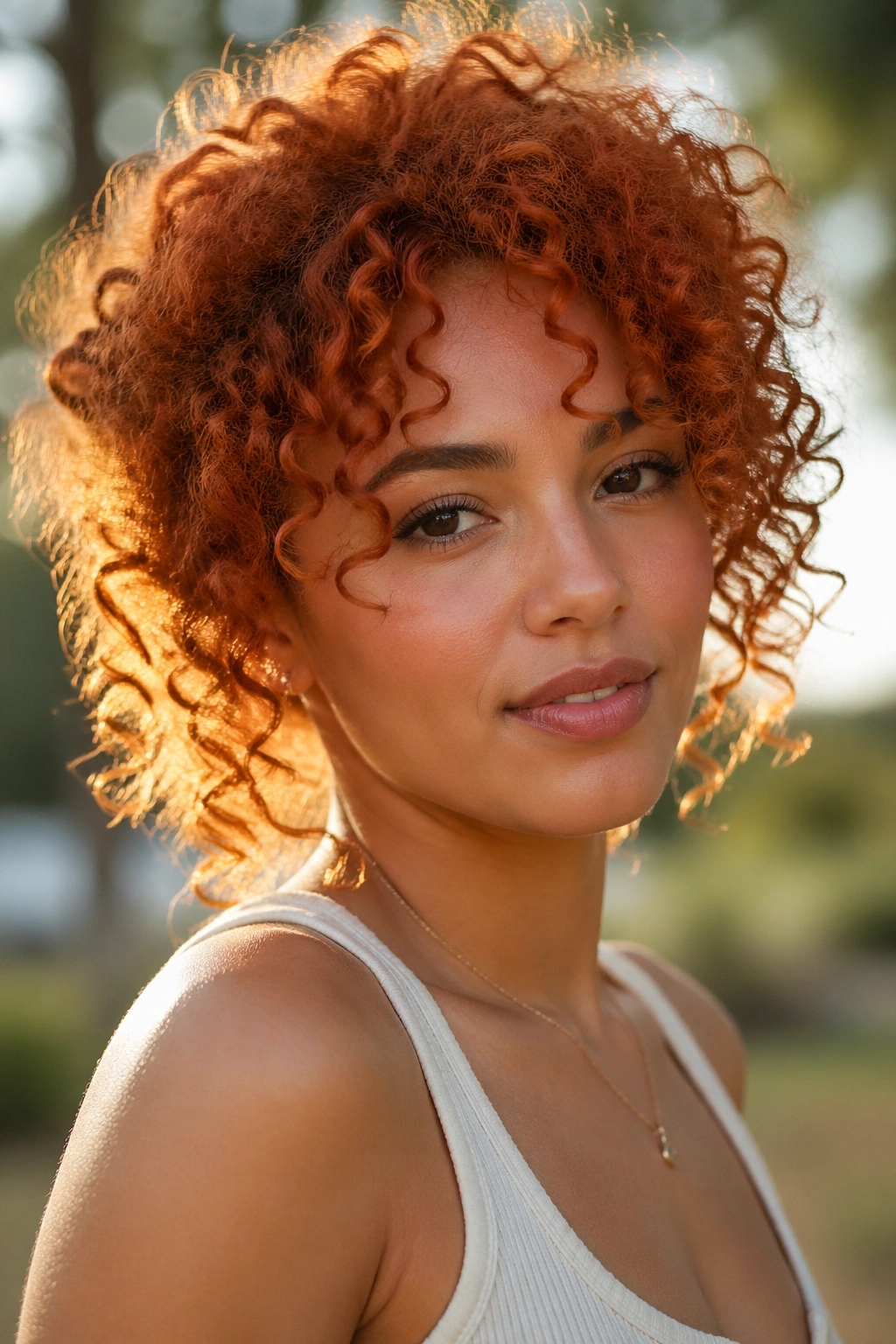
The relationship between ginger hair and skin tone is something many women worry about before committing to the color — but ginger is more versatile across skin tones than its boldness might suggest.
On deeper complexions, ginger creates a stunning contrast that looks genuinely powerful. The brightness of the orange-red against deep, rich skin tones creates a visual impact that’s hard to achieve with any other color. The key is leaning toward the richer, slightly more reddish end of the ginger spectrum rather than the pure orange end, which can occasionally read as harsh rather than warm against very deep skin.
On medium complexions, ginger is flattering across the board — warm, olive, and neutral undertones all work beautifully with ginger tones. If your complexion has golden or olive undertones, ginger enhances those qualities naturally.
On lighter complexions, even the brightest, most orange-forward ginger tones work well, and the contrast creates a different but equally striking effect. The lighter skin allows the ginger color to stand as the dominant visual element, which can look very intentional and editorial.
The Chemical Process: Getting to Ginger
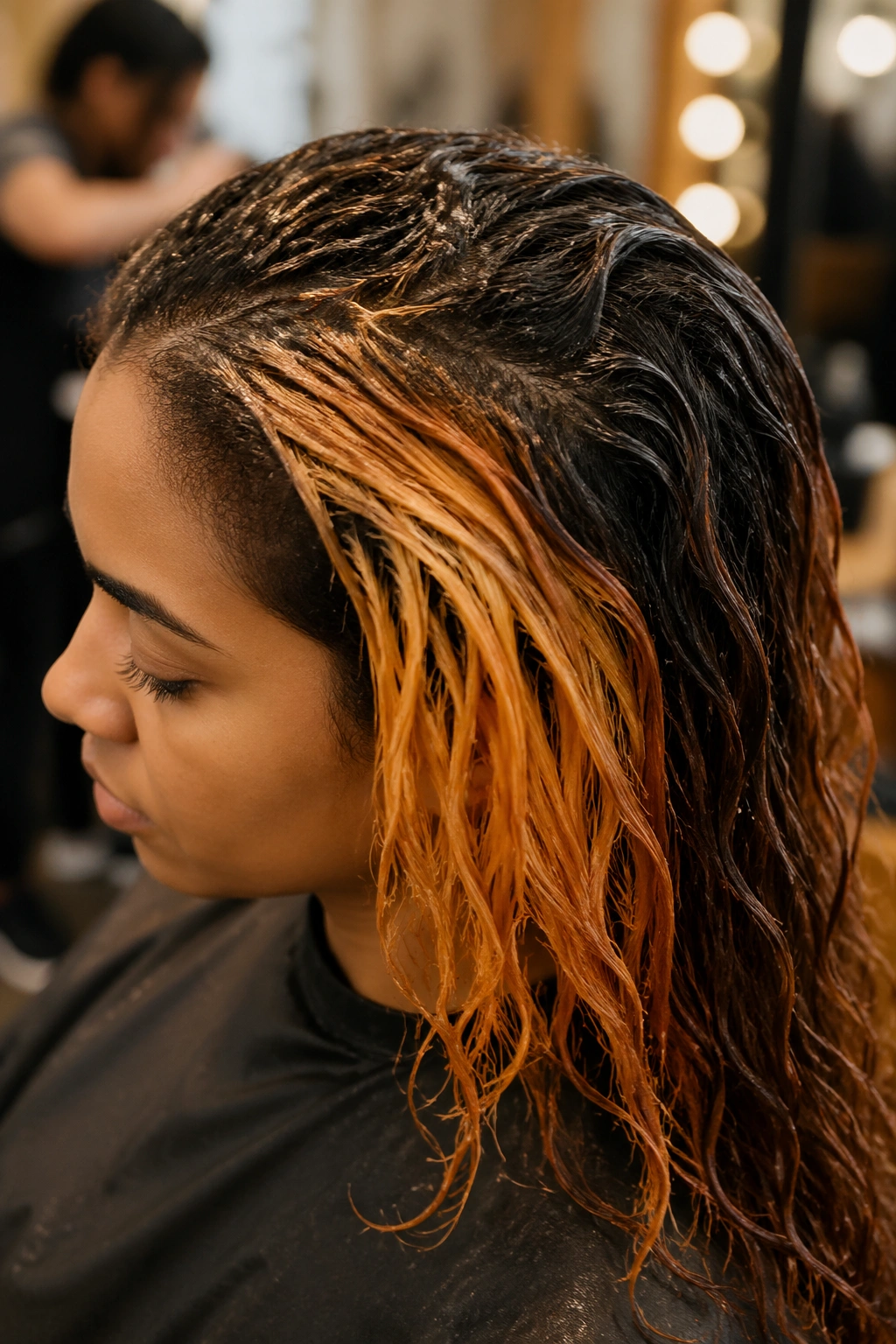
Because ginger sits firmly in the warm, bright territory of orange-red, it requires getting the underlying hair pigment to a specific point before the ginger tone will read correctly. This is one of the more technically demanding aspects of ginger on natural hair, particularly for those starting from a deep base color.
To achieve true ginger, the hair typically needs to be lifted to a warm orange or orange-gold underlying pigment — which is actually where ginger color lives on the color wheel. This sounds convenient, and it is, to a point. The challenge is that getting there without damage requires careful management of processing time and developer strength, and natural hair textures — especially tightly coiled ones — can lift unevenly across the hair shaft.
An experienced colorist will approach ginger on natural hair with patience. Multiple lift sessions are often necessary for very dark starting hair. They may pre-soften the hair, use a low-volume developer with a longer processing time, or work in small sections to manage porosity differences across the head. None of these approaches are wrong — they’re what thoughtful color service on natural hair looks like.
Caring for Ginger Natural Curls
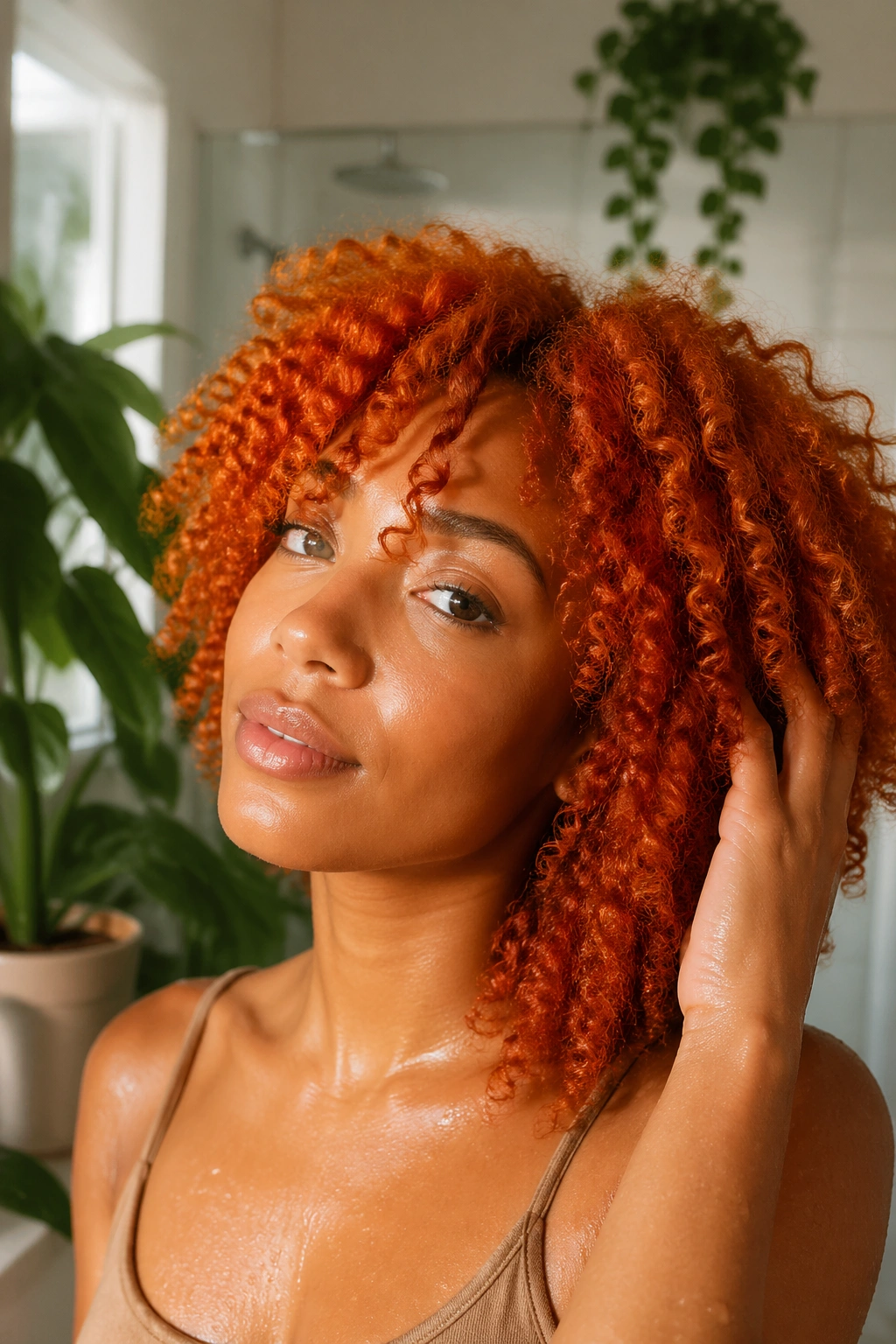
Ginger hair is vibrant and bold, which also means it requires consistent maintenance to stay that way. The orange-red tones that make ginger so striking are the same tones that fade the fastest under UV exposure, frequent washing, and heat.
Red pigment molecules are the largest pigment molecules in hair color, which means they’re also the first to fade — they literally wash out more easily than other color families because they can’t settle as deeply into the hair cuticle as smaller pigment molecules can. Understanding this upfront sets realistic expectations and helps you build a maintenance plan that keeps the color as vivid as possible between appointments.
Color-depositing products in warm red, orange, or ginger tones are essential for extending vibrancy. Using a color-depositing shampoo or conditioner once or twice a week deposits a small amount of warm pigment with every wash, partially offsetting the fade from water and other environmental factors. It’s not a substitute for professional color services, but it meaningfully extends the life of a fresh ginger tone.
1. Ginger Wash-and-Go
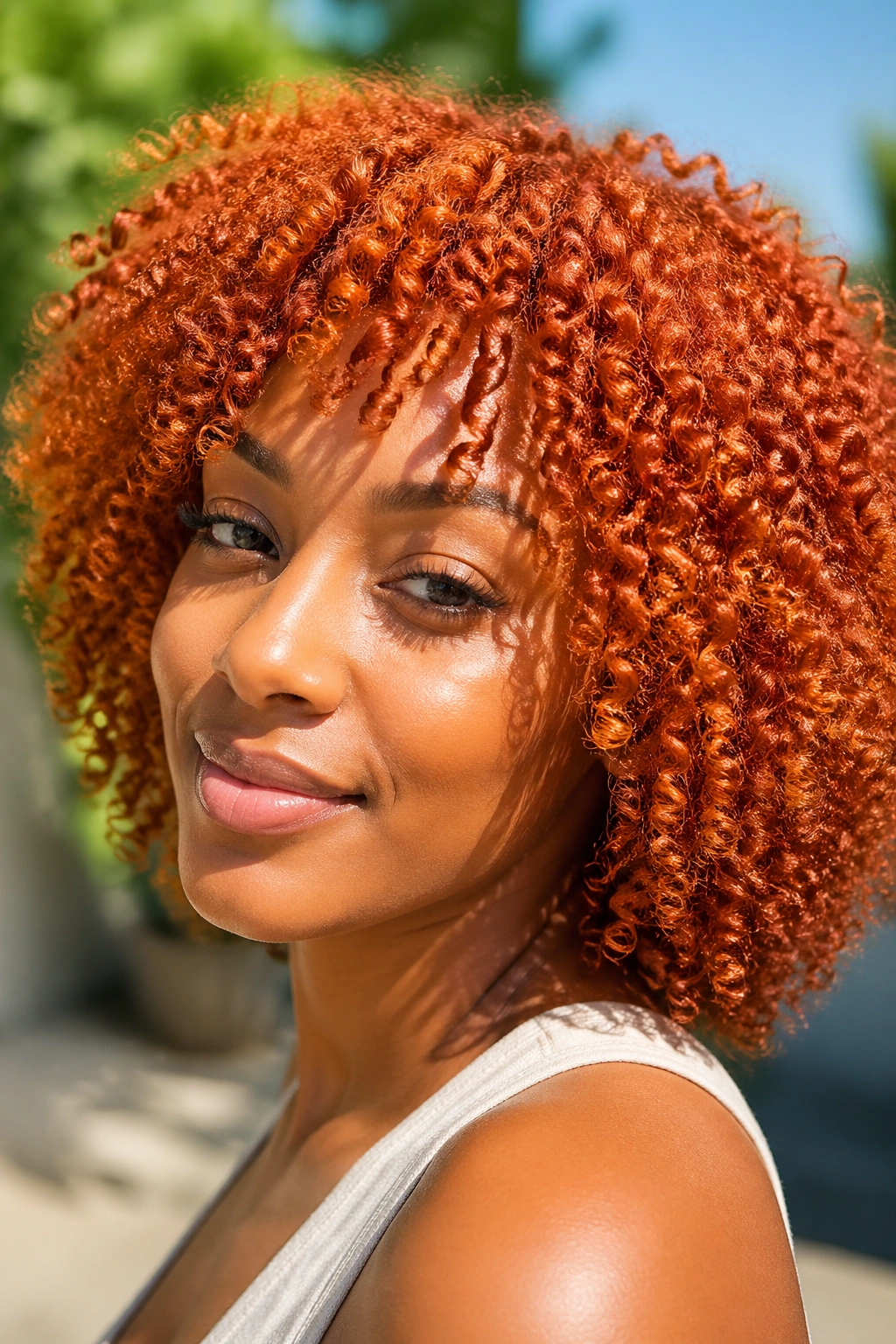
A wash-and-go in ginger is one of the most visually striking natural hair looks you can achieve — that vivid orange-red tone spread across a full head of defined natural curls catches sunlight like nothing else. Every curl becomes a small firework of warm color.
Ginger wash-and-gos have an almost electric quality in direct sunlight. The orange tones in the color spectrum respond intensely to UV light, creating a bright, almost luminous effect on fully defined curls in natural lighting.
How to Achieve This Look
Wash and deep condition your hair, then apply a curl-defining cream or gel to soaking wet hair. Work in sections, smoothing product from root to tip. Diffuse on low heat or air-dry completely. Avoid touching while drying. Finish with a light oil on dry curls to enhance the ginger tone’s warmth and add sheen.
- Soaking wet application gives the most definition
- Apply product generously — color-treated curls absorb product quickly
- A microfiber towel blot before applying product removes excess water without disrupting curl formation
Tip: A UV-protective finishing spray on your wash-and-go extends the vibrancy of the ginger tones when you’re spending time in direct sunlight.
2. Ginger Twist-Out
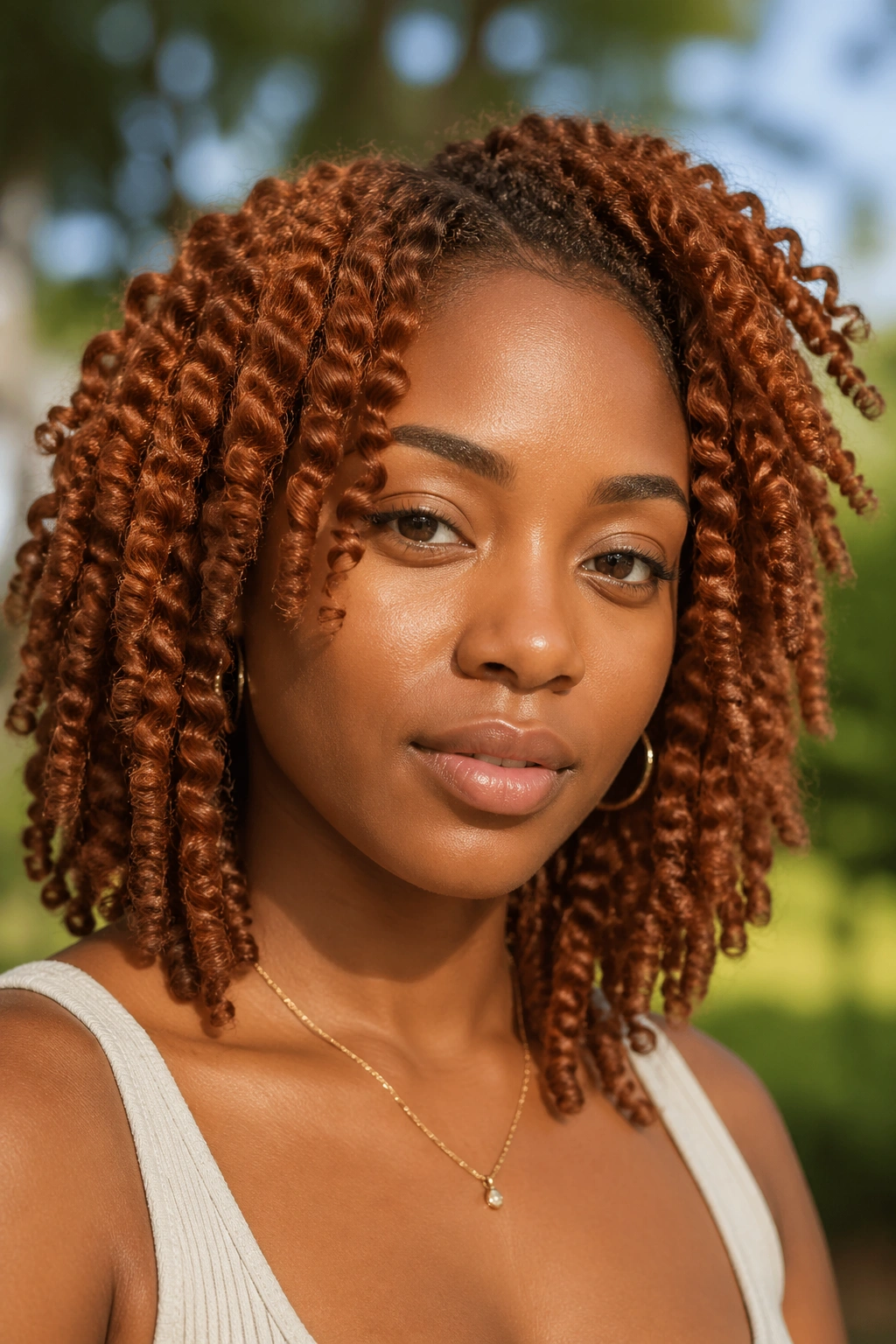
A twist-out in ginger shows the color in elongated, defined spirals — each curl a concentrated ribbon of warm orange-red that catches light along every curve of the twist pattern. It’s one of the best ways to show ginger color in its fullest, most vibrant expression.
Bold fact: Ginger twist-outs tend to look most vivid on the first and second day, then transition into a slightly more muted, burnished tone as the twists separate and the style opens up. Both stages are beautiful — they’re just different.
Work with damp, conditioned hair and apply a curl cream or styling butter before twisting. Two-strand twists should be firm enough to hold the pattern but not so tight that they stress the hair at the root. Set overnight for the best definition. Unravel with oiled fingers the next morning.
The ginger color looks particularly beautiful on twist-outs that have been allowed to fully air-dry rather than being rushed with heat, because the color develops a more complex, multi-dimensional quality as it dries naturally.
3. Ginger High Puff
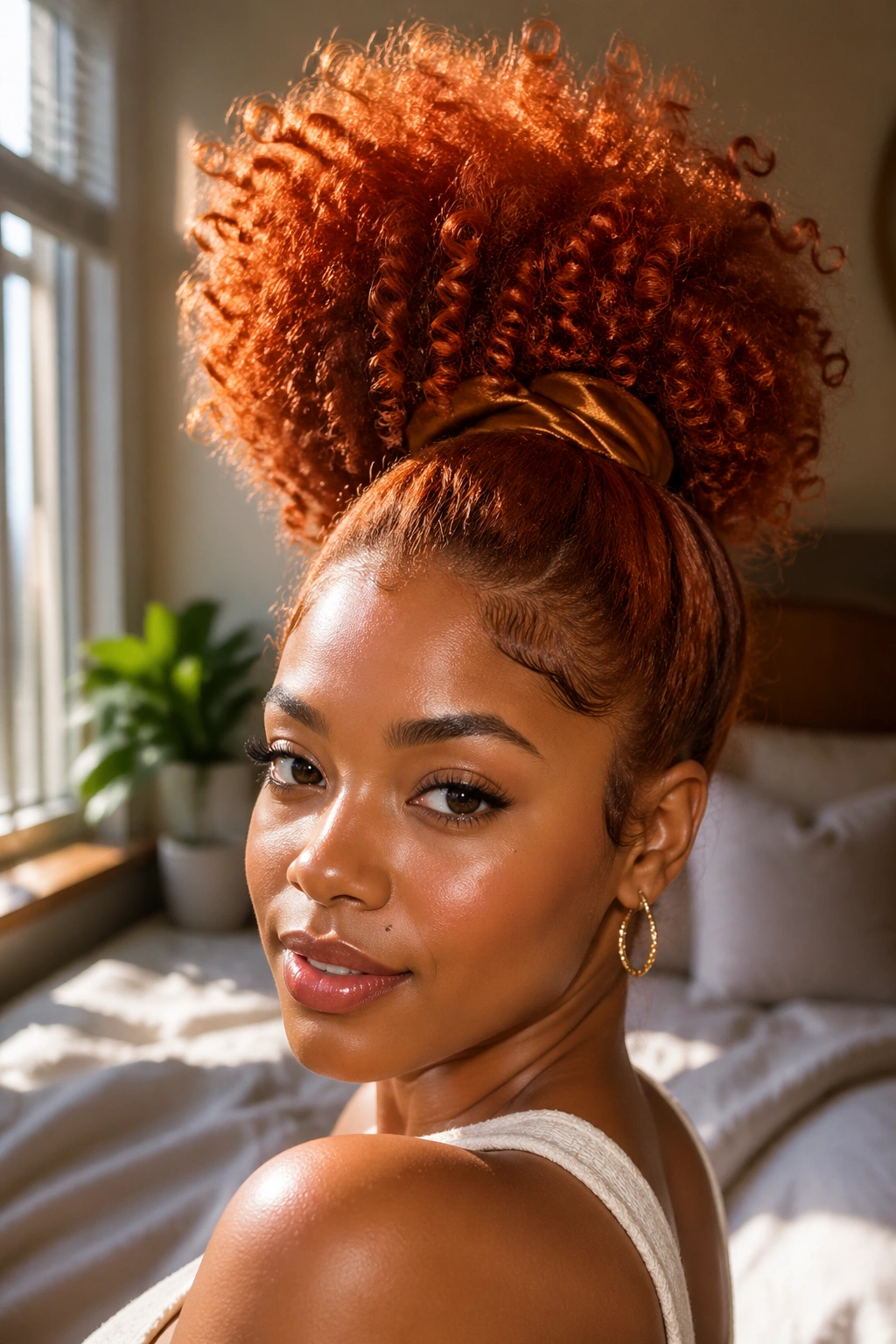
A high puff in ginger natural hair is the definition of effortless confidence. The warmth and brightness of the color combined with the full, rounded silhouette of a puff creates a look that’s hard to walk past without looking twice.
What makes a ginger puff exceptional is the way sunlight interacts with the rounded silhouette. The exterior surface of the puff catches direct light and displays the brightest, most vivid ginger tones, while the interior shows deeper, more burnished color — creating natural depth within a simple style.
Gather clean, defined curls at the crown and secure with a thick satin-covered hair tie. Gently pull the puff upward from the base to maximize height and volume. A bristle brush and edge control on the perimeter creates a clean, polished finish that balances the casual fullness of the puff itself.
4. Ginger Bantu Knot-Out
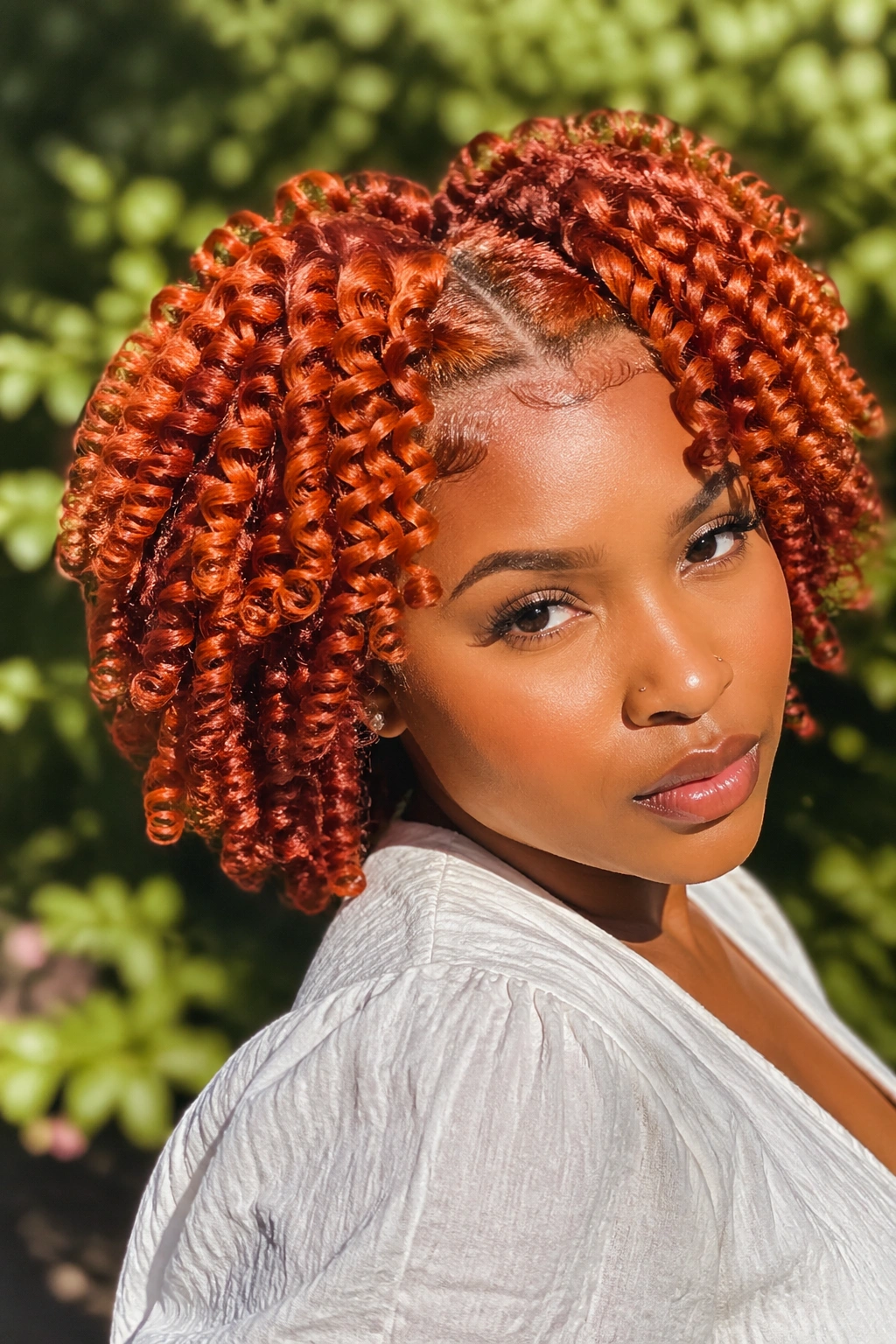
A Bantu knot-out in ginger creates perfectly defined coils in vivid orange-red tones — and the effect when the knots are first unraveled is genuinely breathtaking. Each coil is tightly wound, precisely formed, and saturated with warm color from root to tip.
The discipline of setting small, tight knots pays off in concentrated color saturation. Smaller Bantu knots create tighter coils where the ginger tone is so vivid and intense that the result looks almost surreal in the best possible way.
How to Achieve This Look
Apply a holding product — gel, curl cream, or mousse — to damp hair before sectioning. Divide into evenly sized portions and wind each clockwise around itself, tucking the end under the coil base. Dry completely before unraveling (overnight air-dry or low-heat diffuse). Unravel slowly with oiled fingers.
- Resist the urge to unravel before the hair is fully dry — wet-looking knot-outs lack definition and longevity
- A tiny drop of oil on each individual coil after unraveling adds shine without weight
- Avoid over-separating; each knot should produce one distinct coil
5. Ginger Frohawk
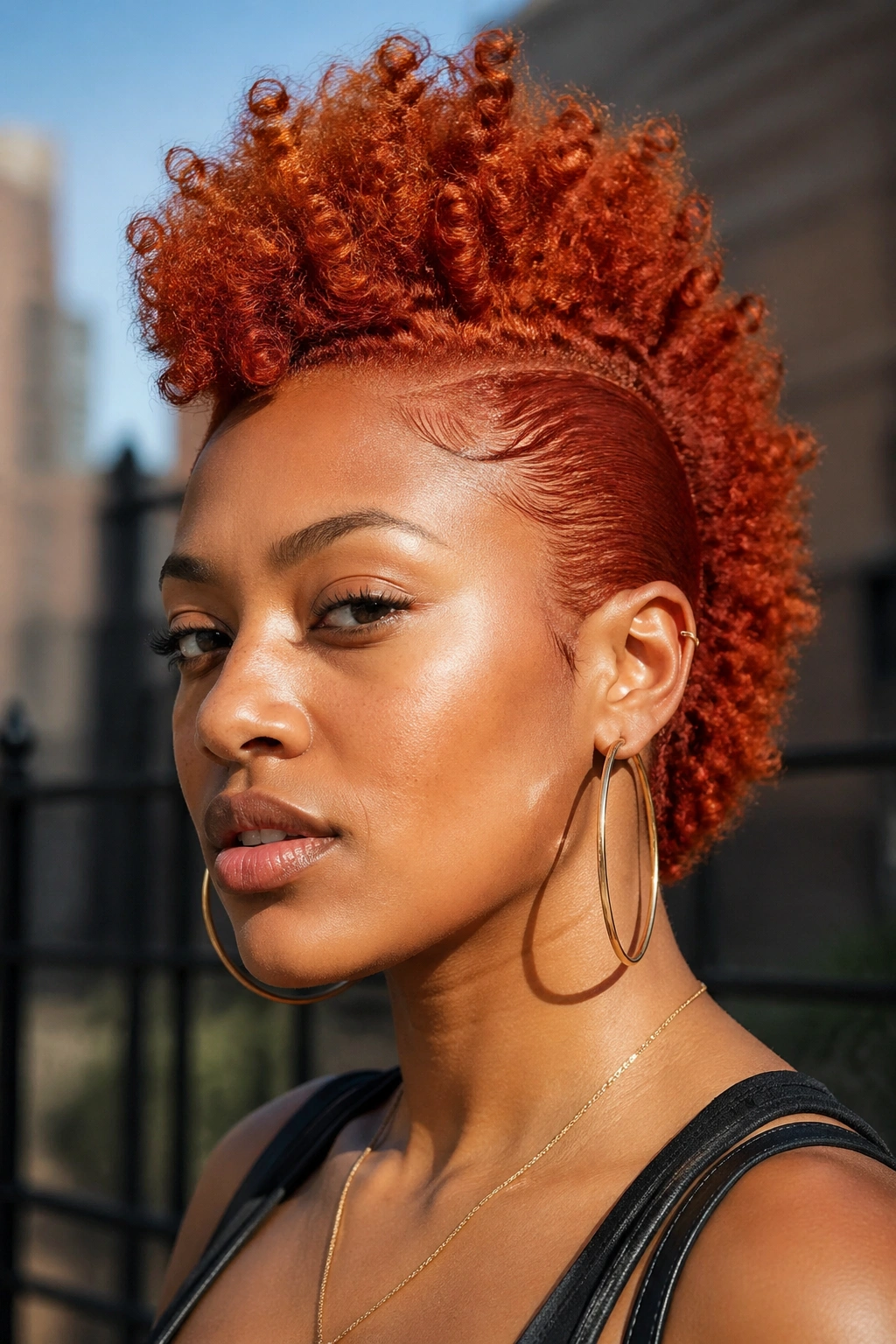
The frohawk in ginger is one of the most statement-making natural hair styles you can wear — the architectural shape of the frohawk combined with vivid orange-red color creates a look that’s simultaneously powerful and artistic.
The center ridge of a ginger frohawk photographs like something from an editorial shoot. The lifted curls catch warm light along the top of the ridge, creating a crown of vivid color that sits at the highest point of your silhouette.
Braid, pin, or smooth the sides of your hair flat against the head. Leave the center section from forehead to nape free and styled with a curl cream, then diffused or picked for maximum volume and height. Strong-hold gel at the hairline creates a crisp, defined perimeter. The ginger color does the rest.
6. Ginger Box Braids
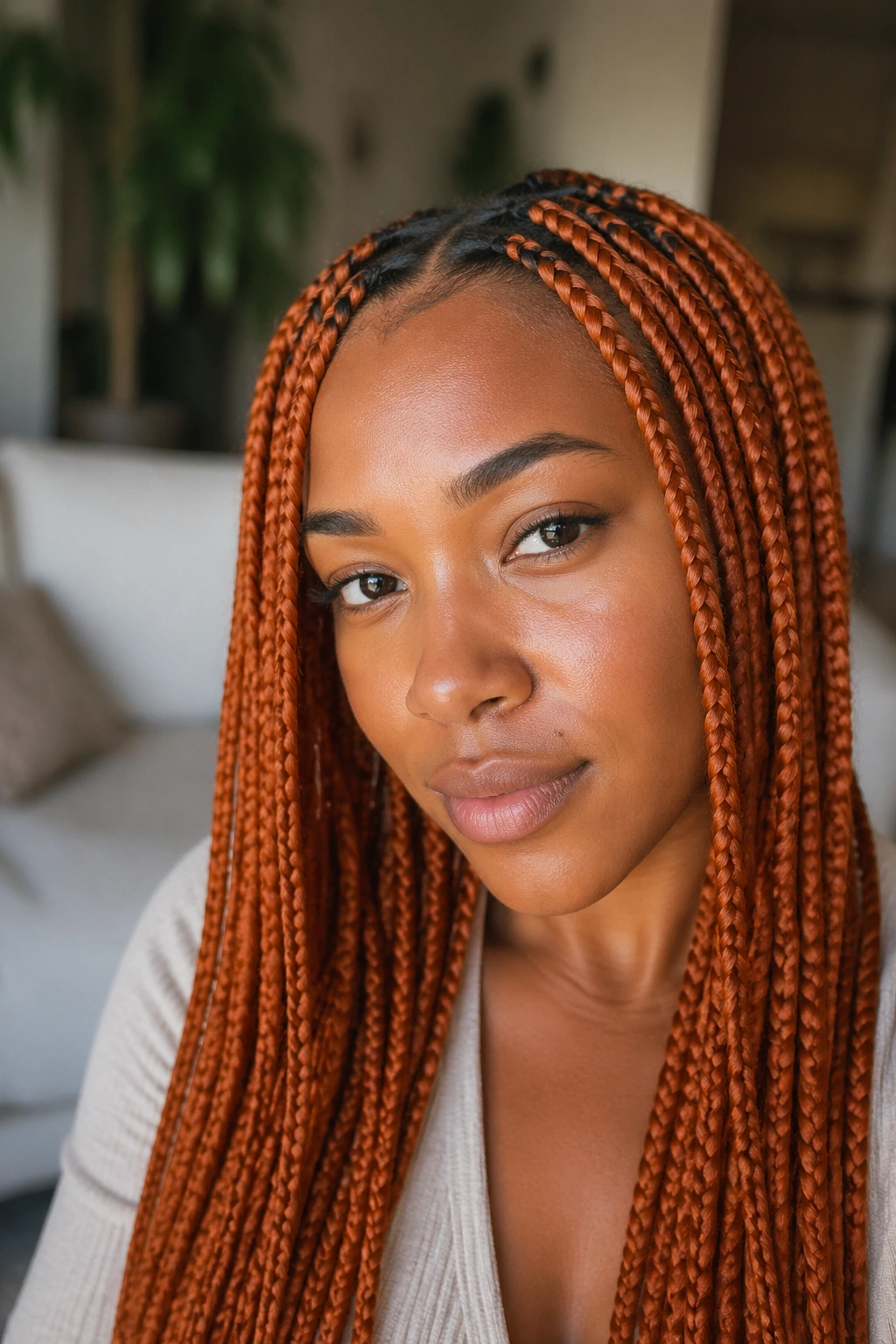
Ginger box braids using extension braiding hair are one of the most popular protective style choices for women who want to experiment with ginger tones without chemically altering their natural hair. The color lives entirely in the extension hair, which means your natural strands stay completely untouched.
The versatility of ginger box braids is significant. You can choose from bright neon-adjacent orange-ginger all the way to a deeper, more russet ginger depending on the extension hair shade you select. Mixing two shades of ginger extension hair creates natural-looking dimension within each braid.
How to Achieve This Look
Select pre-stretched kanekalon braiding hair in your preferred ginger shade. Divide your natural hair into clean, even sections and braid from root to tip, incorporating the extension hair. Box braids can be installed at any length — shorter is easier to manage; longer creates a more dramatic color display.
- Seal braid ends carefully to prevent unraveling of the extension hair
- Moisturize your scalp through the braids with a lightweight oil
- Ginger extension hair is widely available at beauty supply stores
7. Ginger Passion Twists
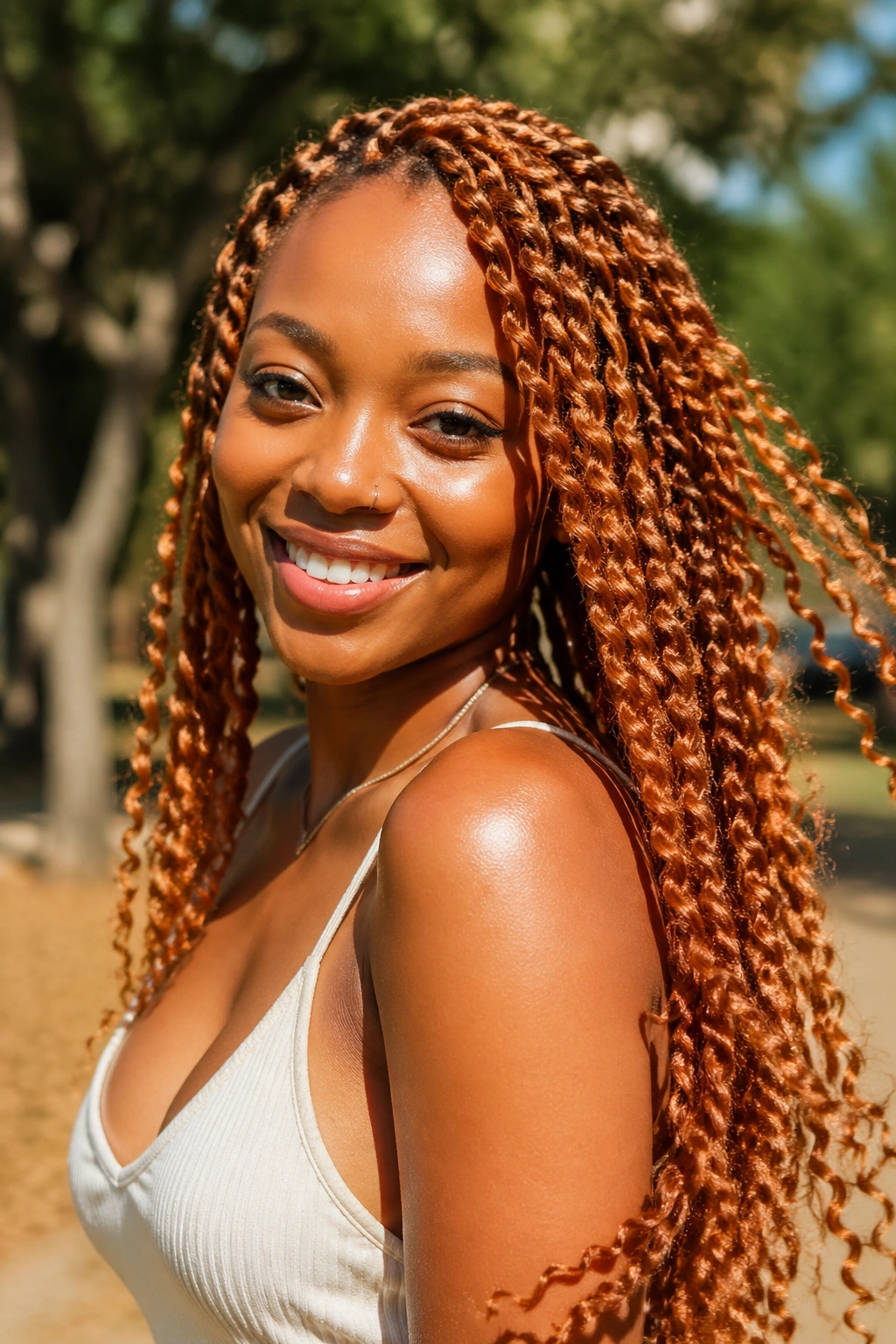
Ginger passion twists have a warmth and softness that makes them look almost effortlessly stylish. The slightly undone, organic texture of passion twists suits ginger color particularly well because the warmth of the tone and the casual texture of the style share the same easy-confidence energy.
Ginger water wave extension hair for passion twists creates a look that moves beautifully — the soft, flowing texture catches and releases the ginger tones as the twists shift and settle throughout the day.
Installation wraps ginger water wave extension hair around small cornrow bases in a loose, overlapping pattern that creates the characteristic passion twist texture. The finished style can be worn loose, half-up, or gathered in a bun or pony depending on the occasion.
8. Ginger Goddess Locs
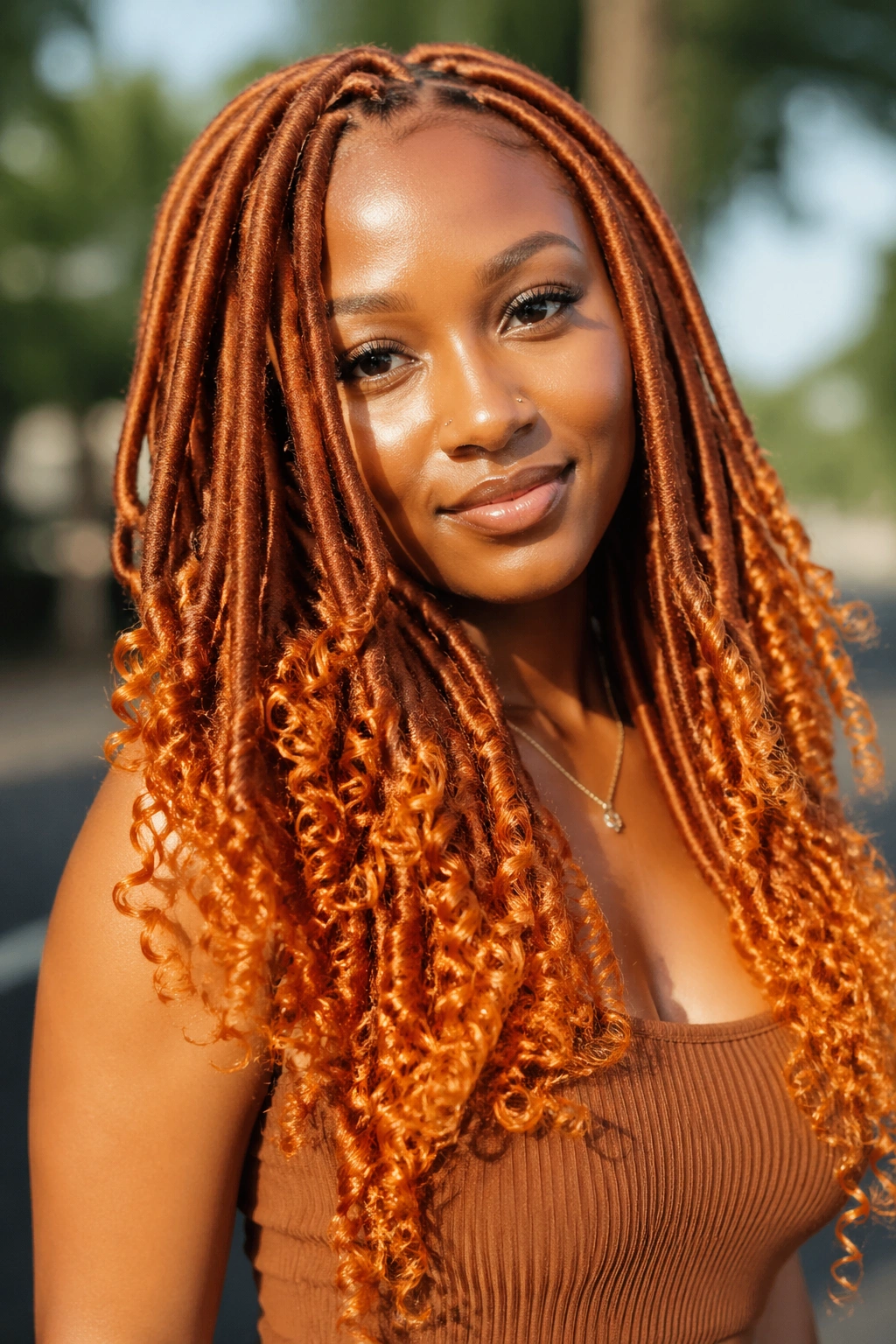
Ginger goddess locs are a showstopper. The combination of structured loc bodies and soft, spiral curly ends in vivid ginger tones creates something that reads as both fierce and feminine simultaneously — a combination that’s genuinely rare and genuinely stunning.
The curly ends of ginger goddess locs catch light differently than the wrapped body of the loc. The curly ends show the brighter, more orange-forward ginger tone, while the wrapped body shows a slightly deeper, more burnished version of the color. The contrast within a single loc is part of what makes goddess locs so visually interesting.
Choose ginger water wave or spiral curl extension hair for the ends. The loc body can use a straight ginger braiding hair for the wrapped base, with the curly extension hair looped through the crochet base and left loose at the end.
9. Ginger Tapered Cut
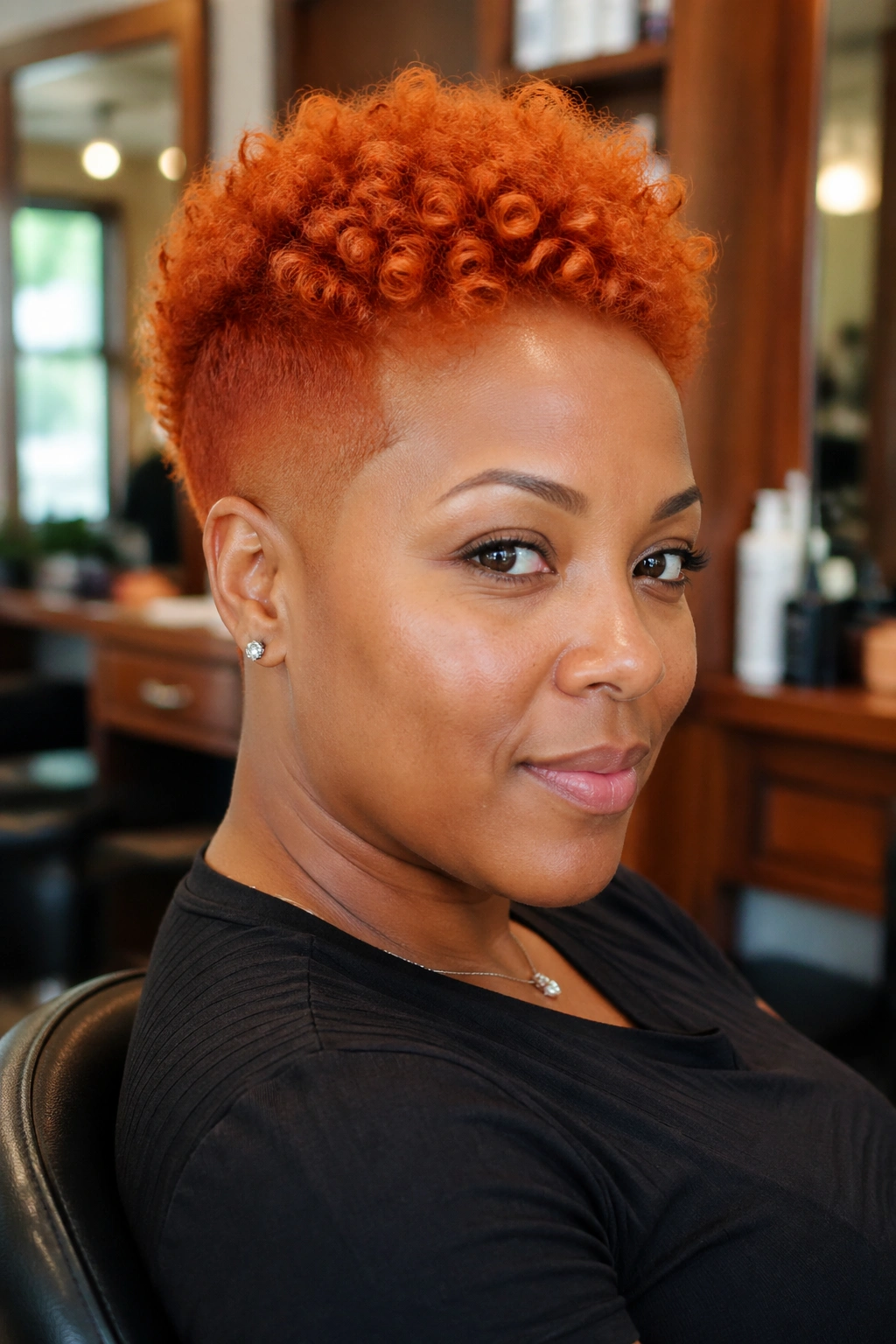
A tapered cut with ginger tones on the crown is precision personified. The clean fade at the sides creates a sharp, graphic base that allows the full brightness of the ginger crown color to command complete attention.
Ginger is an especially powerful color choice for tapered cuts because there’s no competing color or texture — the entire visual focus is on the crown curls and their warm, vivid tone.
The maintenance requirements for a ginger tapered cut are honestly low once you have the style established. Regular barber visits every three to four weeks keep the taper looking sharp, and the crown needs minimal daily product. The ginger color is the primary styling element.
10. Ginger Senegalese Twists
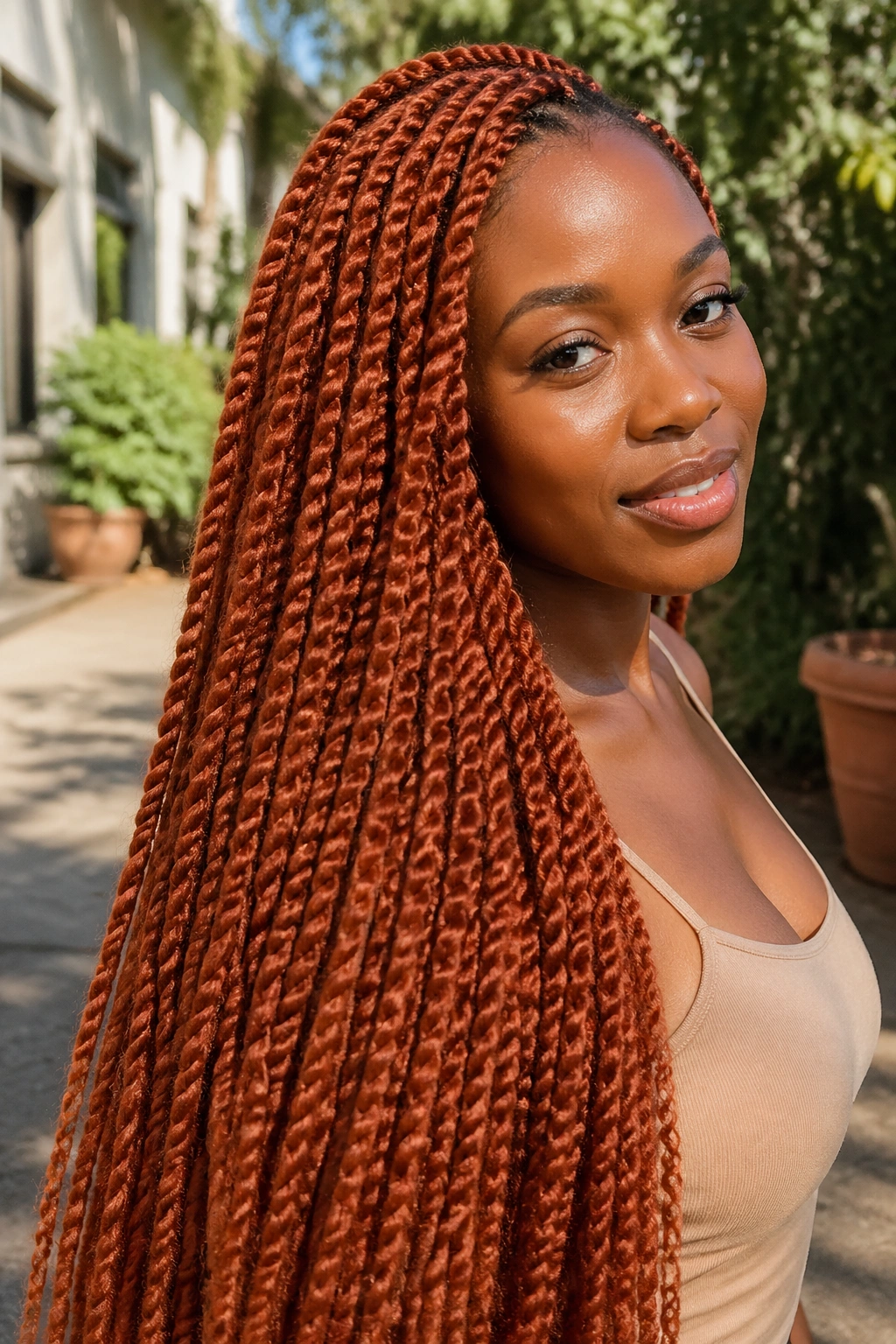
Senegalese twists in ginger extension hair have a smooth, polished surface that showcases warm orange-red tones with crisp clarity. The consistent wrapping technique creates a uniform column of color from root to tip that looks both precise and vibrant.
Ginger Senegalese twists in a longer length are particularly striking because the color has more of the twist length to display, and the way longer twists move creates a cascading effect of warm ginger tones.
How to Achieve This Look
Use ginger kanekalon or toyokalon braiding hair. Pre-stretch to remove the crinkle texture. Divide your natural hair into clean sections and wrap the extension hair in the Senegalese two-strand method around each section. Seal ends with a brief hot water dip.
11. Ginger Crochet Braids
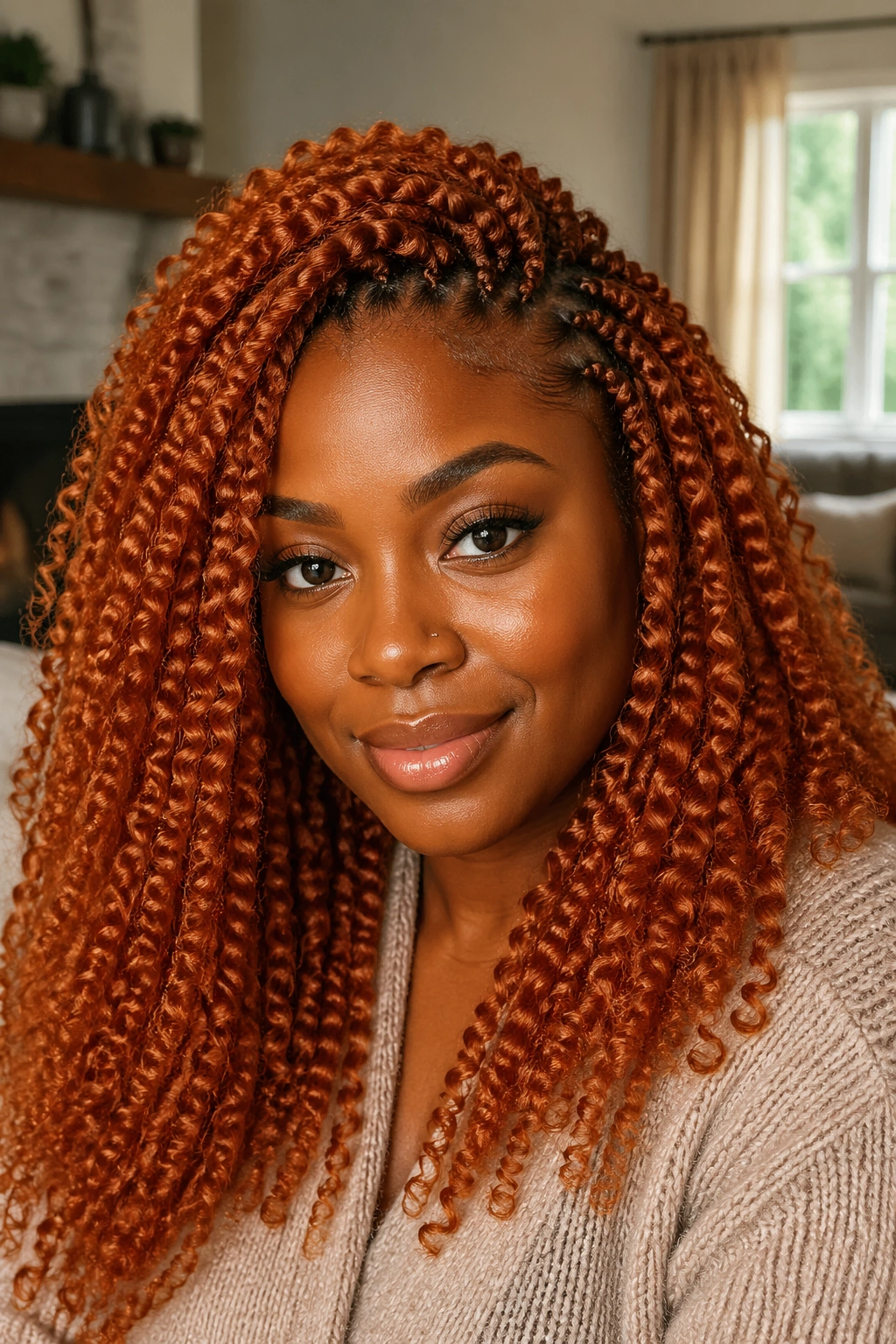
Ginger crochet braids with a curly extension pattern create a full head of vivid, warm curls that look convincingly like color-treated natural hair. The key is choosing extension hair that matches your natural curl pattern — the more similar the texture, the more convincing the result.
The protective benefit of crochet braids is real and significant. Your natural hair stays in braided cornrows for the entire duration of the style, completely shielded from environmental exposure, daily manipulation, and the physical wear that natural hair takes on normal styling days.
Afro kinky curly, spiral curl, or natural wave crochet hair all come in ginger shades and create convincing results on natural hair. The style typically lasts six to eight weeks with proper care.
12. Ginger Cornrows
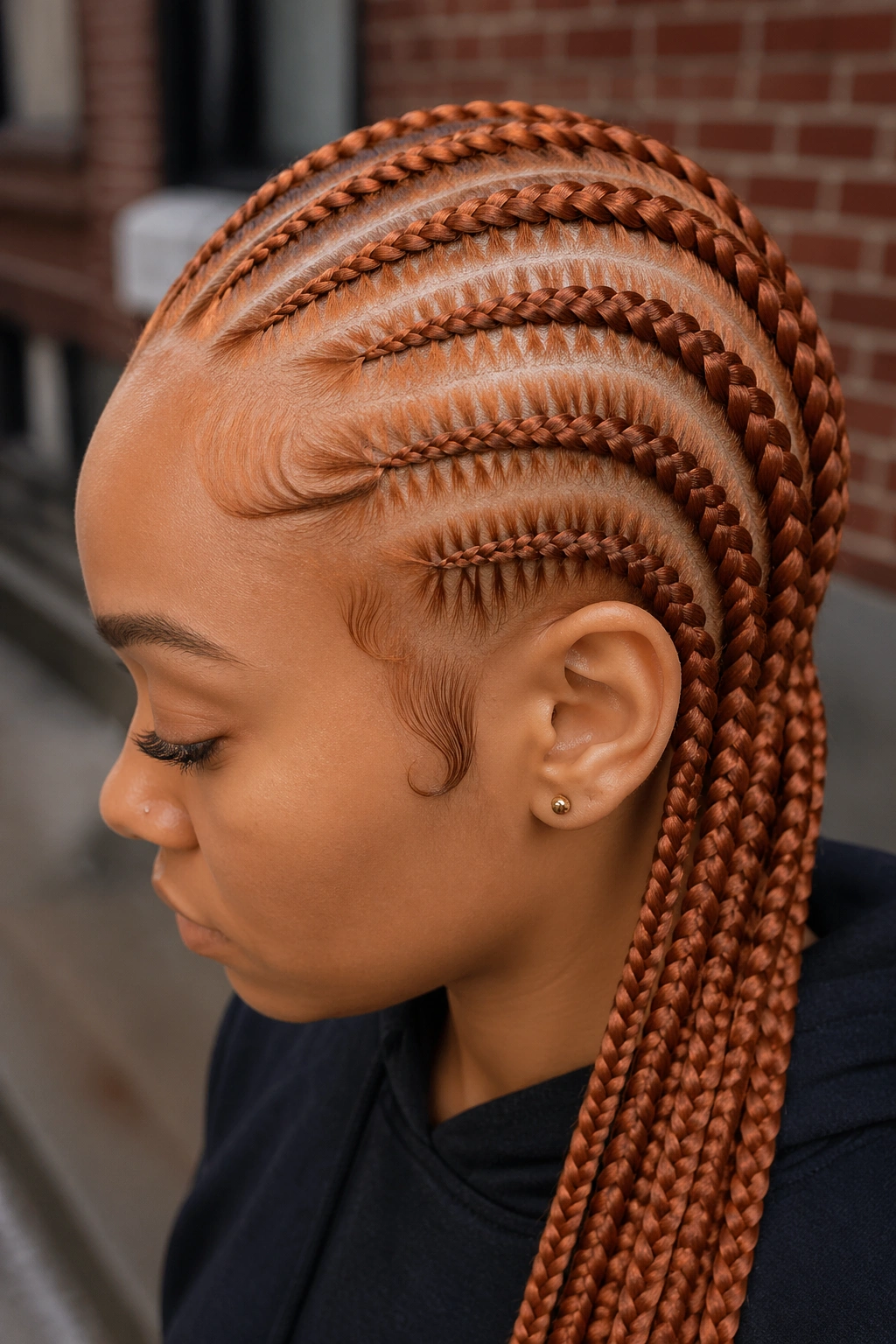
Cornrows in ginger extension hair create a graphic, precise look — the clean geometric lines of the braid pattern in vivid orange-red create something simultaneously traditional and striking. Straight-back ginger cornrows are classic; more complex curved patterns in ginger become genuinely artistic.
Ginger is one of the most vivid colors available in braiding hair, which makes it one of the most effective choices for showing off detailed cornrow patterns. The color highlights each line of the pattern with warmth and clarity.
Maintain by applying lightweight oil to the scalp every few days and keeping the edges smoothed with edge control. Protect cornrows at night with a satin bonnet or scarf to prevent frizz and preserve the sharpness of the braid pattern.
13. Ginger Afro
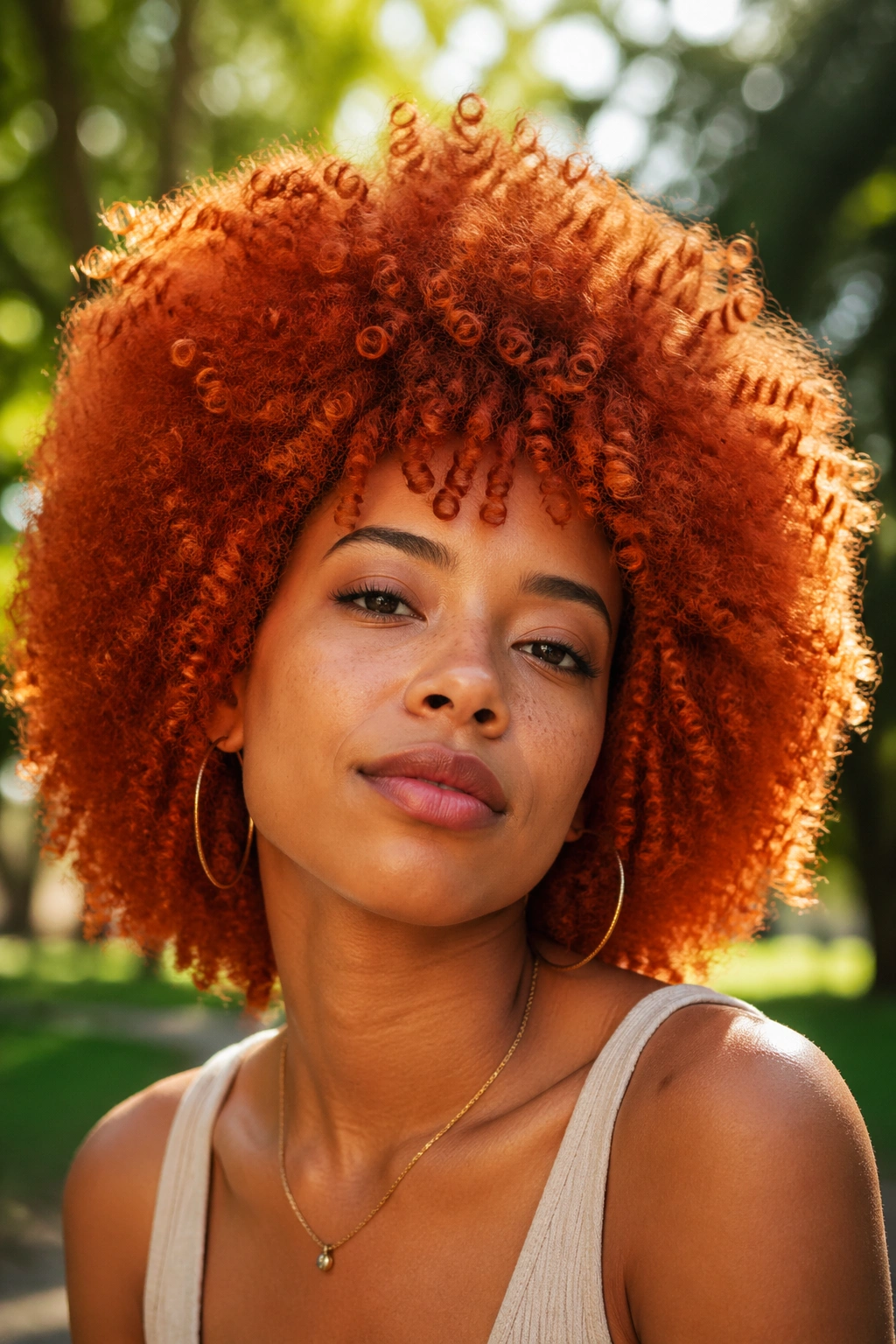
A full, picked-out afro in ginger is one of the most powerful natural hair looks available. The combination of maximum volume and vivid warm color creates a presence that fills any room — and catches every light source from every angle.
Ginger afros in direct sunlight look almost incandescent. The warm orange tones respond strongly to sunlight, creating a glow-from-within effect on a full, rounded afro silhouette that genuinely has to be seen to be believed.
Pick from roots to ends, working from the bottom up with an afro pick. Shape the silhouette by guiding the pick in a lifting, outward motion at the perimeter. Apply a light oil or sheen spray to the exterior surface to maximize the warmth and vibrancy of the ginger tones.
14. Ginger Flat Twist-Out
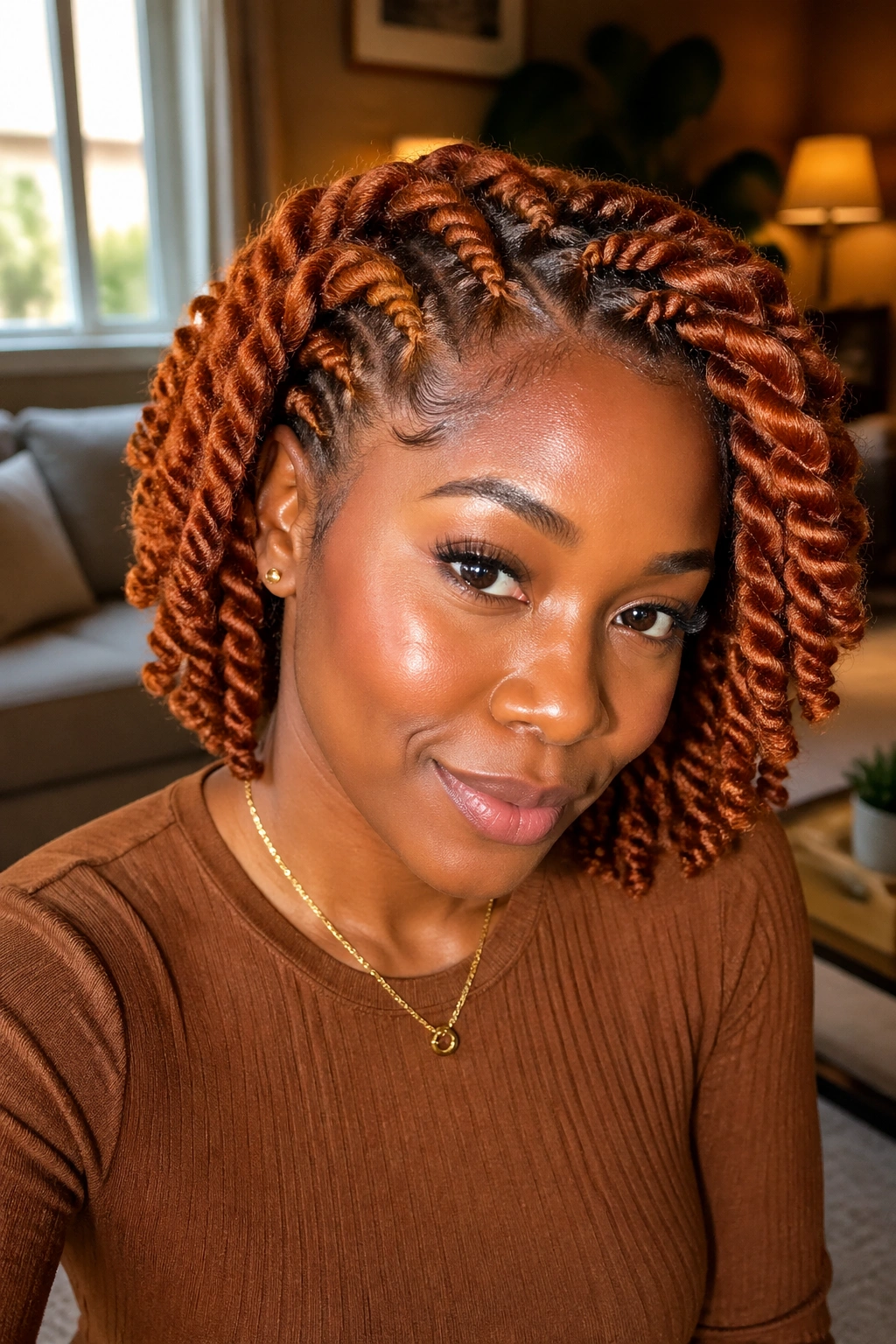
A flat twist-out in ginger creates smooth, structured S-waves with the warm tone running consistently through each wave curve. The slightly more intentional look of a flat twist-out compared to a regular twist-out suits ginger’s boldness — it feels purposeful and styled.
Flat twist-outs last significantly longer than regular twist-outs because the scalp tension from the flat-against-the-head twist holds the base of the curl pattern in place, extending the definition and keeping the ginger color looking fresh and vibrant for longer.
Apply curl cream to each section and lay flat twists in the direction you want the waves to fall. Work in consistent section sizes for even results. Set overnight and unravel gently with oil the next day.
15. Ginger Half-Up Half-Down
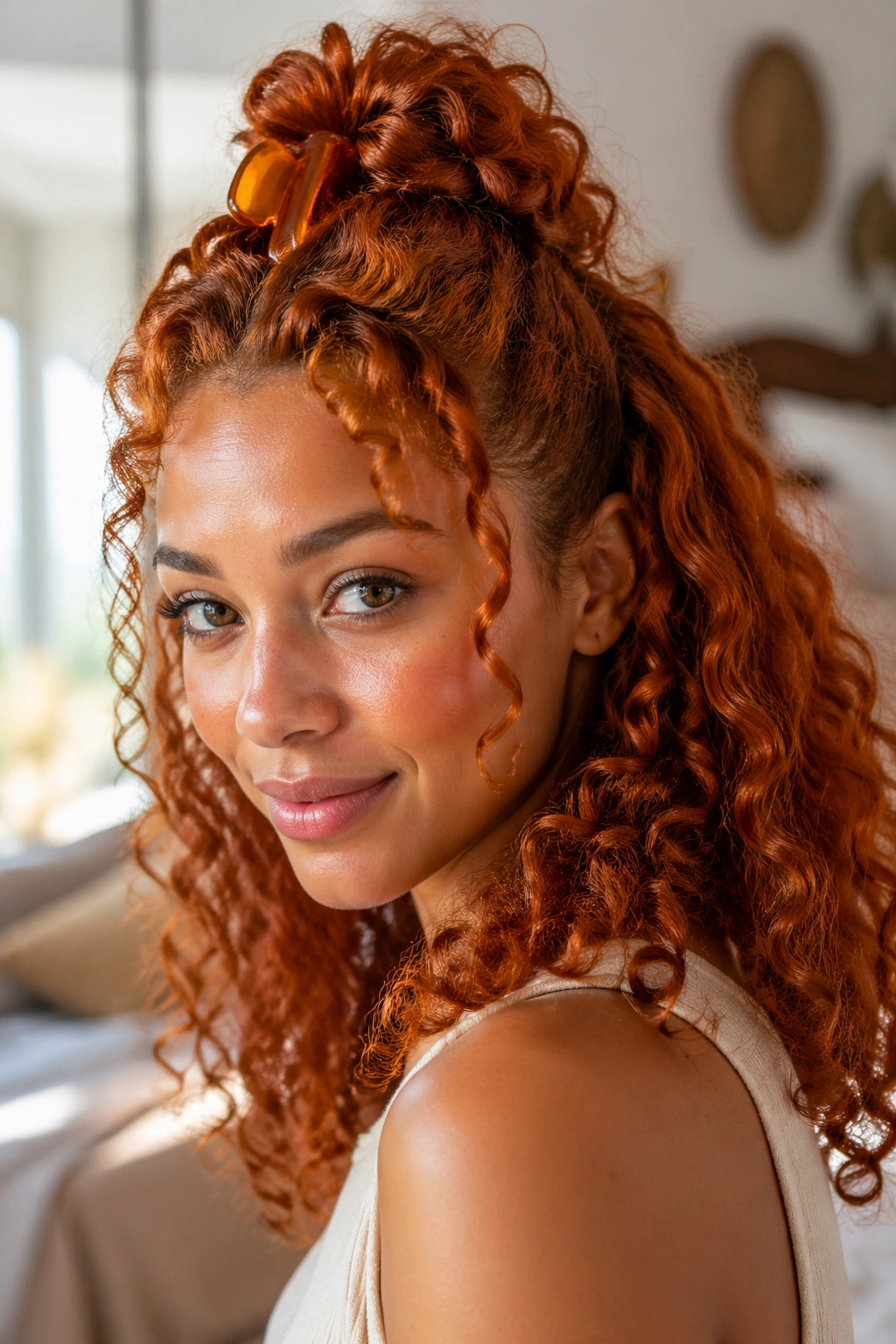
The half-up half-down style in ginger curls shows off the color at multiple points — in the gathered crown section visible from the front and above, and in the loose lower section that frames the face and neck.
Ginger in a half-up half-down is particularly effective because the style creates natural layering that allows different depths of the color to show simultaneously. The crown catches more direct light and shows the brightest ginger tones; the lower section shows deeper, slightly more burnished warmth.
This is a three-minute style with twelve-minute results. Gather the upper half of clean, defined curls and clip or tie at the crown. Let the lower half fall loose. Add a hair clip in amber, gold, or tortoiseshell to complement the ginger tone beautifully.
16. Ginger Kinky Twists
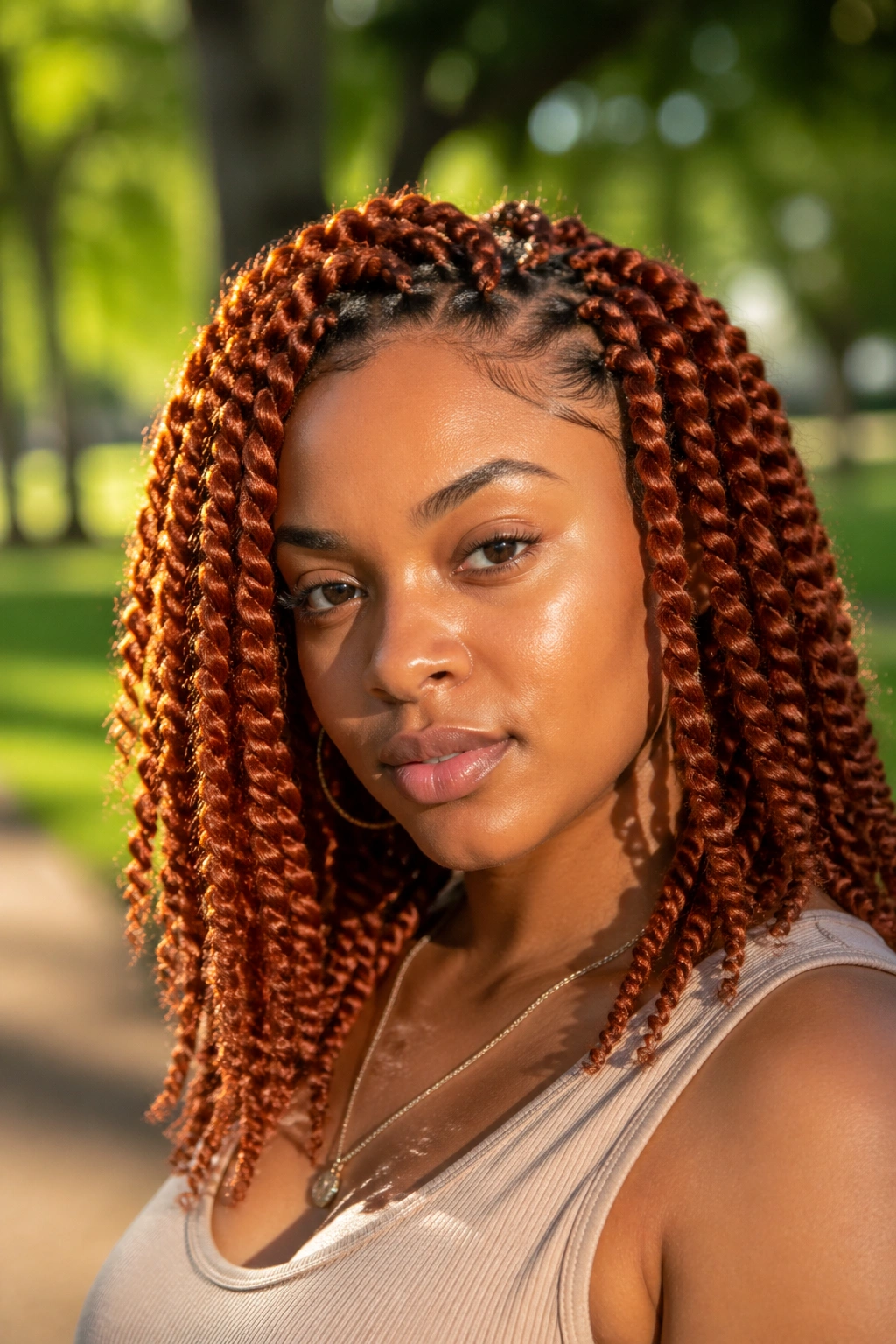
Kinky twists in ginger Afro kinky extension hair look remarkably close to color-treated natural hair — the rough, natural-looking crimp of the extension hair mimics type 4 texture convincingly, and the ginger tones running through it look completely organic.
This is the ideal protective style choice for women who want to test ginger visually before committing to a chemical color process. Wearing ginger kinky twists for four to six weeks gives you a real sense of how the color looks on a daily basis and how you feel about maintaining a warm tone.
Install using the standard kinky twist technique, incorporating ginger Afro kinky or Marley hair into each section. Keep the scalp moisturized throughout the style’s wear.
17. Ginger Space Buns
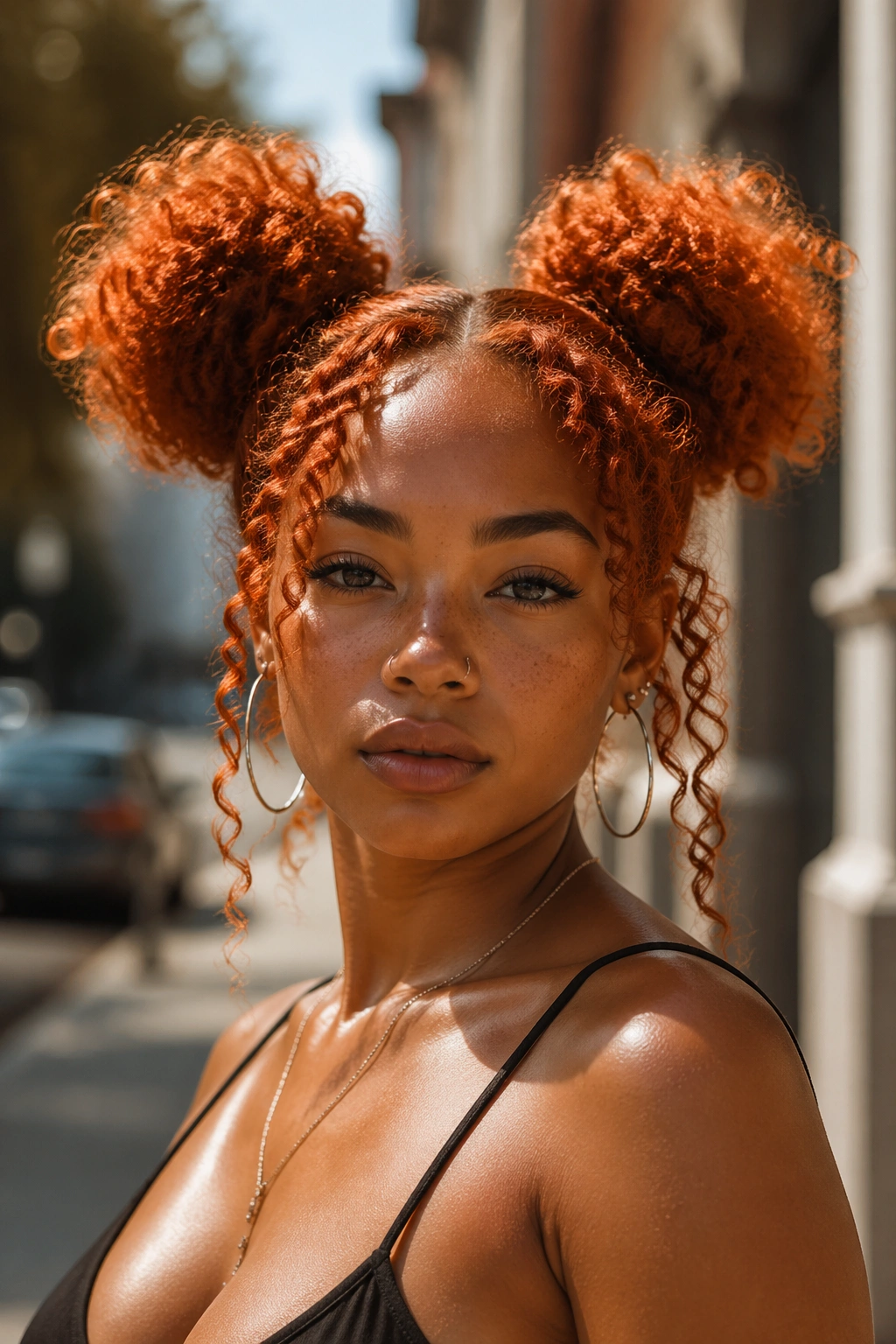
Ginger space buns have a playful boldness that suits the vibrancy of the color perfectly. Two symmetrical buns in vivid orange-red natural curls create a silhouette that’s simultaneously fun and genuinely striking.
The circular shape of each bun concentrates the ginger color into two distinct focal points that catch light from above and from the sides — it’s one of the most photogenic configurations for showcasing warm hair color.
Split your hair down the center and secure each half in a bun at the desired height. Fluff each bun for maximum volume. Pull a few coils loose at the temples for softness and to show off the ginger color in smaller, more defined pieces at the face.
18. Ginger Faux Locs
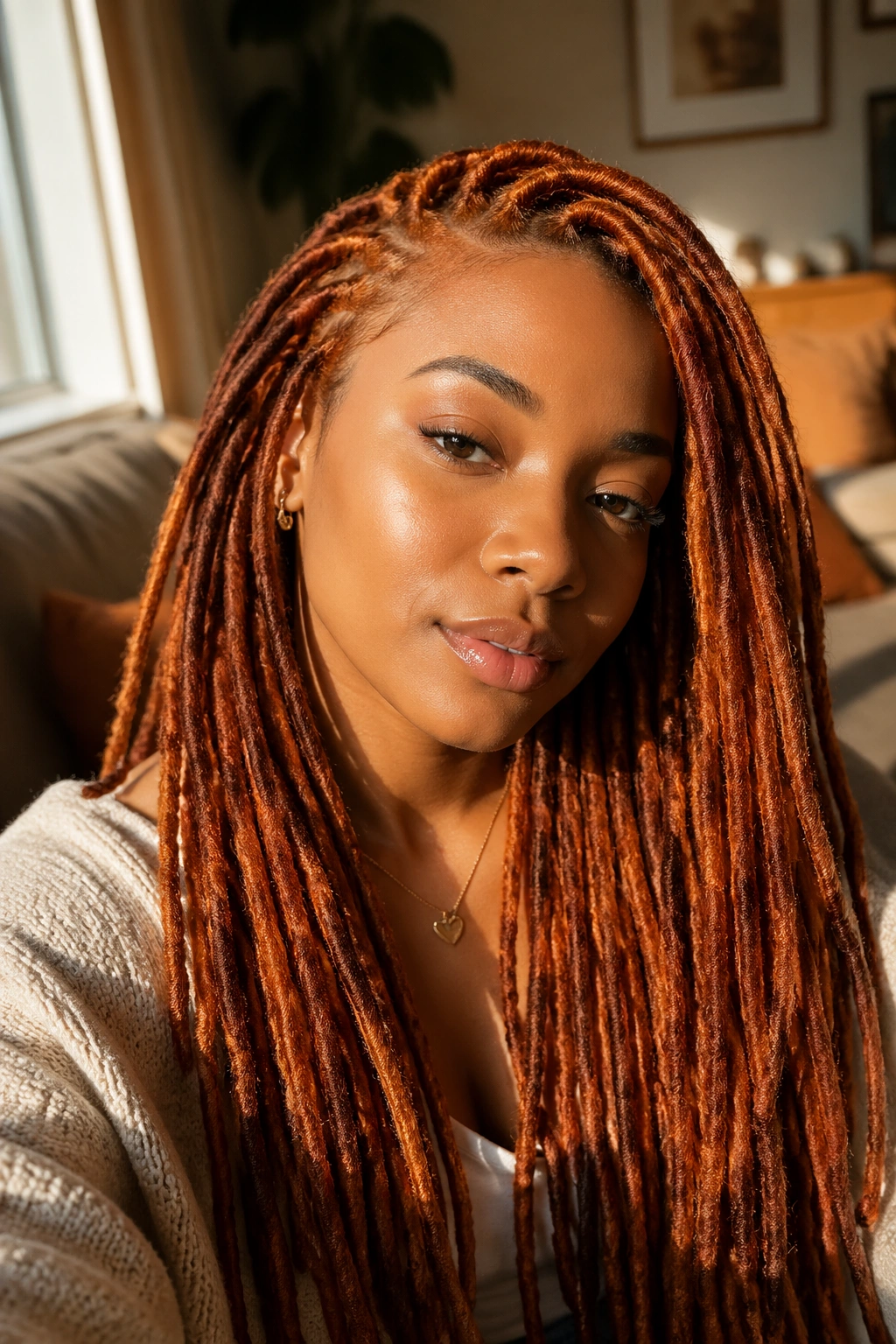
Ginger faux locs have an organic warmth that suits both the style and the color — the wrapped, slightly matte texture of faux locs gives the ginger color a natural, lived-in quality rather than the more reflective look of loose styles.
Longer ginger faux locs are especially beautiful because the warmth of the color builds across a greater length, and the movement of longer locs constantly reveals different aspects of the ginger tone as they shift and settle.
Install by wrapping ginger braiding hair around small braided sections of your natural hair, creating the faux loc structure from scalp to tip. Maintain with lightweight scalp oil and nightly satin protection.
19. Ginger Defined Coil-Out
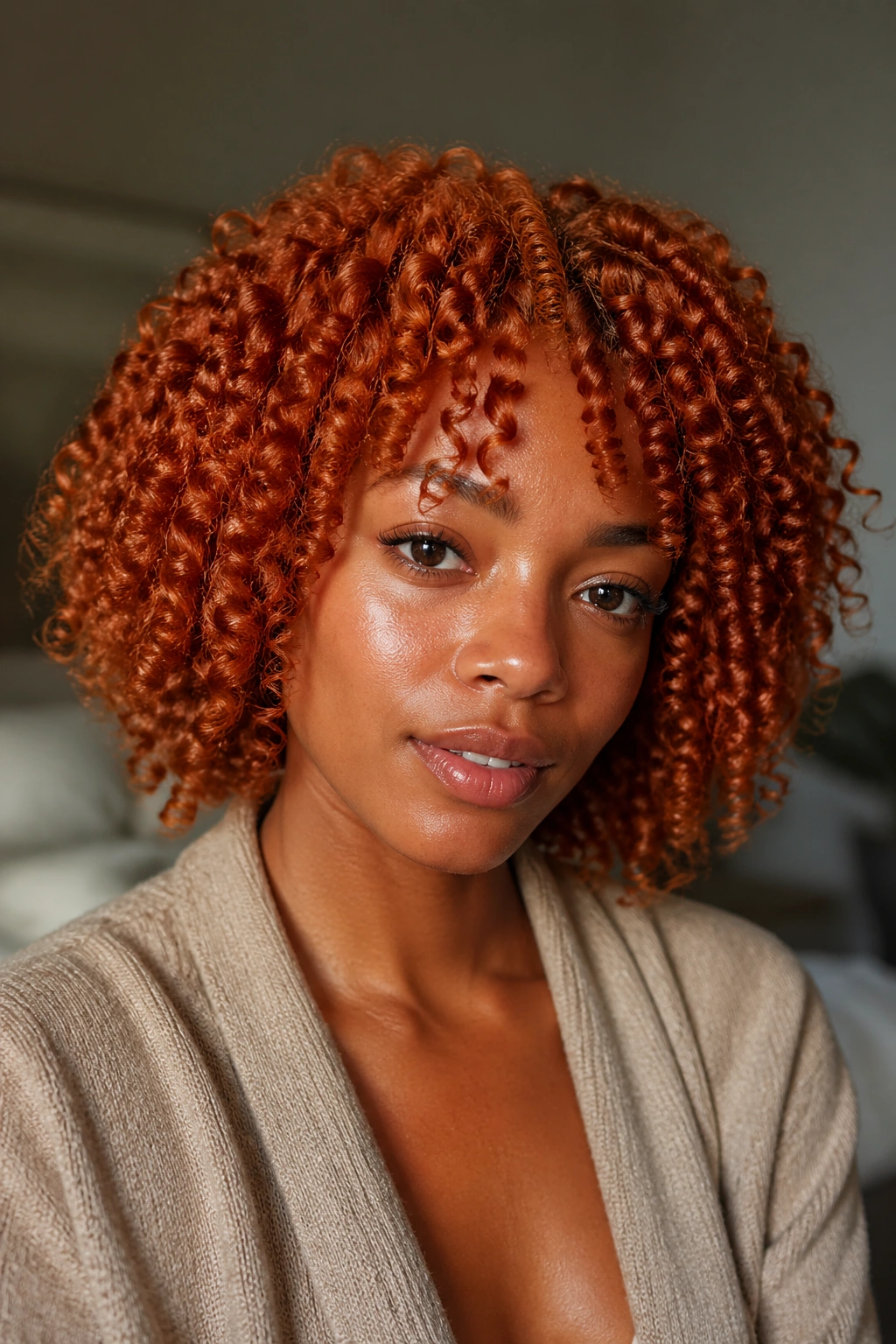
A finger coil-out in ginger requires patience but produces one of the most visually spectacular natural hair looks possible. Tight, uniformly defined coils in vivid orange-red — each one a perfect spiral of warm color — are genuinely jaw-dropping as a complete style.
The key discipline here is fully drying before touching. Rushing the dry time on a coil-out in any color — but especially ginger, where vibrancy matters so much — results in coils that lose definition before the style even begins.
Work in pencil-width sections on damp, conditioned hair. Apply curl pudding to each section and wrap tightly around your finger. Let everything dry completely. Separate gently with a single drop of oil on your fingertip per coil.
20. Ginger Protective Updo
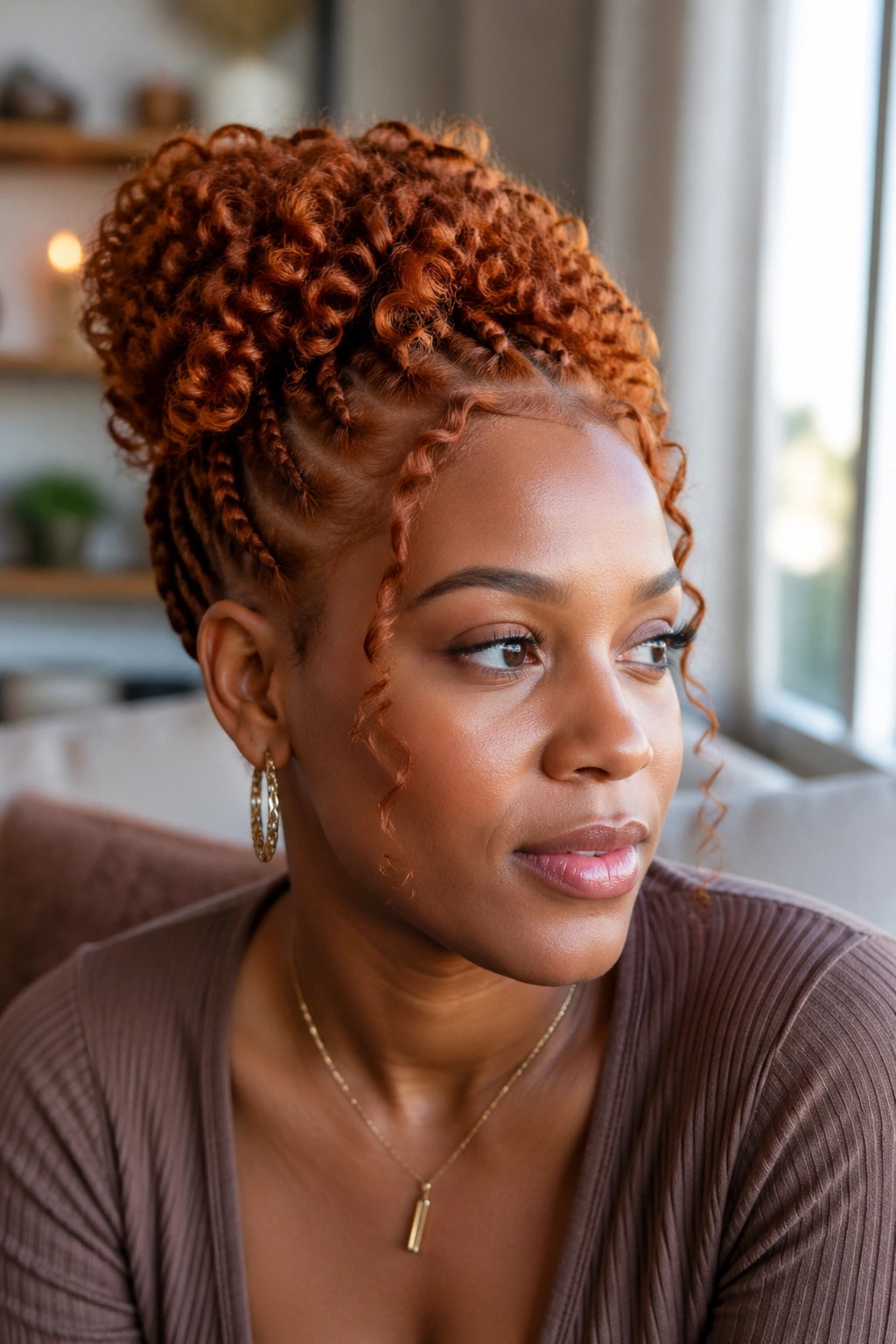
A pinned protective updo in ginger natural hair looks sophisticated and intentional even in its simplest forms. The warmth of the color transforms any pinned-up configuration into something that looks carefully considered.
The most effective ginger updos leave some curls visible at the crown or sides so the color has a surface area to display. Completely pinned-up styles where no curls show lose some of the visual impact of the ginger tone — which is, after all, the main attraction.
Start with moisturized, defined curls. Gather and pin in sections, building an upswept shape that keeps the crown area slightly open. Let a few face-framing pieces fall loose. The ginger tones on those loose pieces create warmth around the face that’s genuinely beautiful.
Making Ginger Last: The Real Talk on Maintenance
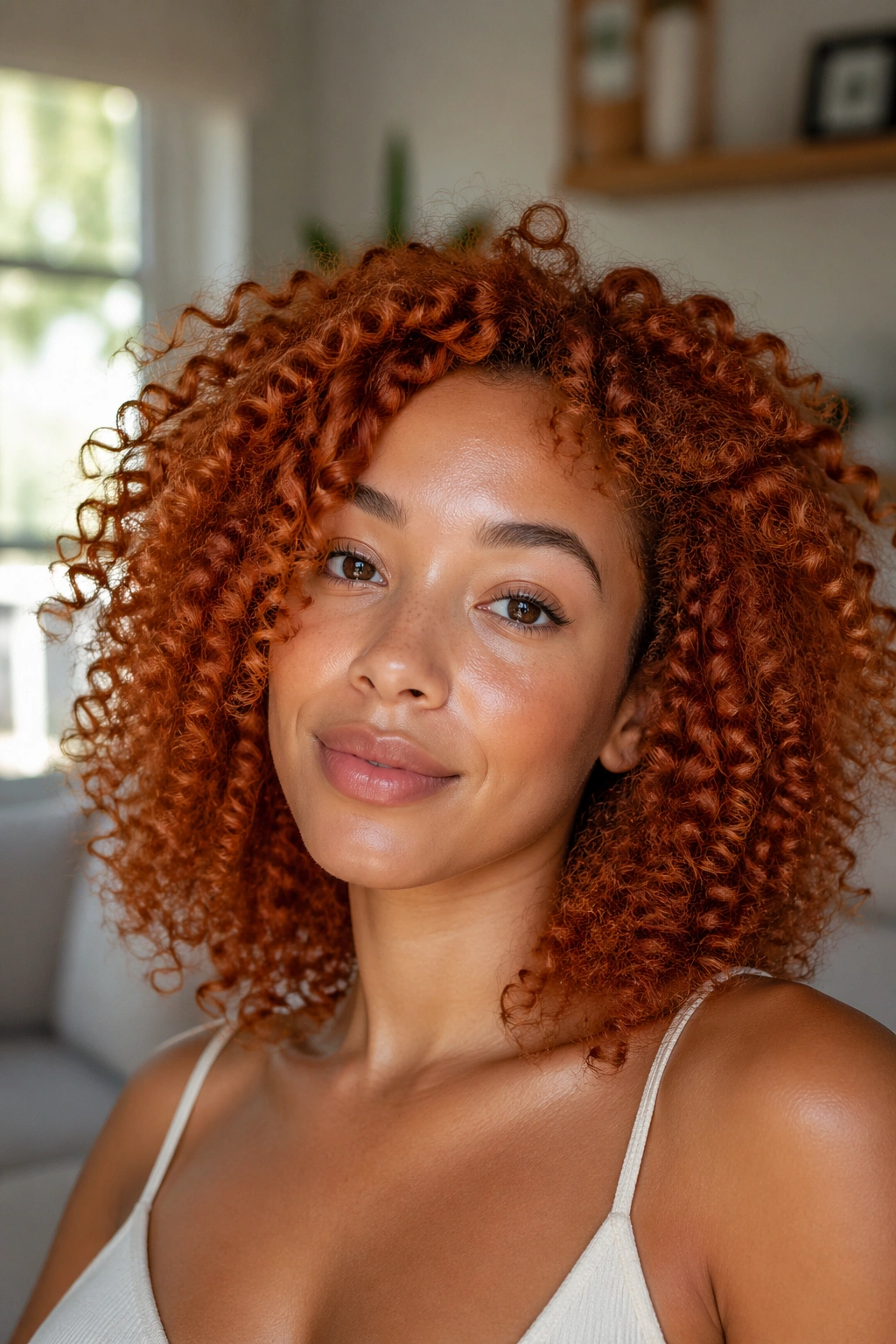
Let’s be direct about what maintaining ginger curls actually requires, because going in with accurate expectations makes the whole experience better.
Ginger fades fast. That’s the honest truth about any vivid red-orange color family. The pigment molecules are large and settle shallowly in the hair cuticle, meaning they’re among the first to release with each wash. Without active maintenance, ginger can shift to a pale, washed-out version of itself within four to six weeks.
The maintenance toolkit you actually need: a color-depositing shampoo or conditioner in warm red or orange, a color gloss or toner treatment to use every three to four weeks between professional appointments, a UV-protective finishing spray for outdoor days, and the discipline to wash with cool or lukewarm water rather than hot.
Wash frequency is the single biggest variable. Women who wash every week see significantly faster fade than those who stretch washes to every ten to fourteen days using co-washing and dry shampoo alternatives in between. Neither frequency is wrong — but the implications for color maintenance are real and worth knowing.
The trade-off with ginger is simple: it’s one of the boldest, most beautiful warm tones available for natural curls, and it requires more active maintenance than more muted color choices. Most women who commit to it find the maintenance worth the result. But walking in with clear expectations makes the whole journey more enjoyable.
