
Ombre on curly natural hair with a dark brown base is one of the most striking color combinations available for Black women who want to add dimension and visual interest to their curl patterns — and it’s a technique that looks particularly spectacular on natural textures because of the way the curl formation breaks up and distributes the color gradient throughout the mass of hair. A dark brown root transitioning into a warm, sun-kissed lighter end is a color story that natural curls tell uniquely and beautifully, and once you understand the technique and the care involved, the question becomes which ombre variation you want to try first.
What Ombre Actually Is and How It Differs on Natural Curls
Ombre — from the French word meaning “shaded” — describes a gradual transition from one color to another along the length of the hair. In its classic form, ombre starts dark at the root and transitions progressively to a lighter shade toward the ends, creating a gradient effect that reads as deliberately styled.
On straight hair, this gradient is visible as a continuous, directional sweep from dark root to light end — you can follow the color transition in a linear, uninterrupted way from top to bottom of each strand. The transition is clear, graphic, and intentionally dramatic.
On curly and coily natural hair, the ombre gradient is broken up by the curl pattern and shows up differently. Tightly coiled hair compresses the length of each strand into a fraction of its actual length, meaning the full dark-to-light gradient is contained within the visible coil structure rather than being displayed in a long linear sweep. Looser curl patterns show the gradient more linearly but still display it differently than straight hair — the curves of each curl reveal different parts of the gradient from different angles simultaneously.
This curl-pattern interaction with ombre color creates a result that’s often more complex and dimensional than ombre on straight hair. Rather than a simple top-to-bottom color change, curly ombre creates a look where the overall mass of hair appears darker toward the scalp and progressively warmer and lighter throughout the curl formation — it’s not just directional but volumetrically dimensional.
Choosing the Right Ombre Transition for Dark Brown Natural Hair
The choice of lighter color for the ombre transition is the most important aesthetic decision in the process, and it shapes the entire character of the finished look.
Caramel ombre on a dark brown base is the most universally flattering option because caramel has warmth and depth — it’s not so light that the contrast feels harsh, and the amber warmth complements dark brown beautifully. Caramel ombre on natural curls looks like the most perfectly sun-kissed version of hair imaginable.
Honey blonde ombre creates a slightly more vivid contrast than caramel — the golden yellow-blonde tones are clearly different from the dark brown base, creating a look that’s explicitly styled and dimensional. On natural curls, honey blonde ombre creates a warm golden glow in the lower half of the curl formation.
Copper ombre on dark brown natural hair is bold, fiery, and completely beautiful. The orange-red metallic transition from deep brown base to vivid copper ends creates a look that shifts constantly in changing light conditions — deeply warm in some lights, almost incandescent in direct sunlight.
Light brown or golden brown ombre creates the most subtle and naturalistic version of ombre on a dark brown base — the transition is from one shade of brown to another, just warmer and slightly lighter. On natural curls, this is the ombre for women who want dimension without drama.
Blonde ombre — a transition from dark brown to a clearly blonde end — is the most dramatically contrasted option and requires the most significant lightening. It creates the most vivid visual impact but also carries the highest technical demands for maintaining curl health.
The Technical Reality: Getting Ombre on Natural Curls Safely
Ombre is a chemical lightening process, and approaching it with clear understanding of what it involves — and what it requires from both your hair and your colorist — is essential for a good experience and a beautiful result.
The transition zone is everything in ombre. The blended area where dark meets light should be soft, gradual, and feathered rather than abrupt. A hard line between dark and light doesn’t read as ombre — it reads as a grown-out all-over color, which is a completely different look. Creating that soft transition requires a colorist who understands how to blend color on natural hair textures, which isn’t a skill every colorist has developed.
Natural curls lift differently than straight or relaxed hair, particularly for type 4 textures where higher porosity and uneven cuticle structure means the hair can respond unpredictably to lightener. An experienced colorist will assess your specific hair’s porosity and condition before the appointment and adjust their approach accordingly — using a lower-volume developer with longer processing time for more controlled lifting, or working in smaller sections for greater precision.
The starting condition of your hair is the baseline for what’s possible in a single session. If your dark brown natural hair has any previous chemical processing — color, straightening — that history affects how the current lightening process will proceed. Communicate all of this clearly in your consultation.
Building a Post-Ombre Care Routine for Dark Brown Natural Curls
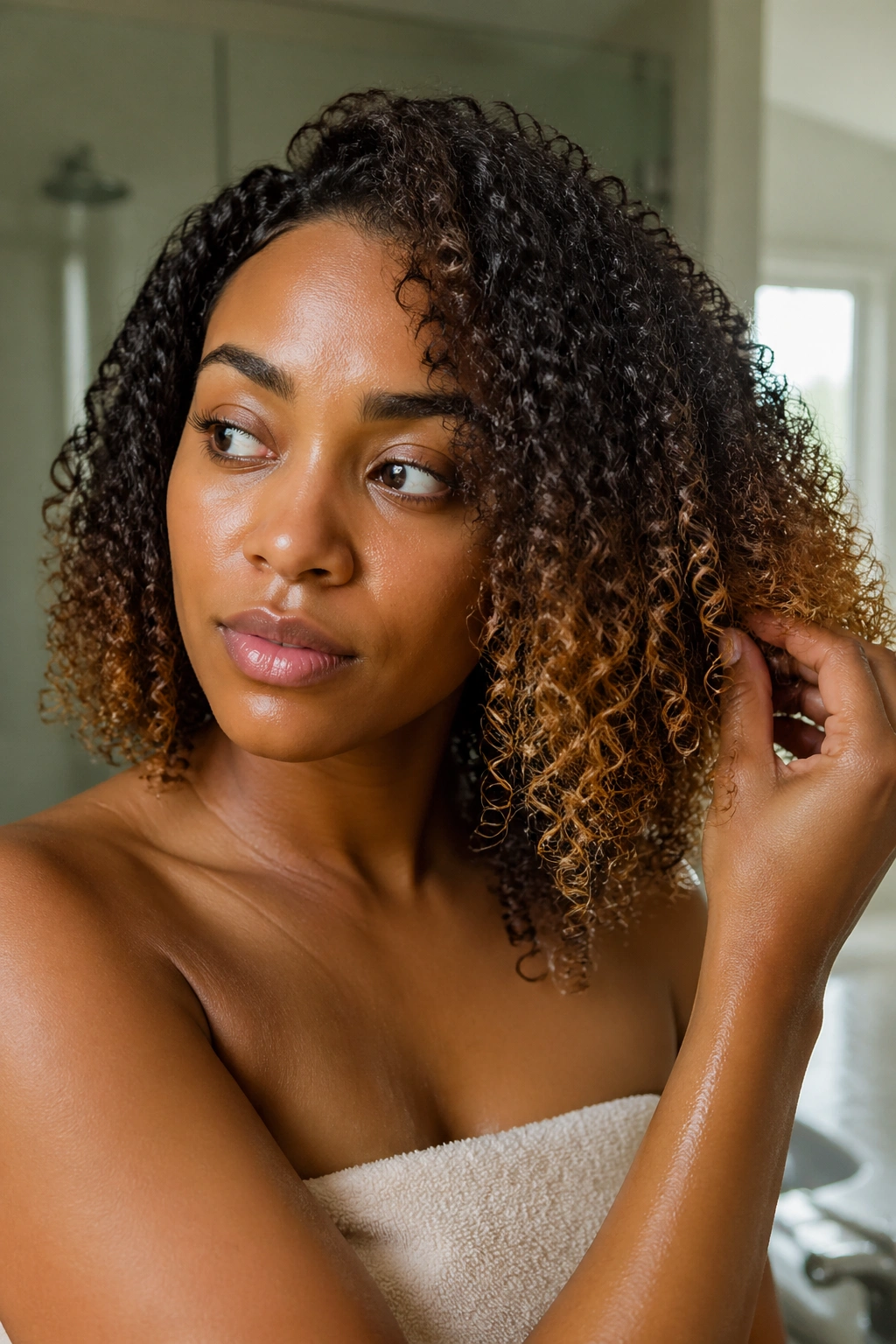
Dark brown to lighter ombre leaves you with two distinct zones of hair to care for: the darker root zone that’s closest to its natural state, and the lighter ombre zone at the ends that’s been chemically lightened and requires more intensive care.
The ombre zone needs moisture above everything else. Lightened hair is more porous than virgin hair and loses moisture more readily — this is particularly relevant for the ends of natural curls, which are already the driest part of the hair shaft (since they’re the oldest and have been through the most friction and environmental exposure).
Deep conditioning should become a regular part of every wash day, not an occasional treatment. A penetrating deep conditioner — one formulated to enter the hair shaft rather than just coating the surface — with a heat source (conditioning cap, warm towel, hooded dryer) for 20-30 minutes is the standard approach for maintaining moisture in color-treated natural curls.
Protein-moisture balance shifts after chemical lightening. Some women find their lightened curls become weaker and more brittle, signaling a need for protein support. Others find their curls become hygral fatigue-prone — too soft and limp from absorbing too much moisture without enough structural support. Pay attention to how your ombre zone feels and responds to products, and adjust your protein-moisture balance accordingly.
1. Dark Brown to Caramel Ombre
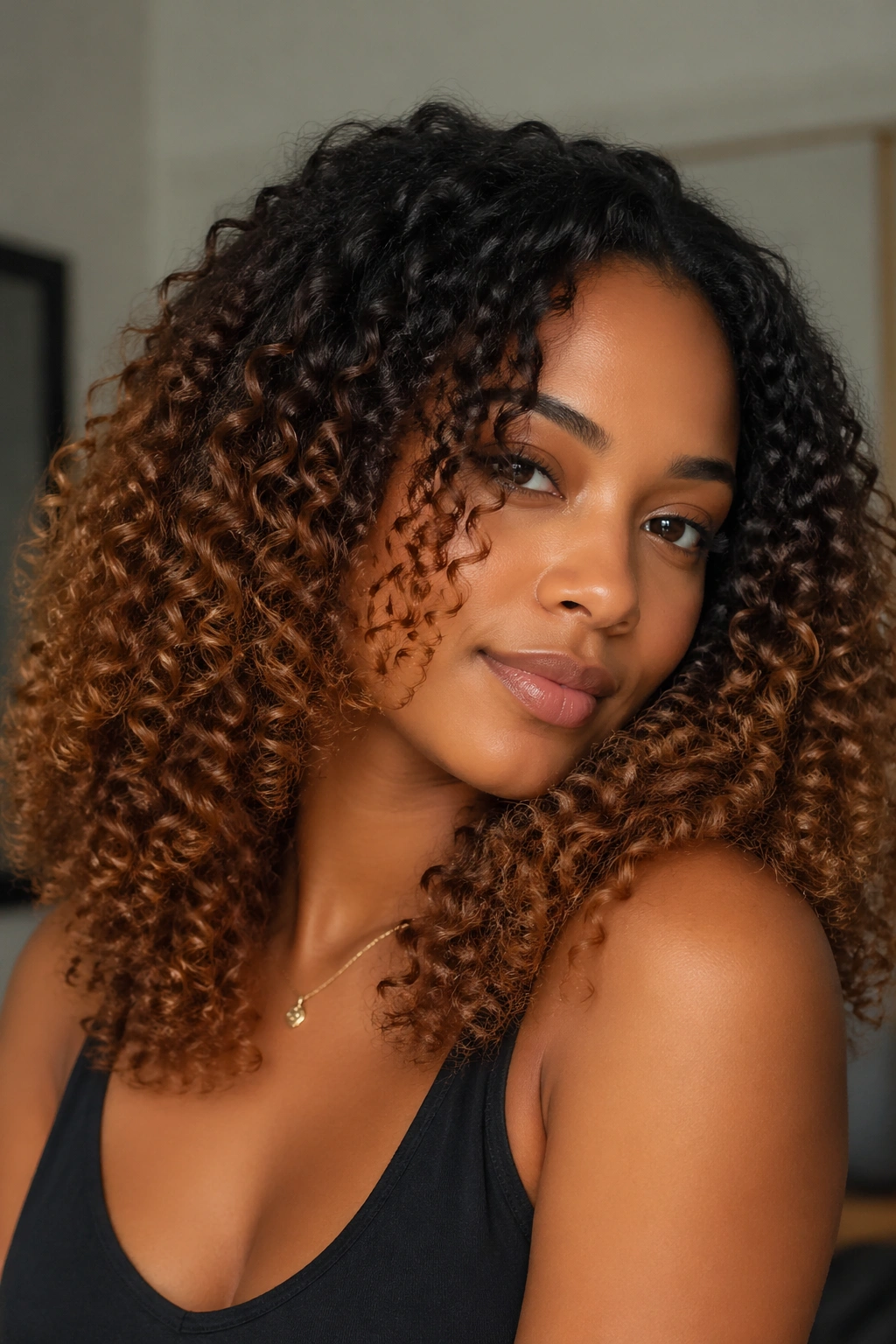
Dark brown to caramel ombre is the most popular ombre variation for natural curls, and the consistent popularity is entirely earned — it’s a look that works on virtually every curl pattern, every skin tone, and every face shape in the natural hair community.
The caramel transition creates warmth and richness without harsh contrast. The dark brown root stays grounded and natural-looking, the mid-length develops the first hints of warmth, and the caramel ends glow with a sun-kissed luminosity that’s genuinely beautiful.
How to Achieve This Look
Your colorist will apply a lightener to the lower two-thirds of your hair — concentrated most heavily at the ends and feathered upward through the mid-lengths in a soft, blended gradient. After reaching the target lift, a warm caramel toner is applied to the lightened sections to achieve the specific amber-warm caramel tone rather than a yellow or brassy result.
- The transition zone should be blended over three to four inches of hair for a gradual, soft gradient
- Ask for face-framing pieces to start the ombre slightly higher for a more enveloping warmth effect
- Maintain with a caramel-toned color gloss every six to eight weeks
Tip: Don’t wash your hair for 48-72 hours after the ombre service — the initial period allows the color to fully stabilize before its first water exposure.
2. Dark Brown to Honey Blonde Ombre
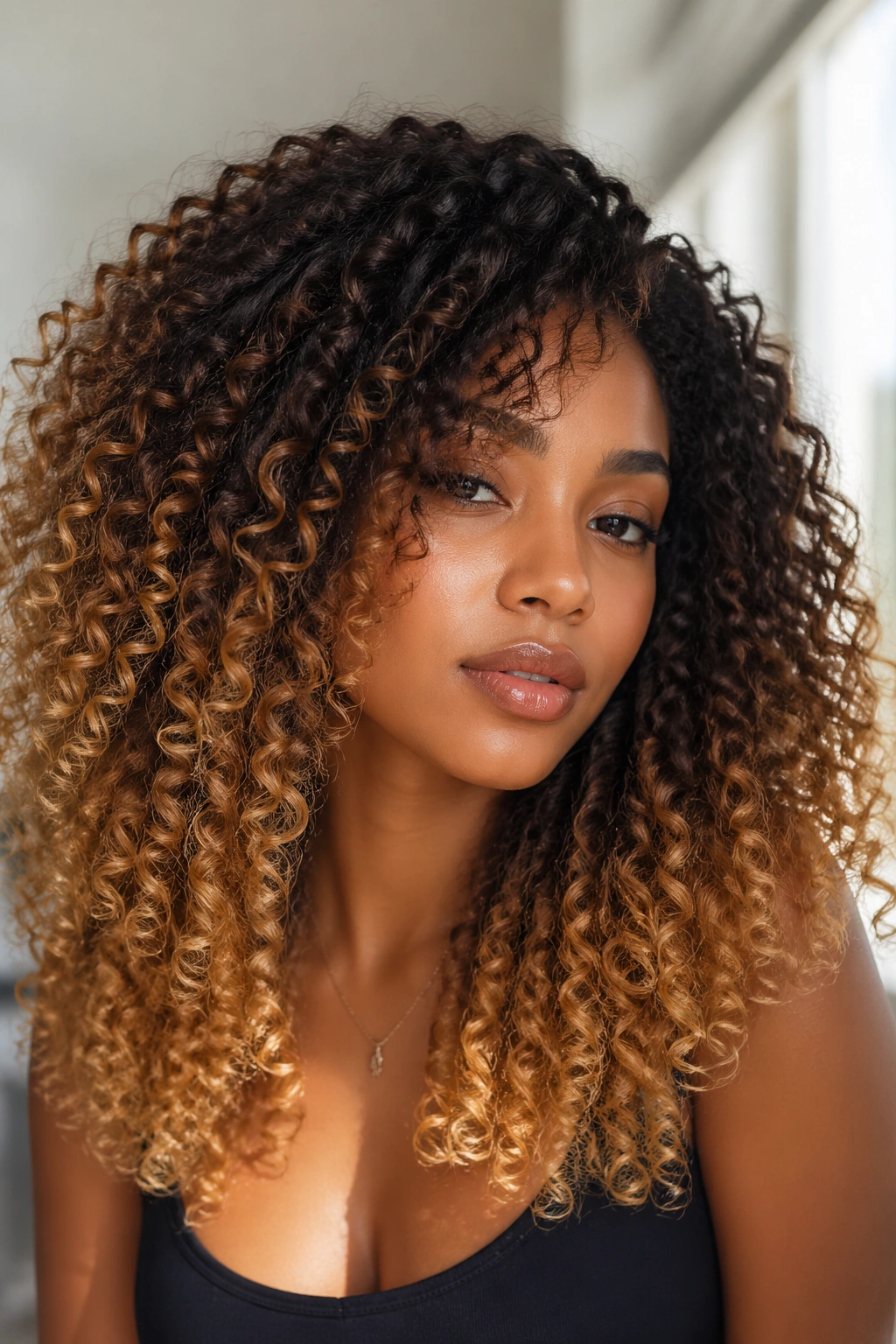
Dark brown to honey blonde ombre creates a more vivid, clearly blonde effect than caramel — the warm golden-blonde ends are distinctly lighter than the dark brown base, creating a look that’s styled and intentional while still maintaining warmth.
Bold fact: Honey blonde ombre on natural curls looks dramatically different in sunlight than in indoor lighting** — what reads as warm and relatively subtle indoors becomes a vivid, golden, almost luminous effect when hit with direct natural light. The same curls look completely different from one environment to another.
On wash-and-go natural curls, the honey blonde ombre zone at the ends creates a warm outer halo around the full curl mass — the lighter ends sit at the perimeter of the style where they catch the most light, creating a glowing rim of golden color that frames the entire style.
3. Dark Brown to Copper Ombre
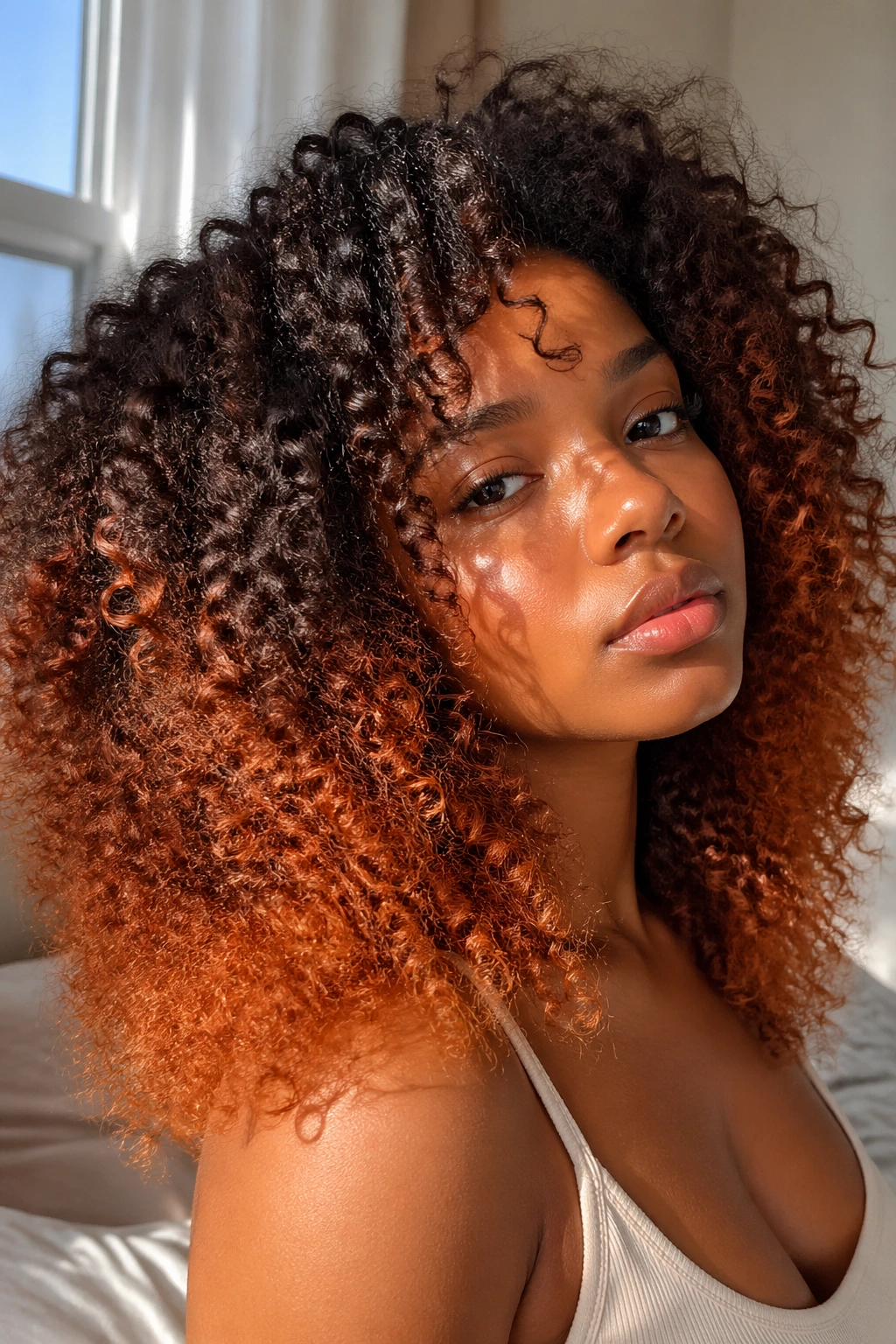
Dark brown to copper ombre is a bold, fiery color story that showcases some of the most vivid and dynamic color available for natural curls. The transition from deep, rich brown into bright, metallic copper is dramatic and unmistakably intentional.
Copper ombre on natural curls has an almost magical quality in direct sunlight. The metallic properties of copper tones mean the highlighted ends reflect rather than absorb light — so in sun, the ombre zone seems to generate its own warm glow rather than simply catching the light.
This is a high-impact color choice that suits bold, confident women who want their hair to be a genuine statement. The copper tone requires more maintenance than caramel or brown ombre variations because copper’s vivid reddish-orange tones fade faster than more muted warm shades.
4. Dark Brown to Light Brown Ombre
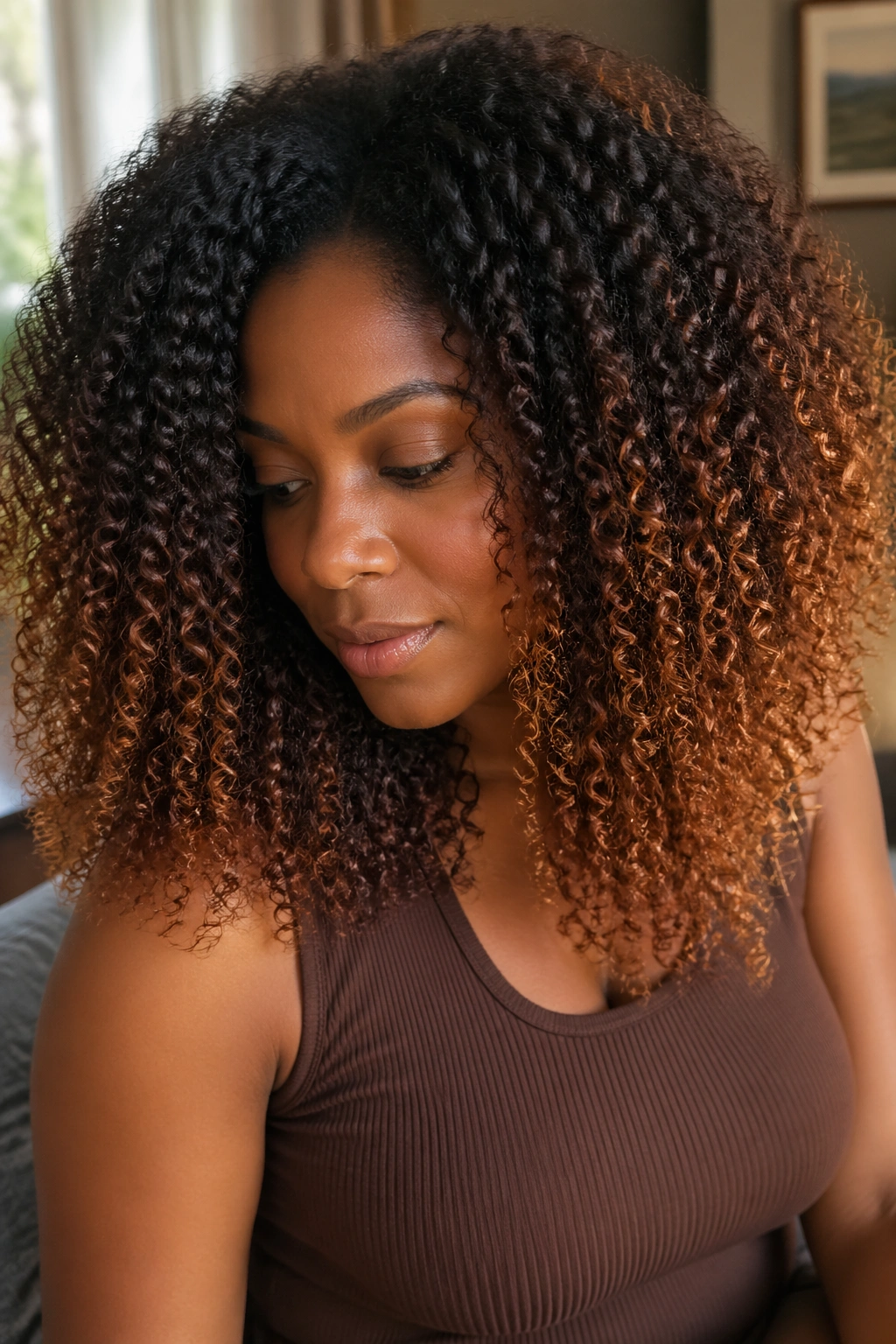
A dark brown to light brown ombre is the most naturalistic and subtle version of this color technique — the transition stays entirely within the brown family, creating dimension without dramatic contrast. On dark natural curls, this creates a gentle warmth toward the ends that reads as naturally sun-kissed rather than clearly colored.
This is the ombre for women who want dimension without drama, or for women who are color-curious but not ready to commit to a more obvious tonal change. The result is hair that looks healthier, more dimensional, and more vibrant than a single flat color — but in a way that’s easy to attribute to good hair health rather than color service.
Light brown ombre also requires the least significant lift of any ombre variation, meaning the impact on curl health is minimal — an excellent consideration for women with health-compromised or previously damaged natural hair.
5. Dark Brown to Platinum Ombre
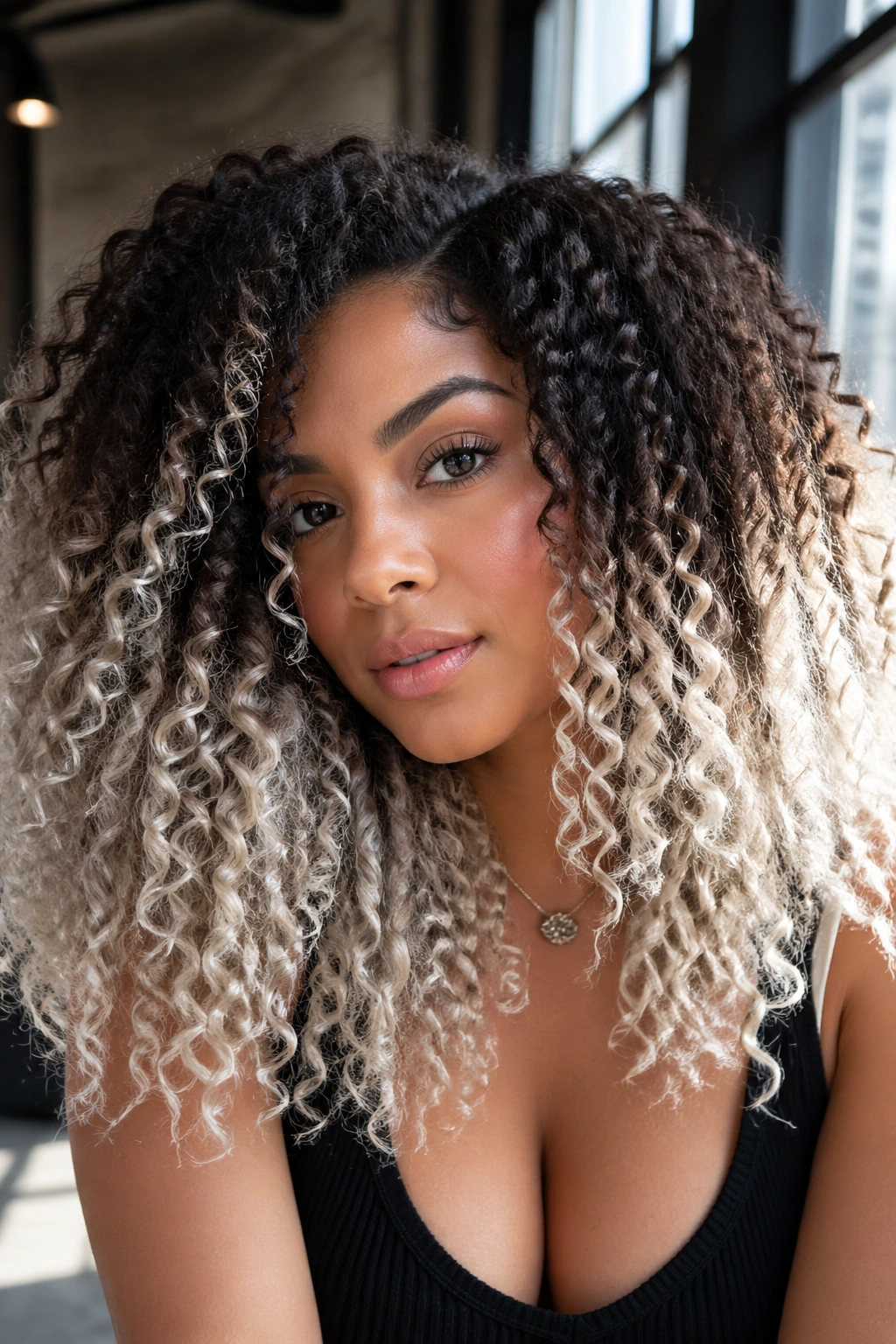
Dark brown to platinum is the most dramatic and technically demanding ombre on this list — the transition from deep brown to nearly white-blonde requires significant, staged lightening and careful ongoing maintenance. But when it’s done right on natural hair, it’s genuinely extraordinary.
The extreme contrast between deep brown and platinum creates a look that’s simultaneously bold and sophisticated — fashion-forward in the most literal sense. The platinum end section on dark natural curls creates a vivid, almost graphic contrast that reads as intentional artistry.
How to Achieve This Look
Plan for multiple sessions — attempting platinum ombre in one appointment on dark natural hair risks significant damage and is simply not responsible practice. Each session lifts the ombre zone progressively, with a purple or silver toner applied at the end of each session to manage warmth.
- Use a bond-building treatment at every session
- Apply purple toning treatment at home weekly to maintain platinum’s cool, bright quality
- Deep condition every wash day without exception
6. Dark Brown to Burgundy Ombre
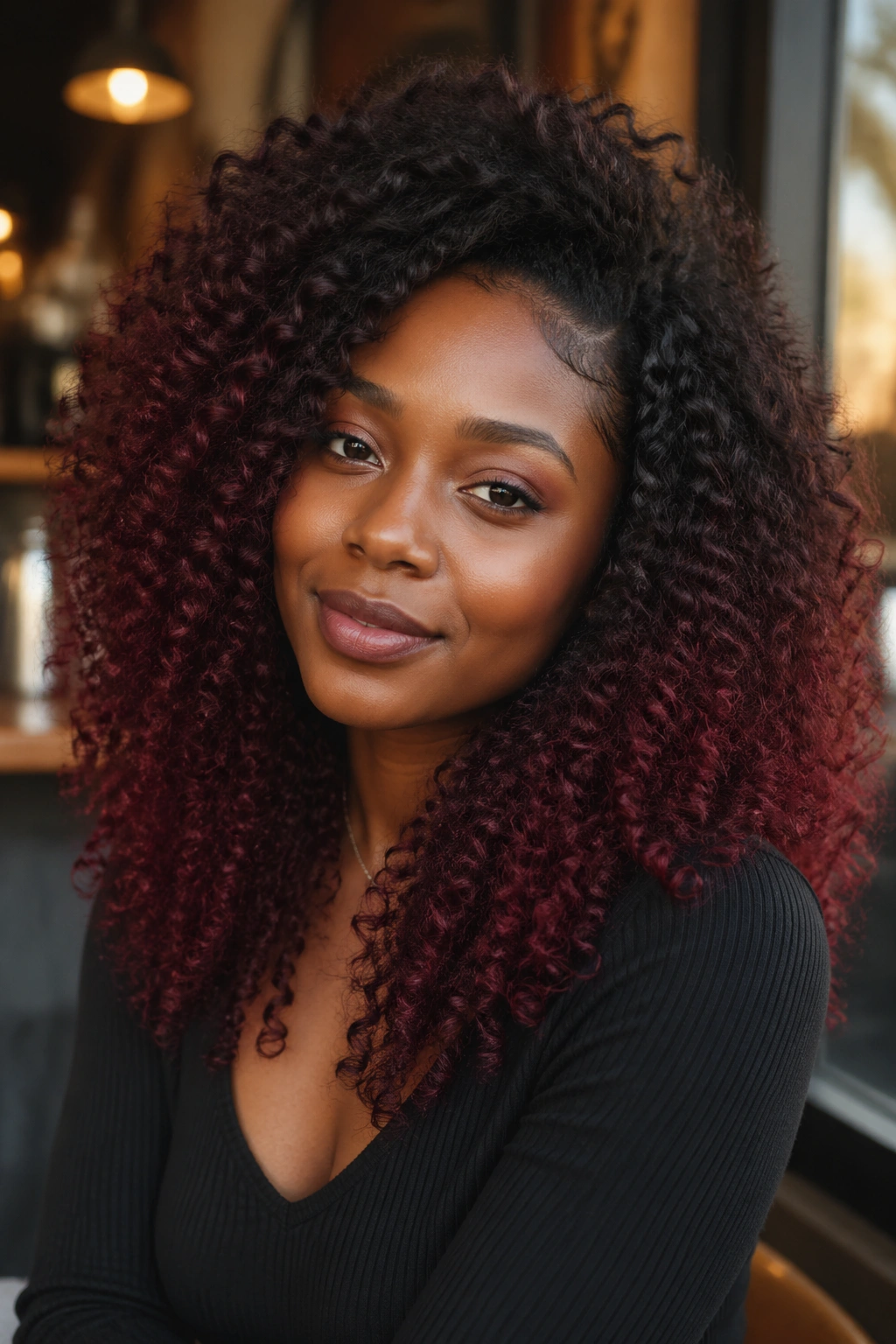
Dark brown to burgundy ombre is a sophisticated, richly dimensional color choice that doesn’t require extreme lightening — the deep reddish-purple of burgundy sits close enough to dark brown on the color spectrum that the transition requires minimal lift.
Burgundy ombre on natural curls looks complex and intentional without being aggressively bright. The deep, wine-infused reddish tones at the ends of the ombre blend into the dark brown base through a rich transitional zone that has depth and warmth throughout.
In lower light, burgundy ombre reads as an overall rich warm tone. In direct sunlight, the reddish-purple quality of the burgundy end zone becomes vivid and striking. This light-reactive quality is one of the most appealing aspects of the color.
7. Dark Brown to Auburn Ombre
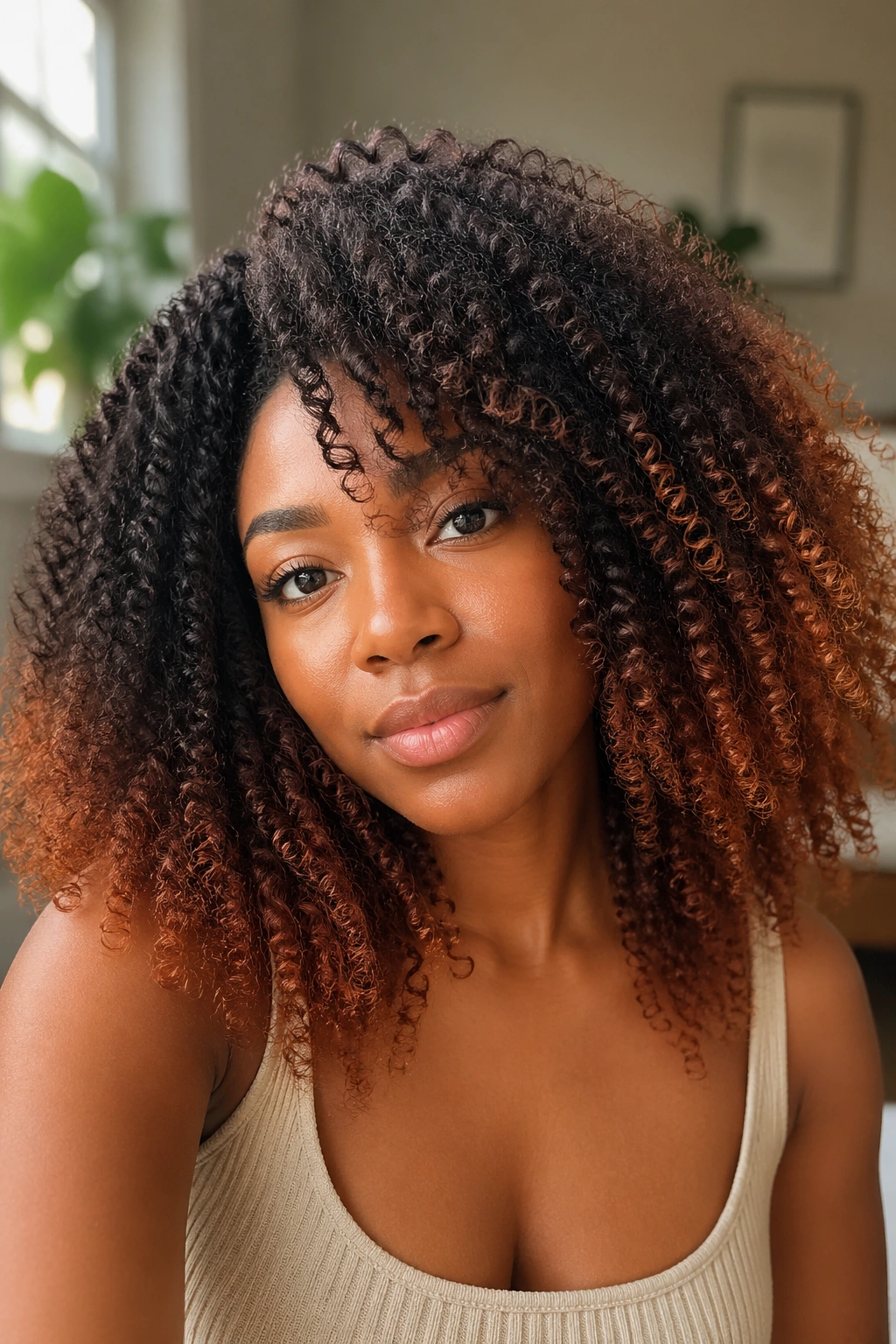
Dark brown to auburn ombre creates a warm, reddish-brown gradient that’s natural-looking and deeply flattering. Auburn sits in the brown-red family rather than the pure red or bright orange family, giving it a groundedness and warmth that suits natural curls beautifully.
The transition from dark brown to auburn is one of the smoothest ombre gradients available because the two colors share the same warm brown foundation — only the redness and saturation level differs between them. The blending is naturally seamless.
On natural curls, dark brown to auburn ombre creates an overall warmth that increases through the length of the hair — darker and cooler at the roots, progressively warmer and redder toward the ends. In sunlight, the auburn end zone glows with warm reddish depth.
8. Reverse Ombre: Darker Ends on Dark Brown Hair
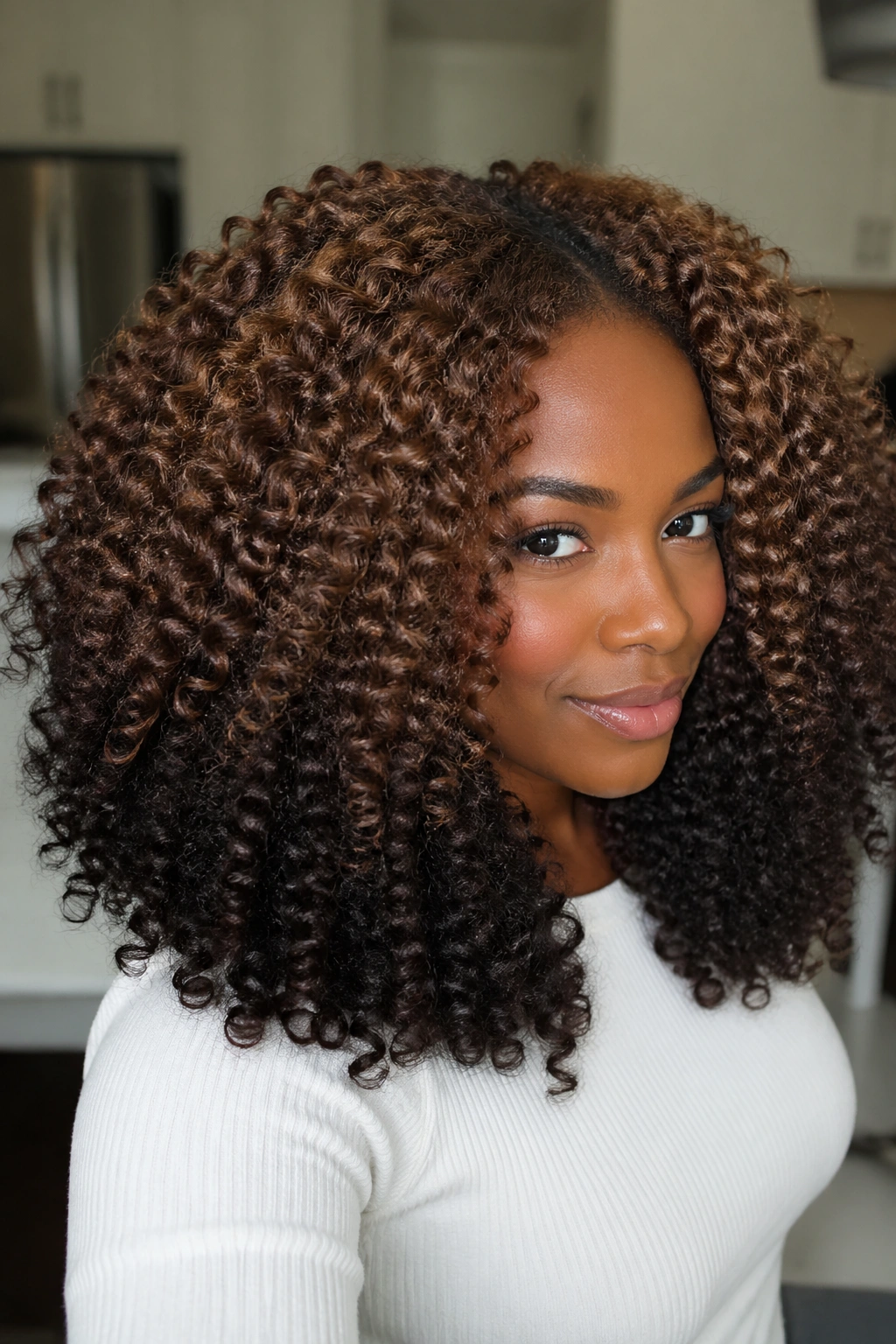
Reverse ombre flips the standard configuration — the roots are lighter (or at the natural dark brown) and the ends are darker, often a vivid black or very deep brown. On dark brown natural curls, a reverse ombre can be achieved by darkening and deepening the end sections while keeping the root at the natural color.
Bold fact: Reverse ombre on natural curls creates a grounding, rooting effect** that makes the overall curl formation look deeply dimensional — darker ends create the illusion of depth within the curl mass while the slightly lighter root zone creates lift at the scalp.
This is a lower-maintenance choice in the long run because there’s no lightening involved — only darkening — which means the process is gentler on the hair and the grow-out is less visible.
9. Ombre on a Twist-Out
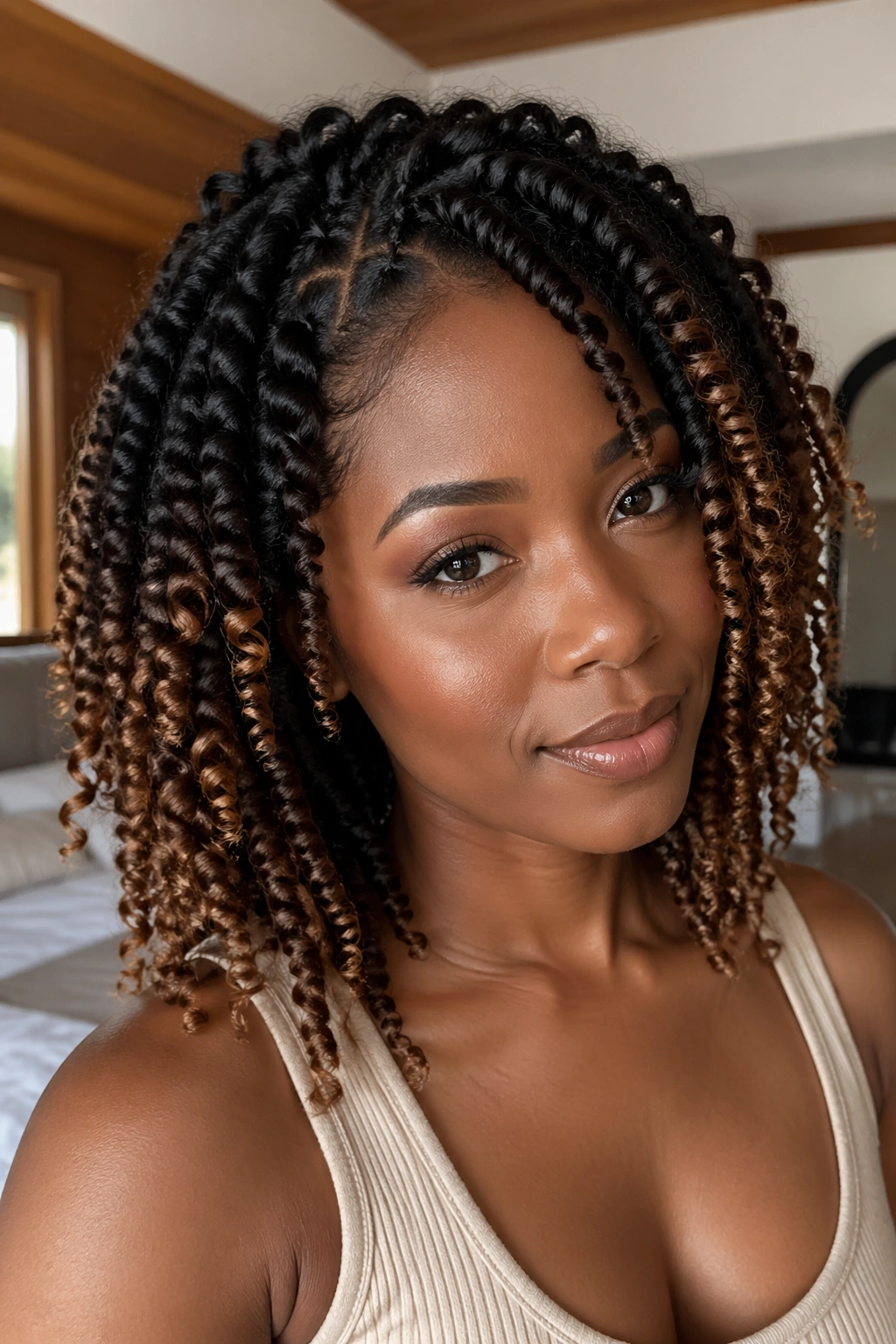
Wearing dark brown ombre in a twist-out is one of the best ways to display the color gradient — the defined, elongated spiral of each twist-out section shows the progression from dark brown to lighter end in a clear, visible way that the compressed curl pattern of a wash-and-go sometimes obscures.
The twist-out elongates each curl enough to see the complete ombre gradient within each individual section — from the darker twist base at the top to the progressively lighter end below. In ombre-appropriate tones like caramel or honey, this gradient within each twist section looks like a miniature sunset on each individual curl.
Style your twist-out as usual on damp, product-applied hair, twisting in moderately sized sections. The ombre gradient shows most clearly in medium-sized twists — small enough to define the gradient but large enough for the lighter end section to be clearly visible.
10. Ombre on a High Puff
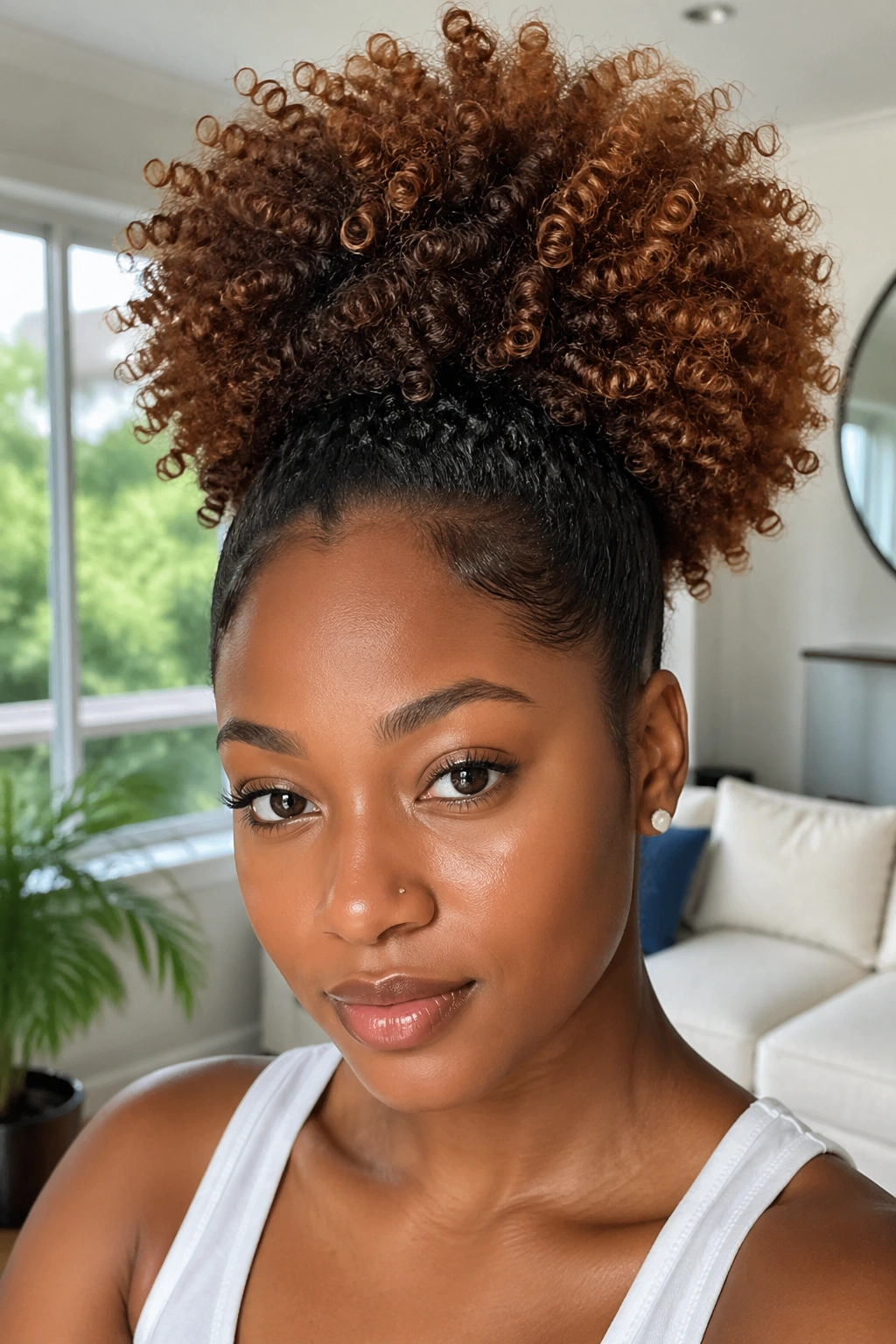
A high puff with dark brown ombre natural hair creates a style where the darker root zone gathers inside the puff base while the lighter ombre ends splay outward at the perimeter. The visual effect is a puff with a warm, glowing halo of lighter color around its edges.
This is one of the most photogenic ombre presentations on natural hair because the puff shape creates a clean, circular silhouette that showcases the darker interior (root zone) and lighter exterior (ombre ends) in one clear, beautiful composition.
For maximum visual impact, ensure your ombre zone starts close enough to the root that even gathered hair in a puff shows visible color transition. If the ombre starts too far down the length, a puff may hide the lighter ends inside the gathered mass.
11. Ombre on a Wash-and-Go
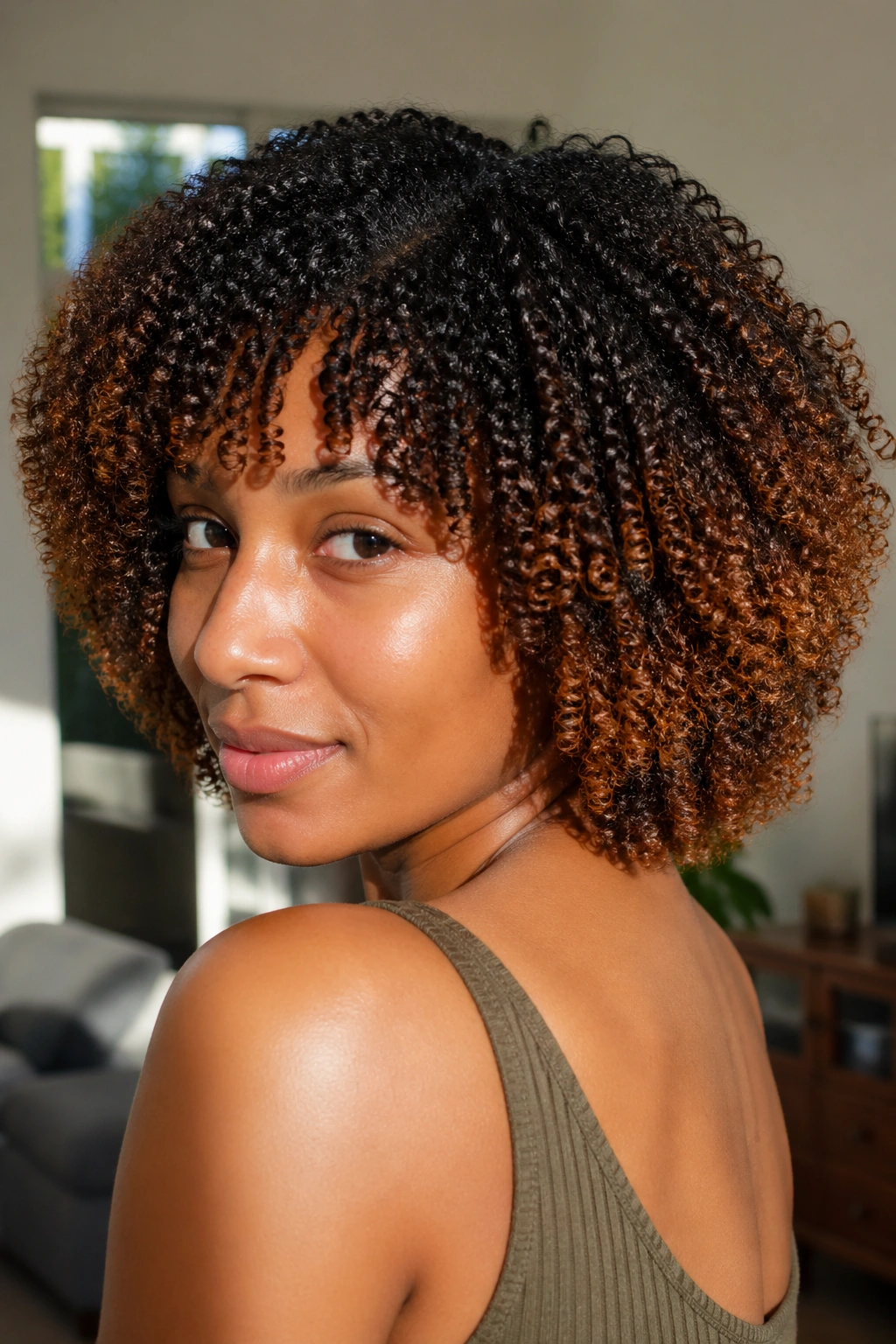
The wash-and-go is where dark brown ombre on natural curls shows its most complex and dimensional quality. Rather than a clear, linear root-to-end gradient, the ombre on a wash-and-go creates an overall visual warmth that increases through the curl mass — darker at the scalp where the roots are tightest, progressively warmer toward the ends where the ombre zone concentrates.
On tight coil patterns, this effect is subtle but beautiful — the overall impression is of hair that’s richer and more dimensional toward the ends, with a warmth that seems to build as the eye moves outward from the scalp.
On looser curl patterns, the ombre on a wash-and-go is more distinctly visible — the looser curl allows more length to be seen in each section, and the dark-to-light gradient reads more clearly within each elongated curl.
12. Ombre on Box Braids
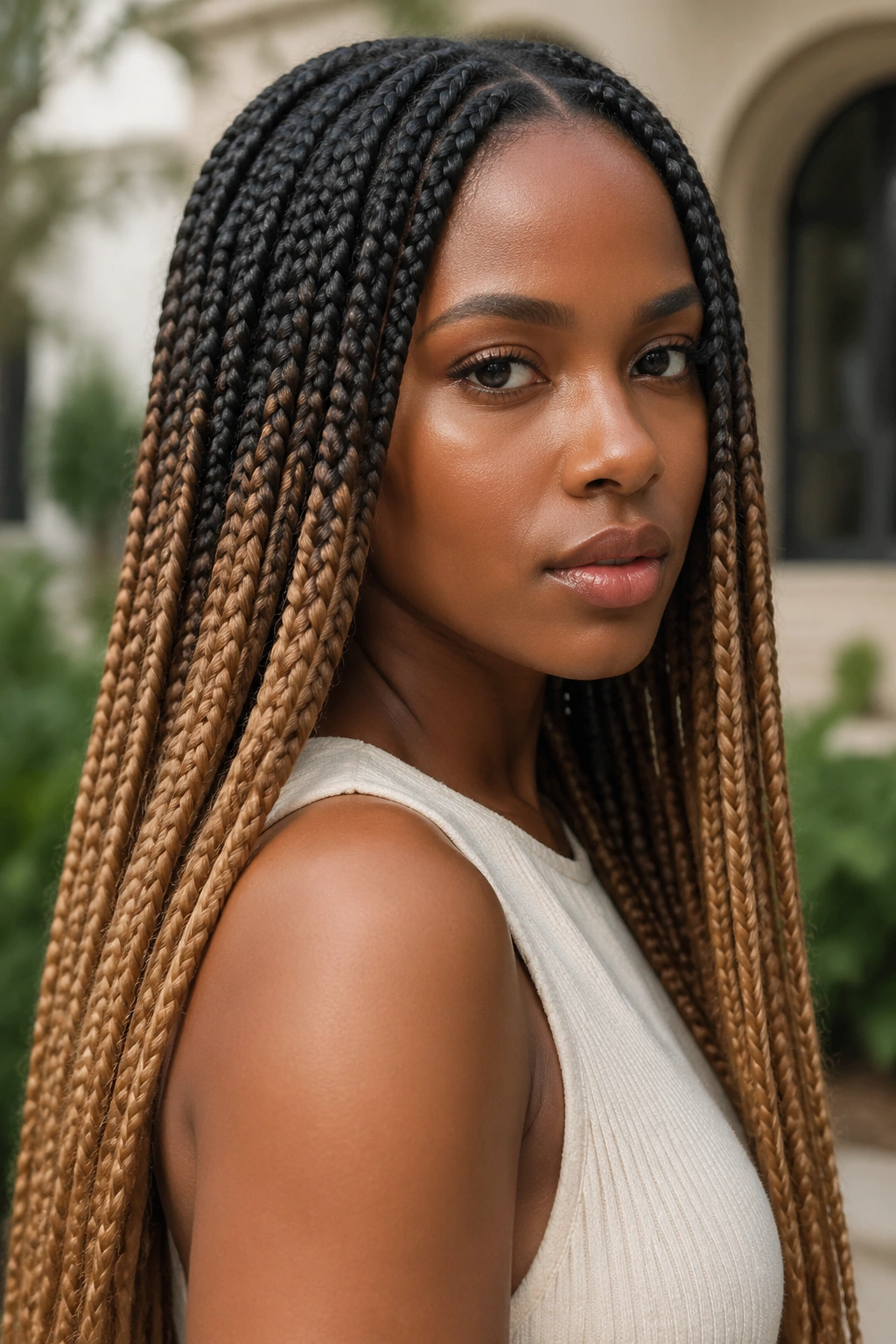
Dark brown to lighter ombre box braids — using extension braiding hair in a graduated tone blend — create a protective style with the same visual logic as natural hair ombre. The darker braiding hair at the root zones transitions to lighter shades toward the braid ends, replicating the ombre gradient in a fully protective format.
Your natural hair stays completely untouched under the cornrow base while the ombre color lives entirely in the extension hair. This is a genuinely zero-chemical-commitment way to wear and explore ombre aesthetics on natural hair.
How to Achieve This Look
Select extension hair in three complementary tones: your natural dark brown color for the root zone, a mid-tone warm brown for the mid-length transition, and your desired lighter end color (caramel, honey, copper, etc.) for the ombre ends. Blend these throughout the braid installation, concentrating the lighter shades progressively toward the braid ends.
13. Ombre on Senegalese Twists
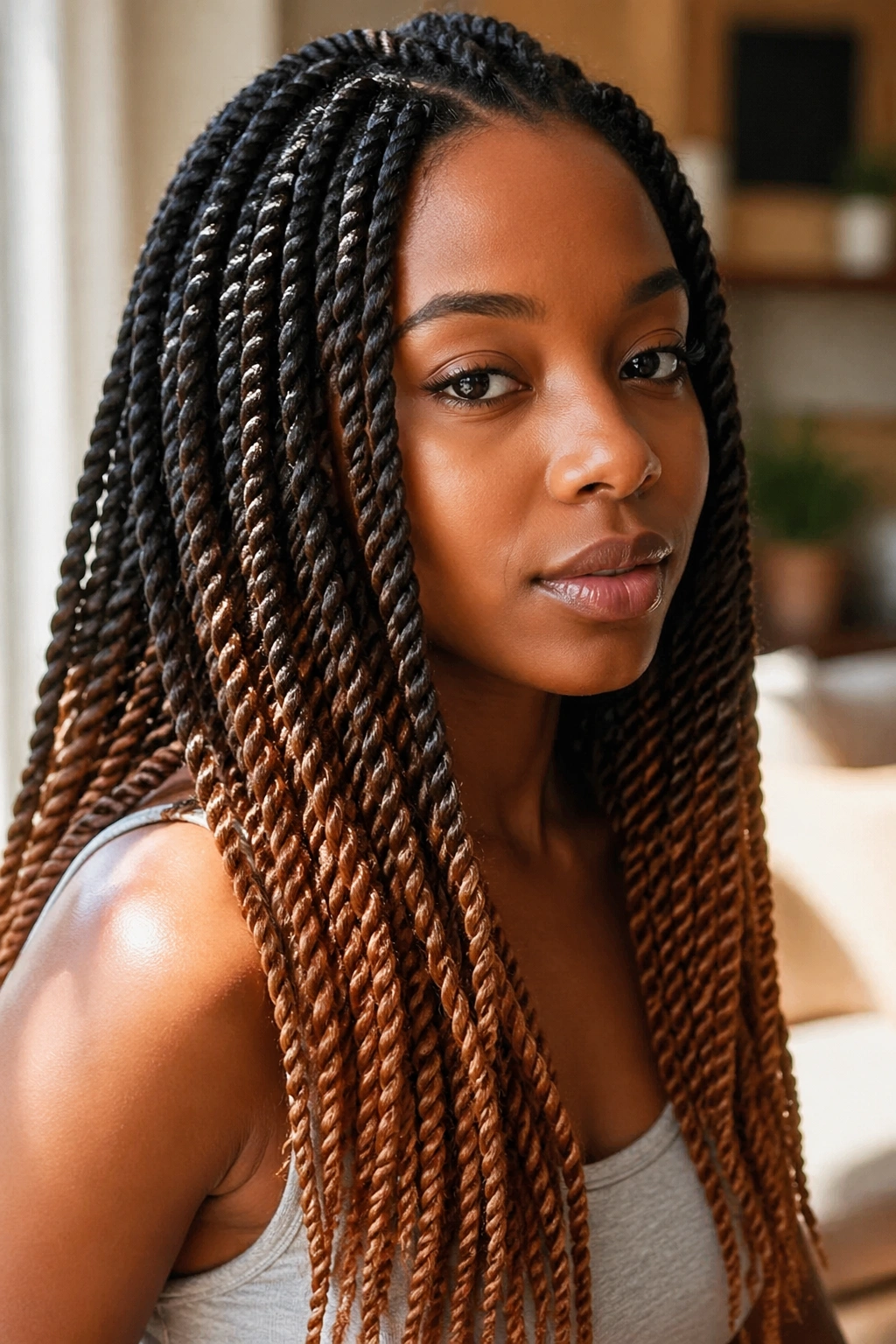
Ombre Senegalese twists in dark brown to caramel or honey tones are a beautiful protective style that shows the color gradient with unusual clarity — because the smooth, consistent wrapping of Senegalese twists creates an uninterrupted color column from root to tip, the ombre gradient reads cleanly and elegantly.
The smooth surface of Senegalese twists actually displays ombre more clearly than box braids, which have a slightly rougher surface texture. In the right lighting, the gradient within each individual Senegalese twist is distinctly visible and stunning.
Use pre-stretched kanekalon braiding hair in complementary tones. Install dark at the root, transitioning progressively to the lighter end color through the mid-length. Finish with a hot water dip to seal ends.
14. Ombre on Passion Twists
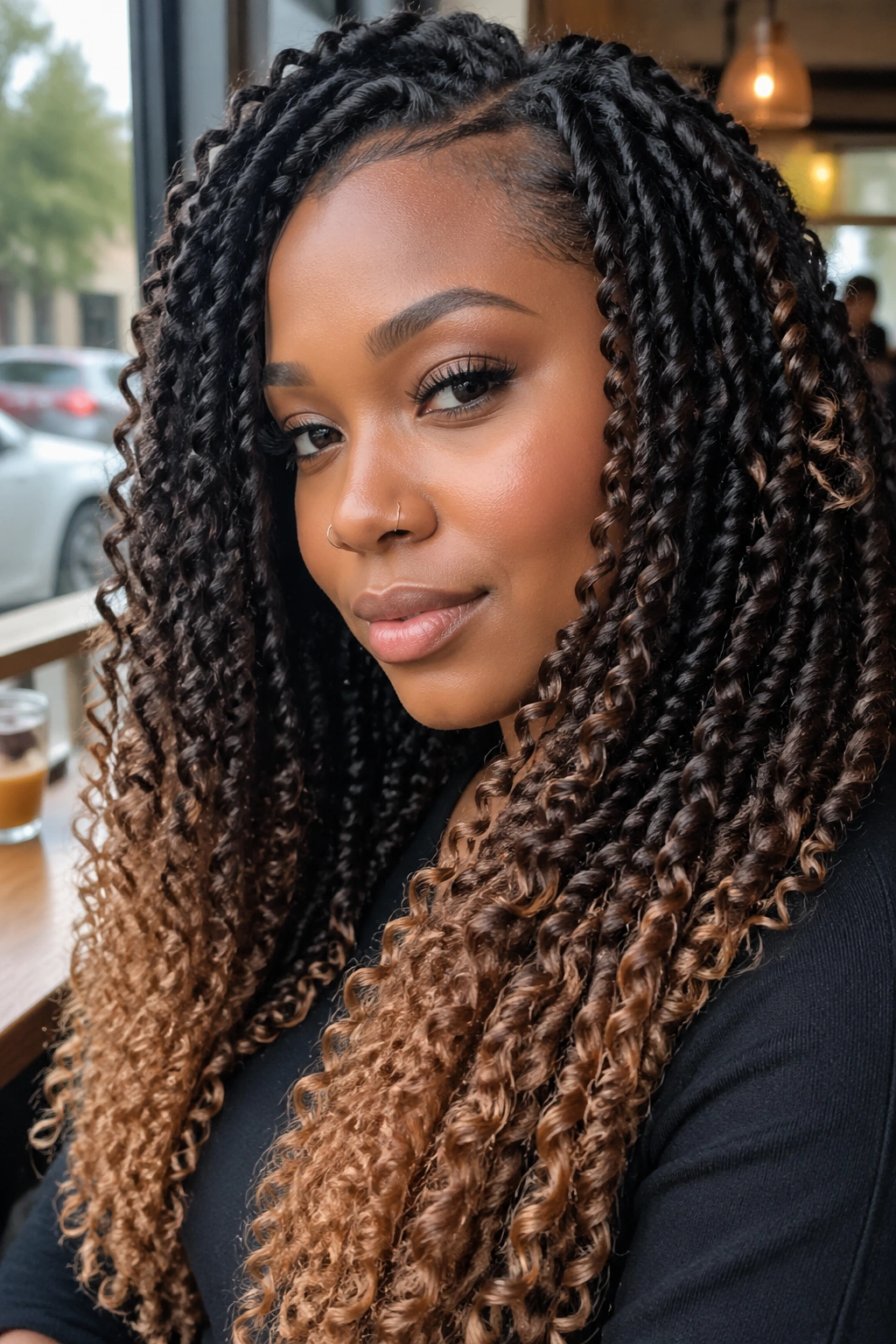
Dark brown to lighter ombre passion twists combine the soft, bohemian texture of the passion twist style with the dimensional color story of ombre. The loose, organic texture of passion twists gives the color gradient a more diffuse, naturalistic quality than the smoother surface of Senegalese twists.
On passion twists, the ombre gradient shows up as an overall darkening toward the root and a warming, lightening quality through the mid-length and ends of the twist — less crisp than on straight-surface twists, but more organic and beautiful in its own way.
Choose water wave extension hair in ombre-toned variations — many extension companies sell pre-blended ombre extension hair that simplifies the installation process significantly.
15. Ombre on Goddess Locs
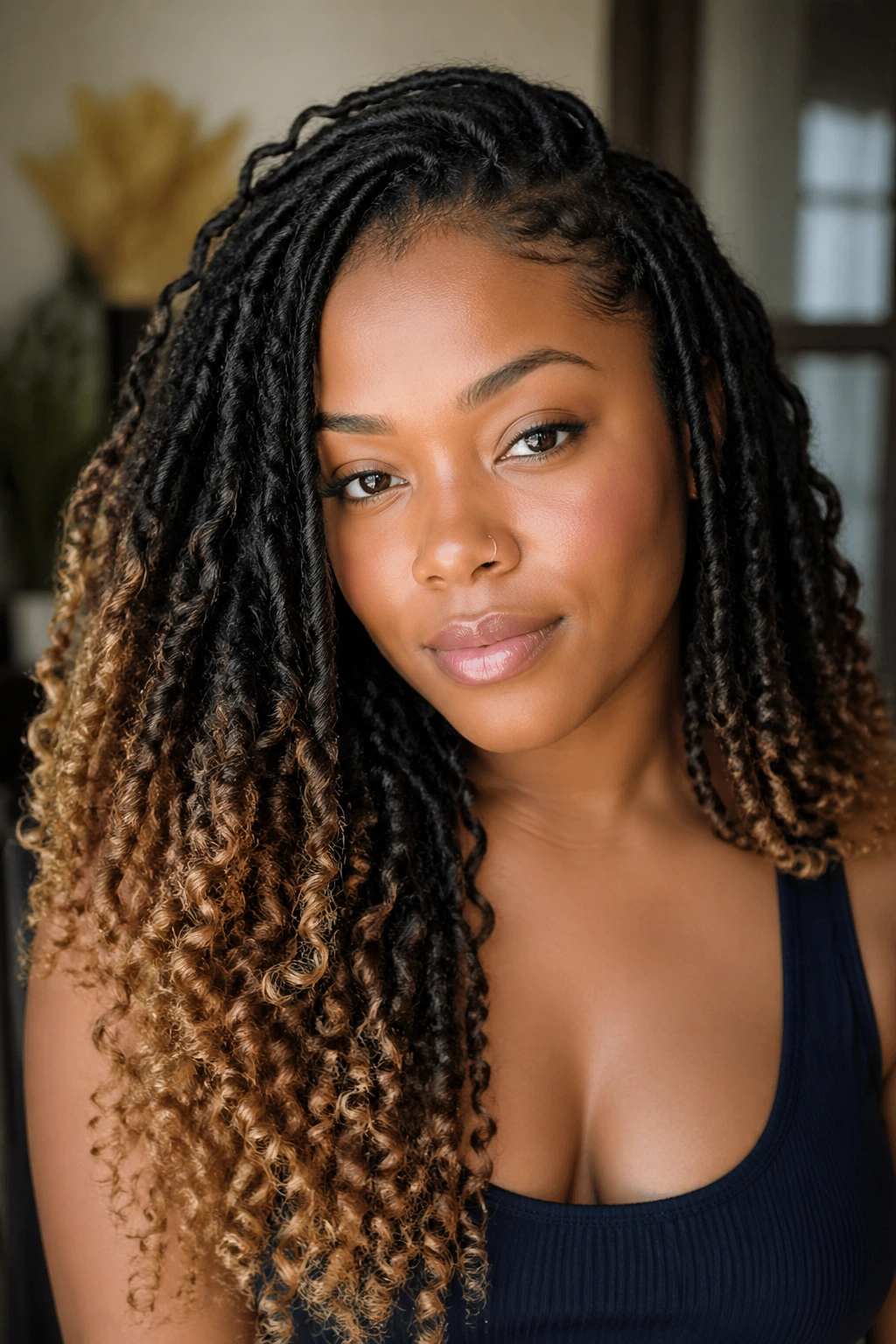
Goddess locs in dark brown to lighter ombre tones — with the loc body in the darker shade and the soft, curly ends in the lighter ombre tone — create a style that tells the ombre color story in a particularly beautiful way.
The structural difference between the loc body and the curly ends means the dark and light zones are literally in different textures — the dark loc body has the wrapped, slightly matte quality of a loc, while the lighter curly ends have the more reflective, fluid quality of a loose curl. The combination is genuinely beautiful.
16. Dark Brown to Golden Ombre
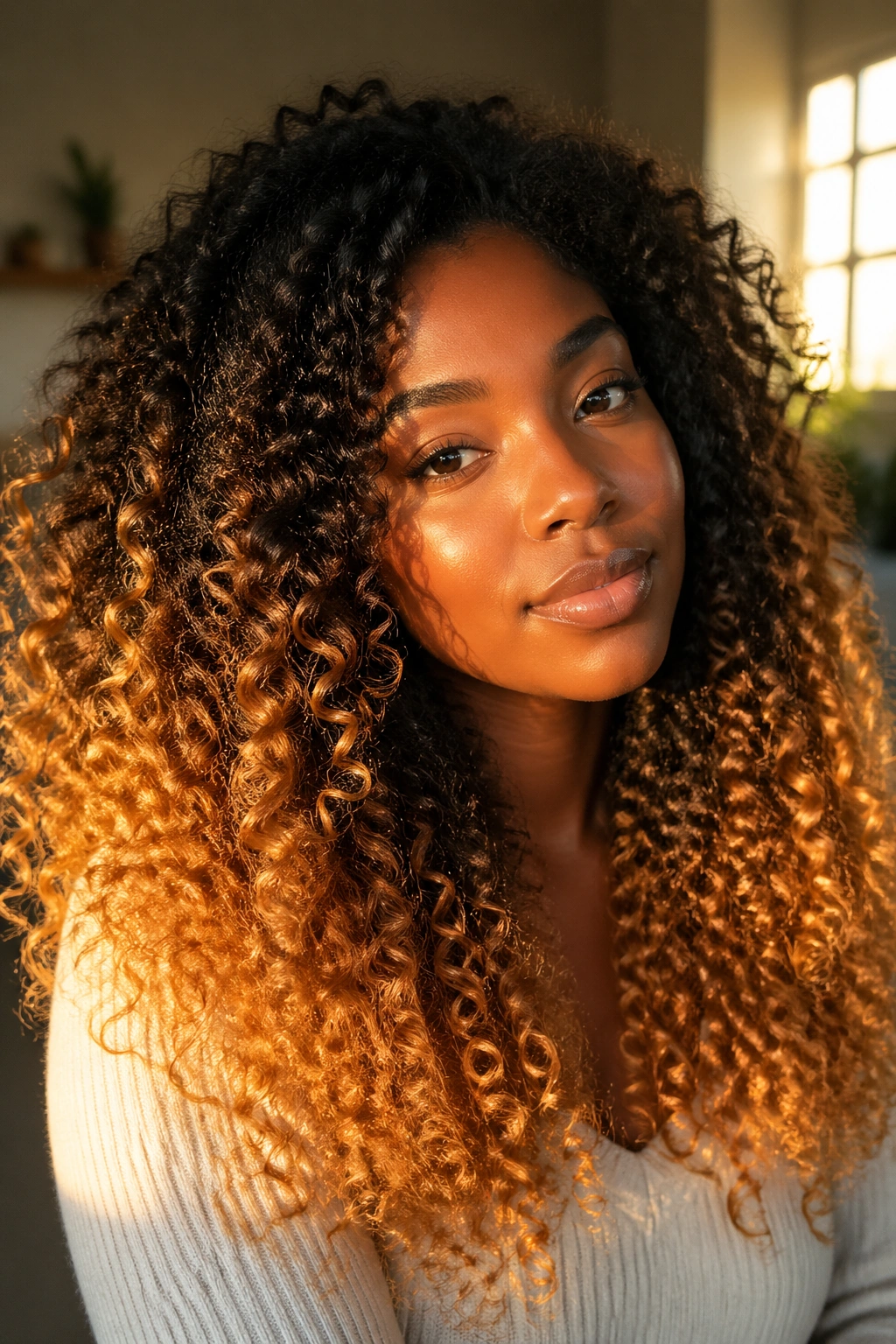
Dark brown to golden ombre on natural curls creates a warm, luminous effect that’s vivid without being harsh — the golden tones have enough yellow in them to be clearly bright but enough warmth to stay flattering on a wide range of skin tones.
Golden ombre on natural curls looks most striking in golden-hour light — the warm tones of the ombre end zone interact with warm sunset or late-afternoon light in a way that creates an almost incandescent effect. It’s genuinely one of the most beautiful color combinations in natural hair.
17. Ombre on Faux Locs
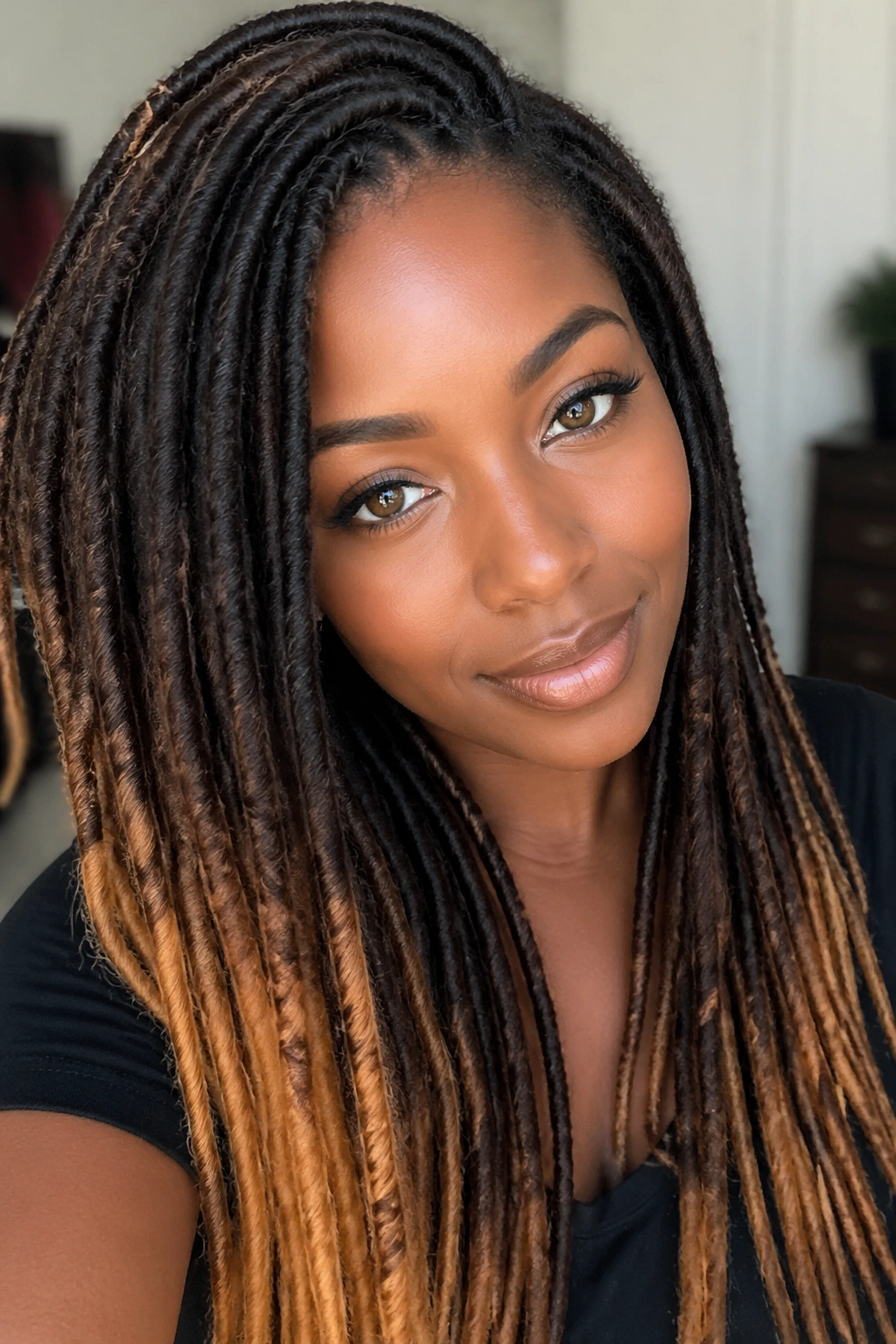
Dark brown faux locs that transition to a lighter color at the tips or lower sections create an ombre effect in a fully protective style. The wrapped body of faux locs takes color differently than loose hair, so the ombre gradient has a matte, textured quality that reads as organic and natural.
The most effective ombre faux locs use darker extension hair at the root section and progressively lighter extension hair toward the tips — either by mixing lighter-toned braiding hair into the wrap as the loc progresses downward, or by choosing pre-tipped extension hair that already incorporates the tonal transition.
Maintain faux loc ombre with lightweight scalp oil and nightly satin protection. The style typically lasts six to eight weeks.
18. Ombre on Short Natural Hair
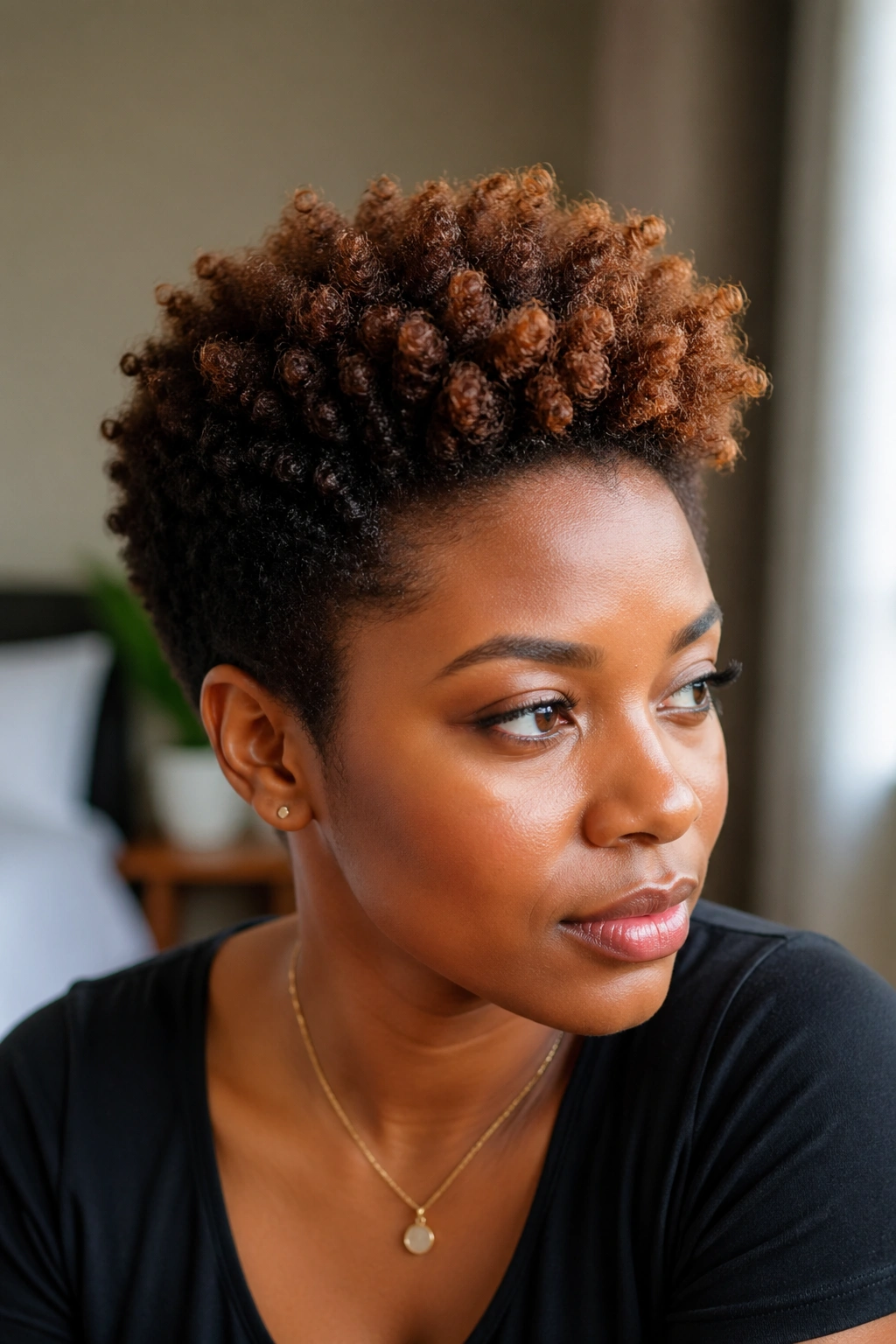
Short natural hair — TWAs, tapered cuts, cropped styles — gets ombre too, and the result is distinct from ombre on longer hair. On short hair, there isn’t enough length for a dramatic root-to-end gradient, so the ombre shows up as an overall tonal shift — darker at the scalp and progressively warmer and lighter at the tips of the coils.
This tip-to-root warmth on short natural curls creates a vivid, warm overall effect that’s dimensional in a different way than length-dependent ombre. The entire head appears graduated, with the scalp zone darkest and each coil tip warmest.
Short natural hair ombre is also one of the more manageable color options because the proximity of the ombre zone to the scalp means regular trims keep the highlighted ends fresh and the grow-out is managed naturally over time.
19. Ombre Touch-Up and Refresh
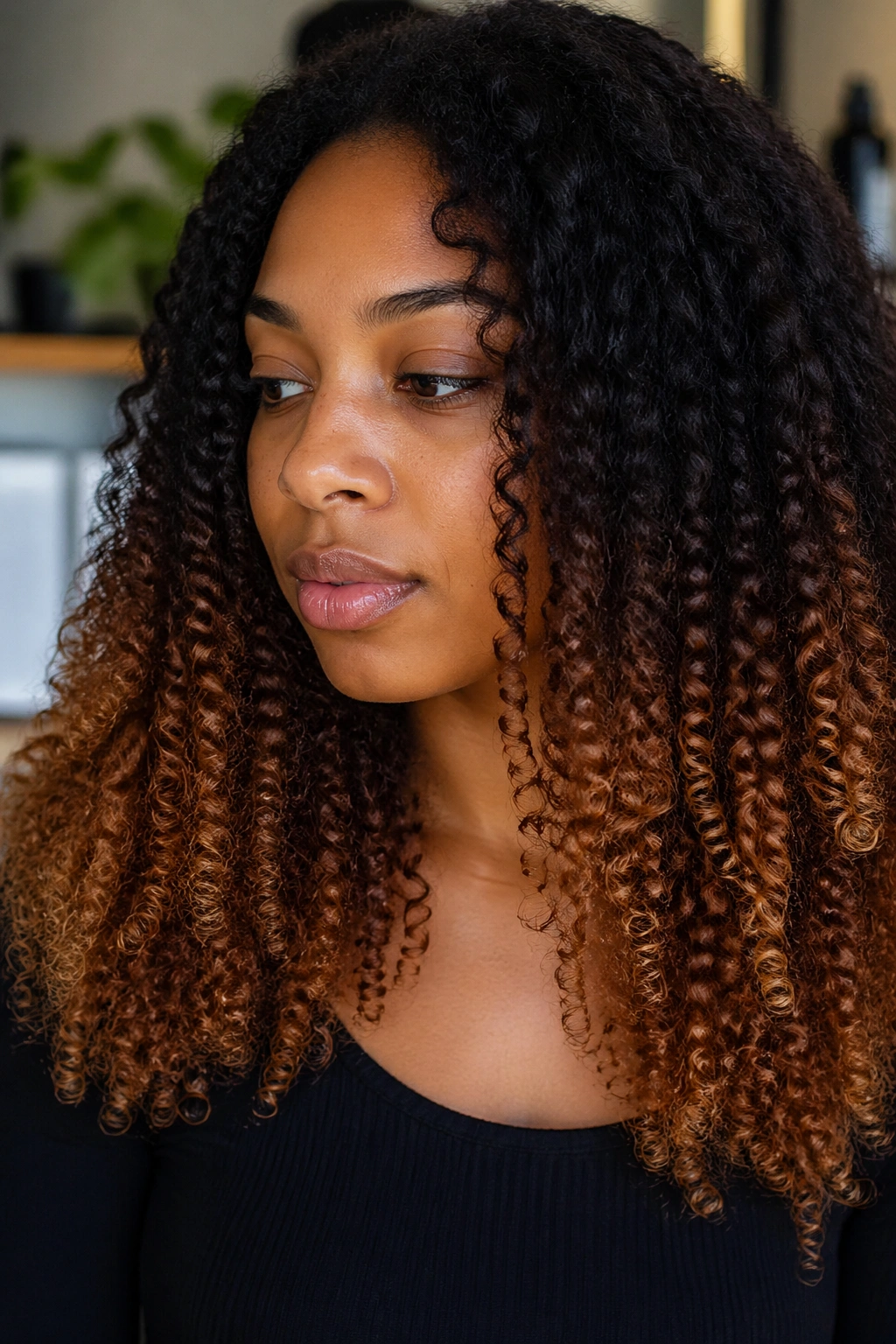
Ombre touch-ups work differently than all-over color touch-ups because the ombre effect is designed to grow out gracefully rather than showing obvious roots. The dark root is built into the look — it’s not a maintenance failure, it’s part of the color design.
Most natural hair ombre clients return every four to six months for a touch-up, rather than every six to eight weeks like all-over color clients. This makes ombre one of the more appointment-efficient and cost-effective color choices over the long term.
At touch-up appointments, the colorist typically refreshes the lighter ombre zone — re-lightening the ends and mid-lengths that have faded over the preceding months and applying a fresh toner — without necessarily touching the transition zone or the roots at all, unless the grow-out has pushed the transition point significantly from its original location.
20. Protecting Dark Brown Ombre from Brassiness
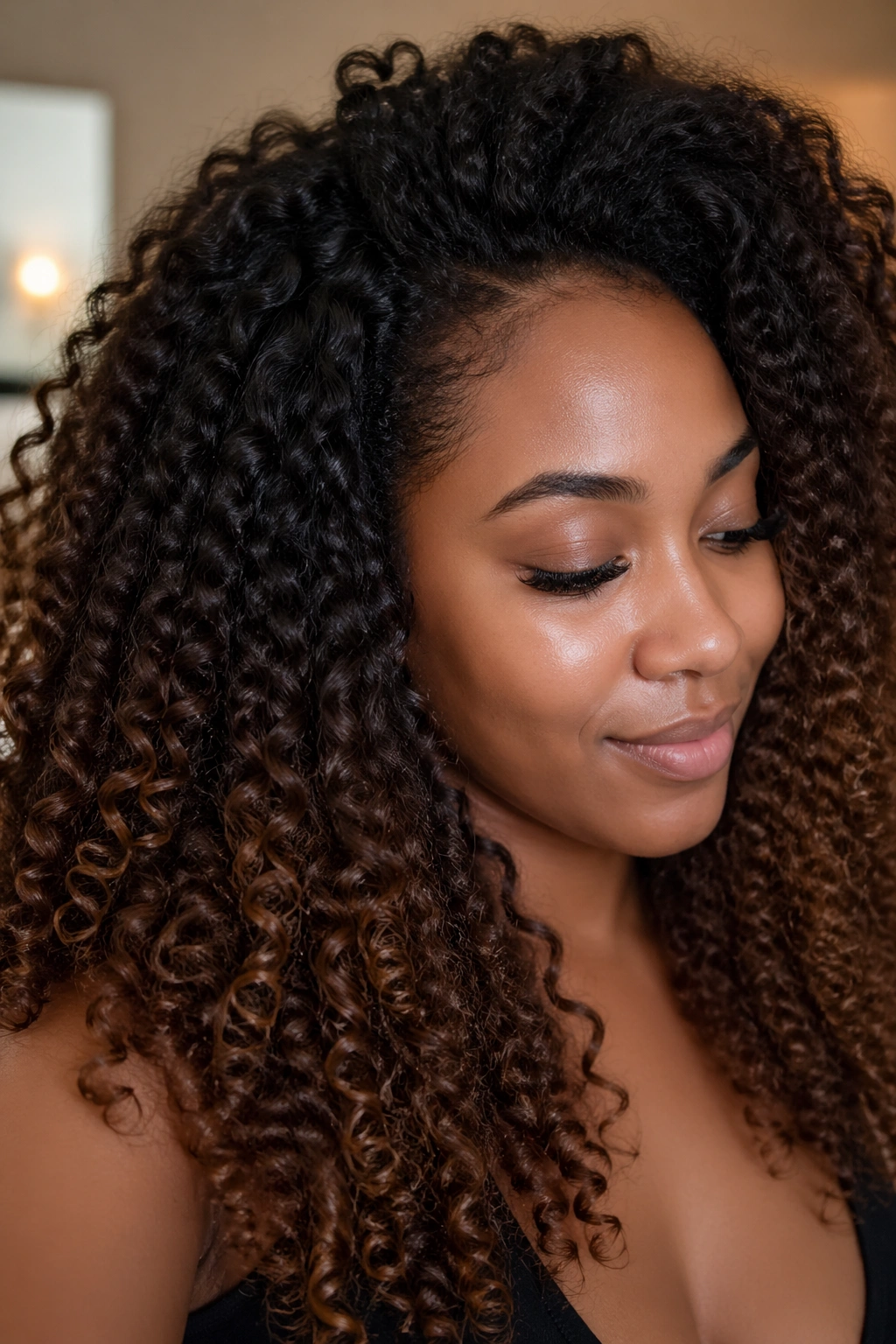
Brassiness — the unwanted appearance of orange or yellow tones in lightened hair — is one of the most common challenges for women maintaining dark brown ombre. As the toner applied at the salon fades, the underlying warm pigment in the lightened zone can emerge, creating a brassiness that obscures the intended ombre tone.
Preventing and addressing brassiness requires proactive maintenance at home between salon appointments. For caramel and warm ombre tones — where the brassiness would just shift the color into a slightly more orange version of itself — a warm gloss treatment every six weeks refreshes the tone without neutralizing the warmth you want to keep.
For honey blonde or lighter ombre tones, a purple shampoo used once a week deposits small amounts of purple pigment that neutralize yellow-orange brassiness and keep the blonde ombre zone looking cool and bright rather than yellow and warm. Don’t use purple shampoo more than once a week — overuse can leave a violet tint in the highlighted sections.
21. Dark Brown Ombre and Natural Styling Products
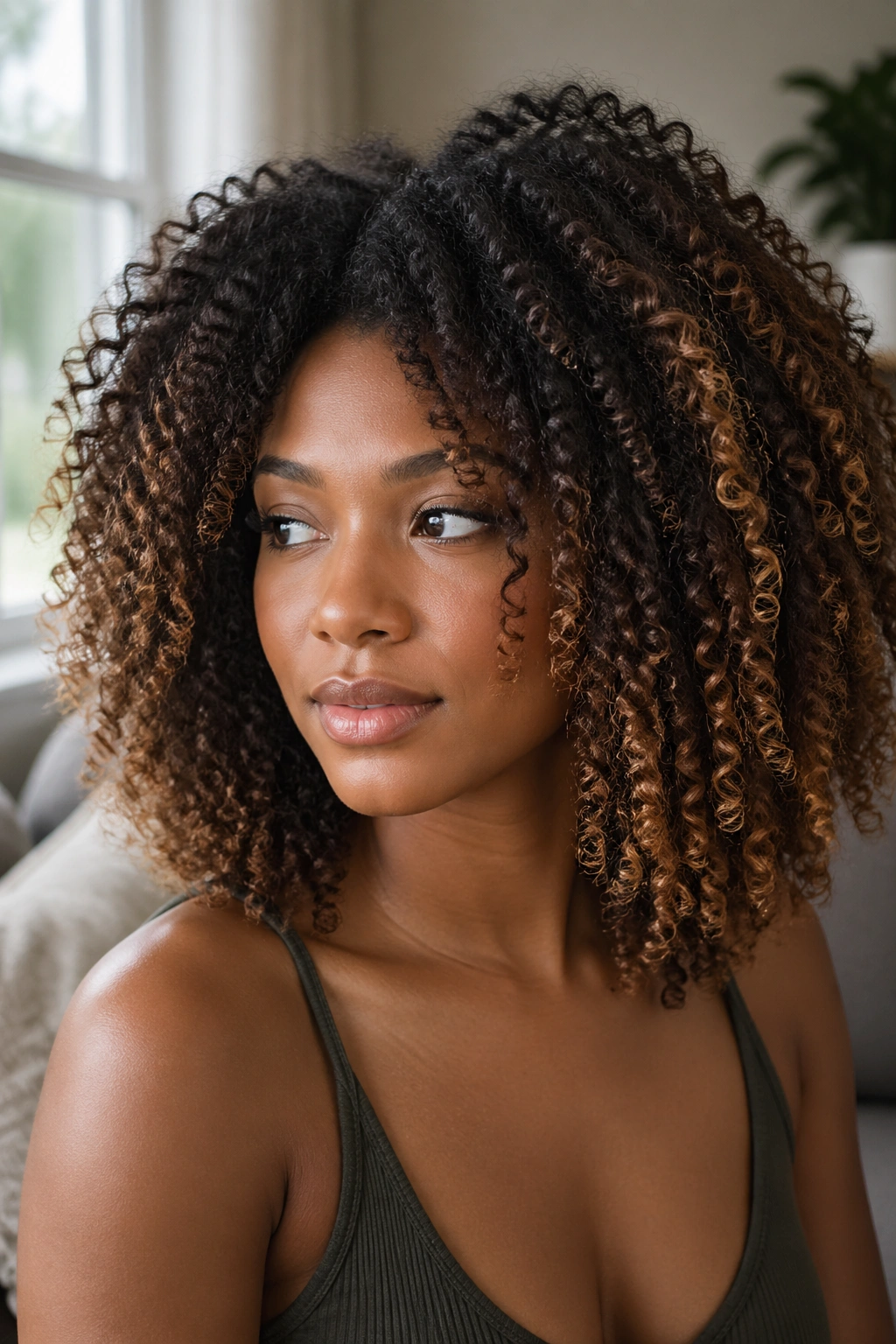
The natural hair styling products you use after your ombre service are more important than they were before — because lightened hair behaves differently than virgin hair and requires different product support.
Protein-enriched leave-in conditioners are particularly beneficial for the ombre zone, which has been through a lightening process that partially depletes the hair’s natural protein structure. A leave-in with keratin, rice protein, or other protein sources helps support the structural integrity of the lightened sections.
Heavier butters and sealants work well for the ombre end zone, which tends to be drier and more porous than the darker root zone. Using slightly richer products on the ends — after applying a lighter leave-in throughout — seals the more porous end sections and helps them retain moisture more effectively.
22. Ombre Grow-Out: Maintaining the Look Long-Term
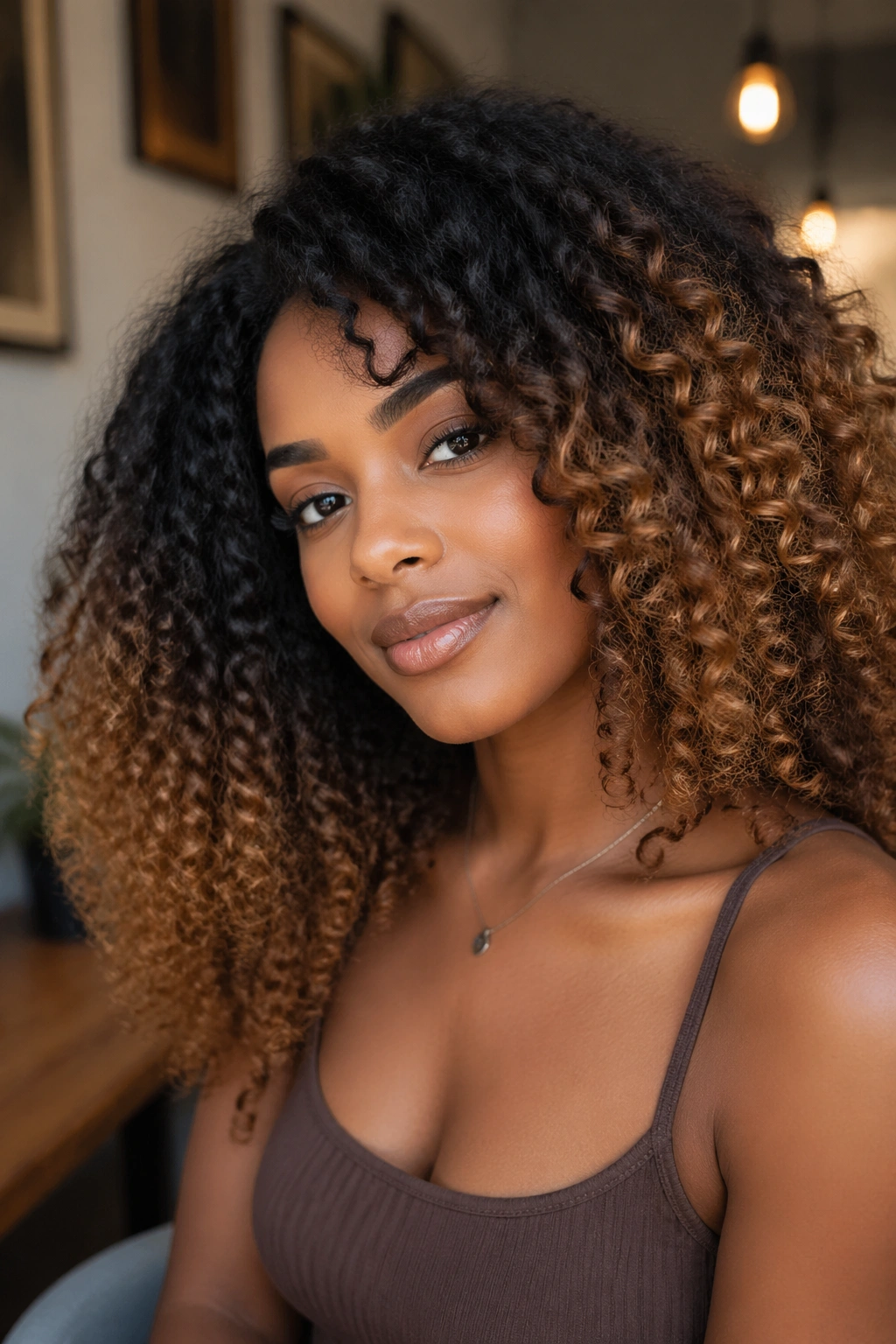
One of the most appealing practical qualities of dark brown ombre on natural curls is how gracefully it grows out. Because the starting point is a dark root — which is the natural color — there’s no obviously visible grow-in zone that marks the difference between new growth and colored hair.
The transition point of the ombre naturally migrates down the hair shaft as new growth emerges. What was originally at the mid-length eventually becomes closer to the lower third as the hair grows, and the overall ombre effect shifts from being more concentrated in the mid-length to being more end-concentrated over time.
This natural migration of the ombre zone often creates an even more dramatic and beautiful result at six months than it did at the original appointment — the contrast between dark root and lighter ombre becomes more pronounced as more dark growth emerges above it.
23. Choosing Your Ombre Style: What to Consider
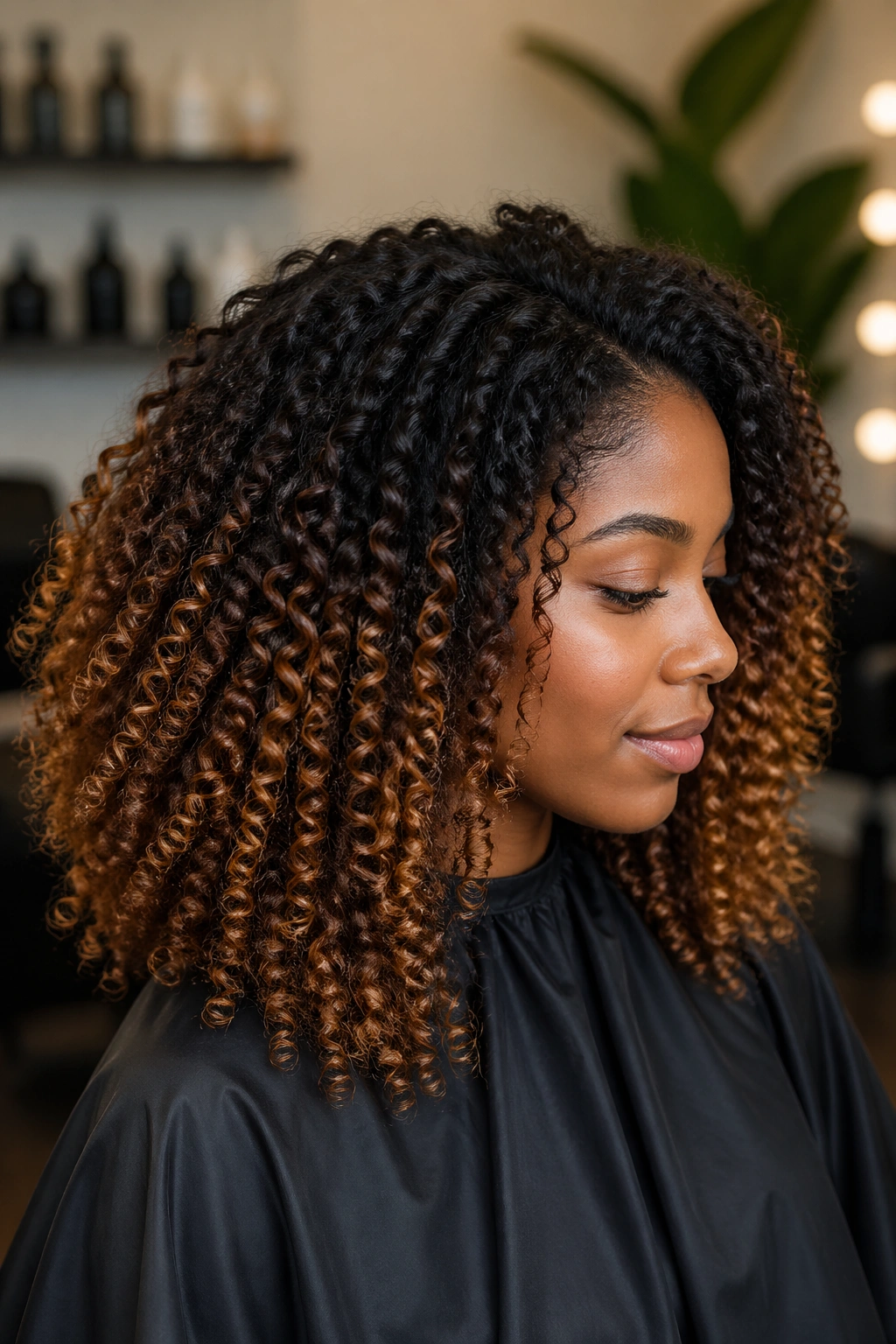
There are several important questions worth working through before deciding on your dark brown ombre approach — and being thoughtful about these questions ensures you walk away with exactly what you want.
How dramatic do you want the contrast? The answer to this question determines your lighter color choice. Caramel and golden brown create relatively gentle contrast; honey blonde and copper create moderate contrast; platinum creates maximum contrast. Be honest about whether you’re drawn to subtlety or drama in your aesthetic preferences.
How much time are you willing to spend on maintenance? Lighter ombre tones that require regular toning to prevent brassiness, color-depositing product use, and more frequent salon visits are genuinely higher-maintenance than subtler, less drastically lightened ombre variations. Factor in your actual lifestyle and routine rather than idealized intentions.
How is your hair’s current health? This is the most important question of all. Compromised, dry, or over-manipulated natural curls need a period of health restoration before a chemical lightening service — going into an ombre appointment with damaged hair is a risk to both your color result and your long-term curl health. Give your hair the care it needs first, then add the color.
The right ombre for your dark brown natural curls is out there — and with an experienced colorist, a solid care plan, and realistic expectations, the result will be everything you’re envisioning and more.