



Red and waves have a sharp little chemistry problem, and I mean that in a good way. Shoulder-length hair gives red color room to move, while waves keep it from looking flat or overworked. That’s why shoulder length wavy styles in red can feel softer, richer, and more wearable than the same shade on a straighter cut.
The trick is that “red” isn’t one thing. Copper reads bright and lively. Auburn leans earthy. Cherry, merlot, burgundy, and cranberry bring more depth and drama. Put any of those tones on a collarbone-grazing cut with bend and movement, and you get a style that looks intentional even when it’s a little undone.
What makes this length so useful is the way it sits between short and long. It hits a point where the ends still swing, the layers can show, and the color doesn’t disappear into a curtain of hair. If you’ve been hunting for red hair ideas that feel flattering instead of costume-like, the good ones tend to live right here.
1. Copper Waves with Soft Face-Framing Layers
Copper is the first red I think of when someone wants light, bright movement. On shoulder-length waves, it gives that sun-warmed look without needing a lot of styling drama. The face-framing layers matter here; they stop the cut from feeling boxy and let the front bend softly toward the cheekbones.
A middle part keeps the whole thing calm and modern, while a slight off-center part makes the color look a little more alive. Use a 1-inch curling iron or wand and leave the last inch of each section out so the ends stay relaxed. That tiny detail keeps the style from turning too polished.
Copper can go loud fast, so the best version usually has some dimension through the mids and ends. A gloss spray or shine mist makes this cut look expensive without trying too hard. The color itself is the star, but the layers are what keep it from sitting there like one flat block of orange-red.
2. Cherry Cola Waves with a Deep Side Part
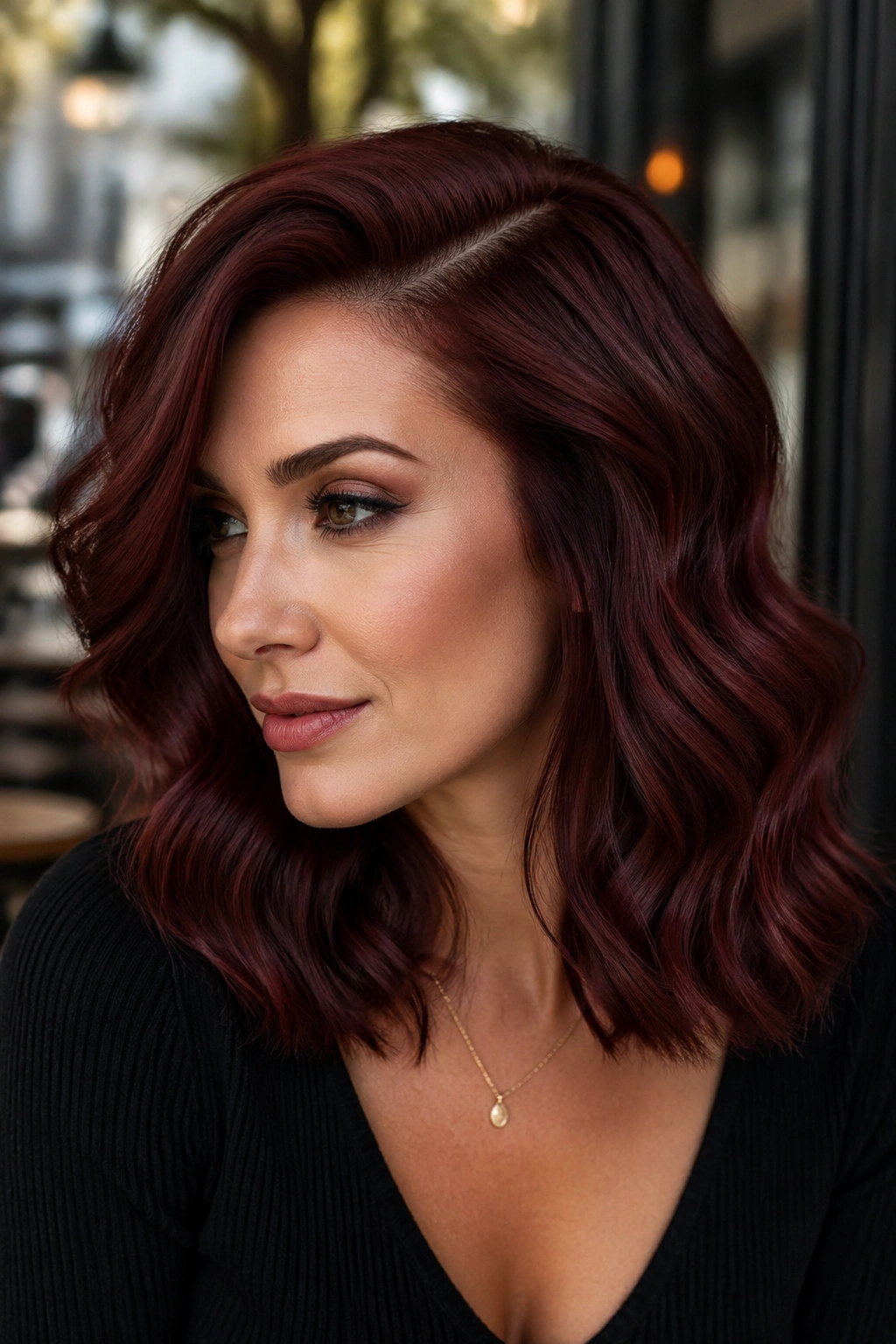
Cherry cola red is rich, dark, and a little moody. On shoulder-length wavy hair, that depth looks expensive in the plainest, best way. It’s one of those shades that gets better when the waves aren’t too tight, because the darker red needs space to show its undertones.
Why this one works so well
The deep side part creates an instant lift at the crown, which is useful if your hair tends to fall flat around the roots. Cherry cola also sits nicely against medium to deep skin tones, though it can work on lighter complexions too when the makeup and wardrobe have some contrast. The waves pick up hints of plum, brown, and red as you move.
Styling notes worth keeping
- Blow-dry the roots first for height.
- Curl away from the face on the heavier side.
- Leave the ends straighter if you want a softer finish.
- Use a light-hold spray, not a crunchy one.
This style loves shine. If your hair is dull, a color-depositing gloss every few washes can keep the red looking deep instead of muddy.
3. Auburn Shag with Choppy Ends
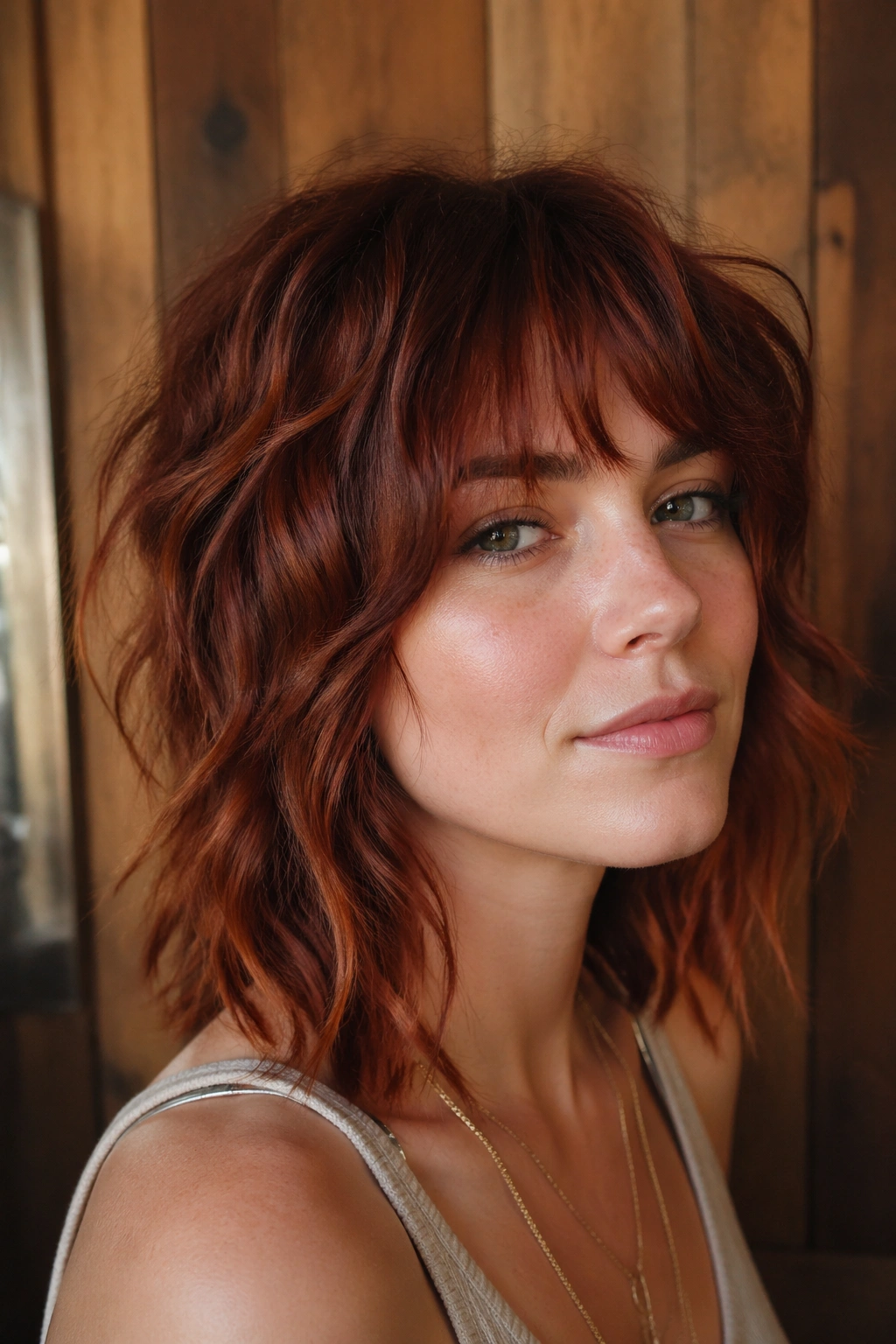
Ever see a red shag that looks too messy, like it fought with a hair dryer and lost? This is not that. A shoulder-length auburn shag works because the cut is built for movement, and the waves give the layers somewhere to go.
Auburn is warmer and browner than copper, which makes it easier to live with if you do not want your hair color announcing itself from across the room. Choppy ends help the cut feel light, and the uneven texture gives the red more bite. It’s especially good on thicker waves that can handle being thinned out a little.
What makes it different
The shag is about shape, not perfection. You want volume at the crown, broken-up ends, and a little lift around the eyes if you’re wearing curtain or bottleneck bangs. Too much smoothing takes away the point.
How to wear it
- Scrunch in mousse on damp hair.
- Diffuse until about 80 percent dry.
- Finish with a matte paste on the ends if they need separation.
The whole look gets better when it’s not overstyled. Auburn loves a bit of grit.
4. Merlot Waves with a Glossy Finish
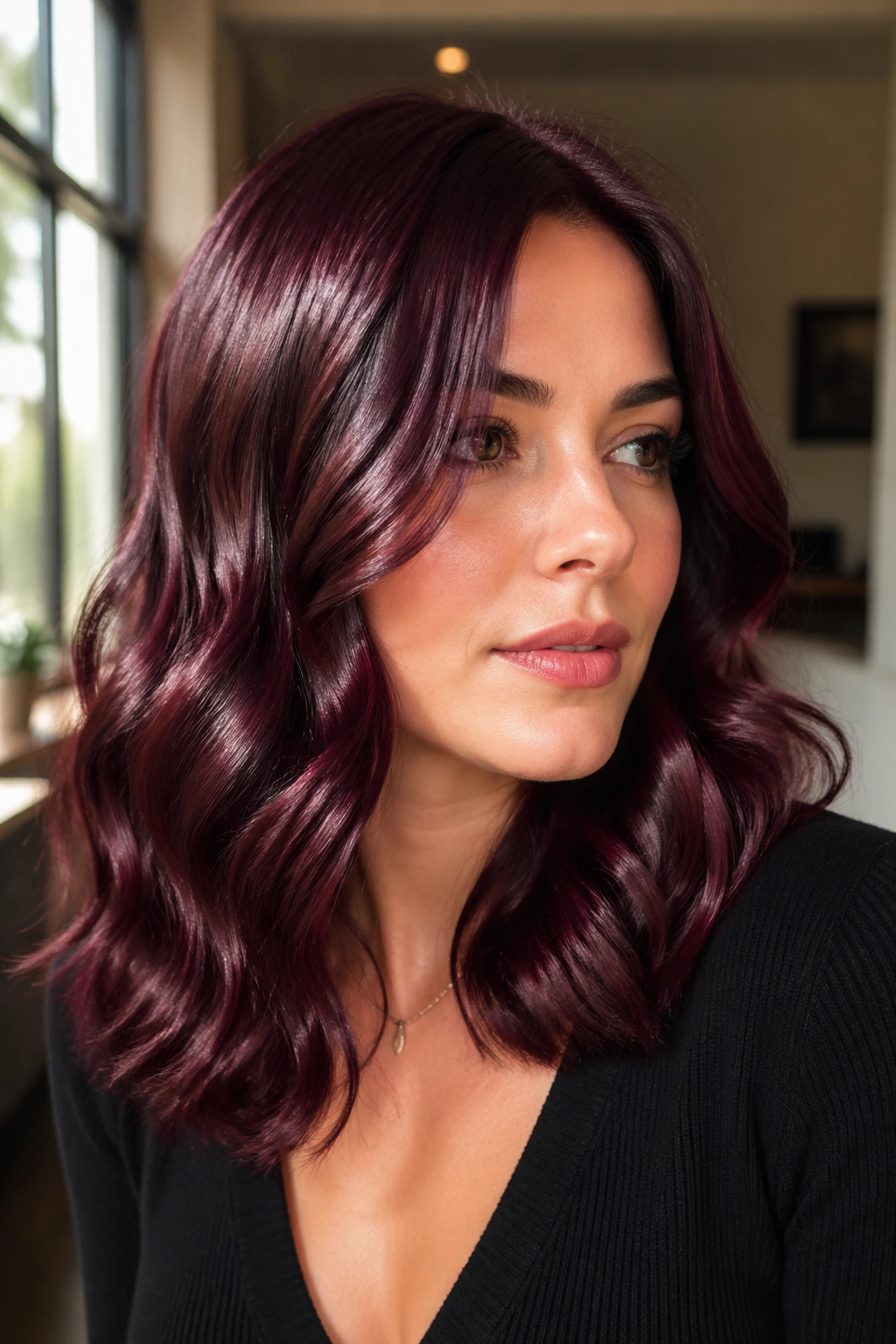
Merlot red is darker, wine-rich, and a little dramatic without screaming for attention. On shoulder-length waves, it reads as smooth and polished, especially when the hair has a glossy finish and the waves are broad rather than tight.
This style is a strong choice if your hair already has some natural bend. You don’t need ringlets here. In fact, tighter curls can fight the shade and make the whole look feel busier than it needs to be. Soft, wide waves let the color do the talking.
The best part is the way merlot shifts in different light. Indoors, it can look like a deep red-brown. Near a window, the red comes forward and the hair suddenly looks richer. A smoothing cream before blow-drying helps keep the surface calm, and a quick pass with a large-barrel iron gives the ends that rounded swing.
This is the red for people who like their hair to look finished. Not stiff. Finished.
5. Cinnamon Balayage Waves That Grow Out Gracefully
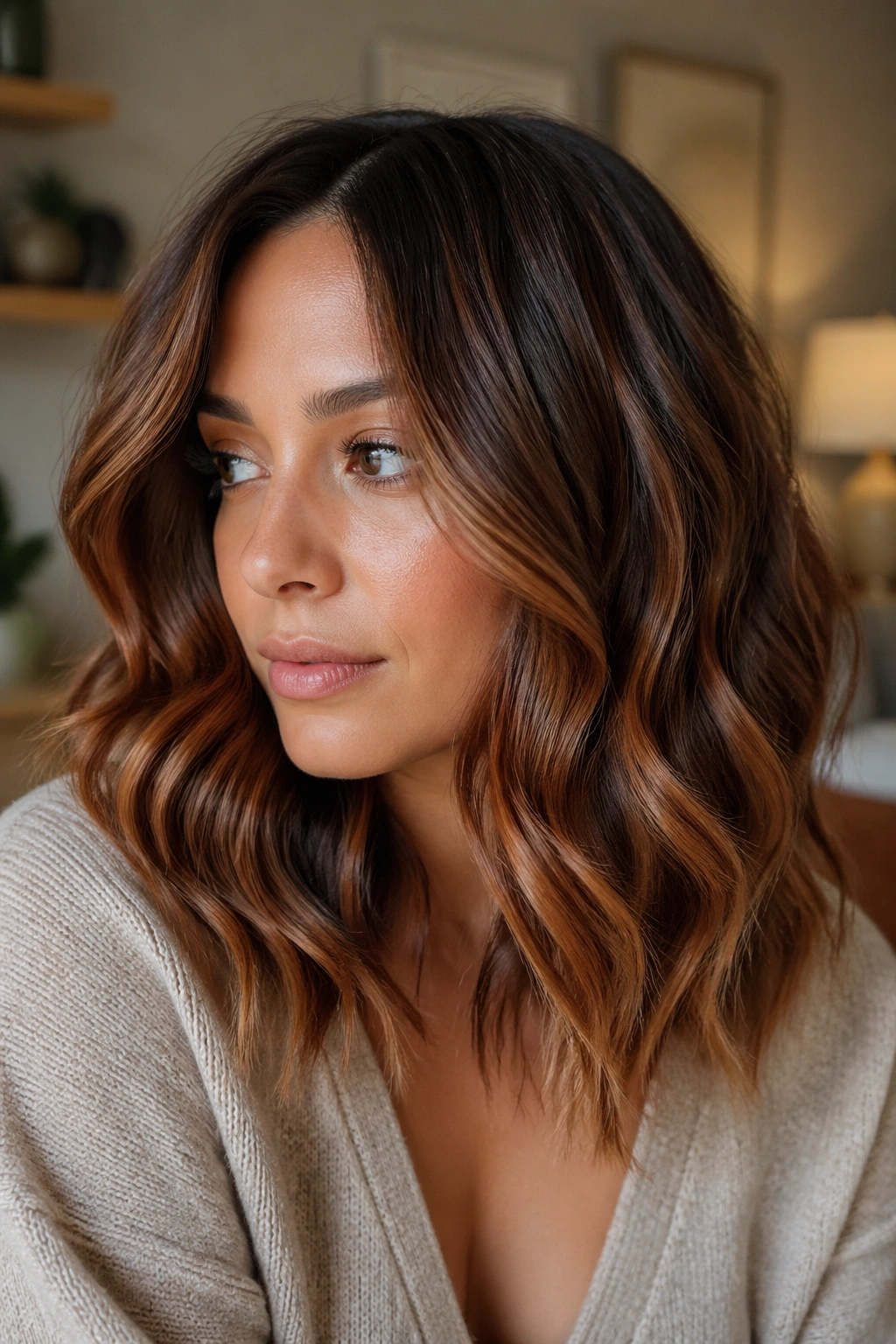
A cinnamon balayage is one of the easier ways to wear red if you want movement without a hard root line. The color is painted in soft ribbons through shoulder-length waves, which means the grow-out is less dramatic and the overall look stays gentle.
I like this style on cuts with a few long layers, because the highlights can catch on each bend instead of disappearing into the base. Balayage also gives red hair that soft, lived-in feeling that solid color sometimes misses. You get warmth at the ends, depth near the roots, and just enough brightness around the face.
A middle or slightly off-center part works. A center part makes it feel more balanced; the offset version gives the color a little more attitude. Either way, the waves should be loose, almost bent rather than curled. That keeps the cinnamon tones from looking stripey.
Ask for ribbons, not streaks. That one detail matters more than most people realize.
6. Ginger Waves with Bottleneck Bangs
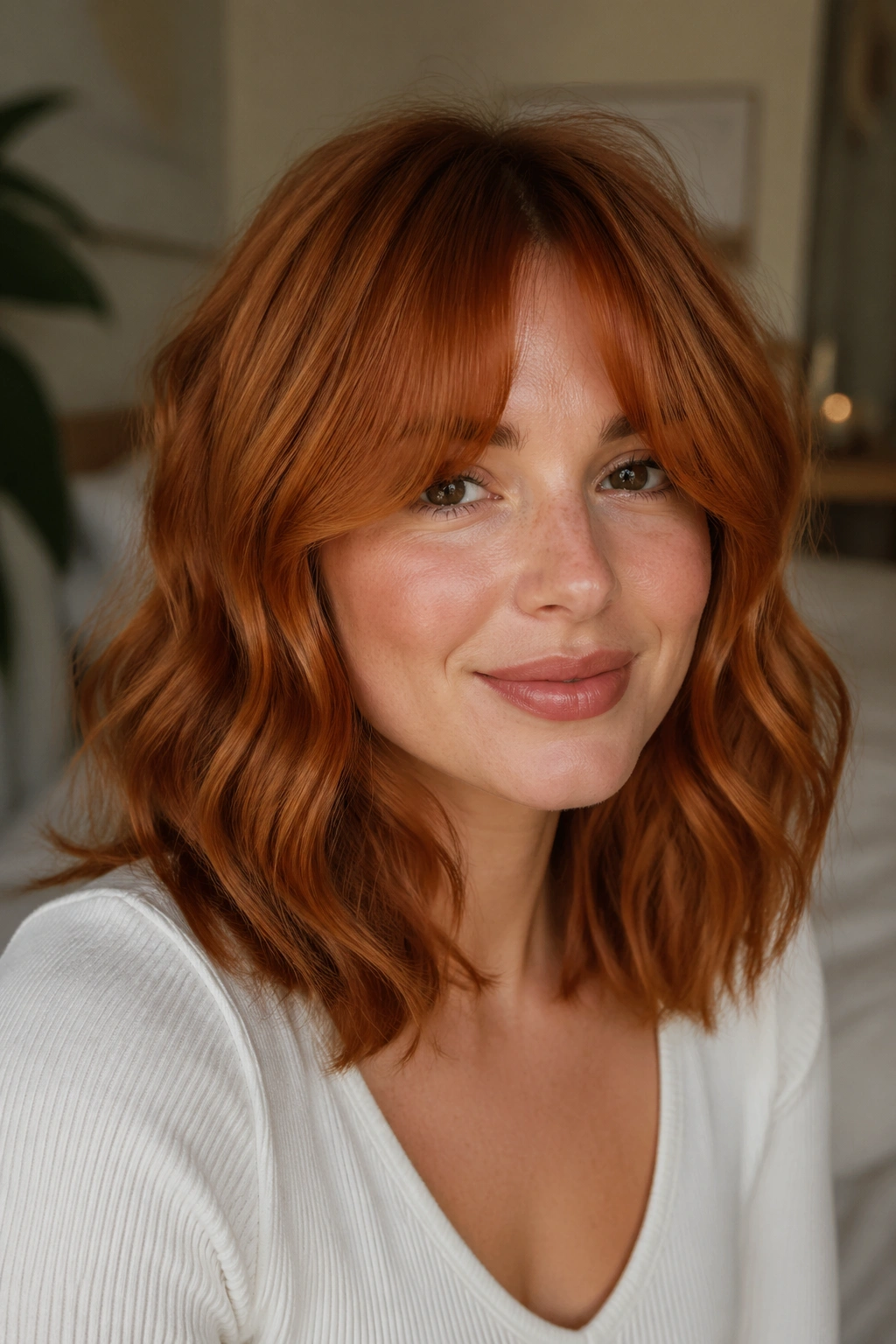
Ginger hair and bottleneck bangs have a nice relationship. The bangs start narrow near the center, open a bit at the cheeks, and blend into shoulder-length waves without a hard line. That shape is a gift if you want red hair to feel soft around the face instead of heavy.
Ginger itself is bright, warm, and a little playful. On wavy hair, it looks especially good when the texture is natural, because the bends keep the shade from reading too flat. If your hair is fine, a root-lift spray can help the bangs sit away from the forehead instead of clinging.
The big win here is balance. The bangs bring focus upward, while the shoulder-length waves keep the style grounded and wearable. You can tuck one side behind the ear, leave the rest loose, and still look put together.
One warning. Ginger can be unforgiving if the ends are too damaged, because split ends catch the eye fast. Trim cleanly. The shape depends on it.
7. Burgundy Layers with Soft Crown Volume
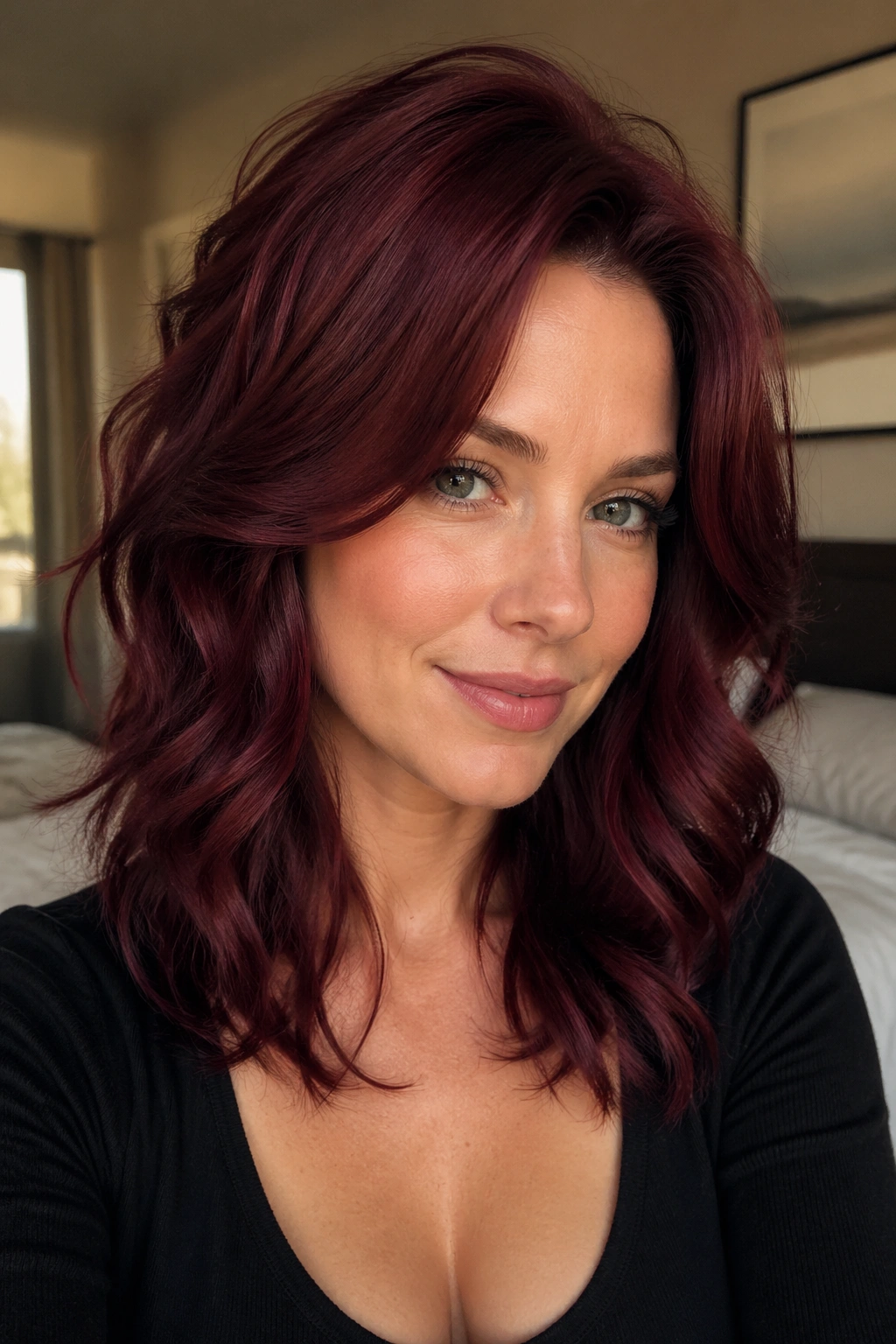
Burgundy on shoulder-length waves can go flat if the cut is too blunt. Layers fix that. A few strategically placed layers around the crown and sides give the hair lift, and the waves do the rest.
This is one of my favorite choices for thicker hair because burgundy has depth. It can handle weight. In fact, the color looks better when the shape has some structure, since the darker red can swallow detail if the cut is too dense at the bottom. A soft layered shape keeps the silhouette moving.
Air-drying can work here if your waves are cooperative, but a diffuser gives more lift at the roots. Use a curl cream if your waves frizz, though keep the amount small. Too much product mutes the shine, and burgundy needs that little bit of reflection to look rich instead of dull.
Volume at the crown changes everything. Without it, burgundy can feel heavy. With it, the color opens up.
8. Rosewood Lob with Loose S-Waves
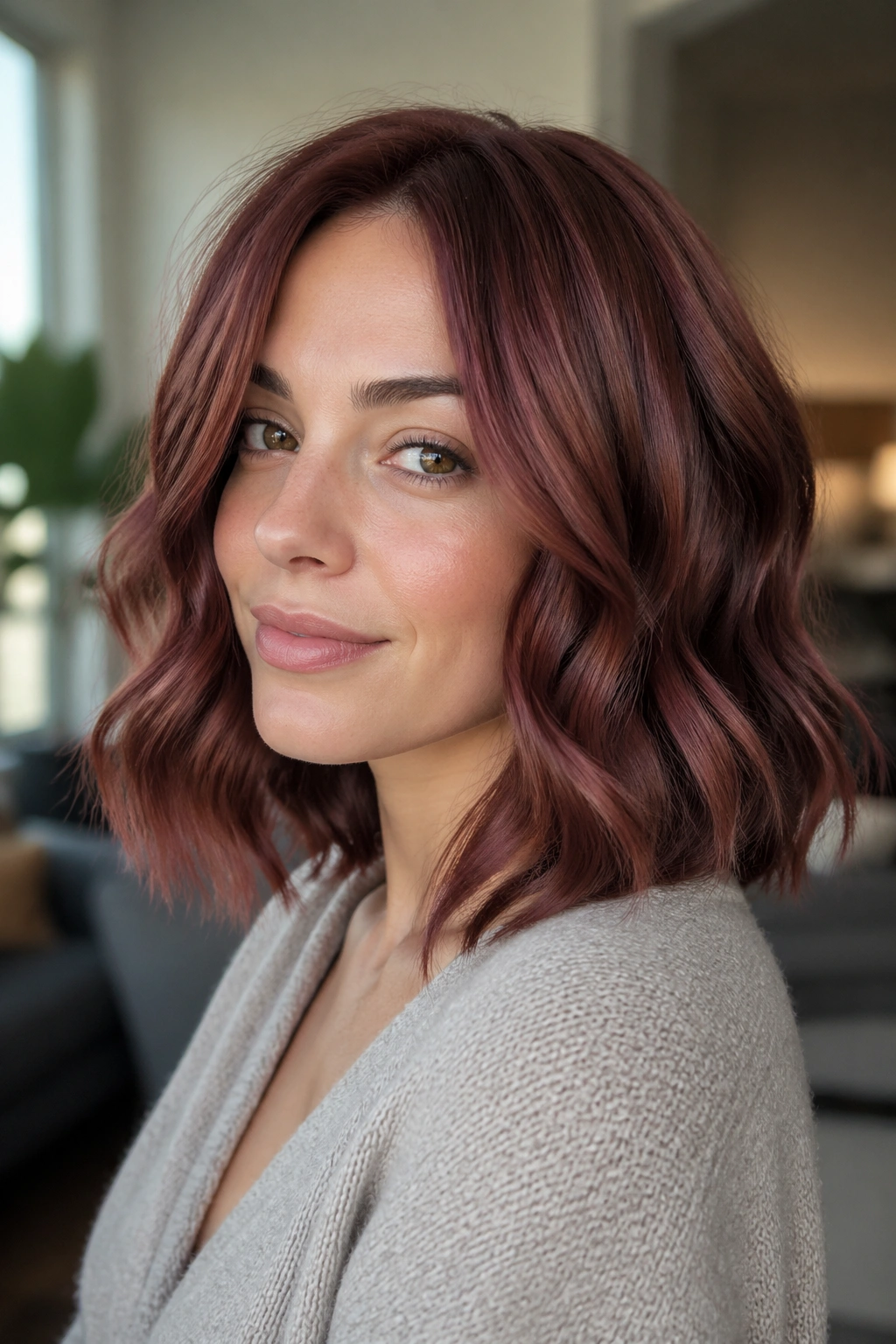
Rosewood is one of those red-brown tones that feels grown-up without getting stiff. On a long bob with loose S-waves, it lands right in the sweet spot between casual and polished. The curve of the wave matters more here than height or big texture.
Cut
A lob that skims the shoulders gives the wave enough room to move. If the ends are all one length, the style reads cleaner. Add a few very long layers only if your hair is thick.
Color
Rosewood works because it isn’t a hard red. It usually has brown, berry, and muted pink notes, which makes it easier to wear day to day. That depth also flatters hair that has a little natural shadow near the roots.
Finish
Use a medium barrel iron and alternate direction only near the face. That keeps the texture soft instead of too done. A pea-sized amount of smoothing serum on the ends is enough.
If you want red hair that feels expensive in a quiet way, this is a strong pick.
9. Scarlet Waves with Blunt Ends
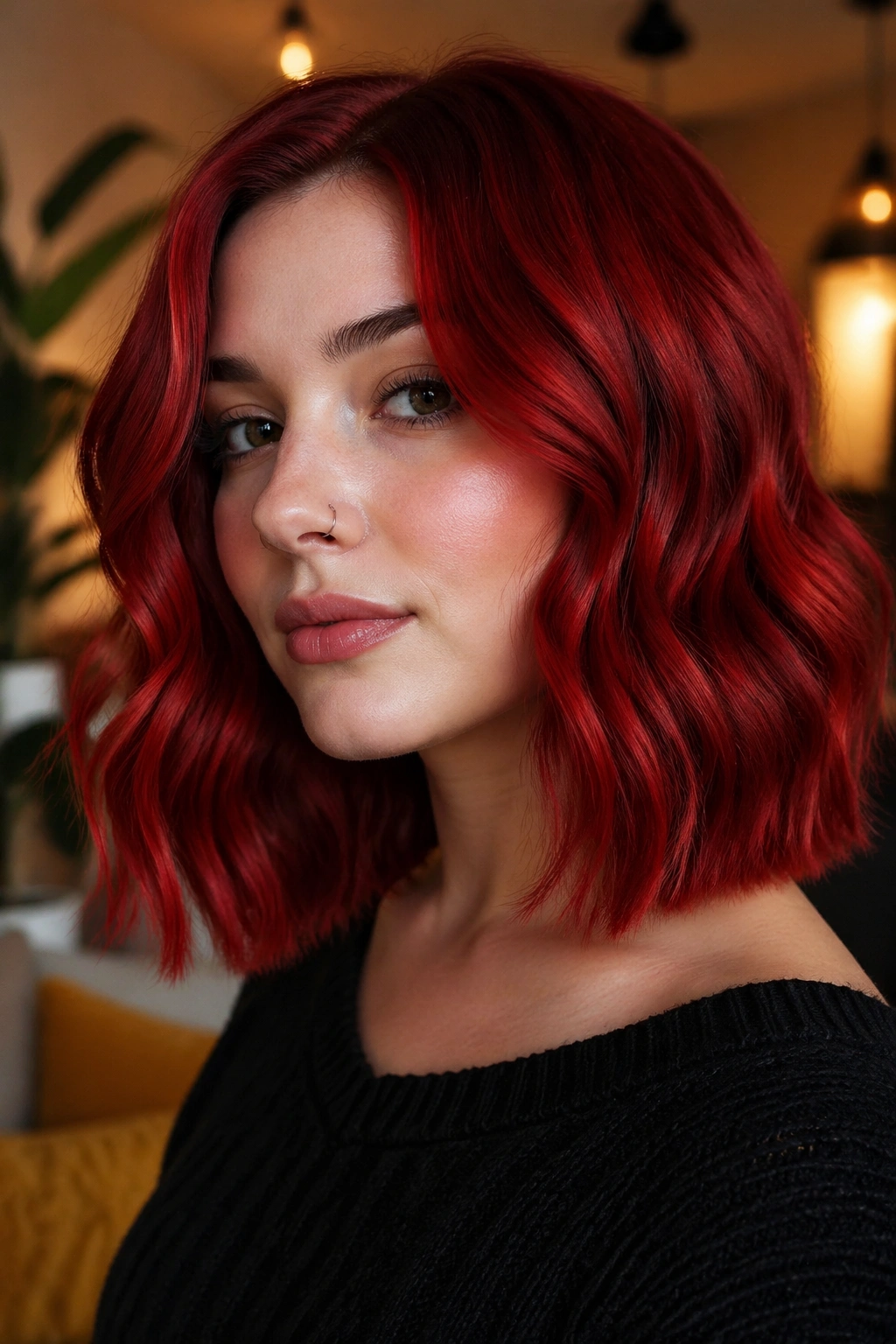
Want red hair that looks sharp instead of soft? Go blunt. Scarlet waves with a shoulder-length blunt cut create a strong line, and the waves keep that line from feeling severe. It’s a nice tension: clean shape, loose movement.
Scarlet is brighter and more direct than auburn or merlot. Because of that, the cut needs to be tidy. Split ends, thin patches, and rough layers all show faster on this shade. A blunt perimeter gives the hair a solid frame, and the waves break up the intensity so it doesn’t feel costume-y.
This style suits someone who likes contrast. The hair looks sleek from one angle and airy from another. If you’re styling at home, curl only the middle section of each strand and leave the top and bottom straighter. That creates bend without turning the whole head into ringlets.
Keep the ends crisp. That’s the whole point here.
10. Rusty Copper Beach Waves
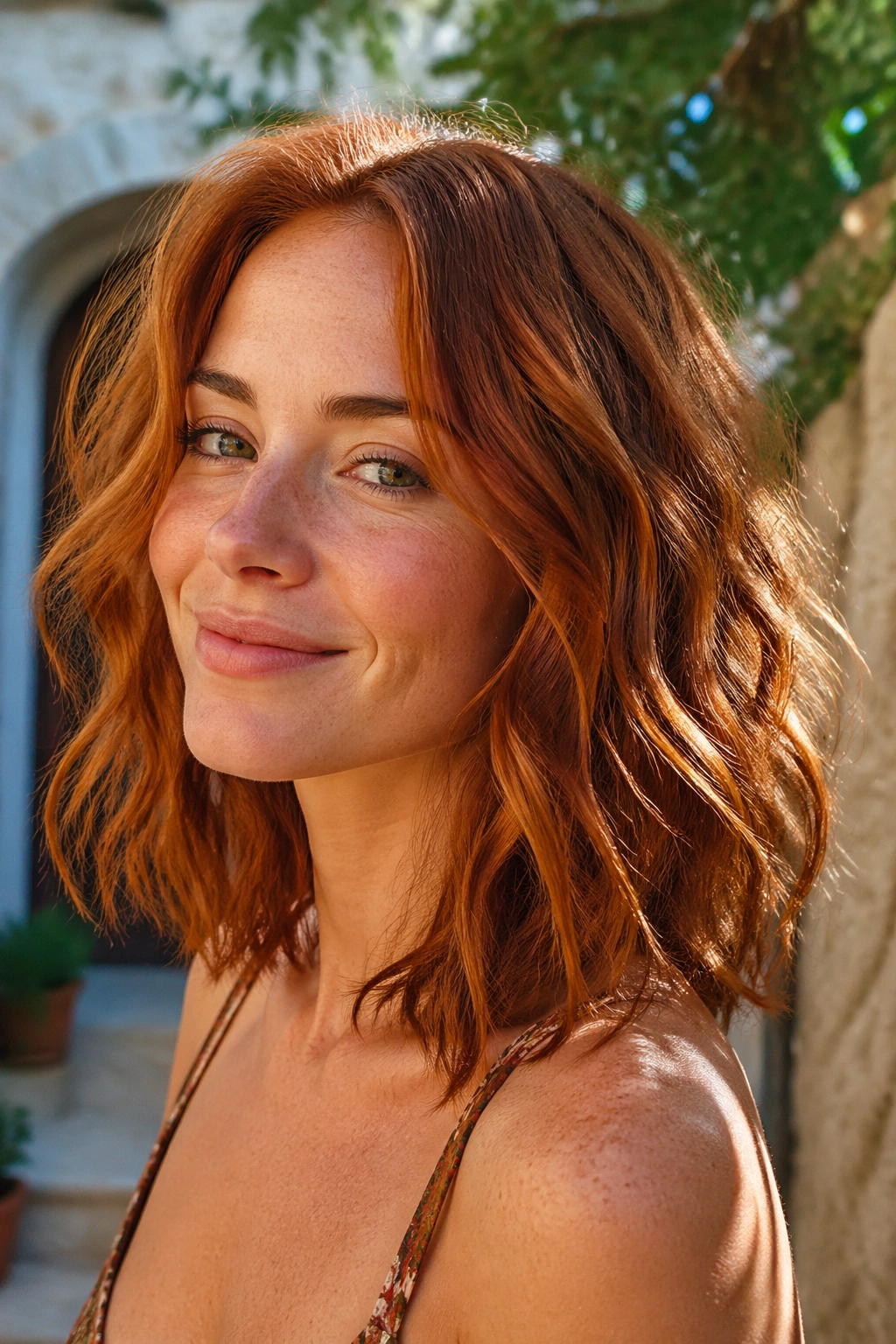
Rusty copper beach waves are for people who want red hair that looks sun-touched, not salon-perfect. The color sits somewhere between copper and earthy red, and the wave pattern is loose, almost undone. Think rough texture, soft edges, and a cut that is willing to move.
A shoulder-length shape works especially well if your hair has natural wave already. You can twist sections while they dry, then release them and mist lightly with texturizing spray. The goal is separated, touchable wave—not dry, crunchy mess. There’s a difference, and your fingers will know it.
This is also a forgiving style for grow-out. The color can fade into a softer copper tone, and the waves still look intentional even when the cut needs a trim. That matters more than people admit. A style you can wear for six weeks without hating it is worth more than a fussy one that looks good only on wash day.
A tiny bit of sea salt spray can help, but don’t overdo it. Rusty copper needs movement, not straw.
11. Mahogany Waves with Face-Framing Pieces
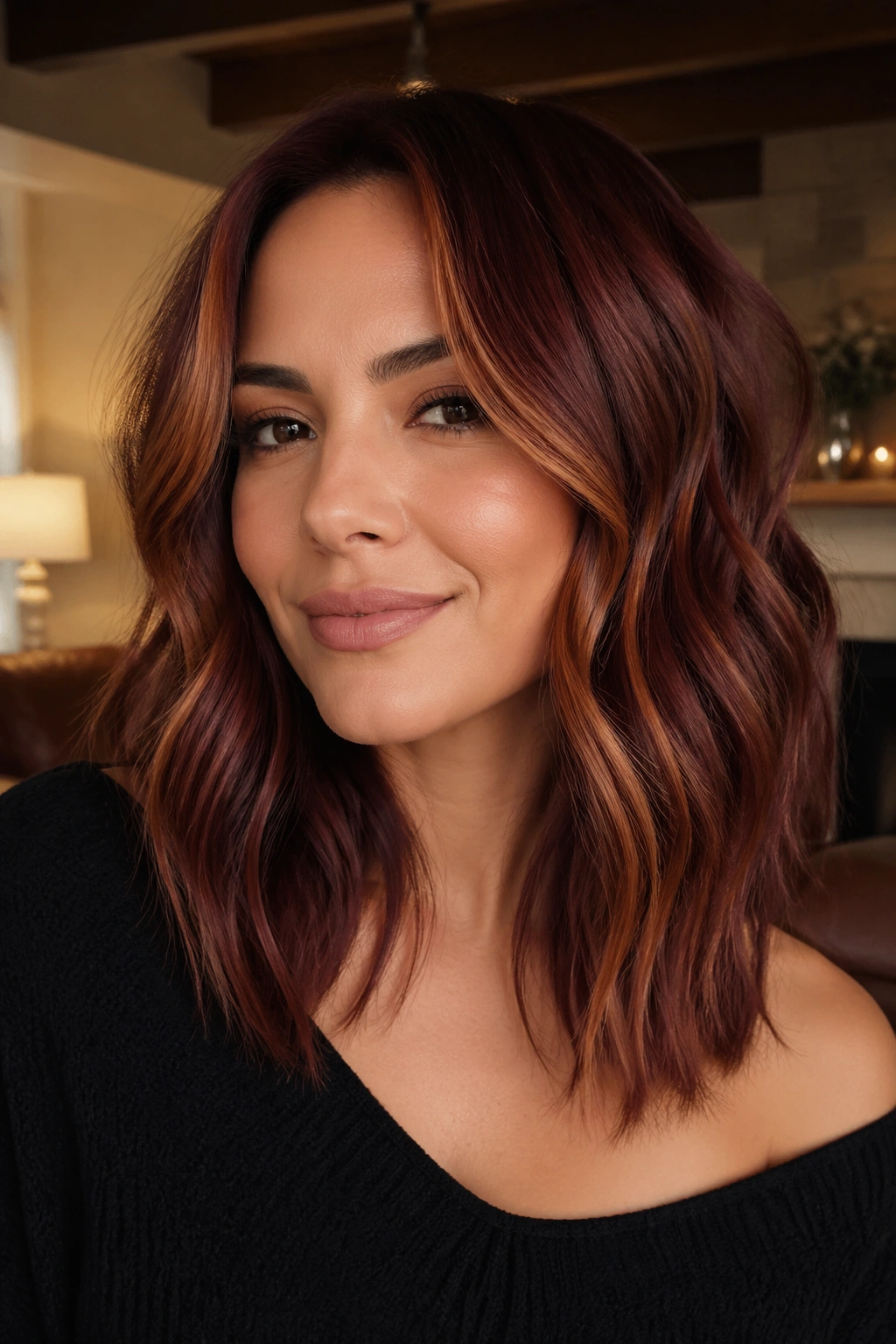
Mahogany red feels deeper and more grounded than bright copper. On shoulder-length waves, it gives the hair a shadowy richness that works well if you want color without a loud finish. Face-framing pieces lighten the front and keep the look from getting too heavy.
That framing matters. Without it, mahogany can sit close to brown and lose some of its red story. A few lighter ribbons around the cheekbones pull the eye forward and make the waves look more alive. It’s a simple trick, but it works because the darker base gives those front pieces room to stand out.
If your hair is naturally thick, ask for the shortest layers near the face to hit just below the cheekbone. That creates a little lift and keeps the style from collapsing inward. A round brush at the crown and a large iron through the mids is usually enough.
Mahogany is quiet, not dull. There’s a difference. This style proves it.
12. Cranberry Waves with Curtain Bangs
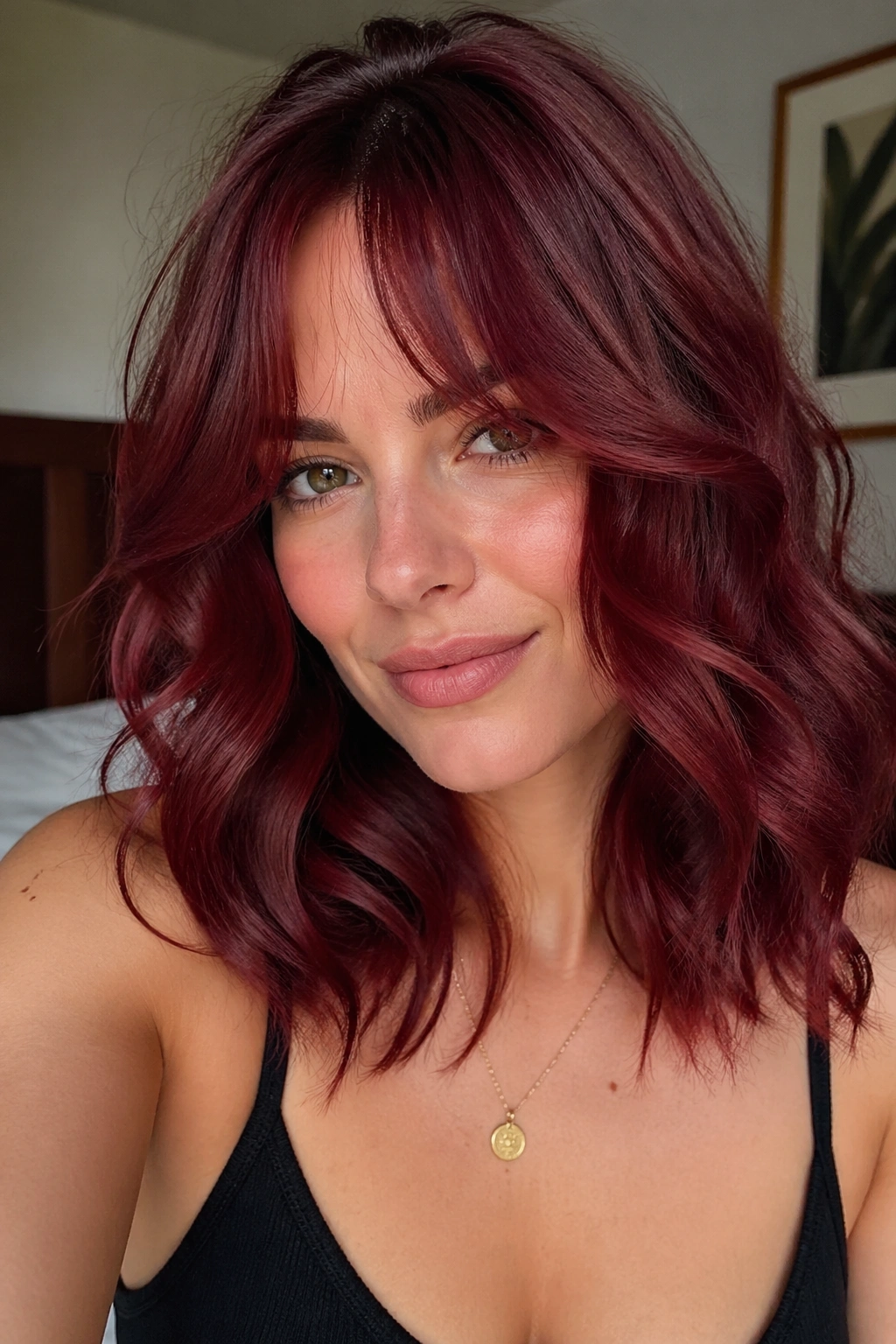
Cranberry red is one of the clearest ways to make wavy shoulder-length hair feel fresh. The tone has enough pink in it to look lively, but enough depth to stay grounded. Curtain bangs are a smart match because they split the front softly and give the color movement near the face.
Here’s the part people miss: curtain bangs need to blend, not sit on top. If they’re cut too short or too blunt, the whole style loses that easy sweep that makes shoulder-length waves work so well. Ask for bangs that graze the cheekbones and soften into the front layers.
This style looks especially good when the waves are loose and the ends are a touch imperfect. Not messy. Just relaxed. Use a 1.25-inch iron if your hair holds curl well, or braid damp hair overnight and break it up in the morning with your fingers. Both routes can work.
Cranberry has a bit of brightness that shows up fast in motion. That is the charm here.
13. Auburn Money Piece Waves
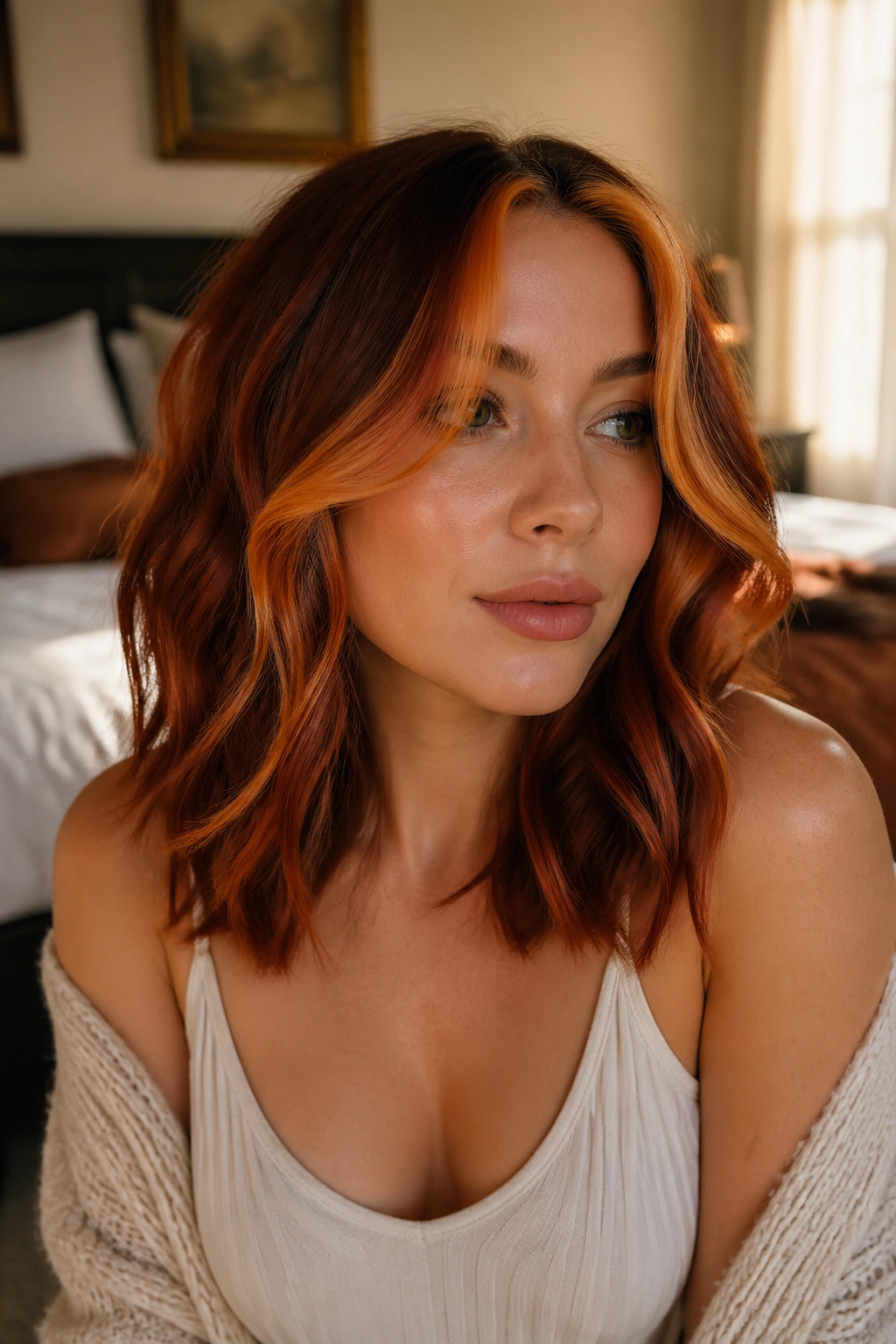
Auburn money piece waves are a good pick when you want red hair impact without coloring every strand the same way. The money piece—those brighter front sections—creates a frame around the face, and the shoulder-length waves keep the rest of the hair soft.
The color setup
The base usually sits in a warm auburn or chestnut-red range. Then the front pieces get bumped brighter, often with copper or cinnamon tones. That contrast makes the waves look thicker, because the light pieces catch the eye first.
The haircut
A shoulder-length cut with long layers works best. Too many short layers can make the front pieces jump out too hard. You want them to blend, then stand out.
The styling trick
Curl the front pieces away from the face and leave the ends slightly straighter. That gives the money piece a clean line, which keeps the look from feeling overworked.
If you only want one red feature to do the heavy lifting, this is a smart move. It gives you brightness right where people look first.
14. Brick Red Soft Glam Waves
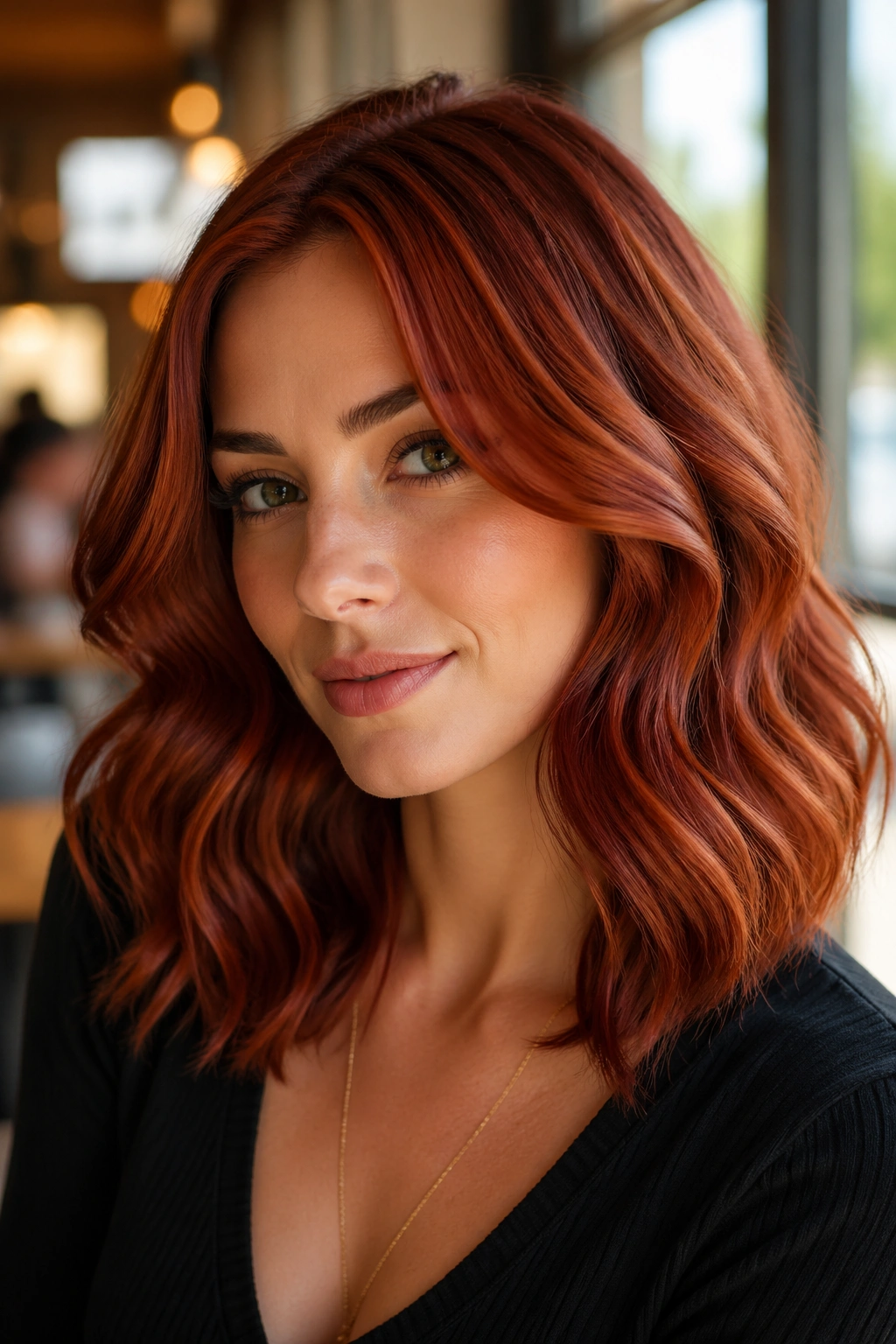
Brick red is warm, earthy, and a little unexpected. It sits between copper and red-brown, which makes it a nice choice if you want color that feels solid rather than flashy. On shoulder-length waves, brick red can look especially good with a soft glam finish—smooth roots, defined bends, and a little shine at the ends.
This style works because the color has weight. You do not need huge volume or a lot of teasing. In fact, too much lift can make brick red feel busier than it should. A smooth crown and a gently waved lower half are enough.
I like this shade on hair with warm undertones in the skin, but it can work more widely if the makeup and clothes bring some warmth too. Deep berry lipstick or bronze blush can pull the whole look together without much effort.
The texture should look touchable, not stiff. That’s the point of soft glam here.
15. Sable-Red Waves with Dark Roots
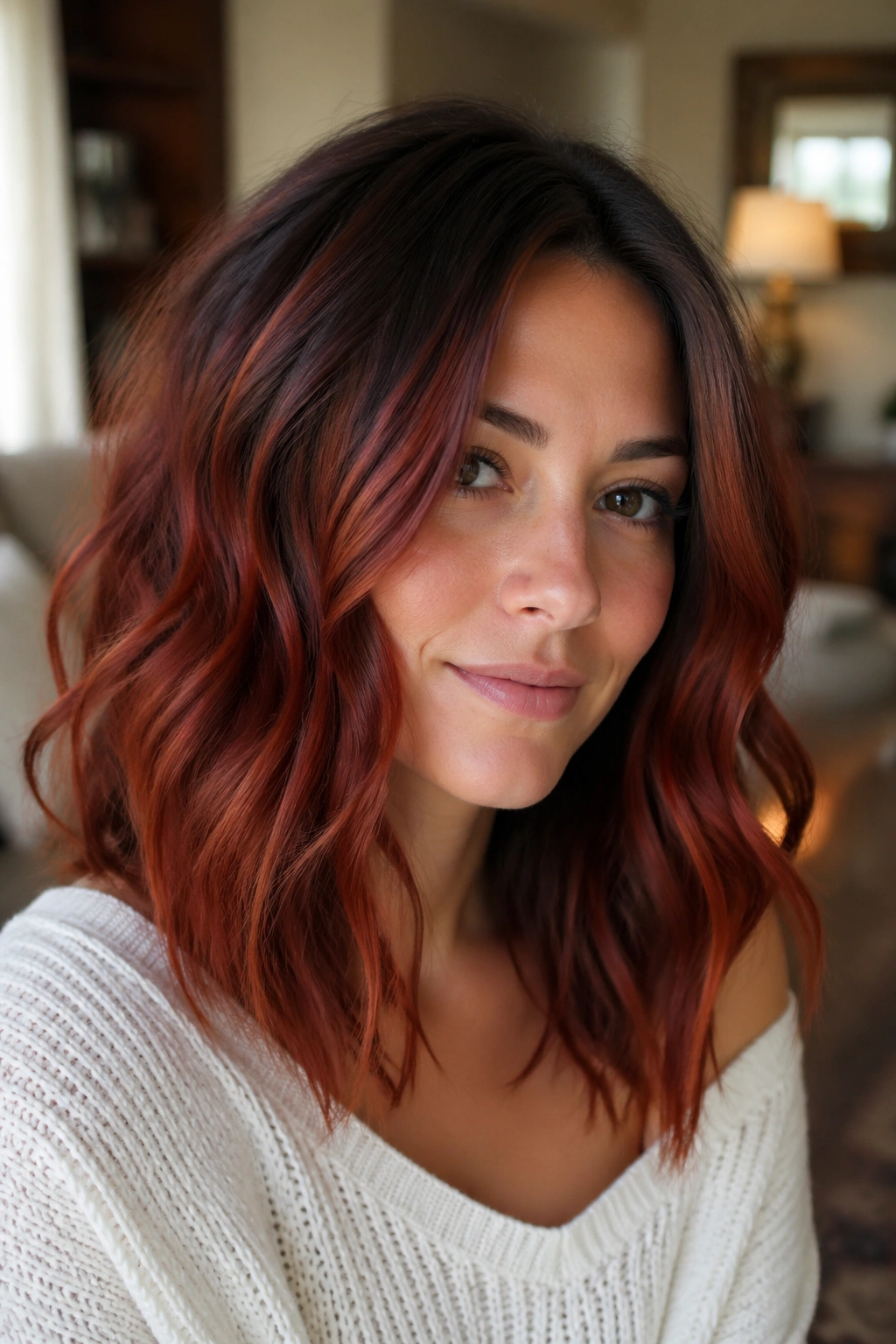
Sable-red is for people who want a red tone that can live comfortably next to brunette depth. Dark roots make the style easier to maintain, and the red through the mids and ends keeps it from reading as plain brown. On shoulder-length waves, that contrast looks full and expensive.
A lot of red styles ask for frequent touch-ups. This one is kinder. The root shadow gives you a built-in grow-out phase, which matters if you’d rather spend your time styling than coloring. The waves help hide the line where the darker root turns into the red lengths, so the whole thing blends on its own.
If your hair is naturally wavy, this style is a gift. Let the shape work for you. Add a little bend with a wide iron if needed, but do not overcurl it. Sable-red looks strongest when the texture is relaxed and the color shift is visible.
Dark roots are not a problem here. They are part of the design.
16. Dark Cherry Waves with Flipped Ends
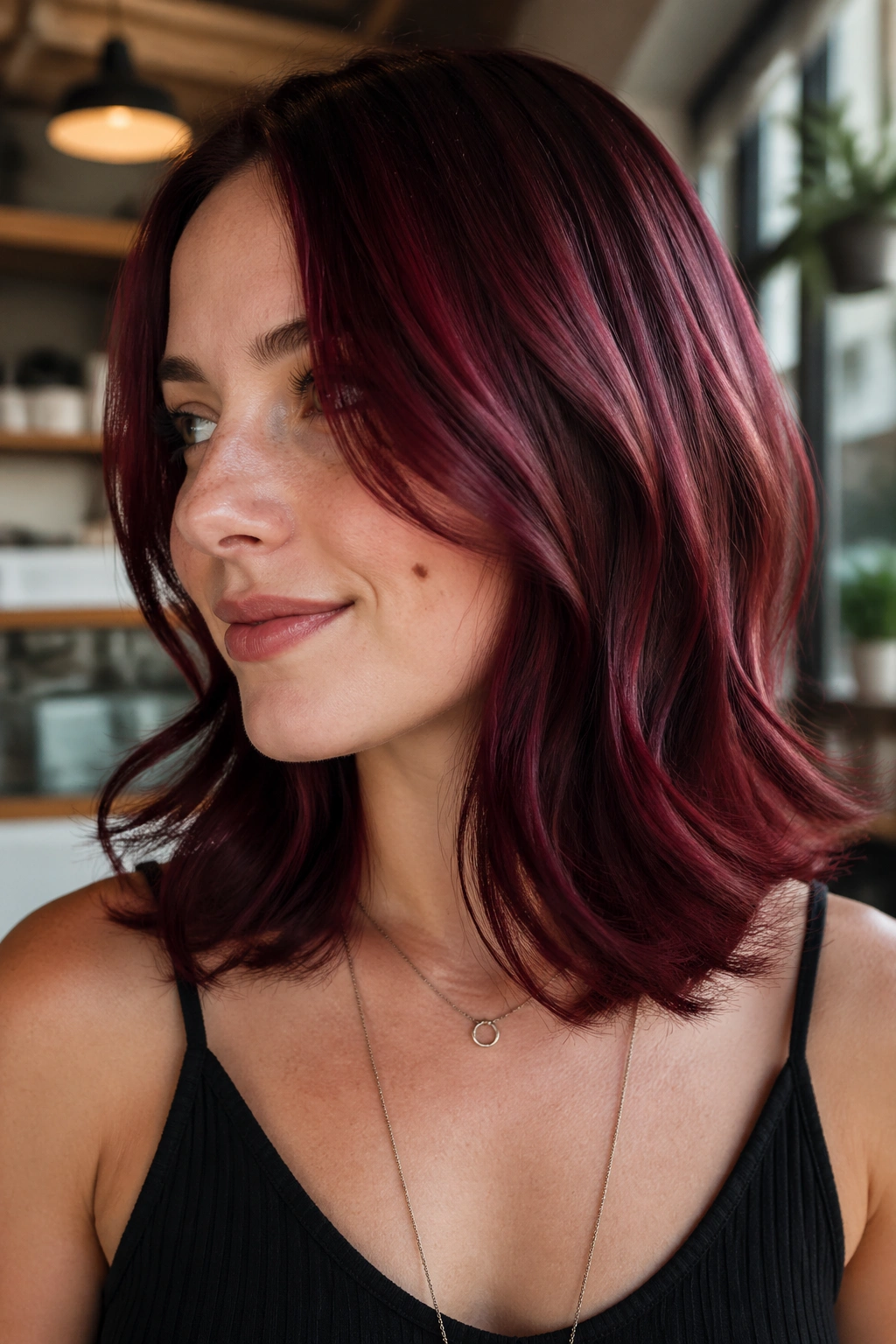
Dark cherry waves give red hair a richer, almost velvet feel. Flipped ends keep the shoulder-length cut from sinking downward, which is useful if your hair is fine or tends to cling to the neck. The tiny flip changes the whole mood.
Why does that matter? Because a subtle outward bend at the ends makes the shape look deliberate. It also stops the waves from all turning inward and collapsing into one rounded blob. Dark cherry color already has enough depth, so the haircut needs a little edge to match it.
Use a medium barrel iron and turn the last inch away from your face. Don’t make every end flip the same way. A little inconsistency keeps the style from looking staged. This is a place where perfection hurts the result.
If you want a red style that feels polished but not sugary, dark cherry with flipped ends sits in a nice middle ground. It has attitude. Quietly.
17. Sunset Red Waves with Dimensional Highlights
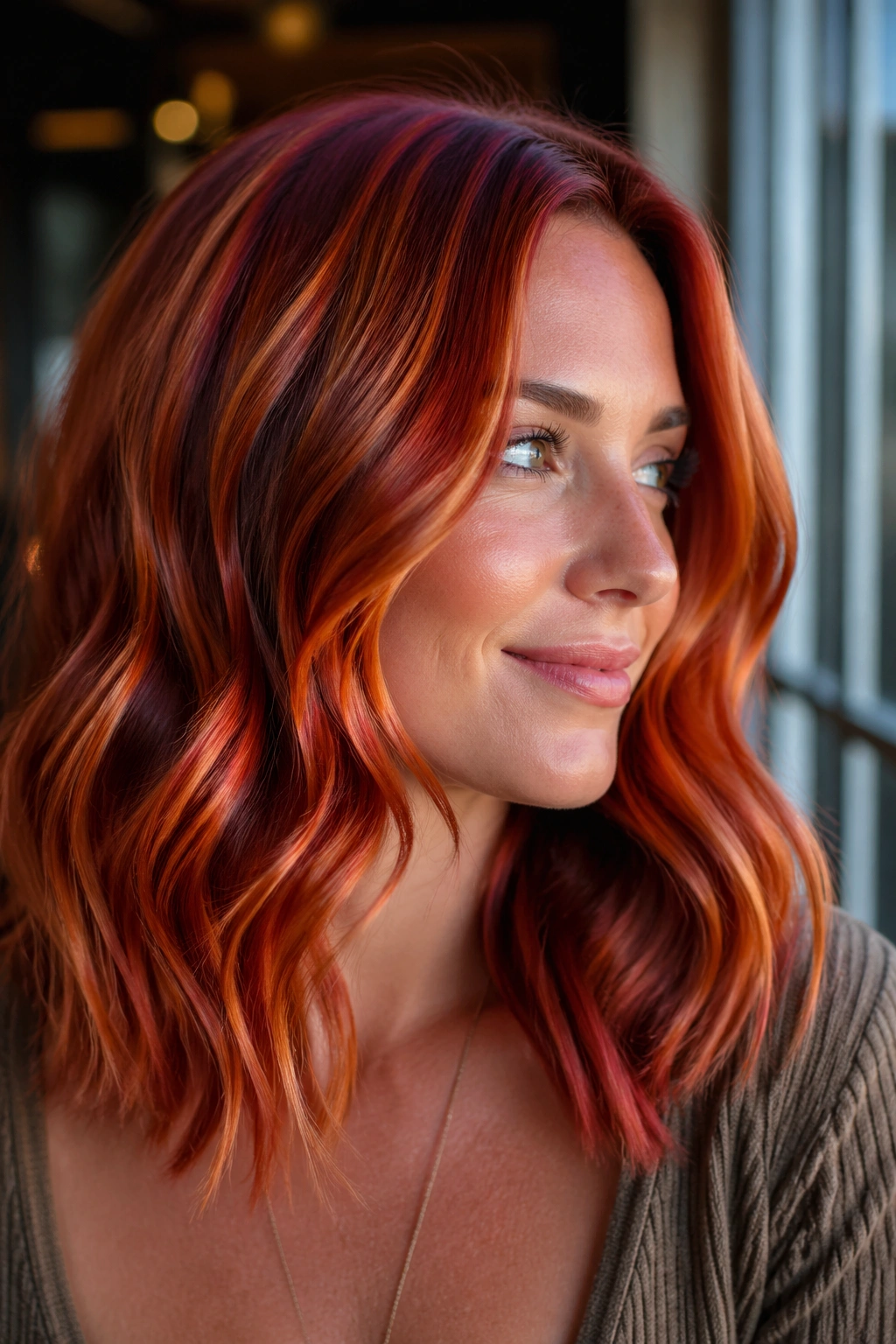
Sunset red is the most obviously blended style on this list, and that’s the whole point. It mixes copper, red, and soft orange-red tones through shoulder-length waves so the hair changes as it moves. The dimensional highlights are what make the color feel layered instead of painted on.
A style like this benefits from visible texture. You want the wave pattern to catch light in different places, so a loose curl set and a little finger-combing go a long way. If the waves are too tight, the color can start looking busy. Broader bends let the warm tones breathe.
This is a strong option if you like hair that looks different from room to room. Near a window, it can glow. In low light, it reads deeper and richer. That shift is part of the fun.
- Ask for thin painted ribbons, not chunky stripes.
- Keep the base a shade deeper for contrast.
- Use a gloss treatment to hold the warmth.
- Trim the ends often so the color doesn’t look frayed.
Sunset red needs dimension. Flat color kills the effect fast.
18. Wine Red Waves with Retro Volume
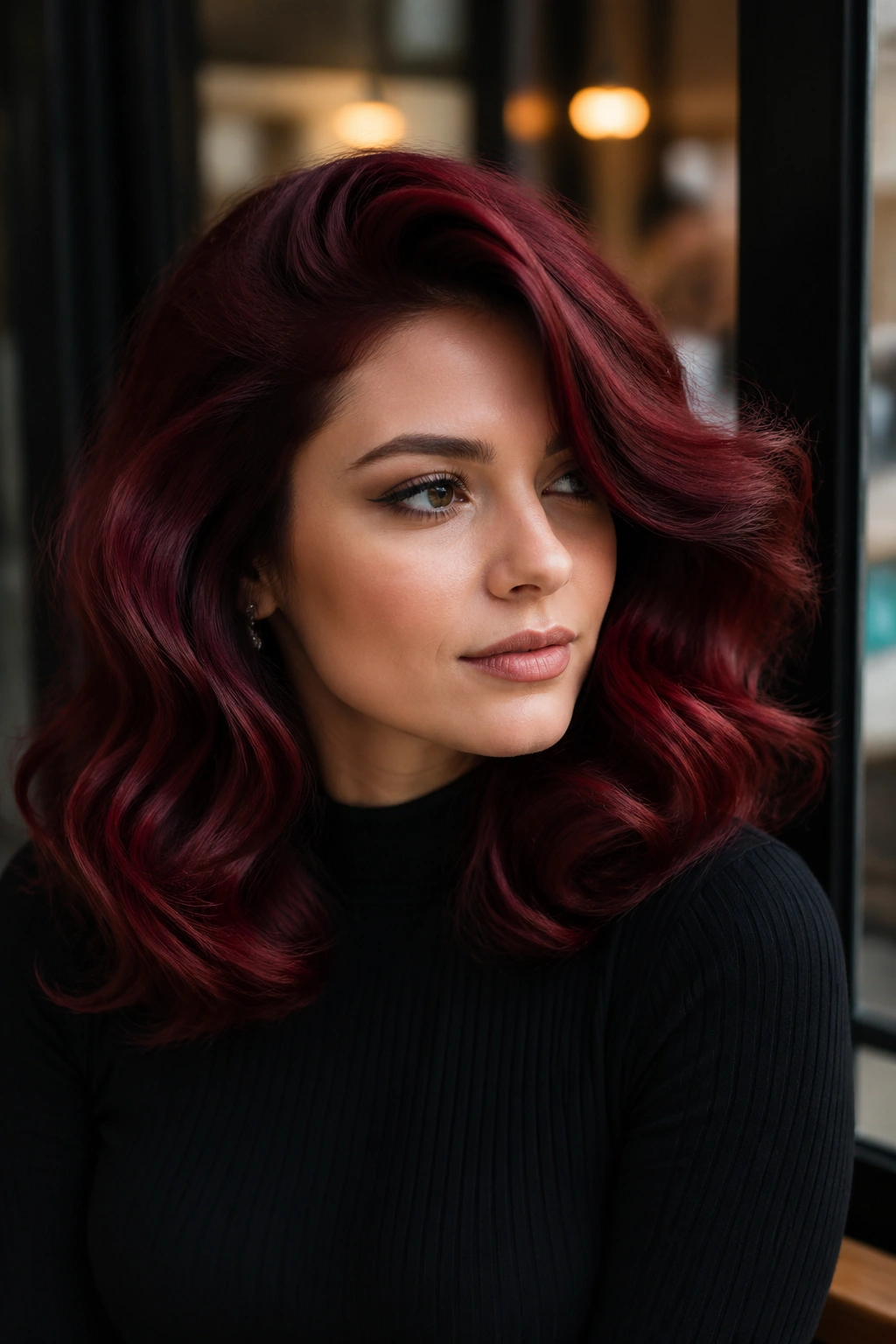
Wine red and retro volume belong together. The shade is dark enough to feel lush, and the volume gives shoulder-length waves a little old-school sweep. Think lifted roots, soft rolls through the mids, and ends that curve under or out depending on the mood.
The shape
A deep side part with a touch of crown height gives this style its drama. If you want a softer finish, keep the part closer to center and brush the top lightly before the waves settle.
The color
Wine red can drift toward plum, burgundy, or even a brown-black red depending on lighting. That’s fine. In fact, it’s part of the appeal. The richness shows up best when the hair has body.
The finish
A medium-hold spray keeps the waves in place without freezing them. Use a round brush at the front to get that retro bend around the face.
This is one of the few red styles that can feel dressed up without needing extra accessories. The shape does the work.
19. Terra Cotta Waves with an Undone Finish
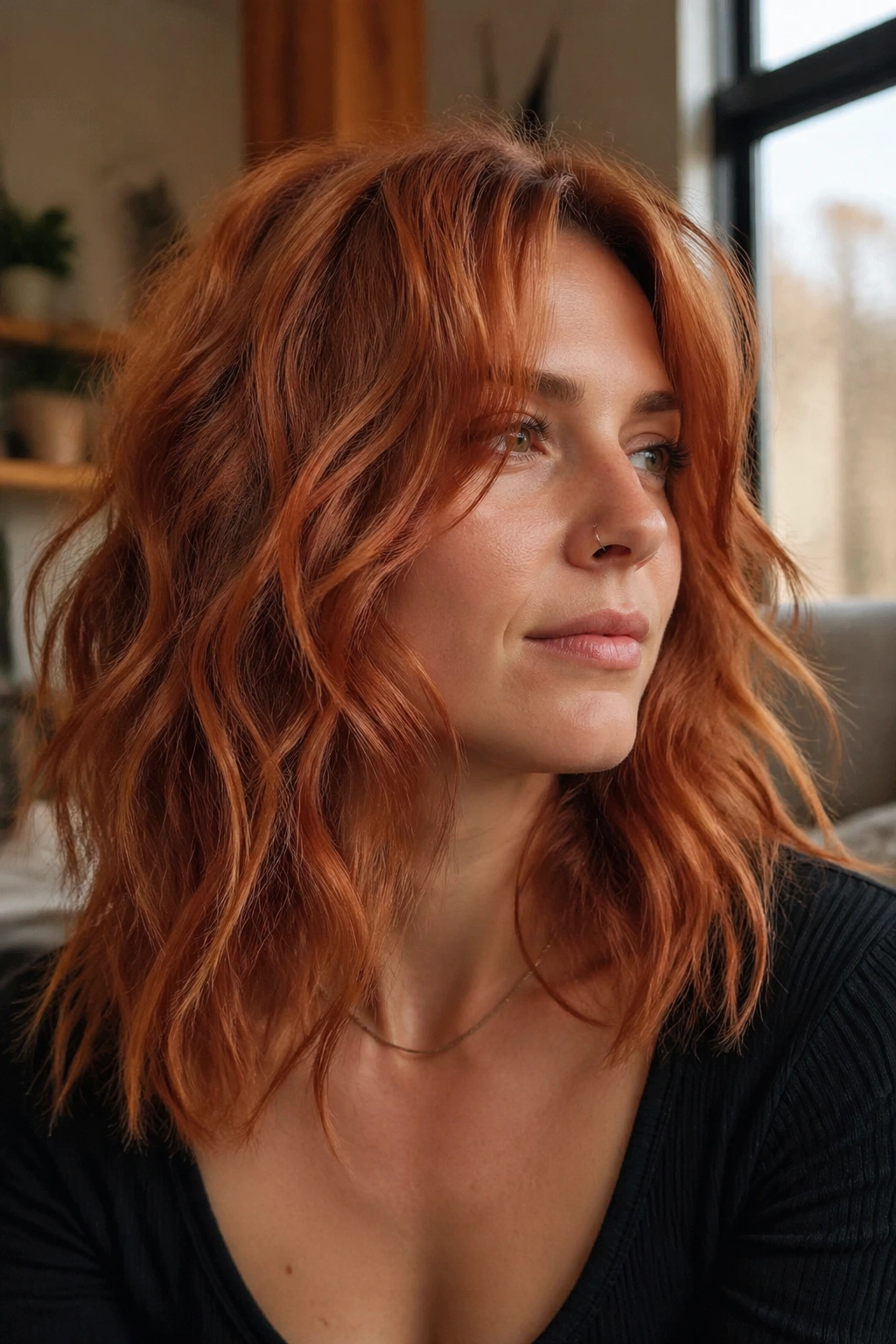
Terra cotta red has an earthy, clay-like feel that sits beautifully on shoulder-length waves. It’s less shiny and more grounded than bright copper, which makes it a good choice if you want a red that feels lived-in rather than newly dyed.
The undone finish matters here. You want some separation at the ends, a little air between the waves, and no hard shell of product. Too much polish makes terra cotta lose its charm. It wants to feel tactile, almost matte in places, with a bit of roughness around the edges.
This style pairs well with natural texture. If your waves are already there, you may only need a diffuser and a light cream. If not, twist small sections while they dry and leave them alone once they’ve set. Touching the hair too much ruins the shape.
A quick trim every few months keeps the shoulder line clean. Without that, the cut can start to look puffy in a way that isn’t flattering. Terra cotta likes shape, not bulk.
20. Paprika Waves with Soft Layers
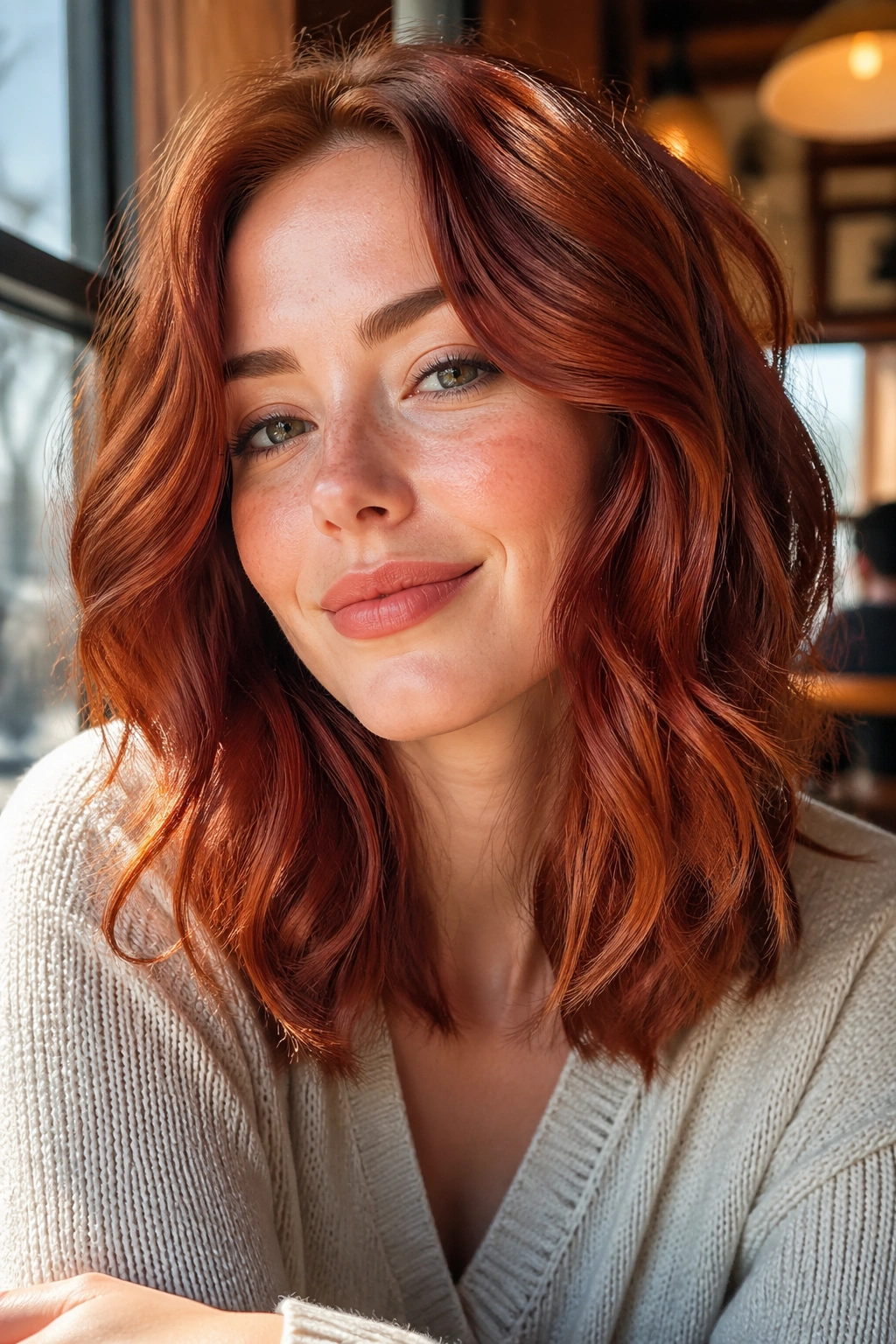
Paprika red is warmer and sharper than auburn, but not quite as bright as copper. On shoulder-length waves, soft layers keep it from feeling heavy at the bottom. The result is a color that moves without looking overdesigned.
This one is all about placement. If the layers are too short, the waves can puff up. If they’re too long, the shape gets dull. Soft layers around the cheekbones and below the shoulders give you the best of both: lift near the face, swing at the ends.
Paprika works especially well if you like a bit of edge in your color. It has enough orange-red heat to stand out, yet it still feels wearable. A satin finish spray can help bring out the tone without making the hair greasy.
One thing people overlook: red shades look most alive when the ends are healthy. Paprika is no exception. Trim the dry bits early. It keeps the whole look clean.
21. Claret Waves with a Clean Center Part
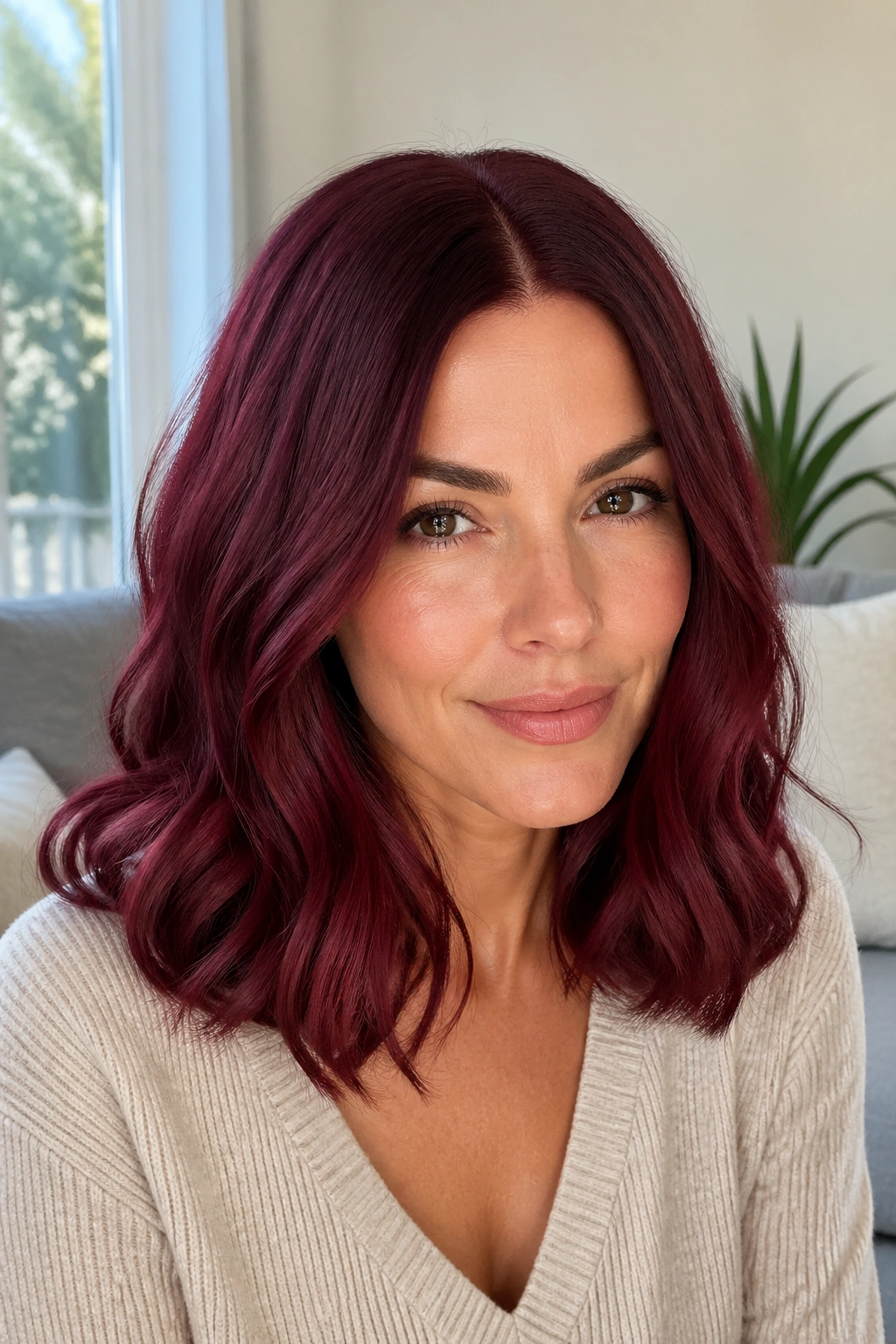
Claret is one of the deeper reds that can look very sharp on shoulder-length waves. A clean center part gives it symmetry, and that symmetry lets the color read as deliberate rather than heavy. If you’ve got naturally wavy hair, this is one of the easiest ways to let the texture look calm and controlled.
The center part also makes the face-framing pieces fall in a predictable way, which is handy if your hair has a strong natural bend. The style feels neat at the top and looser through the mids. That contrast is doing more work than it gets credit for.
I’d avoid too much layering here unless your hair is thick. Claret benefits from a stable shape. The wave pattern should feel soft and regular, not choppy. A large curling iron or a flat iron wave technique can both work, depending on your hands.
Claret reads strongest when the hair is smooth at the root. Frizz steals from the color. Always.
22. Red Velvet Shoulder-Length Waves with a Polished Sweep
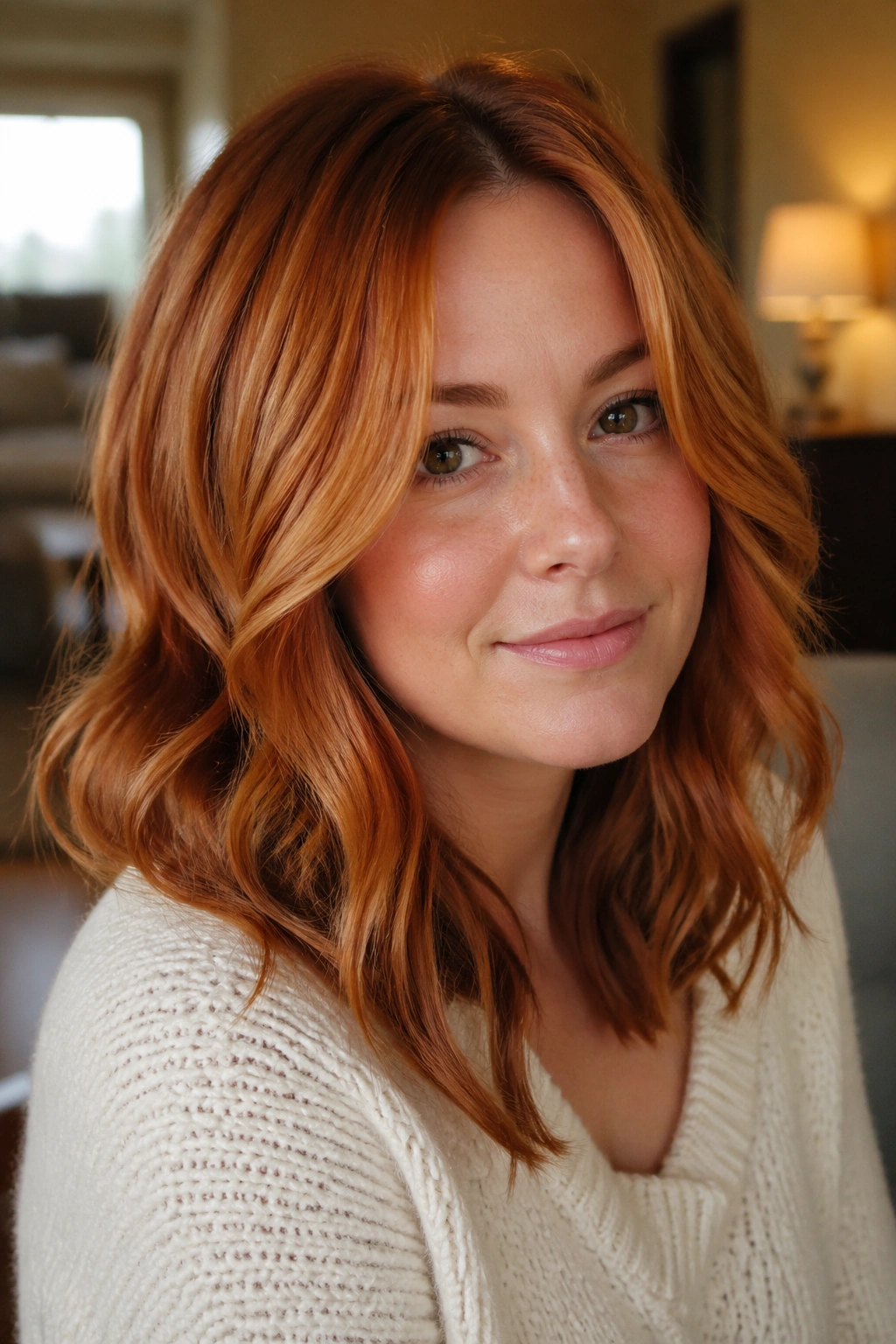
Red velvet is the style I’d point to if someone wanted a rich, rounded red that looks put together without looking stiff. The shoulder-length waves give it movement, and the polished sweep at the front adds just enough control to keep the color from spilling everywhere visually. That balance is the reason this version keeps showing up in salon chairs.
The shade itself usually lands in a deep berry-red range with a soft brown base. That makes it flattering on hair that needs depth, because the darker undertone gives the red somewhere to sit. Add gentle waves, and the whole thing turns plush rather than flat. Plush is the right word here. Not shiny for the sake of shiny. Plush.
A side part softens the face, while a center part makes the shape cleaner and more modern. Either works, but I like a slight offset when the hair is thick, because it keeps the front from feeling too symmetrical. If you’re styling at home, wrap sections away from the face, let them cool fully, then brush them out with your fingers. That gives the waves a softer fall and stops the ends from getting too “done.”
Red velvet shoulder-length waves are also a smart salon reference if you want something wearable beyond one night out. The color has enough depth for everyday wear, and the cut has enough movement to keep it from feeling formal. It’s one of those styles that looks like effort even when the actual styling is fairly simple. And honestly, that’s the sweet spot most people are after.
