



Red wavy hair and long bangs are a better match than most people expect. The wave keeps the fringe from looking stiff, and the color does half the visual work on its own — copper glows, auburn deepens, burgundy turns glossy and rich when the front pieces move.
The catch is length. Bangs that sit too short can spring up, split in odd places, or puff out at the temples, which is why long bang styles for wavy hair in red usually look calmer and more expensive than blunt fringe. Ask for more length than you think you need. Wavy hair shrinks as it dries, and red tones show every bend, so a cut that looks a little too long in the chair often lands in the sweet spot once it dries.
That extra length also gives you options. Some versions fall straight through the cheekbones. Others sweep into layers, hide a high forehead, or soften a strong jaw without stealing the whole haircut. And because the front stays flexible, you can wear it polished one day and undone the next.
The styles below cover the versions I keep coming back to: soft, face-framing, easy to grow out, and not precious about a perfect blowout. A good long bang should move when you do. If it needs a fight every morning, it’s the wrong cut.
1. Curtain Bangs That Open at the Cheekbones
Curtain bangs are the easiest place to start if you want long bang styles for wavy hair in red that feel friendly instead of fussy. The split down the middle gives your forehead space, while the longer outer edges frame the face and slide into the rest of the cut. On red hair, that open shape shows off color from root to tip — especially if you’ve got copper ribbons or a deep auburn base.
Why They Work on Red Waves
Curtain bangs like a soft bend, not a rigid finish. That works in your favor, because wavy hair already wants to curve. The fringe can air-dry with a little lift at the root and a loose sweep at the cheekbones, which is much easier than forcing it straight every day.
Ask for a center split, or a split that leans a touch off-center if your natural part is stubborn. Keep the shortest point around nose length and let the sides fall closer to the lip or jaw. Point-cut ends help the bang disappear into your layers instead of sitting on top of them like a helmet.
- Best for oval, heart, and square faces
- Looks good with copper, strawberry blonde, and auburn
- Easy to grow out into face-framing layers
- Works with a round brush, a diffuser, or plain air-drying
Small tip: leave the center a little longer than you think you need. Wavy hair has opinions.
2. Bottleneck Bangs with a Narrow Center Gap
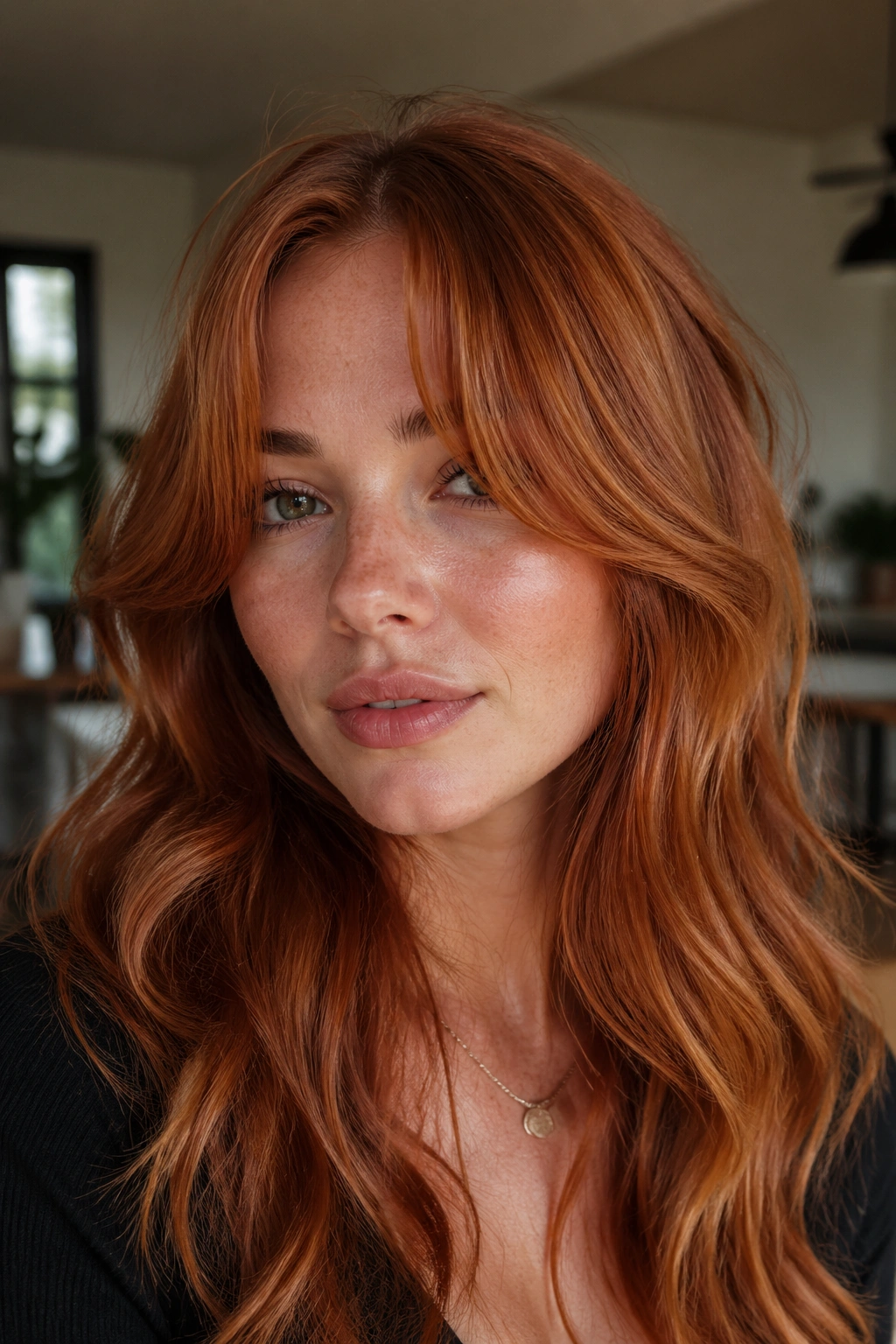
Why do bottleneck bangs keep showing up on wavy red hair? Because the shape is sneaky. The center starts narrow, then opens wider near the temples, which gives the forehead shape without swallowing it. It’s a clean cut, but not a harsh one.
On red hair, the little curve near the temples matters. It creates a frame around the eyes, and red tones pick up light there in a way that straight-across fringe rarely does. If your waves are medium to thick, this style can take the weight off the front without making the cut feel thin.
How to Wear Them
Tell your stylist you want the shortest part to sit somewhere between the bridge of the nose and the brows, then melt outward. The sides should land closer to the cheekbones. That extra length at the edge gives the bang room to bend with your wave instead of flipping out in a weird way.
Bottleneck bangs are especially good if you like a little polish but don’t want a heavy fringe. They can look neat on a blowout day and relaxed two days later. That grow-out phase is forgiving, which is half the appeal.
If your red leans cherry or mahogany, this shape keeps the front from feeling boxy. It softens the whole haircut.
3. Deep Side-Swept Bangs with Long Wavy Ends
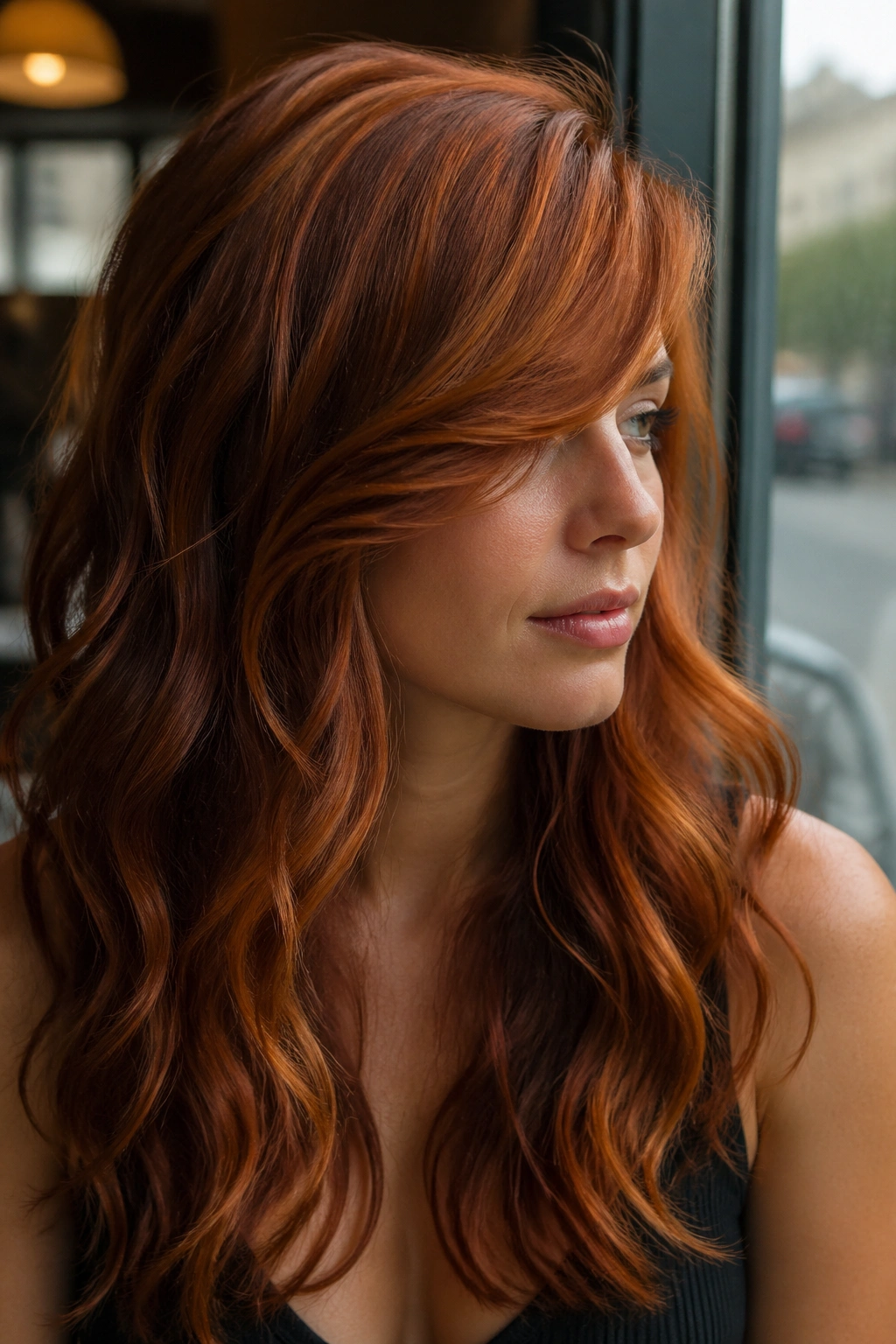
Picture copper waves with a heavy side part and one long front section sweeping across the forehead. That’s the power of a deep side-swept bang. It feels dramatic, but not in a try-hard way. The bang becomes part of the wave pattern instead of sitting apart from it.
This style is a good fit when one side of your hair already falls flatter than the other. Rather than fighting that, you use it. The longer piece can skim the brow, curve past the eye, and disappear into the layers near the cheek.
What Makes It Different
A deep side part creates height at the root, which helps red hair look fuller at the crown. That matters if your wave pattern is loose and tends to collapse by the end of the day. The side sweep gives you movement where you want it and keeps the forehead from feeling too exposed.
- Strong on round and square faces
- Nice with auburn, ginger, and cinnamon red
- Needs a blow-dryer nozzle or a round brush for the first pass
- Can be pinned back when you want the face open
This is one of those cuts that looks expensive even when you didn’t spend much time on it. A little root lift. A little bend. Done.
4. Feathered Bangs That Blend into the Front Layers
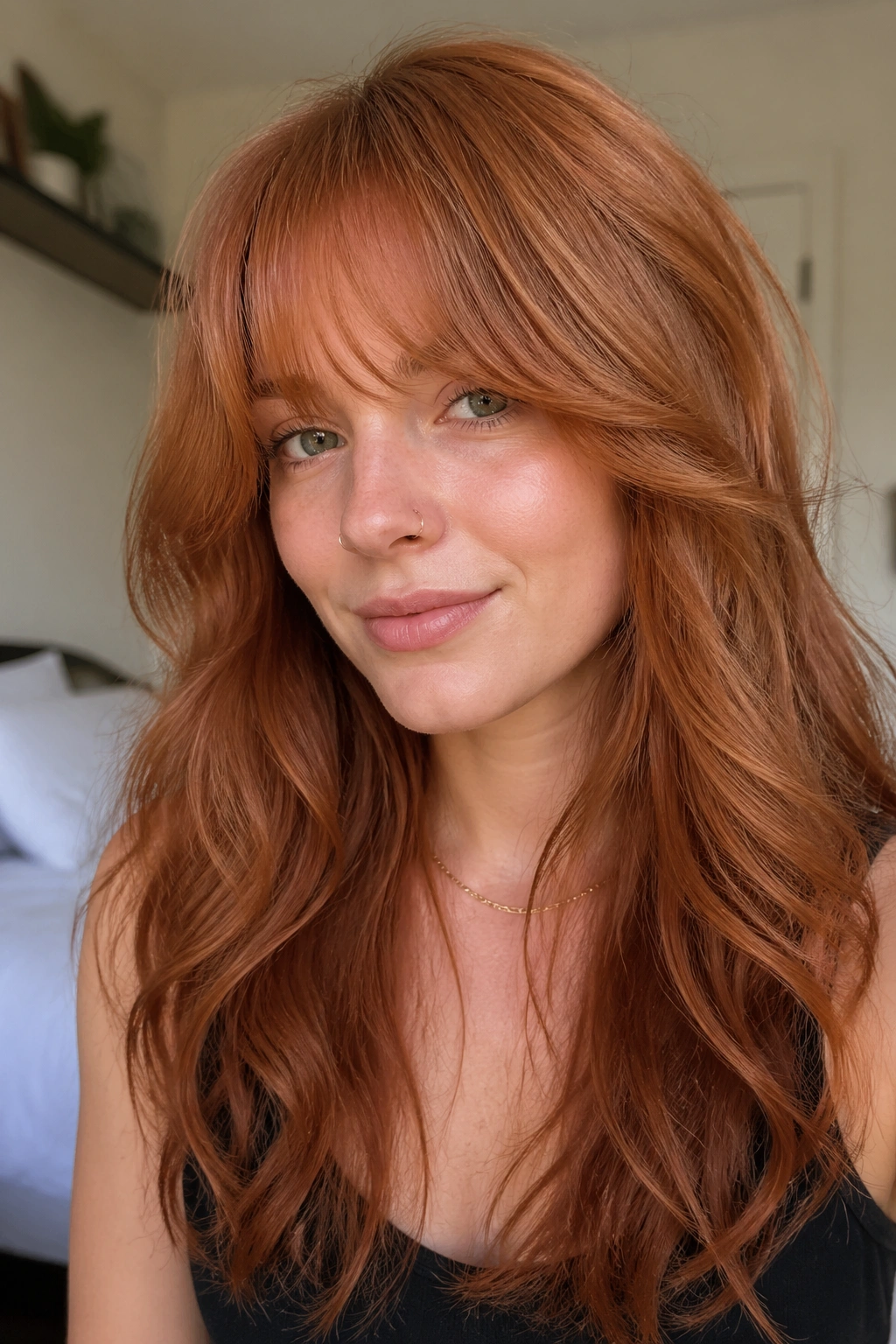
Feathered bangs are for people who want softness without a weak haircut. The ends are cut to feel airy, almost brushed out, so the fringe melts into the front layers instead of drawing a hard line across the face. On wavy red hair, that feathering keeps the color looking alive rather than heavy.
It’s a smart choice if your hair is fine or medium and you hate the feeling of a dense fringe. The feathered shape lets the front move when you turn your head. It also keeps the bangs from taking over the entire face, which some thick red fringes love to do.
A stylist usually gets this look with light point cutting and careful layering near the temples. You want the edges to feel soft, not ragged. Soft is the goal. Thin is not. There’s a difference, and it matters.
This style looks especially good on strawberry blonde and copper red, where the lighter strands can catch in the feathered pieces. The result feels airy, not flat.
5. Razor-Cut Bangs with a Broken, Piecey Line
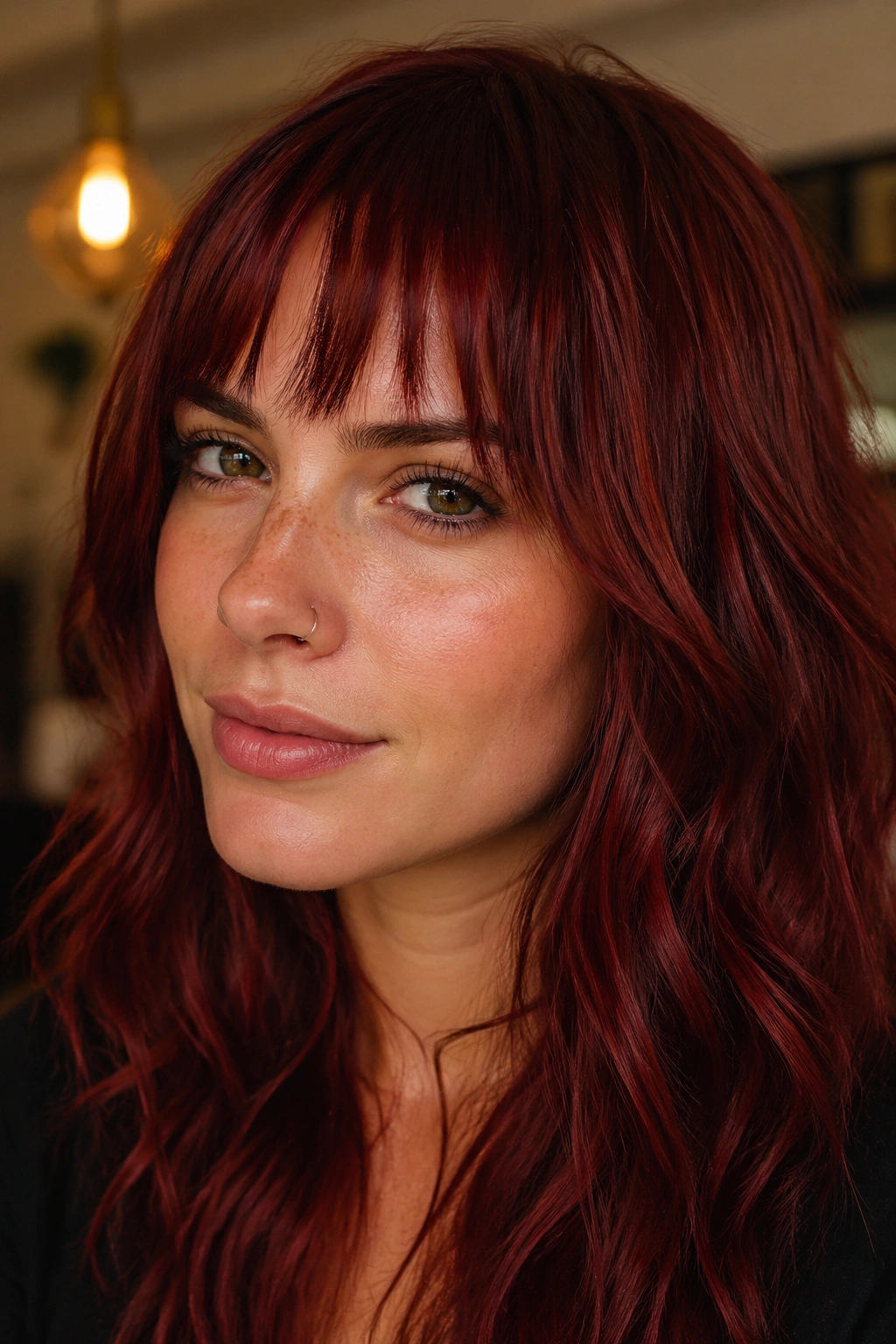
When razor-cut bangs are done well, the ends feel light, almost slippery, instead of chunky. That broken line is what makes them interesting on wavy hair. The fringe doesn’t try to sit in one perfect sheet. It splits, bends, and catches a little movement as you walk.
Red hair can handle this look better than people assume, especially if the shade has depth. Burgundy and cherry red show off the uneven texture beautifully because every piece picks up light differently. The catch is that the cut has to be handled with care. A rough razor job on coarse or frizzy hair can go puffy fast.
What to Watch For
This style works best when the stylist knows how to remove weight without shredding the ends. You want separation, not damage. If your hair is very porous or already prone to frizz, ask whether soft point cutting might give you the same finish with less risk.
A razor-cut fringe suits medium to thick waves that need motion. It looks modern with long layers and a little grit in the styling product. A pea-sized amount of texture cream is often enough; too much and the bangs stick together in sad little ropes.
It’s a sharp look. Not severe. Sharp.
6. Arched Bangs That Skim the Brows
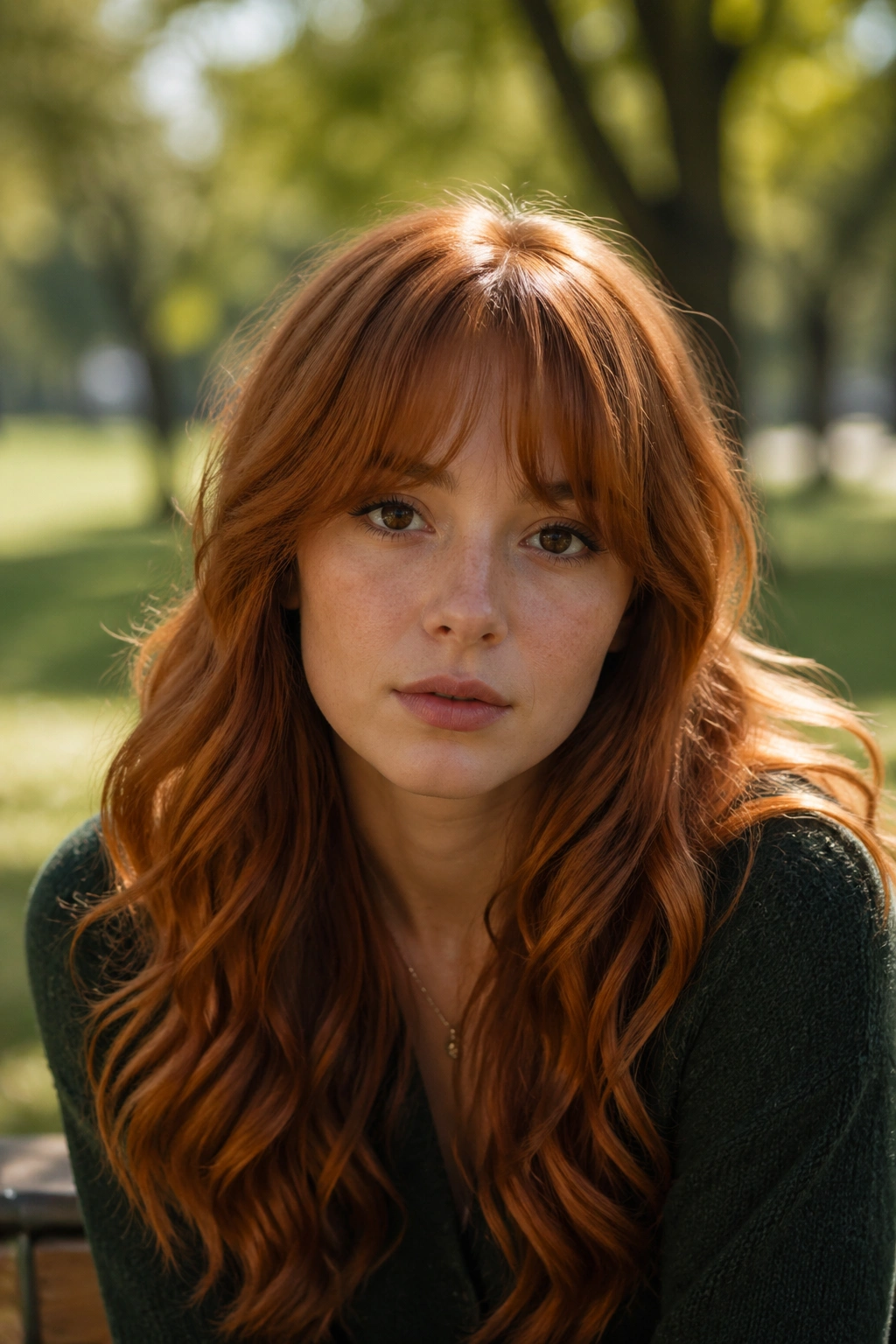
Arched bangs are the quiet answer for anyone who wants the face opened up without losing the idea of a fringe. The center sits slightly shorter, then the sides arc down toward the temples. That shape flatters red wavy hair because it gives the front a gentle contour, almost like a soft frame around the eyes.
On a round face, the arch adds a little vertical line. On a square face, it softens the corners. On strawberry blonde or light copper, the curve keeps the front from looking blunt or blocky under bright light.
How to Style It
Blow-dry the center forward first, then brush the sides down and away from the face with a round brush. You do not want a stiff swoop. You want a bend that looks like it happened naturally after the cut. If your wave is stubborn, clip the front flat for a minute while it cools.
This style is also kind to people who hate constant salon upkeep. As it grows, it turns into face-framing layers rather than an awkward shelf. That’s useful. A lot of fringe styles are cute for three weeks and annoying after that. This one hangs on longer.
7. Long Shag Bangs with a Soft Rocker Edge
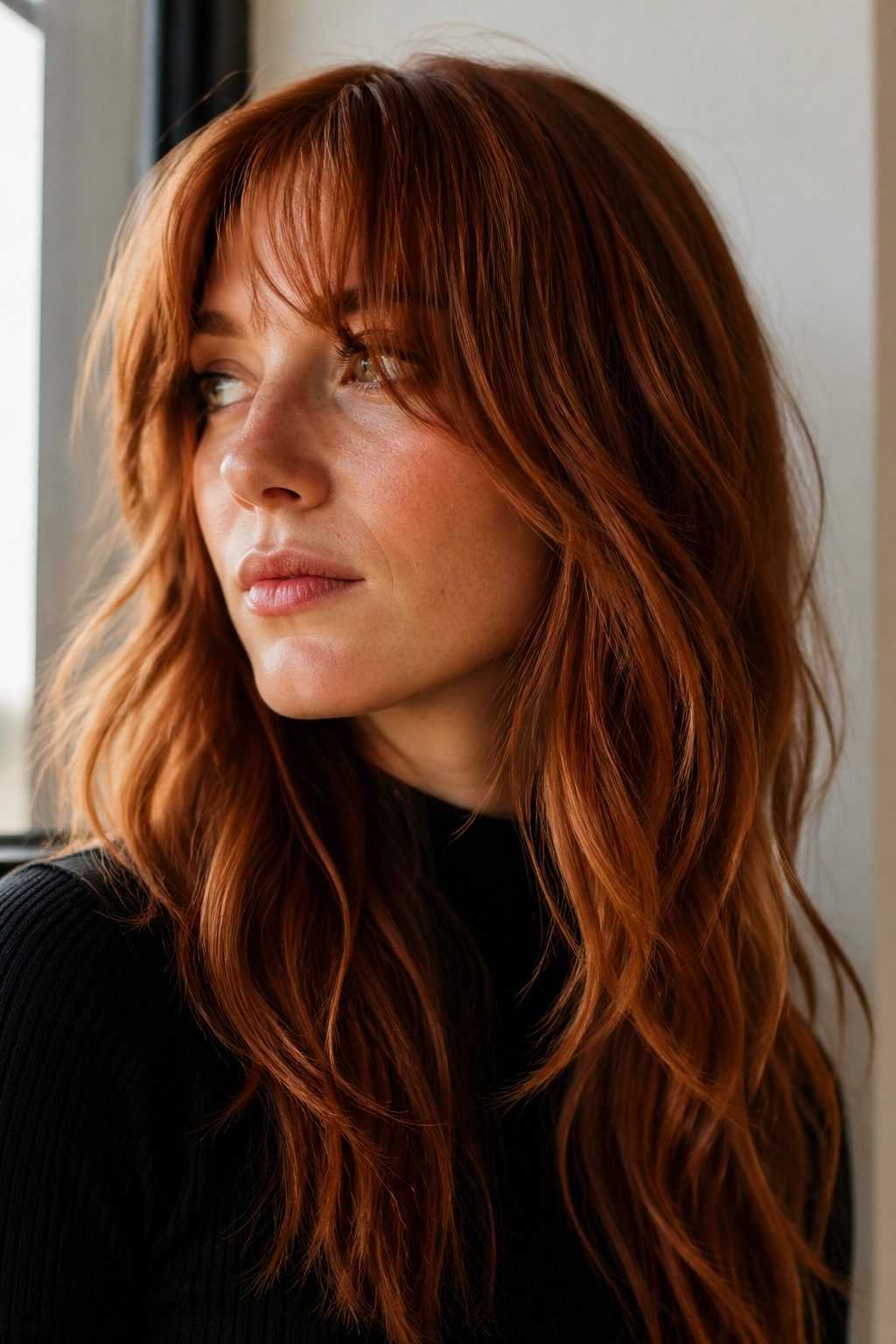
Long shag bangs are the most forgiving choice for natural waves. They don’t ask for perfect parting, and they don’t fall apart if your hair dries with a little attitude. The shag shape gives the bangs more room to live, which matters when red hair already has a lot of visual energy.
Why the Shag Helps
The cut removes weight in the right places, so the front doesn’t balloon. That’s the whole game. With a shag, the bangs can blend into the layers around the cheek and jaw, which stops the haircut from looking like one solid block of color. On copper and auburn shades, that movement is gold.
Ask for soft internal layers and a bang that starts around the cheekbone, then drops into the rest of the cut. You want enough length to tuck the fringe behind the ear if needed. You also want enough shape to wear it forward without it collapsing.
- Good for thick, wavy hair
- Strong with air-drying and a diffuser
- Works with a little texture spray at the roots
- Grows into a layered cut without an ugly in-between stage
This is not a precious style. That’s the point.
8. Face-Framing Bangs with a Center Part
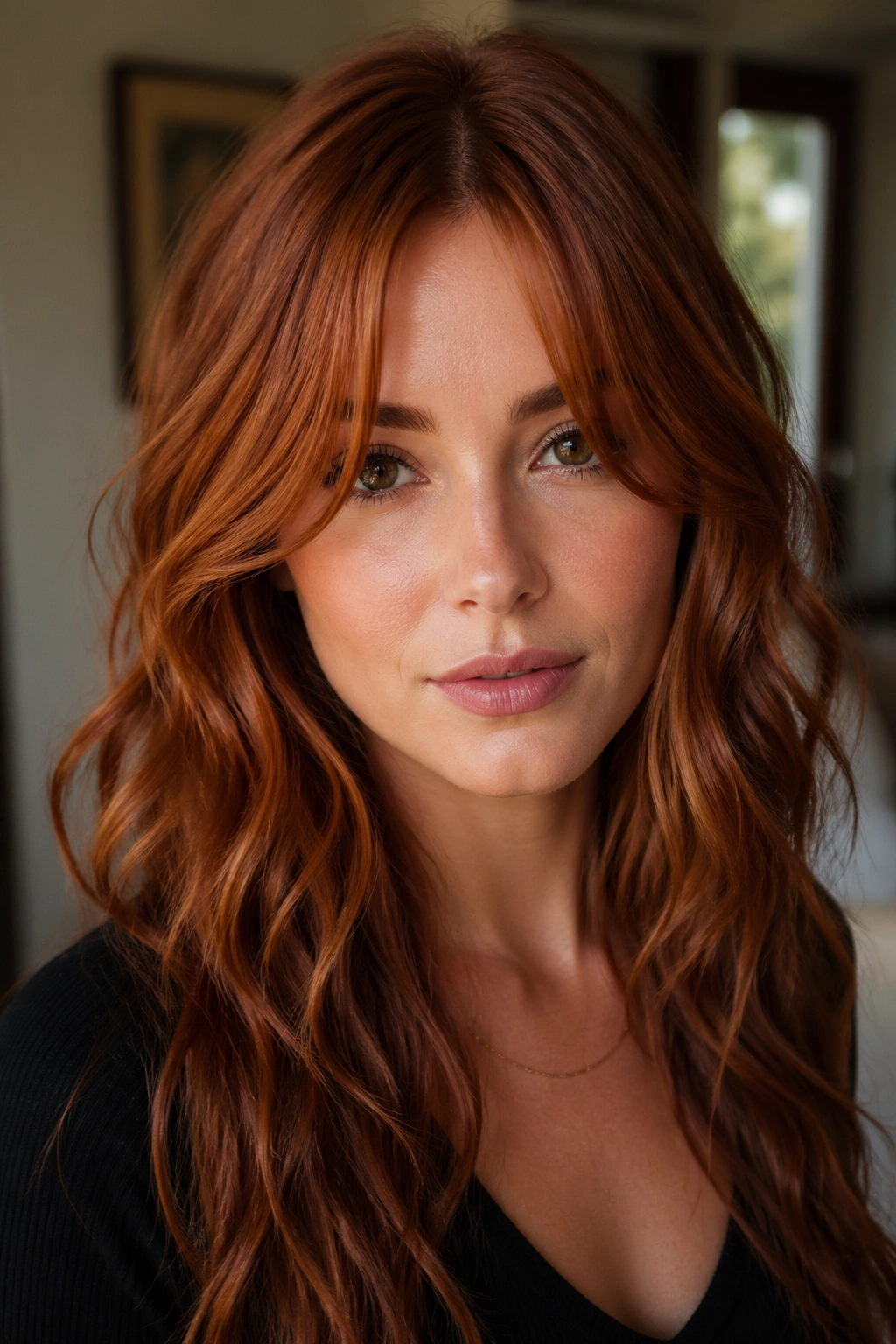
What if you want bangs, but not a full fringe? Face-framing bangs with a center part are the answer. They start near the part line, fall beside the forehead, and melt into long front layers rather than forming a separate band. On red wavy hair, that means the color gets framed by movement instead of being covered by it.
This look is easy to live with because it doesn’t depend on perfect styling. If the wave goes a little flat, the shape still reads. If the front gets a little messy, it reads as texture. That’s a nice trade.
The cut works well on people who like the idea of bangs but want room to move them around. You can wear the center split clean and airy, or push the front pieces wider for a softer curtain effect. Low commitment, high payoff. That’s the honest pitch.
It also keeps the red color visible around the face, which matters if your shade has depth at the roots and brightness toward the ends.
9. Piecey Bangs for Fine Wavy Red Hair
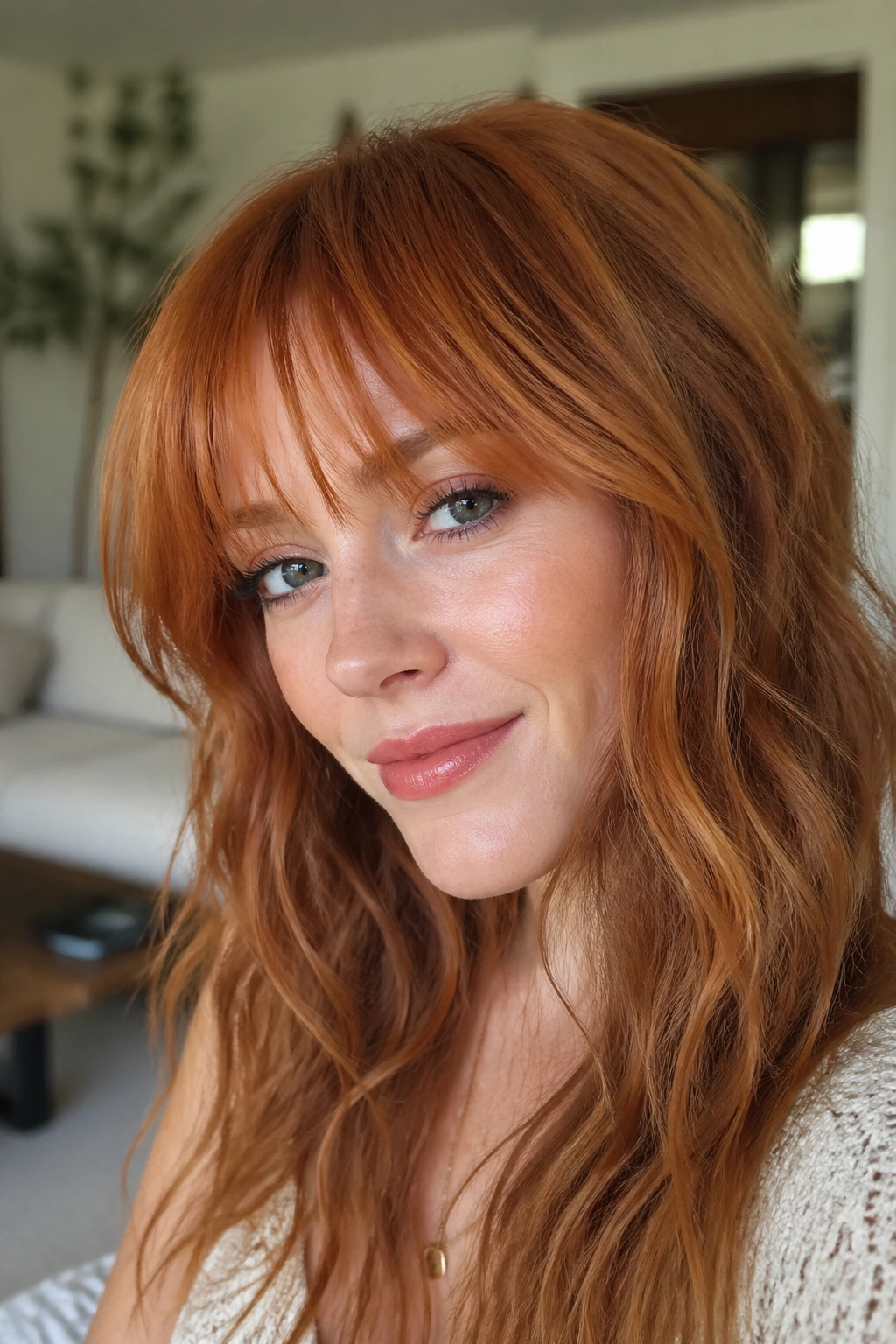
Fine wavy hair can look flat fast at the front, so piecey bangs are a smart move. Instead of one dense curtain, you get separated strands that move on their own. That little break in the line stops the fringe from sitting heavy on the forehead, and it lets red color show through in thin flashes.
This style is especially good for softer reds like copper gold, rose auburn, or light ginger. The airy pieces keep the front from looking too solid. And because the hair is fine, you usually don’t need much product. A light mist of texture spray or a touch of mousse can be enough.
What to Avoid
Heavy creams can make this kind of bang collapse. So can too much brushing. Let the pieces fall where they want, then separate them with your fingers once they’re almost dry. That keeps the look loose instead of stringy.
A good piecey fringe should still feel intentional. You’re not aiming for a wispy mess. You’re aiming for movement with shape. The right cut will do most of the work for you.
10. Full Bangs with Soft, Textured Ends
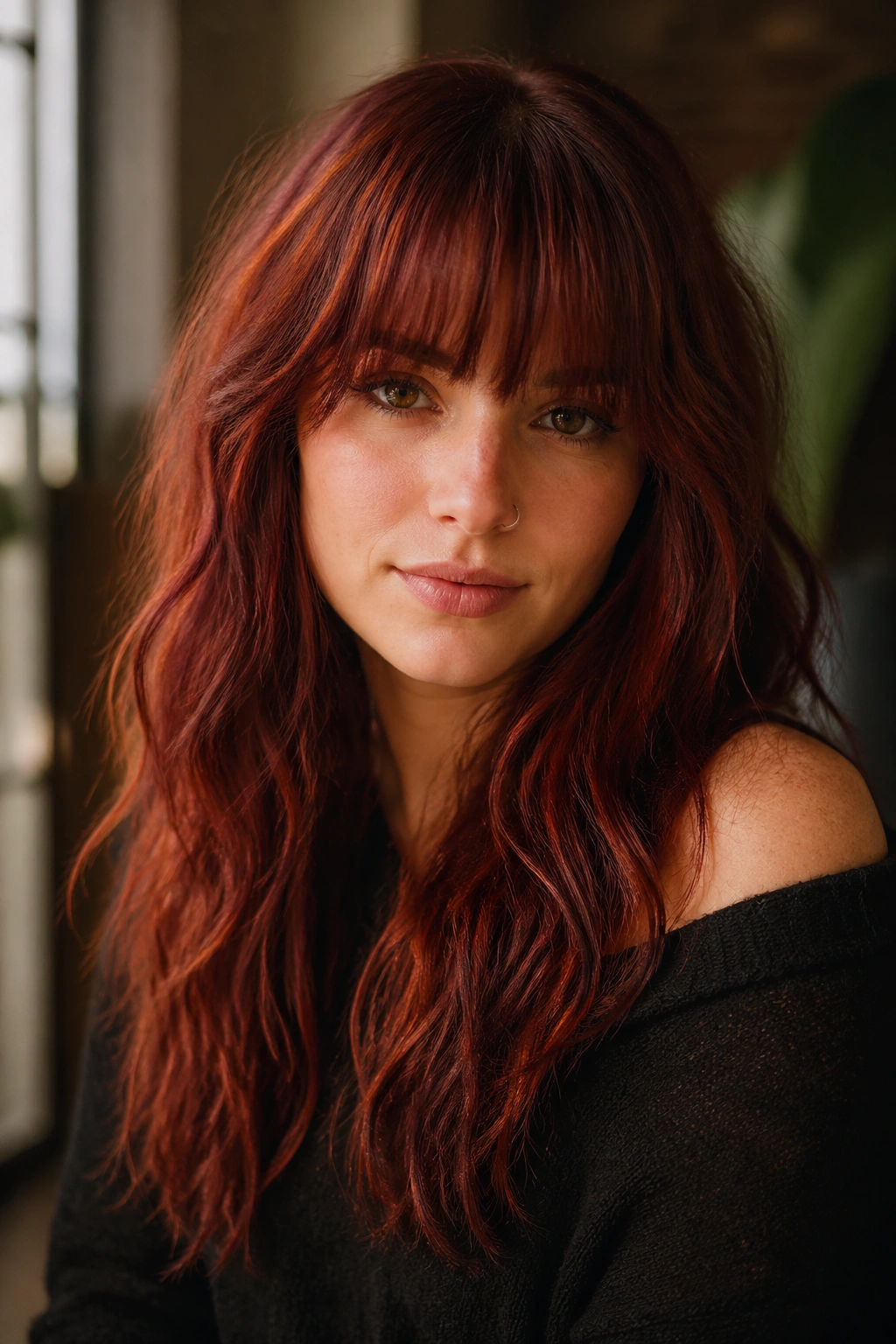
Heavy bangs are not off-limits for wavy hair. They just need the right finish. A full fringe with soft, textured ends gives you the presence of a fuller bang without the hard edge that can fight with waves. On red hair, that density can look rich and lush, especially in darker shades like cherry cola or mahogany.
The Trick
The roots need control. The ends need air. That’s the balance. If your waves are strong, the bang should be cut a little longer than a straight-hair fringe, because the shape will rise as it dries. A stylist who point-cuts the perimeter can keep it soft without making it thin.
- Best on thick or medium-thick waves
- Flattering for longer faces
- Needs a quick blow-dry at the root
- Looks good with a round brush or a flat brush plus a small bend
This style is not for someone who wants zero effort. It needs a minute in the morning. But the payoff is a rich, face-framing fringe that looks expensive on red hair.
11. Grown-Out Bangs That Still Look Chosen
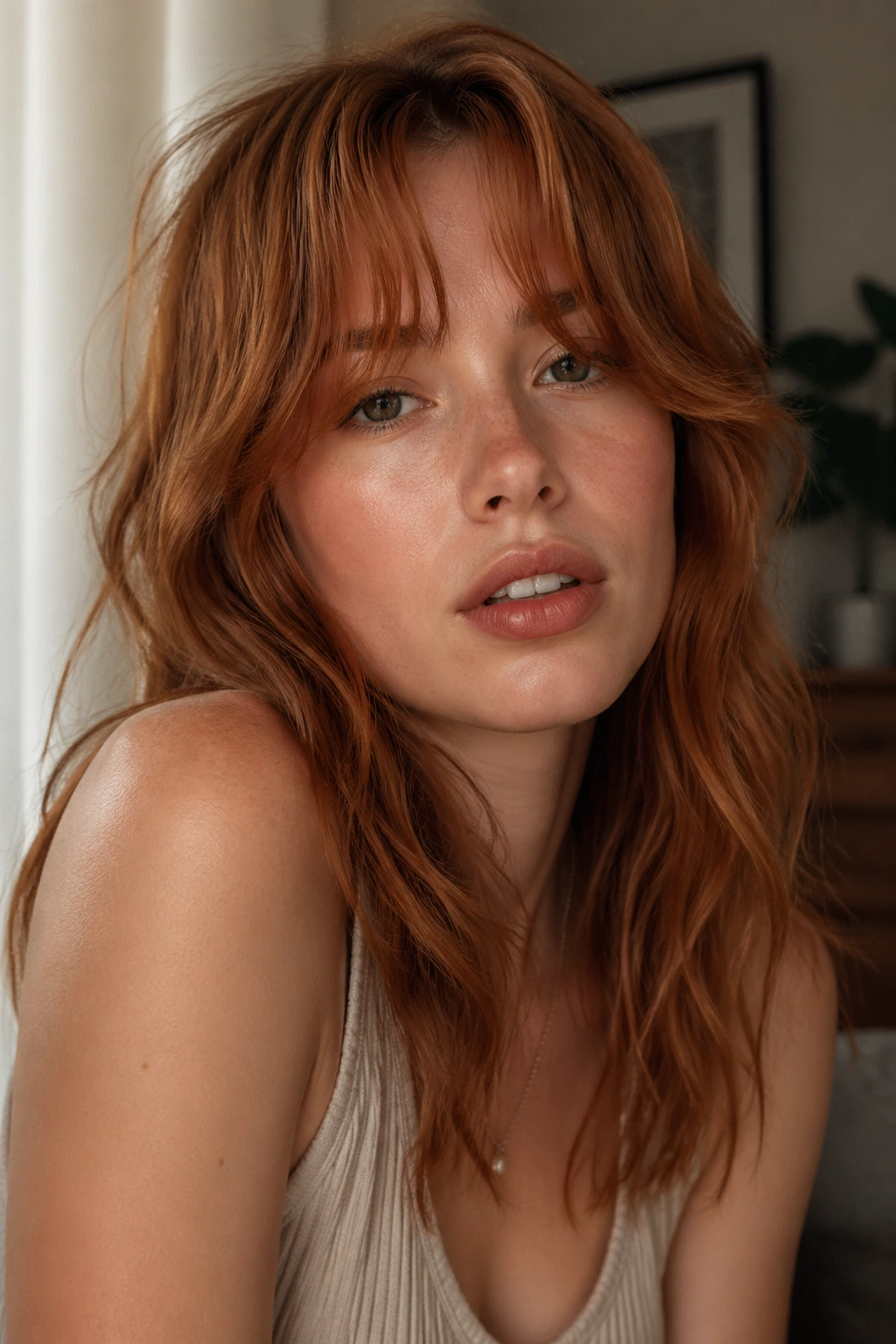
A grown-out fringe can look better than a fresh cut if the shape is handled well. The front lands somewhere between the brows and the cheekbones, and the ends blend into the sides so the whole thing feels deliberate. On red wavy hair, that in-between length is especially useful because the color and movement keep it from looking neglected.
This is the style for people who are between appointments or who want bangs without signing up for constant trimming. It works with a middle part, a side part, or a loose off-center split. And because the pieces are longer, they can tuck back on busy days.
The danger is letting the fringe get too heavy around the eyes. A little cleanup at the temples helps. So does a soft bend at the front rather than a flat, straight fall. A grown-out bang should look lived-in, not forgotten.
This one is underrated. Honestly, I think more people should wear it on purpose.
12. Chin-Grazing Bangs That Curve Along the Jaw
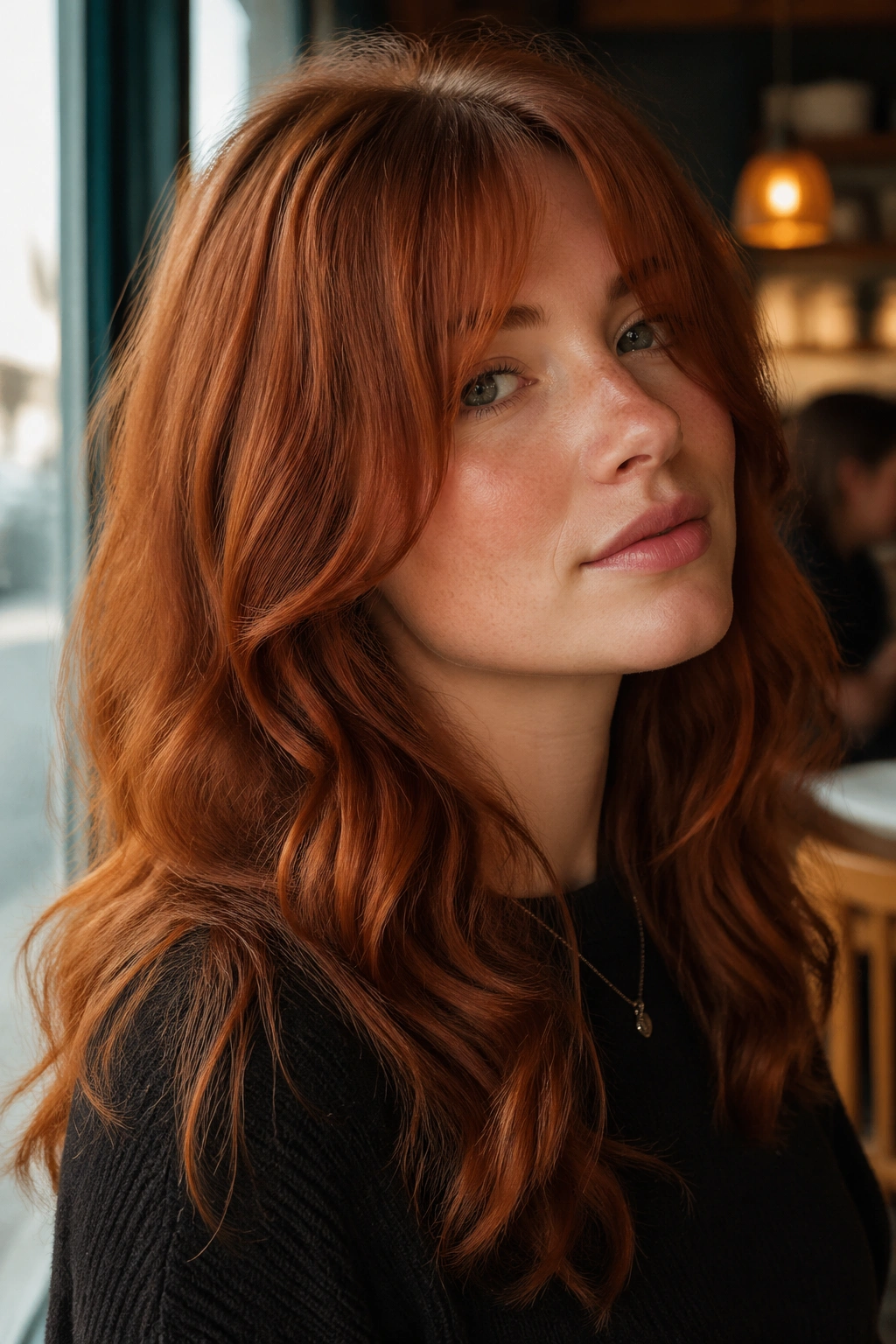
A chin-grazing bang should swing, not sit. That’s the whole idea. The front pieces start high enough to frame the cheekbones, then curve down toward the jawline so the face gets a longer, cleaner line. On wavy red hair, the result feels elegant without being fussy.
How It Changes the Face Shape
This length is useful if you want width around the lower half of the face. It can soften a long face, balance a pointed chin, or bring a little structure to loose waves that otherwise fall straight down. The red tone helps too, because the jaw-length pieces catch light as they move.
- Good for oval, long, and heart-shaped faces
- Works with both loose waves and stronger bends
- Can be tucked behind the ear on one side
- Looks better with a soft side bend than with a stiff curl
The key is to keep the ends soft and slightly curved inward or outward, depending on your cut. If they’re too blunt, the whole effect gets boxy. If they’re too thin, you lose the framing. Middle ground wins here.
13. Bardot Bangs with a Soft Split
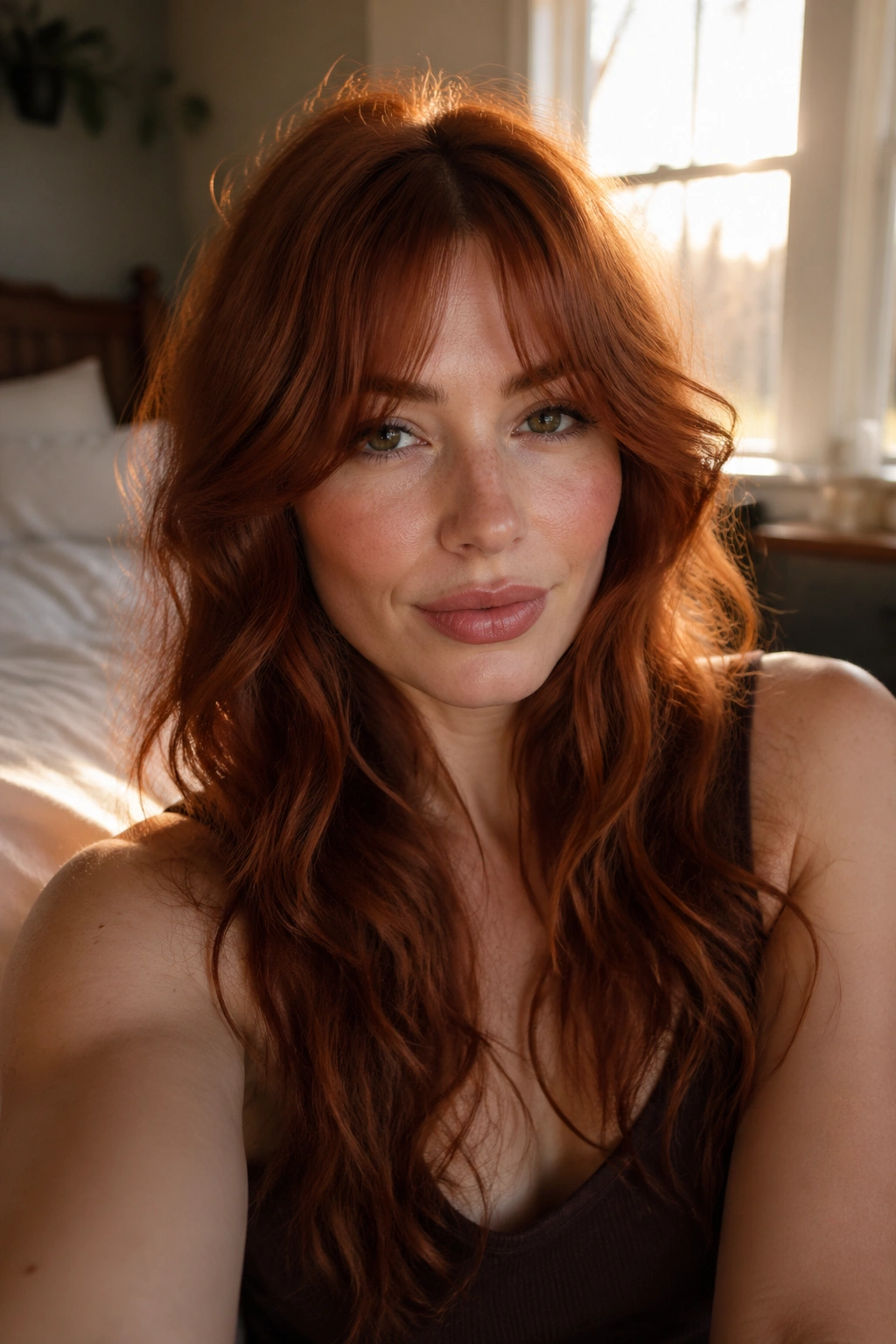
Bardot bangs are made for copper and auburn. The center opens softly, the sides drift wide, and the whole fringe feels romantic without turning costume-y. On wavy hair, the shape looks especially natural because the bend is already there.
This version works if you want volume at the crown and movement around the temples. It can make red hair look fuller without adding bulk at the ends. The split is softer than classic curtain bangs, which gives it a more undone feel. Not messy. Undone.
A good Bardot bang usually starts with a longer center and shorter pieces near the temples, then blends into the rest of the haircut. It looks best when the hair has a little lift at the root, so the fringe doesn’t collapse into the face. A quick blow-dry with a round brush can do it. So can setting the front in a loose clip while it cools.
This is one of those cuts that turns a simple wave pattern into something with a bit of movie-star energy.
14. Collarbone Bangs That Melt into Long Layers
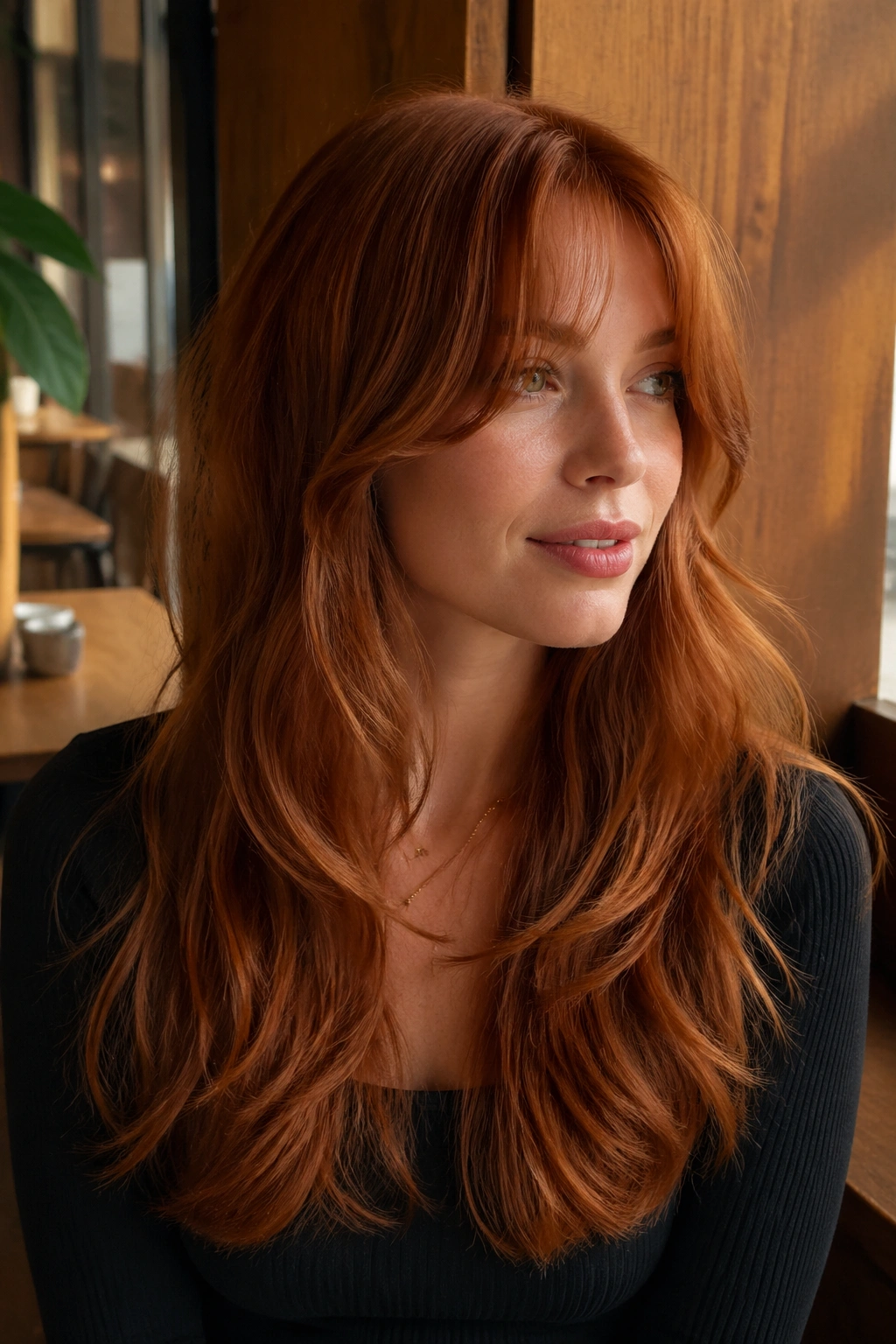
Why stop at the brow when the front pieces can fall to the collarbone? Collarbone bangs are the longest version on this list, and that’s exactly why they work for some people. They feel more like front layers than a true fringe, which makes them easy to wear if you’re nervous about commitment.
Who They Suit Best
This shape is especially good on thick red hair that needs room to move. The long pieces keep the front from puffing up, and the length lets the wave fall in a clean line beside the face. If your hair color shifts from darker roots to brighter ends, this style shows the change without making it look striped.
It’s also nice for anyone who likes to wear hair half-up. The long front pieces leave enough shape around the face even when the rest is pulled back. That’s useful on days when you want the bangs to do some work without doing all of it.
Collarbone bangs are not flashy. They’re practical, flattering, and easy to grow out. That matters more than people admit.
15. Swoopy Glam Bangs with a Side Roll
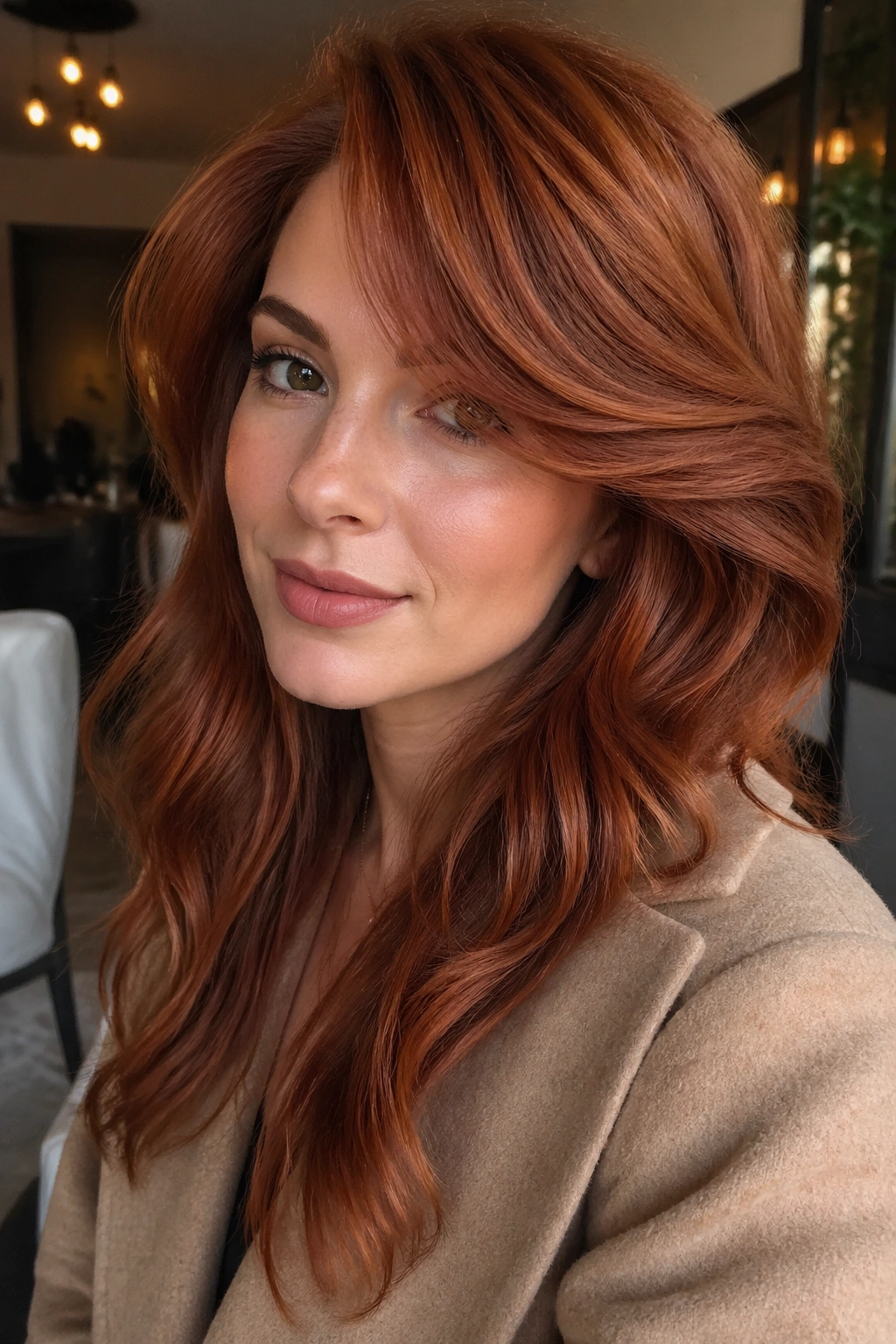
A side roll gives red waves a bit of drama with almost no effort. The bang is long enough to sweep away from the face, then curve back with a soft bend that feels polished. It’s the kind of fringe that looks right with a wool coat, a silk blouse, or a plain black tee — which is probably why it keeps coming back.
This shape loves shine. On cherry red, copper, or a deep rust shade, the sweep shows off every bit of gloss across the front. A large round brush or a velcro roller can help set the bend, but you don’t need a shellacked finish. You want movement, not a helmet.
It works well for special occasions, though I’d argue it deserves more daytime use than it gets. The side roll lifts the front, opens the face, and gives wavy hair a cleaner line. One swoop. That’s enough. You don’t need more.
If your waves are medium or loose, this style can look like a blowout even on a normal day.
16. Tapered Bangs for Thick Wavy Hair
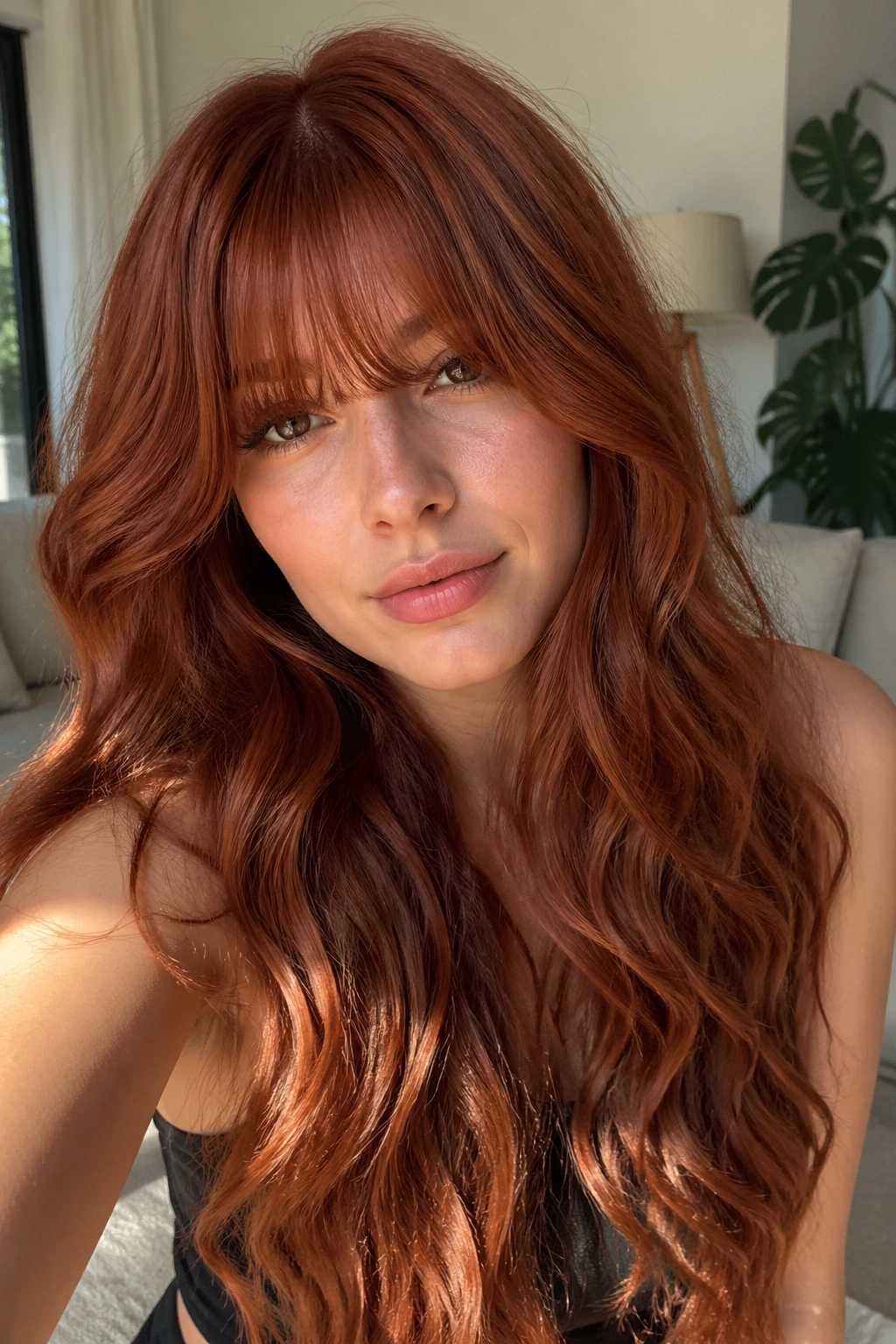
Tapered bangs are not only for thick hair, but thick hair gets the best payoff. The weight comes off gradually from the middle toward the sides, so the front sits flatter and bends more cleanly. On red hair, that taper keeps the fringe from feeling like a heavy curtain across the forehead.
What to Ask Your Stylist
Tell them you want bulk removed without losing length. That distinction matters. You want the bangs to stay long enough to brush the brows or cheekbones, but the inside should be lighter so the wave can form instead of puffing out.
- Ask for internal layering near the root
- Keep the center slightly stronger than the edges
- Avoid a blunt, horizontal line
- Use a blow-dryer nozzle to smooth the roots first
This style works especially well if your hair is dense, coarse, or prone to triangle shape at the front. It also keeps darker reds from looking too solid. A tapered fringe breaks up the mass and shows texture.
It’s a practical cut. Not boring. Just practical.
17. Wispy Long Bangs for Deep Burgundy Hair
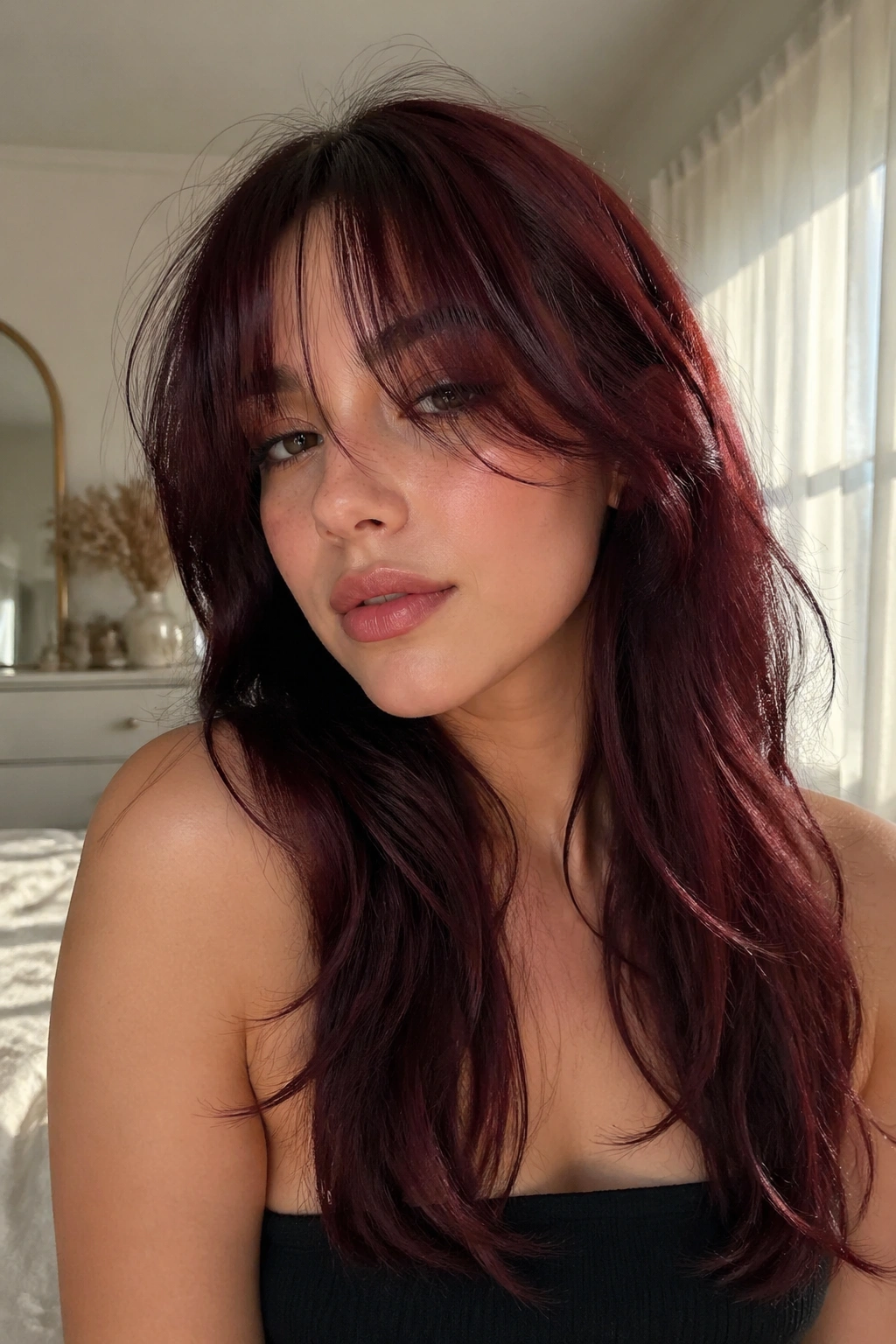
Burgundy and plum reds can look flat if the front is too dense. Wispy long bangs fix that by leaving space between the strands. The fringe stays soft and airy, which lets the darker red tones show depth rather than turning into one solid block.
The best version is thin enough to move, but not so sparse that it disappears. That line is narrower than people think. You want enough hair to frame the face, and enough separation to let light through. On a wavy pattern, that balance keeps the bangs from feeling heavy or sweaty around the forehead.
A light styling spray and finger-shaping usually work better here than a brush. Too much pulling can wreck the airy shape. Let the wave form, then separate the front just enough to keep it piecey. Less handling, better shape.
This is a strong choice if your hair color is dark red and you want the cut to show off the tone instead of fighting it.
18. U-Shaped Bangs with a Soft Middle Dip
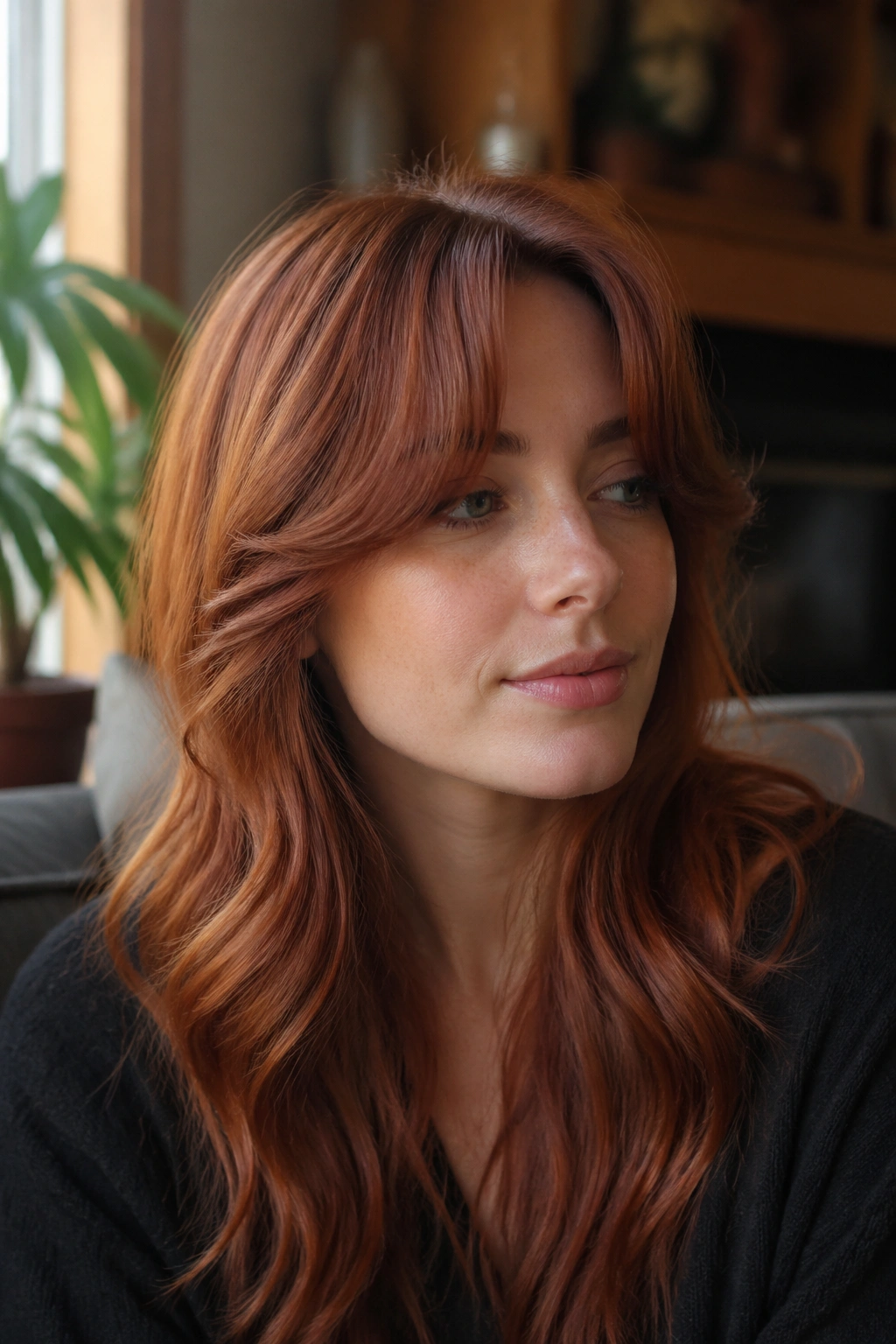
A U-shaped fringe feels softer than a straight line, but fuller than curtain bangs. The middle dips a little lower, while the sides rise and blend into the face-framing layers. On red wavy hair, that curved outline gives the haircut a smooth, almost painted look.
It’s a good match for people who want the eyes emphasized without the whole forehead covered. The shape can balance a narrow face, and it keeps thicker red hair from spreading out too wide at the sides. If your wave has a bit of bounce, the U-shape can hold it without getting puffy.
How It Sits in Real Life
This is one of those styles that looks better when it’s not too perfect. A slight bend at the center and a looser fall near the temples gives it life. If the line gets too symmetrical, it can feel stiff. If it’s too uneven, the shape disappears.
I like this version on copper and auburn shades because the curve seems to pull the color inward. It frames the face without stealing focus from the rest of the hair. That’s a nice balance.
19. Layered Bangs with a Flipped Finish
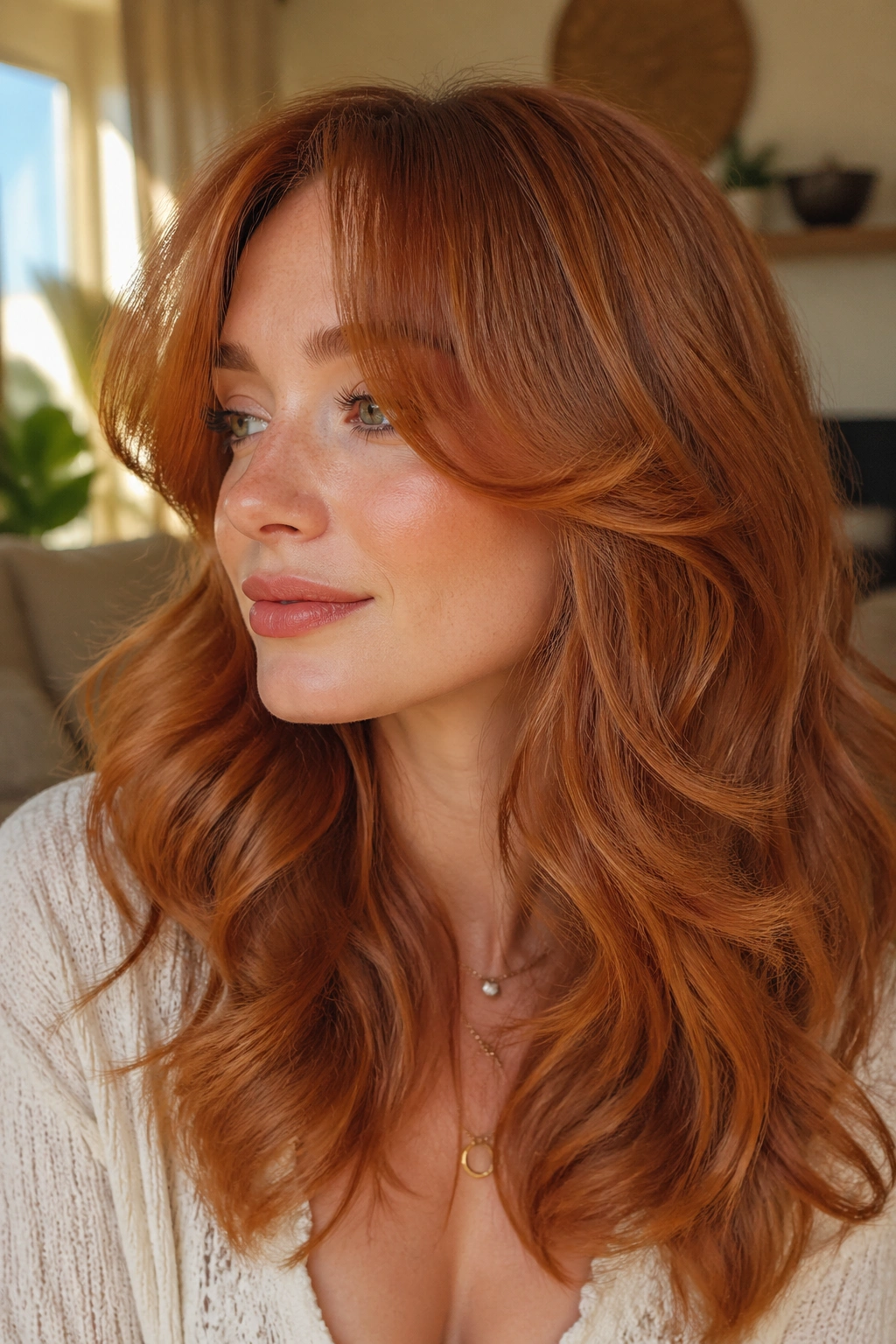
Flipped bang ends are a sneaky way to add bounce to red waves. The front pieces are long enough to move, then styled so the ends kick slightly outward or back. It gives the fringe a lift that works well with layered cuts and a lot of natural texture.
Why the Flip Matters
Without the flip, the front can sink into the cheeks. With it, the bang opens the face and looks a little lighter. A round brush or a large curling iron can create that bend, but the shape should still look soft. You’re after motion, not a retro costume vibe.
This style loves copper, ginger, and bright auburn because the lifted ends catch light near the cheeks and jaw. It can also help a heavy cut feel less dense. If your hair tends to lie flat on top, the flip makes the front feel more alive.
- Best with medium to thick waves
- Works well with layered lengths
- Needs a quick cool-down after styling
- Looks good on side or center partings
The little turn at the ends does more than people think. It wakes the whole haircut up.
20. Side-Part Bangs with High Shine
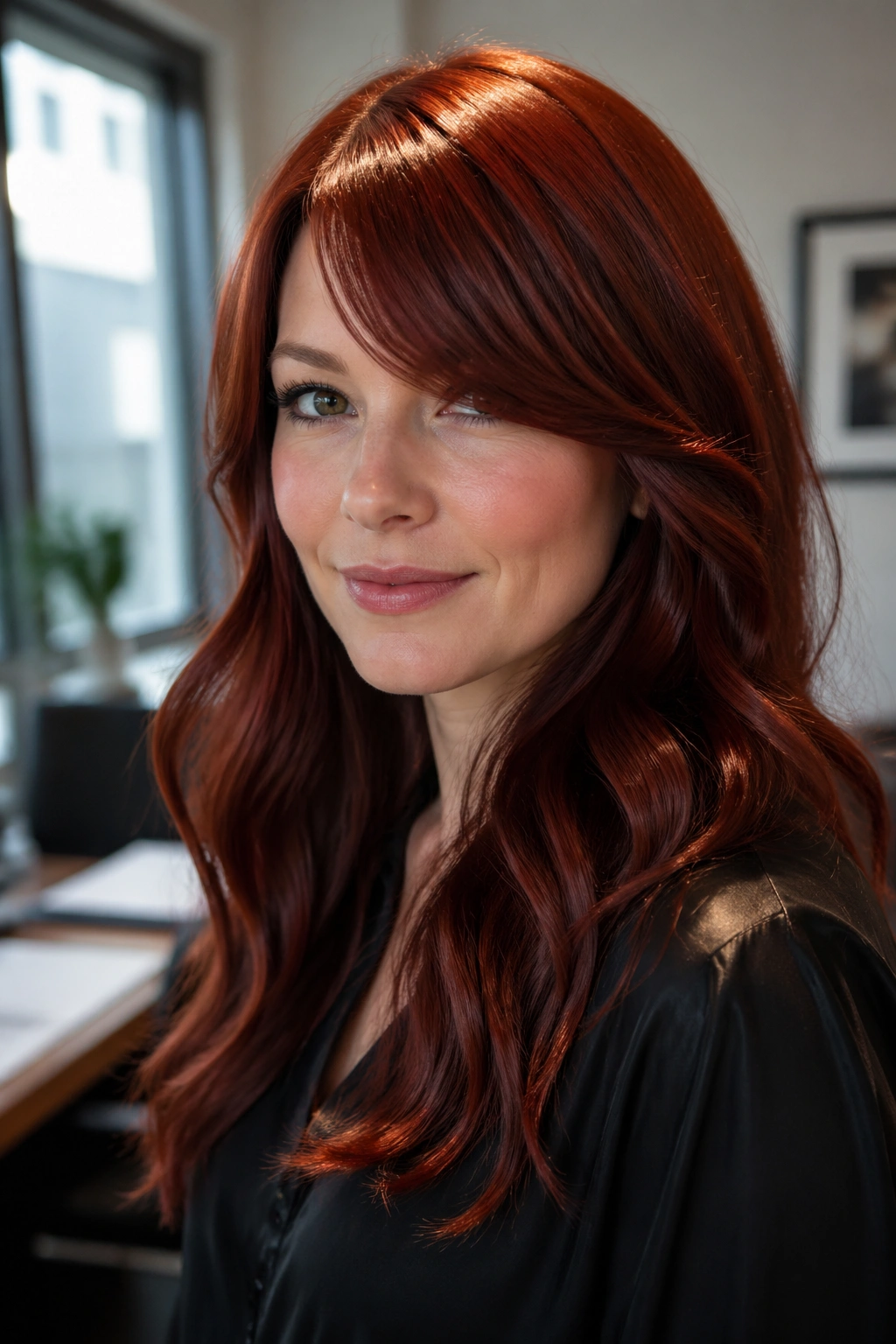
Want a bang shape that looks neat at work and loose later? Side-part bangs with high shine are an easy answer. The roots stay sleek near the part, while the lengths bend softly through the wave. That contrast gives red hair a polished front without making it stiff.
This style is especially good if your red shade is rich and glossy. The side part pulls light across the color, and the long front piece helps show off the shine from root to tip. It’s a smart look for people who like a clean finish but don’t want to dry their hair poker-straight.
A little smoothing cream near the roots can help, but keep it light. Too much product and the bangs look greasy by lunchtime. The better move is a neat part, a quick brush through while drying, and a touch of shine spray at the ends if needed. Clean root, soft bend. That’s the formula.
It’s one of the more office-friendly options on the list, which is worth saying out loud.
21. Romantic Loose Bangs for a Wavy Lob
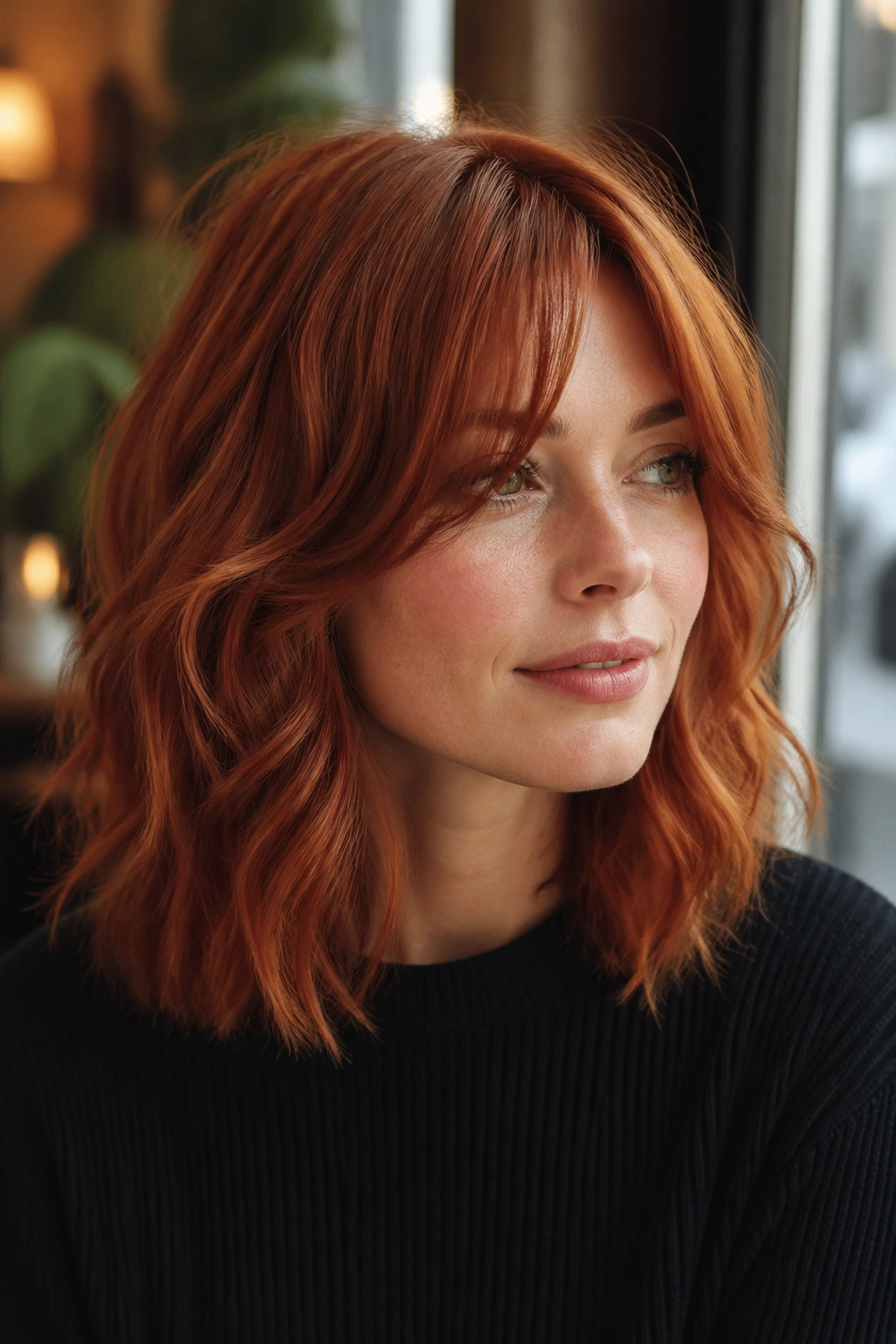
A wavy lob with loose front pieces has a calm, lived-in feel that never seems forced. The bangs are long enough to blend into the haircut, but still separate enough to frame the eyes. On red hair, that softness keeps the color from looking too hard around the face.
This style is a good fit if you wear your hair mostly down and like a little movement around the cheeks. It works with loose waves, a diffuser, or even second-day hair that has lost some polish. The goal is not perfection. The goal is a frame that looks like it belongs there.
Best Styling Move
Use your fingers first, brush second. That sounds simple, but it matters. A brush can flatten the front pieces fast, especially if your wave is fine. A small amount of mousse or a light cream can help the bang keep its bend without getting sticky.
This is one of the most wearable styles on the list. It’s soft, flexible, and easy to live with.
22. Soft Center-Part Bangs That Grow Out Cleanly
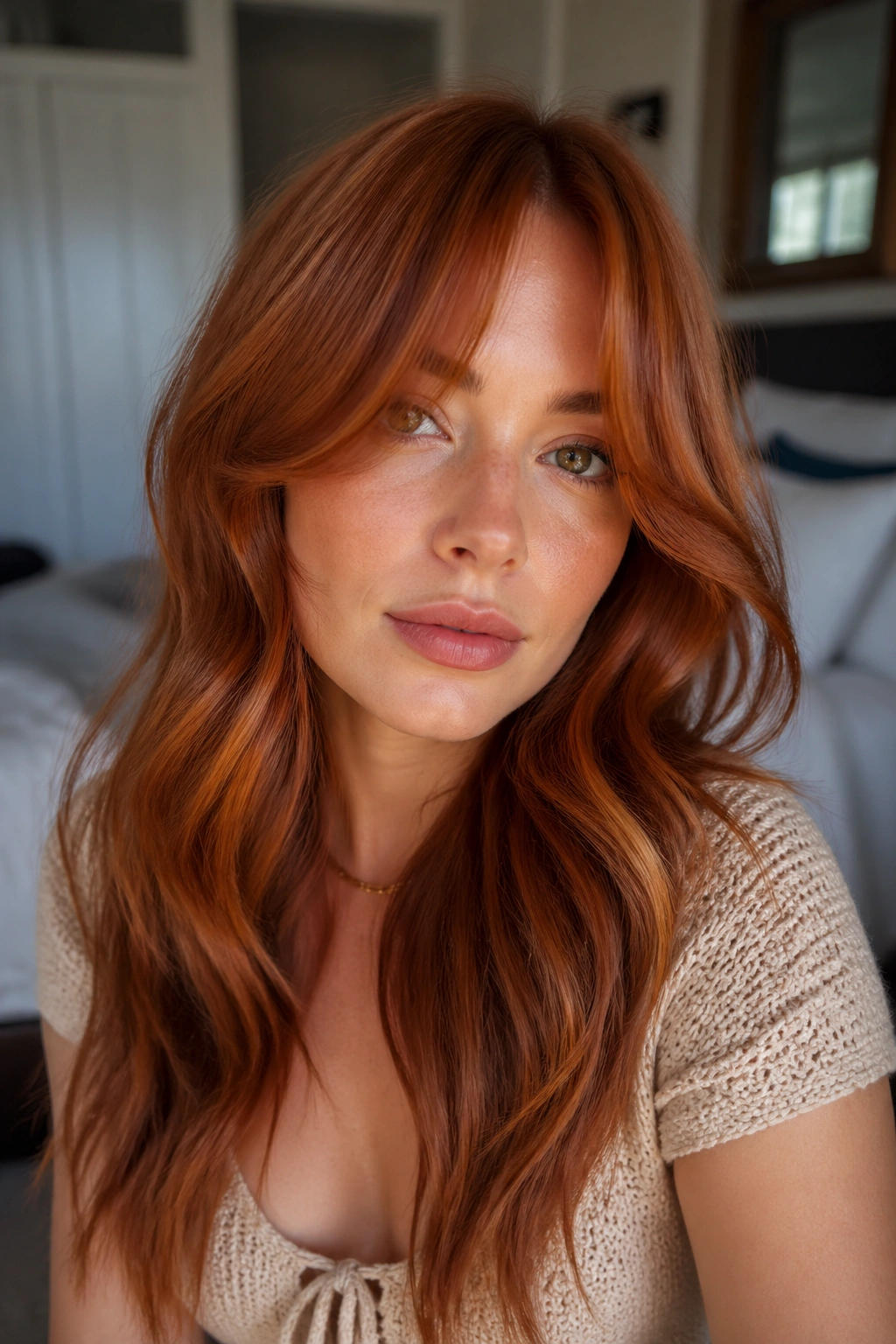
Soft center-part bangs are the version I recommend when someone wants the least drama. The fringe opens in the middle, falls away from the face, and blends so well into the front layers that it never feels trapped in one shape. On red wavy hair, that softness keeps the color front and center while still giving the eyes a frame.
The real win is the grow-out. As the hair gets longer, the bang turns into face-framing layers instead of a choppy mess. That means fewer awkward weeks between trims. It also means you can wear it tucked, pinned, parted wider, or brushed forward without feeling locked into one look.
If your waves are strong, ask for a slightly longer starting point at the center and softer taper at the sides. If your waves are looser, the stylist can keep the split closer to the brow. Either way, this shape stays useful longer than most fringe styles.
And that, honestly, is what makes it worth wearing. A bang that still looks good when it grows out earns its place.
