



Thick, wavy hair is a blessing, but it often comes with a specific set of frustrations. You know the struggle: the dreaded triangle shape, the uncontrollable volume on humid days, and the feeling that your hair is constantly competing for space on your shoulders. Managing this hair type isn’t about fighting your natural texture; it’s about choosing a silhouette that complements it rather than trying to tame it into submission. When you have high density and a wave pattern, weight distribution is your best friend.
Getting the perfect medium-length cut for thick, wavy hair requires a stylist who understands how to remove bulk without compromising the integrity of your waves. If you cut into the wrong places, you end up with frizz or, worse, layers that stick out like shelves. The goal is to encourage movement, reduce the weight that pulls your waves down, and frame your face in a way that feels intentional rather than accidental. Here are thirty-five ways to cut and style medium-length hair that actually respects your density.
1. Textured Lob
The long bob, or “lob,” is a classic for a reason, but for thick, wavy hair, it needs a specific approach. You cannot just cut it blunt at the shoulder. Ask your stylist for deep point cutting at the ends. This technique removes enough weight to let your waves spring up without turning the ends into a bushy mess.
Why This Style Works
It keeps the length right at the collarbone, which is long enough to pull back but short enough to manage. The texture added to the ends prevents that heavy, boxy look that often happens when thick hair is cut too straight. It essentially forces the weight to distribute more evenly across the mid-lengths.
How to Style It
Use a sea salt spray while the hair is damp. Scrunch it with your hands and let it air dry. If you use a diffuser, keep the heat on low to avoid encouraging the frizz that often comes with high-density hair.
2. Blunt Cut with Internal Layers
If you are terrified of layers because you associate them with 1980s poofiness, this is the solution. The exterior of the cut remains blunt, maintaining a solid, healthy-looking line. However, your stylist adds “invisible” layers on the inside of the hair shaft.
The Benefit of Internal Layers
These are cut into the bottom half of the hair’s density. They act like internal scaffolding, creating space for your waves to nestle into each other rather than stacking up. You get the sleek look of a blunt cut from the outside, but the internal volume is significantly reduced.
Maintenance Note
Because the outer layer is blunt, you will notice the cut growing out more gracefully than a heavily layered style. You can usually stretch your trim appointments by an extra four to six weeks.
3. Face-Framing Shag
The shag has evolved into a sophisticated, wearable style that works perfectly with wavy hair. By keeping the length at your shoulders, you retain enough weight to anchor the style while using shorter pieces around the face to break up the heaviness.
Who Should Choose This
If you have a rounder face shape, the face-framing layers provide a visual break that slims the appearance. The shaggy, piecey nature of the cut is also incredibly forgiving if you are between hair appointments.
Styling Tip
Use a lightweight texturizing cream. Avoid heavy oils or waxes that will make your hair clump together in thick, greasy sections. You want the pieces to remain separated and light.
4. Long Bob with Curtain Bangs
Curtain bangs are a godsend for thick, wavy hair. They provide a soft transition between your face and the rest of your hair, preventing that “helmet” effect that can happen when thick hair is all one length.
Balancing the Density
When you have thick hair, traditional blunt bangs can be a nightmare to manage—they tend to poof out. Curtain bangs, however, are cut longer and angled, which blends them naturally into the layers around your face.
The Maintenance Factor
Be prepared to trim these every three weeks. Because they are the focal point of your face, they need to stay at the right length to frame your eyes and cheekbones properly.
5. Stacked Bob
A stacked bob involves shorter, graduated layers at the nape of the neck that get longer toward the front. This is an excellent way to remove the “bulk” from the back of your head, which is often the thickest part of your hair.
The Visual Effect
The graduation creates a curved line that naturally follows the shape of your head. It removes the weight that usually causes thick hair to “bulge” at the bottom, giving you a cleaner, more tailored silhouette.
Styling Technique
This cut requires a bit of styling effort. You will likely need a round brush and a blow dryer to smooth the nape area, or you can embrace the wave and use a smoothing serum to keep the stack from getting too wide.
6. Layers with Feathered Ends
Feathering is a technique where the scissors are used to slice into the hair at an angle, creating a soft, V-shaped taper at the very tips. For thick hair, this creates a beautiful, airy movement at the bottom of the cut.
Why It Prevents Poof
Many thick-haired people struggle with the ends of their hair looking wider than the roots. Feathering narrows the silhouette at the bottom, which creates a more balanced, inverted-triangle shape that is universally flattering.
How to Ask Your Stylist
Ask for “soft, feathered ends” rather than “thinning.” Thinning can lead to jagged, frayed-looking hair if done with the wrong tool or with too much force. Feathering is a more controlled, intentional aesthetic choice.
7. Shoulder-Length Layers
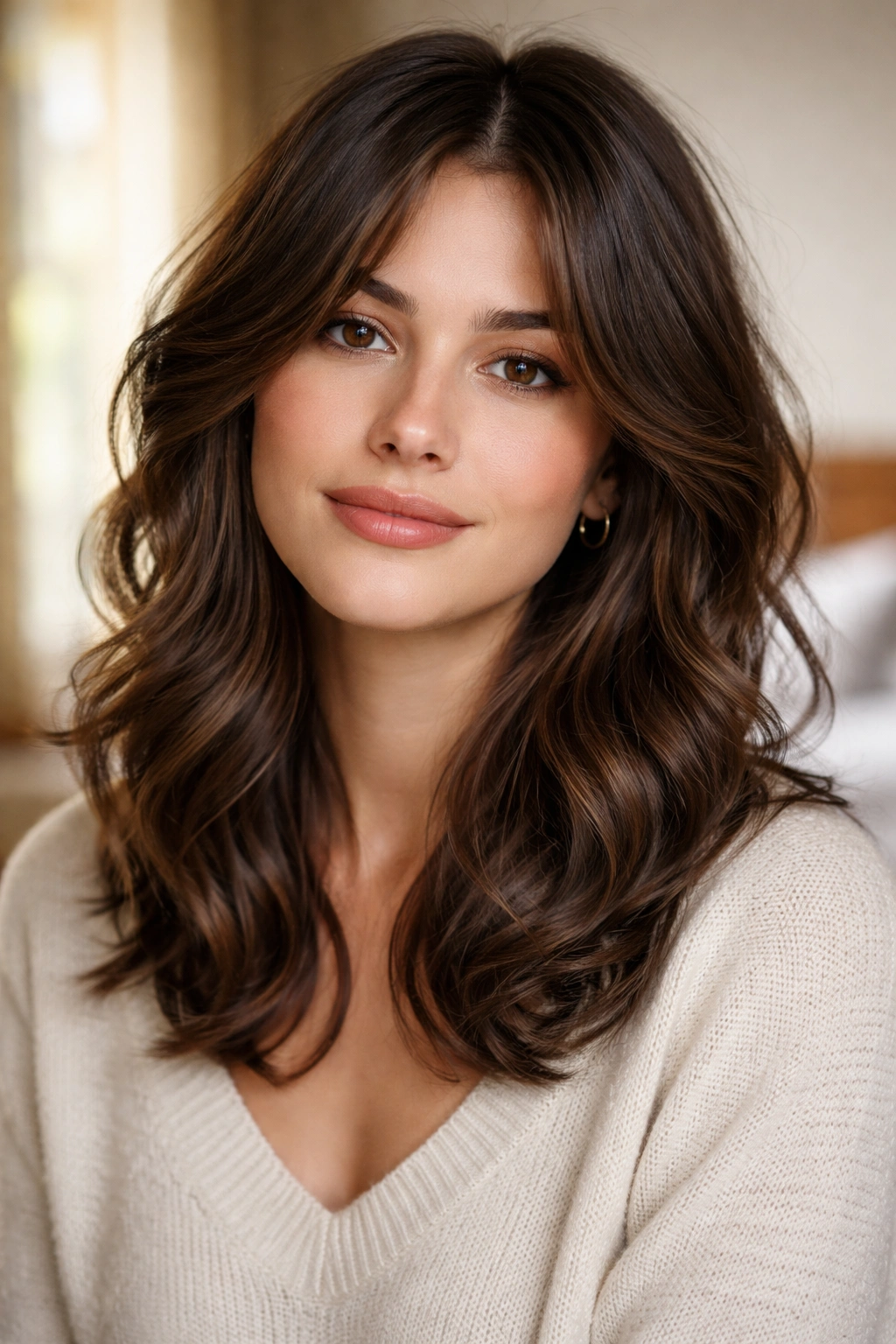
Sometimes, the simplest approach is the best. Shoulder-length is the “sweet spot” for many with thick, wavy hair. It’s short enough that the weight doesn’t stretch out your waves into a weird, half-straight state, but long enough to tie back.
Managing the Volume
The layers should be long enough to tuck behind your ears. If the layers are too short, you risk the “shelf” look. Start your longest layer around the collarbone and work up from there to maintain weight.
The Best Hair Type for This
This works best if your hair is medium-to-coarse. Fine hair with high density might get too wispy with too many layers, but coarse, thick, wavy hair needs the weight distribution to sit right.
8. Invisible Layer Cut
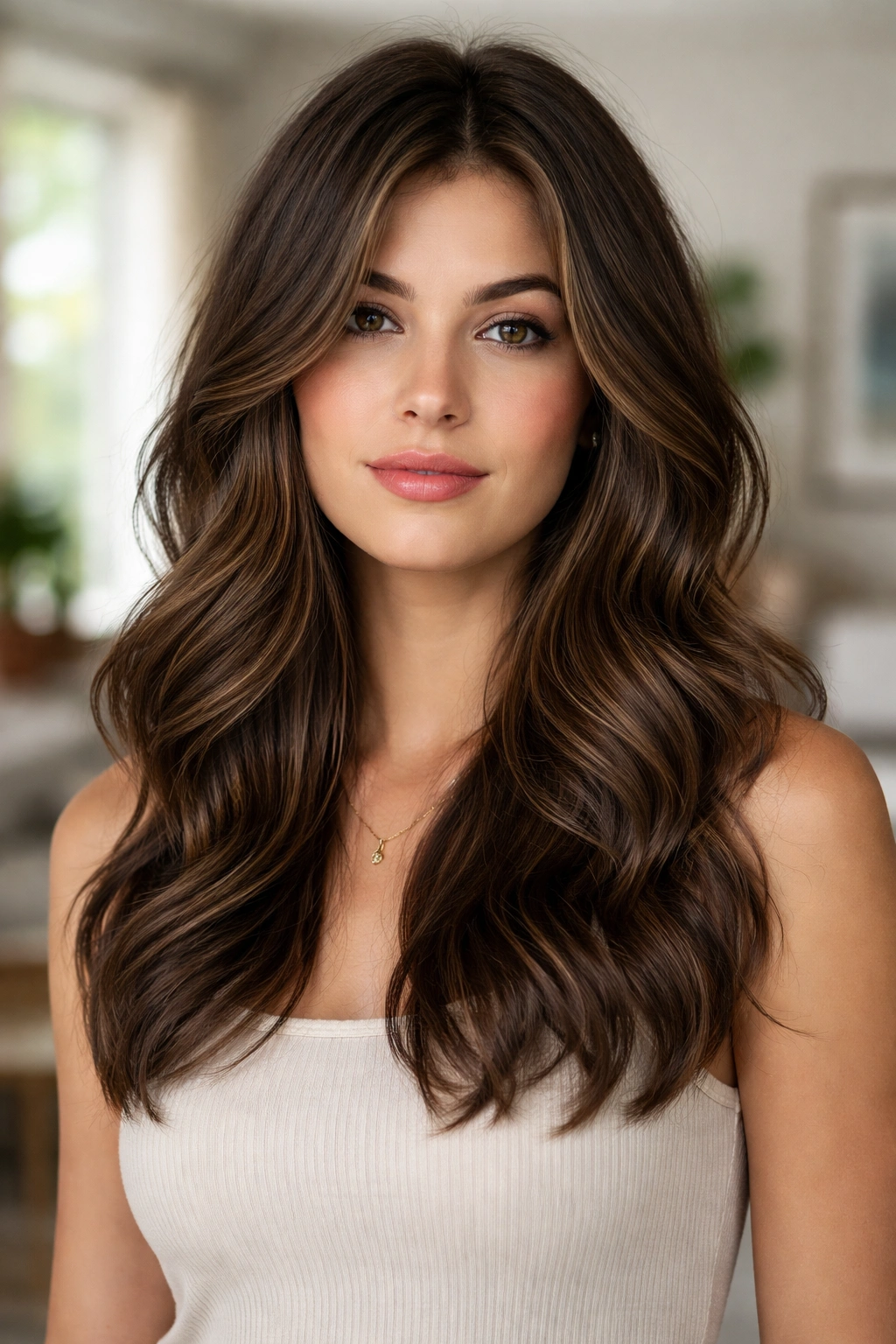
This technique is often called “de-bulking.” It involves cutting layers that are so subtle they are essentially undetectable to the naked eye. The hair falls as one cohesive piece, but the internal weight is gone.
How It Works
Your stylist picks up sections of your hair and cuts into the middle of the strand, not the ends. It effectively creates a “spring” in your hair that allows the waves to bounce up without the bottom section becoming thick and unmanageable.
When to Ask for This
Ask for this if you love your one-length cut but hate how heavy your head feels. It is a modification, not a style change.
9. The De-Bulked One-Length Cut
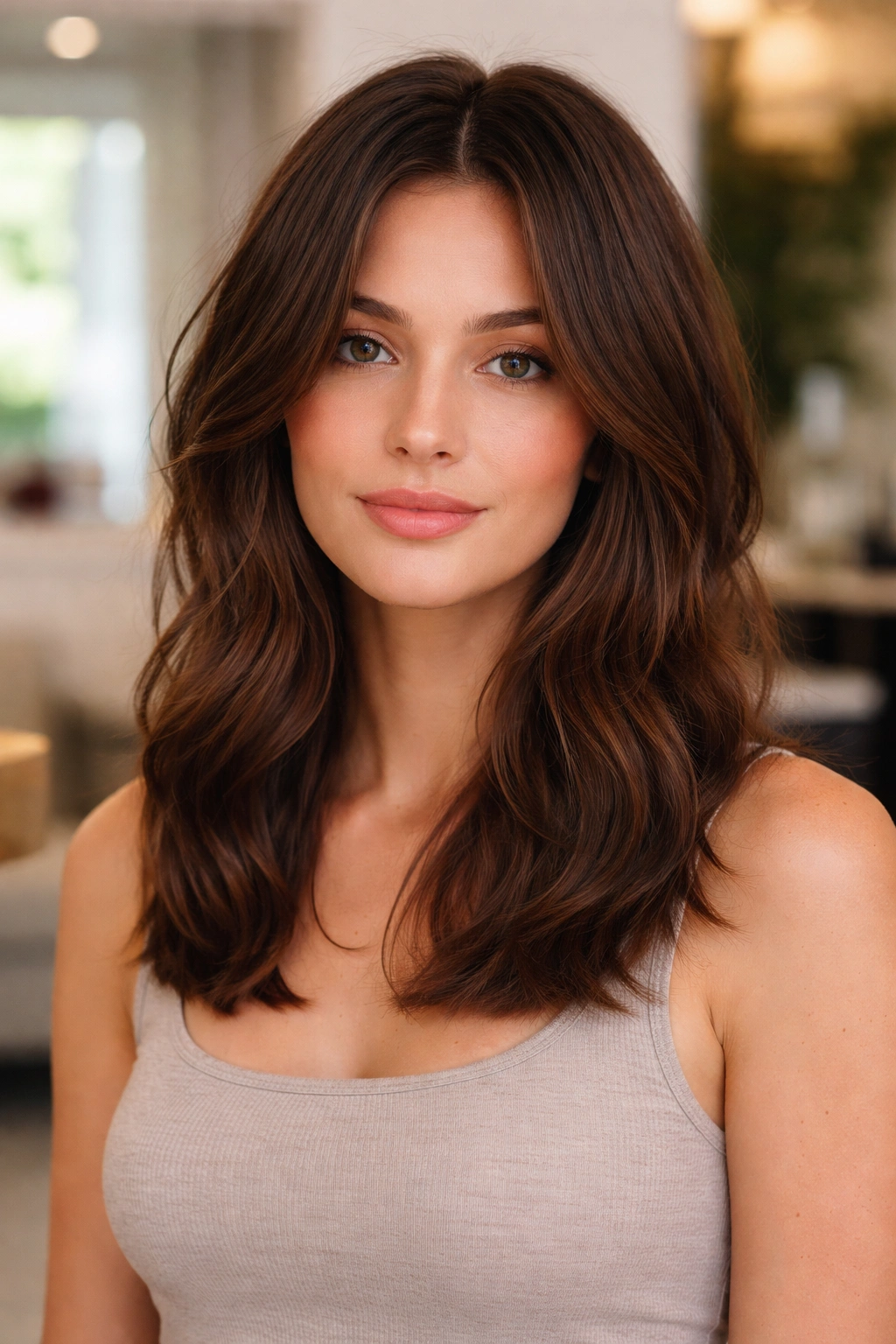
This is similar to the invisible layer cut, but it focuses on the weight distribution throughout the entire length rather than just specific areas. It’s perfect for those who want a sleek, modern look.
The Risk
If you just cut thick, wavy hair to one length without de-bulking, you will almost certainly get a triangle shape. This cut specifically mandates the use of thinning shears or point cutting to ensure the ends don’t end up wider than the top.
Maintaining the Shape
You will need to visit the salon more frequently than someone with fine hair because as thick hair grows, the weight starts to accumulate again at the ends, throwing off the balance.
10. Subtle Ombre Shag
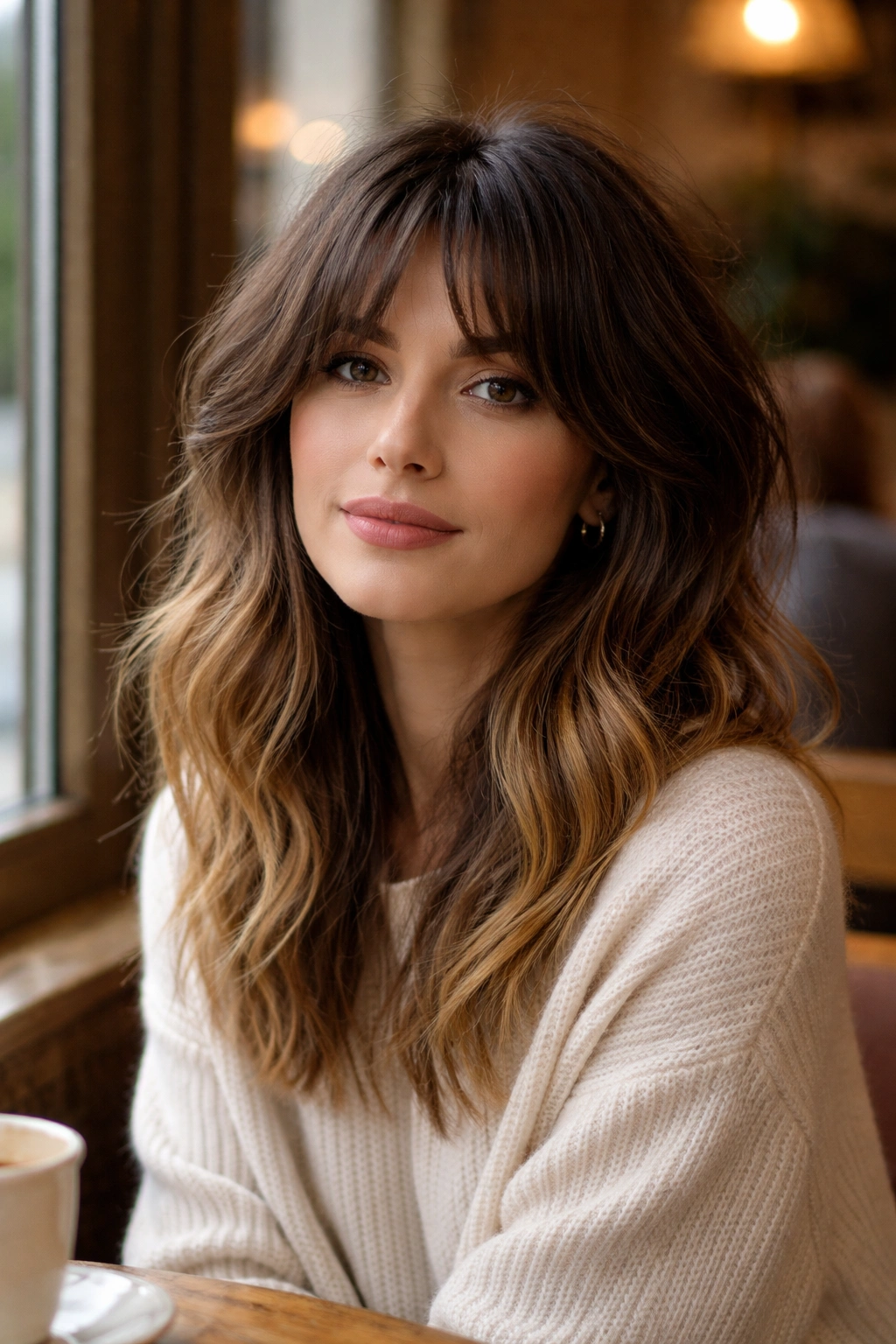
A shag doesn’t have to be dramatic. A subtle version uses shorter layers on top to add volume where you actually want it—at the crown—and leaves the rest of the hair longer and less layered to maintain control.
The Color Advantage
Adding a subtle ombre or balayage color to a shag helps highlight the texture. When you can see the different lengths in the hair due to color variations, the cut looks more dimensional and less like a messy clump.
Why It’s Great for Waves
The color draws the eye to the ends of the waves, making them look defined. It’s an optical illusion that makes your hair look healthier than it might actually be after a humid day.
11. Wavy Wolf Cut (Medium)
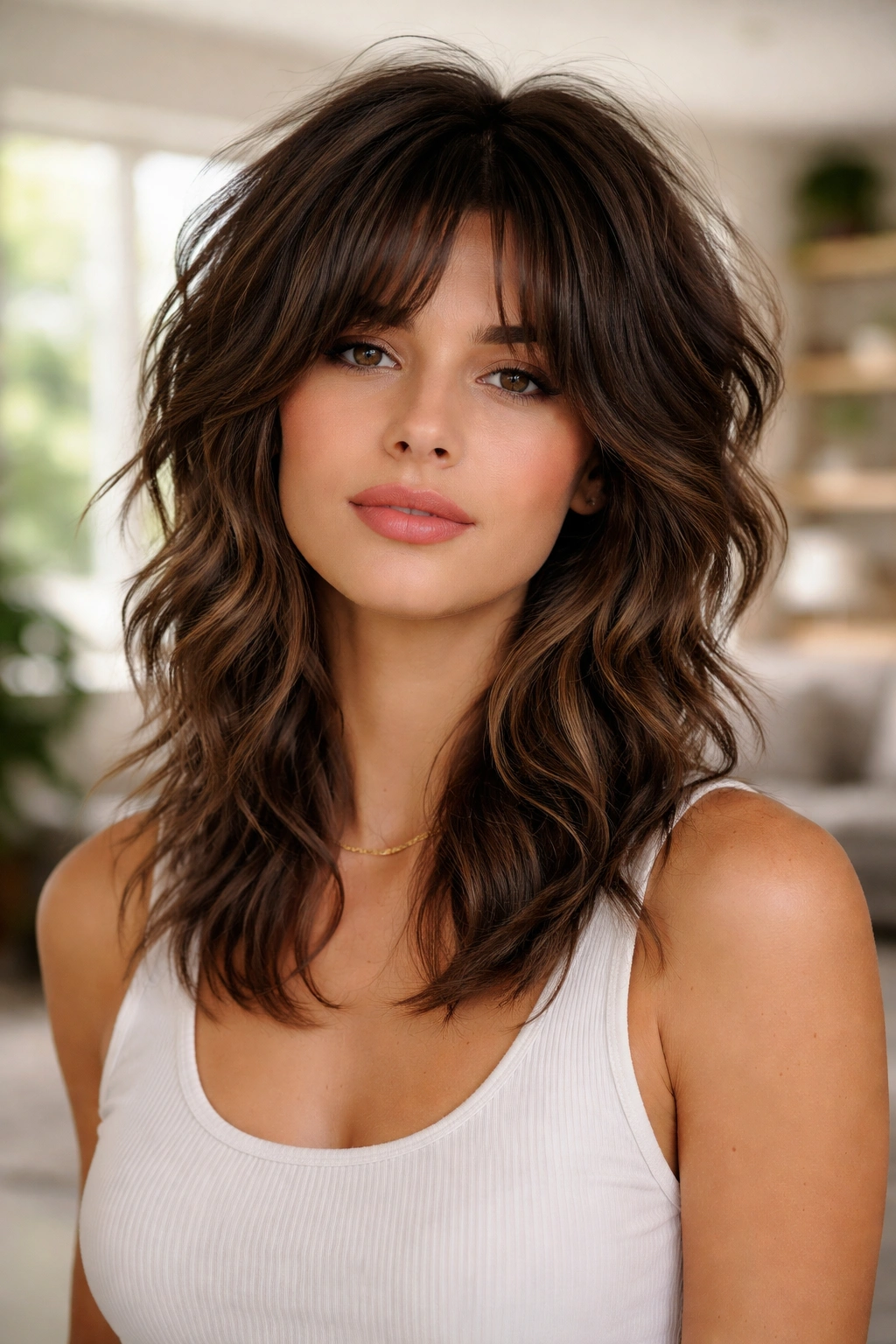
The “wolf cut” is essentially a hybrid of a mullet and a shag. For medium-length hair, it’s a bolder choice. It has a lot of volume at the crown and becomes quite piecey and thin toward the ends.
Managing the Drama
For thick, wavy hair, this is great because it removes a massive amount of weight. You are sacrificing thickness at the bottom for a lot of style and texture at the top.
Styling Commitment
This is not a wash-and-go cut. It requires styling products like mousse or texture cream to define the layers, otherwise, it can look like you just woke up and didn’t brush your hair.
12. Deep Side Part with Long Layers
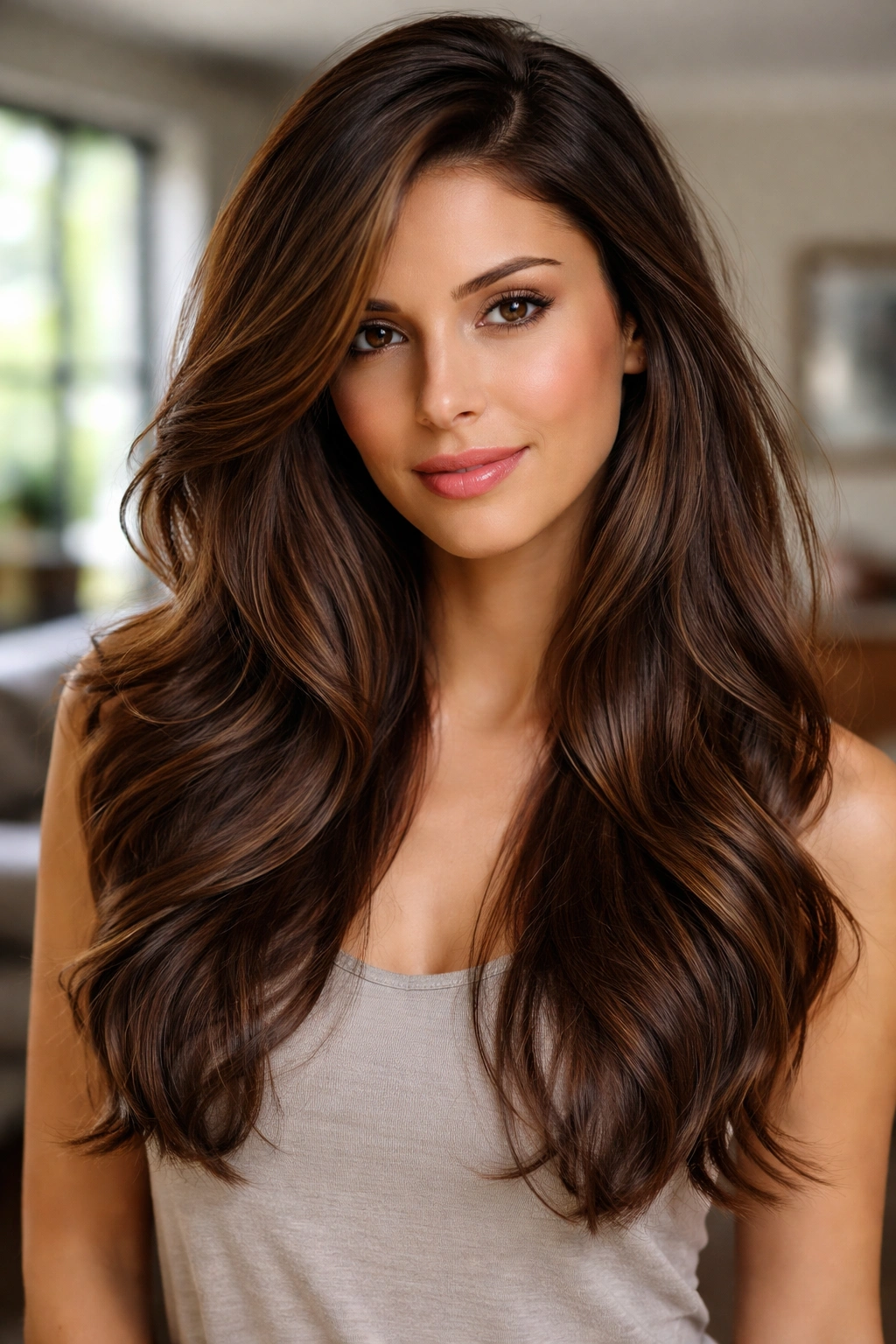
Sometimes, the cut is less about the shape and more about the styling canvas. A deep side part creates instant volume at the roots, which balances out thick hair that tends to lie flat at the crown.
Why It Works
By flipping the hair to one side, you are stacking the density, which can look very glamorous. Pair this with long, face-framing layers that start at the chin.
The Secret
Ask your stylist to cut the layers while your hair is dry. Wavy hair shrinks differently than straight hair; cutting it dry allows the stylist to see exactly where the wave pattern will fall on your face.
13. Asymmetrical Lob
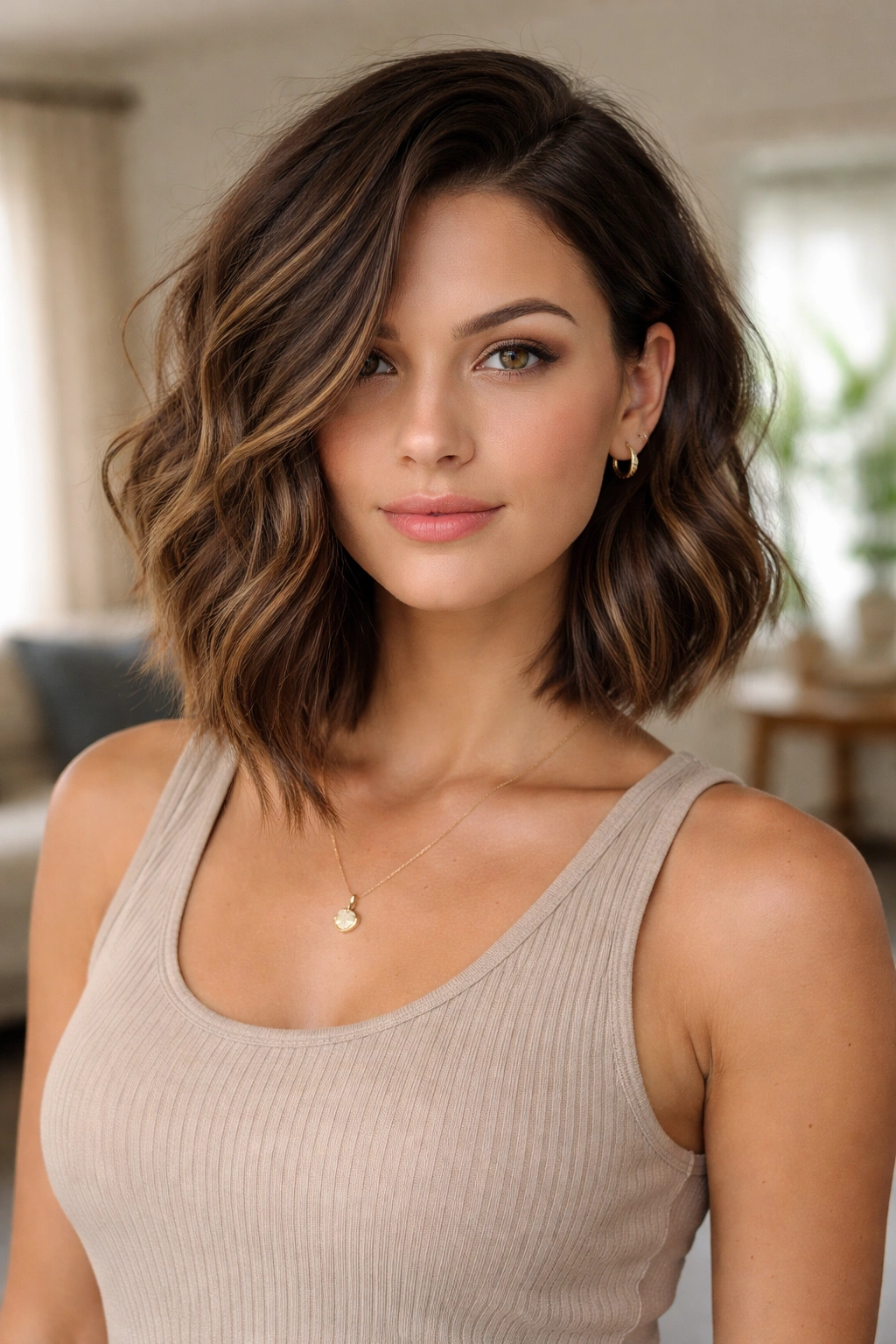
An asymmetrical cut—where one side is shorter than the other—is a fantastic way to deal with the bulk of thick hair. By shortening one side, you essentially halve the weight on that portion of your head.
The Aesthetic
It’s edgy, modern, and very easy to style. You can tuck the shorter side behind your ear and let the longer side frame your face. It feels more deliberate than a standard lob.
Who Should Get This
If you have a strong jawline, an asymmetrical cut is incredibly flattering. It draws attention to your bone structure and keeps the hair from feeling like a wall of texture.
14. Choppy Ends with Minimal Layers
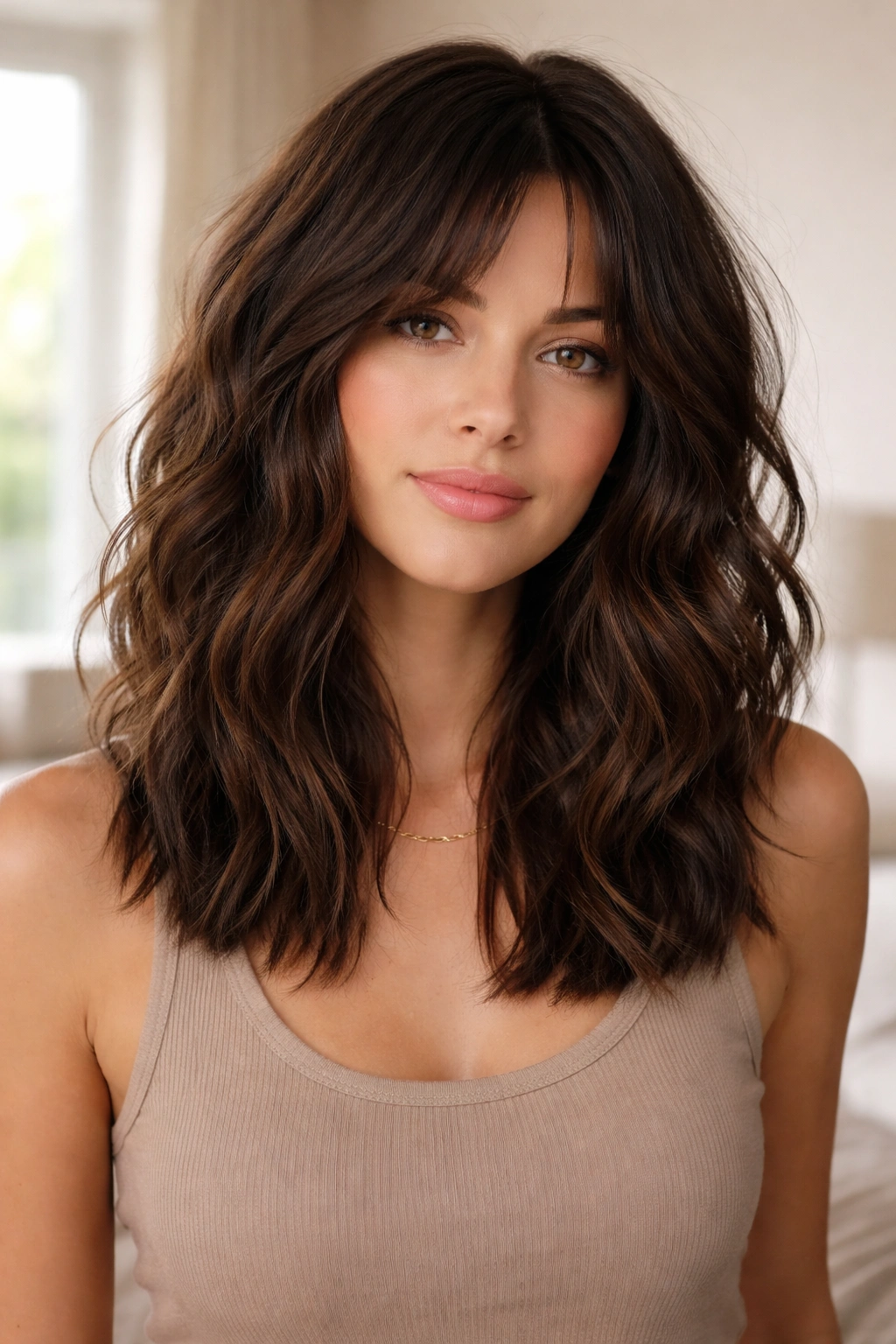
If you hate the idea of traditional layers but need to stop the “triangle” effect, ask for choppy ends. This is a texturizing technique where the stylist cuts into the ends to give them a jagged, lived-in feel.
The Benefit
It removes the “blunt” look that makes thick hair look like a wedge. It makes the ends look softer and more natural, like you haven’t been to the salon in a few months, in a good way.
How to Style
A little bit of grooming cream or light pomade applied to the ends will define the choppiness. Don’t use too much, or the ends will clump together.
15. Soft Waves with Face-Framing
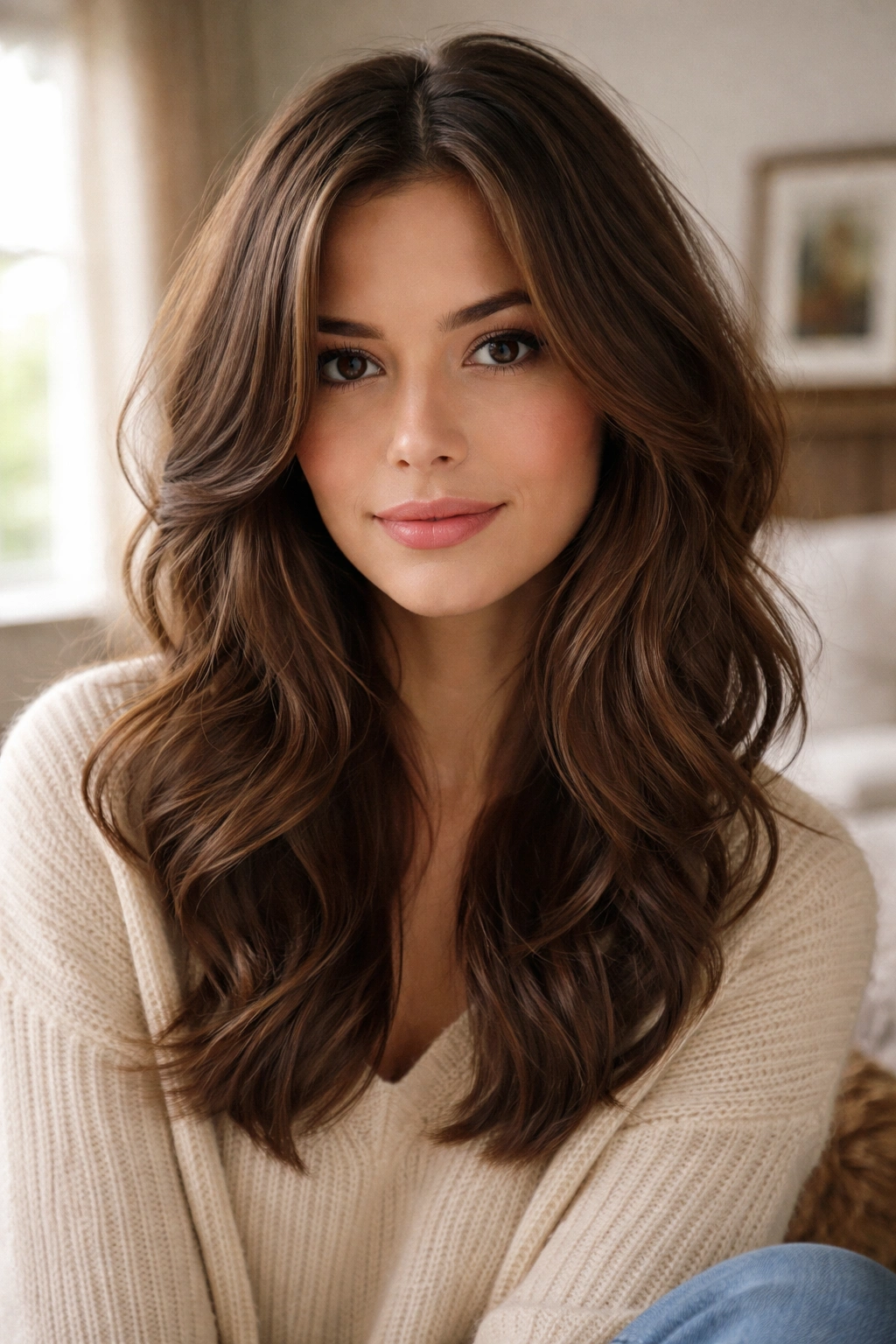
This style focuses almost entirely on the front. The back is kept relatively simple and one-length, while the front is heavily layered to open up the face.
The Logic
Most of your hair density is likely in the back. By leaving the back simple and focusing the movement in the front, you keep the “heaviness” under control while still getting the benefits of a layered cut.
Best For
People who wear their hair down 90% of the time. If you constantly pull your hair into a ponytail, the layers in the front will just fall out, which can be annoying.
16. The “Beach Wave” Cut
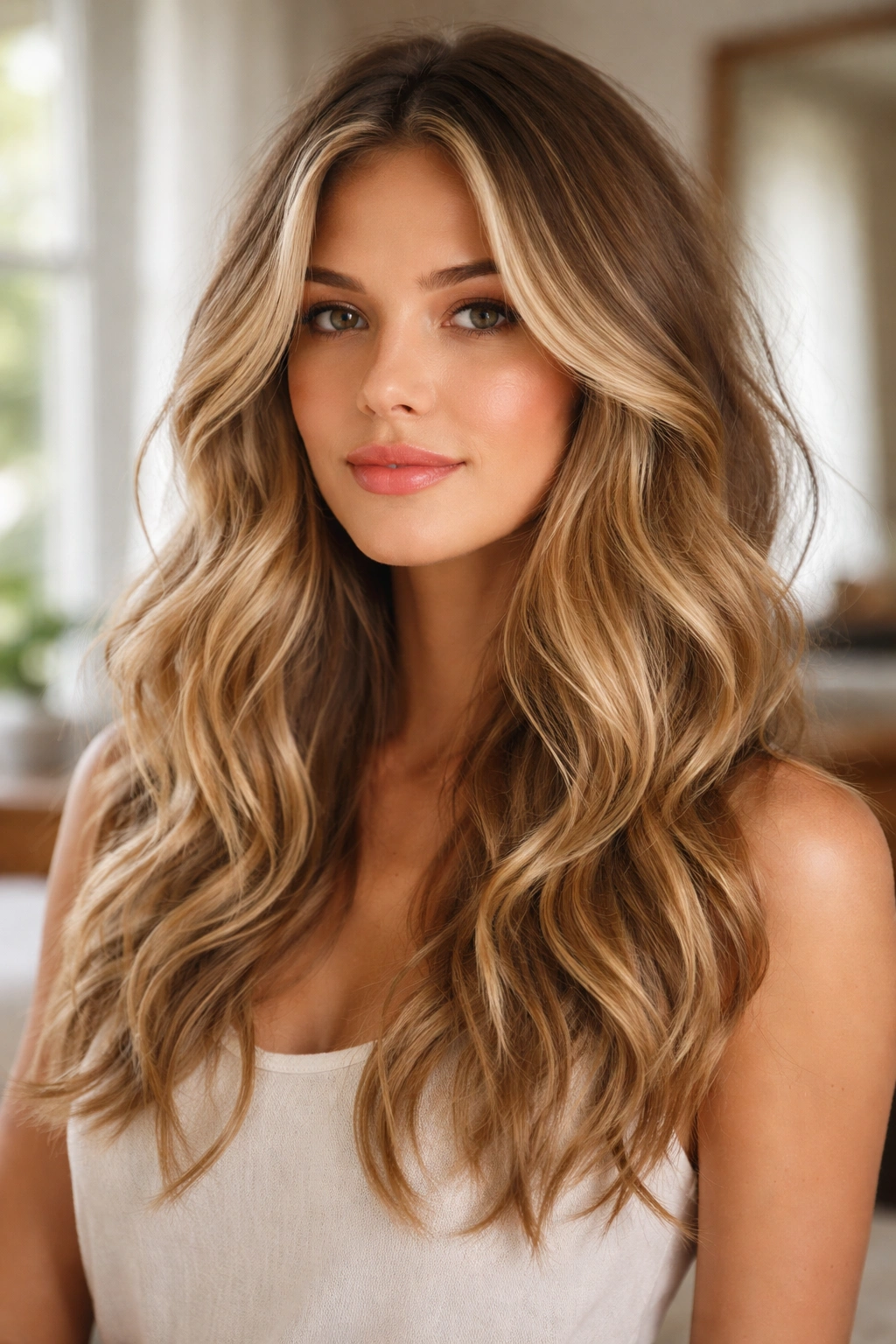
This cut is all about loose, flowing layers. The layers are cut long, starting around the cheekbones, to mimic the way hair naturally dries after a day at the beach.
The Texture
It requires the hair to be cut with a straight razor or very sharp scissors. You want the ends to feel “tapered” rather than blunt. It’s a very romantic, soft look.
Product Selection
You need a texturizing salt spray or a beach wave cream. Avoid heavy gels, which will make the waves look crunchy rather than soft and touchable.
17. V-Shaped Layers
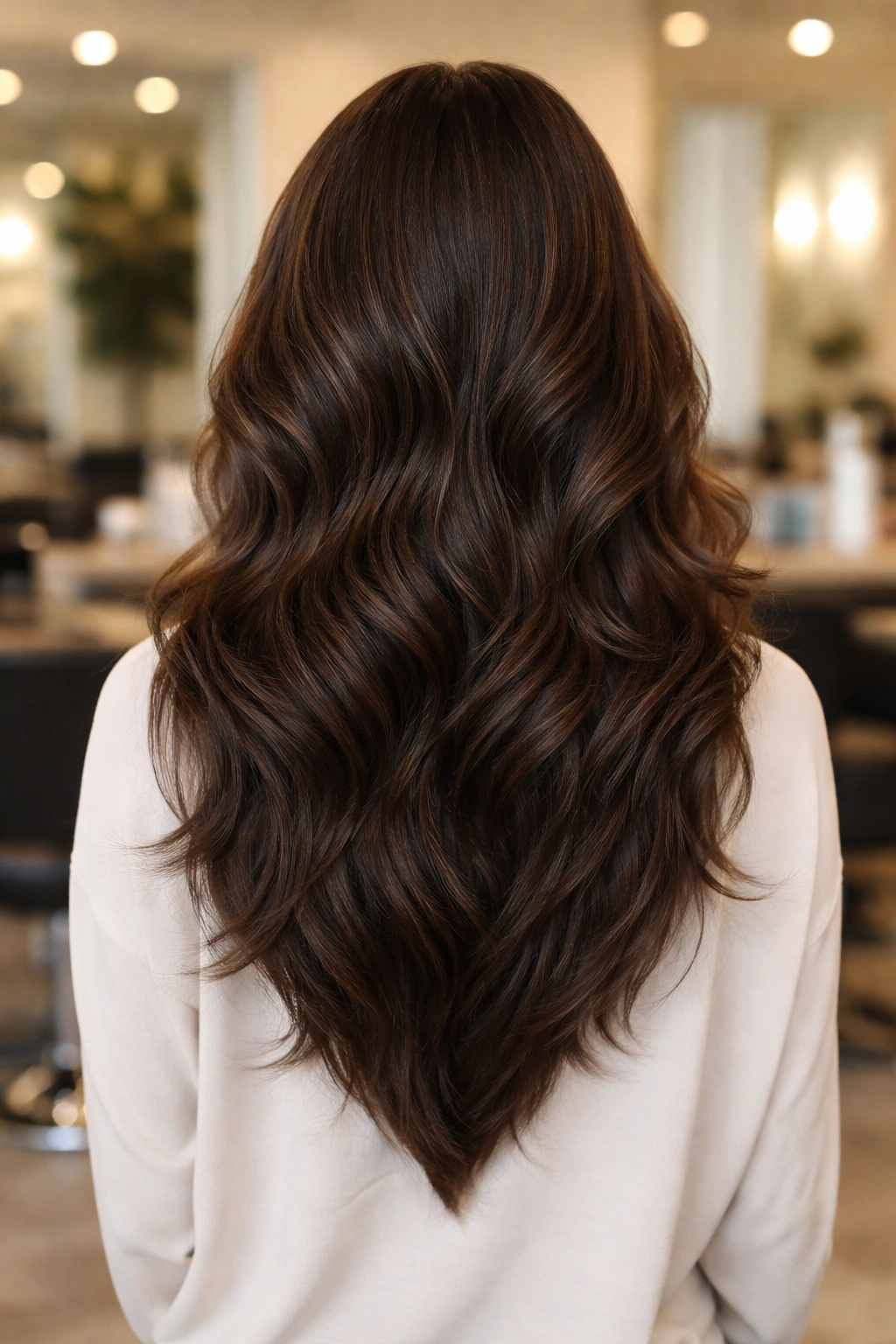
If you have a lot of hair and want to reduce the weight significantly, a V-shape is a classic technique. The layers in the back are cut shorter in the middle and longer on the sides, creating a literal “V” shape.
Why It Helps
It removes the thickest part of your hair—the middle section—and keeps the perimeter lighter. It also makes your hair look longer than it actually is because the eye follows the point of the V.
The Trade-off
It can make your hair look a little bit thinner at the bottom. If you are very attached to having a thick, dense-looking ponytail, this might not be the right choice for you.
18. U-Shaped Layers
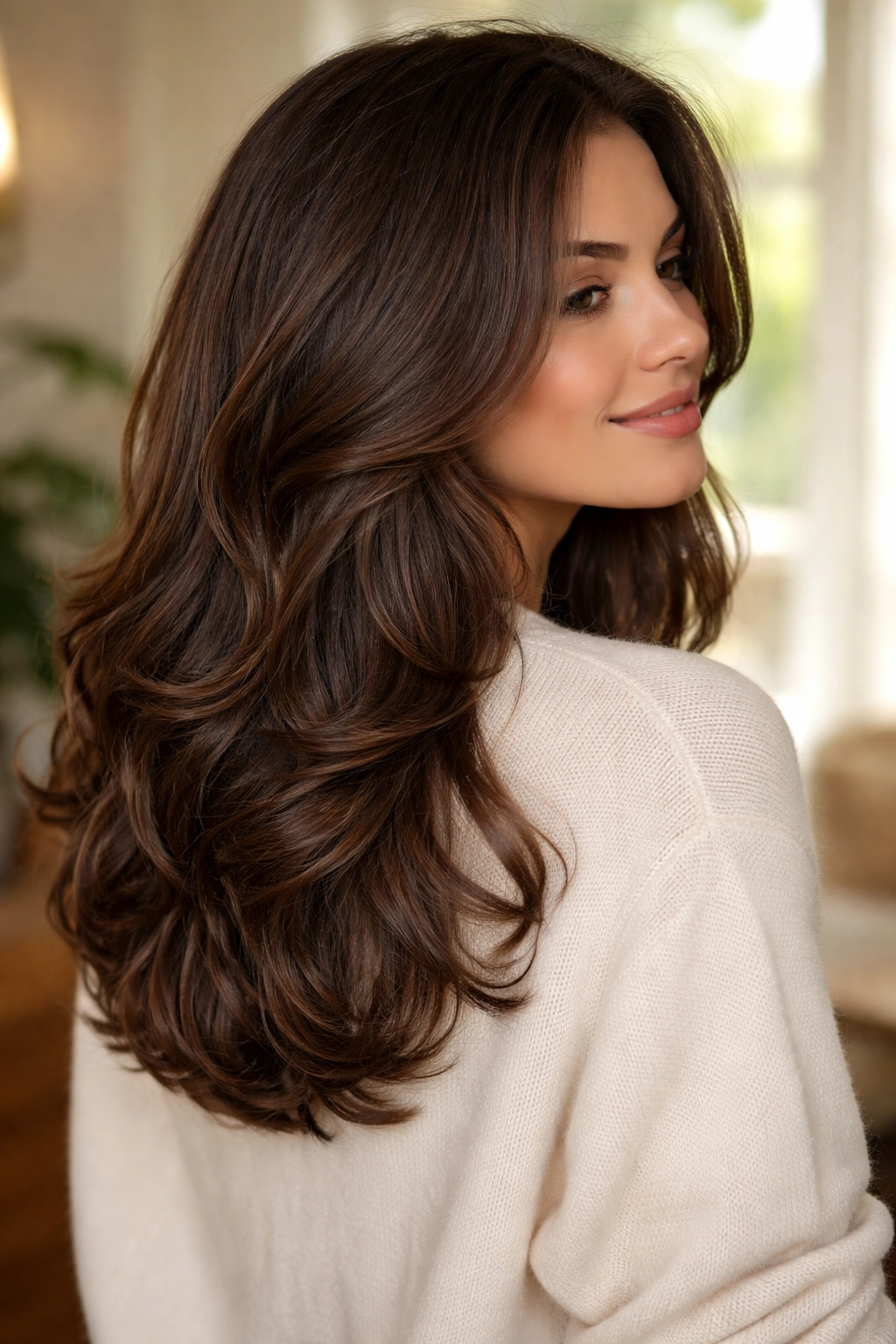
This is the slightly more conservative cousin of the V-shape. The layers are rounded out, so the hair is shorter in the back and blends smoothly into the sides.
Why It’s Better
It looks more natural and less “forced” than a V-shape. It provides a beautiful, rounded silhouette that feels very classic and feminine, especially on medium-length hair.
The Stylist’s Role
Make sure your stylist understands that you want a soft U, not a sharp one. A sharp U-shape can sometimes look dated if the layers aren’t blended perfectly.
19. Tapered Ends
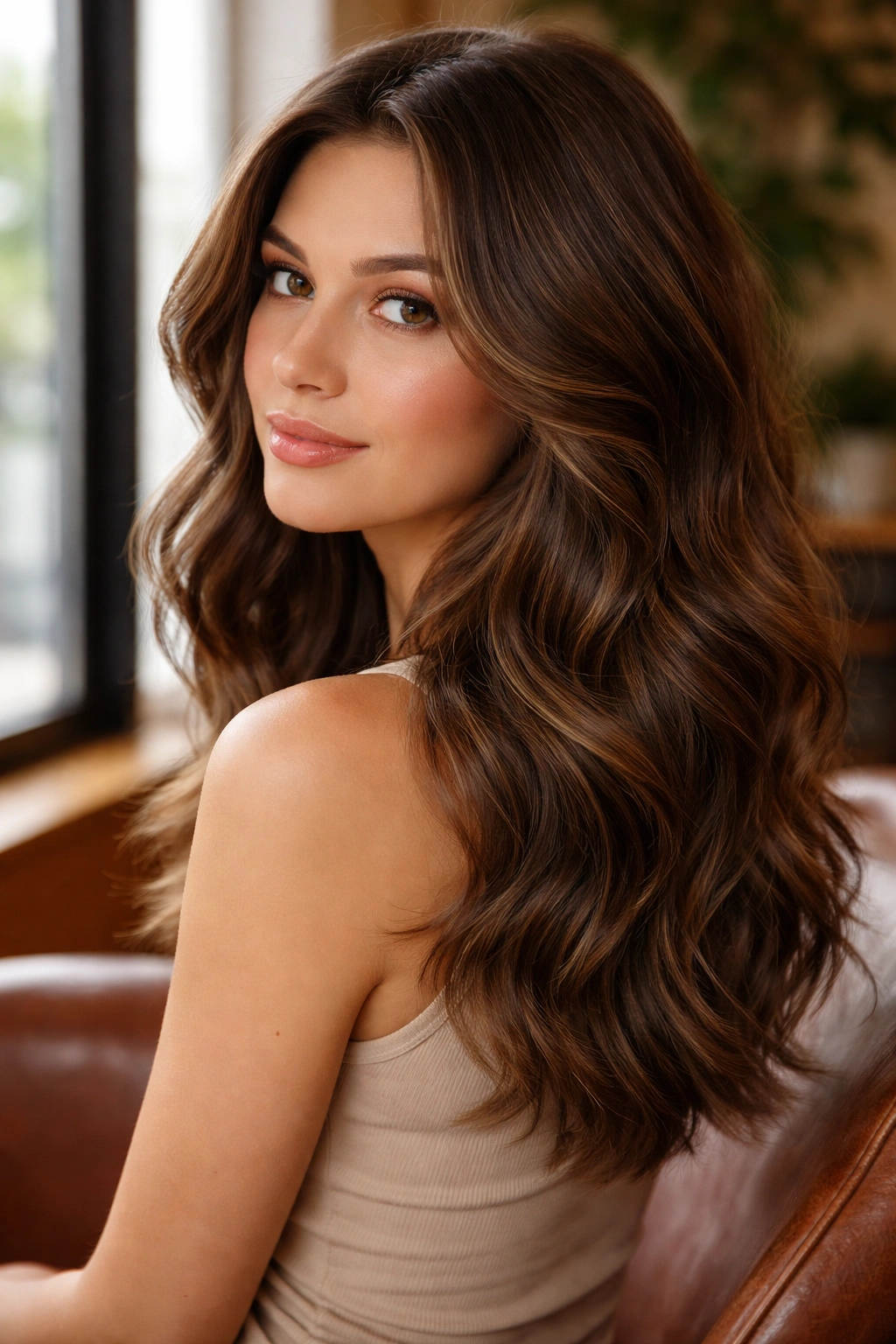
Tapering is a technique where the hair gradually gets thinner toward the bottom. For thick, wavy hair, this is a lifesaver because it prevents the ends from becoming the “fluffiest” part of the haircut.
The Result
You get a sleek, polished look at the roots and mid-lengths, and the ends taper off cleanly. It’s almost like a slight, refined version of a shag without the extreme layers.
Maintenance
This style grows out very well. Because the ends are already tapered, you don’t get that “heavy block” look as the hair grows, which means you can go a bit longer between cuts.
20. Razor-Cut Shag
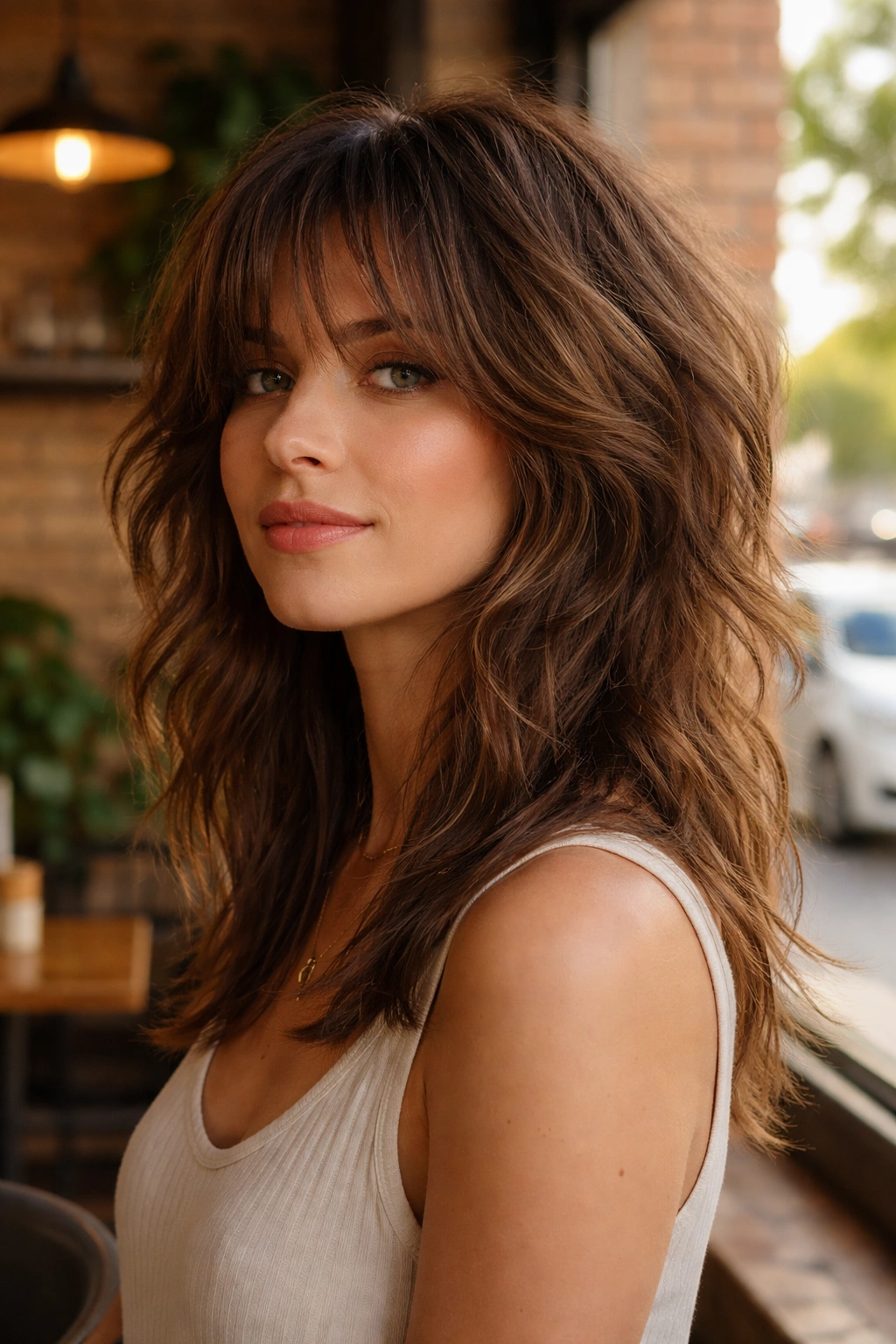
A straight razor cut can be divisive, but for thick, wavy hair, it is a tool of precision. A razor creates a softer, more feathered edge than scissors, which is perfect for a shag.
The Feel
It makes the hair look more “lived-in” immediately. There is no hard line. The hair just kind of melts into the layers.
A Word of Caution
Only go to a stylist who is confident with a razor. If the blade is dull, it will shred your hair, causing split ends and extreme frizz. When done right, though, it’s magic.
21. Rounded Layers for Volume Control
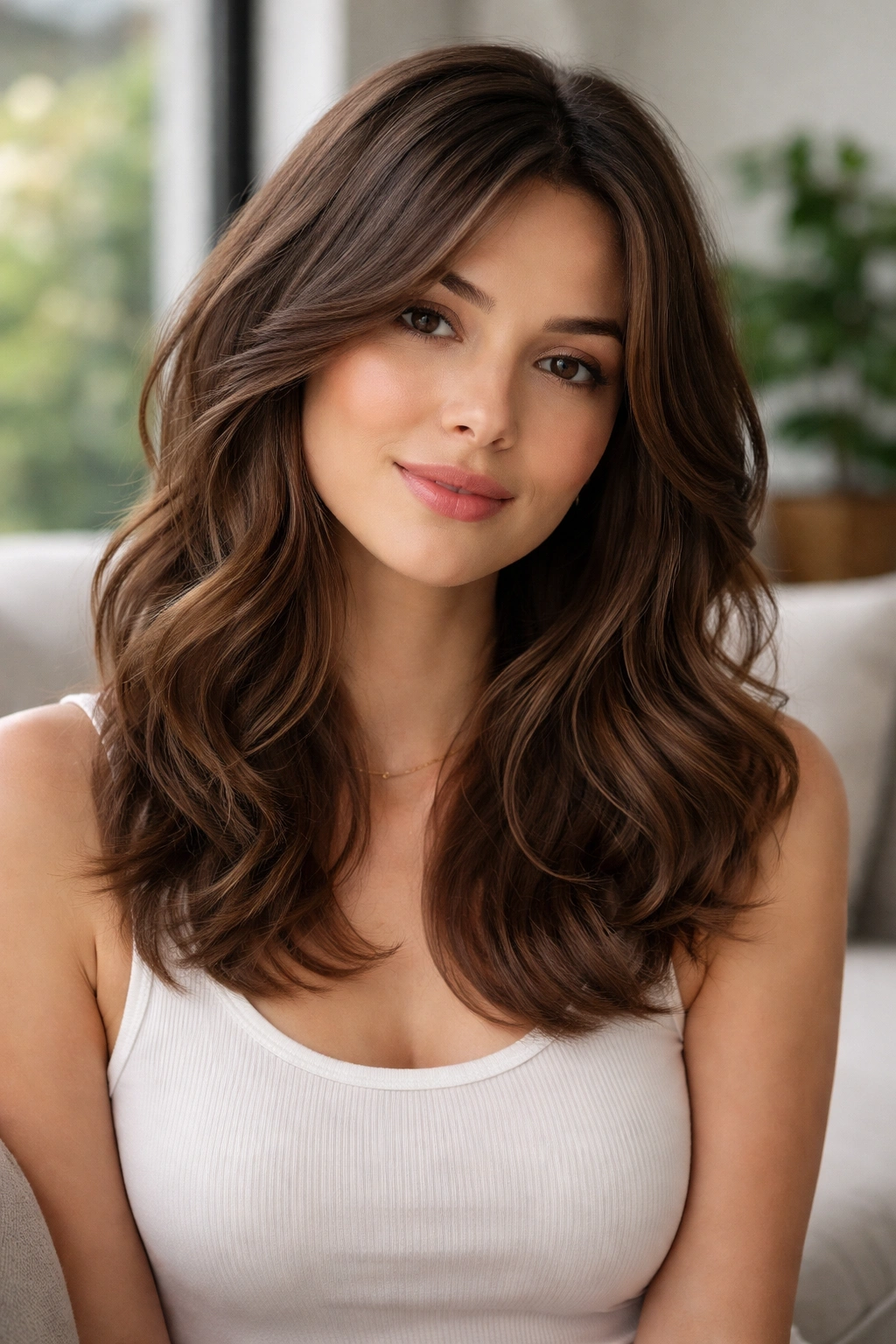
If your hair tends to get really wide and puffy, rounded layers are the answer. Unlike layers that go straight across, rounded layers are cut to follow the curvature of your head.
The Mechanics
They force the hair to hug the head rather than springing out horizontally. This is the ultimate “anti-triangle” technique for thick-haired women.
Styling Tip
Use a light mousse while your hair is wet, and then dry it by scrunching. The rounded cut will do the work of keeping the volume manageable.
22. Blunt Lob with Side-Swept Bangs
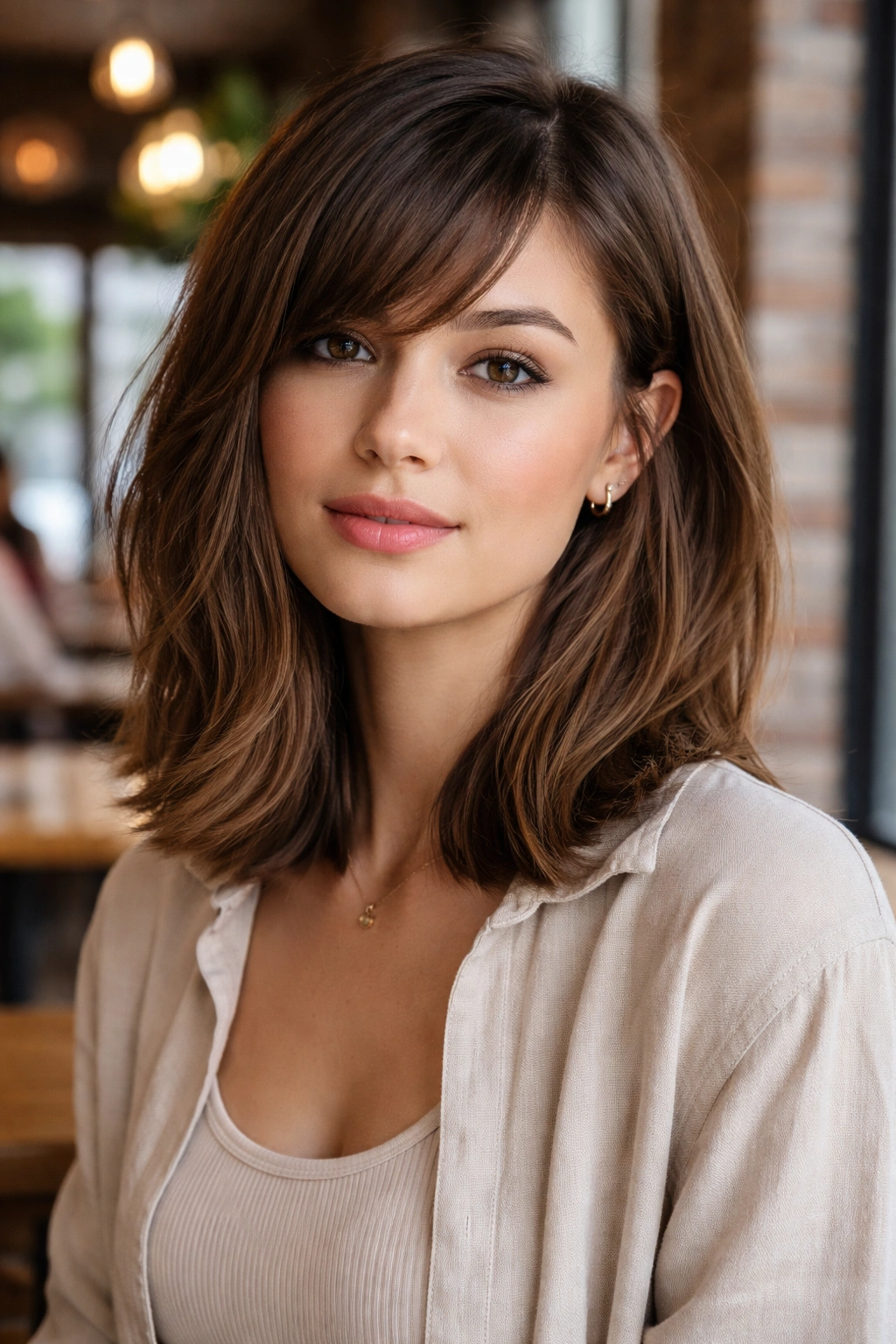
Side-swept bangs are easier to maintain than full-fringe bangs. They grow out seamlessly and don’t require the daily styling that a straight-across bang does.
Why They Work for Thick Hair
They provide a focal point for the face, which distracts from the density of the rest of the hair. Plus, the weight of side-swept bangs helps them stay in place better than thinner bangs.
The Cut
Keep the bob blunt to ensure the ends look healthy and full. The side-swept bangs should be cut into your layers for a soft transition.
23. Butterfly Cut (Medium Version)
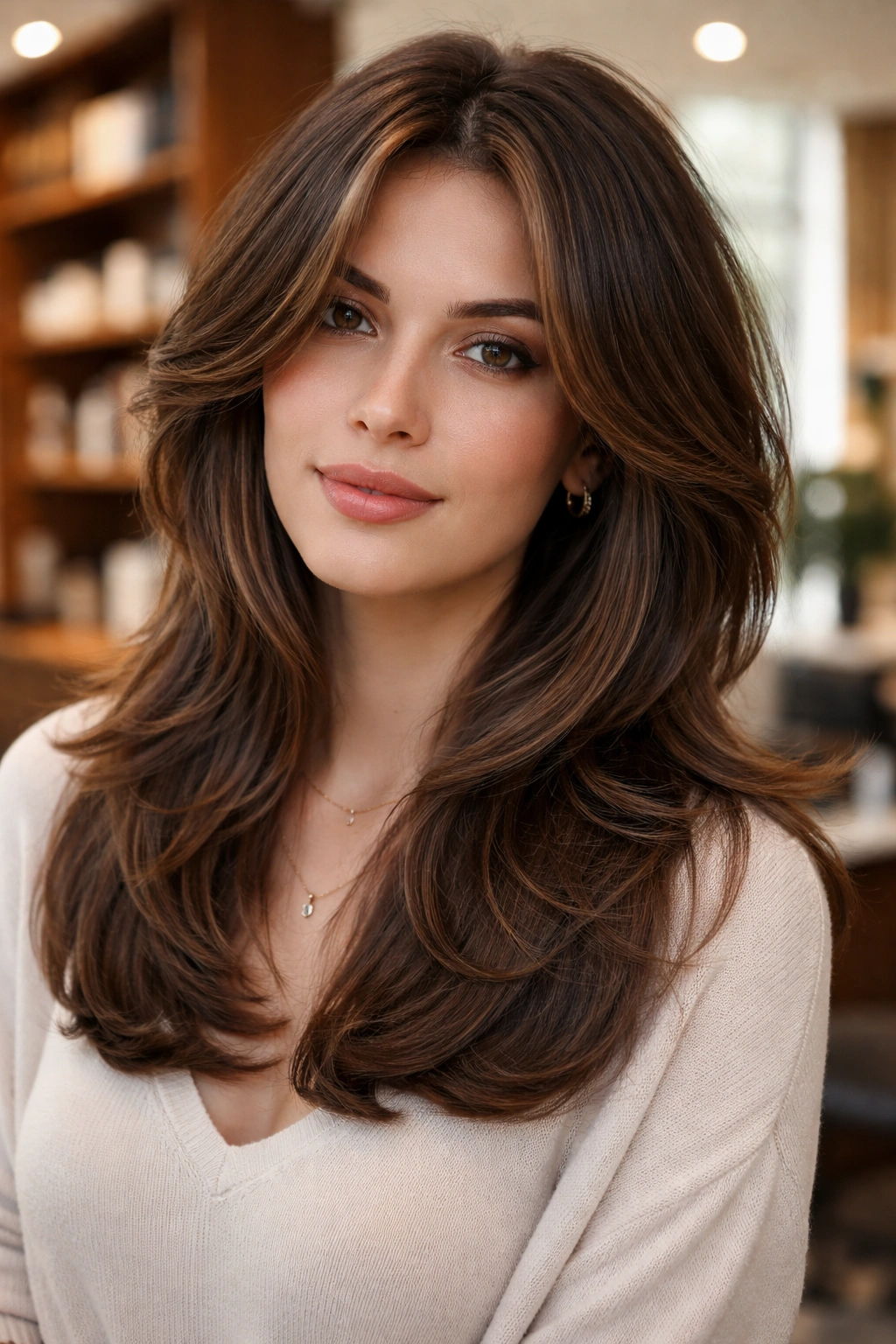
The “butterfly” cut is all about creating two distinct layers: the shorter, face-framing layer and the longer, body layer. It’s designed to look like you have shorter hair from the front and longer hair from the back.
Why It’s Trending
It offers the best of both worlds. You get the volume and movement of a shorter cut near your face, but you keep the length and weight of your medium-length hair.
The Execution
It relies heavily on over-directing the hair during the cut. This is a technical cut, so be prepared to pay a bit more for a stylist who knows how to execute it properly.
24. Modern Shag with Bardot Bangs
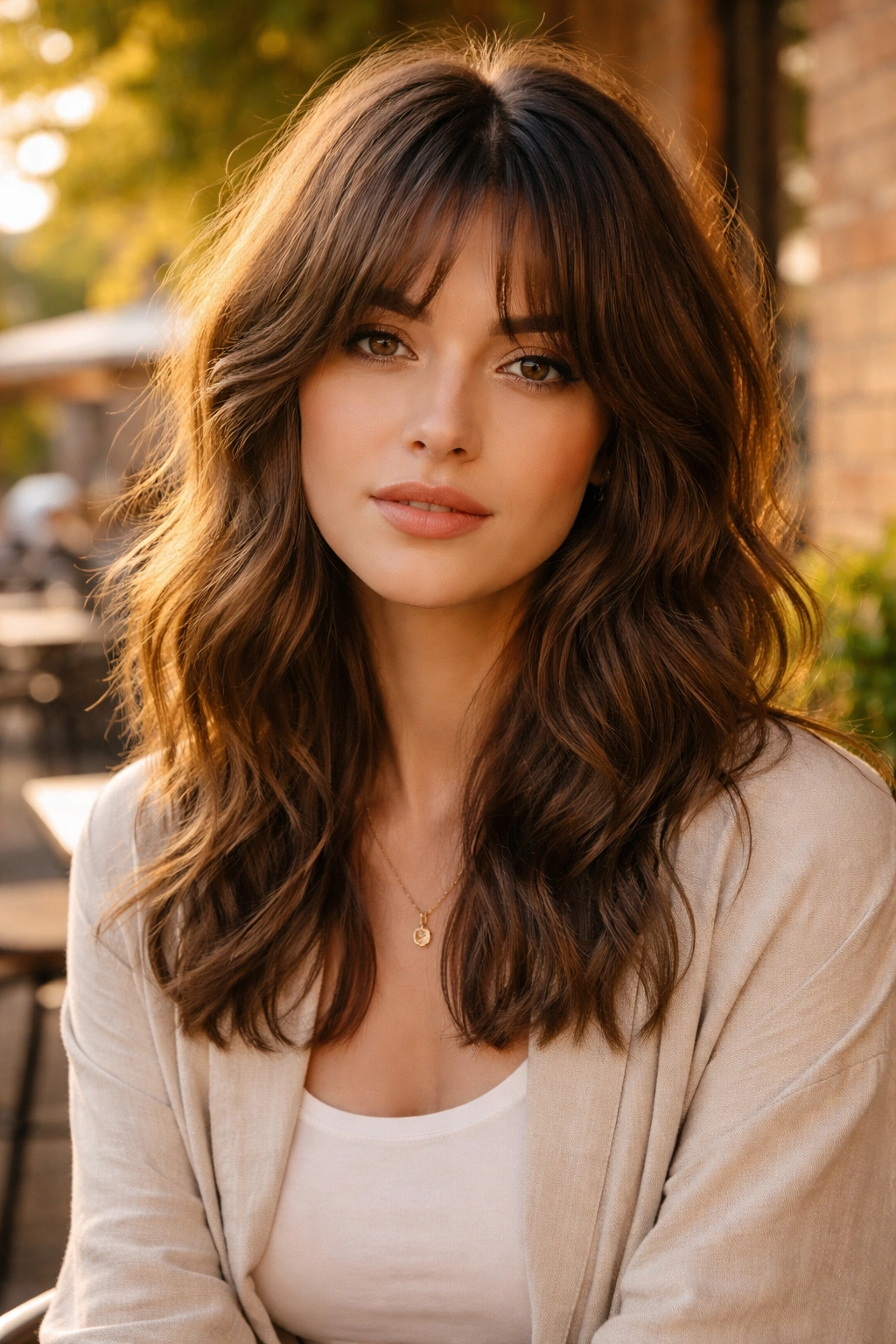
Bardot bangs (named after Brigitte Bardot) are longer, center-parted, and extremely soft. They are much less aggressive than a full curtain bang and integrate perfectly with a shaggy cut.
The Vibe
This is a very French-girl, effortless aesthetic. It implies you woke up looking this good. It works wonderfully for wavy hair because it embraces the natural messy texture.
Styling Advice
Don’t blow dry them perfectly straight. Let them air dry with the rest of your hair to keep that soft, wavy texture consistent throughout the cut.
25. Graduated Bob
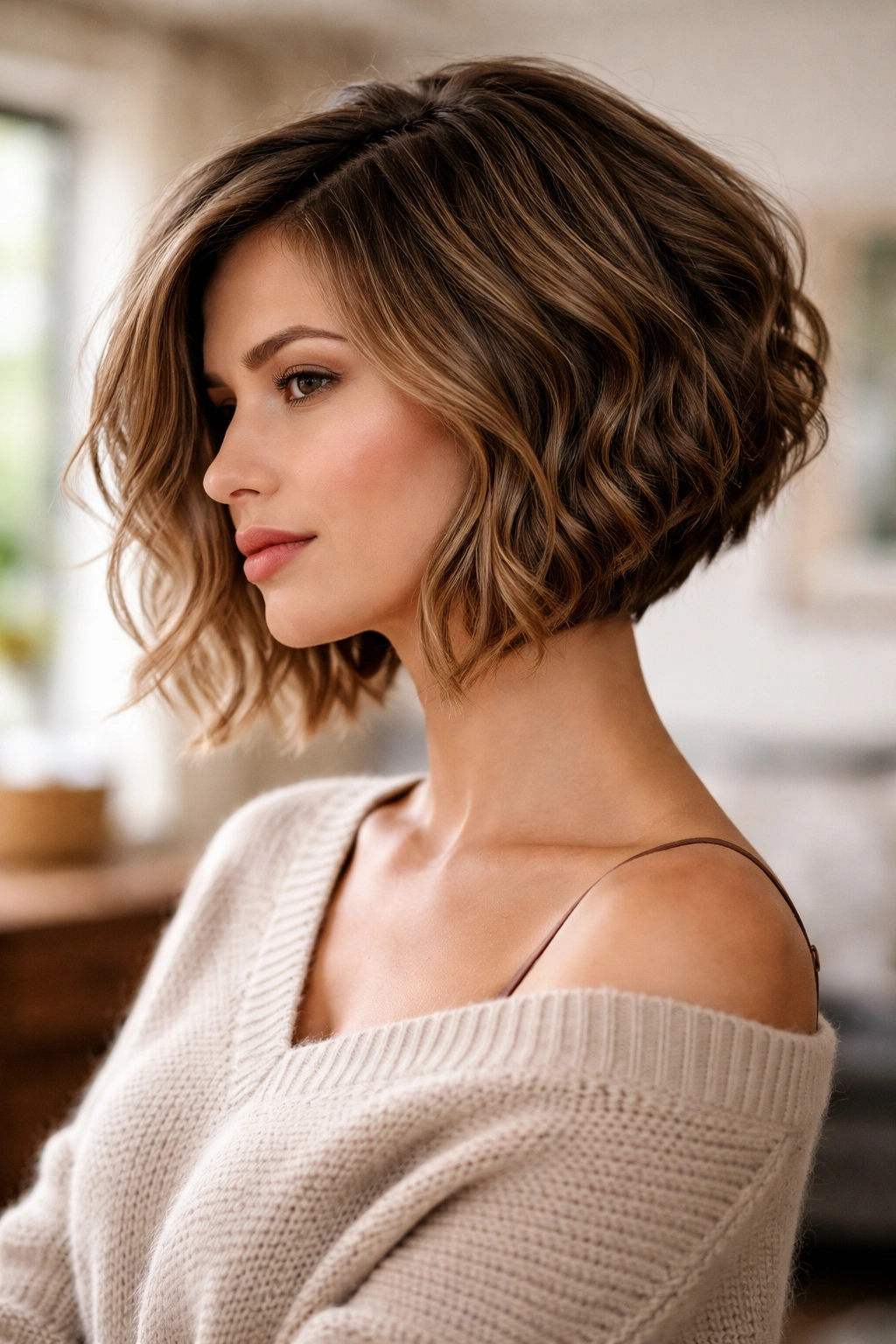
A graduated bob is shorter in the back and gets longer toward the front. It’s a very structured, sharp style that makes thick hair look intentionally styled.
Why It’s Unique
The structure of the cut does all the heavy lifting. You don’t need to spend hours with a curling iron because the cut itself gives you that angled, dramatic silhouette.
Who Should Avoid This
If your waves are extremely tight (like a 3B curl pattern), a graduated bob can sometimes become a mushroom shape. This works best for wavy-to-loose-curly hair.
26. Layered Cut with Center Part
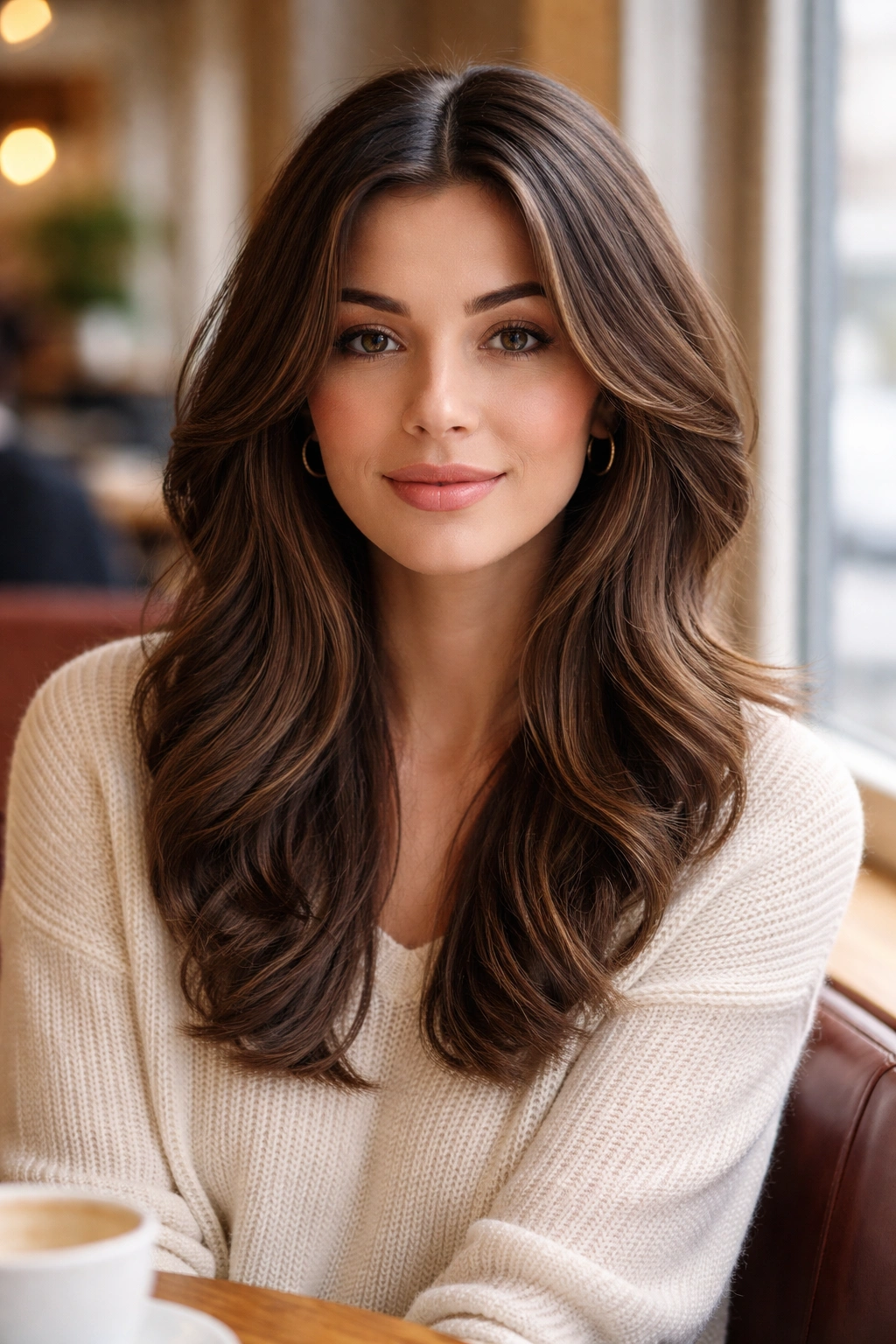
A center part has made a major comeback, but it can be difficult for thick hair because it splits the weight down the middle. To make it work, you need long, blended layers that start at the jawline.
The Symmetry
The key to a good center part with thick, wavy hair is ensuring the layers on both sides are perfectly symmetrical. Otherwise, one side will look fuller than the other.
The Stylist’s Tip
Tell your stylist you want a “face-framing” cut with a center part. They will know to connect the layers to the rest of the hair seamlessly.
27. Texturized End-Heavy Cut
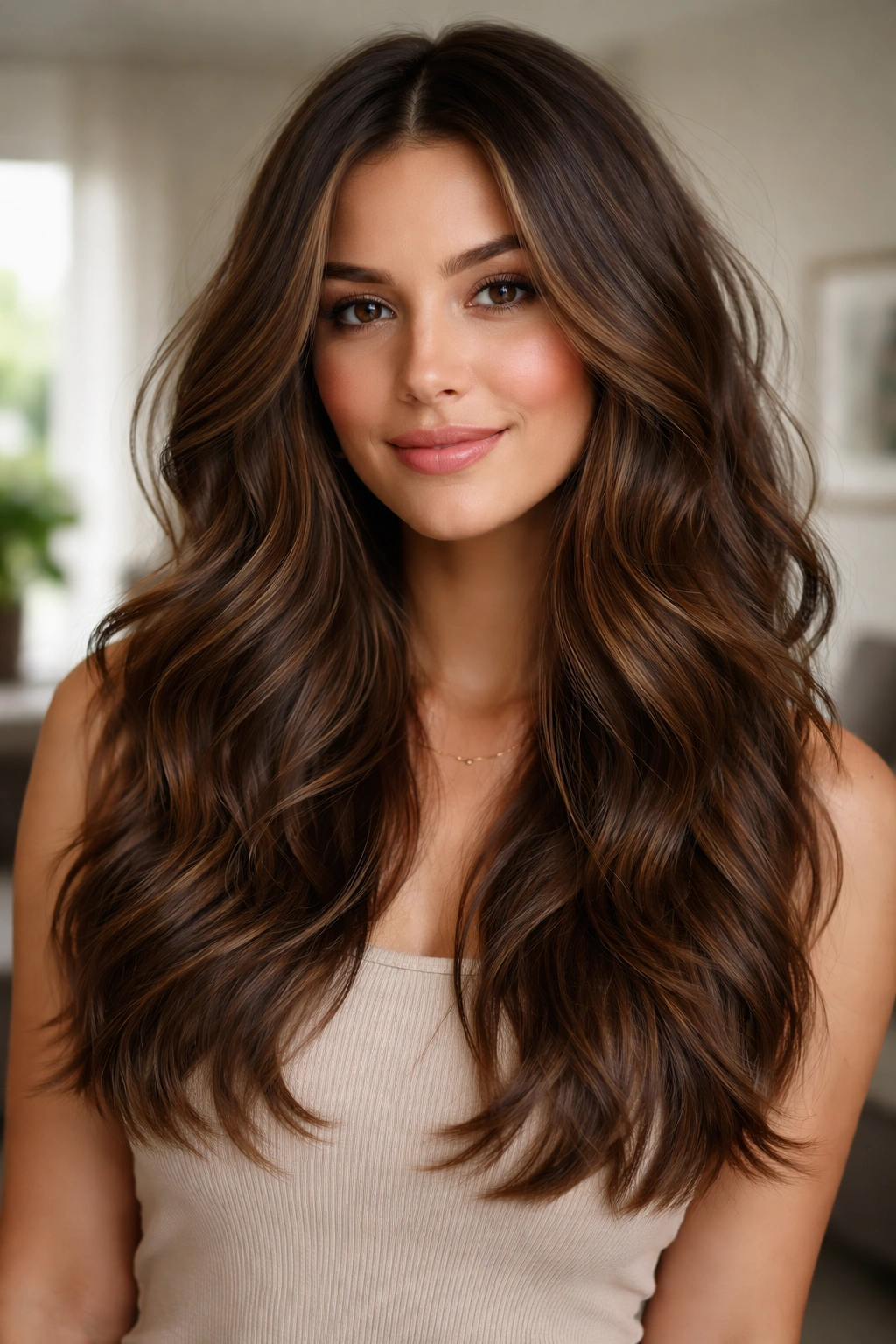
Some people actually want the thickness at the ends. If that’s you, skip the internal layers and just go for a texturized end-heavy cut. You keep all your density, but the ends are cut with a point-cutting technique to keep them from looking like a straight, blunt block.
The Appeal
It looks healthy, thick, and lush. It’s the classic “hair influencer” look where the hair looks incredibly abundant.
Handling the Weight
If your hair is too heavy, this might cause headaches or neck strain. If you are prone to that, stick to layers. If you want the full look, this is your style.
28. Messy Medium Shag
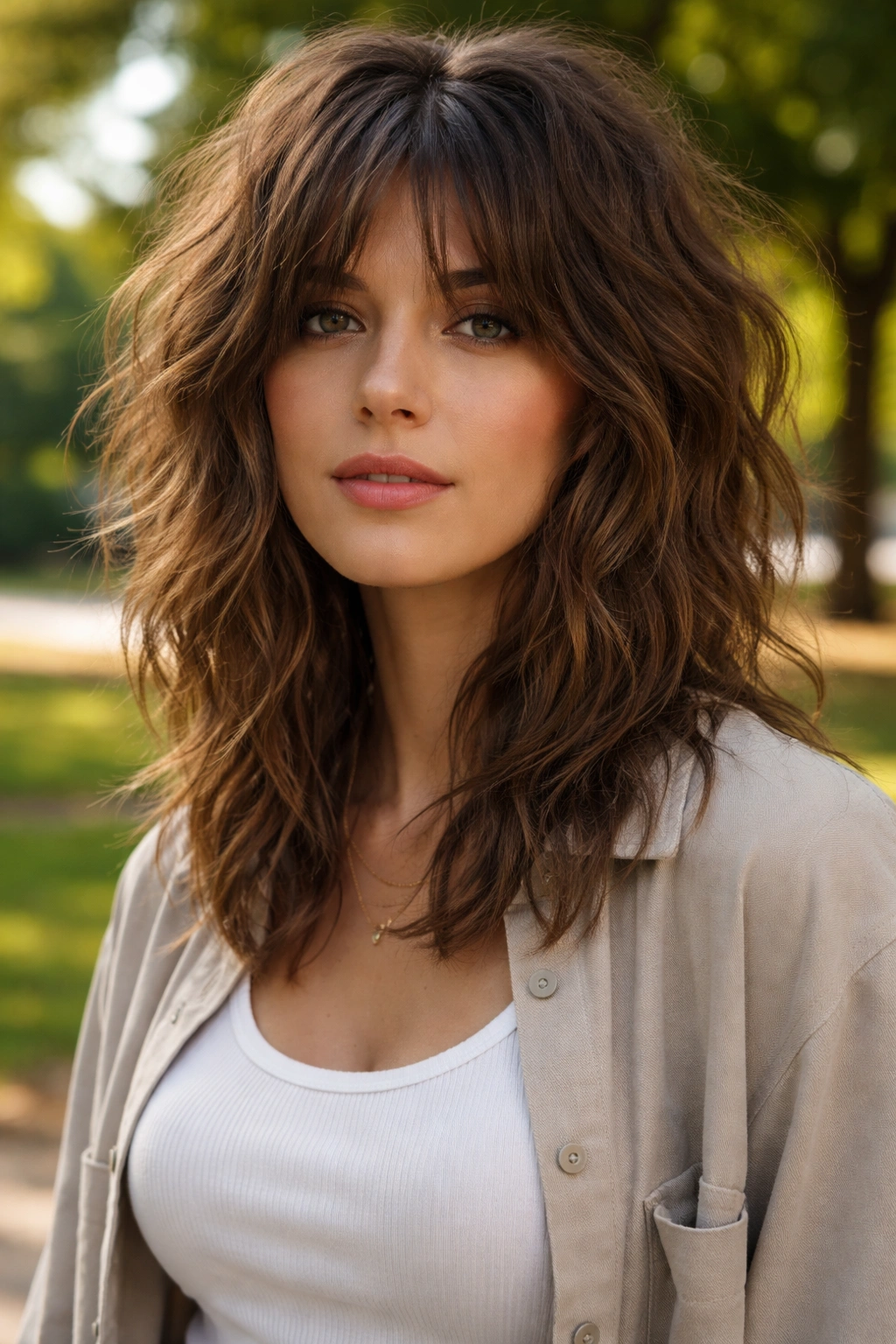
If you really want to embrace the “I don’t care” vibe, a messy, medium-length shag is the way to go. It’s full of choppy layers and is designed to look somewhat disheveled.
Why It’s Low Maintenance
The messier it gets, the better it looks. You can go days without washing, throw some dry shampoo in it, and it actually looks cooler than it did on day one.
The Best Hair Product
A texture paste is your best friend here. Rub a dime-sized amount between your palms and “mess up” the hair. Don’t worry about being precise.
29. Curly-Wavy Hybrid Cut
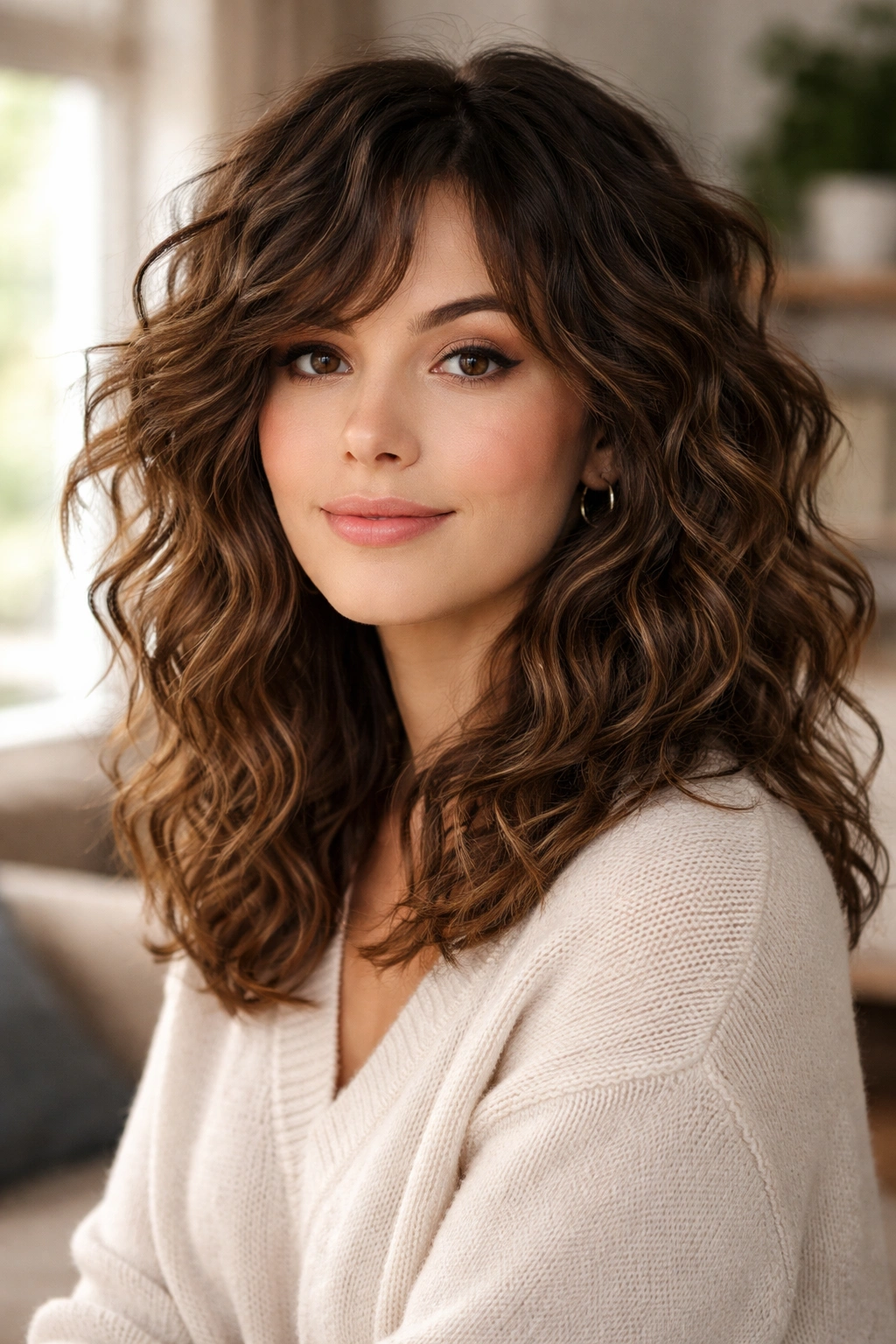
If your hair is more wavy than curly, but you have sections that spiral, a hybrid cut is necessary. This cut treats the hair as a mix of textures, using different layering techniques for different sections.
The Customization
Your stylist might use shorter layers where the hair is wavier to encourage a bounce, and longer, more blunt-cut sections where the hair is straighter to weigh it down. It’s the ultimate custom cut.
Finding a Stylist
You need someone who specializes in curly hair, even if you are just “wavy.” They understand how to cut hair to work with the wave pattern, not against it.
30. Mid-Length Shag with Fringe
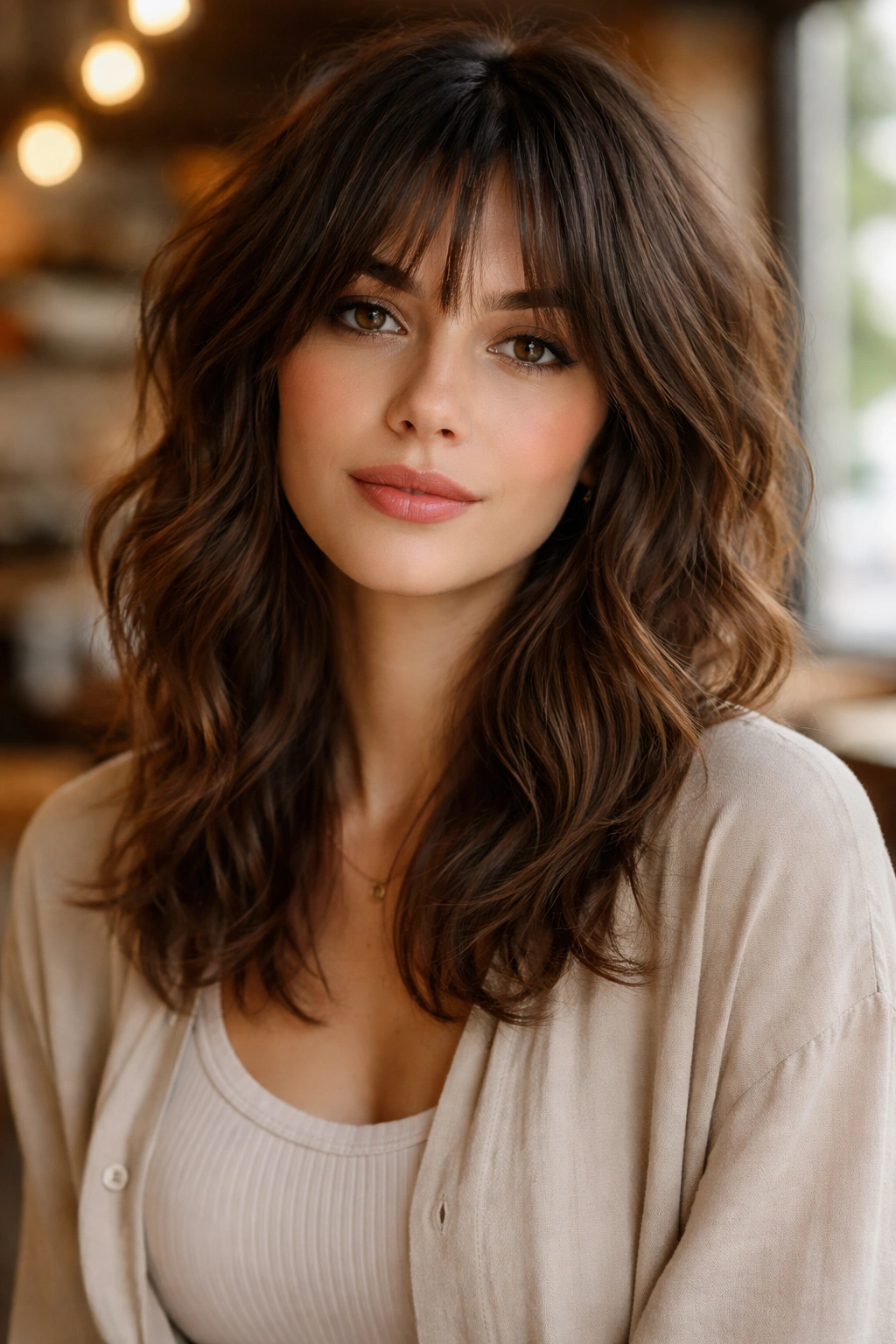
Adding a full fringe (bangs) to a medium-length shag creates a very retro, 70s-inspired look. It’s bold, it’s fun, and it frames the face completely.
The Challenge
The fringe itself will need to be thinned out, or it will look too heavy and cover your entire forehead like a curtain. Ask for “piecey” or “wispy” bangs.
Styling
You will need to style your bangs every morning. There is no “letting them air dry” with bangs unless you have naturally straight, cooperative hair.
31. Thinning Shears Special
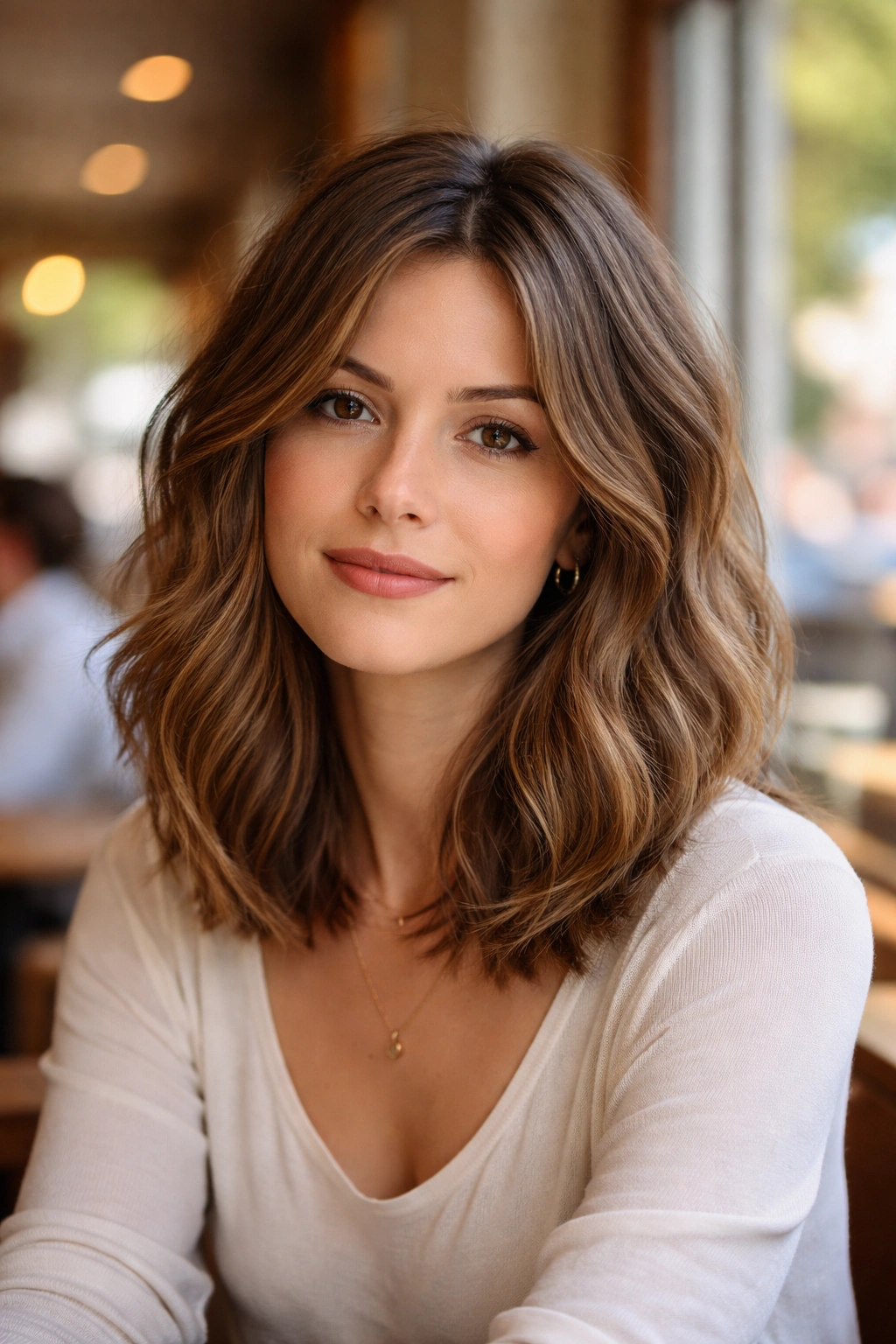
Some stylists rely too heavily on thinning shears, and it’s a point of contention in the hair world. However, if your hair is thick and coarse, a small amount of thinning shear work on the ends is actually very helpful.
The Goal
Use them only on the very last inch of your hair to soften the perimeter. Do not let your stylist go near your roots with thinning shears, or you will end up with “frizz halo” as the short, thinned hairs grow out.
The Warning
Always ask the stylist, “Are you using thinning shears or point cutting?” If they say thinning shears, ask them to use them sparingly.
32. Disconnected Layers
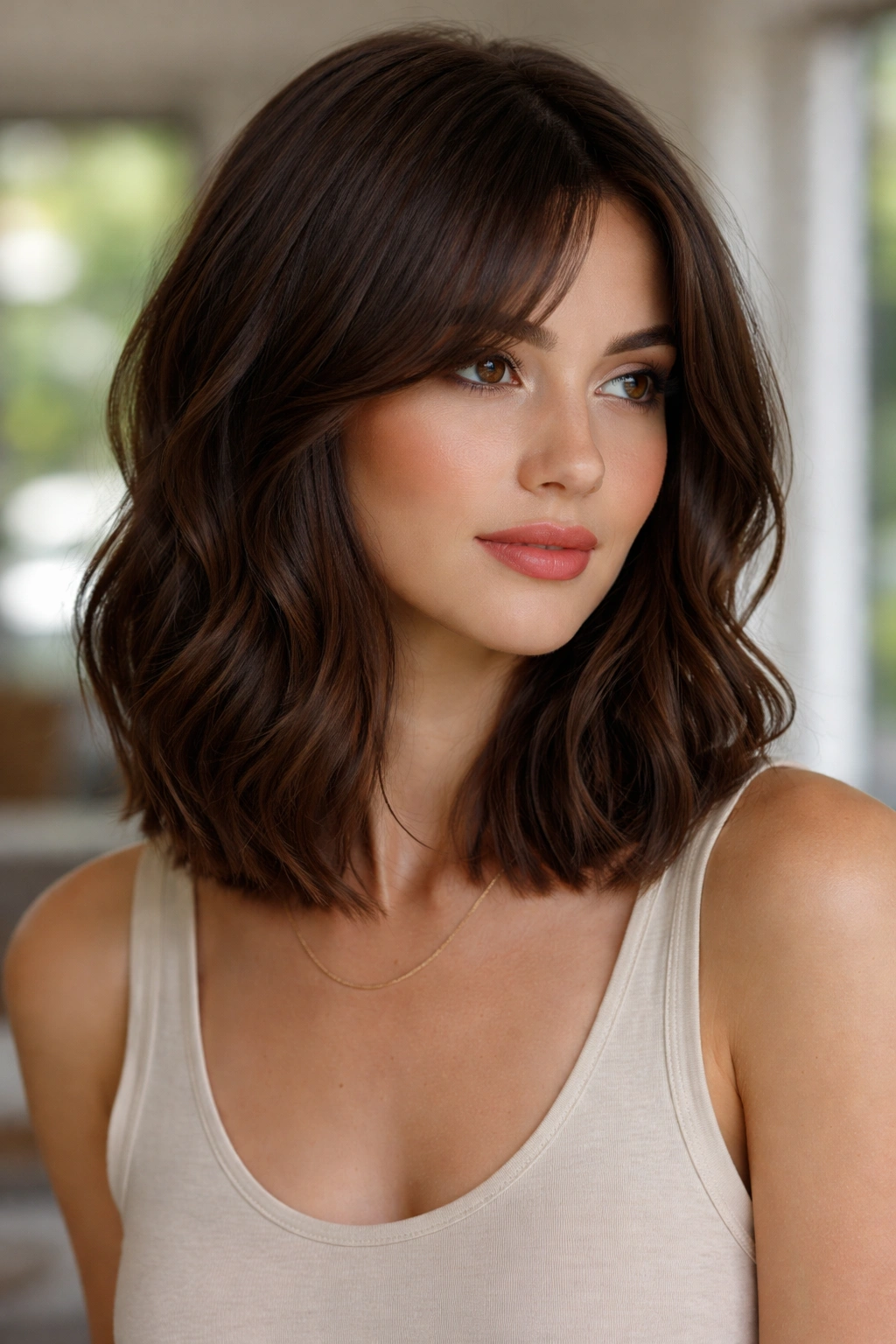
Disconnected layers mean that the layers aren’t perfectly blended into the length. You might have a distinct difference between the top section of hair and the bottom section.
Why It’s Stylish
It looks cool, edgy, and intentional. It creates a lot of volume on top and keeps the bottom section feeling sleek. It’s a great way to manage thick hair that has two different textures.
The Silhouette
It’s a very modern, fashion-forward look. It might not be for the office, but if you have a creative lifestyle, it’s a great way to showcase texture.
33. Blunt Cut with Wispy Layers
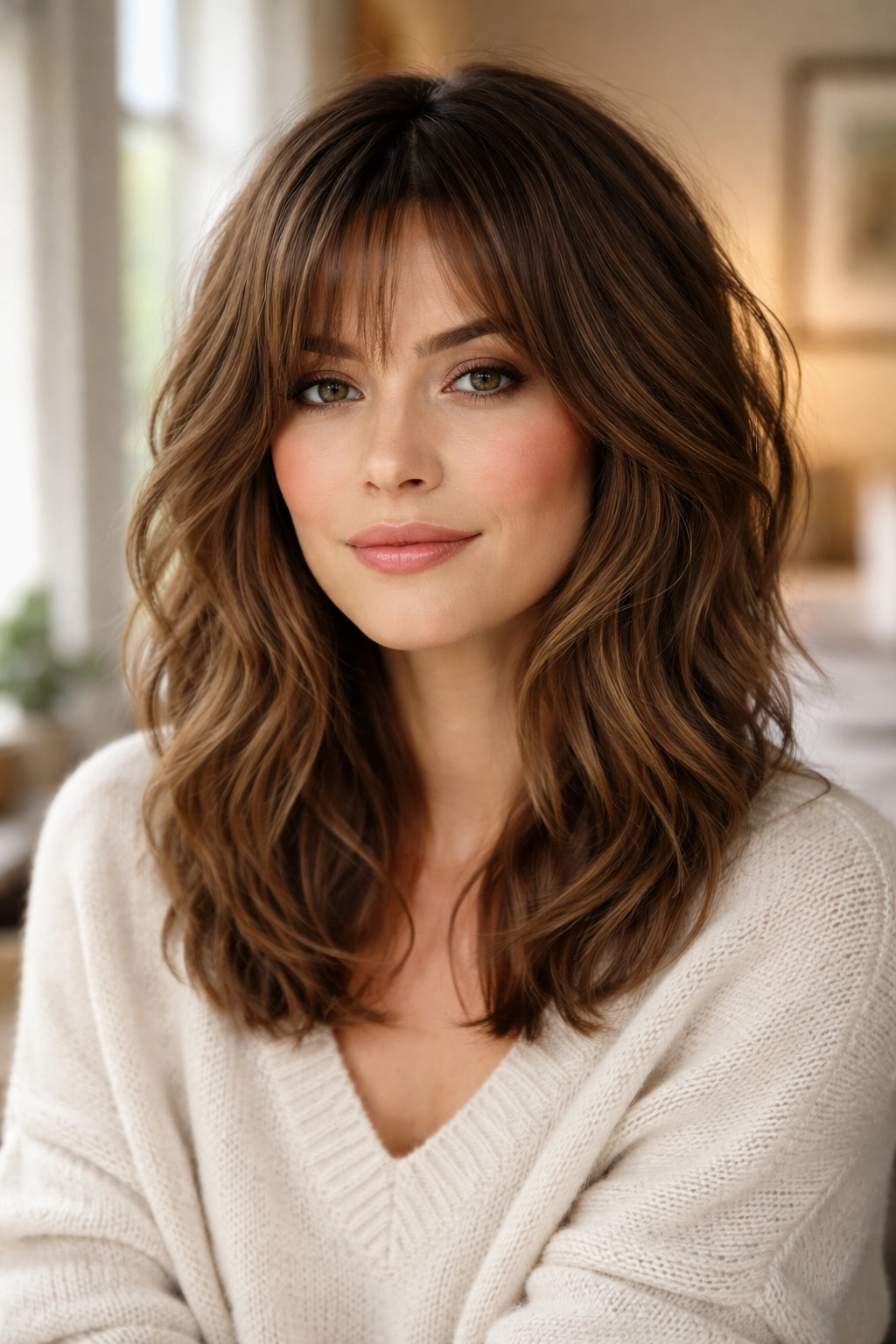
If you are torn between a sleek, blunt cut and a layered, texturized cut, this is your compromise. The base is blunt, but the top layer of hair has long, wispy layers cut into it.
The Effect
It gives the appearance of a solid, healthy, thick cut, but the top layer of hair has movement and lightness. It prevents the “blocky” look while keeping the overall shape sophisticated.
Stylist Request
“Keep the perimeter blunt, but please add long, wispy layers to the surface to give it some movement.” This is the exact phrase to use.
34. Rounded Wavy Cut
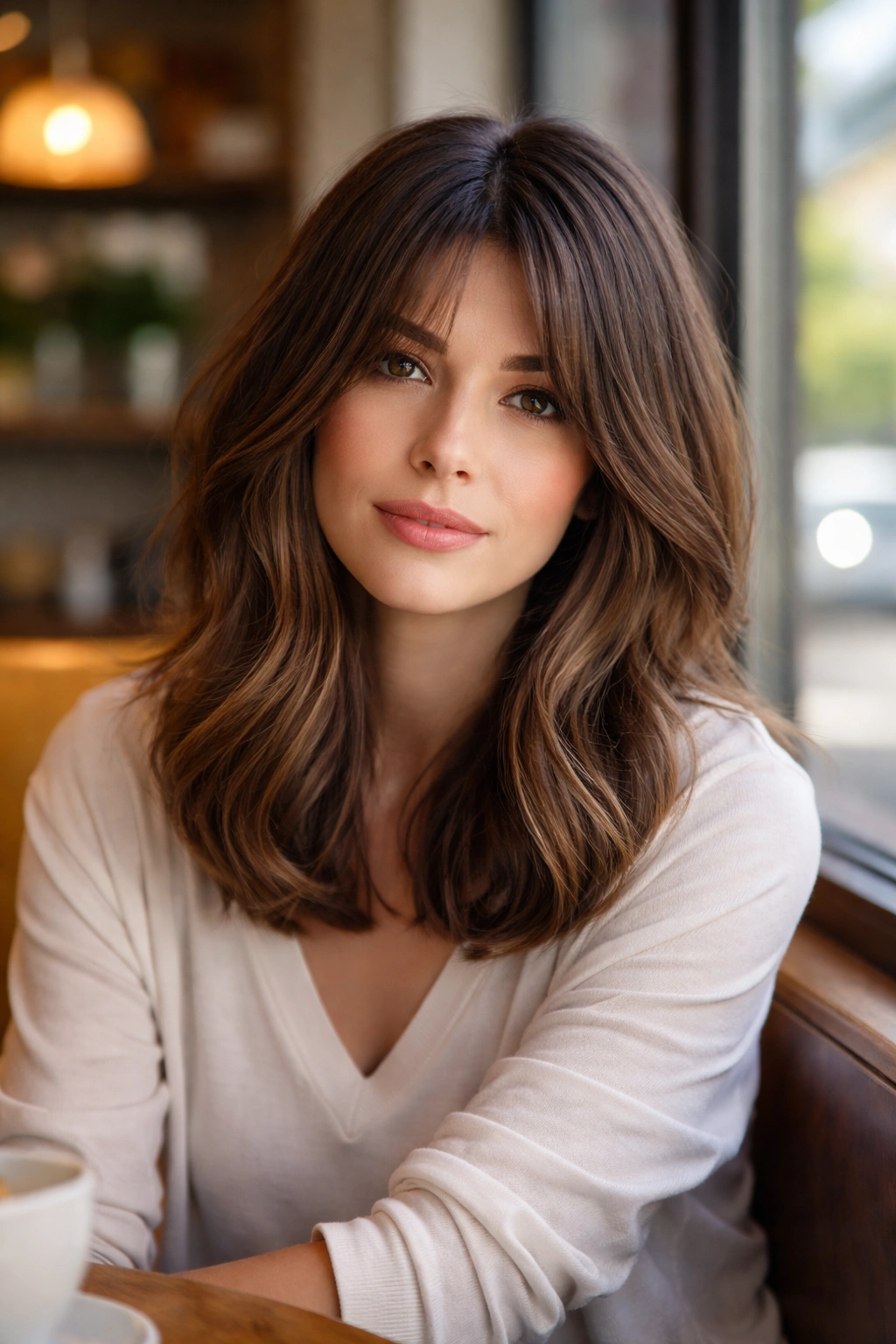
This is a cut that is shaped to curve around your face. It’s the opposite of a bob; it’s long, flowing, and follows the contours of your shoulders and collarbone.
The Vibe
It’s very soft, very feminine, and very classic. It doesn’t rely on short layers or sharp angles. It’s all about graceful, sweeping lines.
Who It Fits
People who have medium-to-fine texture but high density. It won’t remove as much bulk as a shag, so it’s best for people who like the fullness but just want it shaped.
35. Low-Maintenance Beachy Cut
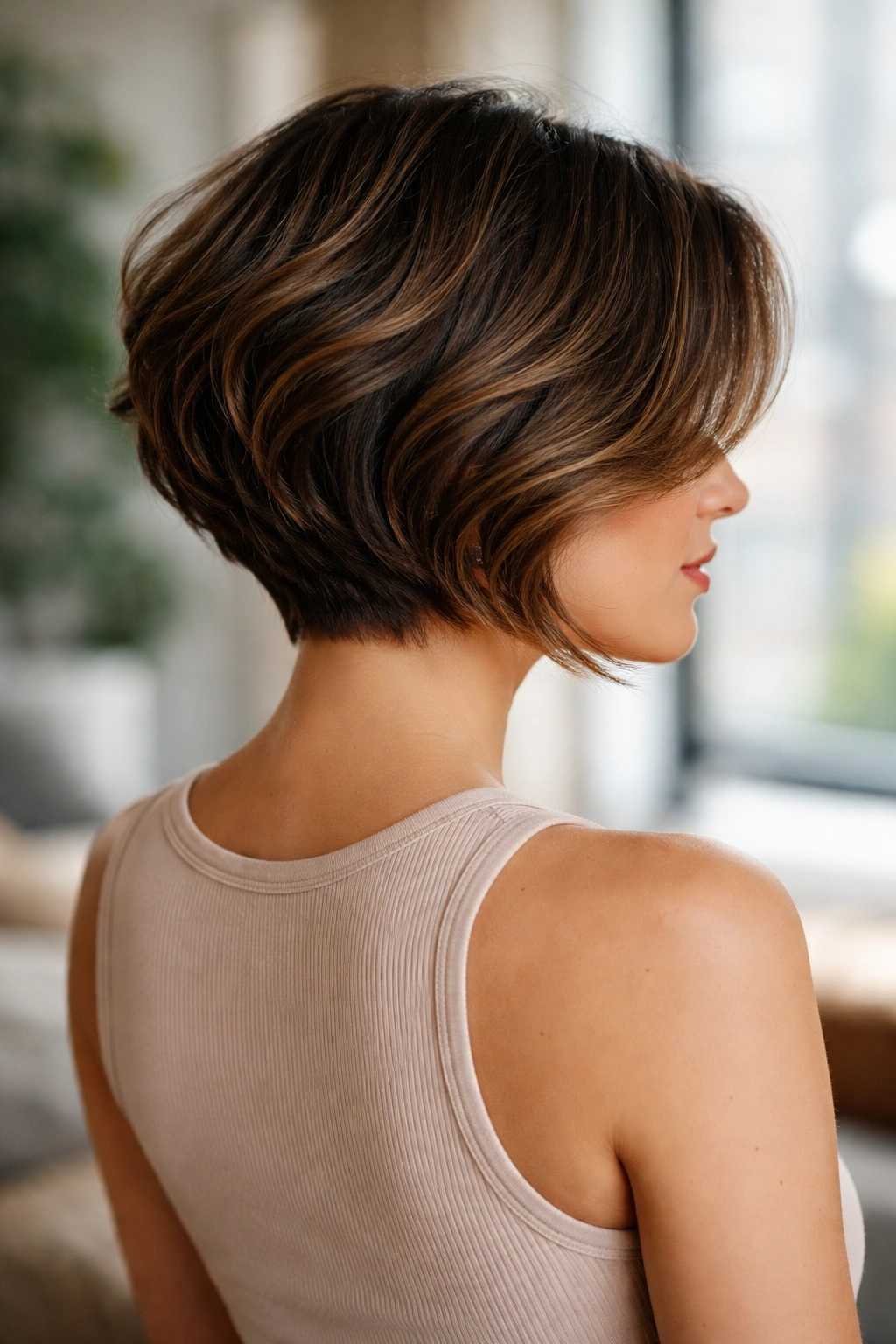
This is the “I’m on vacation” cut. It’s medium-length, layered just enough to prevent bulk, and kept at a length that allows you to throw it up in a messy bun whenever you want.
The Philosophy
It’s about minimal styling. You cut it, you wash it, you air dry it, and you go. It’s not about perfection; it’s about having hair that looks good even when it’s a bit messy.
Final Takeaway
The best cut for thick, wavy hair is the one that gives you the most freedom. Don’t worry about trends. If a cut feels heavy or impossible to style, change it. Your hair is an accessory you wear every single day—it should work for you, not the other way around.
Final Thoughts
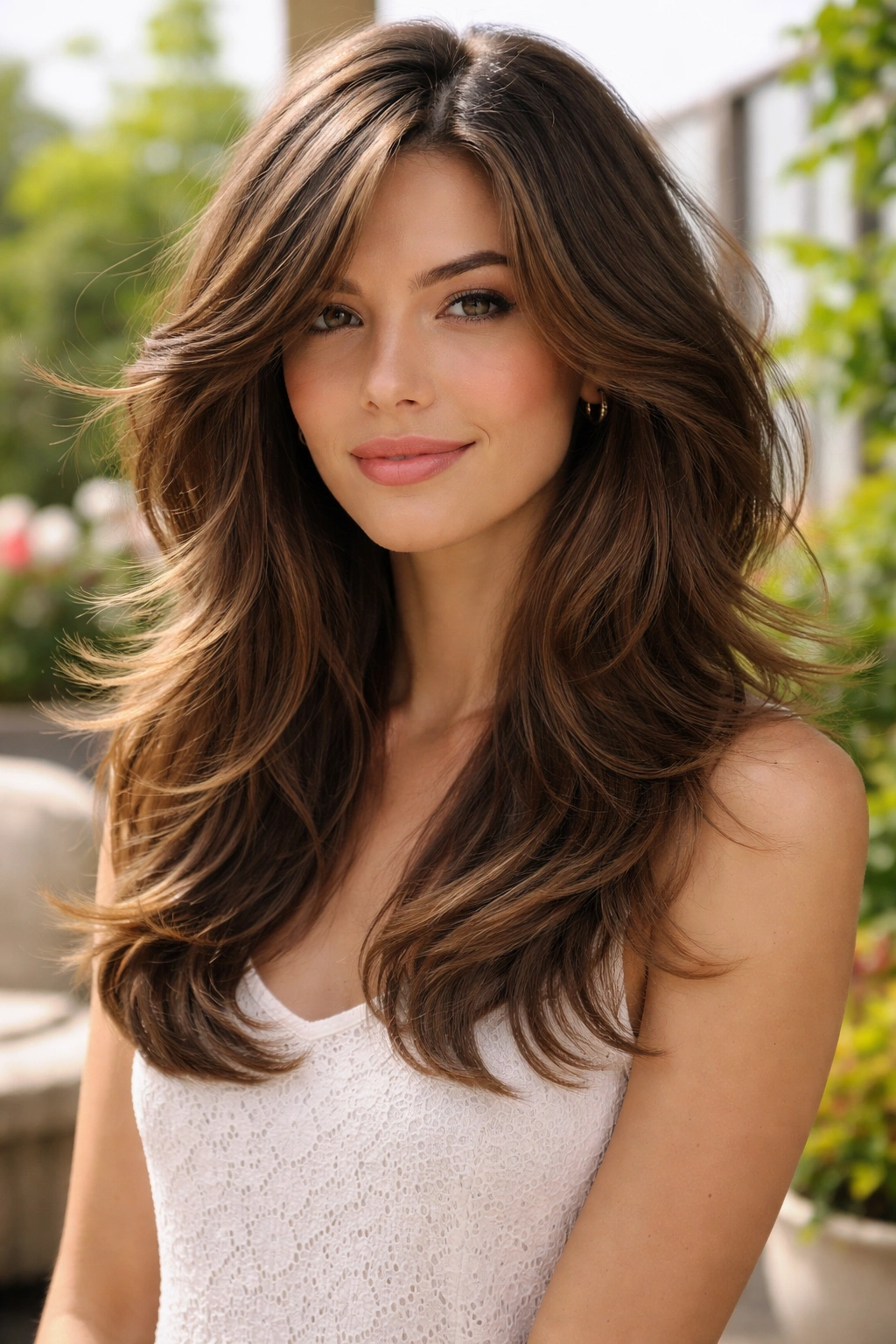
Choosing a medium-length haircut for thick, wavy hair is often about finding the right balance between volume and control. You want to embrace the natural density that makes your hair look lush, but you have to be strategic about where that weight lives. Never be afraid to tell your stylist exactly where you feel the most “poof” or “bulk.” Sometimes, pointing to the specific spot—like the nape of the neck or the sides of your face—can completely change how they approach the cut.
Always keep in mind that texture is not a flaw. The goal of these haircuts is not to eliminate your waves, but to give them the space they need to actually form. When your hair is too heavy, the weight stretches the wave out, leaving you with a frizzy, undefined mess. Once you remove that excess weight through proper layering or texturizing, you might be surprised to find that your waves are tighter and more defined than you ever thought possible.
Finally, remember that maintenance is part of the deal. Thicker hair grows out with more visual impact than finer textures, so staying on top of your trims—even just for a “dusting” of the ends—will keep your style looking intentional. When you find that perfect combination of the right length and the right weight-removal technique, the daily struggle with your hair will disappear, leaving you with nothing but healthy, vibrant waves.
