The combination of straight bangs and curly hair is one of the most visually striking contrasts you can create with hair. Smooth, sleek, pin-straight fringe meeting a cloud of defined curls is a deliberate tension — two opposing textures working together in the same style. And it works. Straight bangs with curly hair have built a strong following among naturalistas and curlies who want their textured hair to remain the star while the fringe adds a polished, defined element at the front.
The Contrast Is the Style
What makes straight bangs on curly hair so compelling is the intentional contrast. On straight hair, straight bangs are part of a continuous, unified texture — they’re just the front section of hair, slightly shorter. On curly hair, straight bangs are categorically different from the rest of the style. They’re smooth where everything else is textured. They’re flat where everything else has dimension. They’re still where everything else moves.
That contrast turns the bang from a single element into a design choice. You’re making a statement about texture — that sleekness and curl can coexist in one hairstyle, that opposites don’t have to cancel each other out but can instead make each other look better. The sleek fringe makes the curls look even more textured and alive by comparison. The curls make the straight bang look more precise and intentional.
For Black women with natural or curly hair, this combination also carries a subtle complexity: it acknowledges the hair’s ability to exist in multiple states simultaneously — not fully natural, not fully processed, but a conversation between the two.
When Straight Bangs Work With Curly Hair
Not every curly hair texture or style wears straight bangs equally well. The key factors are length, density, and the rest of the style. Straight bangs on curly hair are most successful when:
The curl texture is defined and deliberate on the body of the hair. A wash-and-go with clearly defined curls, a twist-out with consistent waves, or a rod set with uniform ringlets all provide a strong textural contrast to the straight bang. When the curly section is undefined or frizzy, the contrast between the straight bang and the rest of the hair looks unintentional rather than styled.
The length is adequate on the curly sections. Very short natural hair with a straight bang can work, but the effect is most dramatic when there’s enough curl length that the curls are visibly different from the bangs.
The bang itself is truly straight — not just mostly straight with some bend at the ends, but sleek and smooth. Half-measures don’t serve this look. If you’re going for straight bangs, they need to be actually straight.
Heat or No Heat? Getting Straight Bangs on Curly Hair
The most obvious way to achieve straight bangs on curly hair is through heat — flat ironing the front section while leaving the rest of the hair in its natural curl state. This produces the most precise, glossy straight bang and is the most durable version of the look in terms of day-to-day wear.
But it requires heat protectant on the bang section every time the iron is applied, and it means the front section of your hair is receiving heat regularly even when the rest isn’t. For naturalistas who are heat-cautious or avoiding heat entirely, there are alternatives.
Blowout bangs achieved with a round brush and a blow dryer on a low heat setting produce a straight-ish bang with slightly more body than a flat-ironed result. Less damage potential, more volume.
Tension drying — applying gel to the bang section, pulling it straight with your hands while blow-drying, and holding under the dryer until dry — creates a straight-ish bang without a flat iron. Best for hair that’s not too tightly coiled.
Extension bangs — clip-in fringe pieces in a straight texture — allow you to have the look without any heat at all. They sit at the hairline and blend into the natural hair at the sides.
Heat Protectant Is the Non-Negotiable
If you’re using heat on the bang section — whether a flat iron or a blow dryer — heat protectant is mandatory, not optional. The bang section of the hair is fragile because it’s thin (fewer strands than the body of the hair), short (less room for the hair to distribute heat before it reaches the ends), and frequently manipulated.
Apply heat protectant to the damp bang section before any heat styling. Distribute evenly through the section with your fingers or a brush. Allow the protectant to partially dry before applying the flat iron or dryer — applying heat to soaking-wet hair, even with protectant, creates steam that can damage the hair shaft.
Face Shape Considerations for Straight Bangs
Straight bangs are one of the more face-shape-specific bang choices because they cover a significant portion of the forehead and create a strong horizontal line across the face. The curl-straight contrast adds another variable — the visual weight of the curls on either side of the straight fringe affects how the face reads.
Oval faces are the most flexible — they can wear blunt, angled, or wispy straight bangs in a range of lengths.
Round faces should approach straight bangs carefully. A full, dense straight fringe can emphasize the width of a round face. A wispy, less dense straight bang — or one cut at an angle rather than perfectly horizontal — is more flattering.
Long faces benefit from full, wide straight bangs because they add visual width and shorten the forehead’s appearance. The horizontal line of a straight bang is actually a design tool for elongated face shapes.
Square faces soften beautifully with a slightly angled or tapered straight bang rather than a perfectly horizontal blunt cut. The angle breaks up the squareness of the overall face shape.
Heart-shaped faces do well with straight bangs that cover the broader forehead — the bang narrows the upper portion of the face, bringing it into proportion with the narrower chin.
1. Blunt Straight Bang With Natural Curl Body
The classic combination. A straight, blunt-cut fringe sitting at eyebrow level — dense, smooth, perfectly horizontal — against a full head of defined natural curls. The bang is flat ironed on low to medium heat. The curls are in their natural state, defined with cream and gel.
The geometric precision of the blunt straight bang against organic natural curls is striking. It reads as deliberate, confident, and stylish. This look photographs exceptionally well because the contrast in texture is very clear in images.
Maintain the bang by flat ironing every one to two days, using a heat protectant each time, and wrapping the bang section in a satin scarf at night.
2. Straight Wispy Bang With Defined Ringlets
A wispy straight bang — thinned out so it’s airy and light rather than dense — against defined ringlets on the rest of the hair. The wispiness prevents the bang from looking too heavy or severe against the bouncy ringlets.
How to Get This Look
- Ask stylist to texturize or point-cut the ends of the straight bang to reduce density
- Flat iron in small sections with a skinny iron for a thin, wispy result
- Style the rest of the hair in a wash-and-go or roller-set for maximum ringlet definition
- Avoid heavy products on the bang section that would make it look dense
3. Side-Part Straight Bang With Curly Side
Straight bangs don’t have to fall in the center. Swept to one side, a straight bang creates an asymmetric framing effect — flat and smooth on the parted side of the face, with curls taking over on the other side. The diagonal created by the side-swept straight bang adds direction and movement to the style.
This version is slightly easier to maintain than a perfectly centered straight bang because the sweep direction hides any imprecision in the line.
4. Straight Bang With Twist-Out Body
A flat-ironed bang section against a twist-out on the rest of the hair. The twist-out creates a defined, wavy texture — somewhere between a defined curl and a stretch — that provides a beautiful middle ground between the sleek straight bang and a fully natural curl.
The contrast here is slightly less dramatic than with a wash-and-go, but it’s still visually clear. And the twist-out’s elongated texture pairs well with a straight bang because both elements have a certain precision and intentionality.
5. Straight Bang With High Natural Puff
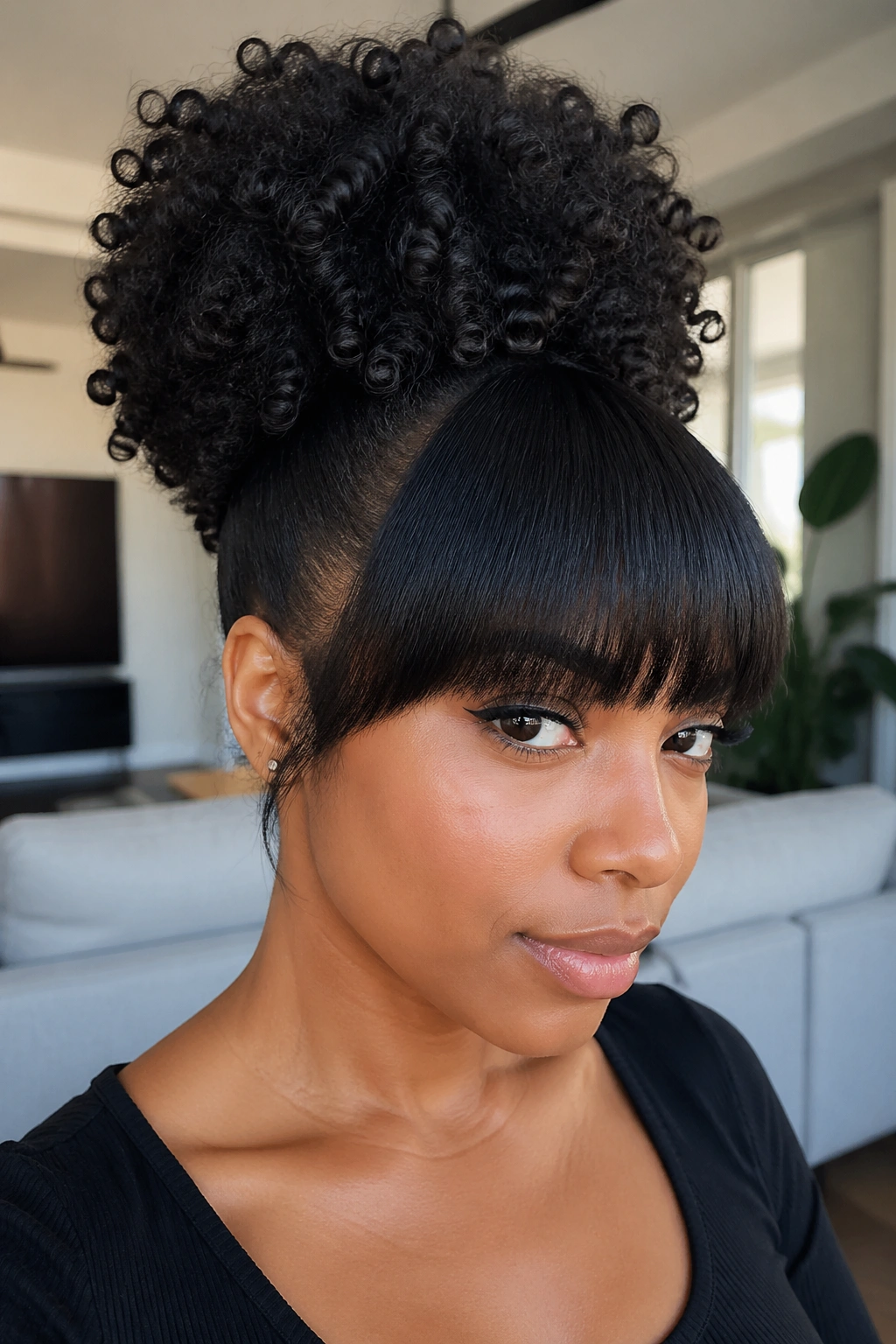
Straight bangs at the forehead combined with a high natural puff at the crown. The puff rises above and behind the bangs, creating a dramatic vertical dimension. The straight bang frames the lower face while the puff adds height above.
This is a bold, high-impact combination. The contrast between the smooth, downward-hanging straight bang and the upward-exploding puff creates a graphic, editorial silhouette that’s memorable.
Use a soft elastic for the puff so no breakage occurs at the crown.
6. Straight Bang With a Silk Press Body
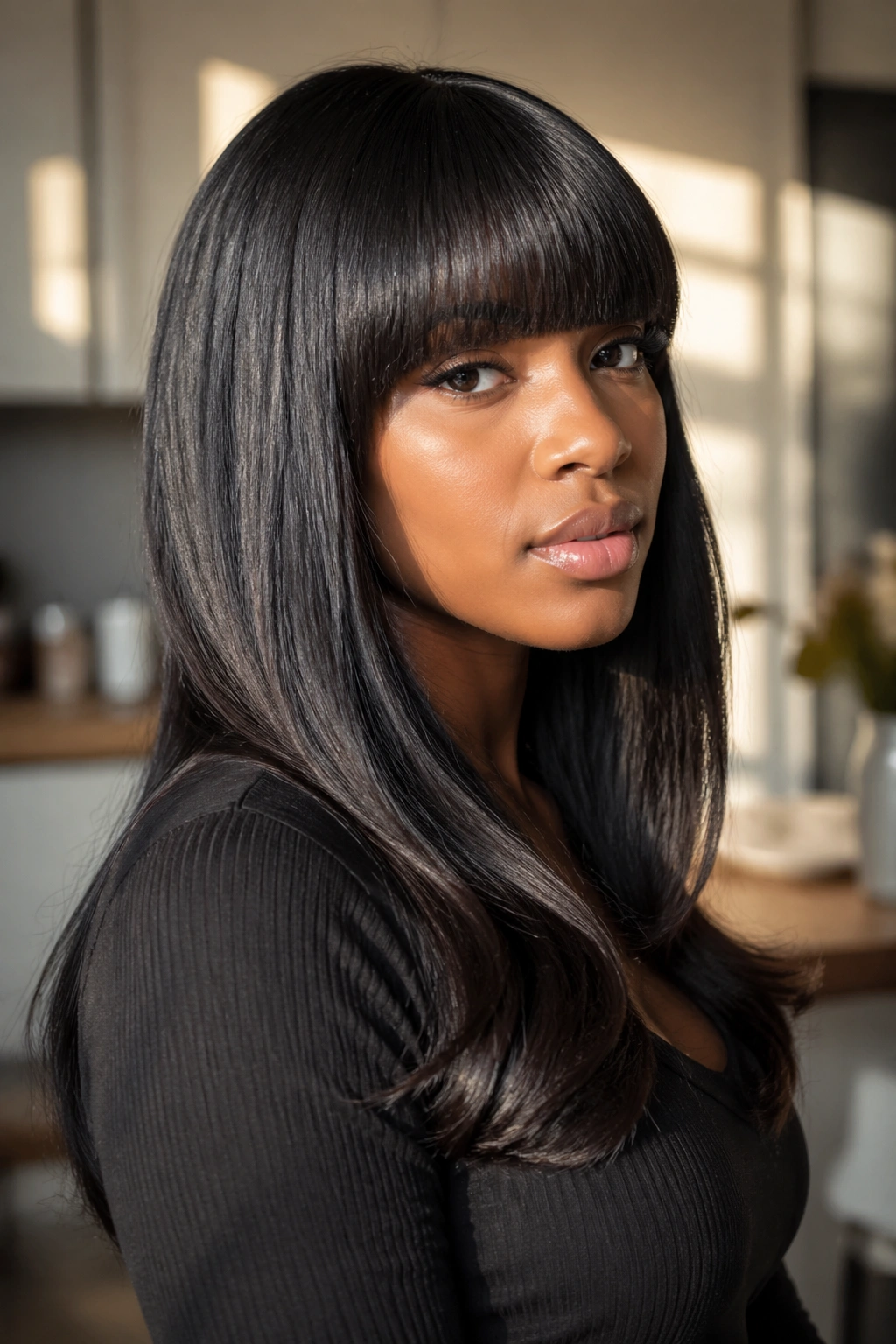
The full silk press style includes the bang section — straight from roots to ends throughout. But a variation is to have the body of the hair in a soft, wavy silk press state while the bang section is flat-ironed perfectly straight — no curl or wave at the ends, just a clean, geometric fringe.
The distinction between a fully curled silk press and a straight-bang version is in the bang’s finish. This version prioritizes the bang as a design element and the wavy body as a textured contrast, rather than both being part of the same smooth style.
7. Straight Bang With Braid-Out Curls
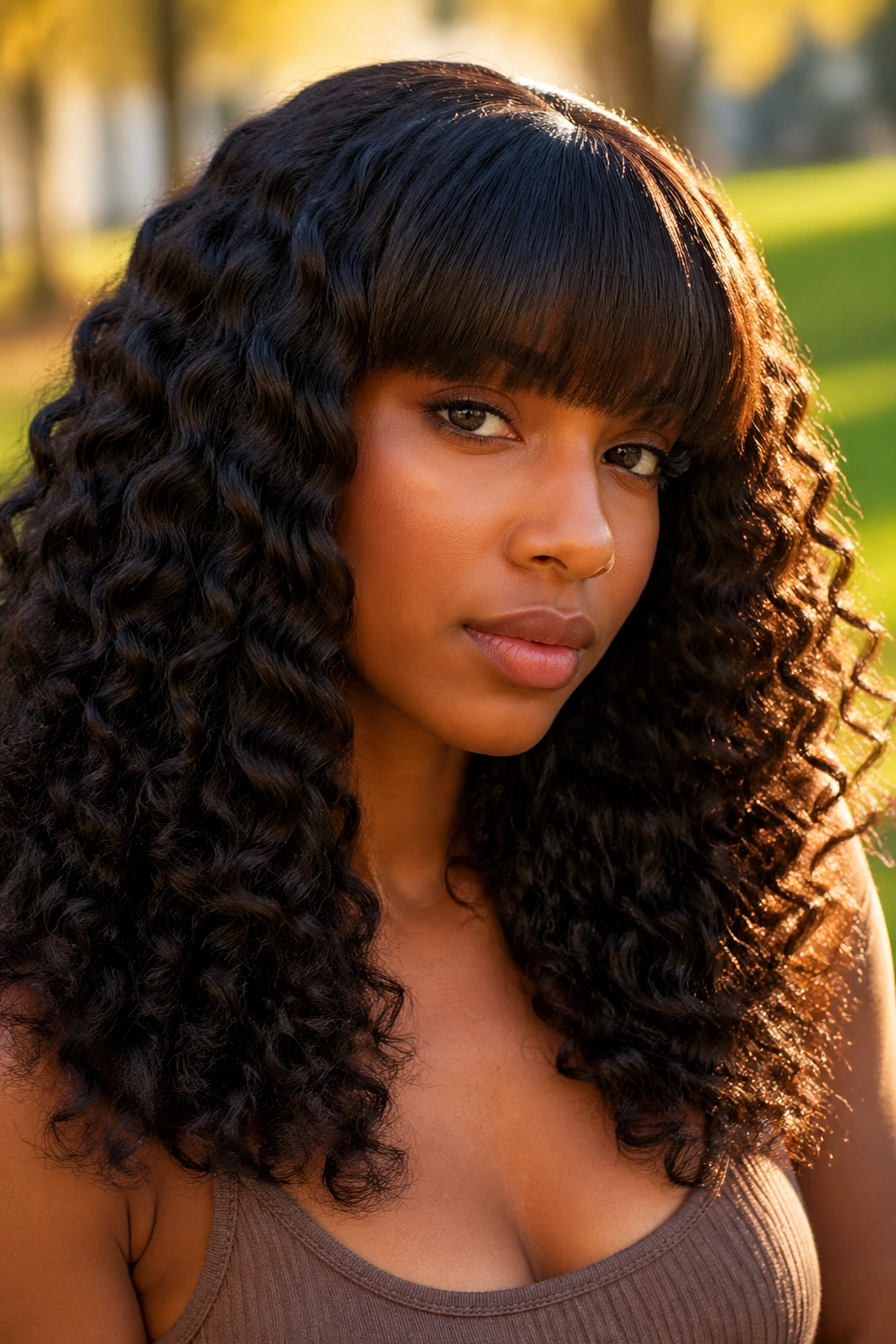
A straight bang against a braid-out creates a specific textural contrast — the flat, smooth bang against the angular, zigzag wave pattern of released braids. The braid-out pattern is more geometric than a wash-and-go curl, which creates an interesting dialogue with the geometric straight bang.
On type 4 hair, a braid-out provides enough elongation and definition for the contrast with the straight bang to read clearly. The braid-out texture is defined enough to look intentional without being as smooth as a silk press.
8. Blunt Micro Bang With Big Curly Hair
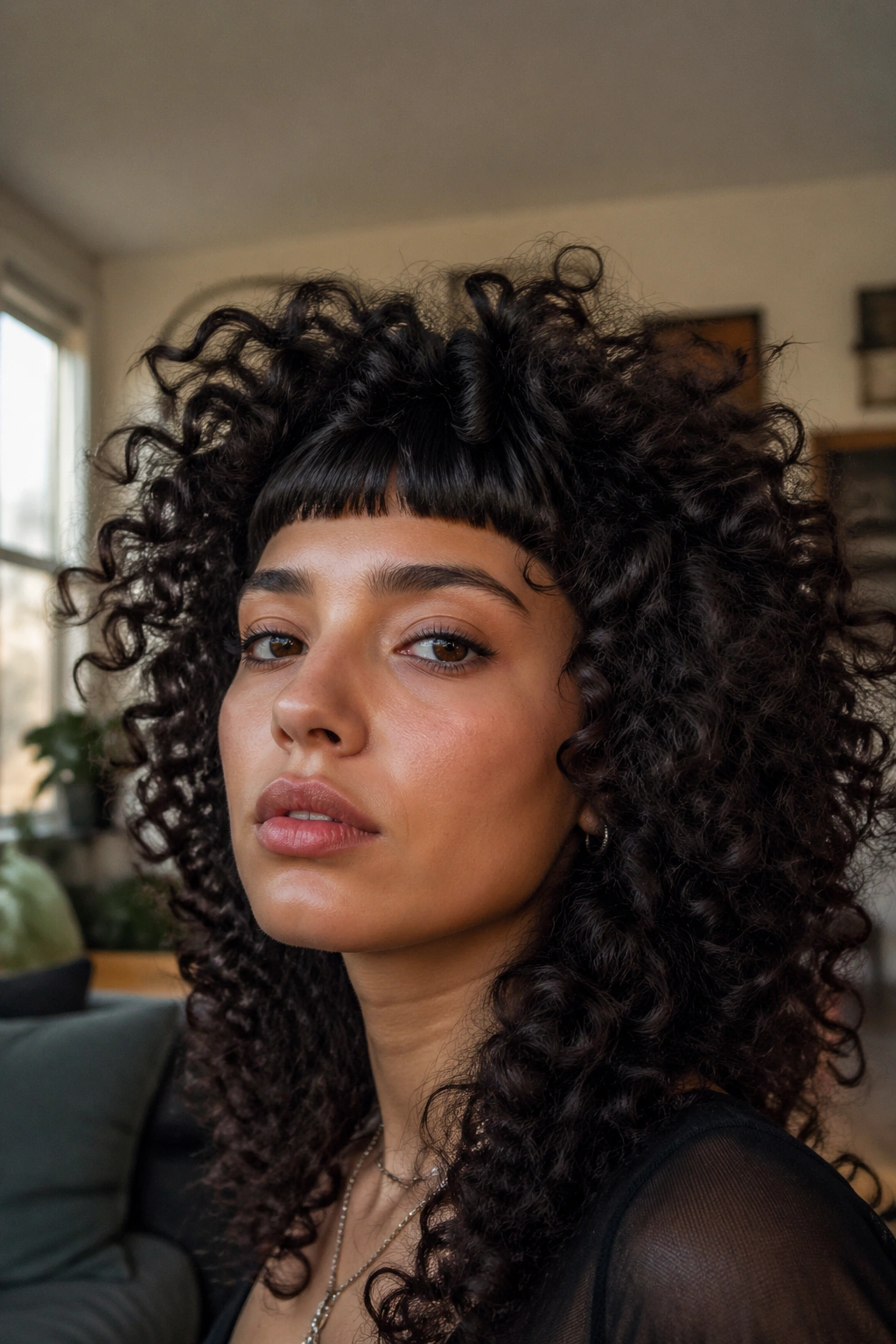
Short, blunt, above-eyebrow straight bangs against a big, full head of curly natural hair. The scale contrast here is enormous — small, precise fringe against maximum curl volume. The micro bang almost disappears against the density of large natural hair, which makes both elements more interesting.
This combination leans strongly editorial and takes confidence to pull off. But on the right person, with a defined, full curl pattern, it’s an unforgettable look.
9. Faux Straight Bangs With Clip-Ins
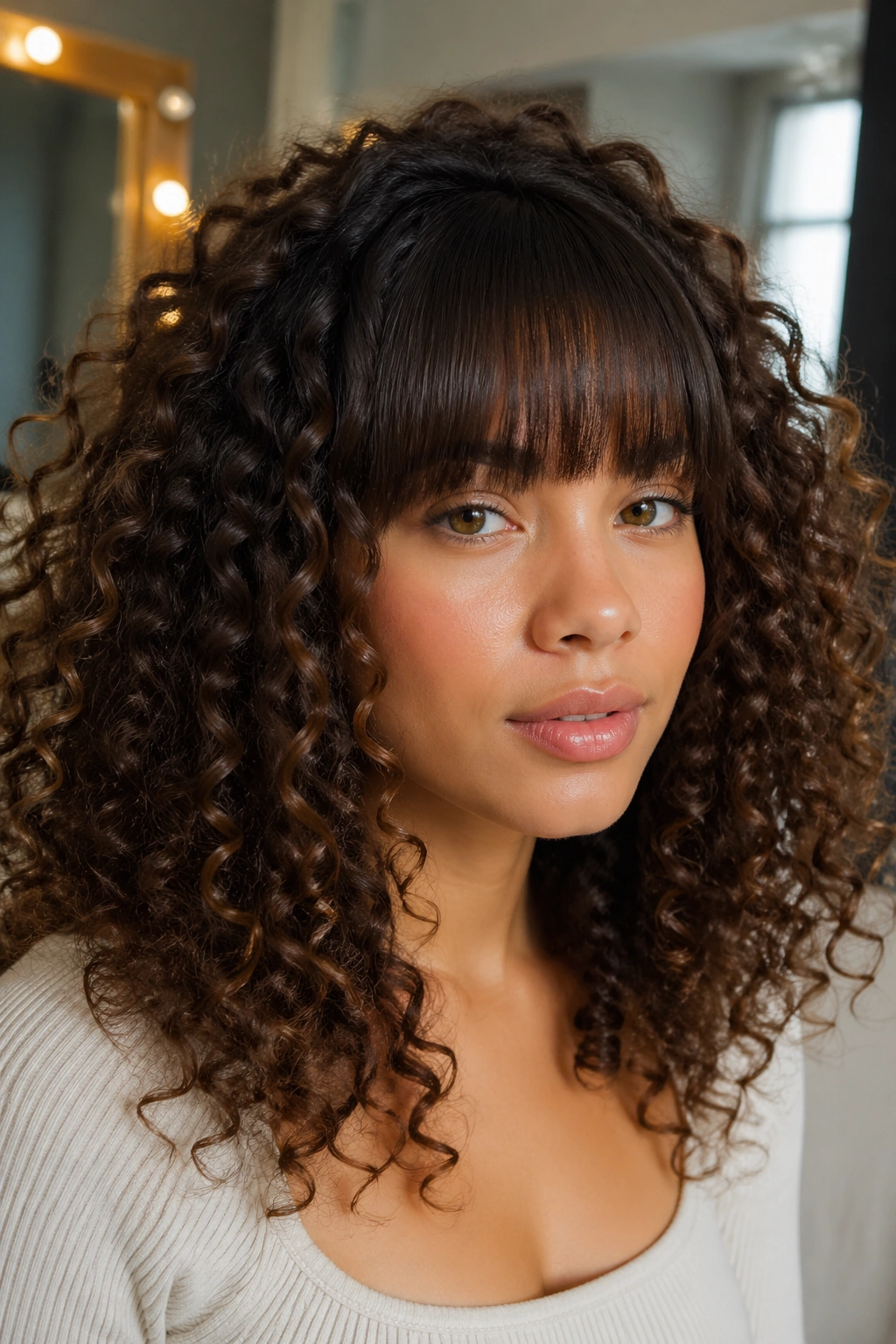
Clip-in straight bang pieces — available in a range of textures and colors — are attached at the hairline in front of the natural hair. The rest of the natural hair stays completely untouched, in its natural curl state.
This is the zero-heat, zero-commitment version of straight bangs with curly hair. You get the full visual effect of the contrast without any heat on your natural hair. And if you decide you don’t love the look, remove the clip-ins and you’re back to your natural style in seconds.
Choose clip-in bangs in your natural hair color for the most seamless result. Or go bold with a contrasting color — highlighting the fact that the bangs are different from the natural hair rather than hiding it.
10. Straight Bang With Half-Up Curly Style
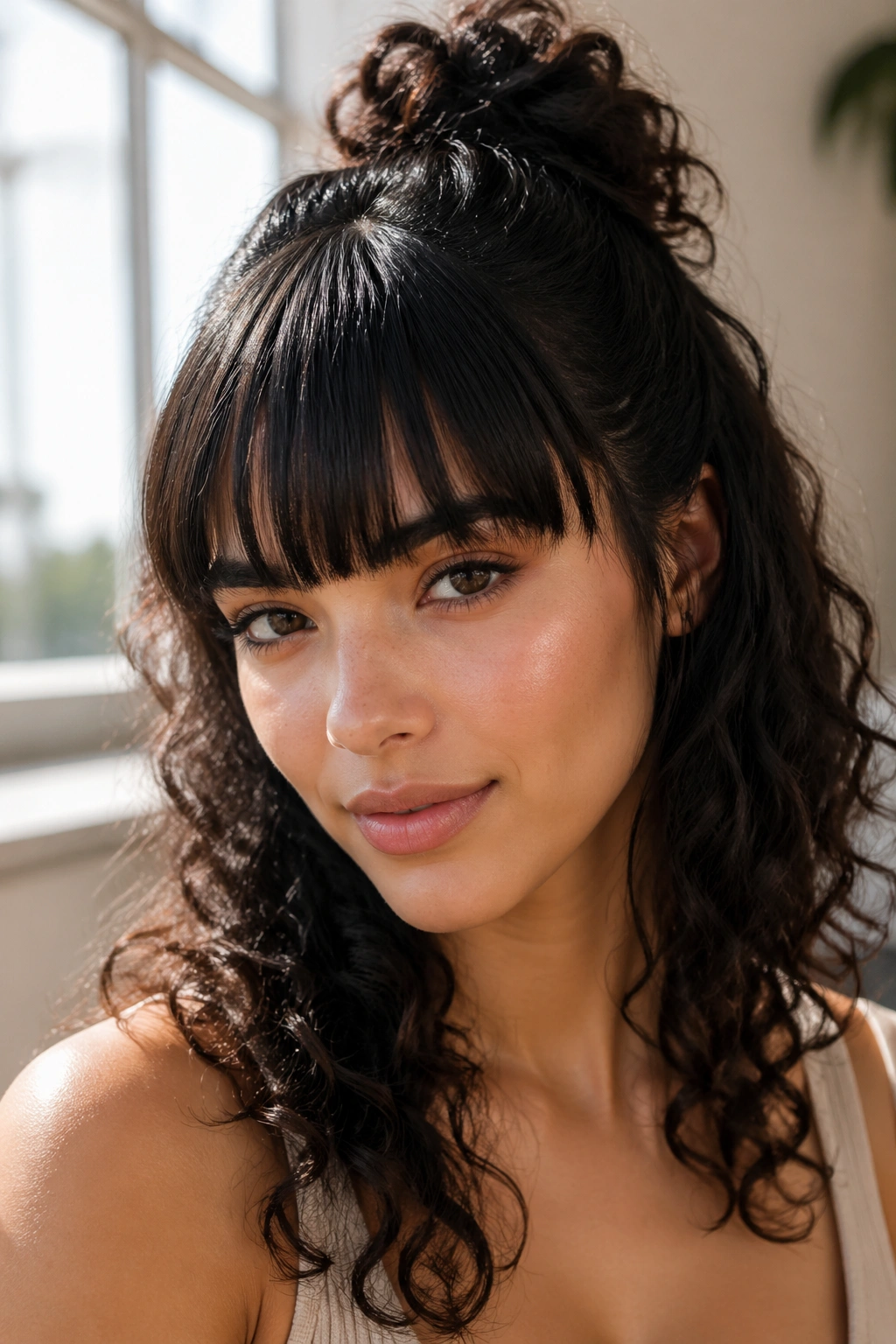
Straight bangs at the forehead while the hair is styled in a half-up, half-down look — the top section pulled back into a bun or ponytail, the bottom section loose in its natural curl state. The straight bang provides the only “down” element at the front, framing the face below the pulled-back top.
This is a practical everyday style for naturalistas with straight bangs — the half-up keeps the volume managed while the bang does the face-framing work.
11. Straight Bang on a Short Natural Cut
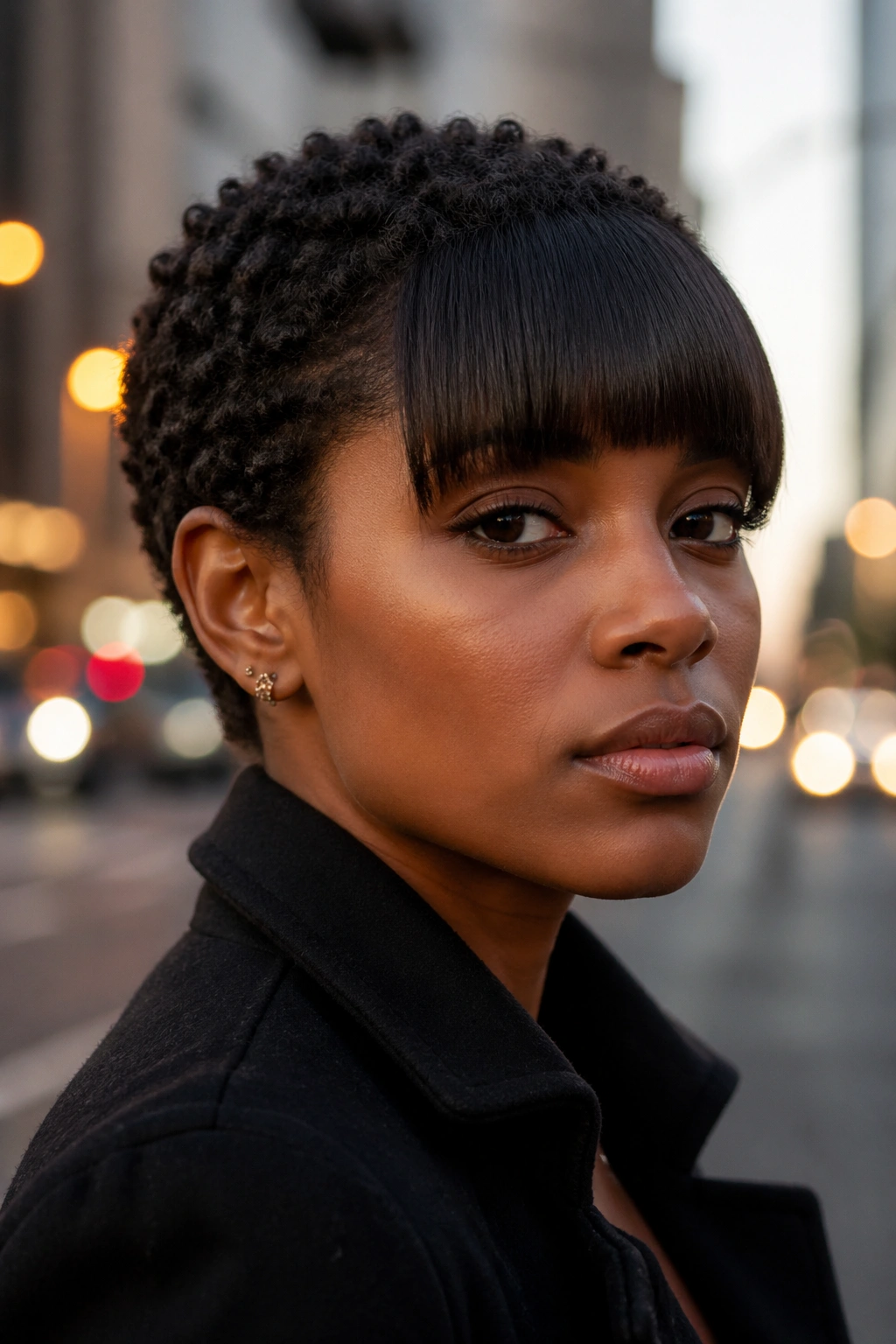
Straight bangs on a short natural cut — a TWA or a short curly shape — create a striking proportion contrast. The bang covers a significant portion of a shorter face-frame, and the curl pattern on the rest of the short cut provides maximum texture contrast in a smaller surface area.
Short hair + straight bang is a bold combination. But it’s been worn with great success and makes the most of what shorter natural hair can do stylistically.
12. Angled Straight Bang With Natural Curls
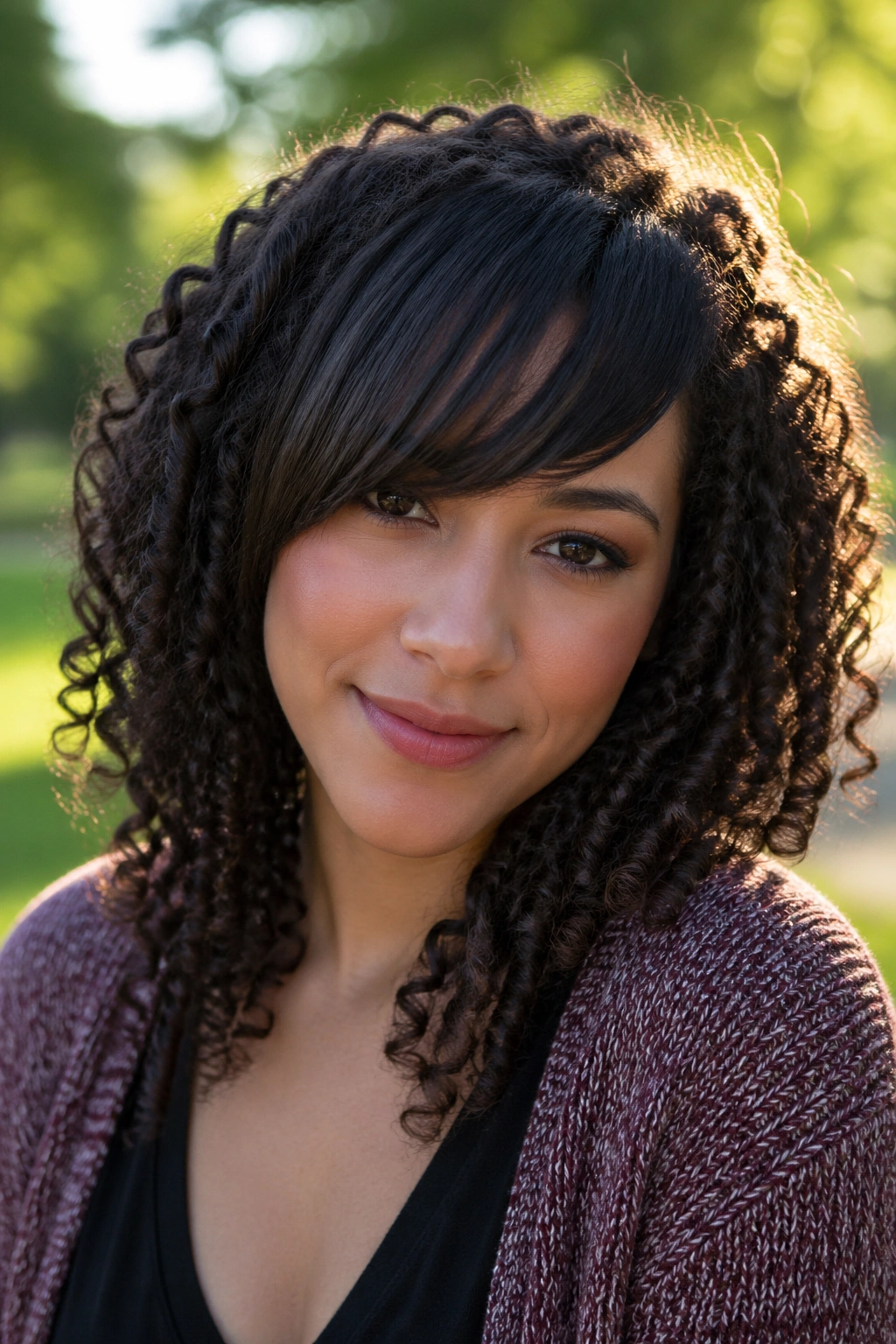
Instead of a perfectly horizontal cut, an angled straight bang — longer on one side than the other — creates a diagonal fringe that sweeps from one temple toward the opposite cheek. On natural curls, this angled cut provides a slightly softer, more asymmetric look than the blunt version.
The angle also makes the bang feel less severe against the softness of natural curls — the diagonal line is gentler than a perfectly horizontal one.
13. Straight Bang With Wash-and-Go Curls
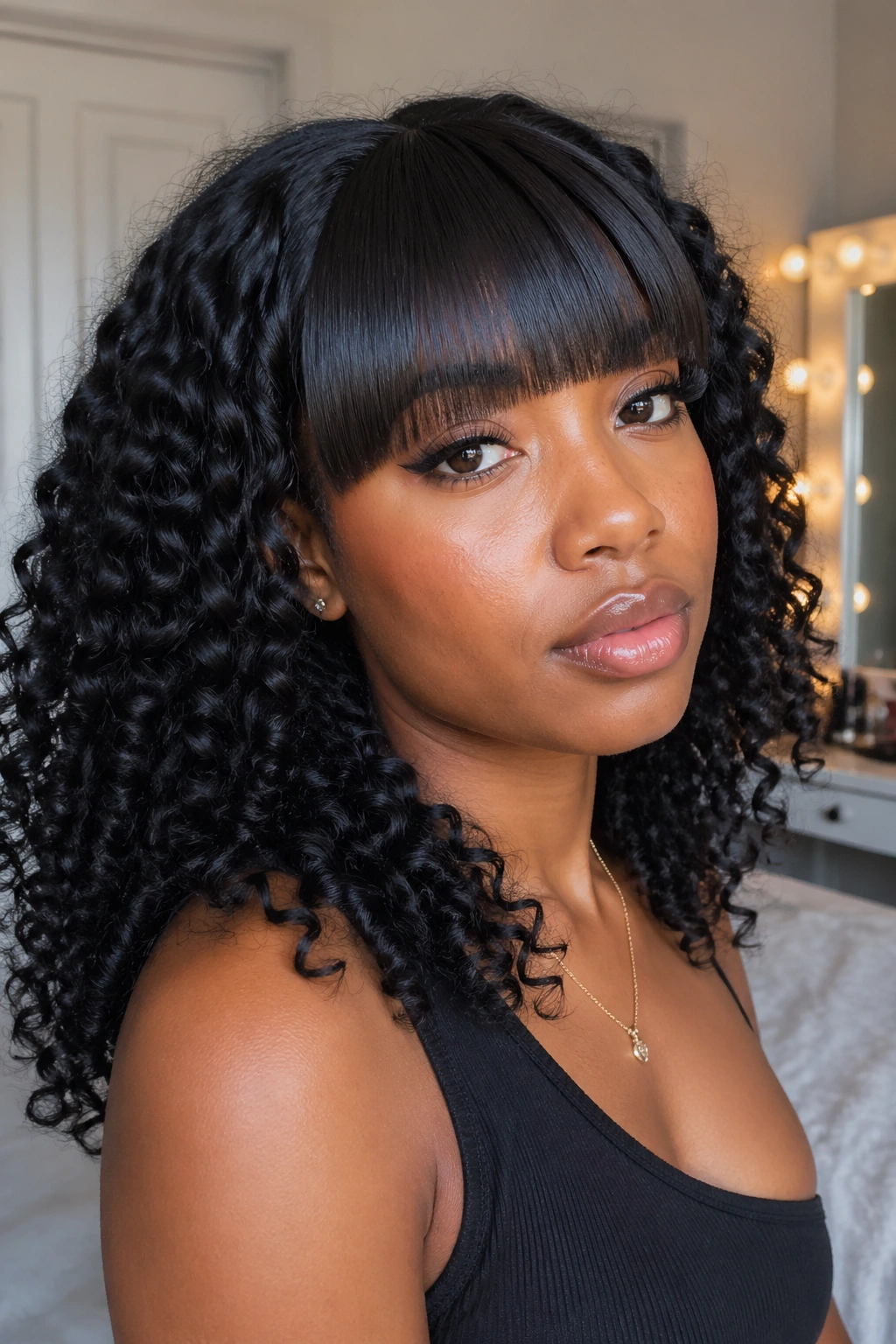
Fresh wash-and-go curls against a flat-ironed bang. The wash-and-go curls are at their most defined — product-fresh, bouncy, clearly coiled. The straight bang is at its smoothest. The contrast is at its highest.
Timing matters: the straight bang should be ironed after the wash-and-go curls are completely dry, so there’s no steam or moisture from the curl section affecting the straightness of the bang.
14. Straight Bang With Protective Style
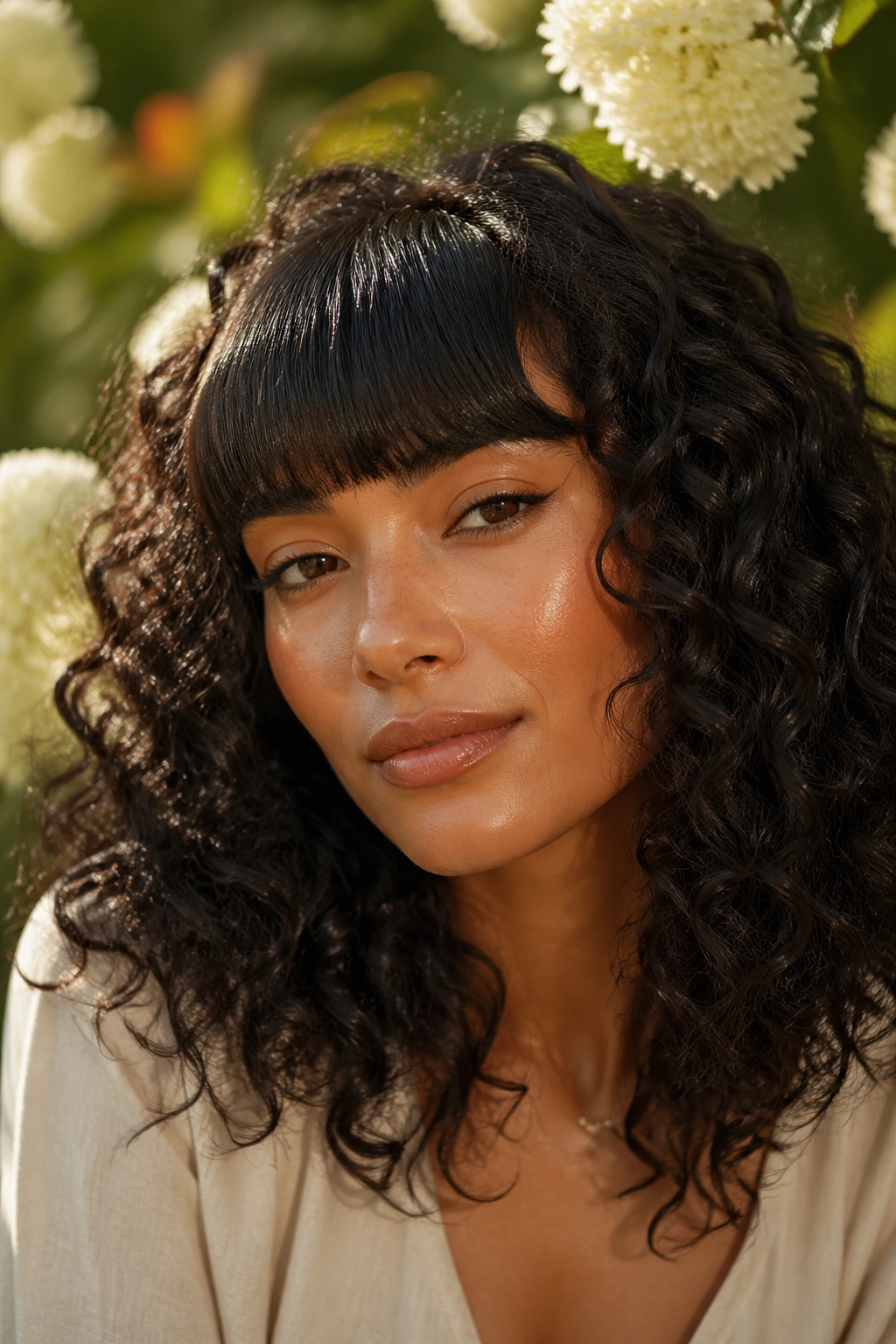
Straight bangs combined with protective styling at the back — braids, faux locs, or twists. The bang section is the only natural hair left exposed, receiving heat periodically. The rest of the hair is fully protected.
This is a strategic approach for naturalistas who want the straight bang aesthetic while keeping the majority of their hair in a protective state. Less overall manipulation, more styling focus on the single exposed section.
15. Straight Bang With Afro Body
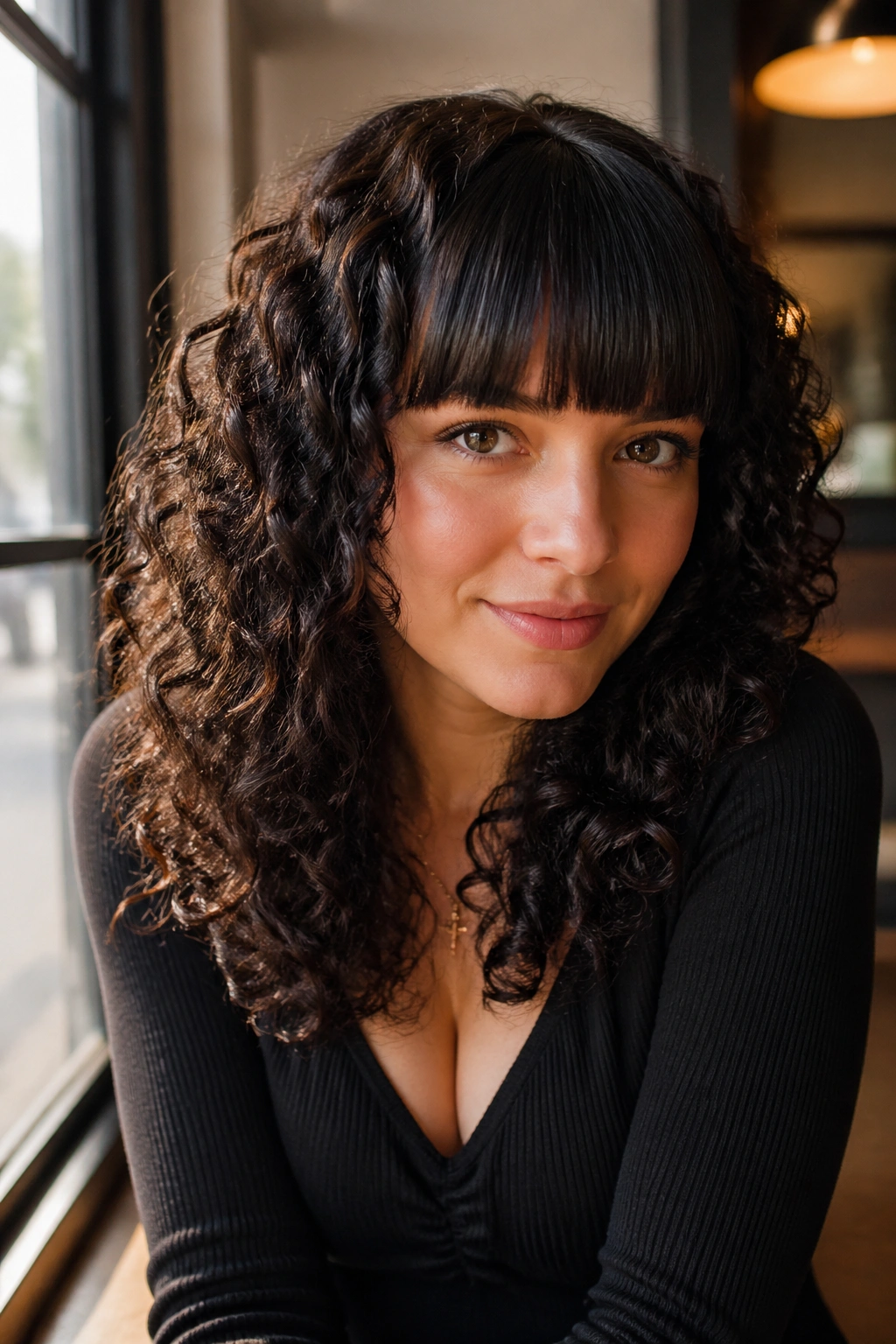
A straight bang against a full afro is possibly the most dramatic version of this contrast. The geometric flatness of the straight fringe against the massive, spherical volume of a full afro creates a powerful graphic statement. The bang bisects the face cleanly while the afro rises enormous above and around it.
This is a look with serious cultural resonance — the natural afro paired with a styled front element that nods to precision and craft.
16. Straight Bang With Rod Set Curls
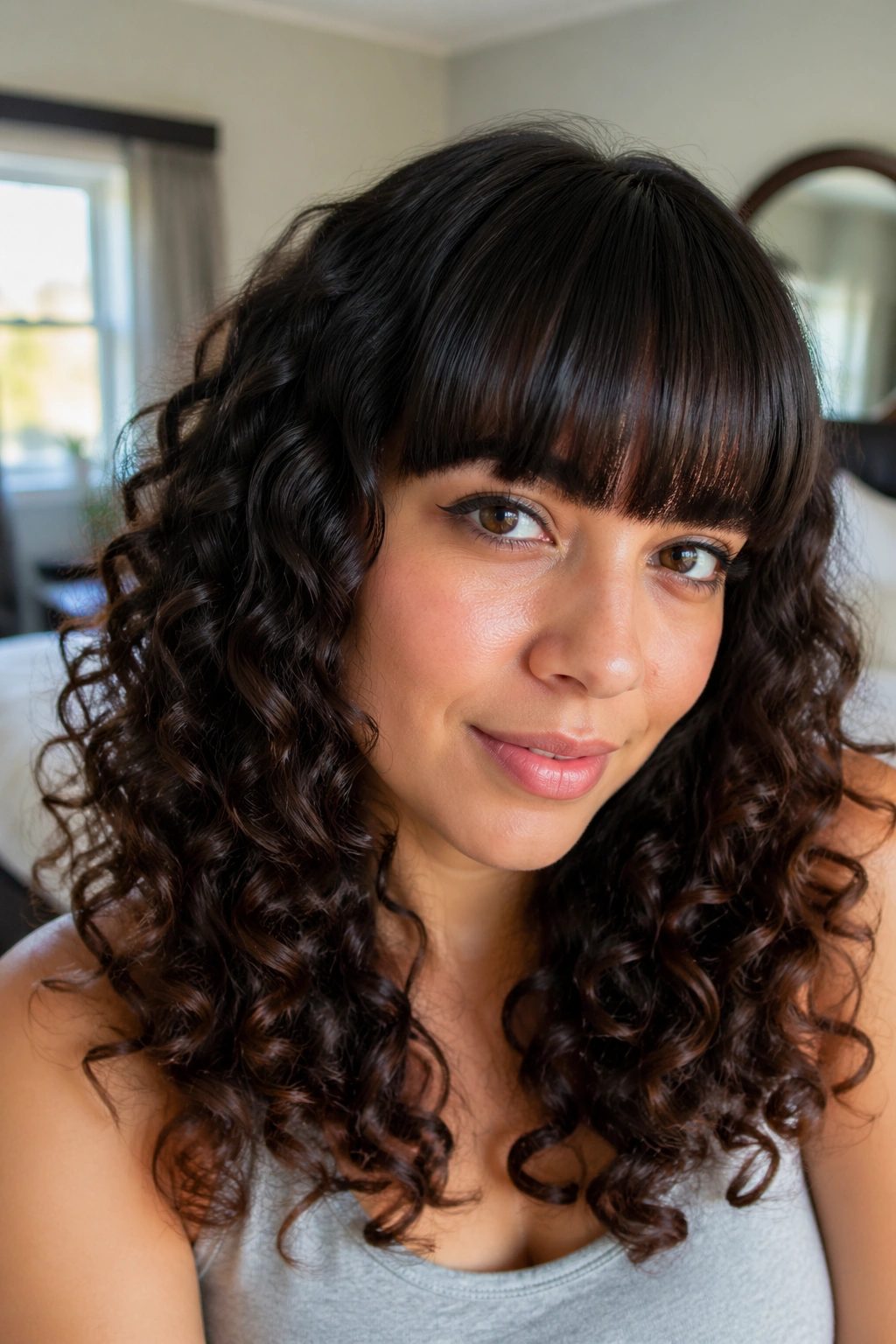
Rod set curls — uniform, perfectly round ringlets set on perm rods or flexi-rods — provide a very consistent, defined curl pattern that contrasts beautifully with a straight bang. Every curl in the rod set is the same size and spring, which makes the contrast with the straight bang especially clean and intentional.
The visual uniformity of the rod set makes both the curls and the straight bang look more deliberate than less precisely styled options.
17. Straight Bang With Loose Wash-and-Go Waves
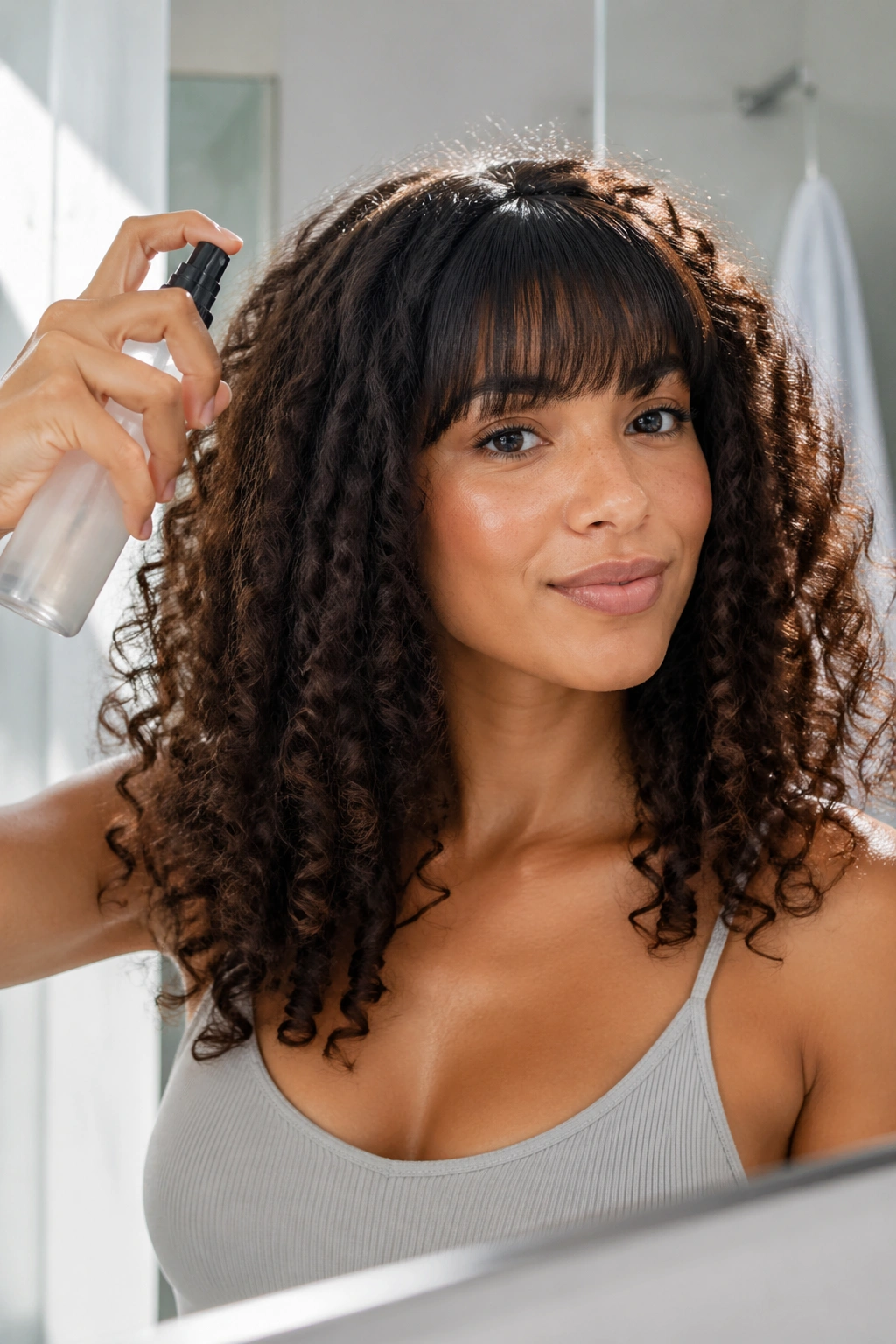
On looser curl types — 3A to 3B — a wash-and-go produces soft, flowing waves rather than defined ringlets. Against a straight bang, these loose waves create a softer version of the texture contrast than tight coils would. The overall style reads as more romantic and less graphic.
This is the gentler, softer version of the straight bang with curly hair combination — appropriate for occasions where you want the contrast but a more understated presentation.
18. Curly Hair With Faux Locs and Straight Bang Extensions
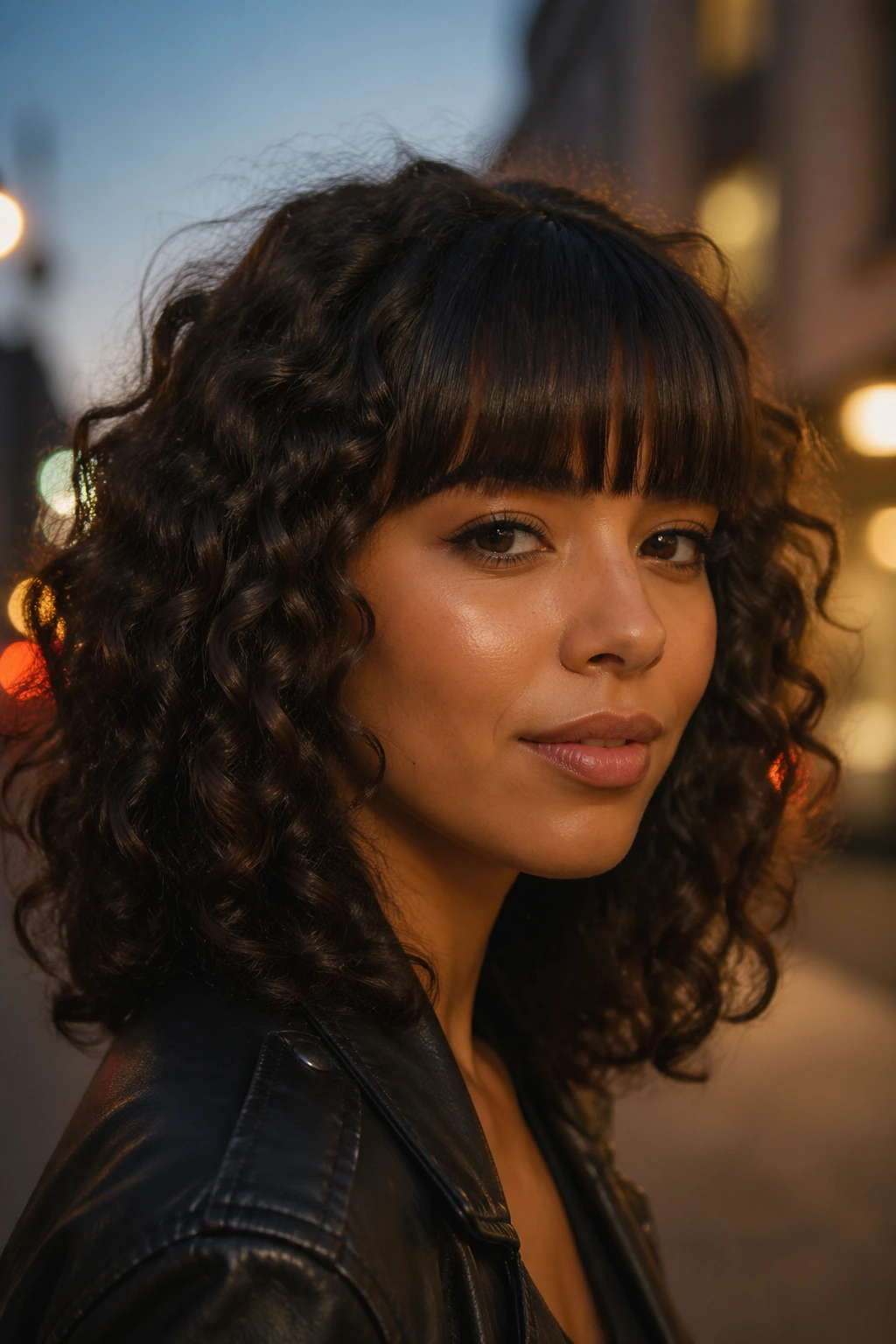
Faux locs on the body of the hair with a straight bang extension at the front creates a strong textural contrast between the rough, matte texture of locs and the smooth, glossy straight bang. The contrast is even more interesting here because both elements are technically “styled” rather than one being “natural” — making it a pure design choice.
This combination is striking from multiple angles. From the front, the straight bang frames the face. From the side, the locs and bang tell two completely different texture stories.
19. Straight Bang With Natural Hair Bun
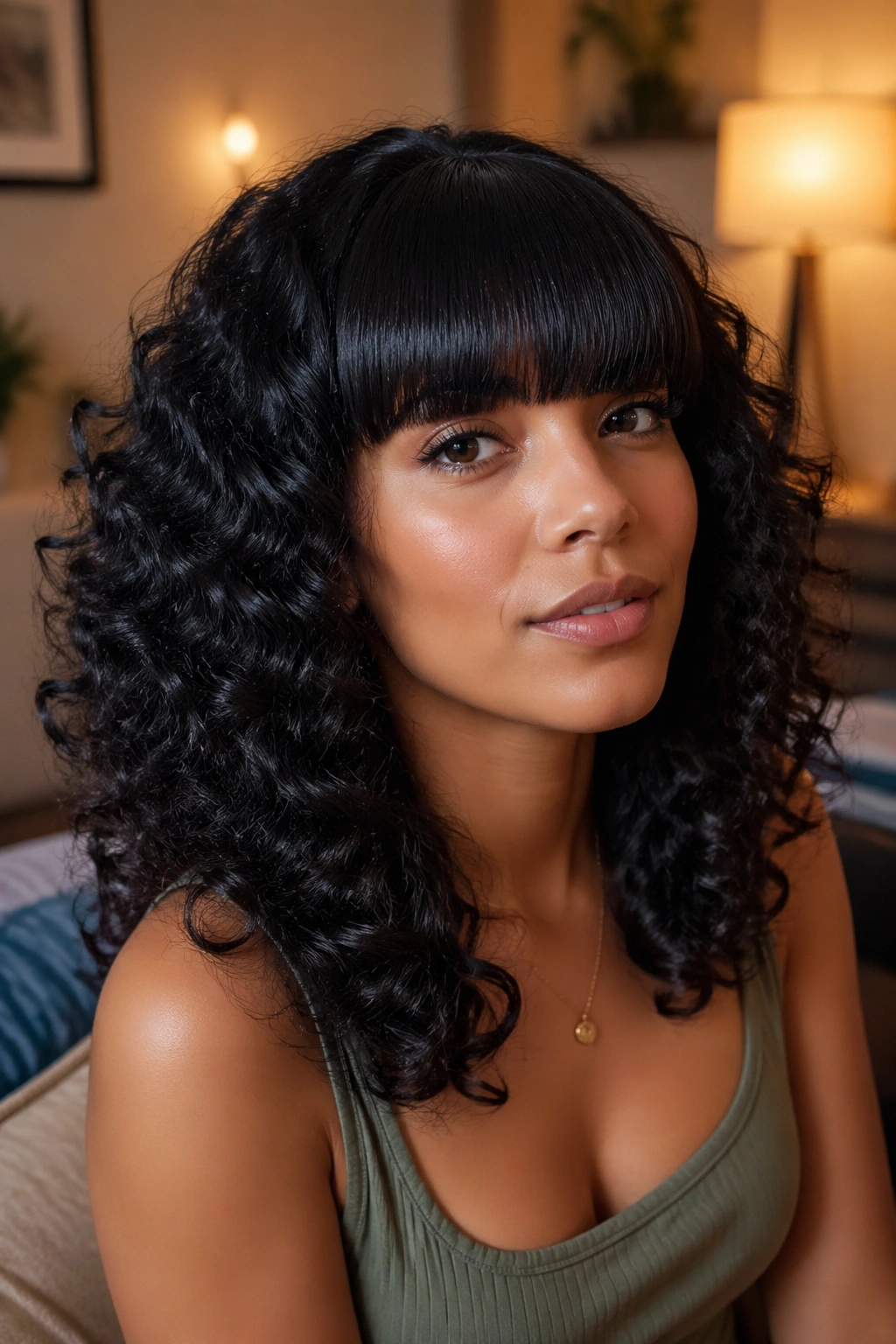
All the hair pulled into a natural puff or bun at the crown, with a straight bang left free at the front. The bun or puff is the textured, natural element. The straight bang is the polished element. Together, they create a style that’s simultaneously casual (the natural bun) and deliberate (the ironed fringe).
For work environments or occasions where you want your hair up but want some styling expression at the front, this combination delivers both in one look.
20. Straight Bang With a Side Cornrow
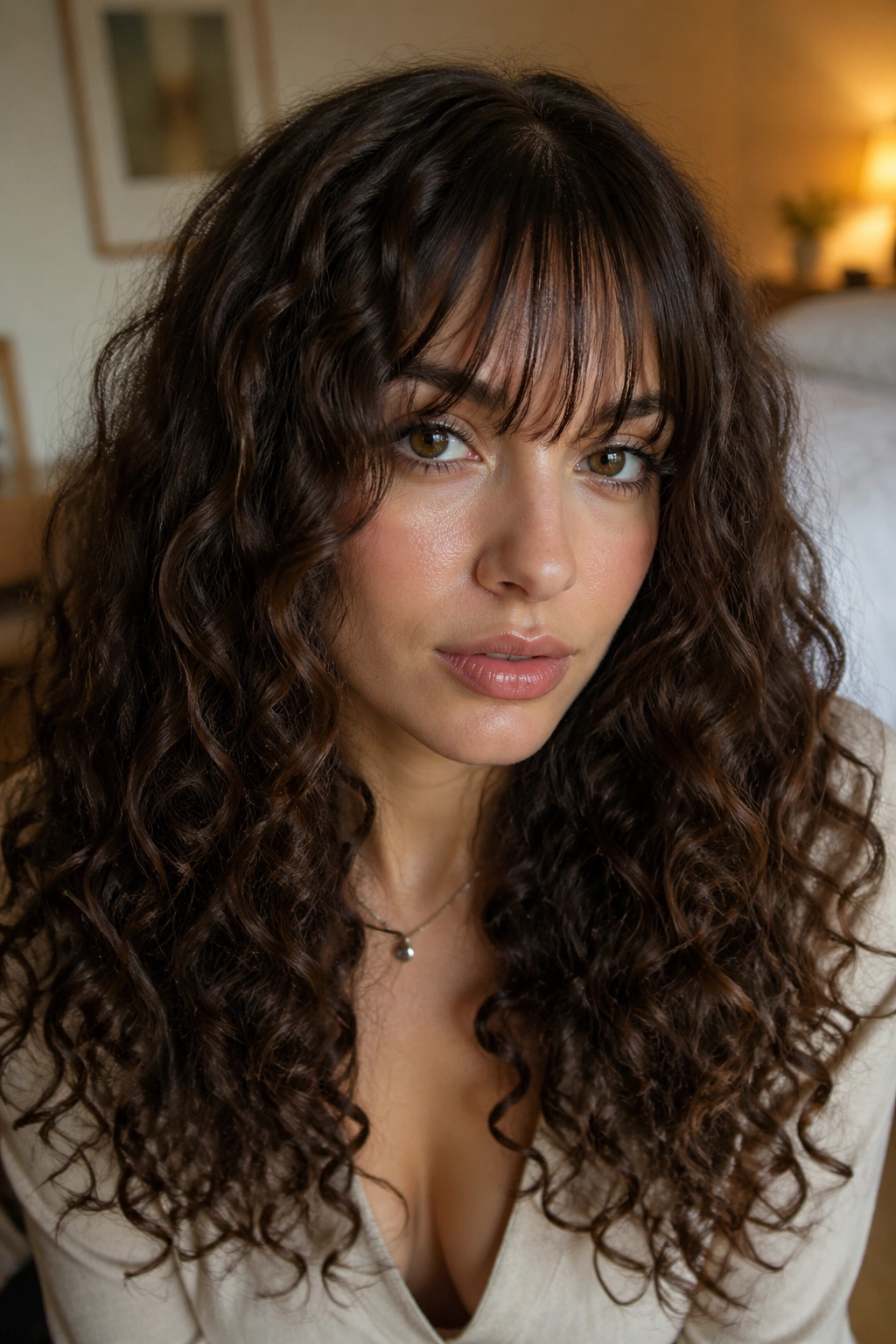
One cornrow running along one side of the head from the temple to the nape, while the rest of the hair is in its natural curl state and a straight bang frames the forehead. The cornrow adds a structural, geometric element that echoes the precision of the straight bang on one side of the style.
This combination creates visual interest through multiple textures and techniques — straight bang, cornrow, natural curl — all coexisting in one complete look.
21. Color-Contrast Straight Bang With Natural Curls
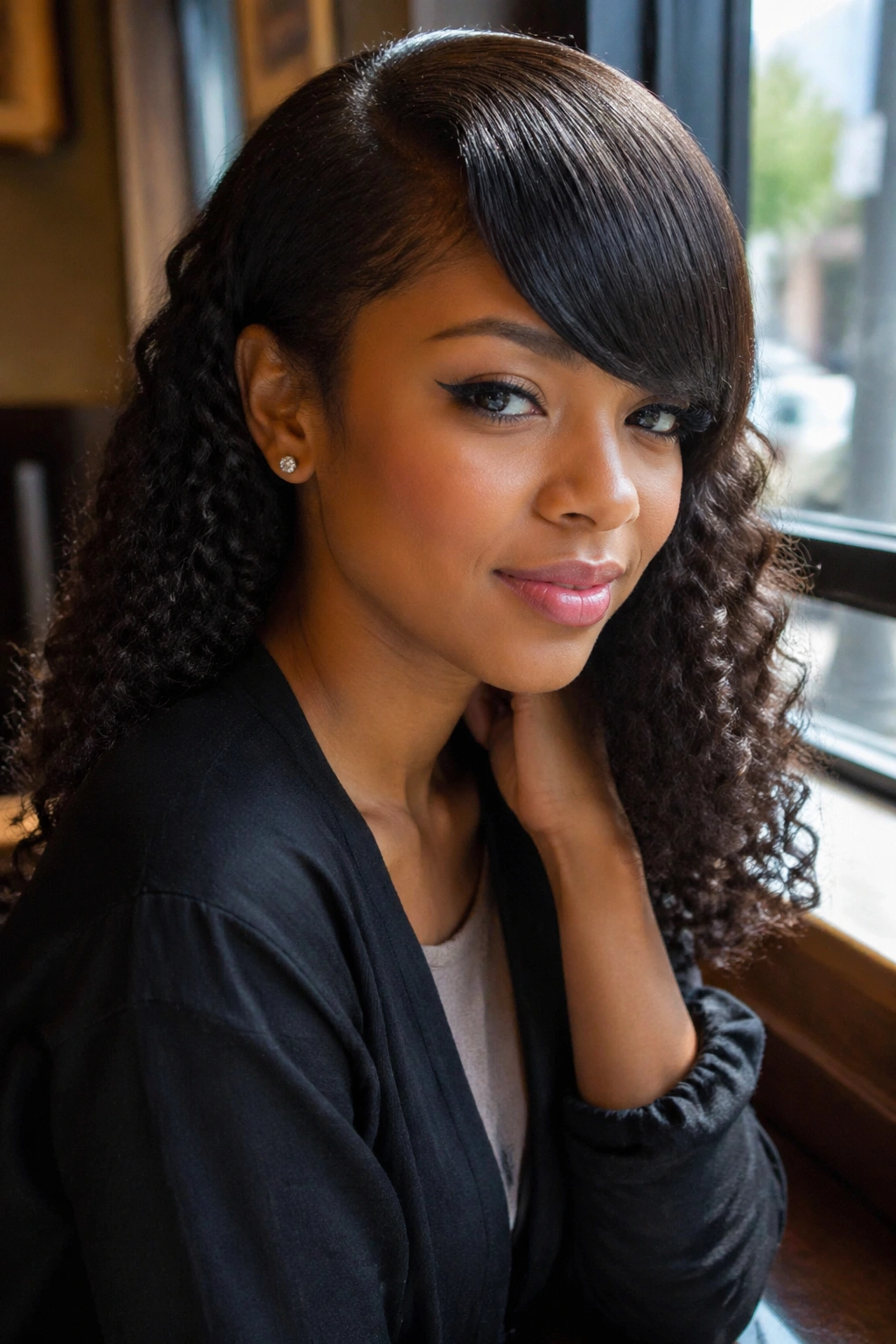
A straight bang in a contrasting color — platinum, honey blonde, bold red, vibrant color — against natural curly hair in a darker or different shade. The color difference amplifies the textural contrast, making the bang even more visually distinct.
This is the most high-impact version of straight bangs with curly hair. The combination of color contrast and texture contrast creates maximum visual drama and is undeniably a statement look.
22. Maintaining Straight Bangs on Natural Hair — The Long View
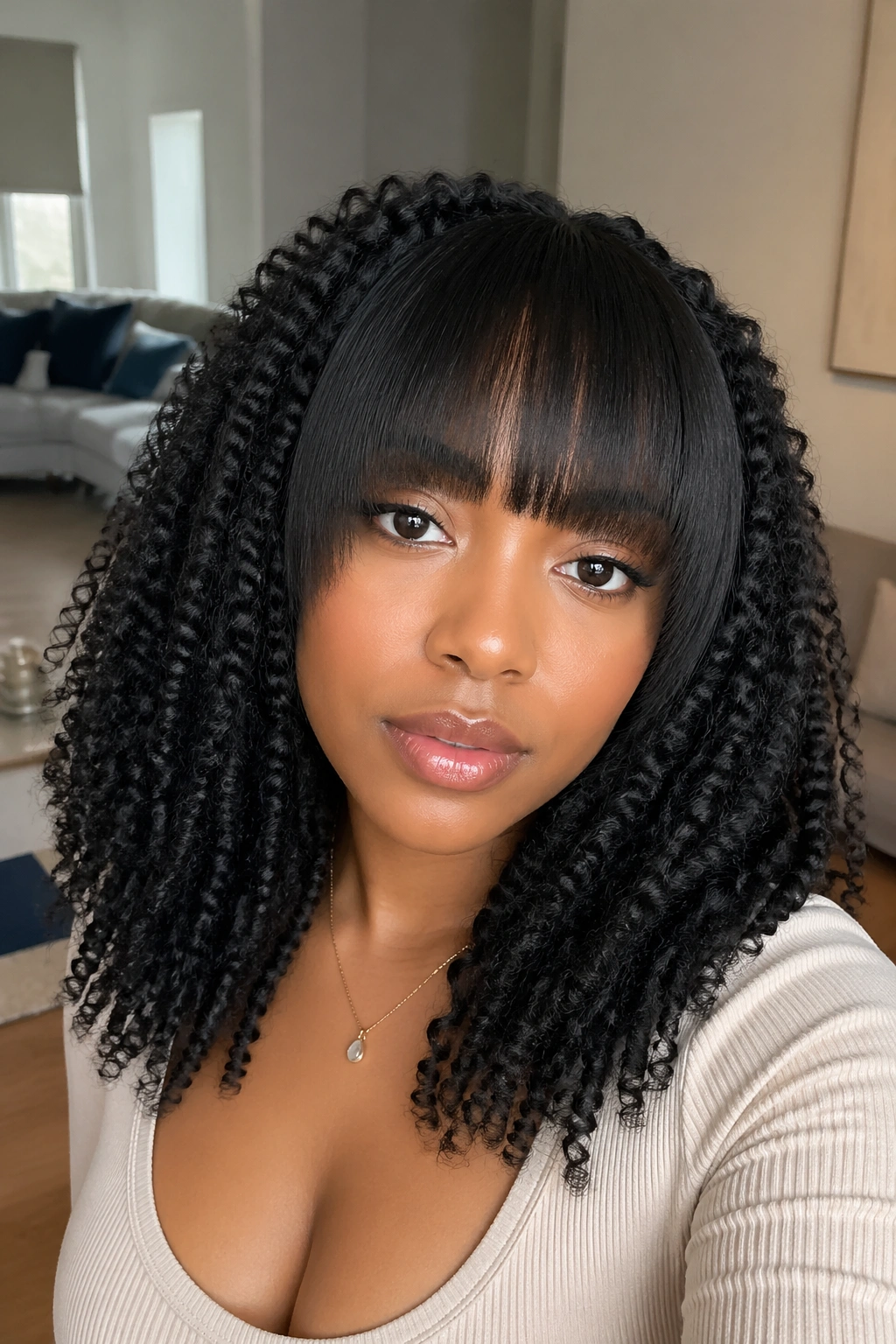
The most important thing to understand about maintaining straight bangs on natural or curly hair long-term is that consistency is key. The bang will revert toward its natural state with every wash — so each wash day involves re-straightening the bang while keeping the rest of the hair in its natural state.
Build the straightening routine into your wash day rhythm. Wash and condition all the hair together. Define and style the natural sections first. Then, once those are set, apply heat protectant to the bang section and iron it separately. This sequence is more efficient than treating the bang as an afterthought.
Protect the straight bang overnight with a satin scarf wrapped specifically around the fringe — not just the edges, but the entire bang section. This prevents the curls from the rest of your hair from frizzing the bang section during sleep.
And remember: every time you flat iron the bang section, you’re adding heat to a specific area of hair repeatedly. Regular deep conditioning treatments on the bang section — every two to three weeks — help maintain its integrity and prevent heat damage from accumulating over time.
The straight bang with curly hair combination is work. But it’s intentional, expressive, beautiful work — and when done with care, it’s one of the most visually arresting hairstyles natural hair can wear.