


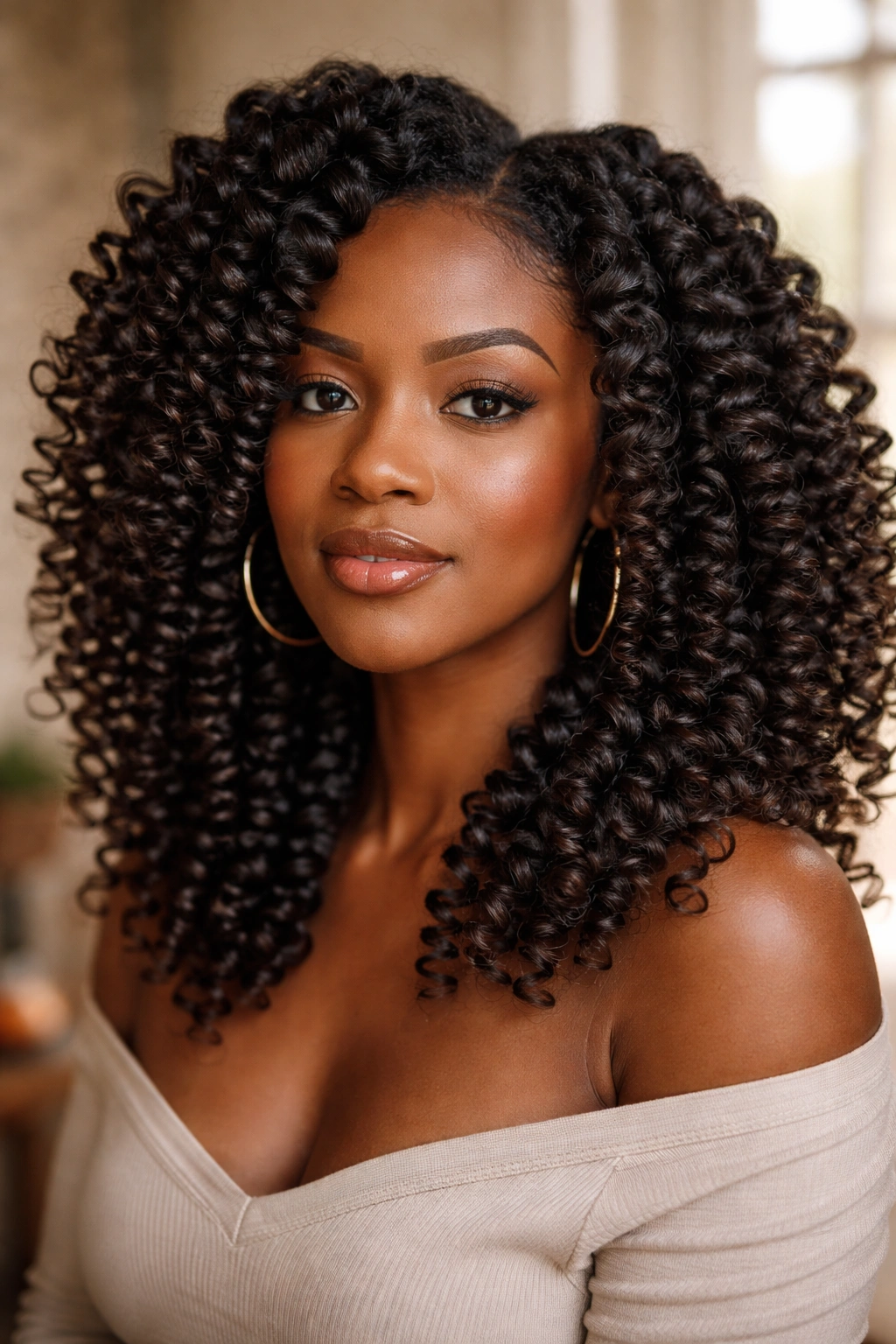
If you’ve spent any time in the natural hair community, you know that wand curls on 4C natural hair occupy a special category of achievement. 4C hair is tightly coiled, densely packed, and beautiful — but it also shrinks dramatically, making it easy to underestimate just how much length and definition it’s actually capable of showcasing. That’s exactly what wand curls do. They pull that coiled potential out of the strand and display it as a defined, elongated spiral that shows your true length and makes every head turn. It’s not always an easy style to execute on 4C texture, but when you do it right, the results are unforgettable.
Why 4C Hair and Wand Curls Are a Complicated but Rewarding Combination
Let’s be honest about the challenge. 4C hair has the tightest coil pattern of all the hair types, with strands that curl into tiny z-shapes or tight coils with minimal definition between individual curls. This texture shrinks up to 70-75% of its actual length, which means a lot of the visual drama of wand curls can get absorbed by the coil pattern if you don’t prepare properly.
But here’s the other side of that: when wand curls on 4C natural hair are done correctly — with proper stretching, the right heat setting, and quality products — the result is extraordinary. The defined spirals pop against the coil pattern background. The style has volume and presence that loose-wave types simply can’t replicate. There’s a richness and depth to wand curls on 4C hair that’s genuinely different from any other texture, and that difference is stunning.
The combination is demanding. But the payoff is worth every preparation step.
Understanding What 4C Hair Needs Before Heat Styling
4C hair needs more moisture than virtually any other hair type. The tight coil pattern makes it harder for the scalp’s natural oils to travel down the length of the strand, so the hair is prone to dryness and, as a consequence, breakage. Before heat styling — before you even consider picking up a wand — the hair needs to be in excellent moisture condition.
A deep conditioning treatment applied the day before or the morning of your wand curl session is essential. Use a moisture-focused deep conditioner, apply with heat (a heat cap or hooded dryer), and let it sit for at least 30 minutes. Rinse, then apply your leave-in conditioner on wet hair before proceeding. This moisture base is your protection layer under the heat protectant. Without it, the heat draws moisture directly from the strand.
The Non-Negotiable: Stretching 4C Hair Before Wand Curling
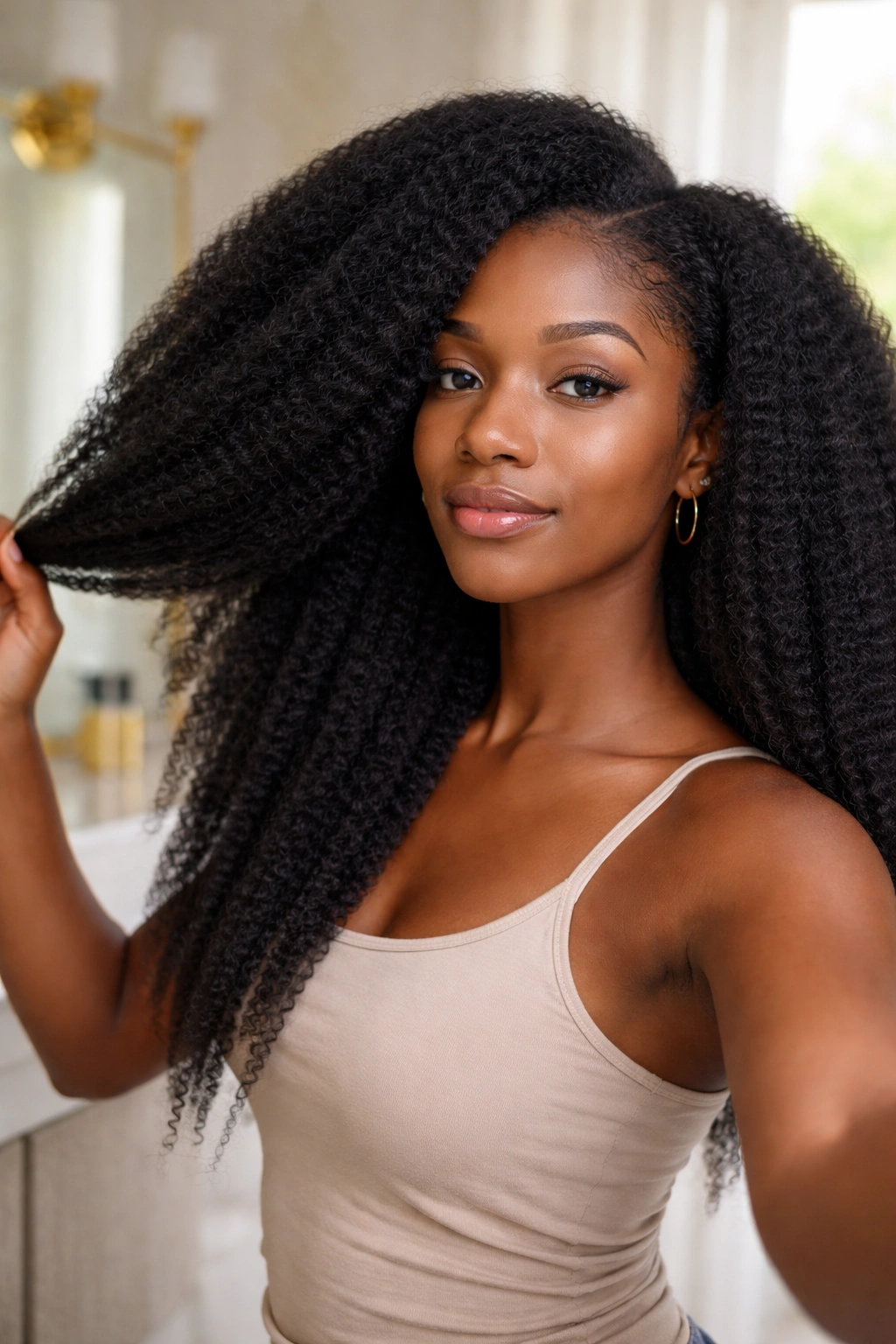
Trying to wand curl 4C hair without stretching it first is one of the most common mistakes naturals make when they’re learning this technique. Shrunken 4C hair and a wand barrel produce very little visible spiral. The coil pattern absorbs the curl and the length you’ve worked for disappears.
Stretching the hair before curling solves this. There are several methods that work well for 4C hair specifically:
African threading is the most effective stretching method for 4C hair. Thread-wrapped sections dry with maximum elongation and no heat, leaving the hair stretched, smooth, and ready to receive wand curls beautifully. It’s time-intensive but produces the best results.
Banding is faster than threading. Wrap sections of damp hair with soft hair elastics in a spiral pattern from root to tip and let dry completely. The bands stretch the coil without heat exposure.
Blowout is the most common and quickest method. Use a blow-dryer with a comb attachment on a low to medium heat setting. Don’t aim for bone straight — just stretched and smooth. Always apply heat protectant before blow-drying.
Tension method involves holding the hair taut at the ends while blow-drying with a concentrator attachment. This stretches while smoothing the cuticle.
Any of these methods gives you a better starting canvas for wand curls than unstretched 4C hair.
Heat Settings Specifically for 4C Hair
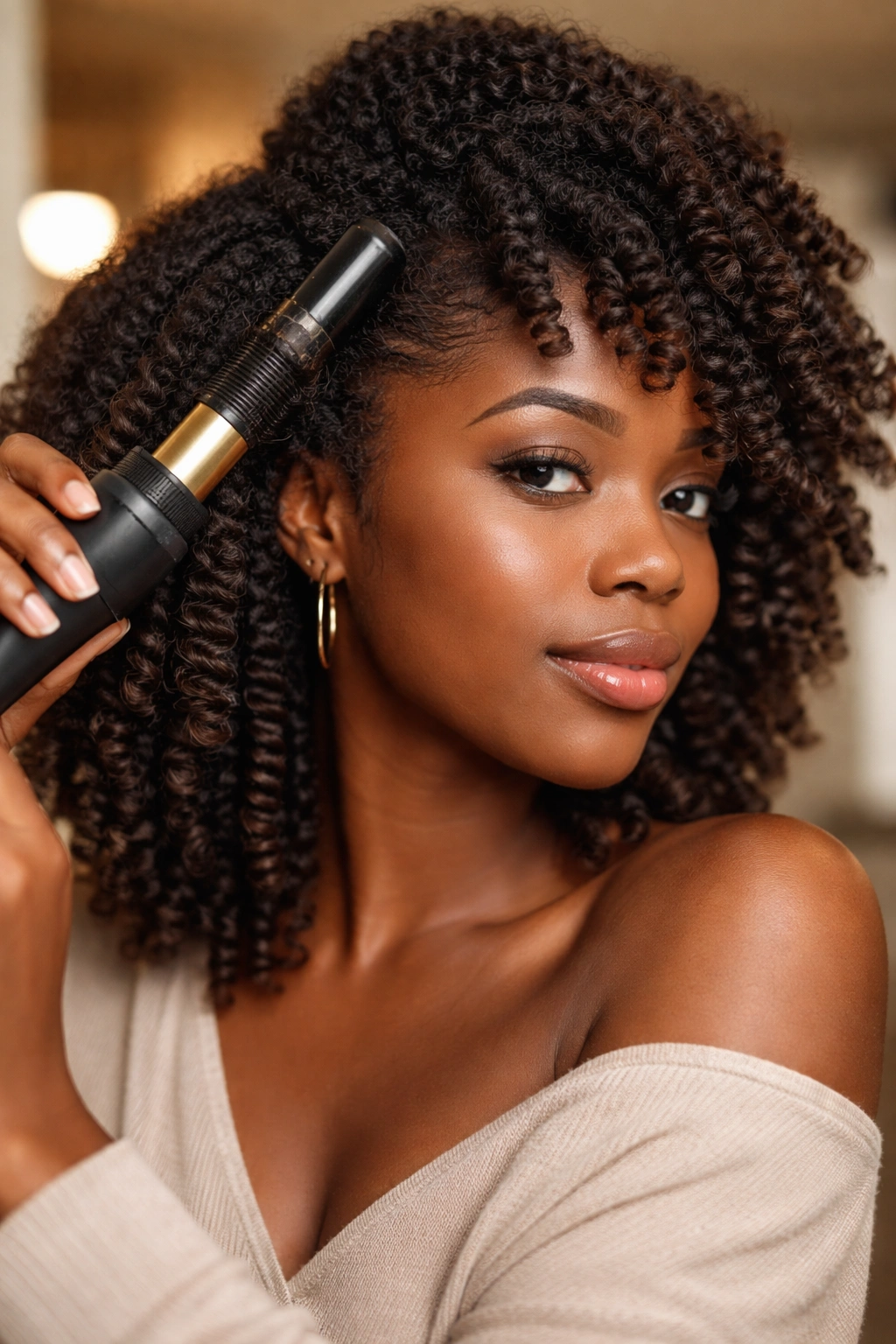
4C hair is generally the densest and coarsest of the natural hair textures, which means it can typically tolerate higher heat settings than finer textures. But “can tolerate” doesn’t mean “should default to.” The goal is always to use the lowest temperature that effectively sets the curl.
For 4C hair, the effective range is usually 360°F to 400°F. If your hair is color-treated, stay on the lower end of that range — 350°F to 370°F — to protect the already-compromised cuticle. For virgin 4C hair that’s in excellent health, working at 380°F to 400°F typically gives the best curl set and longevity.
Temperature isn’t the only factor. The speed at which you work also affects heat exposure. Moving the wand slowly, spending the full recommended hold time on each section, and not rushing gives the heat time to set the curl without requiring you to increase the temperature to compensate.
Never overlap the wand on the same section twice in one session. Each pass adds cumulative heat. One clean, deliberate pass per section is the right approach.
Product Layering for 4C Wand Curls That Last
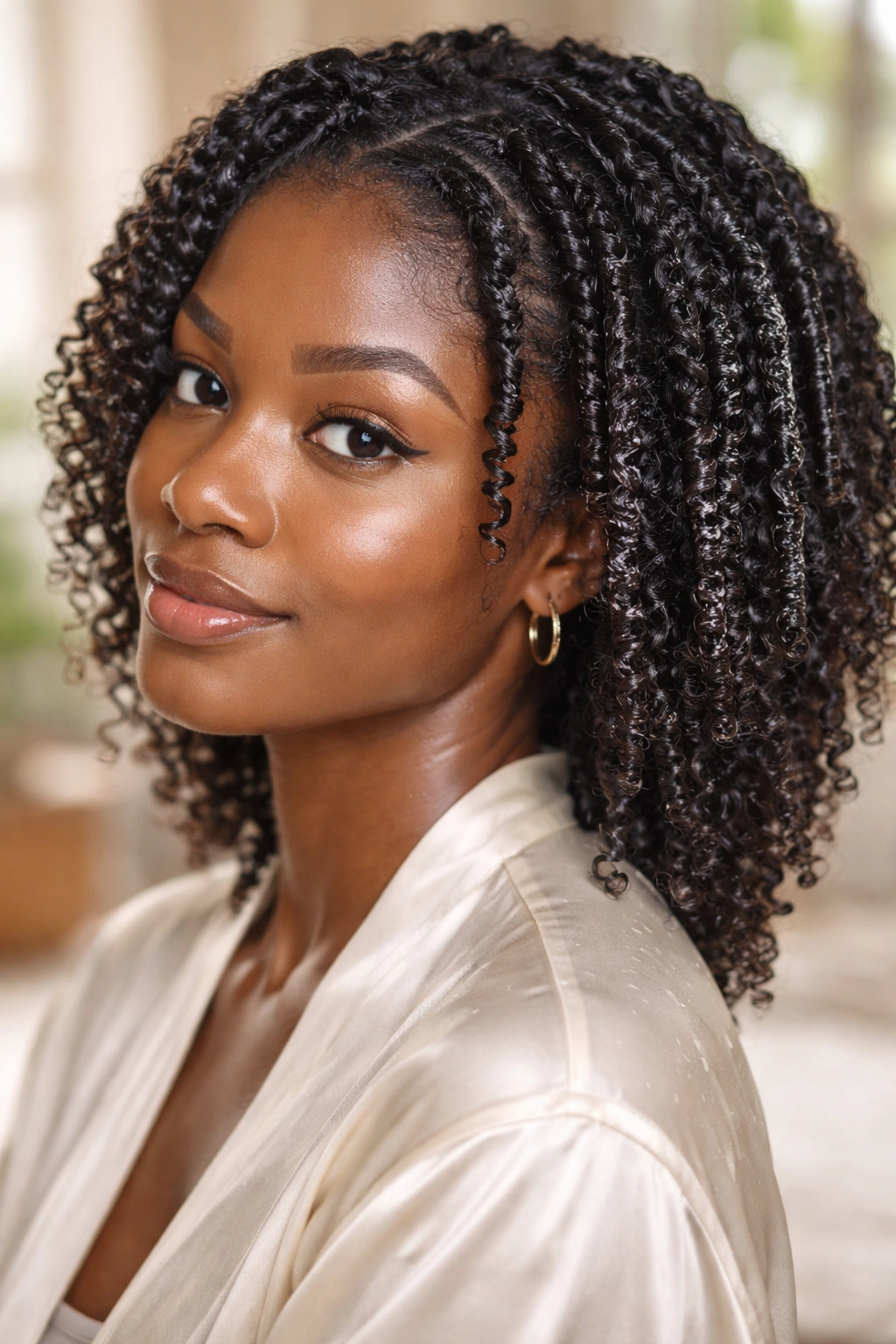
Product application for 4C wand curls follows a specific order that maximizes both moisture and hold.
Start with your leave-in conditioner on damp hair — a light to medium hold leave-in works well. Let this absorb partially, then add a small amount of curl cream or custard to each section. This combination provides the moisture base the coil pattern needs. Let the hair dry to about 80% (either naturally or with a diffuser on low) before the next step.
Apply heat protectant on each section right before the wand touches it — not all at once at the beginning. This way, the protectant is fresh and active on each strand when the heat is applied rather than having dried off and lost some effectiveness on the first sections you did.
Once the style is complete and cooled, add a very light sealing oil — argan, grapeseed, or jojoba — to the outer surface of the curls. This adds shine and helps lock in the curl pattern without weighing the style down.
1. Elongated Spiral Wand Curls
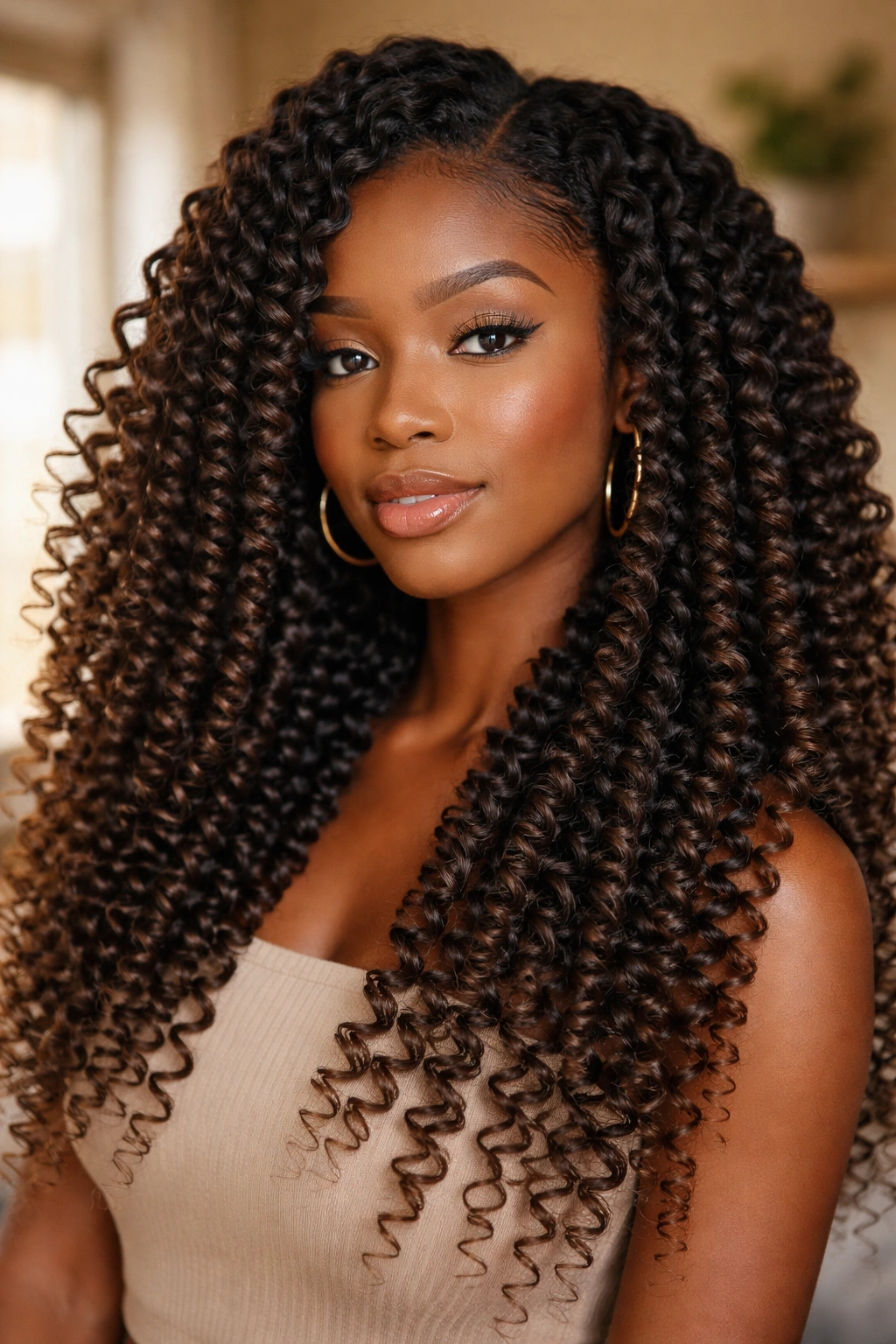
The elongated spiral is the style goal for most 4C naturals picking up a wand. This is the look where your length is finally fully visible — where the coil pattern opens up into a defined, cascading spiral that shows exactly how much hair you actually have.
To achieve elongated spirals on 4C hair, you need fully stretched starting hair and a one-inch barrel. Work in one-inch sections. Wrap each section tightly and evenly around the barrel from root to tip, holding for a full 12-15 seconds. The longer hold time compensates for the tighter starting coil pattern. Release slowly and hold the curl in your palm until it’s cool.
How to Maximize Elongation
- Stretch the hair as thoroughly as possible before curling — threading gives the best elongation
- Keep sections uniform for consistent curl sizes throughout the style
- Work in rows from the nape upward so you can see clearly as you progress
- Don’t rush the hold time — this is where 4C curls need extra investment
The finished style will show a significantly longer length than your hair’s natural shrunken state. For many 4C naturals, this is the first time they fully appreciate how long their hair actually is.
2. Tight Ringlet Wand Curls on 4C Hair
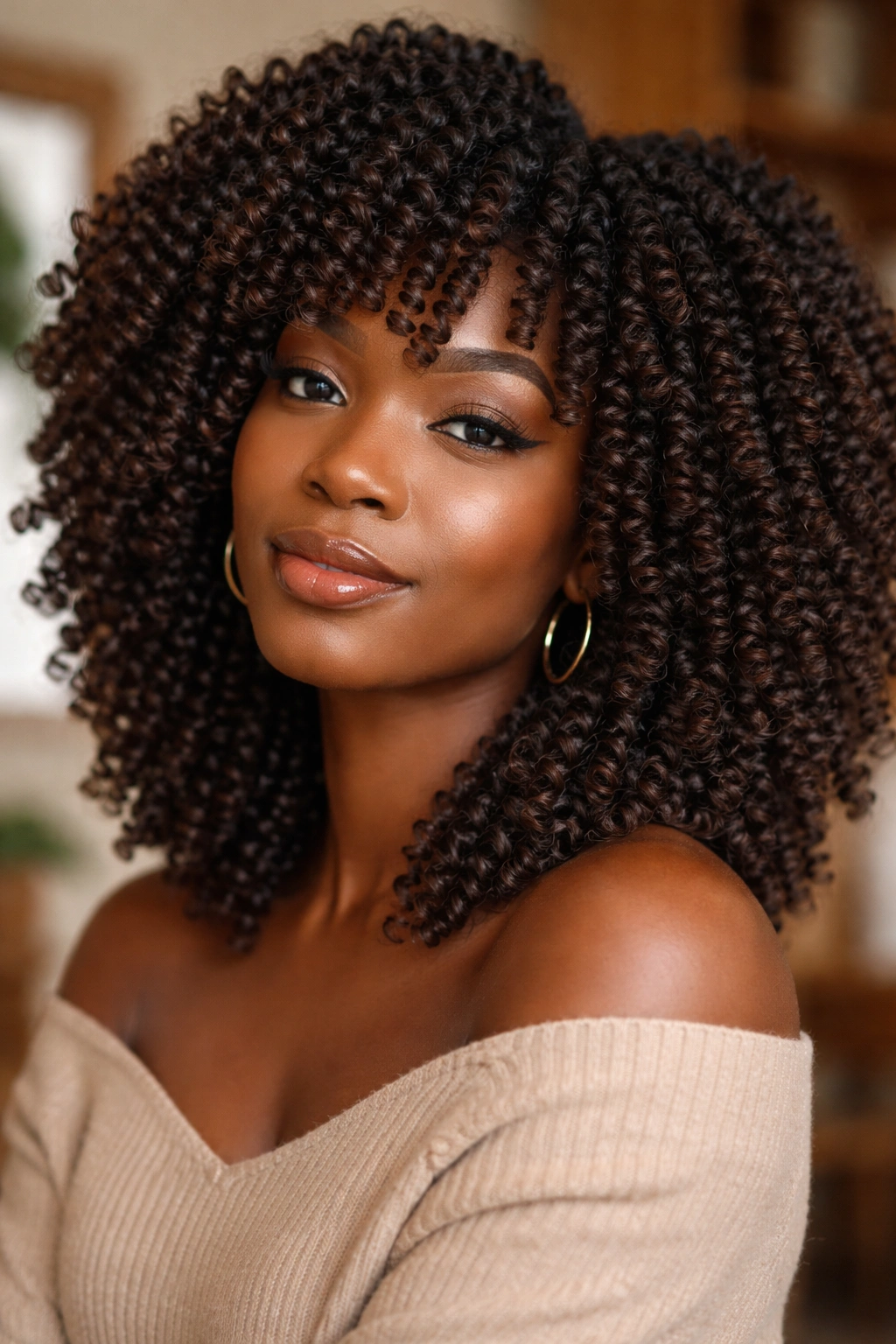
Not all 4C naturals want to maximize elongation — some want to honor the tight, coily nature of their texture while adding definition and uniformity. Tight ringlet wand curls do exactly that.
For tight ringlets, use a half-inch to three-quarter-inch barrel on hair that’s been stretched but not to maximum elongation. A light blowout rather than full threading gives you just enough stretch to work with without fully opening up the coil pattern. Work in very small sections — about half an inch wide. Wrap tightly. Hold for 12 seconds. Release.
The resulting ringlets are tight, springy, and beautifully defined. They echo the 4C coil pattern but with more individual definition and uniformity. The style has a rich, full texture that’s pure 4C celebration.
3. Big Volume Wand Curls
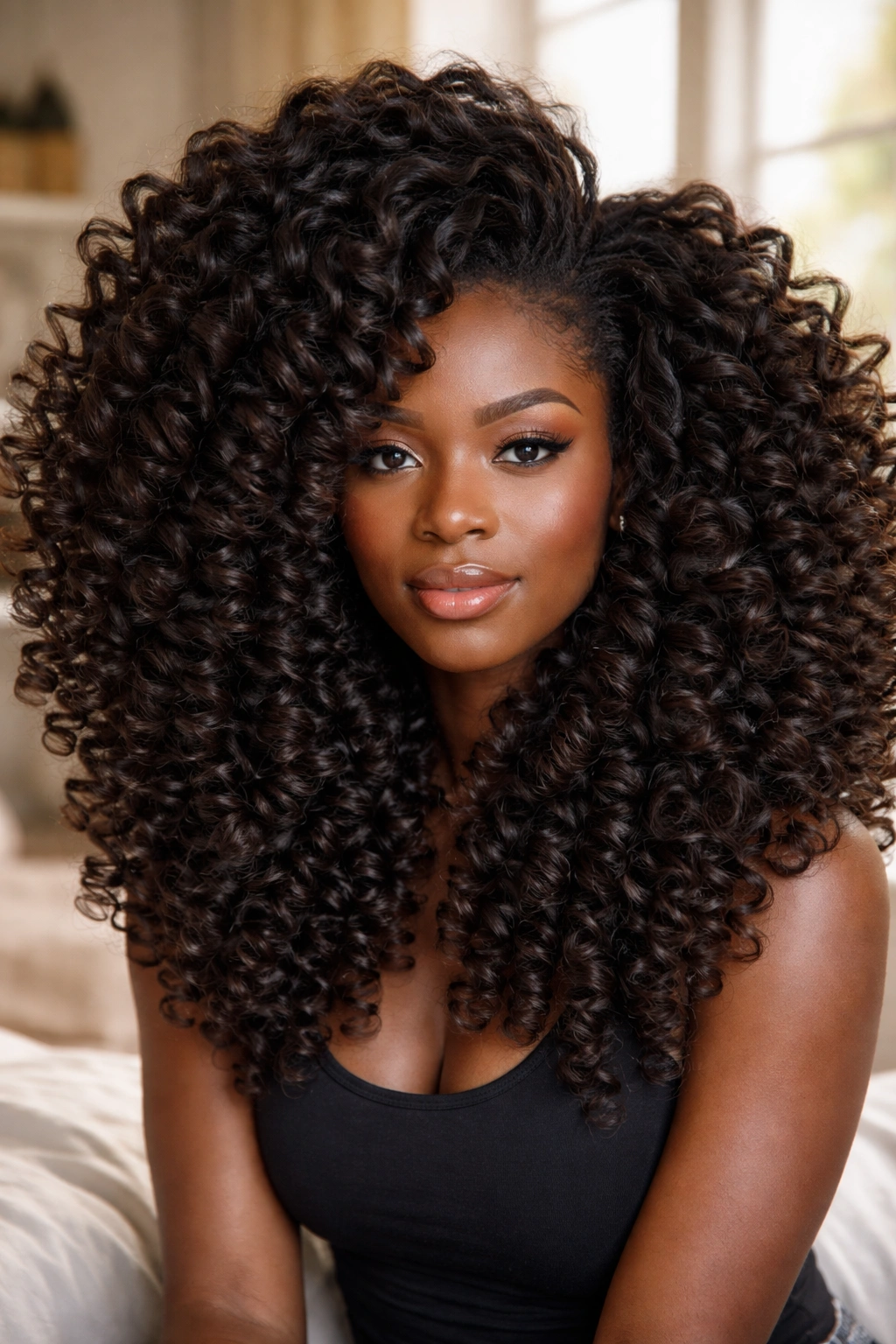
Big is beautiful. Sometimes the whole point of wand curling 4C hair is maximum volume — the kind of voluminous, full silhouette that makes people stare and ask what products you’re using.
For big volume curls, use a one-to-one-and-a-half-inch barrel on fully blown-out, stretched hair. Work in larger sections — one and a half inches wide — for looser, more voluminous spirals. Once the style is complete and cooled, use a wide-tooth pick to gently lift the roots and the crown, releasing the curls from any compression. Don’t pick through the curls themselves — just lift at the roots to create maximum height.
The density of 4C hair fills the bigger spiral shape beautifully, creating a silhouette that’s dramatic and full in a way that no other hair type can quite achieve.
4. Wand Curls with Bantu Knot Out Base
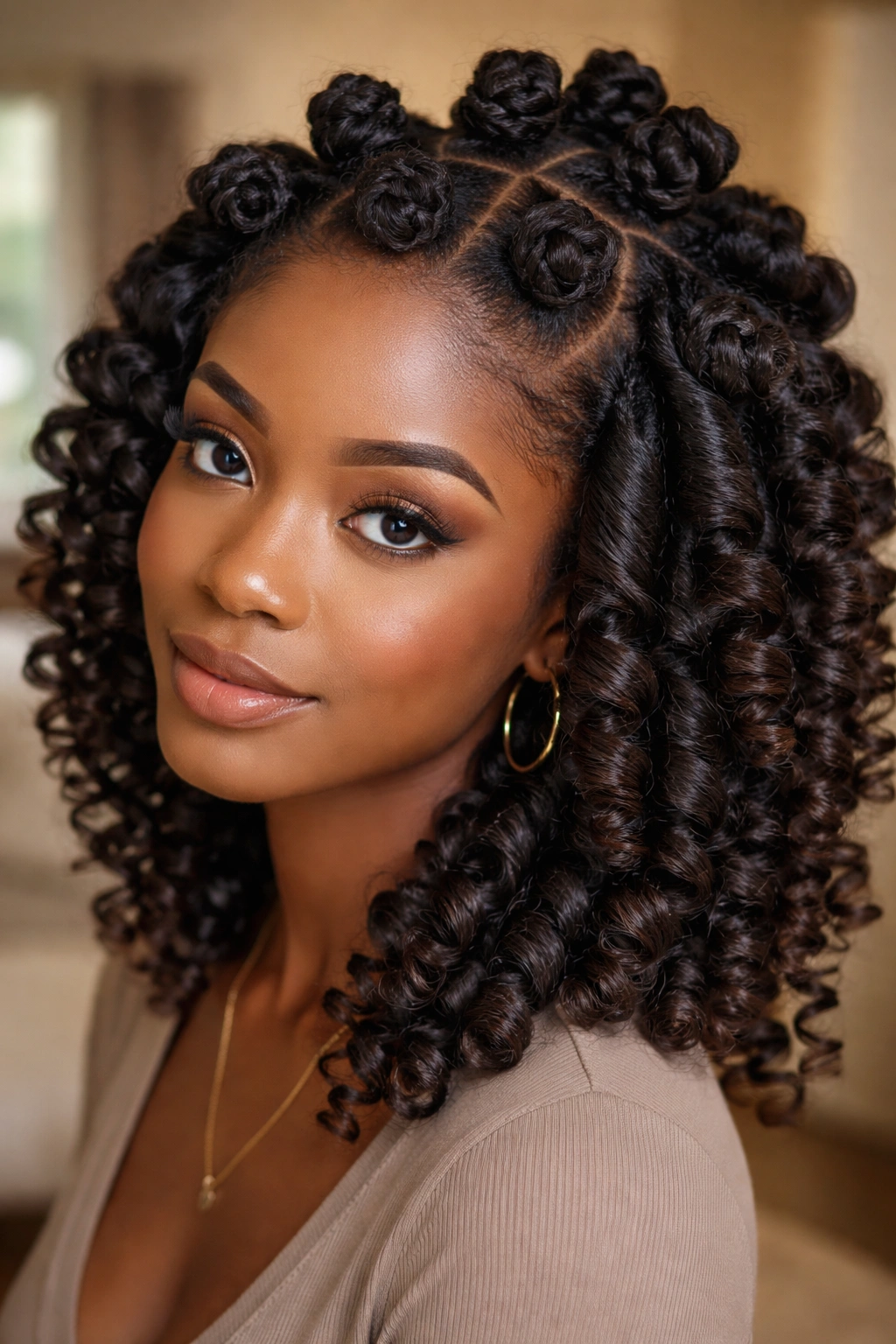
This is a technique-within-a-technique that takes the natural texture of 4C hair and amplifies it in a completely unique way. Do a Bantu knot set on damp hair — twist each section into a small knot secured at the root — and let dry completely. Unravel the knots carefully to reveal the kinky, zig-zag pattern left behind. Apply heat protectant to these patterned sections and use a small to medium wand to curl each section.
The wand curl settles on a base that already has texture and movement built in. The result is a style that looks impossibly complex — like multiple texture techniques happening at once — but is really just two layers of intentional styling. It photographs unlike anything else.
5. Wand Curls for Shrinkage Control
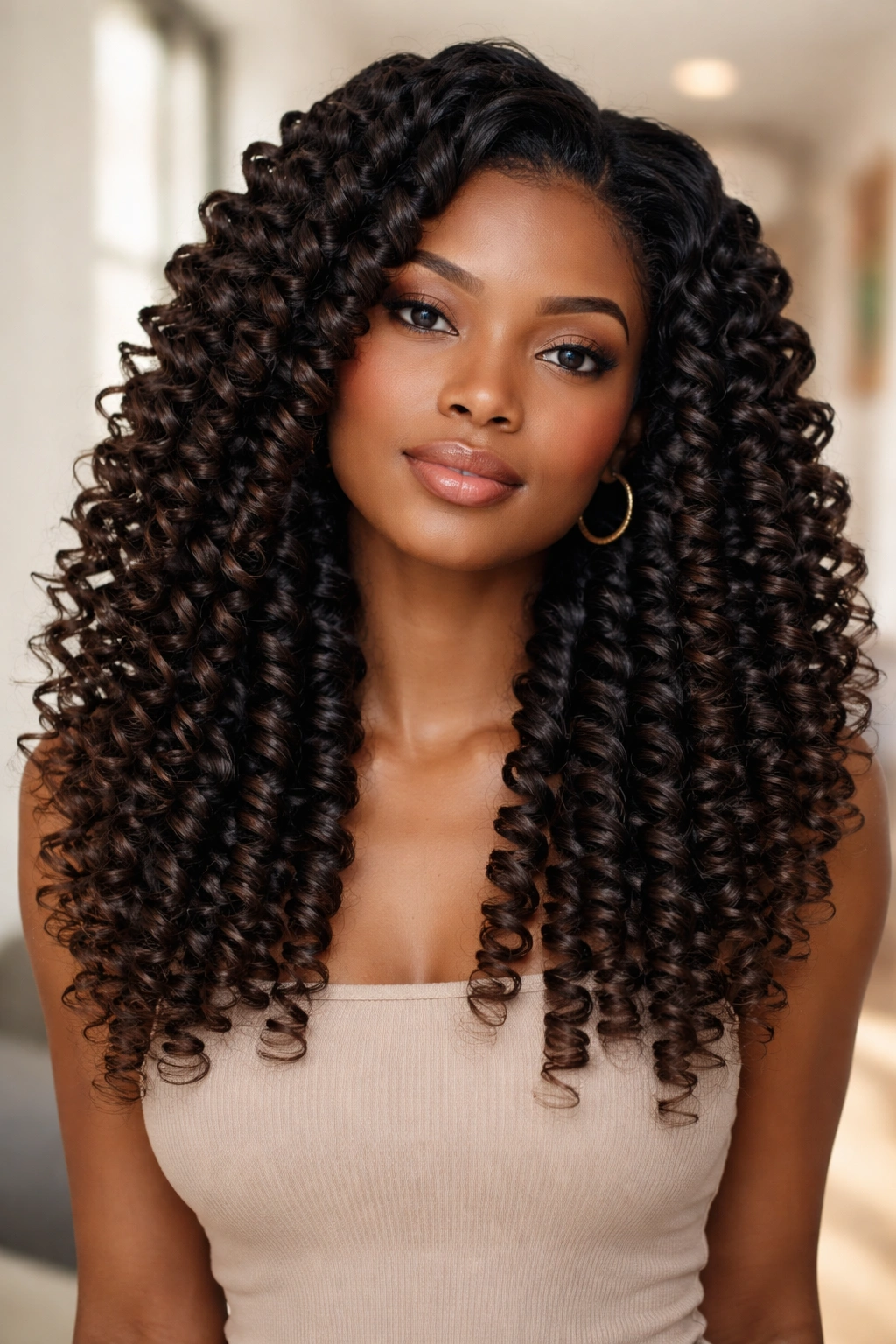
For 4C naturals who love their natural coil pattern but want to show more length on a given day, wand curls are one of the most effective and beautiful shrinkage-control techniques available.
The strategy here is to stretch the hair as fully as possible before curling, then use the wand curl to anchor the length in its stretched state. The heat-set spiral holds the elongation even as the surrounding coil pattern wants to retract. The curls maintain the length that the 4C coil would normally spring back from.
This is particularly effective for showing off length at special occasions, photos, or any day when you want your hair to express its full potential rather than its typical compressed state.
6. Protective Wand Curls — Minimal Manipulation Style
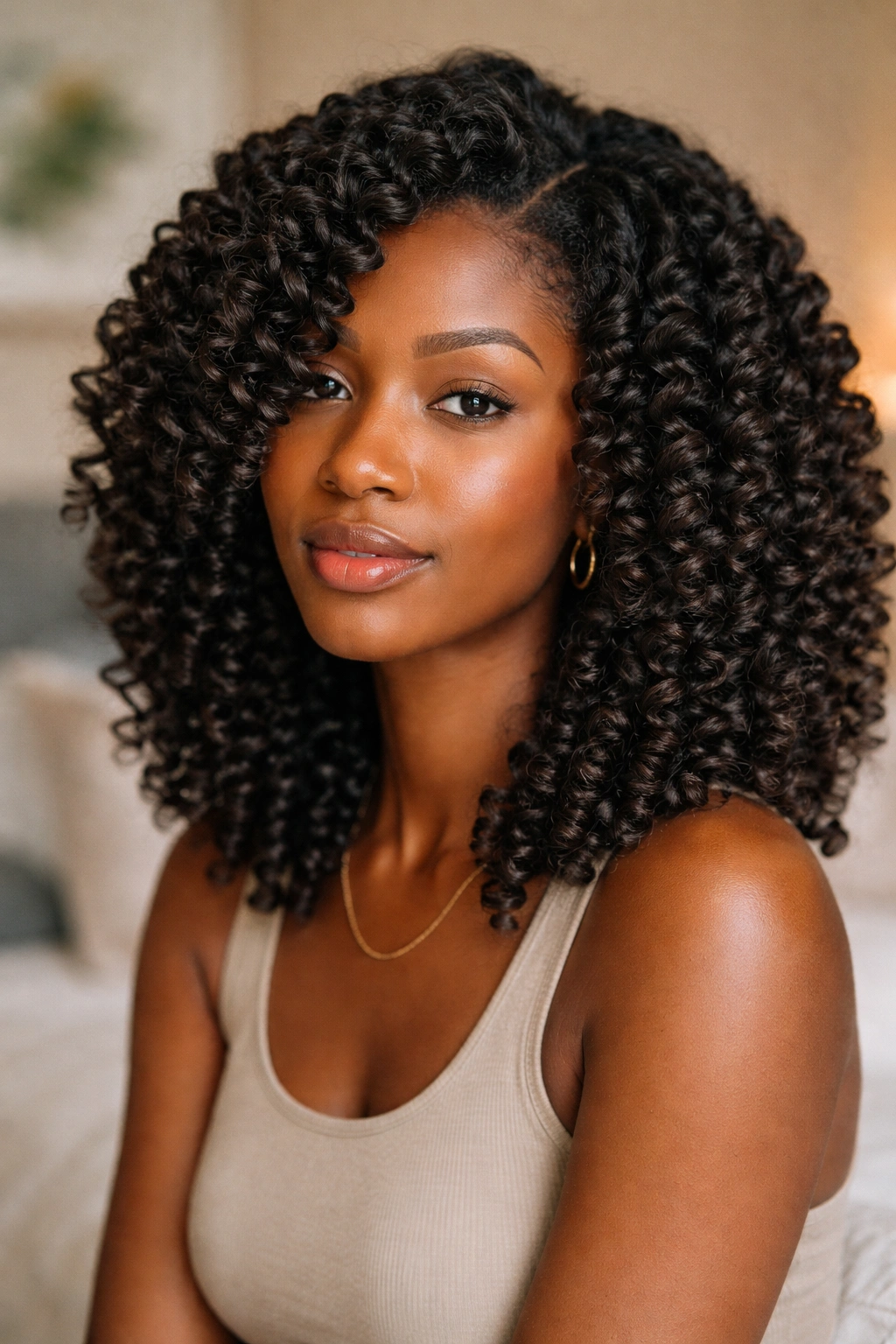
There’s a school of natural hair thought that says any heat is harmful. And then there’s the more nuanced reality: heat can damage hair when misused, but when applied correctly, with proper protection and spacing between sessions, it’s a perfectly compatible part of a healthy hair routine.
A protective wand curl set — done once a month or less with thorough moisture prep and proper technique — is not the threat that daily heat styling would be. The key elements that make it protective: deep conditioning before styling, heat protectant applied to every section, appropriate temperature for your texture, and sleeping in a satin bonnet every night the style is in.
Done this way, a wand curl set can actually function as a low-manipulation period for 4C hair, keeping hands out of the hair for several days at a stretch.
7. Wand Curls on a Banded 4C Base
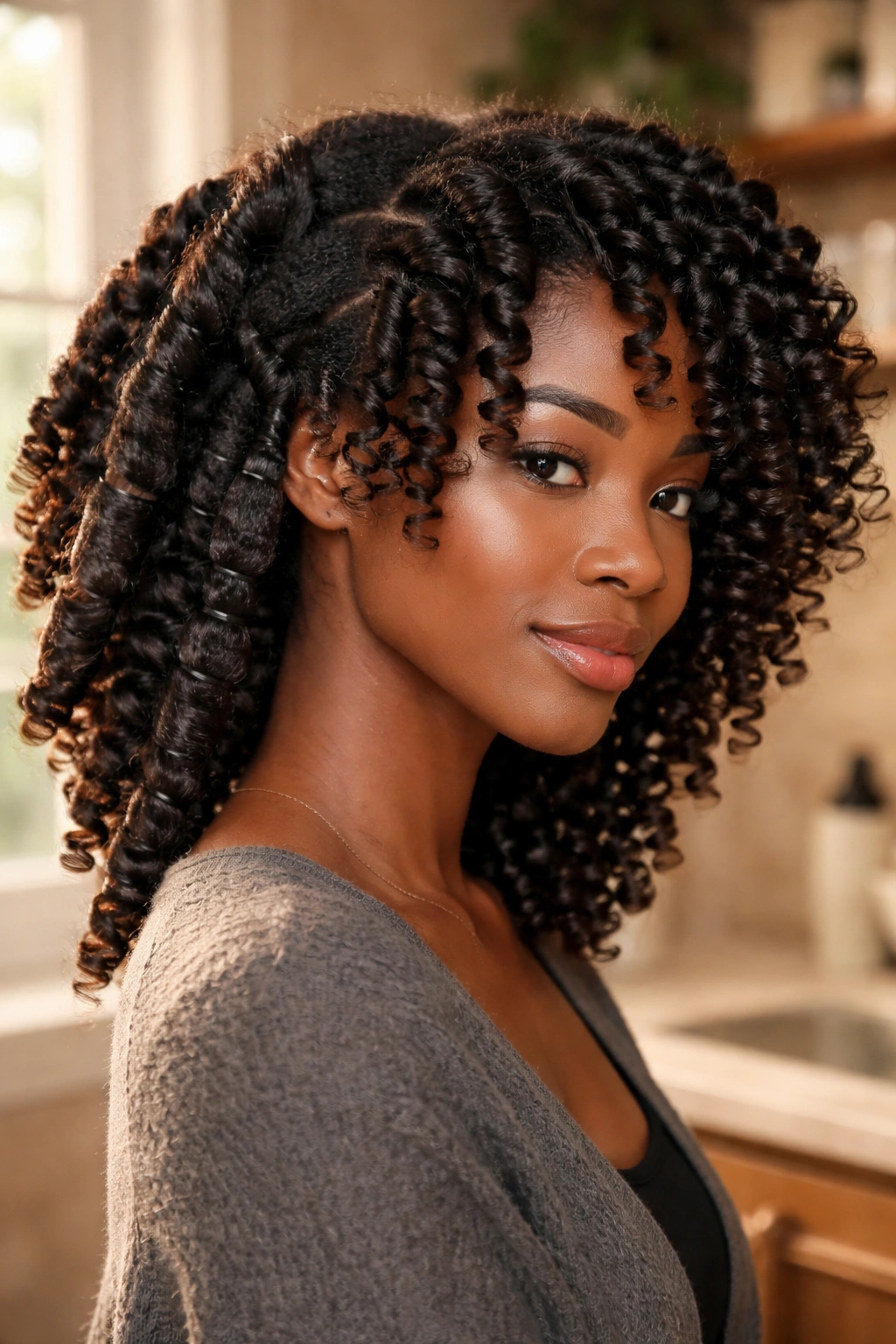
Banding is one of the most underrated 4C natural hair techniques, and it’s a perfect partner for wand curling. Band your washed, conditioned, leave-in treated hair while it’s still damp using soft elastics wrapped in a spiral from root to tip along each section. Let the hair dry completely — a few hours or overnight.
In the morning, remove the bands. The hair is now stretched, smooth, and has a soft elongated texture. Apply heat protectant to each section and proceed with wand curling using a one-inch barrel. The bands have done most of the stretching work, which means the wand curl has clean, elongated hair to work with and produces beautiful, defined spirals with minimal effort.
8. Wand Curls Mixed with Natural Texture
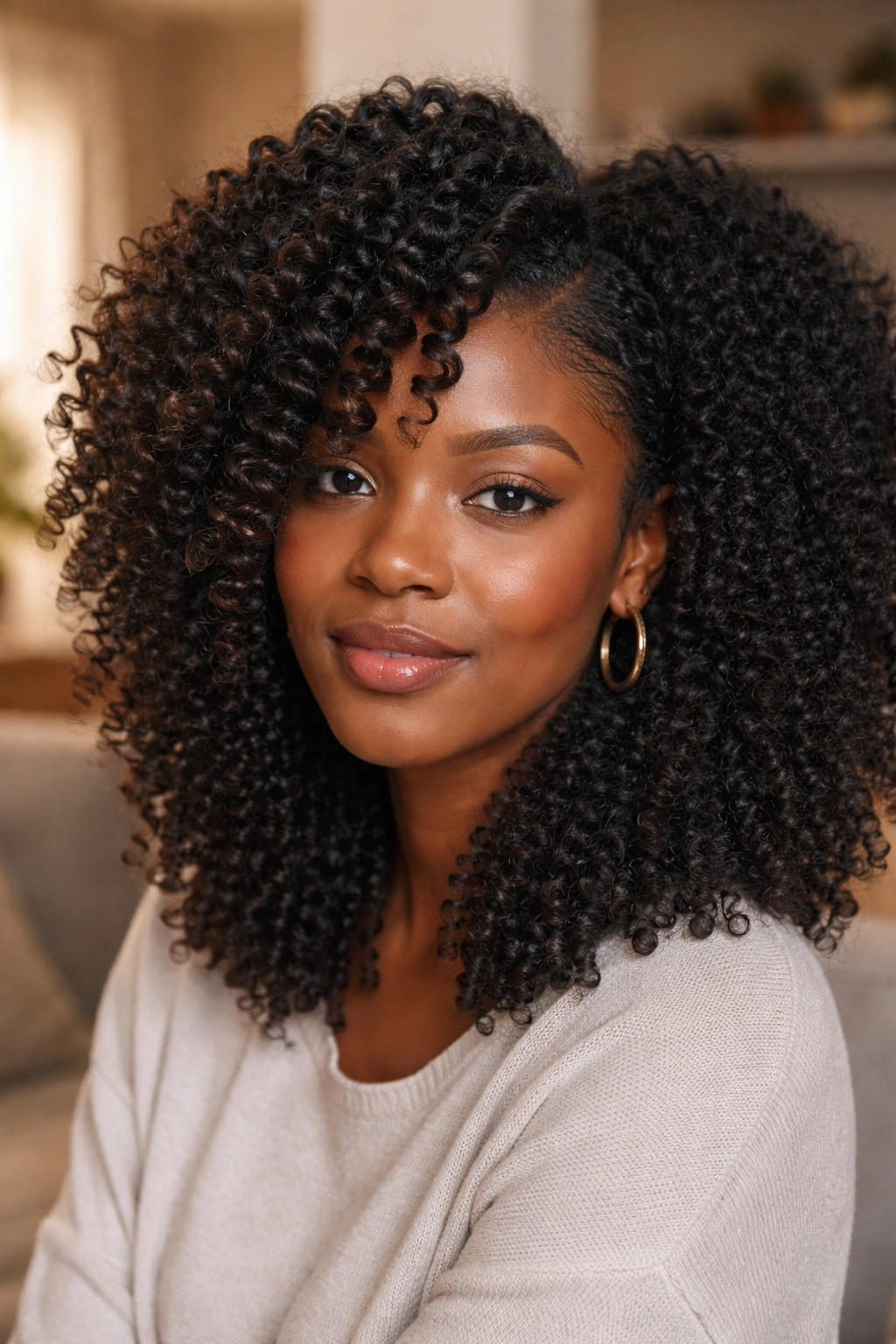
Not every section of the head needs to be wand curled. A mixed-texture style — some sections wand curled, others left in natural coil pattern — creates a visually interesting, organic look that celebrates 4C texture in two ways simultaneously.
Wand curl the top section and the face-framing sections, leaving the back sections in their natural state or in a puff. Or curl the entire perimeter and leave the crown natural. The contrast between the defined, elongated spirals and the tight natural coil pattern creates a layered, dimensional look that’s deeply interesting to look at and actually quite easy to maintain.
This is also a great approach for 4C naturals who want to minimize their heat exposure while still getting the definition benefit of wand curls on the most visible parts of the style.
9. Wand Curls Gathered into a Side Puff
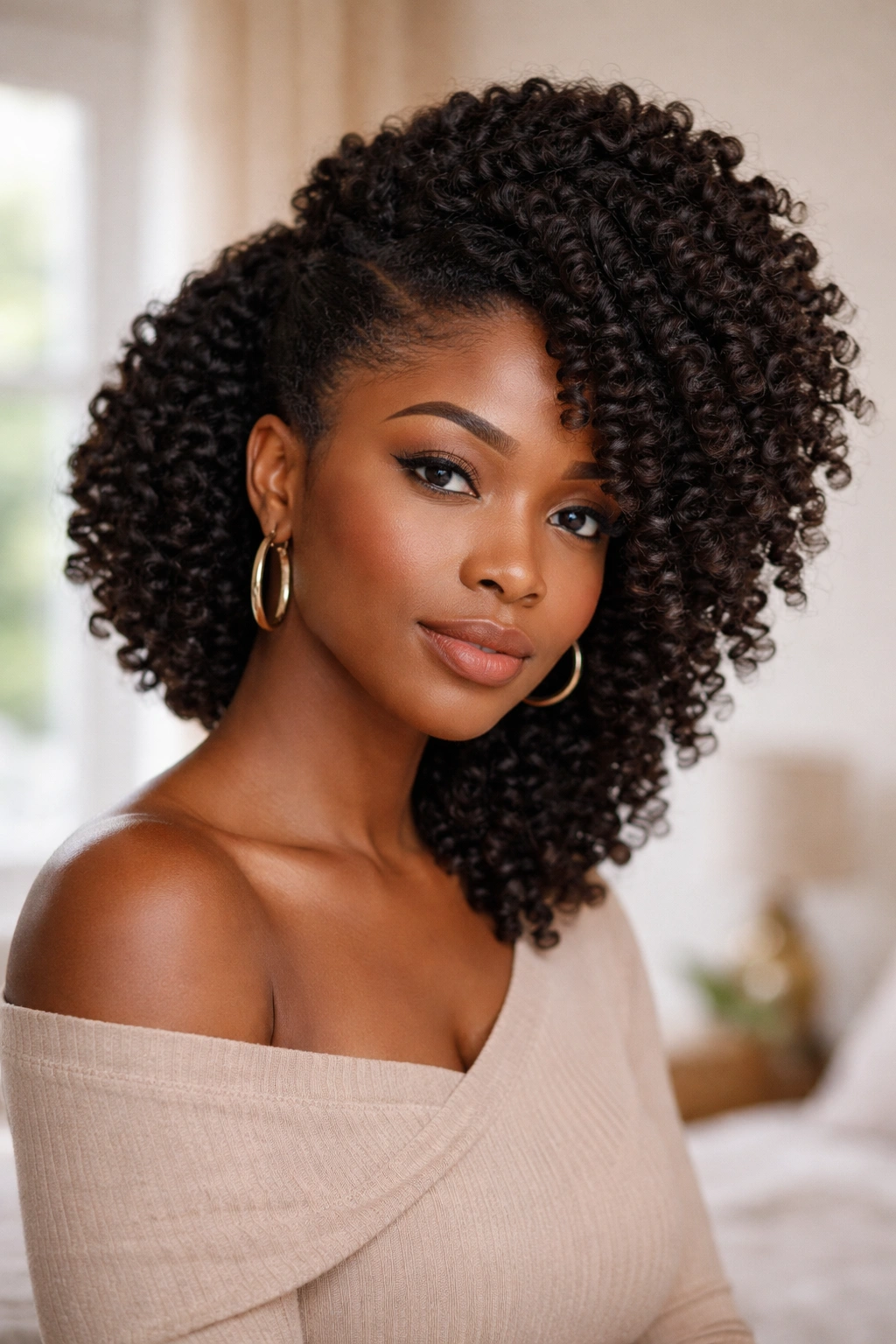
The side puff is a 4C natural hair staple — and adding wand curls to it takes the classic style somewhere new.
Curl the full head using a one-inch wand. Let everything cool. Then gather all the hair to one side of the head — over one shoulder — and secure loosely with a large soft elastic or a few bobby pins. The gathered mass of wand curls forms a full, bouncy puff that sits dramatically to one side. Let a few face-framing curls fall loose on the opposite side.
This style has an elegance and asymmetry that feels intentional and creative. It works equally well for casual days and more formal occasions, depending on how polished your edges are and how structured the puff is.
10. High Wand Curl Puff
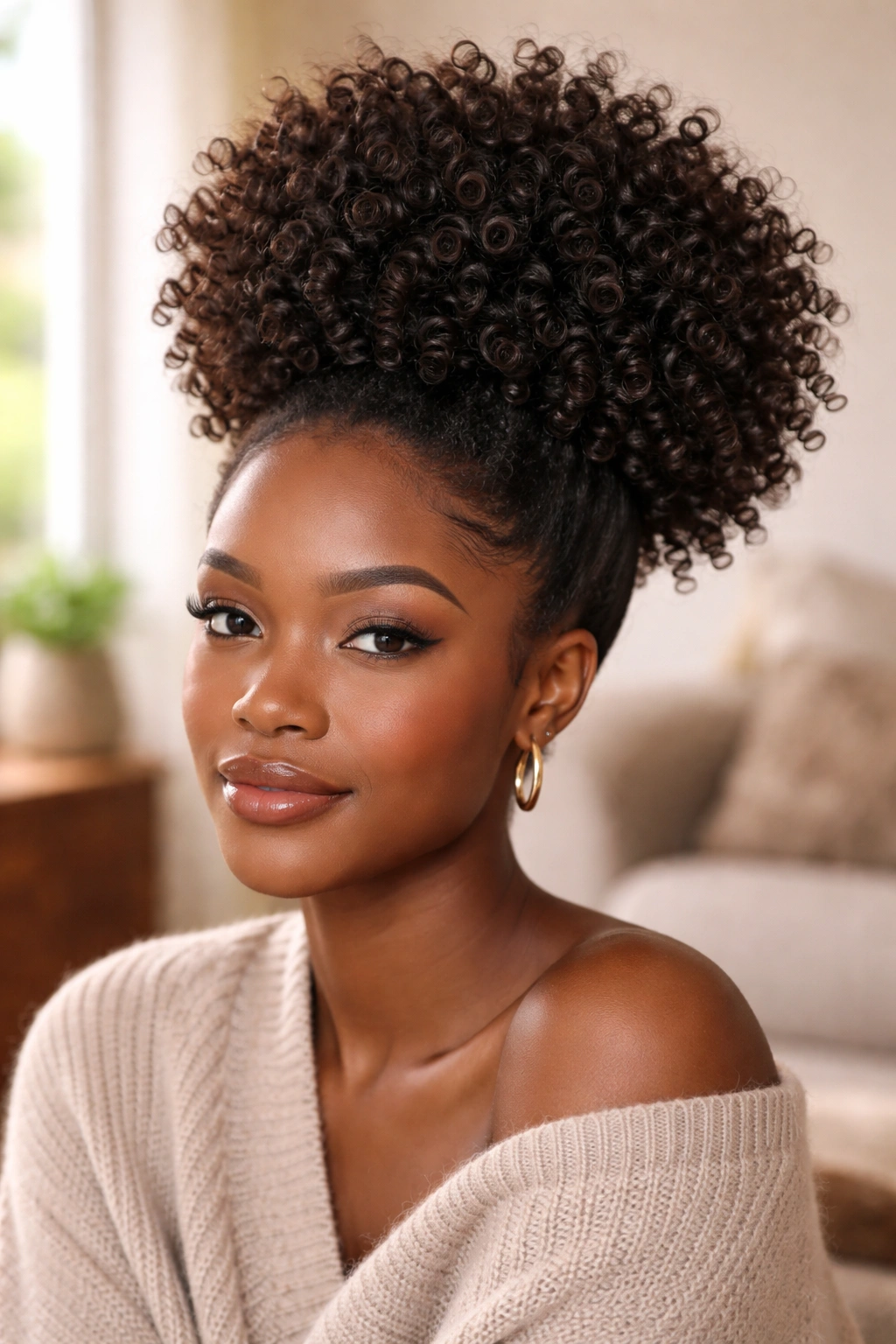
The high puff is the 4C natural hair power move. When that puff is made of defined wand curls rather than shrunken coils, it becomes a full statement piece.
Curl the entire head. Let everything cool completely. Gather all the hair upward to the very top of the head — as high as possible — and secure with a large, soft elastic. Spread the gathered curls outward in a full circle, pinning any sections that droop downward back upward. The result is a cloud of defined spirals sitting on top of the head like a crown. A royal one.
Edge control along the hairline completes the look. Keep it neat on the edges; let the puff itself be as full and free as possible.
11. Wand Curls with Flat Twist Front
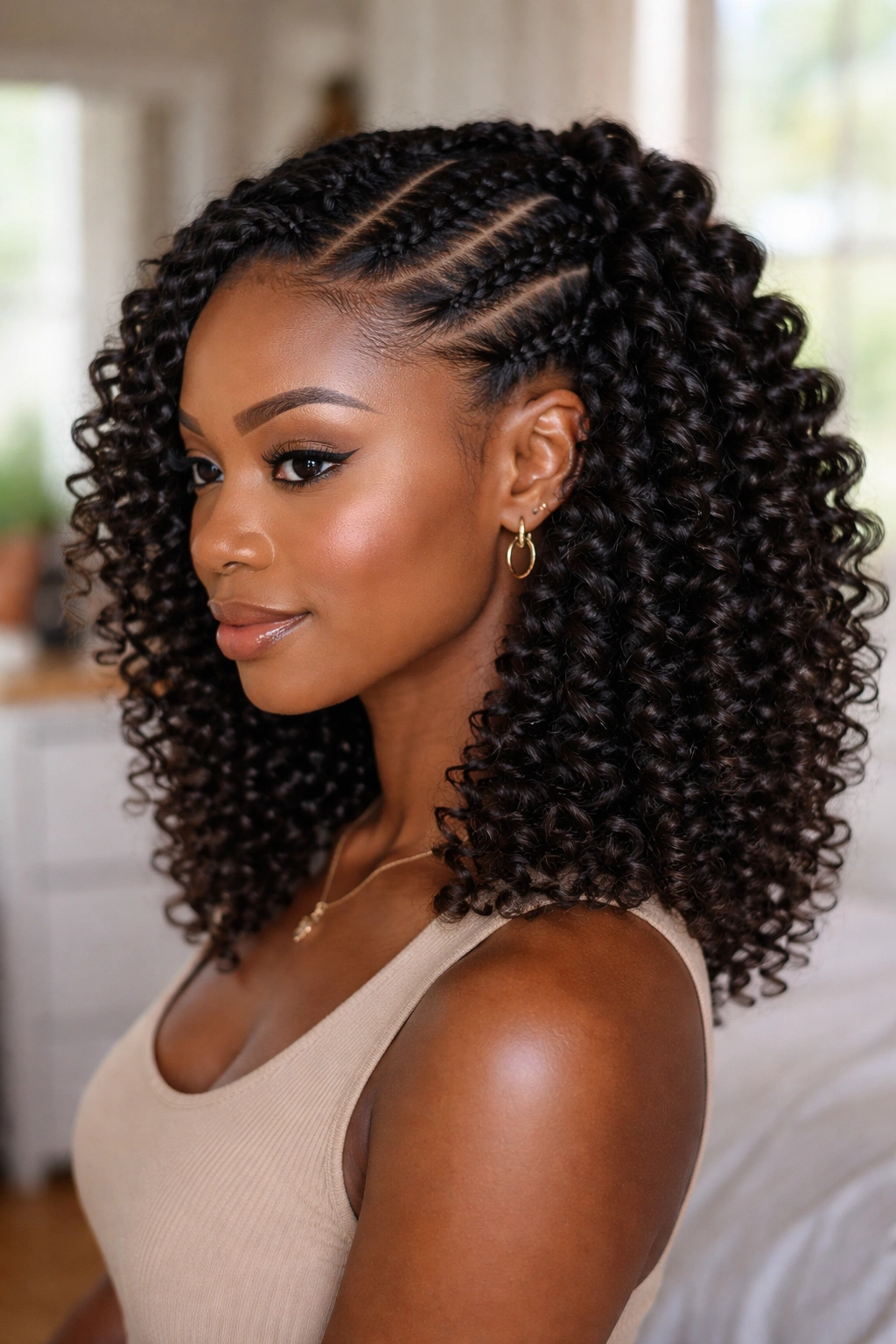
The flat twist front with wand curl back is a style that strikes the perfect balance between neat and free. It’s organized where organization matters — at the front, where eyes go first — and gloriously textured everywhere else.
Take the front two sections — from the hairline to about two inches behind the ear on each side — and flat twist them back toward the crown. Pin the ends of the twists at the crown. Then curl the remaining hair with a one-inch wand in uniform spirals. The flat twists in the front are sleek and structured; the wand curls behind them are bouncy and defined. Together they create a style with multiple dimensions.
This is a great style for days when you want a put-together look but don’t want to spend time on a full updo.
12. Wand Curls for 4C TWA
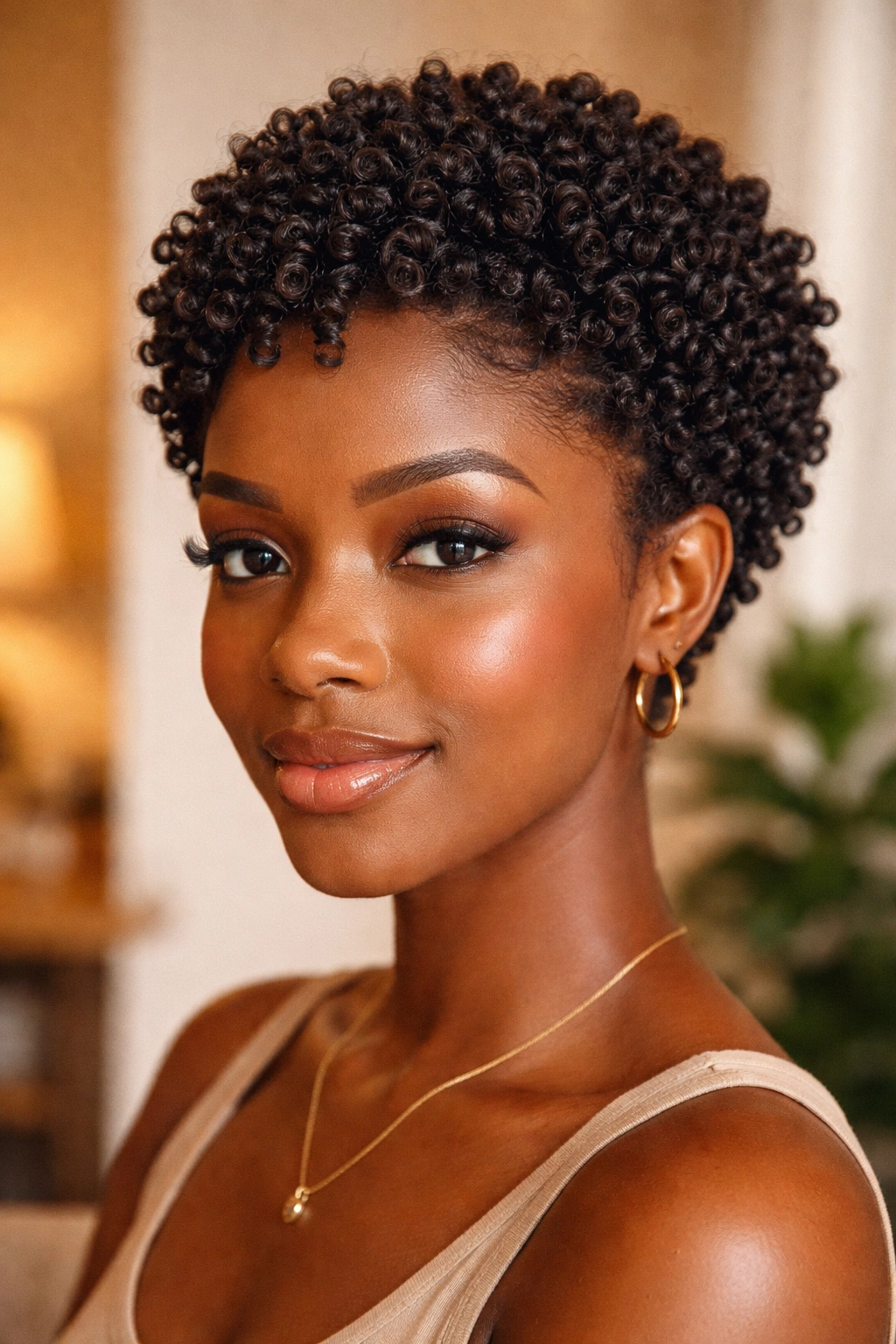
TWA — teeny weeny afro — stage does not exclude you from wand curls. It just requires a specific approach tailored to very short length.
Use the smallest barrel you own — half an inch at most. Work in tiny sections of hair. Wrap each section around the barrel in as full a spiral as the short length allows — even one wrap is enough to create curl definition. Hold for a full 12-15 seconds. Release carefully.
On very short 4C hair, wand curls create a defined, textured look that takes the TWA from a natural puff to something that looks intentionally styled and polished. The curls are tight and small, but together they create a beautifully detailed texture across the entire head.
13. Tapered Wand Curls on 4C Hair
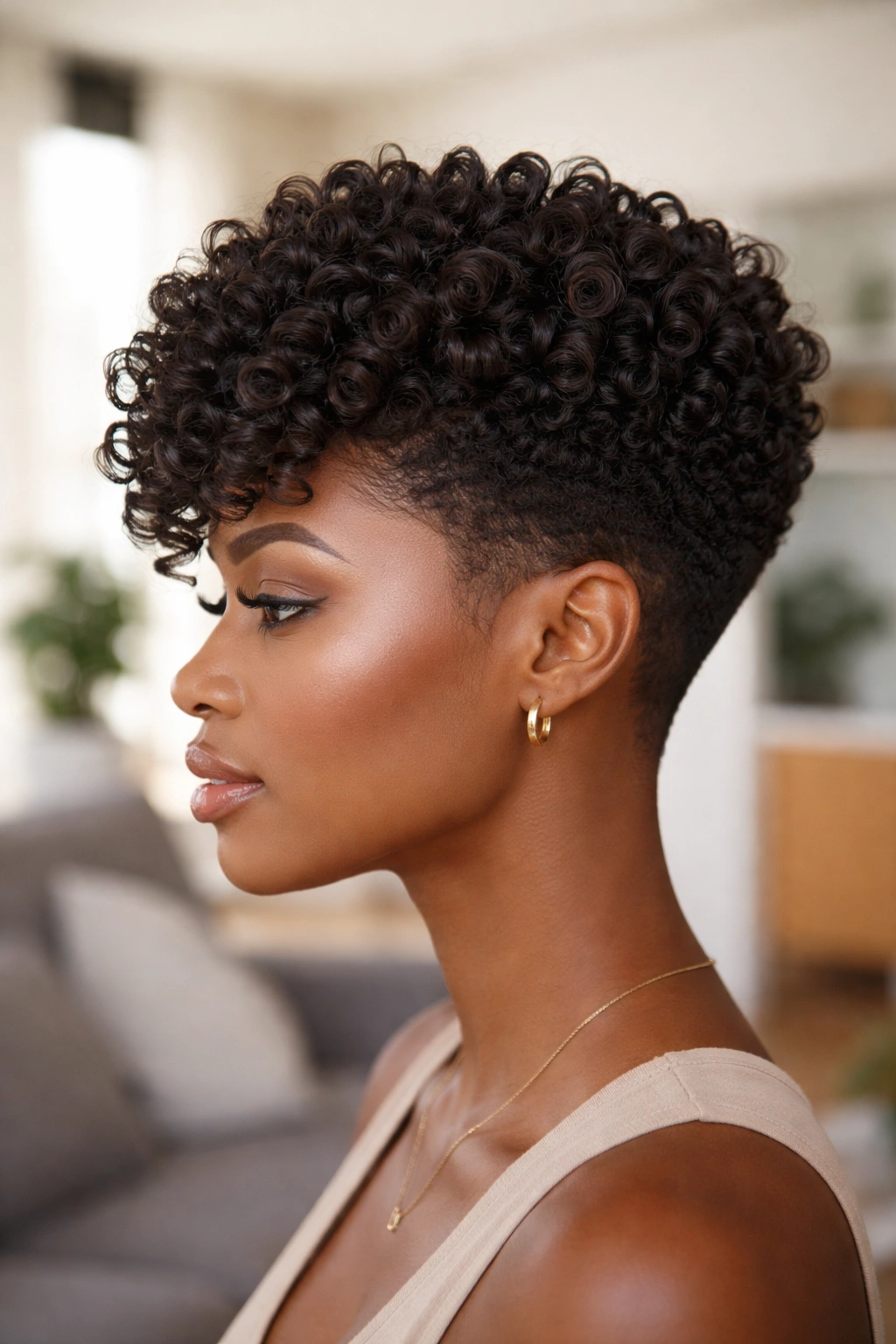
A tapered cut on 4C hair is architecturally brilliant — the taper creates shape and structure that works beautifully with the natural coil pattern. Add wand curls to the longer top section and the style becomes a visual masterpiece.
Use a one-inch barrel on the longer top section. Curl in uniform spirals. Leave the shorter sides and back in their natural tapered 4C state — or very lightly curl with a tiny barrel if there’s enough length. The defined wand curls on top contrast with the natural close-cropped sides and back, creating a graphic, sculptural silhouette.
Edge control along the sides and nape keeps the tapered line sharp and emphasizes the shape.
14. Wand Curls with Twist Extensions
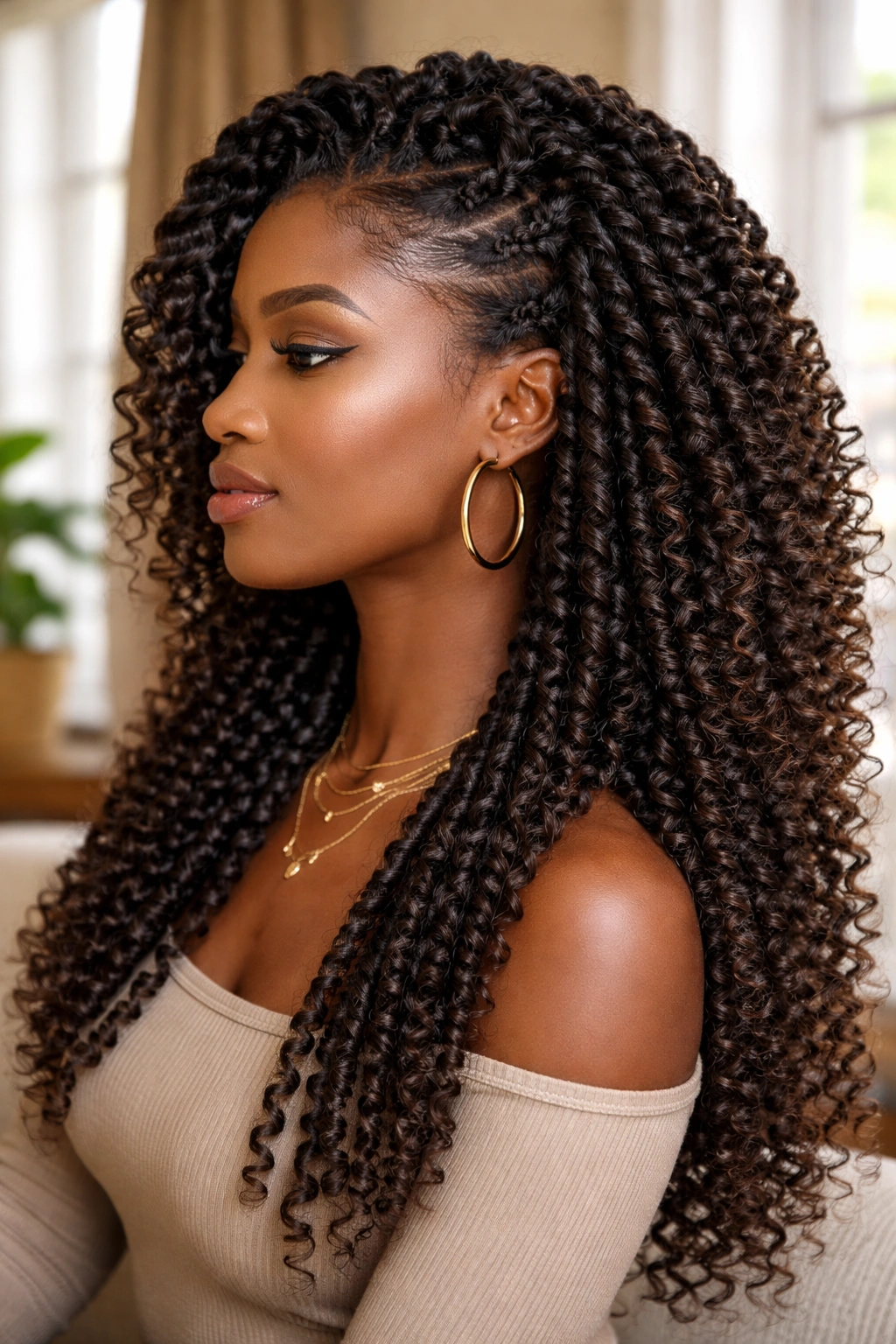
Adding braiding hair or twist extensions to your 4C wand curl set extends the versatility of the style exponentially. Pre-stretched braiding hair can be lightly curled with a wand and added to the natural hair for length, fullness, or a combination of both.
Use synthetic hair that’s labeled as heat-resistant if you’re going to wand curl the extensions. Apply low heat — around 280°F to 300°F — since synthetic hair melts at higher temperatures. The curled extensions blend with the natural hair’s own wand curls for a seamless, full look.
This technique is especially popular for 4C naturals who want long, voluminous wand curls without the wait of growing their natural hair to a longer length.
15. Wand Curls with a Satin Headwrap
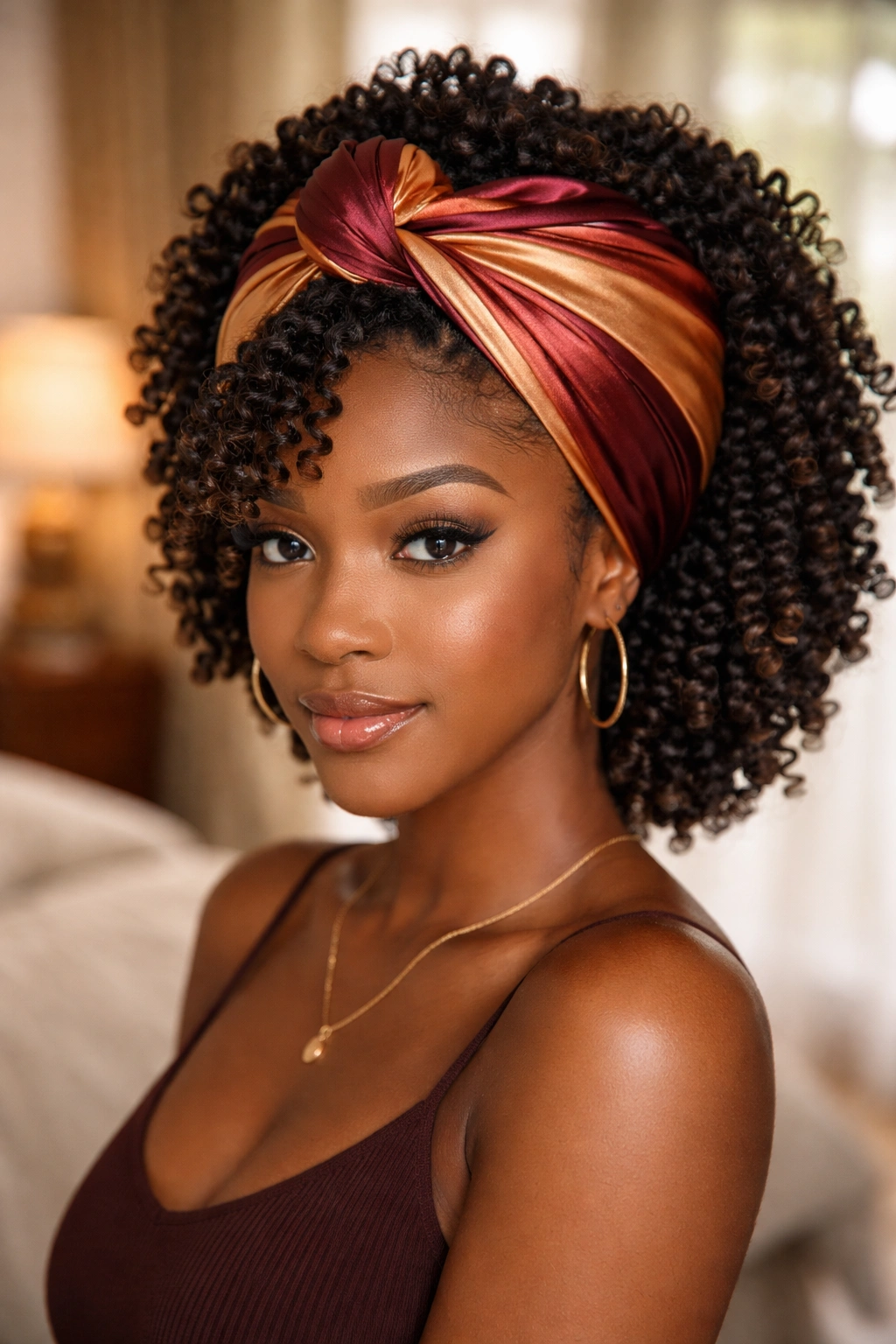
A satin headwrap — tied at the crown or to the side — elevates a wand curl set from beautiful to intentional in about 30 seconds. On 4C hair specifically, the contrast between the rich, tight texture of the hair and a vibrant patterned fabric wrap is stunning.
After your wand curl set is complete and cooled, fold a satin or silk scarf into a two-to-three-inch wide strip. Tie it across the front of the head, just at the hairline, and knot it to the side or at the top. Let the wand curls behind it be completely free. Or wrap the scarf in a turban style around the front, leaving the top and back curls exposed.
The headwrap also serves a practical function: it keeps the front edges neat on days when the hair might be in its second or third day after the initial set.
16. Wand Curls as a Blow-and-Go Alternative
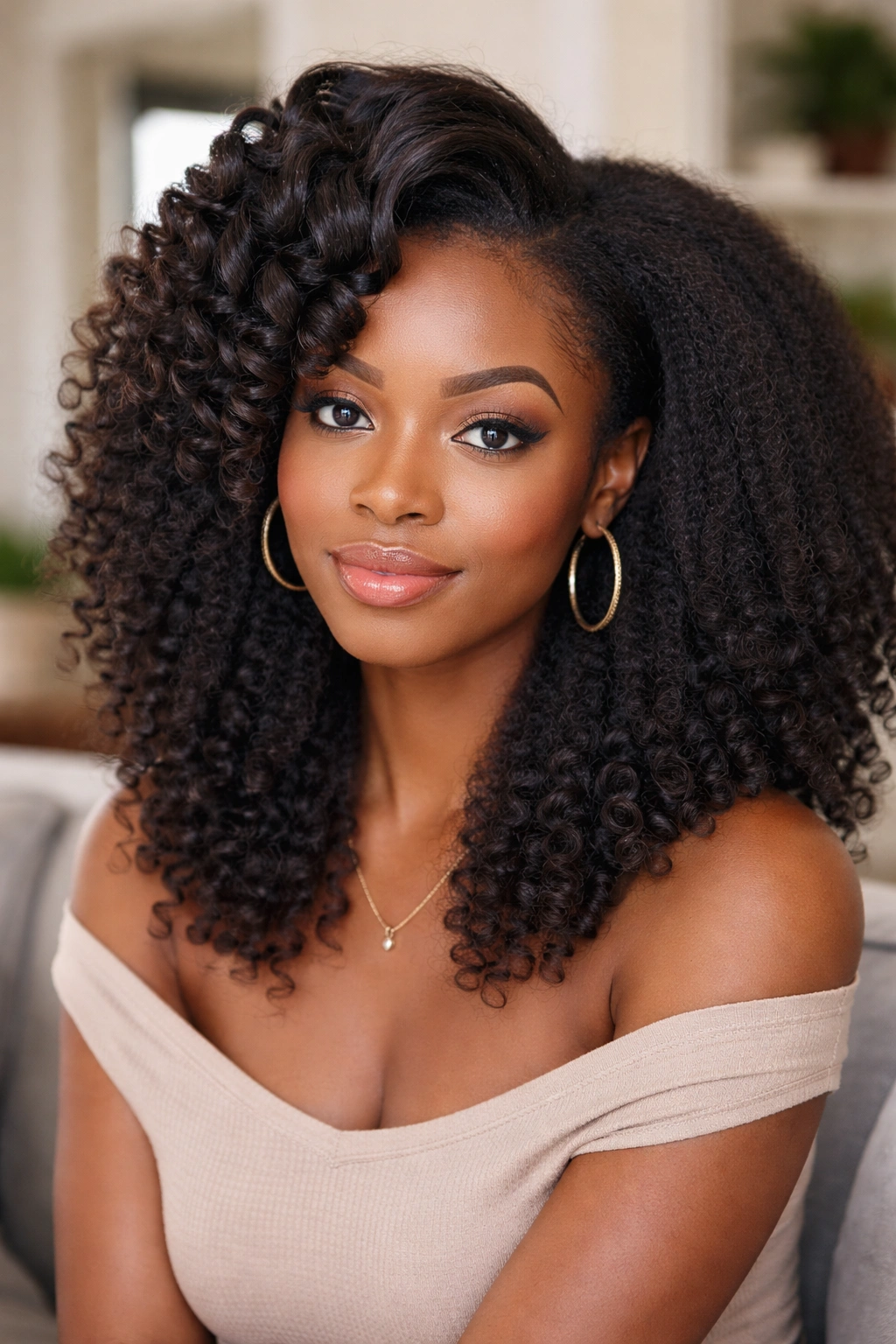
The blow-and-go — stretching with a blowdryer and then styling minimally — is a popular quick style for 4C naturals. But a wand curl set on top of a blow-and-go is a specific variation that adds definition and intentionality to what could otherwise be a casual stretched style.
Blow out the hair as you normally would for a blow-and-go. But instead of stopping there, follow with a quick wand curl session — not necessarily curling every section, but hitting the most visible sections: the top, the front, and the sides. These few curled sections add definition to the full blown-out style and make it look more intentional and styled without requiring a complete wand curl session on every single section.
It’s a time-efficient compromise that results in a style that looks significantly more polished than a plain blowout.
17. Wand Curls on 4C Hair — Overnight Prep Version
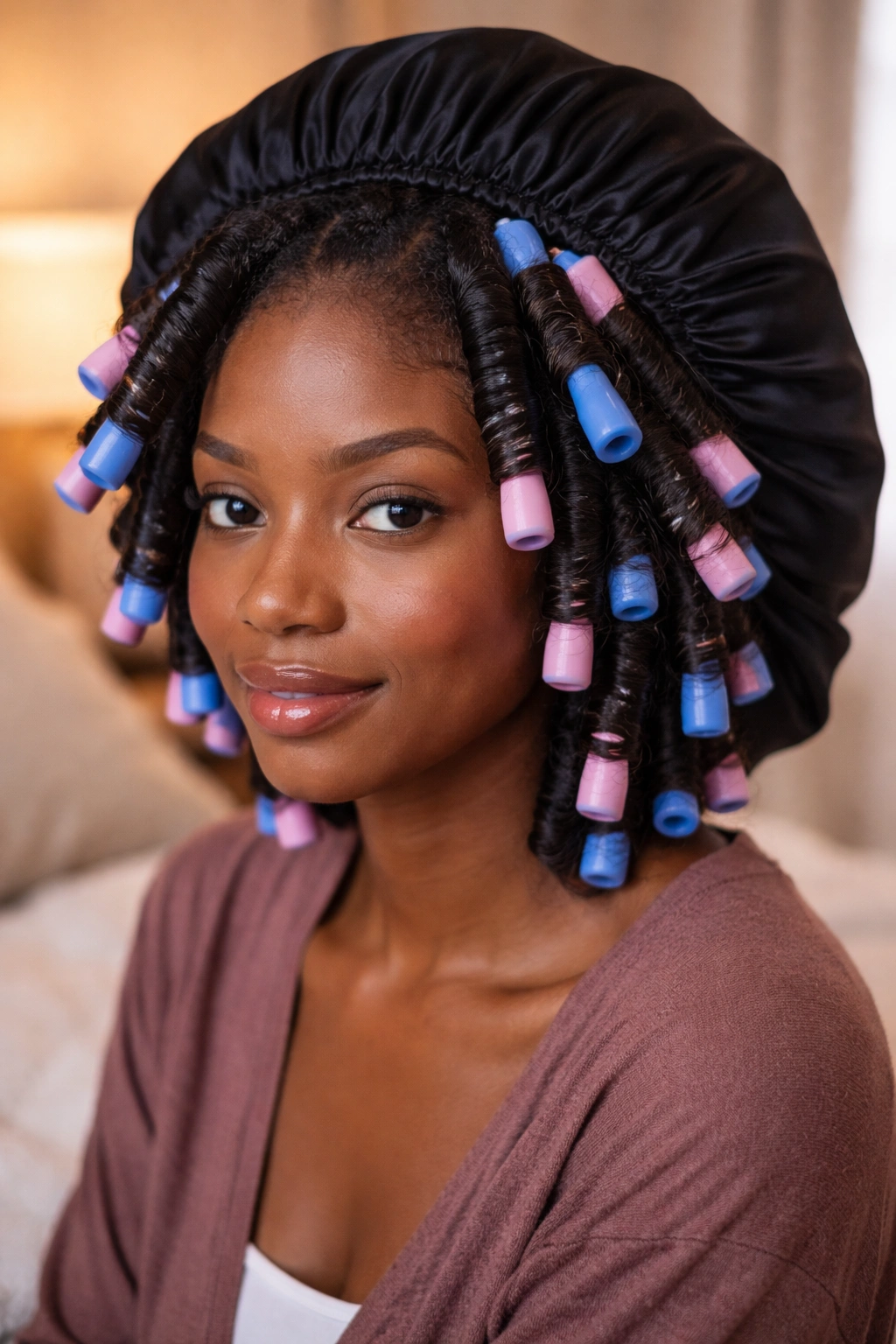
Want the wand curl look without applying heat to your 4C hair? Flexi rods and perm rods on damp, stretched hair give you an almost identical result using zero heat — and 4C hair takes to this method beautifully.
Apply a generous amount of setting lotion or curl-defining cream to damp, stretched 4C hair. Take one-inch sections and wrap each around a medium-sized flexi rod from tip to root. Secure the rod and move to the next section. Once the entire head is set, sit under a hooded dryer for 45 minutes, or allow to air dry overnight under a bonnet. In the morning, remove the rods carefully and separate the curls gently with oiled fingers.
The resulting curls are soft, defined, and gorgeous. No heat, no damage, no compromise on beauty.
18. Wand Curls for Length Retention Awareness
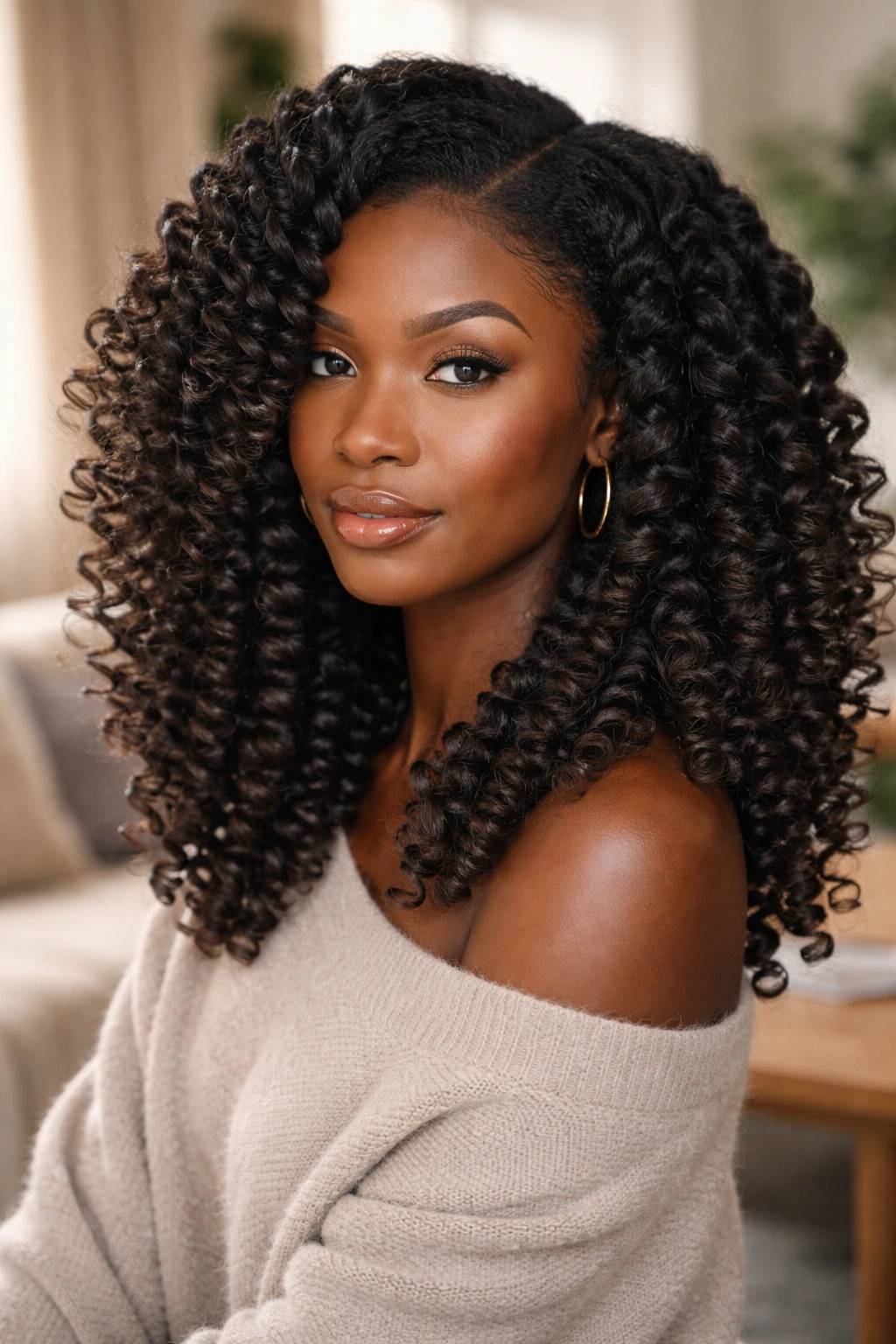
Something important that doesn’t get discussed enough: wand curling 4C hair regularly without proper length retention practices between sessions will result in stagnant length — the hair grows but breaks at the ends at the same rate. The style is only as good as the hair health underneath it.
Between wand curl sessions, 4C hair benefits enormously from protective styling — braids, twists, or puffs that keep the ends tucked and protected. Regular moisturizing using the LOC or LCO method (liquid, oil, cream) keeps the strand flexible and resistant to breakage. Trimming split ends every eight to twelve weeks removes the damaged portion before it splits further up the strand.
When 4C hair is properly maintained between heat sessions, it grows in noticeably — and each successive wand curl set shows more length than the last.
19. Wand Curl Refresh on 4C Hair
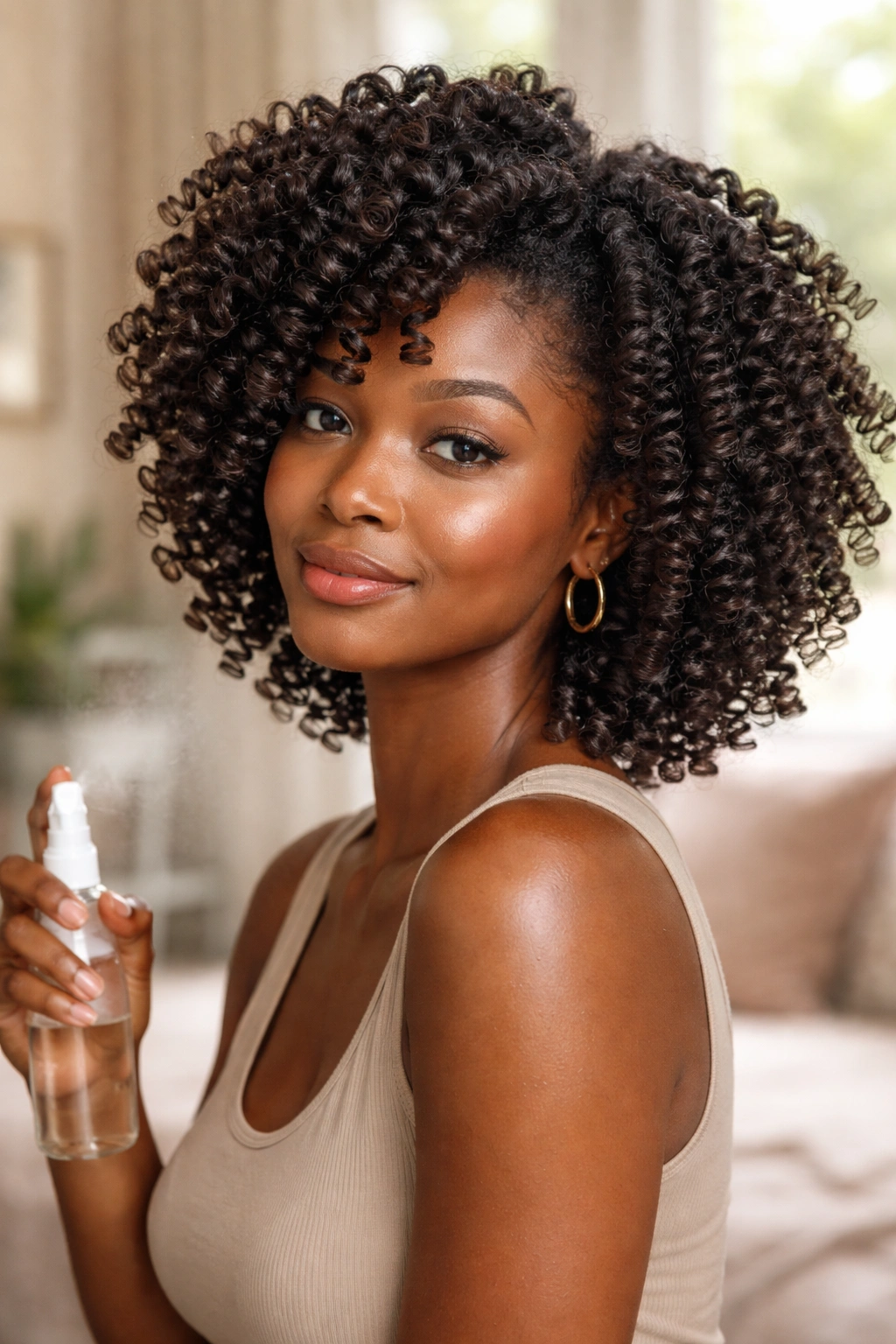
Day two 4C wand curls can be tricky because the tight coil pattern wants to reassert itself, compressing the wand curl you worked so hard to set. The refresh process needs to be strategic.
Start with a very light mist of water — not soaking wet, just a fine mist to reactivate the products in the hair. Add a tiny amount of curl-refreshing cream or diluted leave-in conditioner. Scrunch from the ends upward. For any sections that have completely reverted, re-curl those sections only on a slightly lower temperature than your original session.
Don’t try to recreate day one on day two. The goal is to extend the style’s life for another day or two, not start fresh. Embrace that the curls will be softer and slightly looser — on 4C hair, this often looks even more stunning than the initial set.
20. Wand Curls for 4C Naturals Learning the Technique
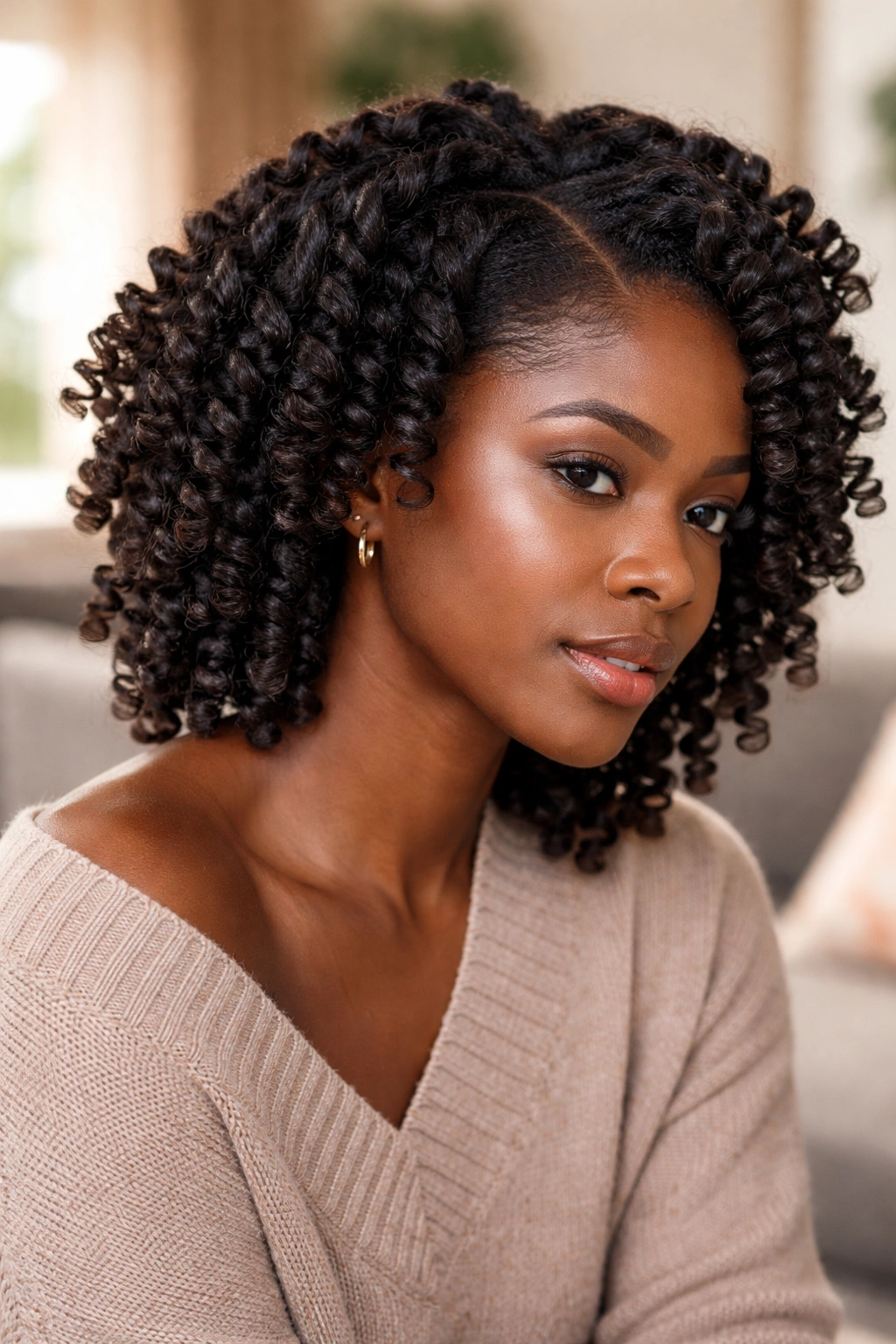
The learning curve for wand curling 4C hair is real, and it’s worth acknowledging. The first few attempts might not be the Pinterest-perfect result you’re imagining. And that’s completely normal.
The most common beginner mistakes: sections that are too large, heat that’s too low (the curl won’t set), rushing through the hold time, and separating curls before they’ve cooled. Each of these produces a specific, identifiable problem in the finished style — and once you know what the problem looks like, you know exactly what to fix next time.
Give yourself three to four practice sessions before judging your ability to do this style. Each time, you’ll learn something new about how your specific 4C texture responds to the wand, and each time the result will be better. Be patient with yourself. The style is learnable.
21. Overnight Wand Curl Maintenance for 4C Hair
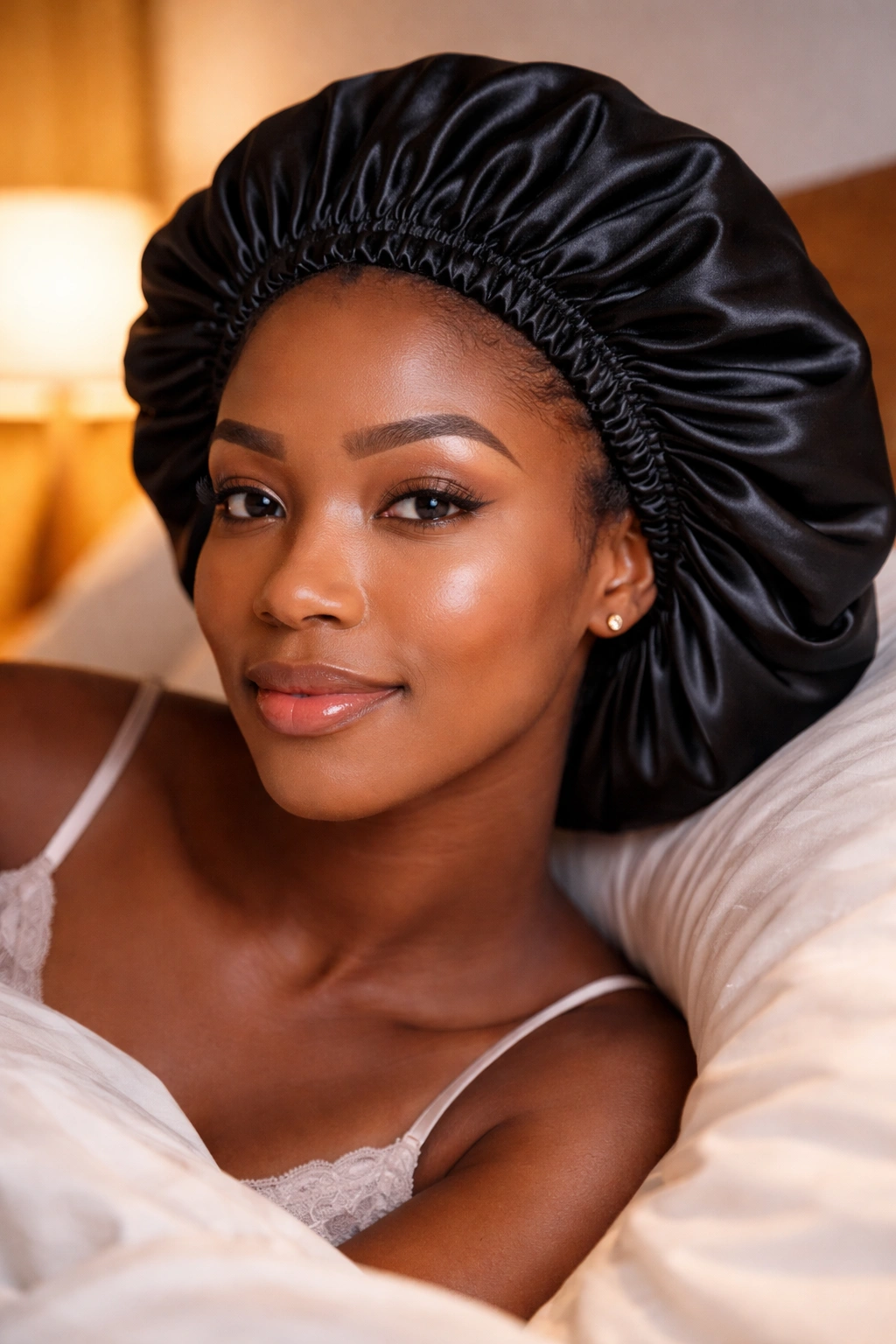
The bonnet is your best friend. No other step in your maintenance routine matters as much as protecting your 4C wand curls at night.
A satin or silk bonnet — not cotton, not a regular cap — reduces the friction that causes frizz and destroys curl definition while you sleep. Before putting on the bonnet, do a loose pineapple: gather the curls up to the top of the head with a very soft silk scrunchie in a loose, high ponytail. This prevents the curls from being compressed against the head overnight.
In the morning, release the pineapple, shake the curls loose gently, and mist lightly if needed. On 4C hair, this routine can extend a wand curl set from one to two days to three to four days. The bonnet isn’t optional. It’s the entire difference.
How to Build a Healthy Heat Styling Practice for 4C Hair
Wand curling and hair health aren’t mutually exclusive — but they require each other to be maintained intentionally. 4C hair that’s heat styled regularly without proper support between sessions will show the damage: frizz, breakage, limp curls that won’t hold, and ultimately heat damage that changes the coil pattern permanently.
Build your practice around these non-negotiable principles: deep condition every single wash day. Use heat protectant every single time. Allow at least three weeks between wand curl sessions on 4C hair. Protective style between heat sessions. Trim regularly.
Within that framework, 4C hair can enjoy wand curls regularly while growing strong, retaining length, and remaining in excellent condition. The key isn’t avoiding the style — it’s supporting the hair so the style is always working with healthy, strong strands.
4C hair is extraordinary. Wand curls are extraordinary. Together, they’re a combination worth learning to do right.